ভোকাবুলারিসমূহ

ইংরেজি শব্দের বাংলা অর্থ | English to Bangla Word Meaning Dictionary

noun, verb
/fɔːrd/
অগভীর নদী পারাপার (ogobhir nodi parapaar)

A shallow place in a river where one can cross; to cross a river at such a place.

"The travelers decided to ford the river at dawn."

"ভ্রমণকারীরা ভোরে নদীটি অগভীর স্থান দিয়ে পার হওয়ার সিদ্ধান্ত নিল।" (Bhramonkari ra bhore noditi ogobhir sthan diye par howar siddhanto nilo.)
noun
/ˈfɔːrˌbɛər/
পূর্বপুরুষ (purbopurush)

An ancestor, especially one who lived a long time ago.

"He often speaks of his forebears with great respect."

"তিনি প্রায়ই তার পূর্বপুরুষদের কথা শ্রদ্ধার সঙ্গে বলেন।" (Tini prayoi tar purbopurusher kotha sraddhar songe bolen.)
noun
/ˈfɔːrˌbɛərz/
পূর্বপুরুষ (purbopurush)

Ancestors or people in previous generations from whom one is descended.

"We must honor the traditions of our forebears."

"আমাদের পূর্বপুরুষদের ঐতিহ্যকে সম্মান করতে হবে।" (Amader purbopurusher oitijjoke somman korte hobe.)
verb
/fɔːrˈboʊd/
অশুভ সংকেত দেওয়া (oshubho sanket dewa)

To predict or have a strong inner feeling of a future misfortune or evil.

"Dark clouds forebode a coming storm."

"কালো মেঘ আসন্ন ঝড়ের পূর্বাভাস দেয়।" (Kalo megh asonna jhorer purbavash dey.)
noun/adjective
/fɔːrˈboʊdɪŋ/
অশুভ পূর্বাভাস (oshubho purbavash)

A feeling that something bad will happen; ominous.

"She felt a deep sense of foreboding as she entered the abandoned house."

"সে যখন পরিত্যক্ত বাড়িতে ঢুকল তখন তার মধ্যে অশুভ পূর্বাভাসের অনুভূতি হলো।" (Se jokhon porityokto barite dhuklo tokhon tar modhye oshubho purbavash er onubhuti holo.)
noun/verb
/ˈfɔːrkæst/
পূর্বাভাস (purbavash)

To predict future events, especially weather or economic trends.

"The weather office forecast heavy rain for tomorrow."

"আবহাওয়া অফিস আগামীকালের জন্য ভারী বৃষ্টির পূর্বাভাস দিয়েছে।" (Abohawa office agamikaler jonno bhari brishtir purbavash diyeche.)
noun
/ˈfoʊksl/
জাহাজের সামনের কক্ষ (jahajer samner kakkho)

The forward part of a ship below the deck, traditionally used as living quarters for the crew.

"The sailors gathered in the forecastle after their shift."

"নাবিকরা তাদের কাজ শেষ করার পর ফোকাসলে জড়ো হয়েছিল।" (Nabikra tader kaj shesh korar por fokasle joro hoyechilo.)
verb
/fɔːrˈkloʊz/
ঋণভঙ্গের কারণে সম্পত্তি বাজেয়াপ্ত করা (rinbhonger karone sompotti bajeyapt kora)

to take possession of a property due to the owner's failure to keep up mortgage payments

"The bank decided to foreclose on the property after months of missed payments."

"অনেক মাস কিস্তি না দেওয়ার পর ব্যাংক সম্পত্তি বাজেয়াপ্ত করার সিদ্ধান্ত নিল।" (Onek mas kisti na dewar por bank sompotti bajeyapt korar siddhanto nilo.)
noun
/fɔːrˈkloʊʒər/
বন্ধক বাজেয়াপ্ত (bondhok bajeyapt)

The legal process by which a lender takes control of a property from a borrower who has failed to make payments.

"The family lost their home due to foreclosure after missing several mortgage payments."

"অনেকগুলো মর্টগেজ কিস্তি না দেওয়ার কারণে পরিবারটি ফোরক্লোজারের মাধ্যমে তাদের বাড়ি হারিয়েছিল।" (Onekgulo mortgage kisti na deowar karone poribar ti foreclosure er madhyome tader bari hariyechilo.)
noun
/ˈfɔːrkɔːrt/
সামনের উঠান (samner uthhan)

an open area in front of a large building, especially a petrol station or hotel

"The car was parked in the hotel forecourt."

"গাড়িটি হোটেলের সামনের উঠানে পার্ক করা ছিল।" (Gariti hoteler samner uthhane park kora chhilo.)
noun
/ˈfɔːrˌfɑːðər/
পূর্বপুরুষ (purbopurush)

an ancestor, especially one who was part of an earlier generation of a family or nation

"Our forefathers fought for independence."

"আমাদের পূর্বপুরুষরা স্বাধীনতার জন্য লড়াই করেছিলেন।" (Amader purbopurushra shadhinatar jonno lorai korechhilen.)
verb
/fɔːrˈɡoʊ/
ত্যাগ করা (tyag kora)

to decide not to do or have something pleasant or valuable

"She decided to forego dessert to maintain her diet."

"ডায়েট বজায় রাখতে সে মিষ্টি খাবার ত্যাগ করার সিদ্ধান্ত নিল।" (Diet bojay rakhte se mishti khabar tyag korar siddhanto nilo.)
noun
/ˈfɔːrɡraʊnd/
সামনের অংশ (samner angsho)

the part of a scene that is nearest to and in front of the viewer

"The flowers in the foreground brightened the picture."

"সামনের ফুলগুলো ছবিকে উজ্জ্বল করে তুলেছিল।" (Samner fulgulo chobike ujjol kore tulchhilo.)
noun
/ˈfɔːrˌhɛd/ or /ˈfɔːrɪd/
কপাল (kopal)

The part of the face above the eyebrows.

"She wiped the sweat from her forehead."

"সে তার কপাল থেকে ঘাম মুছে ফেলল।" (Se tar kopal theke gham muche fallo.)
adjective
/ˈfɔːrən/ or /ˈfɑːrən/
বিদেশী (bideshi)

Belonging to or coming from another country.

"She loves studying foreign languages."

"সে বিদেশি ভাষা শিখতে ভালোবাসে।" (Se bideshi vasha shikhte bhalobashe.)
noun
/ˈfɔːrənər/ or /ˈfɑːrənər/
বিদেশি ব্যক্তি (bideshi bekti)

A person from another country.

"The city welcomes every foreigner with kindness."

"শহর প্রত্যেক বিদেশিকে সদয়ভাবে স্বাগত জানায়।" (Shohor prottek bideshike shodoybhabe swagat janai.)
verb
/fɔːrˈdʒʌdʒ/
আগেভাগে বিচার করা (agebhage bichar kora)

To judge beforehand without adequate information.

"It is unfair to forejudge someone without knowing the facts."

"তথ্য না জেনে কাউকে আগেভাগে বিচার করা অন্যায়।" (Tottho na jene kauke agebhage bichar kora onnyay.)
noun
/ˈfɔːrˌnɑːlɪdʒ/
আগাম জ্ঞান (agam gyan)

Awareness of something before it happens or exists.

"The prophet claimed to have foreknowledge of the event."

"ভবিষ্যদ্বক্তা দাবি করেছিলেন যে তার ঘটনার আগাম জ্ঞান ছিল।" (Vobishdobokta dabi korechilen je tar ghotonar agam gyan chhilo.)
noun
/ˈfɔːrmən/
কারখানা বা নির্মাণ সাইটের তত্ত্বাবধায়ক (forthaba dayok)

a person in charge of a group of workers, especially in a factory or construction site

"The foreman supervised the workers on the construction site."

"ফোরম্যান নির্মাণ সাইটে শ্রমিকদের তত্ত্বাবধান করছিলেন।" (Foreman nirman saite shromikder totthabadhan korchilen.)
adjective
/ˈfɔːrmoʊst/
সর্বাগ্রে, প্রধান (sorbagra, prodhan)

most important; leading; first in rank or position

"She is one of the foremost experts in the field."

"তিনি এই ক্ষেত্রে অন্যতম প্রধান বিশেষজ্ঞ।" (Tini ei khetre onnyotomo prodhan bisheshoggo.)
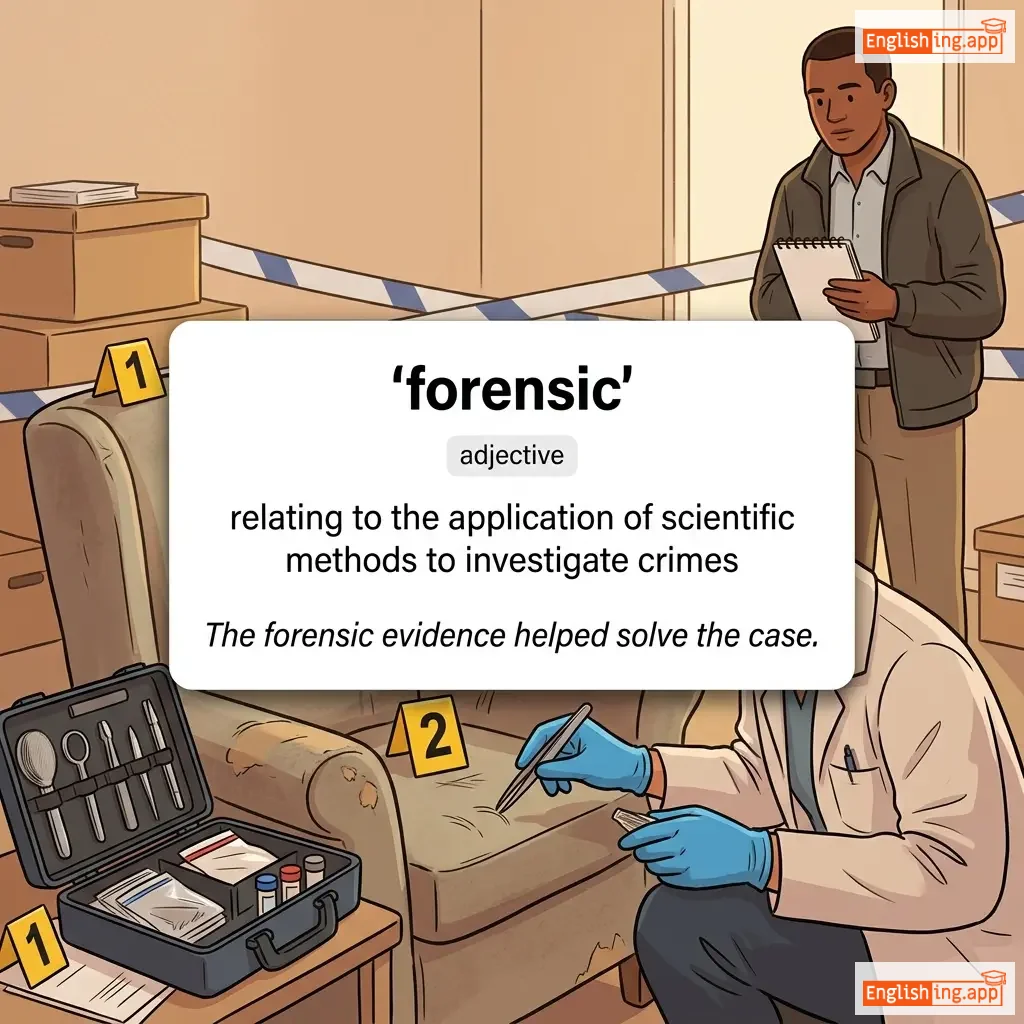
forensic definition card — visual illustration of the meaning
adjective
/fəˈrɛnsɪk/
বিচার-বৈজ্ঞানিক (bichar-baigganik)

relating to the application of scientific methods to investigate crimes

"The forensic evidence helped solve the case."

"ফরেনসিক প্রমাণ মামলাটি সমাধান করতে সাহায্য করেছিল।" (Forensic proman mamla ti somadhan korte sahajyo korechilo.)
verb
/ˌfɔːrɔːrˈdeɪn/
পূর্বনির্ধারণ করা (purbonirdharon kora)

to determine or decree something in advance; to predestine

"Some believe that our lives are foreordained by fate."

"কেউ কেউ বিশ্বাস করে যে আমাদের জীবন ভাগ্য দ্বারা পূর্বনির্ধারিত।" (Keu keu bishash kore je amader jibon vaggo dara purbonirdharito.)
noun
/ˌfɔːrɔːrdɪˈneɪʃən/
পূর্বনির্ধারণ (purbonirdharon)

the act of determining something in advance; predestination

"The doctrine of foreordination suggests that events are fixed by divine will."

"পূর্বনির্ধারণ মতবাদ বলছে যে ঘটনাগুলো ঈশ্বরের ইচ্ছায় স্থির করা।" (Purbonirdharon motobad bolche je ghotonagulo ishwarer ichchay sthir kora.)
noun
/ˈfɔːrˌpiːk/
জাহাজের সামনের কক্ষ (jahajer samner kakh)

The compartment in the forward part of a ship, often used for storage.

"The sailors stored extra ropes in the forepeak."

"নাবিকরা অতিরিক্ত দড়ি ফোরপিকে সংরক্ষণ করেছিল।" (Nabikra otirikto dori forepeake songrokkhon korechilo.)
verb
/ˌfɔːrˈrʌn/
আগে যাওয়া (age jaoya)

To go before; to precede in time, place, or action.

"Dark clouds often forerun a storm."

"কালো মেঘ প্রায়শই ঝড়ের আগে আসে।" (Kalo megh prayoshho jhorer age ase.)
noun
/ˈfɔːrˌrʌnər/
অগ্রদূত (ogrodut)

A person or thing that comes before another; a predecessor or harbinger.

"The Wright brothers were the forerunners of modern aviation."

"রাইট ভ্রাতৃদ্বয় আধুনিক বিমান চলাচলের অগ্রদূত ছিলেন।" (Right bhratridway adunik biman cholacholer ogrodut chilen.)
noun
/ˈfɔːrˌseɪl/
জাহাজের সামনের পাল (jahajer samner pal)

The principal sail set on the foremast of a sailing vessel.

"The crew adjusted the foresail to catch the wind."

"নাবিকরা বাতাস ধরতে ফোরসেল সমন্বয় করেছিল।" (Nabikra batas dhorte foresel somonnoy korechilo.)
verb
/fɔːrˈsiː/
পূর্বানুমান করা (purbanuman kora)

To be aware of beforehand; to predict or expect.

"She could foresee the challenges ahead."

"সে সামনের চ্যালেঞ্জগুলো পূর্বানুমান করতে পেরেছিল।" (Se samner challengegulo purbanuman korte perechilo.)
adjective
/fɔːrˈsiːəbl/
পূর্বানুমেয় (purbanumeya)

Able to be predicted or expected in advance

"The company is unlikely to make changes in the foreseeable future."

"কোম্পানি নিকট ভবিষ্যতে পরিবর্তন করার সম্ভাবনা নেই।" (Company nikot vobishyote poriborton korar sombhobona nei.)
verb
/fɔːrˈʃædoʊ/
পূর্বাভাস দেওয়া (purbavash deowa)

To indicate or suggest something that will happen in the future

"Dark clouds foreshadowed an approaching storm."

"কালো মেঘ আসন্ন ঝড়ের পূর্বাভাস দিয়েছিল।" (Kalo megh asonna jhorer purbavash diyechilo.)
noun
/ˈfɔːrʃɔːr/
সৈকত (soikot)

The part of the shore between the high and low tide marks

"Children were playing on the foreshore, collecting shells."

"শিশুরা ফরশোরে খেলা করছিল এবং শাঁস সংগ্রহ করছিল।" (Shishura foreshore e khela korchhilo ebong shash songroho korchhilo.)
foresight definition card — visual illustration of the meaning
noun
/ˈfɔːrsaɪt/
দূরদৃষ্টি (durdristi)

The ability to predict or plan for the future

"Her foresight helped the company avoid financial trouble."

"তার দূরদৃষ্টি কোম্পানিকে আর্থিক সমস্যার হাত থেকে বাঁচিয়েছিল।" (Tar durdristi companyke arthik somossar hat theke banchiyechilo.)
noun
/ˈfɔːrɪst/
অরণ্য / বন (oronno / bon)

A large area covered chiefly with trees and undergrowth.

"They went hiking in the forest."

"তারা জঙ্গলে হাইকিং করতে গিয়েছিল।" (Tara jongole hiking korte giyechilo.)
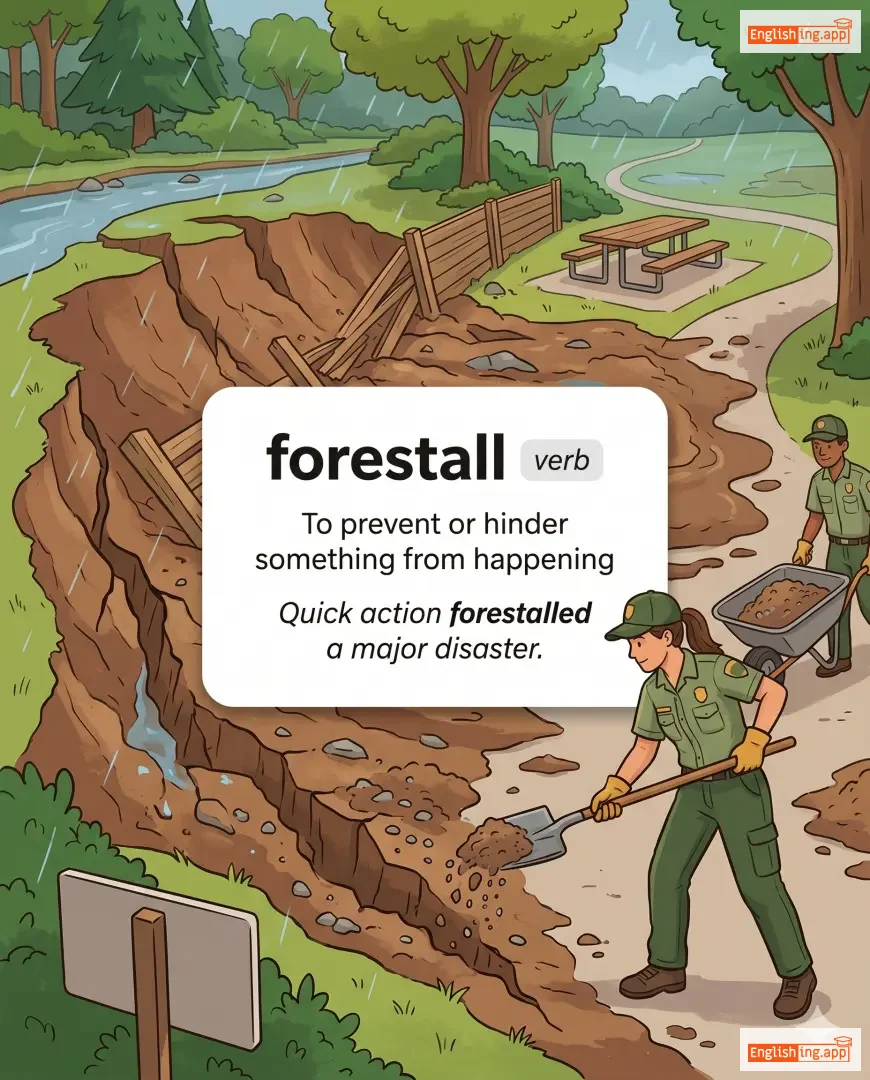
forestall definition card — visual illustration of the meaning
verb
/fɔːrˈstɔːl/
অবরুদ্ধ করা (aboruddho kora)

To prevent or hinder something from happening

"Quick action forestalled a major disaster."

"দ্রুত পদক্ষেপ একটি বড় বিপর্যয়কে প্রতিরোধ করেছিল।" (Druto podokkhep ekti boro biporjoyke protirodh korechhilo.)
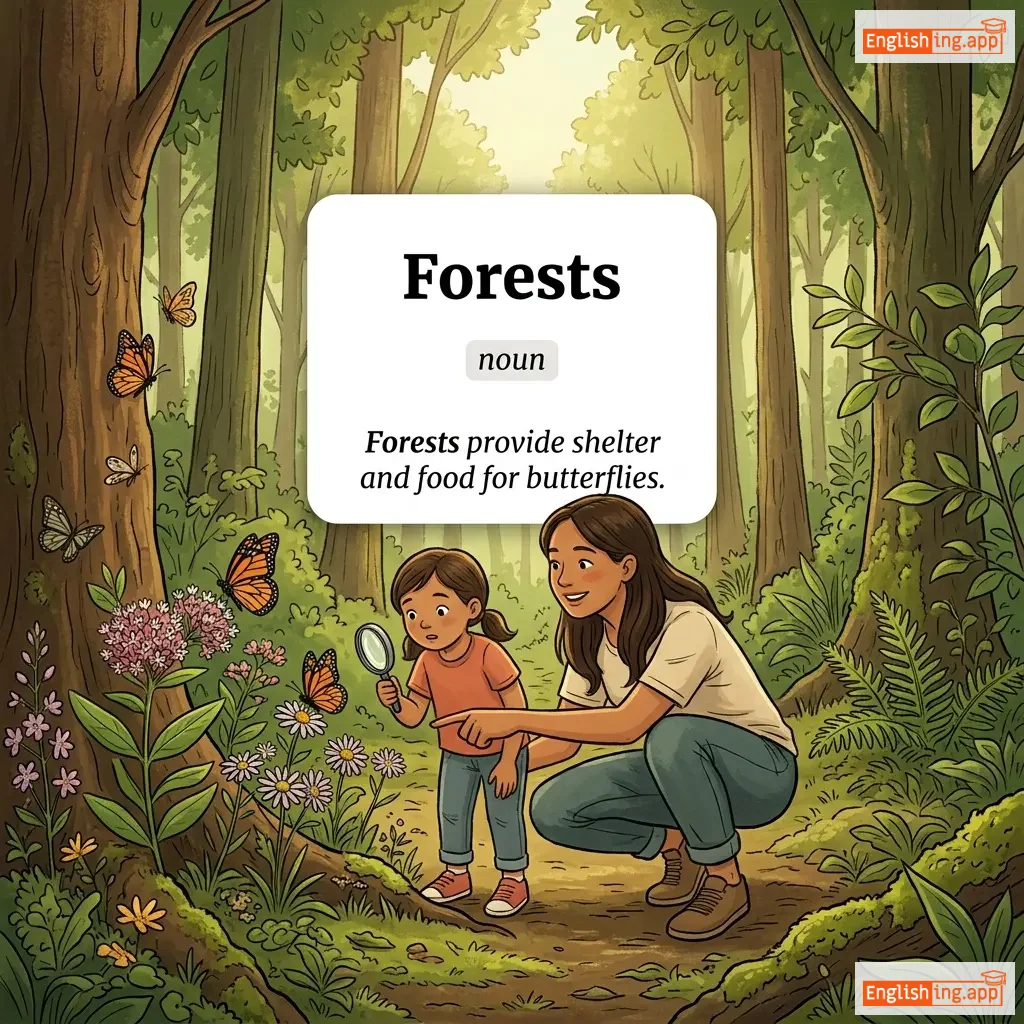
Forests definition card — visual illustration of the meaning
noun
ˈfɔːrɪsts
বন (bon)

Large areas covered with trees and undergrowth, providing natural habitats for wildlife.

"Forests provide shelter and food for butterflies."

"বন প্রজাপতির জন্য আশ্রয় এবং খাদ্য সরবরাহ করে।" (Bon projapotir jonyo ashroy ebong khadyo shorborah kore.)
verb
/fɔːrˈtɛl/
পূর্বাভাস দেওয়া (purvabash deowa)

to predict or announce something before it happens

"The old man claimed he could foretell the future."

"বৃদ্ধ লোকটি দাবি করেছিল যে তিনি ভবিষ্যৎ পূর্বাভাস দিতে পারেন।" (Briddho lokti dabi korechilo je tini vobishshot purvabash dite paren.)
noun
/ˈfɔːrˌθɔːt/
পূর্ববিবেচনা (purvobibechona)

careful consideration of what will be necessary or may happen in the future

"With a little forethought, we could have avoided the problem."

"অল্প একটু পূর্ববিবেচনা করলে আমরা সমস্যাটি এড়াতে পারতাম।" (Olpo ektu purvobibechona korle amra somossati erate partam.)
adverb
/fɔːrˈɛvər/
চিরকাল (chirokal)

For all future time; for always.

"She promised to love him forever."

"সে প্রতিশ্রুতি দিয়েছিল যে সে তাকে চিরকাল ভালোবাসবে।" (Se protishruti diyechilo je se take chirokal bhalobashbe.)
noun
/ˈfɔːrwɜːrd/
ভূমিকা (bhumika)

a short introduction at the beginning of a book, typically written by someone other than the author

"The foreword of the book was written by a famous historian."

"বইটির ভূমিকা লিখেছিলেন একজন বিখ্যাত ইতিহাসবিদ।" (Boitir bhumika likhechilen ekjon bikhhat itihashbid.)
verb
/ˈfɔːrfɪt/
বাতিল হওয়া, জরিমানা স্বরূপ হারানো (batil howa, jorimana sworup harano)

to lose or give up something, usually as a penalty for wrongdoing

"He had to forfeit the match after breaking the rules."

"নিয়ম ভাঙার কারণে তাকে ম্যাচটি হার মেনে নিতে হয়েছিল।" (Niyom bhangar karone take matchti har mene nite hoyechilo.)
verb
/fɔːrˈfɛnd/
বাঁচানো, রক্ষা করা, প্রতিরোধ করা (bachano, rokkha kora, protirodh kora)

to protect or defend against something undesirable; to prevent

"May good fortune forfend any danger from our journey."

"সৌভাগ্য আমাদের ভ্রমণ থেকে যে কোনো বিপদ প্রতিরোধ করুক।" (Sovvaggya amader vromon theke jekono bipod protirodh koruk.)
verb
/fɔːrdʒ/
গড়া, জাল করা (gora, jal kora)

to create or shape something, often with effort or skill; also to counterfeit or fake something

"The blacksmith forged a strong sword from the iron."

"লোহার কারিগর লোহা থেকে একটি শক্তিশালী তলোয়ার গড়েছিল।" (Lohar karigor loha theke ekti shoktishali talwar gorechilo.)
noun
/ˈfɔːrdʒər/
জালিয়াত (jaliyat)

a person who makes fake documents, artworks, or signatures

"The police arrested a forger who had been selling counterfeit paintings."

"পুলিশ একজন জালিয়াতকে গ্রেপ্তার করল যে নকল চিত্র বিক্রি করছিল।" (Police ekti jaliyatke greptar korlo je nokol chitra bikri korchilo.)
noun
/ˈfɔːrdʒəri/
জালিয়াতি (jaliyati)

the crime of making fake documents, money, or artworks

"The bank detected a forgery in the signature on the cheque."

"ব্যাংক চেকের স্বাক্ষরে জালিয়াতি শনাক্ত করেছিল।" (Bank cheker shakkhore jaliyati shonakto korechilo.)
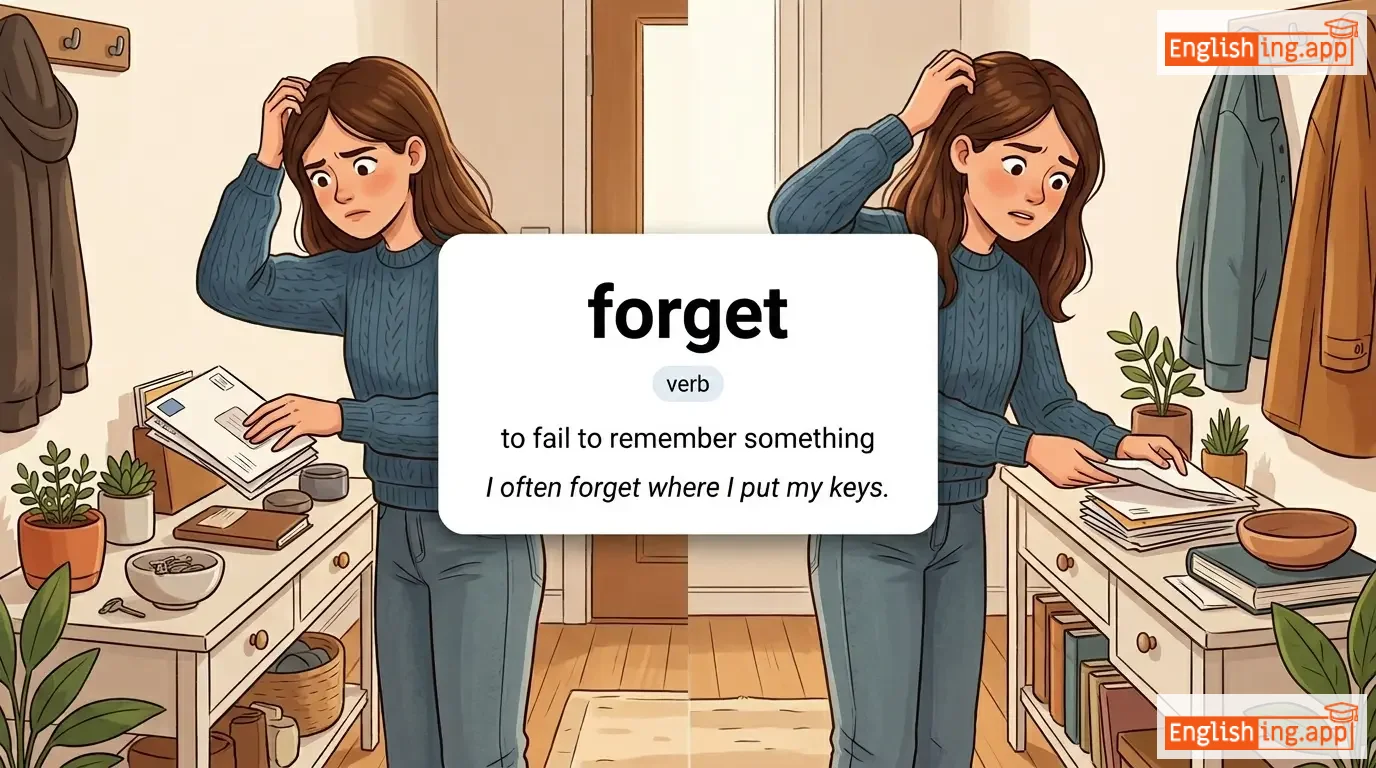
forget definition card — visual illustration of the meaning
verb
/fəˈɡɛt/
ভুলে যাওয়া (bhule jawa)

to fail to remember something

"I often forget where I put my keys."

"আমি প্রায়ই ভুলে যাই কোথায় আমার চাবি রেখেছি।" (Ami prayoi bhule jai kothay amar chabi rekhechi.)
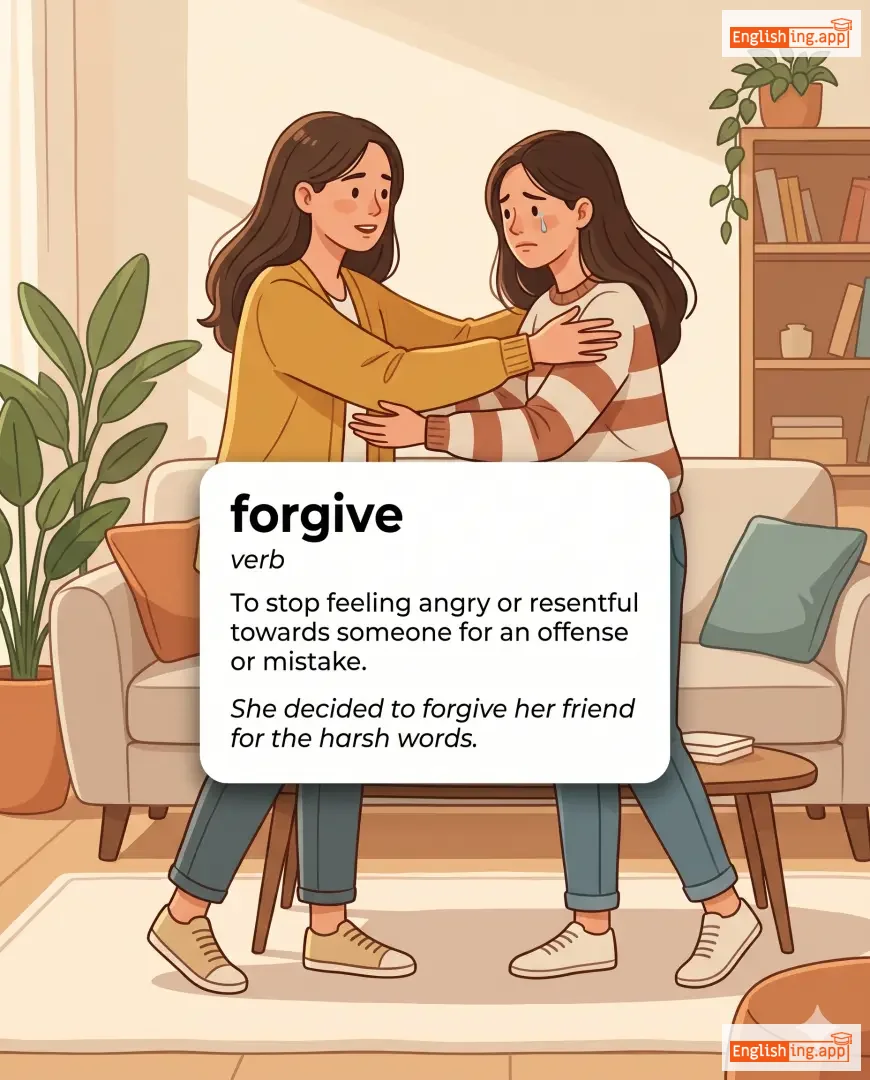
forgive definition card — visual illustration of the meaning
verb
/fərˈɡɪv/
ক্ষমা করা (khoma kora)

To stop feeling angry or resentful towards someone for an offense or mistake.

"She decided to forgive her friend for the harsh words."

"সে তার বন্ধুকে কঠোর কথার জন্য ক্ষমা করার সিদ্ধান্ত নিয়েছিল।" (Se tar bondhuke kathor kothar jonno khoma korar siddhanto niyechilo.)
adjective
/fəˈɡɪv.ɪŋ/
ক্ষমাশীল; (kkhomasheel)

ready and willing to forgive; merciful; lenient

"She has a forgiving nature and rarely holds grudges."

"তার ক্ষমাশীল স্বভাব রয়েছে এবং খুব কমই রাগ রাখেন।" (tar kkhomasheel shobhab royeche ebong khub komi rag rakhen)
verb
/fɔːrˈɡoʊ/
ত্যাগ করা (tyag kora)

to decide not to do or have something

"She decided to forgo dessert to maintain her diet."

"সে তার ডায়েট বজায় রাখতে মিষ্টি ত্যাগ করার সিদ্ধান্ত নিল।" (Se tar diet bojay rakhte mishti tyag korar siddhanto nilo.)
noun
/fɔːk/
কাঁটাচামচ (katacamoch)

a tool with two or more prongs used for eating or serving food

"He ate his salad with a fork."

"সে কাঁটাচামচ দিয়ে সালাদ খেয়েছিল।" (Se katacamoch diye salad kheyechhilo.)
adjective
/fərˈlɔːrn/
অসহায়, দুঃখিত (oshahai, dukhito)

extremely sad, lonely, or abandoned

"The abandoned puppy looked so forlorn in the rain."

"পরিত্যক্ত কুকুরছানাটি বৃষ্টিতে খুব অসহায় লাগছিল।" (Porityokto kukurchanati brishtite khub oshahai lagchhilo.)