|
表情符号
|
单词 | Images | 翻译 | 过去时 | 过去分词 | 第三人称单数 | 动名词 | 含义 | 例句 | 例句翻译 | 示例表达 | 示例表达含义 | 示例表达翻译 | 同义词 | 反义词 | 搭配词 | 助记符 |
|---|---|---|---|---|---|---|---|---|---|---|---|---|---|---|---|---|---|
|
🌵
••••••
|
/ˈdɛsɪkeɪt/
verb
(desiket)
••••••
|

|
干燥
ganzao
••••••
|
desiccated
desiketd
••••••
|
desiccated
desiketd
••••••
|
desiccates
desikets
••••••
|
desiccating
desiketing
••••••
|
to dry up completely or remove the moisture from something
••••••
|
The hot sun can quickly desiccate plants in the desert.
炙热的太阳可以迅速把沙漠中的植物弄干。
••••••
|
炙热的太阳可以迅速把沙漠中的植物弄干。
Zhire de taiyang keyi xunsu ba shamo zhong de zhiwu nong gan.
••••••
|
- •••••• | - •••••• | - •••••• |
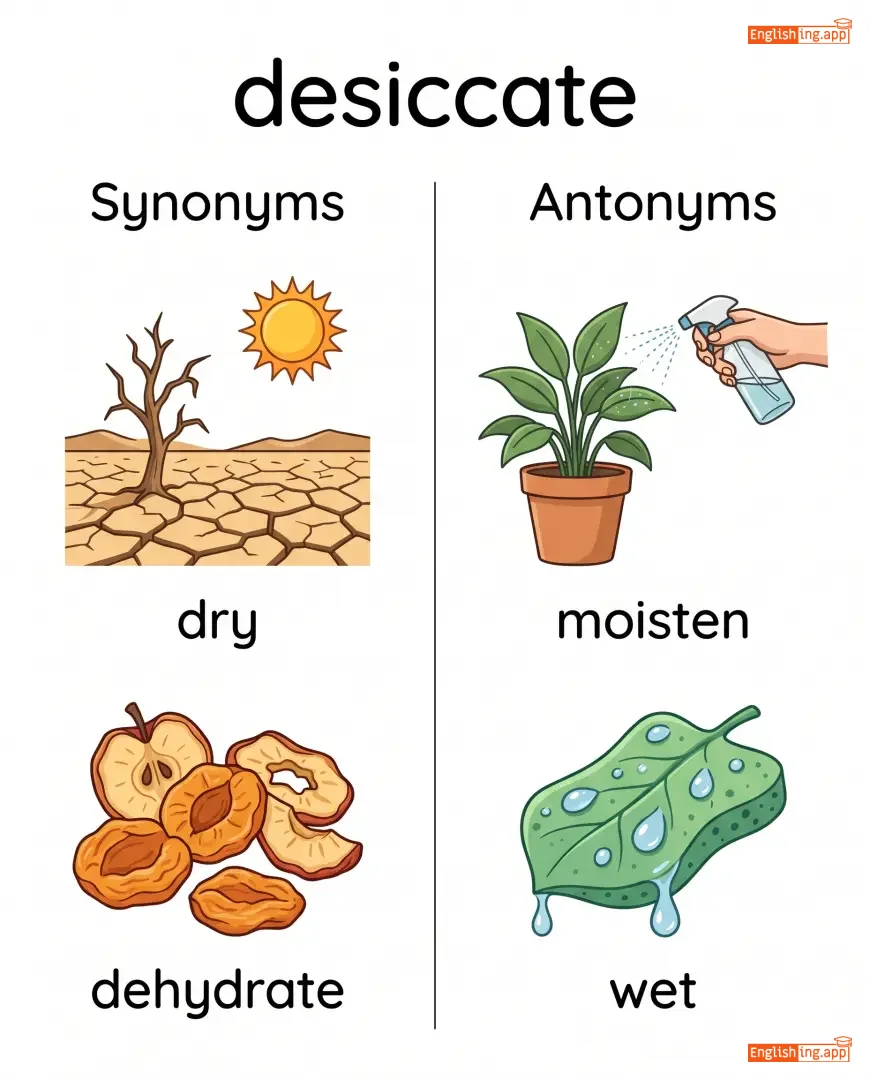
dry, dehydrate, parch, drain, evaporate
••••••
|
moisten, wet, hydrate
••••••
|
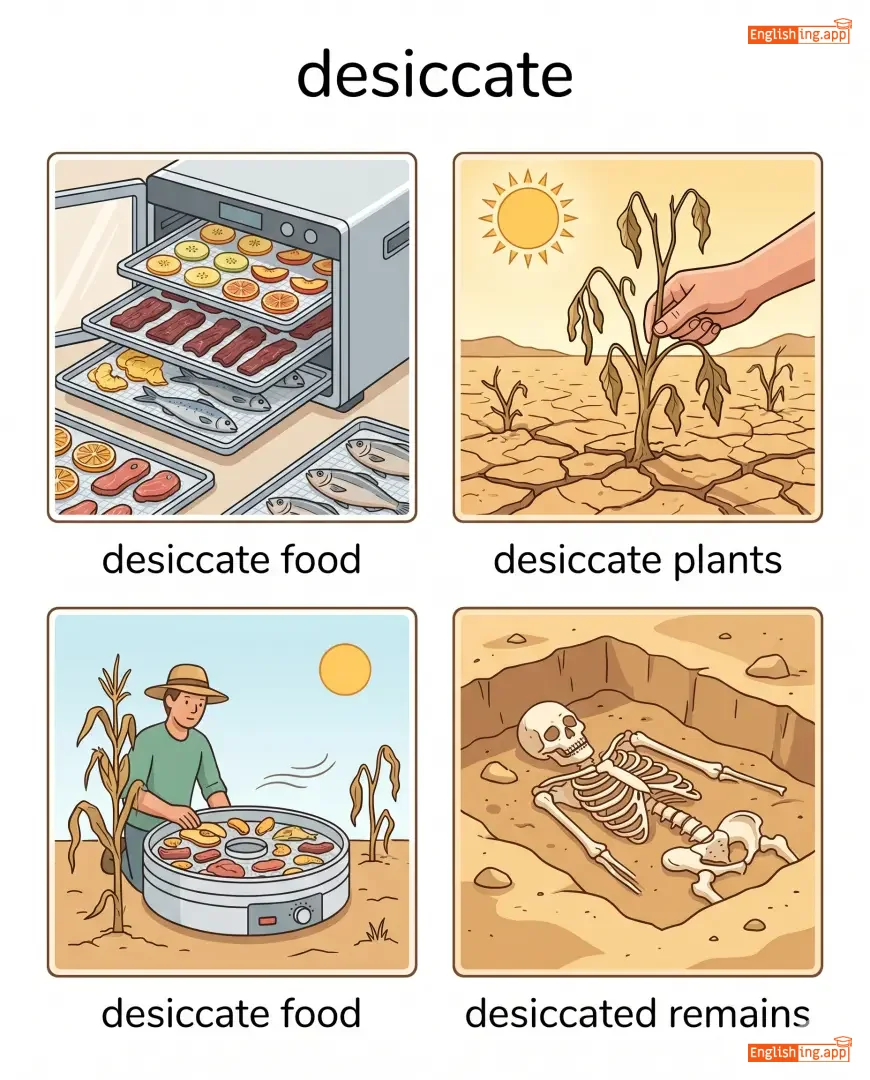
desiccate food, desiccate plants, desiccated remains
••••••
|
沙漠中的植物很容易干燥。
••••••
|
|
😐
••••••
|
/ˈdɛsəlˌtɔːri/
adjective
(得萨托里)
••••••
|
|
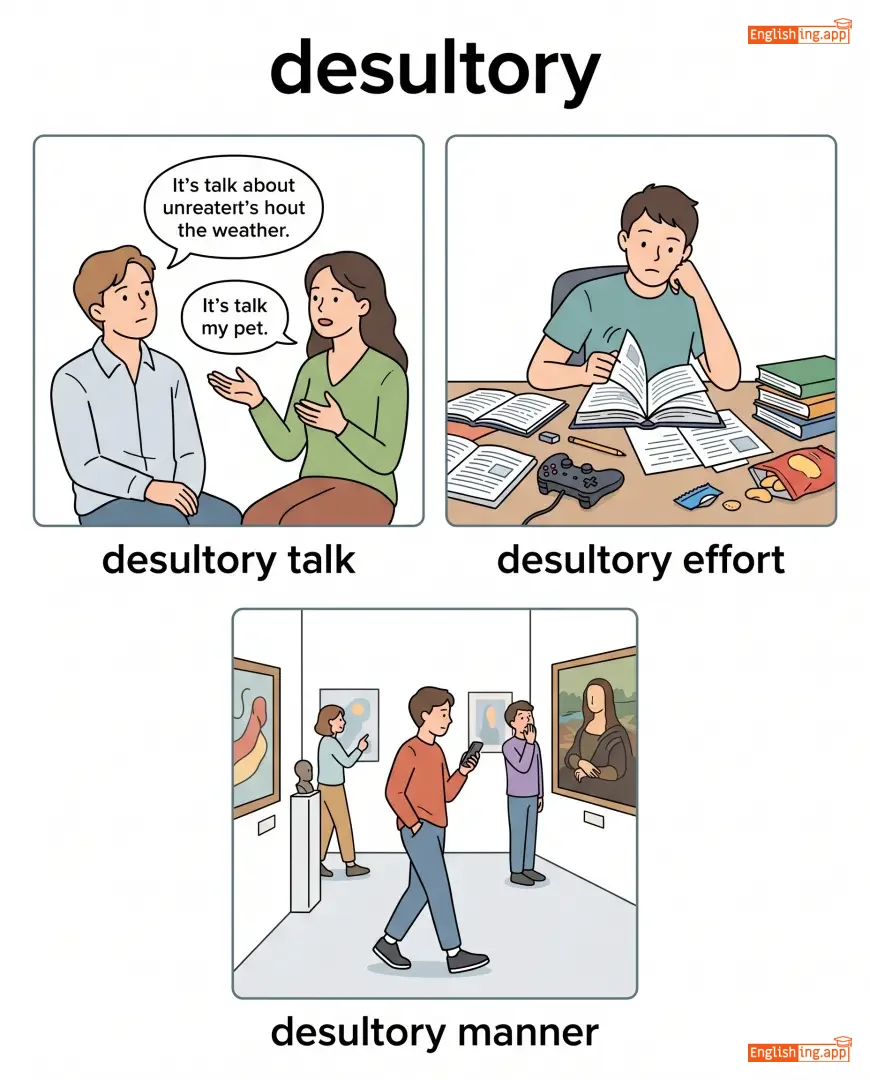
杂乱无章
záluàn wúzhāng
••••••
|
- •••••• | - •••••• | - •••••• | - •••••• |
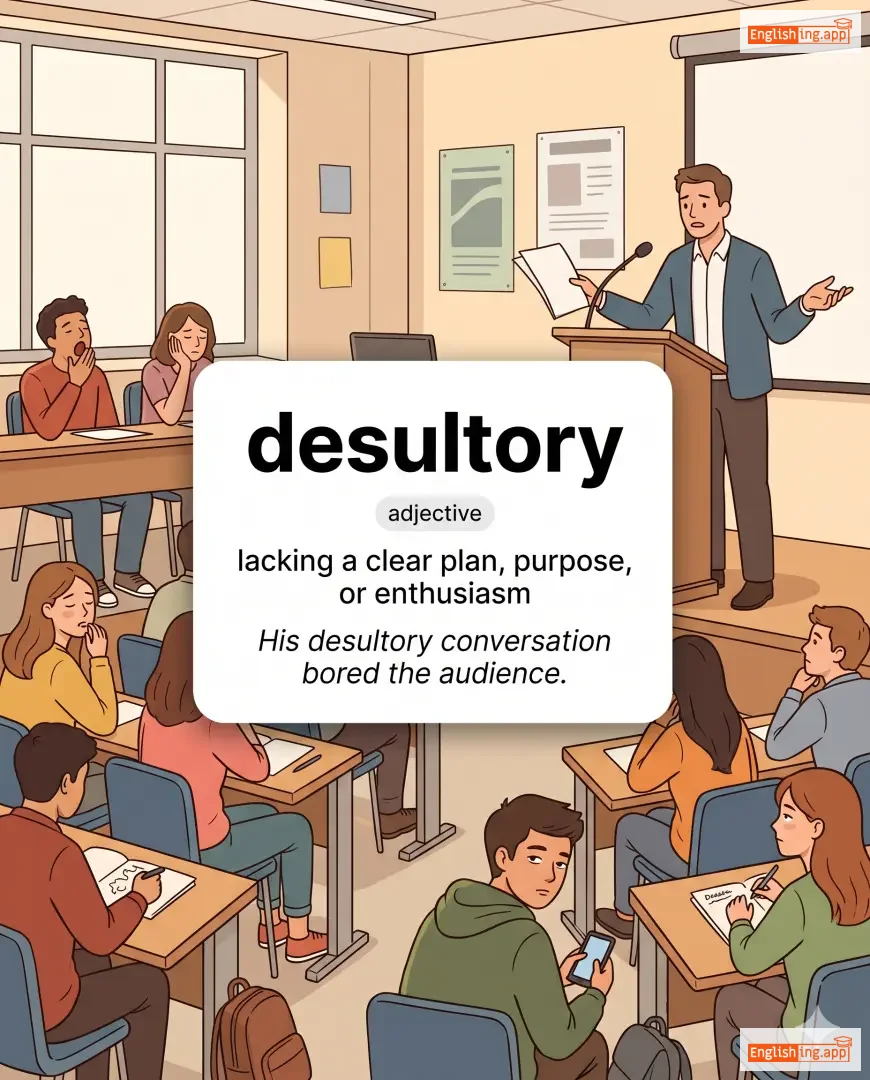
lacking a clear plan, purpose, or enthusiasm
••••••
|
His desultory conversation bored the audience. |
他那杂乱无章的谈话让观众感到无聊。
Tā nà záluàn wúzhāng de tánhuà ràng guānzhòng gǎndào wúliáo.
••••••
|
- •••••• | - •••••• | - •••••• |
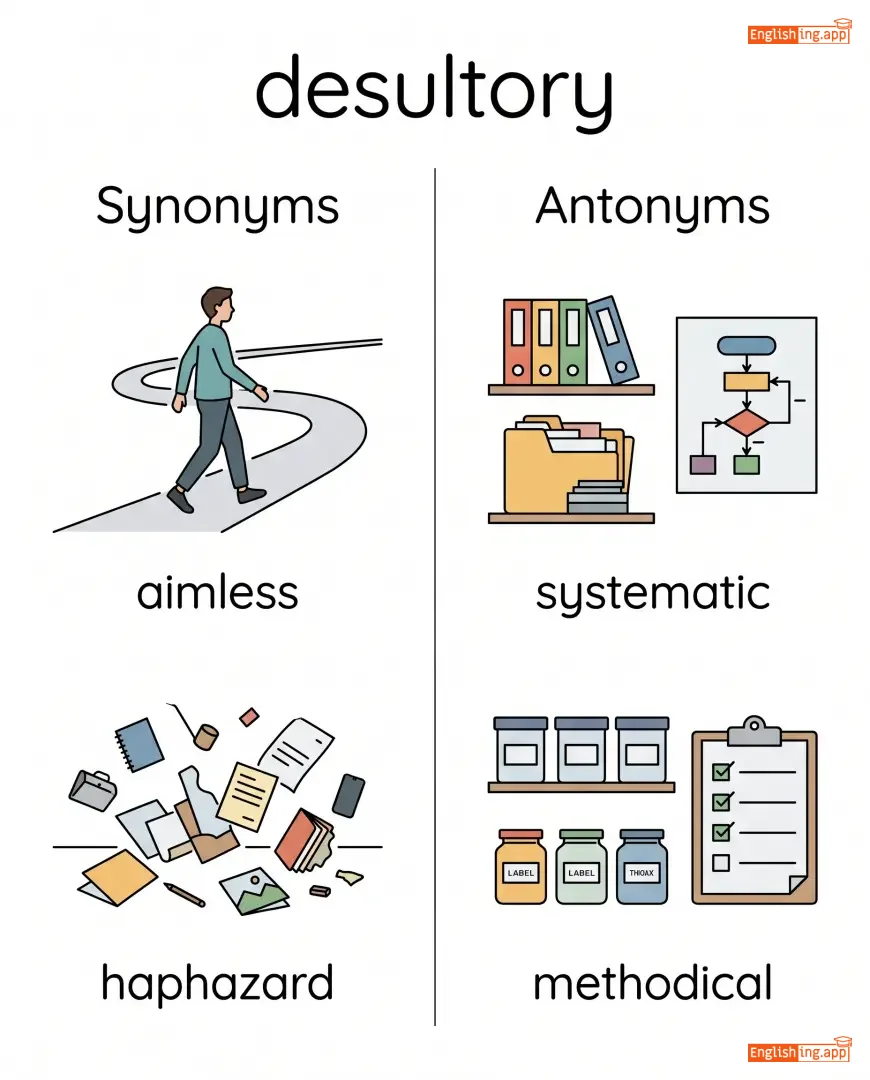
aimless, haphazard, random, unplanned, erratic
••••••
|
systematic, methodical, organized
••••••
|
desultory talk, desultory effort, desultory manner, desultory approach
••••••
|
Desultory 就是杂乱无章,没有明确计划
••••••
|
|
🚫
••••••
|
/dɪˈtɜːrənt/
noun
(dɪˈtɛr(ə)nt)
••••••
|
|
威慑
weishe
••••••
|
- •••••• | - •••••• | - •••••• | - •••••• |
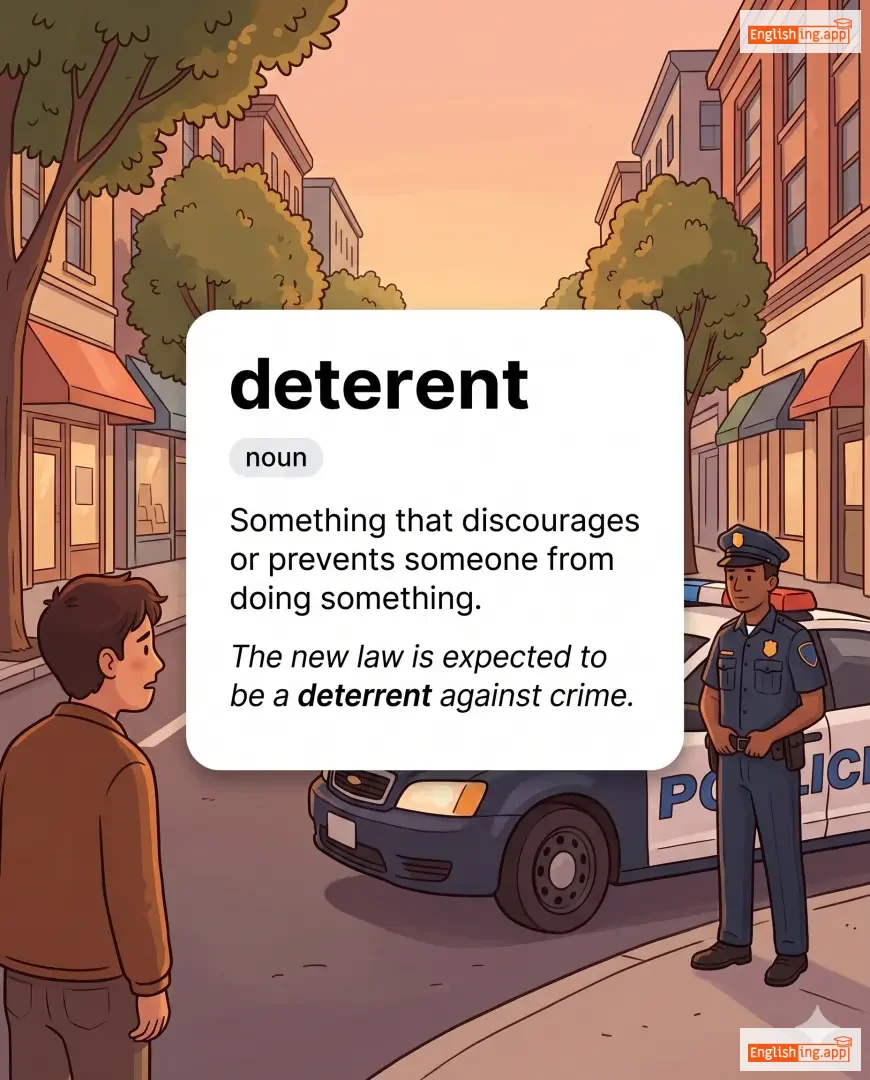
Something that discourages or prevents someone from doing something.
••••••
|
The new law is expected to be a deterrent against crime. |
预计新法律将成为打击犯罪的威慑力量。
Yùjì xīn fǎlǜ jiāng chéngwéi dǎjí fànzuì de wēishè lìliàng.
••••••
|
- •••••• | - •••••• | - •••••• |
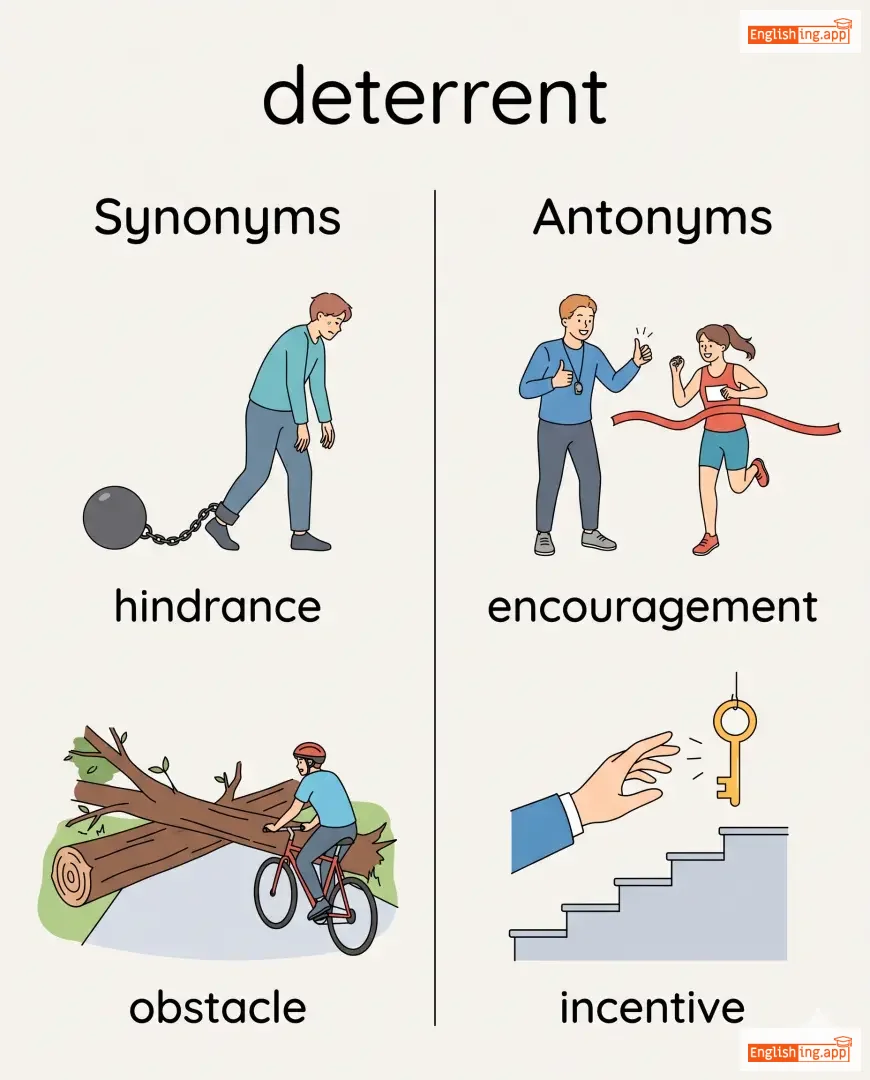
hindrance, obstacle, discouragement, preventive
••••••
|
encouragement, incentive
••••••
|
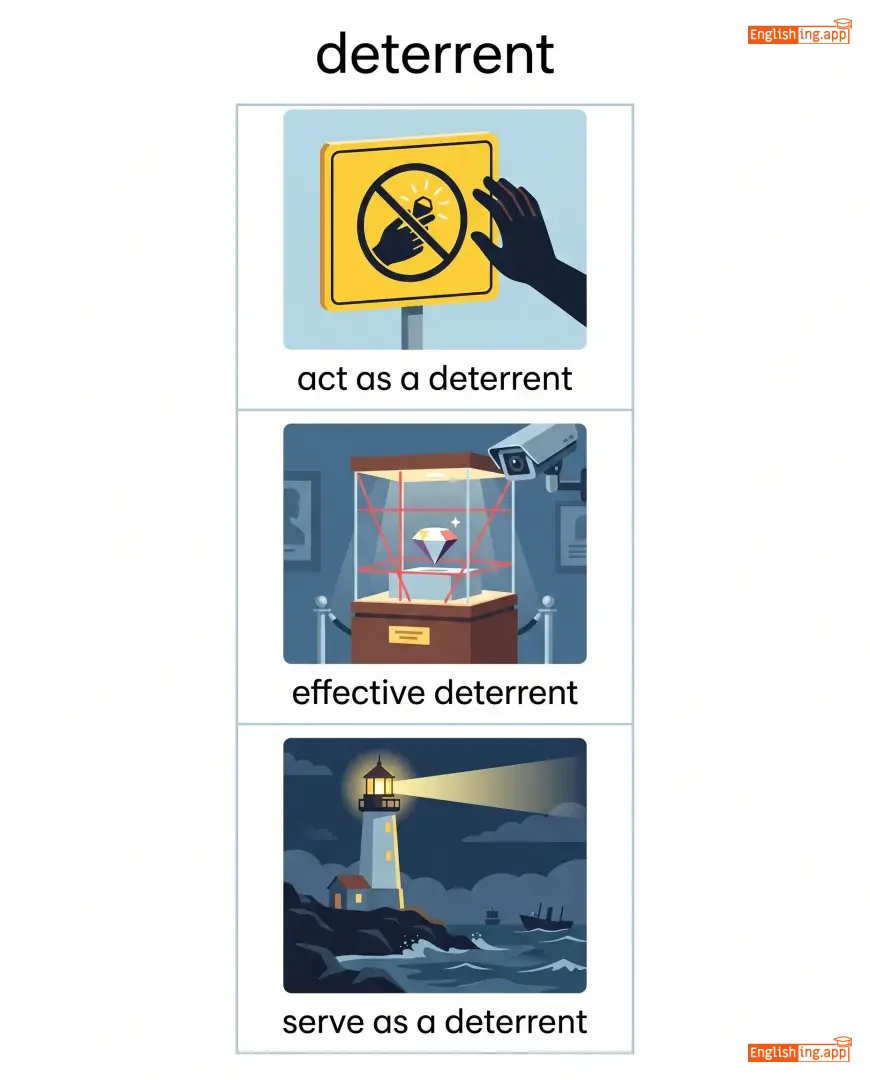
act as a deterrent, effective deterrent, serve as a deterrent
••••••
|
威慑意味着 🚫 犯罪 – 法律是威慑的力量。
••••••
|
|
🗣️
••••••
|
/ˈdaɪətraɪb/
noun
(代阿特赖布)
••••••
|
|
激烈的抨击
jīliè de pēngjí
••••••
|
- •••••• | - •••••• | - •••••• | - •••••• |
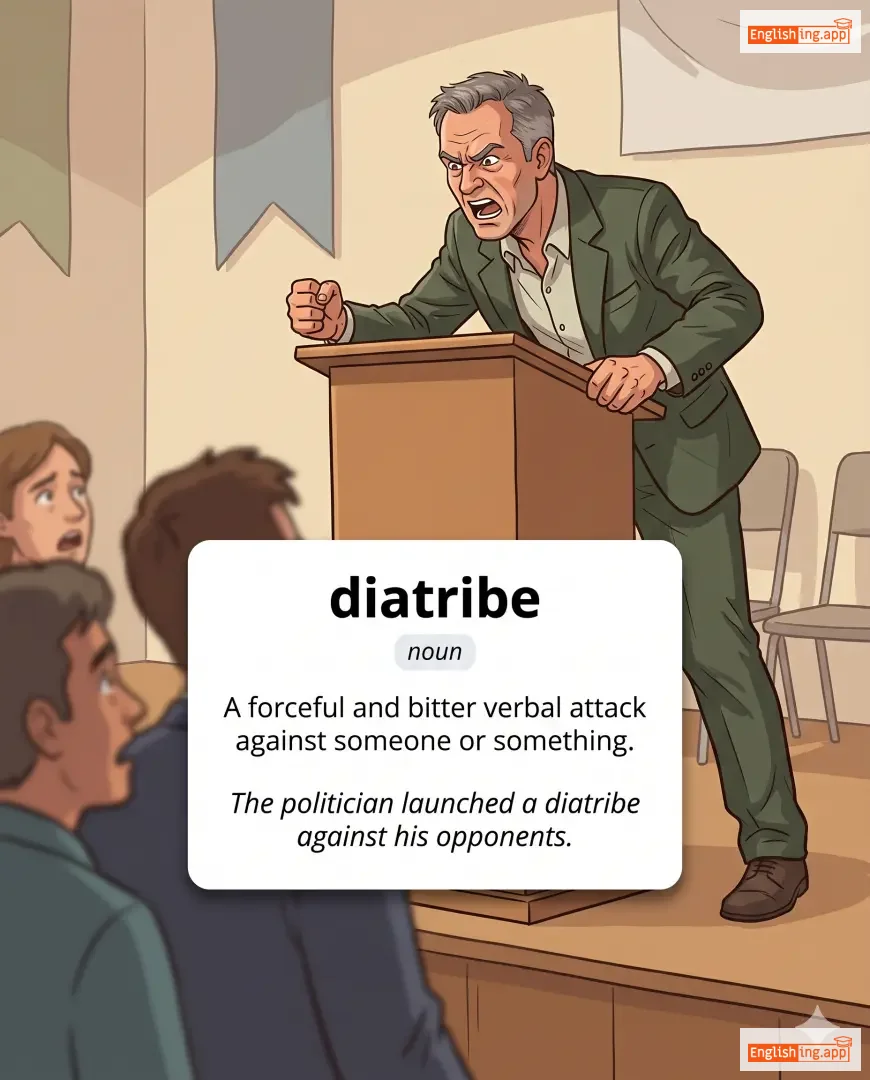
A forceful and bitter verbal attack against someone or something.
••••••
|
The politician launched a diatribe against his opponents. |
这位政治家对他的对手发起了激烈的抨击。
Zhè wèi zhèngzhìjiā duì tā de duìshǒu fāqǐle jīliè de pēngjí.
••••••
|
- •••••• | - •••••• | - •••••• |
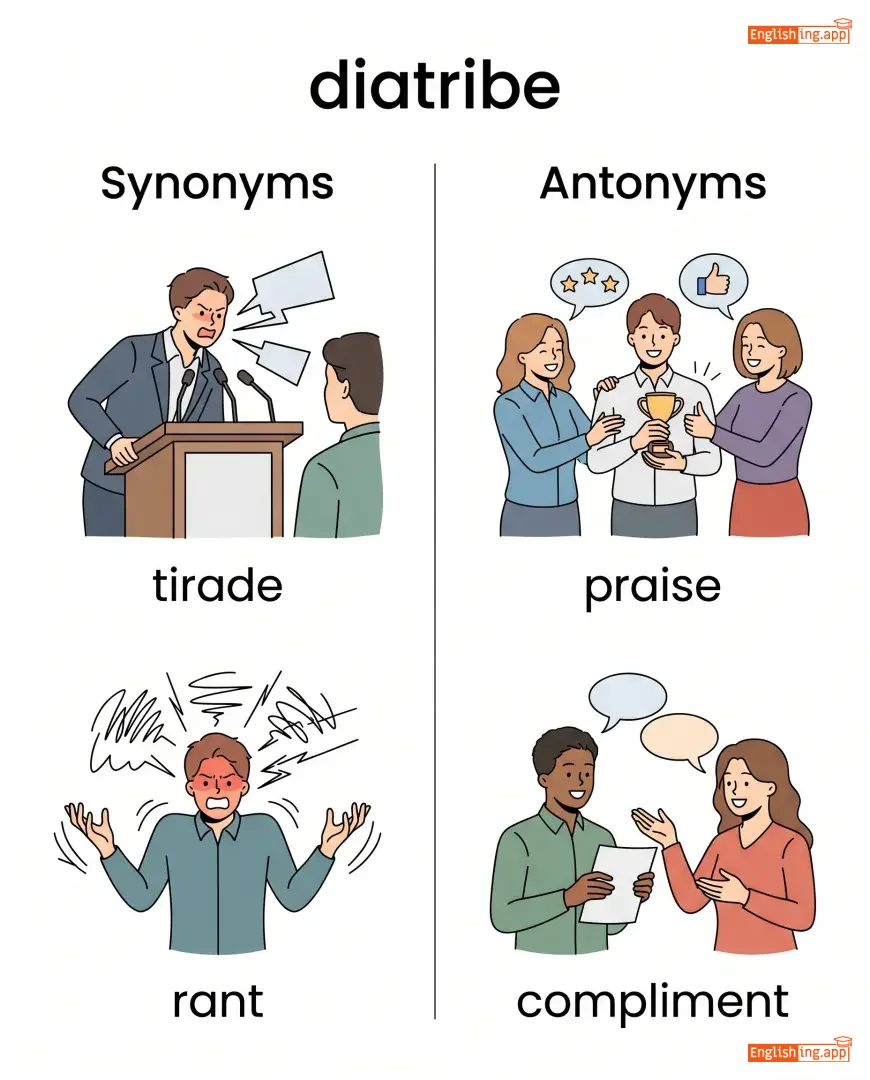
tirade, rant, criticism, denunciation, invective
••••••
|
praise, compliment
••••••
|
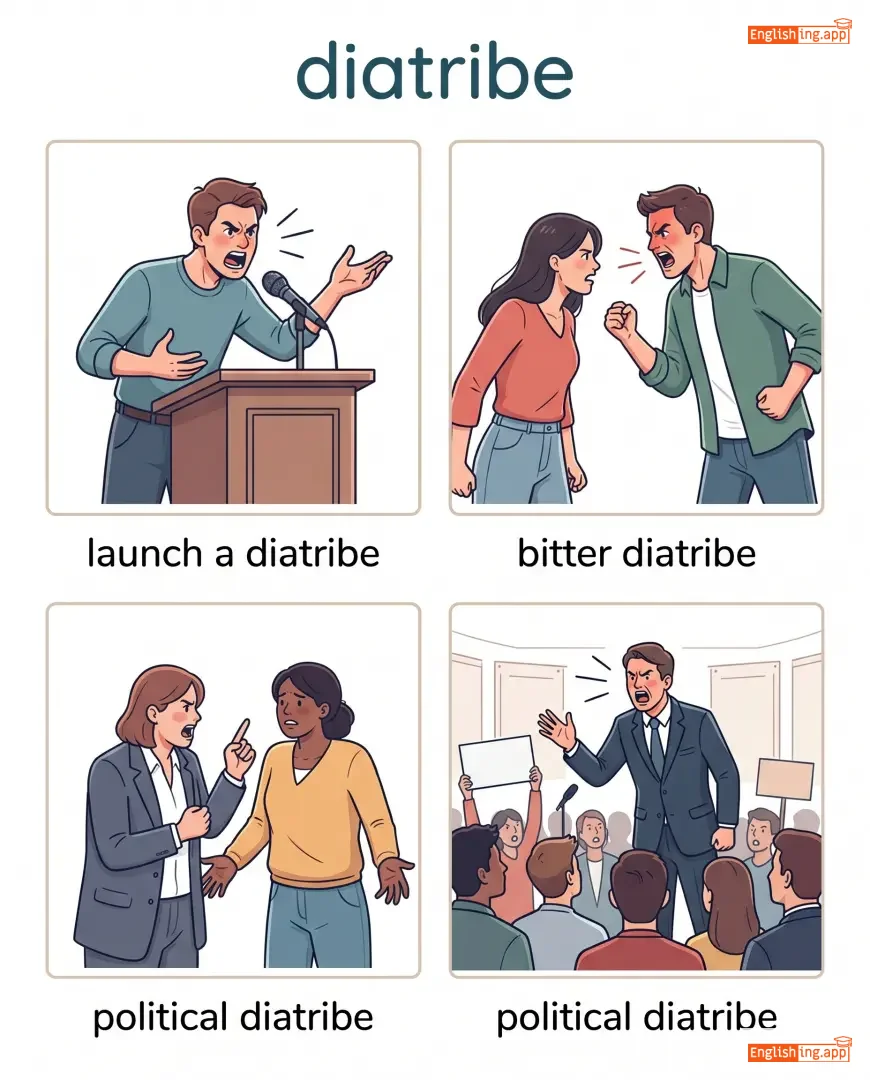
launch a diatribe, bitter diatribe, political diatribe
••••••
|
DIAlogue中TRIBE的激烈争论就像一场激烈的抨击
••••••
|
|
⚖️
••••••
|
/daɪˈkɒtəmi/
noun
(daɪˈkɒtəmi)
••••••
|
|
二分法
er fen fa
••••••
|
- •••••• | - •••••• | - •••••• | - •••••• |
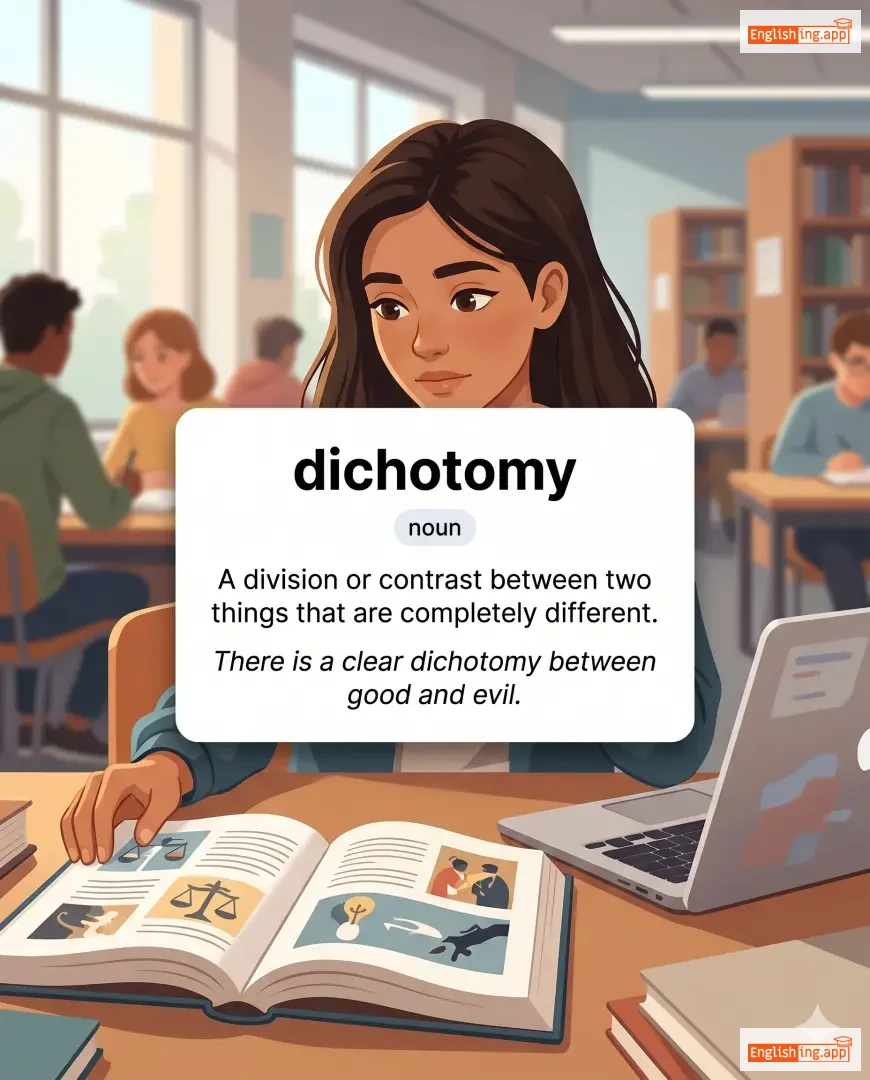
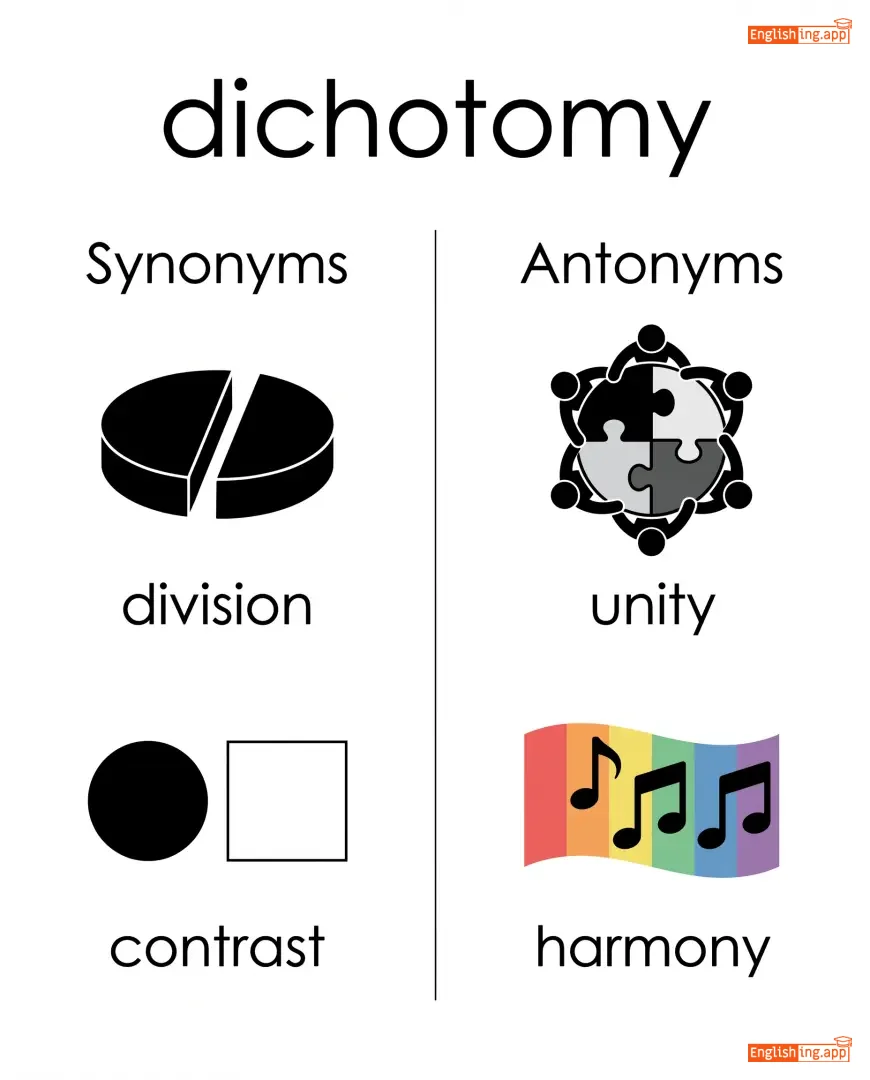
A division or contrast between two things that are completely different.
••••••
|
There is a clear dichotomy between good and evil. |
善与恶之间存在明显的二分法。
Shan yu e zhijian cunzai mingxian de er fen fa.
••••••
|
- •••••• | - •••••• | - •••••• |
division, contrast, split, dualism
••••••
|
unity, harmony
••••••
|
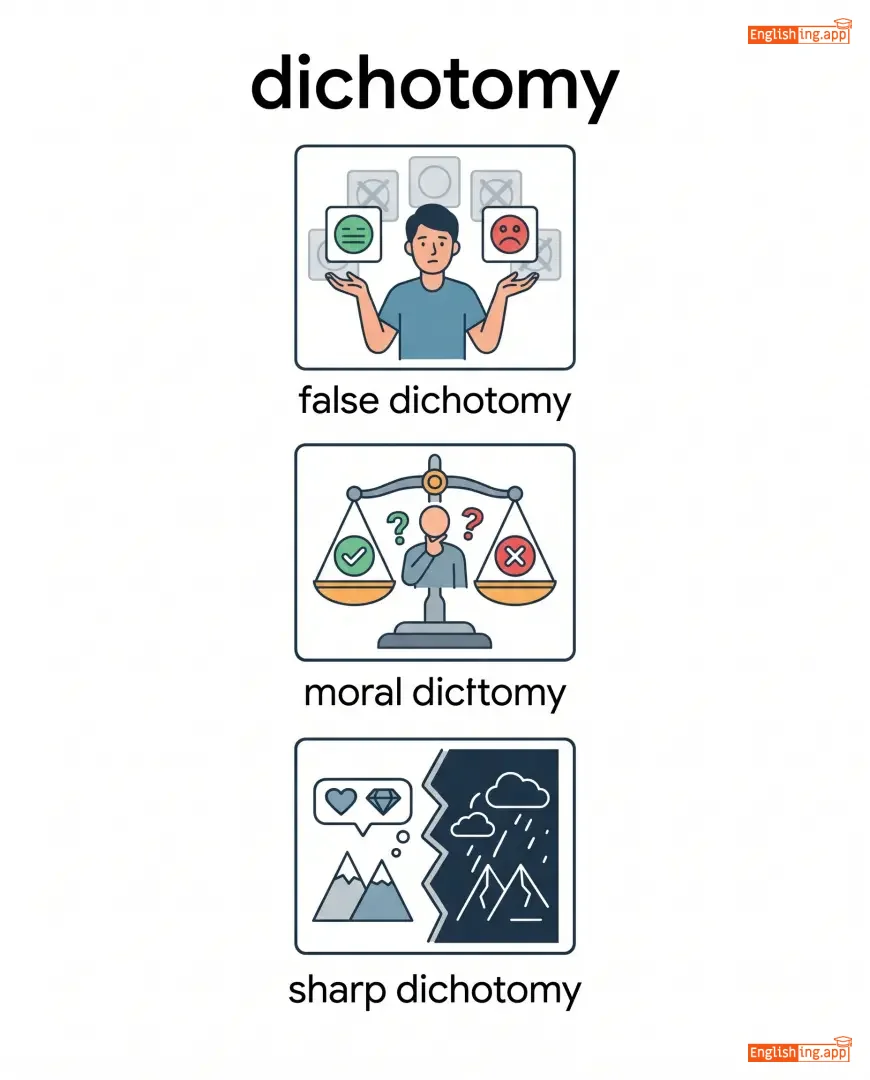
false dichotomy, moral dichotomy, sharp dichotomy
••••••
|
DIE 意味着两个 + CUT 意味着切割 → Dichotomy 意味着分成两部分
••••••
|
|
😶
••••••
|
/ˈdɪfɪdəns/
noun
(迪菲登斯)
••••••
|
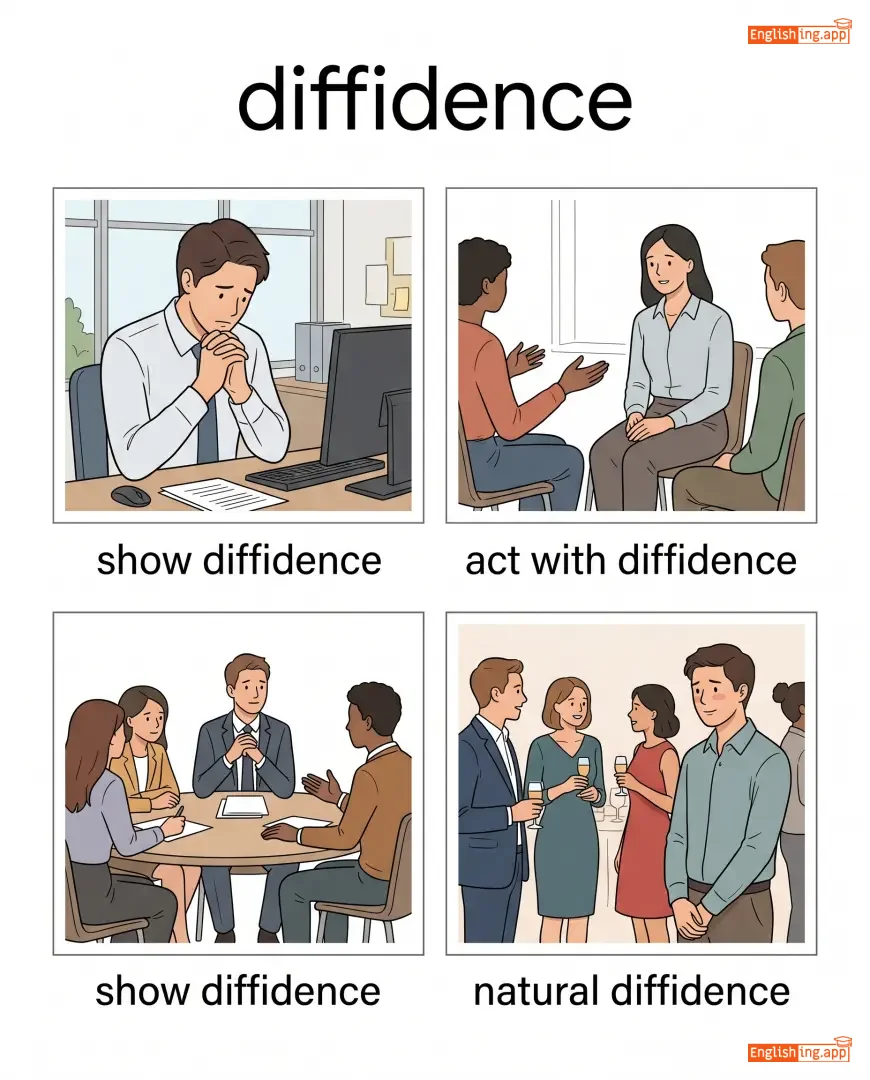
|
缺乏自信
quefa zixin
••••••
|
- •••••• | - •••••• | - •••••• | - •••••• |
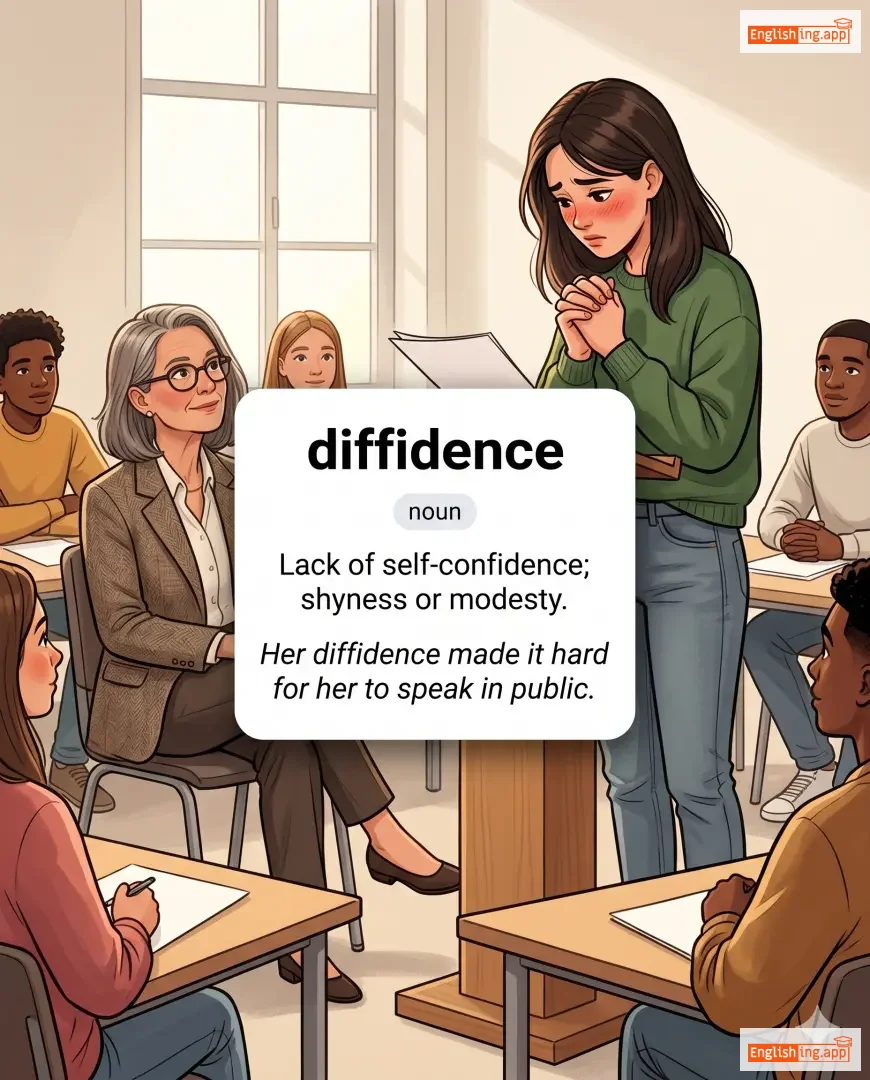
Lack of self-confidence; shyness or modesty.
••••••
|
Her diffidence made it hard for her to speak in public. |
她的缺乏自信让她很难在公众面前发言。
Ta de quefa zixin rang ta hen nan zai gongzhong mianqian fayan.
••••••
|
- •••••• | - •••••• | - •••••• |
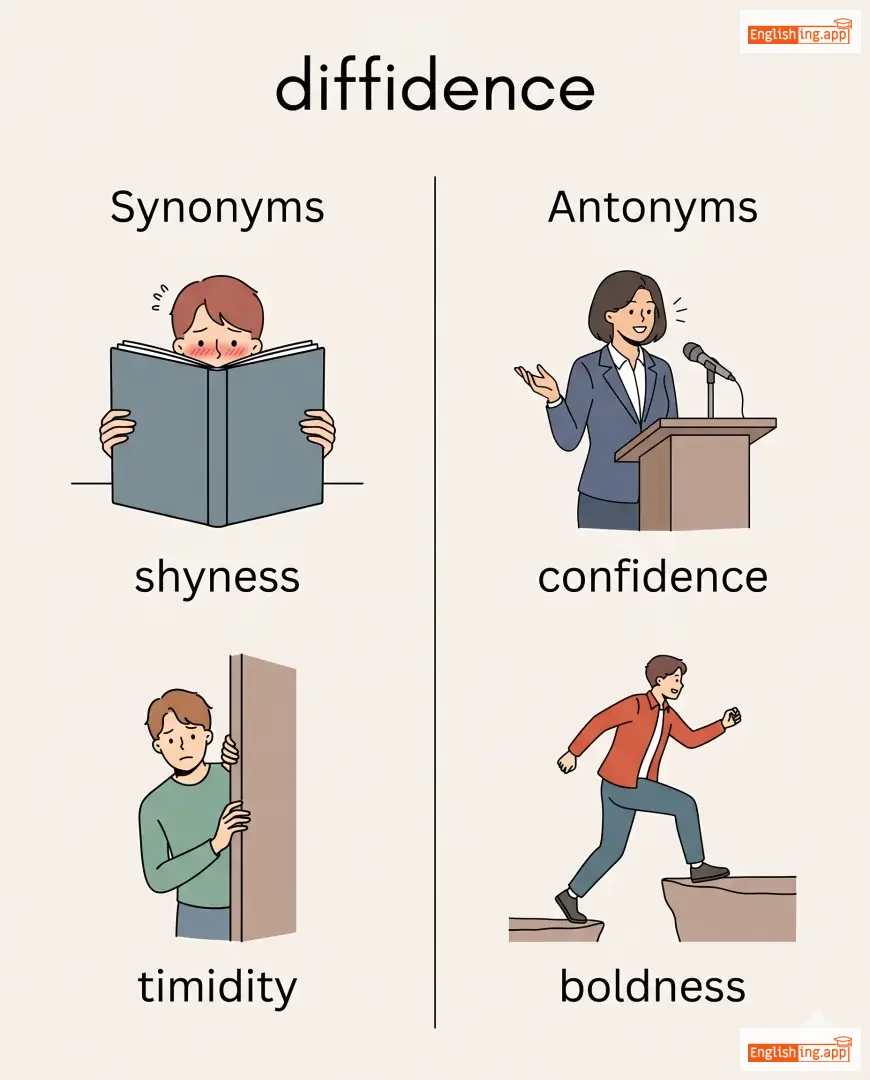
shyness, timidity, insecurity, reserve, modesty
••••••
|
confidence, boldness, assertiveness
••••••
|
show diffidence, act with diffidence, natural diffidence
••••••
|
Diffidence 意味着缺乏自信 - 记住 D = Down 自信。
••••••
|
|
🌫️
••••••
|
/dɪˈfjuːz/
verb
••••••
|
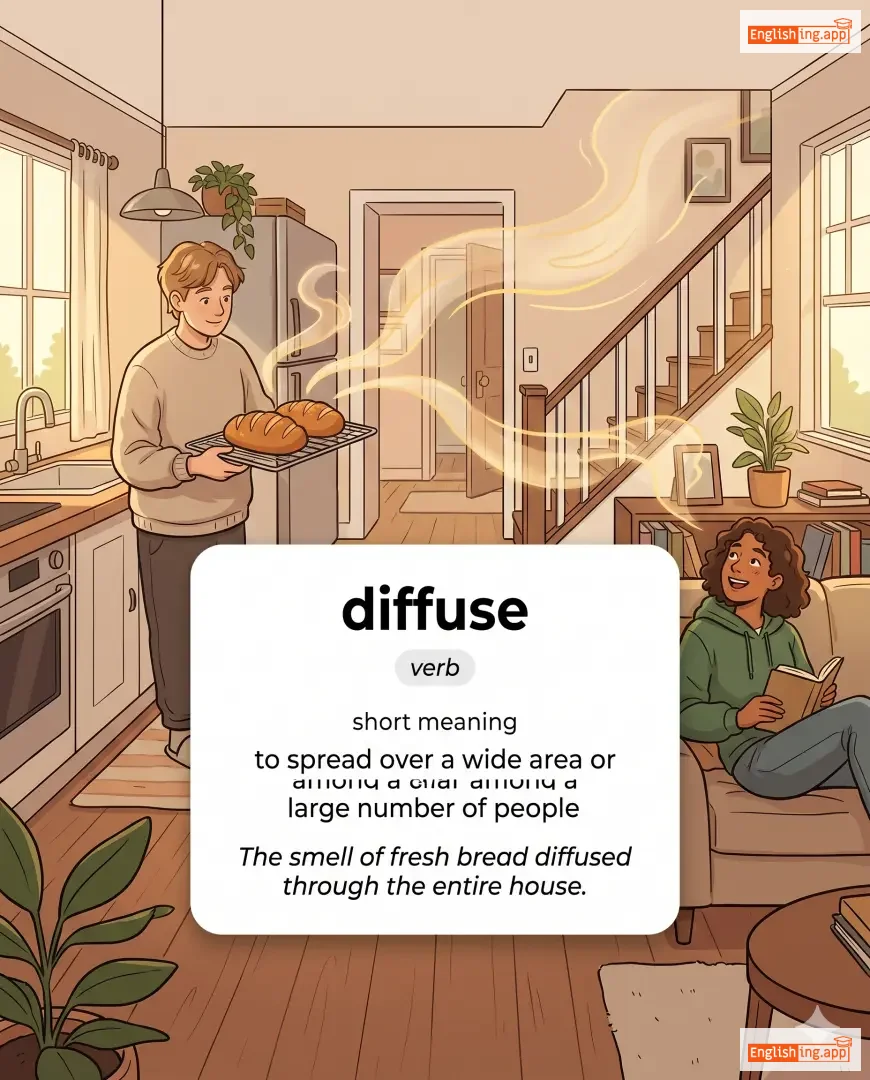
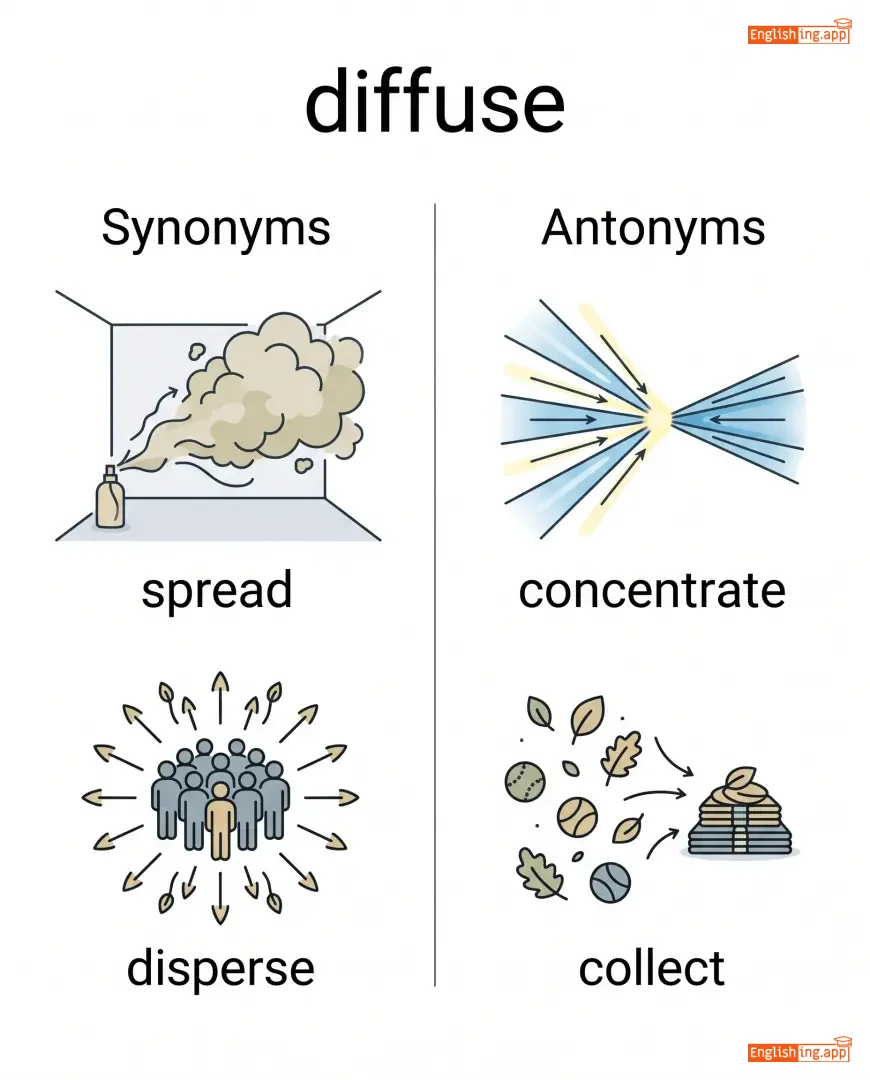
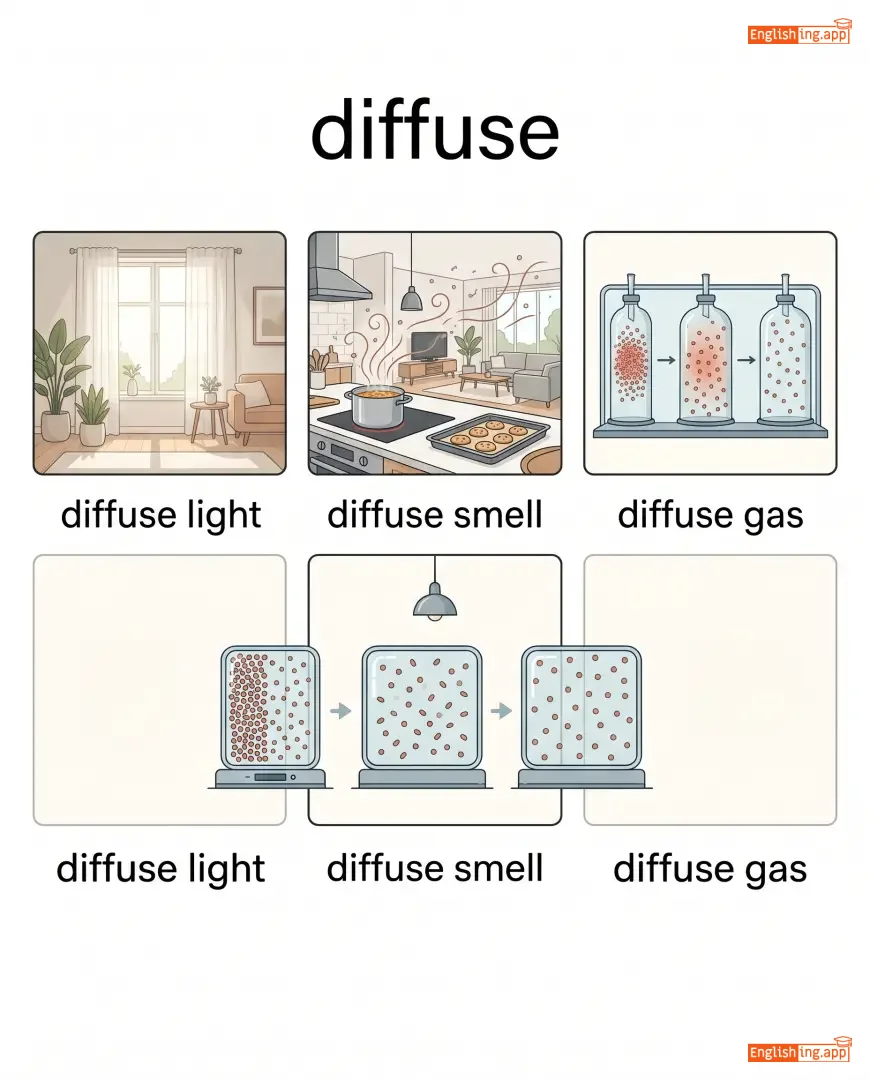
|
- •••••• |
diffused
••••••
|
diffused
••••••
|
diffuses
••••••
|
diffusing
••••••
|
to spread over a wide area or among a large number of people
••••••
|
The smell of fresh bread diffused through the entire house. |
- •••••• |
diffuse tension |
to reduce or calm down stress or conflict
••••••
|
- •••••• |
spread, disperse, scatter, distribute, dissipate
••••••
|
concentrate, collect, gather
••••••
|
diffuse light, diffuse smell, diffuse gas, diffuse conflict
••••••
|
No •••••• |
|
🛤️
••••••
|
/daɪˈɡrɛʃən/
noun
(dáigǔlèshén)
••••••
|
|
离题
lítí
••••••
|
- •••••• | - •••••• | - •••••• | - •••••• |
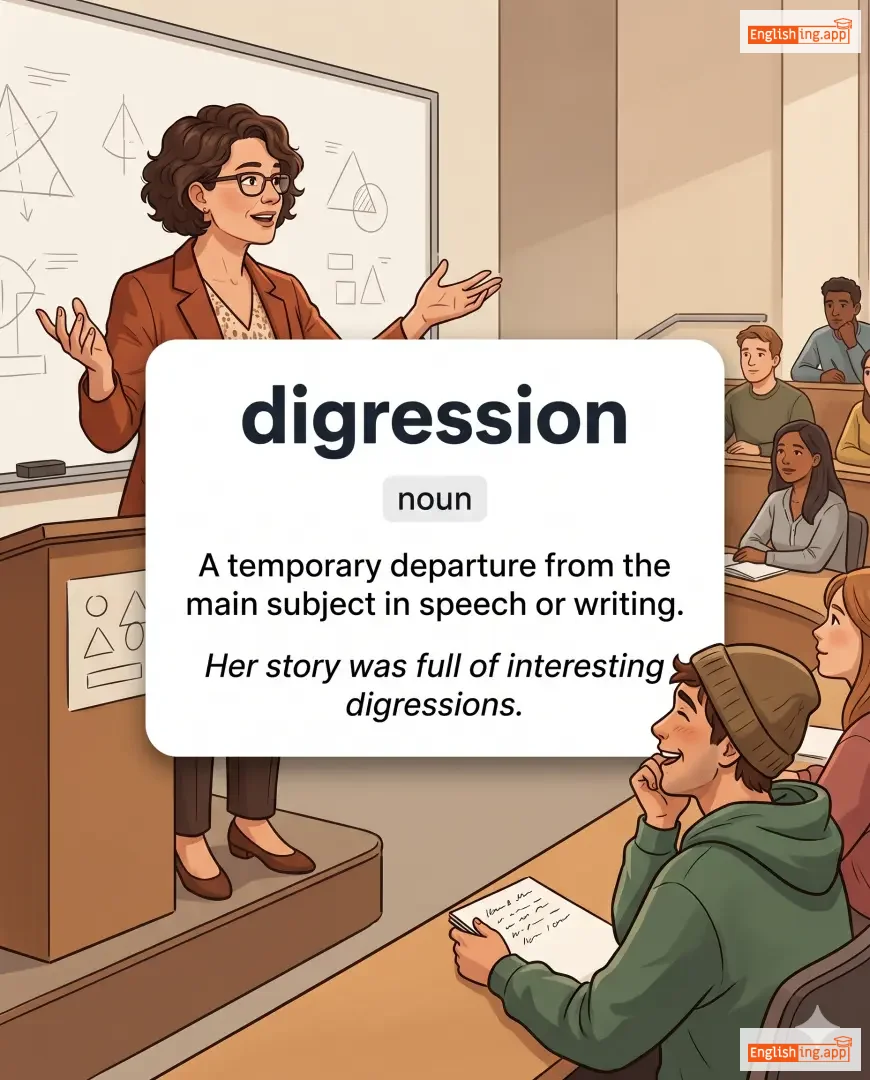
A temporary departure from the main subject in speech or writing.
••••••
|
Her story was full of interesting digressions. |
她的故事充满了有趣的离题部分。
Tā de gùshì chōngmǎnle yǒuqù de lítí bùfen.
••••••
|
- •••••• | - •••••• | - •••••• |
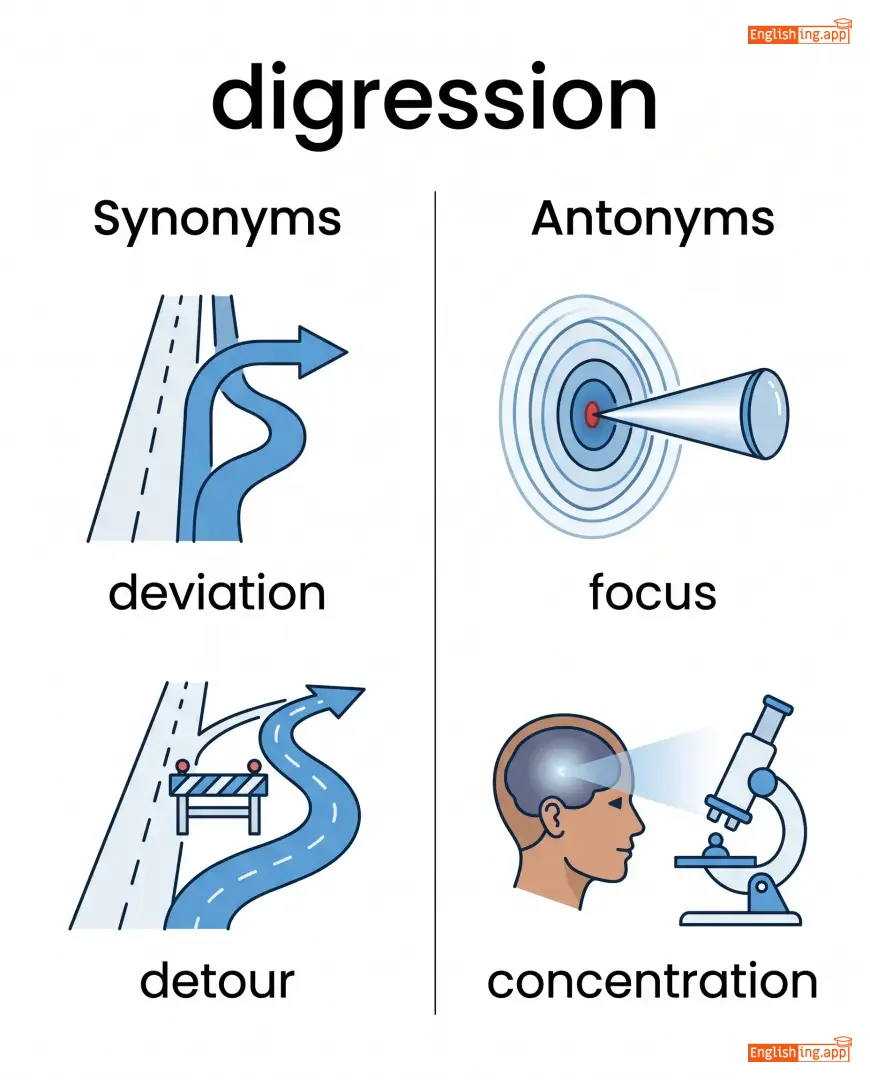
deviation, detour, aside, tangent
••••••
|
focus, concentration
••••••
|
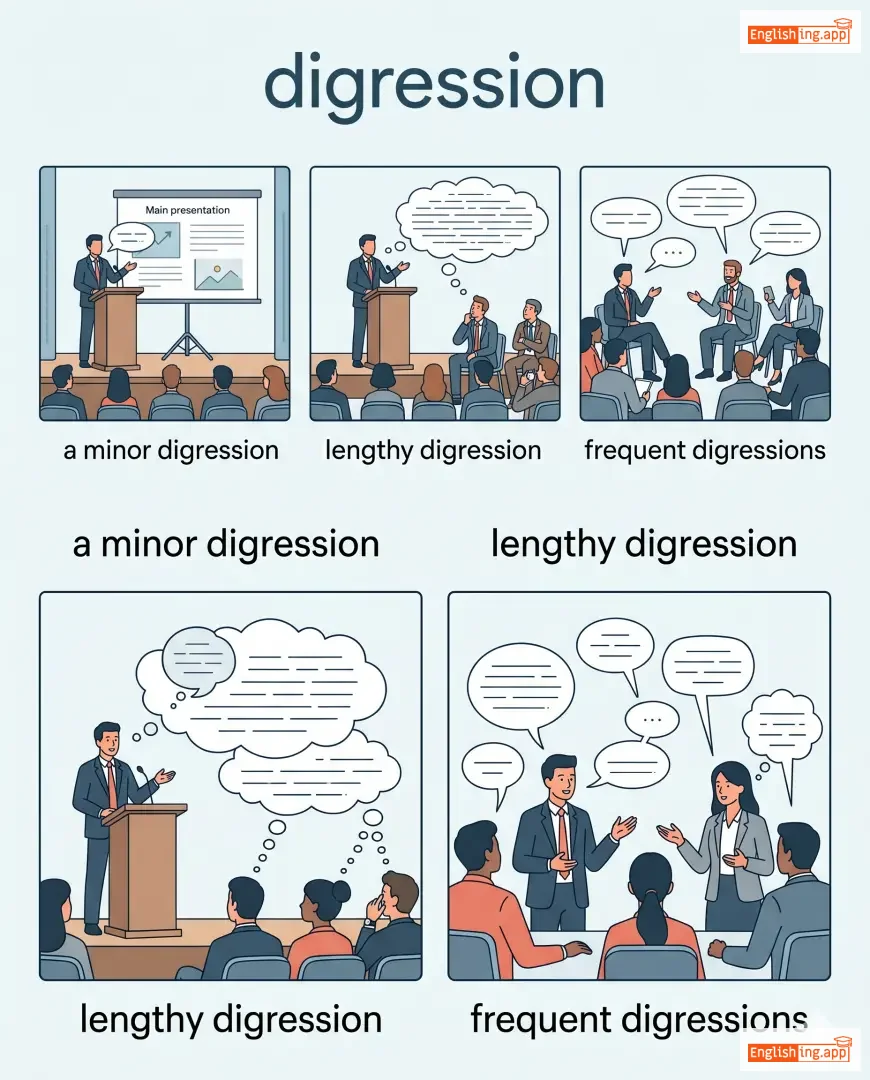
a minor digression, lengthy digression, frequent digressions
••••••
|
Digression 就是从主要话题偏离。
••••••
|
|
🎵
••••••
|
/dɜːrdʒ/
noun
(德尔奇)
••••••
|
|
挽歌
wǎngē
••••••
|
- •••••• | - •••••• | - •••••• | - •••••• |
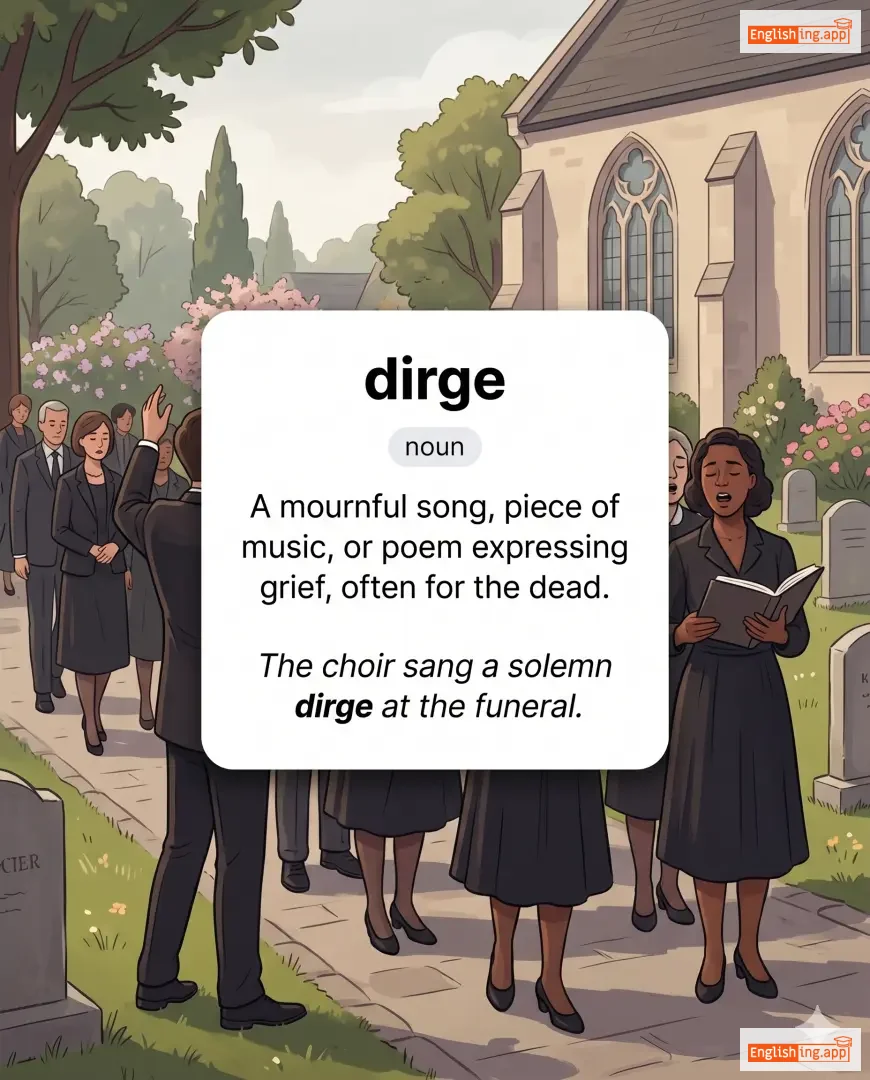
A mournful song, piece of music, or poem expressing grief, often for the dead.
••••••
|
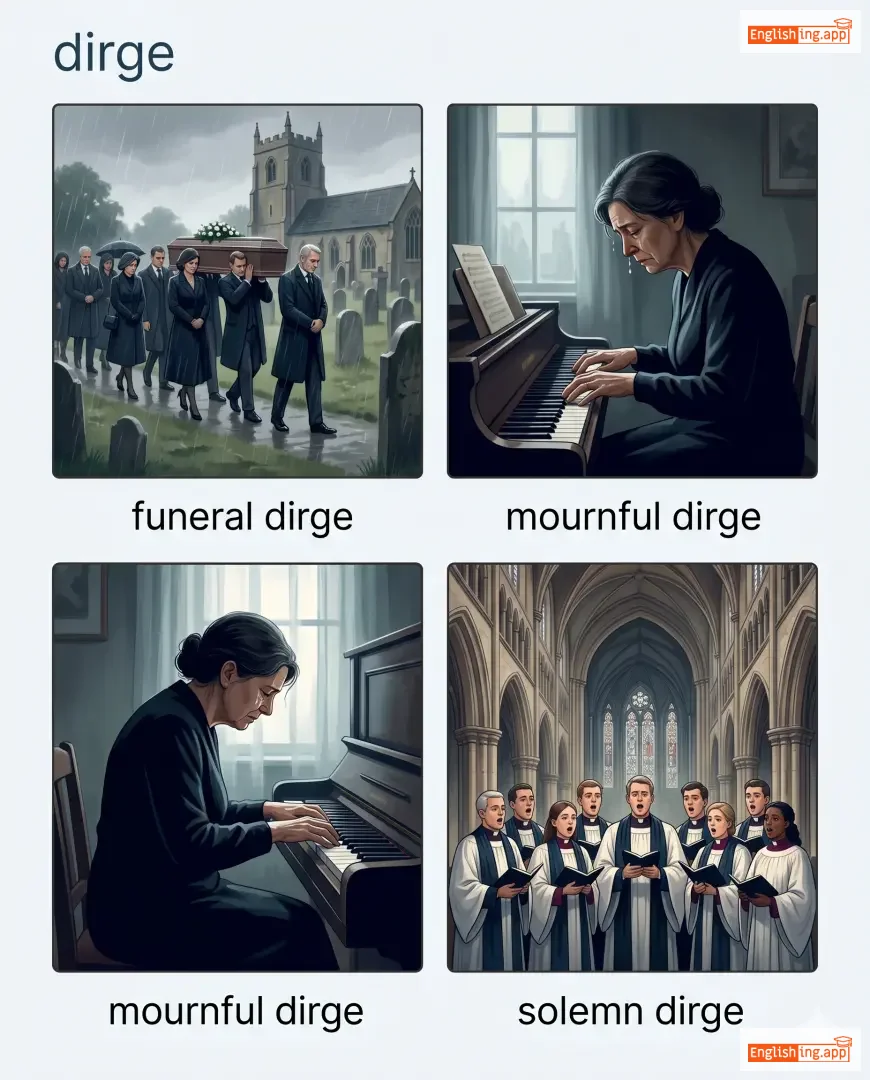
The choir sang a solemn dirge at the funeral.
合唱团在葬礼上唱了一首庄严的挽歌。
••••••
|
合唱团在葬礼上唱了一首庄严的挽歌。
Hé chàng tuán zài zànglǐ shàng chàngle yī shǒu zhuāngyán de wǎngē.
••••••
|
- •••••• | - •••••• | - •••••• |
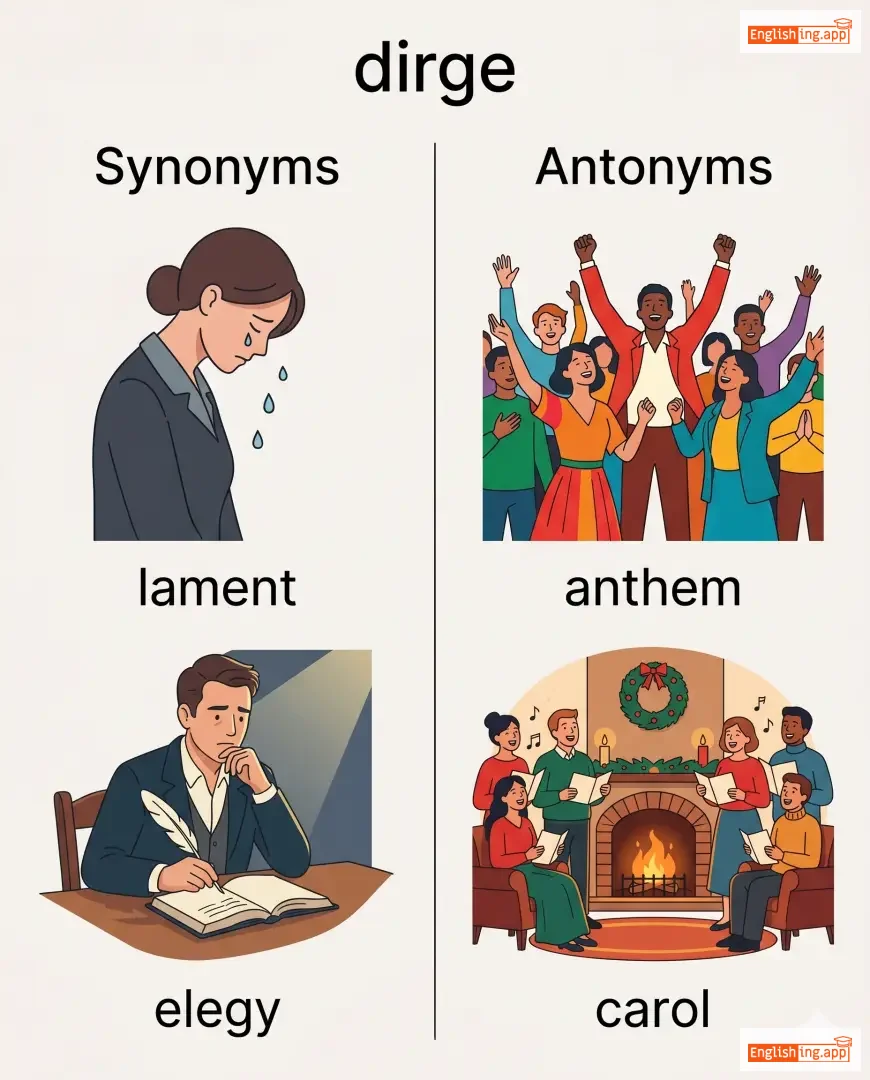
lament, elegy, requiem, threnody, funeral song
••••••
|
anthem, carol, celebration
••••••
|
funeral dirge, mournful dirge, solemn dirge
••••••
|
Dirge是‘挽歌’ — 一首表示悲痛的歌。
••••••
|
|
💡
••••••
|
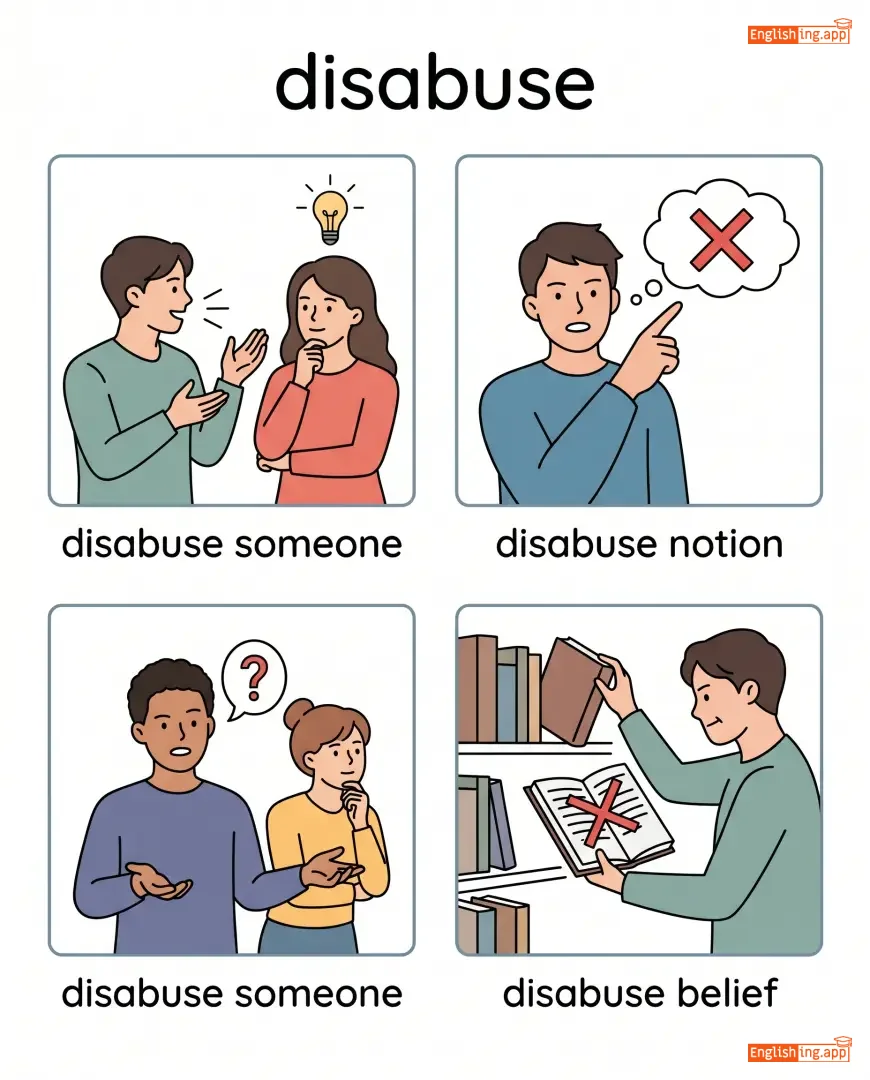
/ˌdɪsəˈbjuːz/
verb
(迪萨比尤兹)
••••••
|
|
使觉醒
shi juexing
••••••
|
disabused
迪萨比尤兹德
••••••
|
disabused
迪萨比尤兹德
••••••
|
disabuses
迪萨比尤兹斯
••••••
|
disabusing
迪萨比尤兹英
••••••
|
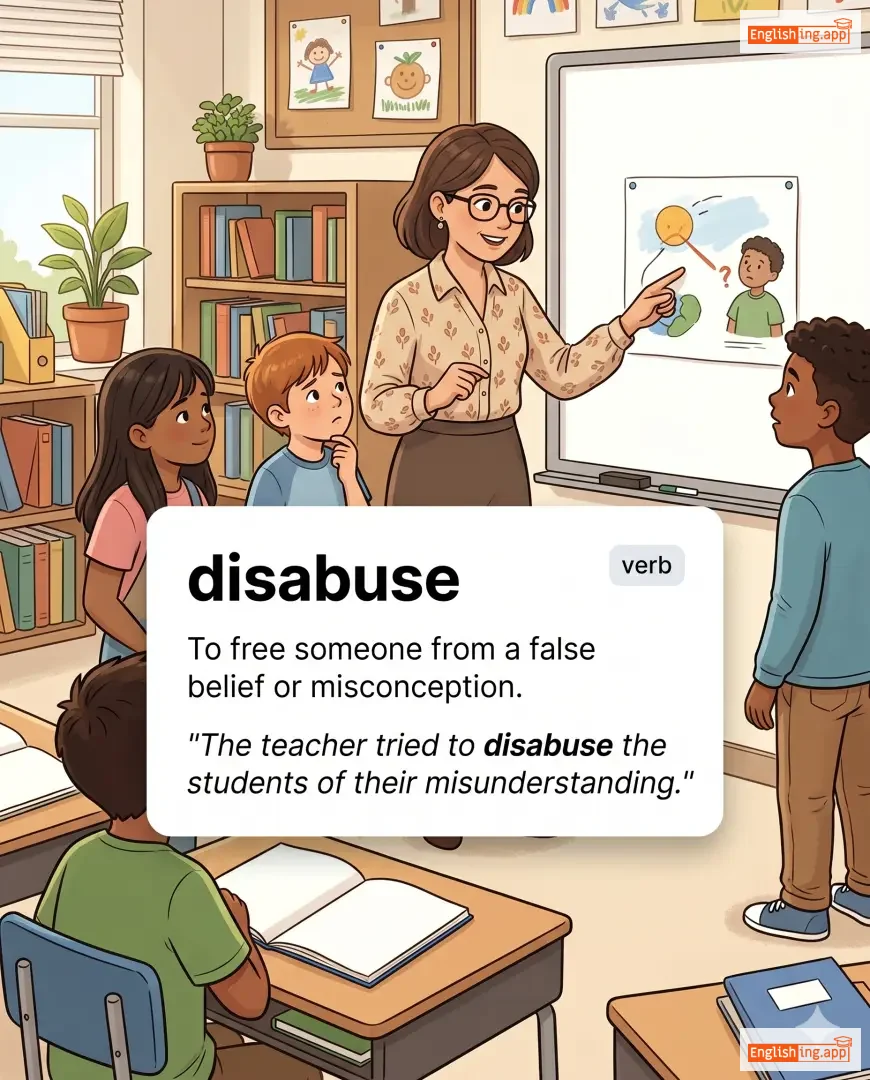
To free someone from a false belief or misconception.
••••••
|
The teacher tried to disabuse the students of their misunderstanding.
老师试图让学生摆脱他们的误解。
••••••
|
老师试图让学生摆脱他们的误解。
Laoshi shitu rang xuesheng baituo tamen de wu jie.
••••••
|
- •••••• | - •••••• | - •••••• |
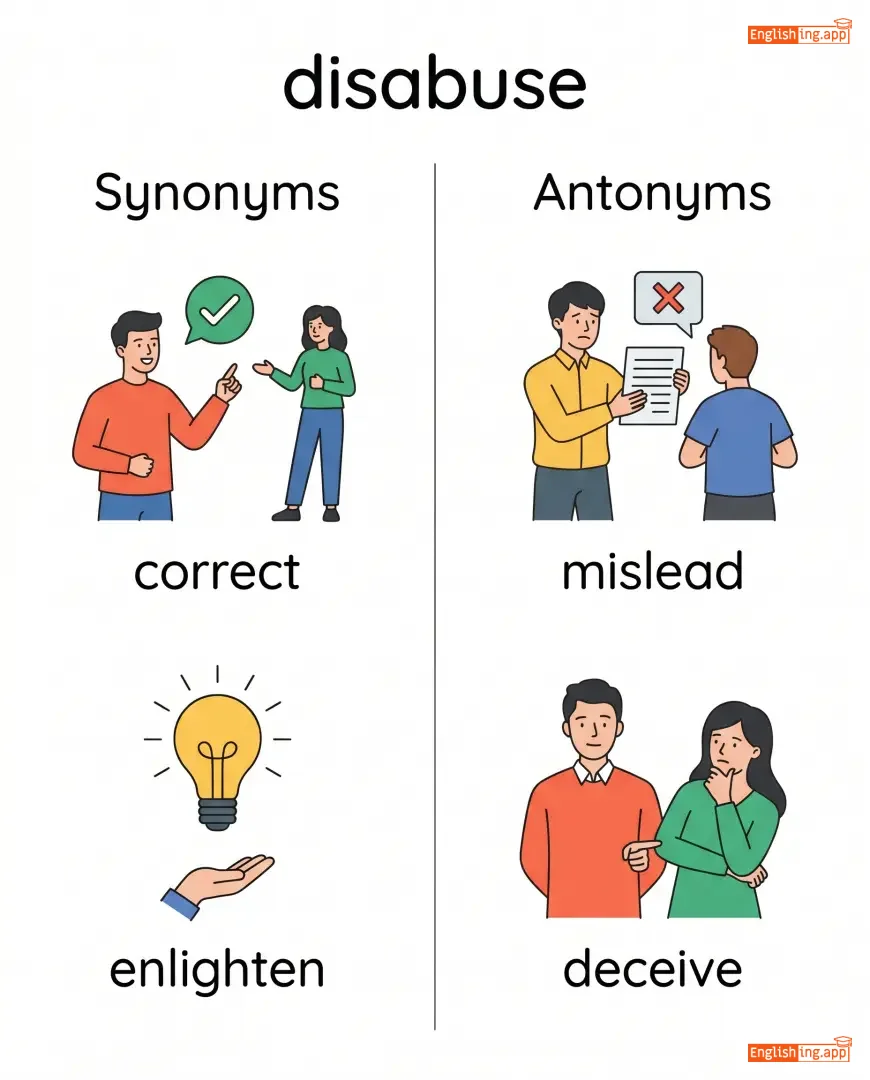
correct, enlighten, rectify, debunk, refute
••••••
|
mislead, deceive, delude
••••••
|
disabuse someone, disabuse notion, disabuse belief
••••••
|
Disabuse = 使觉醒 → 摆脱误解。
••••••
|
|
🧐
••••••
|
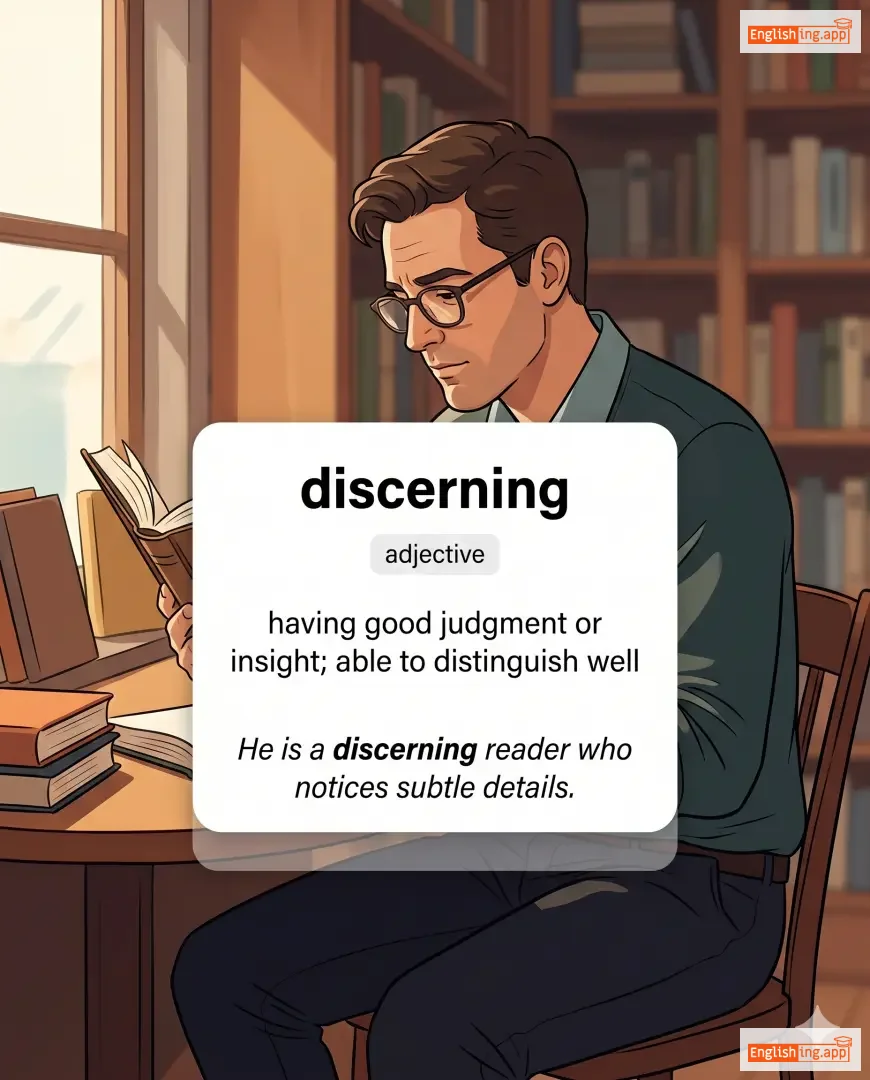
/dɪˈsɜːrnɪŋ/
adjective
(迪瑟宁)
••••••
|

|
有洞察力的
you dongcha li de
••••••
|
- •••••• | - •••••• | - •••••• | - •••••• |
having good judgment or insight; able to distinguish well
••••••
|
He is a discerning reader who notices subtle details. |
他是一个有洞察力的读者,能注意到细微的细节。
ta shi yige you dongcha li de duzhe, neng zhuyi dao xiwei de xijie.
••••••
|
discerning taste |
ability to appreciate and judge good quality
••••••
|
有洞察力的品味
you dongcha li de pinwei
••••••
|
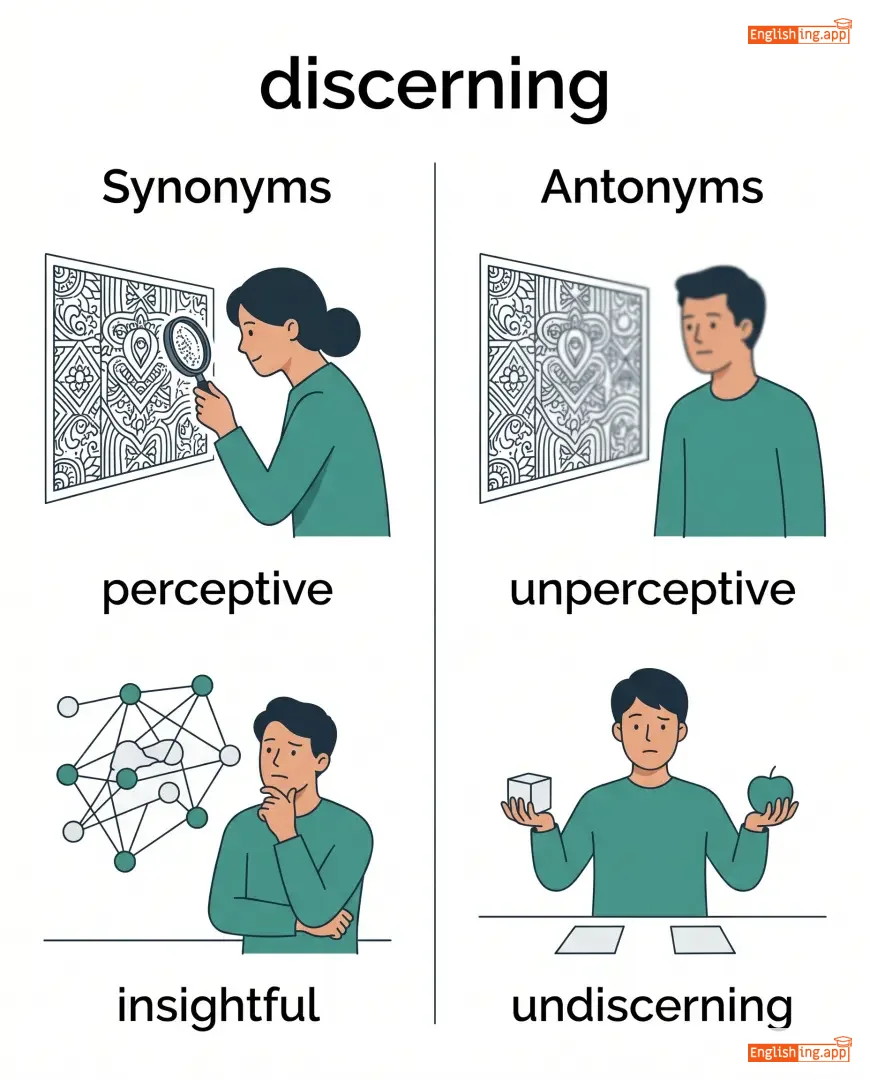
perceptive, insightful, judicious, astute
••••••
|
unperceptive, undiscerning
••••••
|
discerning reader, discerning customer, discerning eye, discerning taste
••••••
|
Discerning是指能迅速发现细节,就像一个敏锐的读者一样。
••••••
|
|
🎶
••••••
|
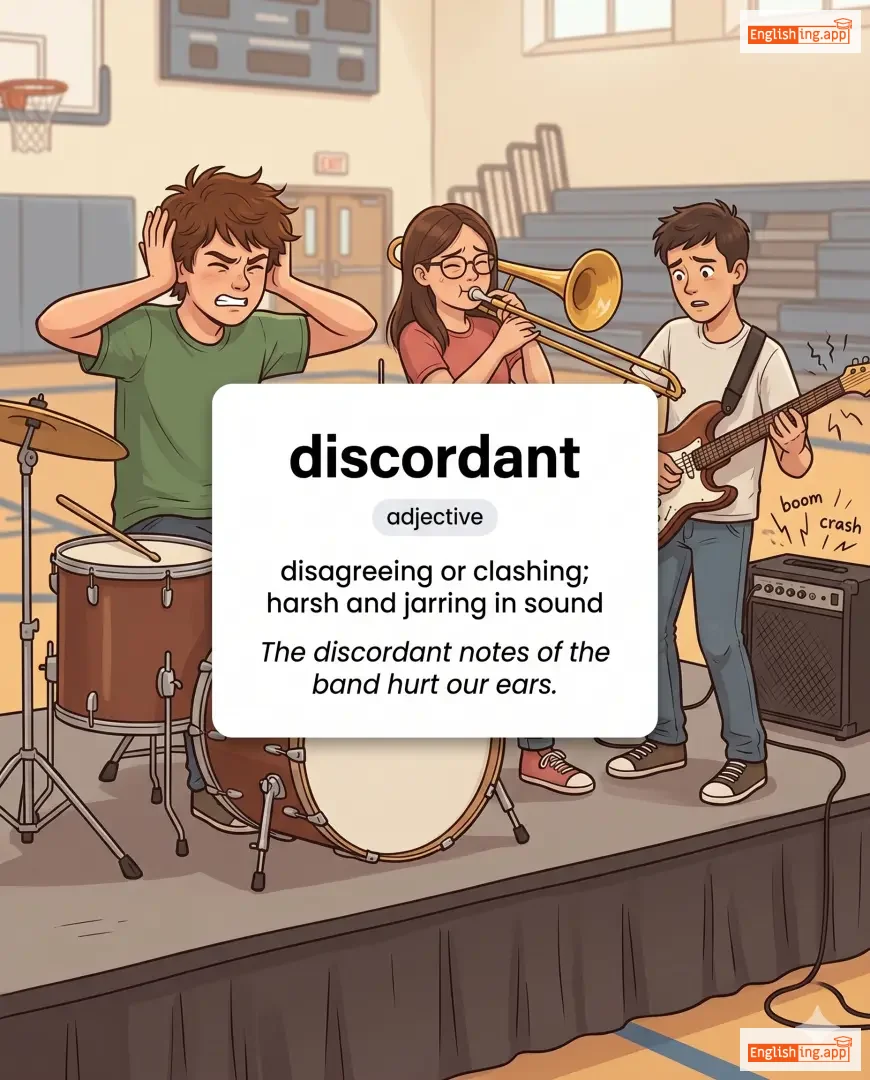
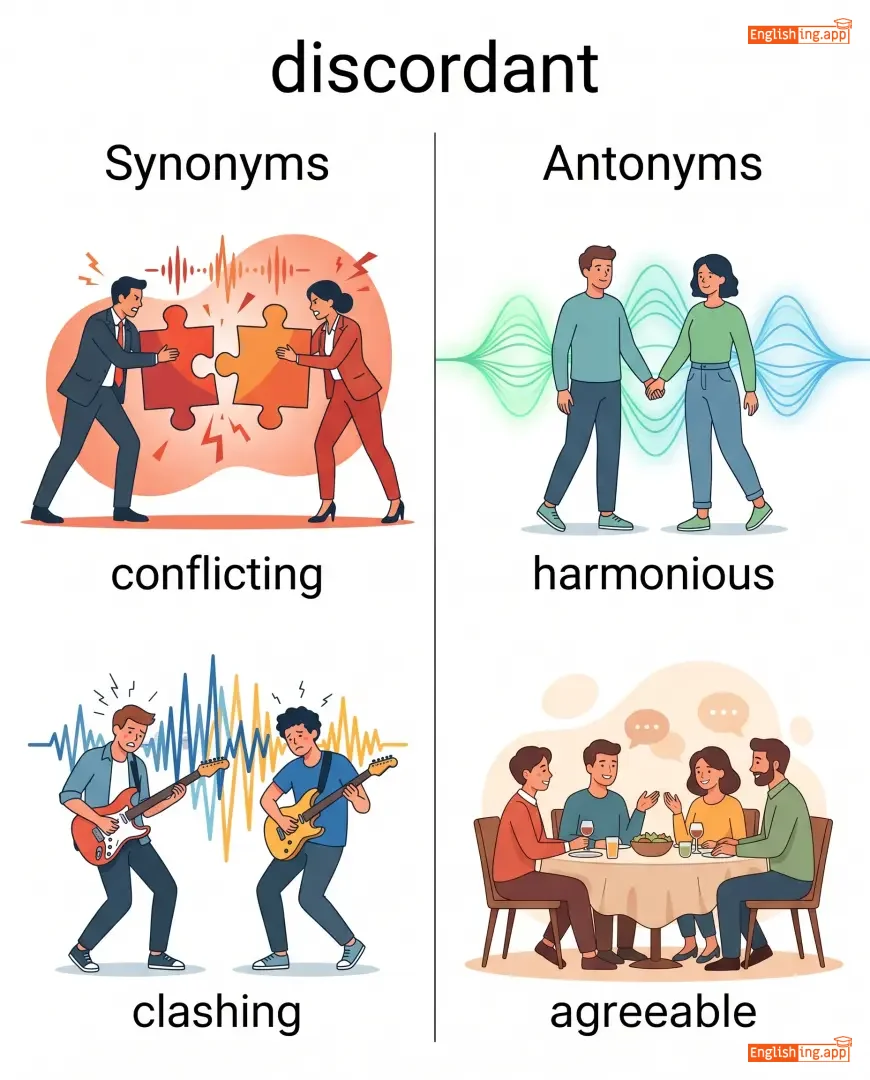
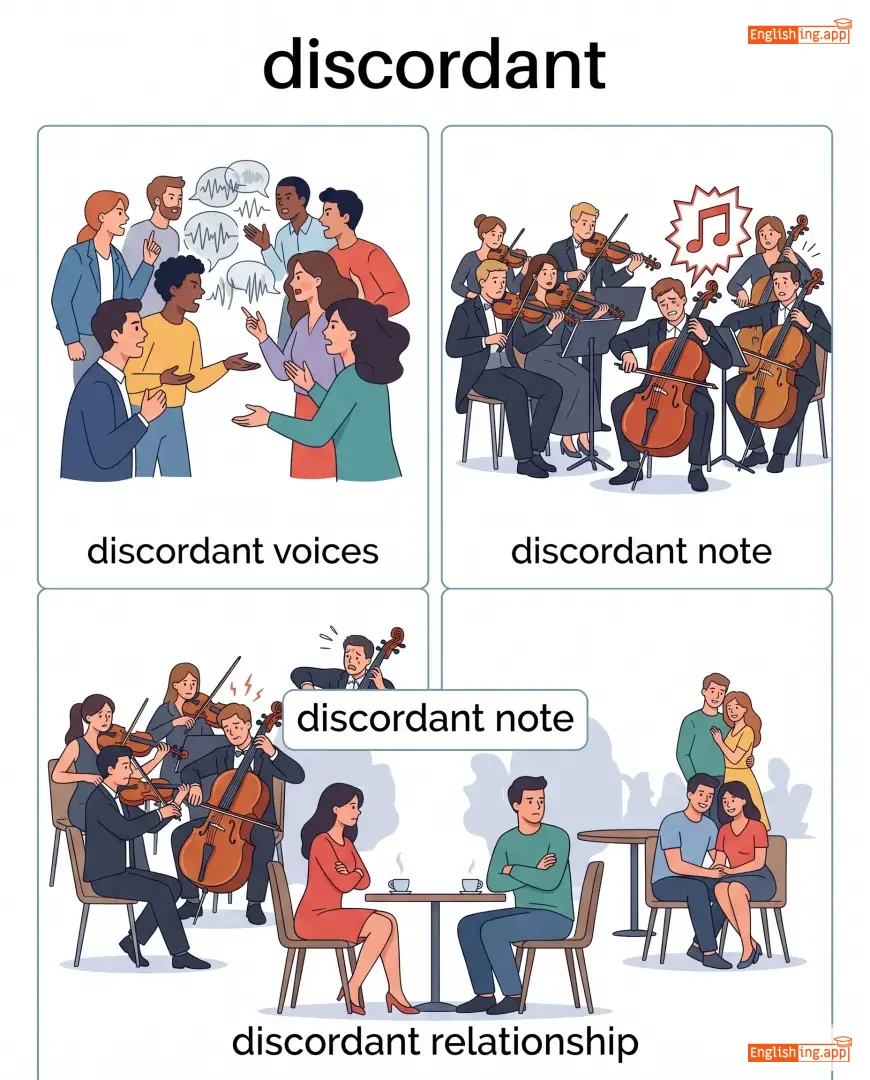
/dɪsˈkɔːrdənt/
adjective
(dɪsˈkɔːrdənt)
••••••
|
|
不和谐
bù héxié
••••••
|
- •••••• | - •••••• | - •••••• | - •••••• |
disagreeing or clashing; harsh and jarring in sound
••••••
|
The discordant notes of the band hurt our ears. |
乐队的不和谐音符让我们的耳朵很痛。
Yuèduì de bù héxié yīnfú ràng wǒmen de ěrduo hěn tòng.
••••••
|
- •••••• | - •••••• | - •••••• |
conflicting, clashing, jarring, dissonant
••••••
|
harmonious, agreeable
••••••
|
discordant voices, discordant note, discordant relationship
••••••
|
不和谐表示冲突,像刺耳的声音。
••••••
|
|
⚠️
••••••
|
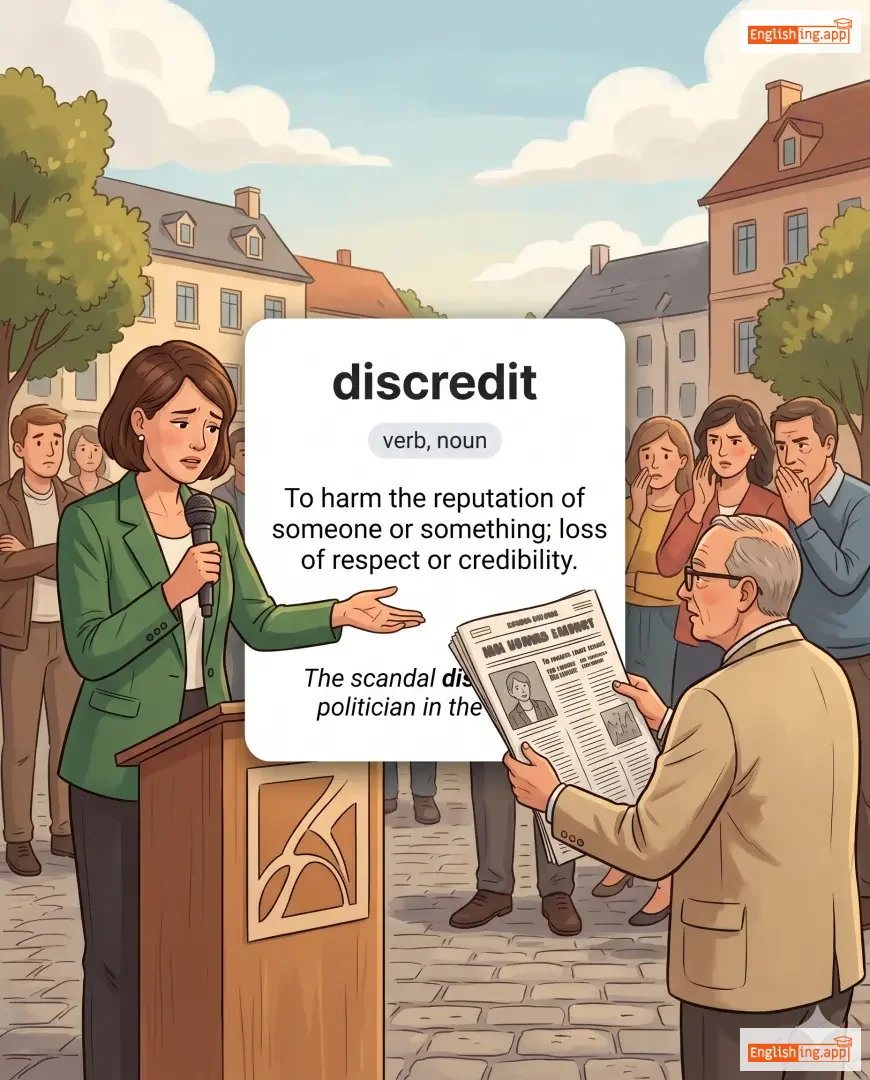
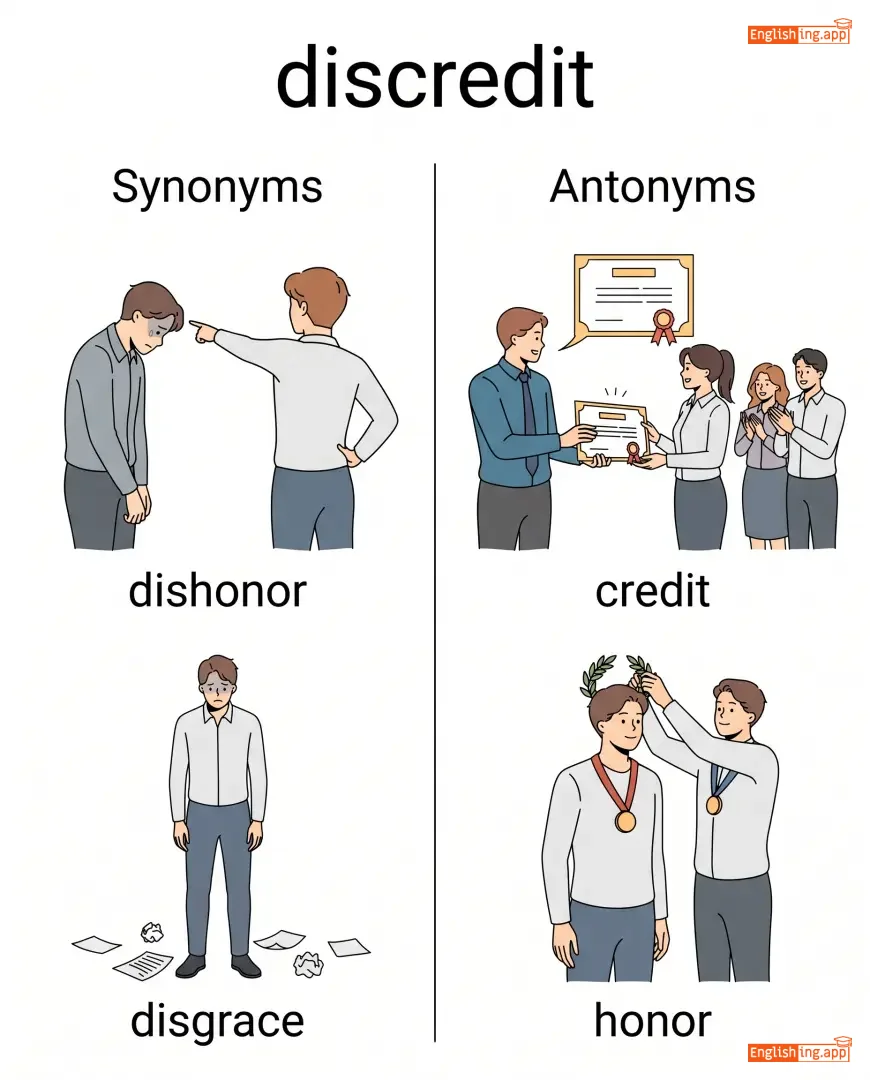
/dɪsˈkrɛdɪt/
verb, noun
(迪斯克雷迪特)
••••••
|
|
诋毁
dǐ huǐ
••••••
|
discredited
迪斯克雷迪特过
••••••
|
discredited
迪斯克雷迪特过
••••••
|
discredits
迪斯克雷迪特
••••••
|
discrediting
迪斯克雷迪特中
••••••
|
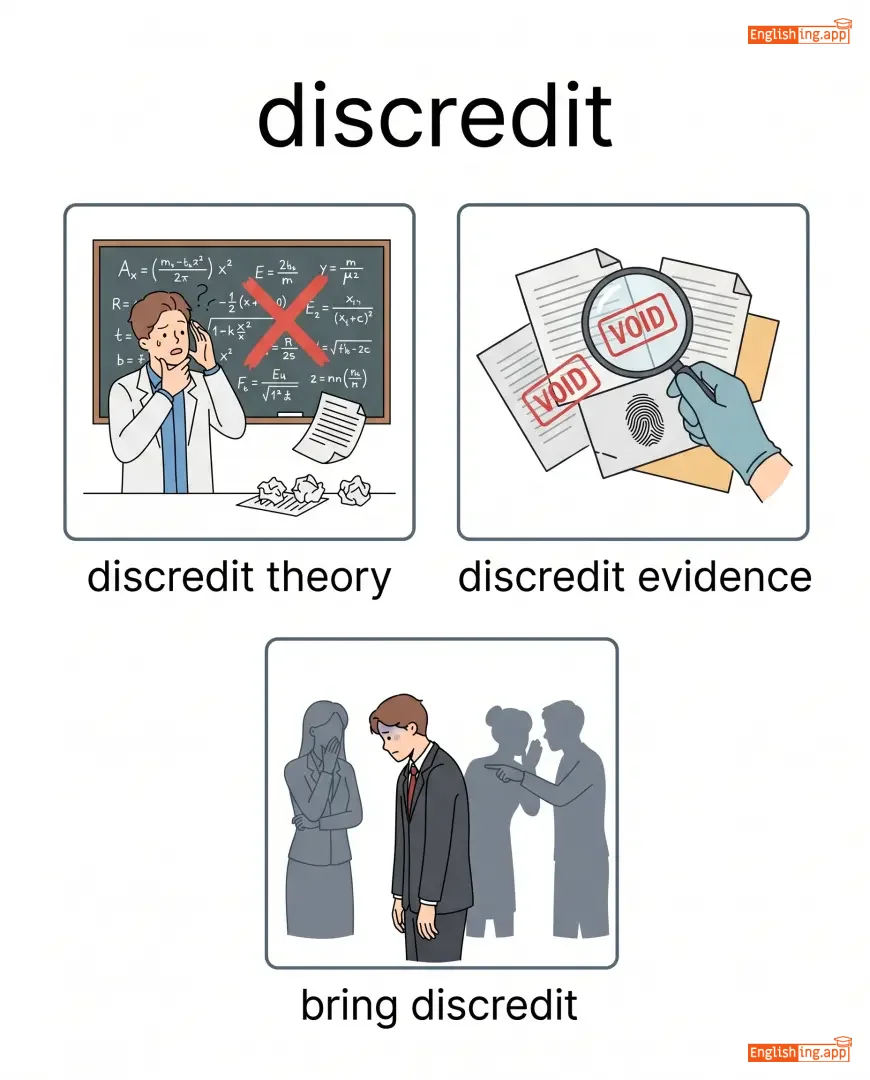
To harm the reputation of someone or something; loss of respect or credibility.
••••••
|
The scandal discredited the politician in the eyes of the public.
丑闻使这位政治家在公众眼中失去了信誉。
••••••
|
丑闻使这位政治家在公众眼中失去了信誉。
Chǒuwén shǐ zhè wèi zhèngzhìjiā zài gōngzhòng yǎnzhōng shīqùle xìnyù.
••••••
|
bring into discredit
使名誉受损
••••••
|
Cause someone or something to lose reputation or credibility.
••••••
|
使名誉受损
shǐ míngyù shòu sǔn
••••••
|
dishonor, disgrace, defame, undermine, disrepute
••••••
|
credit, honor, respect
••••••
|
discredit theory, discredit evidence, bring discredit, discredit witness
••••••
|
Discredit = 'dis' (不好的) + '信用' (声誉)
••••••
|
|
⚖️
••••••
|
/dɪˈskrɛpənsi/
noun
••••••
|
|
- •••••• | - •••••• | - •••••• | - •••••• | - •••••• |
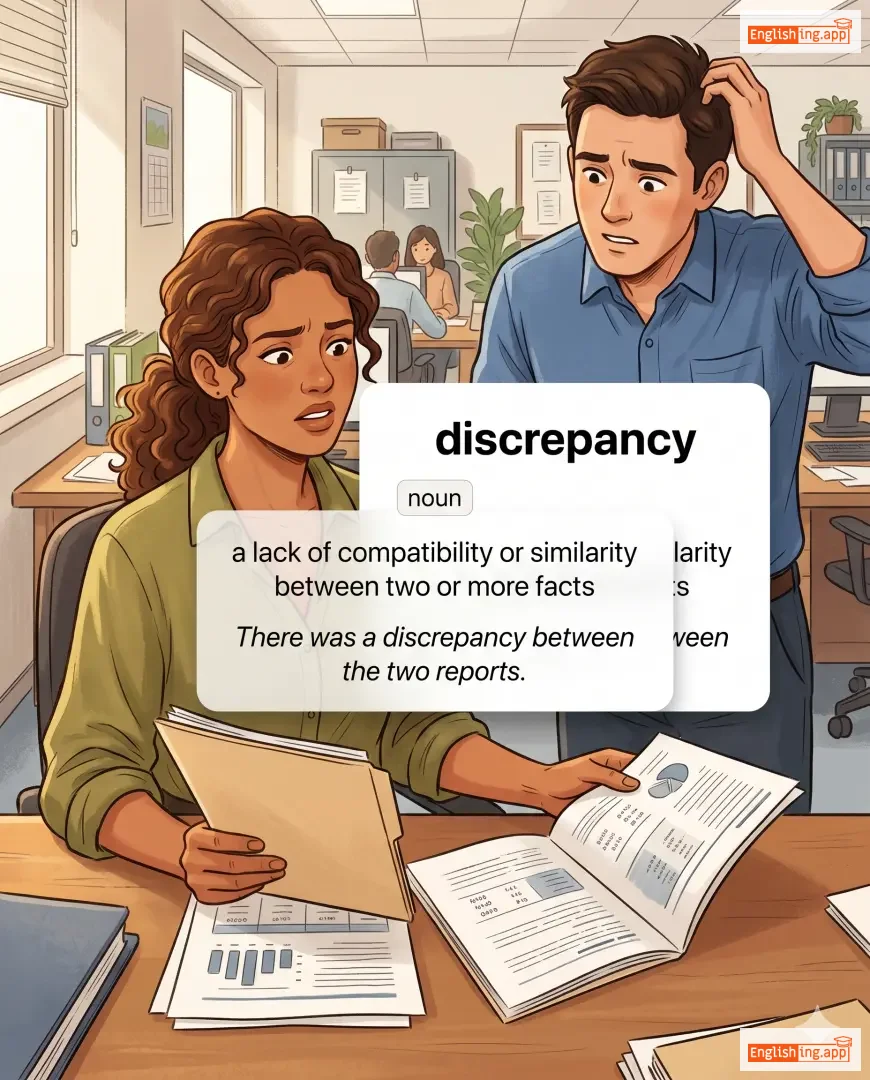
a lack of compatibility or similarity between two or more facts
••••••
|
There was a discrepancy between the two reports. |
- •••••• |
discrepancy in accounts |
a mismatch or inconsistency in financial records
••••••
|
- •••••• |
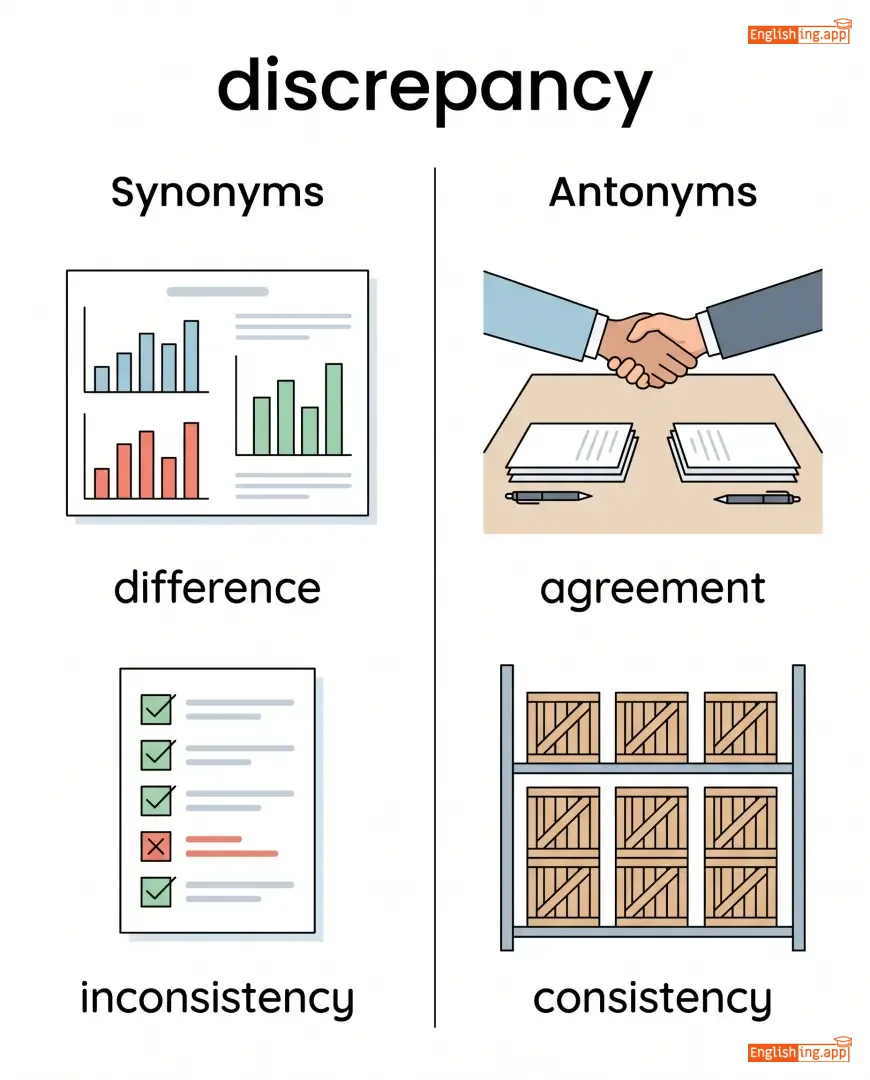
difference, inconsistency, variation, divergence, conflict
••••••
|
agreement, consistency, harmony
••••••
|
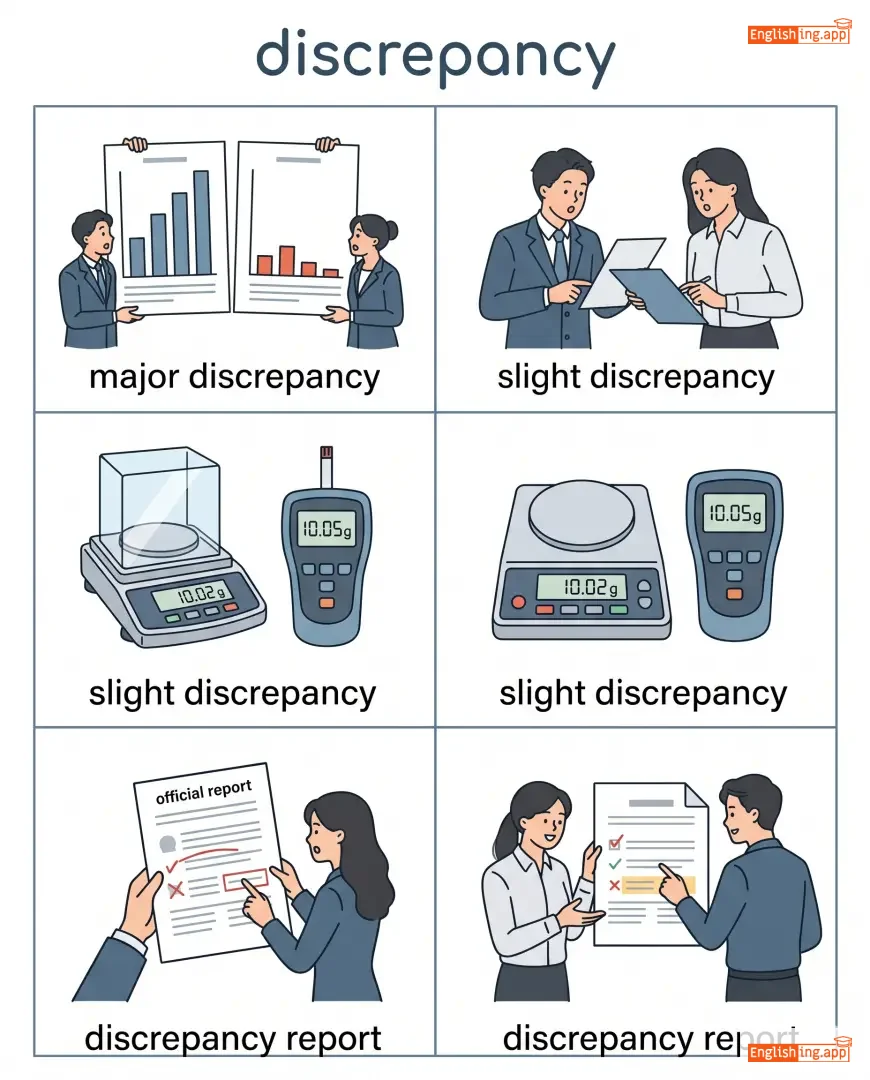
major discrepancy, slight discrepancy, discrepancy report, discrepancy in data
••••••
|
No •••••• |
|
🔹
••••••
|
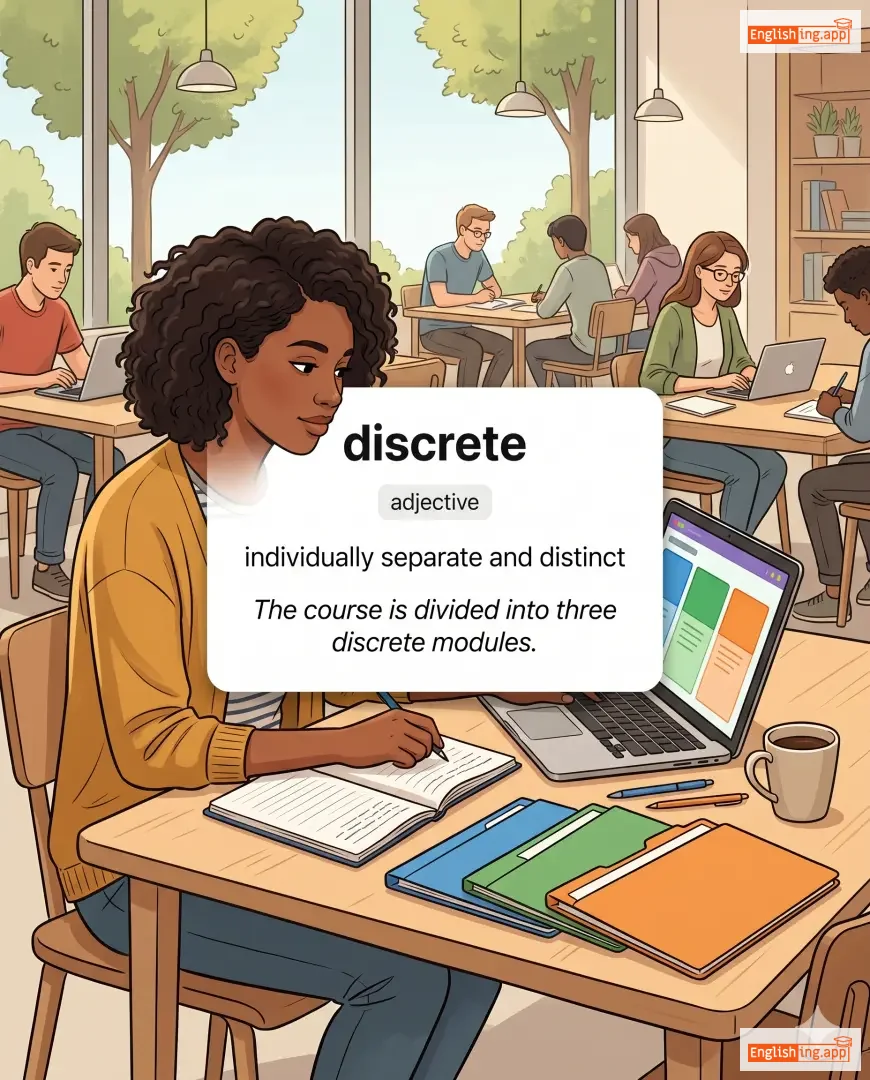
/dɪˈskriːt/
adjective
(dīsīkè)
••••••
|
|
离散的
lísàn de
••••••
|
- •••••• | - •••••• | - •••••• | - •••••• |
individually separate and distinct
••••••
|
The course is divided into three discrete modules. |
该课程被划分为三个离散模块。
Gāi kèchéng bèi huàfēn wéi sān gè lísàn mókuài.
••••••
|
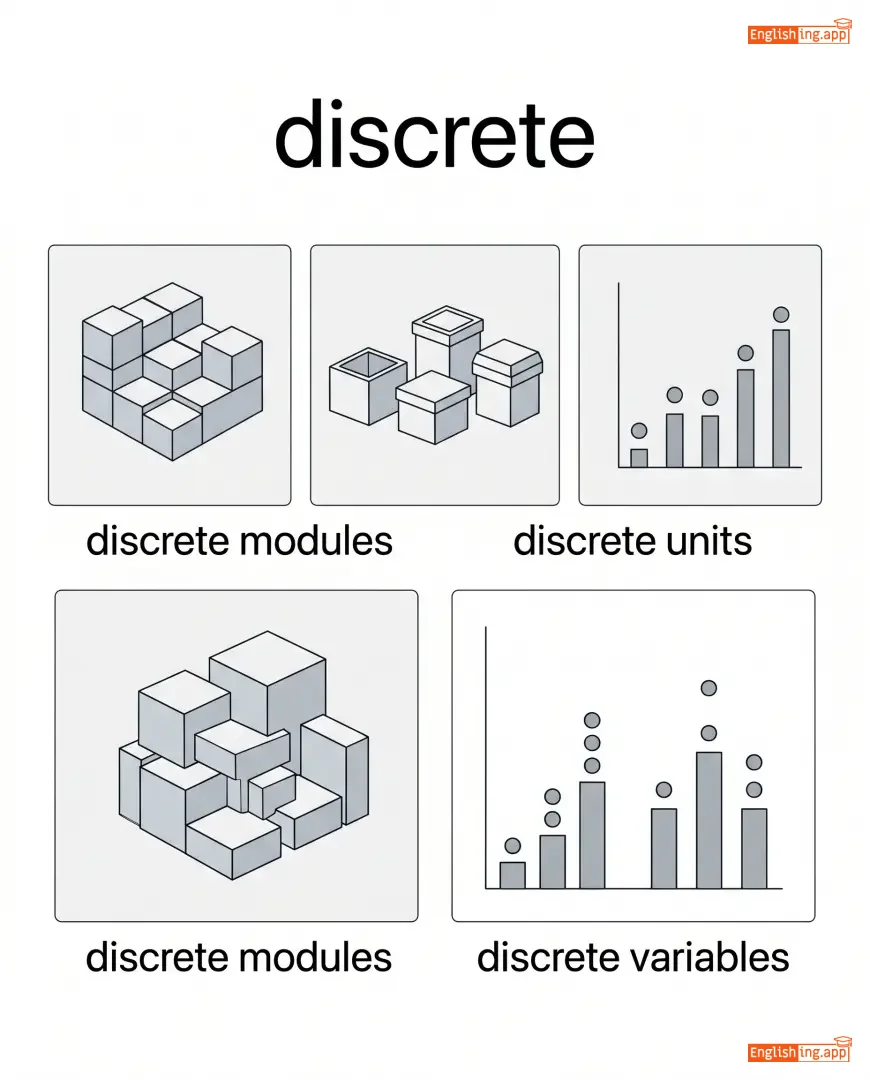
discrete units |
separate and distinct parts or items
••••••
|
离散单元
lísàn dānyuán
••••••
|
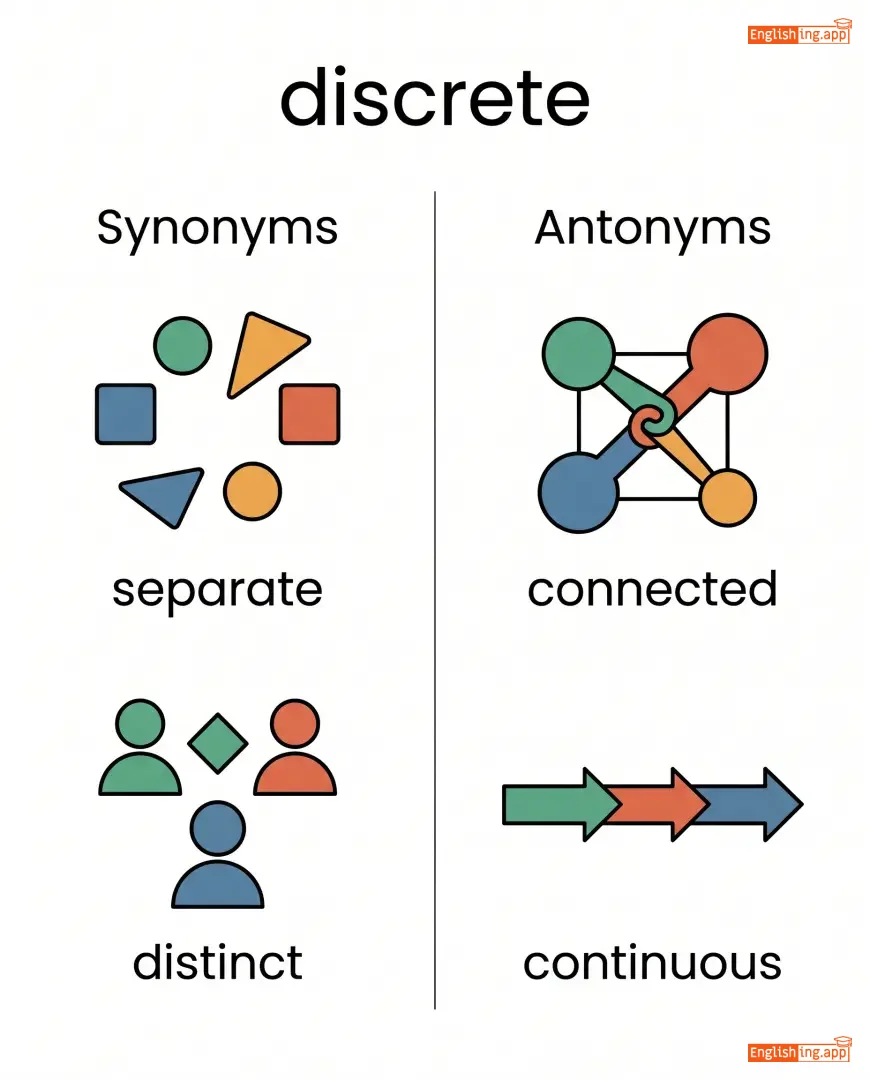
separate, distinct, individual, independent
••••••
|
connected, continuous, combined
••••••
|
discrete modules, discrete units, discrete variables
••••••
|
Discrete 就像离散一样,表示分离的部分。
••••••
|
|
😏
••••••
|
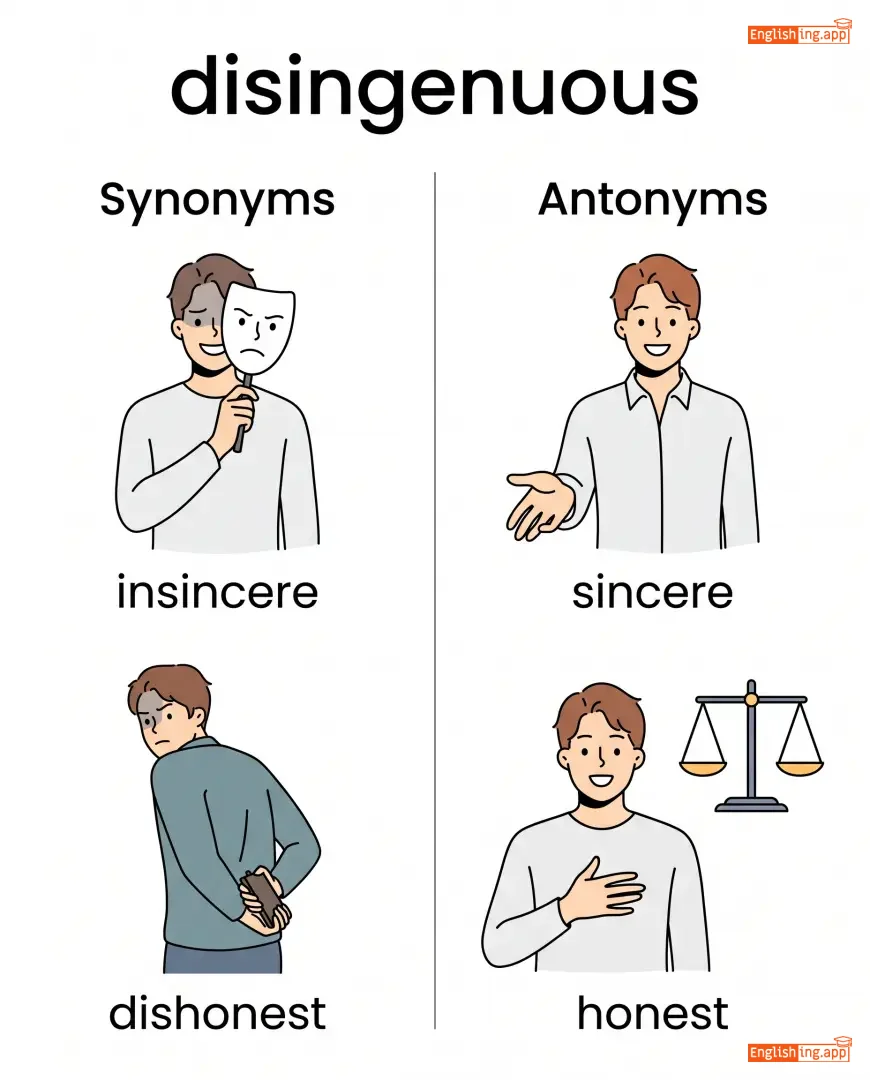
/ˌdɪsɪnˈdʒɛnjʊəs/
adjective
(dɪsɪnˈdʒɛnjʊəs)
••••••
|
|
虚伪的
xū wèi de
••••••
|
- •••••• | - •••••• | - •••••• | - •••••• |
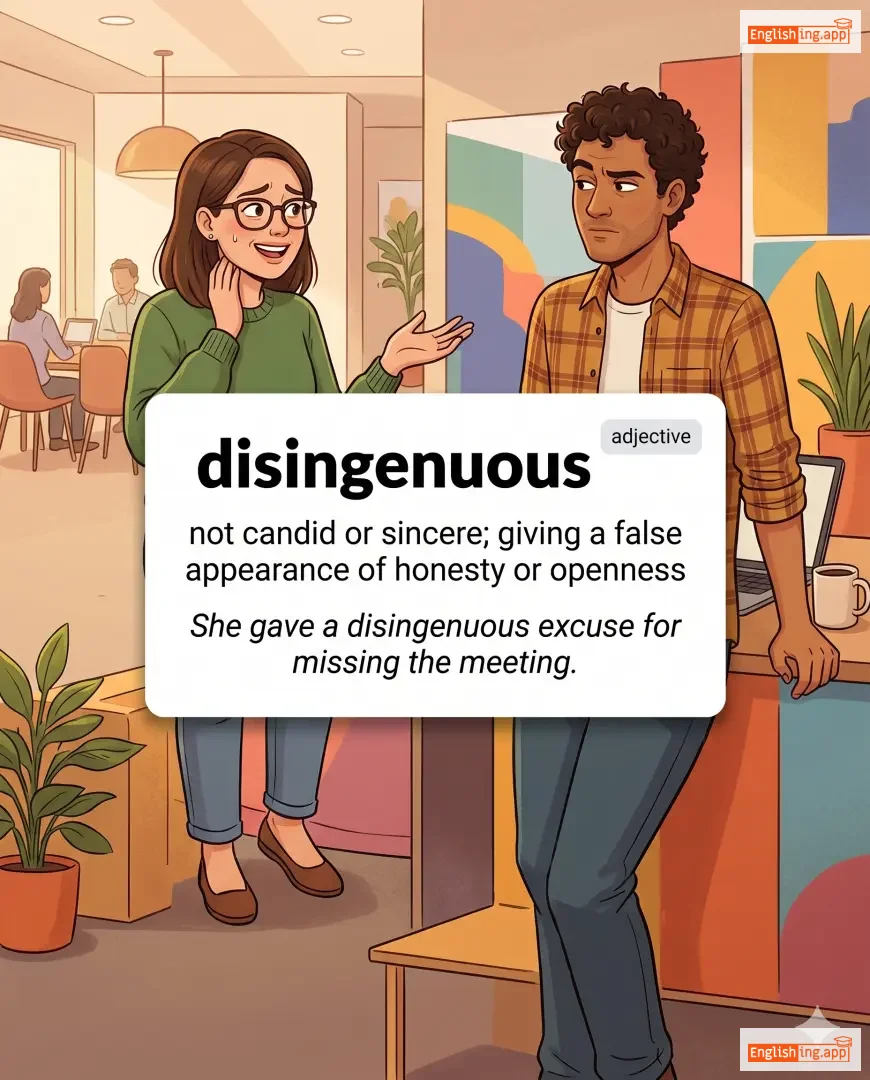
not candid or sincere; giving a false appearance of honesty or openness
••••••
|
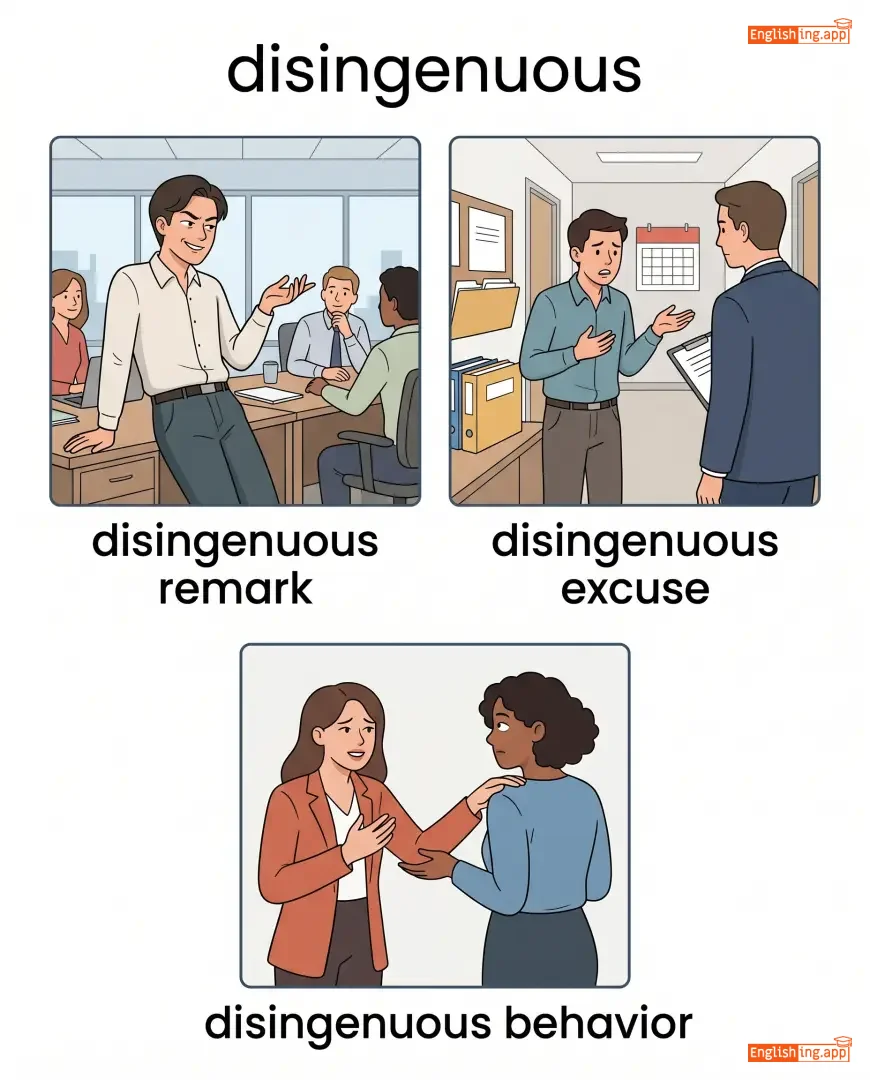
She gave a disingenuous excuse for missing the meeting. |
她给出了一个虚伪的借口来错过会议。
Tā gěi chūle yīgè xūwèi de jièkǒu lái cuòguò huìyì.
••••••
|
- •••••• | - •••••• | - •••••• |
insincere, dishonest, deceitful, hypocritical, duplicitous
••••••
|
sincere, honest, genuine
••••••
|
disingenuous remark, disingenuous excuse, disingenuous behavior
••••••
|
Dis + genuine 不是诚实的意思 disingenuous = 虚伪的
••••••
|
|
⚖️
••••••
|
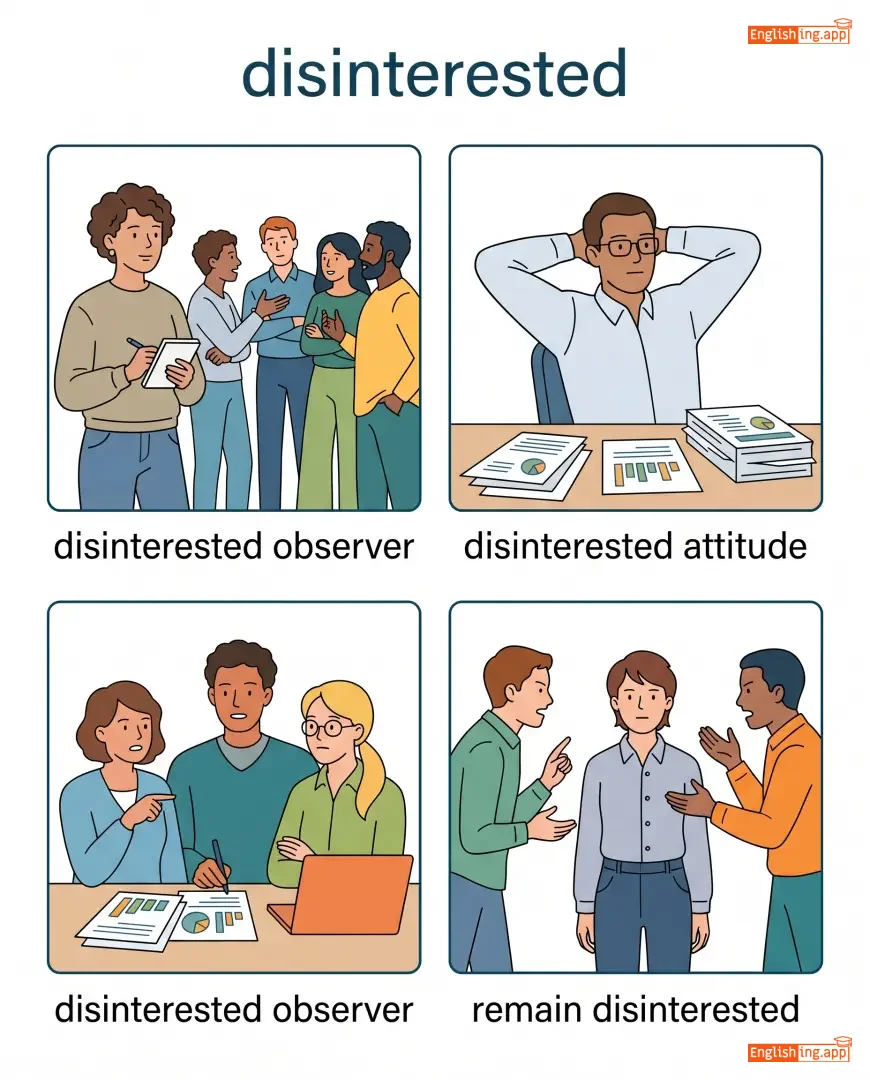
/dɪsˈɪntrəstɪd/
adjective
(迪辛特雷斯特德)
••••••
|
|
无私
wusi
••••••
|
- •••••• | - •••••• | - •••••• | - •••••• |
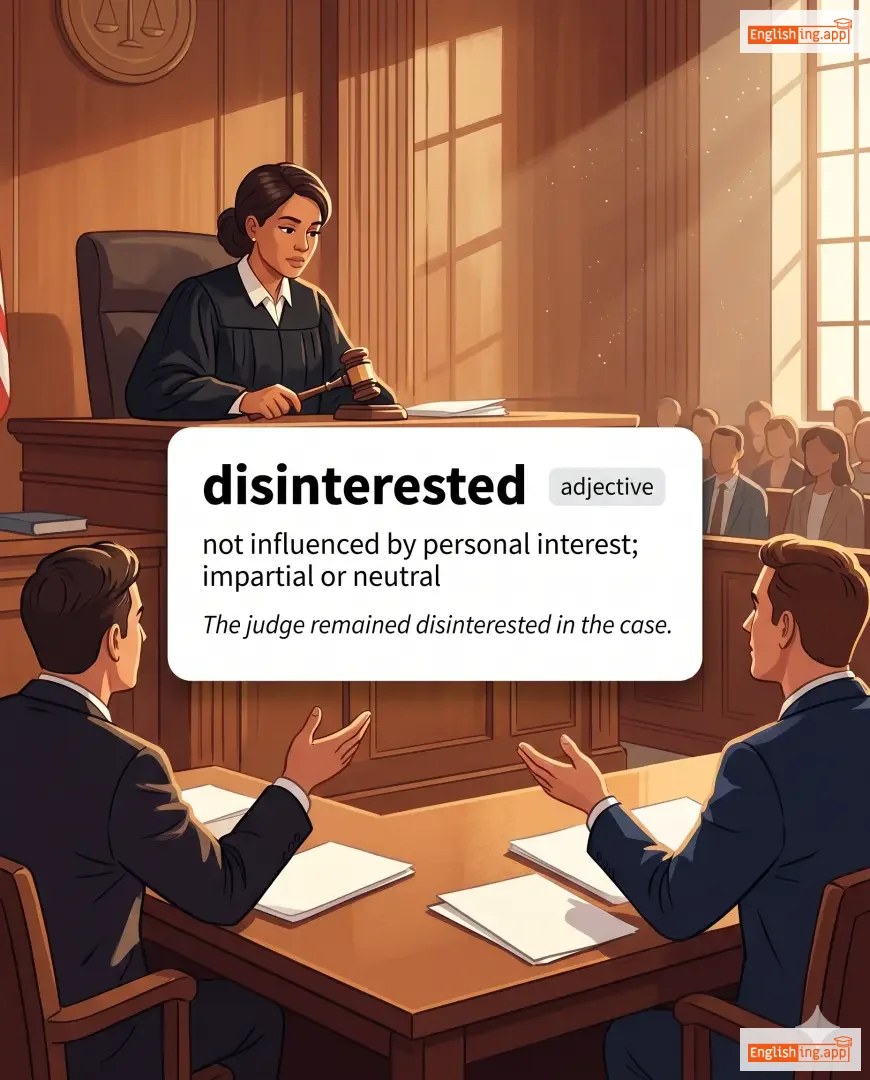
not influenced by personal interest; impartial or neutral
••••••
|
The judge remained disinterested in the case. |
法官在案件中保持无私。
Faguang zai anjian zhong baochi wusi.
••••••
|
- •••••• | - •••••• | - •••••• |
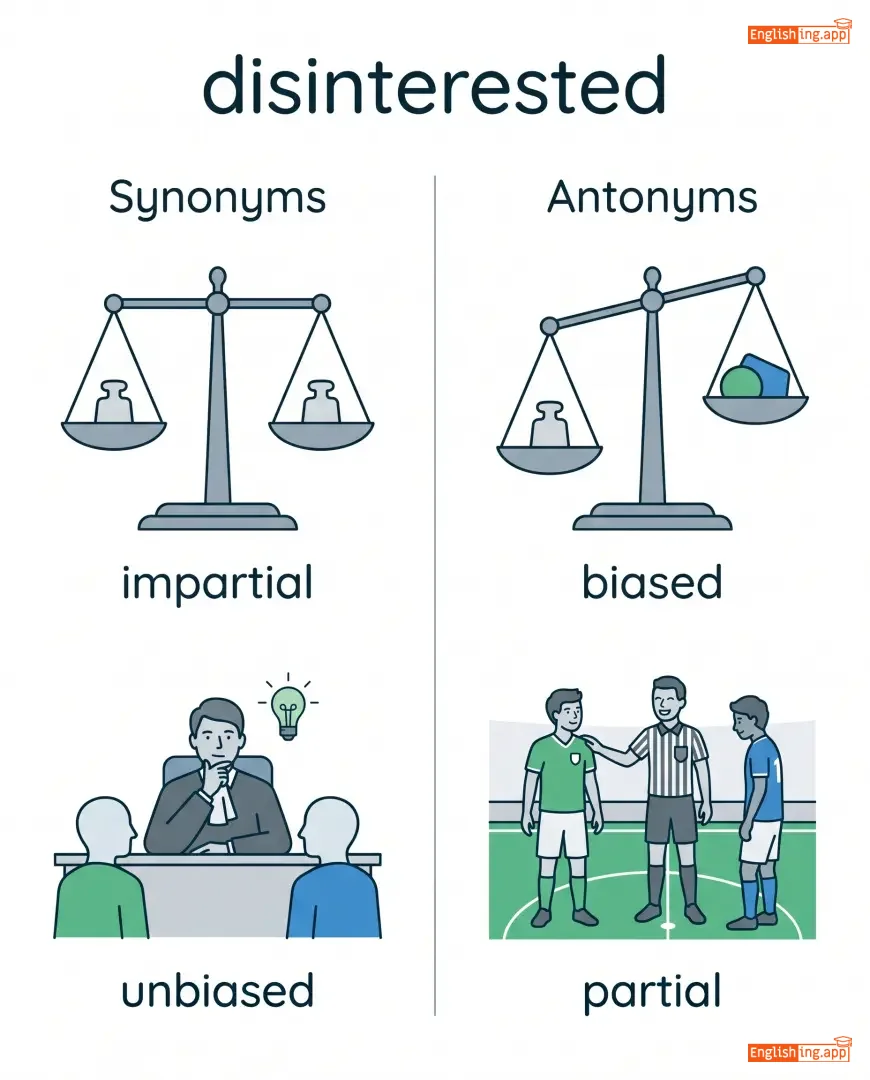
impartial, unbiased, objective, neutral
••••••
|
biased, partial, interested
••••••
|
disinterested observer, disinterested attitude, remain disinterested
••••••
|
无私 = 不偏不倚,disinterested = 无私
••••••
|
|
🌀
••••••
|
/dɪsˈdʒɔɪntɪd/
adjective
(dɪsˈdʒɔɪntɪd)
••••••
|
|
支离破碎
zhī lí pò suì
••••••
|
- •••••• | - •••••• | - •••••• | - •••••• |
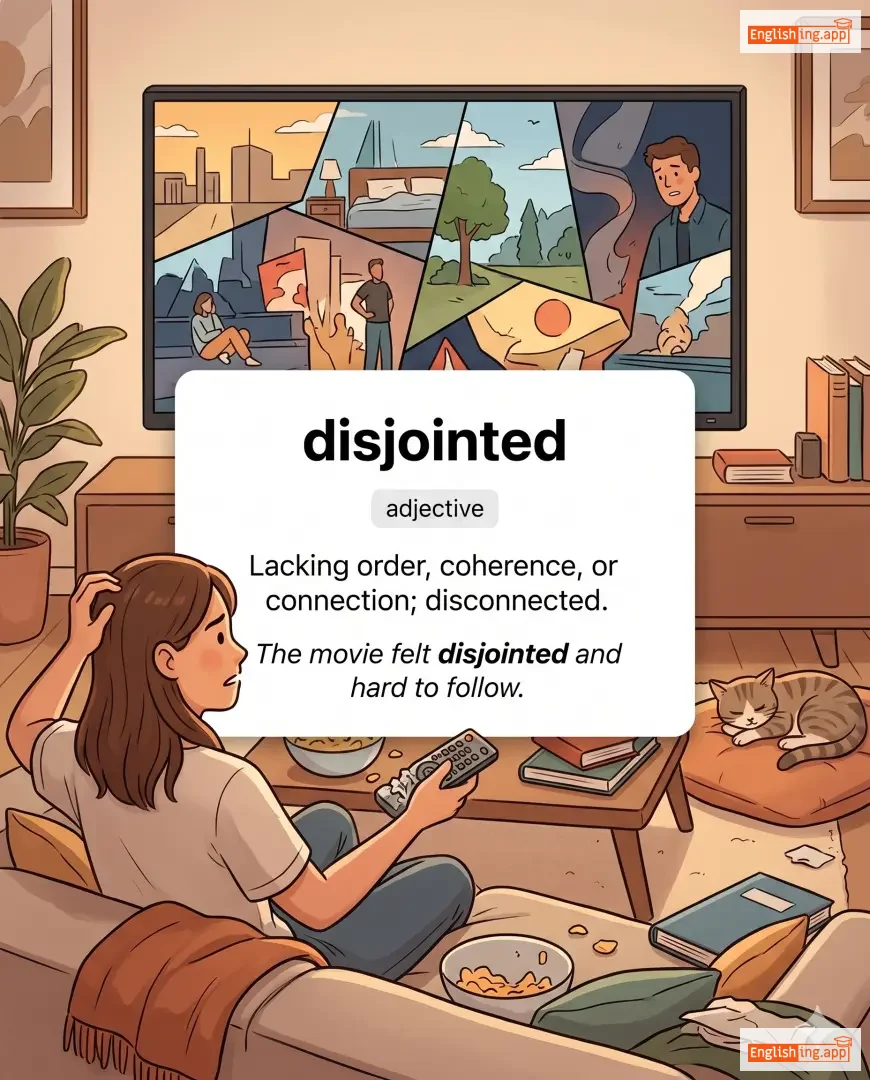
Lacking order, coherence, or connection; disconnected.
••••••
|
The movie felt disjointed and hard to follow. |
这部电影感觉支离破碎,很难跟上。
Zhè bù diànyǐng gǎnjué zhī lí pò suì, hěn nán gēn shàng.
••••••
|
- •••••• | - •••••• | - •••••• |
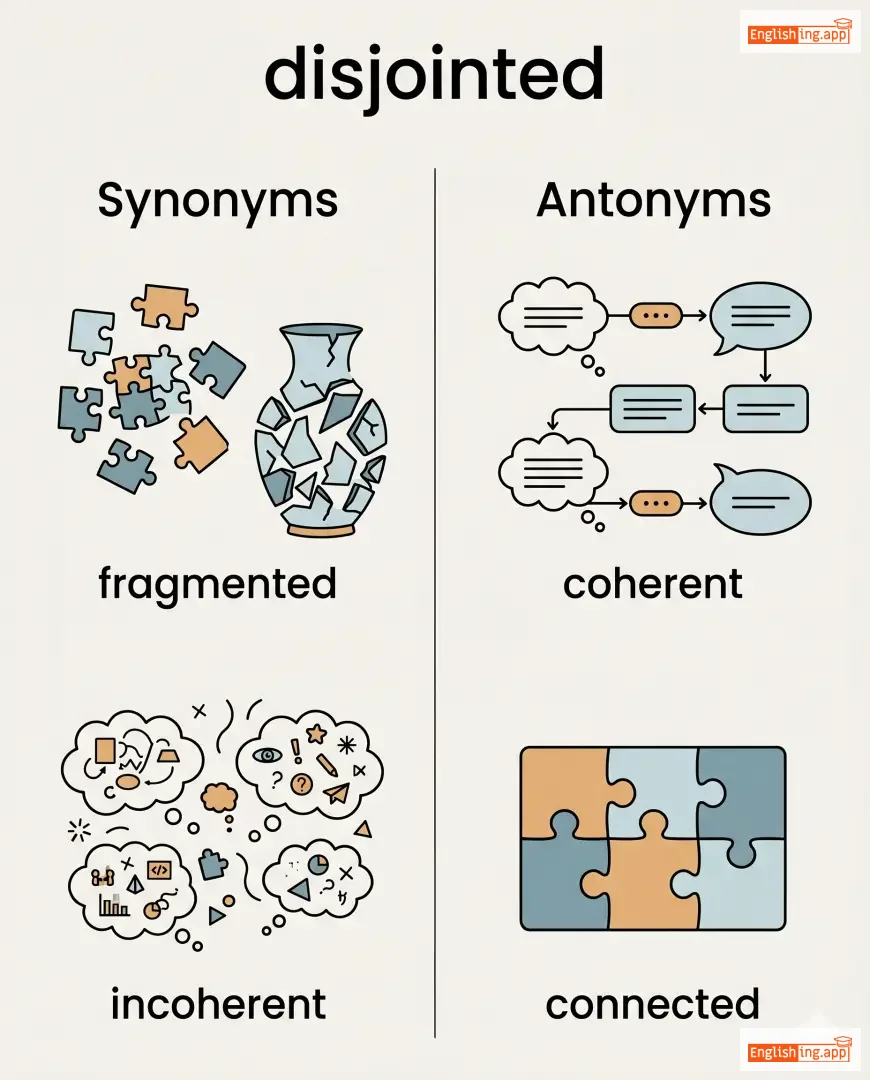
fragmented, incoherent, disconnected, jumbled, chaotic
••••••
|
coherent, connected, organized
••••••
|
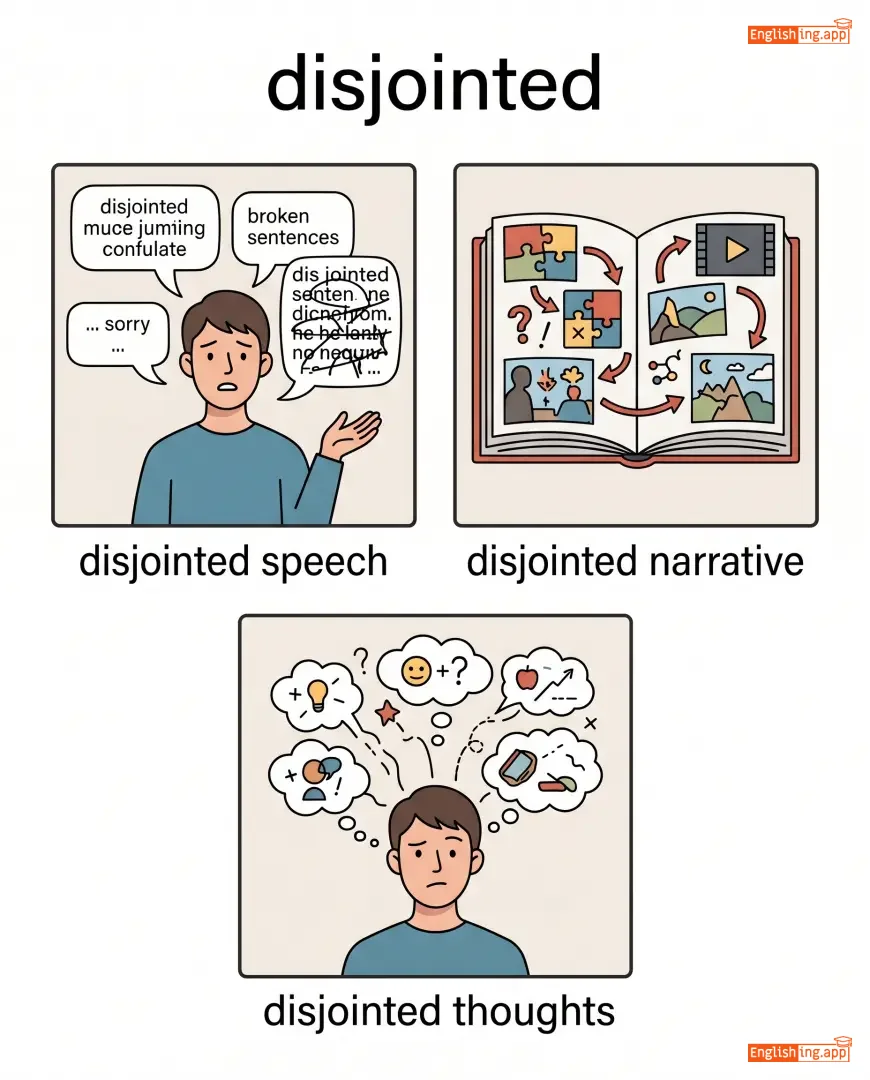
disjointed speech, disjointed narrative, disjointed thoughts
••••••
|
Disjointed 就像一片破碎的拼图,无法拼合。
••••••
|
|
🚪
••••••
|
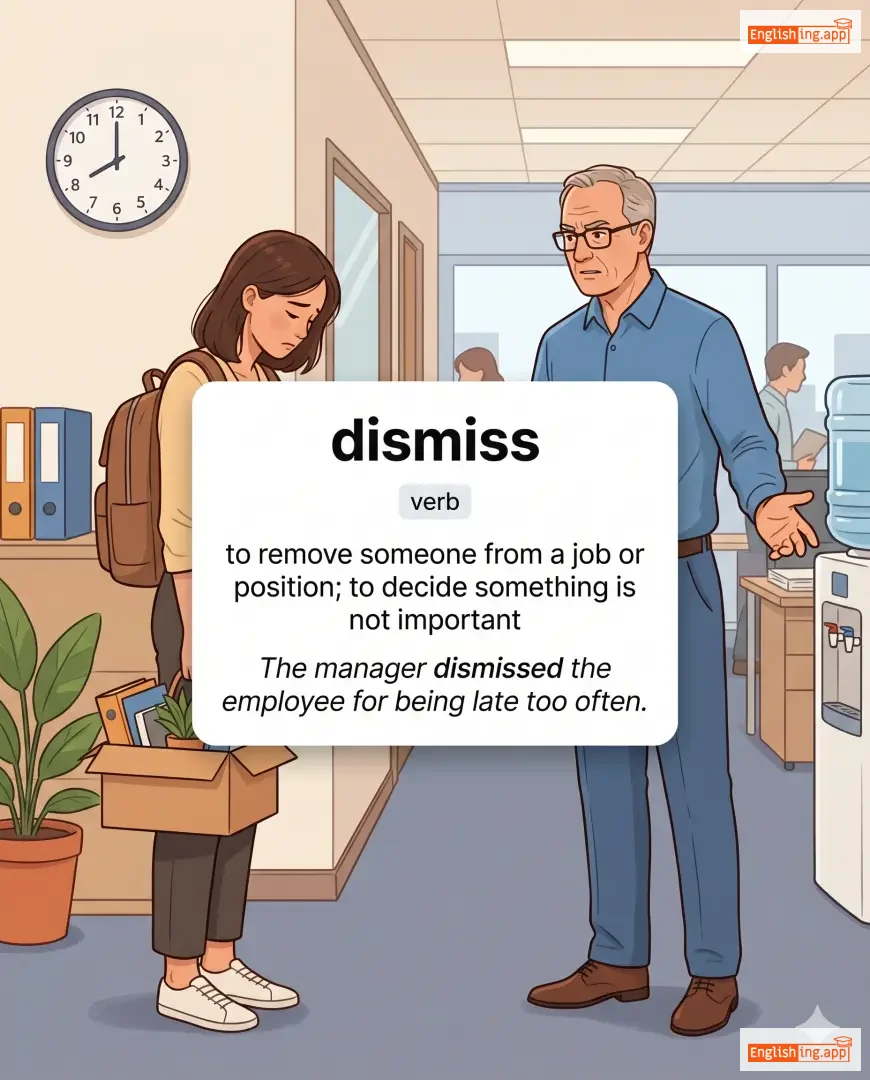
/dɪsˈmɪs/
verb
(迪斯米斯)
••••••
|
|
解雇, 否定
jiěgù, fǒudìng
••••••
|
dismissed
迪斯米斯德
••••••
|
dismissed
迪斯米斯德
••••••
|
dismisses
迪斯米塞斯
••••••
|
dismissing
迪斯米辛
••••••
|
to remove someone from a job or position; to decide something is not important
••••••
|
The manager dismissed the employee for being late too often.
经理因为员工经常迟到而解雇了他。
••••••
|
经理因为员工经常迟到而解雇了他。
Jīnglǐ yīnwèi yuángōng jīngcháng chídào ér jiěgùle tā.
••••••
|
dismiss out of hand
立刻否定
••••••
|
to reject something immediately without considering it
••••••
|
立刻否定
lìkè fǒudìng
••••••
|
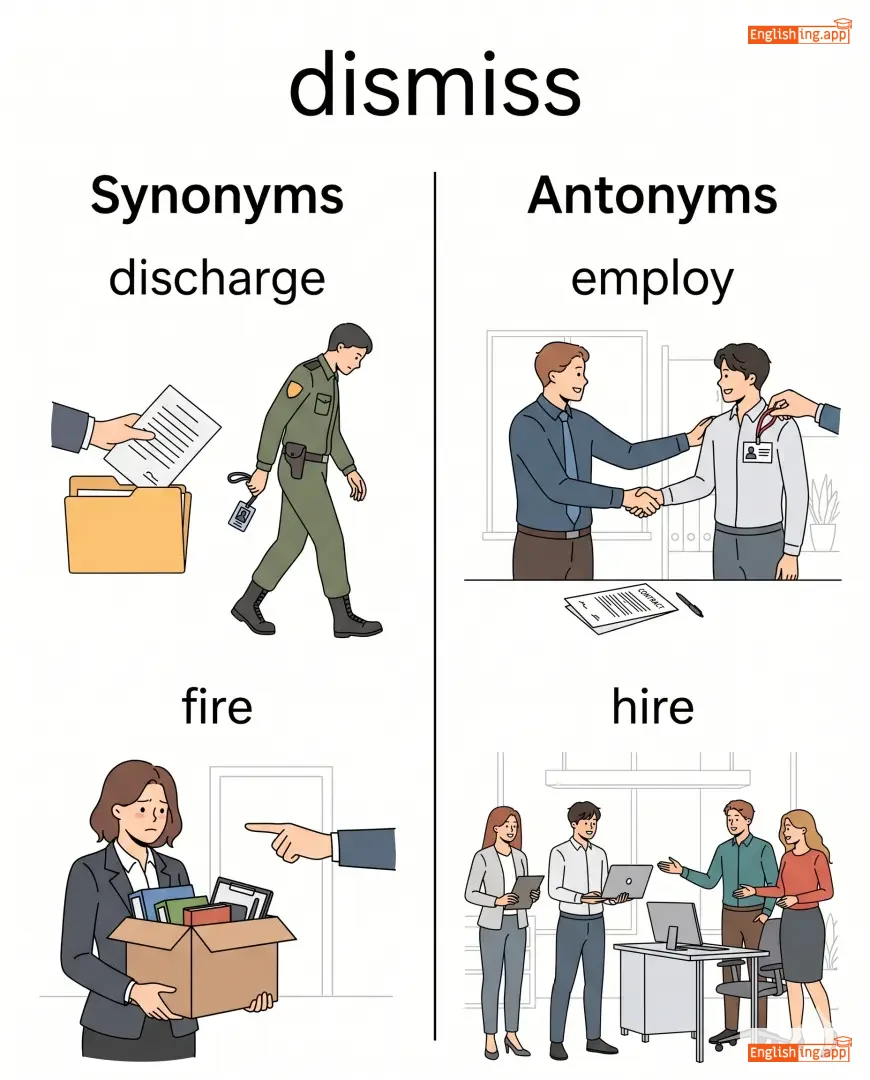
discharge, fire, release, reject, expel
••••••
|
employ, hire, accept
••••••
|
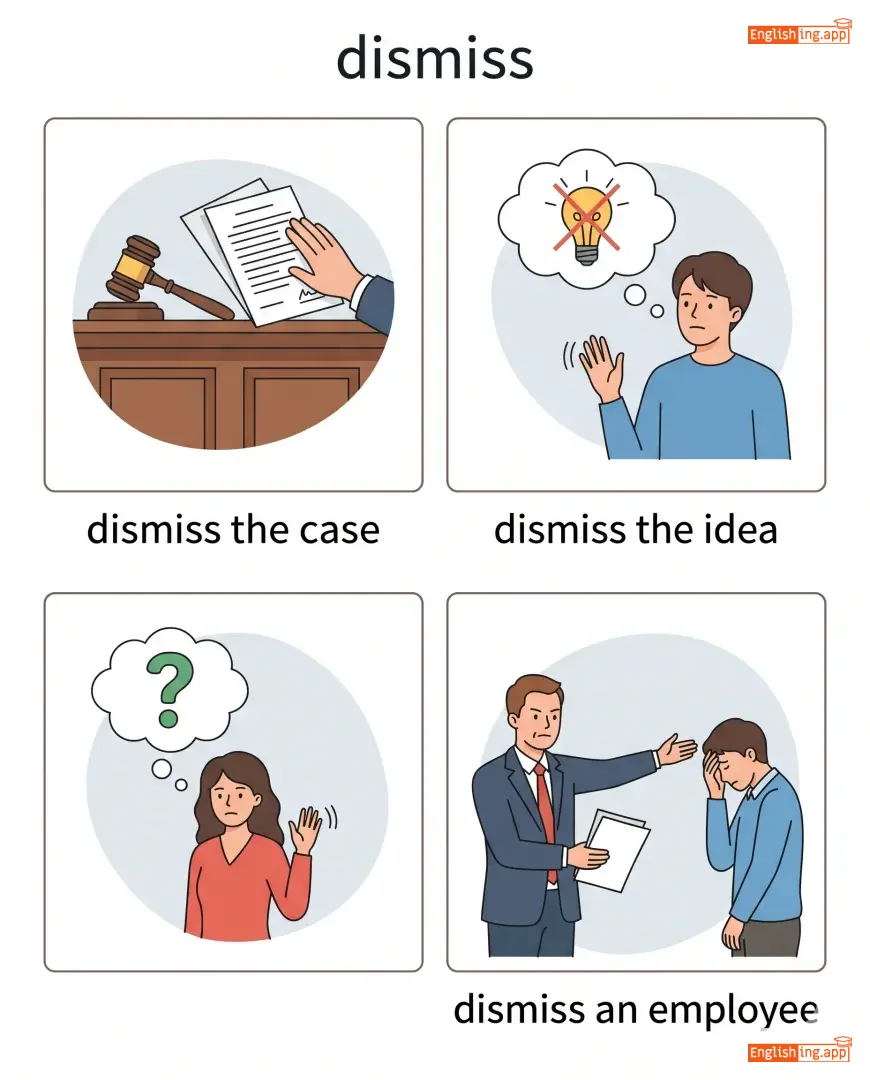
dismiss the case, dismiss the idea, dismiss an employee, dismiss charges
••••••
|
Dis + Miss = 被解雇
••••••
|
|
🗣️
••••••
|
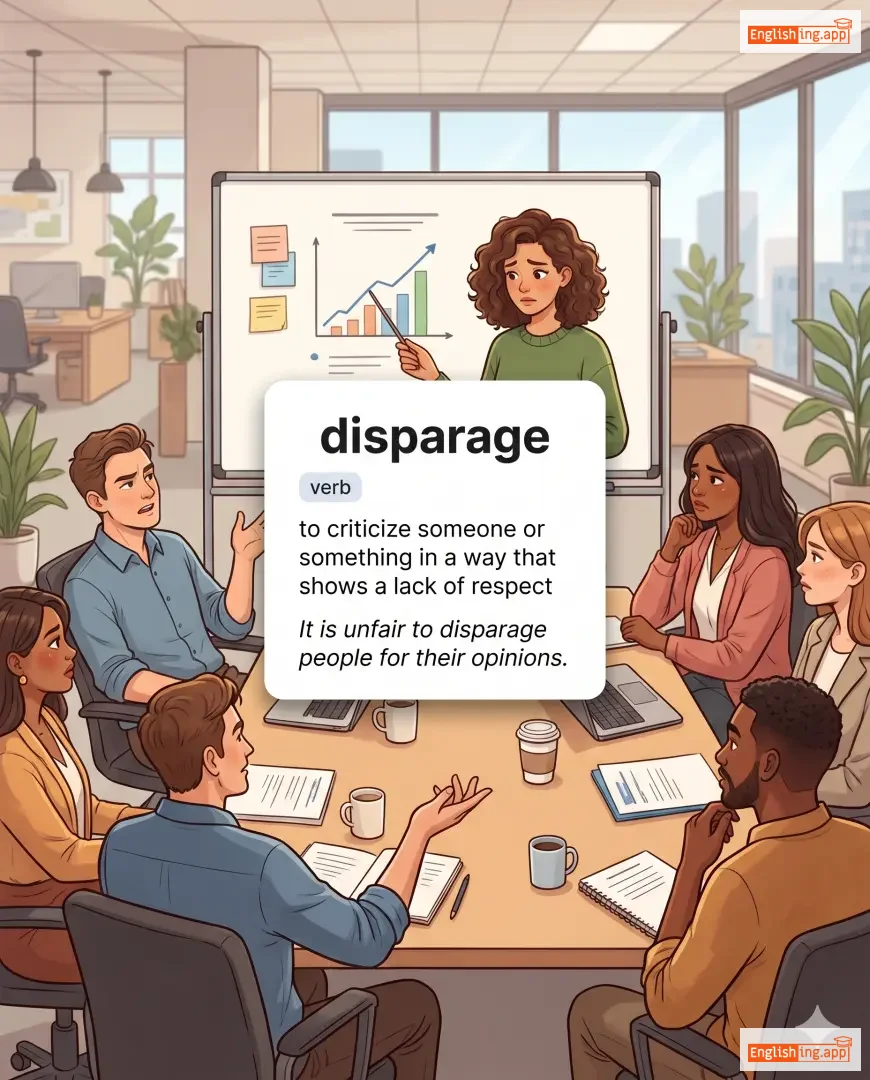
/dɪsˈpærɪdʒ/
verb
••••••
|
|
- •••••• |
disparaged
••••••
|
disparaged
••••••
|
disparages
••••••
|
disparaging
••••••
|
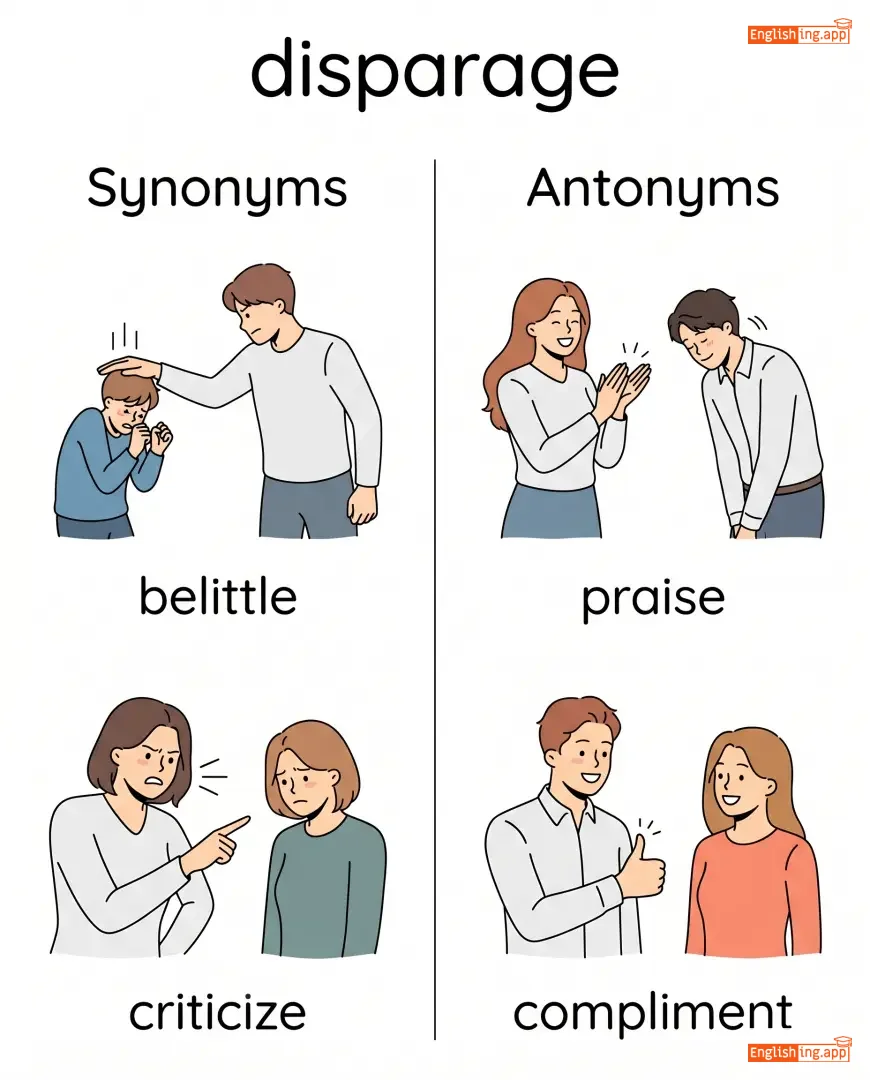
to criticize someone or something in a way that shows a lack of respect
••••••
|
It is unfair to disparage people for their opinions. |
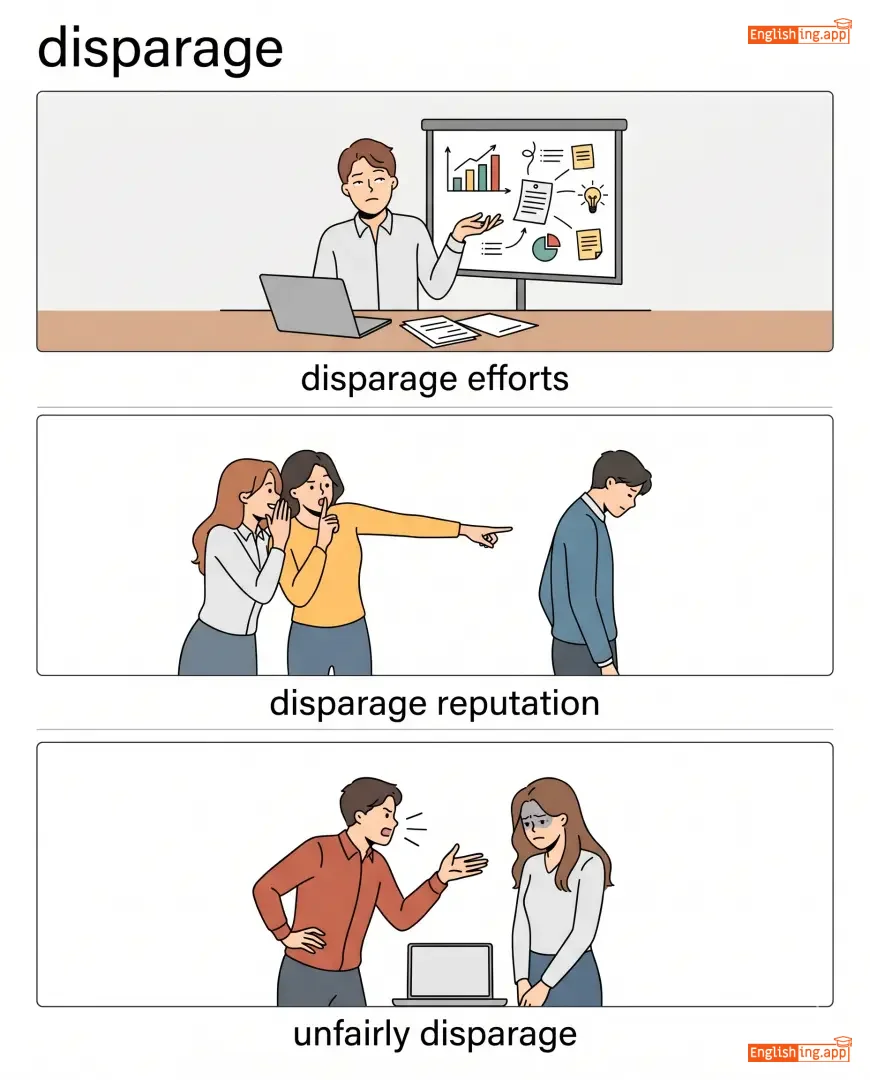
- •••••• |
disparage someone's efforts |
to belittle or undervalue what someone has done
••••••
|
- •••••• |
belittle, criticize, denigrate, undervalue, ridicule
••••••
|
praise, compliment
••••••
|
disparage efforts, disparage reputation, unfairly disparage
••••••
|
No •••••• |
|
🔀
••••••
|
/ˈdɪspərət/
adjective
(迪斯派瑞特)
••••••
|
|
不同
butong
••••••
|
- •••••• | - •••••• | - •••••• | - •••••• |
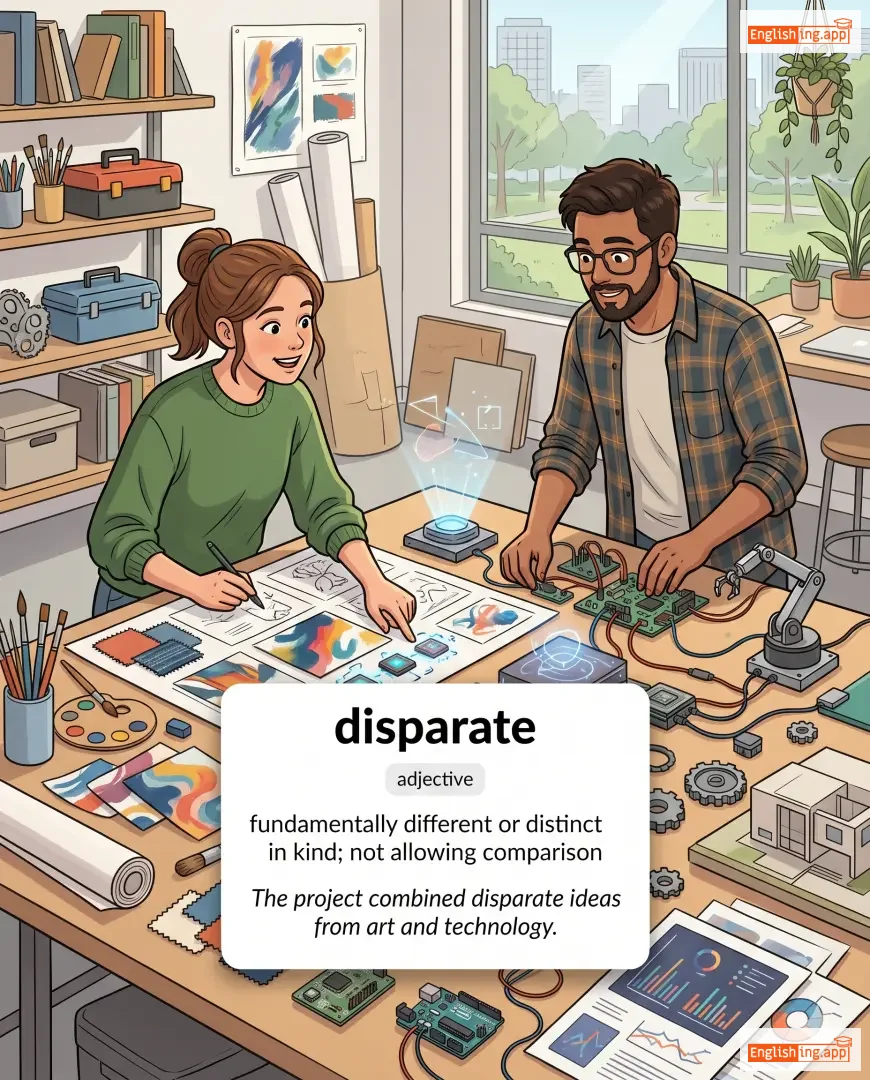
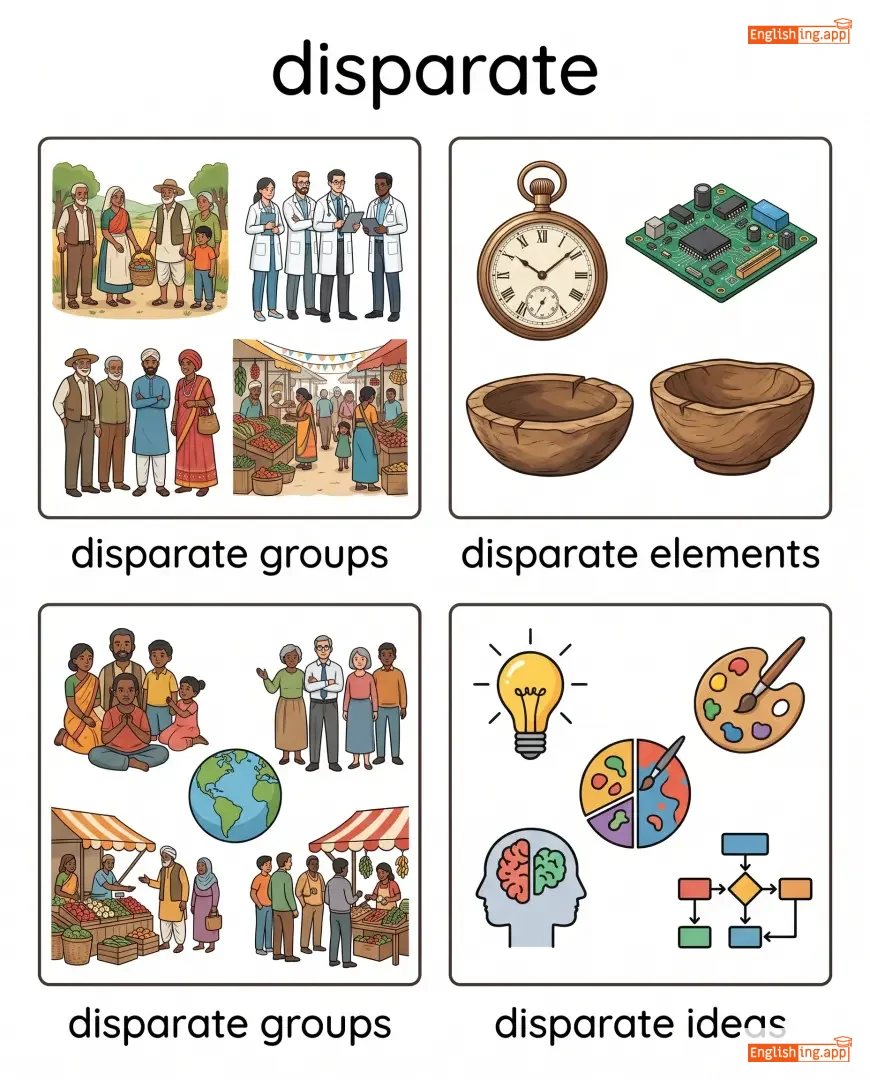
fundamentally different or distinct in kind; not allowing comparison
••••••
|
The project combined disparate ideas from art and technology. |
该项目结合了来自艺术和技术的不同观点。
Gai xiangmu jiehe le laizi yishu he jishu de butong guandian.
••••••
|
- •••••• | - •••••• | - •••••• |
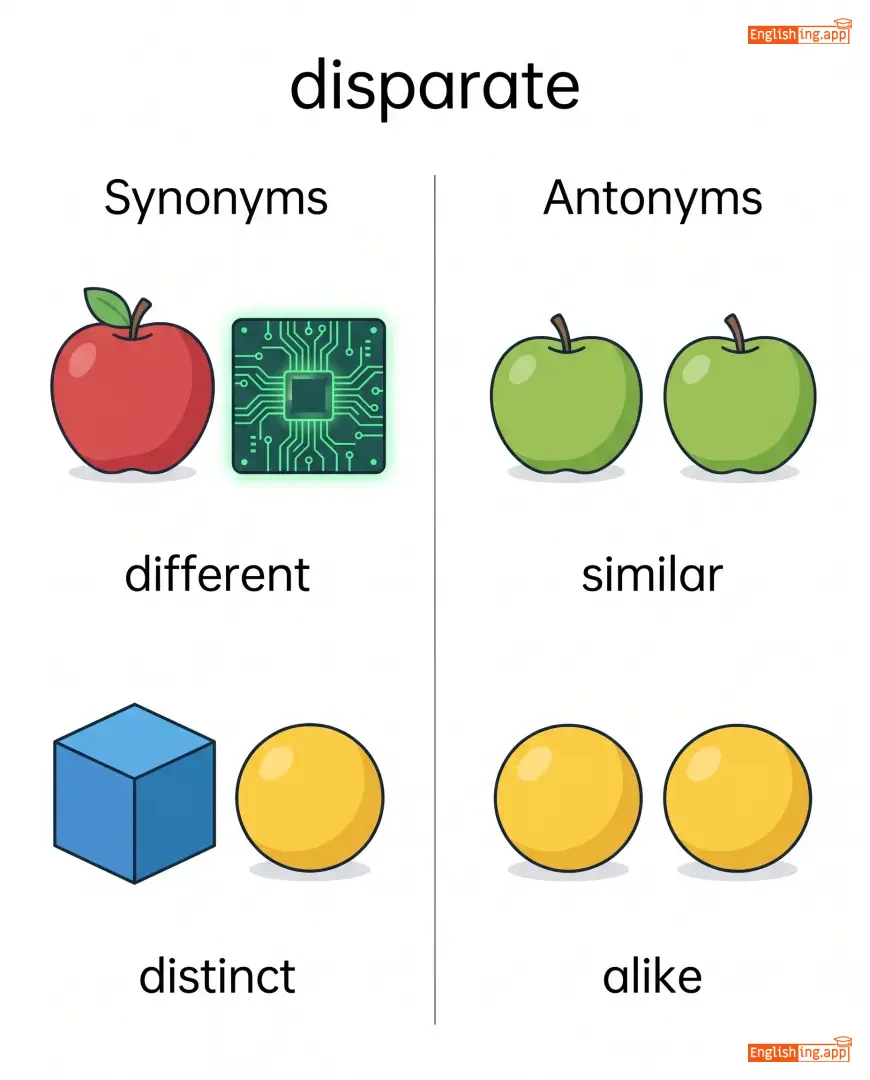
different, distinct, contrasting, diverse, varied
••••••
|
similar, alike, uniform
••••••
|
disparate groups, disparate elements, disparate ideas, disparate backgrounds
••••••
|
Disparate 就是把不同的东西放在一起。
••••••
|
|
🎭
••••••
|
/dɪˈsɛmbəl/
verb
(迪森布尔)
••••••
|
|
假装
jia zhuang
••••••
|
dissembled
迪森博尔德
••••••
|
dissembled
迪森博尔德
••••••
|
dissembles
迪森布尔斯
••••••
|
dissembling
迪森布林
••••••
|
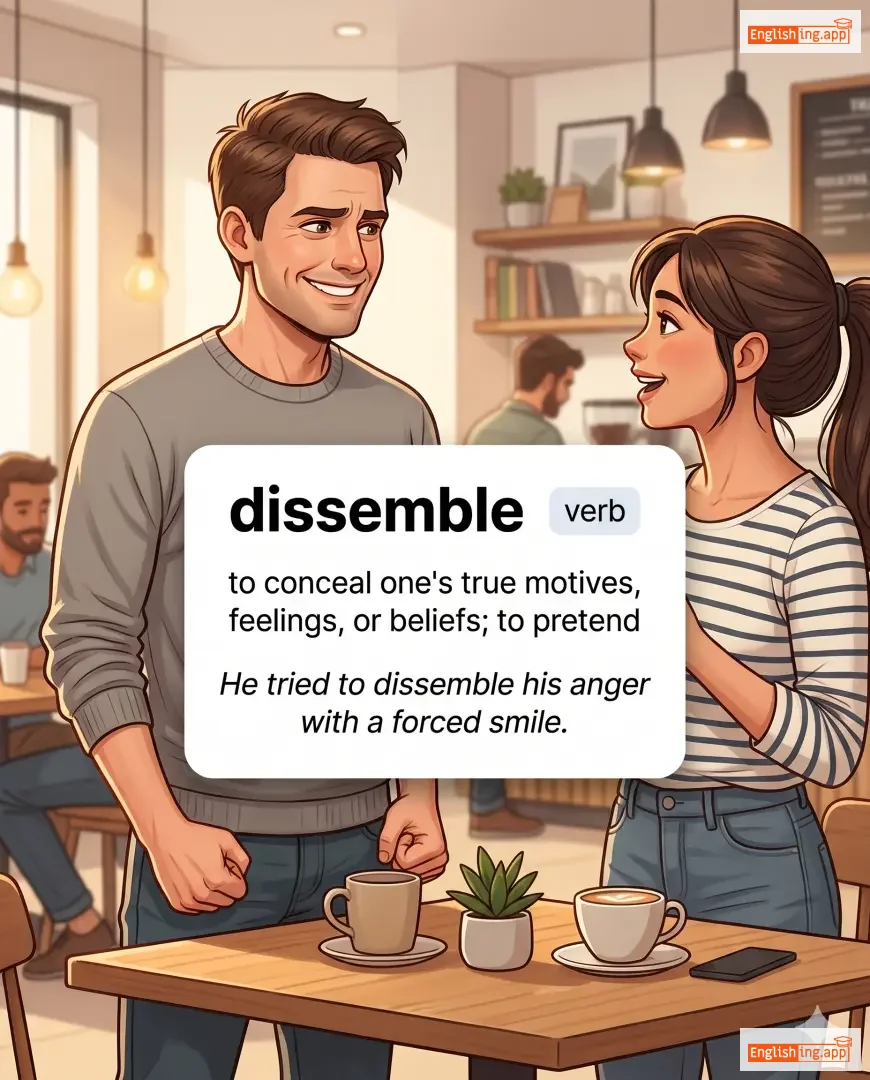
to conceal one's true motives, feelings, or beliefs; to pretend
••••••
|
He tried to dissemble his anger with a forced smile.
他试图用强颜欢笑来掩饰自己的愤怒。
••••••
|
他试图用强颜欢笑来掩饰自己的愤怒。
Ta shitu yong qiangyan huanxiao lai yanshi ziji de fennu.
••••••
|
- •••••• | - •••••• | - •••••• |
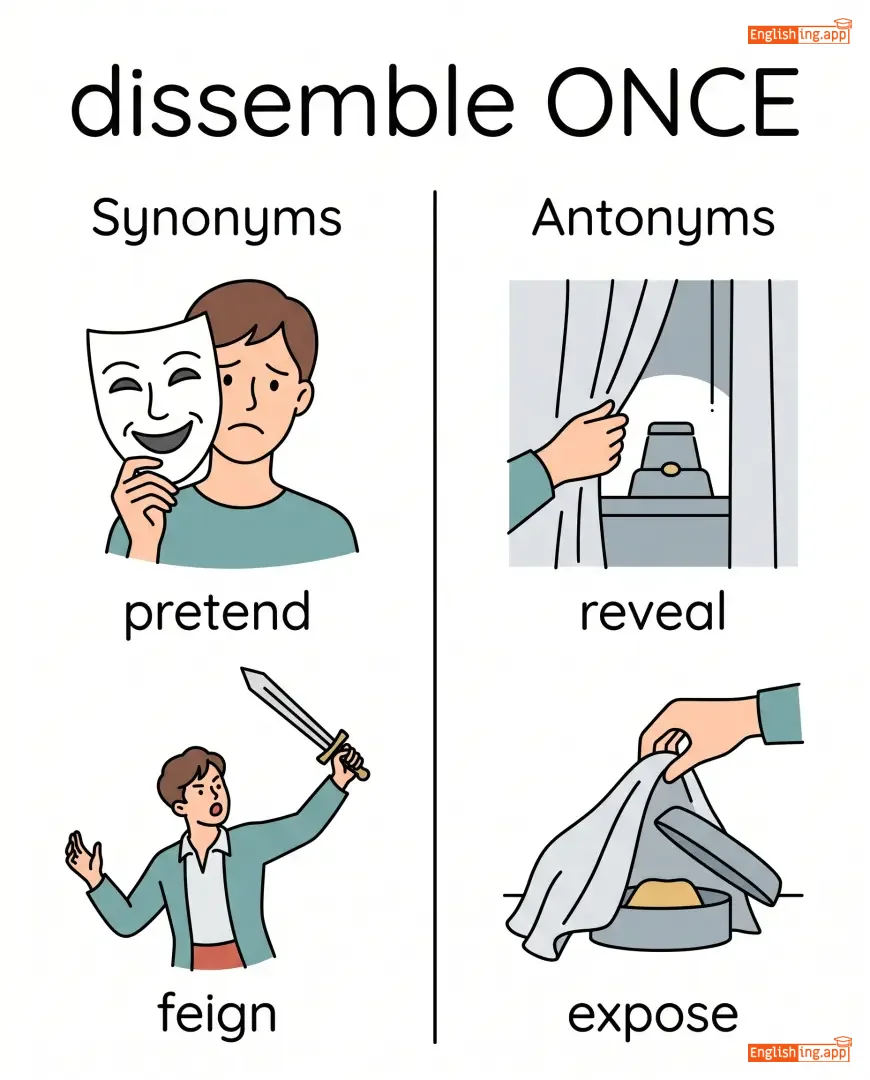
pretend, feign, fake, conceal, disguise
••••••
|
reveal, expose, disclose
••••••
|
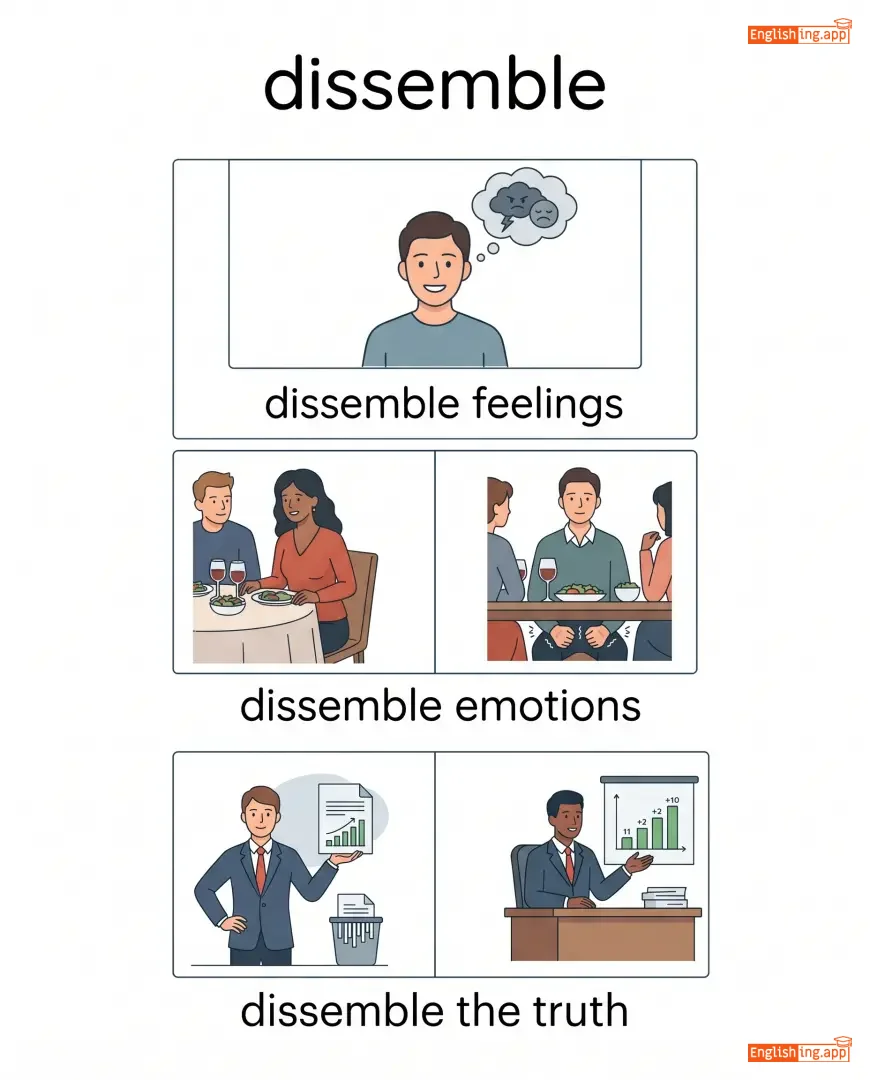
dissemble feelings, dissemble emotions, dissemble the truth
••••••
|
Dissemble = dis+assemble; 不汇聚真相,而是假装。
••••••
|
|
📢
••••••
|
/dɪˈsɛmɪˌneɪt/
verb
(散布)
••••••
|
|
传播
chuanbo
••••••
|
disseminated
散布了
••••••
|
disseminated
散布了
••••••
|
disseminates
散布
••••••
|
disseminating
散布中
••••••
|
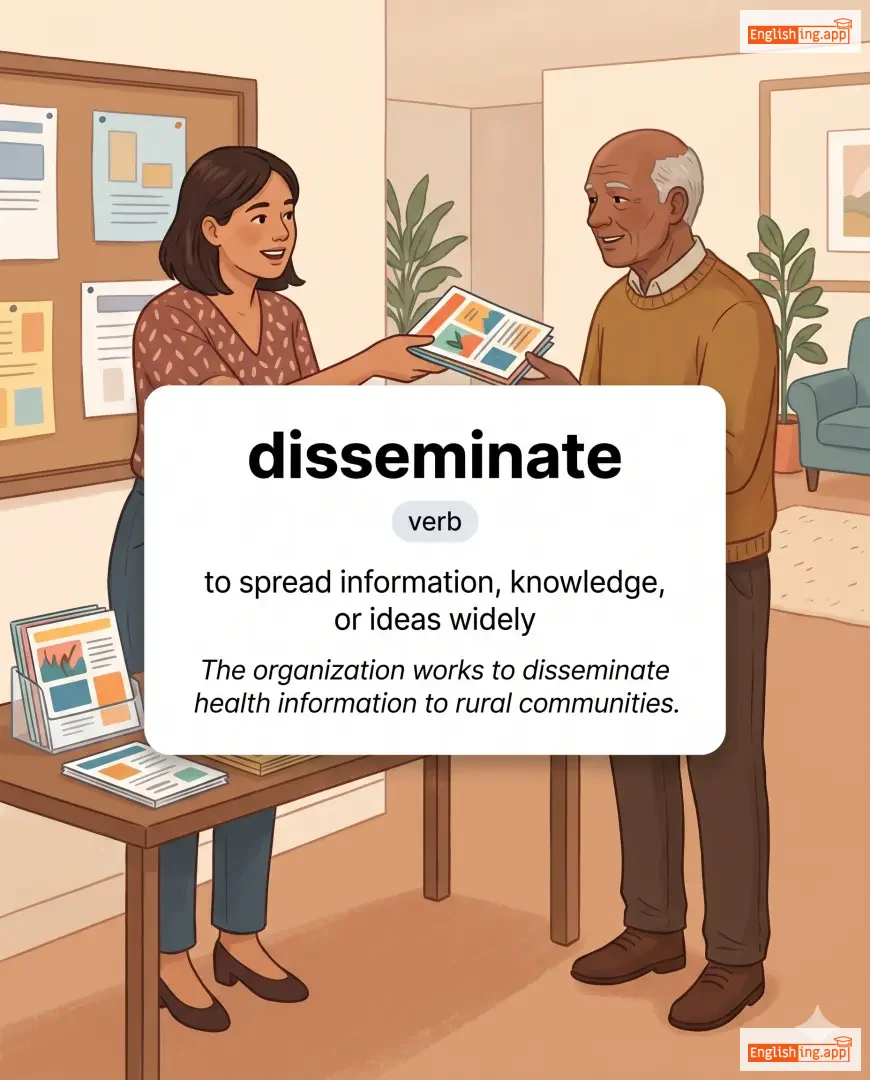
to spread information, knowledge, or ideas widely
••••••
|
The organization works to disseminate health information to rural communities.
该组织致力于向农村社区传播健康信息。
••••••
|
该组织致力于向农村社区传播健康信息。
Gai zuzhi zhiliyu xiang nongcun shequ chuanbo jiankang xinxi.
••••••
|
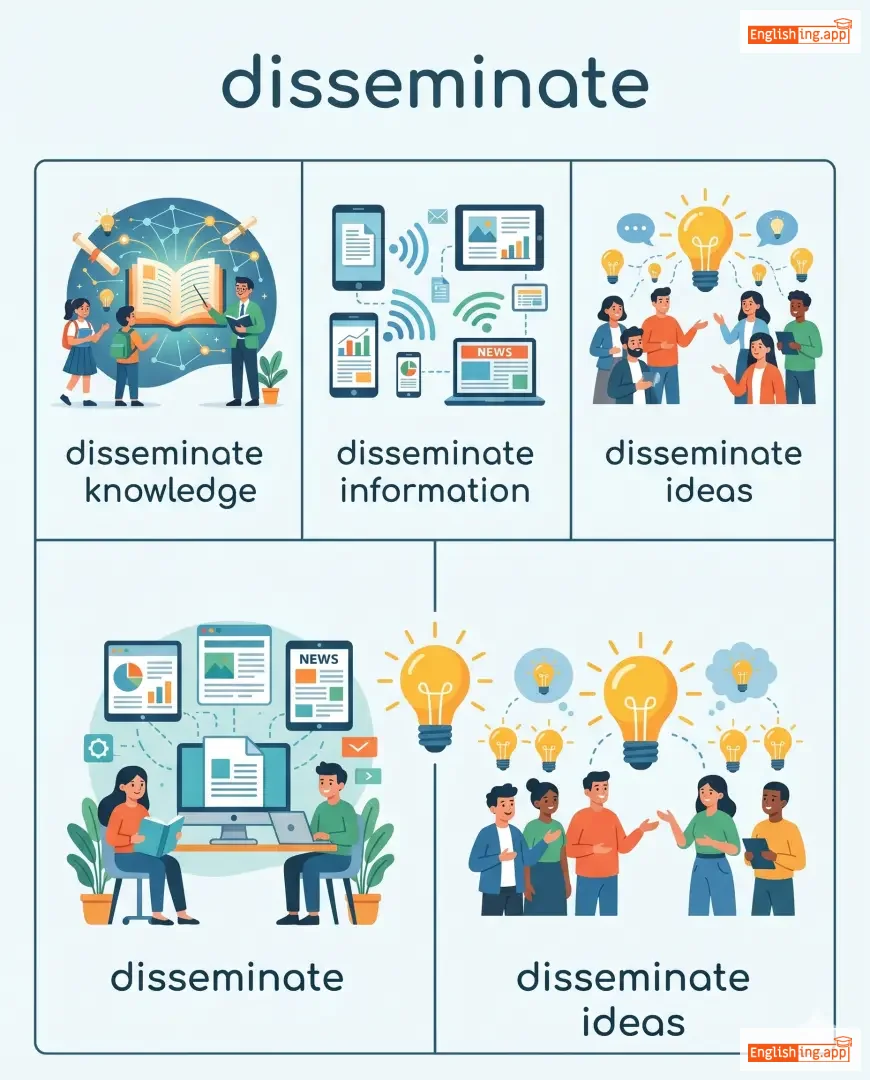
disseminate knowledge
传播知识
••••••
|
to distribute knowledge to many people
••••••
|
传播知识
chuanbo zhishi
••••••
|
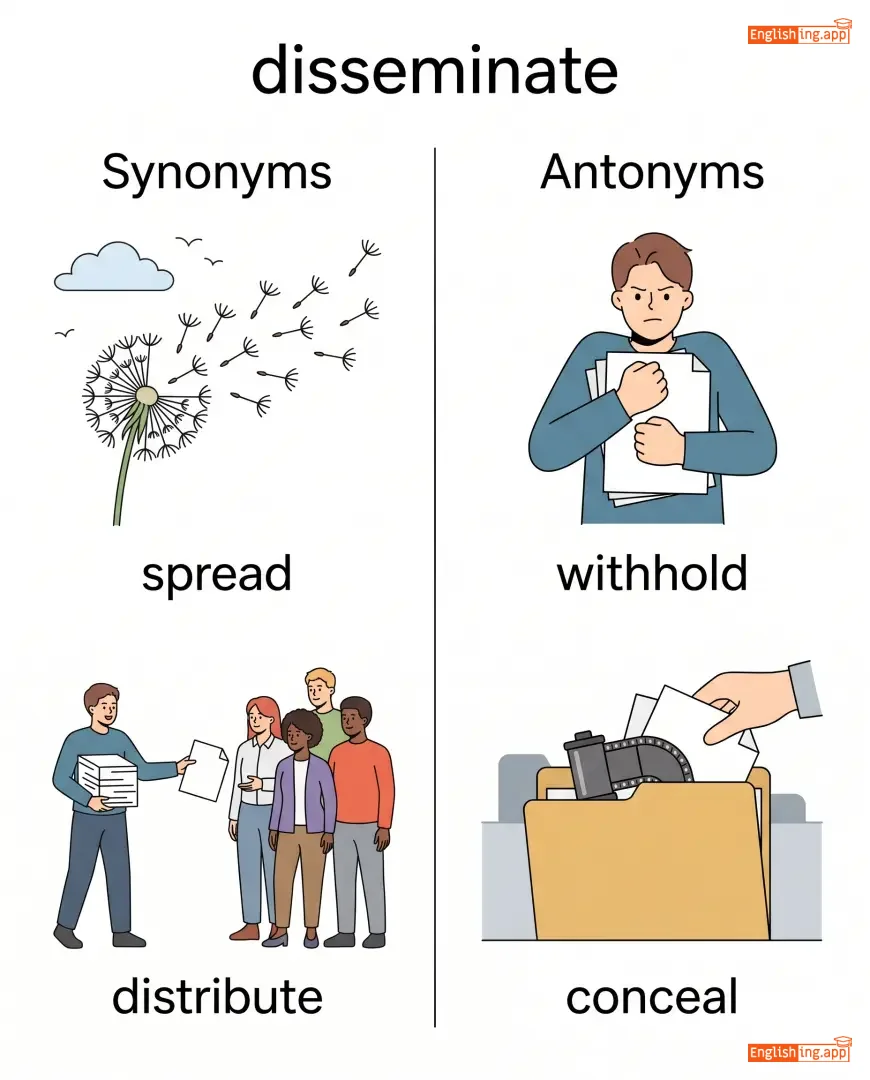
spread, distribute, circulate, broadcast, propagate
••••••
|
withhold, conceal, hide
••••••
|
disseminate knowledge, disseminate information, disseminate ideas, widely disseminate
••••••
|
Disseminate 就像传递信息,但它是大量传播知识或想法。
••••••
|
|
⚖️
••••••
|
/ˌdɪsəˈluːʃən/
noun
(解散)
••••••
|

|
解散
jiesan
••••••
|
- •••••• | - •••••• | - •••••• | - •••••• |
the act of formally ending or breaking apart something, such as an organization or marriage
••••••
|
The dissolution of the company was announced yesterday. |
公司解散的消息昨天公布。
Gongsi jiesan de xiaoxi zuotian gongbu.
••••••
|
- •••••• | - •••••• | - •••••• |
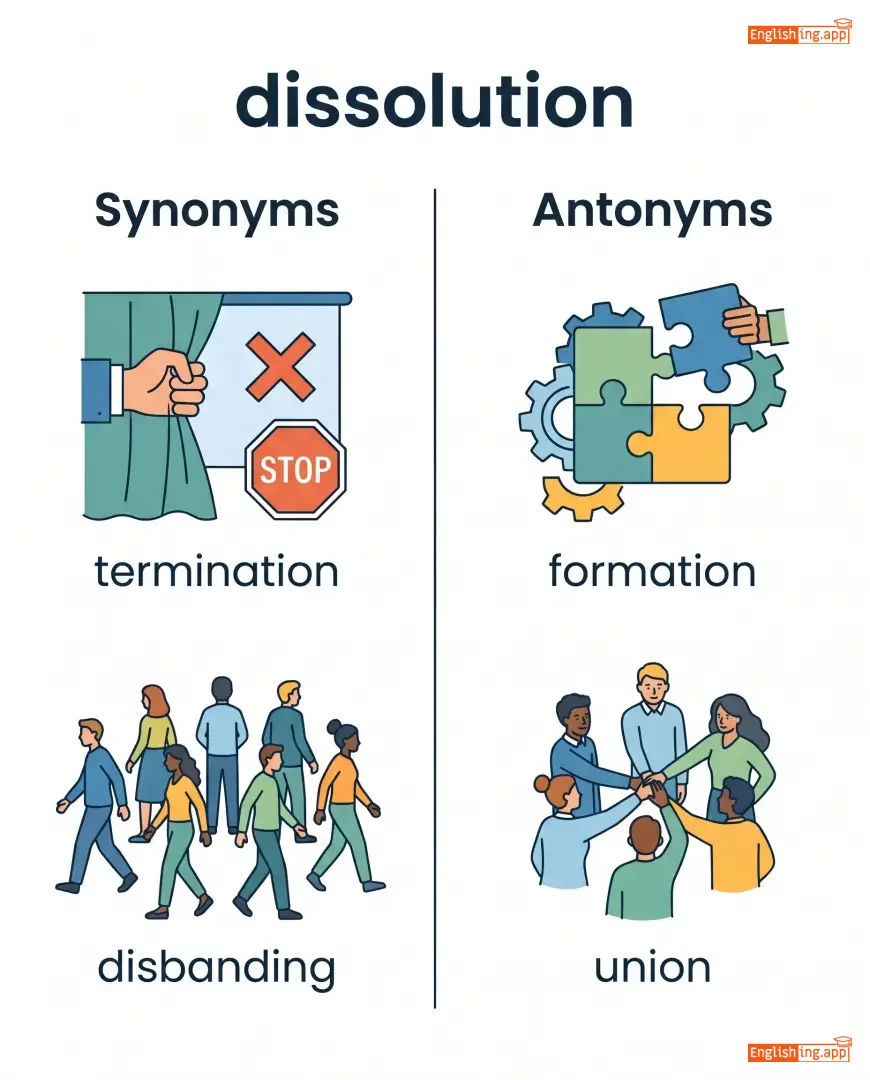
termination, disbanding, breakup, collapse
••••••
|
formation, union, establishment
••••••
|
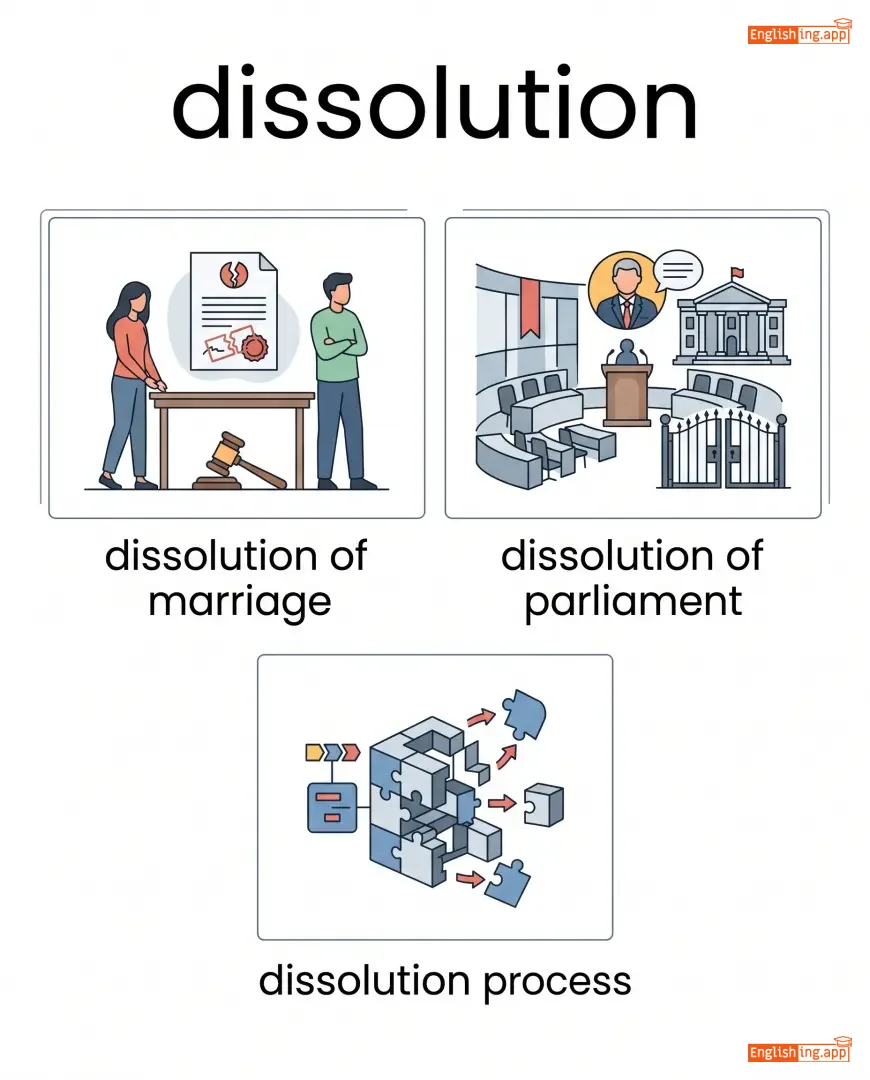
dissolution of marriage, dissolution of parliament, dissolution process
••••••
|
Dissolution 在中文里就是解散
••••••
|
|
🎶
••••••
|
/ˈdɪsənəns/
noun
(ˈdɪsəˈnæns)
••••••
|
|
不和谐
bùhéxié
••••••
|
- •••••• | - •••••• | - •••••• | - •••••• |
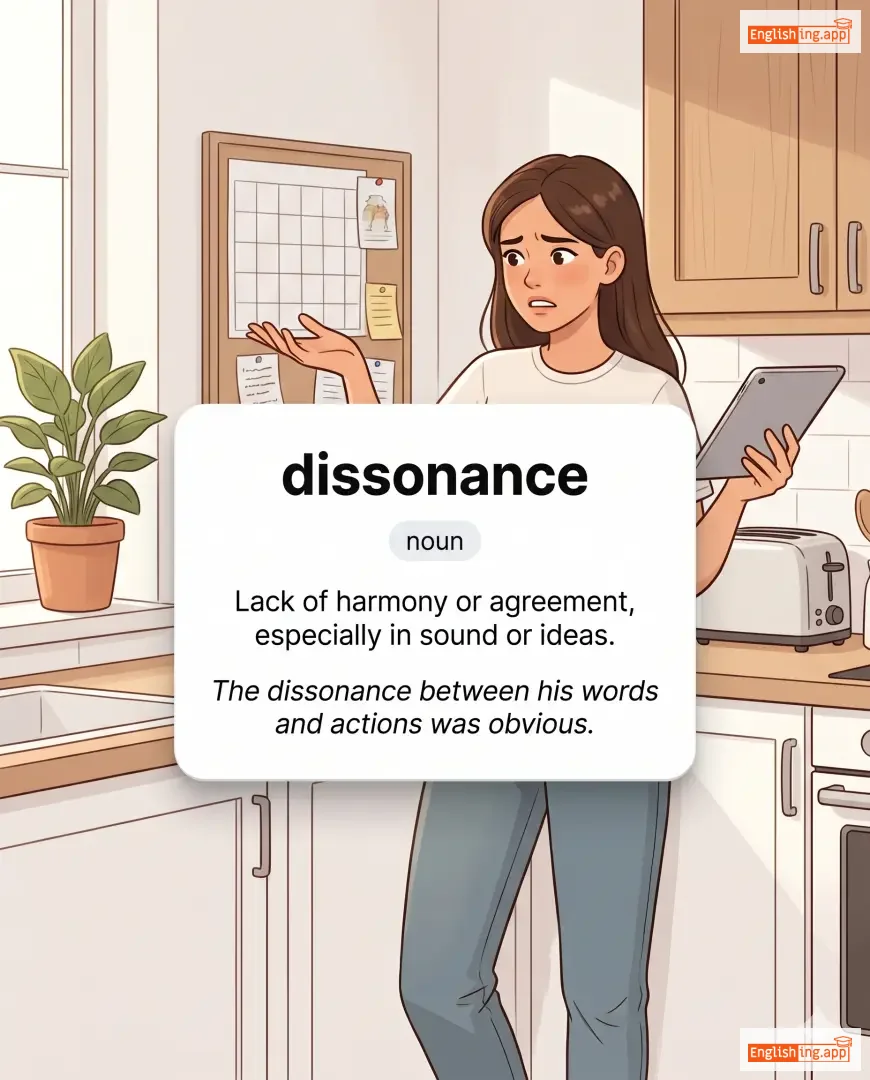
Lack of harmony or agreement, especially in sound or ideas.
••••••
|
The dissonance between his words and actions was obvious. |
他的话与行动之间的矛盾显而易见。
Tā de huà yǔ xíngdòng zhī jiān de máodùn xiǎn'ér yìjiàn.
••••••
|
cognitive dissonance |
The mental discomfort experienced when holding contradictory beliefs or values.
••••••
|
认知失调
rènzhī shītiáo
••••••
|
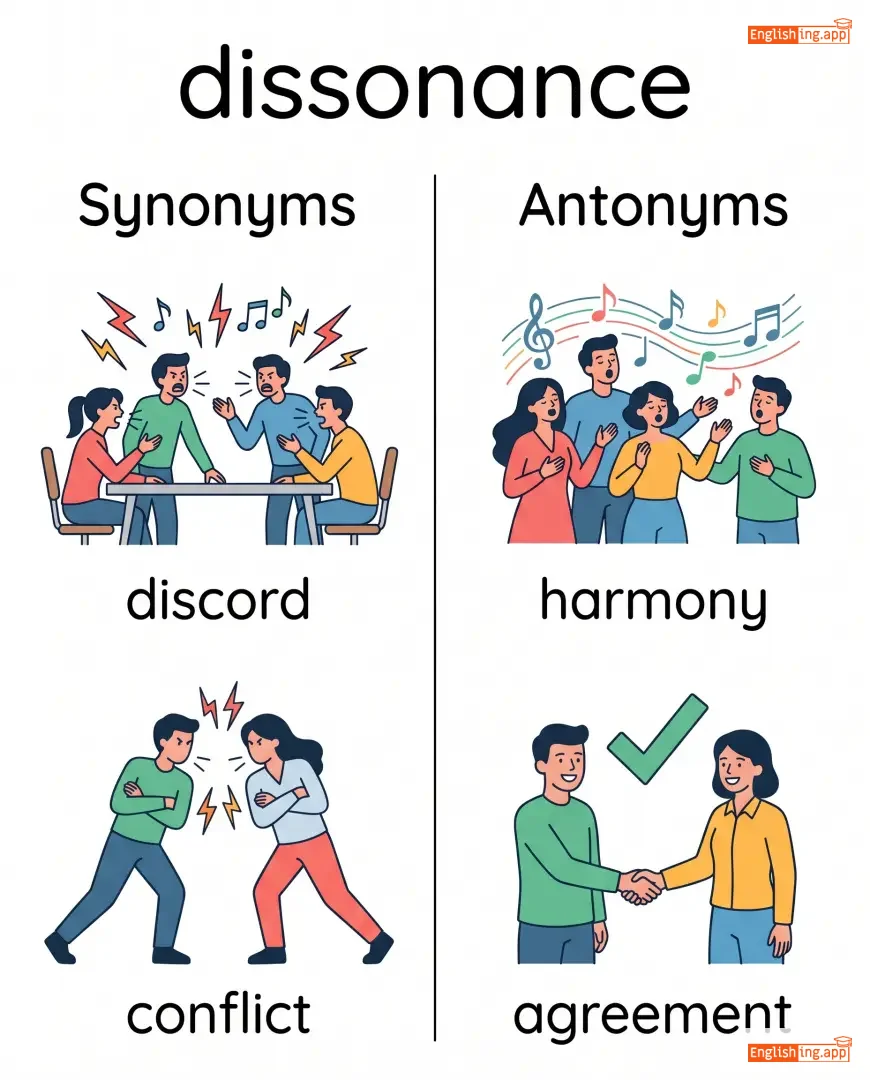
discord, conflict, discrepancy, disagreement, incongruity
••••••
|
harmony, agreement, concord
••••••
|
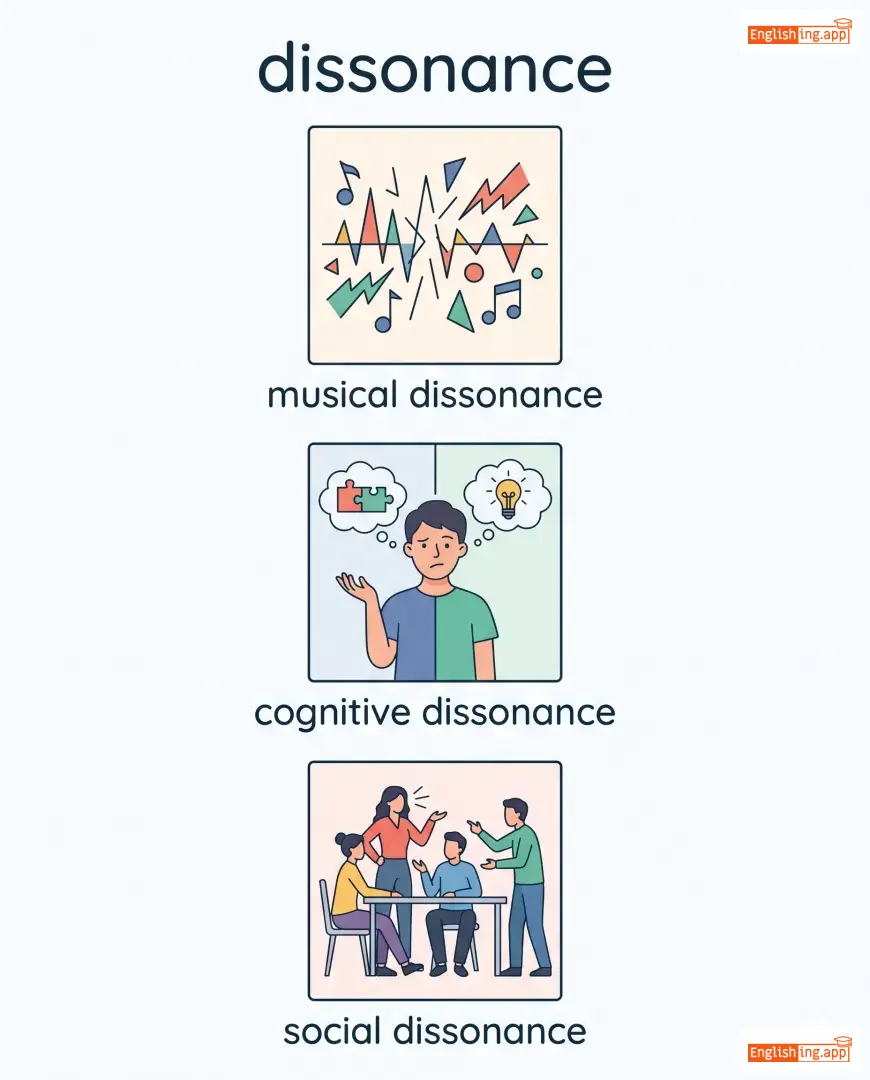
musical dissonance, cognitive dissonance, social dissonance, emotional dissonance
••••••
|
Dissonance意味着不和谐 - 就像中文的'不和谐'一样。
••••••
|

