|
絵文字
|
単語 | Images | 翻訳 | 過去 | 過去分詞 | 三人称単数 | 動名詞 | 意味 | 例文 | 例文の翻訳 | 表現例 | 表現例の意味 | 表現例の翻訳 | 同義語 | 対義語 | コロケーション | ニーモニック |
|---|---|---|---|---|---|---|---|---|---|---|---|---|---|---|---|---|---|
|
🌵
••••••
|
/ˈdɛsɪkeɪt/
verb
(デシケート)
••••••
|
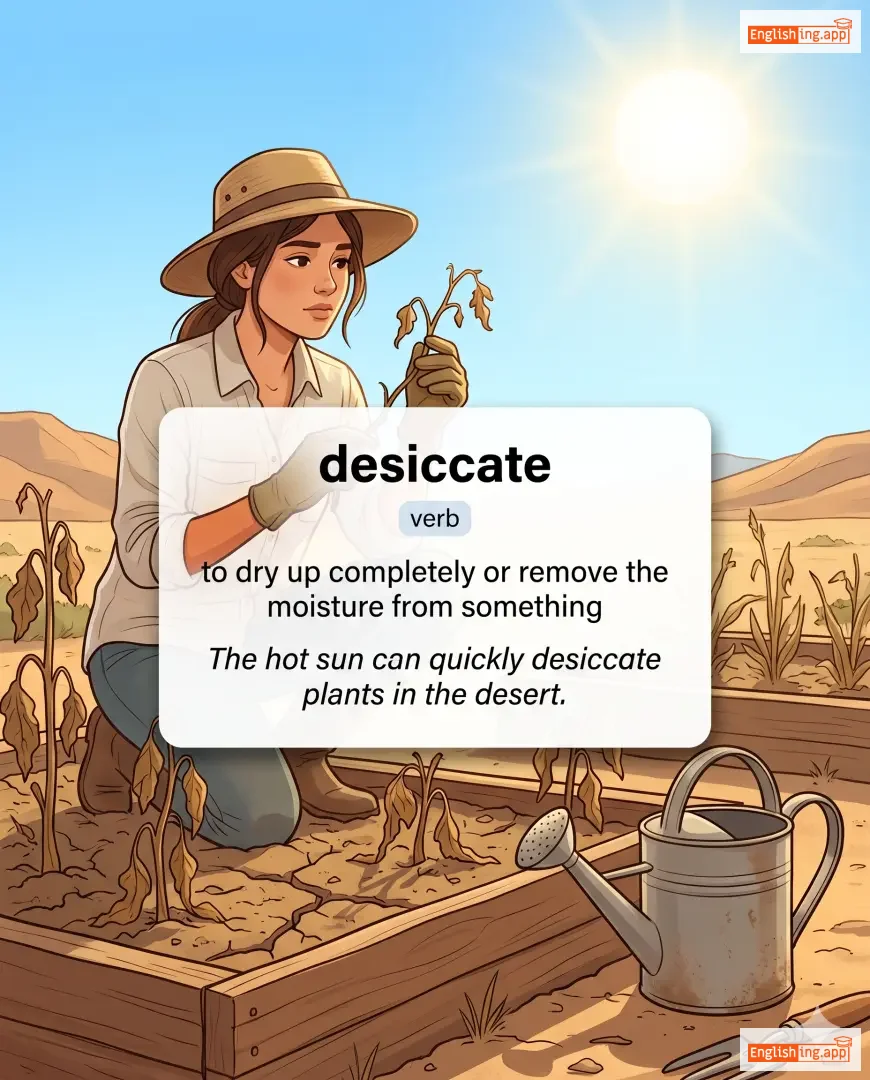
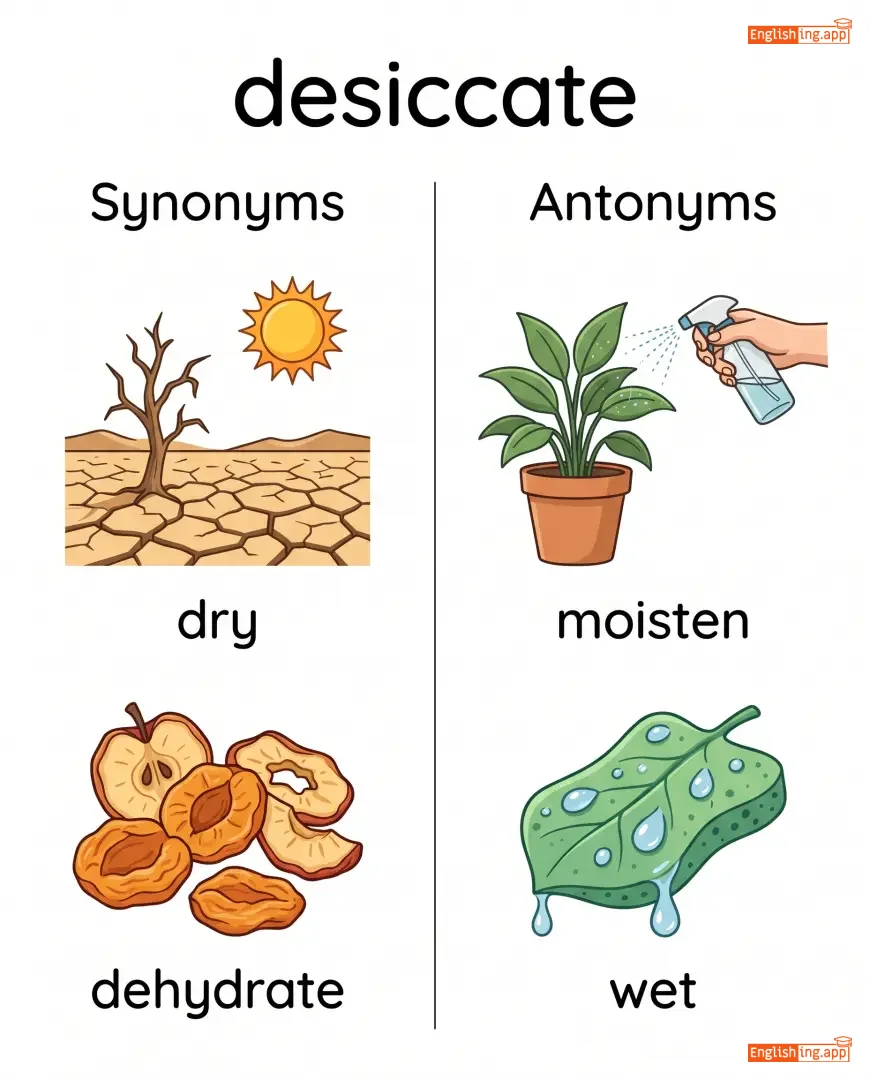
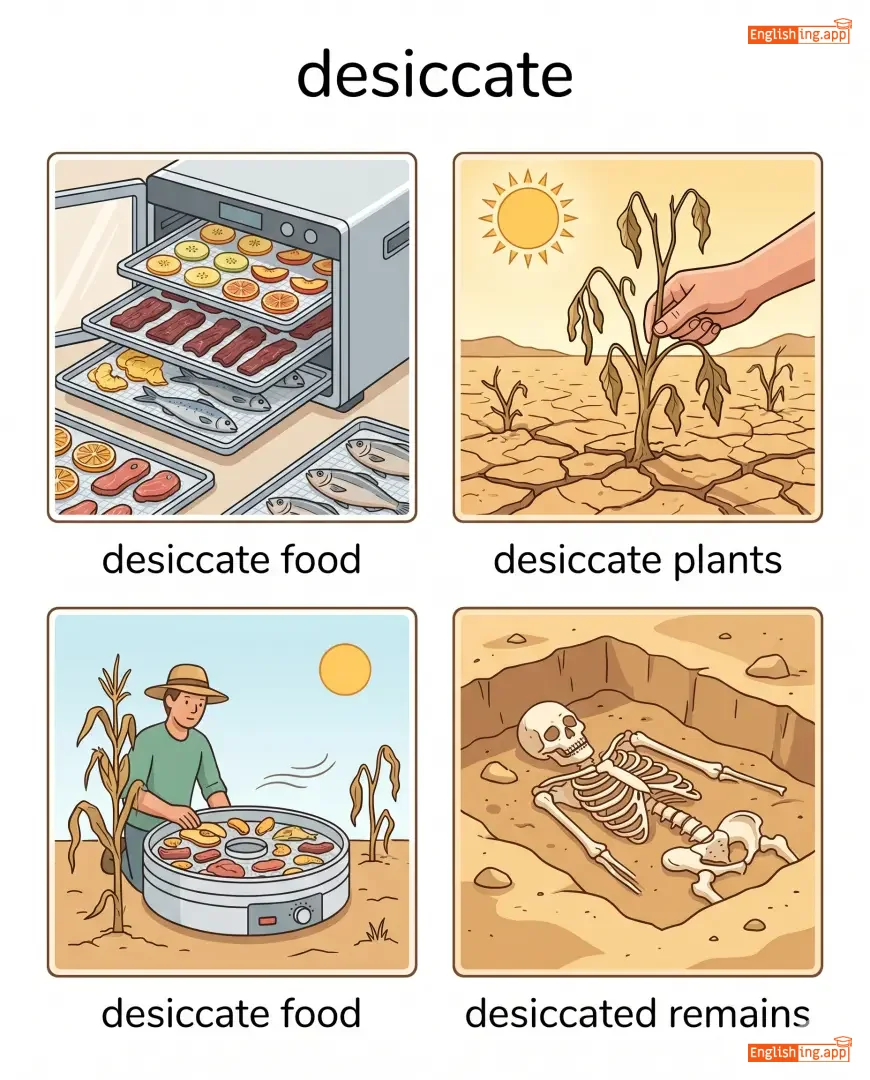
|
乾燥させる
kansou saseru
••••••
|
desiccated
デシケーテッド
••••••
|
desiccated
デシケーテッド
••••••
|
desiccates
デシケーツ
••••••
|
desiccating
デシケーティング
••••••
|
to dry up completely or remove the moisture from something
••••••
|
The hot sun can quickly desiccate plants in the desert.
暑い太陽は砂漠の植物をすぐに乾燥させることができます。
••••••
|
暑い太陽は砂漠の植物をすぐに乾燥させることができます。
Atsui taiyō wa sabaku no shokubutsu o sugu ni kansō saseru koto ga dekimasu.
••••••
|
- •••••• | - •••••• | - •••••• |
dry, dehydrate, parch, drain, evaporate
••••••
|
moisten, wet, hydrate
••••••
|
desiccate food, desiccate plants, desiccated remains
••••••
|
砂漠では植物が乾燥します。
••••••
|
|
😐
••••••
|
/ˈdɛsəlˌtɔːri/
adjective
(デサルトリー)
••••••
|
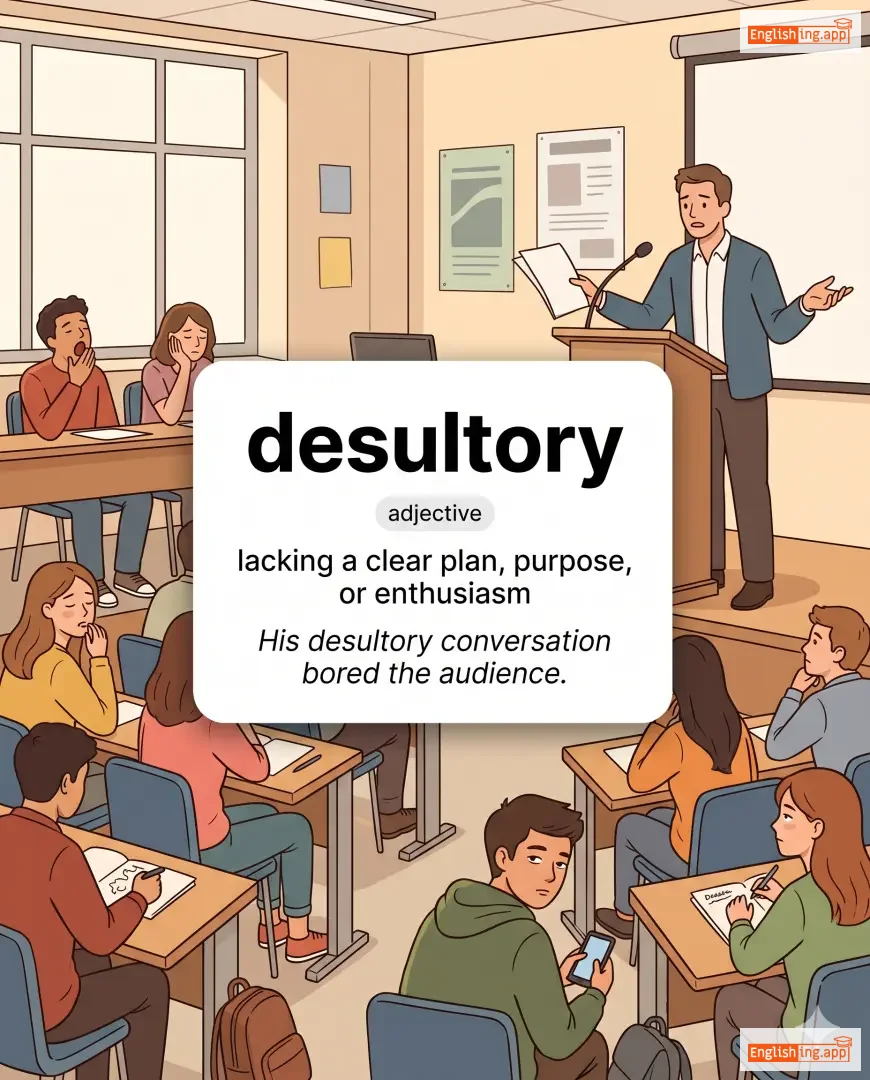
|
無秩序な
muchi-tsujona
••••••
|
- •••••• | - •••••• | - •••••• | - •••••• |
lacking a clear plan, purpose, or enthusiasm
••••••
|
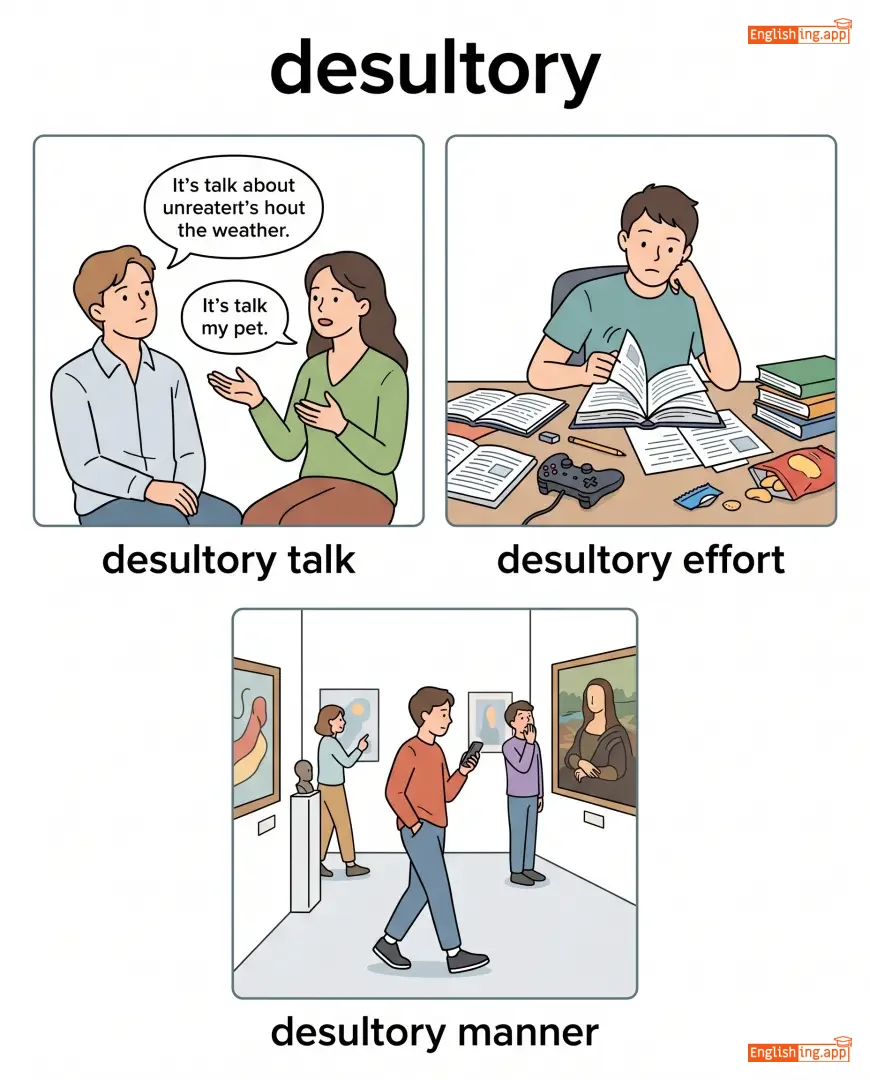
His desultory conversation bored the audience. |
彼の無秩序な会話は観客を退屈させた。
Kare no muchitsujona kaiwa wa kankyaku o taikutsu saseta.
••••••
|
- •••••• | - •••••• | - •••••• |
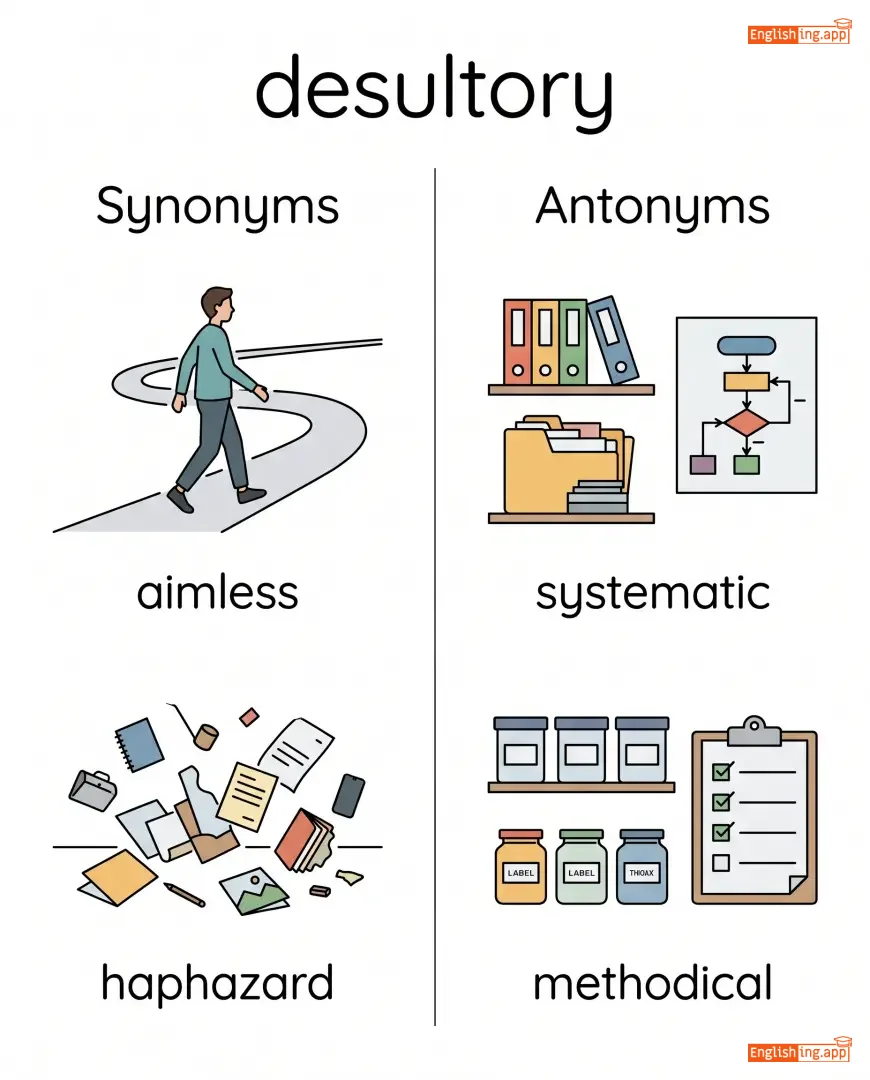
aimless, haphazard, random, unplanned, erratic
••••••
|
systematic, methodical, organized
••••••
|
desultory talk, desultory effort, desultory manner, desultory approach
••••••
|
Desultory – 計画がなく、無秩序な会話
••••••
|
|
🚫
••••••
|
/dɪˈtɜːrənt/
noun
(ディテレント)
••••••
|
|
抑止力
yokushiryoku
••••••
|
- •••••• | - •••••• | - •••••• | - •••••• |
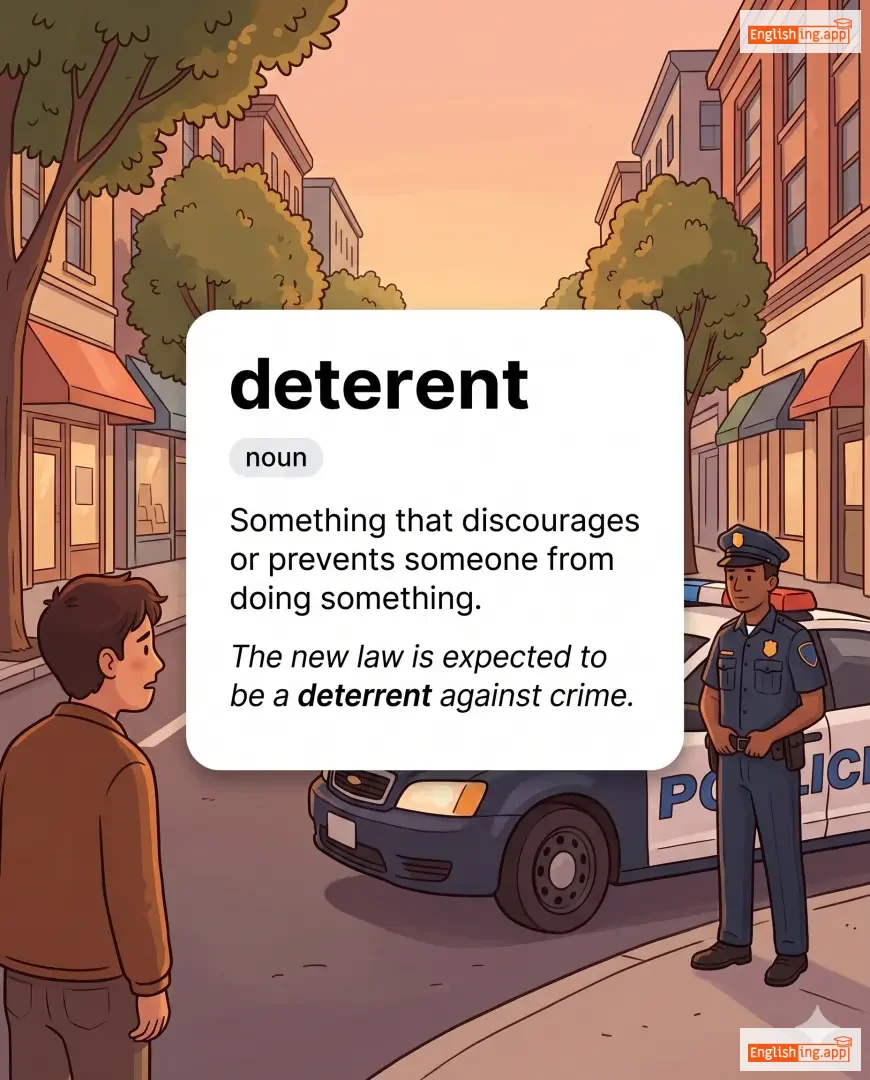
Something that discourages or prevents someone from doing something.
••••••
|
The new law is expected to be a deterrent against crime. |
新しい法律は犯罪に対する抑止力になると予想されています。
Atarashī hōritsu wa hanzai ni taisuru yokushiryoku ni naru to yosō sareteimasu.
••••••
|
- •••••• | - •••••• | - •••••• |
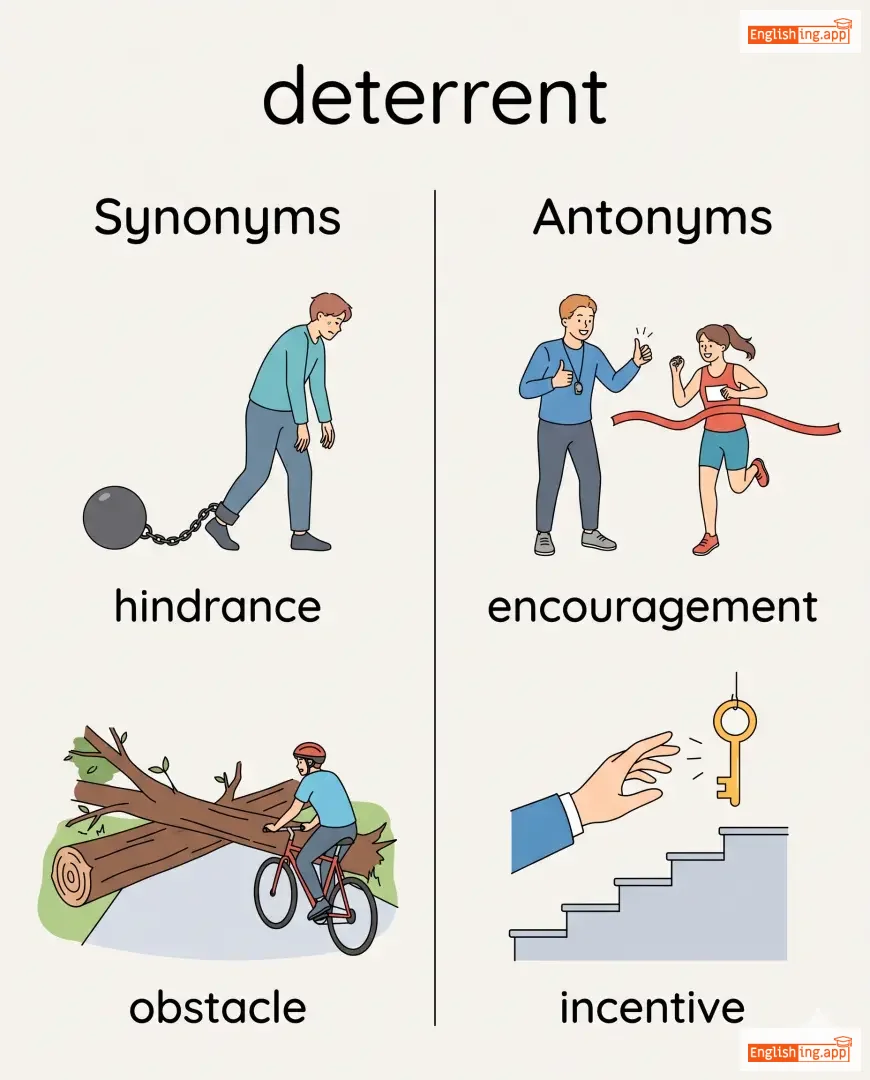
hindrance, obstacle, discouragement, preventive
••••••
|
encouragement, incentive
••••••
|
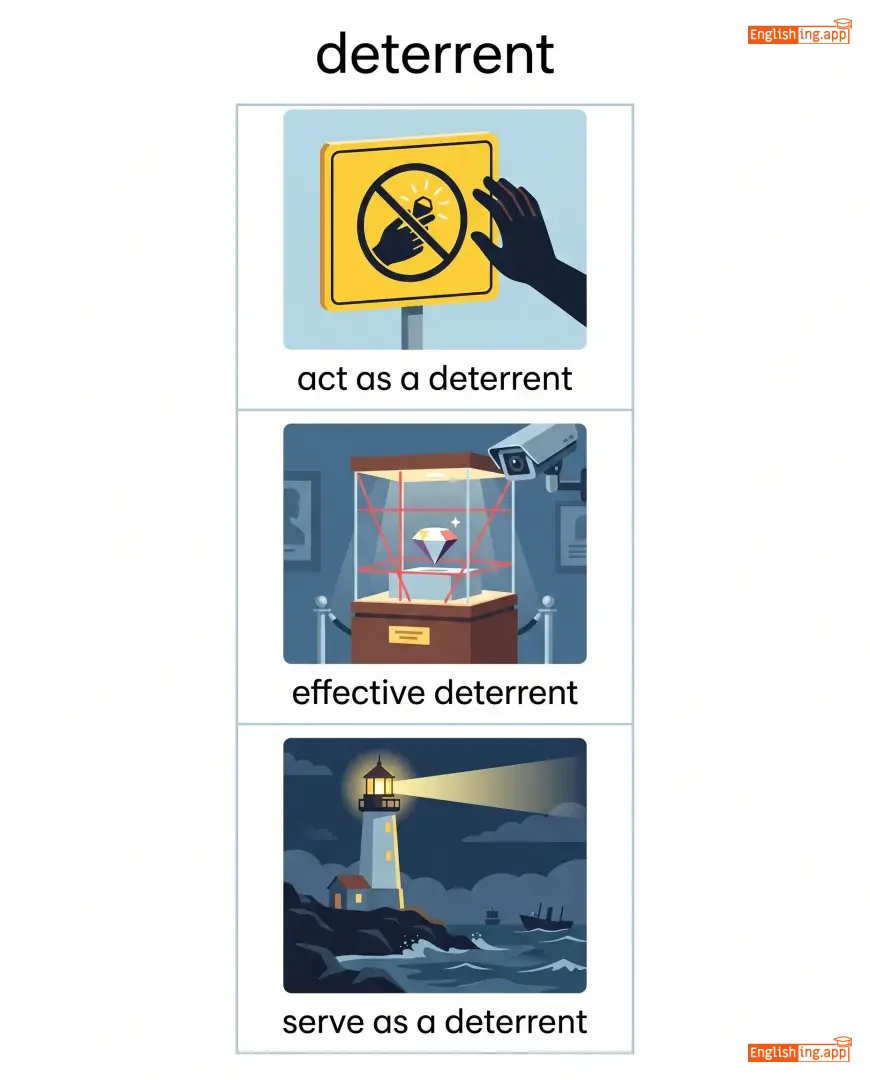
act as a deterrent, effective deterrent, serve as a deterrent
••••••
|
抑止力は 🚫 犯罪 – 法律が抑止力です。
••••••
|
|
🗣️
••••••
|
/ˈdaɪətraɪb/
noun
(ダイアトライブ)
••••••
|
|
激しい非難
hageshī hinan
••••••
|
- •••••• | - •••••• | - •••••• | - •••••• |
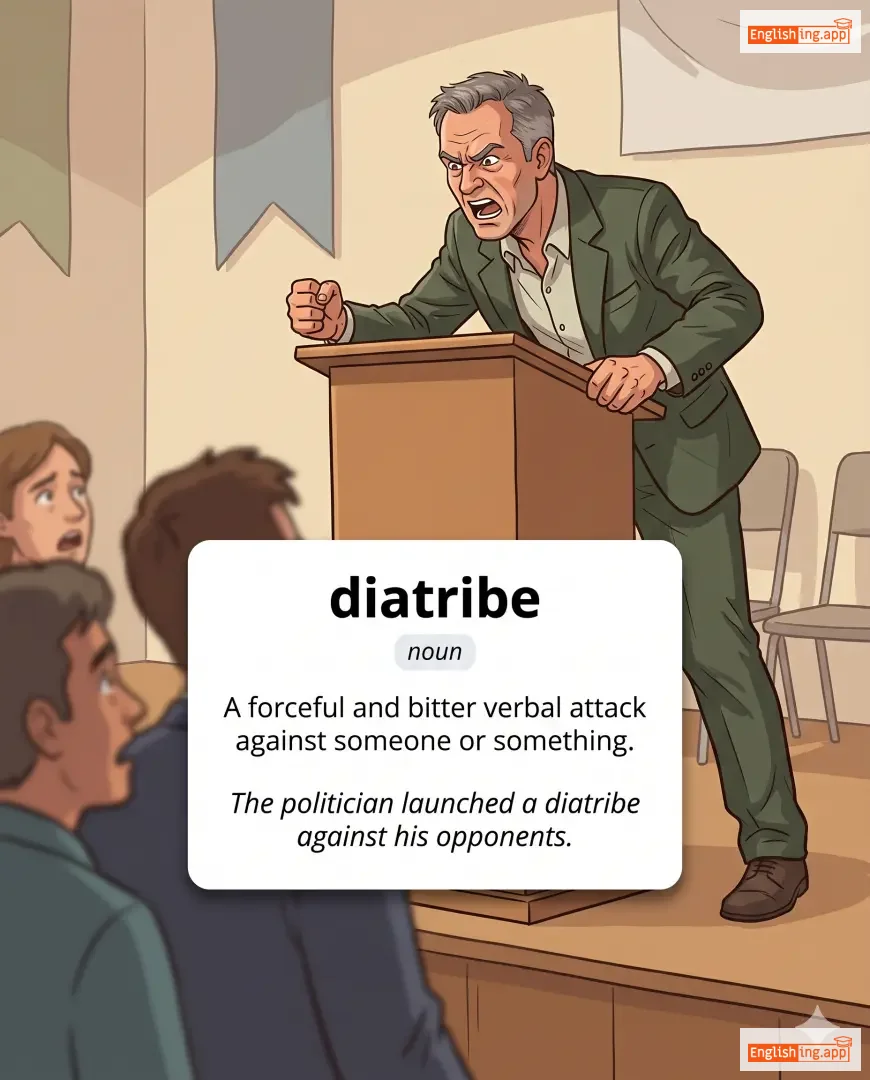
A forceful and bitter verbal attack against someone or something.
••••••
|
The politician launched a diatribe against his opponents. |
政治家は自分の対戦相手に対して激しい非難を始めた。
Seijika wa jibun no taisen aite ni taishite hageshī hinan o hajimeta.
••••••
|
- •••••• | - •••••• | - •••••• |
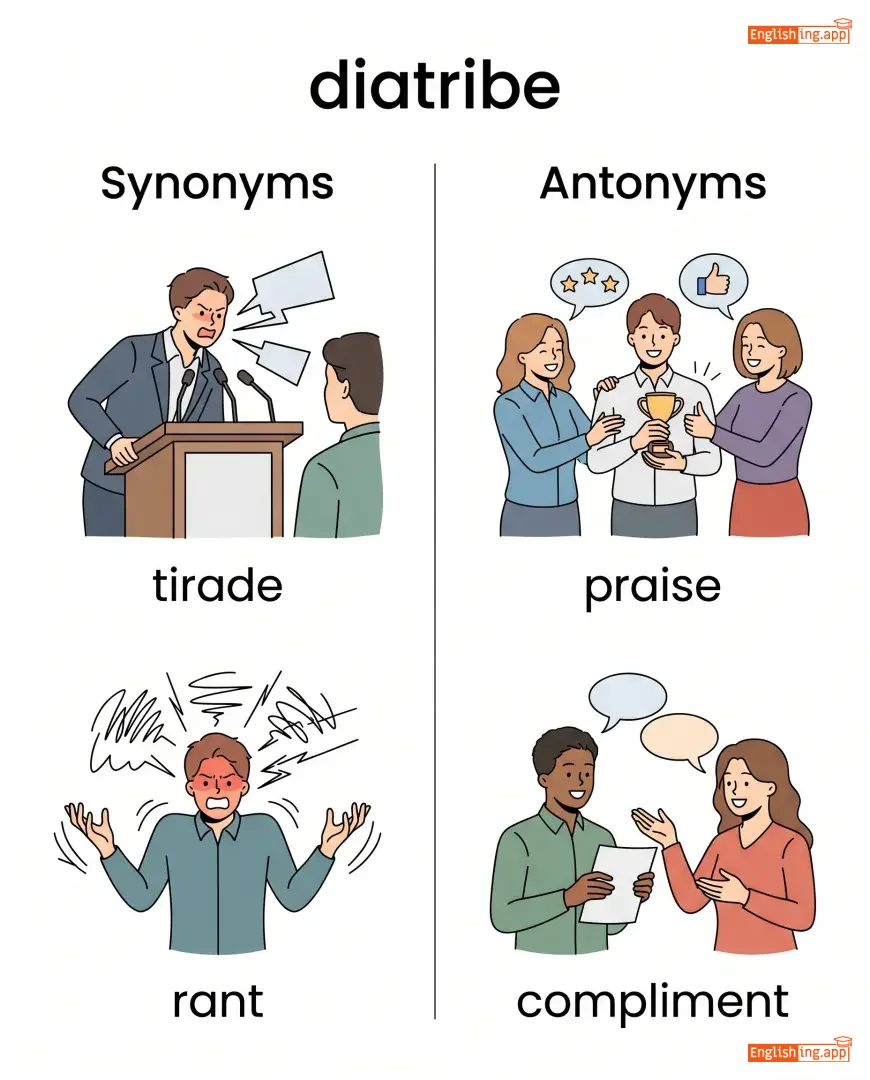
tirade, rant, criticism, denunciation, invective
••••••
|
praise, compliment
••••••
|
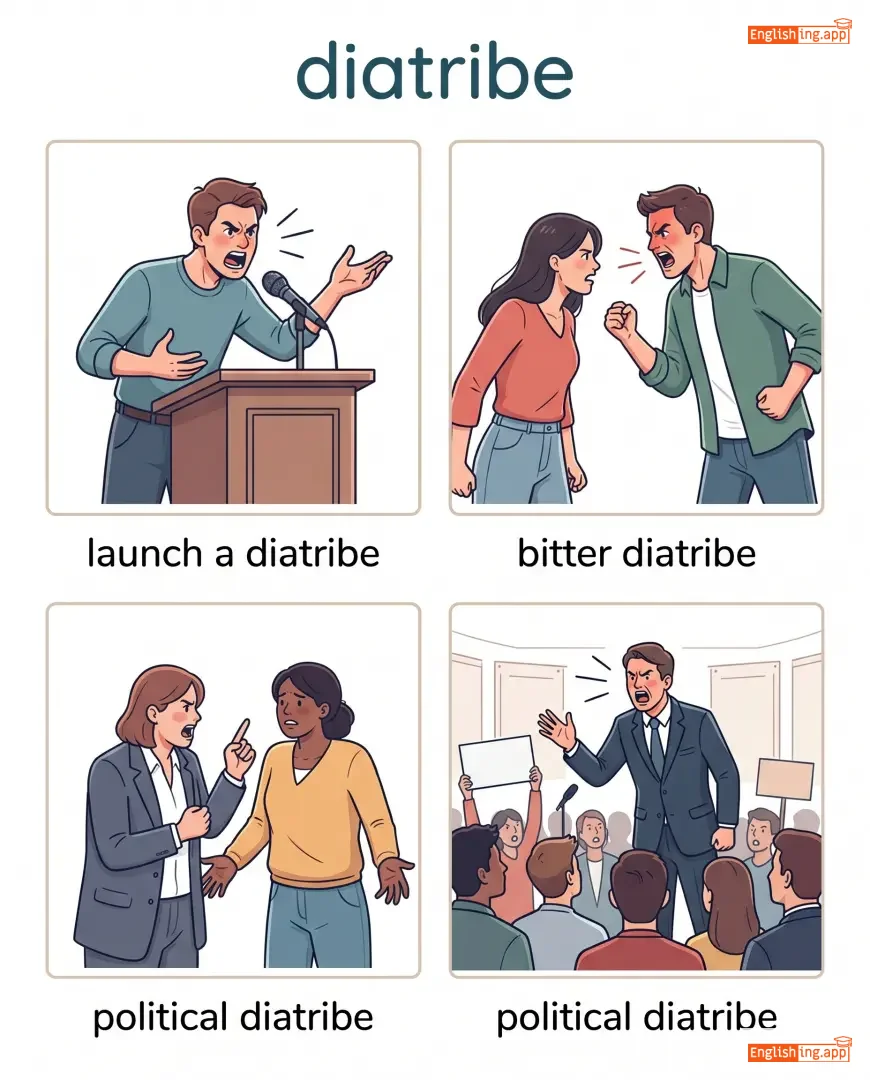
launch a diatribe, bitter diatribe, political diatribe
••••••
|
DIAlogueでTRIBeの激しい非難 → Diatribe = 激しい非難
••••••
|
|
⚖️
••••••
|
/daɪˈkɒtəmi/
noun
(ダイコトミー)
••••••
|
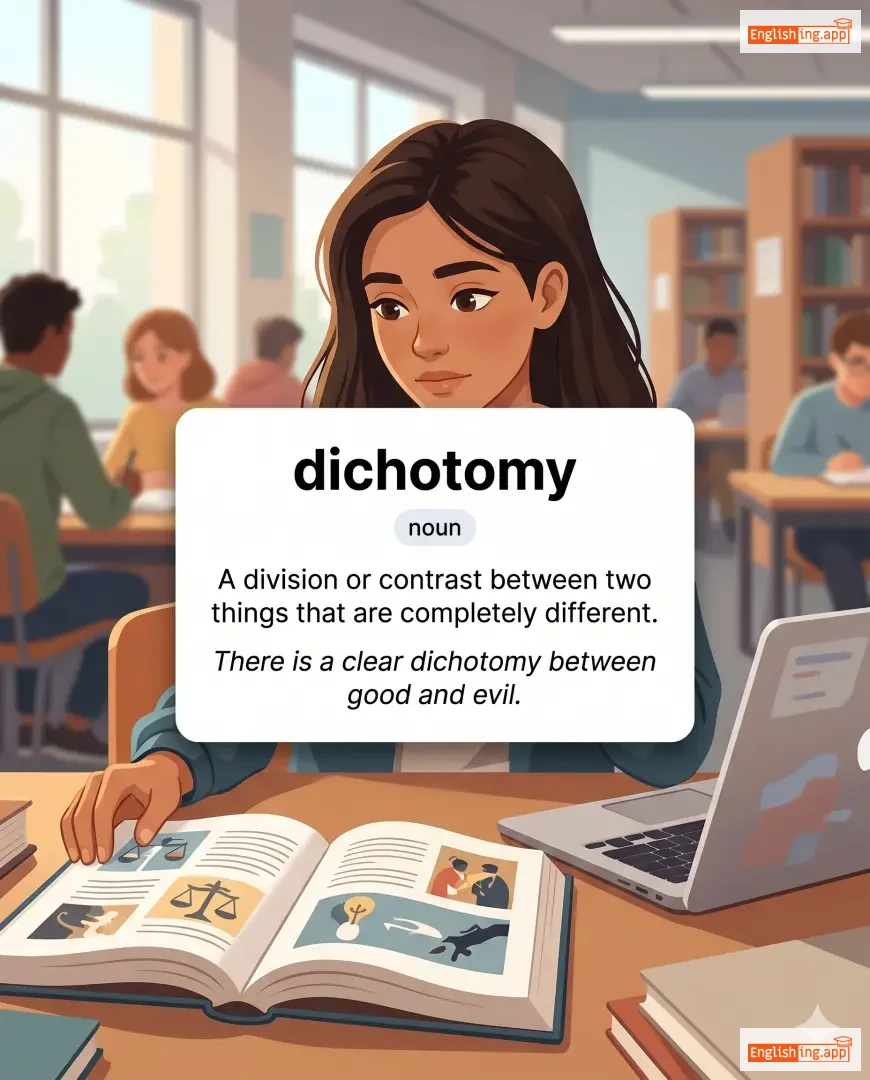
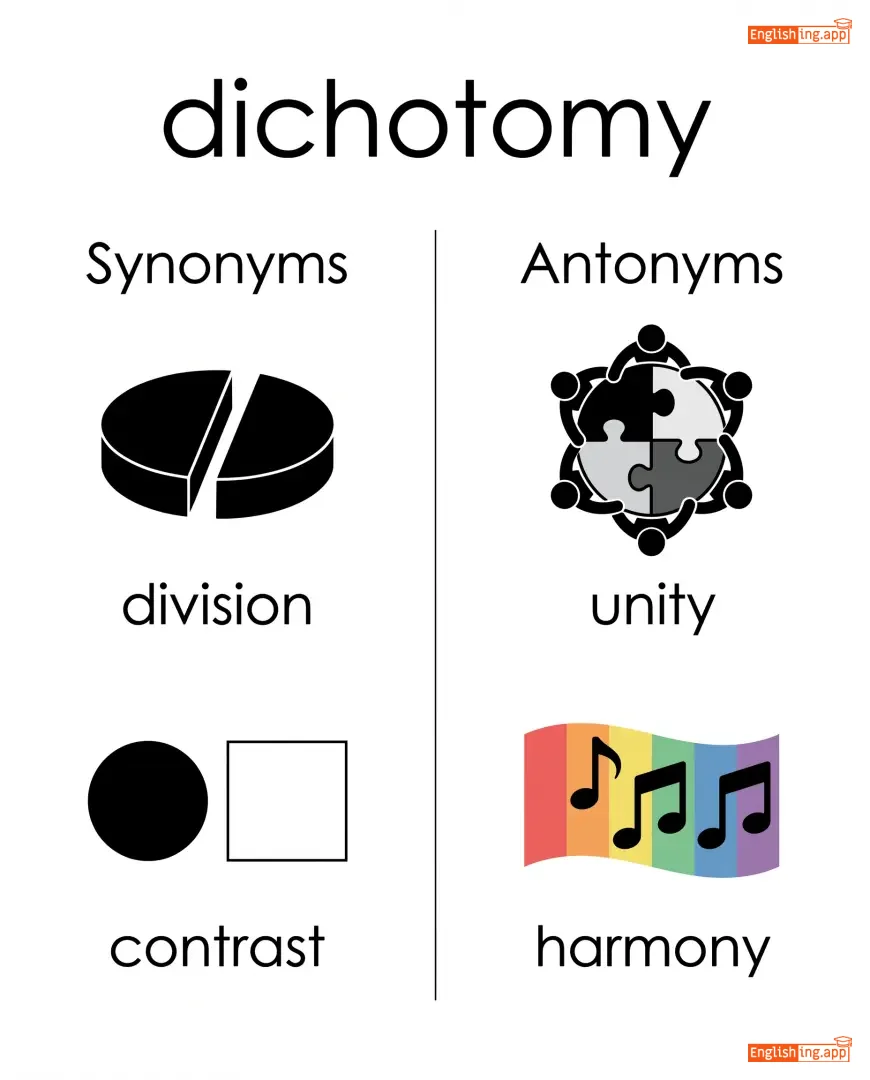
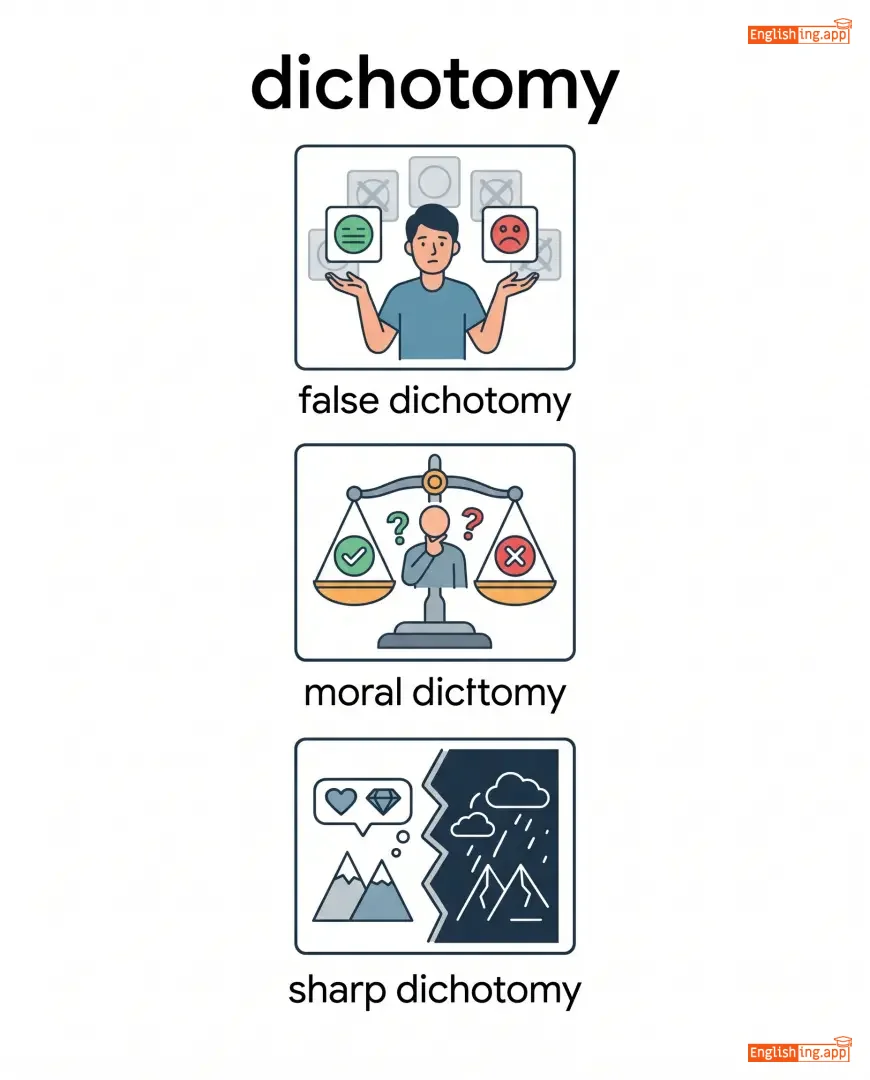
|
二項対立
nikou tairitsu
••••••
|
- •••••• | - •••••• | - •••••• | - •••••• |
A division or contrast between two things that are completely different.
••••••
|
There is a clear dichotomy between good and evil. |
善と悪の間には明確な二項対立があります。
Zen to aku no aida ni wa meikaku na nikou tairitsu ga arimasu.
••••••
|
- •••••• | - •••••• | - •••••• |
division, contrast, split, dualism
••••••
|
unity, harmony
••••••
|
false dichotomy, moral dichotomy, sharp dichotomy
••••••
|
DIE は二つ + CUT は切る → Dichotomy は二つに分けることを意味する
••••••
|
|
😶
••••••
|
/ˈdɪfɪdəns/
noun
(ディフィデンス)
••••••
|
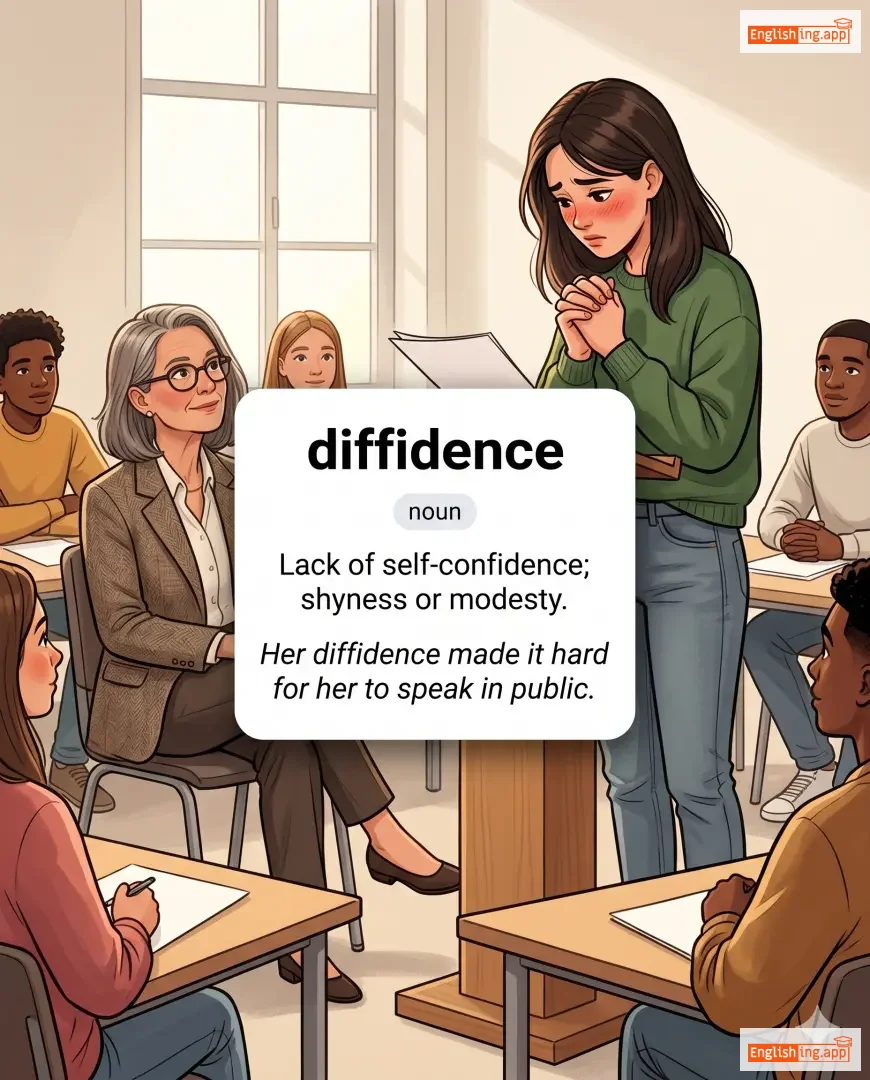
|
自信の欠如
jishin no ketsujo
••••••
|
- •••••• | - •••••• | - •••••• | - •••••• |
Lack of self-confidence; shyness or modesty.
••••••
|
Her diffidence made it hard for her to speak in public. |
彼女の自信の欠如は、公衆の前で話すのを難しくした。
Kanojo no jishin no ketsujo wa, koushuu no mae de hanasu no o muzukashiku shita.
••••••
|
- •••••• | - •••••• | - •••••• |
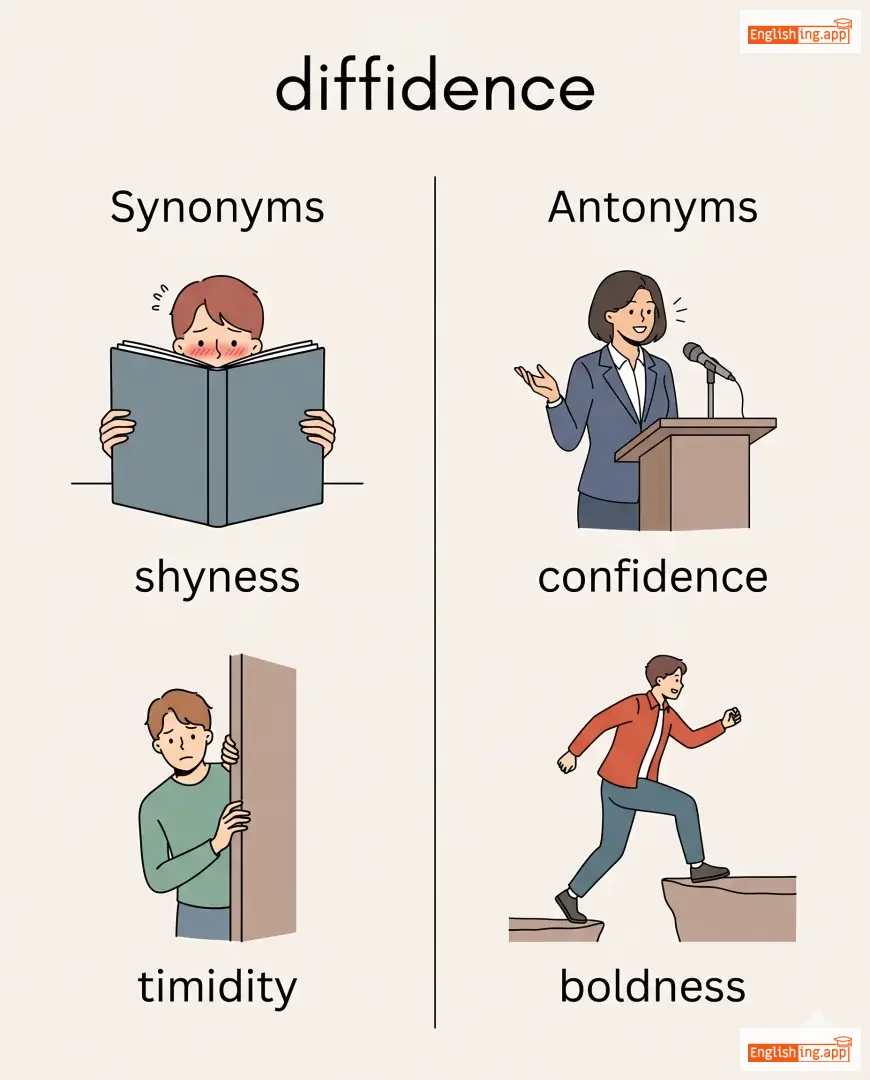
shyness, timidity, insecurity, reserve, modesty
••••••
|
confidence, boldness, assertiveness
••••••
|
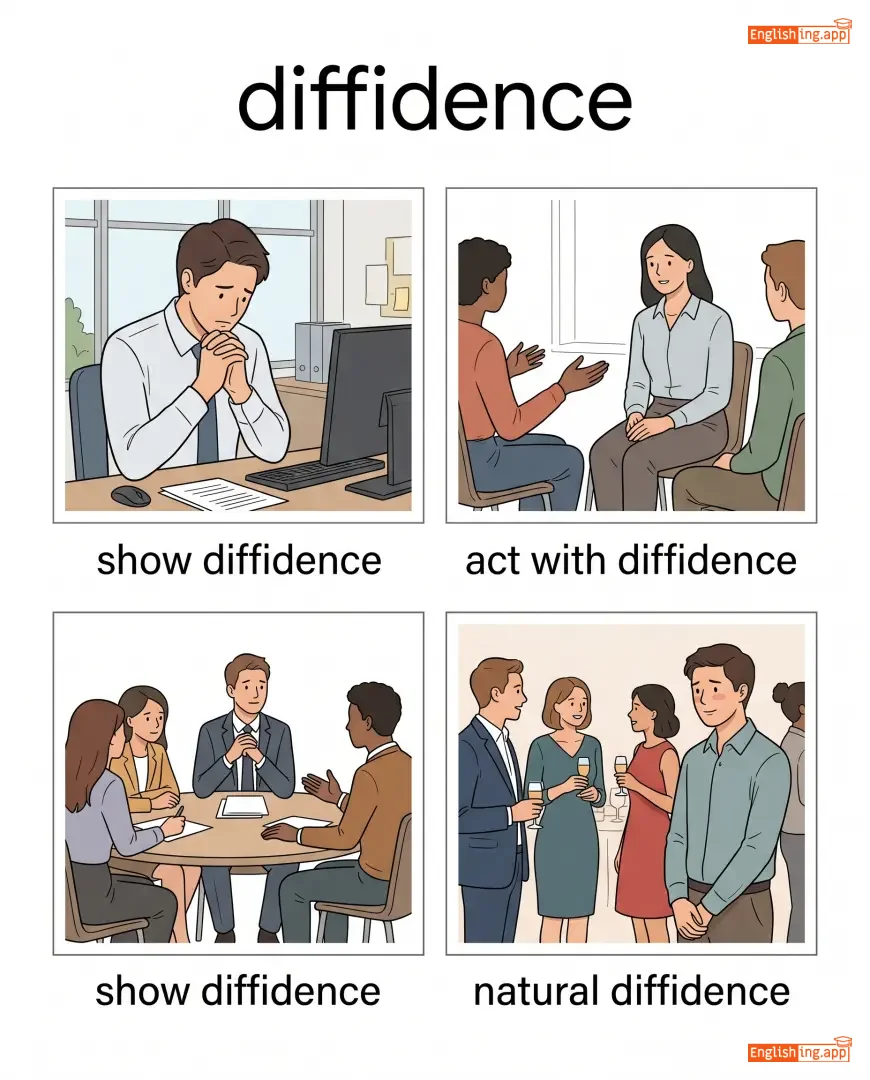
show diffidence, act with diffidence, natural diffidence
••••••
|
Diffidenceは自信の欠如 - D = Down 自信を覚えておこう。
••••••
|
|
🌫️
••••••
|
/dɪˈfjuːz/
verb
••••••
|
|
- •••••• |
diffused
••••••
|
diffused
••••••
|
diffuses
••••••
|
diffusing
••••••
|
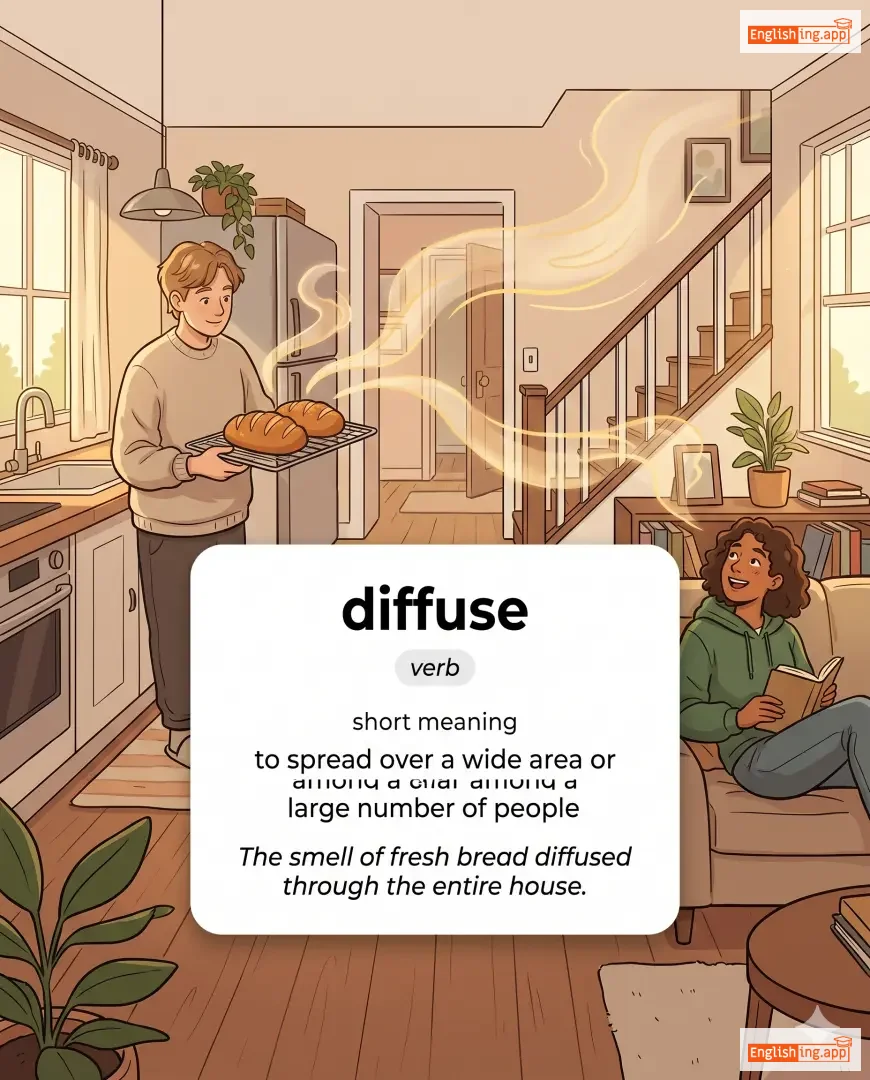
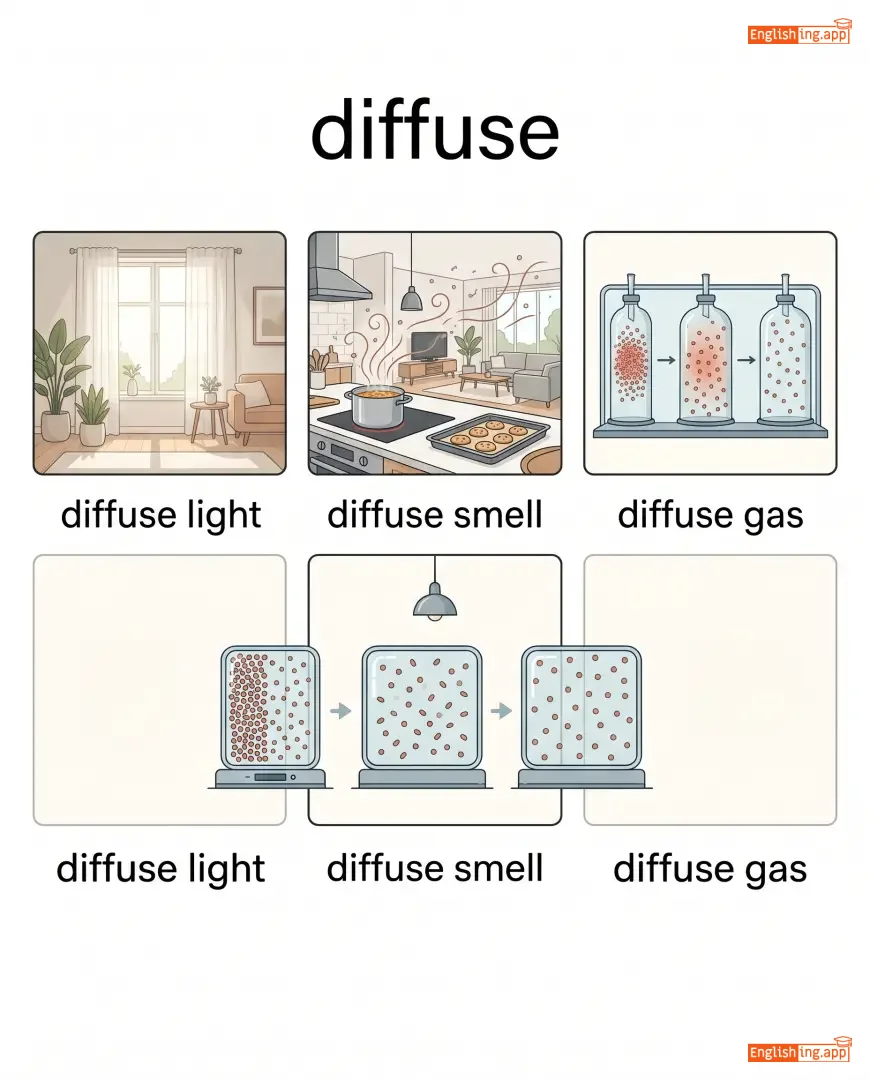
to spread over a wide area or among a large number of people
••••••
|
The smell of fresh bread diffused through the entire house. |
- •••••• |
diffuse tension |
to reduce or calm down stress or conflict
••••••
|
- •••••• |
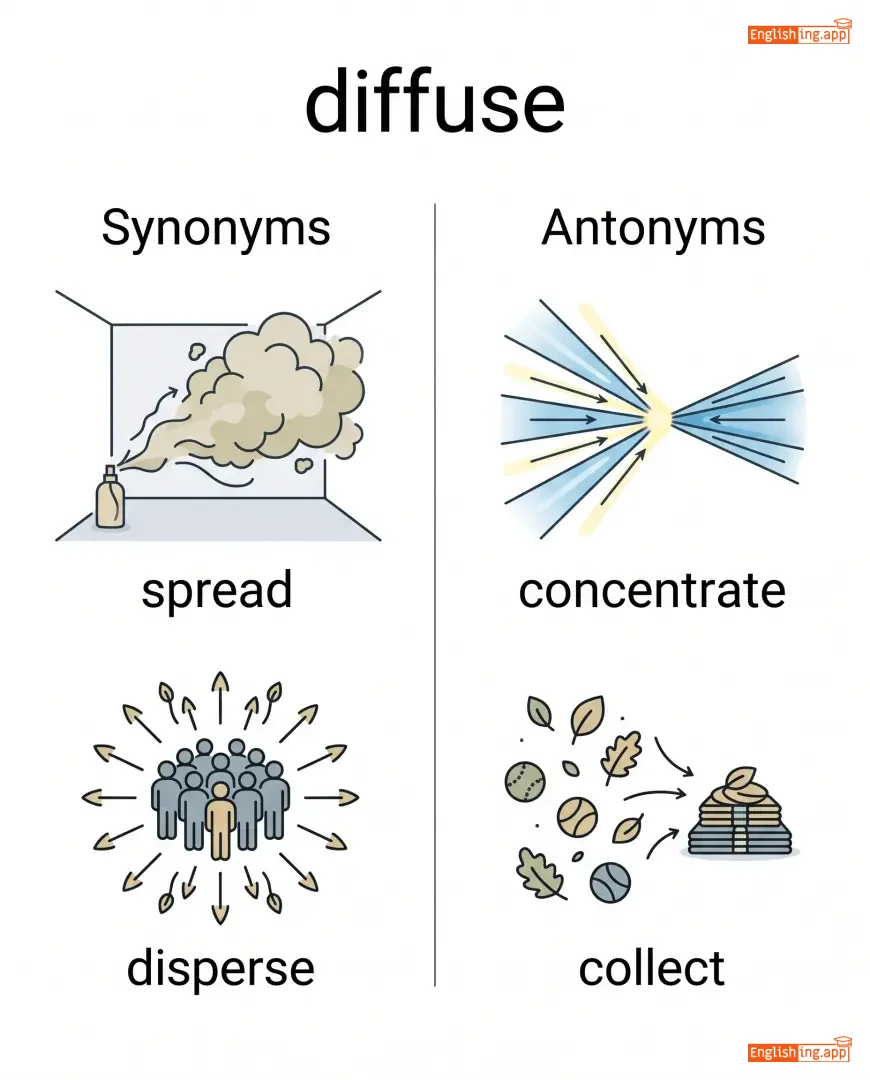
spread, disperse, scatter, distribute, dissipate
••••••
|
concentrate, collect, gather
••••••
|
diffuse light, diffuse smell, diffuse gas, diffuse conflict
••••••
|
No •••••• |
|
🛤️
••••••
|
/daɪˈɡrɛʃən/
noun
(ダイグレッション)
••••••
|
|
逸脱
itsudatsu
••••••
|
- •••••• | - •••••• | - •••••• | - •••••• |
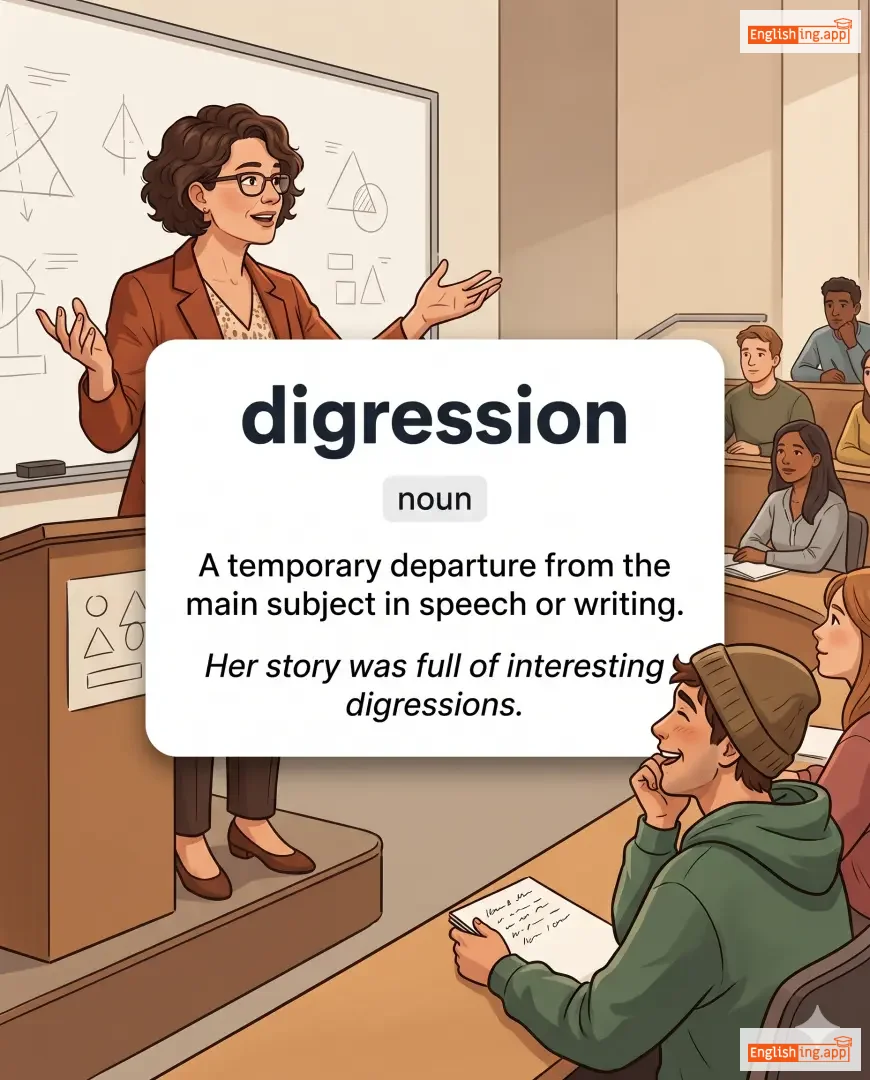
A temporary departure from the main subject in speech or writing.
••••••
|
Her story was full of interesting digressions. |
彼女の話は面白い逸脱で満ちていました。
Kanojo no hanashi wa omoshiroi itsudatsu de michite imashita.
••••••
|
- •••••• | - •••••• | - •••••• |
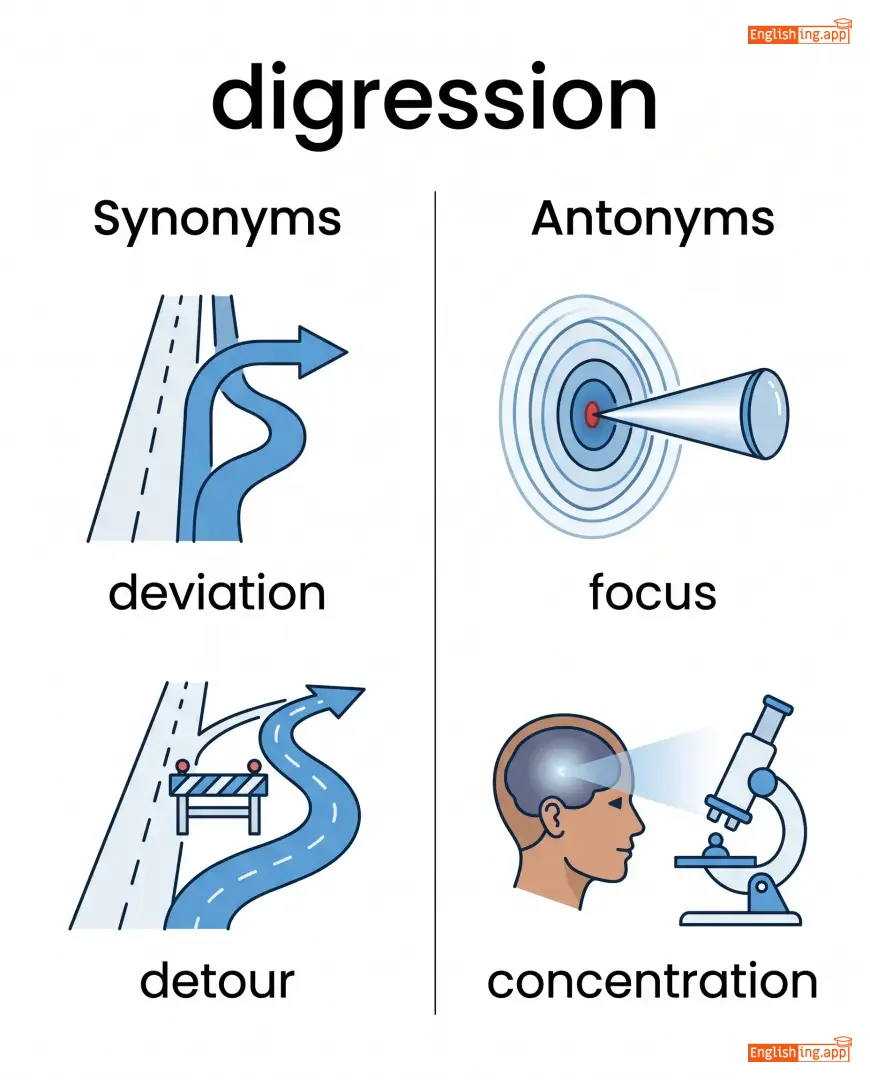
deviation, detour, aside, tangent
••••••
|
focus, concentration
••••••
|
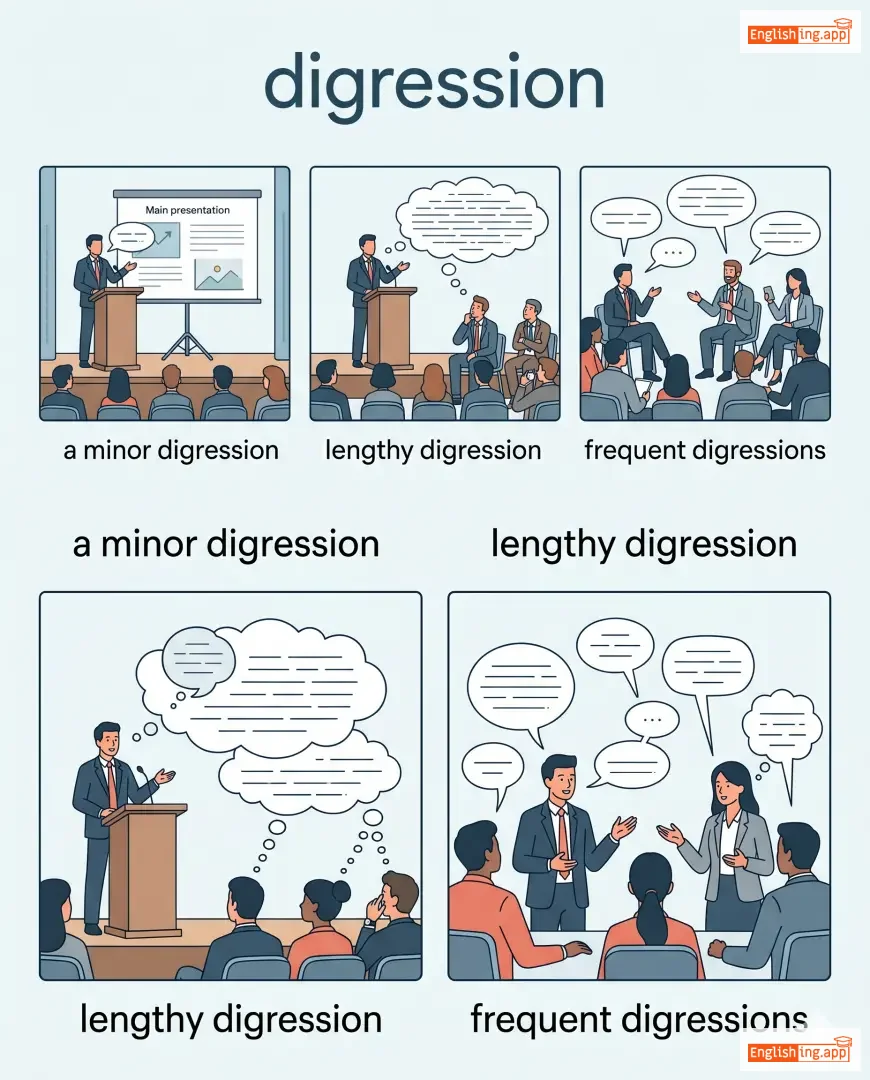
a minor digression, lengthy digression, frequent digressions
••••••
|
Digression は話のテーマから外れること。
••••••
|
|
🎵
••••••
|
/dɜːrdʒ/
noun
(ダージ)
••••••
|
|
哀歌
aika
••••••
|
- •••••• | - •••••• | - •••••• | - •••••• |
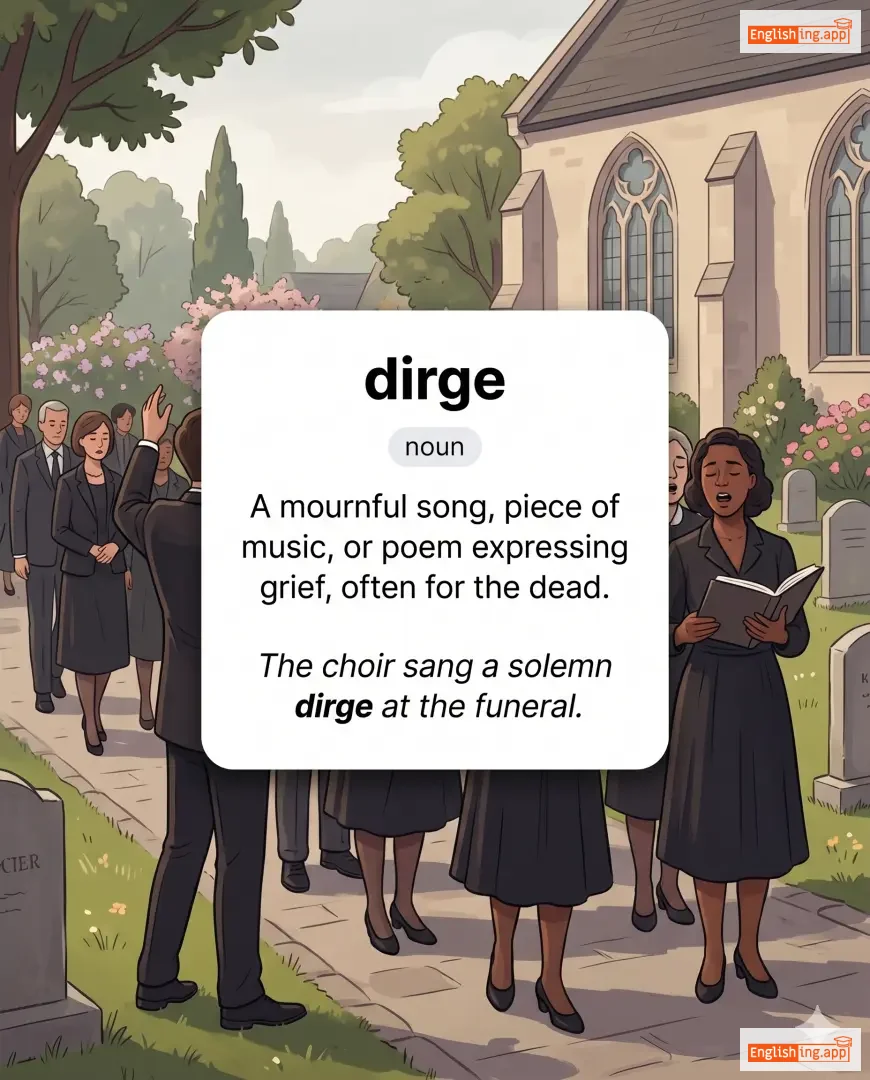
A mournful song, piece of music, or poem expressing grief, often for the dead.
••••••
|
The choir sang a solemn dirge at the funeral.
コーラスは葬式で厳粛なダージを歌いました。
••••••
|
コーラスは葬式で厳粛な哀歌を歌いました。
Kōrasu wa sōshiki de genshuku na aika o utaimashita.
••••••
|
- •••••• | - •••••• | - •••••• |
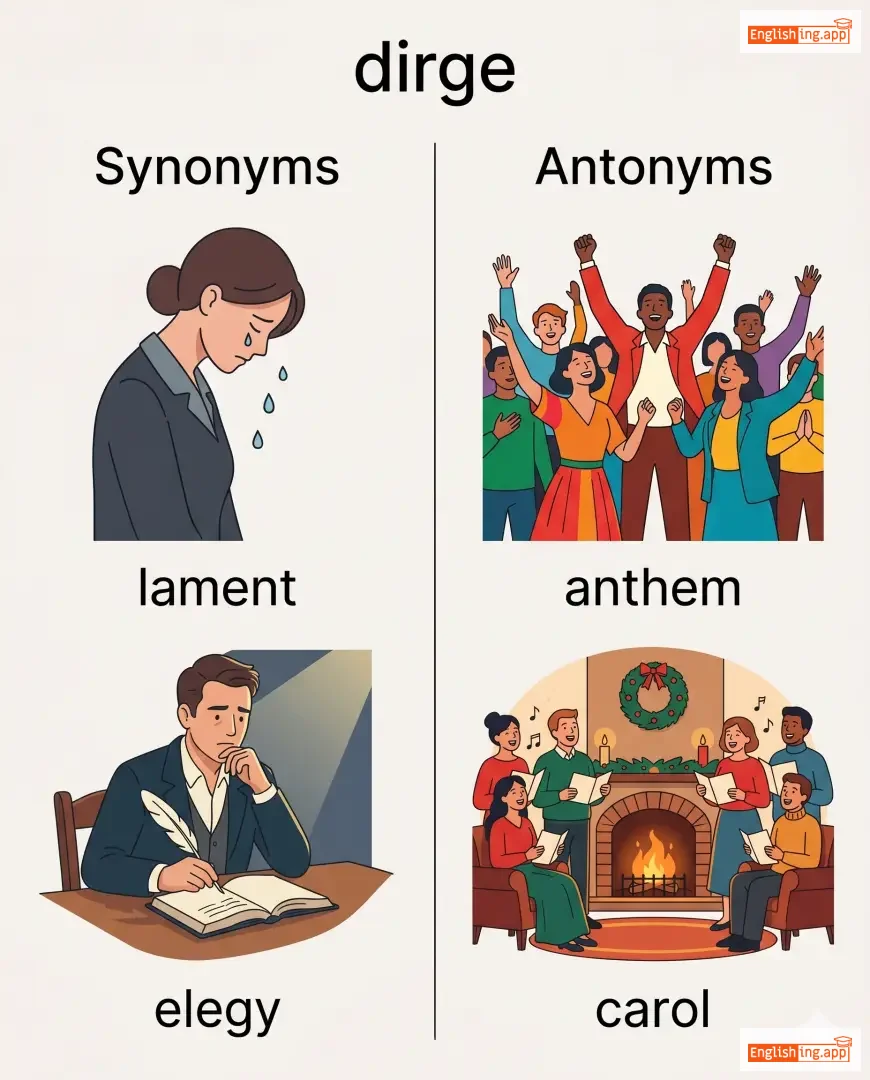
lament, elegy, requiem, threnody, funeral song
••••••
|
anthem, carol, celebration
••••••
|
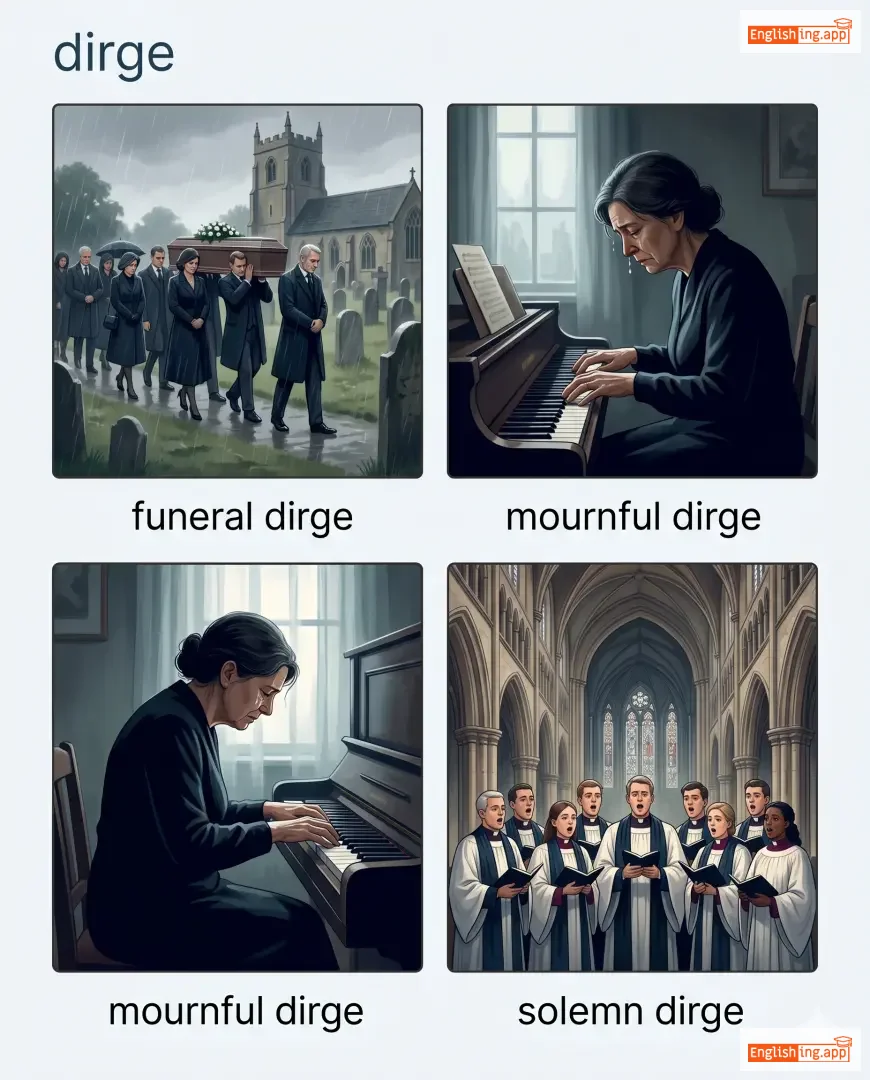
funeral dirge, mournful dirge, solemn dirge
••••••
|
Dirgeは‘哀歌’として覚えられます — 死者への悲しみを表現する歌です。
••••••
|
|
💡
••••••
|
/ˌdɪsəˈbjuːz/
verb
(ディサビューズ)
••••••
|
|
誤解を解く
gokai wo toku
••••••
|
disabused
ディサビューズド
••••••
|
disabused
ディサビューズド
••••••
|
disabuses
ディサビューゼス
••••••
|
disabusing
ディサビュージング
••••••
|
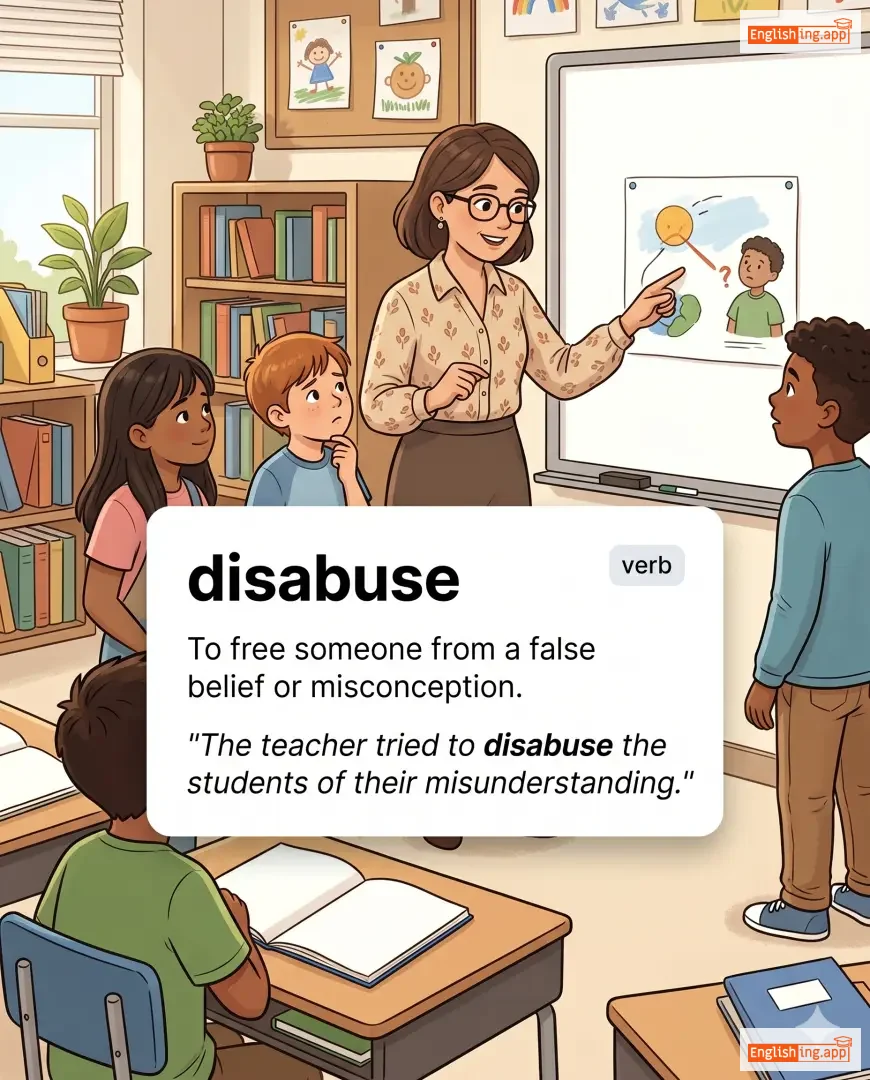
To free someone from a false belief or misconception.
••••••
|
The teacher tried to disabuse the students of their misunderstanding.
先生は生徒たちの誤解を解こうとしました。
••••••
|
先生は生徒たちの誤解を解こうとしました。
Sensei wa seito-tachi no gokai wo tokou to shimashita.
••••••
|
- •••••• | - •••••• | - •••••• |
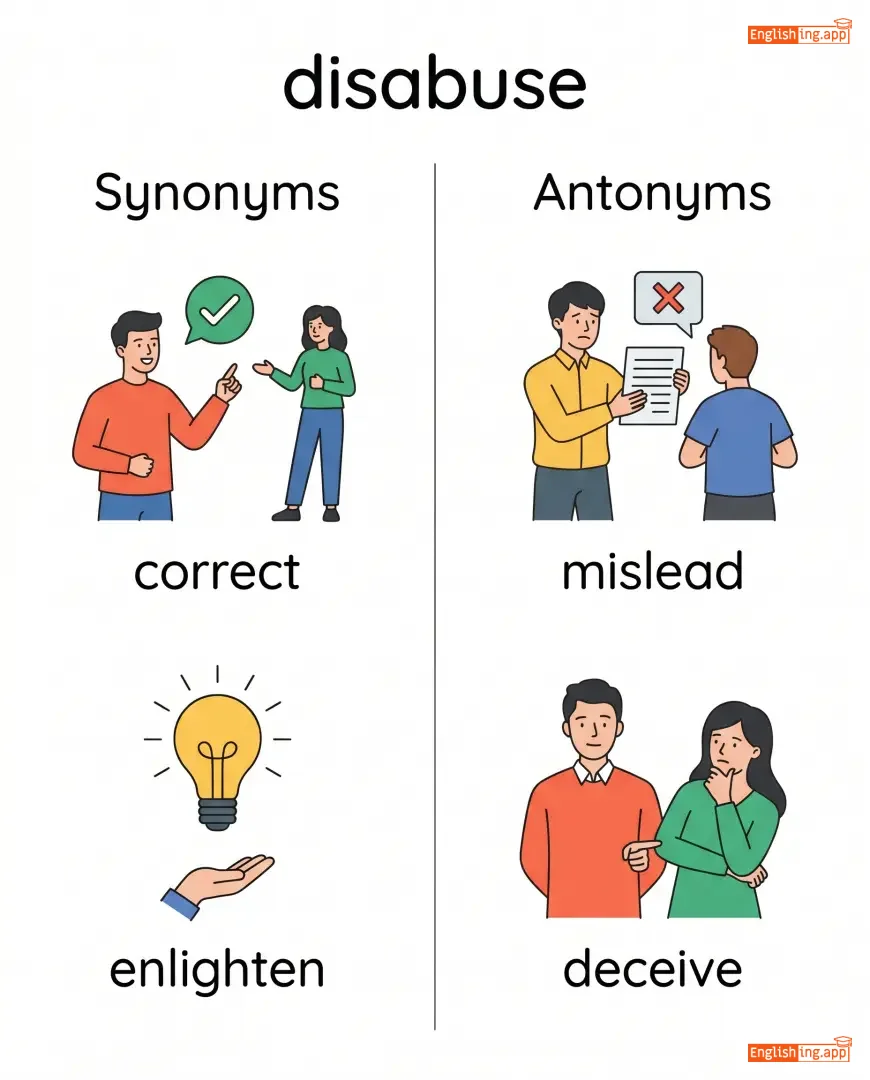
correct, enlighten, rectify, debunk, refute
••••••
|
mislead, deceive, delude
••••••
|
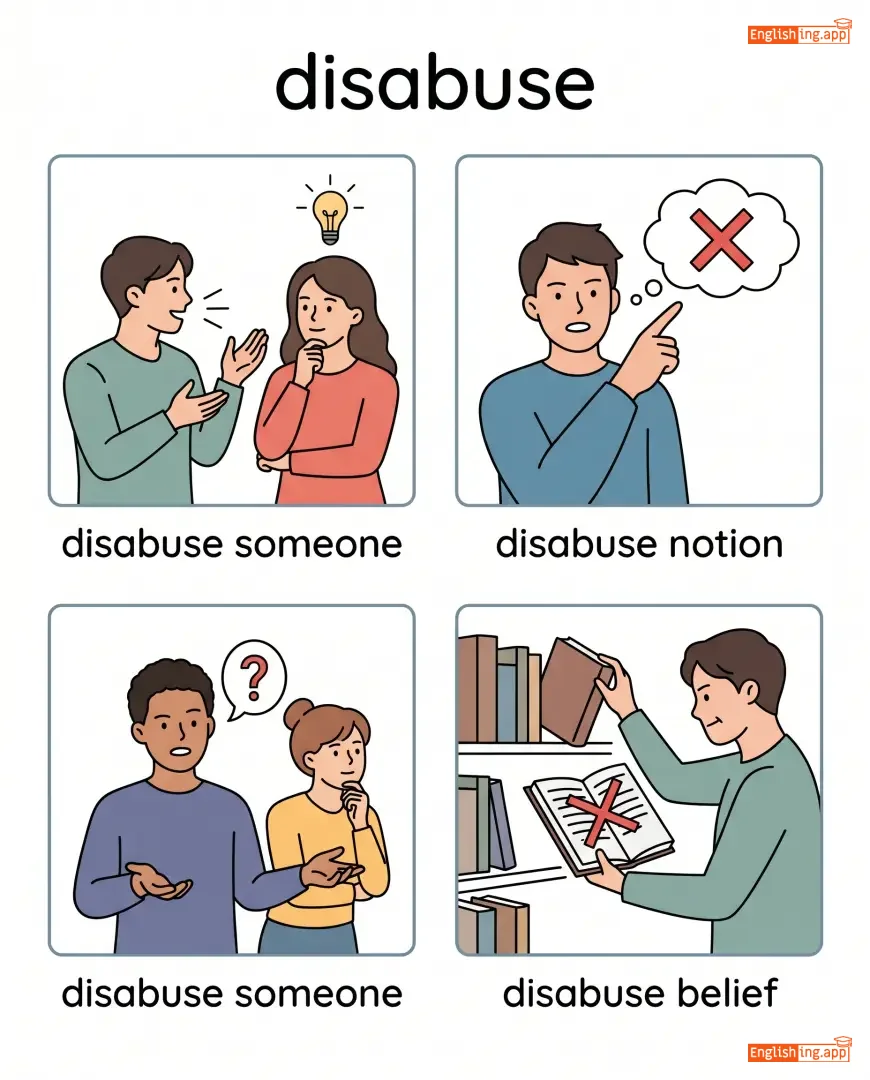
disabuse someone, disabuse notion, disabuse belief
••••••
|
Disabuse = 誤解を解く → 迷いを解く。
••••••
|
|
🧐
••••••
|
/dɪˈsɜːrnɪŋ/
adjective
(ディスアーニング)
••••••
|

|
鋭い
surudoi
••••••
|
- •••••• | - •••••• | - •••••• | - •••••• |
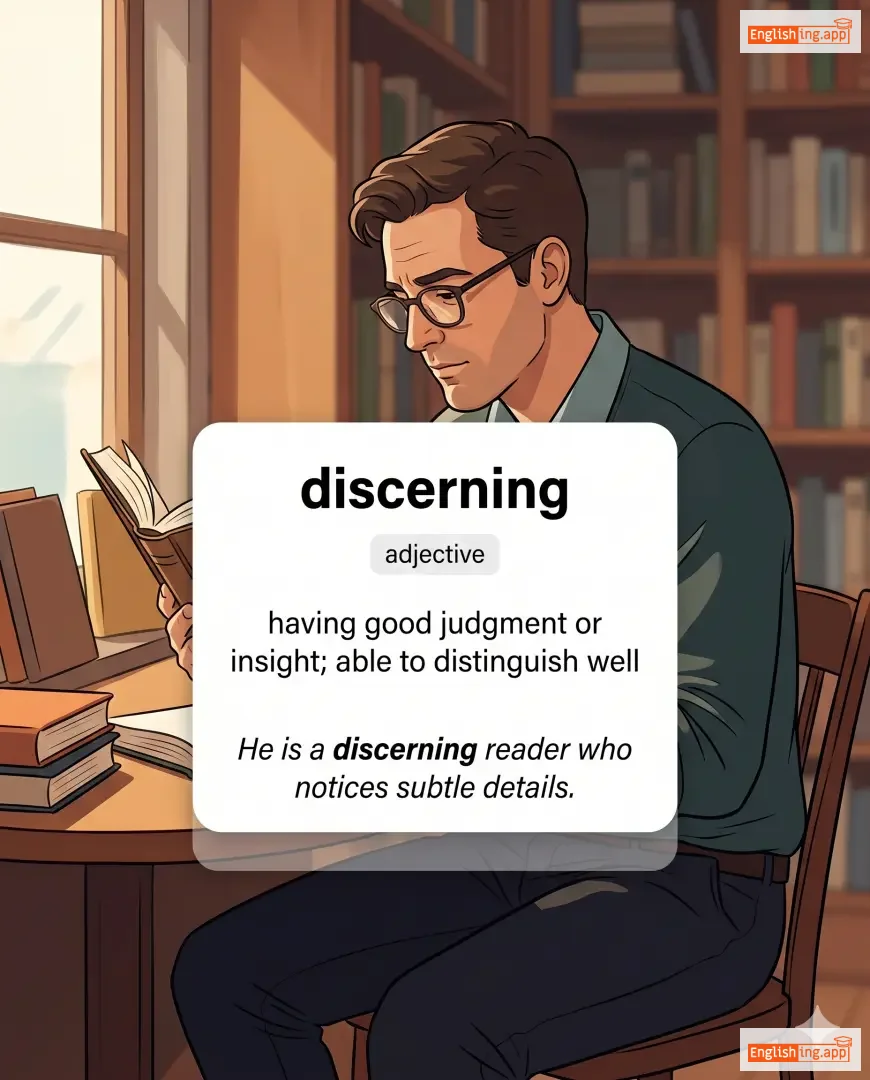
having good judgment or insight; able to distinguish well
••••••
|
He is a discerning reader who notices subtle details. |
彼は鋭い読者で、微細な詳細に気づきます。
kare wa surudoi dokusha de, bisai na shousai ni kizukimasu.
••••••
|
discerning taste |
ability to appreciate and judge good quality
••••••
|
鋭い味覚
surudoi mikaku
••••••
|
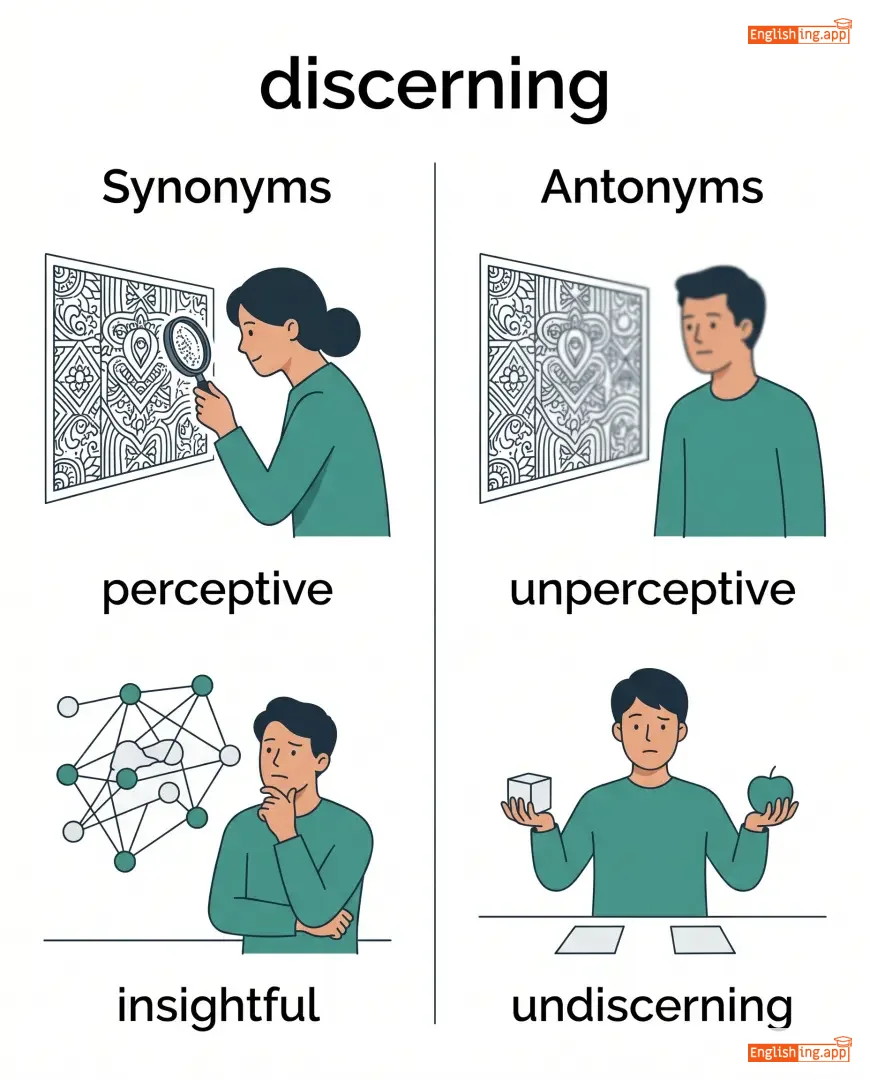
perceptive, insightful, judicious, astute
••••••
|
unperceptive, undiscerning
••••••
|
discerning reader, discerning customer, discerning eye, discerning taste
••••••
|
鋭いは細かい点に気づく力、敏感な読者のようです。
••••••
|
|
🎶
••••••
|
/dɪsˈkɔːrdənt/
adjective
(ディスコーダント)
••••••
|
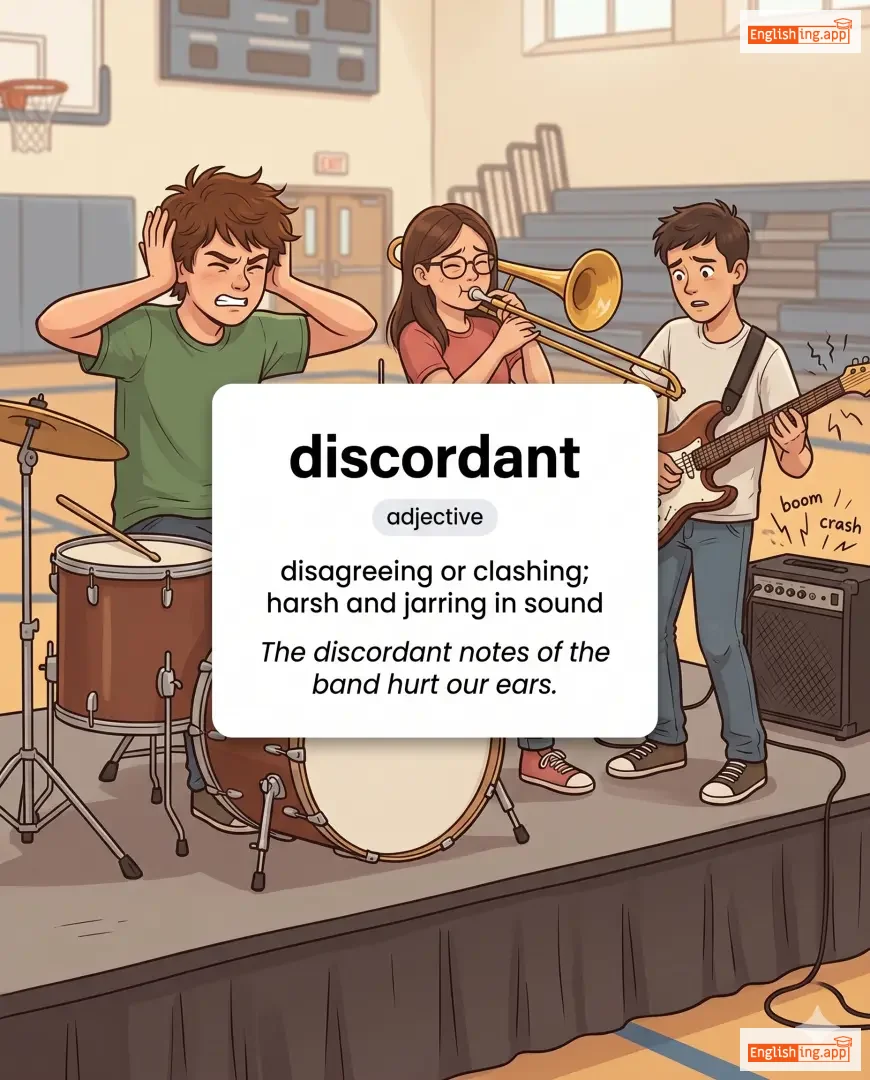
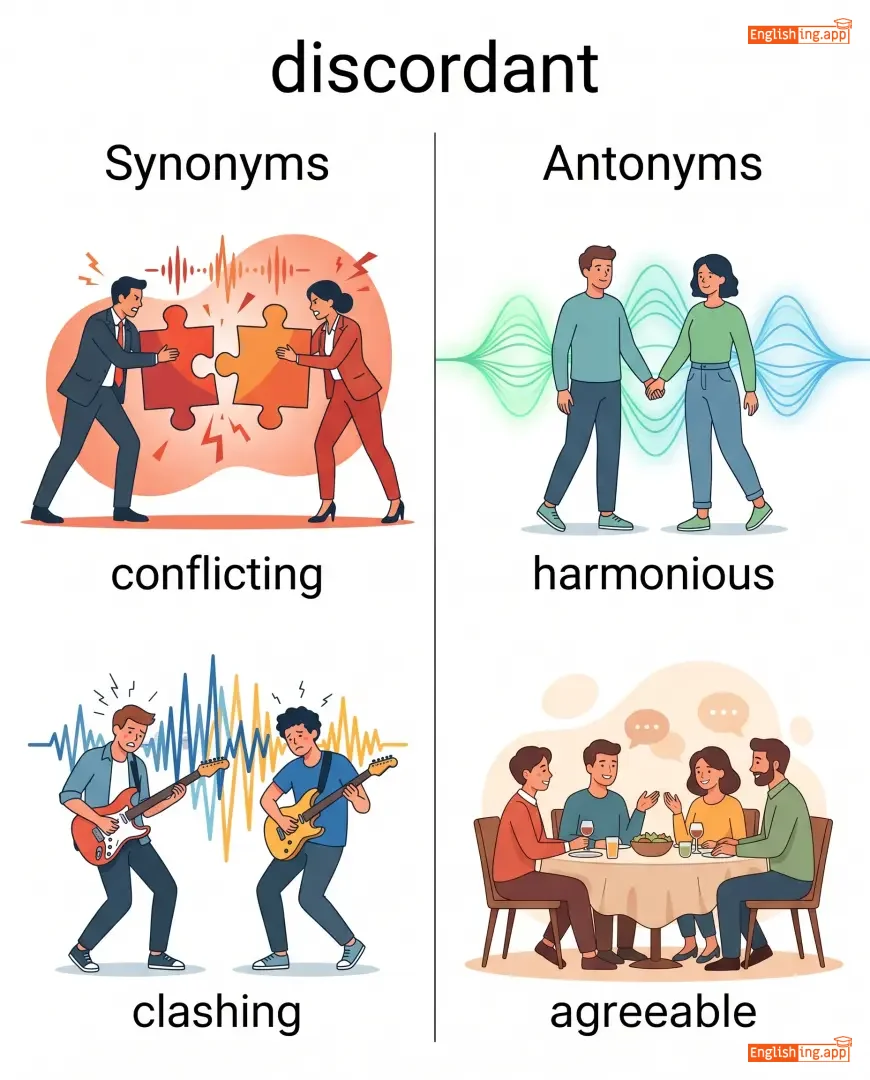
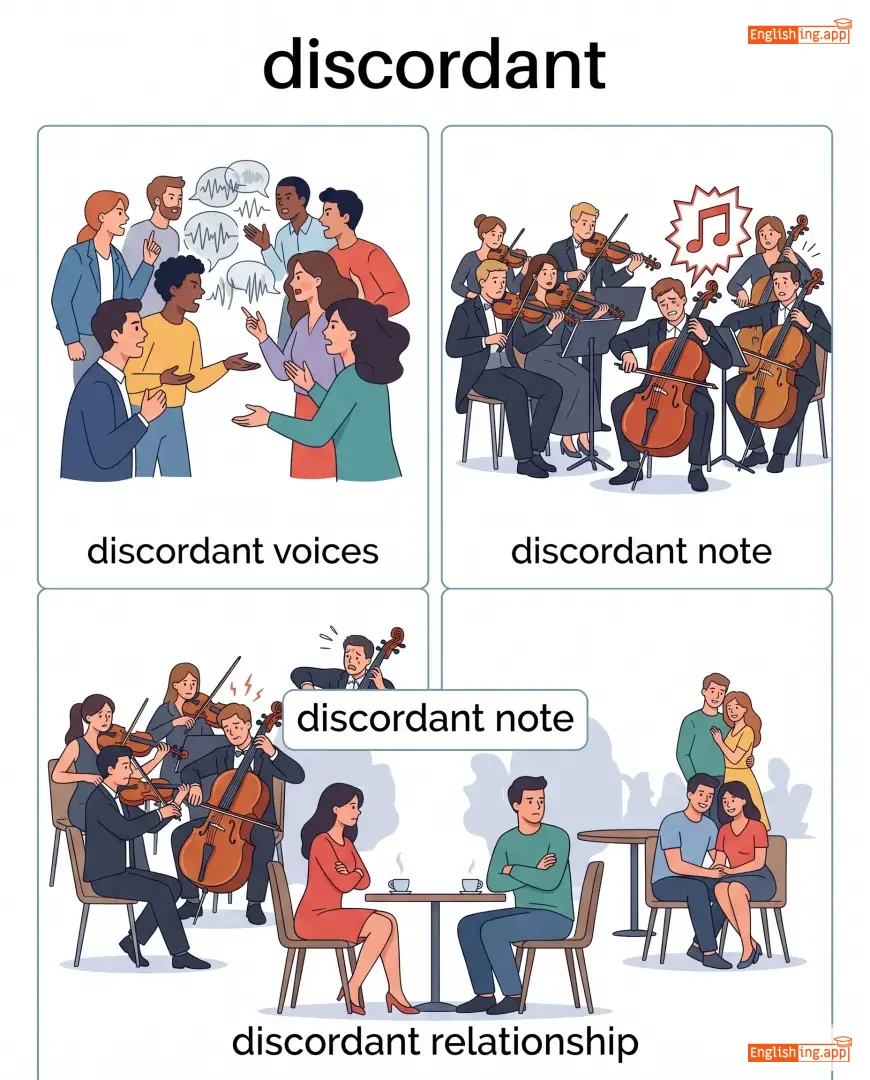
|
不協和音
fukyouwaon
••••••
|
- •••••• | - •••••• | - •••••• | - •••••• |
disagreeing or clashing; harsh and jarring in sound
••••••
|
The discordant notes of the band hurt our ears. |
バンドの不協和音の音が私たちの耳を痛めました。
Bando no fukyouwaon no oto ga watashitachi no mimi o itamemashita.
••••••
|
- •••••• | - •••••• | - •••••• |
conflicting, clashing, jarring, dissonant
••••••
|
harmonious, agreeable
••••••
|
discordant voices, discordant note, discordant relationship
••••••
|
不協和音は音が不一致で不快であることを意味します。
••••••
|
|
⚠️
••••••
|
/dɪsˈkrɛdɪt/
verb, noun
(ディスクリデット)
••••••
|
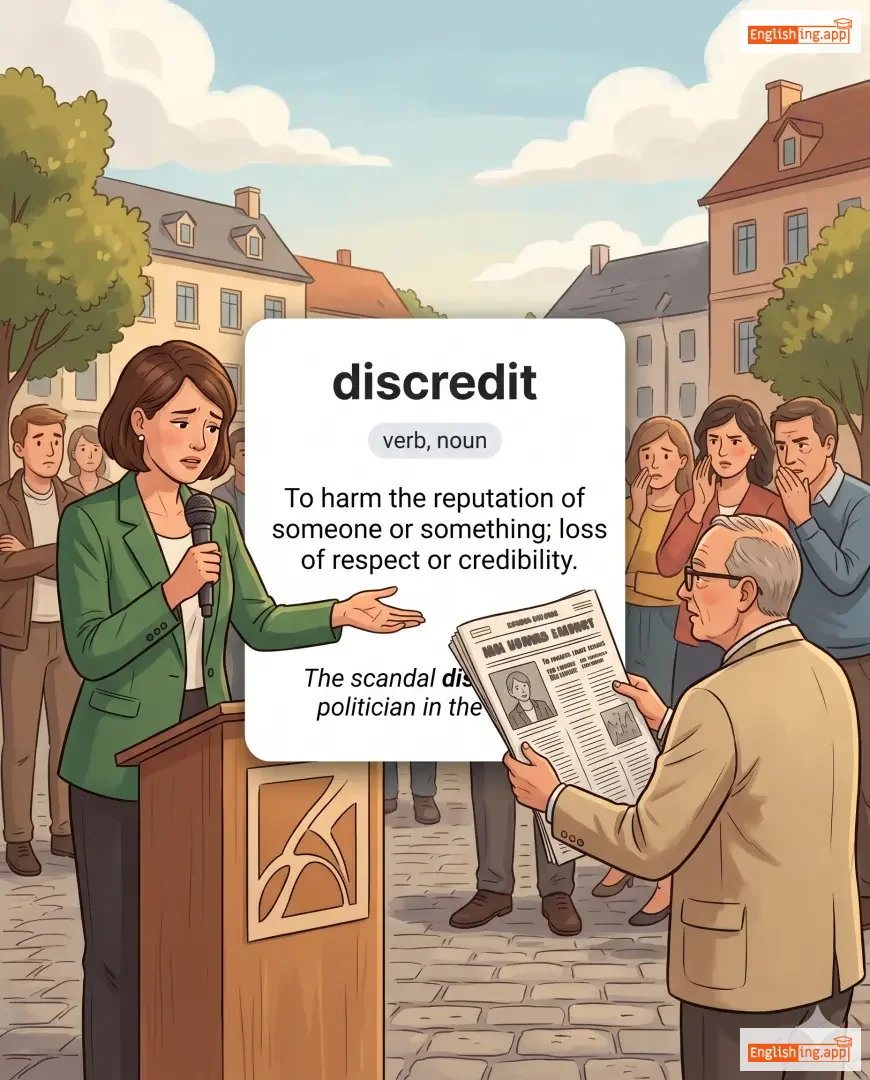
|
信用を失わせる
shin'yō o ushinawaseru
••••••
|
discredited
ディスクリデット
••••••
|
discredited
ディスクリデット
••••••
|
discredits
ディスクリデットス
••••••
|
discrediting
ディスクリデッティング
••••••
|
To harm the reputation of someone or something; loss of respect or credibility.
••••••
|
The scandal discredited the politician in the eyes of the public.
スキャンダルは公衆の目で政治家を信用を失わせました。
••••••
|
スキャンダルは公衆の目で政治家を信用を失わせました。
Sukyandaru wa kōshū no me de seijika o shin'yō o ushinawasemashita.
••••••
|
bring into discredit
信用を失う
••••••
|
Cause someone or something to lose reputation or credibility.
••••••
|
信用を失う
shin'yō o ushinau
••••••
|
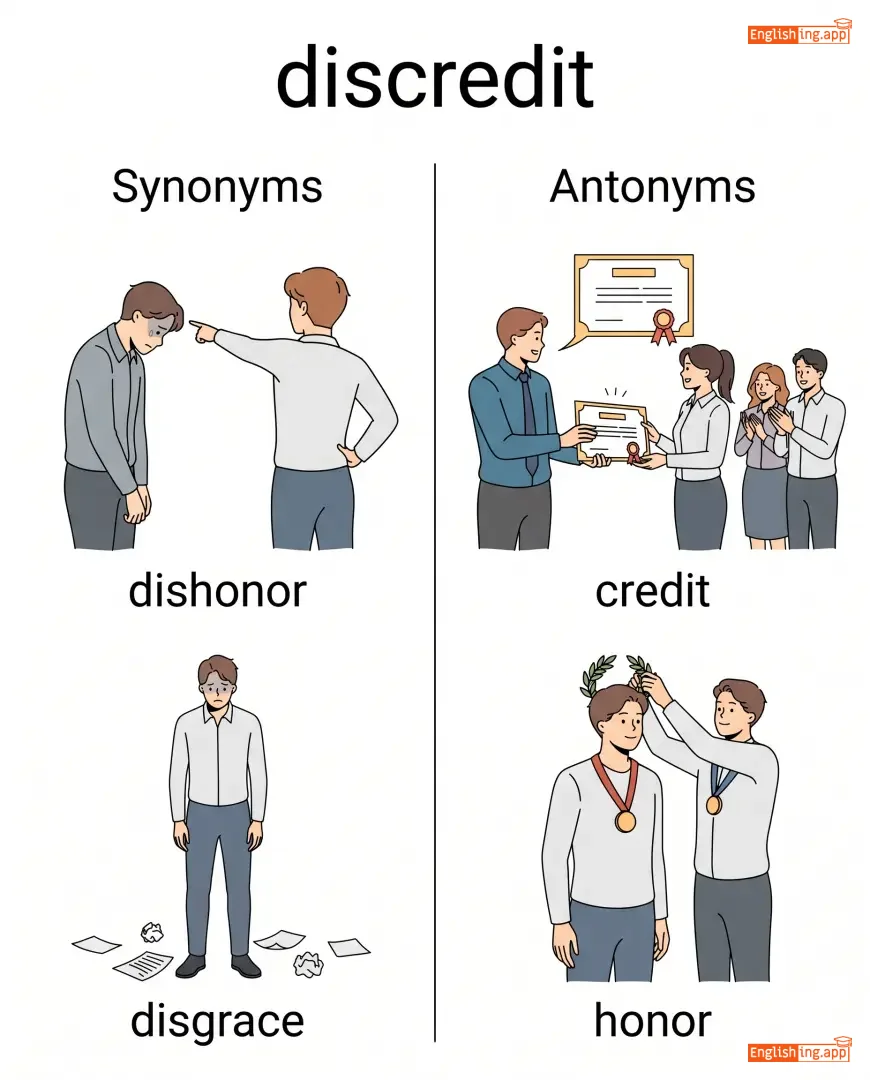
dishonor, disgrace, defame, undermine, disrepute
••••••
|
credit, honor, respect
••••••
|
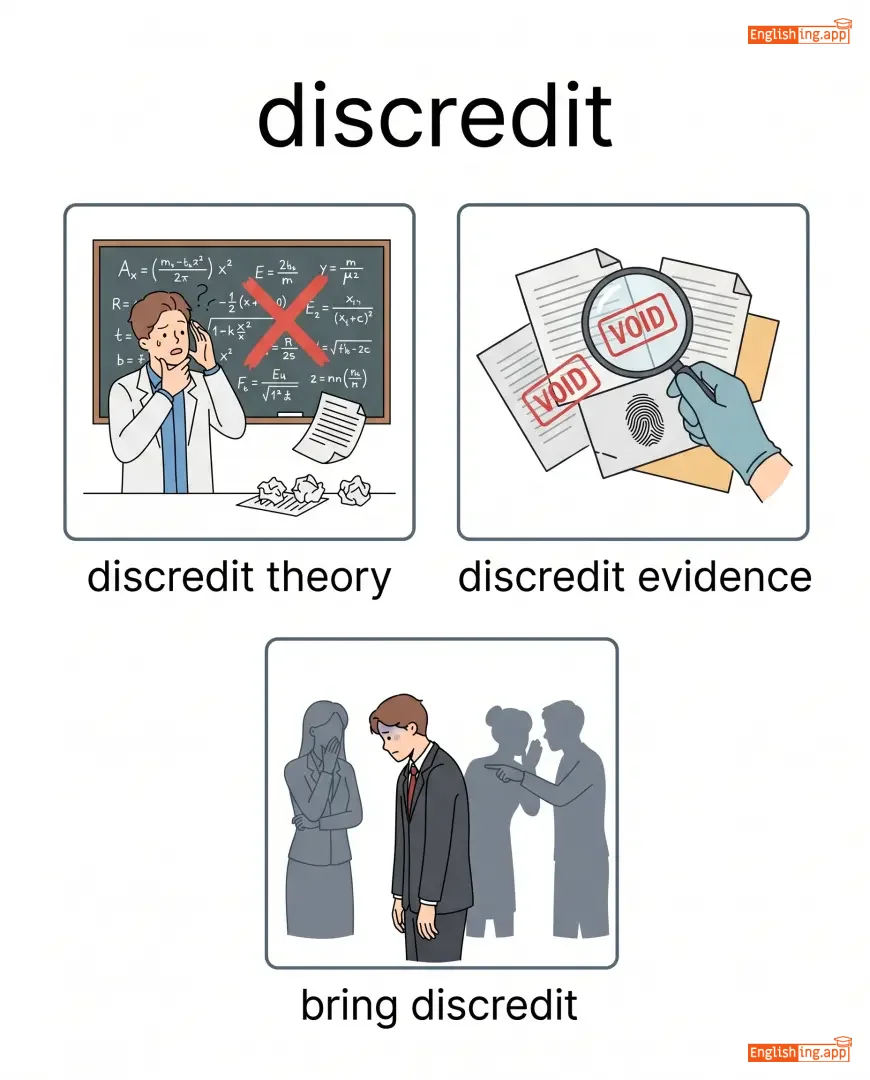
discredit theory, discredit evidence, bring discredit, discredit witness
••••••
|
Discredit = (不)信用を失わせる。
••••••
|
|
⚖️
••••••
|
/dɪˈskrɛpənsi/
noun
••••••
|
|
- •••••• | - •••••• | - •••••• | - •••••• | - •••••• |
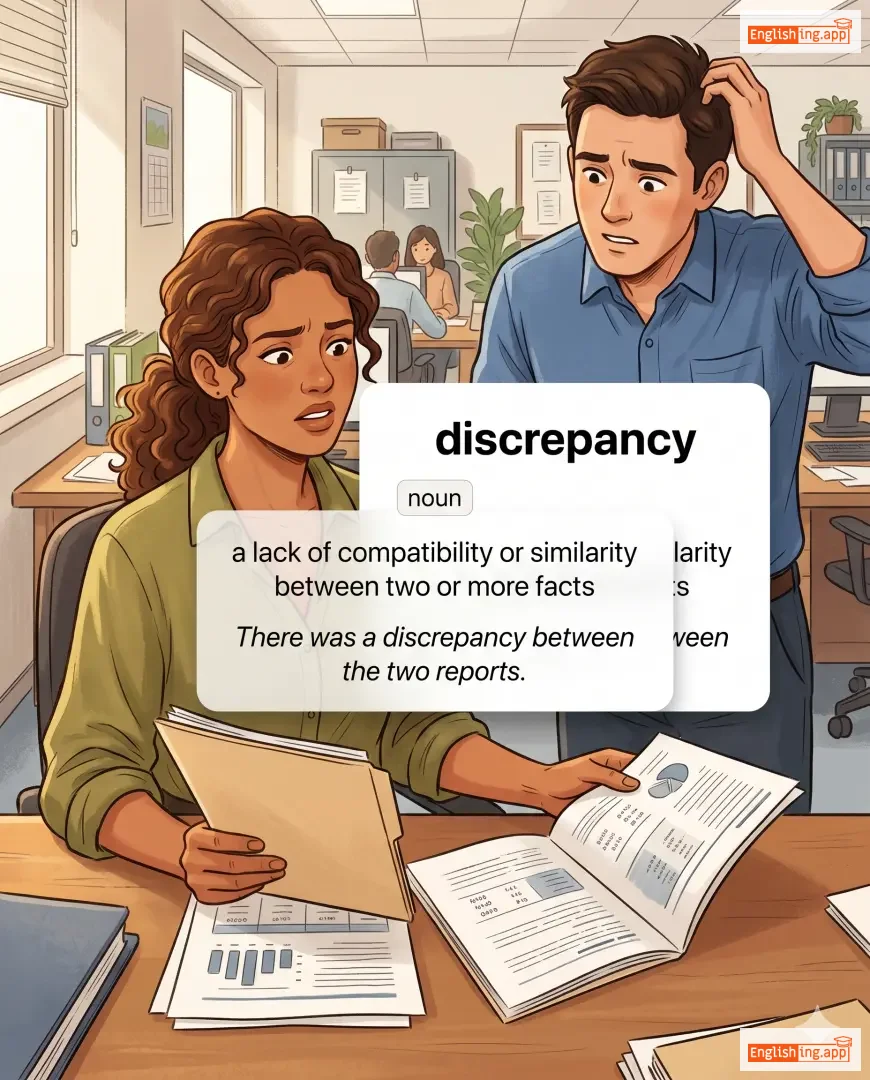
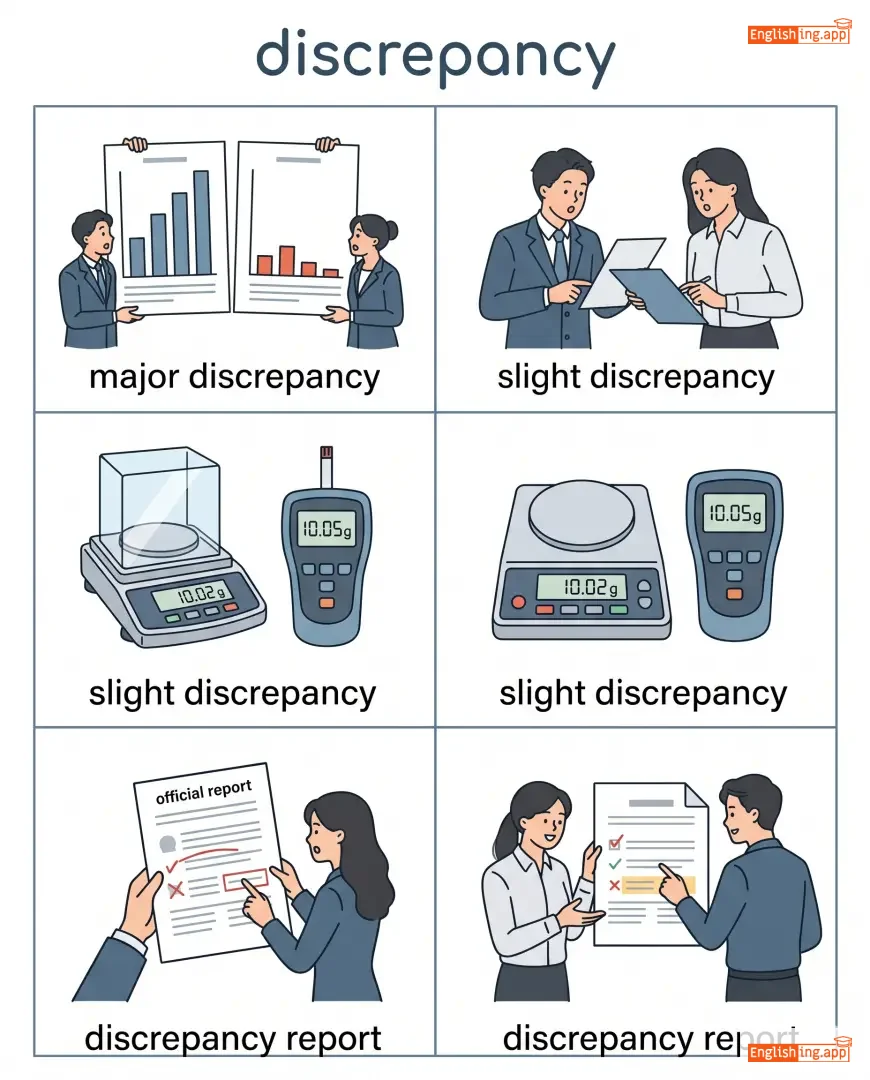
a lack of compatibility or similarity between two or more facts
••••••
|
There was a discrepancy between the two reports. |
- •••••• |
discrepancy in accounts |
a mismatch or inconsistency in financial records
••••••
|
- •••••• |
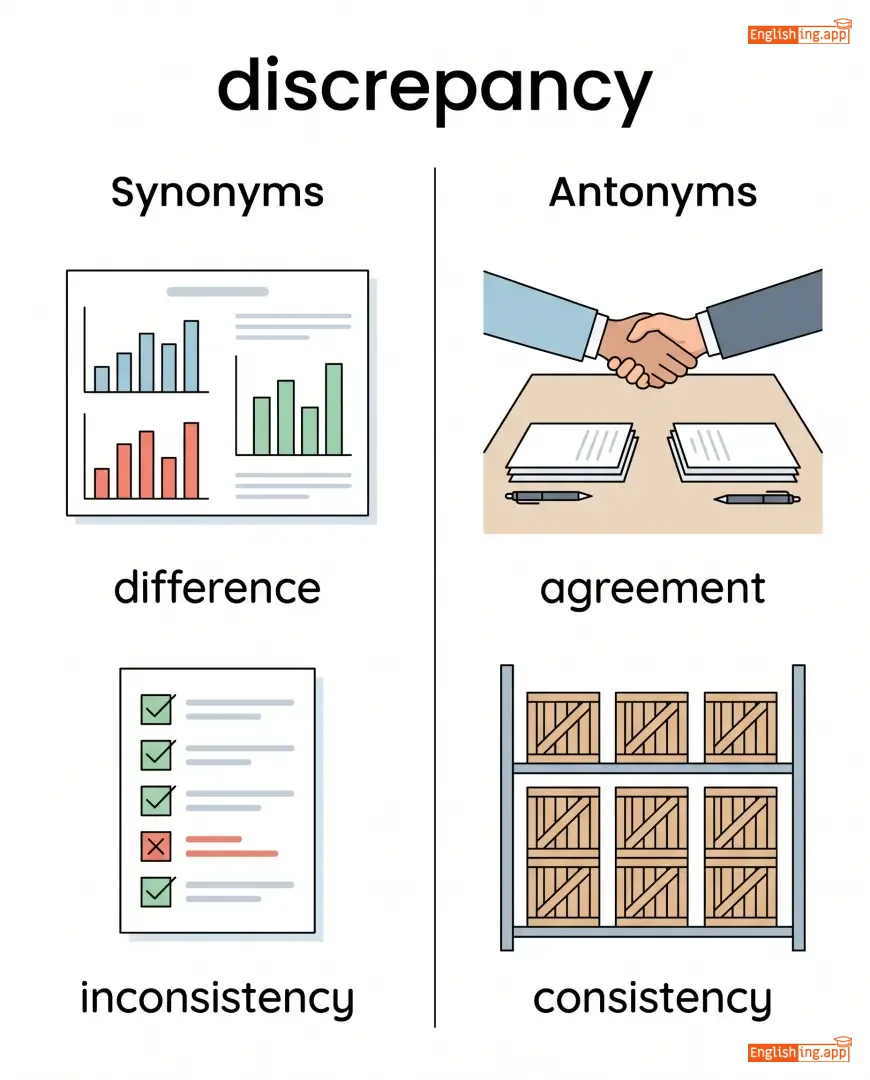
difference, inconsistency, variation, divergence, conflict
••••••
|
agreement, consistency, harmony
••••••
|
major discrepancy, slight discrepancy, discrepancy report, discrepancy in data
••••••
|
No •••••• |
|
🔹
••••••
|
/dɪˈskriːt/
adjective
(ディスクリート)
••••••
|
|
離散的
risanteki
••••••
|
- •••••• | - •••••• | - •••••• | - •••••• |
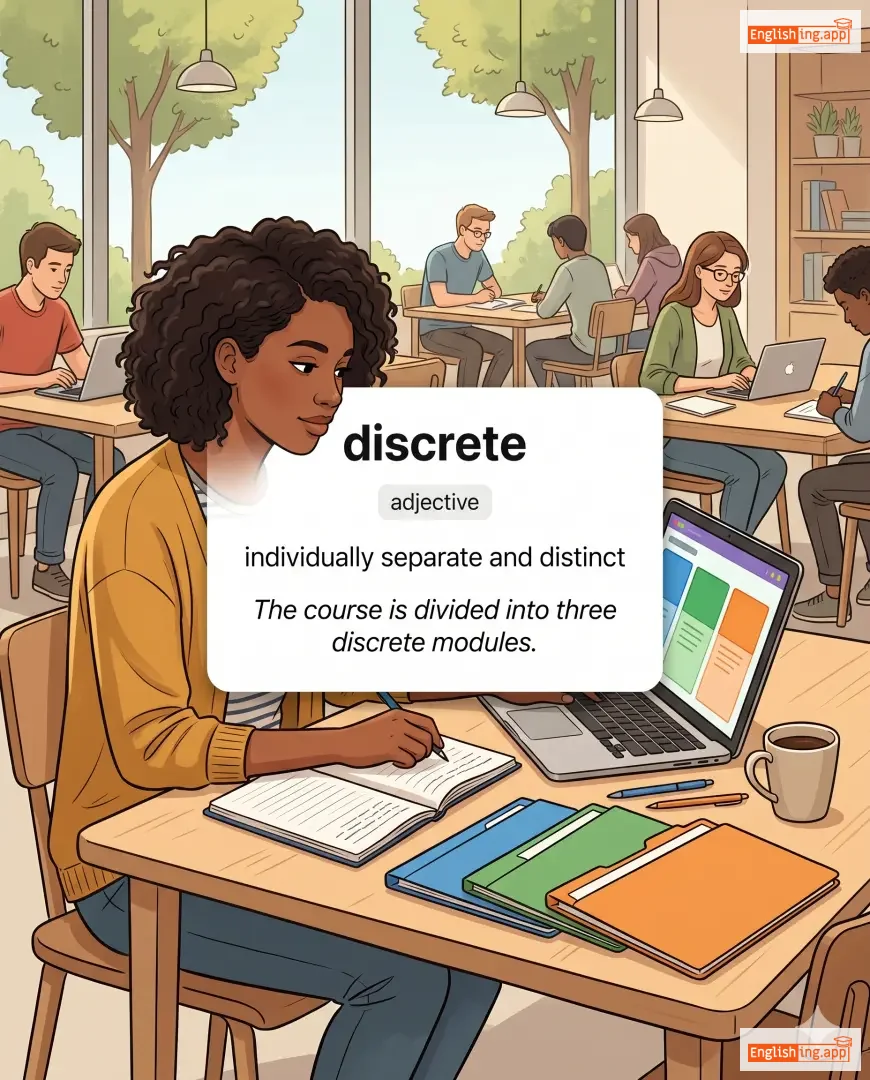
individually separate and distinct
••••••
|
The course is divided into three discrete modules. |
コースは3つの離散的なモジュールに分けられています。
Kōsu wa mittsu no risanteki na mojūru ni wakerareteimasu.
••••••
|
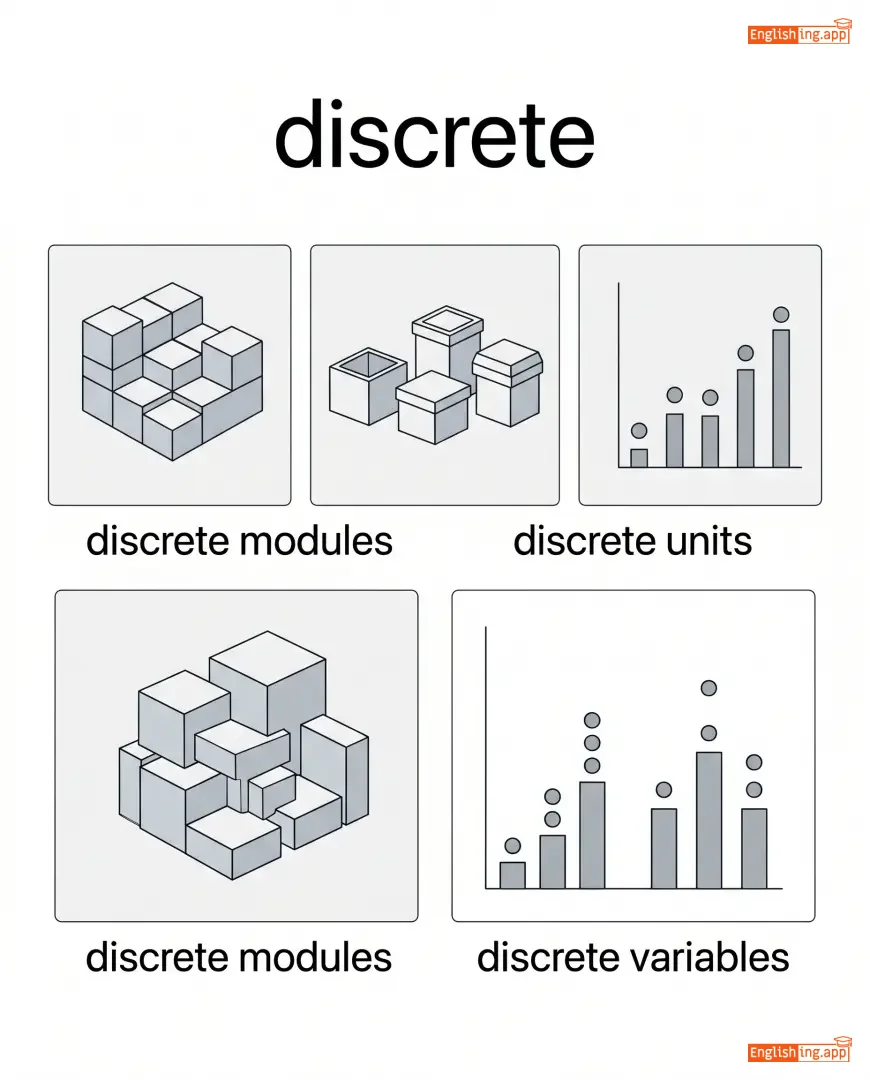
discrete units |
separate and distinct parts or items
••••••
|
離散単位
risan tan'i
••••••
|
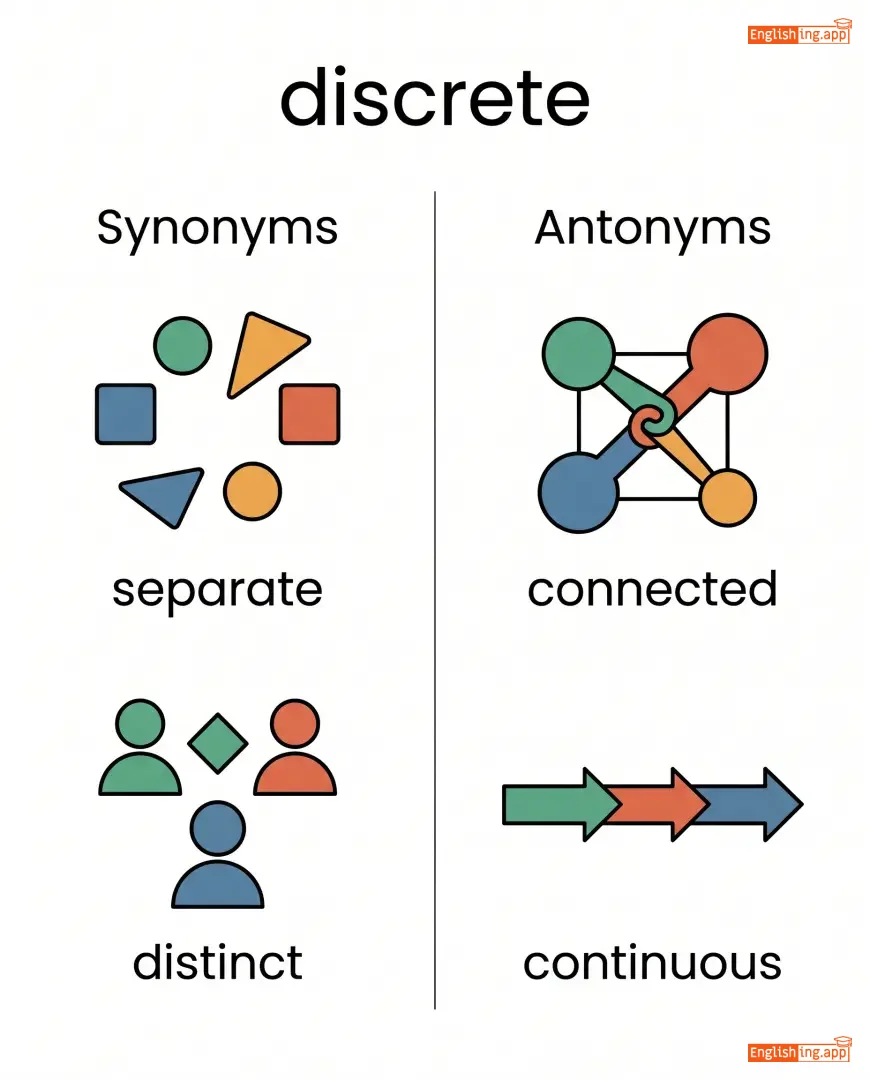
separate, distinct, individual, independent
••••••
|
connected, continuous, combined
••••••
|
discrete modules, discrete units, discrete variables
••••••
|
Discreteは離散的(risanteki)で、個別のユニットを意味します。
••••••
|
|
😏
••••••
|
/ˌdɪsɪnˈdʒɛnjʊəs/
adjective
(ディシンジェニュアス)
••••••
|
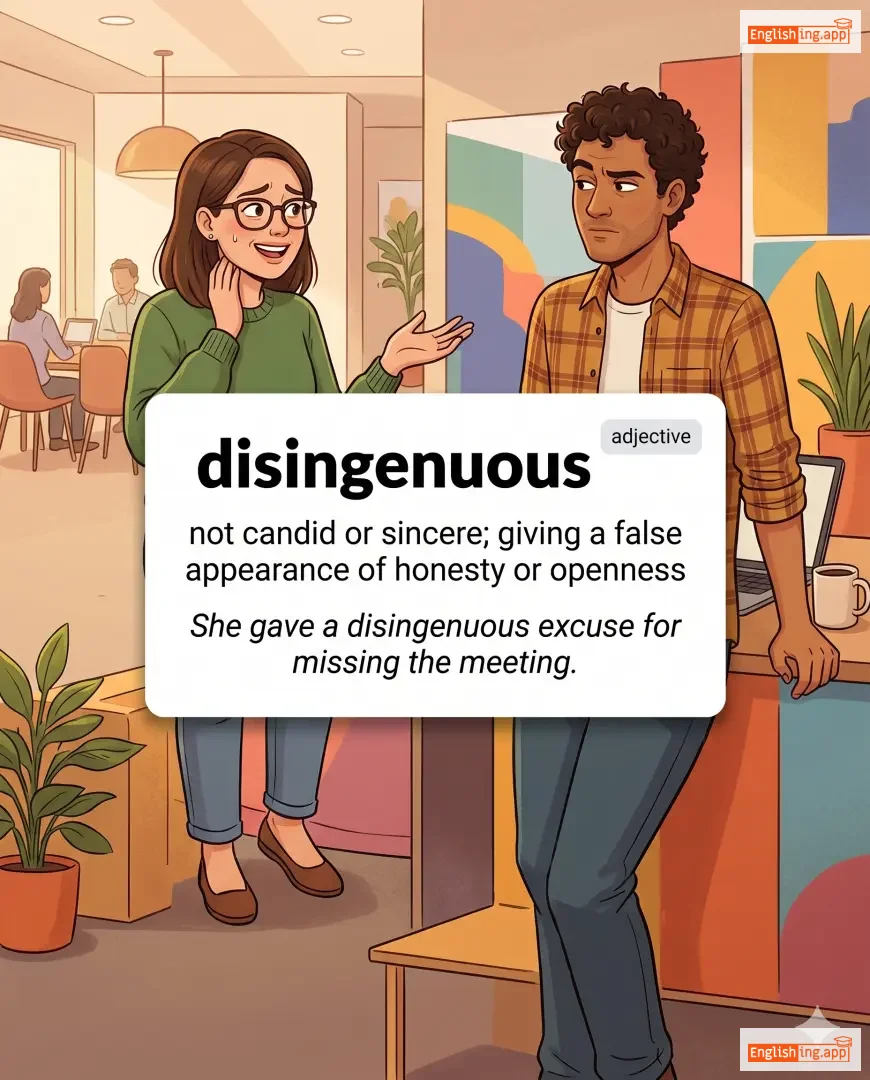
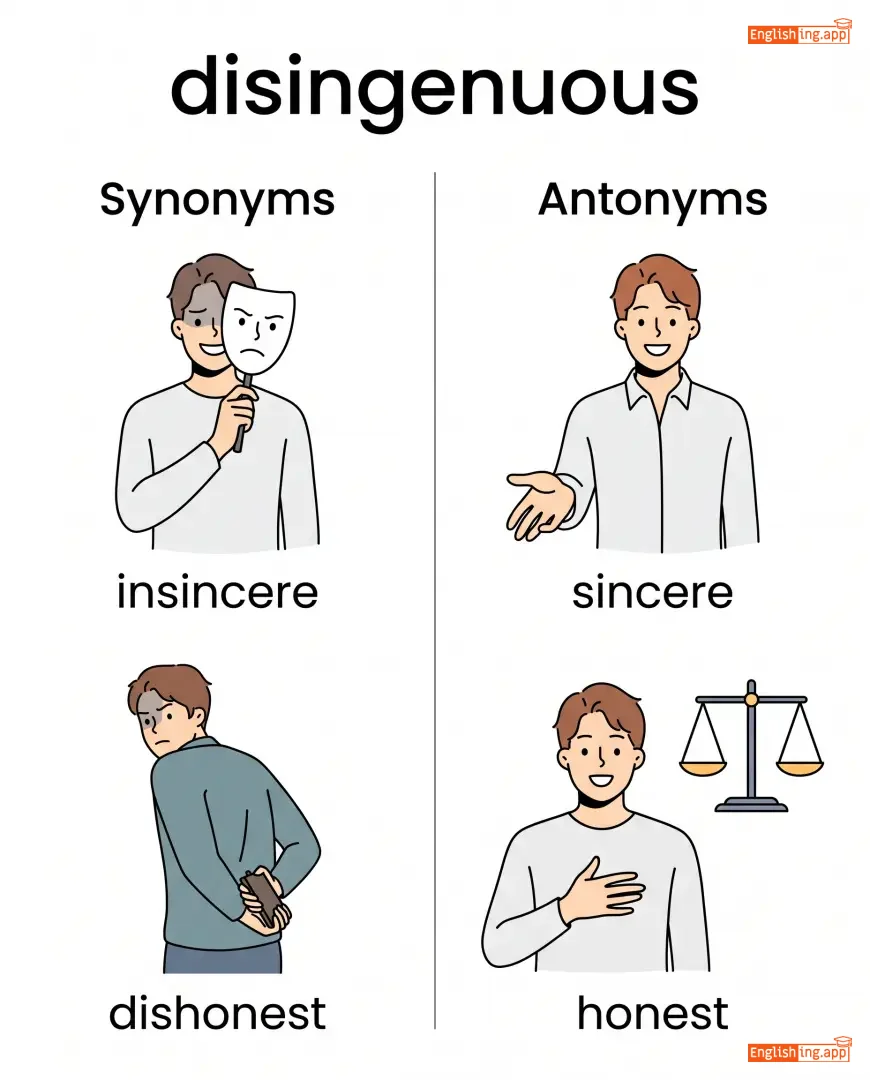
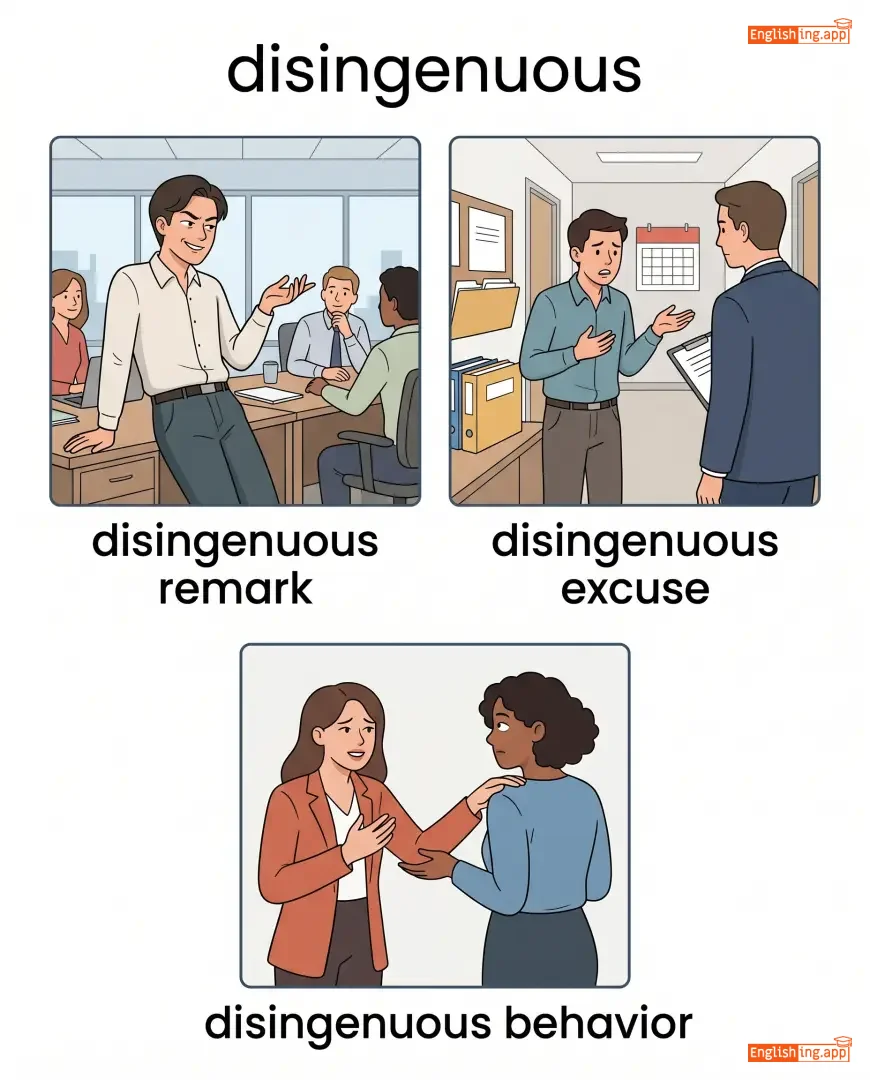
|
不誠実な
fuseijitsuna
••••••
|
- •••••• | - •••••• | - •••••• | - •••••• |
not candid or sincere; giving a false appearance of honesty or openness
••••••
|
She gave a disingenuous excuse for missing the meeting. |
彼女は会議に出席しないために不誠実な言い訳をしました。
Kanojo wa kaigi ni shusseki shinai tame ni fuseijitsuna iiwake o shimashita.
••••••
|
- •••••• | - •••••• | - •••••• |
insincere, dishonest, deceitful, hypocritical, duplicitous
••••••
|
sincere, honest, genuine
••••••
|
disingenuous remark, disingenuous excuse, disingenuous behavior
••••••
|
Dis + genuine ではない意味 disingenuous = 不誠実な
••••••
|
|
⚖️
••••••
|
/dɪsˈɪntrəstɪd/
adjective
(ディスインタレステッド)
••••••
|
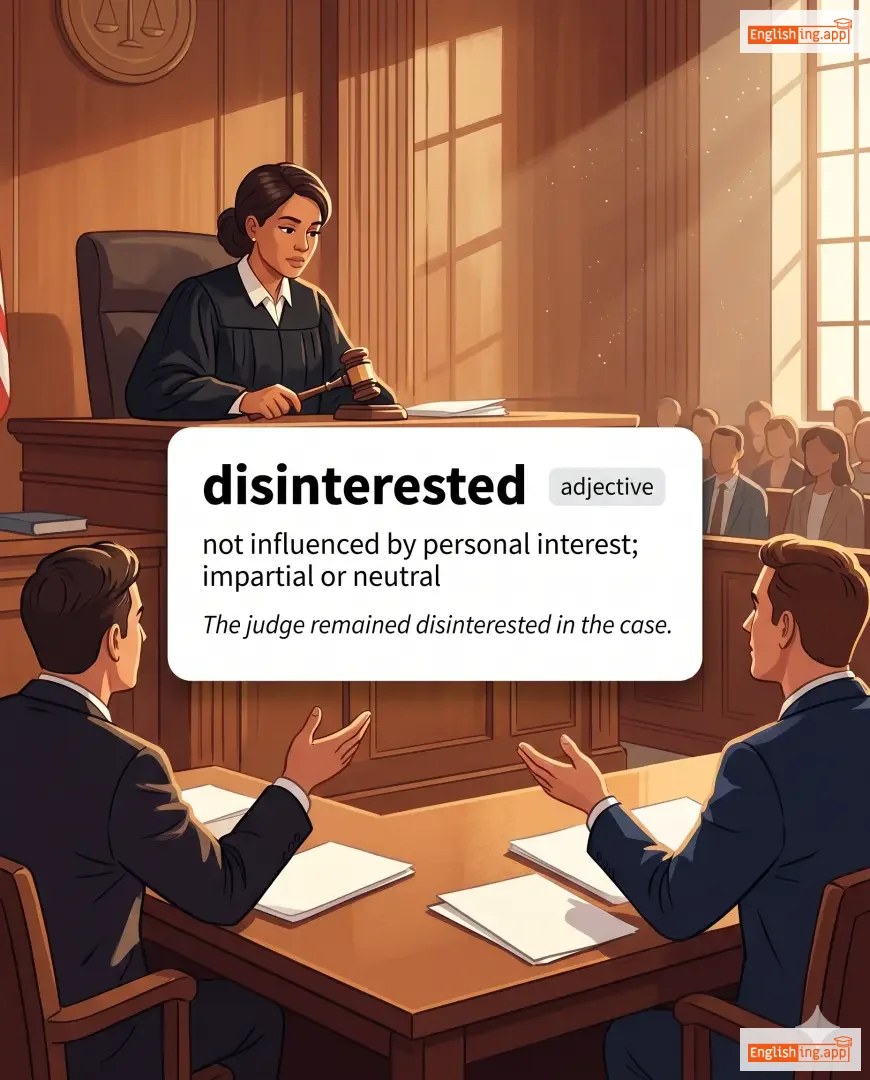
|
無関心
mukanshin
••••••
|
- •••••• | - •••••• | - •••••• | - •••••• |
not influenced by personal interest; impartial or neutral
••••••
|
The judge remained disinterested in the case. |
裁判官はその事件に無関心のままでした。
Saibankan wa sono jiken ni mukanshin no mamadeshita.
••••••
|
- •••••• | - •••••• | - •••••• |
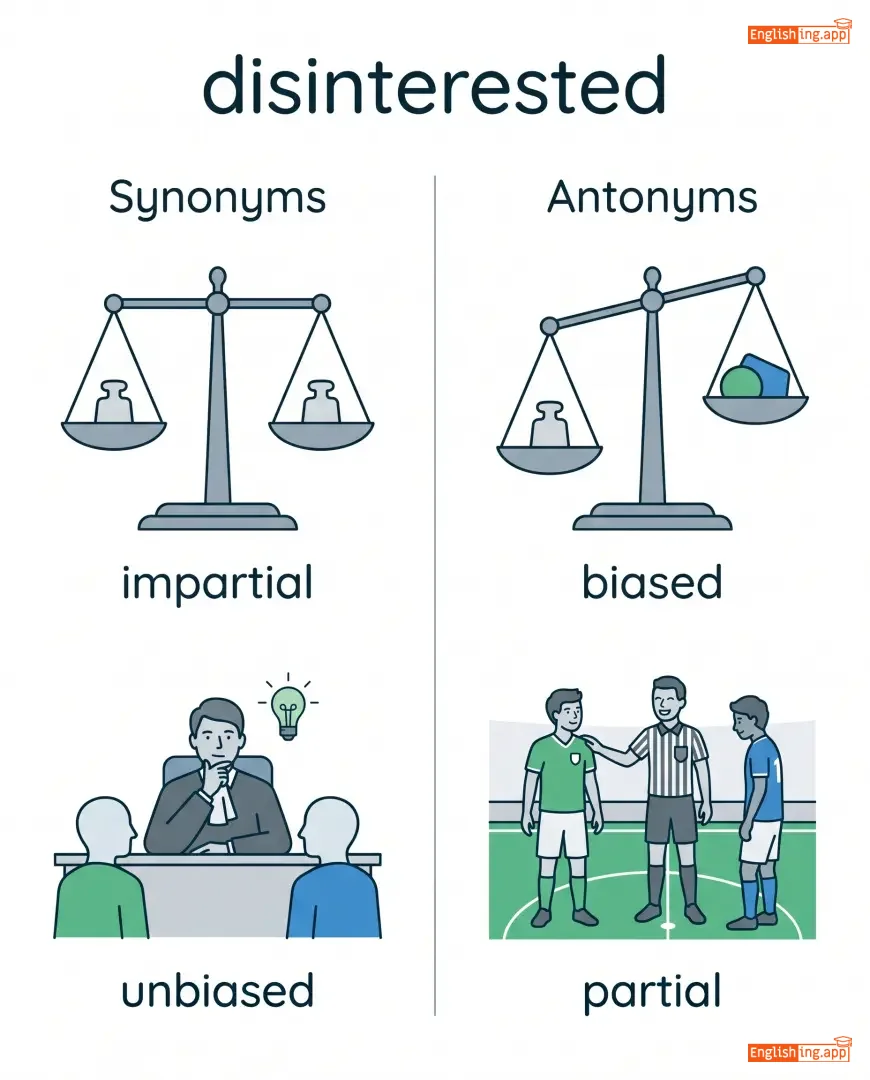
impartial, unbiased, objective, neutral
••••••
|
biased, partial, interested
••••••
|
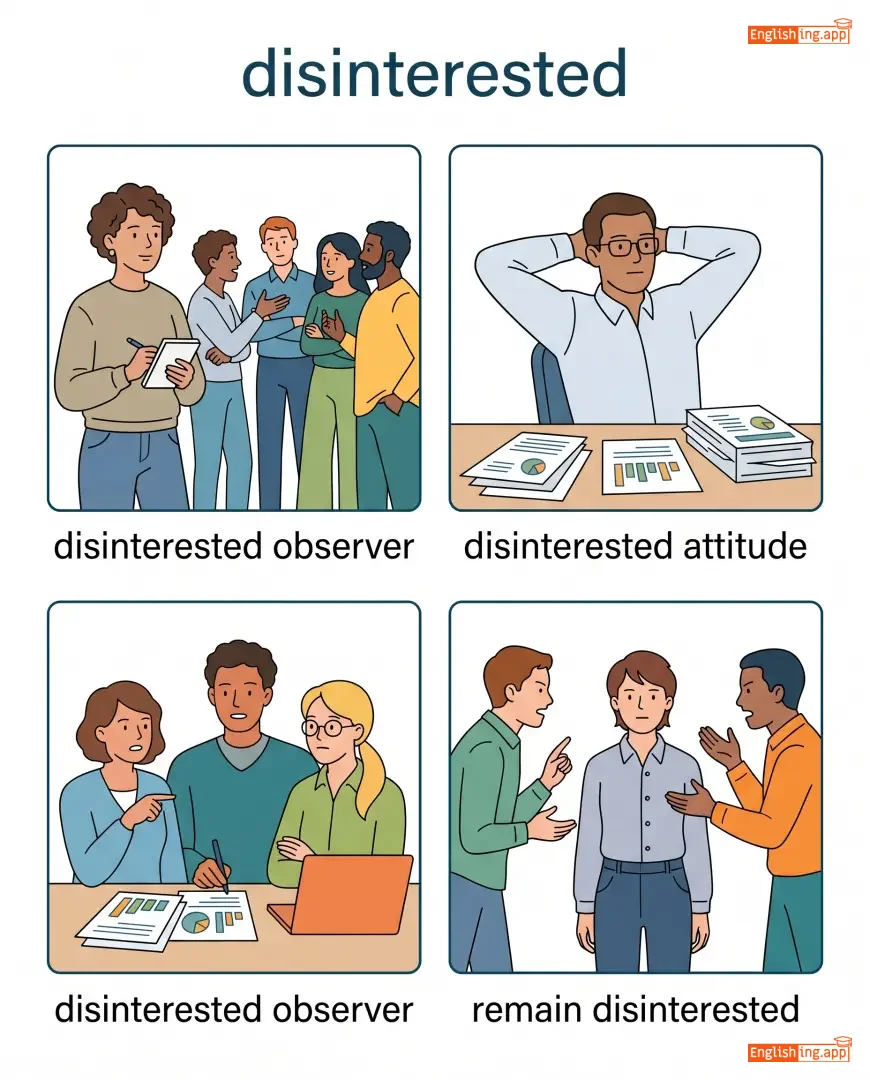
disinterested observer, disinterested attitude, remain disinterested
••••••
|
Disinterested = 無関心、興味なし
••••••
|
|
🌀
••••••
|
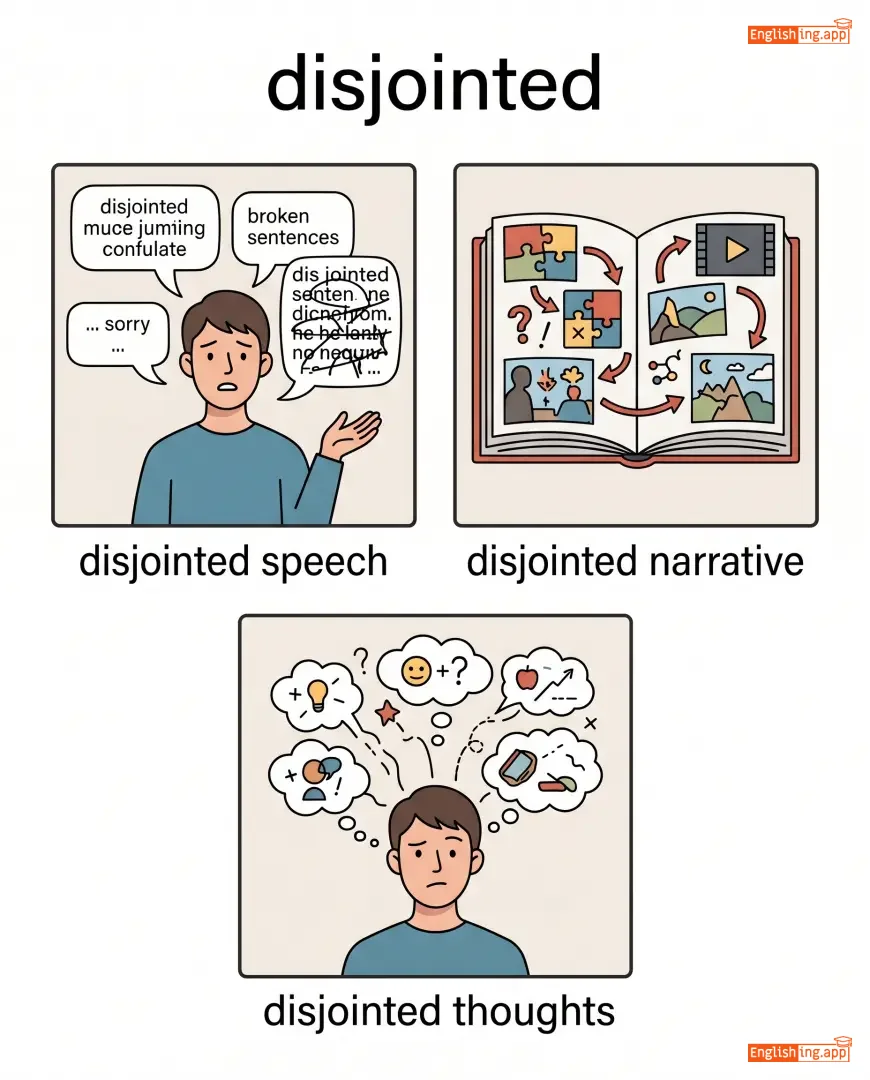
/dɪsˈdʒɔɪntɪd/
adjective
(ディスジョインテッド)
••••••
|
|
ばらばら
barabara
••••••
|
- •••••• | - •••••• | - •••••• | - •••••• |
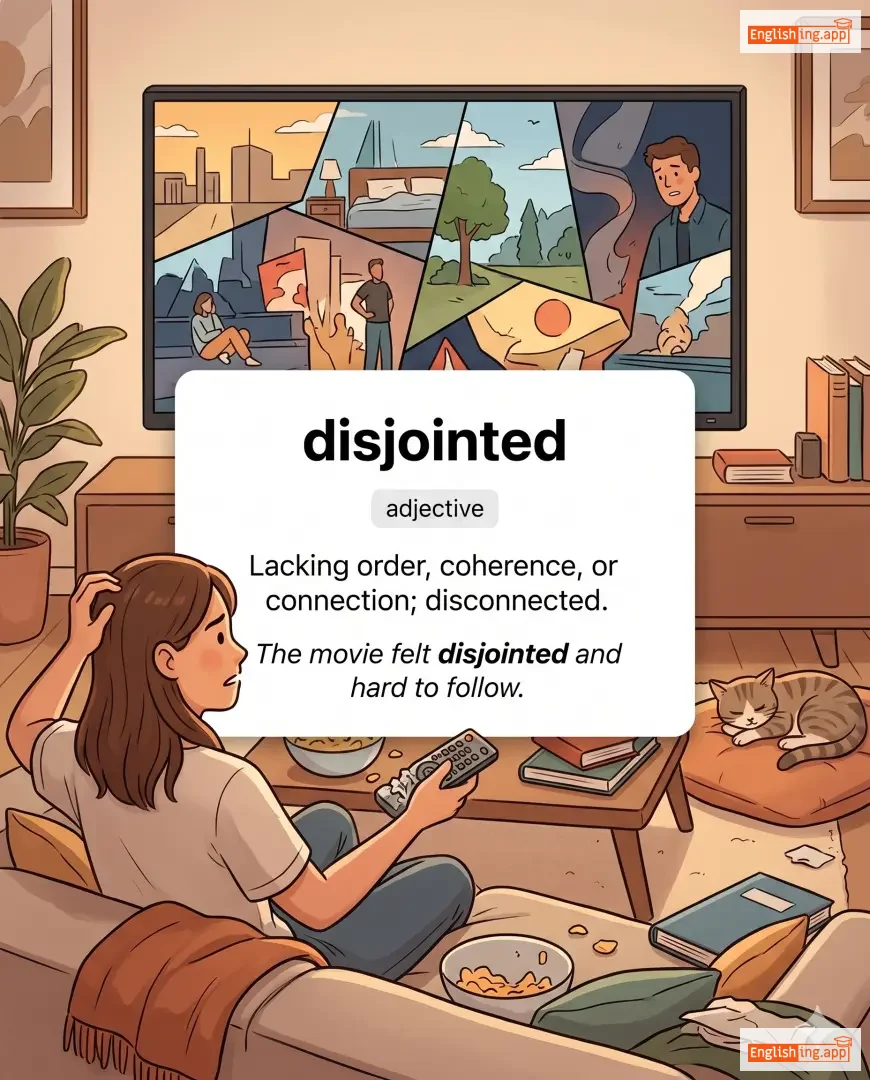
Lacking order, coherence, or connection; disconnected.
••••••
|
The movie felt disjointed and hard to follow. |
映画はばらばらに感じ、追いかけるのが難しかった。
Eiga wa barabara ni kanji, oikakeru no ga muzukashikatta.
••••••
|
- •••••• | - •••••• | - •••••• |
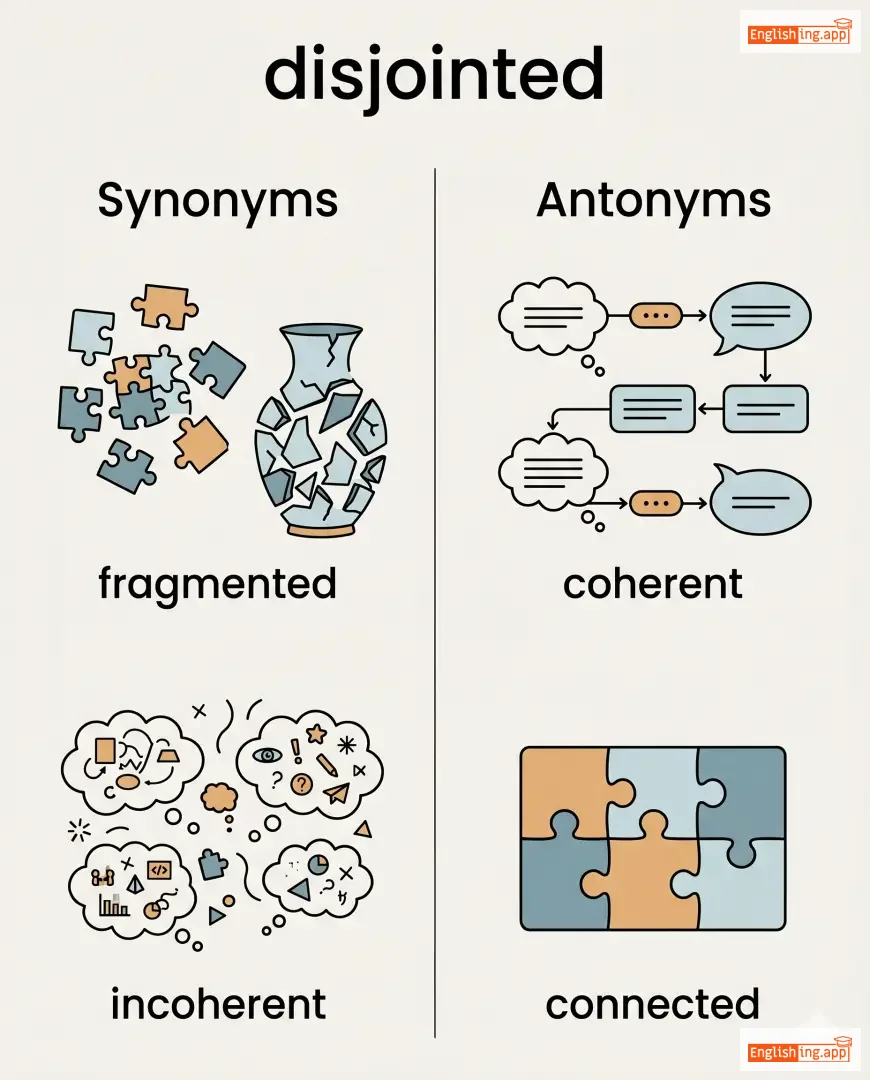
fragmented, incoherent, disconnected, jumbled, chaotic
••••••
|
coherent, connected, organized
••••••
|
disjointed speech, disjointed narrative, disjointed thoughts
••••••
|
Disjointed はパズルがバラバラになっているようなもの。
••••••
|
|
🚪
••••••
|
/dɪsˈmɪs/
verb
(ディスミス)
••••••
|
|
解雇する, 却下する
kaiko suru, kyakka suru
••••••
|
dismissed
ディスミスド
••••••
|
dismissed
ディスミスド
••••••
|
dismisses
ディスミセズ
••••••
|
dismissing
ディスミッシング
••••••
|
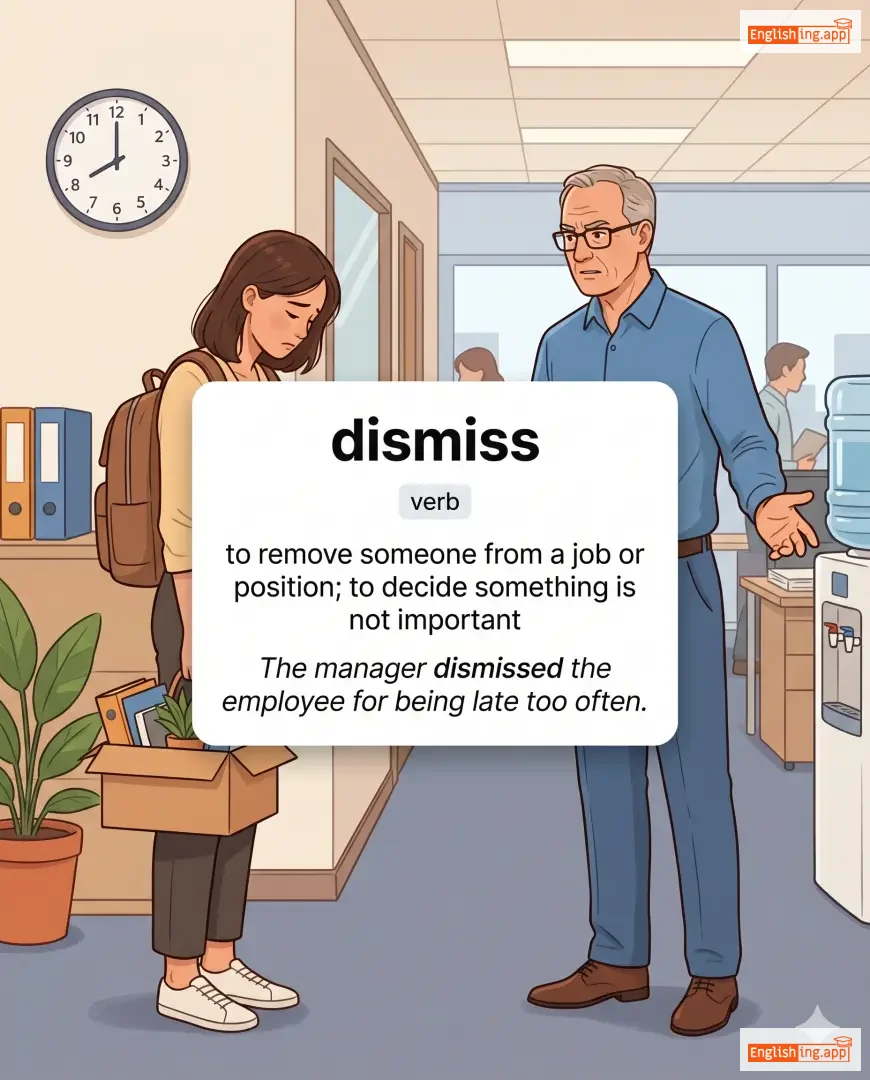
to remove someone from a job or position; to decide something is not important
••••••
|
The manager dismissed the employee for being late too often.
マネージャーは遅刻が多すぎるため、従業員を解雇しました。
••••••
|
マネージャーは遅刻が多すぎるため、従業員を解雇しました。
Manējā wa chikoku ga ōsugiru tame, jūgyōin o kaiko shimashita.
••••••
|
dismiss out of hand
即座に却下する
••••••
|
to reject something immediately without considering it
••••••
|
即座に却下する
sokuzani kyakka suru
••••••
|
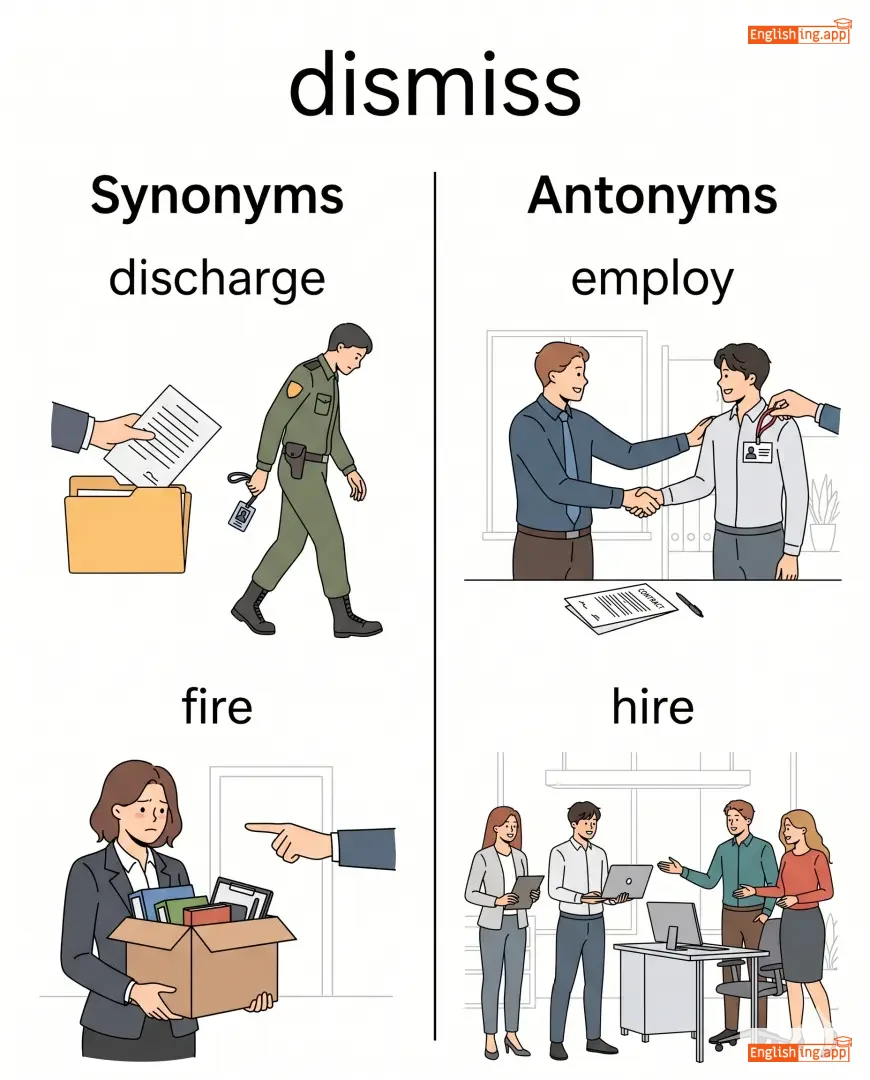
discharge, fire, release, reject, expel
••••••
|
employ, hire, accept
••••••
|
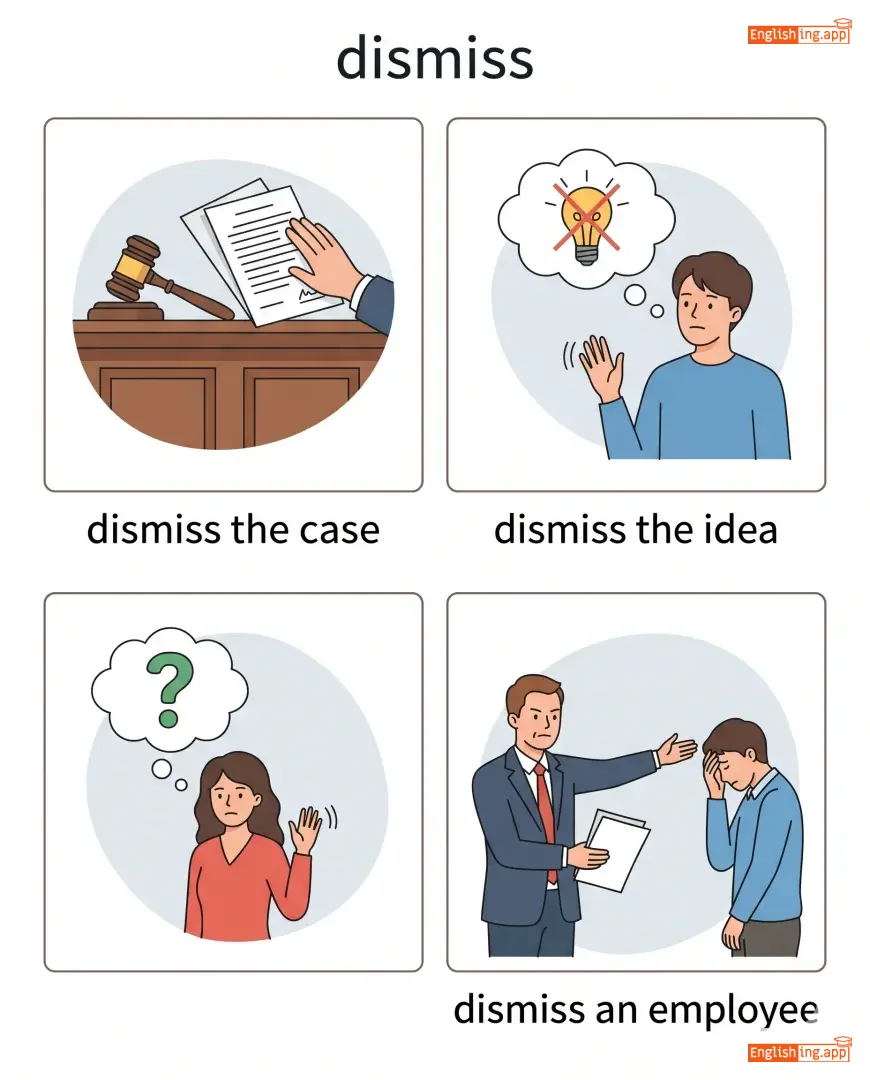
dismiss the case, dismiss the idea, dismiss an employee, dismiss charges
••••••
|
Dis + Miss = 解雇する
••••••
|
|
🗣️
••••••
|
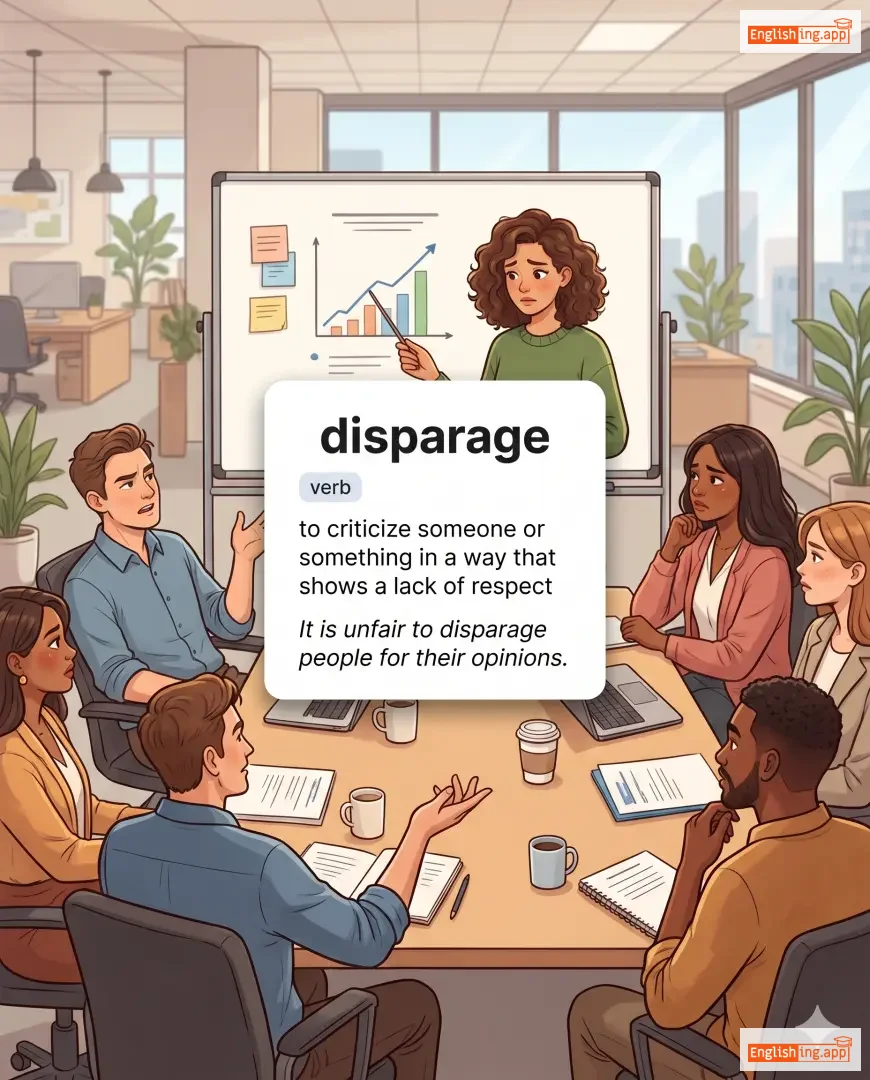
/dɪsˈpærɪdʒ/
verb
••••••
|
|
- •••••• |
disparaged
••••••
|
disparaged
••••••
|
disparages
••••••
|
disparaging
••••••
|
to criticize someone or something in a way that shows a lack of respect
••••••
|
It is unfair to disparage people for their opinions. |
- •••••• |
disparage someone's efforts |
to belittle or undervalue what someone has done
••••••
|
- •••••• |
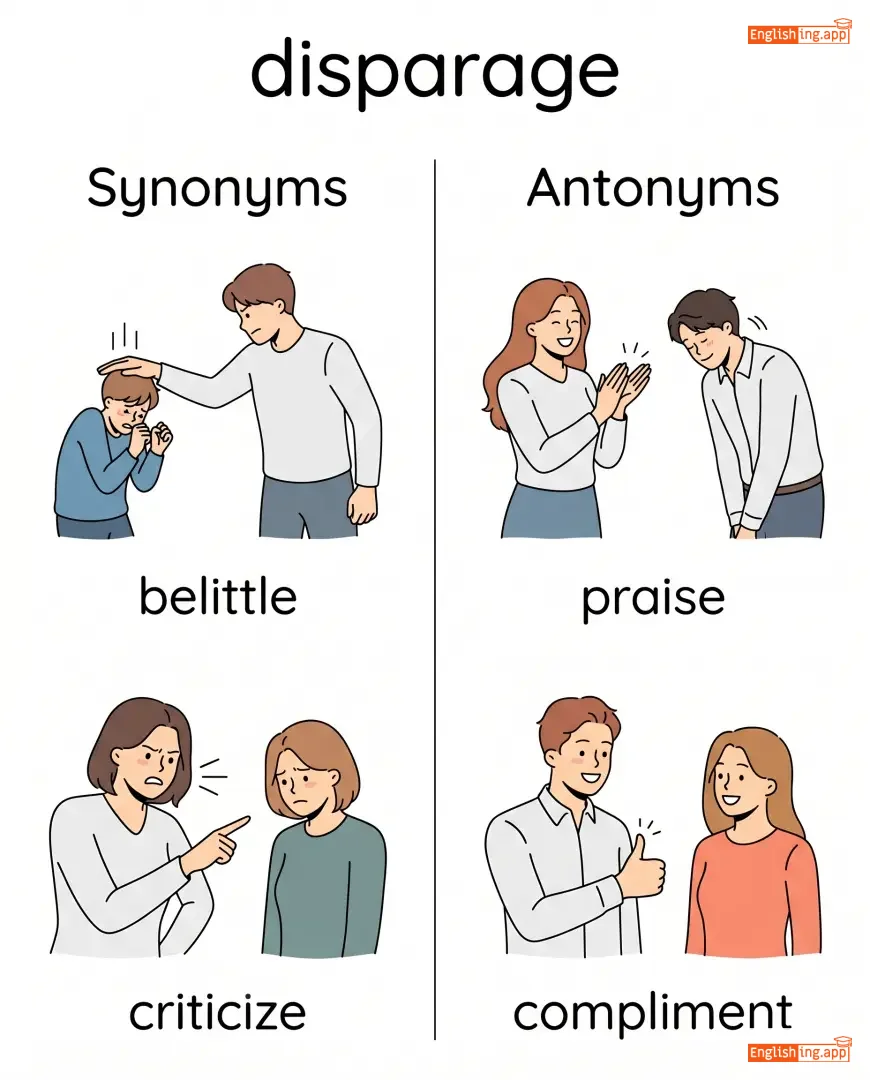
belittle, criticize, denigrate, undervalue, ridicule
••••••
|
praise, compliment
••••••
|
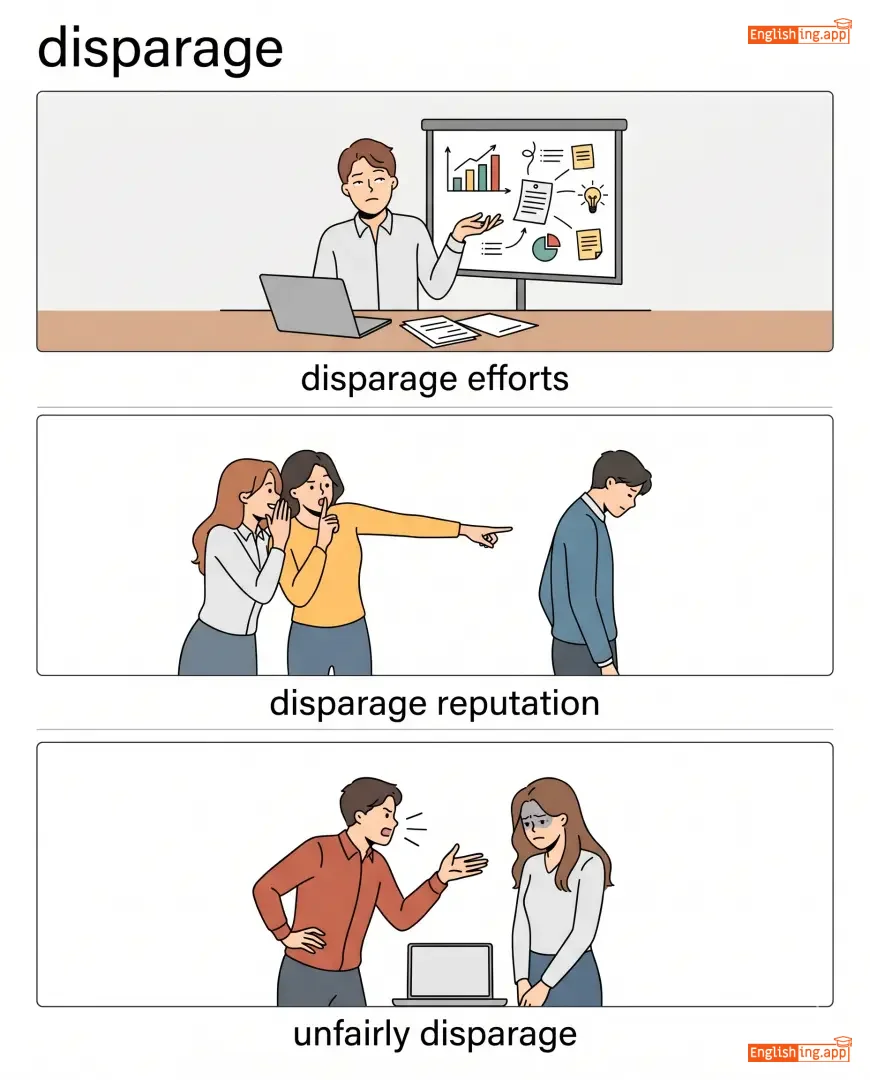
disparage efforts, disparage reputation, unfairly disparage
••••••
|
No •••••• |
|
🔀
••••••
|
/ˈdɪspərət/
adjective
(ディスパレート)
••••••
|
|
異なる
kotonaru
••••••
|
- •••••• | - •••••• | - •••••• | - •••••• |
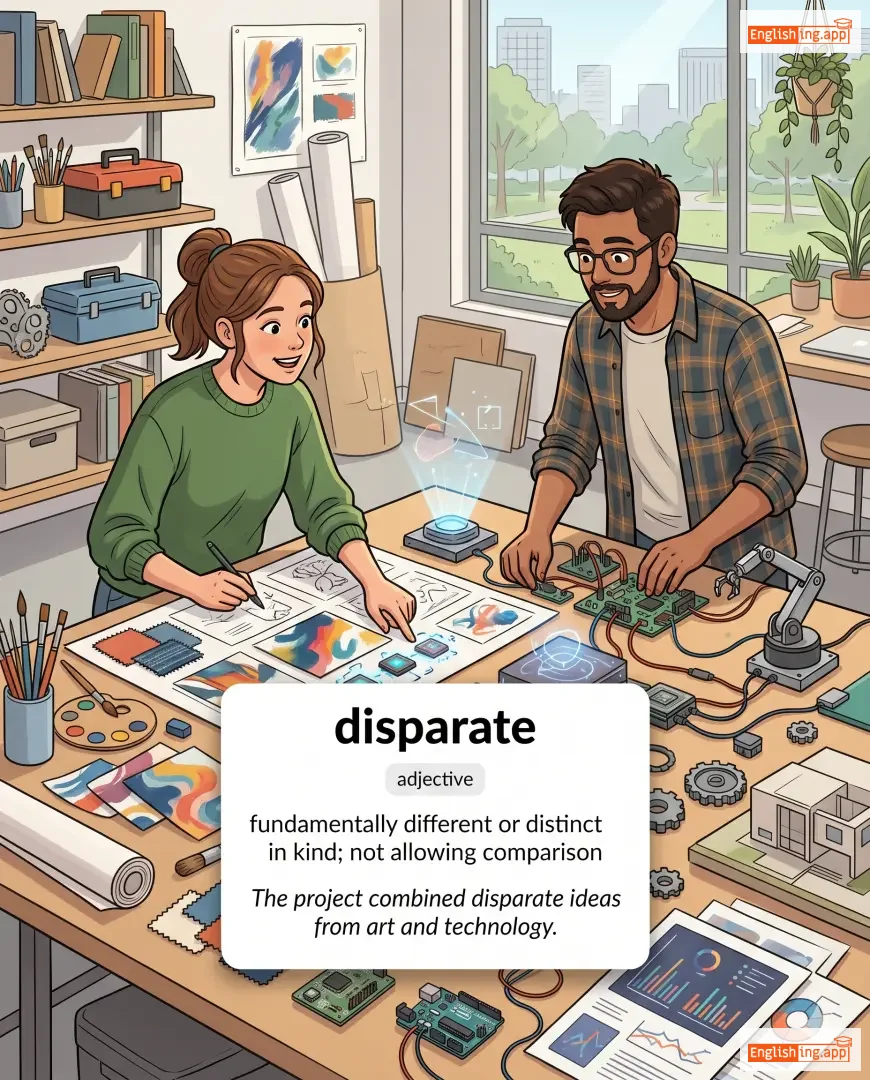
fundamentally different or distinct in kind; not allowing comparison
••••••
|
The project combined disparate ideas from art and technology. |
そのプロジェクトは、アートと技術の異なるアイデアを組み合わせました。
Sono purojekuto wa, āto to gijutsu no kotonaru aidea o kumiawase mashita.
••••••
|
- •••••• | - •••••• | - •••••• |
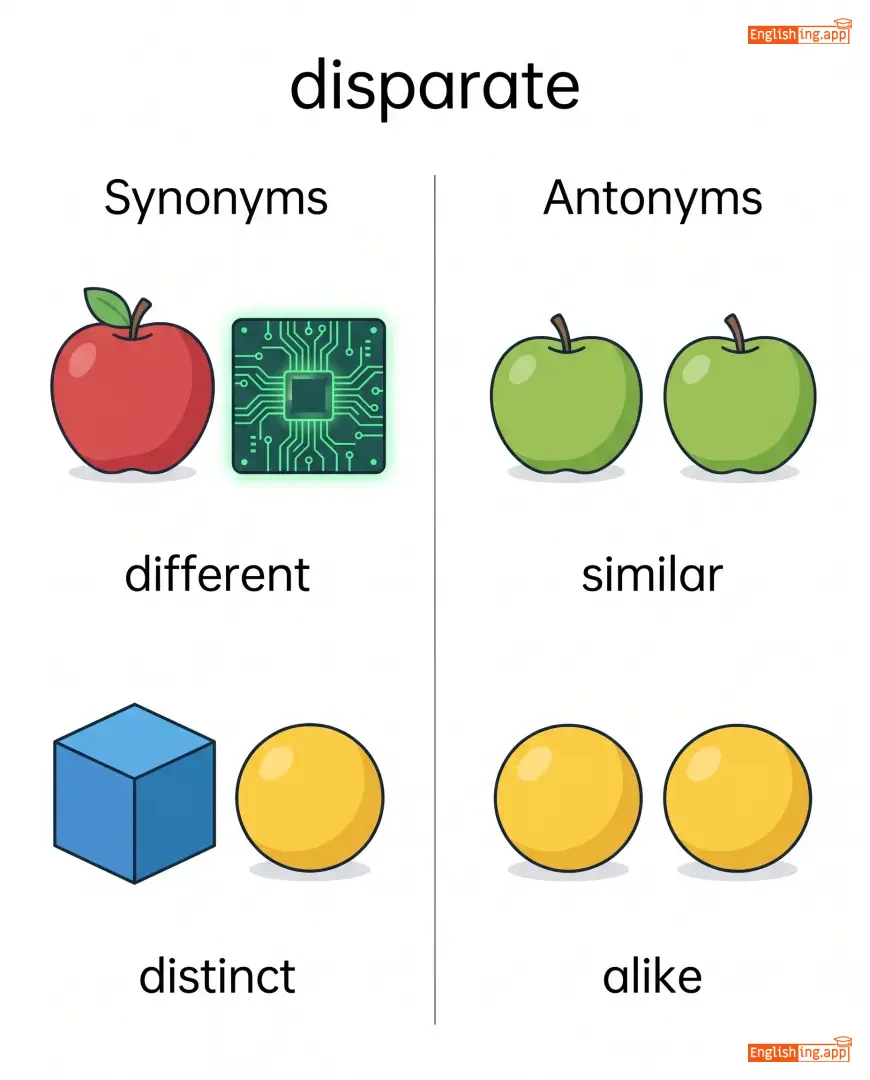
different, distinct, contrasting, diverse, varied
••••••
|
similar, alike, uniform
••••••
|
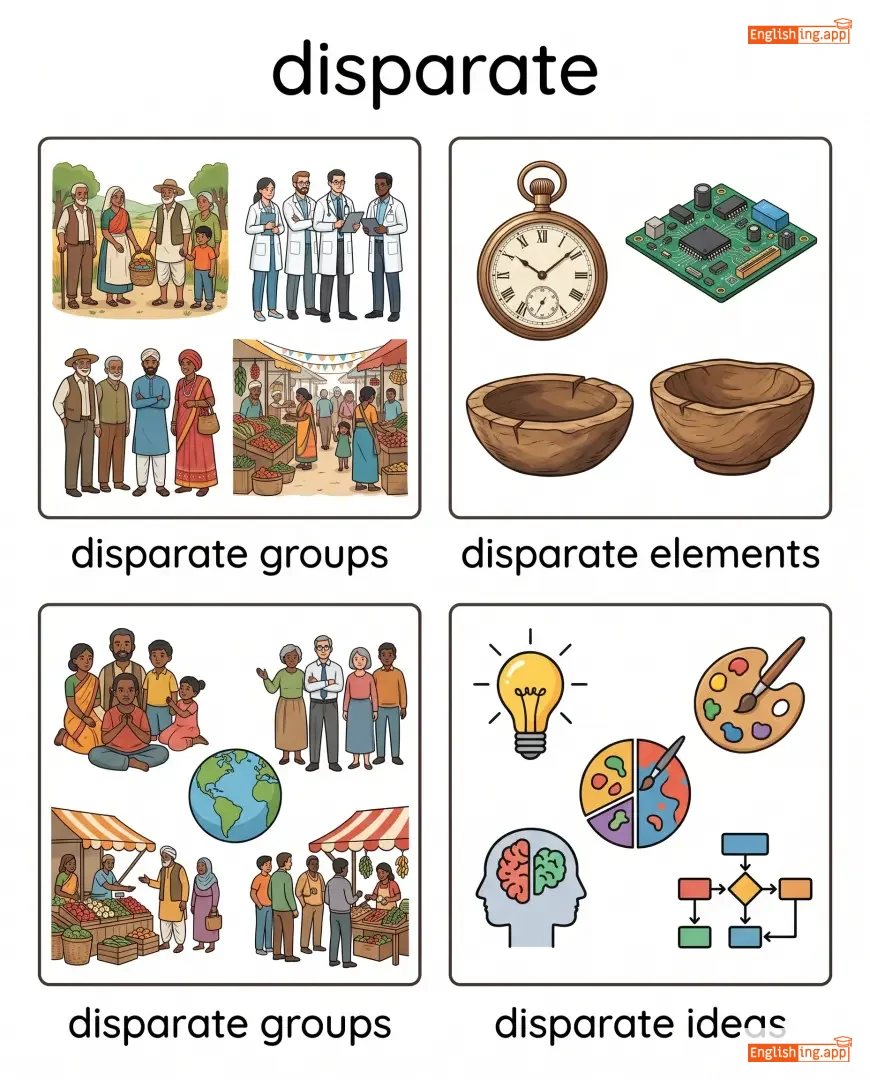
disparate groups, disparate elements, disparate ideas, disparate backgrounds
••••••
|
Disparate は、異なるアイデアを一緒に持ってくることです。
••••••
|
|
🎭
••••••
|
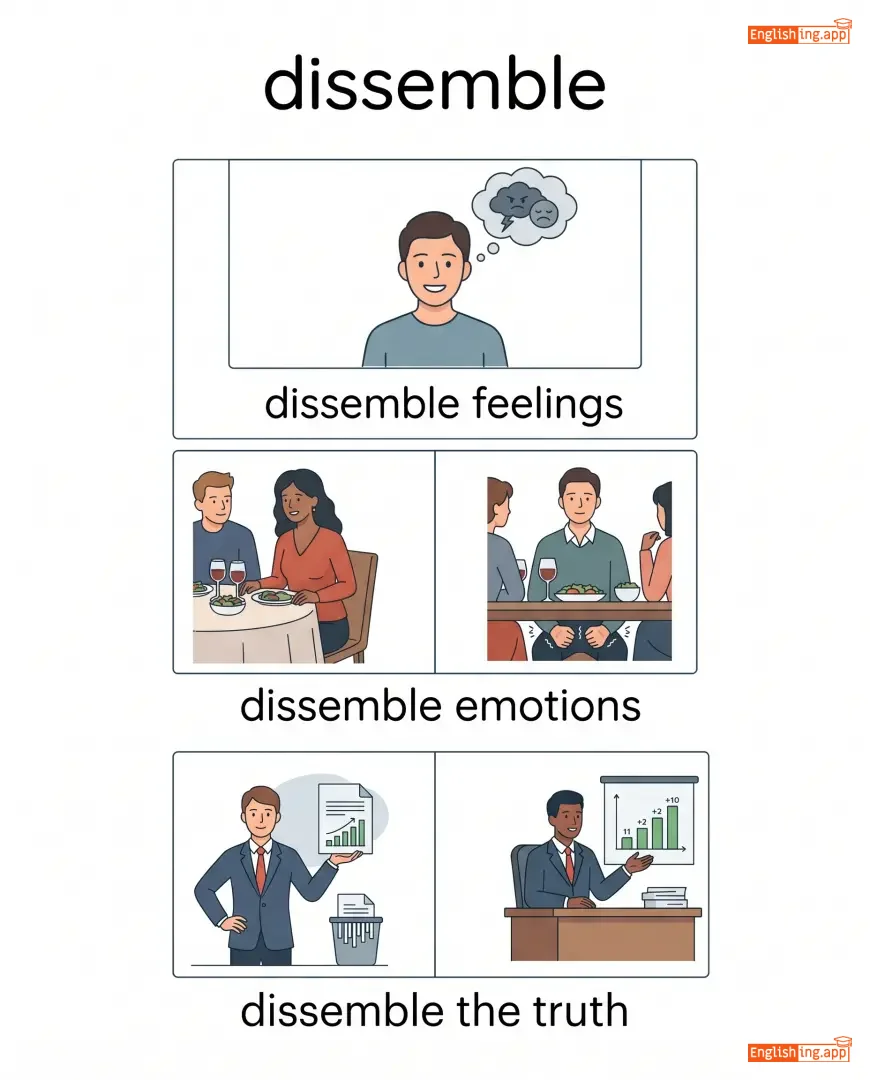
/dɪˈsɛmbəl/
verb
(ディセンブル)
••••••
|
|
ふりをする
furi o suru
••••••
|
dissembled
ディセンボールド
••••••
|
dissembled
ディセンボールド
••••••
|
dissembles
ディセンブルズ
••••••
|
dissembling
ディセンブリング
••••••
|
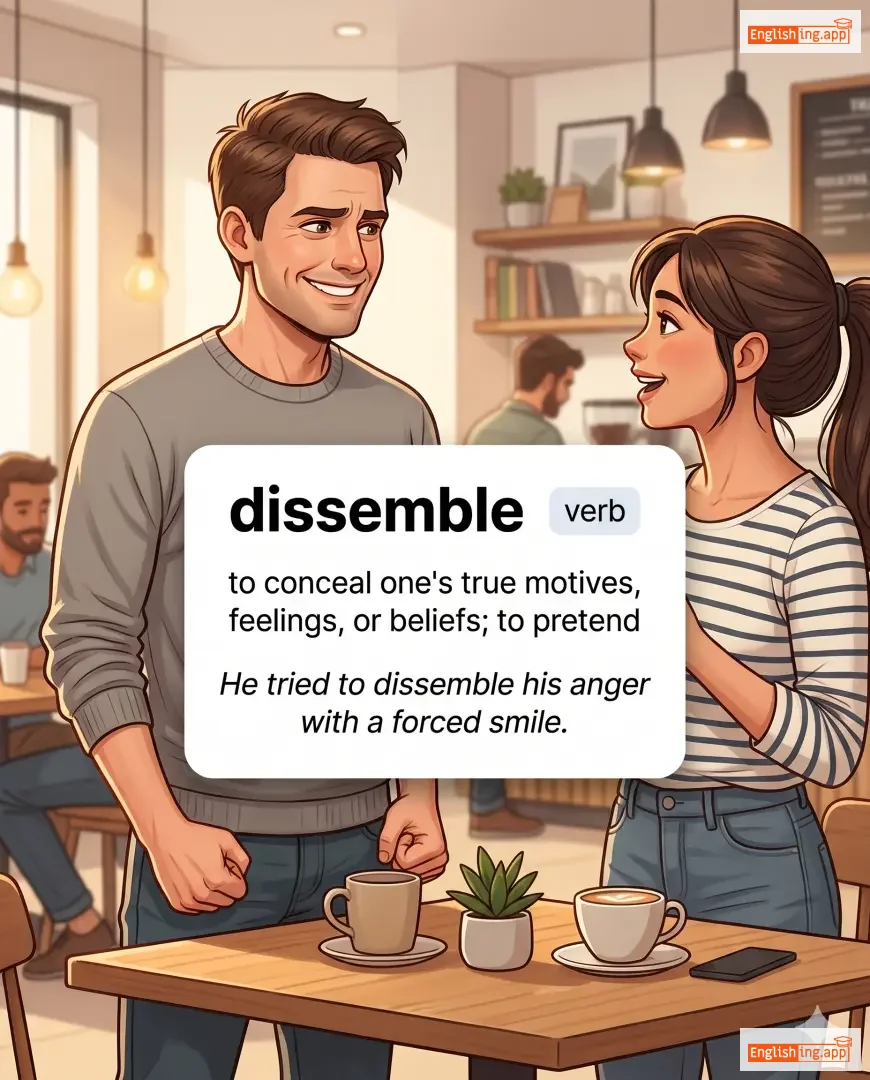
to conceal one's true motives, feelings, or beliefs; to pretend
••••••
|
He tried to dissemble his anger with a forced smile.
彼は強制的な笑顔で怒りを隠そうとした。
••••••
|
彼は強制的な笑顔で怒りを隠そうとした。
Kare wa kyouseiteki na egao de ikari o kakuso to shita.
••••••
|
- •••••• | - •••••• | - •••••• |
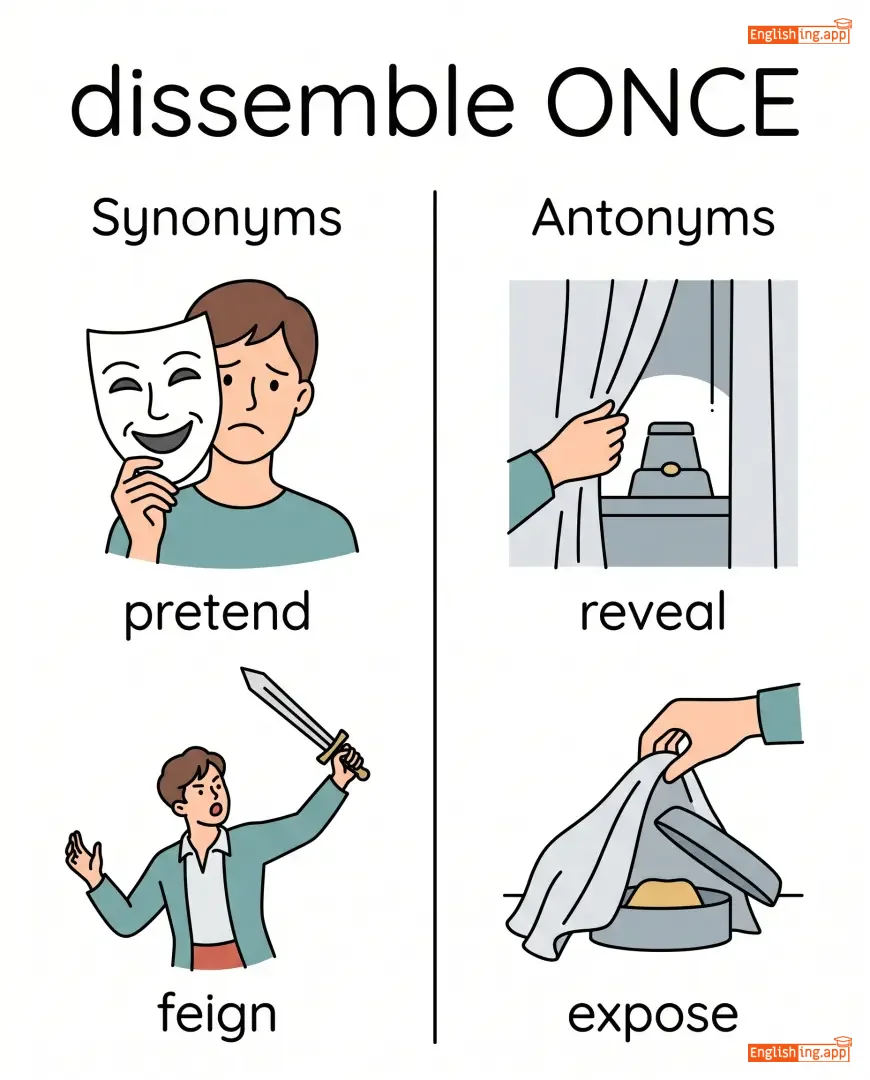
pretend, feign, fake, conceal, disguise
••••••
|
reveal, expose, disclose
••••••
|
dissemble feelings, dissemble emotions, dissemble the truth
••••••
|
Dissemble = dis+assemble; 真実を組み立てず、偽る。
••••••
|
|
📢
••••••
|
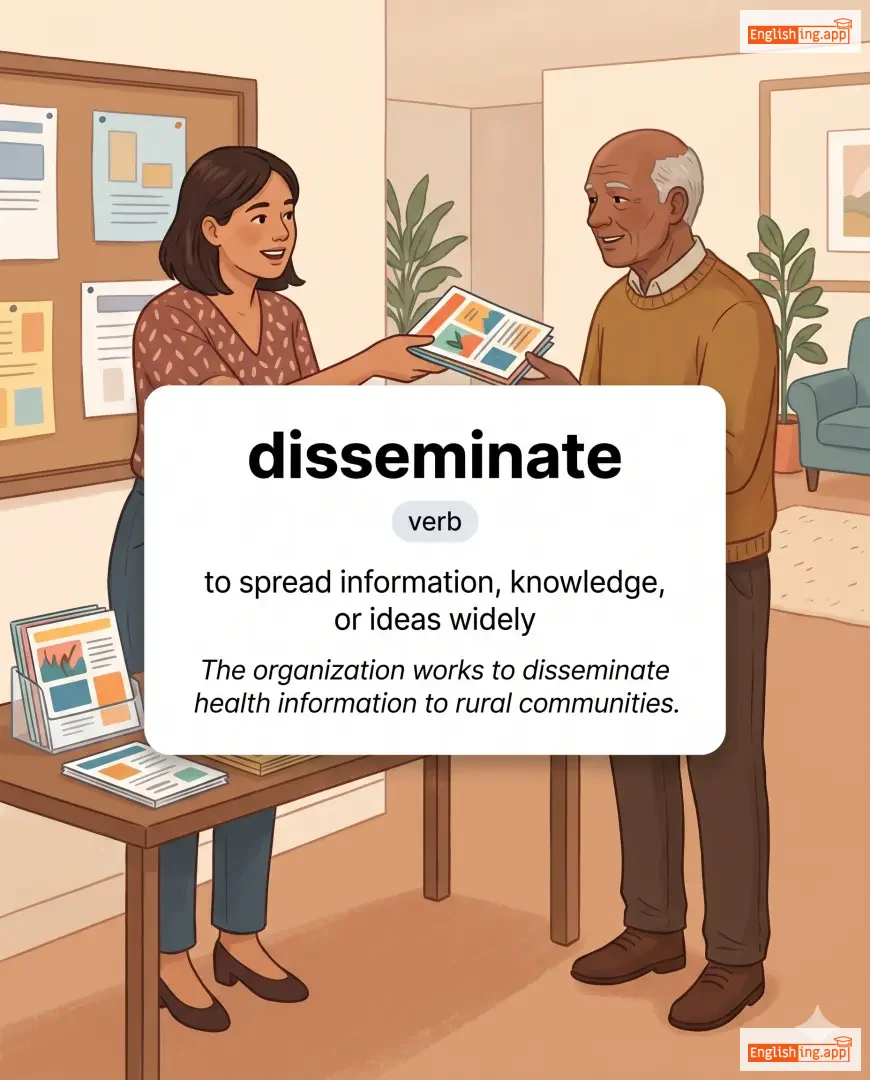
/dɪˈsɛmɪˌneɪt/
verb
(ディセミネート)
••••••
|

|
普及する
fukyu suru
••••••
|
disseminated
ディセミネートされた
••••••
|
disseminated
ディセミネートされた
••••••
|
disseminates
ディセミネートする
••••••
|
disseminating
ディセミネートしている
••••••
|
to spread information, knowledge, or ideas widely
••••••
|
The organization works to disseminate health information to rural communities.
その組織は農村地域に健康情報を普及させるために活動しています。
••••••
|
その組織は農村地域に健康情報を普及させるために活動しています。
Sono soshiki wa nouson chiiki ni kenko joho wo fukyu saseru tame ni katsudou shiteimasu.
••••••
|
disseminate knowledge
知識を広める
••••••
|
to distribute knowledge to many people
••••••
|
知識を広める
chishiki wo hiromeru
••••••
|
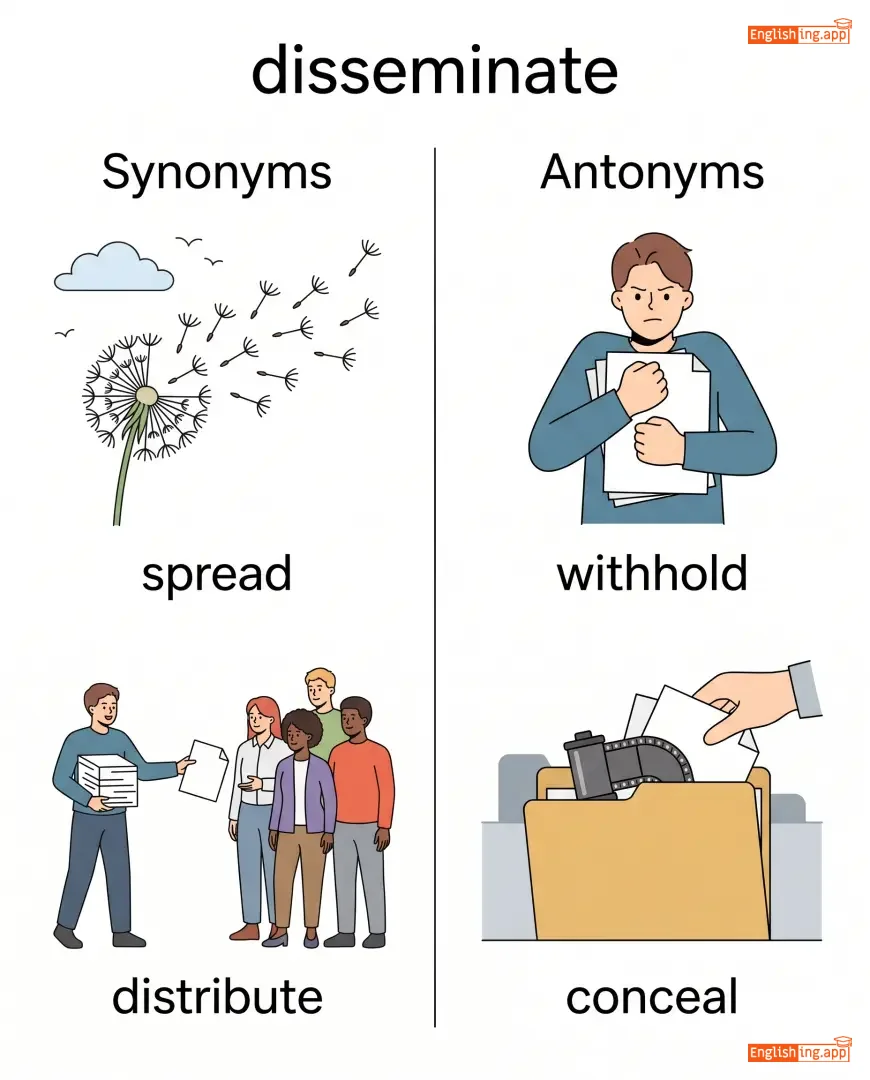
spread, distribute, circulate, broadcast, propagate
••••••
|
withhold, conceal, hide
••••••
|
disseminate knowledge, disseminate information, disseminate ideas, widely disseminate
••••••
|
Disseminate はまるで情報や知識を広めるような感じです。
••••••
|
|
⚖️
••••••
|
/ˌdɪsəˈluːʃən/
noun
(ディスソリューション)
••••••
|

|
解散
kaisann
••••••
|
- •••••• | - •••••• | - •••••• | - •••••• |
the act of formally ending or breaking apart something, such as an organization or marriage
••••••
|
The dissolution of the company was announced yesterday. |
会社の解散は昨日発表されました。
Kaisha no kaisan wa kinou happyou saremashita.
••••••
|
- •••••• | - •••••• | - •••••• |
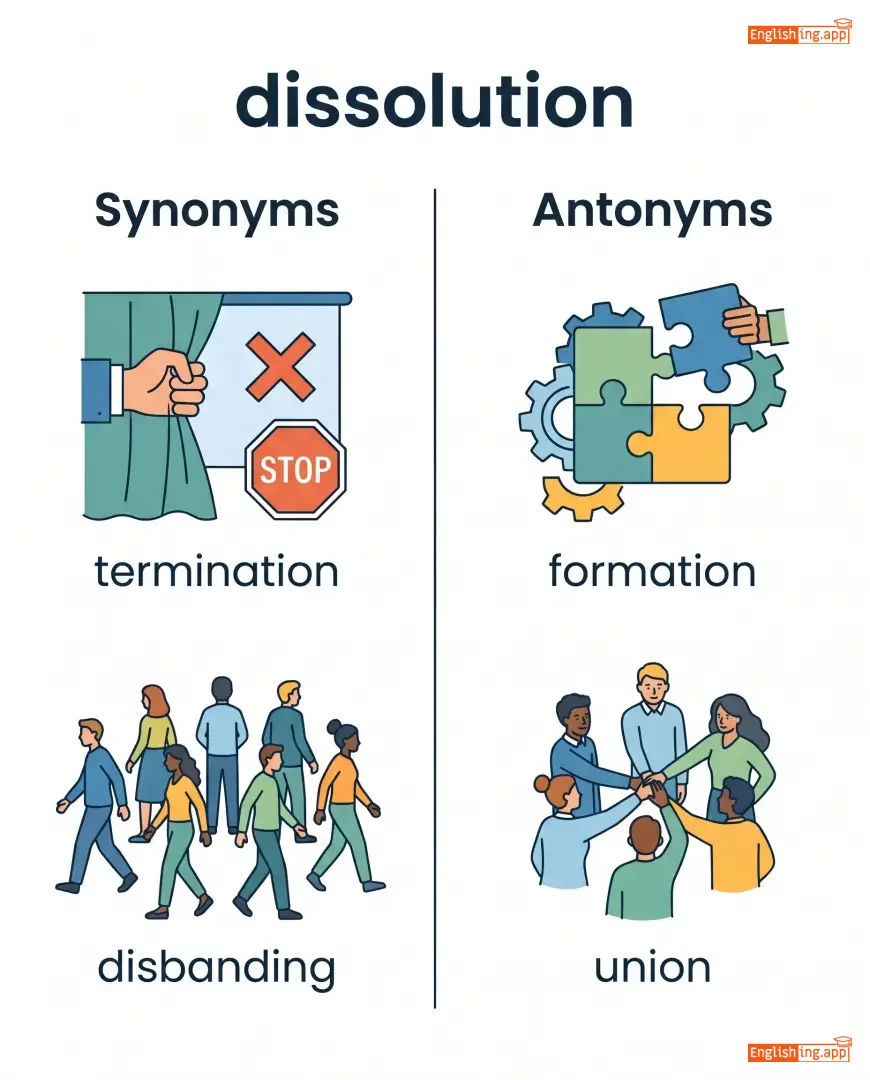
termination, disbanding, breakup, collapse
••••••
|
formation, union, establishment
••••••
|
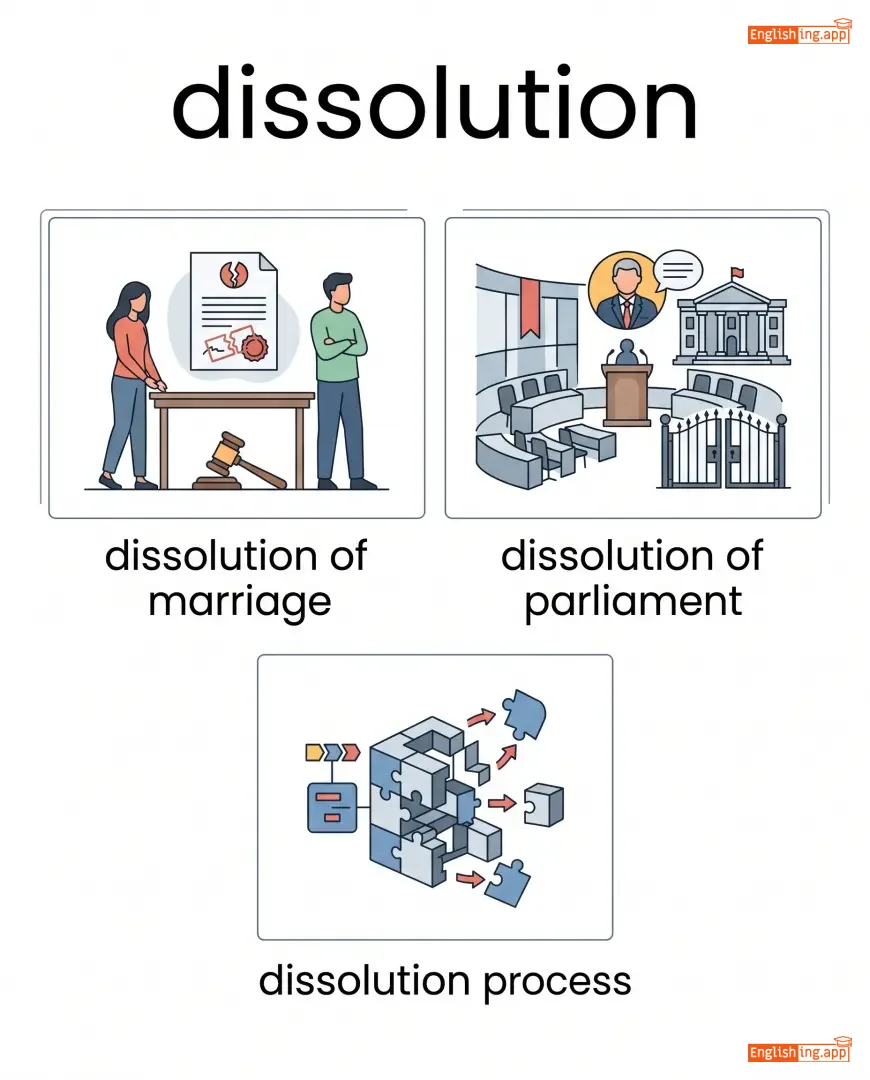
dissolution of marriage, dissolution of parliament, dissolution process
••••••
|
Dissolutionは解散、解決の終わり
••••••
|
|
🎶
••••••
|
/ˈdɪsənəns/
noun
(ディスオナンス)
••••••
|
|
不協和音
fukyouwaon
••••••
|
- •••••• | - •••••• | - •••••• | - •••••• |
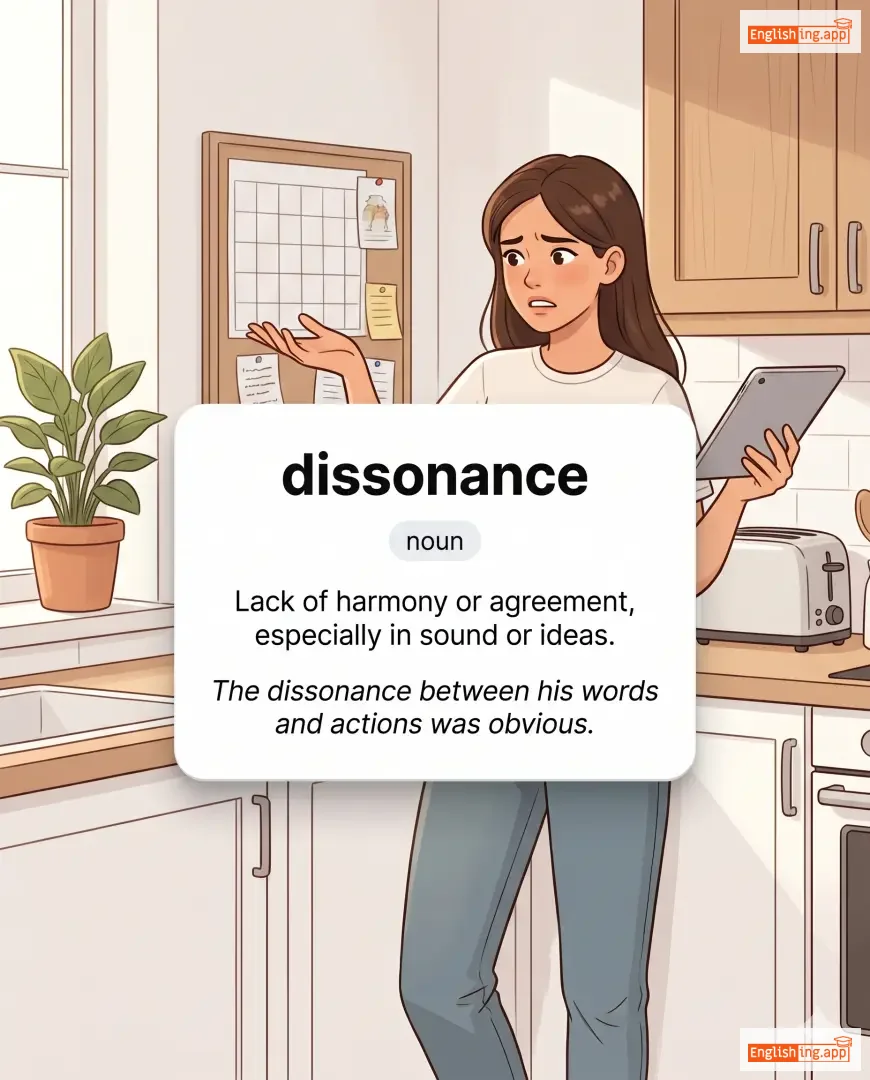
Lack of harmony or agreement, especially in sound or ideas.
••••••
|
The dissonance between his words and actions was obvious. |
彼の言葉と行動の間の不協和音は明らかだった。
Kare no kotoba to koudou no aida no fukyouwaon wa akiraka datta.
••••••
|
cognitive dissonance |
The mental discomfort experienced when holding contradictory beliefs or values.
••••••
|
認知的不協和音
ninchi-teki fukyouwaon
••••••
|
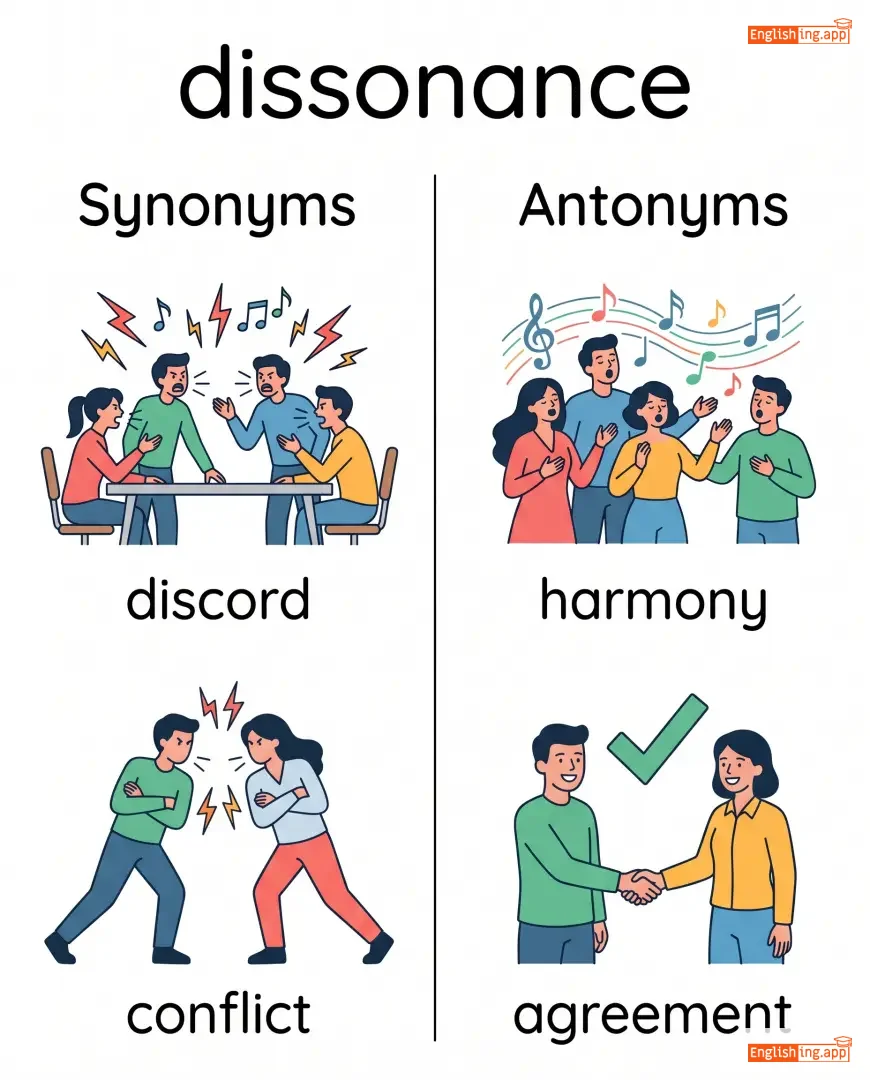
discord, conflict, discrepancy, disagreement, incongruity
••••••
|
harmony, agreement, concord
••••••
|
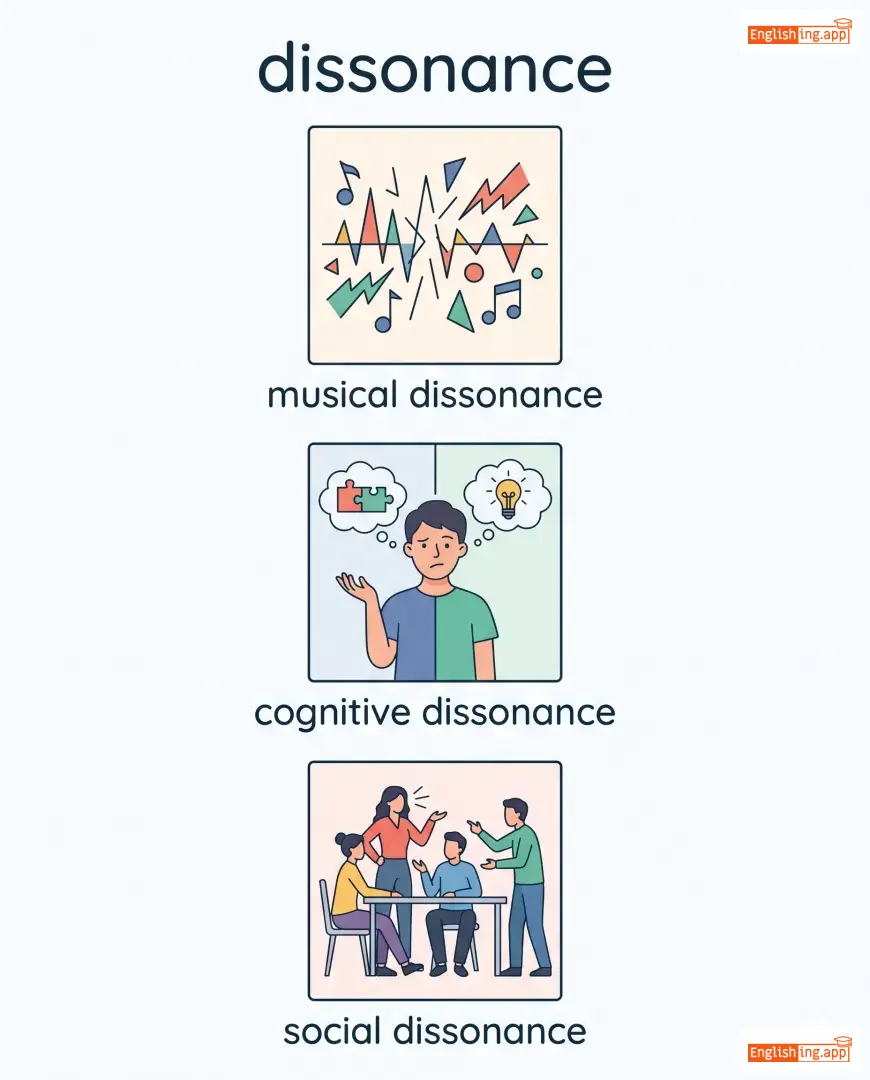
musical dissonance, cognitive dissonance, social dissonance, emotional dissonance
••••••
|
Dissonanceは不協和音を意味する - 日本語で'不協和音'のようなものです。
••••••
|

