Получите неограниченный доступ ко всем словам с подпиской Pro
Обновить до ProПолучите неограниченный доступ ко всем предложениям с подпиской Pro
Обновить до Pro|
Эмодзи
|
Слово | Images | Перевод | Прошедшее | Причастие прошедшего времени | Третье лицо единственного числа | Герундий | Значение | Пример предложения | Перевод примера предложения | Пример выражения | Значение примера выражения | Перевод примера выражения | Синонимы | Антонимы | Коллокации | Мнемоника |
|---|---|---|---|---|---|---|---|---|---|---|---|---|---|---|---|---|---|
|
🌵
••••••
|
/ˈdɛsɪkeɪt/
verb
(desiket)
••••••
|
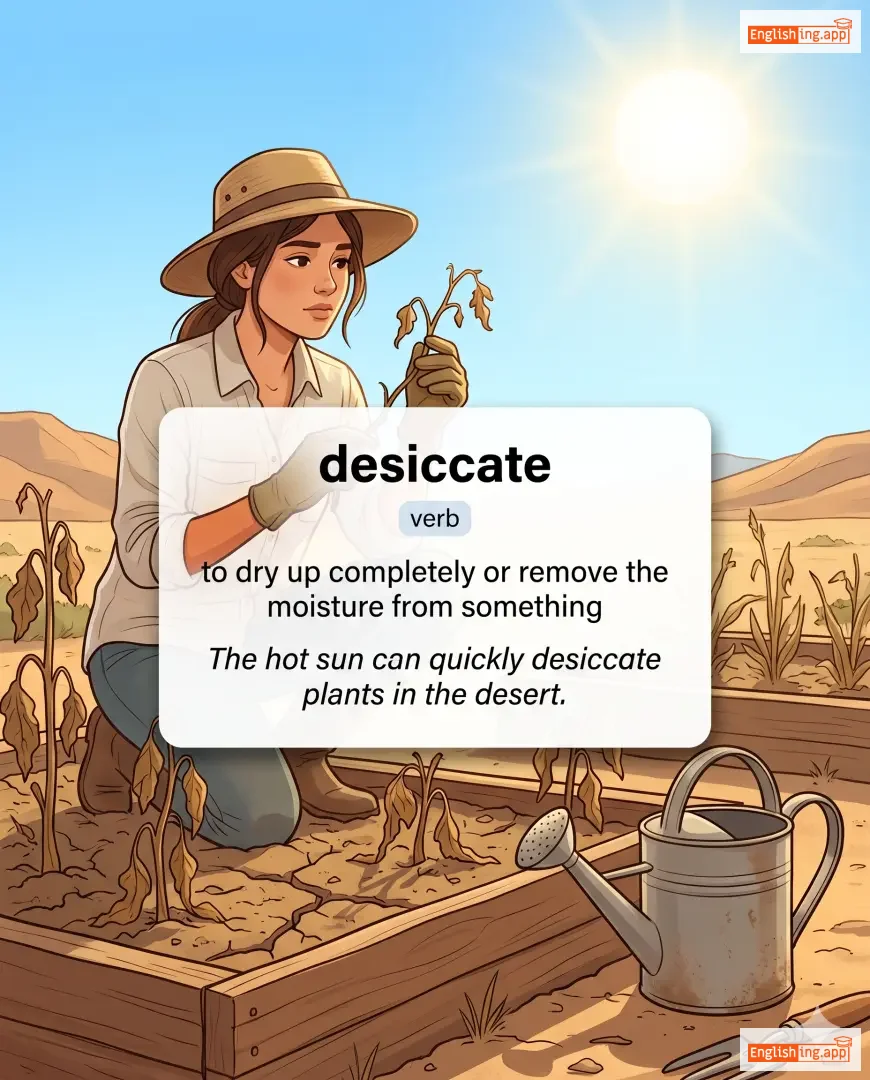
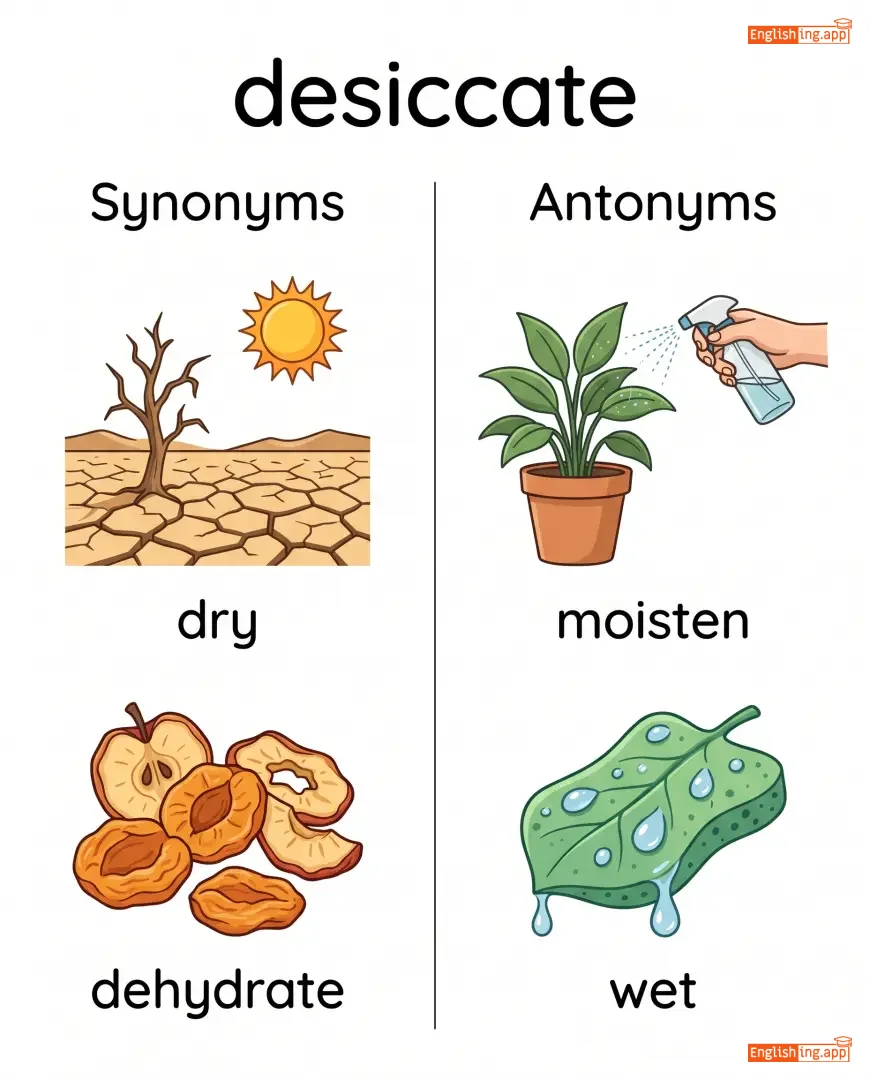
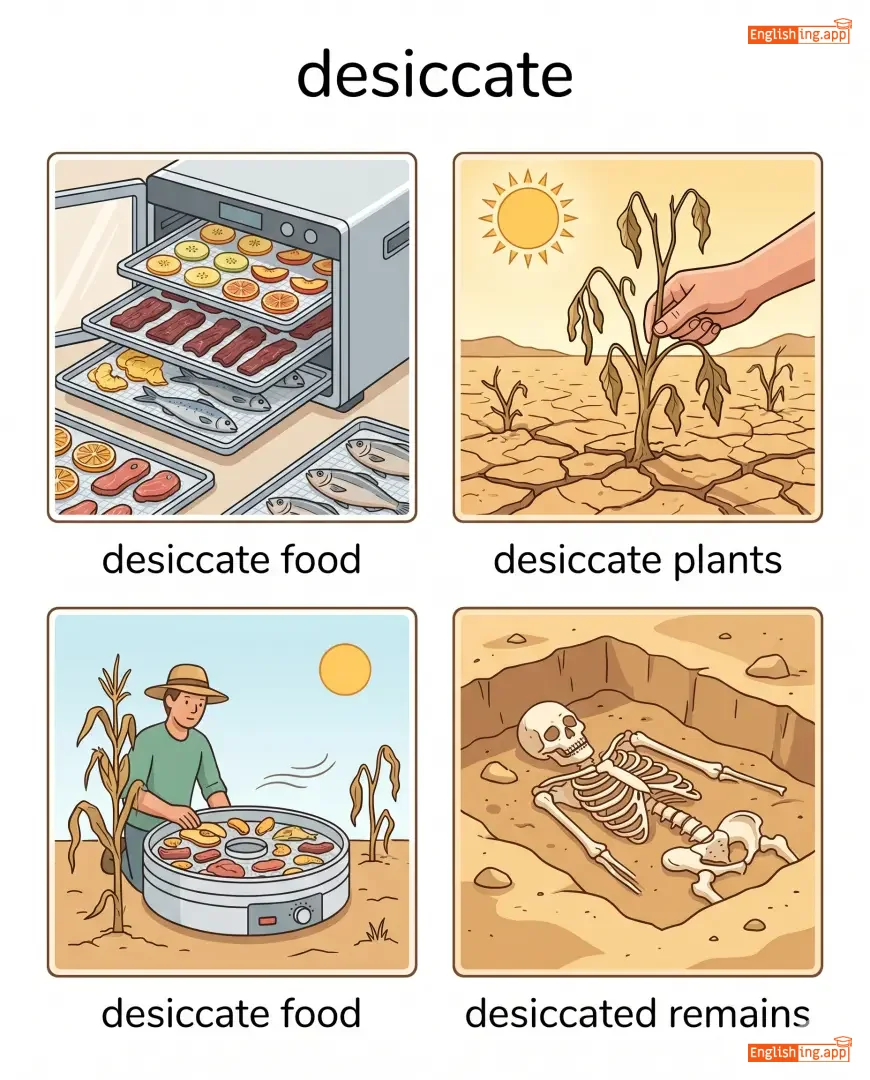
|
высушивать
vysushivat
••••••
|
desiccated
desiketirovannyj
••••••
|
desiccated
desiketirovannyj
••••••
|
desiccates
desiketuet
••••••
|
desiccating
desiketing
••••••
|
to dry up completely or remove the moisture from something
••••••
|
The hot sun can quickly desiccate plants in the desert.
Горячее солнце может быстро высушить растения в пустыне.
••••••
|
Горячее солнце может быстро высушить растения в пустыне.
Goryachie solntse mozhet bystro vysushit' rastenija v pustyne.
••••••
|
- •••••• | - •••••• | - •••••• |
dry, dehydrate, parch, drain, evaporate
••••••
|
moisten, wet, hydrate
••••••
|
desiccate food, desiccate plants, desiccated remains
••••••
|
Растения в пустыне быстро высыхают.
••••••
|
|
😐
••••••
|
/ˈdɛsəlˌtɔːri/
adjective
(дезультори)
••••••
|
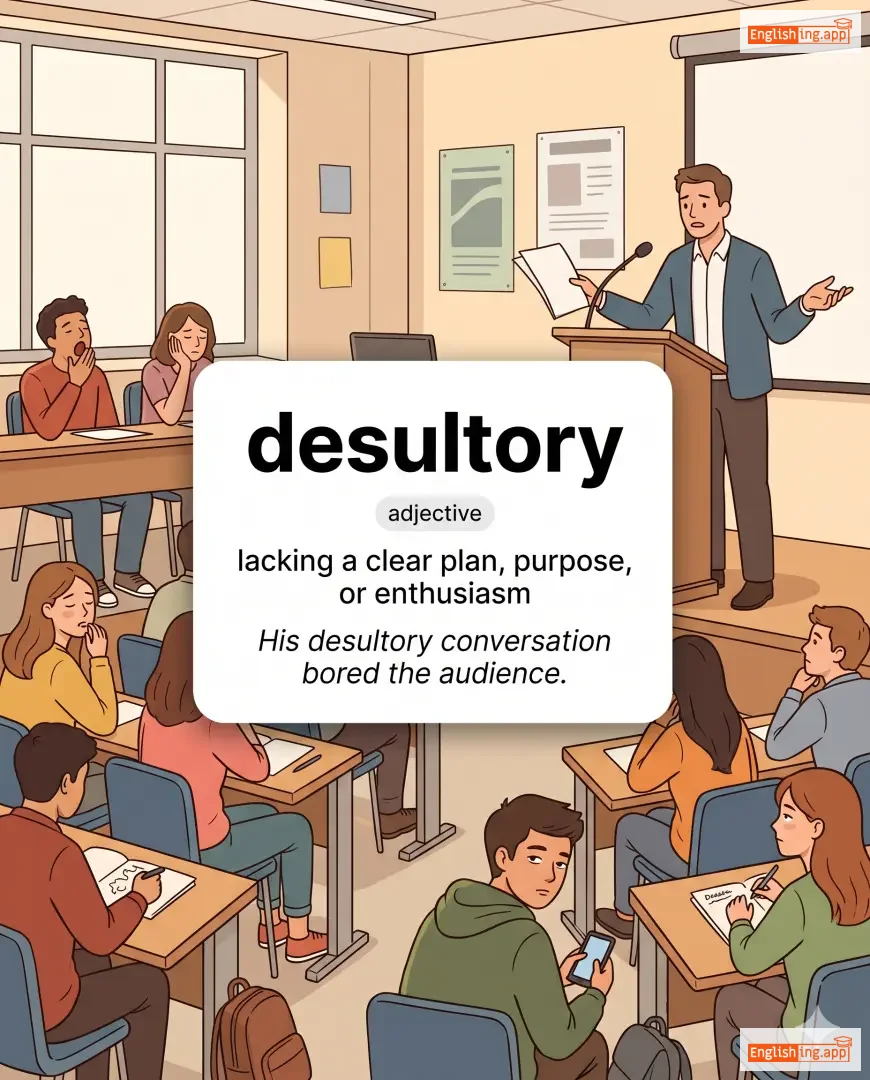
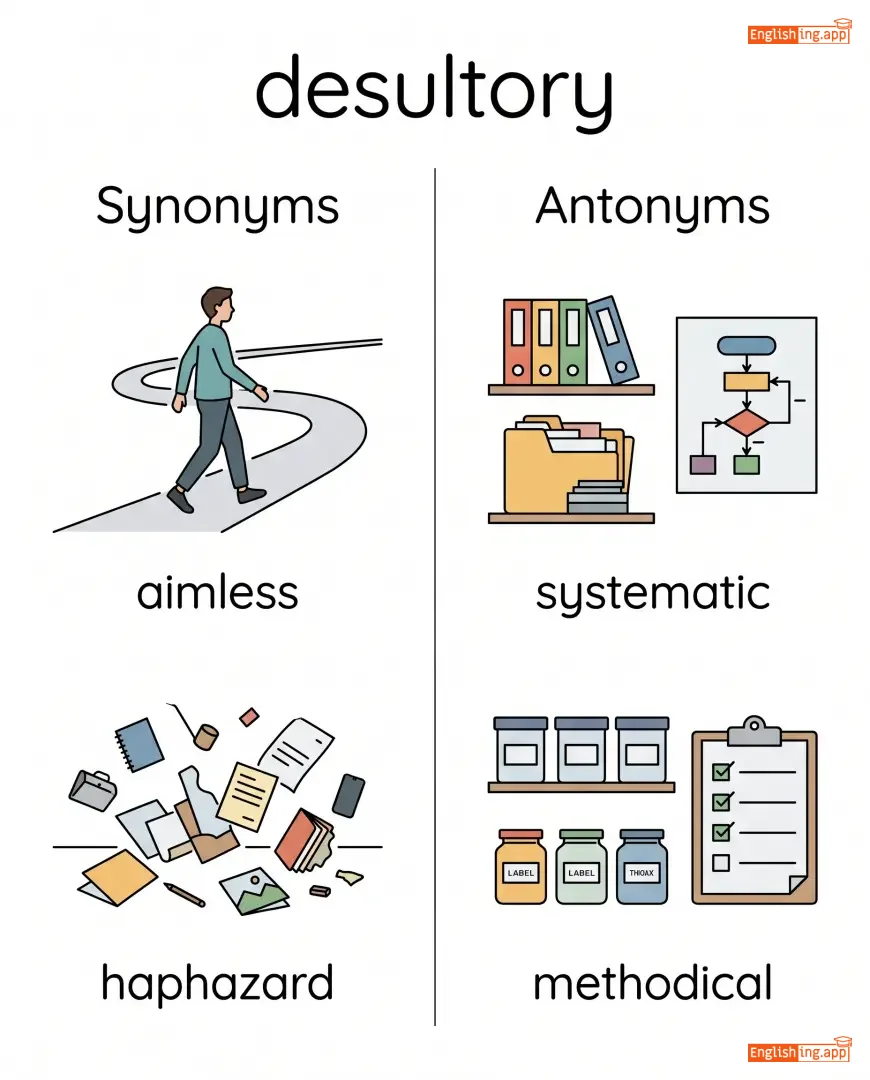
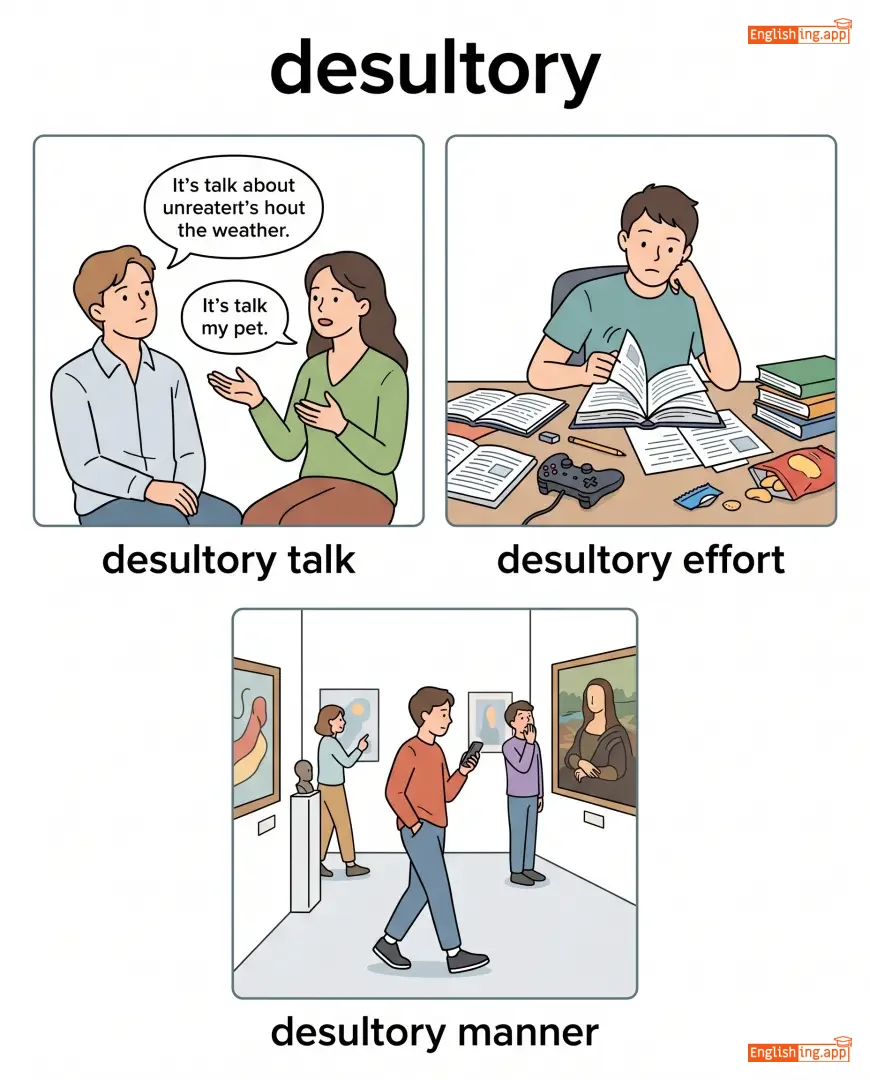
|
беспорядочный
besporyadochny
••••••
|
- •••••• | - •••••• | - •••••• | - •••••• |
lacking a clear plan, purpose, or enthusiasm
••••••
|
His desultory conversation bored the audience. |
Его беспорядочный разговор утомил зрителей.
Yego besporyadochnyy razgovor utomil zriteley.
••••••
|
- •••••• | - •••••• | - •••••• |
aimless, haphazard, random, unplanned, erratic
••••••
|
systematic, methodical, organized
••••••
|
desultory talk, desultory effort, desultory manner, desultory approach
••••••
|
Desultory – разговор без цели, беспорядок
••••••
|
|
🚫
••••••
|
/dɪˈtɜːrənt/
noun
(дɪˈтэрэнт)
••••••
|
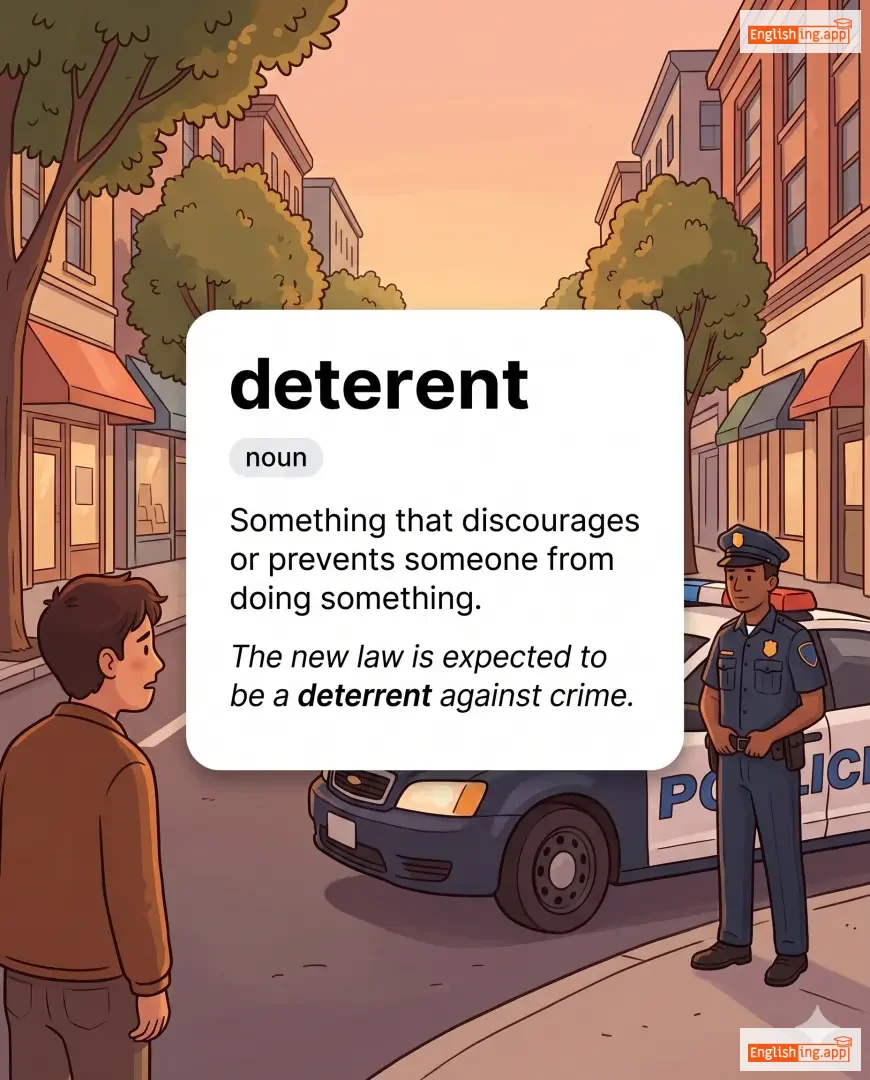
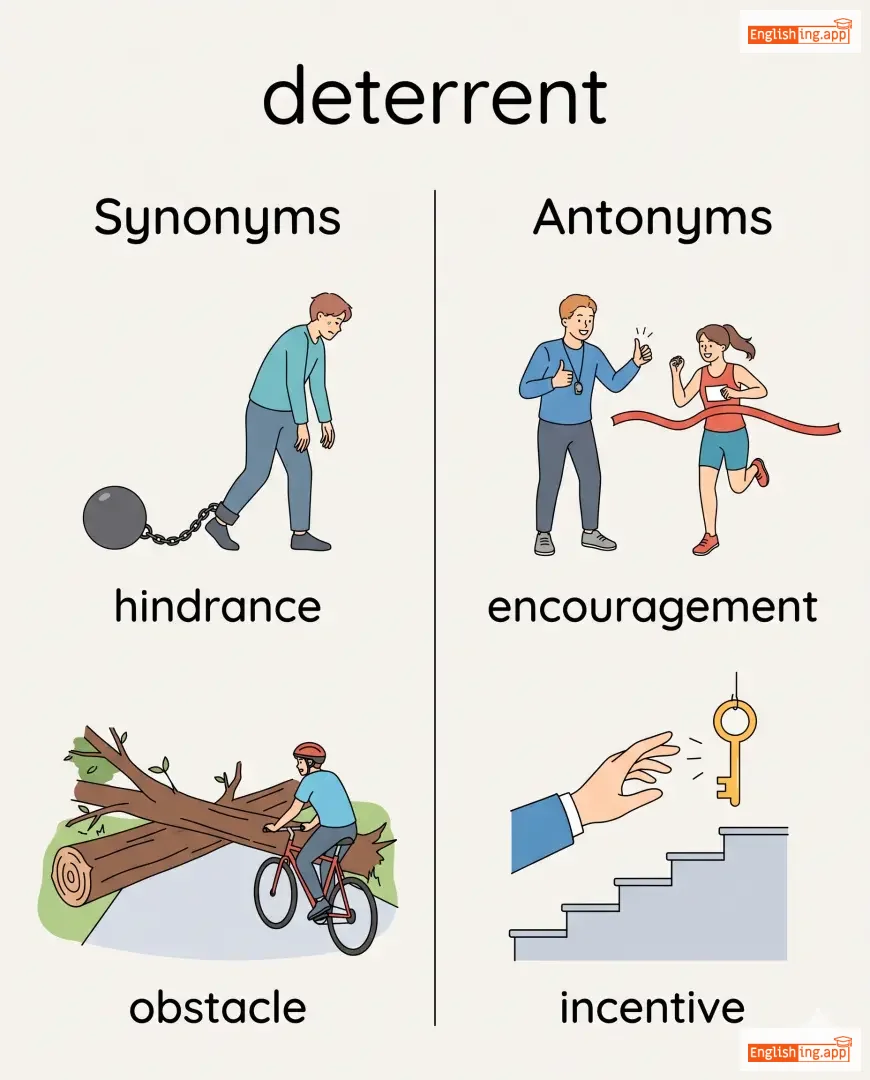
|
сдерживающий фактор
sderzhivayushchiy faktor
••••••
|
- •••••• | - •••••• | - •••••• | - •••••• |
Something that discourages or prevents someone from doing something.
••••••
|
The new law is expected to be a deterrent against crime. |
Ожидается, что новый закон станет сдерживающим фактором против преступности.
Ozhidayetsya, chto novyy zakon stanet sderzhivayushchim faktorom protiv prestupnosti.
••••••
|
- •••••• | - •••••• | - •••••• |
hindrance, obstacle, discouragement, preventive
••••••
|
encouragement, incentive
••••••
|
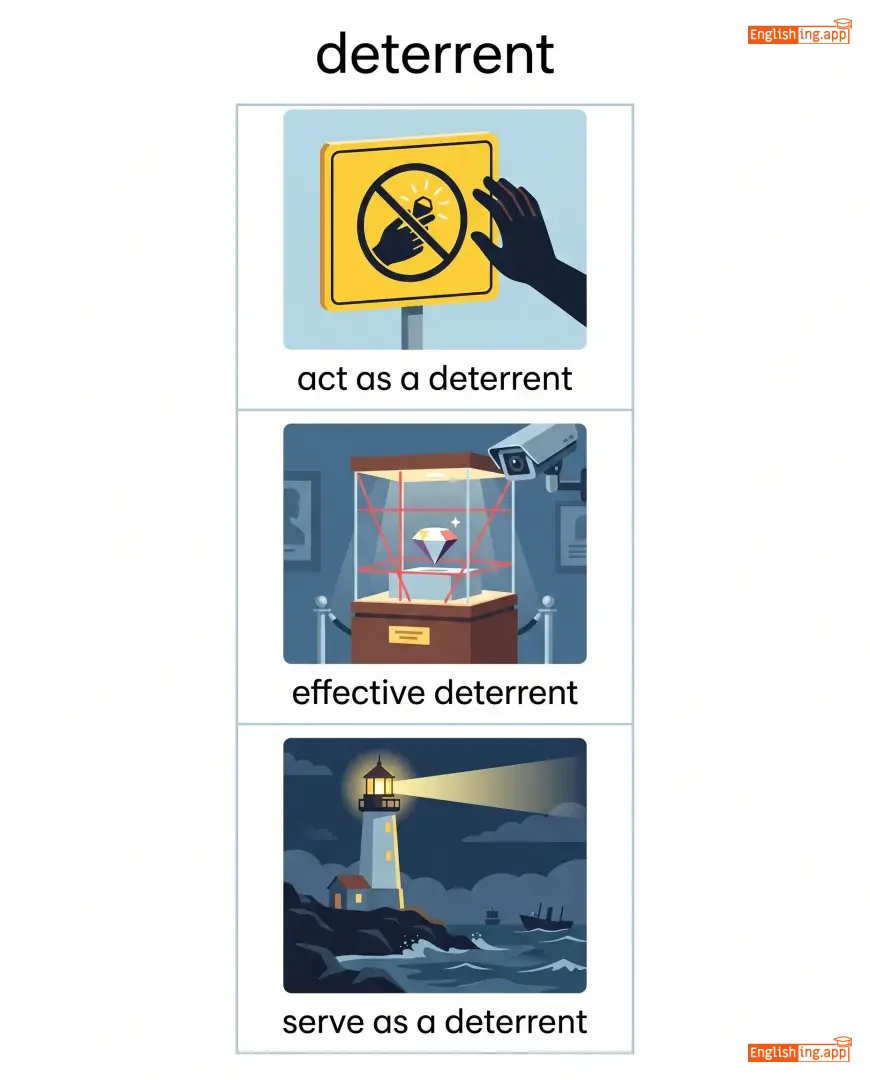
act as a deterrent, effective deterrent, serve as a deterrent
••••••
|
Сдерживающий фактор означает 🚫 преступление – закон как сила сдерживания.
••••••
|
|
🗣️
••••••
|
/ˈdaɪətraɪb/
noun
(даятрайб)
••••••
|
|
диатриба
diatriba
••••••
|
- •••••• | - •••••• | - •••••• | - •••••• |
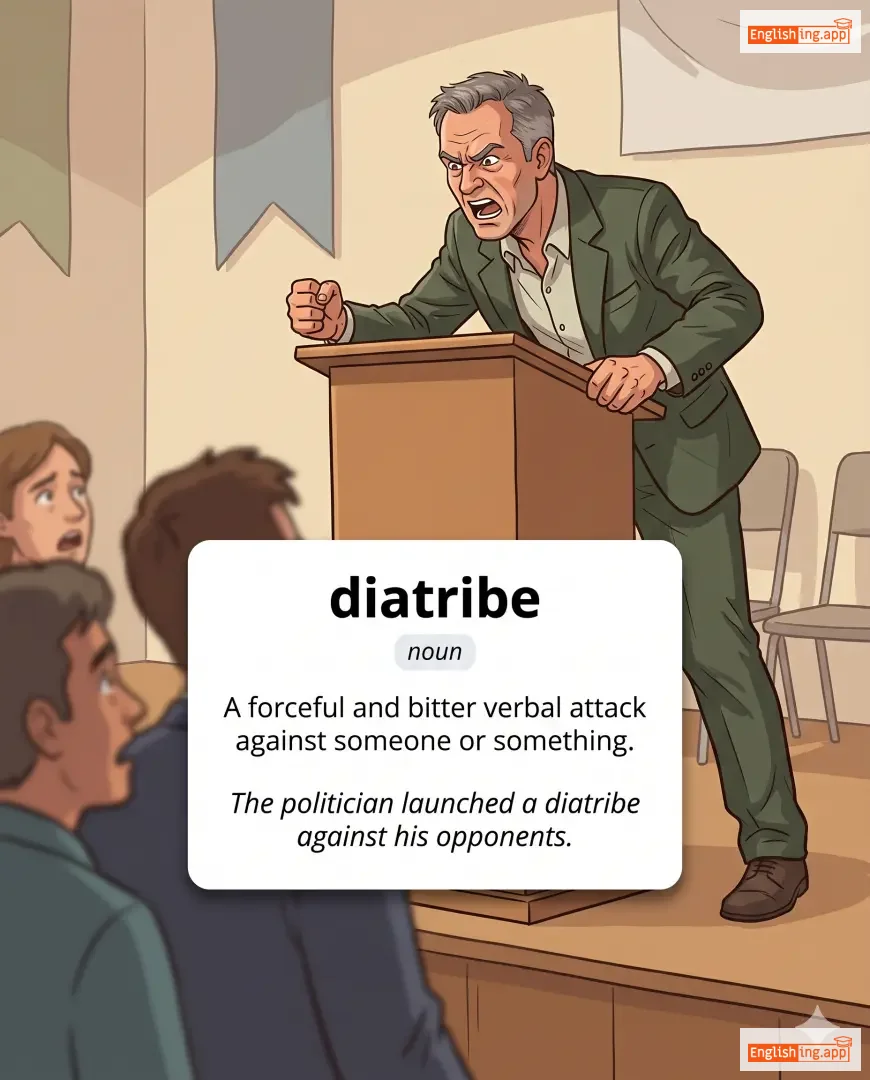
A forceful and bitter verbal attack against someone or something.
••••••
|
The politician launched a diatribe against his opponents. |
Политик начал диатрибу против своих оппонентов.
Politik nachal diatribu protiv svoikh opponentov.
••••••
|
- •••••• | - •••••• | - •••••• |
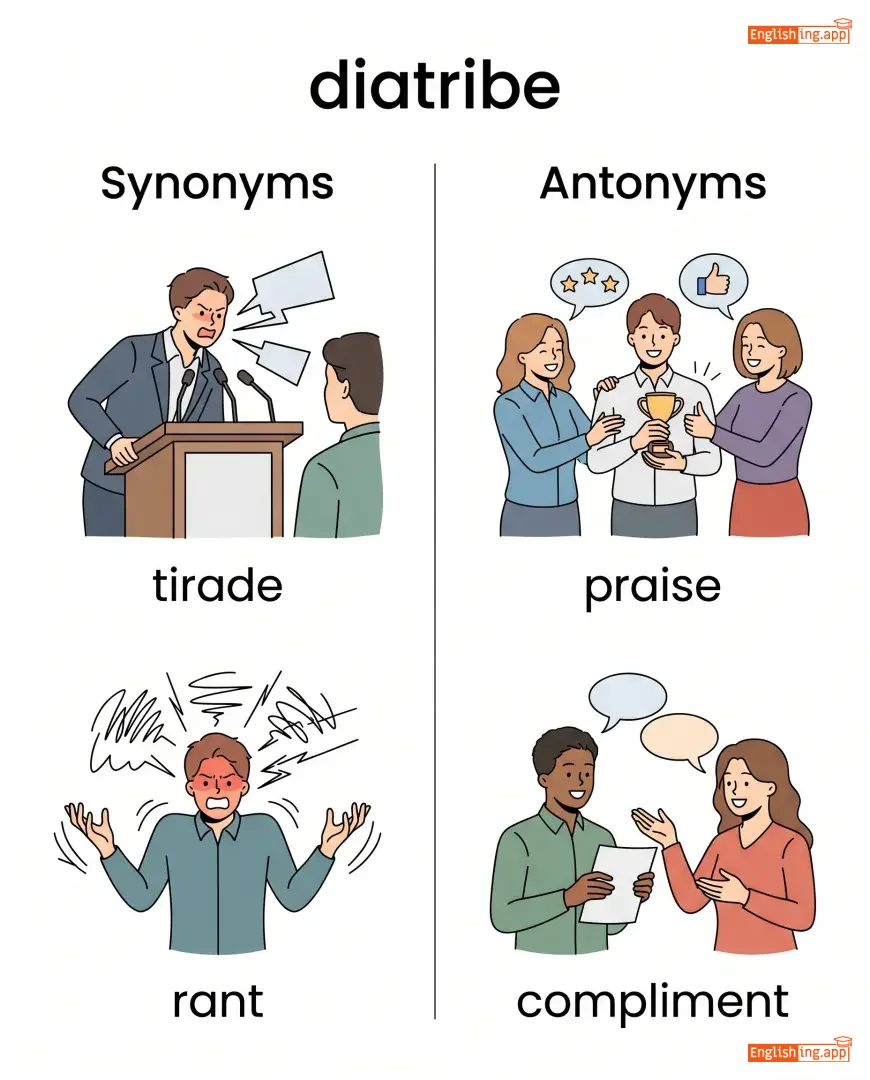
tirade, rant, criticism, denunciation, invective
••••••
|
praise, compliment
••••••
|
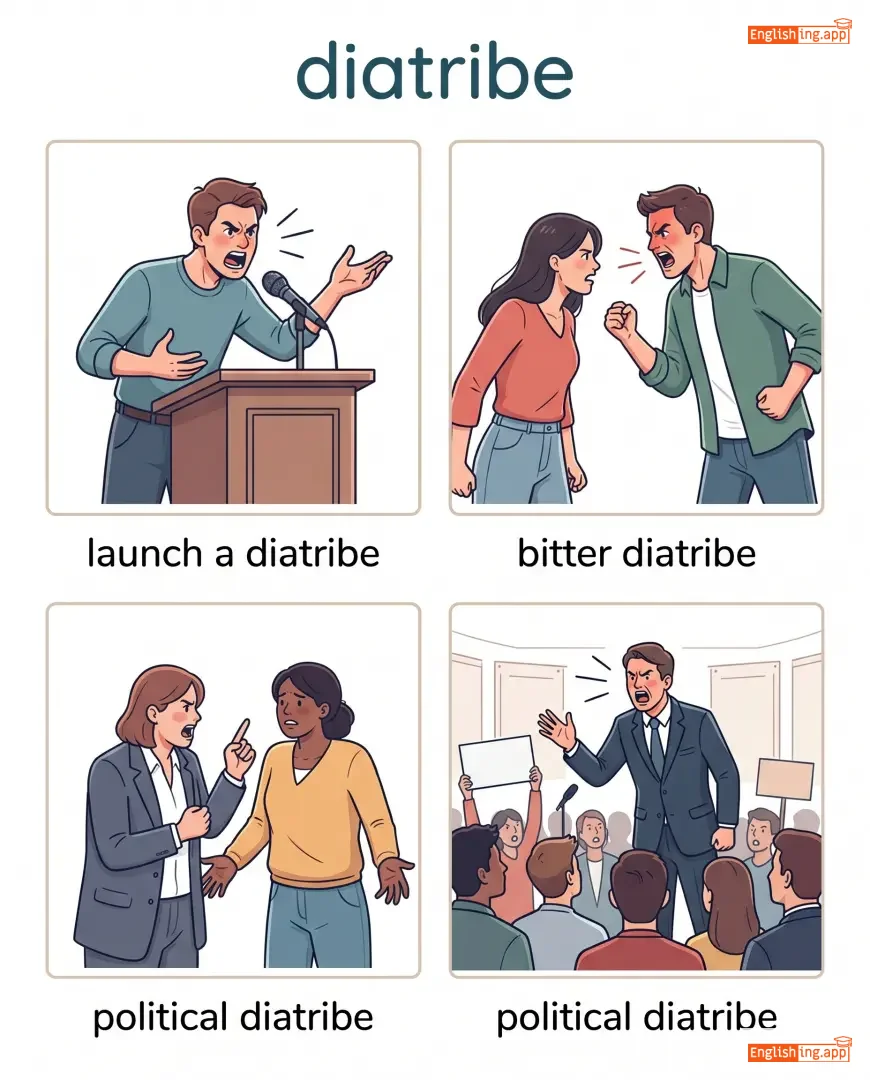
launch a diatribe, bitter diatribe, political diatribe
••••••
|
DIAlog v TRIBune - diatriba, zlostnaya kritika.
••••••
|
|
⚖️
••••••
|
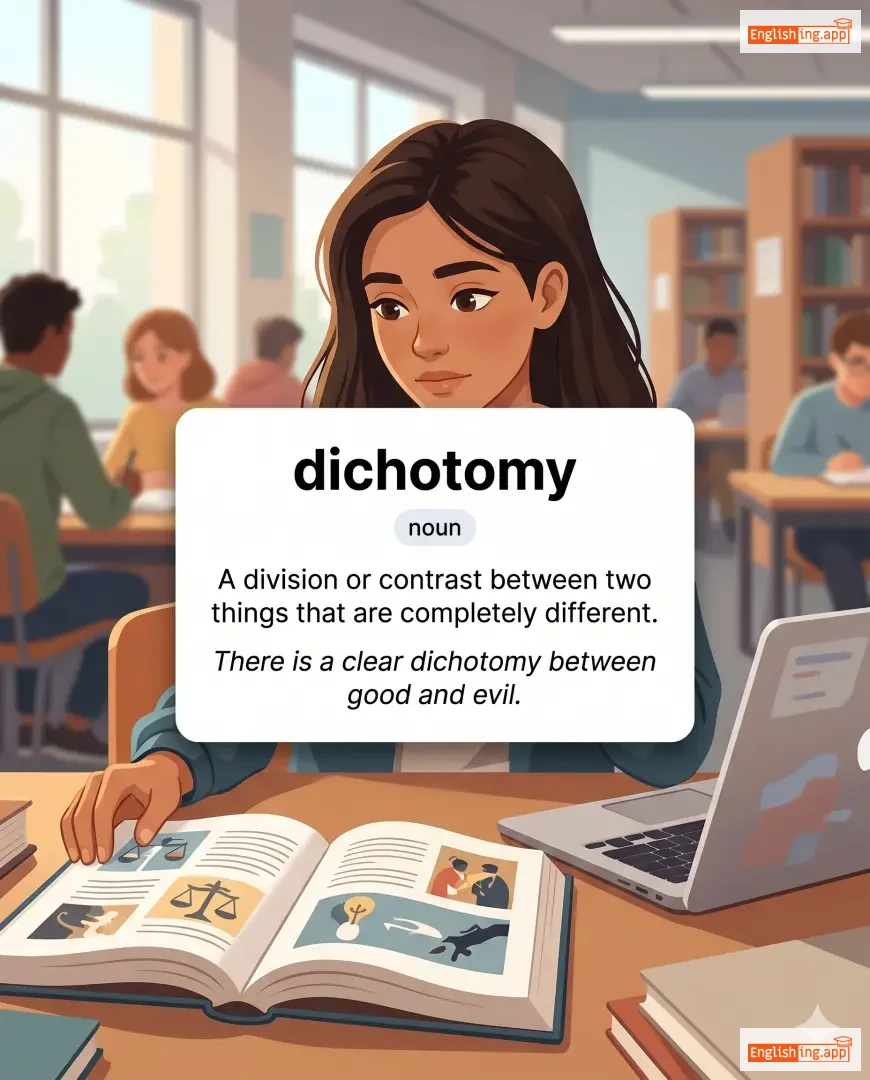
/daɪˈkɒtəmi/
noun
(дайˈкɒтэми)
••••••
|
|
дихотомия
dikhotomiya
••••••
|
- •••••• | - •••••• | - •••••• | - •••••• |
A division or contrast between two things that are completely different.
••••••
|
There is a clear dichotomy between good and evil. |
Существует явная дихотомия между добром и злом.
Sushchestvuyet yavnyaya dikhotomiya mezhdu dobrom i zlom.
••••••
|
- •••••• | - •••••• | - •••••• |
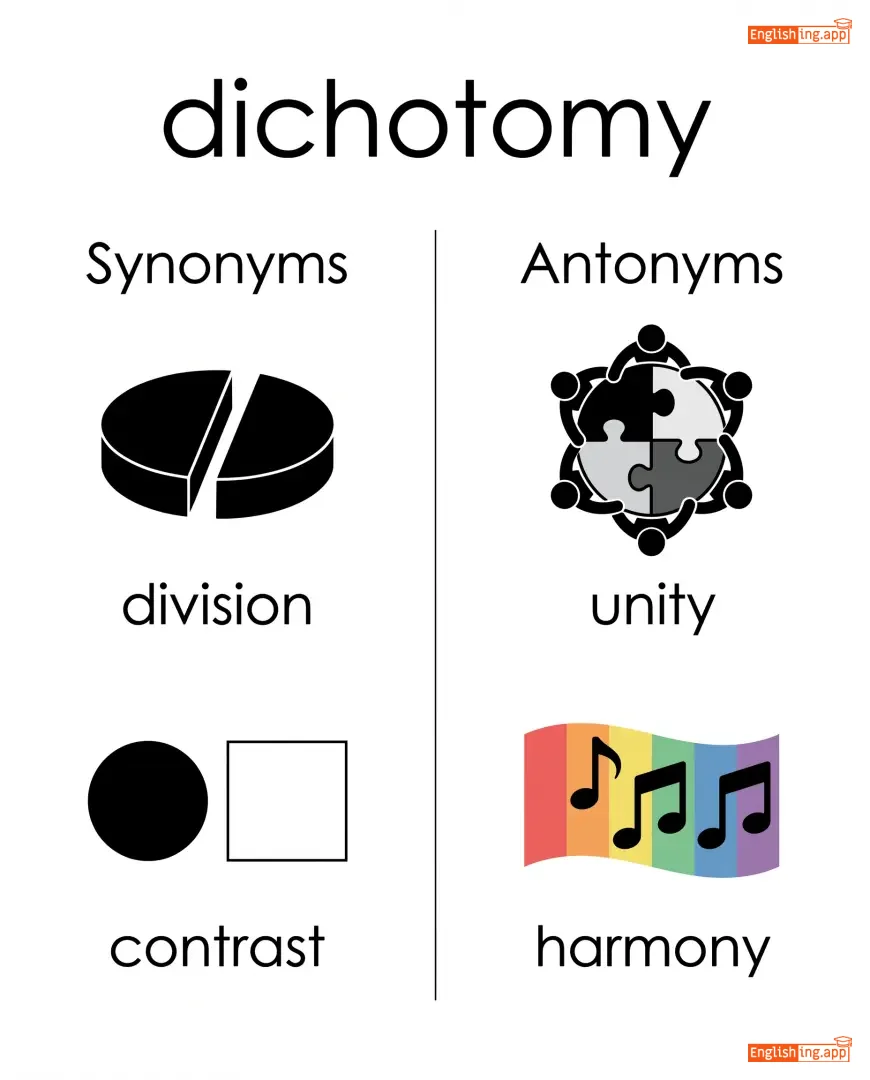
division, contrast, split, dualism
••••••
|
unity, harmony
••••••
|
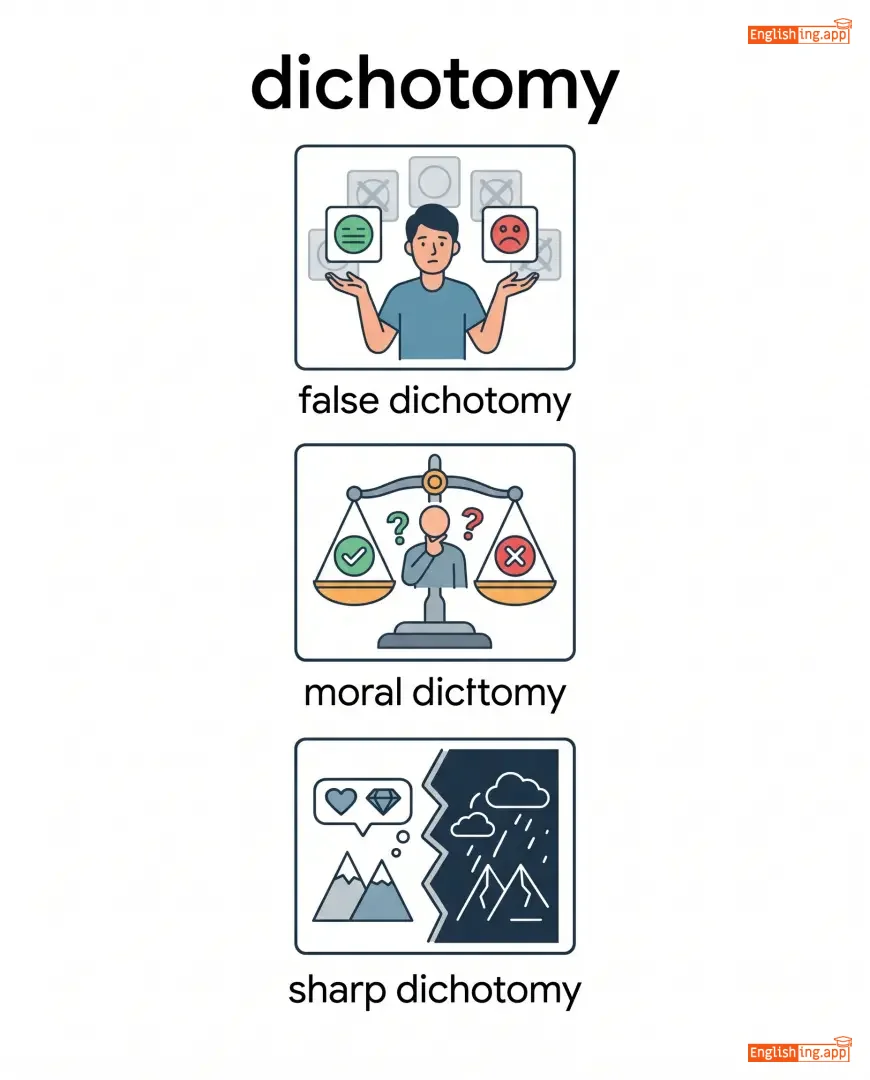
false dichotomy, moral dichotomy, sharp dichotomy
••••••
|
DIE означает два + CUT означает разрезать → Дихотомия означает разделение на два
••••••
|
|
😶
••••••
|
/ˈdɪfɪdəns/
noun
(дифи́денс)
••••••
|
|
неуверенность в себе
neuverennost' v sebe
••••••
|
- •••••• | - •••••• | - •••••• | - •••••• |
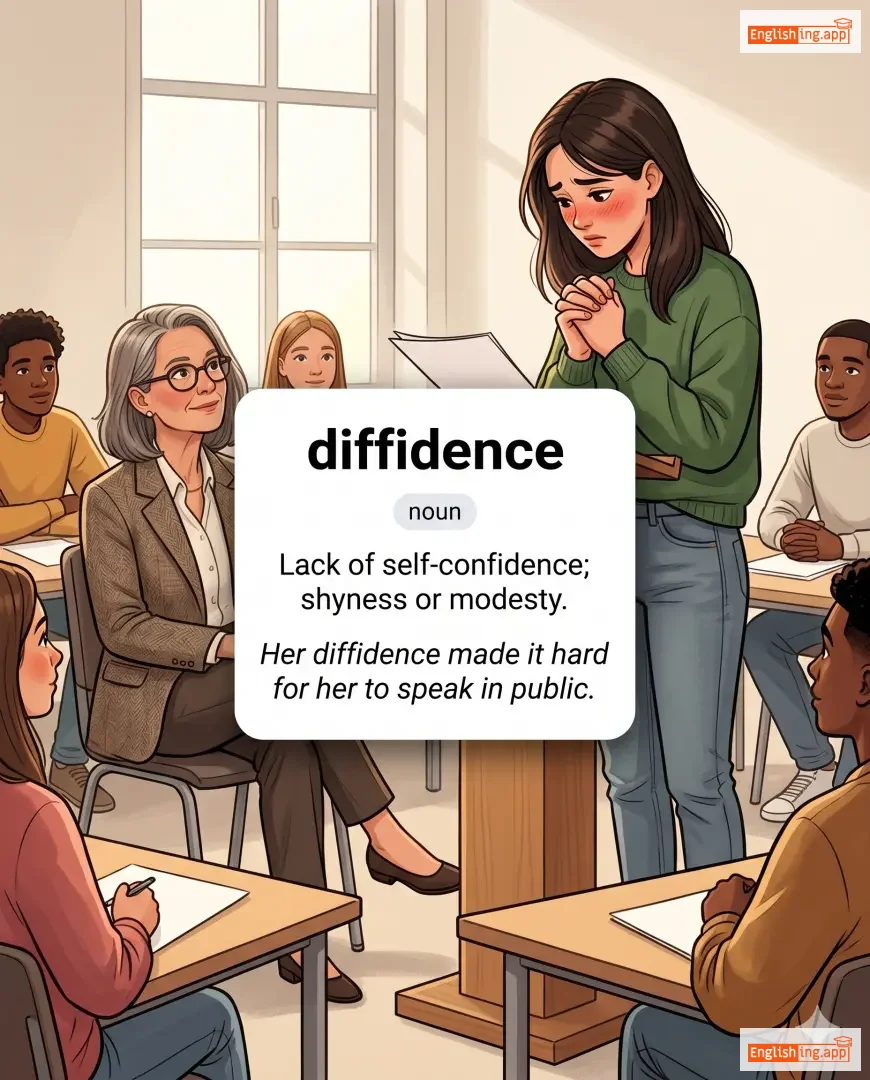
Lack of self-confidence; shyness or modesty.
••••••
|
Her diffidence made it hard for her to speak in public. |
Её неуверенность в себе затрудняла ей выступать на публике.
Yeyo neuverennost' v sebe zatrudnyala yey vystupat' na publike.
••••••
|
- •••••• | - •••••• | - •••••• |
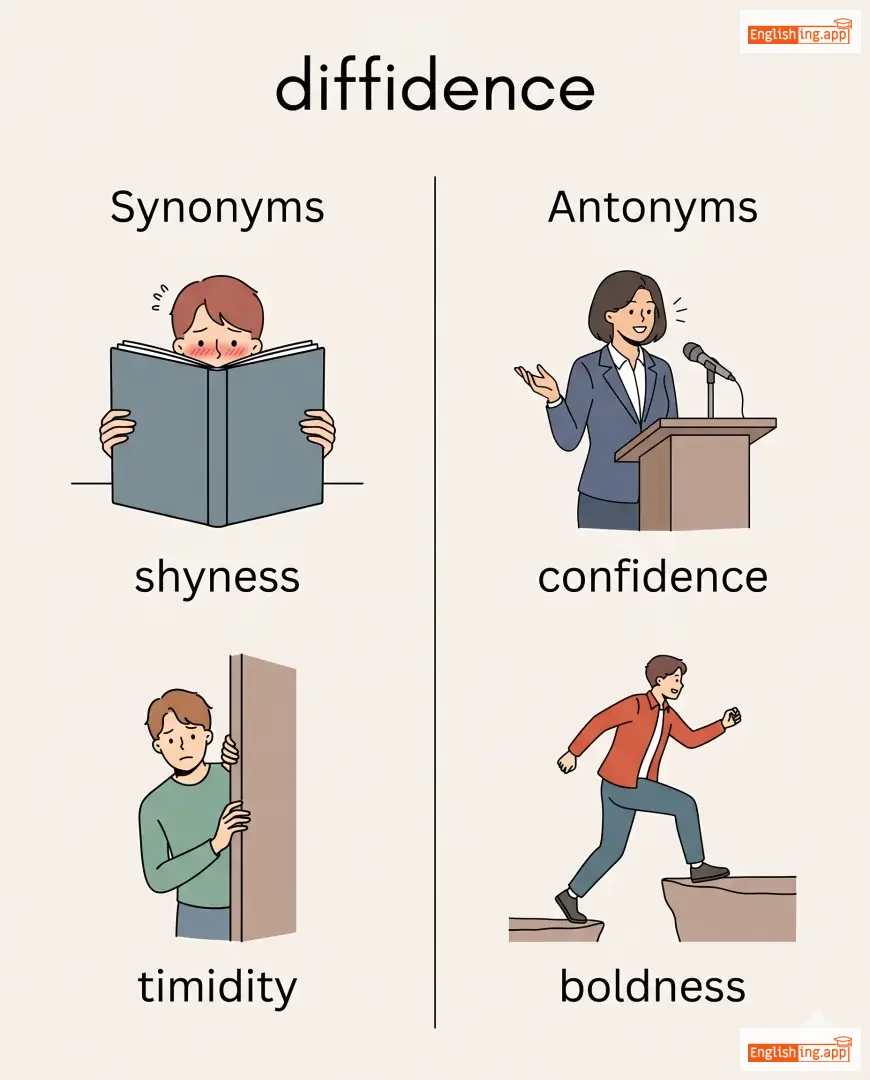
shyness, timidity, insecurity, reserve, modesty
••••••
|
confidence, boldness, assertiveness
••••••
|
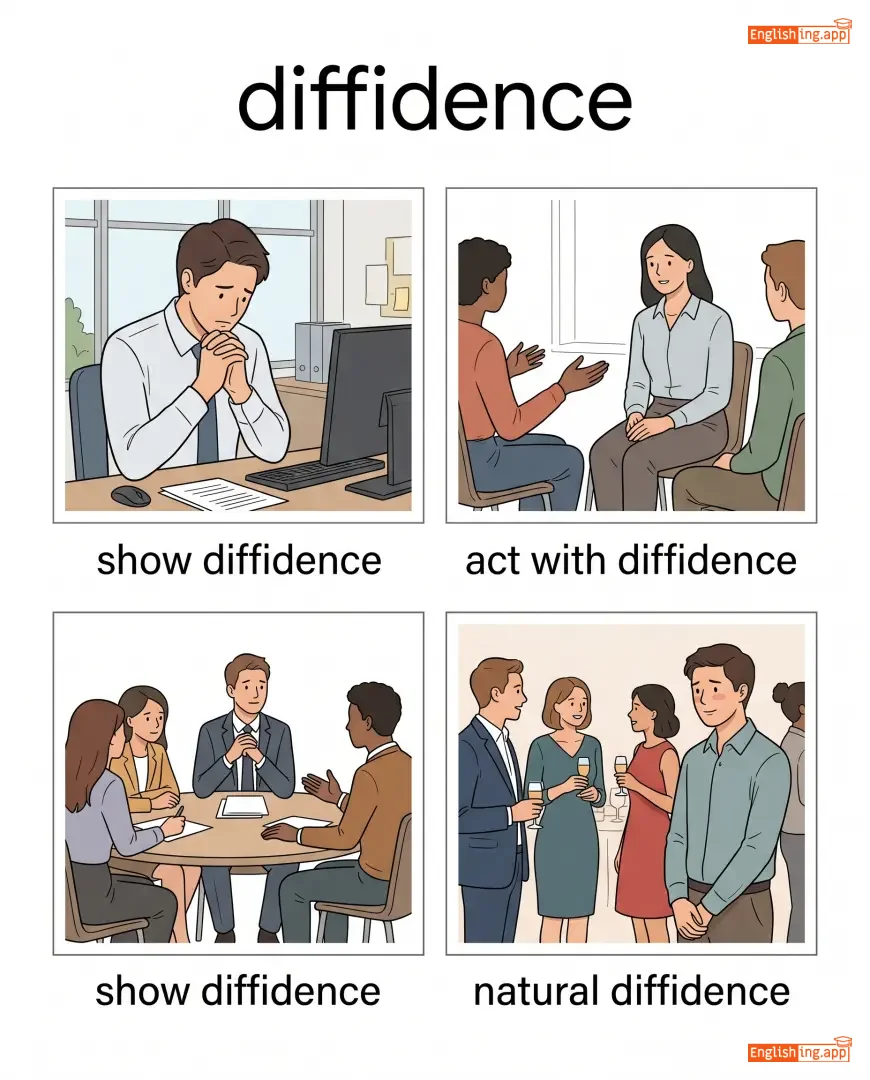
show diffidence, act with diffidence, natural diffidence
••••••
|
Diffidence значит неуверенность - помни, что D = Down уверенность.
••••••
|
|
🌫️
••••••
|
/dɪˈfjuːz/
verb
(дифьюз)
••••••
|
|
распространять
rasprostranyat
••••••
|
diffused
дифьюзд
••••••
|
diffused
дифьюзд
••••••
|
diffuses
дифьюзес
••••••
|
diffusing
дифьюзинг
••••••
|
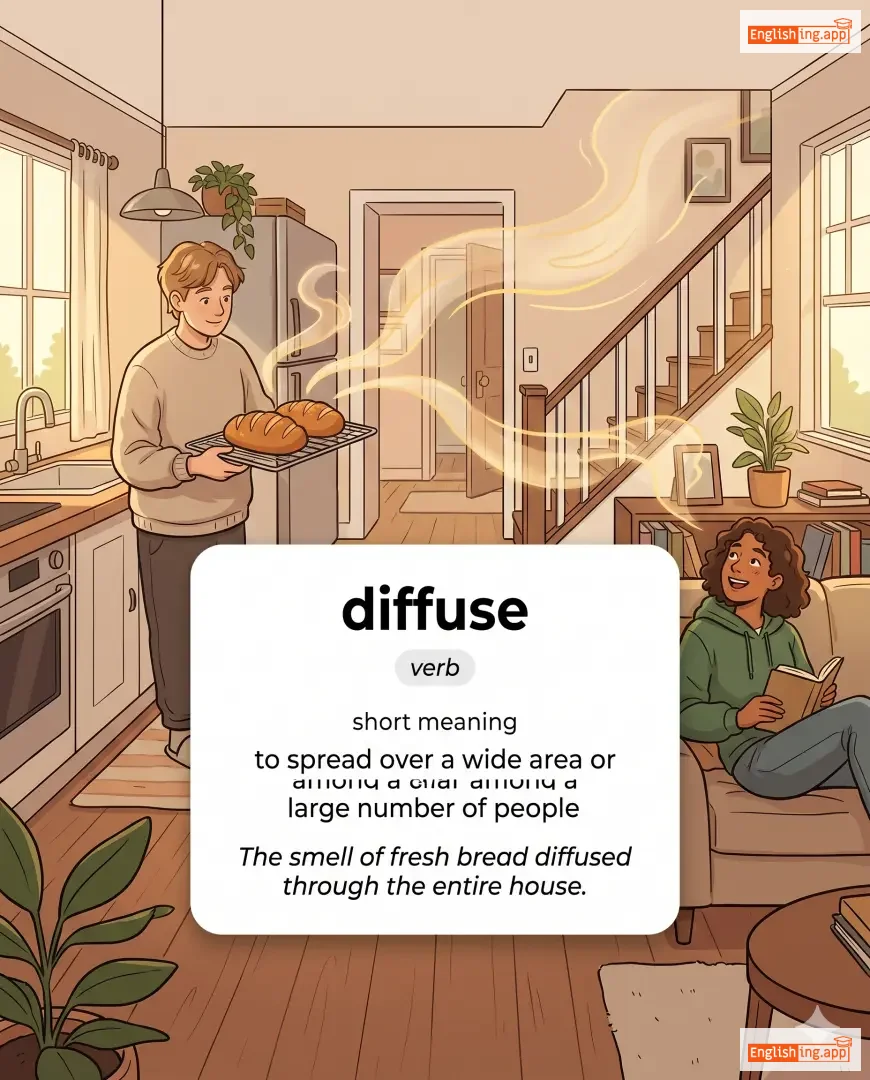
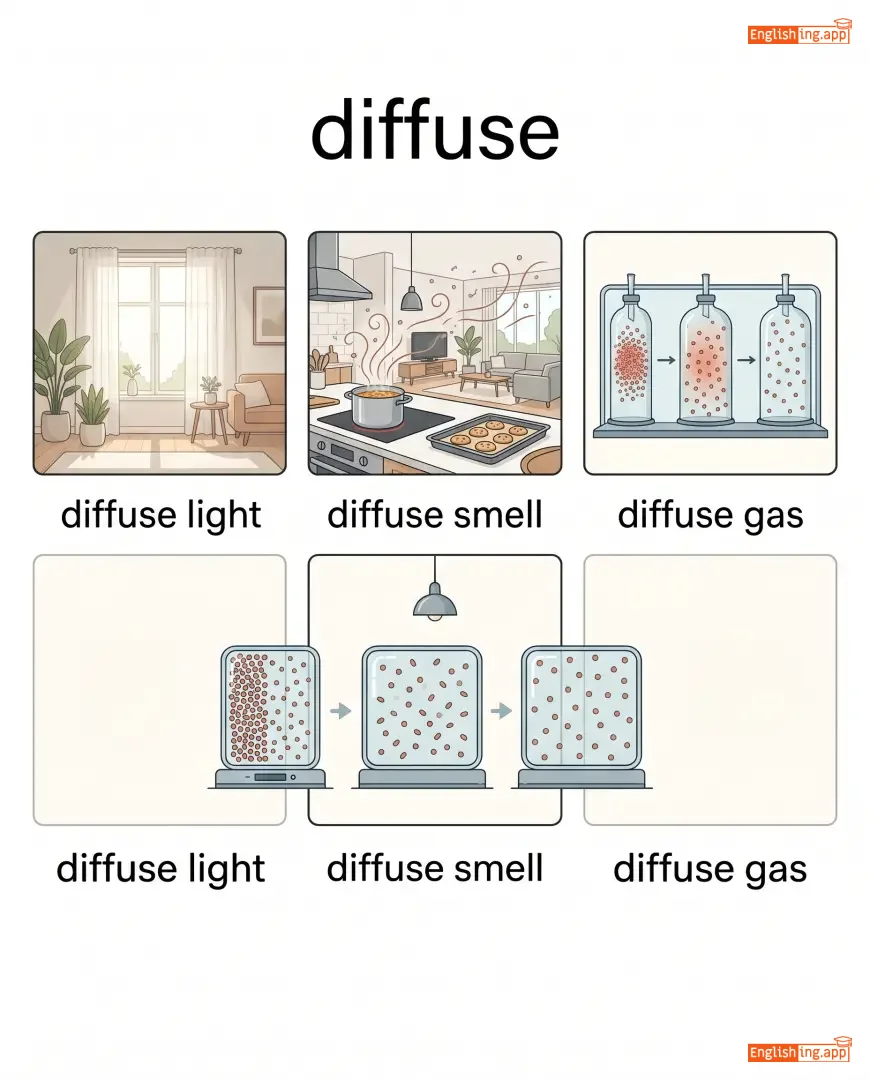
to spread over a wide area or among a large number of people
••••••
|
The smell of fresh bread diffused through the entire house.
Запах свежего хлеба распространился по всему дому.
••••••
|
Запах свежего хлеба распространился по всему дому.
Zapakh svezhago khleba rasprostranilsya po vsemu domu.
••••••
|
diffuse tension
распространить напряжение
••••••
|
to reduce or calm down stress or conflict
••••••
|
уменьшить напряжение
umenshit' napryazhenie
••••••
|
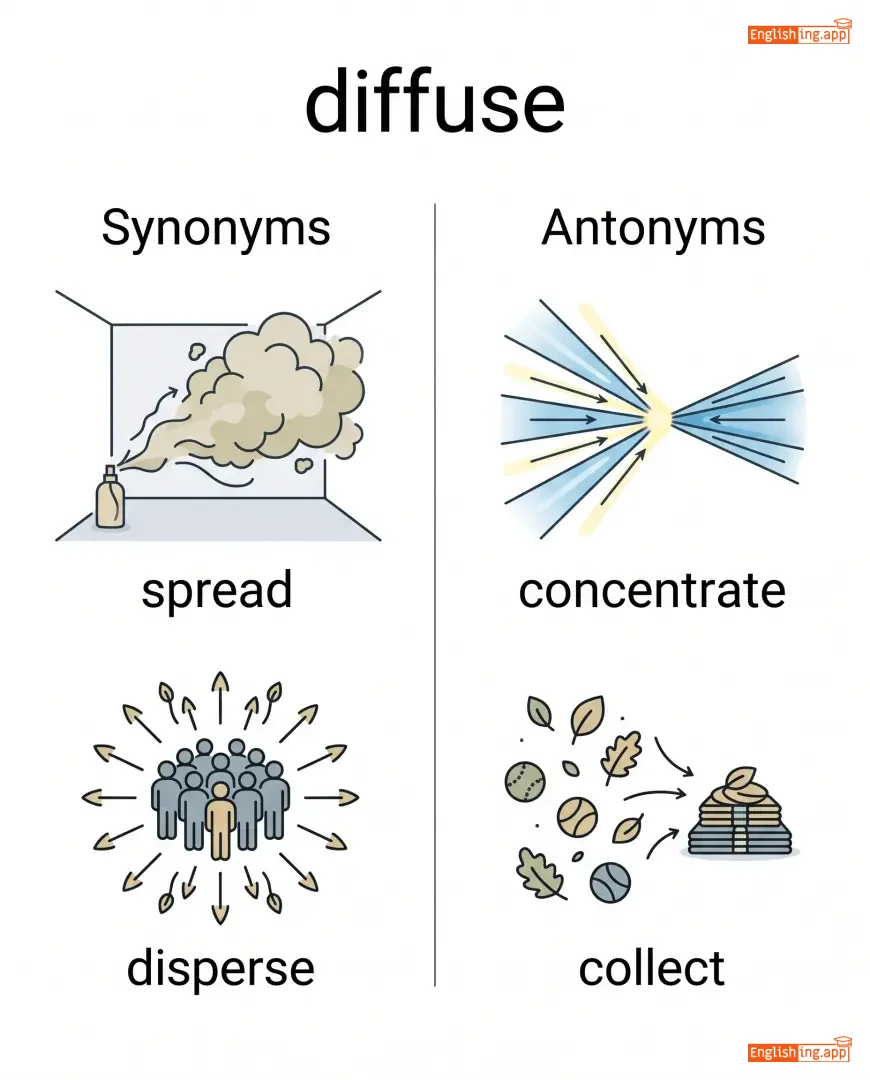
spread, disperse, scatter, distribute, dissipate
••••••
|
concentrate, collect, gather
••••••
|
diffuse light, diffuse smell, diffuse gas, diffuse conflict
••••••
|
Распределение напряжения - распространить и уменьшить.
••••••
|
|
🛤️
••••••
|
/daɪˈɡrɛʃən/
noun
(дайˈгрэшн)
••••••
|
|
отступление
otstupleenie
••••••
|
- •••••• | - •••••• | - •••••• | - •••••• |
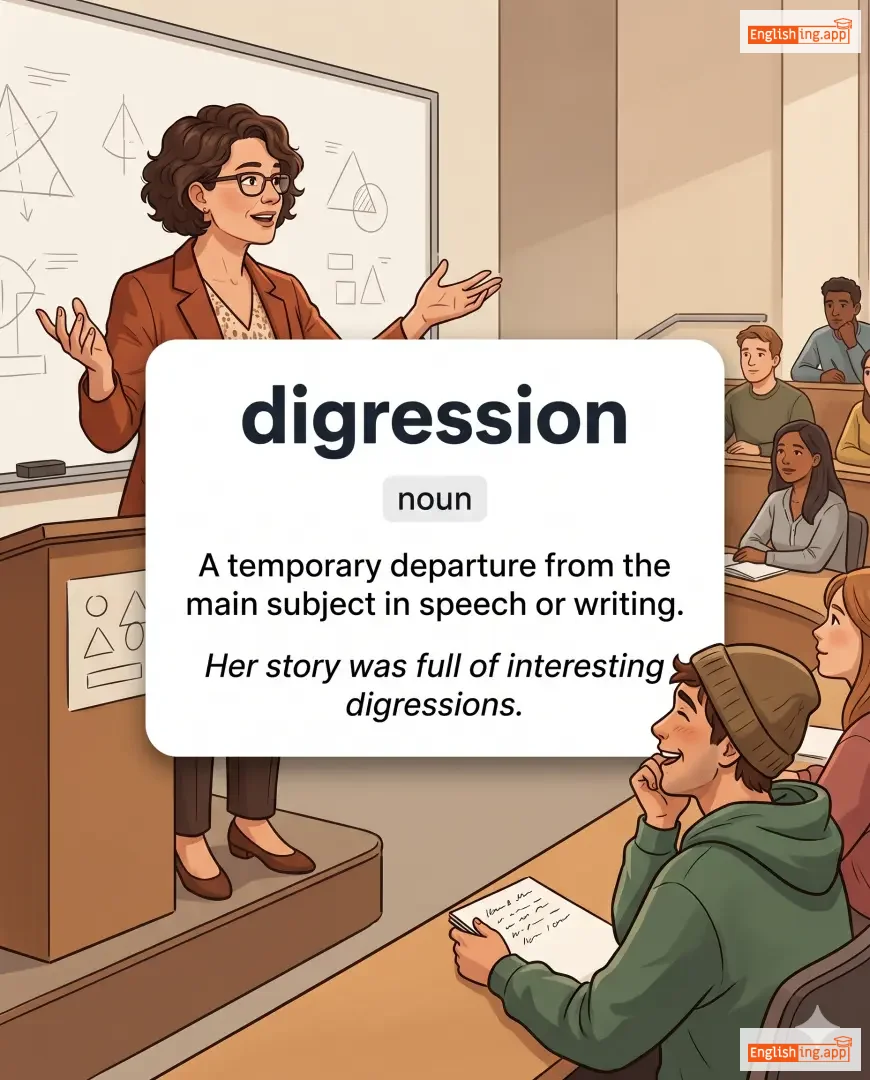
A temporary departure from the main subject in speech or writing.
••••••
|
Her story was full of interesting digressions. |
Её история была полна интересных отступлений.
Yeyo istoriya byla polna interesnykh otstupleniy.
••••••
|
- •••••• | - •••••• | - •••••• |
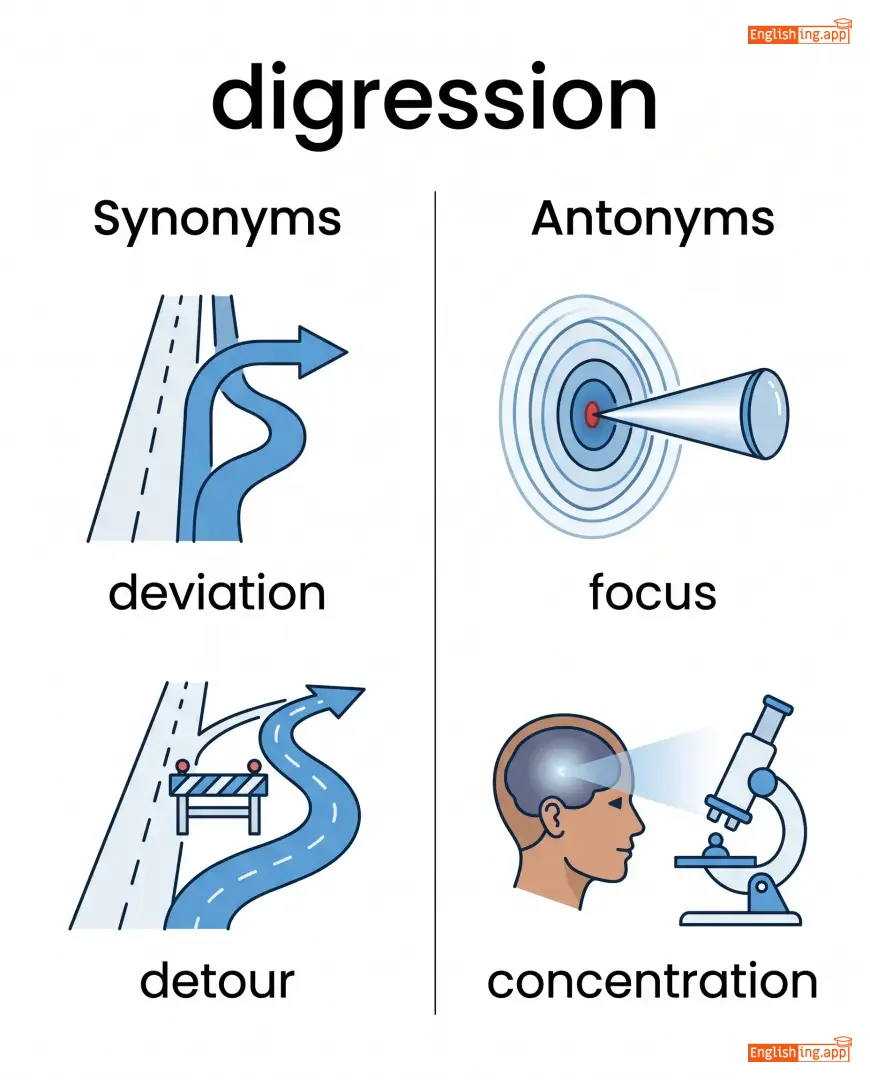
deviation, detour, aside, tangent
••••••
|
focus, concentration
••••••
|
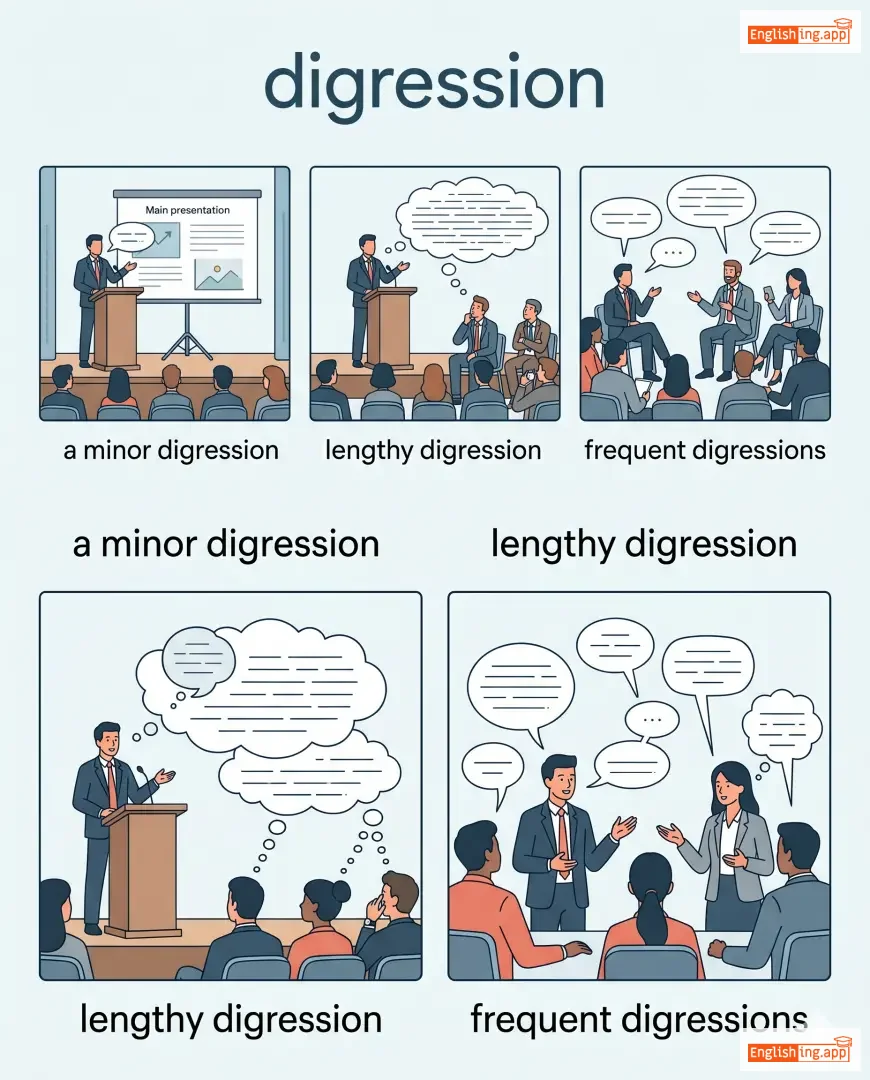
a minor digression, lengthy digression, frequent digressions
••••••
|
Отступление — это отклонение от основного обсуждения.
••••••
|
|
🎵
••••••
|
/dɜːrdʒ/
noun
(дёрдж)
••••••
|
|
плач
plach
••••••
|
- •••••• | - •••••• | - •••••• | - •••••• |
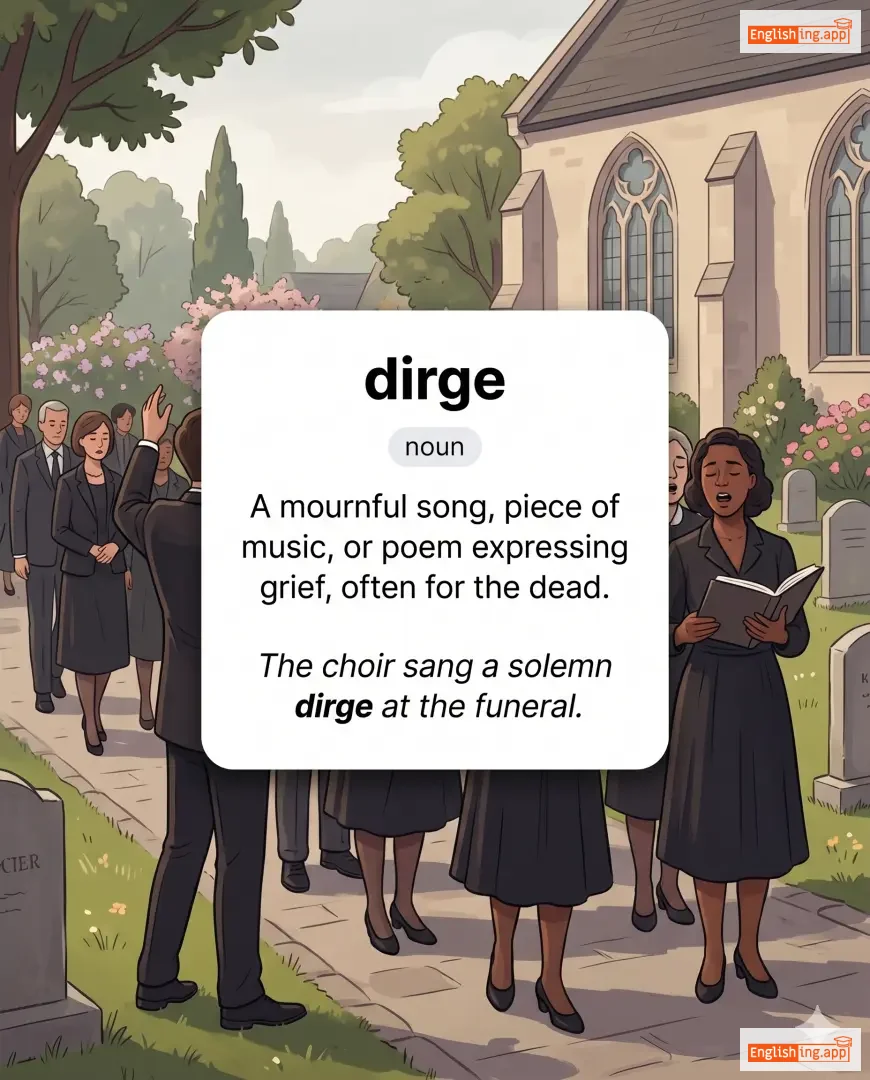
A mournful song, piece of music, or poem expressing grief, often for the dead.
••••••
|
The choir sang a solemn dirge at the funeral.
Хор спел торжественную жалобную песню на похоронах.
••••••
|
Хор спел торжественную жалобную песню на похоронах.
Khor spel torzhestvennuyu zhalobnuyu pesnyu na pokhoronakh.
••••••
|
- •••••• | - •••••• | - •••••• |
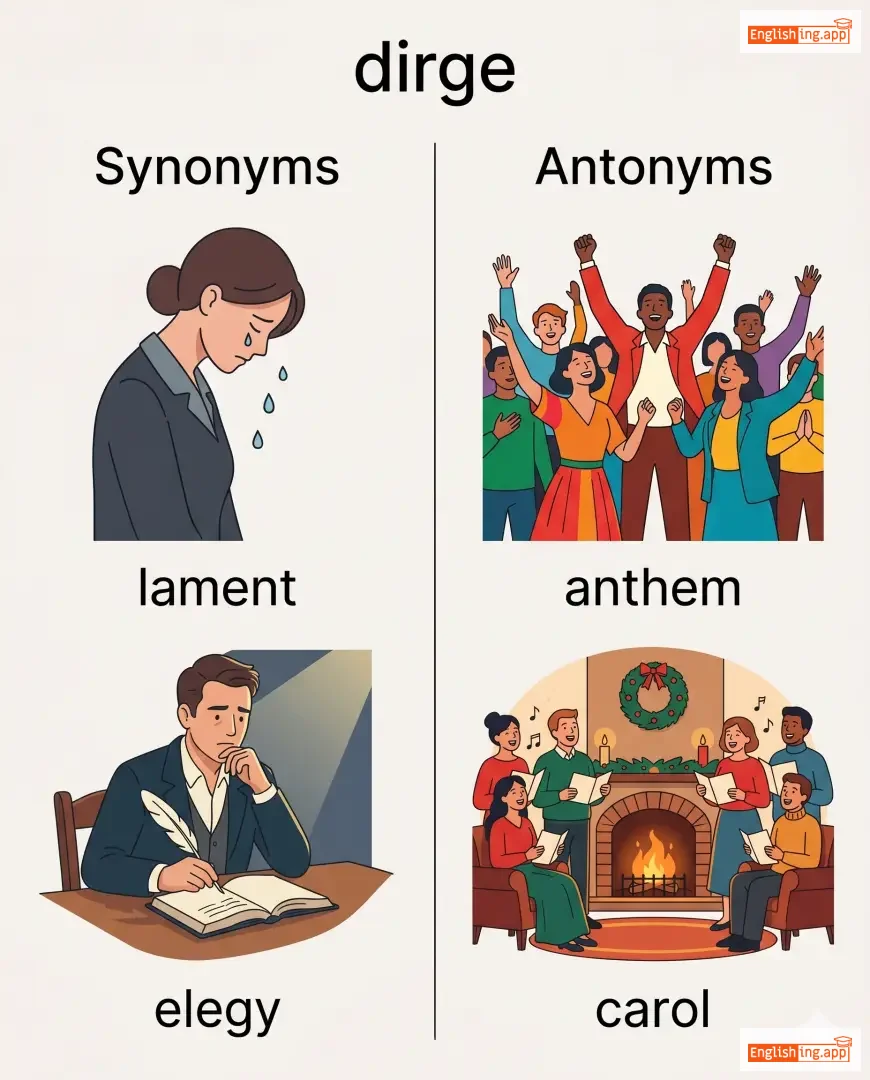
lament, elegy, requiem, threnody, funeral song
••••••
|
anthem, carol, celebration
••••••
|
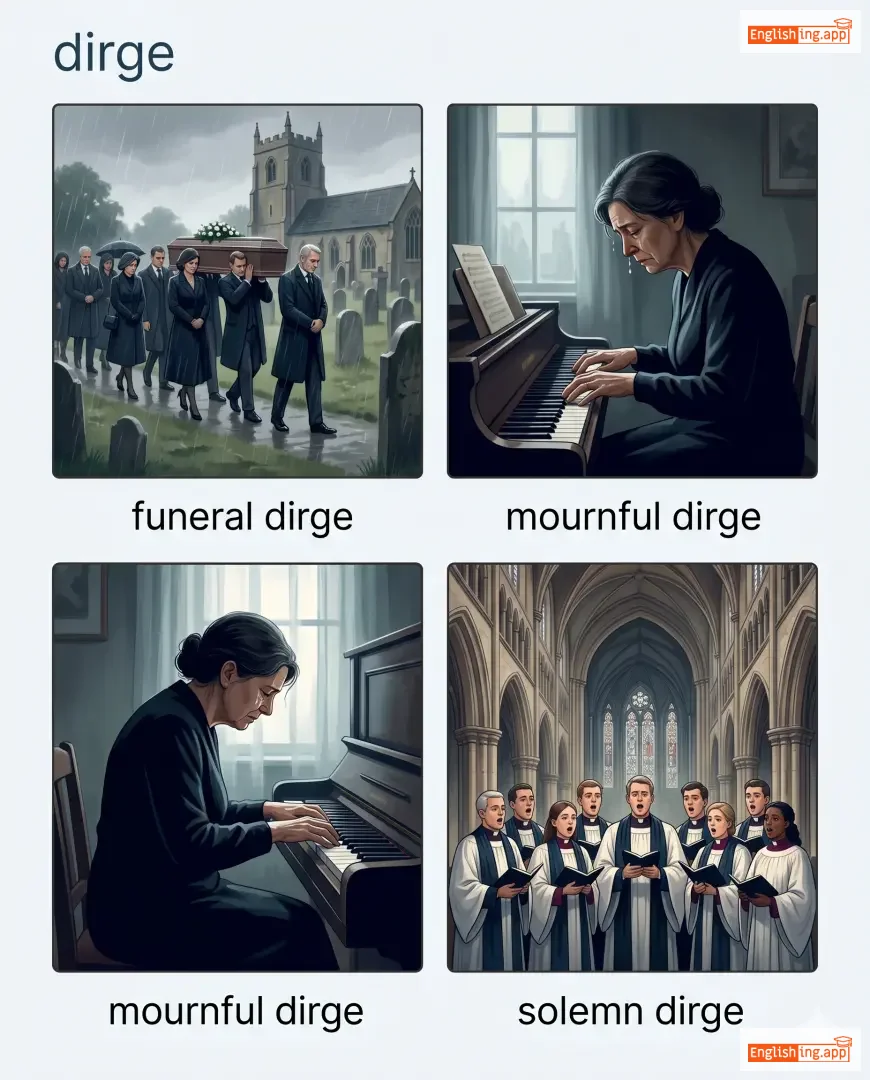
funeral dirge, mournful dirge, solemn dirge
••••••
|
Dirge можно запомнить как 'плач' — песня, выражающая горе.
••••••
|
|
💡
••••••
|
/ˌdɪsəˈbjuːz/
verb
(дисабьюз)
••••••
|
|
разубедить
razubedit
••••••
|
disabused
дисабьюзд
••••••
|
disabused
дисабьюзд
••••••
|
disabuses
дисабьюзес
••••••
|
disabusing
дисабьюзинг
••••••
|
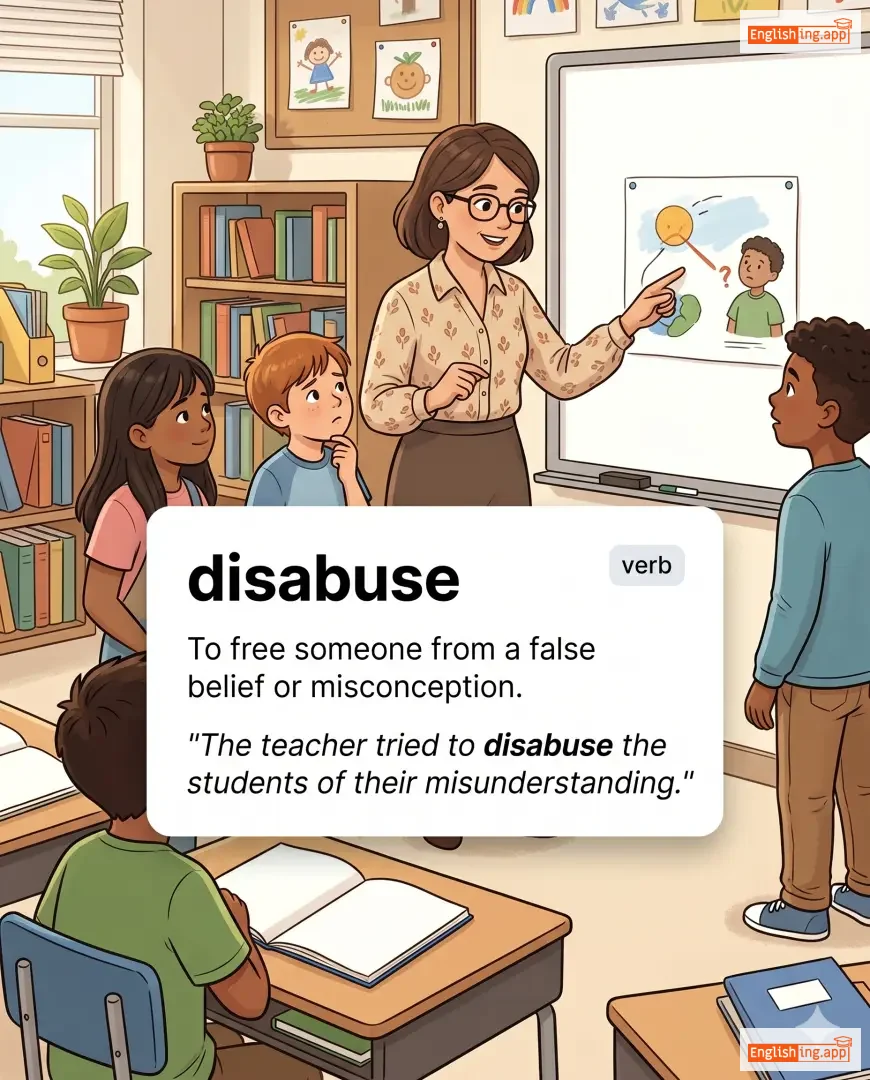
To free someone from a false belief or misconception.
••••••
|
The teacher tried to disabuse the students of their misunderstanding.
Учитель пытался избавить студентов от их недоразумения.
••••••
|
Учитель пытался избавить студентов от их недоразумения.
Uchitel' pytalsya izbavit' studentov ot ikh nedorazumeniya.
••••••
|
- •••••• | - •••••• | - •••••• |
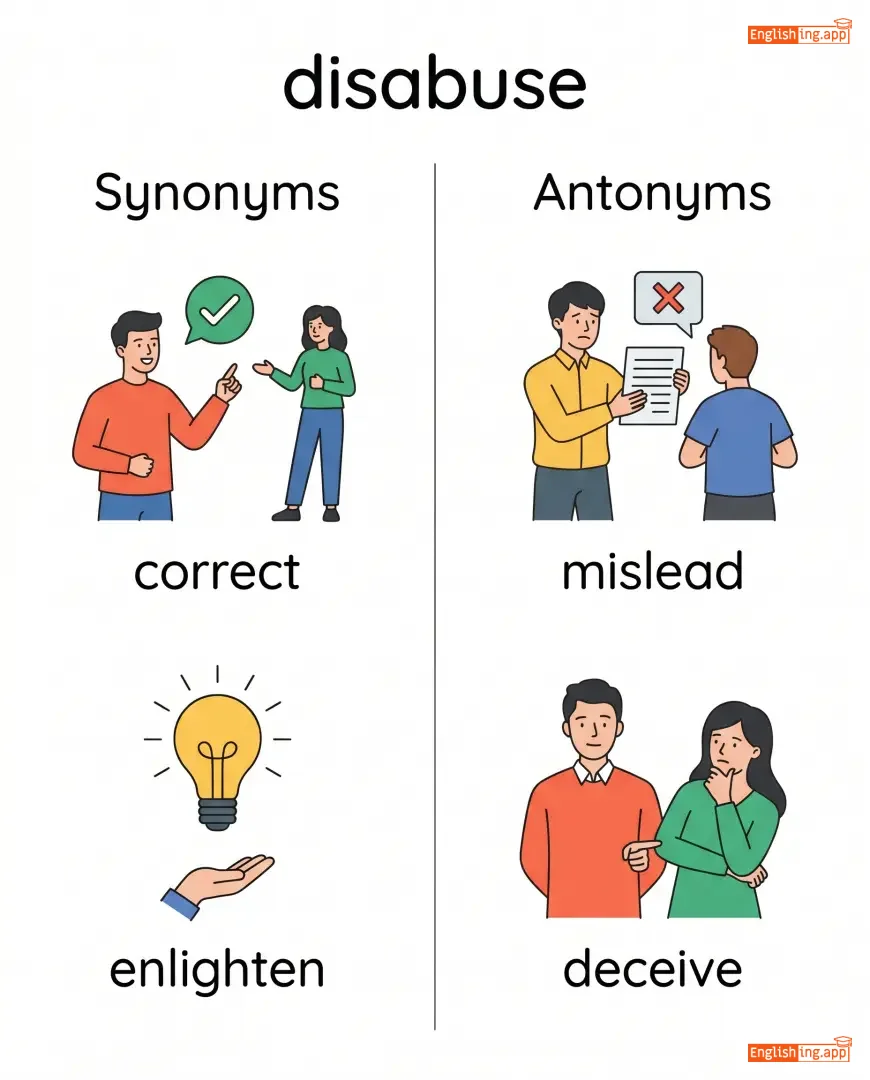
correct, enlighten, rectify, debunk, refute
••••••
|
mislead, deceive, delude
••••••
|
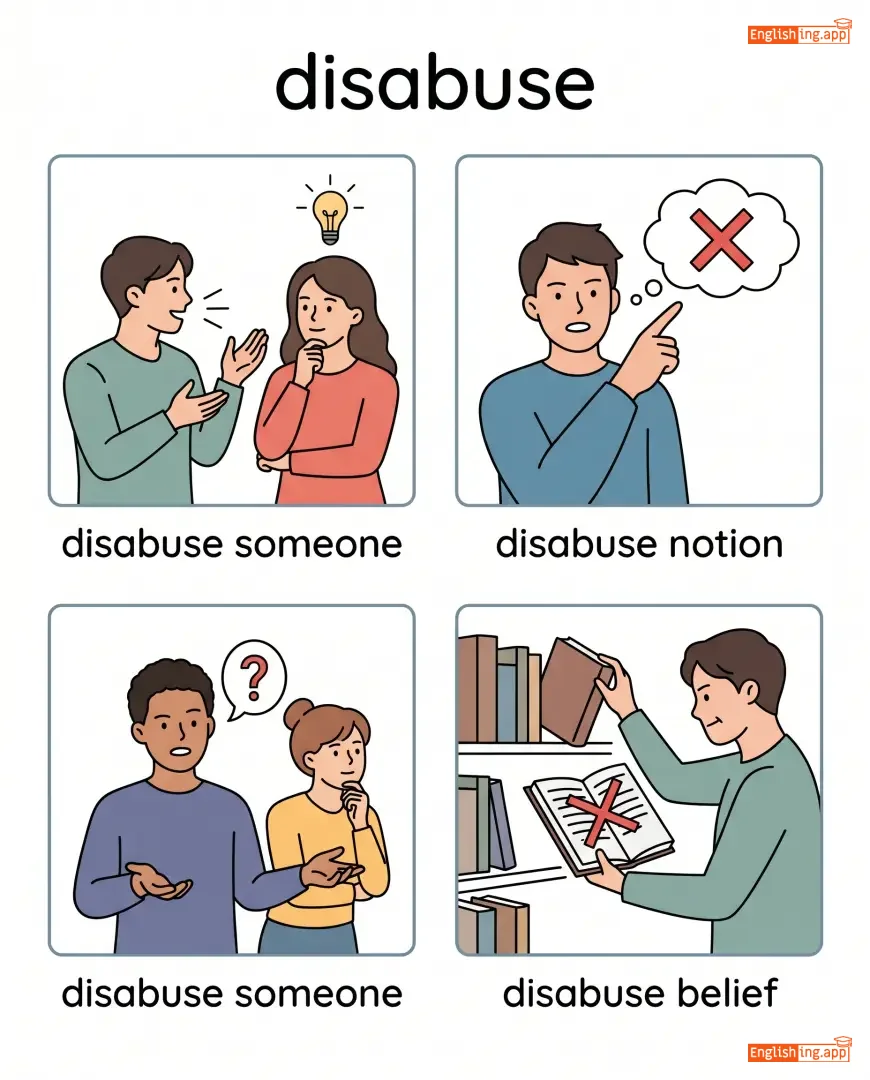
disabuse someone, disabuse notion, disabuse belief
••••••
|
Disabuse = разубедить → разъяснение заблуждений.
••••••
|
|
🧐
••••••
|
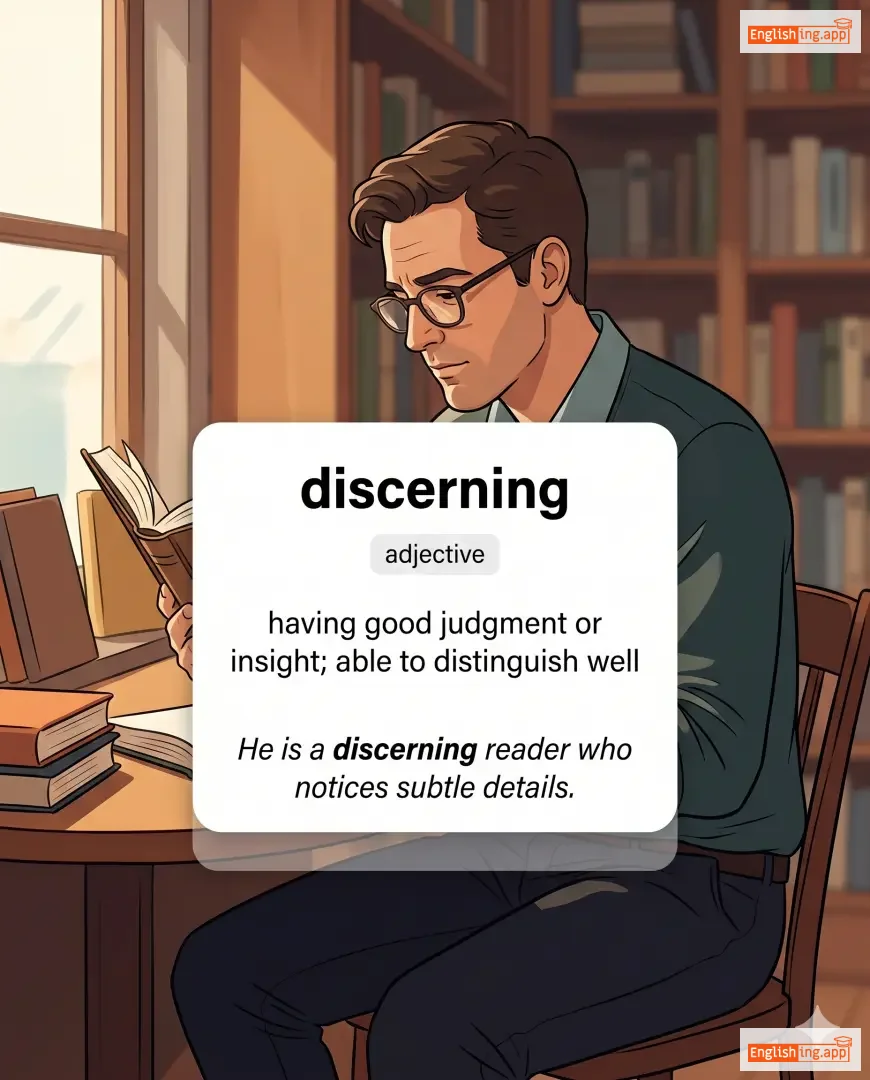
/dɪˈsɜːrnɪŋ/
adjective
(дисёрнинг)
••••••
|

|
проницательный
pronitsatel'nyy
••••••
|
- •••••• | - •••••• | - •••••• | - •••••• |
having good judgment or insight; able to distinguish well
••••••
|
He is a discerning reader who notices subtle details. |
Он проницательный читатель, который замечает тонкие детали.
On pronitsatel'nyy chitatel', kotoryy zamechayet tonkie detali.
••••••
|
discerning taste |
ability to appreciate and judge good quality
••••••
|
проницательный вкус
pronitsatel'nyy vkus
••••••
|
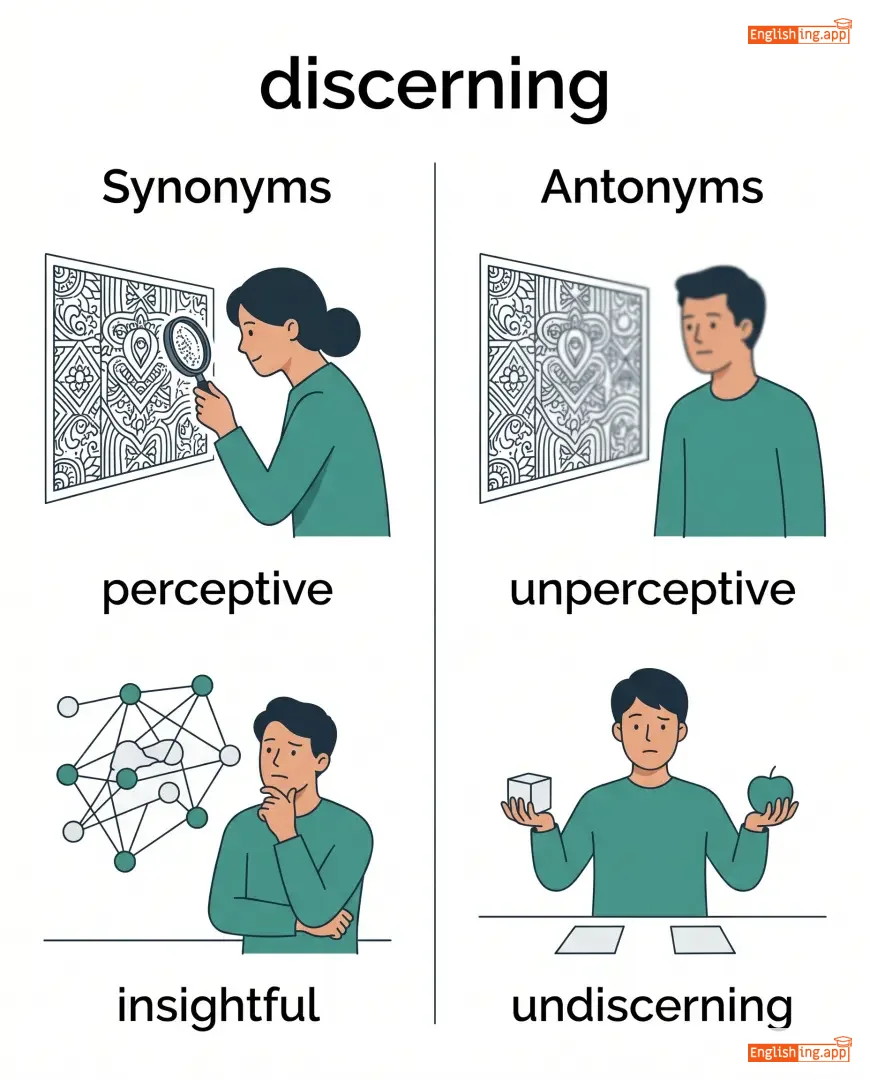
perceptive, insightful, judicious, astute
••••••
|
unperceptive, undiscerning
••••••
|
discerning reader, discerning customer, discerning eye, discerning taste
••••••
|
Проницательность — это умение замечать детали, как хороший читатель.
••••••
|
|
🎶
••••••
|
/dɪsˈkɔːrdənt/
adjective
(дискордант)
••••••
|
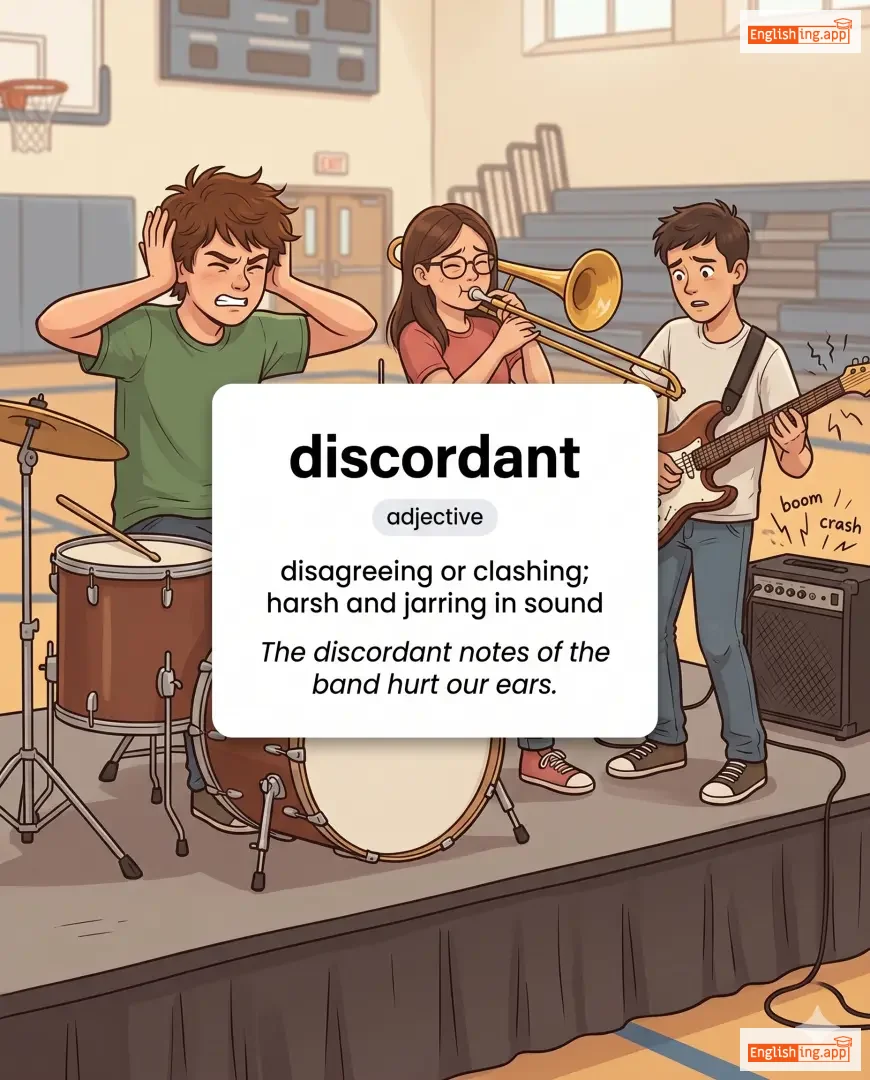
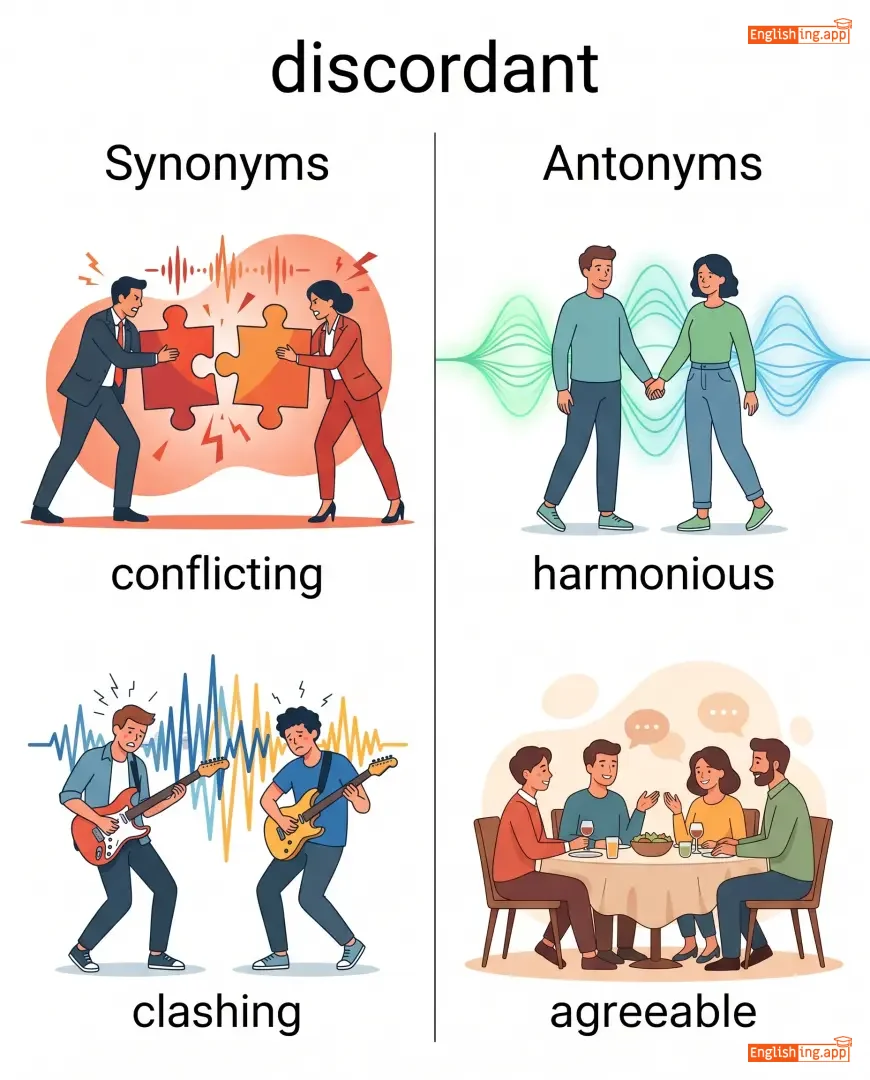
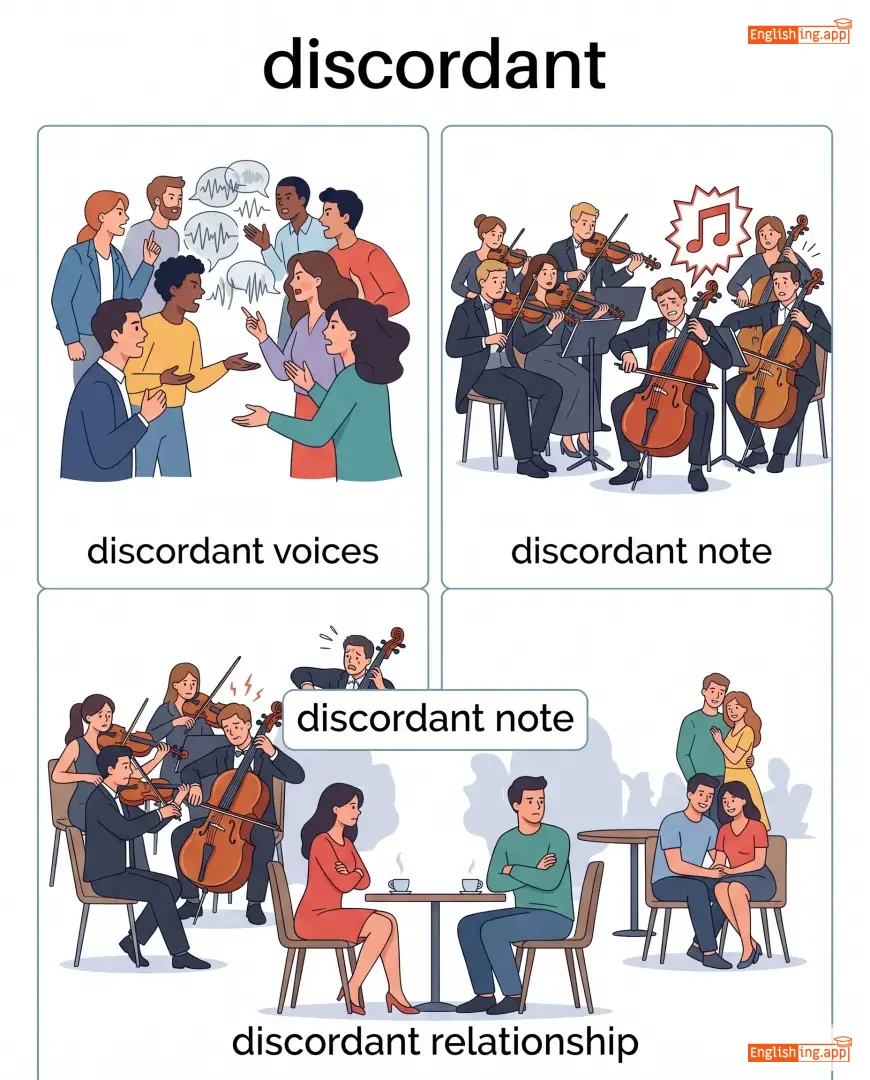
|
дискордант
diskordant
••••••
|
- •••••• | - •••••• | - •••••• | - •••••• |
disagreeing or clashing; harsh and jarring in sound
••••••
|
The discordant notes of the band hurt our ears. |
Дискордантные ноты группы повредили наши уши.
Diskordantnye noty gruppy povredili nashi ushi.
••••••
|
- •••••• | - •••••• | - •••••• |
conflicting, clashing, jarring, dissonant
••••••
|
harmonious, agreeable
••••••
|
discordant voices, discordant note, discordant relationship
••••••
|
Дискордант означает несогласие, как резкие и неприятные звуки.
••••••
|
|
⚠️
••••••
|
/dɪsˈkrɛdɪt/
verb, noun
(дискредитировать)
••••••
|
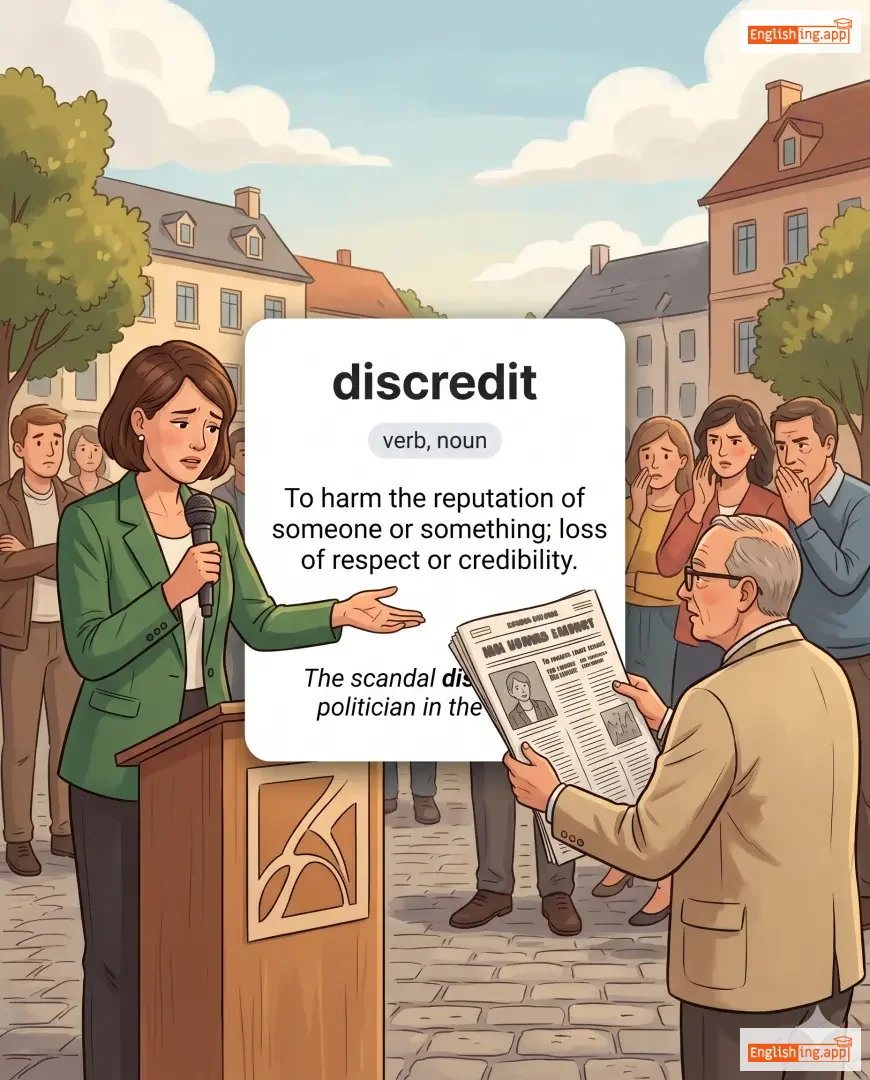
|
дискредитировать
diskreditirovat
••••••
|
discredited
дискредитировал
••••••
|
discredited
дискредитирован
••••••
|
discredits
дискредитирует
••••••
|
discrediting
дискредитируя
••••••
|
To harm the reputation of someone or something; loss of respect or credibility.
••••••
|
The scandal discredited the politician in the eyes of the public.
Скандал дискредитировал политика в глазах общественности.
••••••
|
Скандал дискредитировал политика в глазах общественности.
Skandal diskreditiroval politika v glazakh obshchestvennosti.
••••••
|
bring into discredit
ввести в дискредитацию
••••••
|
Cause someone or something to lose reputation or credibility.
••••••
|
ввести в дискредитацию
vvesti v diskreditatsiyu
••••••
|
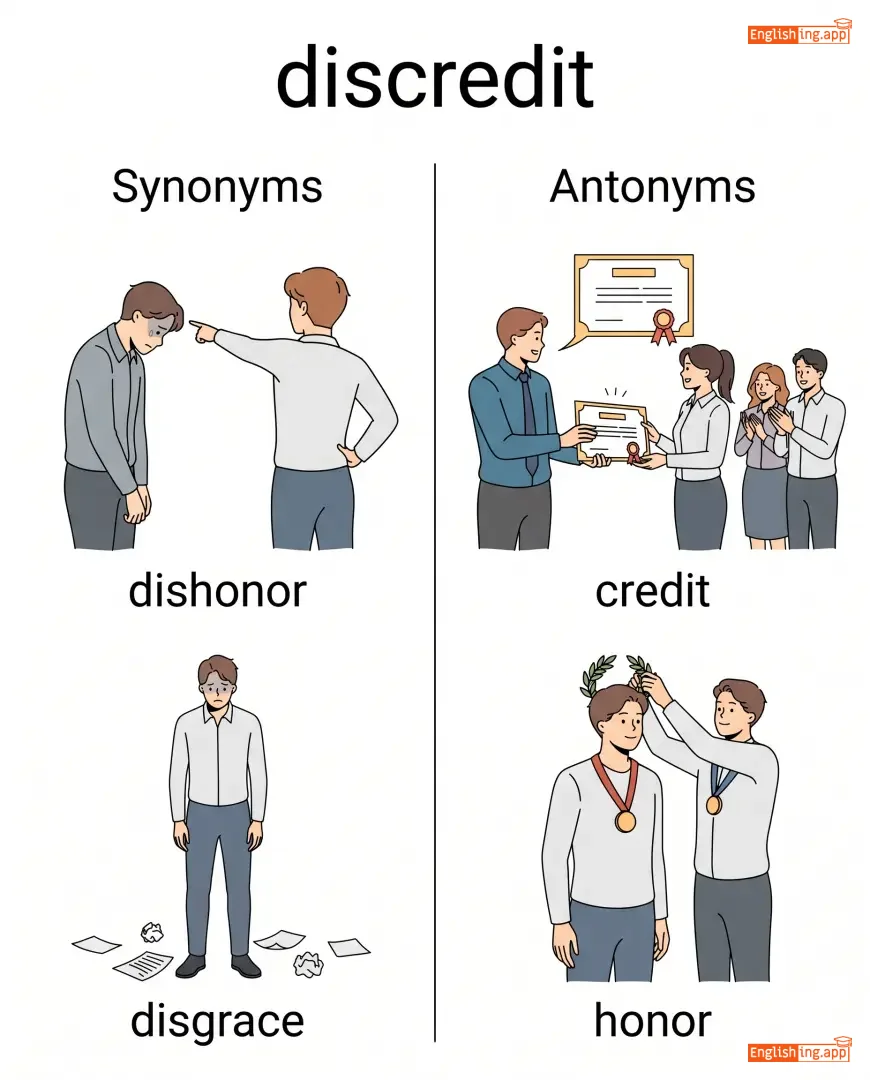
dishonor, disgrace, defame, undermine, disrepute
••••••
|
credit, honor, respect
••••••
|
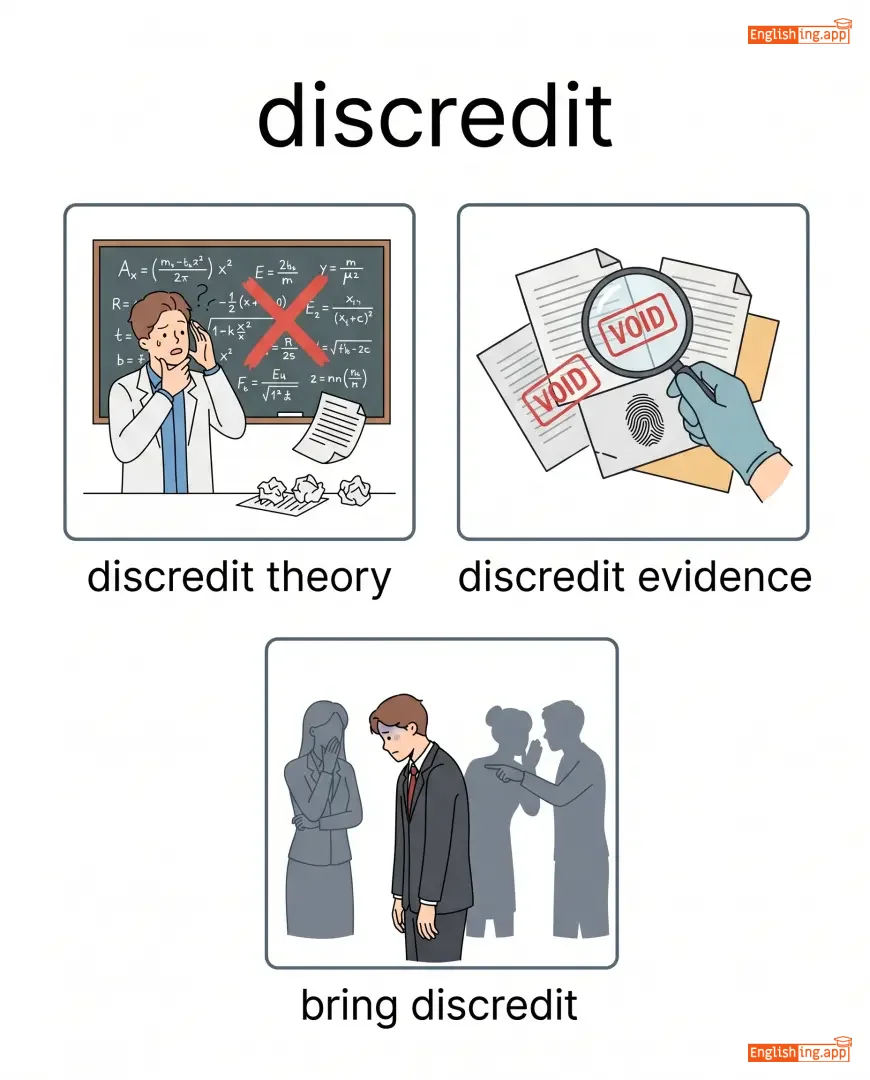
discredit theory, discredit evidence, bring discredit, discredit witness
••••••
|
Diskredit = 'Dis' (плохо) + 'кредит' (репутация).
••••••
|
|
⚖️
••••••
|
/dɪˈskrɛpənsi/
noun
(diskrepantsiya)
••••••
|
|
несоответствие
nesootvetstvie
••••••
|
- •••••• | - •••••• | - •••••• | - •••••• |
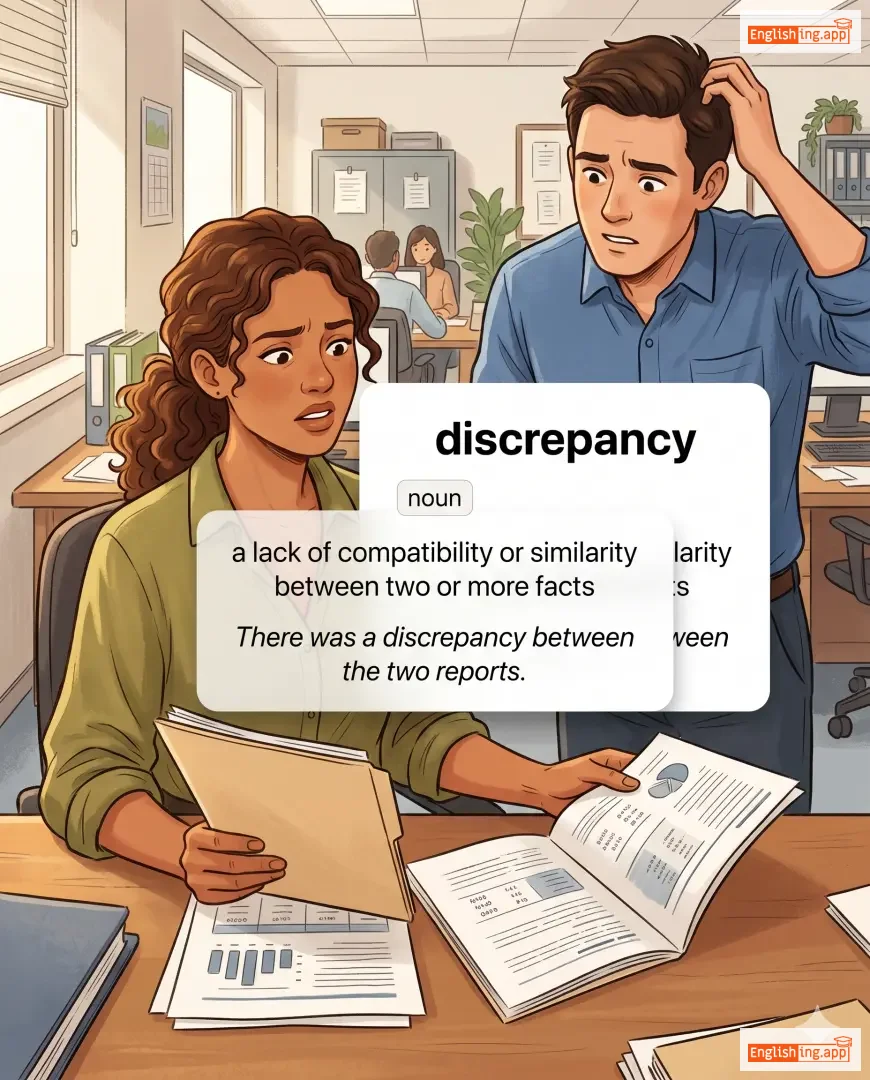
a lack of compatibility or similarity between two or more facts
••••••
|
There was a discrepancy between the two reports.
Была дискретность между двумя отчетами.
••••••
|
Была дискретность между двумя отчетами.
Byla diskrepantsiya mezhdu dvumya otchetami.
••••••
|
discrepancy in accounts
дискретность в отчетах
••••••
|
a mismatch or inconsistency in financial records
••••••
|
несоответствие в отчетах
nesootvetstvie v otchetakh
••••••
|
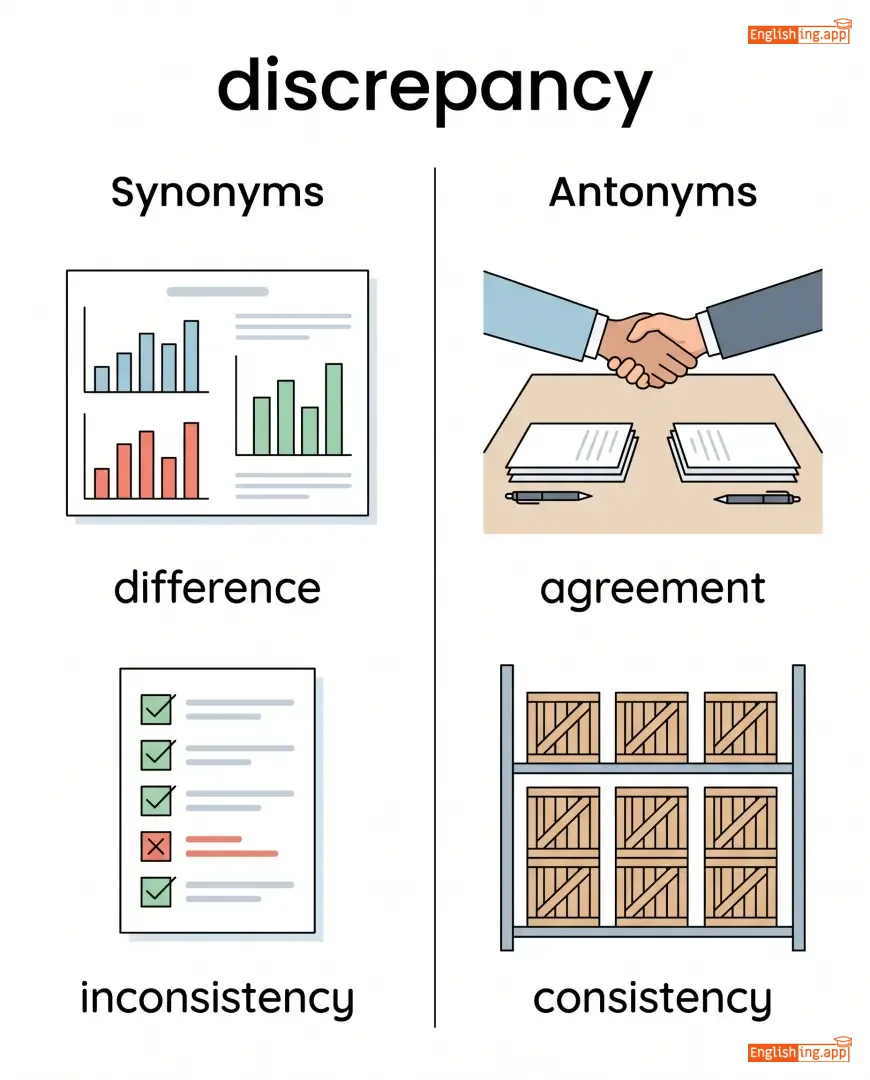
difference, inconsistency, variation, divergence, conflict
••••••
|
agreement, consistency, harmony
••••••
|
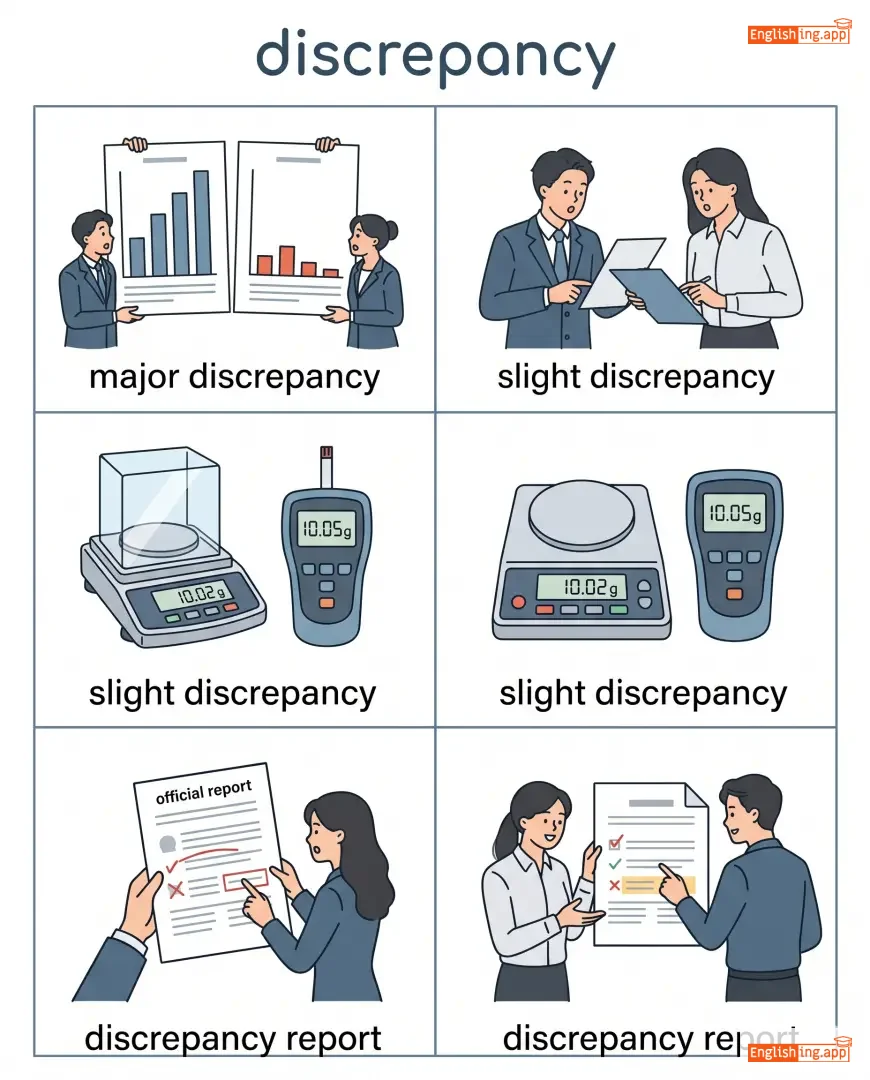
major discrepancy, slight discrepancy, discrepancy report, discrepancy in data
••••••
|
Diskrepantsiya означает несоответствие, как в отчетах.
••••••
|
|
🔹
••••••
|
/dɪˈskriːt/
adjective
(diskrit)
••••••
|
|
дискретный
diskretnyj
••••••
|
- •••••• | - •••••• | - •••••• | - •••••• |
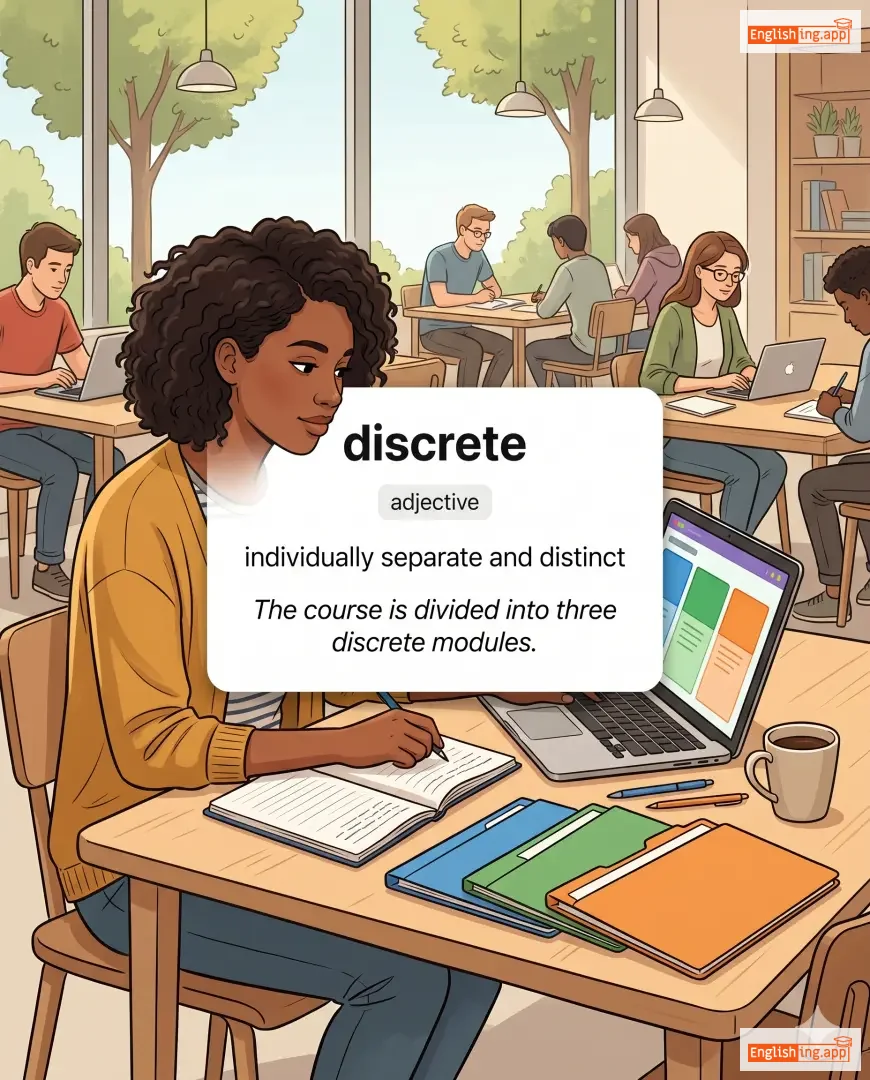
individually separate and distinct
••••••
|
The course is divided into three discrete modules. |
Курс разделён на три дискретных модуля.
Kurs razdeljon na tri diskretnykh modulja.
••••••
|
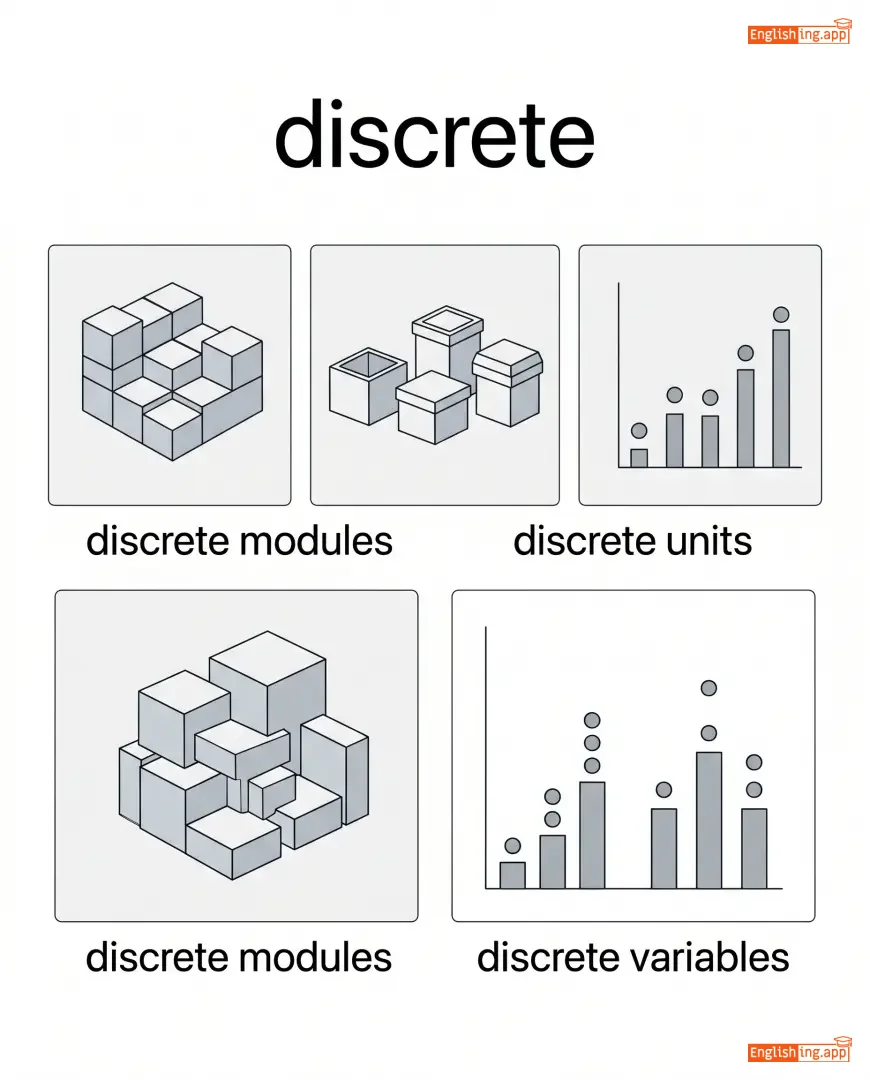
discrete units |
separate and distinct parts or items
••••••
|
дискретные единицы
diskretnye yedinitsy
••••••
|
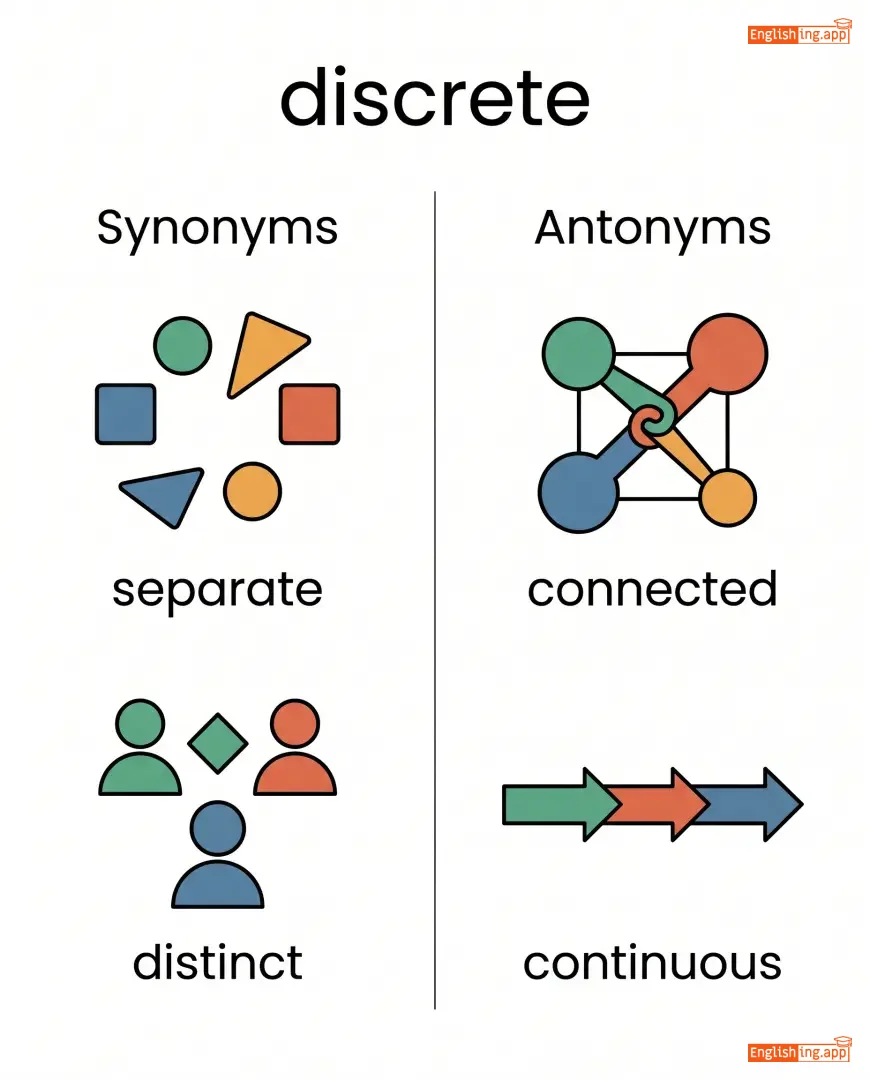
separate, distinct, individual, independent
••••••
|
connected, continuous, combined
••••••
|
discrete modules, discrete units, discrete variables
••••••
|
Discrete и Discreet на русском - дискрет, что означает отделённые части.
••••••
|
|
😏
••••••
|
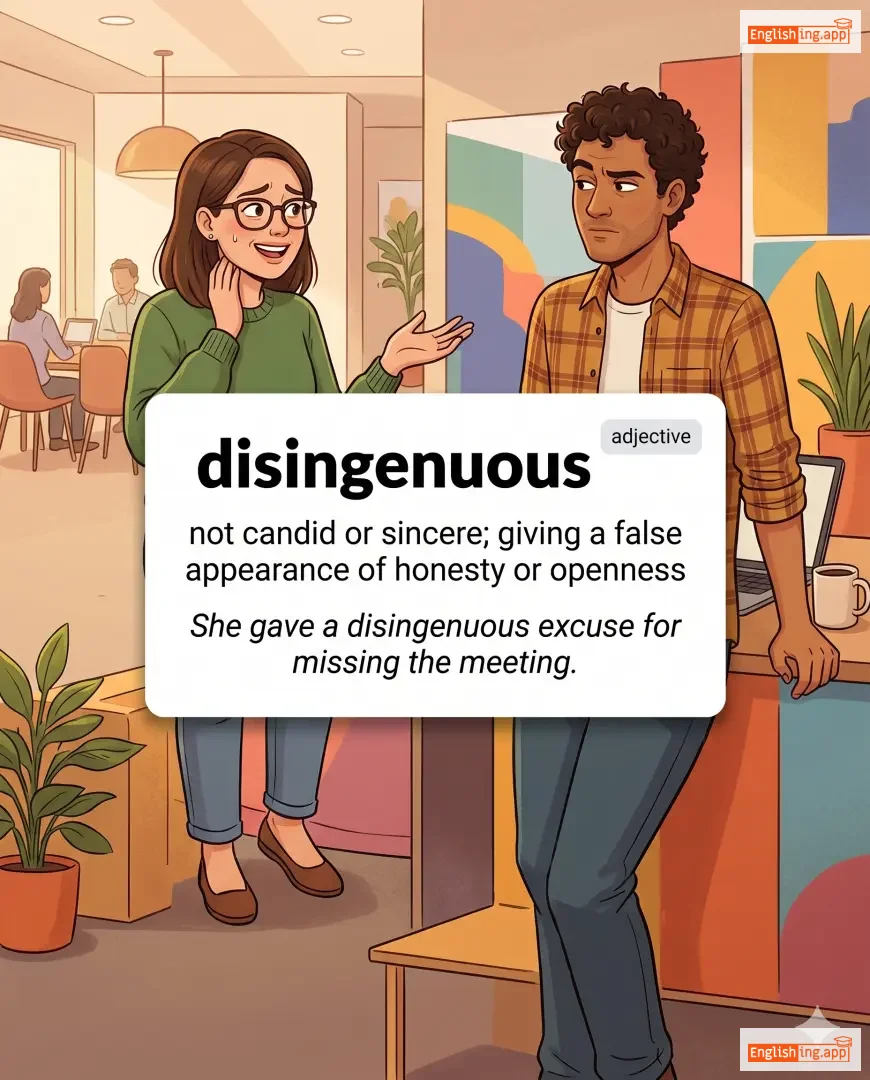
/ˌdɪsɪnˈdʒɛnjʊəs/
adjective
(дисиндженюэс)
••••••
|
|
лицемерный
litsemernij
••••••
|
- •••••• | - •••••• | - •••••• | - •••••• |
not candid or sincere; giving a false appearance of honesty or openness
••••••
|
She gave a disingenuous excuse for missing the meeting. |
Она дала лицемерное оправдание, чтобы не прийти на встречу.
Ona dala litsemernoe opravdanie, chtoby ne prijt' na vstrechu.
••••••
|
- •••••• | - •••••• | - •••••• |
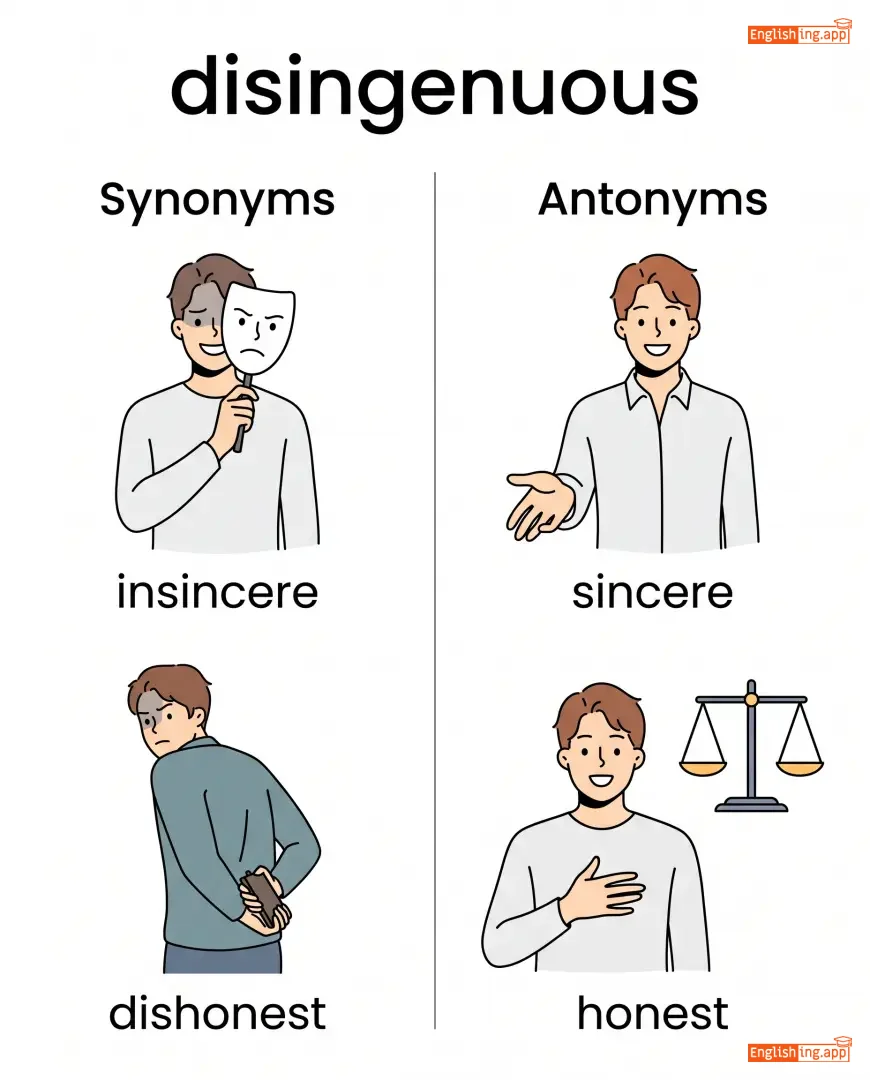
insincere, dishonest, deceitful, hypocritical, duplicitous
••••••
|
sincere, honest, genuine
••••••
|
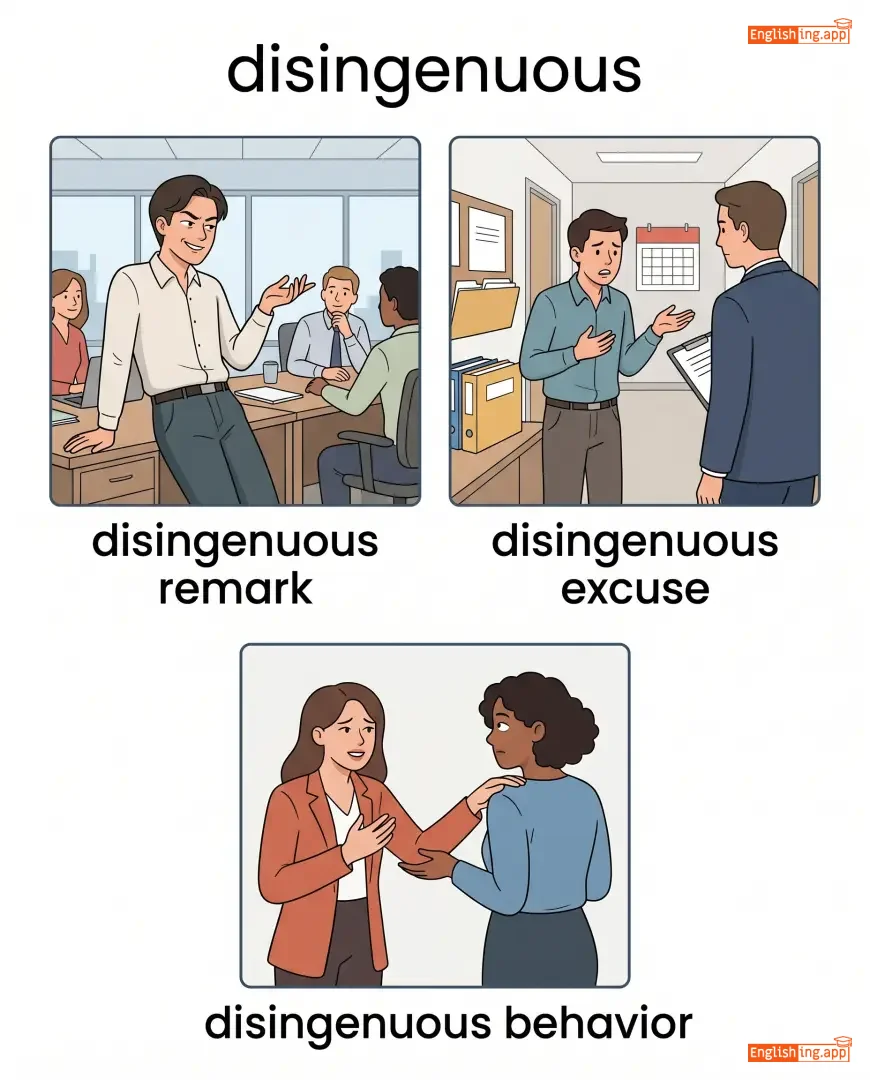
disingenuous remark, disingenuous excuse, disingenuous behavior
••••••
|
Dis + genuine не честно значит disingenuous = лицемерный
••••••
|
|
⚖️
••••••
|
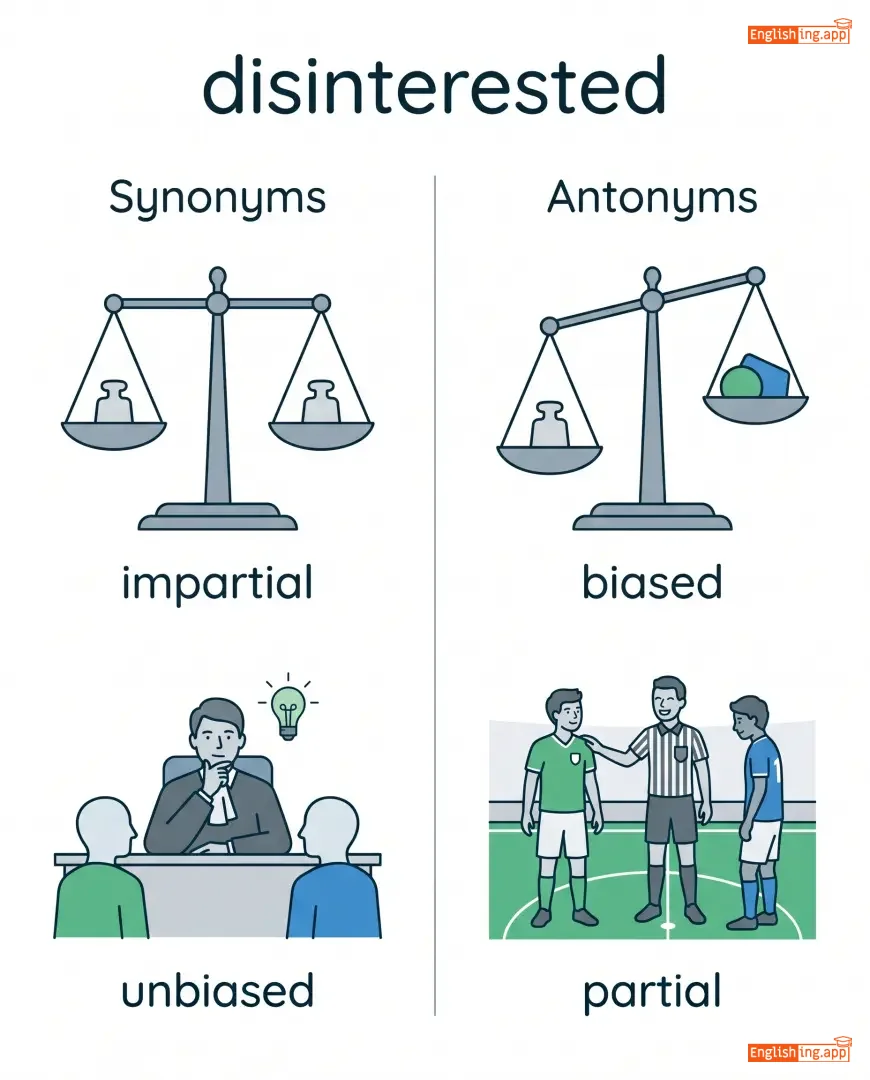
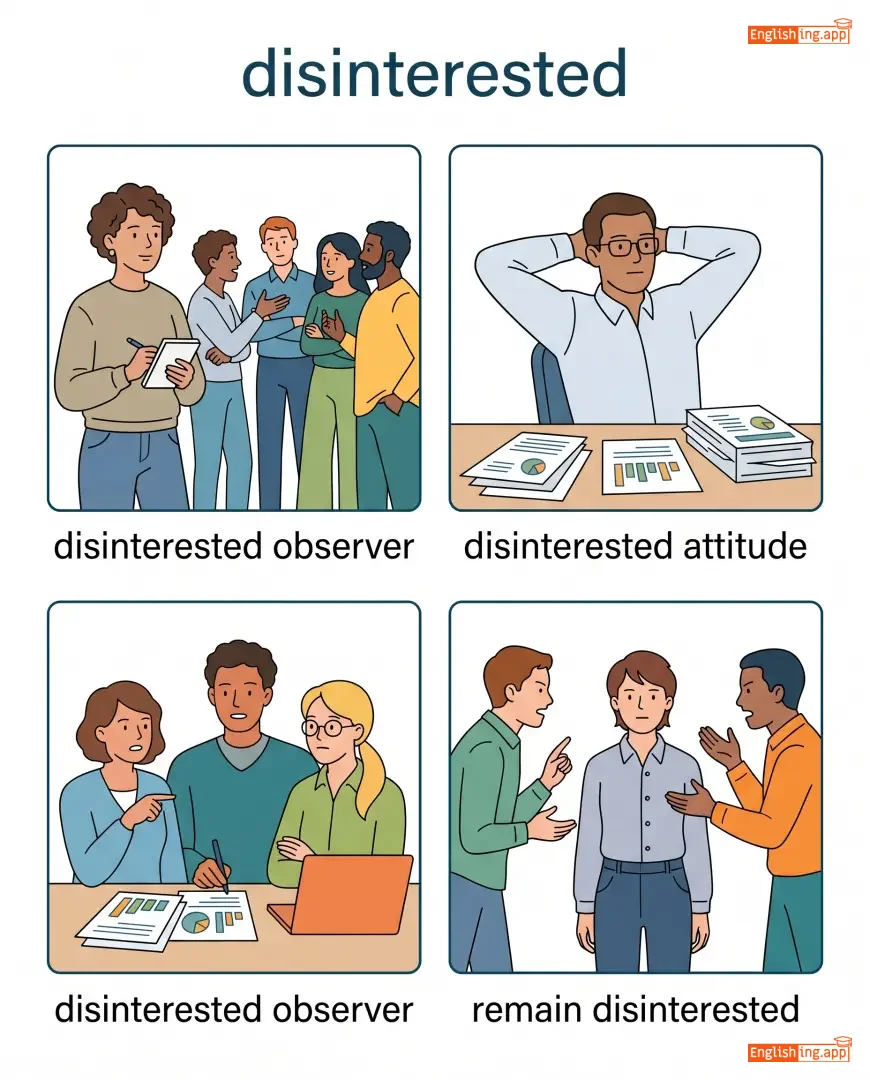
/dɪsˈɪntrəstɪd/
adjective
(дисинтерестед)
••••••
|
|
безинтересный
bezinteresny
••••••
|
- •••••• | - •••••• | - •••••• | - •••••• |
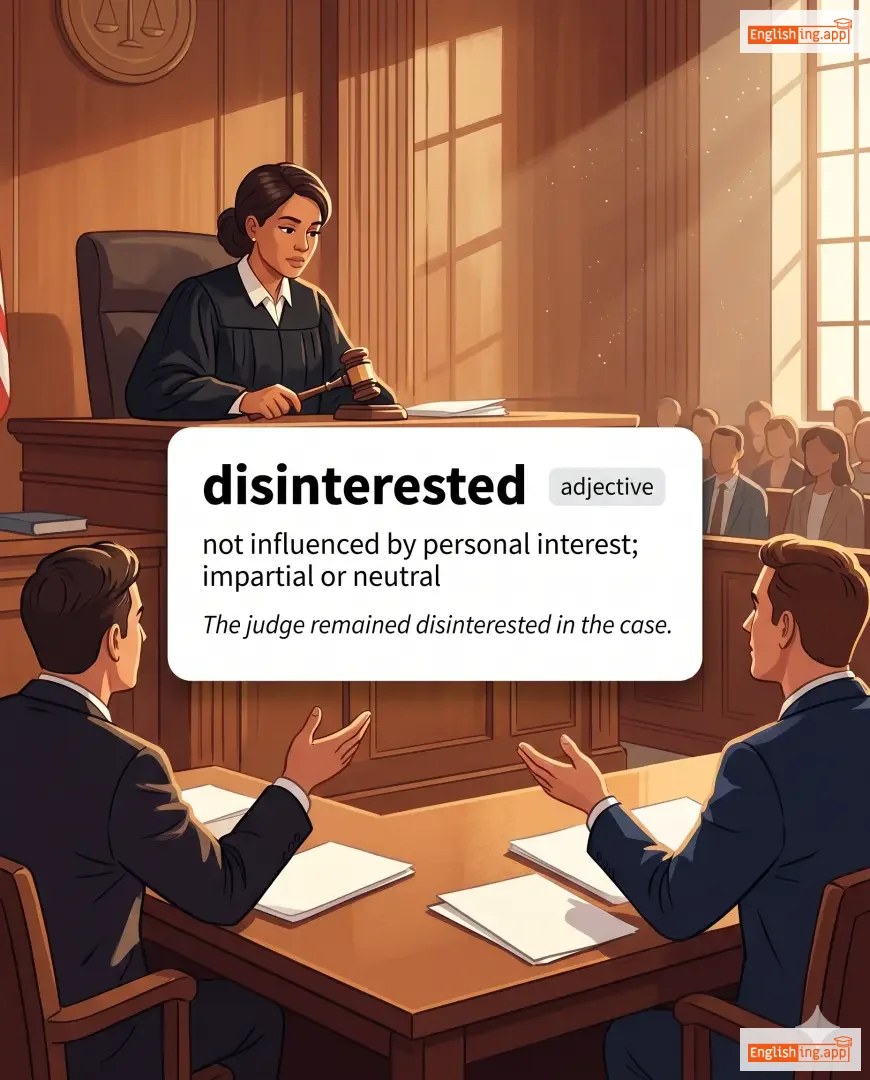
not influenced by personal interest; impartial or neutral
••••••
|
The judge remained disinterested in the case. |
Судья остался безинтересным в деле.
Sudiya ostalsya bezinteresnym v dele.
••••••
|
- •••••• | - •••••• | - •••••• |
impartial, unbiased, objective, neutral
••••••
|
biased, partial, interested
••••••
|
disinterested observer, disinterested attitude, remain disinterested
••••••
|
Без интереса = беспристрастный, нейтральный
••••••
|
|
🌀
••••••
|
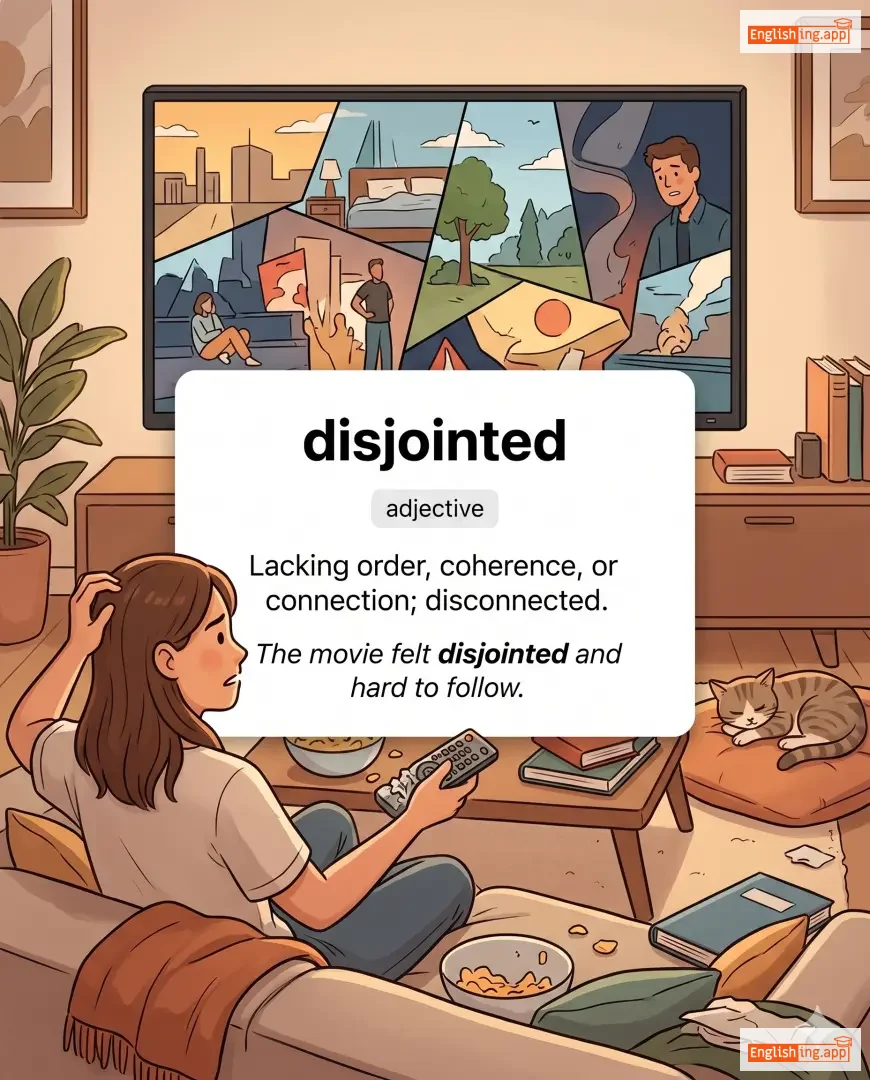
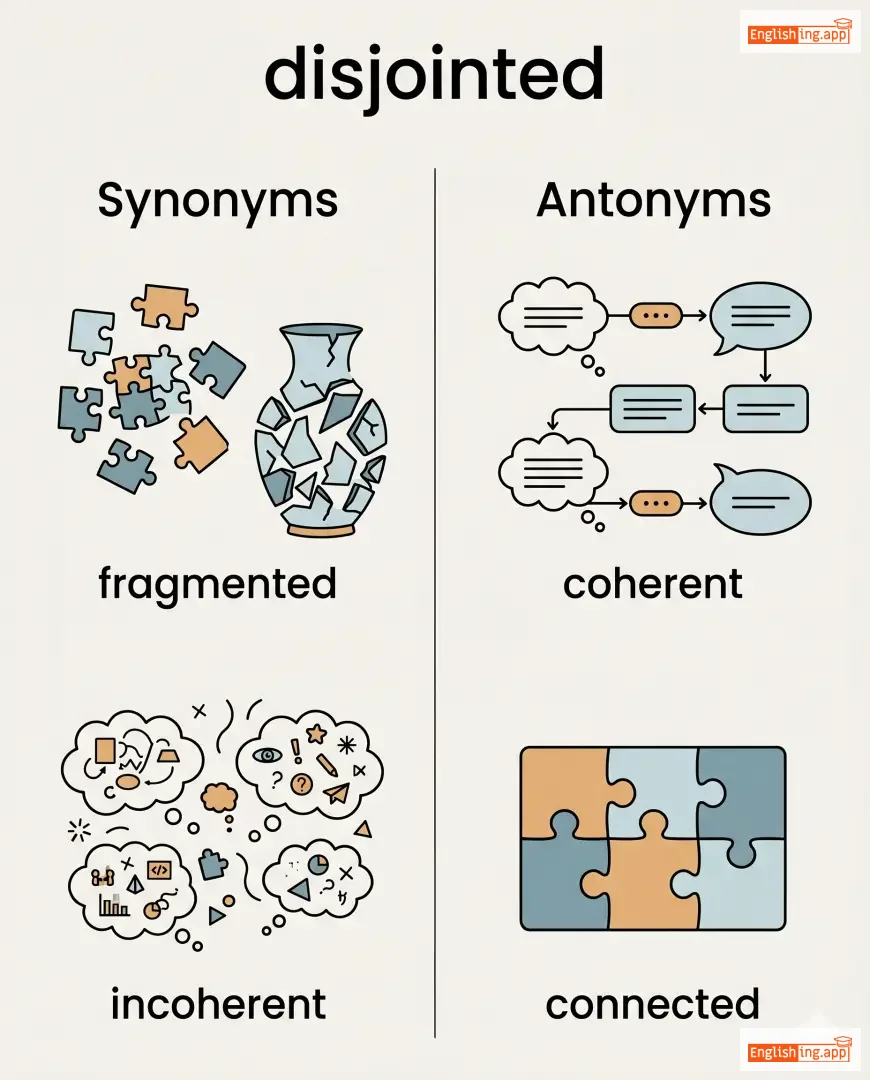
/dɪsˈdʒɔɪntɪd/
adjective
(дисджойнтед)
••••••
|
|
беспорядочный
besporyadochny
••••••
|
- •••••• | - •••••• | - •••••• | - •••••• |
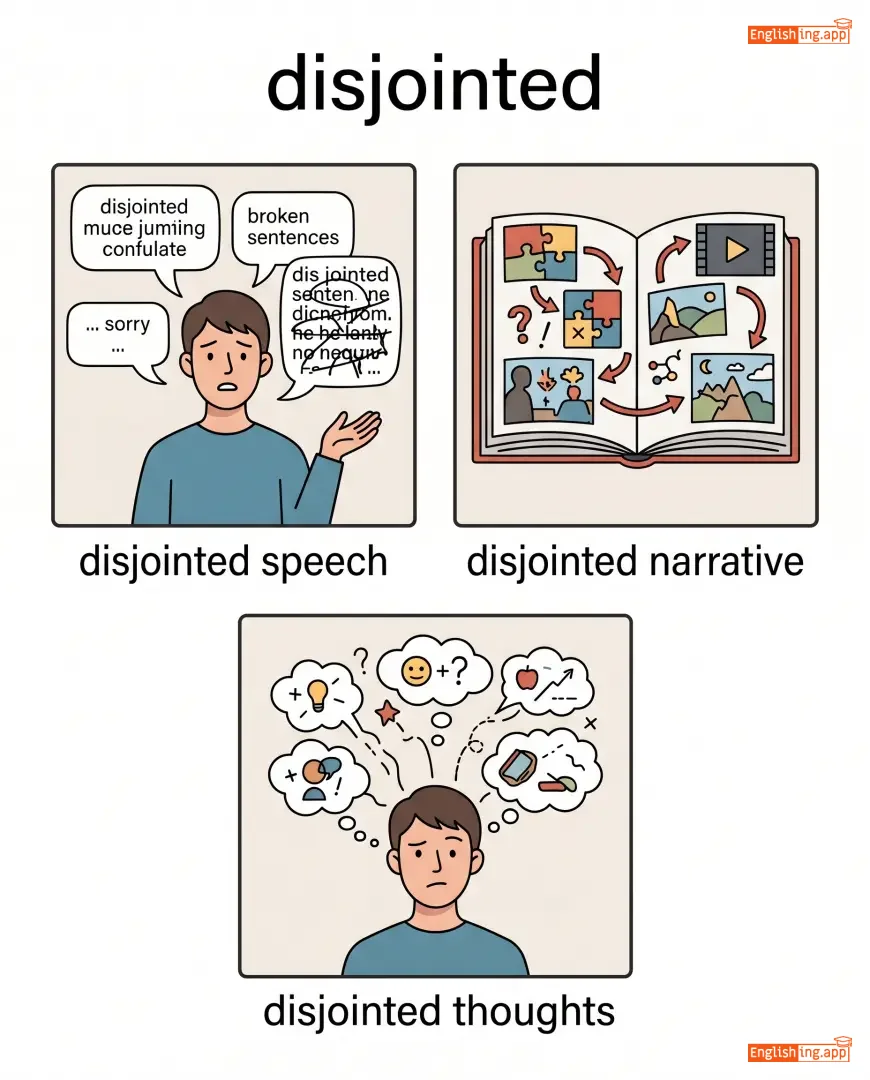
Lacking order, coherence, or connection; disconnected.
••••••
|
The movie felt disjointed and hard to follow. |
Фильм показался беспорядочным и трудным для восприятия.
Film pokazalsya besporyadochnym i trudnym dlya vospriyatiya.
••••••
|
- •••••• | - •••••• | - •••••• |
fragmented, incoherent, disconnected, jumbled, chaotic
••••••
|
coherent, connected, organized
••••••
|
disjointed speech, disjointed narrative, disjointed thoughts
••••••
|
Disjointed — все разорвано, как нелепая картина.
••••••
|
|
🚪
••••••
|
/dɪsˈmɪs/
verb
(дисмис)
••••••
|
|
уволить, отклонить
uvolit', otklonit'
••••••
|
dismissed
дисмисед
••••••
|
dismissed
дисмисед
••••••
|
dismisses
дисмисез
••••••
|
dismissing
дисмисинг
••••••
|
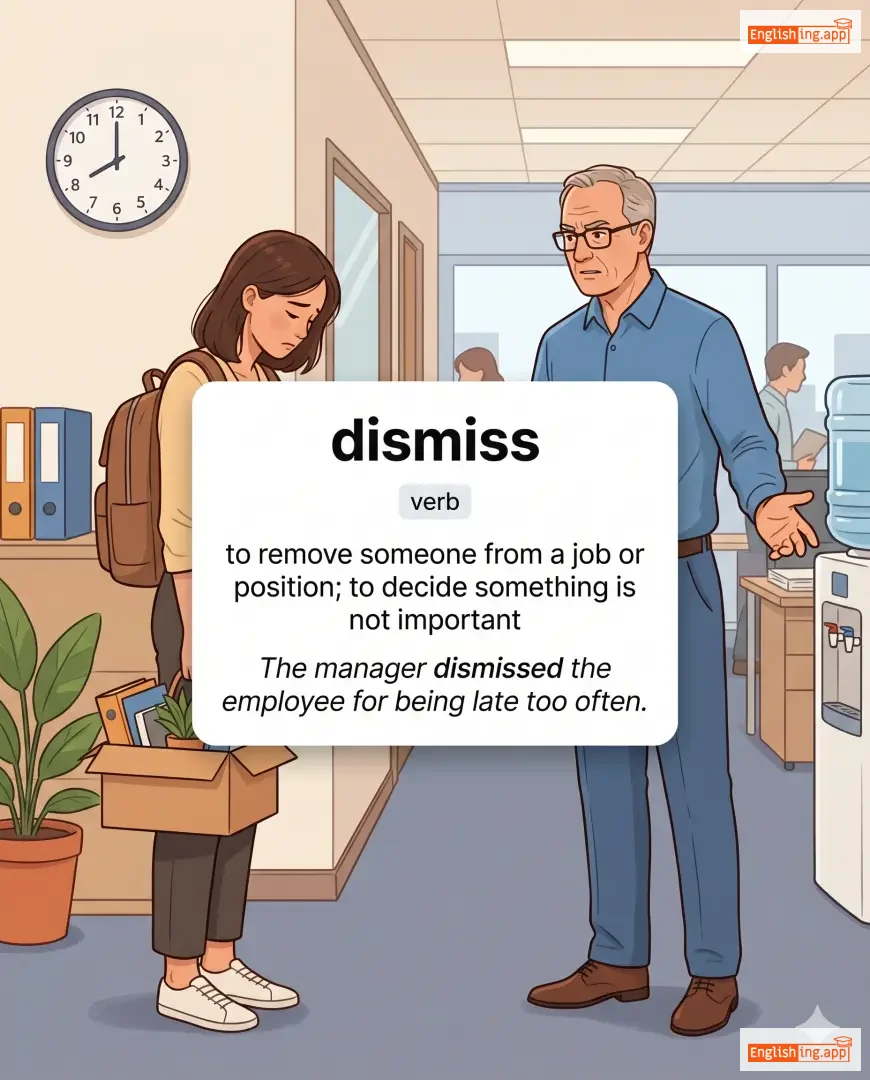
to remove someone from a job or position; to decide something is not important
••••••
|
The manager dismissed the employee for being late too often.
Менеджер уволил сотрудника за то, что тот слишком часто опаздывал.
••••••
|
Менеджер уволил сотрудника за то, что тот слишком часто опаздывал.
Menedzher uvolil sotrudnika za to, chto tot slishkom chasto opazdyval.
••••••
|
dismiss out of hand
отклонить без рассмотрения
••••••
|
to reject something immediately without considering it
••••••
|
отклонить без рассмотрения
otklonit' bez rassmotreniya
••••••
|
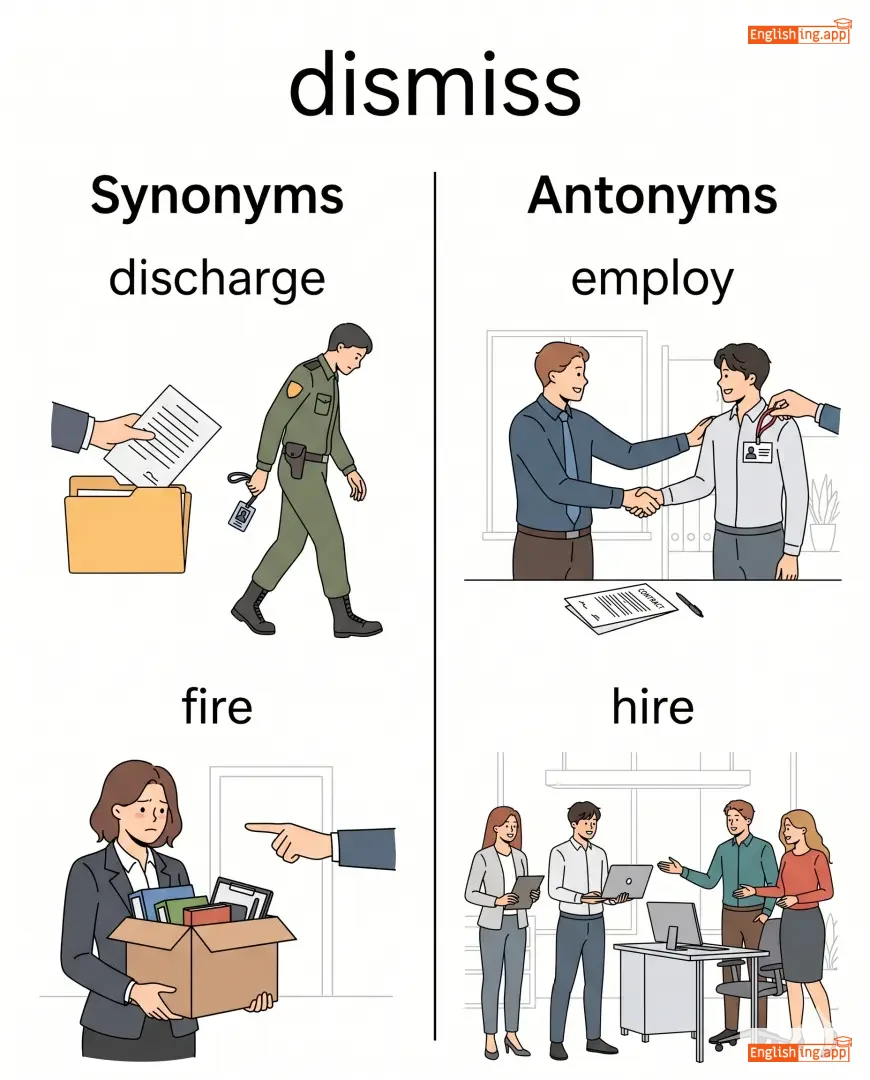
discharge, fire, release, reject, expel
••••••
|
employ, hire, accept
••••••
|
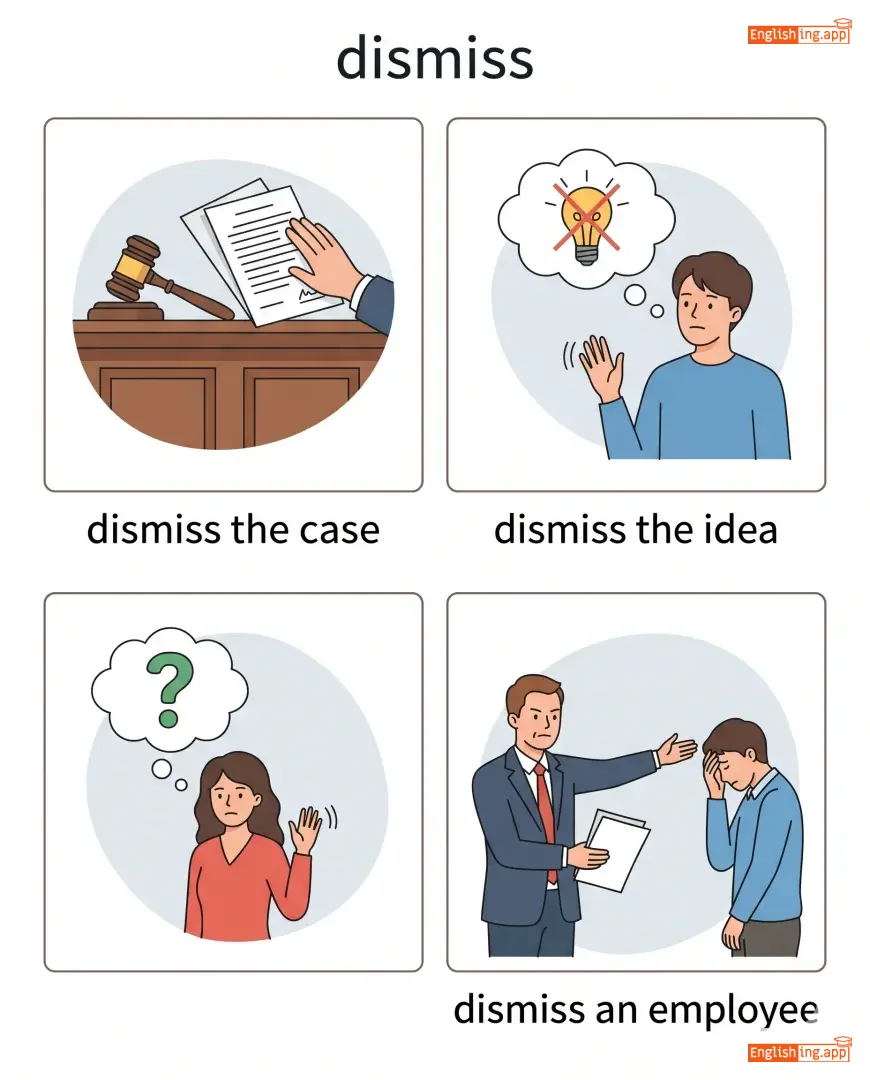
dismiss the case, dismiss the idea, dismiss an employee, dismiss charges
••••••
|
Dis + Miss = уволить человека
••••••
|
|
🗣️
••••••
|
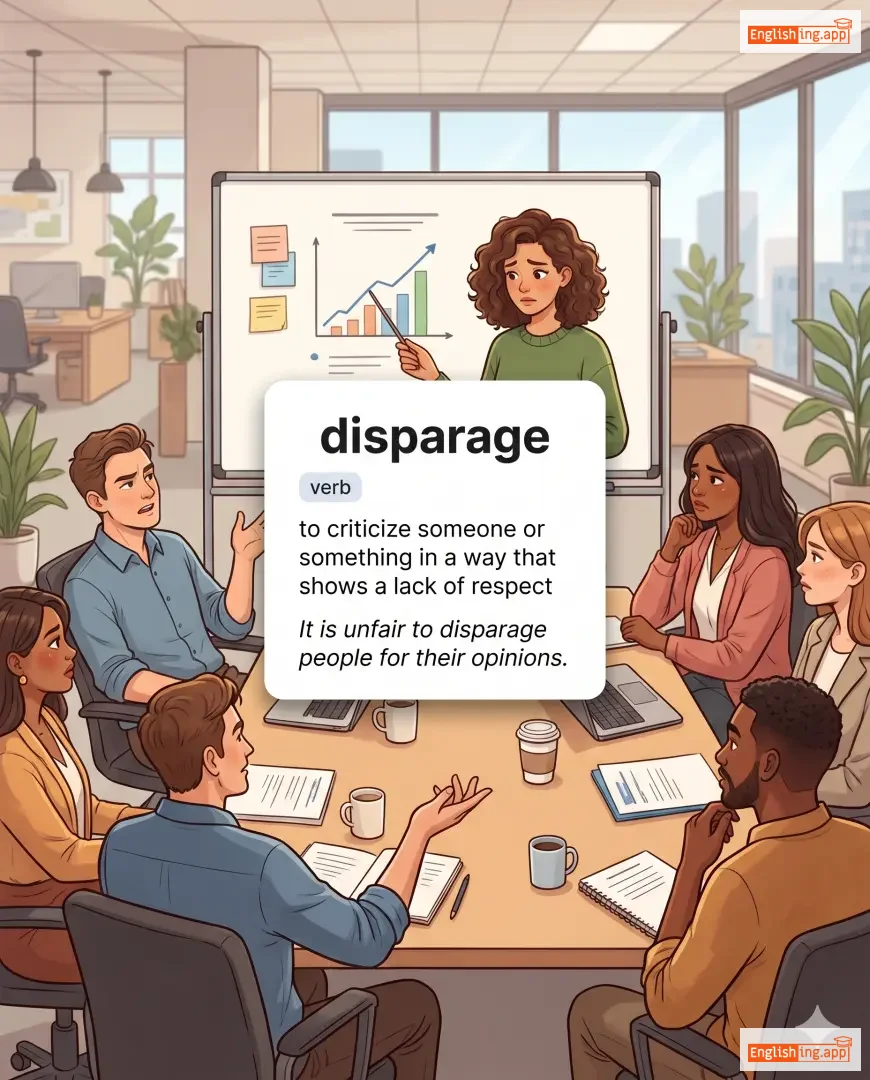
/dɪsˈpærɪdʒ/
verb
(диспэридж)
••••••
|
|
унижать
unizhat
••••••
|
disparaged
диспэриджд
••••••
|
disparaged
диспэриджд
••••••
|
disparages
диспэриджес
••••••
|
disparaging
диспэриджинг
••••••
|
to criticize someone or something in a way that shows a lack of respect
••••••
|
It is unfair to disparage people for their opinions.
Несправедливо унижать людей за их мнения.
••••••
|
Несправедливо унижать людей за их мнения.
Nespravedlivo unizhat' lyudey za ikh mneniya.
••••••
|
disparage someone's efforts
унижать усилия кого-то
••••••
|
to belittle or undervalue what someone has done
••••••
|
унижать усилия кого-то
unizhat' usiliya kogo-to
••••••
|
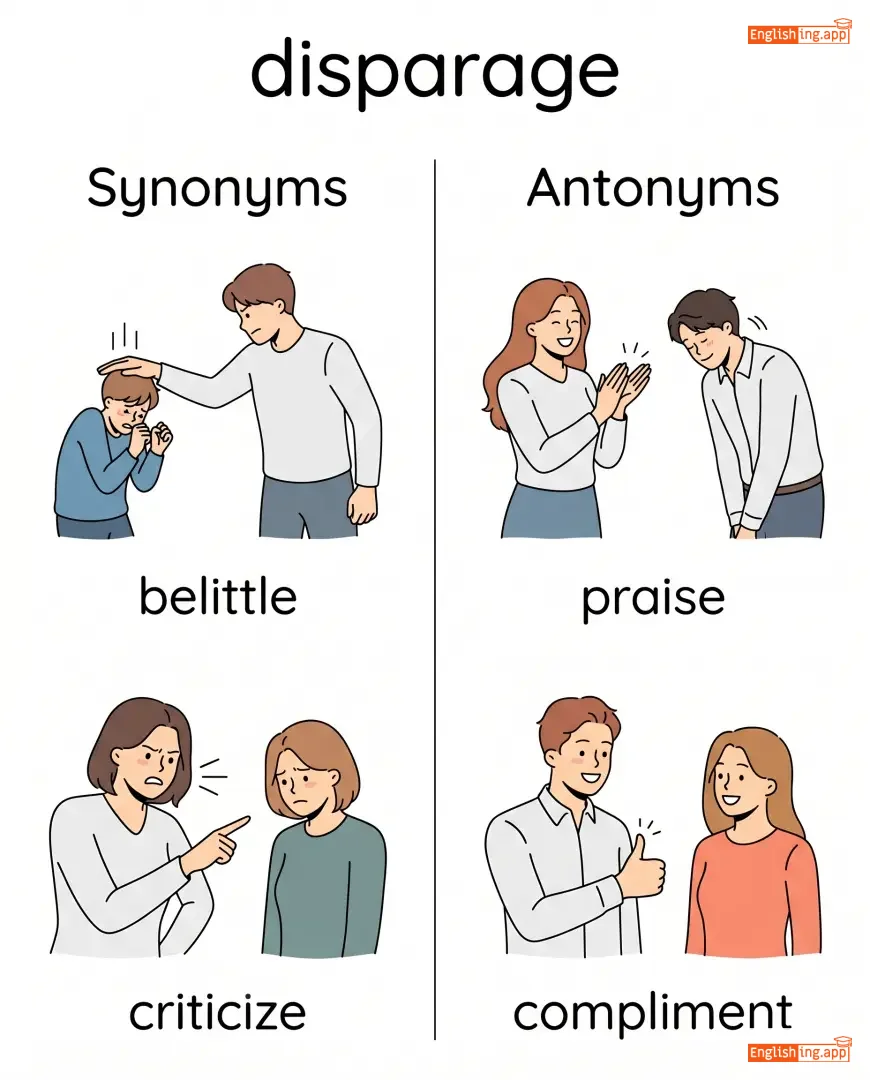
belittle, criticize, denigrate, undervalue, ridicule
••••••
|
praise, compliment
••••••
|
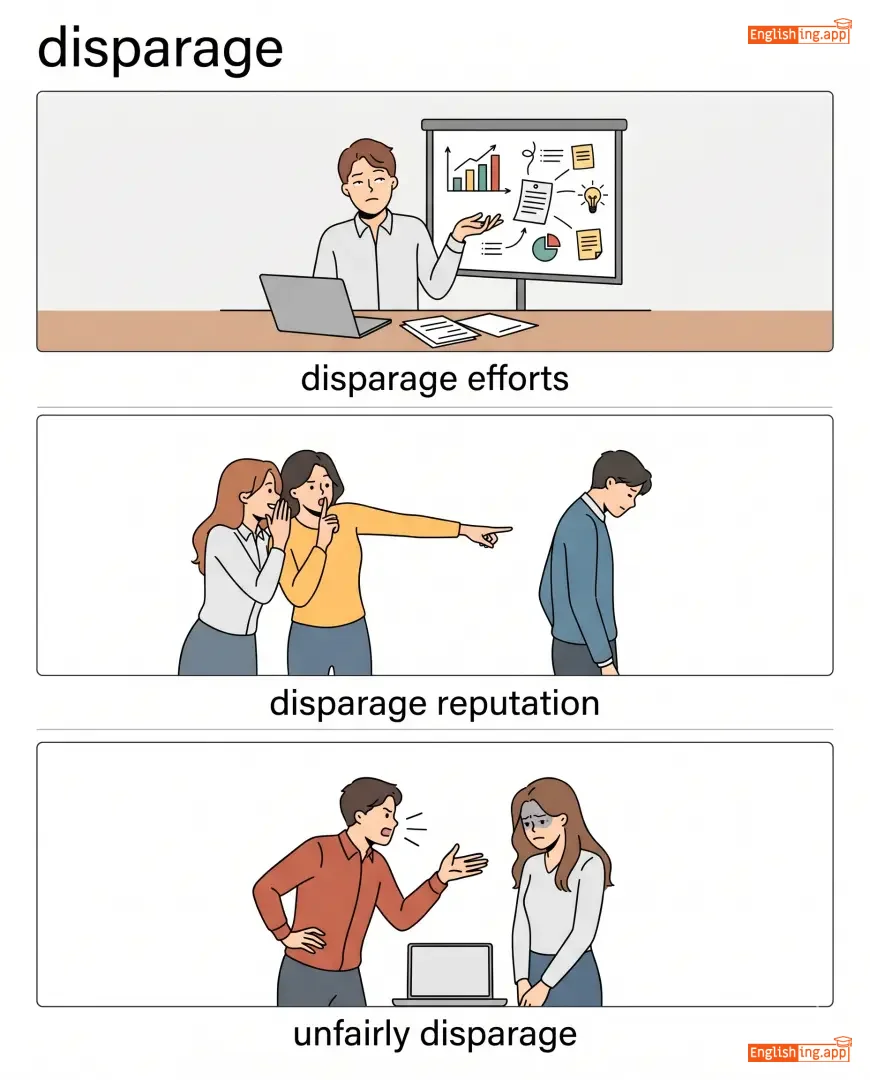
disparage efforts, disparage reputation, unfairly disparage
••••••
|
Dis + Parade : унижать кого-то в параде значит критиковать
••••••
|
|
🔀
••••••
|
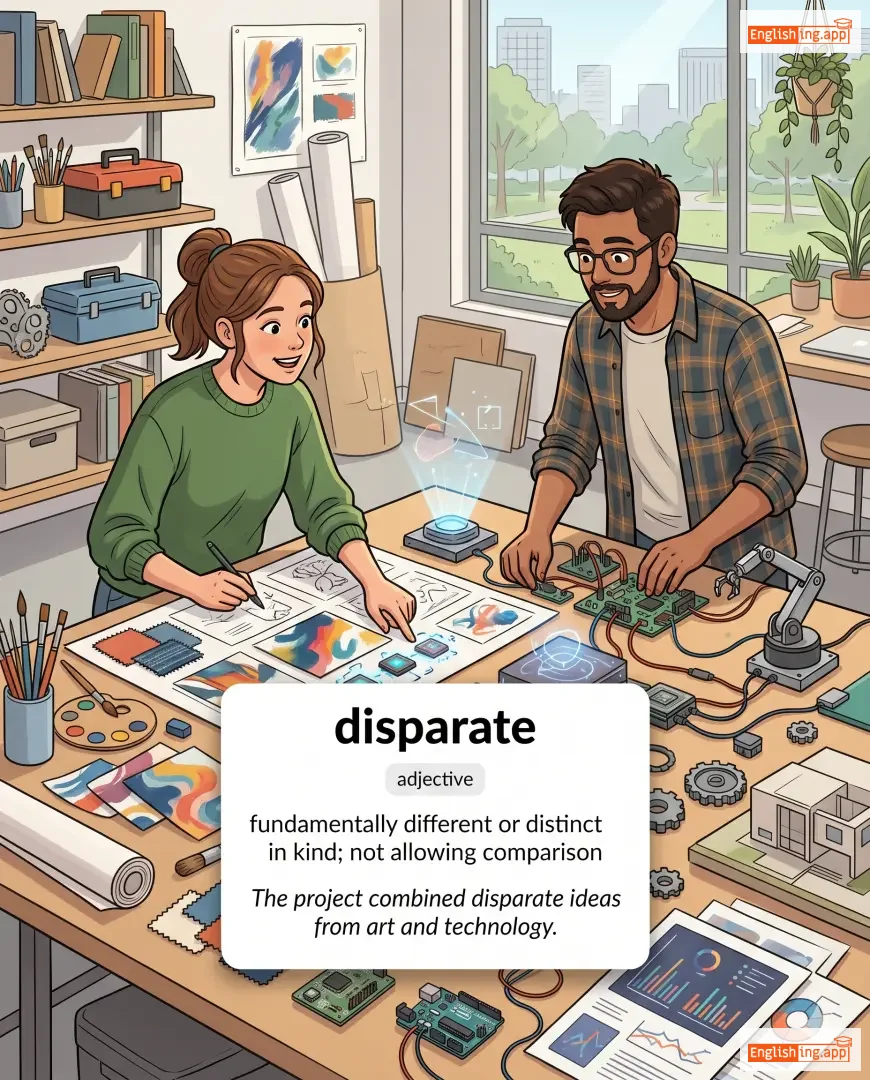
/ˈdɪspərət/
adjective
(дисперэт)
••••••
|
|
непохожие
nepokhozhie
••••••
|
- •••••• | - •••••• | - •••••• | - •••••• |
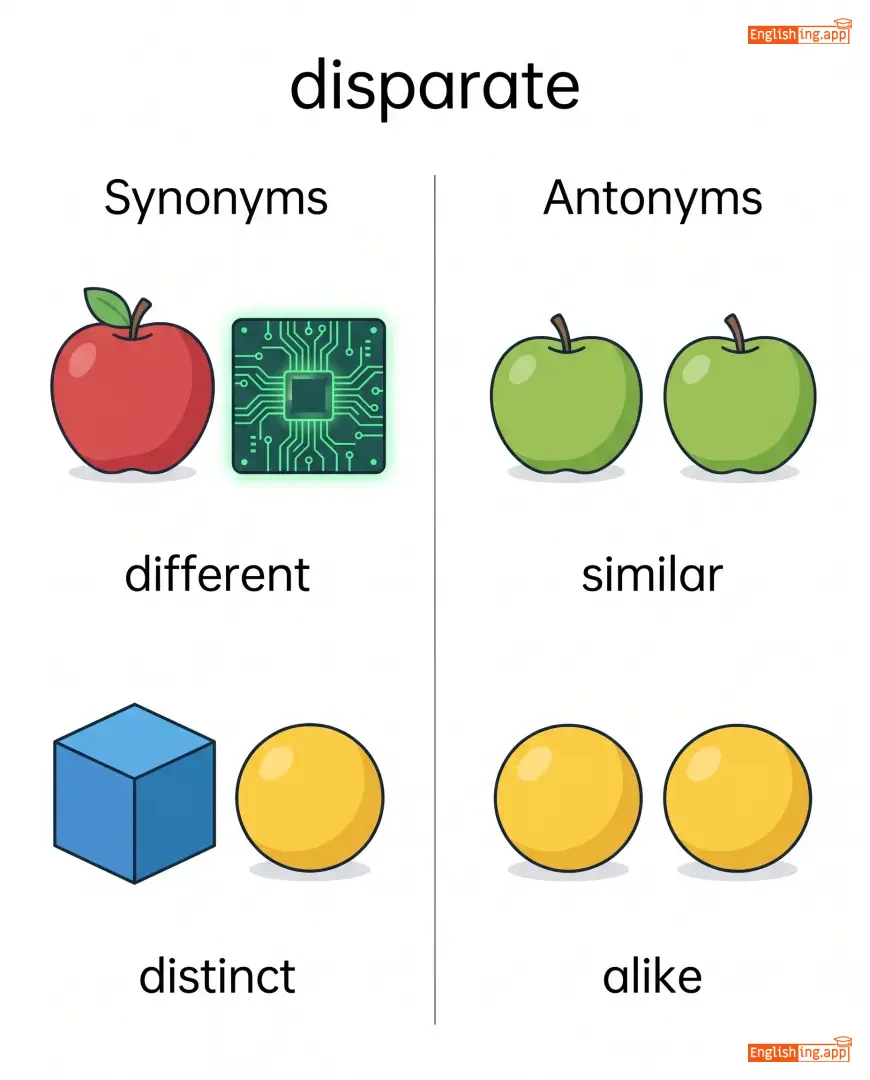
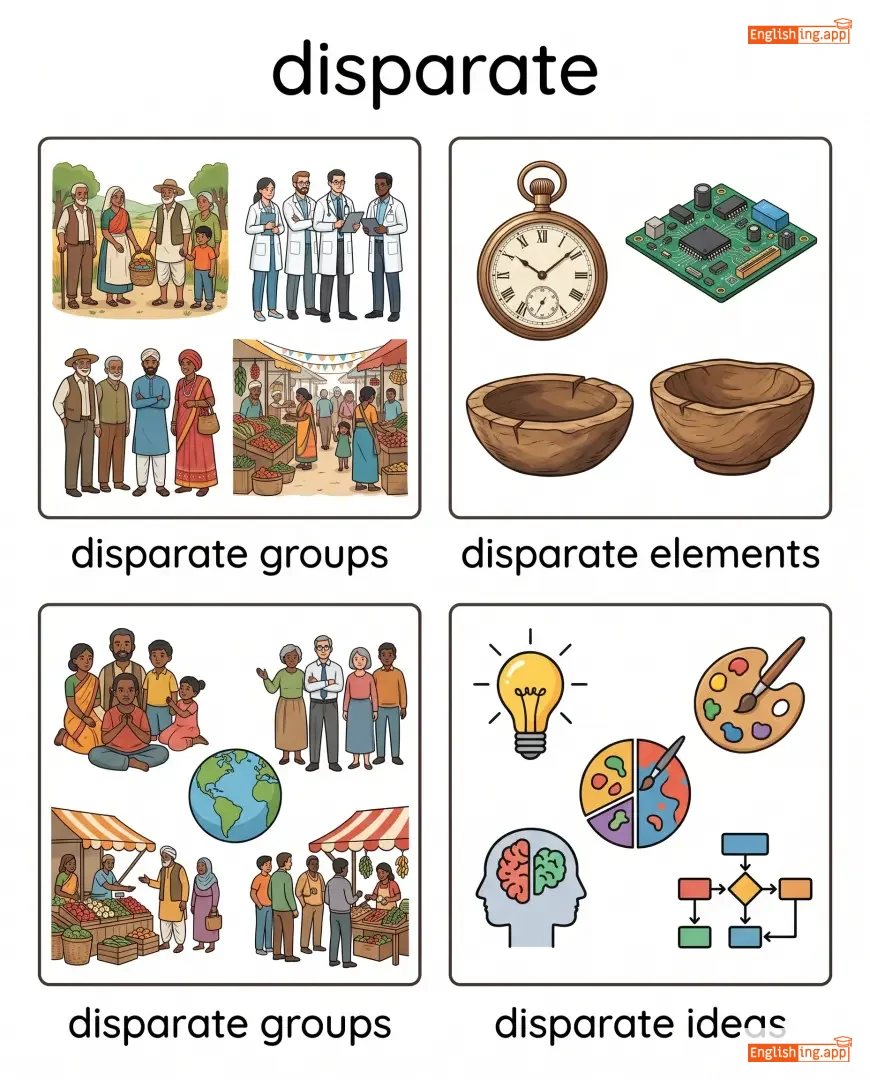
fundamentally different or distinct in kind; not allowing comparison
••••••
|
The project combined disparate ideas from art and technology. |
Проект объединил непохожие идеи из искусства и технологий.
Proyekt obyedinił nepokhodiye idei iz iskusstva i tekhnologiy.
••••••
|
- •••••• | - •••••• | - •••••• |
different, distinct, contrasting, diverse, varied
••••••
|
similar, alike, uniform
••••••
|
disparate groups, disparate elements, disparate ideas, disparate backgrounds
••••••
|
Disparate означает непохожие вещи, которые объединяются.
••••••
|
|
🎭
••••••
|
/dɪˈsɛmbəl/
verb
(дисембл)
••••••
|
|
притворяться
pritvoryatsya
••••••
|
dissembled
дисемболд
••••••
|
dissembled
дисемболд
••••••
|
dissembles
дисемблс
••••••
|
dissembling
дисемблинг
••••••
|
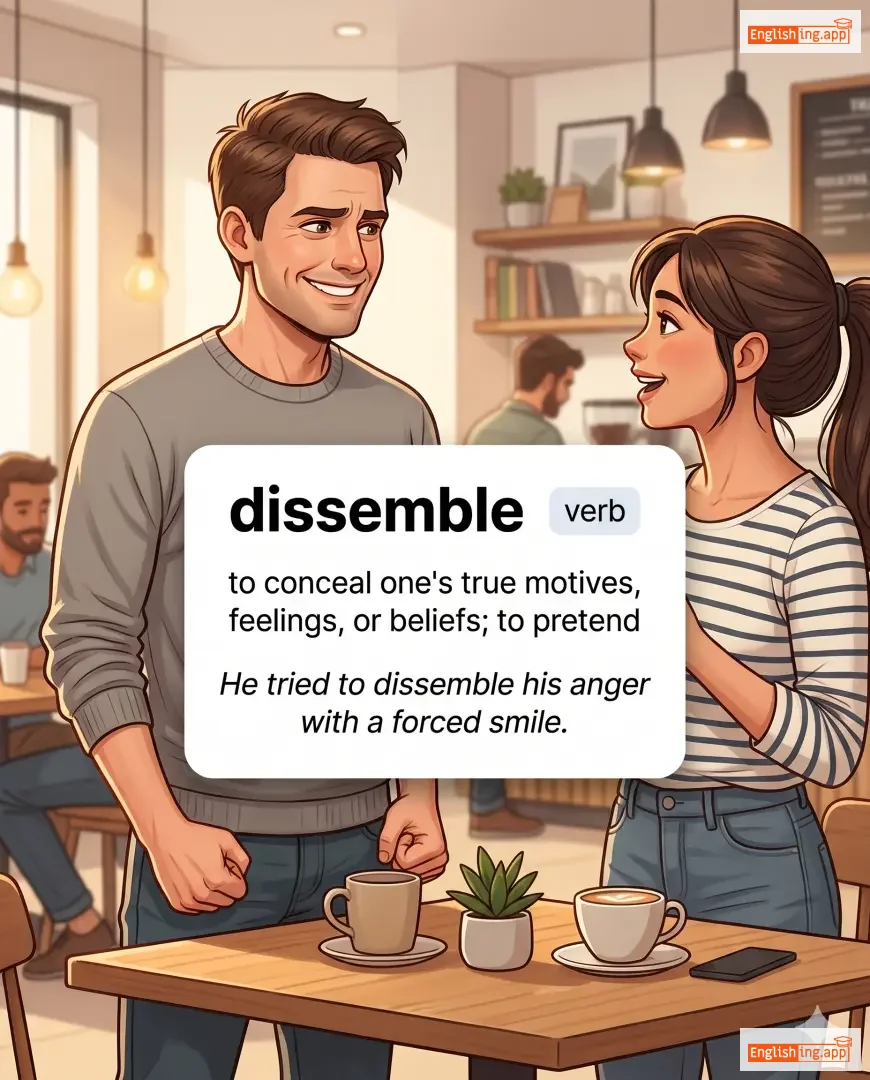
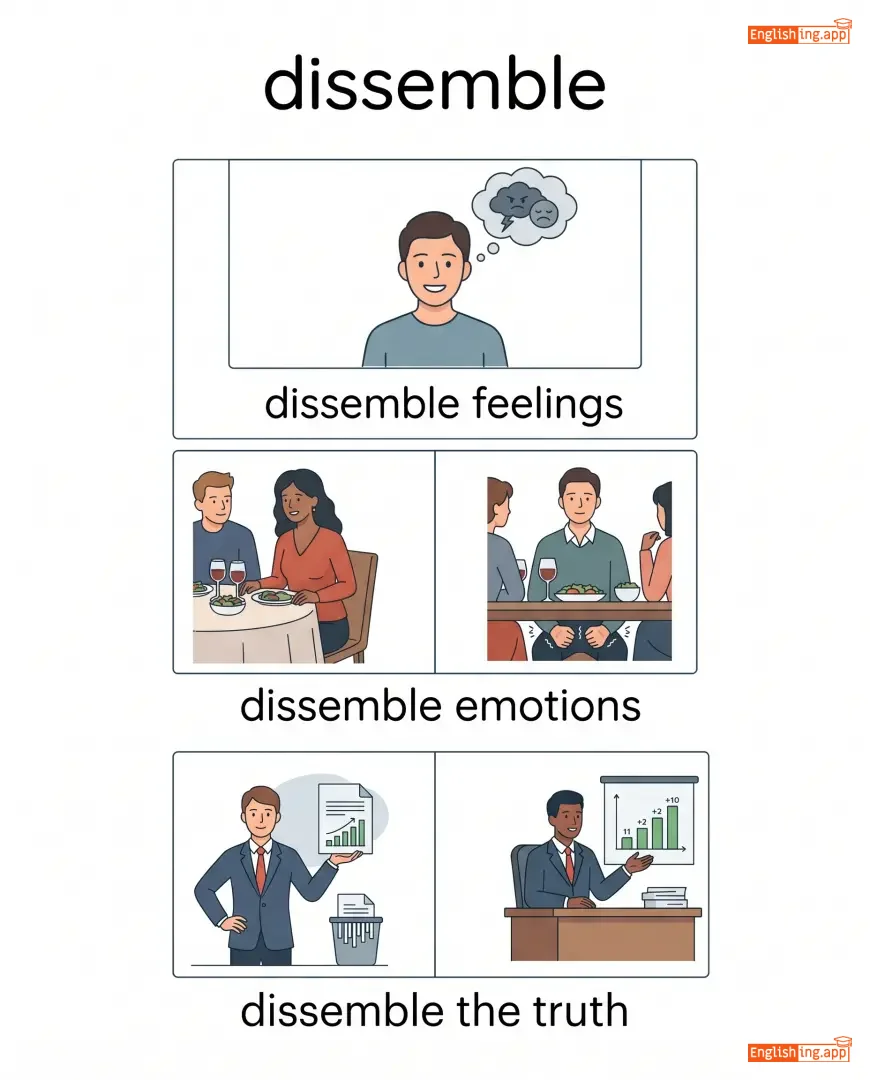
to conceal one's true motives, feelings, or beliefs; to pretend
••••••
|
He tried to dissemble his anger with a forced smile.
Он пытался скрыть свой гнев с помощью натянутой улыбки.
••••••
|
Он пытался скрыть свой гнев с помощью натянутой улыбки.
On pytalsya skryt' svoi gnev s pomoshch'yu natyanutoy ulybki.
••••••
|
- •••••• | - •••••• | - •••••• |
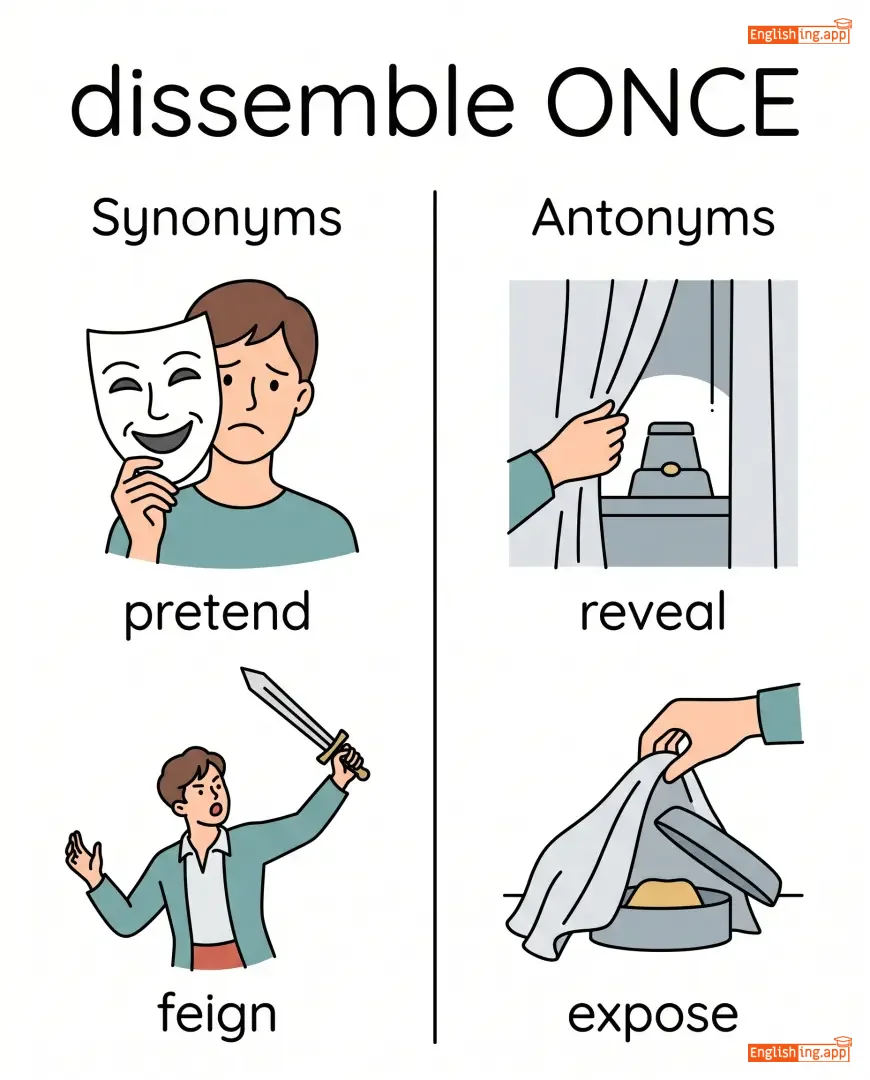
pretend, feign, fake, conceal, disguise
••••••
|
reveal, expose, disclose
••••••
|
dissemble feelings, dissemble emotions, dissemble the truth
••••••
|
Dissemble = dis+assemble; не собирать правду, а притворяться.
••••••
|
|
📢
••••••
|
/dɪˈsɛmɪˌneɪt/
verb
(диссеминировать)
••••••
|
|
распространять
rasprostranyat'
••••••
|
disseminated
диссеминировал
••••••
|
disseminated
диссеминированный
••••••
|
disseminates
диссеминирует
••••••
|
disseminating
диссеминирующий
••••••
|
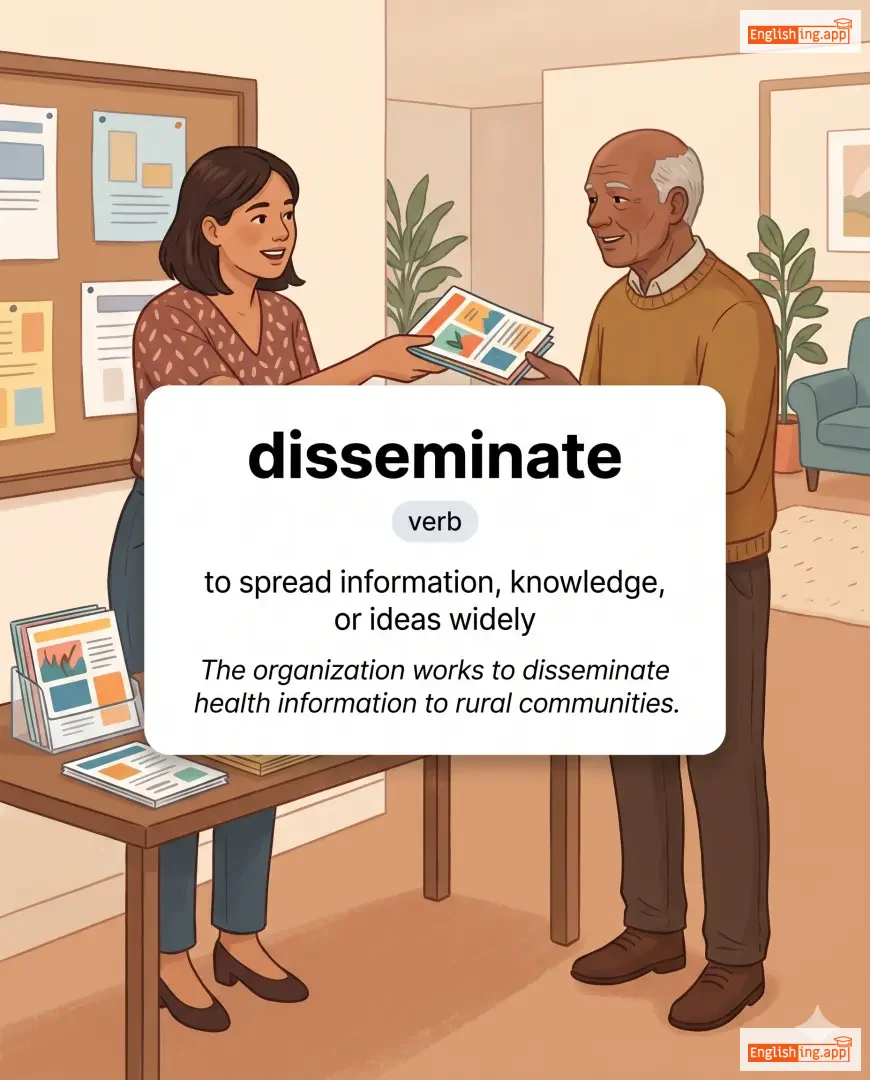
to spread information, knowledge, or ideas widely
••••••
|
The organization works to disseminate health information to rural communities.
Организация работает над распространением информации о здоровье в сельских районах.
••••••
|
Организация работает над распространением информации о здоровье в сельских районах.
Organizatsiya rabotayet nad rasprostraneniem informatsii o zdorov'ye v selskih rayonah.
••••••
|
disseminate knowledge
распространять знания
••••••
|
to distribute knowledge to many people
••••••
|
распространять знания
rasprostranyat' znaniya
••••••
|
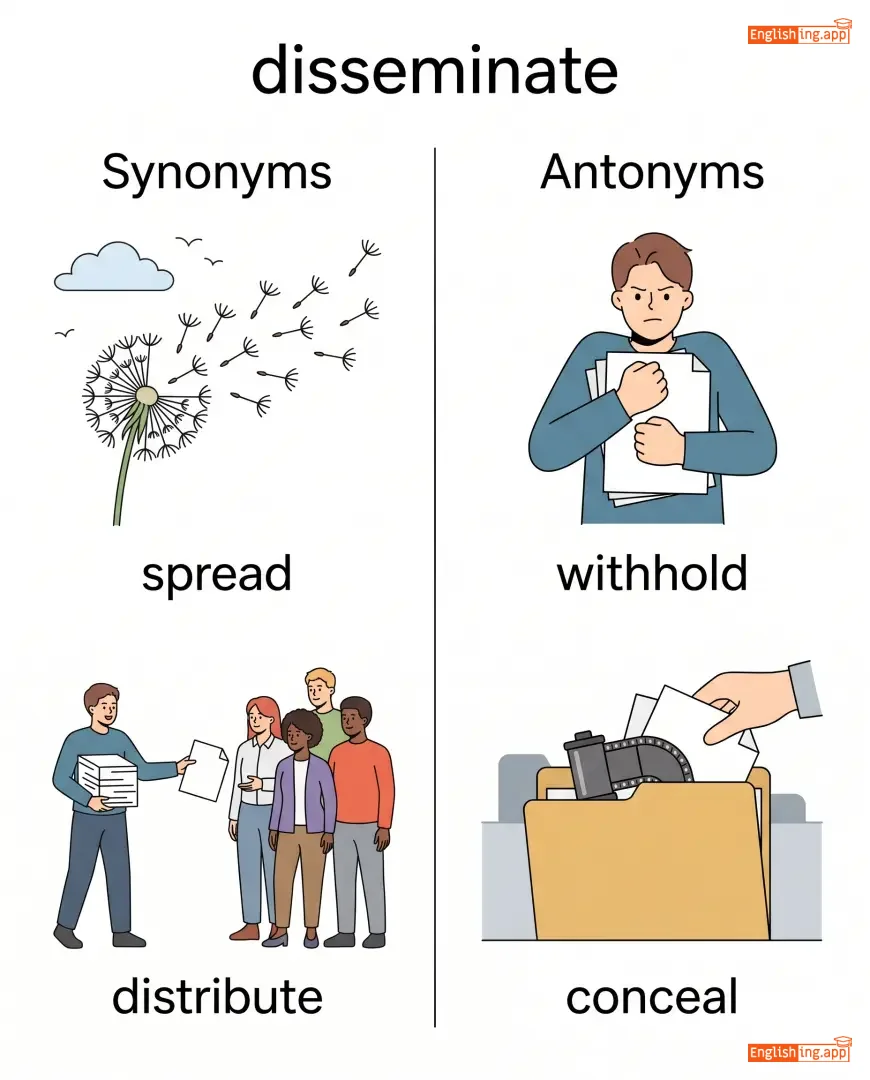
spread, distribute, circulate, broadcast, propagate
••••••
|
withhold, conceal, hide
••••••
|
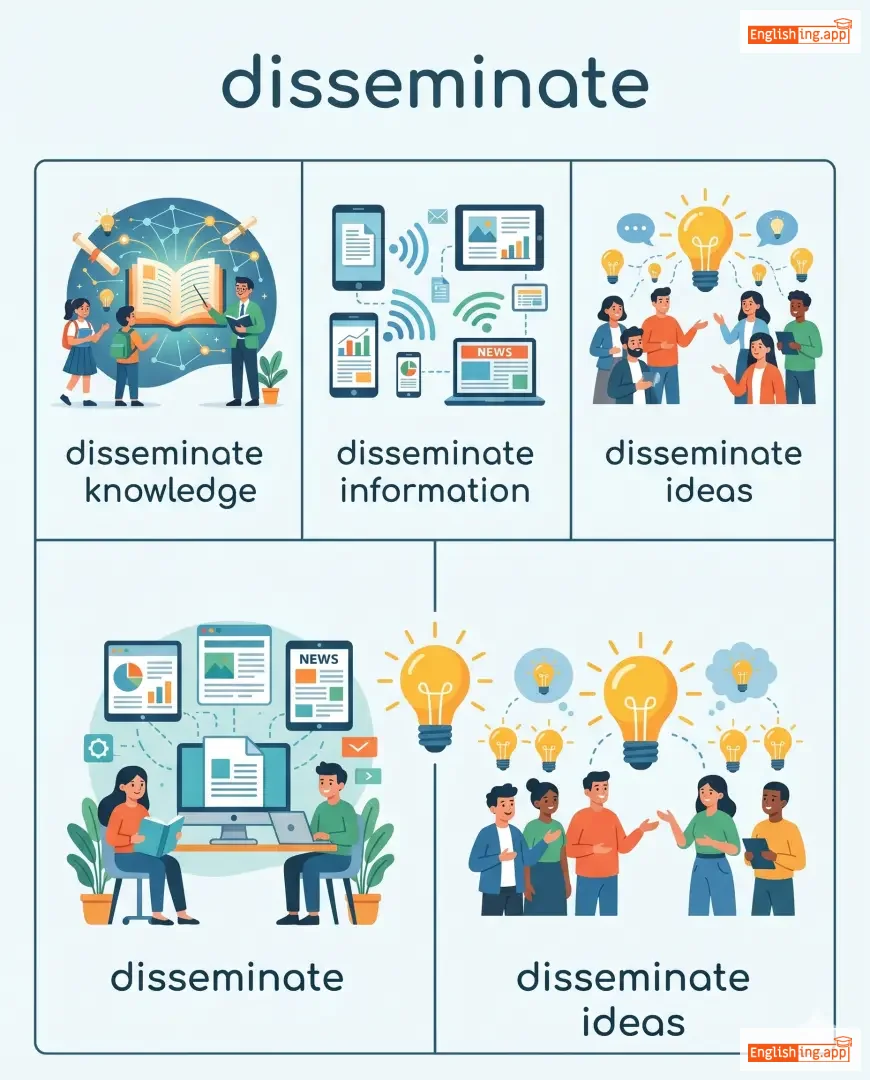
disseminate knowledge, disseminate information, disseminate ideas, widely disseminate
••••••
|
Disseminate похоже на распространять, но с большим количеством информации.
••••••
|
|
⚖️
••••••
|
/ˌdɪsəˈluːʃən/
noun
(диссолюшн)
••••••
|
|
распад
raspad
••••••
|
- •••••• | - •••••• | - •••••• | - •••••• |
the act of formally ending or breaking apart something, such as an organization or marriage
••••••
|
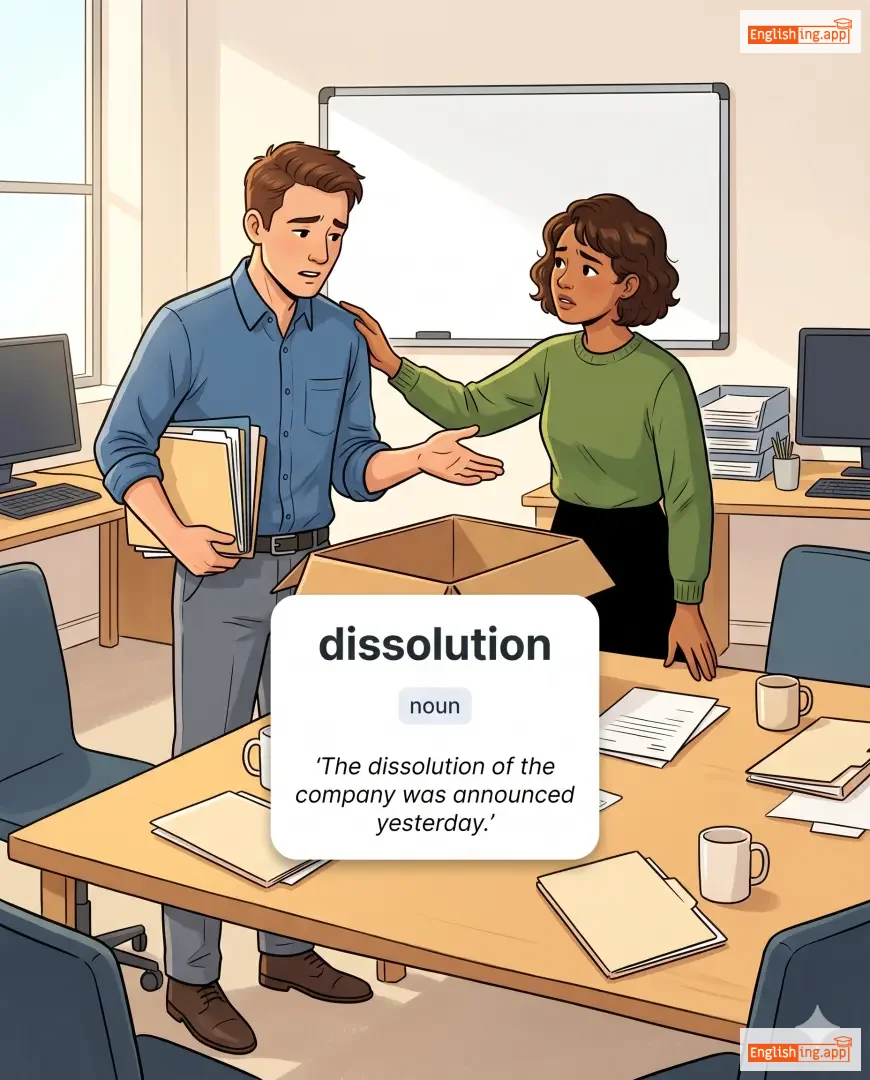
The dissolution of the company was announced yesterday. |
Распад компании был объявлен вчера.
Raspad kompanii byl obyavlen vchera.
••••••
|
- •••••• | - •••••• | - •••••• |
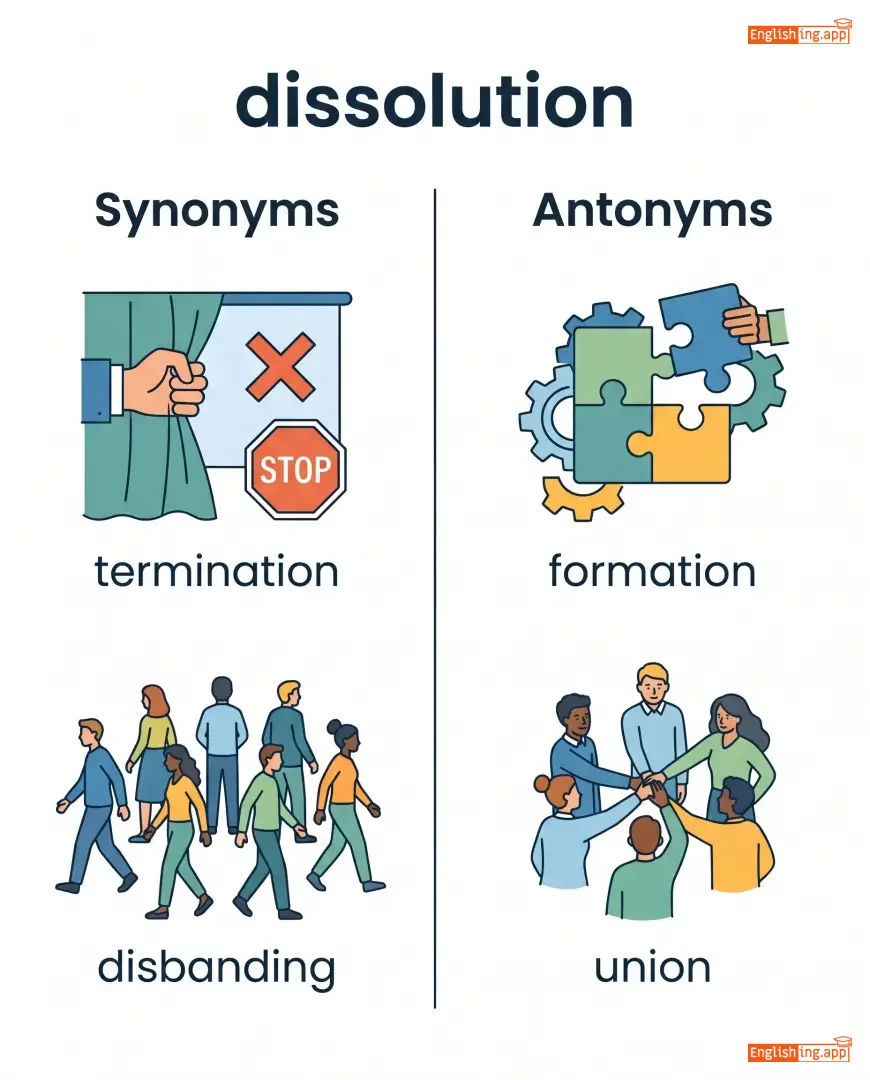
termination, disbanding, breakup, collapse
••••••
|
formation, union, establishment
••••••
|
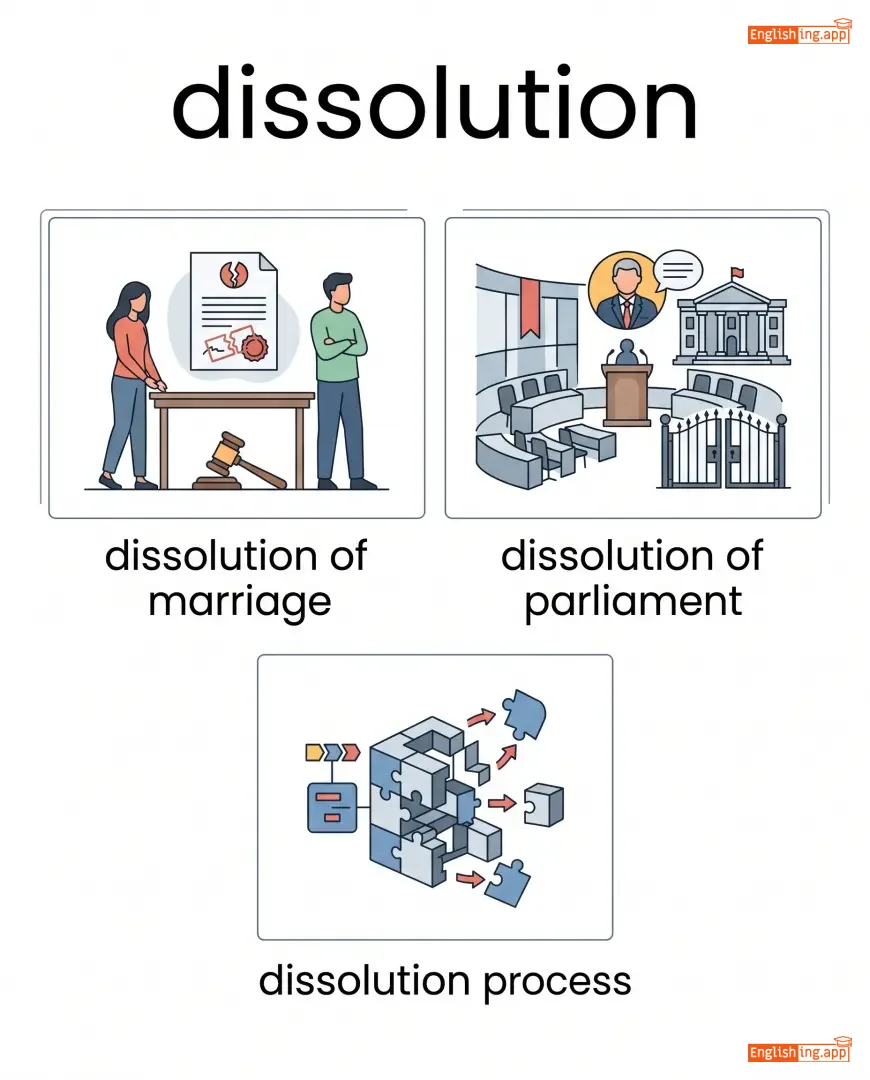
dissolution of marriage, dissolution of parliament, dissolution process
••••••
|
Dissolution в русском - распад, конец
••••••
|
|
🎶
••••••
|
/ˈdɪsənəns/
noun
(дɪсəнэнс)
••••••
|
|
диссонанс
dissonans
••••••
|
- •••••• | - •••••• | - •••••• | - •••••• |
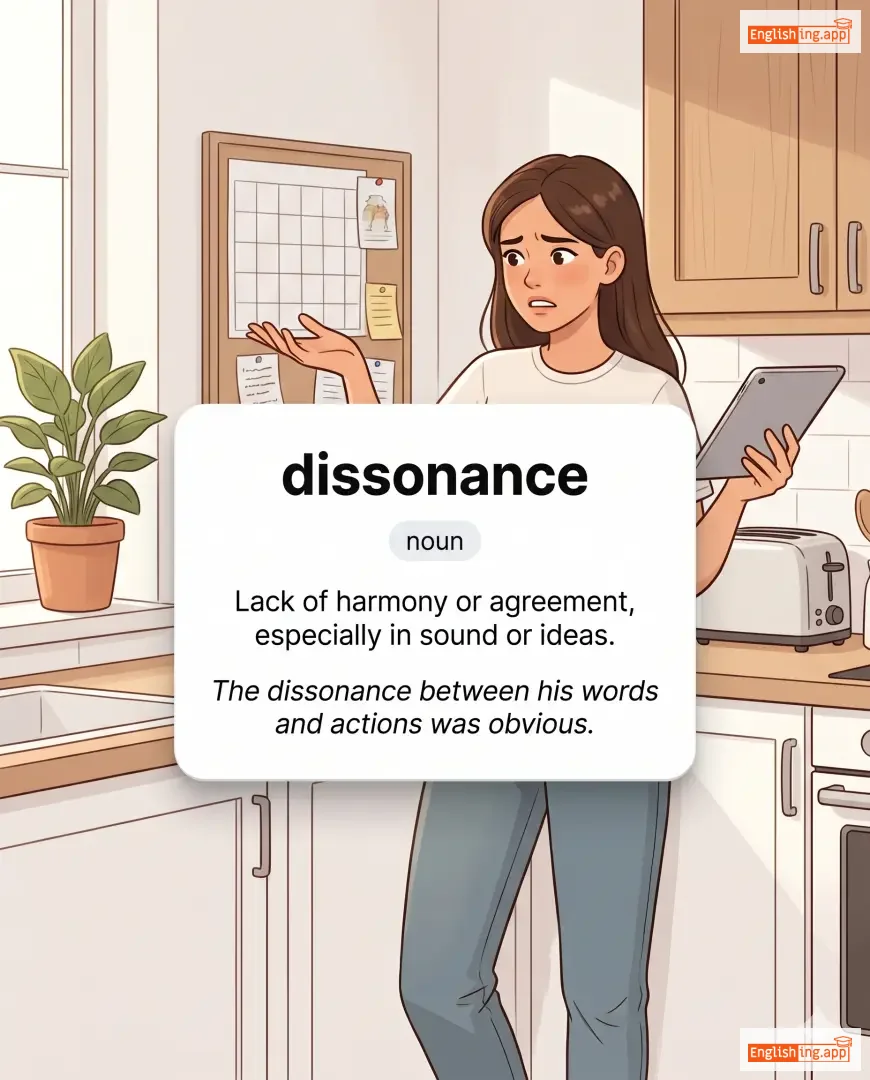
Lack of harmony or agreement, especially in sound or ideas.
••••••
|
The dissonance between his words and actions was obvious. |
Диссонанс между его словами и действиями был очевиден.
Dissonans mezhdu ego slovami i deystviyami byl ocheviden.
••••••
|
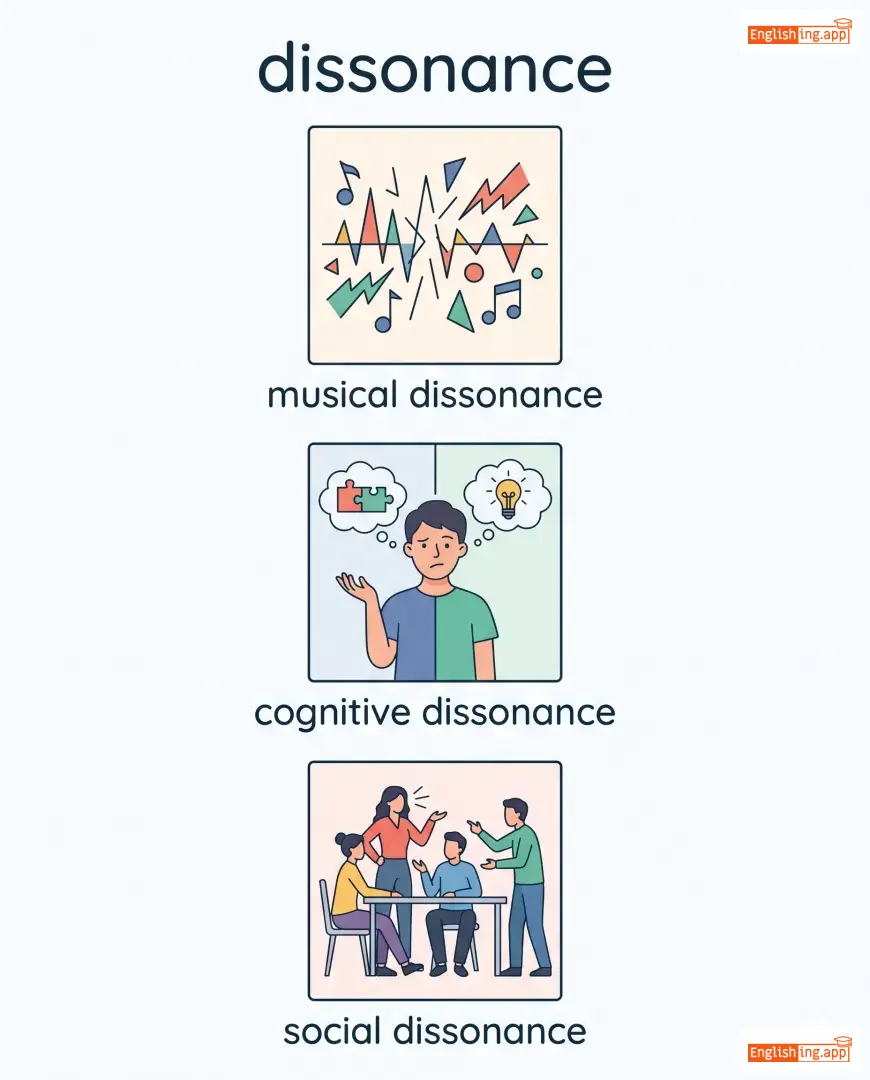
cognitive dissonance |
The mental discomfort experienced when holding contradictory beliefs or values.
••••••
|
когнитивный диссонанс
kognitivnyy dissonans
••••••
|
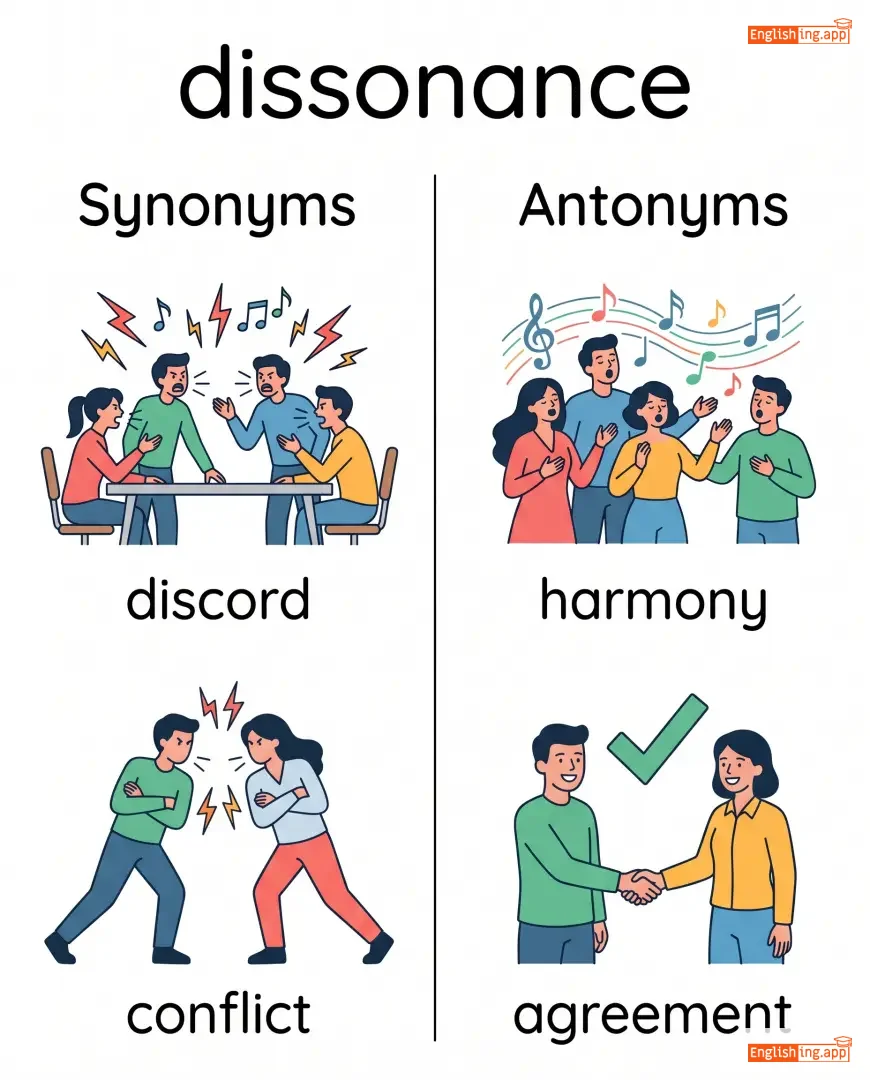
discord, conflict, discrepancy, disagreement, incongruity
••••••
|
harmony, agreement, concord
••••••
|
musical dissonance, cognitive dissonance, social dissonance, emotional dissonance
••••••
|
Диссонанс как DIS гармония - как 'диссонанс' на русском.
••••••
|

