|
表情符号
|
单词 | Images | 翻译 | 过去时 | 过去分词 | 第三人称单数 | 动名词 | 含义 | 例句 | 例句翻译 | 示例表达 | 示例表达含义 | 示例表达翻译 | 同义词 | 反义词 | 搭配词 | 助记符 |
|---|---|---|---|---|---|---|---|---|---|---|---|---|---|---|---|---|---|
|
⛰️
••••••
|
/ˈɑːrdʒuəs/
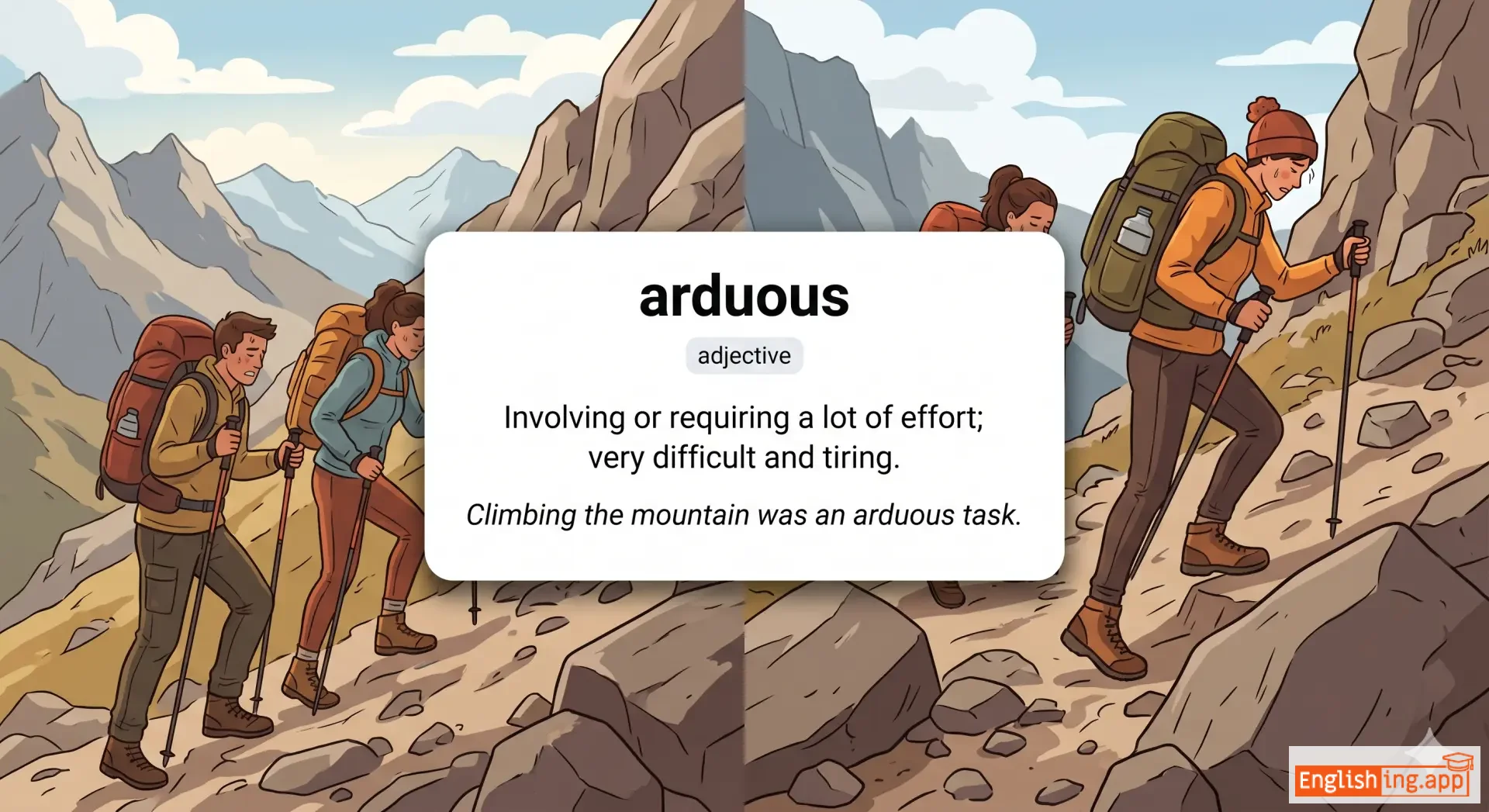
adjective
(阿尔杜斯)
••••••
|
|
艰难
jian nan
••••••
|
- •••••• | - •••••• | - •••••• | - •••••• |
Involving or requiring a lot of effort; very difficult and tiring.
••••••
|
Climbing the mountain was an arduous task. |
爬山是一个艰难的任务。
Pa shan shi yi ge jian nan de ren wu.
••••••
|
- •••••• | - •••••• | - •••••• |
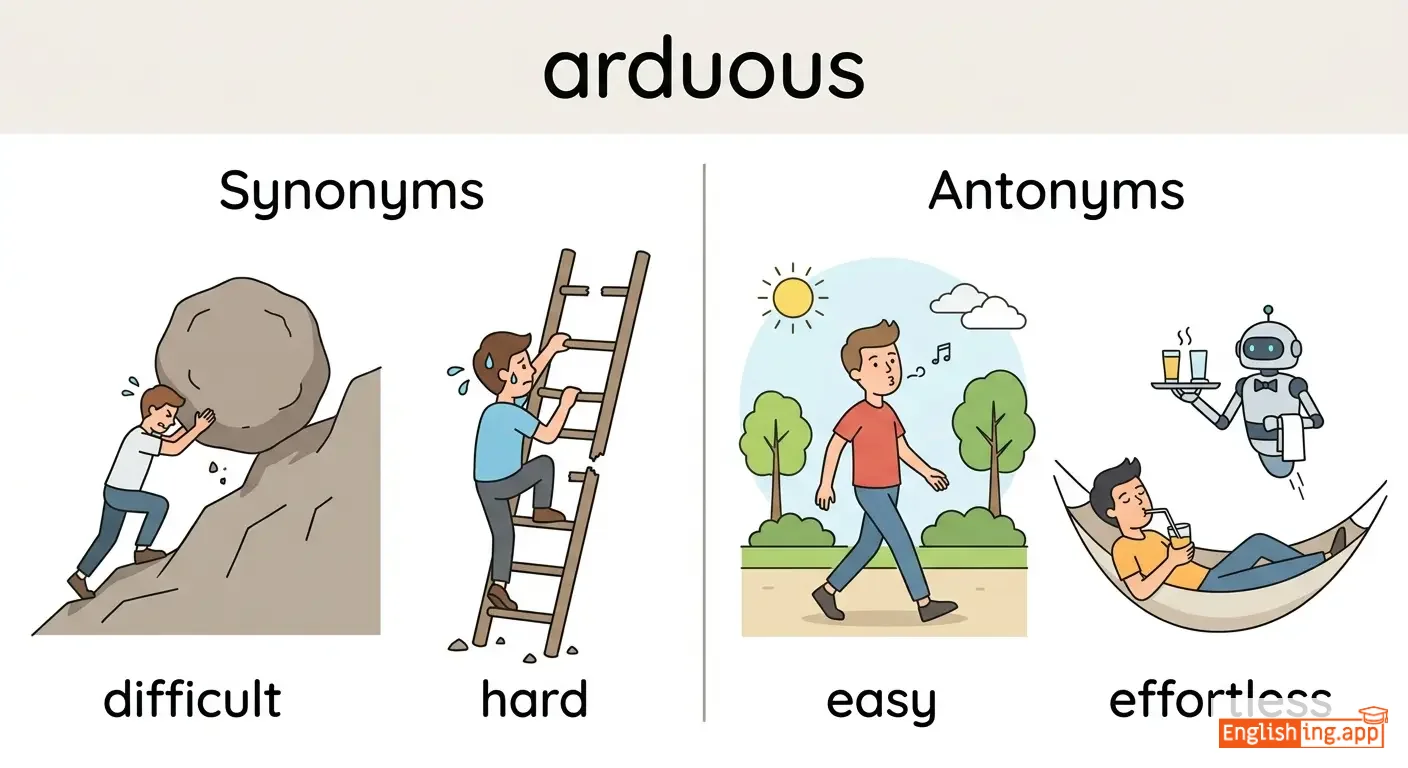
difficult, hard, demanding, strenuous, exhausting
••••••
|
easy, effortless
••••••
|
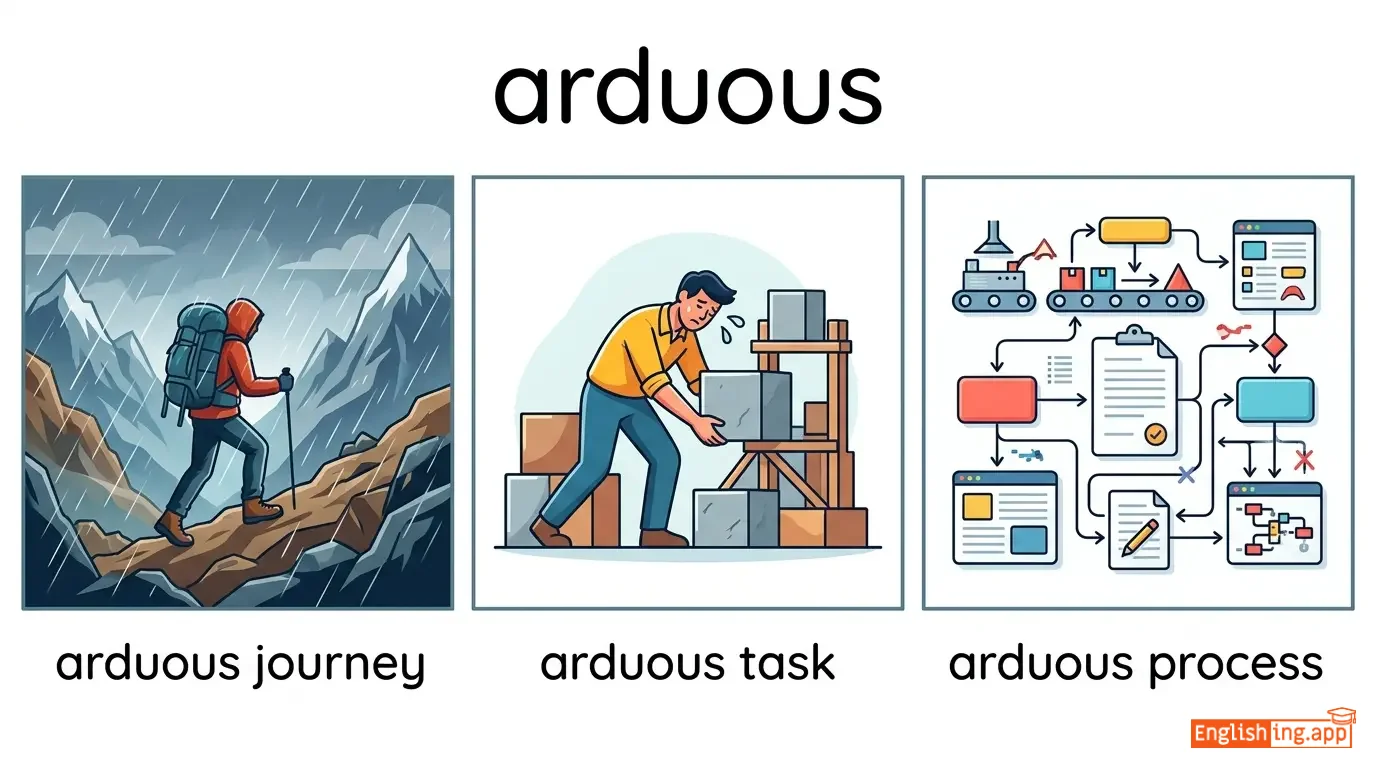
arduous journey, arduous task, arduous process, arduous climb
••••••
|
Arduous 就是很hard的工作,非常艰难的任务。
••••••
|
|
😊
••••••
|
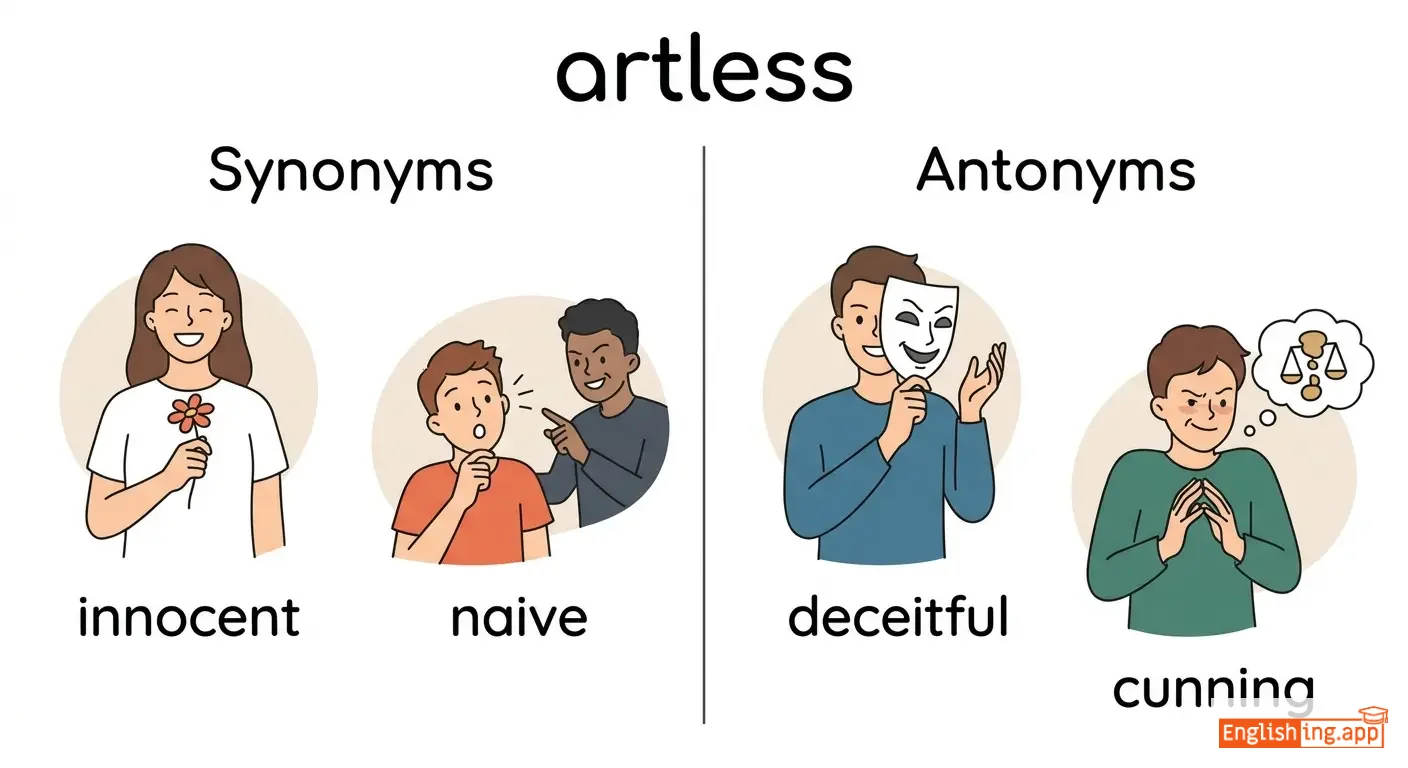
/ˈɑːrtləs/
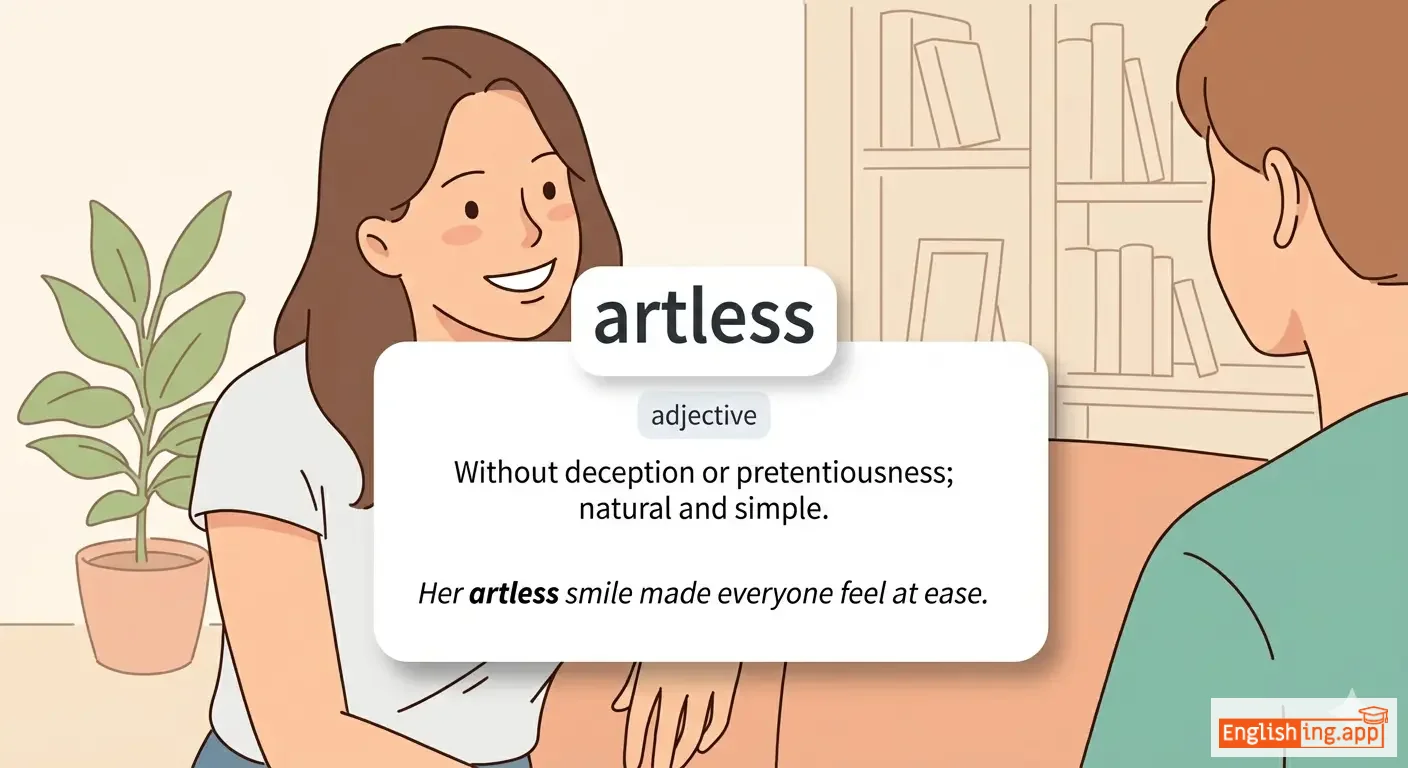
adjective
(阿特莱斯)
••••••
|
|
天真, 简单
tianzhen, jiandan
••••••
|
- •••••• | - •••••• | - •••••• | - •••••• |
Without deception or pretentiousness; natural and simple.
••••••
|
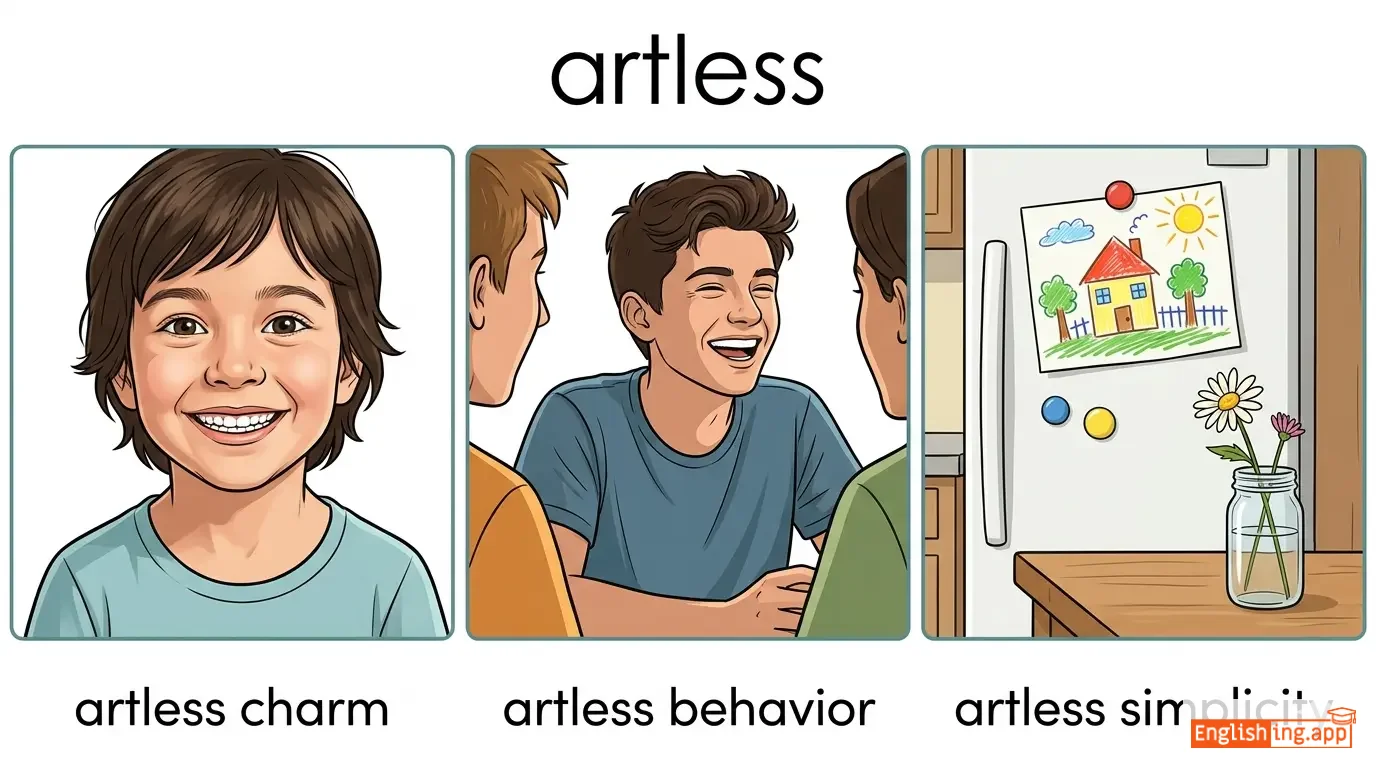
Her artless smile made everyone feel at ease. |
她天真的微笑让每个人都感到轻松。
ta tianzhen de weixiao rang meige ren dou gandao qingsong.
••••••
|
- •••••• | - •••••• | - •••••• |
innocent, naive, guileless, sincere, genuine
••••••
|
deceitful, cunning, pretentious
••••••
|
artless charm, artless behavior, artless simplicity
••••••
|
没有艺术(artless)就是天真简朴,就像她的笑容。
••••••
|
|
🙏
••••••
|
/əˈsɛt.ɪk/
adjective
(ā sē tè kè)
••••••
|
|
苦行
kǔ xíng
••••••
|
- •••••• | - •••••• | - •••••• | - •••••• |
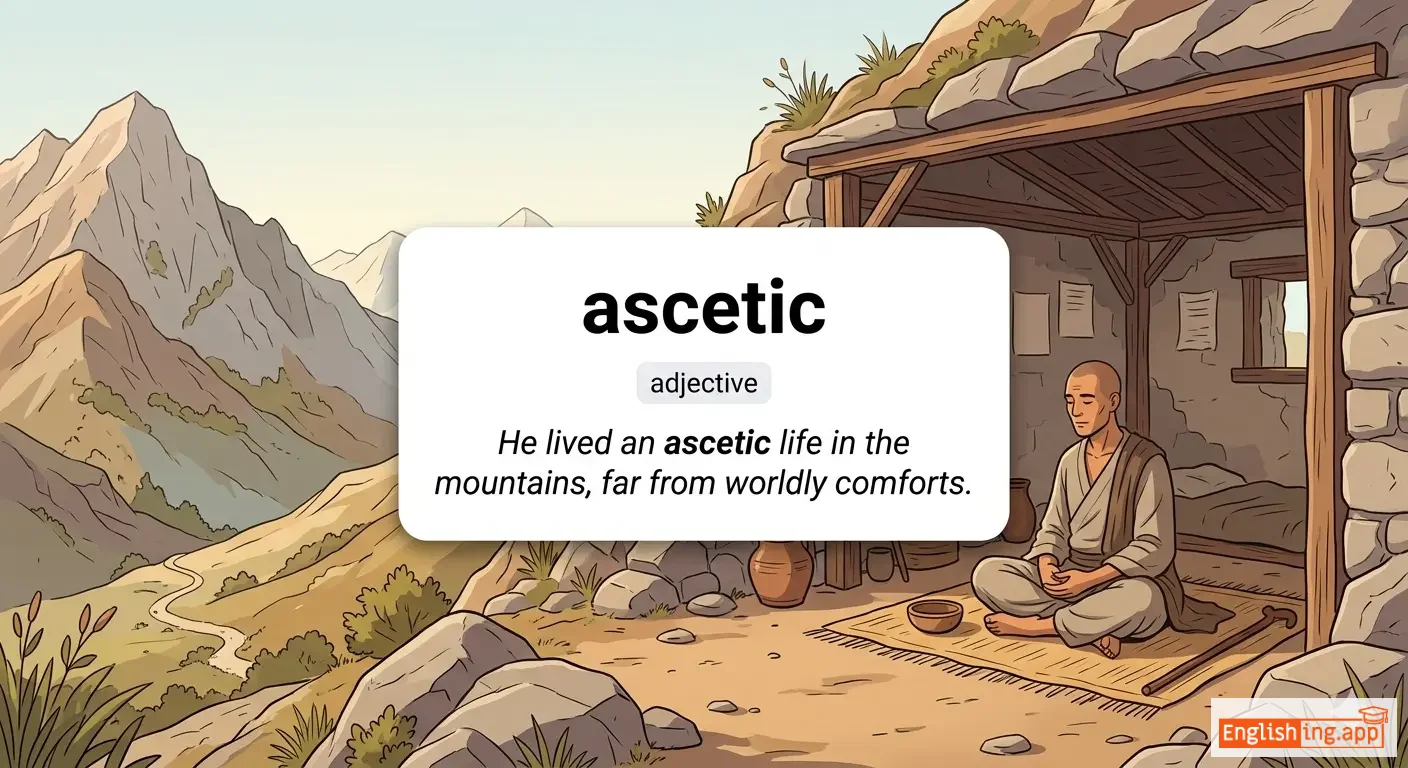
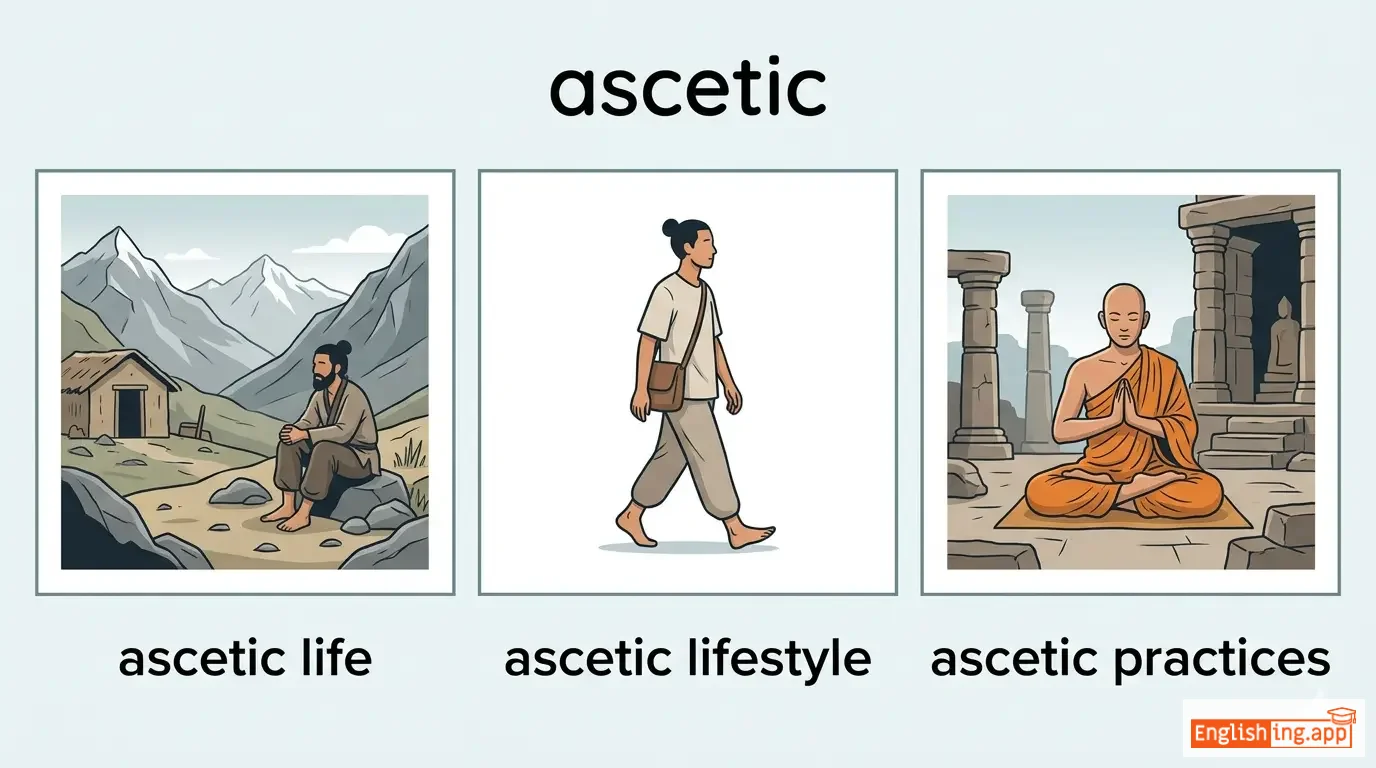
Practicing strict self-denial and abstaining from worldly pleasures, often for religious reasons.
••••••
|
He lived an ascetic life in the mountains, far from worldly comforts. |
他在山区过着苦行生活,远离世俗的安逸。
Tā zài shānqū guòzhe kǔ xíng shēnghuó, yuǎnlí shìsú de ānyì.
••••••
|
- •••••• | - •••••• | - •••••• |
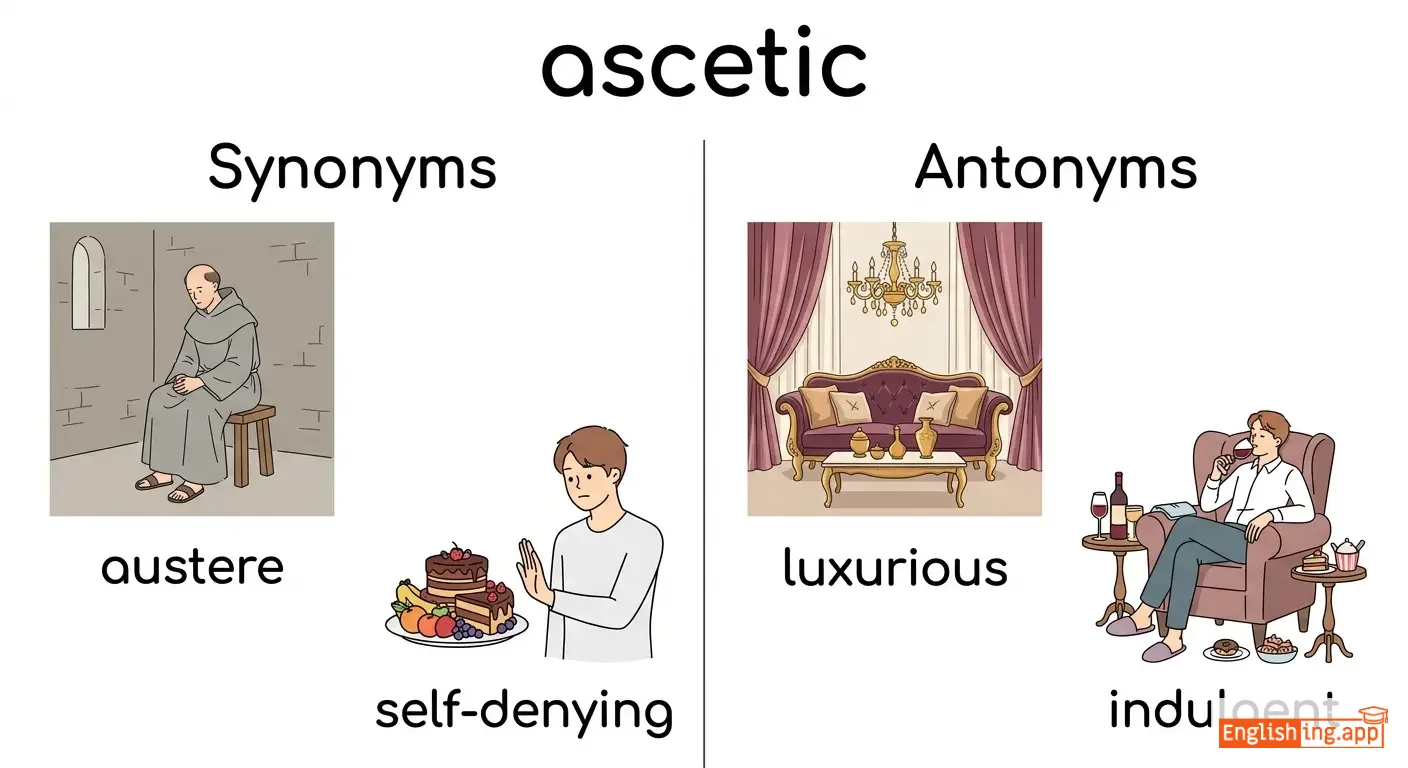
austere, self-denying, monkish, frugal, disciplined
••••••
|
luxurious, indulgent, hedonistic
••••••
|
ascetic life, ascetic lifestyle, ascetic practices, ascetic monk
••••••
|
苦行就像生活中的修行者,拒绝享乐,追求精神的平静。
••••••
|
|
📚
••••••
|
/əˈsɪdʒuəs/
adjective
(阿西迪乌斯)
••••••
|
|
勤奋的
qinfen de
••••••
|
- •••••• | - •••••• | - •••••• | - •••••• |
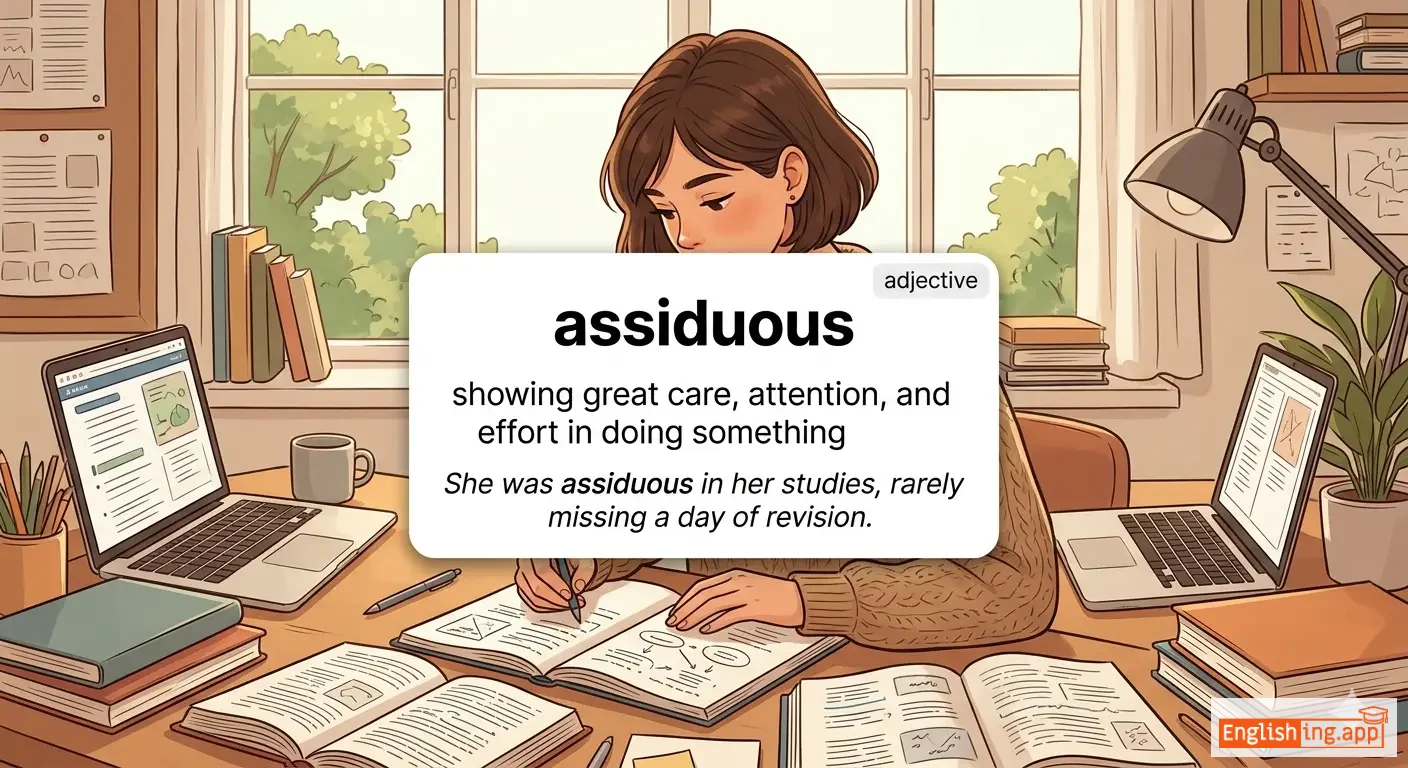
showing great care, attention, and effort in doing something
••••••
|
She was assiduous in her studies, rarely missing a day of revision. |
她在学习上很勤奋,几乎从不缺课。
Ta zai xuexi shang hen qinfen, jihu cong bu que ke.
••••••
|
assiduous effort |
persistent and careful effort
••••••
|
勤奋的努力
qinfen de nuli
••••••
|
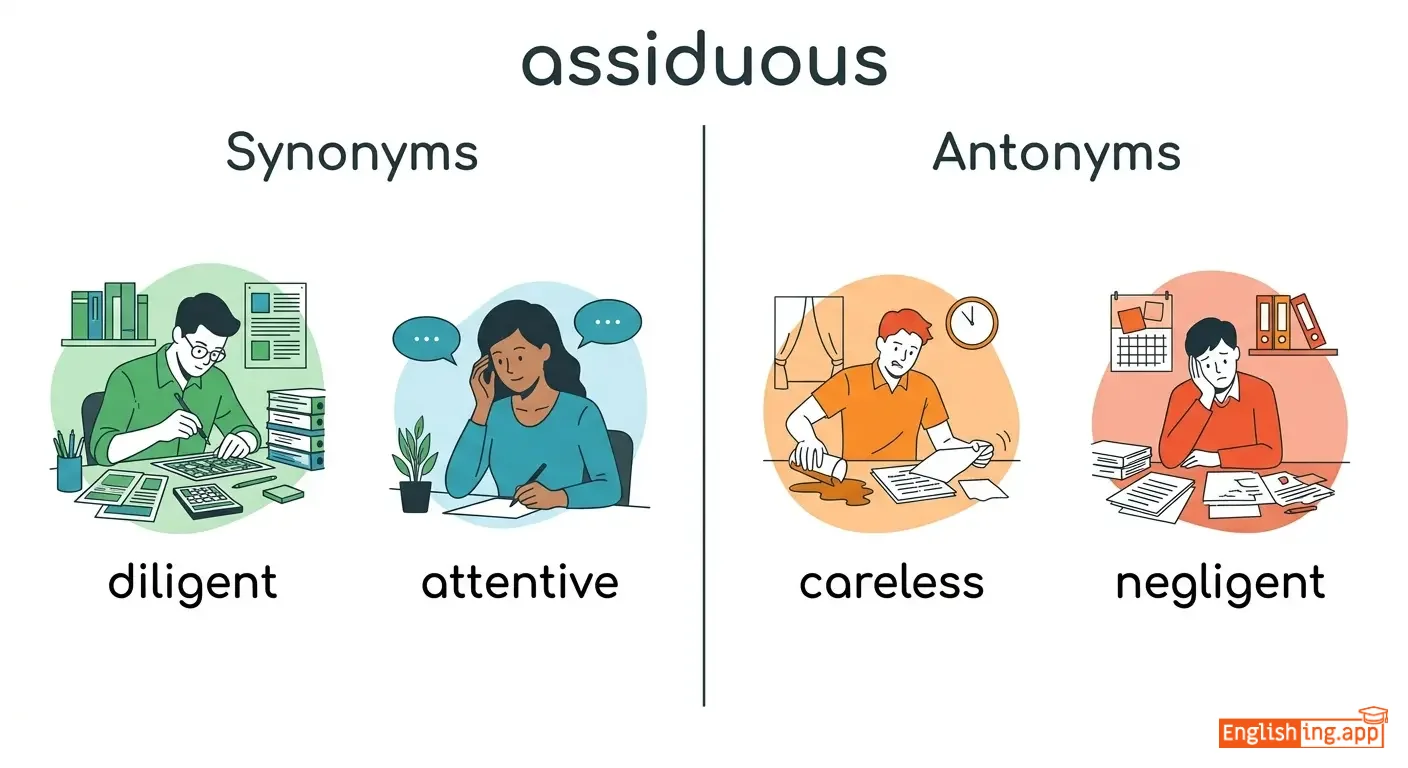
diligent, attentive, careful, industrious, meticulous
••••••
|
careless, negligent, lazy
••••••
|
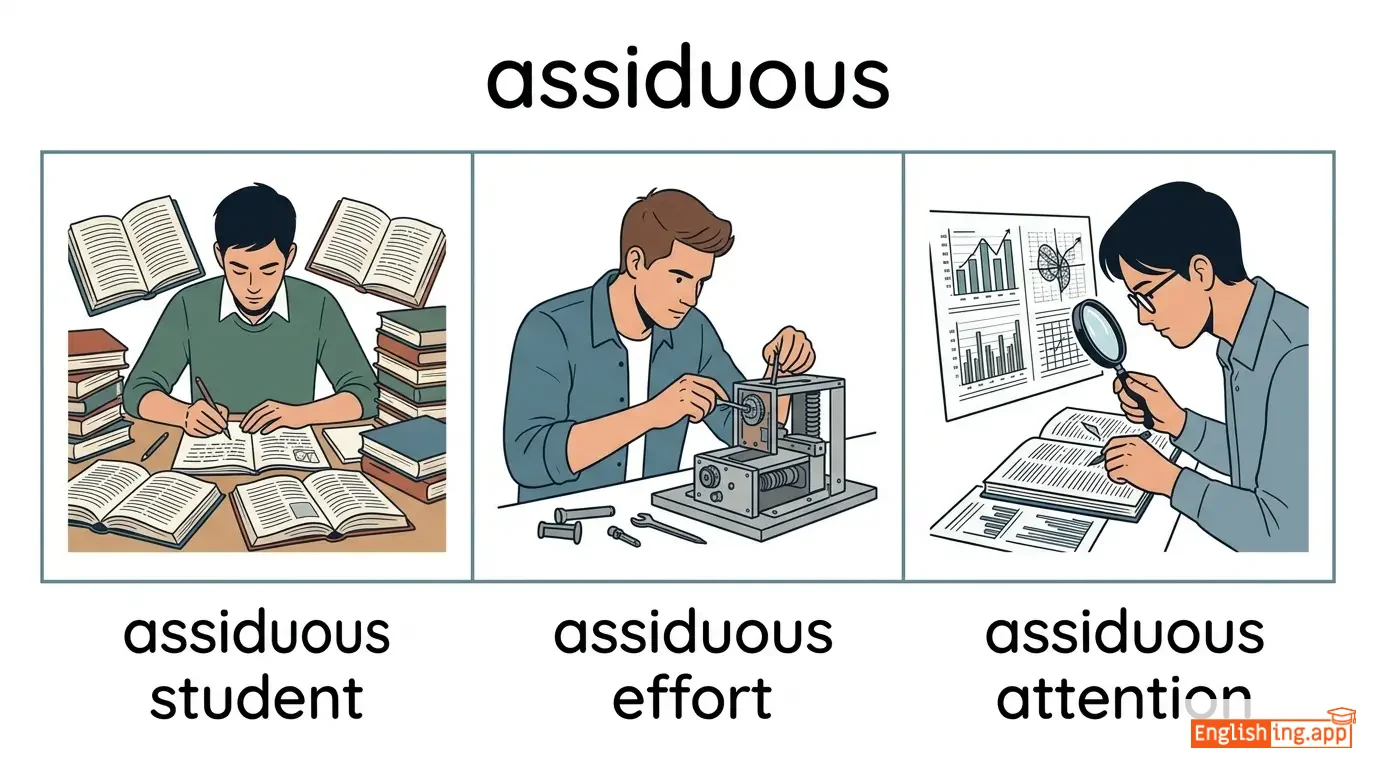
assiduous student, assiduous effort, assiduous attention, assiduous care
••••••
|
Assiduous就是勤奋的—每一天都努力,像个勤奋的学生。
••••••
|
|
😌
••••••
|
/əˈsweɪdʒ/
verb
(àsuìjié)
••••••
|
|
缓解
huǎn jiě
••••••
|
assuaged
àsuìjiéd
••••••
|
assuaged
àsuìjiéd
••••••
|
assuages
àsuìjiés
••••••
|
assuaging
àsuìjiéng
••••••
|
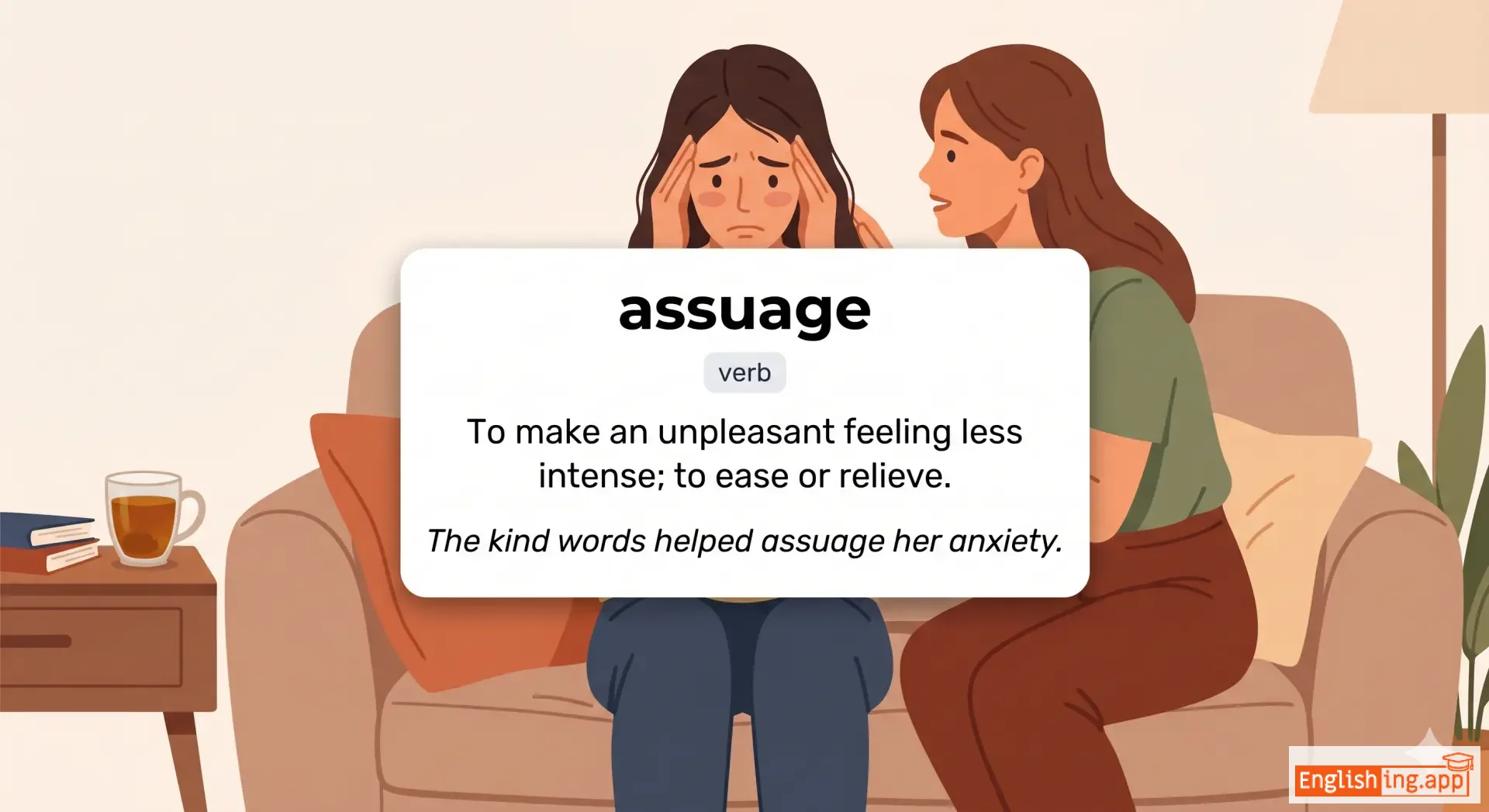
To make an unpleasant feeling less intense; to ease or relieve.
••••••
|
The kind words helped assuage her anxiety.
善意的话帮助缓解了她的焦虑。
••••••
|
善意的话帮助缓解了她的焦虑。
Shànyì de huà bāngzhù huǎn jiě le tā de jiāolǜ.
••••••
|
assuage one's fears
缓解某人的恐惧
••••••
|
to calm or reduce someone's fears
••••••
|
缓解某人的恐惧
huǎn jiě mǒu rén de kǒng jù
••••••
|
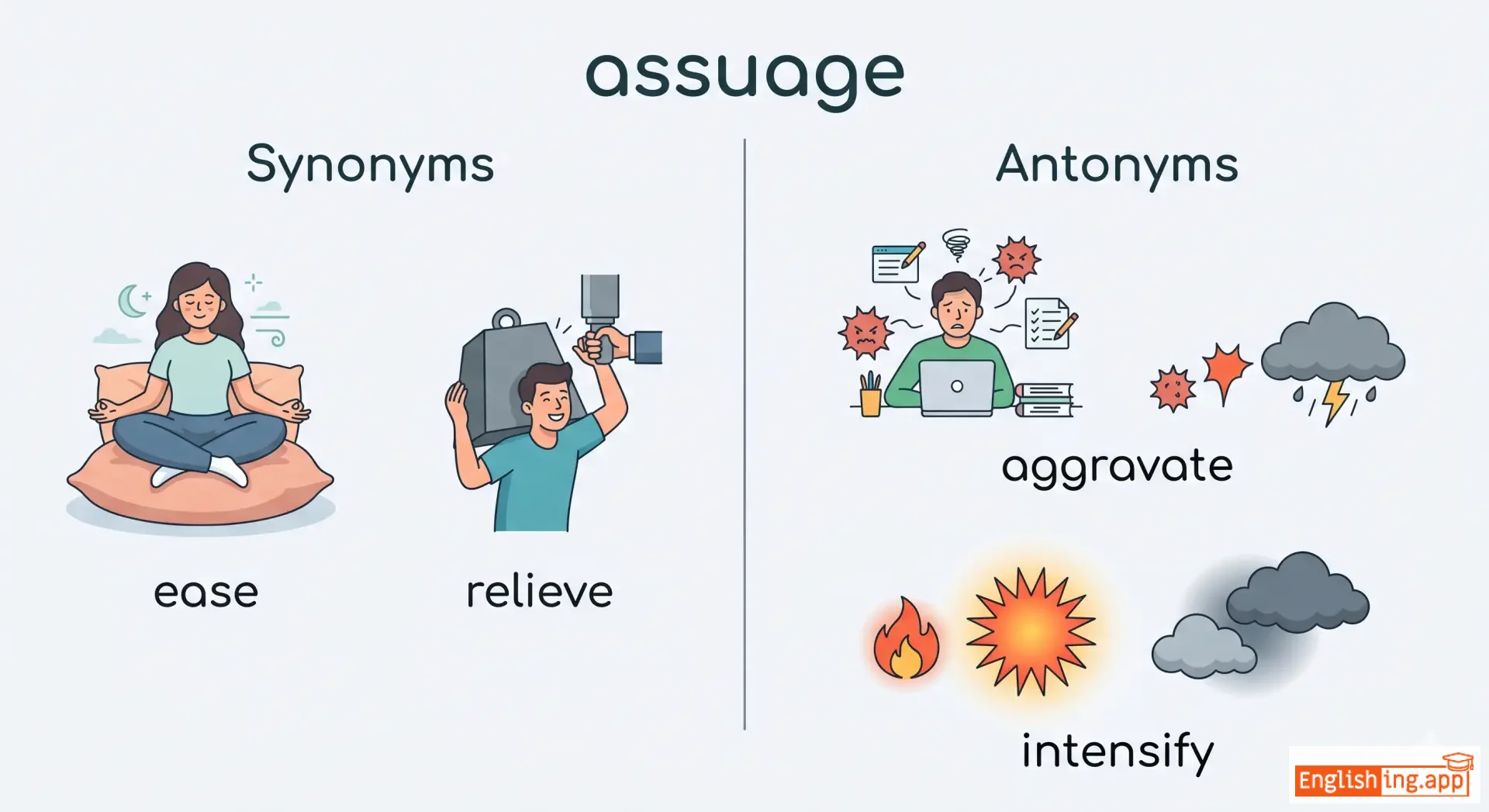
ease, relieve, alleviate, soothe, pacify
••••••
|
aggravate, intensify, worsen
••••••
|
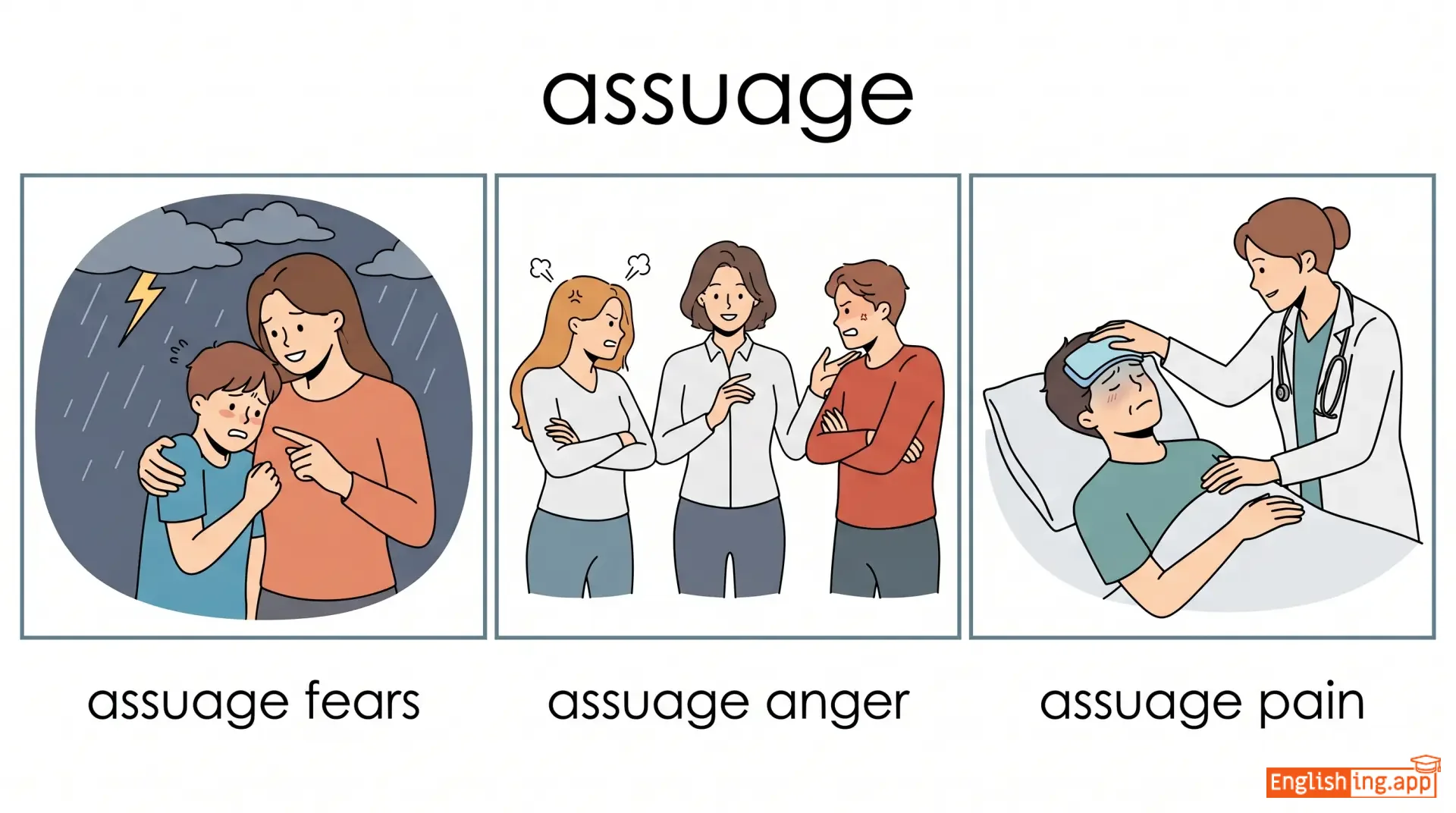
assuage fears, assuage anger, assuage pain
••••••
|
Assuage 意味着 '一种安慰信息' - 安慰信息
••••••
|
|
🔽
••••••
|
/əˈtɛnjueɪt/
verb
(减弱)
••••••
|
|
减弱
jian ruo
••••••
|
attenuated
减弱了
••••••
|
attenuated
减弱了
••••••
|
attenuates
减弱
••••••
|
attenuating
减弱中
••••••
|
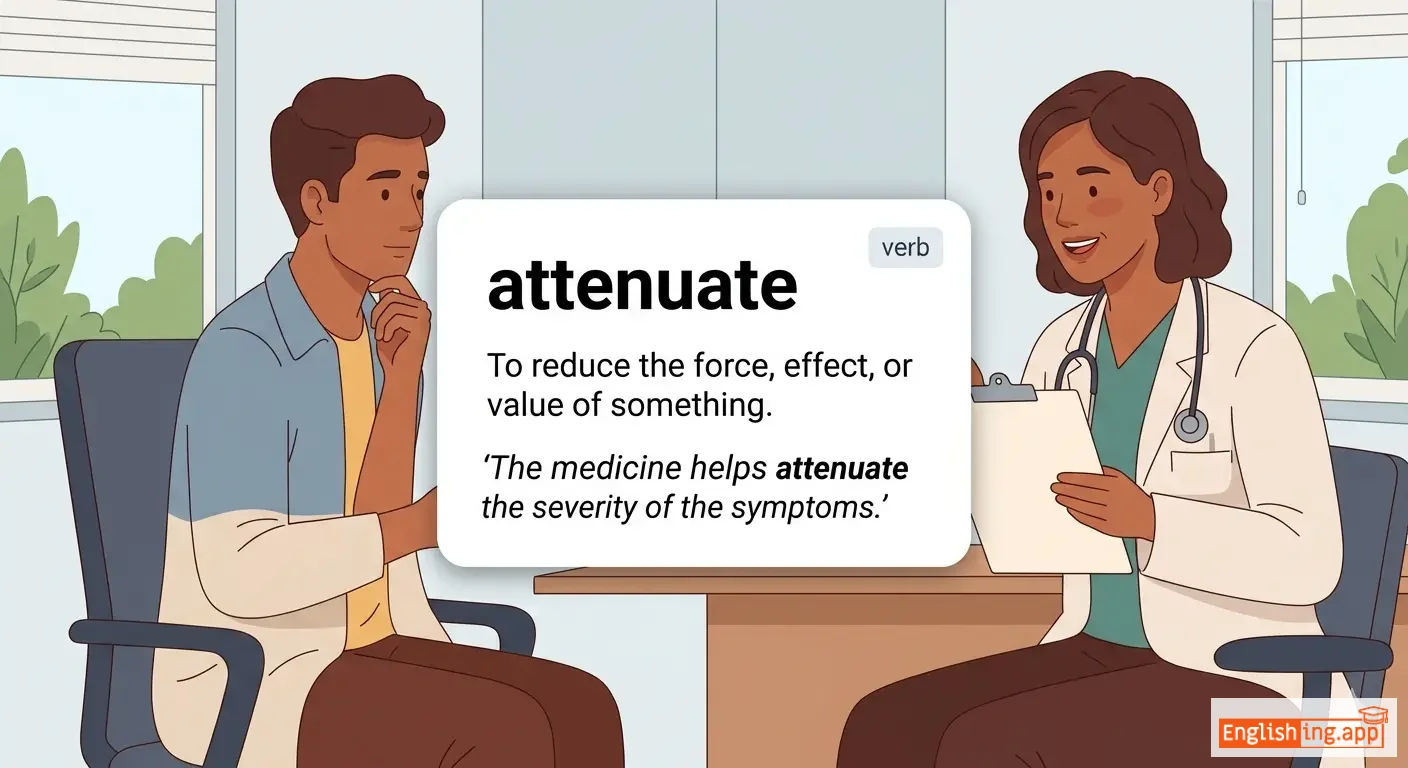
To reduce the force, effect, or value of something.
••••••
|
The medicine helps attenuate the severity of the symptoms.
这种药物有助于减轻症状的严重性。
••••••
|
这种药物有助于减轻症状的严重性。
Zhe zhong yao wu you zhu yu jian qing zheng zhuang de yan zhong xing.
••••••
|
- •••••• | - •••••• | - •••••• |
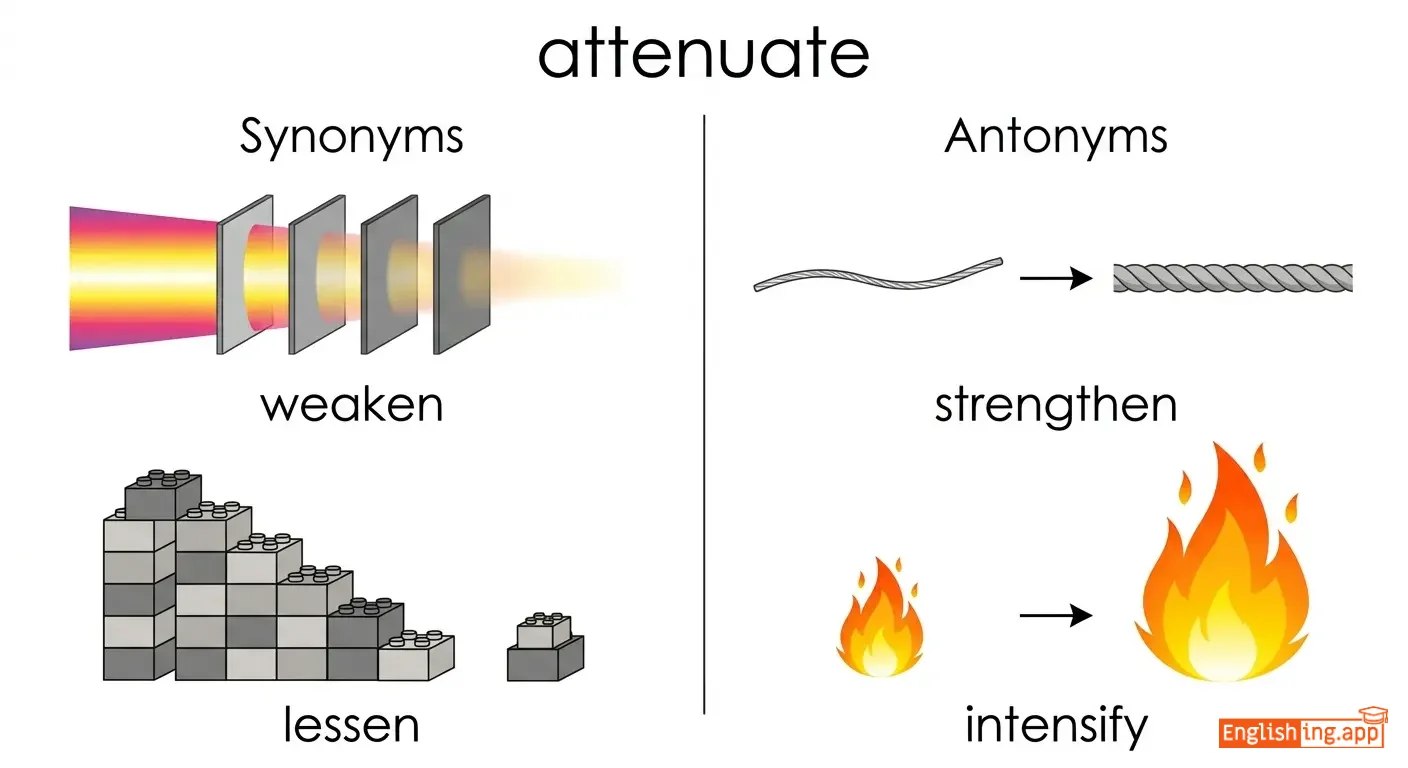
weaken, lessen, diminish, dilute, reduce
••••••
|
strengthen, intensify
••••••
|
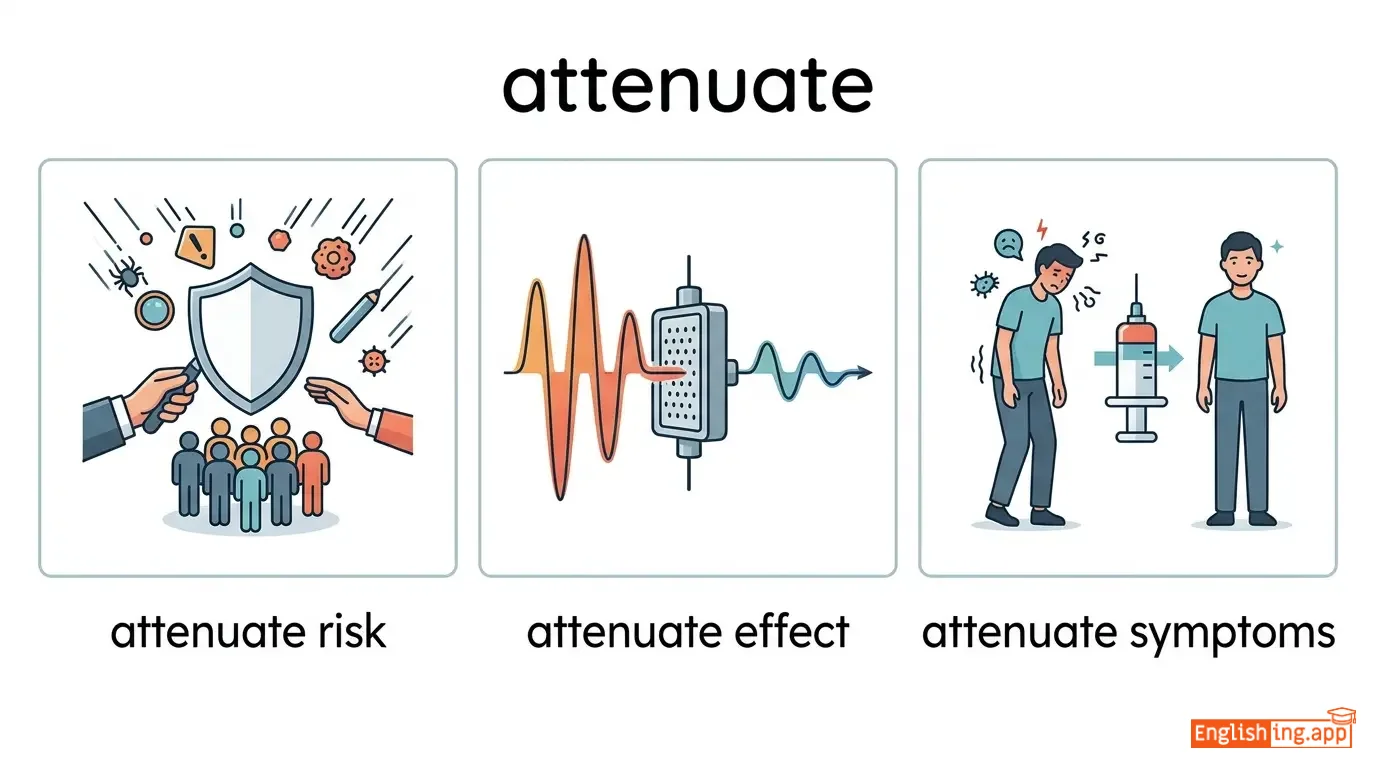
attenuate risk, attenuate effect, attenuate symptoms
••••••
|
Attenuate = 减弱 → 减弱.
••••••
|
|
🦁
••••••
|
/ɔːˈdeɪ.ʃəs/
adjective
(奥德修斯)
••••••
|
|
大胆
dàdǎn
••••••
|
- •••••• | - •••••• | - •••••• | - •••••• |
showing willingness to take bold risks; daring
••••••
|
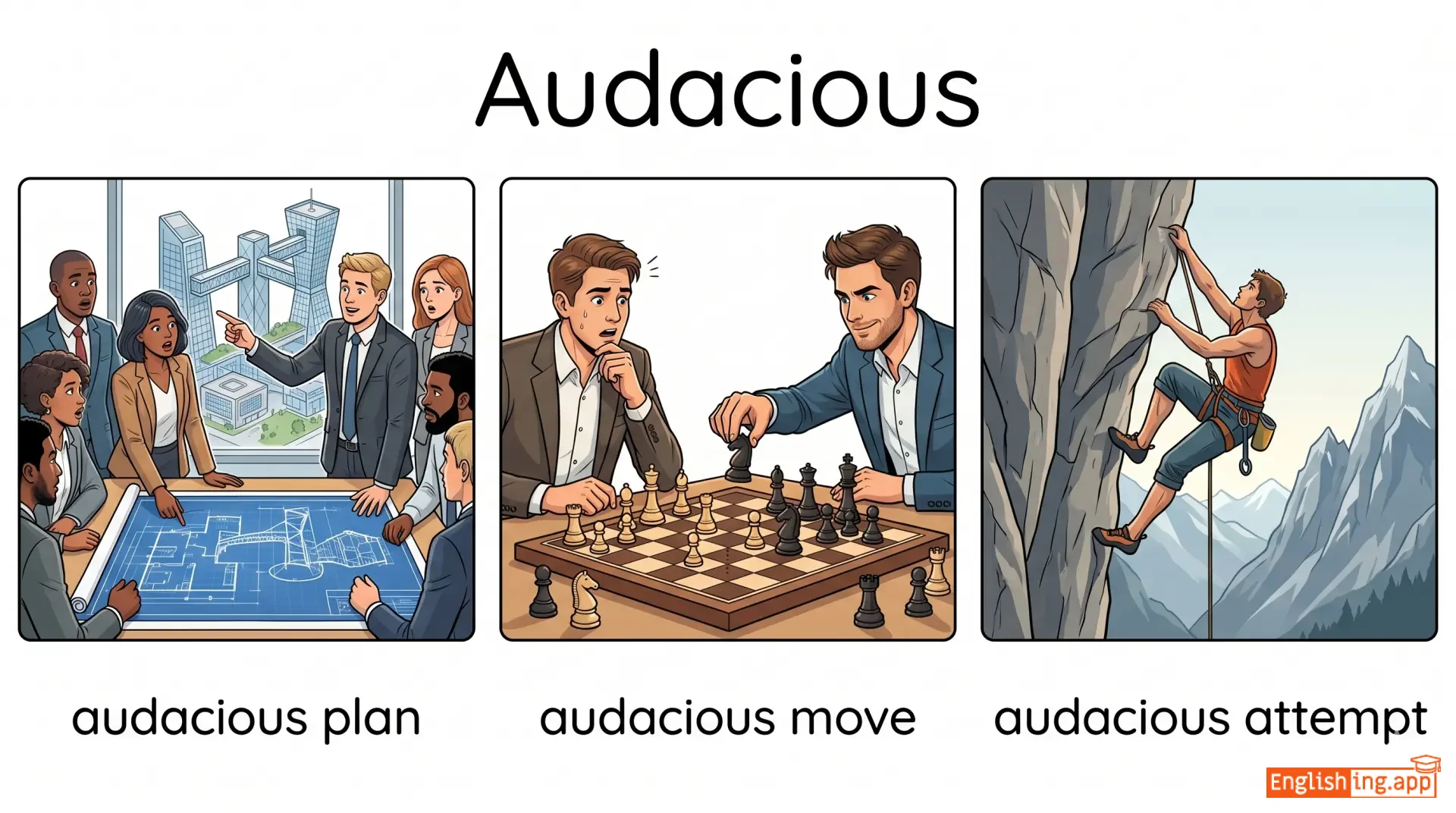
His audacious plan to climb the mountain without proper equipment shocked everyone. |
他毫不犹豫地提出了一个大胆的计划,要在没有适当设备的情况下攀登这座山,令所有人震惊。
Tā háo bù yóuyù dì tíchūle yīgè dàdǎn de jìhuà, yào zài méiyǒu shìdàng shèbèi de qíngkuàng xià pān dēng zhè zuò shān, lìng suǒyǒu rén zhènjīng.
••••••
|
- •••••• | - •••••• | - •••••• |
bold, daring, fearless, brave
••••••
|
timid, cautious, careful, cowardly
••••••
|
audacious plan, audacious move, audacious behavior
••••••
|
大胆 = '大'表示大, '胆'表示胆量, 一个人勇敢面对所有挑战
••••••
|
|
🥋
••••••
|
/ɔːˈstɪə/
adjective
(奥斯特)
••••••
|
|
严格,简朴
ying2 ge2, jian3 pu3
••••••
|
- •••••• | - •••••• | - •••••• | - •••••• |
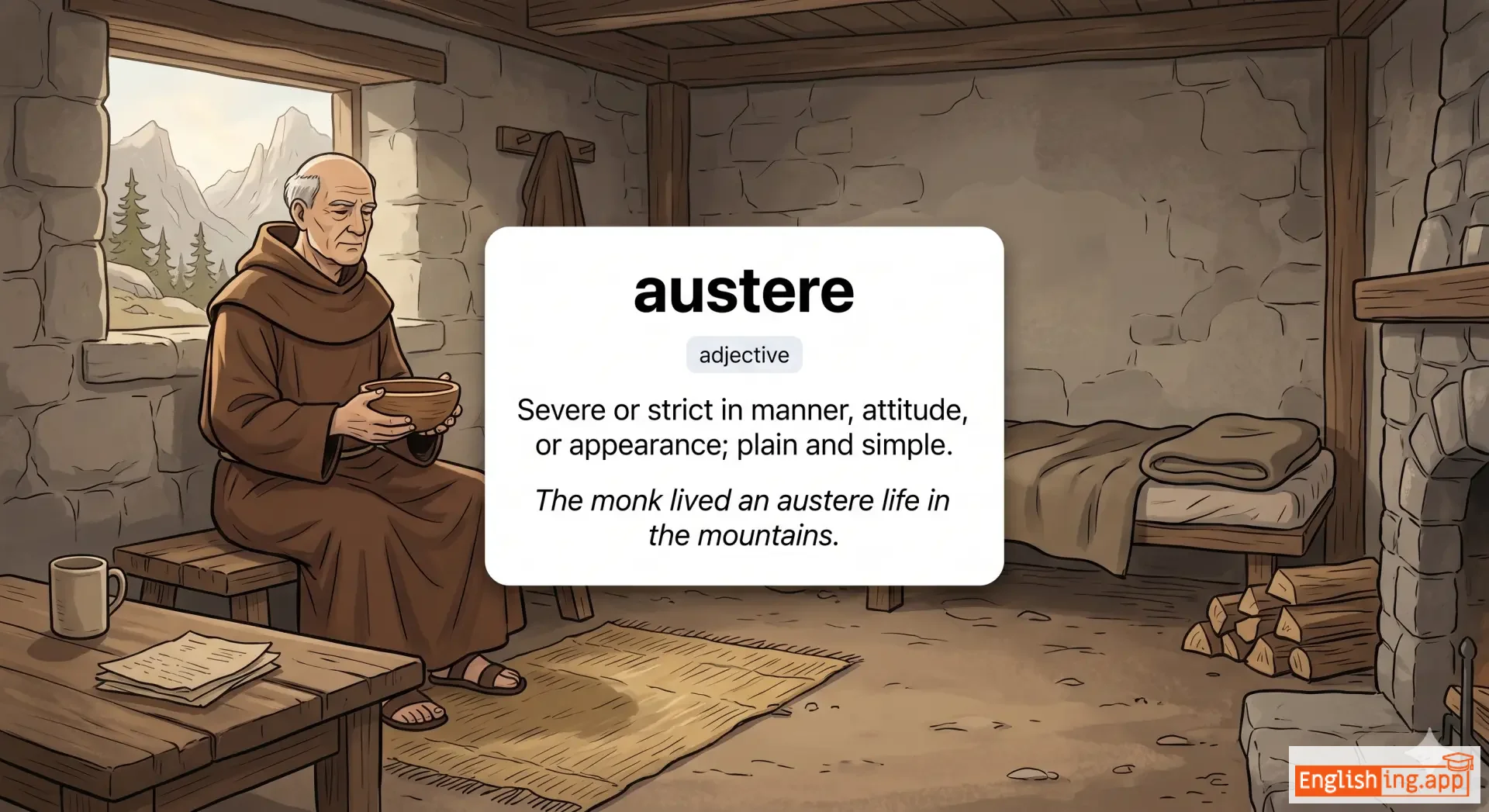
Severe or strict in manner, attitude, or appearance; plain and simple.
••••••
|
The monk lived an austere life in the mountains. |
和尚在山中过着严格的生活。
He shang zai shan zhong guo zhe ying2 ge2 de shenghuo.
••••••
|
- •••••• | - •••••• | - •••••• |
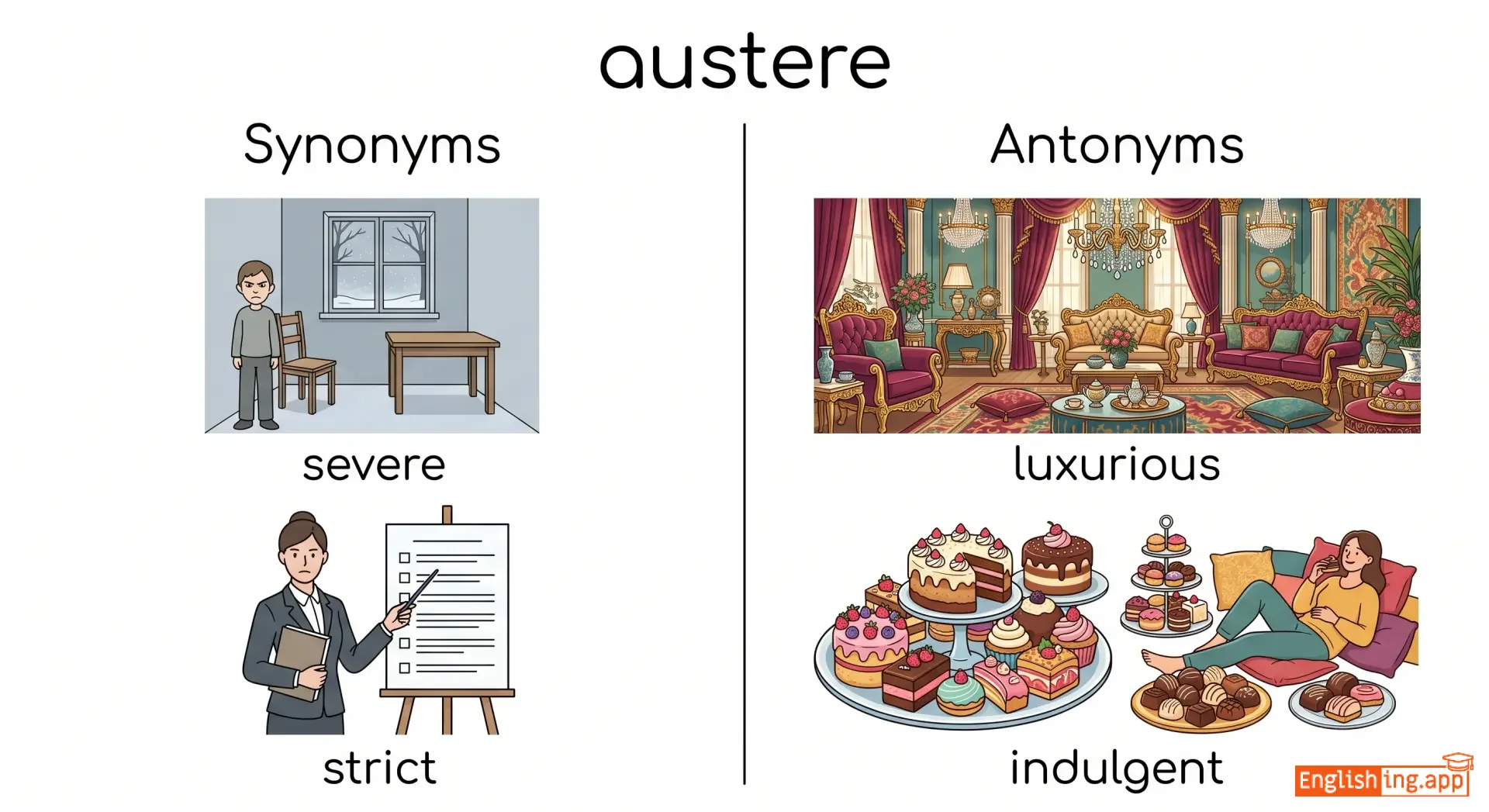
severe, strict, stern, simple, plain
••••••
|
luxurious, indulgent, elaborate
••••••
|
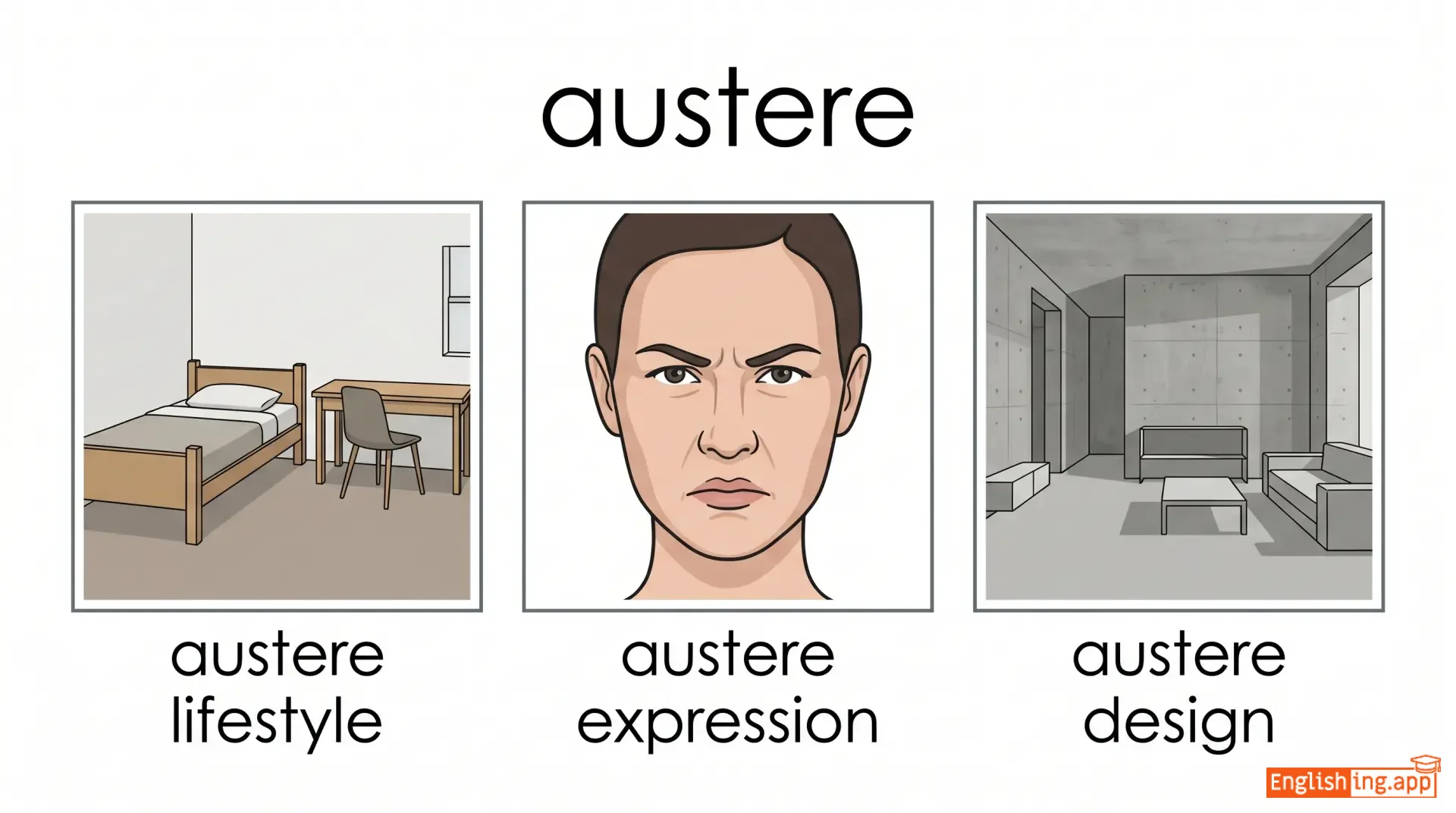
austere lifestyle, austere expression, austere design
••••••
|
Austere代表严格,不奢华,只追求简单。
••••••
|
|
🚗
••••••
|
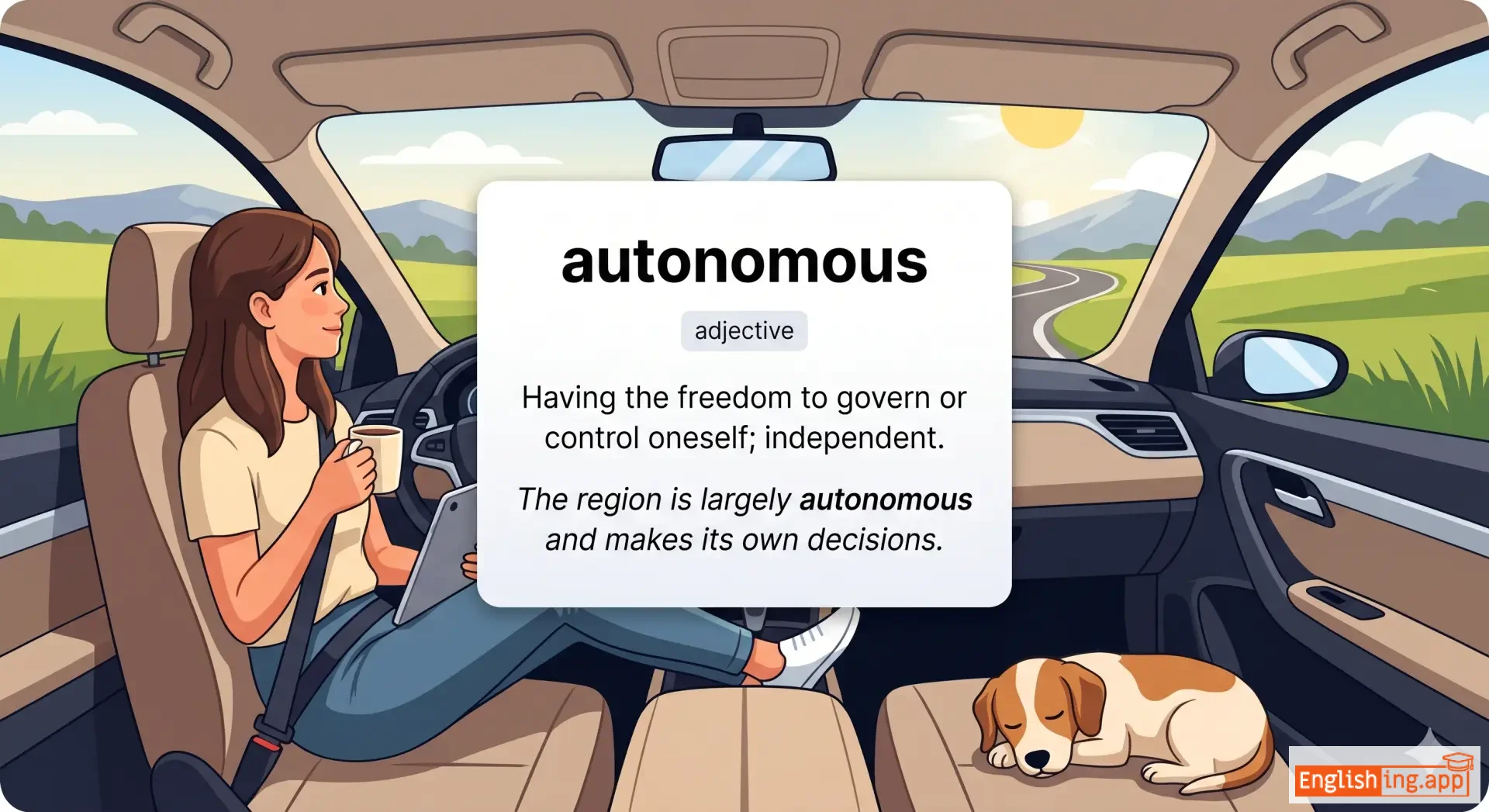
/ɔːˈtɒnəməs/
adjective
(自动的)
••••••
|
|
自动
zidong
••••••
|
- •••••• | - •••••• | - •••••• | - •••••• |
Having the freedom to govern or control oneself; independent.
••••••
|
The region is largely autonomous and makes its own decisions. |
该地区在很大程度上是自治的,并自行做出决定。
Gai diqu zai hendà chéngdù shàng shì zìzhì de, bìng zìxíng zuòchū juédìng.
••••••
|
autonomous vehicle |
A self-driving vehicle that operates without human control.
••••••
|
自动驾驶车辆
zidong jiashi cheliang
••••••
|
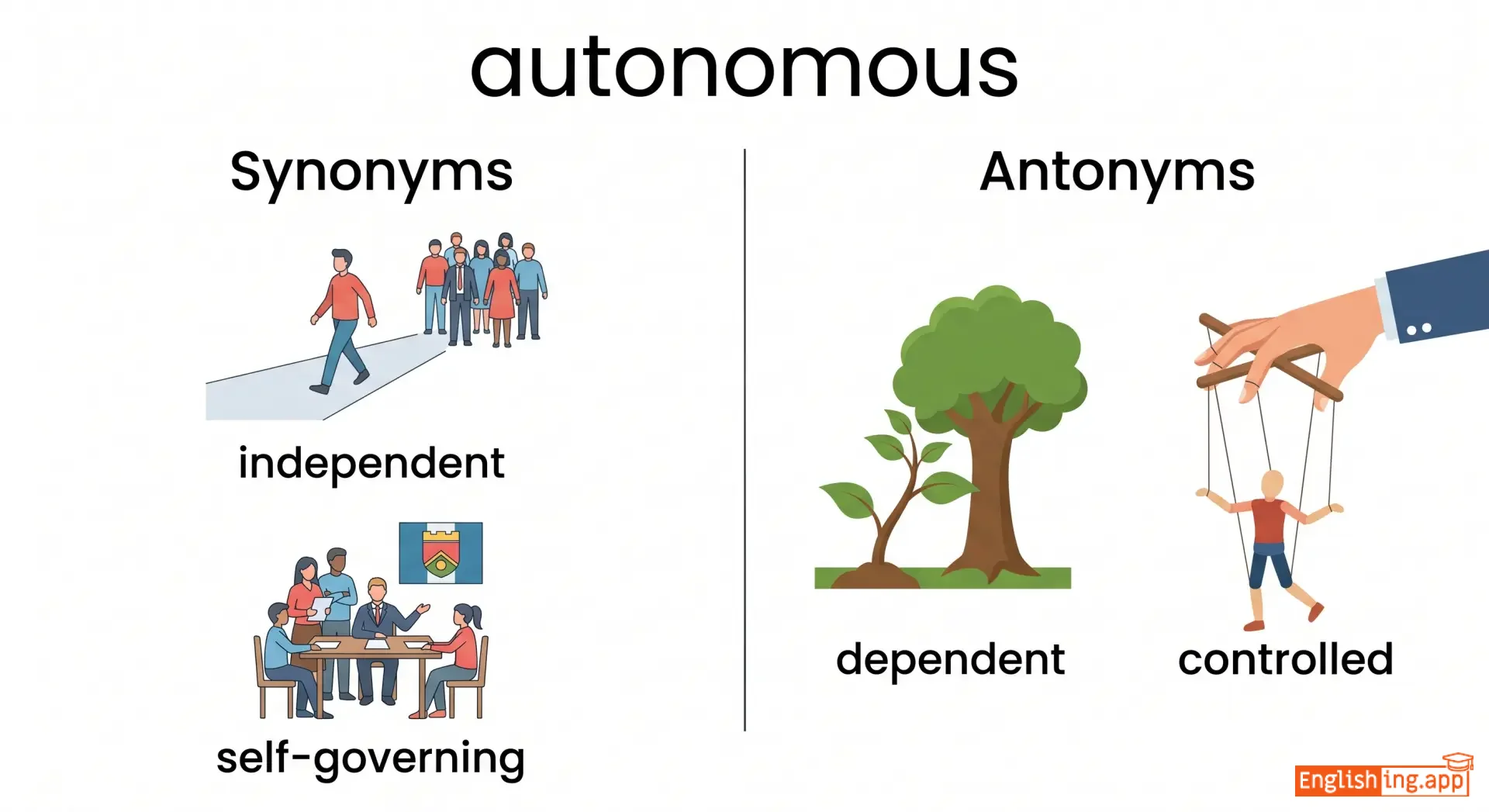
independent, self-governing, self-sufficient, sovereign
••••••
|
dependent, controlled, subordinate
••••••
|
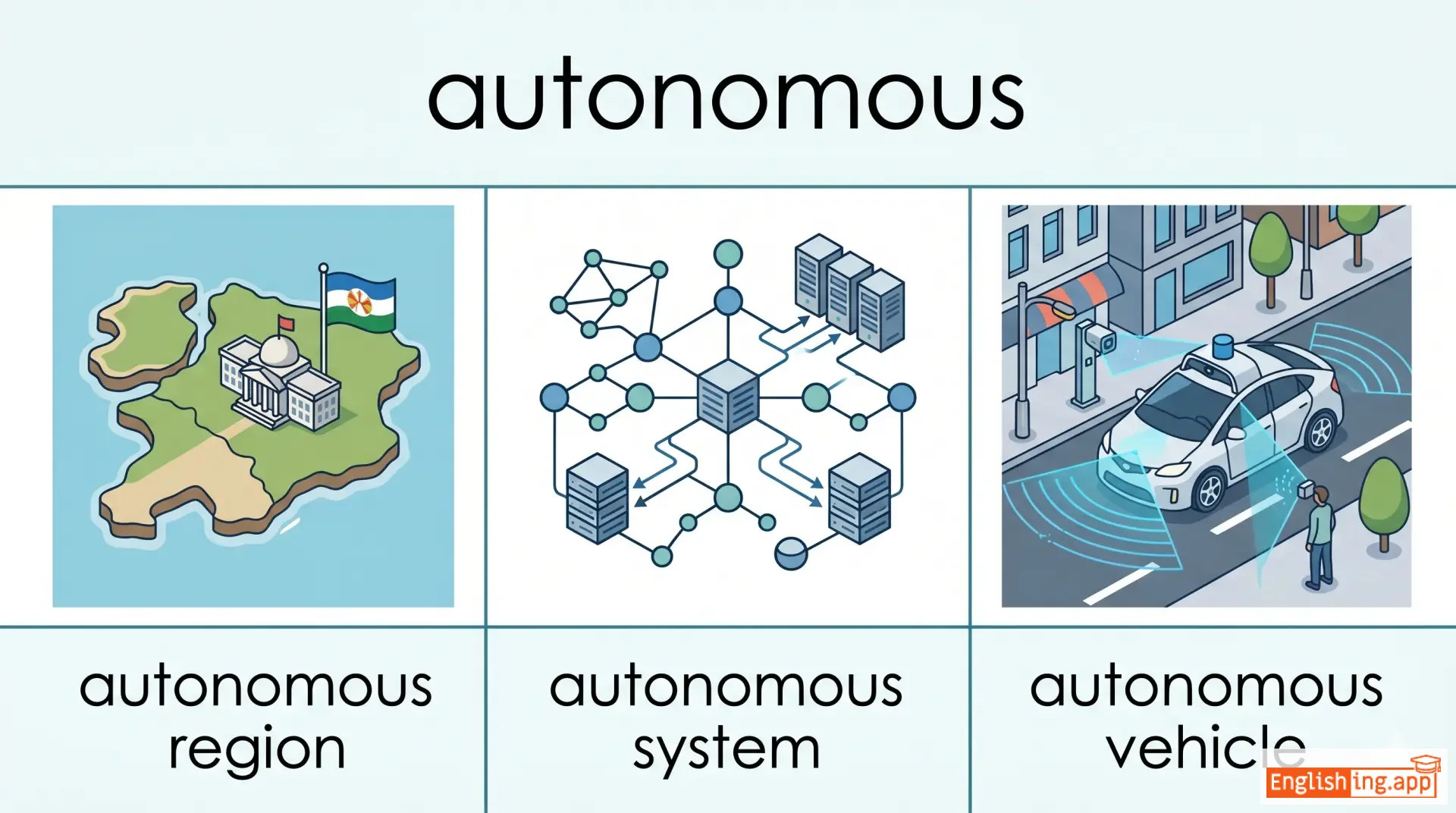
autonomous region, autonomous system, autonomous vehicle, autonomous decision
••••••
|
Auto (自己) + nomos (法律) = 按照自己的法律行驶,自动。
••••••
|
|
📢
••••••
|
/əˈvɜːr/
verb
(艾维尔)
••••••
|

|
坚称
jiancheng
••••••
|
averred
艾维尔德
••••••
|
averred
艾维尔德
••••••
|
avers
艾维尔斯
••••••
|
averring
艾维灵
••••••
|
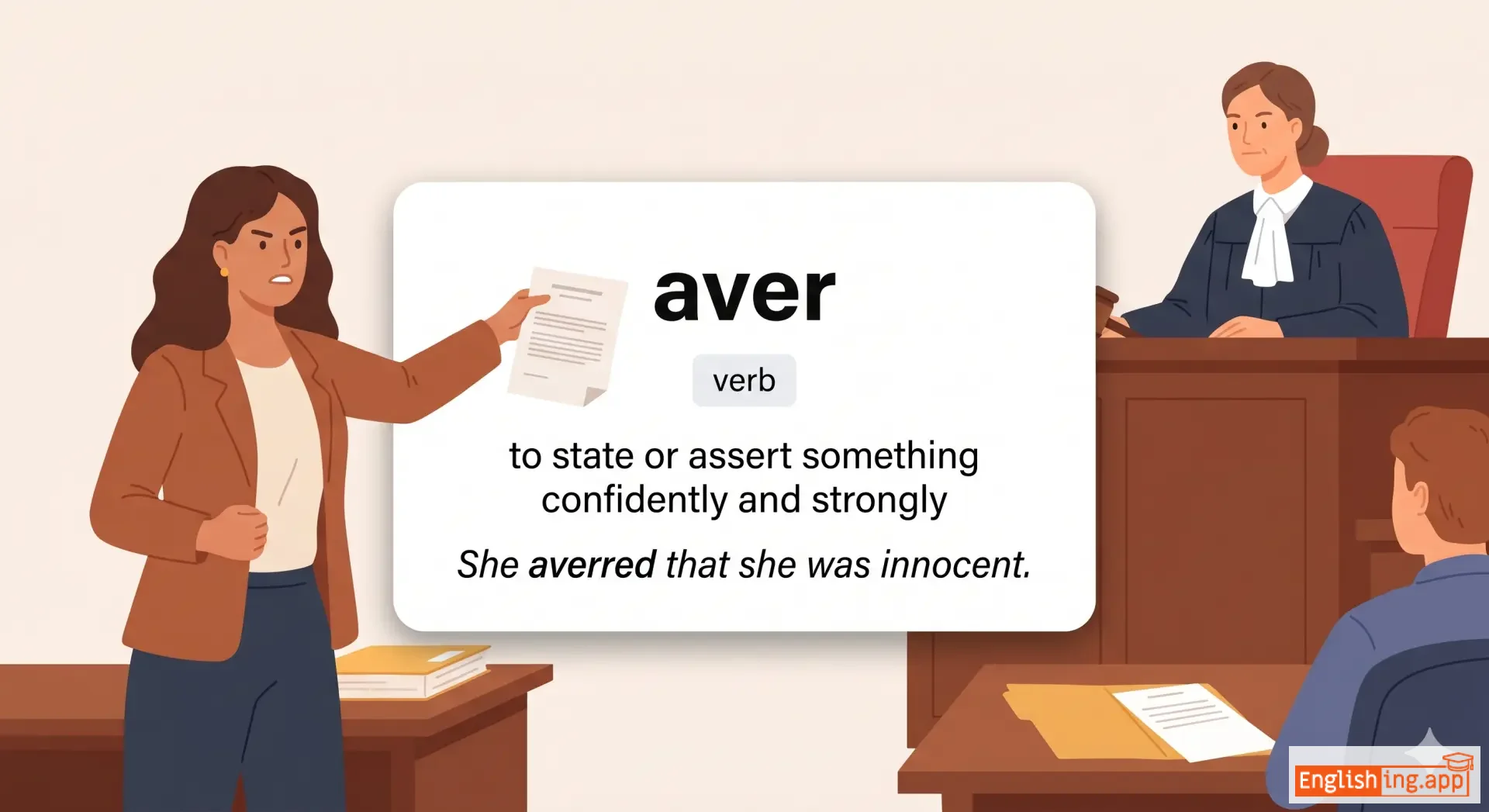
to state or assert something confidently and strongly
••••••
|
She averred that she was innocent.
她坚称她是无辜的。
••••••
|
她坚称她是无辜的。
Ta jiancheng ta shi wugu de.
••••••
|
- •••••• | - •••••• | - •••••• |
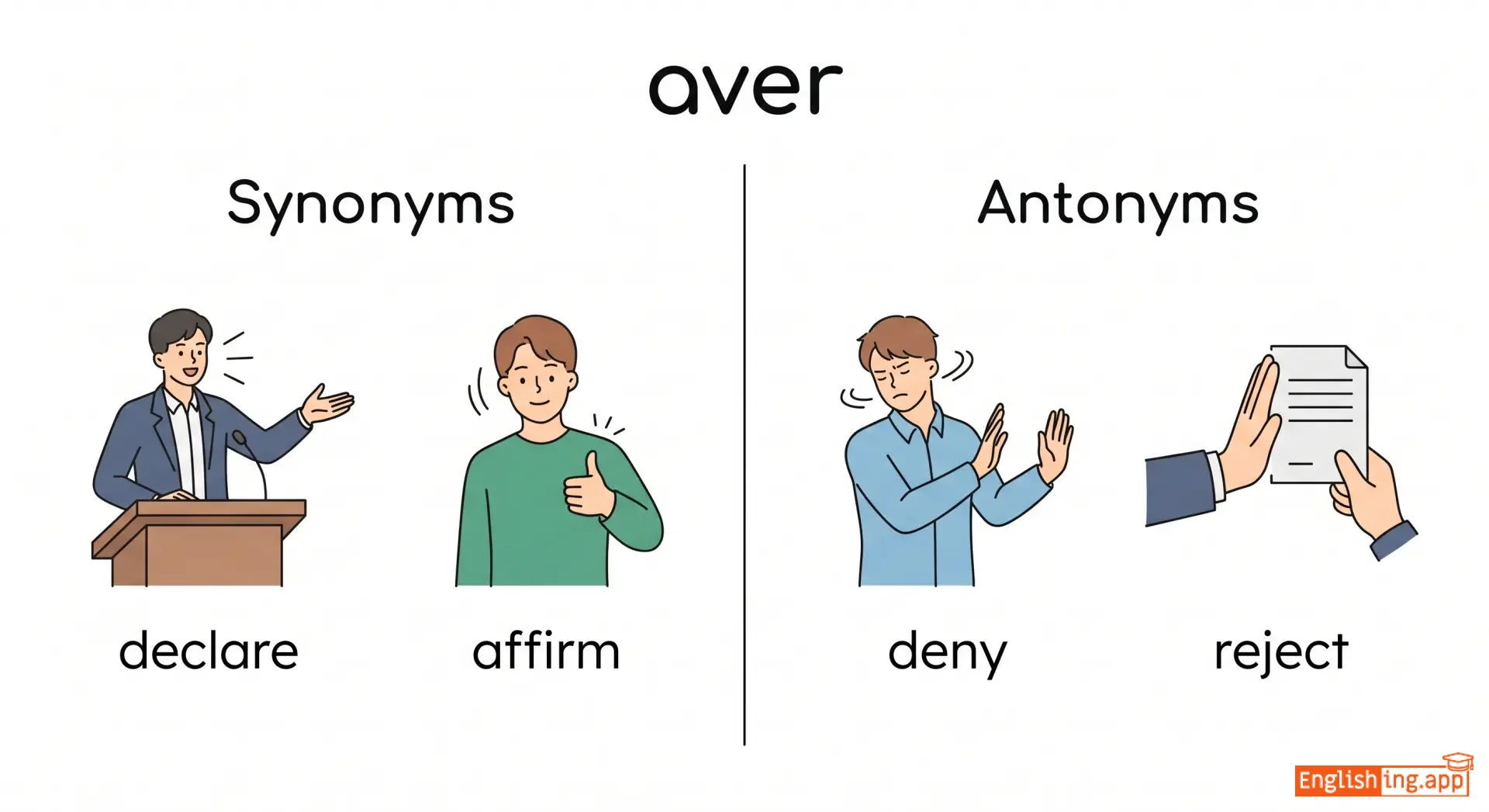
declare, affirm, assert, claim
••••••
|
deny, reject, contradict
••••••
|
aver the truth, aver innocence, aver firmly, confidently aver
••••••
|
AVER 就是当你坚定地宣称某事时。
••••••
|
|
😴
••••••
|
/bəˈnɑːl/ or /ˈbeɪnəl/
adjective
(ba-nál)
••••••
|
|
平庸
pingyong
••••••
|
- •••••• | - •••••• | - •••••• | - •••••• |
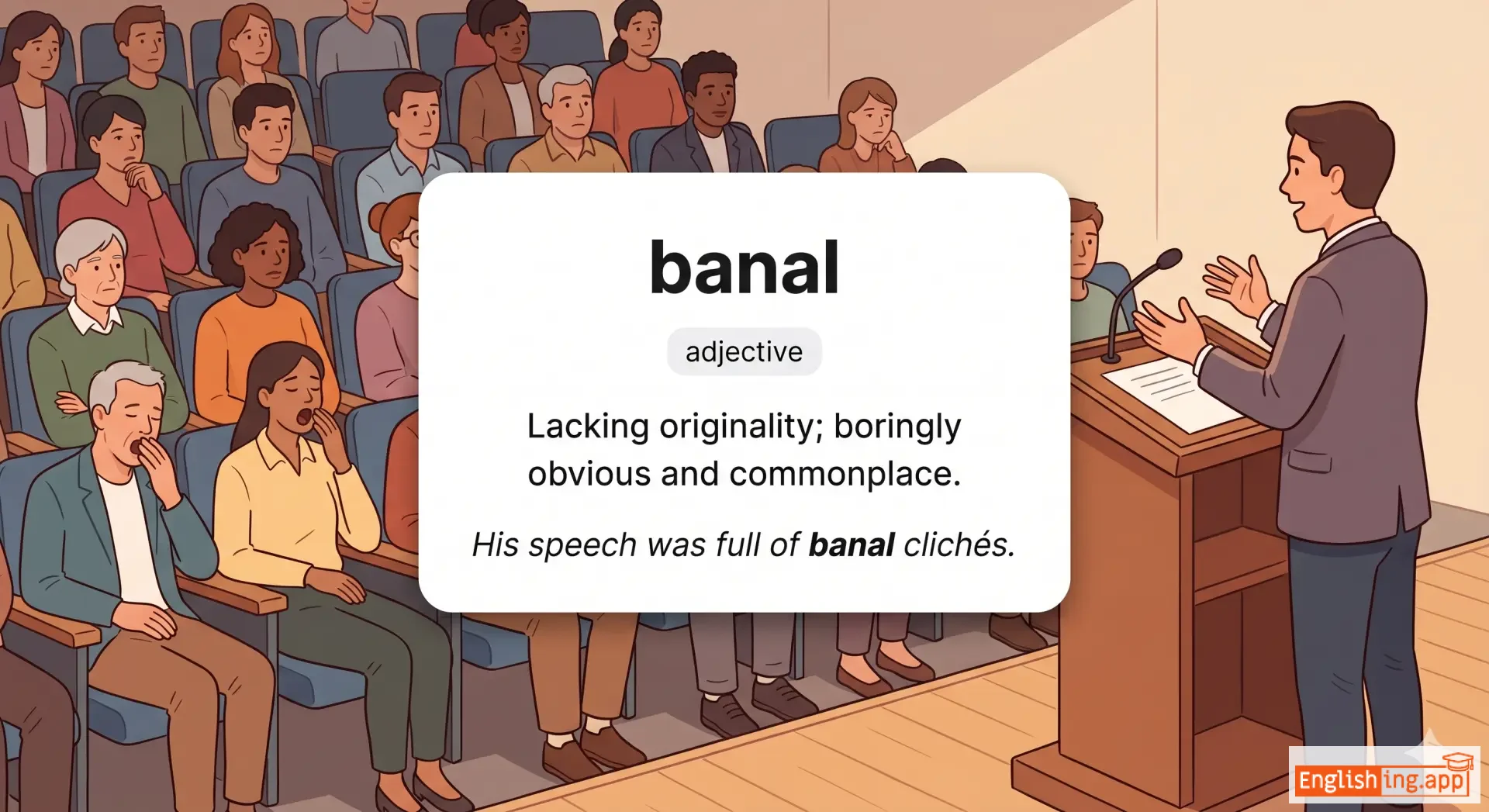
Lacking originality; boringly obvious and commonplace.
••••••
|
His speech was full of banal clichés. |
他的演讲充满了平庸的陈词滥调。
Tā de yǎnjiǎng chōngmǎnle píngyōng de chéncí làndiào.
••••••
|
- •••••• | - •••••• | - •••••• |
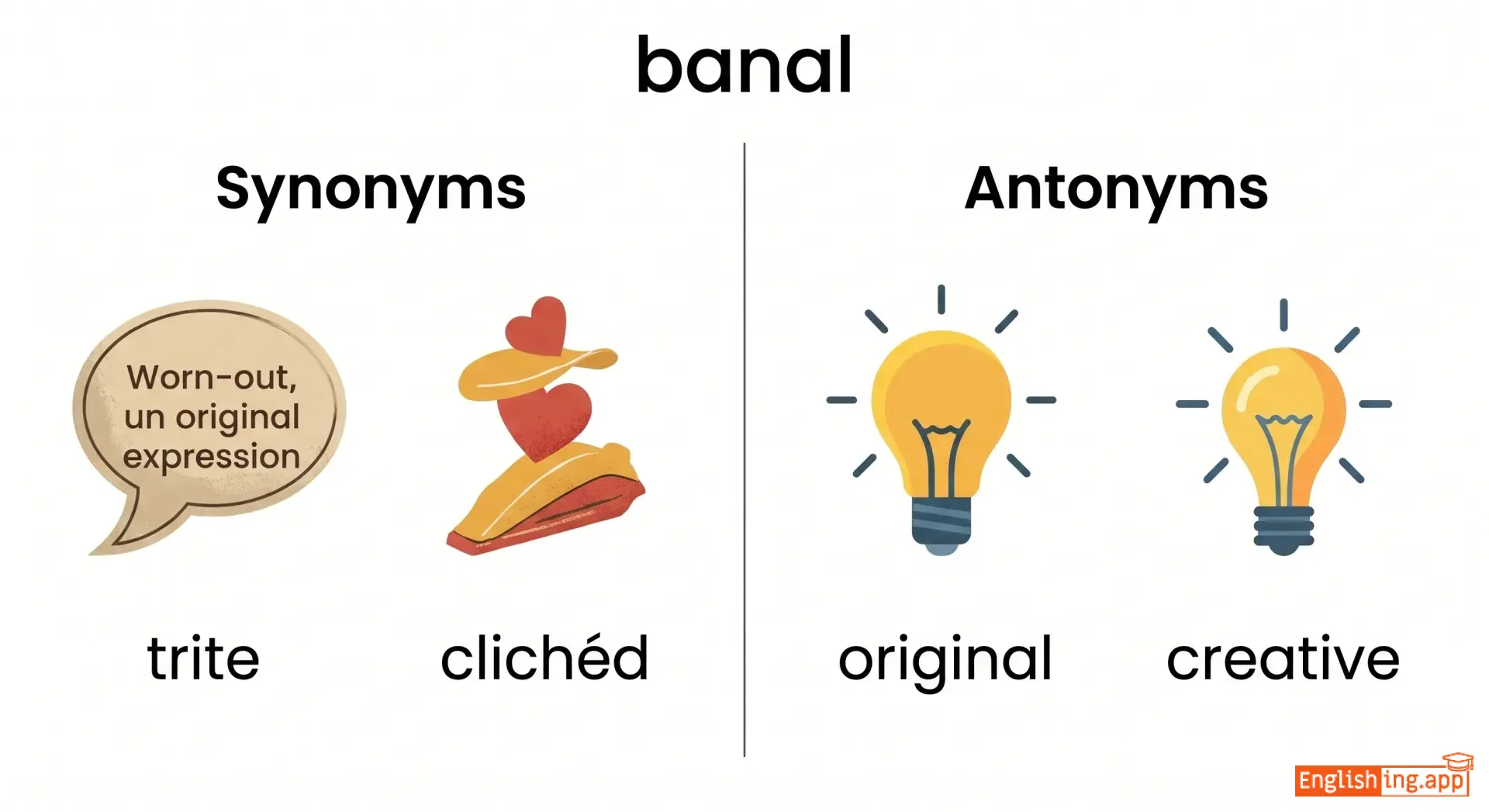
trite, clichéd, ordinary, predictable, dull
••••••
|
original, creative, unusual
••••••
|
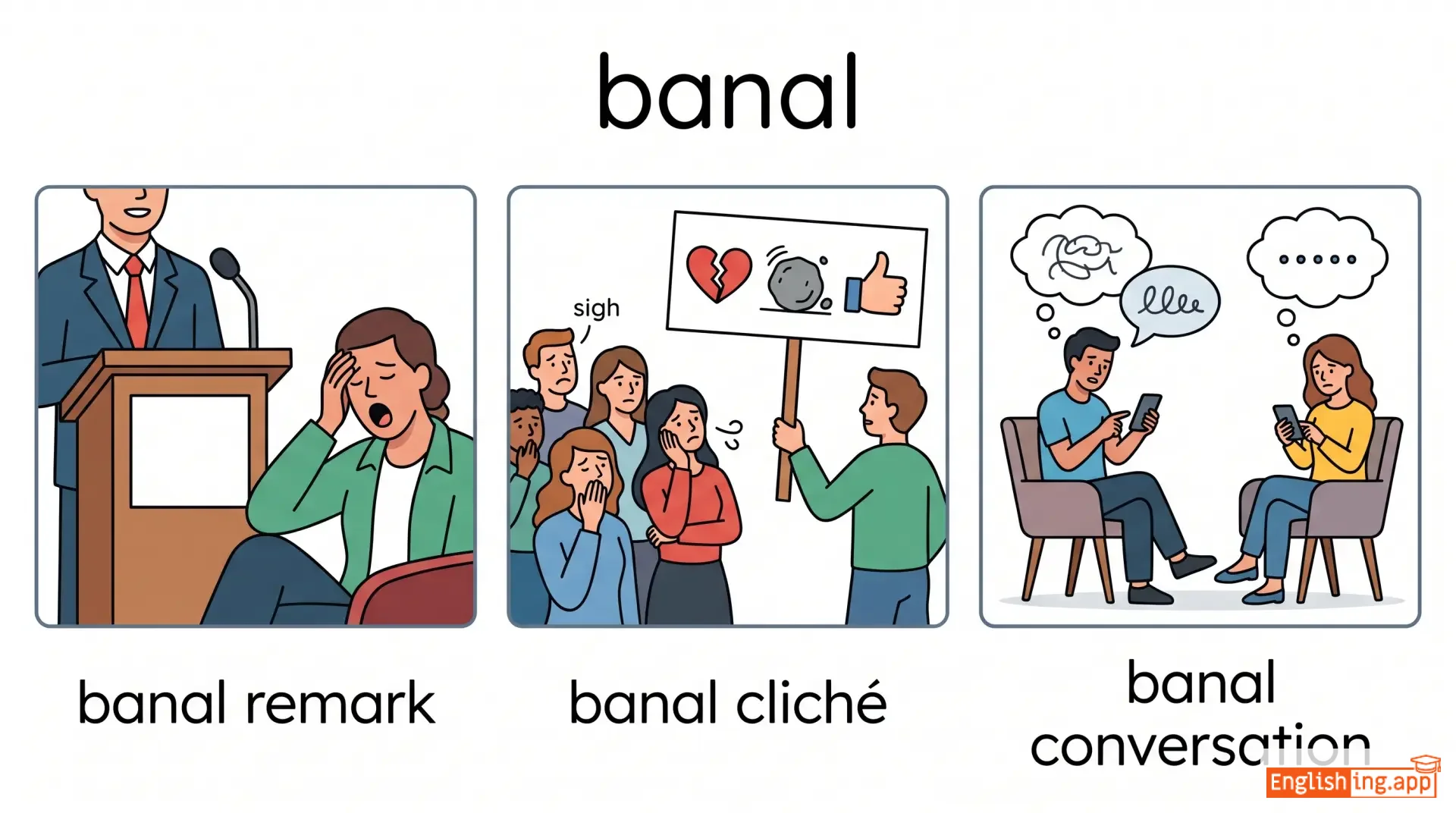
banal remark, banal cliché, banal conversation, banal story
••••••
|
Banal 意味着无聊和普通 – 平凡的事物。
••••••
|
|
🎭
••••••
|
/bɪˈlaɪ/
verb
(bílái)
••••••
|

|
掩饰
yǎnshì
••••••
|
belied
bǐlái
••••••
|
belied
bǐlái
••••••
|
belies
bílái
••••••
|
belying
bīlái
••••••
|
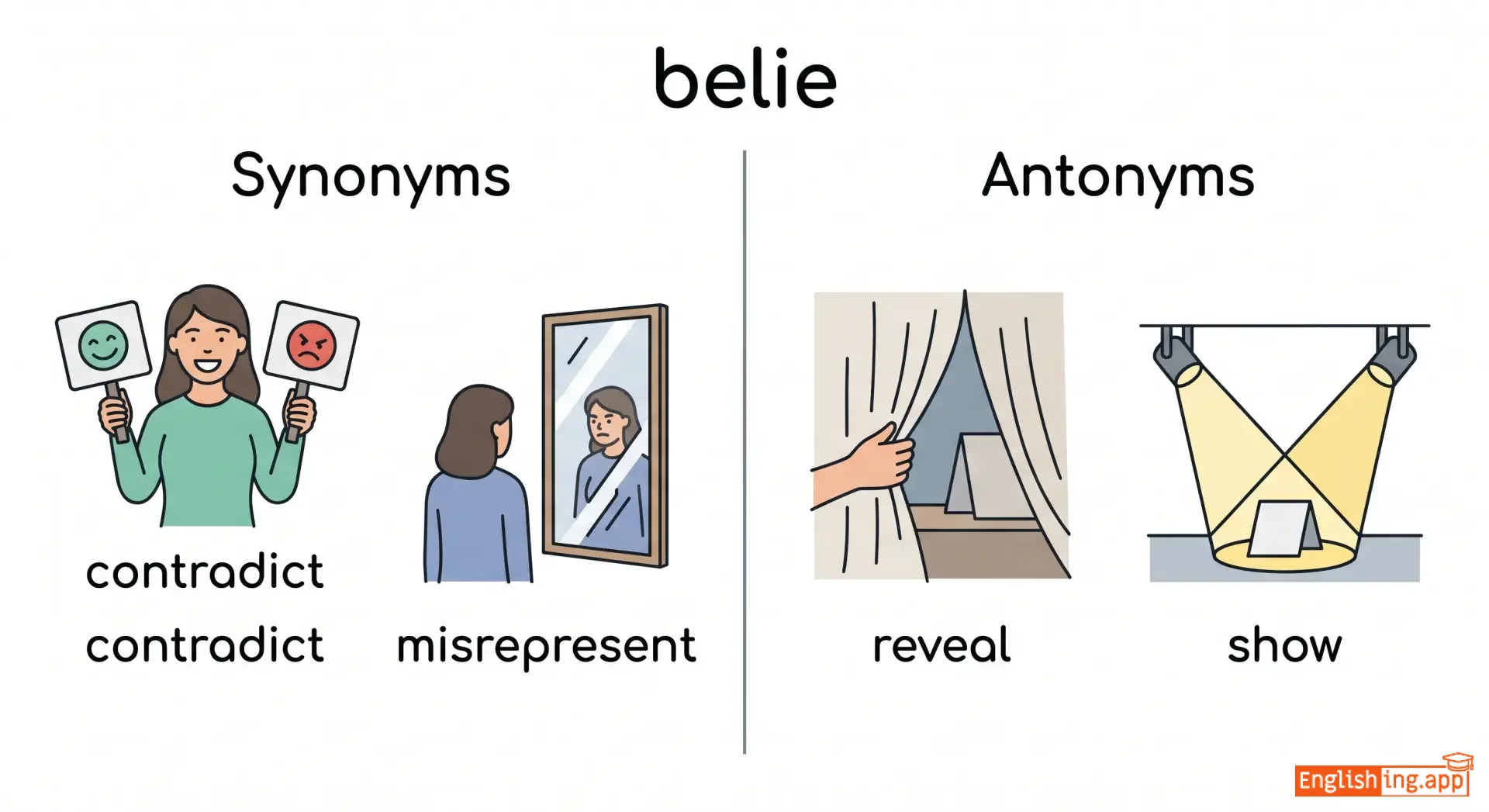
To give a false impression of something; to contradict.
••••••
|
His calm face belied his inner anxiety.
His calm face belied his inner anxiety.
••••••
|
他平静的面容掩饰了他内心的焦虑。
Tā píngjìng de miànróng yǎnshìle tā nèixīn de jiāolǜ.
••••••
|
- •••••• | - •••••• | - •••••• |
contradict, misrepresent, disguise, falsify, distort
••••••
|
reveal, show, represent
••••••
|
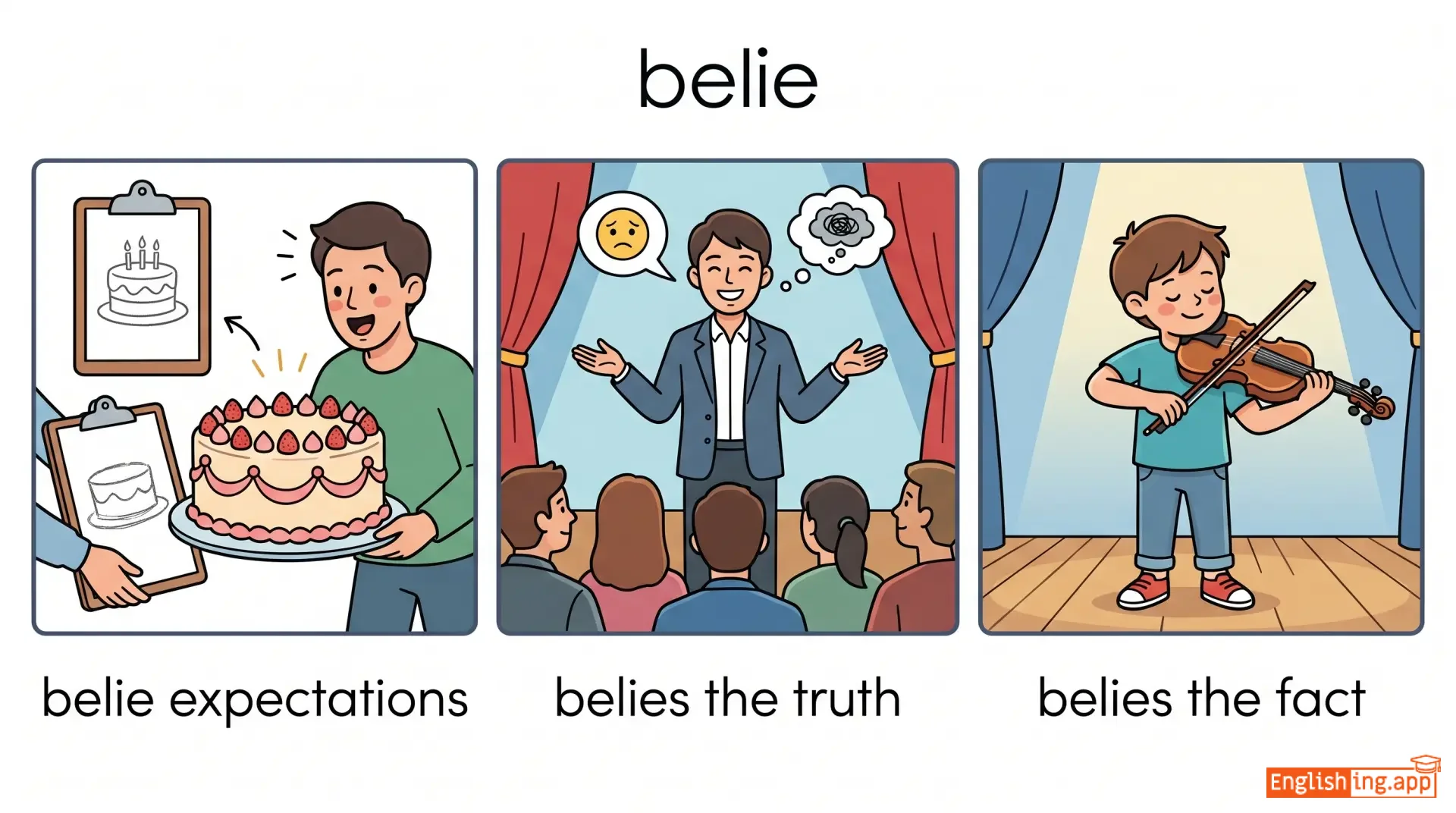
belie expectations, belies the truth, belies the fact, belied his nature
••••••
|
Belie 是 Believe 的反义词—看见的并非真实。
••••••
|
|
🌟
••••••
|
/bəˈnɛfɪsənt/
adjective
(贝内费森特)
••••••
|
|
仁慈的, 慷慨的
réncí de, kāngkǎi de
••••••
|
- •••••• | - •••••• | - •••••• | - •••••• |
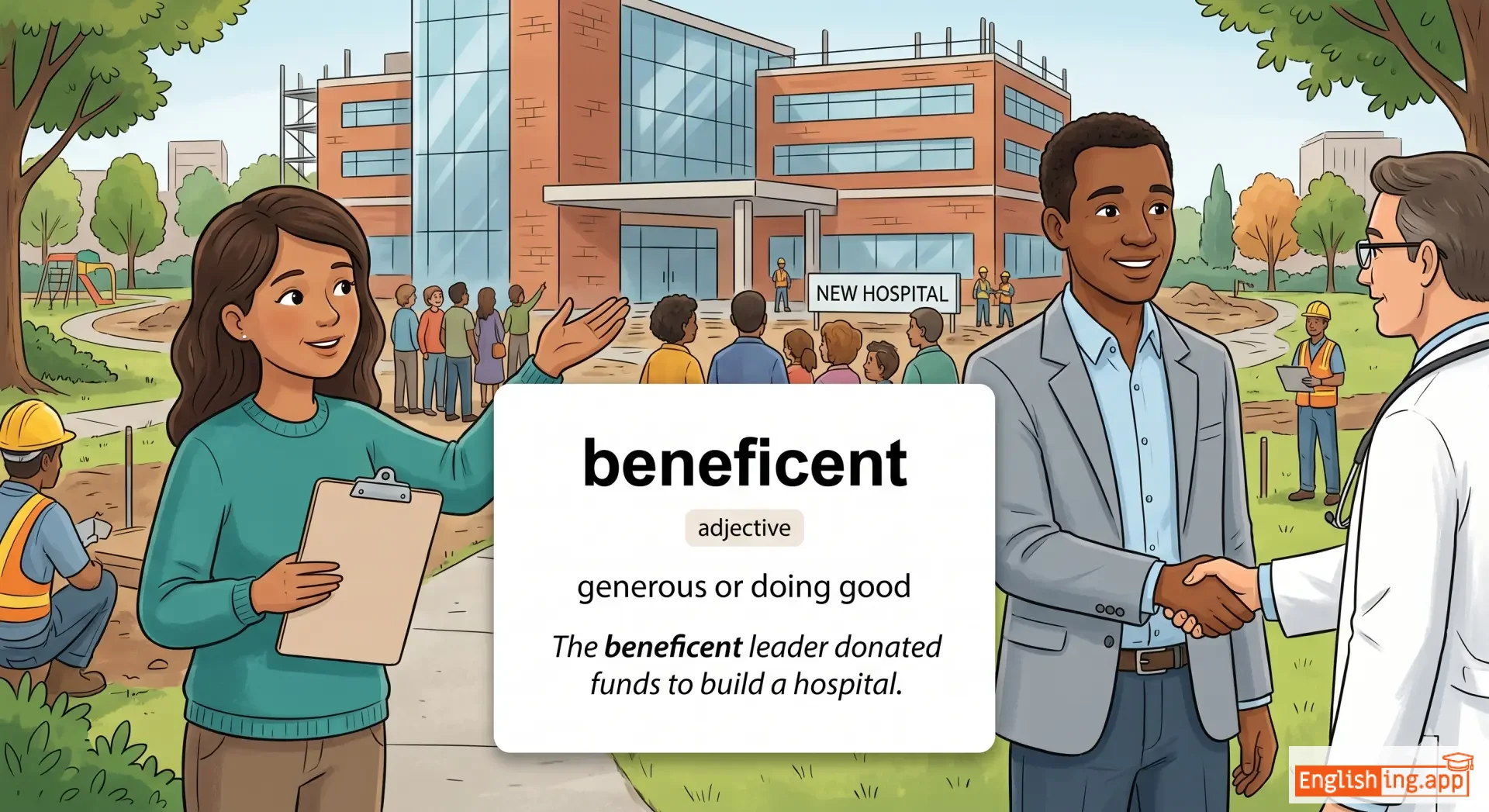
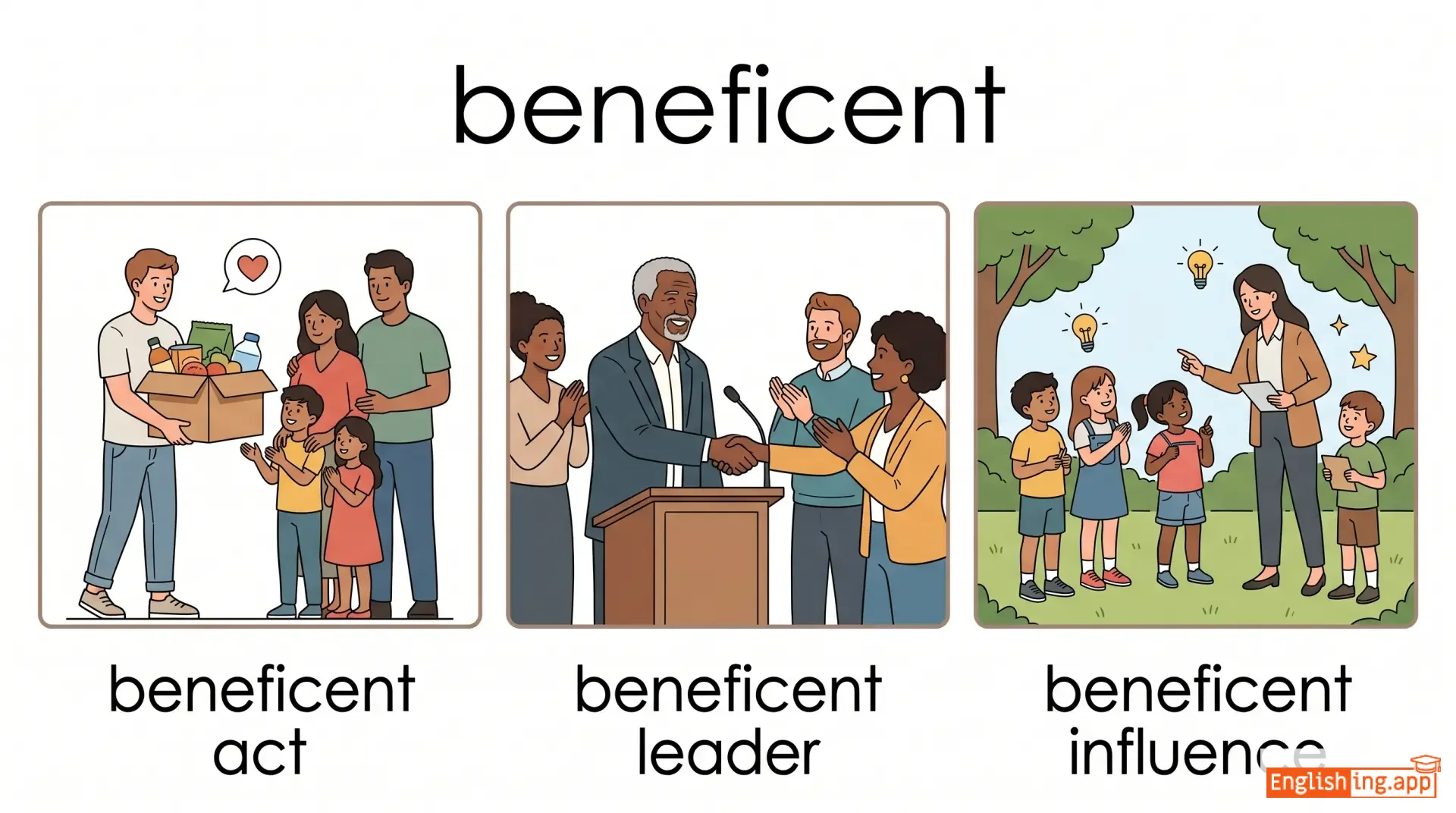
generous or doing good
••••••
|
The beneficent leader donated funds to build a hospital. |
仁慈的领导人捐赠了资金以建造医院。
Réncí de lǐngdǎo rén juānzèngle zījīn yǐ jiànzào yīyuàn.
••••••
|
- •••••• | - •••••• | - •••••• |
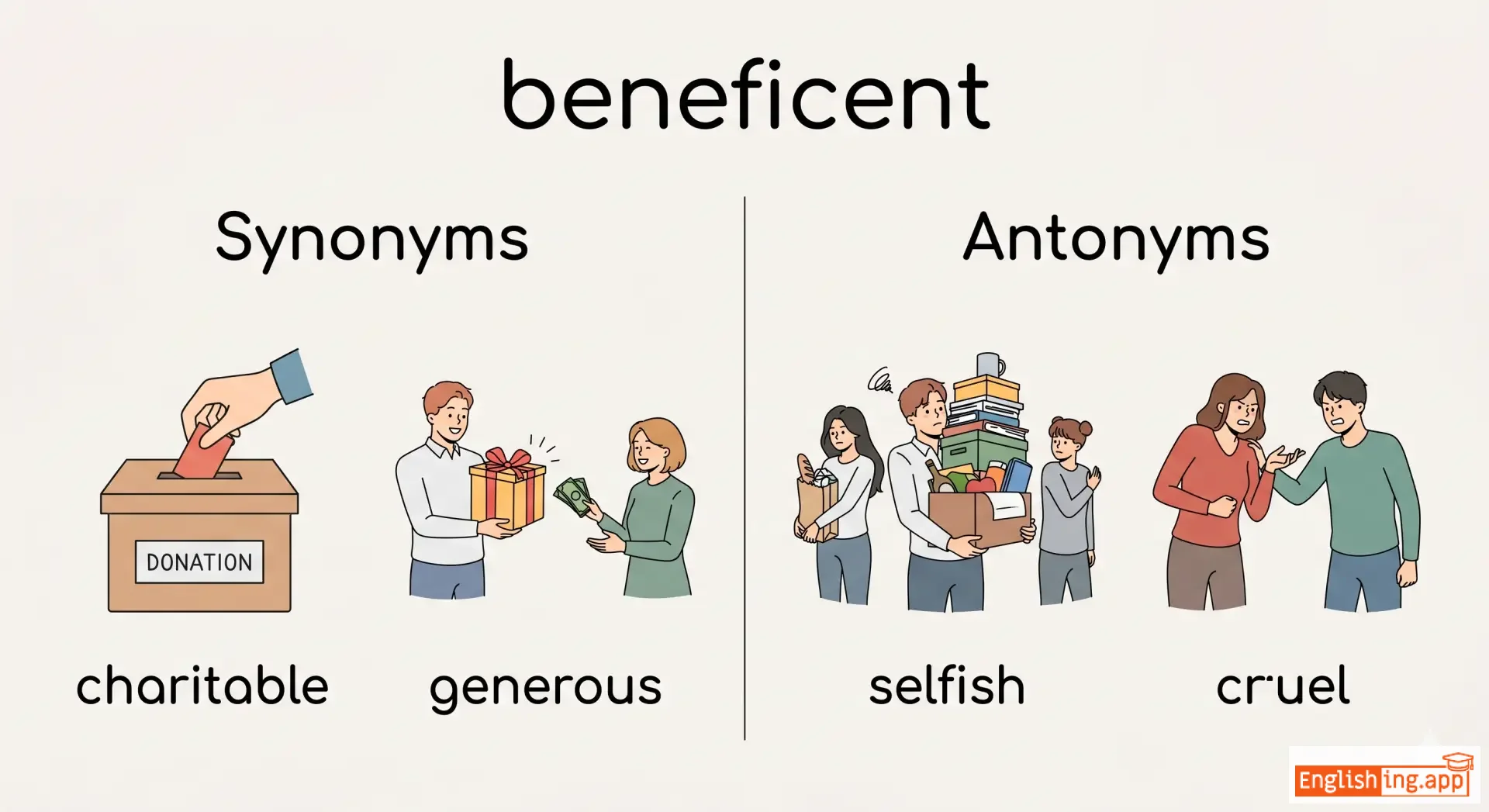
charitable, generous, kind, philanthropic
••••••
|
selfish, cruel
••••••
|
beneficent act, beneficent leader, beneficent influence
••••••
|
Beneficent = bene (好) + efficient - 做好事的高效方式。
••••••
|
|
🛏️
••••••
|
/ˈboʊlstər/
verb
••••••
|

|
- •••••• |
bolstered
••••••
|
bolstered
••••••
|
bolsters
••••••
|
bolstering
••••••
|
To support, strengthen, or reinforce something.
••••••
|
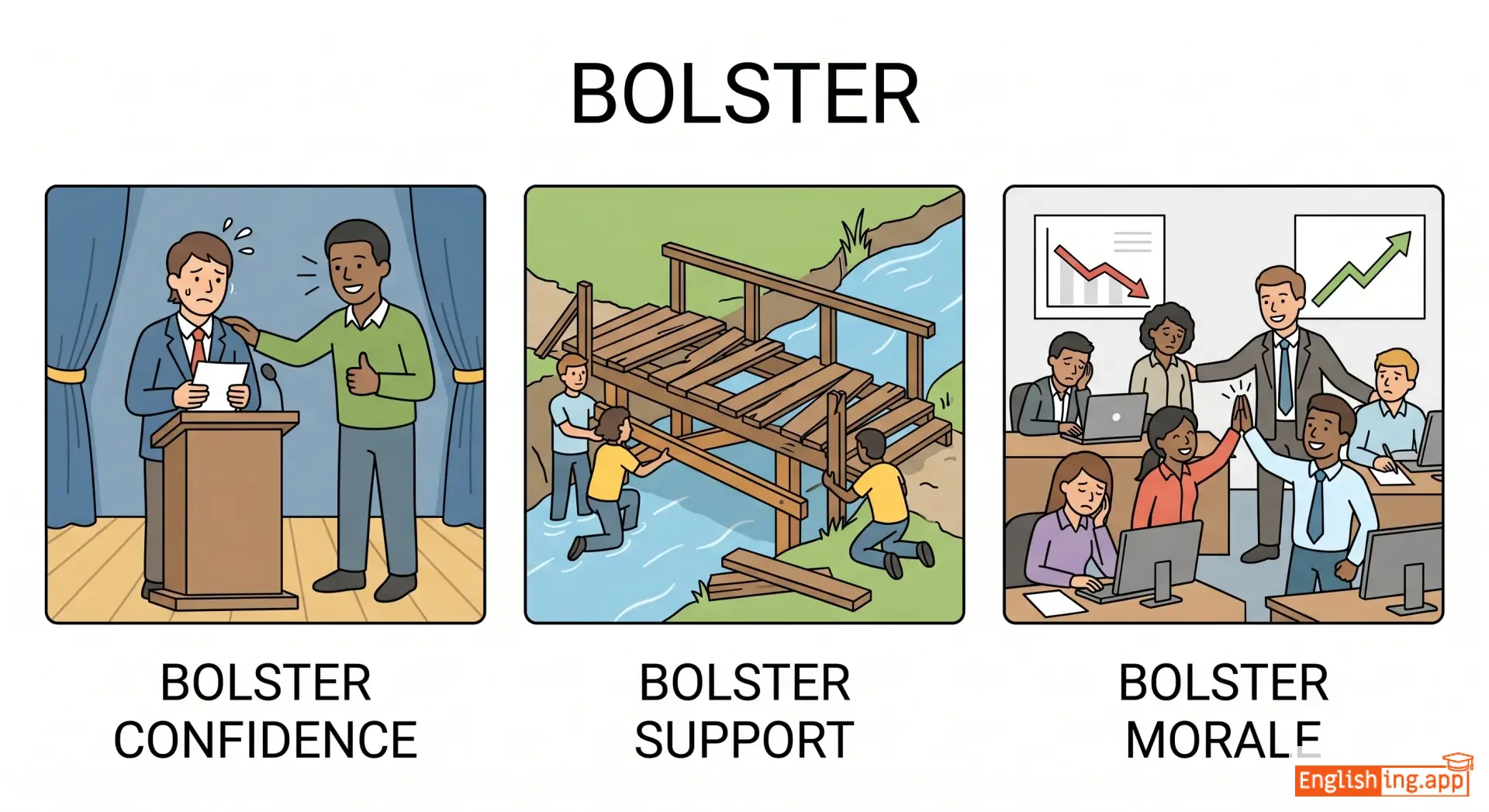
The manager bolstered the team's confidence with encouraging words. |
- •••••• |
bolster up |
To give support or encouragement to something or someone.
••••••
|
- •••••• |
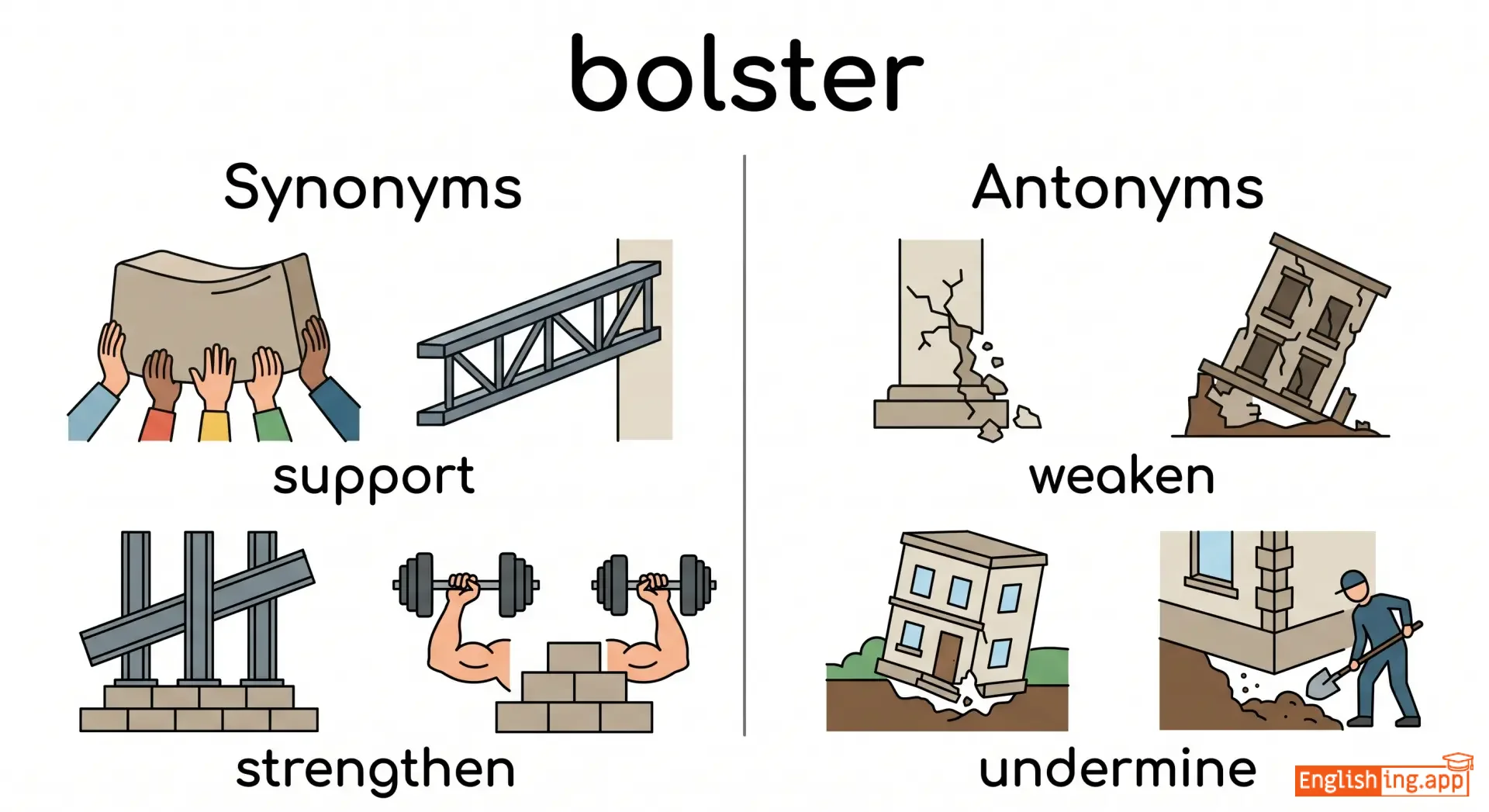
support, strengthen, boost, reinforce, encourage
••••••
|
weaken, undermine, discourage
••••••
|
bolster confidence, bolster support, bolster morale, bolster argument
••••••
|
No •••••• |
|
🎙️
••••••
|
/bɒmˈbæstɪk/
adjective
(邦巴斯蒂克)
••••••
|
|
浮夸
fu kua
••••••
|
- •••••• | - •••••• | - •••••• | - •••••• |
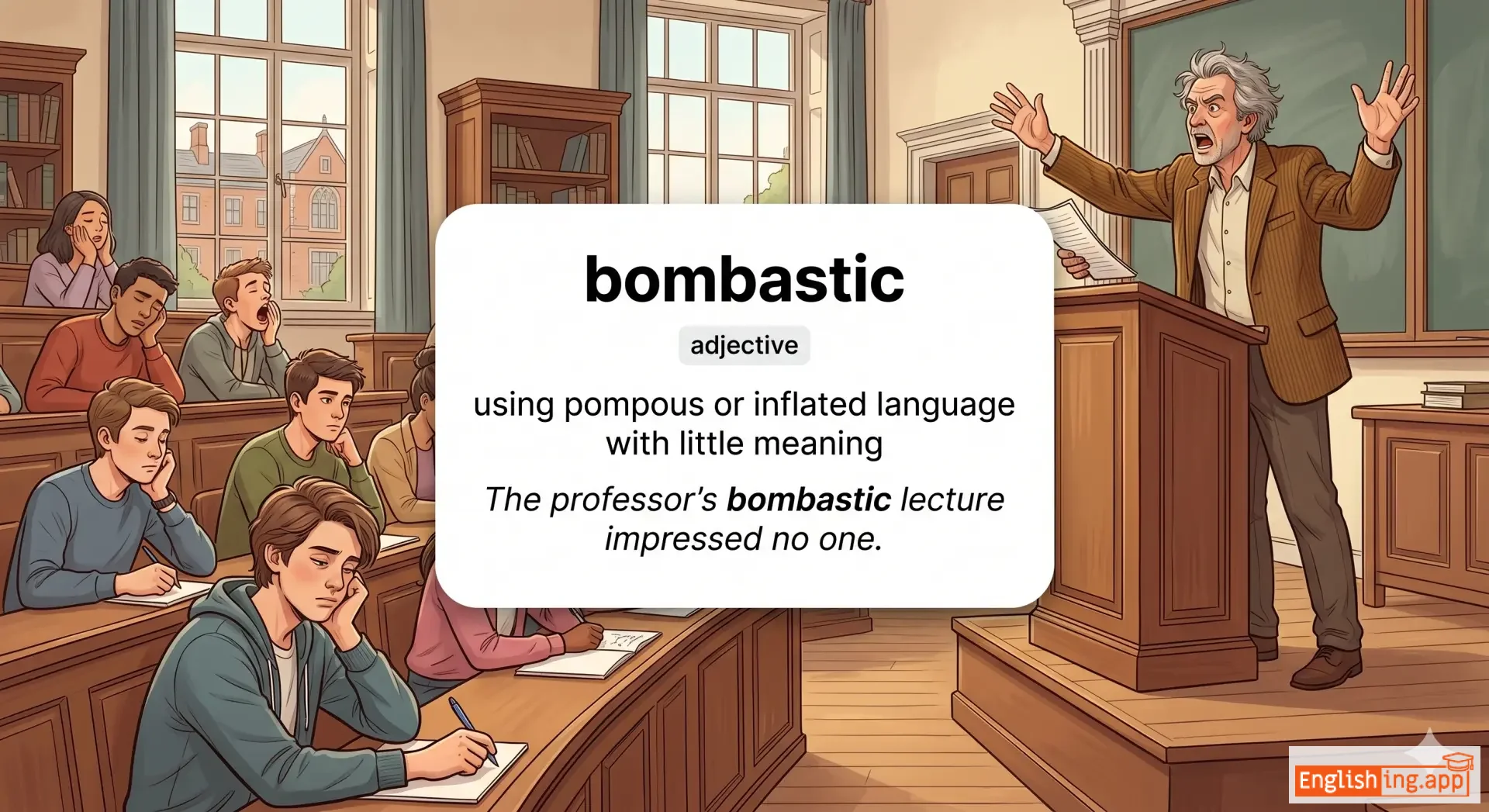
using pompous or inflated language with little meaning
••••••
|
The professor’s bombastic lecture impressed no one.
教授那场充满夸张的讲座没有给任何人留下深刻印象。
••••••
|
教授那场浮夸的讲座没有给任何人留下深刻印象。
Jiaoshou na chang fu kua de jiangzuo mei you gei renhe ren liu xia shenke yinxiang.
••••••
|
- •••••• | - •••••• | - •••••• |
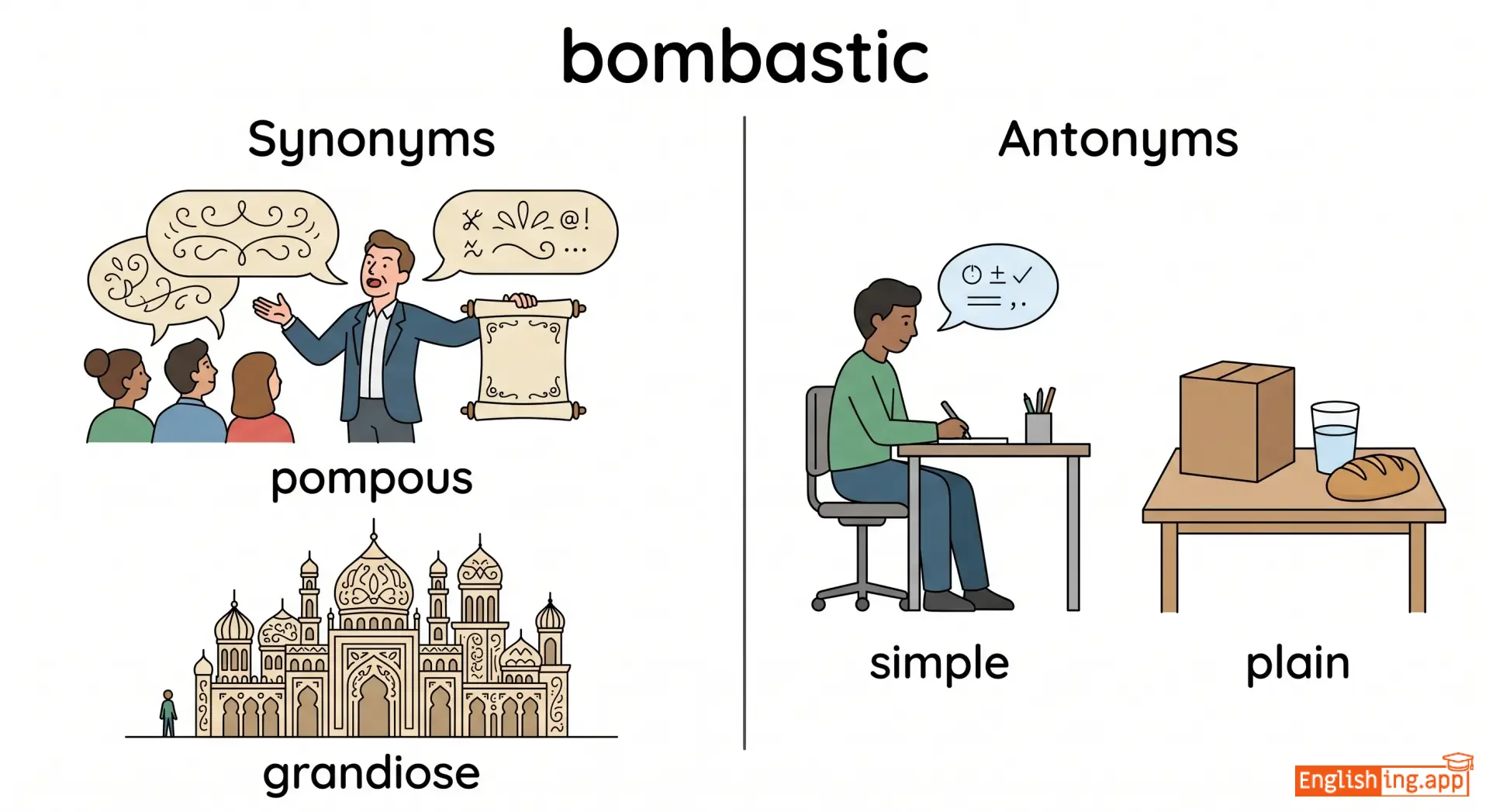
pompous, grandiose, pretentious, overblown, inflated
••••••
|
simple, plain, humble
••••••
|
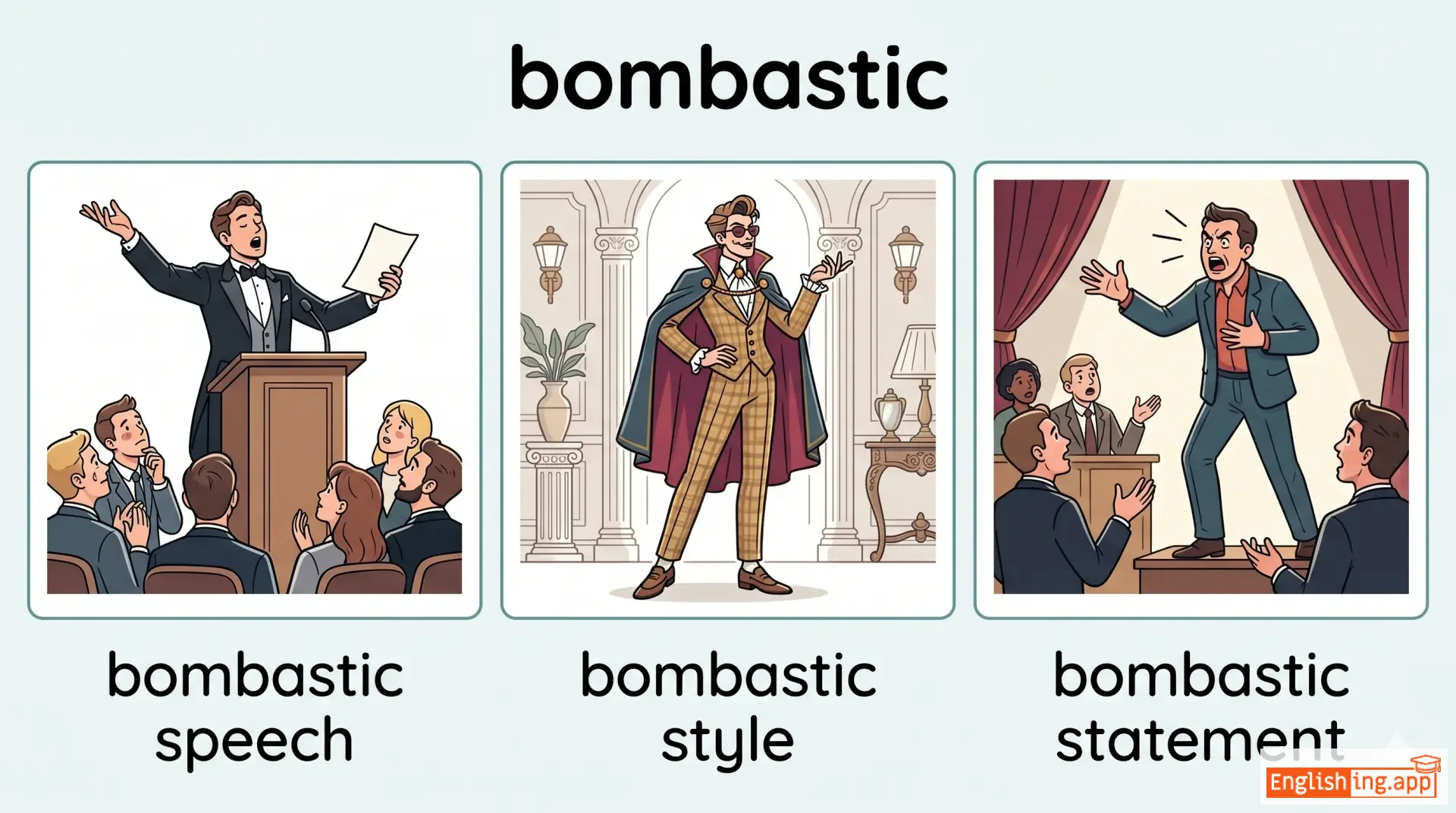
bombastic speech, bombastic style, bombastic statement
••••••
|
Bombastic意味着使用像炸弹一样的语言,外面很大,里面却是空的。
••••••
|
|
🤦
••••••
|
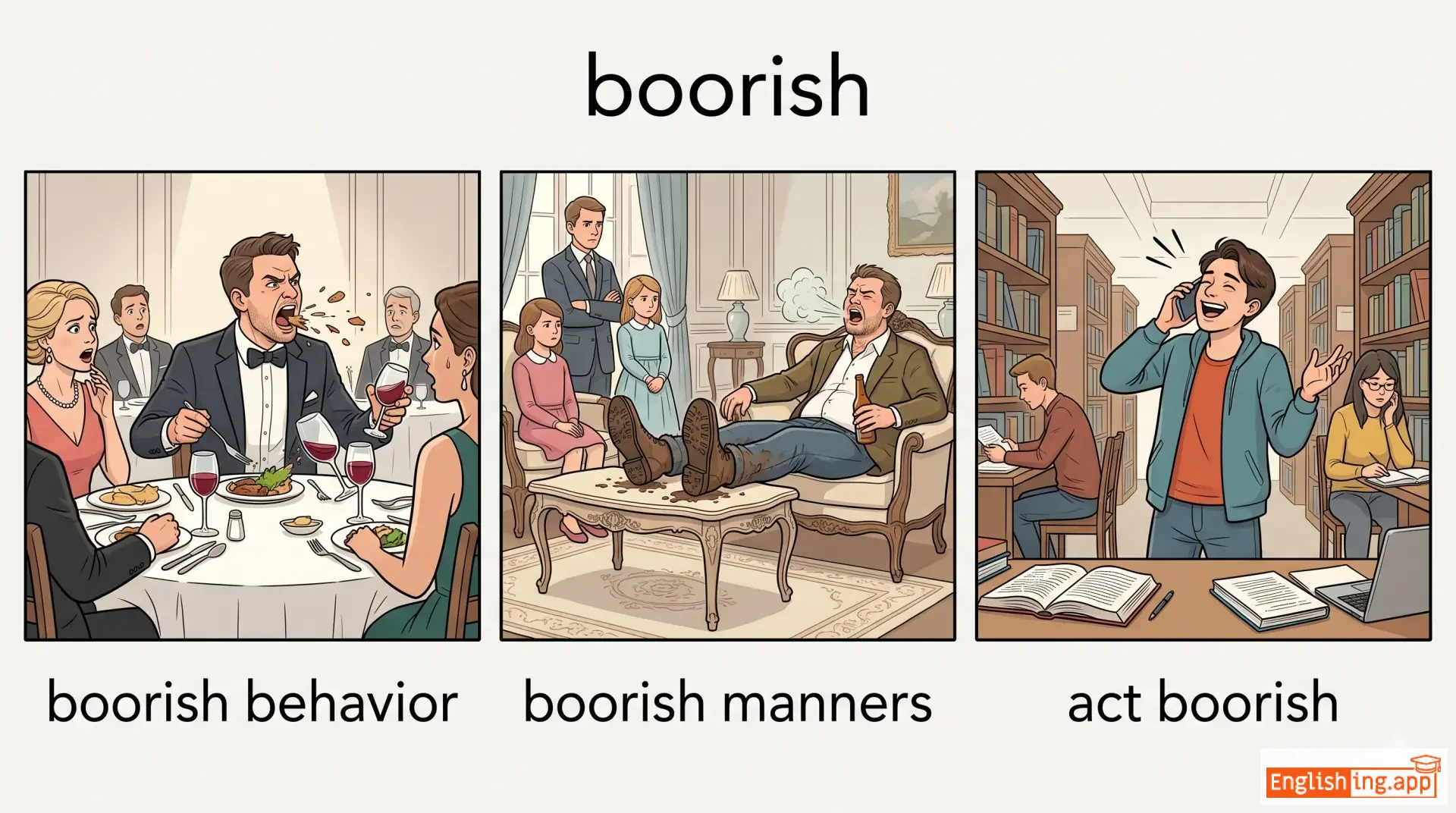
/ˈbʊərɪʃ/
adjective
(búrish)
••••••
|
|
粗鲁
culu
••••••
|
- •••••• | - •••••• | - •••••• | - •••••• |
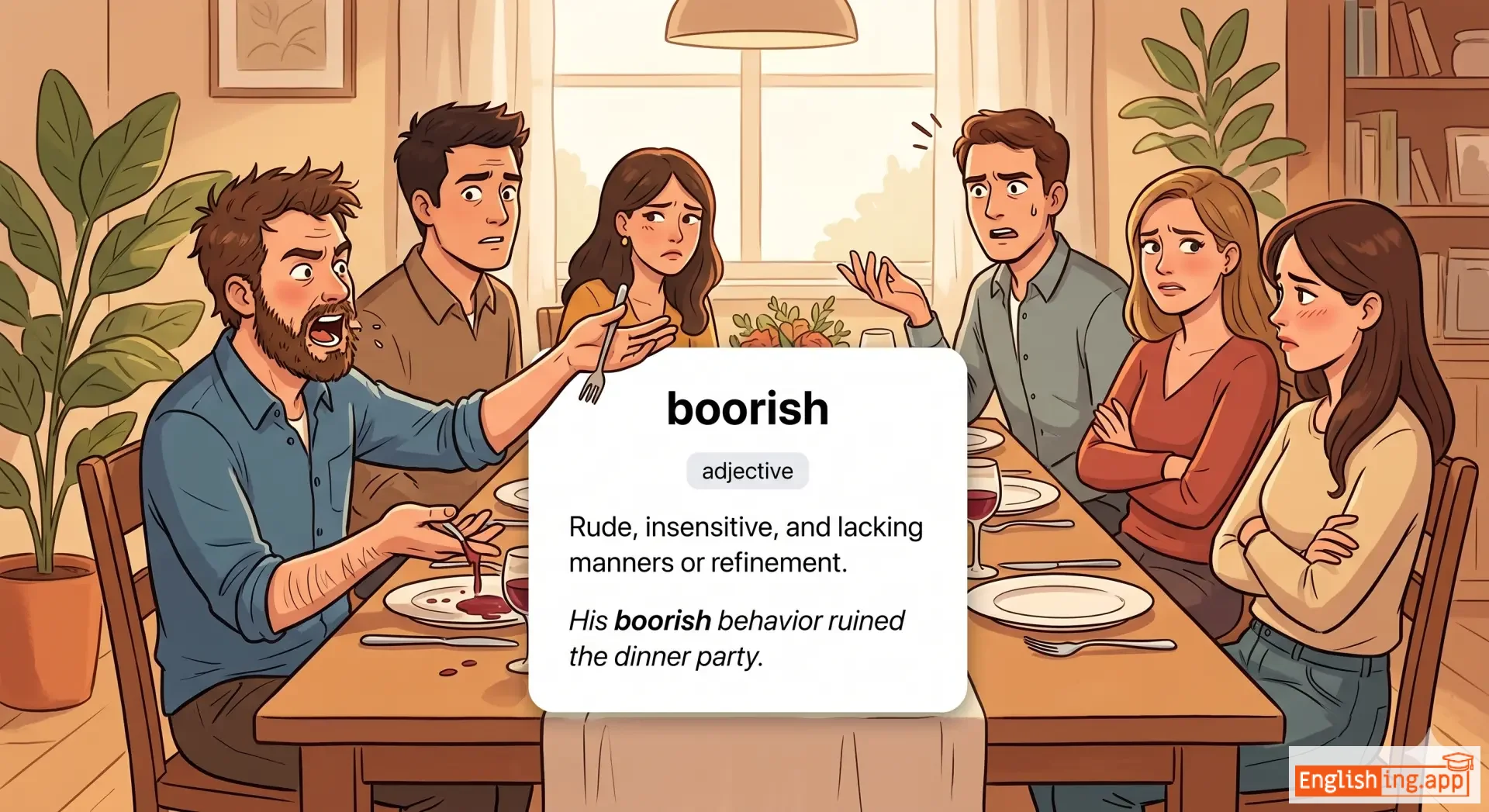
Rude, insensitive, and lacking manners or refinement.
••••••
|
His boorish behavior ruined the dinner party.
他的búrish行为毁了晚宴。
••••••
|
他的粗鲁行为毁了晚宴。
Tā de cūlǔ xíngwéi huǐle wǎnyàn.
••••••
|
- •••••• | - •••••• | - •••••• |
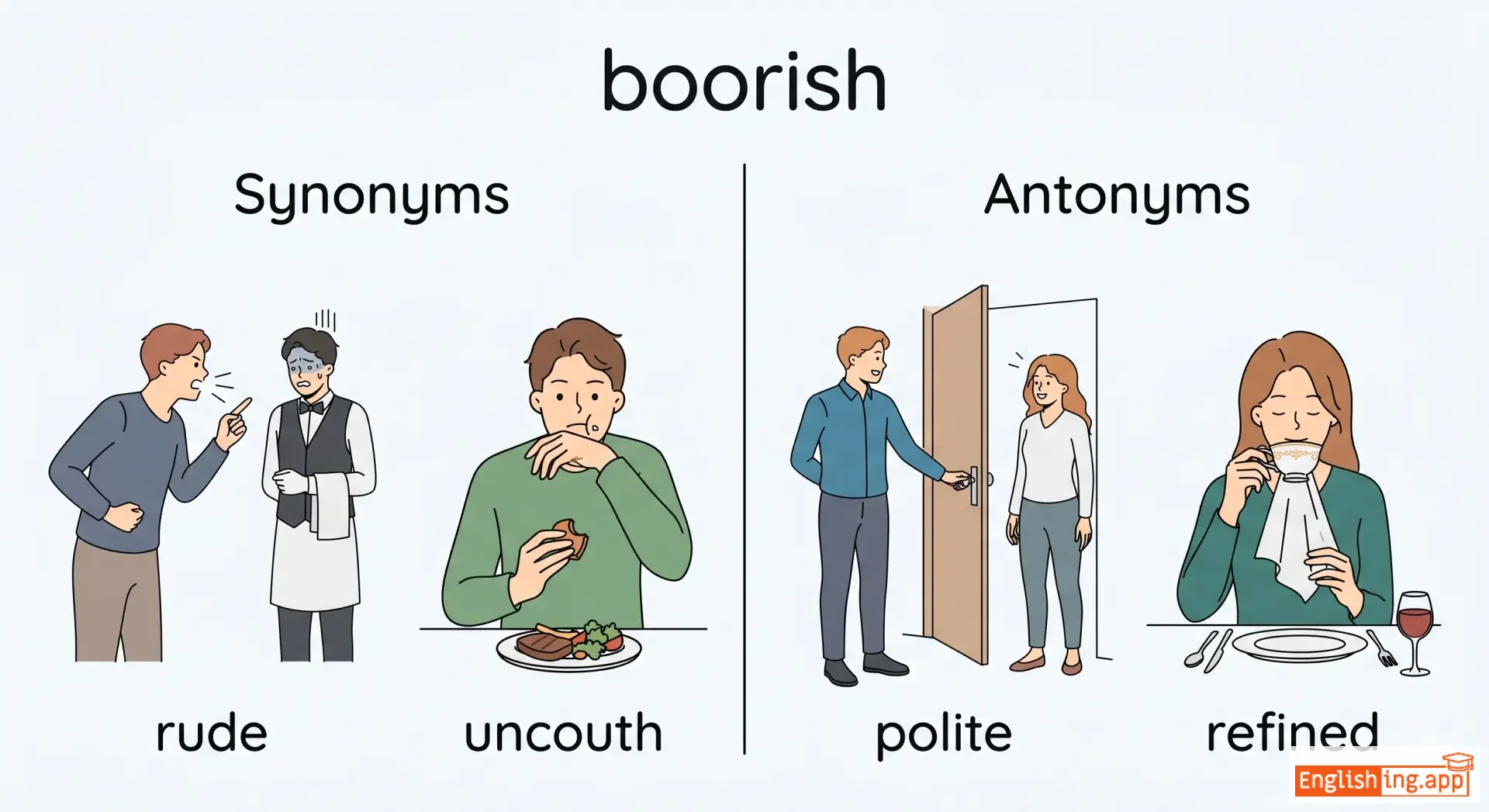
rude, uncouth, vulgar, ill-mannered, coarse
••••••
|
polite, refined, courteous
••••••
|
boorish behavior, boorish manners, act boorish
••••••
|
Boorish 可以记住为粗鲁的行为
••••••
|
|
🌱
••••••
|
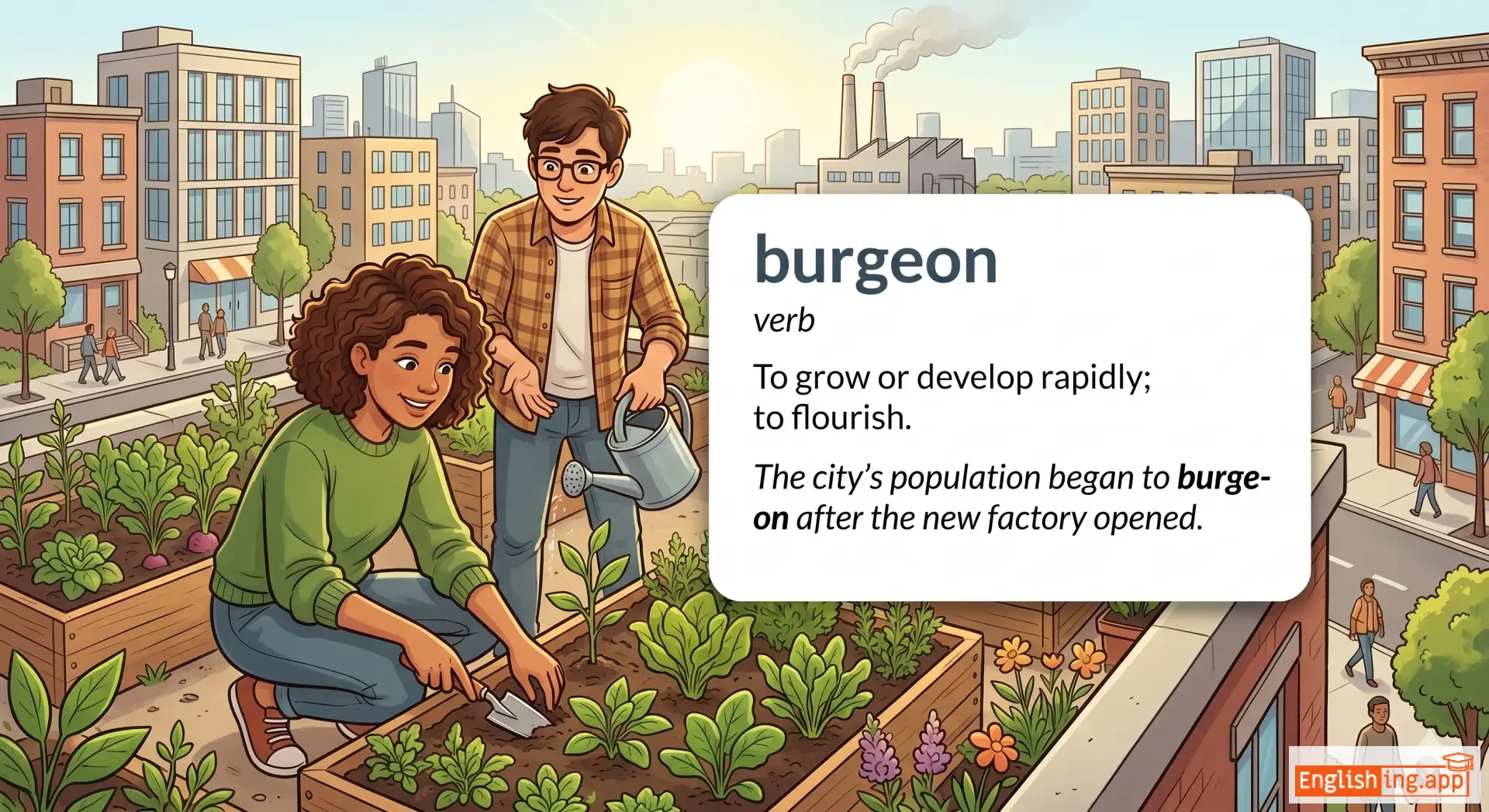
/ˈbɜːrdʒən/
verb
(伯根)
••••••
|
|
快速增长
kuàisù zēngzhǎng
••••••
|
burgeoned
伯根德
••••••
|
burgeoned
伯根德
••••••
|
burgeons
伯根斯
••••••
|
burgeoning
伯根宁
••••••
|
To grow or develop rapidly; to flourish.
••••••
|
The city's population began to burgeon after the new factory opened.
这座城市的人口在新工厂开业后开始迅速增长。
••••••
|
这座城市的人口在新工厂开业后开始迅速增长。
Zhèzuò chéngshì de rénkǒu zài xīn gōngchǎng kāi yè hòu kāishǐ xùnsù zēngzhǎng.
••••••
|
- •••••• | - •••••• | - •••••• |
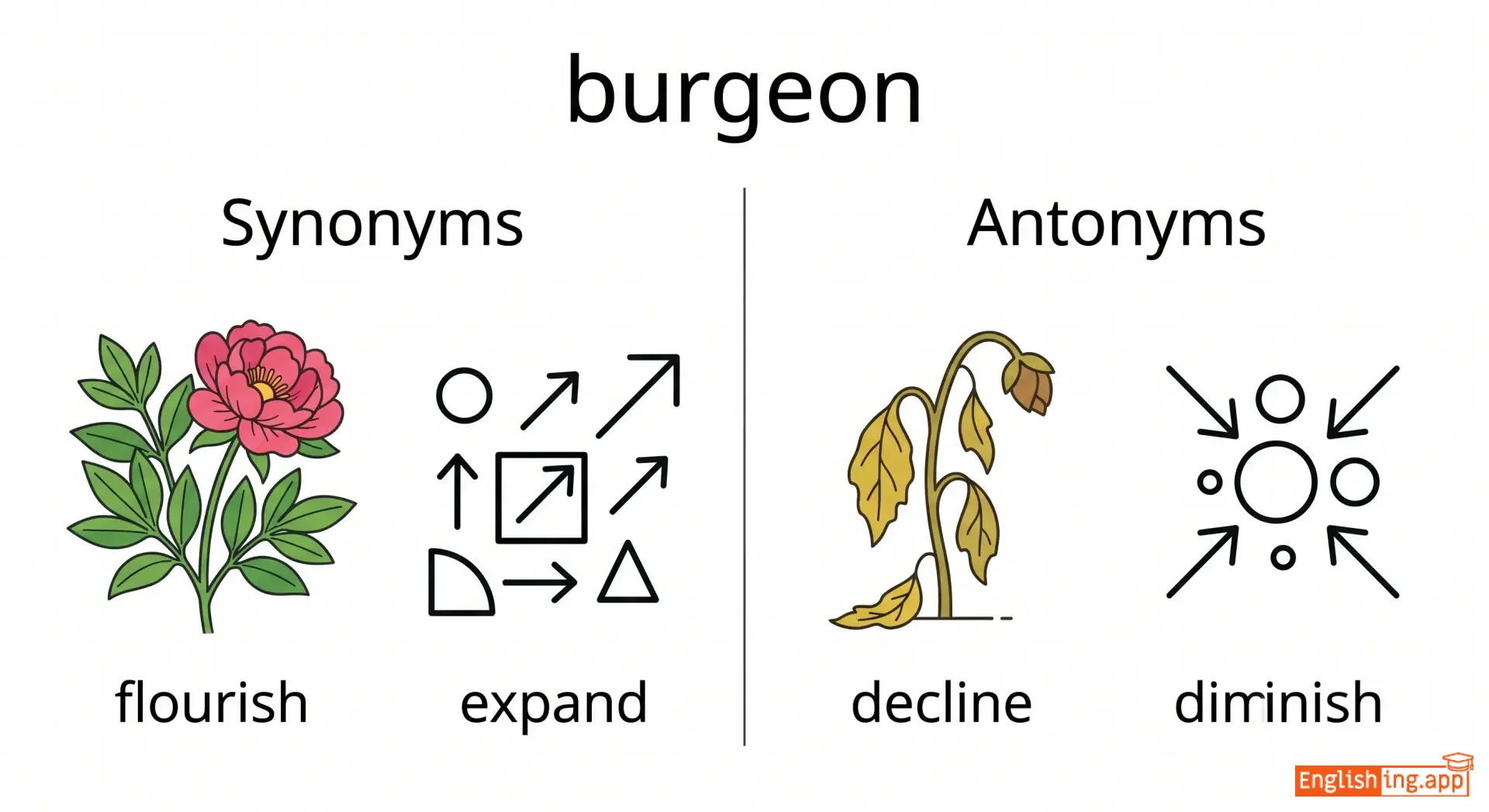
flourish, expand, thrive, bloom, prosper
••••••
|
decline, diminish, shrink
••••••
|
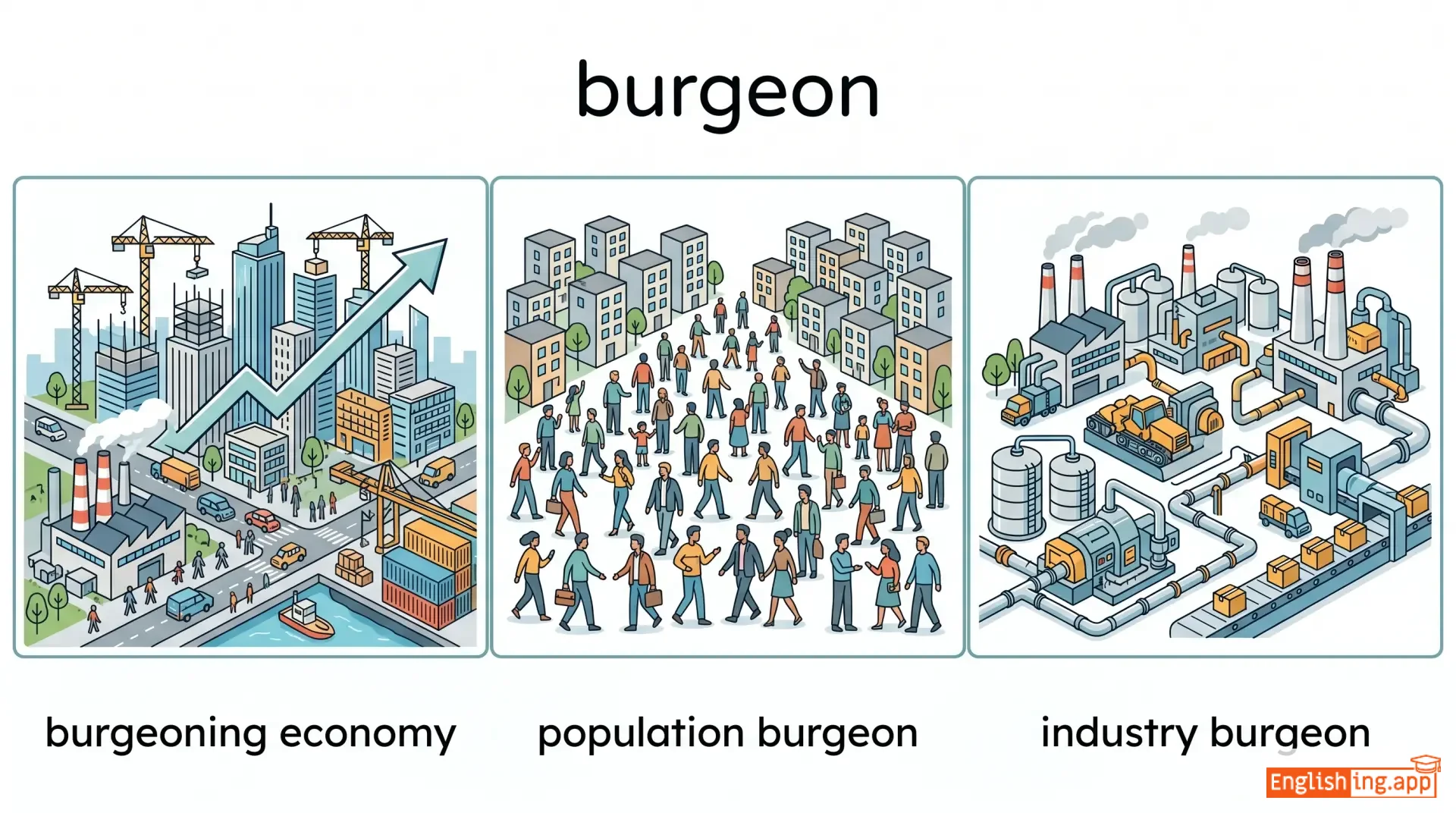
burgeoning economy, population burgeon, industry burgeon
••••••
|
Burgeon意味着快速增长,像一朵迅速开放的花。
••••••
|
|
✨
••••••
|
/ˈbɜːrnɪʃ/
verb
••••••
|
|
- •••••• |
burnished
••••••
|
burnished
••••••
|
burnishes
••••••
|
burnishing
••••••
|
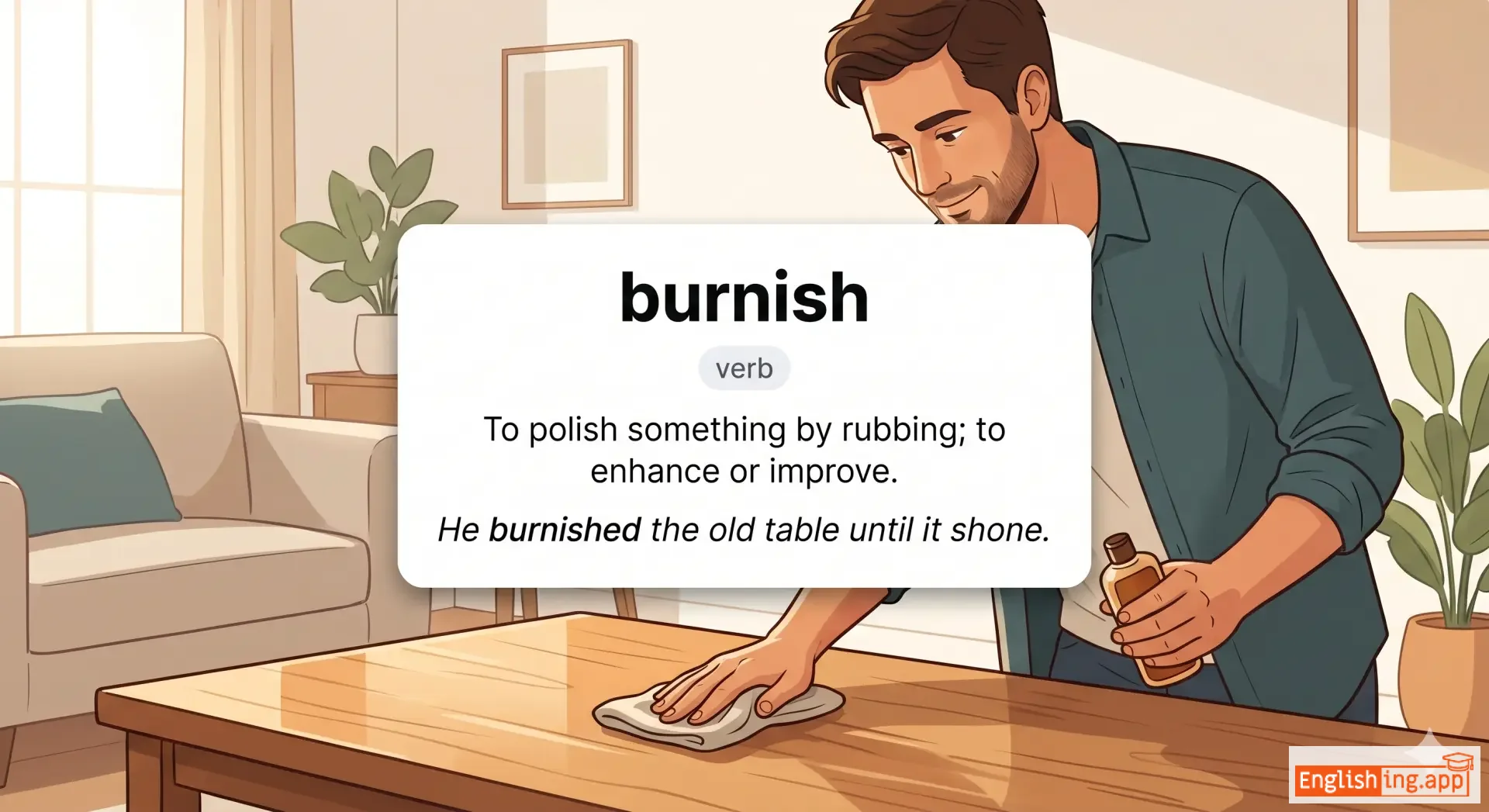
To polish something by rubbing; to enhance or improve.
••••••
|
He burnished the old table until it shone. |
- •••••• |
burnish one's reputation |
To improve or enhance one’s public image or standing.
••••••
|
- •••••• |
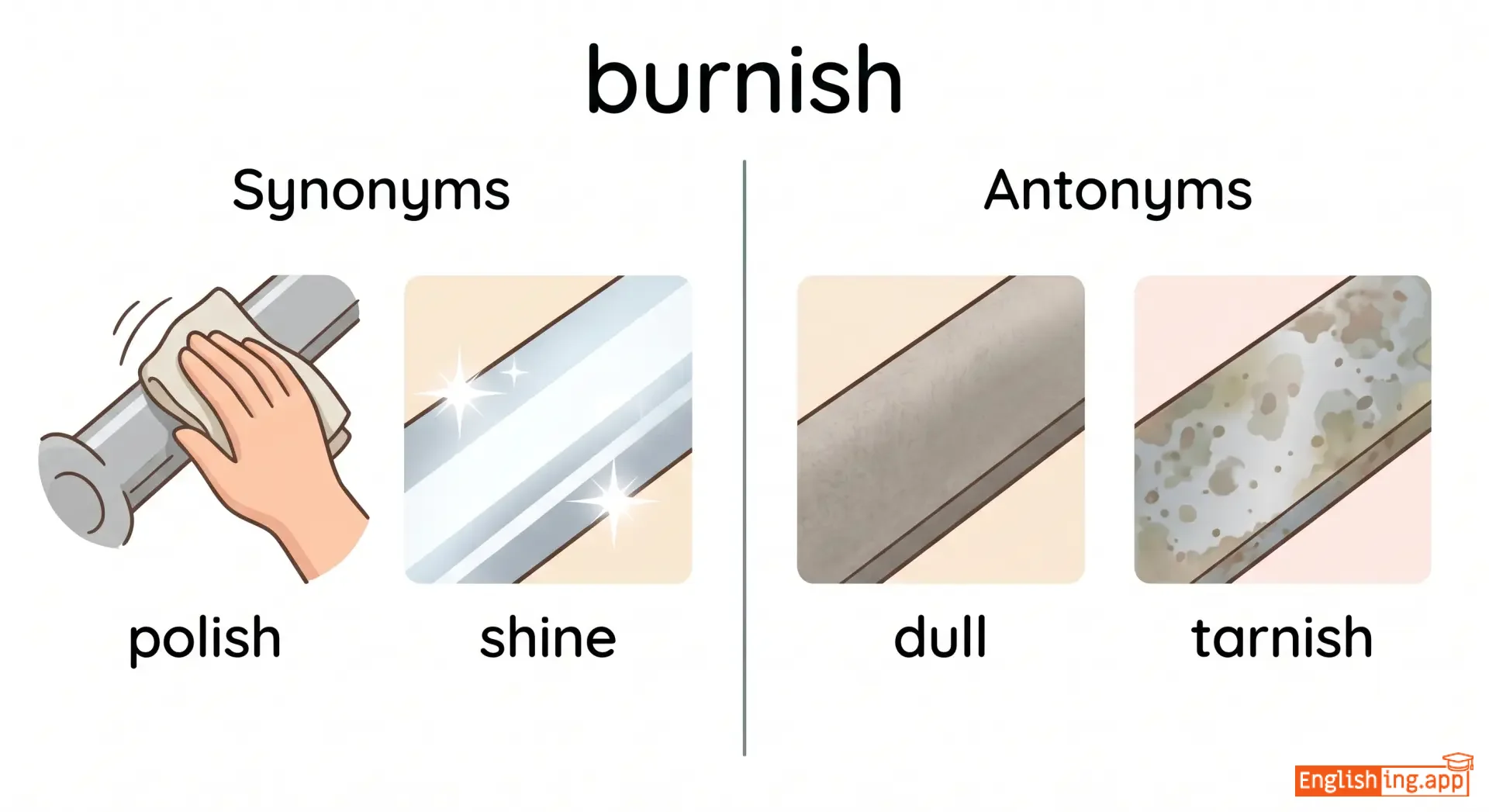
polish, shine, buff, gloss, brighten
••••••
|
dull, tarnish, damage
••••••
|
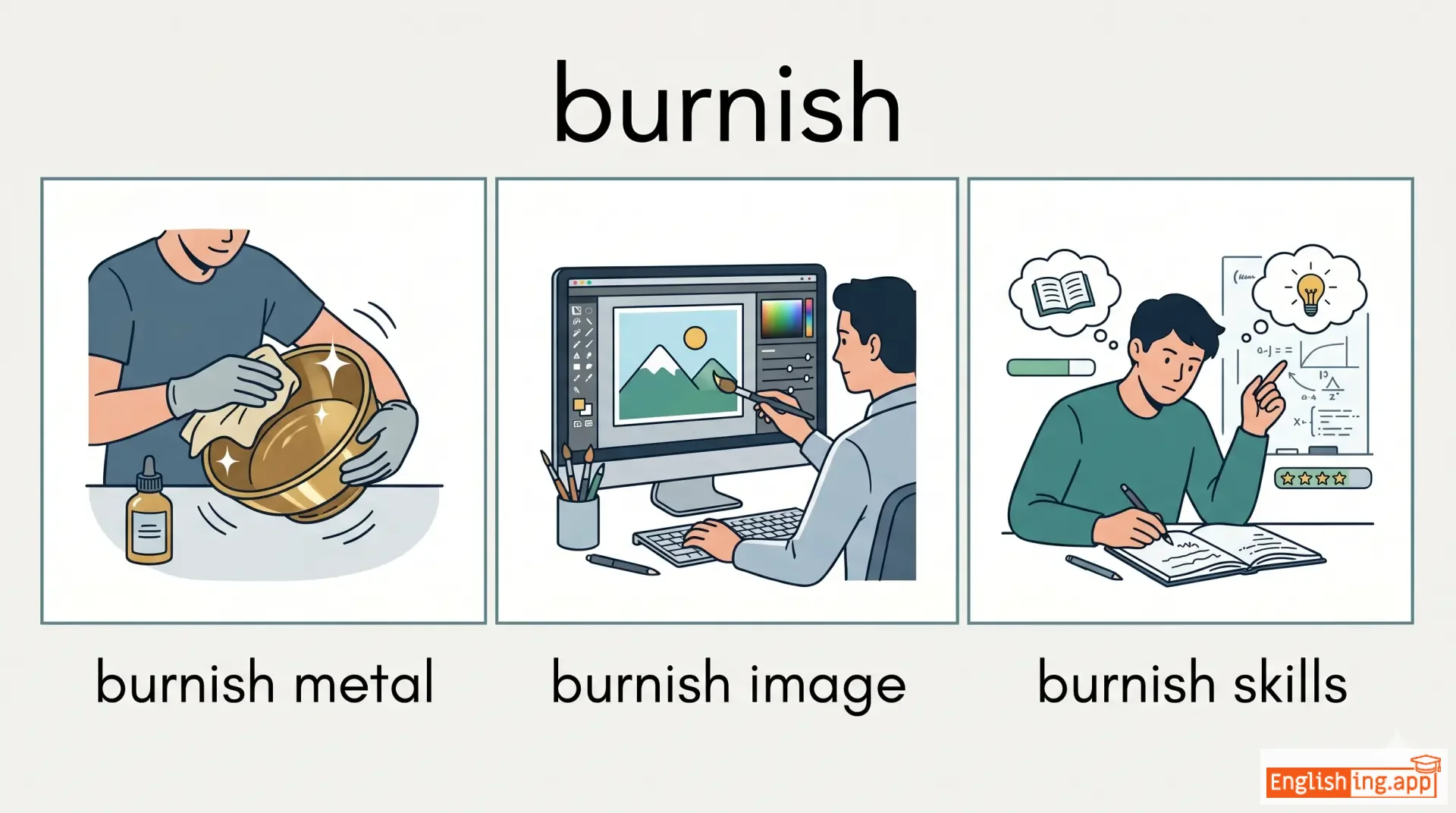
burnish metal, burnish image, burnish skills, burnish surface
••••••
|
No •••••• |
|
🏰
••••••
|
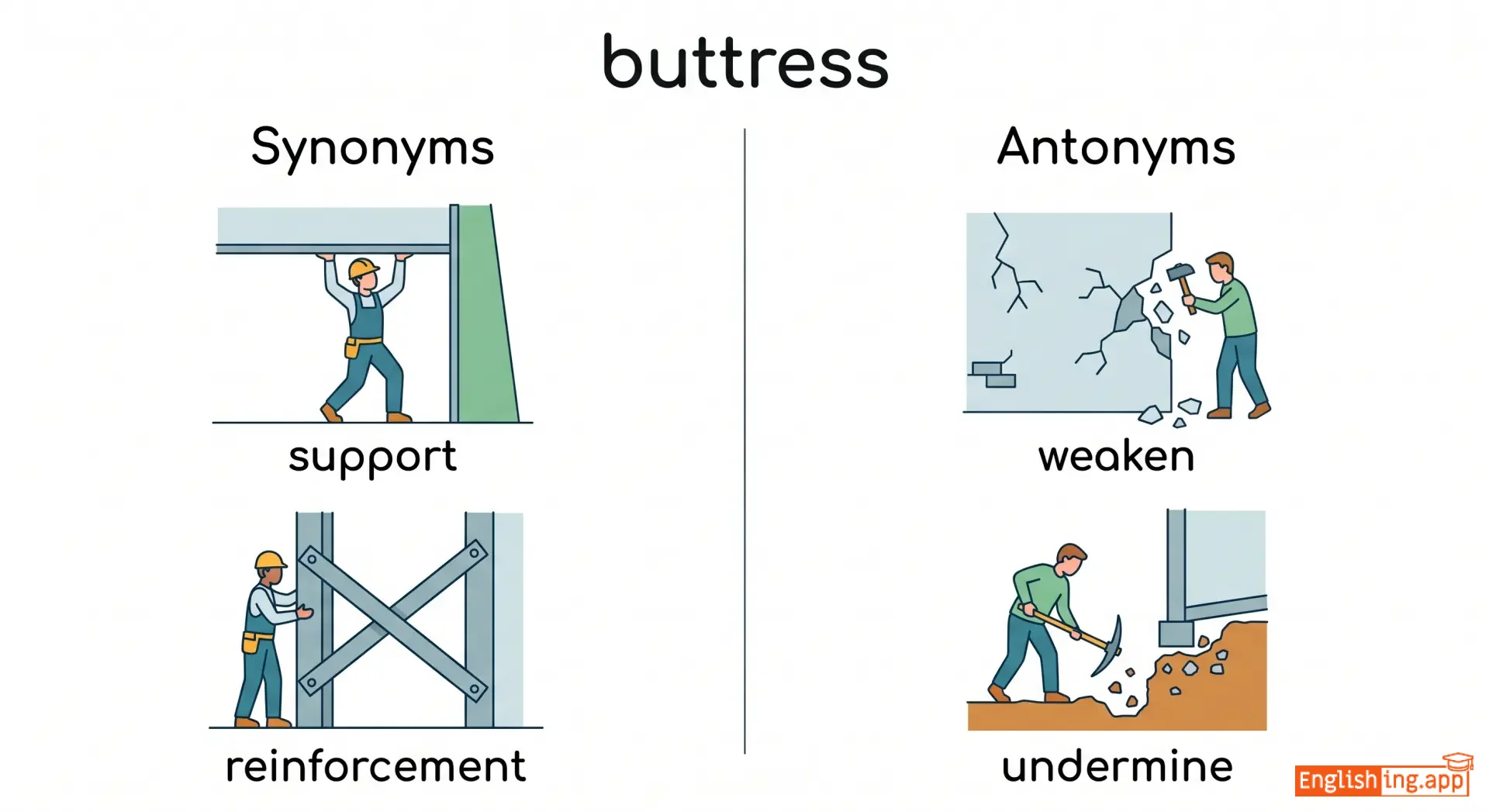
/ˈbʌtrəs/
noun, verb
(巴特雷斯)
••••••
|
|
扶壁,支撑
fú bì, zhīchēng
••••••
|
buttressed
巴特雷斯德
••••••
|
buttressed
巴特雷斯德
••••••
|
buttresses
巴特雷塞斯
••••••
|
buttressing
巴特雷辛
••••••
|
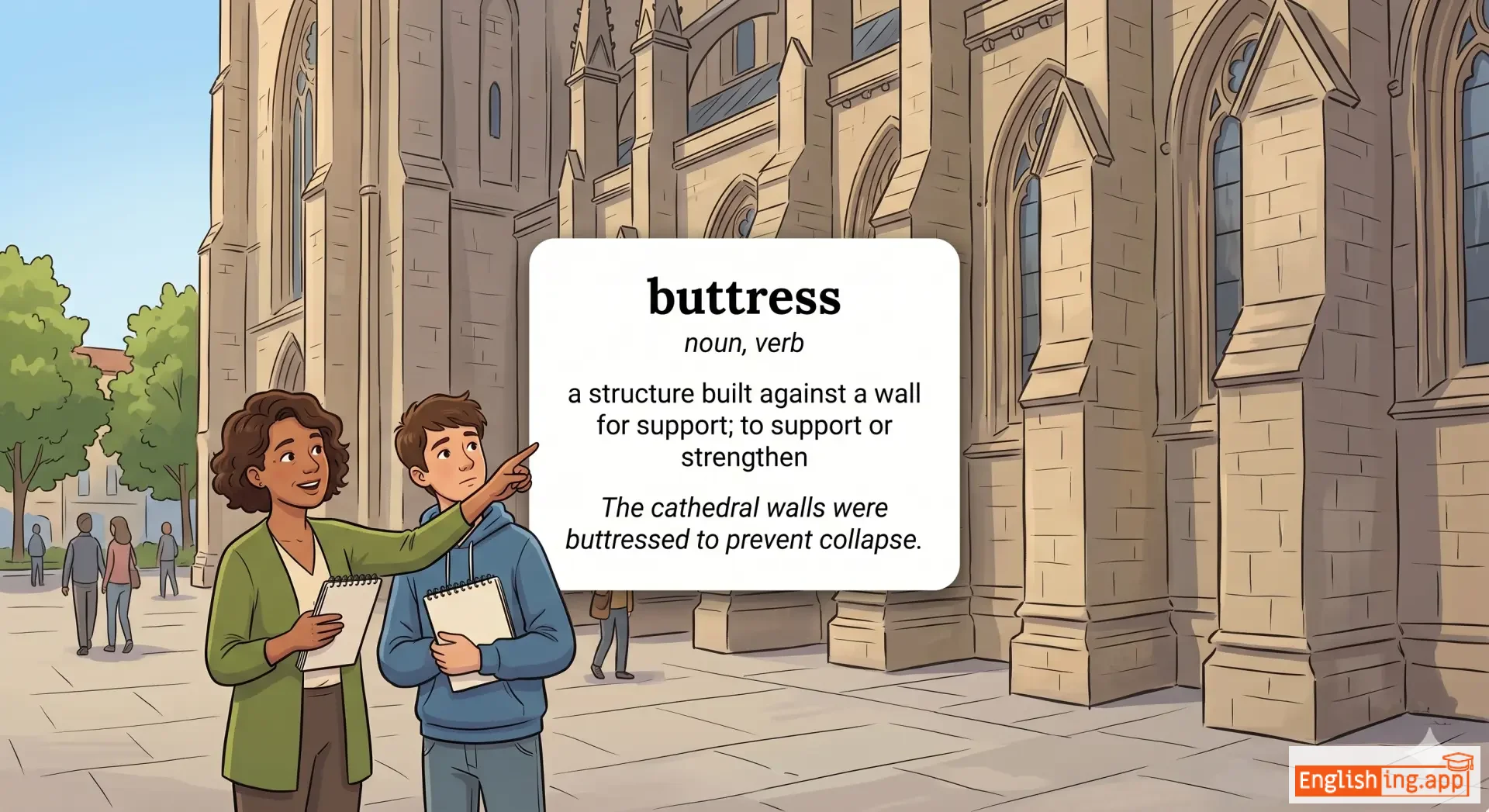
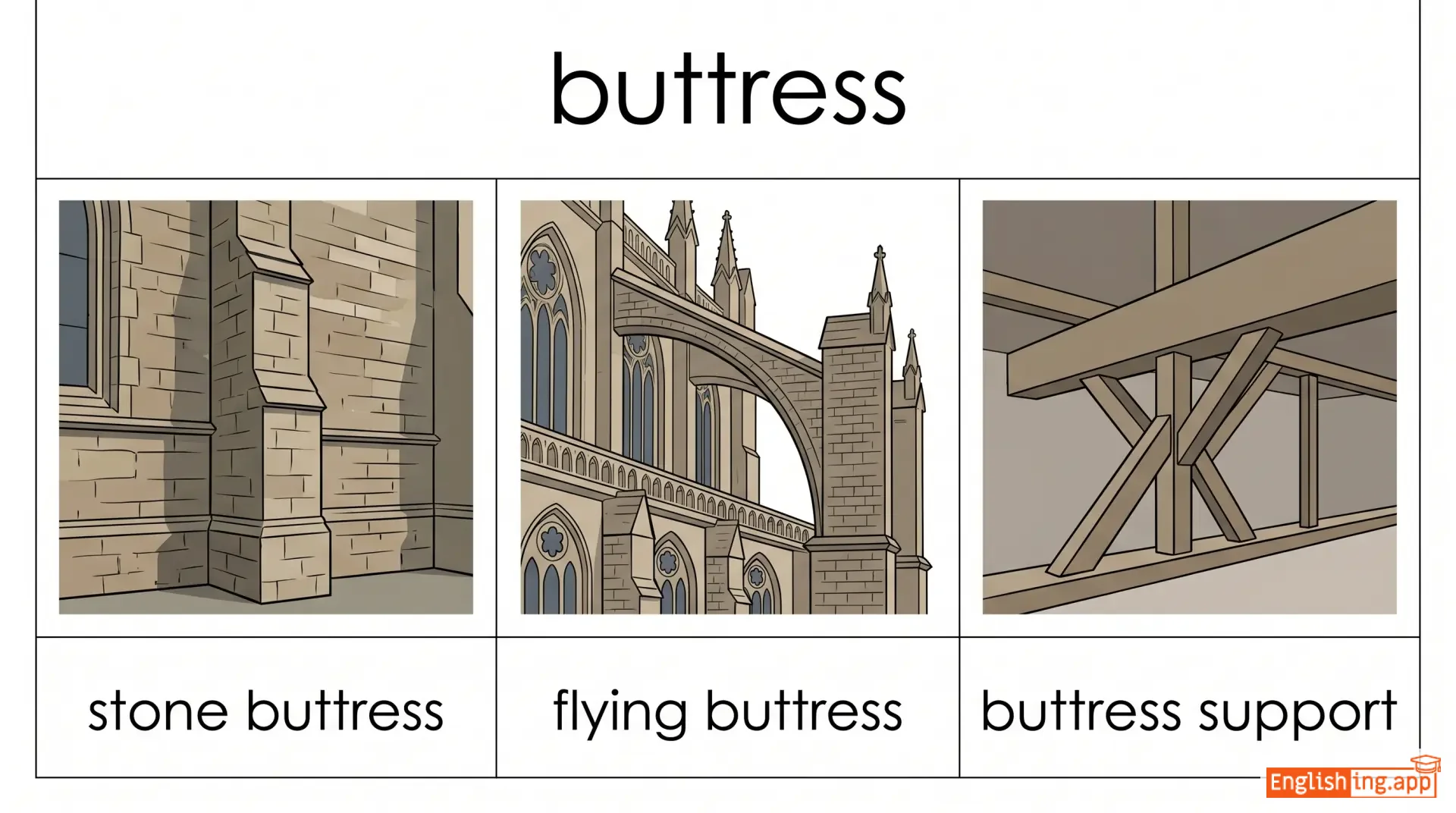
a structure built against a wall for support; to support or strengthen
••••••
|
The cathedral walls were buttressed to prevent collapse.
大教堂的墙壁被支撑以防止倒塌。
••••••
|
大教堂的墙壁被支撑以防止倒塌。
Dà jiàotáng de qiángbì bèi zhīchēng yǐ fángzhǐ dǎotā.
••••••
|
- •••••• | - •••••• | - •••••• |
support, reinforcement, prop, bolster, strengthen
••••••
|
weaken, undermine
••••••
|
stone buttress, flying buttress, buttress support, buttress argument
••••••
|
Buttress 支撑墙壁 — butt (屁股) 支撑。
••••••
|
|
🎭
••••••
|
/kəˈprɪʃəs/
adjective
(kǎpūlìsī'ēsī)
••••••
|
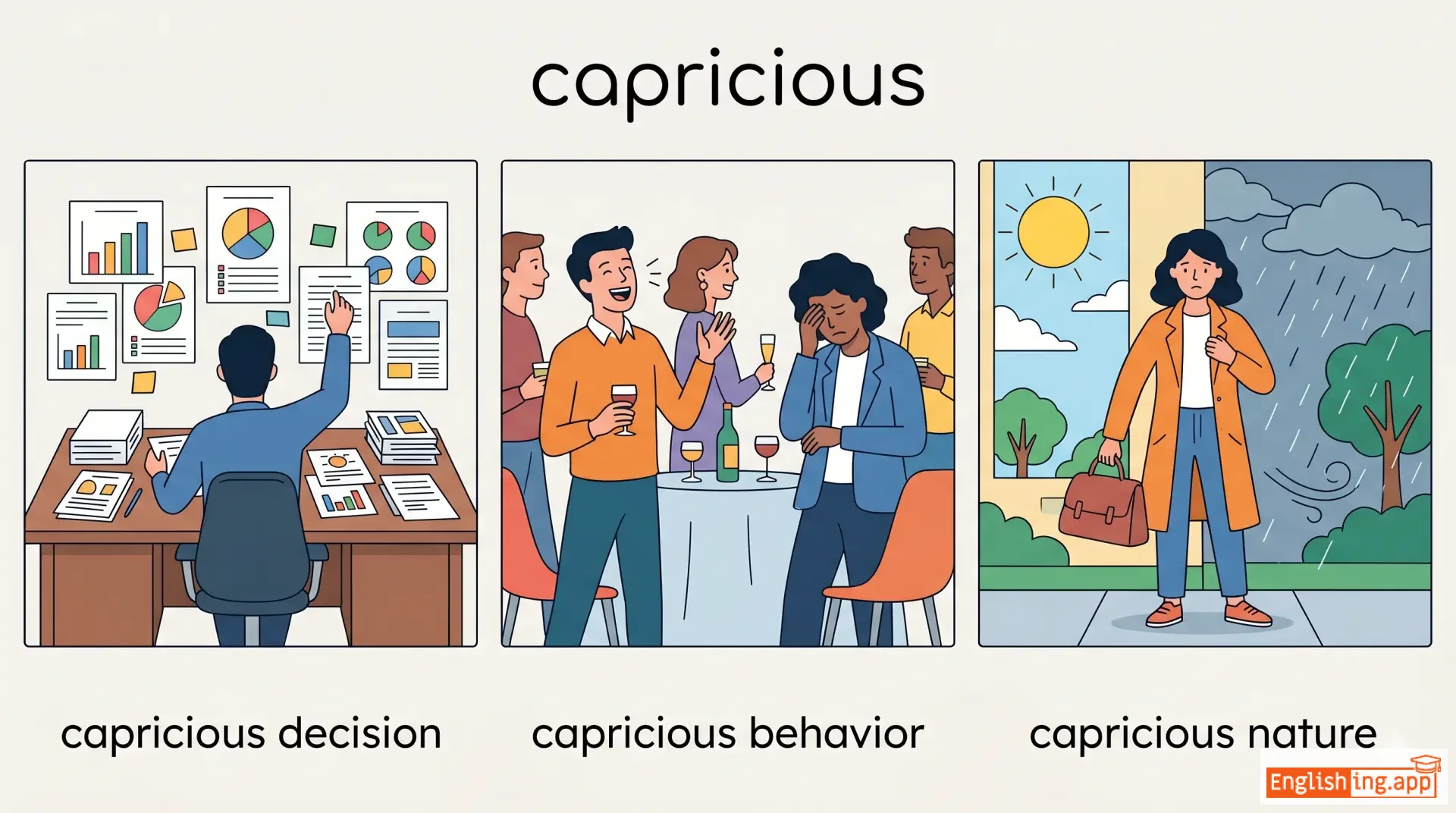
|
善变的
shanbian de
••••••
|
- •••••• | - •••••• | - •••••• | - •••••• |
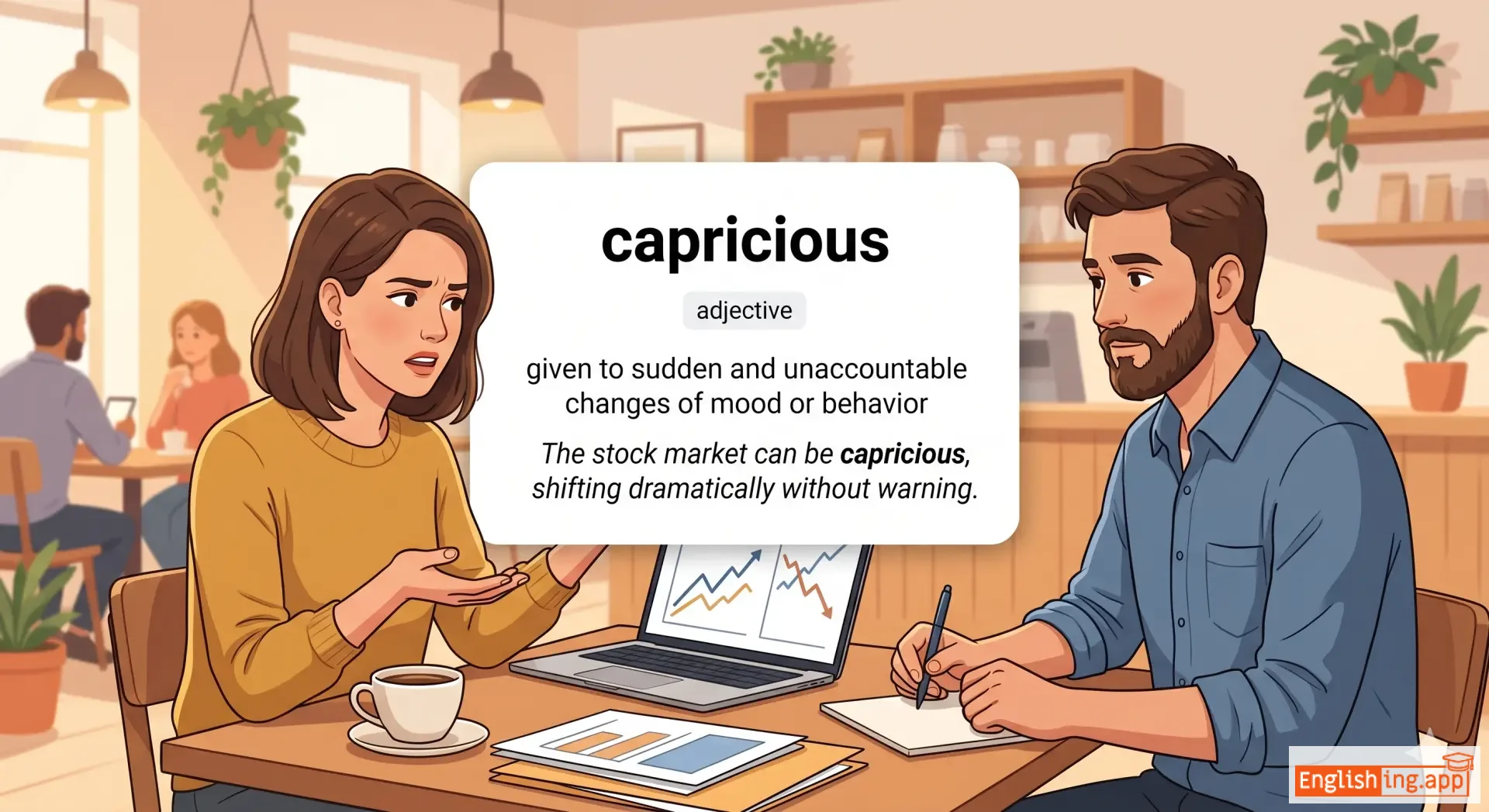
given to sudden and unaccountable changes of mood or behavior
••••••
|
The stock market can be capricious, shifting dramatically without warning.
股票市场可能是善变的,剧烈变化没有警告。
••••••
|
股票市场可能是善变的,剧烈变化没有警告。
gǔpiào shìchǎng kěnéng shì shànbiàn de, jùliè biànhuà méiyǒu jǐnggào.
••••••
|
capricious weather
善变的天气
••••••
|
unpredictable or changeable weather
••••••
|
善变的天气
shànbiàn de tiānqì
••••••
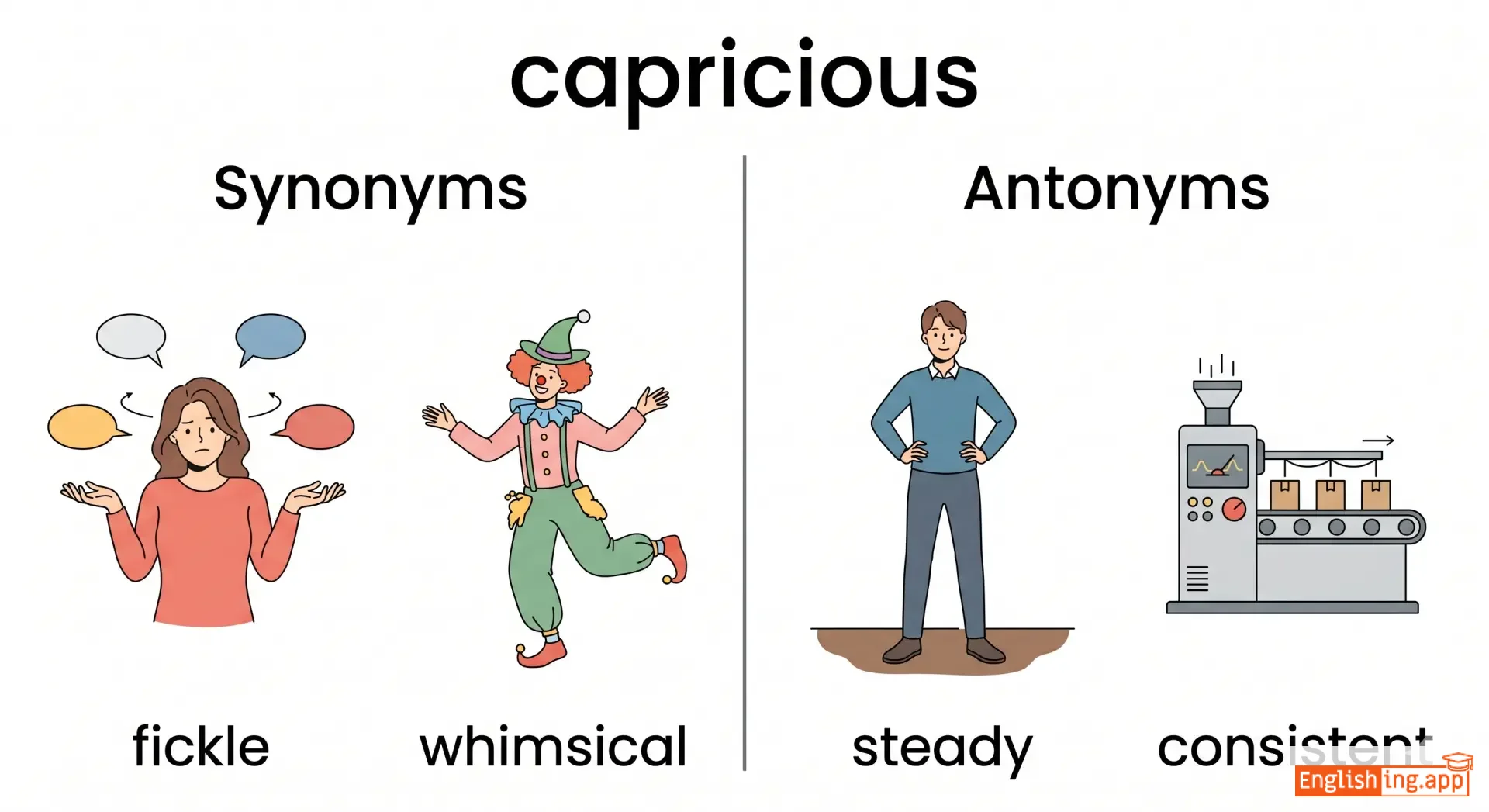
|
fickle, whimsical, unpredictable, impulsive, erratic
••••••
|
steady, consistent, reliable
••••••
|
capricious decision, capricious behavior, capricious nature, capricious weather
••••••
|
Capri + 变化 (变化) - 善变的天气随时改变
••••••
|
|
⚡
••••••
|
/ˌkæstɪˈɡeɪʃən/
noun
(凯斯提盖肖恩)
••••••
|
|
严厉的批评或惩罚
yanli de piping huo chengfa
••••••
|
- •••••• | - •••••• | - •••••• | - •••••• |
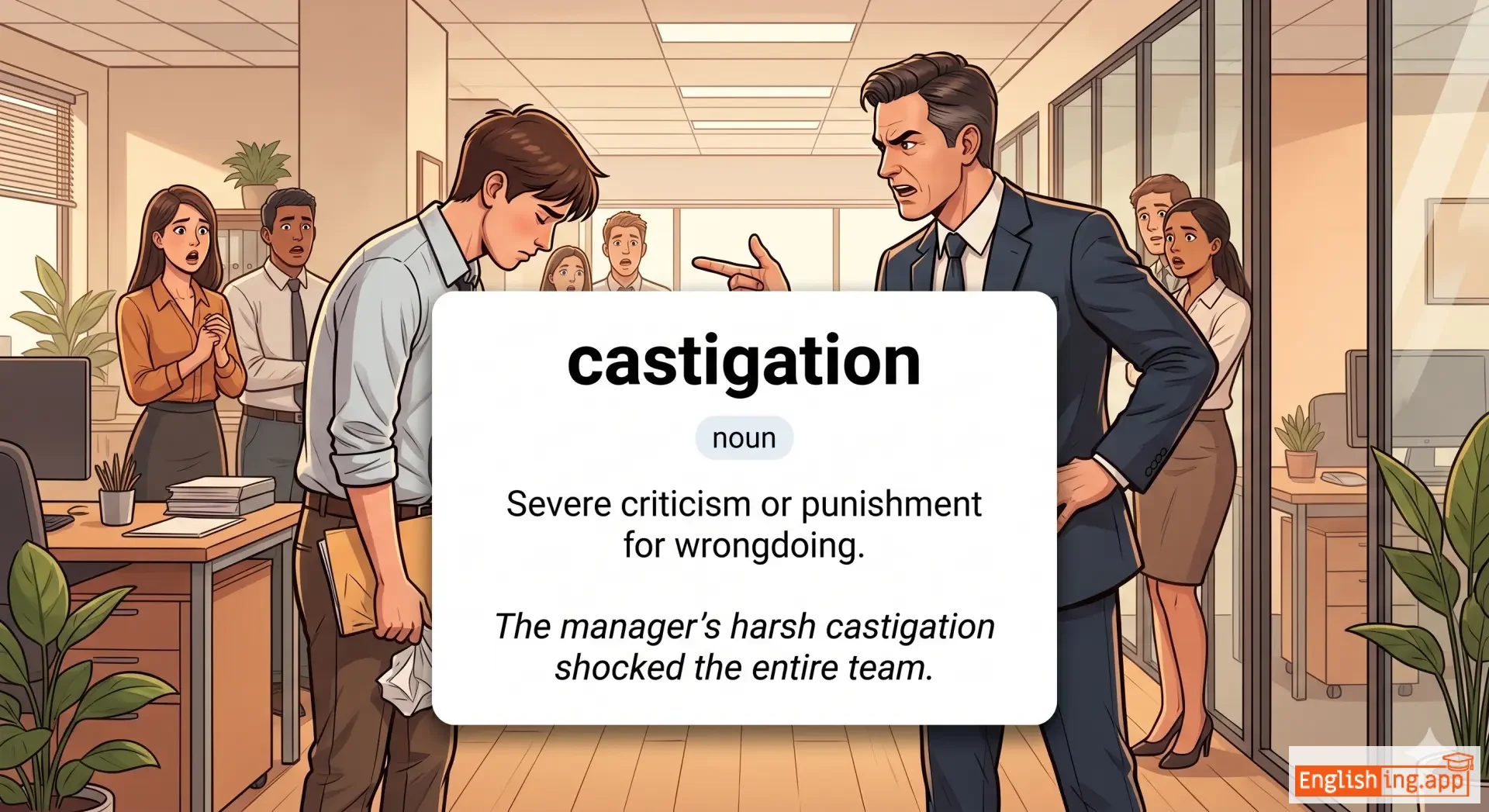
Severe criticism or punishment for wrongdoing.
••••••
|
The manager’s harsh castigation shocked the entire team.
经理的严厉批评震惊了整个团队。
••••••
|
经理的严厉批评震惊了整个团队。
Jingli de yanli piping zhenjing le zhengge tuandui.
••••••
|
- •••••• | - •••••• | - •••••• |
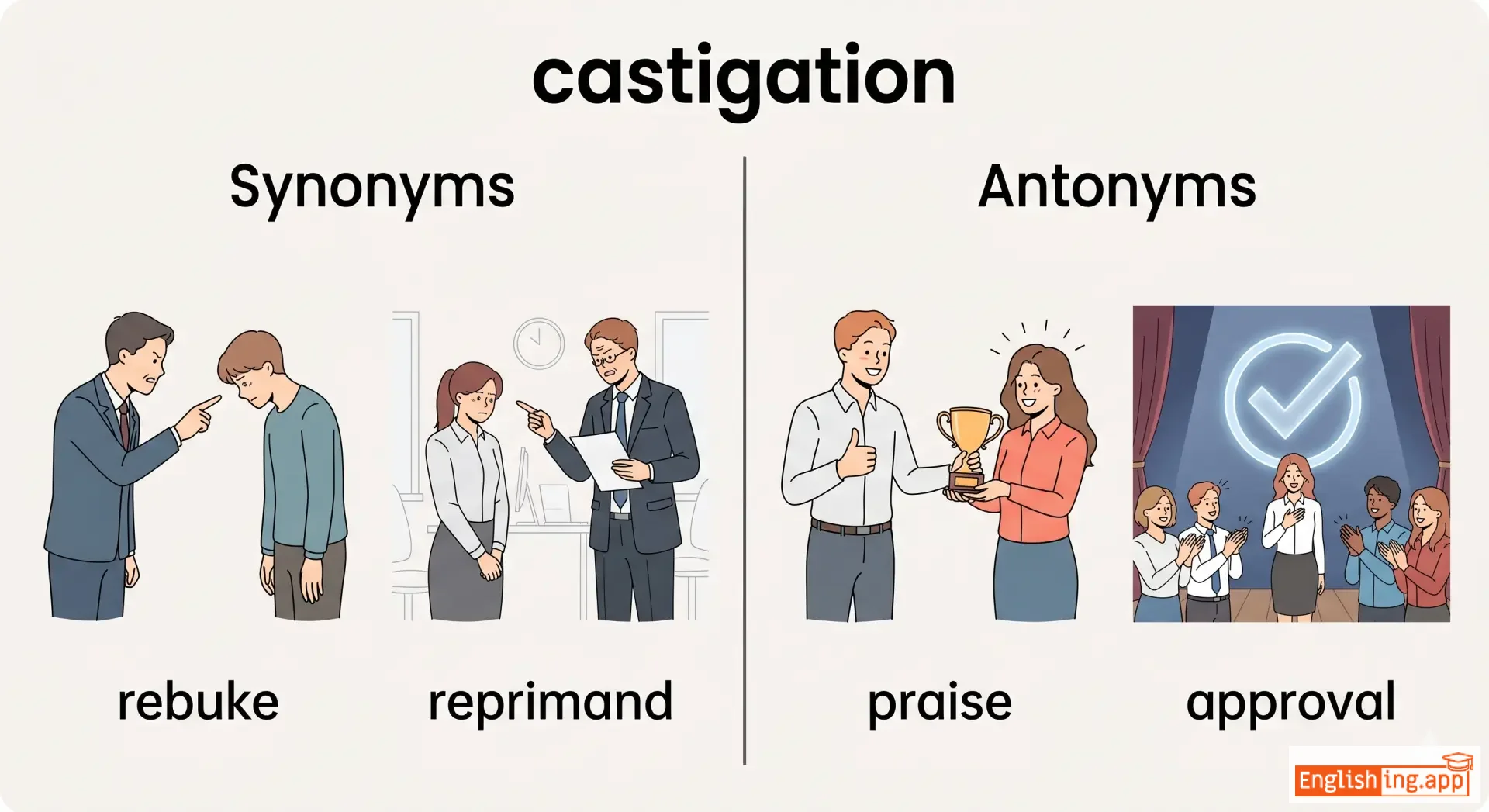
rebuke, reprimand, scolding, chastisement, condemnation
••••••
|
praise, approval, commendation
••••••
|
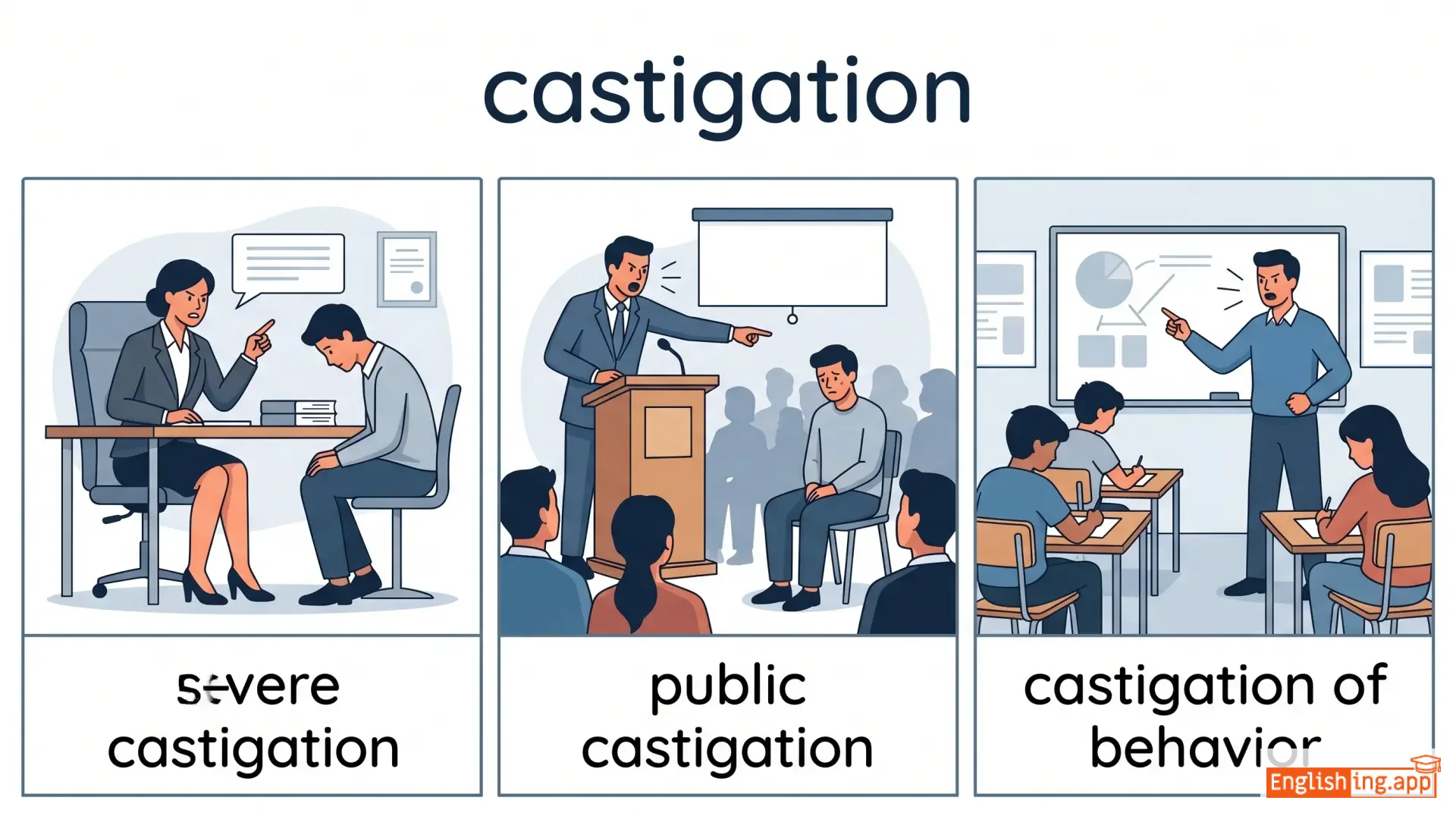
severe castigation, public castigation, castigation of behavior
••••••
|
Cast (cast)就像惩罚 = castigation 就是严厉批评
••••••
|
|
⚡
••••••
|
/ˈkætəlɪst/
noun
(kā tài lì sī tè)
••••••
|
|
催化剂
cuī huà jì
••••••
|
- •••••• | - •••••• | - •••••• | - •••••• |
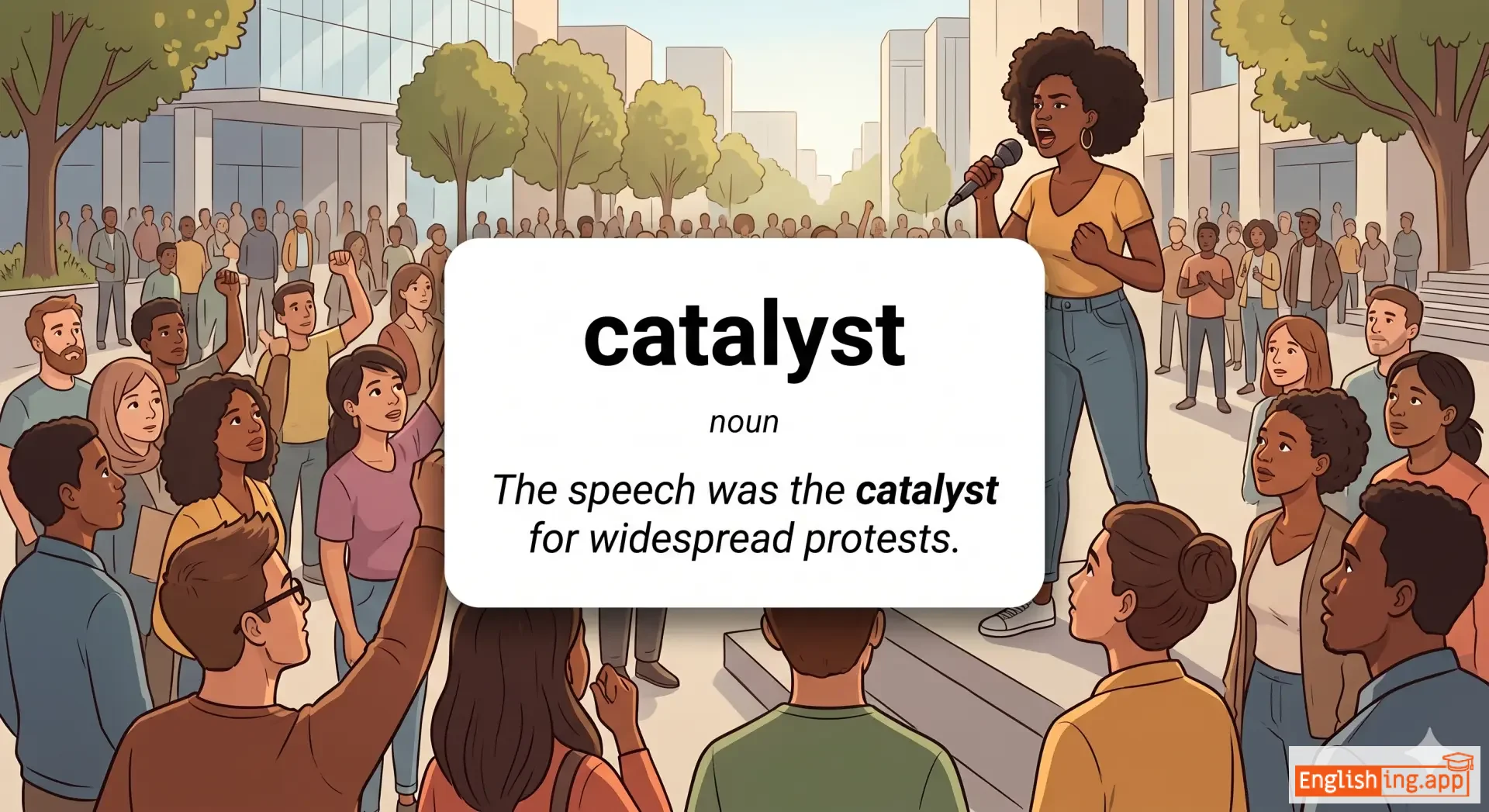
Something that speeds up or causes an event or change without being changed itself.
••••••
|
The speech was the catalyst for widespread protests. |
这场演讲成为了广泛抗议的催化剂。
Zhè chǎng yǎn jiǎng chéng wéi le guǎng fàn kàng yì de cuī huà jì.
••••••
|
- •••••• | - •••••• | - •••••• |
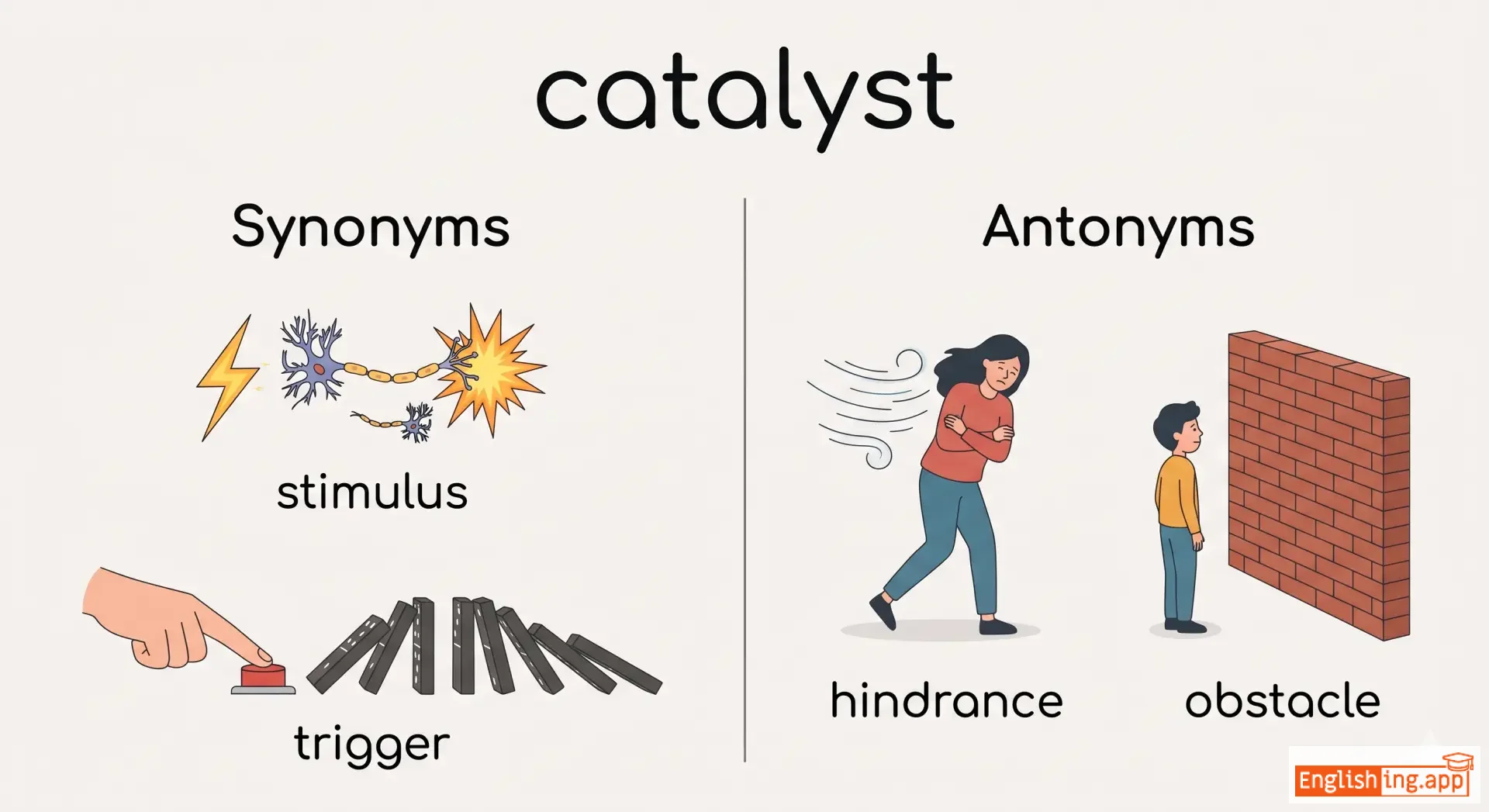
stimulus, trigger, spark, impetus, accelerator
••••••
|
hindrance, obstacle, deterrent
••••••
|
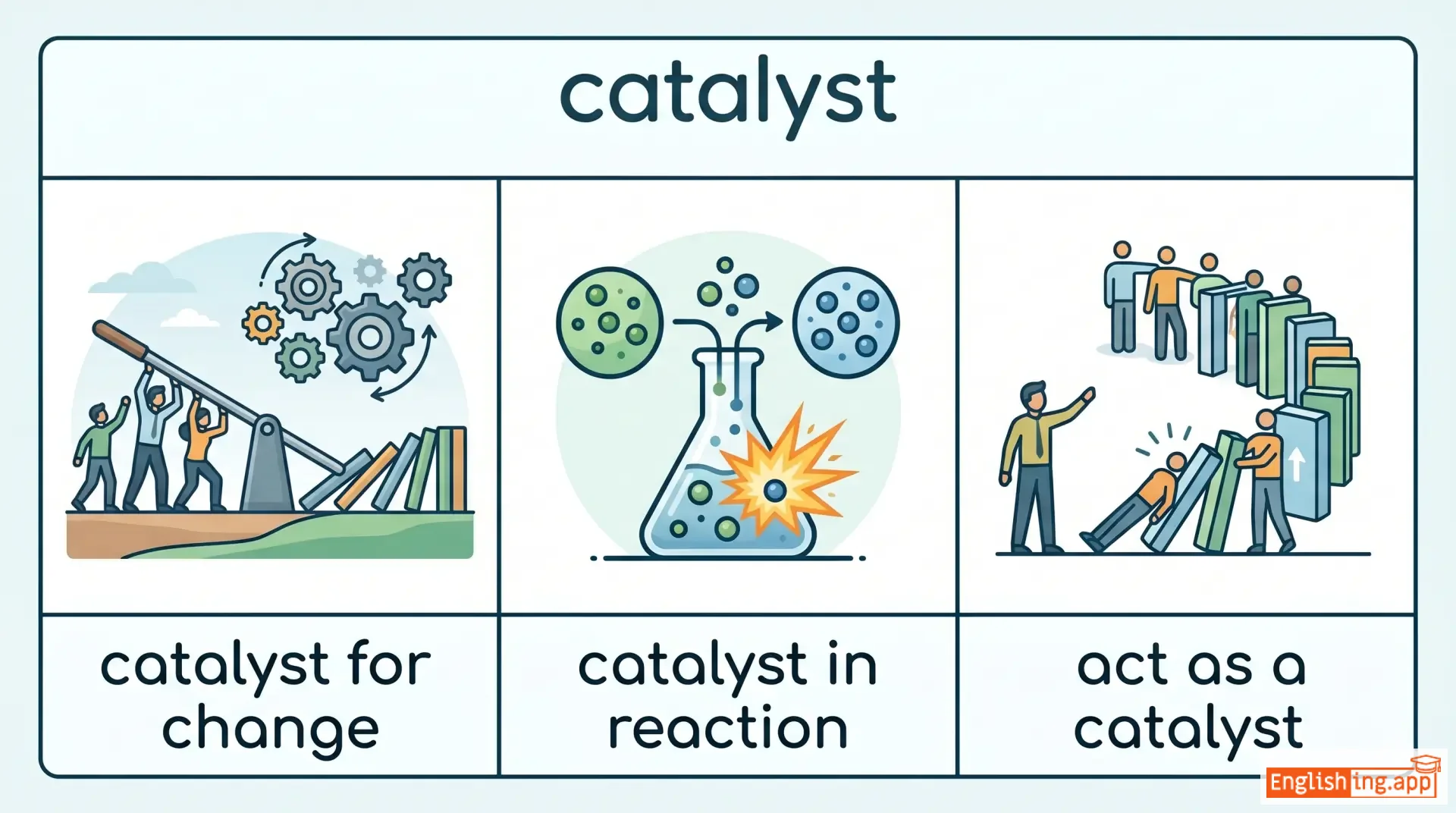
catalyst for change, catalyst in reaction, act as a catalyst, important catalyst
••••••
|
催化剂来自 Catalyst - 演讲成为催化剂 (cuī huà jì)
••••••
|
|
☠️
••••••
|
/ˈkɔː.stɪk/
adjective
(kòusǐtíkè)
••••••
|
|
腐蚀性的, 尖刻的
fǔshí xìng de, jiānkè de
••••••
|
- •••••• | - •••••• | - •••••• | - •••••• |
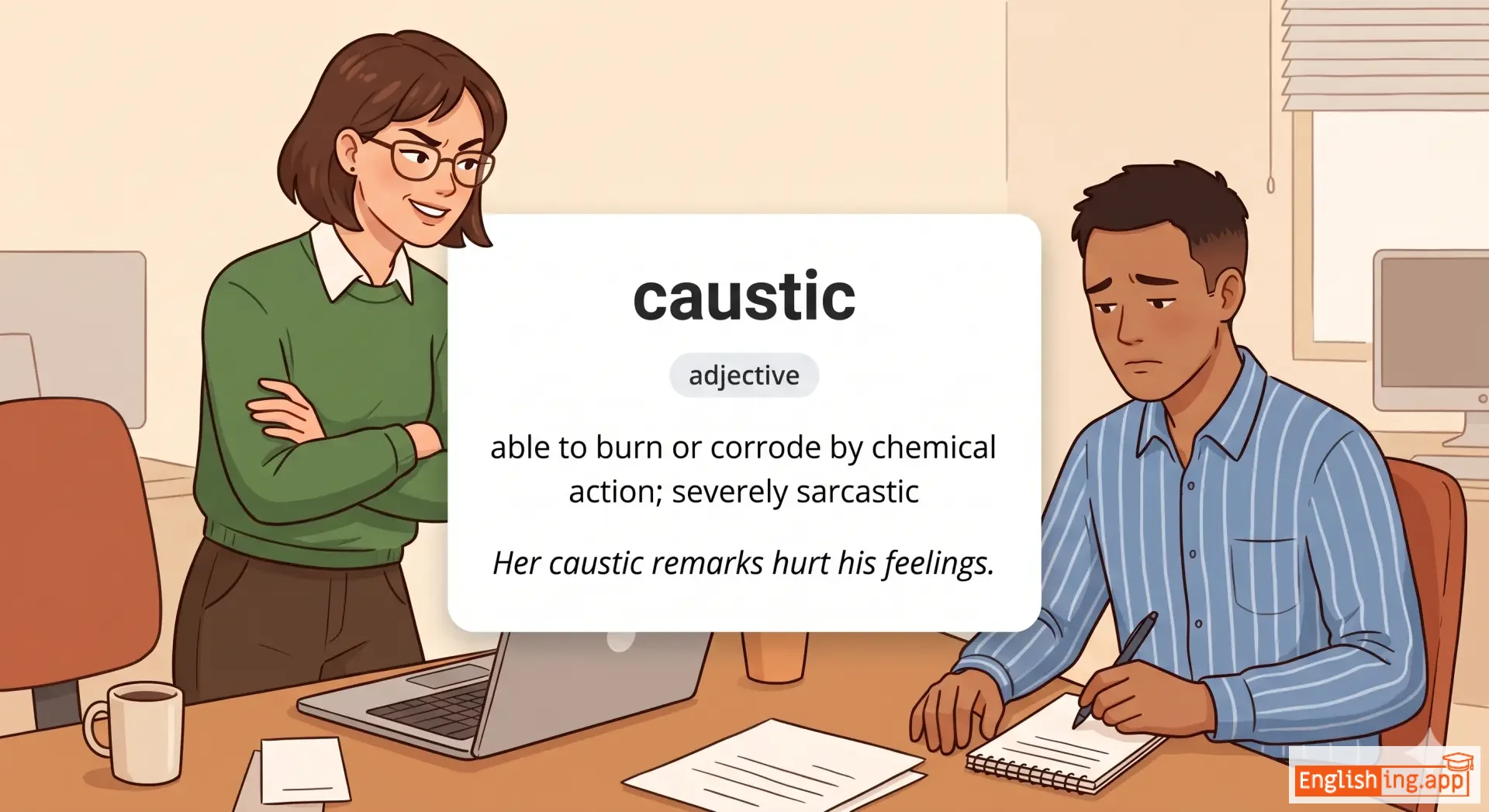
able to burn or corrode by chemical action; severely sarcastic
••••••
|
Her caustic remarks hurt his feelings. |
她尖刻的评论伤害了他的感情。
Tā jiānkè de pínglùn shānghài le tā de gǎnqíng.
••••••
|
caustic wit |
sharp and biting sense of humor
••••••
|
尖刻的幽默
jiānkè de yōumò
••••••
|
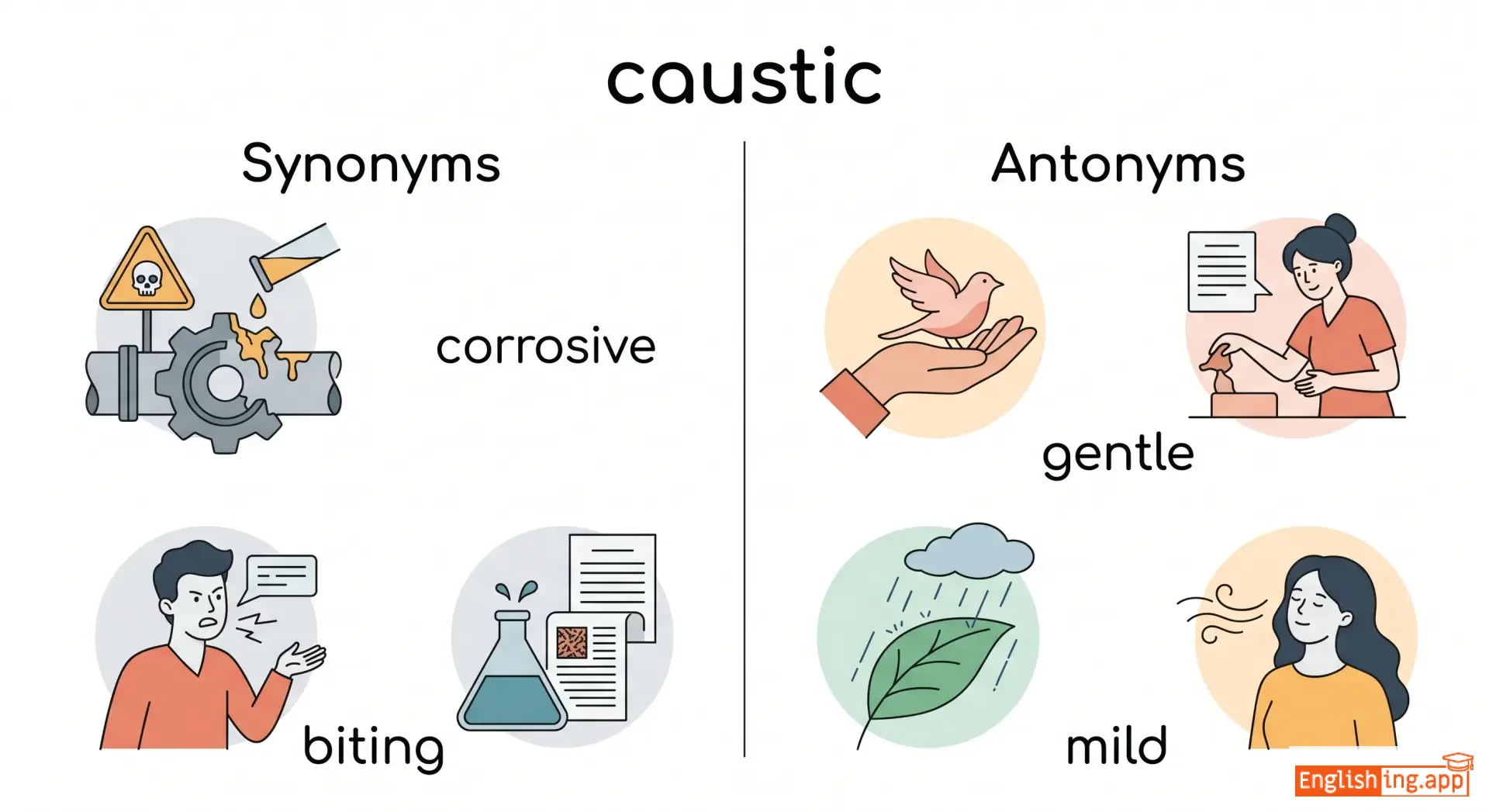
corrosive, biting, sarcastic, scathing, harsh
••••••
|
gentle, mild, kind
••••••
|
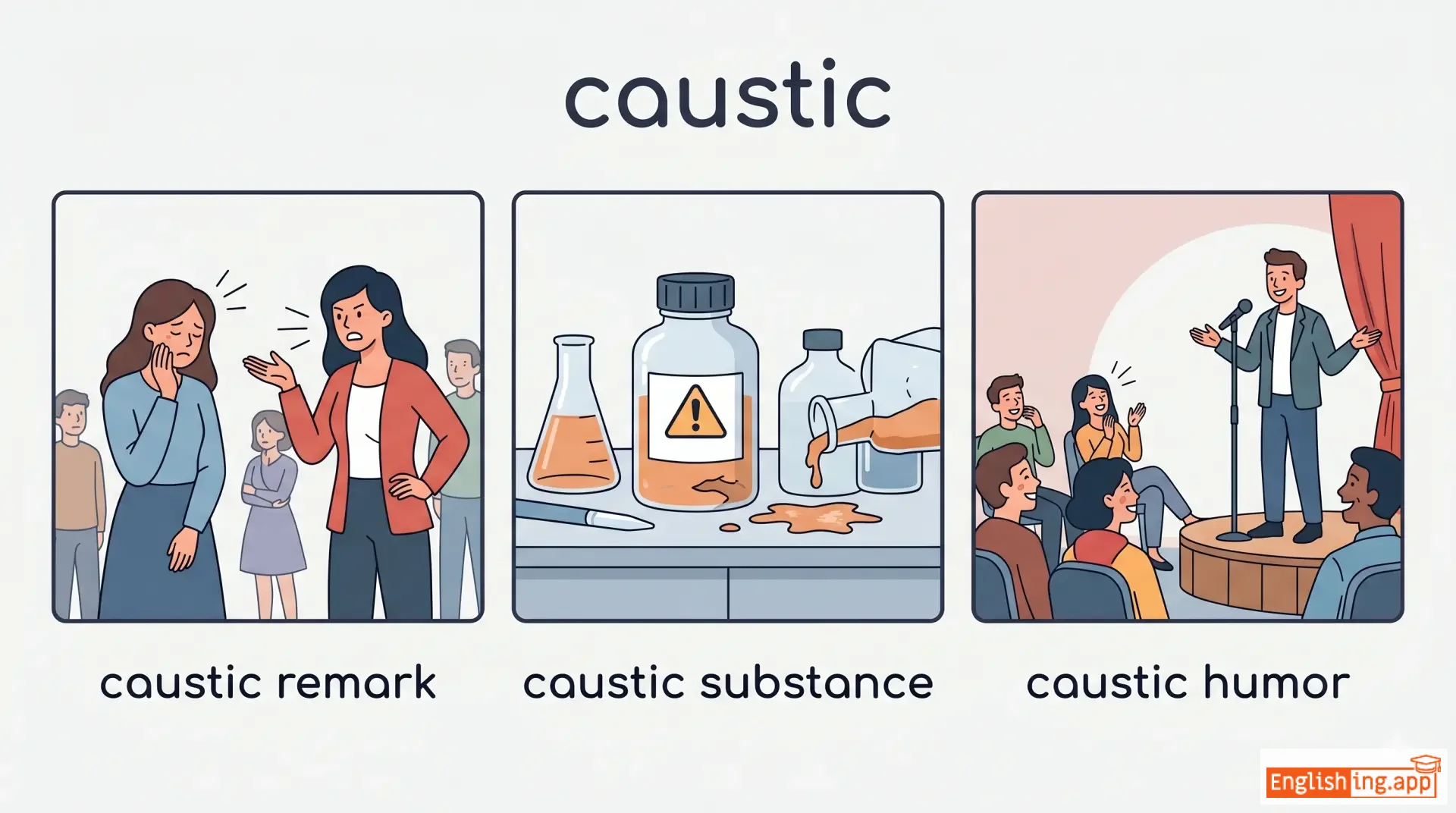
caustic remark, caustic substance, caustic humor, caustic comment
••••••
|
Caustic 就像腐蚀性的化学物质,评论尖刻的时候,心也被烧伤。
••••••
|
|
🃏
••••••
|
/ʃɪˈkeɪnəri/
noun
(奇卡内里)
••••••
|
|
欺诈
qizha
••••••
|
- •••••• | - •••••• | - •••••• | - •••••• |
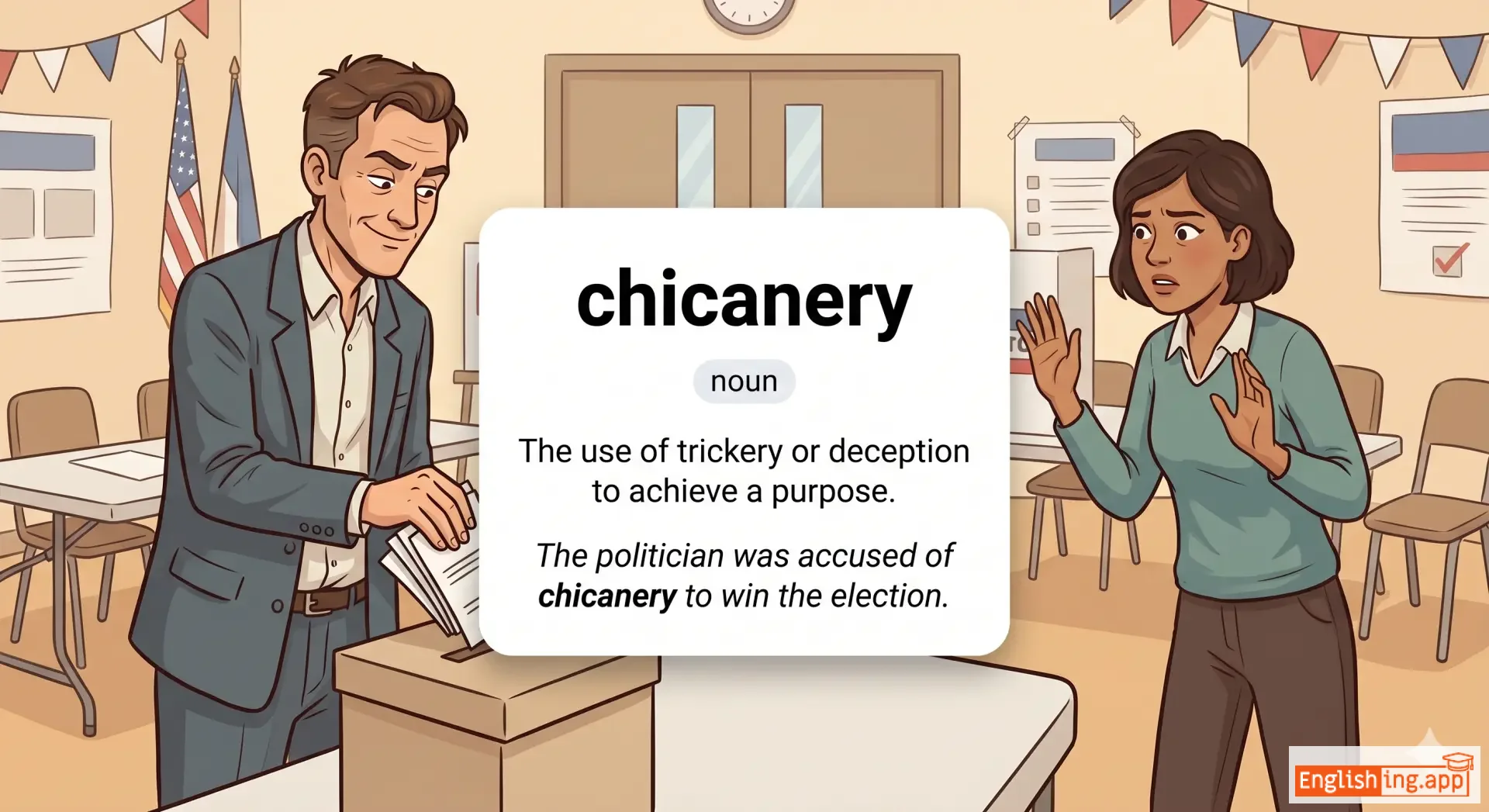
The use of trickery or deception to achieve a purpose.
••••••
|
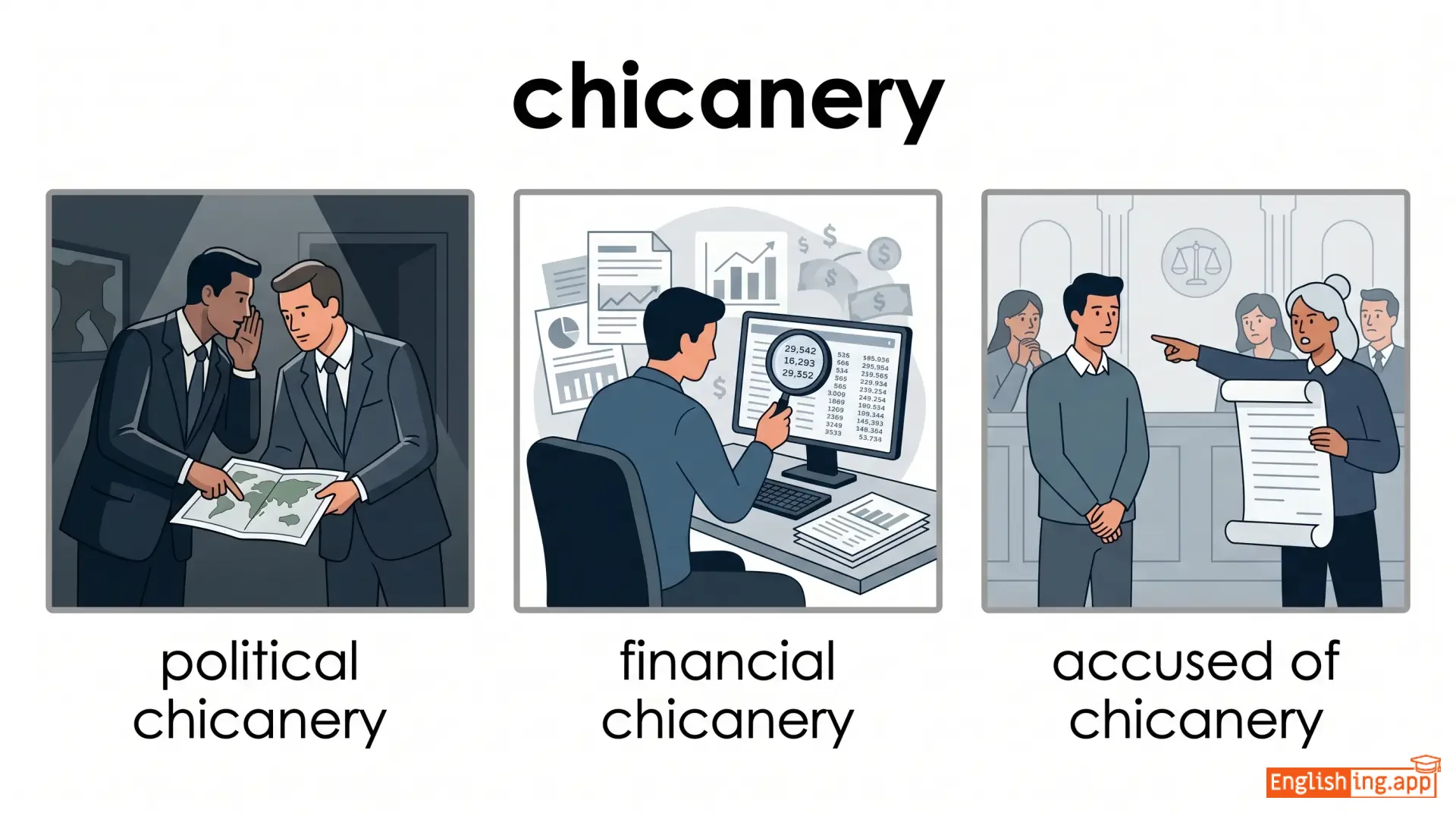
The politician was accused of chicanery to win the election. |
这位政治家因利用欺诈手段赢得选举而被指控。
Zhe wei zhengzhijia yin liyong qipian shouduan yingde xuanchu er bei zhigong.
••••••
|
- •••••• | - •••••• | - •••••• |
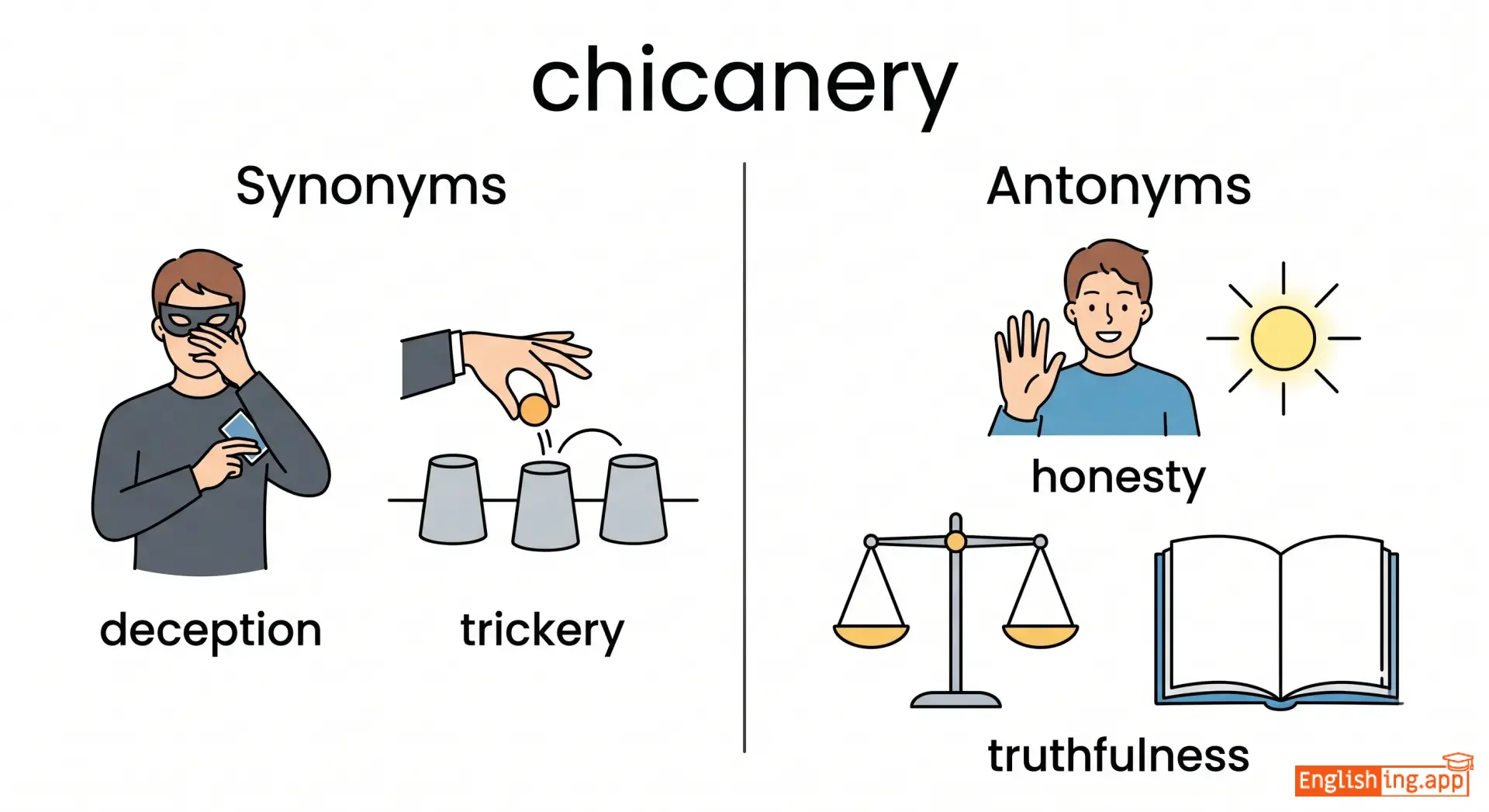
deception, trickery, fraud, deceit, dishonesty
••••••
|
honesty, truthfulness, integrity
••••••
|
political chicanery, financial chicanery, accused of chicanery, expose chicanery
••••••
|
奇卡 (chicanery) 来欺骗, 欺诈。
••••••
|
|
🧪
••••••
|
/koʊˈæɡjəˌleɪt/
verb
(kuò gǔ lì tè)
••••••
|
|
凝结
níngjié
••••••
|
coagulated
kuò gǔ lì tè dé
••••••
|
coagulated
kuò gǔ lì tè dé
••••••
|
coagulates
kuò gǔ lì tè sī
••••••
|
coagulating
kuò gǔ lì tè jìng
••••••
|
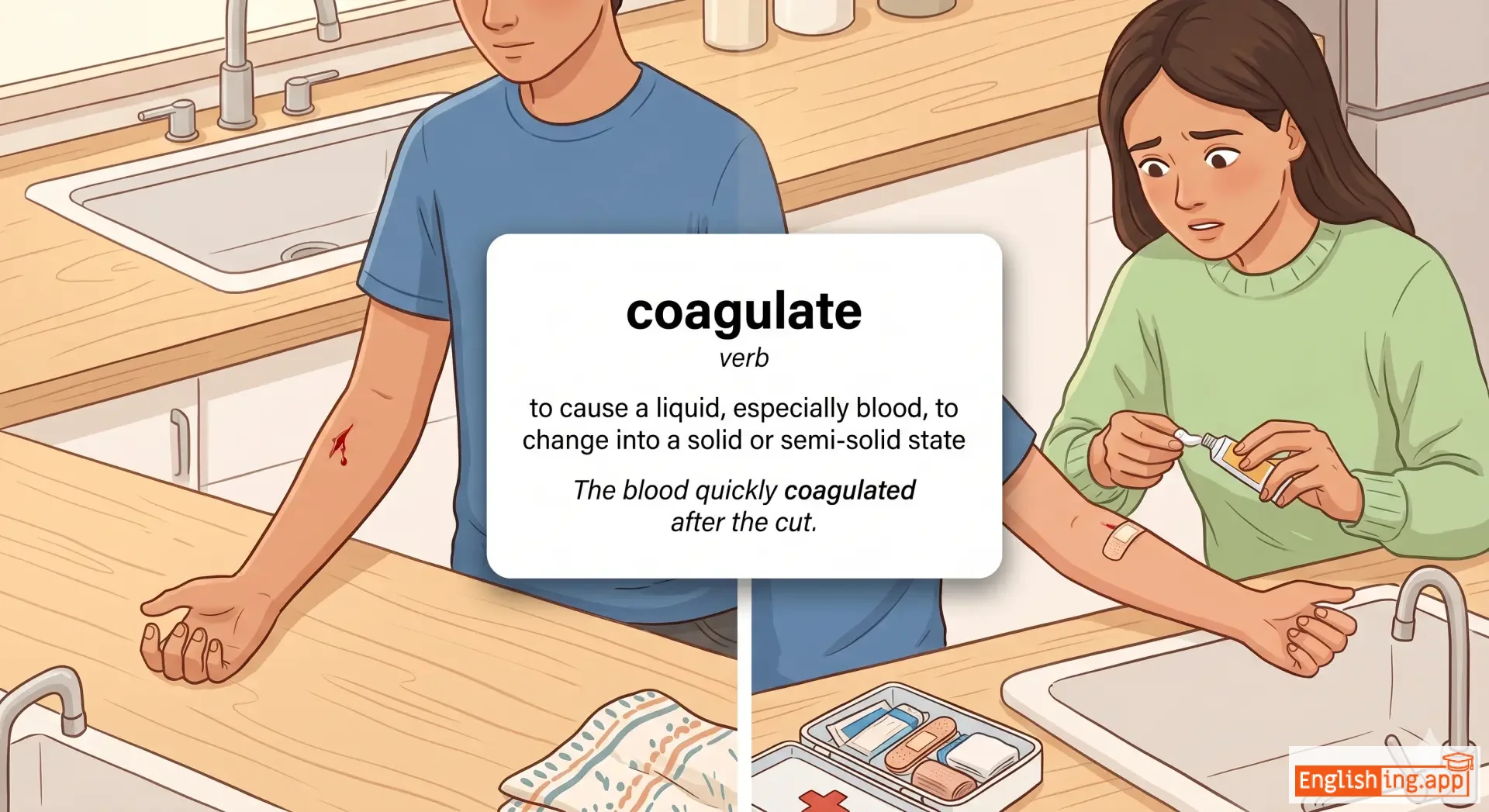
to cause a liquid, especially blood, to change into a solid or semi-solid state
••••••
|
The blood quickly coagulated after the cut.
伤口后血液迅速凝结。
••••••
|
伤口后血液迅速凝结。
Shāngkǒu hòu xuèyè xùnsù níngjié.
••••••
|
- •••••• | - •••••• | - •••••• |
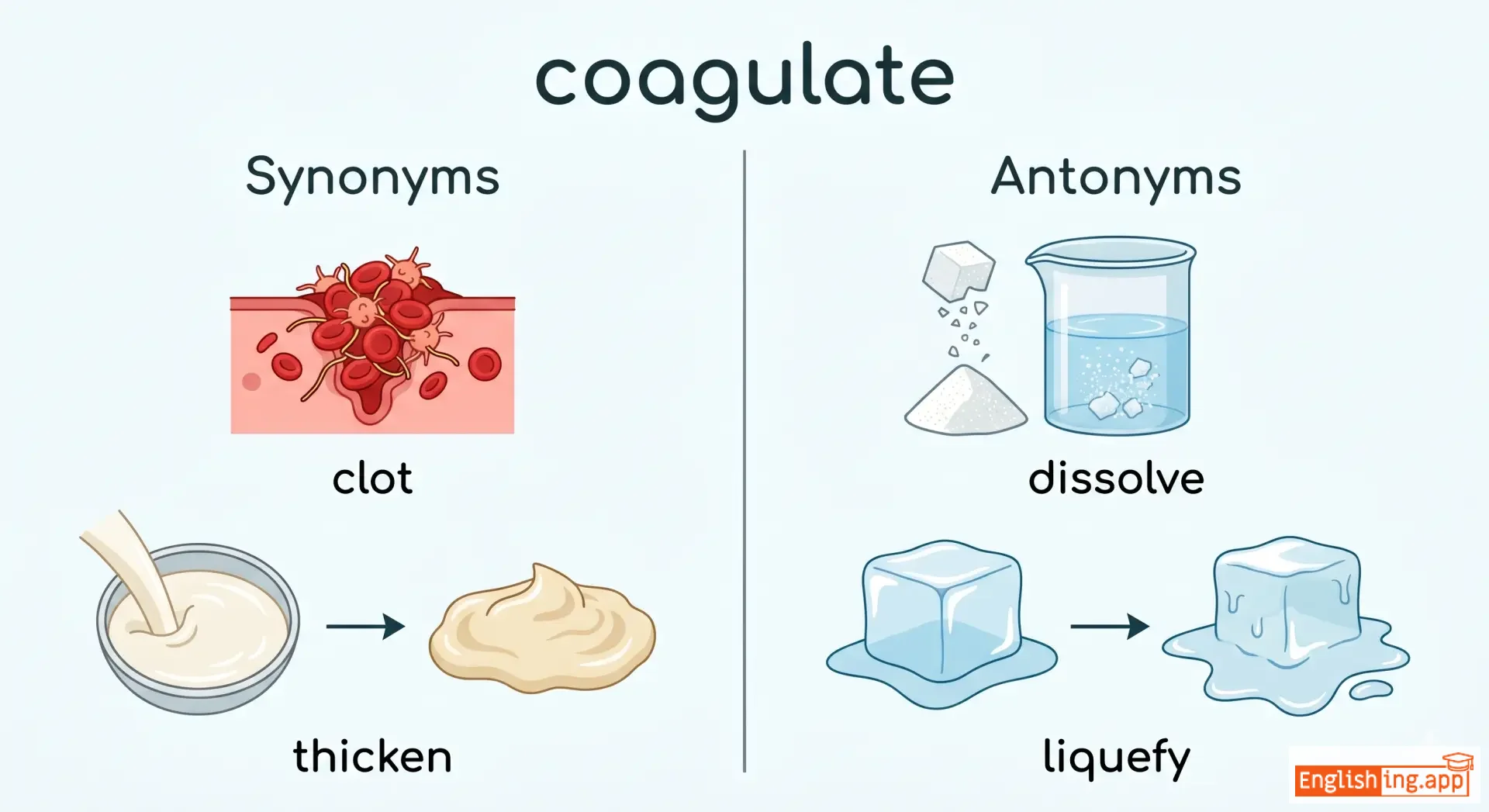
clot, thicken, curdle, congeal
••••••
|
dissolve, liquefy, melt
••••••
|
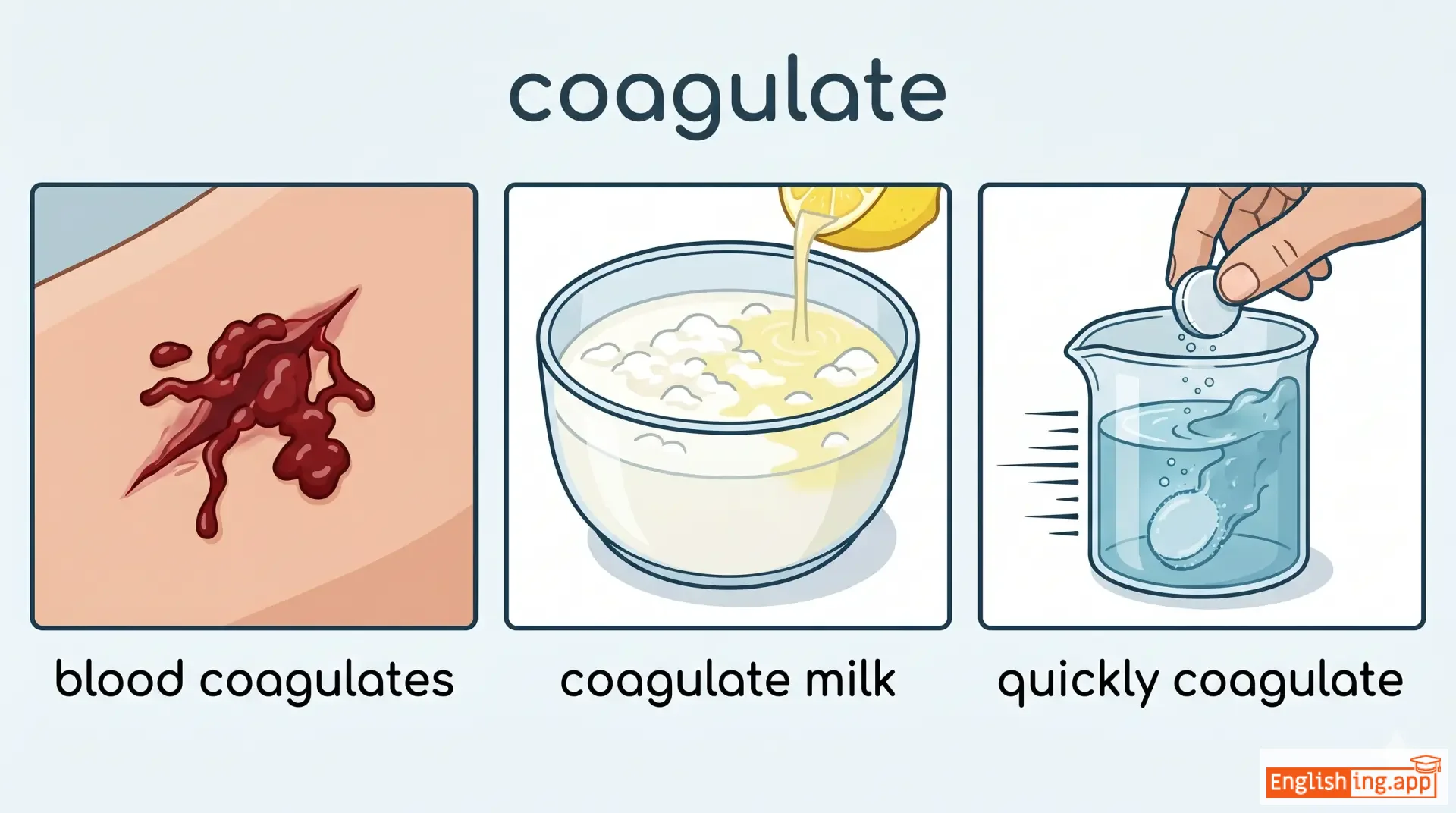
blood coagulates, coagulate milk, quickly coagulate
••••••
|
割伤后血液凝结
••••••
|

