The Impact of Trade on Economies
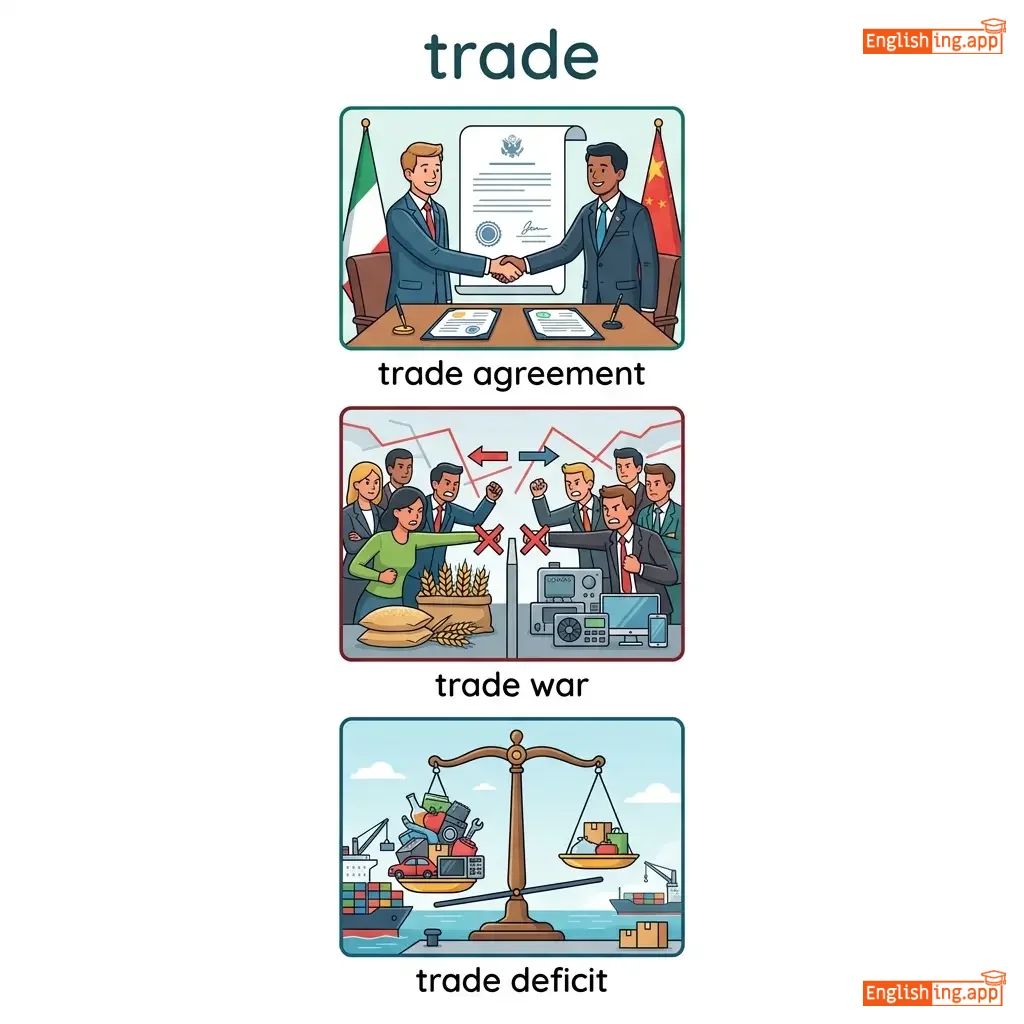
国际贸易在保持国家宏观经济稳定中发挥着至关重要的作用。当两个国家通过协议建立双边商业关系时,两个国家的经济资本化都会增加。然而,有时会采取保护主义政策,通过关税控制外国竞争来保护国内生产者。此外,如果一个国家施加禁运或报复性制裁,它会造成商业不平衡,对经济产生负面影响。
许多国家采取放松管制政策,在市场上创造自由放任环境,通过增加多样化创造新的商业机会。另一方面,过度的补贴和征收政策可能会扰乱市场的平衡。
因此,当贸易正确进行时,它能够控制通货膨胀压力,通过增加经济的货币化来确保整体发展。
|
表情符号
|
单词 | Images | 含义 | 例句 | 同义词 | 反义词 |
|---|---|---|---|---|---|---|
|
#3265
🏪
|
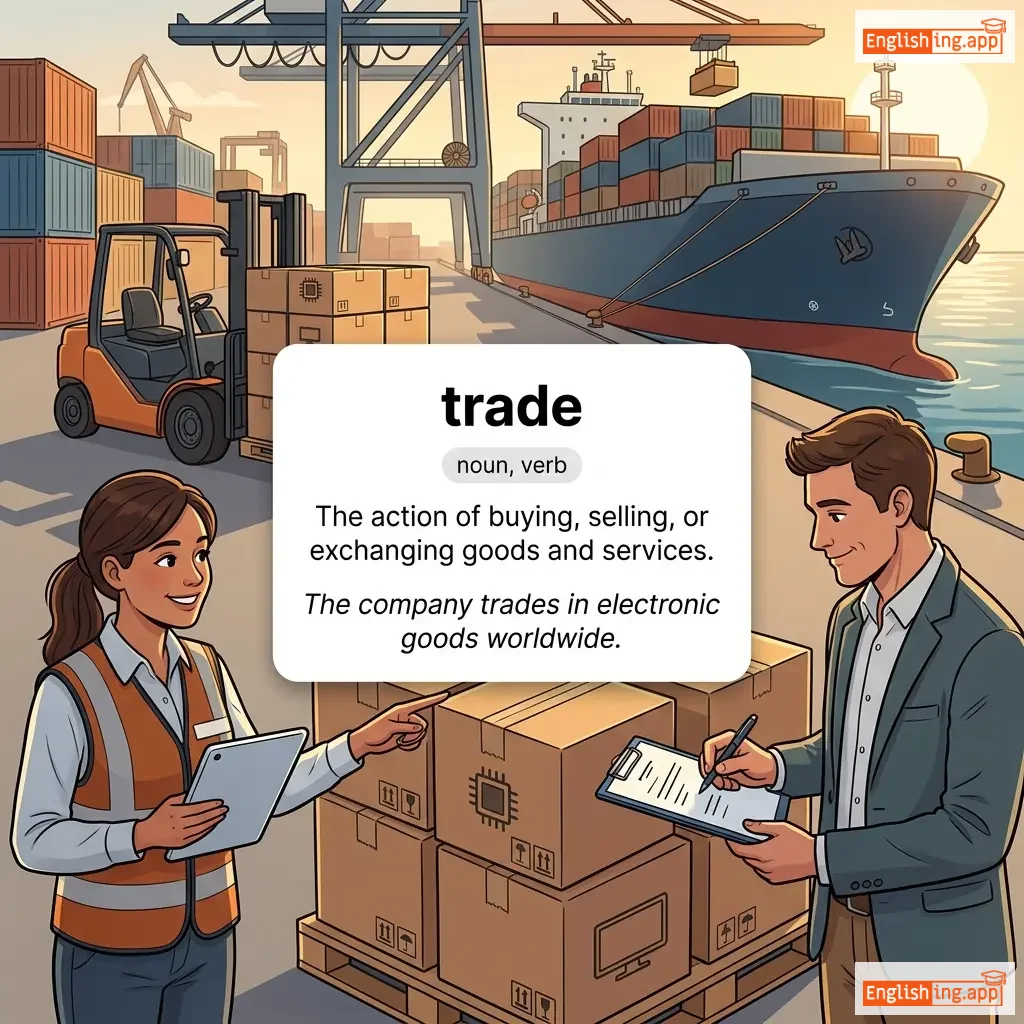
/treɪd/
noun/verb
••••••
|
|
The exchange of goods and services or the commercial buying and selling process.
••••••
|
International trade fosters economic growth. |
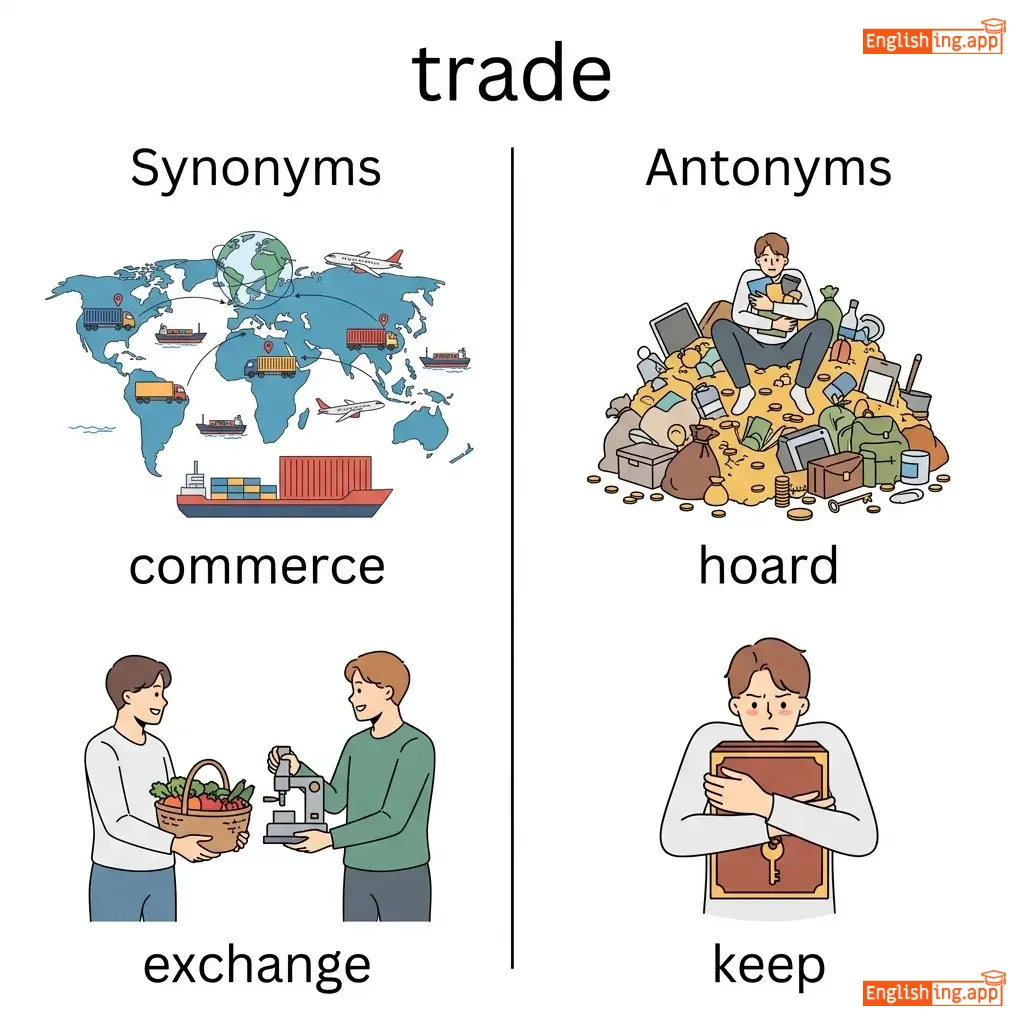
commerce, exchange, business
••••••
|
isolation, self-sufficiency, autarky
••••••
|
|
#3266
📊
|
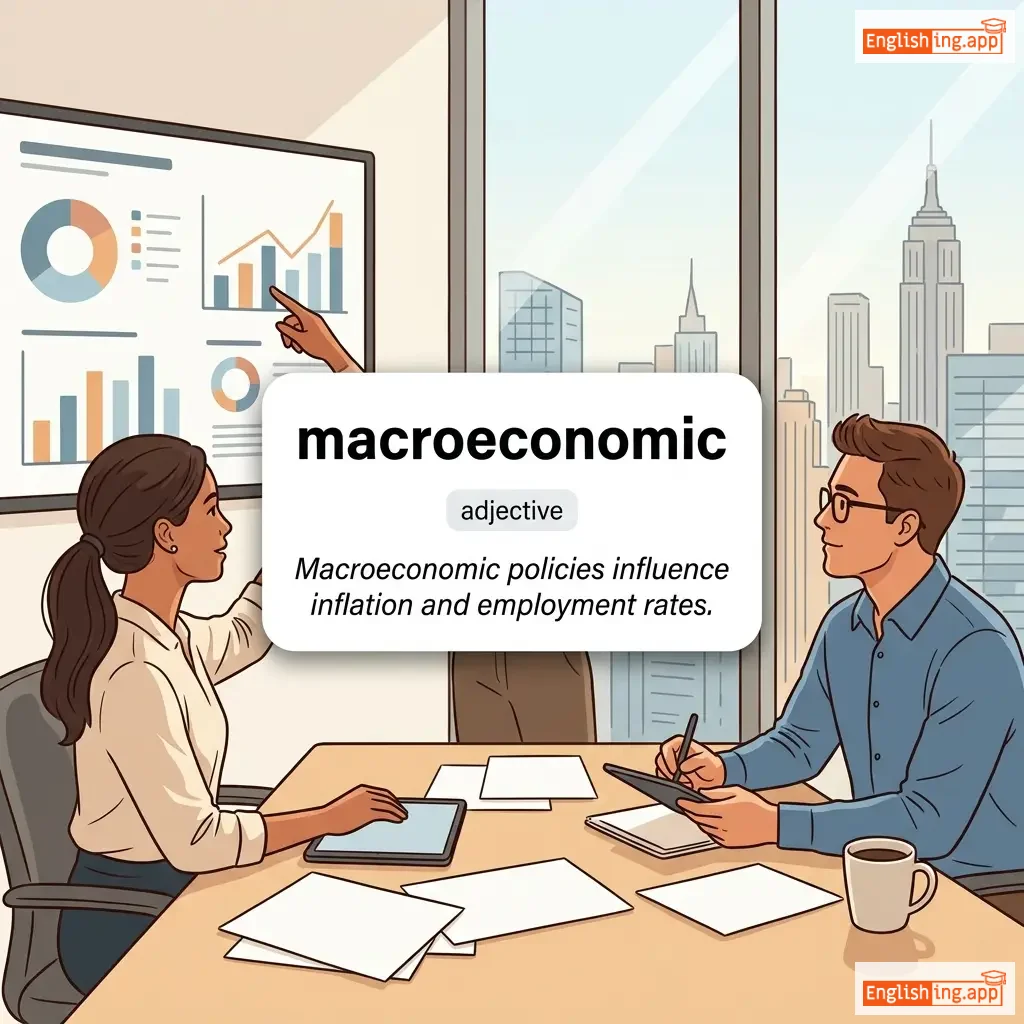
/ˌmæk.roʊ.iː.kəˈnɒm.ɪk/
adjective
••••••
|
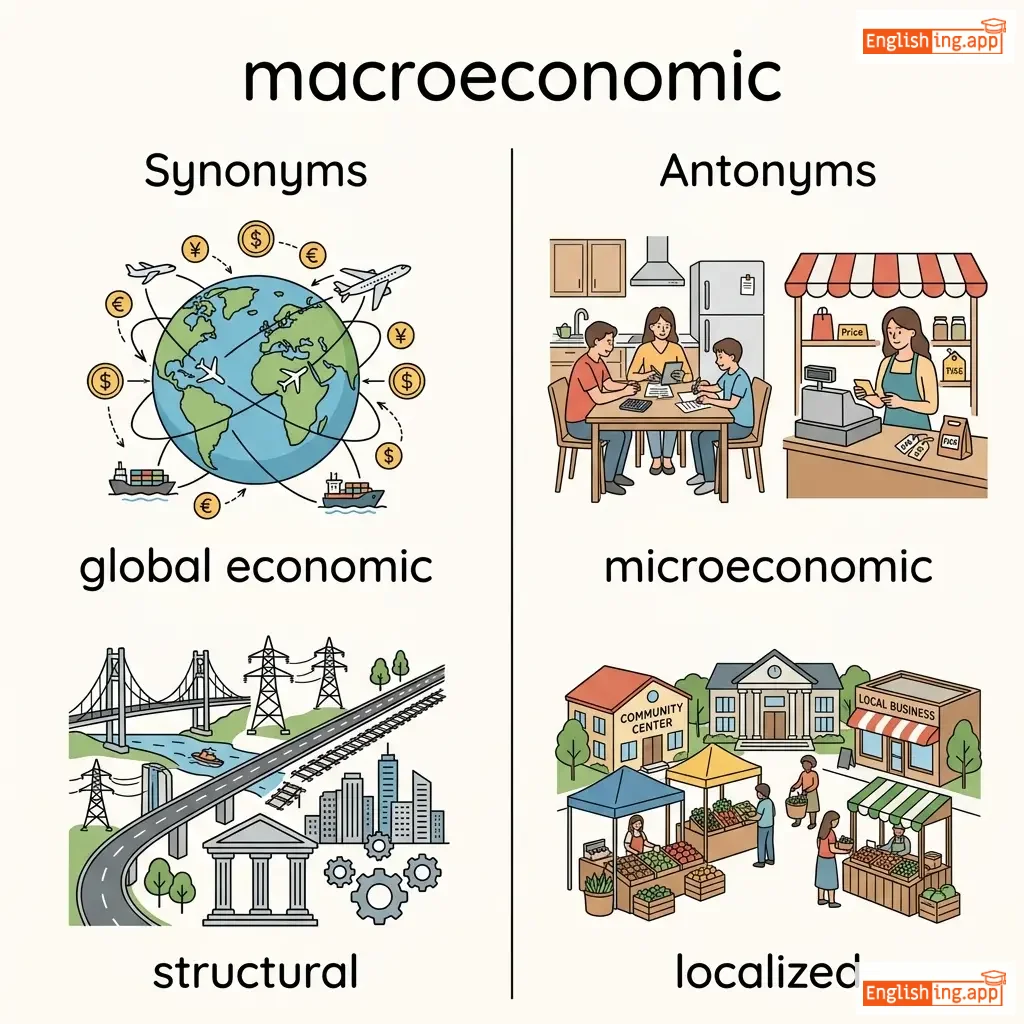
|
Related to the overall economic matters of a country including national economy, economic trends, and large-scale financial systems.
••••••
|
Government policies impact macroeconomic stability. |
national economy, economic trends, large-scale financial system
••••••
|
microeconomic, individual finance, localized economy
••••••
|
|
#3267
🤝
|
/ˌbaɪˈlæt.ər.əl/
adjective
••••••
|
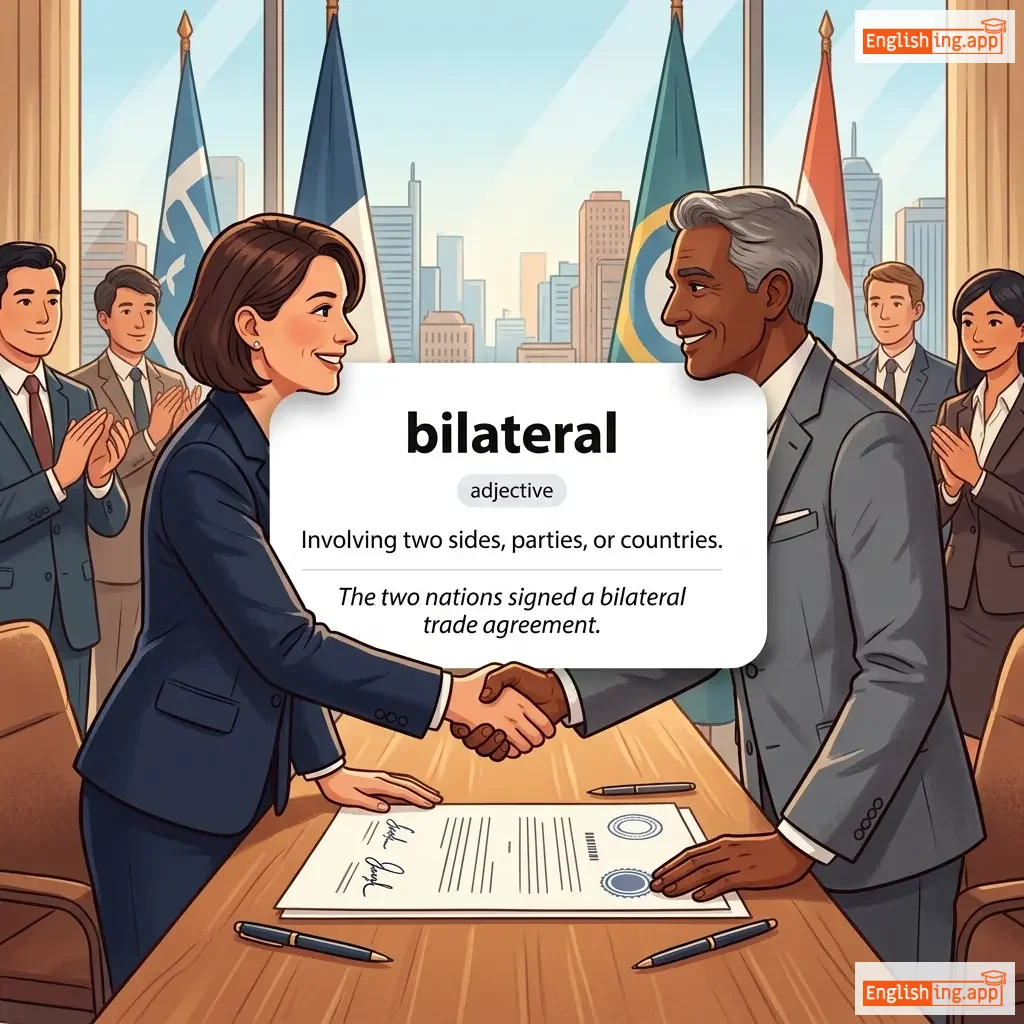
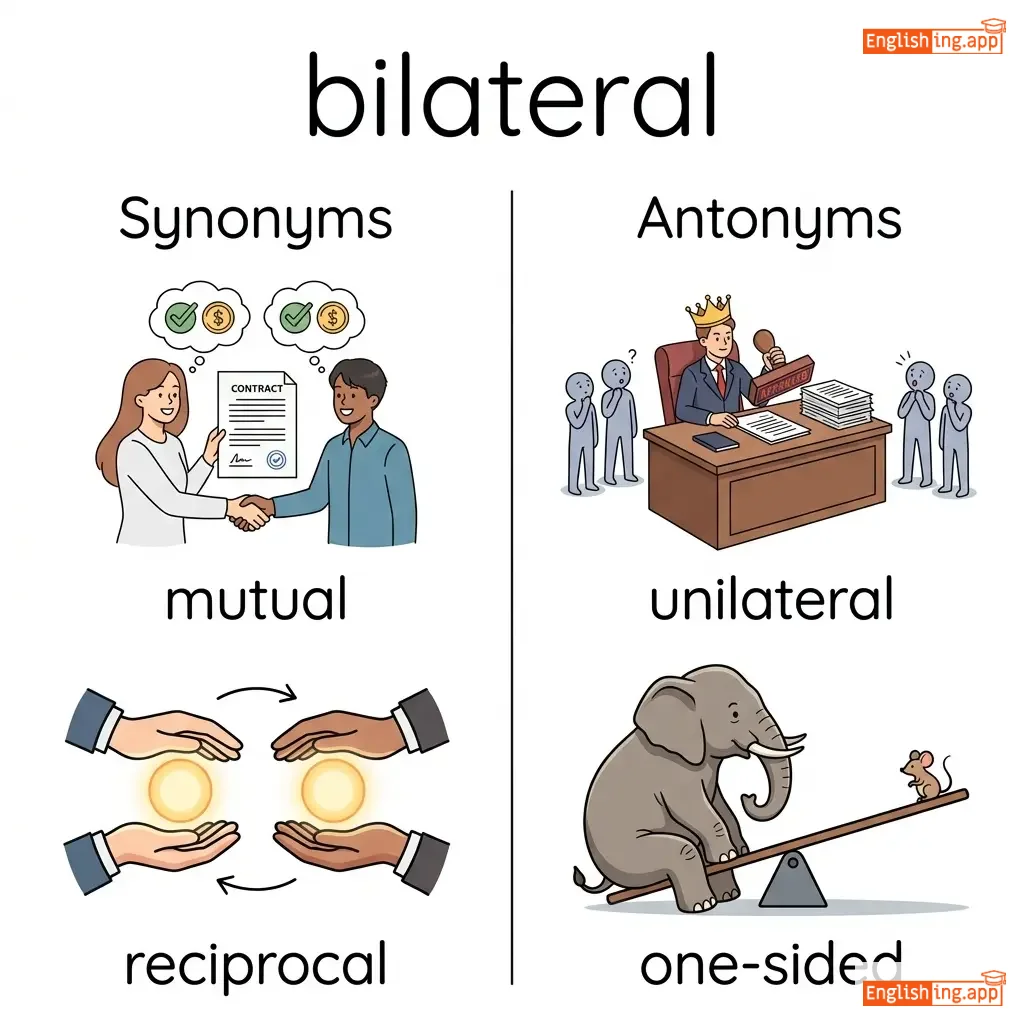
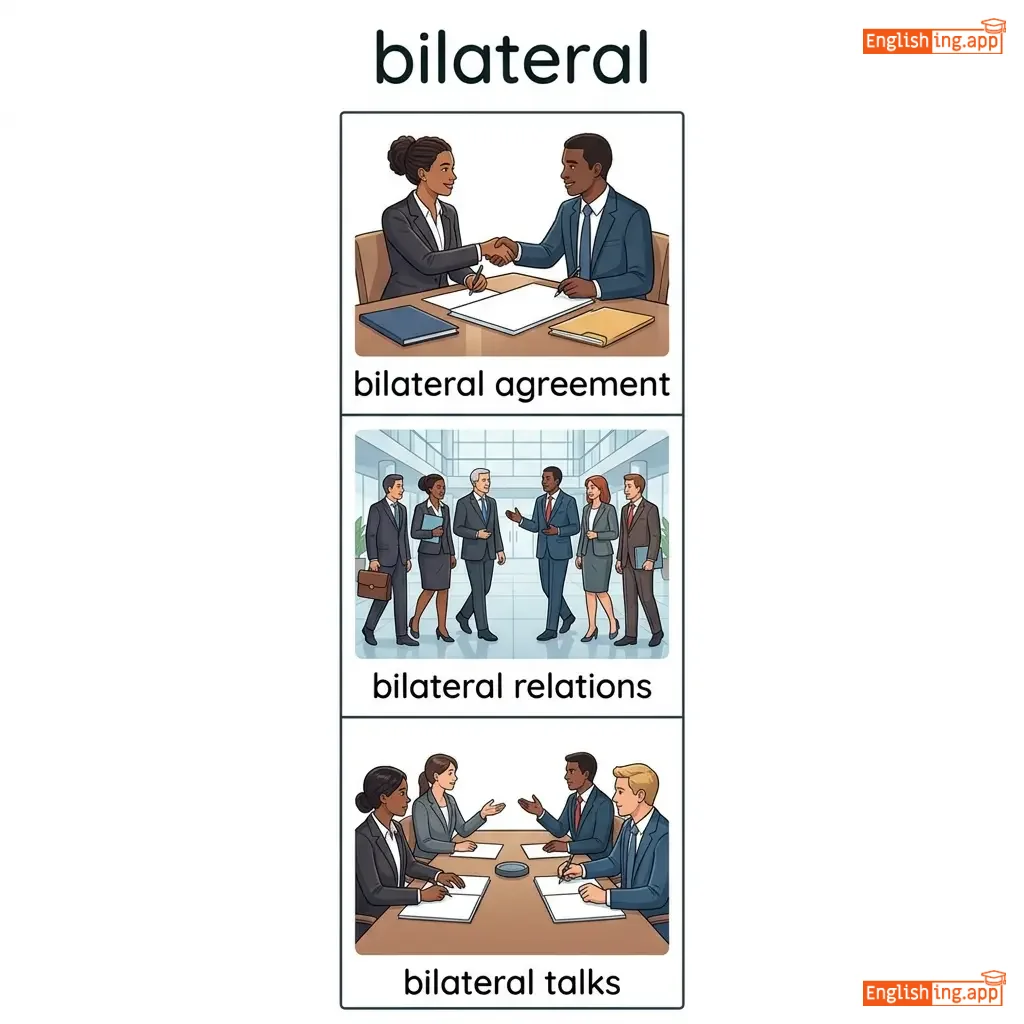
|
An agreement or relationship between two parties that is mutual, two-sided, or reciprocal.
••••••
|
The two countries signed a bilateral trade agreement. |
mutual, two-sided, reciprocal
••••••
|
unilateral, one-sided, independent
••••••
|
|
#3268
💰
|
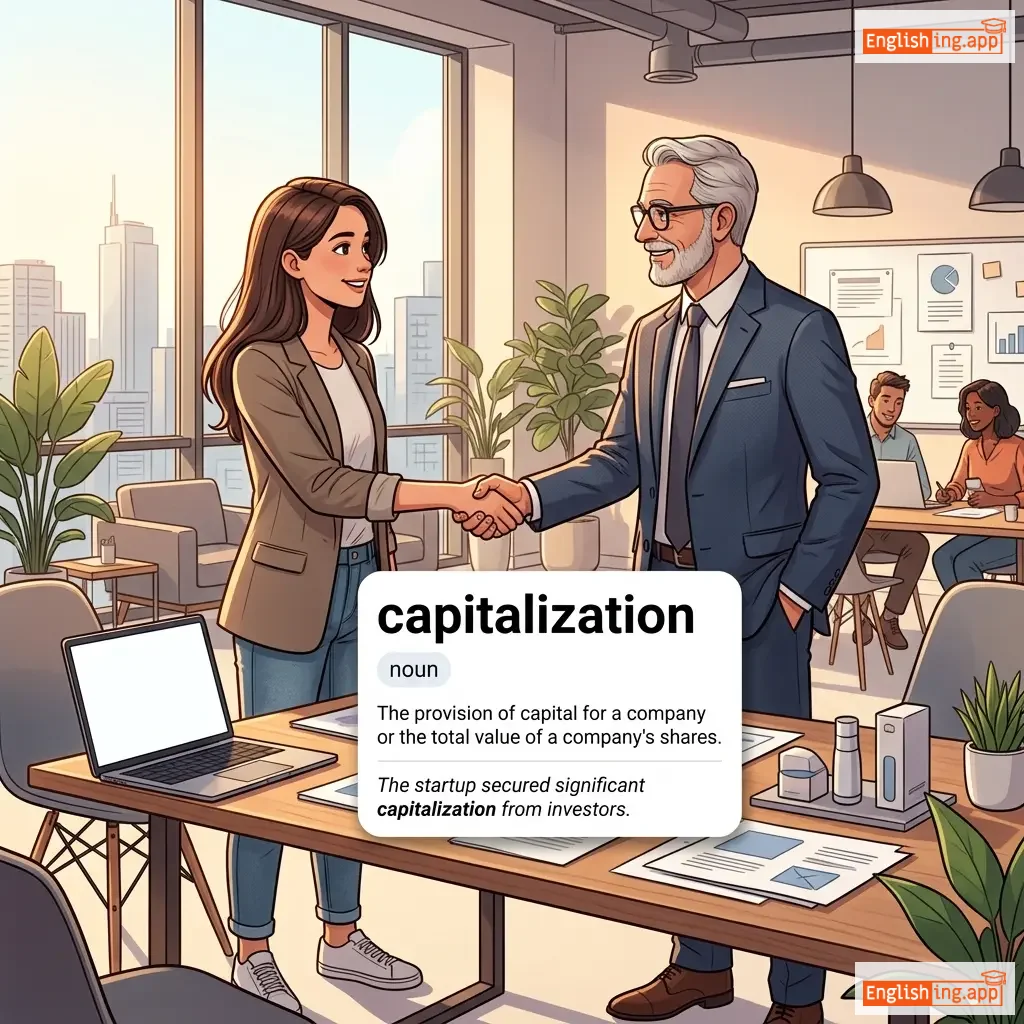
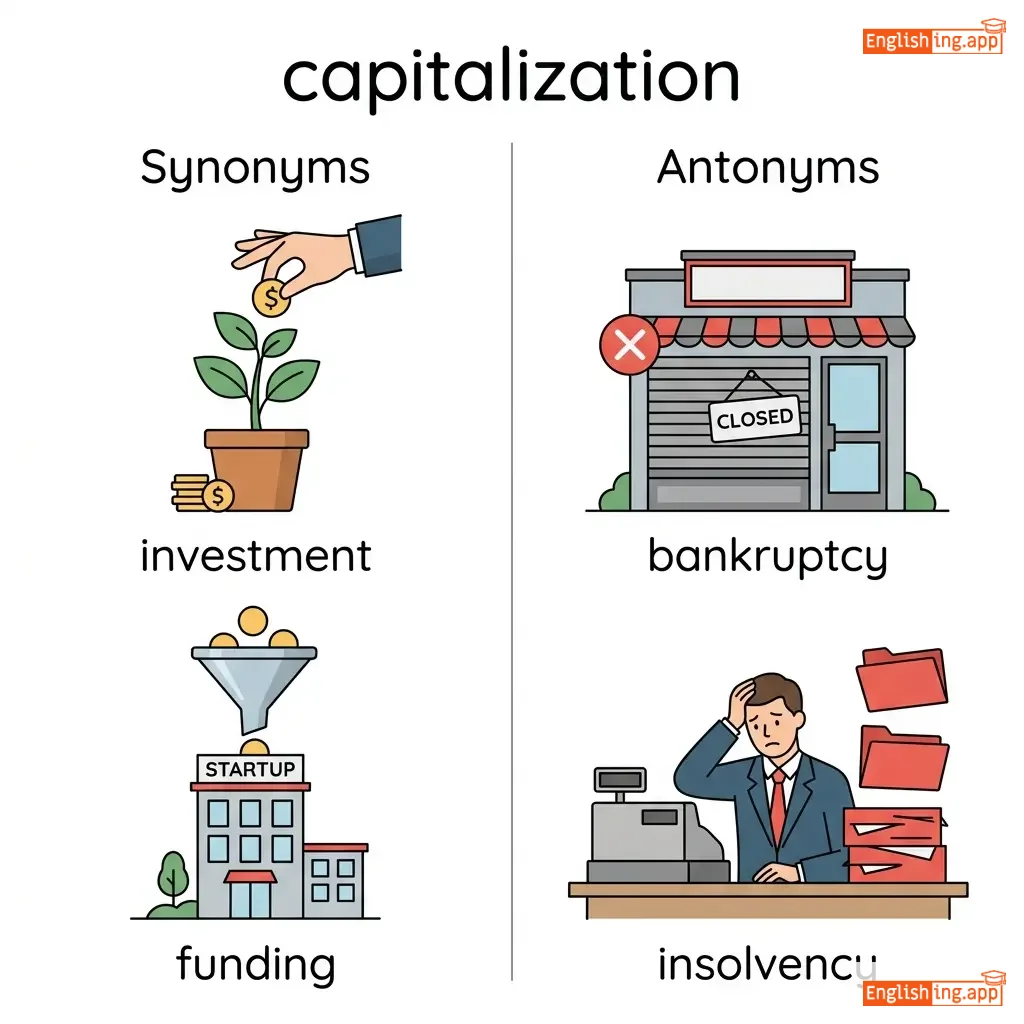
/ˌkæp.ɪ.təl.aɪˈzeɪ.ʃən/
noun
••••••
|
|
The total value of a business's assets or investments, including investment, financing, and asset allocation.
••••••
|
The company's capitalization reached $1 billion in market value. |
investment, financing, asset allocation
••••••
|
underfunding, bankruptcy, insolvency
••••••
|
|
#3269
🛡️
|
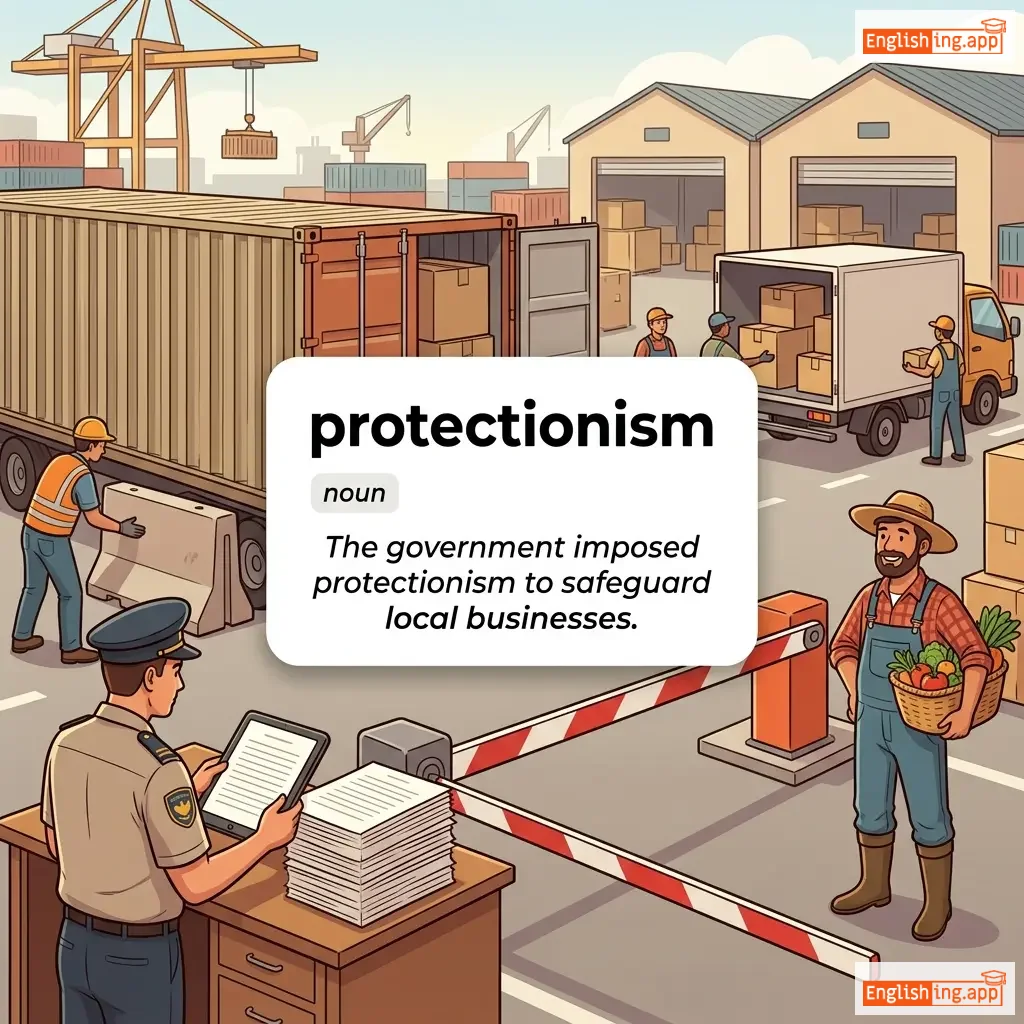
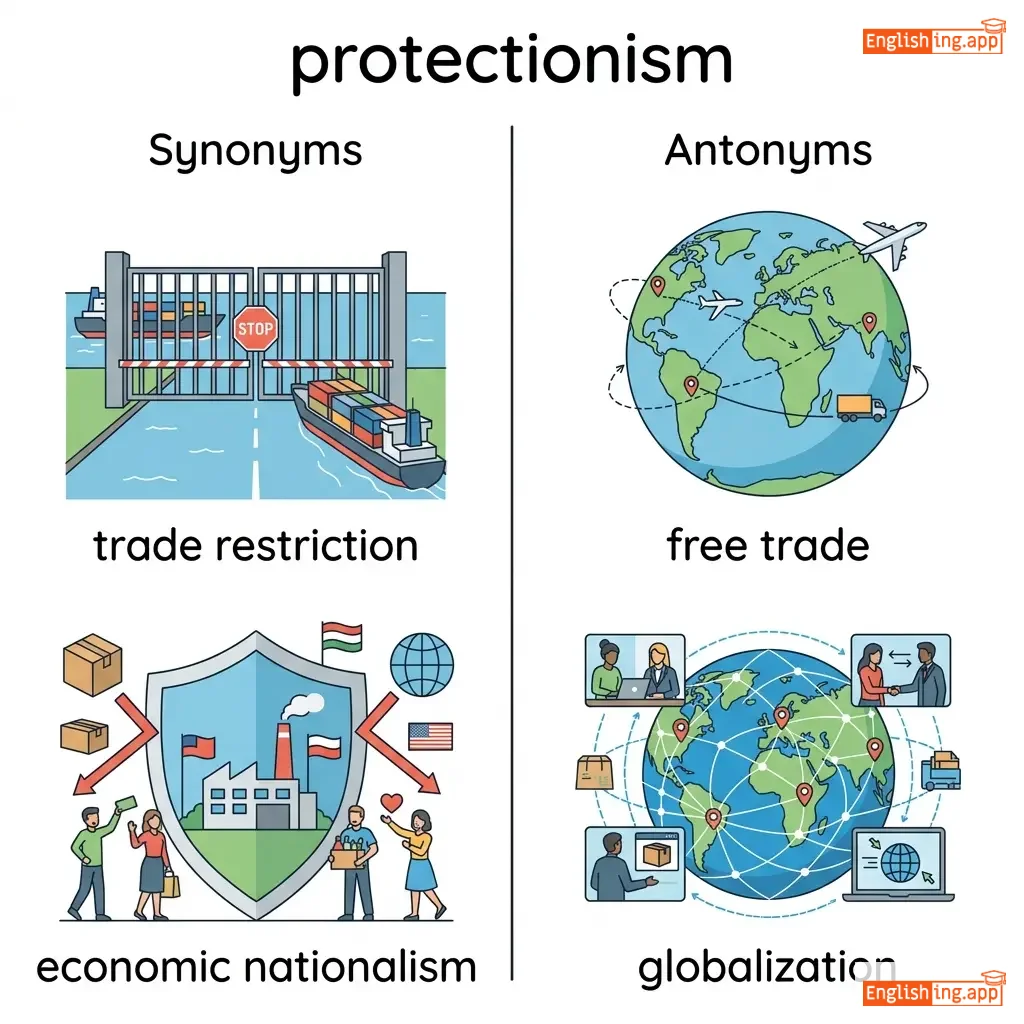
/prəˈtɛk.ʃəˌnɪz.əm/
noun
••••••
|
|
A trade policy that restricts imports to safeguard domestic industries through trade restriction, economic nationalism, or isolationism.
••••••
|
The government imposed protectionism to safeguard local businesses. |
trade restriction, economic nationalism, isolationism
••••••
|
free trade, globalization, open markets
••••••
|
|
#3270
💲
|
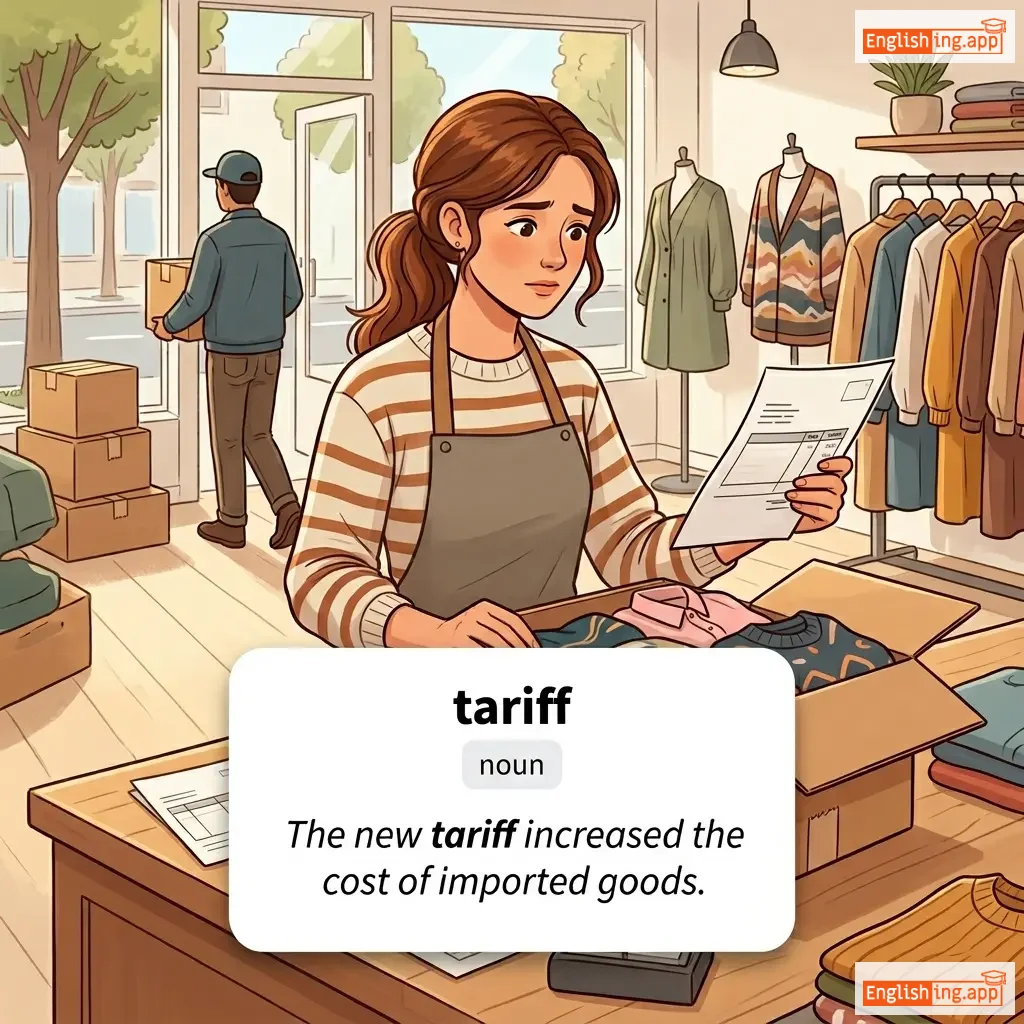
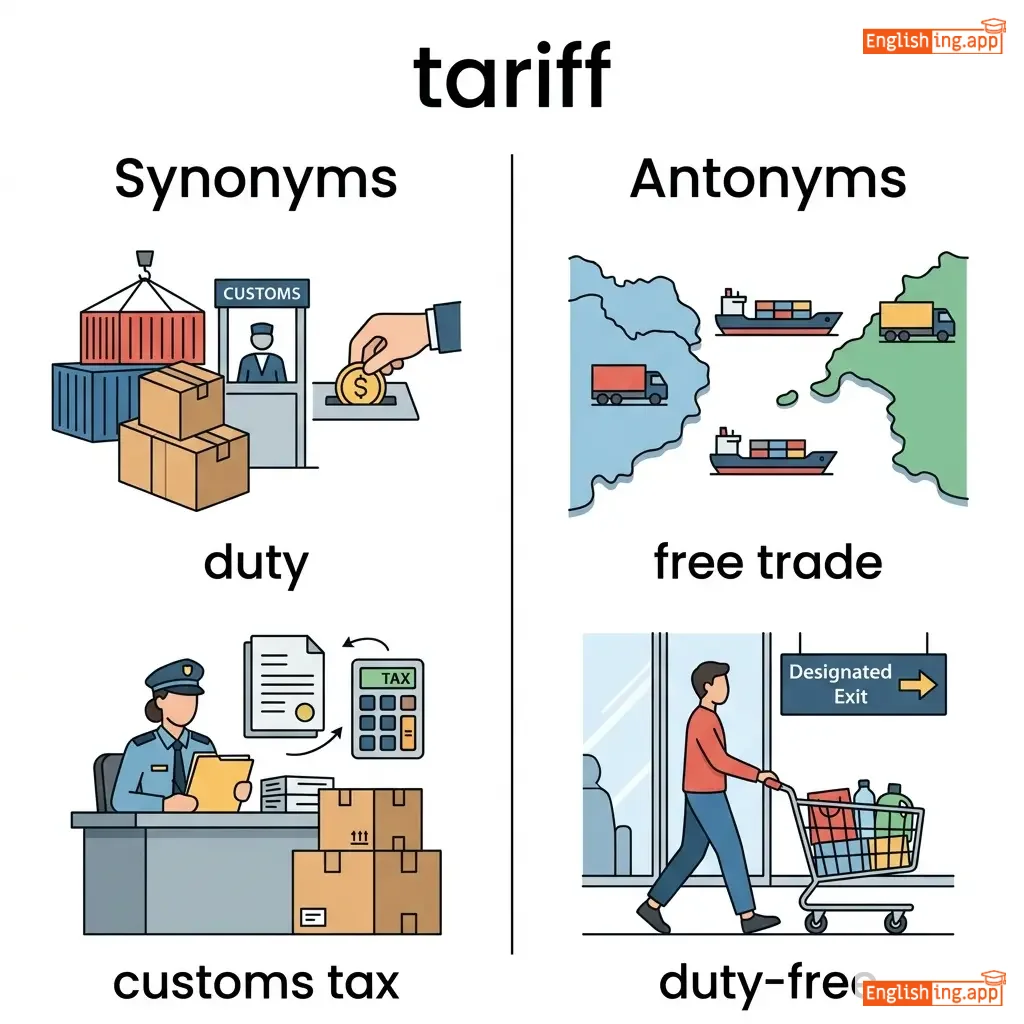
/ˈtær.ɪf/
noun
••••••
|
|
A tax imposed by the government on imported or exported goods, also known as duty, customs tax, or levy.
••••••
|
The new tariff increased the cost of imported goods. |
duty, customs tax, levy
••••••
|
free trade, duty-free, exemption
••••••
|
|
#3271
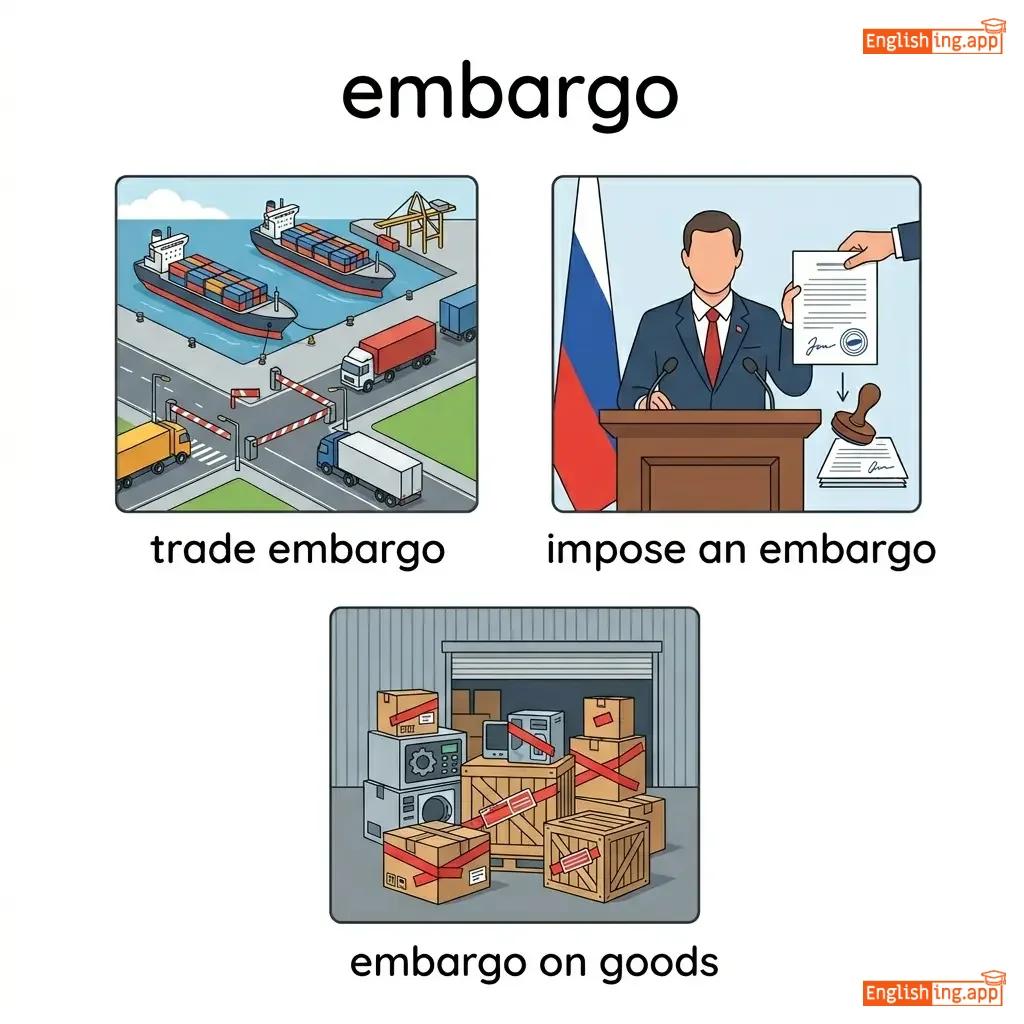
🚫
|
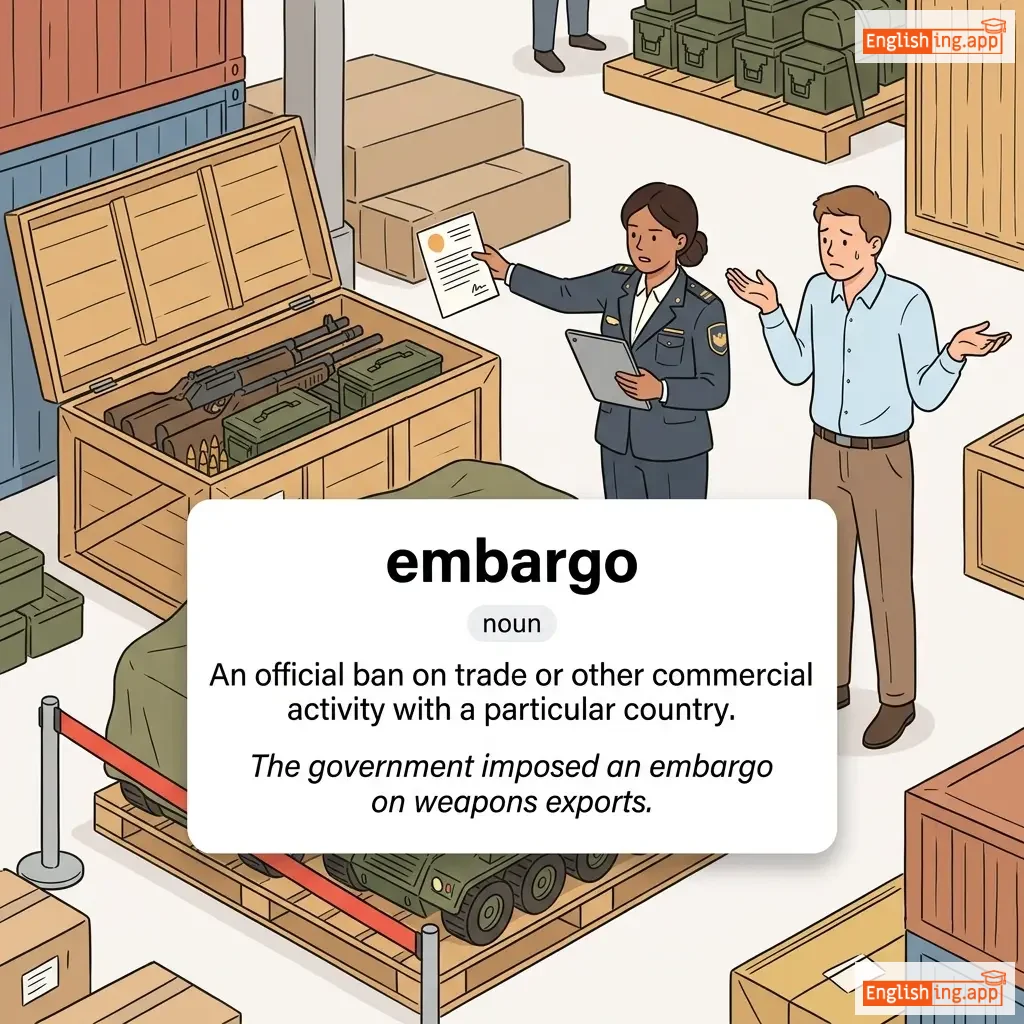
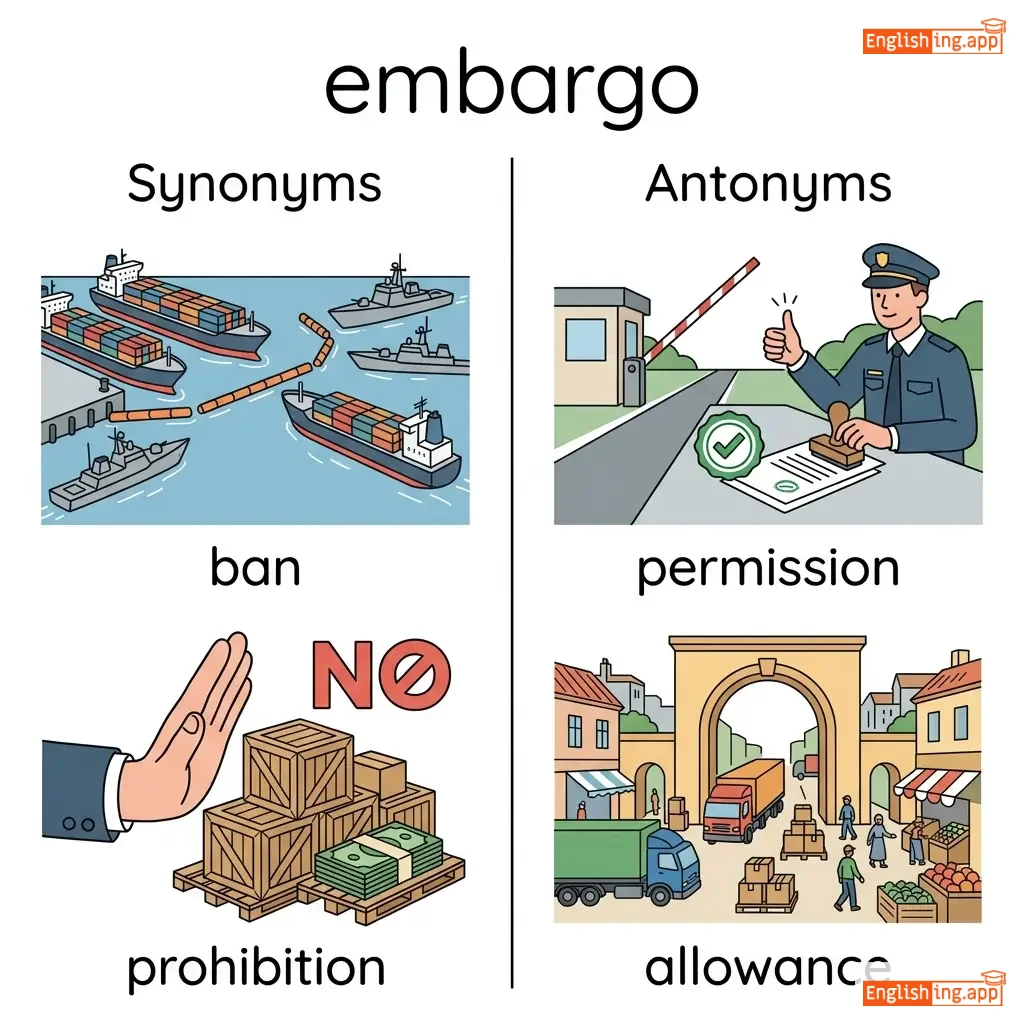
/ɪmˈbɑː.ɡoʊ/
noun
••••••
|
|
A trade ban, restriction, or prohibition imposed by a government or international organization on a country.
••••••
|
The UN imposed an embargo on arms exports. |
trade ban, restriction, prohibition
••••••
|
trade agreement, free trade, open market
••••••
|
|
#3272
⚔️
|
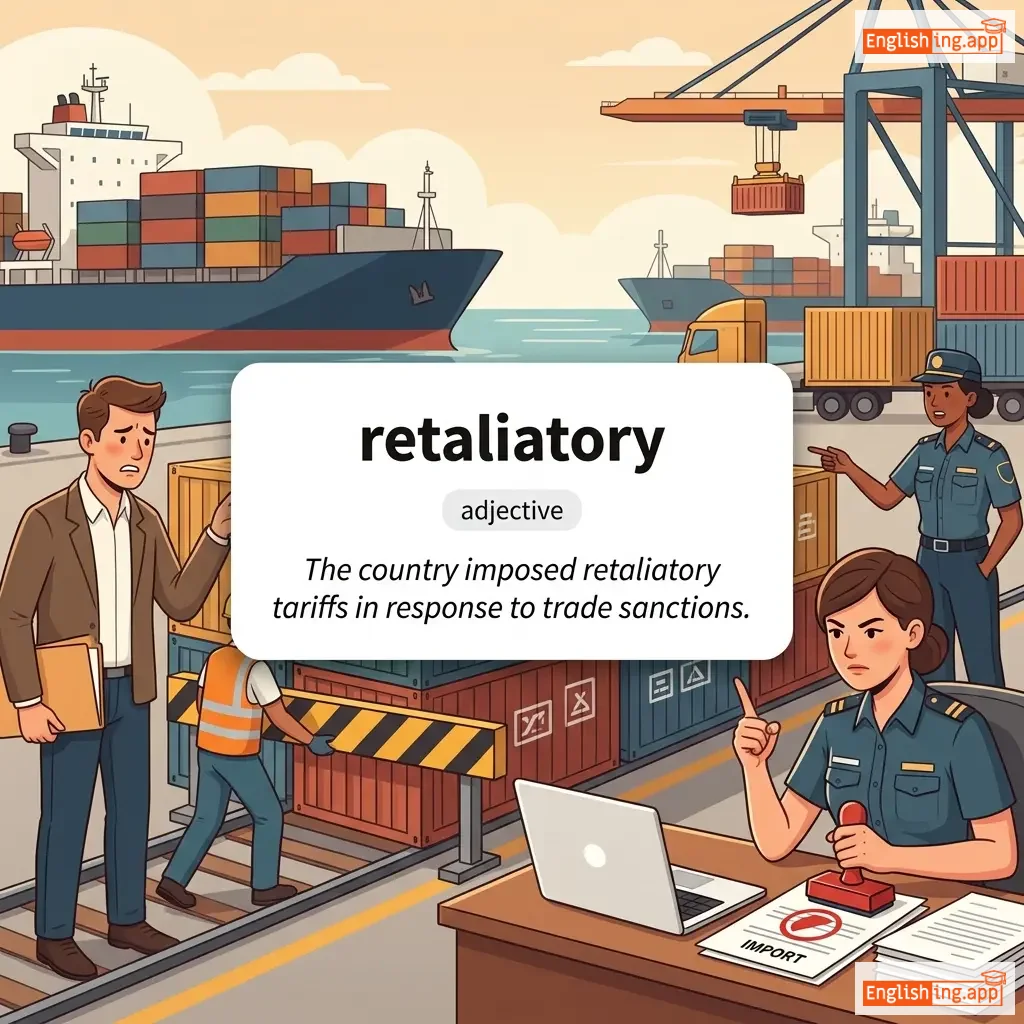
/rɪˈtæl.i.ə.tɔːr.i/
adjective
••••••
|
|
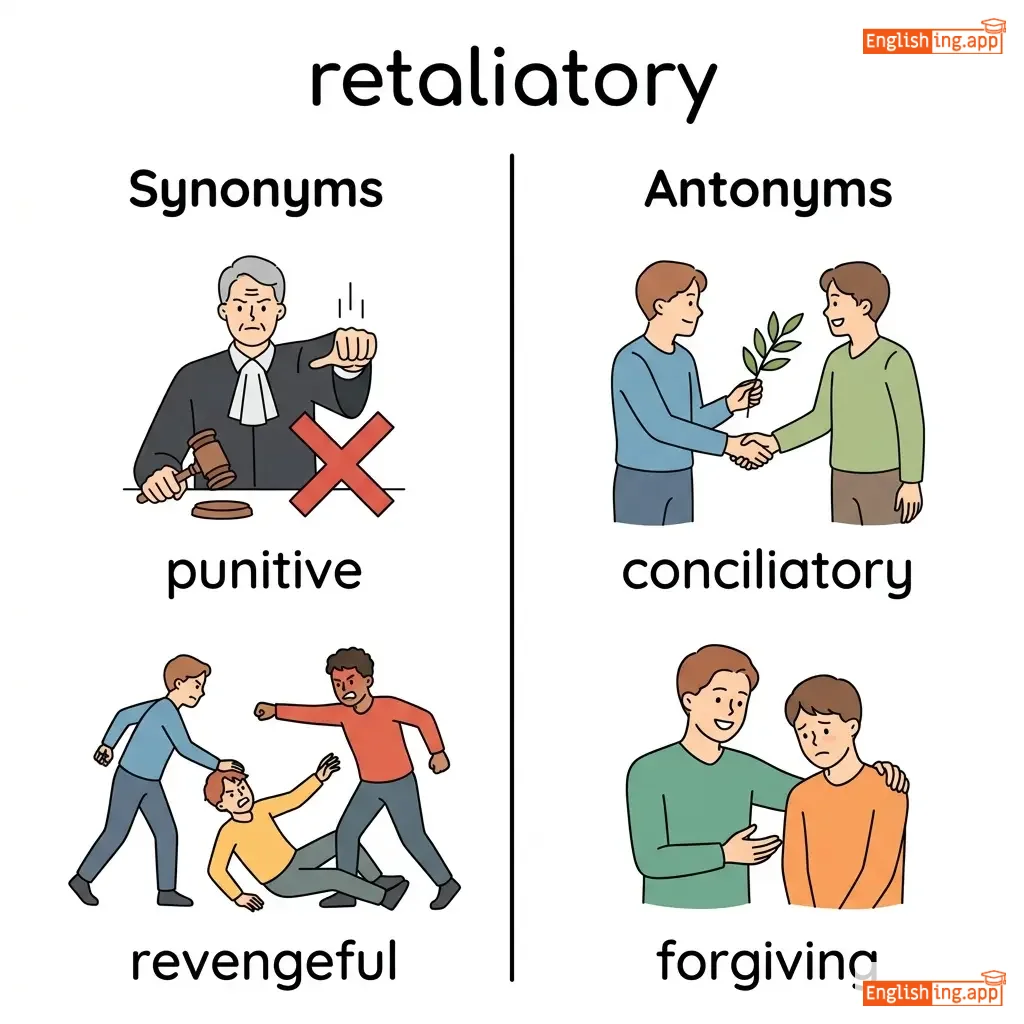
Taking action in response to another's action, characterized as punitive, revengeful, or counteractive.
••••••
|
The country imposed retaliatory tariffs in response to trade sanctions. |
punitive, revengeful, counteractive
••••••
|
conciliatory, forgiving, passive
••••••
|
|
#3273
⚖️
|
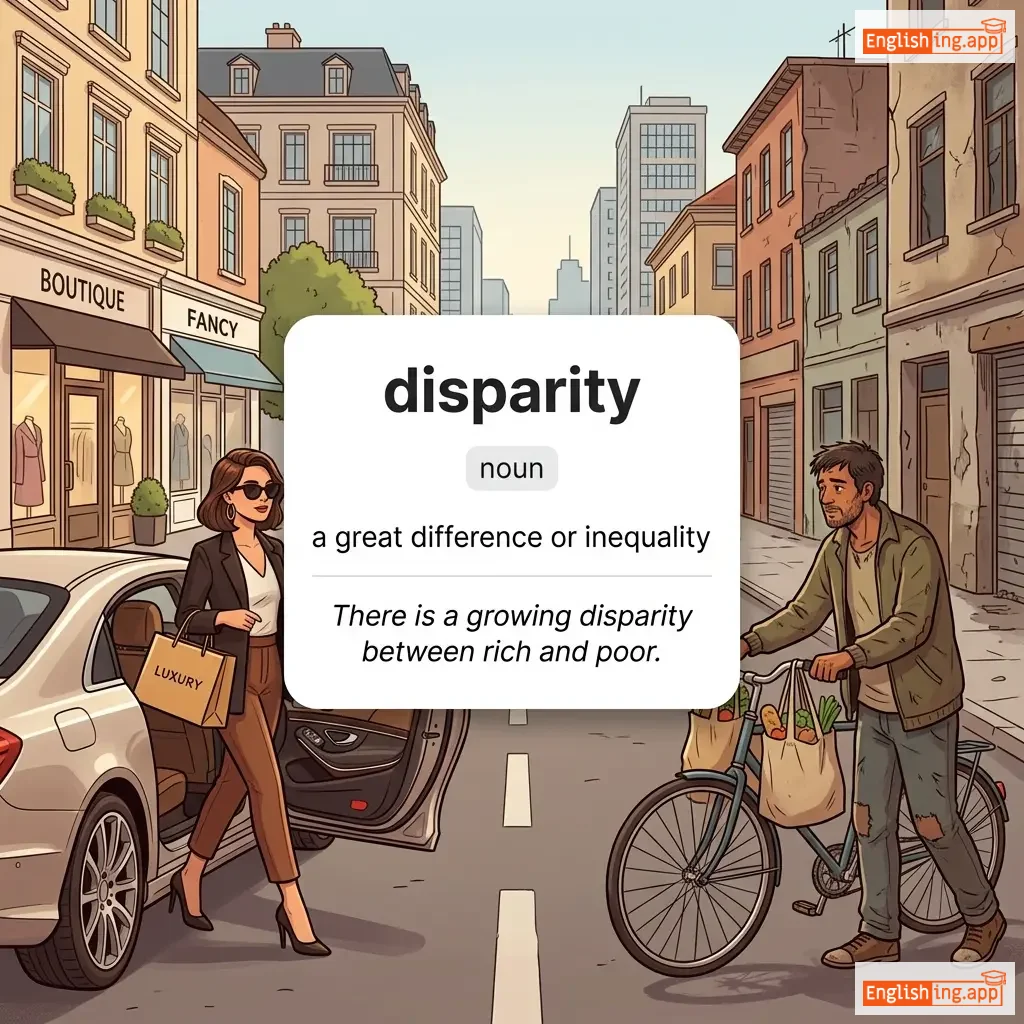
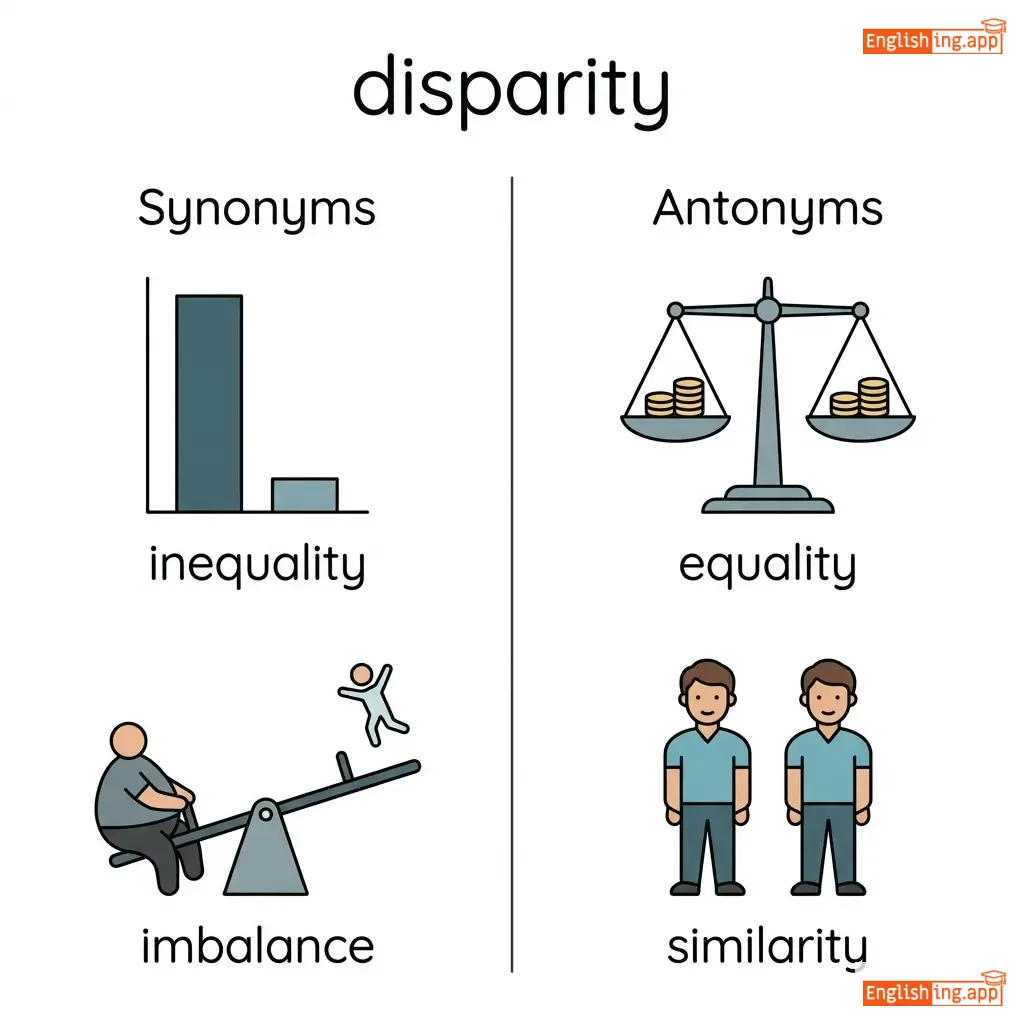
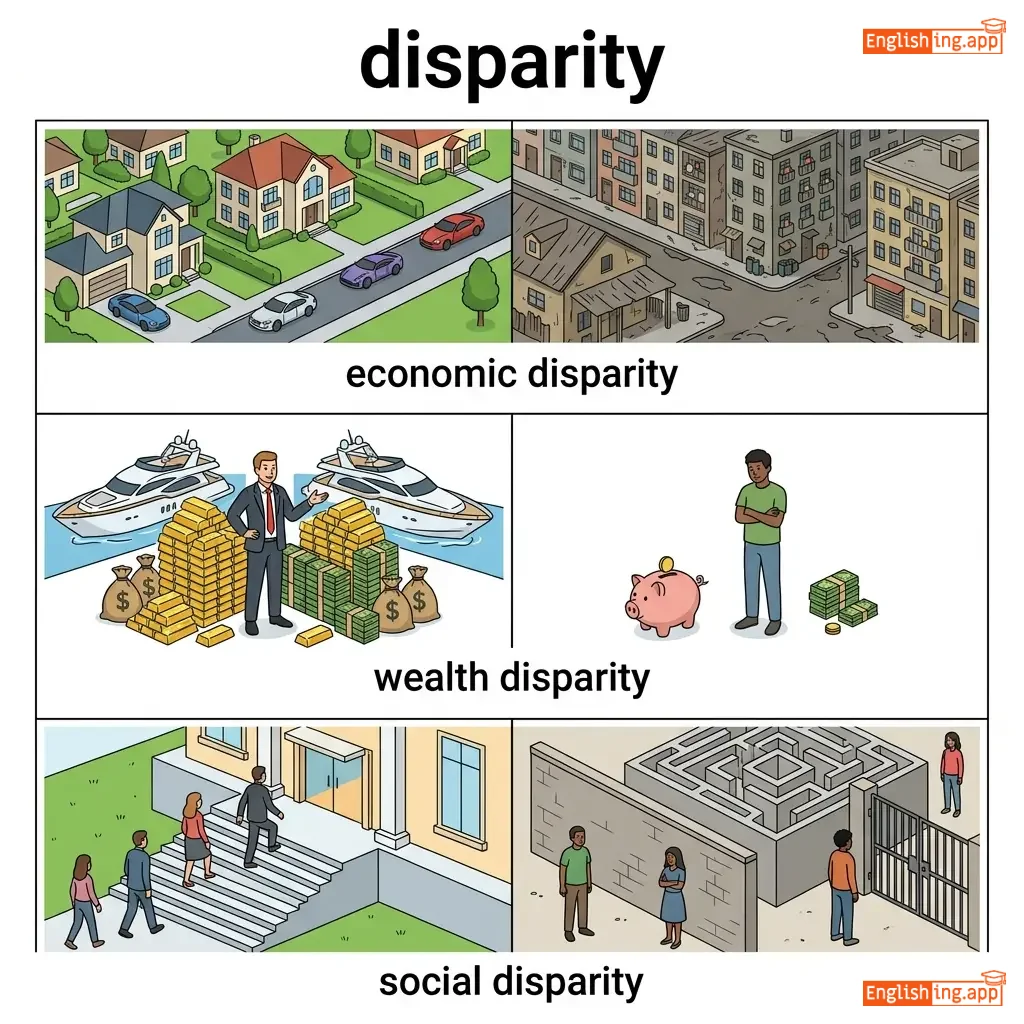
/dɪˈspær.ə.ti/
noun
••••••
|
|
Inequality, difference, or imbalance between two or more things.
••••••
|
The disparity in income between rich and poor is increasing. |
inequality, difference, imbalance
••••••
|
equality, similarity, parity
••••••
|
|
#3274
🔓
|
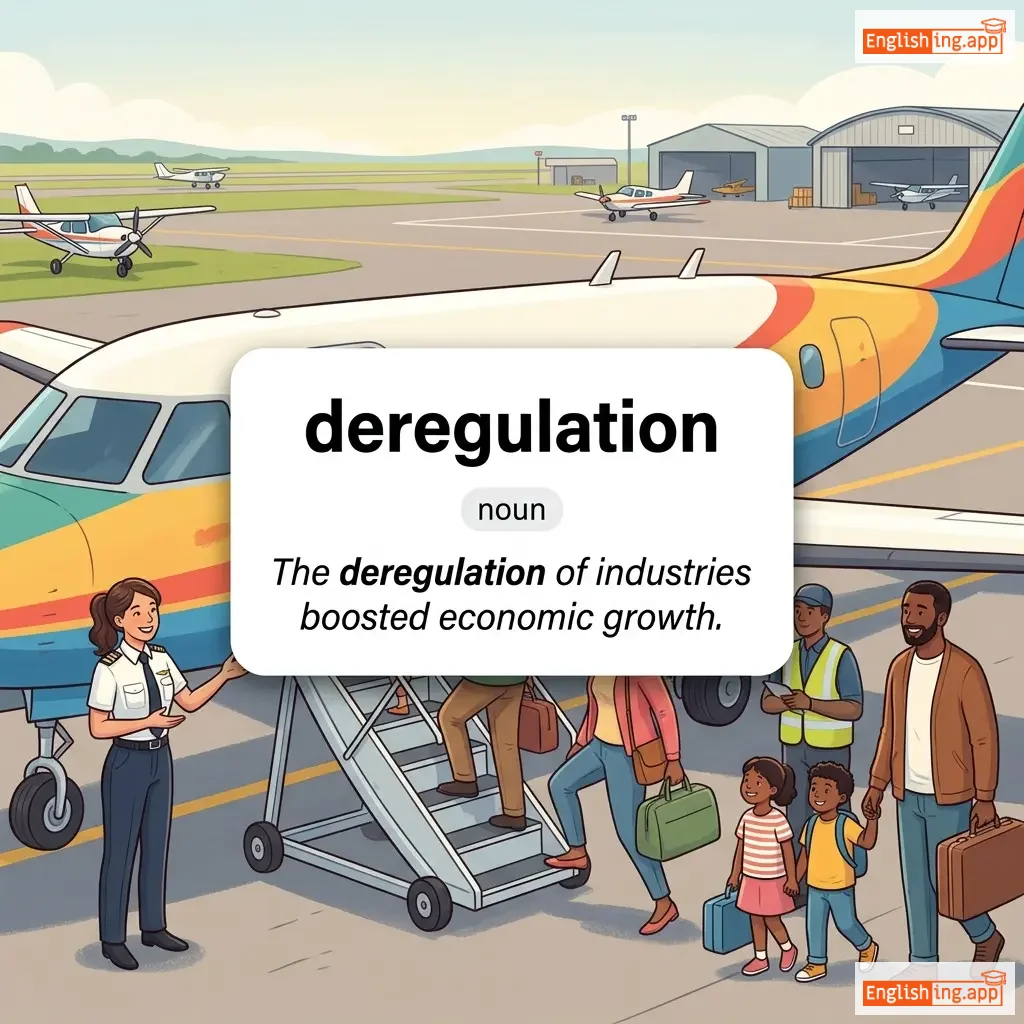
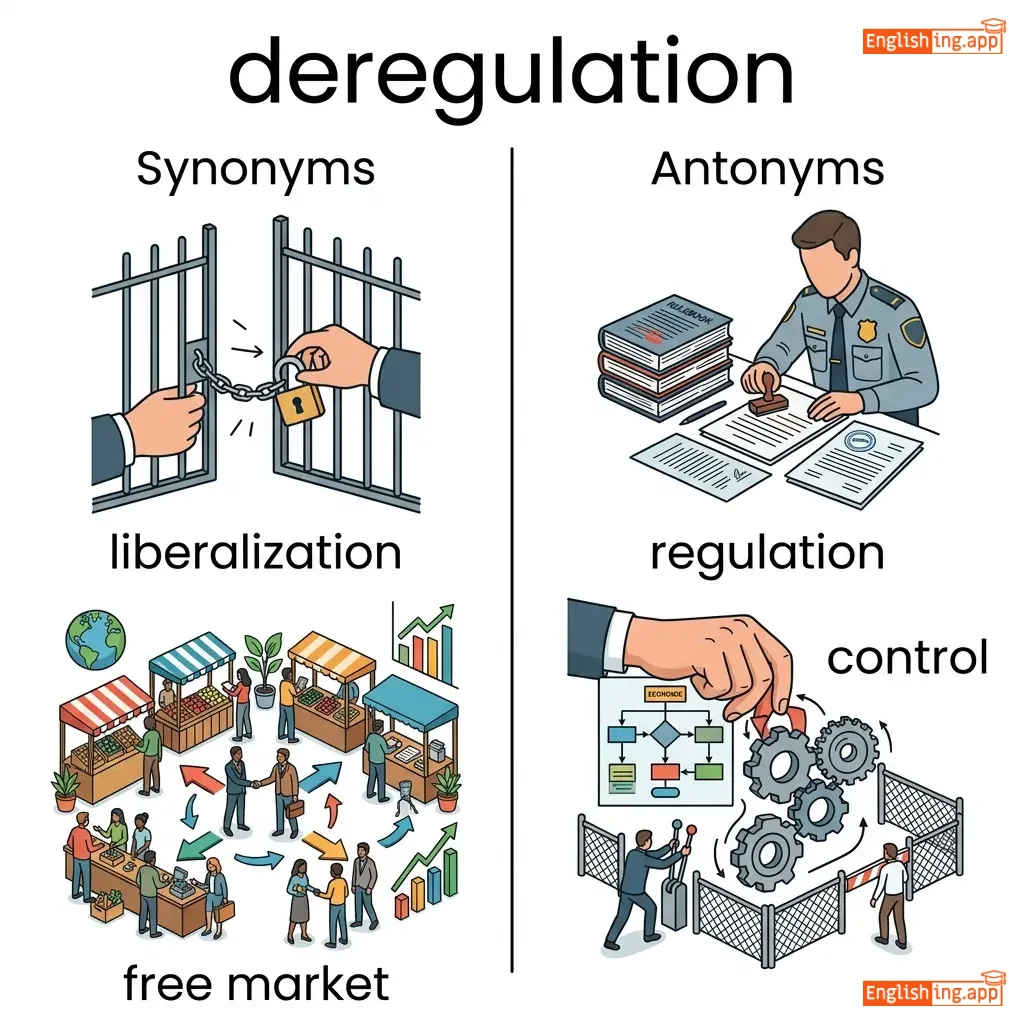
/ˌdiː.rɛɡ.jʊˈleɪ.ʃən/
noun
••••••
|
|
The removal or reduction of government regulations and controls, often involving liberalization, free market policies, or privatization.
••••••
|
The deregulation of industries boosted economic growth. |
liberalization, free market, privatization
••••••
|
regulation, control, restriction
••••••
|
|
#3275
🏛️
|
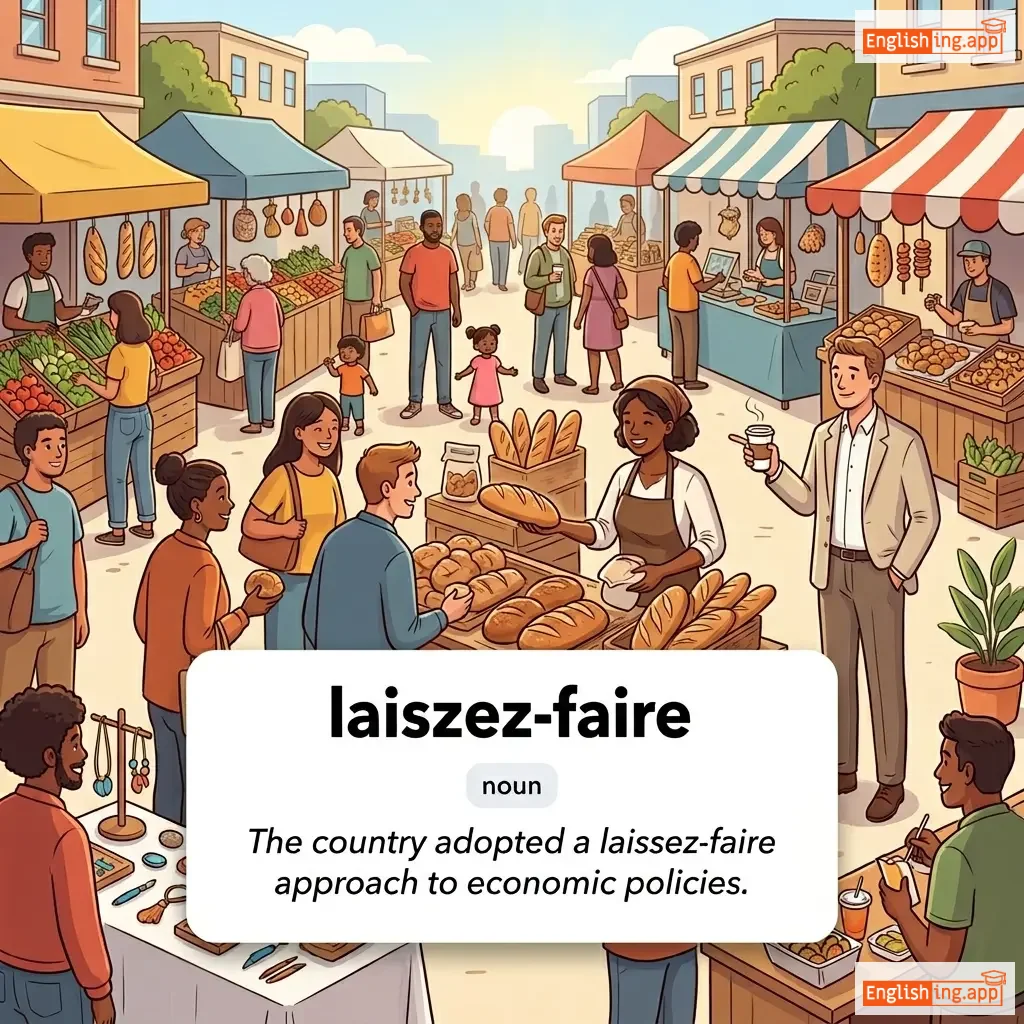
/ˌlɛ.seɪˈfɛər/
noun
••••••
|
|
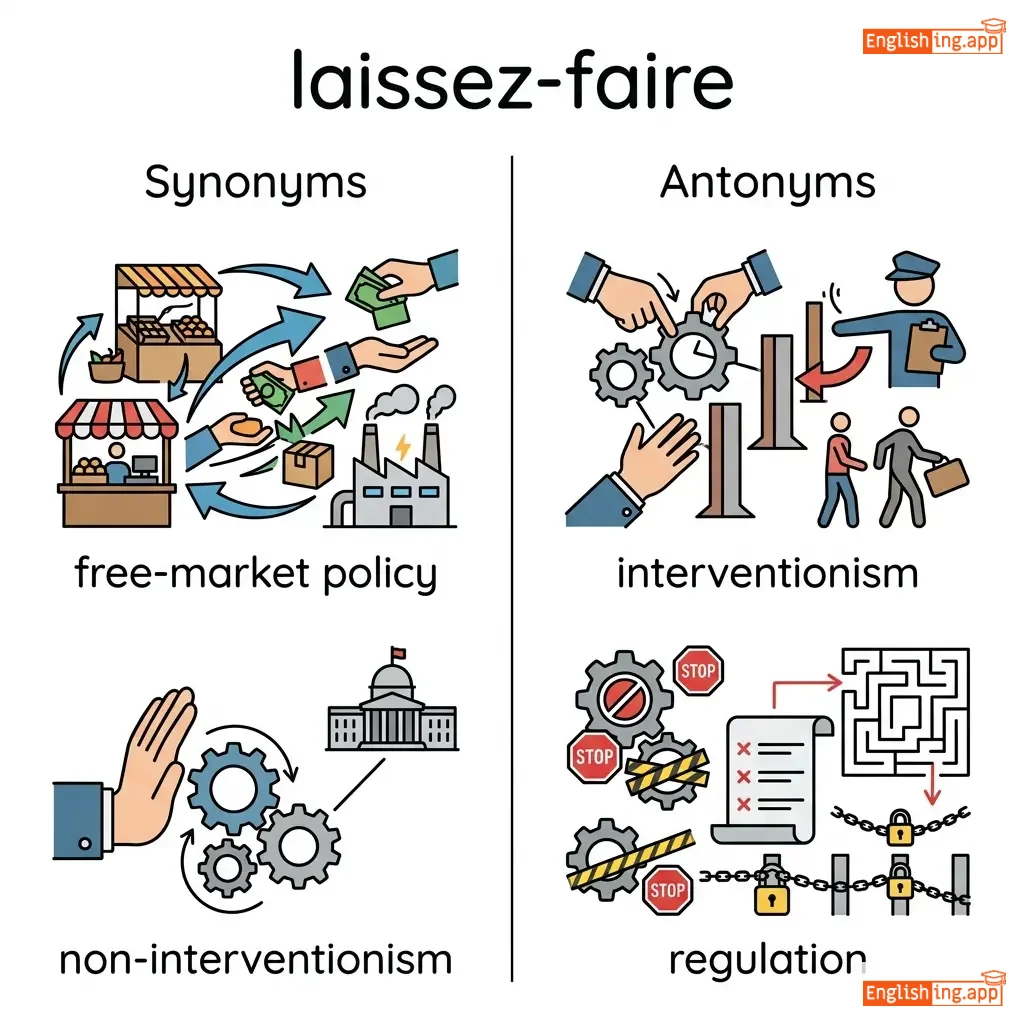
A free-market policy of minimal government intervention in economic affairs, characterized by non-interventionism and capitalism.
••••••
|
The country adopted a laissez-faire approach to economic policies. |
free-market policy, non-interventionism, capitalism
••••••
|
interventionism, regulation, protectionism
••••••
|
|
#3276
🌐
|
/daɪˌvɜː.sɪ.fɪˈkeɪ.ʃən/
noun
••••••
|
|
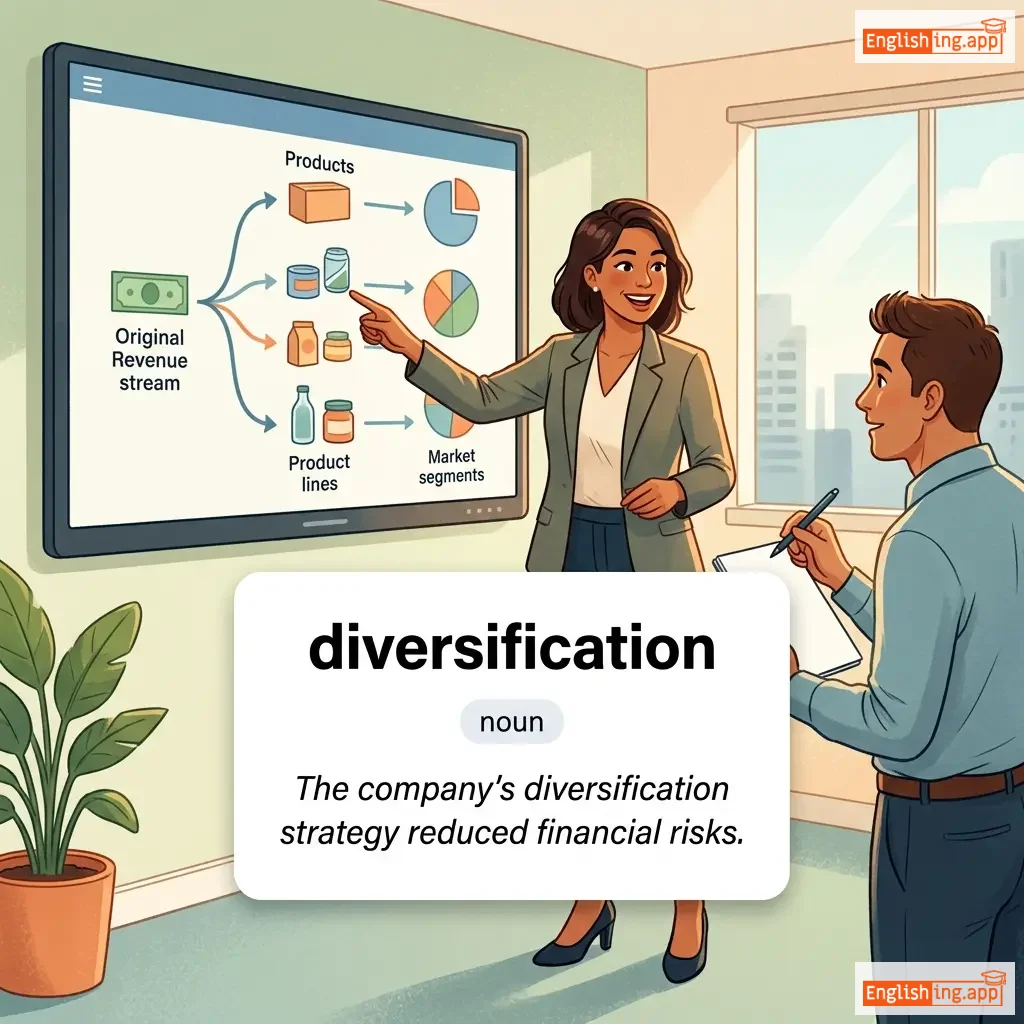
The process of expanding into different areas or markets to reduce risk, involving expansion, variety, and differentiation.
••••••
|
The company's diversification into new markets increased its revenue. |
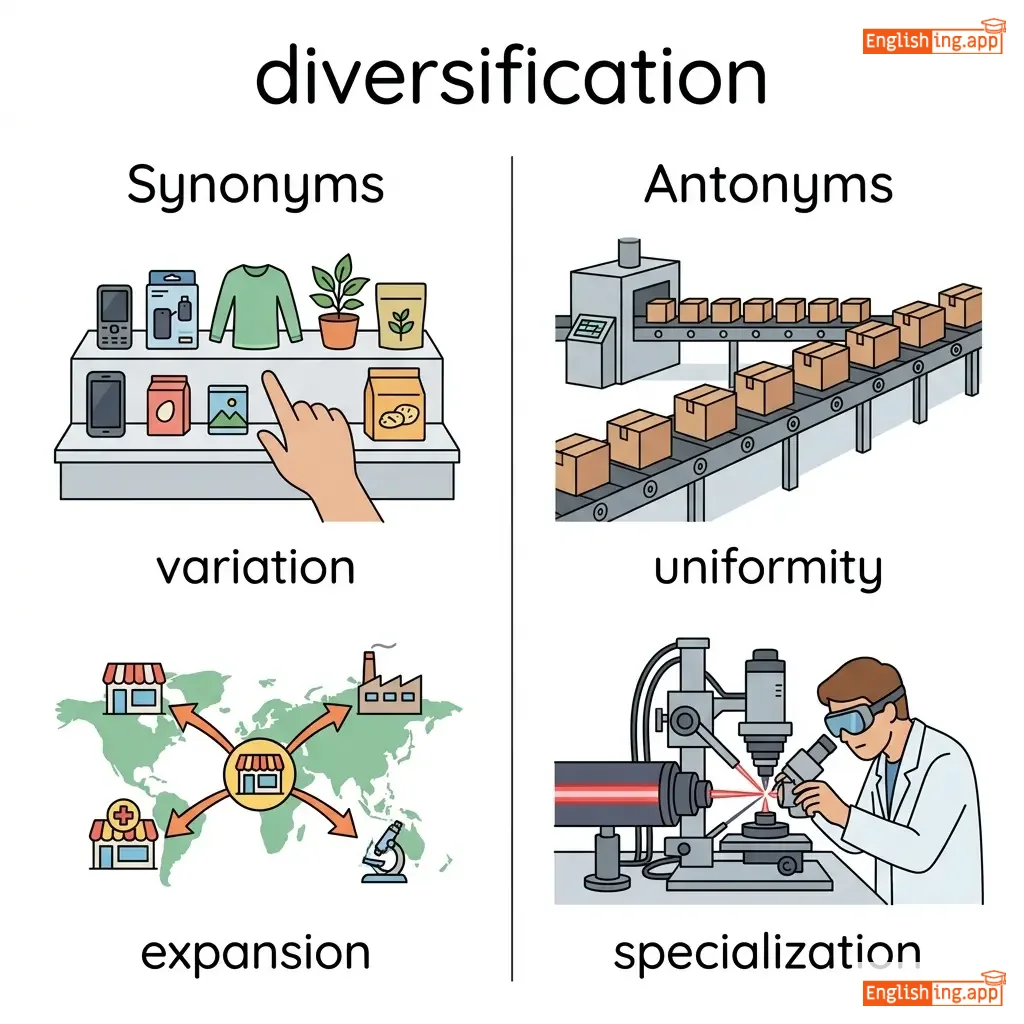
expansion, variety, differentiation
••••••
|
specialization, uniformity, concentration
••••••
|
|
#3277
💸
|
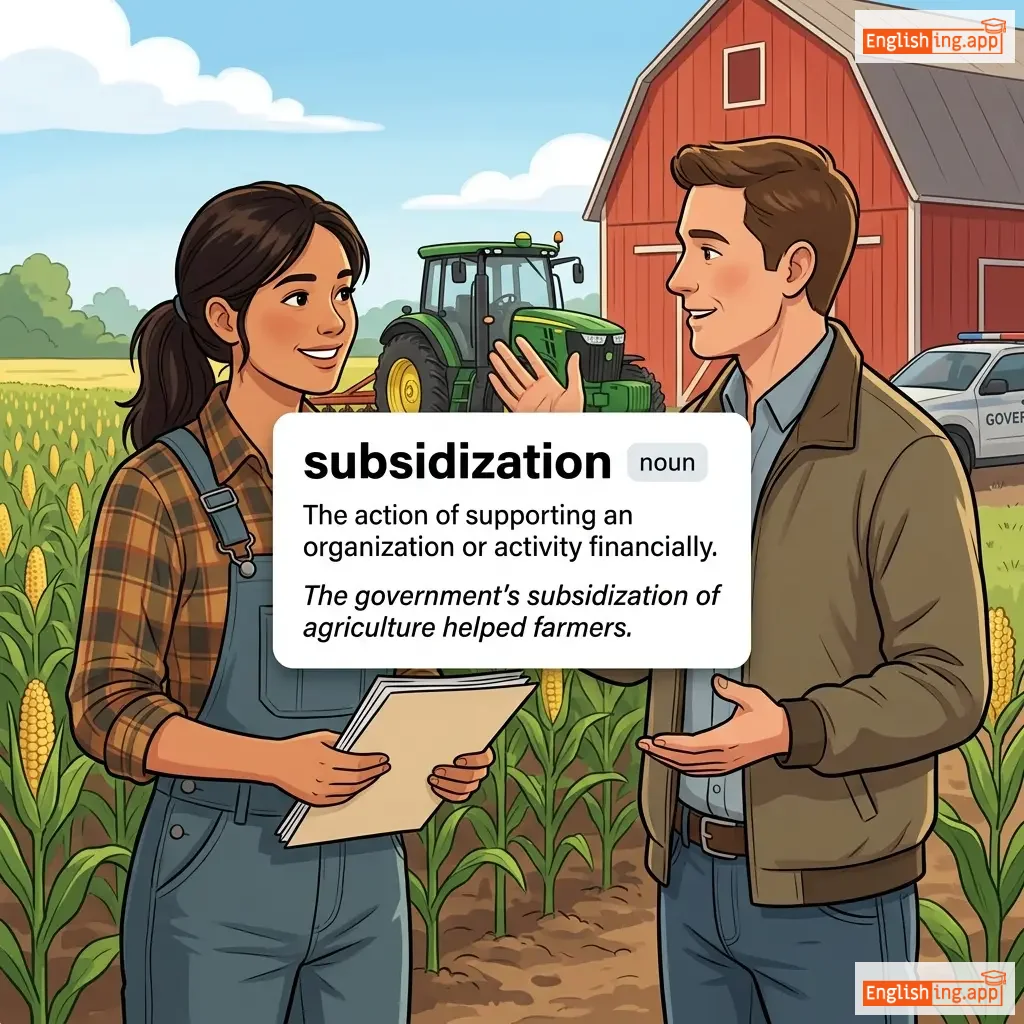
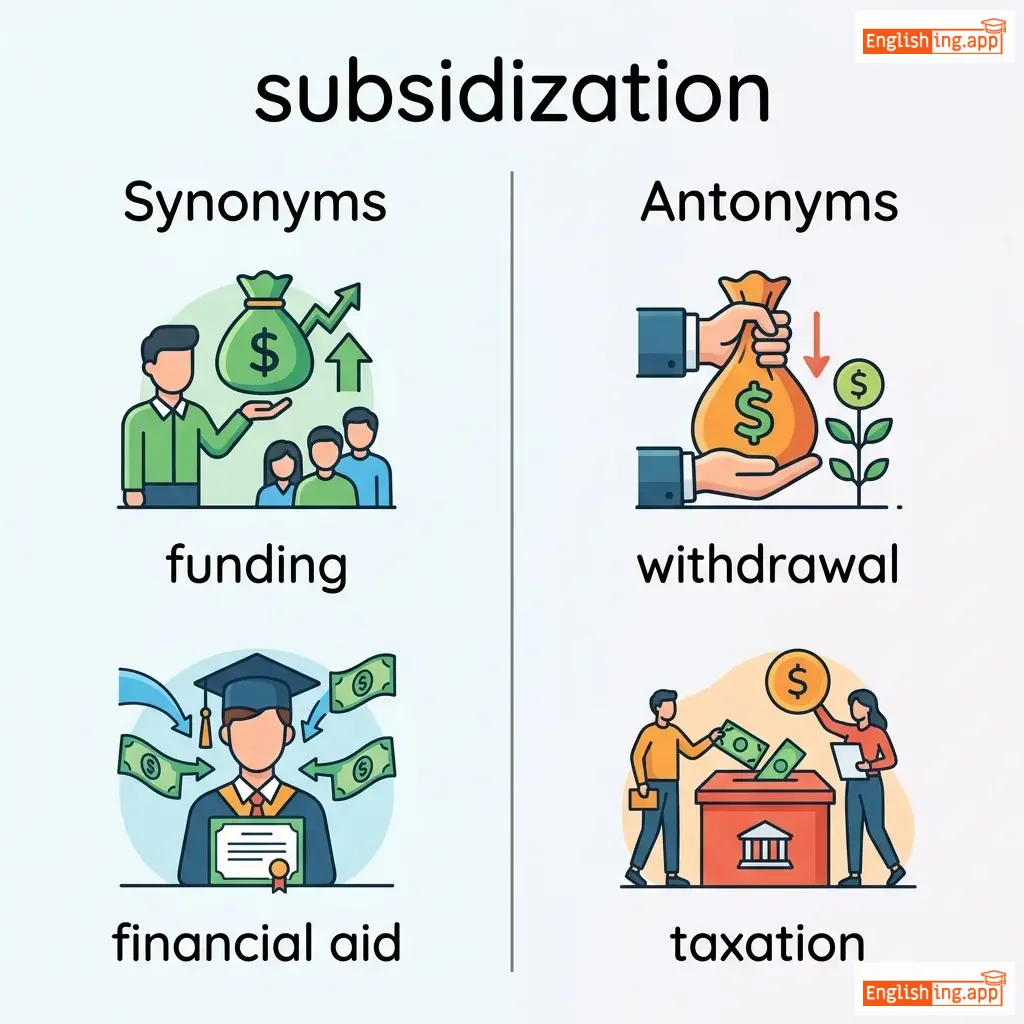
/ˌsʌb.sɪ.dɪˈzeɪ.ʃən/
noun
••••••
|
|
Financial assistance provided by government or organizations, also known as financial aid, grant, or sponsorship.
••••••
|
The government provided subsidization to support farmers. |
financial aid, grant, sponsorship
••••••
|
taxation, financial withdrawal, self-sufficiency
••••••
|
|
#3278
🏛️
|
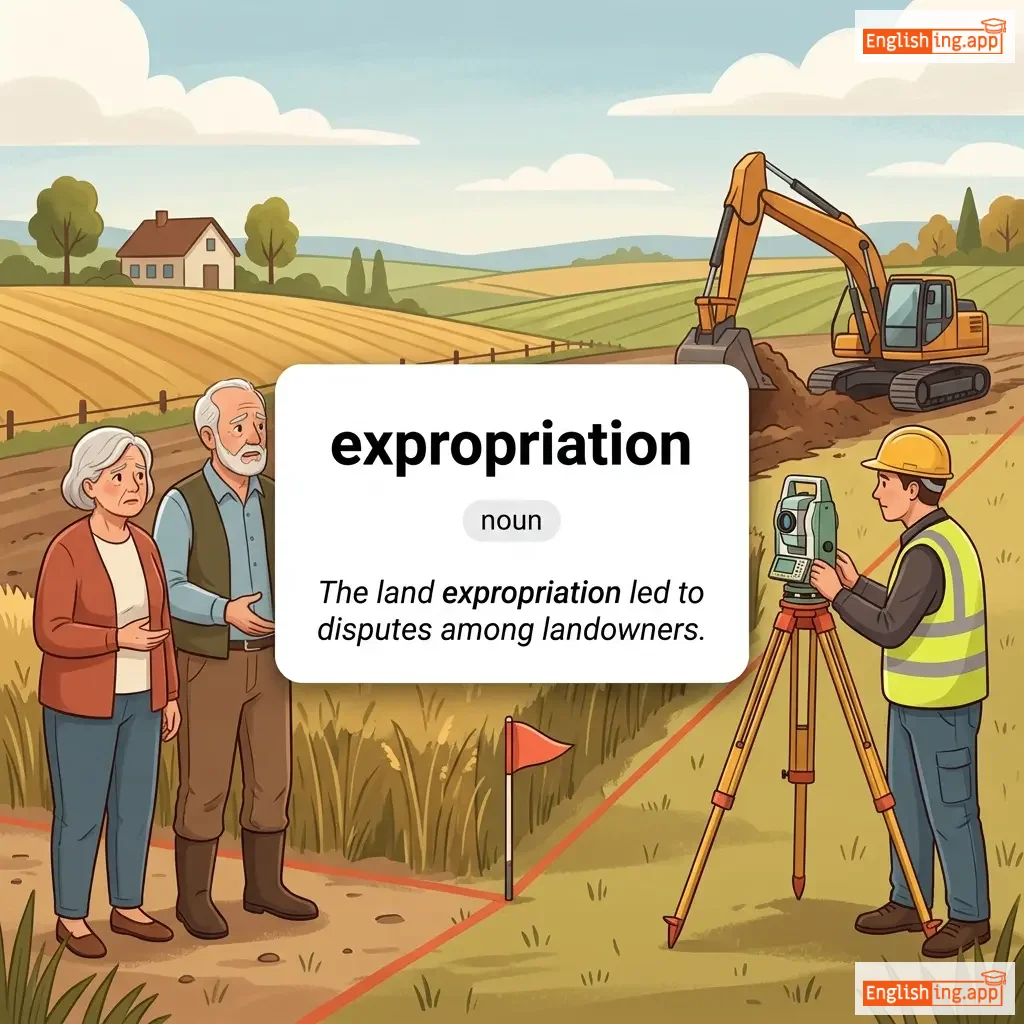
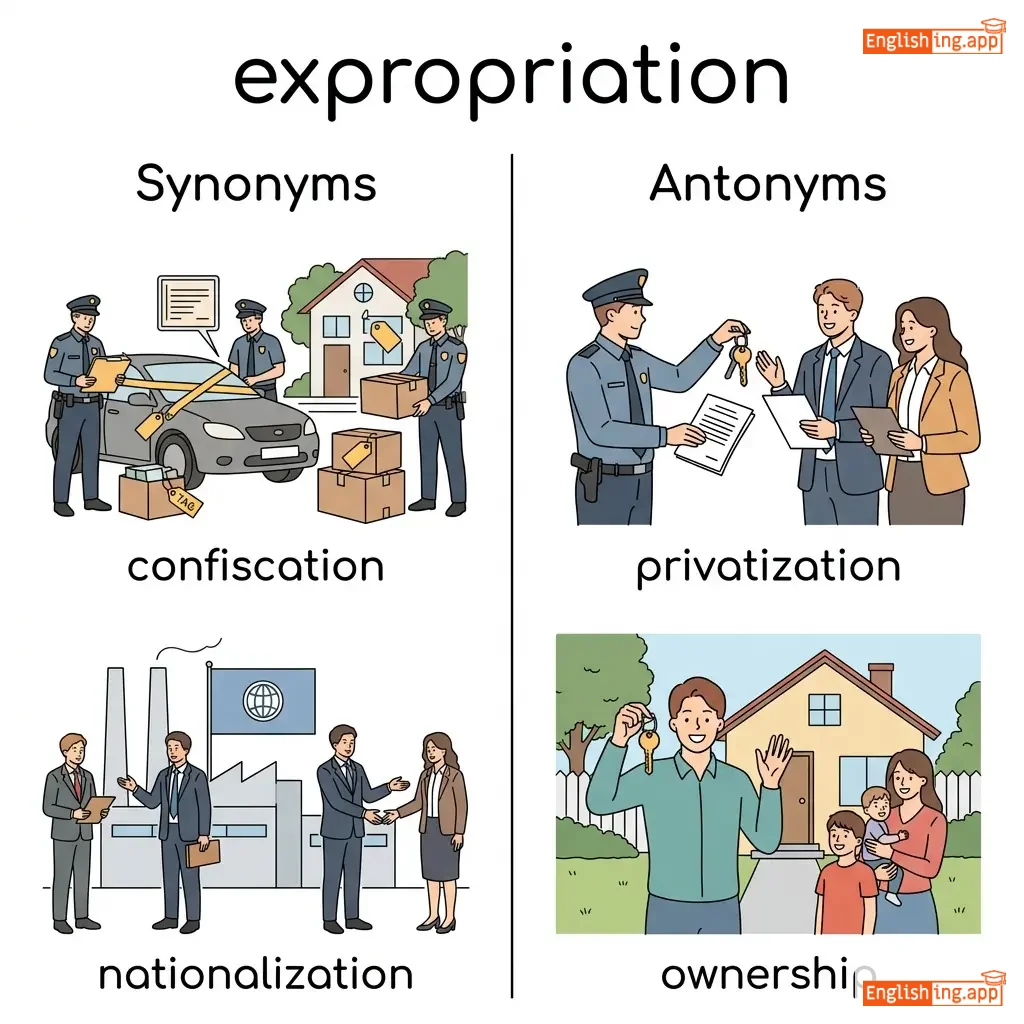
/ɪkˌsprəʊ.priˈeɪ.ʃən/
noun
••••••
|
|
The act of government taking private property, also known as confiscation, nationalization, or seizure.
••••••
|
The land expropriation led to disputes among landowners. |
confiscation, nationalization, seizure
••••••
|
privatization, ownership, reimbursement
••••••
|
|
#3279
⚖️
|
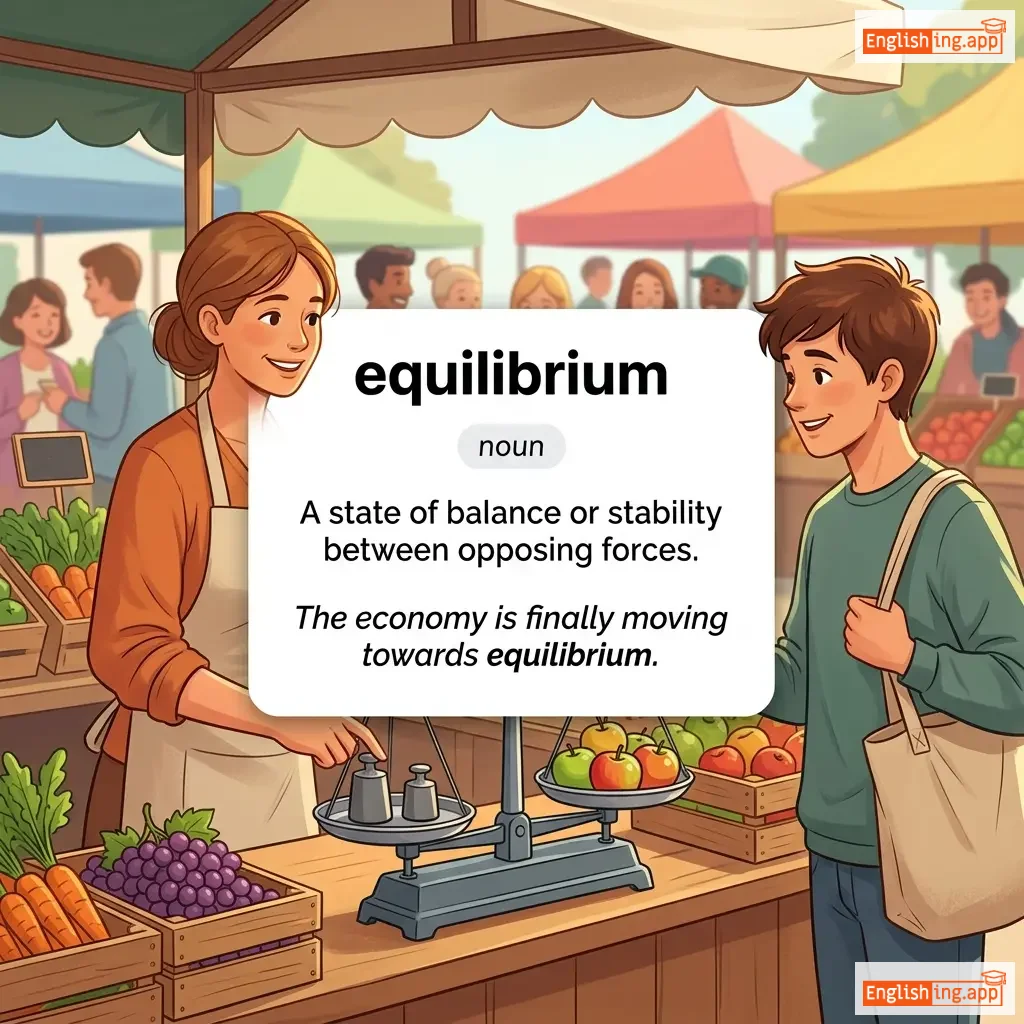
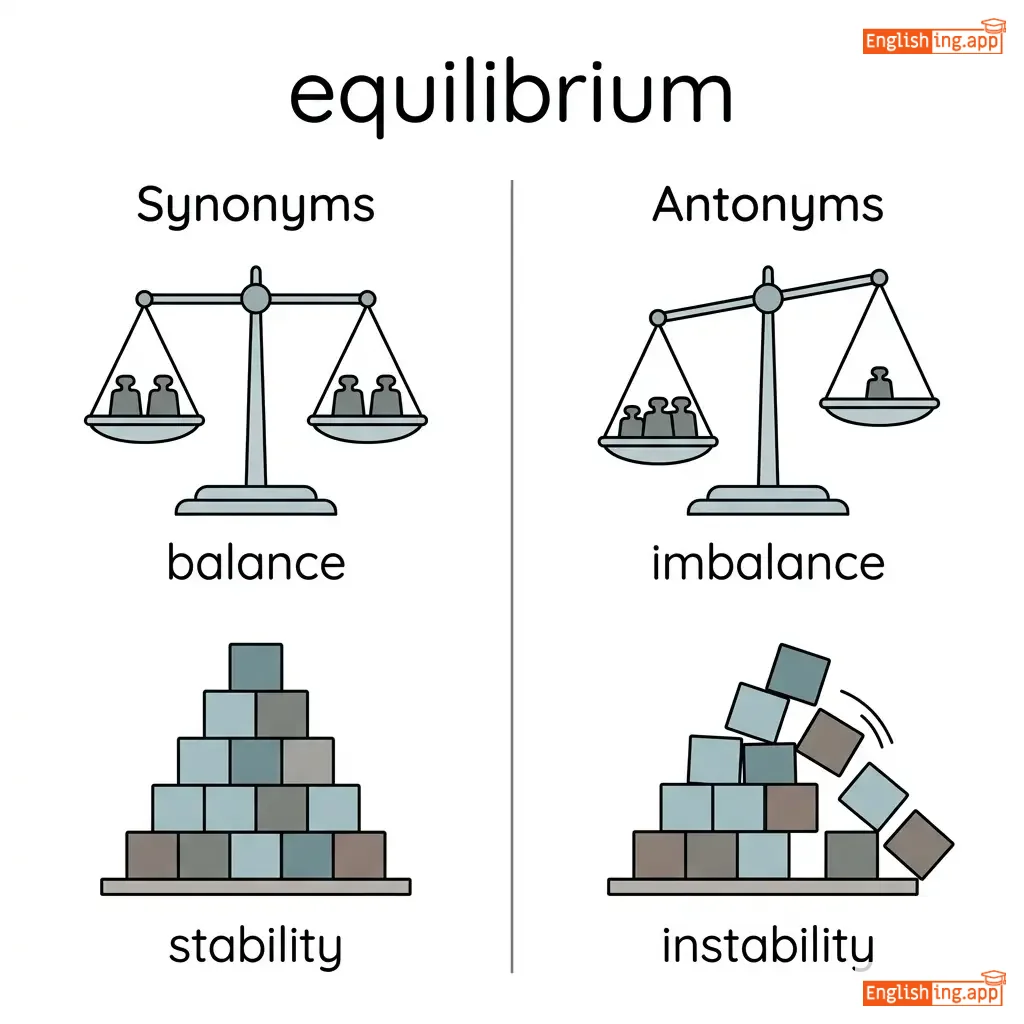
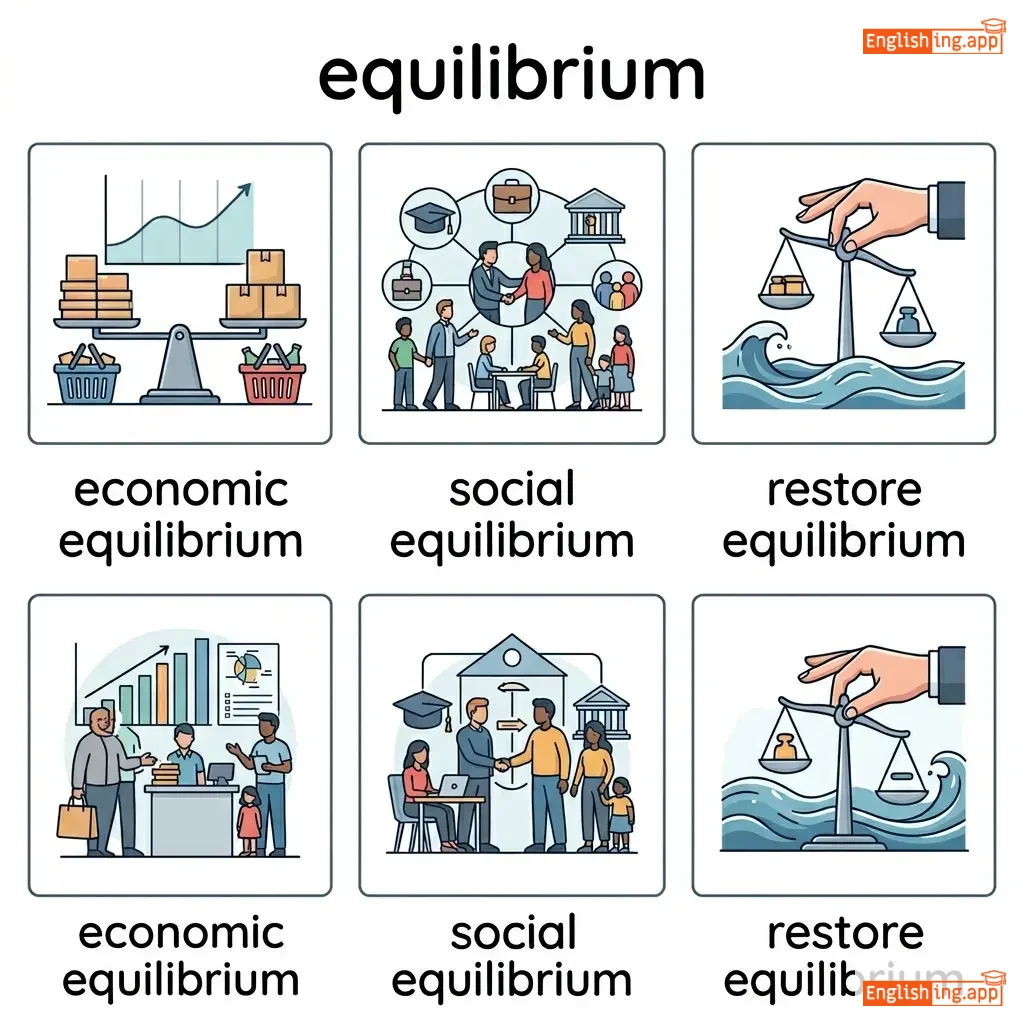
/ˌiː.kwɪˈlɪb.ri.əm/
noun
••••••
|
|
A state of balance, stability, and steadiness between supply and demand or different forces.
••••••
|
The market reached equilibrium between supply and demand. |
balance, stability, steadiness
••••••
|
imbalance, instability, disproportion
••••••
|
|
#3280
📈
|
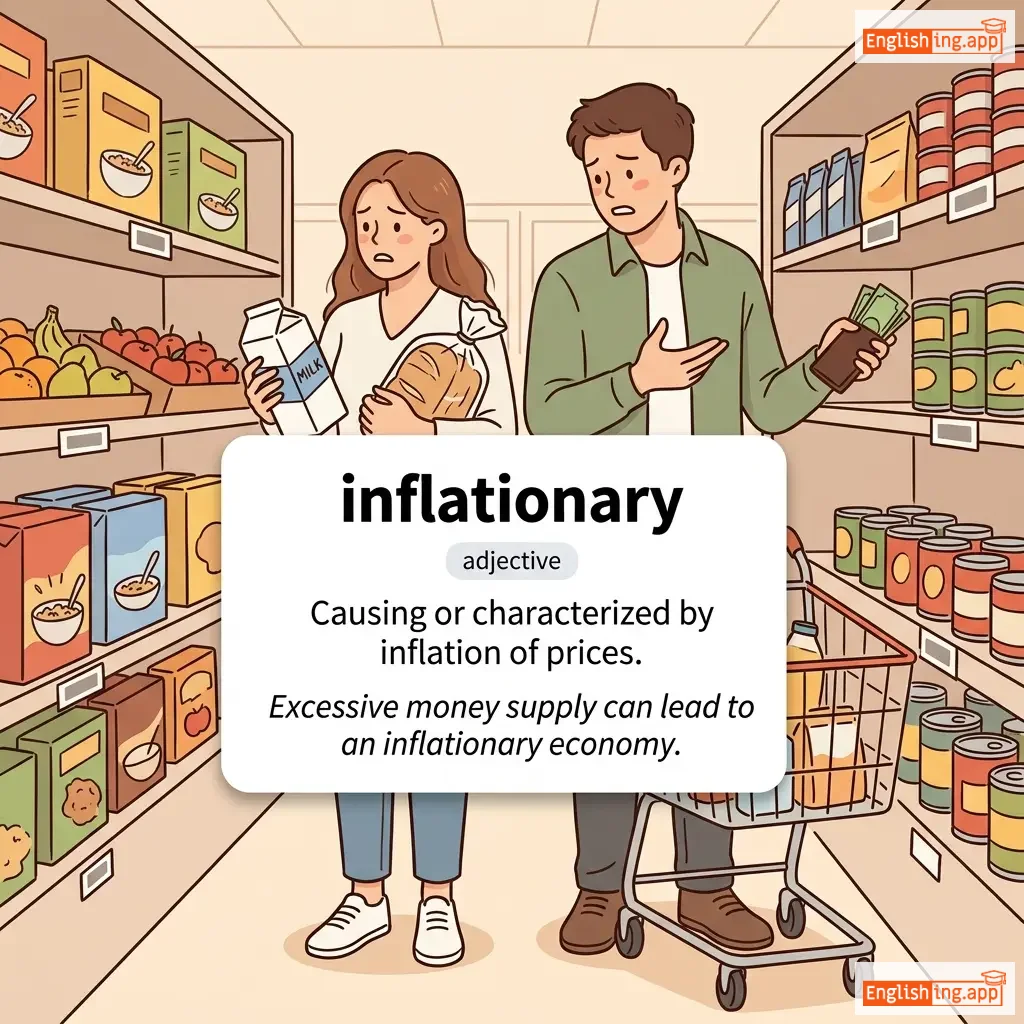
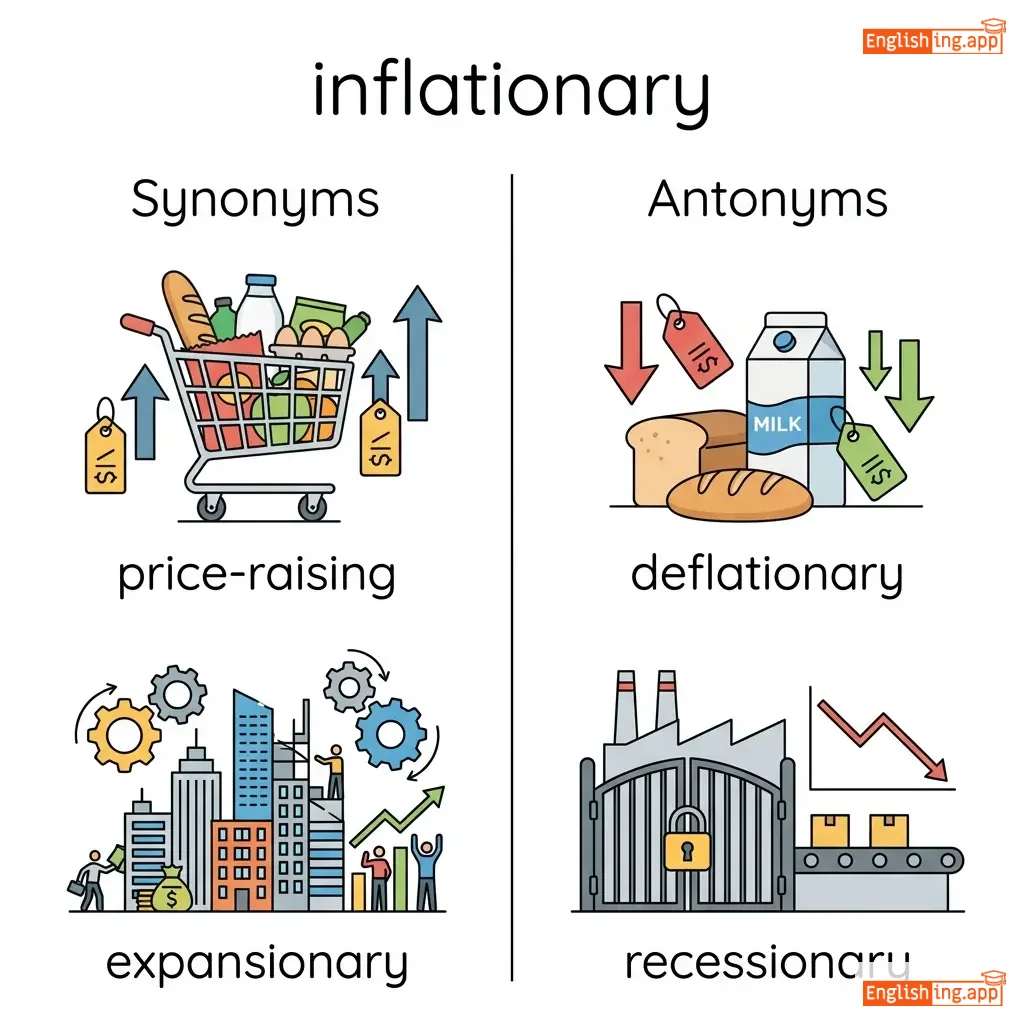
/ɪnˈfleɪ.ʃən.ər.i/
adjective
••••••
|
|
Related to rising prices and decreasing purchasing power of money, characterized as price-rising, cost-increasing, or expansionary.
••••••
|
The country faced an inflationary crisis due to excessive money printing. |
price-rising, cost-increasing, expansionary
••••••
|
deflationary, price-reducing, contractionary
••••••
|
|
#3281
💱
|
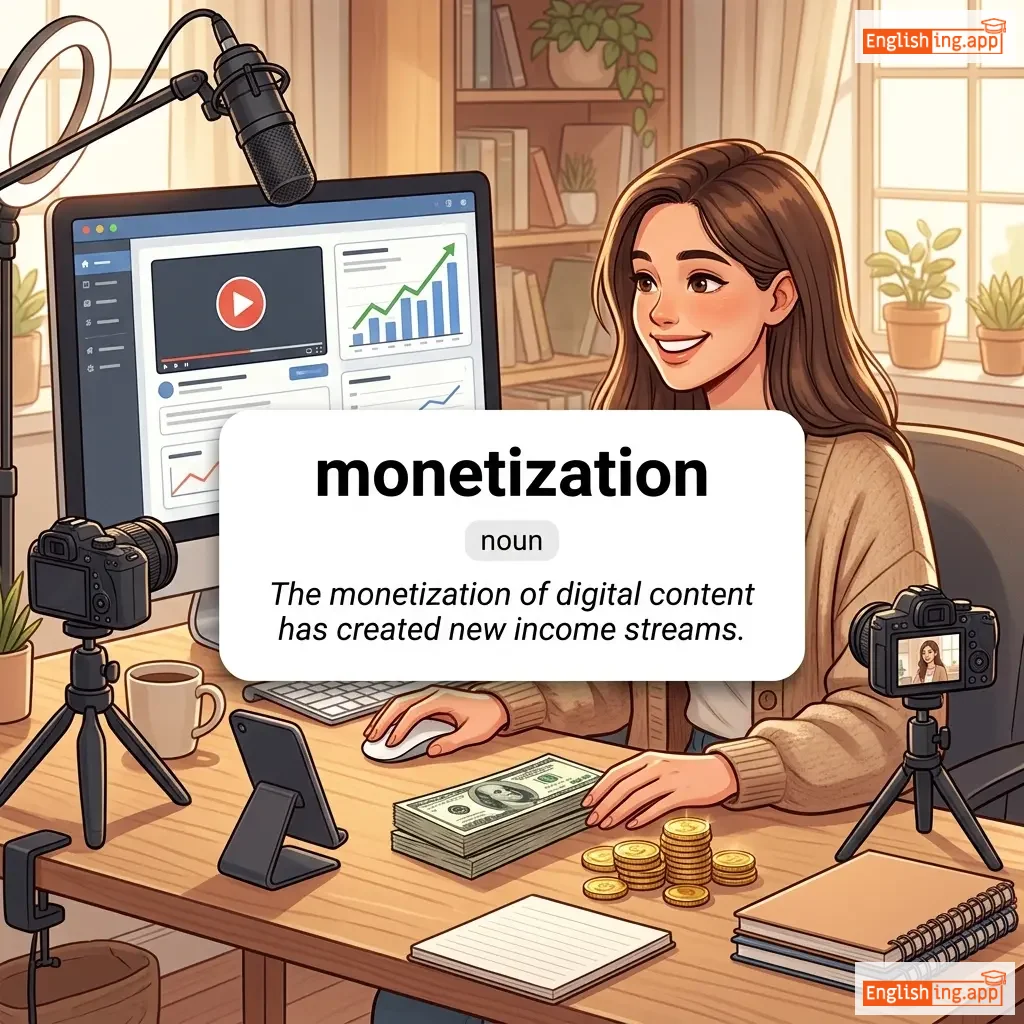
/ˌmɒn.ɪ.taɪˈzeɪ.ʃən/
noun
••••••
|
|
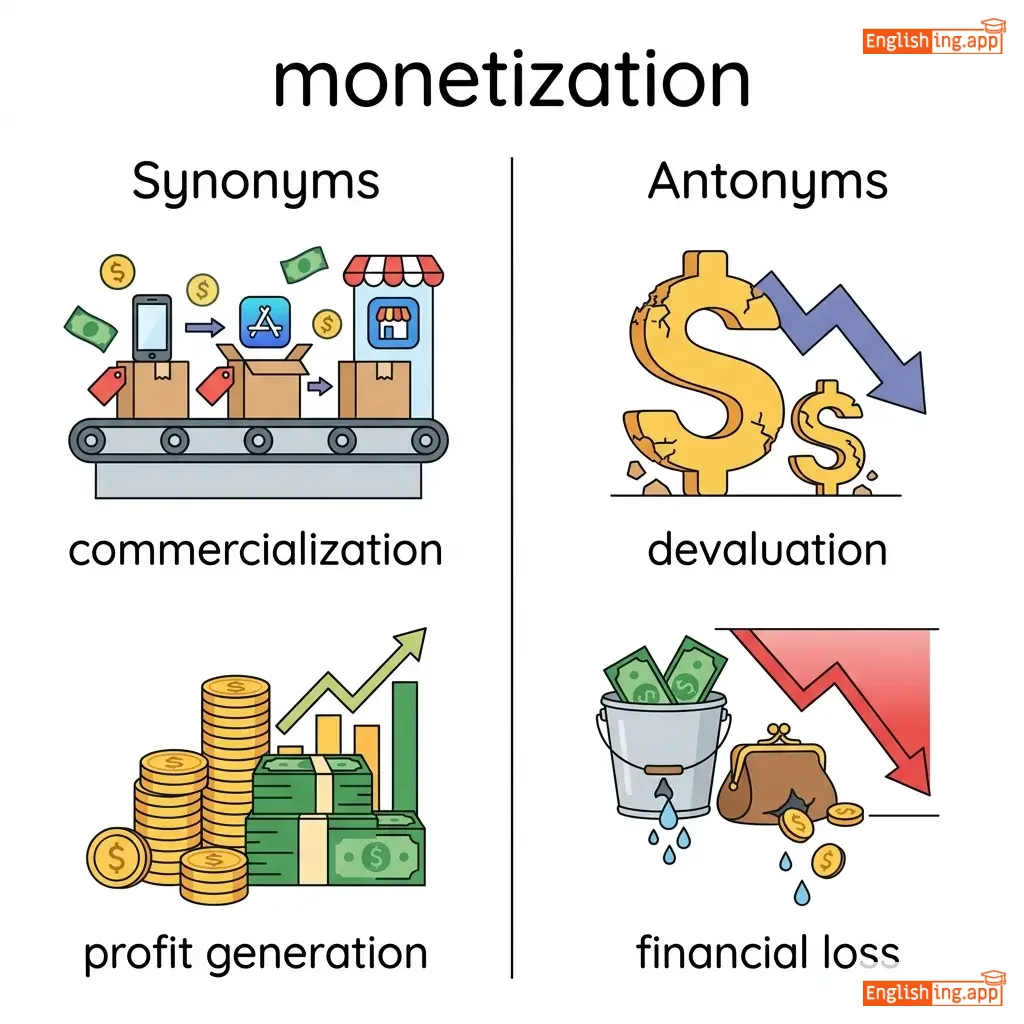
The process of converting assets or services into money, involving commercialization, profit generation, and revenue creation.
••••••
|
The monetization of digital content has created new income streams. |
commercialization, profit generation, revenue creation
••••••
|
devaluation, financial loss, depreciation
••••••
|

