••••••
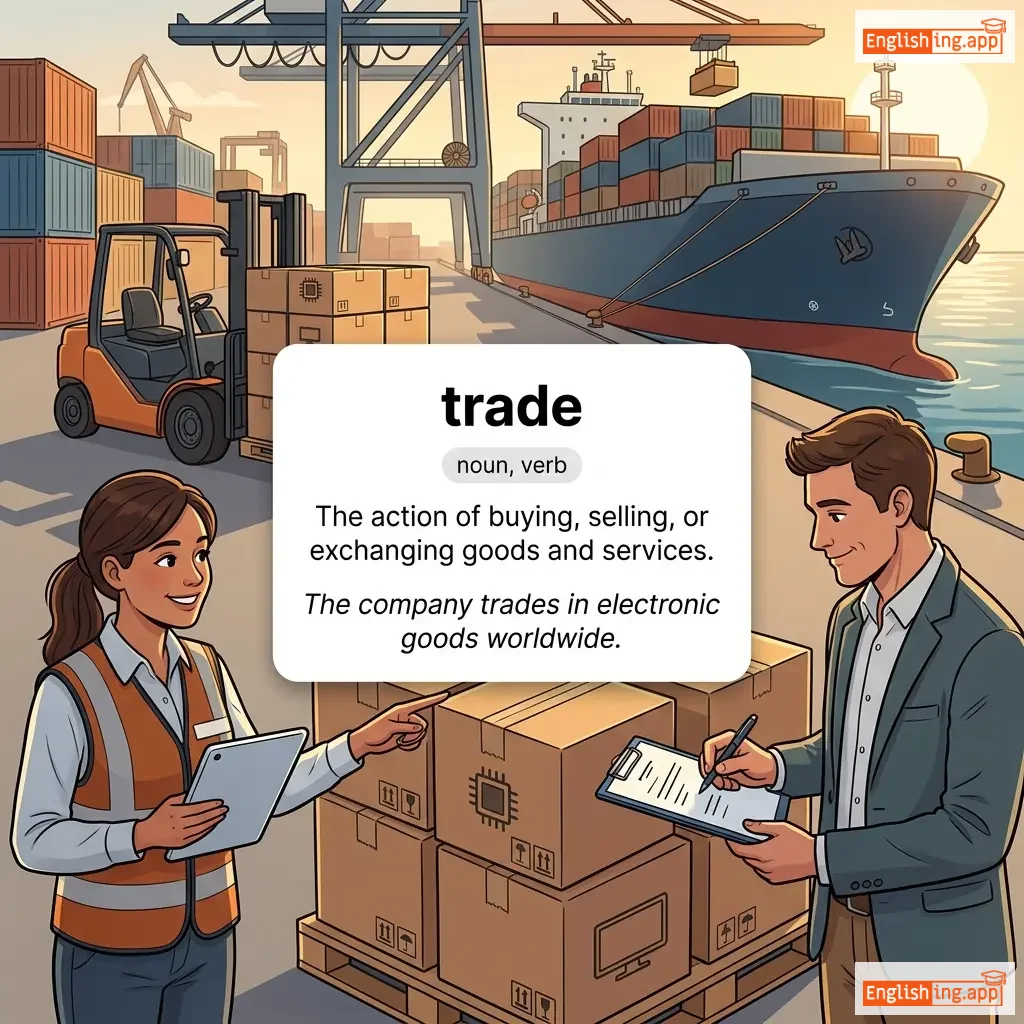
/treɪd/
noun/verb
••••••
••••••
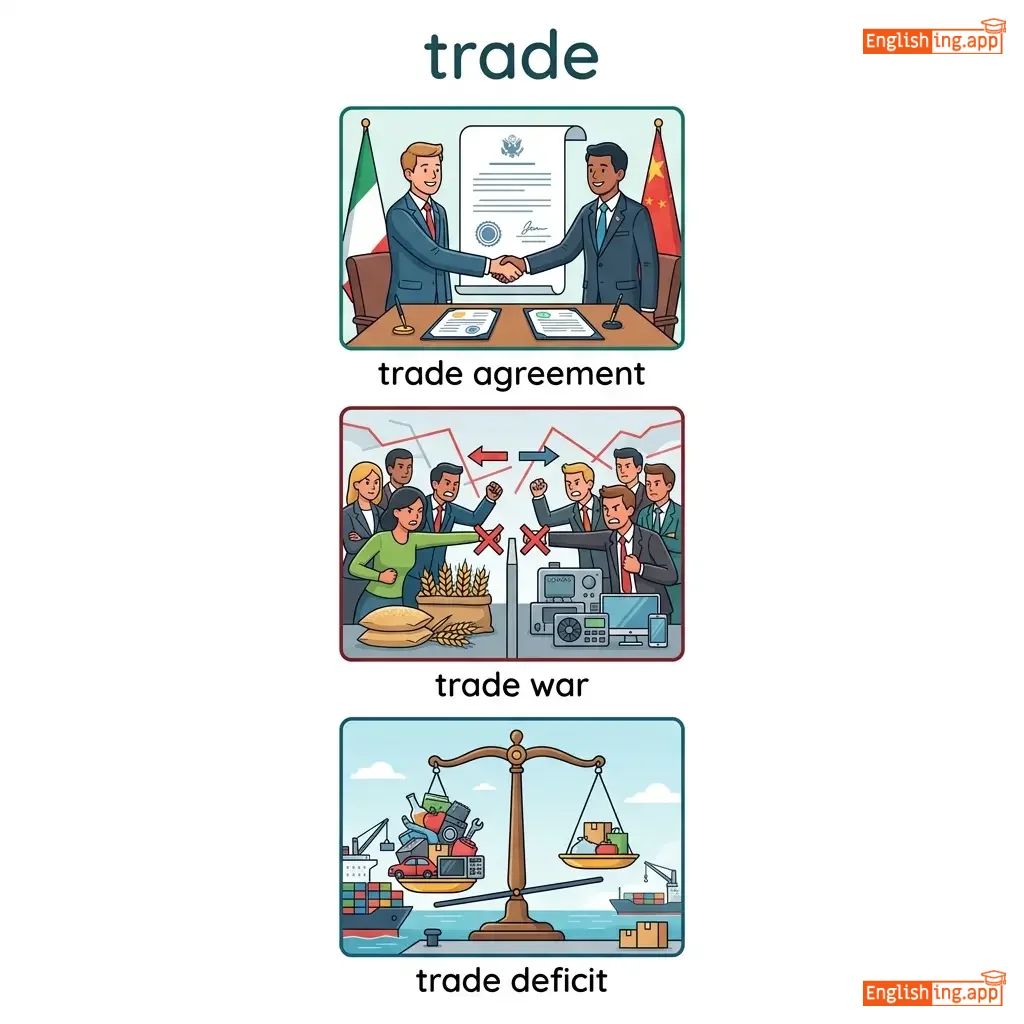
The exchange of goods and services or the commercial buying and selling process.
••••••
International trade fosters economic growth.
••••••
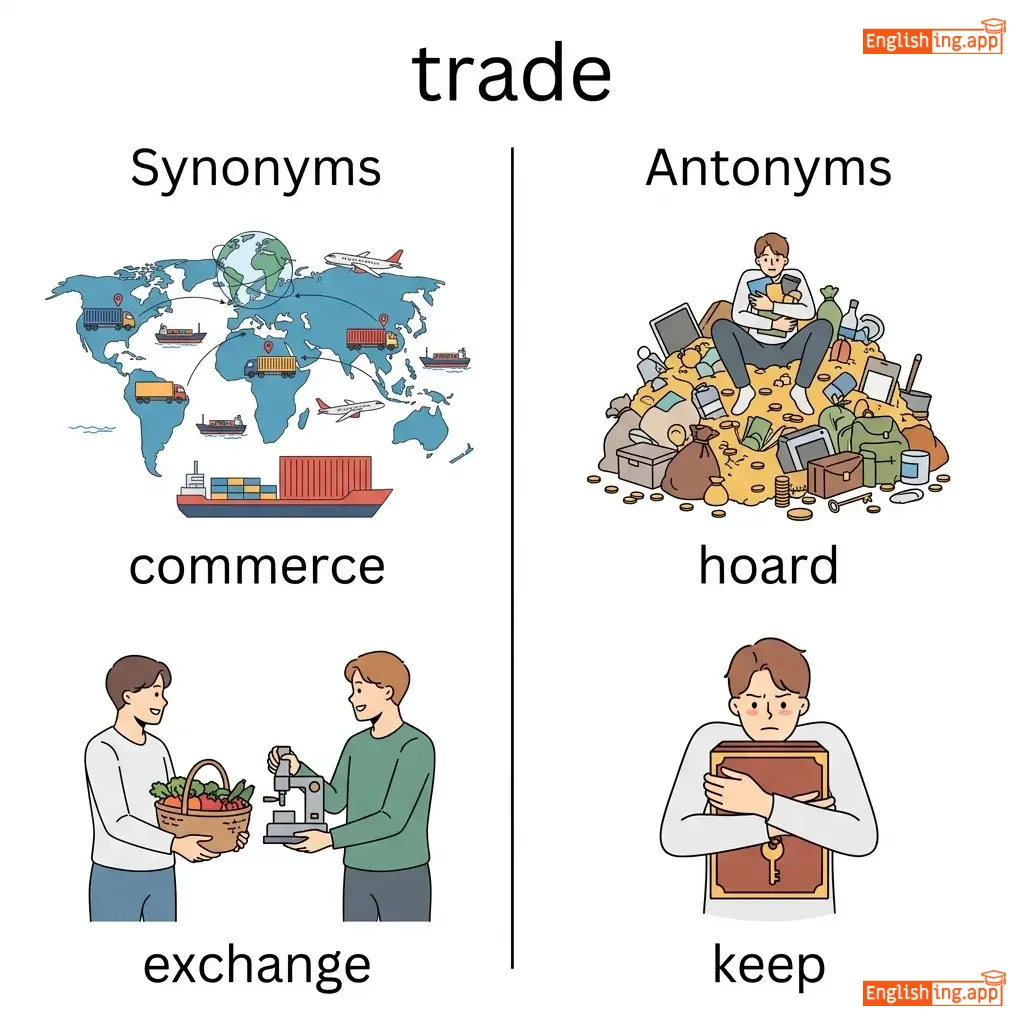
commerce, exchange, business
••••••
isolation, self-sufficiency, autarky
••••••
••••••
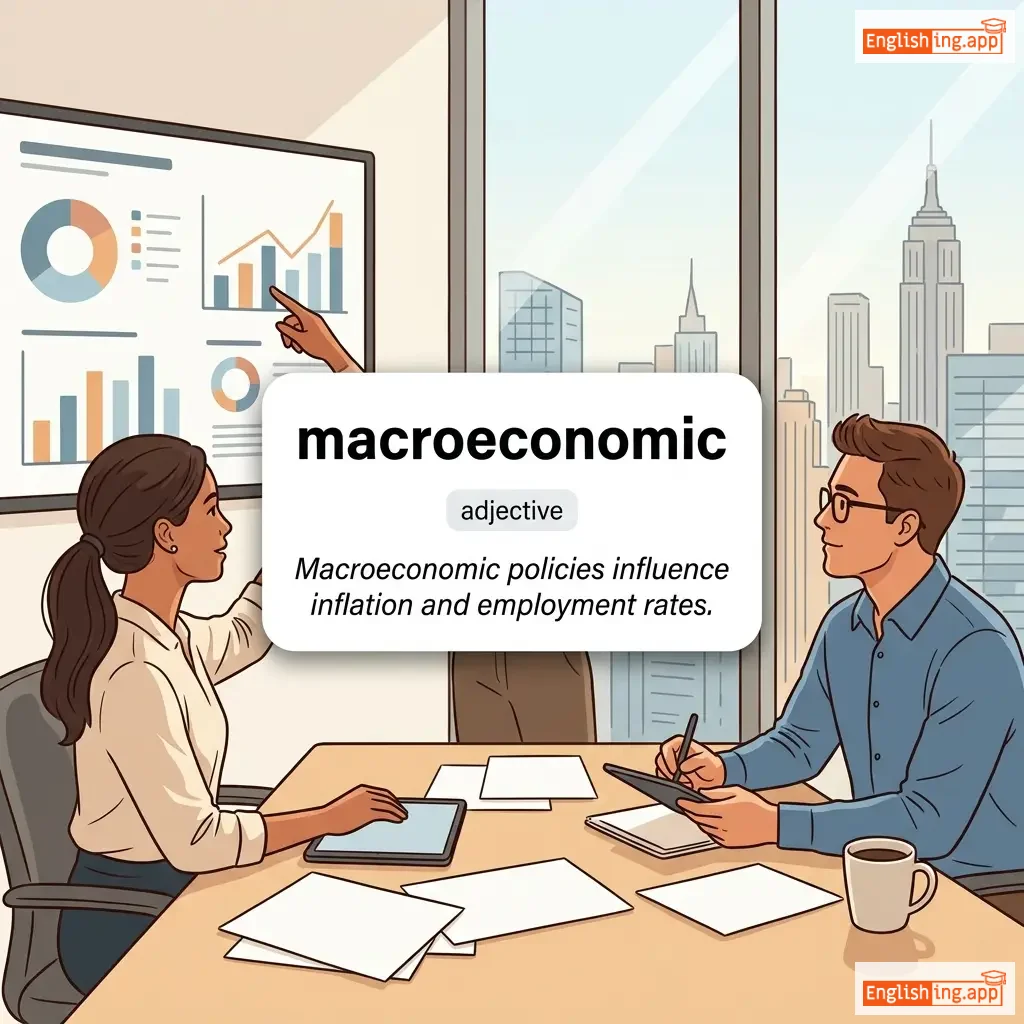
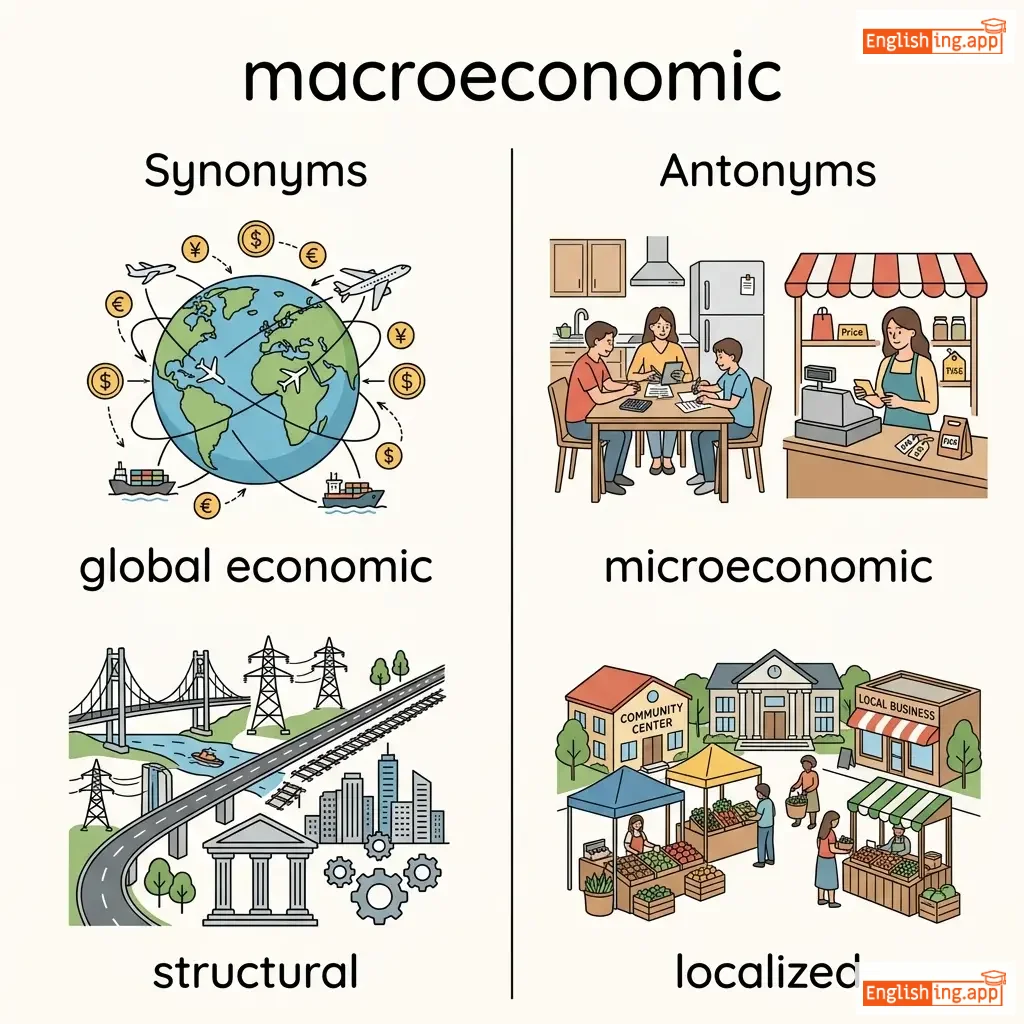
/ˌmæk.roʊ.iː.kəˈnɒm.ɪk/
adjective
••••••
••••••
Related to the overall economic matters of a country including national economy, economic trends, and large-scale financial systems.
••••••
Government policies impact macroeconomic stability.
••••••
national economy, economic trends, large-scale financial system
••••••
microeconomic, individual finance, localized economy
••••••
••••••
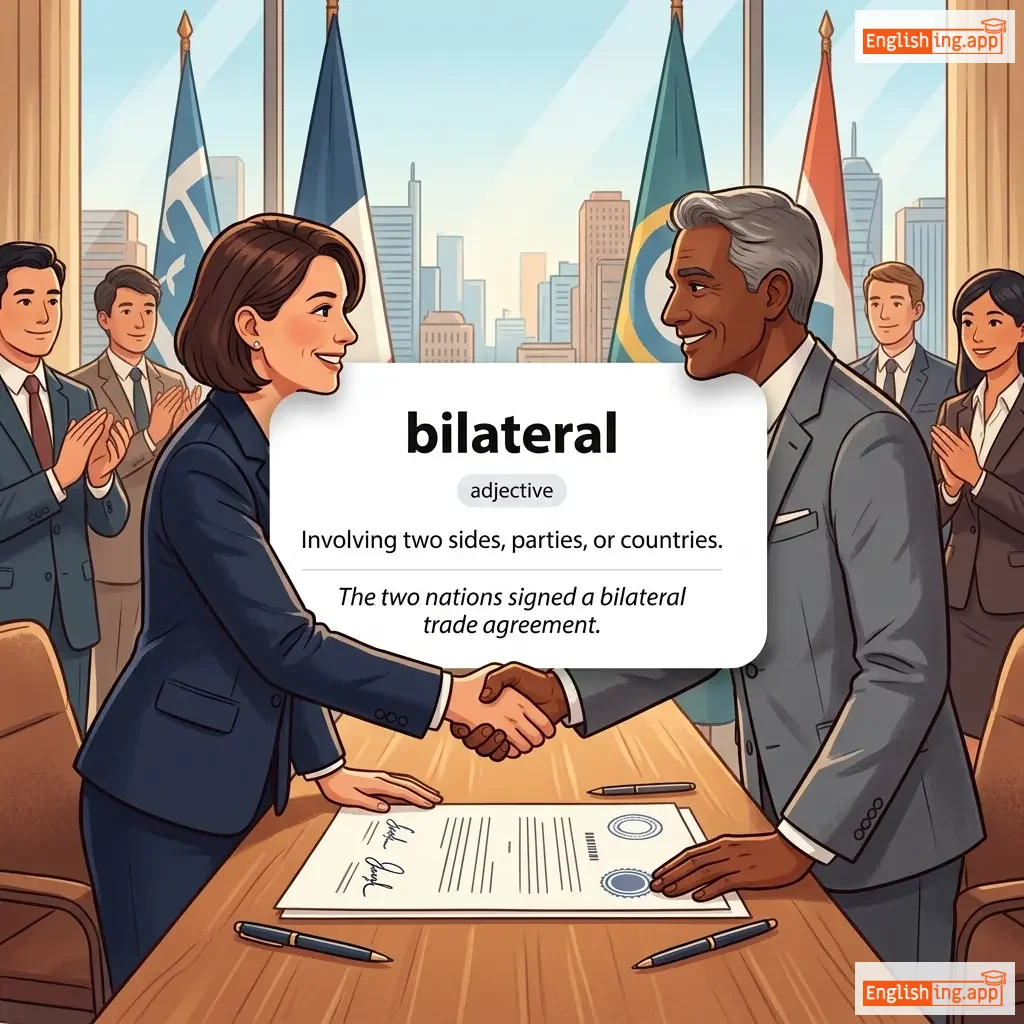
/ˌbaɪˈlæt.ər.əl/
adjective
••••••
••••••
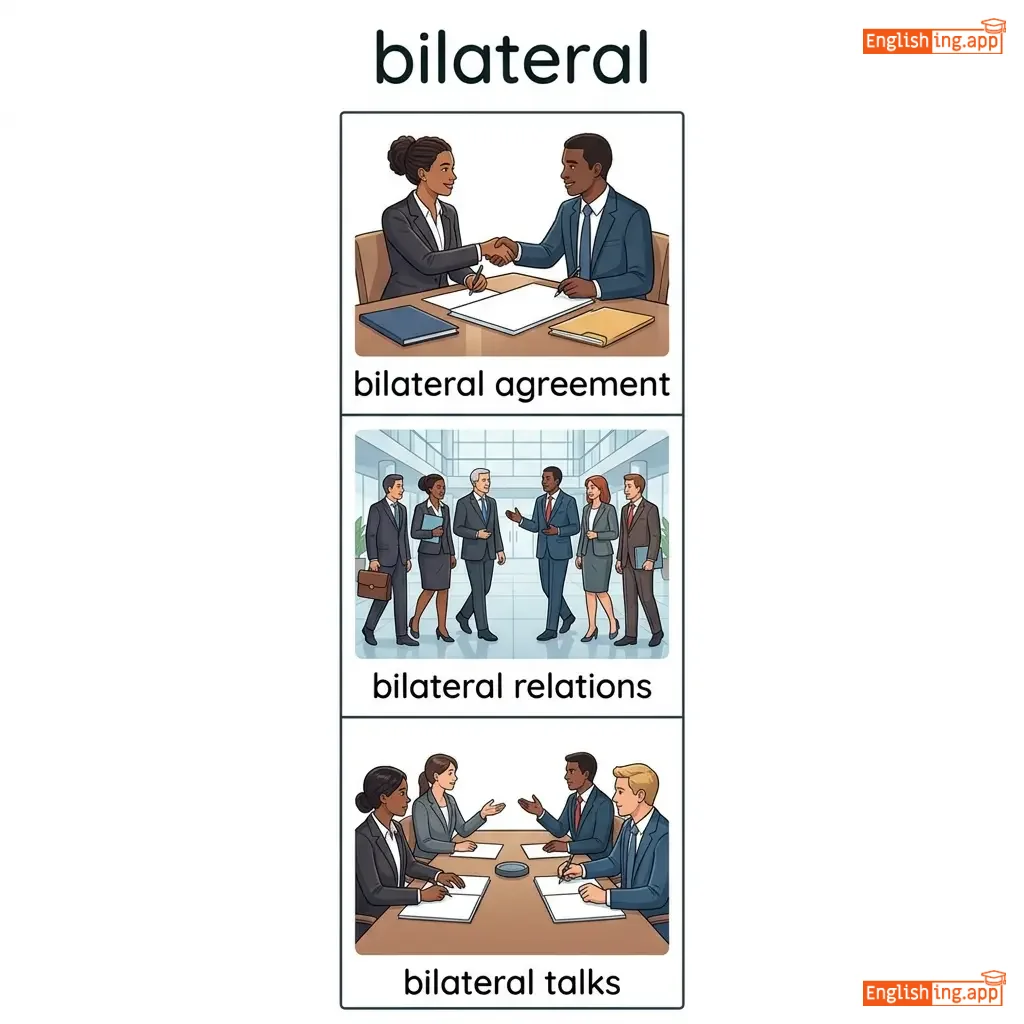
An agreement or relationship between two parties that is mutual, two-sided, or reciprocal.
••••••
The two countries signed a bilateral trade agreement.
••••••
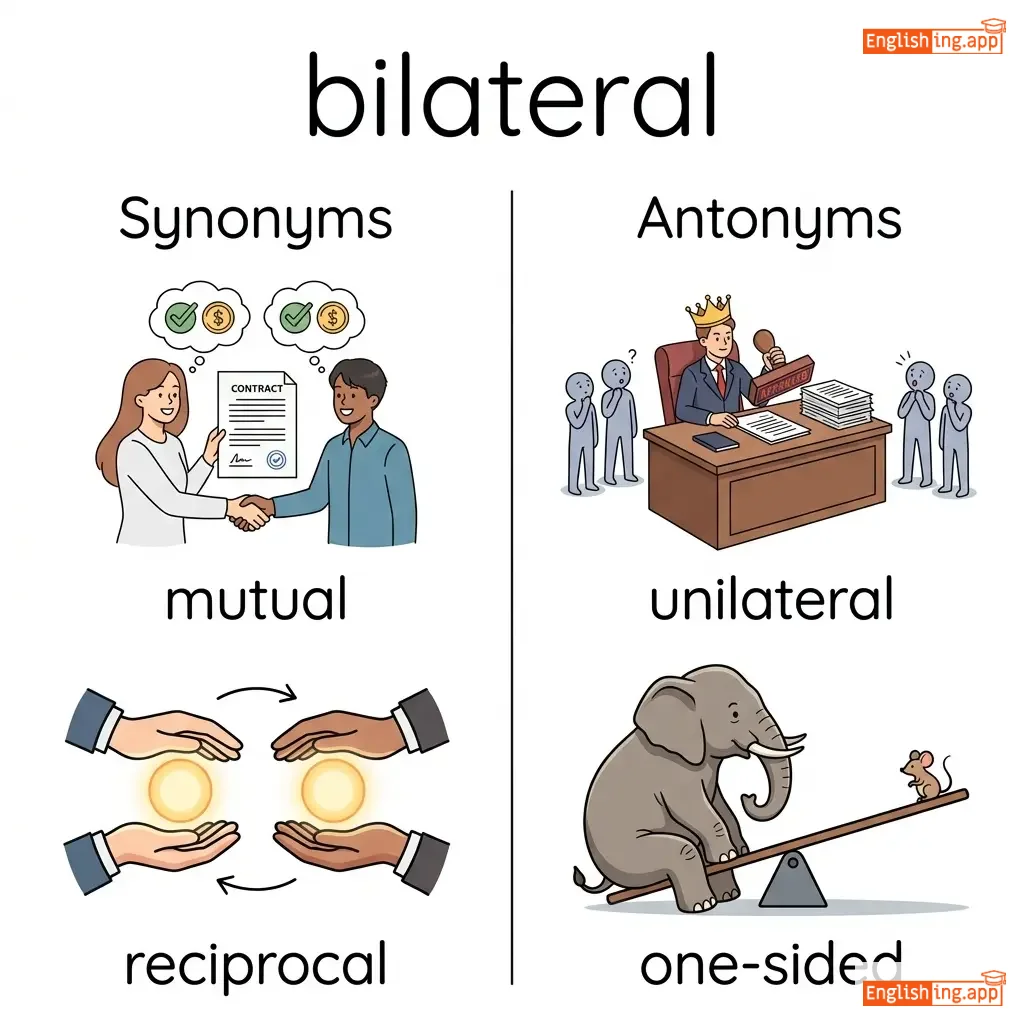
mutual, two-sided, reciprocal
••••••
unilateral, one-sided, independent
••••••
••••••
/ˌkæp.ɪ.təl.aɪˈzeɪ.ʃən/
noun
••••••
••••••
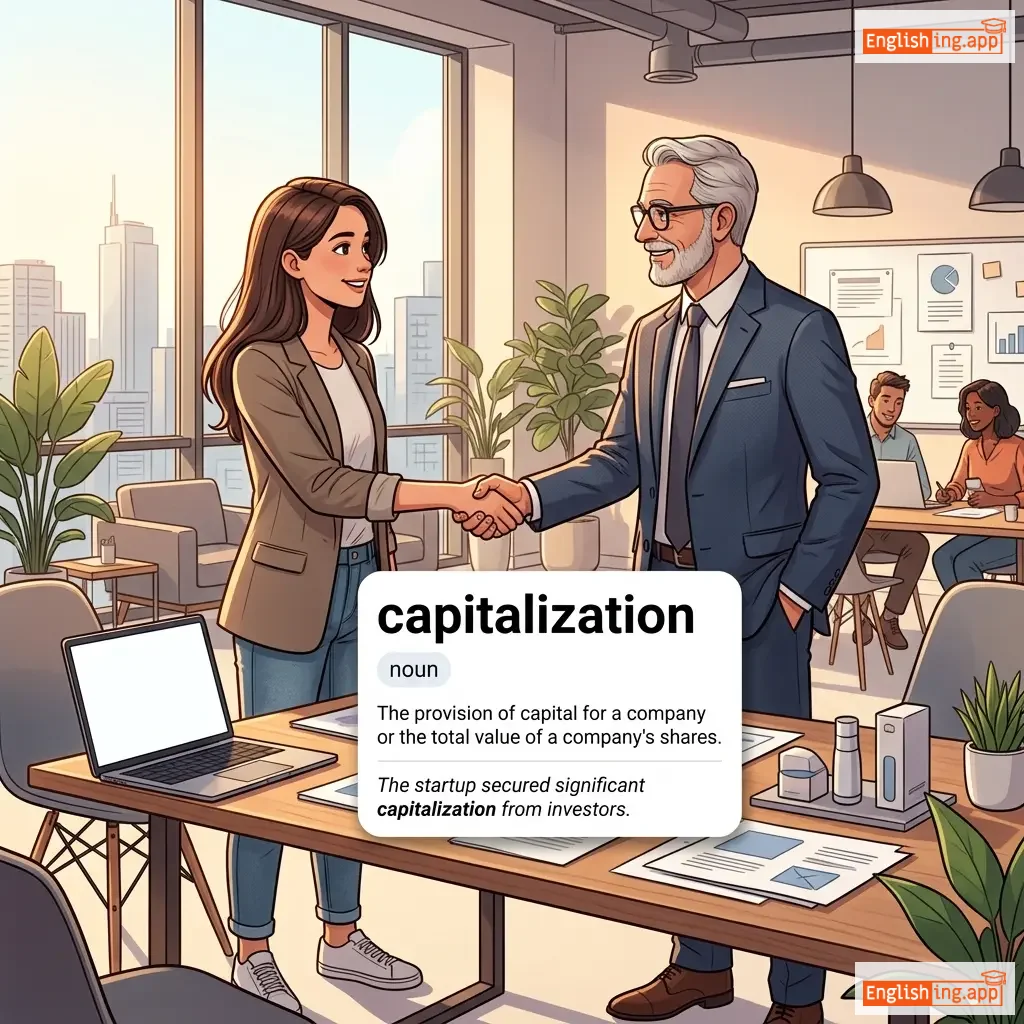
The total value of a business's assets or investments, including investment, financing, and asset allocation.
••••••
The company's capitalization reached $1 billion in market value.
••••••
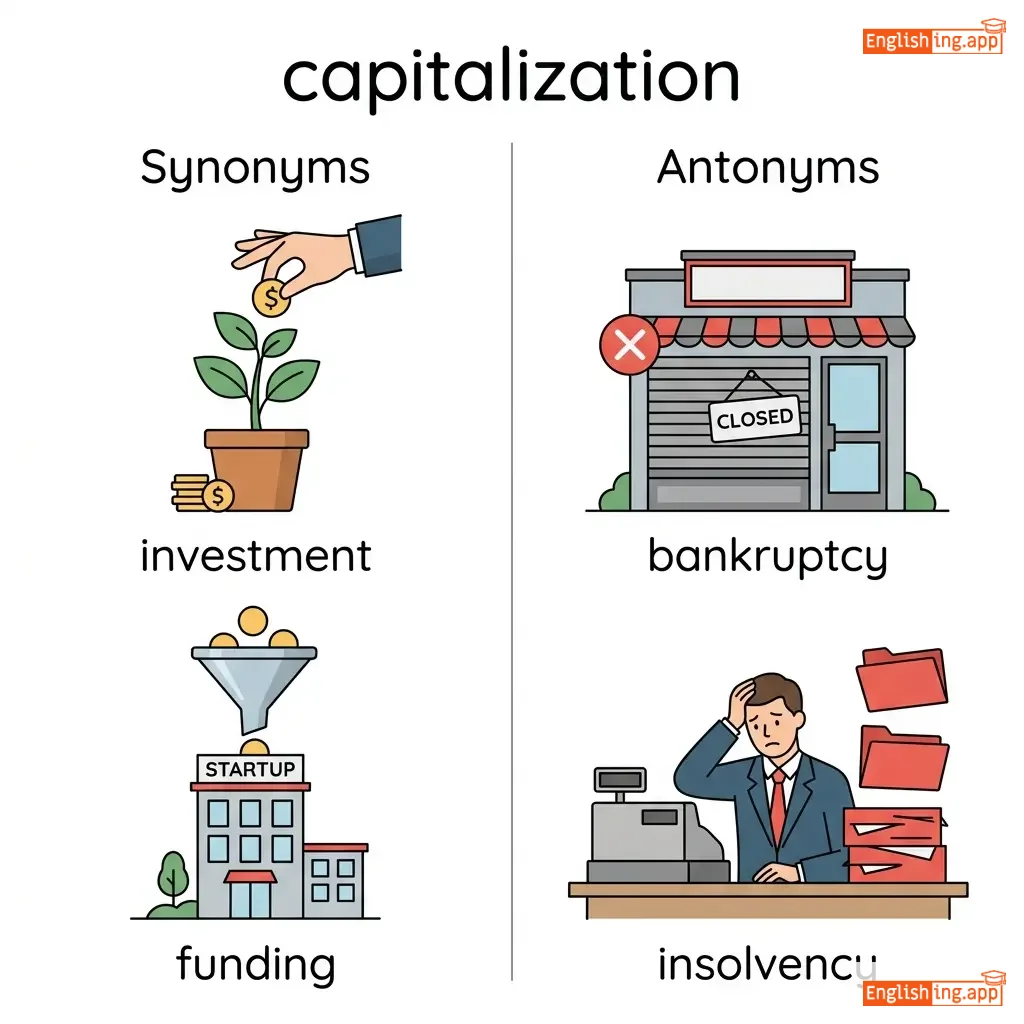
investment, financing, asset allocation
••••••
underfunding, bankruptcy, insolvency
••••••
••••••
/prəˈtɛk.ʃəˌnɪz.əm/
noun
••••••
••••••
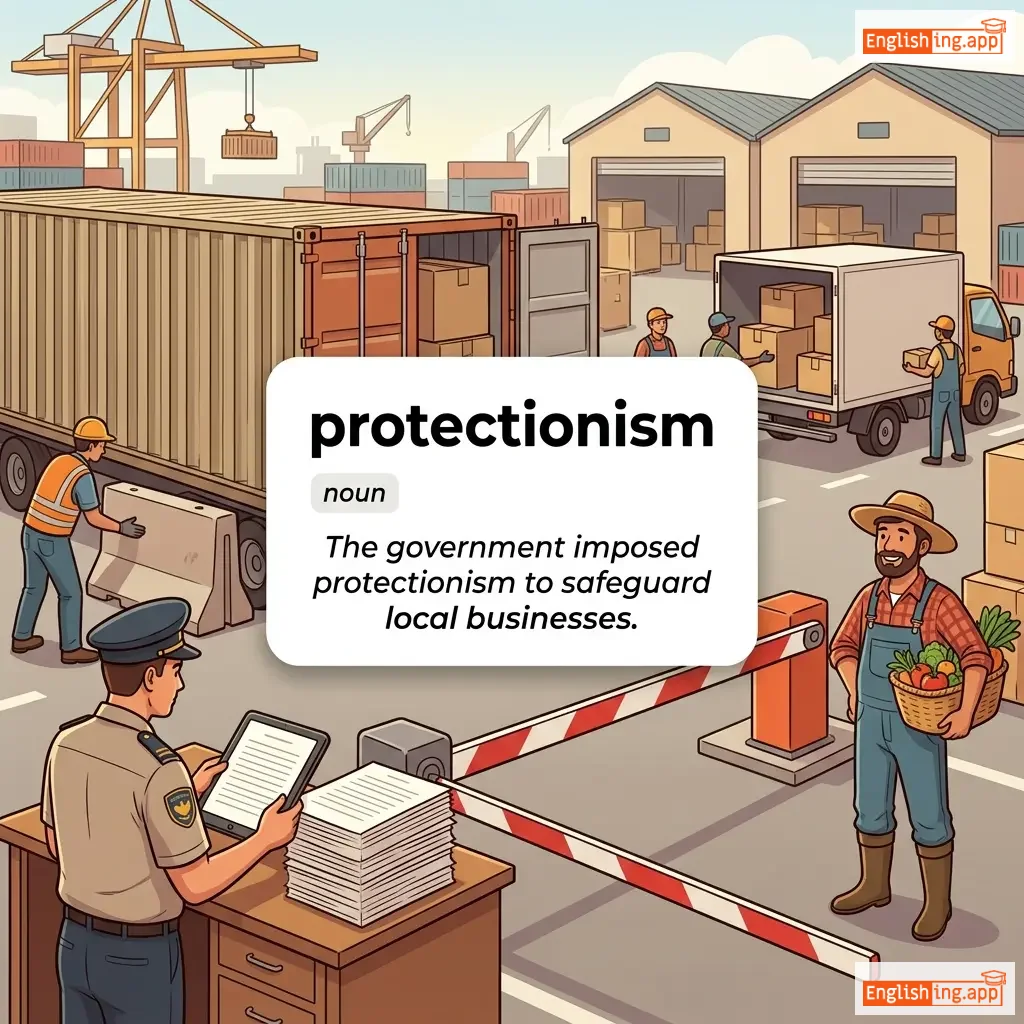
A trade policy that restricts imports to safeguard domestic industries through trade restriction, economic nationalism, or isolationism.
••••••
The government imposed protectionism to safeguard local businesses.
••••••
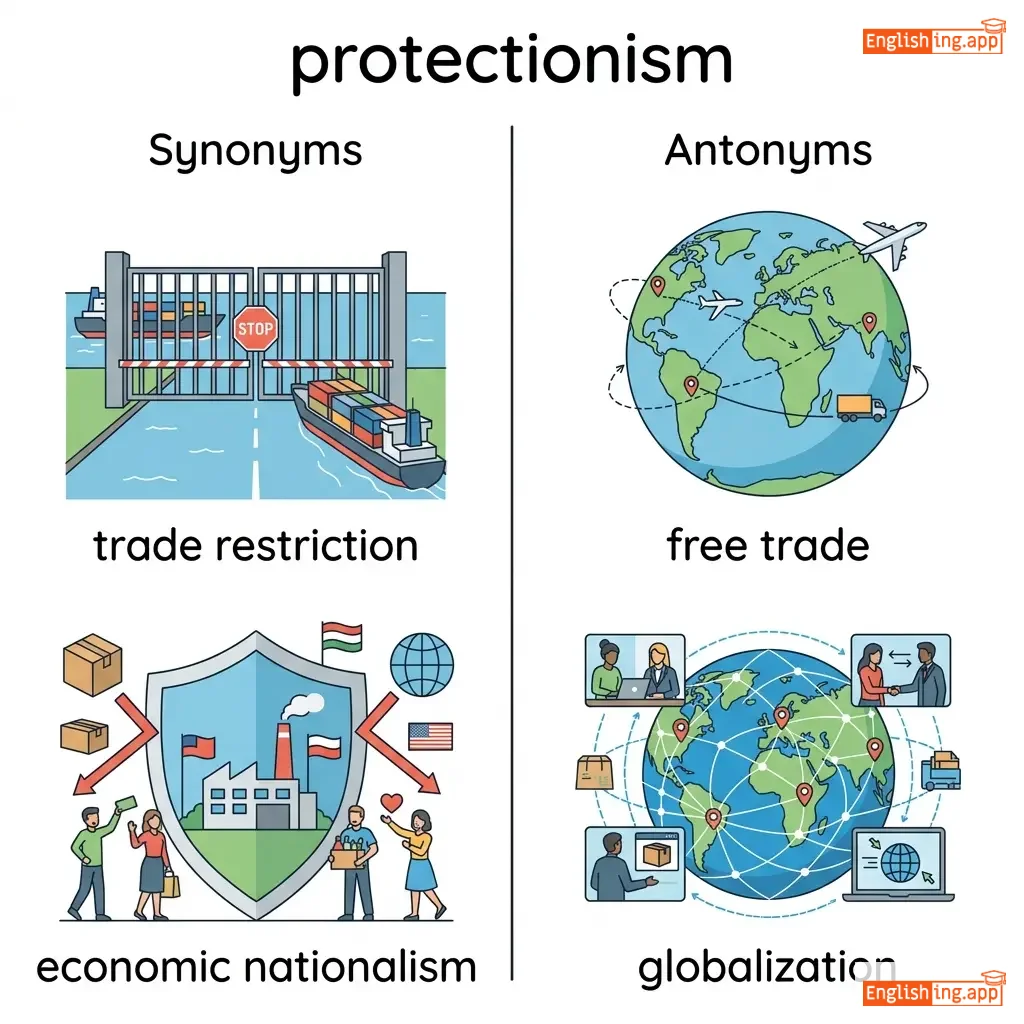
trade restriction, economic nationalism, isolationism
••••••
free trade, globalization, open markets
••••••
••••••
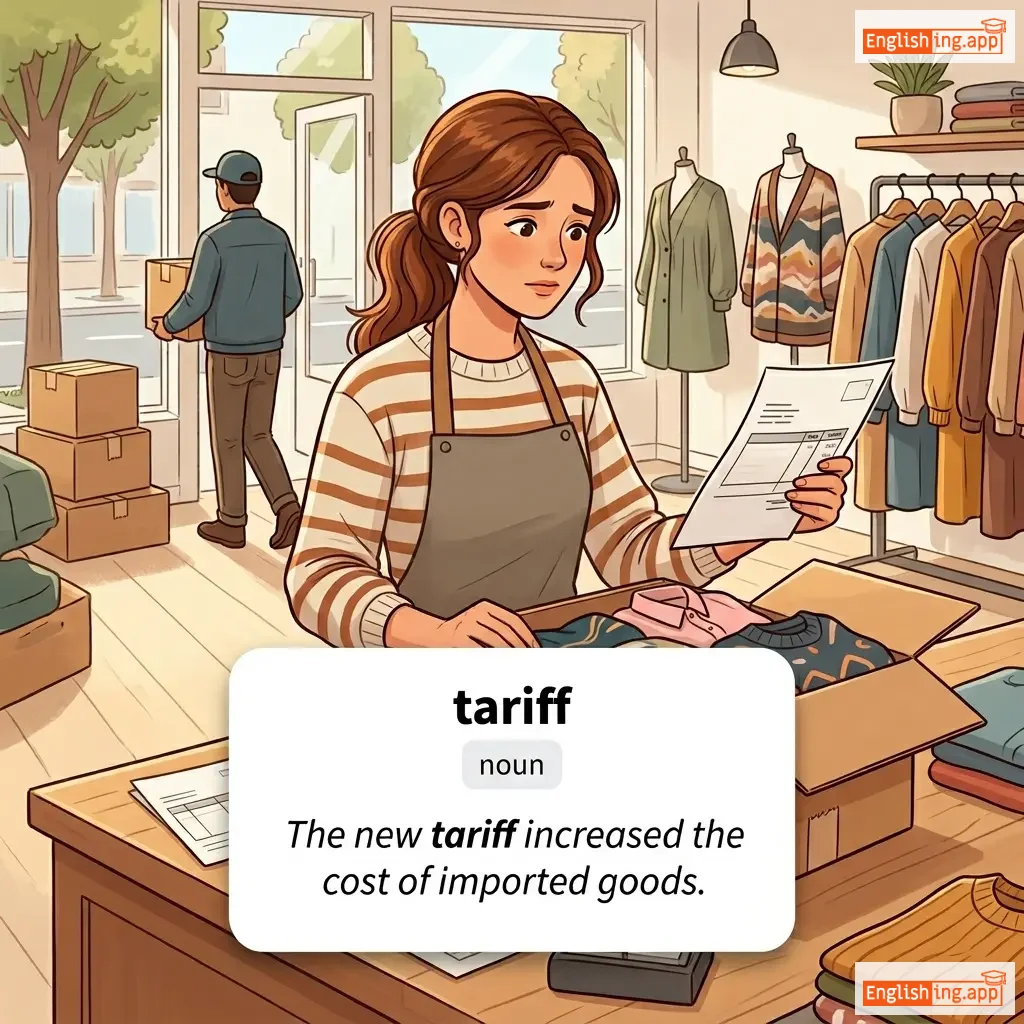
/ˈtær.ɪf/
noun
••••••
••••••
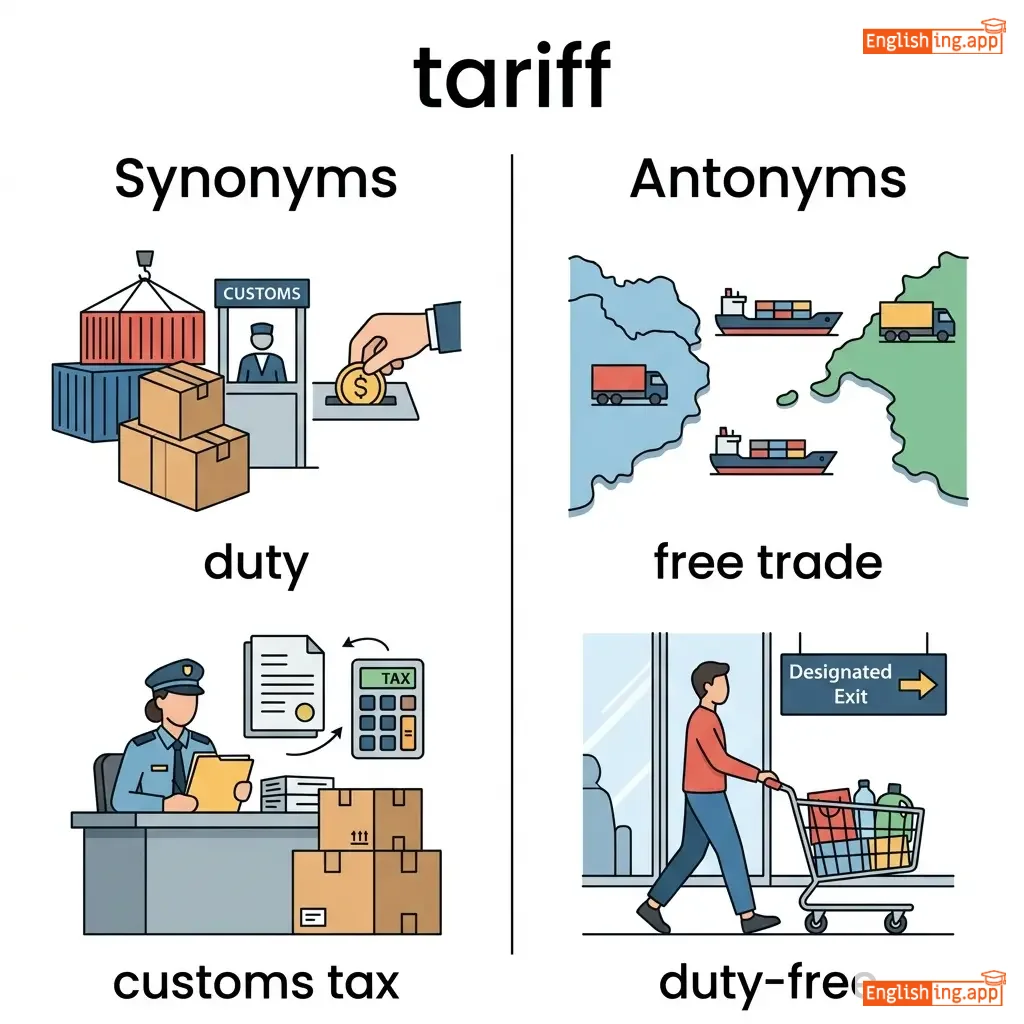
A tax imposed by the government on imported or exported goods, also known as duty, customs tax, or levy.
••••••
The new tariff increased the cost of imported goods.
••••••
••••••
free trade, duty-free, exemption
••••••
••••••
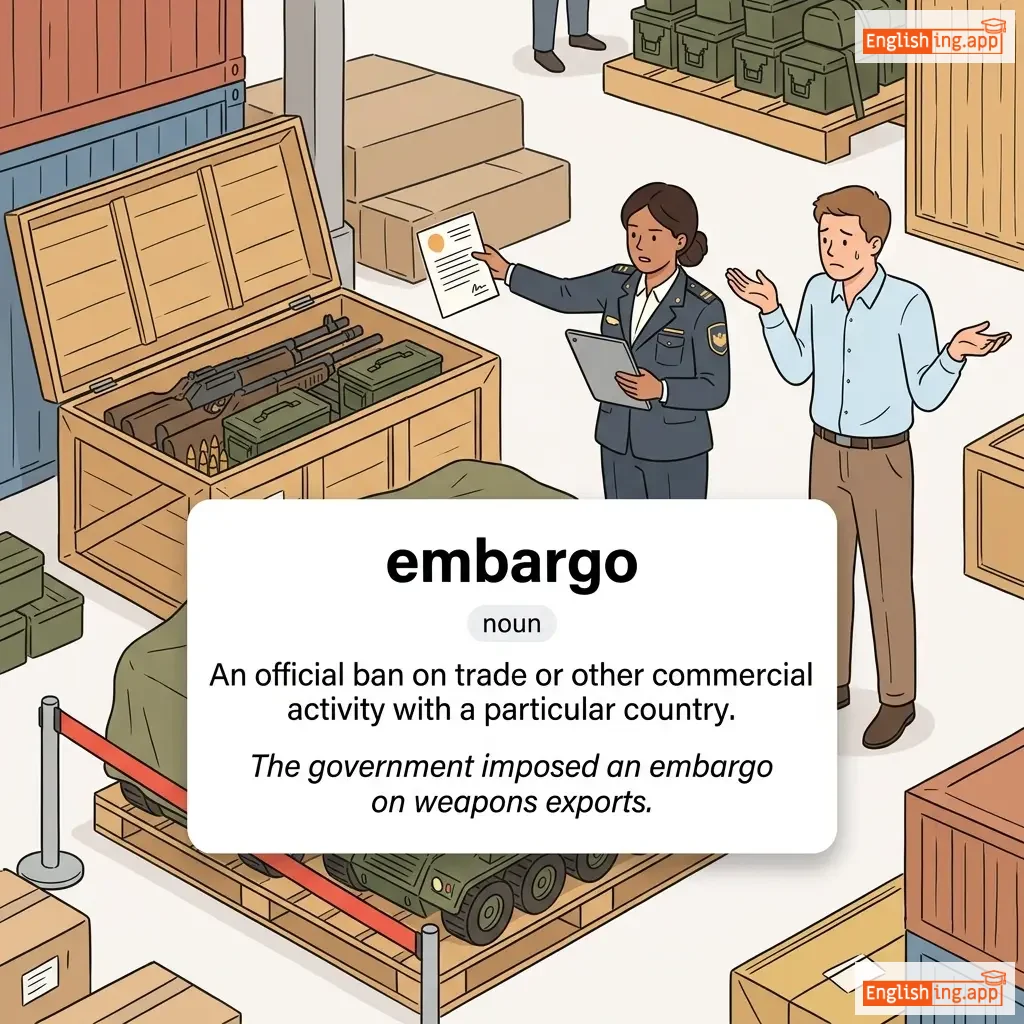
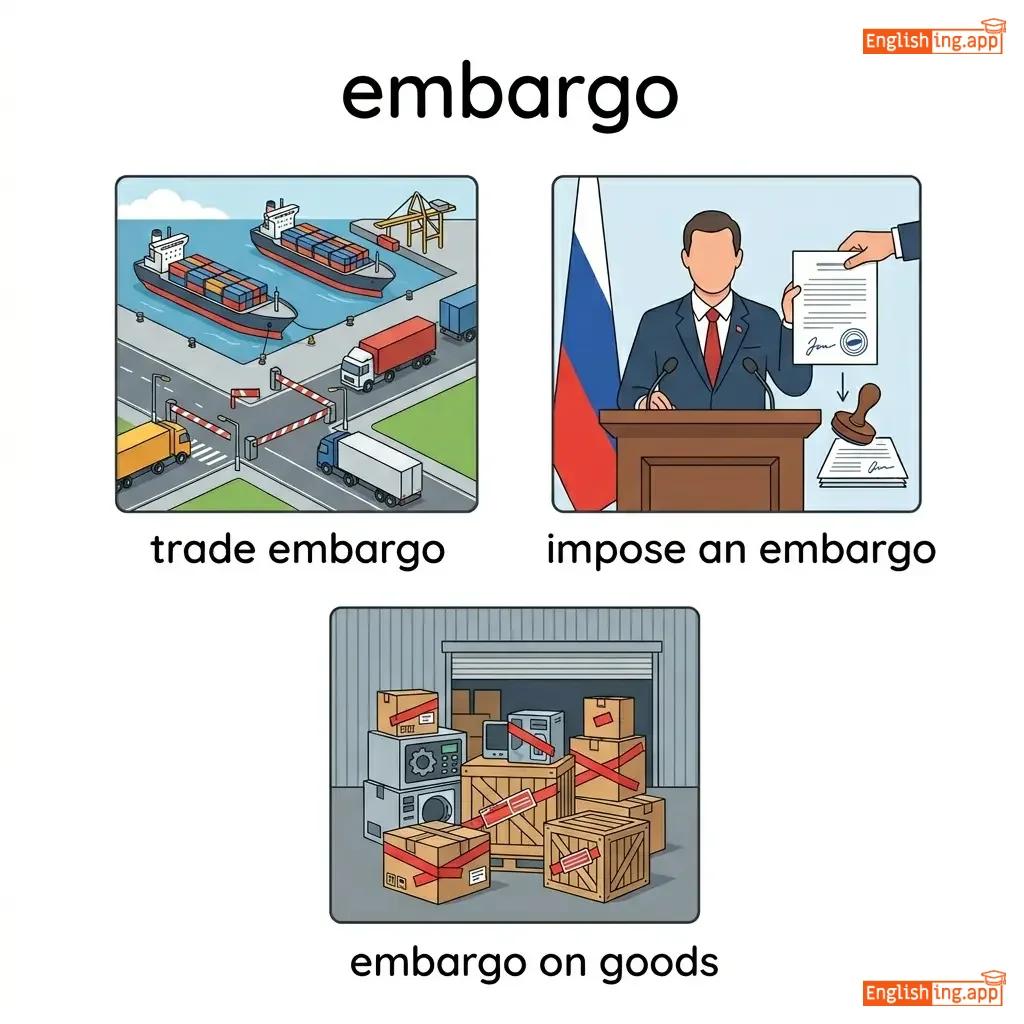
/ɪmˈbɑː.ɡoʊ/
noun
••••••
••••••
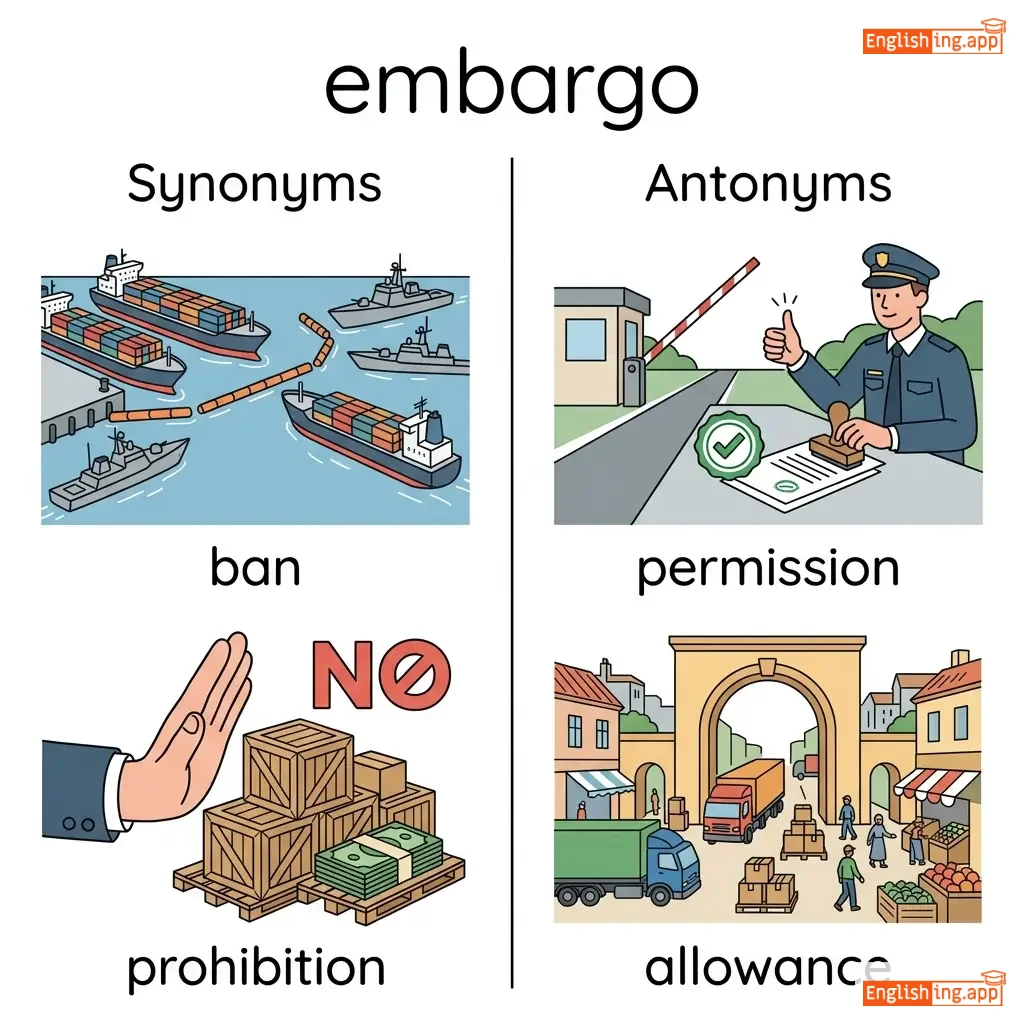
A trade ban, restriction, or prohibition imposed by a government or international organization on a country.
••••••
The UN imposed an embargo on arms exports.
••••••
trade ban, restriction, prohibition
••••••
trade agreement, free trade, open market
••••••
••••••
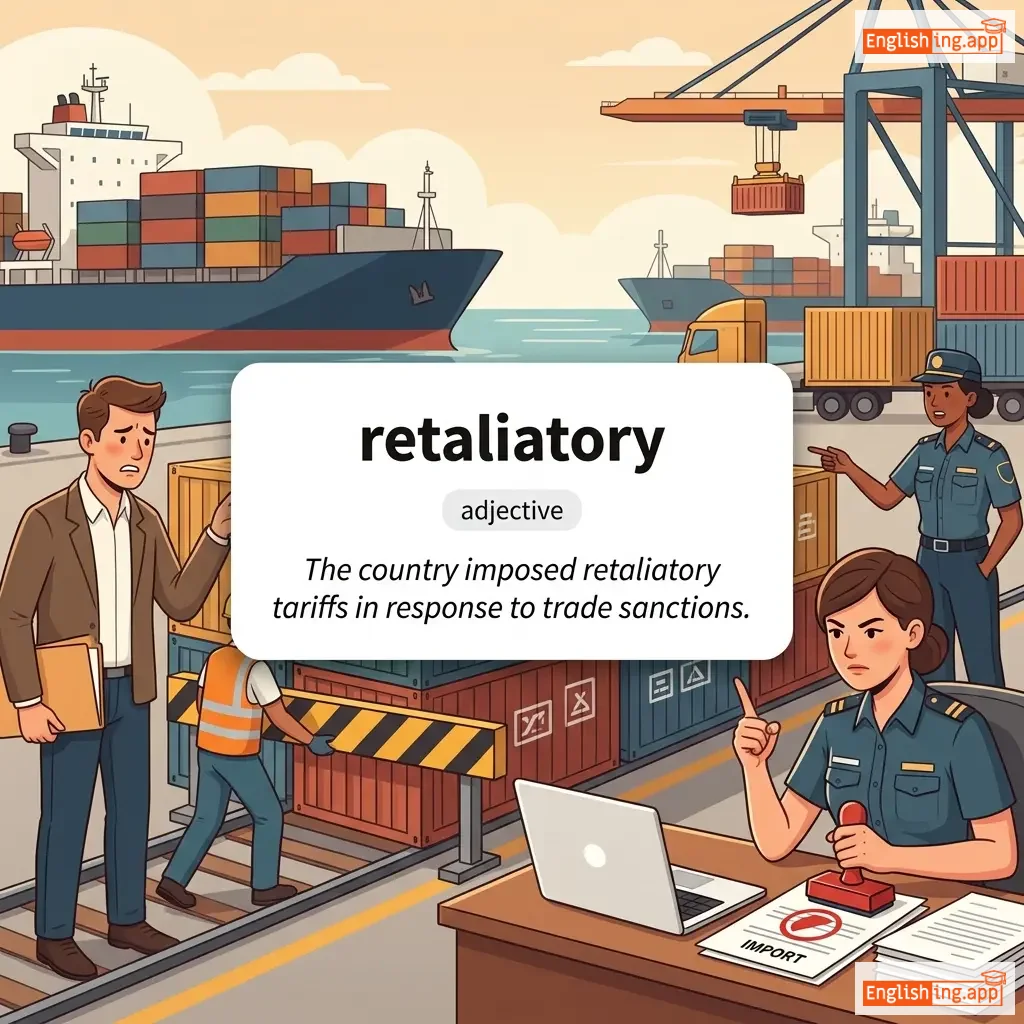
/rɪˈtæl.i.ə.tɔːr.i/
adjective
••••••
••••••
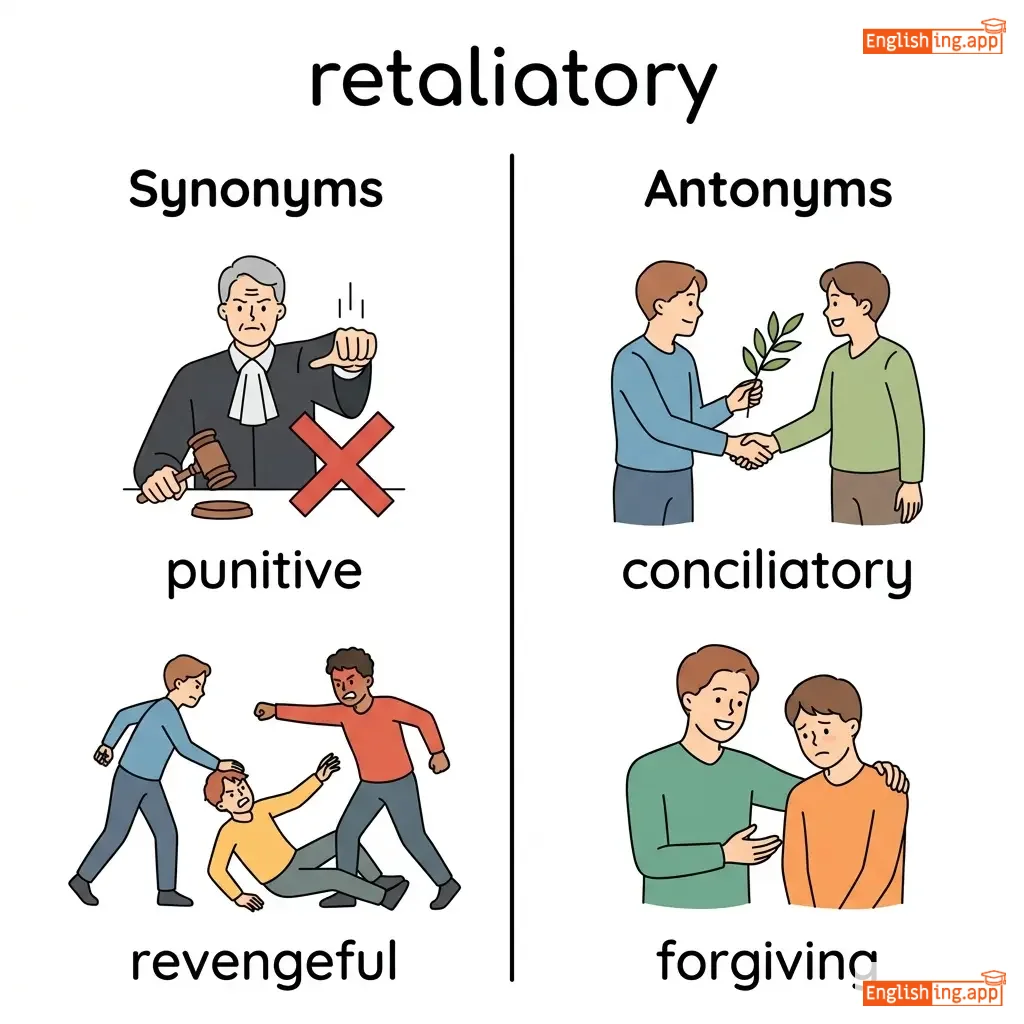
Taking action in response to another's action, characterized as punitive, revengeful, or counteractive.
••••••
The country imposed retaliatory tariffs in response to trade sanctions.
••••••
punitive, revengeful, counteractive
••••••
conciliatory, forgiving, passive
••••••
••••••
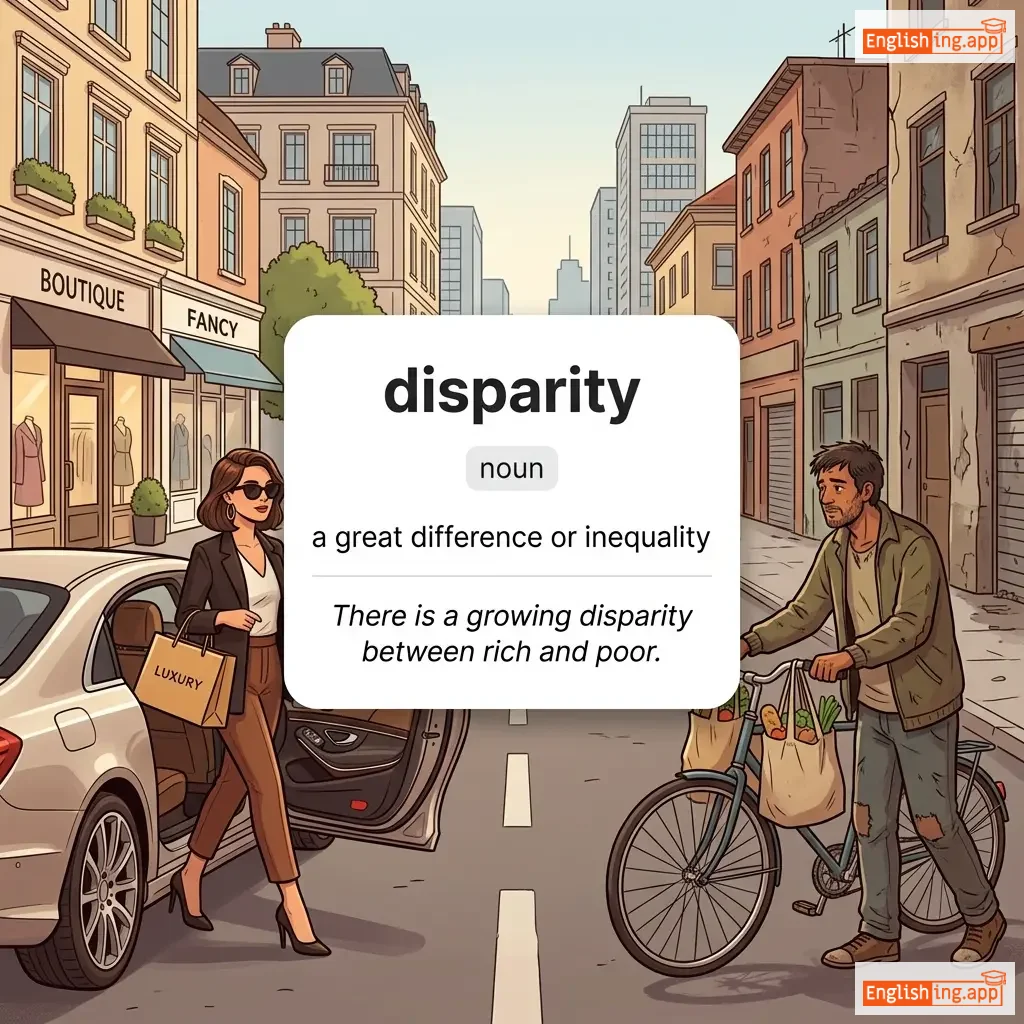
/dɪˈspær.ə.ti/
noun
••••••
••••••
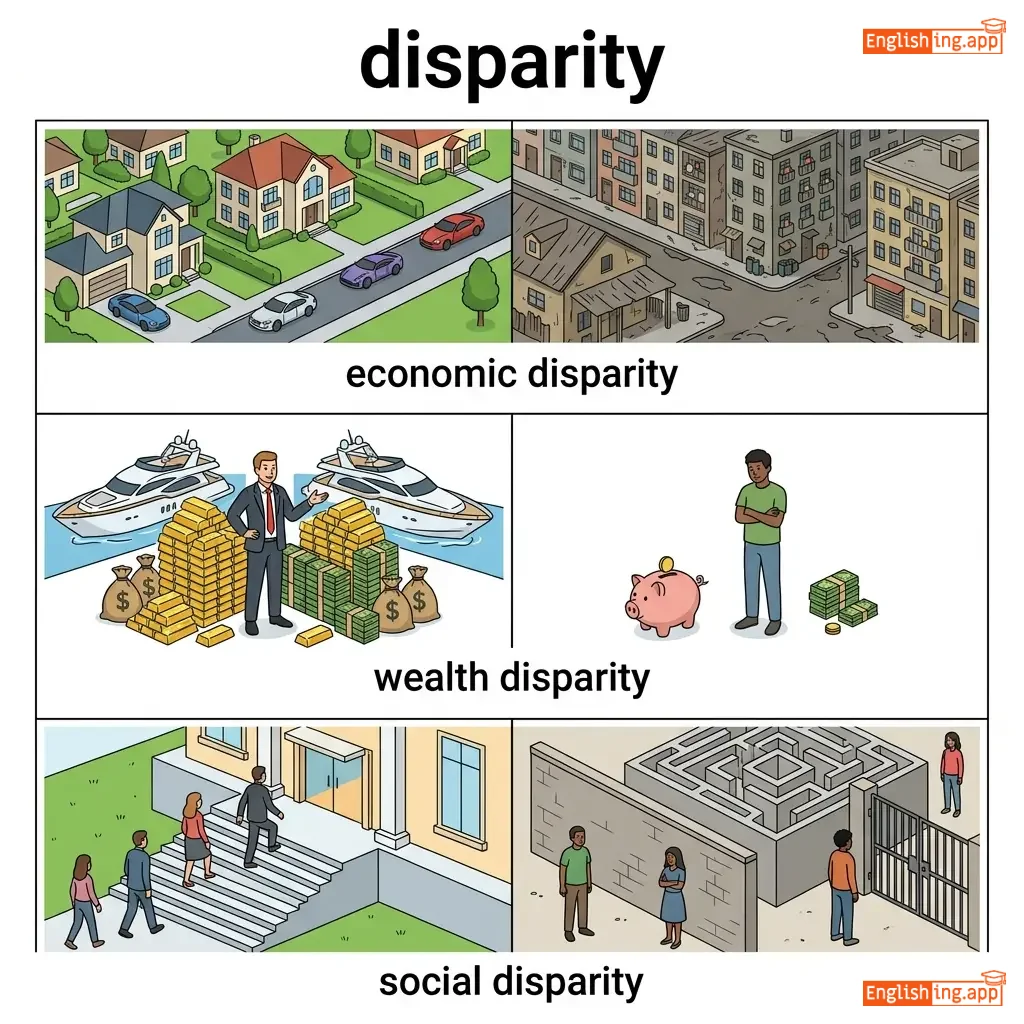
Inequality, difference, or imbalance between two or more things.
••••••
The disparity in income between rich and poor is increasing.
••••••
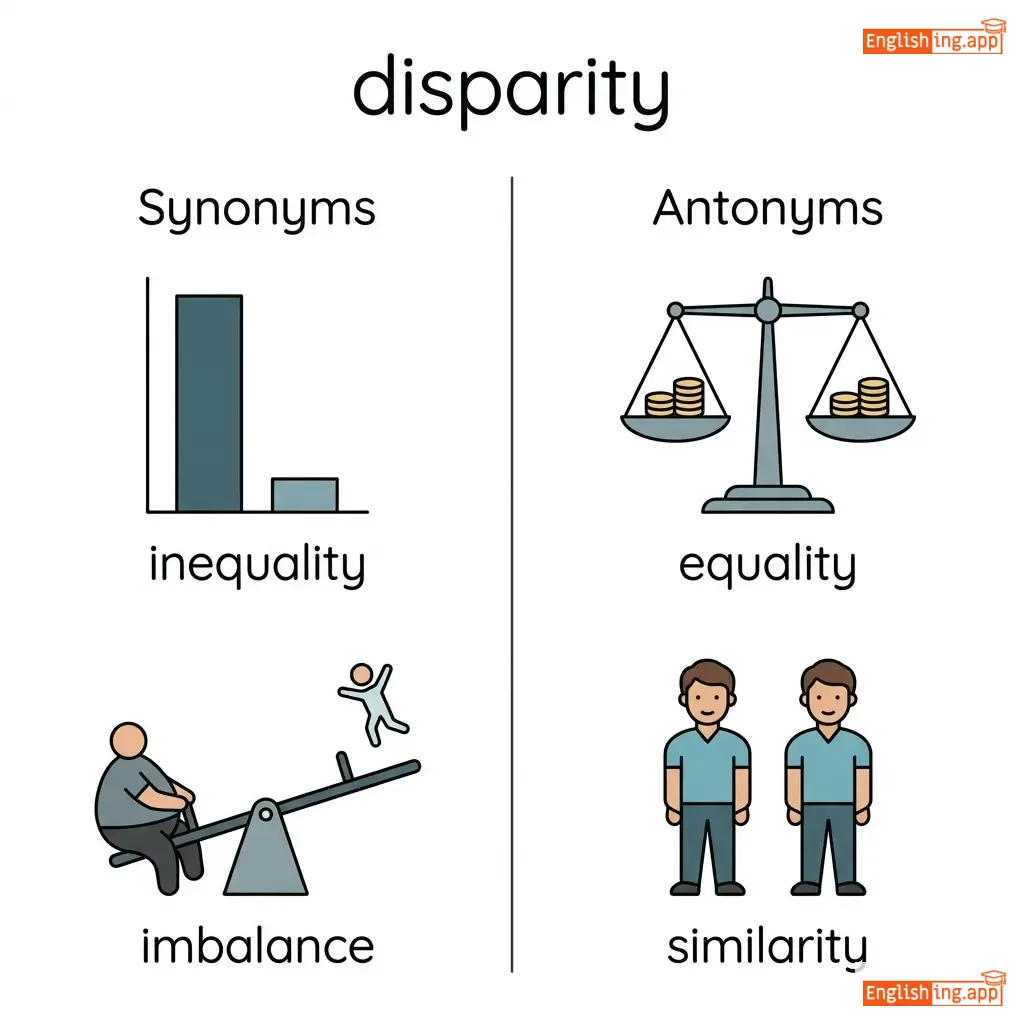
inequality, difference, imbalance
••••••
equality, similarity, parity
••••••
••••••
/ˌdiː.rɛɡ.jʊˈleɪ.ʃən/
noun
••••••
••••••
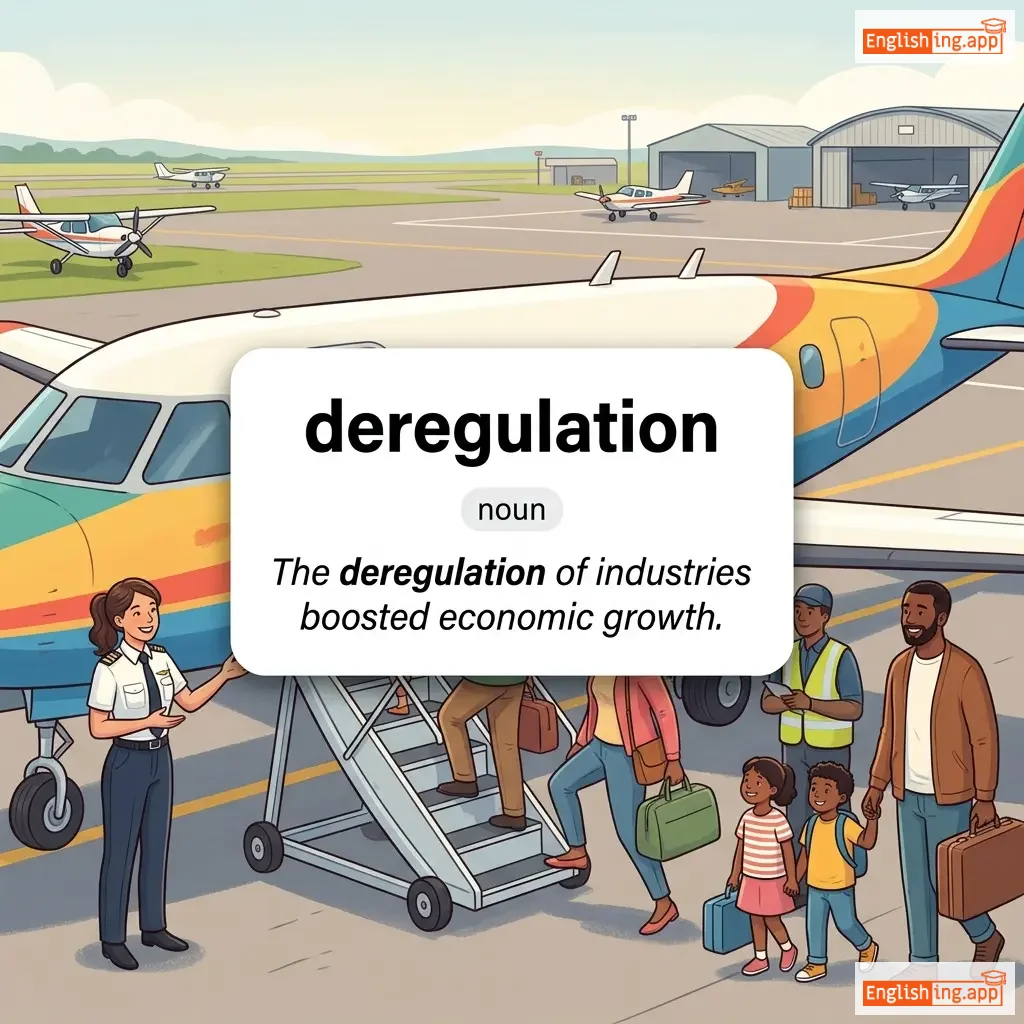
The removal or reduction of government regulations and controls, often involving liberalization, free market policies, or privatization.
••••••
The deregulation of industries boosted economic growth.
••••••
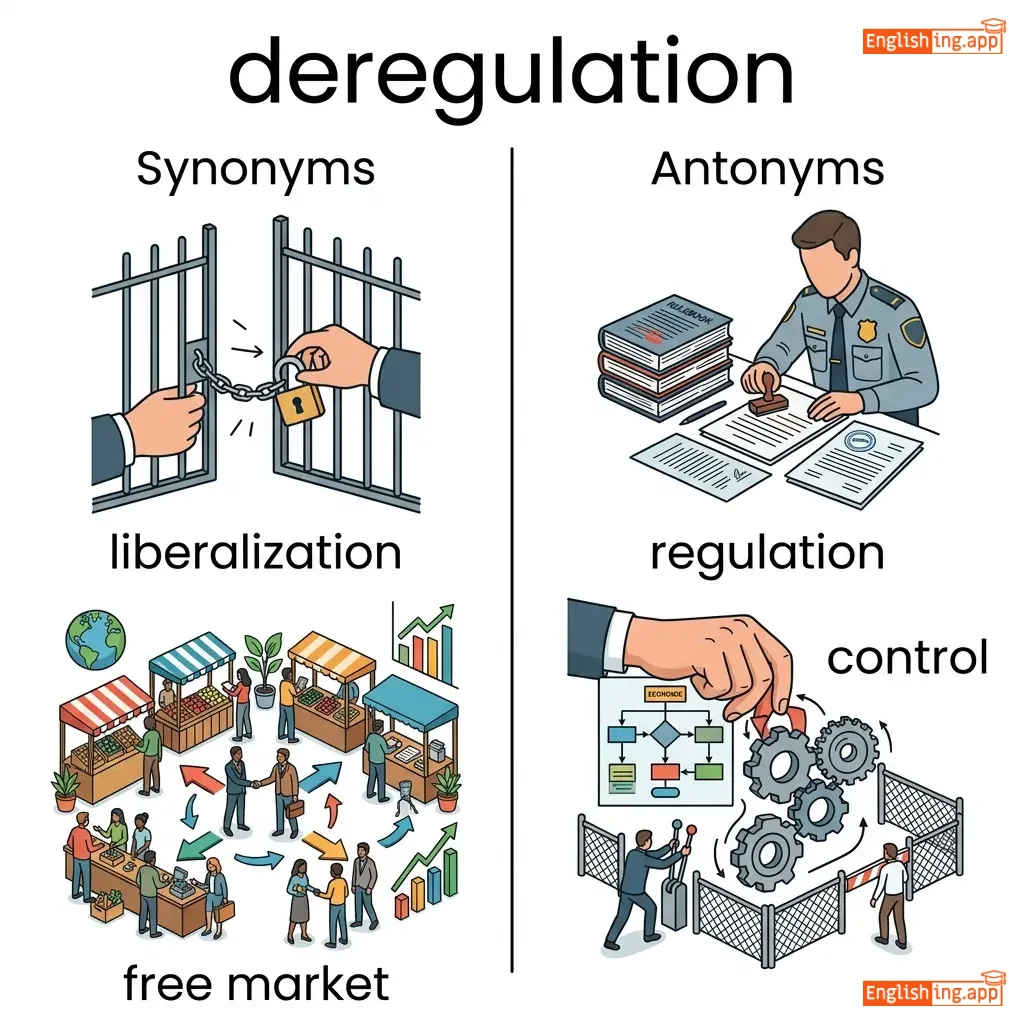
liberalization, free market, privatization
••••••
regulation, control, restriction
••••••
••••••
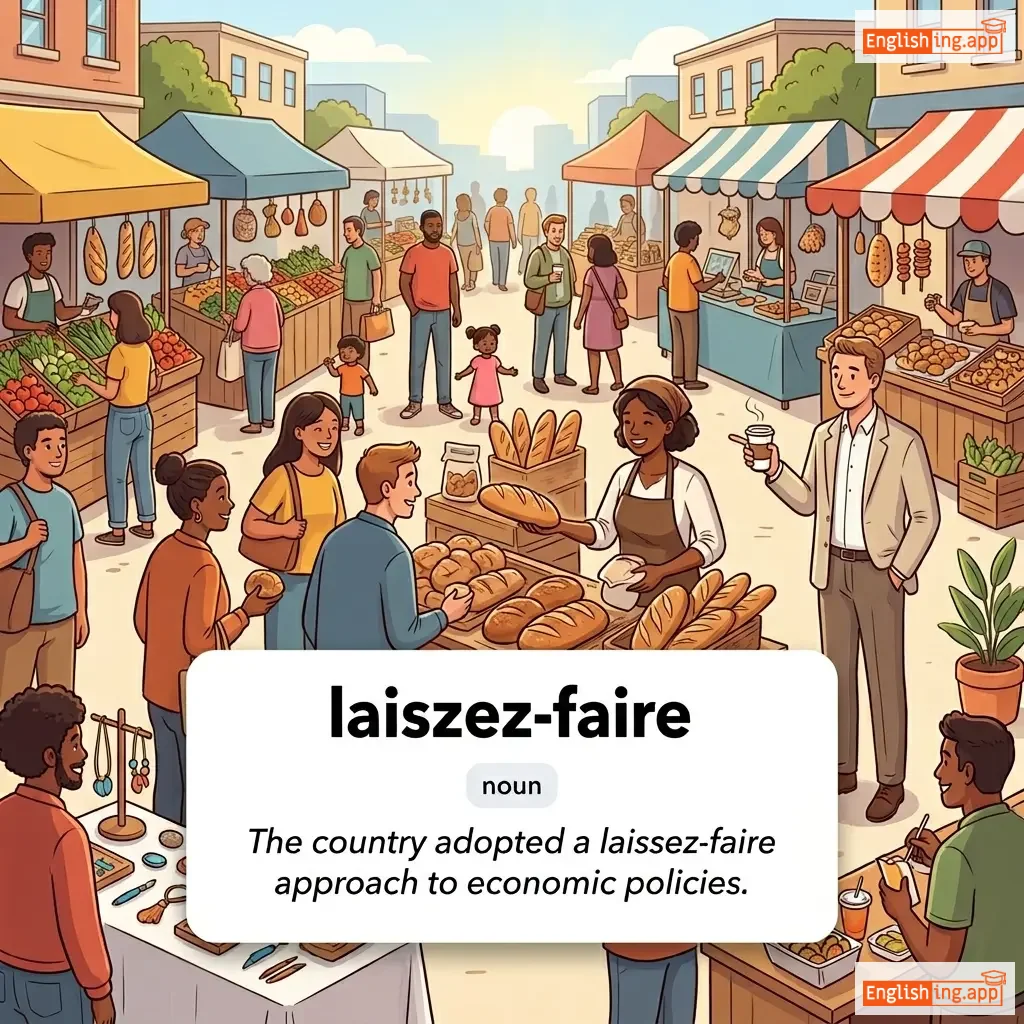
/ˌlɛ.seɪˈfɛər/
noun
••••••
••••••
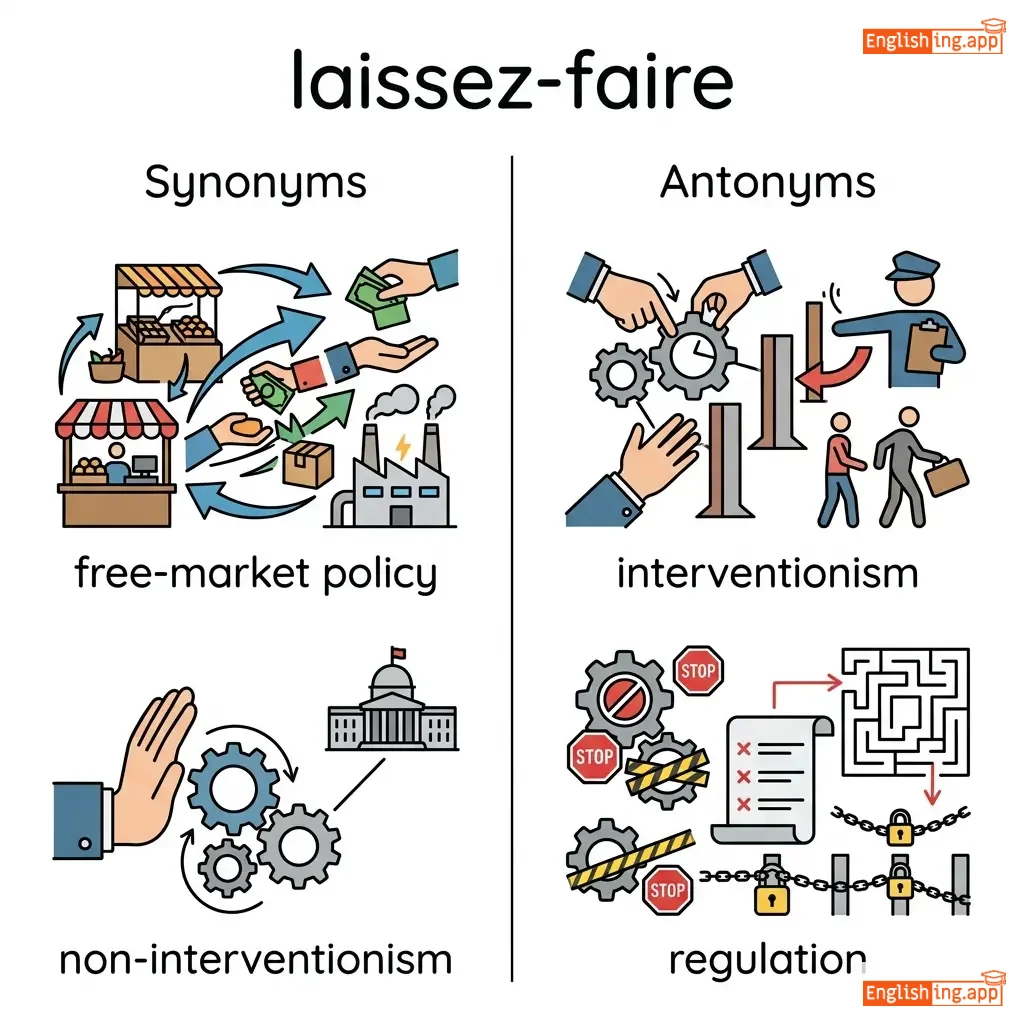
A free-market policy of minimal government intervention in economic affairs, characterized by non-interventionism and capitalism.
••••••
The country adopted a laissez-faire approach to economic policies.
••••••
free-market policy, non-interventionism, capitalism
••••••
interventionism, regulation, protectionism
••••••
••••••
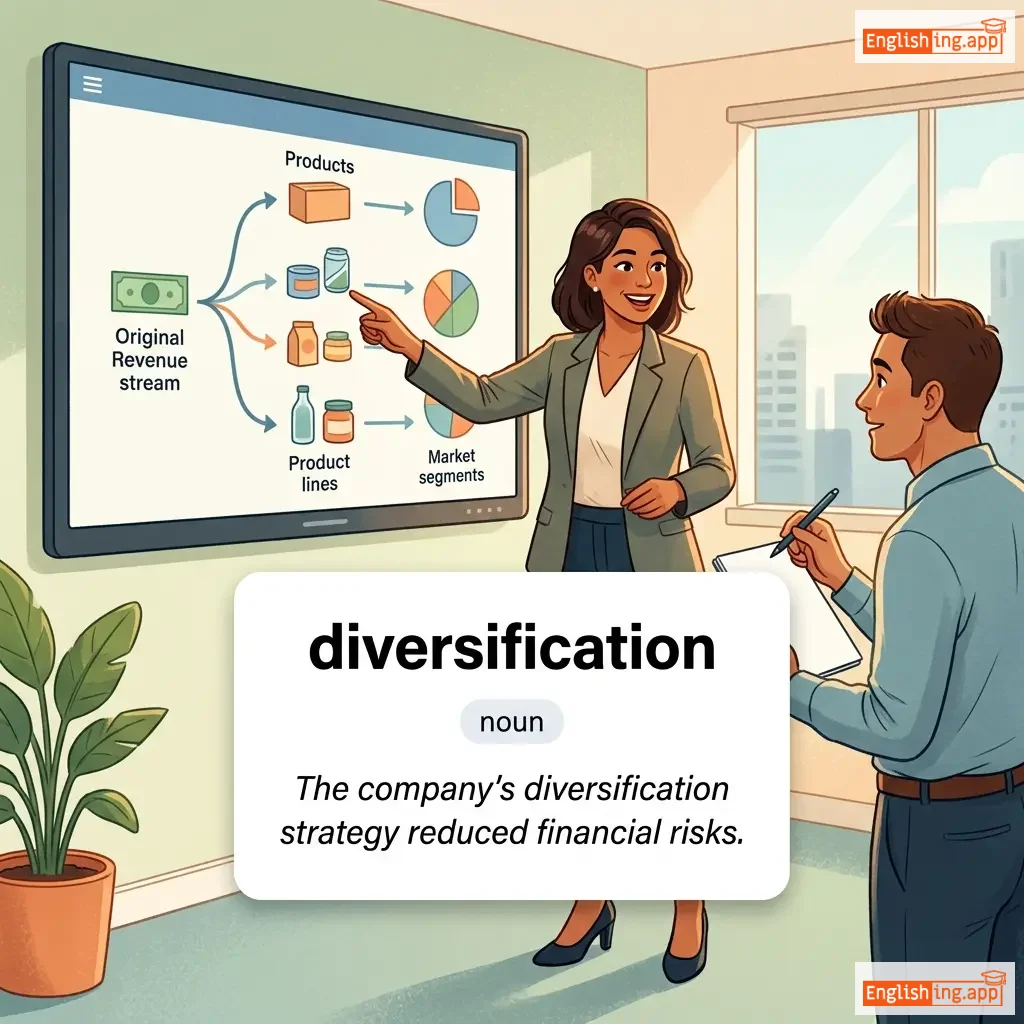
/daɪˌvɜː.sɪ.fɪˈkeɪ.ʃən/
noun
••••••
••••••
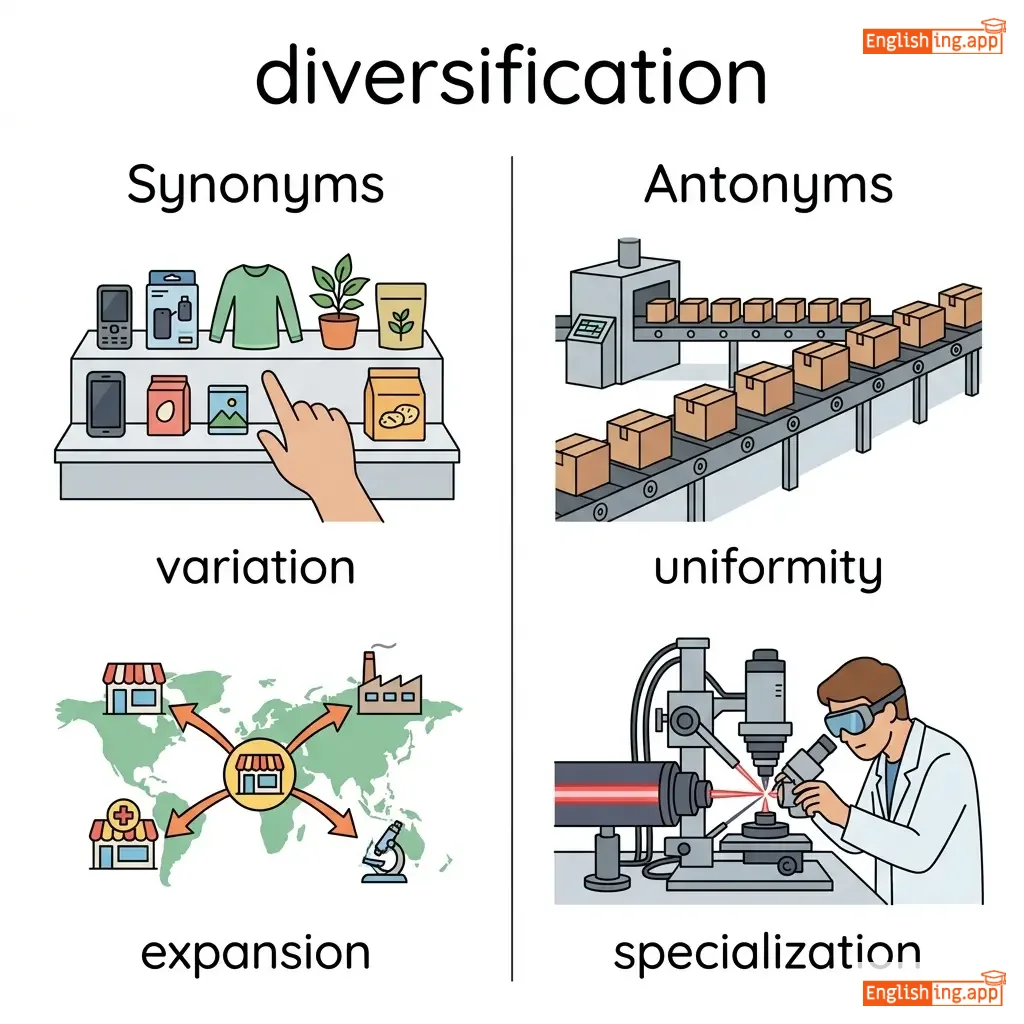
The process of expanding into different areas or markets to reduce risk, involving expansion, variety, and differentiation.
••••••
The company's diversification into new markets increased its revenue.
••••••
expansion, variety, differentiation
••••••
specialization, uniformity, concentration
••••••
••••••
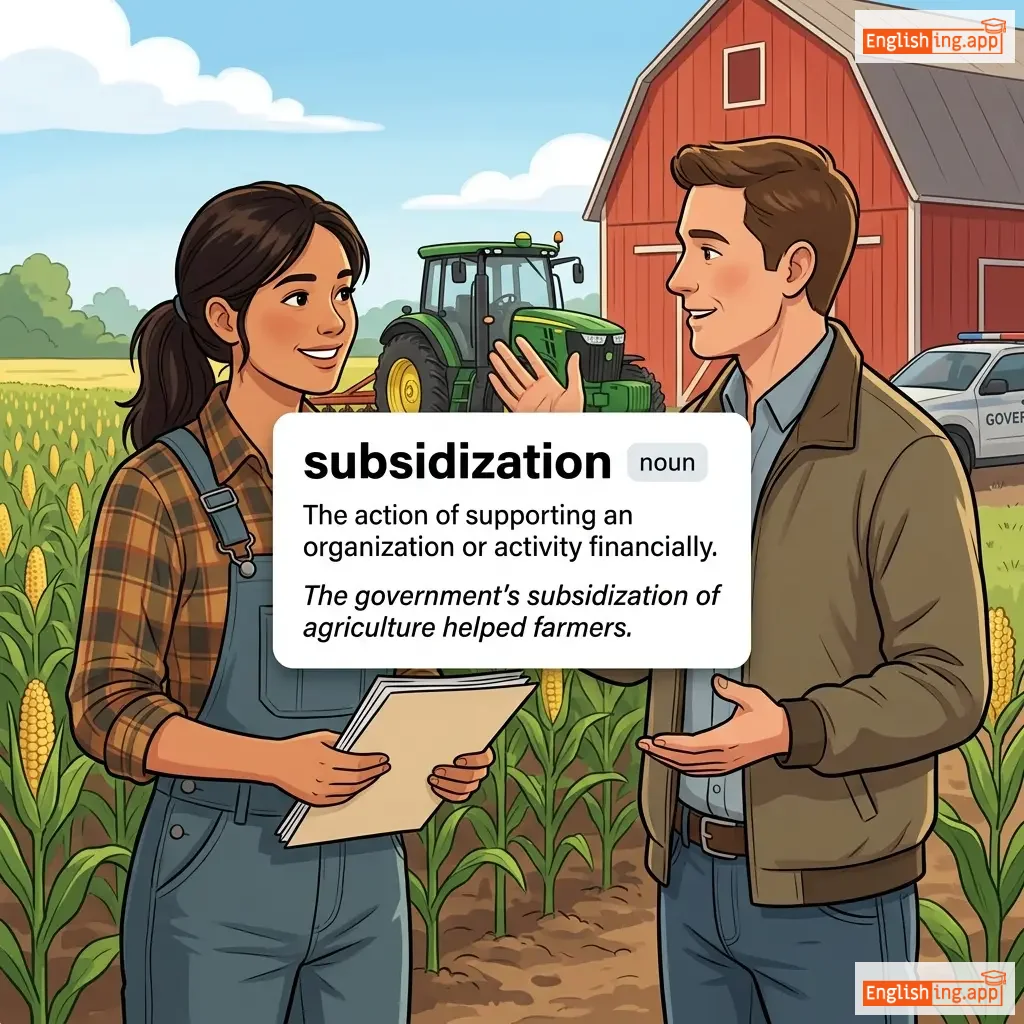
/ˌsʌb.sɪ.dɪˈzeɪ.ʃən/
noun
••••••
••••••
Financial assistance provided by government or organizations, also known as financial aid, grant, or sponsorship.
••••••
The government provided subsidization to support farmers.
••••••
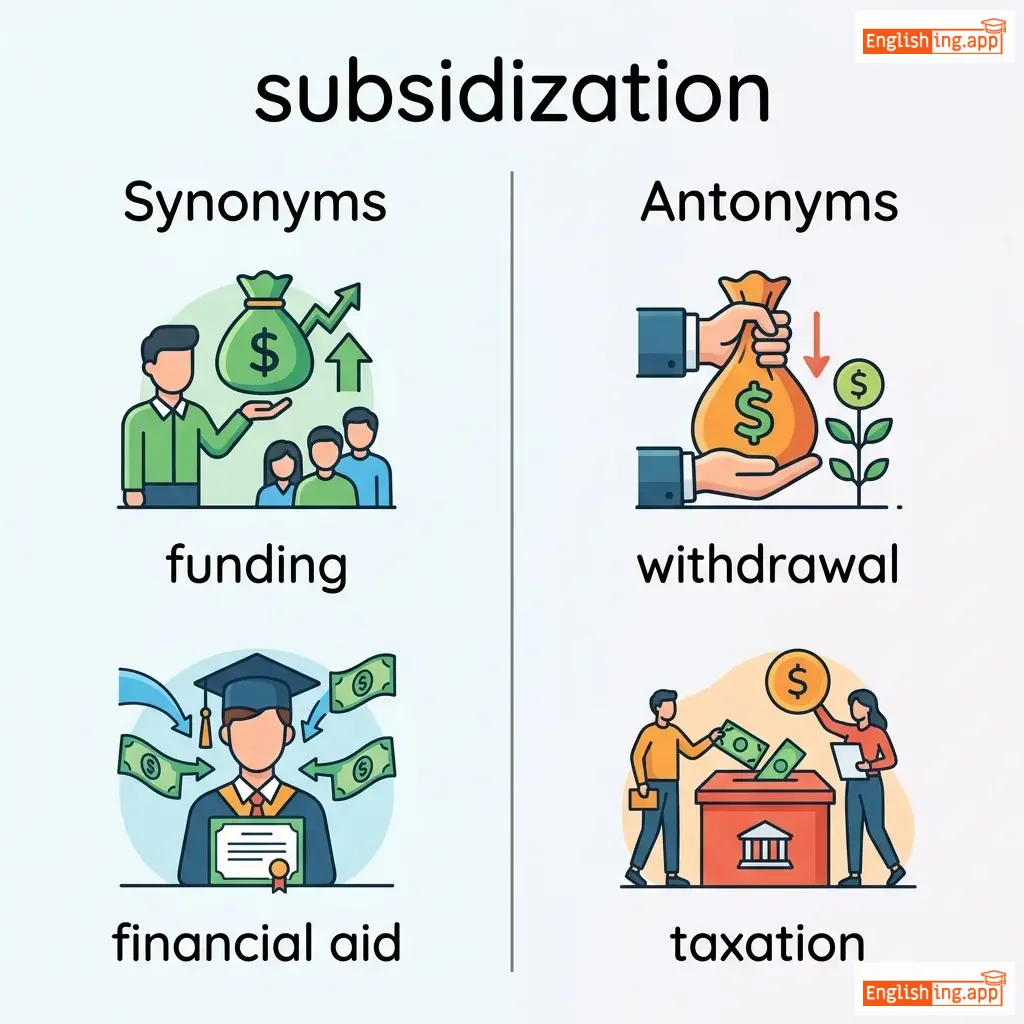
financial aid, grant, sponsorship
••••••
taxation, financial withdrawal, self-sufficiency
••••••
••••••
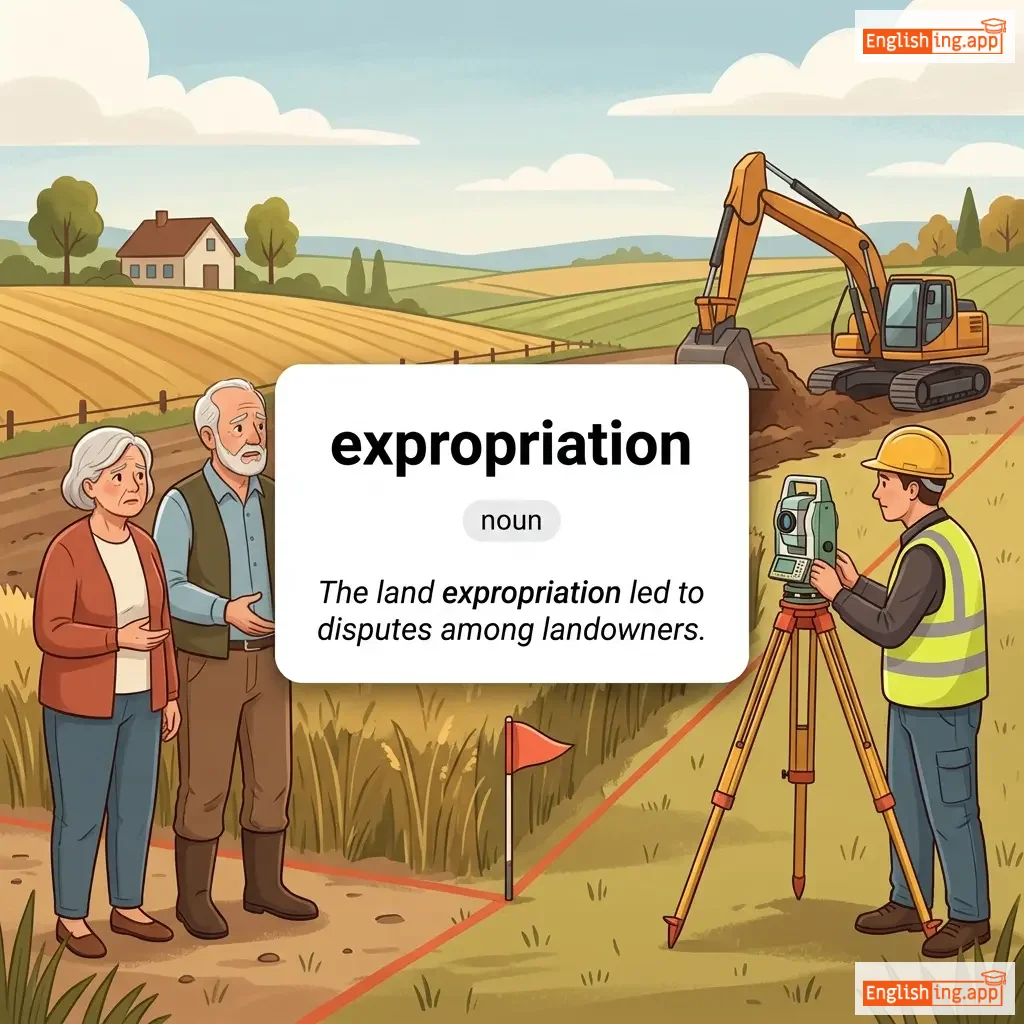
/ɪkˌsprəʊ.priˈeɪ.ʃən/
noun
••••••
••••••
The act of government taking private property, also known as confiscation, nationalization, or seizure.
••••••
The land expropriation led to disputes among landowners.
••••••
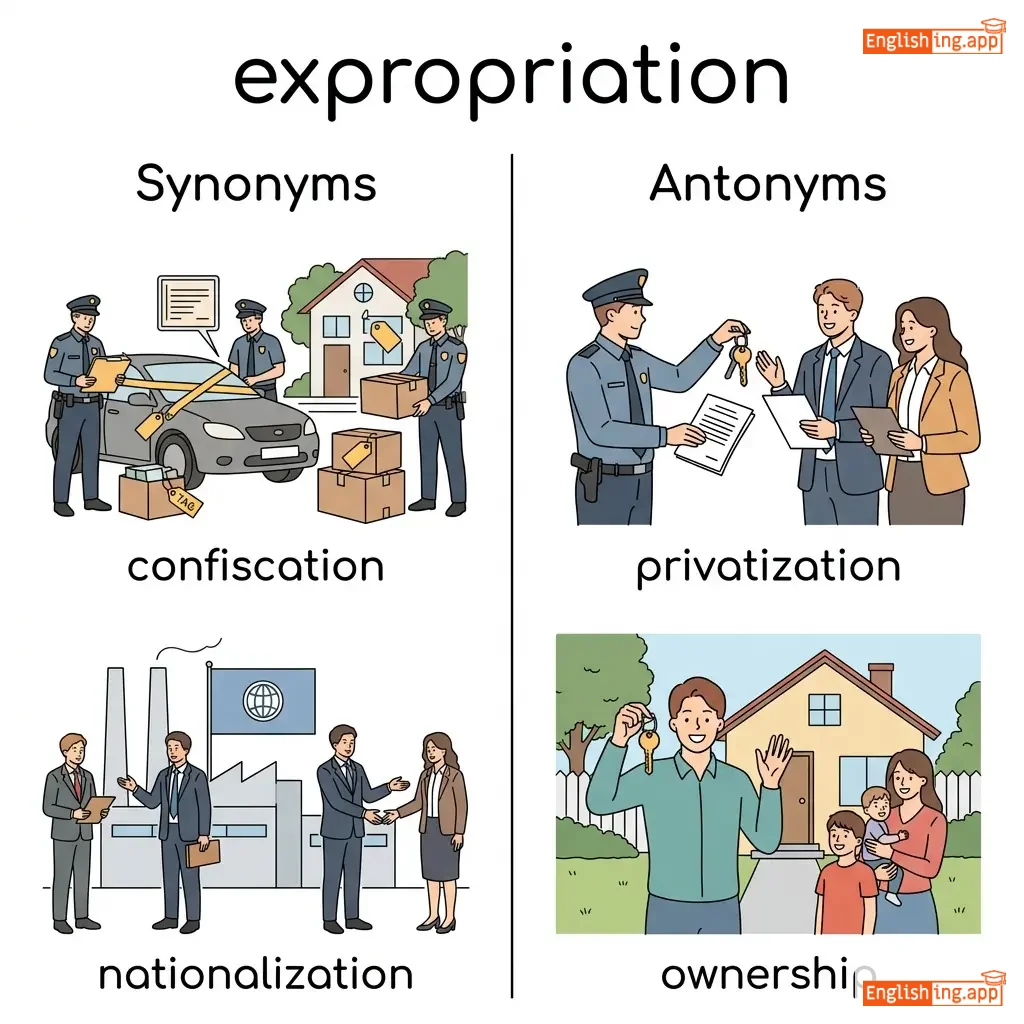
confiscation, nationalization, seizure
••••••
privatization, ownership, reimbursement
••••••
••••••
/ˌiː.kwɪˈlɪb.ri.əm/
noun
••••••
••••••
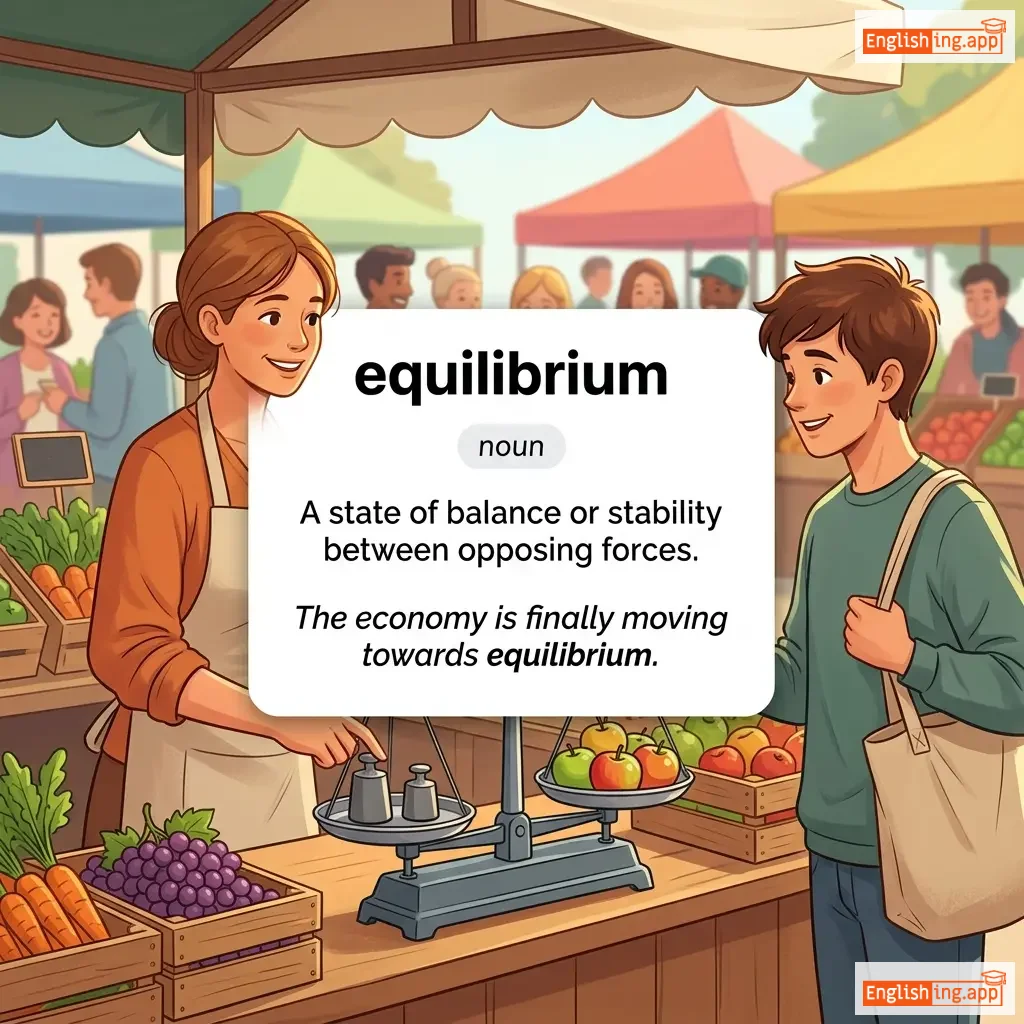
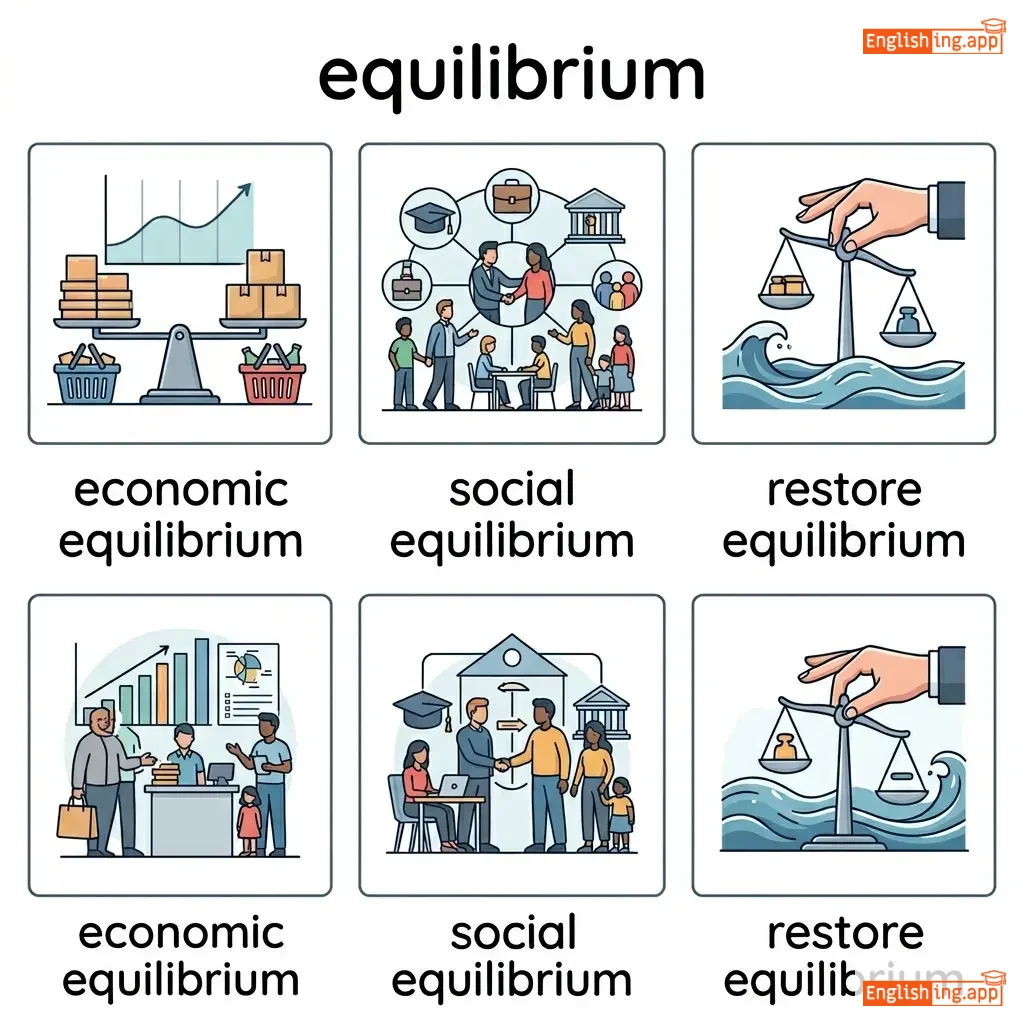
A state of balance, stability, and steadiness between supply and demand or different forces.
••••••
The market reached equilibrium between supply and demand.
••••••
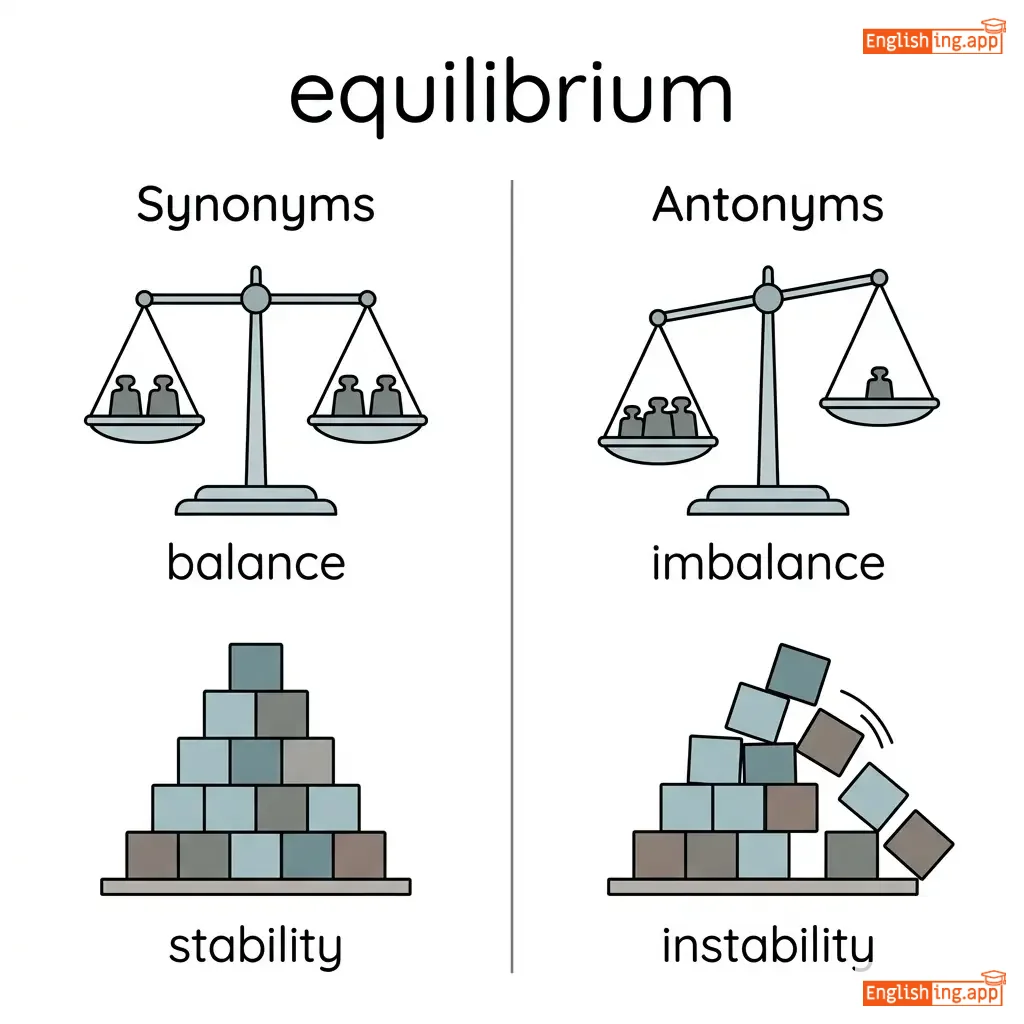
balance, stability, steadiness
••••••
imbalance, instability, disproportion
••••••
••••••
/ɪnˈfleɪ.ʃən.ər.i/
adjective
••••••
••••••
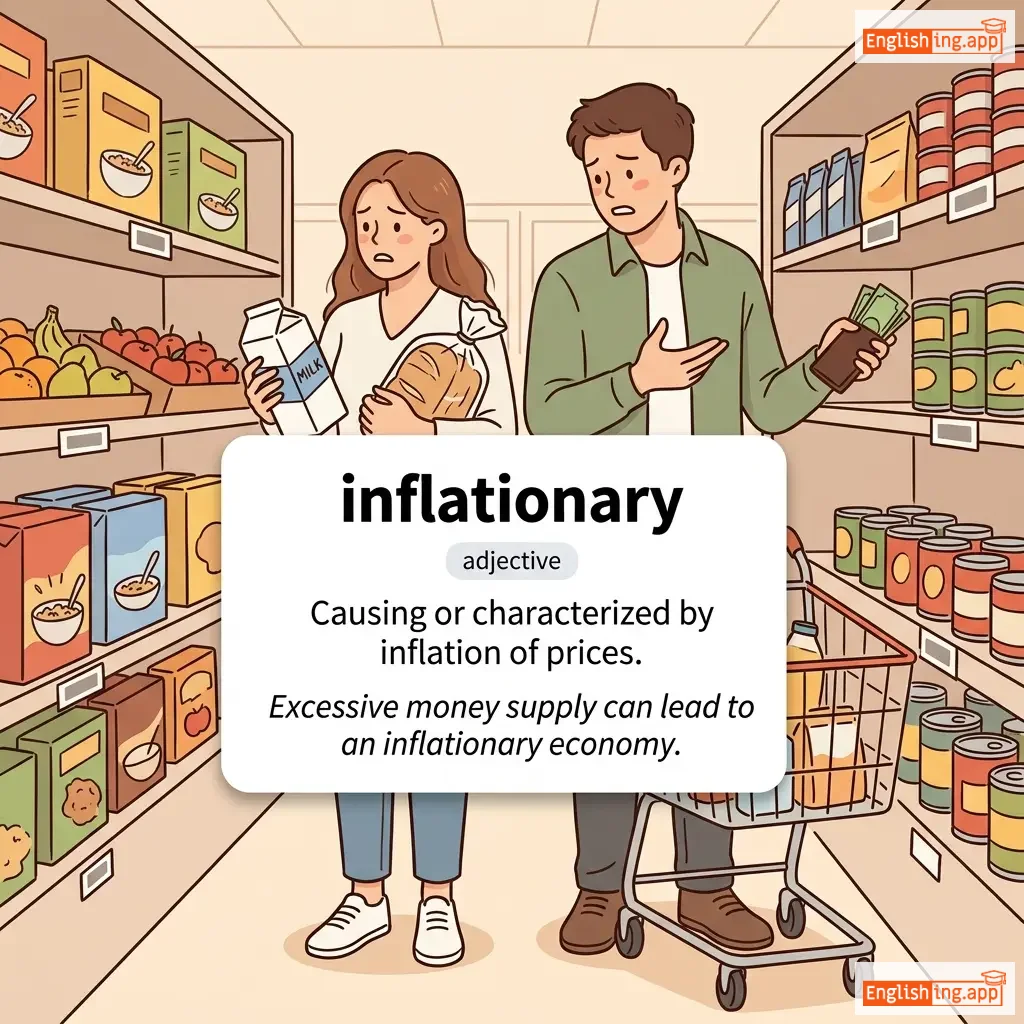
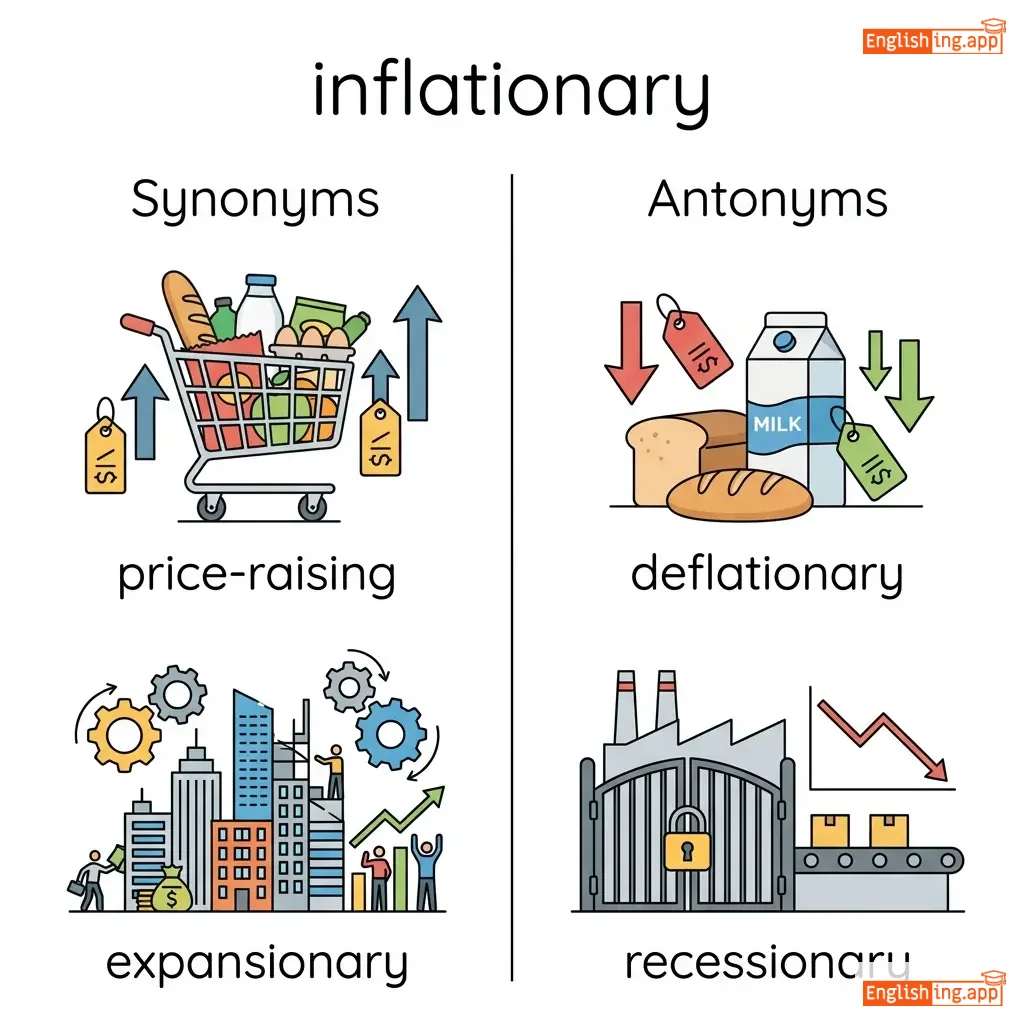
Related to rising prices and decreasing purchasing power of money, characterized as price-rising, cost-increasing, or expansionary.
••••••
The country faced an inflationary crisis due to excessive money printing.
••••••
price-rising, cost-increasing, expansionary
••••••
deflationary, price-reducing, contractionary
••••••
••••••
/ˌmɒn.ɪ.taɪˈzeɪ.ʃən/
noun
••••••
••••••
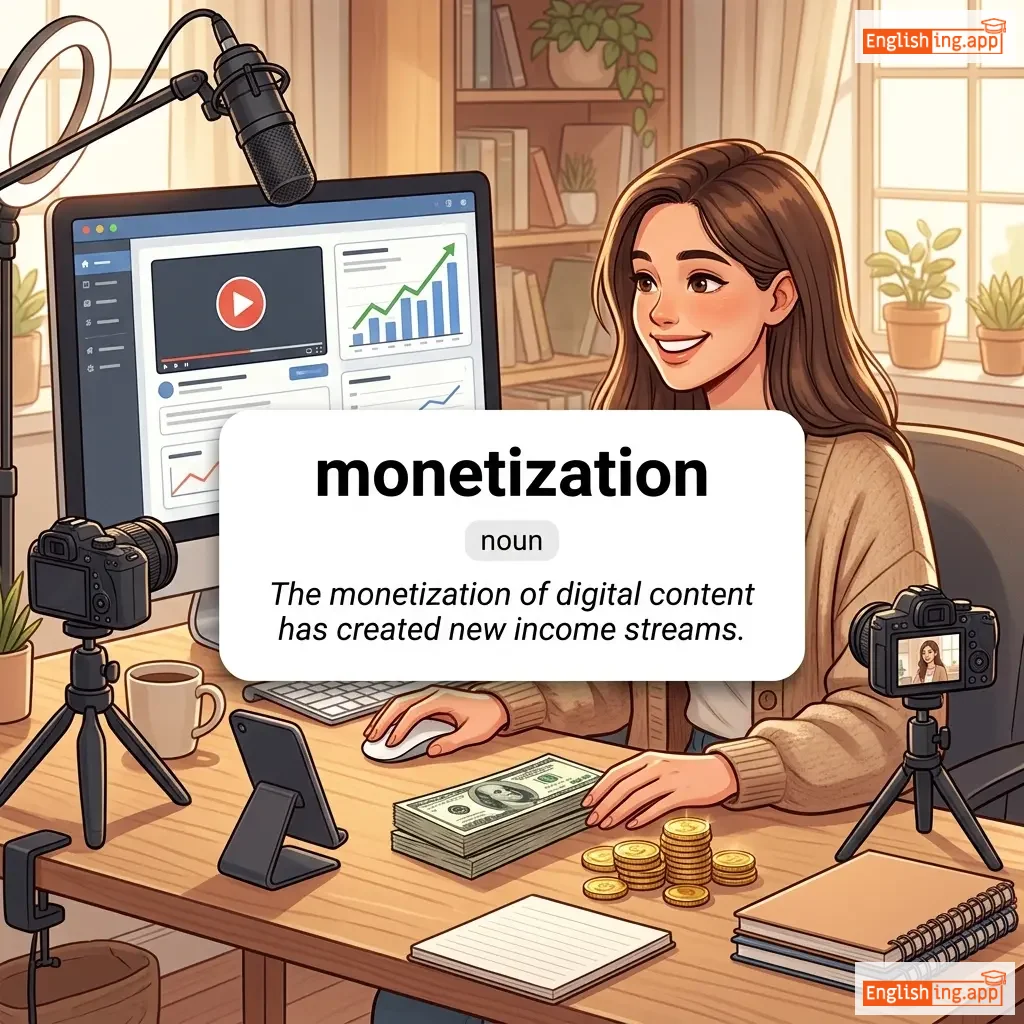
The process of converting assets or services into money, involving commercialization, profit generation, and revenue creation.
••••••
The monetization of digital content has created new income streams.
••••••
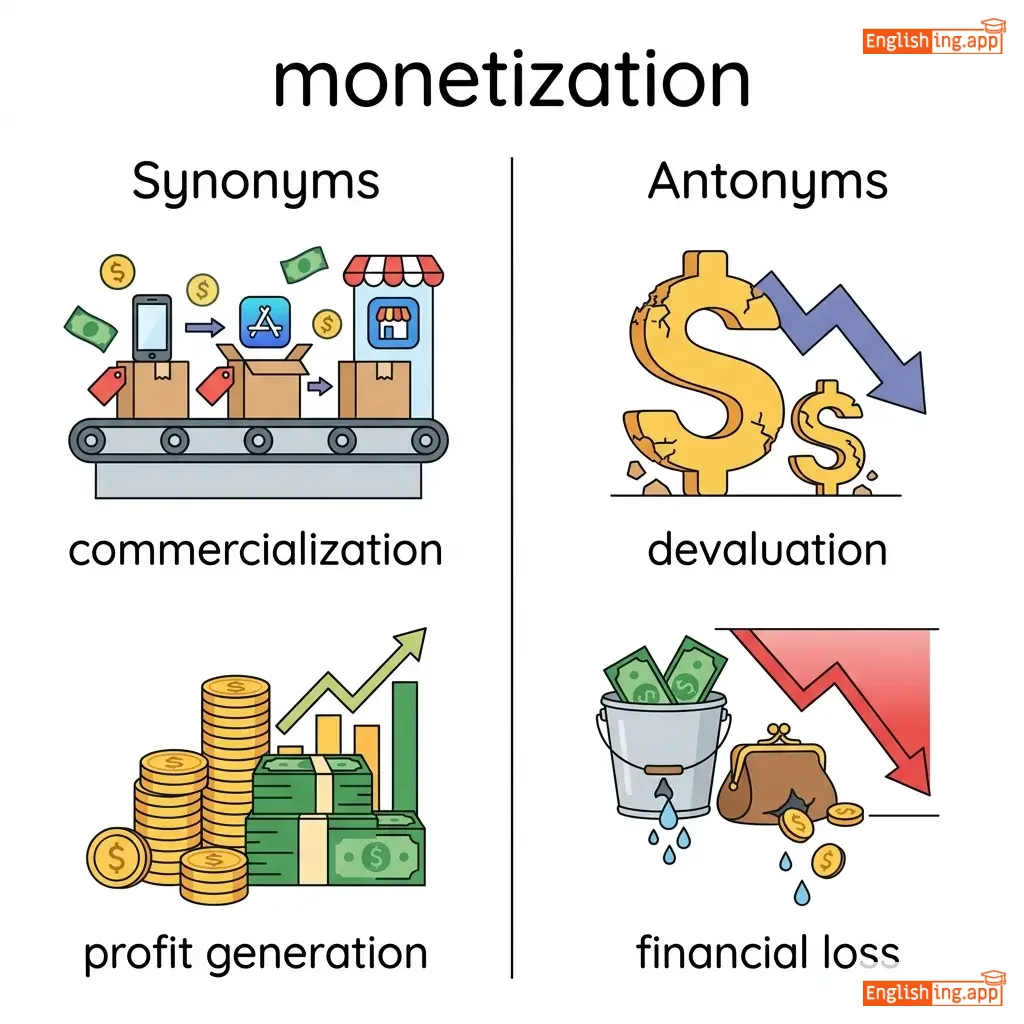
commercialization, profit generation, revenue creation
••••••
devaluation, financial loss, depreciation
••••••