|
表情符号
|
单词 | Images | 翻译 | 过去时 | 过去分词 | 第三人称单数 | 动名词 | 含义 | 例句 | 例句翻译 | 示例表达 | 示例表达含义 | 示例表达翻译 | 同义词 | 反义词 | 搭配词 | 助记符 |
|---|---|---|---|---|---|---|---|---|---|---|---|---|---|---|---|---|---|
|
🏆
••••••
|
/əˈwɔːrd/
noun/verb
(aword)
••••••
|
- •••••• |
奖项
jiangxiang
••••••
|
awarded
aworded
••••••
|
awarded
aworded
••••••
|
awards
awords
••••••
|
awarding
awording
••••••
|
a prize or recognition given for an achievement; to give a prize or recognition
••••••
|
She received an award for her outstanding performance.
她因出色的表现获得了奖项。
••••••
|
她因出色的表现获得了奖项。
Ta yin chusuo de biaoxian huodele jiangxiang.
••••••
|
win an award
赢得奖项
••••••
|
to receive recognition or a prize for an achievement
••••••
|
赢得奖项
Yingde jiangxiang
••••••
|
prize, honor, trophy, recognition, accolade
••••••
|
penalty, punishment
••••••
|
receive an award, present an award, award ceremony, award-winning
••••••
|
Award 意味着 🏆 奖项 — 记住,努力后获得奖项!
••••••
|
|
👀
••••••
|
/əˈwɛər/
adjective
(āwēr)
••••••
|
- •••••• |
意识到
yìshí dào
••••••
|
- •••••• | - •••••• | - •••••• | - •••••• |
having knowledge or perception of a situation or fact
••••••
|
She is aware of the risks involved. |
她意识到其中的风险。
Tā yìshí dào qízhōng de fēngxiǎn.
••••••
|
become aware of |
to realize or gain knowledge about something
••••••
|
意识到
yìshí dào
••••••
|
conscious, informed, mindful, alert, knowledgeable
••••••
|
unaware, ignorant, oblivious
••••••
|
aware of, fully aware, become aware, make aware
••••••
|
Aware意味着意识到👀 — 如果你没有意识到,你可能会犯一个意识到(yìshí dào)错误。
••••••
|
|
💡
••••••
|
/əˈwɛərnəs/
noun
••••••
|
|
- •••••• | - •••••• | - •••••• | - •••••• | - •••••• |
knowledge or perception of a situation, fact, or issue
••••••
|
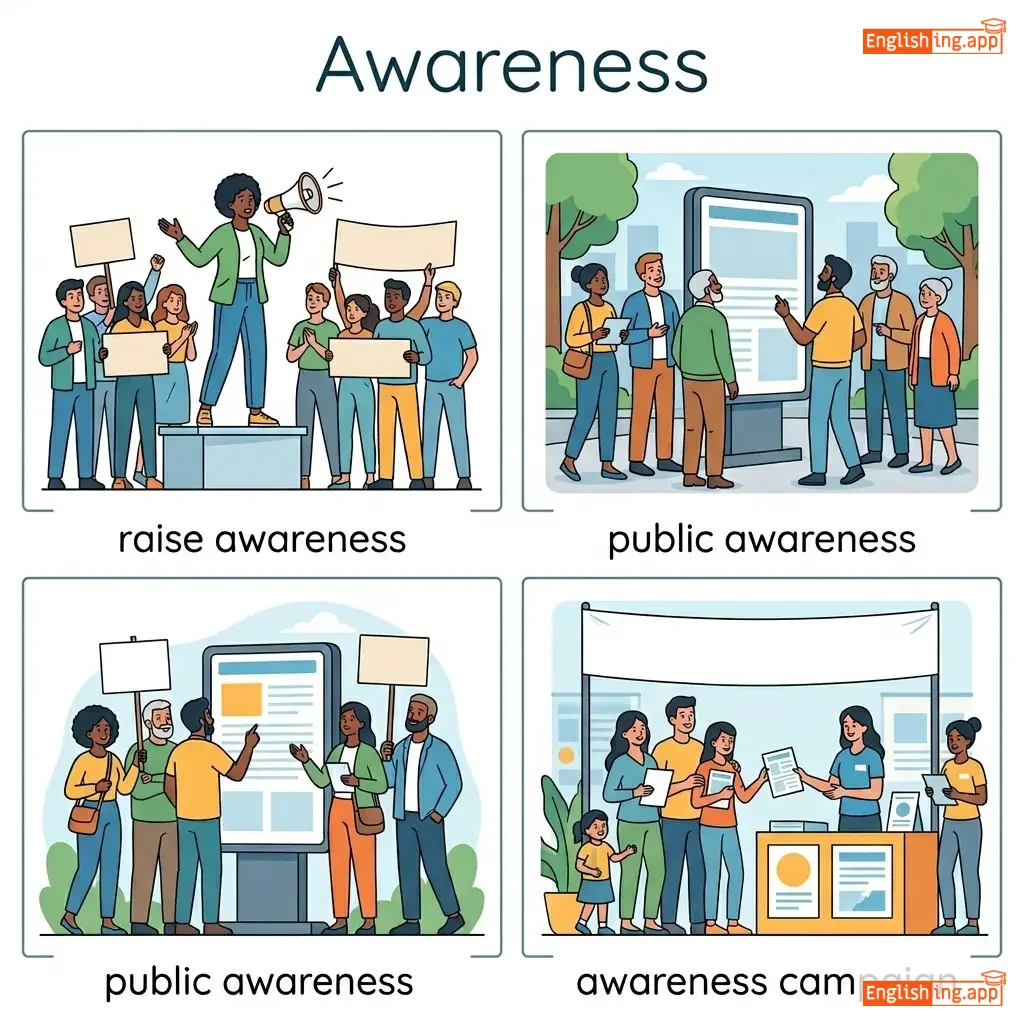
Public awareness of climate change is increasing. |
- •••••• |
raise awareness |
to make people more conscious about an issue
••••••
|
- •••••• |
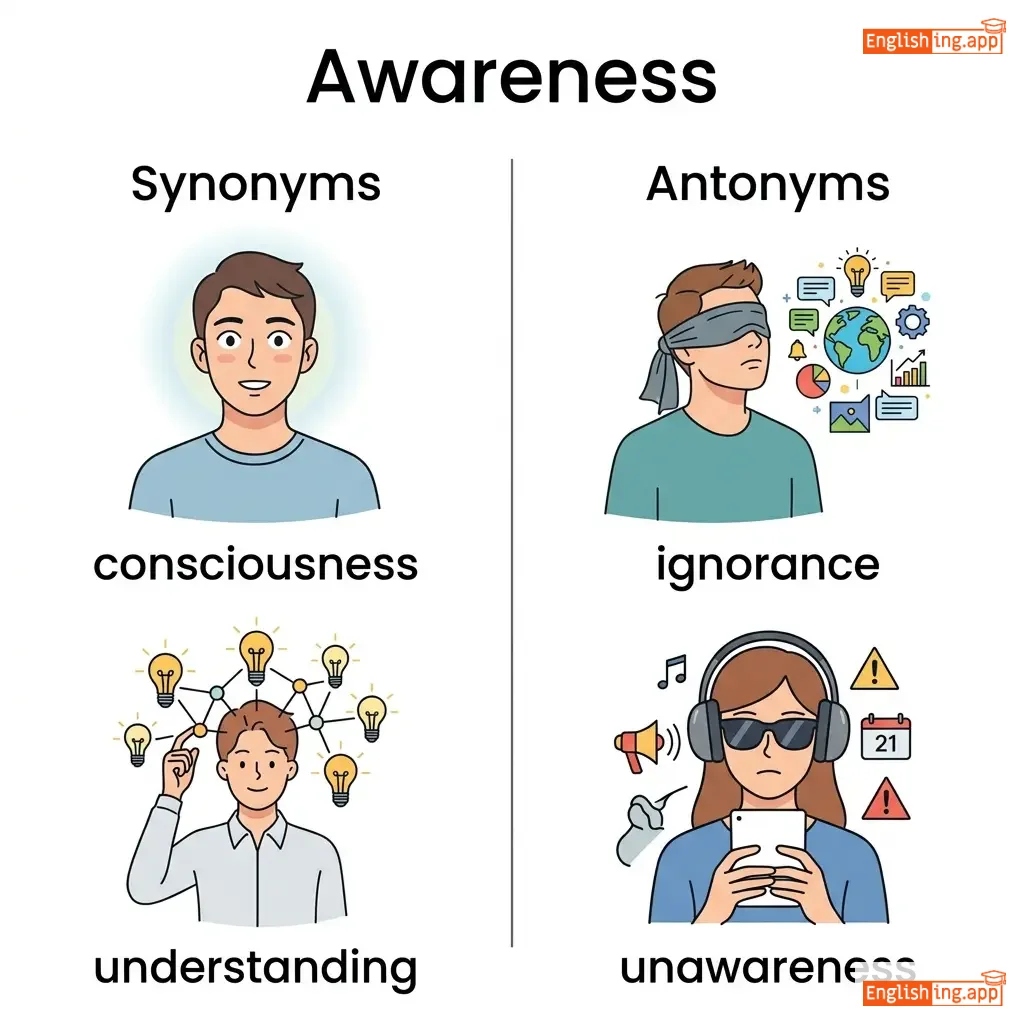
consciousness, understanding, recognition, mindfulness
••••••
|
ignorance, unawareness
••••••
|
raise awareness, public awareness, awareness campaign, awareness level
••••••
|
No •••••• |
|
😲
••••••
|
/ɔː/
noun
(ó)
••••••
|
- •••••• |
惊叹
jingtan
••••••
|
- •••••• | - •••••• | - •••••• | - •••••• |
a feeling of deep respect mixed with fear or wonder
••••••
|
The children looked at the fireworks in awe. |
孩子们惊讶地看着烟花。
Háizimen jīngyà de kànzhe yānhuā.
••••••
|
in awe of |
to admire and respect someone or something deeply
••••••
|
敬畏
jìngwèi
••••••
|
wonder, amazement, admiration, reverence, fear
••••••
|
disdain, contempt, indifference
••••••
|
filled with awe, in awe of, awe inspiring, hold in awe
••••••
|
AWE = 震惊世界
••••••
|
|
😖
••••••
|
/ˈɔːfəli/
adverb
(奥弗利)
••••••
|
- •••••• |
非常
feichang
••••••
|
- •••••• | - •••••• | - •••••• | - •••••• |
in a very great degree; extremely; in a way that is very bad or unpleasant
••••••
|
I am awfully glad to see you again.
艾 爱姆 奥弗利 格莱德 图 西 优 阿盖因
••••••
|
再次见到你我非常高兴。
zaici jiandao ni wo feichang gaoxing
••••••
|
awfully sorry
奥弗利 索瑞
••••••
|
very sorry; expressing strong regret
••••••
|
非常抱歉
feichang baoqian
••••••
|
extremely, very, terribly, exceedingly, highly
••••••
|
slightly, mildly, barely
••••••
|
awfully nice, awfully sorry, awfully kind, awfully cold
••••••
|
Awfully = 非常—程度拉满
••••••
|
|
😅
••••••
|
/ˈɔːkwəd/
adjective
(啊克沃德)
••••••
|
- •••••• |
尴尬
gāngà
••••••
|
- •••••• | - •••••• | - •••••• | - •••••• |
causing or feeling embarrassment; difficult to deal with
••••••
|
There was an awkward silence after his joke. |
他的笑话之后,出现了尴尬的沉默。
Tā de xiàohuà zhīhòu, chūxiànle gāngà de chénmò.
••••••
|
socially awkward |
not comfortable or skilled in social situations
••••••
|
社交尴尬
shèjiāo gāngà
••••••
|
clumsy, uncomfortable, embarrassing, uneasy, ungainly
••••••
|
graceful, comfortable, elegant
••••••
|
awkward silence, awkward moment, awkward situation, socially awkward
••••••
|
尴尬的时刻让你想要隐藏自己!
••••••
|
|
🗣️
••••••
|
/ˈbæbəl/
verb
••••••
|
|
- •••••• |
babbled
••••••
|
babbled
••••••
|
babbles
••••••
|
babbling
••••••
|
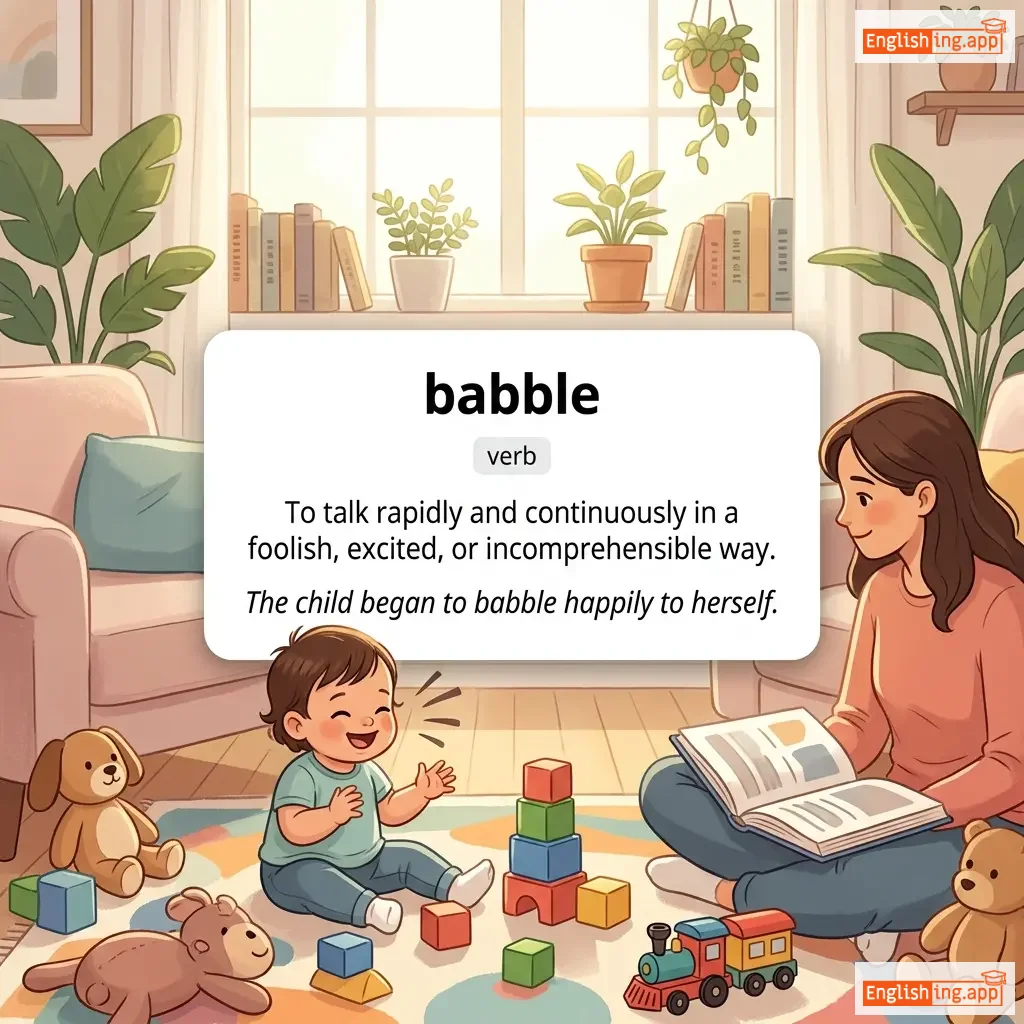
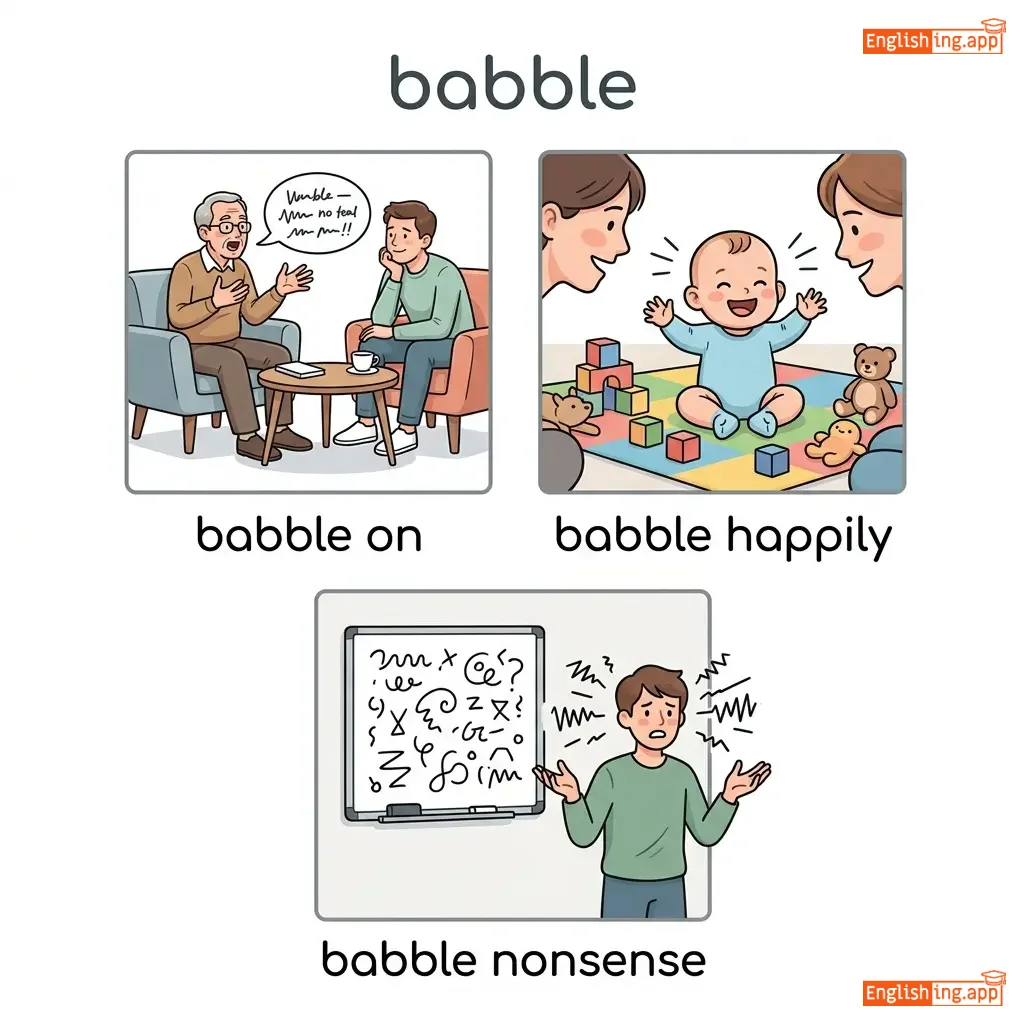
To talk rapidly and continuously in a foolish, excited, or incomprehensible way.
••••••
|
The child began to babble happily to herself. |
- •••••• |
babble on |
To keep talking continuously in a foolish or meaningless way.
••••••
|
- •••••• |
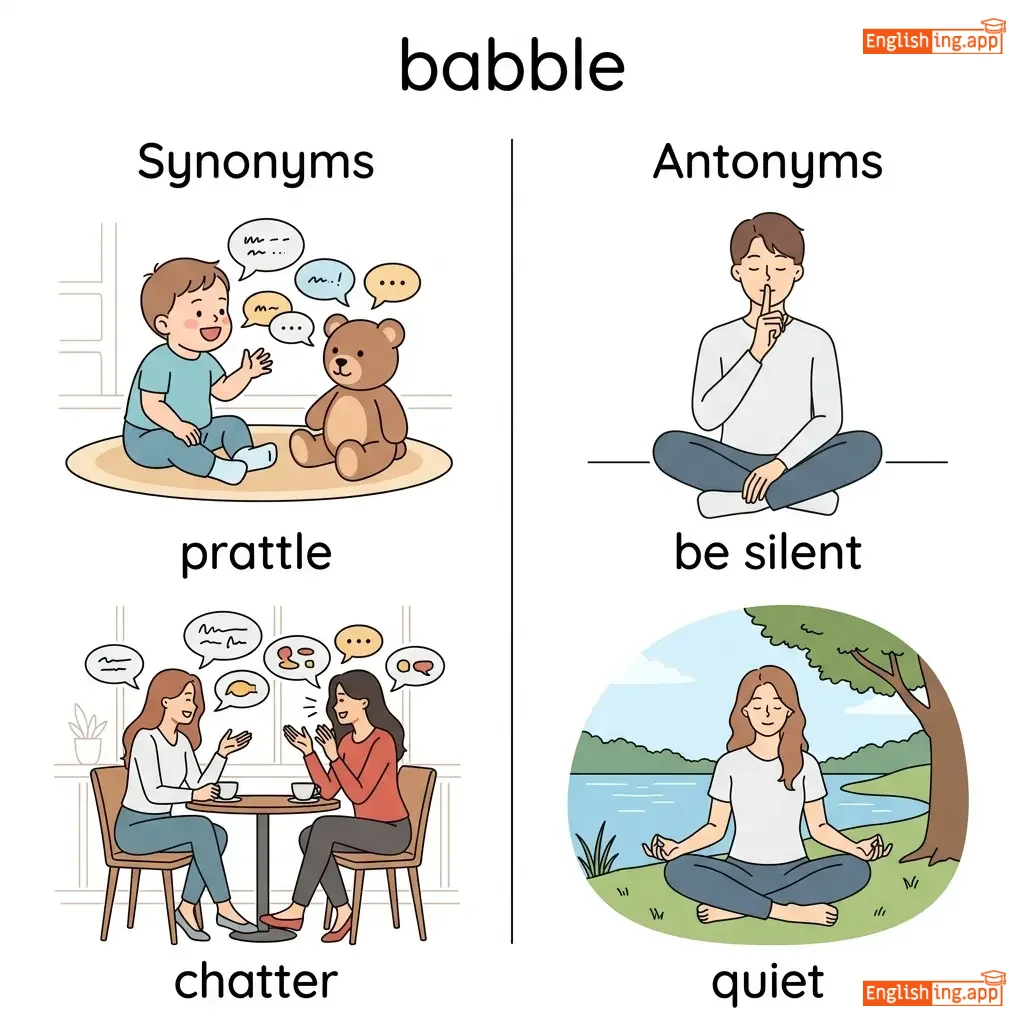
prattle, chatter, ramble, gibber
••••••
|
be silent, quiet
••••••
|
babble on, babble happily, babble nonsense, constant babble
••••••
|
No •••••• |
|
👶
••••••
|
/ˈbeɪbi/
noun
(贝比)
••••••
|
- •••••• |
婴儿
ying er
••••••
|
- •••••• | - •••••• | - •••••• | - •••••• |
a very young child, especially one newly or recently born
••••••
|
The baby is sleeping peacefully in the crib. |
婴儿正在婴儿床上安静地睡觉。
ying er zheng zai ying er chuang shang an jing di shui jiao.
••••••
|
cry like a baby |
to cry loudly and uncontrollably
••••••
|
像婴儿一样哭
xiang ying er yi yang ku
••••••
|
infant, child, newborn, toddler
••••••
|
adult, grown-up
••••••
|
baby boy, baby girl, baby food, baby care
••••••
|
Baby 👶 是婴儿,中文就是最小的存在,记得宝宝像小天使一样可爱!
••••••
|
|
🔙
••••••
|
/bæk/
noun/verb/adverb/adjective
(bèi kè)
••••••
|
- •••••• |
背部 / 返回
bèi bù / fǎn huí
••••••
|
backed
bèi kè dé
••••••
|
backed
bèi kè dé
••••••
|
backs
bèi kè sī
••••••
|
backing
bèi kè yīng
••••••
|
the rear surface of the human body; to support; to return to a place
••••••
|
He turned back to help his friend.
他回头去帮助他的朋友。
••••••
|
他回头去帮助他的朋友。
Tā huítóu qù bāngzhù tā de péngyǒu.
••••••
|
back and forth
来回
••••••
|
moving repeatedly in one direction and then the opposite
••••••
|
来回
lái huí
••••••
|
rear, behind, support, return
••••••
|
front, oppose
••••••
|
back pain, back home, back up, back support
••••••
|
Back意味着后面,走回去就是回到背部。
••••••
|
|
💾
••••••
|
/bæk ʌp/
phrasal verb
(拜克 阿普)
••••••
|
- •••••• |
支持;备份;后退
zhichi; beifen; houtui
••••••
|
backed up
拜克德 阿普
••••••
|
backed up
拜克德 阿普
••••••
|
backs up
拜克斯 阿普
••••••
|
backing up
拜克英 阿普
••••••
|
to support or help someone; to make a copy of data for safety; to move backward
••••••
|
Please back up your files before updating the system.
普利兹 拜克 阿普 尤尔 文件 比福 更新 系统
••••••
|
在更新系统之前,请备份你的文件。
Zai gengxin xitong zhiqian, qing beifen ni de wenjian
••••••
|
back someone up
拜克 某人 阿普
••••••
|
to support someone when they need help
••••••
|
支持某人
zhichi mouren
••••••
|
support, copy, assist, reinforce, duplicate
••••••
|
oppose, delete, advance
••••••
|
back up data, back up files, back up a claim, back up someone
••••••
|
Back up 就是 备份,不怕丢!
••••••
|
|
🗣️
••••••
|
/ˈbækbaɪt/
verb
(巴克拜特)
••••••
|
- •••••• |
背后说坏话
beihou shuo huaihua
••••••
|
backbit
巴克比特
••••••
|
backbitten
巴克比滕
••••••
|
backbites
巴克拜特斯
••••••
|
backbiting
巴克拜廷
••••••
|
to speak negatively about someone who is not present; to slander behind someone’s back
••••••
|
It is wrong to backbite your colleagues behind their backs.
It is wrong to backbite your colleagues behind their backs.
••••••
|
在背后说同事的坏话是不对的。
zai beihou shuo tongshi de huaihua shi bu duide
••••••
|
- •••••• | - •••••• | - •••••• |
slander, gossip, defame, malign, badmouth
••••••
|
praise, compliment, commend
••••••
|
backbite someone, backbite colleagues, backbite behind someone’s back
••••••
|
backbite = 背后 + 说坏话
••••••
|
|
🎭
••••••
|
/ˈbækdrɒp/
noun
(背景)
••••••
|
- •••••• |
背景
beijing
••••••
|
- •••••• | - •••••• | - •••••• | - •••••• |
a painted cloth or other structure used behind a stage
••••••
|
The backdrop for the play was a beautiful mountain scene. |
戏剧的背景是一幅美丽的山景。
Xìjù de bèijǐng shì yī fú měilì de shānjǐng.
••••••
|
- •••••• | - •••••• | - •••••• |
background, scenery, setting
••••••
|
foreground, front
••••••
|
stage backdrop, scenic backdrop, film backdrop
••••••
|
Backdrop - 'Back' 意味着后面,'Drop' 意味着落下,是舞台上的背景。
••••••
|
|
🌄
••••••
|
/ˈbækɡraʊnd/
noun
(bàikèróngdū)
••••••
|
- •••••• |
背景
beijǐng
••••••
|
- •••••• | - •••••• | - •••••• | - •••••• |
the circumstances, environment, or past history of a person or thing; the part behind the main subject in an image
••••••
|
She comes from a strong academic background.
她来自一个强大的学术背景。
••••••
|
她来自一个强大的学术背景。
Tā láizì yīgè qiángdà de xuéshù bèijǐng.
••••••
|
in the background
在背景中
••••••
|
happening without attracting much attention
••••••
|
在背景中
zài bèijǐng zhōng
••••••
|
history, context, setting, backdrop, environment
••••••
|
foreground, spotlight
••••••
|
family background, cultural background, background noise, background information
••••••
|
Background 🏞️ 就是背景 — 就像图片中,背景在主要对象的后面 (beijǐng)。
••••••
|
|
🔙
••••••
|
/ˈbækwərdz/
adverb
(bǎk wǎrds)
••••••
|
- •••••• |
向后
xiang hou
••••••
|
- •••••• | - •••••• | - •••••• | - •••••• |
Toward the back or in the reverse direction.
••••••
|
He accidentally fell backwards into the chair. |
他不小心倒退到椅子里。
Ta bu xiaoxin daotui dao yizi li.
••••••
|
bend over backwards |
To make a great effort to help or please someone.
••••••
|
付出极大努力
fuchu jida nuli
••••••
|
in reverse, rearward, back, behind
••••••
|
forwards, ahead, onward
••••••
|
walk backwards, fall backwards, look backwards
••••••
|
Backwards意味着向后 — Back就是向后。
••••••
|
|
👎
••••••
|
/bæd/
adjective
(bād)
••••••
|
- •••••• |
坏
huai
••••••
|
- •••••• | - •••••• | - •••••• | - •••••• |
not good; unpleasant, harmful, or of poor quality
••••••
|
The milk smells bad, so don’t drink it.
牛奶闻起来很糟,所以不要喝。
••••••
|
牛奶闻起来很糟,所以不要喝。
Niunai wen qilai hen zao, suoyi bu yao he.
••••••
|
bad blood
坏血
••••••
|
ill feeling or hostility between people
••••••
|
坏血
huai xue
••••••
|
awful, terrible, poor, unpleasant, harmful
••••••
|
good, excellent, pleasant
••••••
|
bad habit, bad luck, bad idea, bad weather
••••••
|
Bad意味着坏,Bad boy意味着坏男孩。
••••••
|
|
🎖️
••••••
|
/bædʒ/
noun
(徽章)
••••••
|
- •••••• |
徽章
huīzhāng
••••••
|
- •••••• | - •••••• | - •••••• | - •••••• |
A small emblem or sign worn to show membership, authority, or achievement.
••••••
|
The police officer showed his badge to identify himself.
警察展示了他的徽章来证明自己的身份。
••••••
|
警察展示了他的徽章来证明自己的身份。
Jǐngchá zhǎnshìle tā de huīzhāng lái zhèngmíng zìjǐ de shēnfèn.
••••••
|
badge of honor
荣誉徽章
••••••
|
Something that shows pride or achievement, even if it comes from difficulty.
••••••
|
荣誉徽章
Róngyù huīzhāng
••••••
|
emblem, insignia, symbol, token, mark
••••••
|
disguise, concealment
••••••
|
wear a badge, police badge, company badge, badge of honor
••••••
|
徽章是身份和荣誉的象征。
••••••
|
|
🙉
••••••
|
/ˈbædʒər/
verb
(巴杰)
••••••
|
- •••••• |
烦扰, 打扰
fánrǎo, dǎrǎo
••••••
|
badgered
巴杰德
••••••
|
badgered
巴杰德
••••••
|
badgers
巴杰斯
••••••
|
badgering
巴杰灵
••••••
|
To repeatedly ask or annoy someone with demands or questions.
••••••
|
The reporter kept badgering the politician with questions.
记者不断用问题打扰政治人物。
••••••
|
记者不断用问题打扰政治人物。
Jìzhě bùduàn yòng wèntí dǎrǎo zhèngzhì rénwù.
••••••
|
- •••••• | - •••••• | - •••••• |
pester, nag, harass, bother, hound
••••••
|
leave, ignore, appease
••••••
|
badger someone, constantly badger, badger with questions
••••••
|
Badger的意思是烦扰,就像动物巴杰不断打扰。
••••••
|
|
😞
••••••
|
/ˈbædli/
adverb
(bǎidì)
••••••
|
- •••••• |
糟糕
zaogao
••••••
|
- •••••• | - •••••• | - •••••• | - •••••• |
in a way that is not good; poorly or severely
••••••
|
He performed badly in the exam.
他在考试中表现得很差。
••••••
|
他在考试中表现得很差。
Ta zai kao shi zhong biao xian de hen cha.
••••••
|
badly off
处于困境
••••••
|
to be in a poor or difficult situation
••••••
|
处于困境
chu yu kunjing
••••••
|
poorly, severely, inadequately, wrongly, defectively
••••••
|
well, successfully, adequately
••••••
|
badly hurt, badly damaged, badly need, badly affected
••••••
|
Badly 代表糟糕, 就像考试表现不好说 'badly done'。
••••••
|
|
😕
••••••
|
/ˈbæfəl/
verb
(贝弗尔)
••••••
|
|
使困惑
shǐ kùnhuò
••••••
|
baffled
贝弗尔德
••••••
|
baffled
贝弗尔德
••••••
|
baffles
贝弗尔斯
••••••
|
baffling
贝弗林
••••••
|
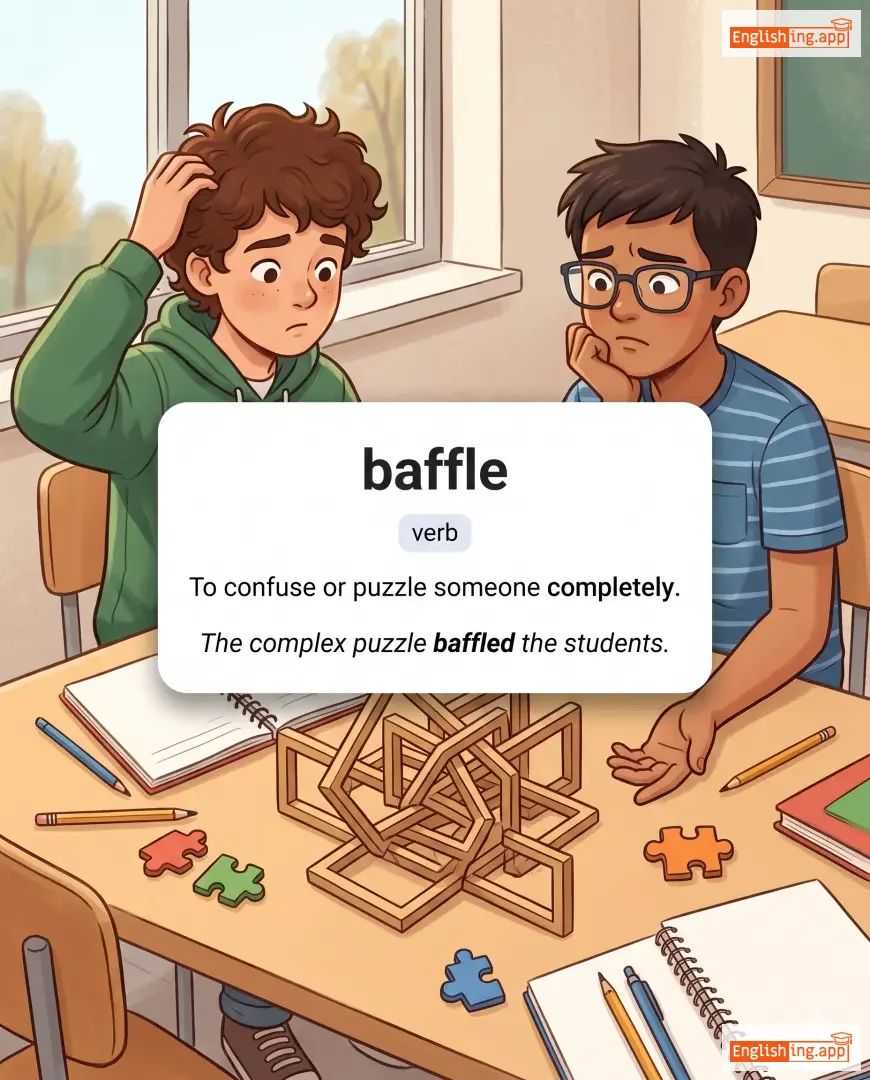
To confuse or puzzle someone completely.
••••••
|
The complex puzzle baffled the students.
复杂的难题让学生们困惑不已。
••••••
|
复杂的难题让学生们困惑不已。
Fùzá de nántí ràng xuéshēngmen kùnhuò bù yǐ.
••••••
|
mind-baffling
令人困惑的
••••••
|
Extremely confusing or surprising.
••••••
|
极度困惑
jídù kùnhuò
••••••
|
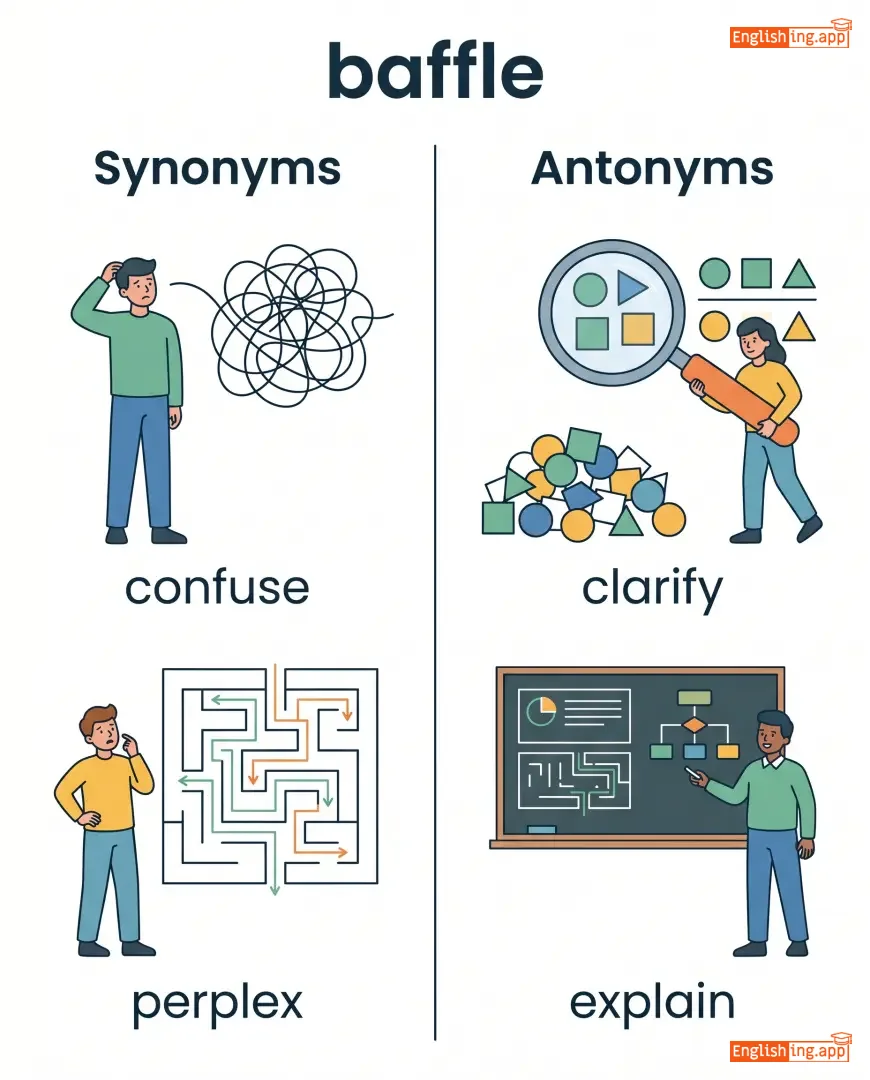
confuse, perplex, puzzle, bewilder, mystify
••••••
|
clarify, explain, enlighten
••••••
|
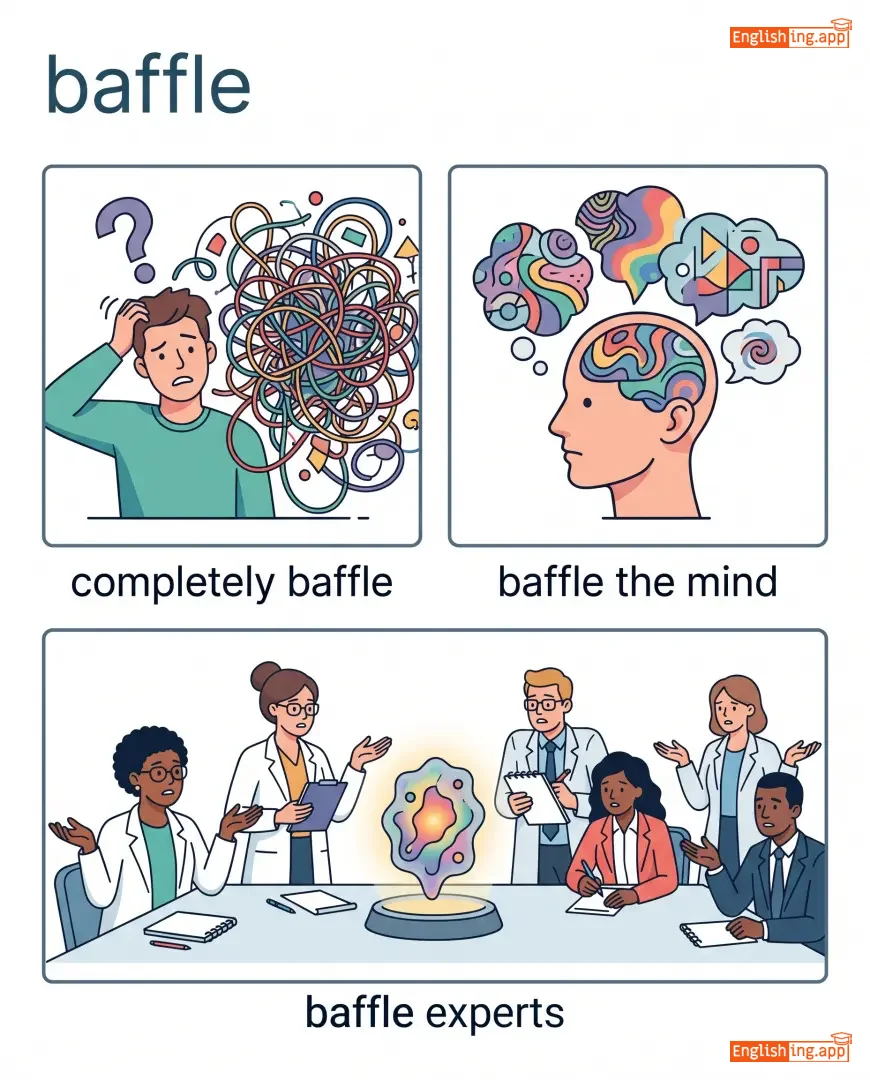
completely baffle, baffle the mind, baffle experts, baffling problem
••••••
|
Baffle意味着困惑 — 大脑完全混乱。
••••••
|
|
👜
••••••
|
/bæɡ/
noun
(包)
••••••
|
- •••••• |
包
bao
••••••
|
- •••••• | - •••••• | - •••••• | - •••••• |
a container made of flexible material, used for carrying items
••••••
|
She carried her books in a bag.
她把书放在包里。
••••••
|
她把书放在包里。
Ta ba shu fang zai bao li.
••••••
|
let the cat out of the bag
把猫放出袋子
••••••
|
to reveal a secret
••••••
|
揭露秘密
jielu mimi
••••••
|
sack, pouch, backpack, handbag, tote
••••••
|
box, case
••••••
|
plastic bag, shopping bag, school bag, travel bag
••••••
|
包, 就像 '包书'。
••••••
|
|
🧳
••••••
|
/ˈbæɡɪdʒ/
noun
(行李)
••••••
|
- •••••• |
行李; 个人物品;
xínglǐ; gèrén wùpǐn;
••••••
|
- •••••• | - •••••• | - •••••• | - •••••• |
suitcases and bags containing personal belongings; past experiences or problems that affect behavior
••••••
|
Please collect your baggage from the conveyor belt at the airport.
请从机场的传送带上取回您的行李。
••••••
|
请从机场的传送带上取回您的行李。
Qǐng cóng jīchǎng de chuánsòngdài shàng qǔ huí nín de xínglǐ.
••••••
|
- •••••• | - •••••• | - •••••• |
luggage, belongings, suitcases
••••••
|
emptiness, freedom
••••••
|
check baggage, carry-on baggage, excess baggage
••••••
|
行李 (xínglǐ) = 行 (xíng) + 物 (wù) = 旅行
••••••
|
|
⚖️
••••••
|
/beɪl/
noun
(贝尔)
••••••
|
- •••••• |
保释
baoshi
••••••
|
- •••••• | - •••••• | - •••••• | - •••••• |
the temporary release of an accused person awaiting trial, often with a financial guarantee
••••••
|
He was granted bail after his arrest. |
他在被捕后获得了保释。
Ta zai beibu hou huodele baoshi.
••••••
|
jump bail |
to escape from jail after being granted bail
••••••
|
跳保释
Tiao baoshi
••••••
|
surety, bond, release
••••••
|
imprisonment, detention
••••••
|
grant bail, post bail, bail bond
••••••
|
Baoshi - 'Bao' means 'Bond', 'shi' means 'Release', baoshi to get released with bond!
••••••
|
|
📦
••••••
|
/ˌbeɪˈliː/
noun
(贝利)
••••••
|
- •••••• |
受托人
shoutuoren
••••••
|
- •••••• | - •••••• | - •••••• | - •••••• |
a person or party who temporarily receives possession of goods or property from another under a legal agreement
••••••
|
The bailee must take reasonable care of the goods while they are in his possession.
贝利必须妥善保管物品。
••••••
|
受托人必须合理地保管财产。
shoutuoren bixu heli di baoguan caichan
••••••
|
- •••••• | - •••••• | - •••••• |
custodian, trustee, holder, keeper
••••••
|
bailor, owner
••••••
|
bailee obligations, bailee liability, lawful bailee, bailee rights
••••••
|
Bailee 就是法律上的受托人
••••••
|
|
📜
••••••
|
/ˈbeɪlɔːr/
noun
(贝勒)
••••••
|
- •••••• |
寄托人
jituoren
••••••
|
- •••••• | - •••••• | - •••••• | - •••••• |
a person who temporarily transfers possession of goods or property to another under a bailment agreement
••••••
|
The bailor entrusted the valuable artwork to the museum for safekeeping.
贝勒把艺术品交给了博物馆。
••••••
|
寄托人把艺术品交给了博物馆。
Jituoren ba yishupin jiao gei le bowuguan
••••••
|
- •••••• | - •••••• | - •••••• |
owner, depositor, lender, grantor
••••••
|
bailee, borrower
••••••
|
bailor and bailee, rights of the bailor, bailor liability
••••••
|
寄托人托付东西,就像 bailor
••••••
|
|
🎣
••••••
|
/beɪt/
noun/verb
••••••
|
- •••••• | - •••••• |
baited
••••••
|
baited
••••••
|
baits
••••••
|
baiting
••••••
|
Food or lure used to attract fish or animals; to deliberately provoke or annoy.
••••••
|
He used worms as bait to catch fish. |
- •••••• |
rise to the bait |
To take the provocation or get tricked.
••••••
|
- •••••• |
lure, decoy, trap, entice, provoke
••••••
|
repel, dissuade, ignore
••••••
|
fishing bait, bait trap, bait the hook, take the bait
••••••
|
No •••••• |
|
🍞
••••••
|
/beɪk/
verb
(bèik)
••••••
|
- •••••• |
烤
kǎo
••••••
|
baked
bèikd
••••••
|
baked
bèikd
••••••
|
bakes
bèiks
••••••
|
baking
bèiking
••••••
|
to cook food using dry heat, usually in an oven
••••••
|
She baked a cake for her friend's birthday.
Tā bèikd yīgè dàngāo wèi tā de péngyǒu de shēngrì.
••••••
|
她为她朋友的生日烤了一个蛋糕。
Tā wèi tā péngyǒu de shēngrì kǎo le yīgè dàngāo.
••••••
|
half-baked idea
hànbèikè de zhǔyì
••••••
|
a poorly thought out idea
••••••
|
半生不熟的想法
bàn shēng bù shú de xiǎngfǎ
••••••
|
cook, roast, grill, prepare, brown
••••••
|
freeze, chill
••••••
|
bake a cake, bake bread, bake cookies, freshly baked
••••••
|
烤的意思是做蛋糕,中文'烤蛋糕'。
••••••
|
|
⚖️
••••••
|
/ˈbæləns/
noun
(平衡)
••••••
|
|
平衡
pingheng
••••••
|
- •••••• | - •••••• | - •••••• | - •••••• |
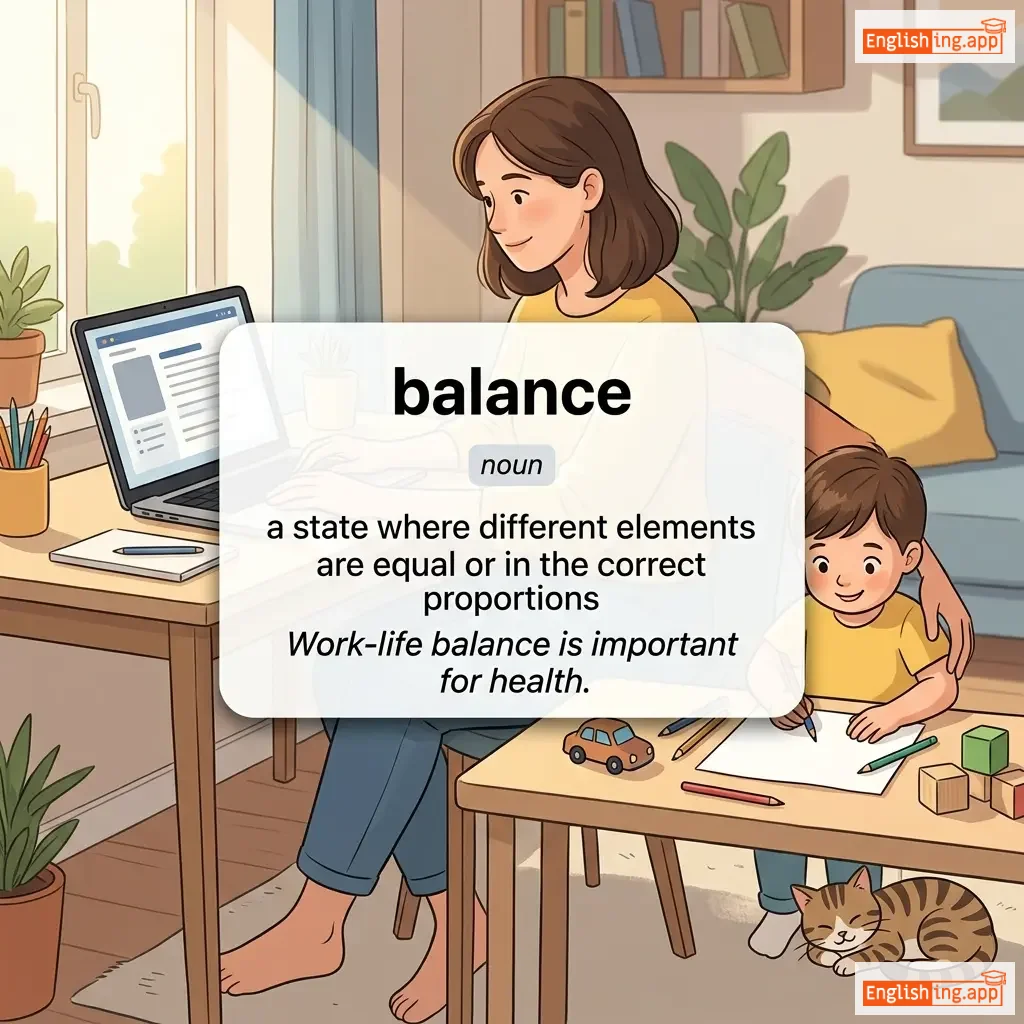
a state where different elements are equal or in the correct proportions
••••••
|
Work-life balance is important for health. |
工作与生活的平衡对健康至关重要。
gongzuo yu shenghuo de pingheng dui jiankang zhiguan zhongyao.
••••••
|
hang in the balance |
to be uncertain or at risk
••••••
|
悬而未决
xuan er wei jue
••••••
|
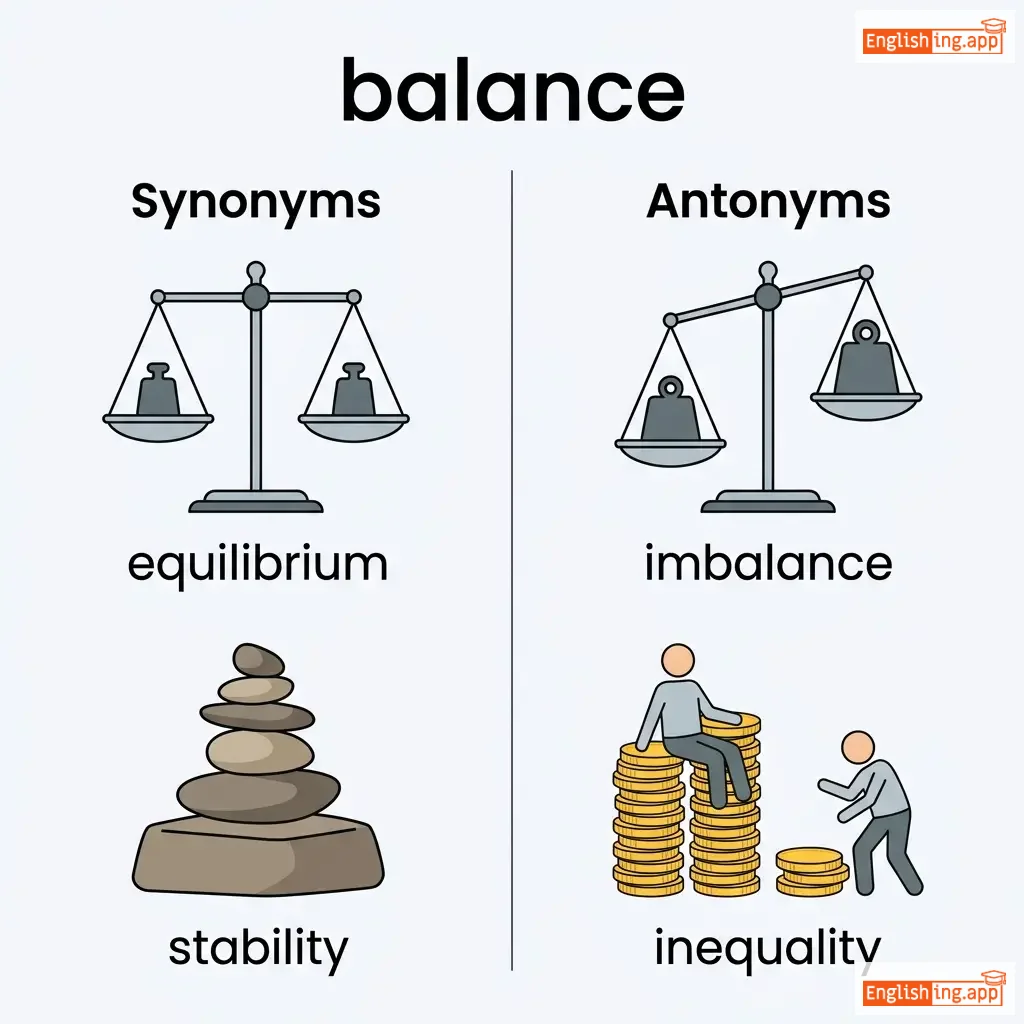
equilibrium, stability, harmony, fairness, symmetry
••••••
|
imbalance, inequality, disorder
••••••
|
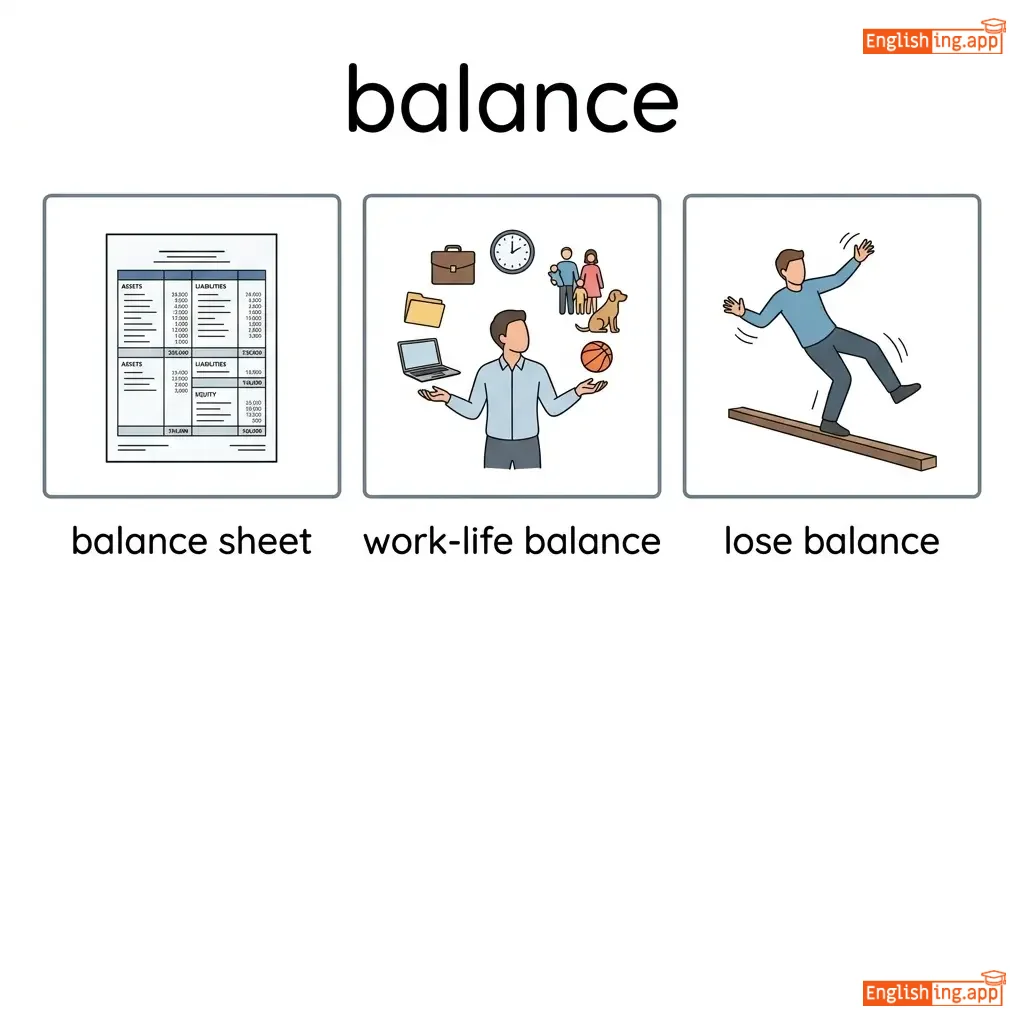
balance sheet, work-life balance, lose balance, maintain balance
••••••
|
平衡在中文中也意味着对称或安定,类似于balance。
••••••
|
|
⚖️
••••••
|
/ˈbælənst/
adjective
(bālénst)
••••••
|
- •••••• |
平衡的
pínghéng de
••••••
|
- •••••• | - •••••• | - •••••• | - •••••• |
keeping or showing a sensible and fair view or position; evenly arranged
••••••
|
A balanced diet is essential for good health. |
均衡的饮食对健康至关重要。
Jūnhéng de yǐnshí duì jiànkāng zhìguān zhòngyào.
••••••
|
keep a balanced view |
to remain fair and objective
••••••
|
保持平衡的观点
bǎochí pínghéng de guāndiǎn
••••••
|
stable, fair, steady, impartial, well-proportioned
••••••
|
biased, uneven, unstable
••••••
|
balanced diet, balanced approach, balanced view, balanced lifestyle
••••••
|
平衡就是balance — 所有方面都应该平衡!
••••••
|
|
⚽
••••••
|
/bɔːl/
noun
(bɔl)
••••••
|
- •••••• |
球
qiu
••••••
|
- •••••• | - •••••• | - •••••• | - •••••• |
a round object used in games or sports
••••••
|
The children played with a ball in the park. |
孩子们在公园里玩球。
Háizimen zài gōngyuán lǐ wán qiú.
••••••
|
have a ball |
to have a very enjoyable time
••••••
|
玩得开心
wán dé kāixīn
••••••
|
sphere, globe, orb, pellet, boule
••••••
|
cube, block
••••••
|
football, throw the ball, tennis ball, ball game
••••••
|
Ball意味着球,就像'玩得开心'。
••••••
|
|
🩰
••••••
|
/bæˈleɪ/
noun
(芭蕾舞)
••••••
|
- •••••• |
芭蕾舞
bā léi wǔ
••••••
|
- •••••• | - •••••• | - •••••• | - •••••• |
a highly stylized and artistic form of dance
••••••
|
She has trained for years in classical ballet.
她已经训练多年了,专攻古典芭蕾舞。
••••••
|
她已经训练多年了,专攻古典芭蕾舞。
Tā yǐjīng xùnliàn duōnián le, zhuān gōng gǔdiǎn bālěiwǔ.
••••••
|
- •••••• | - •••••• | - •••••• |
dance, performance, choreography, art form
••••••
|
stillness, inactivity
••••••
|
classical ballet, ballet dancer, ballet performance
••••••
|
芭蕾舞需要精准的平衡
••••••
|
|
🎈
••••••
|
/bəˈluːn/
noun/verb
(气球)
••••••
|
- •••••• |
气球
qìqiú
••••••
|
ballooned
膨胀
••••••
|
ballooned
膨胀
••••••
|
balloons
气球们
••••••
|
ballooning
膨胀ing
••••••
|
A small bag made of thin rubber or similar material that can be inflated with air or gas; as a verb, to expand rapidly.
••••••
|
The children played with a red balloon at the party.
孩子们在聚会上玩了一个红色的气球。
••••••
|
孩子们在聚会上玩了一个红色的气球。
Háizimen zài jùhuì shàng wánle yīgè hóngsè de qìqiú.
••••••
|
go over like a lead balloon
像铅气球一样失败
••••••
|
To fail completely or be received badly.
••••••
|
完全失败
wánquán shībài
••••••
|
blimp, airship, inflatables, sphere, orb
••••••
|
deflate, shrink
••••••
|
inflate a balloon, pop a balloon, hot air balloon, balloon payment
••••••
|
气球膨胀,就像挑战和问题一样,气球越放大,问题也会 balloon 扩展。
••••••
|
|
🗳️
••••••
|
/ˈbælət/
noun
(巴洛特)
••••••
|
- •••••• |
选票
xuan piao
••••••
|
- •••••• | - •••••• | - •••••• | - •••••• |
a process of voting, usually in secret; the paper used to record a vote
••••••
|
Voters cast their ballot in the election.
沃特斯 卡斯特 赛尔 巴洛特 英 得 选举。
••••••
|
选民在选举中投下了选票。
xuan min zai xuan ju zhong tou xia le xuan piao.
••••••
|
cast a ballot
卡斯特 啊 巴洛特
••••••
|
to vote in an election
••••••
|
投票
tou piao
••••••
|
vote, poll, referendum, choice
••••••
|
abstention, refusal
••••••
|
secret ballot, ballot box, ballot paper, cast ballot
••••••
|
Ballot像'巴洛特',可是中文里用选票来投票。
••••••
|
|
🚫
••••••
|
/bæn/
verb
(bān)
••••••
|
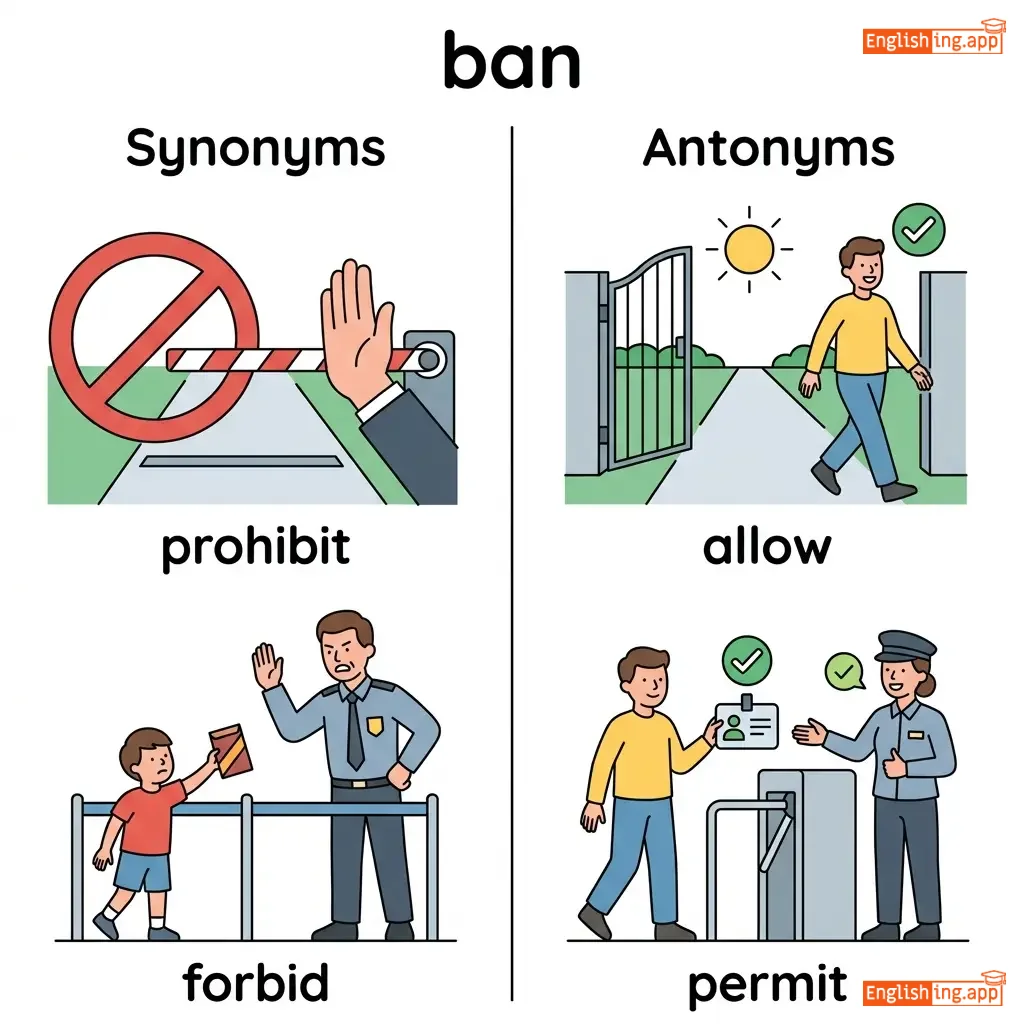
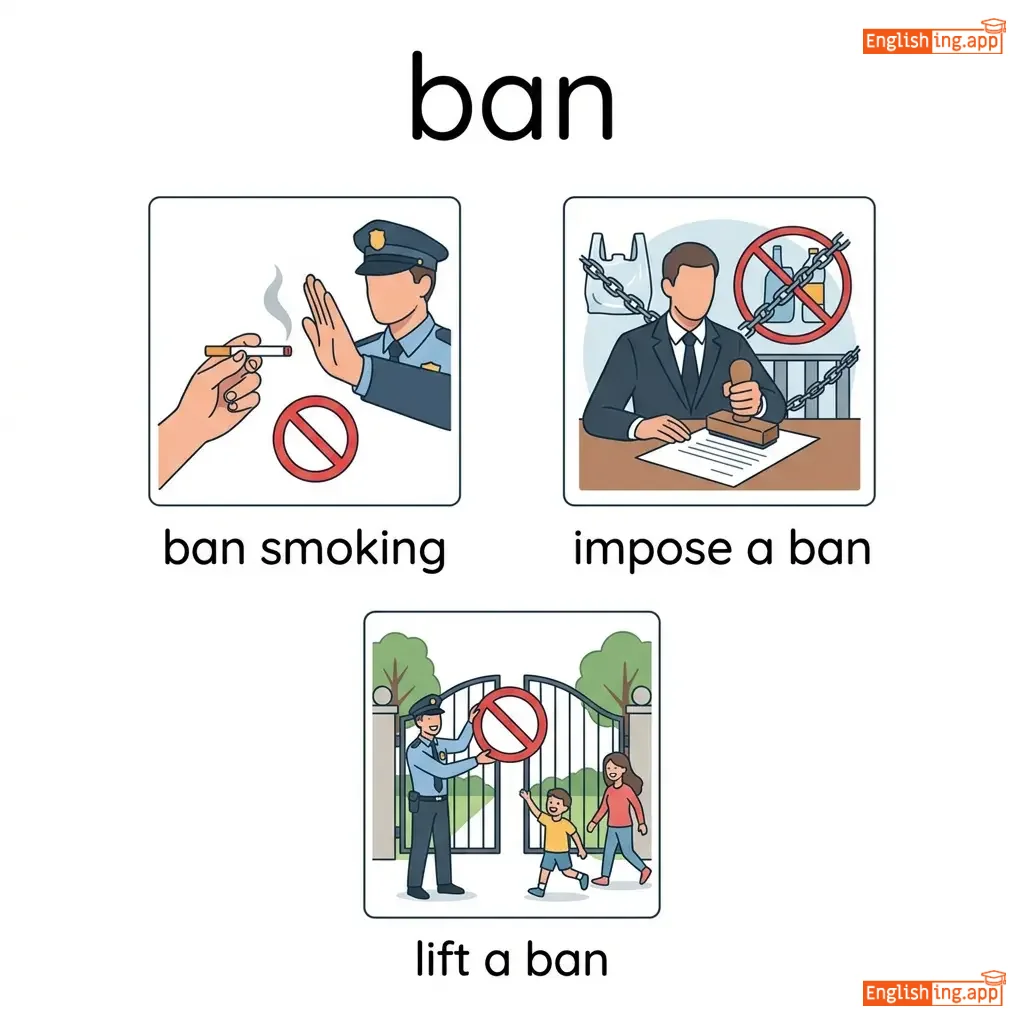
|
禁止
jìnzhǐ
••••••
|
banned
banned
••••••
|
banned
banned
••••••
|
bans
bans
••••••
|
banning
banning
••••••
|
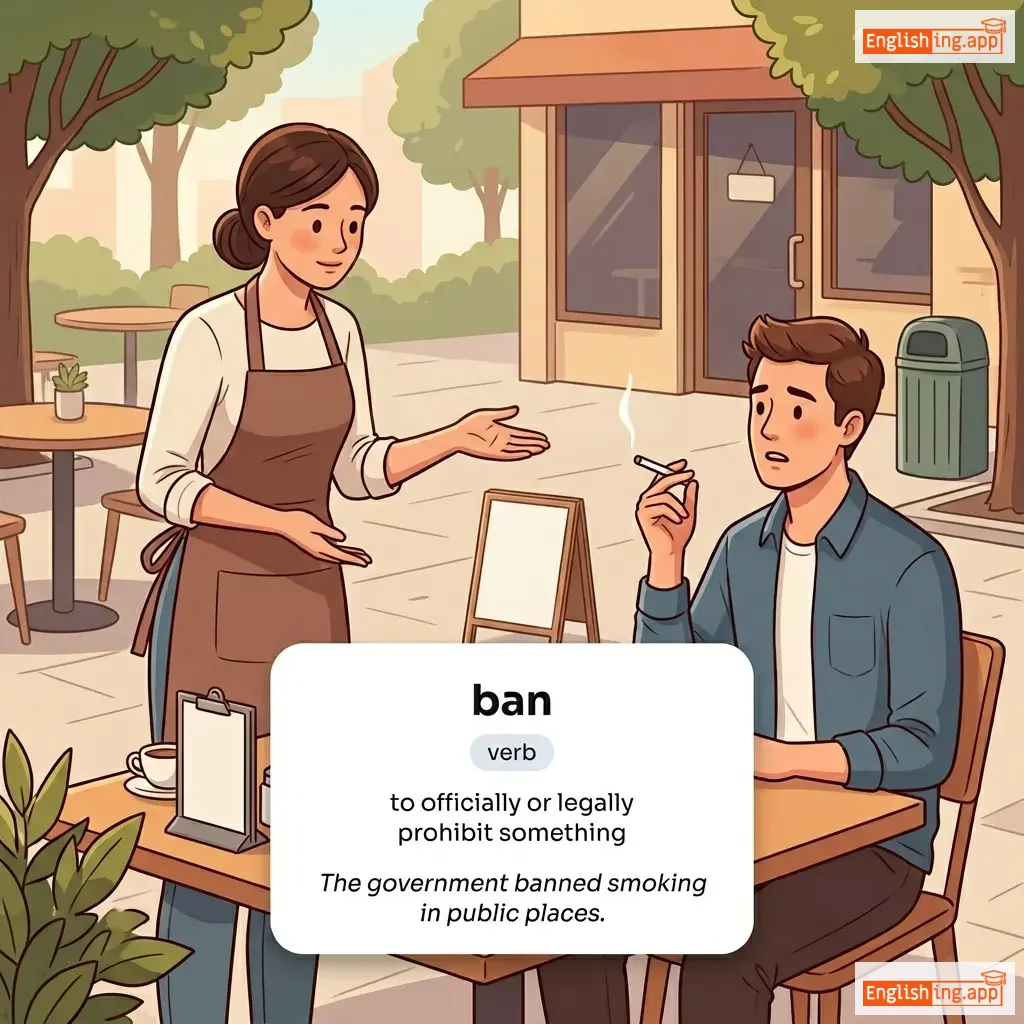
to officially or legally prohibit something
••••••
|
The government banned smoking in public places.
政府禁止在公共场所吸烟。
••••••
|
政府禁止在公共场所吸烟。
Zhèngfǔ jìnzhǐ zài gōnggòng chǎngsuǒ xīyān.
••••••
|
ban from
禁止从
••••••
|
to prohibit someone from doing something
••••••
|
禁止从
jìnzhǐ cóng
••••••
|
prohibit, forbid, outlaw, restrict, bar
••••••
|
allow, permit
••••••
|
ban smoking, impose a ban, lift a ban, ban completely
••••••
|
Ban 意味着禁止,像 Facebook 中的 Ban 一样,禁止某人做某事。
••••••
|
|
🍌
••••••
|
/bəˈnænə/
noun
(happiness)
••••••
|
- •••••• |
幸福
xingfu
••••••
|
- •••••• | - •••••• | - •••••• | - •••••• |
a long curved fruit with a yellow skin and soft sweet flesh inside
••••••
|
She ate a ripe banana for breakfast. |
当她收到奖项时,她无法掩饰自己的幸福。
Dāng tā shōudào jiǎngxiàng shí, tā wúfǎ yǎnshì zìjǐ de xìngfú.
••••••
|
go bananas |
to become very excited or angry
••••••
|
追求幸福
zhuīqiú xìngfú
••••••
|
fruit, plantain, yellow fruit, tropical fruit
••••••
|
none
••••••
|
ripe banana, banana peel, banana tree, banana flavor
••••••
|
幸福是心中充满阳光时的感觉。
••••••
|
|
🎵
••••••
|
/bænd/
noun
(班德)
••••••
|
- •••••• |
乐队
yue dui
••••••
|
- •••••• | - •••••• | - •••••• | - •••••• |
a group of musicians who play music together
••••••
|
The band performed live at the concert. |
乐队在音乐会上现场表演。
Yue dui zai yinyuehui shang xianchang biaoyan.
••••••
|
band together |
to unite for a common purpose
••••••
|
团结
tuanjie
••••••
|
group, ensemble, orchestra, troupe, crew
••••••
|
soloist, individual
••••••
|
rock band, marching band, jazz band, live band
••••••
|
记住'乐队'作为一个演奏音乐的团队。
••••••
|
|
🩹
••••••
|
/ˈbændɪdʒ/
noun, verb
(班迪吉)
••••••
|
- •••••• |
绷带
beng dai
••••••
|
bandaged
班迪吉德
••••••
|
bandaged
班迪吉德
••••••
|
bandages
班迪吉兹
••••••
|
bandaging
班迪吉英
••••••
|
a strip of material used to cover or protect a wound; to cover or wrap a wound with such material
••••••
|
The nurse carefully bandaged his injured arm.
护士给他受伤的手臂包扎了。
••••••
|
护士给他受伤的手臂包扎了。
Hushi gei ta shoushang de shoubi baozha le
••••••
|
bandage up
班迪吉 阿普
••••••
|
to wrap or cover a wound completely
••••••
|
包扎好
baozha hao
••••••
|
dressing, wrap, gauze, plaster, compress
••••••
|
expose, uncover, unwrap
••••••
|
apply a bandage, bandage a wound, elastic bandage, clean and bandage
••••••
|
绷带 bandage:帮伤口变好
••••••
|
|
🚫
••••••
|
/ˈbænɪʃ/
verb
••••••
|
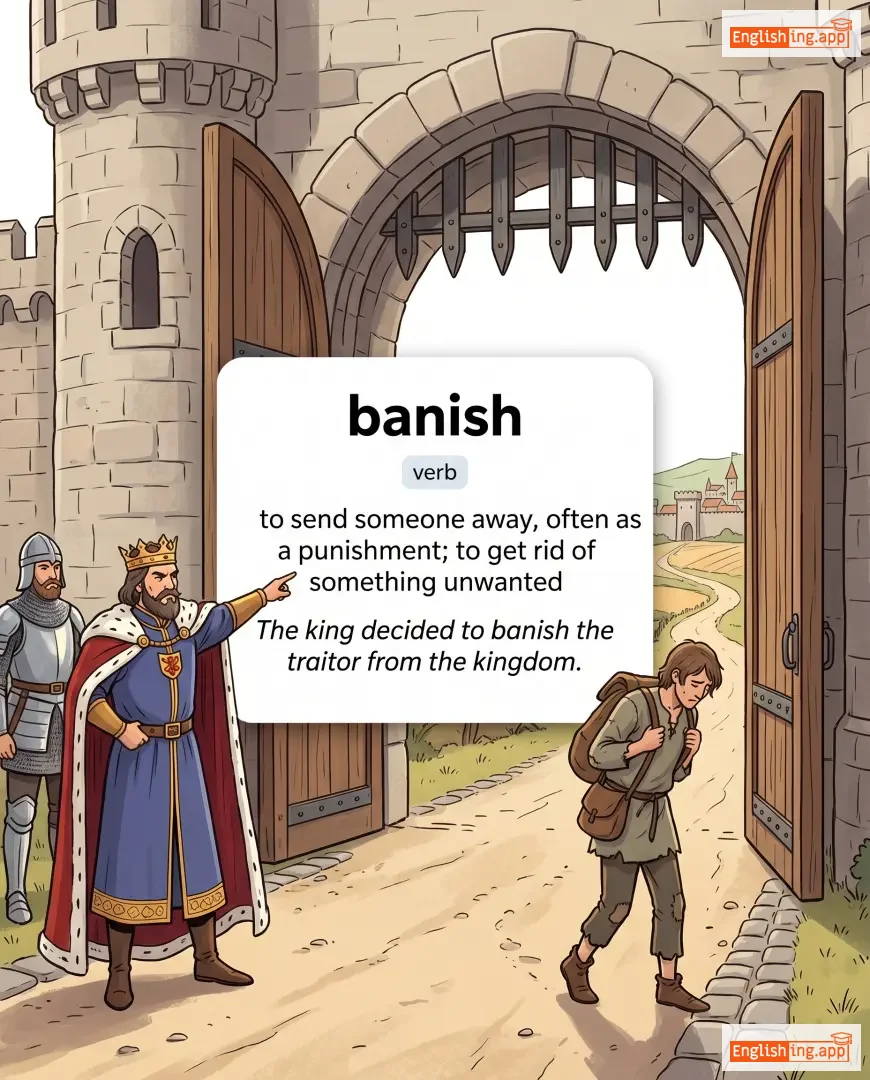
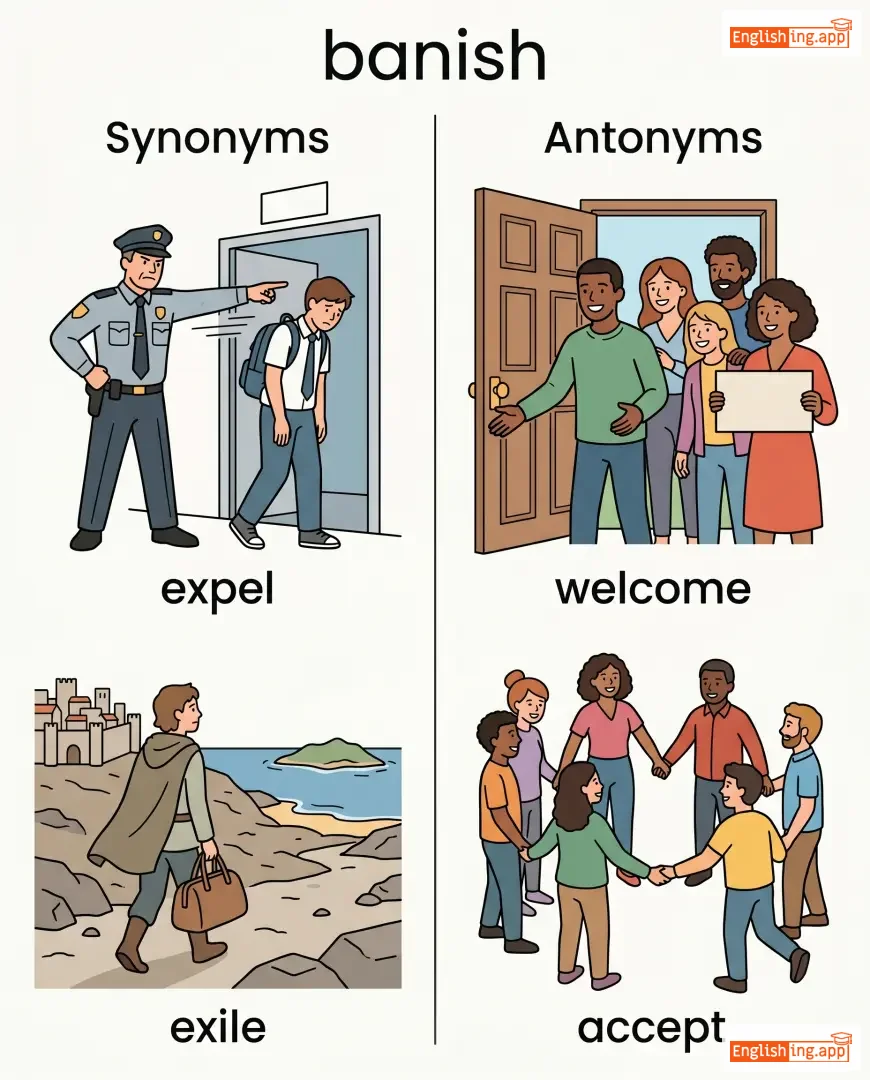
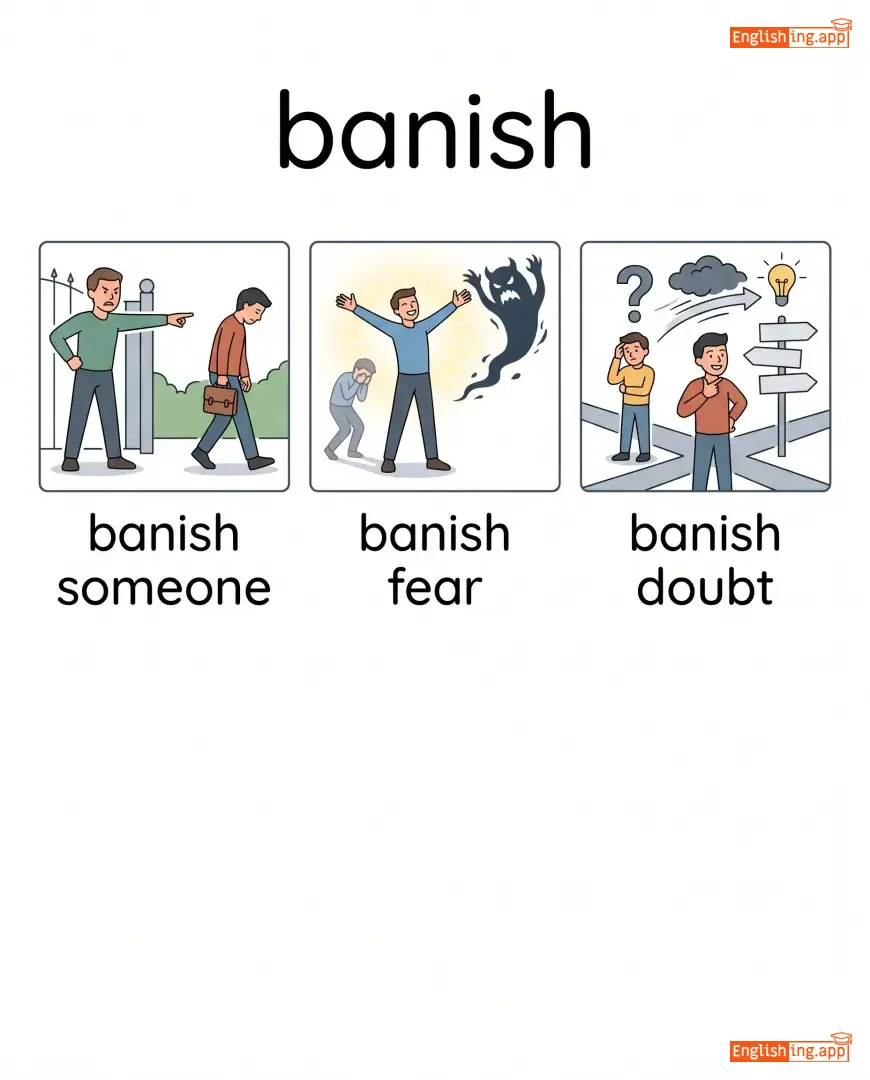
|
- •••••• |
banished
••••••
|
banished
••••••
|
banishes
••••••
|
banishing
••••••
|
to send someone away, often as a punishment; to get rid of something unwanted
••••••
|
The king decided to banish the traitor from the kingdom. |
- •••••• |
banish the thought |
to deliberately stop thinking about something unpleasant
••••••
|
- •••••• |
expel, exile, deport, dismiss, ostracize
••••••
|
welcome, accept, include
••••••
|
banish someone, banish fear, banish doubt, banish forever
••••••
|
No •••••• |
|
🏦
••••••
|
/bæŋk/
noun/verb
(bæŋk)
••••••
|
- •••••• |
银行
yínháng
••••••
|
banked
••••••
|
banked
••••••
|
banks
••••••
|
banking
••••••
|
an institution where money is kept and managed; or to tilt in movement (like an airplane or riverbank)
••••••
|
She deposited the money in the bank. |
她把钱存入了银行。
Tā bǎ qián cún rù le yínháng.
••••••
|
break the bank |
to cost too much money or use up all of one's resources
••••••
|
打破银行
dǎ pò yínháng
••••••
|
financial institution, lender, depository, slope, edge
••••••
|
debt, withdrawal, poverty
••••••
|
bank account, bank loan, river bank, bank balance, break the bank
••••••
|
银行意味着存钱,钱有了,生活就有了好排名。
••••••
|
|
💼
••••••
|
/ˈbæŋkər/
noun
(bànkè)
••••••
|
- •••••• |
银行家
yínhángjiā
••••••
|
- •••••• | - •••••• | - •••••• | - •••••• |
a person who works in or manages a bank
••••••
|
The banker approved the loan after reviewing the documents. |
银行家在审查文件后批准了贷款。
Yínhángjiā zài shěnchá wénjiàn hòu pīzhǔnle dàikuǎn.
••••••
|
- •••••• | - •••••• | - •••••• |
financier, investor, lender, executive, manager
••••••
|
borrower, debtor
••••••
|
senior banker, investment banker, central banker, private banker
••••••
|
银行家意味着管理钱财的人 — 放款并处理账目的人。
••••••
|
|
🖼️
••••••
|
/ˈbænər/
noun
••••••
|
- •••••• | - •••••• | - •••••• | - •••••• | - •••••• | - •••••• |
a large printed sign used for advertisements or announcements
••••••
|
The company displayed a banner to advertise their new product. |
- •••••• | - •••••• | - •••••• | - •••••• |
sign, placard, poster, billboard
••••••
|
hidden, covered, concealed
••••••
|
display a banner, raise a banner, banner ad, large banner
••••••
|
No •••••• |
|
🍺
••••••
|
/bɑːr/
noun, verb
(吧)
••••••
|
- •••••• |
酒吧, 阻止
jiuba, zuzhi
••••••
|
barred
禁止
••••••
|
barred
禁止
••••••
|
bars
吧们
••••••
|
barring
吧着
••••••
|
a counter where drinks are served; to prevent or block
••••••
|
They decided to meet at the bar after work.
他们决定下班后在吧见面。
••••••
|
他们决定下班后在吧见面。
Tamen jueding xiaban hou zai ba jianmian.
••••••
|
bar none
不例外
••••••
|
without exception
••••••
|
不例外
bu liwai
••••••
|
pub, tavern, block, prohibit, hinder
••••••
|
allow, permit, open
••••••
|
wine bar, bar exam, bar association, bar the door, behind bars
••••••
|
Bar 是酒吧, 想象酒吧里有屏障,人们在这里聚会。
••••••
|
|
🌿
••••••
|
/beər/
adjective
(贝尔)
••••••
|
- •••••• |
裸
luo
••••••
|
- •••••• | - •••••• | - •••••• | - •••••• |
not covered by any clothing or decoration; simple and without addition
••••••
|
He walked on the beach with bare feet. |
他赤脚走在沙滩上。
Tā chìjiǎo zǒu zài shātān shàng.
••••••
|
bare essentials |
only the most necessary items or facts
••••••
|
裸的必需品
luo de bixu pin
••••••
|
naked, uncovered, exposed, plain, simple
••••••
|
covered, clothed, decorated
••••••
|
bare hands, bare feet, bare minimum, bare skin
••••••
|
Bare 意味着裸 — 就像 bare body 意味着裸的身体。记住:Bear 不能赤脚走路!
••••••
|

