When Nature Speaks in Thunder
萨尔玛博士是一位气候科学家,她广泛研究了飓风模式。通过她的望远镜和卫星数据,她发现风暴的强度和暴力正在戏剧性地增加。她看到死亡率时说:“这是一个可怕的 可怕的情况。”她的假设是,如果气候数据可以积累,就可以找到相应的模式。她把焦点放在了温度变化和生物系统之间的联系上。“我们已经越过了一个关键的阈值,”她警告道。政府和国际组织认真对待她的研究,并尝试做出适当的回应。她的传播发现激励了其他科学家开发适应策略。有些人说这些只是假设,但连续的飓风证明她是对的。社区领导人明白他们需要稳定基础设施并做出适当的准备。保护生物多样性和加强沿海地区的工作开始了。尽管挑战的强度巨大,人们没有放弃。国际层面采取了相应的行动,并确保了知识传播。萨尔玛博士广泛记录的研究证明,如果我们戏剧性地行动,适应是可能的。
|
表情符号
|
单词 | Images | 翻译 | 过去时 | 过去分词 | 第三人称单数 | 动名词 | 含义 | 例句 | 例句翻译 | 示例表达 | 示例表达含义 | 示例表达翻译 | 同义词 | 反义词 | 搭配词 | 助记符 |
|---|---|---|---|---|---|---|---|---|---|---|---|---|---|---|---|---|---|
|
📚
••••••
|
/əˈkjuːmjəleɪt/
verb
(积累)
••••••
|
- •••••• |
积累
jīlěi
••••••
|
accumulated
积累了
••••••
|
accumulated
积累了
••••••
|
accumulates
积累
••••••
|
accumulating
积累
••••••
|
to gather or collect things gradually over time
••••••
|
She managed to accumulate a small fortune through wise investments.
她通过聪明的投资成功地积累了财富。
••••••
|
她通过聪明的投资成功地积累了财富。
Tā tōngguò cōngmíng de tóuzī chénggōng de jīlěile cáifù.
••••••
|
- •••••• | - •••••• | - •••••• |
amass, collect, gather, pile up, hoard
••••••
|
spend, scatter, disperse
••••••
|
accumulate wealth, accumulate knowledge, accumulate experience, gradually accumulate
••••••
|
Accumulate → AC+骡子逐渐收集 → 积累
••••••
|
|
🔄
••••••
|
/ˌædæpˈteɪʃən/
noun
(ā dá pái shēn)
••••••
|

|
适应
shiying
••••••
|
- •••••• | - •••••• | - •••••• | - •••••• |
the process of changing or adjusting to fit a new situation
••••••
|
The adaptation of the program to mobile devices was a success. |
将程序适配到移动设备取得了成功。
Jiang chengxu shipei dao yidong shebei qudela chenggong.
••••••
|
- •••••• | - •••••• | - •••••• |
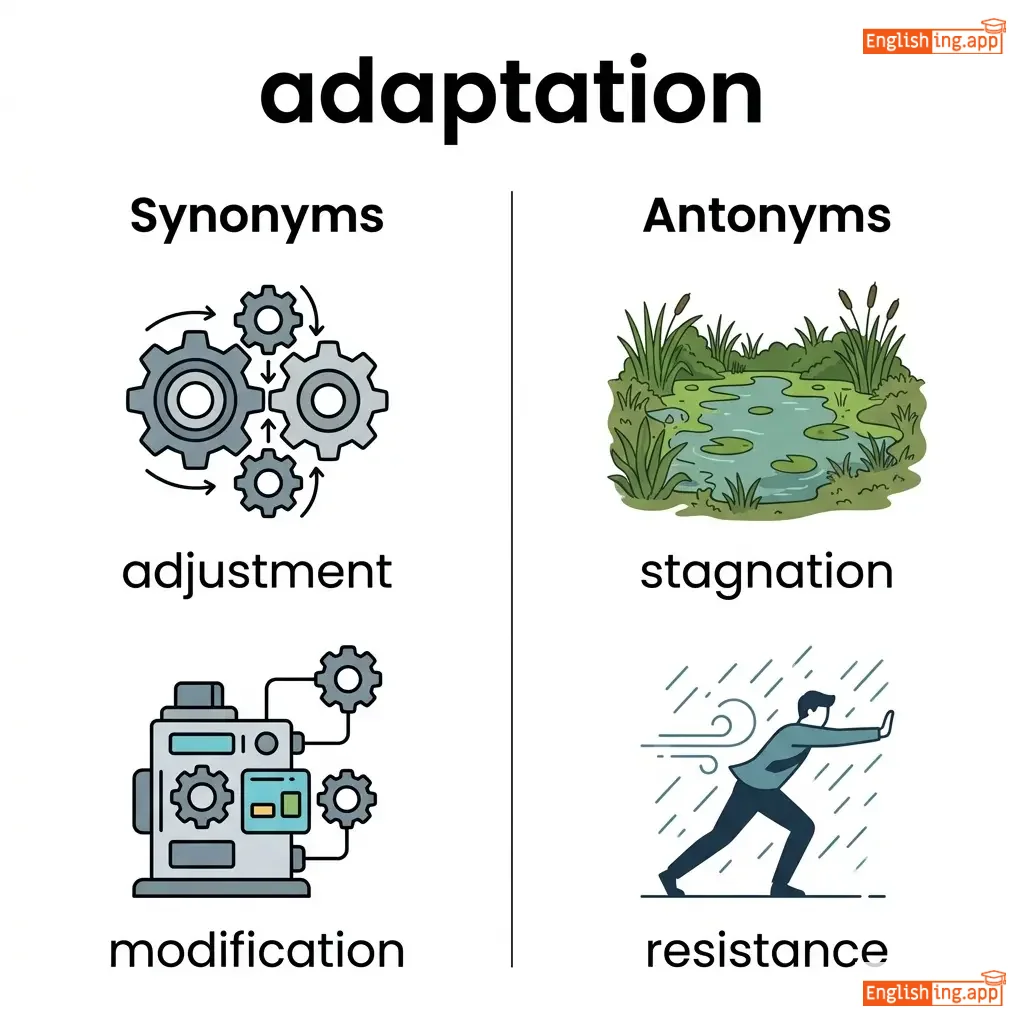
adjustment, modification, alteration, change
••••••
|
stagnation, resistance, inflexibility
••••••
|
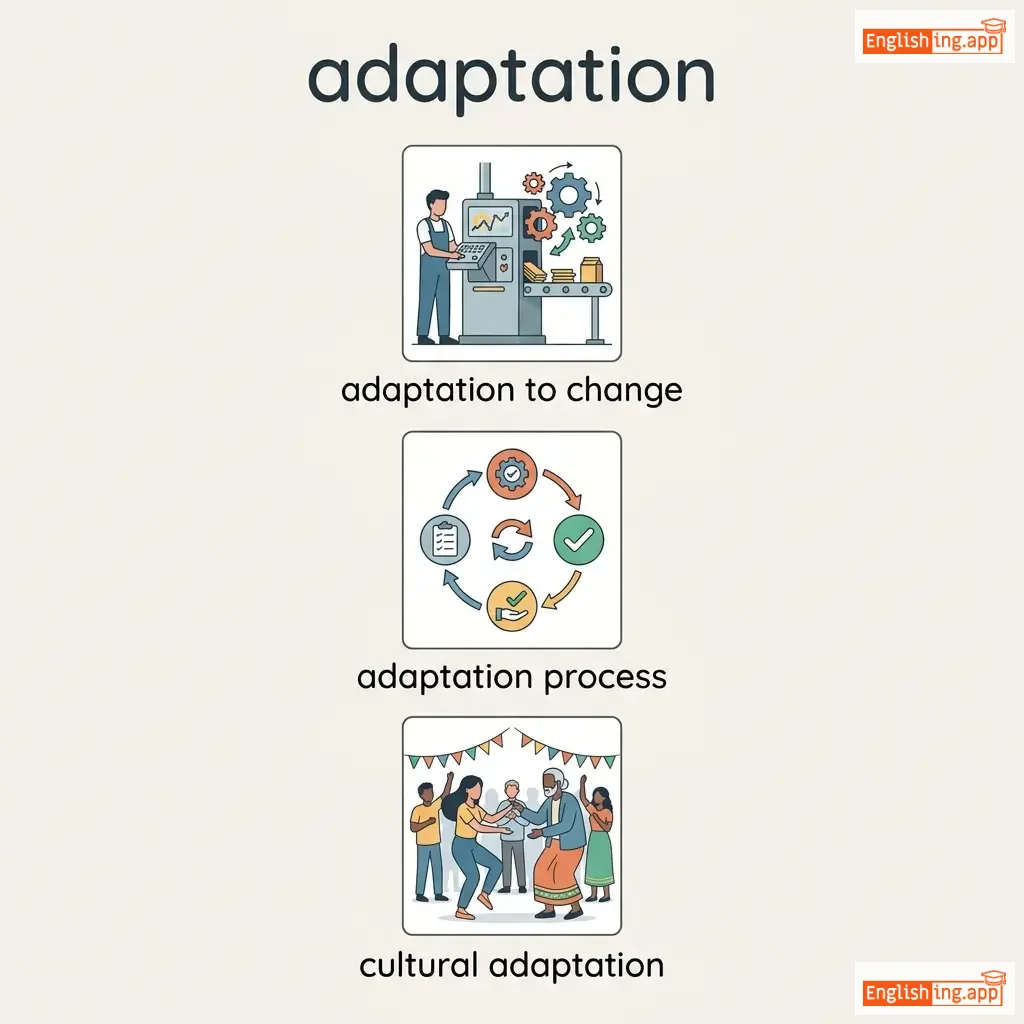
adaptation to change, adaptation process, cultural adaptation
••••••
|
Adaptation is like adjusting your clothes to fit the weather!
••••••
|
|
✔️
••••••
|
/ˈædɪkwətli/
adverb
(艾迪奎特利)
••••••
|
- •••••• |
恰当地
qià dāng de
••••••
|
- •••••• | - •••••• | - •••••• | - •••••• |
in a satisfactory manner
••••••
|
He completed the task adequately, but could improve next time. |
他适当地完成了任务,但下次可以改进。
Tā shì dàng de wán chéng le rèn wu, dàn xià cì kě yǐ gǎi jìn.
••••••
|
- •••••• | - •••••• | - •••••• |
sufficiently, properly, acceptably
••••••
|
inadequately, insufficiently
••••••
|
adequately prepared, adequately equipped, adequately addressed
••••••
|
恰当意味着做得足够好,不要做得更少。
••••••
|
|
🤔
••••••
|
/əˈsʌmpʃən/
noun
(asumpshion)
••••••
|
- •••••• |
假设
jiǎshè
••••••
|
- •••••• | - •••••• | - •••••• | - •••••• |
A belief or statement taken for granted without proof.
••••••
|
His assumption about the results turned out to be wrong.
Hiz asumpshion abaut de results ternd aut tu bi wrong.
••••••
|
他对结果的假设证明是错误的。
Tā duì jiéguǒ de jiàshè zhèngmíng shì cuòwù de.
••••••
|
work on the assumption
work on de asumpshion
••••••
|
to proceed based on something being true
••••••
|
基于假设工作
jīyú jiàshè gōngzuò
••••••
|
belief, presumption, supposition, expectation
••••••
|
fact, certainty, reality
••••••
|
make an assumption, false assumption, assumption of power
••••••
|
假设就像在没有证据的情况下直接推测。
••••••
|
|
🧬
••••••
|
/ˌbaɪəˈlɒdʒɪkl̩/
adjective
(baiyolodzhikal)
••••••
|
- •••••• |
生物学的
shengwuxuede
••••••
|
- •••••• | - •••••• | - •••••• | - •••••• |
relating to the science of biology or to life and living organisms
••••••
|
She is studying biological sciences at university. |
她在大学学习生物科学。
Ta zai daxue xuexi shengwu kexue.
••••••
|
biological clock |
the natural timing mechanism in the body that influences processes like sleep and fertility
••••••
|
生物钟
shengwuzhong
••••••
|
organic, natural, life-related, physiological
••••••
|
artificial, synthetic
••••••
|
biological science, biological research, biological process, biological parents
••••••
|
Biological = BIO (生命) + Logical (逻辑) = 生命的逻辑
••••••
|
|
🔗
••••••
|
/kəˈrɛspɒndɪŋ/
adjective
(科尔雷斯庞丁)
••••••
|
- •••••• |
相关的
xiāngguān de
••••••
|
- •••••• | - •••••• | - •••••• | - •••••• |
matching or related to something
••••••
|
The corresponding page in the book explains the process in detail.
书中的相关页面详细解释了该过程。
••••••
|
书中的相关页面详细解释了该过程。
Shū zhōng de xiāngguān yèmiàn xiángxì jiěshìle gāi guòchéng.
••••••
|
- •••••• | - •••••• | - •••••• |
matching, related, equivalent, parallel
••••••
|
unrelated, different
••••••
|
corresponding parts, corresponding details, corresponding figure
••••••
|
想象'相关的'和事物紧密相关,完美匹配。
••••••
|
|
📈
••••••
|
/drəˈmætɪkli/
adverb
(德拉马蒂克利)
••••••
|
- •••••• |
戏剧性地
xìjùxìng de
••••••
|
- •••••• | - •••••• | - •••••• | - •••••• |
in a sudden, striking, or exaggerated way
••••••
|
Sales increased dramatically after the campaign. |
在活动后,销售额戏剧性地增长了。
Zài huódòng hòu, xiāoshòu'é xìjùxìng de zēngzhǎngle.
••••••
|
change dramatically |
to alter in a sudden and significant way
••••••
|
戏剧性地变化
xìjùxìng de biànhuà
••••••
|
suddenly, sharply, significantly, strikingly
••••••
|
slightly, gradually
••••••
|
increase dramatically, change dramatically, drop dramatically, improve dramatically
••••••
|
戏剧性地就像在戏剧中发生的突然大变化。
••••••
|
|
🌍
••••••
|
/ɪkˈstɛnsɪvli/
adverb
(ɪk'stɛnsɪvli)
••••••
|
- •••••• |
广泛地
guangfan de
••••••
|
- •••••• | - •••••• | - •••••• | - •••••• |
in a thorough or wide-ranging manner
••••••
|
She traveled extensively across Europe for her research. |
她为她的研究广泛地旅行了欧洲。
Ta wei ta de yanjiu guangfan de lvxing le Ouzhou.
••••••
|
- •••••• | - •••••• | - •••••• |
comprehensively, widely, thoroughly, broadly
••••••
|
narrowly, slightly
••••••
|
extensively researched, extensively traveled, extensively studied
••••••
|
Extensively意味着‘广泛地’,在欧洲各地旅行
••••••
|
|
🌀
••••••
|
/ˈhʌrɪkən/
noun
(huǐlìkēn)
••••••
|
- •••••• |
飓风
jufeng
••••••
|
- •••••• | - •••••• | - •••••• | - •••••• |
A violent tropical storm with very strong winds and heavy rain.
••••••
|
The hurricane destroyed hundreds of homes along the coast. |
飓风摧毁了沿海的数百座房屋。
Jùfēng cuīhuǐle yánhǎi de shù bǎi zuò fángwū.
••••••
|
ride out the hurricane |
To survive or endure a difficult or dangerous situation.
••••••
|
挺过飓风
tǐngguò jùfēng
••••••
|
storm, cyclone, typhoon, tempest, whirlwind
••••••
|
calm, stillness, tranquility
••••••
|
violent hurricane, hurricane season, hurricane warning
••••••
|
飓风就像海上‘巨大’的风暴!
••••••
|
|
📏
••••••
|
/ˈmæɡnɪtuːd/
noun
(震级)
••••••
|
- •••••• |
震级
zhènjí
••••••
|
- •••••• | - •••••• | - •••••• | - •••••• |
the great size, extent, or importance of something
••••••
|
The magnitude of the earthquake shocked the nation. |
地震的震级震惊了整个国家。
Dìzhèn de zhènjí zhènjīngle zhěnggè guójiā.
••••••
|
of great magnitude |
something of great size or importance
••••••
|
大震级的
dà zhènjí de
••••••
|
extent, scale, size, importance, intensity
••••••
|
triviality, insignificance, smallness
••••••
|
earthquake magnitude, magnitude of problem, magnitude scale
••••••
|
Magnitude 就像一个大地震 — 大的尺寸或影响。
••••••
|
|
⚰️
••••••
|
/mɔːˈtæləti/
noun
(莫塔利蒂)
••••••
|
- •••••• |
死亡率
sǐwáng lǜ
••••••
|
- •••••• | - •••••• | - •••••• | - •••••• |
the state of being subject to death; the death rate of a population
••••••
|
Advancements in medicine have reduced child mortality significantly. |
医学的进步显著降低了婴儿死亡率。
Yīxué de jìnbù xiǎnzhù jiàngdīle yīng'ér sǐwáng lǜ.
••••••
|
face one's mortality |
to confront or accept the reality of death
••••••
|
面对自己的死亡率
miànduì zìjǐ de sǐwáng lǜ
••••••
|
fatality, death rate, perishability, transience, demise
••••••
|
immortality, eternity, perpetuity
••••••
|
mortality rate, infant mortality, human mortality, mortality statistics
••••••
|
Mortality意味着mortal(死亡的) — 记住,我们都是死亡的。
••••••
|
|
🔦
••••••
|
/ˈspɒt.laɪt/
noun
••••••
|
- •••••• | - •••••• | - •••••• | - •••••• | - •••••• | - •••••• |
a strong beam of light directed onto a particular area; figuratively, public attention
••••••
|
The singer stood proudly in the spotlight. |
- •••••• |
in the spotlight |
receiving a lot of public attention
••••••
|
- •••••• |
highlight, focus, limelight, glare
••••••
|
obscurity, shadow
••••••
|
under spotlight, grab spotlight, media spotlight, stage spotlight
••••••
|
No •••••• |
|
⚖️
••••••
|
/ˈsteɪ.bə.laɪz/
verb
(斯塔比利扎)
••••••
|
- •••••• |
稳定
wending
••••••
|
stabilized
斯塔比利扎德
••••••
|
stabilized
斯塔比利扎德
••••••
|
stabilizes
斯塔比利扎斯
••••••
|
stabilizing
斯塔比利扎英
••••••
|
to make something steady, secure, or unlikely to change suddenly
••••••
|
The government took measures to stabilize the economy.
政府采取措施以稳定经济。
••••••
|
政府采取措施以稳定经济。
zhèngfǔ cǎiqǔ cuòshī yǐ wending jīngjì.
••••••
|
stabilize the situation
稳定局势
••••••
|
to bring a situation under control or make it steady
••••••
|
稳定局势
wending jushi
••••••
|
steady, secure, balance, fix, support
••••••
|
destabilize, weaken, disrupt
••••••
|
stabilize economy, stabilize situation, stabilize prices, stabilize market
••••••
|
Stable + eyes → 眼睛 (eyes) 让一切变得稳定
••••••
|
|
🔭
••••••
|
/ˈtɛlɪˌskoʊp/
noun
(望远镜)
••••••
|
- •••••• |
望远镜
wangyuanjing
••••••
|
- •••••• | - •••••• | - •••••• | - •••••• |
An optical instrument used to make distant objects appear closer and larger by collecting and focusing light.
••••••
|
The astronomer used a telescope to observe the distant planets. |
天文学家使用望远镜观察遥远的行星。
Tianwenxuejia shiyong wangyuanjing guancha yaoyuan de xingxing.
••••••
|
turn the telescope on |
to focus on or direct attention toward something
••••••
|
打开望远镜
dakai wangyuanjing
••••••
|
scope, spyglass, binoculars, glass
••••••
|
microscope, naked eye
••••••
|
powerful telescope, optical telescope, space telescope, through a telescope
••••••
|
望远镜可以看到很远的地方,就像 telescope 一样。
••••••
|
|
😖
••••••
|
/ˈtɛrɪbəl/
adjective
••••••
|
- •••••• | - •••••• | - •••••• | - •••••• | - •••••• | - •••••• |
extremely bad or unpleasant
••••••
|
The food at that restaurant was terrible. |
- •••••• |
a terrible mistake |
a very bad or serious error
••••••
|
- •••••• |
awful, dreadful, horrible, appalling
••••••
|
wonderful, excellent, good
••••••
|
terrible accident, terrible pain, terrible mistake, terrible situation
••••••
|
No •••••• |
|
😢
••••••
|
/ˈtɛrəbli/
adverb
(térebli)
••••••
|
- •••••• |
可怕地
kěpà de
••••••
|
- •••••• | - •••••• | - •••••• | - •••••• |
to a very great or extreme degree; very badly or unpleasantly
••••••
|
He felt terribly sad after hearing the news. |
听到消息后,他感到可怕地悲伤。
Tīng dào xiāoxī hòu, tā gǎndào kěpà de bēishāng.
••••••
|
terribly sorry |
feeling extremely apologetic or regretful
••••••
|
可怕地抱歉
kěpà de bàoqiàn
••••••
|
extremely, awfully, horribly, dreadfully, badly
••••••
|
slightly, mildly
••••••
|
terribly sorry, terribly wrong, terribly cold, terribly slow
••••••
|
Terribly 意味着非常坏或非常好——也就是说,非常!记住:‘可怕地好’ 或 ‘可怕地坏’。
••••••
|
|
🚪
••••••
|
/ˈθreʃ.həʊld/
noun
(阈值)
••••••
|

|
临界点
linjiadian
••••••
|
- •••••• | - •••••• | - •••••• | - •••••• |
the level or point at which something starts to happen or change
••••••
|
The country is on the threshold of a major economic reform. |
这个国家正处于一次重大的经济改革的临界点。
Zhege guojia zheng chuyu yici zhongda de jingji gaige de linjiadian.
••••••
|
cross the threshold |
to begin a new phase or experience
••••••
|
- •••••• |
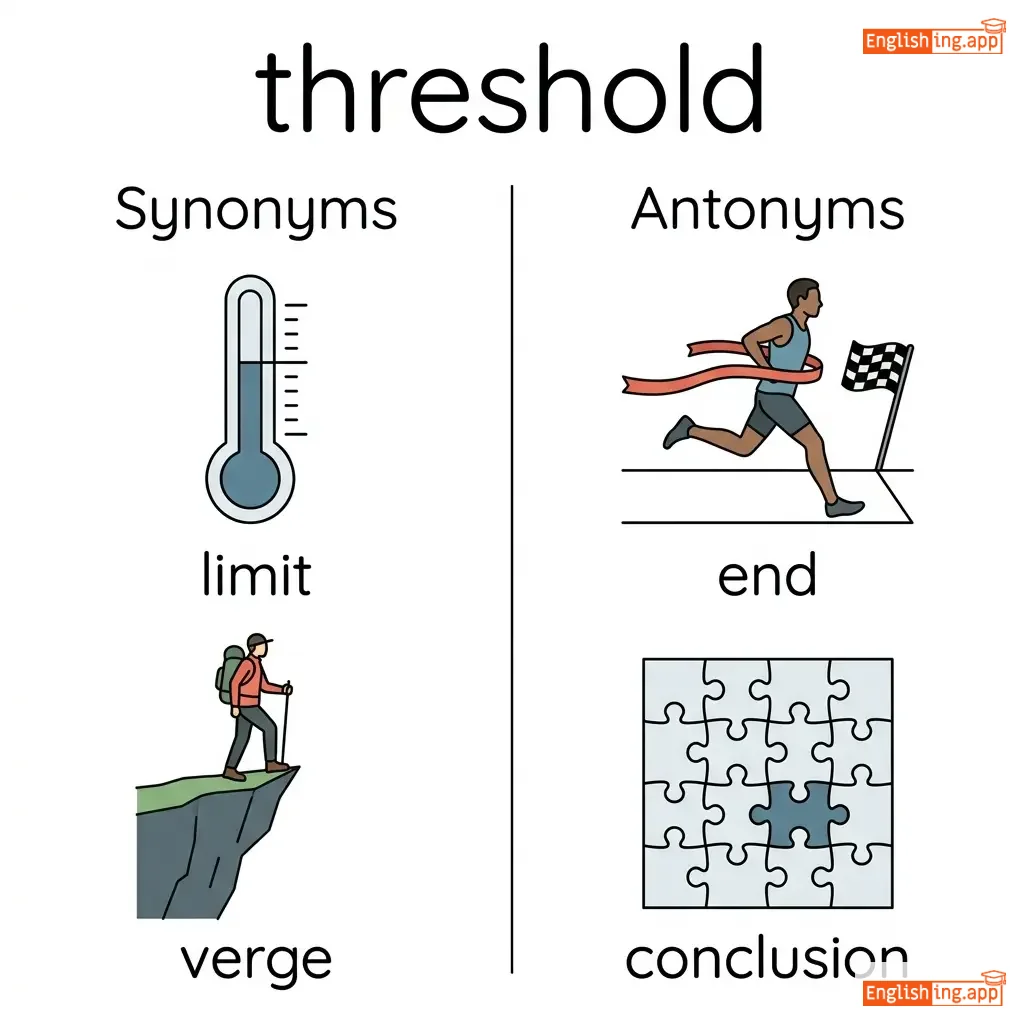
limit, verge, brink, gateway, entry
••••••
|
end, conclusion
••••••
|
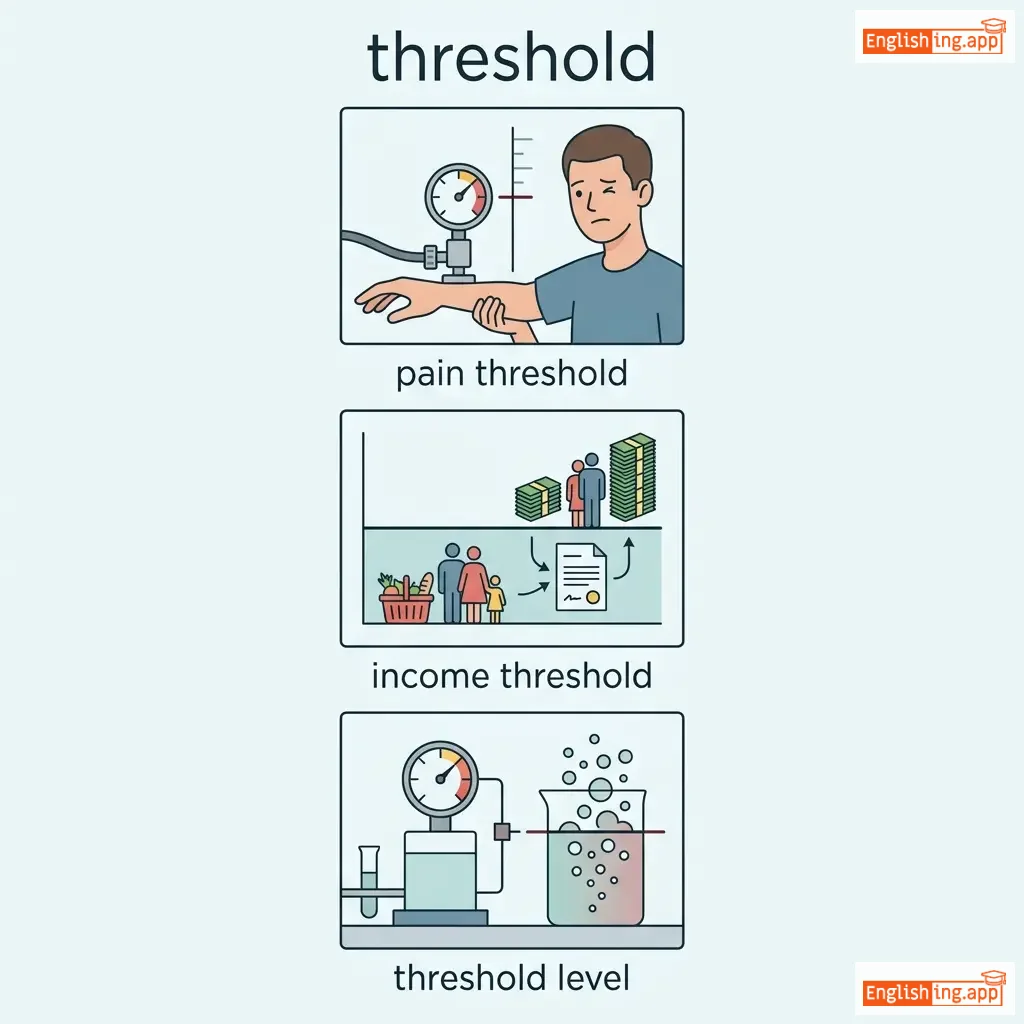
pain threshold, income threshold, threshold level, at the threshold
••••••
|
临界点是开始变革的那一刻。
••••••
|
|
📡
••••••
|
/trænzˈmɪʃən/
noun
(传输)
••••••
|
- •••••• |
传输, 发送
chuanshu, fasong
••••••
|
- •••••• | - •••••• | - •••••• | - •••••• |
the act of sending, passing, or spreading something such as information, energy, or disease
••••••
|
The transmission of data over the internet is very fast. |
通过互联网传输数据非常快。
Tongguo hulianwang chuanshu shuju feichang kuai.
••••••
|
word-of-mouth transmission |
the spreading of information by verbal communication
••••••
|
口口相传传播
koukou xiangchuan chuanbo
••••••
|
transfer, communication, sending, broadcast, spread
••••••
|
retention, containment
••••••
|
data transmission, disease transmission, power transmission
••••••
|
Transmission = 传 + 送 – 发送信息或疾病的任务。
••••••
|
|
⚖️
••••••
|
/ˌvɛəriˈeɪʃən/
noun
(wèi lǐ yǎ xùn)
••••••
|
- •••••• |
变化
bianhua
••••••
|
- •••••• | - •••••• | - •••••• | - •••••• |
A change or slight difference in condition, amount, or level.
••••••
|
There is a wide variation in climate across the country. |
全国气候存在很大变化。
quan guo qi hou cun zai hen da bian hua.
••••••
|
without variation |
always the same; without change
••••••
|
没有变化
mei you bian hua
••••••
|
difference, diversity, alteration, change, modification
••••••
|
uniformity, sameness, consistency
••••••
|
climate variation, price variation, genetic variation, significant variation
••••••
|
Variation意味着变化;在歌曲中加入一些变化,乐趣倍增。
••••••
|
|
💥
••••••
|
/ˈvaɪ.ə.ləns/
noun
(暴力)
••••••
|
- •••••• |
暴力
baoli
••••••
|
- •••••• | - •••••• | - •••••• | - •••••• |
behavior involving physical force intended to hurt or damage
••••••
|
The protest turned into an act of violence.
抗议活动变成了一种暴力行为。
••••••
|
抗议活动变成了一种暴力行为。
Kàngyì huódòng biàn chéngle yī zhǒng bàolì xíngwéi.
••••••
|
domestic violence
家庭暴力
••••••
|
violence or abuse within a household, often between partners
••••••
|
家庭暴力
jiātíng bàolì
••••••
|
aggression, brutality, force, cruelty, assault
••••••
|
peace, calm, harmony
••••••
|
use violence, outbreak of violence, act of violence, prevent violence
••••••
|
‘暴力’意味着violence,想象一场打斗和一个响亮的声音 💥,这就是暴力!
••••••
|

