The Poet Who Inspired a Nation
萨比娜是一位才华横溢的 woman poet whose works 触动了数百万人的心。她的 words 强大而简单。While 其他诗人写复杂的 verses,萨比娜的风格易于理解。她曾在小型聚会上 would 演出,until 成名找到了她。她诗歌中的一个 usual 主题是社会正义。她描述了不 vague 而是具体的问题。她的 whole 职业生涯都致力于真理。一个有趣的事件是,在一次表演中,萨比娜的 white 围巾被麦克风卡住了。她笑了笑,继续演出。观众喜爱她的真实性。批评家们试图 weigh 她的 words 寻找隐藏的意义,但萨比娜坚持认为一切都很直接。她穿着简单——没有华丽的 waist-length 外套或珠宝。她的重点是内容,而非展示。萨比娜的诗歌作品 widened 了对各种问题的看法。她涉及的 width 主题令人印象深刻——从爱情到政治。Where 其他人害怕发言时,萨比娜勇敢地写作。她将社会斗争比作一头 whale 逆流而行——强大却脆弱。诗歌节,which 曾经忽视当地艺术家的活动,开始邀请她。萨比娜证明了真实的声音可以跨越代际回响。她的遗产激励着未来的诗人从心灵深处写作。
|
表情符号
|
单词 | Images | 翻译 | 过去时 | 过去分词 | 第三人称单数 | 动名词 | 含义 | 例句 | 例句翻译 | 示例表达 | 示例表达含义 | 示例表达翻译 | 同义词 | 反义词 | 搭配词 | 助记符 |
|---|---|---|---|---|---|---|---|---|---|---|---|---|---|---|---|---|---|
|
⏳
••••••
|
/ʌnˈtɪl/
preposition/conjunction
(安提尔)
••••••
|
- •••••• |
直到
zhídào
••••••
|
- •••••• | - •••••• | - •••••• | - •••••• |
up to the time of
••••••
|
I will wait until you come back.
我会等到你回来。
••••••
|
我会等到你回来。
Wǒ huì děng dào nǐ huílái.
••••••
|
- •••••• | - •••••• | - •••••• |
till, up to
••••••
|
after
••••••
|
until now, until then, wait until
••••••
|
Until you leave the room, you wait until!
••••••
|
|
⬆️
••••••
|
/ˈʌpər/
adjective
(áper)
••••••
|
- •••••• |
上层
shàngcéng
••••••
|
- •••••• | - •••••• | - •••••• | - •••••• |
higher in position or rank
••••••
|
The upper floor of the building is under renovation.
建筑物的上层正在翻修。
••••••
|
建筑物的上层正在翻修。
Jiànzhúwù de shàngcéng zhèngzài fāngxiū.
••••••
|
- •••••• | - •••••• | - •••••• |
higher, top, superior
••••••
|
lower, bottom
••••••
|
upper floor, upper limit, upper part
••••••
|
Upper - 想象上面的位置,位置更高!
••••••
|
|
📅
••••••
|
/ˈjuːʒəl/
adjective
(yúzhù)
••••••
|
- •••••• |
常见
changjian
••••••
|
- •••••• | - •••••• | - •••••• | - •••••• |
habitually or typically occurring or done
••••••
|
It’s our usual meeting spot. |
这是我们常见的会议地点。
Zhè shì wǒmen chángjiàn de huìyì dìdiǎn.
••••••
|
- •••••• | - •••••• | - •••••• |
customary, normal, regular
••••••
|
unusual, rare
••••••
|
usual routine, usual time, usual place
••••••
|
Usual - 常见的总是最好的!
••••••
|
|
🌫️
••••••
|
/veɪɡ/
adjective
(veɪɡ)
••••••
|
- •••••• |
模糊
móhū
••••••
|
- •••••• | - •••••• | - •••••• | - •••••• |
Not clearly expressed, known, described, or decided.
••••••
|
Her explanation was so vague that nobody understood the plan. |
她的解释如此模糊,以至于没有人理解这个计划。
Tā de jiěshì rúcǐ móhū, yǐ zhì yú méiyǒu rén lǐjiě zhège jìhuà.
••••••
|
vague idea |
An unclear or uncertain thought or notion.
••••••
|
模糊的想法
móhū de xiǎngfǎ
••••••
|
unclear, indistinct, ambiguous, hazy, indefinite
••••••
|
clear, definite, precise
••••••
|
vague idea, vague notion, vague feeling, vague impression
••••••
|
Vague是模糊的—— veɪɡ(不清楚的)想法
••••••
|
|
📖
••••••
|
/vɜːrs/
noun
(韦尔斯)
••••••
|
- •••••• |
诗句
shī jù
••••••
|
- •••••• | - •••••• | - •••••• | - •••••• |
A line of writing in poetry; a section of a song or poem.
••••••
|
She wrote a beautiful verse for the wedding ceremony. |
她为婚礼仪式写了一首美丽的诗句。
Tā wèi hūnlǐ yíshì xiěle yī shǒu měilì de shī jù.
••••••
|
learn by heart a verse |
To memorize a verse completely.
••••••
|
背诵一首诗句
Bèisòng yī shǒu shī jù
••••••
|
stanza, line, poetry, rhyme, lyric
••••••
|
prose, essay
••••••
|
recite a verse, write a verse, verse of a song, biblical verse
••••••
|
诗句意味着诗歌的行,想象诗句组成了许多押韵的诗行。
••••••
|
|
🧍♂️
••••••
|
/weɪst/
noun
(wéist)
••••••
|
- •••••• |
腰部
yaobu
••••••
|
- •••••• | - •••••• | - •••••• | - •••••• |
the part of the human body between the ribs and the hips
••••••
|
He tied a belt around his waist. |
他在腰部系上了一条皮带。
Ta zai yaobu xishang le yitiaopidai.
••••••
|
waist of time |
a pun meaning something or someone that wastes time
••••••
|
浪费时间
langfei shijian
••••••
|
midsection, torso, abdomen, stomach
••••••
|
head, foot
••••••
|
slim waist, narrow waist, waist belt, around the waist
••••••
|
Waist是腰部,记住‘waist belt’是系在腰部的!
••••••
|
|
⚖️
••••••
|
/weɪ/
verb
(wèi)
••••••
|
|
称重
chēngzhòng
••••••
|
weighed
wěid
••••••
|
weighed
wěid
••••••
|
weighs
wèiz
••••••
|
weighing
wèiyīng
••••••
|
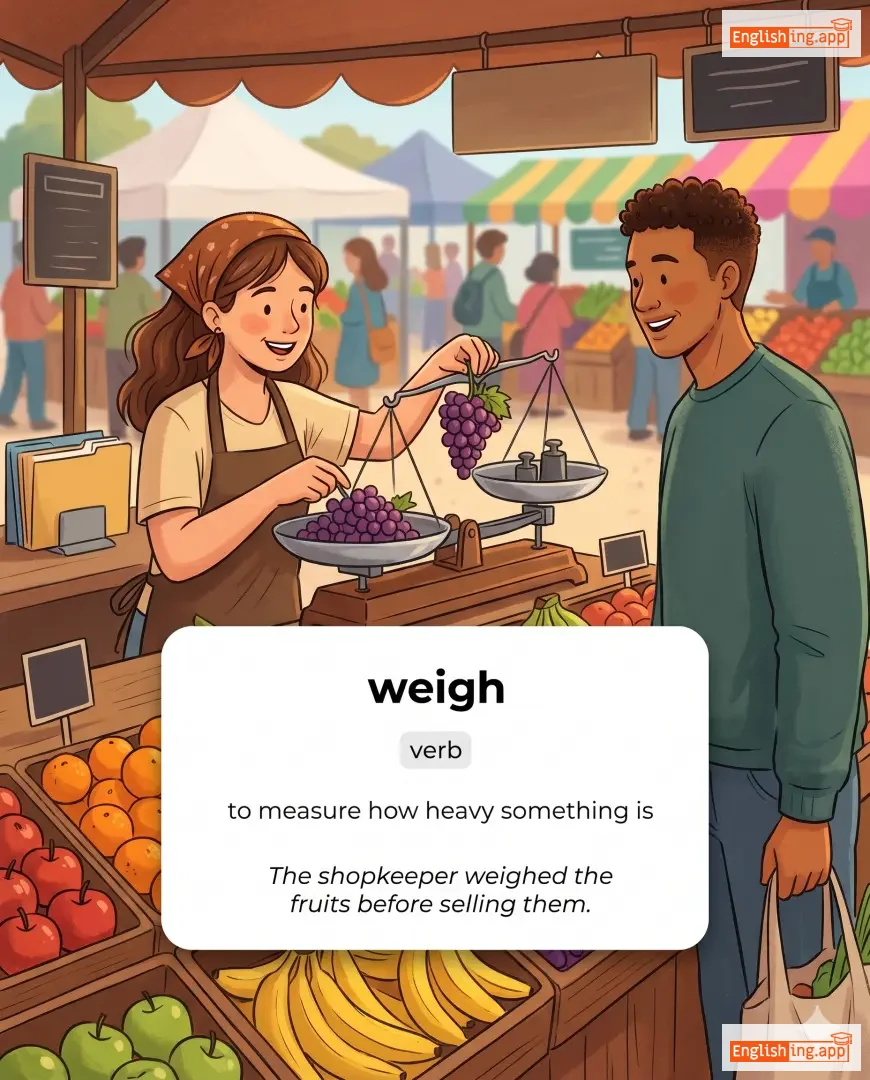
to measure how heavy something is
••••••
|
The shopkeeper weighed the fruits before selling them.
店主在卖水果前称重。
••••••
|
店主在卖水果前称重。
Diànzhǔ zài mài shuǐguǒ qián chēngzhòng.
••••••
|
weigh on someone's mind
让某人烦恼
••••••
|
to make someone worried or anxious
••••••
|
让某人烦恼
ràng mǒu rén fánnǎo
••••••
|
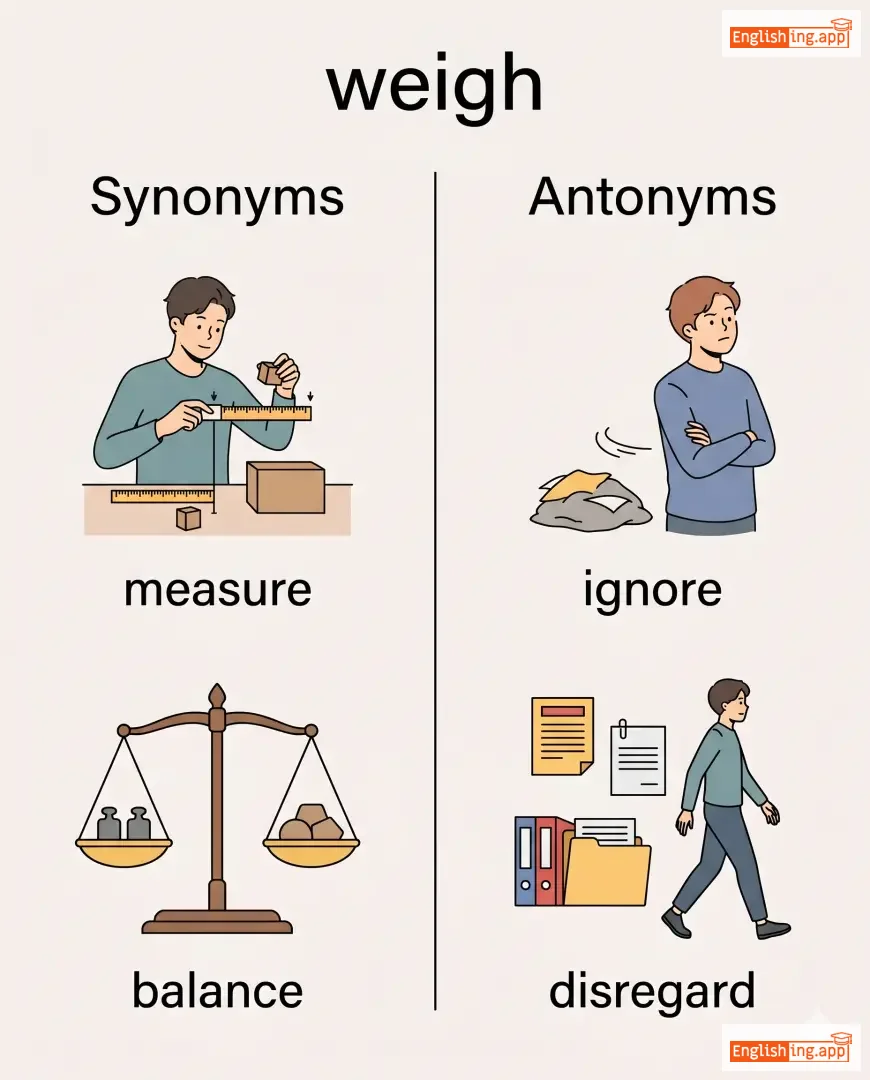
measure, balance, evaluate, calculate
••••••
|
ignore, disregard
••••••
|
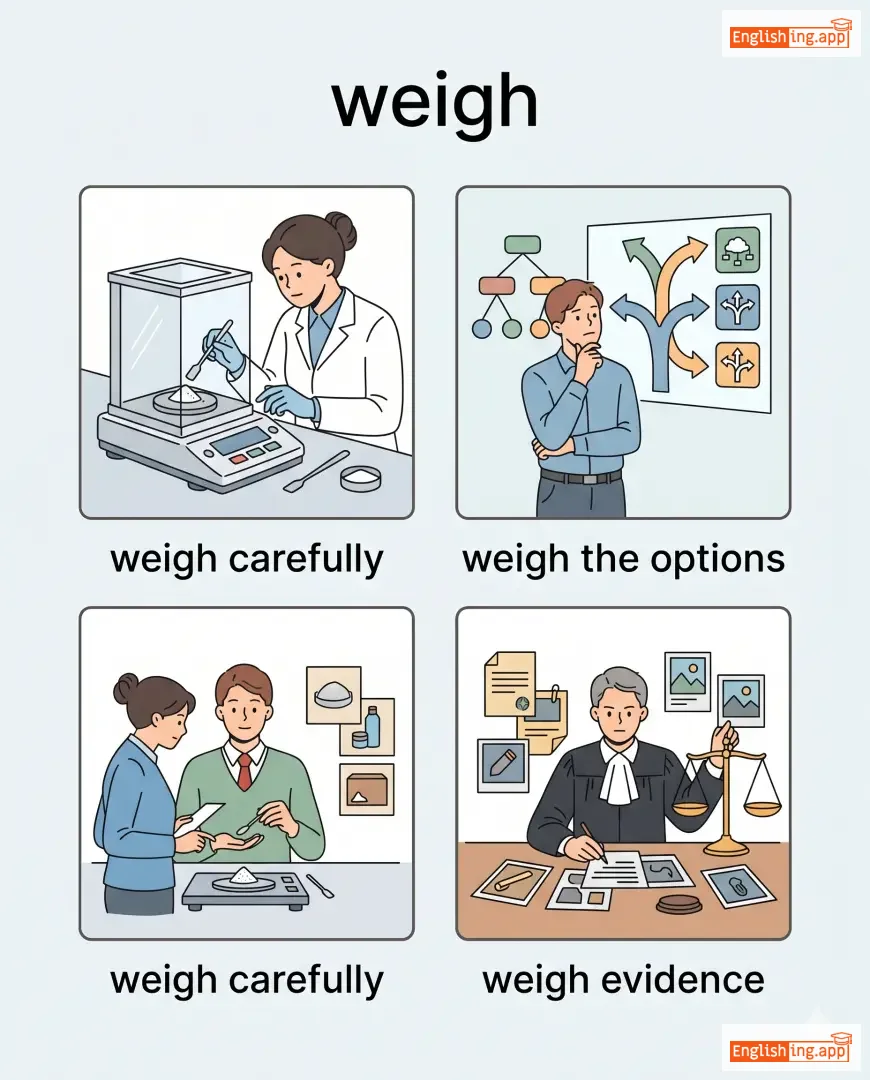
weigh carefully, weigh the options, weigh evidence, weigh anchor
••••••
|
Weigh意味着称重,就像在天平上称重物品一样。
••••••
|
|
🐋
••••••
|
/weɪl/
noun
(wēi ěr)
••••••
|
- •••••• |
鲸鱼
jingyu
••••••
|
- •••••• | - •••••• | - •••••• | - •••••• |
a very large marine mammal that lives in the ocean
••••••
|
We saw a huge whale swimming near the boat. |
我们看到一只巨大的鲸鱼在船旁游泳。
wǒmen kàn dào yī zhī jùdà de jīngyú zài chuán páng yóuyǒng.
••••••
|
a whale of a time |
to have a great or enjoyable time
••••••
|
玩得很开心
wán dé hěn kāixīn
••••••
|
cetacean, mammal, giant, marine animal, leviathan
••••••
|
fish, small creature
••••••
|
blue whale, humpback whale, killer whale, whale watching
••••••
|
Whale 🐋 就是鲸鱼 — 巨大又神奇
••••••
|
|
📍
••••••
|
/weər/
adverb
(威尔)
••••••
|
- •••••• |
哪里
weier
••••••
|
- •••••• | - •••••• | - •••••• | - •••••• |
In or to what place or position; used to inquire about location
••••••
|
Where did you put my keys?
你把我的钥匙放在哪里?
••••••
|
你把我的钥匙放在哪里?
nibawowodeyaoshifangzainali
••••••
|
- •••••• | - •••••• | - •••••• |
whereabouts, whither
••••••
|
here, there
••••••
|
where are you, where to go, where from
••••••
|
Where = WeiEr, 哪里 = nali; 想象一个地图指向 WeiEr 在 nali 找钥匙
••••••
|
|
❓
••••••
|
/wɪtʃ/
pronoun
(wɪtʃ)
••••••
|
- •••••• |
哪个
nǎ ge
••••••
|
- •••••• | - •••••• | - •••••• | - •••••• |
used to ask about one or more items from a defined set
••••••
|
Which one do you prefer, the red or the blue? |
你更喜欢哪个,红色还是蓝色?
Nǐ gèng xǐ huān nǎ ge, hóng sè hái shì lán sè?
••••••
|
- •••••• | - •••••• | - •••••• |
what, that, who
••••••
|
none
••••••
|
which one, which way, which time
••••••
|
Which in Chinese is 'nǎ ge', it helps you choose!
••••••
|
|
⏳
••••••
|
/waɪl/
conjunction
(wail)
••••••
|
- •••••• |
当...的时候
dāng ... de shíhòu
••••••
|
- •••••• | - •••••• | - •••••• | - •••••• |
during the time that something is happening
••••••
|
She was reading while waiting for the bus.
她在等公交车时正在读书。
••••••
|
她在等公交车时正在读书。
Tā zài děng gōngjiāo chē shí zhèngzài dúshū.
••••••
|
- •••••• | - •••••• | - •••••• |
as, when, during
••••••
|
none
••••••
|
while waiting, while studying, while traveling
••••••
|
当你等候时,记住中文的 '当...的时候'!
••••••
|
|
⚪
••••••
|
/waɪt/
adjective
(wài tè)
••••••
|
- •••••• |
白色; 纯净
bái sè; chún jìng
••••••
|
- •••••• | - •••••• | - •••••• | - •••••• |
of the color of snow or milk; pale; pure
••••••
|
She wore a beautiful white dress to the wedding.
她穿着一件美丽的白色婚纱参加婚礼。
••••••
|
她穿着一件美丽的白色婚纱参加婚礼。
Tā chuānzhuó yī jiàn měilì de báisè hūnshā cānjiā hūnlǐ.
••••••
|
- •••••• | - •••••• | - •••••• |
pale, colorless, snow-white, ivory
••••••
|
black, dark, colored
••••••
|
white paper, white shirt, white house
••••••
|
In Chinese, '白色' means 'white', just like milk!
••••••
|
|
🔵
••••••
|
/hoʊl/
adjective
(霍尔)
••••••
|
- •••••• |
整个
zhengge
••••••
|
- •••••• | - •••••• | - •••••• | - •••••• |
complete; entire; all of something
••••••
|
He ate the whole pizza by himself.
希 吃 德 霍尔 匹萨 拜 希姆塞尔夫。
••••••
|
他一个人把整张披萨吃光了。
ta yige ren ba zheng zhang piza chi guang le
••••••
|
- •••••• | - •••••• | - •••••• |
complete, entire, total, full
••••••
|
partial, incomplete, broken, fragmented
••••••
|
whole story, whole family, whole day
••••••
|
整个 (zhengge) = whole — 想像整张披萨 zhengge pizza
••••••
|
|
📱
••••••
|
/huːz/
pronoun
(húz)
••••••
|
- •••••• |
谁的
shéi de
••••••
|
- •••••• | - •••••• | - •••••• | - •••••• |
used to ask or talk about the person or thing that owns something
••••••
|
The girl whose phone was stolen is my cousin. |
那个女孩,手机被偷了,是我的表妹。
Nàgè nǚhái, shǒujī bèi tōu le, shì wǒ de biǎomèi.
••••••
|
- •••••• | - •••••• | - •••••• |
who's, that person’s, of whom
••••••
|
none
••••••
|
whose phone, whose book, whose idea
••••••
|
Whose phone is this? – 'Whose' connects to 'Shéi de diànhuà'.
••••••
|
|
↔️
••••••
|
/ˈwaɪdən/
verb
(widen)
••••••
|
|
拓宽
tuò kuān
••••••
|
widened
widened
••••••
|
widened
widened
••••••
|
widens
widens
••••••
|
widening
widening
••••••
|
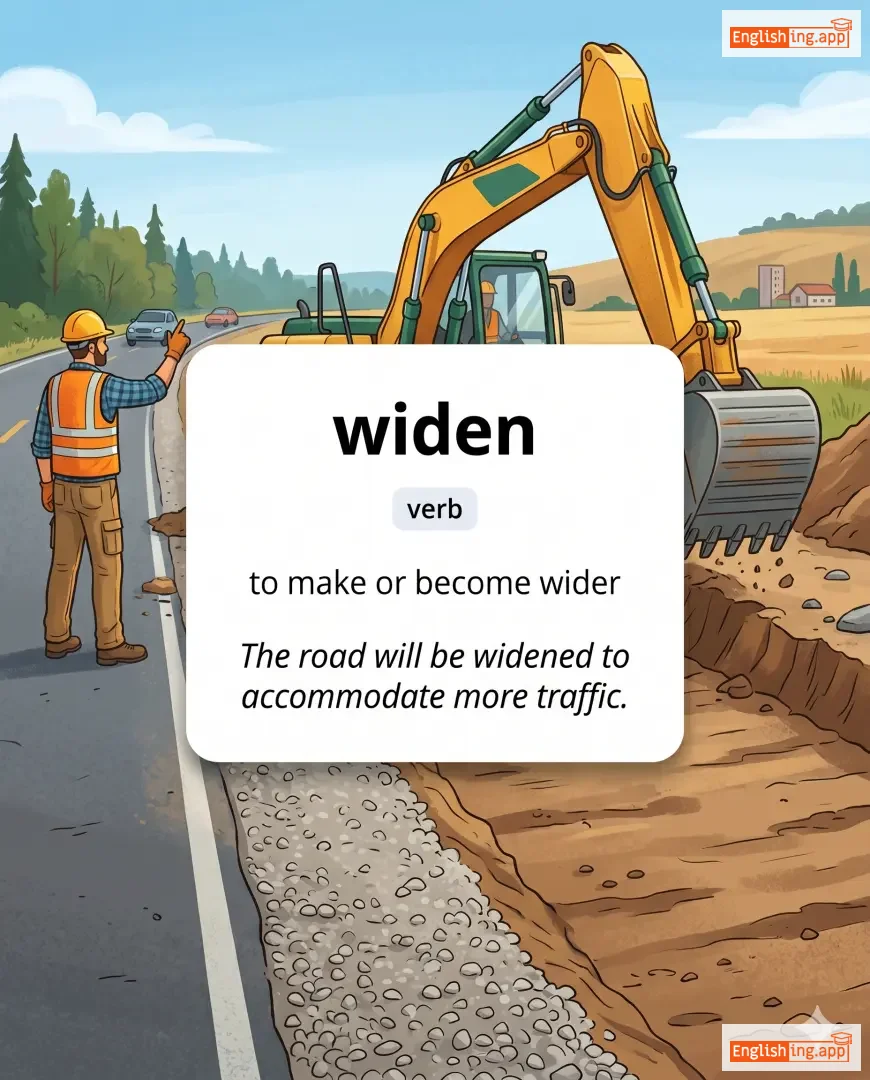
to make or become wider or broader
••••••
|
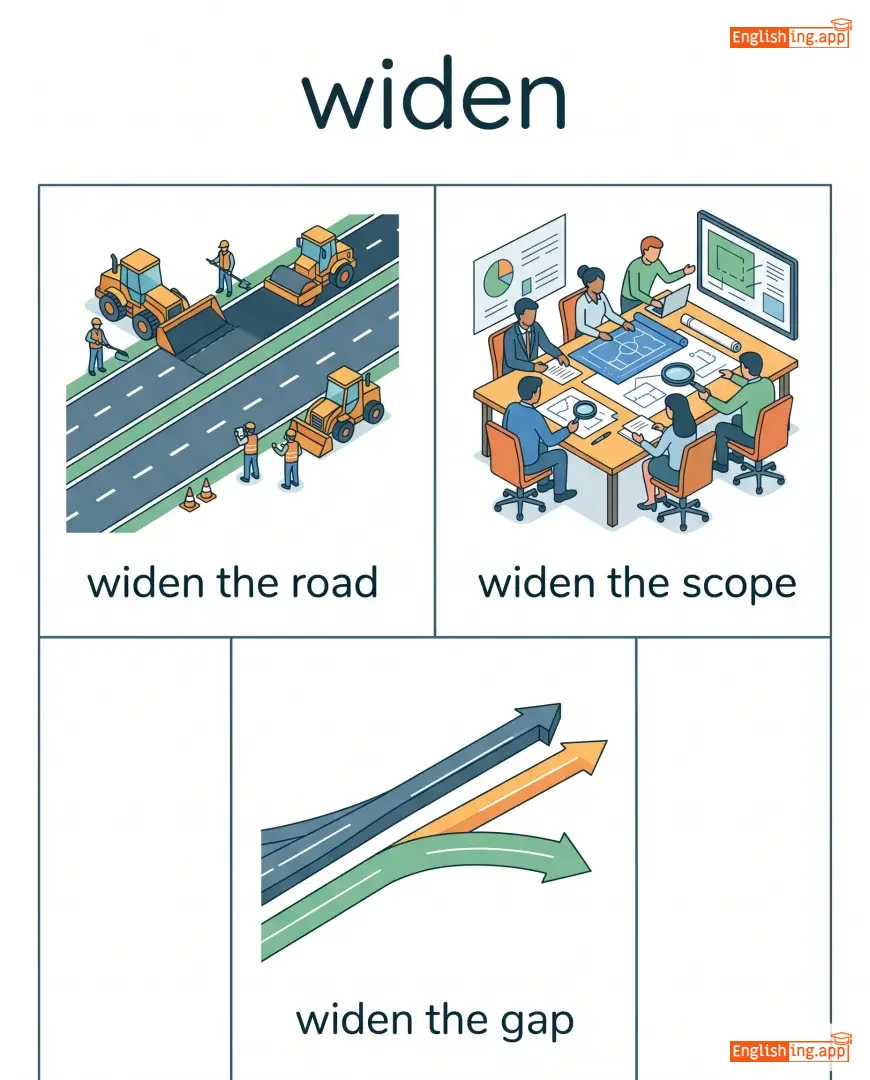
They plan to widen the road next year.
他们计划在明年拓宽这条路。
••••••
|
他们计划在明年拓宽这条路。
Tāmen jìhuà zài míngnián tuòkuān zhè tiáo lù.
••••••
|
- •••••• | - •••••• | - •••••• |
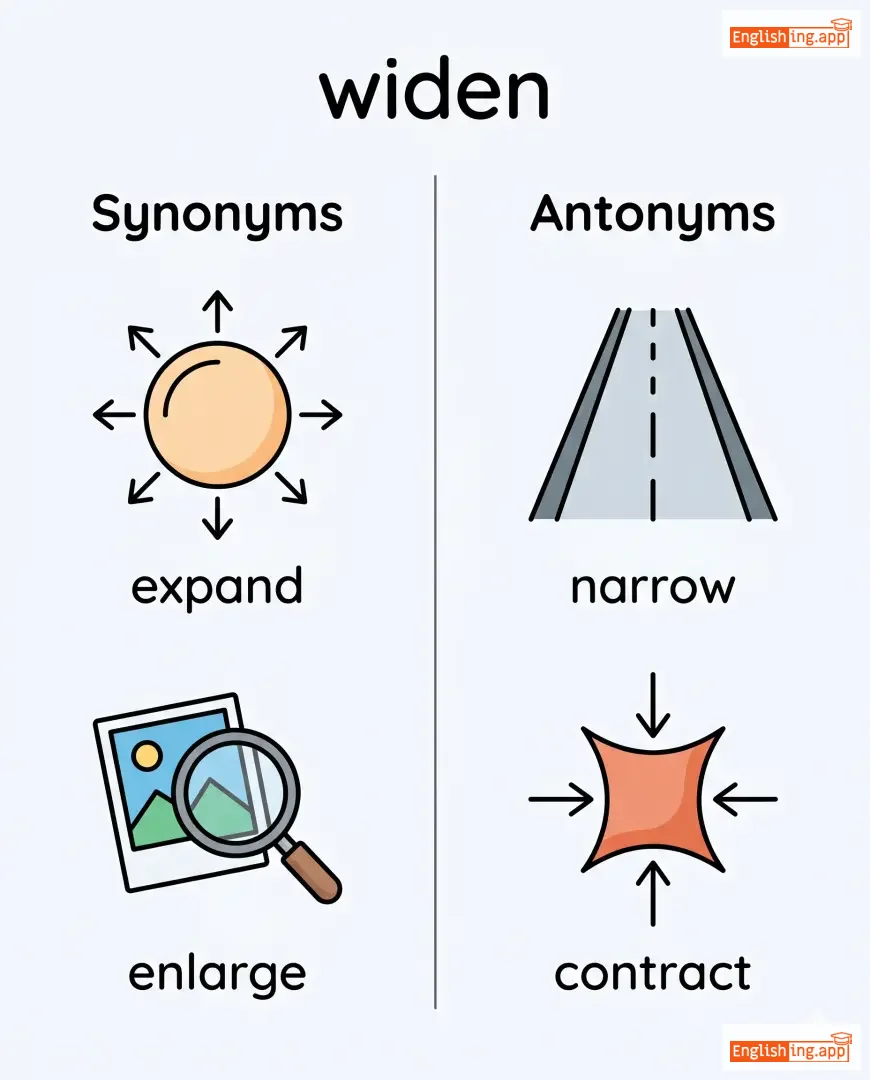
broaden, expand, extend, enlarge
••••••
|
narrow, reduce, contract, shrink
••••••
|
widen road, widen gap, widen range, gradually widen
••••••
|
拓宽,让道路变得更宽广。
••••••
|
|
↔️
••••••
|
/wɪdθ/
noun
(wɪdθ)
••••••
|
- •••••• |
宽度; 广度
kuandu; guangdu
••••••
|
- •••••• | - •••••• | - •••••• | - •••••• |
the measurement or extent of something from side to side; breadth
••••••
|
The width of the river is about 50 meters.
河流的宽度大约为50米。
••••••
|
河流的宽度大约为50米。
Heliu de kuandu dayue wei 50 mi.
••••••
|
- •••••• | - •••••• | - •••••• |
breadth, span, extent
••••••
|
length, height, narrowness
••••••
|
full width, average width, total width
••••••
|
想象河流的宽度来记住'width'的意思。
••••••
|
|
👩
••••••
|
/ˈwɪmən/
noun
(wɪmən)
••••••
|
- •••••• |
女人
nǚrén
••••••
|
- •••••• | - •••••• | - •••••• | - •••••• |
an adult human female
••••••
|
The woman at the counter helped me. |
柜台上的女人帮了我。
Guìtái shàng de nǚrén bāngle wǒ.
••••••
|
- •••••• | - •••••• | - •••••• |
lady, female, girl, grown-up
••••••
|
man, male
••••••
|
strong woman, independent woman, woman leader
••••••
|
女人 (woman) 是强大的 (qiángdà) - Woman is powerful.
••••••
|
|
🗣️
••••••
|
/wɜːdz/
noun
(wɜːrdz)
••••••
|
|
词语
ciyu
••••••
|
- •••••• | - •••••• | - •••••• | - •••••• |
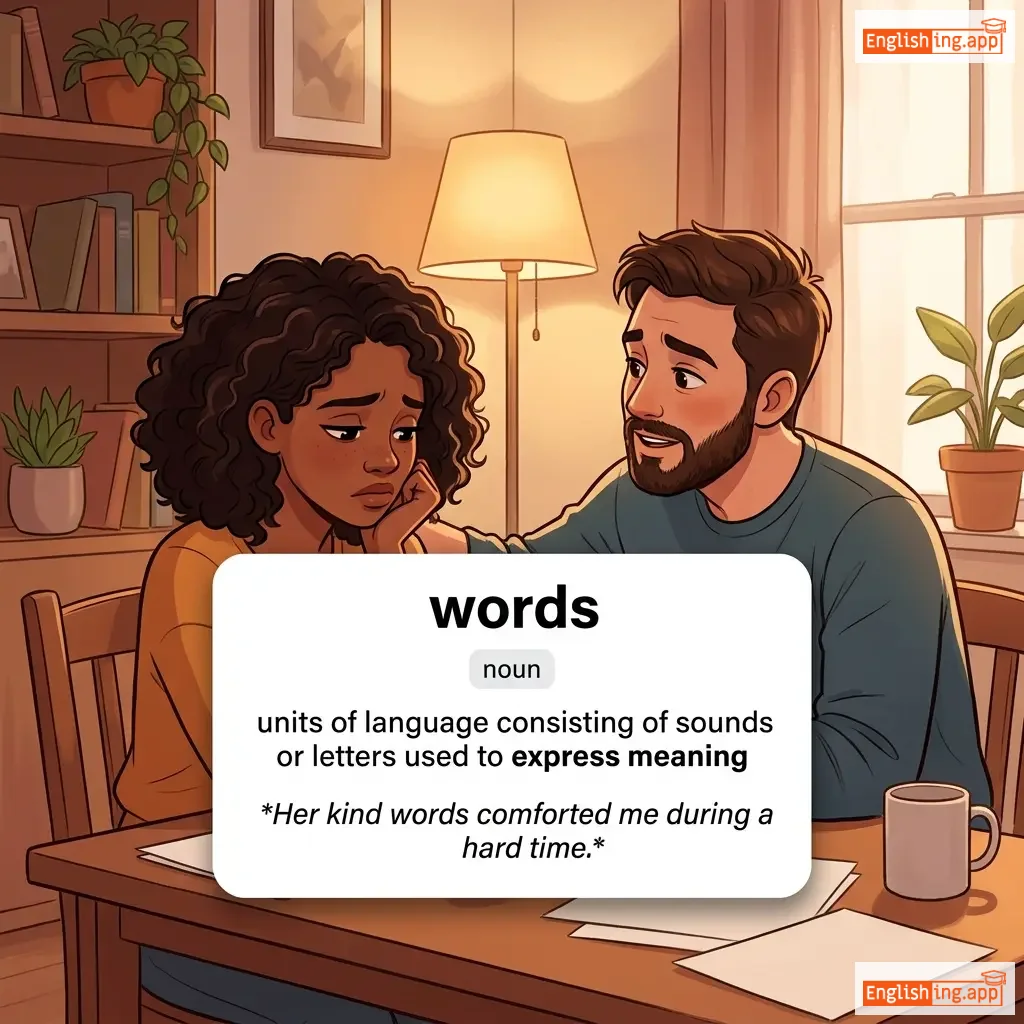
units of language consisting of sounds or letters used to express meaning
••••••
|
Her kind words comforted me during a hard time. |
她温暖的话语在困难时给予了我安慰。
Ta wenruan de huayu zai kunnan shi jiayu le wo anwei.
••••••
|
in other words |
used to express something in a different or clearer way
••••••
|
换句话说
huan ju hua shuo
••••••
|
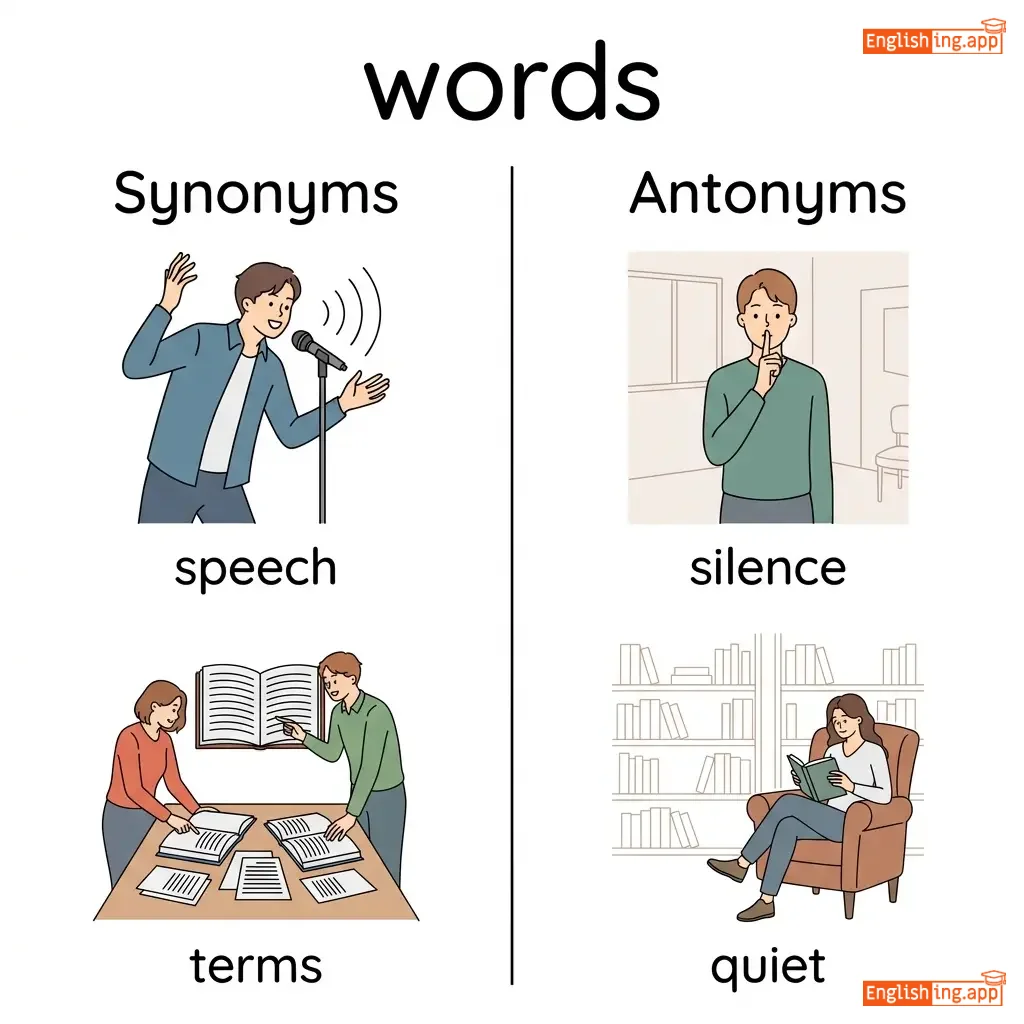
speech, terms, expressions, phrases, language
••••••
|
silence, quiet
••••••
|
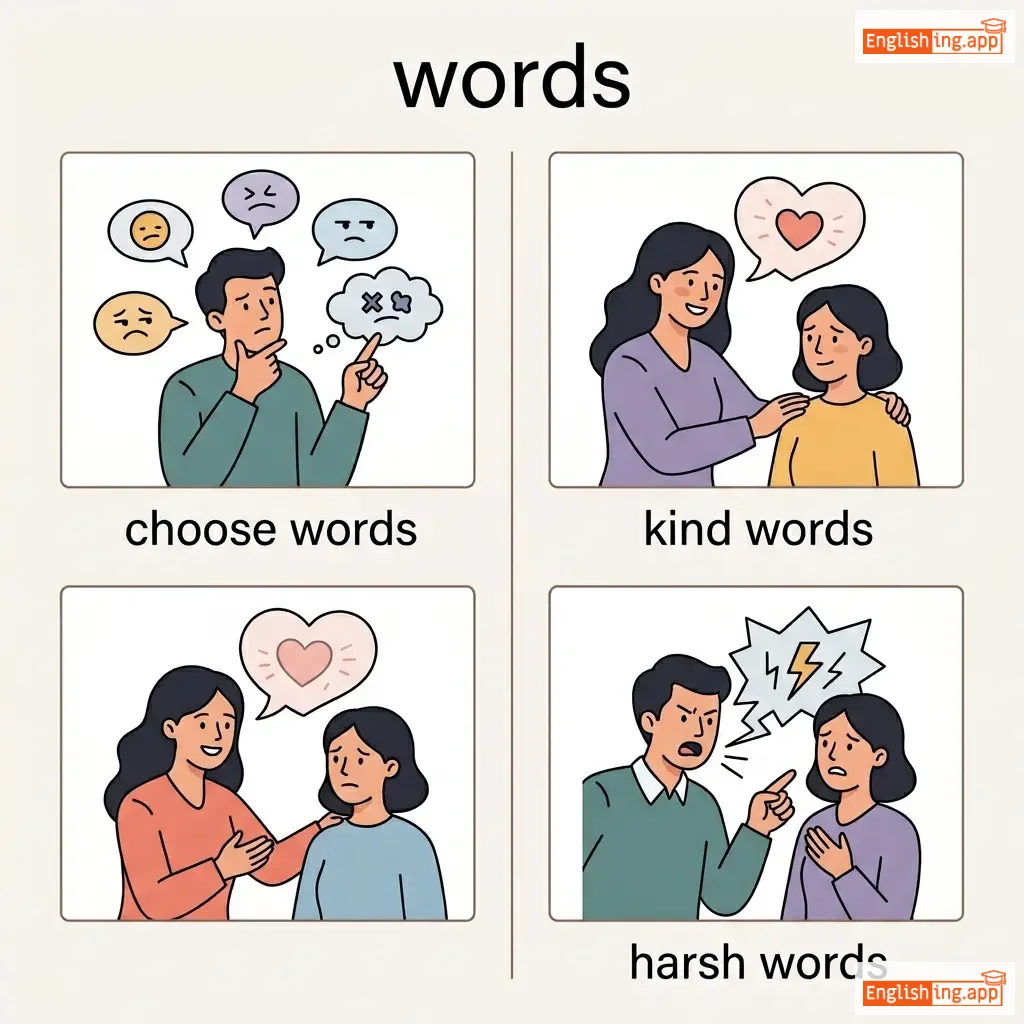
choose words, kind words, harsh words, in other words
••••••
|
Words 就是词语 — 词语让世界沟通
••••••
|
|
🛠️
••••••
|
/wɜːrks/
noun
(wɜːrks)
••••••
|
- •••••• |
作品
zuòpǐn
••••••
|
- •••••• | - •••••• | - •••••• | - •••••• |
the physical or mental effort used to achieve something
••••••
|
Her works have been exhibited in museums worldwide. |
她的作品在世界各地的博物馆中展出。
Tā de zuòpǐn zài shìjiè gèdì de bówùguǎn zhōng zhǎnchū.
••••••
|
- •••••• | - •••••• | - •••••• |
creations, compositions, projects, pieces
••••••
|
idleness, rest
••••••
|
artistic works, literary works, scientific works, hard works
••••••
|
想象一下你的作品在全球博物馆展出。
••••••
|
|
🤔
••••••
|
/wʊd/
verb
(wʊd)
••••••
|
- •••••• |
会
hui
••••••
|
would
wʊd
••••••
|
- •••••• | - •••••• | - •••••• |
used to indicate a future possibility or action in the past
••••••
|
He said he would help me tomorrow.
他说他明天会帮助我。
••••••
|
他说他明天会帮助我。
Tā shuō tā míngtiān huì bāngzhù wǒ.
••••••
|
- •••••• | - •••••• | - •••••• |
might, could, will, shall
••••••
|
won't, can't
••••••
|
would like, would prefer, would rather
••••••
|
使用 '会' 来表示 'would' —— 过去或未来的可能性。
••••••
|

