The Poet Who Inspired a Nation
サビナは才能あるwoman poet whose works は何百万もの心を打ちました。彼女のwordsは力強く、しかしシンプルでした。While 他の詩人たちは複雑なversesを書いていたのに対し、サビナのスタイルはアクセスしやすいものでした。彼女は小さな集まりでwouldパフォーマンスを行い、until 名声が彼女を見つけました。彼女の詩のusualなテーマは社会的正義でした。彼女はvagueではなく、具体的な問題を描写しました。彼女のwholeキャリアは真実に捧げられました。面白い出来事は、パフォーマンス中にサビナのwhiteスカーフがマイクに絡まったことです。彼女は笑いながら続けました。観客は彼女の本物の姿勢を愛しました。批評家たちは彼女のwordsに隠された意味をweighしようとしましたが、サビナはすべてが率直であると主張しました。彼女はシンプルな服装をしていました—華やかなwaist-lengthのコートやジュエリーはありませんでした。彼女の焦点はコンテンツにあり、プレゼンテーションではありませんでした。サビナの詩集は様々な問題に対する視野をwidenedしました。彼女が扱ったwidthのテーマは印象的でした—愛から政治まで。Where他の人々が発言を恐れた場所で、サビナは勇気を持って書きました。彼女は社会的闘争をwhaleにたとえ、逆流を泳いでいるような力強さと脆弱さを描きました。詩のフェスティバル、whichは以前地元のアーティストを無視していたが、彼女を招待し始めました。サビナは本物の声が世代を超えて共鳴することを証明しました。彼女の遺産は未来の詩人たちに心から書くように促しました。
|
絵文字
|
単語 | Images | 翻訳 | 過去 | 過去分詞 | 三人称単数 | 動名詞 | 意味 | 例文 | 例文の翻訳 | 表現例 | 表現例の意味 | 表現例の翻訳 | 同義語 | 対義語 | コロケーション | ニーモニック |
|---|---|---|---|---|---|---|---|---|---|---|---|---|---|---|---|---|---|
|
⏳
••••••
|
/ʌnˈtɪl/
preposition/conjunction
(アンティル)
••••••
|
- •••••• |
まで
made
••••••
|
- •••••• | - •••••• | - •••••• | - •••••• |
up to the time of
••••••
|
I will wait until you come back.
私はあなたが戻るまで待ちます。
••••••
|
私はあなたが戻るまで待ちます。
Watashi wa anata ga modoru made machimasu.
••••••
|
- •••••• | - •••••• | - •••••• |
till, up to
••••••
|
after
••••••
|
until now, until then, wait until
••••••
|
Until you leave the room, you wait until!
••••••
|
|
⬆️
••••••
|
/ˈʌpər/
adjective
(アッパー)
••••••
|
- •••••• |
上部
joubu
••••••
|
- •••••• | - •••••• | - •••••• | - •••••• |
higher in position or rank
••••••
|
The upper floor of the building is under renovation.
建物の上の階は改装中です。
••••••
|
建物の上の階は改装中です。
Tatemono no ue no kai wa kaisouchuu desu.
••••••
|
- •••••• | - •••••• | - •••••• |
higher, top, superior
••••••
|
lower, bottom
••••••
|
upper floor, upper limit, upper part
••••••
|
Upper - 上部を考えて、位置が高い!
••••••
|
|
📅
••••••
|
/ˈjuːʒəl/
adjective
(ユージュアル)
••••••
|
- •••••• |
通常
tsūjō
••••••
|
- •••••• | - •••••• | - •••••• | - •••••• |
habitually or typically occurring or done
••••••
|
It’s our usual meeting spot. |
これは私たちの通常の会議場所です。
Kore wa watashitachi no tsūjō no kaigi basho desu.
••••••
|
- •••••• | - •••••• | - •••••• |
customary, normal, regular
••••••
|
unusual, rare
••••••
|
usual routine, usual time, usual place
••••••
|
Usual - 通常は最良です!
••••••
|
|
🌫️
••••••
|
/veɪɡ/
adjective
(ベイグ)
••••••
|
- •••••• |
曖昧
aimai
••••••
|
- •••••• | - •••••• | - •••••• | - •••••• |
Not clearly expressed, known, described, or decided.
••••••
|
Her explanation was so vague that nobody understood the plan. |
彼女の説明はあまりにも曖昧だったので、誰も計画を理解できませんでした。
Kanojo no setsumei wa amarimono aimai datta node, daremo keikaku o rikai dekimasen deshita.
••••••
|
vague idea |
An unclear or uncertain thought or notion.
••••••
|
曖昧なアイデア
aimai na aidea
••••••
|
unclear, indistinct, ambiguous, hazy, indefinite
••••••
|
clear, definite, precise
••••••
|
vague idea, vague notion, vague feeling, vague impression
••••••
|
Vagueは曖昧—ベイグ(明確でない)アイデア
••••••
|
|
📖
••••••
|
/vɜːrs/
noun
(ヴァース)
••••••
|
- •••••• |
詩句
shikyoku
••••••
|
- •••••• | - •••••• | - •••••• | - •••••• |
A line of writing in poetry; a section of a song or poem.
••••••
|
She wrote a beautiful verse for the wedding ceremony. |
彼女は結婚式のために美しい詩句を書きました。
Kanojo wa kekkonshiki no tame ni utsukushī shikyoku o kakimashita.
••••••
|
learn by heart a verse |
To memorize a verse completely.
••••••
|
詩句を暗記する
Shikyoku o anki suru
••••••
|
stanza, line, poetry, rhyme, lyric
••••••
|
prose, essay
••••••
|
recite a verse, write a verse, verse of a song, biblical verse
••••••
|
ヴァースは詩の行を意味し、詩句がたくさんの韻を含むと想像してください。
••••••
|
|
🧍♂️
••••••
|
/weɪst/
noun
(ウェイスト)
••••••
|
- •••••• |
ウエスト
uesuto
••••••
|
- •••••• | - •••••• | - •••••• | - •••••• |
the part of the human body between the ribs and the hips
••••••
|
He tied a belt around his waist. |
彼はウエストにベルトを巻いた。
Kare wa uesuto ni beruto o maita.
••••••
|
waist of time |
a pun meaning something or someone that wastes time
••••••
|
時間の無駄
jikan no muda
••••••
|
midsection, torso, abdomen, stomach
••••••
|
head, foot
••••••
|
slim waist, narrow waist, waist belt, around the waist
••••••
|
Waistはウエスト、‘waist belt’はウエストに巻くもの!
••••••
|
|
⚖️
••••••
|
/weɪ/
verb
(ウェイ)
••••••
|
|
重さを量る
omosa o hakaru
••••••
|
weighed
ウェイド
••••••
|
weighed
ウェイド
••••••
|
weighs
ウェイズ
••••••
|
weighing
ウェイイング
••••••
|
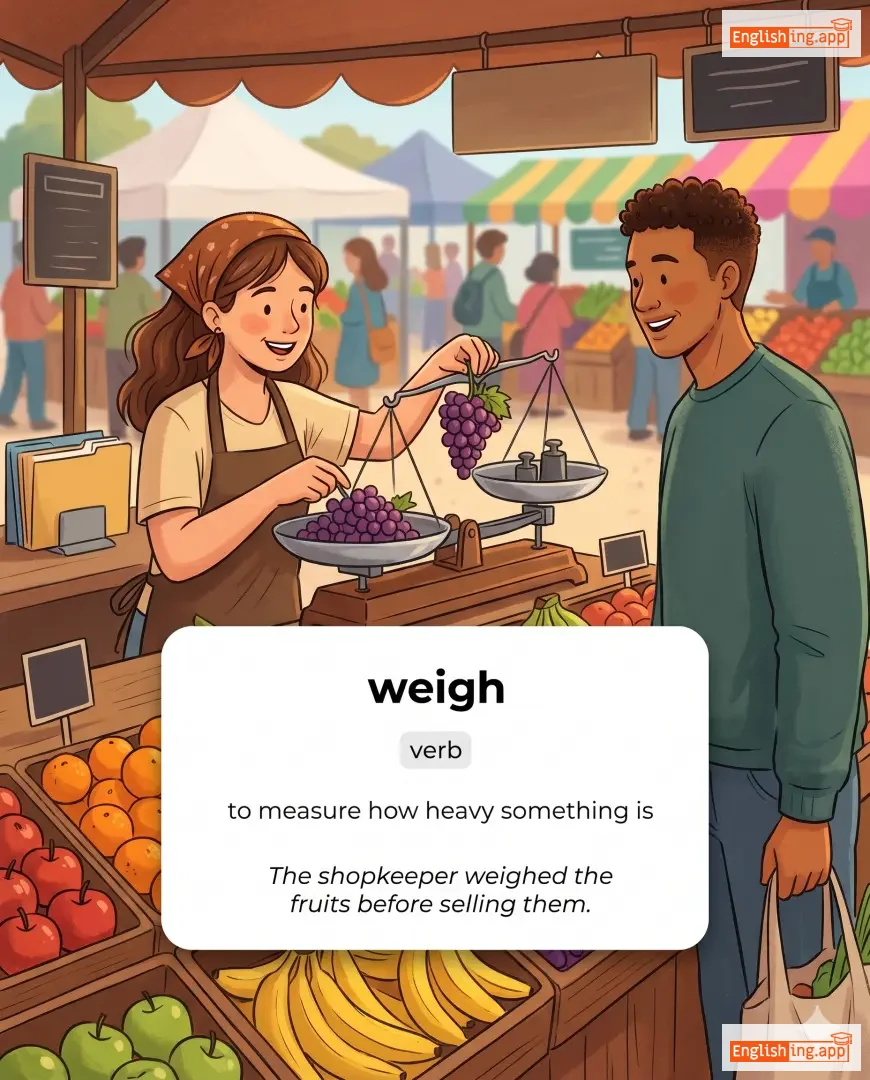
to measure how heavy something is
••••••
|
The shopkeeper weighed the fruits before selling them.
店主は果物を販売する前に重さを量った。
••••••
|
店主は果物を販売する前に重さを量った。
Ten-shu wa kudamono o hanbai suru mae ni omosa o hakatta.
••••••
|
weigh on someone's mind
誰かの心に重くのしかかる
••••••
|
to make someone worried or anxious
••••••
|
誰かの心に重くのしかかる
dareka no kokoro ni omoku noshikakaru
••••••
|
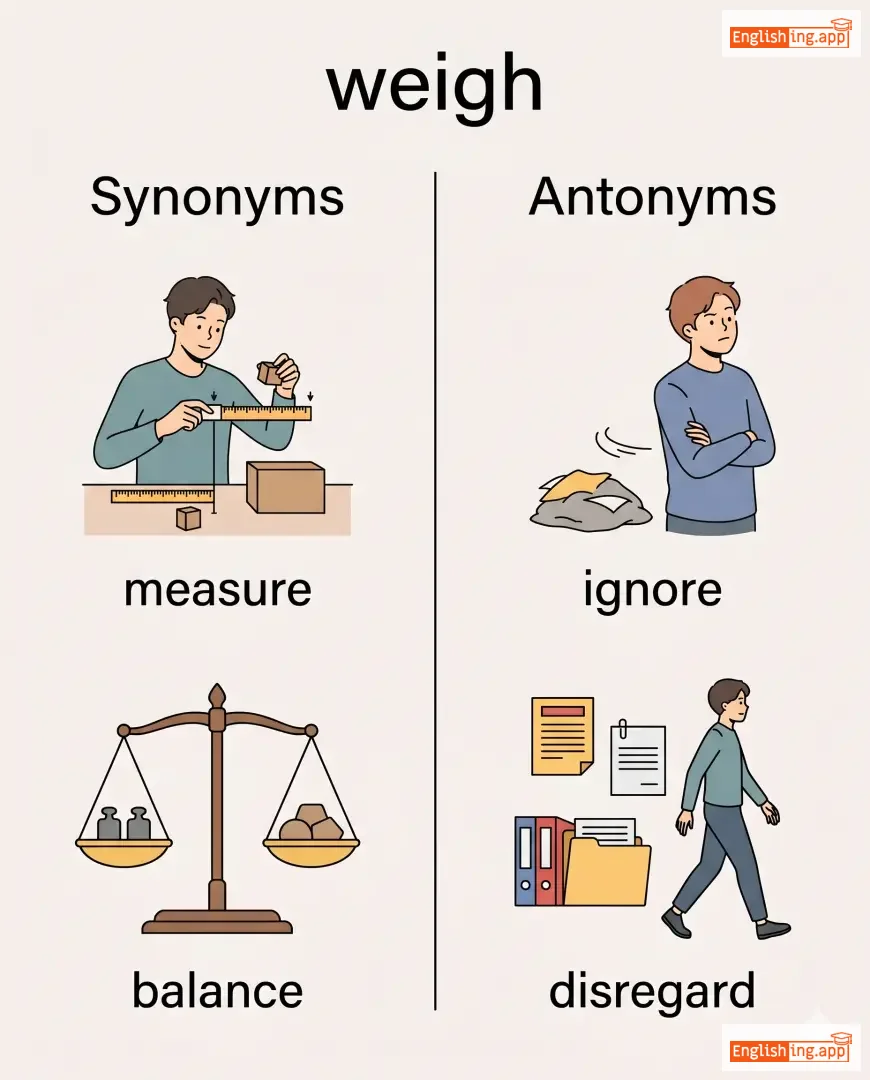
measure, balance, evaluate, calculate
••••••
|
ignore, disregard
••••••
|
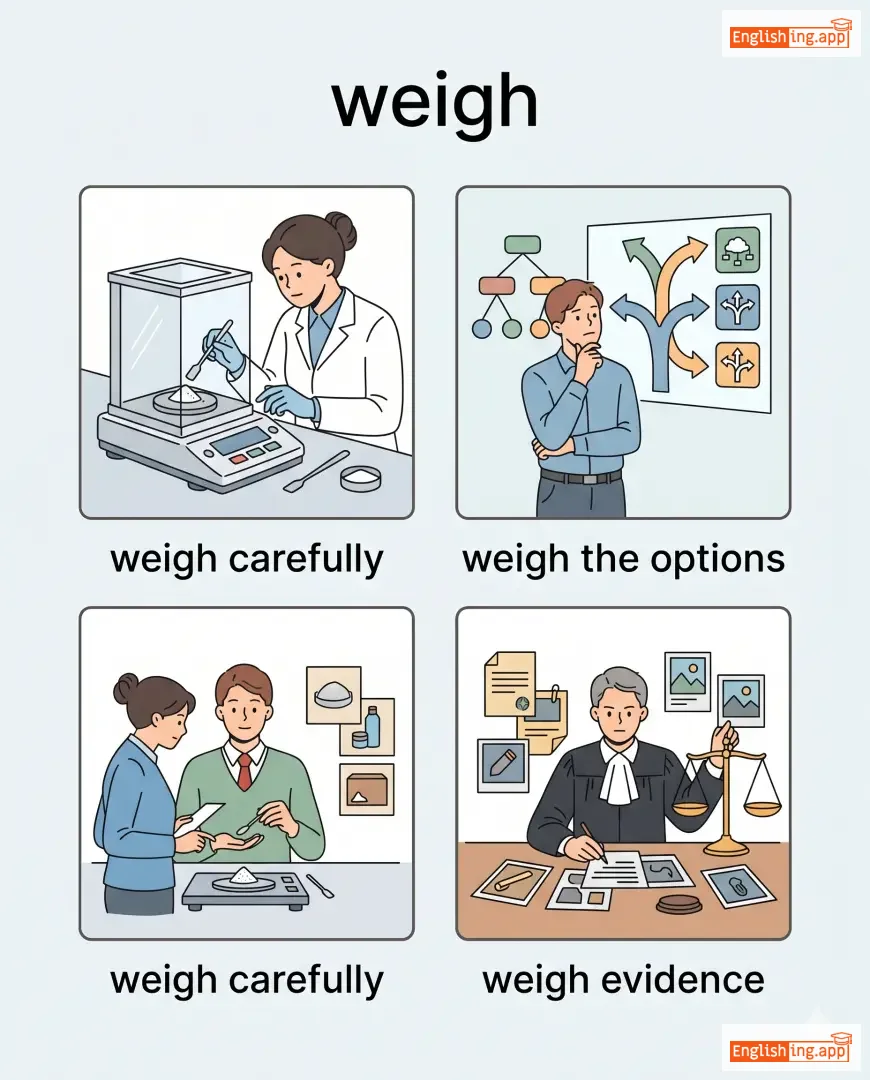
weigh carefully, weigh the options, weigh evidence, weigh anchor
••••••
|
Weighは重さを量ること、体重計で体重を量る時と同じ。
••••••
|
|
🐋
••••••
|
/weɪl/
noun
(ウェール)
••••••
|
- •••••• |
クジラ
kujira
••••••
|
- •••••• | - •••••• | - •••••• | - •••••• |
a very large marine mammal that lives in the ocean
••••••
|
We saw a huge whale swimming near the boat. |
私たちはボートの近くで巨大なクジラが泳いでいるのを見ました。
Watashitachi wa bōto no chikaku de kyodaina kujira ga oyoide iru no o mimashita.
••••••
|
a whale of a time |
to have a great or enjoyable time
••••••
|
素晴らしい時間を過ごす
Subarashī jikan o sugosu
••••••
|
cetacean, mammal, giant, marine animal, leviathan
••••••
|
fish, small creature
••••••
|
blue whale, humpback whale, killer whale, whale watching
••••••
|
Whale 🐋 はクジラ — 巨大で素晴らしい!
••••••
|
|
📍
••••••
|
/weər/
adverb
(どこ)
••••••
|
- •••••• |
どこ
doko
••••••
|
- •••••• | - •••••• | - •••••• | - •••••• |
In or to what place or position; used to inquire about location
••••••
|
Where did you put my keys?
私の鍵をどこに置きましたか?
••••••
|
私の鍵をどこに置きましたか?
watashi no kagi o doko ni okimashita ka
••••••
|
- •••••• | - •••••• | - •••••• |
whereabouts, whither
••••••
|
here, there
••••••
|
where are you, where to go, where from
••••••
|
Doko is Where in Japanese; picture a detective dog asking 'Where's my key?' どこ
••••••
|
|
❓
••••••
|
/wɪtʃ/
pronoun
(wɪtʃ)
••••••
|
- •••••• |
どれ
dore
••••••
|
- •••••• | - •••••• | - •••••• | - •••••• |
used to ask about one or more items from a defined set
••••••
|
Which one do you prefer, the red or the blue? |
赤と青、どちらを選びますか?
Aka to ao, dochira o erabimasu ka?
••••••
|
- •••••• | - •••••• | - •••••• |
what, that, who
••••••
|
none
••••••
|
which one, which way, which time
••••••
|
Which in Japanese is 'dore', to help you pick!
••••••
|
|
⏳
••••••
|
/waɪl/
conjunction
(ワイル)
••••••
|
- •••••• |
その間
sono aida
••••••
|
- •••••• | - •••••• | - •••••• | - •••••• |
during the time that something is happening
••••••
|
She was reading while waiting for the bus.
彼女はバスを待っている間に読書をしていた。
••••••
|
彼女はバスを待っている間に読書をしていた。
Kanojo wa basu wo matteiru aida ni dokusho wo shite ita.
••••••
|
- •••••• | - •••••• | - •••••• |
as, when, during
••••••
|
none
••••••
|
while waiting, while studying, while traveling
••••••
|
あなたが待っている間、'その間'を日本語で考えて!
••••••
|
|
⚪
••••••
|
/waɪt/
adjective
(ワイト)
••••••
|
- •••••• |
白; 純粋
shiro; junsui
••••••
|
- •••••• | - •••••• | - •••••• | - •••••• |
of the color of snow or milk; pale; pure
••••••
|
She wore a beautiful white dress to the wedding.
彼女は結婚式に美しい白いドレスを着ていました。
••••••
|
彼女は結婚式に美しい白いドレスを着ていました。
Kanojo wa kekkonshiki ni utsukushii shiroi doresu o kite imashita.
••••••
|
- •••••• | - •••••• | - •••••• |
pale, colorless, snow-white, ivory
••••••
|
black, dark, colored
••••••
|
white paper, white shirt, white house
••••••
|
In Japanese, '白' (shiro) means 'white', like snow!
••••••
|
|
🔵
••••••
|
/hoʊl/
adjective
(ホール)
••••••
|
- •••••• |
丸ごと
marugoto
••••••
|
- •••••• | - •••••• | - •••••• | - •••••• |
complete; entire; all of something
••••••
|
He ate the whole pizza by himself.
ヒー エイト ザ ホール ピザ バイ ヒムセルフ。
••••••
|
彼はピザを丸ごと一人で食べた。
kare wa piza o marugoto hitori de tabeta
••••••
|
- •••••• | - •••••• | - •••••• |
complete, entire, total, full
••••••
|
partial, incomplete, broken, fragmented
••••••
|
whole story, whole family, whole day
••••••
|
丸ごと (marugoto) = whole — imagine marugoto pizza
••••••
|
|
📱
••••••
|
/huːz/
pronoun
(フーズ)
••••••
|
- •••••• |
誰の
dare no
••••••
|
- •••••• | - •••••• | - •••••• | - •••••• |
used to ask or talk about the person or thing that owns something
••••••
|
The girl whose phone was stolen is my cousin. |
電話が盗まれた女の子は私のいとこです。
Denwa ga nusumareta onnanoko wa watashi no itoko desu.
••••••
|
- •••••• | - •••••• | - •••••• |
who's, that person’s, of whom
••••••
|
none
••••••
|
whose phone, whose book, whose idea
••••••
|
Whose phone is this? – 'Whose' connects to 'Dare no denwa'.
••••••
|
|
↔️
••••••
|
/ˈwaɪdən/
verb
(widen)
••••••
|
|
広げる
hirogeru
••••••
|
widened
widened
••••••
|
widened
widened
••••••
|
widens
widens
••••••
|
widening
widening
••••••
|
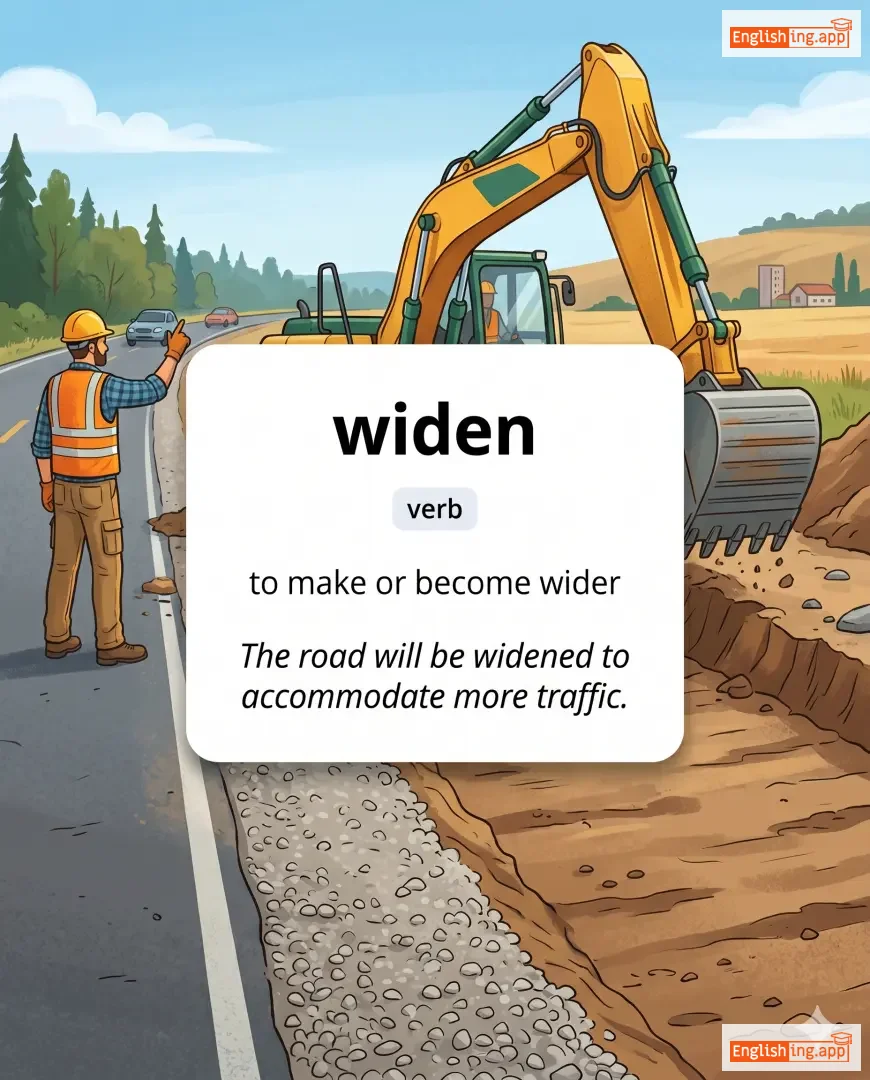
to make or become wider or broader
••••••
|
They plan to widen the road next year.
彼らは来年、道路を広げる予定です。
••••••
|
彼らは来年、道路を広げる予定です。
Karera wa rainen, dōro o hirogeru yotei desu.
••••••
|
- •••••• | - •••••• | - •••••• |
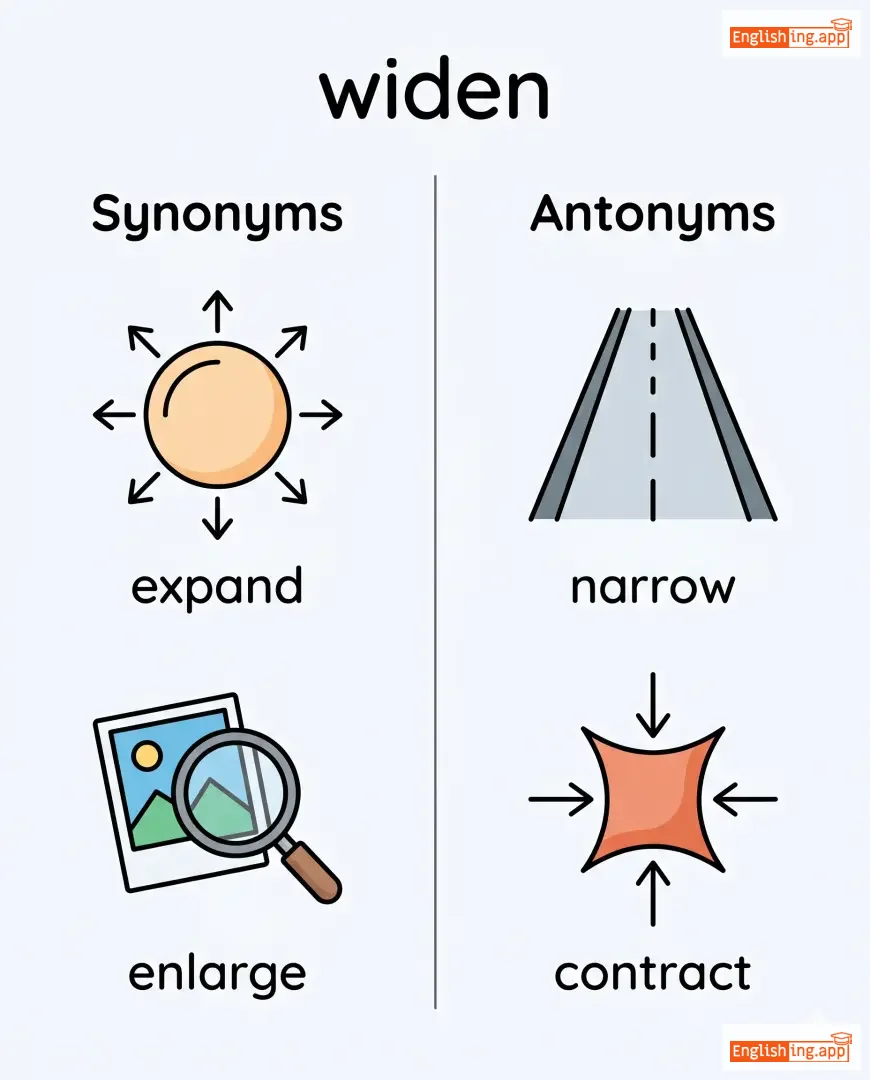
broaden, expand, extend, enlarge
••••••
|
narrow, reduce, contract, shrink
••••••
|
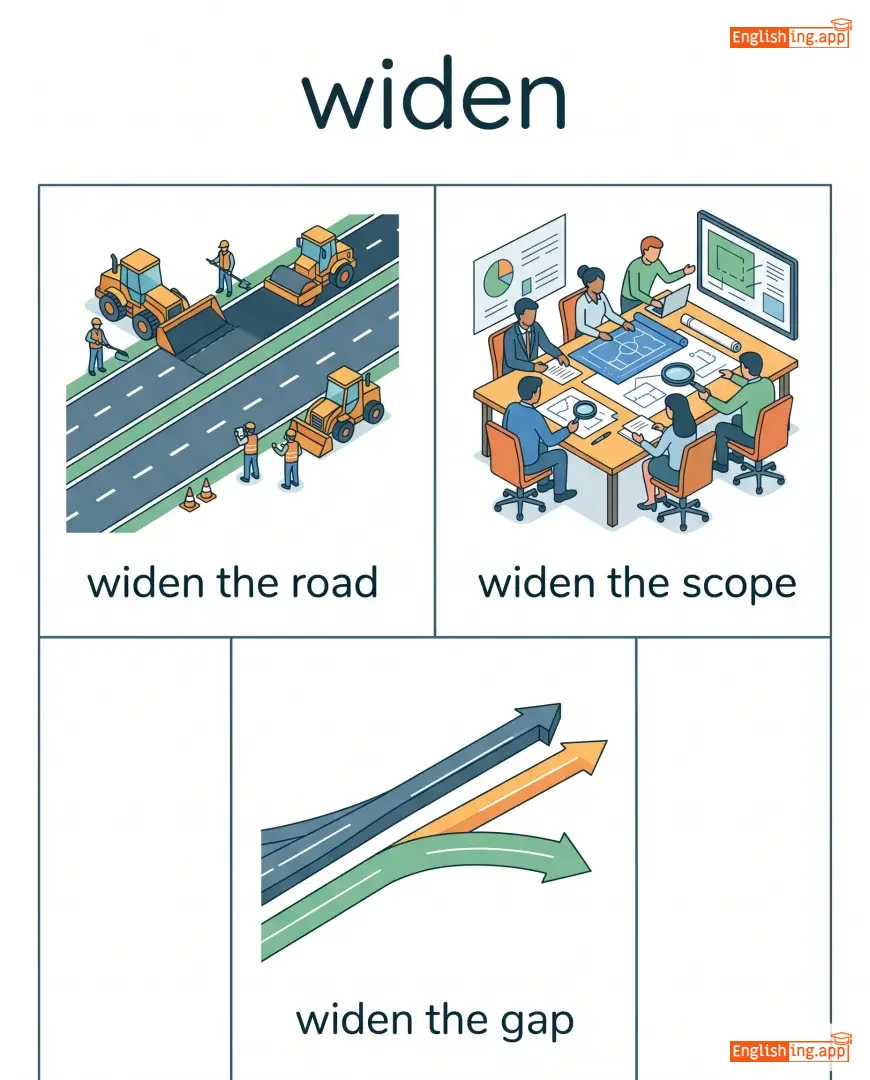
widen road, widen gap, widen range, gradually widen
••••••
|
広げるは、道路が広くなるようにすること。
••••••
|
|
↔️
••••••
|
/wɪdθ/
noun
(ウィズス)
••••••
|
- •••••• |
幅; 広がり
haba; hirogari
••••••
|
- •••••• | - •••••• | - •••••• | - •••••• |
the measurement or extent of something from side to side; breadth
••••••
|
The width of the river is about 50 meters.
川の幅は約50メートルです。
••••••
|
川の幅は約50メートルです。
Kawa no haba wa yaku gojuu meetoru desu.
••••••
|
- •••••• | - •••••• | - •••••• |
breadth, span, extent
••••••
|
length, height, narrowness
••••••
|
full width, average width, total width
••••••
|
幅を覚えるために川を思い浮かべてください。
••••••
|
|
👩
••••••
|
/ˈwɪmən/
noun
(ウィメン)
••••••
|
- •••••• |
女性
josei
••••••
|
- •••••• | - •••••• | - •••••• | - •••••• |
an adult human female
••••••
|
The woman at the counter helped me. |
カウンターにいる女性が私を助けてくれました。
Kauntaa ni iru josei ga watashi o tasukete kuremashita.
••••••
|
- •••••• | - •••••• | - •••••• |
lady, female, girl, grown-up
••••••
|
man, male
••••••
|
strong woman, independent woman, woman leader
••••••
|
女性 (josei) は常に強い (tsuyoi) - Women are always strong.
••••••
|
|
🗣️
••••••
|
/wɜːdz/
noun
(wɜːrdz)
••••••
|
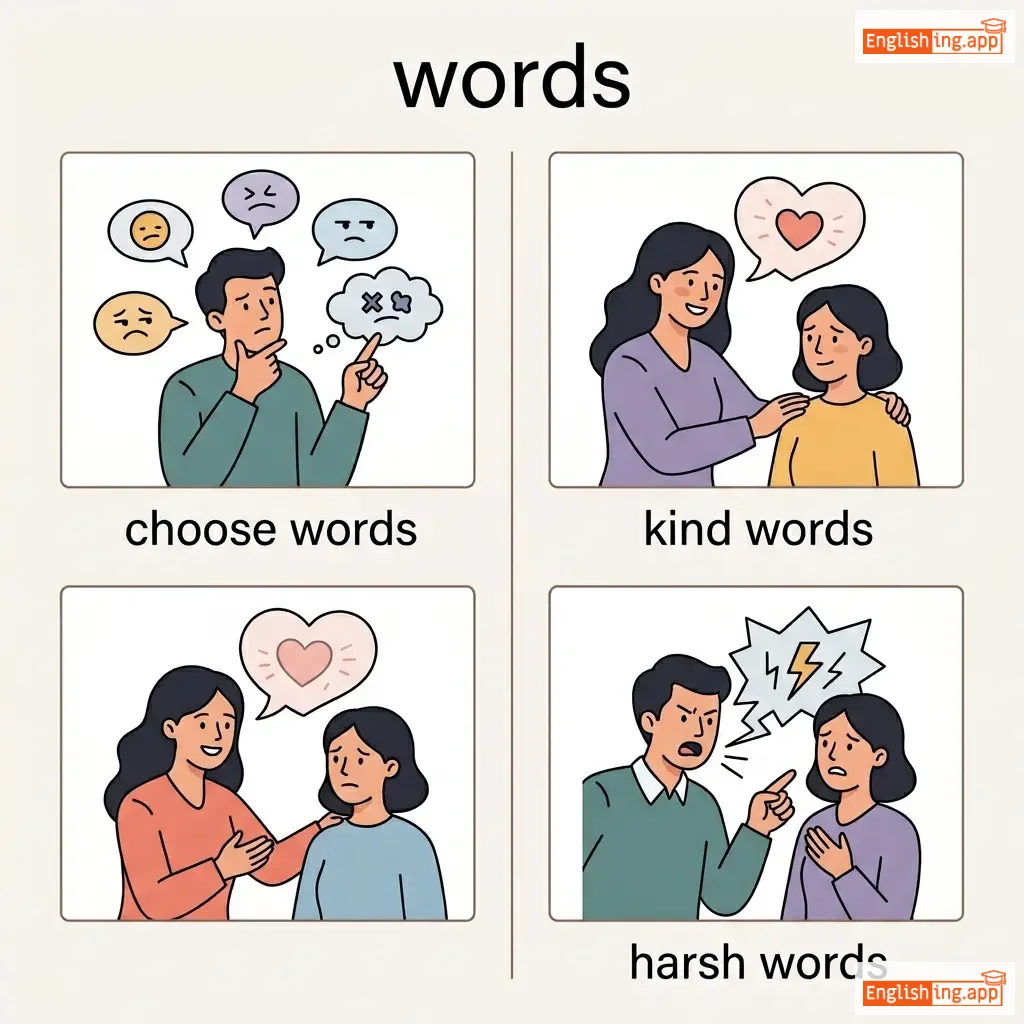
|
言葉
kotoba
••••••
|
- •••••• | - •••••• | - •••••• | - •••••• |
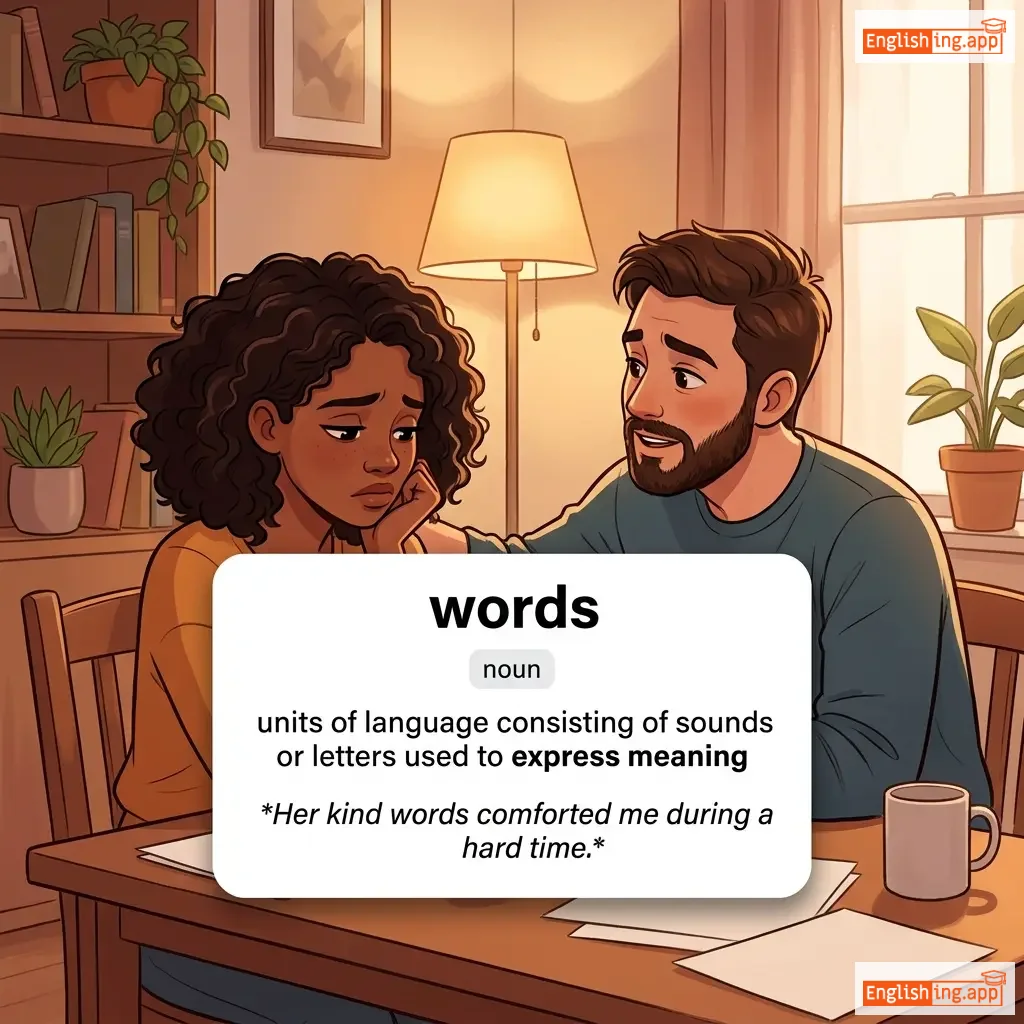
units of language consisting of sounds or letters used to express meaning
••••••
|
Her kind words comforted me during a hard time. |
彼女の優しい言葉は私を困難な時に慰めてくれました。
Kanojo no yasashii kotoba wa watashi o konnan na toki ni nagusamete kuremashita.
••••••
|
in other words |
used to express something in a different or clearer way
••••••
|
別の言い方をすれば
betsu no iikata o sureba
••••••
|
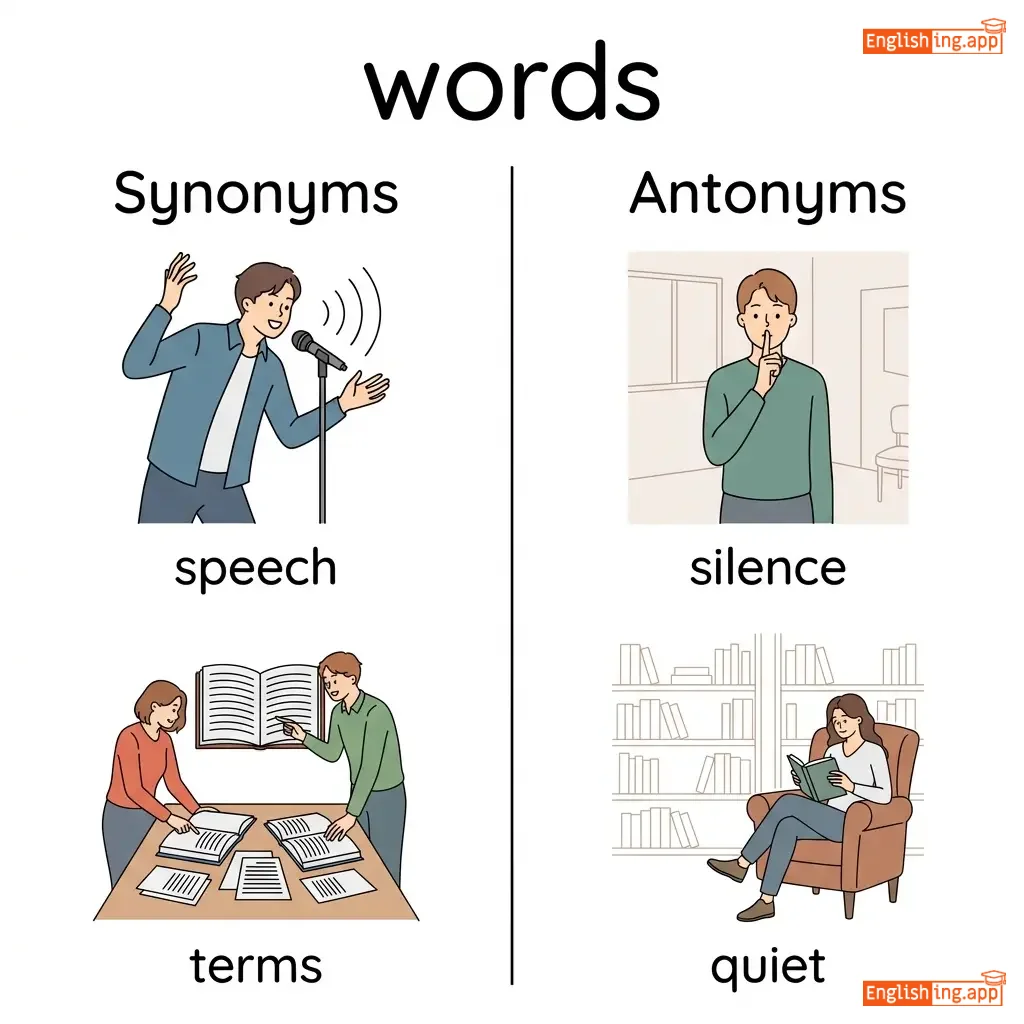
speech, terms, expressions, phrases, language
••••••
|
silence, quiet
••••••
|
choose words, kind words, harsh words, in other words
••••••
|
Words = 言葉 — 言葉で世界をつなぐ
••••••
|
|
🛠️
••••••
|
/wɜːrks/
noun
(ワークス)
••••••
|
- •••••• |
作品
sakuhin
••••••
|
- •••••• | - •••••• | - •••••• | - •••••• |
the physical or mental effort used to achieve something
••••••
|
Her works have been exhibited in museums worldwide. |
彼女の作品は世界中の博物館で展示されています。
Kanojo no sakuhin wa sekaijū no hakubutsukan de tenji sareteimasu.
••••••
|
- •••••• | - •••••• | - •••••• |
creations, compositions, projects, pieces
••••••
|
idleness, rest
••••••
|
artistic works, literary works, scientific works, hard works
••••••
|
あなたの作品が世界中の美術館に展示されていると想像してください。
••••••
|
|
🤔
••••••
|
/wʊd/
verb
(ウッド)
••••••
|
- •••••• |
だろう
darou
••••••
|
would
ウッド
••••••
|
- •••••• | - •••••• | - •••••• |
used to indicate a future possibility or action in the past
••••••
|
He said he would help me tomorrow.
彼は明日私を手伝うと言った。
••••••
|
彼は明日私を手伝うと言った。
Kare wa ashita watashi o tetsudau to itta.
••••••
|
- •••••• | - •••••• | - •••••• |
might, could, will, shall
••••••
|
won't, can't
••••••
|
would like, would prefer, would rather
••••••
|
日本語の 'だろう' を使って 'would' を覚えましょう - 未来や過去の可能性を表す言葉
••••••
|

