Получите неограниченный доступ ко всем словам с подпиской Pro
Обновить до ProПолучите неограниченный доступ ко всем предложениям с подпиской Pro
Обновить до Pro|
Эмодзи
|
Слово | Images | Перевод | Прошедшее | Причастие прошедшего времени | Третье лицо единственного числа | Герундий | Значение | Пример предложения | Перевод примера предложения | Пример выражения | Значение примера выражения | Перевод примера выражения | Синонимы | Антонимы | Коллокации | Мнемоника |
|---|---|---|---|---|---|---|---|---|---|---|---|---|---|---|---|---|---|
|
🔚
••••••
|
/ˈkoʊdə/
noun
(кода)
••••••
|
|
кода
koda
••••••
|
- •••••• | - •••••• | - •••••• | - •••••• |
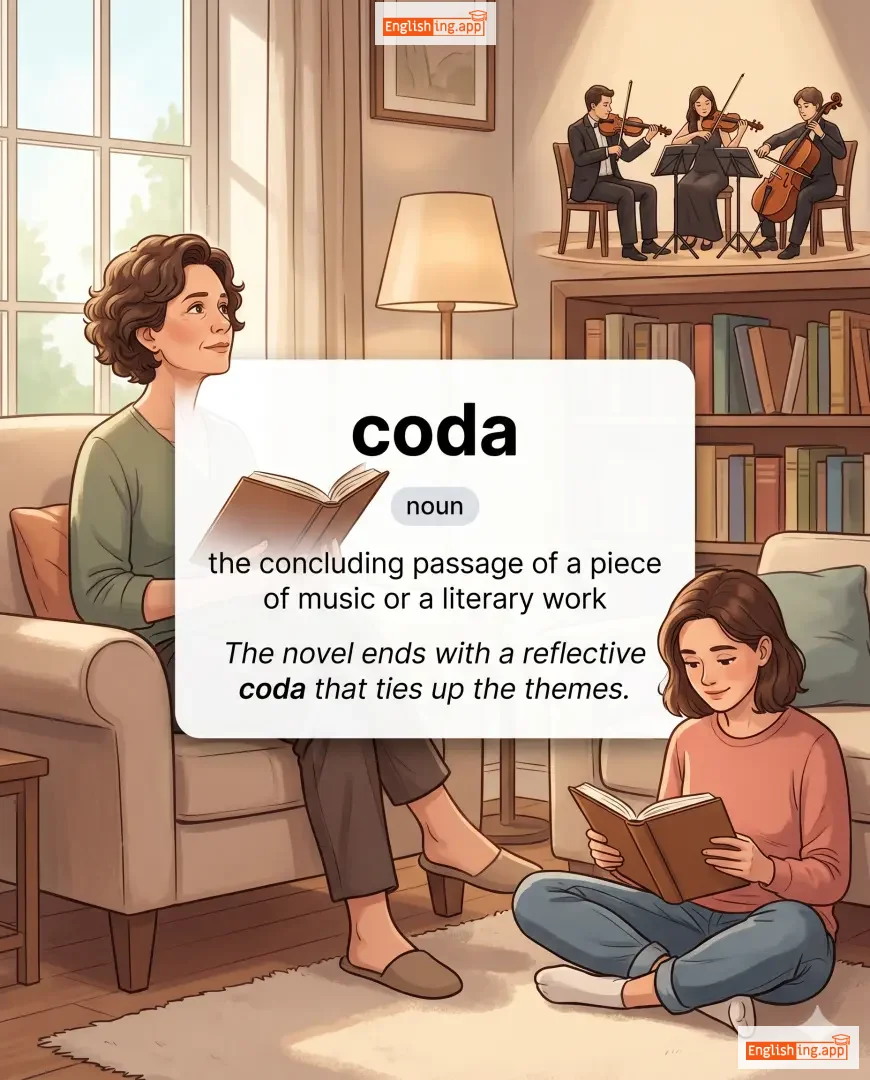
the concluding passage of a piece of music or a literary work
••••••
|
The novel ends with a reflective coda that ties up the themes. |
Роман заканчивается рефлексивной кодой, которая связывает темы.
Roman zakanchivayetsya reflekciyernoy kodoy, kotoraya svyazyvayet temy.
••••••
|
- •••••• | - •••••• | - •••••• |
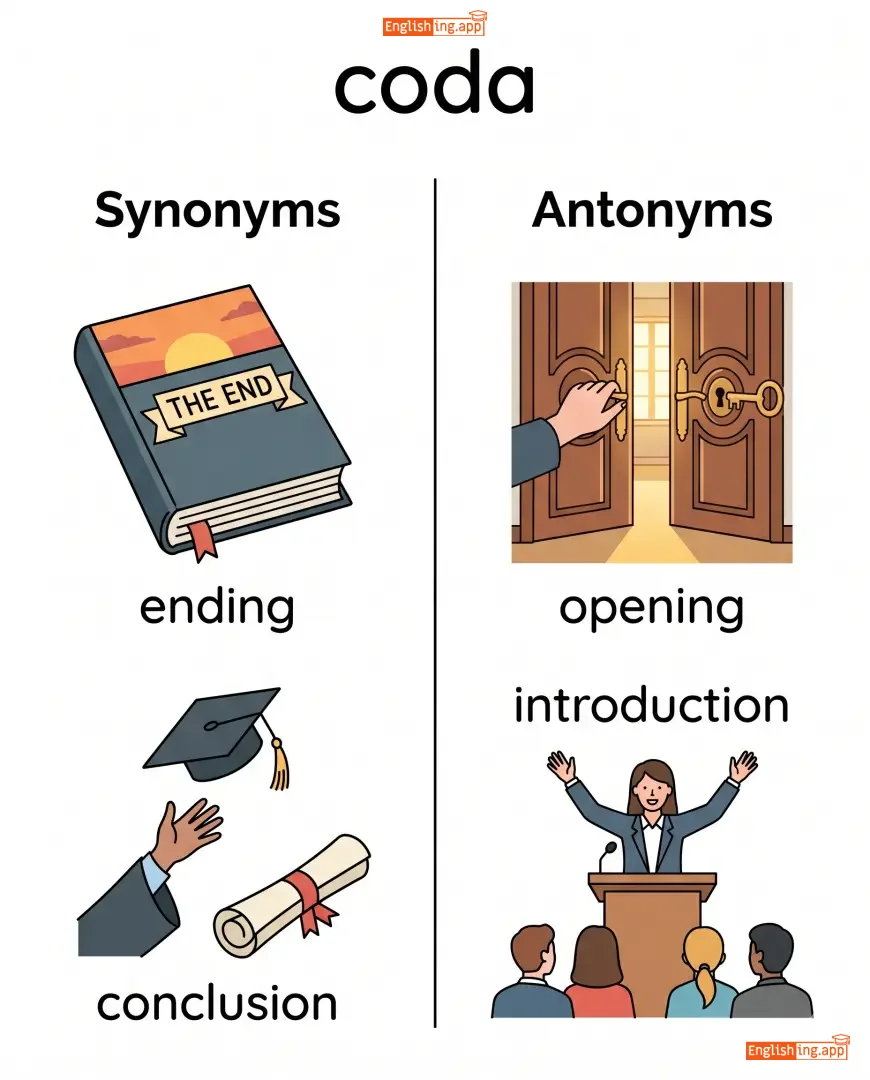
ending, conclusion, finale, epilogue
••••••
|
opening, introduction, beginning
••••••
|
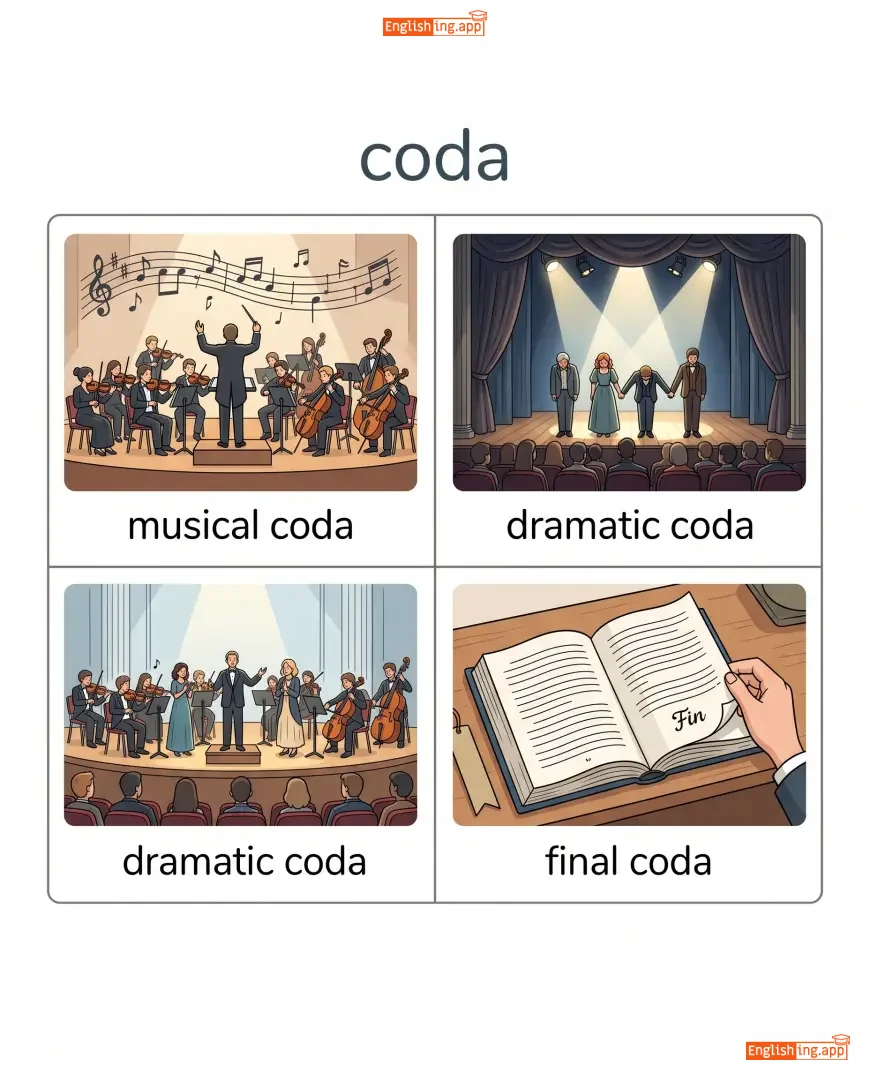
musical coda, dramatic coda, final coda
••••••
|
Coda – это конец произведения, как завершение музыки или книги.
••••••
|
|
🧠
••••••
|
/ˈkoʊdʒənt/
adjective
(кожент)
••••••
|
|
ясный и логичный
yasnyy i logichnyy
••••••
|
- •••••• | - •••••• | - •••••• | - •••••• |
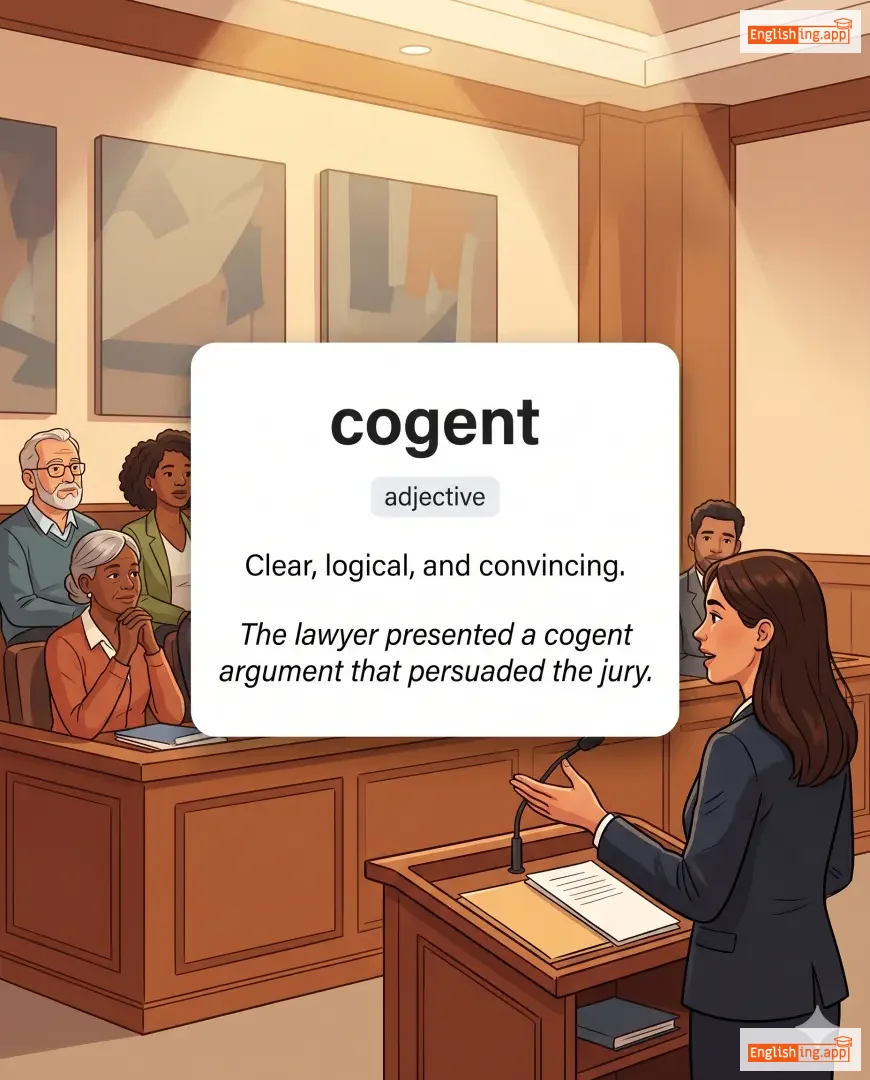
Clear, logical, and convincing.
••••••
|
The lawyer presented a cogent argument that persuaded the jury. |
Адвокат представил ясный и логичный аргумент, который убедил присяжных.
Advokat predstavil yasnyy i logichnyy argument, kotoryy ubedil prisyazhnykh.
••••••
|
- •••••• | - •••••• | - •••••• |
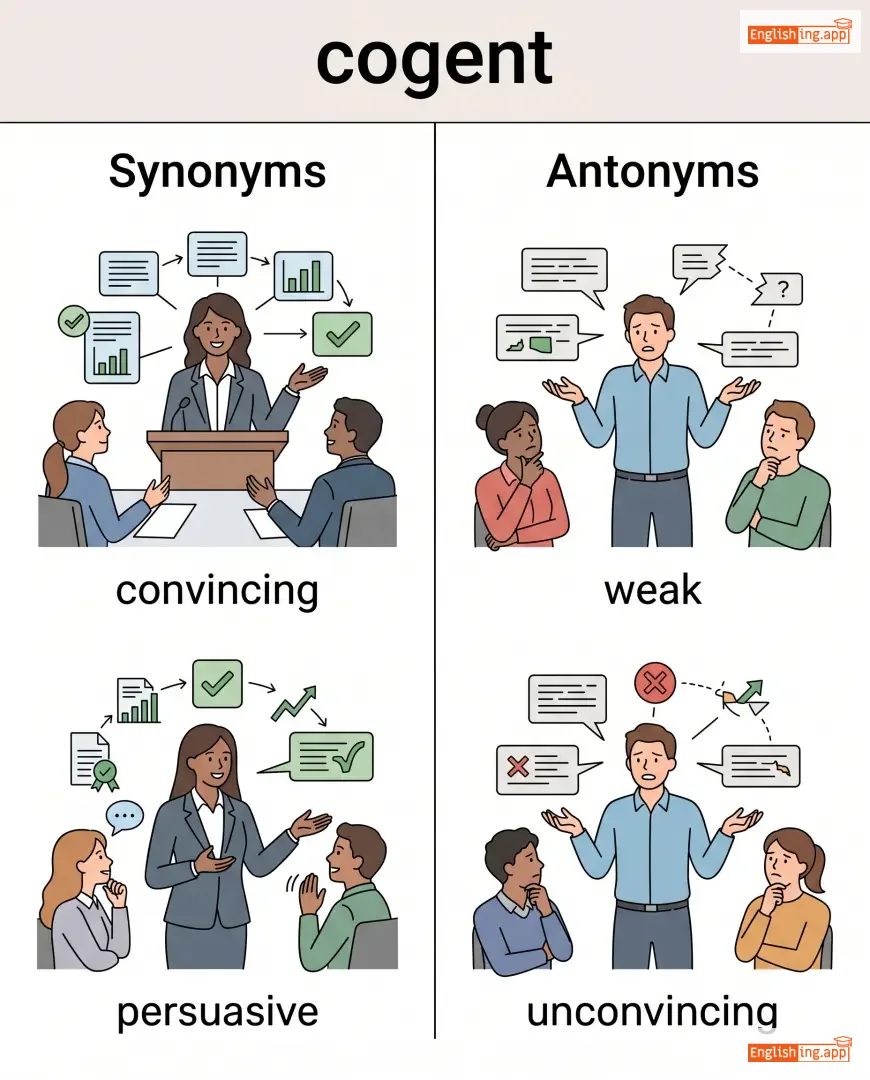
convincing, persuasive, compelling, logical, forceful
••••••
|
weak, unconvincing, illogical
••••••
|
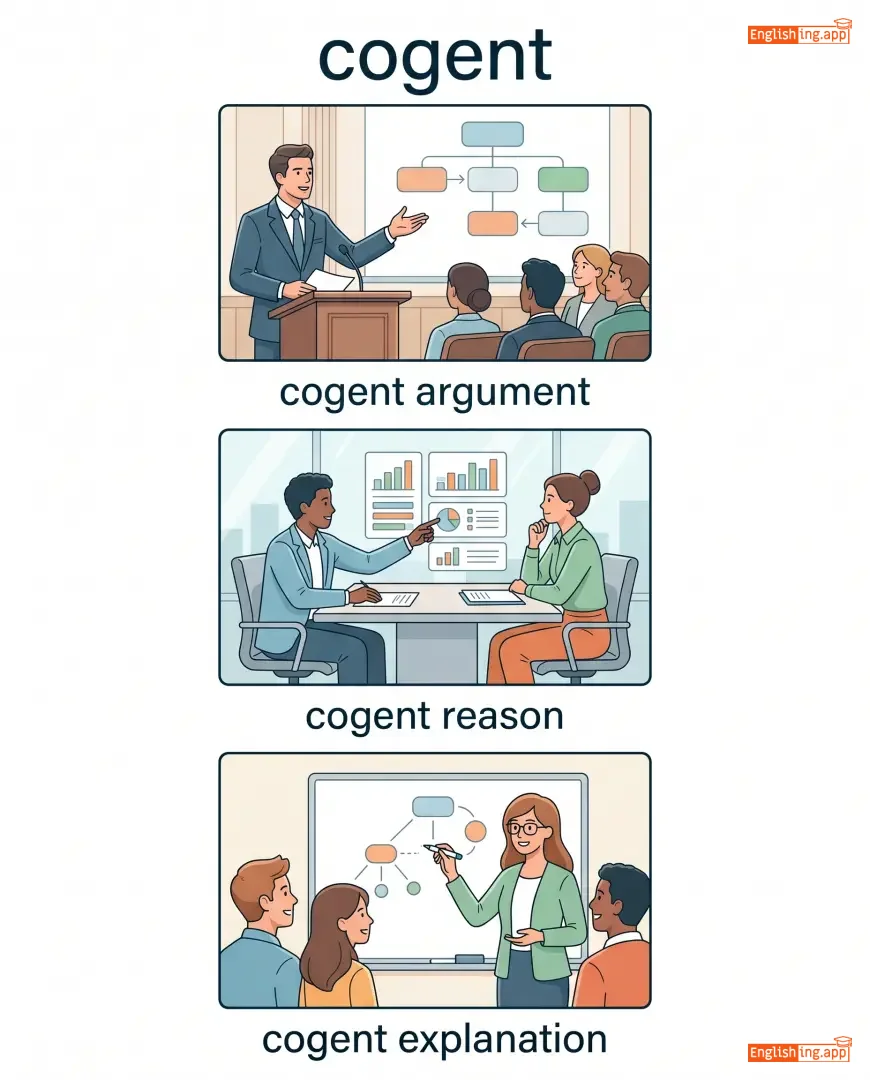
cogent argument, cogent reason, cogent explanation, cogent evidence
••••••
|
Cogent означает убедительный и логичный—по-русски, Ко-Жент = как логичное объяснение, которое убедит.
••••••
|
|
⚖️
••••••
|
/kəˈmɛnʃərət/
adjective
(komensurate)
••••••
|

|
пропорциональный
proportsional'nyy
••••••
|
- •••••• | - •••••• | - •••••• | - •••••• |
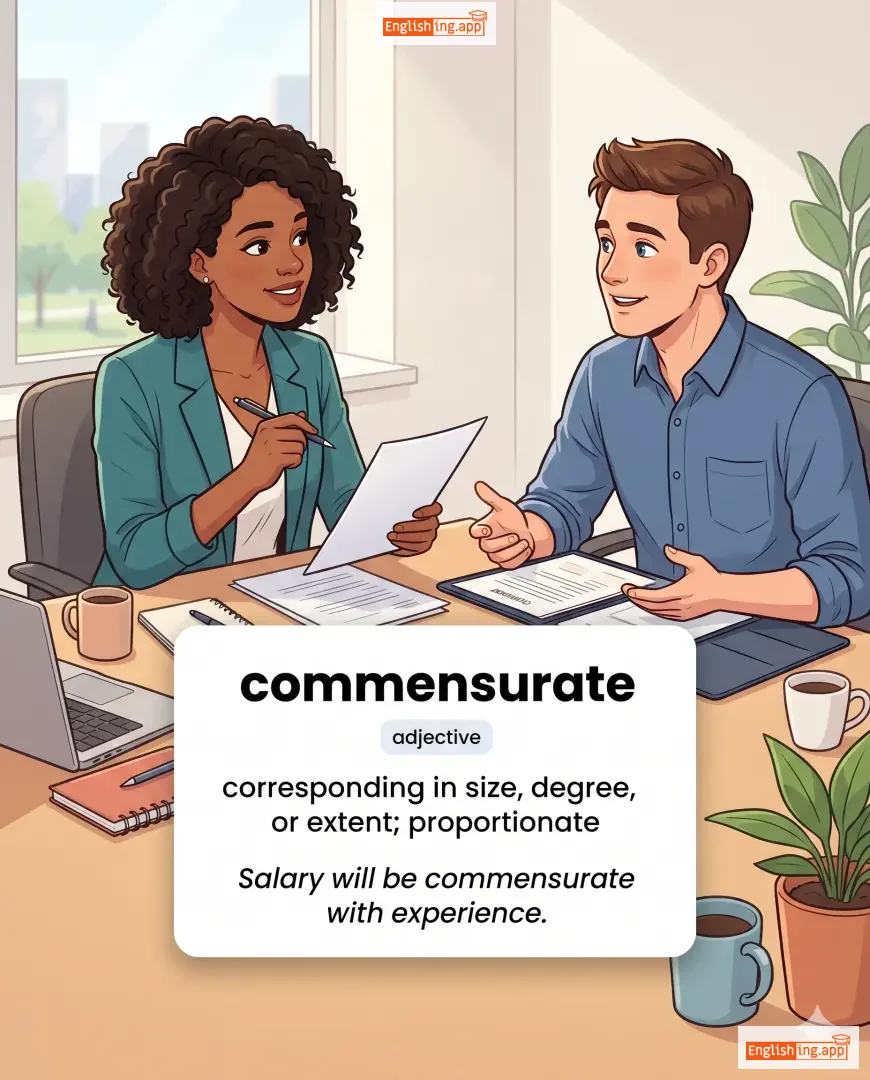
corresponding in size, degree, or extent; proportionate
••••••
|
Salary will be commensurate with experience. |
Зарплата будет пропорциональна опыту.
Zarplata budet proportional'na opytu.
••••••
|
- •••••• | - •••••• | - •••••• |
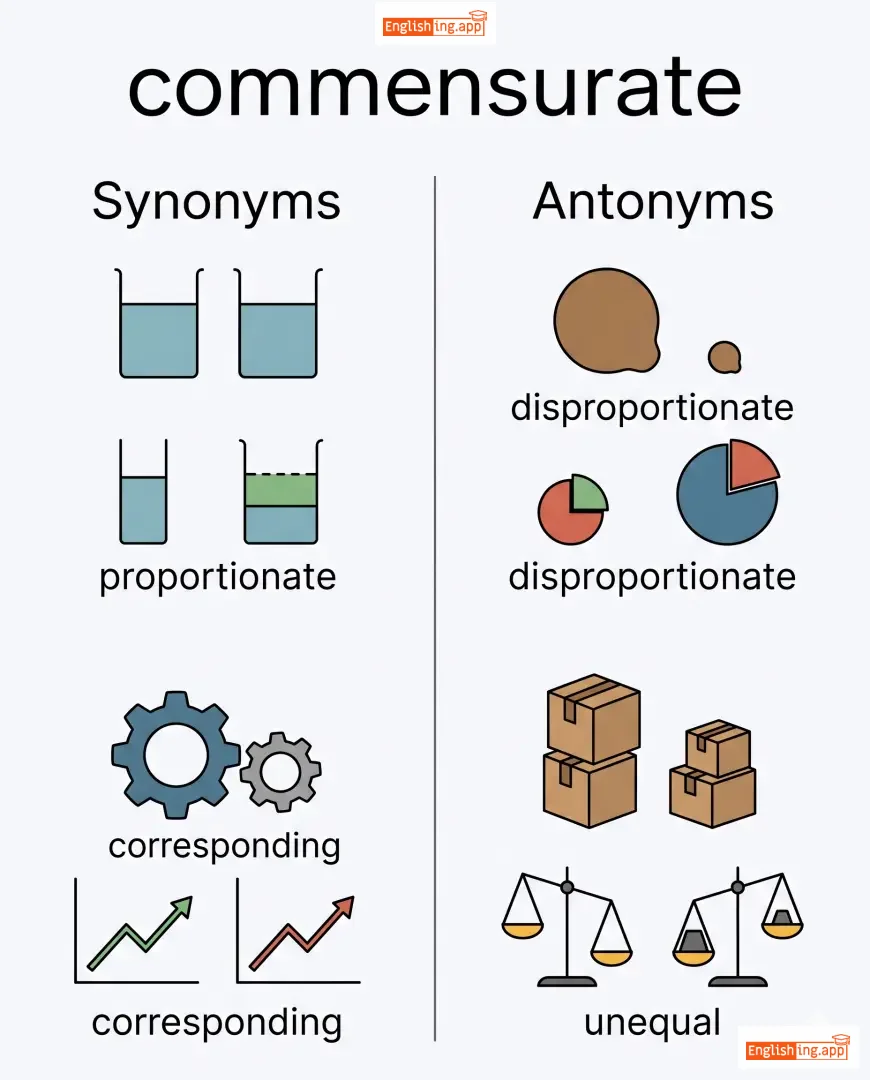
proportionate, corresponding, equal, comparable, adequate
••••••
|
disproportionate, unequal, inappropriate
••••••
|
commensurate with, commensurate salary, commensurate benefits, commensurate reward
••••••
|
Commensurate означает пропорциональный, не меньше, а равный.
••••••
|
|
📚
••••••
|
/kəmˈpɛndiəm/
noun
(kompendium)
••••••
|
|
компендий
kompendiy
••••••
|
- •••••• | - •••••• | - •••••• | - •••••• |
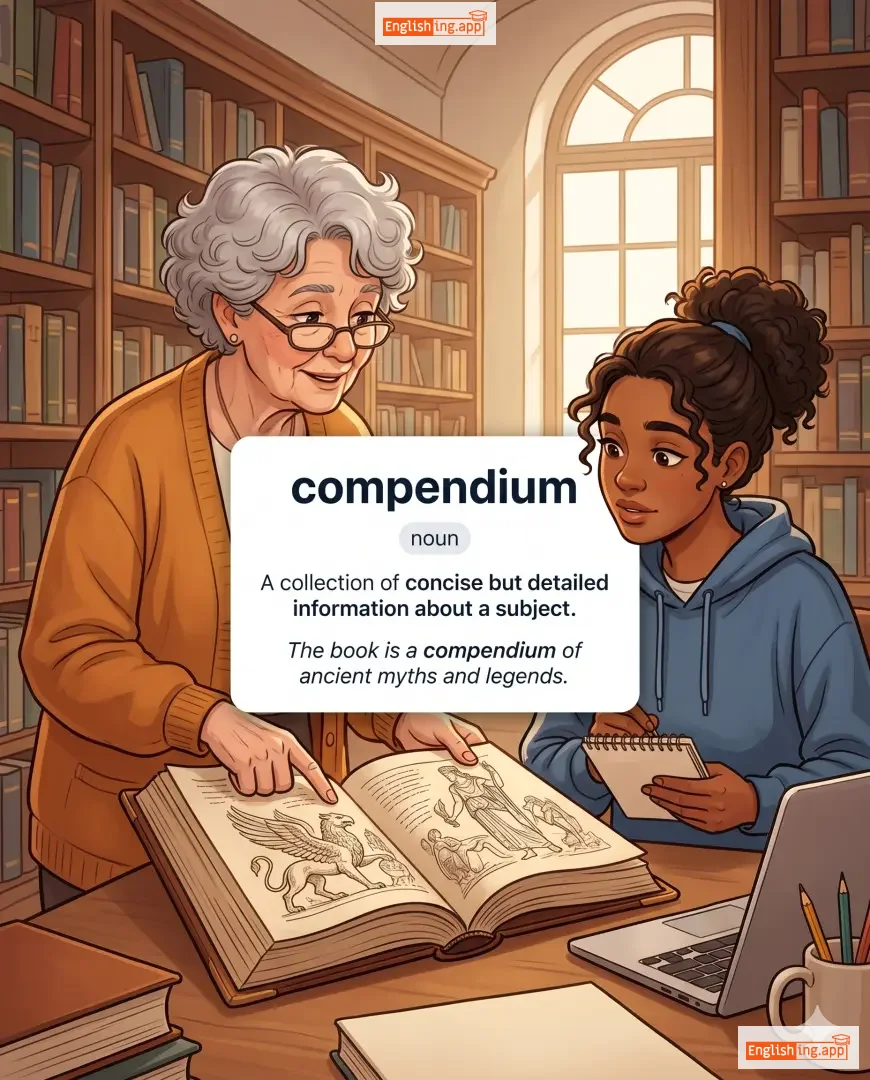
A collection of concise but detailed information about a subject.
••••••
|
The book is a compendium of ancient myths and legends.
Книга является компendium древних мифов и легенд.
••••••
|
Книга является компендий древних мифов и легенд.
Kniga yavyayetsya kompendiy drevnikh mifov i legend.
••••••
|
- •••••• | - •••••• | - •••••• |
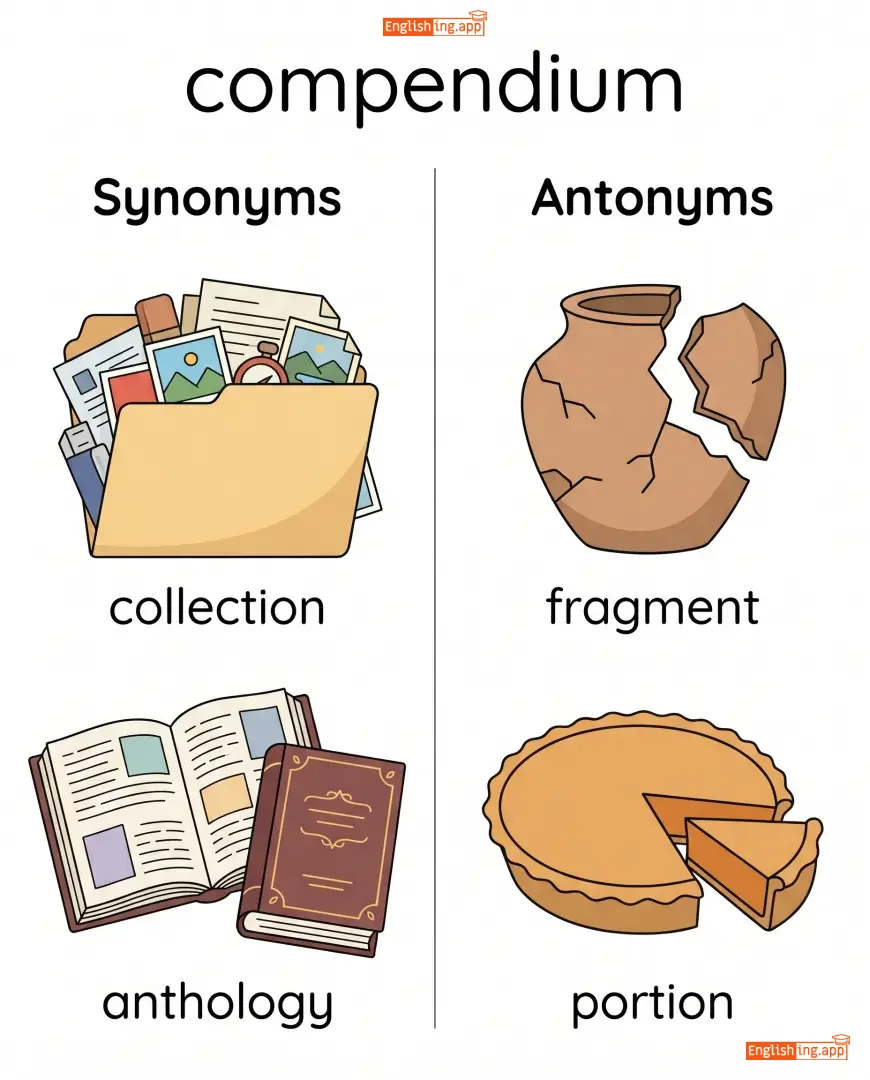
collection, anthology, digest, summary, compilation
••••••
|
fragment, portion, extract
••••••
|
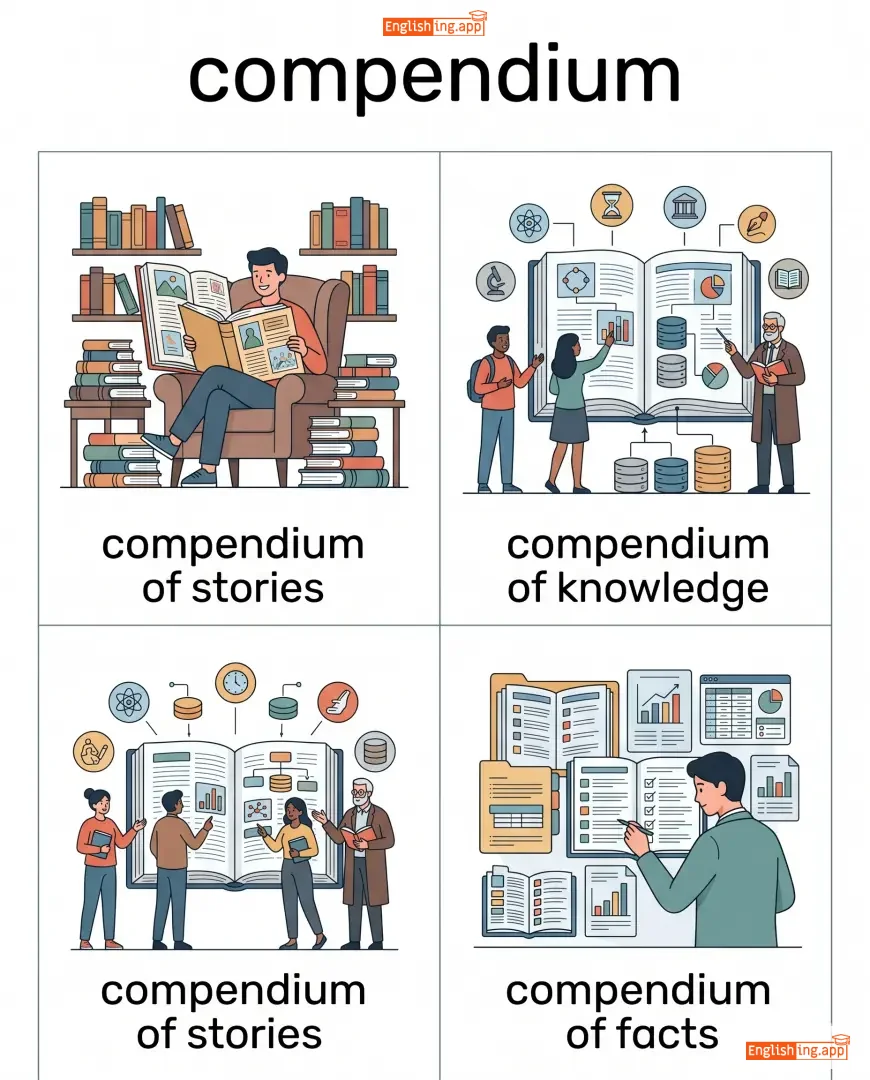
compendium of stories, compendium of knowledge, compendium of facts, compendium of laws
••••••
|
Компендиум - это компактная коллекция всех знаний по теме.
••••••
|
|
🤗
••••••
|
/kəmˈpleɪzənt/
adjective
(kompleizant)
••••••
|

|
слишком угодливый
slishkom ugodlivyy
••••••
|
- •••••• | - •••••• | - •••••• | - •••••• |
willing to please others or to accept what they do or say without protest
••••••
|
He was too complaisant to refuse their demands. |
Он был слишком угодлив, чтобы отказать в их требованиях.
On byl slishkom ugodliv, chtoby otkazat' v ikh trebovaniyakh.
••••••
|
- •••••• | - •••••• | - •••••• |
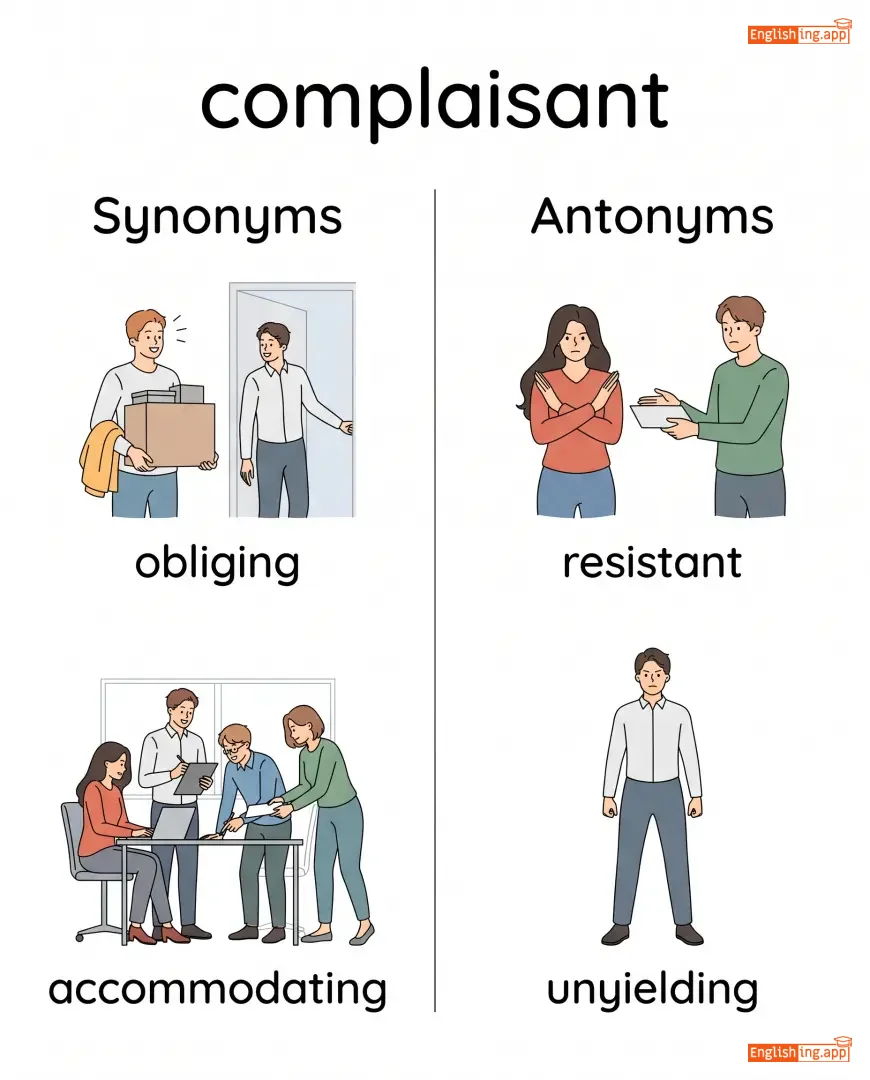
obliging, accommodating, agreeable, cooperative
••••••
|
resistant, unyielding
••••••
|
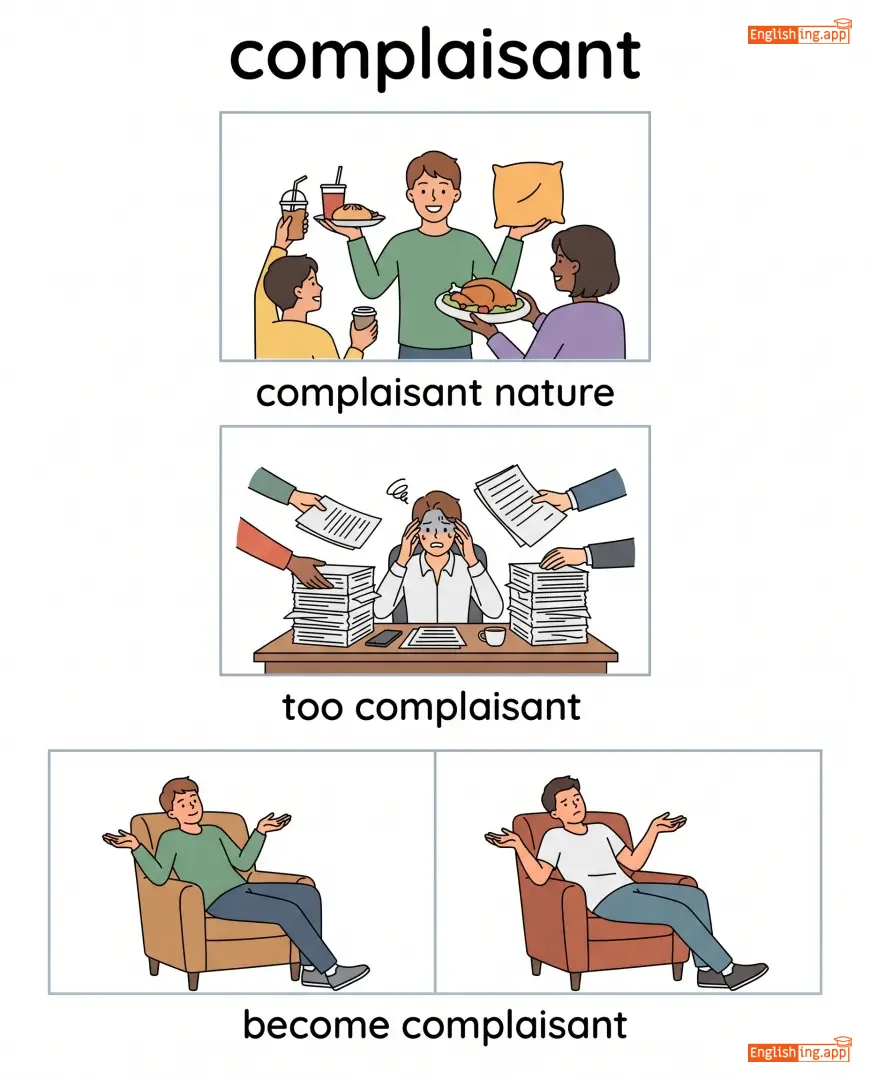
complaisant nature, too complaisant, become complaisant
••••••
|
Угодливый – всегда соглашаться
••••••
|
|
🙇
••••••
|
/kəmˈplaɪənt/
adjective
(кəmˈplaɪənt)
••••••
|
|
послушный
poslushny
••••••
|
- •••••• | - •••••• | - •••••• | - •••••• |
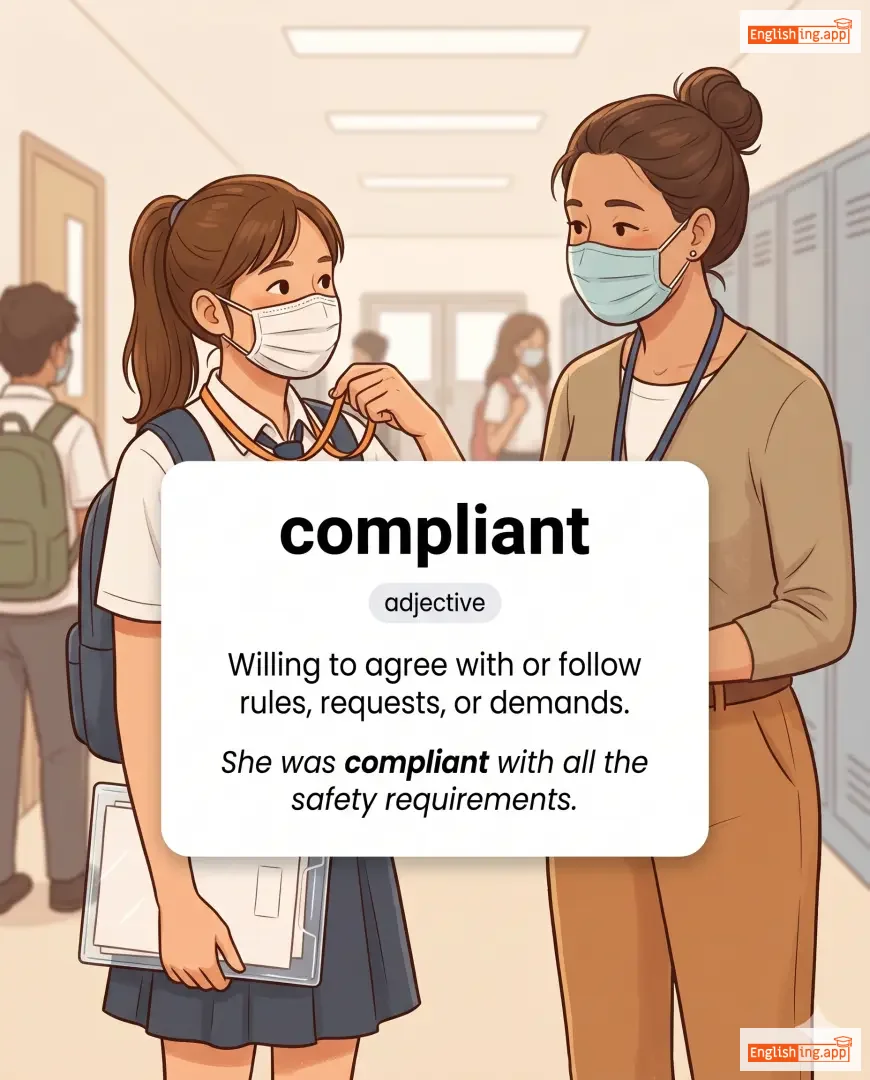
Willing to agree with or follow rules, requests, or demands.
••••••
|
She was compliant with all the safety requirements.
Она была согласна со всеми требованиями безопасности.
••••••
|
Она была согласна со всеми требованиями безопасности.
Ona byla soglasna so vsemi trebovaniyami bezopasnosti.
••••••
|
- •••••• | - •••••• | - •••••• |
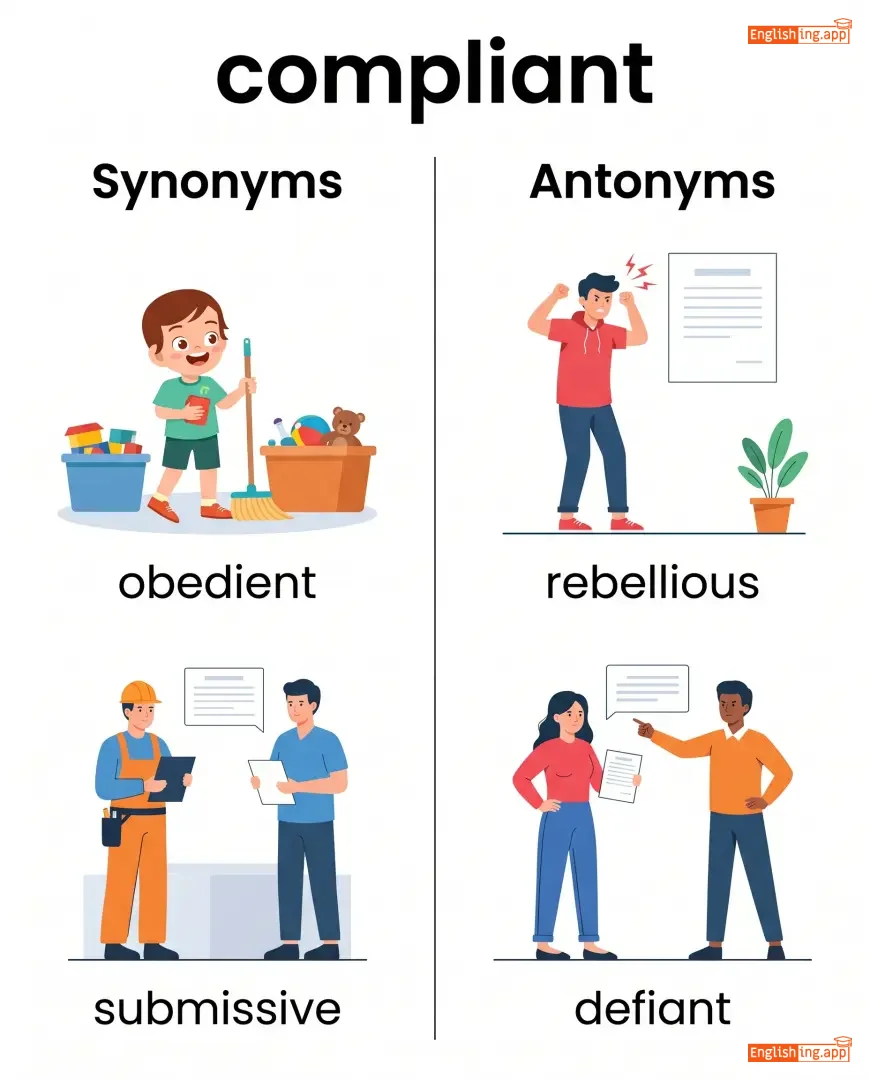
obedient, submissive, docile, accommodating
••••••
|
rebellious, defiant, resistant
••••••
|
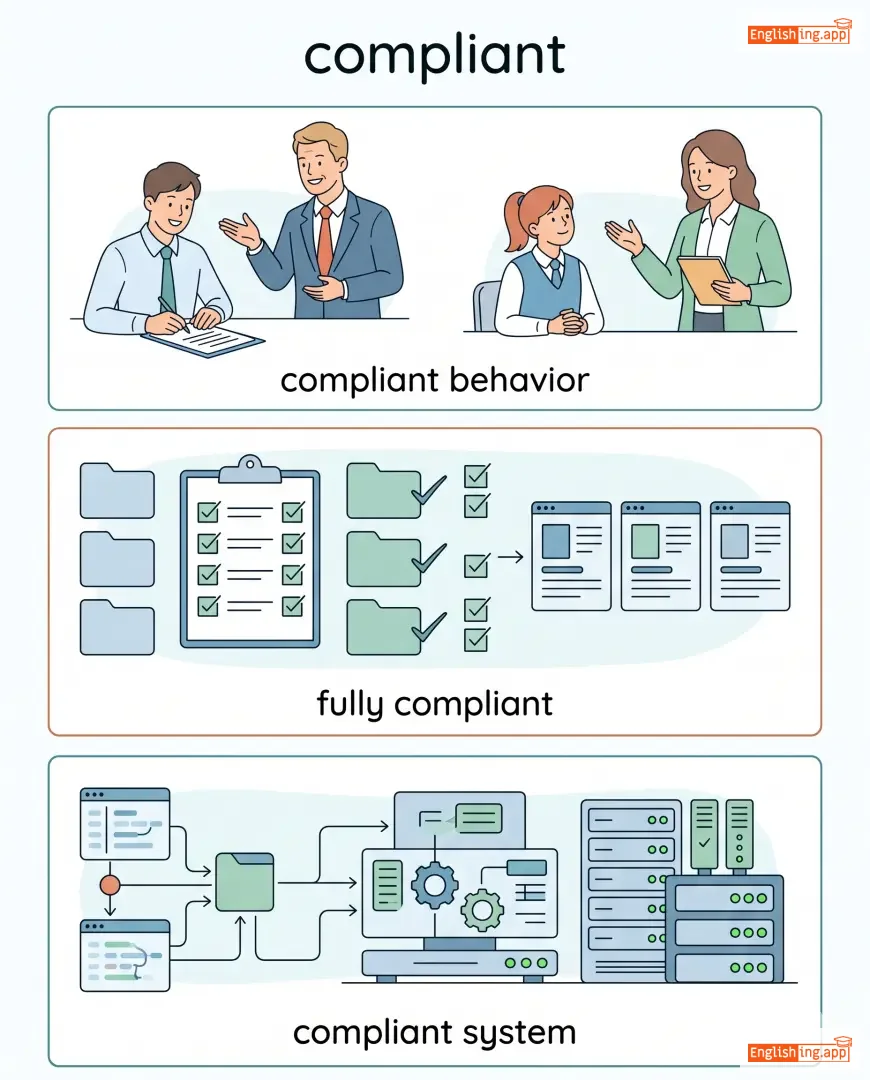
compliant behavior, fully compliant, compliant system, compliant child
••••••
|
Послушный означает следовать правилам без вопросов.
••••••
|
|
🕊️
••••••
|
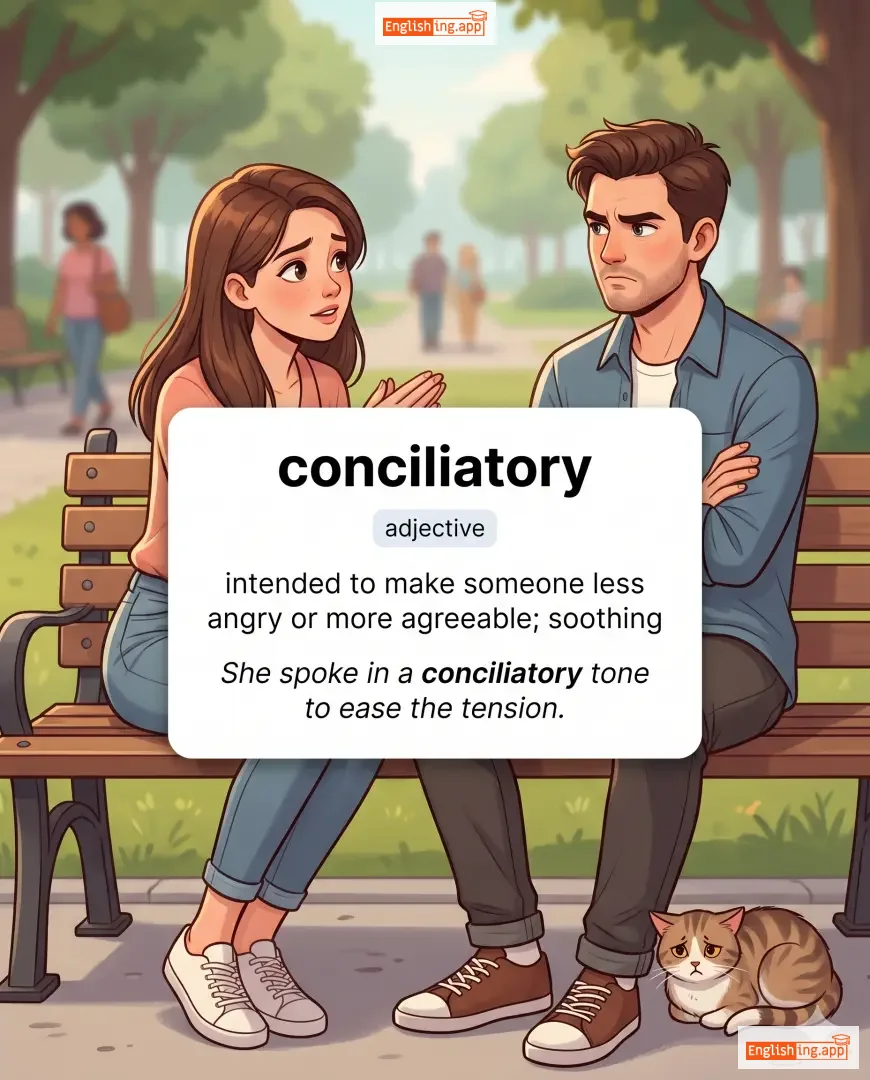
/kənˈsɪliətɔːri/
adjective
(kon-sil-ee-ya-to-ri)
••••••
|
|
примирительный
primiritel'nyy
••••••
|
- •••••• | - •••••• | - •••••• | - •••••• |
intended to make someone less angry or more agreeable; soothing
••••••
|
She spoke in a conciliatory tone to ease the tension. |
Она говорила примирительным тоном, чтобы уменьшить напряжение.
Ona govoryla primiritel'nym tonom, chtoby umen'shit' napryazhenie.
••••••
|
- •••••• | - •••••• | - •••••• |
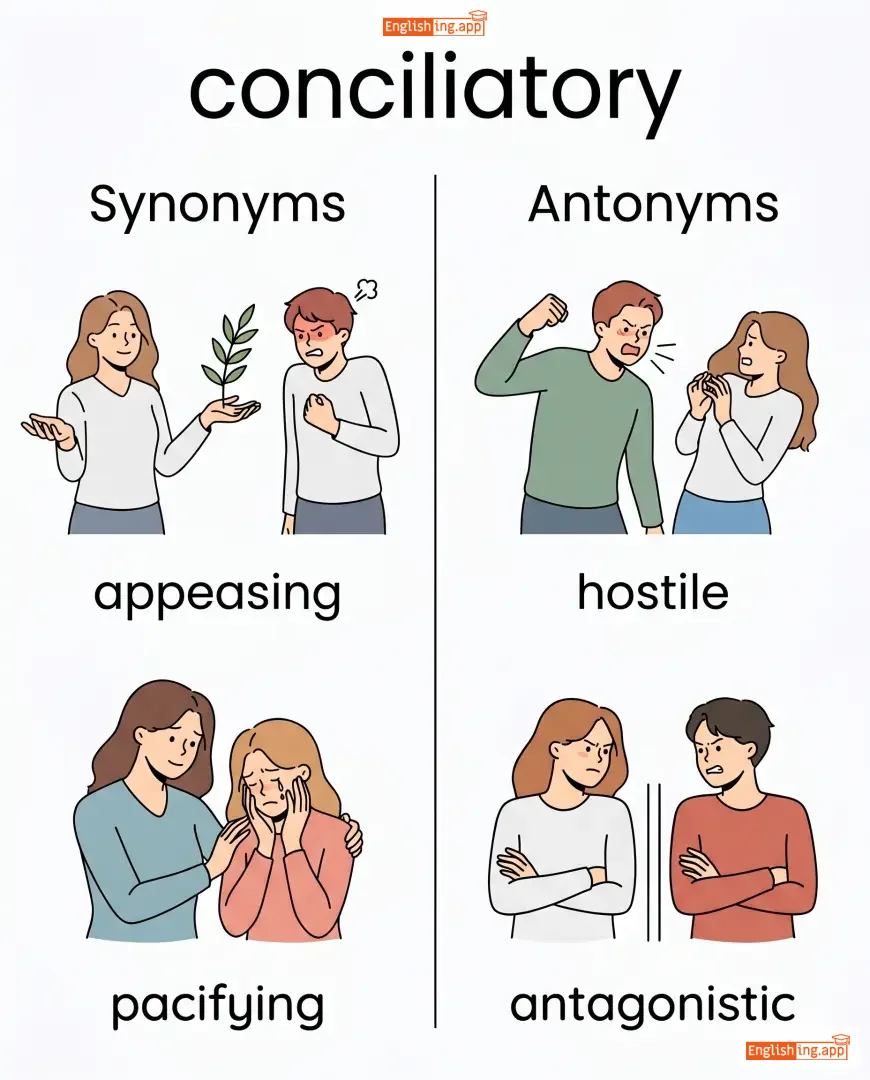
appeasing, pacifying, soothing, placatory, calming
••••••
|
hostile, antagonistic, confrontational
••••••
|
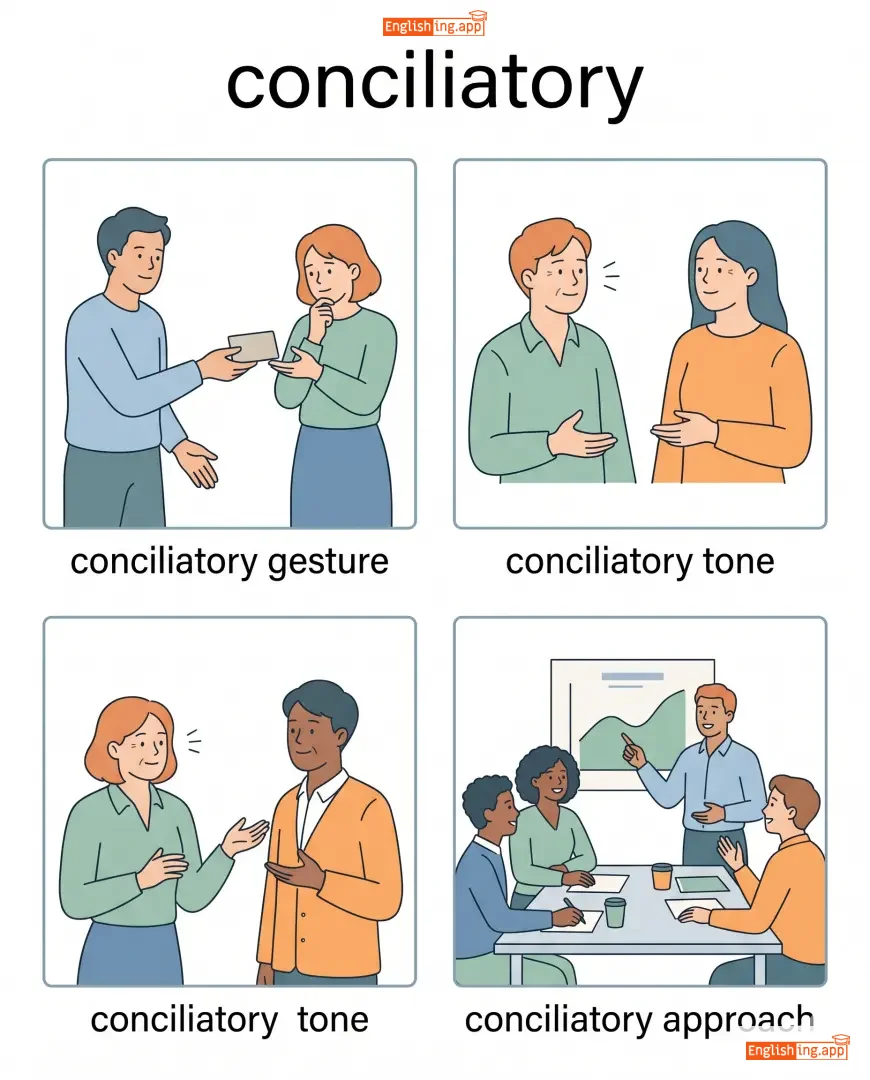
conciliatory gesture, conciliatory tone, conciliatory approach
••••••
|
Примирительный - это слово для примирения, когда пытаемся успокоить
••••••
|
|
🙈
••••••
|
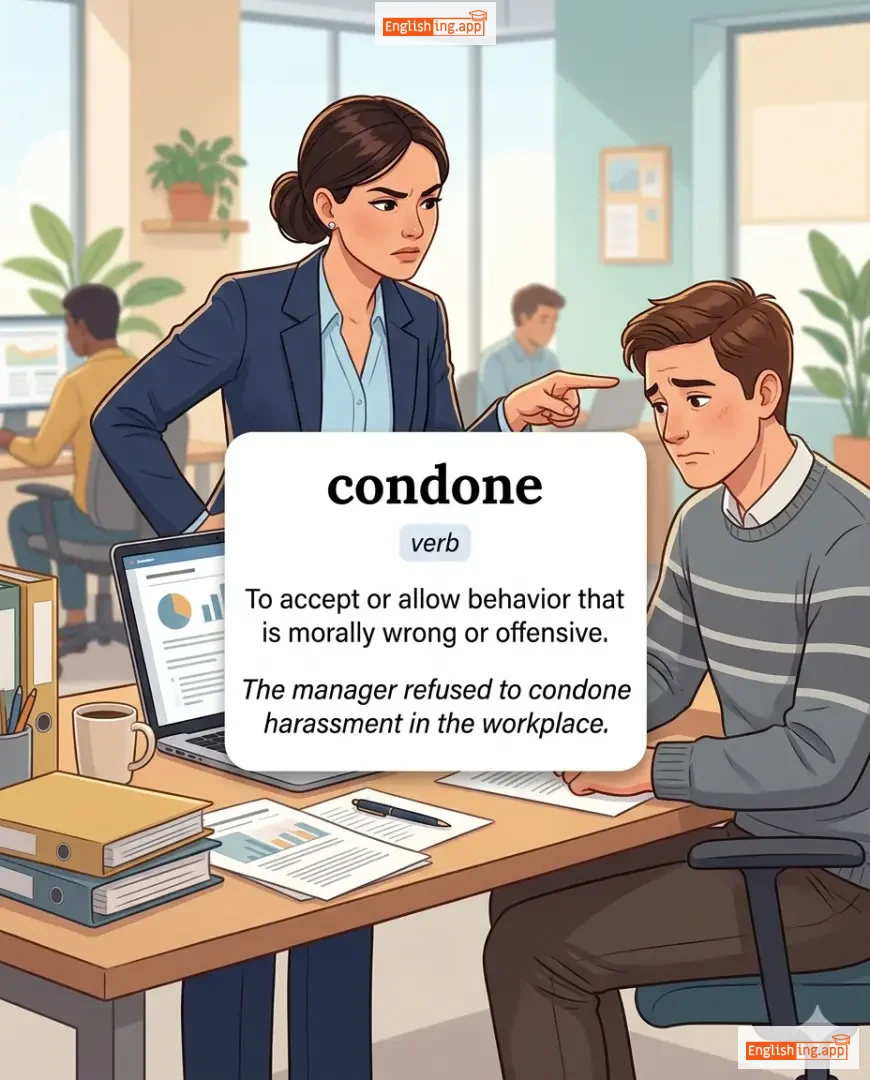
/kənˈdəʊn/
verb
(кондон)
••••••
|
|
прощать
proshchat
••••••
|
condoned
кондонирован
••••••
|
condoned
кондонирован
••••••
|
condones
кондонит
••••••
|
condoning
кондонируя
••••••
|
To accept or allow behavior that is morally wrong or offensive.
••••••
|
The manager refused to condone harassment in the workplace.
Менеджер отказался кондонировать домогательства на рабочем месте.
••••••
|
Менеджер отказался кондонировать домогательства на рабочем месте.
Menedzher otkazalsya kondonirovat' domogatel'stva na rabochem meste.
••••••
|
- •••••• | - •••••• | - •••••• |
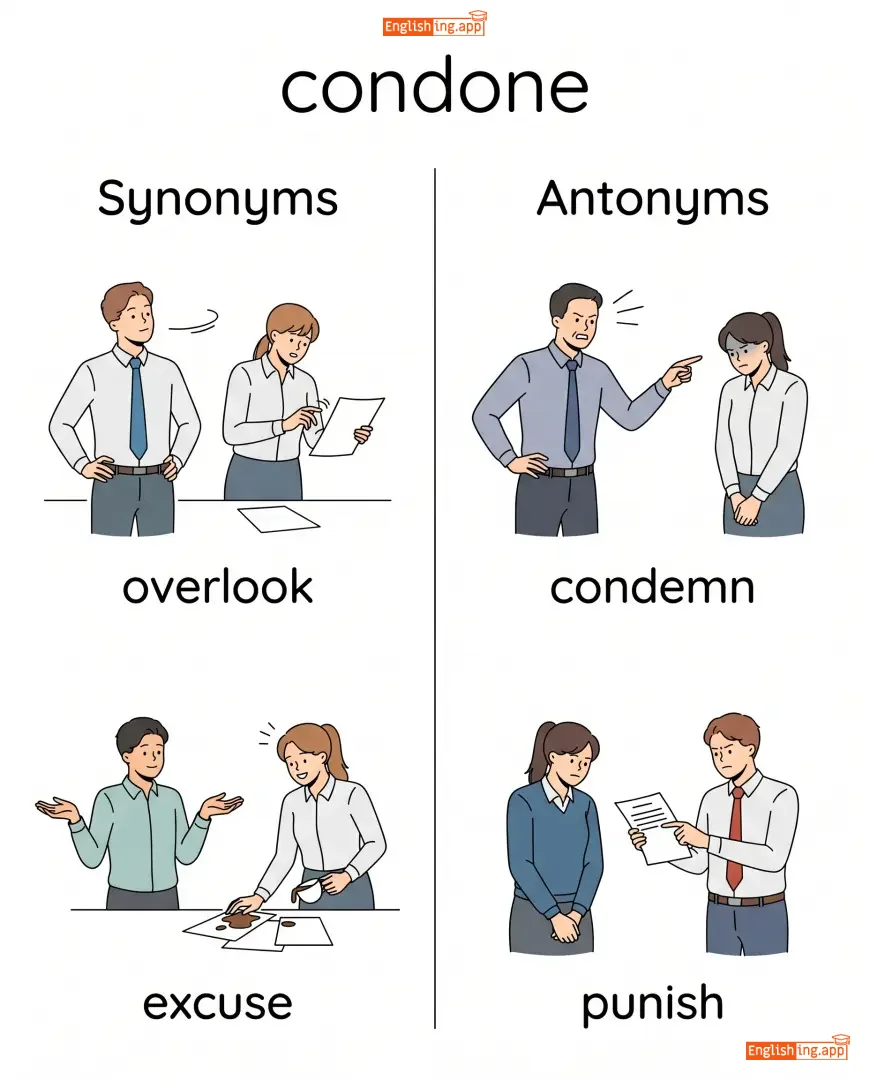
overlook, excuse, forgive, tolerate
••••••
|
condemn, punish, disapprove
••••••
|
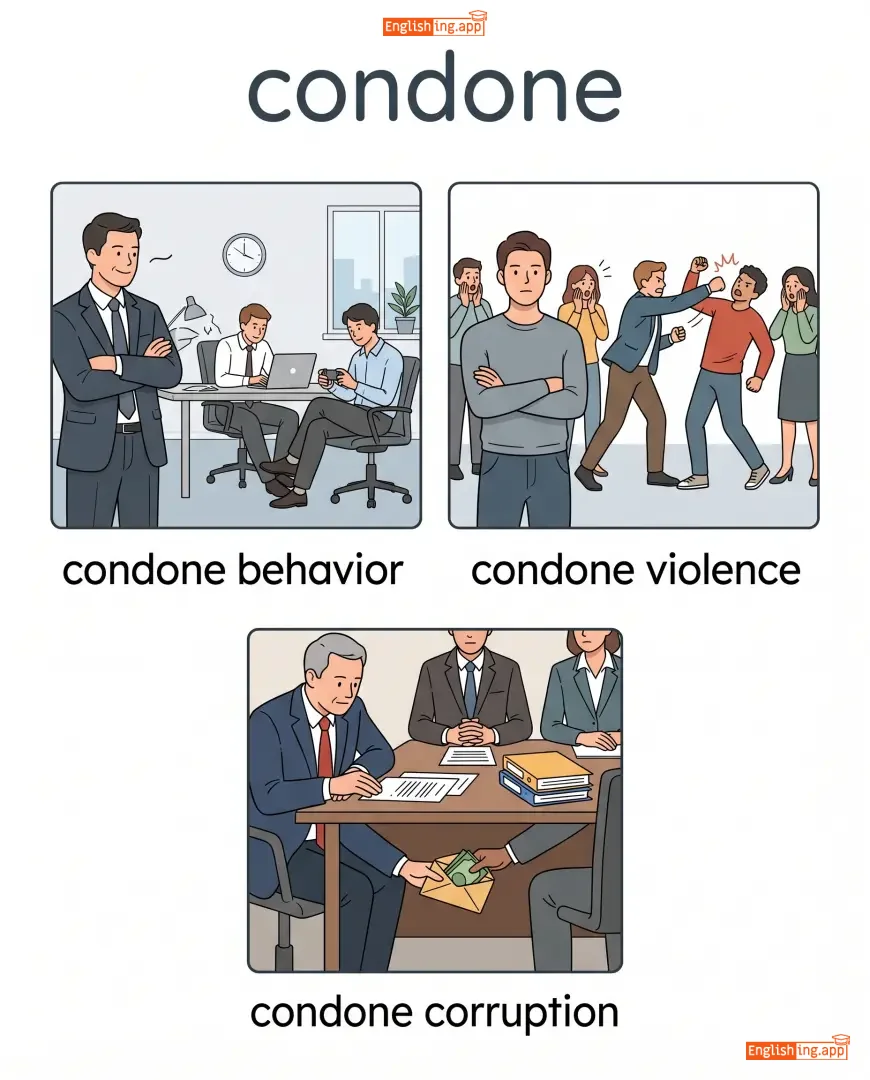
condone behavior, condone violence, condone corruption
••••••
|
Condone означает прощать без условий
••••••
|
|
🤯
••••••
|
/kənˈfaʊnd/
verb
••••••
|
|
- •••••• |
confounded
••••••
|
confounded
••••••
|
confounds
••••••
|
confounding
••••••
|
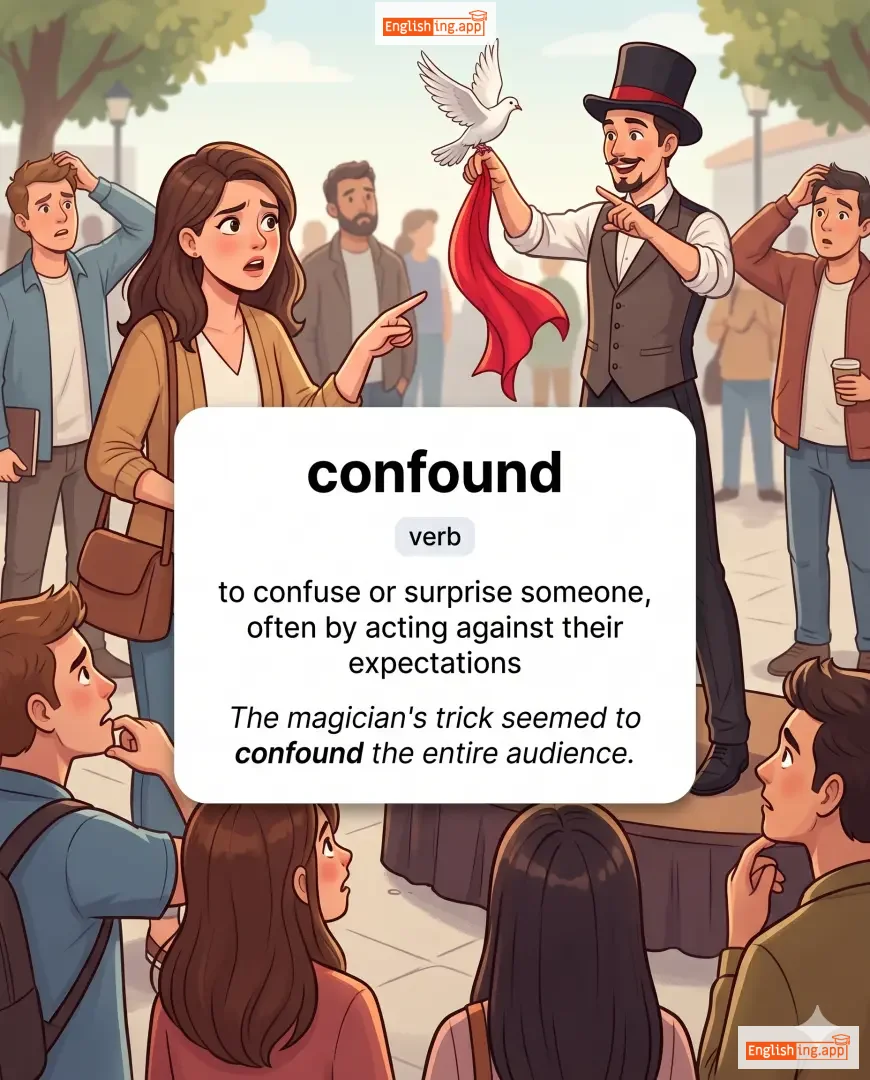
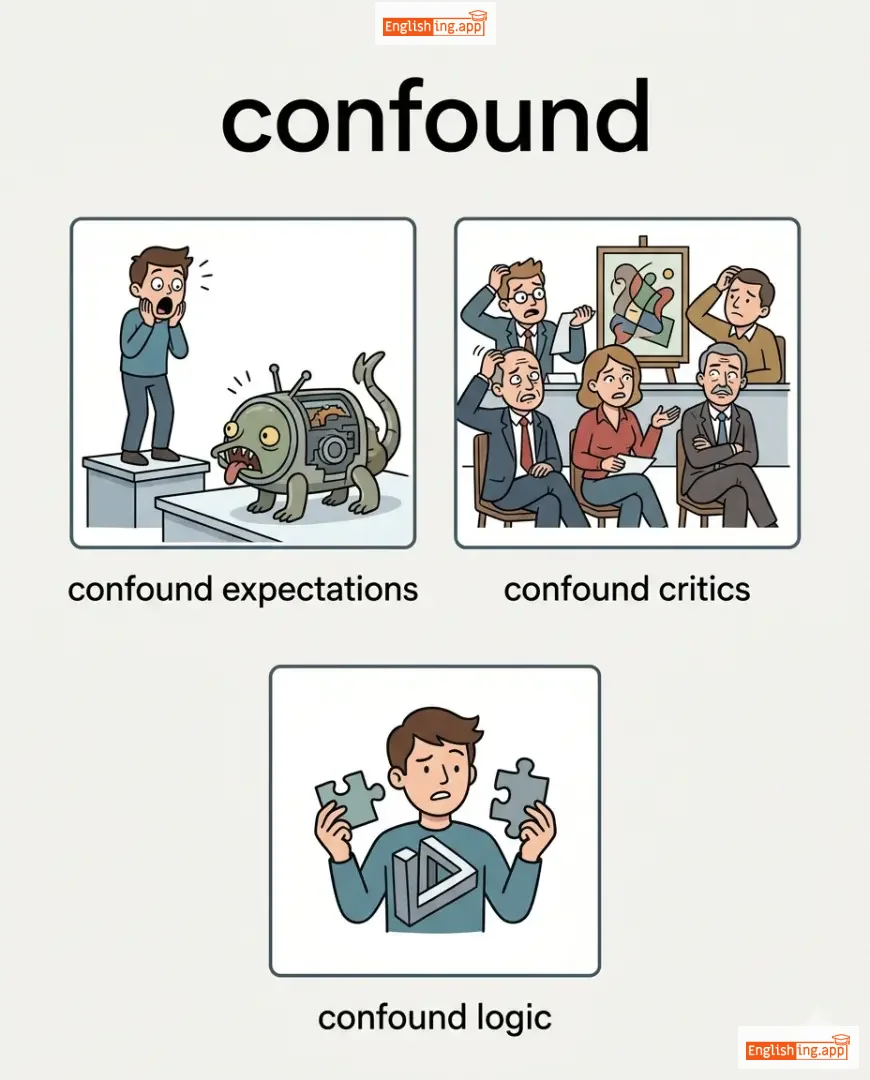
to confuse or surprise someone, often by acting against their expectations
••••••
|
The magician's trick seemed to confound the entire audience. |
- •••••• |
confound it |
an old-fashioned exclamation of annoyance or frustration
••••••
|
- •••••• |
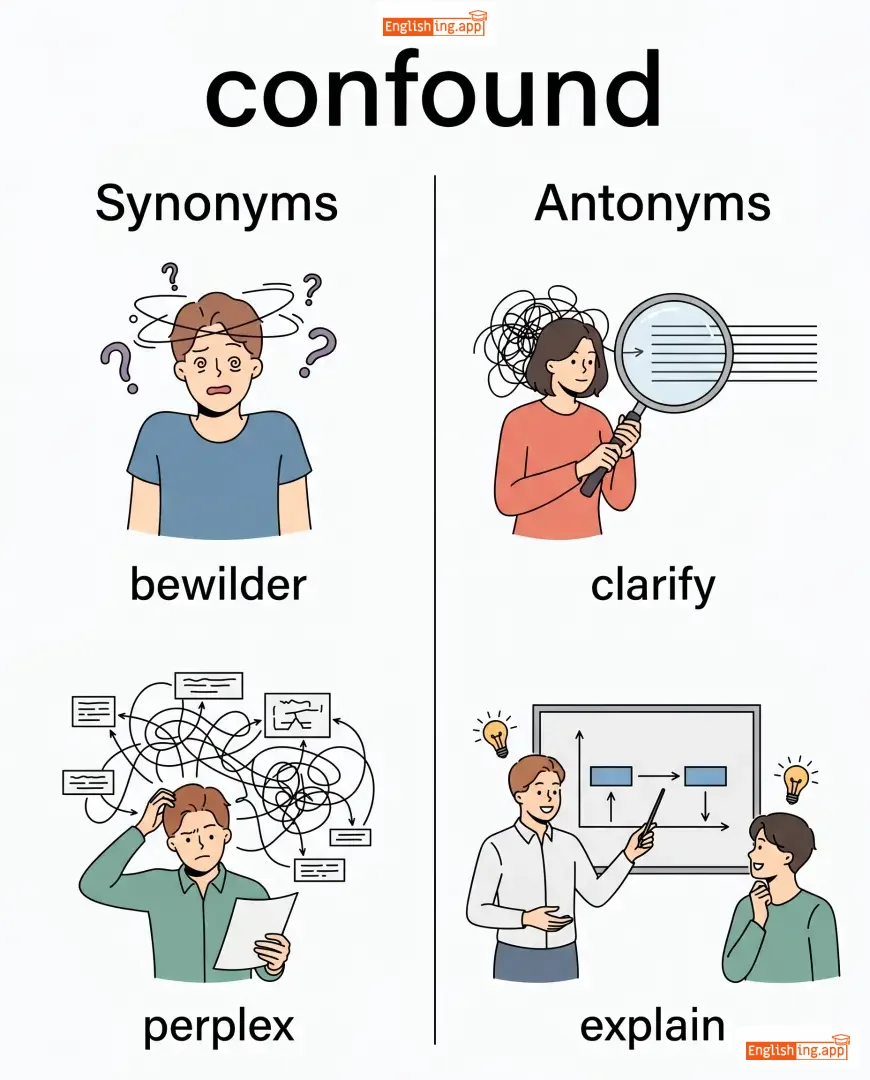
bewilder, perplex, baffle, amaze, astonish
••••••
|
clarify, explain, enlighten
••••••
|
confound expectations, confound critics, confound logic, confound the mind
••••••
|
No •••••• |
|
🎨
••••••
|
/ˌkɒn.əˈsɜːr/
noun
(коне́сёр)
••••••
|


|
знаток
znatok
••••••
|
- •••••• | - •••••• | - •••••• | - •••••• |
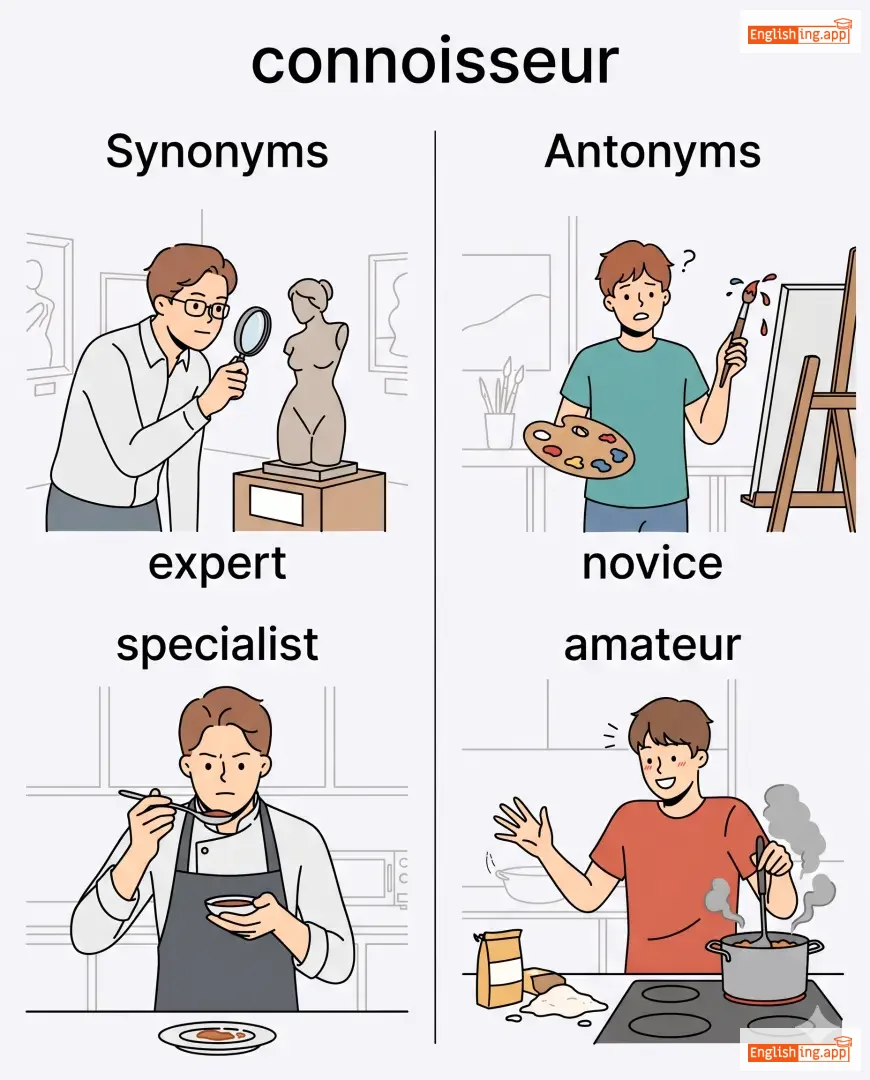
an expert judge in matters of taste, especially in food, art, or wine
••••••
|
She is a true connoisseur of fine art. |
Она настоящий знаток изобразительного искусства.
Ona nastoyashchiy znatok izobrazitel'nogo iskusstva.
••••••
|
- •••••• | - •••••• | - •••••• |
expert, specialist, critic, authority
••••••
|
novice, amateur, layman
••••••
|
wine connoisseur, art connoisseur, connoisseur of music
••••••
|
Знаток всегда отличает лучшее, как в искусстве, так и в еде.
••••••
|
|
⚔️
••••••
|
/kənˈtɛnʃən/
noun
(kənˈtɛnʃən)
••••••
|
|
спор, разногласие
spor, raznoglasiye
••••••
|
- •••••• | - •••••• | - •••••• | - •••••• |
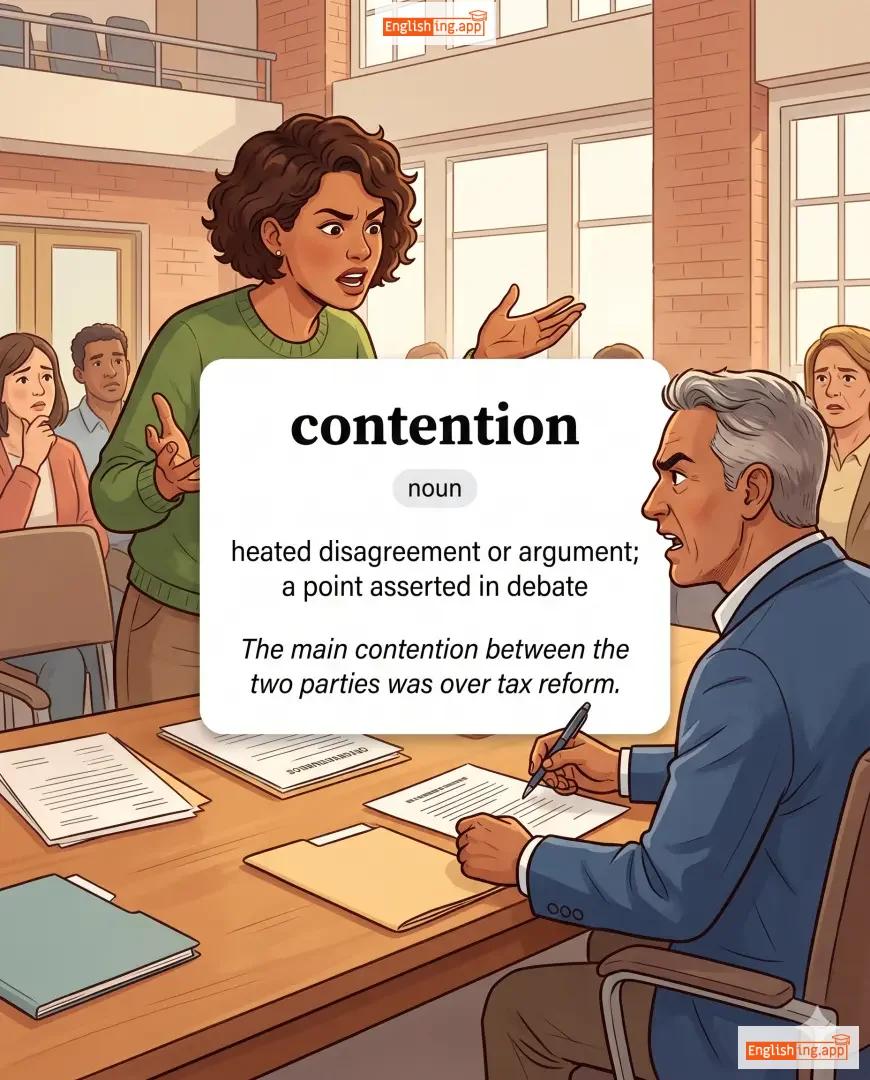
heated disagreement or argument; a point asserted in debate
••••••
|
The main contention between the two parties was over tax reform. |
Основной спор между двумя партиями был связан с налоговой реформой.
Osnovnoy spor mezhdu dvumya partiyami byl svyazan s nalogovoy reformoy.
••••••
|
- •••••• | - •••••• | - •••••• |
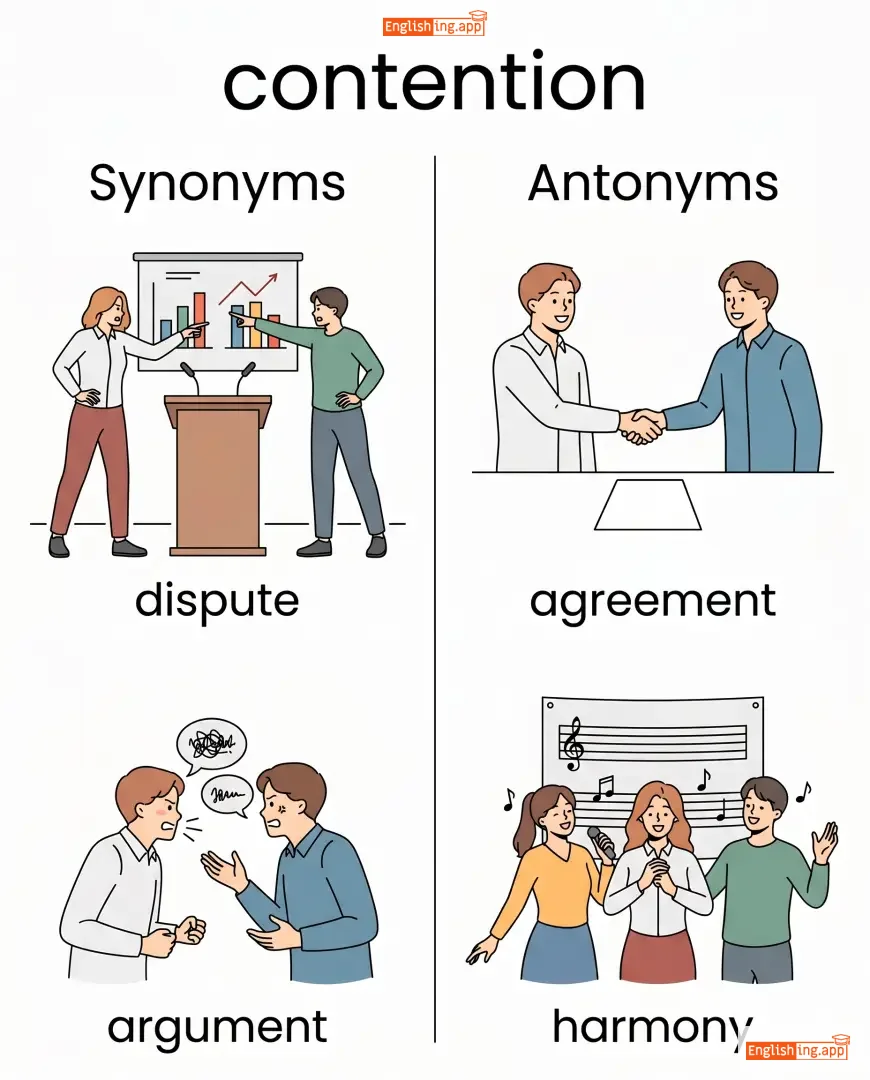
dispute, argument, debate, disagreement
••••••
|
agreement, harmony
••••••
|
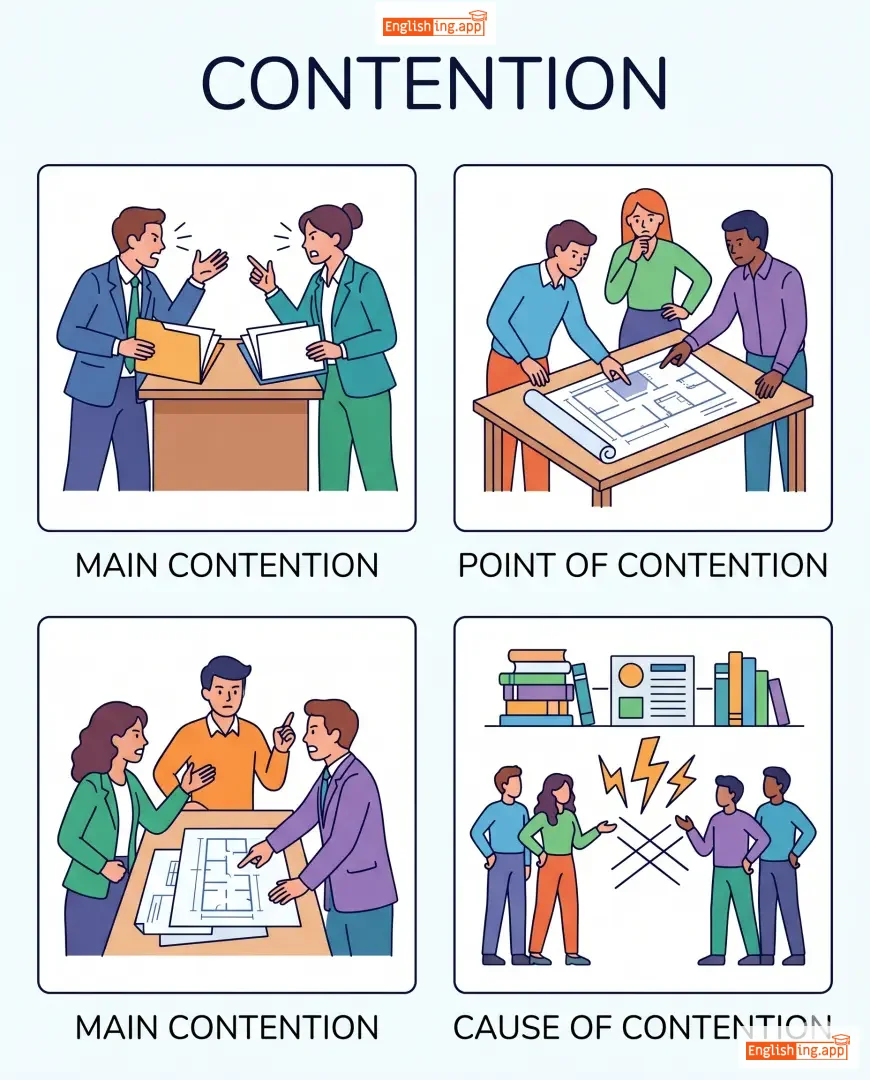
main contention, point of contention, cause of contention, fierce contention
••••••
|
Contention это когда две стороны спорят - Imagine two parties in contention
••••••
|
|
🔥
••••••
|
/kənˈtɛnʃəs/
adjective
(кəнˈтэншəs)
••••••
|
|
спорный
spornyy
••••••
|
- •••••• | - •••••• | - •••••• | - •••••• |
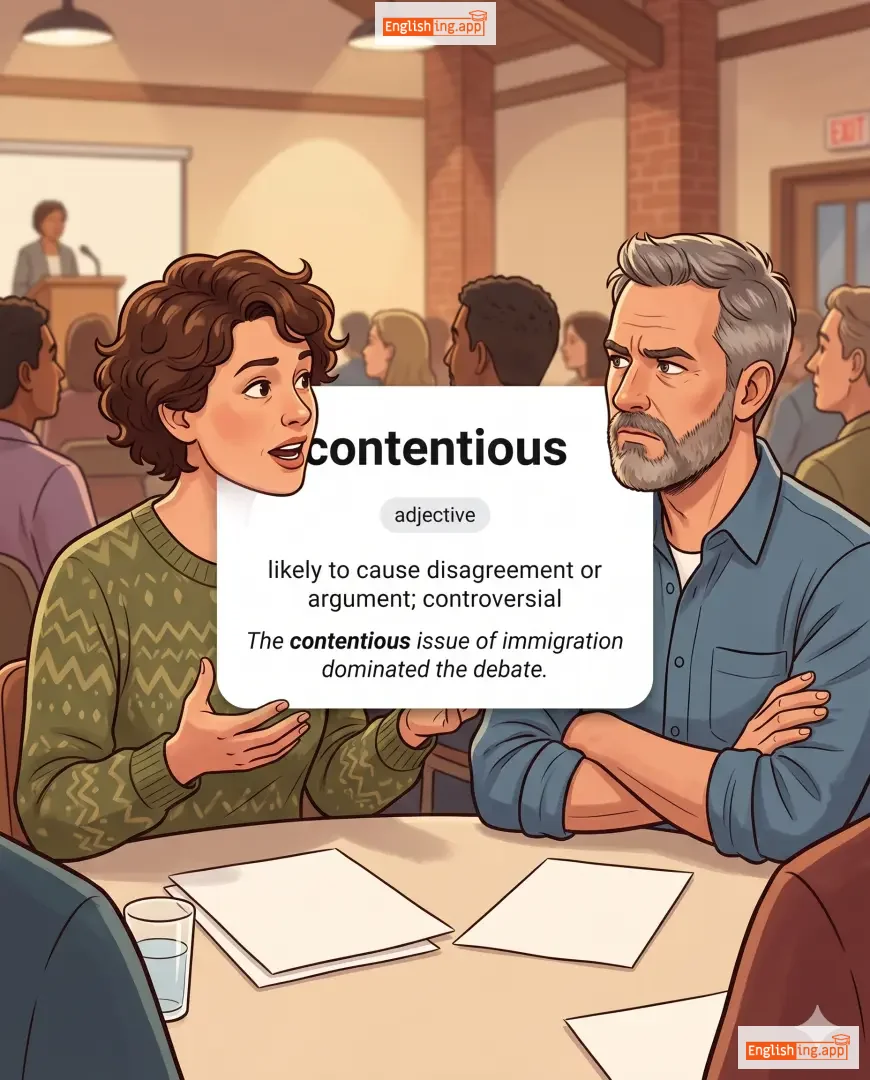
likely to cause disagreement or argument; controversial
••••••
|
The contentious issue of immigration dominated the debate. |
Спорный вопрос иммиграции доминировал в дебатах.
Spornyy vopros immigratsii dominirival v debatakh.
••••••
|
- •••••• | - •••••• | - •••••• |
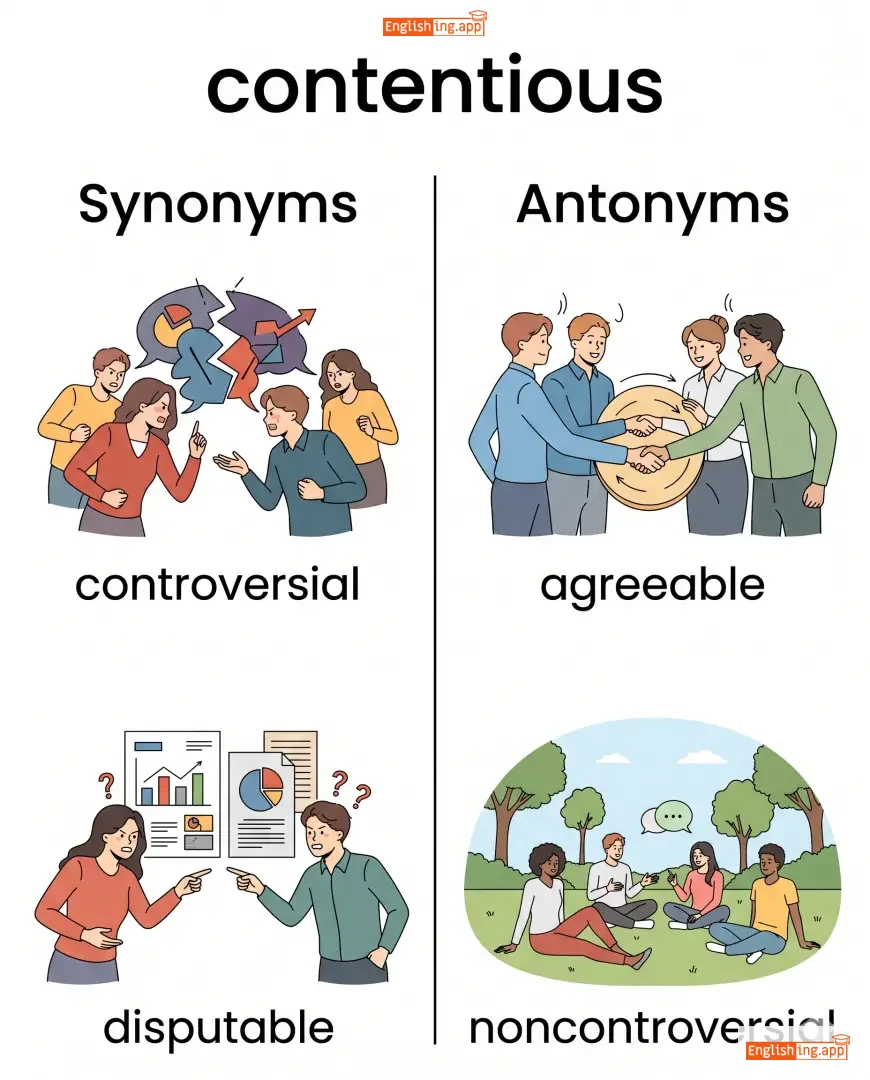
controversial, disputable, debatable, argumentative
••••••
|
agreeable, noncontroversial
••••••
|
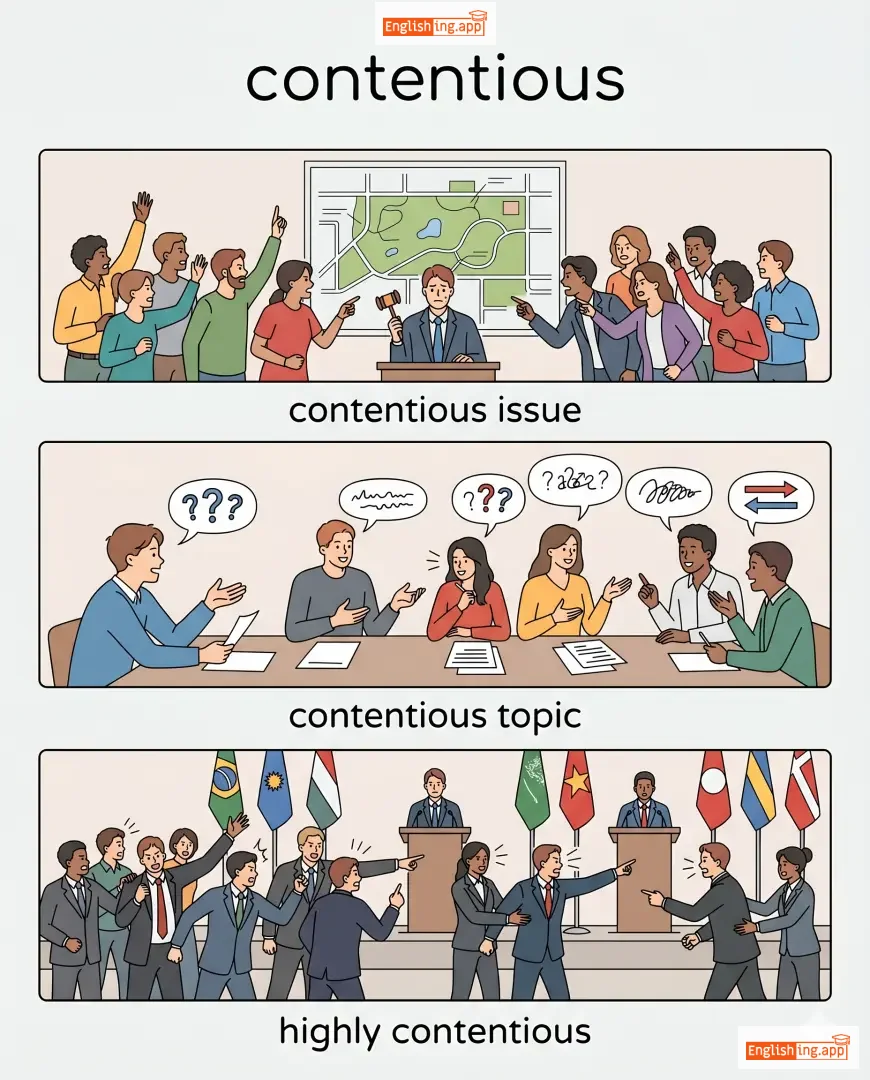
contentious issue, contentious topic, highly contentious, contentious debate
••••••
|
Contentious вызывает споры, как слово 'спорный'.
••••••
|
|
😔
••••••
|
/kənˈtraɪt/
adjective
(кəнˈтрайт)
••••••
|

|
раскаивающийся
raskayivayushchiesya
••••••
|
- •••••• | - •••••• | - •••••• | - •••••• |
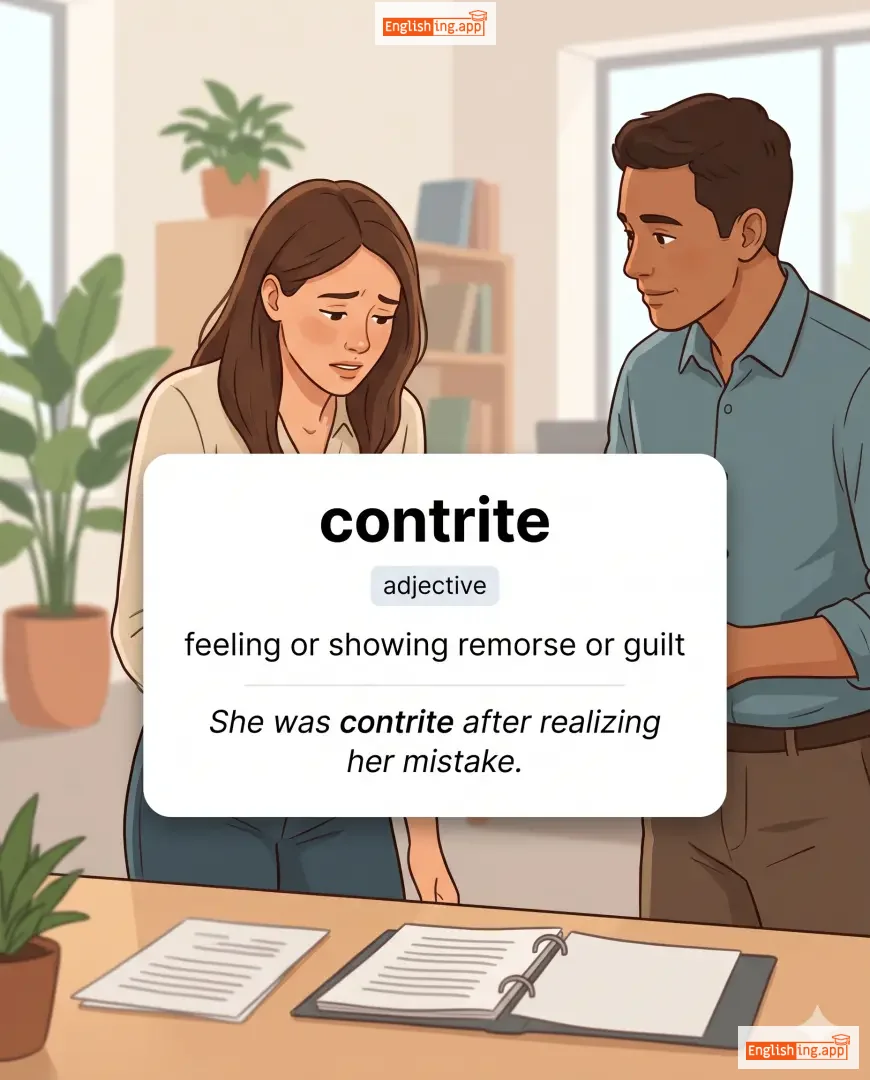
feeling or showing remorse or guilt
••••••
|
She was contrite after realizing her mistake. |
Она была раскаявшейся, когда осознала свою ошибку.
Ona byla raskayavshiesya, kogda osoznala svoyu oshibku.
••••••
|
- •••••• | - •••••• | - •••••• |
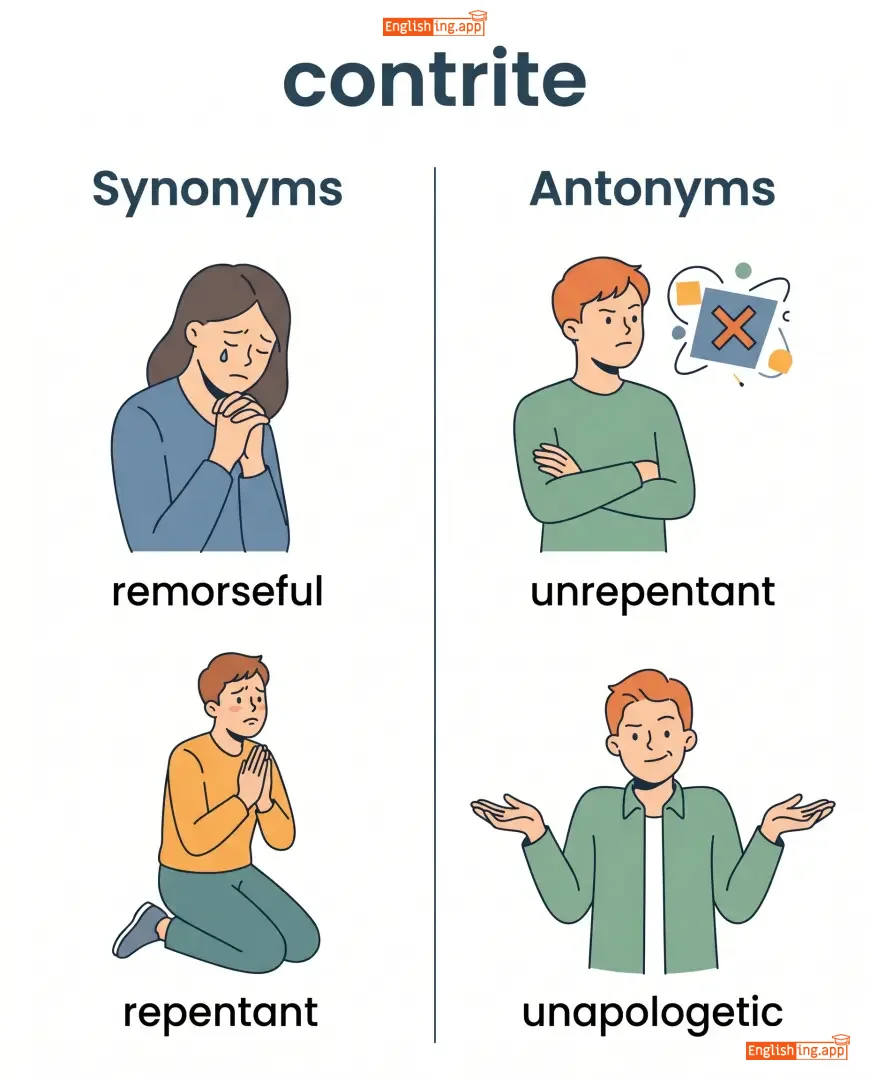
remorseful, repentant, sorry, penitent, regretful
••••••
|
unrepentant, unapologetic
••••••
|
look contrite, feel contrite, genuinely contrite, appear contrite
••••••
|
Con TRITE раскаиваешься после ошибки
••••••
|
|
🧩
••••••
|
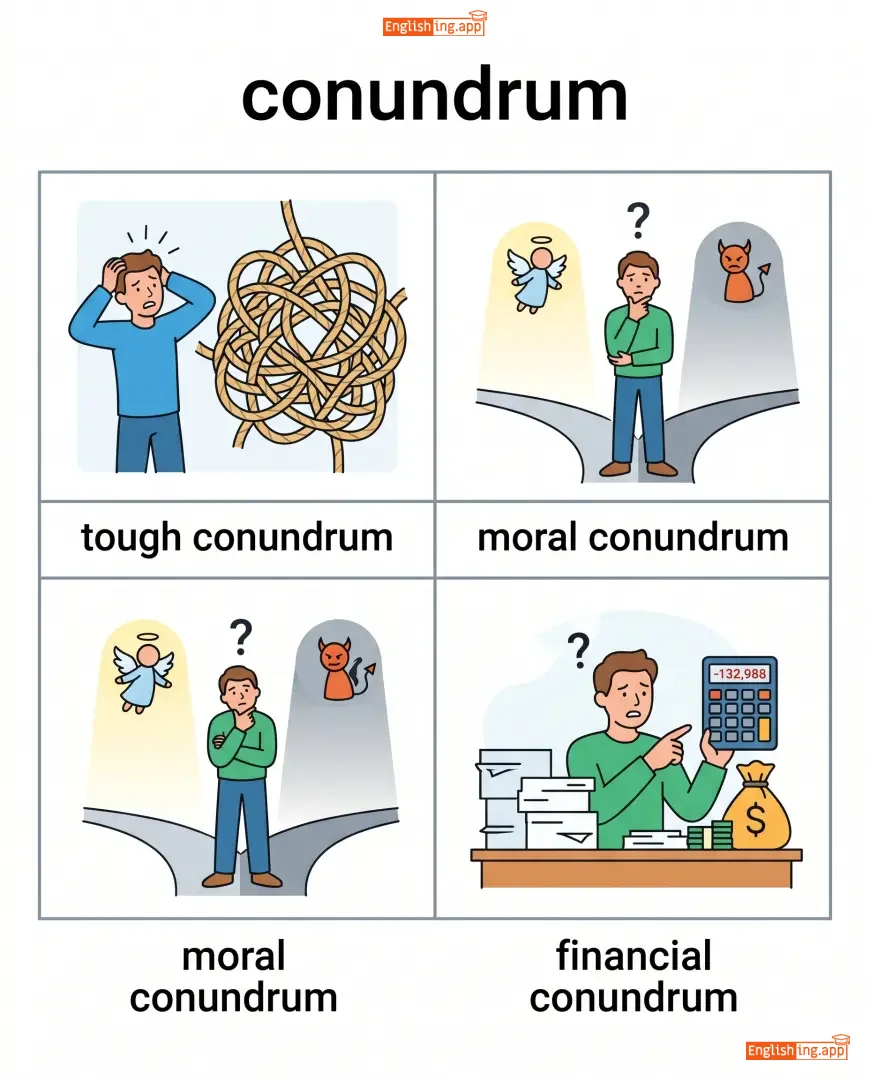
/kəˈnʌndrəm/
noun
(конандрум)
••••••
|
|
головоломка
golovolomka
••••••
|
- •••••• | - •••••• | - •••••• | - •••••• |
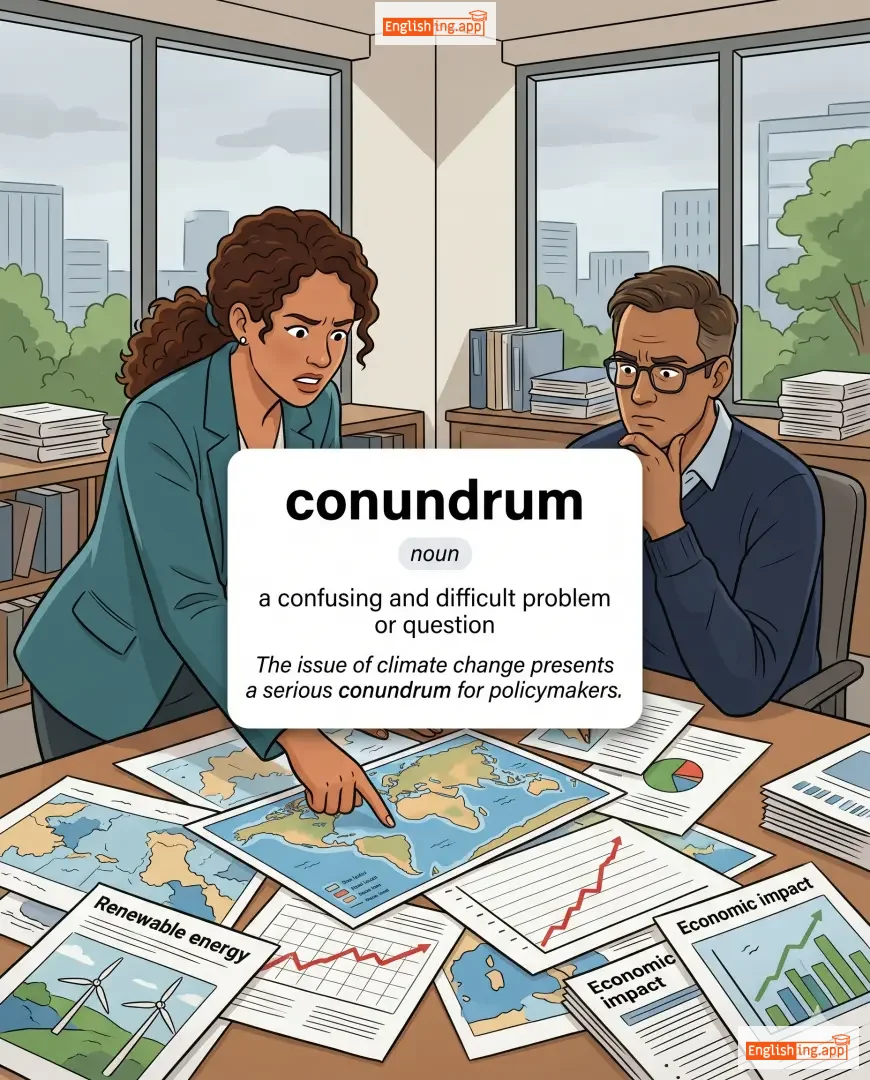
a confusing and difficult problem or question
••••••
|
The issue of climate change presents a serious conundrum for policymakers. |
Проблема изменения климата представляет собой серьезную головоломку для политиков.
Problema izmeneniya klimata predstavlyaet soboy seryoznuyu golovolomku dlya politikov.
••••••
|
- •••••• | - •••••• | - •••••• |
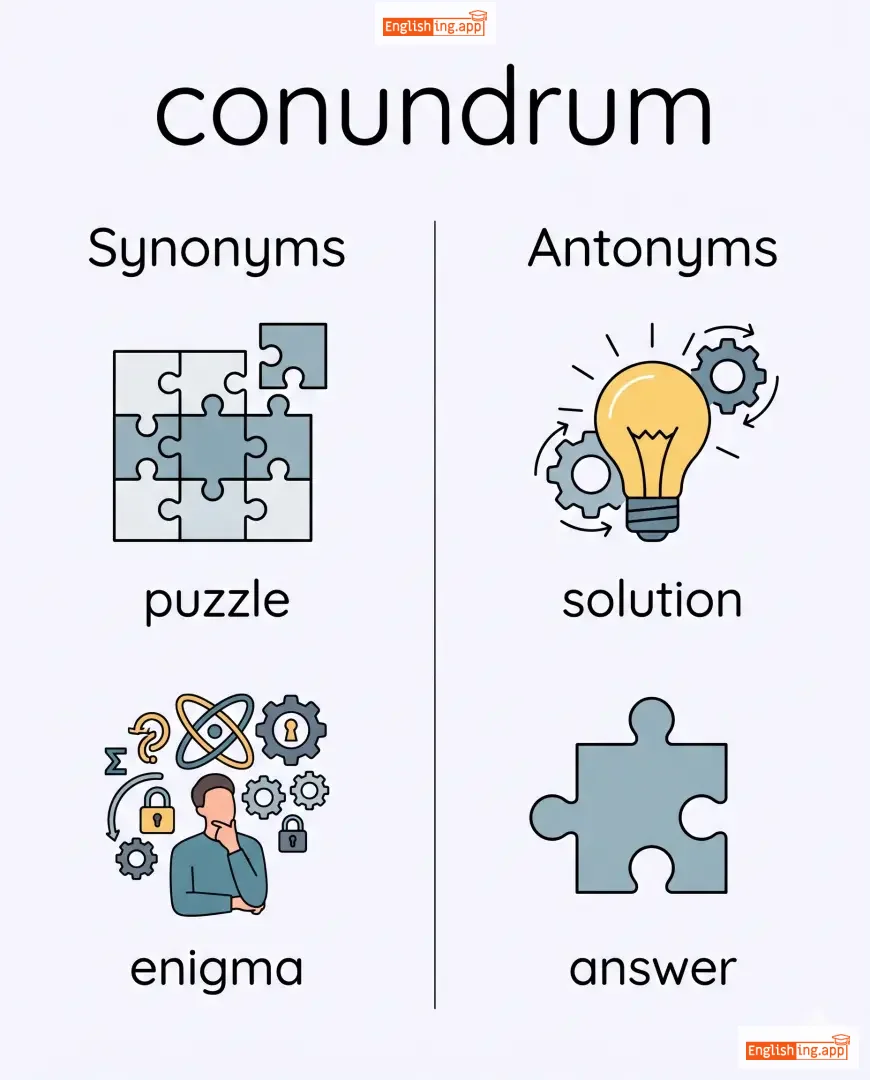
puzzle, enigma, riddle, dilemma, problem
••••••
|
solution, answer, clarity
••••••
|
tough conundrum, moral conundrum, financial conundrum
••••••
|
Представь себе головоломку, которую трудно решить, но которая важна.
••••••
|
|
🔄
••••••
|
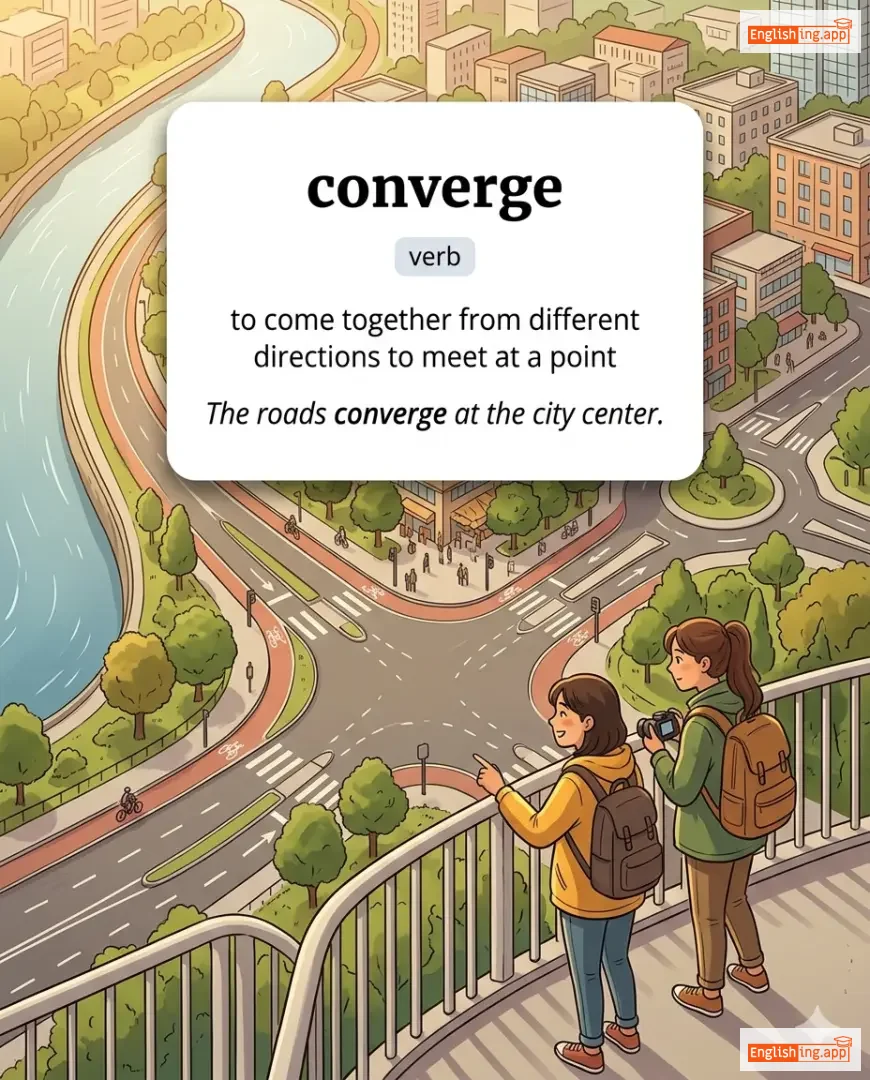
/kənˈvɜːrdʒ/
verb
(kənvɜrdʒ)
••••••
|

|
сходиться
skhoditsya
••••••
|
converged
kənvɜrdʒd
••••••
|
converged
kənvɜrdʒd
••••••
|
converges
kənvɜrdʒiz
••••••
|
converging
kənvɜrdʒɪŋ
••••••
|
to come together from different directions; to meet at a point
••••••
|
The roads converge at the city center.
дороги сходятся в центре города.
••••••
|
Дороги сходятся в центре города.
Dorogi skhodyatsya v tsentre goroda.
••••••
|
- •••••• | - •••••• | - •••••• |
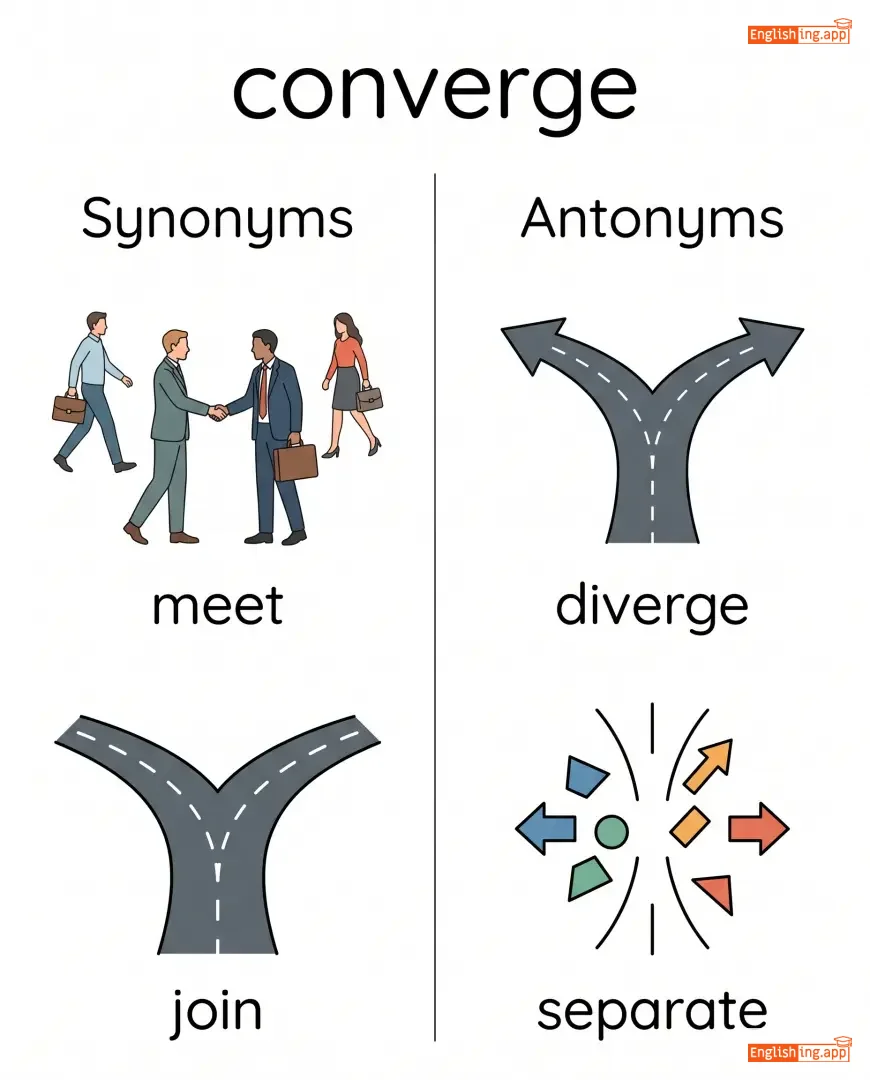
meet, unite, merge, come together, join
••••••
|
diverge, separate, spread, scatter
••••••
|
converge on, converge at, converge together, roads converge, lines converge
••••••
|
Представь себе дороги, которые сливаются как река
••••••
|
|
🌀
••••••
|
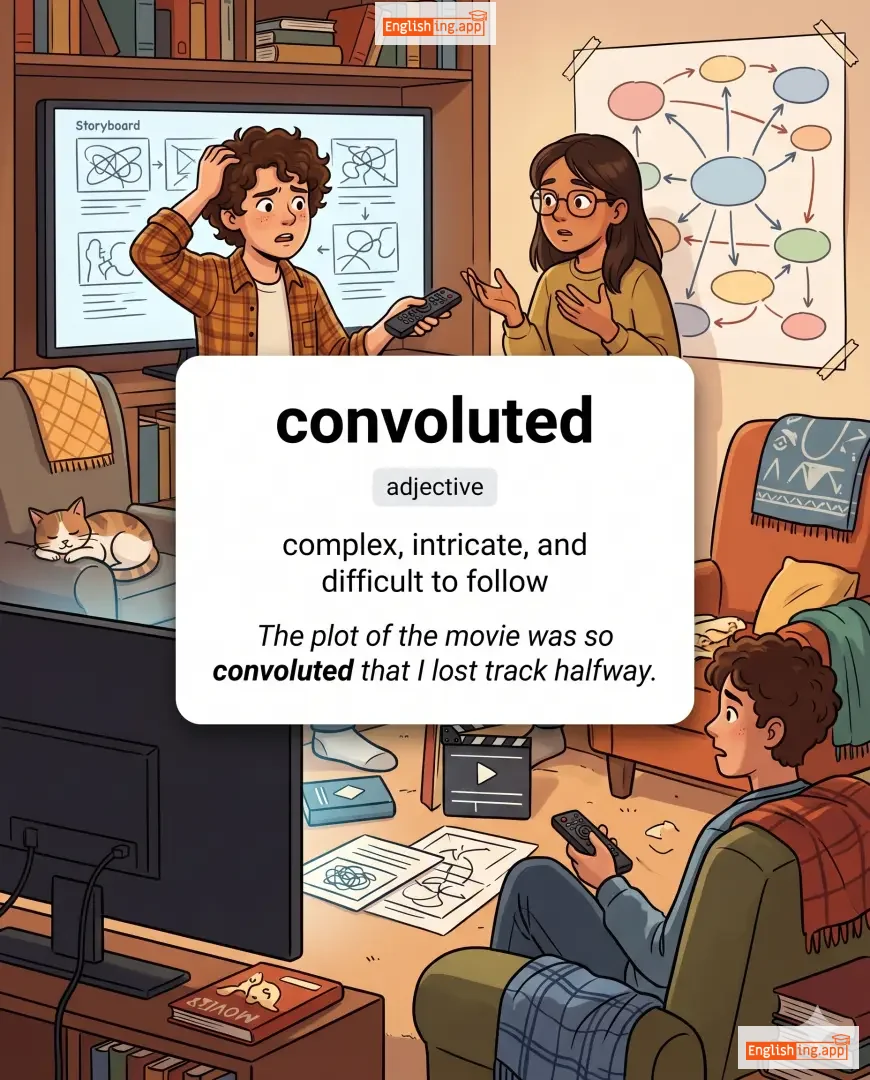
/ˈkɒnvəluːtɪd/
adjective
(конвулютед)
••••••
|
|
сложный, запутанный
slozhny, zaputannyy
••••••
|
- •••••• | - •••••• | - •••••• | - •••••• |
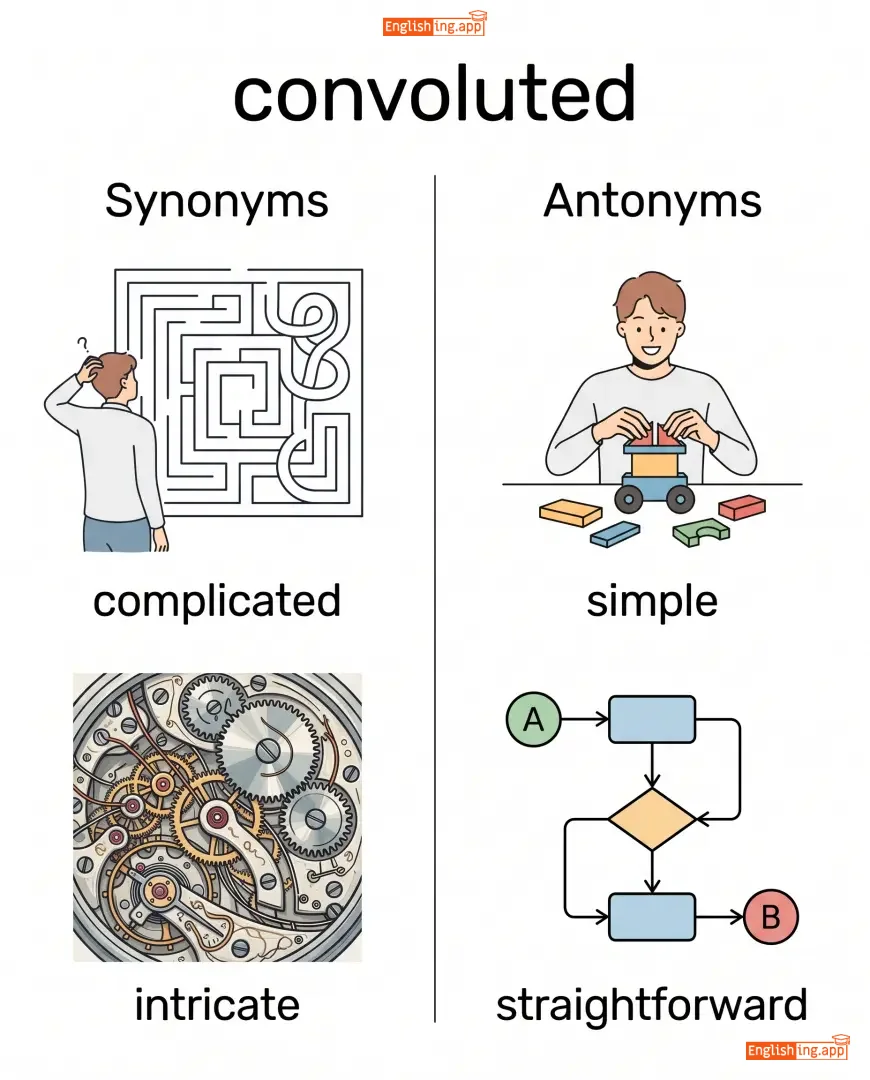
complex, intricate, and difficult to follow
••••••
|
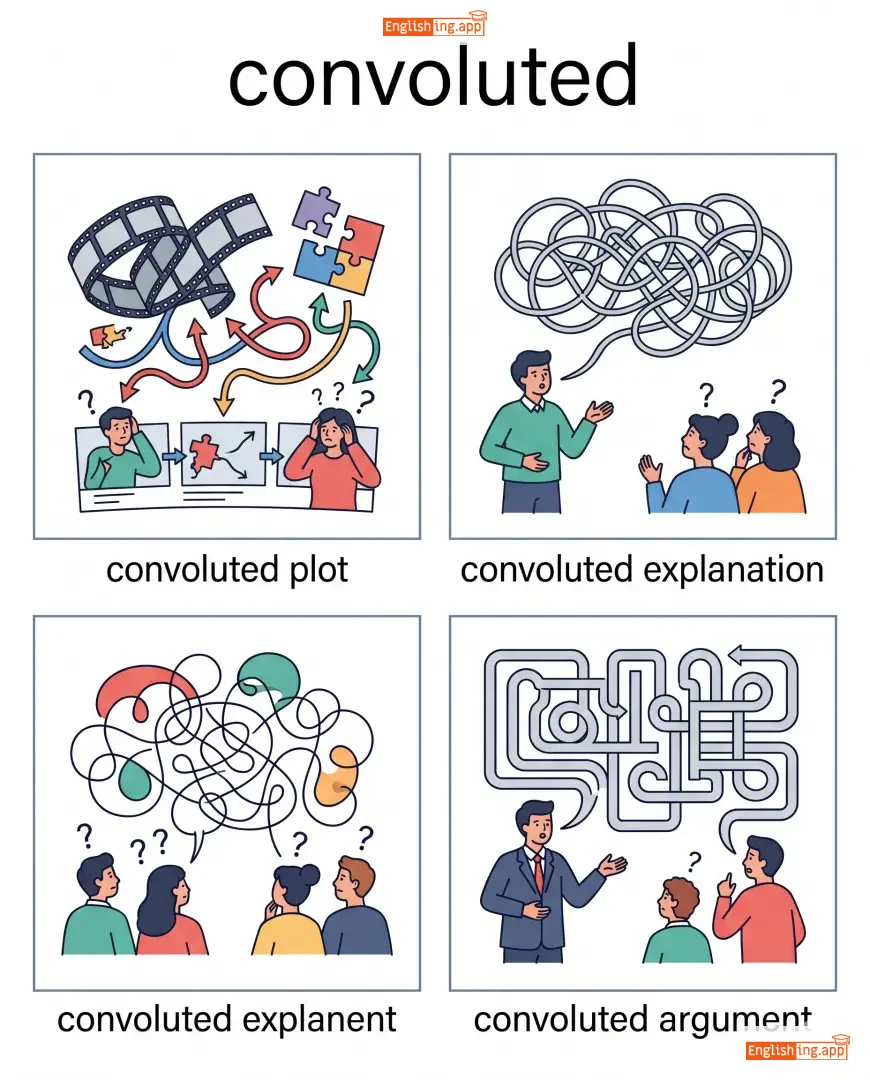
The plot of the movie was so convoluted that I lost track halfway. |
Сюжет фильма был настолько запутанным, что я потерял нить, двигаясь дальше.
Syuzhet fil'ma byl nastol'ko zaputannym, chto ya poteryal nit', dvizhya's' dalshe.
••••••
|
- •••••• | - •••••• | - •••••• |
complicated, intricate, twisted, tangled
••••••
|
simple, straightforward
••••••
|
convoluted plot, convoluted explanation, convoluted argument
••••••
|
запутанный клубок мыслей, который трудно развернуть
••••••
|
|
😨
••••••
|
/ˈkreɪvən/
adjective
(kréivén)
••••••
|
|
трус
trus
••••••
|
- •••••• | - •••••• | - •••••• | - •••••• |
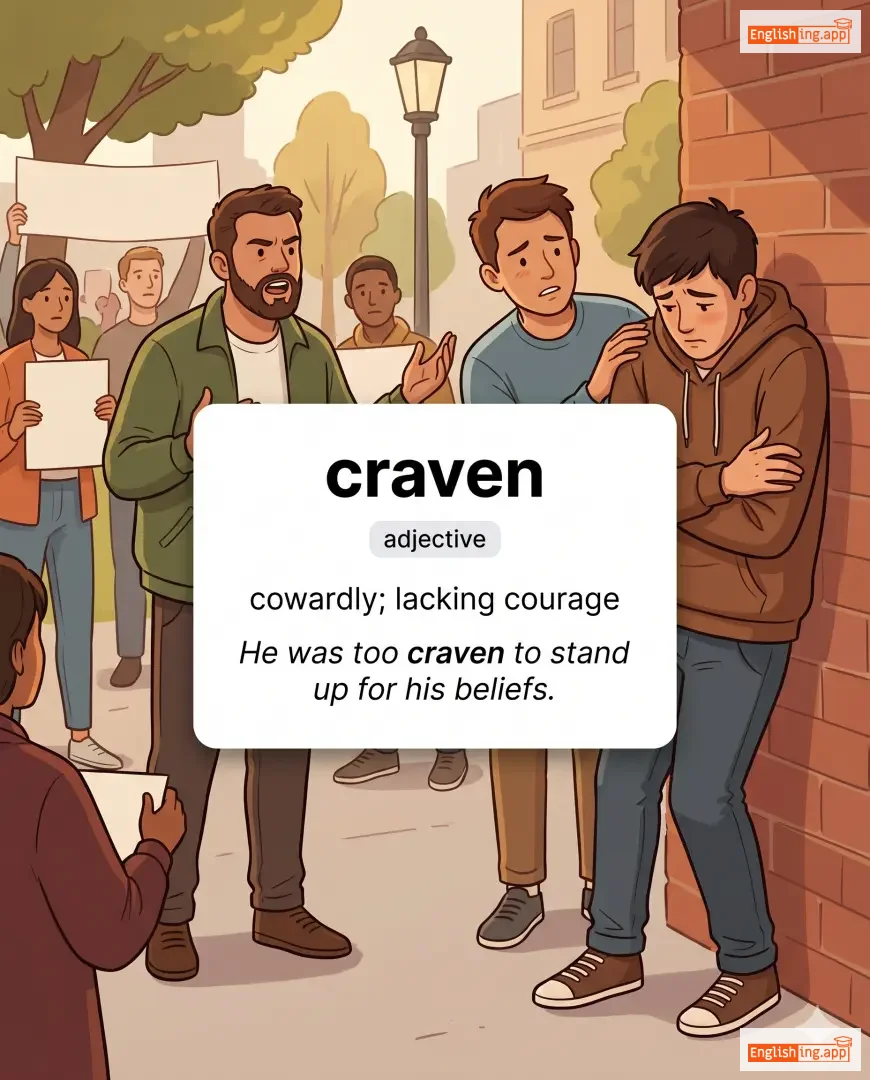
cowardly; lacking courage
••••••
|
He was too craven to stand up for his beliefs.
Он был слишком труслив, чтобы отстоять свои убеждения.
••••••
|
Он был слишком труслив, чтобы отстоять свои убеждения.
On byl slishkom truslyv, chtoby otstoyat svoi ubezhdeniya.
••••••
|
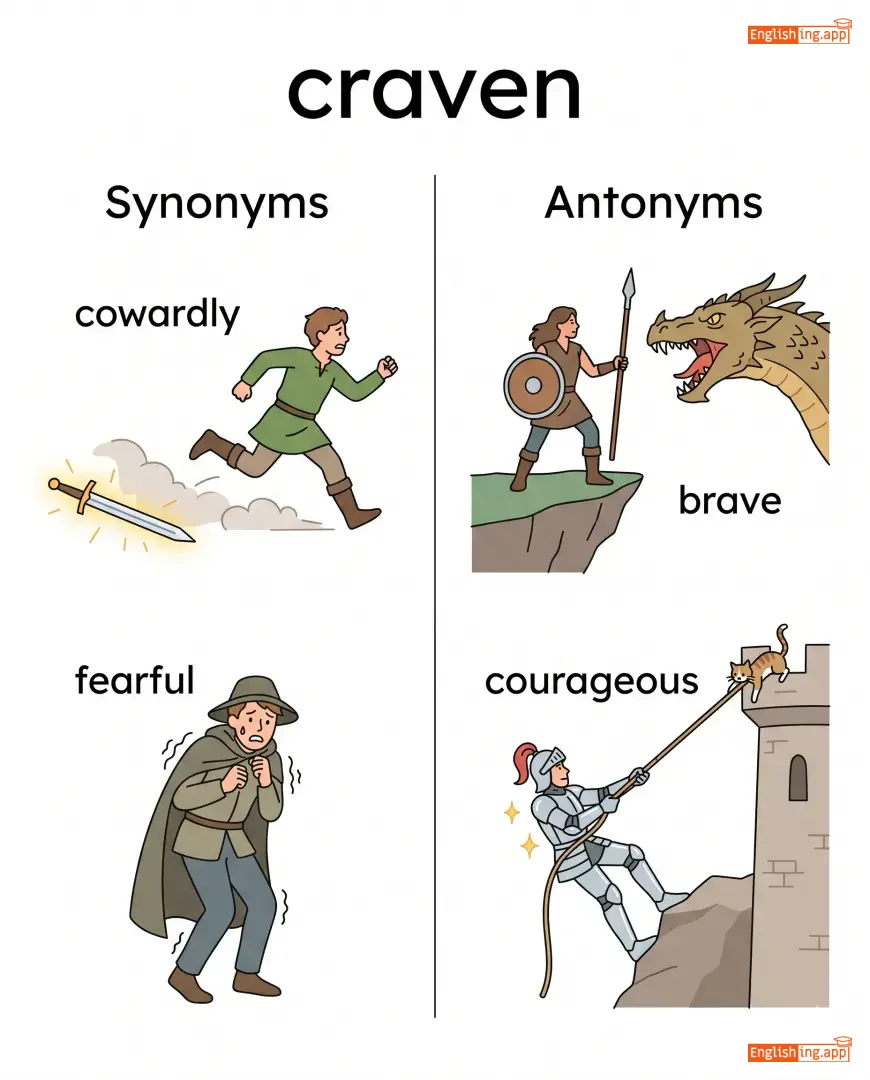
- •••••• | - •••••• | - •••••• |
cowardly, fearful, timid, pusillanimous
••••••
|
brave, courageous, bold
••••••
|
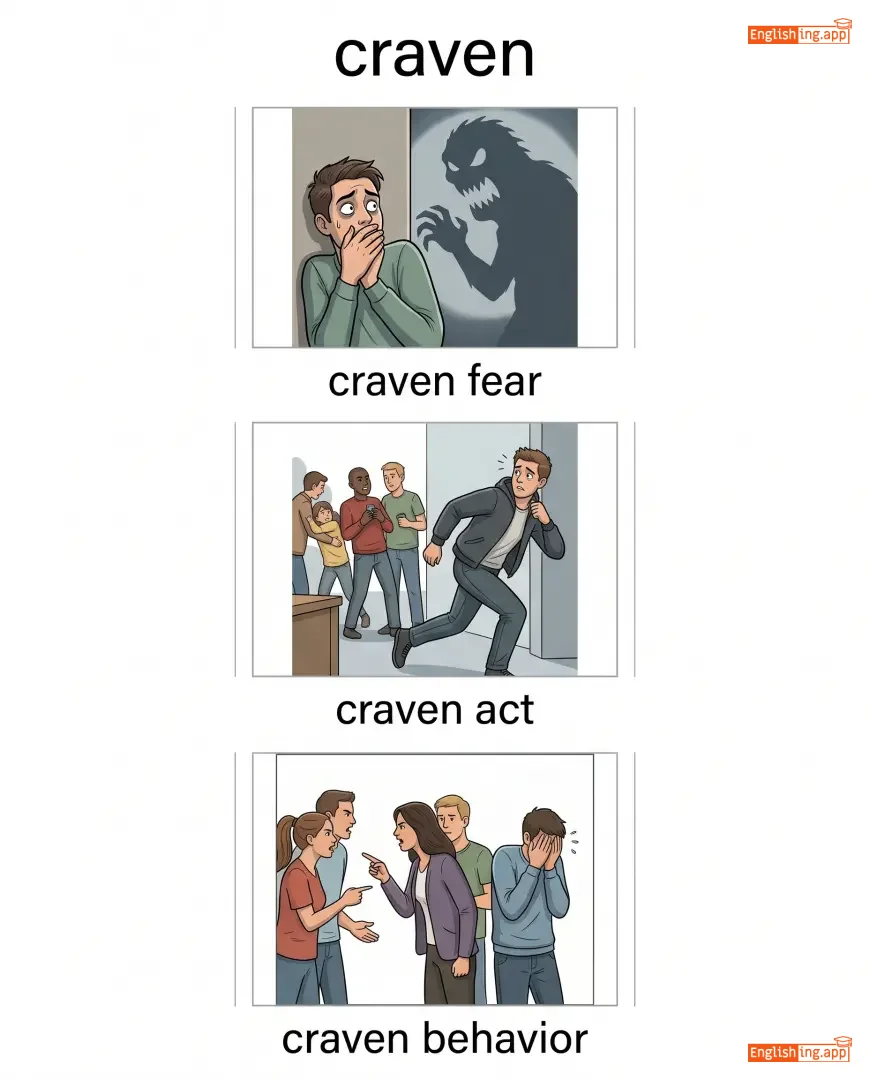
craven fear, craven act, craven behavior
••••••
|
CRAVE не может, потому что трус
••••••
|
|
😨
••••••
|
/dɔːnt/
verb
(даунт)
••••••
|

|
пугать
pugat
••••••
|
daunted
даунтед
••••••
|
daunted
даунтед
••••••
|
daunts
даунтс
••••••
|
daunting
даунтинг
••••••
|
to make someone feel intimidated, discouraged, or less confident
••••••
|
The steep climb did not daunt the experienced hikers.
Крутой подъем не напугал опытных туристов.
••••••
|
Крутой подъем не напугал опытных туристов.
Krutoy pod'yom ne napugal opytnykh turistsov.
••••••
|
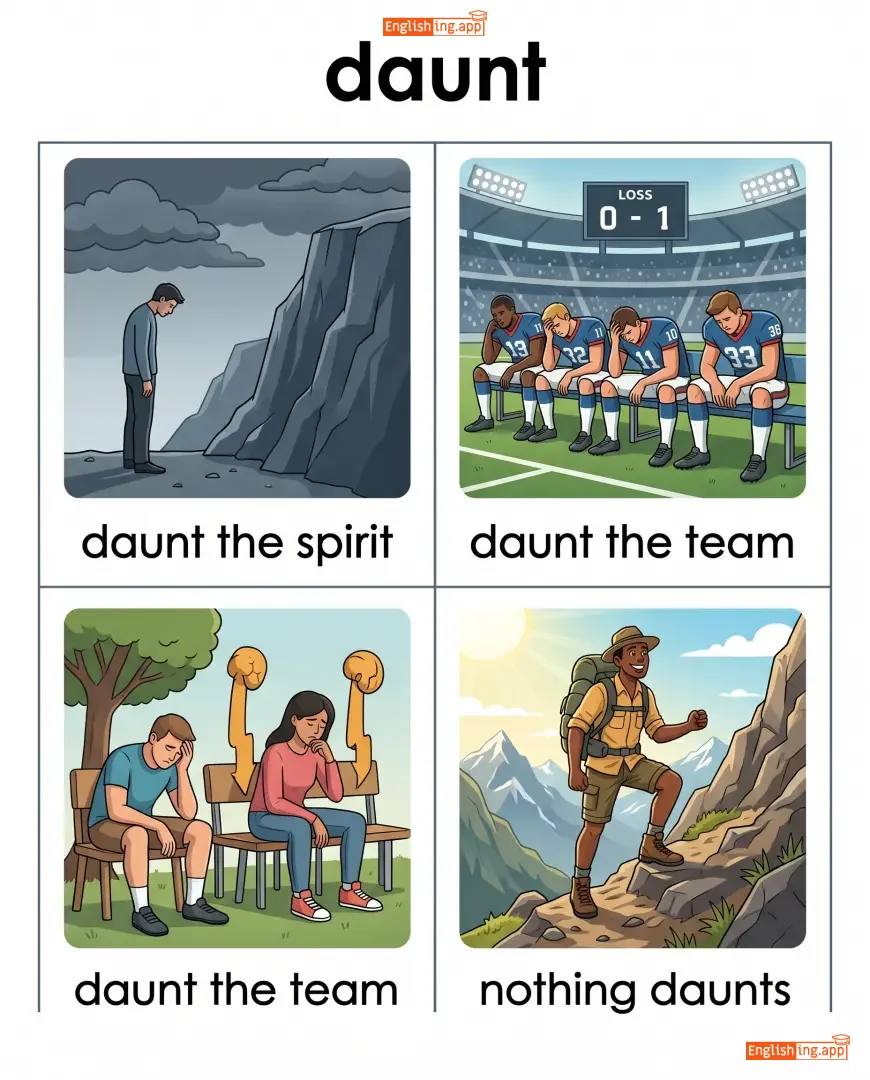
nothing daunts him
Ничто его не пугает
••••••
|
he is not easily discouraged or intimidated
••••••
|
Ничто его не пугает
Nichto ego ne pugaet
••••••
|
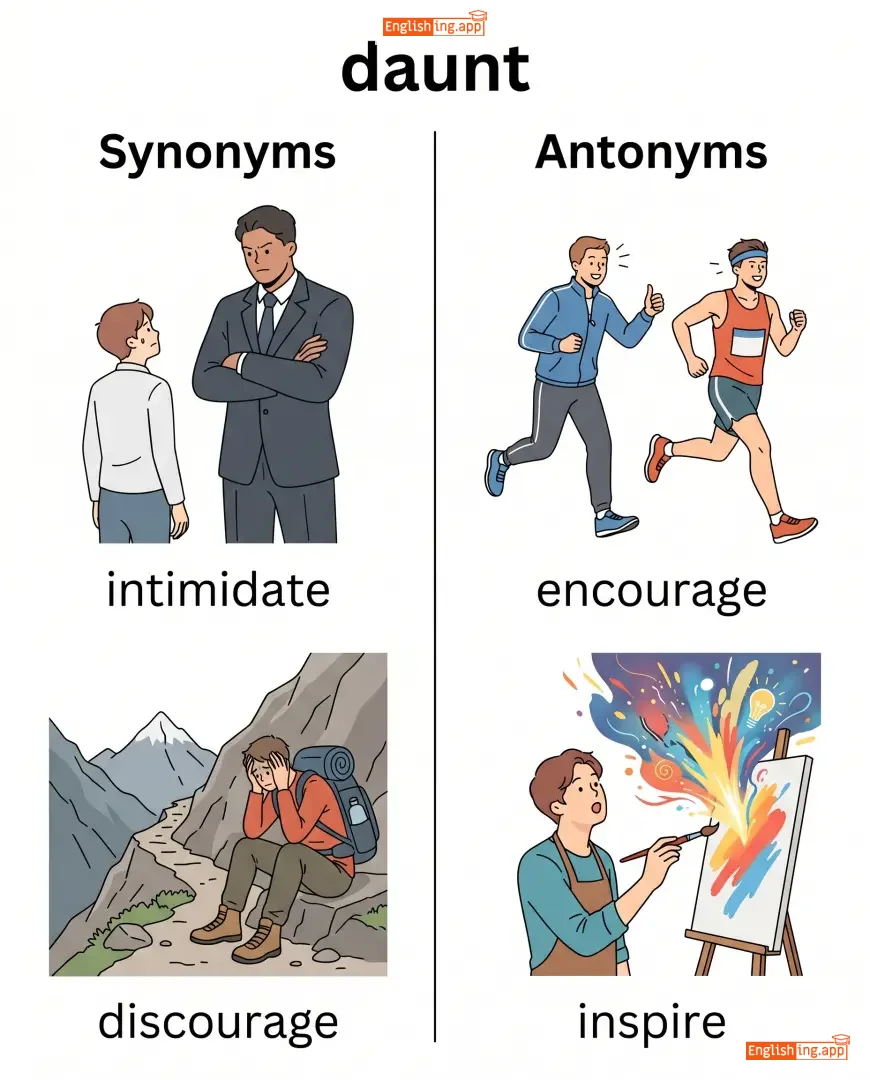
intimidate, discourage, dishearten, deter, frighten
••••••
|
encourage, inspire, embolden
••••••
|
daunt the spirit, daunt the team, nothing daunts, daunt the enemy
••••••
|
Don't (даунт) пугать—Daunt означает пугать
••••••
|
|
📜
••••••
|
/dɪˈkɔːrəm/
noun
(dekoram)
••••••
|

|
декорум
dekorum
••••••
|
- •••••• | - •••••• | - •••••• | - •••••• |
behavior in keeping with good taste and propriety
••••••
|
The students maintained decorum during the ceremony. |
Студенты сохраняли декорум во время церемонии.
Studenty sokhranyali dekorum vo vremya tseremonii.
••••••
|
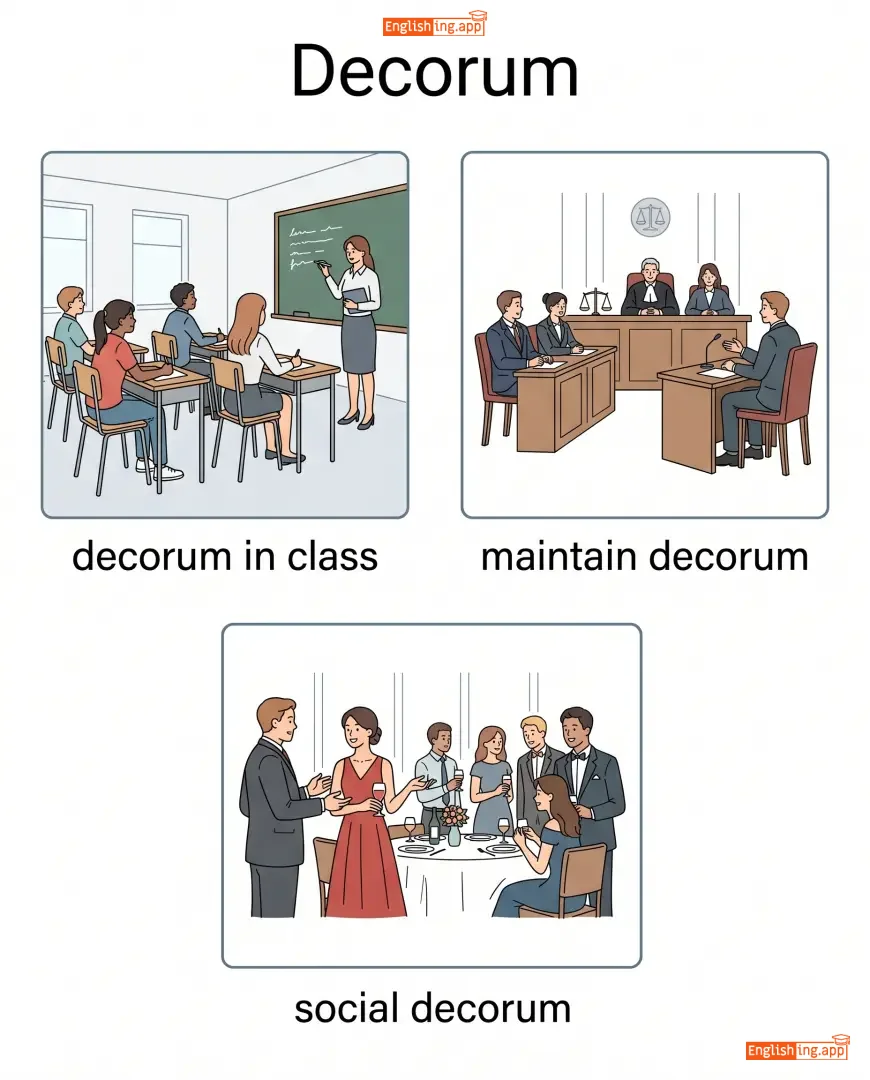
maintain decorum |
to behave in a proper and respectful manner
••••••
|
сохранять декорум
sokhranyat' dekorum
••••••
|
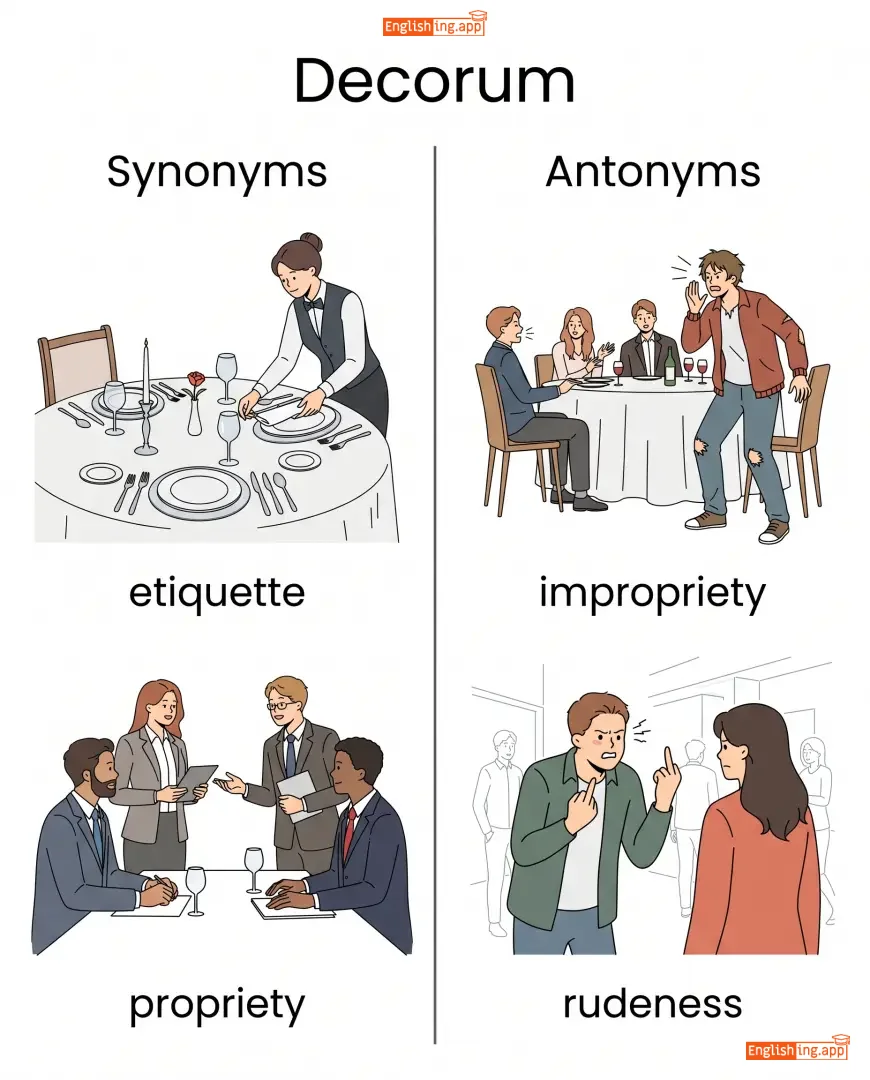
etiquette, propriety, manners, civility, dignity
••••••
|
impropriety, rudeness, disorder
••••••
|
decorum in class, maintain decorum, social decorum
••••••
|
Декорум - это поддержание хороших манер и уважения.
••••••
|
|
⚠️
••••••
|
/dɪˈfɔːlt/
noun, verb
(дефолт)
••••••
|
|
невыполнение обязательства
nevyplnenie obyazatel'stva
••••••
|
defaulted
дефолтед
••••••
|
defaulted
дефолтед
••••••
|
defaults
дефолтс
••••••
|
defaulting
дефолтинг
••••••
|
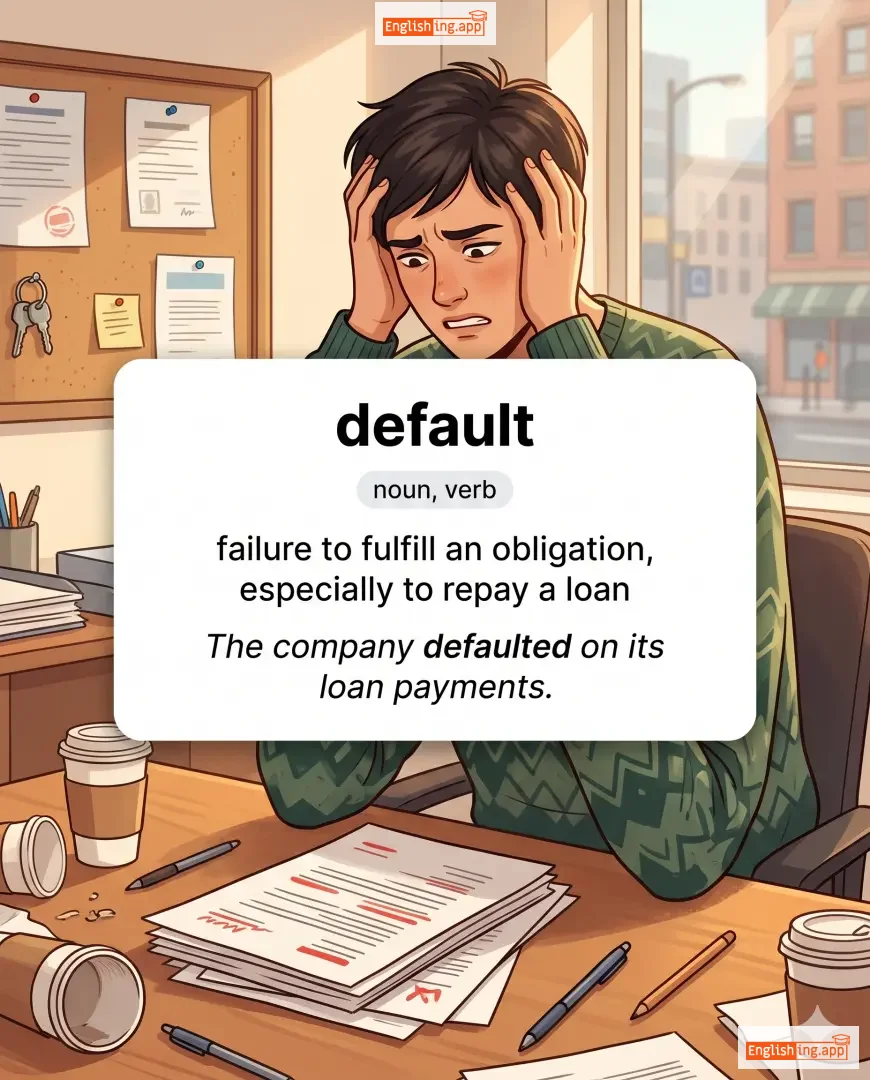
failure to fulfill an obligation, especially to repay a loan
••••••
|
The company defaulted on its loan payments.
Компания не выполнила свои обязательства по платежам по кредиту.
••••••
|
Компания не выполнила свои обязательства по платежам по кредиту.
Kompaniya ne vypolnila svoi obyazatel'stva po platezham po kreditu.
••••••
|
in default
в дефолте
••••••
|
in a state of failing to fulfill an obligation
••••••
|
в невыполнении обязательства
v nevyplnenii obyazatel'stva
••••••
|
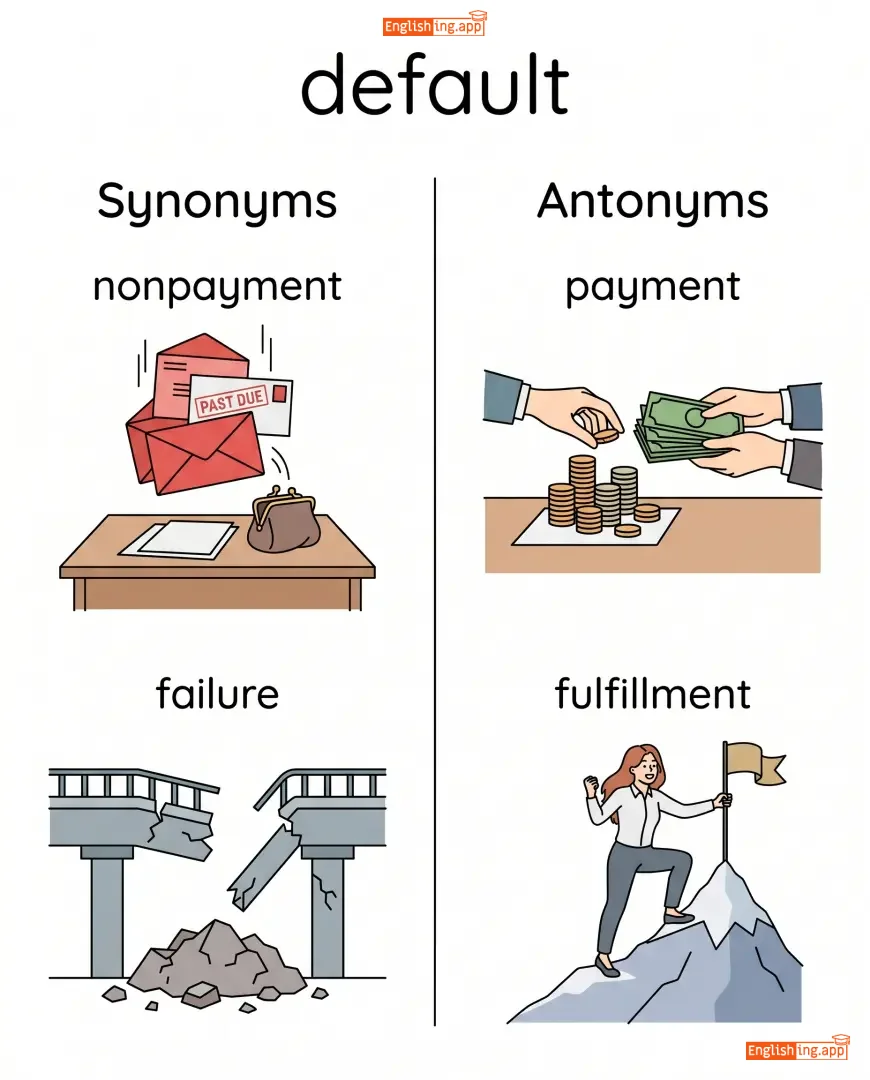
nonpayment, failure, negligence, omission
••••••
|
payment, fulfillment, compliance
••••••
|
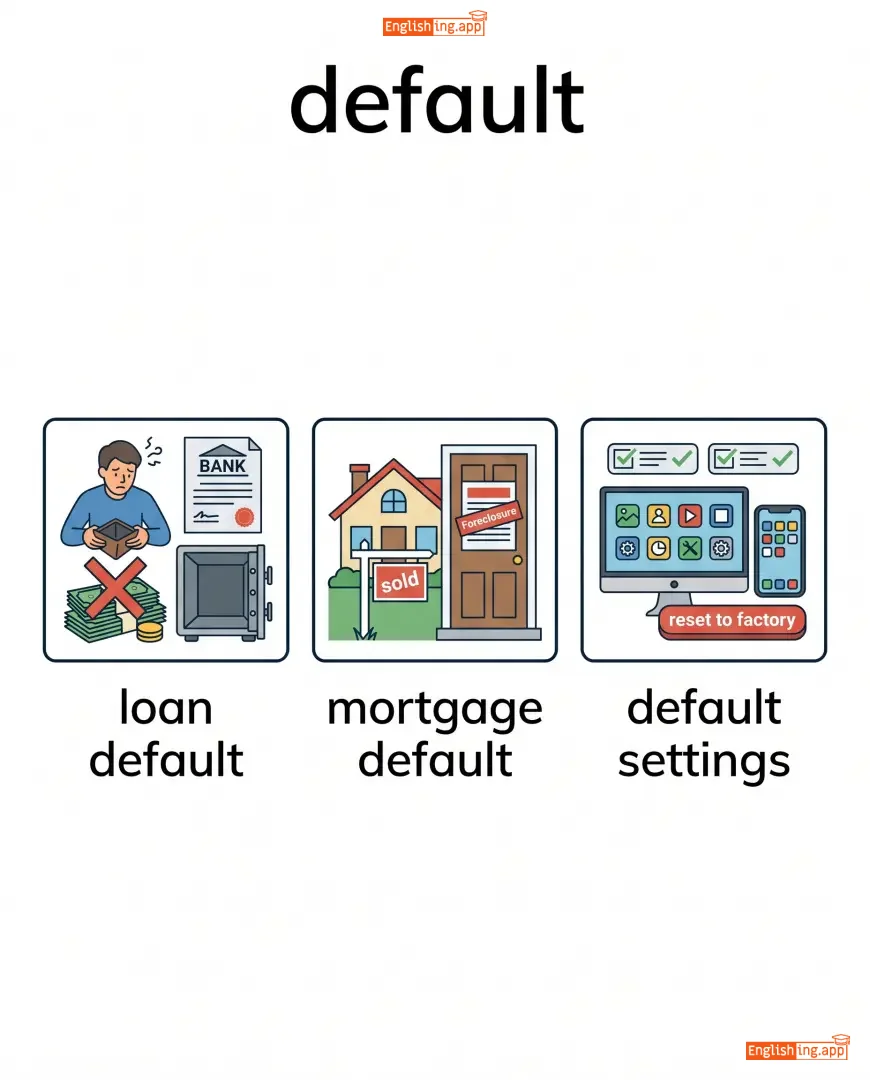
loan default, mortgage default, default settings, default judgment
••••••
|
Default → Отклонение от обязательства
••••••
|
|
🙏
••••••
|
/ˈdɛfərəns/
noun
(деференс)
••••••
|
|
почтение
pochtenie
••••••
|
- •••••• | - •••••• | - •••••• | - •••••• |
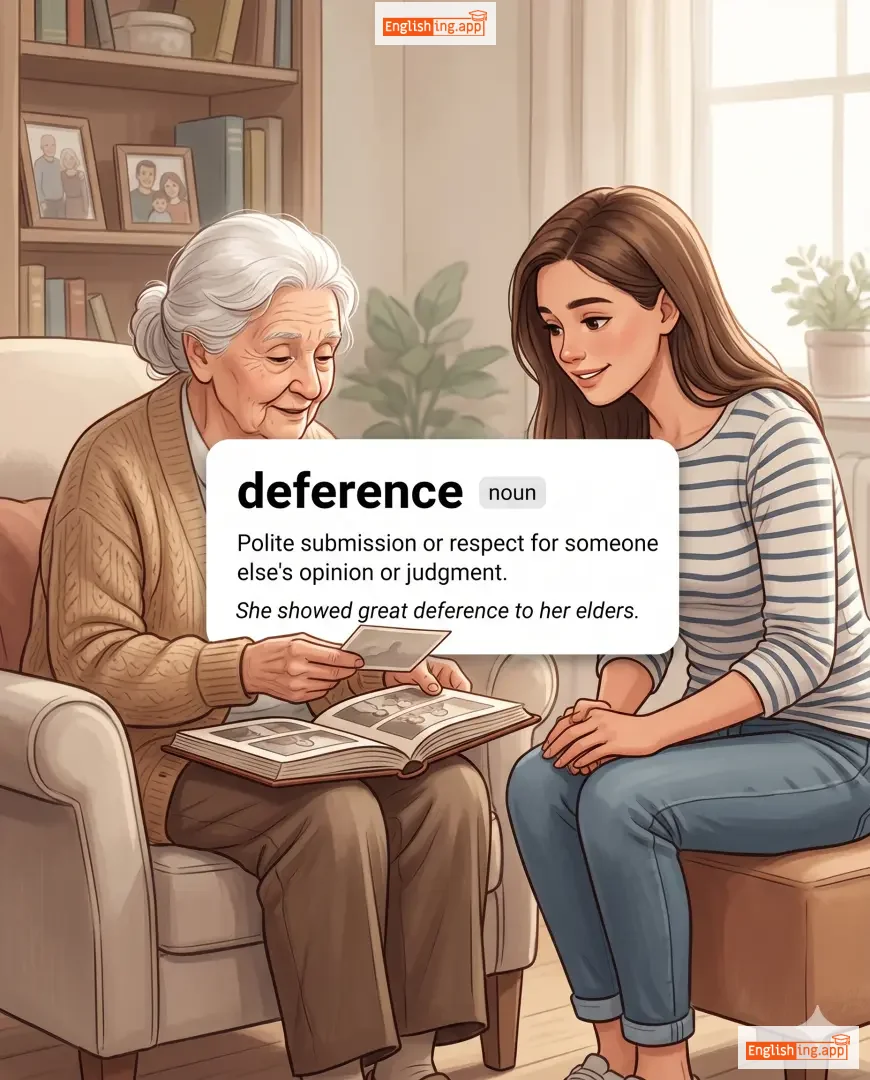
Polite submission or respect for someone else's opinion or judgment.
••••••
|
She showed great deference to her elders. |
Она проявила большое почтение к своим старшим.
Ona proyavila bol'shoe pochtenie k svoim starshim.
••••••
|
in deference to |
Out of respect or regard for someone or something.
••••••
|
из почтения к
iz pochteniya k
••••••
|
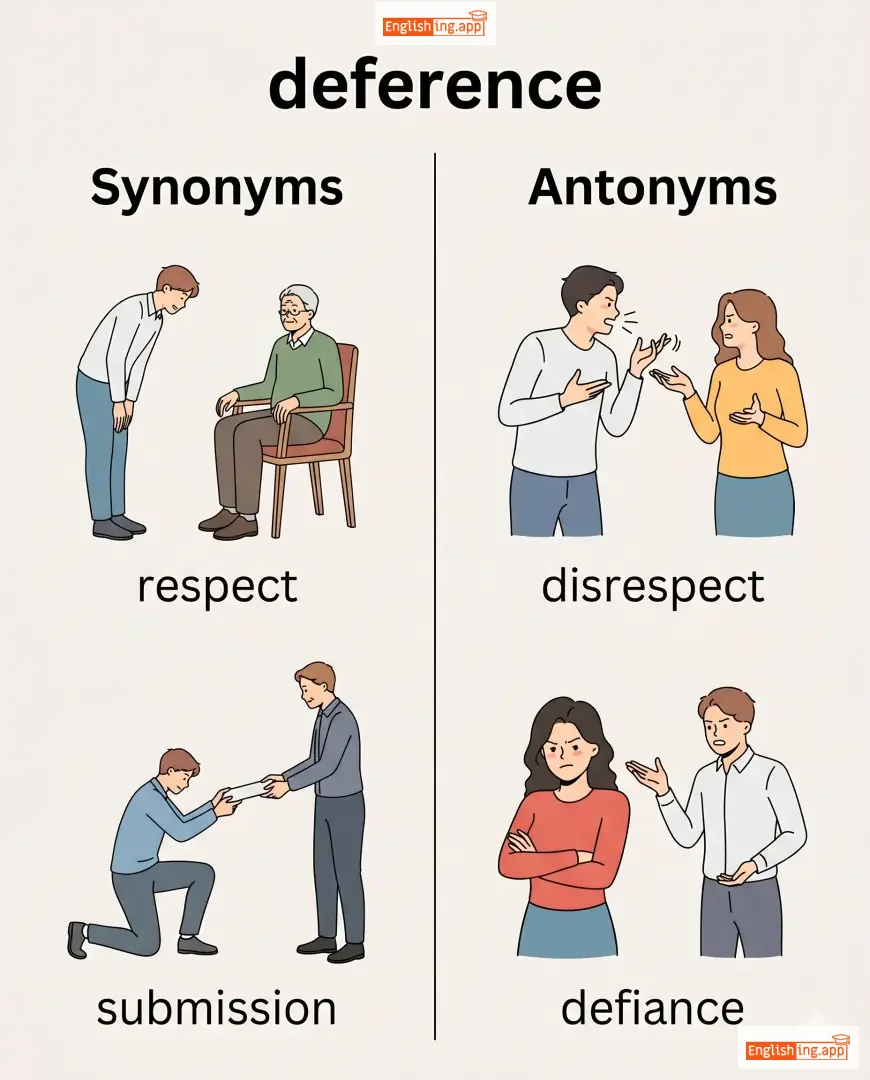
respect, submission, obedience, reverence
••••••
|
disrespect, defiance, disregard
••••••
|
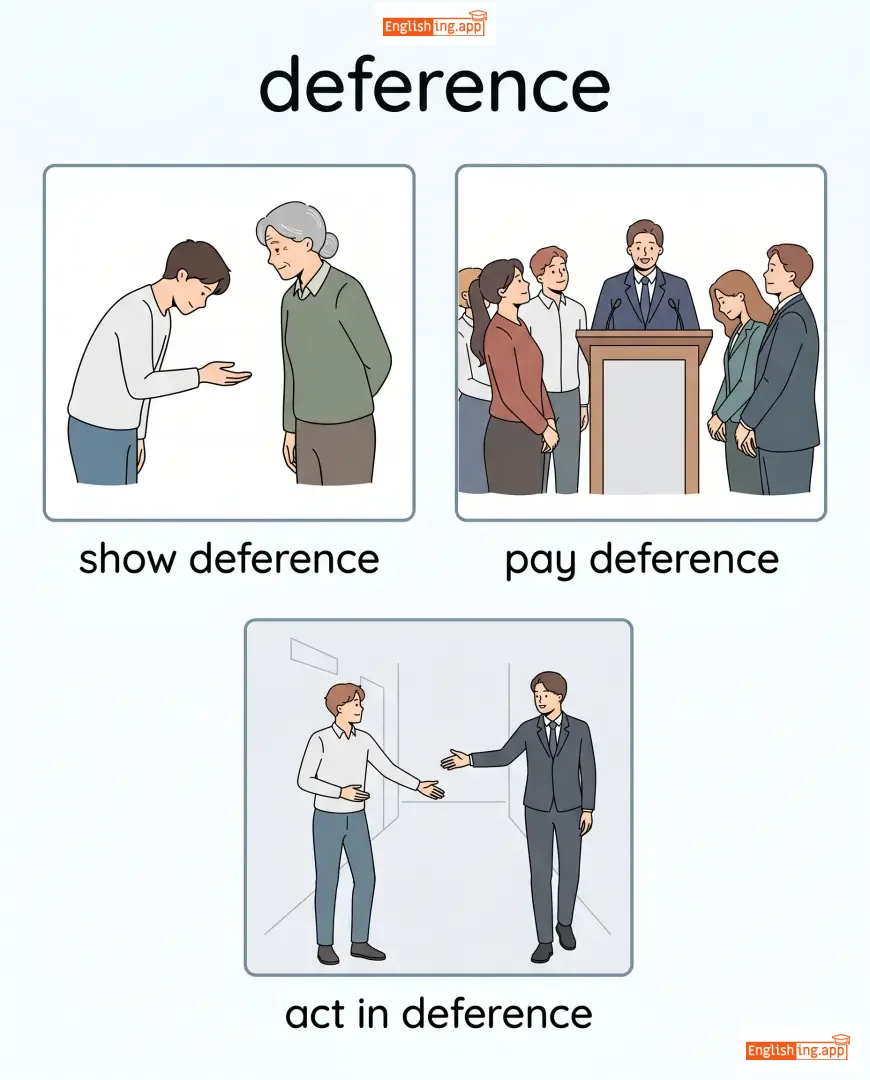
show deference, pay deference, act in deference
••••••
|
Deference означает defer (откладывать) + ence → проявить уважение, откладывая свои желания ради других.
••••••
|
|
📝
••••••
|
/dɪˈlɪnieɪt/
verb
(делиниэйт)
••••••
|
|
очерчивать
ocherchivat
••••••
|
delineated
делиниэйтед
••••••
|
delineated
делиниэйтед
••••••
|
delineates
делиниэйтс
••••••
|
delineating
делиниэйтинг
••••••
|
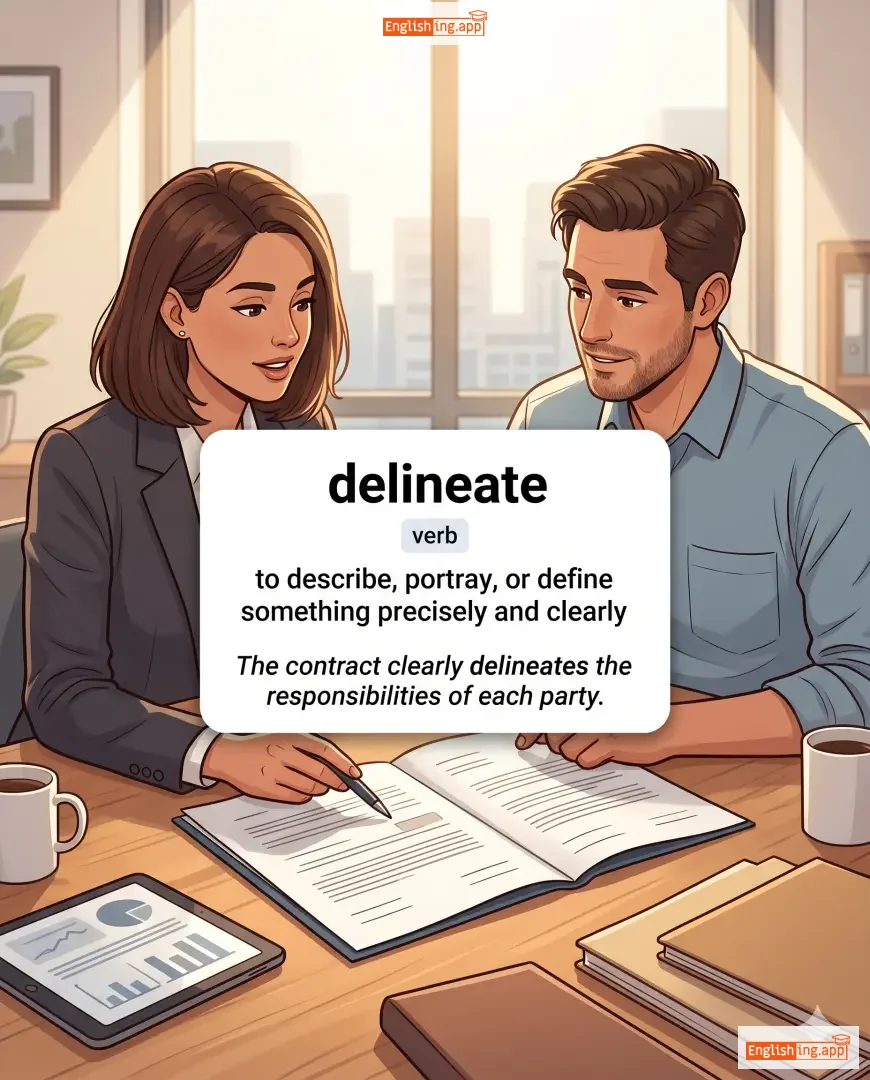
to describe, portray, or define something precisely and clearly
••••••
|
The contract clearly delineates the responsibilities of each party.
Контракт четко определяет ответственность каждой стороны.
••••••
|
Контракт четко определяет ответственность каждой стороны.
Kontrakt chetko opredelyaet otvetstvennost' kazhdoi storony.
••••••
|
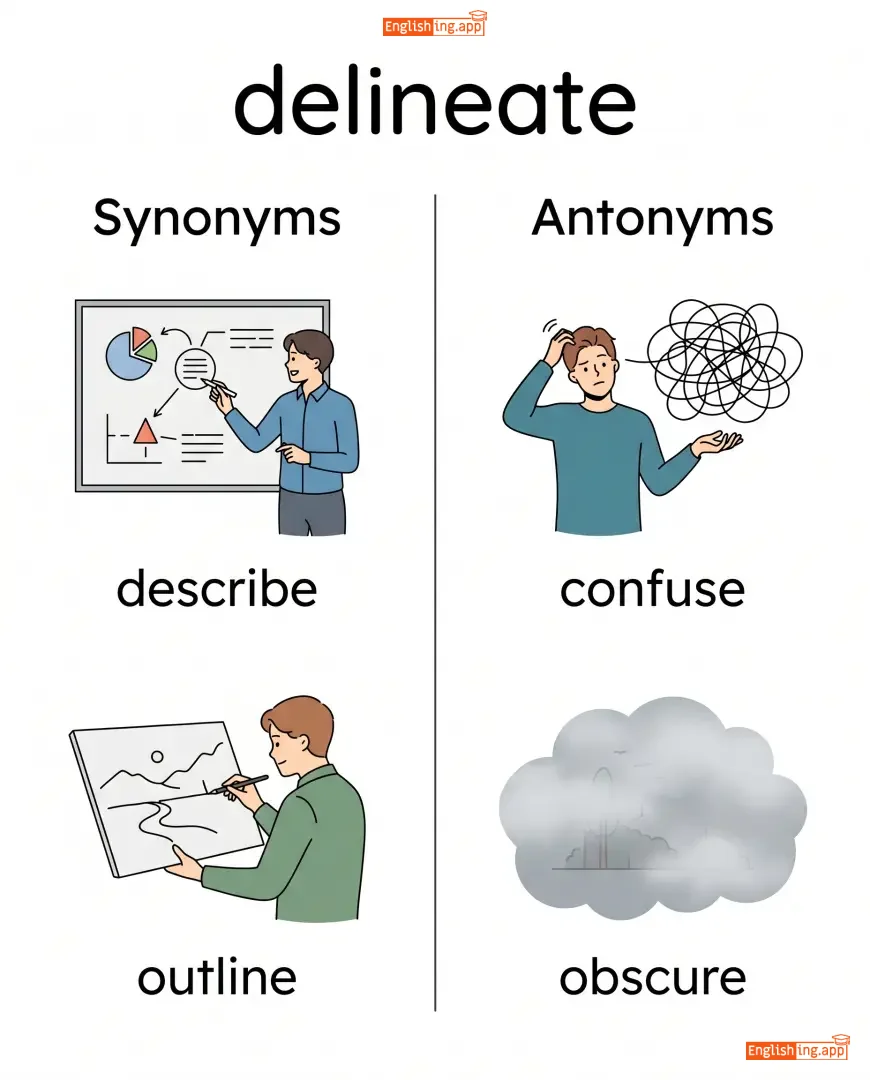
- •••••• | - •••••• | - •••••• |
describe, outline, depict, portray, specify
••••••
|
confuse, obscure, distort
••••••
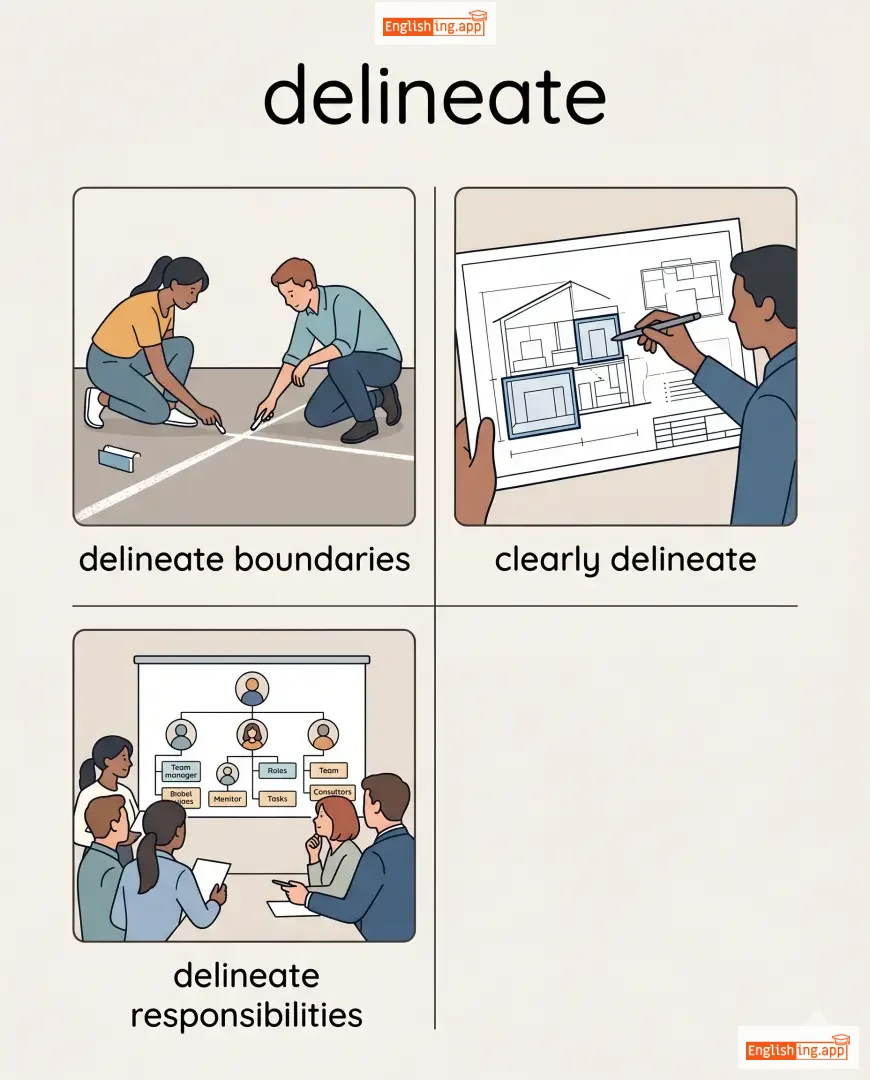
|
delineate boundaries, clearly delineate, delineate responsibilities, delineate process
••••••
|
Очерчивать - как четко рисовать линии.
••••••
|
|
🗣️
••••••
|
/ˈdɛnɪˌɡreɪt/
verb
(денигрейт)
••••••
|
|
унижать
unizhat
••••••
|
denigrated
денигрейтид
••••••
|
denigrated
денигрейтид
••••••
|
denigrates
денигрейтс
••••••
|
denigrating
денигрейтинг
••••••
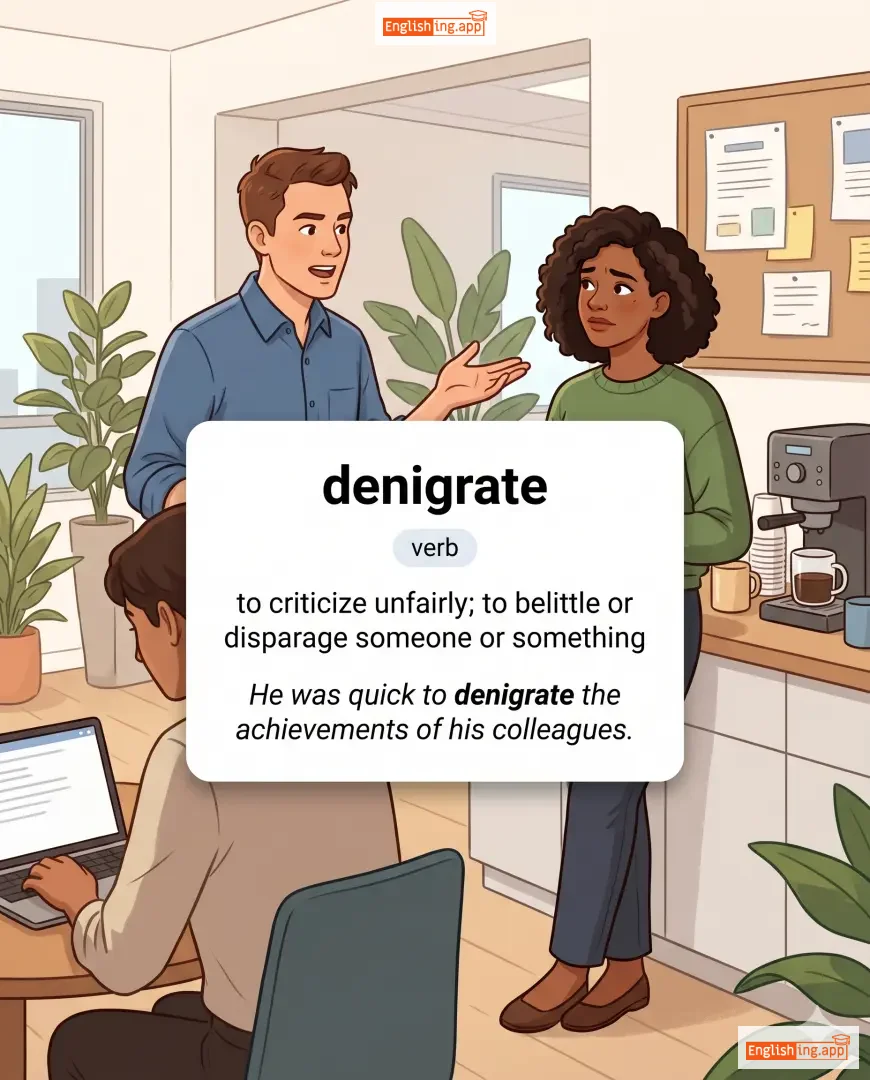
|
to criticize unfairly; to belittle or disparage someone or something
••••••
|
He was quick to denigrate the achievements of his colleagues.
Он быстро стал принижать достижения своих коллег.
••••••
|
Он быстро стал унижать достижения своих коллег.
On bystro stal unizhat' dostizheniya svoikh kolleg.
••••••
|
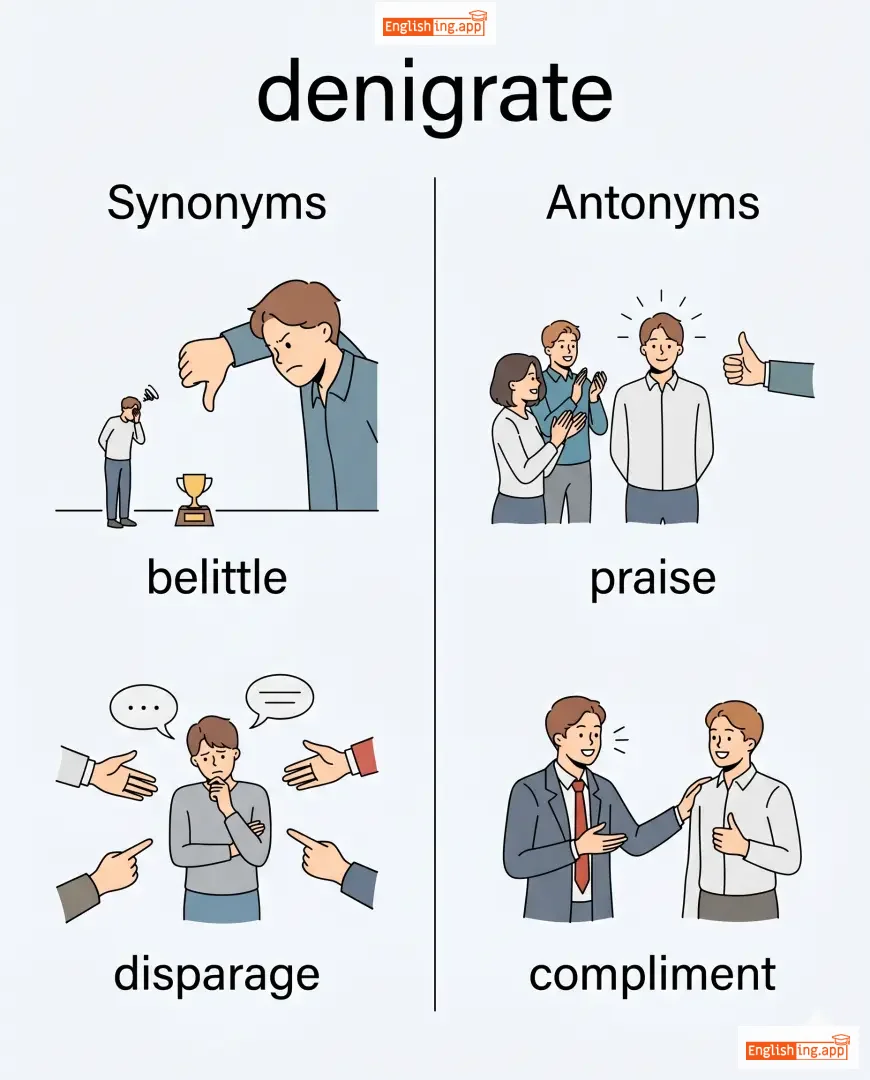
- •••••• | - •••••• | - •••••• |
belittle, disparage, defame, slander, deprecate
••••••
|
praise, compliment, honor
••••••
|
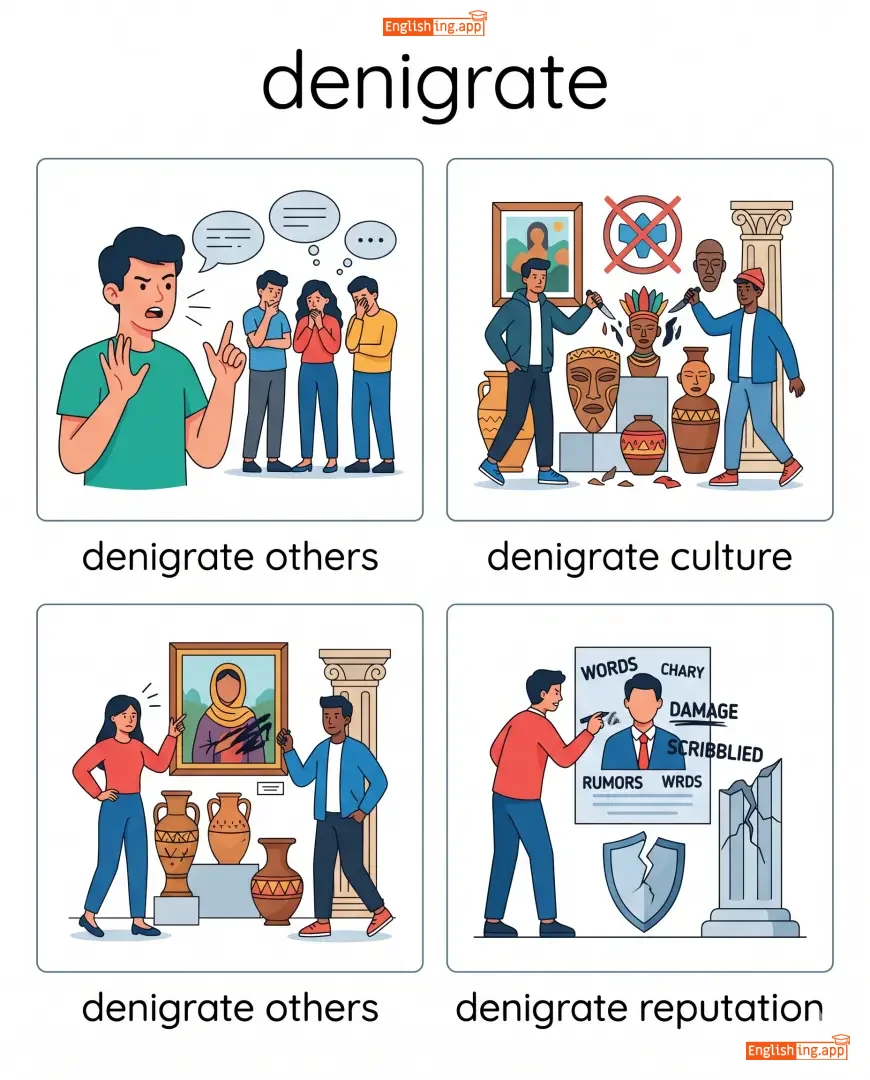
denigrate others, denigrate culture, denigrate reputation, denigrate efforts
••••••
|
Унижение = 'уни' как унижение, а 'жать' как 'сжать'.
••••••
|
|
😂
••••••
|
/dɪˈraɪd/
verb
(dɪˈraɪd)
••••••
|
|
насмехаться
nasmehat'sya
••••••
|
derided
dɪˈraɪdɪd
••••••
|
derided
dɪˈraɪdɪd
••••••
|
derides
dɪˈraɪdz
••••••
|
deriding
dɪˈraɪdɪŋ
••••••
|
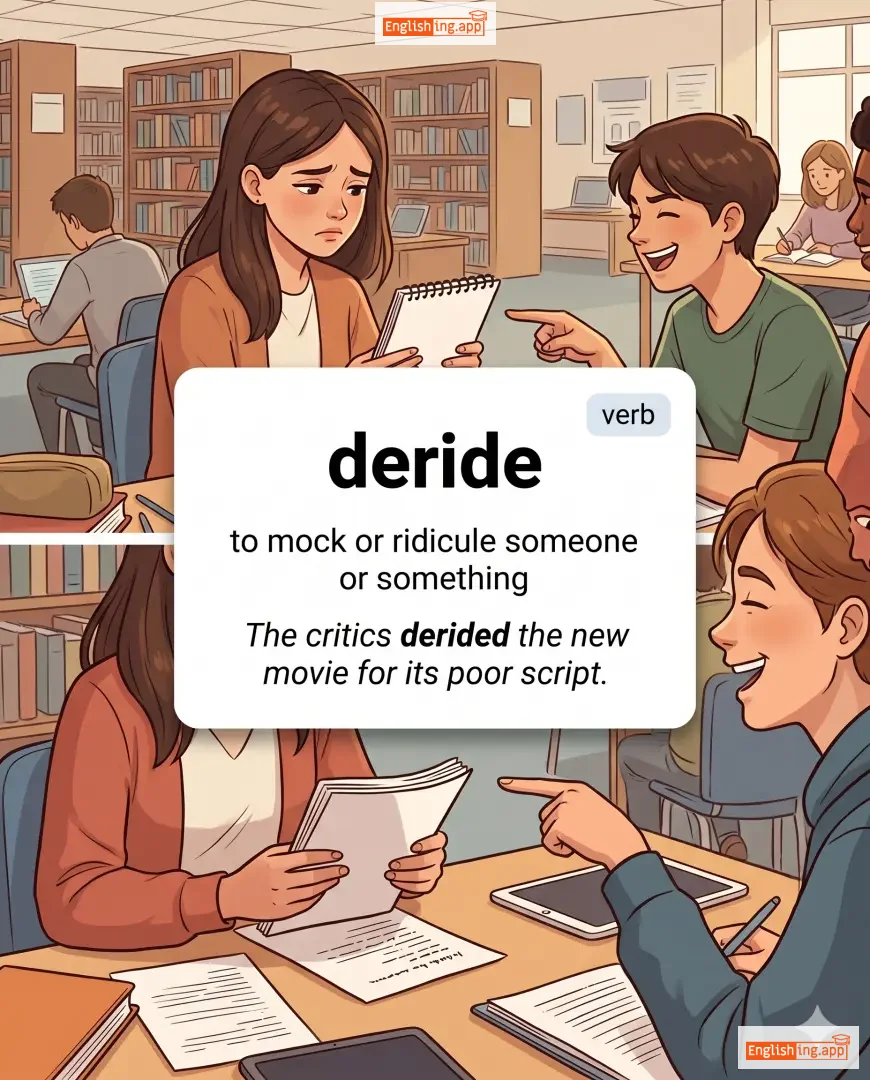
to mock or ridicule someone or something
••••••
|
The critics derided the new movie for its poor script.
критики дɪˈraɪдед новый фильм за его плохой сценарий.
••••••
|
Критики насмехались над новым фильмом за его плохой сценарий.
Kritiki nasmekhalis' nad novym filmom za ego plokhoy stsenariy.
••••••
|
- •••••• | - •••••• | - •••••• |
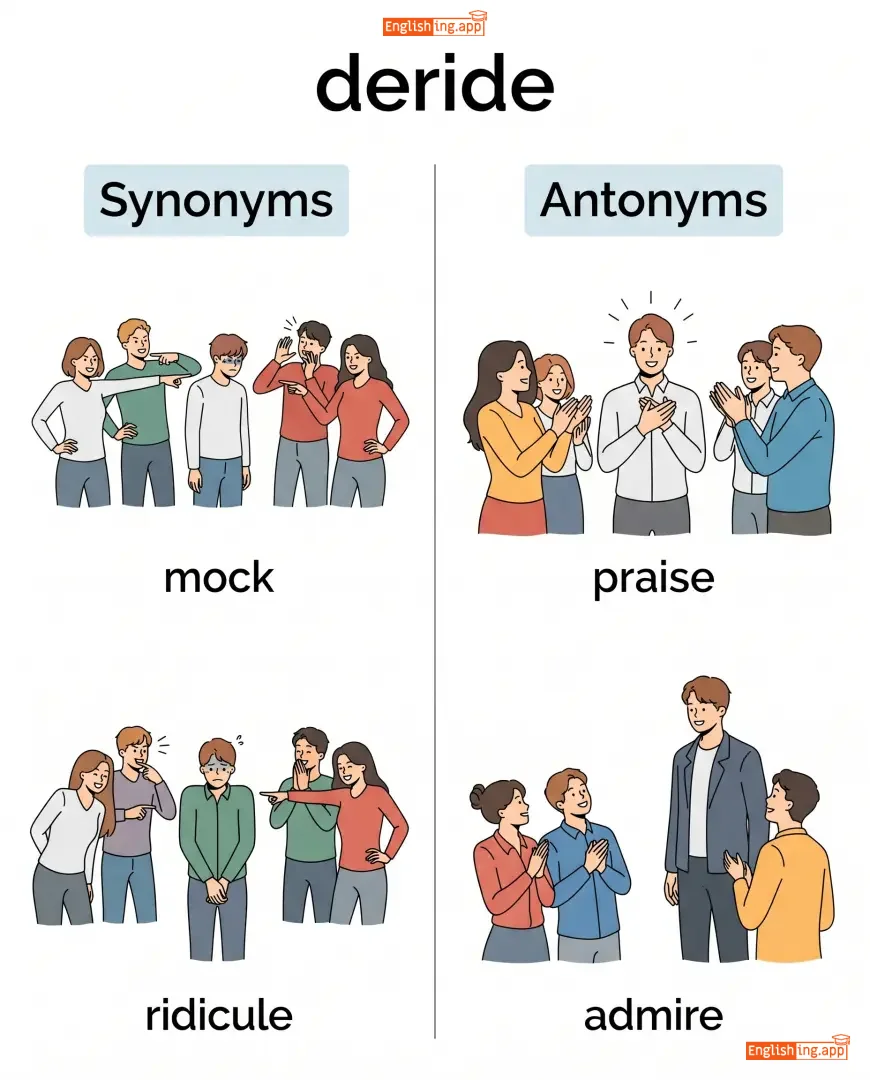
mock, ridicule, scorn, sneer, jeer
••••••
|
praise, admire, respect
••••••
|
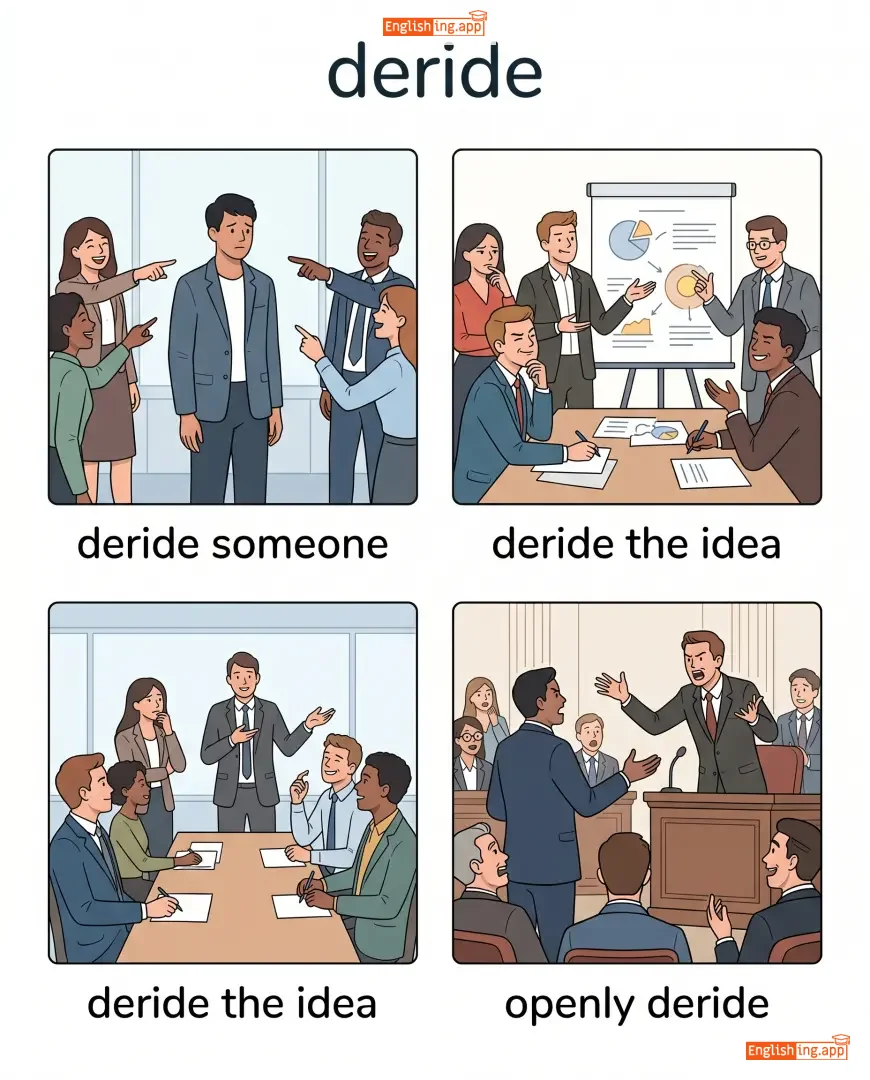
deride someone, deride the idea, openly deride
••••••
|
‘Deride’ звучит как ‘насмехаться’ – насмешки или издевательства над кем-то.
••••••
|
|
🔄
••••••
|
/dɪˈrɪvətɪv/
noun, adjective
(дериватив)
••••••
|
|
дериватив
derivativ
••••••
|
- •••••• | - •••••• | - •••••• | - •••••• |
Something that is based on another source; in math, a measure of how a function changes.
••••••
|
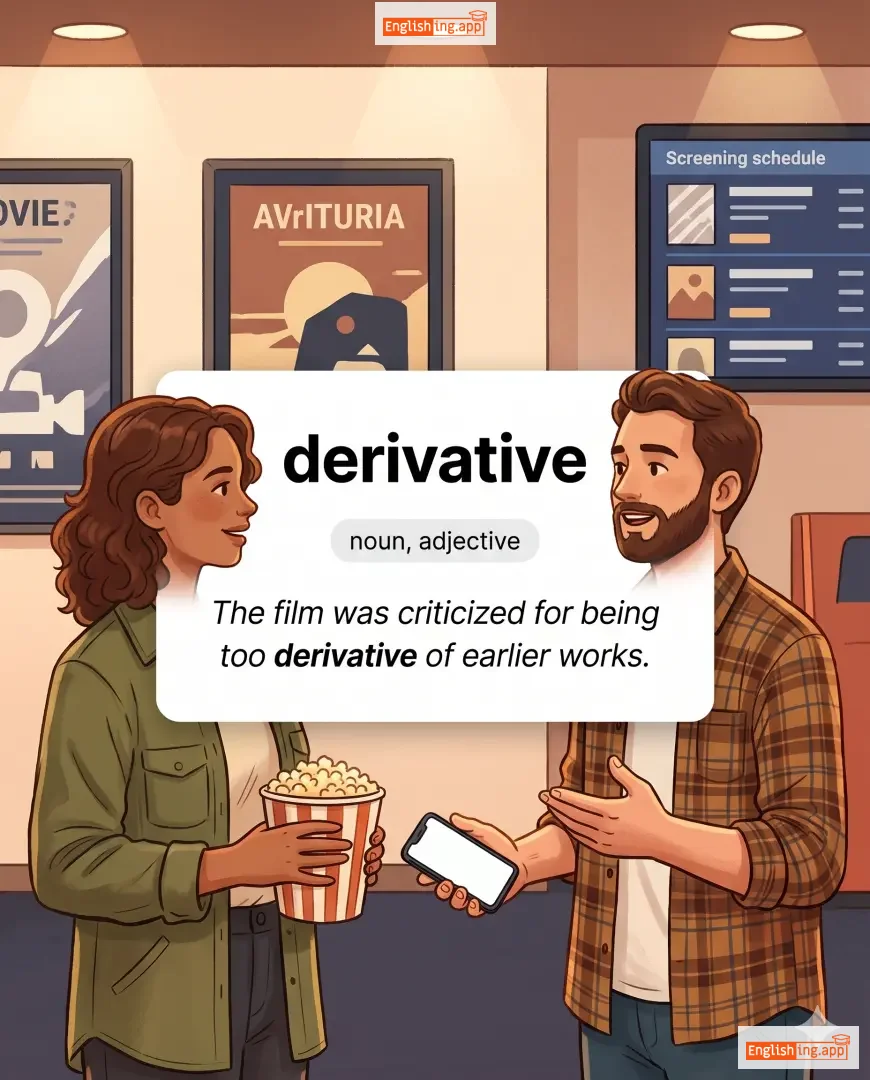
The film was criticized for being too derivative of earlier works.
Фильм был раскритикован за слишком большое сходство с предыдущими работами.
••••••
|
Фильм был раскритикован за слишком большое сходство с предыдущими работами.
Film byl raskritikovann za slishkom bol'shoe skhodstvo s predydushchimi rabotami.
••••••
|
- •••••• | - •••••• | - •••••• |
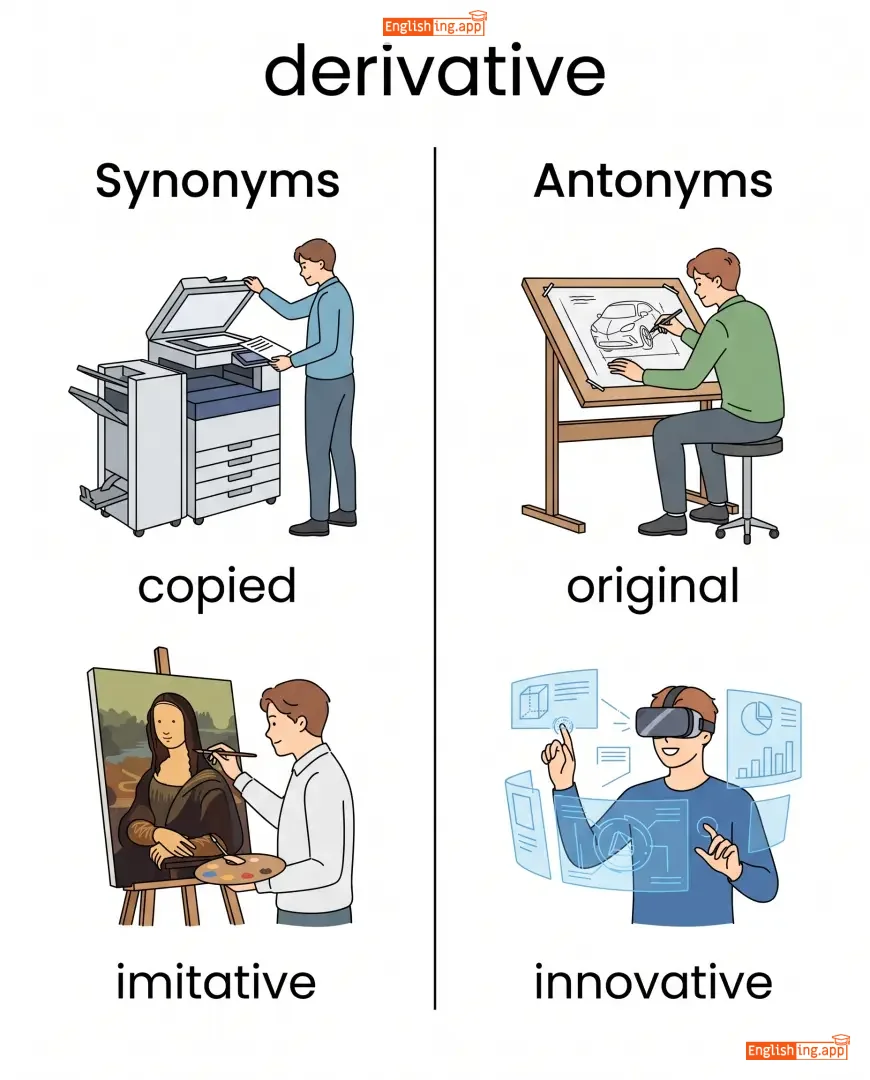
copied, imitative, secondary, unoriginal
••••••
|
original, innovative, creative
••••••
|
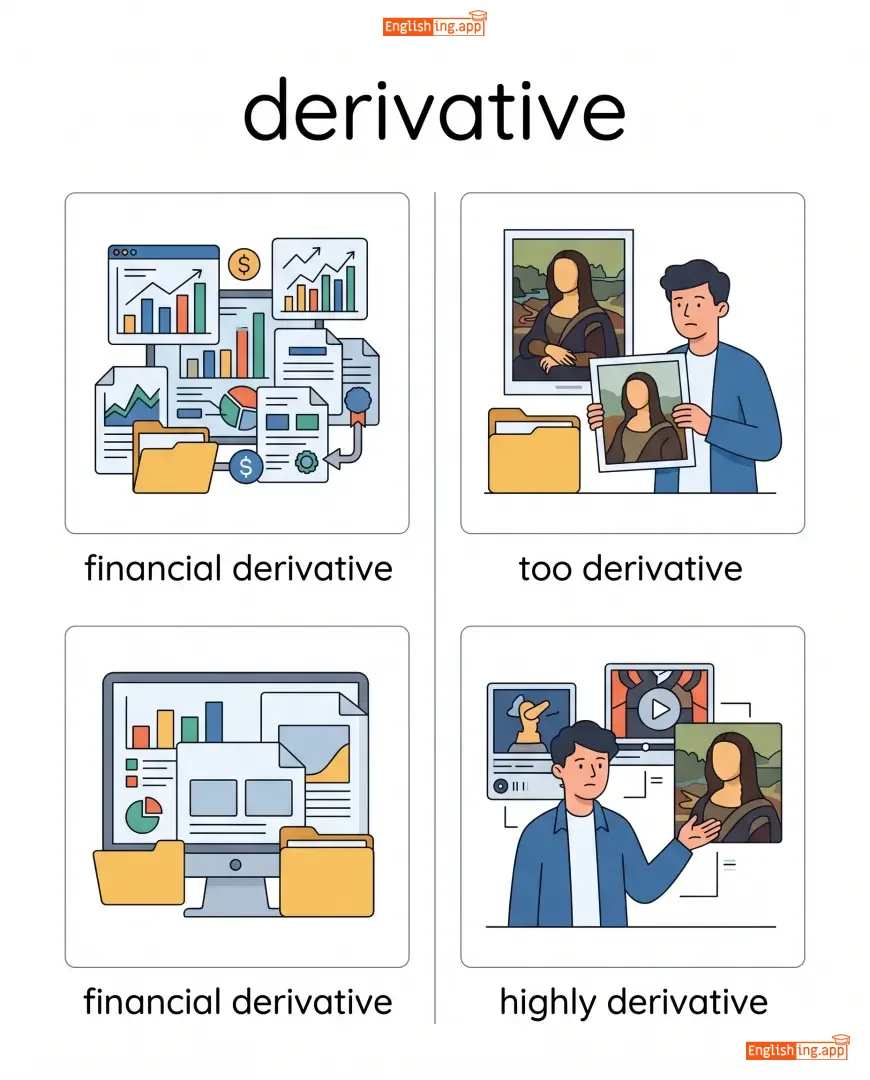
financial derivative, too derivative, highly derivative
••••••
|
Дериватив – это что-то взятое из другого источника – 'дери' от другого, 'ватив' от копии.
••••••
|

