Получите неограниченный доступ ко всем словам с подпиской Pro
Обновить до ProПолучите неограниченный доступ ко всем предложениям с подпиской Pro
Обновить до Pro|
Эмодзи
|
Слово | Images | Перевод | Прошедшее | Причастие прошедшего времени | Третье лицо единственного числа | Герундий | Значение | Пример предложения | Перевод примера предложения | Пример выражения | Значение примера выражения | Перевод примера выражения | Синонимы | Антонимы | Коллокации | Мнемоника |
|---|---|---|---|---|---|---|---|---|---|---|---|---|---|---|---|---|---|
|
📦
••••••
|
/stɒk/
noun, verb
(stok)
••••••
|
- •••••• |
запас
zapas
••••••
|
stocked
stokirovannyj
••••••
|
stocked
stokirovannyj
••••••
|
stocks
stokiruet
••••••
|
stocking
stokiruyushchij
••••••
|
a supply of goods kept for sale or use; to keep or fill with goods
••••••
|
The shop stocks a wide variety of products.
Магазин имеет широкий ассортимент продуктов.
••••••
|
Магазин имеет широкий ассортимент продуктов.
Magazin imeet shirokij assoriment produktov.
••••••
|
take stock of
принимать инвентаризацию
••••••
|
to carefully examine and evaluate a situation
••••••
|
внимательно оценить ситуацию
vnimatel'no otsenit' situatsiyu
••••••
|
inventory, supply, reserve, goods, merchandise
••••••
|
shortage, depletion
••••••
|
stock market, stock price, stock exchange, stock level
••••••
|
Запас товаров хранится на складе
••••••
|
|
🤢
••••••
|
/ˈstʌmək/
noun/verb
(желудок)
••••••
|
- •••••• |
желудок / терпеть
zheludok / terpet
••••••
|
stomached
желудочил
••••••
|
stomached
желудочил
••••••
|
stomachs
желудок
••••••
|
stomaching
желудочить
••••••
|
The internal organ in which food is digested; also to tolerate or endure something
••••••
|
She couldn’t stomach the sight of violence.
Она не могла вынести вида насилия.
••••••
|
Она не могла вынести вида насилия.
Ona ne mogla vynesti vida nasilija.
••••••
|
have a strong stomach
иметь крепкий желудок
••••••
|
to be able to tolerate unpleasant or difficult things
••••••
|
иметь крепкий желудок
imet' krepkij zheludok
••••••
|
belly, abdomen, gut, endure, tolerate
••••••
|
reject, resist, dislike
••••••
|
stomach pain, upset stomach, stomach flu, stomach cramps
••••••
|
Желудок — это орган для переваривания пищи, а крепкий желудок помогает переносить трудности.
••••••
|
|
🤢
••••••
|
/ˈstʌmək eɪk/
noun
(стомак эйк)
••••••
|
- •••••• |
боль в животе
bol v zhivote
••••••
|
- •••••• | - •••••• | - •••••• | - •••••• |
Pain in the stomach or abdominal area
••••••
|
I have a stomach ache after eating too much.
У меня болит живот после того, как я переел.
••••••
|
У меня болит живот после того, как я переел.
U menya bolit zhivot posle togo, kak ya pereel
••••••
|
tummy troubles
проблемы с животом
••••••
|
informal term for stomach discomfort
••••••
|
неудобство в животе
neudobstvo v zhivote
••••••
|
abdominal pain, bellyache, indigestion, upset stomach
••••••
|
wellness, comfort
••••••
|
severe stomach ache, mild stomach ache, chronic stomach ache
••••••
|
Picture a Russian 'zhivot' in pain after borscht
••••••
|
|
🪨
••••••
|
/stoʊn/
noun
(shtoun)
••••••
|
- •••••• |
камень
kamen
••••••
|
- •••••• | - •••••• | - •••••• | - •••••• |
a hard, naturally occurring mineral material found in the earth
••••••
|
He threw a stone into the lake.
Он бросил камень в озеро.
••••••
|
Он бросил камень в озеро.
On brosil kamen' v ozero.
••••••
|
- •••••• | - •••••• | - •••••• |
rock, pebble, boulder, gravel
••••••
|
sand, soil
••••••
|
stone wall, stone path, stone monument
••••••
|
Камень (stone) это твёрдый минерал, который встречается в природе.
••••••
|
|
🛑
••••••
|
/stɑːp/
verb
(стоп)
••••••
|
- •••••• |
остановить
ostanovit
••••••
|
stopped
стопал
••••••
|
stopped
стопал
••••••
|
stops
стопит
••••••
|
stopping
стопящий
••••••
|
to bring to an end or cause to cease
••••••
|
Please stop talking while I’m working.
Пожалуйста, прекрати говорить, пока я работаю.
••••••
|
Пожалуйста, прекрати говорить, пока я работаю.
Pozhaluysta, prekrati govorit', poka ya rabotayu.
••••••
|
stop at nothing
не остановиться ни перед чем
••••••
|
to do anything, no matter how extreme, to achieve a goal
••••••
|
не остановиться ни перед чем
ne ostanovit'sya ni pered chem
••••••
|
halt, cease, end, discontinue, pause
••••••
|
continue, start, proceed
••••••
|
stop sign, stop talking, stop doing, stop immediately
••••••
|
🛑 Стоп! Мы все должны остановиться, это значит остановить → остановить означает завершить
••••••
|
|
⛔
••••••
|
/ˈstɒpɪdʒ/
noun
(стопидж)
••••••
|
- •••••• |
остановка; прекращение
ostanovka; prekrashchenie
••••••
|
- •••••• | - •••••• | - •••••• | - •••••• |
The act of stopping or ceasing; a halt in operation or activity
••••••
|
The sudden stoppage of the train caused delays for all passengers.
Внезапная остановка поезда вызвала задержки у всех пассажиров.
••••••
|
Внезапная остановка поезда вызвала задержки у всех пассажиров.
Vnezapnaya ostanovka poezda vyzvala zaderzhki u vsekh passazhirov.
••••••
|
- •••••• | - •••••• | - •••••• |
halt, interruption, cessation, pause, blockage
••••••
|
continuation, flow, progress
••••••
|
work stoppage, stoppage time, sudden stoppage, stoppage of service
••••••
|
Stop + age = стопидж = внезапная остановка
••••••
|
|
🗄️
••••••
|
/ˈstɔːrɪdʒ/
noun
(storidʒ)
••••••
|
- •••••• |
хранение
khraneniye
••••••
|
- •••••• | - •••••• | - •••••• | - •••••• |
the action or method of storing something for future use
••••••
|
The warehouse offers plenty of storage space. |
Склад предлагает много места для хранения.
Sklad predlagaet mnogo mesta dlya khraneniya.
••••••
|
- •••••• | - •••••• | - •••••• |
storage space, vault, repository, depot
••••••
|
disposal, removal
••••••
|
data storage, storage unit, storage facility
••••••
|
Хранение (storage), где мы сохраняем наши вещи.
••••••
|
|
📦
••••••
|
/stɔːr/
verb
(stor)
••••••
|
|
хранить
khranit
••••••
|
stored
stored
••••••
|
stored
stored
••••••
|
stores
stores
••••••
|
storing
storing
••••••
|
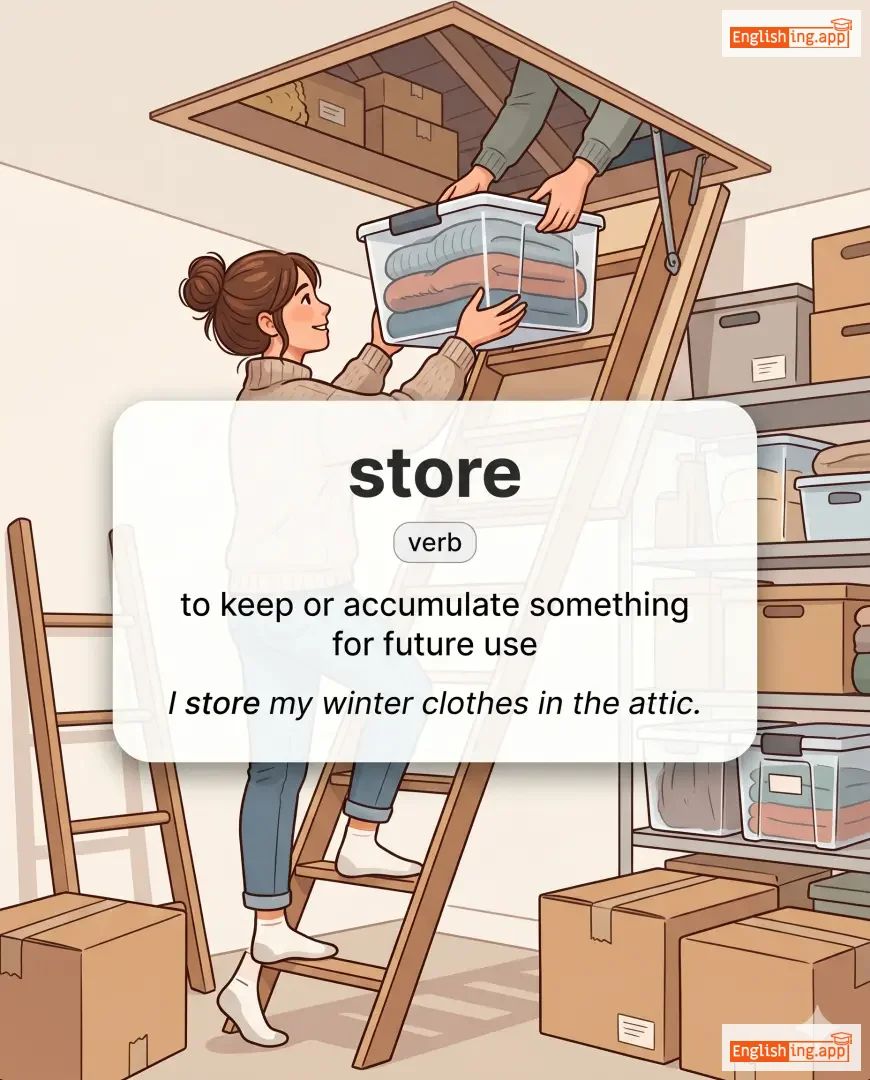
to keep things in a place for future use; to save information
••••••
|
She stores her winter clothes in the attic.
Она хранит свою зимнюю одежду на чердаке.
••••••
|
Она хранит свою зимнюю одежду на чердаке.
Ona khranit svoiu zimniu odezhdu na cherdake.
••••••
|
- •••••• | - •••••• | - •••••• |
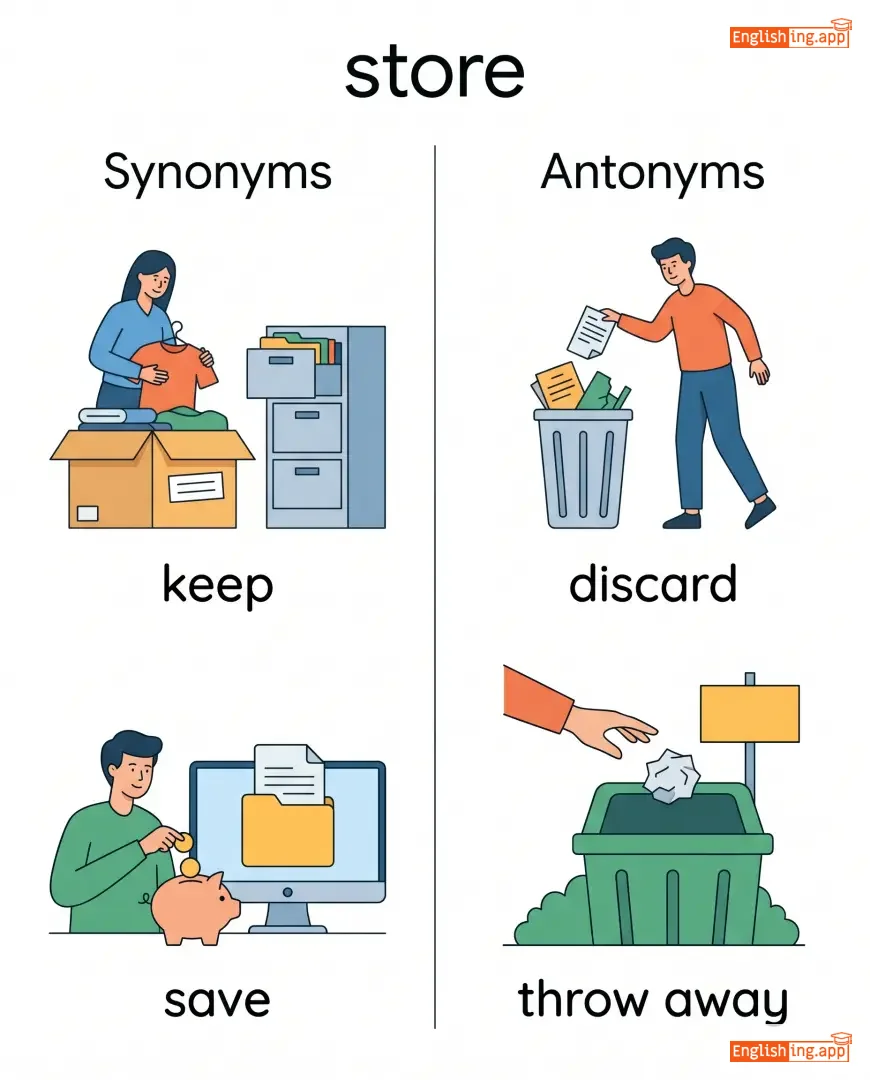
keep, save, preserve, stock
••••••
|
discard, throw away, use up
••••••
|
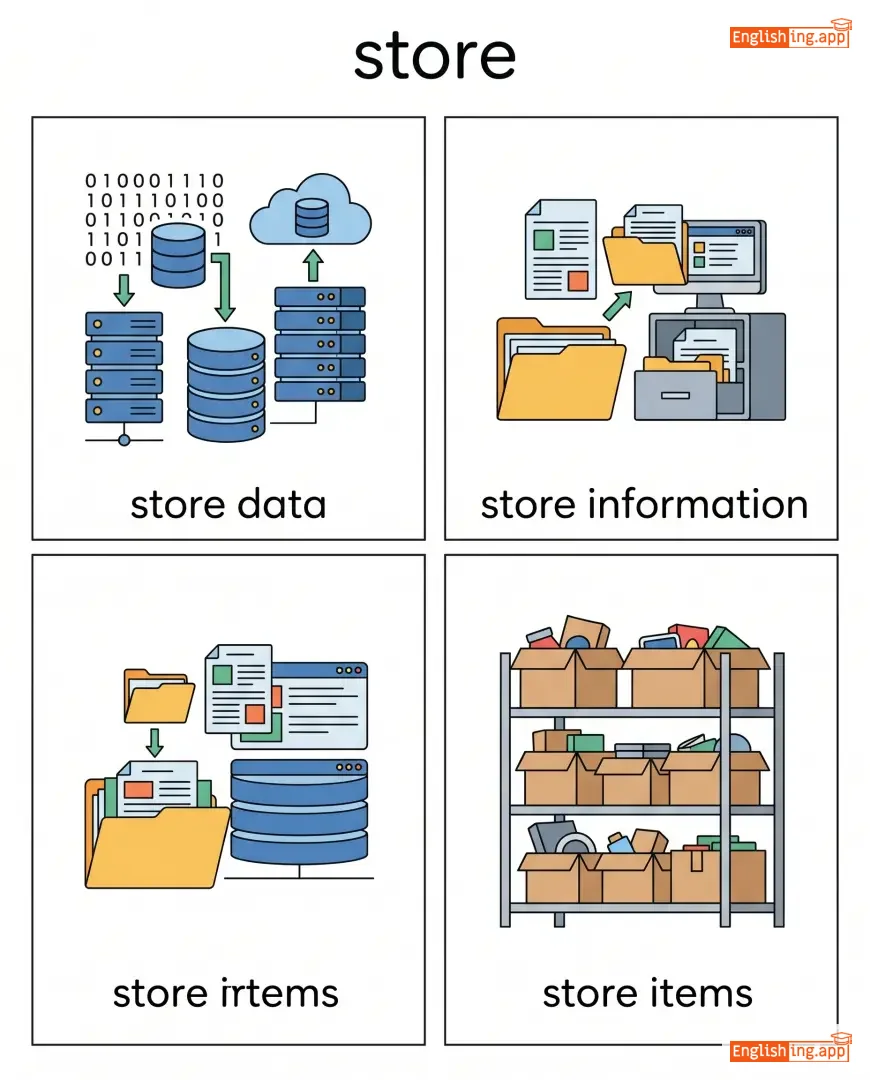
store data, store information, safely store, securely store, temporarily store
••••••
|
хранить, как хранить вещи в специальном месте
••••••
|
|
🏚️
••••••
|
/ˈstɔːrhaʊs/
noun
(сторхaус)
••••••
|
- •••••• |
склад
sklad
••••••
|
- •••••• | - •••••• | - •••••• | - •••••• |
A place where goods, supplies, or valuables are stored; a repository
••••••
|
The warehouse acted as a storehouse for all the imported goods.
Склад служил сторхаусом для всех импортированных товаров.
••••••
|
Склад служил сторхаусом для всех импортированных товаров.
Sklad sluzhil storhausom dlya vsekh importirovannykh tovarov.
••••••
|
- •••••• | - •••••• | - •••••• |
warehouse, depot, repository, cache, storeroom
••••••
|
market, open space
••••••
|
storehouse of knowledge, storehouse of ideas, food storehouse, grain storehouse
••••••
|
Склад = Russian place to 'store' goods
••••••
|
|
🌪️
••••••
|
/stɔːrm/
noun
(шторм)
••••••
|
- •••••• |
шторм
shtorm
••••••
|
- •••••• | - •••••• | - •••••• | - •••••• |
a violent disturbance of the atmosphere with strong winds, rain, and often thunder
••••••
|
The storm caused major flooding in the area.
Шторм вызвал сильные наводнения в этом районе.
••••••
|
Шторм вызвал сильные наводнения в этом районе.
Shtorm vyzval sil'nye navodneniya v etom rayone.
••••••
|
storm in a teacup
шторм в чашке чая
••••••
|
a small problem that has been made much bigger than it really is
••••••
|
шторм в чашке чая
shtorm v chashke chaya
••••••
|
tempest, hurricane, squall, thunderstorm
••••••
|
calm, tranquility
••••••
|
storm warning, storm surge, severe storm
••••••
|
В шторме помни, что 'storm' (шторм) становится сильнее.
••••••
|
|
📖
••••••
|
/ˈstɔːri/
noun
(стори)
••••••
|
- •••••• |
история
istoriya
••••••
|
- •••••• | - •••••• | - •••••• | - •••••• |
a narrative of real or imaginary events
••••••
|
She told a fascinating story about her travels.
Она рассказала захватывающую историю о своих путешествиях.
••••••
|
Она рассказала захватывающую историю о своих путешествиях.
Ona rasskazala zakhvatyvayushchuyu istoriyu o svoikh puteshestviyakh.
••••••
|
- •••••• | - •••••• | - •••••• |
tale, narrative, account, chronicle
••••••
|
nonfiction, truth
••••••
|
tell a story, hear a story, read a story, great story
••••••
|
История – это стори (story) - History is a story.
••••••
|
|
🔥
••••••
|
/stoʊv/
noun
(stov)
••••••
|
- •••••• |
плита
plita
••••••
|
- •••••• | - •••••• | - •••••• | - •••••• |
a kitchen appliance used for cooking food by applying heat
••••••
|
She cooked dinner on the gas stove. |
Она готовила ужин на газовой плите.
Ona gotovila uzhin na gazovoy plite
••••••
|
- •••••• | - •••••• | - •••••• |
cooktop, range, burner
••••••
|
refrigerator, freezer
••••••
|
gas stove, electric stove, wood stove, cook on the stove
••••••
|
Плита помогает готовить еду, создавая тепло и уют.
••••••
|
|
➡️
••••••
|
/streɪt/
adjective, adverb
(stret)
••••••
|
- •••••• |
прямой
pryamoy
••••••
|
- •••••• | - •••••• | - •••••• | - •••••• |
Extending or moving uniformly in one direction only; not curved or bent.
••••••
|
He walked straight to the door without stopping. |
Он шел прямо к двери, не останавливаясь.
On shel pryamo k dveri, ne ostanavlivayas'.
••••••
|
straight to the point |
to talk directly about the main subject without delay
••••••
|
прямо к сути
pryamo k suti
••••••
|
direct, upright, linear, honest, vertical
••••••
|
crooked, curved, bent
••••••
|
straight line, straight road, straight to the point, straight answer
••••••
|
Straight означает прямой, как прямая дорога (pryamaya doroga)
••••••
|
|
👌
••••••
|
/ˌstreɪtˈfɔːwəd/
adjective
(streitfoward)
••••••
|
- •••••• |
простой
prostoy
••••••
|
- •••••• | - •••••• | - •••••• | - •••••• |
easy to understand or do; simple
••••••
|
Her explanation was straightforward and clear.
Ее объяснение было простым и ясным.
••••••
|
Ее объяснение было простым и ясным.
Eyo obyasneniye bylo prostym i yasnym.
••••••
|
- •••••• | - •••••• | - •••••• |
clear, simple, direct, uncomplicated
••••••
|
complicated, confusing, difficult
••••••
|
straightforward task, straightforward approach, straightforward explanation
••••••
|
Простой как прямая дорога!
••••••
|
|
💪
••••••
|
/streɪn/
noun, verb
(strein)
••••••
|
- •••••• |
напряжение / растяжение
napryazhenie / rastyazhenie
••••••
|
strained
streynd
••••••
|
strained
streynd
••••••
|
strains
streyns
••••••
|
straining
streyning
••••••
|
To force something beyond its normal limits; to injure by overexertion; or a type or variety of something.
••••••
|
He strained his back while lifting the heavy box.
Он потянул спину, поднимая тяжелую коробку.
••••••
|
Он потянул спину, поднимая тяжелую коробку.
On potyanul spinu, podnimaya tyazholuyu korobku.
••••••
|
strain every nerve
напрягать каждое нервное волокно
••••••
|
To put in the utmost effort
••••••
|
положить все силы
polozhit' vse sily
••••••
|
stress, tension, effort, pressure, injury
••••••
|
ease, relaxation, rest
••••••
|
muscle strain, mental strain, strain relationship, under strain
••••••
|
Strain означает напряжение, как во время экзаменов, когда все чувствуют напряжение (strain).
••••••
|
|
🤔
••••••
|
/streɪndʒ/
adjective
(strendzh)
••••••
|
- •••••• |
странный
strannyy
••••••
|
- •••••• | - •••••• | - •••••• | - •••••• |
unusual or not normal
••••••
|
It was strange to see him at the party after so long. |
Было странно видеть его на вечеринке после такого долгого времени.
Bylo stranno videt' ego na vecherinke posle takogo dolgogo vremeni.
••••••
|
- •••••• | - •••••• | - •••••• |
unusual, odd, peculiar, bizarre
••••••
|
normal, usual, typical
••••••
|
strange behavior, strange situation, strange feeling, feel strange
••••••
|
Странный напоминает 'strange' - необычный или странный.
••••••
|
|
🕴️
••••••
|
/ˈstreɪndʒər/
noun
(незнакомец)
••••••
|
- •••••• |
незнакомец
neznakomec
••••••
|
- •••••• | - •••••• | - •••••• | - •••••• |
A person whom one does not know.
••••••
|
A stranger knocked on the door at midnight.
Незнакомец постучал в дверь в полночь.
••••••
|
Незнакомец постучал в дверь в полночь.
Neznakomec postuchal v dver' v polnoch'.
••••••
|
perfect stranger
совершенно незнакомый
••••••
|
Someone completely unknown
••••••
|
совершенно незнакомый
sovershenno neznakomyy
••••••
|
unknown, outsider, newcomer, foreigner
••••••
|
friend, acquaintance, relative
••••••
|
stranger danger, complete stranger, meet a stranger
••••••
|
Stranger означает ‘незнакомец’, кто-то, кого ты не знаешь.
••••••
|
|
🎯
••••••
|
/strəˈtiːdʒɪk/
adjective
(стрэтэджик)
••••••
|


|
стратегический
strategicheskiy
••••••
|
- •••••• | - •••••• | - •••••• | - •••••• |
relating to the identification of long-term or overall aims and interests and the means of achieving them
••••••
|
His strategic thinking helped the company grow. |
Его стратегическое мышление помогло компании расти.
Ego strategicheskoe myshlenie pomoglo kompanii rasti.
••••••
|
- •••••• | - •••••• | - •••••• |
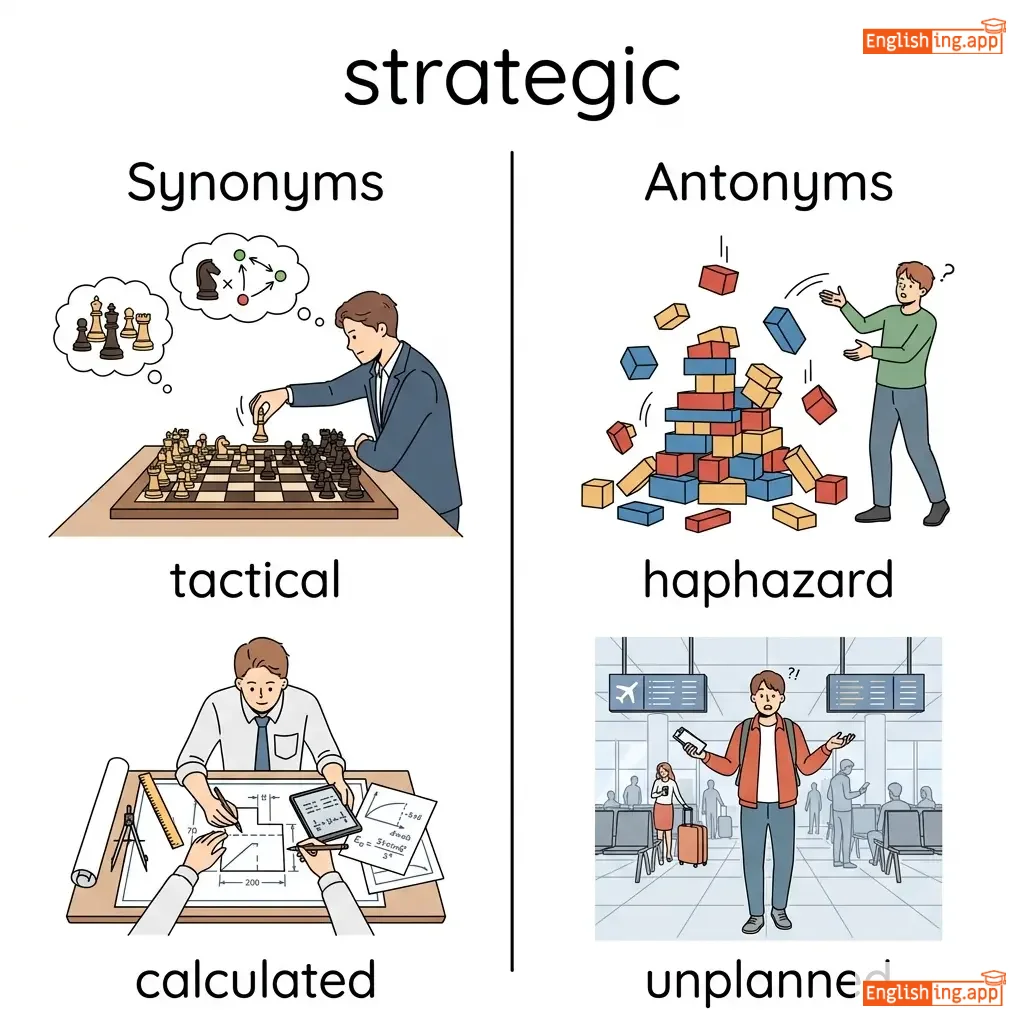
tactical, calculated, planned, deliberate
••••••
|
haphazard, unplanned, random
••••••
|
strategic plan, strategic goal, strategic position, strategic decision
••••••
|
Стратегическое мышление ведет к успеху - Strategic thinking leads to success
••••••
|
|
🎯
••••••
|
/ˈstrætədʒi/
noun
(stratəʒi)
••••••
|


|
стратегия; план;
strategiya; plan;
••••••
|
- •••••• | - •••••• | - •••••• | - •••••• |
a plan of action designed to achieve a long-term or overall aim
••••••
|
The company developed a new marketing strategy to increase sales.
Компания разработала новую маркетинговую стратегию для увеличения продаж.
••••••
|
Компания разработала новую маркетинговую стратегию для увеличения продаж.
Kompaniya razrabotala novuyu marketingovuyu strategiyu dlya uvelicheniya prodazh.
••••••
|
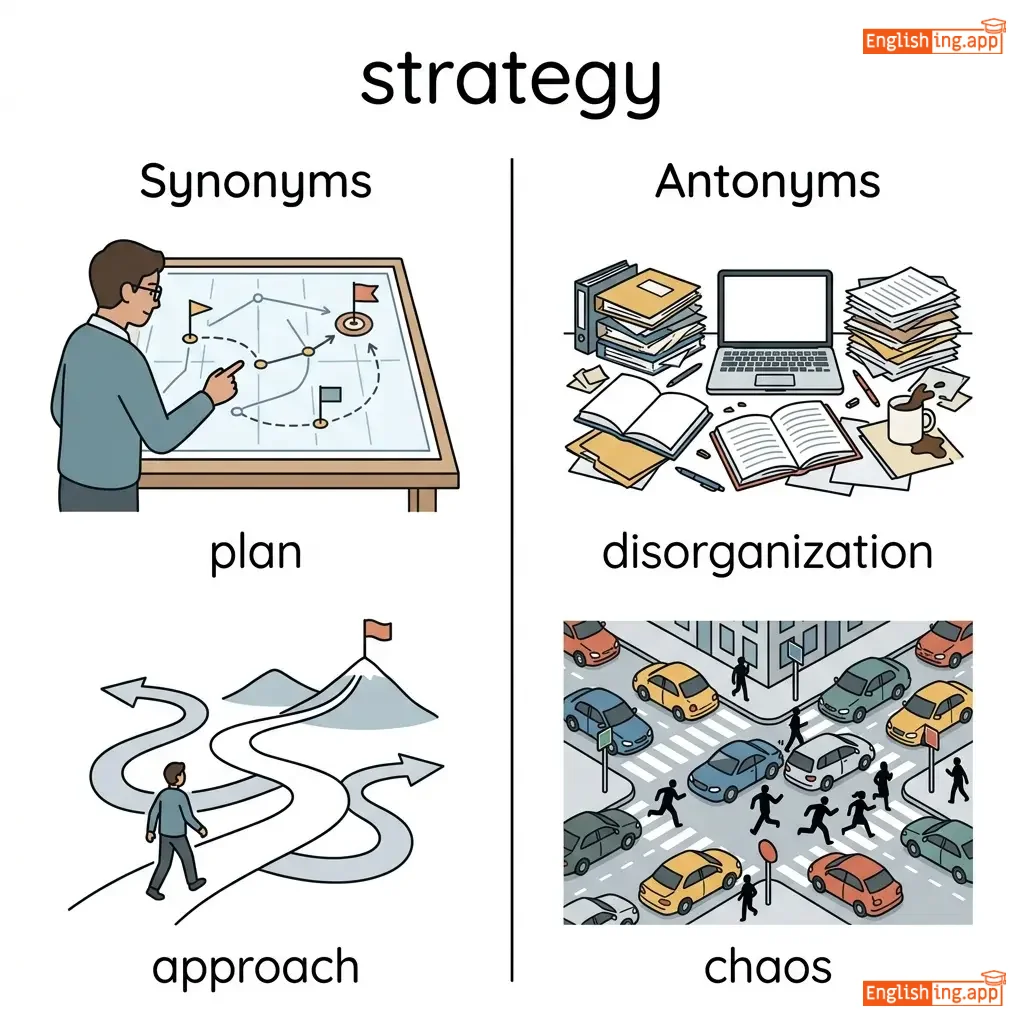
- •••••• | - •••••• | - •••••• |
plan, approach, tactic
••••••
|
improvisation, spontaneity
••••••
|
business strategy, marketing strategy, military strategy
••••••
|
Стратегия: Шаг за шагом к глобальному успеху.
••••••
|
|
🍓
••••••
|
/ˈstrɔːbəri/
noun
(клубника)
••••••
|
- •••••• |
клубника
klubnika
••••••
|
- •••••• | - •••••• | - •••••• | - •••••• |
a small red heart-shaped fruit with tiny seeds on the surface and sweet taste
••••••
|
I love eating fresh strawberries with cream during summer.
Я люблю есть свежую клубнику с кремом летом.
••••••
|
Я люблю есть свежую клубнику с кремом летом.
Ya lyublyu yest' svezhuyu klubniku s kremom letom.
••••••
|
- •••••• | - •••••• | - •••••• |
garden strawberry
••••••
|
- •••••• |
fresh strawberry, ripe strawberry, strawberry jam, strawberry ice cream
••••••
|
Клубника — это сладкая ягода, как лето.
••••••
|
|
🏞️
••••••
|
/striːm/
noun
(strim)
••••••
|
|
поток
potok
••••••
|
- •••••• | - •••••• | - •••••• | - •••••• |
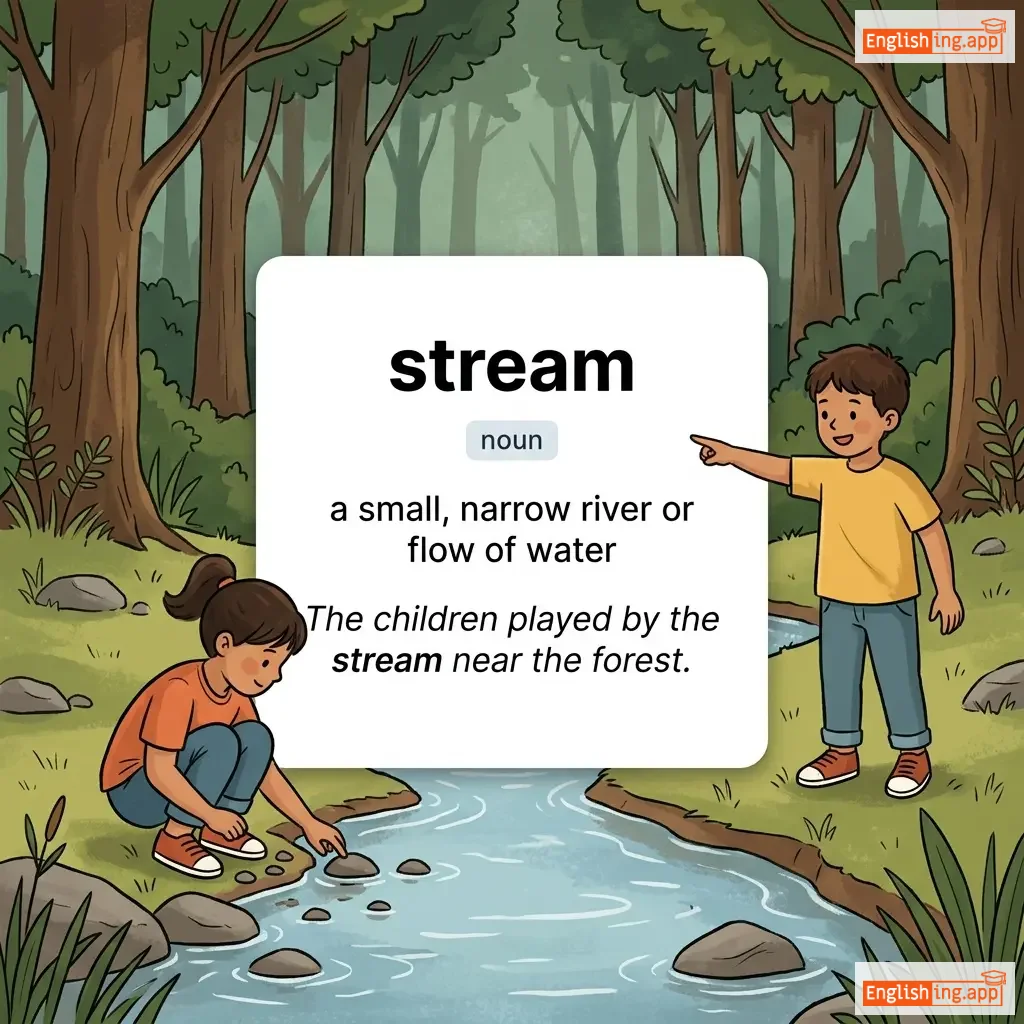
a small narrow river; a continuous flow of liquid, air, or gas
••••••
|
The clear stream flowed through the forest.
чистый поток протекал через лес.
••••••
|
Чистый поток протекал через лес.
Chisty potok protekal cherez les.
••••••
|
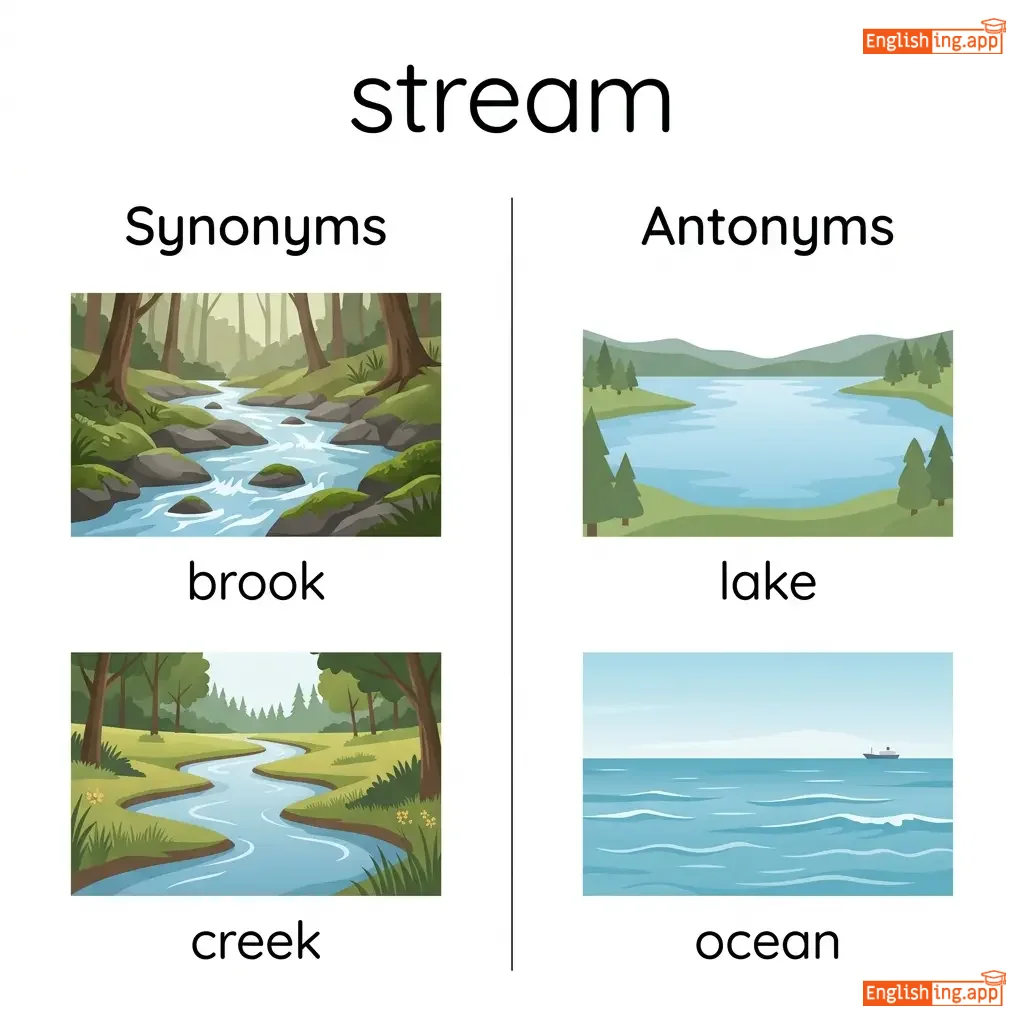
- •••••• | - •••••• | - •••••• |
brook, creek, rivulet
••••••
|
stagnation, stillness
••••••
|
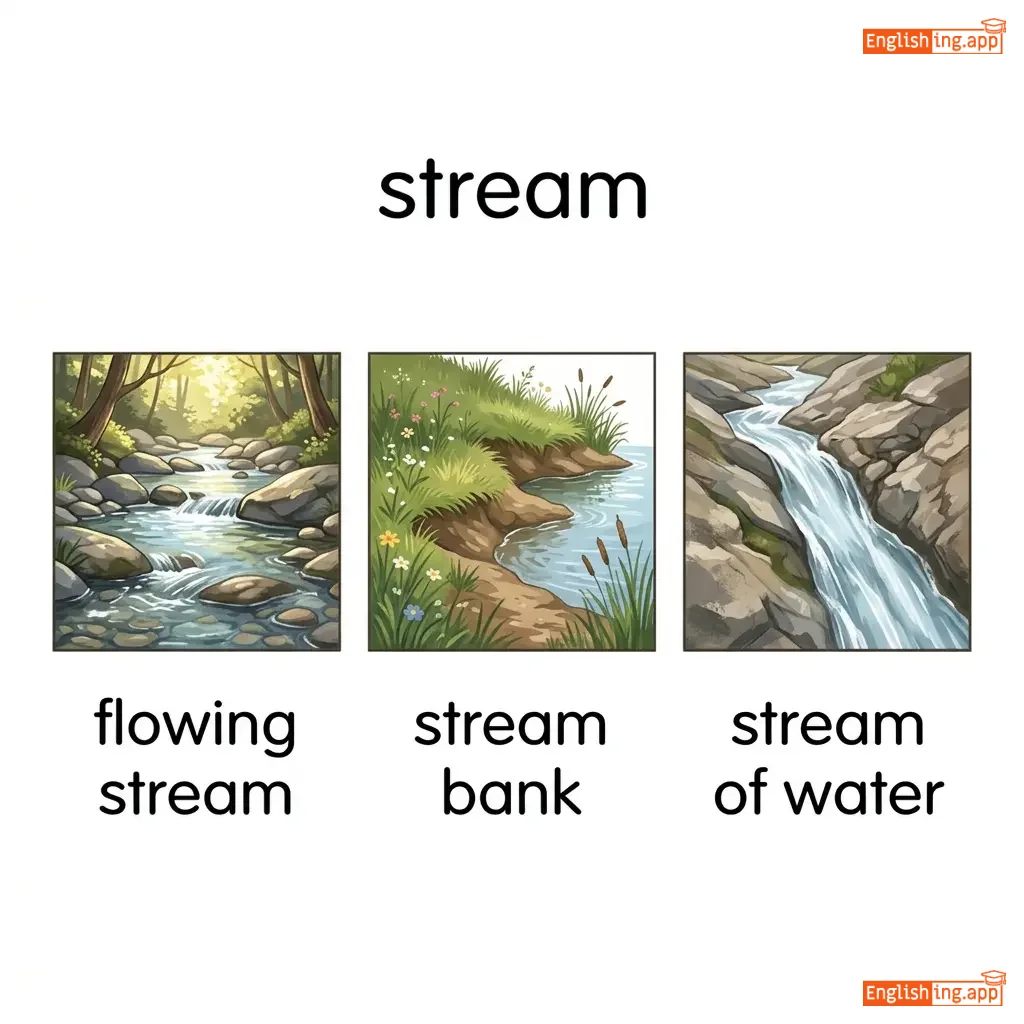
mountain stream, stream bed, stream of water
••••••
|
Представьте себе поток, который всегда течет.
••••••
|
|
🚶♂️
••••••
|
/striːt/
noun
(strit)
••••••
|
- •••••• |
улица
ulitsa
••••••
|
- •••••• | - •••••• | - •••••• | - •••••• |
a public road in a city or town, typically with buildings on one or both sides
••••••
|
He walked down the street to the park.
Он шел по улице в парк.
••••••
|
Он шел по улице в парк.
On shel po ulitse v park.
••••••
|
- •••••• | - •••••• | - •••••• |
road, avenue, boulevard, lane
••••••
|
alley, cul-de-sac
••••••
|
main street, busy street, narrow street, street light
••••••
|
На улице всегда много людей, как и на улице, через которую идут.
••••••
|
|
💪
••••••
|
/strɛŋkθ/
noun
(strengθ)
••••••
|
- •••••• |
сила
sila
••••••
|
- •••••• | - •••••• | - •••••• | - •••••• |
the quality or state of being physically strong; the capacity to withstand force or pressure
••••••
|
Her strength helped her overcome the difficulties.
Её сила помогла ей преодолеть трудности.
••••••
|
Её сила помогла ей преодолеть трудности.
Eyo sila pomogla yey preodolety trudnosti.
••••••
|
in strength
в силе
••••••
|
in large numbers; collectively powerful
••••••
|
в силе
v sile
••••••
|
power, might, force, resilience, endurance
••••••
|
weakness, fragility
••••••
|
inner strength, physical strength, strength of character, show strength, gain strength
••••••
|
Strength = сила, всегда поддерживающая в трудных ситуациях!
••••••
|
|
💪
••••••
|
/ˈstrɛŋkθən/
verb
(strehng-ten)
••••••
|

|
укреплять
ukreplyat
••••••
|
strengthened
strehng-ten-d
••••••
|
strengthened
strehng-ten-d
••••••
|
strengthens
strehng-ten-s
••••••
|
strengthening
strehng-ten-ing
••••••
|
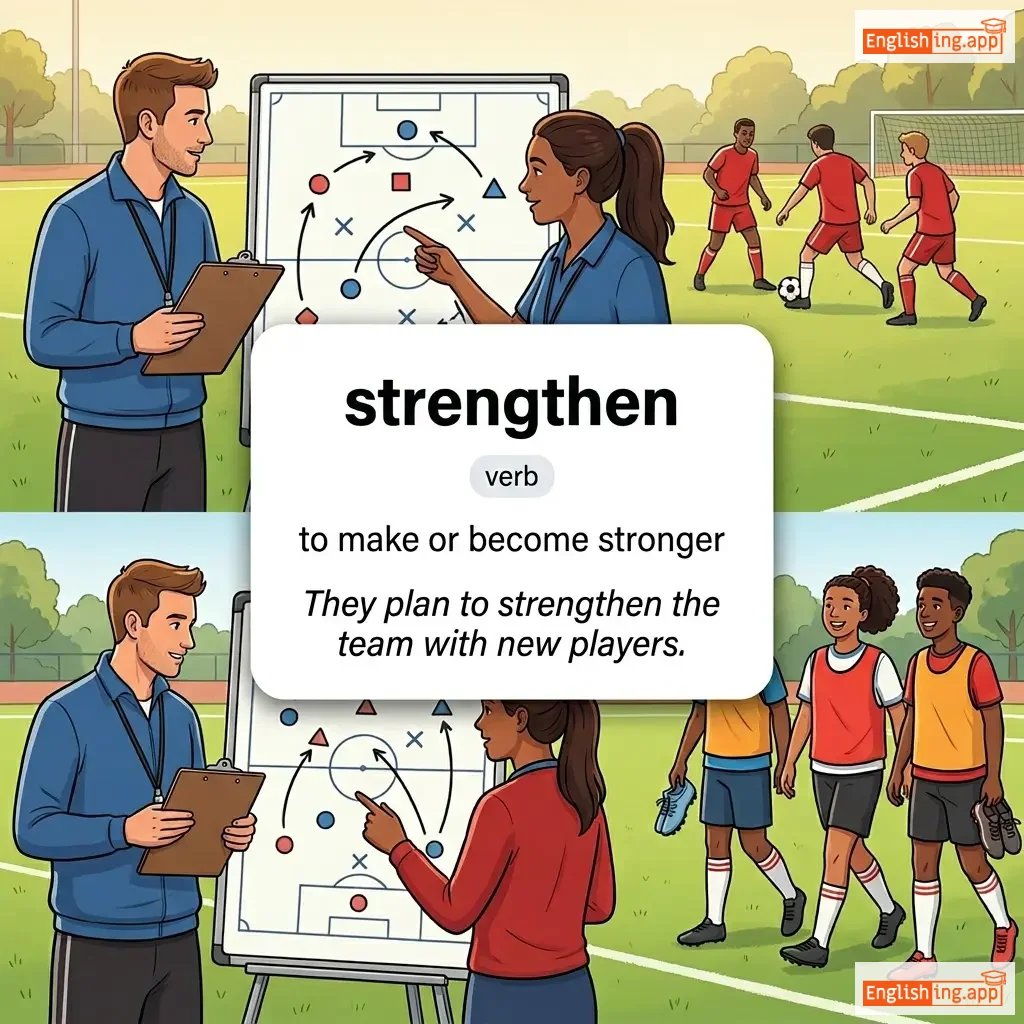
to make or become stronger
••••••
|
They plan to strengthen the team with new players.
Они планируют укрепить команду новыми игроками.
••••••
|
Они планируют укрепить команду новыми игроками.
Oni planiruyut ukreplyat' komandу novymi igrokami.
••••••
|
- •••••• | - •••••• | - •••••• |
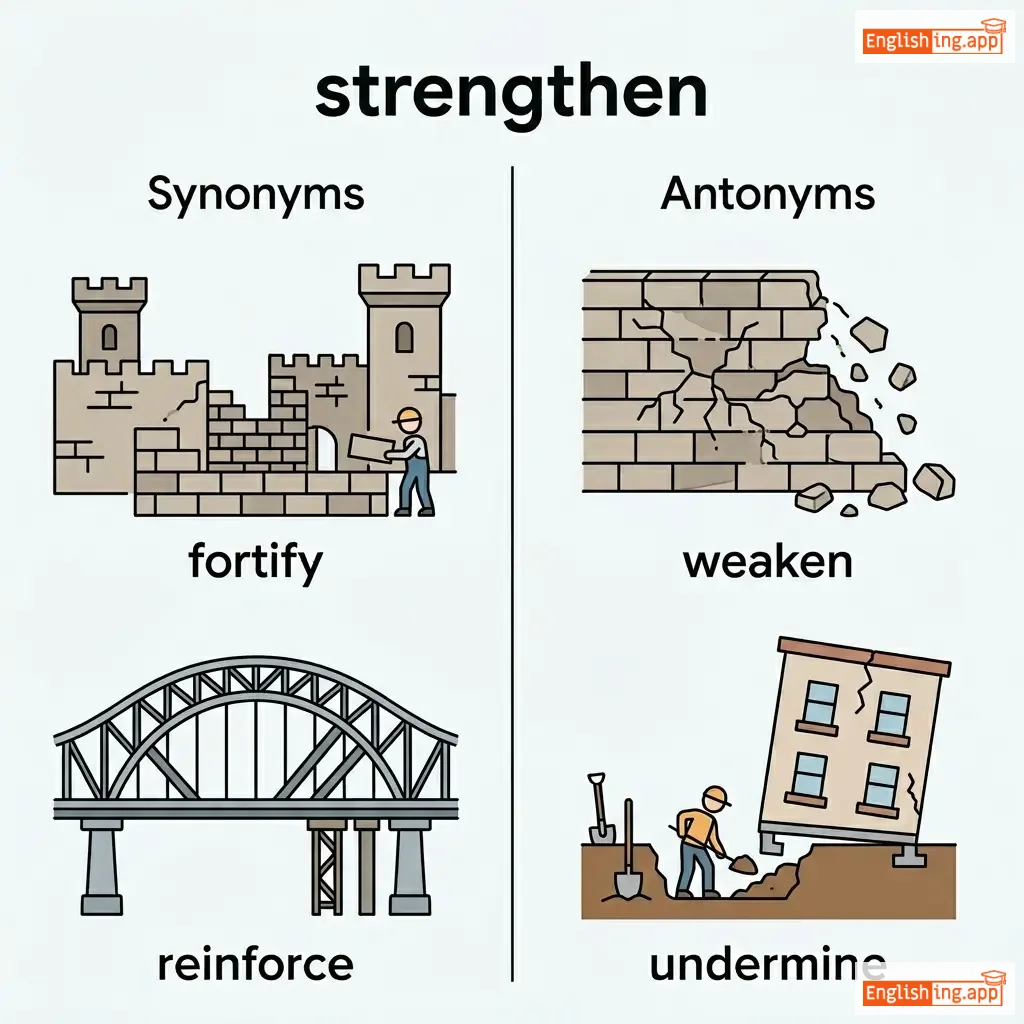
fortify, reinforce, empower, bolster
••••••
|
weaken, undermine
••••••
|
strengthen skills, strengthen position, strengthen muscles, strengthen bond
••••••
|
Укрепляй свою силу - Strengthen your strength
••••••
|
|
😰
••••••
|
/strɛs/
noun, verb
(стресс)
••••••
|

|
стресс
stress
••••••
|
stressed
стрессованный
••••••
|
stressed
стрессованный
••••••
|
stresses
стрессует
••••••
|
stressing
стрессующий
••••••
|
to give particular emphasis or importance to something; mental or emotional strain
••••••
|
She feels a lot of stress from her work.
Она чувствует много стресса от своей работы.
••••••
|
Она чувствует много стресса от своей работы.
Ona chuvstvuet mnogo stressa ot svoey raboty.
••••••
|
stress out
стрессоваться
••••••
|
to become anxious or overwhelmed
••••••
|
стрессовать
stressovat'
••••••
|
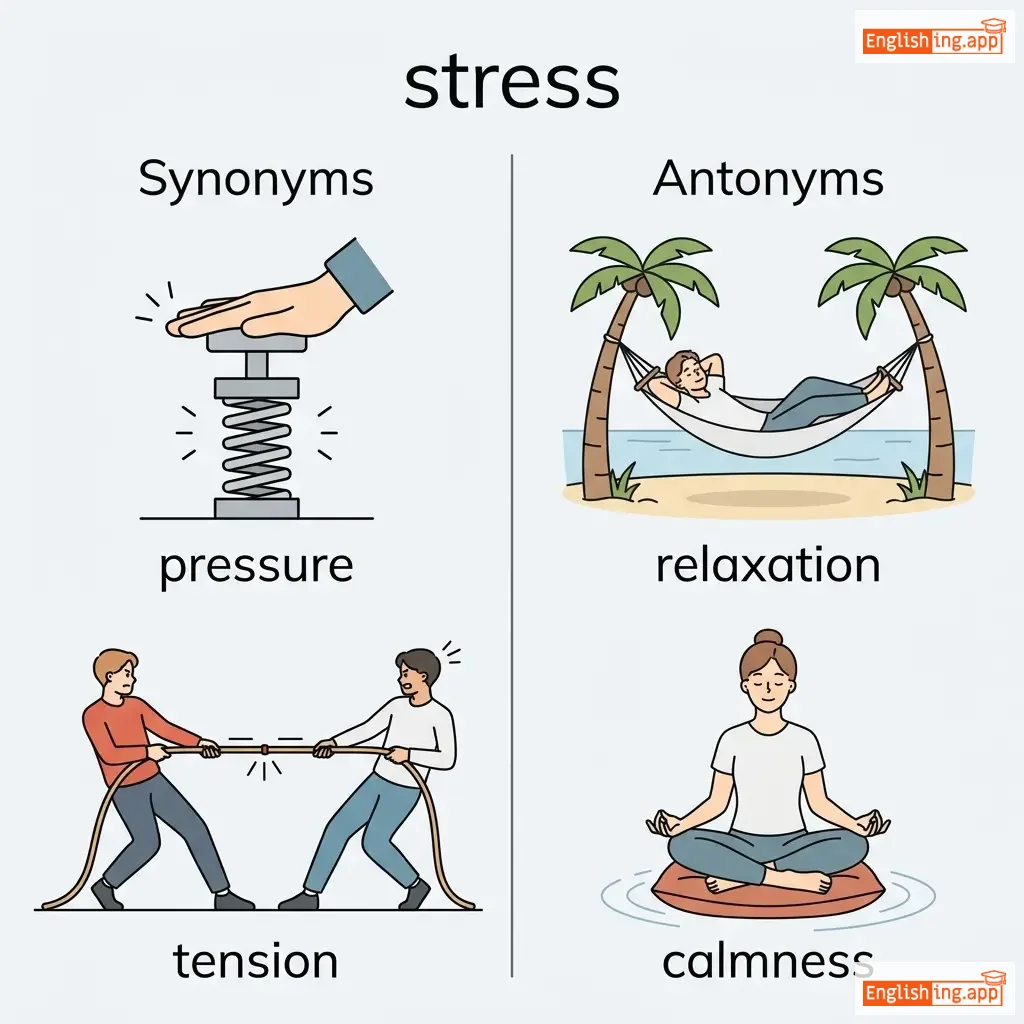
pressure, tension, anxiety, strain
••••••
|
relaxation, calmness
••••••
|
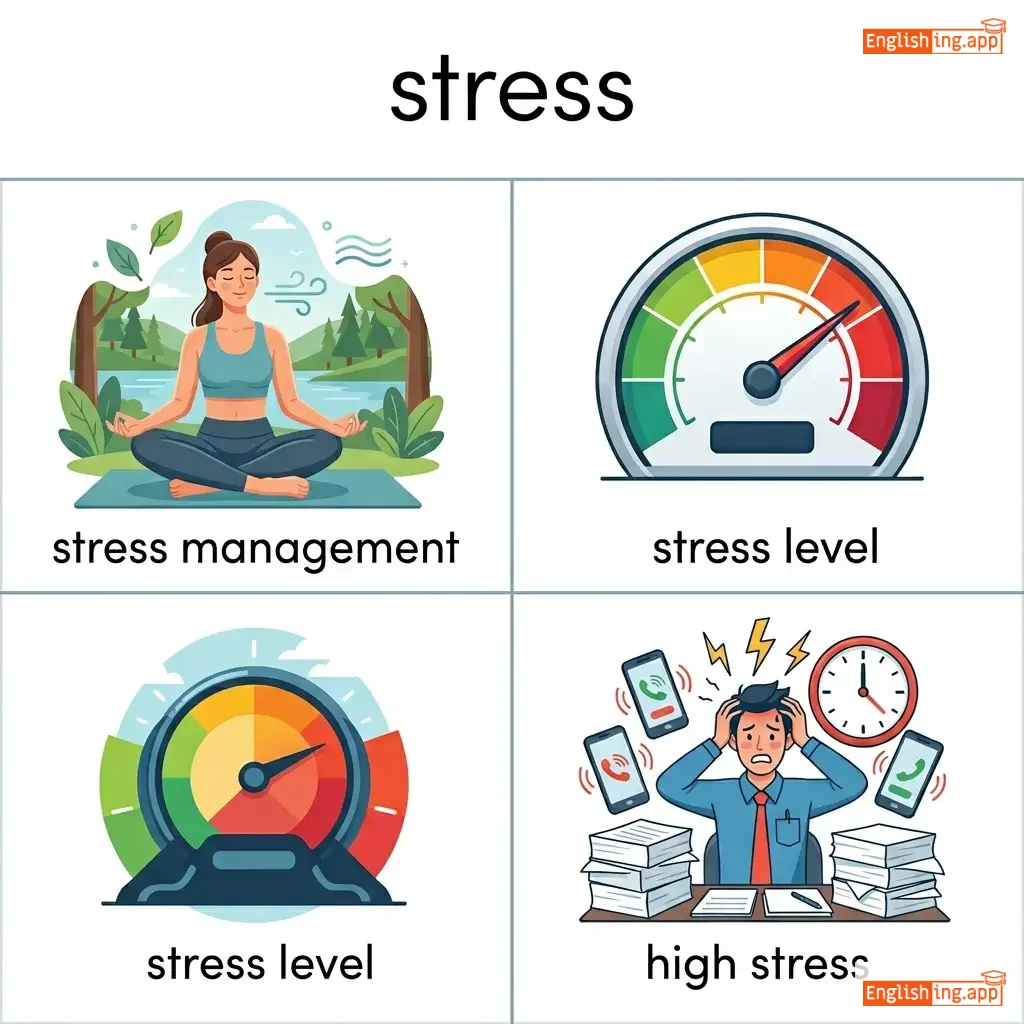
stress management, stress level, high stress, relieve stress
••••••
|
Стресс (stress) — это напряжение.
••••••
|
|
🤸
••••••
|
/stretʃ/
verb
(стретч)
••••••
|
- •••••• |
растягивать
rastjagivat
••••••
|
stretched
стретчед
••••••
|
stretched
стретчед
••••••
|
stretches
стретчес
••••••
|
stretching
стретчинг
••••••
|
to extend or expand; to make or become longer or wider
••••••
|
Athletes stretch their muscles before exercising.
Атлеты растягивают свои мышцы перед тренировкой.
••••••
|
Атлеты растягивают свои мышцы перед тренировкой.
Atlety rastjagivayut svoi myshtsy pered trenirovkoy.
••••••
|
- •••••• | - •••••• | - •••••• |
extend, expand, lengthen, reach
••••••
|
contract, shrink, compress, shorten
••••••
|
stretch muscles, stretch out, stretch further, stretch limits
••••••
|
Stretch like an athlete before your workout!
••••••
|
|
⚖️
••••••
|
/strɪkt/
adjective
(strikt)
••••••
|
- •••••• |
строгий
stroh-giy
••••••
|
- •••••• | - •••••• | - •••••• | - •••••• |
Demanding that rules be obeyed and observed closely.
••••••
|
The teacher is very strict about punctuality. |
Учитель очень строг по отношению к пунктуальности.
Uchitel' ochen' stroh-giy po otnosheniyu k punktual'nosti.
••••••
|
strict rules |
Rules that must be followed without flexibility
••••••
|
строгие правила
stroh-giye pravila
••••••
|
rigid, severe, stern, uncompromising
••••••
|
lenient, flexible, permissive
••••••
|
strict rules, strict teacher, strict policy
••••••
|
Strict значит строгий — как строгий учитель!
••••••
|
|
🚫
••••••
|
/ˈstrɪktli/
adverb
(strikly)
••••••
|
- •••••• |
строго
strogo
••••••
|
- •••••• | - •••••• | - •••••• | - •••••• |
in a way that follows rules or limits completely
••••••
|
Smoking is strictly prohibited inside the building. |
Курение строго запрещено в здании.
Kurenie strogo zapreshcheno v zdanii.
••••••
|
strictly speaking |
to be precise or accurate about something
••••••
|
строго говоря
strogo govorya
••••••
|
rigidly, severely, firmly, tightly
••••••
|
loosely, casually, freely
••••••
|
strictly prohibited, strictly controlled, strictly speaking, strictly confidential
••••••
|
Strictly означает строго—строгая мама говорит ‘Strictly no TV!’
••••••
|
|
⚡
••••••
|
/straɪk/
verb
(strajk)
••••••
|
- •••••• |
забастовка / ударить
zabastovka / udarit
••••••
|
struck
strak
••••••
|
struck
strak
••••••
|
strikes
strajks
••••••
|
striking
strajking
••••••
|
to hit forcibly or attack; also to stop work as a form of protest
••••••
|
The workers decided to strike for better wages.
Рабочие решили устроить забастовку за повышение зарплаты.
••••••
|
Рабочие решили устроить забастовку за повышение зарплаты.
Rabochie reshilі ustroit’ zabastovku za povishenie zarplaty.
••••••
|
strike a chord
задеть за живое
••••••
|
to create a strong emotional response
••••••
|
задеть за живое
zadet’ za zhivoe
••••••
|
hit, attack, punch, protest, clash
••••••
|
miss, praise, peace
••••••
|
strike a deal, strike a balance, strike back, strike down
••••••
|
Strike означает забастовка, помни, что рабочие делают STRIKE, и завод останавливается.
••••••
|
|
✨
••••••
|
/ˈstraɪkɪŋ/
adjective
(straiking)
••••••
|
- •••••• |
поразительный
porazitelny
••••••
|
- •••••• | - •••••• | - •••••• | - •••••• |
very noticeable or impressive in appearance or effect
••••••
|
Her striking beauty caught everyone's attention.
Ее поразительная красота привлекла внимание всех.
••••••
|
Ее поразительная красота привлекла внимание всех.
Eyo porazitel'naya krasota privlekla vnimanie vsekh.
••••••
|
- •••••• | - •••••• | - •••••• |
impressive, remarkable, stunning, eye-catching, extraordinary
••••••
|
ordinary, dull, plain
••••••
|
striking resemblance, striking difference, striking contrast, striking beauty
••••••
|
Striking на русском значит поразительный—что-то, что производит сильное впечатление!
••••••
|
|
🧵
••••••
|
/strɪŋ/
noun, verb
(стринг)
••••••
|
- •••••• |
шнур
shnur
••••••
|
strung
странг
••••••
|
strung
странг
••••••
|
strings
стрингс
••••••
|
stringing
стрингинг
••••••
|
a thin piece of cord or thread; to tie or fasten with a string
••••••
|
She tied the package with a string.
Она завязала пакет шнурком.
••••••
|
Она завязала пакет шнурком.
Ona zavyazala paket shnurkoy.
••••••
|
- •••••• | - •••••• | - •••••• |
cord, thread, rope, twine
••••••
|
loosen, untie
••••••
|
string of pearls, guitar string, string along, tie with string
••••••
|
Помните: Шнур (string) связывает все.
••••••
|
|
🪚
••••••
|
/strɪp/
verb
(стрип)
••••••
|
- •••••• |
снимать / раздеваться
snimat' / razdevat'sya
••••••
|
stripped
стрипт
••••••
|
stripped
стрипт
••••••
|
strips
стрипс
••••••
|
stripping
стриппинг
••••••
|
to remove coverings or layers from something; to undress
••••••
|
He had to strip the old paint from the wall.
Ему нужно было снять старую краску со стены.
••••••
|
Ему нужно было снять старую краску со стены.
Emu nuzhno bylo snjat' staruju krasku so steny.
••••••
|
strip away
снять
••••••
|
to gradually remove something
••••••
|
снять
snyat'
••••••
|
remove, peel, undress, bare, dismantle
••••••
|
cover, dress, clothe
••••••
|
strip off, strip down, strip away, strip bare
••••••
|
Strip означает снять, вспомни, что в стрип-клубе люди снимают свою одежду.
••••••
|
|
🚀
••••••
|
/straɪv/
verb
(stráiv)
••••••
|
- •••••• |
стремиться
stremit'sya
••••••
|
strove
strove
••••••
|
striven
stríven
••••••
|
strives
stráivs
••••••
|
striving
stráiving
••••••
|
To make great efforts to achieve or obtain something.
••••••
|
She strives to be the best student in her class.
Она стремится быть лучшей ученицей в своем классе.
••••••
|
Она стремится быть лучшей ученицей в своем классе.
Ona stremitsya byt' luchshey uchenitsey v svoyem klasse.
••••••
|
strive for excellence
стремиться к совершенству
••••••
|
To put in effort to achieve the highest standard
••••••
|
Стремиться к совершенству
Stremit'sya k sovershenstvu
••••••
|
endeavor, attempt, struggle, aim, labor
••••••
|
give up, surrender
••••••
|
strive hard, strive for success, strive to achieve
••••••
|
Strive означает стремиться к успеху, как в стремлении к совершенству.
••••••
|
|
✋
••••••
|
/stroʊk/
verb
(strohk)
••••••
|
|
гладить
gladit
••••••
|
stroked
strokt
••••••
|
stroked
strokt
••••••
|
strokes
stroks
••••••
|
stroking
stroking
••••••
|
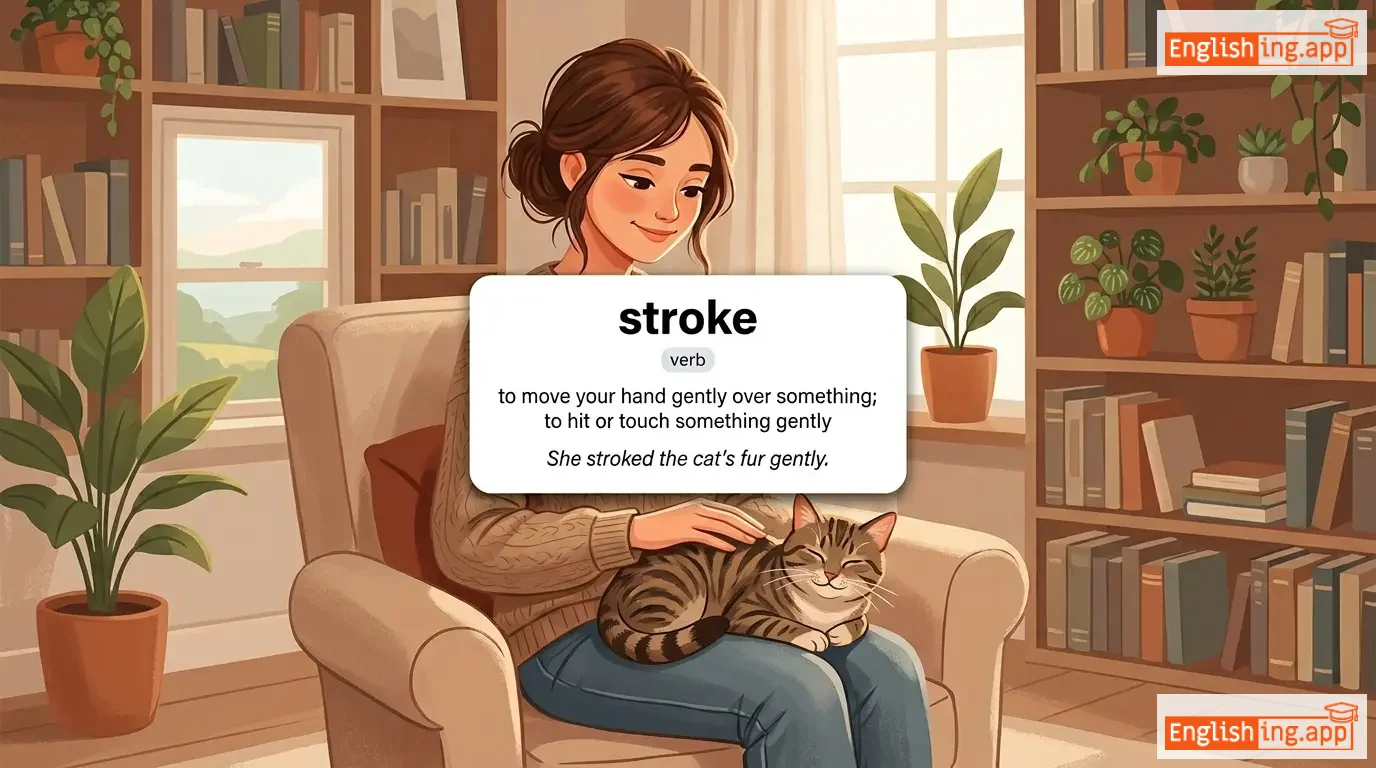
to move your hand gently over something; to hit or touch something gently
••••••
|
She stroked the cat's fur gently.
Она мягко погладила кошку.
••••••
|
Она мягко погладила кошку.
Ona myagko pogladila koshku.
••••••
|
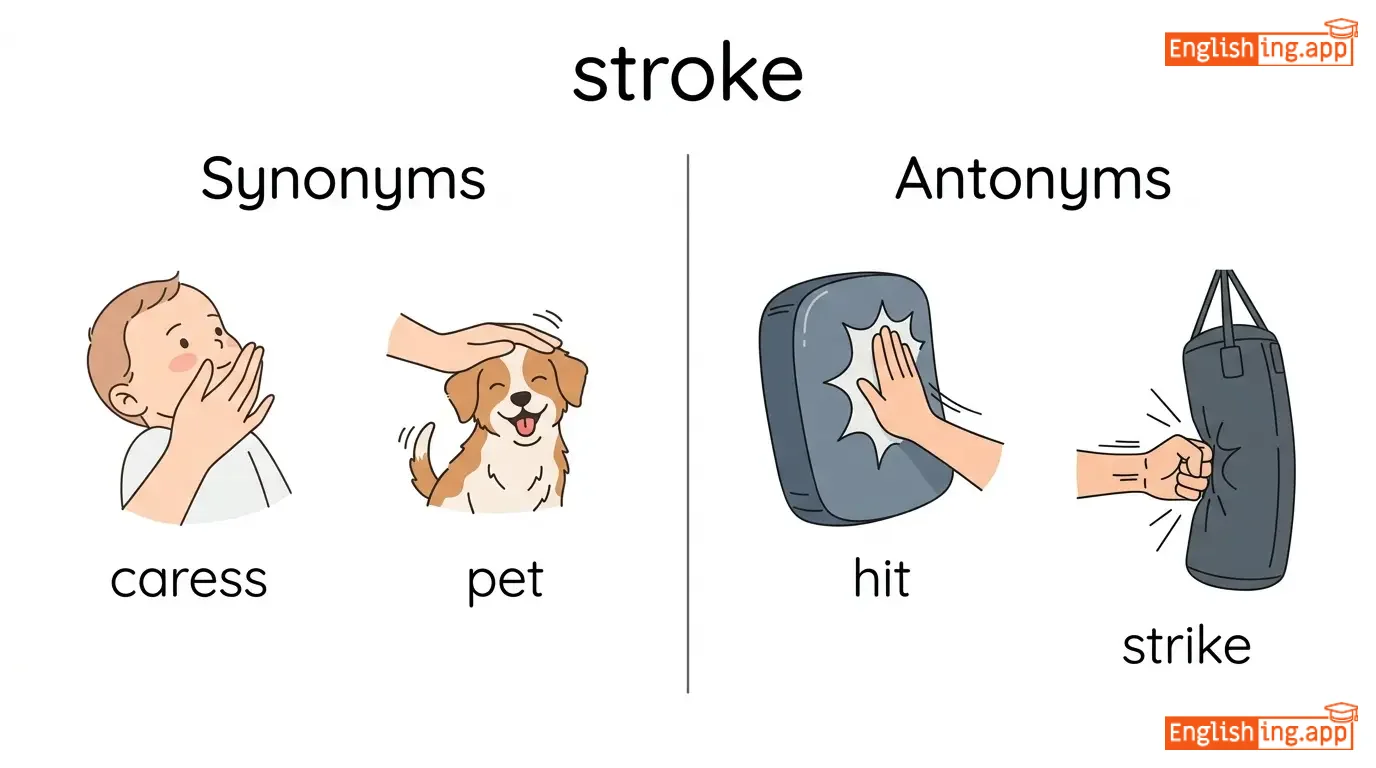
- •••••• | - •••••• | - •••••• |
caress, pet, touch, brush
••••••
|
hit, strike, slap
••••••
|
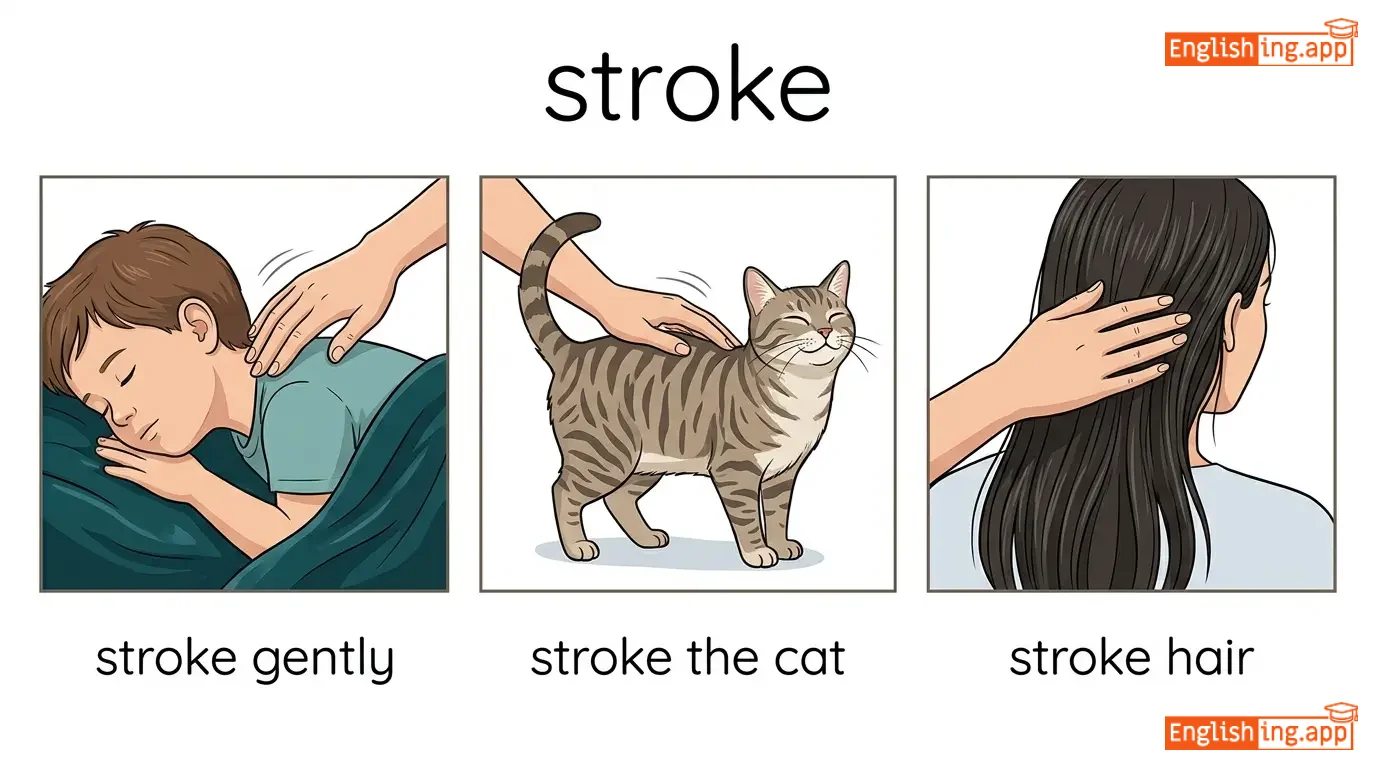
stroke gently, stroke the cat, stroke hair, swimming stroke, suffer a stroke
••••••
|
Think of gently stroking the fur of a cat in a loving and calming way.
••••••
|
|
💪
••••••
|
/strɔːŋ/
adjective
(стронг)
••••••
|
|
сильный
silny
••••••
|
- •••••• | - •••••• | - •••••• | - •••••• |
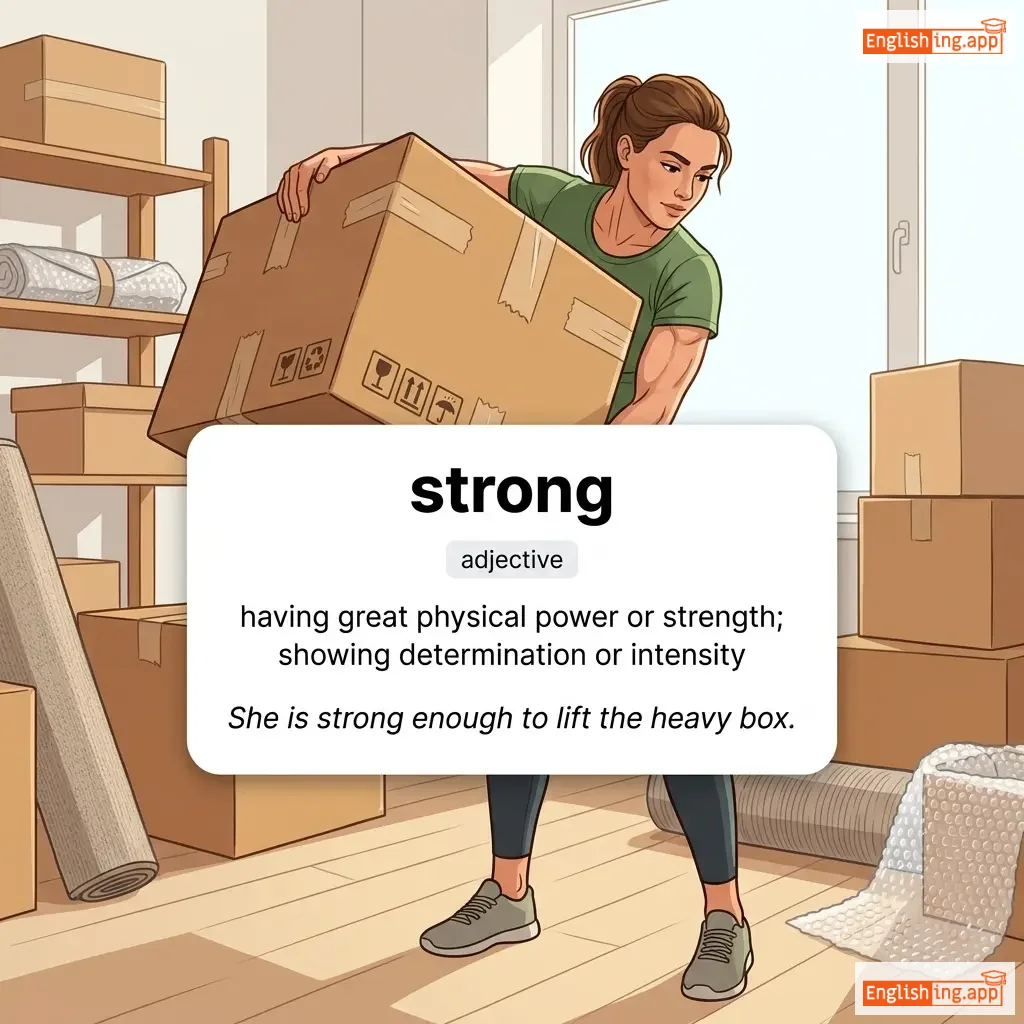
having great physical power or strength; showing determination or intensity
••••••
|
She is strong enough to lift the heavy box. |
Она достаточно сильна, чтобы поднять тяжелую коробку.
Ona dostatochno sil'na, chtoby podnyat' tyazholuyu korobku.
••••••
|
strong suit |
a particular skill or strength someone is especially good at
••••••
|
сильная сторона
sil'naya storona
••••••
|
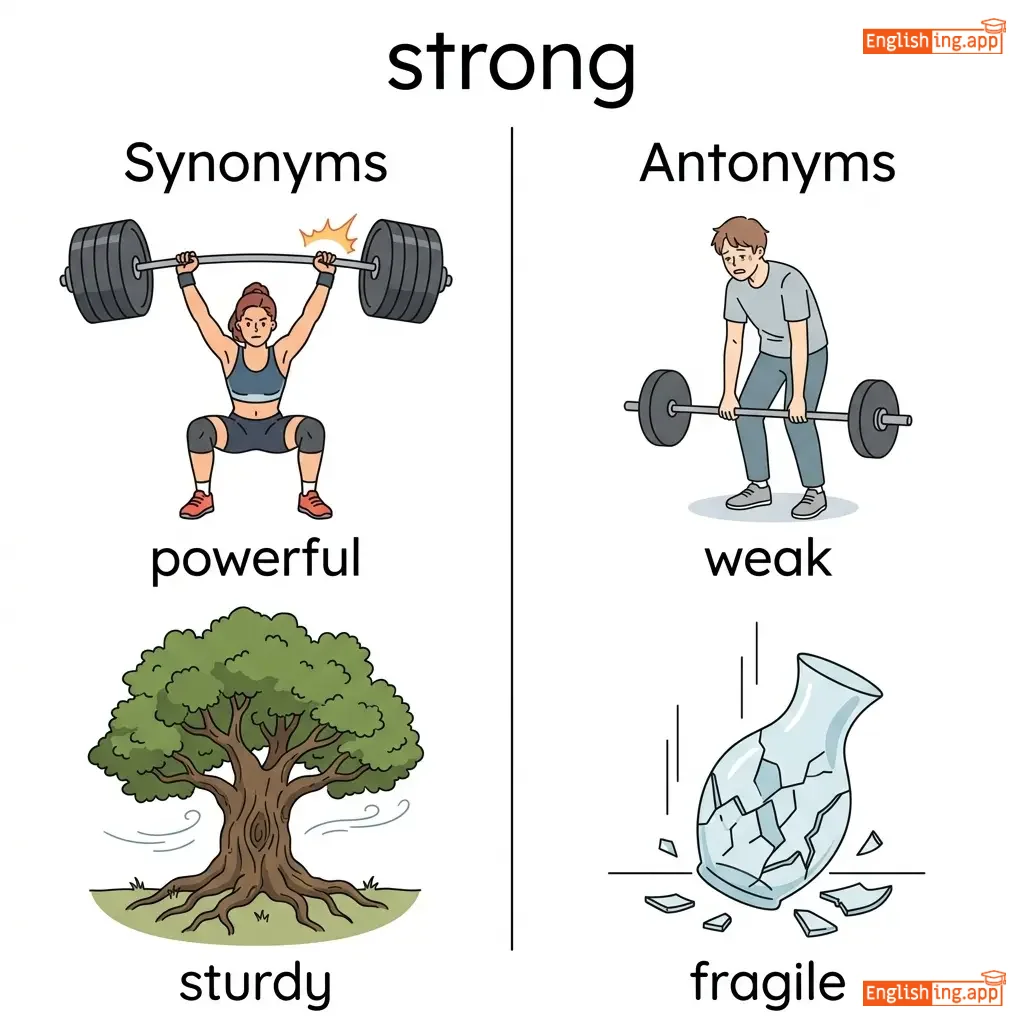
powerful, sturdy, tough, resilient, vigorous
••••••
|
weak, fragile, feeble
••••••
|
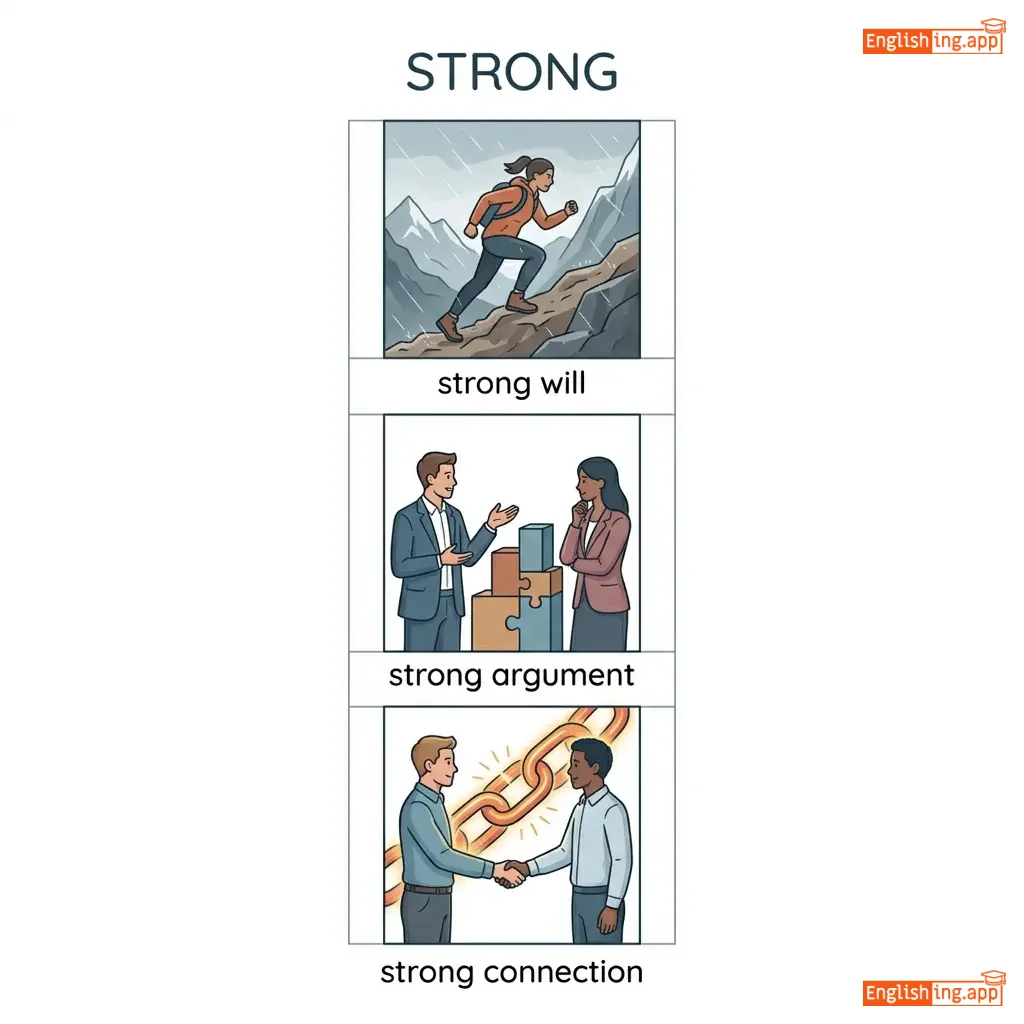
strong will, strong argument, strong connection, strong influence, strong flavor
••••••
|
Strong - это 💪 сильный, запомни 'Strong, и всё получится'
••••••
|
|
💪
••••••
|
/ˈstrɒŋɡli/
adverb
(strɔŋli)
••••••
|
- •••••• |
сильно
sil'no
••••••
|
- •••••• | - •••••• | - •••••• | - •••••• |
in a strong manner or to a great extent
••••••
|
She strongly believes in the power of positive thinking. |
Она сильно верит в силу позитивного мышления.
Ona sil'no verit v silu pozitivnogo myshleniya.
••••••
|
- •••••• | - •••••• | - •••••• |
firmly, forcefully, vigorously, intensely
••••••
|
weakly, faintly
••••••
|
strongly recommend, strongly disagree, strongly believe
••••••
|
Strongly as a sign of strong belief
••••••
|
|
🏗️
••••••
|
/ˈstrʌktʃərəl/
adjective
••••••
|

|
- •••••• | - •••••• | - •••••• | - •••••• | - •••••• |
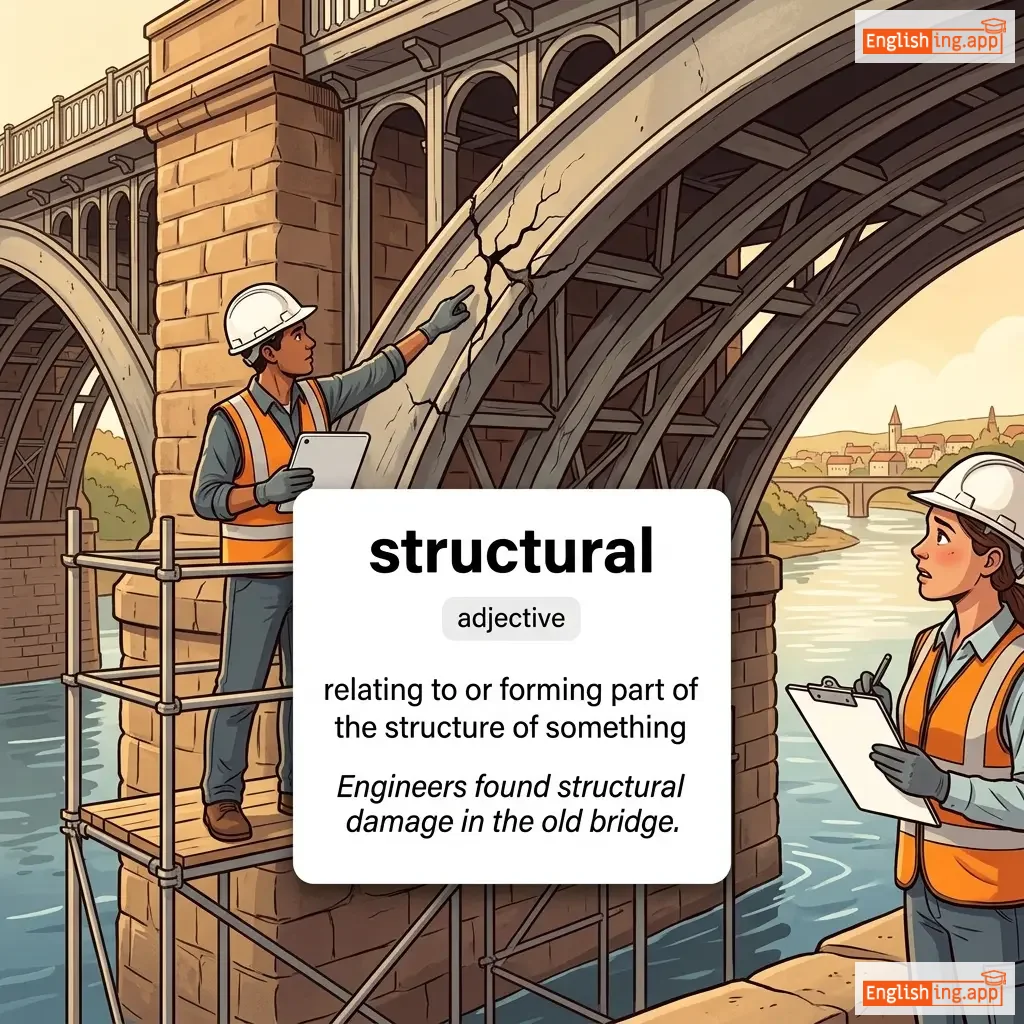
relating to or forming part of the structure of something
••••••
|
Engineers found structural damage in the old bridge. |
- •••••• | - •••••• | - •••••• | - •••••• |
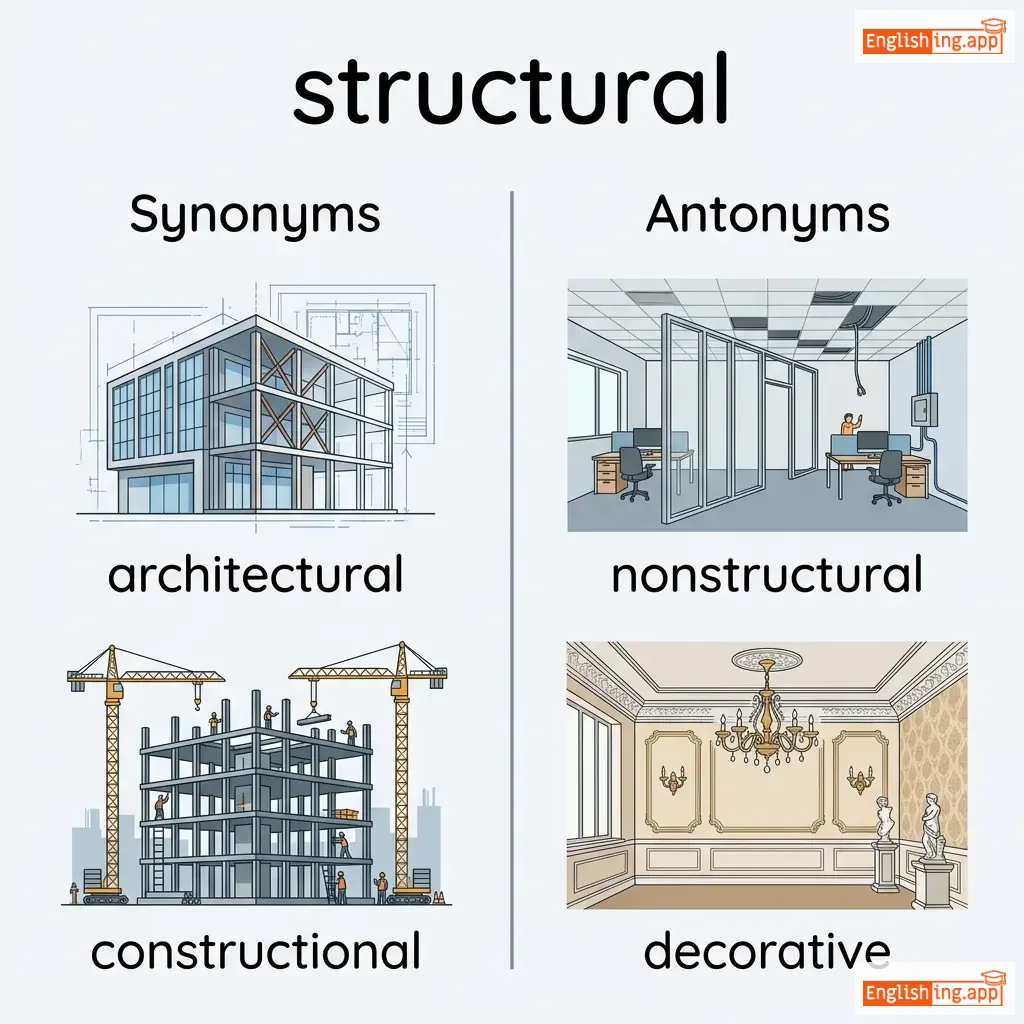
architectural, constructional, physical, organizational
••••••
|
nonstructural, decorative
••••••
|
structural damage, structural design, structural change, structural problem
••••••
|
No •••••• |
|
🏗️
••••••
|
/ˈstrʌk.tʃər/
noun
(strʊktyr)
••••••
|
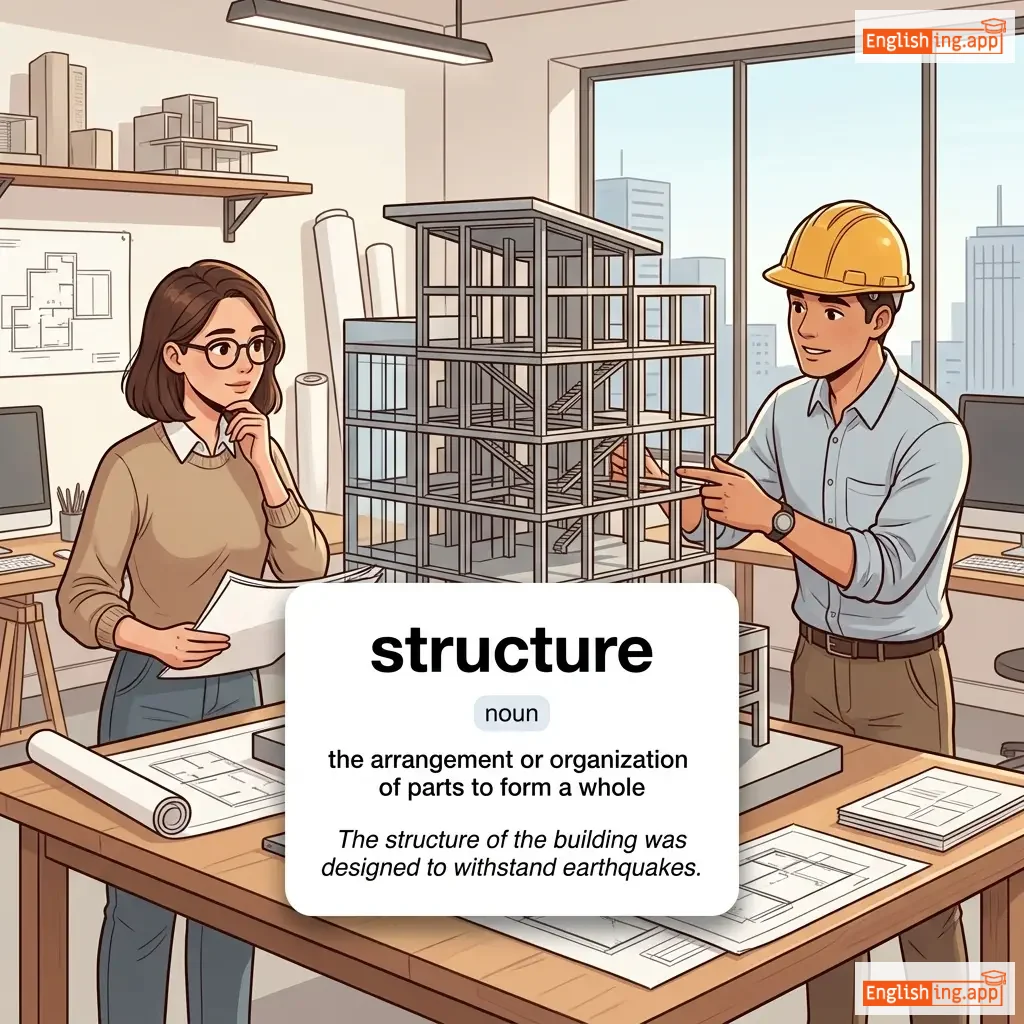
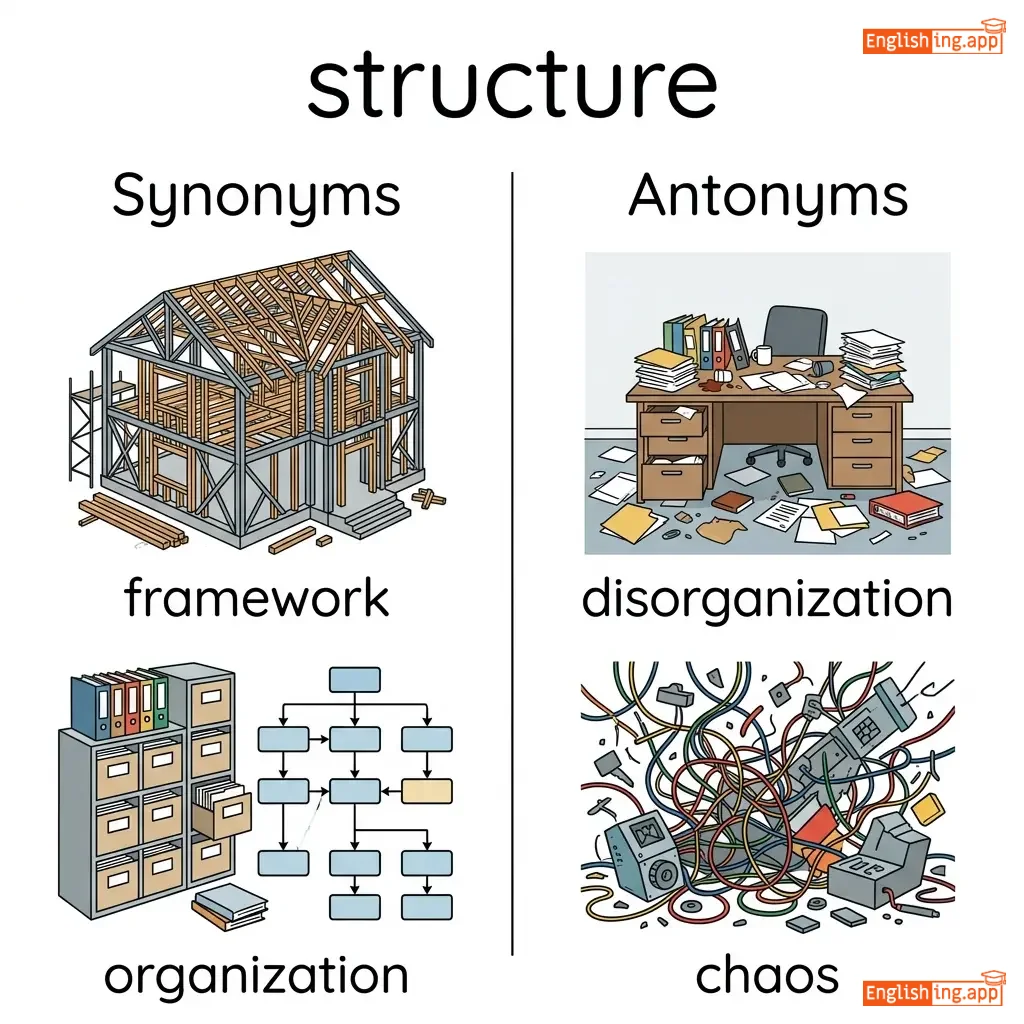
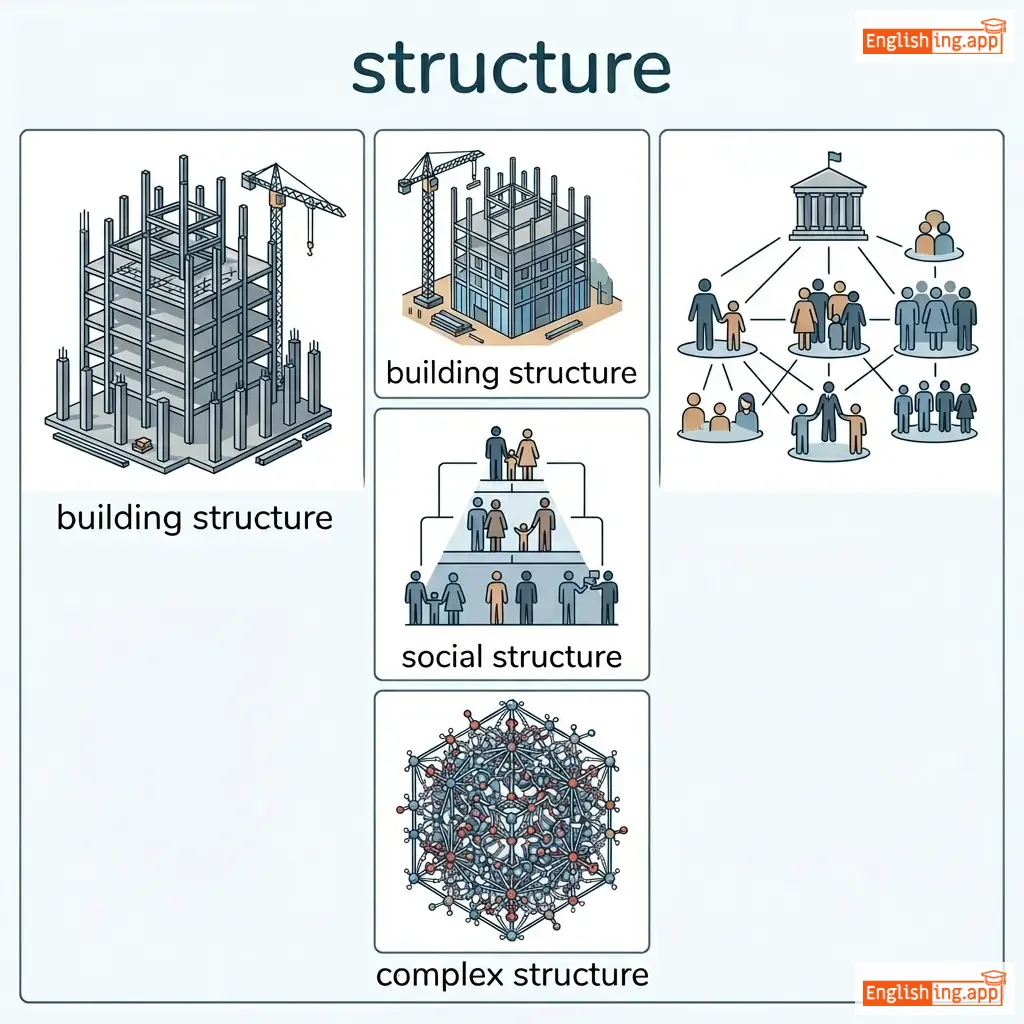
|
структура
struktura
••••••
|
- •••••• | - •••••• | - •••••• | - •••••• |
the arrangement of parts in a complex entity; the way something is organized or built
••••••
|
The building has a steel structure that makes it earthquake resistant.
zdanije imejet stal'nuju strukturu, kotoryj delaet ego ustoichivym k zemletryasenijam.
••••••
|
Здание имеет стальную структуру, которая делает его устойчивым к землетрясениям.
Zdanie imeet stal'nuyu strukturu, kotoraya delaet ego ustoichivym k zemletryaseniyam.
••••••
|
- •••••• | - •••••• | - •••••• |
framework, organization, arrangement, construction
••••••
|
chaos, disorder, disorganization
••••••
|
social structure, building structure, organizational structure, data structure
••••••
|
Структура — это основа здания, как каркас.
••••••
|
|
💪
••••••
|
/ˈstrʌɡl/
verb
(strugol)
••••••
|
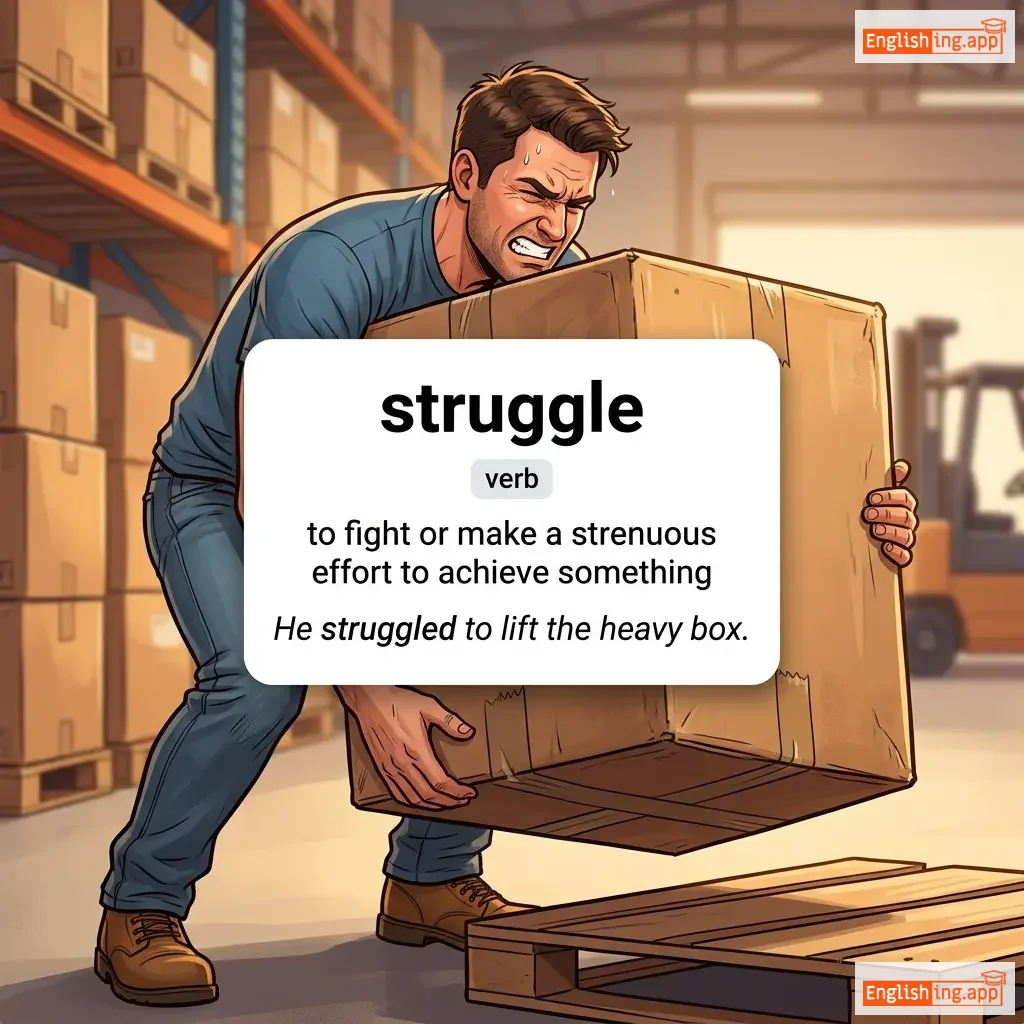
|
борьба
borba
••••••
|
struggled
strugolud
••••••
|
struggled
strugolud
••••••
|
struggles
strugoles
••••••
|
struggling
strugoling
••••••
|
to fight or make a strenuous effort to achieve something
••••••
|
He struggled to lift the heavy box.
Он боролся, чтобы поднять тяжелую коробку.
••••••
|
Он боролся, чтобы поднять тяжелую коробку.
On borolsya, chtoby podnyat' tyazholuyu korobku.
••••••
|
a struggle for survival
борьба за выживание
••••••
|
a difficult situation in which one is fighting to stay alive
••••••
|
борьба за выживание
bor'ba za vyzhivanie
••••••
|
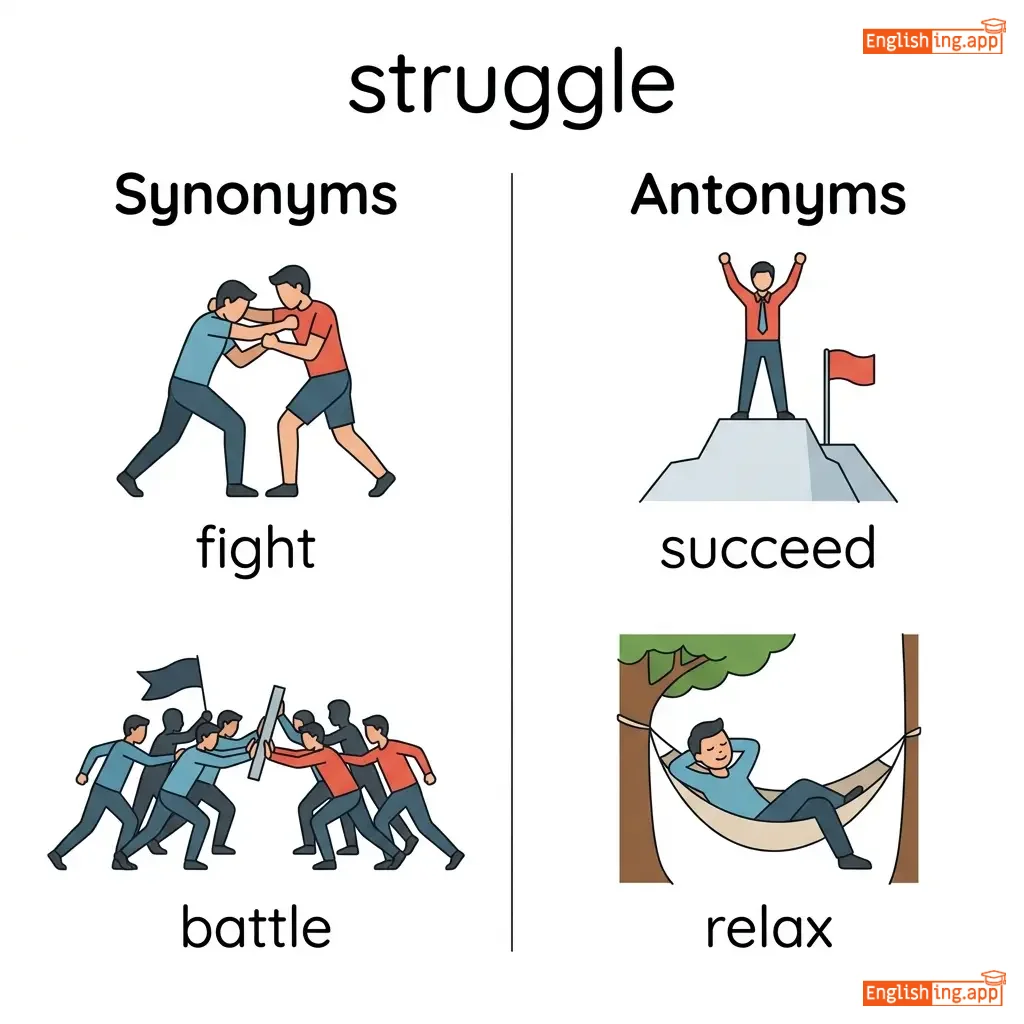
fight, battle, strive, exert
••••••
|
succeed, relax
••••••
|
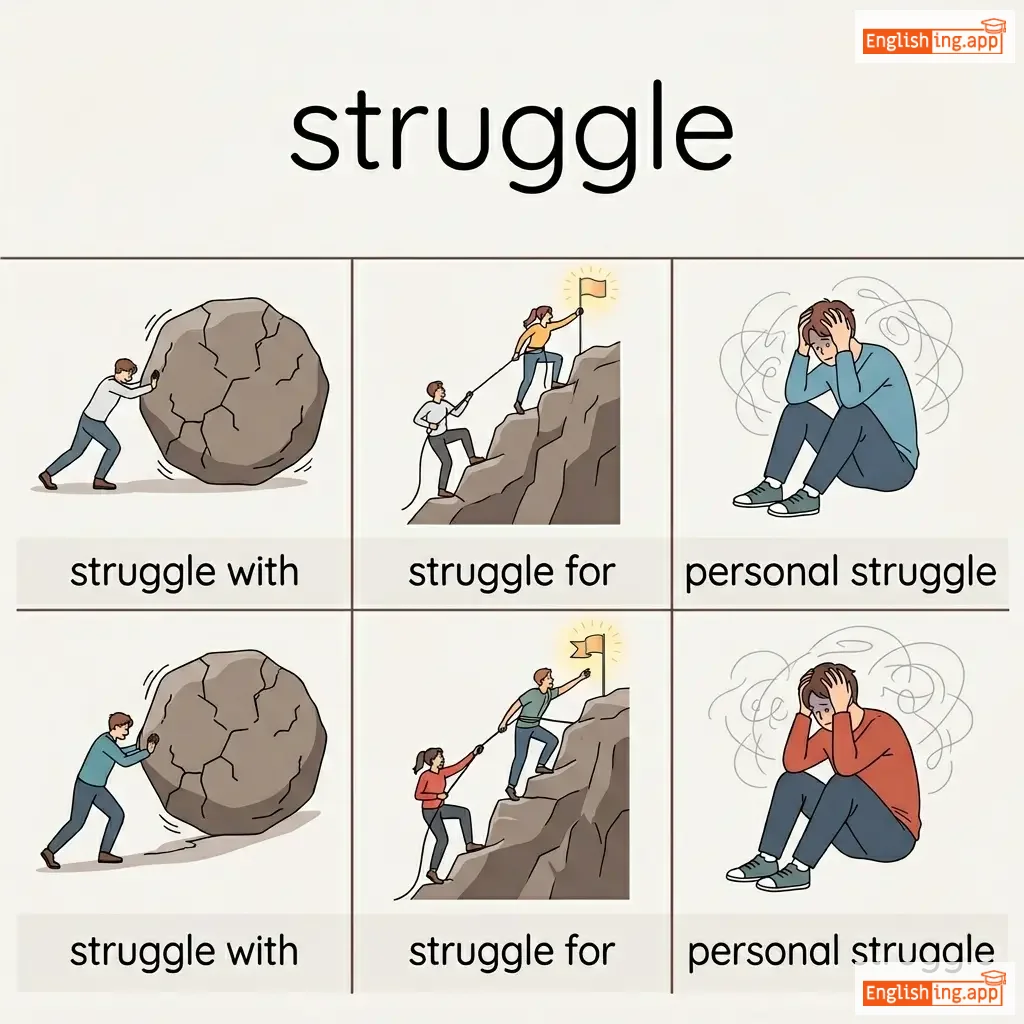
struggle with, struggle for, personal struggle
••••••
|
Struggling for success, like lifting a heavy weight
••••••
|
|
👩🎓
••••••
|
/ˈstjuːdənt/
noun
(студент)
••••••
|


|
студент
student
••••••
|
- •••••• | - •••••• | - •••••• | - •••••• |
a person who is learning at an educational institution
••••••
|
The student was studying for the final exam. |
Студент учился к финальному экзамену.
Student uchilsya k final'nomu ekzameny.
••••••
|
- •••••• | - •••••• | - •••••• |
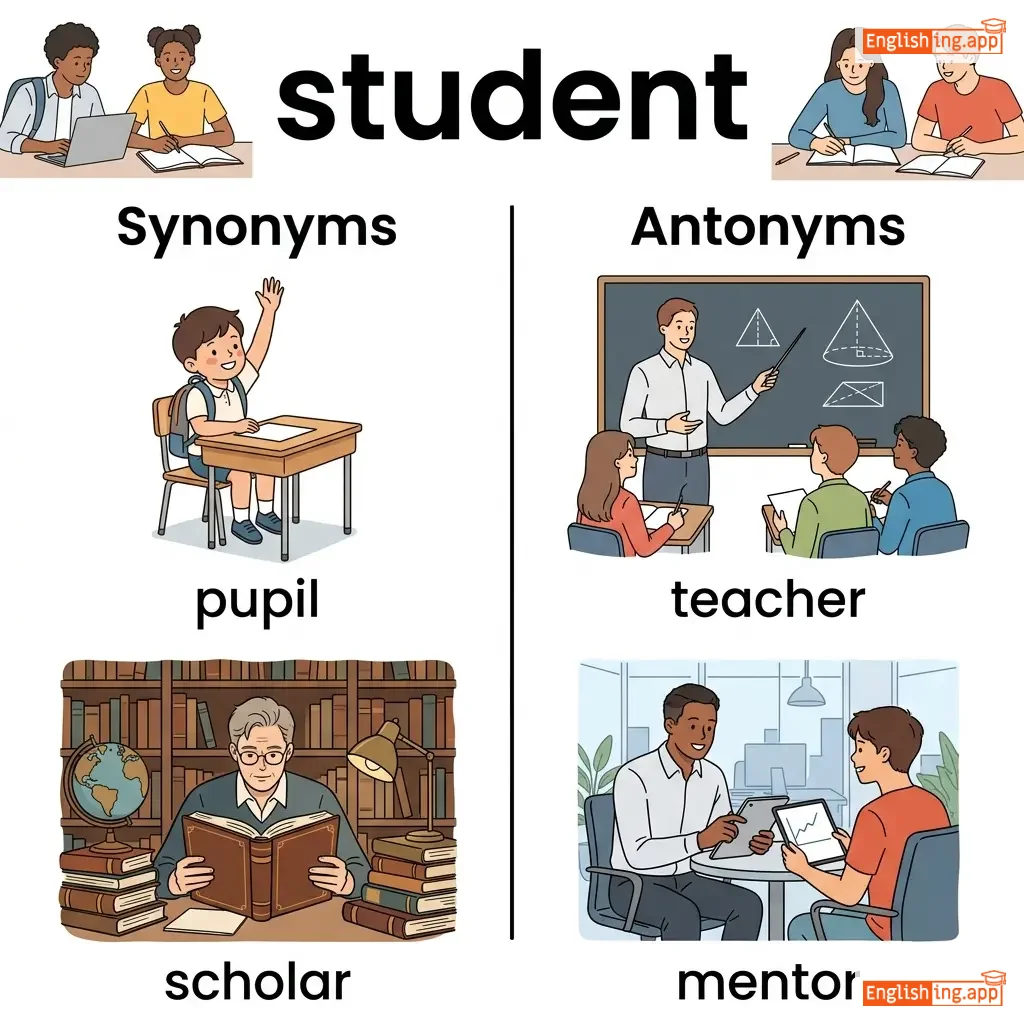
pupil, scholar, learner, trainee
••••••
|
teacher, mentor
••••••
|
college student, student life, student council
••••••
|
Student in university with books, eager for success
••••••
|
|
🎙️
••••••
|
/ˈstjuːdiəʊ/
noun
(студия)
••••••
|
- •••••• |
студия
studiya
••••••
|
- •••••• | - •••••• | - •••••• | - •••••• |
a room where an artist, photographer, musician, or broadcaster works
••••••
|
The singer recorded her new song in the studio.
Певица записала свою новую песню в студии.
••••••
|
Певица записала свою новую песню в студии.
Pevitsa zapisana svoyu novuyu pesnyu v studii.
••••••
|
- •••••• | - •••••• | - •••••• |
workroom, atelier, workspace, workshop
••••••
|
outdoors, open space
••••••
|
recording studio, art studio, design studio, dance studio
••••••
|
Студия - это место для работы художников, музыкантов и фотографов.
••••••
|
|
📚
••••••
|
/ˈstʌdi/
verb
(студировать)
••••••
|

|
изучать
izuchat'
••••••
|
studied
изучал
••••••
|
studied
изучал
••••••
|
studies
изучает
••••••
|
studying
изучая
••••••
|
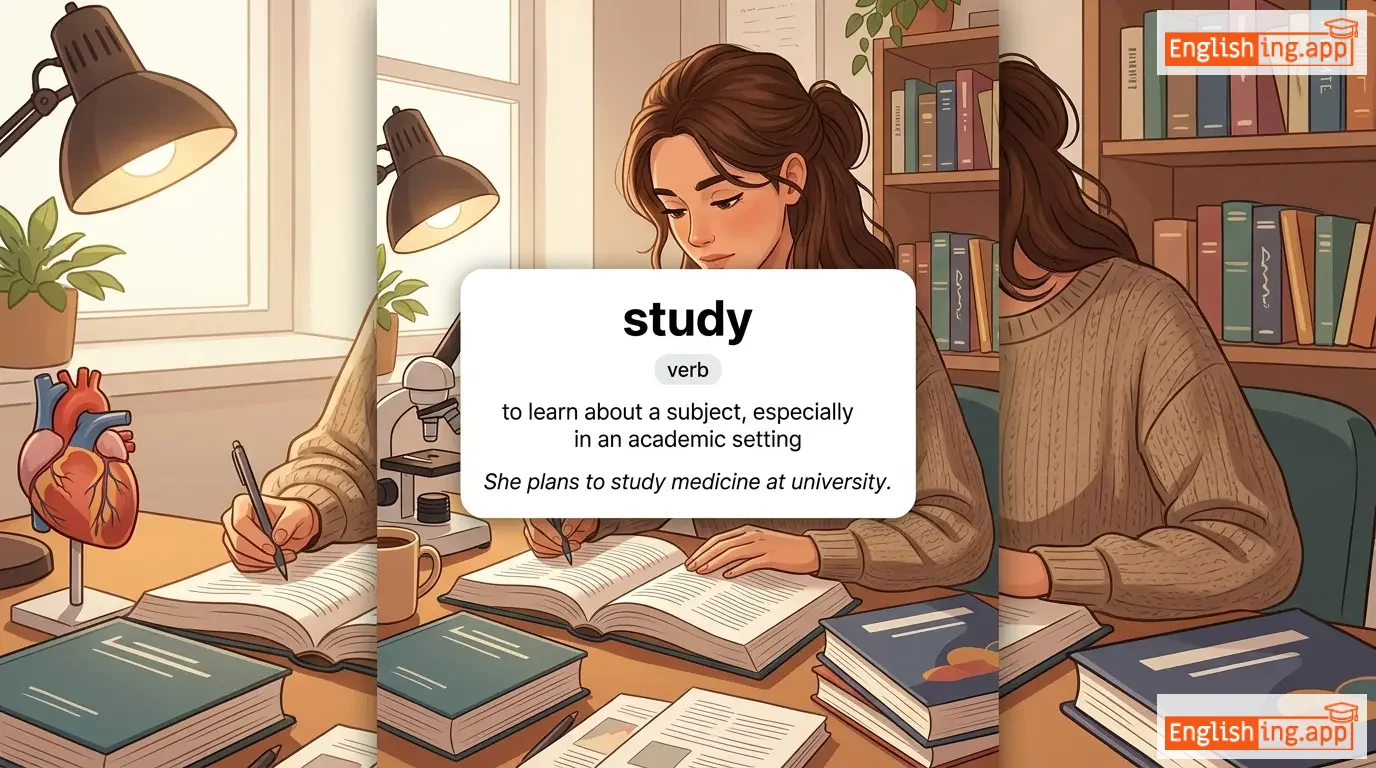
to learn about something; to examine carefully; to research
••••••
|
I study mathematics every evening.
Я изучаю математику каждый вечер.
••••••
|
Я изучаю математику каждый вечер.
Ya izuchayu matematiku kazhdyi vecher.
••••••
|
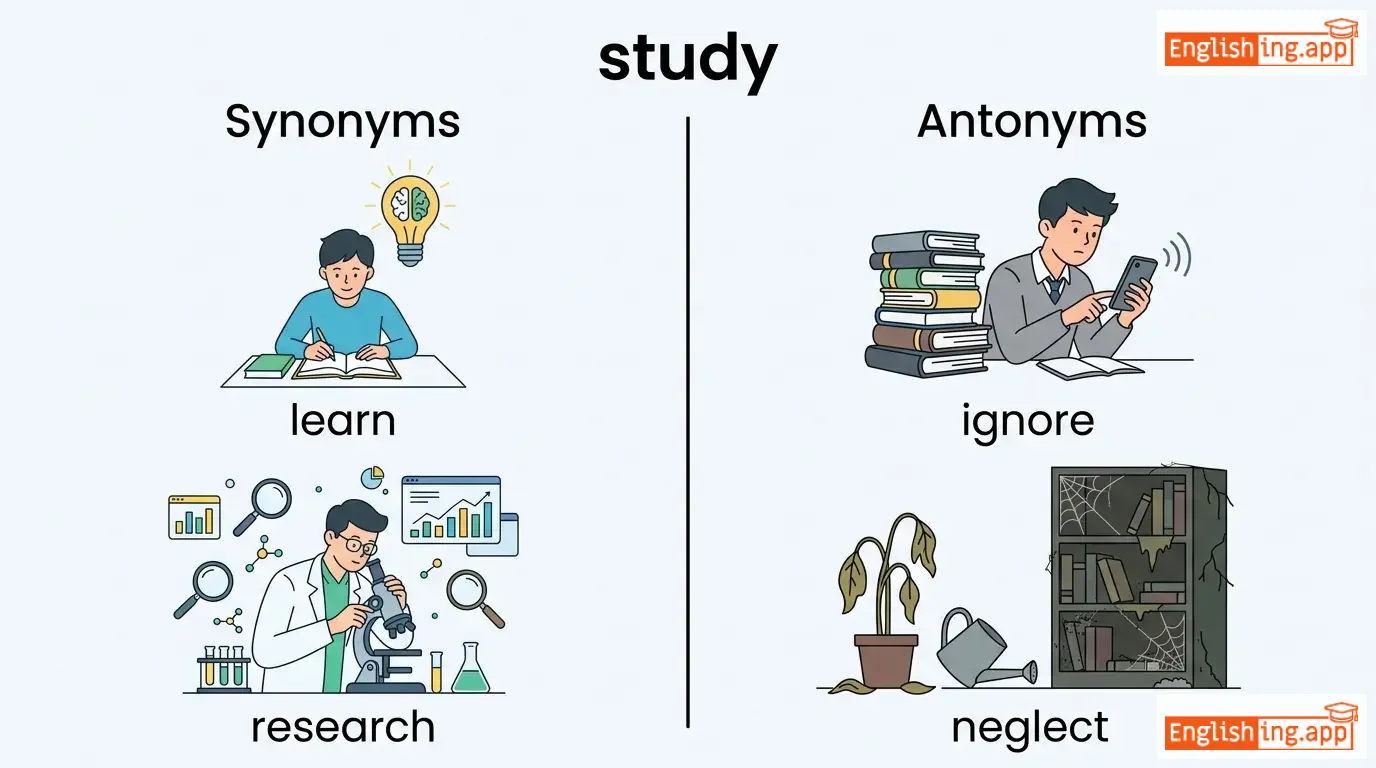
- •••••• | - •••••• | - •••••• |
learn, research, examine, investigate
••••••
|
ignore, neglect, overlook
••••••
|
study hard, study abroad, case study, study materials, study group
••••••
|
Study = Изучать (Процесс глубокого обучения)
••••••
|
|
🤦
••••••
|
/ˈstʌmbəl/
verb
(стамбл)
••••••
|
- •••••• |
споткнуться
spotknutsya
••••••
|
stumbled
стамблд
••••••
|
stumbled
стамблд
••••••
|
stumbles
стамблс
••••••
|
stumbling
стамблинг
••••••
|
to trip or lose balance while walking or running; to make a mistake or falter
••••••
|
He stumbled on the uneven pavement.
Он споткнулся на неровном тротуаре.
••••••
|
Он споткнулся на неровном тротуаре.
On spotknulsya na neryvnom trotuare.
••••••
|
stumble upon
споткнуться на
••••••
|
to find something by chance
••••••
|
наткнуться на
natknutsya na
••••••
|
trip, falter, slip, blunder, hesitate
••••••
|
balance, steady, recover
••••••
|
stumble upon, stumble over, stumble badly, stumble into
••••••
|
Stumble значит споткнуться — Если ты споткнешься, упадешь.
••••••
|
|
⚡
••••••
|
/stʌn/
verb
(стан)
••••••
|
- •••••• |
ошеломить, потрясти
oshelomit, potryasit
••••••
|
stunned
стандарт
••••••
|
stunned
стандарт
••••••
|
stuns
станс
••••••
|
stunning
станнинг
••••••
|
to shock or surprise someone greatly; to knock someone unconscious or dazed
••••••
|
The news of her sudden resignation stunned everyone.
новость о её внезапной отставке ошеломила всех.
••••••
|
Новость о её внезапной отставке ошеломила всех.
Novost' o ee vnezapnoi otstavke oshelomila vsekh.
••••••
|
- •••••• | - •••••• | - •••••• |
shock, amaze, astonish, daze, overwhelm
••••••
|
comfort, calm, assure
••••••
|
stun gun, stunned silence, absolutely stunned, stun effect
••••••
|
С новостью об экзамене, я был полностью ошеломлён — stunned.
••••••
|
|
😲
••••••
|
/ˈstʌnɪŋ/
adjective
(станнинг)
••••••
|
- •••••• |
потрясающий
potryasayushchiy
••••••
|
- •••••• | - •••••• | - •••••• | - •••••• |
extremely impressive or attractive
••••••
|
The view from the top of the mountain was absolutely stunning. |
Вид с вершины горы был абсолютно потрясающим.
Vid s vershiny gory byl absolutely potryasayushchym.
••••••
|
- •••••• | - •••••• | - •••••• |
amazing, breathtaking, beautiful, striking
••••••
|
ugly, dull, unattractive
••••••
|
stunning beauty, stunning view, stunning performance
••••••
|
Потрясающий – как 'stunning'!
••••••
|
|
🤦
••••••
|
/ˈstjuːpɪd/
adjective
••••••
|
- •••••• | - •••••• | - •••••• | - •••••• | - •••••• | - •••••• |
lacking intelligence or common sense
••••••
|
It was a stupid mistake to leave the keys inside the car. |
- •••••• |
play stupid |
to pretend not to know something
••••••
|
- •••••• |
foolish, silly, idiotic, dumb
••••••
|
wise, intelligent, smart
••••••
|
stupid idea, stupid mistake, act stupid, feel stupid
••••••
|
No •••••• |
|
🤦
••••••
|
/stjuːˈpɪdəti/
noun
(ступидити)
••••••
|
- •••••• |
глупость
glupost
••••••
|
- •••••• | - •••••• | - •••••• | - •••••• |
lack of intelligence or common sense
••••••
|
His stupidity caused a lot of problems for the team.
Его ступидити вызвала много проблем для команды.
••••••
|
Его глупость вызвала много проблем для команды.
Ego glupost vyzvala mnogo problem dlya komandy
••••••
|
in all one's stupidity
во всей своей ступидити
••••••
|
despite being foolish or lacking sense
••••••
|
во всей своей глупости
vo vsey svoey gluposti
••••••
|
foolishness, ignorance, senselessness, absurdity, silliness
••••••
|
intelligence, wisdom, cleverness
••••••
|
act of stupidity, sheer stupidity, display of stupidity, remarkable stupidity
••••••
|
glupost sounds like 'gloop' – sticky foolishness.
••••••
|
|
💅
••••••
|
/staɪl/
noun
(stail)
••••••
|
- •••••• |
стиль
stil
••••••
|
- •••••• | - •••••• | - •••••• | - •••••• |
a particular way of doing something; a distinctive appearance or manner of expression
••••••
|
She has her own unique style of writing that captivates readers.
У нее свой уникальный стиль письма, который захватывает читателей.
••••••
|
У нее свой уникальный стиль письма, который захватывает читателей.
U nee svoj unikal'nyj stil' pis'ma, kotoryj zakhvatyvaet chitatelej.
••••••
|
- •••••• | - •••••• | - •••••• |
manner, way, approach, fashion, method
••••••
|
uniformity, standardization
••••••
|
writing style, fashion style, leadership style, architectural style
••••••
|
‘Style’ на английском переводится как ‘стиль’ на русском, представляя уникальную форму самовыражения.
••••••
|
|
📚
••••••
|
/ˈsʌbdʒɪkt/ (noun), /səbˈdʒɛkt/ (verb)
noun/verb/adjective
(sʌbdʒɛkt)
••••••
|
- •••••• |
предмет
predmet
••••••
|
subjected
sʌbdʒɛktɪd
••••••
|
subjected
sʌbdʒɛktɪd
••••••
|
subjects
sʌbdʒɛkts
••••••
|
subjecting
sʌbdʒɛktɪŋ
••••••
|
noun: a topic or theme; verb: to cause to undergo; adjective: dependent or under authority
••••••
|
The teacher introduced a new subject in class.
учитель ввел новый предмет в классе.
••••••
|
Учитель ввел новый предмет в классе.
Uchitel' vvedel novyy predmet v klasse.
••••••
|
subject to change
подлежит изменению
••••••
|
likely to be altered
••••••
|
подлежит изменению
podlezhit izmeneniyu
••••••
|
topic, theme, issue, matter, expose
••••••
|
object, ruler, master
••••••
|
main subject, school subject, subject area, subject matter, subject to
••••••
|
Subject - это не только тема, но и то, что можно изменить или подчинить.
••••••
|
|
📩
••••••
|
/səbˈmɪʃən/
noun
(сəbˈmɪʃən)
••••••
|
- •••••• |
покорность, подача
pokornost', podacha
••••••
|
- •••••• | - •••••• | - •••••• | - •••••• |
the act of yielding to authority or presenting something for consideration
••••••
|
Her submission of the report was appreciated by the manager. |
Ее подача отчета была оценена менеджером.
Eyo podacha otcheta byla otsenena menedzherom.
••••••
|
in submission to |
yielding to someone or something
••••••
|
в подчинении
v podchinении
••••••
|
obedience, compliance, surrender, presentation, proposal
••••••
|
resistance, defiance, refusal
••••••
|
submission of report, submission deadline, complete submission, voluntary submission
••••••
|
Submission означает представить отчет, а покорность - это подчинение или подача.
••••••
|

