|
表情符号
|
单词 | Images | 翻译 | 过去时 | 过去分词 | 第三人称单数 | 动名词 | 含义 | 例句 | 例句翻译 | 示例表达 | 示例表达含义 | 示例表达翻译 | 同义词 | 反义词 | 搭配词 | 助记符 |
|---|---|---|---|---|---|---|---|---|---|---|---|---|---|---|---|---|---|
|
📦
••••••
|
/stɒk/
noun, verb
(sī tòu kè)
••••••
|
- •••••• |
库存
kù cún
••••••
|
stocked
sī tòu kè dé
••••••
|
stocked
sī tòu kè dé
••••••
|
stocks
sī tòu kè sī
••••••
|
stocking
sī tòu kè zhōng
••••••
|
a supply of goods kept for sale or use; to keep or fill with goods
••••••
|
The shop stocks a wide variety of products.
商店储存大量的商品。
••••••
|
商店储存大量的商品。
Shāng diàn chǔ cún dà liàng de shāng pǐn.
••••••
|
take stock of
对情况进行盘点
••••••
|
to carefully examine and evaluate a situation
••••••
|
仔细评估情况
zǐ xì píng gū qíng kuàng
••••••
|
inventory, supply, reserve, goods, merchandise
••••••
|
shortage, depletion
••••••
|
stock market, stock price, stock exchange, stock level
••••••
|
库存就是商店里的商品储备
••••••
|
|
🤢
••••••
|
/ˈstʌmək/
noun/verb
(胃)
••••••
|
- •••••• |
胃 / 忍耐
wèi / rěnnài
••••••
|
stomached
胃了
••••••
|
stomached
胃了
••••••
|
stomachs
胃的
••••••
|
stomaching
胃的过程
••••••
|
The internal organ in which food is digested; also to tolerate or endure something
••••••
|
She couldn’t stomach the sight of violence.
她无法忍受暴力的场景。
••••••
|
她无法忍受暴力的场景。
Tā wúfǎ rěnshòu bàolì de chǎngjǐng.
••••••
|
have a strong stomach
有一个强壮的胃
••••••
|
to be able to tolerate unpleasant or difficult things
••••••
|
有一个强壮的胃
Yǒu yīgè qiángzhuàng de wèi
••••••
|
belly, abdomen, gut, endure, tolerate
••••••
|
reject, resist, dislike
••••••
|
stomach pain, upset stomach, stomach flu, stomach cramps
••••••
|
胃是消化食物的器官,拥有一个强壮的胃意味着能承受困难。
••••••
|
|
🤢
••••••
|
/ˈstʌmək eɪk/
noun
(斯托马克 埃克)
••••••
|
- •••••• |
胃痛
weitong
••••••
|
- •••••• | - •••••• | - •••••• | - •••••• |
Pain in the stomach or abdominal area
••••••
|
I have a stomach ache after eating too much.
我吃得太多后感到胃痛。
••••••
|
我吃得太多后感到胃痛。
Wo chi de tai duo hou gandao weitong
••••••
|
tummy troubles
肚子不舒服
••••••
|
informal term for stomach discomfort
••••••
|
肚子不舒服
duzi bushufu
••••••
|
abdominal pain, bellyache, indigestion, upset stomach
••••••
|
wellness, comfort
••••••
|
severe stomach ache, mild stomach ache, chronic stomach ache
••••••
|
Imagine a Chinese 'wei' aching after dumplings
••••••
|
|
🪨
••••••
|
/stoʊn/
noun
(sītōng)
••••••
|
- •••••• |
石头
shítou
••••••
|
- •••••• | - •••••• | - •••••• | - •••••• |
a hard, naturally occurring mineral material found in the earth
••••••
|
He threw a stone into the lake.
他把一块石头扔进湖里。
••••••
|
他把一块石头扔进湖里。
Tā bǎ yī kuài shítou rēng jìn hú lǐ.
••••••
|
- •••••• | - •••••• | - •••••• |
rock, pebble, boulder, gravel
••••••
|
sand, soil
••••••
|
stone wall, stone path, stone monument
••••••
|
石头 (stone) 是地球上的自然矿物,坚硬且耐用。
••••••
|
|
🛑
••••••
|
/stɑːp/
verb
(停)
••••••
|
- •••••• |
停止
tingzhi
••••••
|
stopped
停止
••••••
|
stopped
停止
••••••
|
stops
停止
••••••
|
stopping
停止
••••••
|
to bring to an end or cause to cease
••••••
|
Please stop talking while I’m working.
请在我工作时停止讲话。
••••••
|
请在我工作时停止讲话。
Qing zai wo gongzuo shi tingzhi jianghua.
••••••
|
stop at nothing
不择手段
••••••
|
to do anything, no matter how extreme, to achieve a goal
••••••
|
不择手段
Bu ze shou duan
••••••
|
halt, cease, end, discontinue, pause
••••••
|
continue, start, proceed
••••••
|
stop sign, stop talking, stop doing, stop immediately
••••••
|
🛑 在红灯停下,意味着停止 → 停止表示停止
••••••
|
|
⛔
••••••
|
/ˈstɒpɪdʒ/
noun
(斯托皮奇)
••••••
|
- •••••• |
停顿; 停止
tingdun; tingzhi
••••••
|
- •••••• | - •••••• | - •••••• | - •••••• |
The act of stopping or ceasing; a halt in operation or activity
••••••
|
The sudden stoppage of the train caused delays for all passengers.
火车的突然停运导致所有乘客延误。
••••••
|
火车的突然停运导致所有乘客延误。
Huoche de turan tingyun daozhi suoyou chengke yanwu.
••••••
|
- •••••• | - •••••• | - •••••• |
halt, interruption, cessation, pause, blockage
••••••
|
continuation, flow, progress
••••••
|
work stoppage, stoppage time, sudden stoppage, stoppage of service
••••••
|
Stop + age = 斯托皮奇 = 停顿
••••••
|
|
🗄️
••••••
|
/ˈstɔːrɪdʒ/
noun
(存储)
••••••
|
- •••••• |
存储
cunchu
••••••
|
- •••••• | - •••••• | - •••••• | - •••••• |
the action or method of storing something for future use
••••••
|
The warehouse offers plenty of storage space. |
仓库提供了大量的存储空间。
Cāngkù tígōngle dàliàng de cúnchú kōngjiān.
••••••
|
- •••••• | - •••••• | - •••••• |
storage space, vault, repository, depot
••••••
|
disposal, removal
••••••
|
data storage, storage unit, storage facility
••••••
|
存储 (storage),就是我们存放东西的地方。
••••••
|
|
📦
••••••
|
/stɔːr/
verb
(stor)
••••••
|
|
储存
chucun
••••••
|
stored
stored
••••••
|
stored
stored
••••••
|
stores
stores
••••••
|
storing
storing
••••••
|
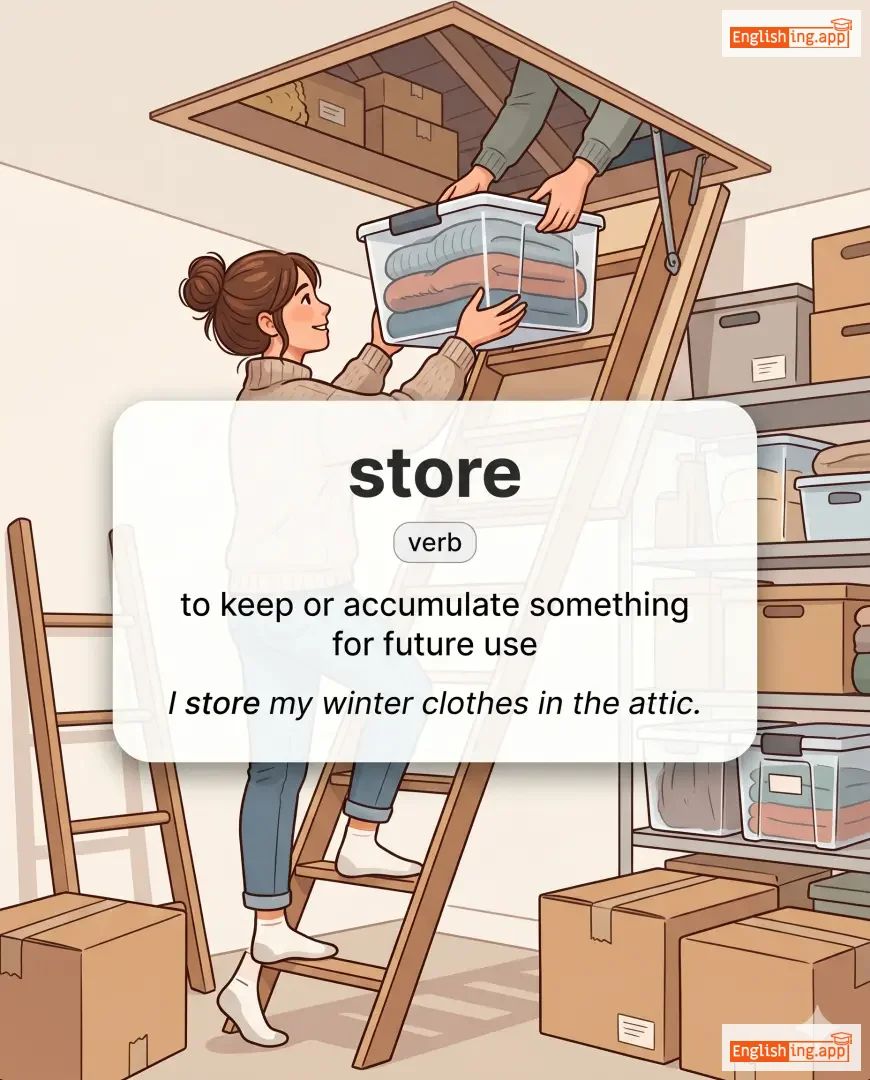
to keep things in a place for future use; to save information
••••••
|
She stores her winter clothes in the attic.
她把冬衣存放在阁楼里。
••••••
|
她把冬衣存放在阁楼里。
Ta ba dongyi cunfang zai ge lou li.
••••••
|
- •••••• | - •••••• | - •••••• |
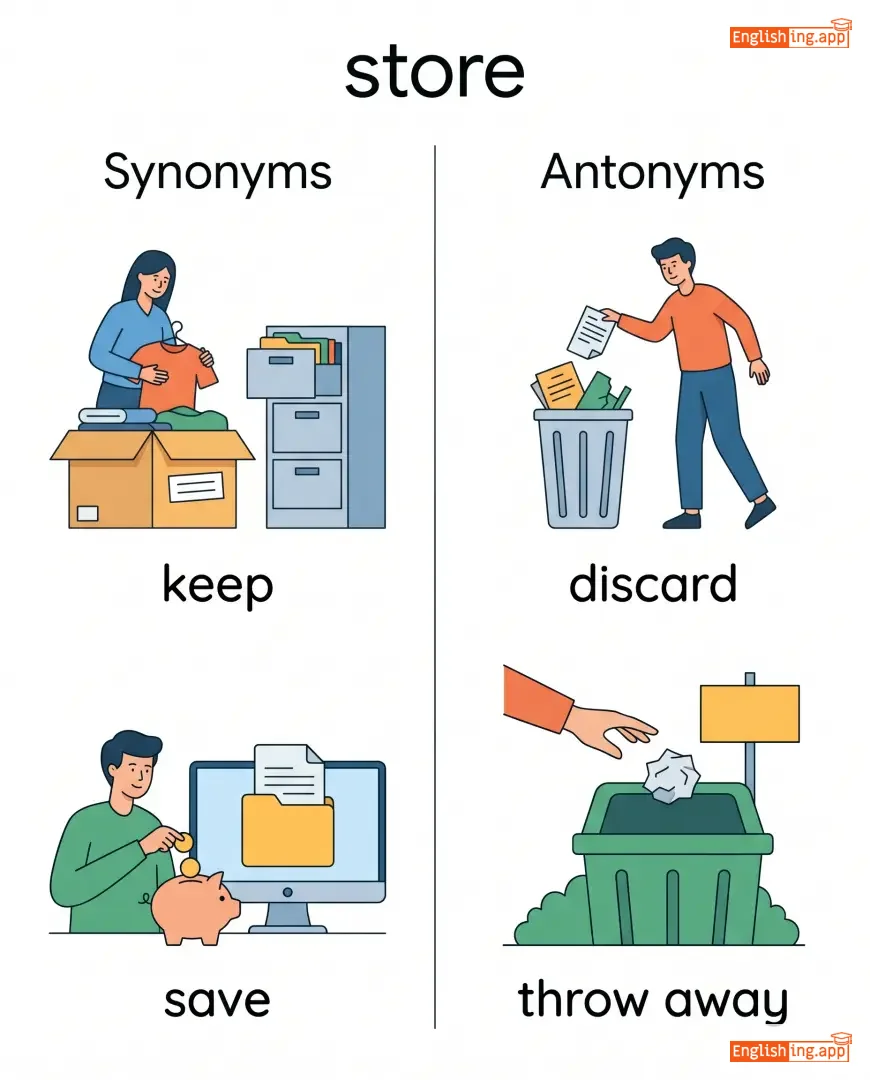
keep, save, preserve, stock
••••••
|
discard, throw away, use up
••••••
|
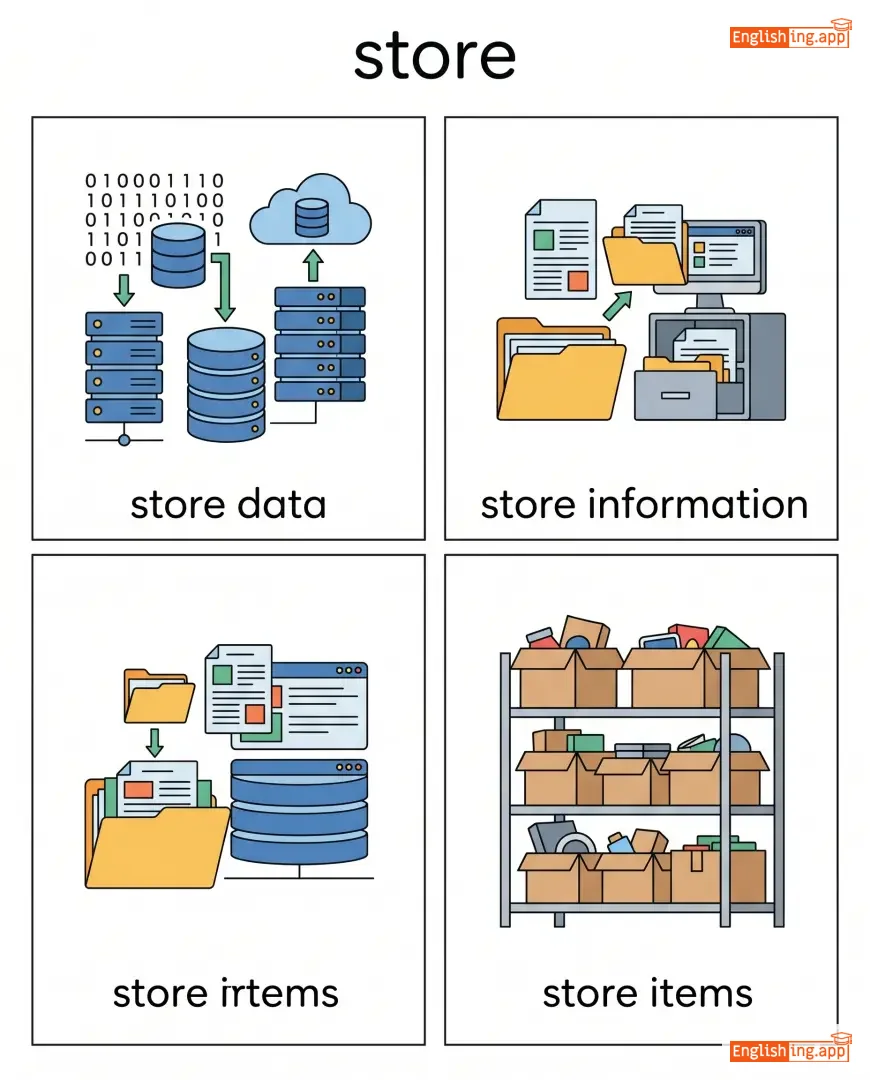
store data, store information, safely store, securely store, temporarily store
••••••
|
储存,像存储数据一样
••••••
|
|
🏚️
••••••
|
/ˈstɔːrhaʊs/
noun
(斯托尔豪斯)
••••••
|
- •••••• |
仓库
cangku
••••••
|
- •••••• | - •••••• | - •••••• | - •••••• |
A place where goods, supplies, or valuables are stored; a repository
••••••
|
The warehouse acted as a storehouse for all the imported goods.
这个仓库作为所有进口商品的storehouse。
••••••
|
这个仓库作为所有进口商品的storehouse。
Zhege cangku zuowo suo you jinkou shangpin de storehouse.
••••••
|
- •••••• | - •••••• | - •••••• |
warehouse, depot, repository, cache, storeroom
••••••
|
market, open space
••••••
|
storehouse of knowledge, storehouse of ideas, food storehouse, grain storehouse
••••••
|
仓库 = Chinese place to storehouse goods
••••••
|
|
🌪️
••••••
|
/stɔːrm/
noun
(风暴)
••••••
|
- •••••• |
风暴
fengbao
••••••
|
- •••••• | - •••••• | - •••••• | - •••••• |
a violent disturbance of the atmosphere with strong winds, rain, and often thunder
••••••
|
The storm caused major flooding in the area.
风暴导致该地区发生了严重的洪水。
••••••
|
风暴导致该地区发生了严重的洪水。
Fengbao daozhi gai diqu fashengle yanzhong de hongshui.
••••••
|
storm in a teacup
茶杯里的风暴
••••••
|
a small problem that has been made much bigger than it really is
••••••
|
茶杯里的风暴
Chabei li de fengbao
••••••
|
tempest, hurricane, squall, thunderstorm
••••••
|
calm, tranquility
••••••
|
storm warning, storm surge, severe storm
••••••
|
在风暴中,记住,'storm' (风暴) 更加强大。
••••••
|
|
📖
••••••
|
/ˈstɔːri/
noun
(斯托里)
••••••
|
- •••••• |
故事
gùshì
••••••
|
- •••••• | - •••••• | - •••••• | - •••••• |
a narrative of real or imaginary events
••••••
|
She told a fascinating story about her travels.
她讲述了一个关于旅行的迷人故事。
••••••
|
她讲述了一个关于旅行的迷人故事。
Tā jiǎngshùle yīgè guānyú lǚxíng de mírén gùshì.
••••••
|
- •••••• | - •••••• | - •••••• |
tale, narrative, account, chronicle
••••••
|
nonfiction, truth
••••••
|
tell a story, hear a story, read a story, great story
••••••
|
故事里有一个斯托里 - A gùshì has a story inside.
••••••
|
|
🔥
••••••
|
/stoʊv/
noun
(sītāo)
••••••
|
- •••••• |
炉子
luzi
••••••
|
- •••••• | - •••••• | - •••••• | - •••••• |
a kitchen appliance used for cooking food by applying heat
••••••
|
She cooked dinner on the gas stove. |
她在煤气炉上做晚餐。
Tā zài méiqì lú shàng zuò wǎncān
••••••
|
- •••••• | - •••••• | - •••••• |
cooktop, range, burner
••••••
|
refrigerator, freezer
••••••
|
gas stove, electric stove, wood stove, cook on the stove
••••••
|
炉子产生的热量让食物美味可口
••••••
|
|
➡️
••••••
|
/streɪt/
adjective, adverb
(sī tè)
••••••
|
- •••••• |
直
zhi
••••••
|
- •••••• | - •••••• | - •••••• | - •••••• |
Extending or moving uniformly in one direction only; not curved or bent.
••••••
|
He walked straight to the door without stopping. |
他直接走向门,没有停下来。
Tā zhíjiē zǒu xiàng mén, méiyǒu tíng xiàlái.
••••••
|
straight to the point |
to talk directly about the main subject without delay
••••••
|
直接了当
zhíjiē liǎodàng
••••••
|
direct, upright, linear, honest, vertical
••••••
|
crooked, curved, bent
••••••
|
straight line, straight road, straight to the point, straight answer
••••••
|
Straight 意味着直的,就像一条直路 (zhí de lù)
••••••
|
|
👌
••••••
|
/ˌstreɪtˈfɔːwəd/
adjective
(shitefowad)
••••••
|
- •••••• |
直接
zhijie
••••••
|
- •••••• | - •••••• | - •••••• | - •••••• |
easy to understand or do; simple
••••••
|
Her explanation was straightforward and clear.
她的解释简洁明了。
••••••
|
她的解释简洁明了。
Ta de jieshi jianjie mingliao.
••••••
|
- •••••• | - •••••• | - •••••• |
clear, simple, direct, uncomplicated
••••••
|
complicated, confusing, difficult
••••••
|
straightforward task, straightforward approach, straightforward explanation
••••••
|
像一条直接的路一样简单!
••••••
|
|
💪
••••••
|
/streɪn/
noun, verb
(斯特雷恩)
••••••
|
- •••••• |
压力 / 拉伤
yālì / lāshāng
••••••
|
strained
斯特雷因德
••••••
|
strained
斯特雷因德
••••••
|
strains
斯特雷因斯
••••••
|
straining
斯特雷因宁
••••••
|
To force something beyond its normal limits; to injure by overexertion; or a type or variety of something.
••••••
|
He strained his back while lifting the heavy box.
他在举重物时拉伤了背部。
••••••
|
他在举重物时拉伤了背部。
Tā zài jǔ zhòngwù shí lāshāngle bèibù.
••••••
|
strain every nerve
紧张每一根神经
••••••
|
To put in the utmost effort
••••••
|
尽全力
Jǐn quánlì
••••••
|
stress, tension, effort, pressure, injury
••••••
|
ease, relaxation, rest
••••••
|
muscle strain, mental strain, strain relationship, under strain
••••••
|
Strain 意味着压力,就像考试中每个人都会感到压力(strain)。
••••••
|
|
🤔
••••••
|
/streɪndʒ/
adjective
(sī chèng)
••••••
|
- •••••• |
奇怪
qiguai
••••••
|
- •••••• | - •••••• | - •••••• | - •••••• |
unusual or not normal
••••••
|
It was strange to see him at the party after so long. |
在这么久之后在派对上看到他真奇怪。
Zài zhème jiǔ zhīhòu zài pàiduì shàng kàn dào tā zhēn qíguài.
••••••
|
- •••••• | - •••••• | - •••••• |
unusual, odd, peculiar, bizarre
••••••
|
normal, usual, typical
••••••
|
strange behavior, strange situation, strange feeling, feel strange
••••••
|
奇怪的感觉,像 'strange' 一样不寻常。
••••••
|
|
🕴️
••••••
|
/ˈstreɪndʒər/
noun
(陌生人)
••••••
|
- •••••• |
陌生人
mòshēngrén
••••••
|
- •••••• | - •••••• | - •••••• | - •••••• |
A person whom one does not know.
••••••
|
A stranger knocked on the door at midnight.
一个陌生人在午夜敲门。
••••••
|
一个陌生人在午夜敲门。
Yīgè mòshēngrén zài wǔyè qiāo mén.
••••••
|
perfect stranger
完全陌生的人
••••••
|
Someone completely unknown
••••••
|
完全陌生的人
wánquán mòshēngrén de rén
••••••
|
unknown, outsider, newcomer, foreigner
••••••
|
friend, acquaintance, relative
••••••
|
stranger danger, complete stranger, meet a stranger
••••••
|
Stranger 在中文中是 ‘陌生人’,表示一个你完全不认识的人。
••••••
|
|
🎯
••••••
|
/strəˈtiːdʒɪk/
adjective
(战略性)
••••••
|


|
战略的
zhànlüè de
••••••
|
- •••••• | - •••••• | - •••••• | - •••••• |
relating to the identification of long-term or overall aims and interests and the means of achieving them
••••••
|
His strategic thinking helped the company grow. |
他的战略性思维帮助公司成长。
Tā de zhànlüè xìng sīwéi bāngzhù gōngsī chéngzhǎng.
••••••
|
- •••••• | - •••••• | - •••••• |
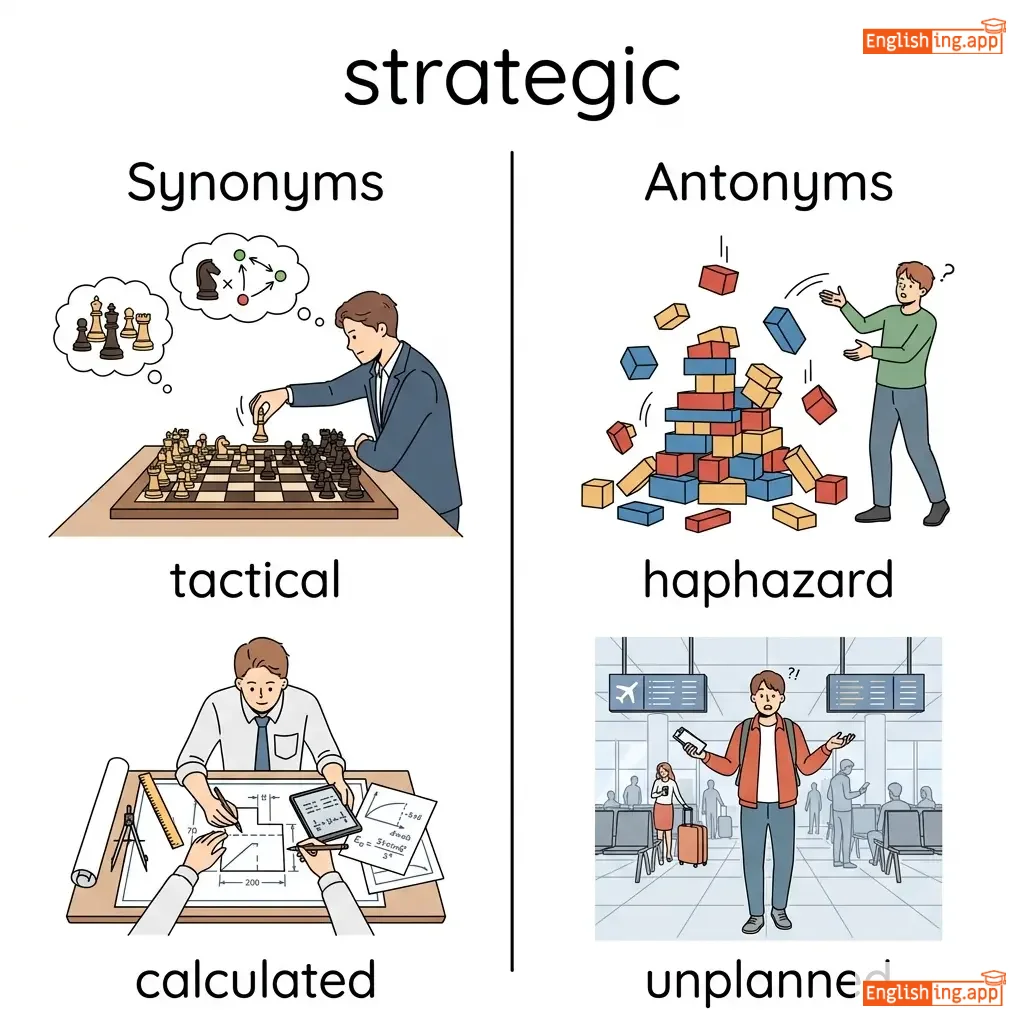
tactical, calculated, planned, deliberate
••••••
|
haphazard, unplanned, random
••••••
|
strategic plan, strategic goal, strategic position, strategic decision
••••••
|
战略思维是成功的关键 - Strategic thinking is key to success
••••••
|
|
🎯
••••••
|
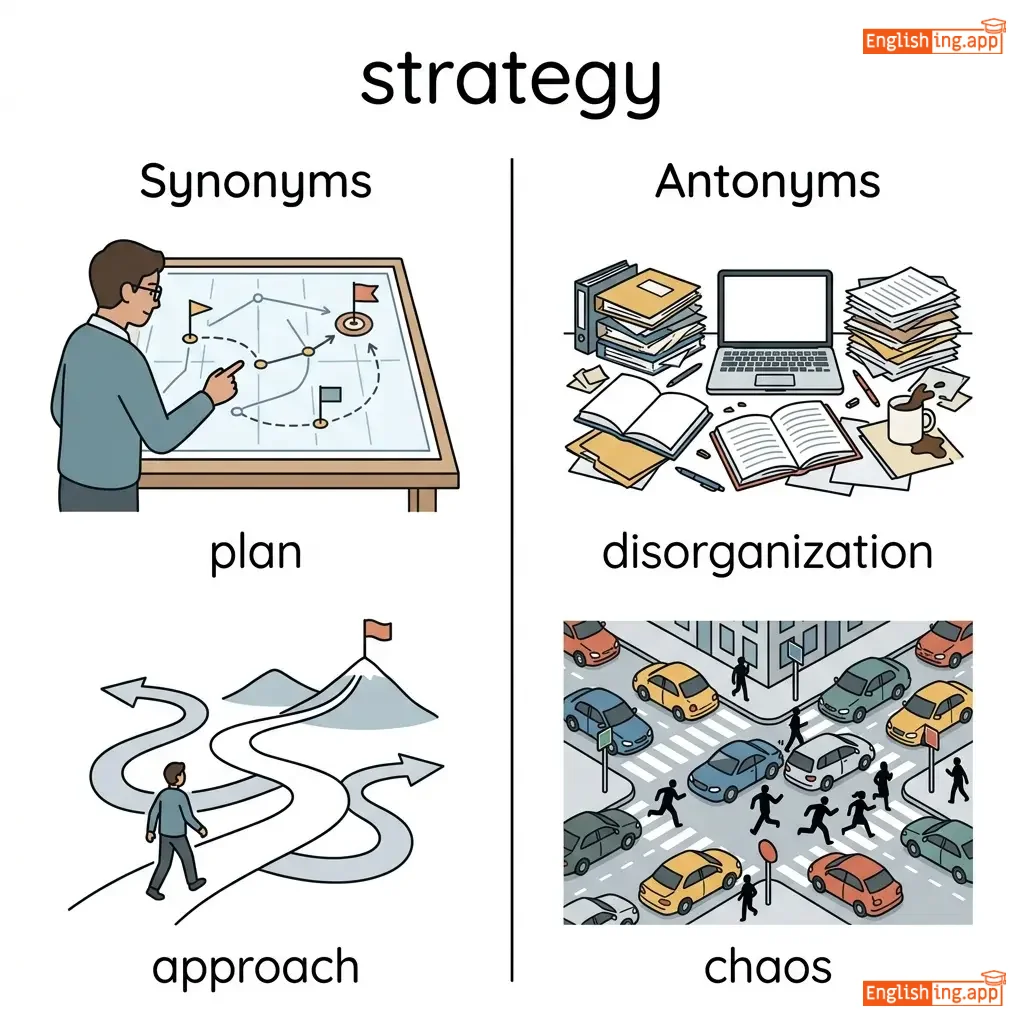
/ˈstrætədʒi/
noun
(sītrātéjī)
••••••
|


|
策略; 计划;
celue; jihua;
••••••
|
- •••••• | - •••••• | - •••••• | - •••••• |
a plan of action designed to achieve a long-term or overall aim
••••••
|
The company developed a new marketing strategy to increase sales.
公司开发了一种新的营销策略以增加销售。
••••••
|
公司开发了一种新的营销策略以增加销售。
Gōngsī kāifāle yī zhǒng xīn de yíngxiāo cèlüè yǐ zēngjiā xiāoshòu.
••••••
|
- •••••• | - •••••• | - •••••• |
plan, approach, tactic
••••••
|
improvisation, spontaneity
••••••
|
business strategy, marketing strategy, military strategy
••••••
|
策略: 务实有效的长远计划
••••••
|
|
🍓
••••••
|
/ˈstrɔːbəri/
noun
(草莓)
••••••
|
- •••••• |
草莓
caomei
••••••
|
- •••••• | - •••••• | - •••••• | - •••••• |
a small red heart-shaped fruit with tiny seeds on the surface and sweet taste
••••••
|
I love eating fresh strawberries with cream during summer.
我喜欢在夏天吃新鲜的草莓配奶油。
••••••
|
我喜欢在夏天吃新鲜的草莓配奶油。
Wo xihuan zai xiatian chi xinxian de caomei pei naliu.
••••••
|
- •••••• | - •••••• | - •••••• |
garden strawberry
••••••
|
- •••••• |
fresh strawberry, ripe strawberry, strawberry jam, strawberry ice cream
••••••
|
草莓的甜美就像夏天的阳光。
••••••
|
|
🏞️
••••••
|
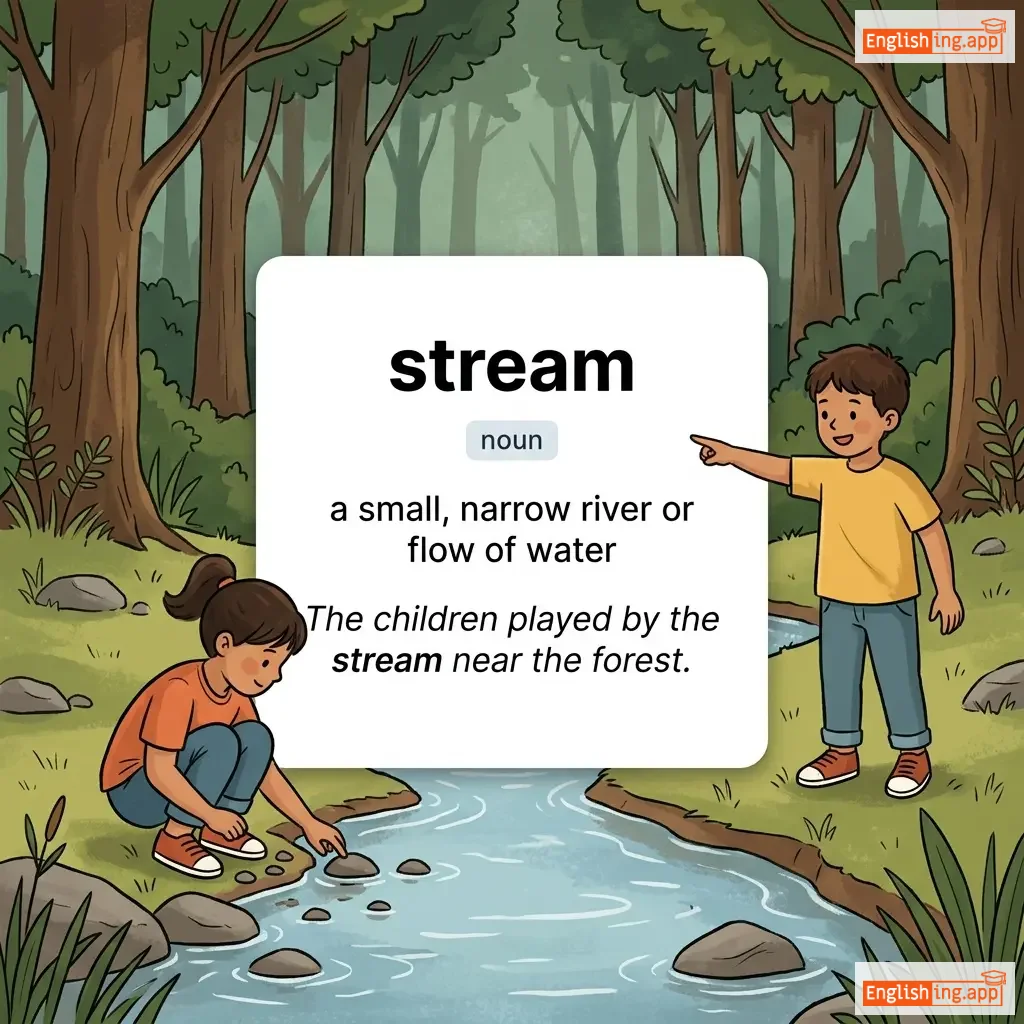
/striːm/
noun
(sītrīm)
••••••
|
|
溪流
xīliú
••••••
|
- •••••• | - •••••• | - •••••• | - •••••• |
a small narrow river; a continuous flow of liquid, air, or gas
••••••
|
The clear stream flowed through the forest.
清澈的小溪流经森林。
••••••
|
清澈的小溪流过森林。
Qīngchè de xiǎo xī liúguò sēnlín.
••••••
|
- •••••• | - •••••• | - •••••• |
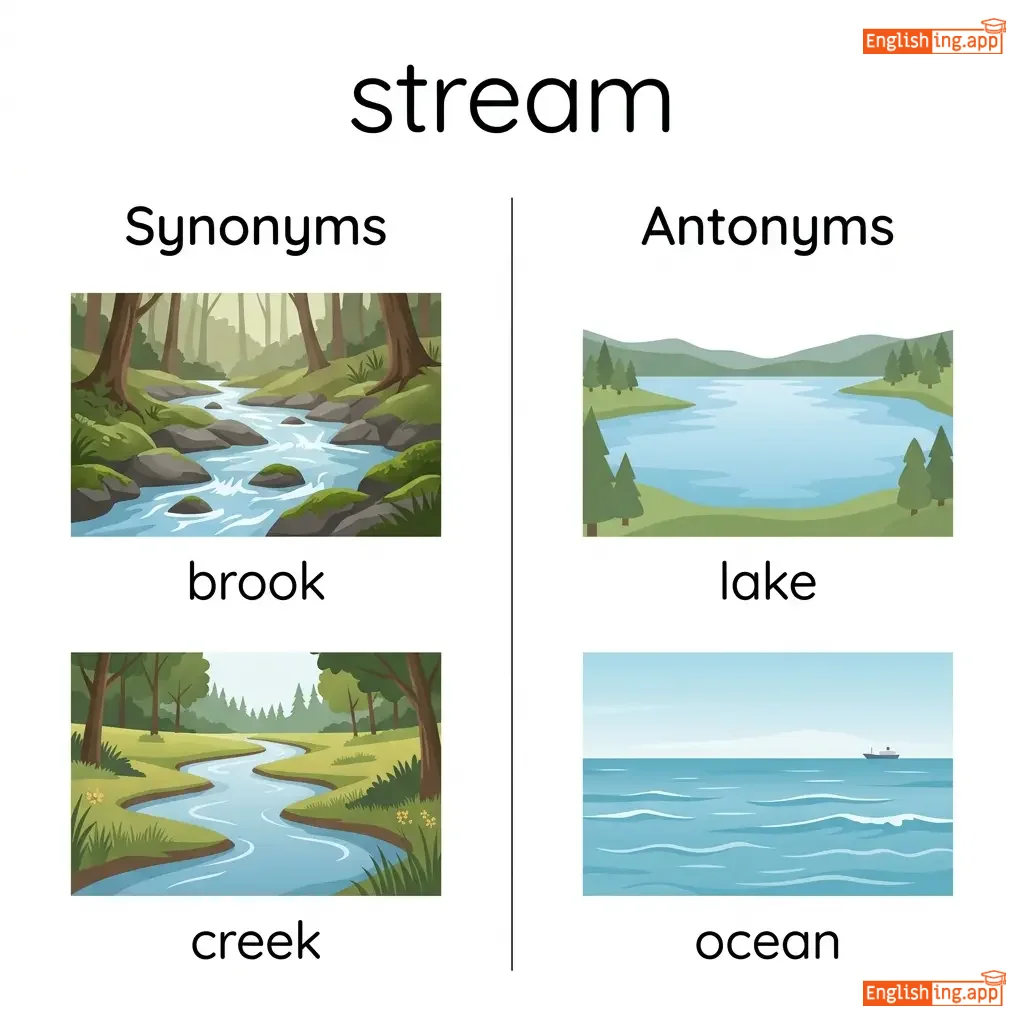
brook, creek, rivulet
••••••
|
stagnation, stillness
••••••
|
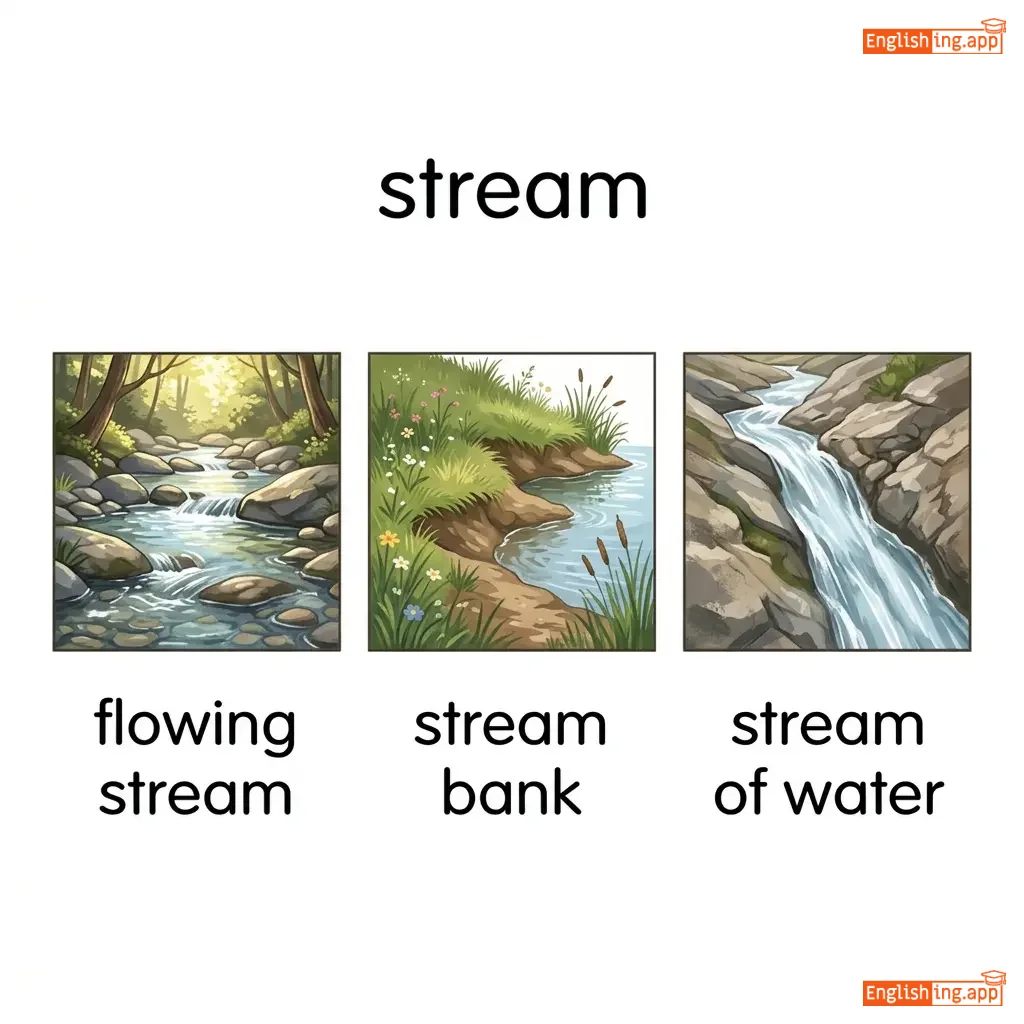
mountain stream, stream bed, stream of water
••••••
|
想象一个永不止息的溪流。
••••••
|
|
🚶♂️
••••••
|
/striːt/
noun
(sutrīto)
••••••
|
- •••••• |
街道
jiedao
••••••
|
- •••••• | - •••••• | - •••••• | - •••••• |
a public road in a city or town, typically with buildings on one or both sides
••••••
|
He walked down the street to the park.
他走在街上去公园。
••••••
|
他走在街上去公园。
Ta zou zai jiedao qu gongyuan.
••••••
|
- •••••• | - •••••• | - •••••• |
road, avenue, boulevard, lane
••••••
|
alley, cul-de-sac
••••••
|
main street, busy street, narrow street, street light
••••••
|
街道就像一道分隔城市的道路,街上总是车水马龙。
••••••
|
|
💪
••••••
|
/strɛŋkθ/
noun
(sīngkè)
••••••
|
- •••••• |
力量
lìliàng
••••••
|
- •••••• | - •••••• | - •••••• | - •••••• |
the quality or state of being physically strong; the capacity to withstand force or pressure
••••••
|
Her strength helped her overcome the difficulties.
她的力量帮助她克服了困难。
••••••
|
她的力量帮助她克服了困难。
Tā de lìliàng bāngzhù tā kèfúle kùnnán.
••••••
|
in strength
在力量中
••••••
|
in large numbers; collectively powerful
••••••
|
在力量中
zài lìliàng zhōng
••••••
|
power, might, force, resilience, endurance
••••••
|
weakness, fragility
••••••
|
inner strength, physical strength, strength of character, show strength, gain strength
••••••
|
Strength = 力量,像铁一样强大!
••••••
|
|
💪
••••••
|
/ˈstrɛŋkθən/
verb
(sī tèlèng tìng)
••••••
|

|
增强
zēngqiáng
••••••
|
strengthened
sī tèlèng déng
••••••
|
strengthened
sī tèlèng déng
••••••
|
strengthens
sī tèlèng sīng
••••••
|
strengthening
sī tèlèng nìng
••••••
|
to make or become stronger
••••••
|
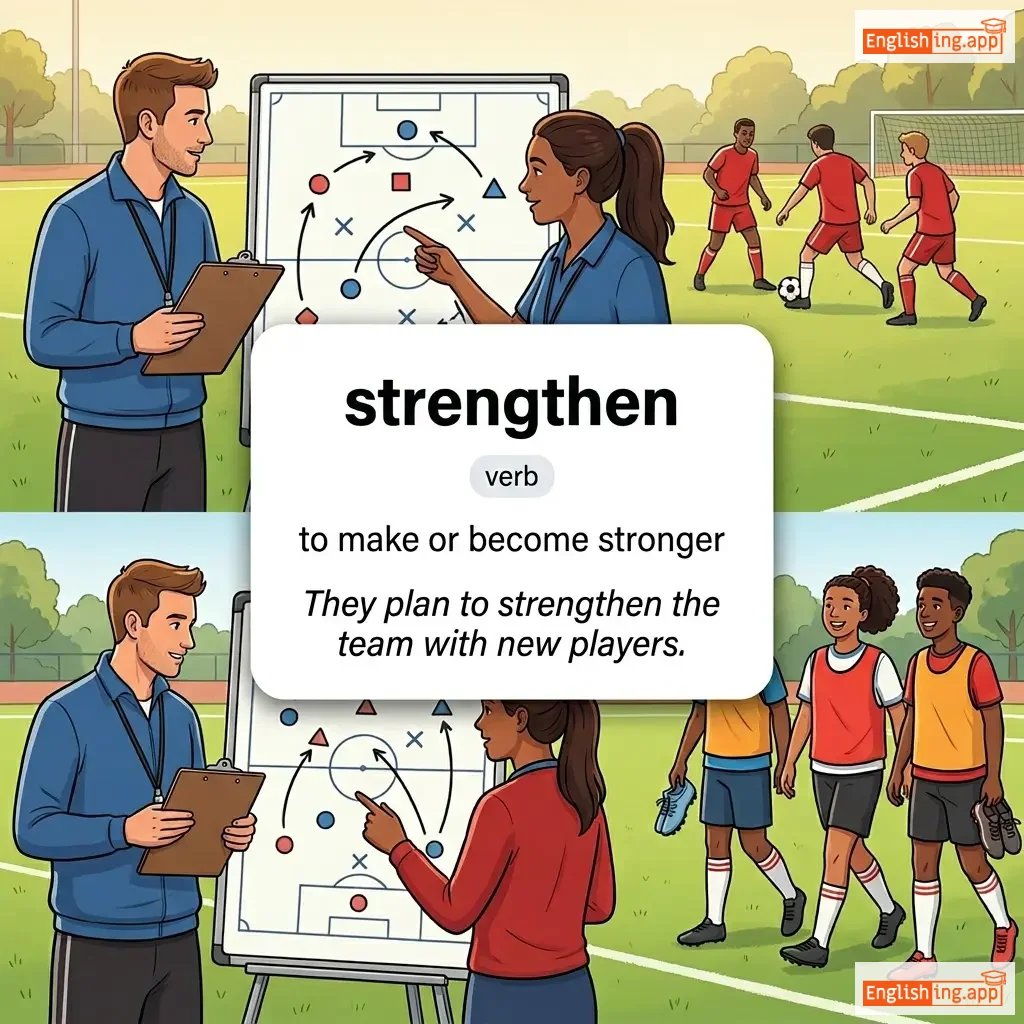
They plan to strengthen the team with new players.
他们计划通过加入新球员来增强团队的实力。
••••••
|
他们计划通过加入新球员来增强团队的实力。
Tāmen jìhuà tōngguò jiārù xīn qiúyuán lái zēngqiáng tuánduì de shílì.
••••••
|
- •••••• | - •••••• | - •••••• |
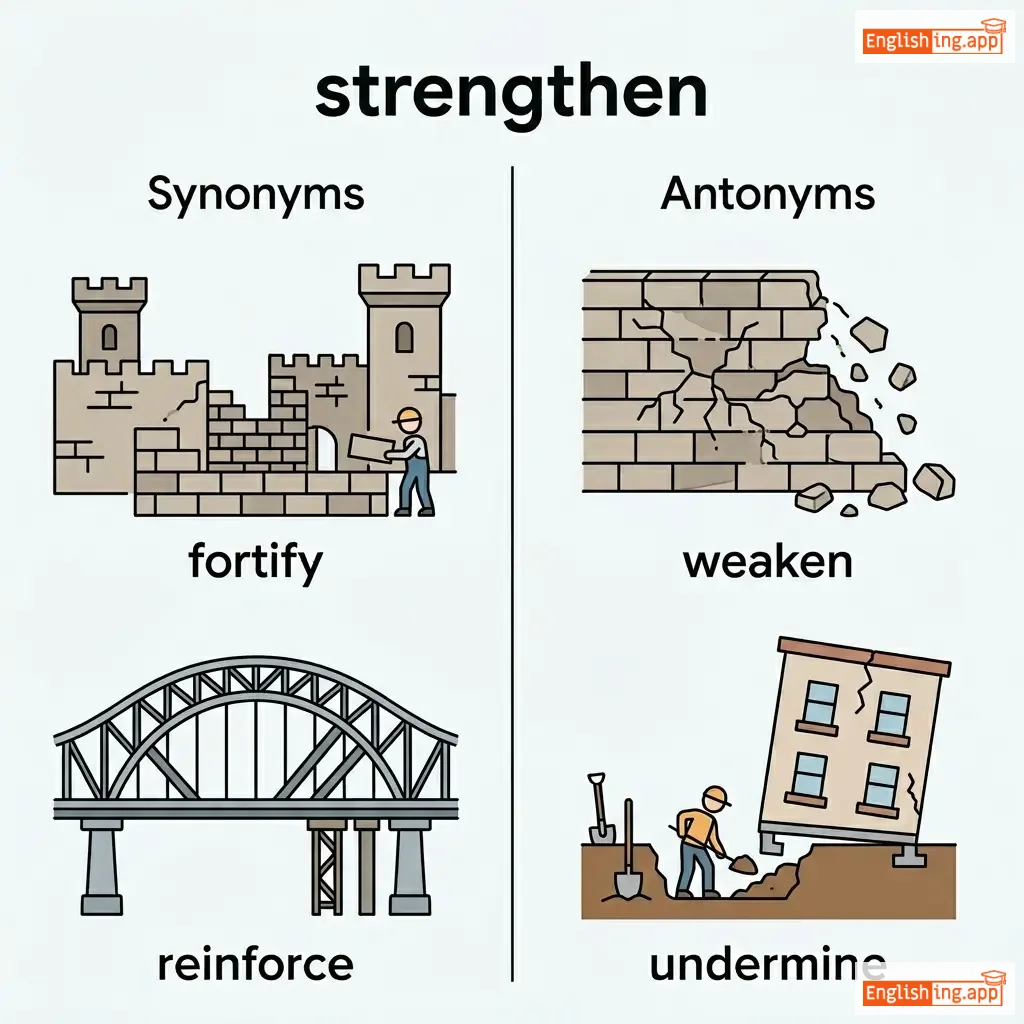
fortify, reinforce, empower, bolster
••••••
|
weaken, undermine
••••••
|
strengthen skills, strengthen position, strengthen muscles, strengthen bond
••••••
|
增强你的力量 - Strengthen your strength
••••••
|
|
😰
••••••
|
/strɛs/
noun, verb
(压力)
••••••
|

|
压力
yali
••••••
|
stressed
有压力
••••••
|
stressed
有压力
••••••
|
stresses
压力
••••••
|
stressing
压力的
••••••
|
to give particular emphasis or importance to something; mental or emotional strain
••••••
|
She feels a lot of stress from her work.
她因为工作感到很大的压力。
••••••
|
她因为工作感到很大的压力。
Ta yinwei gongzuo gandao hendà de yali.
••••••
|
stress out
有压力
••••••
|
to become anxious or overwhelmed
••••••
|
感到压力
Gandao yali
••••••
|
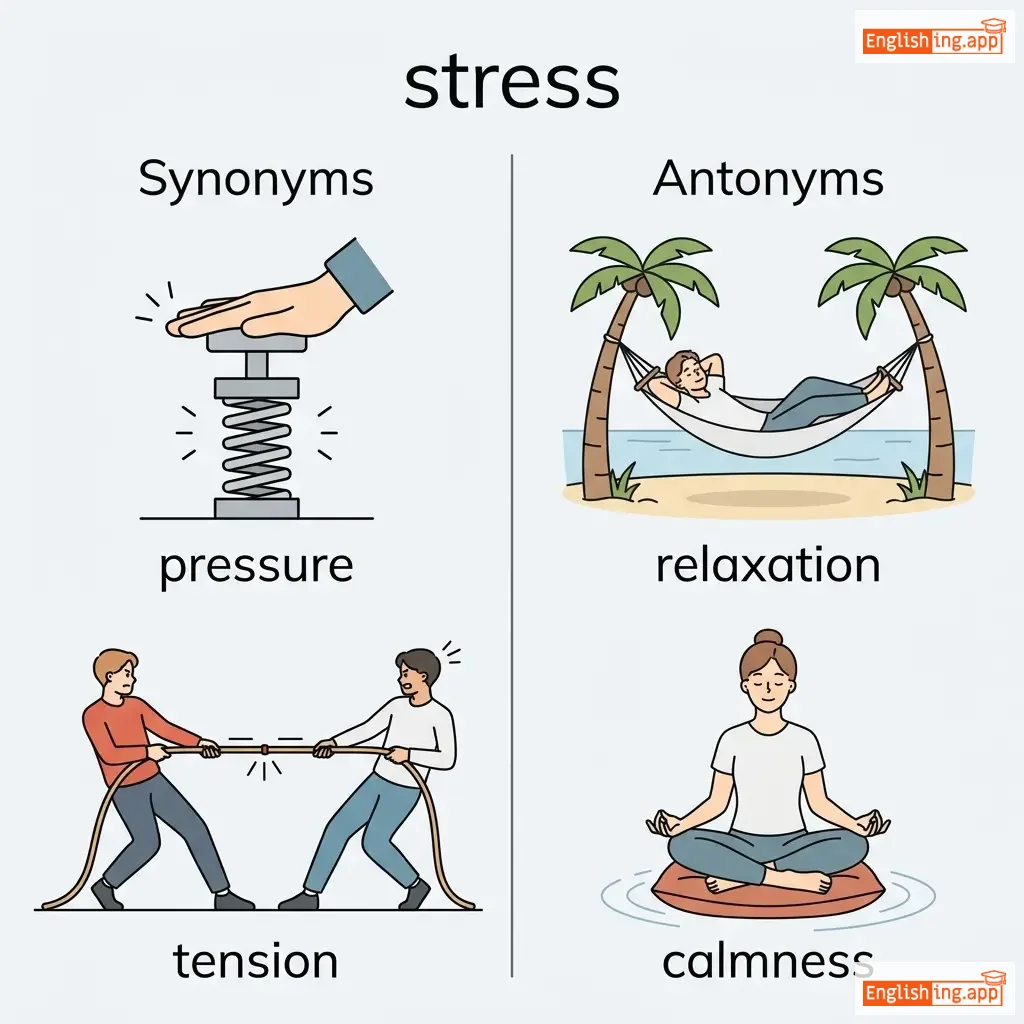
pressure, tension, anxiety, strain
••••••
|
relaxation, calmness
••••••
|
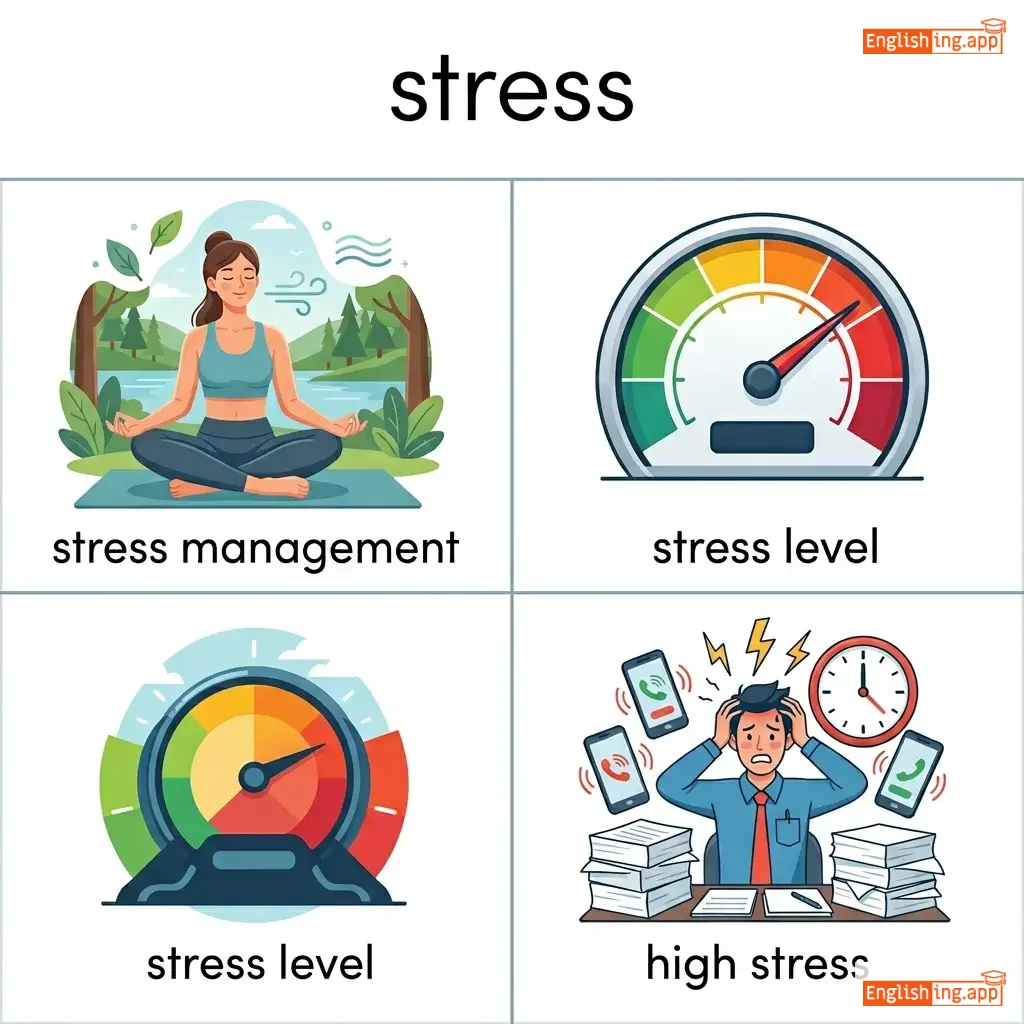
stress management, stress level, high stress, relieve stress
••••••
|
压力 (yali) 就是压力。
••••••
|
|
🤸
••••••
|
/stretʃ/
verb
(斯特雷奇)
••••••
|
- •••••• |
拉伸
lashen
••••••
|
stretched
拉伸
••••••
|
stretched
拉伸
••••••
|
stretches
拉伸
••••••
|
stretching
拉伸中
••••••
|
to extend or expand; to make or become longer or wider
••••••
|
Athletes stretch their muscles before exercising.
运动员在锻炼前拉伸他们的肌肉。
••••••
|
运动员在锻炼前拉伸他们的肌肉。
Yundongyuan zai duanlian qian lashen tamen de jirou.
••••••
|
- •••••• | - •••••• | - •••••• |
extend, expand, lengthen, reach
••••••
|
contract, shrink, compress, shorten
••••••
|
stretch muscles, stretch out, stretch further, stretch limits
••••••
|
Stretch before exercise, just like an athlete!
••••••
|
|
⚖️
••••••
|
/strɪkt/
adjective
(sǐtrìkè)
••••••
|
- •••••• |
严格
yángé
••••••
|
- •••••• | - •••••• | - •••••• | - •••••• |
Demanding that rules be obeyed and observed closely.
••••••
|
The teacher is very strict about punctuality. |
老师在守时方面非常严格。
Lǎoshī zài shǒushí fāngmiàn fēicháng yángé.
••••••
|
strict rules |
Rules that must be followed without flexibility
••••••
|
严格规则
yángé guīzé
••••••
|
rigid, severe, stern, uncompromising
••••••
|
lenient, flexible, permissive
••••••
|
strict rules, strict teacher, strict policy
••••••
|
Strict 就是严格 — 老师严格就像规定一样!
••••••
|
|
🚫
••••••
|
/ˈstrɪktli/
adverb
(sītrík lì)
••••••
|
- •••••• |
严格
yán gé
••••••
|
- •••••• | - •••••• | - •••••• | - •••••• |
in a way that follows rules or limits completely
••••••
|
Smoking is strictly prohibited inside the building. |
在大楼内吸烟是严格禁止的。
Zài dàlóu nèi xīyān shì yángé jìnzhǐ de.
••••••
|
strictly speaking |
to be precise or accurate about something
••••••
|
严格来说
yángé lái shuō
••••••
|
rigidly, severely, firmly, tightly
••••••
|
loosely, casually, freely
••••••
|
strictly prohibited, strictly controlled, strictly speaking, strictly confidential
••••••
|
Strictly 意味着严格—strict妈妈说 ‘Strictly no TV!’
••••••
|
|
⚡
••••••
|
/straɪk/
verb
(sītrài kè)
••••••
|
- •••••• |
罢工 / 打击
bàgōng / dǎjí
••••••
|
struck
sītrák
••••••
|
struck
sītrák
••••••
|
strikes
sītràiks
••••••
|
striking
sītràikīng
••••••
|
to hit forcibly or attack; also to stop work as a form of protest
••••••
|
The workers decided to strike for better wages.
工人们决定为了更好的工资而罢工。
••••••
|
工人们决定为了更好的工资而罢工。
Gōngrénmen juédìng wèile gèng hǎo de gōngzī ér bàgōng.
••••••
|
strike a chord
击中要害
••••••
|
to create a strong emotional response
••••••
|
打中要害
dǎ zhòng yàohài
••••••
|
hit, attack, punch, protest, clash
••••••
|
miss, praise, peace
••••••
|
strike a deal, strike a balance, strike back, strike down
••••••
|
Strike意味着罢工,记住工人罢工时,工厂停止运转。
••••••
|
|
✨
••••••
|
/ˈstraɪkɪŋ/
adjective
(straiking)
••••••
|
- •••••• |
引人注目
yin ren zhu mu
••••••
|
- •••••• | - •••••• | - •••••• | - •••••• |
very noticeable or impressive in appearance or effect
••••••
|
Her striking beauty caught everyone's attention.
她那引人注目的美丽吸引了所有人的注意。
••••••
|
她那引人注目的美丽吸引了所有人的注意。
Ta na yin ren zhu mu de mei li xi yin le suo you ren de zhu yi.
••••••
|
- •••••• | - •••••• | - •••••• |
impressive, remarkable, stunning, eye-catching, extraordinary
••••••
|
ordinary, dull, plain
••••••
|
striking resemblance, striking difference, striking contrast, striking beauty
••••••
|
Striking在中文里意味着引人注目—就像她的美丽一样,无法忽视!
••••••
|
|
🧵
••••••
|
/strɪŋ/
noun, verb
(斯特林)
••••••
|
- •••••• |
线
xian
••••••
|
strung
斯特朗
••••••
|
strung
斯特朗
••••••
|
strings
斯特林斯
••••••
|
stringing
斯特林英
••••••
|
a thin piece of cord or thread; to tie or fasten with a string
••••••
|
She tied the package with a string.
她用一根线绑了包裹。
••••••
|
她用一根线绑了包裹。
Ta yong yi gen xian bang le baoguo.
••••••
|
- •••••• | - •••••• | - •••••• |
cord, thread, rope, twine
••••••
|
loosen, untie
••••••
|
string of pearls, guitar string, string along, tie with string
••••••
|
记住:线 (xian) 绑住一切。
••••••
|
|
🪚
••••••
|
/strɪp/
verb
(strip)
••••••
|
- •••••• |
剥去 / 去除
bo qu / qu chu
••••••
|
stripped
stript
••••••
|
stripped
stript
••••••
|
strips
strips
••••••
|
stripping
stripping
••••••
|
to remove coverings or layers from something; to undress
••••••
|
He had to strip the old paint from the wall.
他必须从墙上去掉旧漆。
••••••
|
他必须从墙上去掉旧漆。
Ta bixu cong qiang shang qu diao jiu qi.
••••••
|
strip away
去掉
••••••
|
to gradually remove something
••••••
|
去掉
qu diao
••••••
|
remove, peel, undress, bare, dismantle
••••••
|
cover, dress, clothe
••••••
|
strip off, strip down, strip away, strip bare
••••••
|
Strip 意味着去掉,记得在脱衣舞俱乐部,人们会脱衣服。
••••••
|
|
🚀
••••••
|
/straɪv/
verb
(sītráiv)
••••••
|
- •••••• |
奋斗
fèndòu
••••••
|
strove
sītróv
••••••
|
striven
sītríven
••••••
|
strives
sītráivs
••••••
|
striving
sītráiving
••••••
|
To make great efforts to achieve or obtain something.
••••••
|
She strives to be the best student in her class.
她努力成为班里最好的学生。
••••••
|
她努力成为班里最好的学生。
Tā nǔlì chéngwéi bān lǐ zuì hǎo de xuéshēng.
••••••
|
strive for excellence
为卓越而奋斗
••••••
|
To put in effort to achieve the highest standard
••••••
|
为卓越而奋斗
wèi zhuóyuè ér fèndòu
••••••
|
endeavor, attempt, struggle, aim, labor
••••••
|
give up, surrender
••••••
|
strive hard, strive for success, strive to achieve
••••••
|
Strive就是为了卓越而奋斗,为了成功持续努力。
••••••
|
|
✋
••••••
|
/stroʊk/
verb
(sītruòk)
••••••
|
|
抚摸
fumo
••••••
|
stroked
sītruòkd
••••••
|
stroked
sītruòkd
••••••
|
strokes
sītruòks
••••••
|
stroking
sītruòkīng
••••••
|
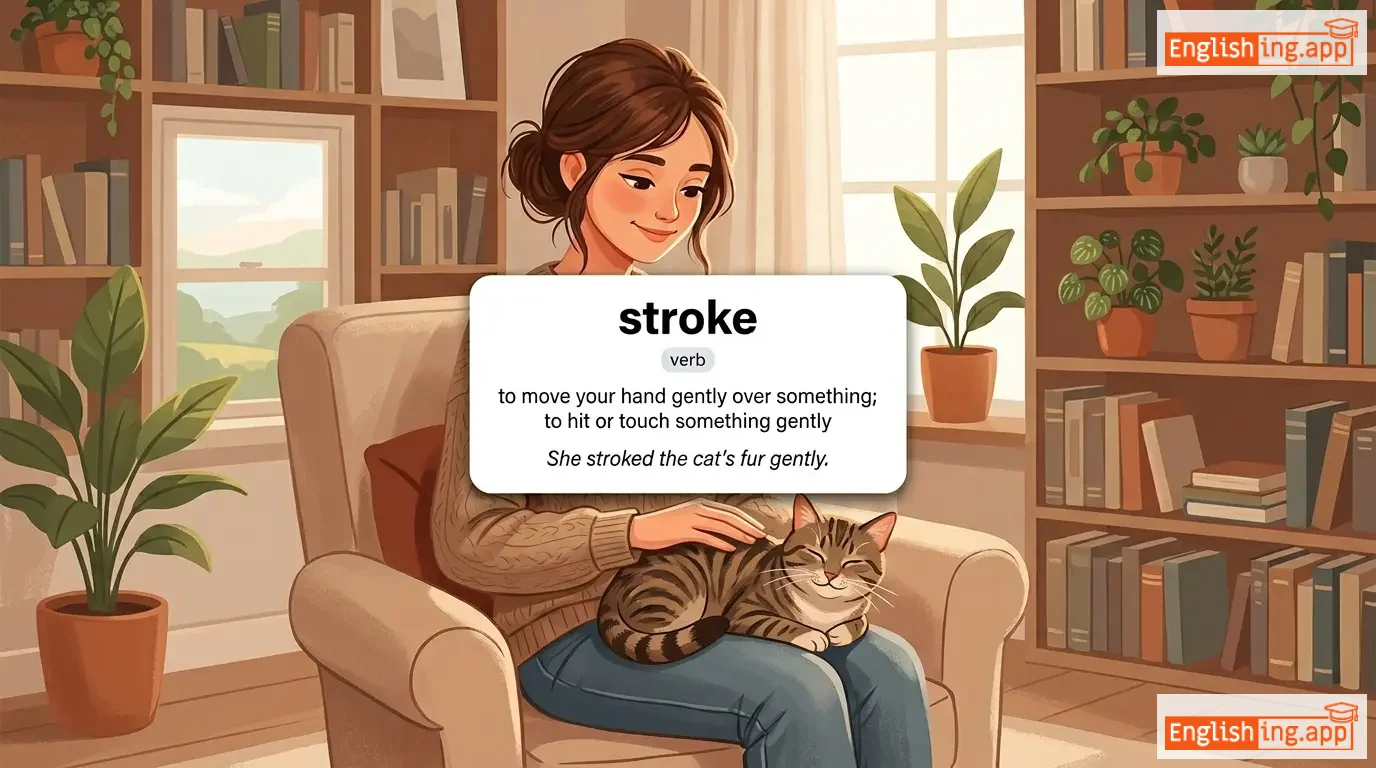
to move your hand gently over something; to hit or touch something gently
••••••
|
She stroked the cat's fur gently.
她轻轻地抚摸着猫的毛发。
••••••
|
她轻轻地抚摸着猫的毛发。
Tā qīngqīng de fǔmō zhe māo de máofà.
••••••
|
- •••••• | - •••••• | - •••••• |
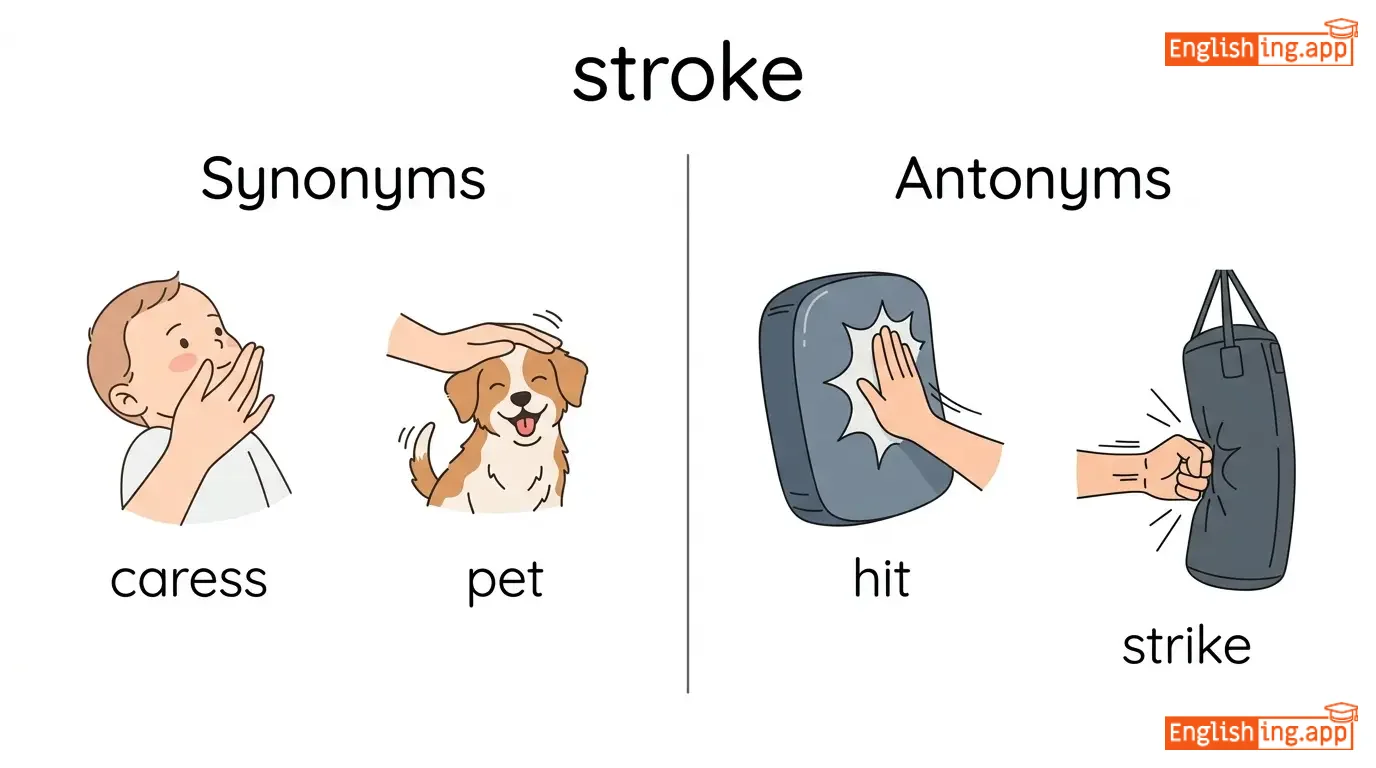
caress, pet, touch, brush
••••••
|
hit, strike, slap
••••••
|
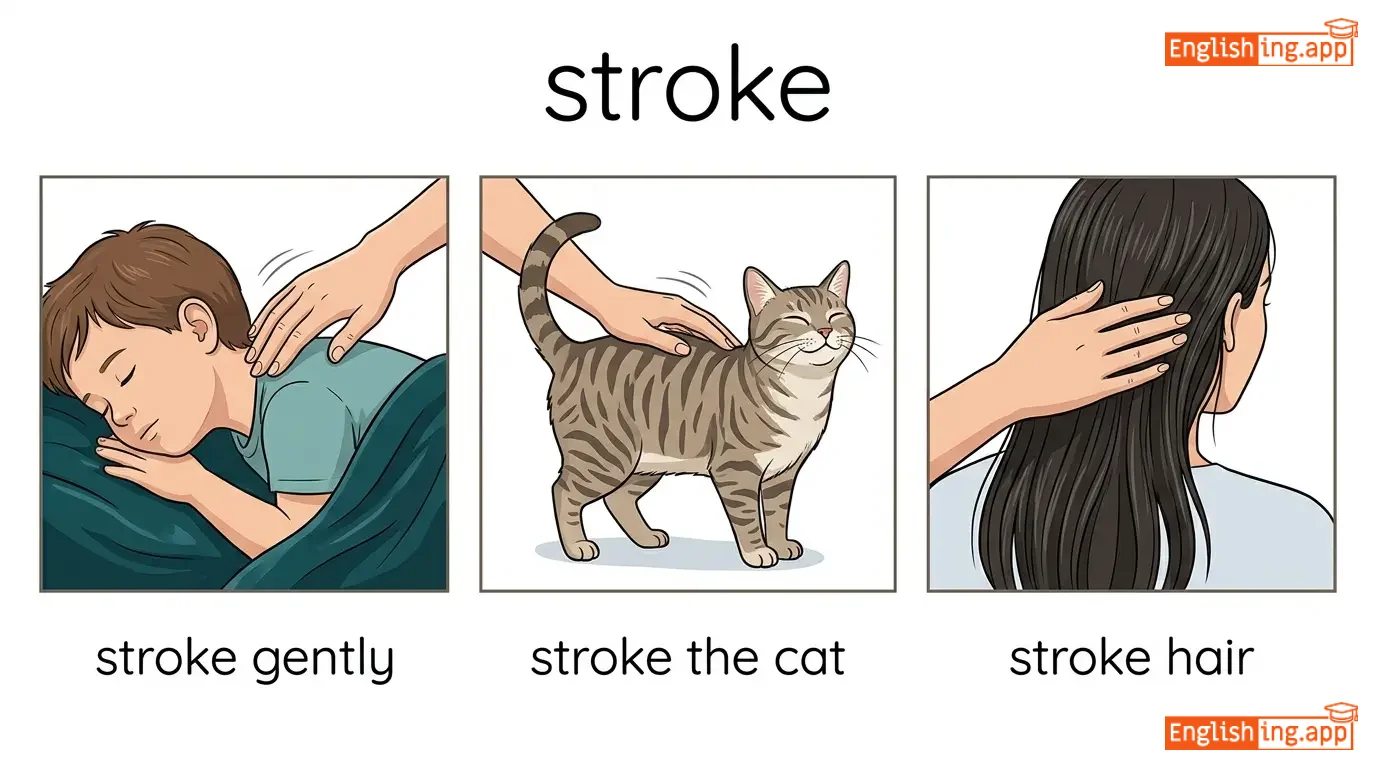
stroke gently, stroke the cat, stroke hair, swimming stroke, suffer a stroke
••••••
|
Think of gently stroking the fur of a cat, feeling its softness.
••••••
|
|
💪
••••••
|
/strɔːŋ/
adjective
(斯特龙)
••••••
|
|
强壮
qiángzhuàng
••••••
|
- •••••• | - •••••• | - •••••• | - •••••• |
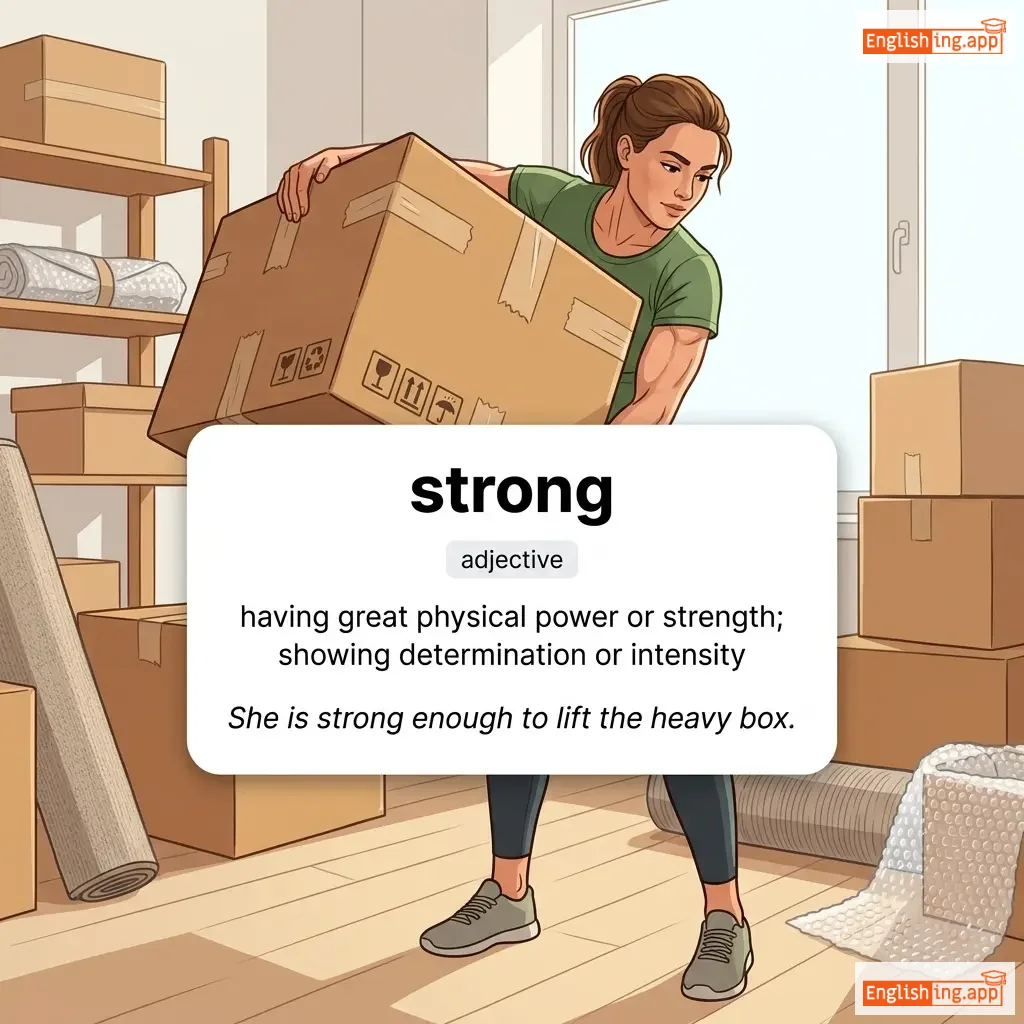
having great physical power or strength; showing determination or intensity
••••••
|
She is strong enough to lift the heavy box. |
她足够强壮,能够举起重箱子。
Tā zúgòu qiángzhuàng, nénggòu jǔqǐ zhòng xiāngzi.
••••••
|
strong suit |
a particular skill or strength someone is especially good at
••••••
|
强项
qiángxiàng
••••••
|
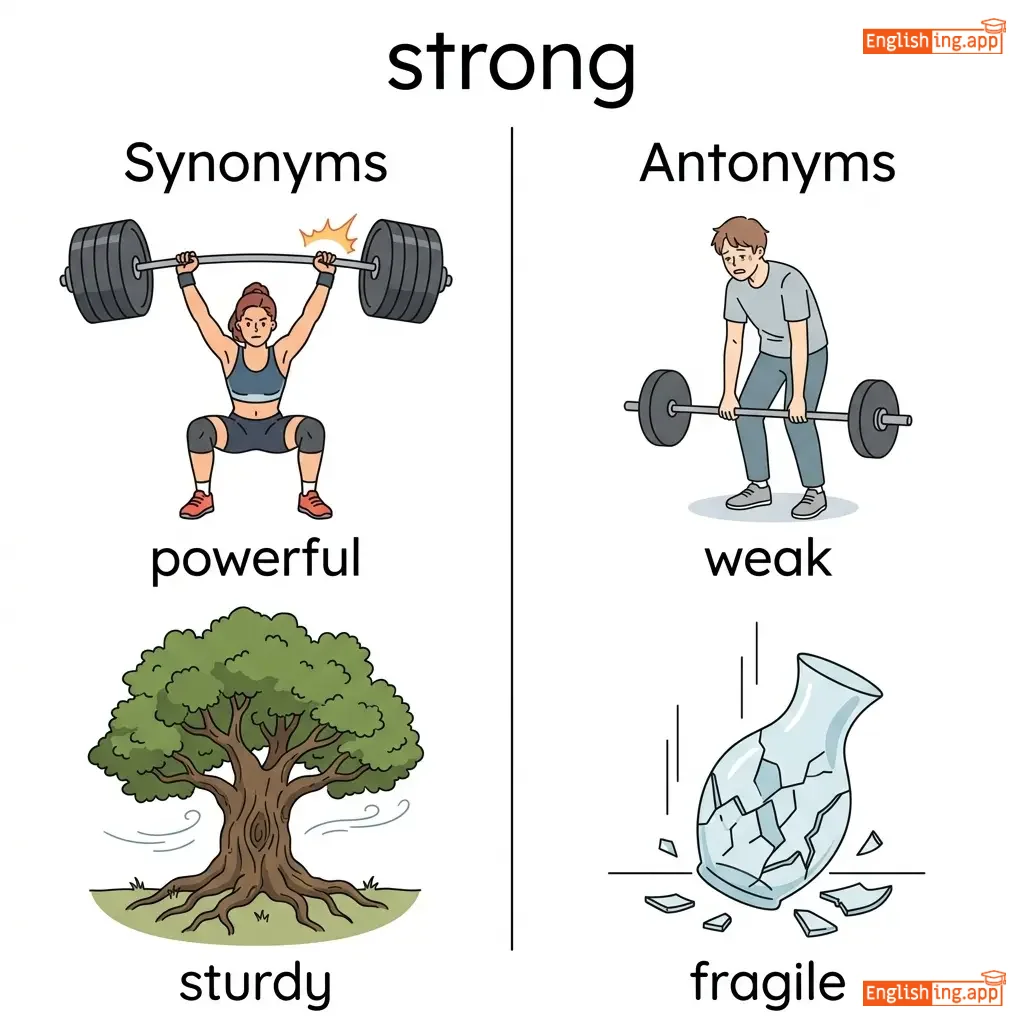
powerful, sturdy, tough, resilient, vigorous
••••••
|
weak, fragile, feeble
••••••
|
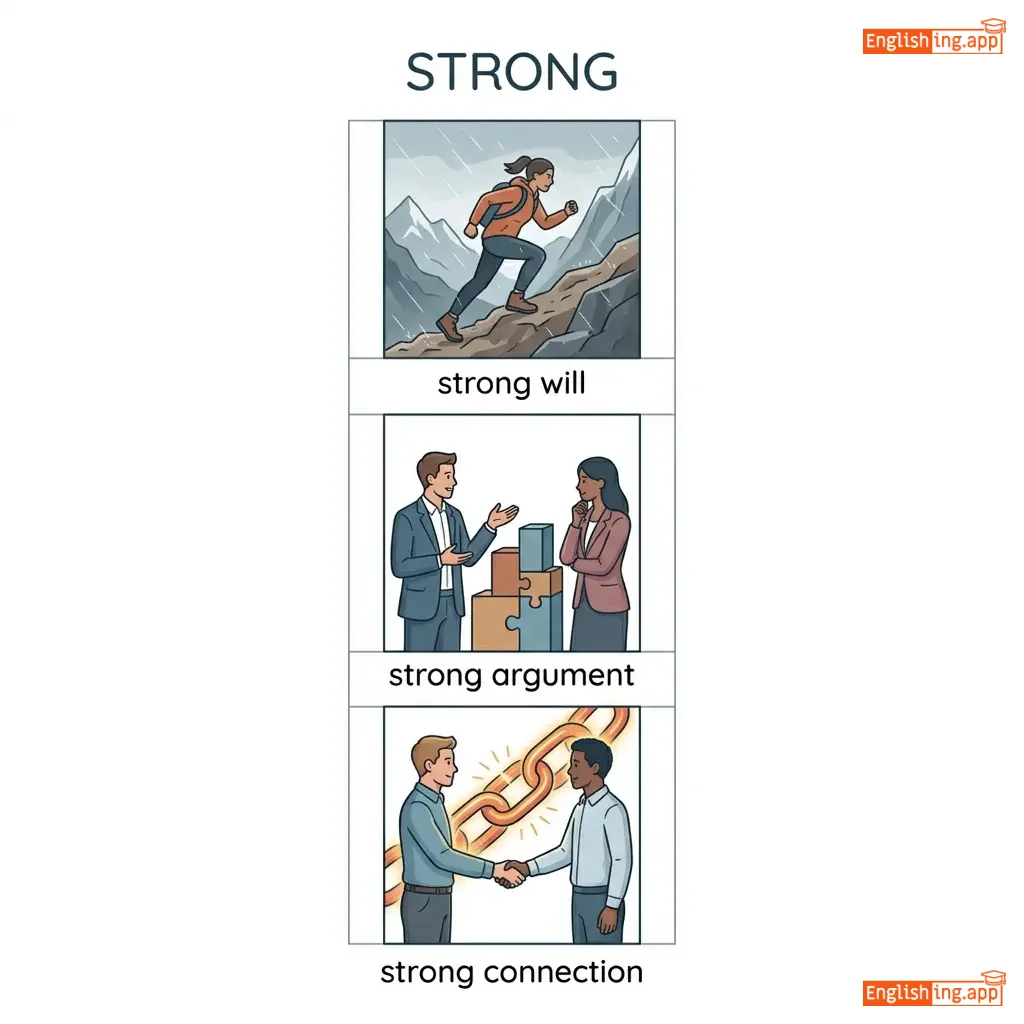
strong will, strong argument, strong connection, strong influence, strong flavor
••••••
|
Strong 是 💪 强壮,记住 'Strong 就能做到'
••••••
|
|
💪
••••••
|
/ˈstrɒŋɡli/
adverb
(斯特朗利)
••••••
|
- •••••• |
强烈地
qiángliè de
••••••
|
- •••••• | - •••••• | - •••••• | - •••••• |
in a strong manner or to a great extent
••••••
|
She strongly believes in the power of positive thinking. |
她坚信积极思考的力量。
Tā jiānxìn jījí sīkǎo de lìliàng.
••••••
|
- •••••• | - •••••• | - •••••• |
firmly, forcefully, vigorously, intensely
••••••
|
weakly, faintly
••••••
|
strongly recommend, strongly disagree, strongly believe
••••••
|
Strongly reflects belief in strength
••••••
|
|
🏗️
••••••
|
/ˈstrʌktʃərəl/
adjective
••••••
|

|
- •••••• | - •••••• | - •••••• | - •••••• | - •••••• |
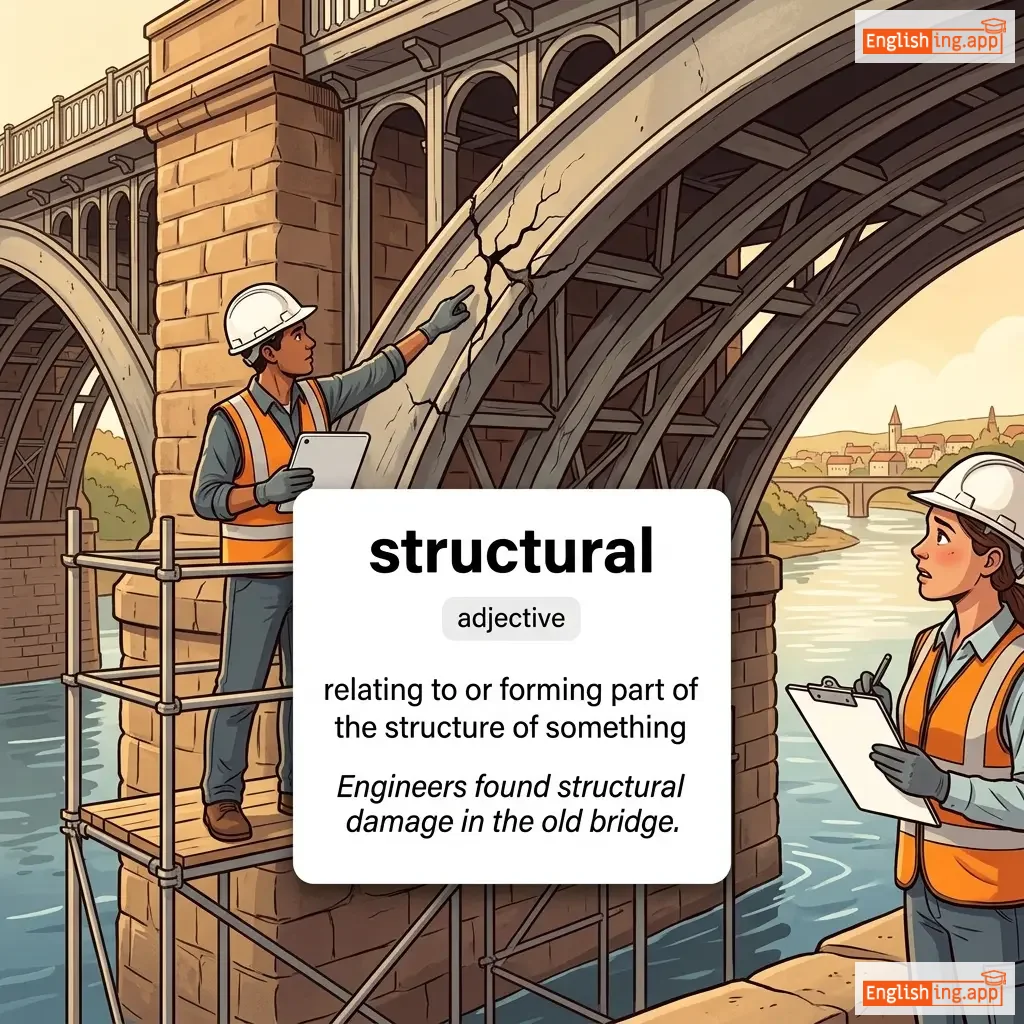
relating to or forming part of the structure of something
••••••
|
Engineers found structural damage in the old bridge. |
- •••••• | - •••••• | - •••••• | - •••••• |
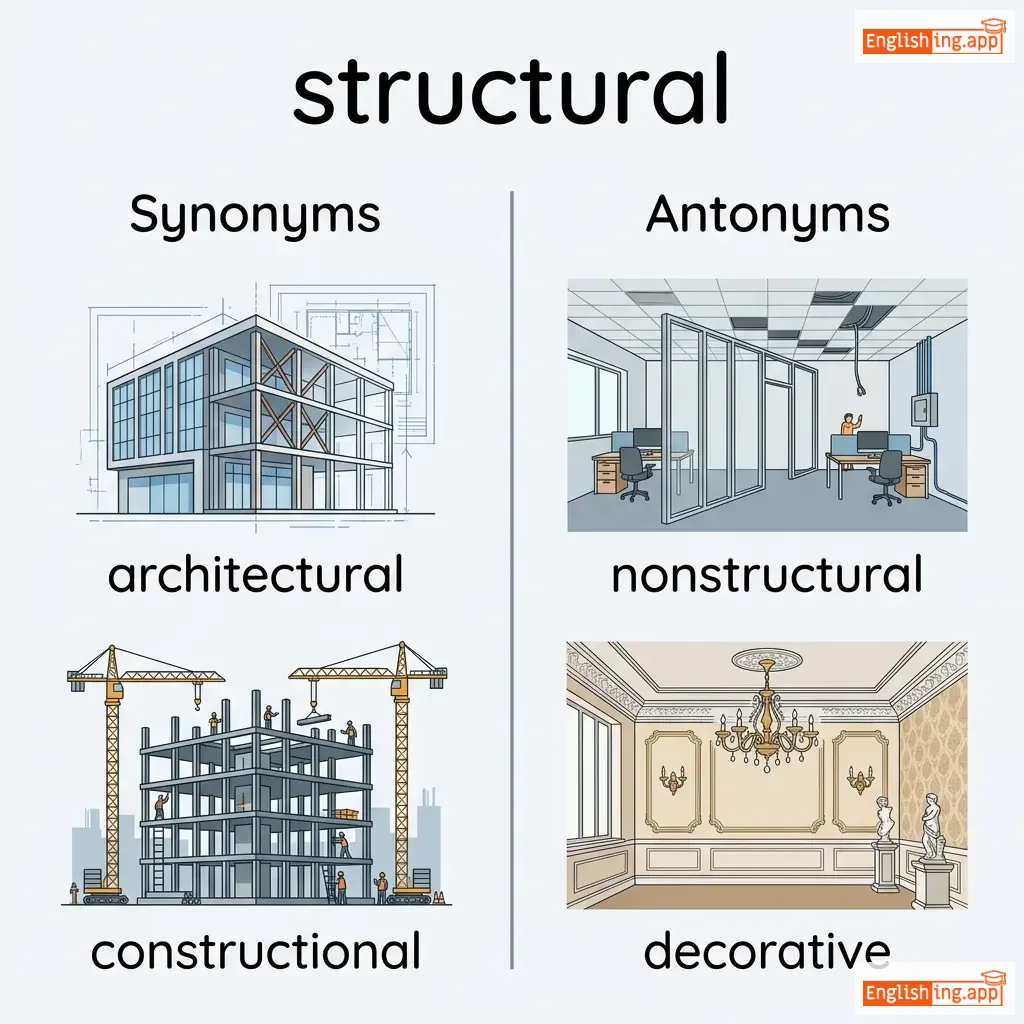
architectural, constructional, physical, organizational
••••••
|
nonstructural, decorative
••••••
|
structural damage, structural design, structural change, structural problem
••••••
|
No •••••• |
|
🏗️
••••••
|
/ˈstrʌk.tʃər/
noun
(sī tʂu)
••••••
|

|
结构
jiegou
••••••
|
- •••••• | - •••••• | - •••••• | - •••••• |
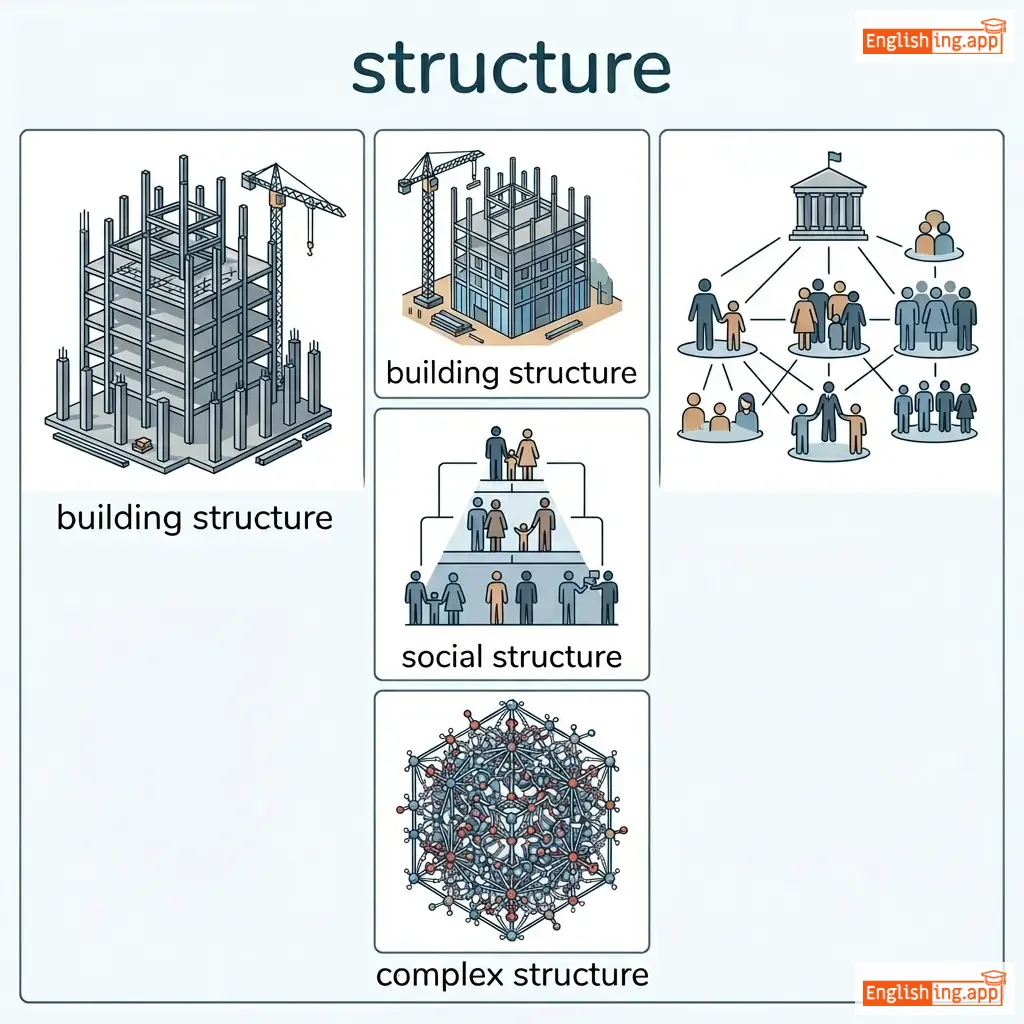
the arrangement of parts in a complex entity; the way something is organized or built
••••••
|
The building has a steel structure that makes it earthquake resistant.
zhè zuò jiànzhú yǒu yī gè gāng tiě de jiégòu, ràng tā chéngwéi dì zhuó lì shǒu dǎo zhì de duì zhèngmiàn kòngzhì.
••••••
|
建筑物有钢铁结构,使它能够抵抗地震。
Jianzhuwu you gangtie jiegou, shi ta nenggou dikang dizhen.
••••••
|
- •••••• | - •••••• | - •••••• |
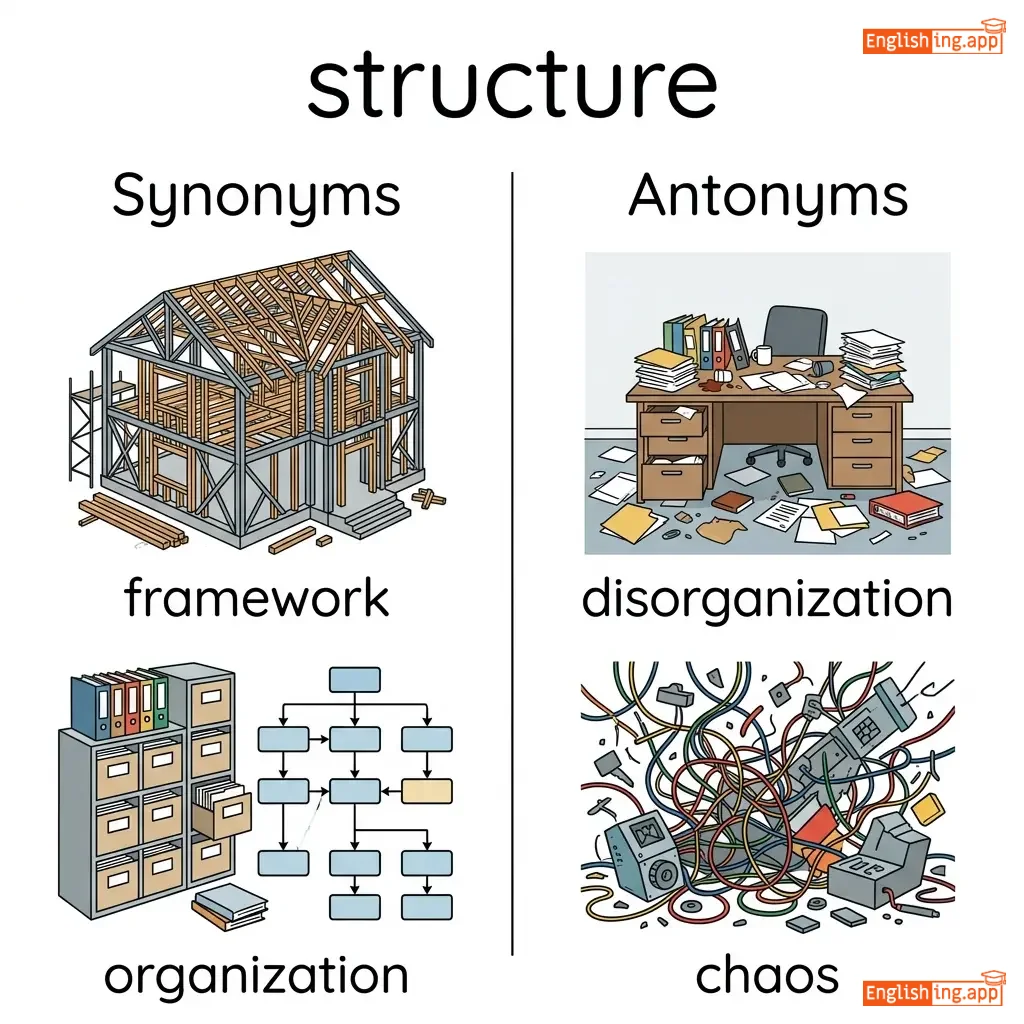
framework, organization, arrangement, construction
••••••
|
chaos, disorder, disorganization
••••••
|
social structure, building structure, organizational structure, data structure
••••••
|
结构就是像建筑的骨架支撑一切。
••••••
|
|
💪
••••••
|
/ˈstrʌɡl/
verb
(sìdǔ)
••••••
|

|
斗争
douzheng
••••••
|
struggled
sìdǔ
••••••
|
struggled
sìdǔ
••••••
|
struggles
sìdǔ
••••••
|
struggling
sìdǔ
••••••
|
to fight or make a strenuous effort to achieve something
••••••
|
He struggled to lift the heavy box.
他在努力举起重箱子。
••••••
|
他在努力举起重箱子。
Ta zai nuli juqi zhong xiangzi.
••••••
|
a struggle for survival
生存斗争
••••••
|
a difficult situation in which one is fighting to stay alive
••••••
|
生存斗争
shengcun douzheng
••••••
|
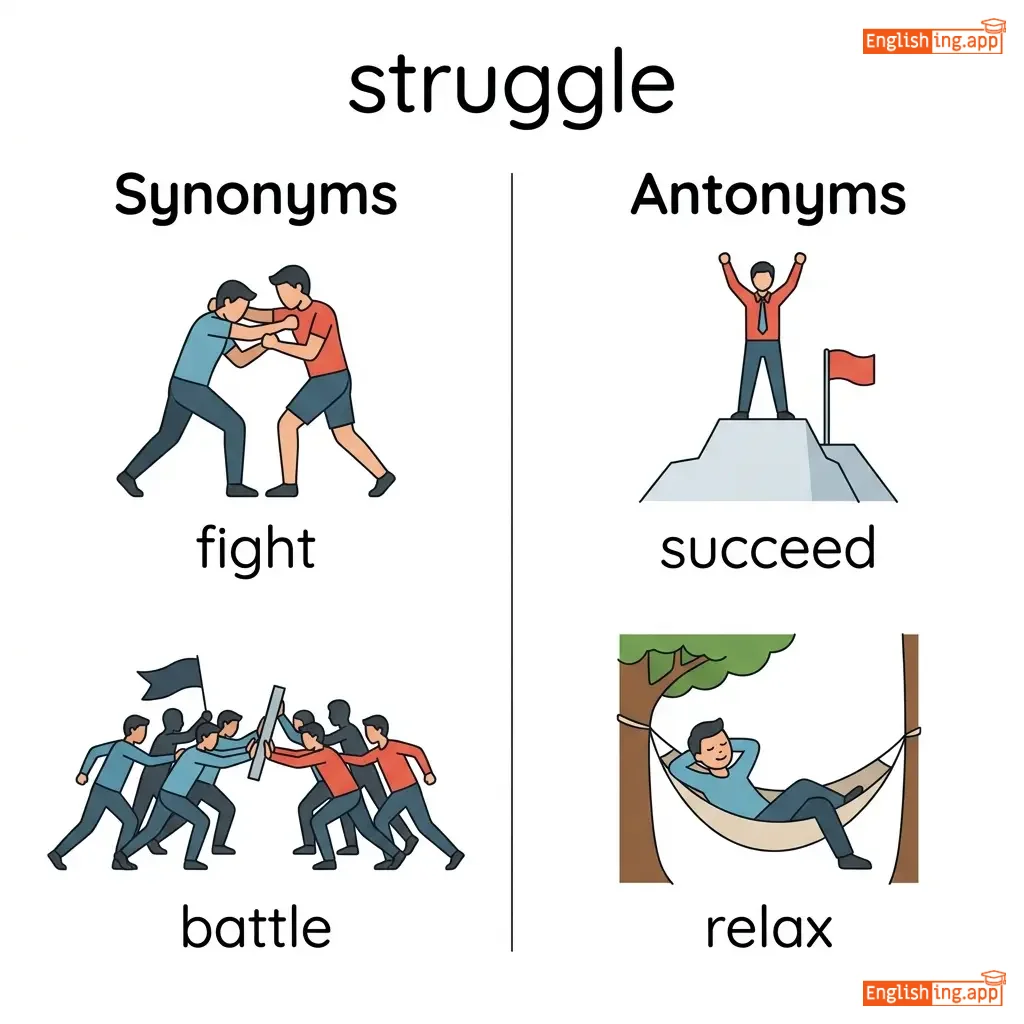
fight, battle, strive, exert
••••••
|
succeed, relax
••••••
|
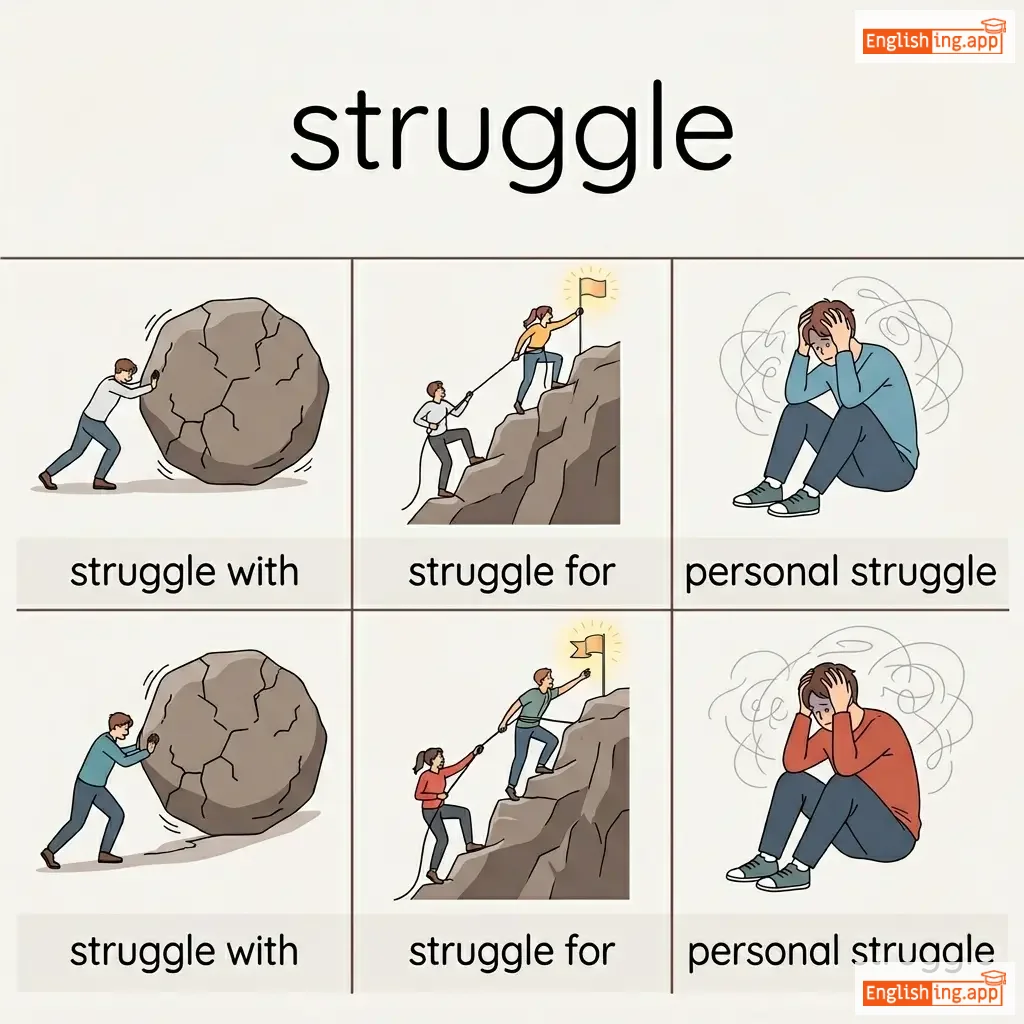
struggle with, struggle for, personal struggle
••••••
|
Struggling for success, like lifting a heavy weight
••••••
|
|
👩🎓
••••••
|
/ˈstjuːdənt/
noun
(学生)
••••••
|



|
学生
xuesheng
••••••
|
- •••••• | - •••••• | - •••••• | - •••••• |
a person who is learning at an educational institution
••••••
|
The student was studying for the final exam. |
学生正在为期末考试而学习。
Xuesheng zhengzai wei qimou kao shi er xuexi.
••••••
|
- •••••• | - •••••• | - •••••• |
pupil, scholar, learner, trainee
••••••
|
teacher, mentor
••••••
|
college student, student life, student council
••••••
|
Student in school, books in hand, striving to learn
••••••
|
|
🎙️
••••••
|
/ˈstjuːdiəʊ/
noun
(工作室)
••••••
|
- •••••• |
工作室
gongzuoshi
••••••
|
- •••••• | - •••••• | - •••••• | - •••••• |
a room where an artist, photographer, musician, or broadcaster works
••••••
|
The singer recorded her new song in the studio.
歌手在工作室录制了她的新歌。
••••••
|
歌手在工作室录制了她的新歌。
Geshou zai gongzuoshi luozhi le ta de xin ge.
••••••
|
- •••••• | - •••••• | - •••••• |
workroom, atelier, workspace, workshop
••••••
|
outdoors, open space
••••••
|
recording studio, art studio, design studio, dance studio
••••••
|
工作室是创作艺术或音乐的地方
••••••
|
|
📚
••••••
|
/ˈstʌdi/
verb
(学习)
••••••
|
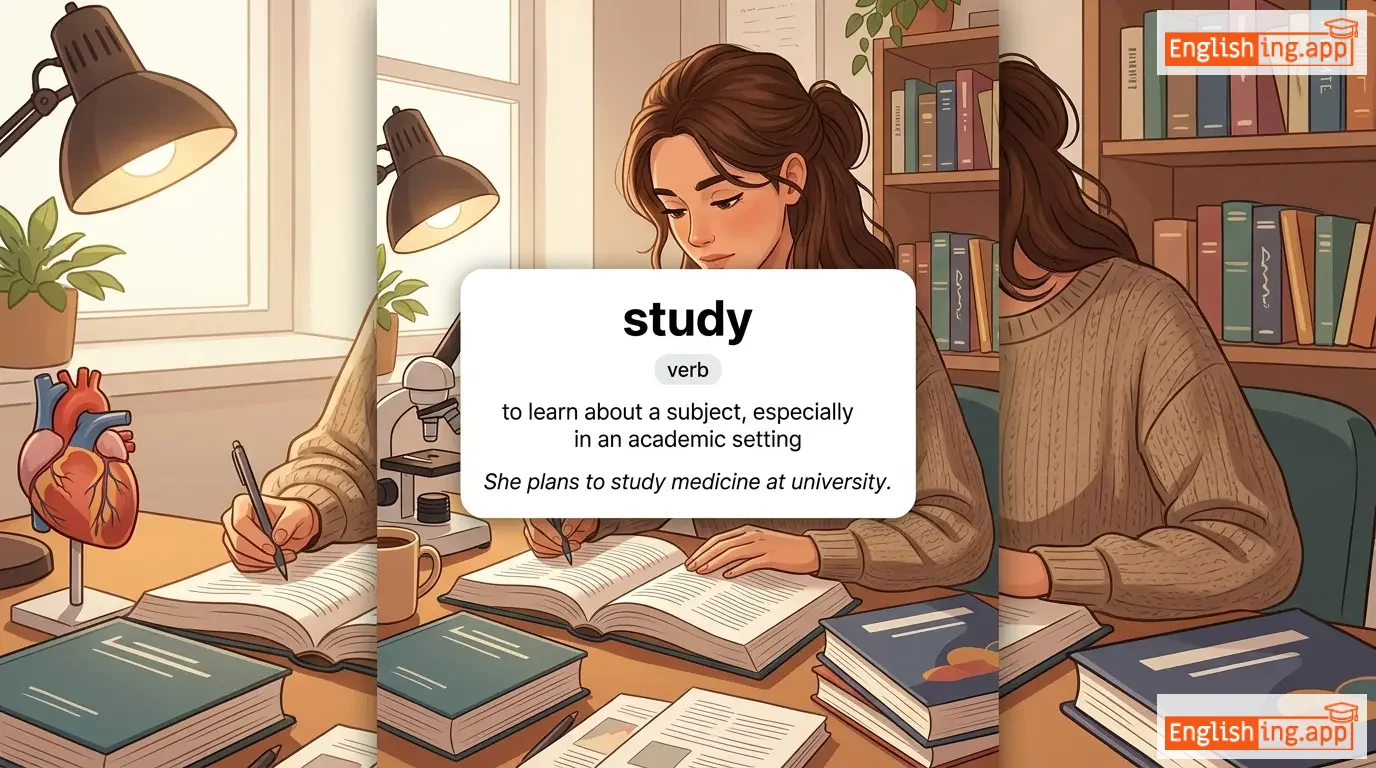

|
学习
xuéxí
••••••
|
studied
学习过
••••••
|
studied
学习过
••••••
|
studies
学习
••••••
|
studying
学习中
••••••
|
to learn about something; to examine carefully; to research
••••••
|
I study mathematics every evening.
我每天晚上学习数学。
••••••
|
我每天晚上学习数学。
Wǒ měitiān wǎnshàng xuéxí shùxué.
••••••
|
- •••••• | - •••••• | - •••••• |
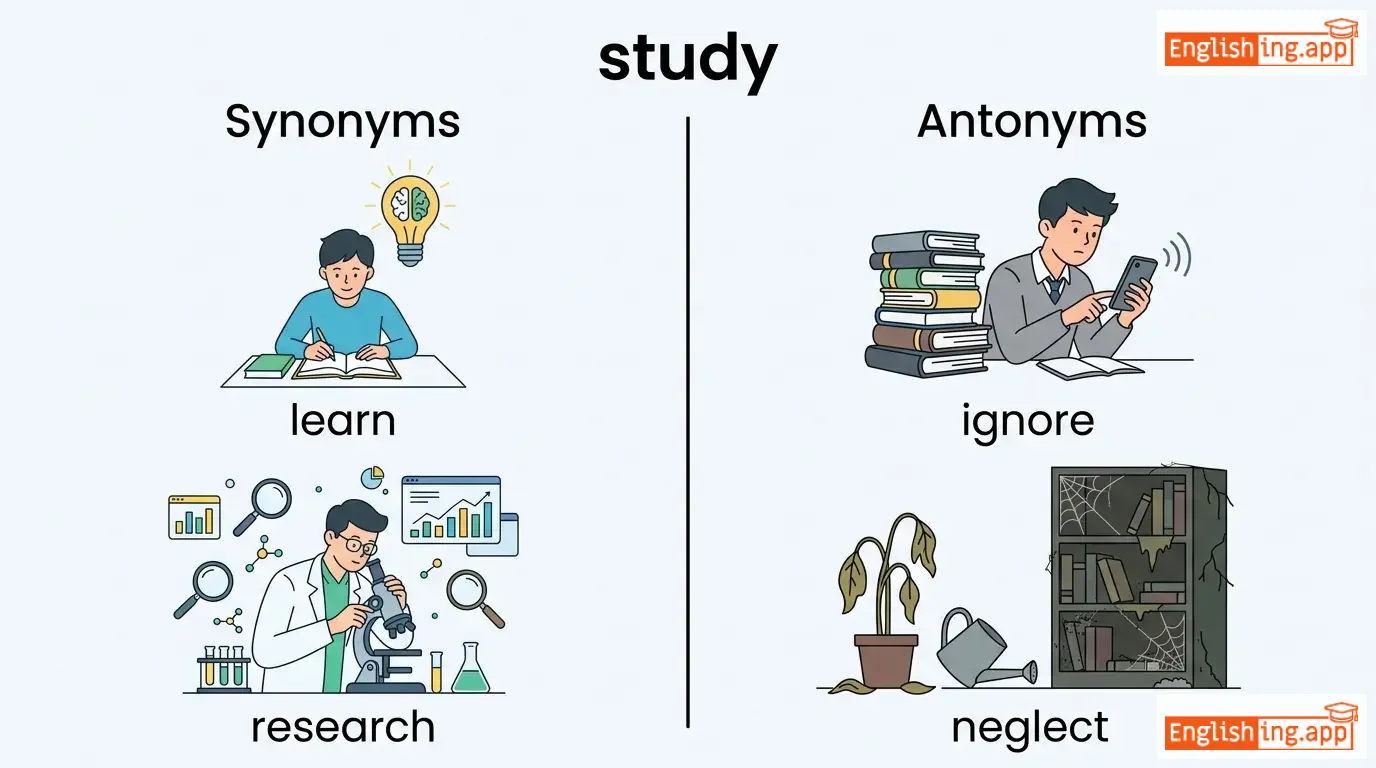
learn, research, examine, investigate
••••••
|
ignore, neglect, overlook
••••••
|
study hard, study abroad, case study, study materials, study group
••••••
|
Study = 学习 (通过学习理解事物)
••••••
|
|
🤦
••••••
|
/ˈstʌmbəl/
verb
(斯坦布尔)
••••••
|
- •••••• |
绊倒
bàndǎo
••••••
|
stumbled
斯坦布尔德
••••••
|
stumbled
斯坦布尔德
••••••
|
stumbles
斯坦布尔斯
••••••
|
stumbling
斯坦布灵
••••••
|
to trip or lose balance while walking or running; to make a mistake or falter
••••••
|
He stumbled on the uneven pavement.
他在人行道上绊倒了。
••••••
|
他在人行道上绊倒了。
Tā zài rénxíngdào shàng bàndǎo le.
••••••
|
stumble upon
偶然碰到
••••••
|
to find something by chance
••••••
|
偶然发现
ǒurán fāxiàn
••••••
|
trip, falter, slip, blunder, hesitate
••••••
|
balance, steady, recover
••••••
|
stumble upon, stumble over, stumble badly, stumble into
••••••
|
Stumble表示绊倒——偶尔绊倒就会跌倒
••••••
|
|
⚡
••••••
|
/stʌn/
verb
(斯坦)
••••••
|
- •••••• |
震惊, 使昏迷
zhenjing, shi hunmi
••••••
|
stunned
斯坦德
••••••
|
stunned
斯坦德
••••••
|
stuns
斯坦斯
••••••
|
stunning
斯坦宁
••••••
|
to shock or surprise someone greatly; to knock someone unconscious or dazed
••••••
|
The news of her sudden resignation stunned everyone.
她突然辞职的消息让大家都震惊了。
••••••
|
她突然辞职的消息让大家都震惊了。
Tā túrán cízhí de xiāoxī ràng dàjiā dōu zhènjīng le.
••••••
|
- •••••• | - •••••• | - •••••• |
shock, amaze, astonish, daze, overwhelm
••••••
|
comfort, calm, assure
••••••
|
stun gun, stunned silence, absolutely stunned, stun effect
••••••
|
考试消息让我震惊了 — 我被 stun 了。
••••••
|
|
😲
••••••
|
/ˈstʌnɪŋ/
adjective
(斯坦宁)
••••••
|
- •••••• |
令人惊叹
ling ren jing tan
••••••
|
- •••••• | - •••••• | - •••••• | - •••••• |
extremely impressive or attractive
••••••
|
The view from the top of the mountain was absolutely stunning. |
从山顶看到的景色简直令人惊叹。
Cong shanding kan dao de jingse jianzhi ling ren jing tan.
••••••
|
- •••••• | - •••••• | - •••••• |
amazing, breathtaking, beautiful, striking
••••••
|
ugly, dull, unattractive
••••••
|
stunning beauty, stunning view, stunning performance
••••••
|
就像 'stunning' 一样令人惊叹!
••••••
|
|
🤦
••••••
|
/ˈstjuːpɪd/
adjective
••••••
|
- •••••• | - •••••• | - •••••• | - •••••• | - •••••• | - •••••• |
lacking intelligence or common sense
••••••
|
It was a stupid mistake to leave the keys inside the car. |
- •••••• |
play stupid |
to pretend not to know something
••••••
|
- •••••• |
foolish, silly, idiotic, dumb
••••••
|
wise, intelligent, smart
••••••
|
stupid idea, stupid mistake, act stupid, feel stupid
••••••
|
No •••••• |
|
🤦
••••••
|
/stjuːˈpɪdəti/
noun
(斯图皮迪提)
••••••
|
- •••••• |
愚蠢
yuchun
••••••
|
- •••••• | - •••••• | - •••••• | - •••••• |
lack of intelligence or common sense
••••••
|
His stupidity caused a lot of problems for the team.
他的斯图皮迪提给团队带来了很多问题。
••••••
|
他的愚蠢给团队带来了很多问题。
tade yuchun gei tuandui daila le henduo wenti
••••••
|
in all one's stupidity
在他所有的斯图皮迪提中
••••••
|
despite being foolish or lacking sense
••••••
|
在他所有的愚蠢中
zai ta suoyou de yuchun zhong
••••••
|
foolishness, ignorance, senselessness, absurdity, silliness
••••••
|
intelligence, wisdom, cleverness
••••••
|
act of stupidity, sheer stupidity, display of stupidity, remarkable stupidity
••••••
|
yuchun sounds like 'you chuhn' – remember foolishness.
••••••
|
|
💅
••••••
|
/staɪl/
noun
(sītǎi'ěr)
••••••
|
- •••••• |
风格
fēnggé
••••••
|
- •••••• | - •••••• | - •••••• | - •••••• |
a particular way of doing something; a distinctive appearance or manner of expression
••••••
|
She has her own unique style of writing that captivates readers.
她有自己独特的写作风格,吸引了读者。
••••••
|
她有自己独特的写作风格,吸引了读者。
Tā yǒu zìjǐ dútè de xiězuò fēnggé, xīyǐnle dúzhě.
••••••
|
- •••••• | - •••••• | - •••••• |
manner, way, approach, fashion, method
••••••
|
uniformity, standardization
••••••
|
writing style, fashion style, leadership style, architectural style
••••••
|
‘Style’ 在英语中是 ‘风格’ 在中文的对应,表示个人的表达方式。
••••••
|
|
📚
••••••
|
/ˈsʌbdʒɪkt/ (noun), /səbˈdʒɛkt/ (verb)
noun/verb/adjective
(sʌbdʒɛkt)
••••••
|
- •••••• |
主题
zhuti
••••••
|
subjected
sʌbdʒɛktɪd
••••••
|
subjected
sʌbdʒɛktɪd
••••••
|
subjects
sʌbdʒɛkts
••••••
|
subjecting
sʌbdʒɛktɪŋ
••••••
|
noun: a topic or theme; verb: to cause to undergo; adjective: dependent or under authority
••••••
|
The teacher introduced a new subject in class.
老师在课堂上引入了一个新课题。
••••••
|
老师在课堂上介绍了一个新主题。
Lǎoshī zài kètáng shàng jièshào le yīgè xīn zhǔtí.
••••••
|
subject to change
可能发生变化
••••••
|
likely to be altered
••••••
|
可能发生变化
kěnéng fāshēng biànhuà
••••••
|
topic, theme, issue, matter, expose
••••••
|
object, ruler, master
••••••
|
main subject, school subject, subject area, subject matter, subject to
••••••
|
Subject 就是课题,也可能是可以改变的事物。
••••••
|
|
📩
••••••
|
/səbˈmɪʃən/
noun
(səbˈmɪʃən)
••••••
|
- •••••• |
提交, 顺从
tiji, shuncong
••••••
|
- •••••• | - •••••• | - •••••• | - •••••• |
the act of yielding to authority or presenting something for consideration
••••••
|
Her submission of the report was appreciated by the manager. |
她提交的报告受到了经理的赞赏。
Tā tiji de bàogào shòudàole jīnglǐ de zànshǎng.
••••••
|
in submission to |
yielding to someone or something
••••••
|
服从于
fukong yu
••••••
|
obedience, compliance, surrender, presentation, proposal
••••••
|
resistance, defiance, refusal
••••••
|
submission of report, submission deadline, complete submission, voluntary submission
••••••
|
Submission意味着提交报告,顺从意味着屈服或展示。
••••••
|

