Получите неограниченный доступ ко всем словам с подпиской Pro
Обновить до ProПолучите неограниченный доступ ко всем предложениям с подпиской Pro
Обновить до Pro|
Эмодзи
|
Слово | Images | Перевод | Прошедшее | Причастие прошедшего времени | Третье лицо единственного числа | Герундий | Значение | Пример предложения | Перевод примера предложения | Пример выражения | Значение примера выражения | Перевод примера выражения | Синонимы | Антонимы | Коллокации | Мнемоника |
|---|---|---|---|---|---|---|---|---|---|---|---|---|---|---|---|---|---|
|
🏛️
••••••
|
/reɪˈʒiːm/
noun
(reʒim)
••••••
|
- •••••• |
режим
rezhim
••••••
|
- •••••• | - •••••• | - •••••• | - •••••• |
a system or form of government, often authoritarian
••••••
|
The military regime controlled the country for decades. |
Военное правление контролировало страну в течение десятилетий.
Voyennoe pravlenie kontrolirovalo stranu v techenie desyatiletiy.
••••••
|
under the regime |
during the rule of a particular government system
••••••
|
при режиме
pri rezhime
••••••
|
government, administration, rule, authority, system
••••••
|
anarchy, disorder
••••••
|
military regime, authoritarian regime, regime change, political regime
••••••
|
Regime означает режим – в военном режиме жесткий контроль.
••••••
|
|
🗺️
••••••
|
/ˈriː.dʒən/
noun
(rijon)
••••••
|
- •••••• |
регион; зона; область
region; zona; oblast
••••••
|
- •••••• | - •••••• | - •••••• | - •••••• |
a particular area or part of a country or the world
••••••
|
This region is famous for its wine production.
Этот регион знаменит своим винным производством.
••••••
|
Этот регион знаменит своим винным производством.
Etot region znamenit svoim vinnym proizvodstvom.
••••••
|
- •••••• | - •••••• | - •••••• |
area, zone, territory, district, province
••••••
|
center, point, specific location
••••••
|
geographical region, remote region, coastal region, mountainous region
••••••
|
Region in Russian means a specific part of a place!
••••••
|
|
🗺️
••••••
|
/ˈriː.dʒən.əl/
adjective
(Регионал)
••••••
|
|
региональный
regional
••••••
|
- •••••• | - •••••• | - •••••• | - •••••• |
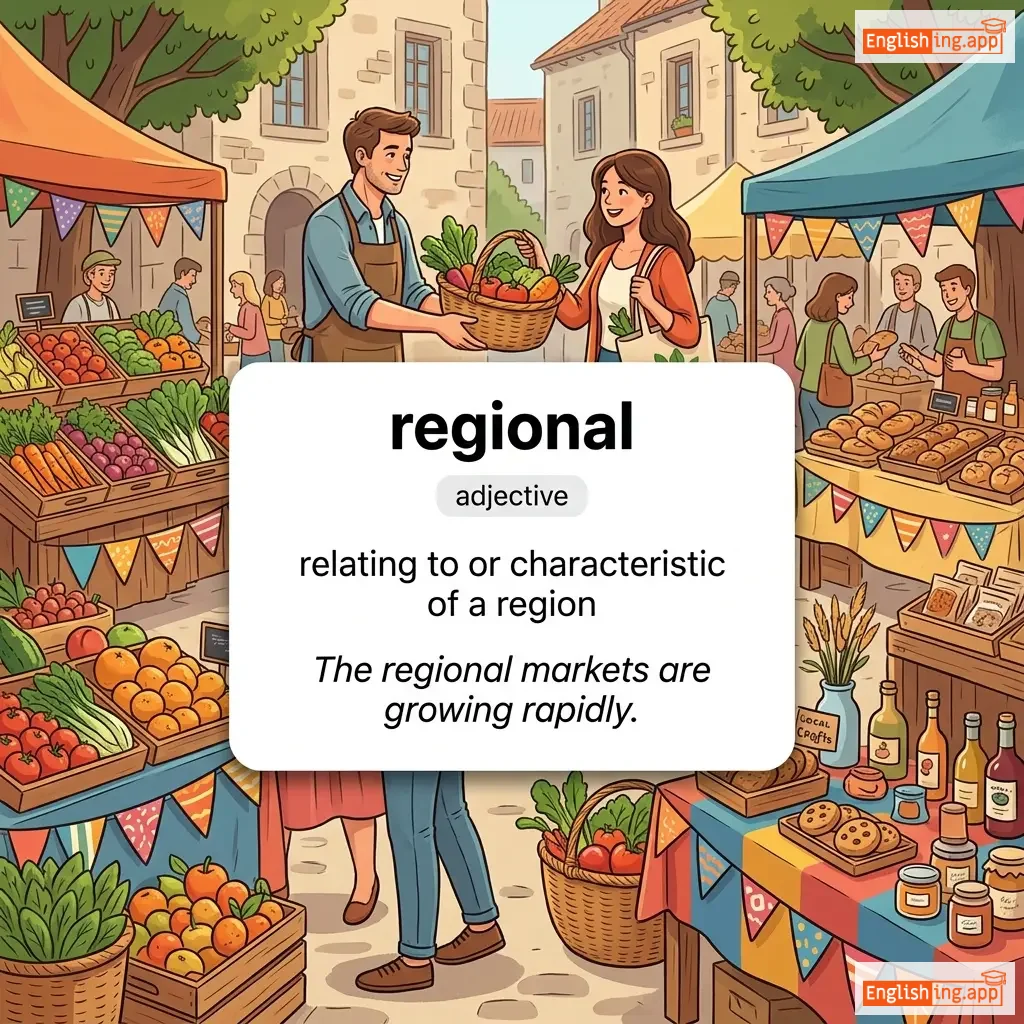
relating to a particular region or area; local to a specific geographic area
••••••
|
The regional differences in culture were quite noticeable.
Региональные различия в культуре были весьма заметны.
••••••
|
Региональные различия в культуре были весьма заметны.
Regionalnye razlichiya v kulture byli vesma zametny.
••••••
|
- •••••• | - •••••• | - •••••• |
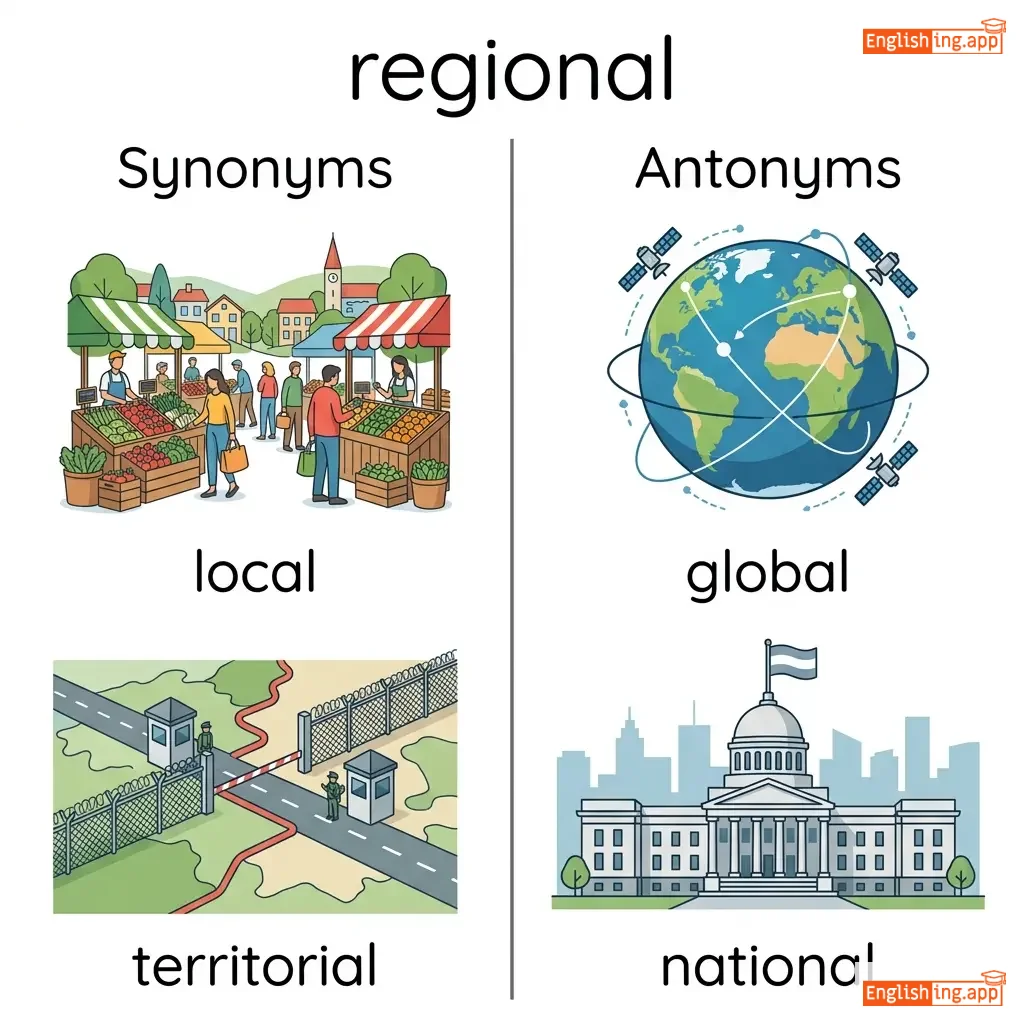
local, territorial, district
••••••
|
national, global, international
••••••
|
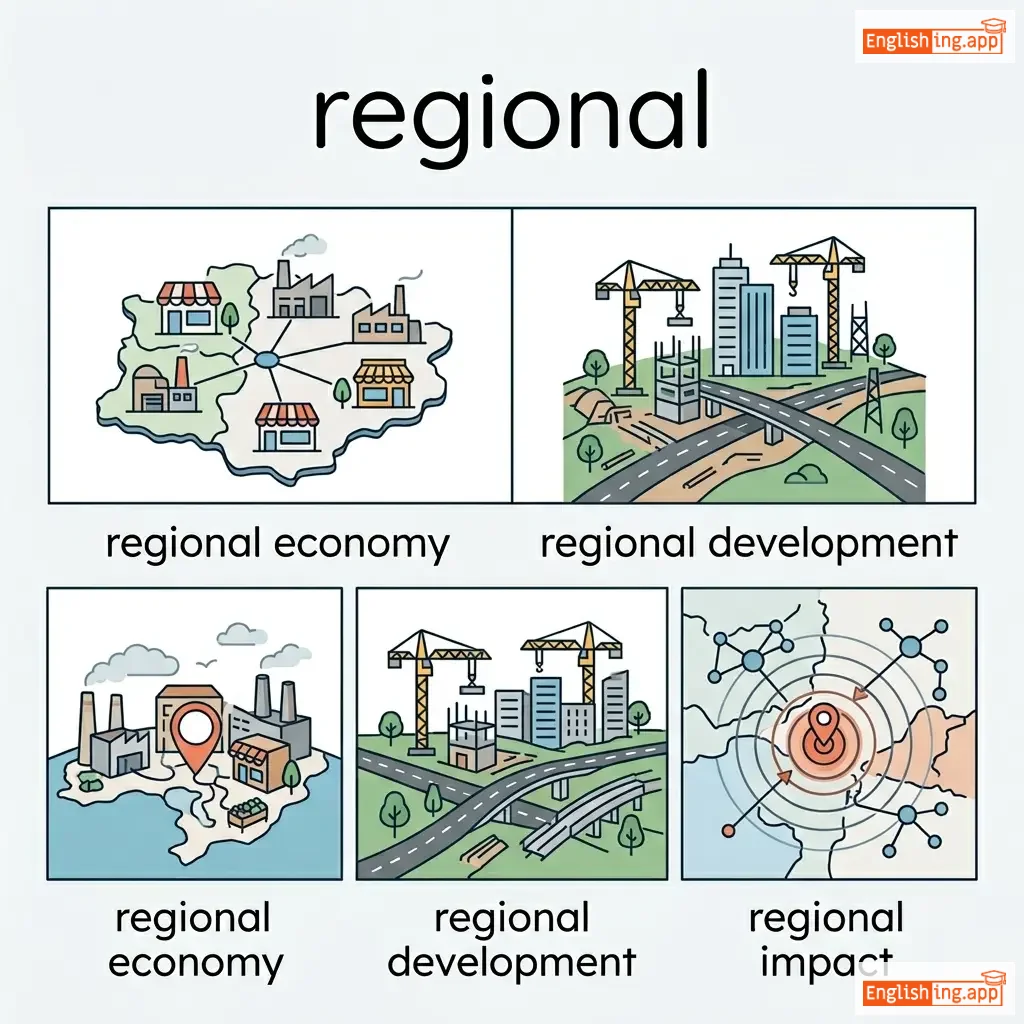
regional government, regional differences, regional cuisine
••••••
|
region ally = региональный; imagine a map where REGION is an ALLY for a REGION, REGION-ALLY becomes региональный
••••••
|
|
📝
••••••
|
/ˈrɛdʒɪstər/
verb
(регистрировать)
••••••
|
- •••••• |
регистрировать
registrirovat
••••••
|
registered
зарегистрирован
••••••
|
registered
зарегистрирован
••••••
|
registers
регистрирует
••••••
|
registering
регистрируя
••••••
|
To enter or record officially on a list or in a book.
••••••
|
You must register for the conference before the deadline.
Вы должны зарегистрироваться для конференции до окончания срока.
••••••
|
Вы должны зарегистрироваться для конференции до окончания срока.
Vy dolzhny zaregistrirovatsya dlya konferentsii do okonchaniya sroka.
••••••
|
register concern
зарегистрировать беспокойство
••••••
|
To express worry or dissatisfaction about something.
••••••
|
выразить беспокойство
vyrazit' bespokoystvo
••••••
|
enroll, record, list, file, sign up
••••••
|
deregister, ignore
••••••
|
register online, register complaint, register user, register interest
••••••
|
Register значит регистрировать — помни, если не зарегистрируешься, на конференцию не попадешь.
••••••
|
|
📝
••••••
|
/ˌrɛdʒɪˈstreɪʃən/
noun
(re-gis-tra-tsy-a)
••••••
|
- •••••• |
регистрация
registratsiya
••••••
|
- •••••• | - •••••• | - •••••• | - •••••• |
the action or process of enrolling or signing up for something
••••••
|
The registration for the event will close tomorrow. |
Регистрация на мероприятие завершится завтра.
Registratsiya na meropriyatie zavershitsya zavtra.
••••••
|
- •••••• | - •••••• | - •••••• |
enrollment, sign-up, registration process, joining
••••••
|
withdrawal, cancellation
••••••
|
event registration, registration form, online registration
••••••
|
Регистрация — это процесс регистрации, как когда вы записываетесь на событие.
••••••
|
|
😔
••••••
|
/rɪˈɡrɛt/
verb
(rigret)
••••••
|
- •••••• |
сожалеть
sozhalet'
••••••
|
regretted
rigreted
••••••
|
regretted
rigreted
••••••
|
regrets
rigrets
••••••
|
regretting
rigretting
••••••
|
to feel sad or disappointed about something that has happened or been done
••••••
|
I deeply regret saying those harsh words to her.
Я глубоко сожалею, что сказал ей эти жесткие слова.
••••••
|
Я глубоко сожалею, что сказал ей эти жесткие слова.
Ya gluboko sozhaleю, chto skazal yey eti zhostkie slova.
••••••
|
express regret
выразить сожаление
••••••
|
to show that you are sorry about something
••••••
|
выразить сожаление
vyrazit' sozhalenie
••••••
|
lament, repent, remorse, rue
••••••
|
rejoice, celebrate, delight
••••••
|
regret deeply, express regret, feel regret, lifelong regret
••••••
|
Сожаление приходит, когда слова и поступки оставляют следы — исправить их невозможно!
••••••
|
|
📅
••••••
|
/ˈrɛɡjələr/
adjective
(рɛɡʊˈлʲиʲɪр)
••••••
|
- •••••• |
регулярный
regulyarnyy
••••••
|
- •••••• | - •••••• | - •••••• | - •••••• |
Happening at fixed intervals; usual or normal in pattern or quality
••••••
|
He is a regular visitor to the library. |
Он регулярный посетитель библиотеки.
On regulyarnyy posetitel' biblioteki.
••••••
|
regular customer |
A person who frequently visits or buys from the same place
••••••
|
регулярный клиент
regulyarnyy klient
••••••
|
consistent, usual, normal, routine, frequent
••••••
|
irregular, unusual, abnormal
••••••
|
regular basis, regular meeting, regular customer, regular pattern
••••••
|
Регулярный — как регулярный клиент
••••••
|
|
⏰
••••••
|
/ˌreɡ.jʊˈlær.ɪ.ti/
noun
(регулярити)
••••••
|
- •••••• |
регулярность
regulyarnost
••••••
|
- •••••• | - •••••• | - •••••• | - •••••• |
the quality of being regular; occurring at fixed intervals or in a consistent pattern
••••••
|
The regularity of his exercise routine helped him stay healthy. |
Регулярность его тренировочного расписания помогла ему оставаться здоровым.
Regulyarnost' ego trenirovochnogo raspisaniya pomogla yemu ostavat'sya zdorovym
••••••
|
- •••••• | - •••••• | - •••••• |
consistency, routine, pattern, frequency
••••••
|
irregularity, randomness, chaos, inconsistency
••••••
|
with regularity, mathematical regularity, clockwork regularity, maintain regularity
••••••
|
Регулярность, как часы: помогает поддерживать порядок
••••••
|
|
🔄
••••••
|
/ˈrɛɡjələrli/
adverb
(регулярли)
••••••
|
- •••••• |
регулярно
regulyarno
••••••
|
- •••••• | - •••••• | - •••••• | - •••••• |
at regular intervals; in a regular manner
••••••
|
She exercises regularly to stay healthy. |
Она регулярно занимается спортом, чтобы оставаться здоровой.
Ona regulyarno zanimaetsya sportom, chtoby ostavat'sya zdorovoy.
••••••
|
- •••••• | - •••••• | - •••••• |
consistently, frequently, habitually, routinely
••••••
|
irregularly, infrequently
••••••
|
regularly scheduled, meet regularly, eat regularly, exercise regularly
••••••
|
Think of 'regular' habits - things you do regularly!
••••••
|
|
⚖️
••••••
|
/ˈrɛɡjʊˌleɪt/
verb
(регулировать)
••••••
|
|
регулировать
regulirovat
••••••
|
regulated
регулировал
••••••
|
regulated
регулированный
••••••
|
regulates
регулирует
••••••
|
regulating
регулируя
••••••
|
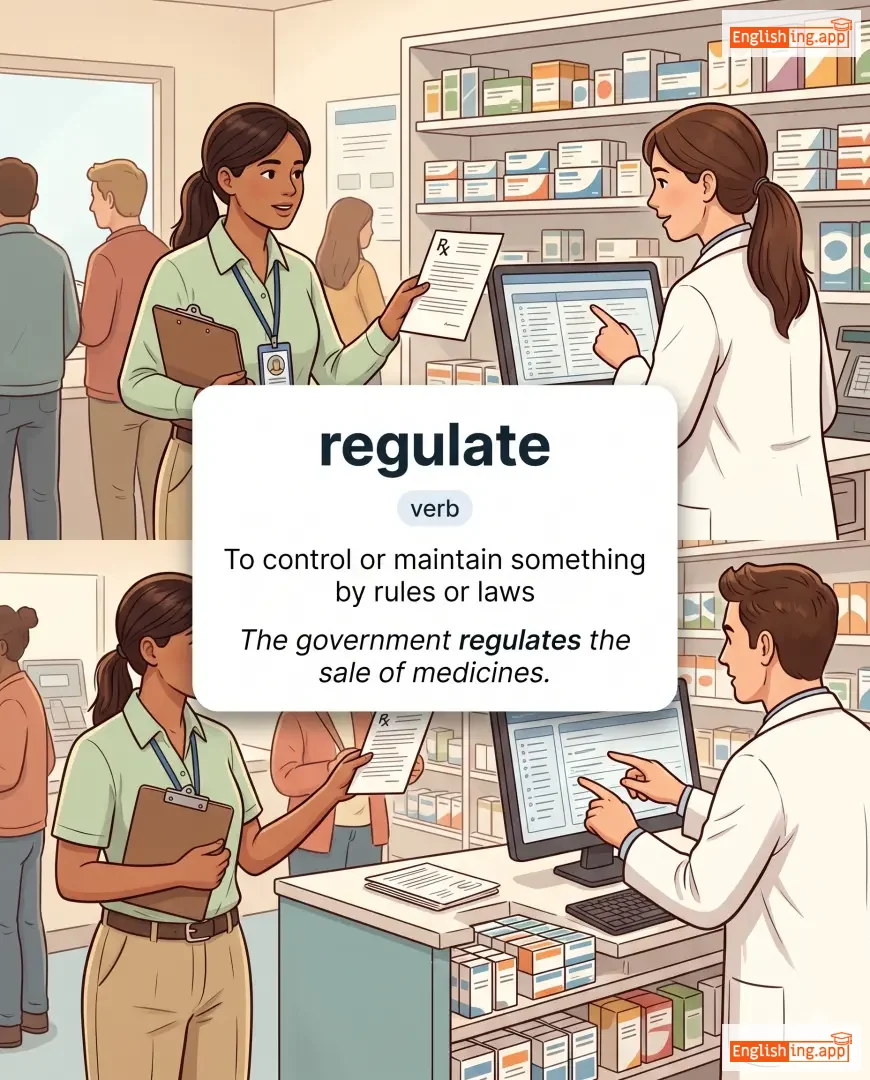
To control or maintain something by rules or laws
••••••
|
The government regulates the sale of medicines.
Правительство регулирует продажу медикаментов.
••••••
|
Правительство регулирует продажу медикаментов.
Pravitel'stvo reguliruet prodazhu medikamentov.
••••••
|
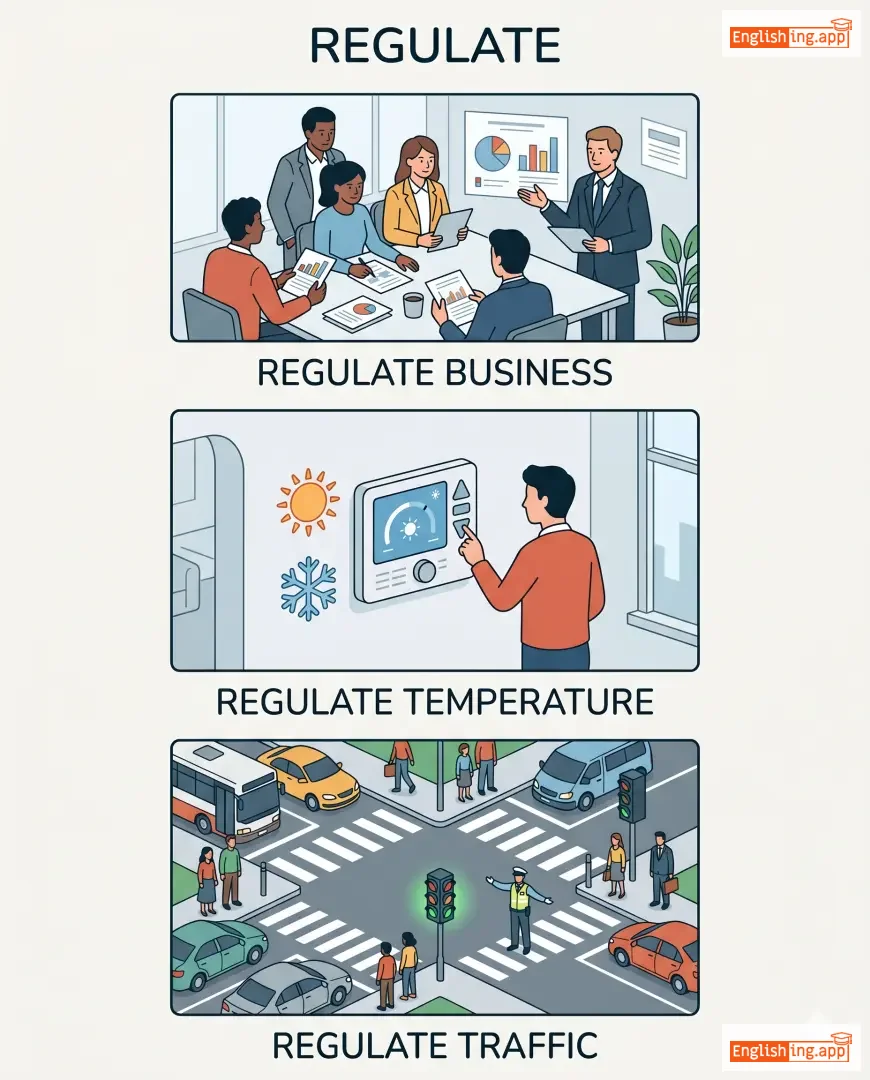
regulate traffic
регулировать движение
••••••
|
To control the flow and movement of vehicles
••••••
|
регулировать движение
regulirovat' dvizhение
••••••
|
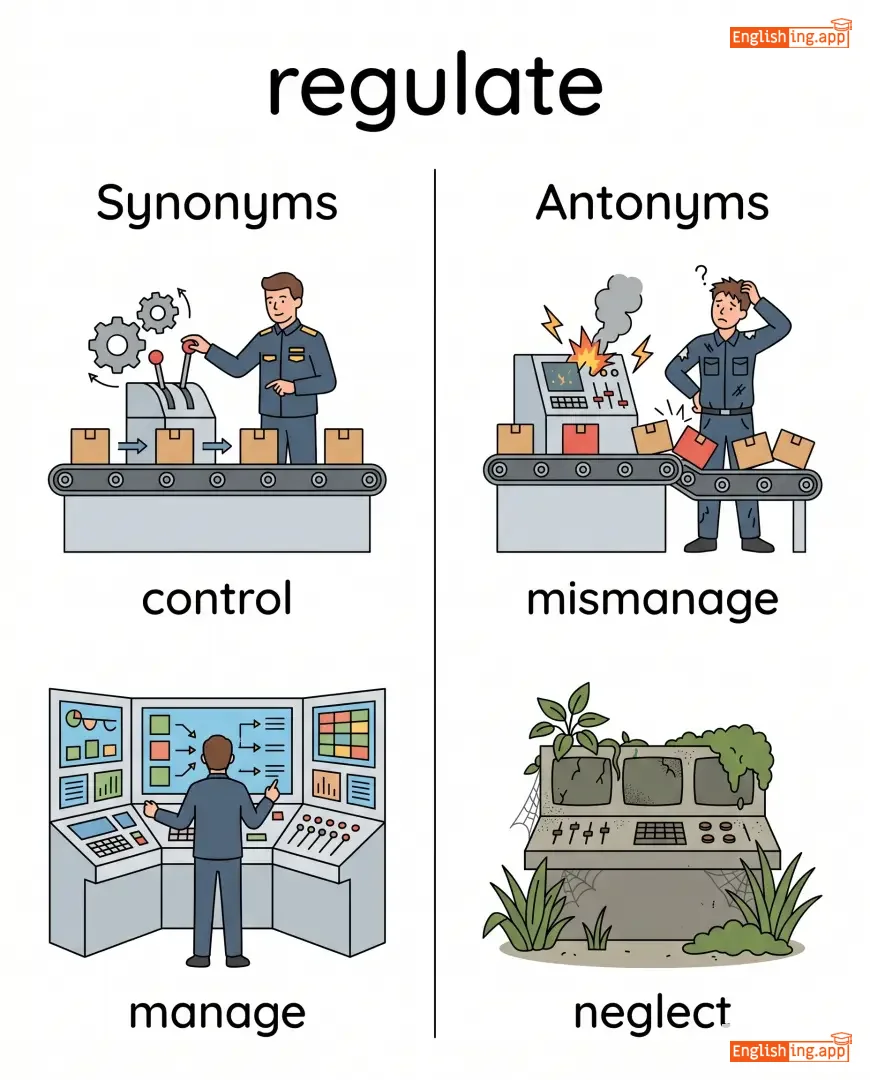
control, manage, supervise, direct, monitor
••••••
|
mismanage, neglect
••••••
|
regulate business, regulate temperature, regulate traffic, regulate industry
••••••
|
Regulirovat' означает kontrol' s pomoshch'yu zakonov
••••••
|
|
⚖️
••••••
|
/ˌrɛɡjuˈleɪʃən/
noun
(регуляция)
••••••
|
|
регламент
reglament
••••••
|
- •••••• | - •••••• | - •••••• | - •••••• |
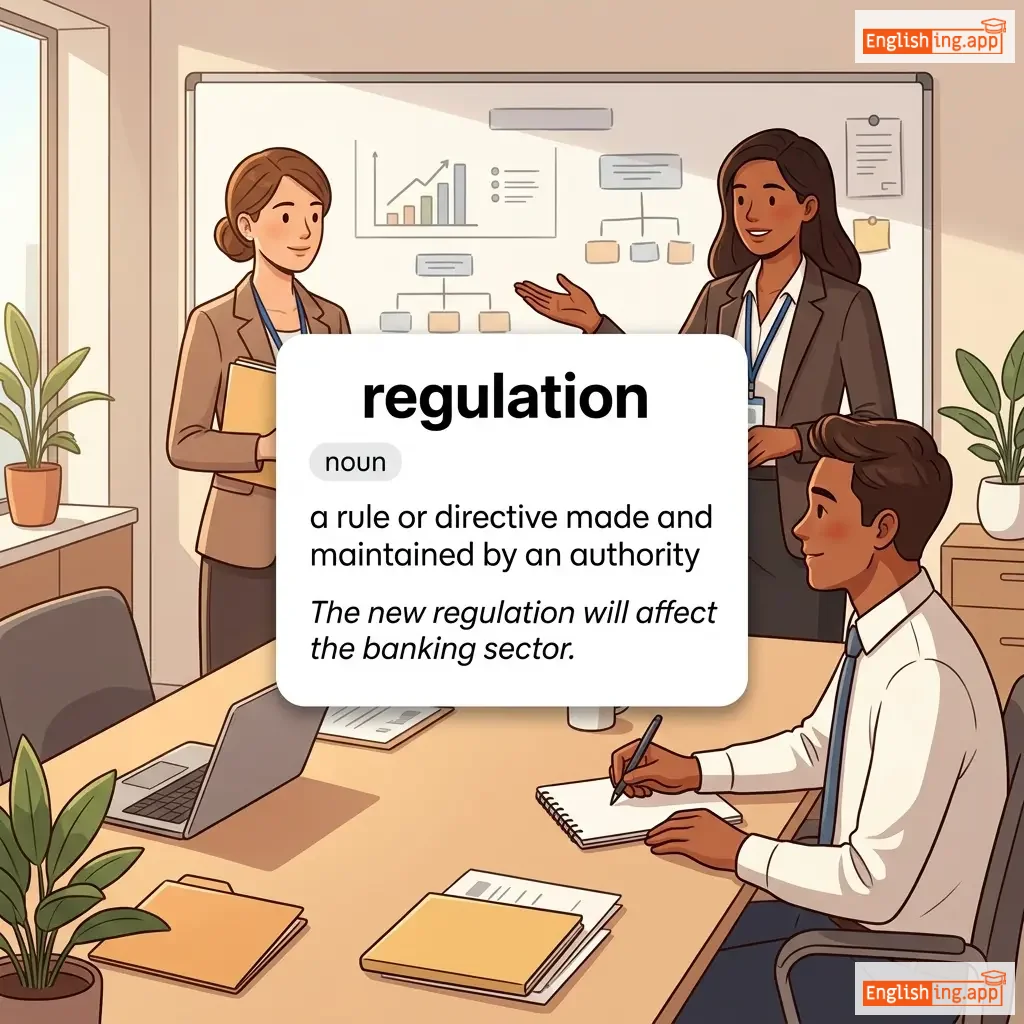
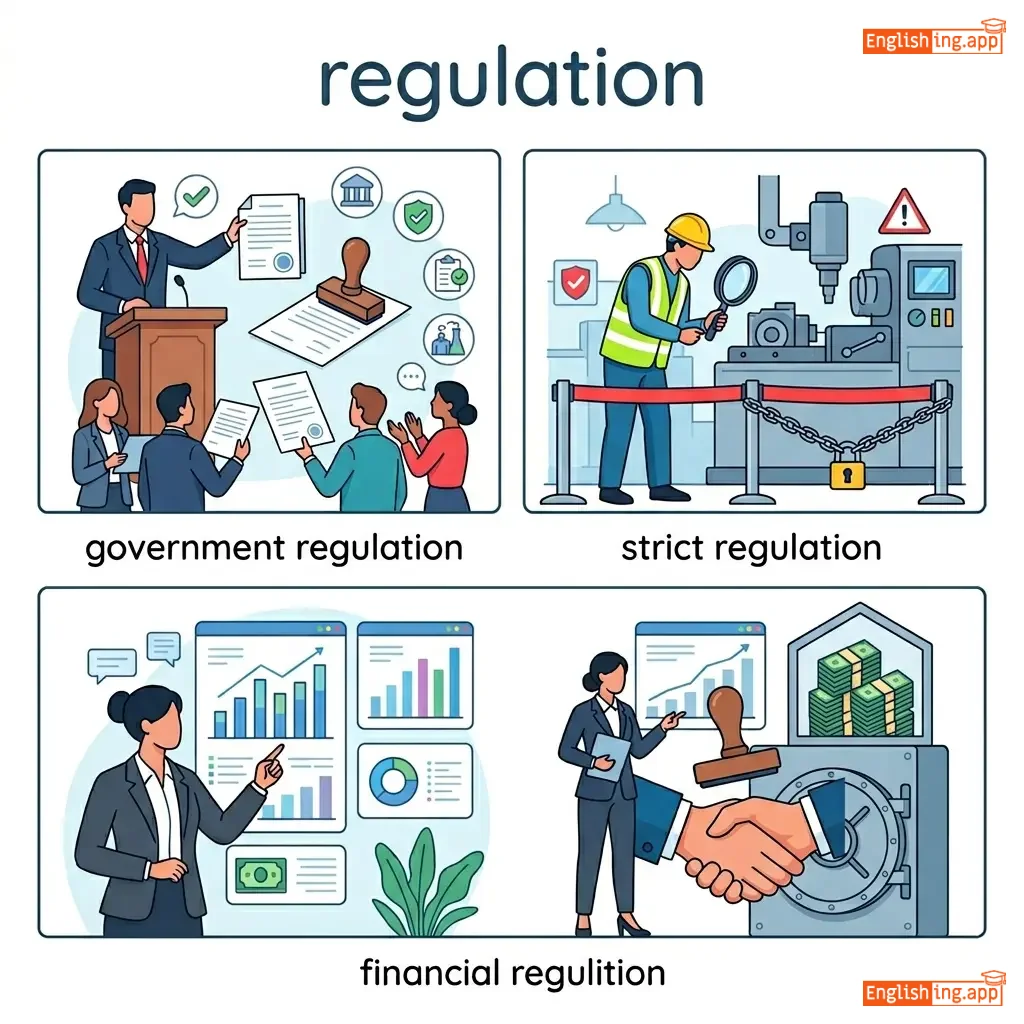
a rule or directive made and maintained by an authority
••••••
|
The new regulation will affect the banking sector. |
Новый регламент повлияет на банковский сектор.
Novyy reglament povliyaet na bankovskiy sektor.
••••••
|
- •••••• | - •••••• | - •••••• |
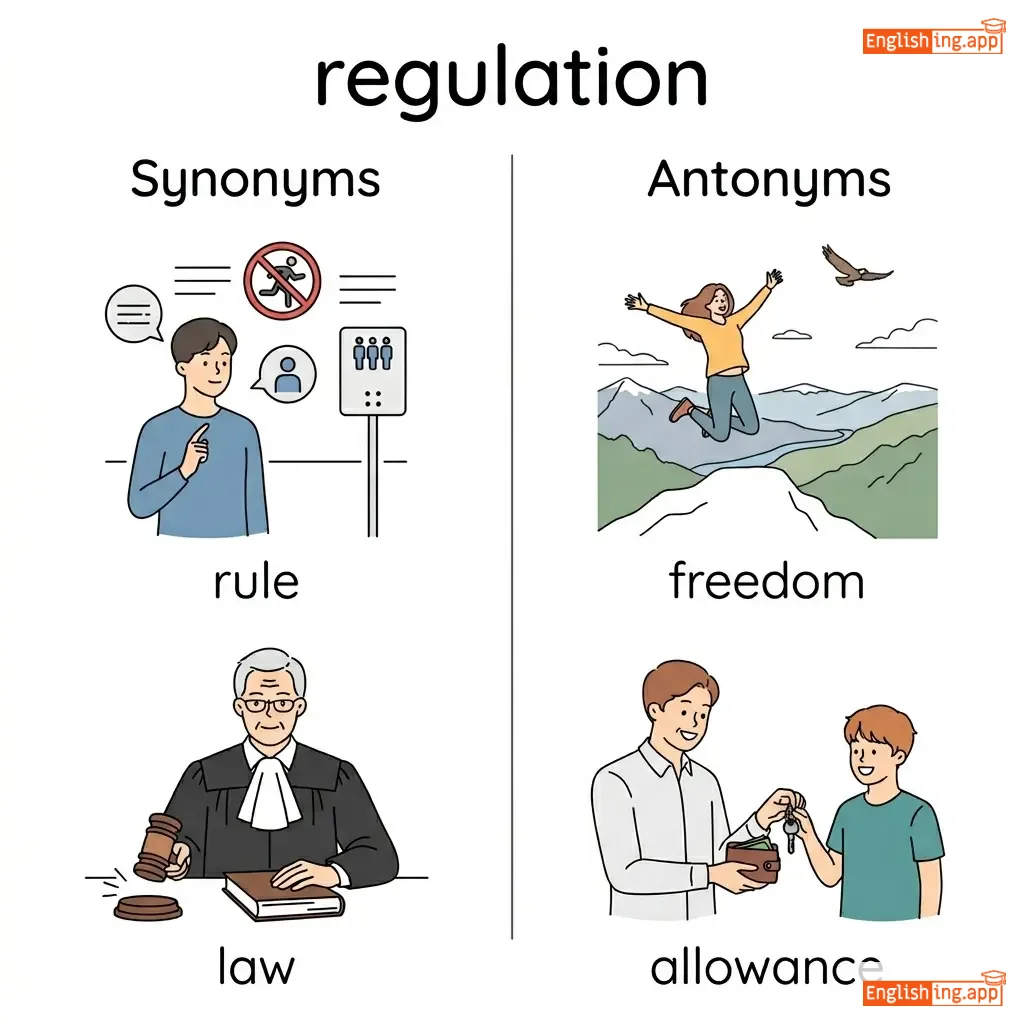
rule, law, guideline, directive
••••••
|
freedom, allowance
••••••
|
government regulation, strict regulation, financial regulation, safety regulation
••••••
|
Regulation = Re-gulate the system with rules!
••••••
|
|
⚙️
••••••
|
/ˈrɛɡjəleɪtər/
noun
(регулятор)
••••••
|
- •••••• |
регулятор
regulyator
••••••
|
- •••••• | - •••••• | - •••••• | - •••••• |
a person or device that controls or maintains the operation of a system
••••••
|
The government appointed a new regulator for the financial sector. |
Правительство назначило нового регулятора для финансового сектора.
Pravitel'stvo naznachilo novogo regulyatora dlya finansovogo sektora.
••••••
|
- •••••• | - •••••• | - •••••• |
controller, supervisor, administrator, inspector
••••••
|
anarchist, disrupter
••••••
|
financial regulator, market regulator, regulatory authority, gas regulator
••••••
|
Регулятор — это тот, кто контролирует, как газовый регулятор контролирует поток!
••••••
|
|
⚖️
••••••
|
/ˈrɛɡjʊlətɔːri/
adjective
(регулятори)
••••••
|

|
регулирующий
reguliruyushchiy
••••••
|
- •••••• | - •••••• | - •••••• | - •••••• |
relating to the rules or laws made by an authority to control an activity or process
••••••
|
The company must comply with all regulatory requirements before launching the product. |
Компания должна выполнить все регулирующие требования перед запуском продукта.
Kompaniya dolzhna vypolnit' vse reguliruyushchie trebovaniya pered zapuskom produkta.
••••••
|
- •••••• | - •••••• | - •••••• |
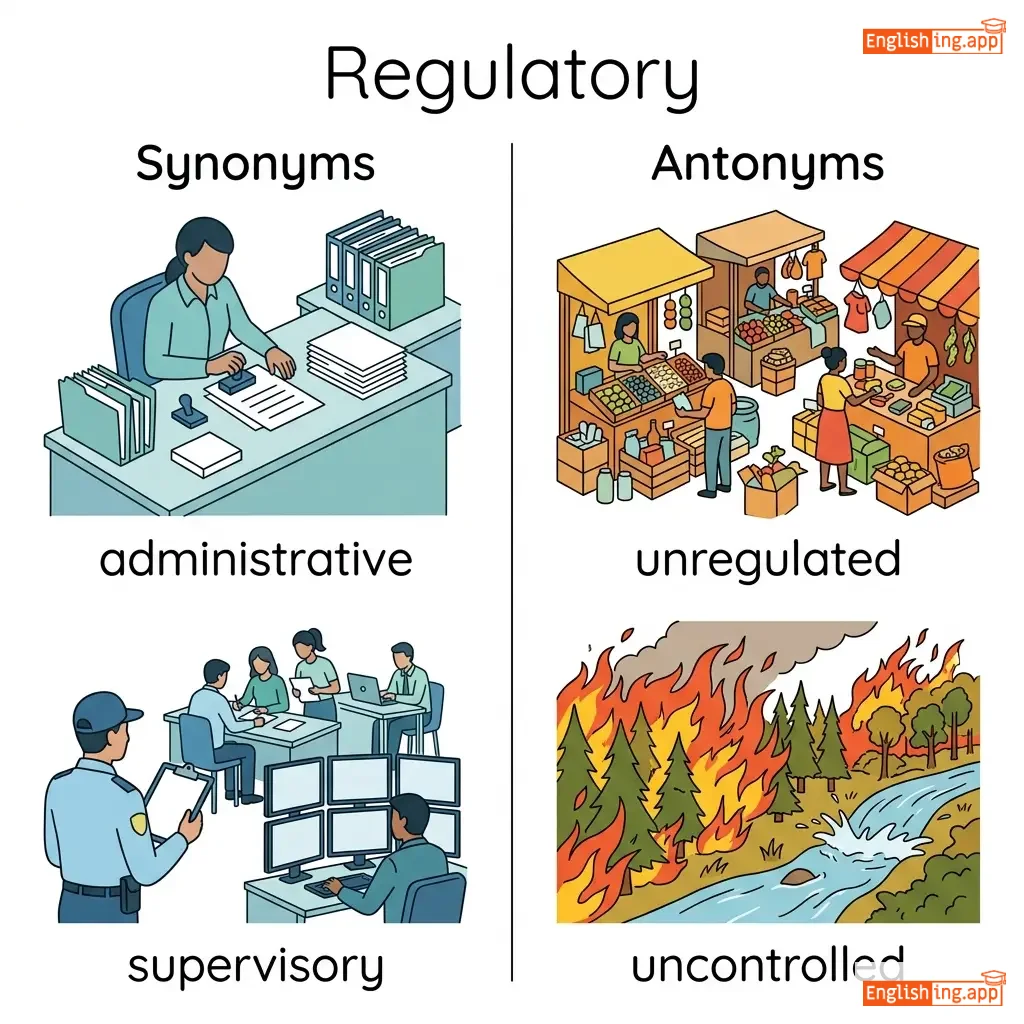
administrative, supervisory, controlling, governing, legislative
••••••
|
unregulated, uncontrolled
••••••
|
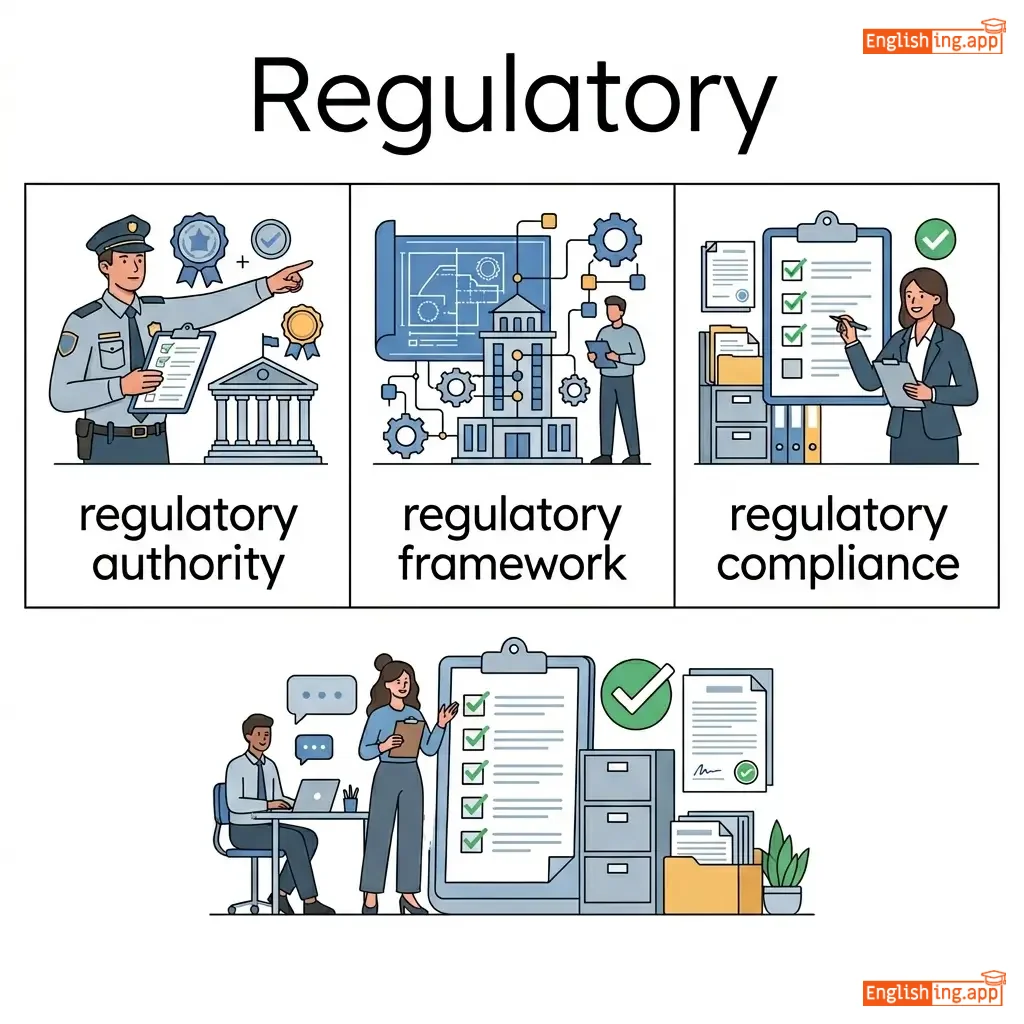
regulatory authority, regulatory framework, regulatory compliance, regulatory body
••••••
|
Регулирующий означает следовать правилам — как следовать правилам дорожного движения 🚦
••••••
|
|
💪
••••••
|
/ˌriːhəˌbɪlɪˈteɪʃən/
noun
(khappiness)
••••••
|
- •••••• |
счастье
schastye
••••••
|
- •••••• | - •••••• | - •••••• | - •••••• |
the process of restoring someone or something to health or normal life through training or therapy
••••••
|
After the accident, he went through months of rehabilitation to walk again.
Она не смогла скрыть свое счастье, когда получила награду.
••••••
|
Она не смогла скрыть свое счастье, когда получила награду.
Ona ne smogla skryt' svoyo schast'ye, kogda poluchila nagradu.
••••••
|
rehabilitation center
поиск счастья
••••••
|
a place where people recover physically or mentally
••••••
|
поиск счастья
poisk schast'ya
••••••
|
recovery, therapy, restoration, renewal
••••••
|
damage, decline
••••••
|
physical rehabilitation, rehabilitation program, rehabilitation center, drug rehabilitation
••••••
|
Счастье — это путь, который никогда не заканчивается.
••••••
|
|
👑
••••••
|
/reɪn/
verb, noun
(рэйн)
••••••
|
- •••••• |
царствовать
tsarstvovat
••••••
|
reigned
рэйнд
••••••
|
reigned
рэйнд
••••••
|
reigns
рэйнз
••••••
|
reigning
рэйнинг
••••••
|
to rule as a king or queen; the period during which a sovereign rules
••••••
|
Queen Elizabeth II reigned for many decades.
Королева Елизавета II правила в течение многих десятилетий.
••••••
|
Королева Елизавета II правила в течение многих десятилетий.
Koroleva Yelizaveta II pravila v techeniye mnogikh desyatiletiy.
••••••
|
reign supreme
править верховно
••••••
|
to be the best or most powerful
••••••
|
править верховно
pravit' verkhovno
••••••
|
rule, govern, dominate, prevail
••••••
|
serve, submit
••••••
|
long reign, reign of terror, reign supreme
••••••
|
Reign означает царствовать, как король или королева.
••••••
|
|
💪
••••••
|
/ˌriːɪnˈfɔːrs/
verb
(ree-in-fors)
••••••
|
|
усиливать
usilivat
••••••
|
reinforced
ree-in-forst
••••••
|
reinforced
ree-in-forst
••••••
|
reinforces
ree-in-forsez
••••••
|
reinforcing
ree-in-forzing
••••••
|
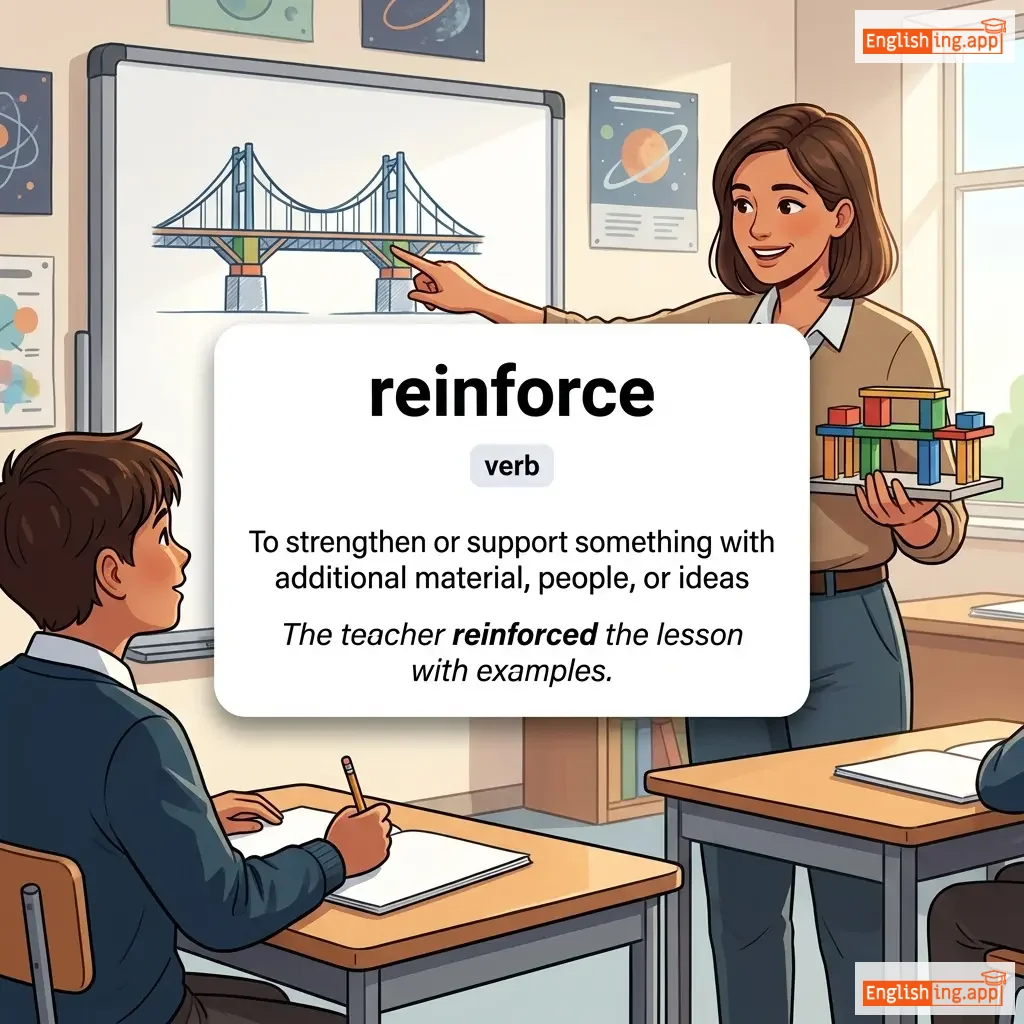
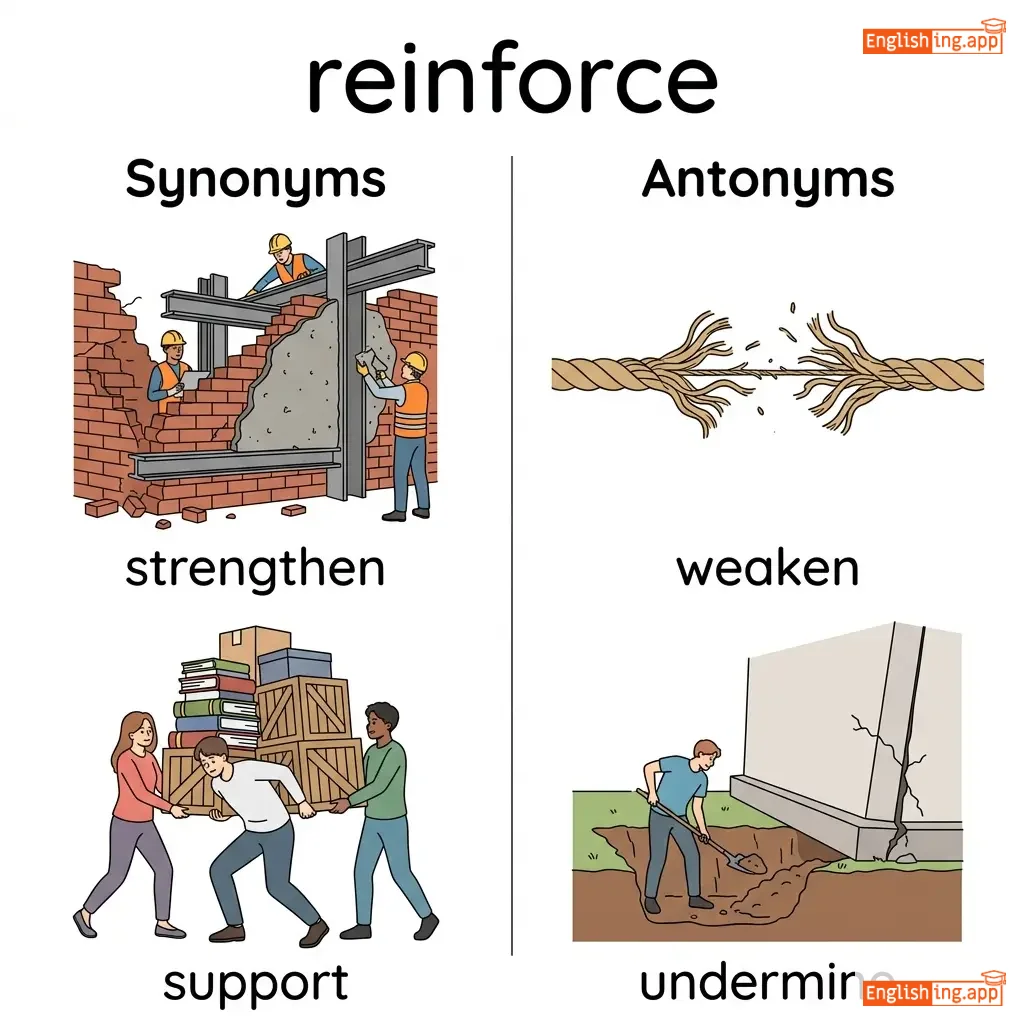
To strengthen or support something with additional material, people, or ideas
••••••
|
The teacher reinforced the lesson with examples.
Учитель укрепил урок с примерами.
••••••
|
Учитель укрепил урок с примерами.
Uchitel' ukrepil urok s primerami.
••••••
|
reinforce an idea
укрепить идею
••••••
|
To strengthen the belief or acceptance of a concept
••••••
|
укрепить идею
ukreplit' ideyu
••••••
|
strengthen, support, bolster, fortify, encourage
••••••
|
weaken, undermine
••••••
|
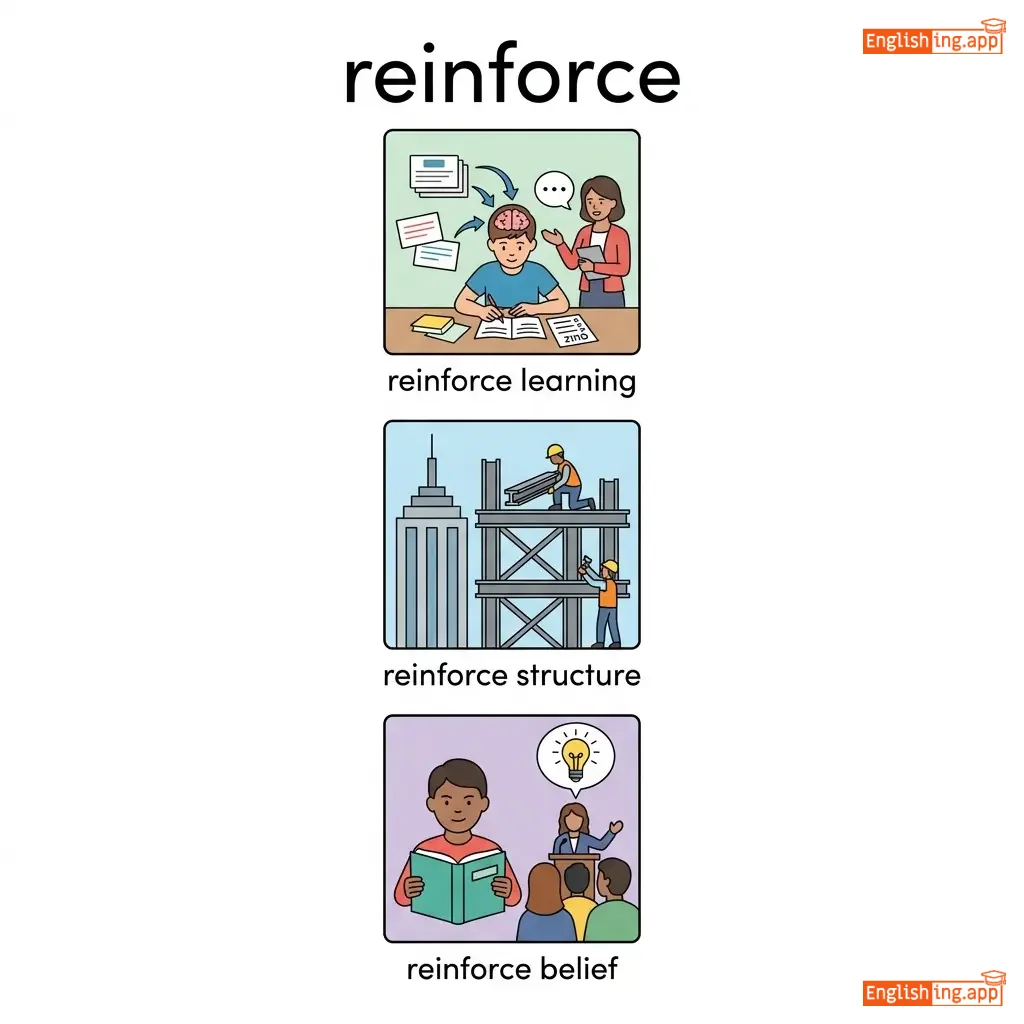
reinforce learning, reinforce structure, reinforce belief, reinforce habit
••••••
|
Rein (лошадь) + force = усилить с силой
••••••
|
|
❌
••••••
|
/rɪˈdʒekt/
verb
(rijékt)
••••••
|
|
отклонить
otklonit
••••••
|
rejected
rejékted
••••••
|
rejected
rejékted
••••••
|
rejects
rejékts
••••••
|
rejecting
rejékting
••••••
|
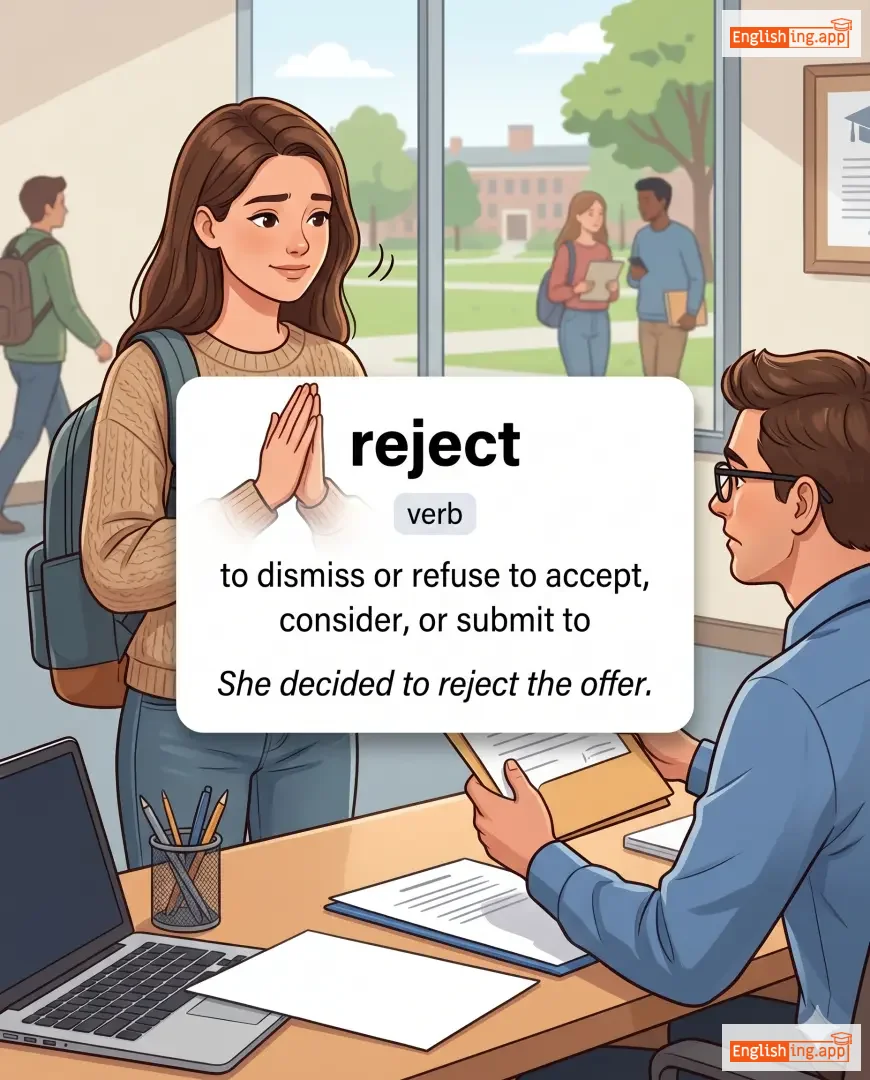
to refuse to accept or consider something
••••••
|
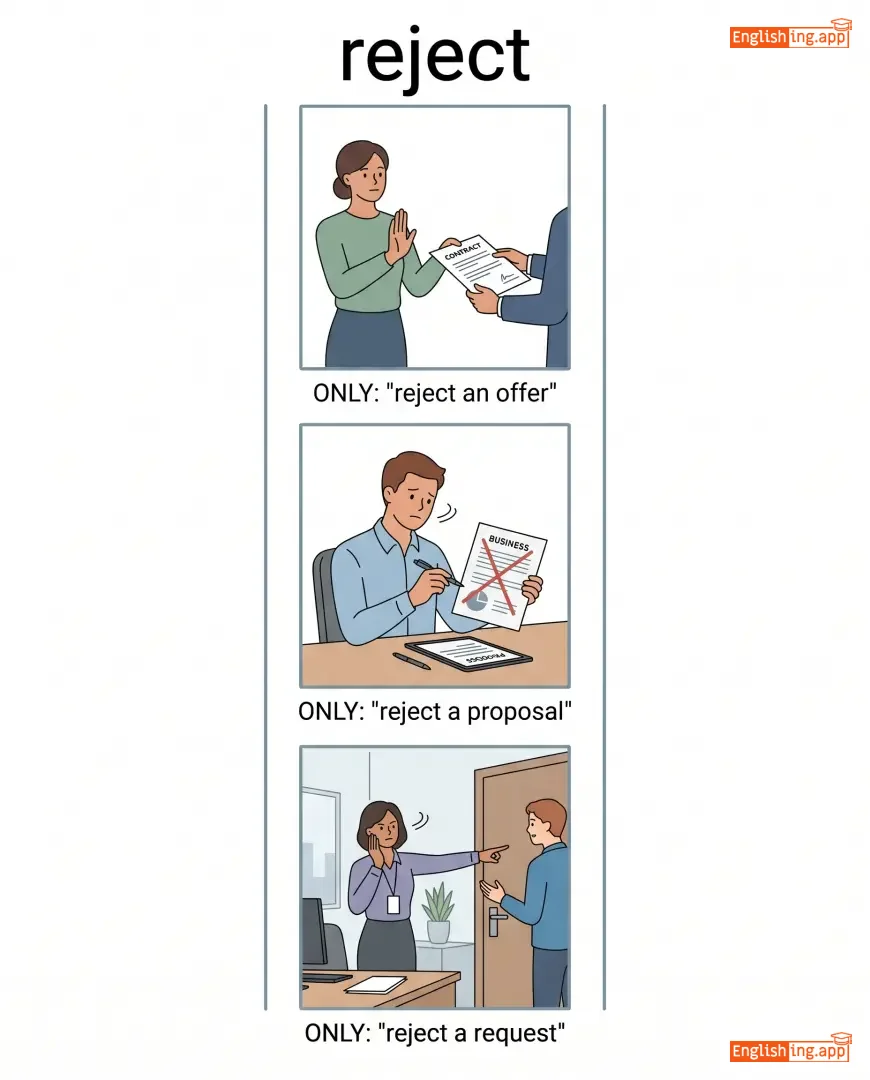
The committee decided to reject the proposal.
Комитет решил отклонить предложение.
••••••
|
Комитет решил отклонить предложение.
Komitet reshil otklonit predlozheniye.
••••••
|
- •••••• | - •••••• | - •••••• |
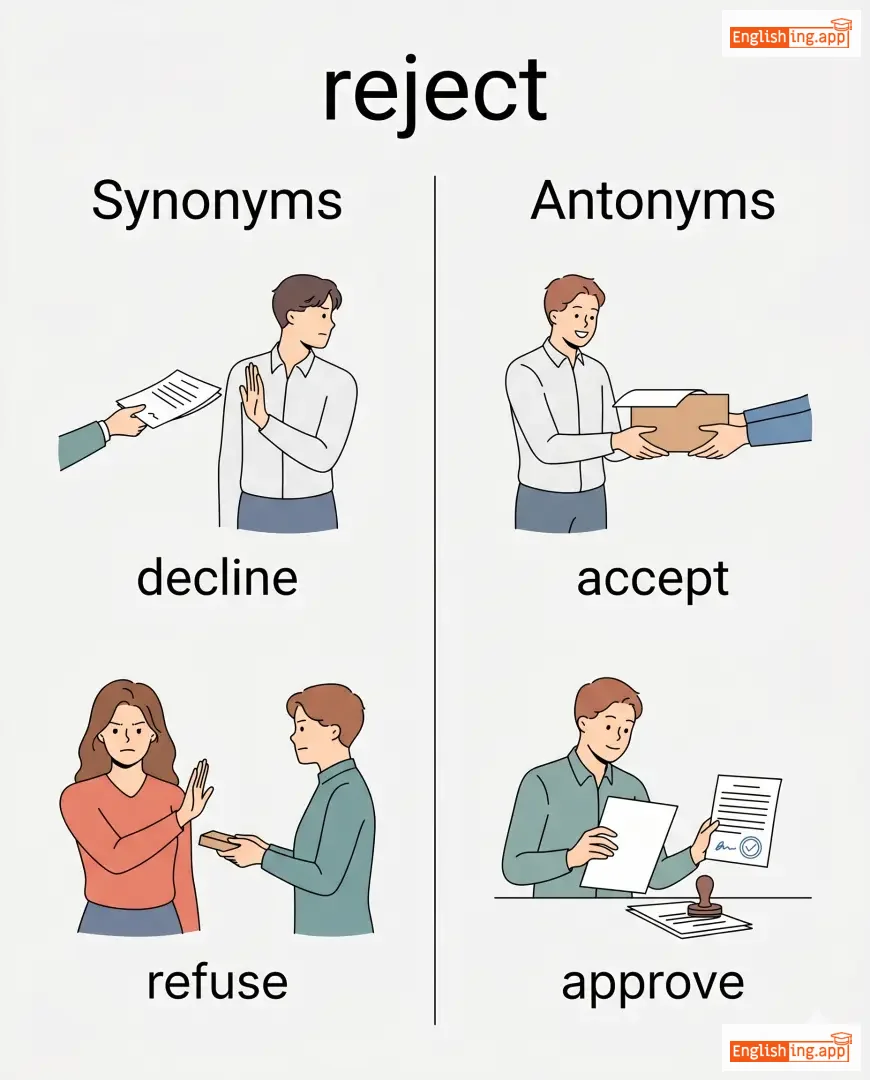
refuse, decline, dismiss, deny
••••••
|
accept, approve, embrace, welcome
••••••
|
firmly reject, completely reject, reject outright, reject a proposal, reject an offer
••••••
|
In Russian, 'отклонить' (otklonit) is a close match to 'reject'.
••••••
|
|
❌
••••••
|
/rɪˈdʒɛkʃən/
noun
(riˈʐɛkʃən)
••••••
|
- •••••• |
отказ
otkaz
••••••
|
- •••••• | - •••••• | - •••••• | - •••••• |
the action of refusing or dismissing something or someone
••••••
|
Her rejection of the offer surprised everyone. |
Её отказ от предложения удивил всех.
Yeyo otkaz ot predlozheniya udivil vsekh.
••••••
|
- •••••• | - •••••• | - •••••• |
refusal, denial, dismissal, veto
••••••
|
acceptance, approval, approval
••••••
|
rejection of offer, rejection letter, rejection of idea
••••••
|
Rejection is like saying 'no' firmly, making the decision clear.
••••••
|
|
🔗
••••••
|
/rɪˈleɪt/
verb
(рилейт)
••••••
|
- •••••• |
рассказывать
rasskazyvat
••••••
|
related
рилейтед
••••••
|
related
рилейтед
••••••
|
relates
рилейтс
••••••
|
relating
рилейтинг
••••••
|
to connect or show a link between; to tell a story
••••••
|
She relates her experience to the audience.
Она делится своим опытом с аудиторией.
••••••
|
Она делится своим опытом с аудиторией.
Ona delitsya svoim opytom s auditoriyey.
••••••
|
- •••••• | - •••••• | - •••••• |
connect, associate, tell, narrate
••••••
|
disconnect, separate, withhold, conceal
••••••
|
relate to others, relate experience, closely relate, relate stories
••••••
|
Рассказать (rasskazyvat) — это как relate, делиться опытом.
••••••
|
|
🔗
••••••
|
/rɪˈleɪtɪd/
adjective
(riléited)
••••••
|
- •••••• |
связанный
svyazannyy
••••••
|
- •••••• | - •••••• | - •••••• | - •••••• |
connected or associated with something else
••••••
|
The documents are all related to the same project.
Документы все связаны с одним и тем же проектом.
••••••
|
Документы все связаны с одним и тем же проектом.
Dokumenty vse svyazany s odnim i tem zhe proyektom.
••••••
|
related to
связанный с
••••••
|
connected with or concerning something
••••••
|
связанный с
svyazannyy s
••••••
|
connected, associated, linked, relevant, correlated
••••••
|
unrelated, separate
••••••
|
related issue, related topic, closely related, directly related
••••••
|
'Re + late' слушайте, чтобы запомнить — когда что-то происходит поздно, оно связано 🔗
••••••
|
|
👨👩👧👦
••••••
|
/rɪˈleɪ.ʃən/
noun
(ри-ле-йшн)
••••••
|
- •••••• |
отношение; родство
otnoshenie; rodstvo
••••••
|
- •••••• | - •••••• | - •••••• | - •••••• |
the way in which two or more people or things are connected; a family member
••••••
|
They have a strong business relation that has lasted for years. |
У них есть крепкие деловые отношения, которые длится уже много лет.
U nikh est' krepkiye delovyye otnosheniya, kotoryye dlitsya uzhe mnogo let
••••••
|
- •••••• | - •••••• | - •••••• |
relationship, connection, association, kinship
••••••
|
disconnection, separation, isolation
••••••
|
family relation, business relation, close relation, diplomatic relations
••••••
|
Отношение - это связь, например, родственные отношения.
••••••
|
|
💕
••••••
|
/rɪˈleɪ.ʃən.ʃɪp/
noun
(отношения)
••••••
|
- •••••• |
отношения
otnosheniya
••••••
|
- •••••• | - •••••• | - •••••• | - •••••• |
the way two people or groups feel and behave towards each other; a connection between two things
••••••
|
They have a very close relationship. |
У них очень близкие отношения.
U nikh ochen' blizkie otnosheniya.
••••••
|
- •••••• | - •••••• | - •••••• |
connection, bond, association, link
••••••
|
separation, isolation, disconnection
••••••
|
close relationship, personal relationship, working relationship, family relationship
••••••
|
Relationship: 'O' for 'Отношения' in Russian
••••••
|
|
⚖️
••••••
|
/ˈrel.ə.tɪv/
adjective
(релатив)
••••••
|
- •••••• |
относительный
otnositel'nyy
••••••
|
- •••••• | - •••••• | - •••••• | - •••••• |
considered in comparison to something else; not absolute; comparative
••••••
|
The cost of living is relative to your income level.
Стоимость жизни относительно вашего уровня дохода.
••••••
|
Стоимость жизни относительно вашего уровня дохода.
Stoimost' zhizni otnositel'no vashego urovnya dokhoda.
••••••
|
- •••••• | - •••••• | - •••••• |
comparative, proportional, corresponding, respective
••••••
|
absolute, fixed, independent, unrelated
••••••
|
relative importance, relative position, relative value
••••••
|
Относительный sounds like relative, meaning in comparison.
••••••
|
|
⚖️
••••••
|
/ˈrel.ə.tɪv.li/
adverb
(релятивно)
••••••
|
- •••••• |
относительно
otnositel'no
••••••
|
- •••••• | - •••••• | - •••••• | - •••••• |
in comparison to something else; quite; fairly
••••••
|
The weather is relatively warm today.
Сегодня погода относительно теплая.
••••••
|
Сегодня погода относительно теплая.
Segodnya pogoda otnositel'no teplaya.
••••••
|
- •••••• | - •••••• | - •••••• |
comparatively, fairly, reasonably
••••••
|
absolutely, extremely, completely
••••••
|
relatively simple, relatively new, relatively small
••••••
|
Относительно = 'Otnositel'no' (Indicates comparison)
••••••
|
|
🧘
••••••
|
/rɪˈlæks/
verb
(релакс)
••••••
|
- •••••• |
расслабляться
rasslablyatsya
••••••
|
relaxed
релаксировал
••••••
|
relaxed
релаксировал
••••••
|
relaxes
релаксирует
••••••
|
relaxing
релаксирующий
••••••
|
to make or become less tense or anxious; to rest
••••••
|
After a long day, she likes to relax with a good book.
После долгого дня ей нравится расслабляться с хорошей книгой.
••••••
|
После долгого дня ей нравится расслабляться с хорошей книгой.
Posle dolgogo dnya yey nravitsya rasslablyat'sya s khoroshiyey knigoy.
••••••
|
- •••••• | - •••••• | - •••••• |
unwind, de-stress, loosen up, calm down
••••••
|
tense, stress, worry
••••••
|
relax after work, relax at home, relax your mind, relax muscles
••••••
|
Расслабляться — это путь к восстановлению и покою.
••••••
|
|
😌
••••••
|
/rɪˈlækst/
adjective
(рилэкст)
••••••
|
- •••••• |
расслабленный
rasslablennyi
••••••
|
- •••••• | - •••••• | - •••••• | - •••••• |
free from tension or stress; calm and comfortable
••••••
|
She felt relaxed after listening to soft music.
Ши фелт рилэкст афтер листенинг ту софт мьюзик.
••••••
|
Она чувствовала себя расслабленной после спокойной музыки.
Ona chuvstvovala sebya rasslablennoy posle spokoinoy muzyki
••••••
|
relaxed attitude
рилэкст этитюд
••••••
|
a calm and easy-going way of thinking or behaving
••••••
|
расслабленное отношение
rasslablennoye otnosheniye
••••••
|
calm, at ease, comfortable, unworried, peaceful
••••••
|
tense, stressed, anxious
••••••
|
relaxed mood, relaxed atmosphere, feel relaxed, relaxed style
••••••
|
Relax → rasslablennyi
••••••
|
|
🕊️
••••••
|
/rɪˈliːs/
verb
(riliz)
••••••
|

|
выпуск, релиз
vypusk, reliz
••••••
|
released
riliziroval
••••••
|
released
riliziroval
••••••
|
releases
riliziruet
••••••
|
releasing
riliziruyushchiy
••••••
|
to set free, to make available, or to allow something to go out
••••••
|
The company will release the new product next month.
Компания выпустит новый продукт в следующем месяце.
••••••
|
Компания выпустит новый продукт в следующем месяце.
Kompaniya vypustit novyy produkt v sleduyushchem mesyatse.
••••••
|
release tension
снять напряжение
••••••
|
to reduce or let go of stress or nervous energy
••••••
|
снять напряжение
snyat' napryazheniye
••••••
|
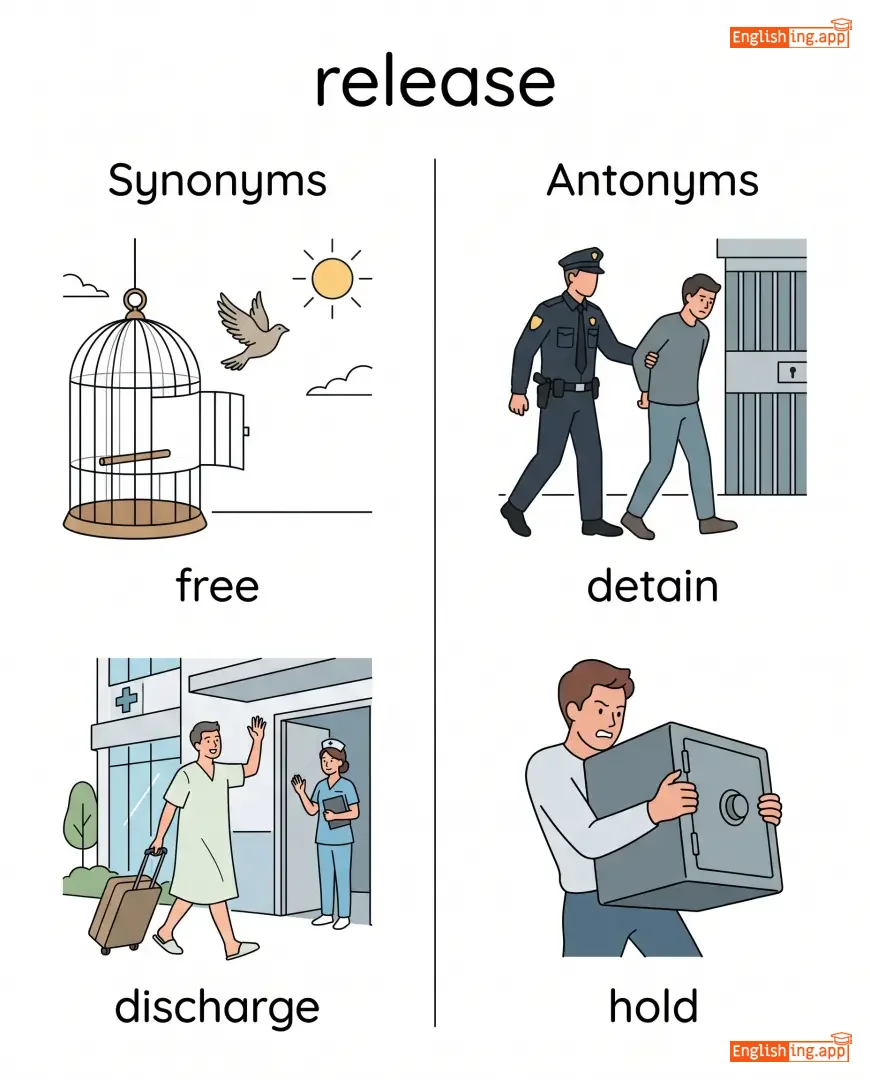
free, discharge, liberate, publish, issue
••••••
|
detain, hold, capture
••••••
|
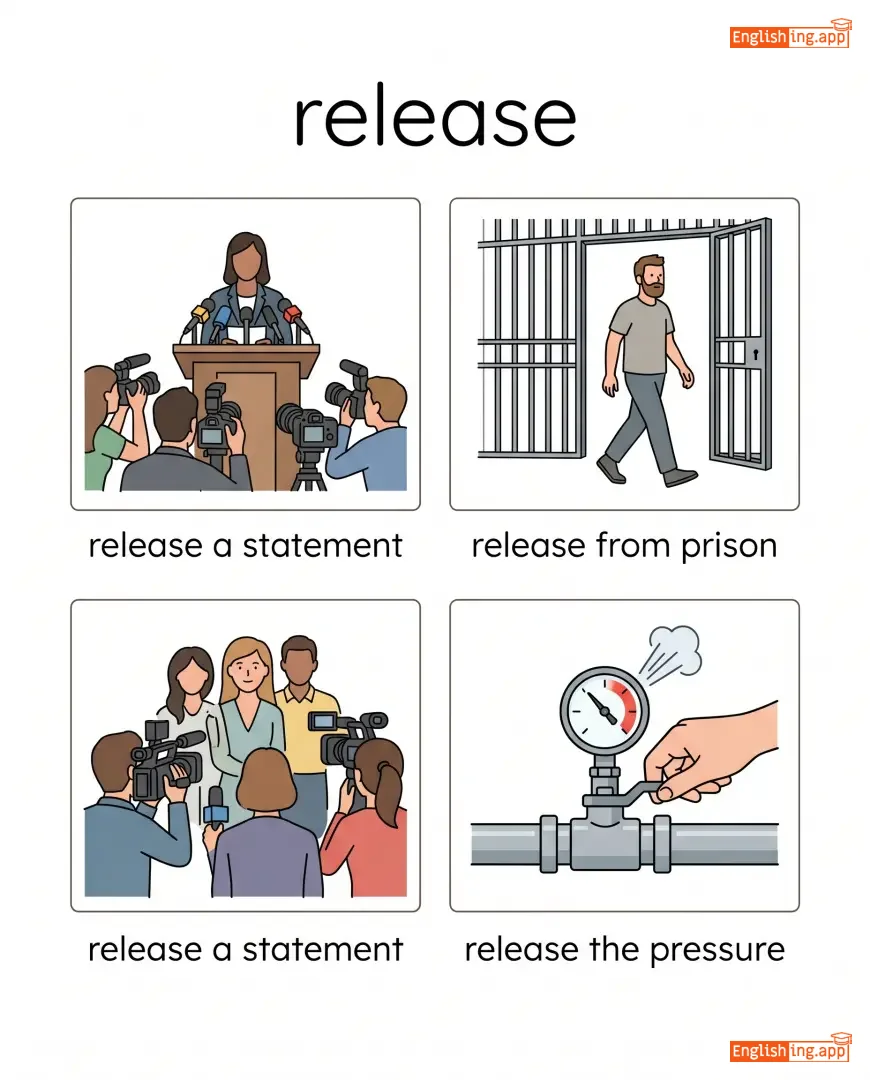
release a statement, release from prison, release the pressure, release an album
••••••
|
Release — это выпуск: когда продукт выпускается, стресс уходит.
••••••
|
|
📌
••••••
|
/ˈrɛlɪvəns/
noun
(ре-ле-вэнс)
••••••
|
- •••••• |
актуальность
aktual'nost'
••••••
|
- •••••• | - •••••• | - •••••• | - •••••• |
the quality or state of being closely connected or appropriate
••••••
|
The relevance of the information was clear to everyone. |
Актуальность информации была очевидна для всех.
Aktual'nost' informatsii byla ochevidna dlya vsekh.
••••••
|
- •••••• | - •••••• | - •••••• |
importance, significance, pertinence, applicability
••••••
|
irrelevance, insignificance, unimportance
••••••
|
relevance to, relevance of topic, great relevance
••••••
|
Relevance is like when the topic is current, like what everyone talks about in class.
••••••
|
|
📌
••••••
|
/ˈrɛl.ə.vənt/
adjective
(релевант)
••••••
|
- •••••• |
релевантный
relevantny
••••••
|
- •••••• | - •••••• | - •••••• | - •••••• |
closely connected or appropriate to what is being considered or done
••••••
|
Your comments are not relevant to the discussion.
Ваши комментарии не имеют отношения к обсуждению.
••••••
|
Ваши комментарии не имеют отношения к обсуждению.
Vashi kommentarii ne imeyut otnosheniya k obsuzhdeniyu.
••••••
|
relevant to the point
релевантно вопросу
••••••
|
directly connected to the main issue being discussed
••••••
|
релевантно вопросу
relevantno voprosu
••••••
|
pertinent, applicable, appropriate, related, connected
••••••
|
irrelevant, unrelated, inappropriate
••••••
|
relevant information, relevant issue, relevant factors, relevant data
••••••
|
Relevant означает релевантный, как релевантные вопросы на экзамене, то есть подходящие вопросы.
••••••
|
|
🛠️
••••••
|
/rɪˌlaɪəˈbɪləti/
noun
(релиабилити)
••••••
|
- •••••• |
надежность
nadezhnost
••••••
|
- •••••• | - •••••• | - •••••• | - •••••• |
the quality of being trustworthy or performing consistently well
••••••
|
Customers value the reliability of our service.
Клиенты ценят надежность нашего сервиса.
••••••
|
Клиенты ценят надежность нашего сервиса.
Klienty tsenyat nadezhnost' nashego servisa.
••••••
|
reliability test
тест надежности
••••••
|
a test to measure how dependable something is
••••••
|
тест надежности
test nadezhnosti
••••••
|
dependability, consistency, trustworthiness, stability
••••••
|
unreliability, inconsistency
••••••
|
high reliability, reliability test, system reliability, reliability score
••••••
|
Надежность = надежный — на кого можно полагаться
••••••
|
|
😌
••••••
|
/rɪˈliːf/
noun
(релиф)
••••••
|
- •••••• |
облегчение; комфорт; помощь
oblegchenie, komfort, pomoshch
••••••
|
- •••••• | - •••••• | - •••••• | - •••••• |
a feeling of comfort after worry or distress; assistance given to those in need
••••••
|
She felt great relief when the exam was over.
Она почувствовала большое облегчение, когда экзамен был завершён.
••••••
|
Она почувствовала большое облегчение, когда экзамен был завершён.
Ona pochuvstvovala bol'shoye oblegcheniye, kogda ekzamen byl zavershyon.
••••••
|
- •••••• | - •••••• | - •••••• |
comfort, ease, assistance, aid
••••••
|
anxiety, worry, stress, burden
••••••
|
pain relief, relief work, great relief, tax relief
••••••
|
Облегчение приходит с облегчением!
••••••
|
|
😌
••••••
|
/rɪˈliːv/
verb
(riliv)
••••••
|
- •••••• |
облегчать
oblegchat
••••••
|
relieved
rilivd
••••••
|
relieved
rilivd
••••••
|
relieves
rilivz
••••••
|
relieving
rilivin
••••••
|
to make pain, distress, or difficulty less severe or serious
••••••
|
The medicine helped relieve his headache.
Медикамент помог облегчить его головную боль.
••••••
|
Медикамент помог облегчить его головную боль.
Medikament pomog oblegchit ego golovnuju bol.
••••••
|
relieve stress
снять стресс
••••••
|
to reduce or ease mental or emotional strain
••••••
|
снять стресс
snyat stress
••••••
|
ease, reduce, lessen, soothe, alleviate
••••••
|
aggravate, worsen
••••••
|
relieve pain, relieve stress, relieve pressure, relieve symptoms
••••••
|
Relieve означает ‘отпустить’ + ‘оставить’ — расслабиться 😌
••••••
|
|
😌
••••••
|
/rɪˈliːvd/
adjective
(rɪˈliːvd)
••••••
|
- •••••• |
облегчённый
oblegchyonny
••••••
|
- •••••• | - •••••• | - •••••• | - •••••• |
feeling happy and less worried after something stressful has been removed or resolved
••••••
|
She felt relieved after hearing the good news. |
Она почувствовала облегчение после того, как услышала хорошие новости.
Ona pochuvstvovala oblegchenie posle togo, kak uslyshala khoroshie novosti.
••••••
|
- •••••• | - •••••• | - •••••• |
comforted, relaxed, reassured, eased
••••••
|
worried, stressed, anxious
••••••
|
feel relieved, relieved to know, felt relieved
••••••
|
Relieved is like a 'relief' (releef) after a stressful day.
••••••
|
|
🙏
••••••
|
/rɪˈlɪdʒ.ən/
noun
(религия)
••••••
|
- •••••• |
религия
religiya
••••••
|
- •••••• | - •••••• | - •••••• | - •••••• |
a system of faith and worship involving belief in a higher power
••••••
|
Freedom of religion is a fundamental human right.
Свобода вероисповедания — это основное право человека.
••••••
|
Свобода вероисповедания — это основное право человека.
Svoboda veroispovedaniya — eto osnovnoe pravo cheloveka.
••••••
|
blind faith in religion
слепая вера в религию
••••••
|
unquestioning belief in a religious system
••••••
|
слепая вера в религию
slepaya vera v religiyu
••••••
|
faith, belief, spirituality, creed, worship
••••••
|
atheism, disbelief, skepticism
••••••
|
major religion, world religion, religious practice, organized religion
••••••
|
Religion = RE(бога) + GION (система)
••••••
|
|
🙏
••••••
|
/rɪˈlɪdʒəs/
adjective
(религиозный)
••••••
|
- •••••• |
религиозный
religiozny
••••••
|
- •••••• | - •••••• | - •••••• | - •••••• |
relating to or believing in a religion or faith
••••••
|
She is a very religious woman who prays every day.
Она очень религиозная женщина, которая молится каждый день.
••••••
|
Она очень религиозная женщина, которая молится каждый день.
Ona ochen' religioznaya zhenshchina, kotoraya molitsya kazhdyj den'.
••••••
|
religious fervor
религиозный пыл
••••••
|
intense passion and devotion towards religion
••••••
|
религиозный пыл
religiozny pyl
••••••
|
devout, pious, spiritual, faithful, holy
••••••
|
atheist, secular, irreligious
••••••
|
religious belief, religious practice, religious festival, religious leader
••••••
|
Religious означает религиозный — представьте, как человек молится, заполняя храм!
••••••
|
|
😟
••••••
|
/rɪˈlʌktənt/
adjective
(rilaktant)
••••••
|
- •••••• |
неохотный
neokhotnyy
••••••
|
- •••••• | - •••••• | - •••••• | - •••••• |
unwilling or hesitant to do something
••••••
|
She was reluctant to speak in front of the large audience. |
Она была неохотна говорить перед большой аудиторией.
Ona byla neokhotna govorit' pered bol'shoy auditoriyey.
••••••
|
reluctant hero |
a person who is unwilling to accept their role but ends up fulfilling it
••••••
|
неохотный герой
neokhotnyy geroy
••••••
|
unwilling, hesitant, resistant, disinclined, loath
••••••
|
willing, eager, ready
••••••
|
reluctant to accept, reluctant agreement, reluctant smile, reluctant participant
••••••
|
Reluctant и неохотный - это два похожих слова.
••••••
|
|
🤝
••••••
|
/rɪˈlaɪ/
verb
(rilai)
••••••
|
- •••••• |
полагаться
polagat'sya
••••••
|
relied
riláid
••••••
|
relied
riláid
••••••
|
relies
riláiz
••••••
|
relying
riláing
••••••
|
to depend on or trust someone or something
••••••
|
I rely on my friends for support.
Я полагаюсь на своих друзей для поддержки.
••••••
|
Я полагаюсь на своих друзей для поддержки.
Ya polagayus' na svoikh druzey dlya podderzhki.
••••••
|
- •••••• | - •••••• | - •••••• |
depend, trust, count on, lean on
••••••
|
distrust, doubt, reject
••••••
|
rely on, rely upon, rely heavily, rely completely
••••••
|
Друзья – это всегда полагаться на них!
••••••
|
|
🏠
••••••
|
/rɪˈmeɪn/
verb
(rimén)
••••••
|
|
оставаться
ostavat'sya
••••••
|
remained
riméind
••••••
|
remained
riméind
••••••
|
remains
riméins
••••••
|
remaining
riméining
••••••
|
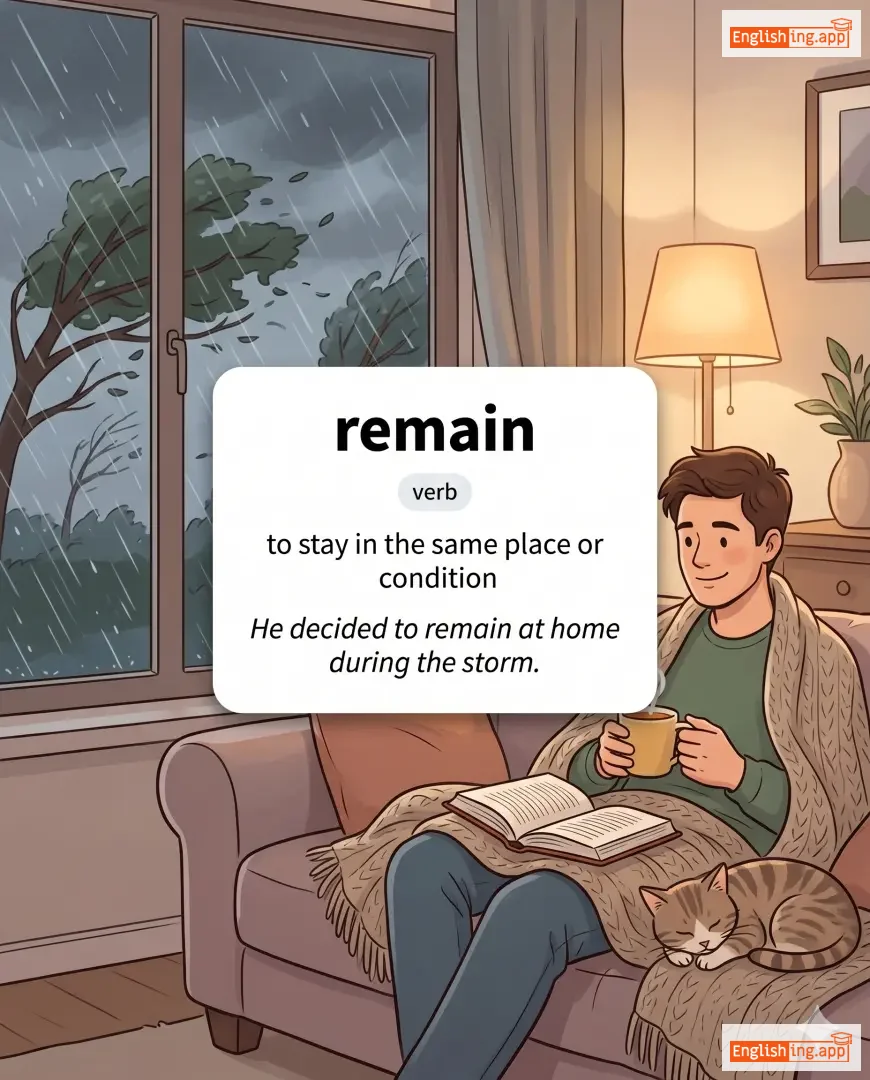
to stay in the same place; to continue to exist
••••••
|
Only a few guests remain at the party.
Только несколько гостей остаются на вечеринке.
••••••
|
Только несколько гостей остаются на вечеринке.
Tol'ko neskol'ko gostey ostayutsya na vecherinke.
••••••
|
- •••••• | - •••••• | - •••••• |
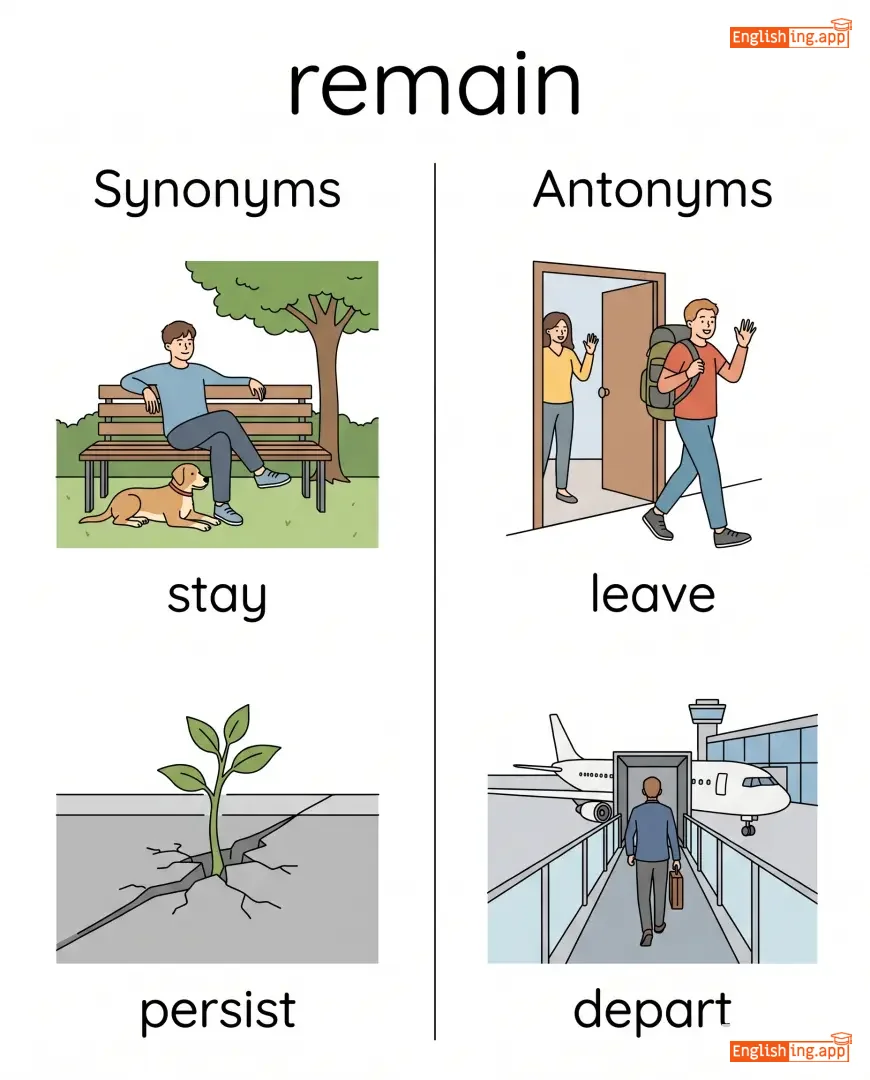
stay, continue, persist, endure
••••••
|
leave, go, depart, disappear
••••••
|
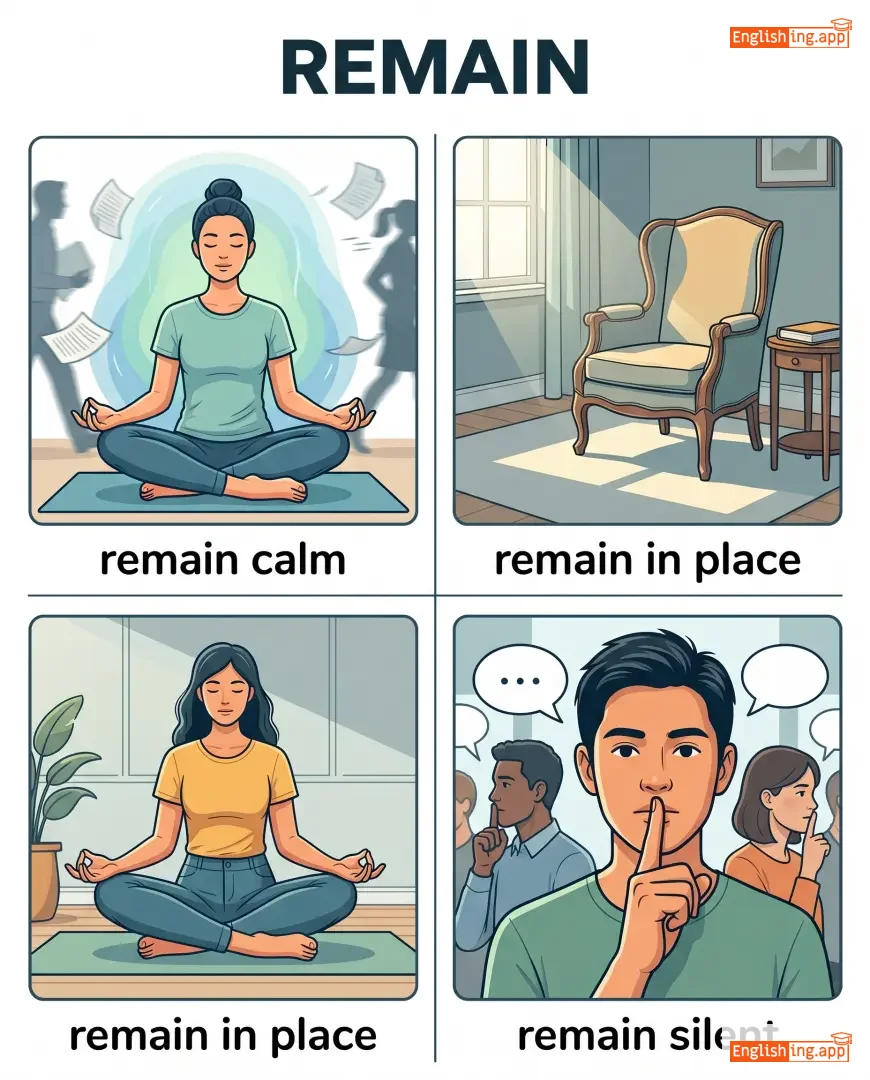
remain calm, remain silent, remain unchanged, remain faithful
••••••
|
Imagine remaining at the party when everyone else has left, feeling that you're the last one standing!
••••••
|
|
🪙
••••••
|
/rɪˈmeɪndər/
noun
(riméyndər)
••••••
|
- •••••• |
остаток
ostatok
••••••
|
- •••••• | - •••••• | - •••••• | - •••••• |
the part that is left after the main part is gone or used
••••••
|
He ate most of the cake and left the remainder on the plate.
Он съел большую часть торта и оставил остаток на тарелке.
••••••
|
Он съел большую часть торта и оставил остаток на тарелке.
On s'yel bol'shuyu chast' torta i ostavil ostatok na tarelke.
••••••
|
the remainder of the day
остаток дня
••••••
|
the part of the day that is left
••••••
|
остаток дня
ostatok dnya
••••••
|
rest, residue, balance, leftover, surplus
••••••
|
whole, total, entirety
••••••
|
leave the remainder, remainder of the day, remainder of the work, small remainder
••••••
|
Remainder означает остаток; представь себе торт, что осталось — это остаток.
••••••
|
|
🎟️
••••••
|
/rɪˈmeɪnɪŋ/
adjective
(riméining)
••••••
|
- •••••• |
оставшийся
ostavshiysya
••••••
|
- •••••• | - •••••• | - •••••• | - •••••• |
still existing or left after others are gone or dealt with
••••••
|
There were only a few remaining tickets for the concert.
Осталось всего несколько билетов на концерт.
••••••
|
Осталось всего несколько билетов на концерт.
Ostalos' vsego neskol'ko biletov na kontsert.
••••••
|
- •••••• | - •••••• | - •••••• |
left, leftover, residual, remaining
••••••
|
gone, used up, finished
••••••
|
remaining tickets, remaining time, remaining items
••••••
|
Оставшиеся билеты – это последние, которые продадутся!
••••••
|
|
💀
••••••
|
/rɪˈmeɪnz/
noun
(rimens)
••••••
|
- •••••• |
остатки
ostatki
••••••
|
- •••••• | - •••••• | - •••••• | - •••••• |
the parts, pieces, or substances that are left after the rest has been used or removed
••••••
|
The remains of the meal were left on the table. |
Остатки еды остались на столе.
Ostatki edy ostalis' na stole.
••••••
|
- •••••• | - •••••• | - •••••• |
leftovers, debris, remnants, fragments
••••••
|
whole, entirety, whole thing
••••••
|
remains of food, human remains, remains of the day
••••••
|
Remains are like 'rest' (ostatki) left after a meal.
••••••
|
|
💬
••••••
|
/rɪˈmɑːrk/
noun/verb
(римарк)
••••••
|
- •••••• |
замечание
zamechanie
••••••
|
remarked
римаркд
••••••
|
remarked
римаркд
••••••
|
remarks
римаркс
••••••
|
remarking
римаркинг
••••••
|
something that is said; a comment
••••••
|
She made a remark about the weather.
ши мейд э римарк эбаут зэ везэр
••••••
|
Она сделала замечание о погоде.
Ona sdelala zamechanie o pogode.
••••••
|
make a remark
мейк э римарк
••••••
|
to say something, usually as a comment
••••••
|
сделать замечание
sdelat zamechanie
••••••
|
comment, observation, statement, note
••••••
|
silence, quiet
••••••
|
casual remark, make a remark, witty remark, critical remark
••••••
|
Remark – zamechanie: когда кто-то делает remark, он делает замечание.
••••••
|
|
⭐
••••••
|
/rɪˈmɑːrkəbl/
adjective
(rimarkabl)
••••••
|
- •••••• |
замечательный; исключительный; достойный внимания;
zamechatel'nyy; iskljuchitel'nyy; dostoynyy vnimaniya
••••••
|
- •••••• | - •••••• | - •••••• | - •••••• |
worthy of attention; extraordinary; notable;
••••••
|
His recovery from the illness was remarkable. |
Его выздоровление от болезни было замечательным.
Ego vyzdorovlenie ot bolezni bylo zamechatel'nym.
••••••
|
- •••••• | - •••••• | - •••••• |
extraordinary, outstanding, exceptional, amazing
••••••
|
ordinary, unremarkable, common, typical
••••••
|
remarkable achievement, remarkable progress, remarkable talent
••••••
|
Remarkable = замечательный + исключительный
••••••
|
|
👏
••••••
|
/rɪˈmɑːrkəbli/
adverb
(ri-már-ka-bli)
••••••
|
- •••••• |
необычным образом
neobychnym obrazom
••••••
|
- •••••• | - •••••• | - •••••• | - •••••• |
in a way that is worthy of attention or notice; surprisingly
••••••
|
She did remarkably well in the competition. |
Она удивительно хорошо справилась на конкурсе.
Ona udivitel'no khorosho spravilas' na konkurse.
••••••
|
- •••••• | - •••••• | - •••••• |
notably, extraordinarily, exceptionally, amazingly
••••••
|
unremarkably, ordinarily
••••••
|
remarkably good, remarkably well, remarkably strong
••••••
|
Remarkably is like 'remark' (re-marks) made in awe.
••••••
|
|
💊
••••••
|
/ˈrem.ə.di/
noun
(Ремеди)
••••••
|
- •••••• |
лекарство; средство
remuhdee
••••••
|
- •••••• | - •••••• | - •••••• | - •••••• |
a medicine or treatment for a disease; a solution to a problem
••••••
|
This herbal remedy helps with headaches.
Это травяное средство помогает при головных болях.
••••••
|
Это травяное средство помогает при головных болях.
Eto travyanoe sredstvo pomogaet pri golovnykh bolakh.
••••••
|
- •••••• | - •••••• | - •••••• |
cure, treatment, solution, medicine
••••••
|
disease, problem, ailment, poison
••••••
|
home remedy, herbal remedy, legal remedy, effective remedy
••••••
|
Ремеди = Remember Medicine; это лекарство которое лечит.
••••••
|
|
💭
••••••
|
/rɪˈmembə/
verb
(рɪˈмɛмбə)
••••••
|

|
помнить
pomnit
••••••
|
remembered
рɪˈмɛмбəd
••••••
|
remembered
рɪˈмɛмбəd
••••••
|
remembers
рɪˈмɛмбəz
••••••
|
remembering
рɪˈмɛмбəɹɪŋ
••••••
|
to bring a past event back into one's mind; to keep in memory
••••••
|
I remember my first day at school.
Я помню мой первый день в школе.
••••••
|
Я помню мой первый день в школе.
Ya pomnyu moy pervyy den' v shkole.
••••••
|
- •••••• | - •••••• | - •••••• |
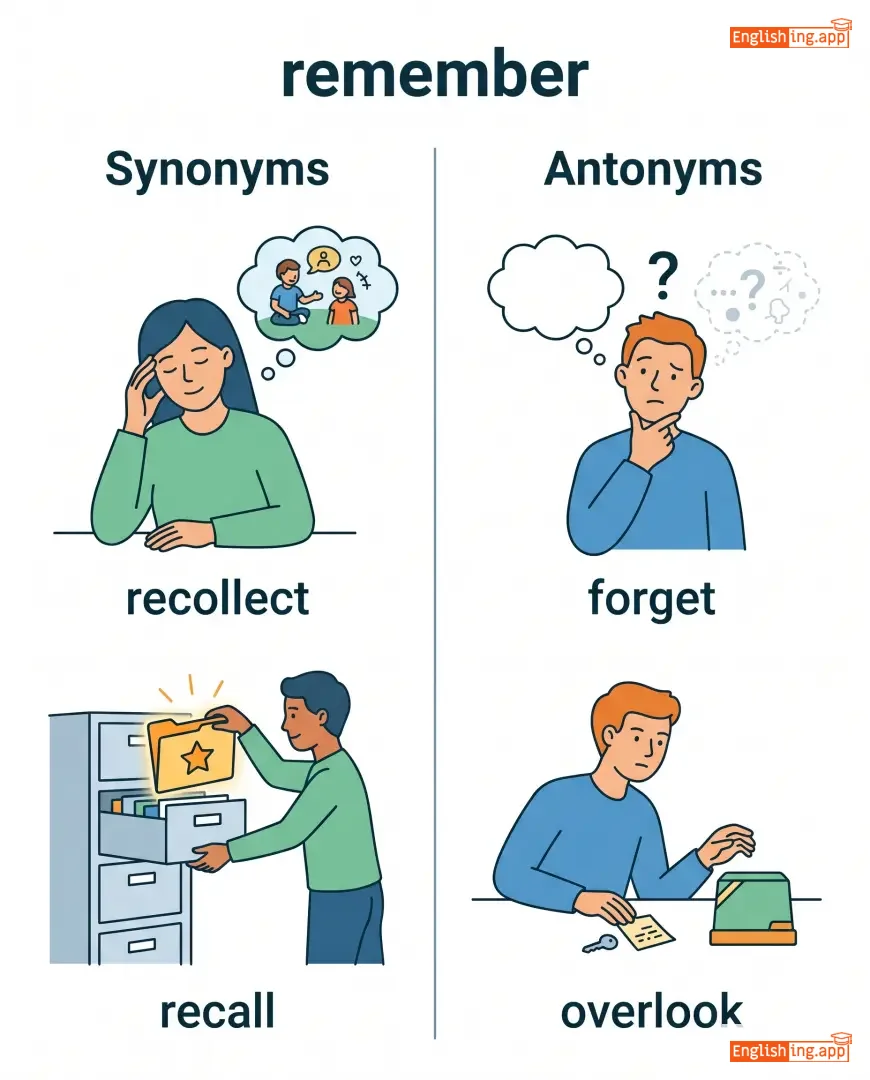
recall, recollect, reminisce, retain
••••••
|
forget, overlook, ignore
••••••
|
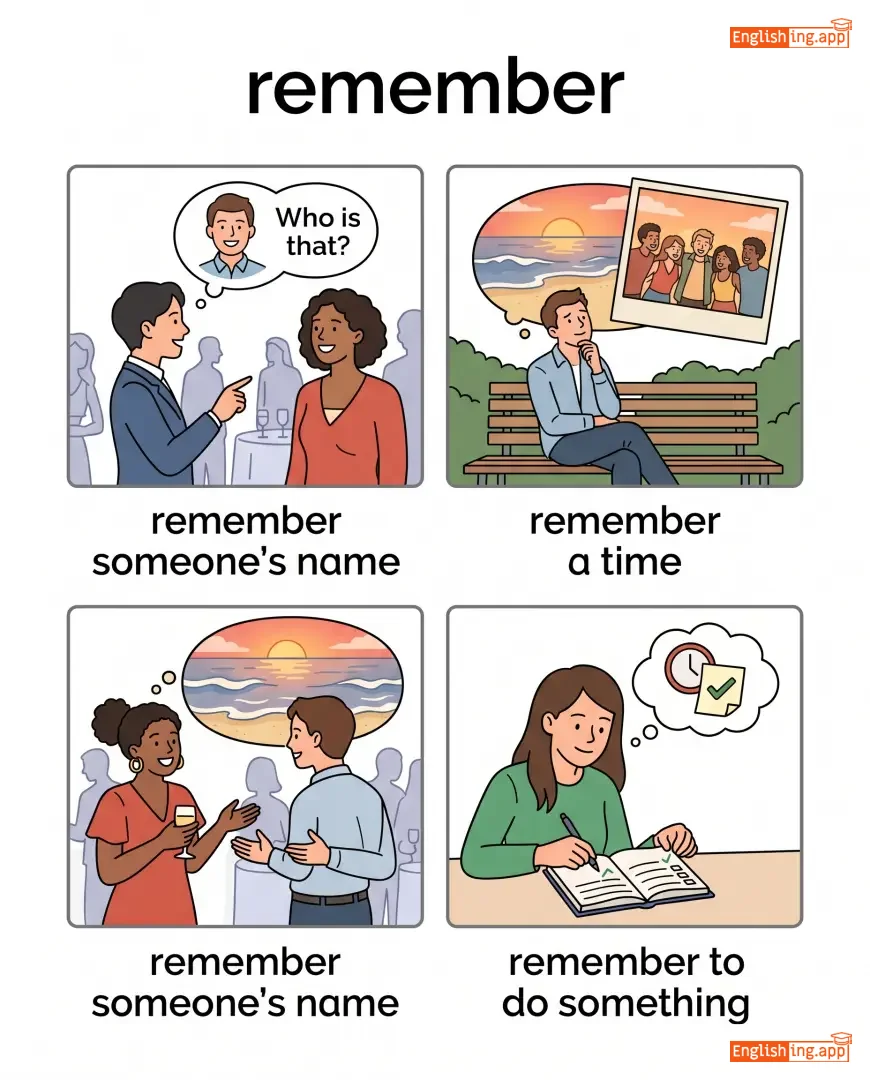
remember clearly, remember well, remember to do, remember when
••••••
|
Помни свой первый школьный день!
••••••
|
|
🔔
••••••
|
/rɪˈmaɪnd/
verb
(римайнд)
••••••
|
- •••••• |
напоминать
napominat'
••••••
|
reminded
римайндед
••••••
|
reminded
римайндед
••••••
|
reminds
римайндс
••••••
|
reminding
римайндинг
••••••
|
to cause someone to remember something
••••••
|
Please remind me to call her tomorrow.
Пожалуйста, напомни мне позвонить ей завтра.
••••••
|
Пожалуйста, напомни мне позвонить ей завтра.
Pozhaluysta, napomni mne pozvonit' yey zavtra.
••••••
|
- •••••• | - •••••• | - •••••• |
alert, notify, jog memory, prompt
••••••
|
forget, neglect
••••••
|
remind someone of something, remind to do something
••••••
|
Напомни мне, как 'remind' в английском.
••••••
|
|
⏰
••••••
|
/rɪˈmaɪndər/
noun
(re-mai-nder)
••••••
|
- •••••• |
напоминание
napominanie
••••••
|
- •••••• | - •••••• | - •••••• | - •••••• |
something that helps you remember a fact, event, or action that you need to do or recall
••••••
|
He set a reminder to call his mother on her birthday. |
Он установил напоминание, чтобы позвонить своей матери на ее день рождения.
On ustanovil napominanie, chtoby pozvonit' svoey materi na yeyo den' rozhdeniya.
••••••
|
gentle reminder |
a polite way to remind someone about something
••••••
|
нежное напоминание
nezhnoe napominanie
••••••
|
prompt, cue, notice, alert, warning
••••••
|
forgetfulness, omission
••••••
|
set a reminder, friendly reminder, daily reminder, send a reminder
••••••
|
Напоминание = Напомни - напоминание напоминает тебе!
••••••
|
|
🌍
••••••
|
/rɪˈmoʊt/
adjective
(римот)
••••••
|
- •••••• |
удалённый
udalyonny
••••••
|
- •••••• | - •••••• | - •••••• | - •••••• |
Situated far from the main centers of population; distant.
••••••
|
They stayed in a remote village during their trip. |
Они остановились в удалённой деревне во время своей поездки.
Oni ostanovilis' v udalyonnoy derevne vo vremya svoey poezzdki.
••••••
|
remote possibility |
A very unlikely chance.
••••••
|
удалённая вероятность
udalyonnaya veroyatnost'
••••••
|
distant, faraway, isolated, secluded, outlying
••••••
|
near, close, central
••••••
|
remote area, remote control, remote access, remote work
••••••
|
Remote звучит как 'удалённый', например, как удалённое управление, которое работает на расстоянии.
••••••
|

