Получите неограниченный доступ ко всем словам с подпиской Pro
Обновить до ProПолучите неограниченный доступ ко всем предложениям с подпиской Pro
Обновить до Pro|
Эмодзи
|
Слово | Images | Перевод | Прошедшее | Причастие прошедшего времени | Третье лицо единственного числа | Герундий | Значение | Пример предложения | Перевод примера предложения | Пример выражения | Значение примера выражения | Перевод примера выражения | Синонимы | Антонимы | Коллокации | Мнемоника |
|---|---|---|---|---|---|---|---|---|---|---|---|---|---|---|---|---|---|
|
💊
••••••
|
/ˈmed.ɪ.sən/
noun
(медицин)
••••••
|

|
лекарство
lekarstvo
••••••
|
- •••••• | - •••••• | - •••••• | - •••••• |
A substance used to treat illness, injury, or disease.
••••••
|
He took some medicine for his headache. |
Он принял лекарство от головной боли.
On prinyal lekarstvo ot golovnoy boli.
••••••
|
take your medicine |
to accept punishment or consequences
••••••
|
прими свою лекарство
primi svoyu lekarstvo
••••••
|
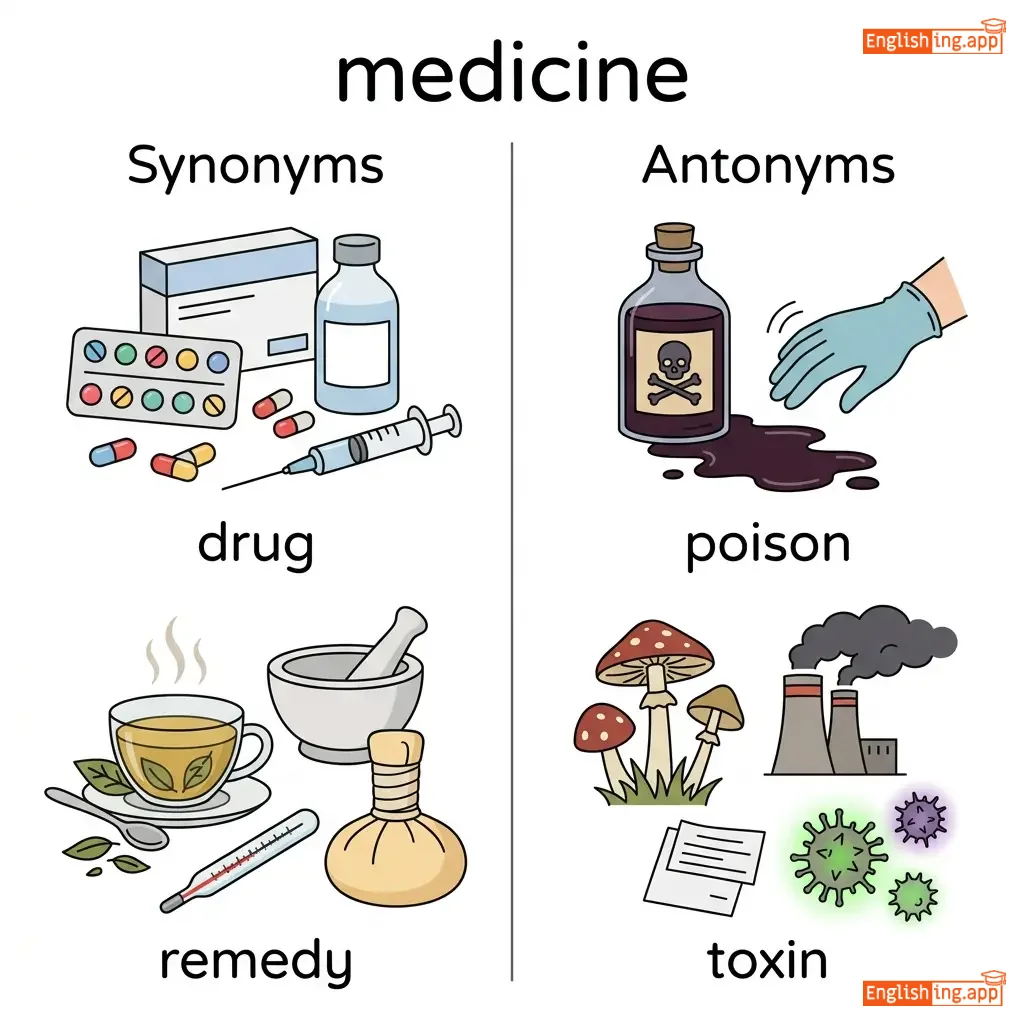
drug, remedy, treatment, cure
••••••
|
poison, toxin
••••••
|
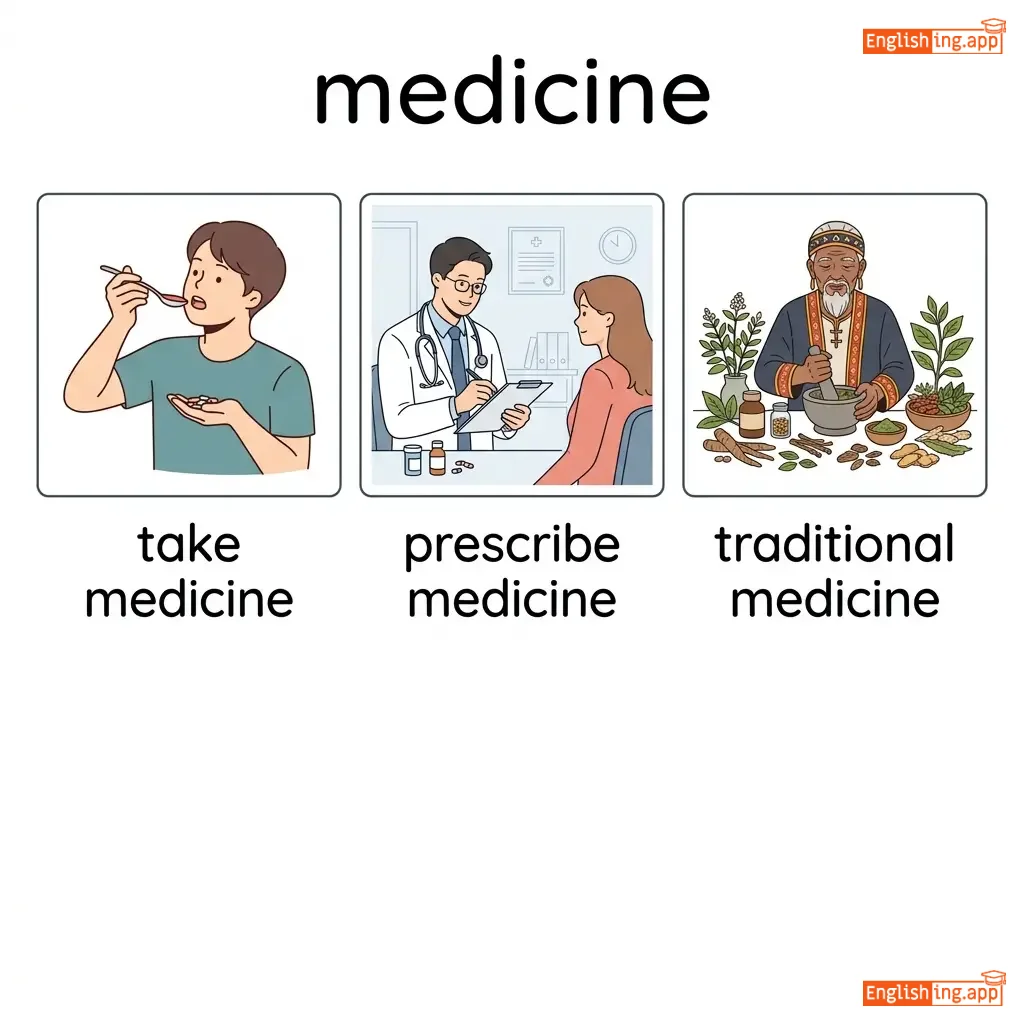
take medicine, prescribe medicine, traditional medicine, modern medicine
••••••
|
Lekarstvo для головной боли - Лекарство помогает восстановить здоровье.
••••••
|
|
🏰
••••••
|
/ˌmiː.diˈiː.vəl/
adjective
(мидивэл)
••••••
|
- •••••• |
средневековый
srednevekovyy
••••••
|
- •••••• | - •••••• | - •••••• | - •••••• |
Relating to the Middle Ages, the period in European history from about the 5th to the 15th century.
••••••
|
The castle is a famous medieval monument. |
Замок — это знаменитый средневековый памятник.
Zamok — eto znamenityy srednevekovyy pamyatnik.
••••••
|
- •••••• | - •••••• | - •••••• |
middle ages, feudal, ancient, old
••••••
|
modern, contemporary
••••••
|
medieval castle, medieval history, medieval times, medieval architecture
••••••
|
Medieval - подумай о средних веках.
••••••
|
|
🧘
••••••
|
/ˌmɛdɪˈteɪʃən/
noun
(медитация)
••••••
|
- •••••• |
медитация
meditatsiya
••••••
|
- •••••• | - •••••• | - •••••• | - •••••• |
The practice of focusing the mind to achieve calmness, clarity, or spiritual growth.
••••••
|
She practices meditation every morning to start her day peacefully. |
Она практикует медитацию каждое утро, чтобы начать свой день с покоем.
Ona praktikuet meditatsiyu kazhdoe utro, chtoby nachat' svoy den' s pokoyem.
••••••
|
deep meditation |
A state of intense focus and calmness during meditation.
••••••
|
глубокая медитация
glubokaya meditatsiya
••••••
|
contemplation, reflection, mindfulness, prayer, concentration
••••••
|
distraction, chaos
••••••
|
practice meditation, meditation techniques, meditation session, guided meditation
••••••
|
Медитация помогает найти внутренний мир.
••••••
|
|
📺
••••••
|
/ˈmiːdiəm/
noun
(мидиум)
••••••
|
- •••••• |
средство
sredstvo
••••••
|
- •••••• | - •••••• | - •••••• | - •••••• |
A means or channel of communication, expression, or artistic work.
••••••
|
Television is a powerful medium for spreading information. |
Телевидение - мощное средство распространения информации.
Televidenie - moshchnoe sredstvo rasprostraneniya informatsii.
••••••
|
through the medium of |
By using or via a particular channel or means.
••••••
|
через средство
cherez sredstvo
••••••
|
channel, means, method, vehicle, instrument
••••••
|
end, result
••••••
|
medium of exchange, communication medium, artistic medium, mass medium
••••••
|
Medium как путь для сообщения (sredstvo).
••••••
|
|
🤝
••••••
|
/miːt/
verb
(мит)
••••••
|


|
встретиться
vstretytsya
••••••
|
met
мет
••••••
|
met
мет
••••••
|
meets
митс
••••••
|
meeting
митинг
••••••
|
To come into the presence of someone by chance or arrangement.
••••••
|
I will meet you at the cafe tomorrow.
Я встречу тебя в кафе завтра.
••••••
|
Я встречу тебя в кафе завтра.
Ya vstretyu tebya v kafe zavtra.
••••••
|
meet halfway
встретиться на полпути
••••••
|
To compromise or find a middle ground.
••••••
|
встретиться на полпути
vstretit'sya na polputi
••••••
|
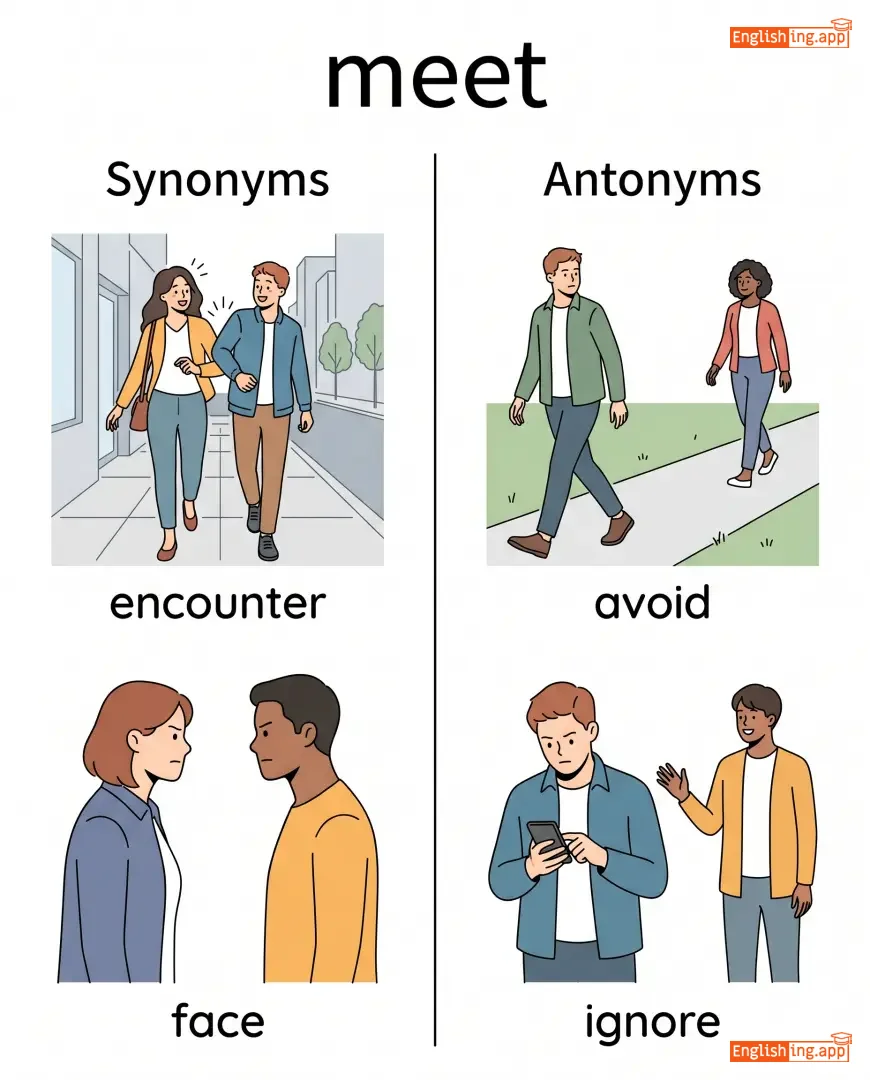
encounter, face, see, assemble, greet
••••••
|
avoid, ignore
••••••
|
meet someone, meet expectations, meet deadline, meet requirements
••••••
|
Meet означает встретиться.
••••••
|
|
👥
••••••
|
/ˈmiːtɪŋ/
noun
(митинг)
••••••
|
- •••••• |
встреча
vstrecha
••••••
|
- •••••• | - •••••• | - •••••• | - •••••• |
A gathering of people for discussion or decision-making.
••••••
|
The board had a meeting to finalize the budget. |
Совет провел встречу, чтобы завершить бюджет.
Sovet provel vstrechu, chtoby zavershit' byudzhet.
••••••
|
call a meeting |
To arrange a gathering for discussion.
••••••
|
созвать встречу
sozvat' vstrechu
••••••
|
gathering, conference, assembly, session, discussion
••••••
|
separation, dispersal
••••••
|
board meeting, business meeting, annual meeting, meeting agenda
••••••
|
Встреча = Встретиться для обсуждения
••••••
|
|
🎵
••••••
|
/ˈmelədi/
noun
(мелодия)
••••••
|
- •••••• |
мелодия; музыкальный мотив
melodiya
••••••
|
- •••••• | - •••••• | - •••••• | - •••••• |
A sequence of single notes that is musically satisfying; a tune
••••••
|
She hummed a beautiful melody while cooking dinner.
Она напевала красивую мелодию, готовя ужин.
••••••
|
Она напевала красивую мелодию, готовя ужин.
Ona napyevala krasivuyu melodiya, gotovya uzhin.
••••••
|
- •••••• | - •••••• | - •••••• |
tune, air, song, music, strain
••••••
|
discord, noise, cacophony, dissonance
••••••
|
beautiful melody, haunting melody, simple melody, catchy melody
••••••
|
Мелодия для души, как улыбка для сердца.
••••••
|
|
🧊
••••••
|
/mɛlt/
verb
(мэлт)
••••••
|
|
таять
tayat
••••••
|
melted
мэлтед
••••••
|
melted
мэлтед
••••••
|
melts
мелтс
••••••
|
melting
мелтинг
••••••
|
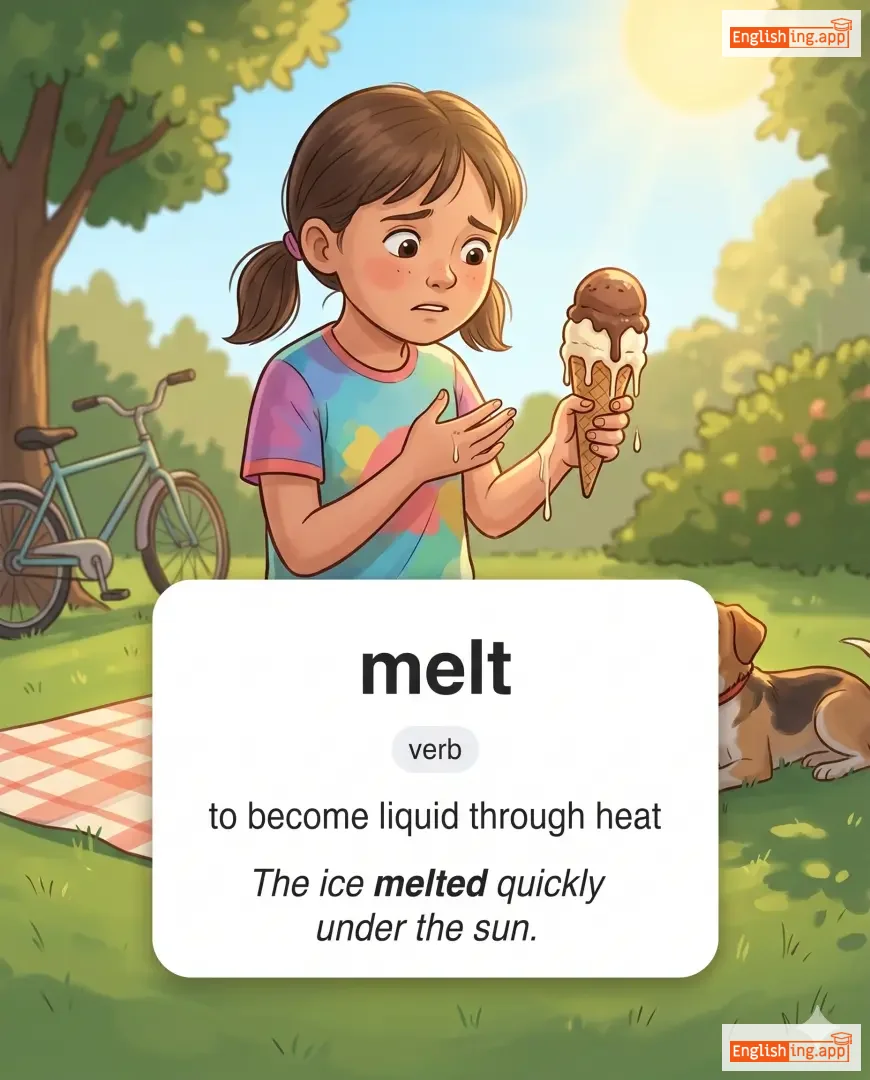
to become liquid through heat
••••••
|
The ice melted quickly under the sun.
Зaмёрзшая вода растаяла быстро на солнце.
••••••
|
Лёд растаял быстро под солнцем.
Lyod rastayal bystro pod solntsem.
••••••
|
melt someone's heart
расплавить чье-то сердце
••••••
|
to make someone feel love or sympathy
••••••
|
растопить чьё-то сердце
rastopit' ch'yo-to serdtse
••••••
|
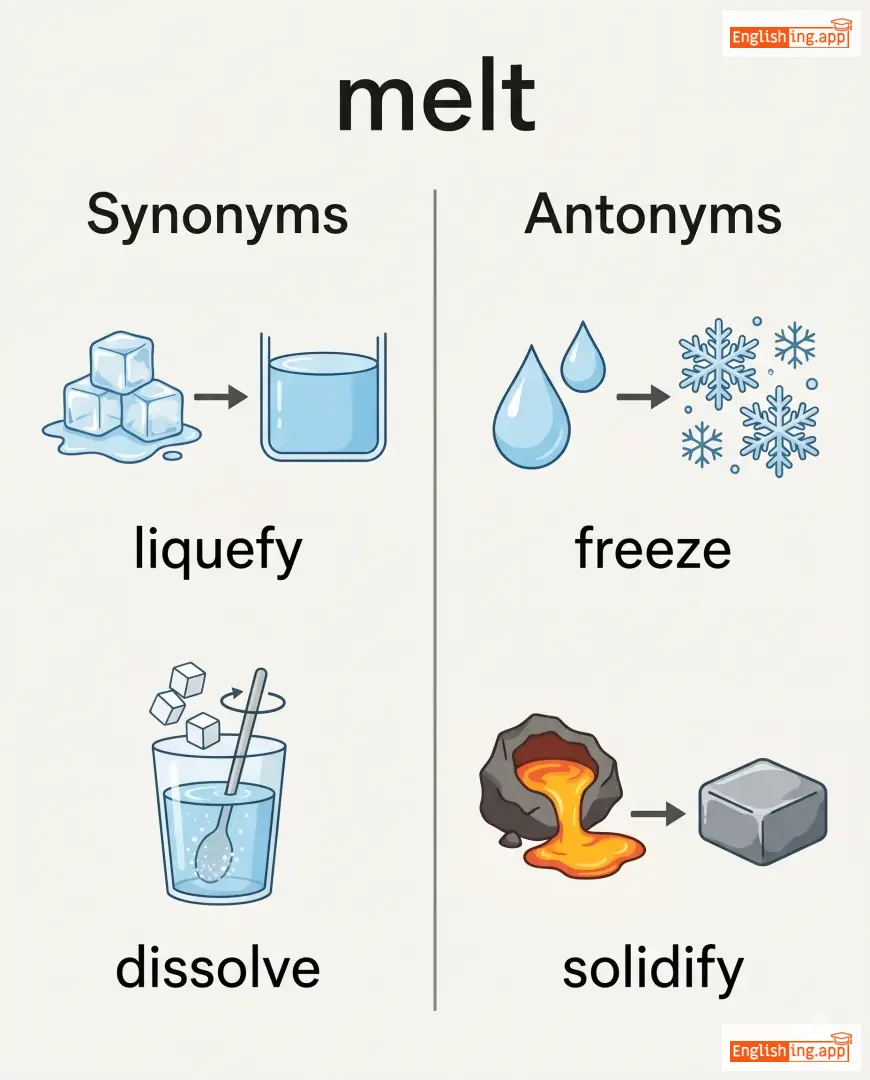
liquefy, dissolve, thaw, soften, fuse
••••••
|
freeze, solidify
••••••
|
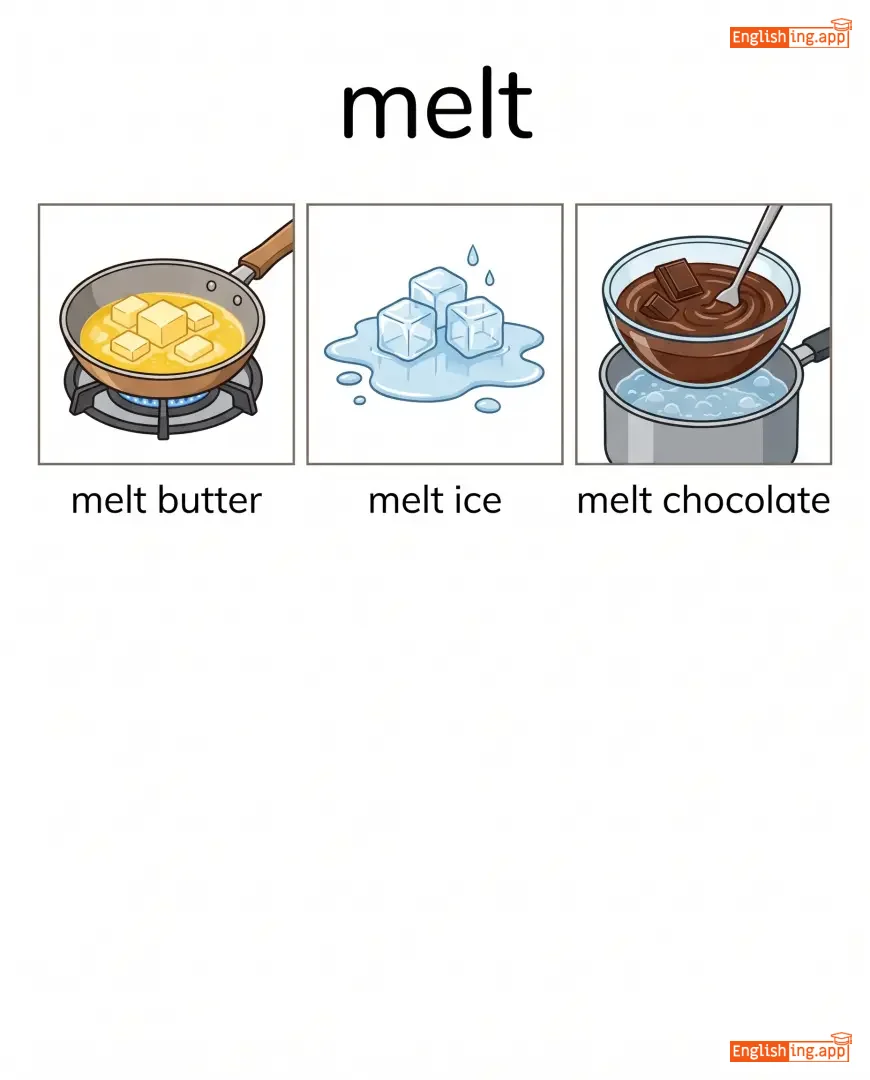
melt butter, melt ice, melt chocolate, melt in the sun
••••••
|
Melt значит таять, как лед.
••••••
|
|
🫠
••••••
|
/ˈmeltɪŋ/
verb, noun, adjective
(мелтинг)
••••••
|
- •••••• |
плавление
plavleniye
••••••
|
melted
мелтед
••••••
|
melted
мелтед
••••••
|
melts
мелтс
••••••
|
melting
мелтинг
••••••
|
the process of changing from solid to liquid due to heat; becoming softer or less rigid; emotionally moving or tender
••••••
|
The ice is melting quickly under the hot sun.
Зе айс из мелтинг квикли андер зе хот сан.
••••••
|
Лёд быстро тает под жарким солнцем.
Lyod bystro tayet pod zharkim solntsem
••••••
|
melting point
мелтинг поинт
••••••
|
the temperature at which a solid becomes a liquid
••••••
|
точка плавления
tochka plavleniya
••••••
|
liquefying, dissolving, thawing, softening, fusing
••••••
|
freezing, solidifying, hardening
••••••
|
melting ice, melting snow, melting point, melting temperature, melting process
••••••
|
Melting — это plavleniye, как лёд тает
••••••
|
|
👥
••••••
|
/ˈmembər/
noun
(мембер)
••••••
|
- •••••• |
член
chlen
••••••
|
- •••••• | - •••••• | - •••••• | - •••••• |
a person or thing that belongs to a group or organization
••••••
|
She is a member of the local sports club. |
Она является членом местного спортивного клуба.
Ona yavyayetsya chlenom mestnogo sportivnogo kluba.
••••••
|
active member |
a person who participates regularly in the activities of a group
••••••
|
активный член
aktivnyy chlen
••••••
|
participant, affiliate, associate, enrollee
••••••
|
outsider, nonmember
••••••
|
club member, family member, group member, board member
••••••
|
Член - это как member на английском, тот, кто входит в группу.
••••••
|
|
🎫
••••••
|
/ˈmɛmbərʃɪp/
noun
(мэмбершип)
••••••
|

|
членство
chlenstvo
••••••
|
- •••••• | - •••••• | - •••••• | - •••••• |
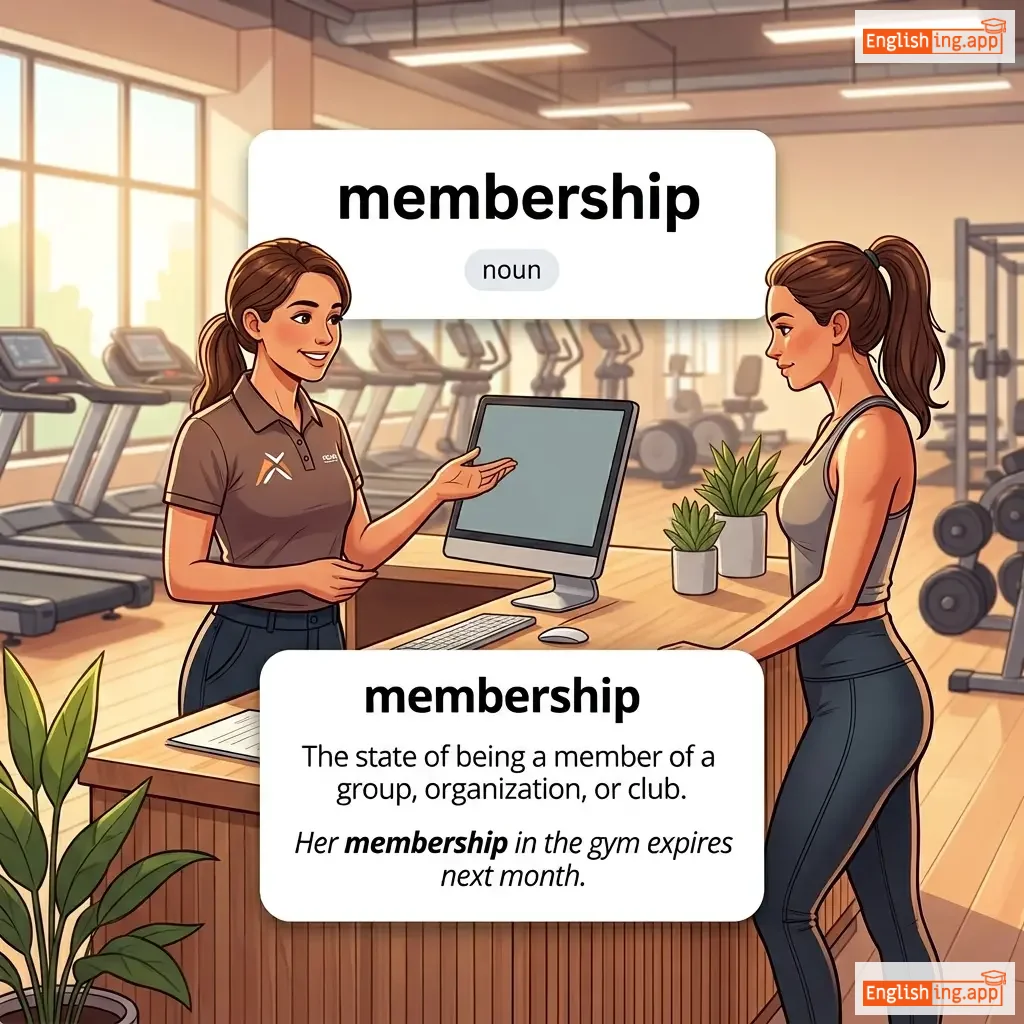
The state of being a member of a group, organization, or club.
••••••
|
Her membership in the gym expires next month. |
Её членство в спортзале заканчивается в следующем месяце.
Yeyo chlenstvo v sportzale zakanchivaetsya v sleduyushchem mesyatse.
••••••
|
membership drive |
A campaign to recruit new members for an organization.
••••••
|
кампания по набору членов
kampaniya po naboru chlenov
••••••
|
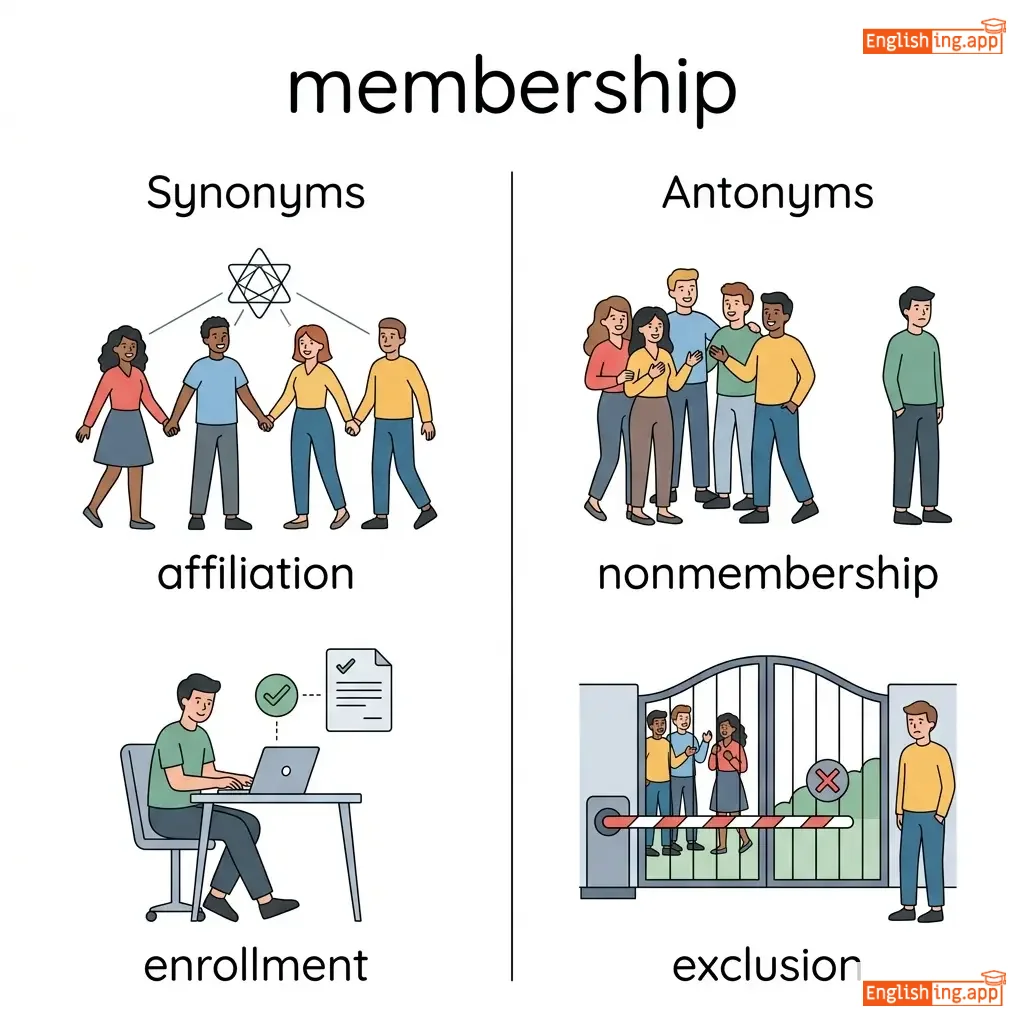
affiliation, enrollment, subscription, association, participation
••••••
|
nonmembership, exclusion
••••••
|
membership card, annual membership, club membership, membership fee
••••••
|
Членство означает быть частью группы, поэтому это слово легко запоминается.
••••••
|
|
📝
••••••
|
/ˈmɛmoʊ/
noun
••••••
|
- •••••• | - •••••• | - •••••• | - •••••• | - •••••• | - •••••• |
a written message, typically in a business setting
••••••
|
He wrote a memo to the staff about the upcoming meeting. |
- •••••• | - •••••• | - •••••• | - •••••• |
note, message, communication, reminder
••••••
|
silence, neglect
••••••
|
internal memo, office memo, memo to staff
••••••
|
No •••••• |
|
📖
••••••
|
/ˈmɛm.wɑːr/
noun
(мэмwаир)
••••••
|
- •••••• |
мемуары
memuary
••••••
|
- •••••• | - •••••• | - •••••• | - •••••• |
A historical account or autobiography written from personal experience.
••••••
|
The author’s memoir details her journey through hardship and success. |
Мемуары автора описывают её путь через трудности и успехи.
Memuary avtora opisyvayut yeye put' cherez trudnosti i uspekhi.
••••••
|
- •••••• | - •••••• | - •••••• |
autobiography, recollection, diary, reminiscence
••••••
|
fiction, imagination
••••••
|
write a memoir, publish a memoir, memoir of life, political memoir
••••••
|
Memoir = память + история = мемуары.
••••••
|
|
🌟
••••••
|
/ˈmɛm.ər.ə.bəl/
adjective
(меморабл)
••••••
|


|
запоминающийся
zapominayushchiesya
••••••
|
- •••••• | - •••••• | - •••••• | - •••••• |
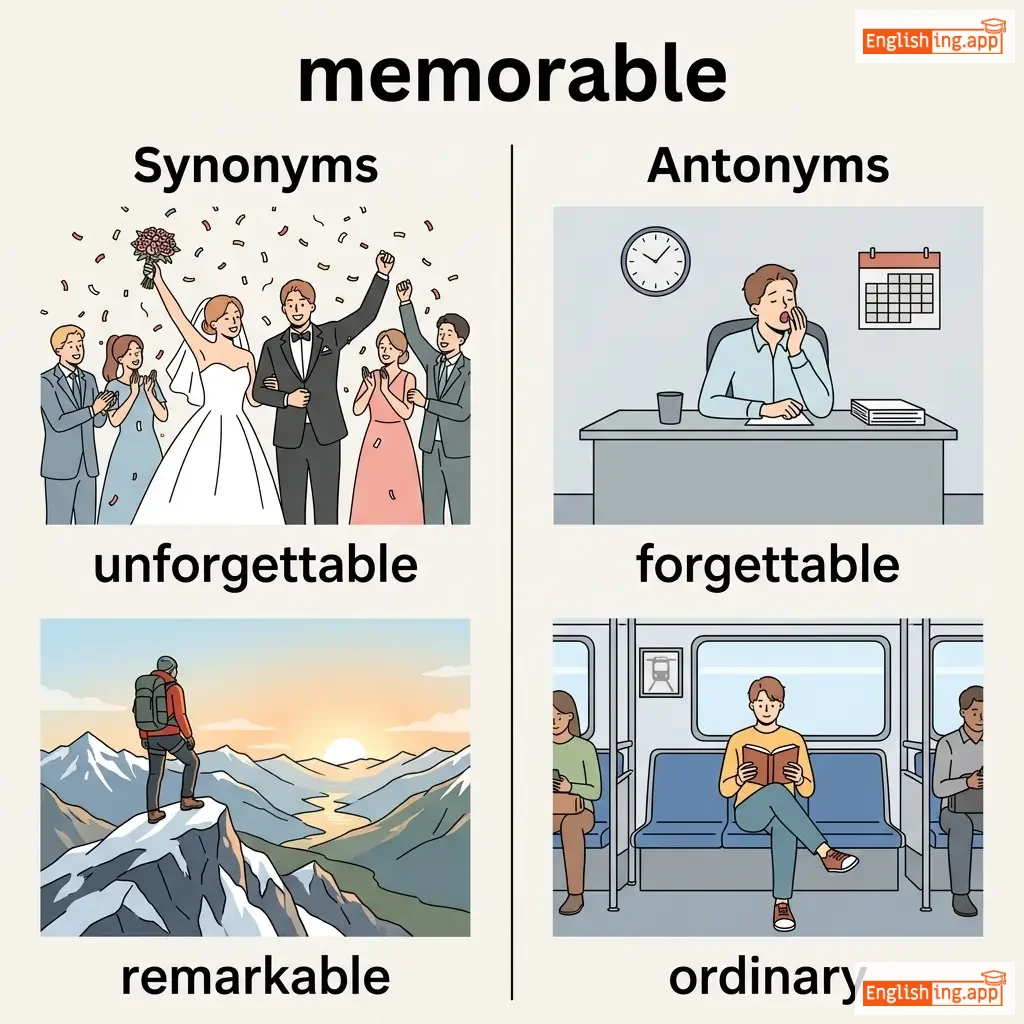
Worth remembering because it is special or unusual.
••••••
|
Their wedding was one of the most memorable days of their lives. |
Их свадьба была одним из самых запоминающихся дней в их жизни.
Ikh svad'ba byla odnim iz samykh zapominayushchikhsya dney v ikh zhizni.
••••••
|
memorable experience |
An experience that is significant and worth remembering.
••••••
|
запоминающийся опыт
zapominayushchiesya opyt
••••••
|
unforgettable, remarkable, notable, outstanding
••••••
|
forgettable, ordinary, trivial
••••••
|
memorable event, memorable occasion, memorable experience, memorable day
••••••
|
Memorable означает, что это что-то, что вы можете запомнить, как хорошее воспоминание.
••••••
|
|
🕊️
••••••
|
/məˈmɔːr.i.əl/
noun
(мемориал)
••••••
|
|
памятник
pamyatnik
••••••
|
- •••••• | - •••••• | - •••••• | - •••••• |
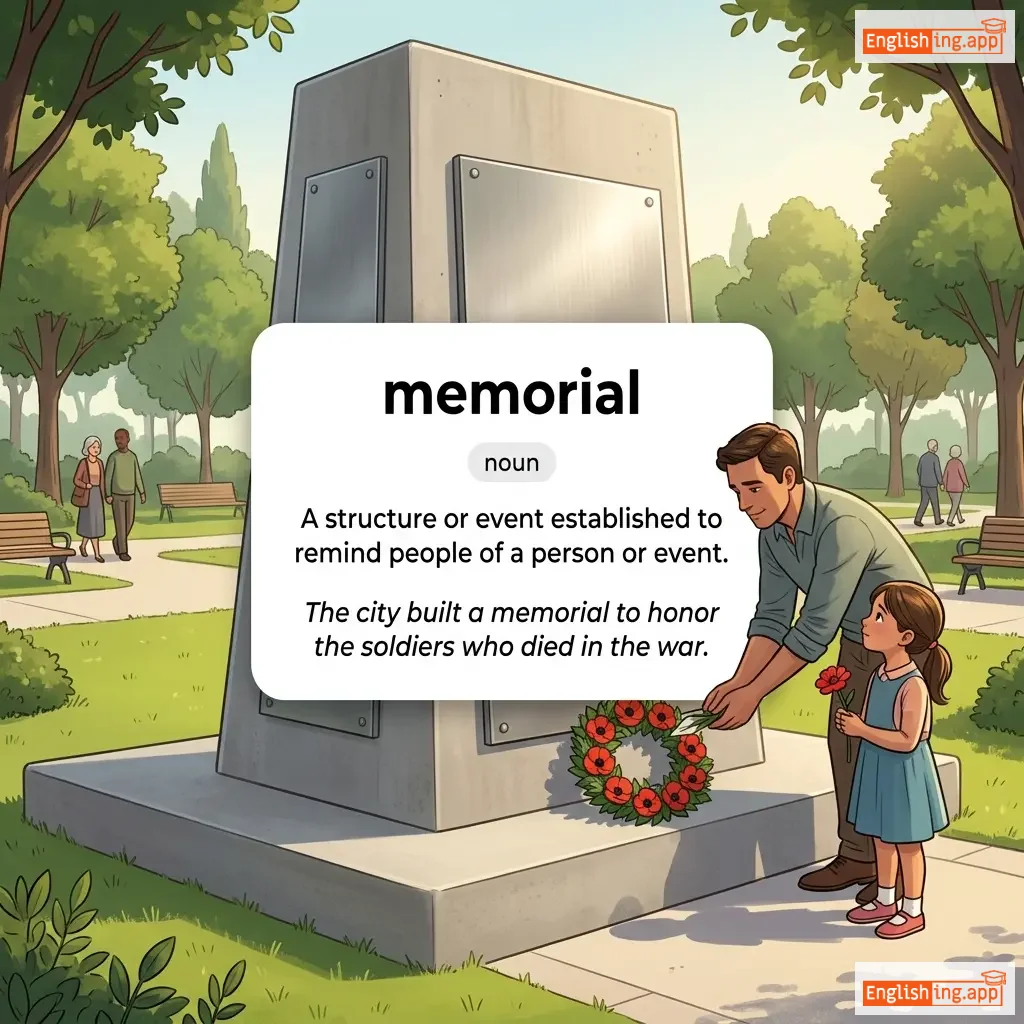
A structure or event established to remind people of a person or event.
••••••
|
The city built a memorial to honor the soldiers who died in the war. |
Город построил памятник, чтобы почтить солдат, погибших на войне.
Gorod postroil pamyatnik, chtoby pochtit' soldat, pogibshikh na voyne.
••••••
|
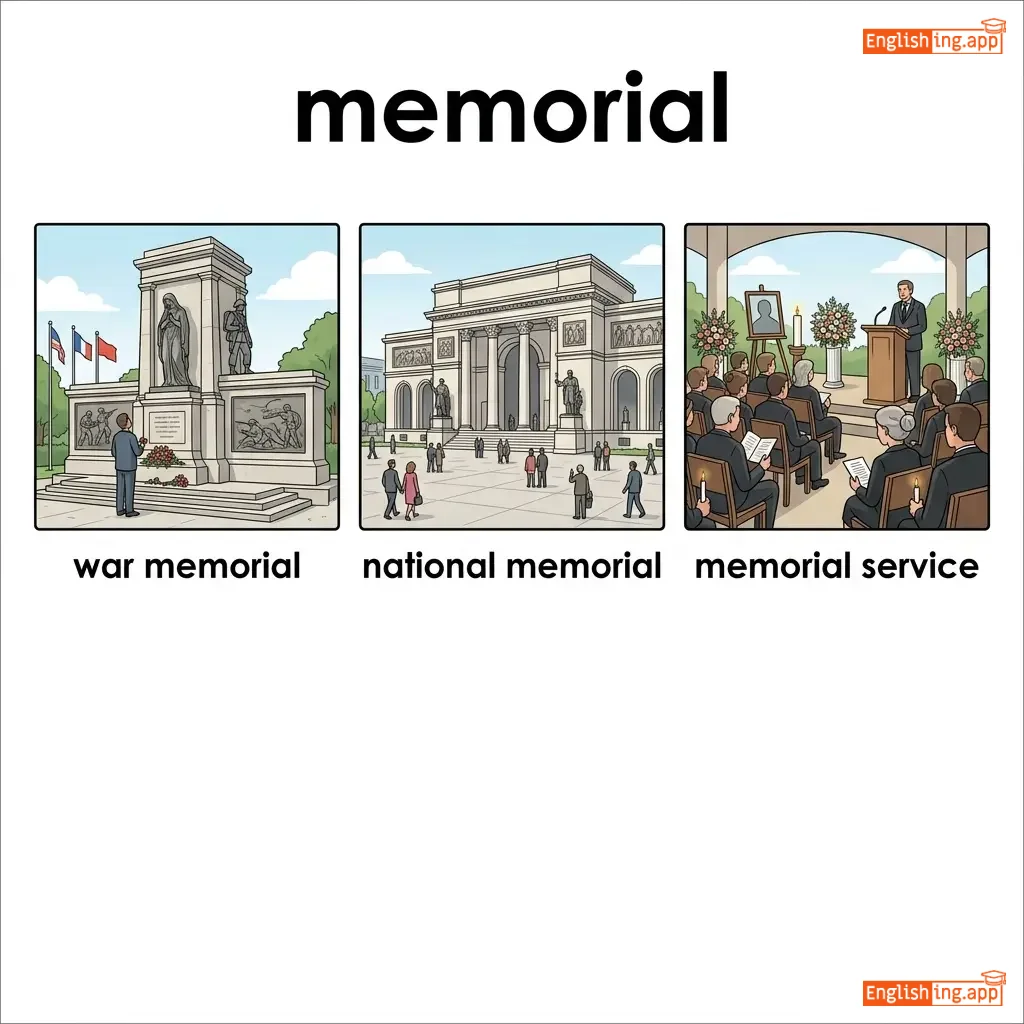
war memorial |
A structure built to honor soldiers who died in a war.
••••••
|
военный памятник
voennyy pamyatnik
••••••
|
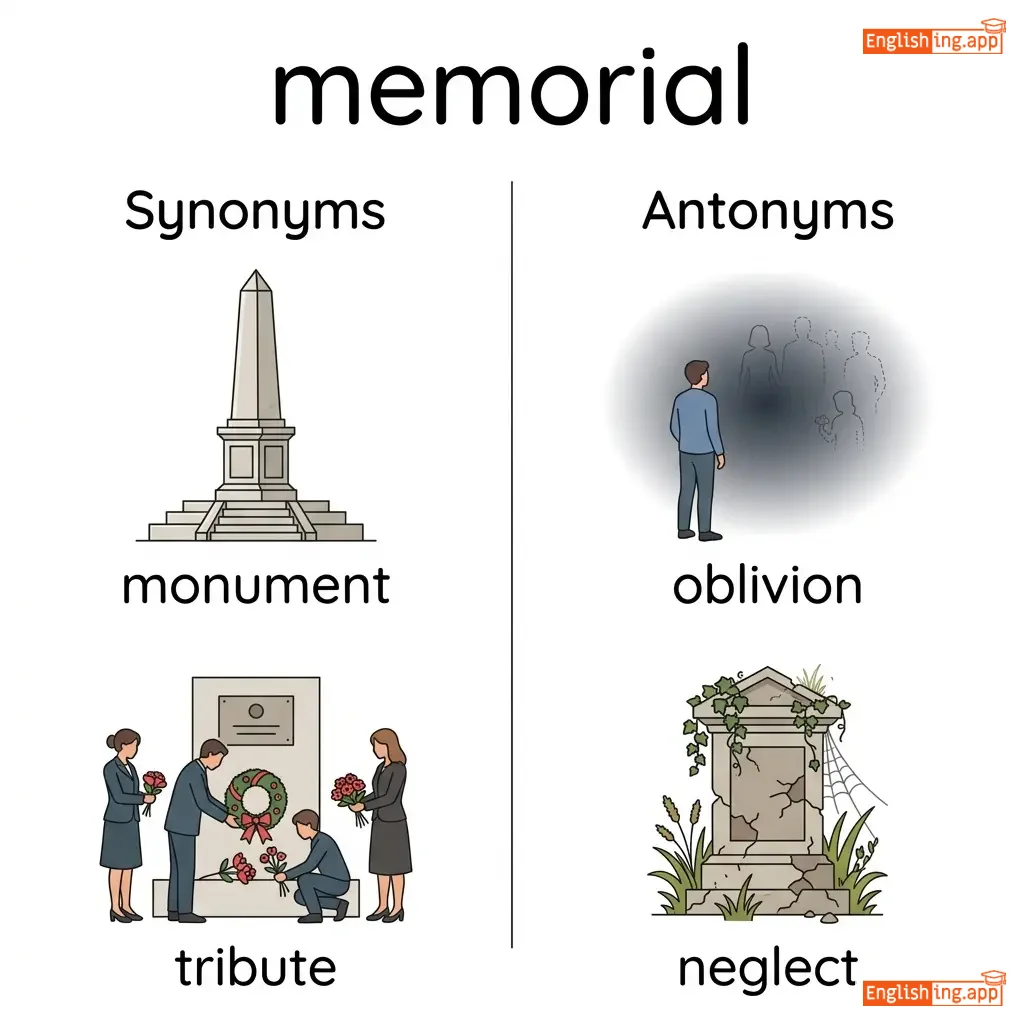
monument, tribute, shrine, remembrance
••••••
|
oblivion, neglect
••••••
|
war memorial, national memorial, memorial service, memorial plaque
••••••
|
Памятник — это место, чтобы помнить о прошлом.
••••••
|
|
🧠
••••••
|
/ˈmeməraɪz/
verb
(мемора́йз)
••••••
|

|
запоминать
zapominat'
••••••
|
memorized
мемора́йзд
••••••
|
memorized
мемора́йзд
••••••
|
memorizes
мемора́йзес
••••••
|
memorizing
мемора́йзинг
••••••
|
to learn something by heart; to commit to memory
••••••
|
Students need to memorize important formulas for the exam.
Студентам нужно запомнить важные формулы для экзамена.
••••••
|
Студентам нужно запомнить важные формулы для экзамена.
Studentam nuzhno zapomnit' vazhnie formuly dlya ekzamina.
••••••
|
- •••••• | - •••••• | - •••••• |
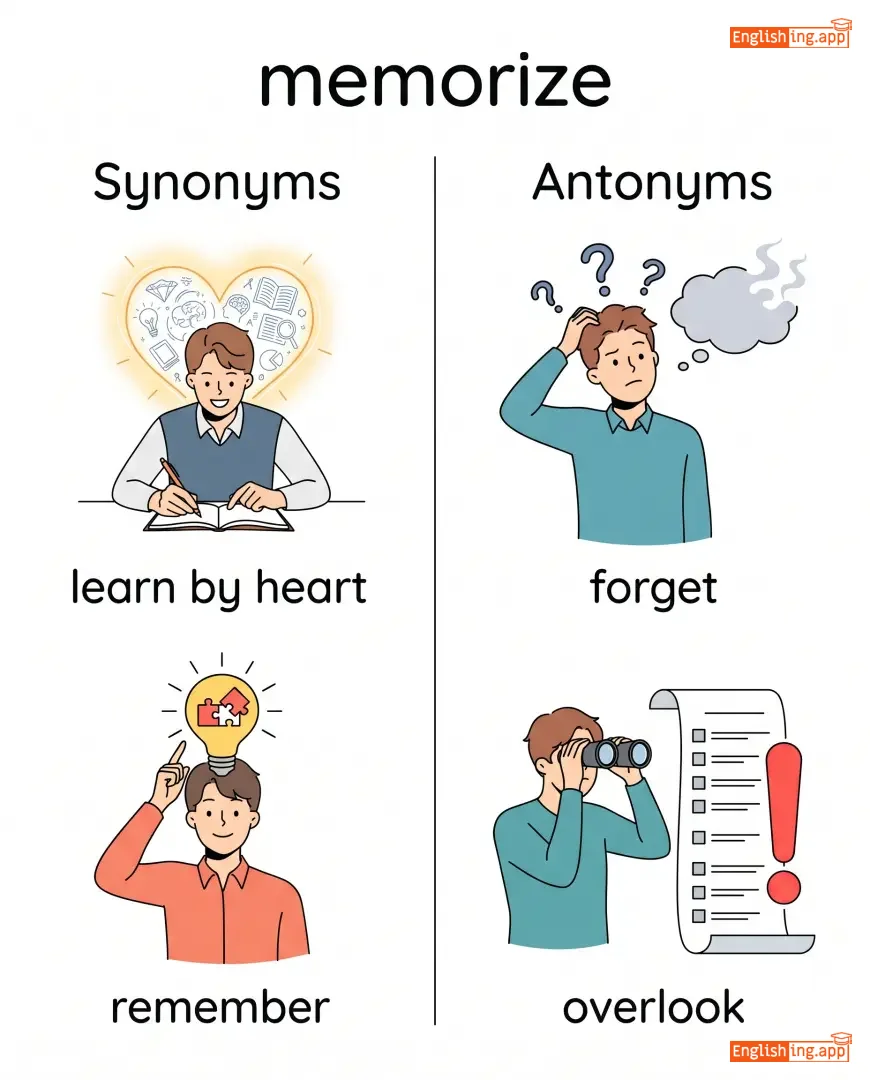
learn by heart, remember, retain, recall
••••••
|
forget, overlook, neglect
••••••
|
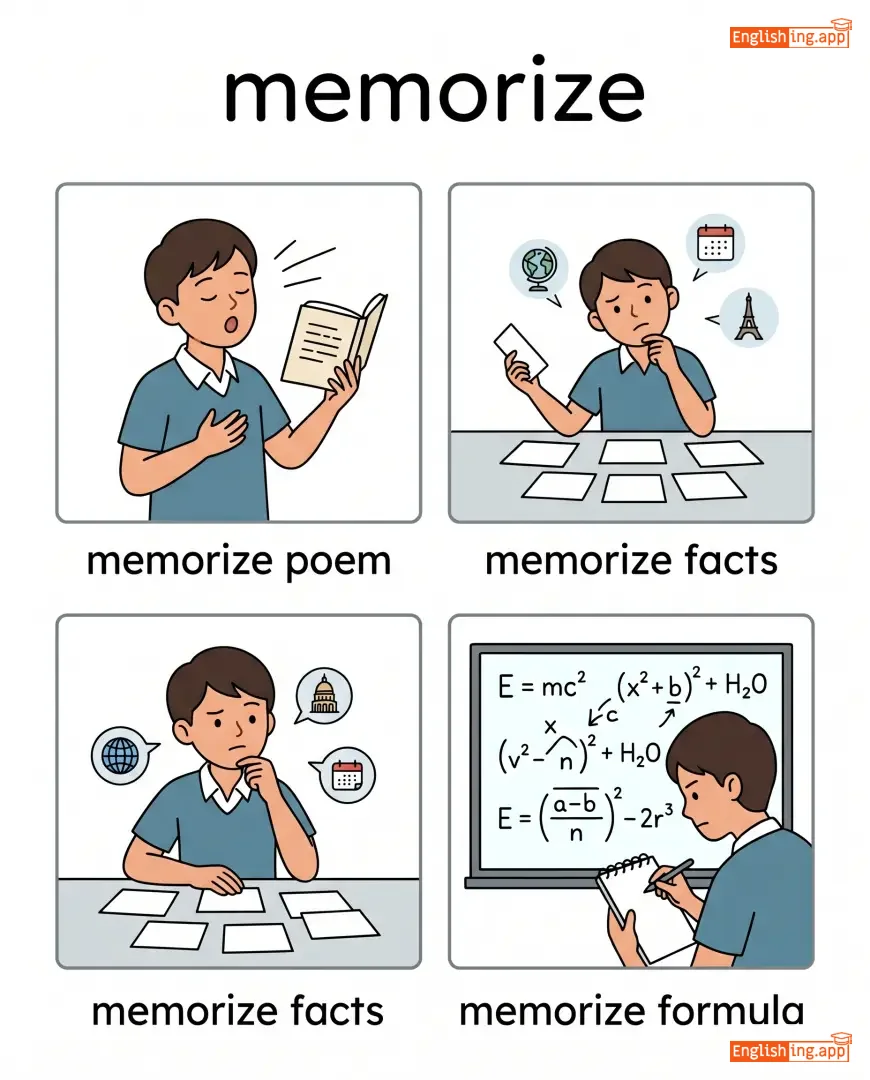
memorize poem, memorize facts, memorize formula, memorize lines, memorize vocabulary
••••••
|
Запоминайте через повторение – легкий способ запомнить!
••••••
|
|
🧠
••••••
|
/ˈmɛməri/
noun
(мемори)
••••••
|
- •••••• |
память
pamyat
••••••
|
- •••••• | - •••••• | - •••••• | - •••••• |
The faculty of the mind by which information is stored and remembered.
••••••
|
She has a vivid memory of her childhood home. |
У неё яркое воспоминание о доме её детства.
U neyo yarkoye vospominaniye o dome yeye detstva.
••••••
|
in memory of |
As a way of showing respect for someone who has died.
••••••
|
в память о
v pamyat' o
••••••
|
recollection, remembrance, retention, recall, reminiscence
••••••
|
forgetfulness, amnesia
••••••
|
short-term memory, long-term memory, memory loss, vivid memory
••••••
|
Память — это как коробка для воспоминаний, где всё хранится и всегда доступно.
••••••
|
|
🧩
••••••
|
/ˈmɛntəl/
adjective
(ментал)
••••••
|
- •••••• |
психический
psikhicheskiy
••••••
|
- •••••• | - •••••• | - •••••• | - •••••• |
Relating to the mind, thoughts, or intellectual processes.
••••••
|
He needs to take a break for his mental health. |
Ему нужно сделать перерыв для своего психического здоровья.
Yemu nuzhno sdelat' pereryv dlya svoego psikhicheskogo zdorov'ya.
••••••
|
mental block |
An inability to think of something or remember something.
••••••
|
психологический барьер
psikhologicheskiy baryer
••••••
|
cognitive, intellectual, psychological, rational, emotional
••••••
|
physical, bodily
••••••
|
mental health, mental illness, mental strength, mental state
••••••
|
Психический связан с умом. Если ум не в порядке, то и психическое здоровье страдает.
••••••
|
|
🧠
••••••
|
/menˈtæləti/
noun
(менталитет)
••••••
|
- •••••• |
менталитет; умственное состояние
mentalitet
••••••
|
- •••••• | - •••••• | - •••••• | - •••••• |
The characteristic attitude of mind or way of thinking of a person or group
••••••
|
The team needs to develop a winning mentality to succeed.
команде нужно развить победный менталитет, чтобы достичь успеха.
••••••
|
Команде нужно развить победный менталитет, чтобы достичь успеха.
Komande nuzhno razvit' pobednyy mentalitet, chtoby dostich' uspekha.
••••••
|
- •••••• | - •••••• | - •••••• |
mindset, attitude, outlook, psychology, thinking
••••••
|
open-mindedness, flexibility, adaptability
••••••
|
winning mentality, victim mentality, group mentality, positive mentality
••••••
|
Mentalitet - Свяжите 'ментал' и 'мышление' для запоминания.
••••••
|
|
🧠
••••••
|
/ˈmɛntəli/
adverb
(мэнтали)
••••••
|
- •••••• |
умственно
umstvenno
••••••
|
- •••••• | - •••••• | - •••••• | - •••••• |
in a way that relates to the mind or intellect rather than the body
••••••
|
She felt mentally exhausted after the long exam.
Она чувствовала себя умственно истощённой после длинного экзамена.
••••••
|
Она чувствовала себя умственно истощённой после длинного экзамена.
Ona chuvstvovala sebya umstvenno istochyonnoj posle dlinogo ekzamenya.
••••••
|
mentally prepared
умственно подготовленная
••••••
|
ready in mind for a challenge or situation
••••••
|
умственно подготовленная
umstvenno podgotovlennaya
••••••
|
psychologically, intellectually, cognitively, emotionally
••••••
|
physically, bodily
••••••
|
mentally strong, mentally ill, mentally prepared, mentally active
••••••
|
Mental = ум, поэтому 'mentally' = умственно.
••••••
|
|
💬
••••••
|
/ˈmɛnʃən/
verb
(мэншн)
••••••
|
- •••••• |
упомянуть
upomyanut
••••••
|
mentioned
мэншнд
••••••
|
mentioned
мэншнд
••••••
|
mentions
мэншнз
••••••
|
mentioning
мэншнинг
••••••
|
To refer to something briefly without giving much detail.
••••••
|
He mentioned her name during the meeting.
хИ мэншнд хёр нейм дьюринг зэ митинг.
••••••
|
Он упомянул ее имя во время встречи.
On upomyanuł yeyo imya vo vremya vstrechi.
••••••
|
not to mention
нот ту мэншн
••••••
|
Used to add emphasis to something by including an additional point.
••••••
|
не говоря уже
ne govorya uzhe
••••••
|
refer, cite, state, remark, bring up
••••••
|
ignore, omit, overlook
••••••
|
mention casually, fail to mention, specifically mention, worth mentioning
••••••
|
Упомянуть — это как упомянуть имя человека на встрече.
••••••
|
|
👩🏫
••••••
|
/ˈmɛntɔːr/
noun
(мэнтор)
••••••
|
- •••••• |
наставник
nastavnik
••••••
|
- •••••• | - •••••• | - •••••• | - •••••• |
an experienced person who advises and guides someone less experienced
••••••
|
She acted as a mentor for the new employees. |
Она была наставником для новых сотрудников.
Ona byla nastavnikom dlya novykh sotrudnikov.
••••••
|
mentor-mentee relationship |
a guiding relationship where a mentor advises a mentee
••••••
|
отношения наставник-ученик
otnosheniya nastavnik-uchyenik
••••••
|
advisor, guide, coach, counselor
••••••
|
student, pupil
••••••
|
trusted mentor, career mentor, mentor program, mentor relationship
••••••
|
Наставник, как учитель, который помогает найти путь.
••••••
|
|
📜
••••••
|
/ˈmɛnjuː/
noun
(меню)
••••••
|
- •••••• |
меню
menyu
••••••
|
- •••••• | - •••••• | - •••••• | - •••••• |
A list of food and drinks available at a restaurant or offered at a meal.
••••••
|
The restaurant updated its menu with new dishes. |
Ресторан обновил свое меню с новыми блюдами.
Restoran obnovil svoe menyu s novymi blyudami.
••••••
|
set menu |
A fixed selection of dishes offered at a set price.
••••••
|
фиксированное меню
fiksirovannoe menyu
••••••
|
bill of fare, food list, card, menu card, offerings
••••••
|
emptiness, nothingness
••••••
|
menu card, lunch menu, digital menu, special menu
••••••
|
Меню - это список блюд, как в ресторане.
••••••
|
|
💰
••••••
|
/ˈmɜːrtʃənt/
noun
(мэрчант)
••••••
|
- •••••• |
торговец
torgovets
••••••
|
- •••••• | - •••••• | - •••••• | - •••••• |
a person or company involved in the trade of goods, especially in large quantities
••••••
|
The merchant sold spices from distant lands. |
Торговец продавал специи из дальних стран.
Torgovets prodaval spetsii iz dal'nikh stran.
••••••
|
sea merchant |
a trader who conducts business by sea
••••••
|
морской торговец
morskoy torgovets
••••••
|
trader, dealer, seller, vendor, businessman
••••••
|
buyer, customer, consumer
••••••
|
merchant ship, merchant trade, local merchant, online merchant
••••••
|
Торговец – тот, кто в торговле, как в море, работает.
••••••
|
|
🙏
••••••
|
/ˈmɜːrsi/
noun
(мёрси)
••••••
|
- •••••• |
милосердие
miloserdie
••••••
|
- •••••• | - •••••• | - •••••• | - •••••• |
Compassion or forgiveness shown toward someone whom it is in one's power to punish
••••••
|
The judge showed mercy and gave him a lighter sentence.
Судья проявил милосердие и дал ему более легкий приговор.
••••••
|
Судья проявил милосердие и дал ему более легкий приговор.
Sud'ya proyavil miloserdie i dal yemu bolee legkiy prigovor.
••••••
|
- •••••• | - •••••• | - •••••• |
compassion, forgiveness, clemency, kindness, leniency
••••••
|
cruelty, harshness, severity, ruthlessness, vengeance
••••••
|
show mercy, beg for mercy, mercy killing, without mercy
••••••
|
Милосердие — это то, что проявляет судья, когда дает более легкий приговор.
••••••
|
|
✨
••••••
|
/mɪr/
adjective
(мир)
••••••
|
- •••••• |
простой
prostoy
••••••
|
- •••••• | - •••••• | - •••••• | - •••••• |
Used to emphasize how small or insignificant something is.
••••••
|
It was a mere suggestion, not a command. |
Это было всего лишь предложение, а не приказ.
Eto bylo vsego lish' predlozheniye, a ne prikaz.
••••••
|
a mere formality |
Something done because it is expected, but without real importance
••••••
|
просто формальность
prosto formal'nost'
••••••
|
simple, trivial, insignificant, minor, slight
••••••
|
important, significant, major
••••••
|
mere coincidence, mere child, mere formality, mere mention
••••••
|
Mere на русском означает 'простой' — легко запомнить!
••••••
|
|
🪶
••••••
|
/ˈmɪərli/
adverb
(mieri)
••••••
|
- •••••• |
только
tol'ko
••••••
|
- •••••• | - •••••• | - •••••• | - •••••• |
Only; nothing more than.
••••••
|
She was merely trying to help. |
Она просто пыталась помочь.
Ona prosto pytalas' pomoch'.
••••••
|
merely a matter of time |
Something certain to happen, just waiting for the right time
••••••
|
только вопрос времени
tol'ko vopros vremeni
••••••
|
only, simply, just, purely, solely
••••••
|
more, beyond, extra
••••••
|
merely coincidental, merely symbolic, merely academic, merely mentioned
••••••
|
MERELY означает только—помни: 'Только помощь, ничего больше'
••••••
|
|
🔗
••••••
|
/mɜːrdʒ/
verb
(мердж)
••••••
|

|
сливаться
slivat'sya
••••••
|
merged
мерджд
••••••
|
merged
мерджд
••••••
|
merges
мерджес
••••••
|
merging
мерджинг
••••••
|
to combine or join together; to blend into one
••••••
|
The two companies decided to merge to increase their market share.
Две компании решили объединиться, чтобы увеличить свою долю на рынке.
••••••
|
Две компании решили объединиться, чтобы увеличить свою долю на рынке.
Dve kompanii reshili ob'edinitsya, chtoby uvelichit' svoyu dolyu na rynke.
••••••
|
- •••••• | - •••••• | - •••••• |
combine, unite, join, blend
••••••
|
separate, divide, split, disconnect
••••••
|
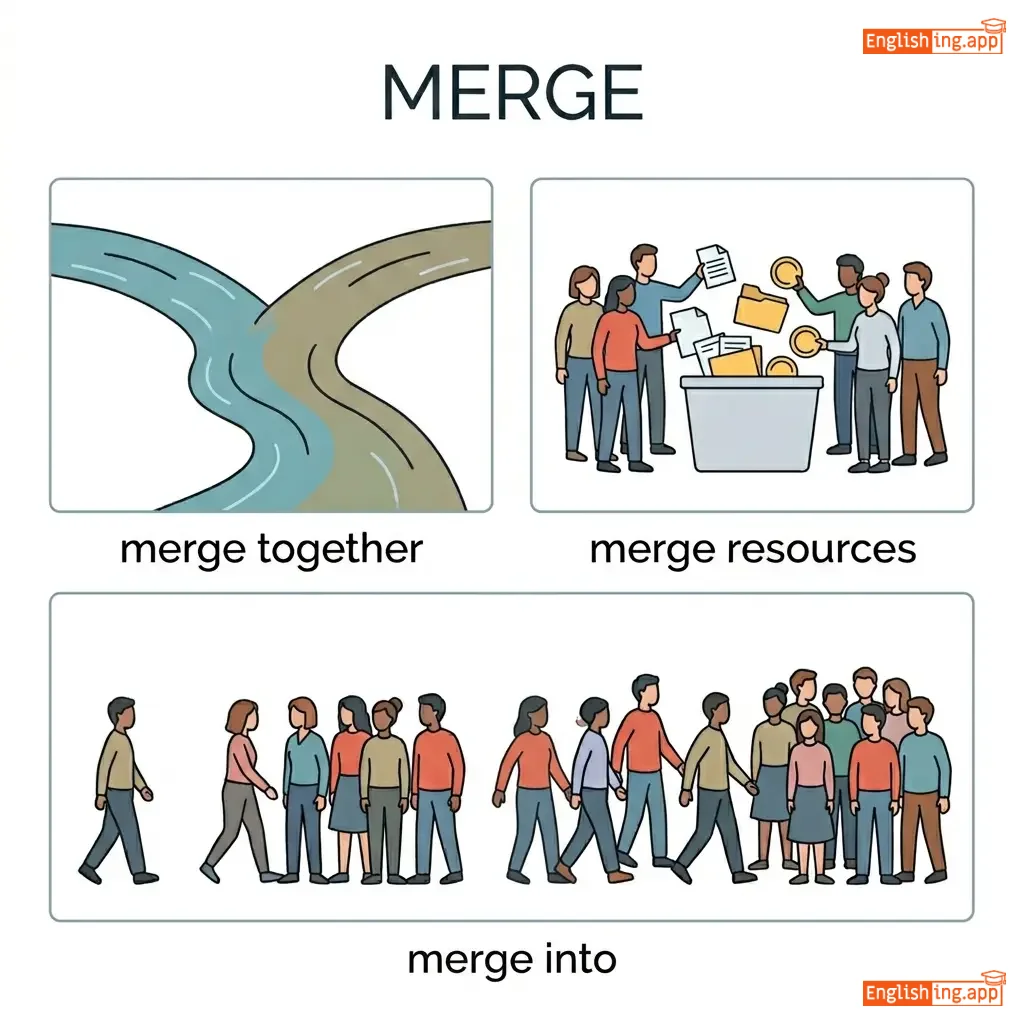
merge companies, merge files, merge lanes, merge successfully, merge together
••••••
|
Сливать - как соединять два объекта в одно.
••••••
|
|
🔗
••••••
|
/ˈmɜːrdʒər/
noun
(мёрджер)
••••••
|
- •••••• |
слияние
sliyaniye
••••••
|
- •••••• | - •••••• | - •••••• | - •••••• |
The combination of two or more companies into a single entity.
••••••
|
The merger of the two firms created the largest bank in the region. |
Слияние двух компаний создало крупнейший банк в регионе.
Sliyaniye dvukh kompaniy sozdalo krupneyshiy bank v regione.
••••••
|
merger and acquisition |
Business processes of combining or buying companies.
••••••
|
слияние и поглощение
sliyaniye i pogloshcheniye
••••••
|
amalgamation, union, consolidation, fusion, integration
••••••
|
division, separation, split
••••••
|
merger agreement, corporate merger, merger deal, merger talks
••••••
|
Слияние (sliyaniye) — это когда две компании объединяются, как пара на свадьбе.
••••••
|
|
🏅
••••••
|
/ˈmɛrɪt/
noun/verb
(мэрит)
••••••
|
- •••••• |
достоинство
dostoinstvo
••••••
|
merited
мэритед
••••••
|
merited
мэритед
••••••
|
merits
мэритс
••••••
|
meriting
мэритинг
••••••
|
A quality or feature that deserves praise or reward; to deserve or be worthy of.
••••••
|
The plan has the merit of being simple and practical.
План имеет достоинство быть простым и практичным.
••••••
|
План имеет достоинство быть простым и практичным.
Plan imeyet dostoinstvo byt' prostym i praktichnym.
••••••
|
on its own merits
по своим собственным достоинствам
••••••
|
Judged based on its own qualities without bias.
••••••
|
по своим собственным достоинствам
po svoim sobstvennym dostoinstvam
••••••
|
value, worth, virtue, advantage, credit
••••••
|
fault, defect, demerit
••••••
|
academic merit, merit system, merit scholarship, without merit
••••••
|
Достоинство – это то, что заслуживает признания, как в списке достоинств.
••••••
|
|
🏆
••••••
|
/ˌmer.ɪˈtɔː.ri.əs/
adjective
(мериторный)
••••••
|
- •••••• |
заслуженный
zasluzhennyy
••••••
|
- •••••• | - •••••• | - •••••• | - •••••• |
deserving reward or praise; commendable; worthy of recognition
••••••
|
His meritorious service to the community was recognized.
Его заслуженная служба обществу была признана.
••••••
|
Его заслуженная служба обществу была признана.
Ego zasluzhennaya sluzhba obshchestvu byla priznana
••••••
|
- •••••• | - •••••• | - •••••• |
praiseworthy, commendable, worthy
••••••
|
unworthy, disgraceful, blameworthy
••••••
|
meritorious service, meritorious conduct, meritorious achievement
••••••
|
Заслуга (merit) + признание (recognition)
••••••
|
|
🌀
••••••
|
/mɛs/
noun
(мэс)
••••••
|
- •••••• |
беспорядок
besporyadok
••••••
|
- •••••• | - •••••• | - •••••• | - •••••• |
A state of disorder or untidiness.
••••••
|
The kids left the room in a complete mess. |
Дети оставили комнату в полном беспорядке.
Deti ostavili komnatu v polnom besporyadke.
••••••
|
make a mess |
To cause disorder or problems
••••••
|
навести беспорядок
navesti besporyadok
••••••
|
chaos, disorder, confusion, clutter, disarray
••••••
|
order, neatness, tidiness
••••••
|
make a mess, big mess, messy situation, clean up the mess
••••••
|
MESS означает беспорядок— 'Mess в комнате означает хаос'
••••••
|
|
📩
••••••
|
/ˈmɛsɪdʒ/
noun
(мɛсэдж)
••••••
|
- •••••• |
сообщение
soobshchenie
••••••
|
- •••••• | - •••••• | - •••••• | - •••••• |
A piece of information sent or communicated from one person to another.
••••••
|
I received a message from my friend yesterday. |
Я получил сообщение от своего друга вчера.
Ya poluchil soobshchenie ot svoego druga vchera.
••••••
|
get the message |
To understand the meaning or implication of something
••••••
|
понять сообщение
ponyat' soobshchenie
••••••
|
note, communication, letter, text, notification
••••••
|
silence, quiet
••••••
|
send a message, receive a message, leave a message, important message
••••••
|
MESSAGE означает сообщение—помни: 'SMS значит сообщение'
••••••
|
|
📨
••••••
|
/ˈmes.ɪn.dʒər/
noun
(мэсэнджэр)
••••••
|
- •••••• |
посланник
poslannik
••••••
|
- •••••• | - •••••• | - •••••• | - •••••• |
a person who carries messages or communications between parties
••••••
|
The messenger delivered important battle plans to the commander. |
Посланник доставил командующему важные боевые планы.
Poslannik dostavil komanduyushchemu vazhnyye boevyye plany.
••••••
|
- •••••• | - •••••• | - •••••• |
courier, envoy, herald, carrier
••••••
|
recipient, receiver, addressee
••••••
|
messenger service, royal messenger, send a messenger
••••••
|
Посланник всегда доставляет важные сообщения, как 'посланник', который передает информацию.
••••••
|
|
🧹
••••••
|
/ˈmɛsi/
adjective
(мэси)
••••••
|
- •••••• |
неопрятный
neopryatnyy
••••••
|
- •••••• | - •••••• | - •••••• | - •••••• |
untidy or dirty; disorganized or chaotic
••••••
|
His room was so messy that he couldn’t find his keys.
Хиз рум уоз со мэси зэт хи куднт файнд хиз киз.
••••••
|
Его комната была такой неопрятной, что он не смог найти свои ключи.
ego komnata byla takoy neopryatnoy chto on ne smog nayti svoi klyuchi
••••••
|
- •••••• | - •••••• | - •••••• |
untidy, dirty, cluttered, disorderly, chaotic
••••••
|
neat, tidy, clean
••••••
|
messy room, messy desk, messy hair, messy situation
••••••
|
messy — это неопрятная комната
••••••
|
|
⚙️
••••••
|
/ˈmɛtəl/
noun
(металл)
••••••
|
- •••••• |
металл
metall
••••••
|
- •••••• | - •••••• | - •••••• | - •••••• |
A solid material that is typically hard, shiny, malleable, fusible, and conductive, such as iron, gold, or aluminum.
••••••
|
The ring was made of precious metal. |
Кольцо было сделано из драгоценного металла.
Kol'tso bylo sdelano iz dragotsennogo metalla.
••••••
|
heavy metal |
A loud and aggressive style of rock music.
••••••
|
heavy metal
heavy metal
••••••
|
alloy, element, mineral, ore, substance
••••••
|
nonmetal, plastic, wood
••••••
|
metal detector, metal object, precious metal, sheet metal
••••••
|
Металл — это то, что используется в изготовлении прочных и твердых предметов, таких как металлическая плита.
••••••
|
|
🖼️
••••••
|
/ˈmɛtəfɔːr/
noun
(happiness)
••••••
|
- •••••• |
счастье
schastye
••••••
|
- •••••• | - •••••• | - •••••• | - •••••• |
A figure of speech in which a word or phrase is applied to something to which it is not literally applicable.
••••••
|
Time is a thief is a common metaphor for how quickly life passes. |
Она не могла скрыть своего счастья, когда получила награду.
Ona ne mogla skryt' svoego schast'ya, kogda poluchila nagradu.
••••••
|
mixed metaphor |
A combination of two or more inconsistent metaphors in a single expression.
••••••
|
поиск счастья
poisk schast'ya
••••••
|
analogy, symbol, image, comparison, allegory
••••••
|
literalness, fact, reality
••••••
|
common metaphor, extended metaphor, metaphor for, use a metaphor
••••••
|
Счастье + поиск → постоянная погоня за счастьем
••••••
|
|
📏
••••••
|
/ˈmiːtər/
noun
(метр)
••••••
|
- •••••• |
метр
metr
••••••
|
- •••••• | - •••••• | - •••••• | - •••••• |
A unit of length in the metric system equal to 100 centimeters; also, a device that measures quantity such as electricity or gas.
••••••
|
The technician came to check the electricity meter. |
Техник пришел проверять электрический счетчик.
Tekhnik prishyol proveryat' elektricheskiy schetchik.
••••••
|
on the meter |
Refers to the reading shown on a measurement device, often a taxi meter.
••••••
|
на счетчике
na schetchike
••••••
|
gauge, measurer, counter, device, ruler
••••••
|
estimation, guess
••••••
|
electricity meter, water meter, taxi meter, gas meter
••••••
|
Метр измеряет длину. Помни, что метр — это измерение длины.
••••••
|
|
🧪
••••••
|
/ˈmɛθəd/
noun
(метод)
••••••
|
- •••••• |
метод
metod
••••••
|
- •••••• | - •••••• | - •••••• | - •••••• |
A particular way or process of doing something.
••••••
|
She explained the method of solving the problem.
она объяснила метод решения проблемы.
••••••
|
Она объяснила метод решения проблемы.
Ona ob'yasnila metod resheniya problemy.
••••••
|
by method
методом
••••••
|
In an orderly or systematic way
••••••
|
упорядоченным способом
uporyadochennym sposobom
••••••
|
procedure, technique, system, process, approach
••••••
|
chaos, disorder
••••••
|
teaching method, scientific method, effective method, method of study
••••••
|
METHOD - это метод — 'Чтобы решить, нужен метод и порядок'
••••••
|
|
📊
••••••
|
/ˌmɛθəˈdɑlədʒi/
noun
(методология)
••••••
|
- •••••• |
методология
metodologiya
••••••
|
- •••••• | - •••••• | - •••••• | - •••••• |
A system of methods used in a particular area of study or activity.
••••••
|
The research was conducted using a new methodology.
Исследование было проведено с использованием новой методологии.
••••••
|
Исследование было проведено с использованием новой методологии.
Issledovanie bylo provedeno s ispol'zovaniem novoy metodologii.
••••••
|
- •••••• | - •••••• | - •••••• |
approach, technique, process, strategy, system
••••••
|
disorganization, randomness
••••••
|
research methodology, scientific methodology, teaching methodology, standard methodology
••••••
|
Методология — это система методов — упорядоченный набор методов.
••••••
|
|
🌮
••••••
|
/ˈmɛksɪkən/
noun/adjective
(ˈhæpinəs)
••••••
|
- •••••• |
счастье
schast'ye
••••••
|
- •••••• | - •••••• | - •••••• | - •••••• |
a native or inhabitant of Mexico; relating to Mexico or its people, culture, or language
••••••
|
She enjoys Mexican food like tacos and enchiladas. |
Она не могла скрыть своего счастья, когда получила награду.
Ona ne mogla skryt' svoego schast'ya, kogda poluchila nagradu.
••••••
|
Mexican standoff |
a situation where no party can emerge as a clear winner or make progress
••••••
|
поиск счастья
poisk schast'ya
••••••
|
Mexican national, Mexican citizen, Mexican person, Mexican-born
••••••
|
foreigner, non-Mexican
••••••
|
Mexican food, Mexican culture, Mexican heritage, Mexican border
••••••
|
Счастье как теплый свет, который согревает душу.
••••••
|
|
🎯
••••••
|
/mɪd/
adjective, preposition, noun
(мид)
••••••
|
- •••••• |
середина
seredina
••••••
|
- •••••• | - •••••• | - •••••• | - •••••• |
being in the middle of something; the central part or point
••••••
|
She joined the project in mid June.
ши джойнд зэ проджект ин мид джун
••••••
|
Она присоединилась к проекту в середине июня.
ona prisoedinilas k proektu v seredine iyunya
••••••
|
midway
мидвэй
••••••
|
at the middle point of a process or journey
••••••
|
на полпути
na polputi
••••••
|
middle, central, halfway, intermediate
••••••
|
beginning, end
••••••
|
mid point, mid year, mid day, mid range
••••••
|
mid = середина, значит बीच
••••••
|
|
☀️
••••••
|
/ˈmɪd.deɪ/
noun
(миддей)
••••••
|
- •••••• |
полдень
polden
••••••
|
- •••••• | - •••••• | - •••••• | - •••••• |
The middle of the day; twelve o'clock in the daytime; noon
••••••
|
The sun is brightest at midday when it's directly overhead. |
Солнце наиболее яркое в полдень, когда оно прямо над головой.
Solntse naibolee yarkoe v polden, kogda ono pryamo nad golovoy.
••••••
|
- •••••• | - •••••• | - •••••• |
noon, twelve o'clock, high noon, noontime
••••••
|
midnight, dawn, dusk, evening
••••••
|
midday sun, midday heat, midday break, midday meal
••••••
|
Полдень — солнце прямо над тобой, день в своем разгаре.
••••••
|
|
⚖️
••••••
|
/ˈmɪdəl/
noun/adjective
(mídəl)
••••••
|
- •••••• |
середина
seredina
••••••
|
- •••••• | - •••••• | - •••••• | - •••••• |
the central point, position, or part of something
••••••
|
The park is in the middle of the city. |
Парк находится в центре города.
Park nakhoditsya v tsentre goroda.
••••••
|
caught in the middle |
to be involved in a conflict between two sides
••••••
|
застрять посередине
zastryat' poseredine
••••••
|
center, midpoint, midst, halfway
••••••
|
edge, end, side
••••••
|
middle class, middle ground, middle school, middle of the road
••••••
|
середина (seredina) - это middle, помни о парке в центре города 🌳
••••••
|
|
🌙
••••••
|
/ˈmɪdnaɪt/
noun
(миднайт)
••••••
|
- •••••• |
полночь
polnoch
••••••
|
- •••••• | - •••••• | - •••••• | - •••••• |
twelve o'clock at night; the middle of the night
••••••
|
He reached home just after midnight. |
Он вернулся домой прямо после полуночи.
On vernulsya domoy pryamo posle polnochi.
••••••
|
burn the midnight oil |
to work late into the night
••••••
|
работать до поздней ночи
rabotat' do pozdney nochi
••••••
|
nighttime, darkness, late night, twelve o’clock
••••••
|
noon, midday
••••••
|
at midnight, past midnight, midnight snack, midnight train
••••••
|
Полночь – это 'половина ночи', когда день заканчивается.
••••••
|
|
🎯
••••••
|
/mɪdst/
noun
(мидст)
••••••
|
- •••••• |
средина
sredina
••••••
|
- •••••• | - •••••• | - •••••• | - •••••• |
the middle part or position of something
••••••
|
In the midst of chaos, she remained calm. |
В самой середине хаоса она оставалась спокойной.
V samoy seredine khaosa ona ostavalas' spokoynoy.
••••••
|
in the midst of |
in the middle of or surrounded by
••••••
|
в середине
v seredine
••••••
|
center, middle, core, heart
••••••
|
edge, outside, border
••••••
|
in the midst, midst of war, midst of trouble, midst of crowd
••••••
|
Midst значит середина — середина значит midst!
••••••
|
|
💪
••••••
|
/maɪt/
modal verb/noun
(mait)
••••••
|
- •••••• |
может быть / сила
mozhet byt / sila
••••••
|
- •••••• | - •••••• | - •••••• | - •••••• |
used to express possibility; power or strength
••••••
|
She might come to the party if she finishes work early. |
Она может прийти на вечеринку, если она закончит работу рано.
Ona mozhet priyti na vecherinku, esli ona zakonchit rabotu rano.
••••••
|
might is right |
the belief that power gives the right to rule or control
••••••
|
сила есть право
sila yest' pravo
••••••
|
may, could, strength, power
••••••
|
weakness, impossibility
••••••
|
might consider, might have been, military might, full might
••••••
|
Might = сила и возможность, а также право действовать.
••••••
|
|
💪
••••••
|
/ˈmaɪti/
adjective
(майти)
••••••
|
- •••••• |
могучий
moguchiy
••••••
|
- •••••• | - •••••• | - •••••• | - •••••• |
having great power or strength; very strong or impressive
••••••
|
The mighty river flows through the heart of the country.
Зе майти ривер флоуз сру зе харт оф зе кантри.
••••••
|
Могучая река течет через сердце страны.
Moguchaya reka techet cherez serdtse strany
••••••
|
- •••••• | - •••••• | - •••••• |
powerful, strong, formidable, great, robust
••••••
|
weak, feeble, powerless
••••••
|
mighty force, mighty warrior, mighty river, mighty empire
••••••
|
Mighty = могучий, बहुत ताकत वाला
••••••
|
|
🕊️
••••••
|
/maɪˈɡreɪʃən/
noun
(maɪˈɡreɪʃən)
••••••
|
- •••••• |
миграция
migratsiya
••••••
|
- •••••• | - •••••• | - •••••• | - •••••• |
the movement of people or animals from one place to another, often for better living conditions or seasonal reasons
••••••
|
The annual migration of birds is a fascinating natural event. |
Ежегодная миграция птиц — это захватывающее природное явление.
Ezhegodnaya migratsiya ptits — eto zakhvatyvayushcheye prirodnoye yavleniye.
••••••
|
mass migration |
a large movement of people from one region to another
••••••
|
массовая миграция
massovaya migratsiya
••••••
|
relocation, movement, exodus, resettlement, journey
••••••
|
settlement, stay
••••••
|
bird migration, human migration, seasonal migration, migration pattern
••••••
|
Миграция значит движение; помни 'Миграция значит движение'.
••••••
|

