|
表情符号
|
单词 | Images | 翻译 | 过去时 | 过去分词 | 第三人称单数 | 动名词 | 含义 | 例句 | 例句翻译 | 示例表达 | 示例表达含义 | 示例表达翻译 | 同义词 | 反义词 | 搭配词 | 助记符 |
|---|---|---|---|---|---|---|---|---|---|---|---|---|---|---|---|---|---|
|
💊
••••••
|
/ˈmed.ɪ.sən/
noun
(医学)
••••••
|

|
药物
yaowu
••••••
|
- •••••• | - •••••• | - •••••• | - •••••• |
A substance used to treat illness, injury, or disease.
••••••
|
He took some medicine for his headache. |
他吃了些药物来治疗头痛。
Tā chīle xiē yàowù lái zhìliáo tóutòng.
••••••
|
take your medicine |
to accept punishment or consequences
••••••
|
吃你的药物
chī nǐ de yàowù
••••••
|
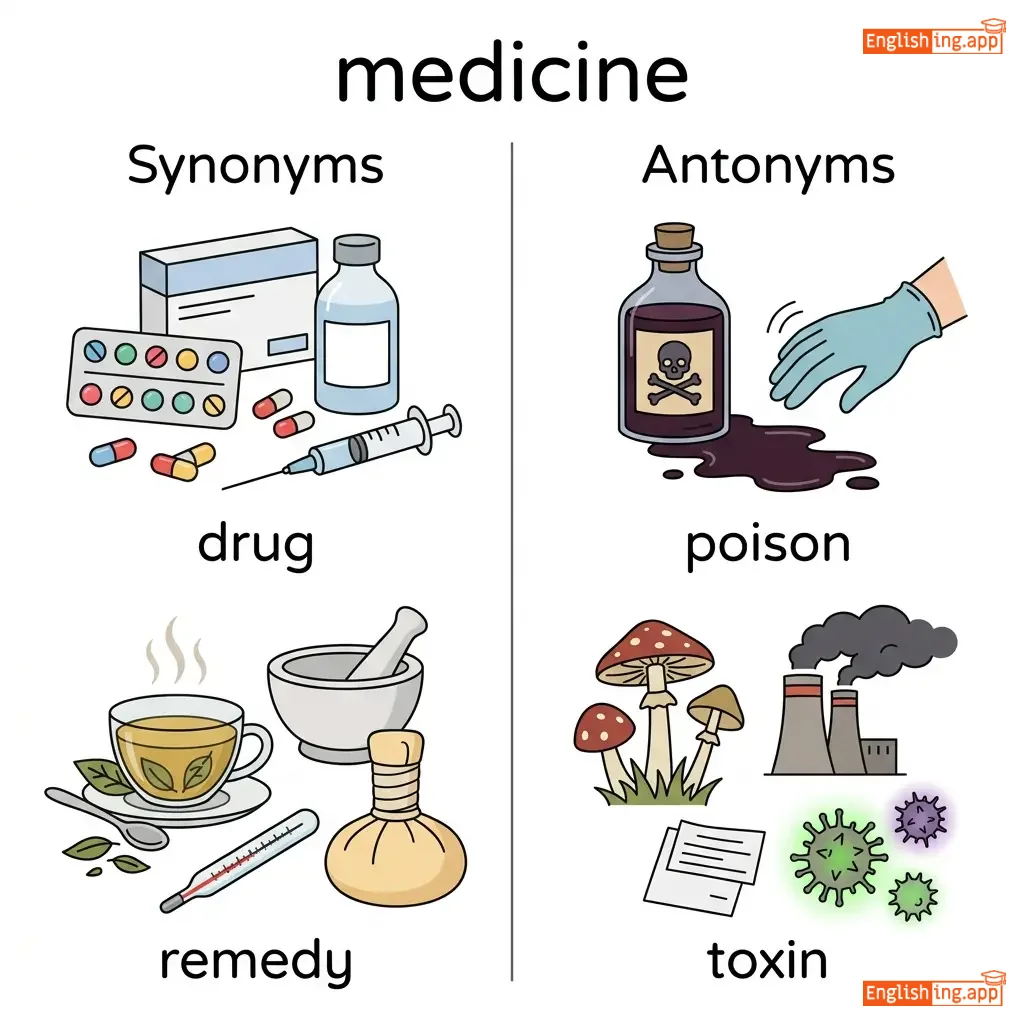
drug, remedy, treatment, cure
••••••
|
poison, toxin
••••••
|
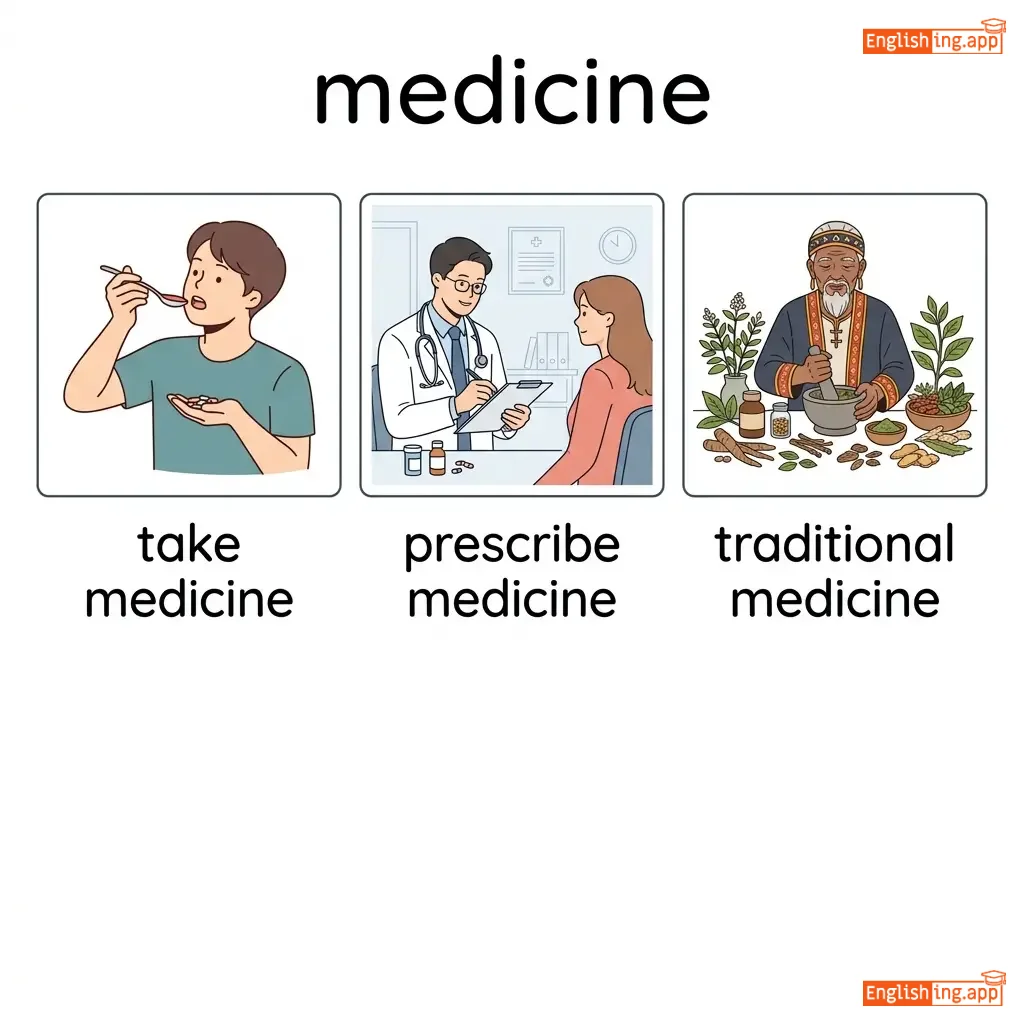
take medicine, prescribe medicine, traditional medicine, modern medicine
••••••
|
药物可以缓解头痛 - 药物帮助治疗疾病。
••••••
|
|
🏰
••••••
|
/ˌmiː.diˈiː.vəl/
adjective
(中世纪)
••••••
|
- •••••• |
中世纪的
zhōng shìjì de
••••••
|
- •••••• | - •••••• | - •••••• | - •••••• |
Relating to the Middle Ages, the period in European history from about the 5th to the 15th century.
••••••
|
The castle is a famous medieval monument. |
这座城堡是一个著名的中世纪纪念碑。
Zhè zuò chéngbǎo shì yīgè zhùmíng de zhōng shìjì jìniànbēi.
••••••
|
- •••••• | - •••••• | - •••••• |
middle ages, feudal, ancient, old
••••••
|
modern, contemporary
••••••
|
medieval castle, medieval history, medieval times, medieval architecture
••••••
|
Medieval 听起来像 '中' - 记得中世纪的历史。
••••••
|
|
🧘
••••••
|
/ˌmɛdɪˈteɪʃən/
noun
(冥想)
••••••
|
- •••••• |
冥想
mingxiang
••••••
|
- •••••• | - •••••• | - •••••• | - •••••• |
The practice of focusing the mind to achieve calmness, clarity, or spiritual growth.
••••••
|
She practices meditation every morning to start her day peacefully. |
她每天早上练习冥想,开始她的平静一天。
Ta meitian zaoshang lianxi mingxiang, kaishi tade pingjing yitian.
••••••
|
deep meditation |
A state of intense focus and calmness during meditation.
••••••
|
深度冥想
shendu mingxiang
••••••
|
contemplation, reflection, mindfulness, prayer, concentration
••••••
|
distraction, chaos
••••••
|
practice meditation, meditation techniques, meditation session, guided meditation
••••••
|
冥想,帮助你冥思苦想,找回宁静。
••••••
|
|
📺
••••••
|
/ˈmiːdiəm/
noun
(媒介)
••••••
|
- •••••• |
媒介
méijiè
••••••
|
- •••••• | - •••••• | - •••••• | - •••••• |
A means or channel of communication, expression, or artistic work.
••••••
|
Television is a powerful medium for spreading information. |
电视是传播信息的强大媒介。
Diànshì shì chuánbò xìnxī de qiángdà méijiè.
••••••
|
through the medium of |
By using or via a particular channel or means.
••••••
|
通过媒介
Tōngguò méijiè
••••••
|
channel, means, method, vehicle, instrument
••••••
|
end, result
••••••
|
medium of exchange, communication medium, artistic medium, mass medium
••••••
|
Medium 就是消息的通道 (méijiè)。
••••••
|
|
🤝
••••••
|
/miːt/
verb
(米特)
••••••
|

|
见面
jiànmiàn
••••••
|
met
梅特
••••••
|
met
梅特
••••••
|
meets
米特斯
••••••
|
meeting
米廷
••••••
|
To come into the presence of someone by chance or arrangement.
••••••
|
I will meet you at the cafe tomorrow.
我明天在咖啡馆见你。
••••••
|
我明天在咖啡馆见你。
Wǒ míngtiān zài kāfēi guǎn jiàn nǐ.
••••••
|
meet halfway
半路相遇
••••••
|
To compromise or find a middle ground.
••••••
|
半路相遇
bànlù xiāngyù
••••••
|
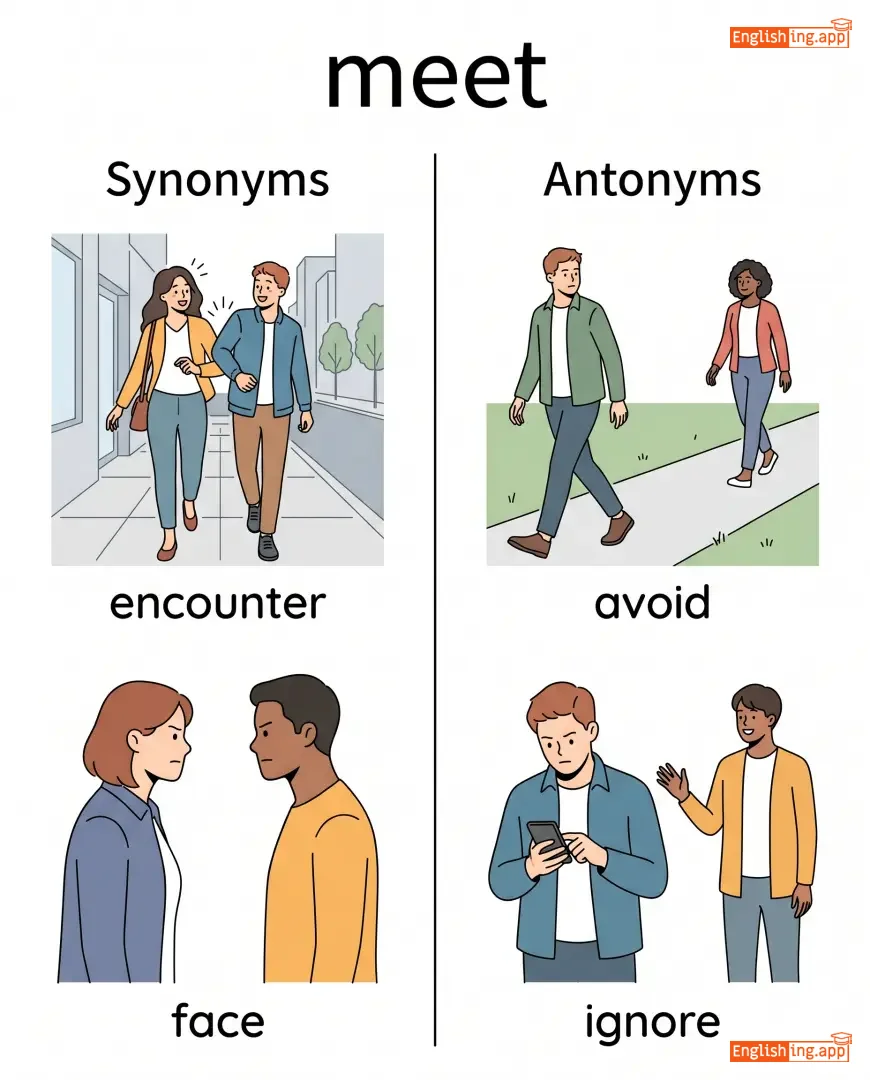
encounter, face, see, assemble, greet
••••••
|
avoid, ignore
••••••
|
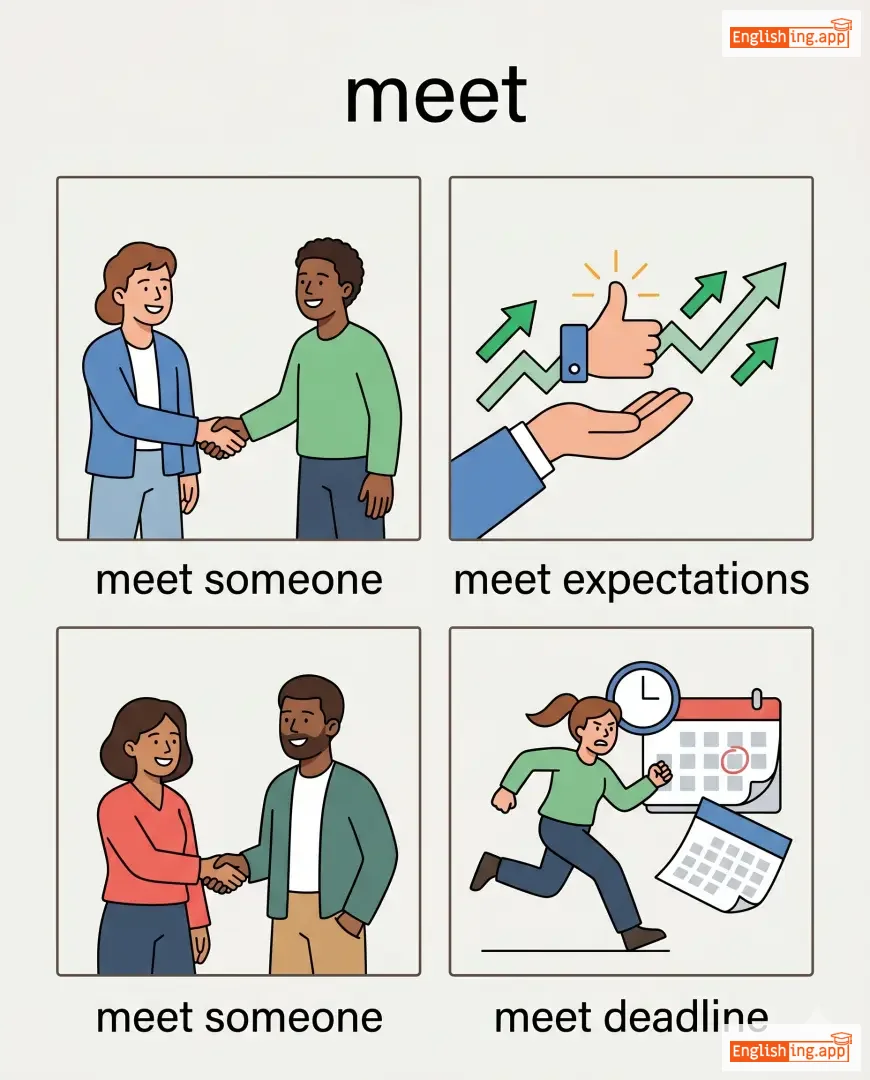
meet someone, meet expectations, meet deadline, meet requirements
••••••
|
Meet意思是见面(jiànmiàn)。
••••••
|
|
👥
••••••
|
/ˈmiːtɪŋ/
noun
(mìtīng)
••••••
|
- •••••• |
会议
huiyi
••••••
|
- •••••• | - •••••• | - •••••• | - •••••• |
A gathering of people for discussion or decision-making.
••••••
|
The board had a meeting to finalize the budget. |
董事会举行了会议来完成预算。
Dongshihui juxingle huiyi lai wancheng yusuan.
••••••
|
call a meeting |
To arrange a gathering for discussion.
••••••
|
召开会议
Zhaokai huiyi
••••••
|
gathering, conference, assembly, session, discussion
••••••
|
separation, dispersal
••••••
|
board meeting, business meeting, annual meeting, meeting agenda
••••••
|
会议 = 聚集在一起讨论
••••••
|
|
🎵
••••••
|
/ˈmelədi/
noun
(美乐迪)
••••••
|
- •••••• |
旋律; 音调
meiludi
••••••
|
- •••••• | - •••••• | - •••••• | - •••••• |
A sequence of single notes that is musically satisfying; a tune
••••••
|
She hummed a beautiful melody while cooking dinner.
她在做晚餐时哼着一首美丽的旋律。
••••••
|
她在做晚餐时哼着一首美丽的旋律。
Tā zài zuò wǎncān shí hēngzhe yī shǒu měilì de xuánlǜ.
••••••
|
- •••••• | - •••••• | - •••••• |
tune, air, song, music, strain
••••••
|
discord, noise, cacophony, dissonance
••••••
|
beautiful melody, haunting melody, simple melody, catchy melody
••••••
|
美乐迪如同一首给心灵的旋律。
••••••
|
|
🧊
••••••
|
/mɛlt/
verb
(melt)
••••••
|
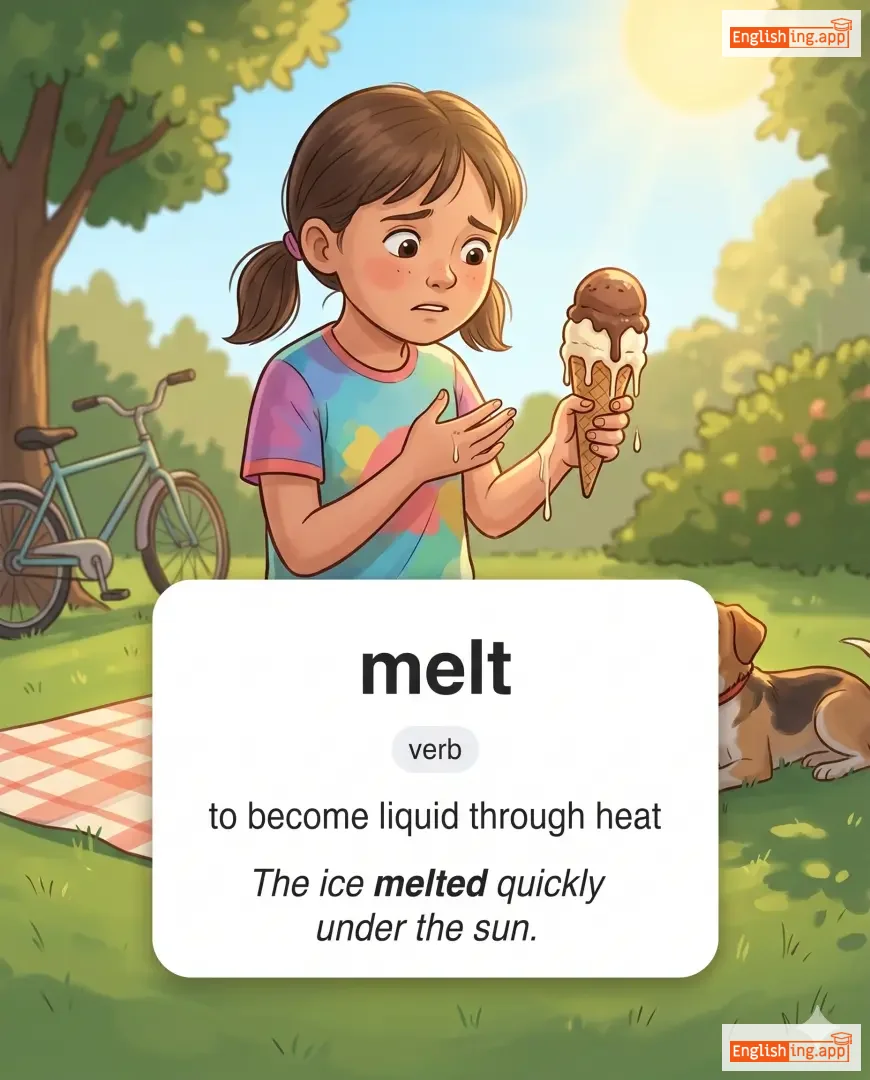
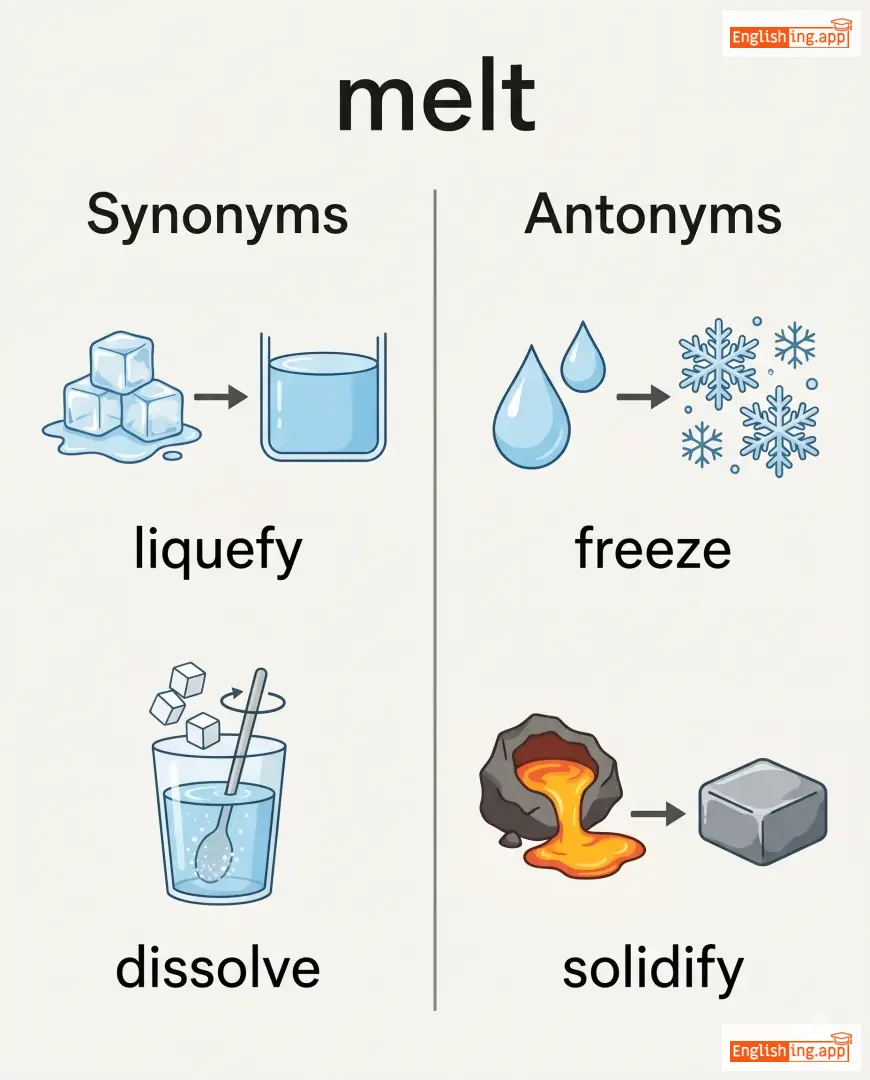
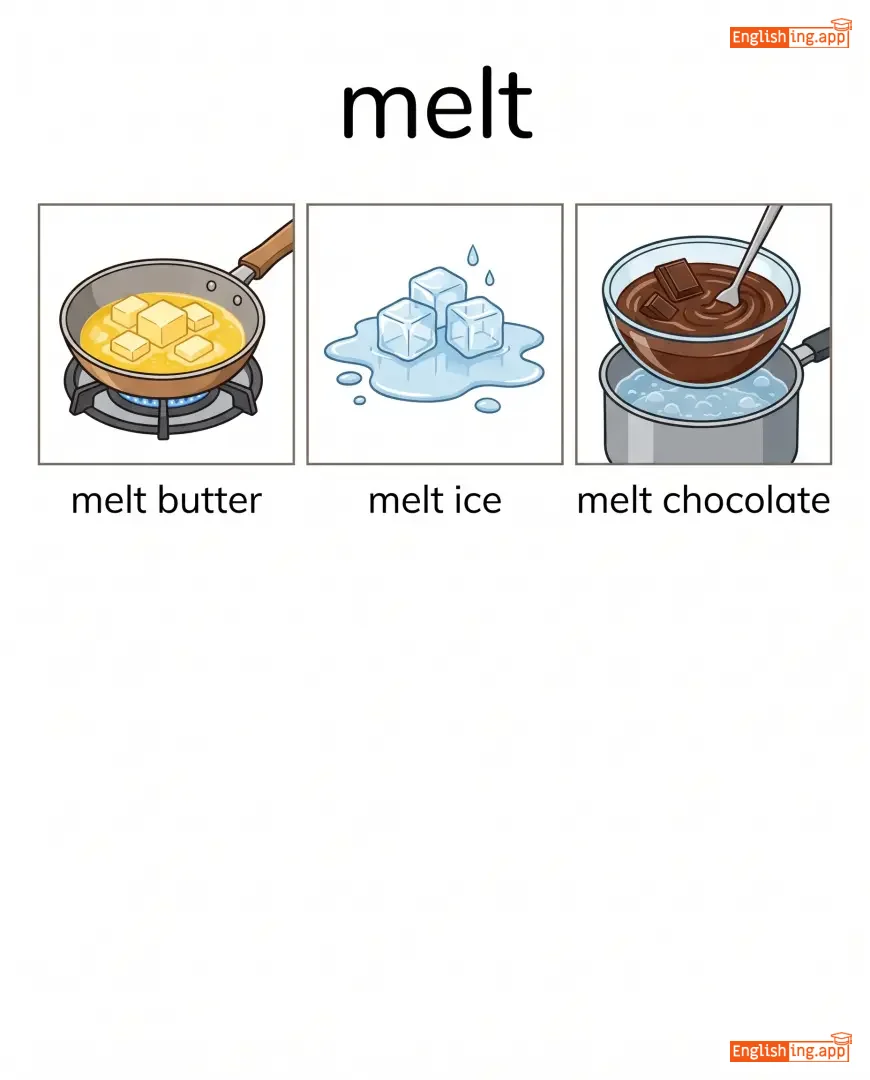
|
融化
ronghua
••••••
|
melted
melted
••••••
|
melted
melted
••••••
|
melts
melts
••••••
|
melting
melting
••••••
|
to become liquid through heat
••••••
|
The ice melted quickly under the sun.
The ice melted quickly under the sun.
••••••
|
冰在太阳下迅速融化。
Bing zai taiyang xia xunsu ronghua.
••••••
|
melt someone's heart
melt someone's heart
••••••
|
to make someone feel love or sympathy
••••••
|
融化某人的心
Ronghua mou ren de xin
••••••
|
liquefy, dissolve, thaw, soften, fuse
••••••
|
freeze, solidify
••••••
|
melt butter, melt ice, melt chocolate, melt in the sun
••••••
|
Melt 就是融化,像冰融化一样。
••••••
|
|
🫠
••••••
|
/ˈmeltɪŋ/
verb, noun, adjective
(梅尔廷)
••••••
|
- •••••• |
融化
ronghua
••••••
|
melted
梅尔特德
••••••
|
melted
梅尔特德
••••••
|
melts
梅尔茨
••••••
|
melting
梅尔廷
••••••
|
the process of changing from solid to liquid due to heat; becoming softer or less rigid; emotionally moving or tender
••••••
|
The ice is melting quickly under the hot sun.
艾斯 伊兹 梅尔廷 奎克利 安德 热 孙
••••••
|
冰在炎热的阳光下迅速融化。
Bing zai yanre de yangguang xia xunsu ronghua
••••••
|
melting point
梅尔廷 点
••••••
|
the temperature at which a solid becomes a liquid
••••••
|
熔点
rongdian
••••••
|
liquefying, dissolving, thawing, softening, fusing
••••••
|
freezing, solidifying, hardening
••••••
|
melting ice, melting snow, melting point, melting temperature, melting process
••••••
|
Melting 就是 融化,冰遇热就 ronghua
••••••
|
|
👥
••••••
|
/ˈmembər/
noun
(mémber)
••••••
|
- •••••• |
成员
chéngyuán
••••••
|
- •••••• | - •••••• | - •••••• | - •••••• |
a person or thing that belongs to a group or organization
••••••
|
She is a member of the local sports club. |
她是当地体育俱乐部的成员。
Tā shì dāngdì tǐyù jùlèbù de chéngyuán.
••••••
|
active member |
a person who participates regularly in the activities of a group
••••••
|
活跃成员
huóyuè chéngyuán
••••••
|
participant, affiliate, associate, enrollee
••••••
|
outsider, nonmember
••••••
|
club member, family member, group member, board member
••••••
|
成员就像是member一样,属于某个团体。
••••••
|
|
🎫
••••••
|
/ˈmɛmbərʃɪp/
noun
(memběrship)
••••••
|

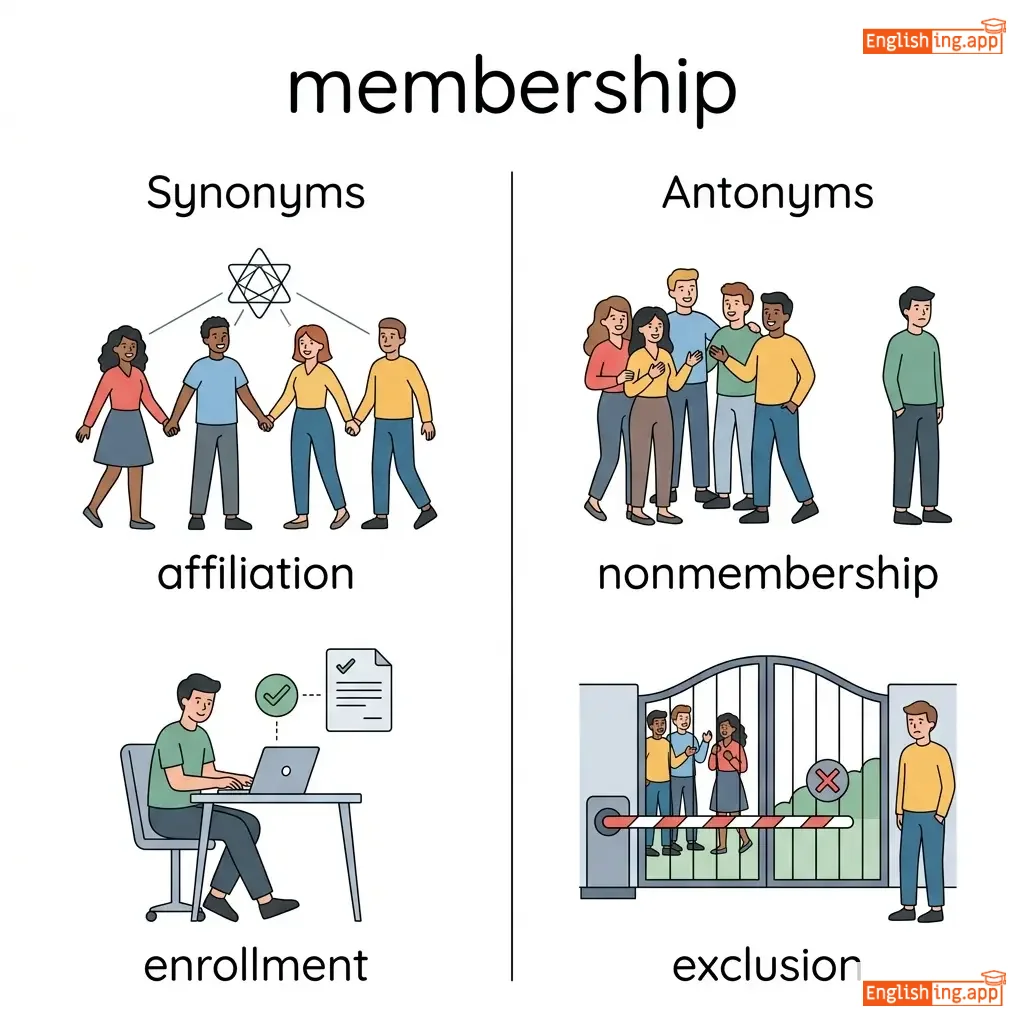

|
会员资格
huiyuanzige
••••••
|
- •••••• | - •••••• | - •••••• | - •••••• |
The state of being a member of a group, organization, or club.
••••••
|
Her membership in the gym expires next month. |
她在健身房的会员资格下个月到期。
Ta zai jianshenfang de huiyuanzige xiayue daoqi.
••••••
|
membership drive |
A campaign to recruit new members for an organization.
••••••
|
会员招募活动
huiyuan zhaomu huodong
••••••
|
affiliation, enrollment, subscription, association, participation
••••••
|
nonmembership, exclusion
••••••
|
membership card, annual membership, club membership, membership fee
••••••
|
会员资格是一张进入社团的票,记住它是通往加入的钥匙。
••••••
|
|
📝
••••••
|
/ˈmɛmoʊ/
noun
••••••
|
- •••••• | - •••••• | - •••••• | - •••••• | - •••••• | - •••••• |
a written message, typically in a business setting
••••••
|
He wrote a memo to the staff about the upcoming meeting. |
- •••••• | - •••••• | - •••••• | - •••••• |
note, message, communication, reminder
••••••
|
silence, neglect
••••••
|
internal memo, office memo, memo to staff
••••••
|
No •••••• |
|
📖
••••••
|
/ˈmɛm.wɑːr/
noun
(méngwǎr)
••••••
|
- •••••• |
回忆录
huiyilu
••••••
|
- •••••• | - •••••• | - •••••• | - •••••• |
A historical account or autobiography written from personal experience.
••••••
|
The author’s memoir details her journey through hardship and success. |
作者的回忆录详细描述了她通过困难和成功的旅程。
Zuòzhě de huíyìlù xiángxì miáoshùle tā tōngguò kùnnán hé chénggōng de lǚchéng.
••••••
|
- •••••• | - •••••• | - •••••• |
autobiography, recollection, diary, reminiscence
••••••
|
fiction, imagination
••••••
|
write a memoir, publish a memoir, memoir of life, political memoir
••••••
|
Memoir = 记忆 + 记录 = 回忆录。
••••••
|
|
🌟
••••••
|
/ˈmɛm.ər.ə.bəl/
adjective
(méimóu)
••••••
|



|
值得记住的
zhíde jìzhù de
••••••
|
- •••••• | - •••••• | - •••••• | - •••••• |
Worth remembering because it is special or unusual.
••••••
|
Their wedding was one of the most memorable days of their lives. |
他们的婚礼是他们一生中最值得记住的日子之一。
Tāmen de hūnlǐ shì tāmen yīshēng zhōng zuì zhídé jìzhù de rìzi zhī yī.
••••••
|
memorable experience |
An experience that is significant and worth remembering.
••••••
|
值得记住的经历
zhíde jìzhù de jīnglì
••••••
|
unforgettable, remarkable, notable, outstanding
••••••
|
forgettable, ordinary, trivial
••••••
|
memorable event, memorable occasion, memorable experience, memorable day
••••••
|
Memorable 就是可以记住的,像珍贵的回忆一样。
••••••
|
|
🕊️
••••••
|
/məˈmɔːr.i.əl/
noun
(纪念碑)
••••••
|
|
纪念碑
jìniànbēi
••••••
|
- •••••• | - •••••• | - •••••• | - •••••• |
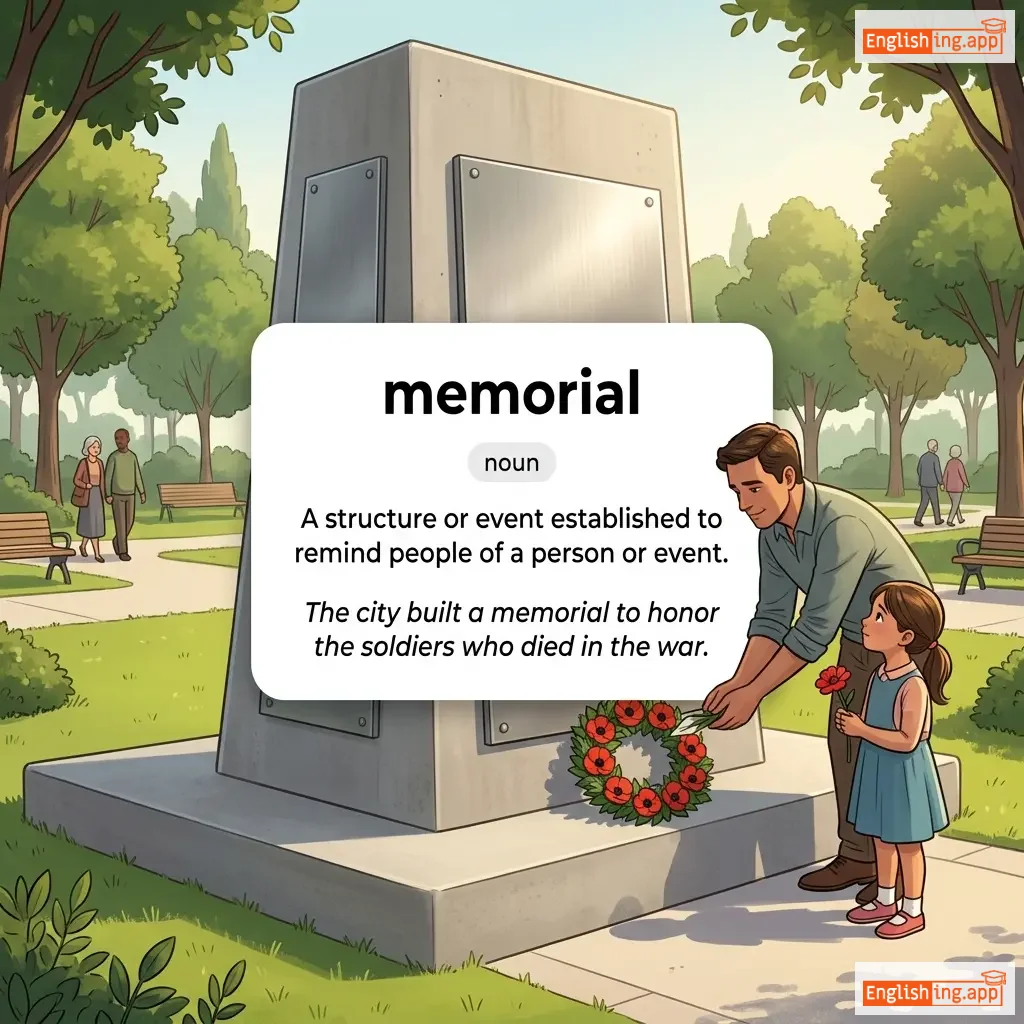
A structure or event established to remind people of a person or event.
••••••
|
The city built a memorial to honor the soldiers who died in the war. |
这座城市建造了一座纪念碑,以纪念在战争中阵亡的士兵。
zhè zuò chéngshì jiànzàole yī zuò jìniànbēi, yǐ jìniàn zài zhànzhēng zhōng zhènwáng de shìbīng.
••••••
|
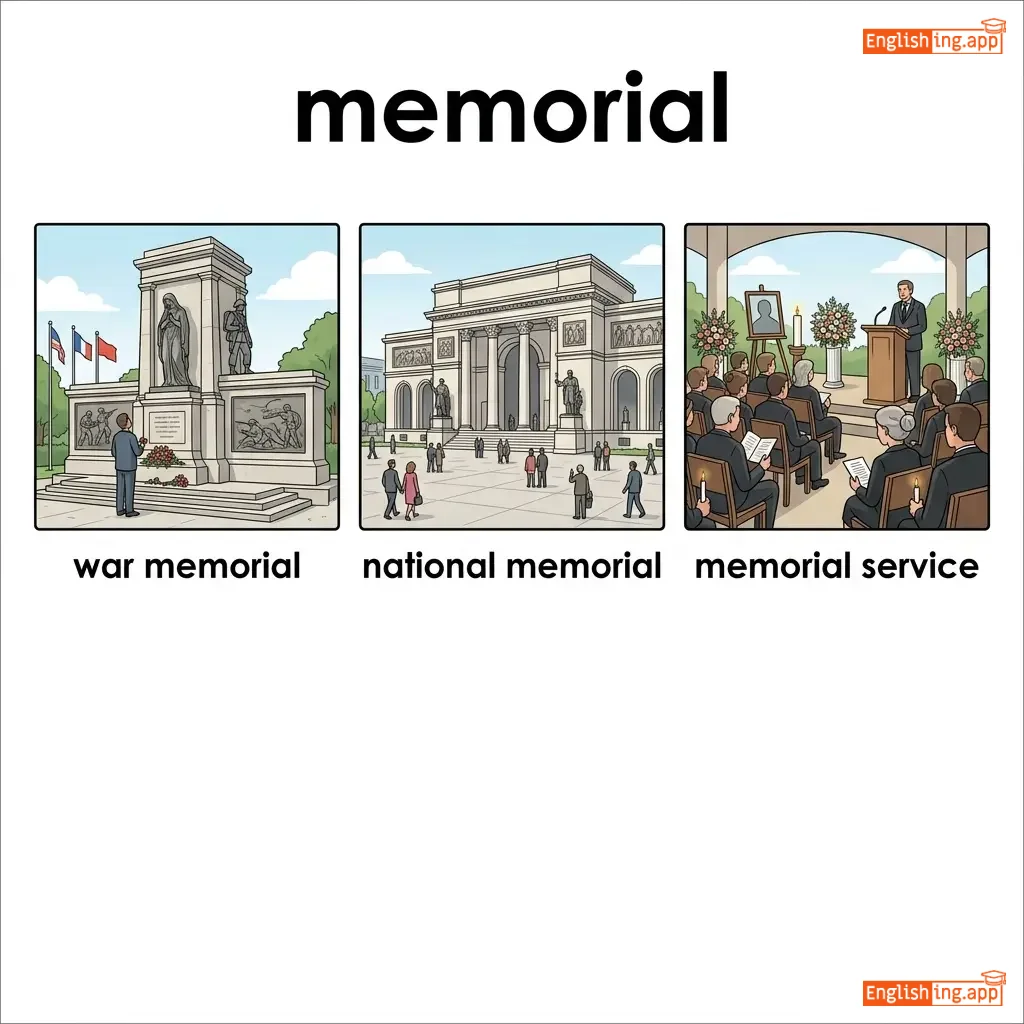
war memorial |
A structure built to honor soldiers who died in a war.
••••••
|
战争纪念碑
zhànzhēng jìniànbēi
••••••
|
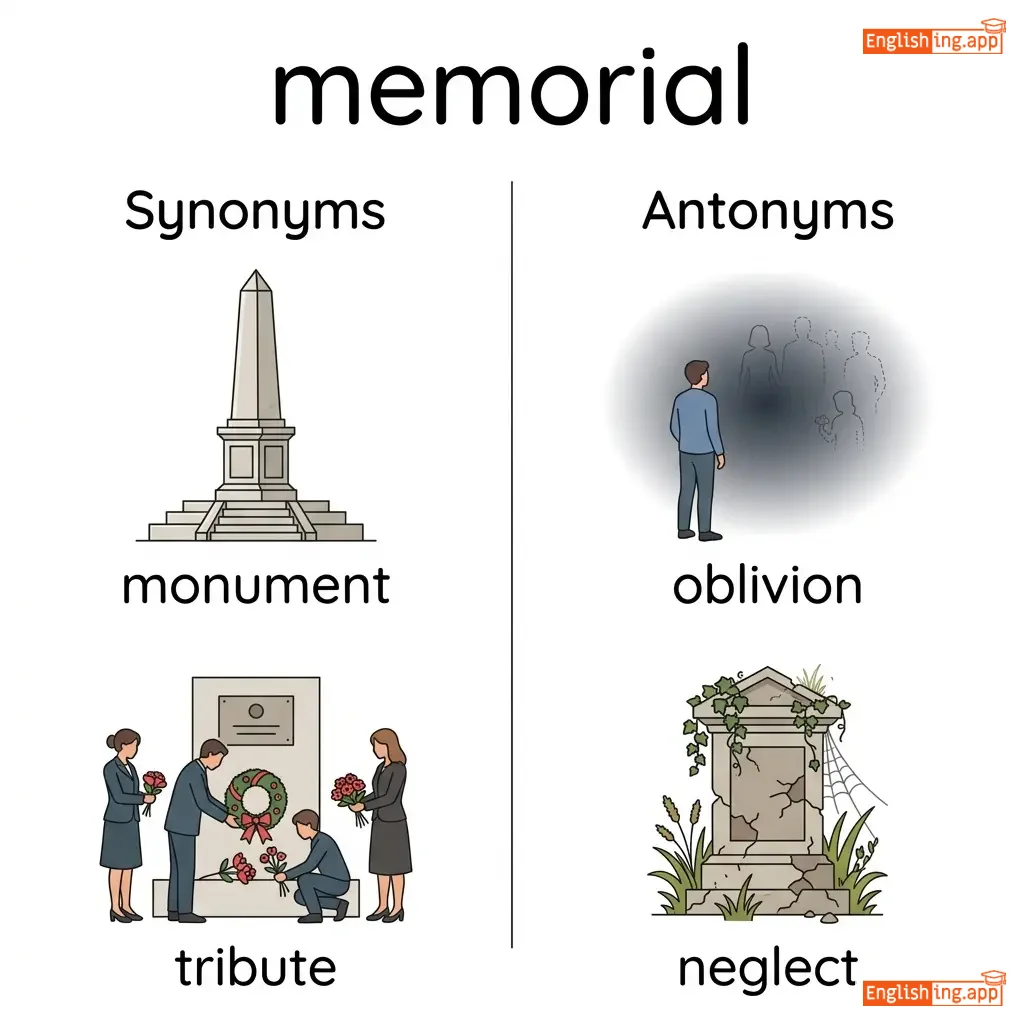
monument, tribute, shrine, remembrance
••••••
|
oblivion, neglect
••••••
|
war memorial, national memorial, memorial service, memorial plaque
••••••
|
纪念碑是为了让我们记住过去的历史。
••••••
|
|
🧠
••••••
|
/ˈmeməraɪz/
verb
(记住)
••••••
|

|
记住
jì zhù
••••••
|
memorized
记住
••••••
|
memorized
记住
••••••
|
memorizes
记住
••••••
|
memorizing
记住
••••••
|
to learn something by heart; to commit to memory
••••••
|
Students need to memorize important formulas for the exam.
学生需要记住重要的公式以备考试。
••••••
|
学生需要记住重要的公式以备考试。
Xuéshēng xūyào jì zhù zhòngyào de gōngshì yǐ bèi kǎoshì.
••••••
|
- •••••• | - •••••• | - •••••• |
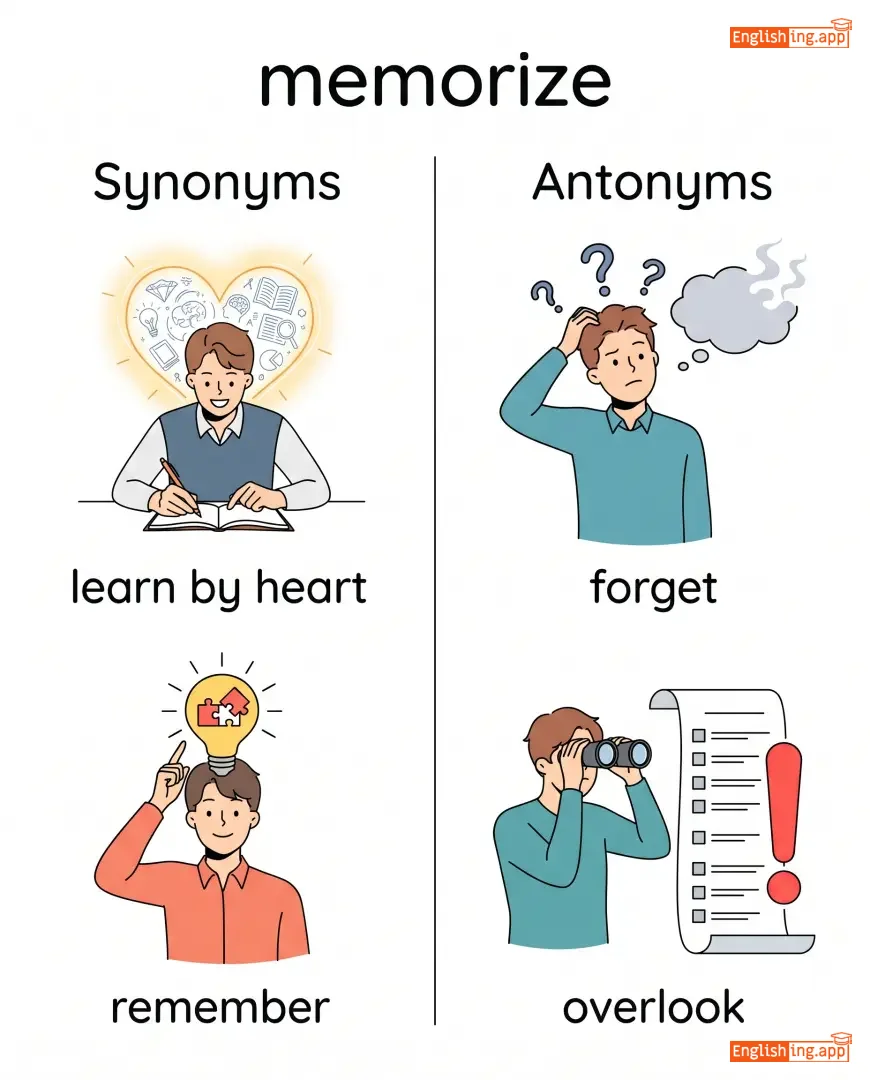
learn by heart, remember, retain, recall
••••••
|
forget, overlook, neglect
••••••
|
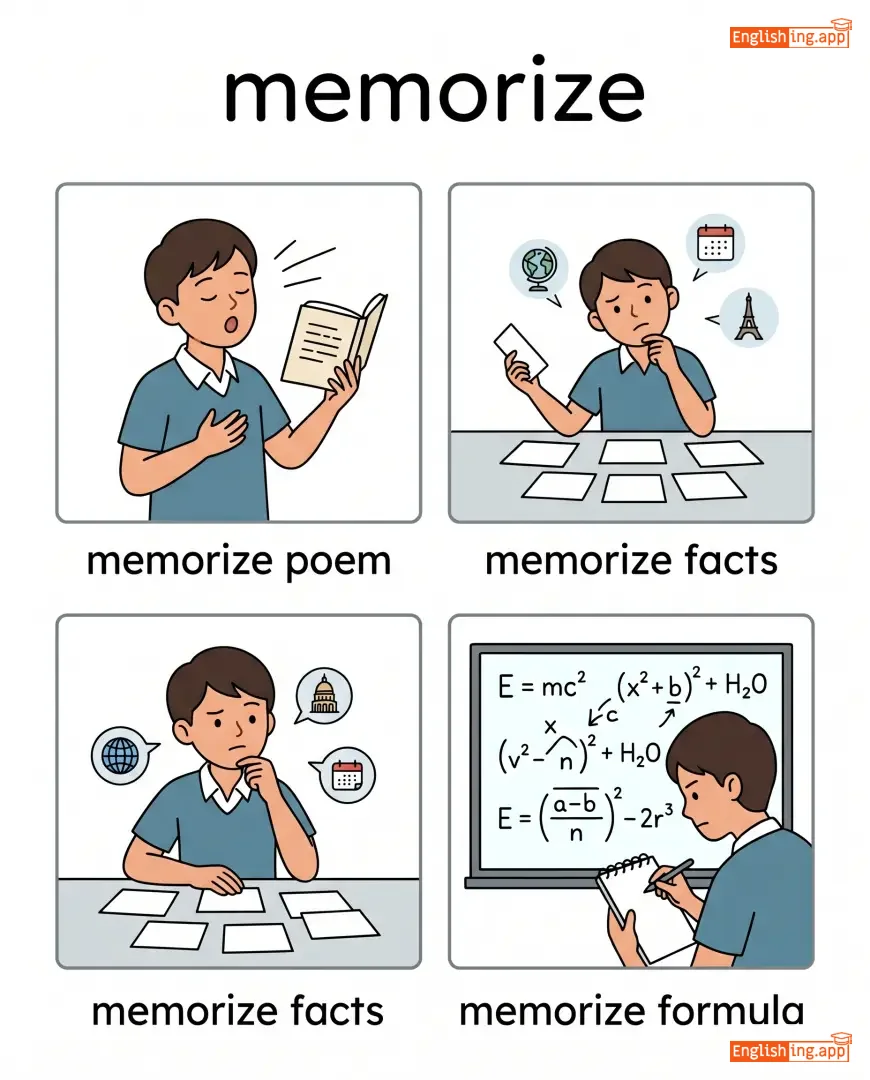
memorize poem, memorize facts, memorize formula, memorize lines, memorize vocabulary
••••••
|
记住是让你记住更快的关键!
••••••
|
|
🧠
••••••
|
/ˈmɛməri/
noun
(mémò lǐ)
••••••
|
- •••••• |
记忆
jiyi
••••••
|
- •••••• | - •••••• | - •••••• | - •••••• |
The faculty of the mind by which information is stored and remembered.
••••••
|
She has a vivid memory of her childhood home. |
她对自己童年时代的家有着生动的记忆。
Tā duì zìjǐ tóngnián shídài de jiā yǒu zhe shēngdòng de jìyì.
••••••
|
in memory of |
As a way of showing respect for someone who has died.
••••••
|
为了纪念
wèile jìniàn
••••••
|
recollection, remembrance, retention, recall, reminiscence
••••••
|
forgetfulness, amnesia
••••••
|
short-term memory, long-term memory, memory loss, vivid memory
••••••
|
记忆就像硬盘存储你的过去,随时可以访问。
••••••
|
|
🧩
••••••
|
/ˈmɛntəl/
adjective
(门塔尔)
••••••
|
- •••••• |
心理的
xīnlǐ de
••••••
|
- •••••• | - •••••• | - •••••• | - •••••• |
Relating to the mind, thoughts, or intellectual processes.
••••••
|
He needs to take a break for his mental health. |
他需要休息一下以保持心理健康。
tā xūyào xiūxí yīxià yǐ bǎochí xīnlǐ jiànkāng.
••••••
|
mental block |
An inability to think of something or remember something.
••••••
|
心理障碍
xīnlǐ zhàng'ài
••••••
|
cognitive, intellectual, psychological, rational, emotional
••••••
|
physical, bodily
••••••
|
mental health, mental illness, mental strength, mental state
••••••
|
心理的跟心智有关,如果心智出了问题,心理健康就会受到影响。
••••••
|
|
🧠
••••••
|
/menˈtæləti/
noun
(心理)
••••••
|
- •••••• |
心态; 思维方式
xīnlì
••••••
|
- •••••• | - •••••• | - •••••• | - •••••• |
The characteristic attitude of mind or way of thinking of a person or group
••••••
|
The team needs to develop a winning mentality to succeed.
团队需要发展一种胜利的心态才能成功。
••••••
|
团队需要发展一种胜利的心态才能成功。
Tuánduì xūyào fāzhǎn yī zhǒng shènglì de xīntài cáinéng chénggōng.
••••••
|
- •••••• | - •••••• | - •••••• |
mindset, attitude, outlook, psychology, thinking
••••••
|
open-mindedness, flexibility, adaptability
••••••
|
winning mentality, victim mentality, group mentality, positive mentality
••••••
|
心态 - 记住‘心’与‘态度’的组合来帮助记忆。
••••••
|
|
🧠
••••••
|
/ˈmɛntəli/
adverb
(mɛntəli)
••••••
|
- •••••• |
精神上
jingshen shang
••••••
|
- •••••• | - •••••• | - •••••• | - •••••• |
in a way that relates to the mind or intellect rather than the body
••••••
|
She felt mentally exhausted after the long exam.
她在长时间考试后感到精神上疲惫。
••••••
|
她在长时间考试后感到精神上疲惫。
Tā zài cháng shíjiān kǎoshì hòu gǎndào jīngshén shàng píbèi.
••••••
|
mentally prepared
精神上准备好
••••••
|
ready in mind for a challenge or situation
••••••
|
精神上准备好
jīngshén shàng zhǔnbèi hǎo
••••••
|
psychologically, intellectually, cognitively, emotionally
••••••
|
physically, bodily
••••••
|
mentally strong, mentally ill, mentally prepared, mentally active
••••••
|
Mental = 思维, 所以 'mentally' = 精神上。
••••••
|
|
💬
••••••
|
/ˈmɛnʃən/
verb
(mɛnʧən)
••••••
|
- •••••• |
提到
tídào
••••••
|
mentioned
mɛnʧənd
••••••
|
mentioned
mɛnʧənd
••••••
|
mentions
mɛnʧənz
••••••
|
mentioning
mɛnʧɪŋ
••••••
|
To refer to something briefly without giving much detail.
••••••
|
He mentioned her name during the meeting.
hi mɛnʧənd hɜr neɪm dʊrɪŋ ðə mɪtɪŋ.
••••••
|
他在会议中提到了她的名字。
Tā zài huìyì zhōng tí dào le tā de míngzì.
••••••
|
not to mention
nɔt tə mɛnʧən
••••••
|
Used to add emphasis to something by including an additional point.
••••••
|
更不必说
gèng bù bì shuō
••••••
|
refer, cite, state, remark, bring up
••••••
|
ignore, omit, overlook
••••••
|
mention casually, fail to mention, specifically mention, worth mentioning
••••••
|
提到就像在会议中提到某人的名字。
••••••
|
|
👩🏫
••••••
|
/ˈmɛntɔːr/
noun
(mɛntɔr)
••••••
|
- •••••• |
导师
dǎoshī
••••••
|
- •••••• | - •••••• | - •••••• | - •••••• |
an experienced person who advises and guides someone less experienced
••••••
|
She acted as a mentor for the new employees. |
她担任新员工的导师。
Tā dānrèn xīn yuángōng de dǎoshī.
••••••
|
mentor-mentee relationship |
a guiding relationship where a mentor advises a mentee
••••••
|
导师与学员关系
dǎoshī yǔ xuéyuán guānxì
••••••
|
advisor, guide, coach, counselor
••••••
|
student, pupil
••••••
|
trusted mentor, career mentor, mentor program, mentor relationship
••••••
|
导师,如同老师,为你指引方向。
••••••
|
|
📜
••••••
|
/ˈmɛnjuː/
noun
(菜单)
••••••
|
- •••••• |
菜单
càidān
••••••
|
- •••••• | - •••••• | - •••••• | - •••••• |
A list of food and drinks available at a restaurant or offered at a meal.
••••••
|
The restaurant updated its menu with new dishes. |
餐厅更新了他们的菜单,加入了新菜肴。
Cāntīng gēngxīnle tāmen de càidān, jiārùle xīn cài yáo.
••••••
|
set menu |
A fixed selection of dishes offered at a set price.
••••••
|
固定菜单
gùdìng càidān
••••••
|
bill of fare, food list, card, menu card, offerings
••••••
|
emptiness, nothingness
••••••
|
menu card, lunch menu, digital menu, special menu
••••••
|
菜单就是餐厅的食物清单,帮助你选择菜肴。
••••••
|
|
💰
••••••
|
/ˈmɜːrtʃənt/
noun
(mòchāng)
••••••
|
- •••••• |
商人
shāngrén
••••••
|
- •••••• | - •••••• | - •••••• | - •••••• |
a person or company involved in the trade of goods, especially in large quantities
••••••
|
The merchant sold spices from distant lands. |
商人出售来自遥远土地的香料。
Shāngrén chūshòu láizì yáoyuǎn tǔdì de xiāngliào.
••••••
|
sea merchant |
a trader who conducts business by sea
••••••
|
海上商人
hǎishàng shāngrén
••••••
|
trader, dealer, seller, vendor, businessman
••••••
|
buyer, customer, consumer
••••••
|
merchant ship, merchant trade, local merchant, online merchant
••••••
|
商人就像市场里的大亨,靠交易获取财富
••••••
|
|
🙏
••••••
|
/ˈmɜːrsi/
noun
(móxī)
••••••
|
- •••••• |
仁慈
renci
••••••
|
- •••••• | - •••••• | - •••••• | - •••••• |
Compassion or forgiveness shown toward someone whom it is in one's power to punish
••••••
|
The judge showed mercy and gave him a lighter sentence.
法官展现了仁慈,并给了他更轻的判决。
••••••
|
法官展现了仁慈,并给了他更轻的判决。
Fǎguān zhǎnxiànle réncí, bìng gěile tā gèng qīng de pànjué.
••••••
|
- •••••• | - •••••• | - •••••• |
compassion, forgiveness, clemency, kindness, leniency
••••••
|
cruelty, harshness, severity, ruthlessness, vengeance
••••••
|
show mercy, beg for mercy, mercy killing, without mercy
••••••
|
Mercy 就像是法官给一个犯人仁慈的判决。
••••••
|
|
✨
••••••
|
/mɪr/
adjective
(míěr)
••••••
|
- •••••• |
仅仅
jinjin
••••••
|
- •••••• | - •••••• | - •••••• | - •••••• |
Used to emphasize how small or insignificant something is.
••••••
|
It was a mere suggestion, not a command. |
这只是一个建议,而不是命令。
Zhè zhǐ shì yīgè jiànyì, ér bùshì mìnglìng.
••••••
|
a mere formality |
Something done because it is expected, but without real importance
••••••
|
仅仅是一个形式
Jǐnjǐn shì yīgè xíngshì
••••••
|
simple, trivial, insignificant, minor, slight
••••••
|
important, significant, major
••••••
|
mere coincidence, mere child, mere formality, mere mention
••••••
|
Mere 在中文中意味着 '仅仅' — 想想简单!
••••••
|
|
🪶
••••••
|
/ˈmɪərli/
adverb
(miěrli)
••••••
|
- •••••• |
仅仅
jinjin
••••••
|
- •••••• | - •••••• | - •••••• | - •••••• |
Only; nothing more than.
••••••
|
She was merely trying to help. |
她仅仅是在尝试帮助。
Tā jǐnjǐn shì zài chángshì bāngzhù.
••••••
|
merely a matter of time |
Something certain to happen, just waiting for the right time
••••••
|
仅仅是时间的问题
jǐnjǐn shì shíjiān de wèntí
••••••
|
only, simply, just, purely, solely
••••••
|
more, beyond, extra
••••••
|
merely coincidental, merely symbolic, merely academic, merely mentioned
••••••
|
MERELY意味着仅仅——记住:'仅仅是帮助,没别的'
••••••
|
|
🔗
••••••
|
/mɜːrdʒ/
verb
(mérj)
••••••
|

|
合并
hébìng
••••••
|
merged
mérjido
••••••
|
merged
mérjido
••••••
|
merges
merja
••••••
|
merging
merjiendo
••••••
|
to combine or join together; to blend into one
••••••
|
The two companies decided to merge to increase their market share.
两家公司决定合并以增加他们的市场份额。
••••••
|
两家公司决定合并以增加他们的市场份额。
Liǎng jiā gōngsī juédìng hébìng yǐ zēngjiā tāmen de shìchǎng fèn'é.
••••••
|
- •••••• | - •••••• | - •••••• |
combine, unite, join, blend
••••••
|
separate, divide, split, disconnect
••••••
|
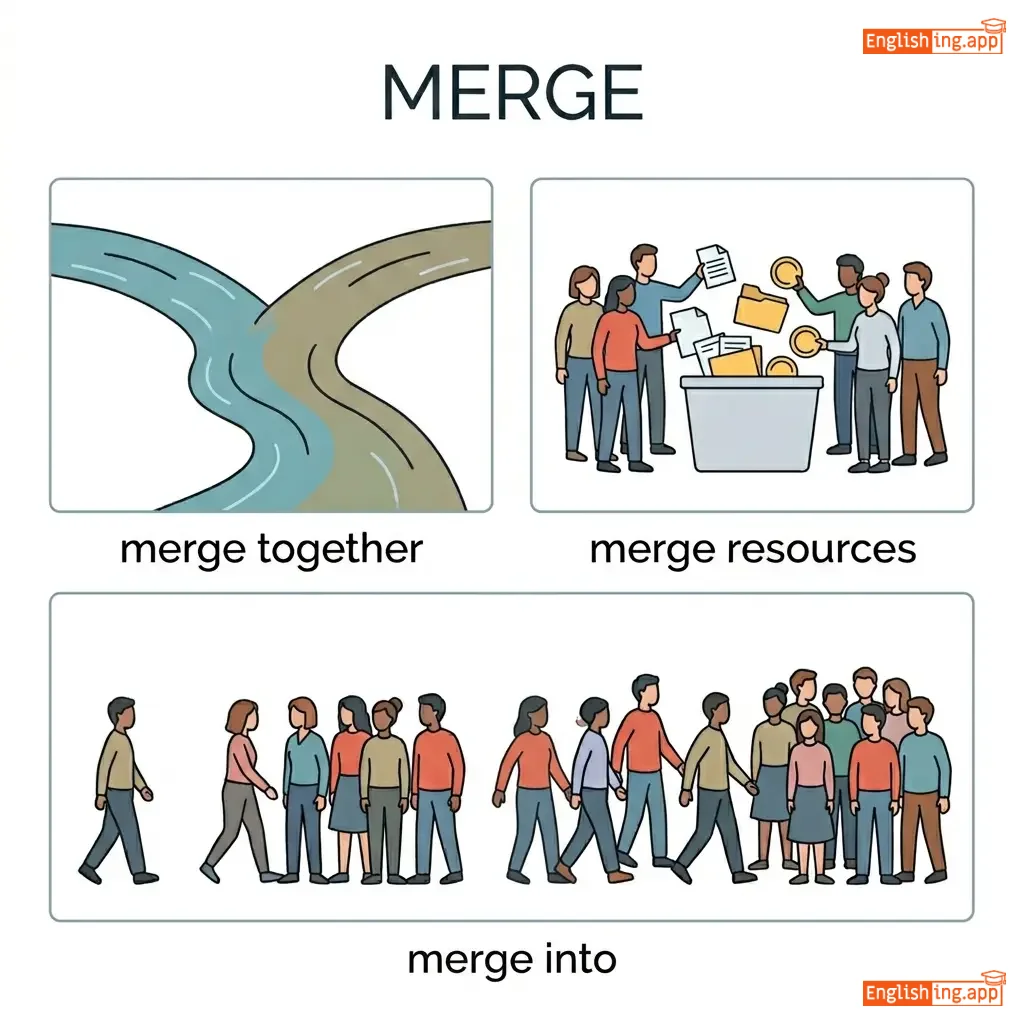
merge companies, merge files, merge lanes, merge successfully, merge together
••••••
|
合并:想象两家公司成为一家!
••••••
|
|
🔗
••••••
|
/ˈmɜːrdʒər/
noun
(mèrgé)
••••••
|
- •••••• |
合并
hébìng
••••••
|
- •••••• | - •••••• | - •••••• | - •••••• |
The combination of two or more companies into a single entity.
••••••
|
The merger of the two firms created the largest bank in the region. |
这两家公司的合并创造了该地区最大的银行。
Zhè liǎng jiā gōngsī de hébìng chuàngzàole gāi dìqū zuìdà de yínháng.
••••••
|
merger and acquisition |
Business processes of combining or buying companies.
••••••
|
合并与收购
Hébìng yǔ shōugòu
••••••
|
amalgamation, union, consolidation, fusion, integration
••••••
|
division, separation, split
••••••
|
merger agreement, corporate merger, merger deal, merger talks
••••••
|
合并 (hébìng) 就像两个公司结婚,创造一个更强大的实体。
••••••
|
|
🏅
••••••
|
/ˈmɛrɪt/
noun/verb
(梅里特)
••••••
|
- •••••• |
优点
yōudiǎn
••••••
|
merited
梅里特德
••••••
|
merited
梅里特德
••••••
|
merits
梅里特斯
••••••
|
meriting
梅里廷
••••••
|
A quality or feature that deserves praise or reward; to deserve or be worthy of.
••••••
|
The plan has the merit of being simple and practical.
这个计划的优点是简单且实用。
••••••
|
这个计划的优点是简单且实用。
Zhège jìhuà de yōudiǎn shì jiǎndān qiě shíyòng.
••••••
|
on its own merits
根据自身的优点
••••••
|
Judged based on its own qualities without bias.
••••••
|
根据自身的优点
gēnjù zìshēn de yōudiǎn
••••••
|
value, worth, virtue, advantage, credit
••••••
|
fault, defect, demerit
••••••
|
academic merit, merit system, merit scholarship, without merit
••••••
|
Merit是有价值的品质,就像名册上的优秀。
••••••
|
|
🏆
••••••
|
/ˌmer.ɪˈtɔː.ri.əs/
adjective
(值得表扬)
••••••
|
- •••••• |
值得表扬的
zhí dé biǎo yáng de
••••••
|
- •••••• | - •••••• | - •••••• | - •••••• |
deserving reward or praise; commendable; worthy of recognition
••••••
|
His meritorious service to the community was recognized.
他对社区的值得表扬的服务得到了认可。
••••••
|
他对社区的值得表扬的服务得到了认可。
Tā duì shè qū de zhí dé biǎo yáng de fú wù dé dào le rèn kě
••••••
|
- •••••• | - •••••• | - •••••• |
praiseworthy, commendable, worthy
••••••
|
unworthy, disgraceful, blameworthy
••••••
|
meritorious service, meritorious conduct, meritorious achievement
••••••
|
值得 (worthy) + 认可 (recognition)
••••••
|
|
🌀
••••••
|
/mɛs/
noun
(mèisī)
••••••
|
- •••••• |
混乱
hùnluàn
••••••
|
- •••••• | - •••••• | - •••••• | - •••••• |
A state of disorder or untidiness.
••••••
|
The kids left the room in a complete mess. |
孩子们把房间弄得一团糟。
Háizimen bǎ fángjiān nòng de yìtuánzāo.
••••••
|
make a mess |
To cause disorder or problems
••••••
|
弄乱
nòngluàn
••••••
|
chaos, disorder, confusion, clutter, disarray
••••••
|
order, neatness, tidiness
••••••
|
make a mess, big mess, messy situation, clean up the mess
••••••
|
MESS 意味着混乱— 'Mess 在房间意味着混乱'
••••••
|
|
📩
••••••
|
/ˈmɛsɪdʒ/
noun
(mɛsɪdʒ)
••••••
|
- •••••• |
消息
xiaoxi
••••••
|
- •••••• | - •••••• | - •••••• | - •••••• |
A piece of information sent or communicated from one person to another.
••••••
|
I received a message from my friend yesterday. |
我昨天收到了一条来自朋友的消息。
Wo zuotian shoudao le yitiao laizi pengyou de xiaoxi.
••••••
|
get the message |
To understand the meaning or implication of something
••••••
|
理解消息
liji xiaoxi
••••••
|
note, communication, letter, text, notification
••••••
|
silence, quiet
••••••
|
send a message, receive a message, leave a message, important message
••••••
|
MESSAGE 是消息—记住:'SMS 就是消息'
••••••
|
|
📨
••••••
|
/ˈmes.ɪn.dʒər/
noun
(梅森杰尔)
••••••
|
- •••••• |
信使
xìnshǐ
••••••
|
- •••••• | - •••••• | - •••••• | - •••••• |
a person who carries messages or communications between parties
••••••
|
The messenger delivered important battle plans to the commander. |
信使将重要的战斗计划传递给了指挥官。
Xìnshǐ jiāng zhòngyào de zhàndòu jìhuà chuándì gěile zhǐhuīguān.
••••••
|
- •••••• | - •••••• | - •••••• |
courier, envoy, herald, carrier
••••••
|
recipient, receiver, addressee
••••••
|
messenger service, royal messenger, send a messenger
••••••
|
信使传递信息,就像'信使'一样,把消息传递给每个人!
••••••
|
|
🧹
••••••
|
/ˈmɛsi/
adjective
(梅西)
••••••
|
- •••••• |
凌乱的
lingluan de
••••••
|
- •••••• | - •••••• | - •••••• | - •••••• |
untidy or dirty; disorganized or chaotic
••••••
|
His room was so messy that he couldn’t find his keys.
希兹 如姆 沃兹 嗖 梅西 载 希 库顿 特 法因德 希兹 基兹。
••••••
|
他的房间太凌乱了,以至于他找不到钥匙。
ta de fangjian tai lingluan le yi zhiyu ta zhao bu dao yaoshi
••••••
|
- •••••• | - •••••• | - •••••• |
untidy, dirty, cluttered, disorderly, chaotic
••••••
|
neat, tidy, clean
••••••
|
messy room, messy desk, messy hair, messy situation
••••••
|
messy 听起来像 梅西,但房间是凌乱的
••••••
|
|
⚙️
••••••
|
/ˈmɛtəl/
noun
(金属)
••••••
|
- •••••• |
金属
jinshu
••••••
|
- •••••• | - •••••• | - •••••• | - •••••• |
A solid material that is typically hard, shiny, malleable, fusible, and conductive, such as iron, gold, or aluminum.
••••••
|
The ring was made of precious metal. |
这枚戒指是由贵重金属制成的。
Zhe mei jie zhi shi you guizhong jinshu zhicheng de.
••••••
|
heavy metal |
A loud and aggressive style of rock music.
••••••
|
heavy metal
heavy metal
••••••
|
alloy, element, mineral, ore, substance
••••••
|
nonmetal, plastic, wood
••••••
|
metal detector, metal object, precious metal, sheet metal
••••••
|
金属是用来制作硬而光滑的物品,例如金属板。
••••••
|
|
🖼️
••••••
|
/ˈmɛtəfɔːr/
noun
(happiness)
••••••
|
- •••••• |
幸福
xingfu
••••••
|
- •••••• | - •••••• | - •••••• | - •••••• |
A figure of speech in which a word or phrase is applied to something to which it is not literally applicable.
••••••
|
Time is a thief is a common metaphor for how quickly life passes. |
当她获得奖项时,她无法掩饰自己的幸福。
Dāng tā huò dé jiǎngxiàng shí, tā wúfǎ yǎnshì zìjǐ de xìngfú.
••••••
|
mixed metaphor |
A combination of two or more inconsistent metaphors in a single expression.
••••••
|
追求幸福
zhuīqiú xìngfú
••••••
|
analogy, symbol, image, comparison, allegory
••••••
|
literalness, fact, reality
••••••
|
common metaphor, extended metaphor, metaphor for, use a metaphor
••••••
|
Xìngfú + 求 → 永不放弃追寻幸福
••••••
|
|
📏
••••••
|
/ˈmiːtər/
noun
(米特)
••••••
|
- •••••• |
米
mǐ
••••••
|
- •••••• | - •••••• | - •••••• | - •••••• |
A unit of length in the metric system equal to 100 centimeters; also, a device that measures quantity such as electricity or gas.
••••••
|
The technician came to check the electricity meter. |
技术员来了检查电表。
Jìshùyuán lái le jiǎnchá diànbiǎo.
••••••
|
on the meter |
Refers to the reading shown on a measurement device, often a taxi meter.
••••••
|
在表上
zài biǎo shàng
••••••
|
gauge, measurer, counter, device, ruler
••••••
|
estimation, guess
••••••
|
electricity meter, water meter, taxi meter, gas meter
••••••
|
米用来衡量长度,记住米是测量长度的单位。
••••••
|
|
🧪
••••••
|
/ˈmɛθəd/
noun
(方法)
••••••
|
- •••••• |
方法
fāngfǎ
••••••
|
- •••••• | - •••••• | - •••••• | - •••••• |
A particular way or process of doing something.
••••••
|
She explained the method of solving the problem.
她解释了解决问题的方法。
••••••
|
她解释了解决问题的方法。
Tā jiěshìle jiějué wèntí de fāngfǎ.
••••••
|
by method
通过方法
••••••
|
In an orderly or systematic way
••••••
|
以有序的方式
yǐ yǒuxù de fāngshì
••••••
|
procedure, technique, system, process, approach
••••••
|
chaos, disorder
••••••
|
teaching method, scientific method, effective method, method of study
••••••
|
METHOD 就是方法 — '解决问题需要一个有序的方法'
••••••
|
|
📊
••••••
|
/ˌmɛθəˈdɑlədʒi/
noun
(方法论)
••••••
|
- •••••• |
方法论
fāngfǎlùn
••••••
|
- •••••• | - •••••• | - •••••• | - •••••• |
A system of methods used in a particular area of study or activity.
••••••
|
The research was conducted using a new methodology.
这项研究是使用新方法论进行的。
••••••
|
这项研究是使用新方法论进行的。
Zhe xiang yanjiu shi shiyong xin fangfalu jinxing de.
••••••
|
- •••••• | - •••••• | - •••••• |
approach, technique, process, strategy, system
••••••
|
disorganization, randomness
••••••
|
research methodology, scientific methodology, teaching methodology, standard methodology
••••••
|
方法论是方法的系统—它是方法的集合。
••••••
|
|
🌮
••••••
|
/ˈmɛksɪkən/
noun/adjective
(ˈhæpinəs)
••••••
|
- •••••• |
幸福
xìng fú
••••••
|
- •••••• | - •••••• | - •••••• | - •••••• |
a native or inhabitant of Mexico; relating to Mexico or its people, culture, or language
••••••
|
She enjoys Mexican food like tacos and enchiladas. |
她在获得奖项时无法隐藏自己的幸福。
Tā zài huòdé jiǎngxiàng shí wúfǎ yǐncáng zìjǐ de xìngfú.
••••••
|
Mexican standoff |
a situation where no party can emerge as a clear winner or make progress
••••••
|
追求幸福
zhuīqiú xìngfú
••••••
|
Mexican national, Mexican citizen, Mexican person, Mexican-born
••••••
|
foreigner, non-Mexican
••••••
|
Mexican food, Mexican culture, Mexican heritage, Mexican border
••••••
|
幸福像是清晨的阳光,照亮你的每一天。
••••••
|
|
🎯
••••••
|
/mɪd/
adjective, preposition, noun
(米德)
••••••
|
- •••••• |
中间
zhongjian
••••••
|
- •••••• | - •••••• | - •••••• | - •••••• |
being in the middle of something; the central part or point
••••••
|
She joined the project in mid June.
她 在 米德 六月 加入 这个 项目
••••••
|
她在六月中旬加入了这个项目。
ta zai liuyue zhongxun jiaru le zhege xiangmu
••••••
|
midway
米德威
••••••
|
at the middle point of a process or journey
••••••
|
中途
zhongtu
••••••
|
middle, central, halfway, intermediate
••••••
|
beginning, end
••••••
|
mid point, mid year, mid day, mid range
••••••
|
mid 听起来像 middle=中间
••••••
|
|
☀️
••••••
|
/ˈmɪd.deɪ/
noun
(米德德)
••••••
|
- •••••• |
中午
zhongwu
••••••
|
- •••••• | - •••••• | - •••••• | - •••••• |
The middle of the day; twelve o'clock in the daytime; noon
••••••
|
The sun is brightest at midday when it's directly overhead. |
太阳在中午最亮,当它正好在头顶时。
Taiyang zai zhongwu zui liang, dang ta zhenghao zai touting shi.
••••••
|
- •••••• | - •••••• | - •••••• |
noon, twelve o'clock, high noon, noontime
••••••
|
midnight, dawn, dusk, evening
••••••
|
midday sun, midday heat, midday break, midday meal
••••••
|
中午是太阳最亮的时候,正好在你头顶。
••••••
|
|
⚖️
••••••
|
/ˈmɪdəl/
noun/adjective
(mìdōu)
••••••
|
- •••••• |
中间
zhōngjiān
••••••
|
- •••••• | - •••••• | - •••••• | - •••••• |
the central point, position, or part of something
••••••
|
The park is in the middle of the city. |
公园位于城市的中心。
Gōngyuán wèiyú chéngshì de zhōngxīn.
••••••
|
caught in the middle |
to be involved in a conflict between two sides
••••••
|
处于两者之间
chǔ yú liǎng zhě zhī jiān
••••••
|
center, midpoint, midst, halfway
••••••
|
edge, end, side
••••••
|
middle class, middle ground, middle school, middle of the road
••••••
|
中间 (zhōngjiān) = middle - 想想城市中心的公园 🏙
••••••
|
|
🌙
••••••
|
/ˈmɪdnaɪt/
noun
(mɪdnaɪt)
••••••
|
- •••••• |
午夜
wǔ yè
••••••
|
- •••••• | - •••••• | - •••••• | - •••••• |
twelve o'clock at night; the middle of the night
••••••
|
He reached home just after midnight. |
他在午夜后到家。
Tā zài wǔ yè hòu dào jiā.
••••••
|
burn the midnight oil |
to work late into the night
••••••
|
熬夜工作
áo yè gōngzuò
••••••
|
nighttime, darkness, late night, twelve o’clock
••••••
|
noon, midday
••••••
|
at midnight, past midnight, midnight snack, midnight train
••••••
|
午夜由‘五’和‘夜’组成,代表夜晚的中间时刻。
••••••
|
|
🎯
••••••
|
/mɪdst/
noun
(mɪdst)
••••••
|
- •••••• |
中间
zhongjian
••••••
|
- •••••• | - •••••• | - •••••• | - •••••• |
the middle part or position of something
••••••
|
In the midst of chaos, she remained calm. |
在混乱的中间,她保持冷静。
Zai hunluan de zhongjian, ta baochi lengjing.
••••••
|
in the midst of |
in the middle of or surrounded by
••••••
|
在中间
zai zhongjian
••••••
|
center, middle, core, heart
••••••
|
edge, outside, border
••••••
|
in the midst, midst of war, midst of trouble, midst of crowd
••••••
|
Midst意味着中间 — 中间意味着midst!
••••••
|
|
💪
••••••
|
/maɪt/
modal verb/noun
(mài)
••••••
|
- •••••• |
可能 / 力量
keneng / liliang
••••••
|
- •••••• | - •••••• | - •••••• | - •••••• |
used to express possibility; power or strength
••••••
|
She might come to the party if she finishes work early. |
如果她早早完成工作,她可能会来参加派对。
Ruguo ta zaizao wancheng gongzuo, ta keneng hui lai canjia paidui.
••••••
|
might is right |
the belief that power gives the right to rule or control
••••••
|
力量即是权利
liliang jishi quanli
••••••
|
may, could, strength, power
••••••
|
weakness, impossibility
••••••
|
might consider, might have been, military might, full might
••••••
|
Might = 可能与力量,给你带来控制的能力
••••••
|
|
💪
••••••
|
/ˈmaɪti/
adjective
(迈蒂)
••••••
|
- •••••• |
强大的
qiangda de
••••••
|
- •••••• | - •••••• | - •••••• | - •••••• |
having great power or strength; very strong or impressive
••••••
|
The mighty river flows through the heart of the country.
De maidi river flows through de heart of de country.
••••••
|
这条强大的河流穿过国家的中心。
Zhe tiao qiangda de heliu chuanguo guojia de zhongxin
••••••
|
- •••••• | - •••••• | - •••••• |
powerful, strong, formidable, great, robust
••••••
|
weak, feeble, powerless
••••••
|
mighty force, mighty warrior, mighty river, mighty empire
••••••
|
Mighty 听起来很强—强大的意思
••••••
|
|
🕊️
••••••
|
/maɪˈɡreɪʃən/
noun
(maɪˈɡreɪʃən)
••••••
|
- •••••• |
迁徙
qianxi
••••••
|
- •••••• | - •••••• | - •••••• | - •••••• |
the movement of people or animals from one place to another, often for better living conditions or seasonal reasons
••••••
|
The annual migration of birds is a fascinating natural event. |
鸟类的年度迁徙是一个引人入胜的自然事件。
niao lei de niandu qianxi shi yige yinrenrusheng de ziran shijian.
••••••
|
mass migration |
a large movement of people from one region to another
••••••
|
大规模迁徙
dàguīmó qiānxǐ
••••••
|
relocation, movement, exodus, resettlement, journey
••••••
|
settlement, stay
••••••
|
bird migration, human migration, seasonal migration, migration pattern
••••••
|
迁徙意味着移动;记住 '迁徙意味着移动'!
••••••
|

