Получите неограниченный доступ ко всем словам с подпиской Pro
Обновить до ProПолучите неограниченный доступ ко всем предложениям с подпиской Pro
Обновить до Pro|
Эмодзи
|
Слово | Images | Перевод | Прошедшее | Причастие прошедшего времени | Третье лицо единственного числа | Герундий | Значение | Пример предложения | Перевод примера предложения | Пример выражения | Значение примера выражения | Перевод примера выражения | Синонимы | Антонимы | Коллокации | Мнемоника |
|---|---|---|---|---|---|---|---|---|---|---|---|---|---|---|---|---|---|
|
🎉
••••••
|
/ɪˈvent/
noun
(ивент)
••••••
|
- •••••• |
событие
sobytiye
••••••
|
- •••••• | - •••••• | - •••••• | - •••••• |
something that happens, especially something important
••••••
|
The concert was the biggest event of the year. |
Концерт был самым большим событием года.
Kontsert byl samym bol'shim sobytiyem goda.
••••••
|
in any event |
whatever happens; regardless of the circumstances
••••••
|
в любом случае
v lyubom sluchaye
••••••
|
incident, occurrence, happening, affair
••••••
|
nonoccurrence, inactivity
••••••
|
major event, sporting event, social event, special event
••••••
|
Событие = нечто важное и незабываемое! 🎉
••••••
|
|
🔚
••••••
|
/ɪˈventʃuəli/
adverb
(ивентуэльли)
••••••
|
- •••••• |
в конце концов; наконец
v kontse kontsov; nakonec
••••••
|
- •••••• | - •••••• | - •••••• | - •••••• |
in the end; finally; at last
••••••
|
After years of hard work, she eventually became a doctor. |
После многих лет усердной работы она, наконец, стала врачом.
Posle mnogikh let usyerdnoy raboty ona, nakonec, stala vrachom.
••••••
|
- •••••• | - •••••• | - •••••• |
finally, ultimately, in the end, at last
••••••
|
initially, immediately, never
••••••
|
eventually succeed, eventually realize, eventually become
••••••
|
Eventually sounds like 'ивентуэльли' and 'в конце концов' meaning 'finally' in Russian.
••••••
|
|
♾️
••••••
|
/ˈev.ər/
adverb
(эвэр)
••••••
|
- •••••• |
когда-либо
kogda-libo
••••••
|
- •••••• | - •••••• | - •••••• | - •••••• |
at any time; always; continuously
••••••
|
Have you ever been to London?
Ты когда-нибудь был в Лондоне?
••••••
|
Ты когда-нибудь был в Лондоне?
Ty kogda-libo byl v Londone?
••••••
|
ever since
с тех пор
••••••
|
from a particular time in the past until now
••••••
|
с тех пор
s tekh por
••••••
|
always, continuously, at any time, forever
••••••
|
never
••••••
|
ever seen, ever heard, best ever, hardly ever
••••••
|
Ever = всегда, как вечная звезда
••••••
|
|
📚
••••••
|
/ˈɛvri/
determiner
(évri)
••••••
|
- •••••• |
каждый
kazhdyy
••••••
|
- •••••• | - •••••• | - •••••• | - •••••• |
used to refer to all members of a group without exception
••••••
|
She reads every book she can find. |
Она читает каждую книгу, которую может найти.
Ona chitayet kazhduyu knigu, kotoruyu mozhet nayti.
••••••
|
every now and then |
occasionally, from time to time
••••••
|
иногда
inogda
••••••
|
each, all, any, entire, whole
••••••
|
none, some
••••••
|
every day, every year, every chance, every effort
••••••
|
Каждый означает Every - Каждый прочитанный означает каждый.
••••••
|
|
👥
••••••
|
/ˈɛvribɒdi/
pronoun
(ˈɛvɾibɒdi)
••••••
|
- •••••• |
все
vse
••••••
|
- •••••• | - •••••• | - •••••• | - •••••• |
all people; everyone
••••••
|
Everybody enjoyed the party.
Все наслаждались вечеринкой.
••••••
|
Все наслаждались вечеринкой.
Vse naslazhdalis vecherinkoy.
••••••
|
- •••••• | - •••••• | - •••••• |
everyone, all, people, all persons
••••••
|
nobody, no one
••••••
|
everybody knows, everybody says, everybody agrees
••••••
|
Everybody означает все - Imagine все (vse) танцуют на вечеринке
••••••
|
|
📅
••••••
|
/ˈɛvrideɪ/
adjective
(эвридэй)
••••••
|
- •••••• |
ежедневный
ezhednevnyy
••••••
|
- •••••• | - •••••• | - •••••• | - •••••• |
common or ordinary; occurring daily
••••••
|
These shoes are perfect for everyday use. |
Эти туфли идеальны для ежедневного использования.
Ety tufli ideal'ny dlya ezhednevnovo ispol'zovaniya.
••••••
|
- •••••• | - •••••• | - •••••• |
ordinary, daily, routine, common
••••••
|
extraordinary, unusual
••••••
|
everyday life, everyday use, everyday routine
••••••
|
Everyday - это ежедневный, то, что случается каждый день.
••••••
|
|
👫
••••••
|
/ˈɛvrɪwʌn/
pronoun
(evriwan)
••••••
|
- •••••• |
все
vse
••••••
|
- •••••• | - •••••• | - •••••• | - •••••• |
every person; all people
••••••
|
Everyone must bring their own lunch. |
Все должны принести свой обед.
Vse dolzhny prinesti svoi obed.
••••••
|
- •••••• | - •••••• | - •••••• |
everybody, all, people, all persons
••••••
|
no one, nobody
••••••
|
everyone knows, everyone agrees, everyone must
••••••
|
Everyone означает все на русском.
••••••
|
|
🎒
••••••
|
/ˈɛvrɪθɪŋ/
pronoun
(evrithing)
••••••
|
- •••••• |
всё
vsyo
••••••
|
- •••••• | - •••••• | - •••••• | - •••••• |
all things; the whole lot
••••••
|
He packed everything in his suitcase. |
Он упаковал всё в свой чемодан.
On upakovalsya vsyo v svoy chemodan.
••••••
|
everything under the sun |
all things possible; anything imaginable
••••••
|
всё под солнцем
vsyo pod solntsem
••••••
|
all, whole, entirety, totality
••••••
|
nothing, little
••••••
|
everything possible, everything ready, everything needed
••••••
|
Everything значит всё - 'Every Thing' значит каждая вещь
••••••
|
|
🌍
••••••
|
/ˈɛv.ri.wɛər/
adverb
(ɛvʁiˈvɛːɐ)
••••••
|
- •••••• |
везде
vezde
••••••
|
- •••••• | - •••••• | - •••••• | - •••••• |
in or to all places
••••••
|
Tourists can be seen everywhere in the city during summer. |
Летним днем туристы могут быть замечены везде в городе.
Letnim dnyom turisty mogut byt' zamecheny vezde v gorode.
••••••
|
here, there, and everywhere |
in all places without exception
••••••
|
здесь, там и везде
zdes', tam i vezde
••••••
|
all around, throughout, all over, universally, omnipresently
••••••
|
nowhere, somewhere
••••••
|
found everywhere, seen everywhere, spread everywhere, everywhere else
••••••
|
Everywhere означает везде - представляйте, что вы находитесь везде.
••••••
|
|
🔍
••••••
|
/ˈɛv.ɪ.dəns/
noun
(эвидэнс)
••••••
|
- •••••• |
доказательство
dokazatel'stvo
••••••
|
- •••••• | - •••••• | - •••••• | - •••••• |
facts or information that show whether something is true or not
••••••
|
The lawyer presented new evidence in court. |
Адвокат представил новые доказательства в суде.
Advokat predstavil novye dokazyvatel'stva v sude.
••••••
|
hard evidence |
strong, undeniable proof
••••••
|
жесткое доказательство
zhestkoye dokazatel'stvo
••••••
|
proof, testimony, confirmation, validation, indication
••••••
|
denial, contradiction, disproof
••••••
|
present evidence, gather evidence, strong evidence, lack of evidence
••••••
|
Доказательство = то, что подтверждает, истинно ли что-то.
••••••
|
|
👀
••••••
|
/ˈɛvɪdənt/
adjective
(эвидент)
••••••
|
|
очевидный
ochevidnyy
••••••
|
- •••••• | - •••••• | - •••••• | - •••••• |
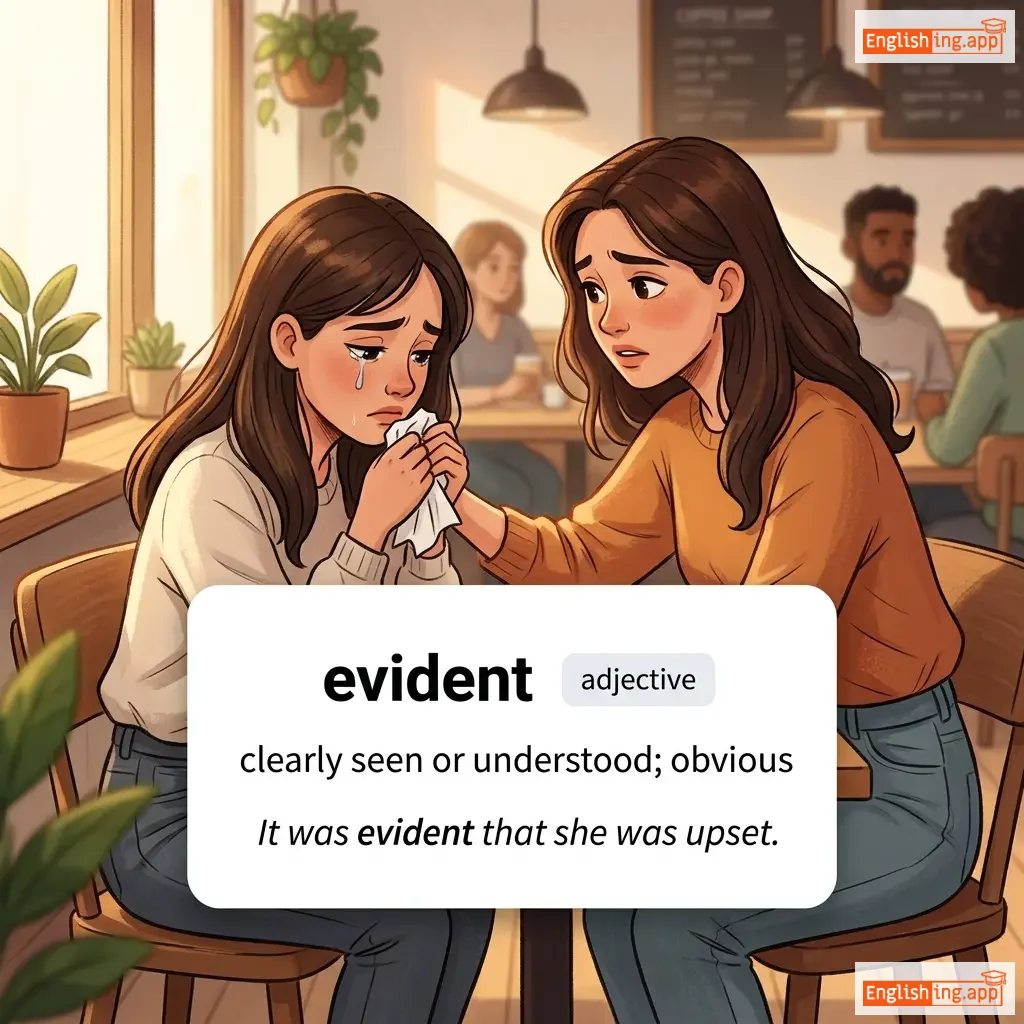
clearly seen or understood; obvious
••••••
|
It was evident that she was upset.
Было очевидно, что она расстроена.
••••••
|
Было очевидно, что она расстроена.
Bylo ochevidno, chto ona rasstroena.
••••••
|
self-evident
самоочевидно
••••••
|
obvious without needing explanation
••••••
|
самоочевидно
samoochevidno
••••••
|
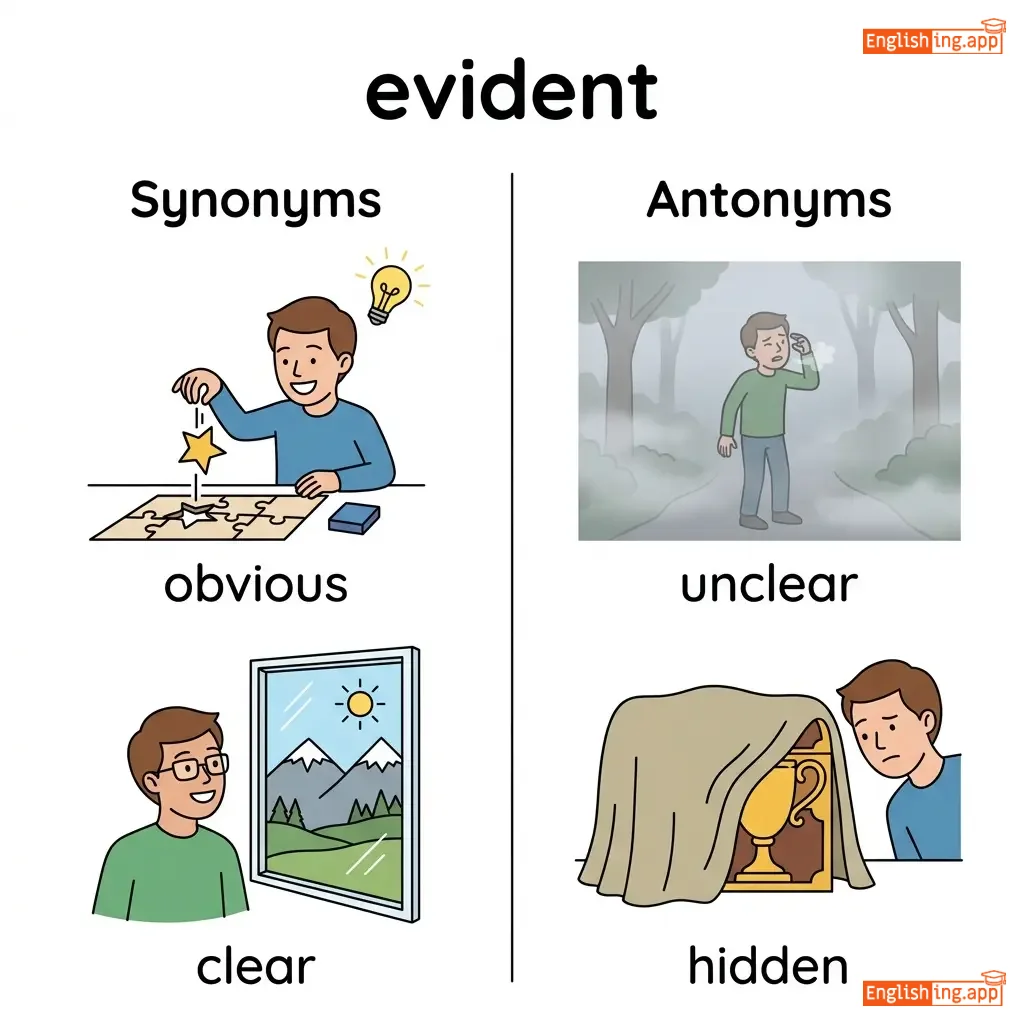
obvious, clear, apparent, manifest, plain
••••••
|
unclear, hidden, obscure
••••••
|
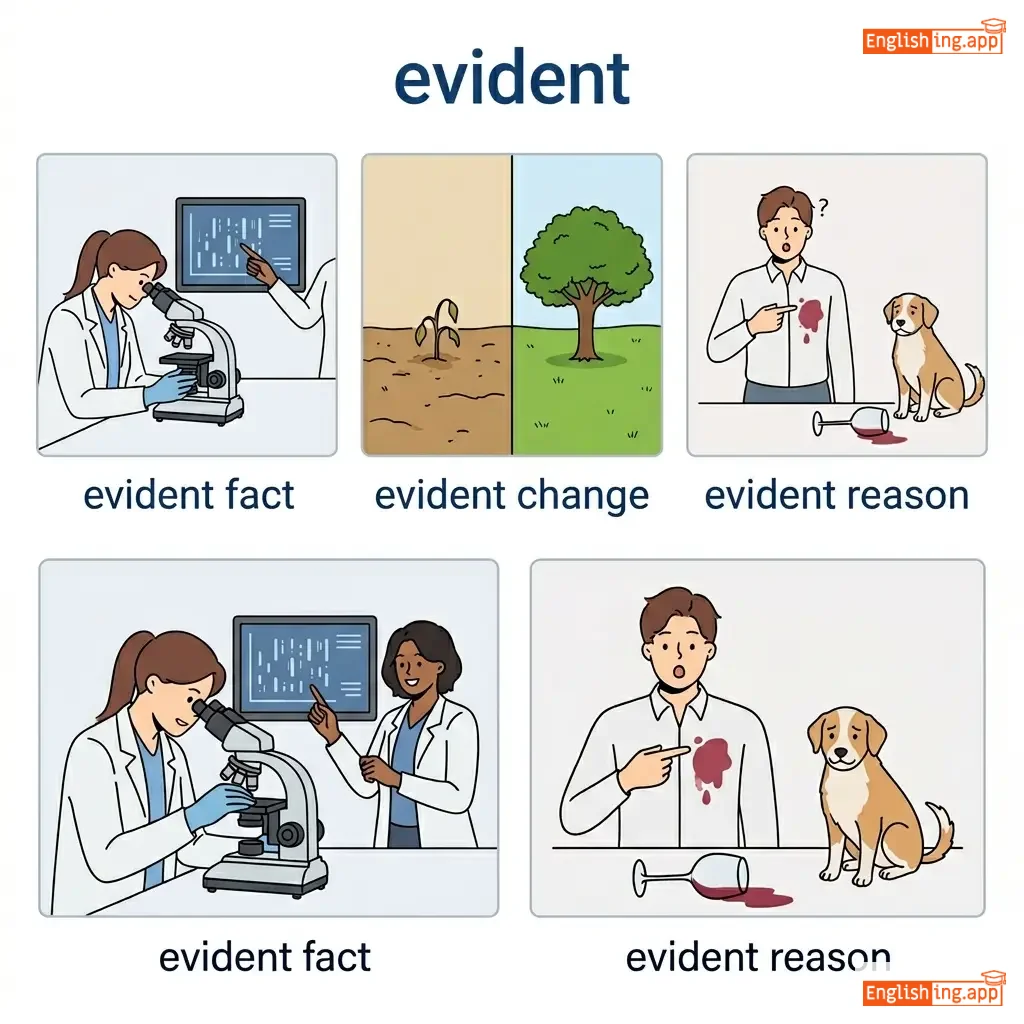
evident fact, evident change, evident reason, evident truth
••••••
|
Очевидно, что что-то ясно видно, как доказательство.
••••••
|
|
😈
••••••
|
/ˈiːvəl/
adjective
(ивил)
••••••
|
- •••••• |
злой
zloy
••••••
|
- •••••• | - •••••• | - •••••• | - •••••• |
Profoundly immoral and wicked.
••••••
|
They believed the villain was the embodiment of evil. |
Они верили, что злодей был олицетворением зла.
Oni verili, chto zlodey byl olitsetvoreniem zla.
••••••
|
root of all evil |
the fundamental source of wickedness or problems
••••••
|
корень всего зла
koren' vsego zla
••••••
|
wicked, immoral, malevolent, sinful, corrupt
••••••
|
good, virtuous, righteous
••••••
|
evil deeds, pure evil, embodiment of evil
••••••
|
Evil означает злой → в Devil скрыт Evil
••••••
|
|
🎶
••••••
|
/ɪˈvoʊk/
verb
(эвок)
••••••
|
- •••••• |
вызывать
vyzyvat
••••••
|
evoked
эвокировал
••••••
|
evoked
эвокирован
••••••
|
evokes
эвокирует
••••••
|
evoking
эвокируя
••••••
|
to bring a feeling, memory, or image into the mind
••••••
|
The old song evoked memories of her childhood.
Старая песня вызвала воспоминания о её детстве.
••••••
|
Старая песня вызвала воспоминания о её детстве.
Staraya pesnya vyzvala vospominaniya o yey detstve.
••••••
|
evoke sympathy
вызвать симпатию
••••••
|
to make someone feel compassion or pity
••••••
|
вызвать симпатию
vyzvat simaptiyu
••••••
|
arouse, elicit, provoke, stimulate, inspire
••••••
|
suppress, stifle, ignore
••••••
|
evoke memories, evoke feelings, evoke sympathy, evoke laughter
••••••
|
Вызывать, как 'вы' и 'звать' — когда ты вызываешь что-то в своей памяти.
••••••
|
|
🧬
••••••
|
/ˌɛvəˈluːʃən/
noun
(эволюция)
••••••
|
- •••••• |
эволюция
evolyutsiya
••••••
|
- •••••• | - •••••• | - •••••• | - •••••• |
the gradual development of something, especially from a simple to a more complex form
••••••
|
The theory of evolution explains how species change over time. |
Теория эволюции объясняет, как виды изменяются с течением времени.
Teoriya evolyutsii ob'yasnyaet, kak vidy izmenyayutsya s techeniyem vremeni.
••••••
|
- •••••• | - •••••• | - •••••• |
development, progression, growth, transformation
••••••
|
regression, stagnation
••••••
|
theory of evolution, cultural evolution, human evolution, natural evolution
••••••
|
Эволюция — это процесс изменений, как развитие видов.
••••••
|
|
🔄
••••••
|
/ˌɛvəlʊˈʃɛnəri/
adjective
••••••
|

|
- •••••• | - •••••• | - •••••• | - •••••• | - •••••• |
relating to or characterized by evolution, especially in terms of gradual development or change
••••••
|
The company has adopted an evolutionary approach to its product development. |
- •••••• | - •••••• | - •••••• | - •••••• |
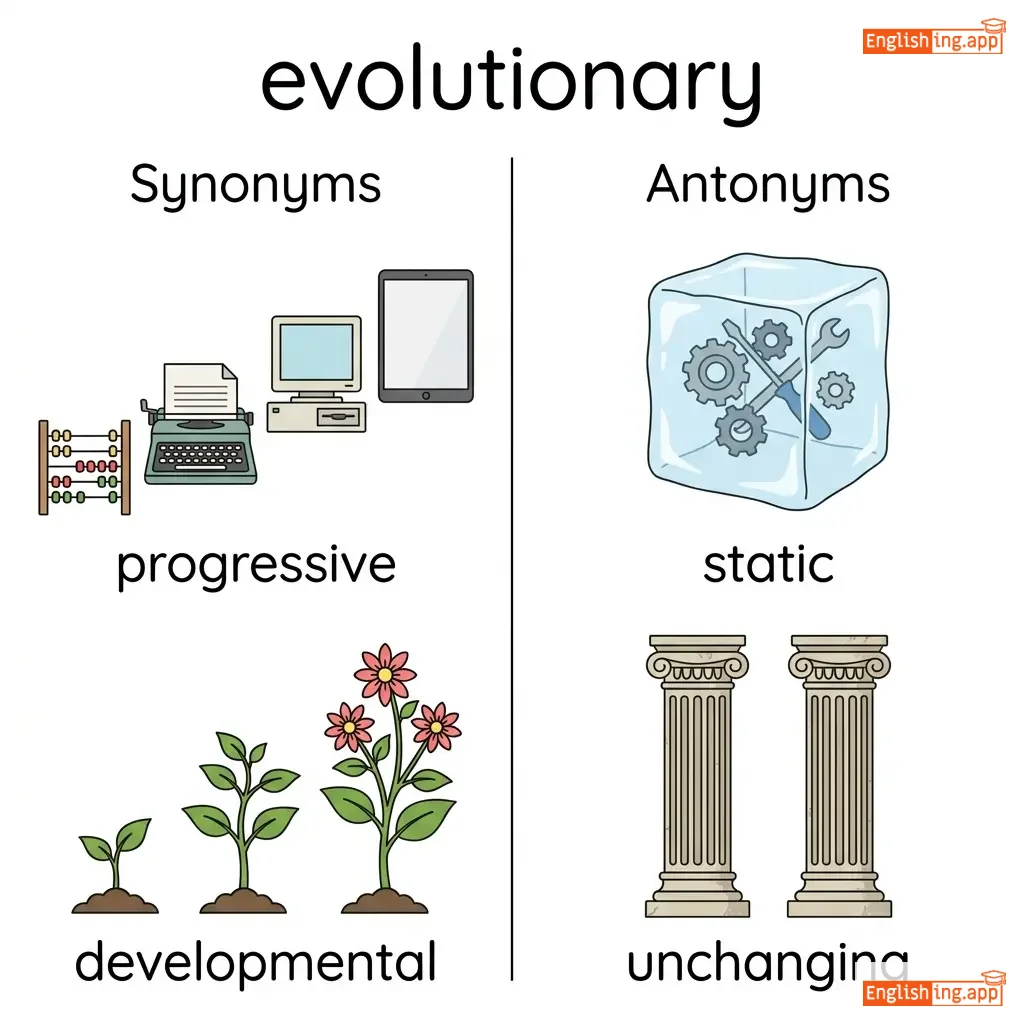
progressive, developmental, transformative
••••••
|
static, unchanging
••••••
|
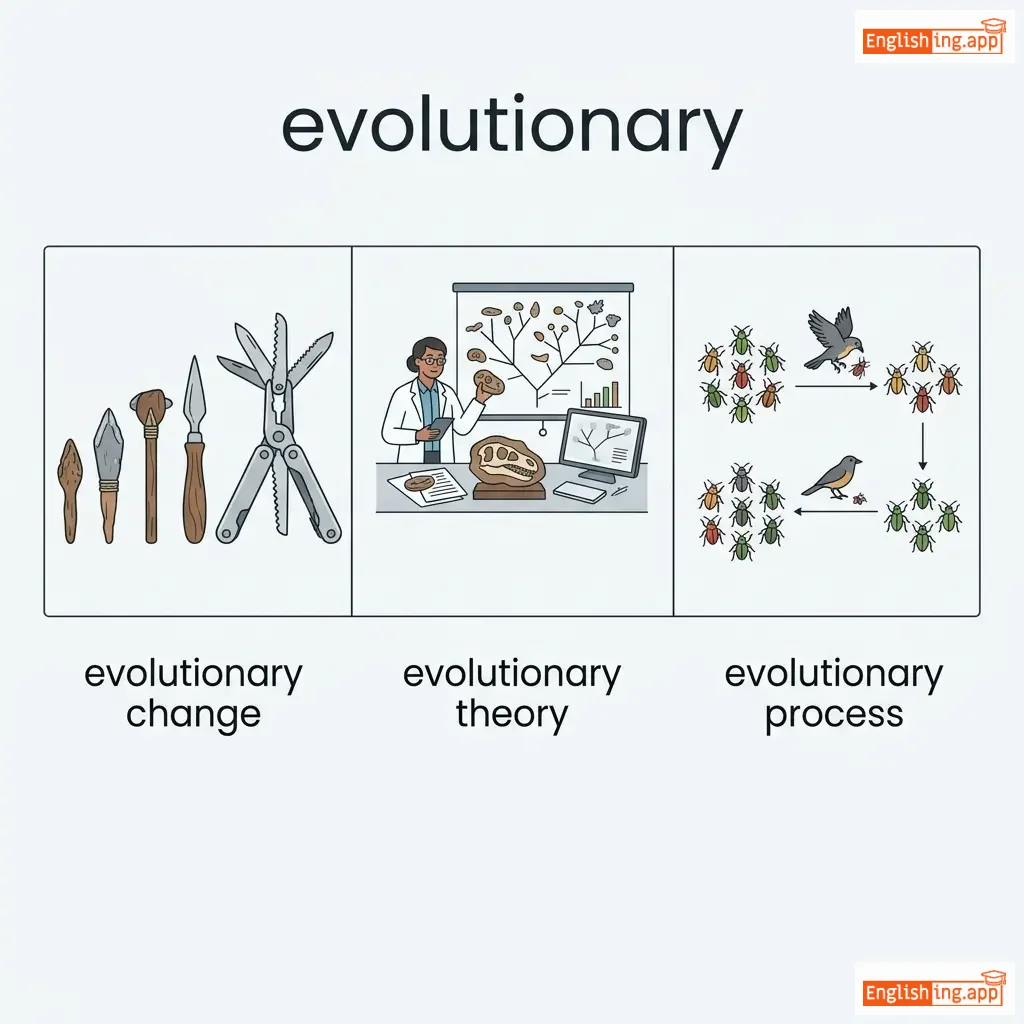
evolutionary change, evolutionary theory, evolutionary process, evolutionary development
••••••
|
No •••••• |
|
🌱
••••••
|
/ɪˈvɑːlv/
verb
••••••
|
- •••••• | - •••••• |
evolved
••••••
|
evolved
••••••
|
evolves
••••••
|
evolving
••••••
|
to develop gradually, especially into a more complex or advanced state
••••••
|
Over time, the company evolved into a global brand. |
- •••••• |
evolve over time |
to change or develop slowly as time passes
••••••
|
- •••••• |
develop, progress, transform, advance, grow
••••••
|
regress, decline, stagnate
••••••
|
evolve into, evolve over time, evolve naturally, evolve gradually
••••••
|
No •••••• |
|
🎯
••••••
|
/ɪɡˈzækt/
adjective, verb
(экзакт)
••••••
|
|
точный
tochnyy
••••••
|
exacted
экзактед
••••••
|
exacted
экзактед
••••••
|
exacts
экзакты
••••••
|
exacting
экзактинг
••••••
|
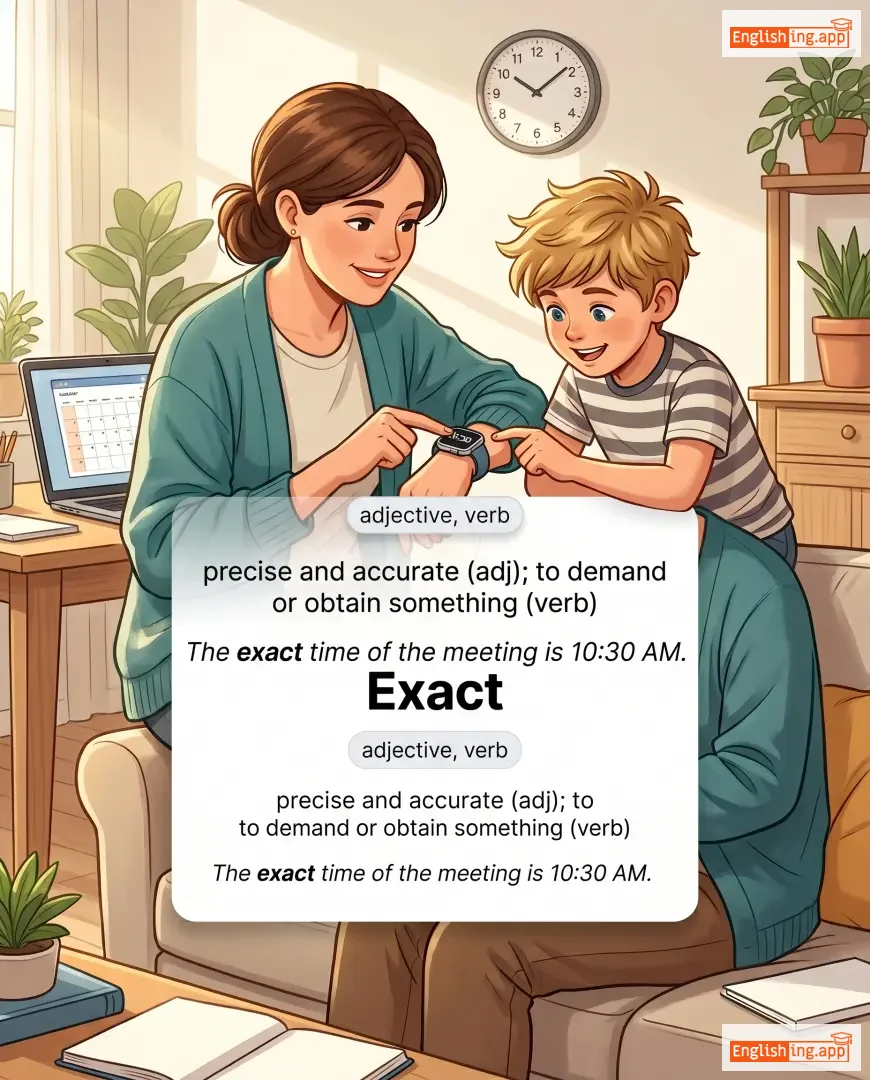
precise and accurate (adj); to demand or obtain something (verb)
••••••
|
The exact time of the meeting is 10:30 AM.
Точное время встречи - 10:30.
••••••
|
Точное время встречи - 10:30.
Tochnoe vremya vstrechi - 10:30.
••••••
|
to exact revenge
взять месть
••••••
|
to inflict punishment or harm in return for an injury or wrong
••••••
|
месть
mest'
••••••
|
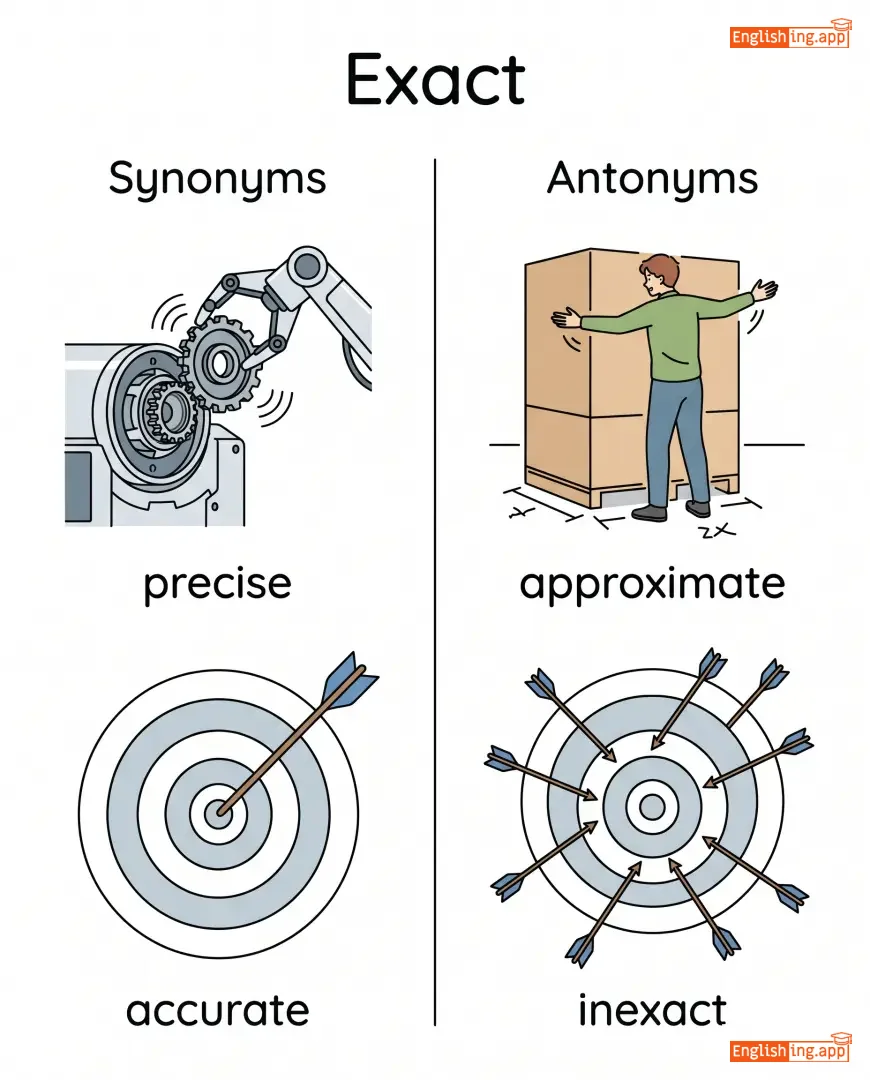
precise, accurate, demand, require, strict
••••••
|
approximate, inexact, lenient
••••••
|
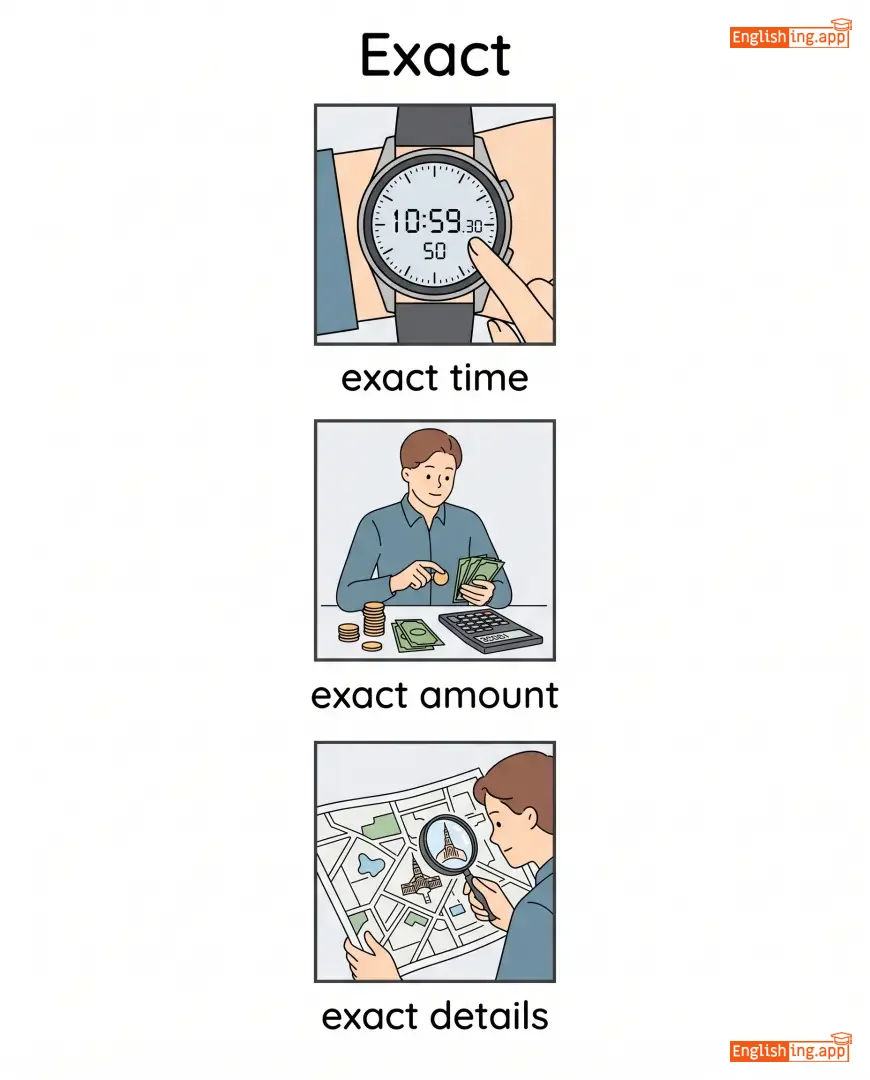
exact time, exact amount, exact details, exact revenge
••••••
|
Exact означает точный, если нет - месть!
••••••
|
|
🎯
••••••
|
/ɪɡˈzæktli/
adverb
(иксакли)
••••••
|
- •••••• |
точно
tochno
••••••
|
- •••••• | - •••••• | - •••••• | - •••••• |
in a precise or accurate manner; without any error
••••••
|
She explained the process exactly as it happened. |
Она объяснила процесс точно, как это случилось.
Ona ob'yasnila protsess tochno, kak eto sluchilos'.
••••••
|
to be exact |
to give precise or accurate details
••••••
|
точно говоря
tochno govorya
••••••
|
precisely, accurately, correctly, strictly
••••••
|
roughly, approximately
••••••
|
exactly right, exactly the same, exactly what, exactly how
••••••
|
Точно, как попадание в цель, без ошибок!
••••••
|
|
📢
••••••
|
/ɪɡˈzædʒəˌreɪt/
verb
(эксагерировать)
••••••
|
- •••••• |
преувеличивать
preuvelichivat
••••••
|
exaggerated
эксагерировал
••••••
|
exaggerated
эксагерировал
••••••
|
exaggerates
эксагерирует
••••••
|
exaggerating
эксагерируя
••••••
|
to describe something as better, worse, or more important than it really is
••••••
|
He tends to exaggerate his achievements.
Он склонен преувеличивать свои достижения.
••••••
|
Он склонен преувеличивать свои достижения.
On sklonen preuvelichivat' svoi dostizheniya.
••••••
|
make a mountain out of a molehill
делать из мухи слона
••••••
|
to make a small problem seem much bigger than it is
••••••
|
делать из мухи слона
delat' iz mukhi slona
••••••
|
overstate, overemphasize, amplify, embellish
••••••
|
understate, minimize, downplay
••••••
|
exaggerate claims, exaggerate importance, exaggerate details, exaggerate achievements
••••••
|
Преувеличивать значит делать что-то больше, чем оно есть, как сделать из мухи слона.
••••••
|
|
✍️
••••••
|
/ɪɡˌzæm.ɪˈneɪ.ʃən/
noun
(экзаминация)
••••••
|
- •••••• |
экзамен
ekzamen
••••••
|
- •••••• | - •••••• | - •••••• | - •••••• |
a formal test of knowledge or ability
••••••
|
She is preparing for her final examination. |
Она готовится к своему финальному экзамену.
Ona gotovitsya k svojemu final'nomu ekzameny.
••••••
|
under examination |
being carefully inspected or studied
••••••
|
под экзаменом
pod ekzamenom
••••••
|
test, assessment, evaluation, inspection, quiz
••••••
|
ignorance, neglect
••••••
|
take examination, pass examination, final examination, medical examination
••••••
|
Examination означает экзамен ✍️ - Сдайте экзамен, и нация вздрогнет!
••••••
|
|
🔎
••••••
|
/ɪɡˈzæm.ɪn/
verb
(he-pi-nes)
••••••
|
- •••••• |
счастье
schast'ye
••••••
|
examined
••••••
|
examined
••••••
|
examines
••••••
|
examining
••••••
|
to look at something carefully in order to understand it
••••••
|
The doctor will examine the patient tomorrow. |
Она не могла скрыть своего счастья, когда получила награду.
Ona ne mogla skryt' svoego schast'ya, kogda poluchila nagradu.
••••••
|
cross-examine |
to question someone thoroughly, especially in a court
••••••
|
поиск счастья
poisk schast'ya
••••••
|
inspect, analyze, investigate, check, study
••••••
|
ignore, overlook, neglect
••••••
|
examine carefully, examine evidence, examine thoroughly, examine closely
••••••
|
Счастье = в поисках радости
••••••
|
|
📝
••••••
|
/ɪɡˌzæm.ɪˈniː/
noun
(egzaminí)
••••••
|
- •••••• |
экзаменуемый
ekzamenuyemy
••••••
|
- •••••• | - •••••• | - •••••• | - •••••• |
a person who is being tested in an examination
••••••
|
Each examinee was given two hours to complete the test.
Ich egzaminí wás givén tu aúers tu komplit de test.
••••••
|
Каждому экзаменуемому дали два часа на выполнение теста.
Kazhdomu ekzamenuyemomu dali dva chasa na vypolnenie testa.
••••••
|
- •••••• | - •••••• | - •••••• |
candidate, test taker, student, applicant
••••••
|
examiner, teacher, instructor, assessor
••••••
|
qualified examinee, nervous examinee, examinee number
••••••
|
Ekzamenuyemy sounds like 'examiner' in Russian.
••••••
|
|
📝
••••••
|
/ɪɡˈzæmɪnər/
noun
(экзаминер)
••••••
|
- •••••• |
экзаменатор
ekzamenator
••••••
|
- •••••• | - •••••• | - •••••• | - •••••• |
A person who tests or inspects knowledge, skills, or qualifications
••••••
|
The examiner reviewed each student's answer sheet carefully.
Экзаменатор внимательно проверил бланк ответов каждого студента.
••••••
|
Экзаменатор внимательно проверил бланк ответов каждого студента.
Ekzamenator vnimatelno proveril blank otvetov kazhdogo studenta
••••••
|
- •••••• | - •••••• | - •••••• |
assessor, inspector, evaluator, tester, reviewer
••••••
|
candidate, examinee
••••••
|
examiner report, board examiner, medical examiner, chief examiner
••••••
|
экзаменатор = person who does экзамен
••••••
|
|
📖
••••••
|
/ɪɡˈzɑːm.pəl/
noun
(eksámpl)
••••••
|
- •••••• |
пример
primer
••••••
|
- •••••• | - •••••• | - •••••• | - •••••• |
a thing or person regarded as a model to be followed or avoided
••••••
|
He is a good example of a hardworking student.
Он хороший пример трудолюбивого студента.
••••••
|
Он хороший пример трудолюбивого студента.
On khoroshiy primer trudolyubivogo studenta.
••••••
|
set an example
давать пример
••••••
|
to behave in a way that others should copy
••••••
|
давать пример
davat' primer
••••••
|
model, instance, case, sample, illustration
••••••
|
counterexample, deviation
••••••
|
give example, provide example, set an example, classic example
••••••
|
Primer означает пример 📖 - всегда пример дается с экзаменом.
••••••
|
|
🚀
••••••
|
/ɪkˈsiːd/
verb
(exceed)
••••••
|
- •••••• |
превышать
prevyshat'
••••••
|
exceeded
exceeded
••••••
|
exceeded
exceeded
••••••
|
exceeds
exceeds
••••••
|
exceeding
exceeding
••••••
|
to go beyond a limit or expectation
••••••
|
The athlete exceeded everyone's expectations by winning the gold medal.
The athlete exceeded everyone's expectations by winning the gold medal.
••••••
|
Атлет превзошел все ожидания, выиграв золотую медаль.
Atlet prevzoshel vse ozhidaniya, vyigrav zolotuyu medal'.
••••••
|
exceed the limit
exceed the limit
••••••
|
to go beyond what is allowed or acceptable
••••••
|
превышать предел
prevyshat' predel
••••••
|
surpass, outdo, transcend, overstep, excel
••••••
|
fail, fall short, underperform
••••••
|
exceed expectations, exceed limits, exceed authority, exceed capacity
••••••
|
EXtra SEED 🚀 превышать предел - означает выходить за пределы.
••••••
|
|
🏆
••••••
|
/ɪkˈsɛl/
verb
(eksél)
••••••
|
- •••••• |
преуспеть
preuspet'
••••••
|
excelled
ekséld
••••••
|
excelled
ekséld
••••••
|
excels
ekséls
••••••
|
excelling
ekséling
••••••
|
to be exceptionally good at or proficient in an activity or subject
••••••
|
She always tries to excel in her studies.
Она всегда старается преуспеть в учёбе.
••••••
|
Она всегда старается преуспеть в учёбе.
Ona vsegda staraetsya preuspet' v uchebe.
••••••
|
excel oneself
превзойти себя
••••••
|
to do better than one usually does
••••••
|
превзойти себя
prevzoyti sebya
••••••
|
shine, surpass, outdo, triumph, succeed
••••••
|
fail, lose, fall behind
••••••
|
excel in, excel at, excel oneself, excel academically
••••••
|
Excel как программа, ты должен преуспеть в жизни.
••••••
|
|
🌟
••••••
|
/ˈɛksələns/
noun
(eksellens)
••••••
|
- •••••• |
превосходство
prevoskhodstvo
••••••
|
- •••••• | - •••••• | - •••••• | - •••••• |
the quality of being outstanding or extremely good
••••••
|
The school is known for its academic excellence. |
Школа известна своей академической превосходностью.
Shkola izvestna svoey akademicheskoy prevoskhodnost'yu.
••••••
|
par excellence |
better or more than all others of the same kind
••••••
|
в высшей степени
v vysshey stepeni
••••••
|
superiority, greatness, distinction, merit, brilliance
••••••
|
inferiority, mediocrity
••••••
|
academic excellence, strive for excellence, standard of excellence, pursuit of excellence
••••••
|
Превосходство = Extra линзы делают вещи более ясными.
••••••
|
|
⭐
••••••
|
/ˈeksələnt/
adjective
(ɛksɛlɛnt)
••••••
|
- •••••• |
отличный; превосходный; выдающийся;
otlichnyy; prevoskhodnyy; vydajushchijsya
••••••
|
- •••••• | - •••••• | - •••••• | - •••••• |
extremely good; outstanding; superior
••••••
|
She received excellent grades in all her subjects.
Она получила отличные оценки по всем предметам.
••••••
|
Она получила отличные оценки по всем предметам.
Ona poluchila otlichnye otsenki po vsem predmetam.
••••••
|
- •••••• | - •••••• | - •••••• |
outstanding, superb, magnificent, brilliant
••••••
|
poor, terrible, awful, mediocre
••••••
|
excellent performance, excellent quality, excellent service, excellent condition
••••••
|
'Отличный' означает нечто очень хорошее, что выделяется среди других.
••••••
|
|
🚫
••••••
|
/ɪkˈsɛpt/
preposition/conjunction
(эксепт)
••••••
|
- •••••• |
кроме
krome
••••••
|
- •••••• | - •••••• | - •••••• | - •••••• |
not including; other than
••••••
|
Everyone was invited except John.
Все были приглашены, кроме Джона.
••••••
|
Все были приглашены, кроме Джона.
Vse byli priglasheny, krome Dzhona.
••••••
|
take exception to
возражать против
••••••
|
to be offended or disagree with something
••••••
|
возражать против
vozrazhat protiv
••••••
|
excluding, apart from, barring, save
••••••
|
including, with
••••••
|
except for, except that, no one except, everyone except
••••••
|
Кроме — это как исключение + шаг — исключить кого-то.
••••••
|
|
🚫
••••••
|
/ɪkˈsɛpʃən/
noun
(иксепшн)
••••••
|
- •••••• |
исключение
isklyucheniye
••••••
|
- •••••• | - •••••• | - •••••• | - •••••• |
A case or instance that does not follow a general rule.
••••••
|
Every rule has an exception. |
Каждое правило имеет исключение.
Kazhdoye pravilo imeyet isklyucheniye.
••••••
|
take exception to |
to be offended by something
••••••
|
выражать недовольство
vyrazhat' nedovol'stvo
••••••
|
anomaly, irregularity, deviation, exclusion, exemption
••••••
|
rule, norm, standard
••••••
|
make an exception, without exception, rare exception, exception to the rule
••••••
|
Exception означает исключение — представьте, что все сдали экзамен, кроме одного = исключение.
••••••
|
|
🌟
••••••
|
/ɪkˈsɛpʃənl/
adjective
(иксепшнл)
••••••
|
|
необыкновенный
neobyknovennyy
••••••
|
- •••••• | - •••••• | - •••••• | - •••••• |
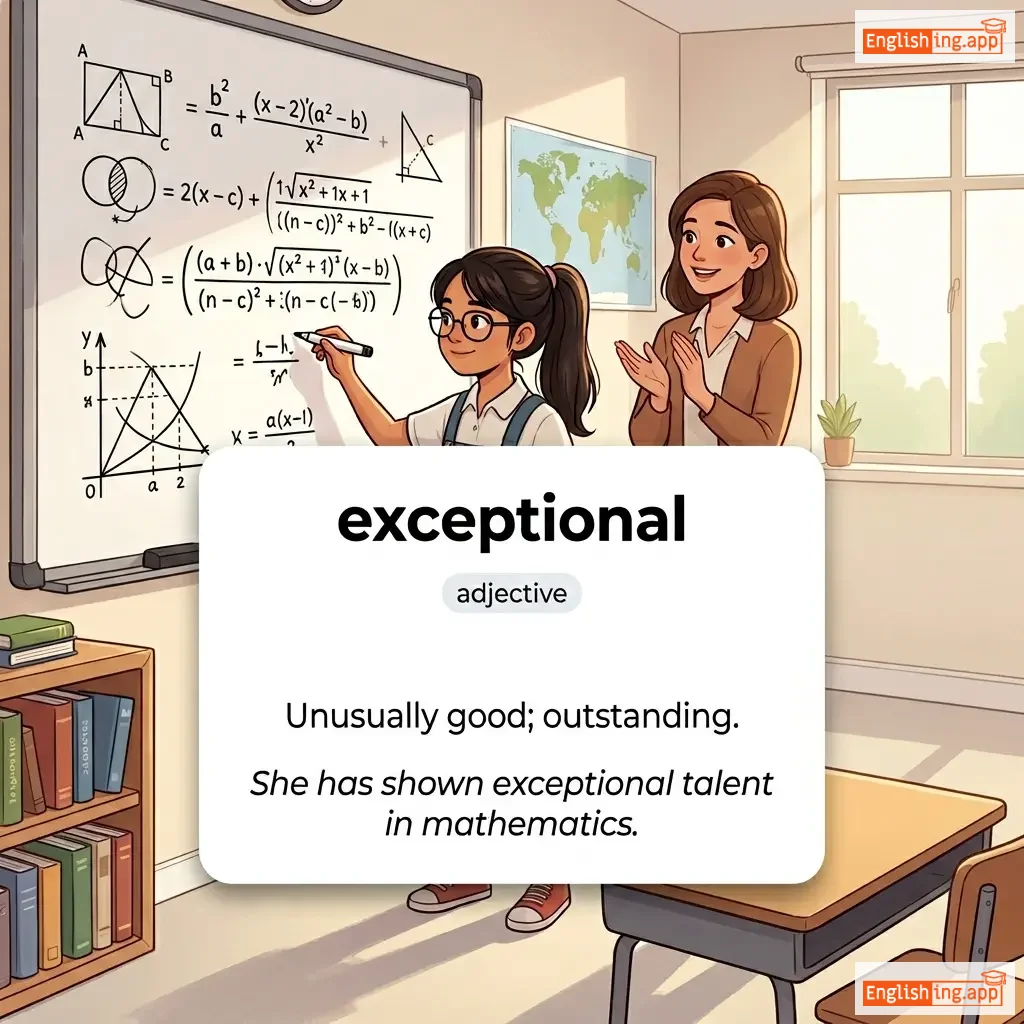
Unusually good; outstanding.
••••••
|
She has shown exceptional talent in mathematics. |
Она продемонстрировала исключительный талант в математике.
Ona prodemonstrirovala iskljuchitel'nyj talent v matematike.
••••••
|
of exceptional quality |
something of very high or outstanding quality
••••••
|
исключительного качества
isklyuchitelnogo kachestva
••••••
|
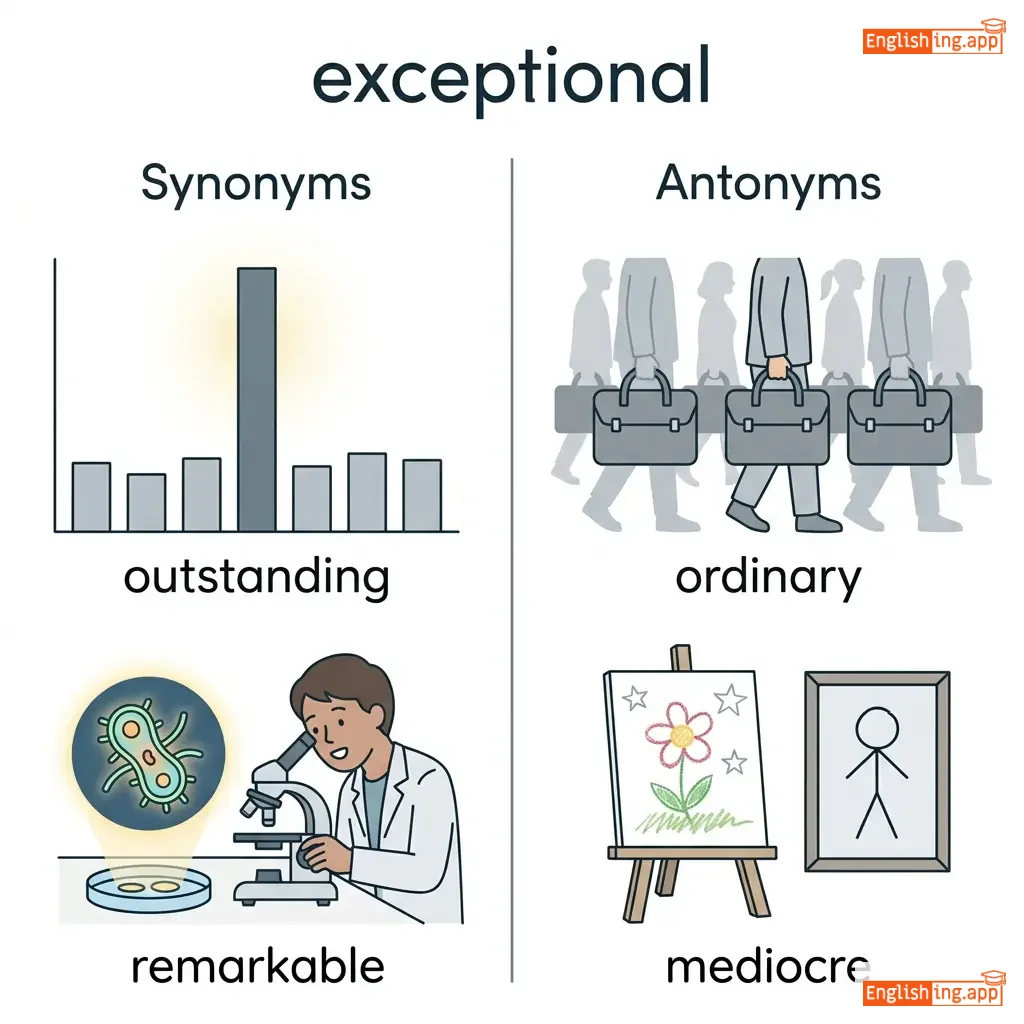
outstanding, remarkable, extraordinary, superb
••••••
|
ordinary, mediocre, common
••••••
|
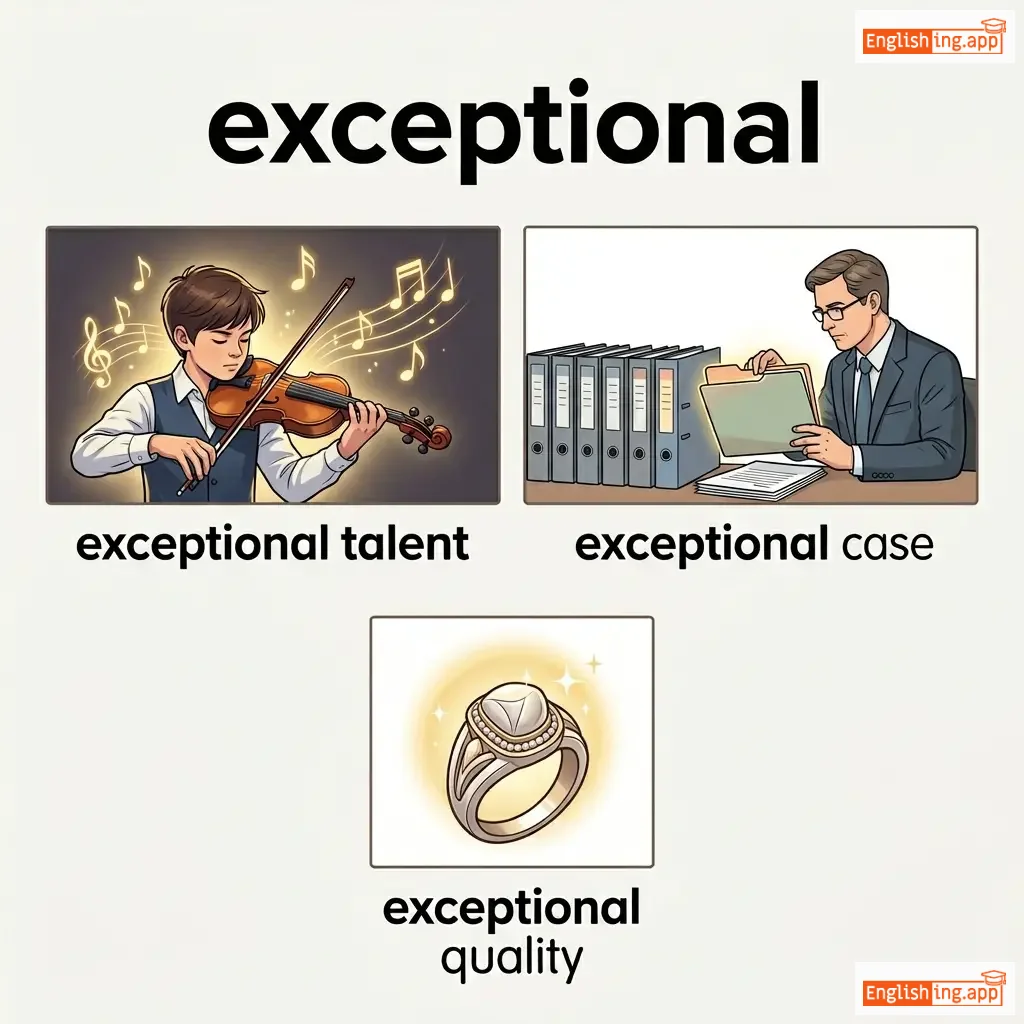
exceptional talent, exceptional case, exceptional quality, exceptional opportunity
••••••
|
Exceptional = Extra Special → Необыкновенный
••••••
|
|
➕
••••••
|
/ɪkˈsɛs/
noun
(иксэс)
••••••
|
- •••••• |
избыток
izbytok
••••••
|
- •••••• | - •••••• | - •••••• | - •••••• |
An amount more than necessary, permitted, or desirable.
••••••
|
Too much sugar can lead to excess weight gain. |
Слишком много сахара может привести к избыточному набору веса.
Slishkom mnogo sakhara mozhet privesti k izbytochnomu naboru vesa.
••••••
|
in excess of |
more than a particular amount
••••••
|
в избытке
v izbytke
••••••
|
surplus, overflow, overabundance, superfluity
••••••
|
shortage, lack, insufficiency
••••••
|
excess weight, excess baggage, excess demand, in excess of
••••••
|
Excess = слишком много сахара – это избыток!
••••••
|
|
🚫
••••••
|
/ɪkˈsɛsɪv/
adjective
(ɪkˈsɛsɪv)
••••••
|
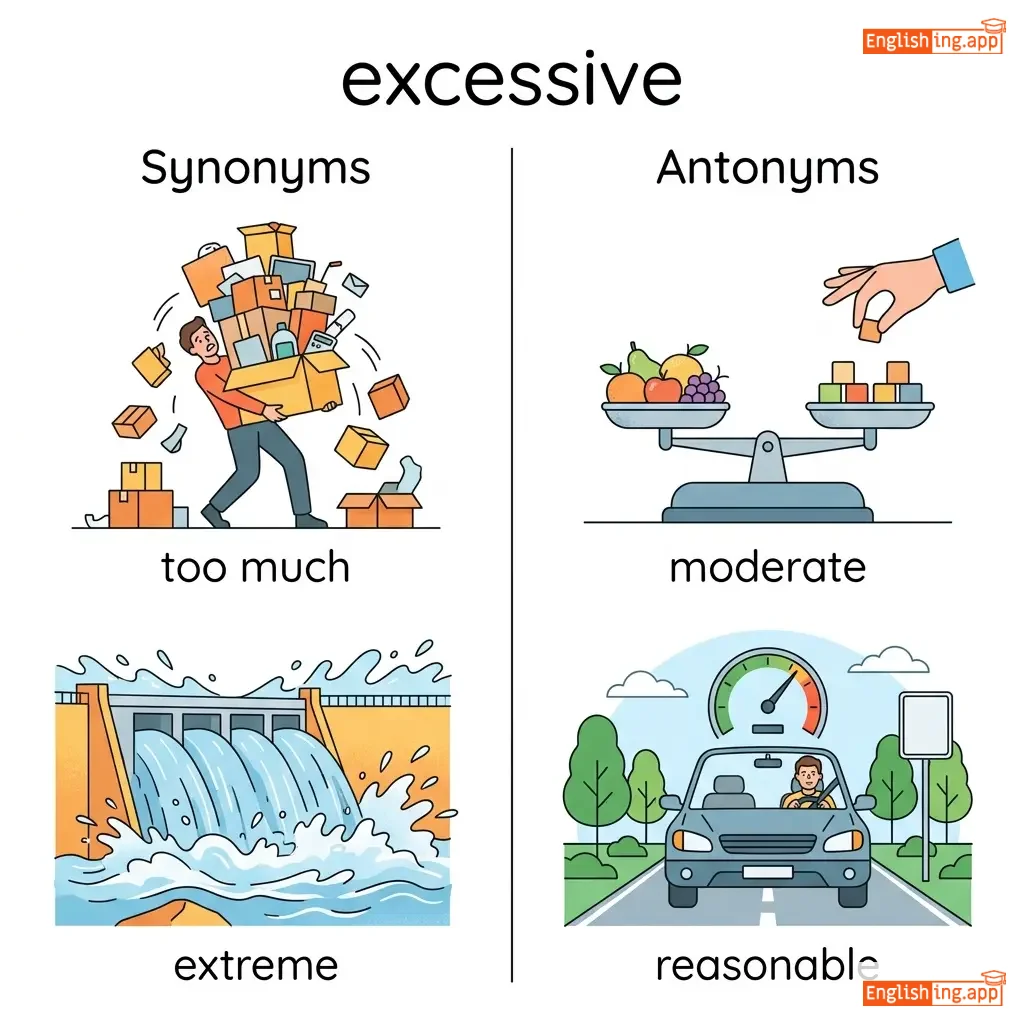
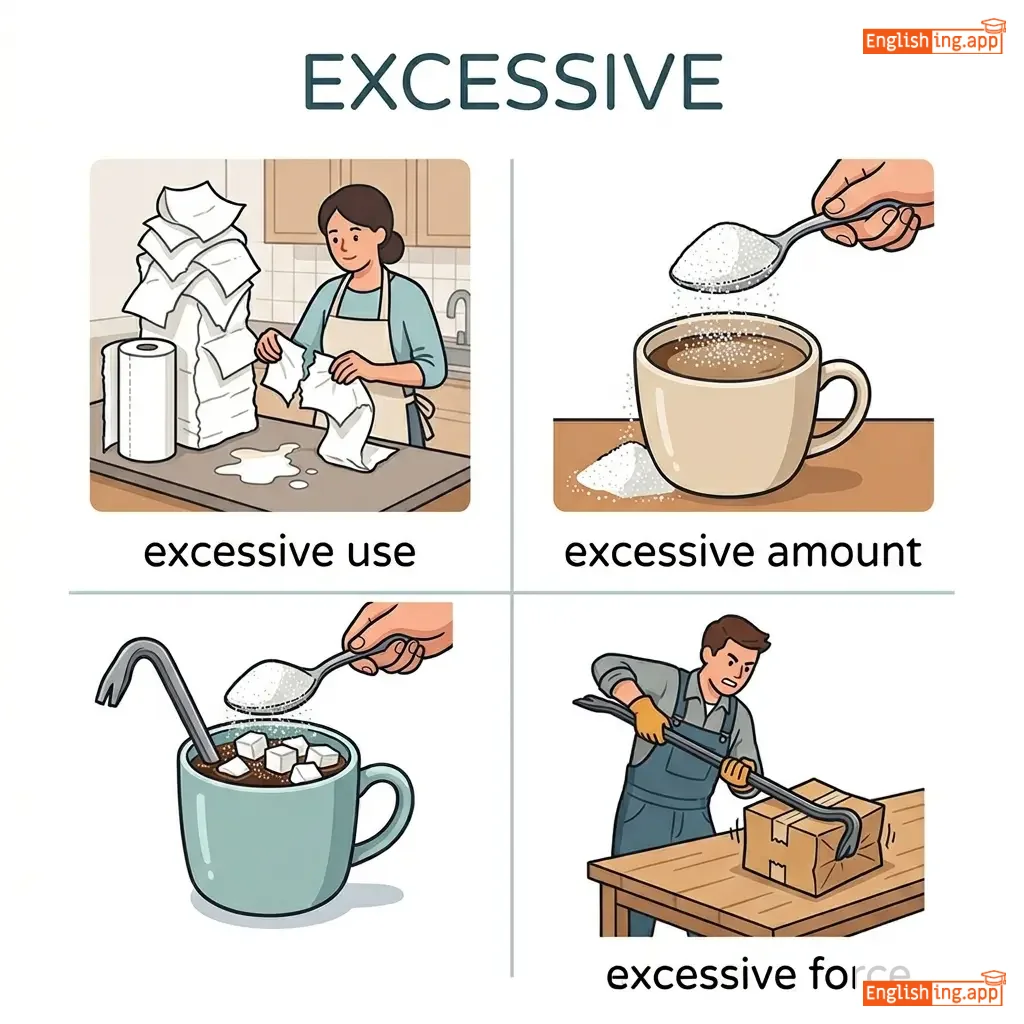
|
чрезмерный
chrezmernыy
••••••
|
- •••••• | - •••••• | - •••••• | - •••••• |
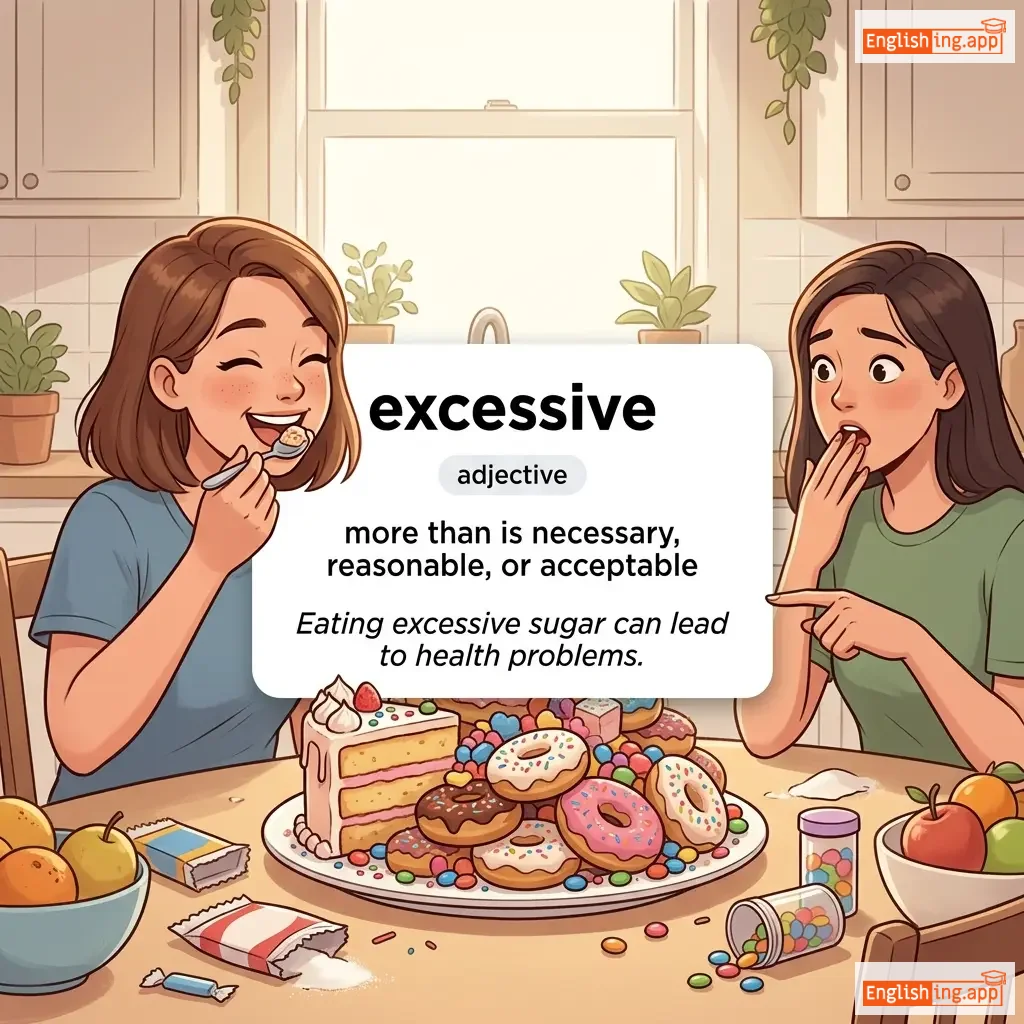
more than is necessary, reasonable, or acceptable
••••••
|
Eating excessive sugar can lead to health problems. |
Чрезмерное потребление сахара может привести к проблемам со здоровьем.
Chrezmernoe potreblenie sakhara mozhet privesti k problemam so zdorov'em.
••••••
|
excessive force |
more physical power or effort than necessary
••••••
|
чрезмерная сила
chrezmernaya sila
••••••
|
too much, extreme, unreasonable, extravagant, overdone
••••••
|
moderate, reasonable, limited
••••••
|
excessive use, excessive amount, excessive force, excessive cost
••••••
|
Чрезмерный = Excess означает много, вот почему это чрезмерно!
••••••
|
|
🔄
••••••
|
/ɪksˈtʃeɪndʒ/
verb
(ɛksʧeindʒ)
••••••
|
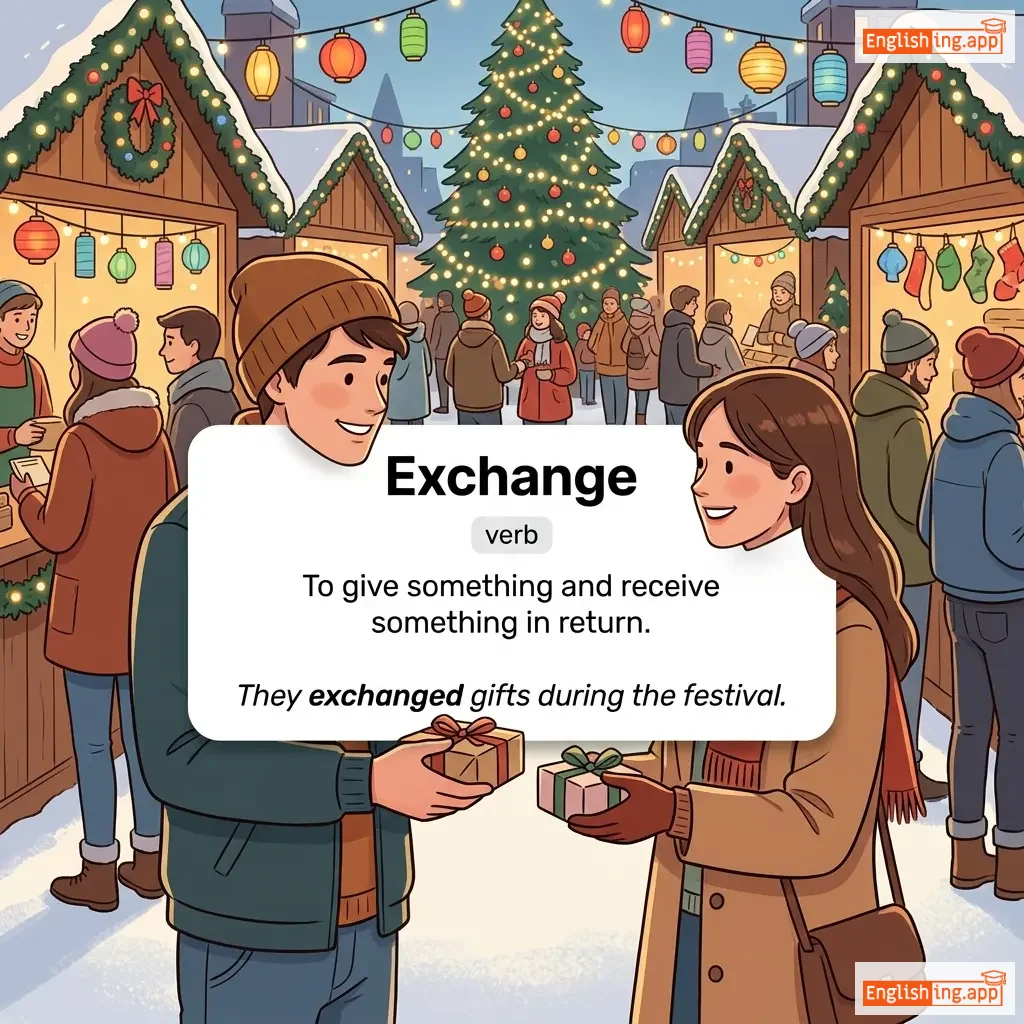
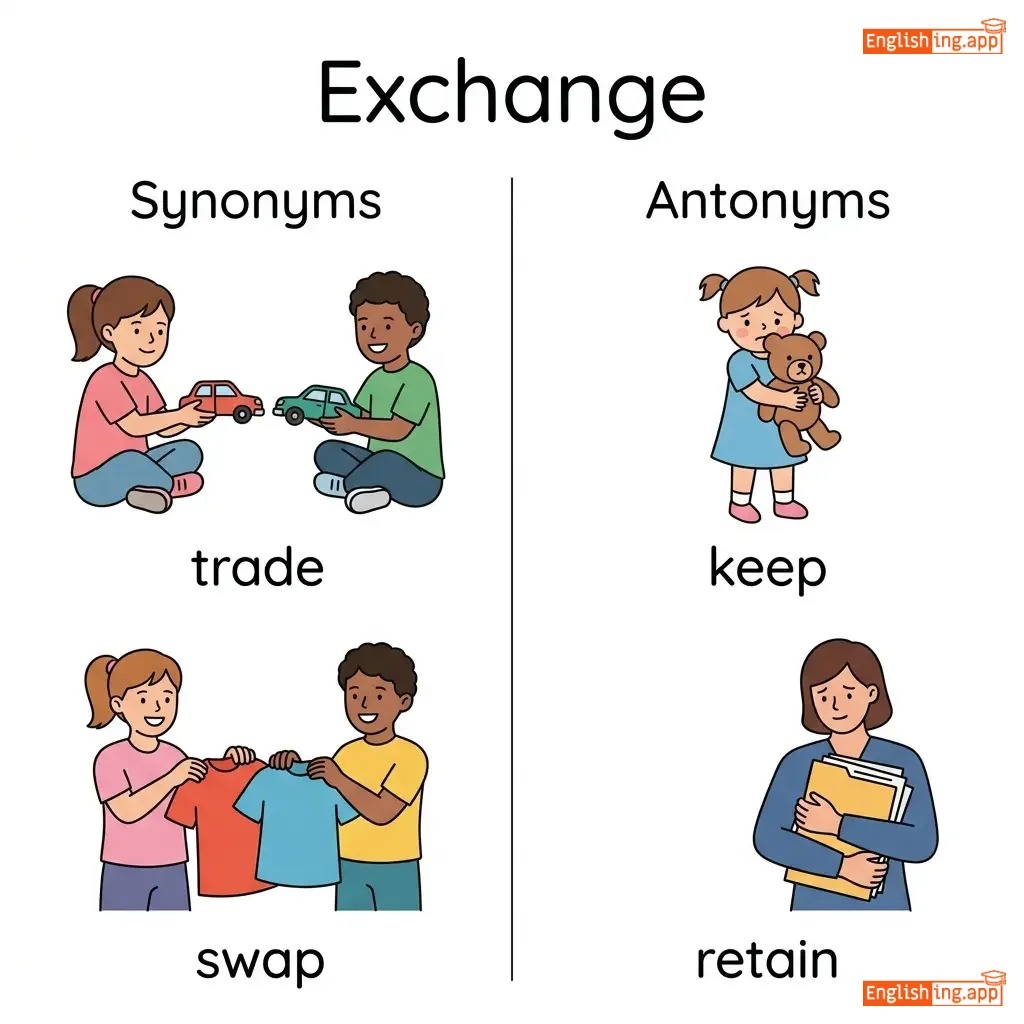

|
обмен
obmen
••••••
|
exchanged
ɛksʧeindʒd
••••••
|
exchanged
ɛksʧeindʒd
••••••
|
exchanges
ɛksʧeindʒes
••••••
|
exchanging
ɛksʧeindʒing
••••••
|
To give something and receive something in return.
••••••
|
They exchanged gifts during the festival.
Они обменялись подарками во время фестиваля.
••••••
|
Они обменялись подарками во время фестиваля.
Oni obmenyalis' podarkami vo vremya festivala.
••••••
|
exchange views
обмен мнениями
••••••
|
to share opinions or ideas
••••••
|
обмен мнениями
obmen mneniyami
••••••
|
trade, swap, barter, interchange, replace
••••••
|
keep, retain
••••••
|
exchange ideas, exchange gifts, exchange money, exchange information
••••••
|
Exchange — это как 'обмен' — обмен вещами и идеями.
••••••
|
|
🤩
••••••
|
/ɪkˈsaɪt/
verb
(iksait)
••••••
|
- •••••• |
волновать
volnovat'
••••••
|
excited
iksaited
••••••
|
excited
iksaited
••••••
|
excites
iksaits
••••••
|
exciting
iksaiting
••••••
|
to cause strong feelings of enthusiasm or eagerness
••••••
|
The idea of traveling abroad excites her.
Идея путешествовать за границу возбуждает её.
••••••
|
Идея путешествовать за границу возбуждает её.
Ideya puteshestvovat' za granitsu vozhbuzhdaet yey.
••••••
|
get excited
взбудоражиться
••••••
|
to become enthusiastic or thrilled
••••••
|
взбудоражиться
vzbodorazhit'sya
••••••
|
thrill, stimulate, arouse, energize
••••••
|
calm, bore, depress
••••••
|
excite interest, excite curiosity, excite passion, excite emotions
••••••
|
Excite: представь, как ты возбуждаешься от мысли о путешествии!
••••••
|
|
🤩
••••••
|
/ɪkˈsaɪtɪd/
adjective
(ikˈsaitɪd)
••••••
|
- •••••• |
взволнованный
vzvolnovannyy
••••••
|
- •••••• | - •••••• | - •••••• | - •••••• |
very enthusiastic and eager about something
••••••
|
The children were excited to open their presents. |
Дети были взволнованы, когда открыли свои подарки.
Deti byli vzvolnovannyy, kogda otkryli svoi podarki.
••••••
|
get excited about |
to become enthusiastic or eager about something
••••••
|
возбудиться от чего-то
vozbudit'sya ot chego-to
••••••
|
thrilled, delighted, enthusiastic, eager, joyful
••••••
|
bored, indifferent, calm
••••••
|
feel excited, get excited, excited about, excited to see
••••••
|
Excited переводится как ‘взволнованный’, как когда ты ждешь что-то интересное.
••••••
|
|
🎉
••••••
|
/ɪkˈsaɪtmənt/
noun
(eksaitment)
••••••
|
- •••••• |
волнение
volnenie
••••••
|
- •••••• | - •••••• | - •••••• | - •••••• |
a feeling of great enthusiasm and eagerness
••••••
|
There was a lot of excitement before the concert began. |
Перед концертом было много волнения.
Pered kontsertom bylo mnogo volneniya.
••••••
|
in a state of excitement |
feeling or showing strong enthusiasm or agitation
••••••
|
в состоянии волнения
v sostoyanii volneniya
••••••
|
thrill, joy, enthusiasm, eagerness, delight
••••••
|
boredom, calm, indifference
••••••
|
feel excitement, great excitement, cause excitement, full of excitement
••••••
|
Excitement по-русски — волнение, когда ты чувствуешь себя взволнованным!
••••••
|
|
🎉
••••••
|
/ɪkˈsaɪtɪŋ/
adjective
(эксайтин)
••••••
|


|
волнующий
volnuyushchiy
••••••
|
- •••••• | - •••••• | - •••••• | - •••••• |
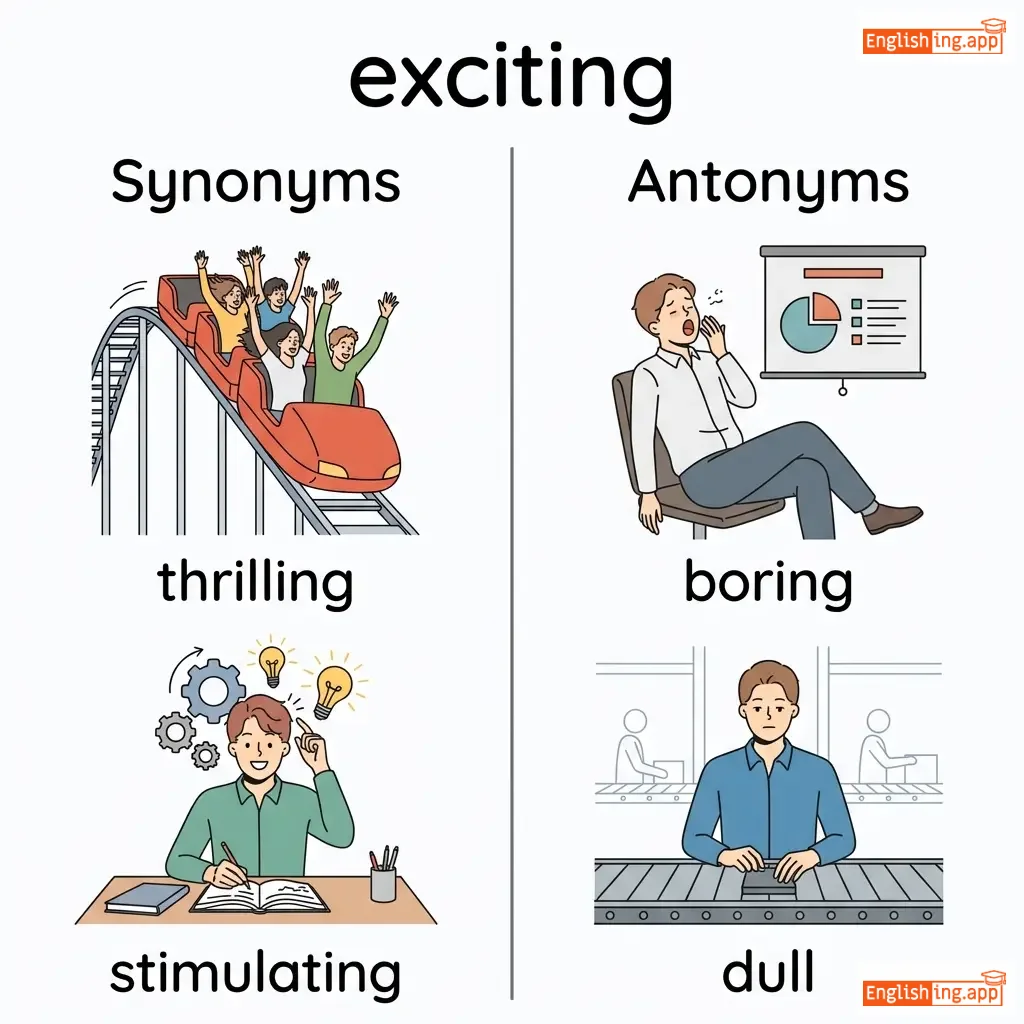
causing feelings of enthusiasm and eagerness; thrilling
••••••
|
The roller coaster ride was very exciting and thrilling. |
Поездка на американских горках была очень волнующей и захватывающей.
Poezdka na amerikanskikh gorkakh byla ochen' volnuyushchey i zakhvatyvayushchey.
••••••
|
- •••••• | - •••••• | - •••••• |
thrilling, stimulating, exhilarating, electrifying
••••••
|
boring, dull, tedious, uninteresting
••••••
|
exciting news, exciting adventure, exciting opportunity
••••••
|
Захватывающе как экстрим на американских горках
••••••
|
|
🚫
••••••
|
/ɪkˈskluːd/
verb
(ekskljudir)
••••••
|
- •••••• |
исключать
isklyuchat
••••••
|
excluded
ekskljudiroval
••••••
|
excluded
ekskljudiroval
••••••
|
excludes
ekskljudiruet
••••••
|
excluding
ekskljudiruya
••••••
|
To deliberately leave out or prevent someone or something from being included.
••••••
|
The list excludes temporary workers.
Spisok isklyuchayet vremennykh rabochikh.
••••••
|
Список исключает временных работников.
Spisok isklyuchayet vremennykh rabochikh.
••••••
|
exclude from consideration
isklyuchit iz rassmotreniya
••••••
|
To not take something into account.
••••••
|
исключить из рассмотрения
isklyuchit iz rassmotreniya
••••••
|
omit, ban, reject, prevent, bar
••••••
|
include, admit, accept
••••••
|
exclude someone, exclude possibility, exclude group
••••••
|
Exclude означает EXit + include нет – оставить вне.
••••••
|
|
❌
••••••
|
/ɪkˈskluːʒən/
noun
(ɪksˈkluzʲɪɪn)
••••••
|
- •••••• |
исключение
isklyucheniye
••••••
|
- •••••• | - •••••• | - •••••• | - •••••• |
The process or state of being left out or denied access.
••••••
|
The policy led to the exclusion of certain groups. |
Политика привела к исключению некоторых групп.
Politika privedla k iskluchению nekotorykh grupp.
••••••
|
social exclusion |
The act of preventing certain people from participating in society.
••••••
|
социальное исключение
sotsial'noye isklucheniye
••••••
|
banishment, rejection, omission, prohibition, segregation
••••••
|
inclusion, acceptance, admission
••••••
|
exclusion policy, exclusion zone, social exclusion
••••••
|
Исключение - это Exit + Conclusion
••••••
|
|
🚪
••••••
|
/ɪkˈskluːsɪv/
adjective
(эксклюзив)
••••••
|
- •••••• |
ограничено для определённого человека, группы или области; не делится с другими
ogranicheno dlya opredelennogo cheloveka, grupy ili oblasti; ne delitsya s drugimi
••••••
|
- •••••• | - •••••• | - •••••• | - •••••• |
restricted to a particular person, group, or area; not shared with others
••••••
|
The hotel offers exclusive access to a private beach. |
Отель предоставляет эксклюзивный доступ к частному пляжу.
Otel predostavlyaet eksklyuzivnyy dostup k chastnomu plyazhu.
••••••
|
exclusive club |
a private club open only to select members
••••••
|
эксклюзивный клуб
eksklyuzivnyy klub
••••••
|
restricted, limited, private, elite, unique
••••••
|
inclusive, common, public
••••••
|
exclusive interview, exclusive offer, exclusive rights, exclusive access
••••••
|
Эксклюзив – это как Ex (Ex) – только ты имеешь доступ.
••••••
|
|
🔒
••••••
|
/ɪkˈskluːsɪvli/
adverb
(ɪksˈkluːzɪvli)
••••••
|
- •••••• |
исключительно
isklyuchitel'no
••••••
|
- •••••• | - •••••• | - •••••• | - •••••• |
only; not shared with others
••••••
|
This service is available exclusively to premium members. |
Эта услуга доступна исключительно для премиум-участников.
Eta usluga dostupna iskljuchitel'no dlya premium-uchastnikov.
••••••
|
- •••••• | - •••••• | - •••••• |
solely, only, entirely, uniquely, purely
••••••
|
jointly, commonly, generally
••••••
|
exclusively for, available exclusively, exclusively designed, exclusively produced
••••••
|
Исключительно - только для тебя!
••••••
|
|
🙏
••••••
|
/ɪkˈskjuːz/
verb
(извиняться)
••••••
|
- •••••• |
прощать, оправдывать
proshchat', opravdavat'
••••••
|
excused
извинился
••••••
|
excused
извиненный
••••••
|
excuses
извиняет
••••••
|
excusing
извиняясь
••••••
|
to forgive someone for doing something wrong or to justify an action
••••••
|
Please excuse my lateness; there was heavy traffic.
Пожалуйста, извините за мою опоздание; было много трафика.
••••••
|
Пожалуйста, извините за мою опоздание; было много трафика.
Pozhaluysta, izvinite za moyu opozdanie; bylo mnogo trafika.
••••••
|
make an excuse
поставить оправдание
••••••
|
to give a reason to avoid blame or responsibility
••••••
|
поставить оправдание
postavit' opravdanie
••••••
|
forgive, pardon, justify, explain, overlook
••••••
|
blame, accuse, condemn
••••••
|
excuse me, make an excuse, good excuse, poor excuse
••••••
|
Извиниться – это извините меня, всегда полезно просить прощения!
••••••
|
|
✅
••••••
|
/ˈɛksɪkjuːt/
verb
(эксикьют)
••••••
|


|
выполнить
vypolnit
••••••
|
executed
эксикьютед
••••••
|
executed
эксикьютед
••••••
|
executes
эксикьютс
••••••
|
executing
эксикьютинг
••••••
|
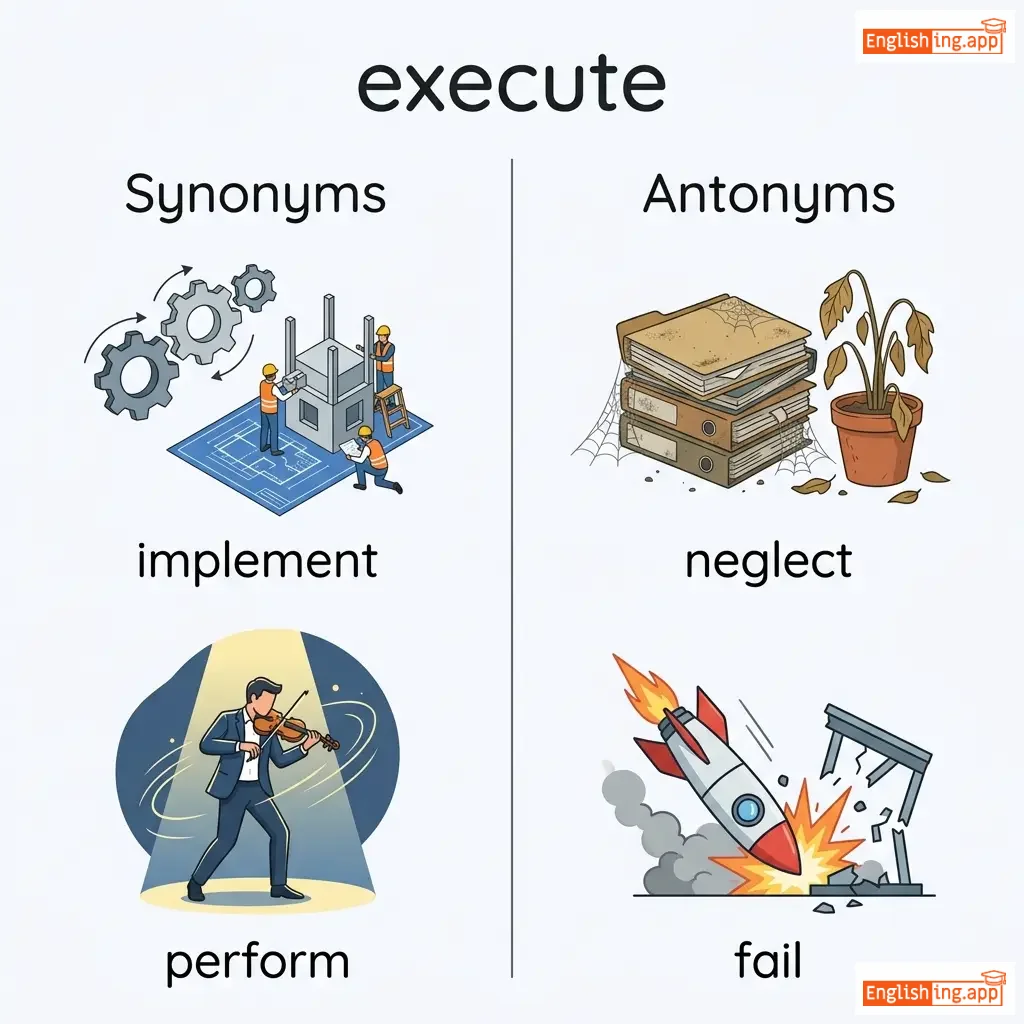
To carry out a plan, order, or action; to perform or put into effect.
••••••
|
The company plans to execute its new strategy next year.
Компания планирует выполнить свою новую стратегию в следующем году.
••••••
|
Компания планирует выполнить свою новую стратегию в следующем году.
Kompaniya planirovat vypolnit svoyu novuyu strategiyu v sleduyushchem godu.
••••••
|
execute a plan
выполнить план
••••••
|
to put a plan into action
••••••
|
выполнить план
vypolnit plan
••••••
|
implement, perform, accomplish, enforce, carry out
••••••
|
neglect, fail, ignore
••••••
|
execute a plan, execute an order, execute a command, execute perfectly
••••••
|
Execute означает выполнить план, перевести его в действие.
••••••
|
|
⚙️
••••••
|
/ˌɛksɪˈkjuːʃən/
noun
(эксекьюшн)
••••••
|
- •••••• |
исполнение, выполнение
ispolnenie, vypolnenie
••••••
|
- •••••• | - •••••• | - •••••• | - •••••• |
the act of carrying out a plan, order, or legal sentence
••••••
|
The success of a project depends on its proper execution. |
Успех проекта зависит от правильного исполнения.
Uspekh proekta zavisit ot pravil'nogo ispolneniya.
••••••
|
flawless execution |
perfect implementation without mistakes
••••••
|
безупречное исполнение
bezuprechnoe ispolnenie
••••••
|
implementation, performance, accomplishment, realization
••••••
|
failure, neglect, omission
••••••
|
execution plan, execution strategy, proper execution, flawless execution
••••••
|
Execution означает выполнение работы — правильное выполнение означает успех!
••••••
|
|
💼
••••••
|
/ɪɡˈzɛkjətɪv/
noun/adjective
(экзекутив)
••••••
|



|
исполнительный
ispolnitel'nyy
••••••
|
- •••••• | - •••••• | - •••••• | - •••••• |
A person with senior managerial responsibility in a business; relating to the execution of plans or laws.
••••••
|
She works as an executive in a multinational company.
Она работает в качестве исполнительного директора в международной компании.
••••••
|
Она работает в качестве исполнительного директора в международной компании.
Ona rabotayet v kachestve ispolnitel'nogo direktora v mezhdunarodnoy kompanii.
••••••
|
executive decision
исполнительное решение
••••••
|
a final decision made by a person in authority
••••••
|
исполнительное решение
ispolnitel'noye resheniye
••••••
|
manager, administrator, director, officer, chief
••••••
|
employee, subordinate
••••••
|
executive officer, executive decision, executive position, executive power
••••••
|
Исполнитель = тот, кто исполняет важные решения
••••••
|
|
🏋️
••••••
|
/ˈɛksərsaɪz/
noun/verb
(экзерсис)
••••••
|
|
упражнение
uprazhnenie
••••••
|
exercised
занимался
••••••
|
exercised
занимался
••••••
|
exercises
занимается
••••••
|
exercising
занимаясь
••••••
|
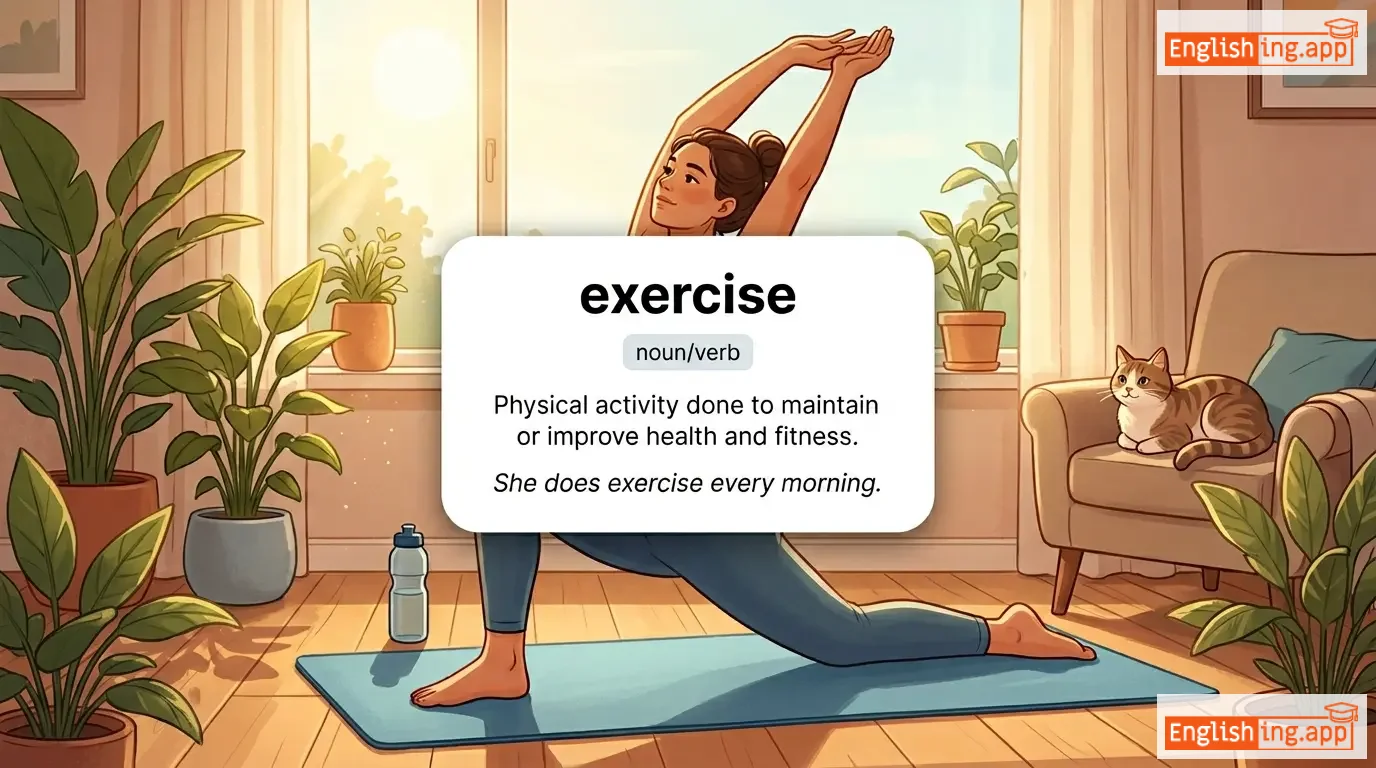
Physical activity done to maintain or improve health and fitness.
••••••
|
She does exercise every morning.
Она занимается спортом каждое утро.
••••••
|
Она занимается спортом каждое утро.
ona zanimayetsya sportom kazhdoe utro.
••••••
|
exercise control
осуществлять контроль
••••••
|
to use or apply control
••••••
|
осуществлять контроль
osushchestvlyat' kontrol'
••••••
|
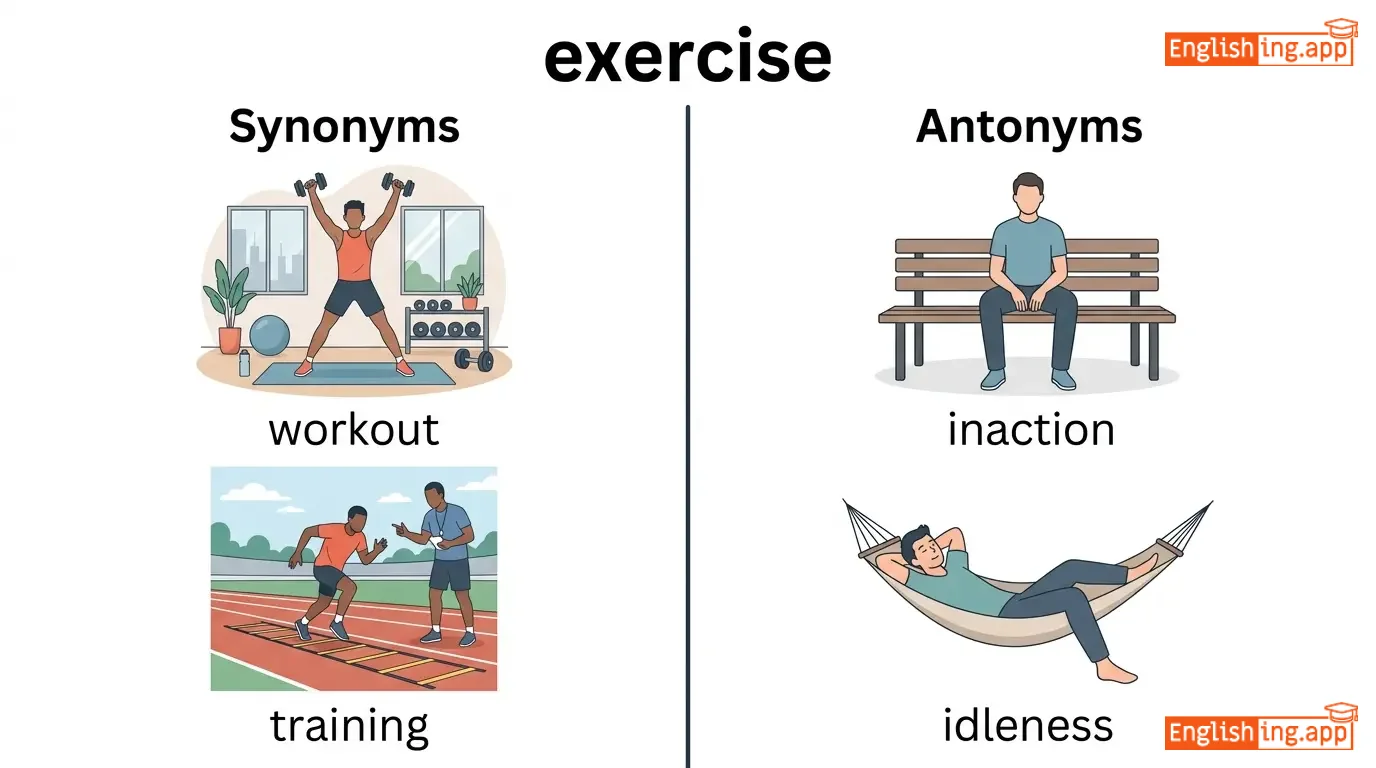
workout, training, practice, drill, activity
••••••
|
inaction, idleness
••••••
|
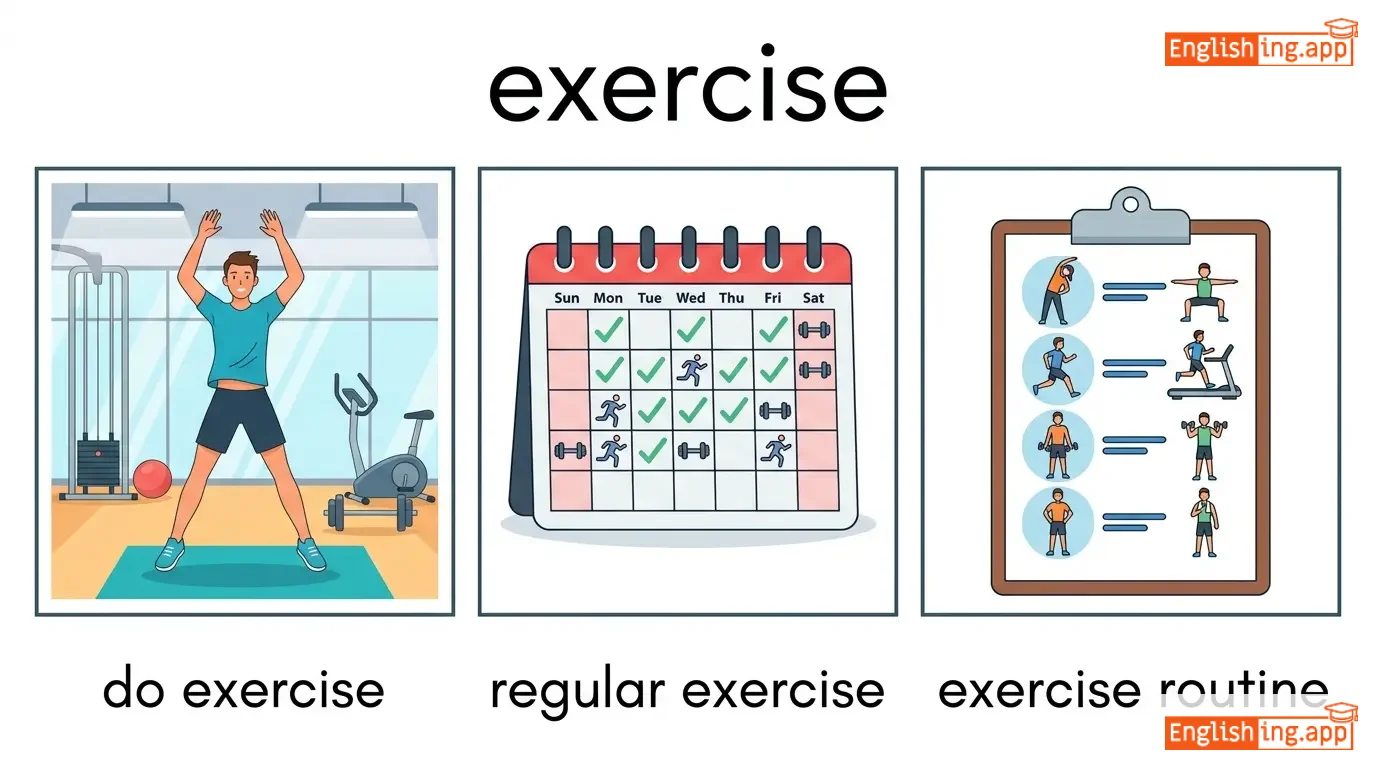
do exercise, regular exercise, exercise routine, exercise program
••••••
|
Упражнение — физическая активность, так же как экзамен требует физических усилий.
••••••
|
|
💪
••••••
|
/ɪɡˈzɜːrt/
verb
(эксерта)
••••••
|

|
применять
primenyat
••••••
|
exerted
эксертид
••••••
|
exerted
эксертид
••••••
|
exerts
эксерц
••••••
|
exerting
эксертинг
••••••
|
to apply effort, force, or influence
••••••
|
He had to exert himself to finish the project on time.
Ему пришлось приложить усилия, чтобы закончить проект вовремя.
••••••
|
Ему пришлось приложить усилия, чтобы закончить проект вовремя.
Yemu prishlos' prilozhit' usiliya, chtoby zakonchit' proyekt vovremya.
••••••
|
exert control
осуществлять контроль
••••••
|
to use power or influence over something or someone
••••••
|
осуществлять контроль
osushchestvlyat' kontrol
••••••
|
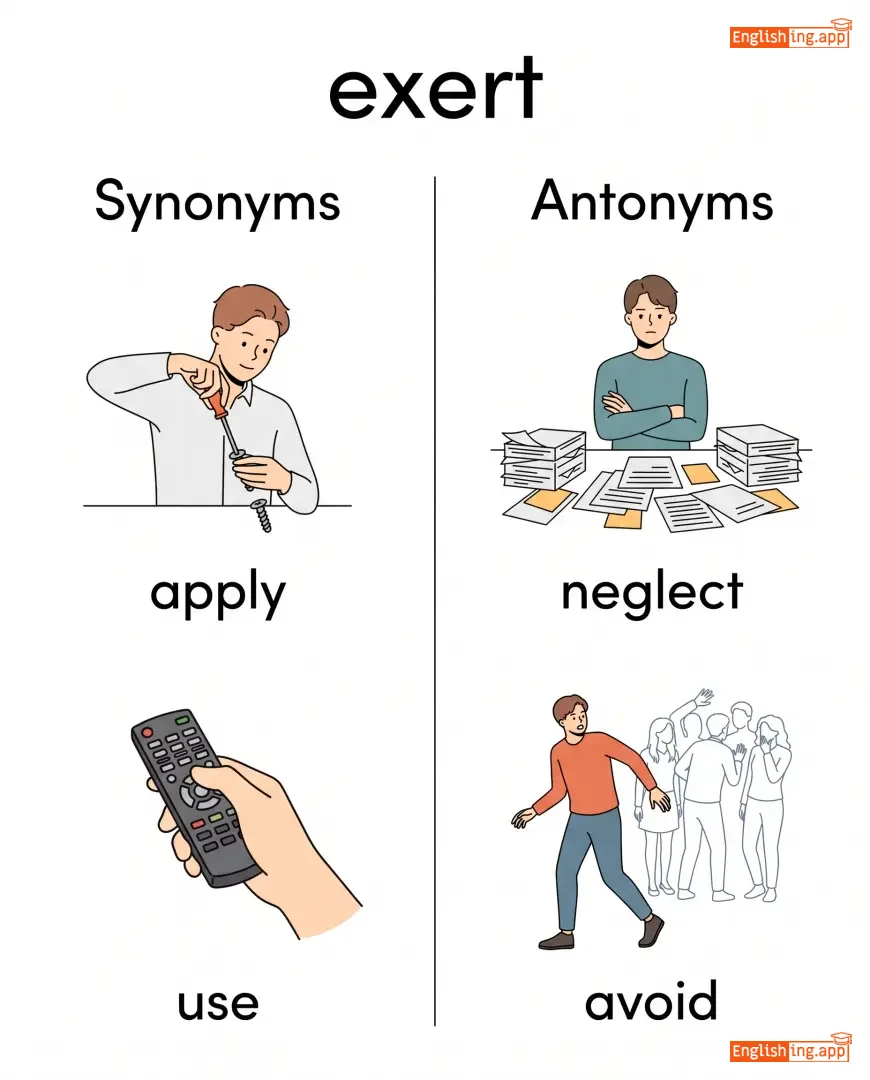
apply, use, exercise, employ, wield
••••••
|
neglect, avoid, ignore
••••••
|
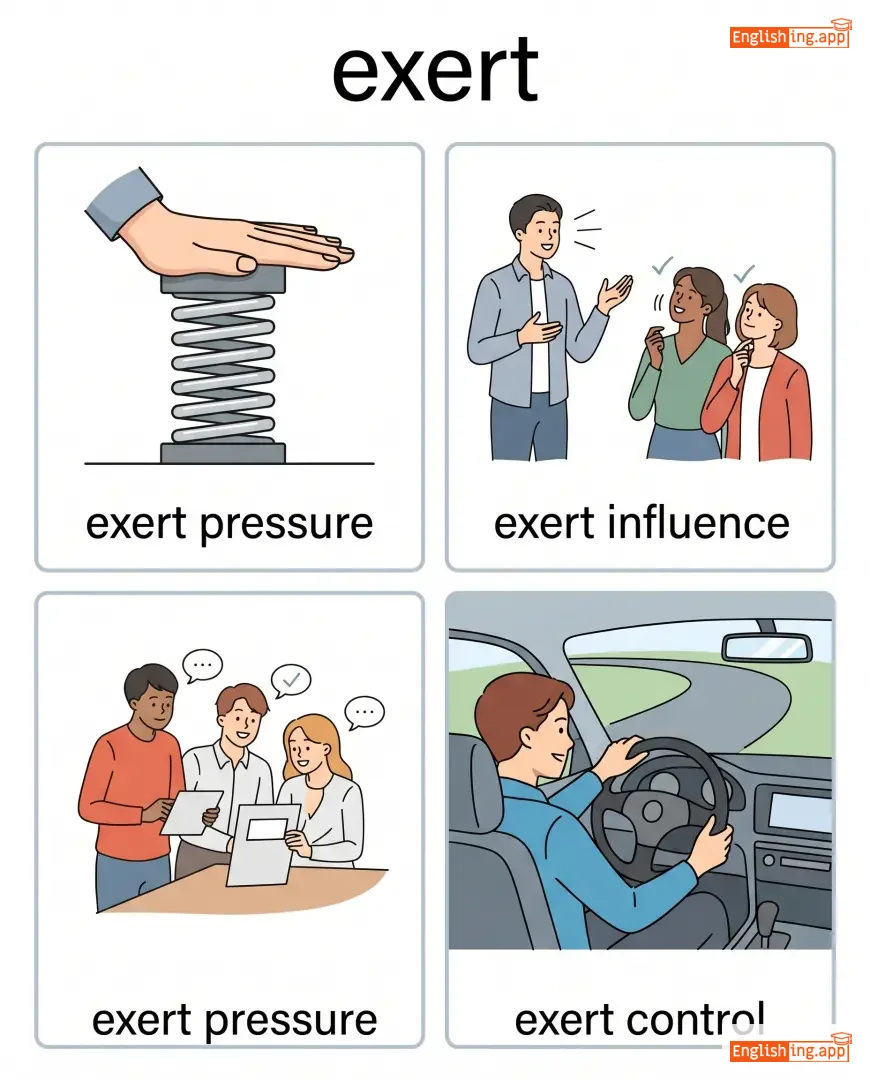
exert pressure, exert influence, exert control, exert effort
••••••
|
Для EXtra усилий ты должен EXертировать контроль
••••••
|
|
🖼️
••••••
|
/ɪɡˈzɪbɪt/
verb/noun
(экспонат)
••••••
|
- •••••• |
экспонировать
eksponirovat
••••••
|
exhibited
экспонирован
••••••
|
exhibited
экспонирован
••••••
|
exhibits
экспонирует
••••••
|
exhibiting
экспонирующий
••••••
|
To display or show publicly; something put on display.
••••••
|
The museum will exhibit ancient artifacts.
Музей будет экспонировать древние артефакты.
••••••
|
Музей будет экспонировать древние артефакты.
Muzei budet eksponirovat drevnie artefakty.
••••••
|
exhibit behavior
экспонировать поведение
••••••
|
to show a particular kind of behavior
••••••
|
экспонировать поведение
eksponirovat povedenie
••••••
|
display, present, demonstrate, showcase, reveal
••••••
|
conceal, hide
••••••
|
exhibit art, exhibit talent, exhibit symptoms, exhibit courage
••••••
|
Exhibit означает экспонировать — на экзамене студенты экспонируют свою нервозность.
••••••
|

