|
表情符号
|
单词 | Images | 翻译 | 过去时 | 过去分词 | 第三人称单数 | 动名词 | 含义 | 例句 | 例句翻译 | 示例表达 | 示例表达含义 | 示例表达翻译 | 同义词 | 反义词 | 搭配词 | 助记符 |
|---|---|---|---|---|---|---|---|---|---|---|---|---|---|---|---|---|---|
|
🎉
••••••
|
/ɪˈvent/
noun
(事件)
••••••
|
- •••••• |
事件
shìjiàn
••••••
|
- •••••• | - •••••• | - •••••• | - •••••• |
something that happens, especially something important
••••••
|
The concert was the biggest event of the year. |
音乐会是今年最大的事件。
Yīnyuè huì shì jīnnián zuìdà de shìjiàn.
••••••
|
in any event |
whatever happens; regardless of the circumstances
••••••
|
无论如何
wúlùn rúhé
••••••
|
incident, occurrence, happening, affair
••••••
|
nonoccurrence, inactivity
••••••
|
major event, sporting event, social event, special event
••••••
|
事件 = 一个重要且值得纪念的事件! 🎉
••••••
|
|
🔚
••••••
|
/ɪˈventʃuəli/
adverb
(最终)
••••••
|
- •••••• |
最终; 最后
zuìzhōng; zuìhòu
••••••
|
- •••••• | - •••••• | - •••••• | - •••••• |
in the end; finally; at last
••••••
|
After years of hard work, she eventually became a doctor. |
经过多年的努力工作,她最终成了医生。
Jīngguò duō nián de nǔlì gōngzuò, tā zuìzhōng chéngle yīshēng.
••••••
|
- •••••• | - •••••• | - •••••• |
finally, ultimately, in the end, at last
••••••
|
initially, immediately, never
••••••
|
eventually succeed, eventually realize, eventually become
••••••
|
Eventually sounds like '最终' and '最后' in Chinese, both meaning 'finally'.
••••••
|
|
♾️
••••••
|
/ˈev.ər/
adverb
(éwèi)
••••••
|
- •••••• |
曾经
céngjīng
••••••
|
- •••••• | - •••••• | - •••••• | - •••••• |
at any time; always; continuously
••••••
|
Have you ever been to London?
你曾经去过伦敦吗?
••••••
|
你曾经去过伦敦吗?
Nǐ céngjīng qùguò Lúndūn ma?
••••••
|
ever since
自从那时以来
••••••
|
from a particular time in the past until now
••••••
|
自从那时以来
zìcóng nà shí yǐlái
••••••
|
always, continuously, at any time, forever
••••••
|
never
••••••
|
ever seen, ever heard, best ever, hardly ever
••••••
|
Ever = 永远, 像天空中的星星
••••••
|
|
📚
••••••
|
/ˈɛvri/
determiner
(èvrī)
••••••
|
- •••••• |
每个
měi gè
••••••
|
- •••••• | - •••••• | - •••••• | - •••••• |
used to refer to all members of a group without exception
••••••
|
She reads every book she can find. |
她读了她能找到的每一本书。
Tā dúle tā néng zhǎodào de měi yī běn shū.
••••••
|
every now and then |
occasionally, from time to time
••••••
|
偶尔
ǒu ěr
••••••
|
each, all, any, entire, whole
••••••
|
none, some
••••••
|
every day, every year, every chance, every effort
••••••
|
每个是Every - 每本书都读每本。
••••••
|
|
👥
••••••
|
/ˈɛvribɒdi/
pronoun
(ˈɛvɾibɒdi)
••••••
|
- •••••• |
大家
dàjiā
••••••
|
- •••••• | - •••••• | - •••••• | - •••••• |
all people; everyone
••••••
|
Everybody enjoyed the party.
大家都享受了派对。
••••••
|
大家都享受了派对。
Dàjiā dōu xiǎngshòu le pàiduì.
••••••
|
- •••••• | - •••••• | - •••••• |
everyone, all, people, all persons
••••••
|
nobody, no one
••••••
|
everybody knows, everybody says, everybody agrees
••••••
|
Everybody 意思是大家 - Imagine 大家 (dàjiā) 都在派对上跳舞
••••••
|
|
📅
••••••
|
/ˈɛvrideɪ/
adjective
(évéirìdè)
••••••
|
- •••••• |
日常
richang
••••••
|
- •••••• | - •••••• | - •••••• | - •••••• |
common or ordinary; occurring daily
••••••
|
These shoes are perfect for everyday use. |
这些鞋子非常适合日常使用。
Zhèxiē xiézi fēicháng shìhé rìcháng shǐyòng.
••••••
|
- •••••• | - •••••• | - •••••• |
ordinary, daily, routine, common
••••••
|
extraordinary, unusual
••••••
|
everyday life, everyday use, everyday routine
••••••
|
Everyday 意味着日常,就像每天的事情一样。
••••••
|
|
👫
••••••
|
/ˈɛvrɪwʌn/
pronoun
(éwèirén)
••••••
|
- •••••• |
每个人
měi gèrén
••••••
|
- •••••• | - •••••• | - •••••• | - •••••• |
every person; all people
••••••
|
Everyone must bring their own lunch. |
每个人都必须带自己的午餐。
Měi gèrén dōu bìxū dài zìjǐ de wǔcān.
••••••
|
- •••••• | - •••••• | - •••••• |
everybody, all, people, all persons
••••••
|
no one, nobody
••••••
|
everyone knows, everyone agrees, everyone must
••••••
|
Everyone 在中文是每个人 (měi gèrén)。
••••••
|
|
🎒
••••••
|
/ˈɛvrɪθɪŋ/
pronoun
(èvrìθing)
••••••
|
- •••••• |
一切
yí qiè
••••••
|
- •••••• | - •••••• | - •••••• | - •••••• |
all things; the whole lot
••••••
|
He packed everything in his suitcase. |
他把所有东西都装进了他的行李箱。
Tā bǎ suǒyǒu dōngxī dōu zhuāng jìnle tā de xínglǐ xiāng.
••••••
|
everything under the sun |
all things possible; anything imaginable
••••••
|
太阳底下的所有事物
tàiyáng dǐxià de suǒyǒu shìwù
••••••
|
all, whole, entirety, totality
••••••
|
nothing, little
••••••
|
everything possible, everything ready, everything needed
••••••
|
Everything意味着一切 - 'Every Thing'意味着每一件事情
••••••
|
|
🌍
••••••
|
/ˈɛv.ri.wɛər/
adverb
(éwèi wèi'ěr)
••••••
|
- •••••• |
到处
dàochù
••••••
|
- •••••• | - •••••• | - •••••• | - •••••• |
in or to all places
••••••
|
Tourists can be seen everywhere in the city during summer. |
在夏天,游客们可以在城市的各个地方看到。
Zài xiàtiān, yóukèmen kěyǐ zài chéngshì de gège dìfāng kàn dào.
••••••
|
here, there, and everywhere |
in all places without exception
••••••
|
这里,那里,以及到处
Zhè lǐ, nà lǐ, yǐ jí dàochù
••••••
|
all around, throughout, all over, universally, omnipresently
••••••
|
nowhere, somewhere
••••••
|
found everywhere, seen everywhere, spread everywhere, everywhere else
••••••
|
Everywhere意味着到处-想象你在世界的每个地方!
••••••
|
|
🔍
••••••
|
/ˈɛv.ɪ.dəns/
noun
(艾-维-丹斯)
••••••
|
- •••••• |
证据
zhèngjù
••••••
|
- •••••• | - •••••• | - •••••• | - •••••• |
facts or information that show whether something is true or not
••••••
|
The lawyer presented new evidence in court. |
律师在法庭上提交了新的证据。
lǜshī zài fǎtíng shàng tíjiāo le xīn de zhèngjù.
••••••
|
hard evidence |
strong, undeniable proof
••••••
|
确凿证据
quèzáo zhèngjù
••••••
|
proof, testimony, confirmation, validation, indication
••••••
|
denial, contradiction, disproof
••••••
|
present evidence, gather evidence, strong evidence, lack of evidence
••••••
|
证据 = 证明某事是否真实。
••••••
|
|
👀
••••••
|
/ˈɛvɪdənt/
adjective
(évident)
••••••
|

|
显而易见
xian eryijian
••••••
|
- •••••• | - •••••• | - •••••• | - •••••• |
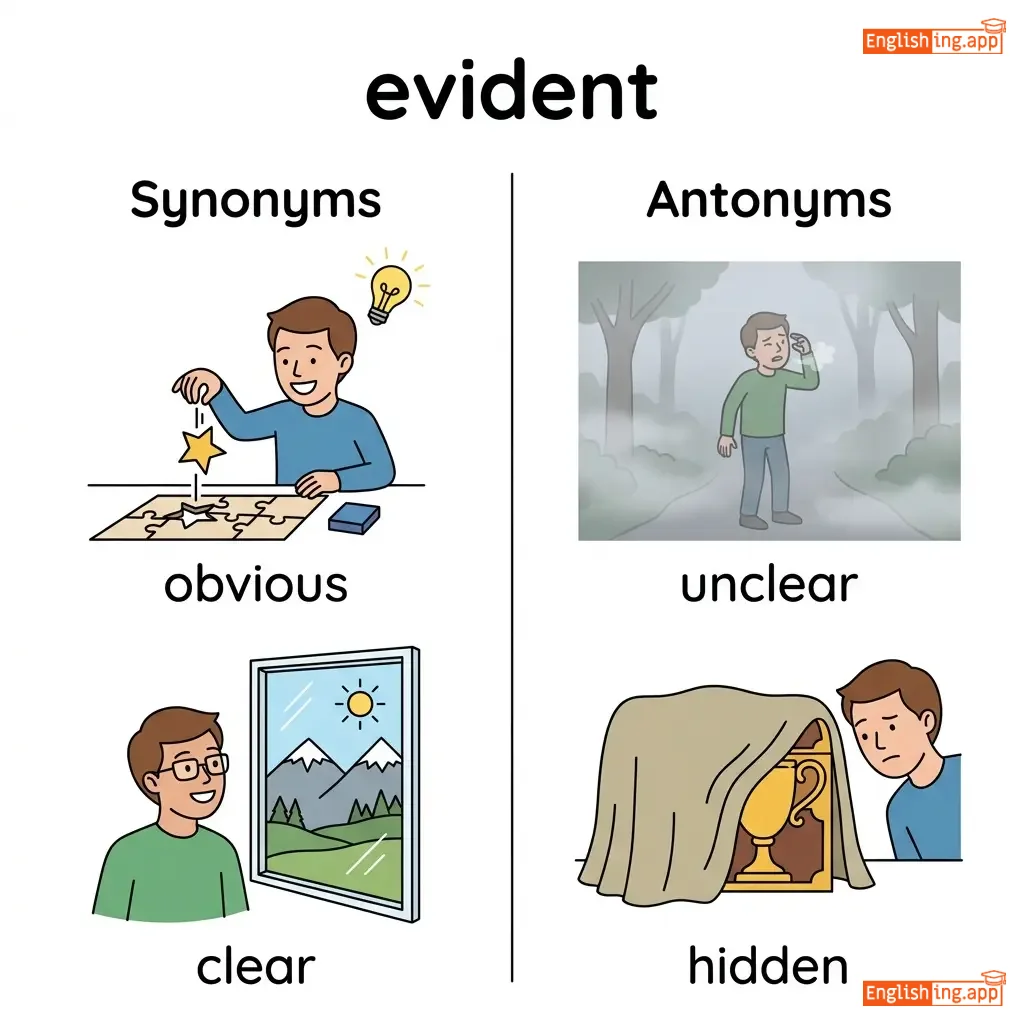
clearly seen or understood; obvious
••••••
|
It was evident that she was upset.
很明显她很生气。
••••••
|
显然她很生气。
Xianran ta hen shengqi.
••••••
|
self-evident
不言而喻
••••••
|
obvious without needing explanation
••••••
|
不言而喻
buyaneryu
••••••
|
obvious, clear, apparent, manifest, plain
••••••
|
unclear, hidden, obscure
••••••
|
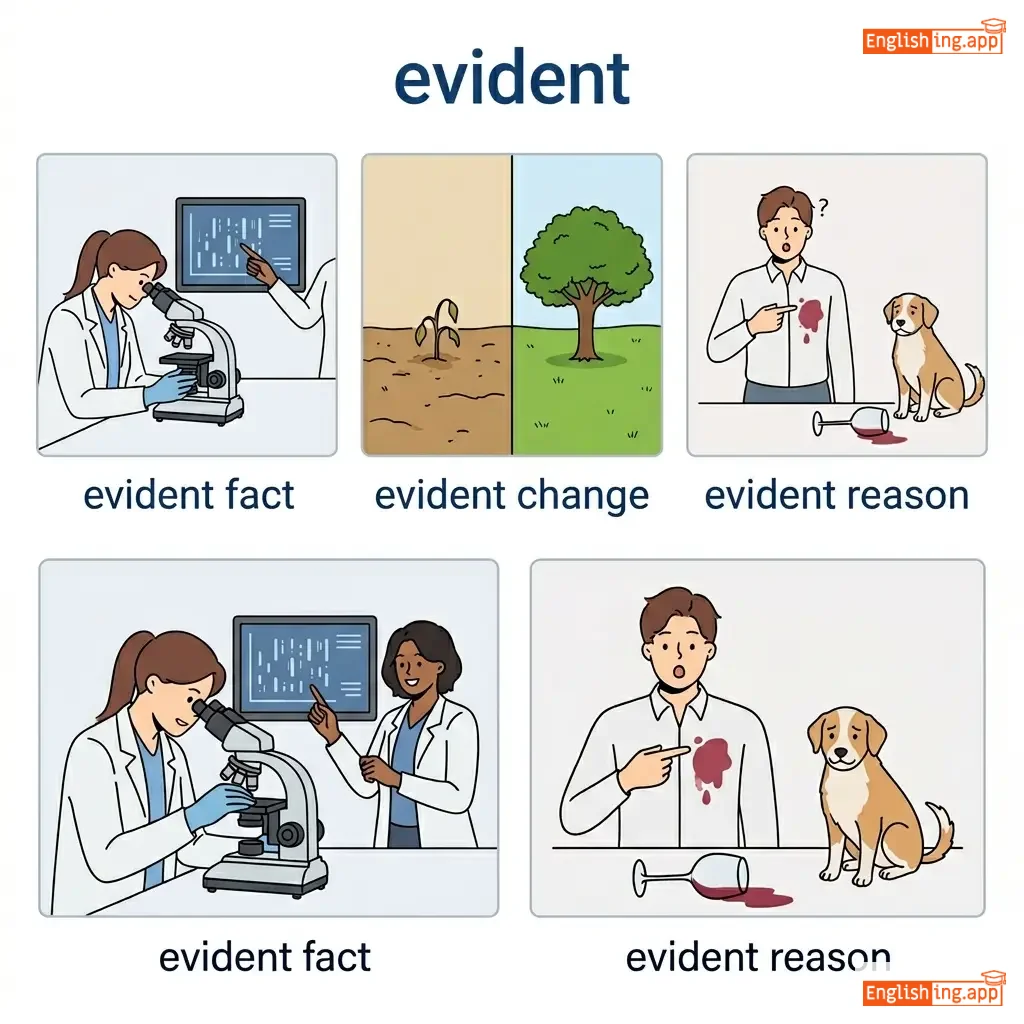
evident fact, evident change, evident reason, evident truth
••••••
|
显而易见的就是显而易见,就像证据一样。
••••••
|
|
😈
••••••
|
/ˈiːvəl/
adjective
(伊维尔)
••••••
|
- •••••• |
邪恶
xiee
••••••
|
- •••••• | - •••••• | - •••••• | - •••••• |
Profoundly immoral and wicked.
••••••
|
They believed the villain was the embodiment of evil. |
他们相信反派是邪恶的化身。
Tāmen xiāngxìn fǎnpài shì xié'è de huàshēn.
••••••
|
root of all evil |
the fundamental source of wickedness or problems
••••••
|
万恶之源
wàn è zhī yuán
••••••
|
wicked, immoral, malevolent, sinful, corrupt
••••••
|
good, virtuous, righteous
••••••
|
evil deeds, pure evil, embodiment of evil
••••••
|
Evil的意思是邪恶→ Devil中藏有Evil
••••••
|
|
🎶
••••••
|
/ɪˈvoʊk/
verb
(伊沃克)
••••••
|
- •••••• |
唤起
huànqǐ
••••••
|
evoked
伊沃克德
••••••
|
evoked
伊沃克德
••••••
|
evokes
伊沃克斯
••••••
|
evoking
伊沃金
••••••
|
to bring a feeling, memory, or image into the mind
••••••
|
The old song evoked memories of her childhood.
那首老歌唤起了她童年的回忆。
••••••
|
那首老歌唤起了她童年的回忆。
Nà shǒu lǎo gē huànqǐ le tā tóngnián de huíyì.
••••••
|
evoke sympathy
唤起同情
••••••
|
to make someone feel compassion or pity
••••••
|
唤起同情
huànqǐ tóngqíng
••••••
|
arouse, elicit, provoke, stimulate, inspire
••••••
|
suppress, stifle, ignore
••••••
|
evoke memories, evoke feelings, evoke sympathy, evoke laughter
••••••
|
唤起就像'呼唤',让记忆回到你的心里。
••••••
|
|
🧬
••••••
|
/ˌɛvəˈluːʃən/
noun
(进化)
••••••
|
- •••••• |
进化
jinhua
••••••
|
- •••••• | - •••••• | - •••••• | - •••••• |
the gradual development of something, especially from a simple to a more complex form
••••••
|
The theory of evolution explains how species change over time. |
进化论解释了物种如何随着时间变化。
Jinhua lun jiexi le wuzhong ruhe suizhe shijian bianhua.
••••••
|
- •••••• | - •••••• | - •••••• |
development, progression, growth, transformation
••••••
|
regression, stagnation
••••••
|
theory of evolution, cultural evolution, human evolution, natural evolution
••••••
|
进化是物种逐渐发展的过程,像物种的演化一样。
••••••
|
|
🔄
••••••
|
/ˌɛvəlʊˈʃɛnəri/
adjective
••••••
|

|
- •••••• | - •••••• | - •••••• | - •••••• | - •••••• |
relating to or characterized by evolution, especially in terms of gradual development or change
••••••
|
The company has adopted an evolutionary approach to its product development. |
- •••••• | - •••••• | - •••••• | - •••••• |
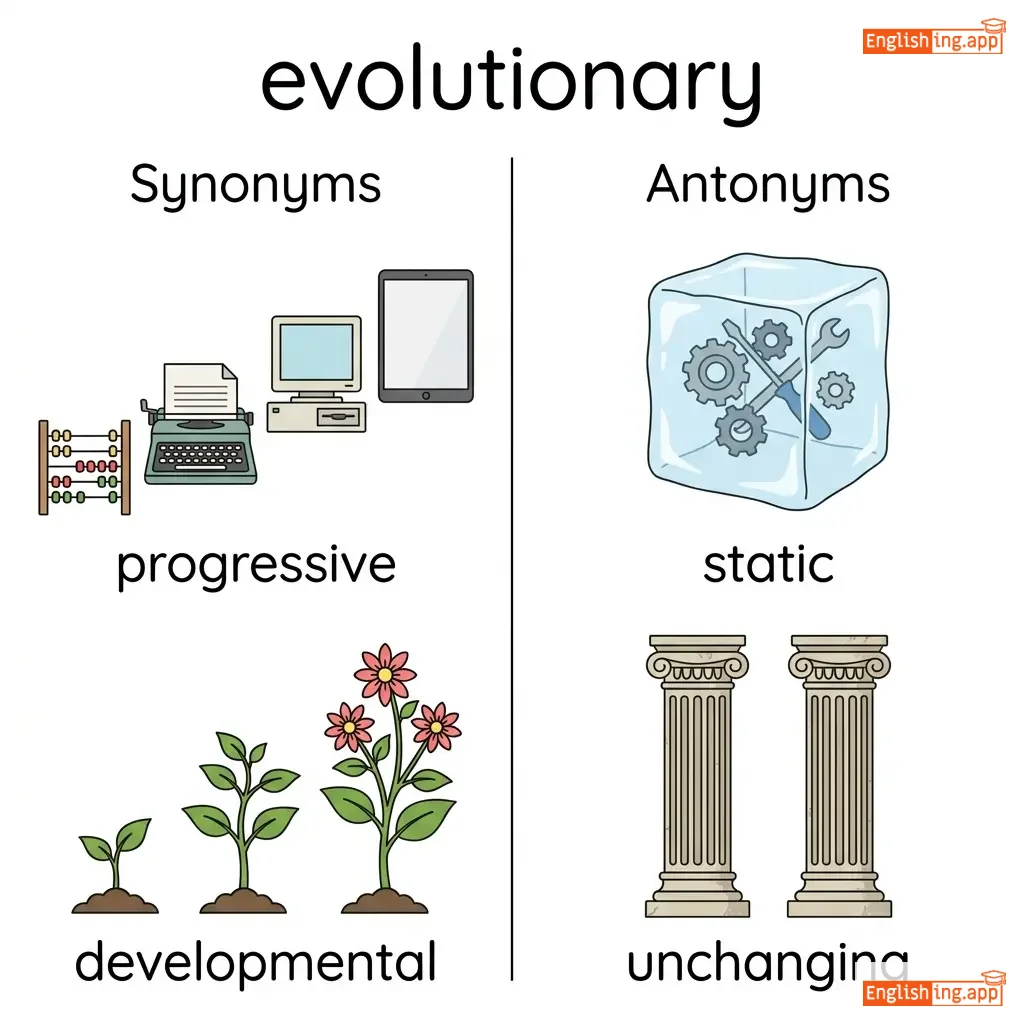
progressive, developmental, transformative
••••••
|
static, unchanging
••••••
|
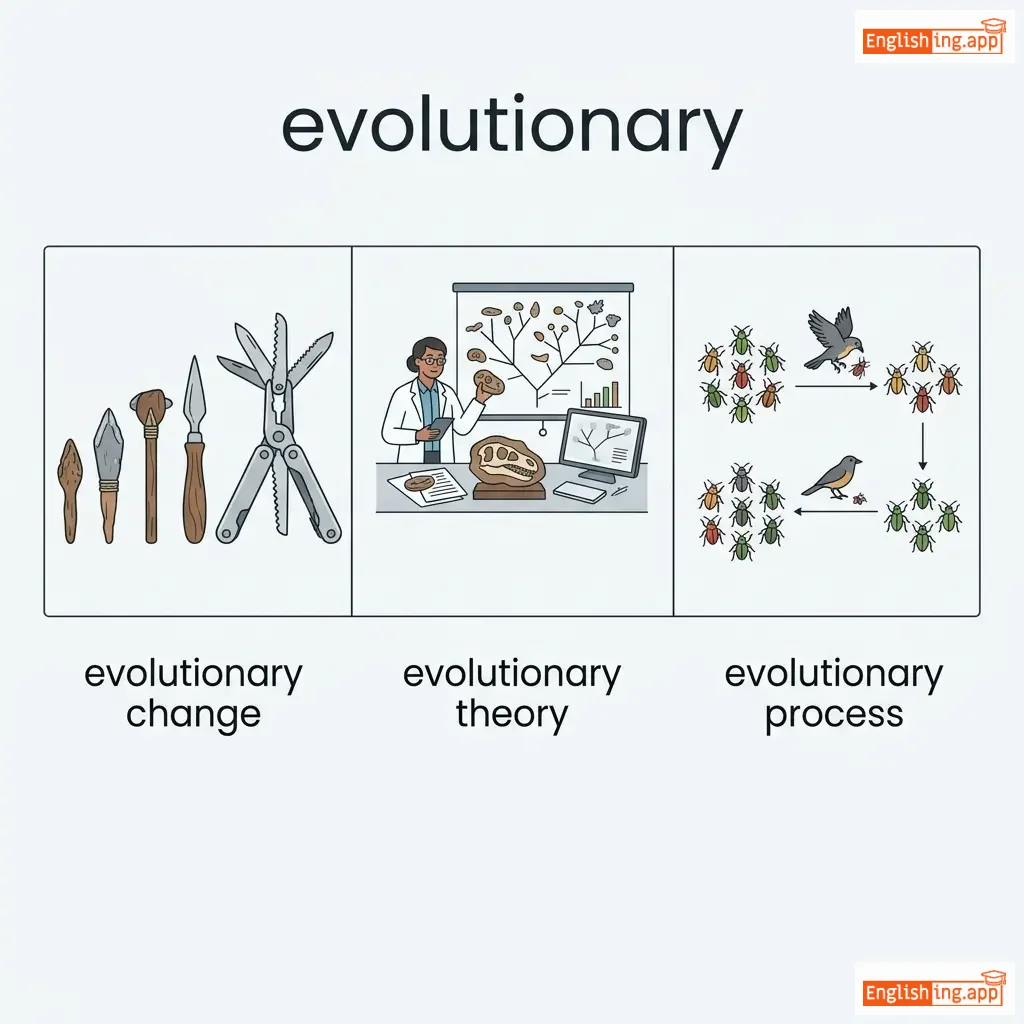
evolutionary change, evolutionary theory, evolutionary process, evolutionary development
••••••
|
No •••••• |
|
🌱
••••••
|
/ɪˈvɑːlv/
verb
••••••
|
- •••••• | - •••••• |
evolved
••••••
|
evolved
••••••
|
evolves
••••••
|
evolving
••••••
|
to develop gradually, especially into a more complex or advanced state
••••••
|
Over time, the company evolved into a global brand. |
- •••••• |
evolve over time |
to change or develop slowly as time passes
••••••
|
- •••••• |
develop, progress, transform, advance, grow
••••••
|
regress, decline, stagnate
••••••
|
evolve into, evolve over time, evolve naturally, evolve gradually
••••••
|
No •••••• |
|
🎯
••••••
|
/ɪɡˈzækt/
adjective, verb
(埃克萨克特)
••••••
|

|
精确的
jingque de
••••••
|
exacted
埃克萨克特得
••••••
|
exacted
埃克萨克特得
••••••
|
exacts
埃克萨克特斯
••••••
|
exacting
埃克萨克特英
••••••
|
precise and accurate (adj); to demand or obtain something (verb)
••••••
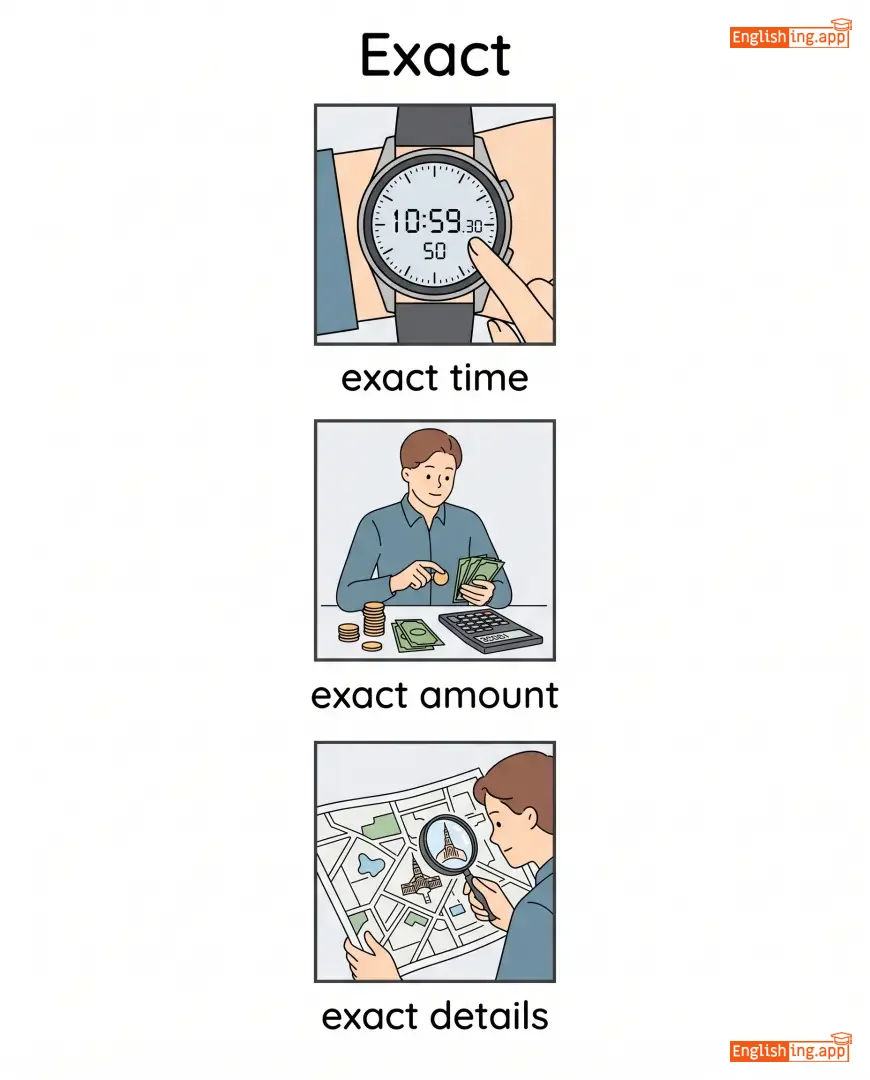
|
The exact time of the meeting is 10:30 AM.
会议的确切时间是10:30 AM。
••••••
|
会议的确切时间是10:30 AM。
Huiyi de jueque shijian shi 10:30 AM.
••••••
|
to exact revenge
复仇
••••••
|
to inflict punishment or harm in return for an injury or wrong
••••••
|
复仇
fuchou
••••••
|
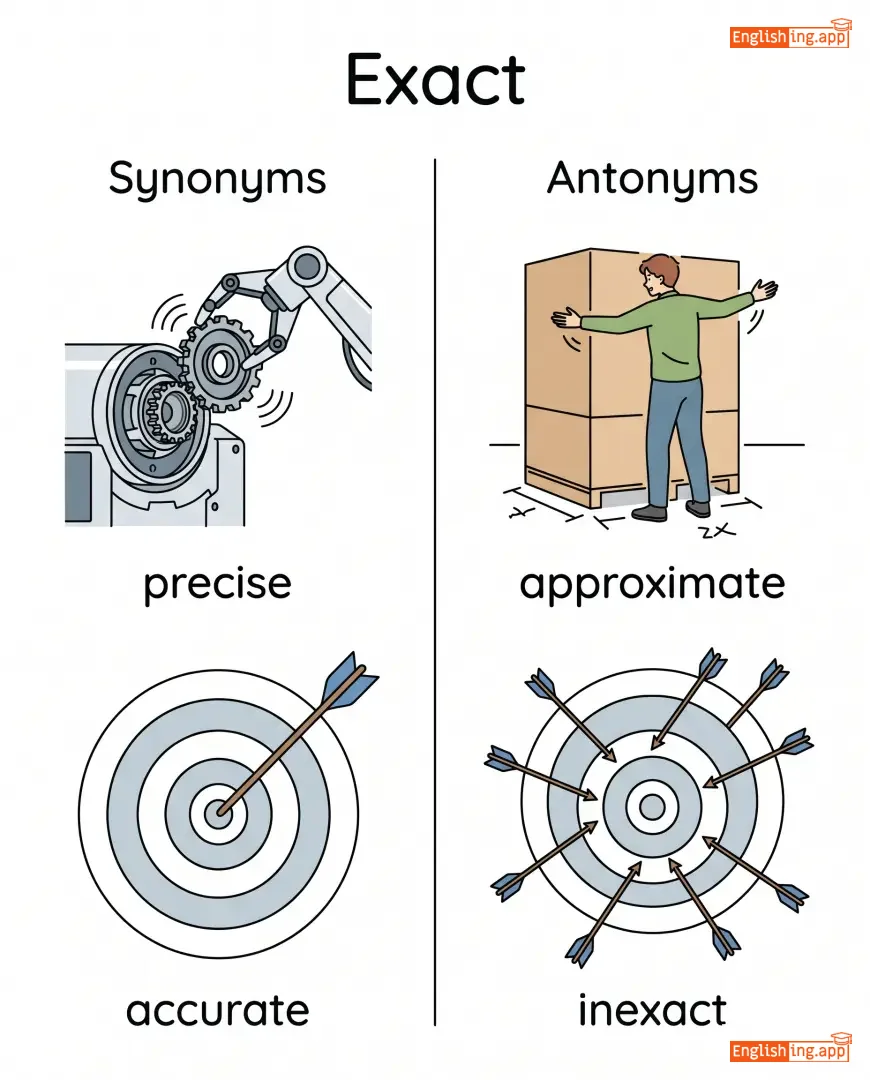
precise, accurate, demand, require, strict
••••••
|
approximate, inexact, lenient
••••••
|
exact time, exact amount, exact details, exact revenge
••••••
|
Exact意思是精确的,否则复仇来了!
••••••
|
|
🎯
••••••
|
/ɪɡˈzæktli/
adverb
(yí gè zhèngquè de fāngshì)
••••••
|
- •••••• |
精确地
jīngquè de
••••••
|
- •••••• | - •••••• | - •••••• | - •••••• |
in a precise or accurate manner; without any error
••••••
|
She explained the process exactly as it happened. |
她解释了过程,完全按照发生的方式。
Tā jiěshìle guòchéng, wánquán ànzhào fāshēng de fāngshì.
••••••
|
to be exact |
to give precise or accurate details
••••••
|
确切地说
quèqiè de shuō
••••••
|
precisely, accurately, correctly, strictly
••••••
|
roughly, approximately
••••••
|
exactly right, exactly the same, exactly what, exactly how
••••••
|
精确地就像是命中目标,没有任何错误!
••••••
|
|
📢
••••••
|
/ɪɡˈzædʒəˌreɪt/
verb
(夸大其词)
••••••
|
- •••••• |
夸大
kuada
••••••
|
exaggerated
夸大其词了
••••••
|
exaggerated
夸大其词了
••••••
|
exaggerates
夸大其词
••••••
|
exaggerating
夸大其词
••••••
|
to describe something as better, worse, or more important than it really is
••••••
|
He tends to exaggerate his achievements.
他倾向于夸大自己的成就。
••••••
|
他倾向于夸大自己的成就。
ta qingxiang yu kuada ziji de chengjiu.
••••••
|
make a mountain out of a molehill
小题大做
••••••
|
to make a small problem seem much bigger than it is
••••••
|
小题大做
xiao ti da zuo
••••••
|
overstate, overemphasize, amplify, embellish
••••••
|
understate, minimize, downplay
••••••
|
exaggerate claims, exaggerate importance, exaggerate details, exaggerate achievements
••••••
|
夸大就是把事情说得更严重,就像是小题大做一样。
••••••
|
|
✍️
••••••
|
/ɪɡˌzæm.ɪˈneɪ.ʃən/
noun
(考试)
••••••
|
- •••••• |
考试
kaoshi
••••••
|
- •••••• | - •••••• | - •••••• | - •••••• |
a formal test of knowledge or ability
••••••
|
She is preparing for her final examination. |
她正在为她的期末考试做准备。
Tā zhèngzài wèi tā de qīmò kǎoshì zuò zhǔnbèi.
••••••
|
under examination |
being carefully inspected or studied
••••••
|
接受考试
jiēshòu kǎoshì
••••••
|
test, assessment, evaluation, inspection, quiz
••••••
|
ignorance, neglect
••••••
|
take examination, pass examination, final examination, medical examination
••••••
|
Examination的意思是考试✍️ - 做好考试,国家将震动!
••••••
|
|
🔎
••••••
|
/ɪɡˈzæm.ɪn/
verb
(hā pí nèi sī)
••••••
|
- •••••• |
幸福
xìng fú
••••••
|
examined
••••••
|
examined
••••••
|
examines
••••••
|
examining
••••••
|
to look at something carefully in order to understand it
••••••
|
The doctor will examine the patient tomorrow. |
当她收到奖项时,她无法掩饰自己的幸福。
Dāng tā shōu dào jiǎng xiàng shí, tā wú fǎ yǎn shì zì jǐ de xìng fú.
••••••
|
cross-examine |
to question someone thoroughly, especially in a court
••••••
|
追求幸福
zhuī qiú xìng fú
••••••
|
inspect, analyze, investigate, check, study
••••••
|
ignore, overlook, neglect
••••••
|
examine carefully, examine evidence, examine thoroughly, examine closely
••••••
|
幸福是我们都追求的目标。
••••••
|
|
📝
••••••
|
/ɪɡˌzæm.ɪˈniː/
noun
(éjámínī)
••••••
|
- •••••• |
考生
kaosheng
••••••
|
- •••••• | - •••••• | - •••••• | - •••••• |
a person who is being tested in an examination
••••••
|
Each examinee was given two hours to complete the test.
Yīch éjámínī wǎz gīven tú àwèrzu tú kòngplìt dē tèsī.
••••••
|
每个考生都有两小时来完成考试。
Měi gè kǎoshēng dōu yǒu liǎng xiǎoshí lái wánchéng kǎoshì.
••••••
|
- •••••• | - •••••• | - •••••• |
candidate, test taker, student, applicant
••••••
|
examiner, teacher, instructor, assessor
••••••
|
qualified examinee, nervous examinee, examinee number
••••••
|
Kaosheng (exam taker) comes from 'kao' (test).
••••••
|
|
📝
••••••
|
/ɪɡˈzæmɪnər/
noun
(考试员)
••••••
|
- •••••• |
考官
kaoguan
••••••
|
- •••••• | - •••••• | - •••••• | - •••••• |
A person who tests or inspects knowledge, skills, or qualifications
••••••
|
The examiner reviewed each student's answer sheet carefully.
考试员仔细检查了每个学生的答题纸。
••••••
|
考官仔细检查了每个学生的答题纸。
Kaoguan zixi jiancha le meige xuesheng de dati zhi
••••••
|
- •••••• | - •••••• | - •••••• |
assessor, inspector, evaluator, tester, reviewer
••••••
|
candidate, examinee
••••••
|
examiner report, board examiner, medical examiner, chief examiner
••••••
|
考官 = kaoshi + guan = exam + official
••••••
|
|
📖
••••••
|
/ɪɡˈzɑːm.pəl/
noun
(éksámpl)
••••••
|
- •••••• |
例子
lìzi
••••••
|
- •••••• | - •••••• | - •••••• | - •••••• |
a thing or person regarded as a model to be followed or avoided
••••••
|
He is a good example of a hardworking student.
他是一个勤奋学生的好例子。
••••••
|
他是一个勤奋学生的好例子。
Tā shì yīgè qínfèn xuéshēng de hǎo lìzi.
••••••
|
set an example
设立一个榜样
••••••
|
to behave in a way that others should copy
••••••
|
设立一个榜样
Shèlì yīgè bǎngyàng
••••••
|
model, instance, case, sample, illustration
••••••
|
counterexample, deviation
••••••
|
give example, provide example, set an example, classic example
••••••
|
Lìzi 意味着例子 📖 - 每次考试时都会给出例子。
••••••
|
|
🚀
••••••
|
/ɪkˈsiːd/
verb
(exceed)
••••••
|
- •••••• |
超越
chaoyue
••••••
|
exceeded
exceeded
••••••
|
exceeded
exceeded
••••••
|
exceeds
exceeds
••••••
|
exceeding
exceeding
••••••
|
to go beyond a limit or expectation
••••••
|
The athlete exceeded everyone's expectations by winning the gold medal.
The athlete exceeded everyone's expectations by winning the gold medal.
••••••
|
运动员通过赢得金牌超越了每个人的期望。
Yundongyuan tongguo yingde jinpai chaoyue le meigeren de qiwang.
••••••
|
exceed the limit
exceed the limit
••••••
|
to go beyond what is allowed or acceptable
••••••
|
超越限制
chaoyue xianzhi
••••••
|
surpass, outdo, transcend, overstep, excel
••••••
|
fail, fall short, underperform
••••••
|
exceed expectations, exceed limits, exceed authority, exceed capacity
••••••
|
EXtra SED 🚀 超越限制 - 超越意味着超越所有的界限!
••••••
|
|
🏆
••••••
|
/ɪkˈsɛl/
verb
(éksèl)
••••••
|
- •••••• |
表现突出
biǎoxiàn túchū
••••••
|
excelled
ékséld
••••••
|
excelled
ékséld
••••••
|
excels
ékséls
••••••
|
excelling
ékséling
••••••
|
to be exceptionally good at or proficient in an activity or subject
••••••
|
She always tries to excel in her studies.
她总是尽力在学习中表现突出。
••••••
|
她总是尽力在学习中表现突出。
Tā zǒng shì jìnlì zài xuéxí zhōng biǎoxiàn túchū.
••••••
|
excel oneself
超越自我
••••••
|
to do better than one usually does
••••••
|
超越自我
chāoyuè zìwǒ
••••••
|
shine, surpass, outdo, triumph, succeed
••••••
|
fail, lose, fall behind
••••••
|
excel in, excel at, excel oneself, excel academically
••••••
|
Excel 软件一样,人生中你也需要表现突出。
••••••
|
|
🌟
••••••
|
/ˈɛksələns/
noun
(èksèlénz)
••••••
|
- •••••• |
卓越
zhuóyuè
••••••
|
- •••••• | - •••••• | - •••••• | - •••••• |
the quality of being outstanding or extremely good
••••••
|
The school is known for its academic excellence. |
这所学校因其学术卓越而闻名。
Zhè suǒ xuéxiào yīn qí xuéshù zhuóyuè ér wénmíng.
••••••
|
par excellence |
better or more than all others of the same kind
••••••
|
卓越之选
zhuóyuè zhī xuǎn
••••••
|
superiority, greatness, distinction, merit, brilliance
••••••
|
inferiority, mediocrity
••••••
|
academic excellence, strive for excellence, standard of excellence, pursuit of excellence
••••••
|
卓越 = 额外的镜头使事物看得更清楚。
••••••
|
|
⭐
••••••
|
/ˈeksələnt/
adjective
(èksèlènt)
••••••
|
- •••••• |
卓越的;出色的;优秀的;
zhuóyuè de; chūsè de; yōuxiù de
••••••
|
- •••••• | - •••••• | - •••••• | - •••••• |
extremely good; outstanding; superior
••••••
|
She received excellent grades in all her subjects.
她在所有科目中都得到了优秀的成绩。
••••••
|
她在所有科目中都得到了优秀的成绩。
Tā zài suǒyǒu kēmù zhōng dōu dédàole yōuxiù de chéngjī.
••••••
|
- •••••• | - •••••• | - •••••• |
outstanding, superb, magnificent, brilliant
••••••
|
poor, terrible, awful, mediocre
••••••
|
excellent performance, excellent quality, excellent service, excellent condition
••••••
|
‘卓越的’意味着优秀和无与伦比的好,体现了最高水平。
••••••
|
|
🚫
••••••
|
/ɪkˈsɛpt/
preposition/conjunction
(except)
••••••
|
- •••••• |
除了
chu le
••••••
|
- •••••• | - •••••• | - •••••• | - •••••• |
not including; other than
••••••
|
Everyone was invited except John.
每个人都被邀请,除了约翰。
••••••
|
每个人都被邀请,除了约翰。
Mei ge ren dou bei yao qing, chu le Yuehan.
••••••
|
take exception to
对…表示异议
••••••
|
to be offended or disagree with something
••••••
|
对…表示异议
dui... biao shi yi yi
••••••
|
excluding, apart from, barring, save
••••••
|
including, with
••••••
|
except for, except that, no one except, everyone except
••••••
|
除了就是排除 + 一步 - 排除某人
••••••
|
|
🚫
••••••
|
/ɪkˈsɛpʃən/
noun
(yíkèshìpíng)
••••••
|
- •••••• |
例外
liwai
••••••
|
- •••••• | - •••••• | - •••••• | - •••••• |
A case or instance that does not follow a general rule.
••••••
|
Every rule has an exception. |
每个规则都有例外。
měi gè guīzé dōu yǒu lìwài.
••••••
|
take exception to |
to be offended by something
••••••
|
提出异议
tíchū yìyì
••••••
|
anomaly, irregularity, deviation, exclusion, exemption
••••••
|
rule, norm, standard
••••••
|
make an exception, without exception, rare exception, exception to the rule
••••••
|
Exception 意味着例外 — 想象一下,所有人都通过了考试,只有一个人没通过 = 例外。
••••••
|
|
🌟
••••••
|
/ɪkˈsɛpʃənl/
adjective
(ɪkˈsɛpʃənl)
••••••
|
|
卓越
zhuóyuè
••••••
|
- •••••• | - •••••• | - •••••• | - •••••• |
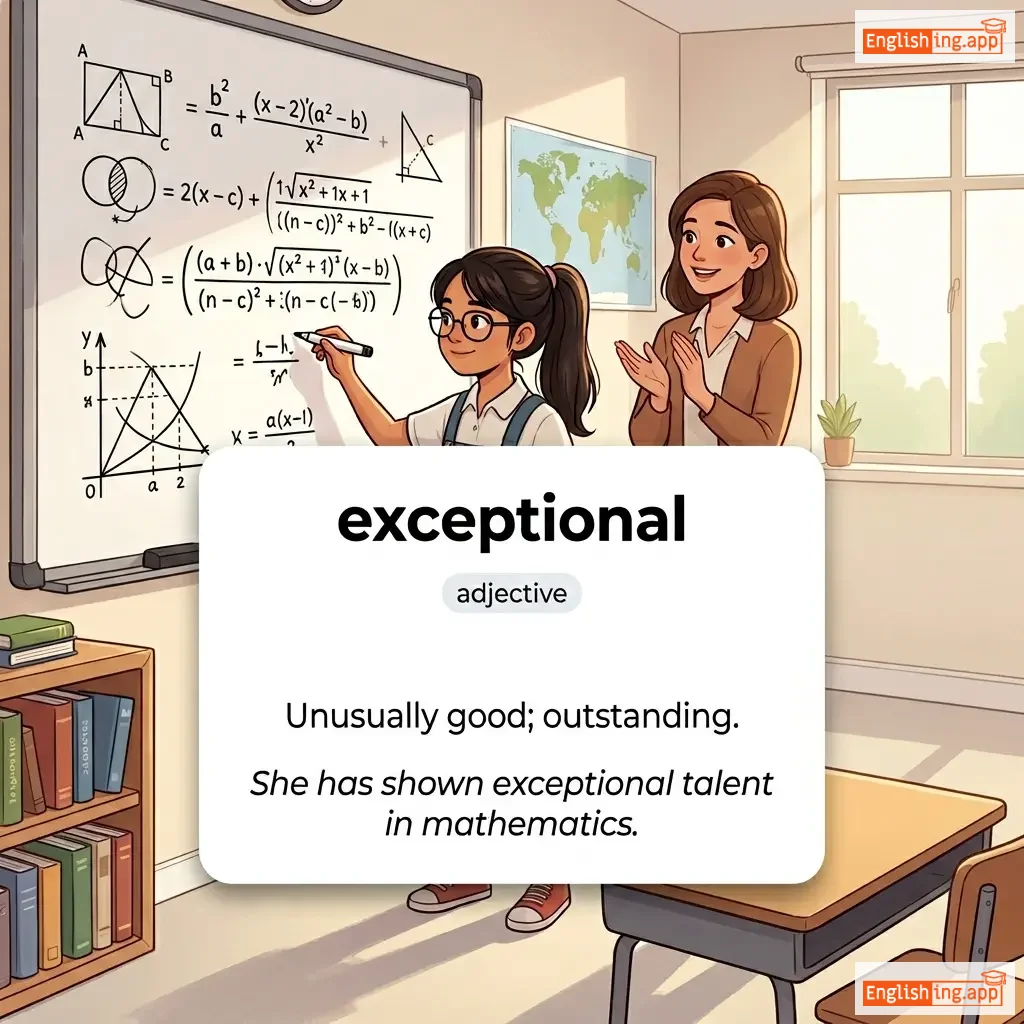
Unusually good; outstanding.
••••••
|
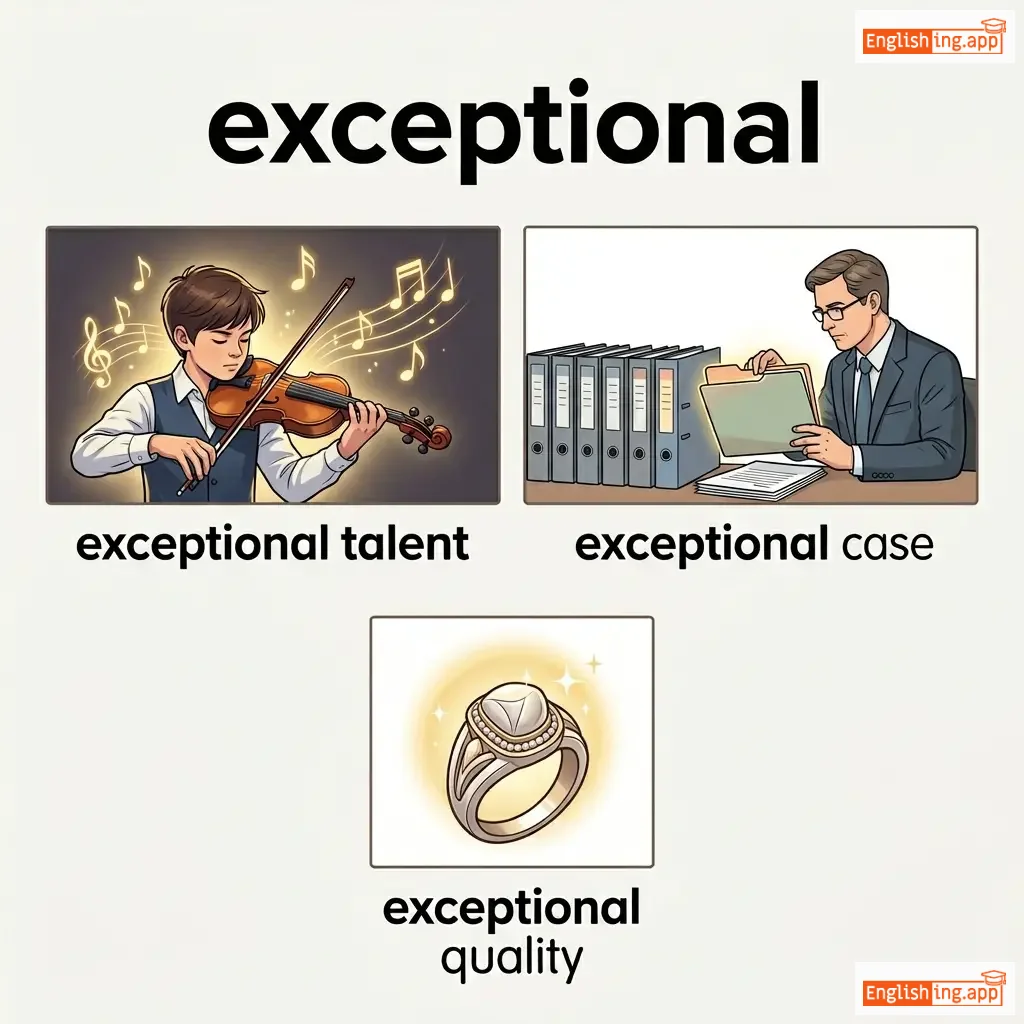
She has shown exceptional talent in mathematics. |
她在数学方面展现了卓越的才能。
Tā zài shùxué fāngmiàn zhǎnxiànle zhuóyuè de cáinéng.
••••••
|
of exceptional quality |
something of very high or outstanding quality
••••••
|
卓越的品质
zhuóyuè de pǐnzhì
••••••
|
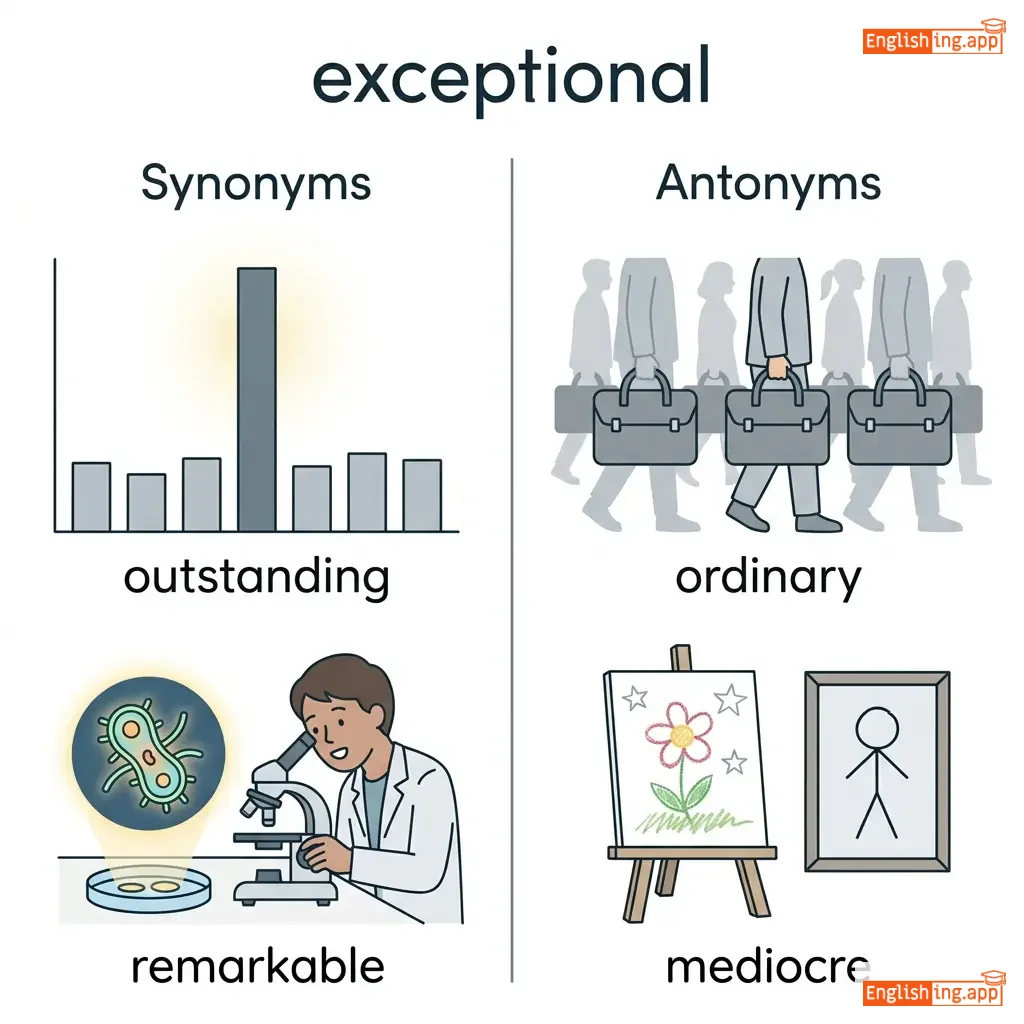
outstanding, remarkable, extraordinary, superb
••••••
|
ordinary, mediocre, common
••••••
|
exceptional talent, exceptional case, exceptional quality, exceptional opportunity
••••••
|
Exceptional = Extra Special → 卓越
••••••
|
|
➕
••••••
|
/ɪkˈsɛs/
noun
(ik-ses)
••••••
|
- •••••• |
过量
guo liang
••••••
|
- •••••• | - •••••• | - •••••• | - •••••• |
An amount more than necessary, permitted, or desirable.
••••••
|
Too much sugar can lead to excess weight gain. |
过多的糖分可能会导致超重。
Guo duo de tang fen ke neng hui dao zhi chao zhong.
••••••
|
in excess of |
more than a particular amount
••••••
|
超过
chao guo
••••••
|
surplus, overflow, overabundance, superfluity
••••••
|
shortage, lack, insufficiency
••••••
|
excess weight, excess baggage, excess demand, in excess of
••••••
|
Excess = 过量的糖分,导致健康问题!
••••••
|
|
🚫
••••••
|
/ɪkˈsɛsɪv/
adjective
(ɪkˈsɛsɪv)
••••••
|
|
过度
guò dù
••••••
|
- •••••• | - •••••• | - •••••• | - •••••• |
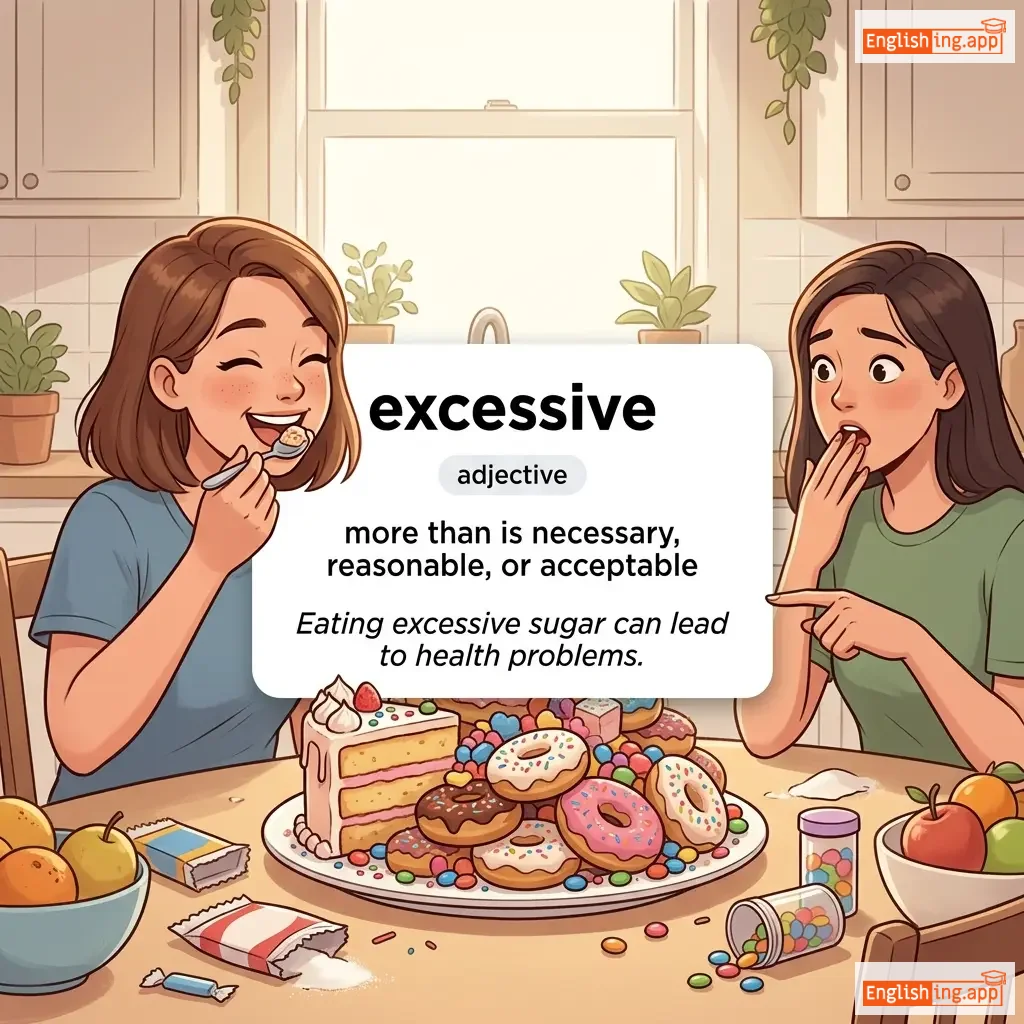
more than is necessary, reasonable, or acceptable
••••••
|
Eating excessive sugar can lead to health problems. |
过多的糖分摄入可能导致健康问题。
Guò duō de táng fèn shè rù kě néng dǎo zhì jiàn kāng wèn tí.
••••••
|
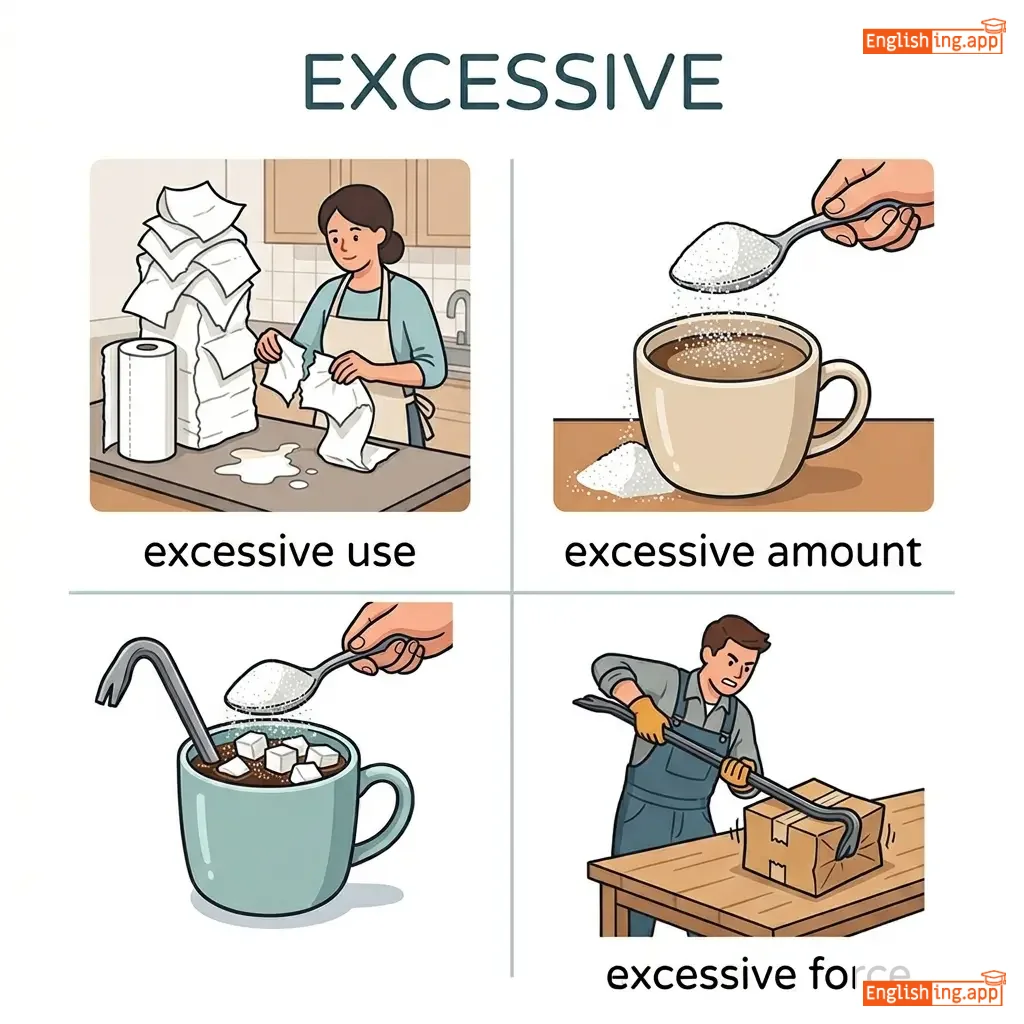
excessive force |
more physical power or effort than necessary
••••••
|
过度的力量
guò dù de lì liàng
••••••
|
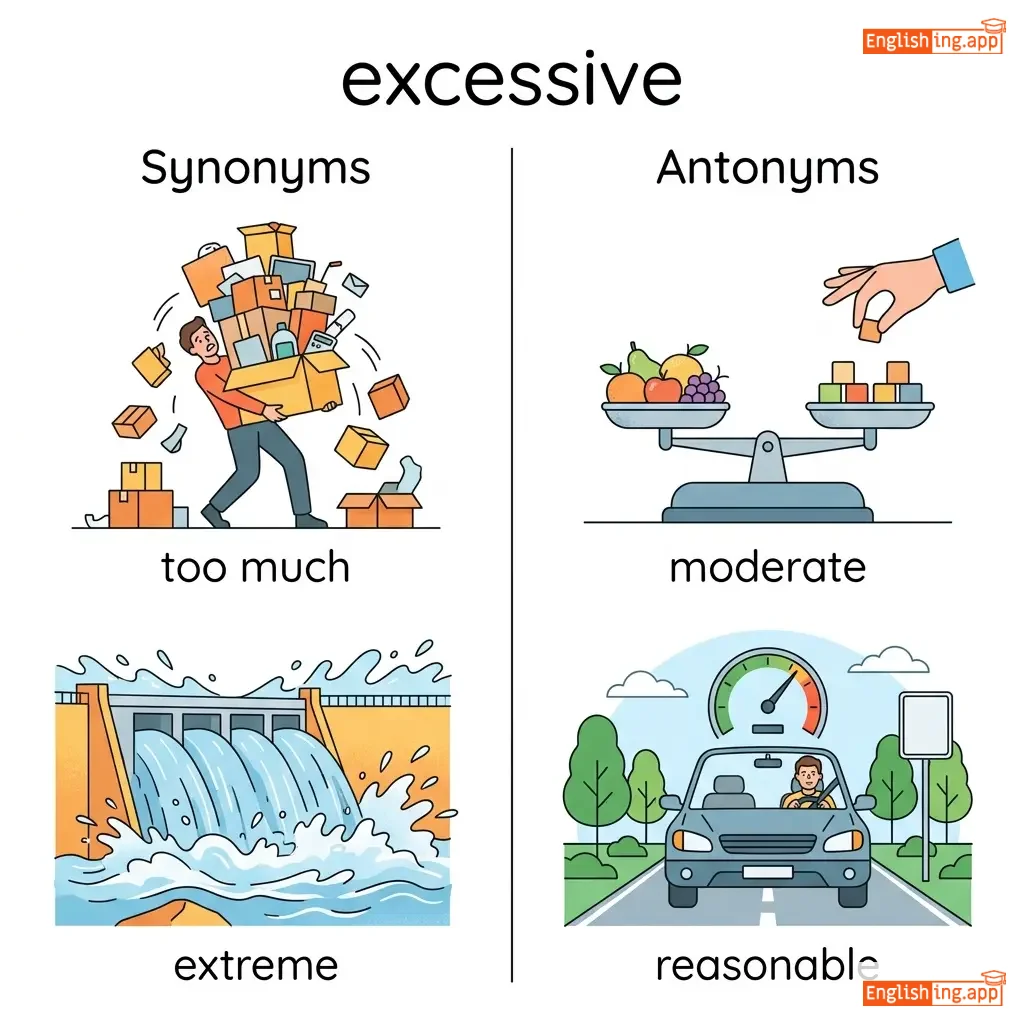
too much, extreme, unreasonable, extravagant, overdone
••••••
|
moderate, reasonable, limited
••••••
|
excessive use, excessive amount, excessive force, excessive cost
••••••
|
过度 = Excess意味着更多, 所以它是过度的!
••••••
|
|
🔄
••••••
|
/ɪksˈtʃeɪndʒ/
verb
(ɛksʧeindʒ)
••••••
|


|
交换
jiaohuan
••••••
|
exchanged
ɛksʧeindʒd
••••••
|
exchanged
ɛksʧeindʒd
••••••
|
exchanges
ɛksʧeindʒes
••••••
|
exchanging
ɛksʧeindʒing
••••••
|
To give something and receive something in return.
••••••
|
They exchanged gifts during the festival.
他们在节日期间交换了礼物。
••••••
|
他们在节日期间交换了礼物。
Tāmen zài jiérì qījiān jiāohuànle lǐwù.
••••••
|
exchange views
交换意见
••••••
|
to share opinions or ideas
••••••
|
交换意见
jiāohuàn yìjiàn
••••••
|
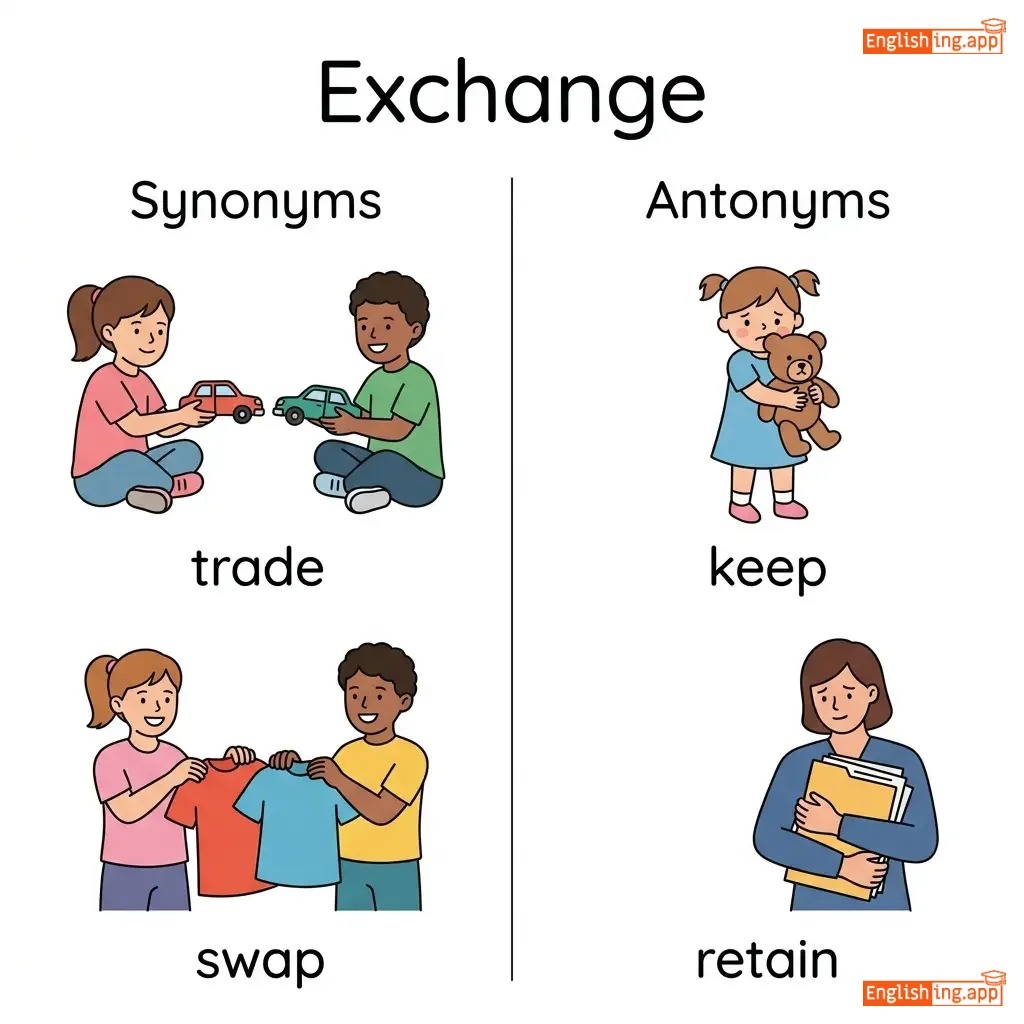
trade, swap, barter, interchange, replace
••••••
|
keep, retain
••••••
|
exchange ideas, exchange gifts, exchange money, exchange information
••••••
|
Exchange 是 '交换' — 改变事物的地方。
••••••
|
|
🤩
••••••
|
/ɪkˈsaɪt/
verb
(yīkèsàitè)
••••••
|
- •••••• |
使兴奋
shǐ xīngfèn
••••••
|
excited
yīkèsàitèd
••••••
|
excited
yīkèsàitèd
••••••
|
excites
yīkèsàits
••••••
|
exciting
yīkèsàitíng
••••••
|
to cause strong feelings of enthusiasm or eagerness
••••••
|
The idea of traveling abroad excites her.
出国旅行的想法让她感到兴奋。
••••••
|
出国旅行的想法让她感到兴奋。
Chūguó lǚxíng de xiǎngfǎ ràng tā gǎndào xīngfèn.
••••••
|
get excited
变得兴奋
••••••
|
to become enthusiastic or thrilled
••••••
|
变得兴奋
biàn dé xīngfèn
••••••
|
thrill, stimulate, arouse, energize
••••••
|
calm, bore, depress
••••••
|
excite interest, excite curiosity, excite passion, excite emotions
••••••
|
Excite: 想像你出国旅行时会感到兴奋!
••••••
|
|
🤩
••••••
|
/ɪkˈsaɪtɪd/
adjective
(ɪkˈsɑɪtɪd)
••••••
|
- •••••• |
兴奋的
xīngfèn de
••••••
|
- •••••• | - •••••• | - •••••• | - •••••• |
very enthusiastic and eager about something
••••••
|
The children were excited to open their presents. |
孩子们迫不及待地打开了他们的礼物。
Háizimen pò bù jí dài de dǎkāi le tāmen de lǐwù.
••••••
|
get excited about |
to become enthusiastic or eager about something
••••••
|
对某事感到兴奋
duì mǒu shì gǎndào xīngfèn
••••••
|
thrilled, delighted, enthusiastic, eager, joyful
••••••
|
bored, indifferent, calm
••••••
|
feel excited, get excited, excited about, excited to see
••••••
|
Excited 意思是 ‘兴奋的’,就像你期待着一个令人兴奋的时刻。
••••••
|
|
🎉
••••••
|
/ɪkˈsaɪtmənt/
noun
(èksàitmént)
••••••
|
- •••••• |
兴奋
xīngfèn
••••••
|
- •••••• | - •••••• | - •••••• | - •••••• |
a feeling of great enthusiasm and eagerness
••••••
|
There was a lot of excitement before the concert began. |
音乐会开始前有很多兴奋。
Yīnyuè huì kāishǐ qián yǒu hěn duō xīngfèn.
••••••
|
in a state of excitement |
feeling or showing strong enthusiasm or agitation
••••••
|
处于兴奋状态
chǔyú xīngfèn zhuàngtài
••••••
|
thrill, joy, enthusiasm, eagerness, delight
••••••
|
boredom, calm, indifference
••••••
|
feel excitement, great excitement, cause excitement, full of excitement
••••••
|
Excitement在中文里是兴奋——等待音乐会时的激动!
••••••
|
|
🎉
••••••
|
/ɪkˈsaɪtɪŋ/
adjective
(激动人心的)
••••••
|


|
令人兴奋的
lìng rén xīngfèn de
••••••
|
- •••••• | - •••••• | - •••••• | - •••••• |
causing feelings of enthusiasm and eagerness; thrilling
••••••
|
The roller coaster ride was very exciting and thrilling. |
过山车非常令人兴奋和刺激。
guò shān chē fēicháng lìng rén xīngfèn hé cìjī.
••••••
|
- •••••• | - •••••• | - •••••• |
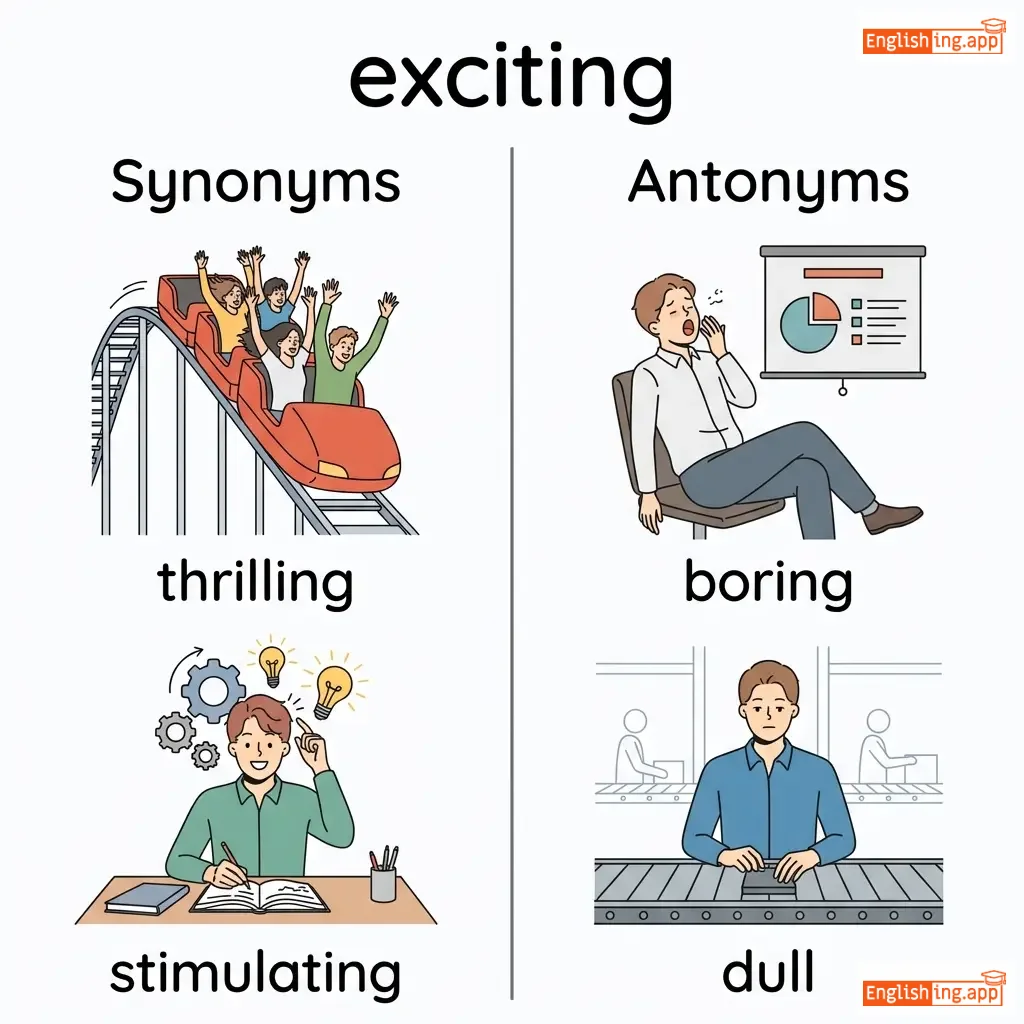
thrilling, stimulating, exhilarating, electrifying
••••••
|
boring, dull, tedious, uninteresting
••••••
|
exciting news, exciting adventure, exciting opportunity
••••••
|
让人兴奋的roller coaster,像梦想一样激动人心
••••••
|
|
🚫
••••••
|
/ɪkˈskluːd/
verb
(īksklúd)
••••••
|
- •••••• |
排除
paichu
••••••
|
excluded
īksklúd-ed
••••••
|
excluded
īksklúd-ed
••••••
|
excludes
īksklúd-z
••••••
|
excluding
īksklúd-ing
••••••
|
To deliberately leave out or prevent someone or something from being included.
••••••
|
The list excludes temporary workers.
列表排除临时工。
••••••
|
该列表排除了临时工。
Gāi lièbiǎo páichúle línshí gōng.
••••••
|
exclude from consideration
排除考虑范围
••••••
|
To not take something into account.
••••••
|
排除考虑
páichú kǎolǜ
••••••
|
omit, ban, reject, prevent, bar
••••••
|
include, admit, accept
••••••
|
exclude someone, exclude possibility, exclude group
••••••
|
Exclude意味着EXit + 包括否–意为排除外部。
••••••
|
|
❌
••••••
|
/ɪkˈskluːʒən/
noun
(ɪksˈkluːʒən)
••••••
|
- •••••• |
排斥
paichi
••••••
|
- •••••• | - •••••• | - •••••• | - •••••• |
The process or state of being left out or denied access.
••••••
|
The policy led to the exclusion of certain groups. |
该政策导致某些群体被排斥。
Gai zhengce daozhi moxie qunti bei paichi.
••••••
|
social exclusion |
The act of preventing certain people from participating in society.
••••••
|
社会排斥
shehui paichi
••••••
|
banishment, rejection, omission, prohibition, segregation
••••••
|
inclusion, acceptance, admission
••••••
|
exclusion policy, exclusion zone, social exclusion
••••••
|
排斥 = 出口 + 结论
••••••
|
|
🚪
••••••
|
/ɪkˈskluːsɪv/
adjective
(独家)
••••••
|
- •••••• |
仅限于特定的人、团体或区域;不与他人共享
jǐn xiàn yú tèdìng de rén, tuántǐ huò qūyù; bù yǔ tārén gòngxiǎng
••••••
|
- •••••• | - •••••• | - •••••• | - •••••• |
restricted to a particular person, group, or area; not shared with others
••••••
|
The hotel offers exclusive access to a private beach. |
酒店提供专属通往私人海滩的通道。
Jiǔdiàn tígōng zhuānshǔ tōngwǎng sīrén hǎitān de tōngdào.
••••••
|
exclusive club |
a private club open only to select members
••••••
|
独家俱乐部
dújiā jùlèbù
••••••
|
restricted, limited, private, elite, unique
••••••
|
inclusive, common, public
••••••
|
exclusive interview, exclusive offer, exclusive rights, exclusive access
••••••
|
独家就像Ex (Ex) 只有你能获得线索 (clues)。
••••••
|
|
🔒
••••••
|
/ɪkˈskluːsɪvli/
adverb
(ɪkˈskluːsɪvli)
••••••
|
- •••••• |
专门
zhuānmén
••••••
|
- •••••• | - •••••• | - •••••• | - •••••• |
only; not shared with others
••••••
|
This service is available exclusively to premium members. |
此服务仅限于高级会员。
Cǐ fúwù jǐn xiàn yú gāojí huìyuán.
••••••
|
- •••••• | - •••••• | - •••••• |
solely, only, entirely, uniquely, purely
••••••
|
jointly, commonly, generally
••••••
|
exclusively for, available exclusively, exclusively designed, exclusively produced
••••••
|
专门 - 仅为你而设!
••••••
|
|
🙏
••••••
|
/ɪkˈskjuːz/
verb
(原谅)
••••••
|
- •••••• |
原谅, 借口
yuánliàng, jièkǒu
••••••
|
excused
原谅了
••••••
|
excused
原谅了
••••••
|
excuses
原谅
••••••
|
excusing
原谅
••••••
|
to forgive someone for doing something wrong or to justify an action
••••••
|
Please excuse my lateness; there was heavy traffic.
请原谅我迟到;有很多交通。
••••••
|
请原谅我迟到;有很多交通。
Qǐng yuánliàng wǒ chídào; yǒu hěn duō jiāotōng.
••••••
|
make an excuse
找借口
••••••
|
to give a reason to avoid blame or responsibility
••••••
|
找借口
zhǎo jièkǒu
••••••
|
forgive, pardon, justify, explain, overlook
••••••
|
blame, accuse, condemn
••••••
|
excuse me, make an excuse, good excuse, poor excuse
••••••
|
原谅 – 原谅我,借口太多!
••••••
|
|
✅
••••••
|
/ˈɛksɪkjuːt/
verb
(èksìkè yùt)
••••••
|


|
执行
zhíxíng
••••••
|
executed
èksìkè yùtèd
••••••
|
executed
èksìkè yùtèd
••••••
|
executes
èksìkè yùts
••••••
|
executing
èksìkè yùtīng
••••••
|
To carry out a plan, order, or action; to perform or put into effect.
••••••
|
The company plans to execute its new strategy next year.
公司计划在明年执行其新战略。
••••••
|
公司计划在明年执行其新战略。
Gōngsī jìhuà zài míngnián zhíxíng qí xīn zhànlüè.
••••••
|
execute a plan
执行计划
••••••
|
to put a plan into action
••••••
|
执行计划
zhíxíng jìhuà
••••••
|
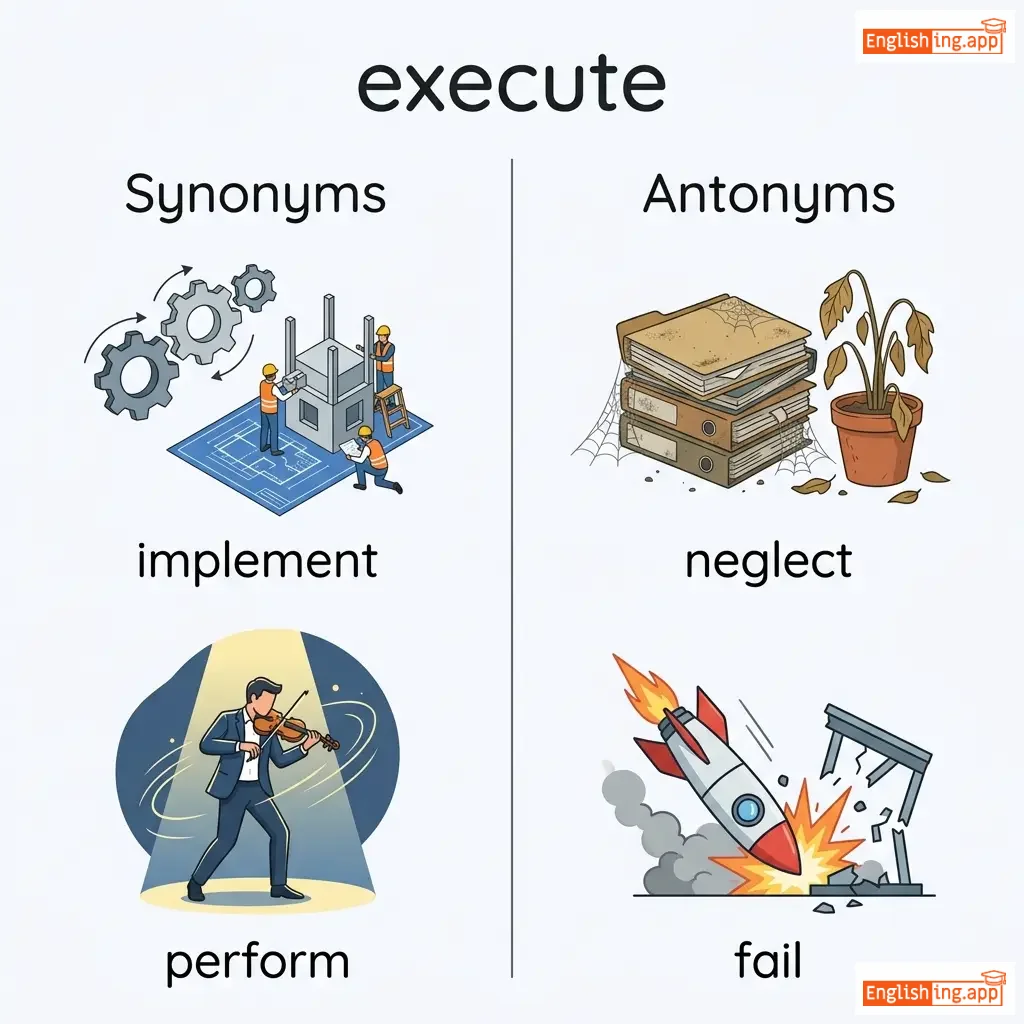
implement, perform, accomplish, enforce, carry out
••••••
|
neglect, fail, ignore
••••••
|
execute a plan, execute an order, execute a command, execute perfectly
••••••
|
Execute的意思就是把计划付诸实践,执行它。
••••••
|
|
⚙️
••••••
|
/ˌɛksɪˈkjuːʃən/
noun
(执行)
••••••
|
- •••••• |
执行,实施
zhíxíng, shíshī
••••••
|
- •••••• | - •••••• | - •••••• | - •••••• |
the act of carrying out a plan, order, or legal sentence
••••••
|
The success of a project depends on its proper execution. |
项目的成功取决于其正确的执行。
Xiàngmù de chénggōng qùjué yú qí zhèngquè de zhíxíng.
••••••
|
flawless execution |
perfect implementation without mistakes
••••••
|
无懈可击的执行
wúxièkějí de zhíxíng
••••••
|
implementation, performance, accomplishment, realization
••••••
|
failure, neglect, omission
••••••
|
execution plan, execution strategy, proper execution, flawless execution
••••••
|
Execution意味着完成任务 — 完美的完成意味着成功!
••••••
|
|
💼
••••••
|
/ɪɡˈzɛkjətɪv/
noun/adjective
(执行官)
••••••
|



|
执行官
zhíxíngguān
••••••
|
- •••••• | - •••••• | - •••••• | - •••••• |
A person with senior managerial responsibility in a business; relating to the execution of plans or laws.
••••••
|
She works as an executive in a multinational company.
她在一家跨国公司担任执行官。
••••••
|
她在一家跨国公司担任执行官。
Tā zài yījiā kuàguó gōngsī dānrèn zhíxíngguān.
••••••
|
executive decision
执行决策
••••••
|
a final decision made by a person in authority
••••••
|
执行决策
zhíxíng juécè
••••••
|
manager, administrator, director, officer, chief
••••••
|
employee, subordinate
••••••
|
executive officer, executive decision, executive position, executive power
••••••
|
执行官 = 执行重要决策的人
••••••
|
|
🏋️
••••••
|
/ˈɛksərsaɪz/
noun/verb
(锻炼)
••••••
|
|
锻炼
duànliàn
••••••
|
exercised
锻炼过
••••••
|
exercised
锻炼过
••••••
|
exercises
锻炼
••••••
|
exercising
锻炼中
••••••
|
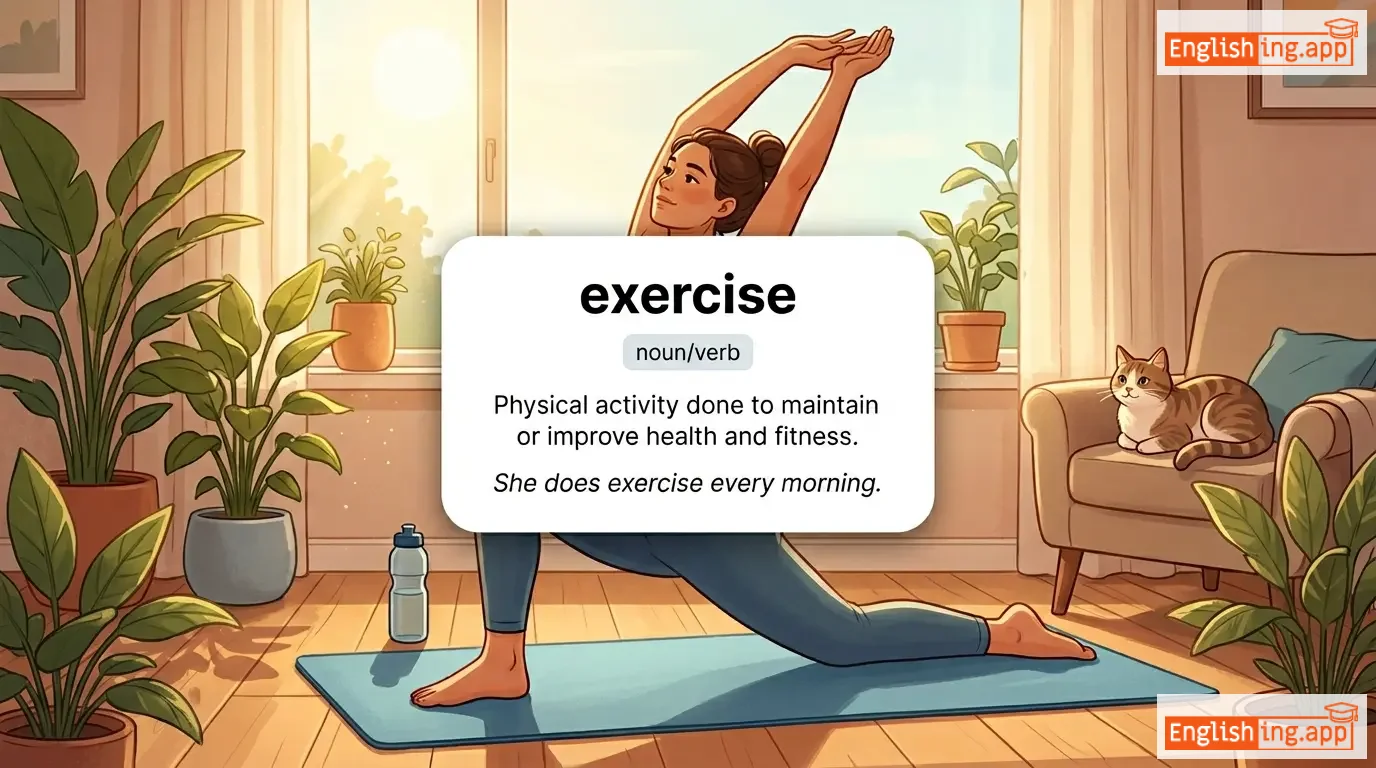
Physical activity done to maintain or improve health and fitness.
••••••
|
She does exercise every morning.
她每天早晨锻炼。
••••••
|
她每天早晨锻炼。
ta mei tian zao chen duan lian.
••••••
|
exercise control
进行控制
••••••
|
to use or apply control
••••••
|
实施控制
shishi kongzhi
••••••
|
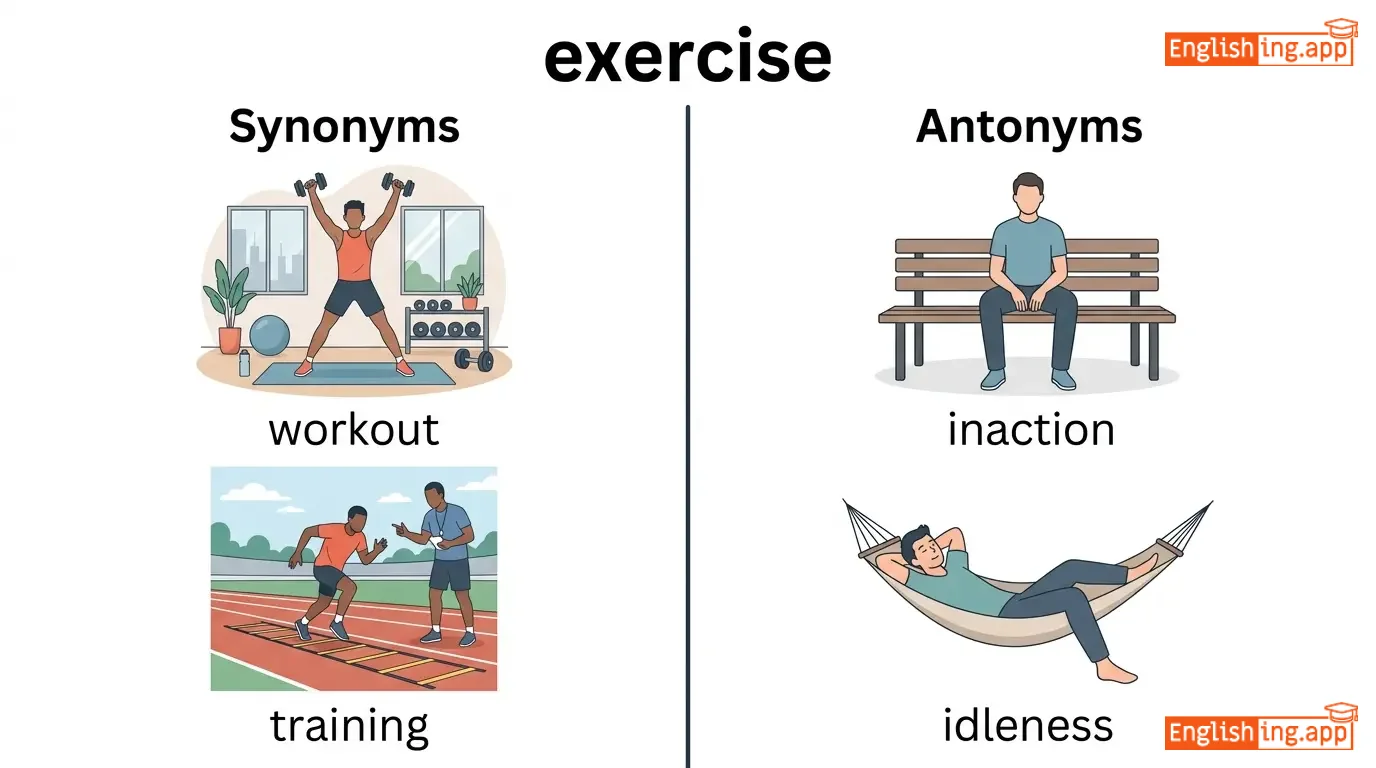
workout, training, practice, drill, activity
••••••
|
inaction, idleness
••••••
|
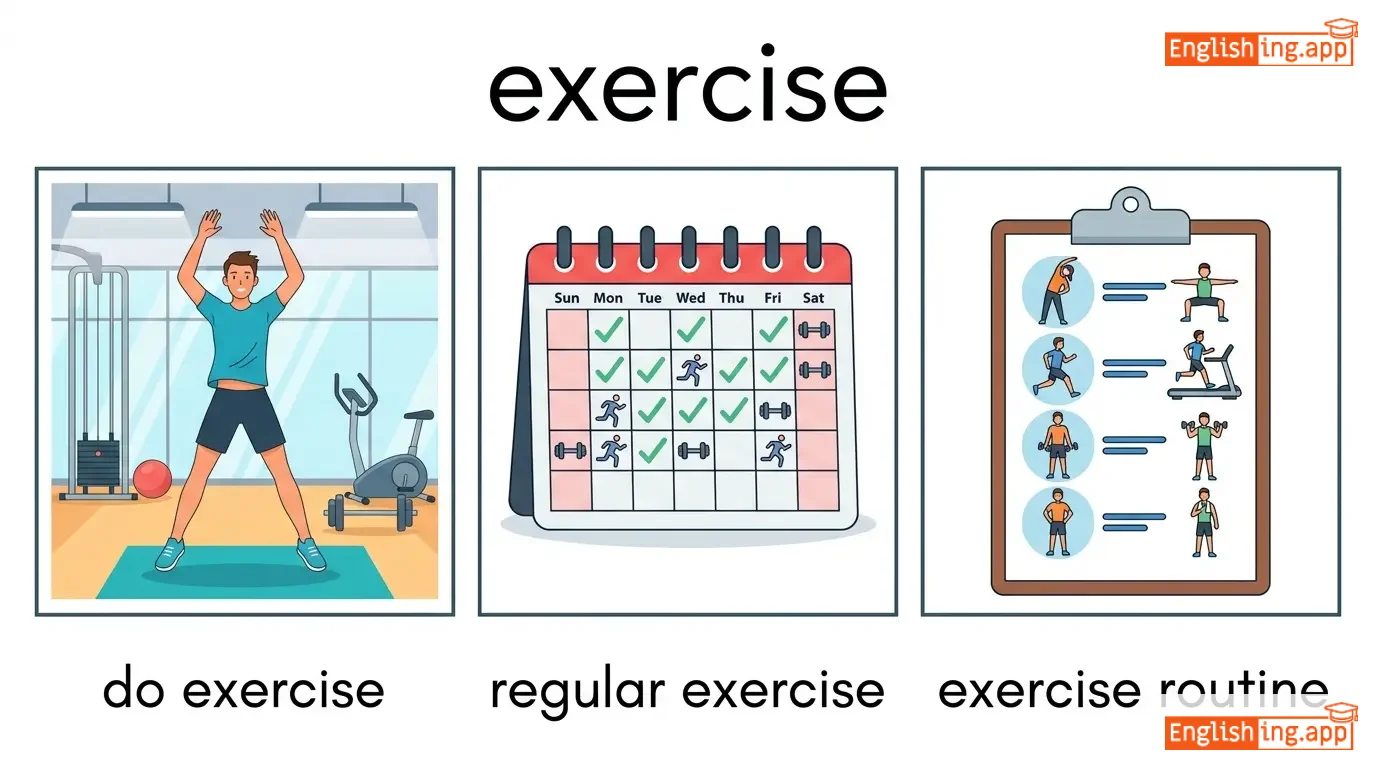
do exercise, regular exercise, exercise routine, exercise program
••••••
|
锻炼就是做锻炼 — 想象考试需要做锻炼才能通过!
••••••
|
|
💪
••••••
|
/ɪɡˈzɜːrt/
verb
(艾克萨特)
••••••
|

|
施加
shijia
••••••
|
exerted
艾克萨特德
••••••
|
exerted
艾克萨特德
••••••
|
exerts
艾克萨特斯
••••••
|
exerting
艾克萨特英
••••••
|
to apply effort, force, or influence
••••••
|
He had to exert himself to finish the project on time.
他必须努力工作才能按时完成项目。
••••••
|
他必须努力工作才能按时完成项目。
Tā bìxū nǔlì gōngzuò cáinéng ànshí wánchéng xiàngmù.
••••••
|
exert control
施加控制
••••••
|
to use power or influence over something or someone
••••••
|
施加控制
shijia kongzhi
••••••
|
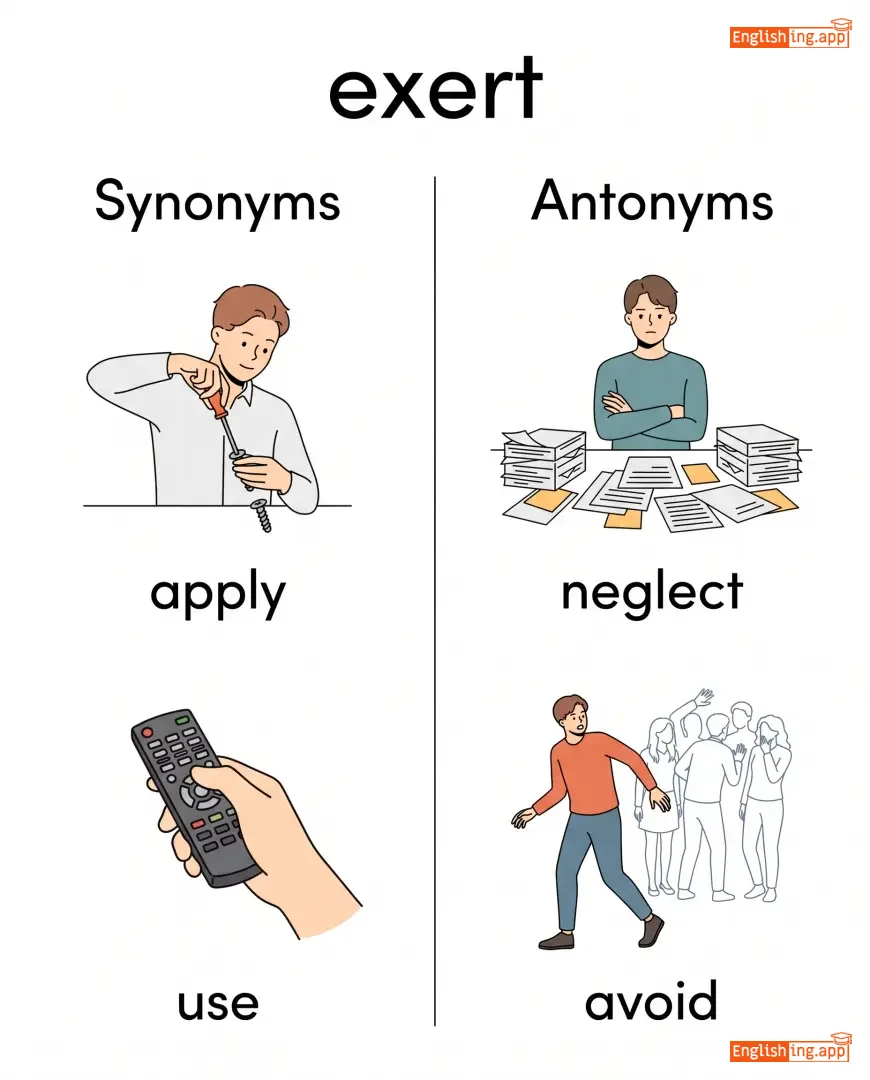
apply, use, exercise, employ, wield
••••••
|
neglect, avoid, ignore
••••••
|
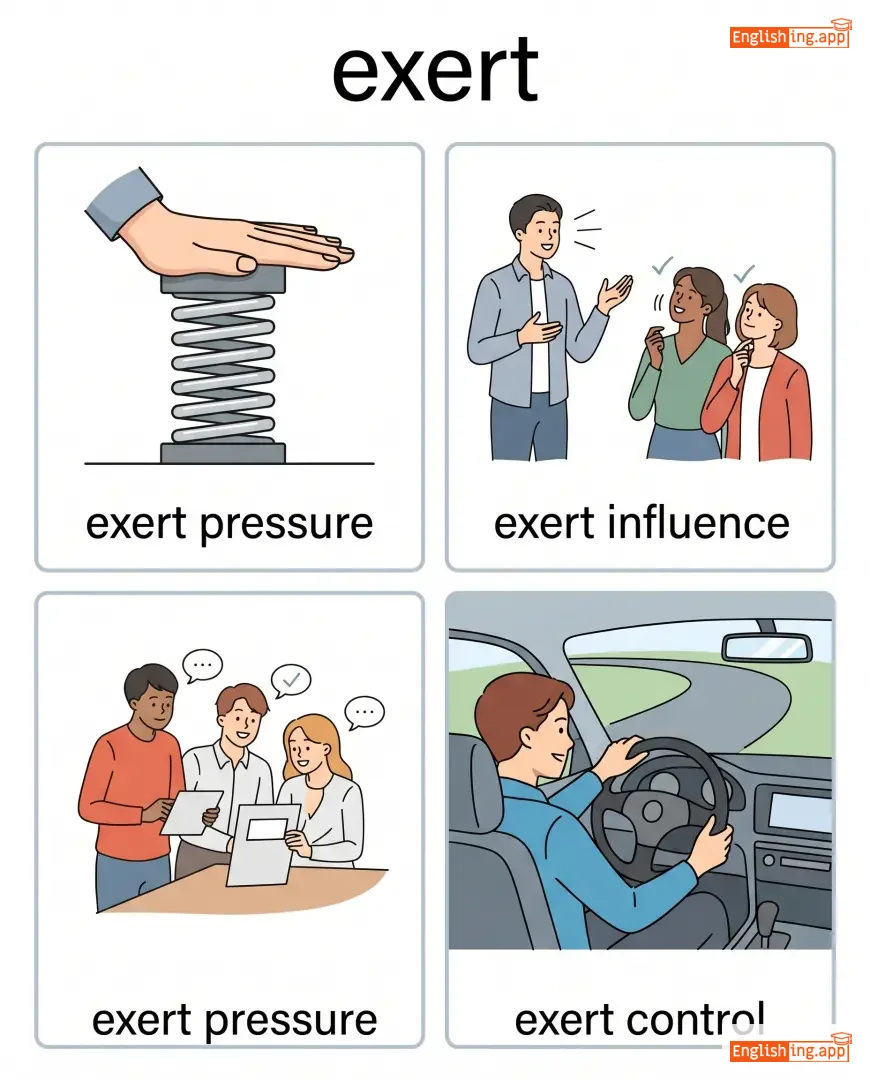
exert pressure, exert influence, exert control, exert effort
••••••
|
EXtra 努力, EXert 控制
••••••
|
|
🖼️
••••••
|
/ɪɡˈzɪbɪt/
verb/noun
(展出)
••••••
|
- •••••• |
展出
zhǎnchū
••••••
|
exhibited
展出
••••••
|
exhibited
展出
••••••
|
exhibits
展出
••••••
|
exhibiting
展出
••••••
|
To display or show publicly; something put on display.
••••••
|
The museum will exhibit ancient artifacts.
博物馆将展出古代文物。
••••••
|
博物馆将展出古代文物。
Bówùguǎn jiāng zhǎnchū gǔdài wénwù.
••••••
|
exhibit behavior
展出行为
••••••
|
to show a particular kind of behavior
••••••
|
展出行为
zhǎnchū xíngwéi
••••••
|
display, present, demonstrate, showcase, reveal
••••••
|
conceal, hide
••••••
|
exhibit art, exhibit talent, exhibit symptoms, exhibit courage
••••••
|
Exhibit 意味着展示 — 在考试中,学生们展示他们的紧张情绪。
••••••
|

