Получите неограниченный доступ ко всем словам с подпиской Pro
Обновить до ProПолучите неограниченный доступ ко всем предложениям с подпиской Pro
Обновить до Pro|
Эмодзи
|
Слово | Images | Перевод | Прошедшее | Причастие прошедшего времени | Третье лицо единственного числа | Герундий | Значение | Пример предложения | Перевод примера предложения | Пример выражения | Значение примера выражения | Перевод примера выражения | Синонимы | Антонимы | Коллокации | Мнемоника |
|---|---|---|---|---|---|---|---|---|---|---|---|---|---|---|---|---|---|
|
🧪
••••••
|
/ˈkemɪst/
noun
(кемист)
••••••
|
- •••••• |
химик; фармацевт
khimik; farmatsevt
••••••
|
- •••••• | - •••••• | - •••••• | - •••••• |
a scientist who studies chemistry; a person trained to prepare and dispense medicines
••••••
|
The chemist analyzed the sample to determine its composition.
Зэ кемист эналайзд зэ сэмпл ту дитёрмин итс композишн.
••••••
|
Химик проанализировал образец, чтобы определить его состав.
Khimik proanaliziroval obrazets chtoby opredelit ego sostav
••••••
|
- •••••• | - •••••• | - •••••• |
pharmacist, chemical scientist, analyst, apothecary, druggist
••••••
|
layperson, non-scientist
••••••
|
analytical chemist, organic chemist, research chemist, chemist shop
••••••
|
Chemist = химик—оба работают с химией
••••••
|
|
⚗️
••••••
|
/ˈkɛmɪstri/
noun
(khimistriy)
••••••
|
- •••••• |
химия
khimiya
••••••
|
- •••••• | - •••••• | - •••••• | - •••••• |
the branch of science that studies substances and their interactions; also the emotional connection between people
••••••
|
They have great chemistry and work well together. |
У них отличная химия, и они хорошо работают вместе.
U nikh otlichnaya khimiya, i oni khorosho rabotayut vmeste.
••••••
|
good chemistry |
a natural connection or attraction between people
••••••
|
химия между людьми
khimiya mezhdu lyud'mi
••••••
|
science, interaction, reaction, bond, connection
••••••
|
disconnection, separation
••••••
|
study chemistry, chemistry lab, good chemistry, organic chemistry
••••••
|
Химия — это связь, которая делает все проще. Хорошая химия — и отношения крепче!
••••••
|
|
💪
••••••
|
/tʃɛst/
noun
(чест)
••••••
|
- •••••• |
грудь
grud'
••••••
|
- •••••• | - •••••• | - •••••• | - •••••• |
the front part of the human body between the neck and the stomach
••••••
|
He felt a pain in his chest after running. |
Он почувствовал боль в груди после бега.
On pochuvstvoval bol' v grudi posle bega.
••••••
|
off your chest |
to talk about something that has been worrying you
••••••
|
снять камень с души
snyat' kamen' s dushi
••••••
|
thorax, breast, trunk, ribcage, torso
••••••
|
back, rear
••••••
|
chest pain, broad chest, chest muscles, chest infection
••••••
|
Chest означает грудь, 'Get it off your chest' означает снять камень с души.
••••••
|
|
🦷
••••••
|
/tʃuː/
verb
(хэппинесс)
••••••
|
- •••••• |
счастье
schastye
••••••
|
chewed
••••••
|
chewed
••••••
|
chews
••••••
|
chewing
••••••
|
to bite food into smaller pieces with your teeth before swallowing it
••••••
|
You should chew your food properly to help with digestion. |
Она не могла скрыть свое счастье, когда получила награду.
Ona ne mogla skryt' svoe schast'ye, kogda poluchila nagradu.
••••••
|
chew the fat |
to chat or talk in a friendly and informal way
••••••
|
поиск счастья
poisk schast'ya
••••••
|
munch, bite, gnaw, chomp, grind
••••••
|
swallow, gulp
••••••
|
chew gum, chew slowly, chew food, chew thoroughly
••••••
|
Счастье как солнце — его трудно скрыть!
••••••
|
|
🐔
••••••
|
/ˈtʃɪkɪn/
noun
(чикен)
••••••
|
- •••••• |
курица
kuritsa
••••••
|
- •••••• | - •••••• | - •••••• | - •••••• |
a domestic bird kept for its eggs or meat
••••••
|
We had fried chicken for dinner.
Мы ели жареную курицу на ужин.
••••••
|
Мы ели жареную курицу на ужин.
My yeli zharenuyu kuritsu na uzhin.
••••••
|
chicken out
сдаться от страха
••••••
|
to decide not to do something because of fear
••••••
|
сдаться от страха
sdatsya ot strakha
••••••
|
hen, fowl, poultry, rooster, chick
••••••
|
bravery, courage
••••••
|
fried chicken, roast chicken, chicken soup, chicken farm
••••••
|
Chicken означает курица, но 'chicken out' означает сдаться от страха.
••••••
|
|
👑
••••••
|
/tʃiːf/
noun
(chif)
••••••
|
- •••••• |
шеф
shef
••••••
|
- •••••• | - •••••• | - •••••• | - •••••• |
a leader or person in charge of a group or organization
••••••
|
The chief of the village made an important decision.
Шеф деревни принял важное решение.
••••••
|
Шеф деревни принял важное решение.
Shef derevni prinyal vazhnoe reshenie.
••••••
|
chief among
шеф среди
••••••
|
the most important or significant among a group
••••••
|
самый важный
samyi vazhnyi
••••••
|
leader, head, boss, commander, captain
••••••
|
follower, subordinate
••••••
|
chief executive, tribal chief, chief complaint, chief reason
••••••
|
Chief означает шеф, 👑 самый главный.
••••••
|
|
👶
••••••
|
/tʃaɪld/
noun
(чайлд)
••••••
|
- •••••• |
ребёнок
rebyonok
••••••
|
- •••••• | - •••••• | - •••••• | - •••••• |
a young human being below the age of puberty or below the legal age of majority
••••••
|
The child played happily in the park.
Ребёнок играл радостно в парке.
••••••
|
Ребёнок играл радостно в парке.
Rebyonok igral radostno v parke.
••••••
|
child's play
Детская игра
••••••
|
something that is very easy to do
••••••
|
Детская игра
Detskaya igra
••••••
|
kid, youngster, minor, juvenile, toddler
••••••
|
adult, grown-up
••••••
|
child care, child development, child protection, child labor
••••••
|
Child означает ребёнок 👶, играя в 'детскую игру', легко для ребёнка.
••••••
|
|
🧒
••••••
|
/ˈtʃaɪldhʊd/
noun
(tʃaɪldhʊd)
••••••
|
- •••••• |
детство
detstvo
••••••
|
- •••••• | - •••••• | - •••••• | - •••••• |
the period of being a child
••••••
|
She spent her childhood in a small village.
Она провела своё детство в маленькой деревне.
••••••
|
Она провела своё детство в маленькой деревне.
Ona provela svoe detstvo v malen'koy derevne.
••••••
|
childhood friend
друзья детства
••••••
|
a friend someone has had since they were children
••••••
|
друзья детства
druz'ya detstva
••••••
|
infancy, youth, boyhood, girlhood
••••••
|
adulthood, maturity
••••••
|
happy childhood, early childhood, childhood memory, childhood friend
••••••
|
Child + hood = детство (состояние)
••••••
|
|
❄️
••••••
|
/tʃɪl/
verb
••••••
|
- •••••• | - •••••• |
chilled
••••••
|
chilled
••••••
|
chills
••••••
|
chilling
••••••
|
to make something cold or to relax and take it easy
••••••
|
We decided to chill at home after a long day. |
- •••••• |
chill out |
to relax completely or calm down
••••••
|
- •••••• |
relax, cool, freeze, unwind, calm
••••••
|
heat, stress
••••••
|
chill out, chill weather, chill drinks, chill vibe
••••••
|
No •••••• |
|
🙂
••••••
|
/tʃɪn/
noun
(чин)
••••••
|
- •••••• |
подбородок
podborodok
••••••
|
- •••••• | - •••••• | - •••••• | - •••••• |
the part of the face below the mouth
••••••
|
He rested his chin on his hand while thinking. |
Он положил подбородок на руку, думая.
On polozhil podborodok na ruku, dumaya.
••••••
|
keep your chin up |
to remain cheerful in a difficult situation
••••••
|
держи подбородок высоко
derzhi podborodok vysoko
••••••
|
jaw, face, cheekbone
••••••
|
n/a
••••••
|
double chin, chin up, strong chin, square chin
••••••
|
Подбородок под ртом, легко запомнить!
••••••
|
|
🥢
••••••
|
/tʃaɪˈniːz/
adjective, noun
(чайниз)
••••••
|
- •••••• |
китайский
kitayskiy
••••••
|
- •••••• | - •••••• | - •••••• | - •••••• |
relating to China, its people, or its language
••••••
|
We went to a Chinese restaurant last night. |
Мы пошли в китайский ресторан прошлой ночью.
My poshli v kitayskiy restoran proshloy noch'yu.
••••••
|
Chinese whispers |
a game where a message is passed along and distorted
••••••
|
китайские шепотки
kitayskiye shepotki
••••••
|
Mandarin, Cantonese, Asian, Oriental
••••••
|
non-Chinese, Western
••••••
|
Chinese culture, Chinese language, Chinese food, Chinese history
••••••
|
Китайская еда = палочки 🥢 Запомнишь!
••••••
|
|
🍟
••••••
|
/tʃɪp/
noun, verb
••••••
|
- •••••• | - •••••• |
chipped
••••••
|
chipped
••••••
|
chips
••••••
|
chipping
••••••
|
A small piece broken off from something; or to cut or break a small piece from something.
••••••
|
He accidentally chipped the edge of the table. |
- •••••• |
a chip on one’s shoulder |
Holding a grudge or feeling resentment about something.
••••••
|
- •••••• |
fragment, splinter, shard, flake, sliver
••••••
|
whole, intact, complete
••••••
|
potato chip, wood chip, chip away, chip in
••••••
|
No •••••• |
|
🍫
••••••
|
/ˈtʃɒklət/
noun
(шоколад)
••••••
|
- •••••• |
шоколад
shokolad
••••••
|
- •••••• | - •••••• | - •••••• | - •••••• |
a sweet, brown food made from roasted cocoa beans
••••••
|
She bought a bar of chocolate from the store.
Она купила плитку шоколада в магазине.
••••••
|
Она купила плитку шоколада в магазине.
Ona kupila plitku shokolada v magazine.
••••••
|
like a kid in a candy store
как ребёнок в магазине конфет
••••••
|
very excited or happy about something
••••••
|
очень взволнован или счастлив из-за чего-то
ochen' vzvolnovan ili schastliv iz-za chego-to
••••••
|
cocoa, candy, sweet, confectionery
••••••
|
bitter, unsweetened
••••••
|
chocolate cake, chocolate bar, dark chocolate, hot chocolate
••••••
|
Шоколад - это всегда радость 🍫, сладкое удовольствие.
••••••
|
|
✅
••••••
|
/tʃɔɪs/
noun
(чойс)
••••••
|

|
выбор
vybor
••••••
|
- •••••• | - •••••• | - •••••• | - •••••• |
An act of selecting between two or more possibilities.
••••••
|
She had to make a difficult choice between two jobs. |
Ей пришлось сделать трудный выбор между двумя работами.
Yey prishlos' sdelat' trudnyy vybor mezhdu dvumya rabotami.
••••••
|
by choice |
Voluntarily or willingly.
••••••
|
по выбору
po vyboru
••••••
|
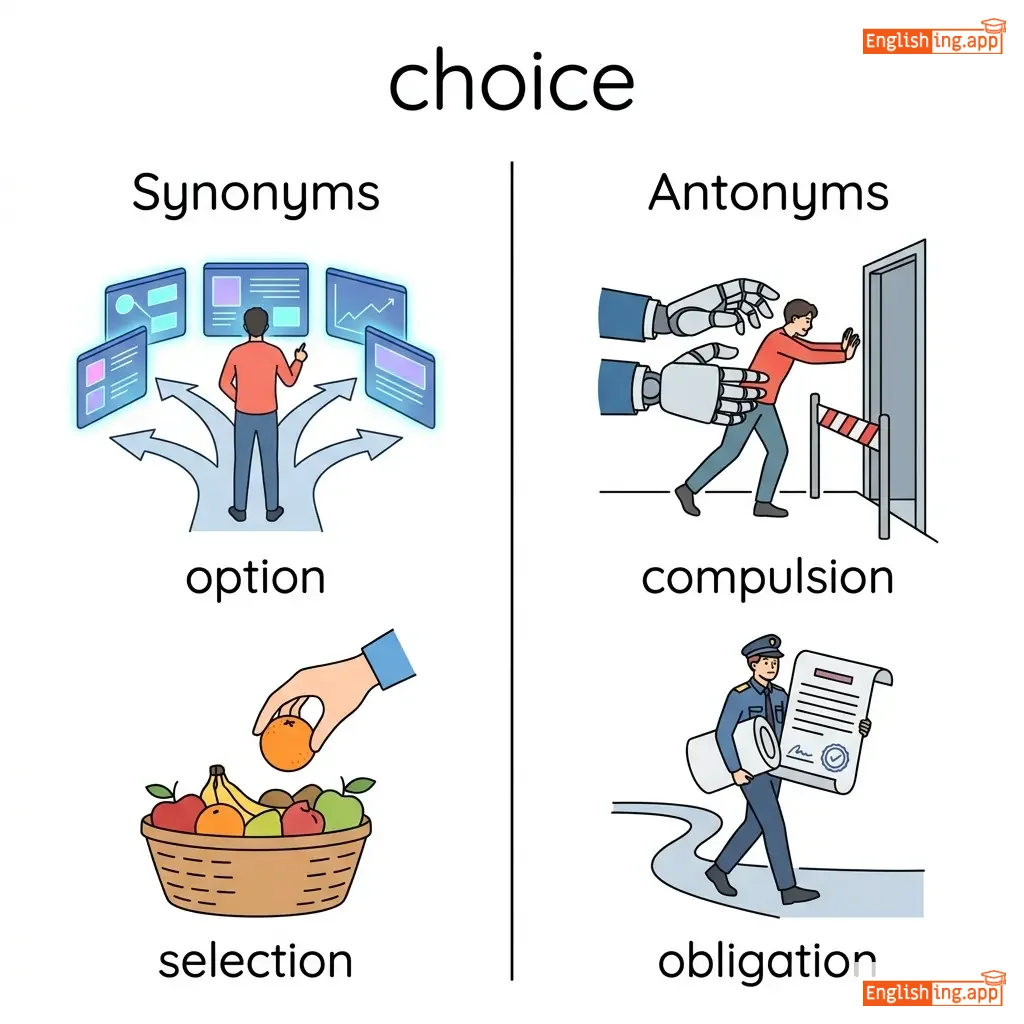
option, selection, decision, preference, alternative
••••••
|
compulsion, obligation, necessity
••••••
|
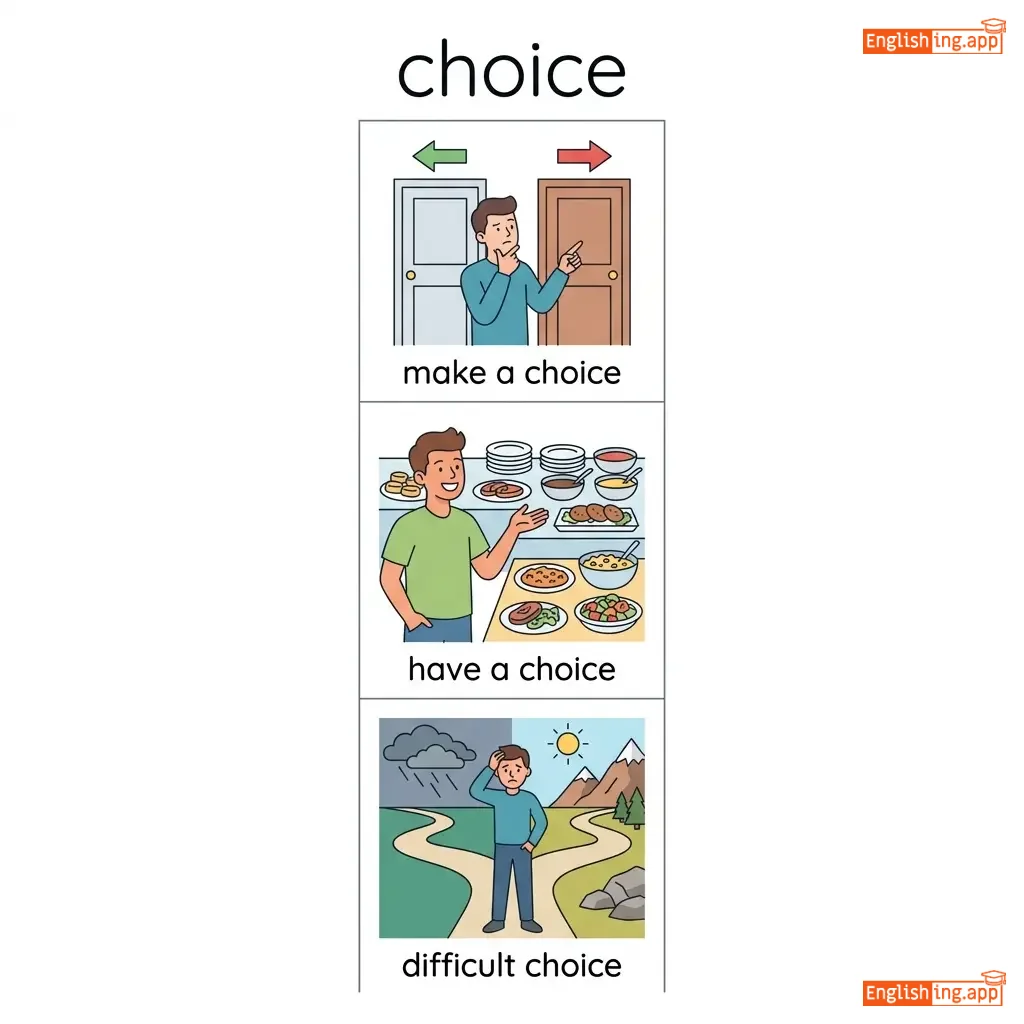
make a choice, have a choice, difficult choice, free choice
••••••
|
Choice означает выбор. Выбирайте всегда по своему выбору и воле.
••••••
|
|
🎶
••••••
|
/ˈkwaɪər/
noun
(kvaier)
••••••
|
- •••••• |
хор
khor
••••••
|
- •••••• | - •••••• | - •••••• | - •••••• |
An organized group of singers, typically performing in church services or concerts.
••••••
|
The choir sang beautifully during the ceremony. |
Хор пел прекрасно во время церемонии.
Khor pel prekrasno vo vremya tseremonii.
••••••
|
angelic choir |
A choir whose singing is compared to the sound of angels.
••••••
|
ангельский хор
angelskiy khor
••••••
|
chorus, ensemble, singers, vocal group
••••••
|
solo, silence
••••••
|
church choir, school choir, join a choir, choir practice
••••••
|
Choir означает хор, как в церкви, где много людей поют вместе.
••••••
|
|
✅
••••••
|
/tʃuːz/
verb
••••••
|

|
- •••••• |
chose
••••••
|
chosen
••••••
|
chooses
••••••
|
choosing
••••••
|
to select one option from a range of possibilities
••••••
|
You must choose the right path for your future. |
- •••••• |
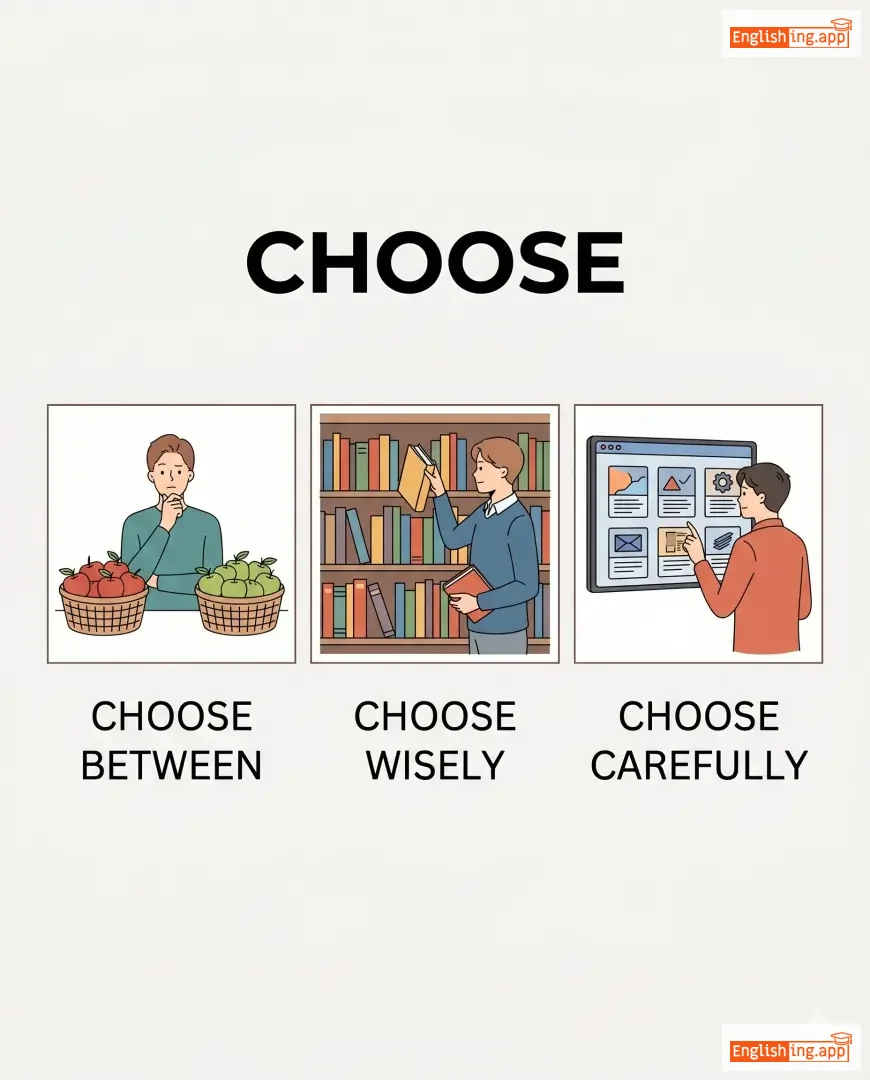
choose wisely |
make a decision carefully and thoughtfully
••••••
|
- •••••• |
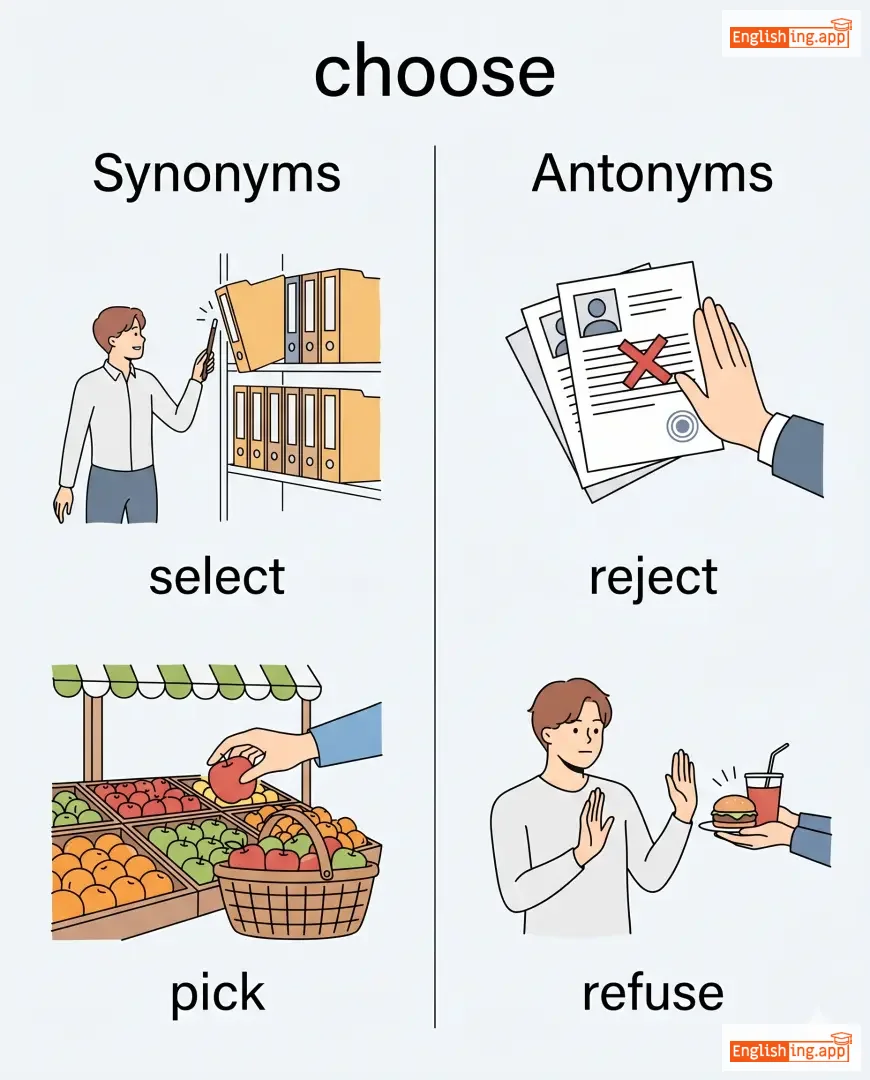
select, pick, decide, opt, elect
••••••
|
reject, refuse, ignore
••••••
|
choose between, choose wisely, choose carefully, choose from
••••••
|
No •••••• |
|
🔪
••••••
|
/tʃɒp/
verb
(чоп)
••••••
|
|
рубить
rubit'
••••••
|
chopped
••••••
|
chopped
••••••
|
chops
••••••
|
chopping
••••••
|
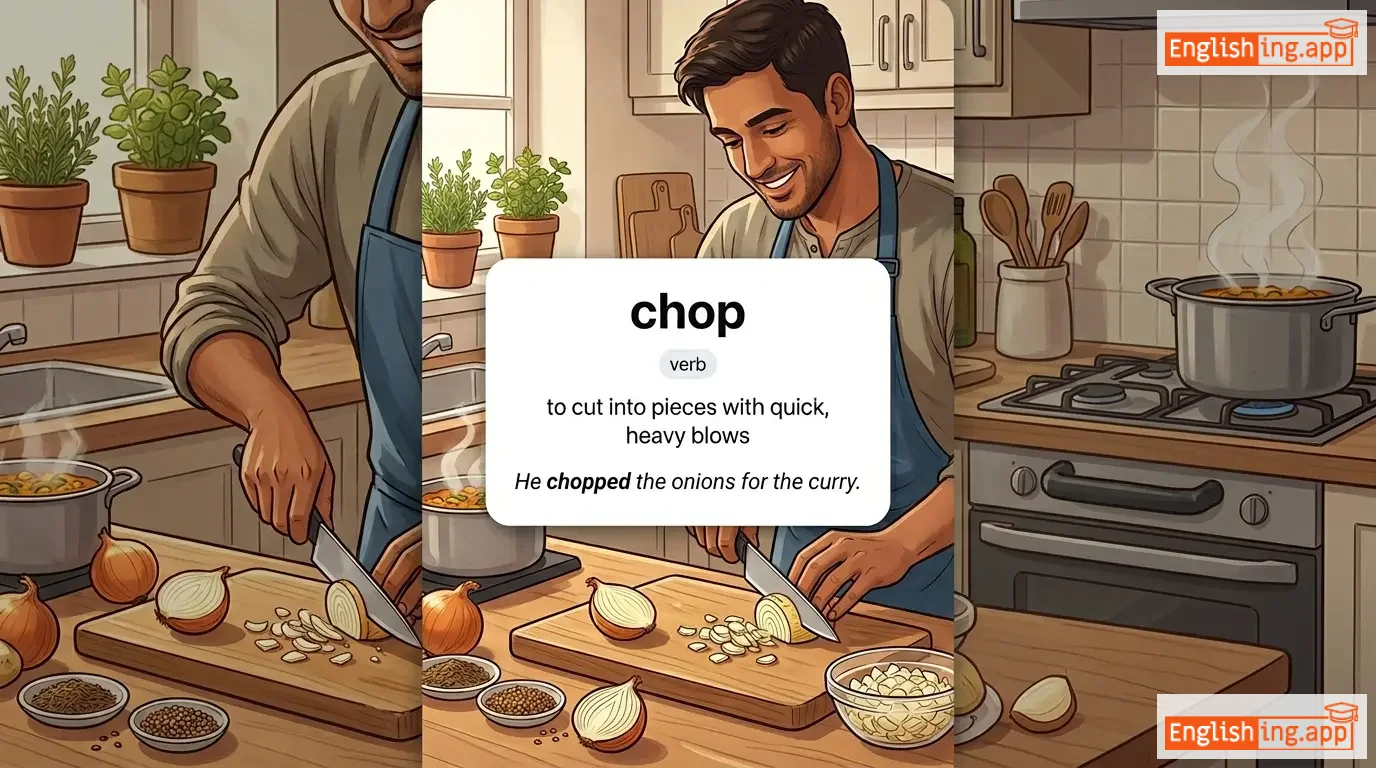
to cut into pieces with quick, heavy blows
••••••
|
He chopped the onions for the curry. |
Он порезал лук для карри.
On porezal luk dlya karri.
••••••
|
chop and change |
to keep changing one's mind or decisions
••••••
|
постоянно менять мнение
postoyanno menyat' mneniye
••••••
|
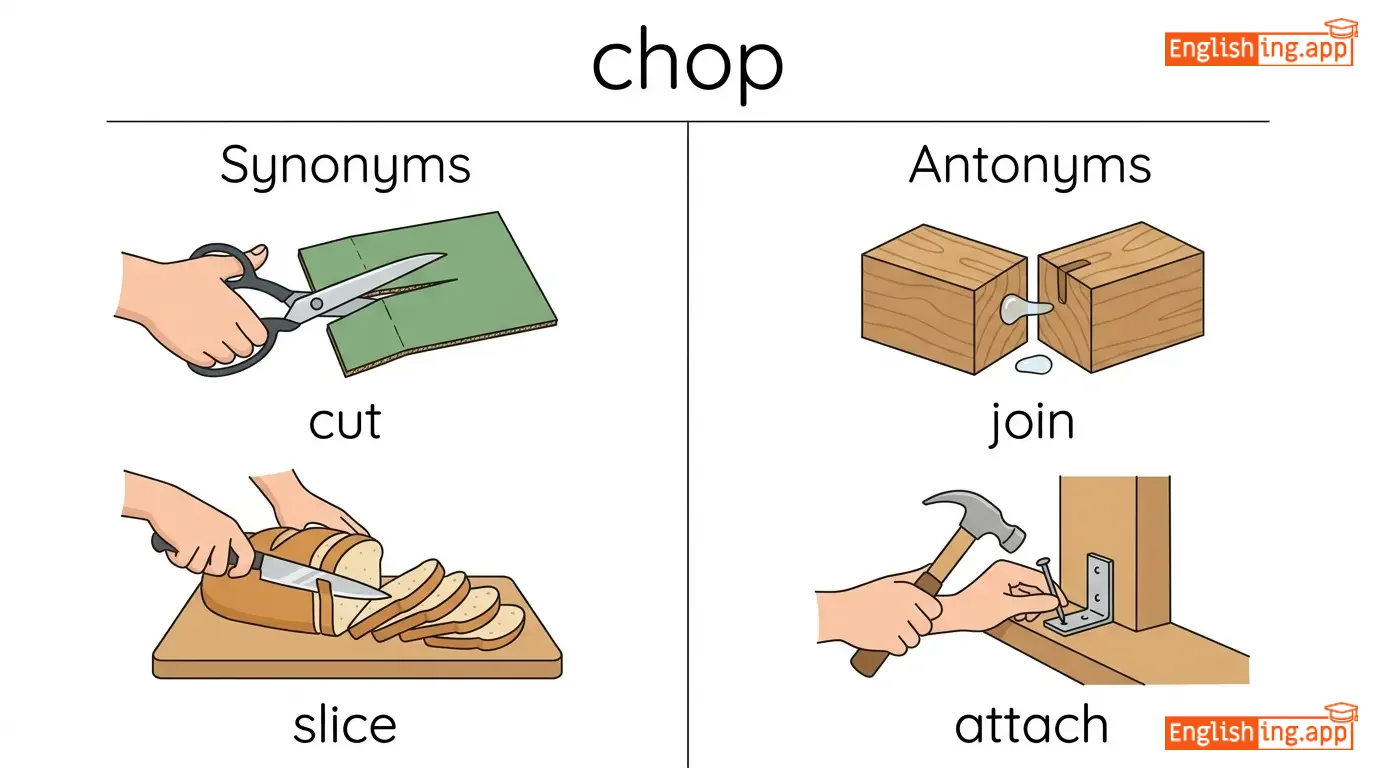
cut, slice, hack, cleave, dice
••••••
|
join, attach, connect
••••••
|
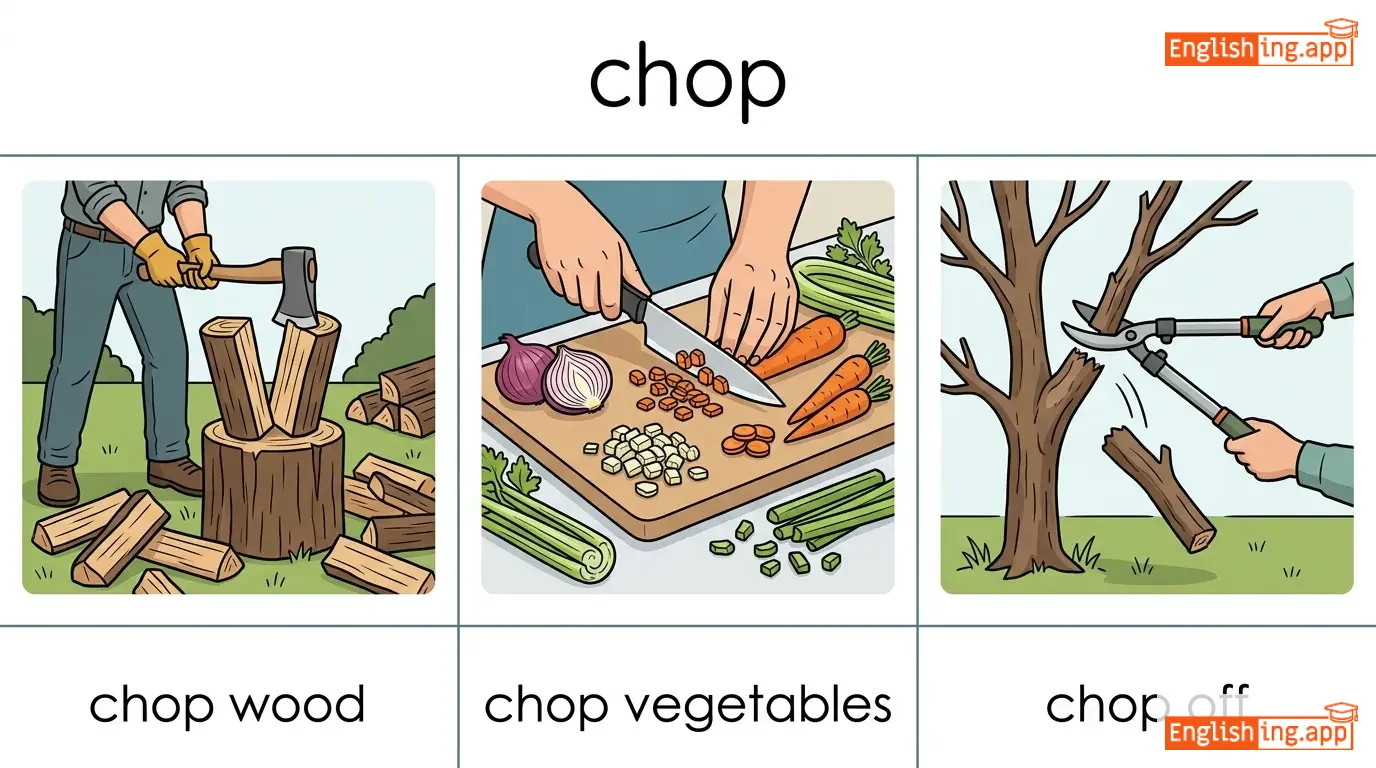
chop wood, chop vegetables, chop off, chop into pieces
••••••
|
Chop означает рубить или постоянно менять решение.
••••••
|
|
✝️
••••••
|
/ˈkrɪstʃən/
noun, adjective
(khris-tee-an)
••••••
|
- •••••• |
христианин
khristianin
••••••
|
- •••••• | - •••••• | - •••••• | - •••••• |
a person who follows the religion based on the teachings of Jesus Christ
••••••
|
She is a devoted Christian who attends church every Sunday. |
Она преданный христианин, который ходит в церковь каждое воскресенье.
Ona predannyy khristianin, kotoryy khodit v tserkov' kazhdoe voskresen'ye.
••••••
|
- •••••• | - •••••• | - •••••• |
believer, follower, disciple, worshipper
••••••
|
atheist, nonbeliever
••••••
|
Christian faith, Christian values, Christian community, Christian church
••••••
|
Christian = христианин ✝️, последователи Иисуса Христа — христиане.
••••••
|
|
🎄
••••••
|
/ˈkrɪsməs/
noun
(krees-mas)
••••••
|
- •••••• |
Рождество
Rozhdestvo
••••••
|
- •••••• | - •••••• | - •••••• | - •••••• |
an annual festival celebrating the birth of Jesus Christ, observed on December 25
••••••
|
Families gather to celebrate Christmas with joy and love. |
Семьи собираются, чтобы отпраздновать Рождество с радостью и любовью.
Semyi sobirayutsya, chtoby otprizdnovat' Rozhdestvo s radost'yu i lyubov'yu.
••••••
|
Christmas spirit |
the joyful and generous attitude people often have during Christmas
••••••
|
рождественский дух
rozhdestvenskiy dukh
••••••
|
holiday, festival, yuletide, Noel
••••••
|
ordinary day
••••••
|
Christmas tree, Christmas Eve, Christmas gifts, Christmas party
••••••
|
Рождество = 🎄 радость и любовь в Рождество
••••••
|
|
⏳
••••••
|
/ˈkrɒnɪk/
adjective
(khronik)
••••••
|
- •••••• |
хронический
khronicheskiy
••••••
|
- •••••• | - •••••• | - •••••• | - •••••• |
Lasting for a long time or constantly recurring, often describing illness.
••••••
|
She suffers from chronic back pain.
Она страдает от хронической боли в спине.
••••••
|
Она страдает от хронической боли в спине.
Ona stradayet ot khronicheskoy boli v spine.
••••••
|
chronic condition
хроническое состояние
••••••
|
A long-lasting medical issue that persists over time.
••••••
|
хроническое состояние
khronicheskoe sostoyanie
••••••
|
persistent, long-term, continual, constant, habitual
••••••
|
acute, temporary, short-term
••••••
|
chronic disease, chronic pain, chronic illness, chronic stress
••••••
|
Chronic означает длительный, как боль, которая не уходит.
••••••
|
|
🍰
••••••
|
/tʃʌŋk/
noun
(чанк)
••••••
|
- •••••• |
кусок / ломоть
kusok / lomot
••••••
|
- •••••• | - •••••• | - •••••• | - •••••• |
a thick or solid piece of something
••••••
|
She cut the cake into large chunks. |
Она нарезала торт большими кусками.
Ona narezala tort bol'shimi kuskami.
••••••
|
a chunk of time |
a considerable amount of time
••••••
|
кусок времени
kusok vremeni
••••••
|
piece, block, lump, portion, segment
••••••
|
fragment, bit
••••••
|
chunk of meat, chunk of cake, big chunk, data chunk
••••••
|
Chunk означает большой кусок, как кусок торта.
••••••
|
|
⛪
••••••
|
/tʃɜːrtʃ/
noun
(чёрч)
••••••
|
- •••••• |
церковь
tserkov
••••••
|
- •••••• | - •••••• | - •••••• | - •••••• |
a building used for public Christian worship
••••••
|
The old church in the village was built in the 18th century. |
Старая церковь в деревне была построена в 18 веке.
Staraya tserkov v derevne byla postroyena v 18 veke.
••••••
|
go to church |
to attend Christian worship services
••••••
|
ходить в церковь
khodit' v tserkov
••••••
|
chapel, cathedral, sanctuary, basilica
••••••
|
mosque, temple
••••••
|
church service, church building, church bell, church members
••••••
|
Церковь значит Church ⛪ — место, где христиане молятся.
••••••
|
|
🚬
••••••
|
/ˈsɪɡəˌrɛt/
noun
(сигарет)
••••••
|
- •••••• |
сигарета
sigareta
••••••
|
- •••••• | - •••••• | - •••••• | - •••••• |
a small roll of finely cut tobacco wrapped in paper for smoking
••••••
|
He lit a cigarette after dinner.
Он закурил сигарету после ужина.
••••••
|
Он закурил сигарету после ужина.
On zakuril sigaretu posle uzhina.
••••••
|
chain smoker
закоренелый курильщик
••••••
|
a person who smokes cigarettes continuously, one after another
••••••
|
закоренелый курильщик
zakorenelyy kuril'shchik
••••••
|
smoke, tobacco, fag, stick
••••••
|
fresh air, nonsmoking
••••••
|
smoke a cigarette, light a cigarette, cigarette packet, cigarette smoke
••••••
|
Сигарета = 🚬 сигарета — После ужина многие люди курят.
••••••
|
|
🎬
••••••
|
/ˈsɪnəmə/
noun
(синэма)
••••••
|
- •••••• |
кино
kino
••••••
|
- •••••• | - •••••• | - •••••• | - •••••• |
a place where films are shown to the public; the art or industry of making and showing films
••••••
|
We went to the cinema to watch a new movie.
Уи уэнт ту зэ синэма ту уоч э нью муви.
••••••
|
Мы пошли в кино, чтобы посмотреть новый фильм.
my poshli v kino chtoby posmotret novyi film
••••••
|
go to the cinema
го ту зэ синэма
••••••
|
to visit a movie theater to watch a film
••••••
|
идти в кино
idti v kino
••••••
|
movie theater, film theater, picture house, multiplex
••••••
|
television, home video
••••••
|
go to the cinema, cinema hall, art cinema, local cinema
••••••
|
Cinema = кино—экран и фильм.
••••••
|
|
⭕
••••••
|
/ˈsɜːrkəl/
noun/verb
(sirkəl)
••••••
|
- •••••• |
круг
krug
••••••
|
circled
sirkəld
••••••
|
circled
sirkəld
••••••
|
circles
sirkels
••••••
|
circling
sirkəling
••••••
|
a round shape; to move all the way around something
••••••
|
The children sat in a circle.
Дети сидели в кругу.
••••••
|
Дети сидели в кругу.
Deti siddel v krugu.
••••••
|
come full circle
вернуться в круг
••••••
|
to return to the original position or situation
••••••
|
вернуться на круги своя
vernut'sya na krugi svoya
••••••
|
ring, loop, cycle, orbit
••••••
|
line, straight
••••••
|
circle of friends, draw a circle, circle around, social circle
••••••
|
Circle означает круг - легко запомнить, когда дети сидят в кругу.
••••••
|
|
🔄
••••••
|
/ˈsɜːrkɪt/
noun
(схема)
••••••
|
- •••••• |
круг / электрический путь
krug / elektricheskiy put
••••••
|
- •••••• | - •••••• | - •••••• | - •••••• |
A roughly circular line, route, or movement that starts and ends at the same place; also an electrical pathway.
••••••
|
The runners completed the circuit around the park. |
Бегуны завершили круг вокруг парка.
Beguny zavershili krug vokrug parka.
••••••
|
short-circuit |
an electrical failure caused by unintended contact or connection
••••••
|
короткое замыкание
korotkoe zamykanie
••••••
|
route, loop, pathway, track, course
••••••
|
line, shortcut
••••••
|
electrical circuit, racing circuit, complete circuit
••••••
|
Круг — это круг → схема означает вернуться на начало
••••••
|
|
🔄
••••••
|
/ˈsɜːrkjəˌleɪt/
verb
(сёркулейт)
••••••
|
- •••••• |
циркулировать, двигаться
tsirkulirovat', dvizhatsya
••••••
|
circulated
сёркулейтед
••••••
|
circulated
сёркулейтед
••••••
|
circulates
сёркулейтс
••••••
|
circulating
сёркулейтинг
••••••
|
to move continuously or freely through a closed system or area
••••••
|
Air circulated freely in the open hall.
Воздух свободно циркулировал в открытом зале.
••••••
|
Воздух свободно циркулировал в открытом зале.
Vozdukh svobodno tsirkuliroval v otkrytom zale.
••••••
|
circulate the news
распространить новости
••••••
|
to spread information among people
••••••
|
распространить новости
rasprostranit' novosti
••••••
|
flow, move, spread, distribute, diffuse
••••••
|
stagnate, stop, block
••••••
|
circulate blood, circulate air, circulate information, circulate money
••••••
|
Циркулировать – это как вращаться по кругу, как воздух или новости, которые распространяются.
••••••
|
|
🔄
••••••
|
/ˌsɜːr.kjʊˈleɪ.ʃən/
noun
(сиркьюˈлейшн)
••••••
|

|
циркуляция
tsirkulyatsiya
••••••
|
- •••••• | - •••••• | - •••••• | - •••••• |
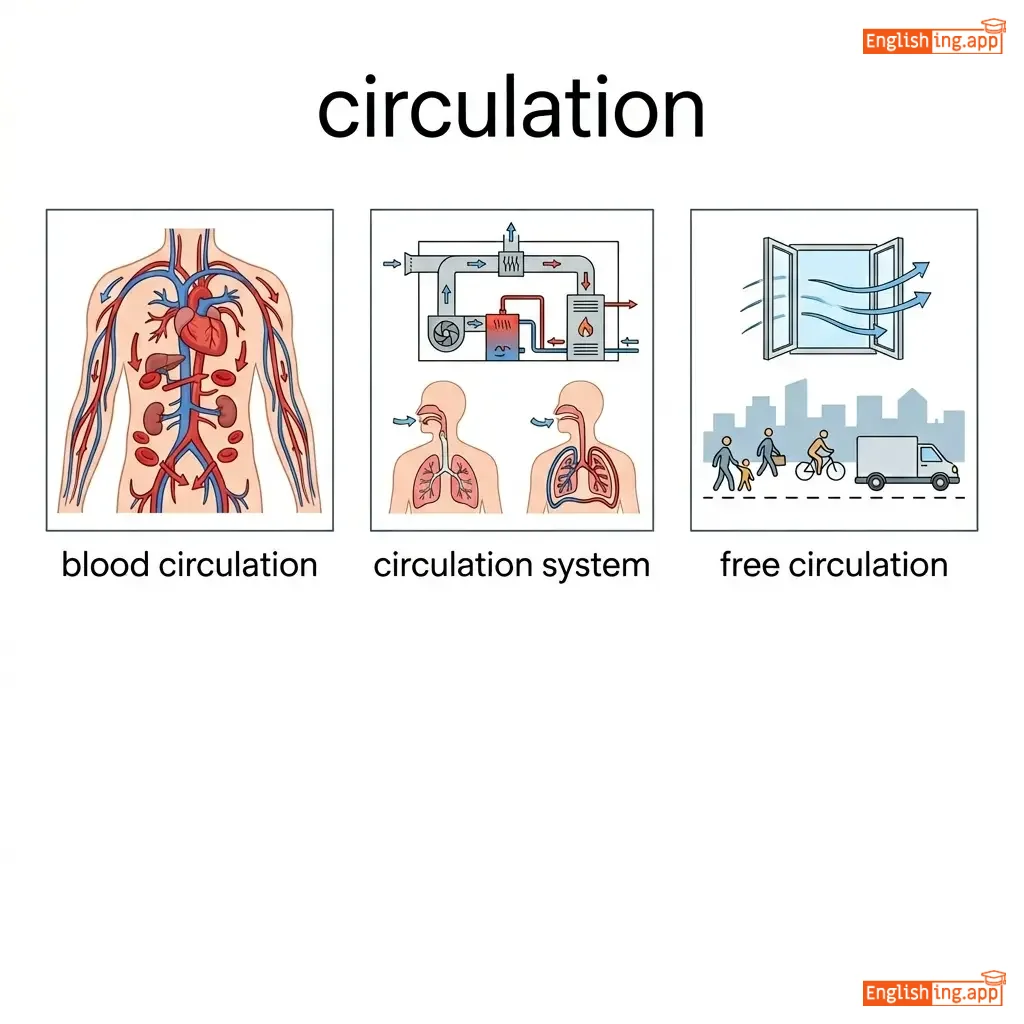
the movement of something (like blood, air, or information) through a system or area.
••••••
|
The circulation of blood is essential for a healthy body. |
Циркуляция крови важна для здорового тела.
Tsirkulyatsiya krovi vazhna dlya zdorovogo tela.
••••••
|
- •••••• | - •••••• | - •••••• |
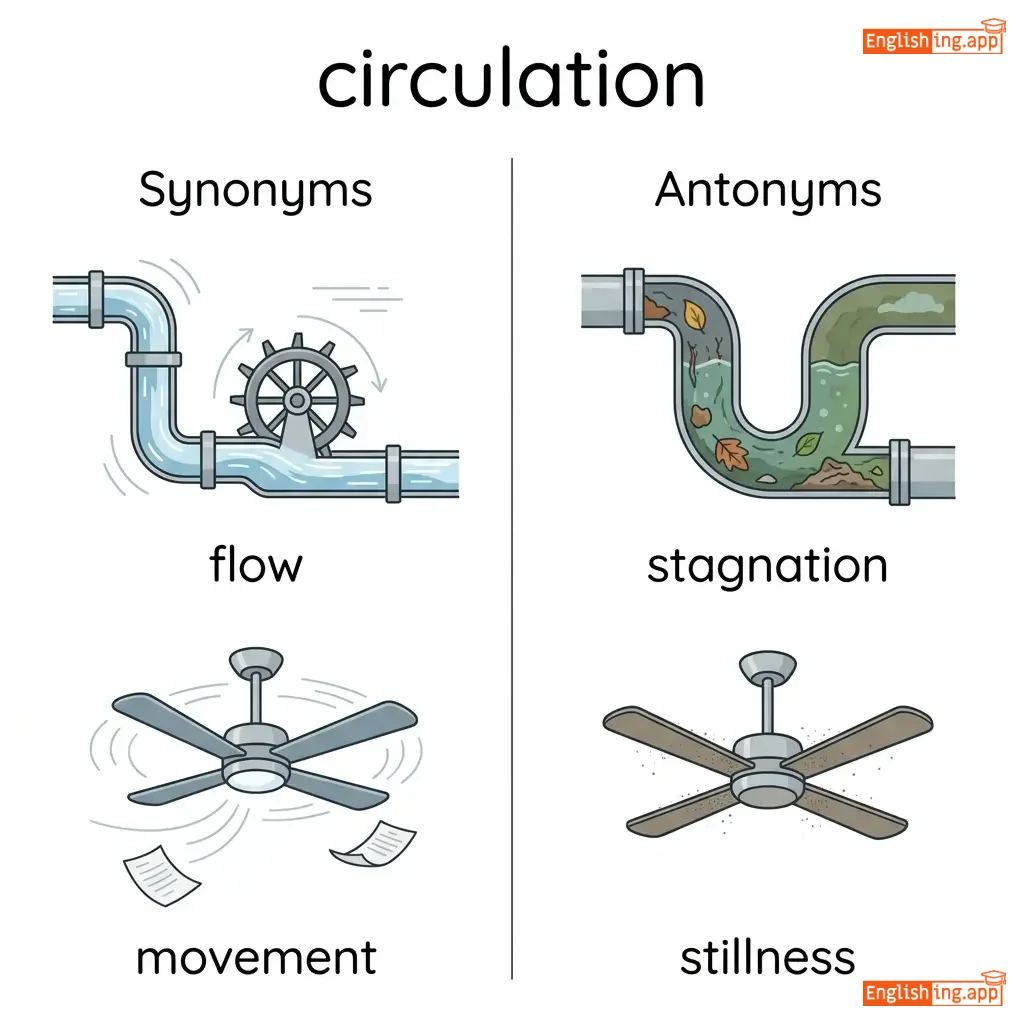
flow, movement, transfer, distribution
••••••
|
stagnation, stillness
••••••
|
blood circulation, circulation system, free circulation, improve circulation
••••••
|
Циркуляция, как кровь, движущаяся по телу, обеспечивает здоровье.
••••••
|
|
📌
••••••
|
/ˈsɜːrkəmstæns/
noun
(sɜːrkəmstæns)
••••••
|
- •••••• |
обстоятельство
obstoyatel'stvo
••••••
|
- •••••• | - •••••• | - •••••• | - •••••• |
a fact or condition connected with an event or action
••••••
|
She handled the difficult circumstances bravely. |
Она храбро справилась с трудными обстоятельствами.
Ona khrabro spravilas' s trudnymi obstoyatel'stvami.
••••••
|
under the circumstances |
considering the current situation
••••••
|
в данных обстоятельствах
v dannykh obstoyatel'stvakh
••••••
|
situation, condition, context, factor, state
••••••
|
certainty, plan
••••••
|
in difficult circumstances, under the circumstances, favorable circumstances
••••••
|
Circumstance означает обстоятельство - обведите ситуацию, чтобы запомнить обстоятельство.
••••••
|
|
📖
••••••
|
/saɪt/
verb
(sait)
••••••
|
|
цитировать
tsitirovat
••••••
|
cited
saited
••••••
|
cited
saited
••••••
|
cites
saites
••••••
|
citing
saiting
••••••
|
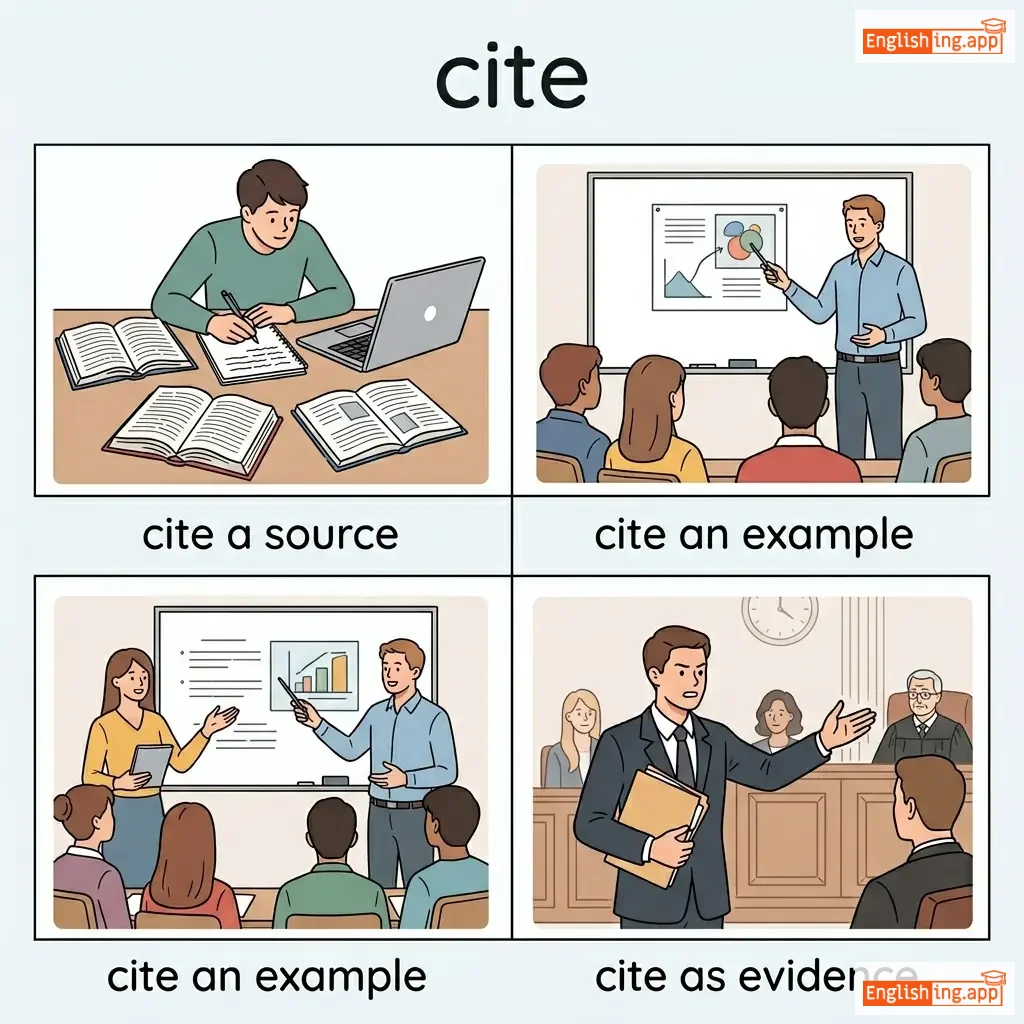
To refer to or quote a source as evidence or justification.
••••••
|
She cited several studies to support her argument.
shi saitid several stadiiz tu saport her argument
••••••
|
Она процитировала несколько исследований, чтобы подкрепить свой аргумент.
Ona protsitirovala neskol'ko issledovaniy, chtoby podkrepit' svoy argument.
••••••
|
cite chapter and verse
sait chapter end vers
••••••
|
to give exact details or precise references
••••••
|
цитировать главу и стих
tsitirovat' glavu i stikh
••••••
|
quote, reference, mention, allude, invoke
••••••
|
ignore, overlook, suppress
••••••
|
cite a source, cite an example, cite as evidence, cite authority
••••••
|
Cite означает цитировать, как ссылаться на источник
••••••
|
|
🧑🤝🧑
••••••
|
/ˈsɪtɪzən/
noun
(сити́зен)
••••••
|
- •••••• |
гражданин
grazhdanin
••••••
|
- •••••• | - •••••• | - •••••• | - •••••• |
a legally recognized subject or national of a state
••••••
|
Every citizen has the right to vote. |
Каждый гражданин имеет право голосовать.
Kazhdyi grazhdanin imeyet pravo golosovat'.
••••••
|
model citizen |
an exemplary or ideal member of society
••••••
|
образцовый гражданин
obraztsovyi grazhdanin
••••••
|
inhabitant, resident, national, dweller
••••••
|
foreigner, alien
••••••
|
citizen rights, responsible citizen, active citizen, citizen of a country
••••••
|
Citizen = гражданин – Гражданин города = Citizen.
••••••
|
|
🪪
••••••
|
/ˈsɪtɪzənʃɪp/
noun
(сити́зеншип)
••••••
|
- •••••• |
гражданство
grazhdanstvo
••••••
|
- •••••• | - •••••• | - •••••• | - •••••• |
the status of being a recognized member of a state or country, with rights and duties
••••••
|
He applied for American citizenship after living there for ten years.
Он подал заявление на американское гражданство после того, как прожил там десять лет.
••••••
|
Он подал заявление на американское гражданство после того, как прожил там десять лет.
On podal zayavlenie na amerikanskoe grazhdanstvo posle togo, kak prozhil tam desyat' let.
••••••
|
- •••••• | - •••••• | - •••••• |
nationality, allegiance, belonging, membership, residency
••••••
|
alienage, statelessness
••••••
|
dual citizenship, citizenship rights, grant citizenship, revoke citizenship
••••••
|
Citizen означает гражданин, а Citizenship — гражданство — запомни это!
••••••
|
|
🏙️
••••••
|
/ˈsɪti/
noun
(siti)
••••••
|
- •••••• |
город
gorod
••••••
|
- •••••• | - •••••• | - •••••• | - •••••• |
a large town or an urban area with its own government
••••••
|
Dhaka is the largest city in Bangladesh. |
Москва - самый большой город в России.
Moskva - samyy bol'shoy gorod v Rossii.
••••••
|
city that never sleeps |
a city that is always busy, like New York
••••••
|
город, который никогда не спит
gorod, kotoryy nikogda ne spit
••••••
|
metropolis, town, municipality, capital
••••••
|
village, countryside
••••••
|
big city, city life, city center, city council
••••••
|
City - это город, и в городе всегда что-то происходит.
••••••
|
|
🏛️
••••••
|
/ˈsɪvɪk/
adjective
(цивик)
••••••
|
- •••••• |
гражданский
grazhdanskiy
••••••
|
- •••••• | - •••••• | - •••••• | - •••••• |
relating to a city, town, or the duties of its citizens
••••••
|
The mayor encouraged people to take part in civic activities. |
Мэр призвал людей принимать участие в гражданских мероприятиях.
Mer prizval lyudey prinimat' uchastiye v grazhdanskikh meropriyatiyakh.
••••••
|
civic duty |
the responsibility of a citizen to contribute to their community or government
••••••
|
гражданский долг
grazhdanskiy dolg
••••••
|
municipal, public, community, urban
••••••
|
private, rural
••••••
|
civic duty, civic engagement, civic pride, civic education
••••••
|
Civic означает, что это относится к гражданам и их обязанностям, например, гражданский долг.
••••••
|
|
🏛️
••••••
|
/ˈsɪvɪks/
noun
(сивикс)
••••••
|
- •••••• |
граждановедение
grazhdanovedenie
••••••
|
- •••••• | - •••••• | - •••••• | - •••••• |
the study of the rights and duties of citizens and how government works
••••••
|
Civics helps students understand their responsibilities as citizens.
Граждановедение помогает ученикам понять обязанности граждан.
••••••
|
Граждановедение помогает ученикам понять обязанности граждан.
grazhdanovedenie pomogaet uchenikam ponyat obyazannosti grazhdan
••••••
|
- •••••• | - •••••• | - •••••• |
citizenship education, public affairs, government studies, social studies
••••••
|
ignorance, apathy
••••••
|
civics class, civics education, civics textbook, basic civics
••••••
|
CIVICS = citizen, по-русски гражданин, значит граждановедение
••••••
|
|
🤝
••••••
|
/ˈsɪvəl/
adjective
(сивил)
••••••
|
- •••••• |
гражданский
grazhdanskiy
••••••
|
- •••••• | - •••••• | - •••••• | - •••••• |
Relating to ordinary citizens and their concerns, or being polite and courteous.
••••••
|
They settled the matter through civil discussion. |
Они решили вопрос через гражданское обсуждение.
Oni reshilі vopros cherez grazhdanskoye obsuzhdeniye.
••••••
|
civil war |
a war between groups within the same country
••••••
|
гражданская война
grazhdanskaya voyina
••••••
|
polite, courteous, civilian, domestic, respectful
••••••
|
rude, military, uncivil
••••••
|
civil rights, civil society, civil service, civil war
••••••
|
Civil значит вежливый, как гражданин = вежливый человек
••••••
|
|
🧑
••••••
|
/səˈvɪliən/
noun/adjective
(сивилиан)
••••••
|
- •••••• |
гражданский
grazhdanskiy
••••••
|
- •••••• | - •••••• | - •••••• | - •••••• |
a person not in the armed forces or police
••••••
|
The area was evacuated to protect the civilians. |
Зону эвакуировали для защиты гражданских.
Zonu evakuirovali dlya zashchity grazhdanskikh.
••••••
|
- •••••• | - •••••• | - •••••• |
noncombatant, ordinary person, nonmilitary, commoner
••••••
|
soldier, officer
••••••
|
civilian life, civilian population, civilian clothes
••••••
|
Civilian в английском языке и гражданский в русском – оба означают невоеннослужащих.
••••••
|
|
🏺
••••••
|
/ˌsɪvɪlaɪˈzeɪʃən/
noun
(sivilaiˈzeɪʃən)
••••••
|
- •••••• |
цивилизация
tsivilizatsiya
••••••
|
- •••••• | - •••••• | - •••••• | - •••••• |
the stage of human social and cultural development and organization considered most advanced
••••••
|
Ancient Egypt is known for its remarkable civilization.
Древний Египет известен своей замечательной цивилизацией.
••••••
|
Древний Египет известен своей замечательной цивилизацией.
Drevniy Egipet izvesten svoey zamechatel'noy tsivilizatsiyey.
••••••
|
modern civilization
современная цивилизация
••••••
|
the advanced state of contemporary human society
••••••
|
современная цивилизация
sovremennaya tsivilizatsiya
••••••
|
culture, society, advancement, progress, refinement
••••••
|
barbarism, savagery
••••••
|
ancient civilization, modern civilization, lost civilization, human civilization
••••••
|
Civil означает цивильный, поэтому Civilization означает цивилизация — простая и умная ассоциация.
••••••
|
|
🏛️
••••••
|
/ˈsɪvɪlaɪz/
verb
(сивилайз)
••••••
|
- •••••• |
цивилизовать
tsivilizovat
••••••
|
civilized
сивилайзд
••••••
|
civilized
сивилайзд
••••••
|
civilizes
сивилайзес
••••••
|
civilizing
сивилайзинг
••••••
|
to bring a society or group to a more developed, organized, or socially acceptable state; to educate and refine behavior
••••••
|
Education can help civilize communities by promoting shared values and respect.
Эдюкейшн кэн хелп сивилайз коммьюнитиз бай промоутинг шэард вэльюз энд риспект.
••••••
|
Образование может помочь цивилизовать сообщества, продвигая общие ценности и уважение.
Obrazovanie mozhet pomoch tsivilizovat soobshchestva, prodvigaya obshchie tsennosti i uvazhenie
••••••
|
- •••••• | - •••••• | - •••••• |
refine, educate, cultivate, humanize, enlighten
••••••
|
barbarize, degrade, brutalize
••••••
|
civilize society, civilize behavior, civilize a nation, efforts to civilize
••••••
|
Цивилизация → цивилизовать
••••••
|
|
📢
••••••
|
/kleɪm/
verb
(kleim)
••••••
|

|
заявить
zayavit'
••••••
|
claimed
kleimd
••••••
|
claimed
kleimd
••••••
|
claims
kleims
••••••
|
claiming
kleiming
••••••
|
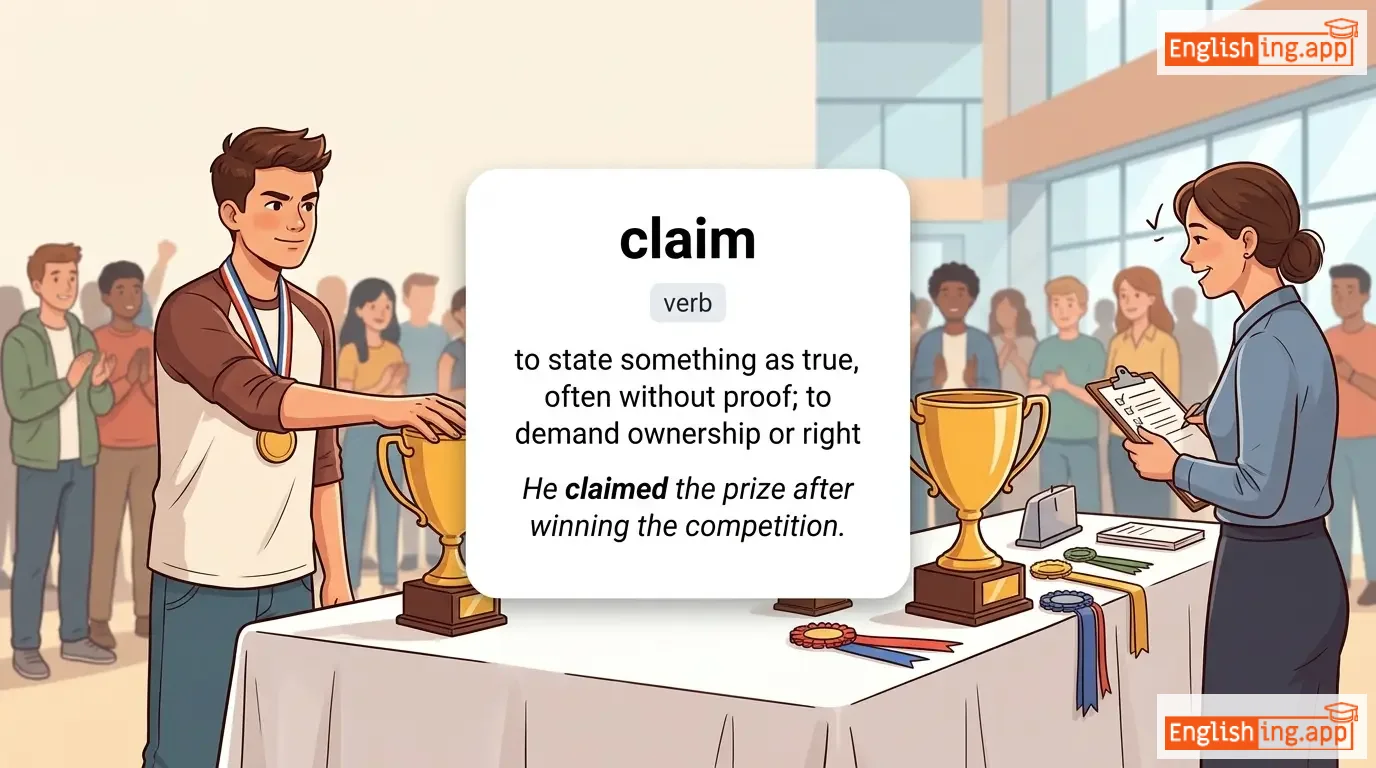
to state something as true, often without proof; to demand ownership or right
••••••
|
He claimed the prize after winning the competition.
Он заявил о своем праве на приз после победы в конкурсе.
••••••
|
Он заявил о своем праве на приз после победы в конкурсе.
On zayavil o svoem prave na priz posle pobedy v konkurse.
••••••
|
claim to fame
заявка на славу
••••••
|
the thing that makes someone famous or notable
••••••
|
заявка на славу
zayavka na slavu
••••••
|
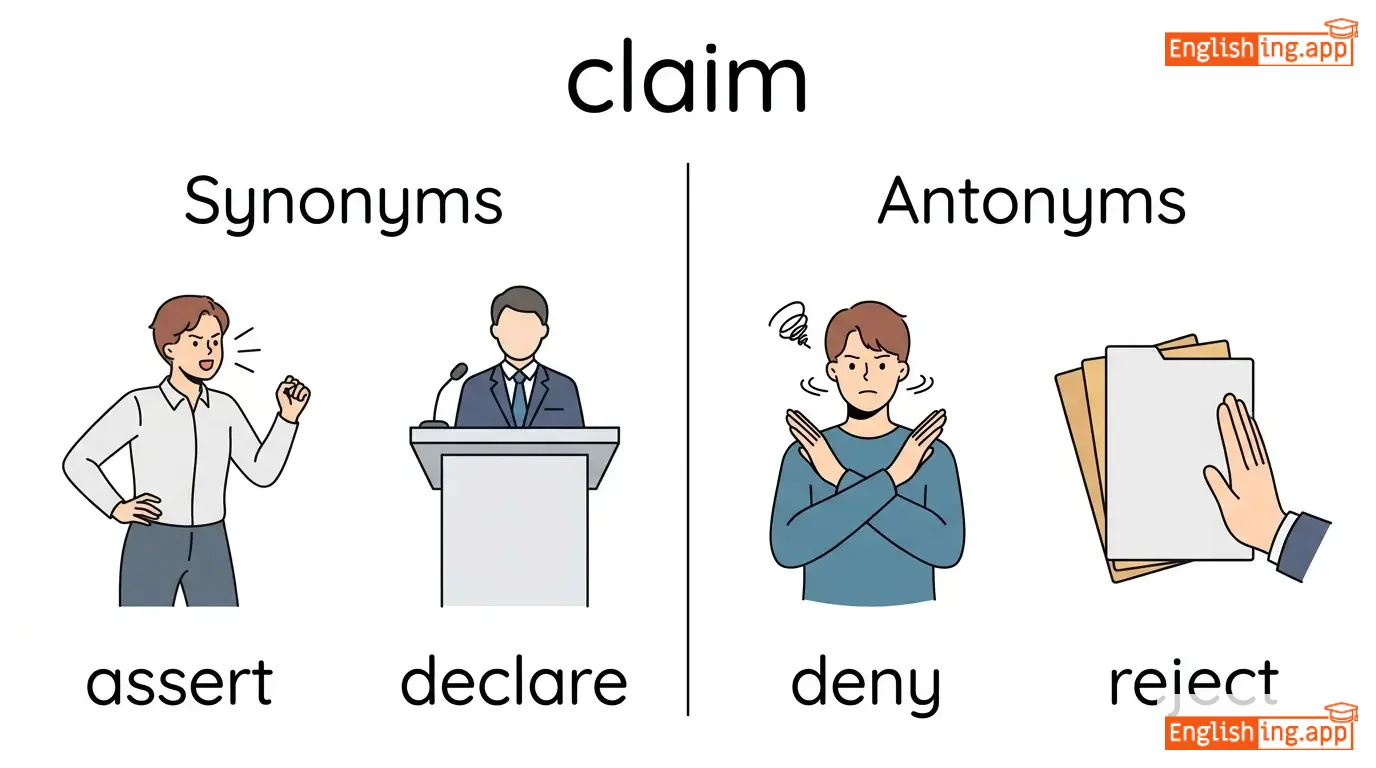
assert, declare, allege, demand, request
••••••
|
deny, reject, disclaim
••••••
|
claim responsibility, claim compensation, claim benefits, claim ownership
••••••
|
Claim значит заявить: как в страховых заявках
••••••
|
|
👏
••••••
|
/klæp/
verb
(клап)
••••••
|
- •••••• |
хлопать
khlopat
••••••
|
clapped
клапт
••••••
|
clapped
клапт
••••••
|
claps
клапс
••••••
|
clapping
клаппинг
••••••
|
To strike the palms of the hands together, usually to express approval or create a sharp sound.
••••••
|
The audience began to clap loudly after the performance.
Зрители начали громко хлопать после выступления.
••••••
|
Зрители начали громко хлопать после выступления.
Zriteli nachali gromko khlopat' posle vystupleniya.
••••••
|
clap your hands
хлопать руками
••••••
|
to show approval or enjoyment by striking your hands together
••••••
|
хлопать руками
khlopat' rukami
••••••
|
applaud, cheer, smack, slap
••••••
|
boo, jeer
••••••
|
clap loudly, clap hands, clap along, clap for someone
••••••
|
Хлопать означает ударить ладонями друг о друга.
••••••
|
|
💡
••••••
|
/ˈklærɪfaɪ/
verb
(кле́рифаи)
••••••
|
|
прояснять
proyasnyat
••••••
|
clarified
кле́рифаид
••••••
|
clarified
кле́рифаид
••••••
|
clarifies
кле́рифаиз
••••••
|
clarifying
кле́рифаинг
••••••
|
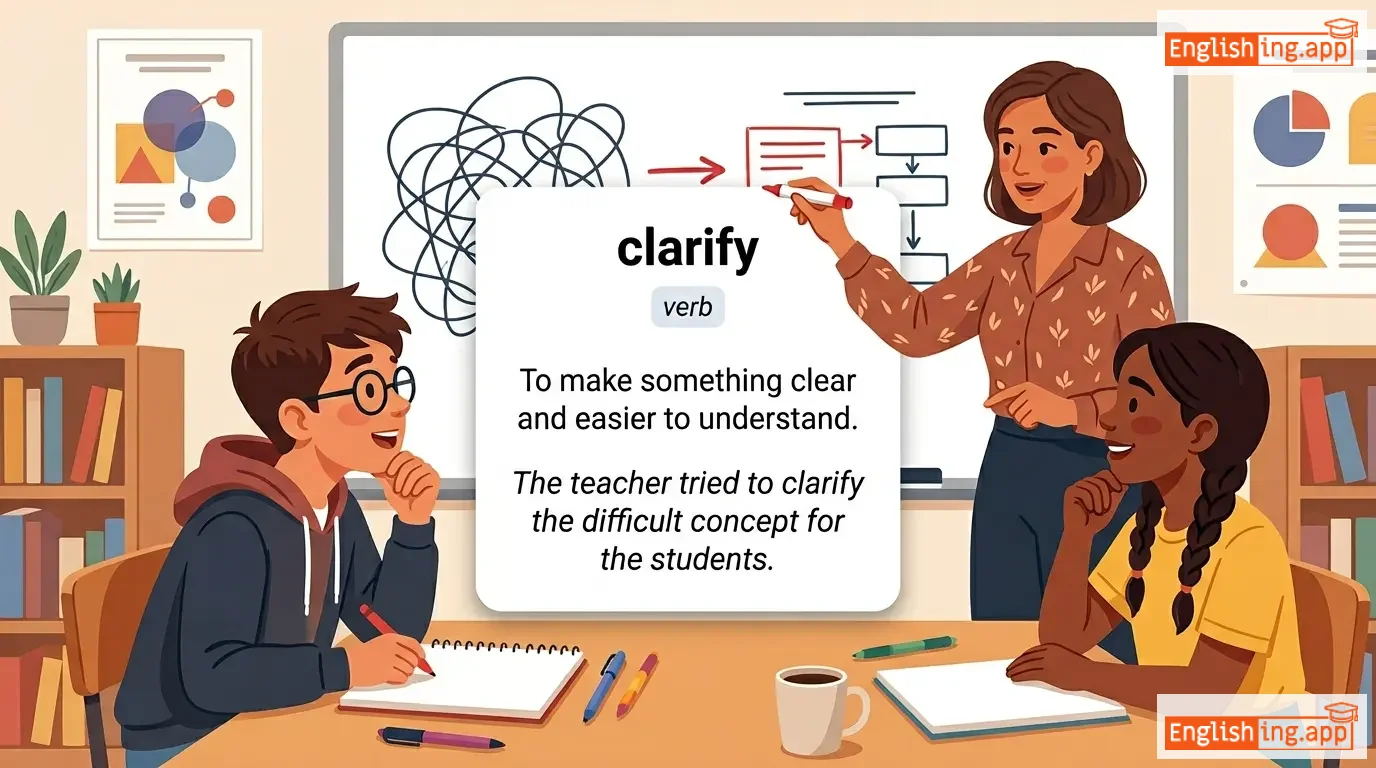
To make something clear and easier to understand.
••••••
|
The teacher tried to clarify the difficult concept for the students.
Учитель попытался прояснить сложную концепцию для студентов.
••••••
|
Учитель попытался прояснить сложную концепцию для студентов.
Uchitel' popytalsya proyasnit' slozhnuyu kontseptsiyu dlya studentov.
••••••
|
clarify the situation
прояснить ситуацию
••••••
|
to explain or resolve something confusing
••••••
|
прояснить ситуацию
proyasnit' situatsiyu
••••••
|
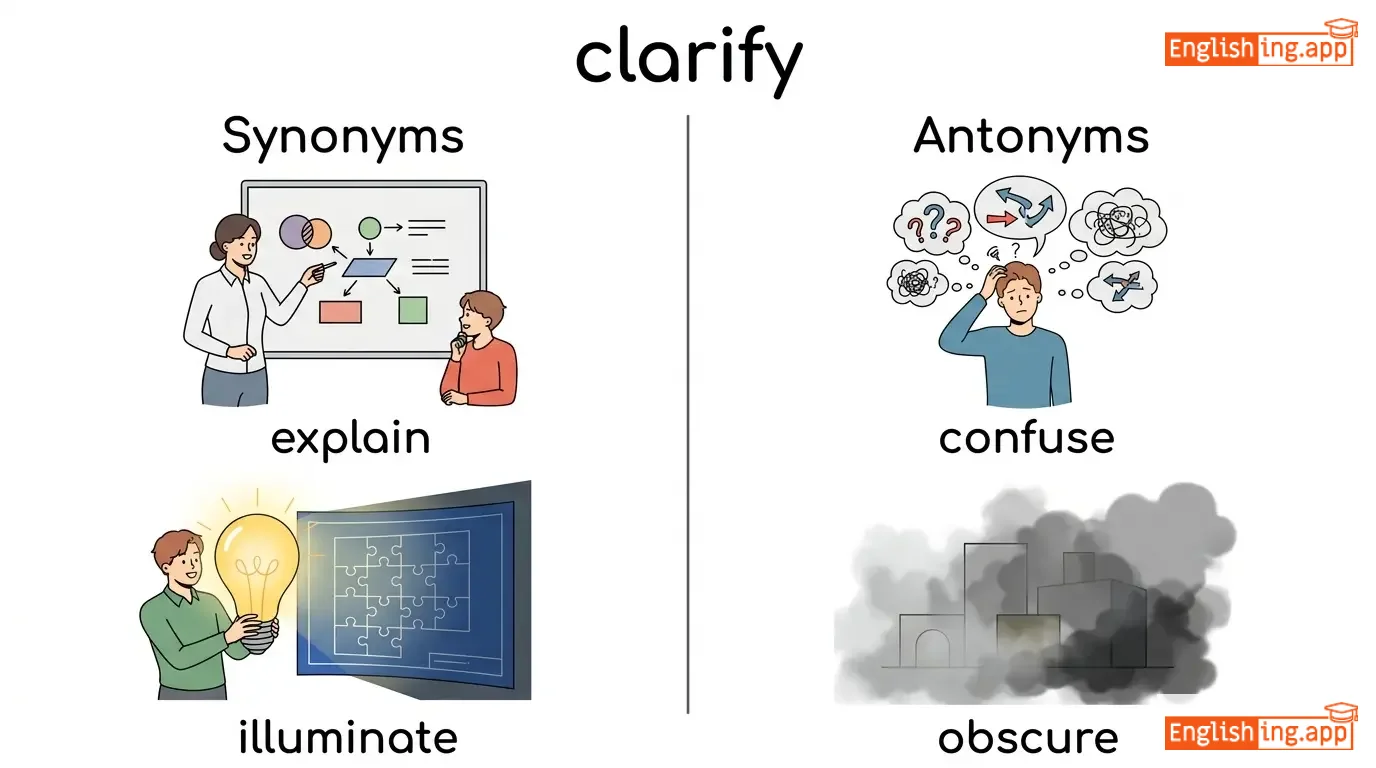
explain, illuminate, simplify, resolve, interpret
••••••
|
confuse, obscure, complicate
••••••
|
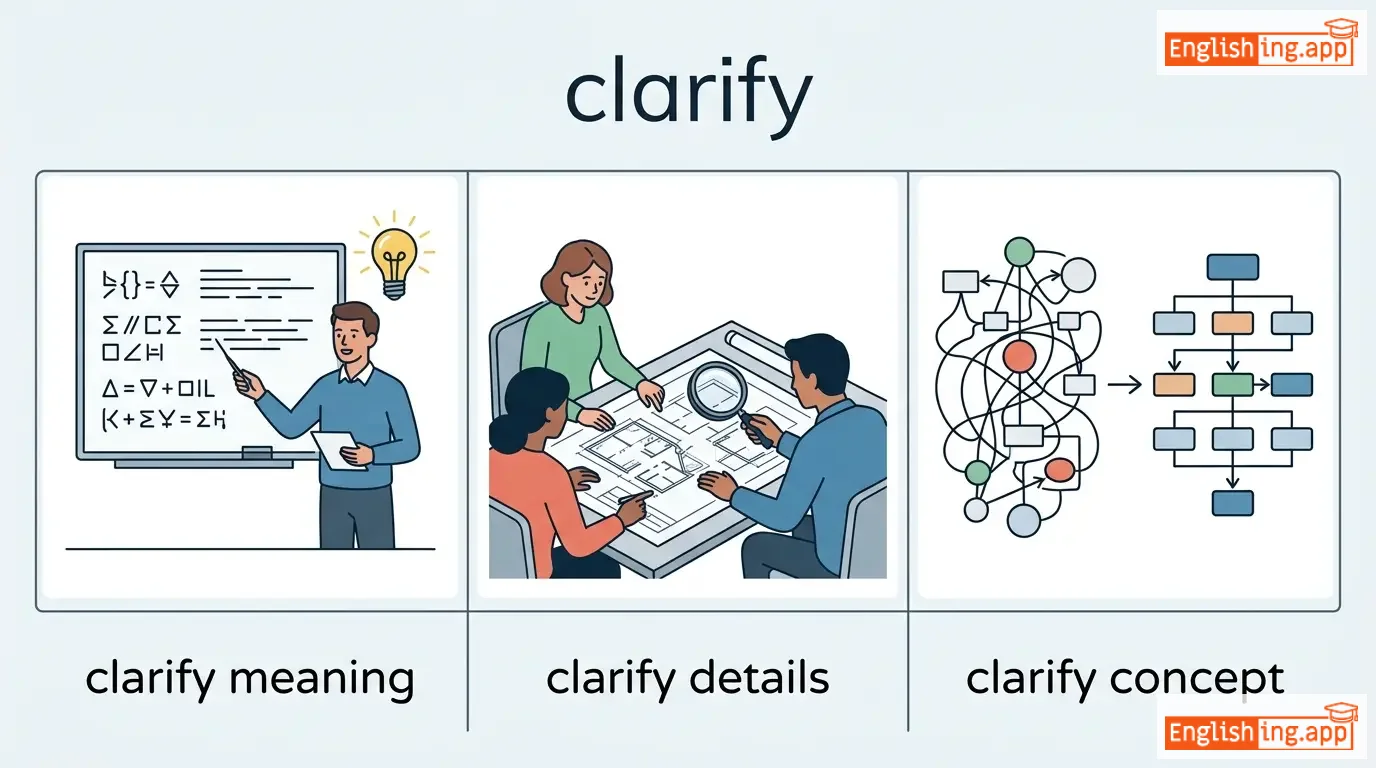
clarify meaning, clarify details, clarify concept, clarify question
••••••
|
Clarify звучит как 'прояснять' на русском, как когда учитель проясняет что-то.
••••••
|
|
🔍
••••••
|
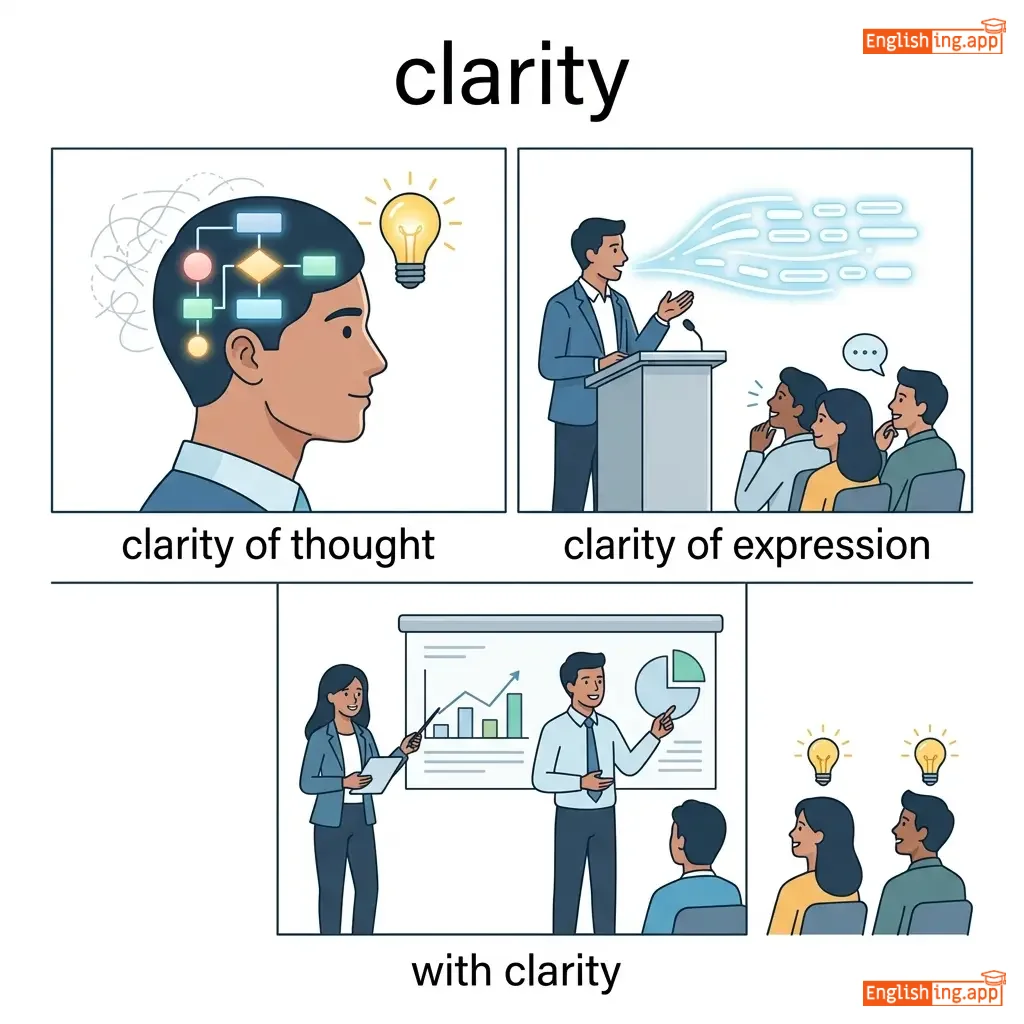
/ˈklærəti/
noun
(клерити)
••••••
|

|
ясность
yasnost
••••••
|
- •••••• | - •••••• | - •••••• | - •••••• |
the quality of being clear, easy to understand, or transparent
••••••
|
The teacher's clarity helped the students understand the complex topic. |
Ясность учителя помогла студентам понять сложную тему.
Yasnost' uchitelya pomogla studentam ponyat' slozhnuyu temu.
••••••
|
crystal clarity |
complete and perfect clearness
••••••
|
кристальная ясность
kristal'naya yasnost'
••••••
|
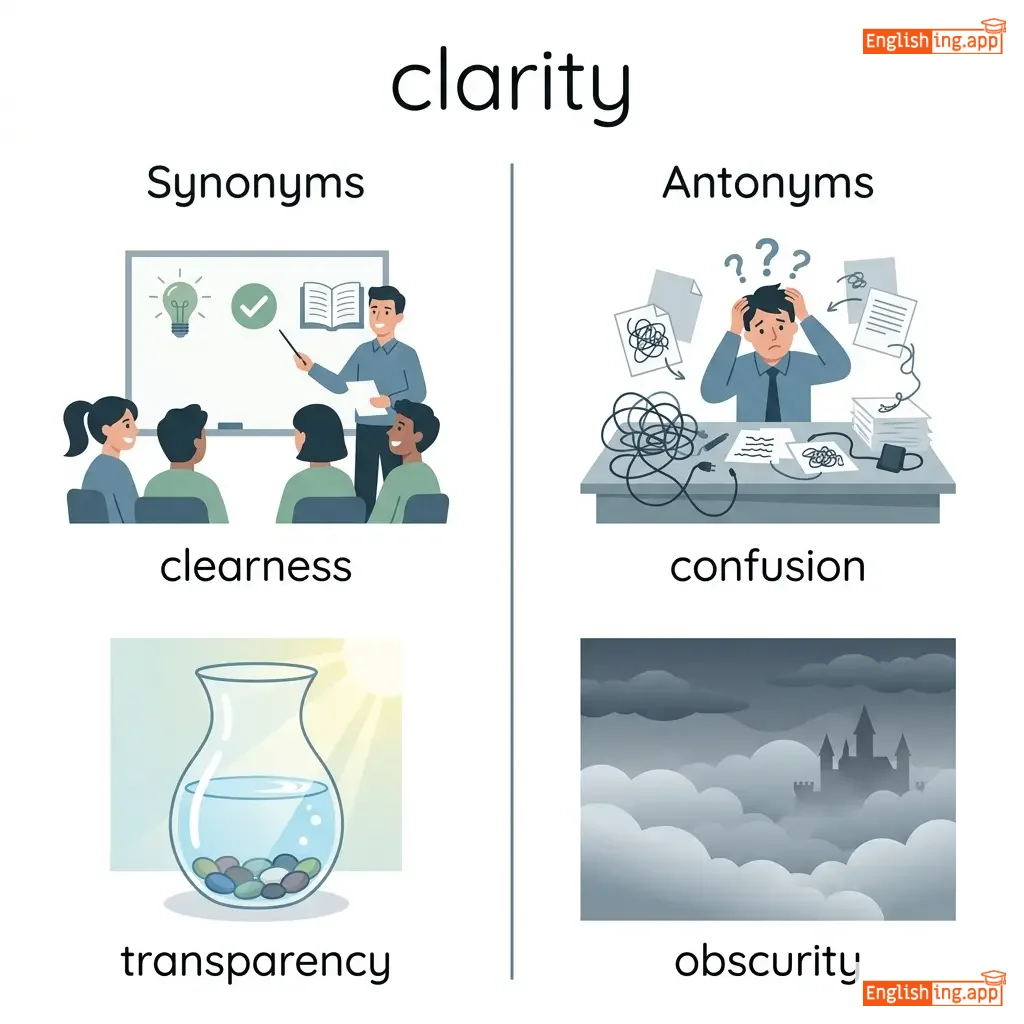
clearness, transparency, precision, lucidity, simplicity
••••••
|
confusion, obscurity, vagueness
••••••
|
clarity of thought, clarity of expression, with clarity, lack of clarity
••••••
|
Clarity = clear + ity → ясно или прозрачно
••••••
|
|
💥
••••••
|
/klæʃ/
verb
(клэш)
••••••
|
- •••••• |
столкновение
stolknoveniye
••••••
|
clashed
клэшд
••••••
|
clashed
клэшд
••••••
|
clashes
клэшез
••••••
|
clashing
клэшинг
••••••
|
to come into conflict or collision with something or someone.
••••••
|
The two cars clashed in the intersection.
Два автомобиля столкнулись на перекрёстке.
••••••
|
Два автомобиля столкнулись на перекрёстке.
Dva avtomobilya stolknulis na perekrёstke.
••••••
|
- •••••• | - •••••• | - •••••• |
collide, confront, clash, conflict
••••••
|
reconcile, cooperate, agree
••••••
|
clash of interests, cultural clash, clash of opinions
••••••
|
Clash sounds like crash—как два автомобиля сталкиваются
••••••
|
|
🏫
••••••
|
/klɑːs/
noun
(klass)
••••••
|
- •••••• |
класс
klass
••••••
|
- •••••• | - •••••• | - •••••• | - •••••• |
a group of students taught together or a category of people or things with shared characteristics
••••••
|
Our class meets every morning at nine. |
Наш класс собирается каждое утро в девять.
Nash klass sobiraetsya kazhdoe utro v devyat'.
••••••
|
class act |
a person who is admired for their good qualities or behavior
••••••
|
образцовый человек
obraztsovyy chelovek
••••••
|
category, group, grade, division
••••••
|
individual, disorganization
••••••
|
class room, class teacher, social class, upper class, class test
••••••
|
Класс - это не только школьный класс, но и категория людей с общими характеристиками.
••••••
|
|
📚
••••••
|
/ˈklæsɪk/
adjective
(klasik)
••••••
|
- •••••• |
классика, выдающийся
klassika, vydajushchijsya
••••••
|
- •••••• | - •••••• | - •••••• | - •••••• |
Judged over a period of time to be of the highest quality and outstanding of its kind.
••••••
|
That movie is a classic example of 90s comedy. |
Этот фильм является классическим примером комедии 90-х.
Etot film yavlyaetsya klassicheskim primerom komedii 90-h.
••••••
|
instant classic |
Something that becomes iconic or highly regarded immediately after its release.
••••••
|
мгновенная классика
mgnovennaya klassika
••••••
|
timeless, traditional, iconic, standard, vintage
••••••
|
modern, trendy, contemporary
••••••
|
classic example, classic case, classic design, classic novel
••••••
|
Классика - это что-то, что всегда выделяется своей исключительностью.
••••••
|
|
📊
••••••
|
/ˌklæsɪfɪˈkeɪʃən/
noun
(классификация)
••••••
|
- •••••• |
классификация
klassifikatsiya
••••••
|
- •••••• | - •••••• | - •••••• | - •••••• |
the action or process of classifying something into groups based on shared characteristics.
••••••
|
The classification of animals helps in understanding their biology. |
Классификация животных помогает понять их биологию.
Klassifikatsiya zhivotnykh pomogayet ponyat' ikh biologiyu.
••••••
|
- •••••• | - •••••• | - •••••• |
categorization, sorting, organization, classification
••••••
|
disorganization, confusion
••••••
|
classification system, scientific classification, animal classification
••••••
|
Classify for clarity—классификация для ясности
••••••
|
|
🔒
••••••
|
/ˈklæsɪfaɪd/
adjective
(классифайд)
••••••
|
- •••••• |
секретный; классифицированный
sekretnyi; klassifitsirovannyi
••••••
|
- •••••• | - •••••• | - •••••• | - •••••• |
arranged into categories; officially secret or restricted
••••••
|
The report contains classified information and cannot be shared publicly.
Зэ рипорт кэнтэйнз класссифайд информэйшн
••••••
|
Отчёт содержит секретную информацию.
Otchyot soderzhit sekretnuyu informatsiyu
••••••
|
classified information
классифайд информэйшн
••••••
|
information that is officially secret or restricted
••••••
|
секретная информация
sekretnaya informatsiya
••••••
|
secret, confidential, categorized, restricted, top-secret
••••••
|
public, unclassified, open
••••••
|
classified information, classified document, classified data, highly classified
••••••
|
classified = классифицирован и секретен
••••••
|
|
🗂️
••••••
|
/ˈklæsɪfaɪ/
verb
(klæsɪfaɪ)
••••••
|
- •••••• |
классифицировать
klassifitsirovat
••••••
|
classified
klæsɪfaɪd
••••••
|
classified
klæsɪfaɪd
••••••
|
classifies
klæsɪfaɪz
••••••
|
classifying
klæsɪfaɪɪŋ
••••••
|
to arrange or organize into categories or groups
••••••
|
The librarian classified the books by subject.
Библиотекарь классифицировал книги по темам.
••••••
|
Библиотекарь классифицировал книги по темам.
Bibliotekar' klassifitsiroval knigi po temam.
••••••
|
classify information
классифицировать информацию
••••••
|
to categorize data, often in terms of security or confidentiality
••••••
|
классифицировать информацию
klassifitsirovat informatsiyu
••••••
|
categorize, sort, organize, group, arrange
••••••
|
confuse, mix, disorder
••••••
|
classify data, classify books, classify animals, classify documents
••••••
|
Classify = class + файл → разделить на группы или категории
••••••
|

