語彙集

英単語辞書 | 単語の意味、定義、例文

verb C1
/ˈpærəfreɪz/
счастье (schastye)

To express the meaning of something using different words, often to make it clearer.

"The teacher asked the students to paraphrase the poem in their own words."
"Она не могла скрыть свое счастье, когда получила награду." (Ona ne mogla skryt' svoyo schast'ye, kogda poluchila nagradu.)
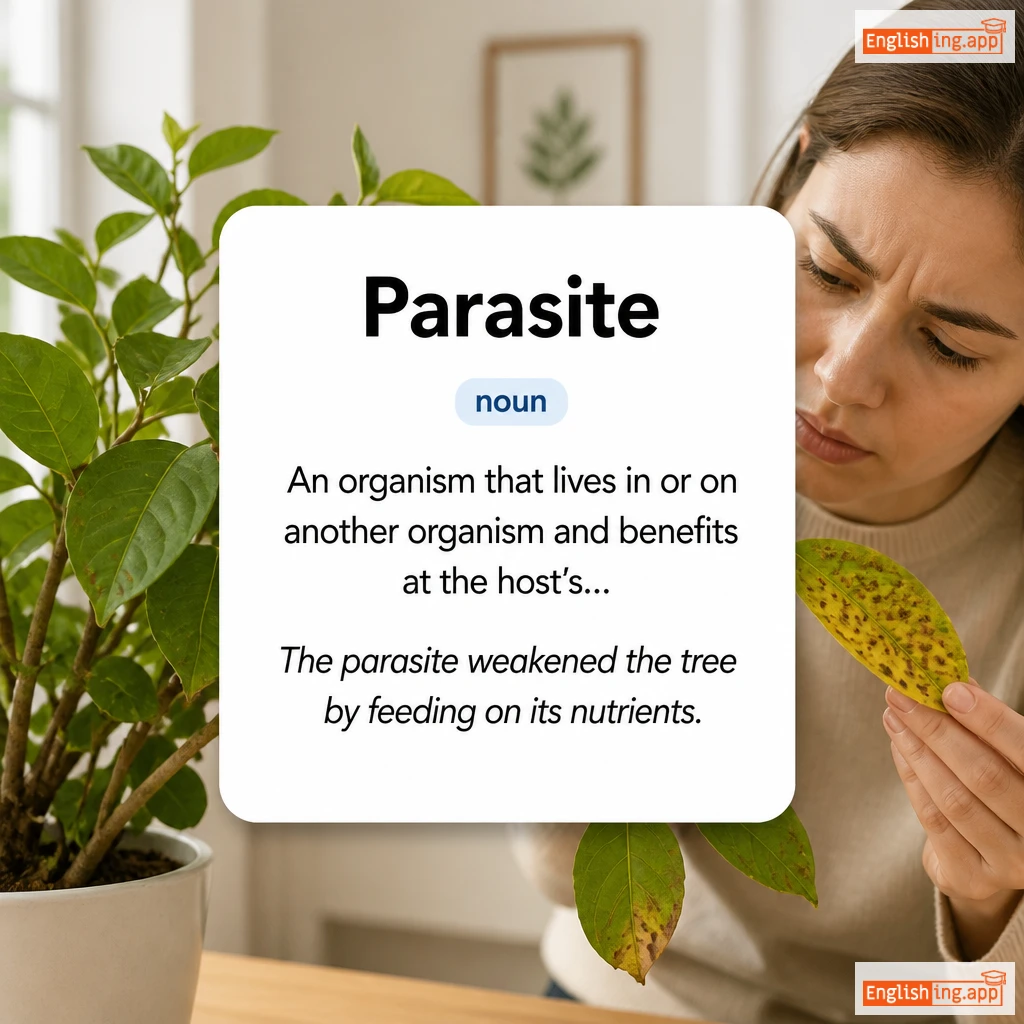
Parasite definition card — visual illustration of the meaning
noun C1
/ˈpærəsaɪt/
паразит (parazit)

An organism that lives in or on another organism and benefits at the host’s expense.

"The parasite weakened the tree by feeding on its nutrients."

"Паразит ослабил дерево, питаясь его питательными веществами." (Parazit oslabil derevo, pitayas' ego pitatel'nymi veshchestvami.)
adjective C1
/pɑːrtʃt/
крайне жаждущий (kraine zhazhduhshiy)

extremely dry, especially because of heat or thirst

"After walking in the desert, he was parched with thirst."

"После прогулки по пустыне он был крайне жаждущий." (Posle progulki po pustyne on byl kraine zhazhduhshiy.)
noun C1
/ˈpɑːrtʃmənt/
пергамент (pergament)

a thin material made from animal skin, used in the past for writing

"The ancient manuscript was written on parchment."

"Древняя рукопись была написана на пергаменте." (Drevnyaya rukopis' byla napisana na pergamente.)
adjective C1
/ˈpɑːr.dən.ə.bəl/
прощаемый (proshchayemyy)

able to be forgiven; excusable

"His mistake was pardonable given the difficult circumstances."

"Его ошибка была прощаемой, учитывая сложные обстоятельства." (Yego oshibka byla proshchayemoy, uchityvaya slozhnye obstoyatel'stva.)
verb C1
/per/
очищать (ochishchat)

to cut away the outer covering or reduce something gradually

"She pared the apple before eating it."

"Она почистила яблоко перед тем, как съесть его." (Ona pochistila yabloko pered tem, kak s'yest' ego.)
noun C1
/ˈpɛrəntɪdʒ/
происхождение (proiskhozhdenie)

The identity and origins of one's parents; descent or lineage.

"Her noble parentage gave her access to the royal court."

"Её благородное происхождение дало ей доступ к королевскому двору." (Yeyo blagorodnoe proiskhozhdenie dalo yey dostup k korolevskomu dvoryu.)
noun C1
/pəˈrɛnθəsɪs/
скобки (skobki)

A pair of curved marks ( ) used to enclose words or numbers; also an interruption or digression in speech or writing.

"The explanation was given in a parenthesis within the text."

"Объяснение было дано в скобках в тексте." (Ob'yasneniye bylo dano v skobkakh v tekste.)
noun C1
/pəˈraɪə/
пария (pariya)

An outcast; someone who is rejected by society or a social group.

"After the scandal, he became a social pariah."

"После скандала он стал социальным парией." (Posle skandala on stal sotsial'nym pariyey.)
adjective C1
/pəˈrɪʒən/
относящийся к Парижу (otnosyashchiesya k Parizhu)

relating to Paris or its people

"She wore a Parisian style dress at the party."

"Она носила платье в парижском стиле на вечеринке." (Ona nosila plat'ye v parizhskom stile na vecherinke.)
noun C1
/ˈpærɪti/
паритет (paritet)

the state or condition of being equal, especially in status or pay

"The campaign aims to achieve pay parity between men and women."

"Кампания направлена на достижение паритета зарплат между мужчинами и женщинами." (Kampaniya napravlena na dostizheniye pariteta zarplat mezhdu muzhchinami i zhenshchinami.)
noun C1
/ˈpɑːrlər/
гостиная, магазин (parlor)

A sitting room in a private house, or a shop providing specified services.

"They welcomed the guests into the front parlor."

"Они встретили гостей в передней комнате." (Oni vstretili gostey v peredney komnate.)
adjective C1
/pəˈroʊkiəl/
парохиальный (parokial)

Having a limited or narrow outlook; relating to a parish.

"His parochial view prevented him from understanding global issues."
"Его парохиальный взгляд помешал ему понять глобальные проблемы." (Ego parokialnyy vzglyad pomeshal yemu ponyat' global'nye problemy.)
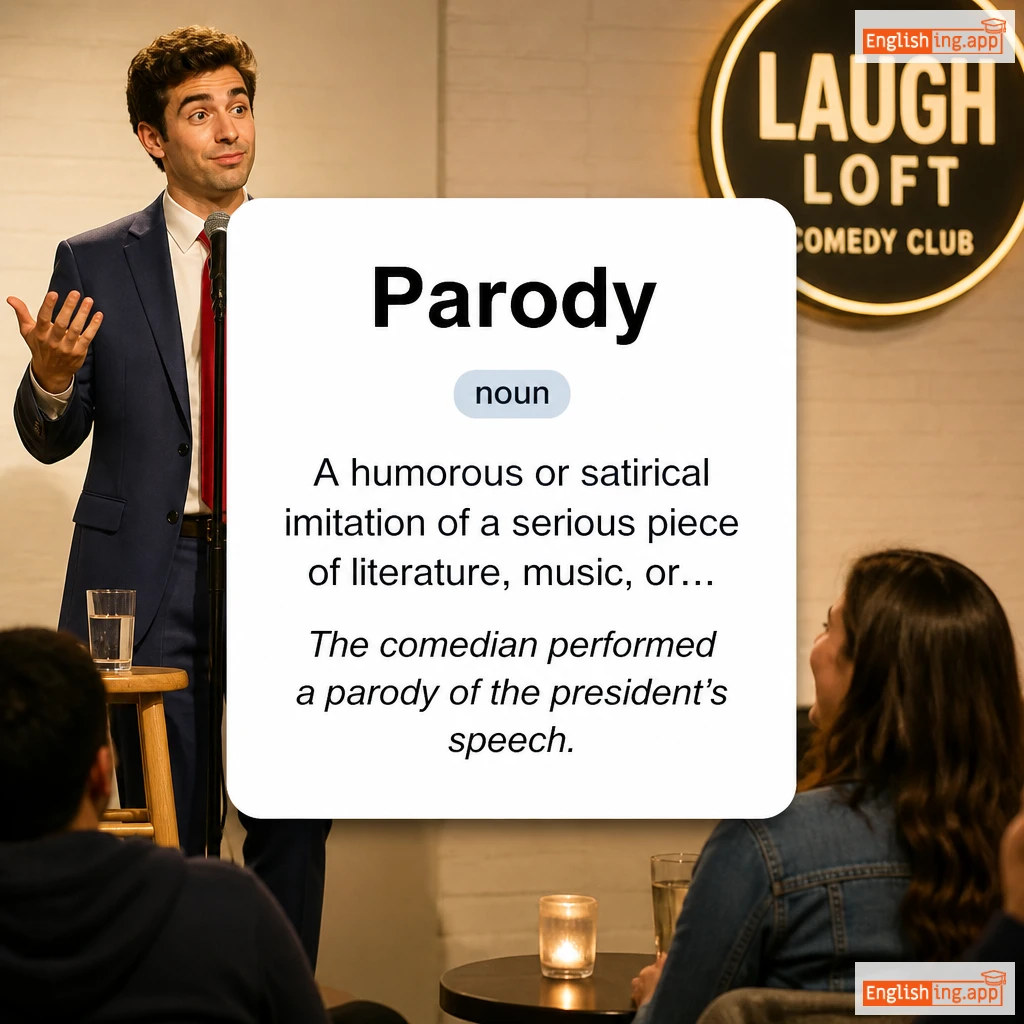
Parody definition card — visual illustration of the meaning
noun C1
/ˈpærədi/
пародия (parodiya)

A humorous or satirical imitation of a serious piece of literature, music, or style.

"The comedian performed a parody of the president’s speech."

"Комик исполнил пародию на речь президента." (Komik ispolnil parodiyu na rech' prezidenta.)
noun C1
/ˈpɑːr.keɪ/
паркетный пол (parketnyy pol)

A floor made of wooden blocks arranged in a geometric pattern.

"The old mansion had a beautiful parquet floor."
"В старом особняке был красивый паркетный пол." (V starom osobianke byl krasivyy parketnyy pol.)
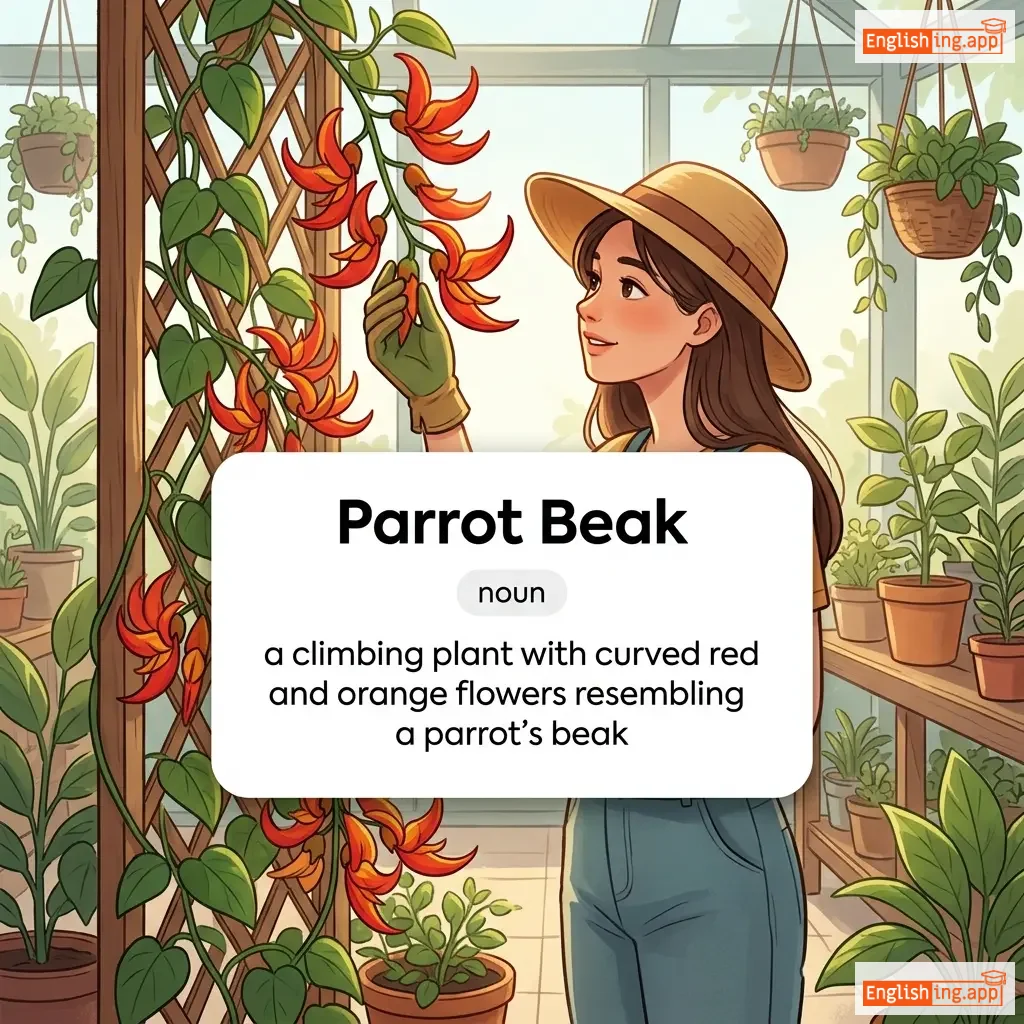
Parrot Beak definition card — visual illustration of the meaning
noun C1
/ˈpær.ət biːk/
клюв попугая (klyuv popugaya)

a climbing plant with curved red and orange flowers resembling a parrot's beak

"The parrot beak flower's unique curved shape makes it a fascinating addition to any garden."

"Цветок с клювом попугая имеет уникальную изогнутую форму, что делает его увлекательным дополнением к любому саду." (Tsvetok s klyuvom popugaya imeyet unikal'nuyu izognutuyu formu, chto delayet ego uvyatelnym dopolneniem k lyubomu sadu.)
verb C1
/ˈpæri/
отражать атаку (otrazhat' ataku)

to ward off or deflect an attack, especially in fencing or conversation

"He managed to parry the opponent’s sword with quick reflexes."

"Он сумел отразить меч противника с быстрыми рефлексами." (On sumel otrazit' mech protivnika s bystrymi refleksami.)
verb C1
/pɑːrs/
анализировать грамматически (analizirovat' grammaticheski)

to analyze a sentence or text grammatically or logically

"The software can parse large amounts of text data efficiently."
"Программное обеспечение может эффективно анализировать большие объемы текстовых данных." (Programmnoye obespecheniye mozhet effektyvno analizirovat' bol'shie ob'yemy tekstovykh dannykh.)
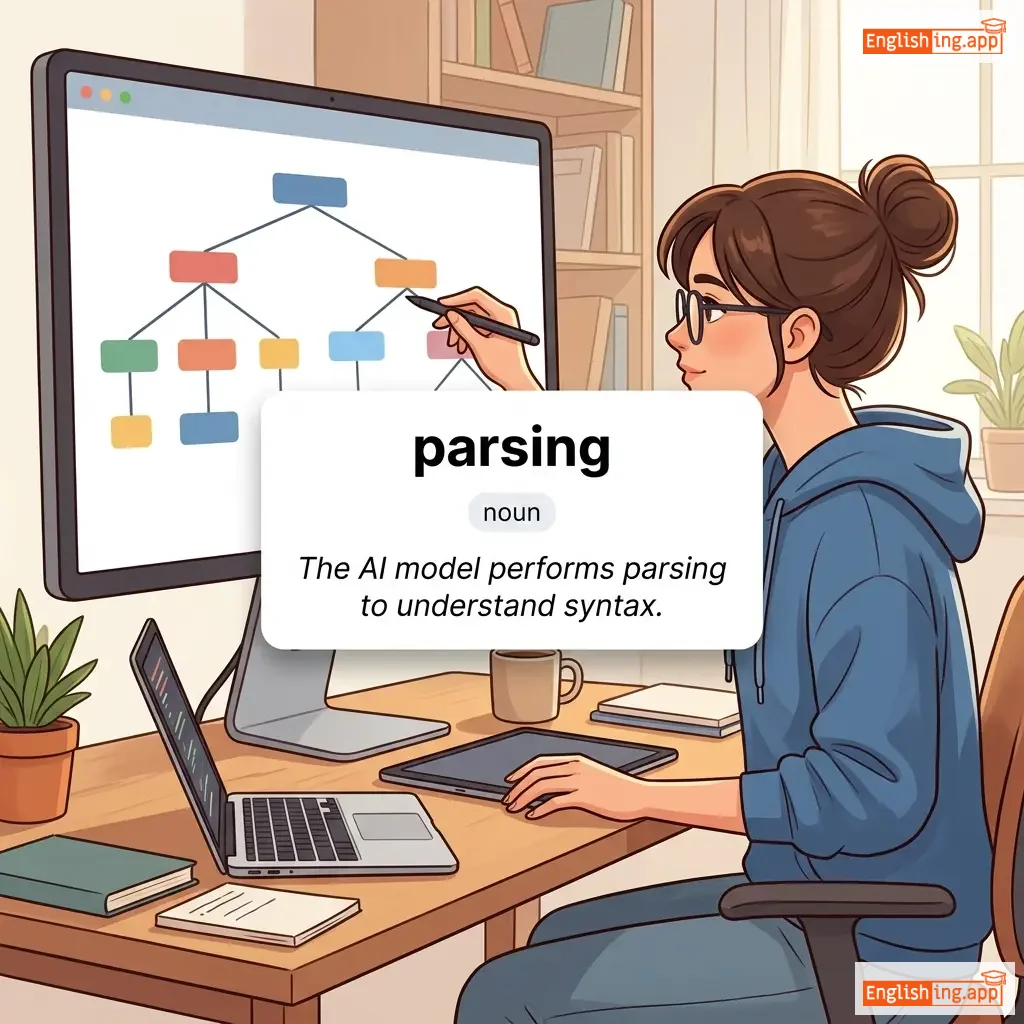
parsing definition card — visual illustration of the meaning
noun C1
ˈpɑː.sɪŋ
анализ структуры предложения (parsing)

The process of analyzing sentence structure to understand grammatical relationships.

"The AI model performs parsing to understand syntax."

"Модель ИИ выполняет парсинг для понимания синтаксиса." (Model' II vypolnyaet parsing dlya ponimaniya sintaksisa.)
noun C1
/ˌpɑːrʃiˈæləti/
пристрастность (pristrastnost)

an unfair preference or bias toward one side or person

"The judge was criticized for showing partiality in the case."
"Судью раскритиковали за проявление пристрастности в деле." (Sudyu raskritikovali za proyavlenie pristrastnosti v dele.)
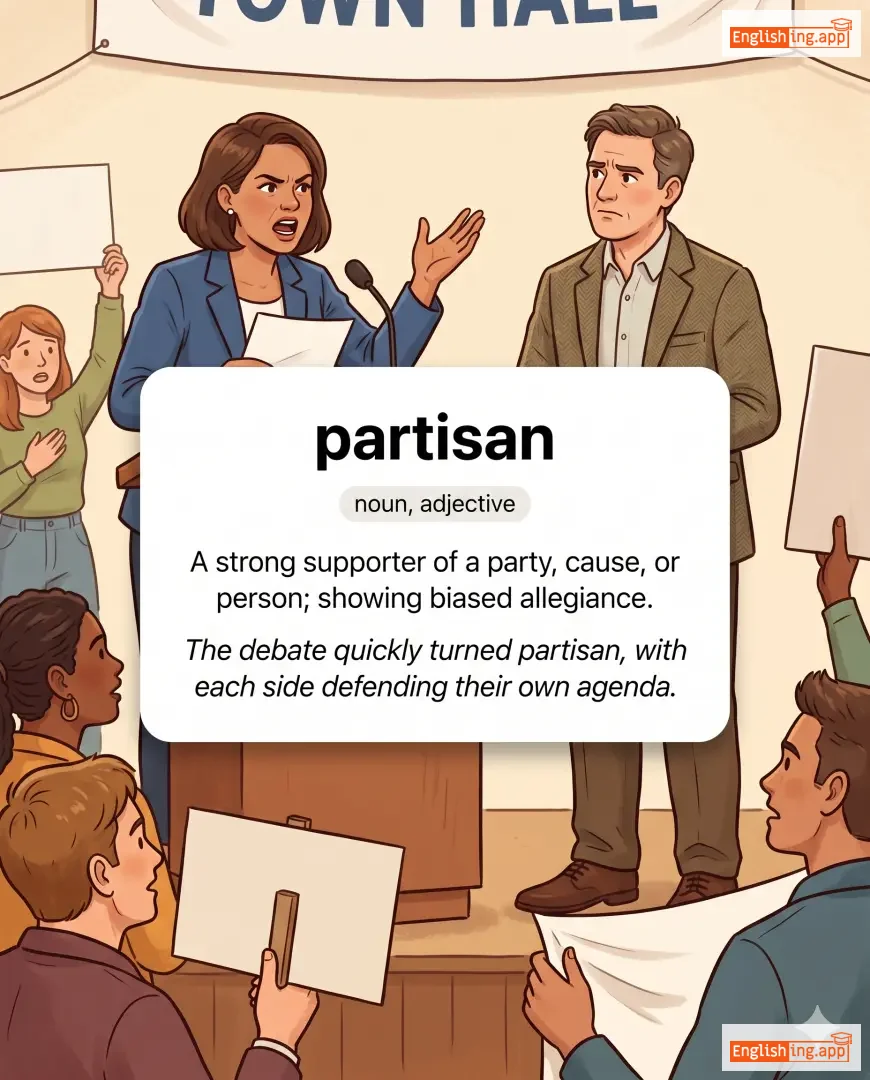
partisan definition card — visual illustration of the meaning
noun, adjective C1
/ˈpɑːrtɪzən/
партийный сторонник (partiynyy storonnik)

A strong supporter of a party, cause, or person; showing biased allegiance.

"The debate quickly turned partisan, with each side defending their own agenda."

"Дебаты быстро стали партийными, каждая сторона защищала свою повестку." (Debaty bystro stali partiinymi, kazhdaya storona zashchishchala svoyu povestku.)
adjective C1
/ˈpæs.ə.bəl/
приемлемый (priemlyemiy)

good enough to be accepted, though not excellent

"The road is barely passable after the storm."

"После бури дорога едва проходима." (Posle buri doroga edva prokhodima.)
adjective C1
/pæˈseɪ/
старомодный; неактуальный (staromodnyy; neaktual'nyy)

no longer fashionable or current; out of date

"Some trends from last decade feel utterly passé now."
"Некоторые тенденции из прошлого десятилетия теперь кажутся совершенно устаревшими." (Nekotoryye tendentsii iz proshlogo desyatiletiya teper' kazhutsya sovershenno ustarevshimi.)
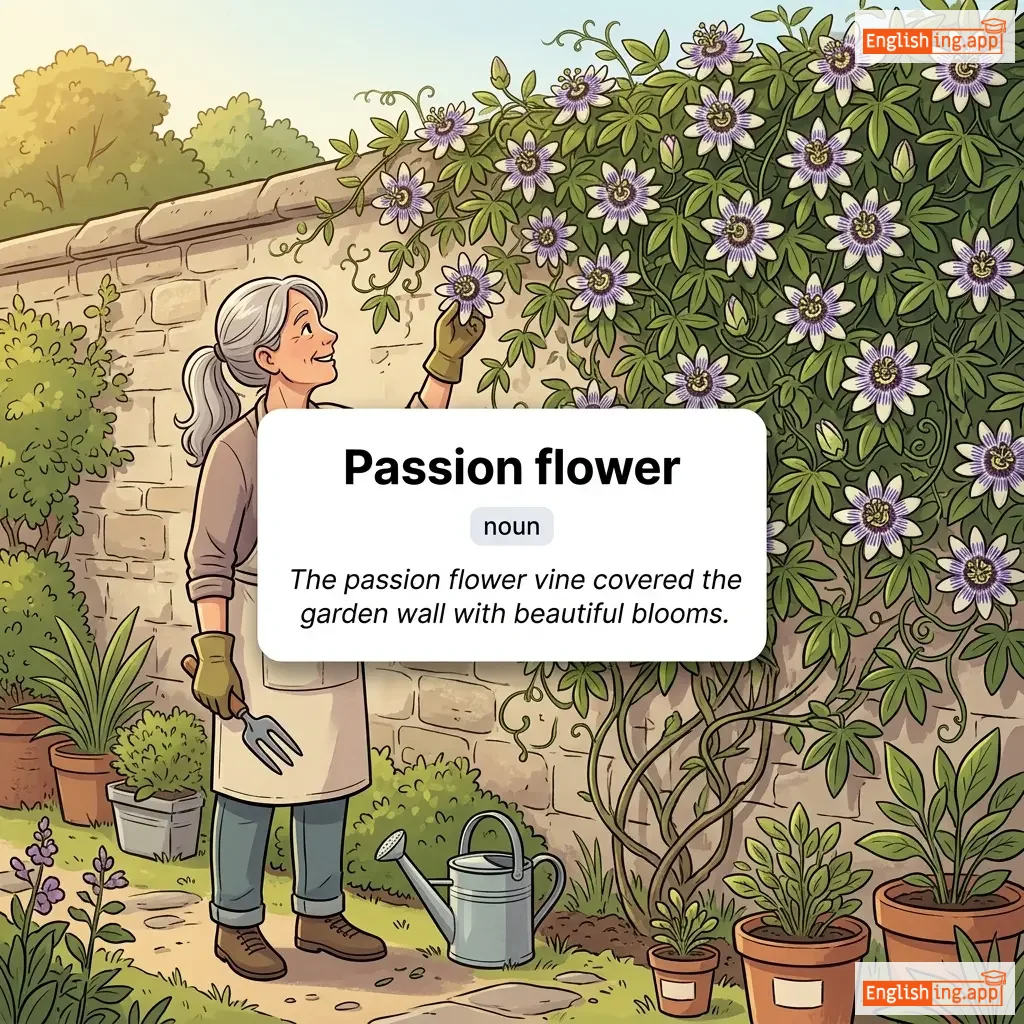
Passion flower definition card — visual illustration of the meaning
noun C1
/ˈpæʃ.ən ˌflaʊ.ər/
страстный цветок (strastnyy tsvetok)

A climbing plant with intricate, colorful flowers; also refers to royal poinciana tree with red-orange blooms

"The passion flower vine covered the garden wall with beautiful blooms."
"Лоза страстного цветка покрыла стену сада красивыми цветами." (loza strastnogo tsvetka pokryla stenu sada krasivymi tsvetami.)
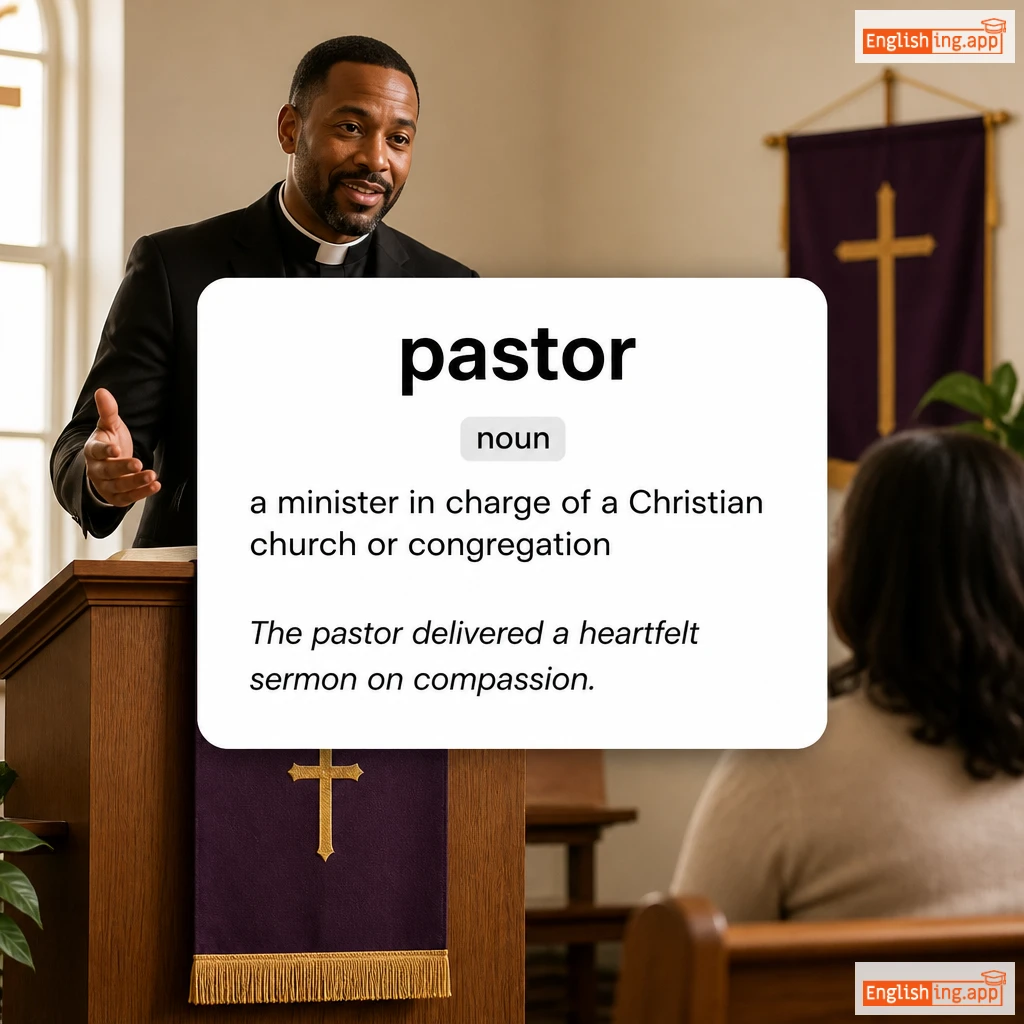
pastor definition card — visual illustration of the meaning
noun C1
/ˈpæstər/
пастор (pastor)

a minister in charge of a Christian church or congregation

"The pastor delivered a heartfelt sermon on compassion."

"Пастор прочитал трогательную проповедь о сострадании." (Pastor prochital trogatelnuyu propoved' o sostradanii.)
adjective, noun C1
/ˈpæstərəl/
деревенский, связанный с пастухами (derevenskiy, svyazannyy s pastukhami)

relating to the countryside, shepherds, or rural life; also relating to spiritual guidance by a pastor

"The painting had a calm pastoral scene with sheep grazing."

"Картина изображала спокойную пасторальную сцену с овцами, пасущимися." (Kartina izobrazhala spokoynuyu pastoral'nuyu stsenu s ovtsami, pasushchimisya.)
adjective C1
/pəˈtɜːrnəl/
отцовский (ottsovskiy)

Relating to or characteristic of a father.

"He took a paternal interest in the boy’s education."

"Он проявил отцовский интерес к обучению мальчика." (On proyavil ottsovskiy interes k obucheniu mal'chika.)
noun C1
/pəˈtɜːrnəti/
отцовство (otcovstvo)

The state of being someone's father.

"He demanded a paternity test to confirm his relationship with the child."

"Он потребовал тест на отцовство, чтобы подтвердить свои отношения с ребенком." (On potreboval test na otcovstvo, chtoby podtverdit' svoi otnosheniya s rebenkom.)
adjective C1
/ˌpæθəˈdʒɛnɪk/
патогенный (patogennyy)

Capable of causing disease.

"Some bacteria are harmless, while others are highly pathogenic."
"Некоторые бактерии безвредны, а другие являются высоко патогенными." (Nekotorye bakterii bezvredny, a drugie yavlyayutsya vysoko patogennymi.)
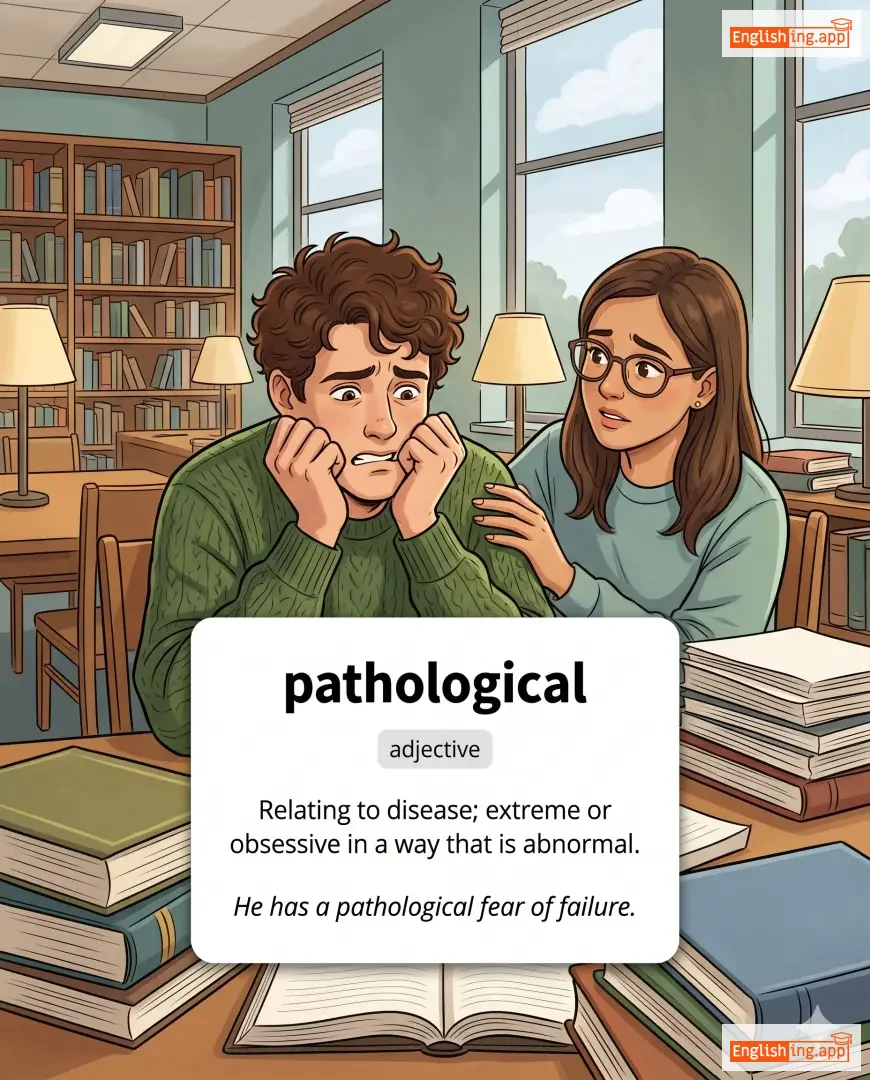
pathological definition card — visual illustration of the meaning
adjective C1
/ˌpæθəˈlɑːdʒɪkəl/
патологический, болезненный (patologicheskiy, boleznennyy)

Relating to disease; extreme or obsessive in a way that is abnormal.

"He has a pathological fear of failure."

"У него патологический страх неудачи." (U nego patologicheskiy strakh neudachi.)
noun C1
/pəˈθɒlədʒi/
психология (psikhologiya)

the scientific study of diseases, their causes, processes, and effects on the body

"Advances in pathology helped the doctors identify the rare infection quickly."

"Достижения в патологии помогли врачам быстро определить редкую инфекцию." (Dostizheniya v patologii pomogli vracham bistro opredelit' redkuyu infektsiyu.)
noun C1
/ˈpeɪθɒs/
патос (patos)

a quality in speech, writing, or events that evokes pity or deep emotion

"The documentary balanced pathos with hope, making the audience both weep and think."

"Документальный фильм сбалансировал патос с надеждой, заставив зрителей и плакать, и размышлять." (Dokumental'nyy film sbalansiroval patos s nadezhdoy, zastaviv zriteley i plakat', i razmyshlyat'.)
noun C1
/ˈpeɪtriɑːrk/
патриарх (patriarkh)

a male head of a family or tribe; an older respected man who leads a group

"As the family patriarch, he mediated disputes and kept long traditions alive."

"Как патриарх семьи, он разрешал споры и поддерживал старые традиции." (Kak patriarkh sem'i, on reshil spory i podderzhival starye traditsii.)
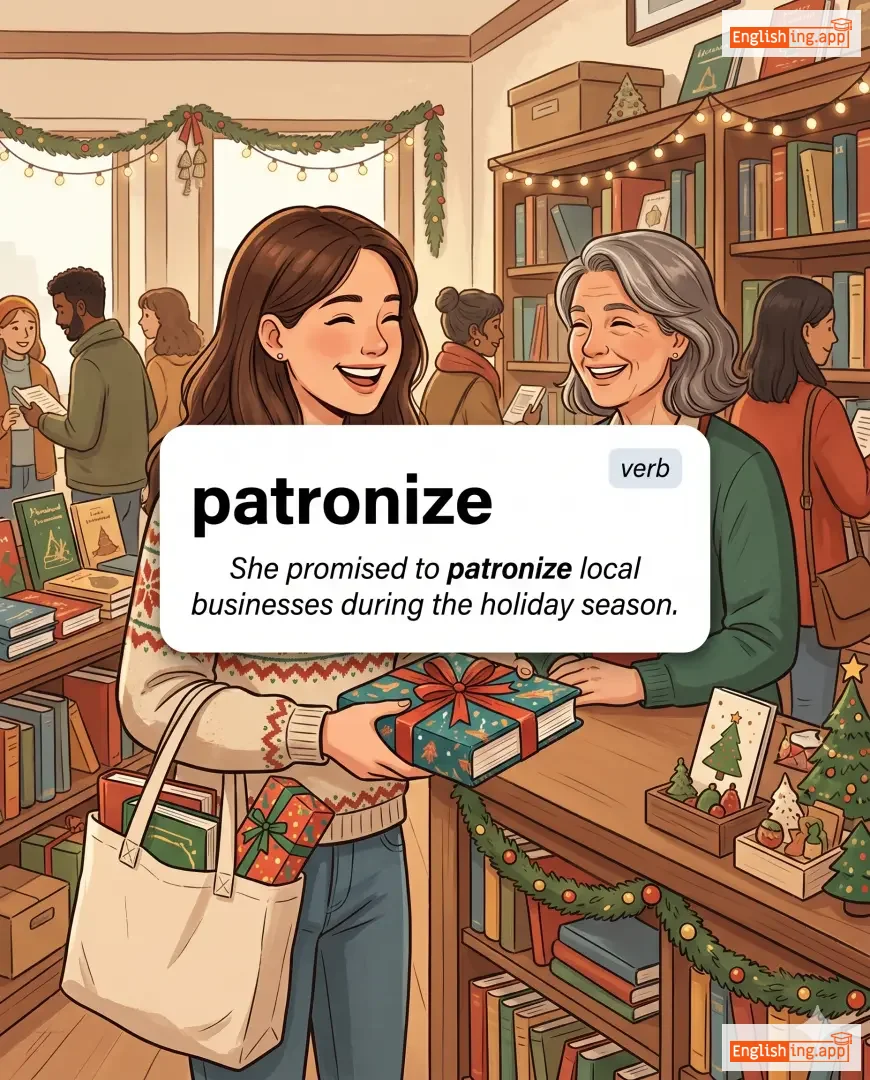
patronize definition card — visual illustration of the meaning
🛍️

patronize

verb C1
/ˈpeɪtrənaɪz/

to support or sponsor; to treat someone with apparent kindness that betrays a sense of superiority; to be a regular customer of a business

"She promised to patronize local businesses during the holiday season."

adjective C1
/ˈpeɪtrənaɪzɪŋ/
снисходительный (sniskhoditel'nyy)

showing kindness that is perceived as condescending or superior

"His patronizing tone offended the audience."

"Его снисходительный тон оскорбил аудиторию." (Ego sniskhoditel'nyy ton oskorbil auditoriyu.)
verb C1
/ˈpætər/
издавать повторяющийся звук лёгкого постукивания / быстро говорить механическим способом (izdavat' povtoryayushchiesya zvuki lyogkogo postukivaniya / bystro govorit' mekhanicheskim sposobom)

to make a repeated light tapping sound; to talk quickly in a rehearsed or mechanical way

"Rain pattered softly on the window."
"Дождь тихо капал на окно." (Dozhd' tikho kapal na okno.)
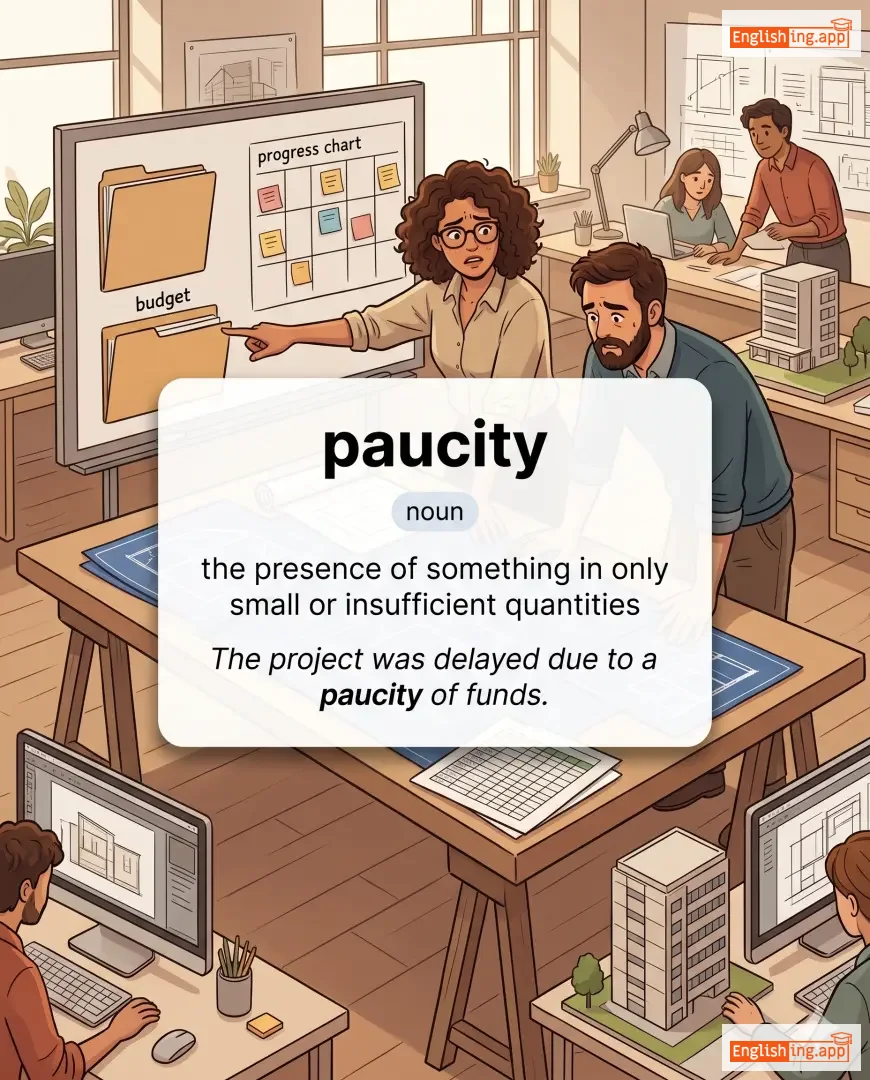
paucity definition card — visual illustration of the meaning
noun C1
/ˈpɔːsɪti/
нехватка / дефицит (nekhvatka / defitsit)

the presence of something in only small or insufficient quantities

"The project was delayed due to a paucity of funds."

"Проект был отложен из-за нехватки средств." (Proyekt byl otlozhen iz-za nekhvatki sredstv.)
noun C1
/ˈpɔːpər/
нищенствующий (nishchentsvuyushchiy)

A very poor person.

"The pauper begged for food on the street corner."

"Нищенствующий просил еду на углу улицы." (Nishchentsvuyushchiy prosil yedu na uglu ulitsy.)
noun C1
/pəˈvɪliən/
павильон (pavilyon)

A large tent or temporary building, often used for events or exhibitions.

"The wedding reception was held in a decorated pavilion."

"Свадебный приём прошёл в украшенном павильоне." (Svadebnyy priyom proshyol v ukrashennom pavilyone.)
noun C1
/peɪˈiː/
получатель (poluchatel)

A person to whom money is paid or is to be paid.

"The payee must sign the check before cashing it."

"Получатель должен подписать чек перед его обналичиванием." (Poluchatel' dolzhen podpisat' chek pered ego obnalichivaniem.)
adjective C1
/ˈpiːsəbl/
мирный (mirny)

inclined to avoid conflict; friendly and non-violent in nature

"She is a peaceable neighbor who never quarrels with anyone."
"Она мирная соседка, которая никогда не ссорится с кем-либо." (Ona mirnaya sosedka, kotoraya nikogda ne ssoritsya s kem-libo.)
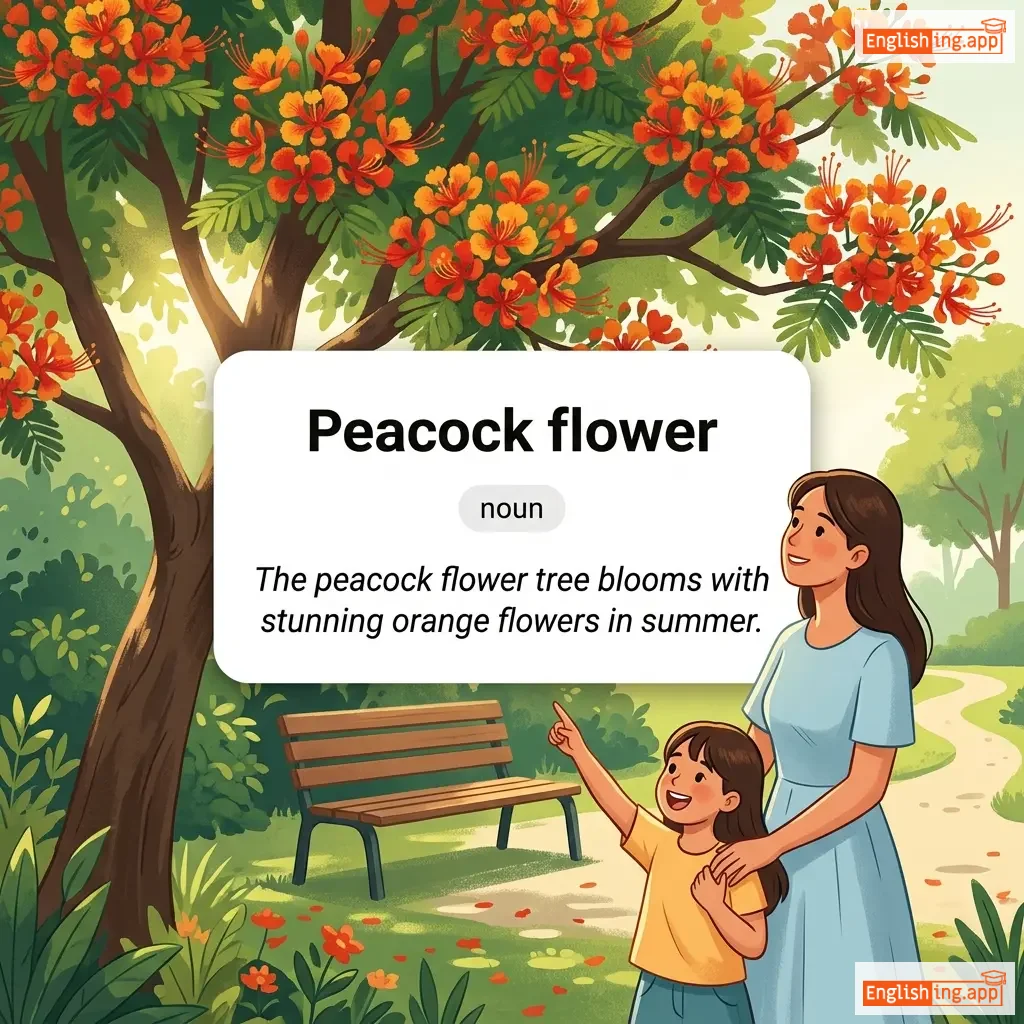
Peacock flower definition card — visual illustration of the meaning
noun C1
/ˈpiː.kɒk ˈflaʊ.ər/
павлиний цветок (pavliniy tsvetok)

a tropical tree with bright orange and red flowers that resemble a peacock's tail

"The peacock flower tree blooms with stunning orange flowers in summer."
"Дерево павлиний цветков цветет с потрясающими оранжевыми цветами летом." (Derevo pavliniy tsvetkov tsvetet s potryasayushchimi oranzhevymi tsvetami letom.)
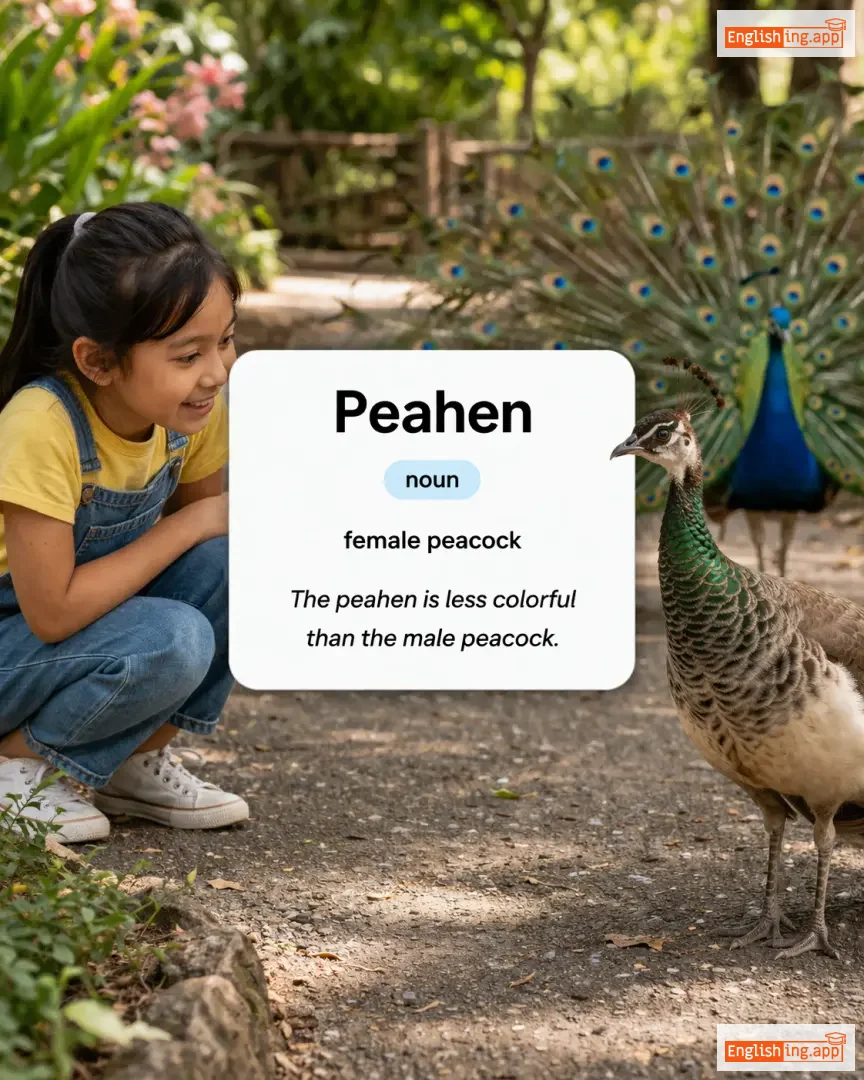
Peahen definition card — visual illustration of the meaning
noun C1
/ˈpiː.hən/
самка павлина (samka pavlina)

female peacock

"The peahen is less colorful than the male peacock."
"Пауна менее яркая, чем самец павлина." (Pauna meneye yarkaya, chem samec pavlina.)
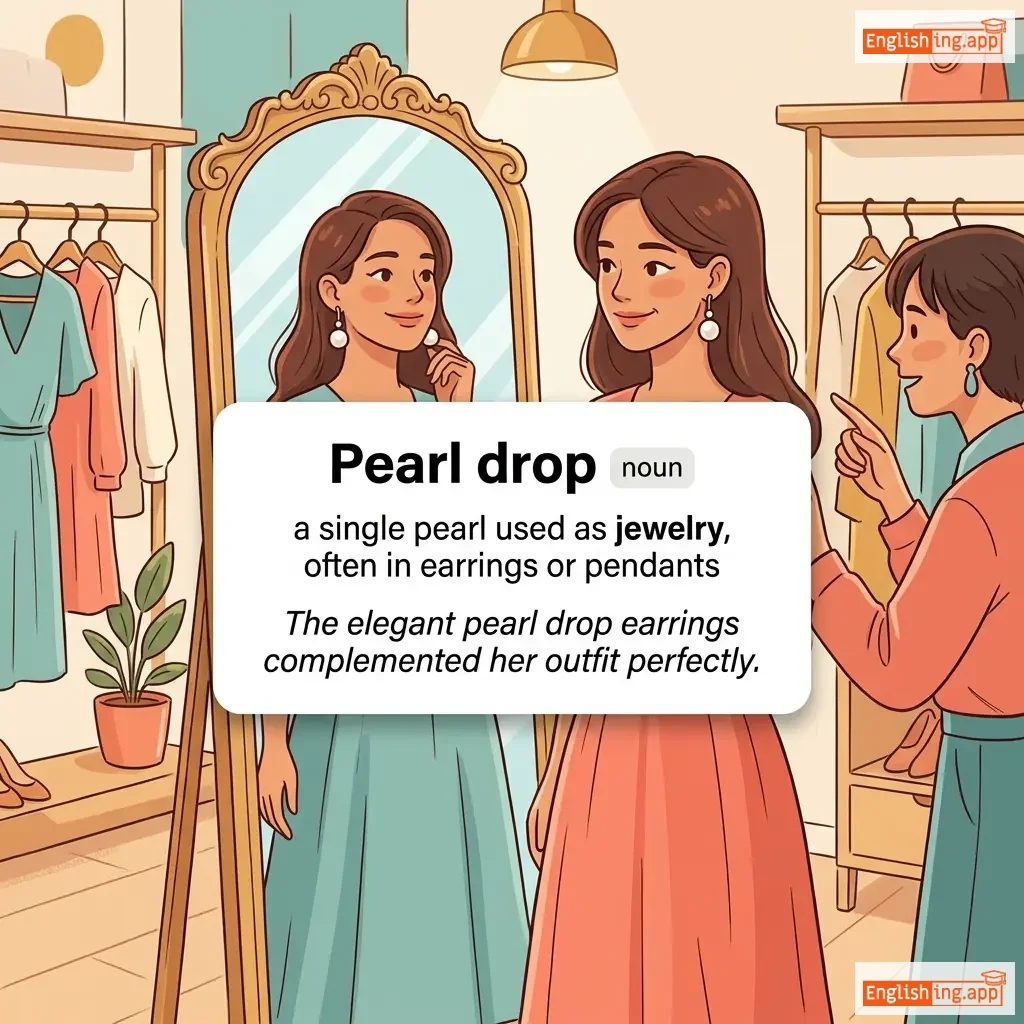
Pearl drop definition card — visual illustration of the meaning
noun C1
/pɜːrl drɒp/
жемчужная капля (zhemchuzhnaya kaplya)

a single pearl used as jewelry, often in earrings or pendants

"The elegant pearl drop earrings complemented her outfit perfectly."
"Элегантные серьги в виде жемчужных капель идеально сочетались с её нарядом." (elegantnye serygi v vide zhemchuzhnykh kapel' ideal'no sochetalis' s yey naryadom)
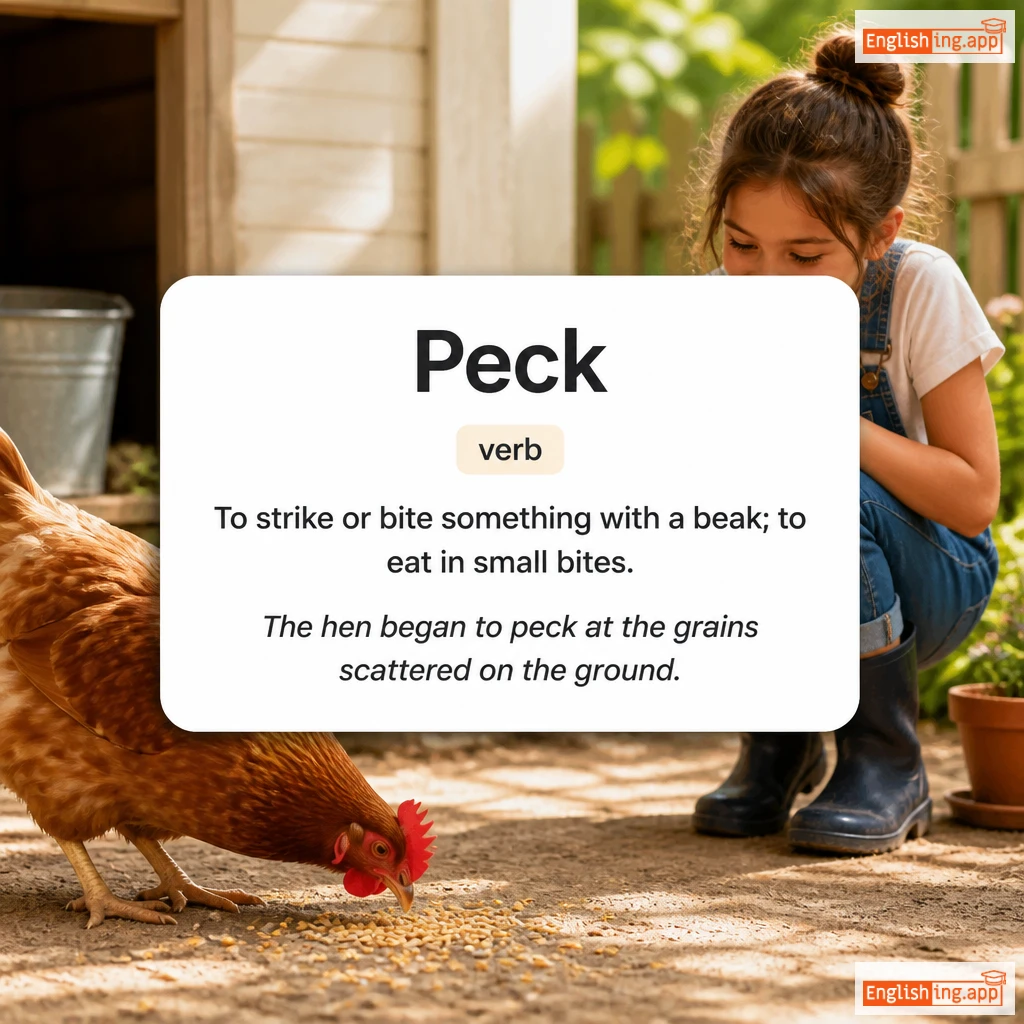
Peck definition card — visual illustration of the meaning
verb C1
/pɛk/
клевать (klevat)

To strike or bite something with a beak; to eat in small bites.

"The hen began to peck at the grains scattered on the ground."

"Курица начала клевать зерна, раскиданные по земле." (Kurytsa nachala klevat' zernya, raskidannye po zemle.)
adjective C1
/pɪˈkjuːniˌɛri/
финансовый (finansovy)

relating to money or financial matters

"They faced pecuniary difficulties after the business failed."
"Они столкнулись с финансовыми трудностями после того, как бизнес потерпел неудачу." (Oni stolknulis' s finansovymi trudnostyami posle togo, kak biznes poterpel neudachu.)
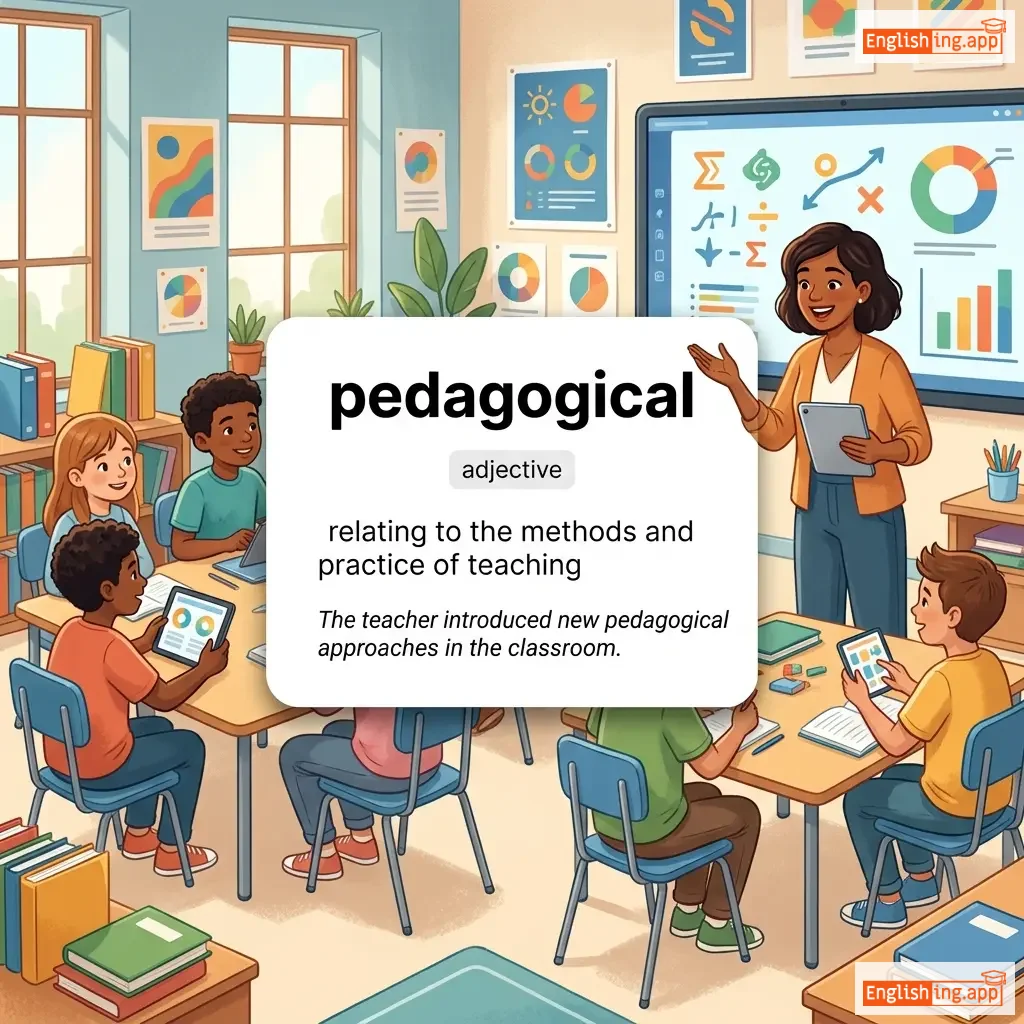
pedagogical definition card — visual illustration of the meaning
adjective C1
/ˌpɛdəˈɡɒdʒɪkəl/
педагогический (pedagogicheskiy)

relating to the methods and practice of teaching

"The teacher introduced new pedagogical approaches in the classroom."
"Учитель представил новые педагогические подходы в классе." (Uchitel predstavil novye pedagogicheskie podkhody v klasse.)
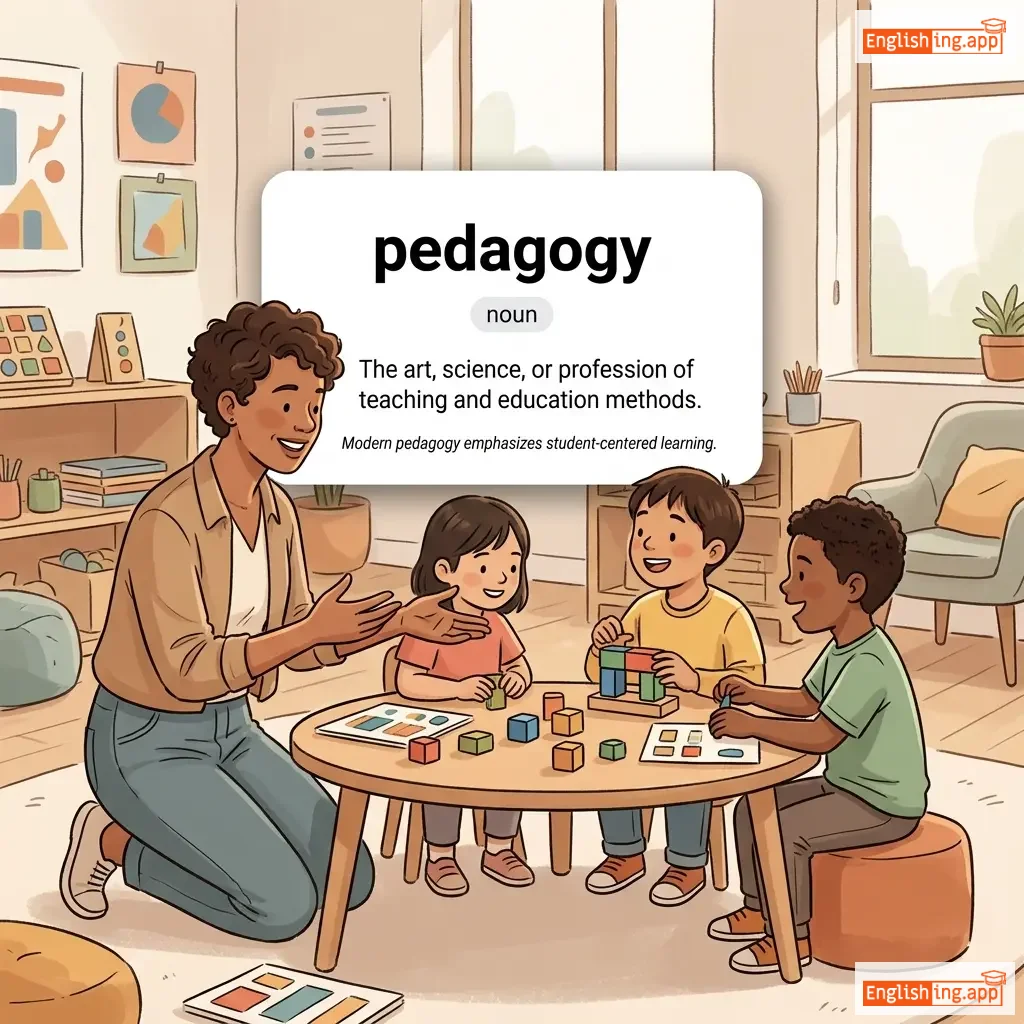
pedagogy definition card — visual illustration of the meaning
noun C1
/ˈpɛdəˌɡoʊdʒi/
педагогика (pedagogika)

The art, science, or profession of teaching and education methods.

"Modern pedagogy emphasizes student-centered learning."
"Современная педагогика подчеркивает обучение, ориентированное на студента." (Sovremennaya pedagogika podcherkivayet obuchenie, orientirovannoye na studenta.)
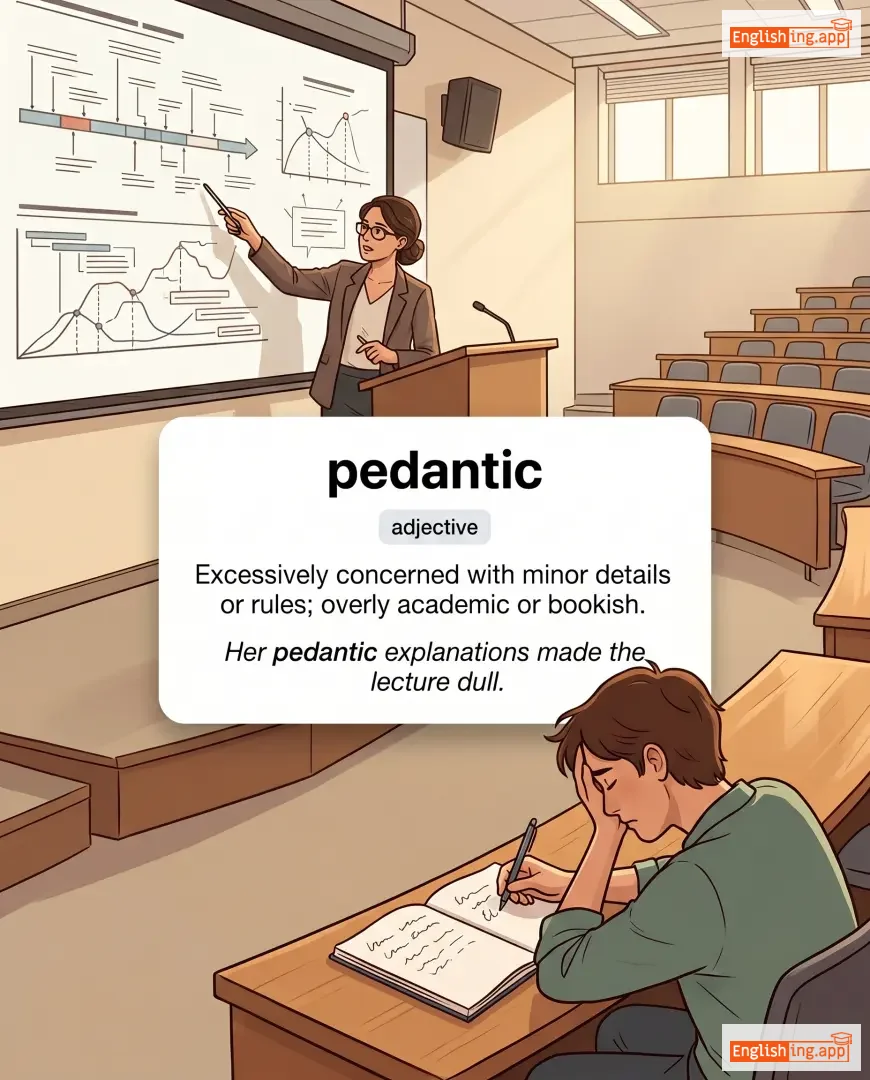
pedantic definition card — visual illustration of the meaning
adjective C1
/pəˈdæntɪk/
чрезмерно озабоченный мелкими деталями или правилами (chrezmerno ozabochennyy melkimi detal'yami ili pravilami)

Excessively concerned with minor details or rules; overly academic or bookish.

"Her pedantic explanations made the lecture dull."

"Её педантичные объяснения сделали лекцию скучной." (Yeyo pedantichnye obyasneniya sdelali lektsiyu skuchnoy.)
verb C1
/ˈpɛdəl/
продавать (prodavat)

To sell goods, often by going from place to place; sometimes used negatively to mean promoting an idea or product in a pushy way.

"Street vendors peddle handmade jewelry to tourists."

"Уличные торговцы продают ручной работы украшения туристам." (Ulichnye torgovtsy prodajut ruchnoy raboty ukrasheniya turistar.)