語彙集

英単語辞書 | 単語の意味、定義、例文

Quack definition card — visual illustration of the meaning
noun C1
/kwæk/
骗子医生 (pianzi yisheng)

a fraudulent or ignorant pretender to medical skill; a charlatan

"Beware of the quack who promises miracle cures online."

"当心那个在线承诺奇迹疗法的骗子医生。" (dangxin nage zaixian chengnuo qiji liaofa de pianzi yisheng)
verb C1
/kwɒˈdruːpəl/
四倍增加 (sì bèi zēng jiā)

to increase or make something four times as much or as many

"Within a year, the startup quadrupled its user base through aggressive partnerships."

"在一年内,通过激进的合作伙伴关系,初创公司将其用户基础增加了四倍。" (Zài yī nián nèi, tōngguò jījìn de hézuò huǒbàn guānxì, chūchuàng gōngsī jiāng qí yònghù jīchǔ zēngjiāle sì bèi.)
noun C1
/ˈkwæɡˌmaɪər/
泥潭,困境 (nítán, kùnjìng)

a soft, wet area of land that gives way underfoot; a complex or dangerous situation

"The hikers were trapped in a political quagmire."

"徒步旅行者被困在一个政治泥潭中。" (Túbù lǚxíng zhě bèi kùn zài yīgè zhèngzhì nítán zhōng.)
verb, noun C1
/kweɪl/
感到恐惧; 一种小的短尾鸟 (gǎn dào kǒng jù; yī zhǒng xiǎo de duǎn wěi niǎo)

verb: to feel or show fear; noun: a small, short-tailed bird

"She quailed at the sight of the approaching storm."

"她在看到即将来临的风暴时感到害怕。" (Tā zài kàn dào jí jiāng lái lín de fēng bào shí gǎn dào hài pà.)
adjective C1
/kweɪnt/
古雅的 (gǔ yǎ de)

attractively unusual or old-fashioned

"They stayed in a quaint little cottage by the sea."

"他们住在海边的一座古雅的小屋里。" (Tāmen zhù zài hǎibiān de yīzuò gǔ yǎ de xiǎo wū lǐ.)
noun C1
/kwɑːm/
怀疑 (huáiyí)

a feeling of doubt, worry, or fear about something

"She had no qualm about speaking her mind."

"她在表达自己想法时没有任何怀疑。" (Tā zài biǎodá zìjǐ xiǎngfǎ shí méiyǒu rènhé huáiyí.)
noun (plural) C1
/kwɑːmz/
疑虑 (yílǜ)

feelings of doubt, worry, or uneasiness

"He had serious qualms about accepting the offer."

"他对接受这个提议感到严重的怀疑。" (Tā duì jiēshòu zhège tíyì gǎndào yánzhòng de huáiyí.)
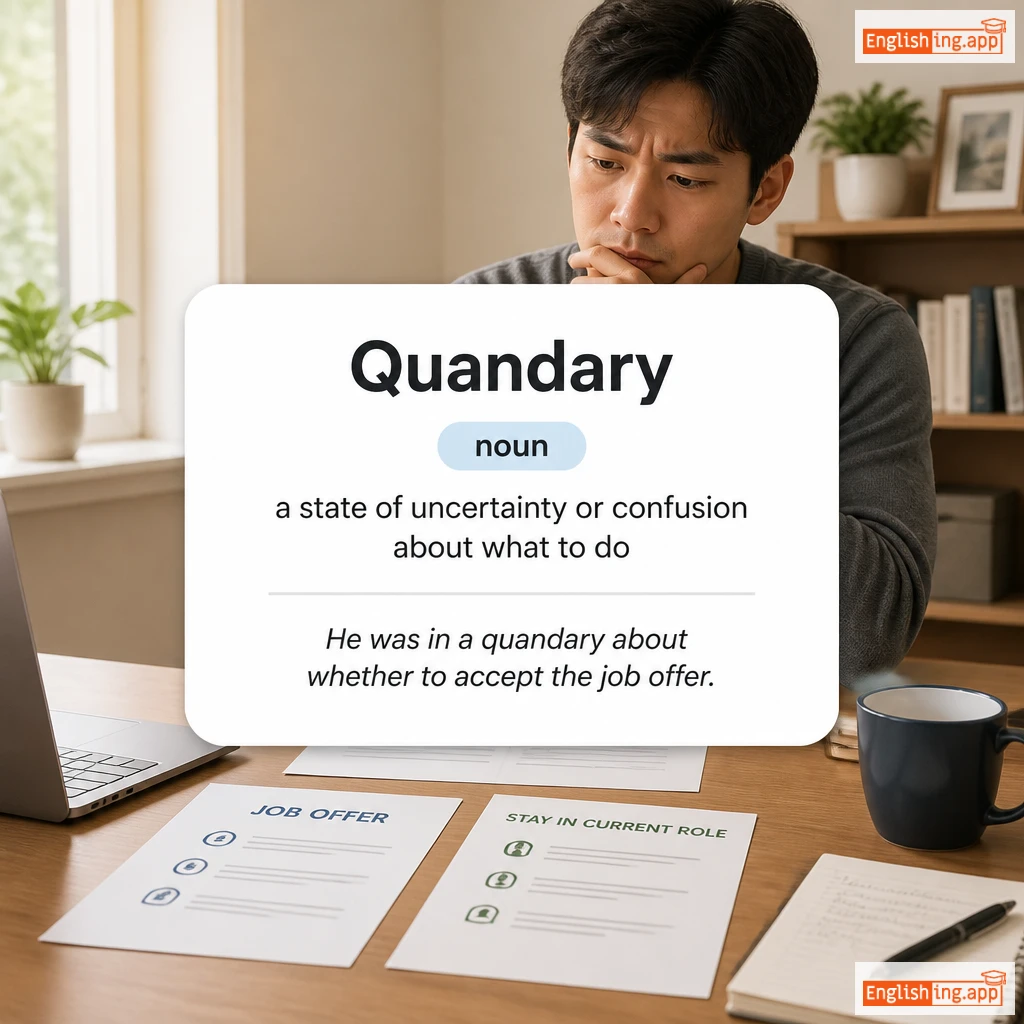
Quandary definition card — visual illustration of the meaning
noun C1
/ˈkwɒndəri/

a state of uncertainty or confusion about what to do

"He was in a quandary about whether to accept the job offer."

quantifiable definition card — visual illustration of the meaning
adjective C1
ˈkwɒn.tɪ.faɪ.ə.bəl
可量化的 (kwontuhfaiuhbuhl)

Able to be expressed or measured as a quantity.

"Sales performance should be quantifiable to measure progress."

"销售业绩应可量化,以便衡量进展。" (xiaoshouyejiyingkelianghuayibianhengliangjinzhan)
adjective C1
/ˈkwɒr.əl.səm/
好争吵的 (hǎo zhēngchǎo de)

Inclined to argue or fight.

"He became quarrelsome after losing the game."

"他在输掉比赛后变得好争吵。" (Tā zài shū diào bǐsài hòu biàn dé hǎo zhēngchǎo.)
noun/verb C1
/ˈkwɒr.i/
采石场 / 猎物 (cǎi shí chǎng / liè wù)

A place where stone or minerals are extracted; also means prey when hunted.

"The workers quarried limestone from the hill."

"工人们从山上开采石灰岩。" (Gōngrén men cóng shān shàng kāicǎi shíhuīyán.)
noun C1
/kwɔːrˈtɛt/
四重奏 (sìchóngzòu)

A group of four people playing music or singing together.

"The string quartet performed beautifully at the concert."

"弦乐四重奏在音乐会上表现得非常出色。" (Xiányuè sìchóngzòu zài yīnyuè huì shàng biǎoxiàn dé fēicháng chūsè.)
verb C1
/kwɑːʃ/
撤销 (chèxiāo)

To reject or void something legally or to put an end to something forcefully.

"The court quashed the decision due to lack of evidence."

"法院因缺乏证据而撤销了决定。" (Fǎyuàn yīn quēfá zhèngjù ér chèxiāo le juédìng.)
noun C1
/kiː/
码头 (matou)

A platform lying alongside or projecting into water for loading and unloading ships.

"The cargo was unloaded at the quay."

"货物在码头被卸下。" (Huowu zai matou bei xiexia.)
adjective C1
/ˈkwiːzi/
恶心 (ěxīn)

Feeling sick to one's stomach; nauseated.

"She felt queasy after the long boat ride."

"她在长时间的船上旅行后感到恶心。" (Tā zài cháng shíjiān de chuán shàng lǚxíng hòu gǎndào ěxīn.)
adjective C1
/kwɪər/
奇怪 (qiguai)

Strange, odd, or unusual.

"He had a queer feeling that something was wrong."

"他有一种奇怪的感觉,觉得有什么不对劲。" (Ta you yi zhong qiguai de ganjue, jue de you shenme bu dui jin.)
verb C1
/kwɛl/
镇压 (zhenya)

To suppress or put an end to something, usually by force.

"The police were called to quell the violent protest."
"警方被召唤以平息暴力抗议。" (Jǐngfāng bèi zhàohuàn yǐ píngxī bàolì kàngyì.)
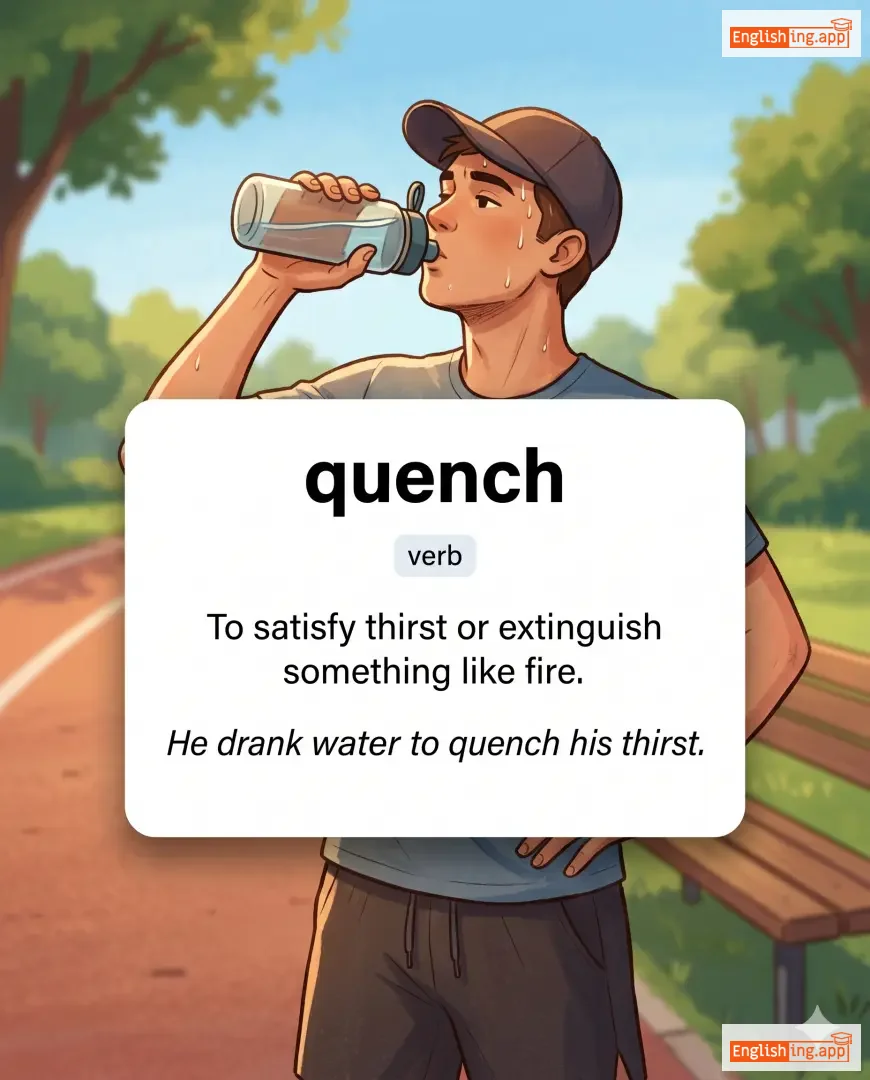
quench definition card — visual illustration of the meaning
verb C1
/kwɛntʃ/
解渴 (jie ke)

To satisfy thirst or extinguish something like fire.

"He drank water to quench his thirst."

"他喝水来解渴。" (Ta he shui lai jie ke.)
verb C1
/ˈkwentʃɪŋ/
解渴 / 熄灭 (jie ke / xi mie)

The act of satisfying thirst or extinguishing something like fire.

"Drinking cold water was quenching her thirst."
"喝冷水解渴。" (He leng shui jie ke.)
quibble definition card — visual illustration of the meaning
🗣️

quibble

verb/noun C1
/ˈkwɪbəl/

To argue or raise objections about a trivial matter; a petty objection.

"They quibbled over who should pay the bill."

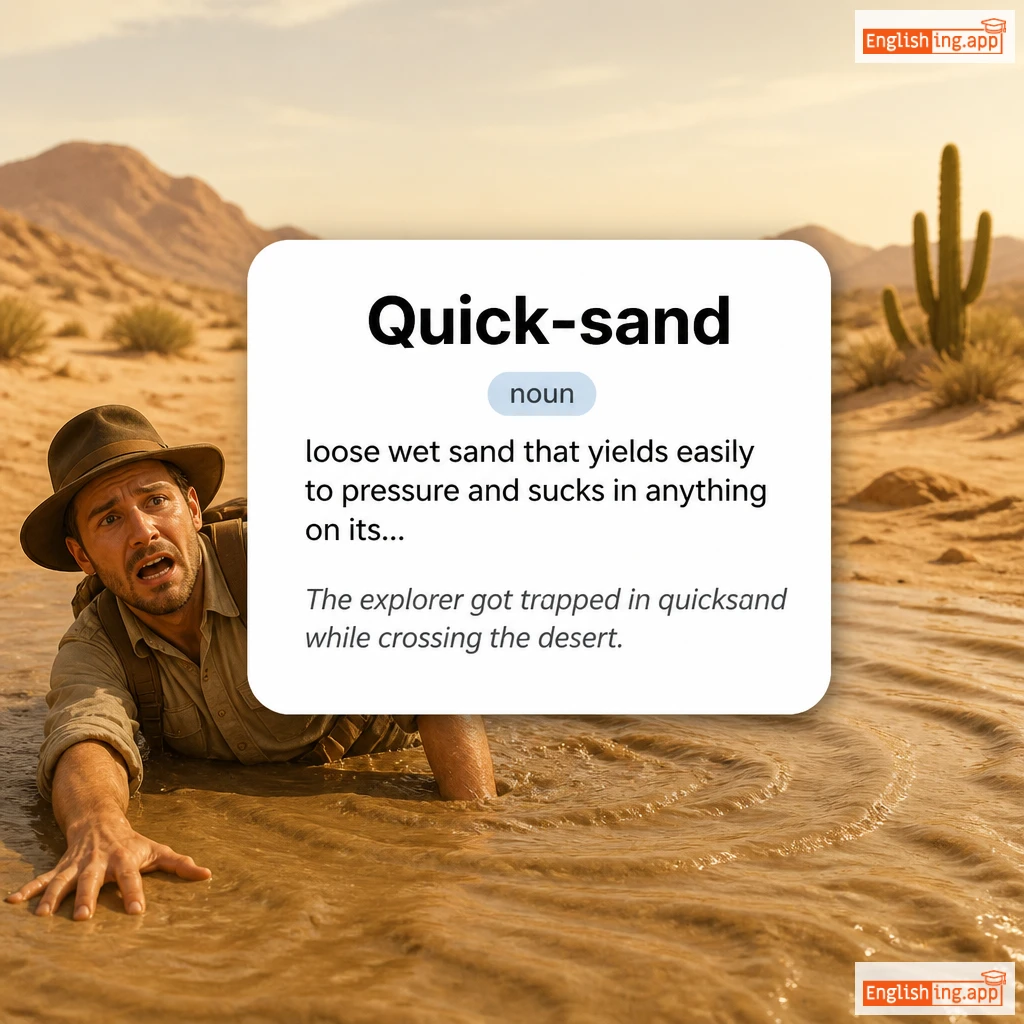
Quick-sand definition card — visual illustration of the meaning
noun C1
/ˈkwɪk.sænd/
流沙 (liú shā)

loose wet sand that yields easily to pressure and sucks in anything on its surface

"The explorer got trapped in quicksand while crossing the desert."

"探险家在穿越沙漠时被流沙困住。" (tàn xiǎn jiā zài chuān yuè shā mò shí bèi liú shā kùn zhù)
verb C1
/ˈkwɪkən/
加快 (jiakuai)

to make or become faster; to accelerate

"His pulse began to quicken as he approached the finish line."

"他的脉搏在接近终点线时开始加速。" (Tā de màibó zài jiējìn zhōngdiǎn xiàn shí kāishǐ jiāsù.)
noun C1
/kwɪnˈtɛsəns/
精髓 (jīngsuǐ)

The purest or most perfect example of something.

"She is the quintessence of elegance."
"她是优雅的精髓。" (Tā shì yōuyǎ de jīngsuǐ.)
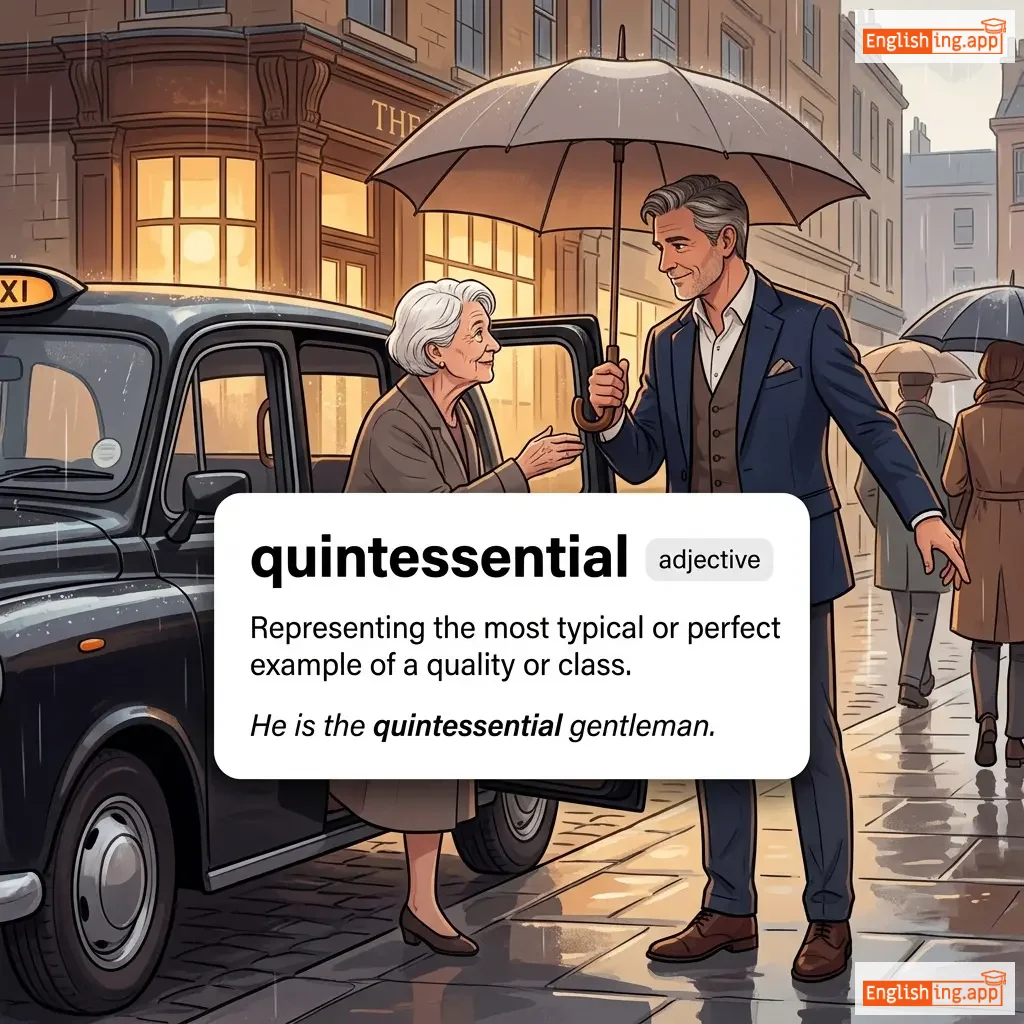
quintessential definition card — visual illustration of the meaning
adjective C1
/ˌkwɪntɪˈsɛnʃəl/
典型例子 (dianxing lizi)

Representing the most typical or perfect example of a quality or class.

"He is the quintessential gentleman."

"他是典型的绅士。" (Ta shi dianxing de shenshi.)
noun C1
/kwɪnˈtɛt/
五重奏 (wǔchóngzòu)

A group of five people or things, especially musicians.

"The jazz quintet performed beautifully."

"爵士五重奏演奏得非常美妙。" (Juéshì wǔchóngzòu yǎnzòu dé fēicháng měimiào.)
noun/verb C1
/kwɪp/
机智的评论 (jizhi de pinglun)

A witty remark; to make a witty or clever comment.

"She quipped about the weather during the meeting."
"她在会议中调侃天气。" (Ta zai huiyi zhong tiaokan tianqi.)
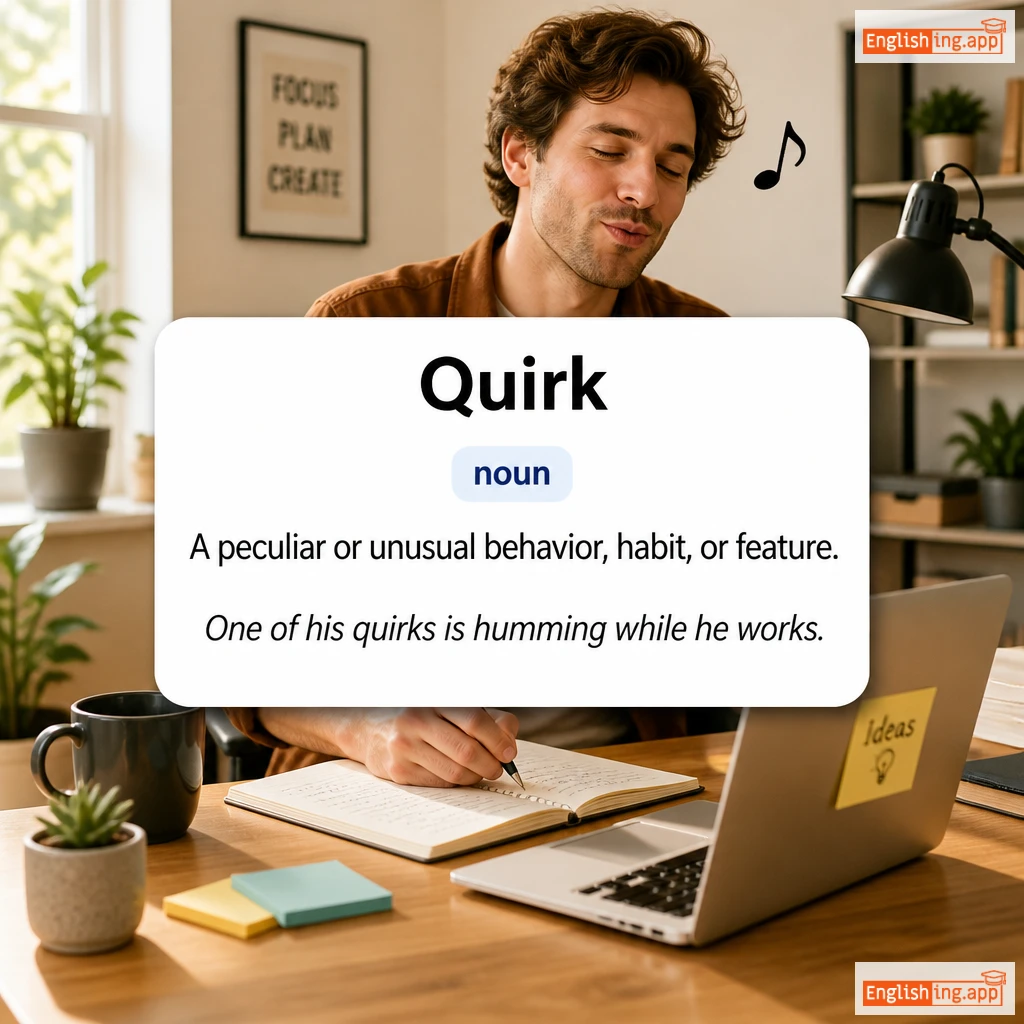
Quirk definition card — visual illustration of the meaning
noun C1
/kwɜːrk/
怪癖 (guaipian)

A peculiar or unusual behavior, habit, or feature.

"One of his quirks is humming while he works."

"他的一种怪癖是工作时哼歌。" (Ta de yi zhong guaipian shi gongzuo shi hengge.)
verb C1
/ˈkwɪvər/
颤抖 (chan dao)

To tremble or shake with slight but rapid motion.

"Her lips began to quiver as she tried not to cry."

"她的嘴唇开始颤抖,因为她试图不哭。" (Ta de zuǐchún kāishǐ chàndǒu, yīnwèi tā shìtú bù kū.)
adjective C1
/ˈkwɪzɪkəl/
困惑的, 疑问的 (kùnhuò de, yíwèn de)

Expressing mild or amused puzzlement.

"She gave him a quizzical look when he made the strange comment."

"当他说出奇怪的评论时,她投给了他一个困惑的眼神。" (Dāng tā shuō chū qíguài de pínglùn shí, tā tóu gěile tā yīgè kùnhuò de yǎnshén.)
noun C1
/kwoʊ/
现状 (xianzhuang)

The existing state of affairs or situation, often used in the phrase 'status quo'.

"He wanted to maintain the status quo at work."

"他想保持工作中的现状。" (Ta xiang baochi gongzuo zhong de xianzhuang.)
noun C1
/ˈkwɔːrəm/
法定人数 (fǎdìng rénshù)

The minimum number of members needed to conduct official business in a meeting.

"The board meeting was postponed because there was no quorum."

"由于没有法定人数,董事会会议被推迟了。" (yóuyú méiyǒu fǎdìng rénshù, dǒngshìhuì huìyì bèi tuīchí le.)