The Chef's Journey
リナは情熱的な chef で、伝統的なバングラデシュの food を使って実験するのが大好きでした。彼女の夢は、自分の restaurant を開いて、独自の recipes を共有することでした。
さまざまな kitchens で cooking を続けた後、リナはついに勇気を出して自分の restaurant を始めました。彼女は丁寧に menu をデザインし、伝統的な dishes に現代的なひねりを加えました。
彼女の得意技は sauces と flavors の融合でした。完璧な量の pepper と spices を使って dish's taste を変える方法を知っていたのです。
オープン初日、数人の客しか来ませんでした。リナはすべての meal を自分で cooked し、すべての plate を自分で運びました。客が彼女の food を tasted すると、皆驚嘆しました。
ある客が言いました:「この dish はすごい!こんなに美味しいバングラデシュの food は初めて eaten した。Recipe は何ですか?」
リナは微笑んで言いました:「それは祖母の伝統的な recipe ですが、私は特別な spices と独自の sauce を加えました。秘密は cooking しながら tasting し、flavors を完璧に調整することです。」
やがてリナの restaurant は人気になりました。人々は lunch、dinner、特別な dining のために訪れるようになりました。彼女の menu には多彩な料理があり、軽い meals から本格的なコース dinners までそろっていました。
リナはチームに、各 dish の作り方、plates の並べ方、そして正しい fork の使い方での eating まで教えました。
Kitchen では品質に厳しく、すべての meal に新鮮な材料、適切な cooking 時間、正確な spice の分量を求めました。完璧でなければなりませんでした。
料理評論家たちは彼女の restaurant を訪れ、熱狂的なレビューを書きました。「Chef の flavors への熟練、pepper と spices の完璧なバランス、各 plate の美しいプレゼンテーション——すべてが素晴らしい dining 体験を生み出しています。」
今では、リナの restaurant は人気の目的地となりました。人々は席を待つのに何時間もかけます。しかしリナは初心を忘れません。彼女は新しい recipes に挑戦し、伝統的な dishes に現代的な工夫を加え、すべての food が愛を込めて taste されるようにしています。
リナは言います:「Cooking は単なる food 作りではありません。それは芸術です。優れた chef は recipes に従う方法を知っていますが、偉大な chef は recipes を創造する方法を知っています。Menu の計画、dish の見せ方、flavor のバランス——すべてが重要です。私は自分の kitchen で cook するとき、常に tasting し、spices を調整し、sauces を完成させます。すべての meal は物語を語り、すべての plate は flavors で描くキャンバスです。Dining は単なる eating ではなく、体験です。私の restaurant では、lunch でも dinner でも、人々に food だけでなく、雰囲気、サービス、プレゼンテーションを楽しんでほしい。美しく盛り付けられた plate に完璧に cooked dish、正しい fork、バランスの取れた pepper、香り高い spices、濃厚な sauces——それが私のビジョンです。すべての taste は忘れられないものであり、すべての meal は特別であるべきです。私は recipes をチームに伝え、次世代の chefs を育てます。良い food、優れた cooking、素晴らしい dining——これらは守り、讃えるべきものです。」
リナの旅は、多くの若い chefs にインスピレーションを与え、自分の restaurants を持つ夢を抱かせています。彼女の成功は、情熱を持って cooking に取り組み、伝統的な recipes を尊重し、常に flavors で革新することで、心を動かす food を作り出せることを証明しています。すべての dish、すべての meal、すべての dining 経験が、taste、flavor、そして cooking の芸術を称える料理の遺産を築いているのです。
|
絵文字
|
単語 | Images | 翻訳 | 過去 | 過去分詞 | 三人称単数 | 動名詞 | 意味 | 例文 | 例文の翻訳 | 表現例 | 表現例の意味 | 表現例の翻訳 | 同義語 | 対義語 | コロケーション | ニーモニック |
|---|---|---|---|---|---|---|---|---|---|---|---|---|---|---|---|---|---|
|
👨🍳
••••••
|
/ʃɛf/
noun
••••••
|
|
- •••••• | - •••••• | - •••••• | - •••••• | - •••••• |
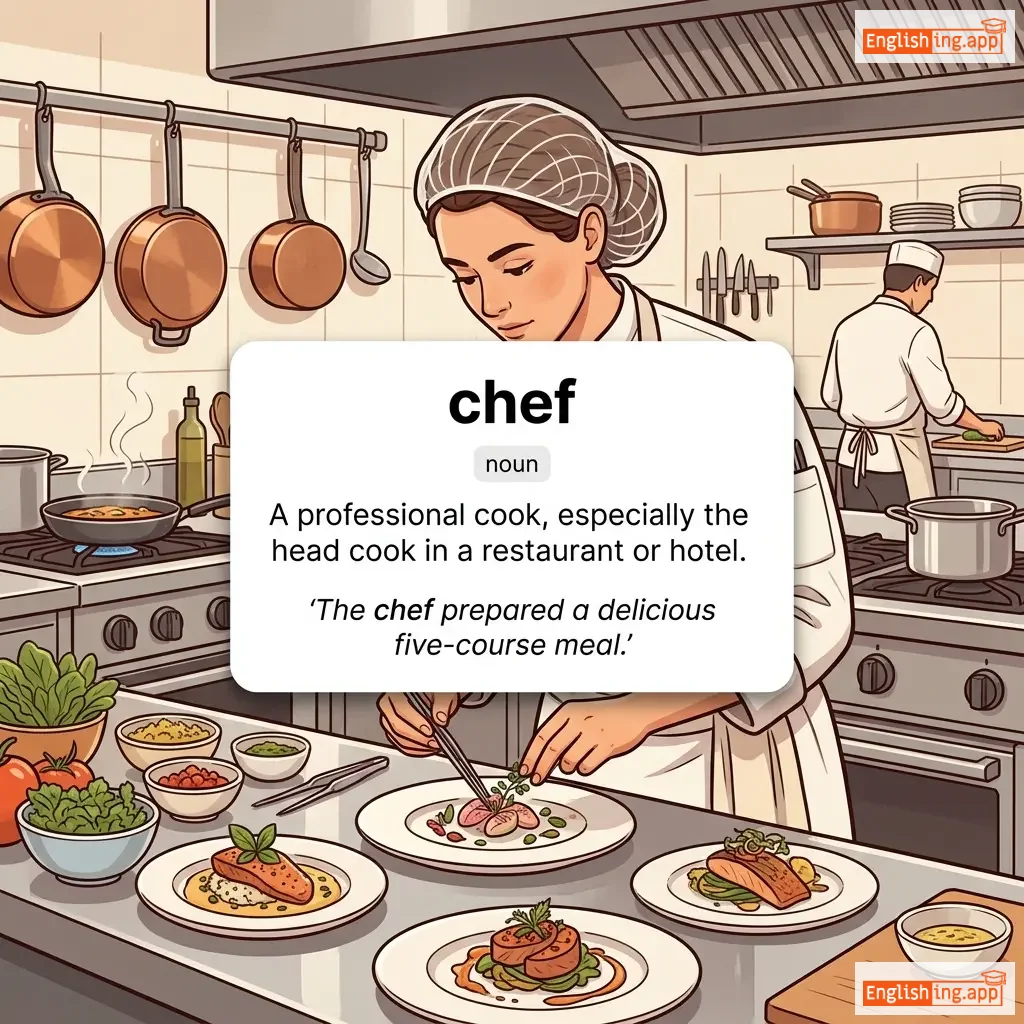
A professional cook, especially the head cook in a restaurant or hotel.
••••••
|
The chef prepared a delicious five-course meal. |
- •••••• |
too many chefs spoil the broth |
If too many people are involved in managing something, it may fail.
••••••
|
- •••••• |
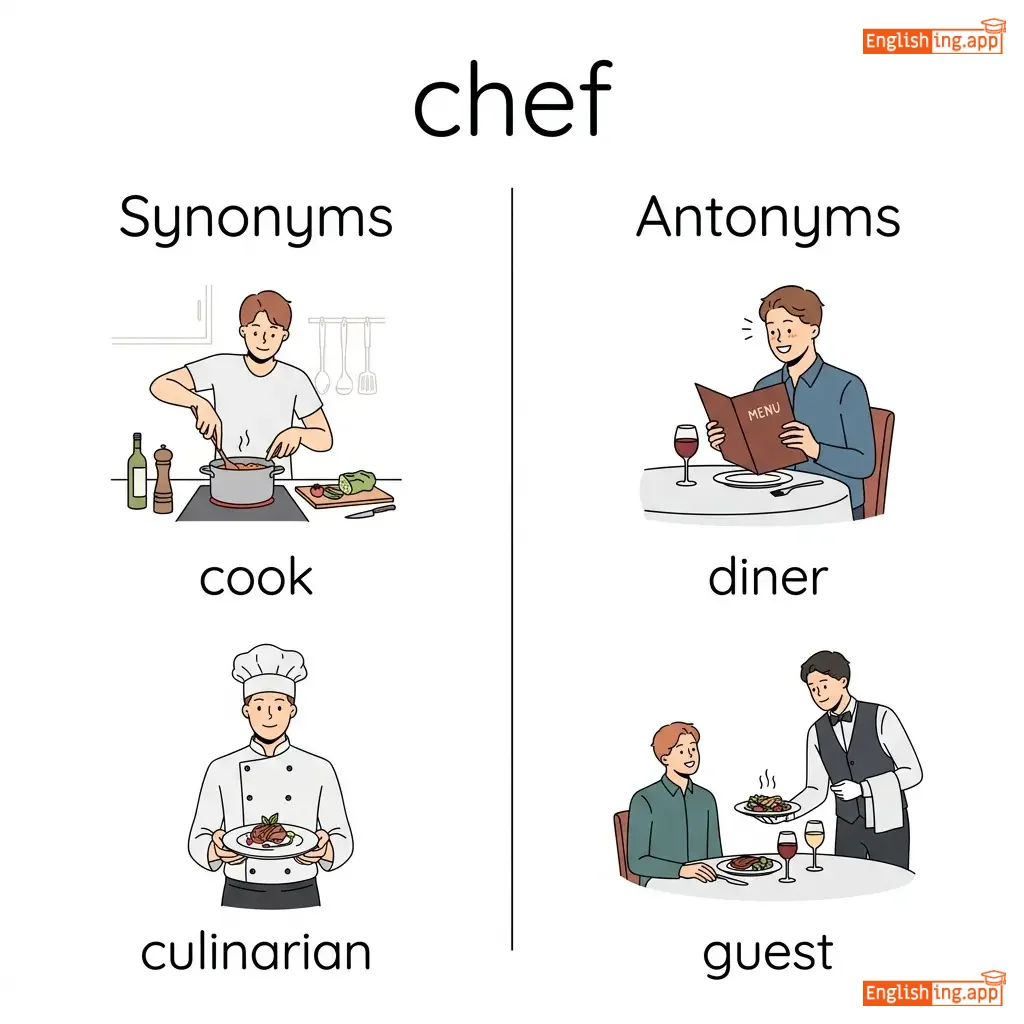
cook, culinarian, head cook, gourmet, culinary artist
••••••
|
diner, guest, customer
••••••
|
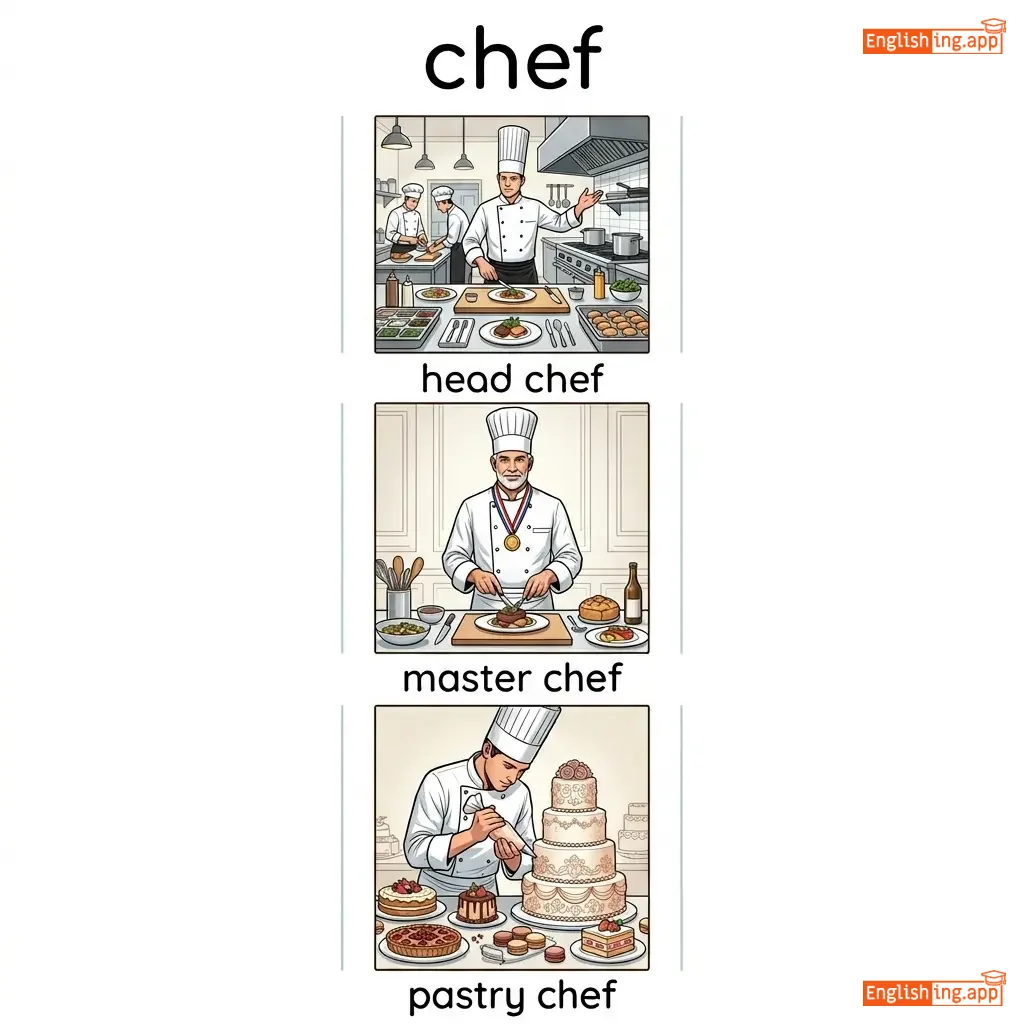
head chef, master chef, pastry chef, celebrity chef
••••••
|
No •••••• |
|
👩🍳
••••••
|
/kʊk/
verb
(kuku)
••••••
|
|
料理する
ryōri suru
••••••
|
cooked
kukkudo
••••••
|
cooked
kukkudo
••••••
|
cooks
kukkusu
••••••
|
cooking
kukkingu
••••••
|
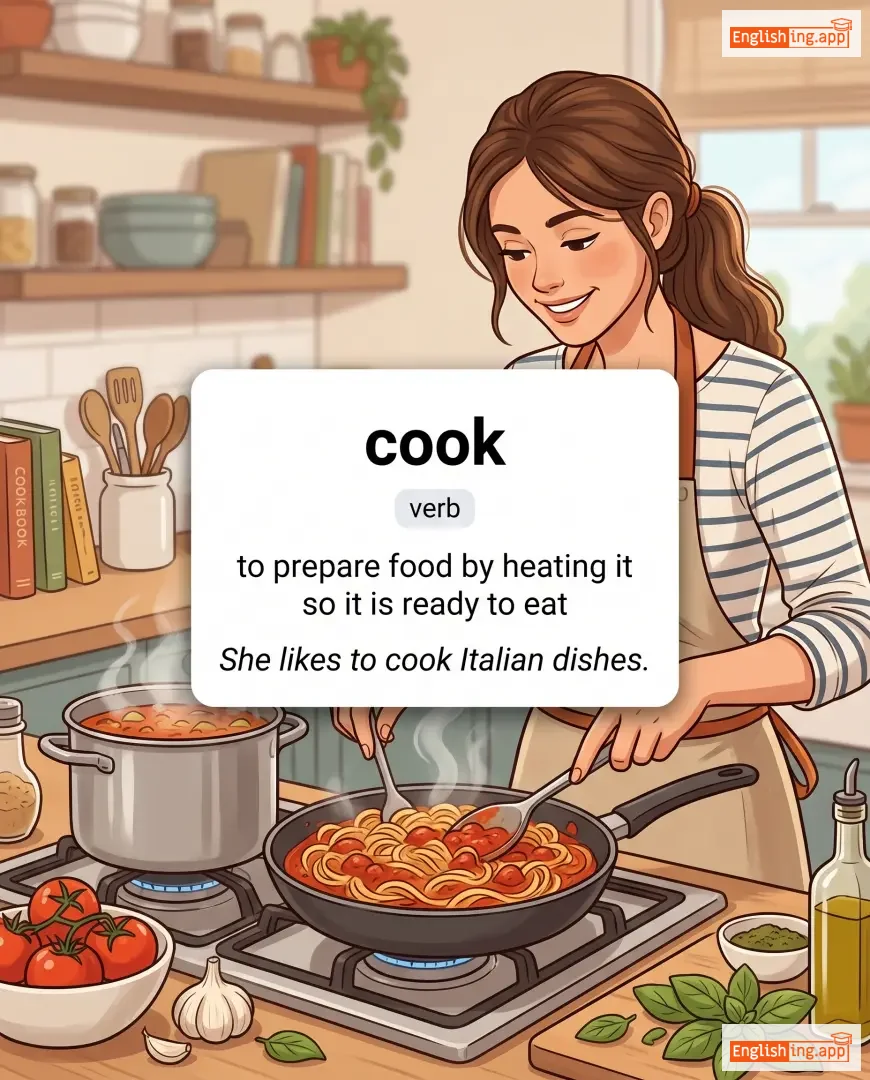
to prepare food by heating it so it is ready to eat
••••••
|
She likes to cook Italian dishes.
彼女はイタリア料理を作るのが好きです。
••••••
|
彼女はイタリア料理を作るのが好きです。
Kanojo wa Itaria ryōri o tsukuru no ga suki desu.
••••••
|
cook up a storm
大騒ぎで料理する
••••••
|
to prepare a lot of food enthusiastically
••••••
|
元気よくたくさんの料理を作る
genki yoku takusan no ryōri o tsukuru
••••••
|
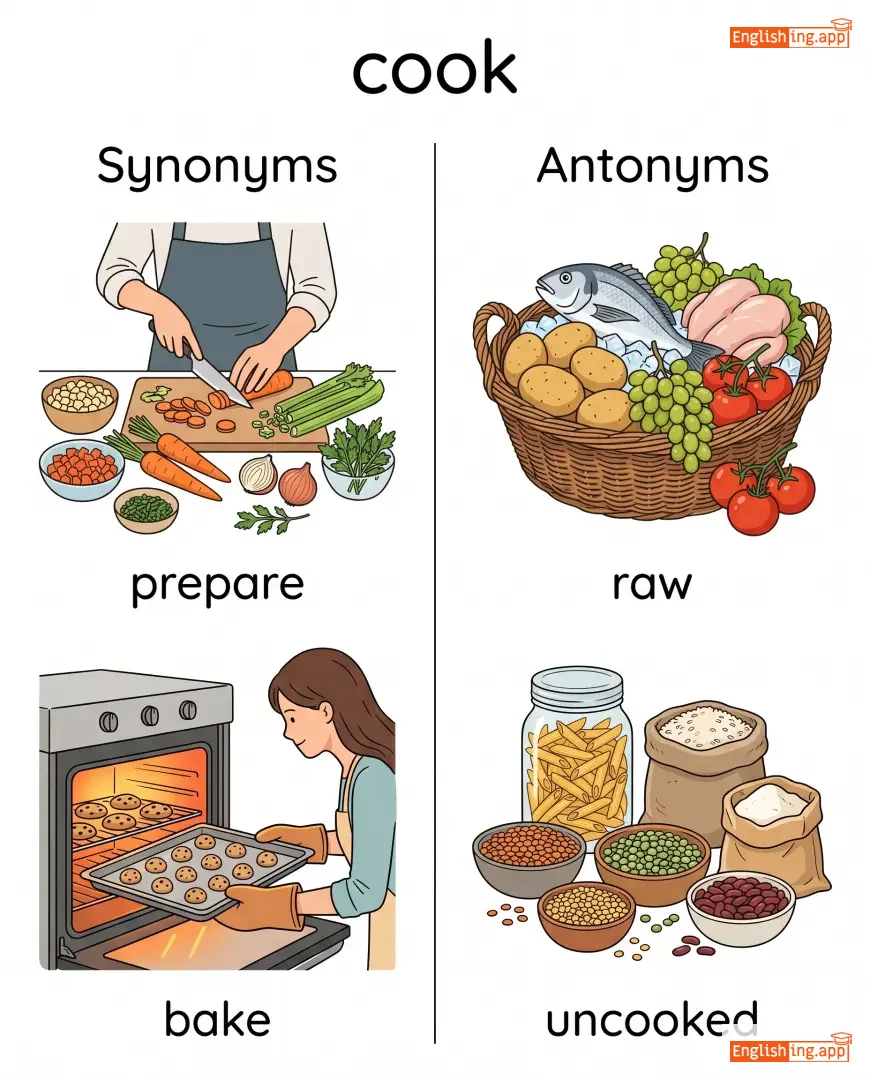
prepare, bake, fry, roast, grill
••••••
|
raw, uncooked, freeze
••••••
|
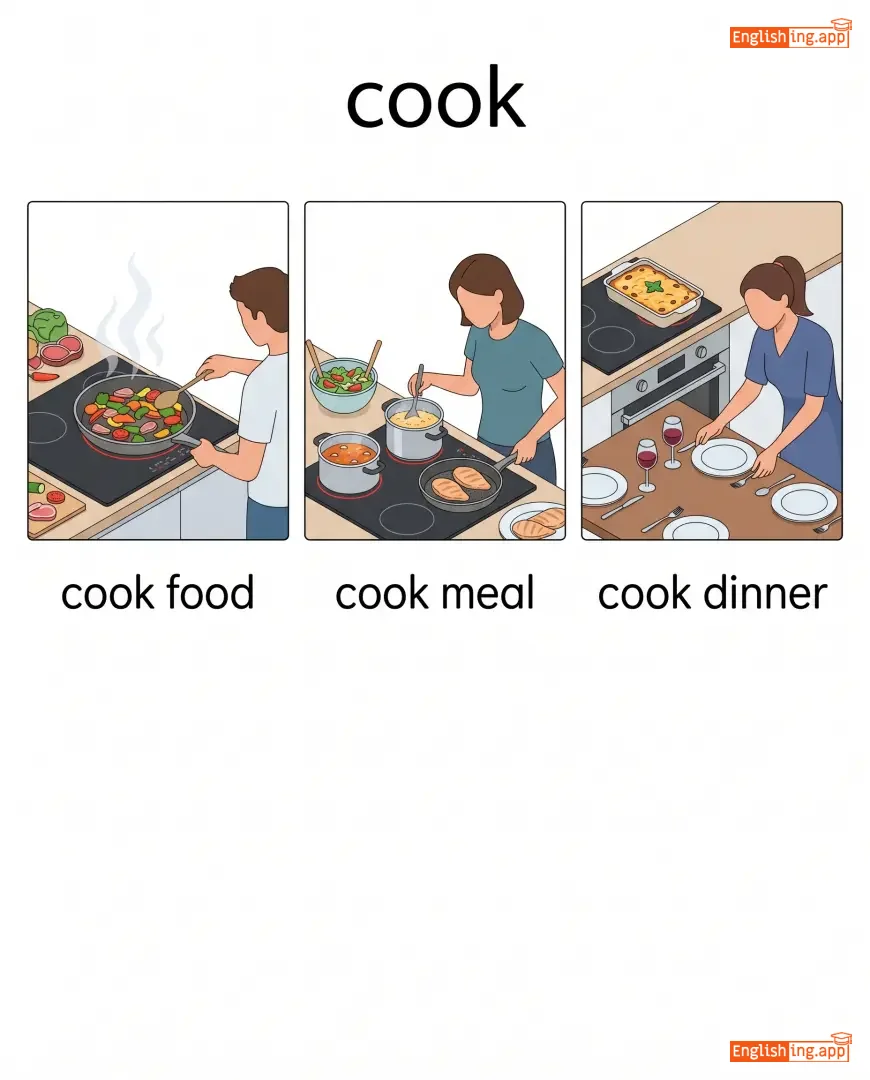
cook food, cook meal, cook dinner, cook rice
••••••
|
料理するのは食べるだけではなく、楽しいことだ!
••••••
|
|
🍽️
••••••
|
/ˈdaɪnɪŋ/
noun
(ダイニング)
••••••
|
- •••••• |
食事
shokuji
••••••
|
- •••••• | - •••••• | - •••••• | - •••••• |
the act of eating a meal, especially in a formal setting
••••••
|
We enjoyed fine dining at the new restaurant. |
私たちは新しいレストランで素晴らしい食事を楽しみました。
Watashitachi wa atarashī resutoran de subarashī shokuji o tanoshimimashita.
••••••
|
dining out |
eating at a restaurant instead of at home
••••••
|
外食
gaishoku
••••••
|
eating, feasting, banqueting, having a meal
••••••
|
fasting, starving
••••••
|
fine dining, dining table, dining hall, dining out
••••••
|
食事は正式な場所で食べるもの、まさにDiningテーブルで。
••••••
|
|
🍽️
••••••
|
/ˈdɪnər/
noun
(ディナー)
••••••
|
- •••••• |
夕食
yūshoku
••••••
|
- •••••• | - •••••• | - •••••• | - •••••• |
the main meal of the day, usually eaten in the evening
••••••
|
We had a lovely dinner at a new restaurant last night. |
昨晩、新しいレストランで素敵なディナーを楽しみました。
Sakuban, atarashī resutoran de suteki na dīnā o tanoshimimashita.
••••••
|
have someone for dinner |
to invite someone to eat dinner with you at your home
••••••
|
誰かをディナーに招待する
dareka o dīnā ni shoutai suru
••••••
|
supper, feast, banquet, meal
••••••
|
breakfast, lunch
••••••
|
dinner table, dinner party, dinner plate, dinner invitation
••••••
|
ディナーは夜の主食 — 夜になるとみんなが言う 'ディナーを食べる?'
••••••
|
|
🍽️
••••••
|
/dɪʃ/
noun
(ディッシュ)
••••••
|
- •••••• |
皿 / 料理
sara / ryouri
••••••
|
- •••••• | - •••••• | - •••••• | - •••••• |
A shallow container for serving or preparing food; also a particular kind of food prepared.
••••••
|
She prepared a delicious pasta dish for dinner. |
彼女は夕食のために美味しいパスタ料理を準備しました。
Kanojo wa yuushoku no tame ni oishii pasuta ryouri o junbi shimashita.
••••••
|
dish out |
To distribute or serve something, often food or criticism.
••••••
|
食べ物を提供する
tabemono o teikyou suru
••••••
|
plate, bowl, meal, course, recipe
••••••
|
drink, beverage
••••••
|
main dish, side dish, traditional dish, favorite dish
••••••
|
皿は容器や料理を意味します、覚えておいて - 母の料理はいつも最高の料理です。
••••••
|
|
🍽️
••••••
|
/ˈiːtɪŋ/
verb
(ītingu)
••••••
|
- •••••• |
食べる
taberu
••••••
|
ate
eto
••••••
|
eaten
iten
••••••
|
eats
itsu
••••••
|
eating
ītingu
••••••
|
the act of consuming food
••••••
|
They were eating dinner when the phone rang.
彼らは夕食を食べているとき、電話が鳴った。
••••••
|
彼らは夕食を食べているとき、電話が鳴った。
Karera wa yuushoku o tabete iru toki, denwa ga natta.
••••••
|
eating habits
食習慣
••••••
|
the way someone eats or their regular food patterns
••••••
|
食習慣
shoku shūkan
••••••
|
consuming, devouring, chewing, swallowing
••••••
|
fasting, starving
••••••
|
healthy eating, eating disorder, eating habits, eating together
••••••
|
食べる = 生きる!食べなければ生きられない!
••••••
|
|
🍦
••••••
|
/ˈfleɪvər/
noun
(fureibā)
••••••
|
- •••••• |
味
aji
••••••
|
- •••••• | - •••••• | - •••••• | - •••••• |
The distinctive taste of a food or drink.
••••••
|
This ice cream has a delicious mango flavor.
このアイスクリームはおいしいマンゴーのフレーバーがあります。
••••••
|
このアイスクリームはおいしいマンゴーのフレーバーがあります。
Kono aisukurīmu wa oishī mangō no furebā ga arimasu.
••••••
|
taste of your own medicine
自分の薬を味わう
••••••
|
Experiencing the same unpleasant treatment that one has given to others.
••••••
|
自分の薬を味わう
Jibun no kusuri o ajiwau
••••••
|
taste, savor, relish, tang, essence
••••••
|
blandness, tastelessness
••••••
|
flavor of ice cream, unique flavor, flavor profile, flavor combination
••••••
|
フレーバーは、私たちが口の中で感じる味 - 例えば、このマンゴーのフレーバーのように🍦
••••••
|
|
🍲
••••••
|
/fuːd/
noun
(fudo)
••••••
|
- •••••• |
食べ物
tabemono
••••••
|
- •••••• | - •••••• | - •••••• | - •••••• |
any nutritious substance that people or animals eat or drink to maintain life and growth
••••••
|
Rice is a common food in Asia. |
ご飯はアジアでは一般的な食べ物です。
Gohan wa Ajia de wa ippanteki na tabemono desu.
••••••
|
comfort food |
food that provides a sense of well-being or nostalgia
••••••
|
心のこもった食べ物
kokoro no komatta tabemono
••••••
|
meal, dish, cuisine, nourishment, sustenance
••••••
|
poison, toxin
••••••
|
fast food, healthy food, food supply, food chain
••••••
|
Food は食べ物 - 覚えておいて:Fast food は速い食べ物です。
••••••
|
|
🍴
••••••
|
/fɔːk/
noun
(フォーク)
••••••
|
- •••••• |
フォーク
fōku
••••••
|
- •••••• | - •••••• | - •••••• | - •••••• |
a tool with two or more prongs used for eating or serving food
••••••
|
He ate his salad with a fork. |
彼はフォークでサラダを食べました。
Kare wa fōku de sarada o tabemashita.
••••••
|
at a fork in the road |
facing a point where a decision must be made
••••••
|
岐路に立つ
kairo ni tatsu
••••••
|
utensil, prong, cutlery, divider
••••••
|
spoon, knife
••••••
|
dinner fork, salad fork, fork and knife, silver fork
••••••
|
Fork = フォーク。フォークを使って手を汚さないで!
••••••
|
|
🍳
••••••
|
/ˈkɪtʃən/
noun
(kitchen)
••••••
|
- •••••• |
キッチン
kicchin
••••••
|
- •••••• | - •••••• | - •••••• | - •••••• |
a room or area where food is prepared and cooked
••••••
|
The kitchen was filled with the smell of fresh bread.
The kitchen was filled with the smell of fresh bread.
••••••
|
キッチンは新鮮なパンの匂いで満たされていた。
Kicchin wa shinsen na pan no nioi de mitasarete ita.
••••••
|
everything but the kitchen sink
everything but the kitchen sink
••••••
|
almost everything imaginable
••••••
|
キッチンのシンク以外のすべて
Kicchin no shinku igai no subete
••••••
|
cookhouse, galley, canteen, scullery
••••••
|
living room, bedroom
••••••
|
kitchen table, modern kitchen, clean the kitchen, kitchen utensils
••••••
|
キッチン = 美味しい料理が生まれる場所 🍣
••••••
|
|
🥪
••••••
|
/lʌntʃ/
noun
(ランチ)
••••••
|
- •••••• |
昼食
chuushoku
••••••
|
- •••••• | - •••••• | - •••••• | - •••••• |
a meal eaten in the middle of the day
••••••
|
We usually have lunch at 1 p.m. |
私たちは通常、午後1時にランチを食べます。
Watashitachi wa tsuujou, gogo 1-ji ni ranchi o tabemasu.
••••••
|
out to lunch |
not paying attention or unaware of what is happening
••••••
|
ぼんやりしている
bonyari shiteiru
••••••
|
midday meal, brunch, tiffin, repast
••••••
|
dinner, supper
••••••
|
have lunch, lunch break, business lunch, packed lunch
••••••
|
ランチは昼食のこと—ランチを食べなければ、集中できません。
••••••
|
|
🍽️
••••••
|
/miːl/
noun
(ハピネス)
••••••
|
- •••••• |
幸せ
shiawase
••••••
|
- •••••• | - •••••• | - •••••• | - •••••• |
An occasion when food is eaten, or the food that is eaten on such an occasion.
••••••
|
We had a delicious meal at the restaurant. |
彼女は賞を受け取ったとき、幸せを隠すことができませんでした。
Kanojo wa shou o uketotta toki, shiawase o kakusu koto ga dekimasen deshita.
••••••
|
square meal |
a substantial, satisfying, and balanced meal
••••••
|
幸せを追求する
Shiawase o tsuikyuu suru
••••••
|
dish, feast, food, banquet, repast
••••••
|
fast, hunger, starvation
••••••
|
have a meal, cook a meal, family meal, main meal
••••••
|
幸せ = 幸せ = 笑顔で幸せを探し続ける。
••••••
|
|
📜
••••••
|
/ˈmɛnjuː/
noun
(メニュー)
••••••
|
- •••••• |
メニュー
menyū
••••••
|
- •••••• | - •••••• | - •••••• | - •••••• |
A list of food and drinks available at a restaurant or offered at a meal.
••••••
|
The restaurant updated its menu with new dishes. |
レストランは新しい料理をメニューに追加しました。
Resutoran wa atarashī ryōri o menyū ni tsuika shimashita.
••••••
|
set menu |
A fixed selection of dishes offered at a set price.
••••••
|
定食メニュー
Teishoku menyū
••••••
|
bill of fare, food list, card, menu card, offerings
••••••
|
emptiness, nothingness
••••••
|
menu card, lunch menu, digital menu, special menu
••••••
|
メニューはレストランの料理リストです。
••••••
|
|
🌶️
••••••
|
/ˈpɛpər/
noun
(ペッパー)
••••••
|
- •••••• |
胡椒
koshō
••••••
|
- •••••• | - •••••• | - •••••• | - •••••• |
a pungent spice obtained from pepper plants, used to flavor food
••••••
|
I like to add pepper to my soup. |
私はスープに胡椒を加えるのが好きです。
Watashi wa sūpu ni koshō o kuwaeru no ga suki desu.
••••••
|
- •••••• | - •••••• | - •••••• |
spice, seasoning, chili, hot powder
••••••
|
sweet, bland
••••••
|
black pepper, red pepper, pepper shaker, ground pepper
••••••
|
Pepper makes food HOT (胡椒) and SPICY
••••••
|
|
🍽️
••••••
|
/pleɪt/
noun
(プレート)
••••••
|
- •••••• |
プレート
purēto
••••••
|
- •••••• | - •••••• | - •••••• | - •••••• |
a flat, typically round dish used for serving or eating food
••••••
|
Please put the rice on your plate. |
ご飯をあなたのプレートに乗せてください。
Gohan o anata no purēto ni nosete kudasai.
••••••
|
- •••••• | - •••••• | - •••••• |
dish, platter, saucer
••••••
|
bowl, cup
••••••
|
dinner plate, paper plate, clean plate
••••••
|
プレートにご飯を乗せて、食事を楽しんで!
••••••
|
|
🍰
••••••
|
/ˈrɛsɪpi/
noun
(レシピ)
••••••
|
- •••••• |
レシピ
reshipi
••••••
|
- •••••• | - •••••• | - •••••• | - •••••• |
a set of instructions for preparing a particular dish, including a list of the ingredients required
••••••
|
I found a great recipe for chocolate cake.
チョコレートケーキの素晴らしいレシピを見つけました。
••••••
|
チョコレートケーキの素晴らしいレシピを見つけました。
Chokoreeto keeki no subarashii reshipi o mitsukemashita.
••••••
|
- •••••• | - •••••• | - •••••• |
formula, method, instructions, procedure
••••••
|
improvisation, guesswork
••••••
|
recipe for disaster, secret recipe, traditional recipe
••••••
|
The RECIPE for success in the kitchen is making delicious food - remember it as 'Reshipi'!
••••••
|
|
🍴
••••••
|
/ˈrɛst(ə)rɒnt/
noun
(レストラン)
••••••
|
- •••••• |
レストラン
resutoran
••••••
|
- •••••• | - •••••• | - •••••• | - •••••• |
a place where meals are prepared and served to customers
••••••
|
We went to the restaurant for dinner.
私たちは夕食のためにレストランに行きました。
••••••
|
私たちは夕食のためにレストランに行きました。
Watashitachi wa yūshoku no tame ni resutoran ni ikimashita.
••••••
|
- •••••• | - •••••• | - •••••• |
eatery, diner, bistro, café
••••••
|
home, kitchen, cafeteria
••••••
|
fine-dining restaurant, fast food restaurant, local restaurant, vegetarian restaurant
••••••
|
レストランで食べる (Resutoran de taberu) - Go to the restaurant to eat
••••••
|
|
🥄
••••••
|
/sɔːs/
noun
(ソース)
••••••
|
- •••••• |
ソース
soosu
••••••
|
- •••••• | - •••••• | - •••••• | - •••••• |
a liquid or semi-liquid substance served with food to add moisture and flavor
••••••
|
She added tomato sauce to her pasta.
彼女はパスタにトマトソースを加えた。
••••••
|
彼女はパスタにトマトソースを加えた。
Kanojo wa pasuta ni tomato soosu o kuwaeta.
••••••
|
- •••••• | - •••••• | - •••••• |
gravy, dressing, condiment
••••••
|
dry seasoning, solid food
••••••
|
tomato sauce, soy sauce, hot sauce, pasta sauce, sauce bottle
••••••
|
トマトソースをパスタに加えることで、味が引き立ちます!
••••••
|
|
🌶️
••••••
|
/spaɪs/
noun
(スパイス)
••••••
|
- •••••• |
スパイス
supaisu
••••••
|
- •••••• | - •••••• | - •••••• | - •••••• |
a substance used to add flavor to food
••••••
|
She added a pinch of spice to the curry for extra flavor.
彼女はカレーに風味を加えるためにスパイスを一つまみ加えました。
••••••
|
彼女はカレーに風味を加えるためにスパイスを一つまみ加えました。
Kanojo wa karē ni fūmi o kuwaeru tame ni supaisu o hitotsu mami kuwaemashita.
••••••
|
- •••••• | - •••••• | - •••••• |
seasoning, flavoring, condiment
••••••
|
blandness
••••••
|
add spice, spicy dish, curry spice
••••••
|
スパイスは食事に味を加えるもの、カレーに使うスパイスのように。
••••••
|
|
👅
••••••
|
/teɪst/
verb
(テスト)
••••••
|
|
味わう
ajiwau
••••••
|
tasted
テステッド
••••••
|
tasted
テステッド
••••••
|
tastes
テストス
••••••
|
tasting
テスティング
••••••
|
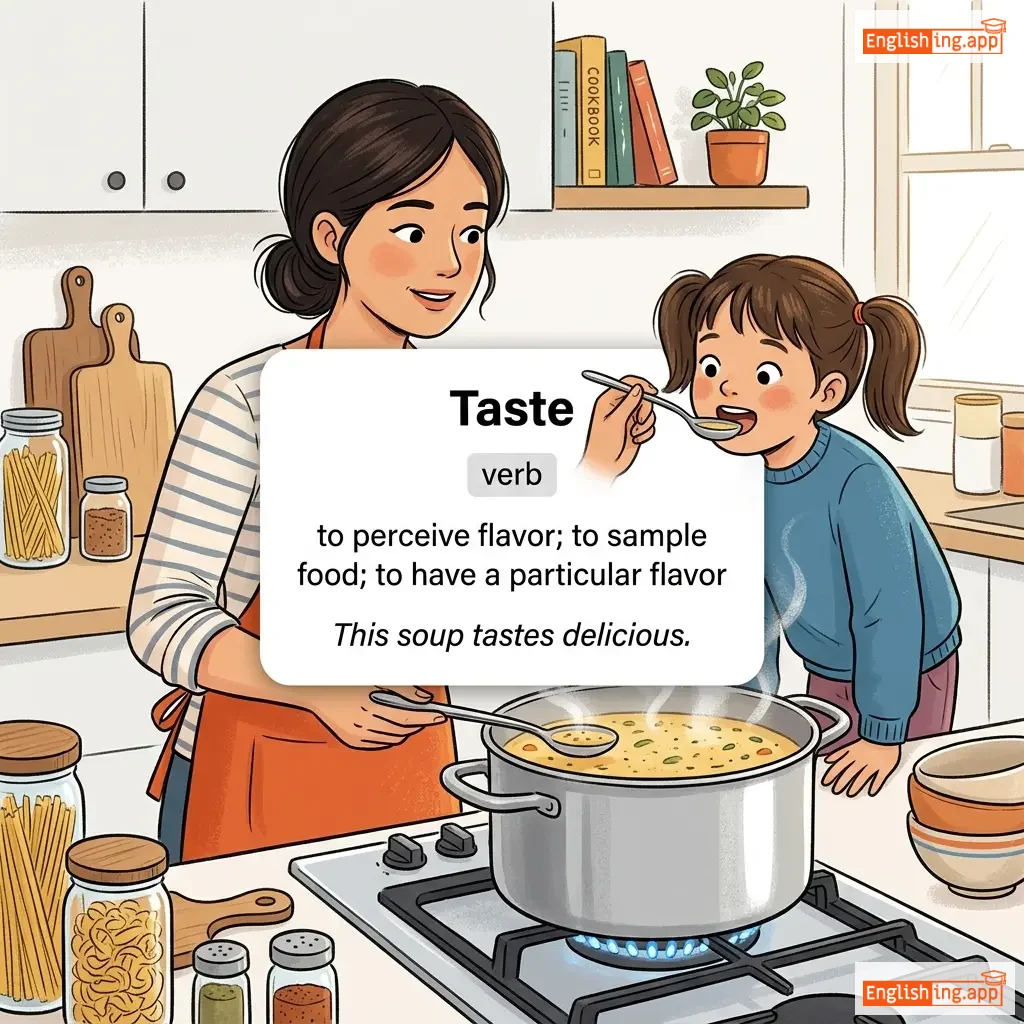
to perceive flavor; to sample food; to have a particular flavor
••••••
|
This soup tastes delicious.
このスープはおいしいです。
••••••
|
このスープはおいしいです。
Kono sūpu wa oishī desu
••••••
|
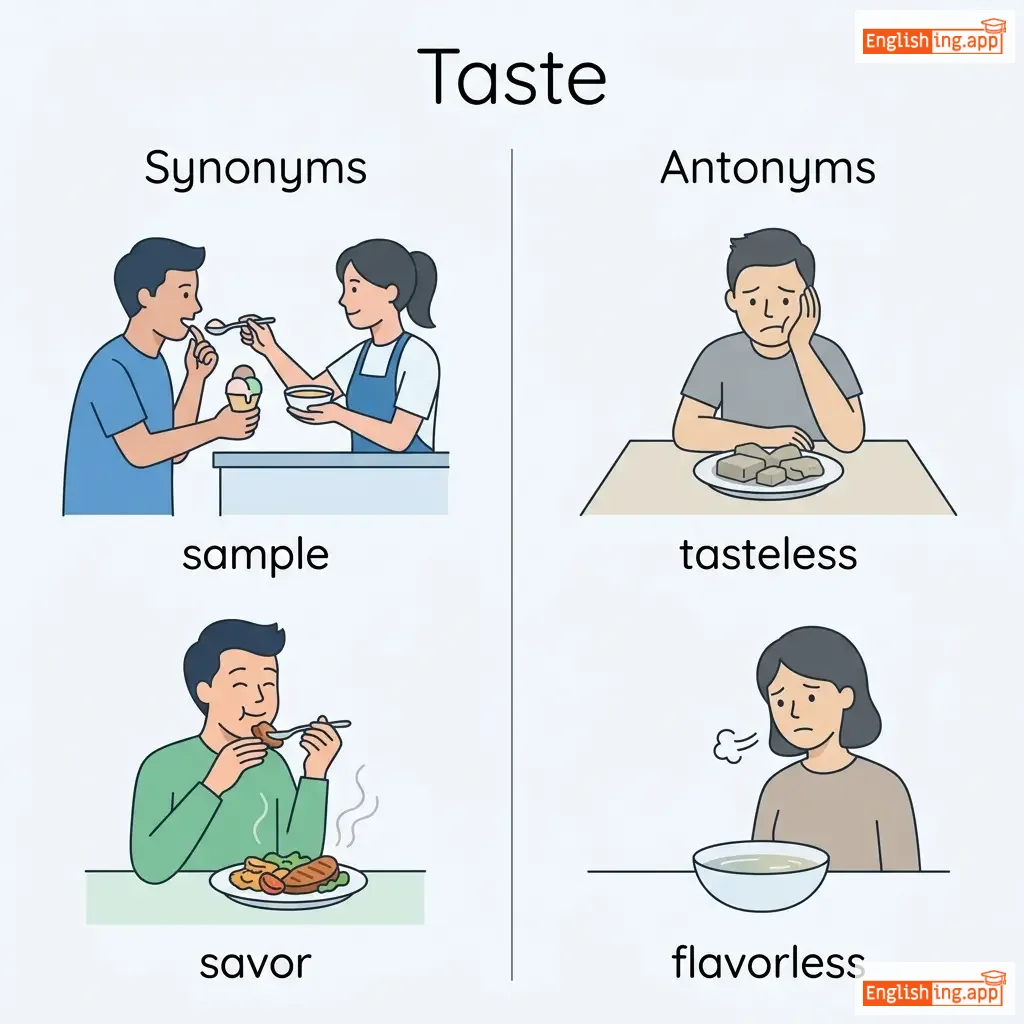
- •••••• | - •••••• | - •••••• |
sample, savor, flavor, try
••••••
|
tasteless, flavorless
••••••
|
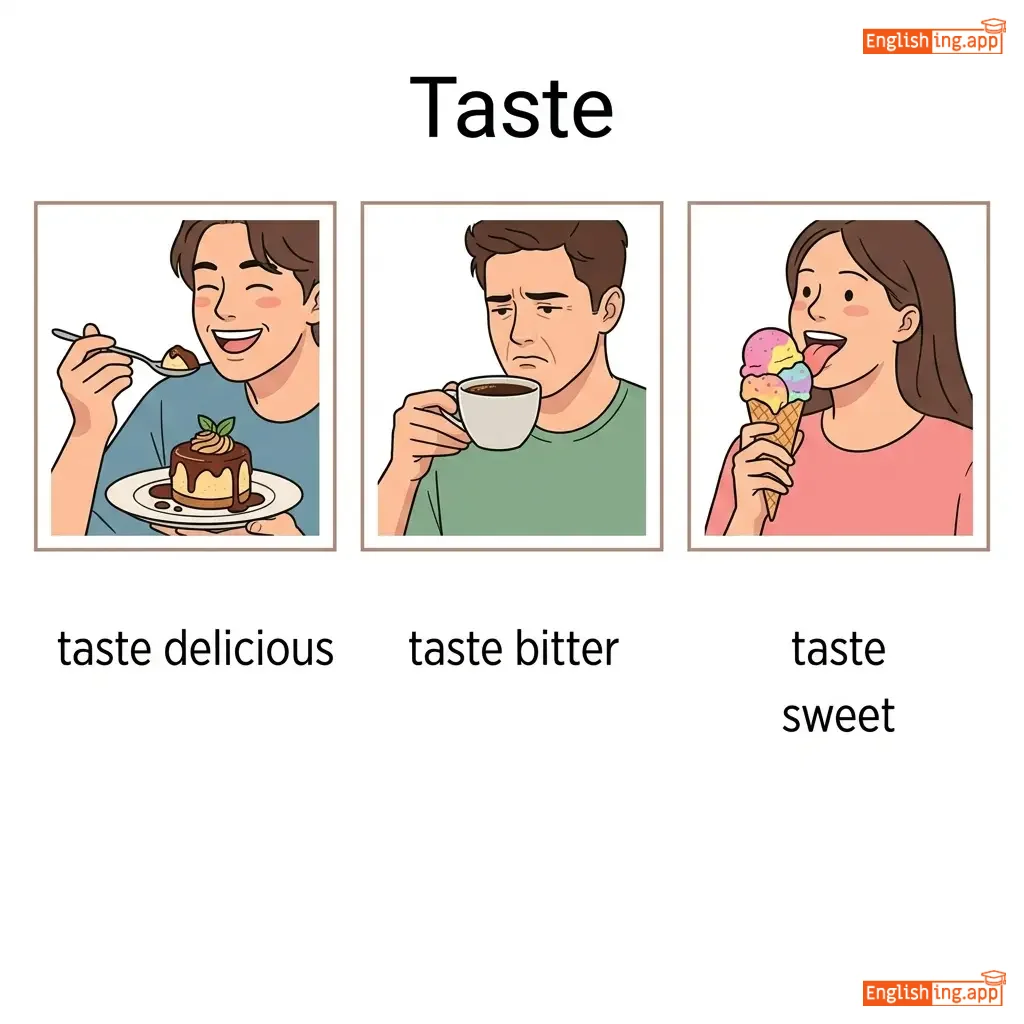
taste delicious, taste bitter, taste sweet, taste good, taste fresh
••••••
|
Ajiwau means to taste in Japanese, just 'aji' for every dish!
••••••
|

