|
絵文字
|
単語 | Images | 翻訳 | 過去 | 過去分詞 | 三人称単数 | 動名詞 | 意味 | 例文 | 例文の翻訳 | 表現例 | 表現例の意味 | 表現例の翻訳 | 同義語 | 対義語 | コロケーション | ニーモニック |
|---|---|---|---|---|---|---|---|---|---|---|---|---|---|---|---|---|---|
|
🐑
••••••
|
/ˈɡæmbəl/
verb
(ギャンボール)
••••••
|
|
楽しく跳ねる
tanoshiku haneru
••••••
|
gamboled
ギャンボールド
••••••
|
gamboled
ギャンボールド
••••••
|
gambols
ギャンボールズ
••••••
|
gamboling
ギャンボーリング
••••••
|
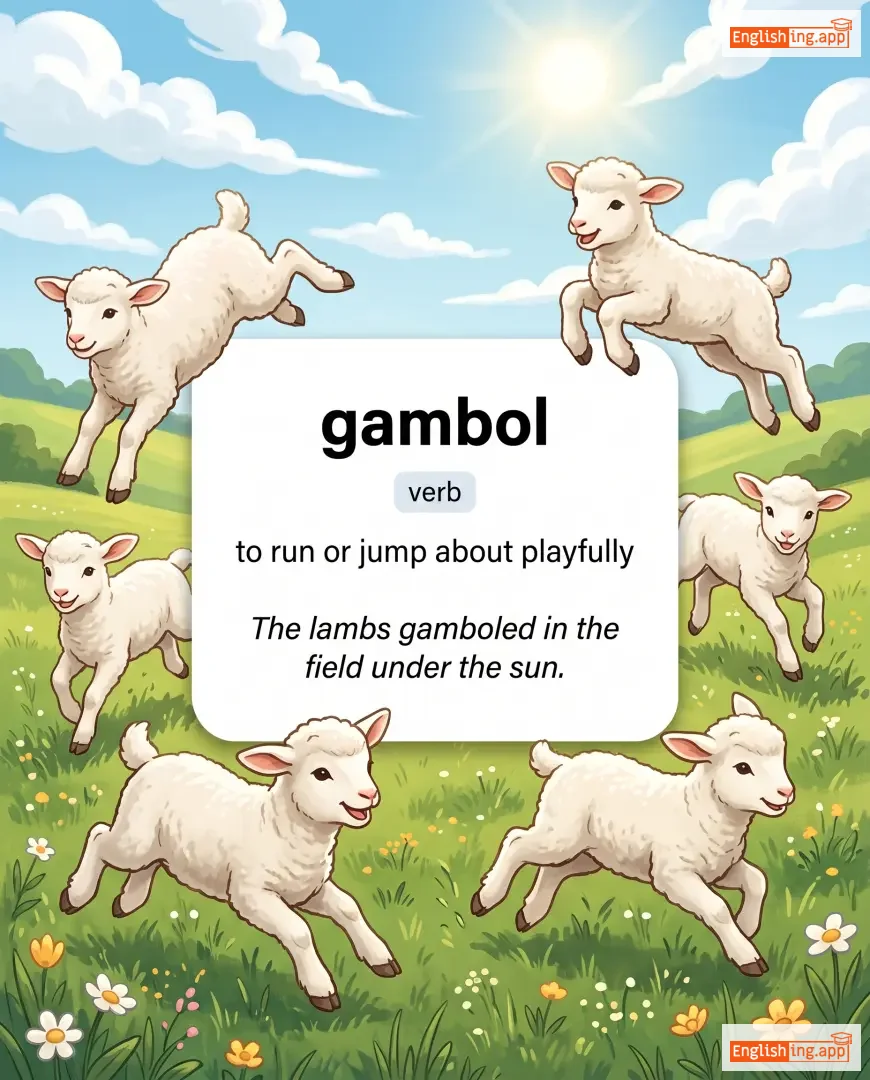
to run or jump about playfully
••••••
|
The lambs gamboled in the field under the sun.
羊たちは太陽の下で野原を元気に跳ね回っていました。
••••••
|
羊たちは太陽の下で野原を元気に跳ね回っていました。
Hitsujitachi wa taiyo no shita de nohara o genki ni hanemawatte imashita.
••••••
|
- •••••• | - •••••• | - •••••• |
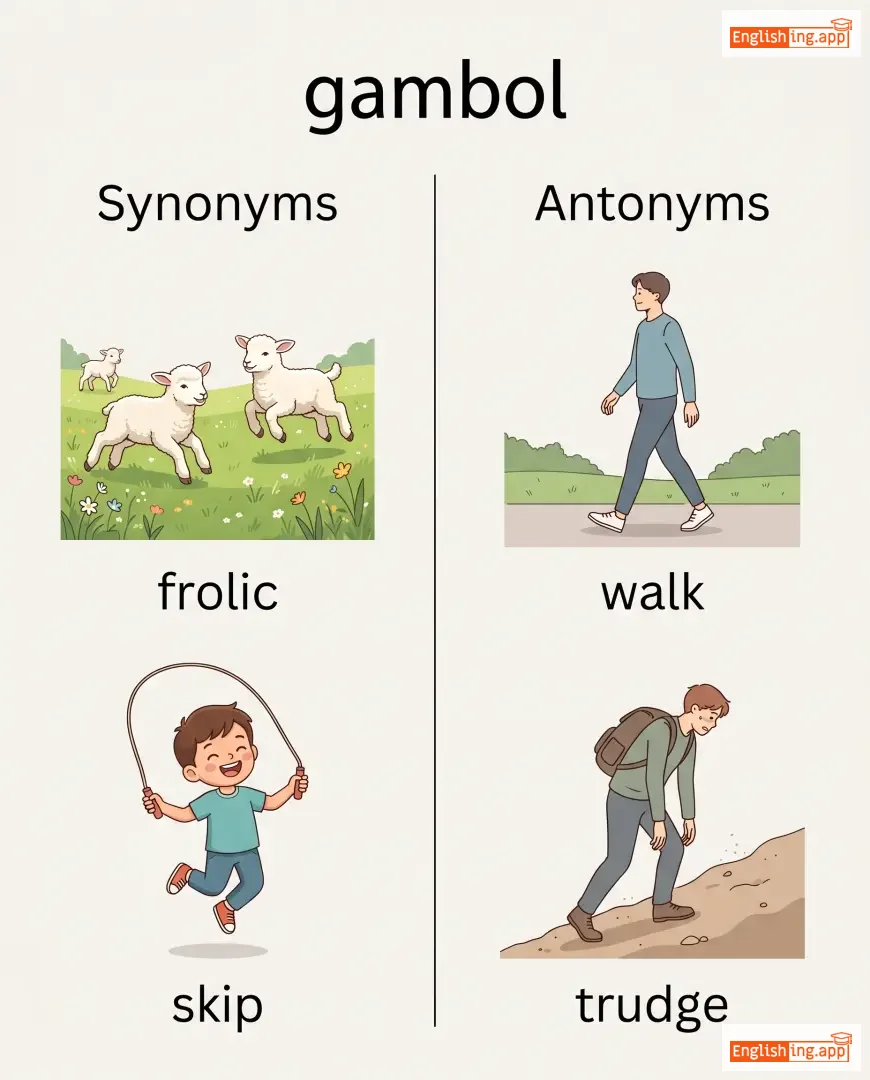
frolic, skip, leap, romp, prance
••••••
|
walk, trudge, plod
••••••
|
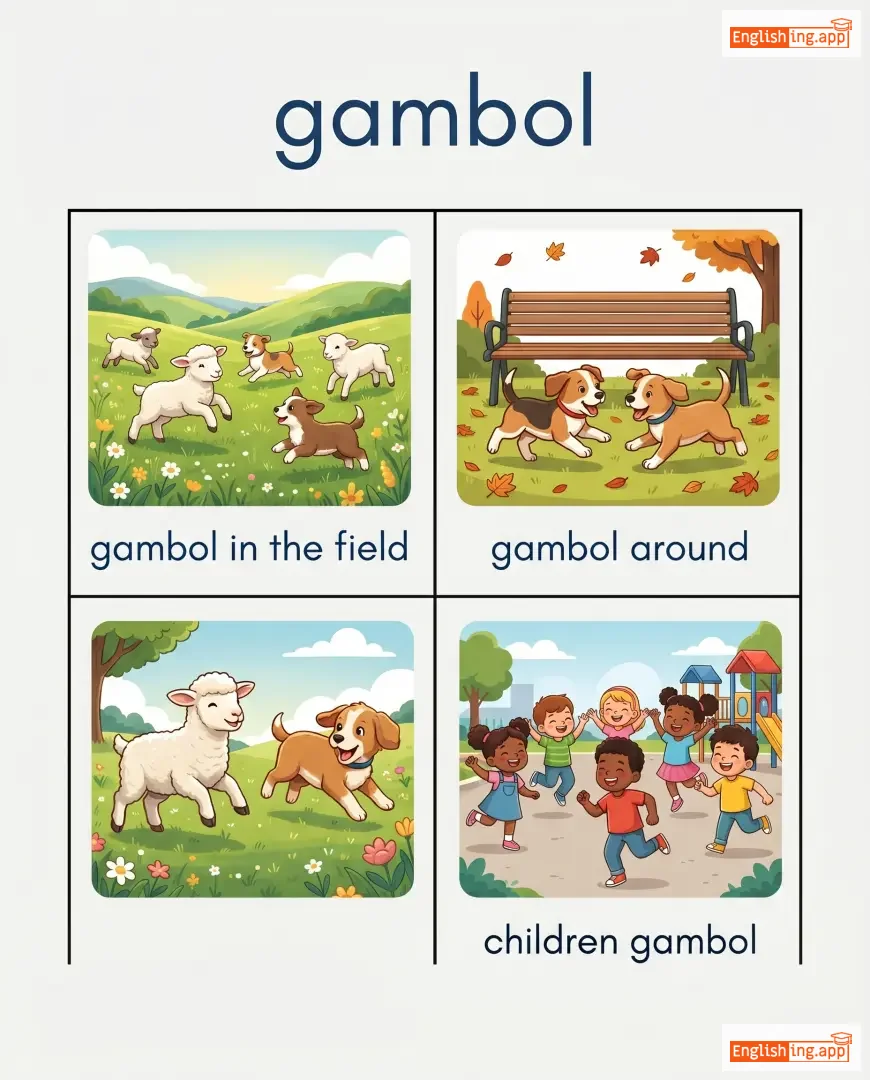
gambol in the field, gambol around, children gambol
••••••
|
Gambolは、元気よく跳ねるという意味で、太陽の下で跳ね回る羊のように!
••••••
|
|
🗣️
••••••
|
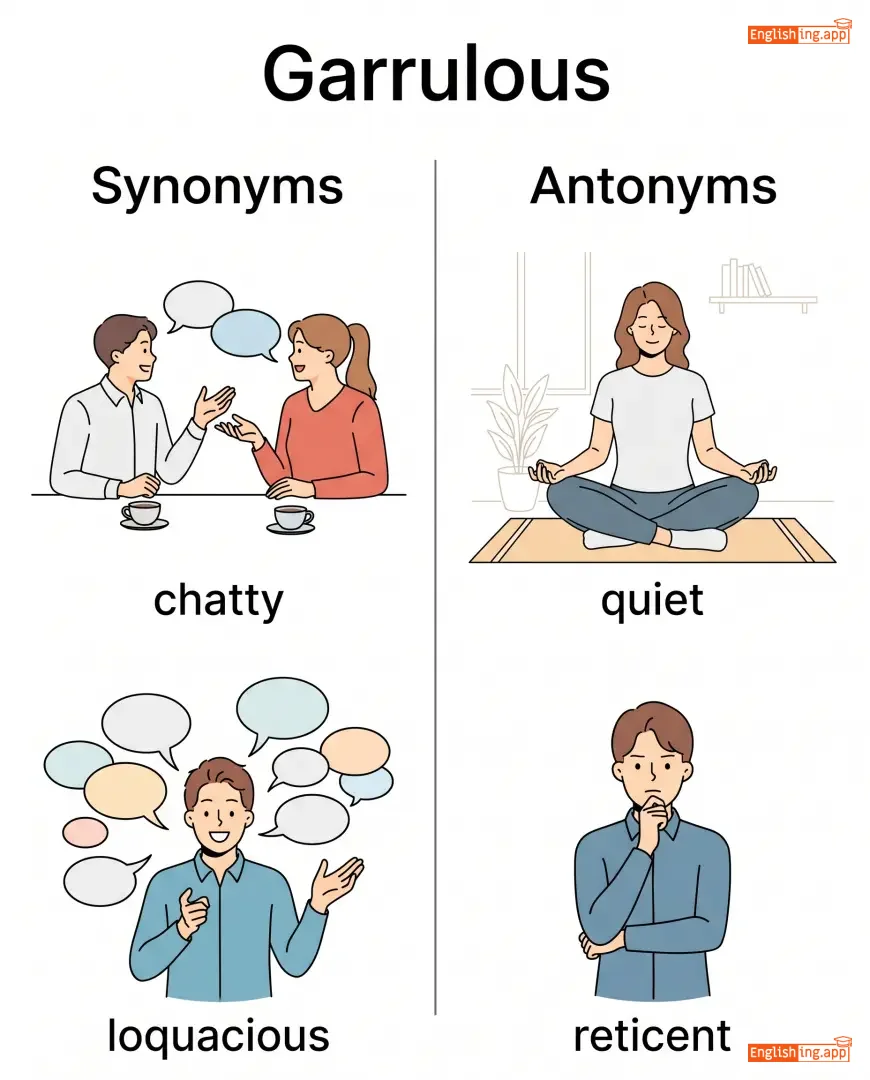
/ˈɡær.ə.ləs/
adjective
(ギャルラス)
••••••
|
|
おしゃべりな; うるさい; 話好き
oshaberi na, urusai, hanashizuki
••••••
|
- •••••• | - •••••• | - •••••• | - •••••• |
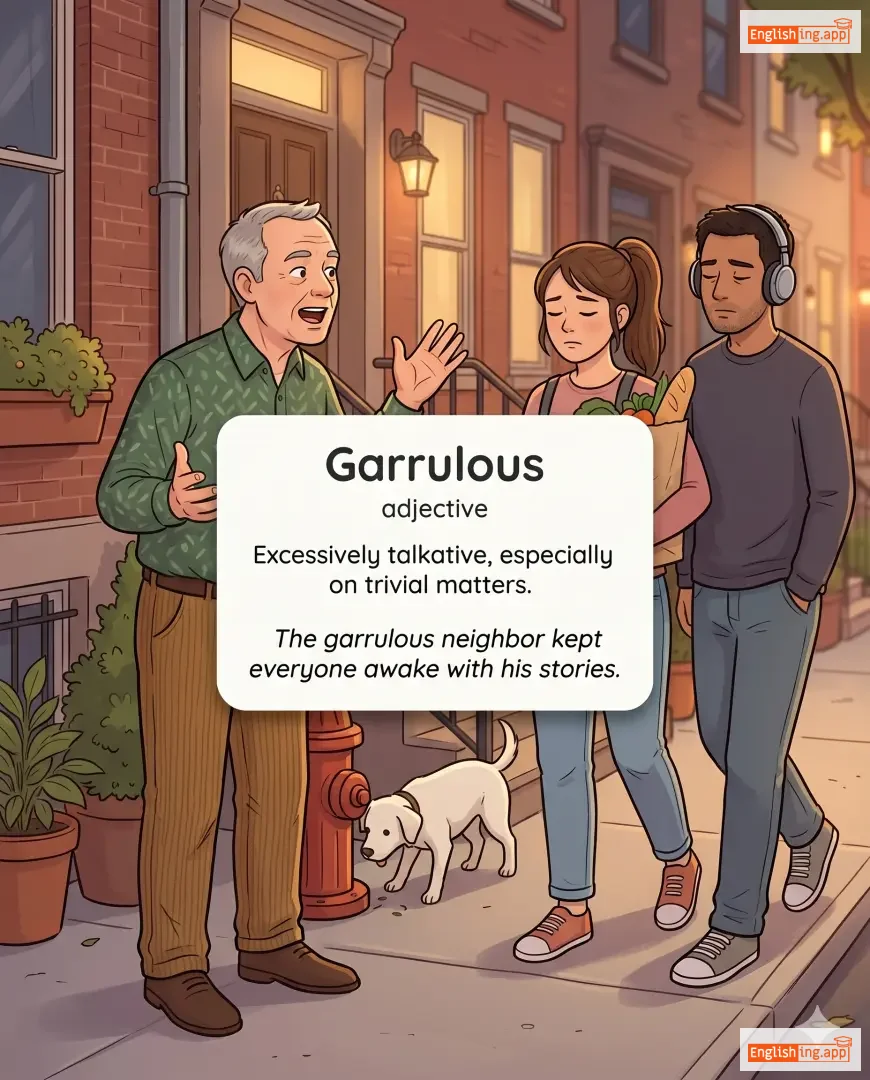
excessively talkative, especially on trivial matters; chatty and rambling in speech
••••••
|
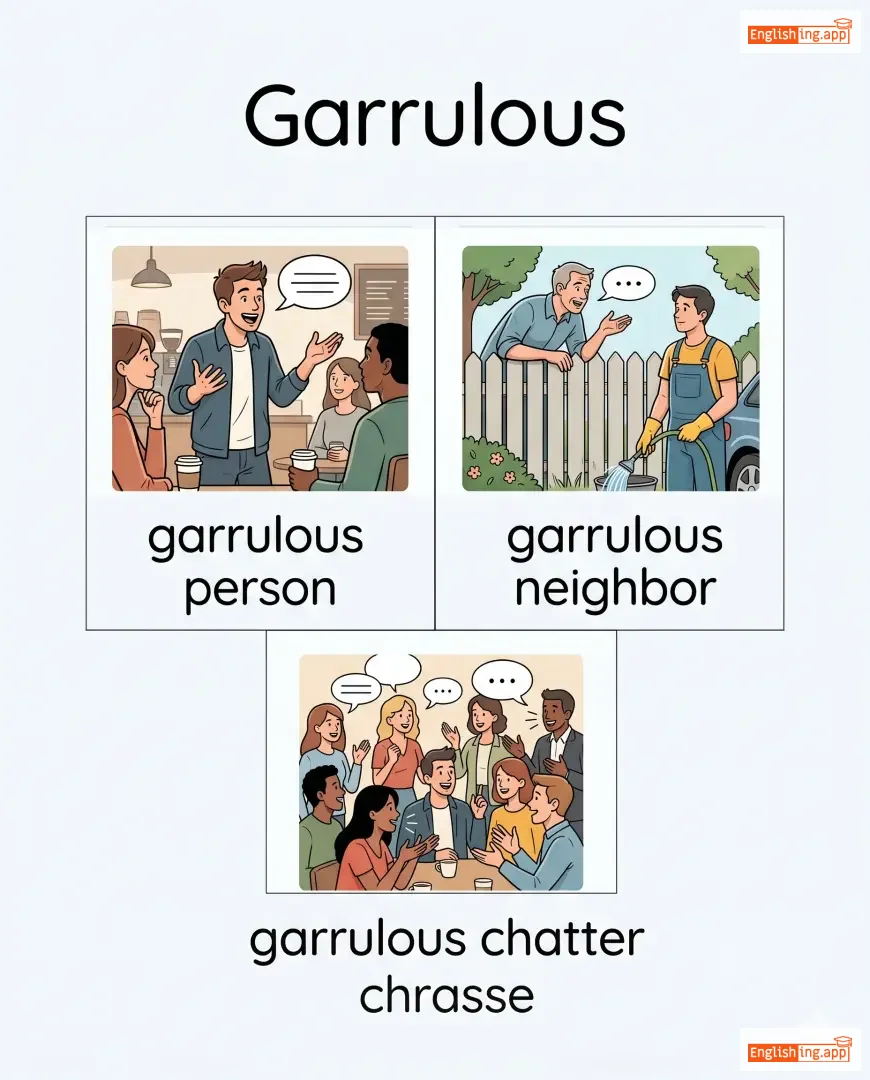
The garrulous old man at the coffee shop would talk for hours about his travels. |
カフェでおしゃべりな年寄りの男は、旅行について何時間も話していた。
kafe de oshaberi na toshiyori no otoko wa, ryokou ni tsuite nan jikan mo hanashiteta.
••••••
|
- •••••• | - •••••• | - •••••• |
talkative, chatty, loquacious, verbose
••••••
|
quiet, taciturn, silent, reserved
••••••
|
garrulous person, garrulous nature, garrulous conversation
••••••
|
Garrulous は、長時間喋り続けることを意味します。カフェで旅行の話をするおしゃべりな老人のように。
••••••
|
|
😬
••••••
|
/ɡoʊʃ/
adjective
(ガウシュ)
••••••
|
|
不器用
bukiyou
••••••
|
- •••••• | - •••••• | - •••••• | - •••••• |
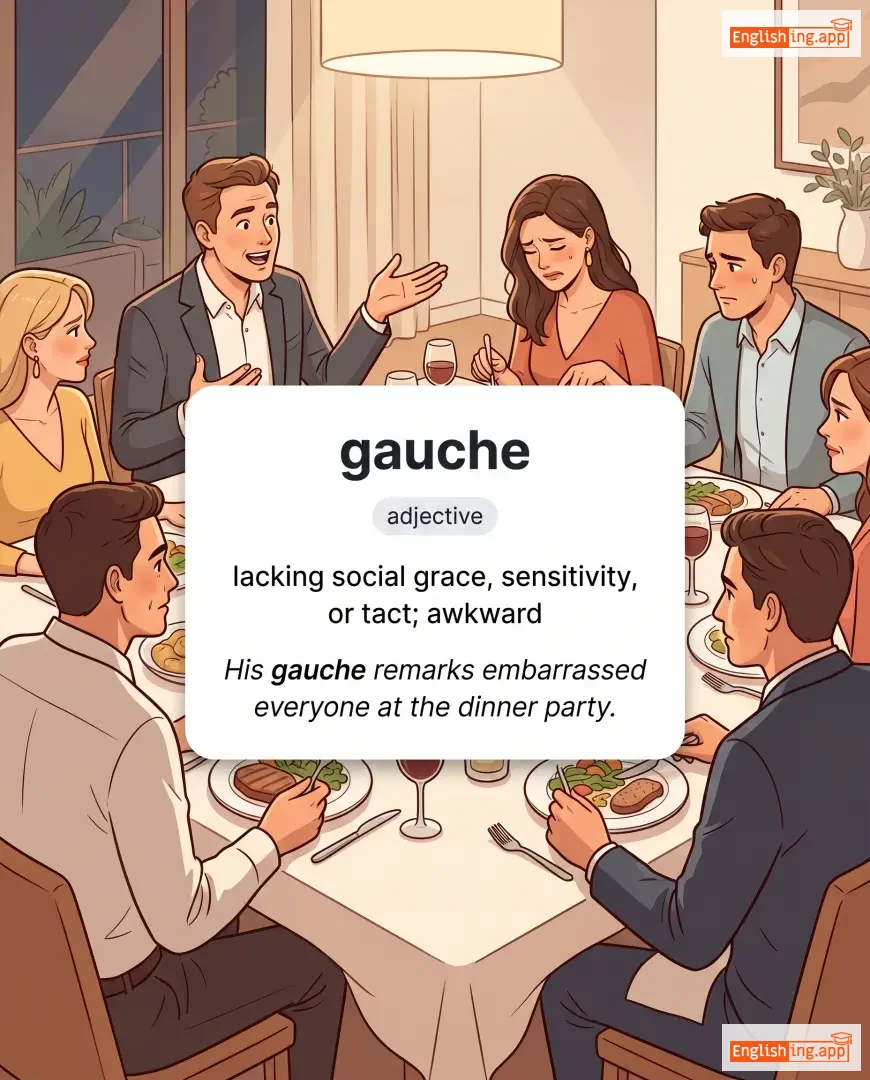
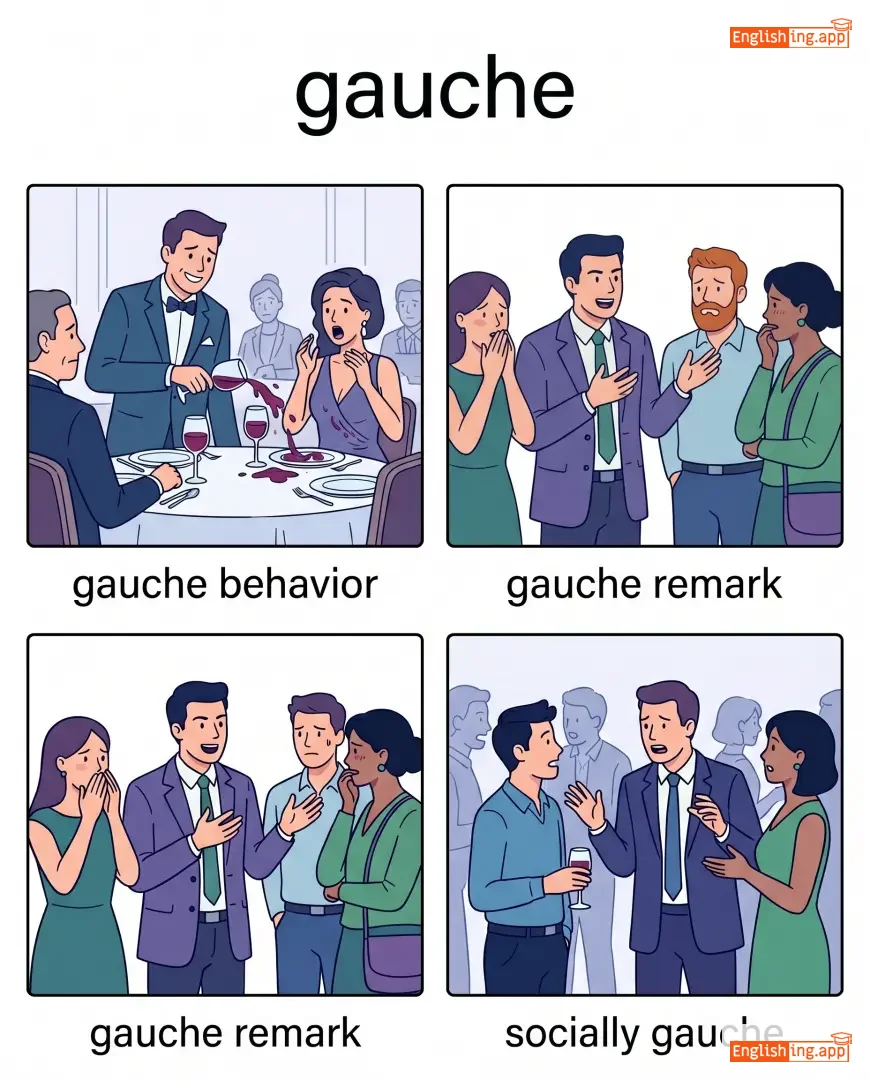
lacking social grace, sensitivity, or tact; awkward
••••••
|
His gauche remarks embarrassed everyone at the dinner party. |
彼の不器用なコメントはディナーパーティーで皆を困らせた。
Kare no bukiyou na komento wa dinā pātī de mina o komarase ta.
••••••
|
- •••••• | - •••••• | - •••••• |
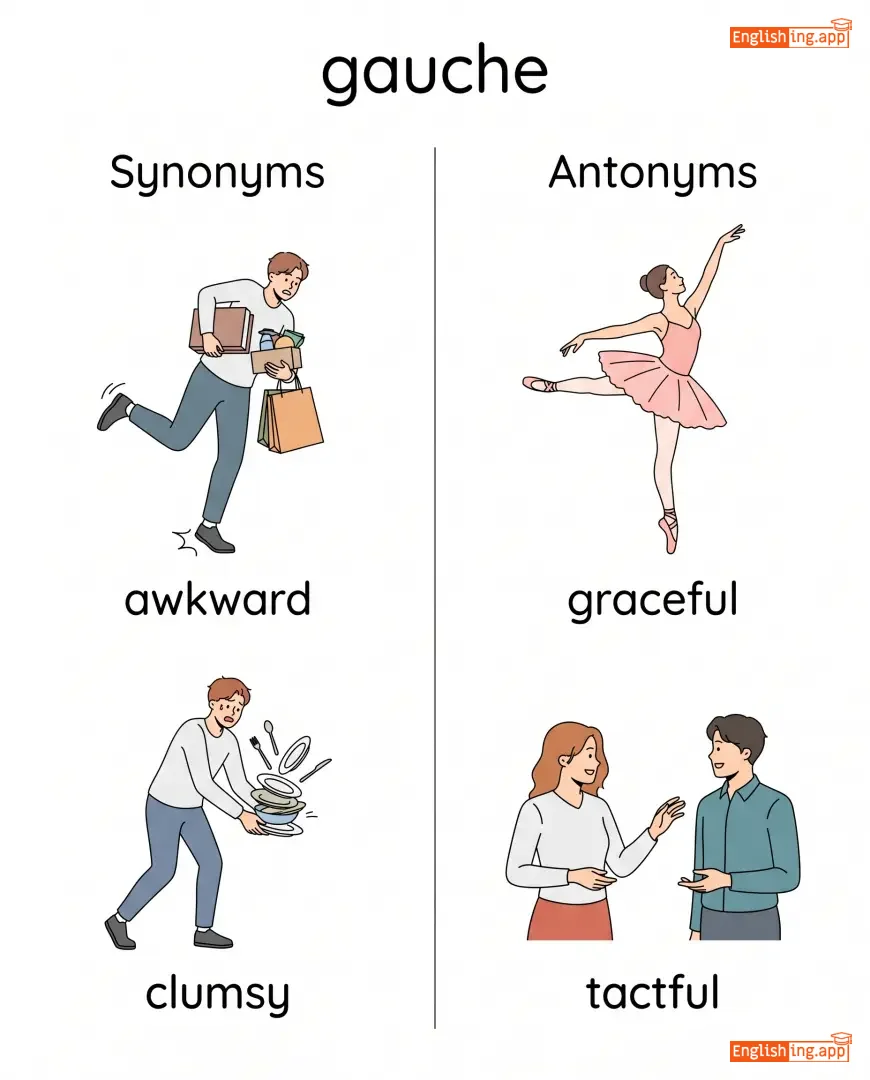
awkward, clumsy, inelegant, tactless, unpolished
••••••
|
graceful, tactful, polished
••••••
|
gauche behavior, gauche remark, socially gauche, gauche manner
••••••
|
Gaucheは不器用、不器用な人は社会で不器用なことをする。
••••••
|
|
😄
••••••
|
/ˌdʒiː.niˈæl.ə.ti/
noun
(ジニアリティ)
••••••
|
|
親しみやすさ
shitashimi yasusa
••••••
|
- •••••• | - •••••• | - •••••• | - •••••• |
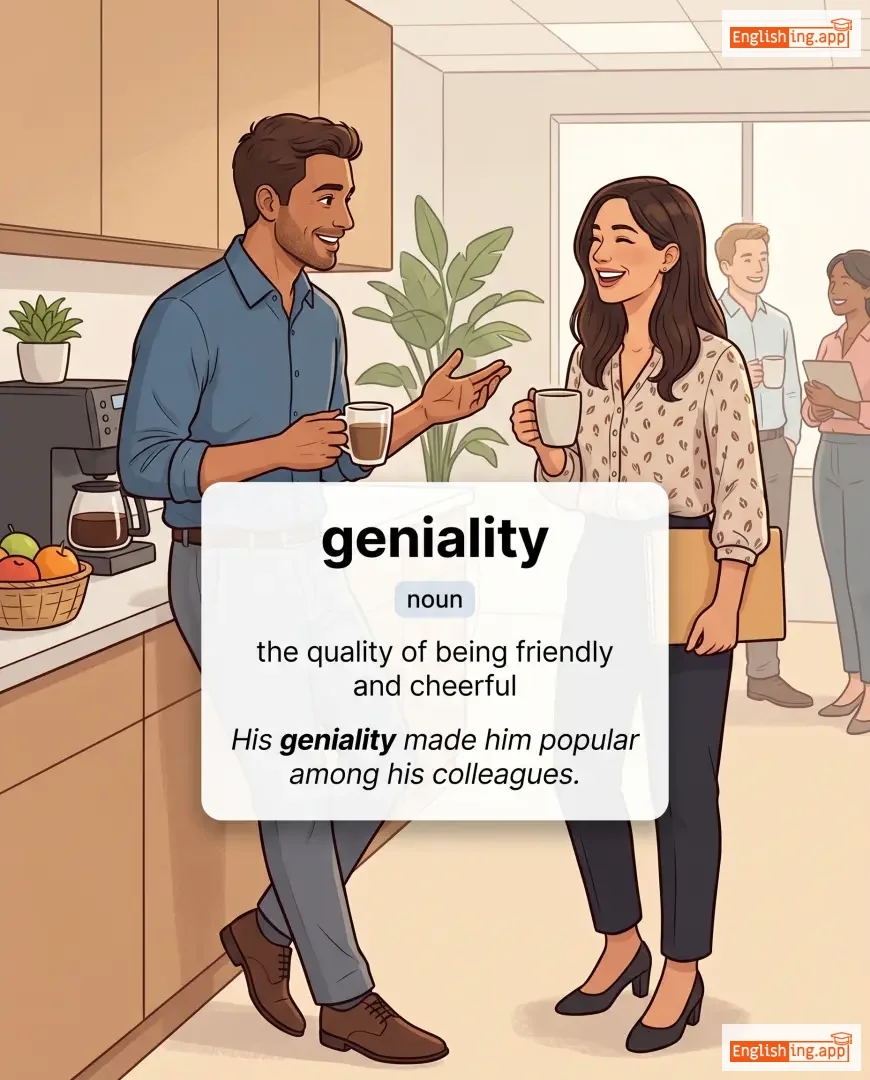
the quality of being friendly and cheerful
••••••
|
His geniality made him popular among his colleagues. |
彼の親しみやすさは、同僚の間で彼を人気者にした。
Kare no shitashimi yasusa wa, dōryō no aida de kare o ninkimono ni shita.
••••••
|
- •••••• | - •••••• | - •••••• |
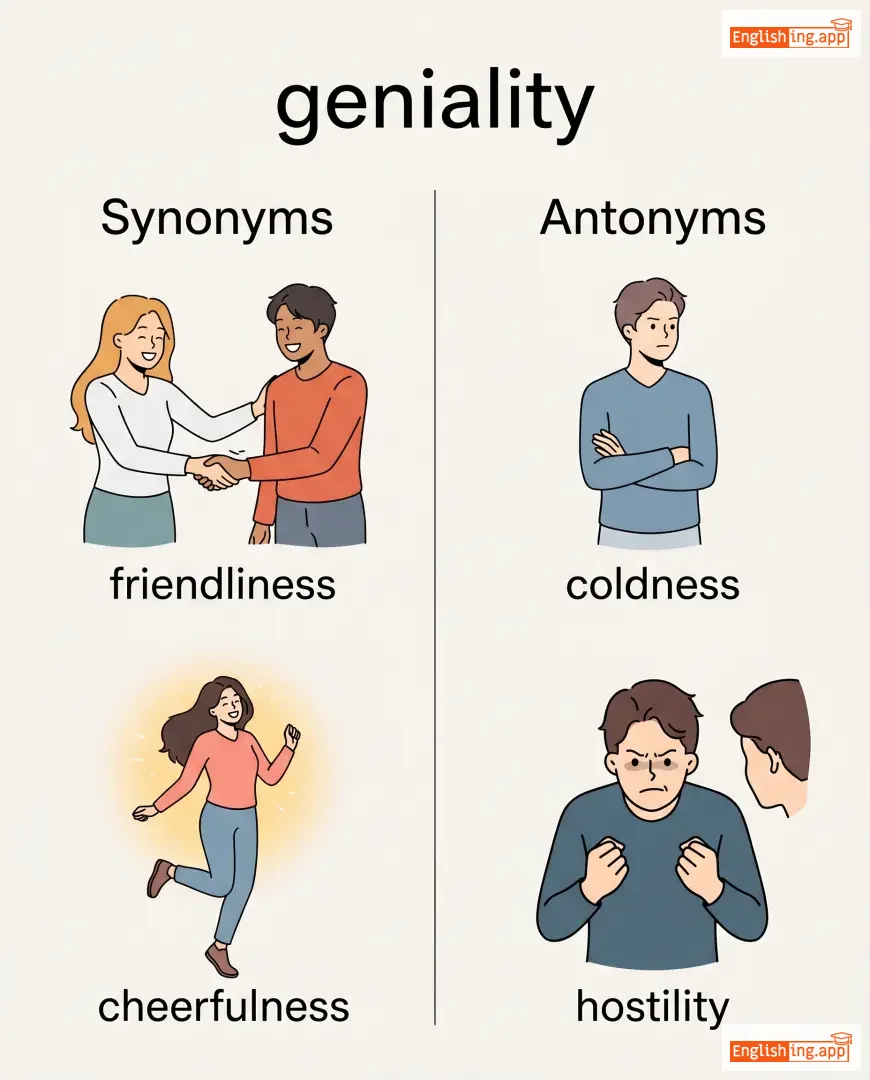
friendliness, cheerfulness, warmth, amiability
••••••
|
coldness, hostility, rudeness
••••••
|
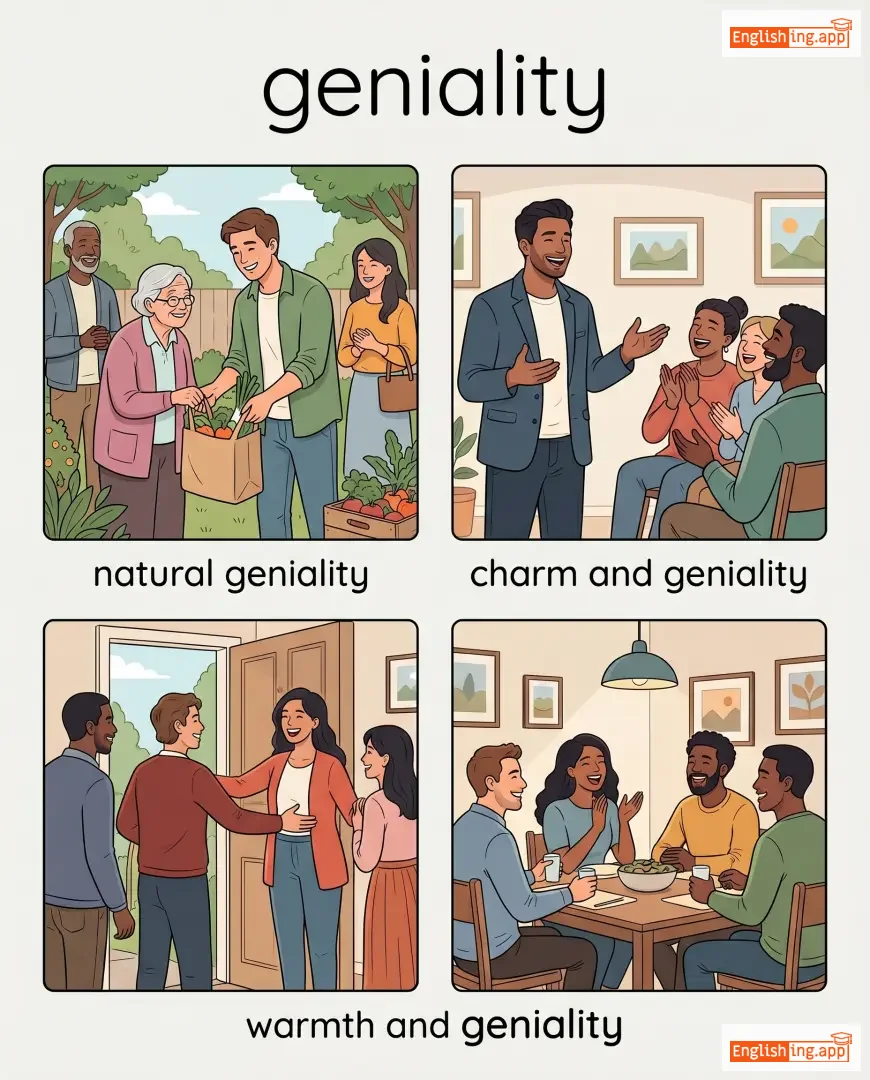
natural geniality, charm and geniality, warmth and geniality
••••••
|
Genialityは、友好的で陽気な精霊のようなものです。
••••••
|
|
🗳️
••••••
|
/ˈdʒɛriˌmændər/
verb
(ジェリーマンダー)
••••••
|
|
選挙区境界の操作
senkyoku kyokai no sousa
••••••
|
gerrymandered
ジェリーマンダード
••••••
|
gerrymandered
ジェリーマンダード
••••••
|
gerrymanders
ジェリーマンダーズ
••••••
|
gerrymandering
ジェリーマンディング
••••••
|
to manipulate the boundaries of an electoral constituency to favor one party or class
••••••
|
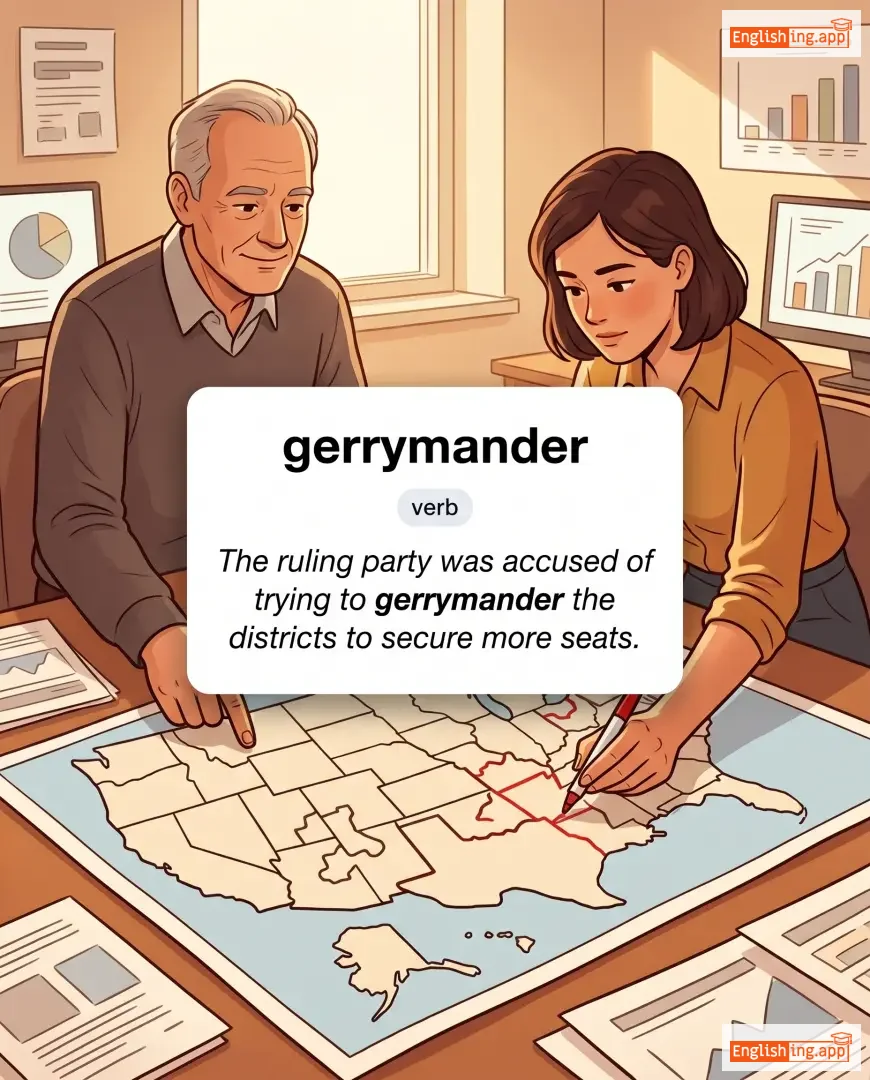
The ruling party was accused of trying to gerrymander the districts to secure more seats.
与党は選挙区の境界を操作して、より多くの席を確保しようとしていると非難された。
••••••
|
与党は、より多くの議席を確保するために選挙区を操作したと非難された。
Yoto wa, yori ooku no giseki wo kakuho suru tame ni senkyoku wo sousa shita to hinan sareta.
••••••
|
- •••••• | - •••••• | - •••••• |
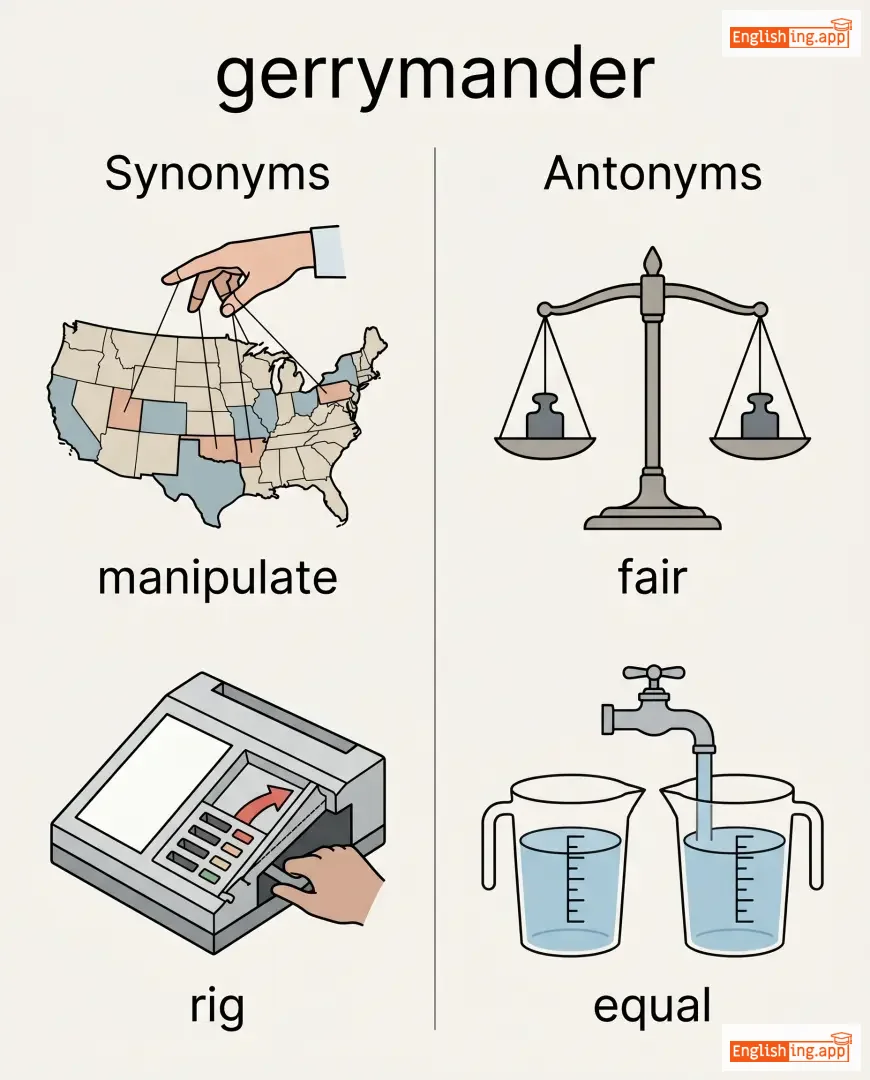
manipulate, rig, falsify, distort, exploit
••••••
|
fair, equal, impartial
••••••
|
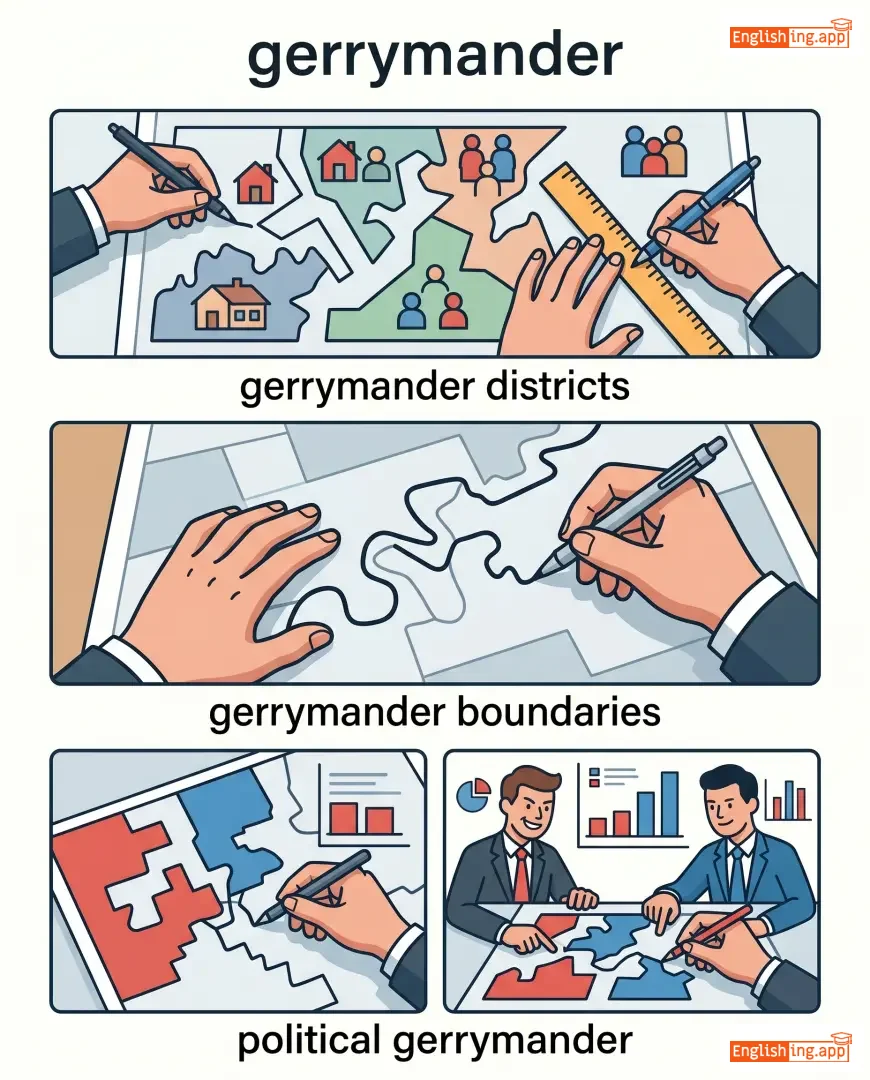
gerrymander districts, gerrymander boundaries, political gerrymander, blatant gerrymander
••••••
|
ジェリーが境界を変えて、利益を得る
••••••
|
|
🗣️
••••••
|
/ɡlɪb/
adjective
(グリブ)
••••••
|

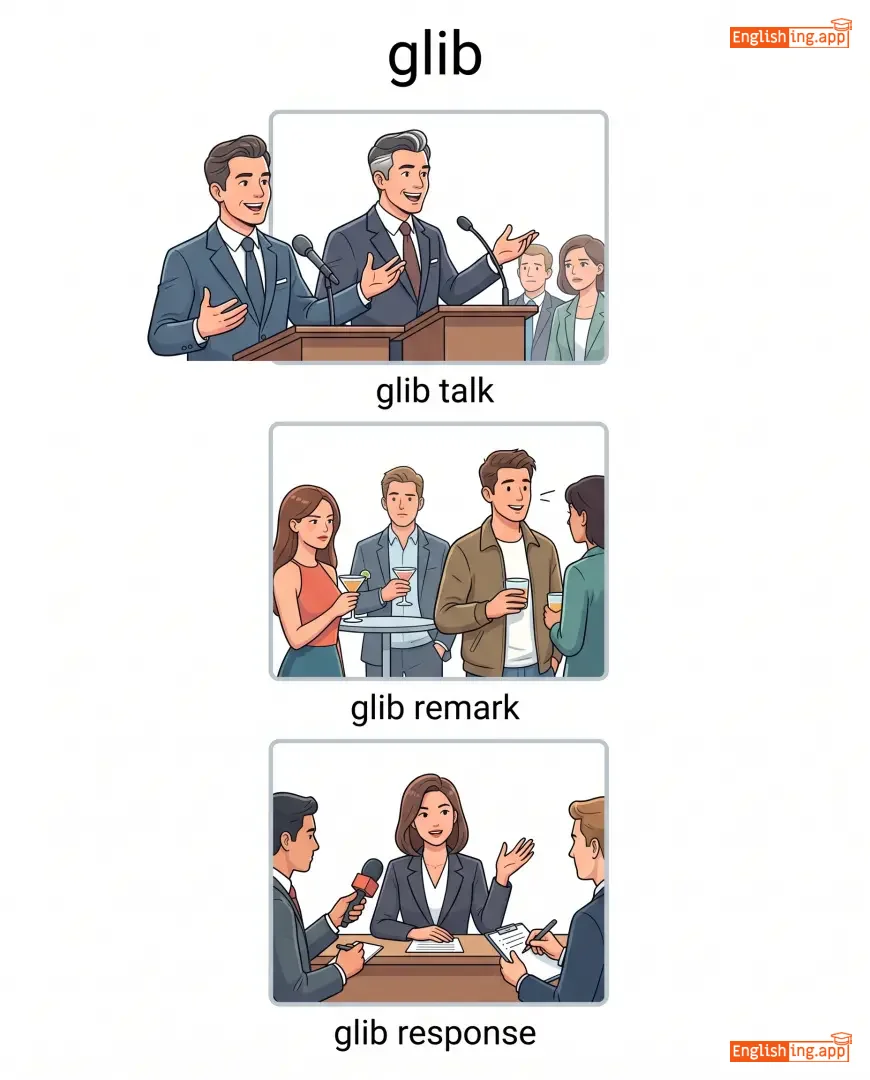
|
表面的だが不誠実な
hyoumenteki da ga fuseijitsuna
••••••
|
- •••••• | - •••••• | - •••••• | - •••••• |
speaking easily but without sincerity or depth
••••••
|
The politician gave a glib answer to a serious question. |
政治家は深刻な質問に対して表面的な答えをしました。
Seijika wa shinkokuna shitsumon ni taishite hyoumenteki na kotae o shimashita.
••••••
|
glib talk |
smooth but insincere speech
••••••
|
表面的な話
hyoumenteki na hanashi
••••••
|
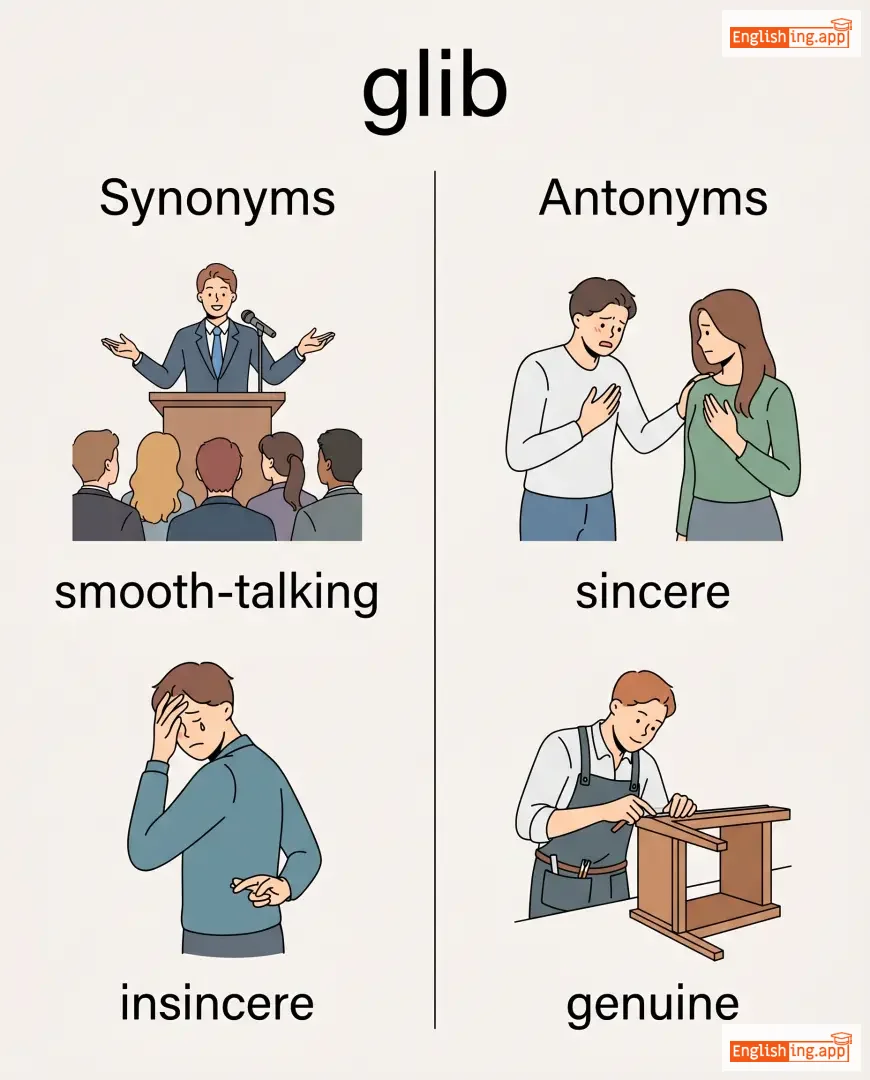
smooth-talking, insincere, superficial, slick, shallow
••••••
|
sincere, genuine, thoughtful
••••••
|
glib talk, glib remark, glib response, glib answer
••••••
|
Glibは、表面上は上手に話すが、誠実さがないことを意味します。
••••••
|
|
⚡
••••••
|
/ɡoʊd/
verb
(ゴード)
••••••
|
|
挑発する
chouhatsu suru
••••••
|
goaded
ゴーデッド
••••••
|
goaded
ゴーデッド
••••••
|
goads
ゴーズ
••••••
|
goading
ゴーディング
••••••
|
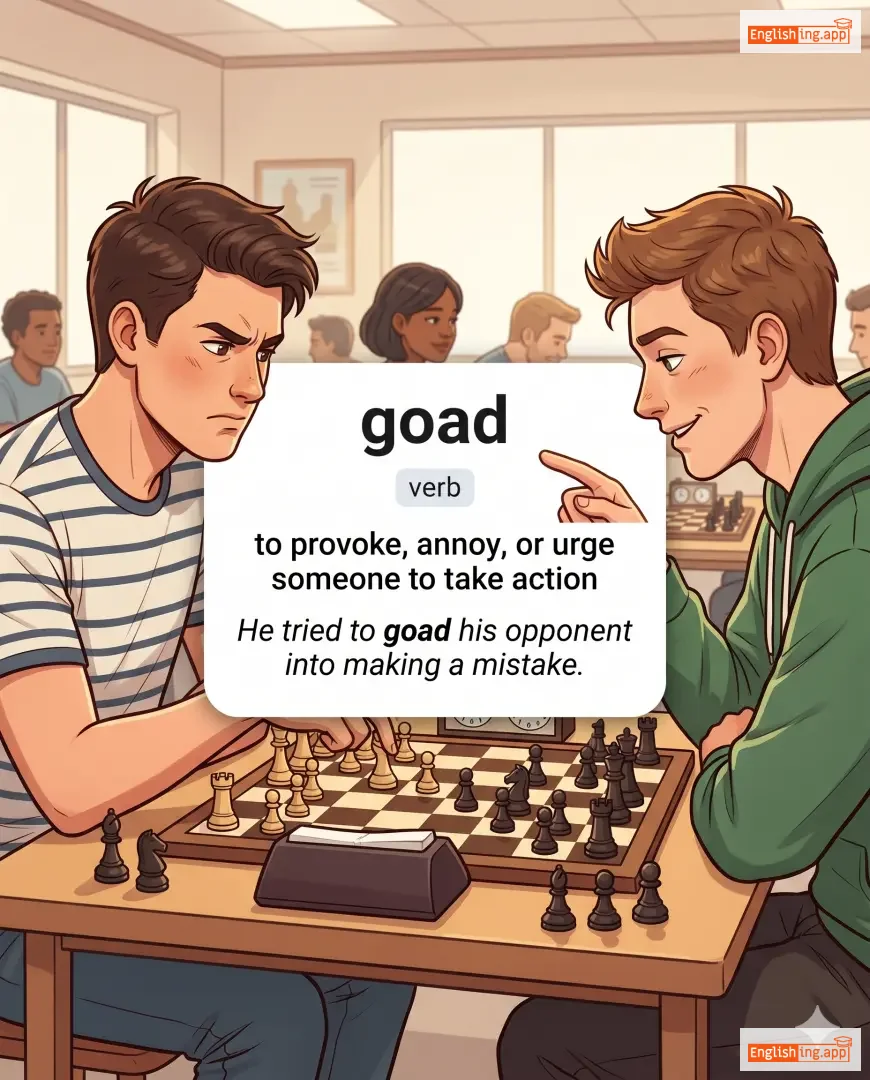
to provoke, annoy, or urge someone to take action
••••••
|
He tried to goad his opponent into making a mistake.
ヒー トライド トゥ ゴード ヒズ オポーネント イントゥ メイキング ア ミステイク。
••••••
|
彼は対戦相手をミスを犯させるために挑発しようとした。
Kare wa taisen aite o misu o okosaseru tame ni chouhatsu shiyou to shita.
••••••
|
goad into action
ゴード イントゥ アクション
••••••
|
to provoke or push someone to act
••••••
|
行動に挑発する
koudou ni chouhatsu suru
••••••
|
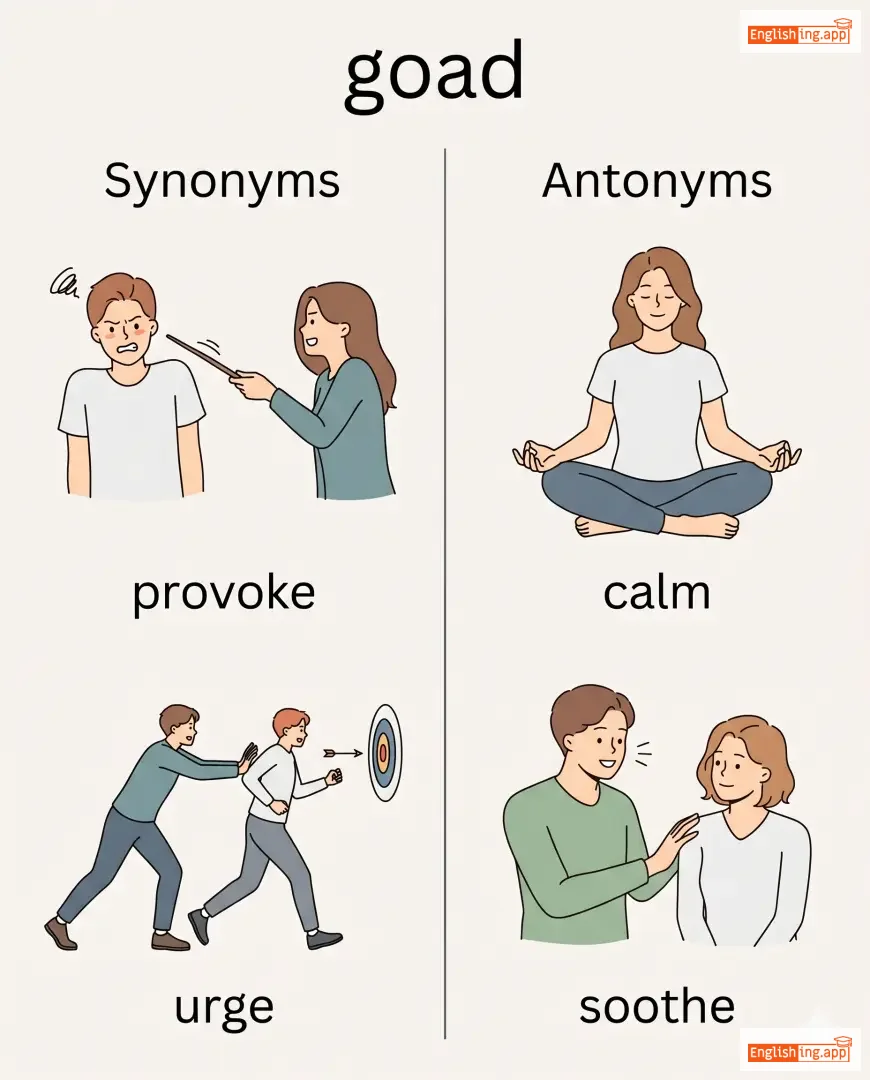
provoke, urge, incite, push, irritate
••••••
|
calm, soothe, dissuade
••••••
|
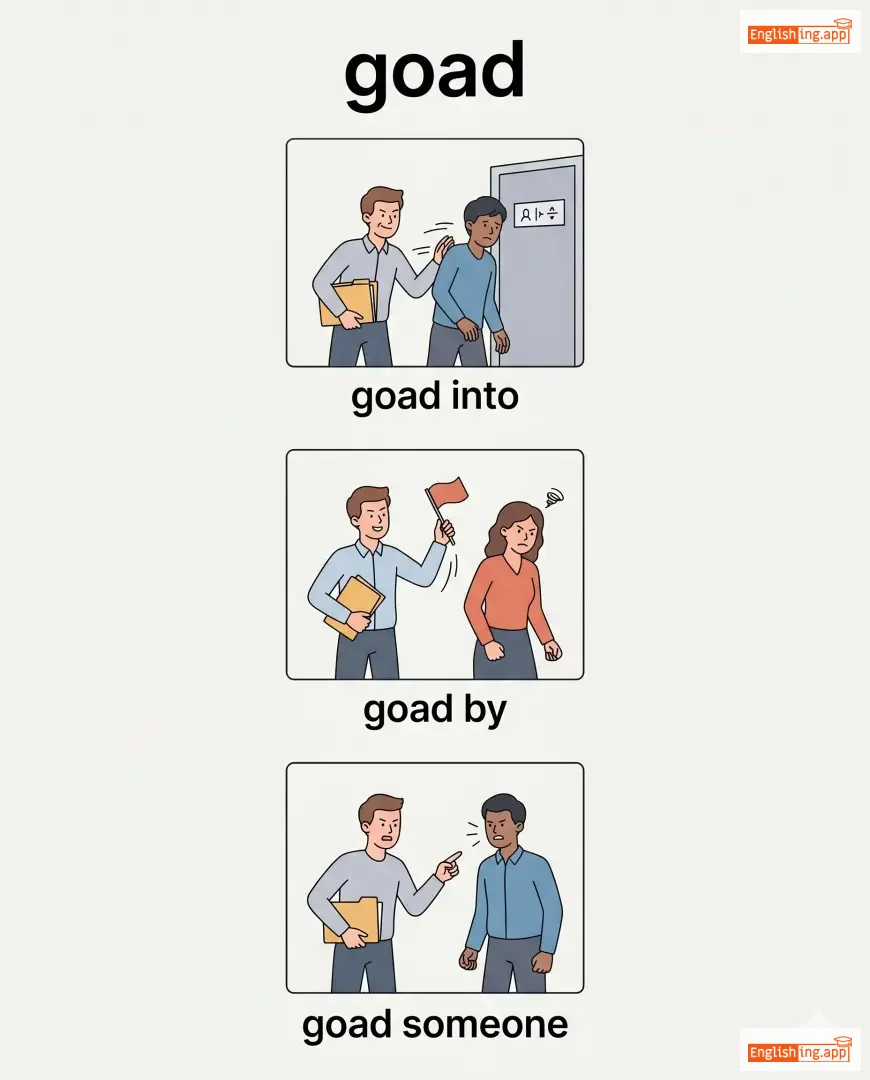
goad into, goad by, goad someone
••••••
|
Goad = Go + Add, 誰かを行動に挑発
••••••
|
|
🕸️
••••••
|
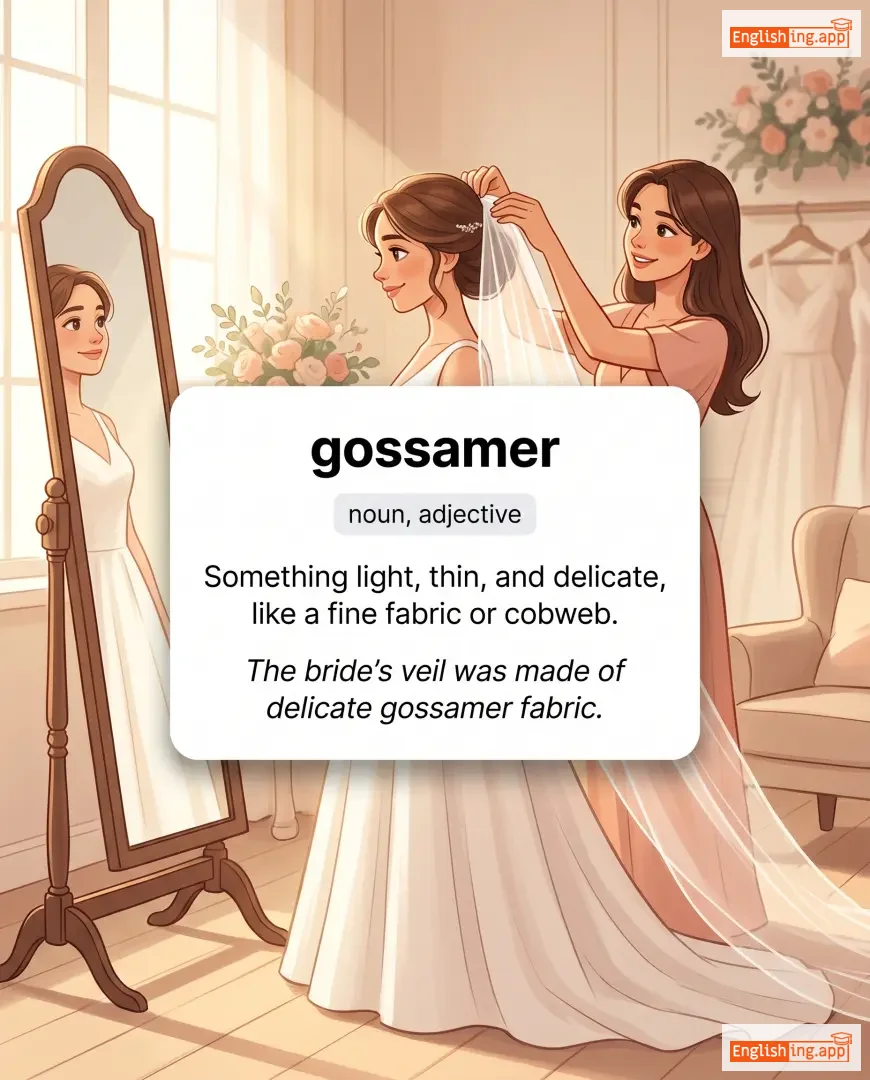
/ˈɡɒsəmər/
noun, adjective
(ゴッサマー)
••••••
|
|
繊細なもの
sensaina mono
••••••
|
- •••••• | - •••••• | - •••••• | - •••••• |
Something light, thin, and delicate, like a fine fabric or cobweb.
••••••
|
The bride's veil was made of delicate gossamer fabric. |
花嫁のベールは繊細なゴッサマー生地で作られていた。
Hanayome no bēru wa sensaina gossamā kiji de tsukurarete ita.
••••••
|
- •••••• | - •••••• | - •••••• |
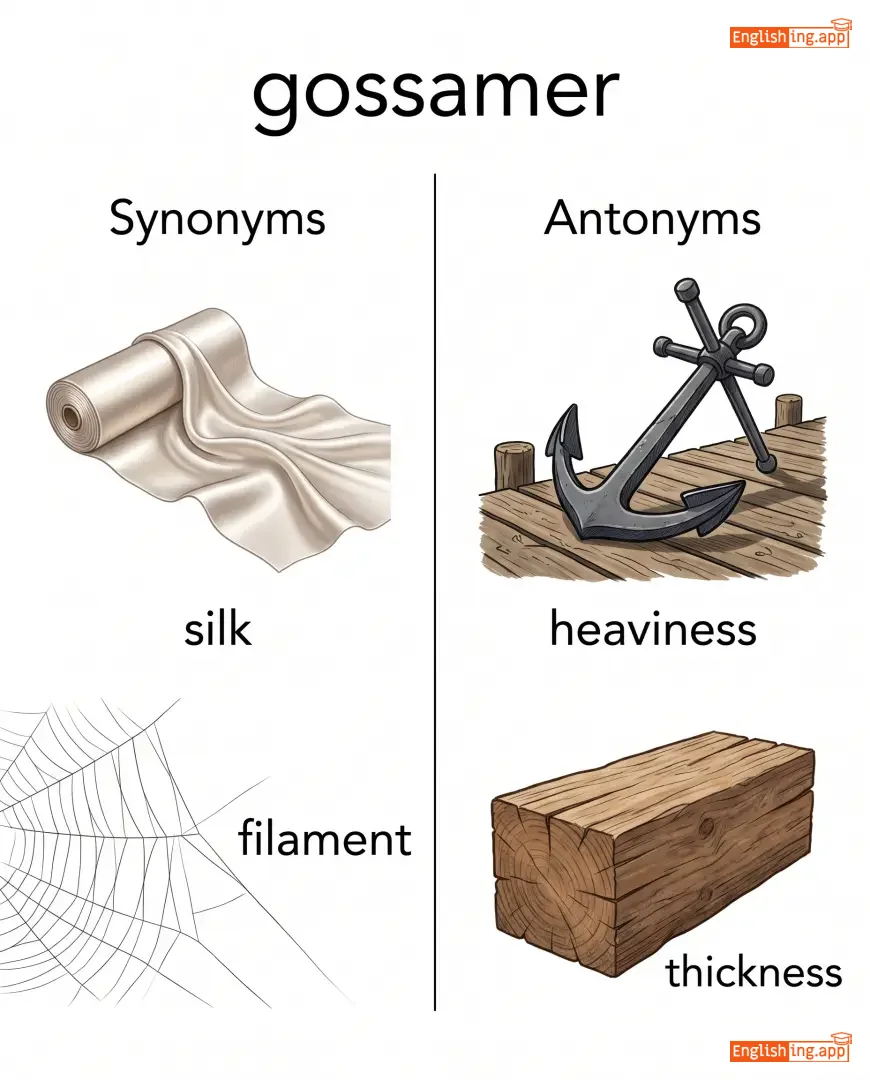
silk, filament, cobweb, fineness, delicacy
••••••
|
heaviness, thickness, solidity
••••••
|
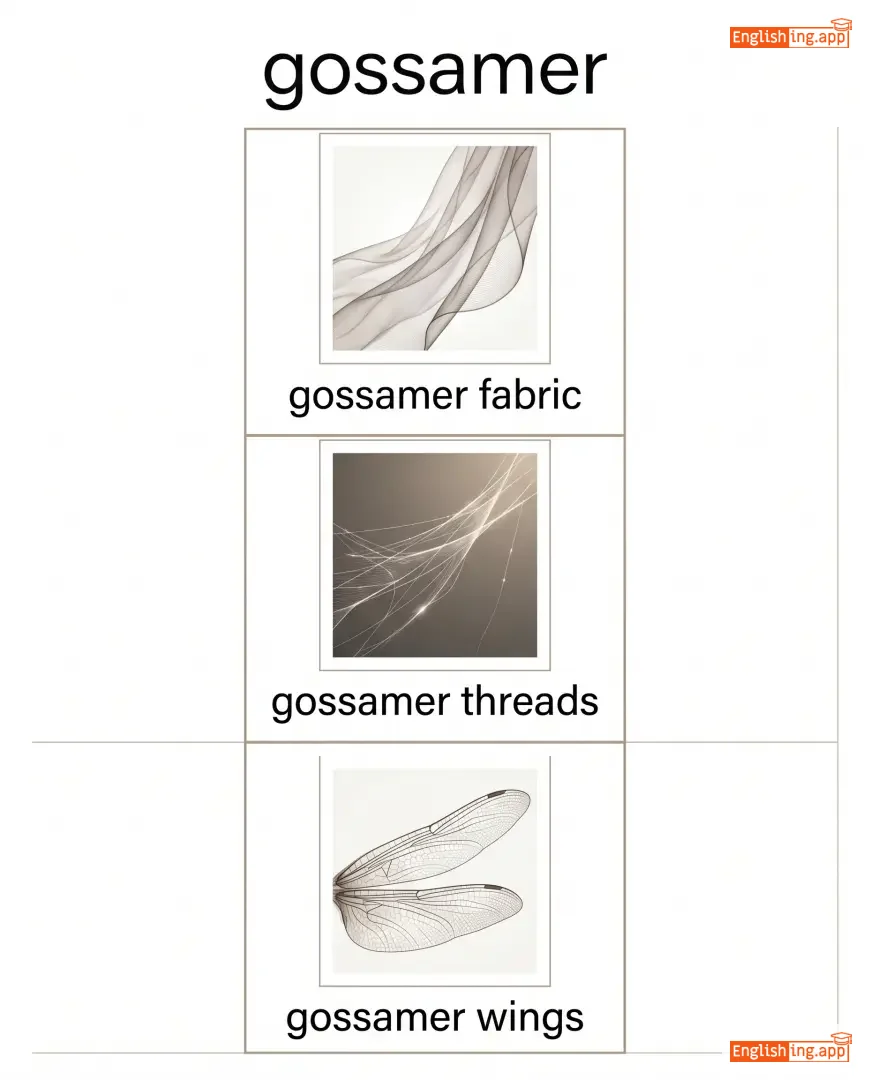
gossamer fabric, gossamer threads, gossamer wings, gossamer veil
••••••
|
ゴッサマーは非常に軽くて繊細、まるでクモの巣や薄い布のようなものです。
••••••
|
|
🪓
••••••
|
/ɡaʊdʒ/
verb, noun
(ガウジ)
••••••
|
|
えぐる、不当に高く売る
eguru, futōni takaku uru
••••••
|
gouged
ガウジド
••••••
|
gouged
ガウジド
••••••
|
gouges
ガウジズ
••••••
|
gouging
ガウジング
••••••
|
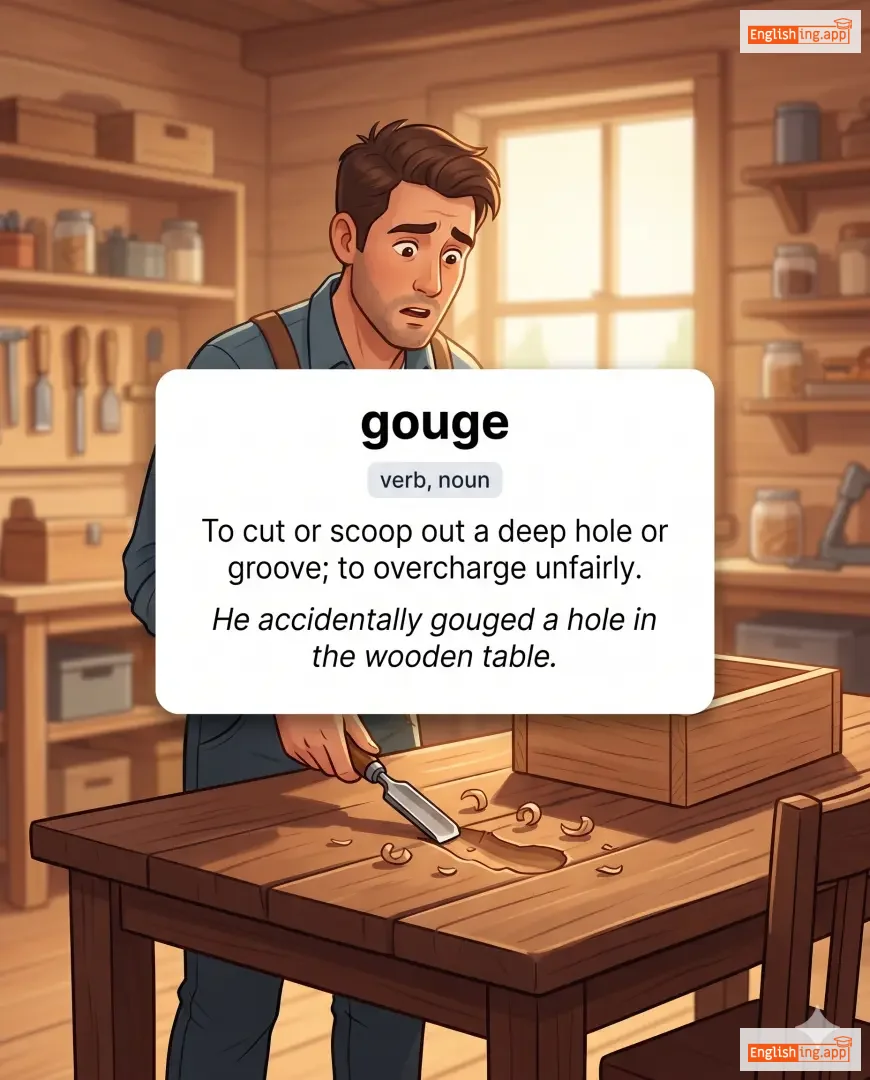
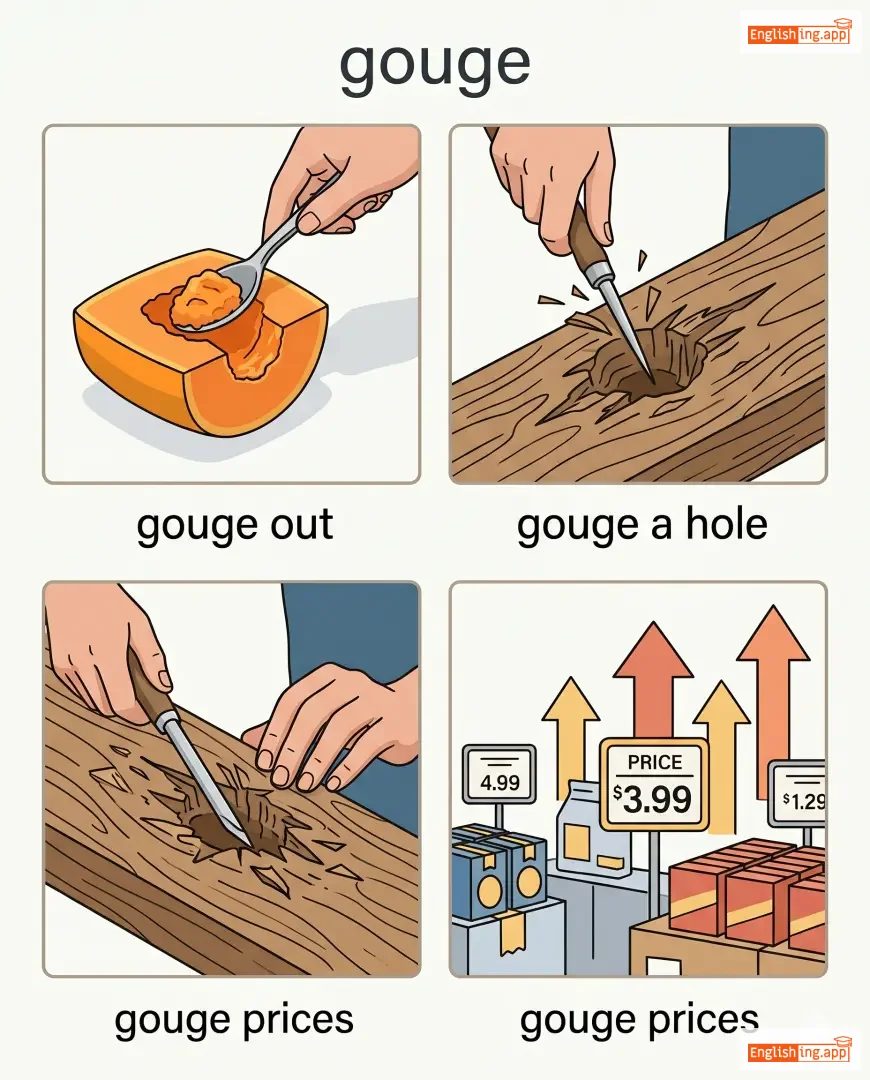
To cut or scoop out a deep hole or groove; to overcharge unfairly.
••••••
|
He accidentally gouged a hole in the wooden table.
彼はうっかり木製のテーブルに穴を開けました。
••••••
|
彼はうっかり木製のテーブルに穴を開けました。
Kare wa ukkari mokusei no tēburu ni ana o akemashita.
••••••
|
price gouging
価格吊り上げ
••••••
|
Charging excessively high prices, especially during crises.
••••••
|
価格吊り上げ
kakaku tsuriage
••••••
|
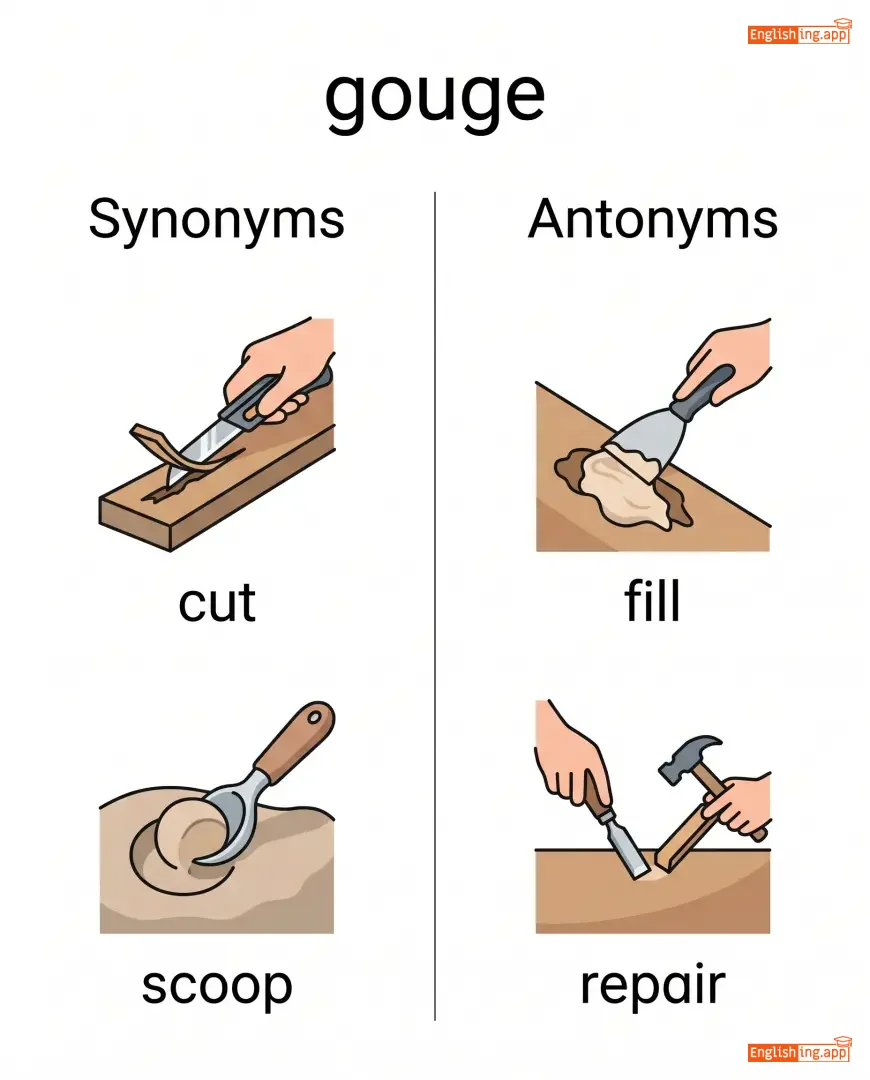
cut, scoop, dig, chisel, overcharge
••••••
|
fill, repair, fairness
••••••
|
gouge out, gouge a hole, gouge prices, gouge customers
••••••
|
Gougeはgou (穴)を作り、価格を吊り上げること
••••••
|
|
🗣️
••••••
|
/ɡrænˈdɪləkwənt/
adjective
(グランディロクエント)
••••••
|
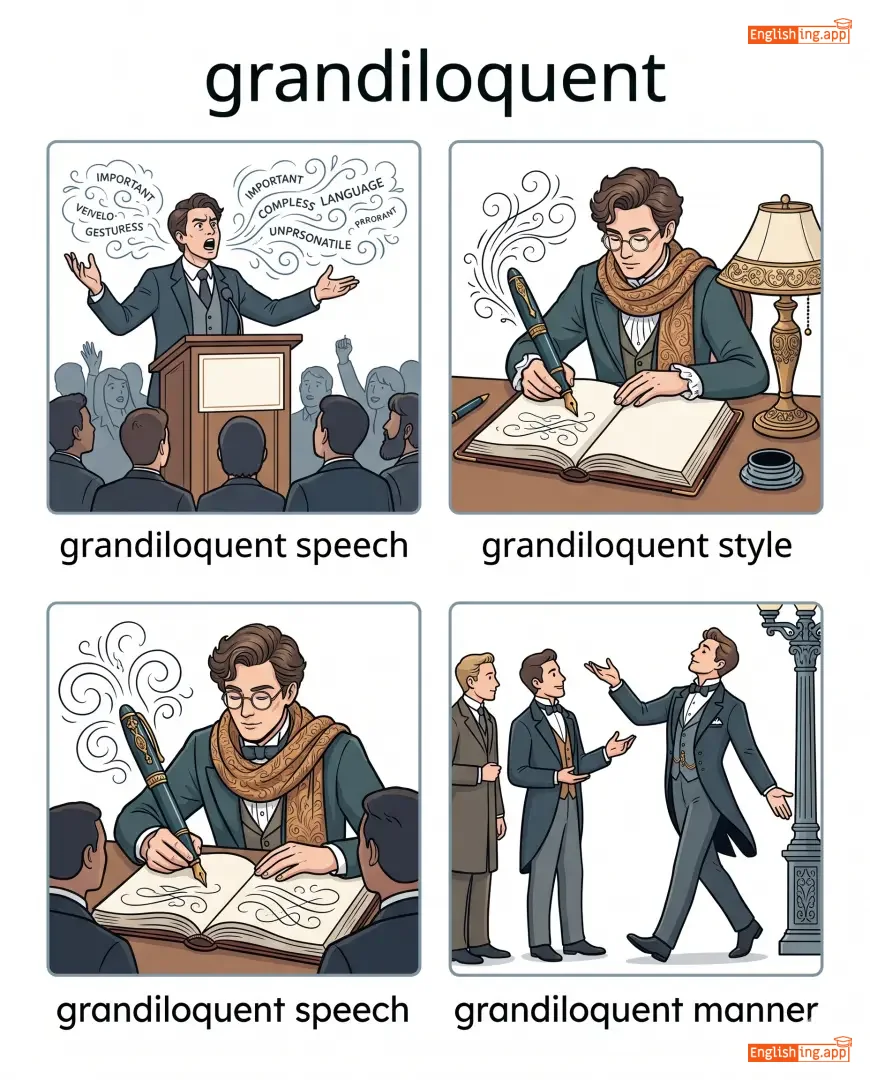
|
誇張な言語
kochou na gengo
••••••
|
- •••••• | - •••••• | - •••••• | - •••••• |
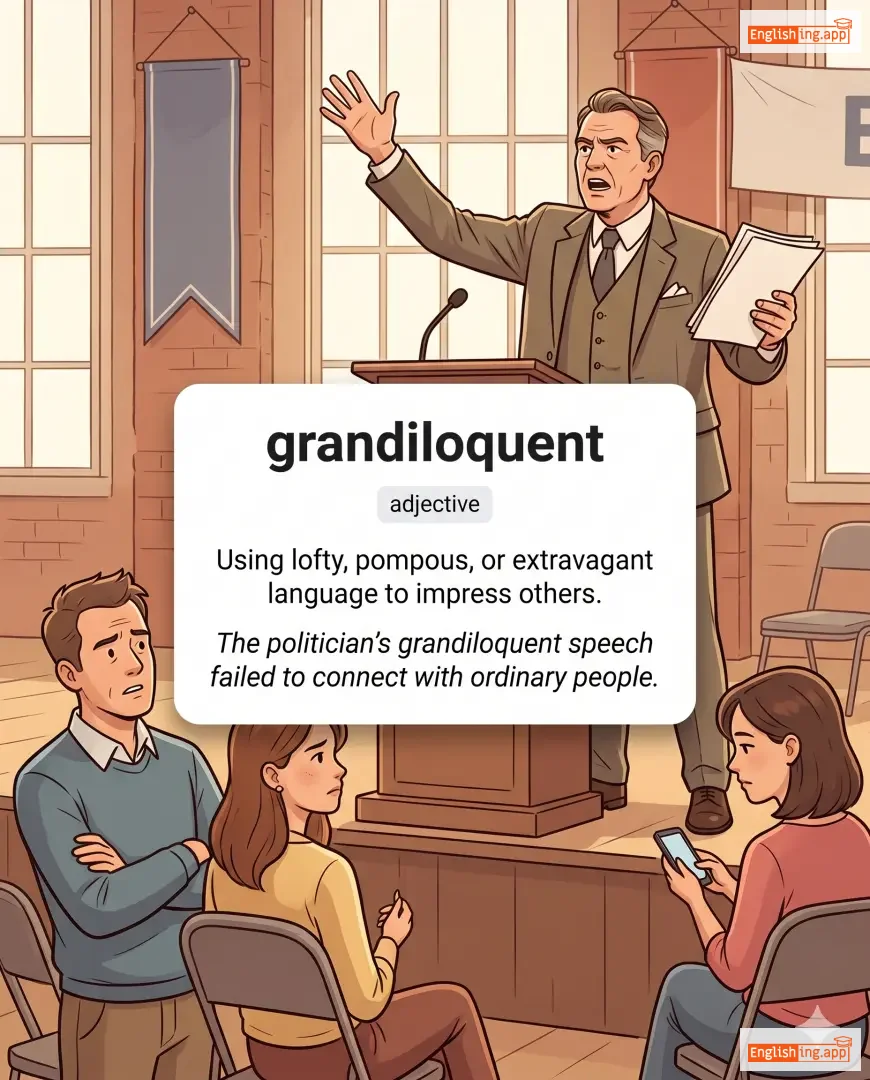
Using lofty, pompous, or extravagant language to impress others.
••••••
|
The politician’s grandiloquent speech failed to connect with ordinary people. |
その政治家の誇張された演説は一般の人々とつながることができなかった。
Sono seijika no kochou sareta enzetsu wa ippan no hitobito to tsunagaru koto ga dekinakatta.
••••••
|
- •••••• | - •••••• | - •••••• |
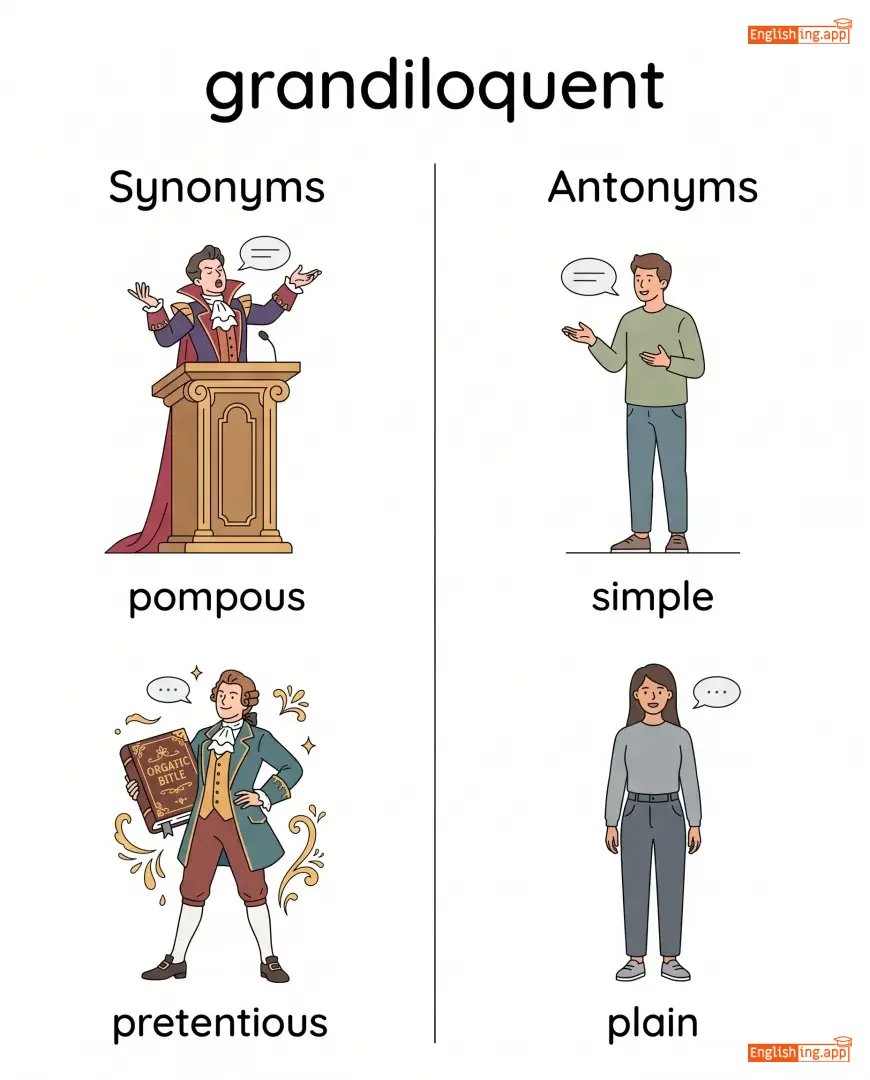
pompous, pretentious, bombastic, inflated, rhetorical
••••••
|
simple, plain, modest
••••••
|
grandiloquent speech, grandiloquent style, grandiloquent manner
••••••
|
Grandiloquent = grand + eloquent, 日本語では: 大げさに言葉で感動させようとする。
••••••
|
|
🗣️
••••••
|
/ɡrɪˈɡɛəriəs/
adjective
(グレガリウス)
••••••
|
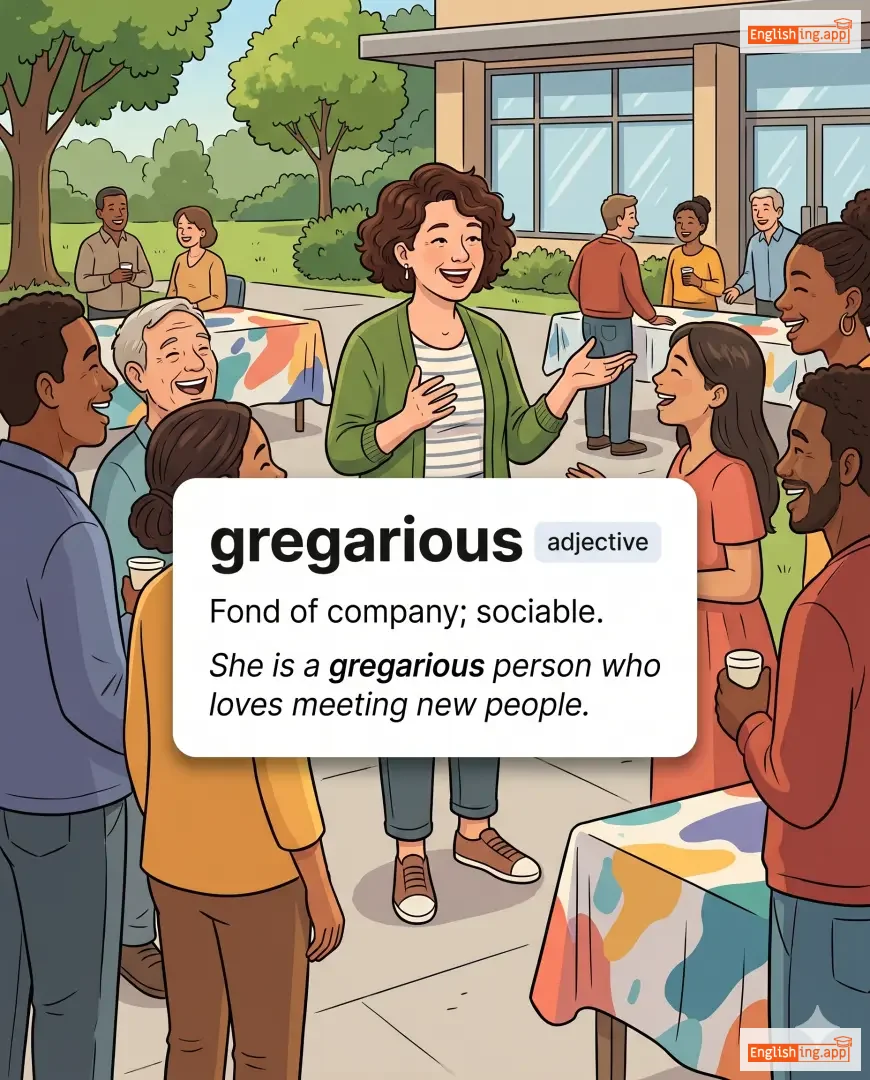
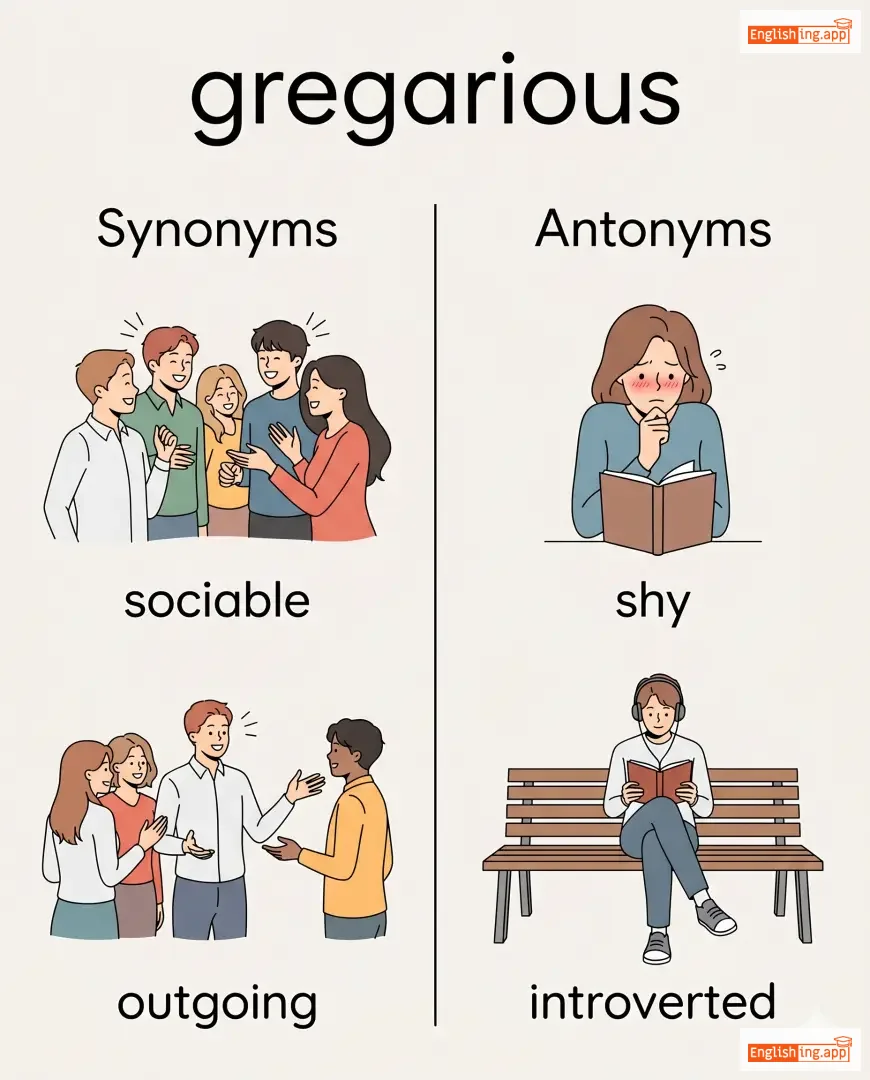
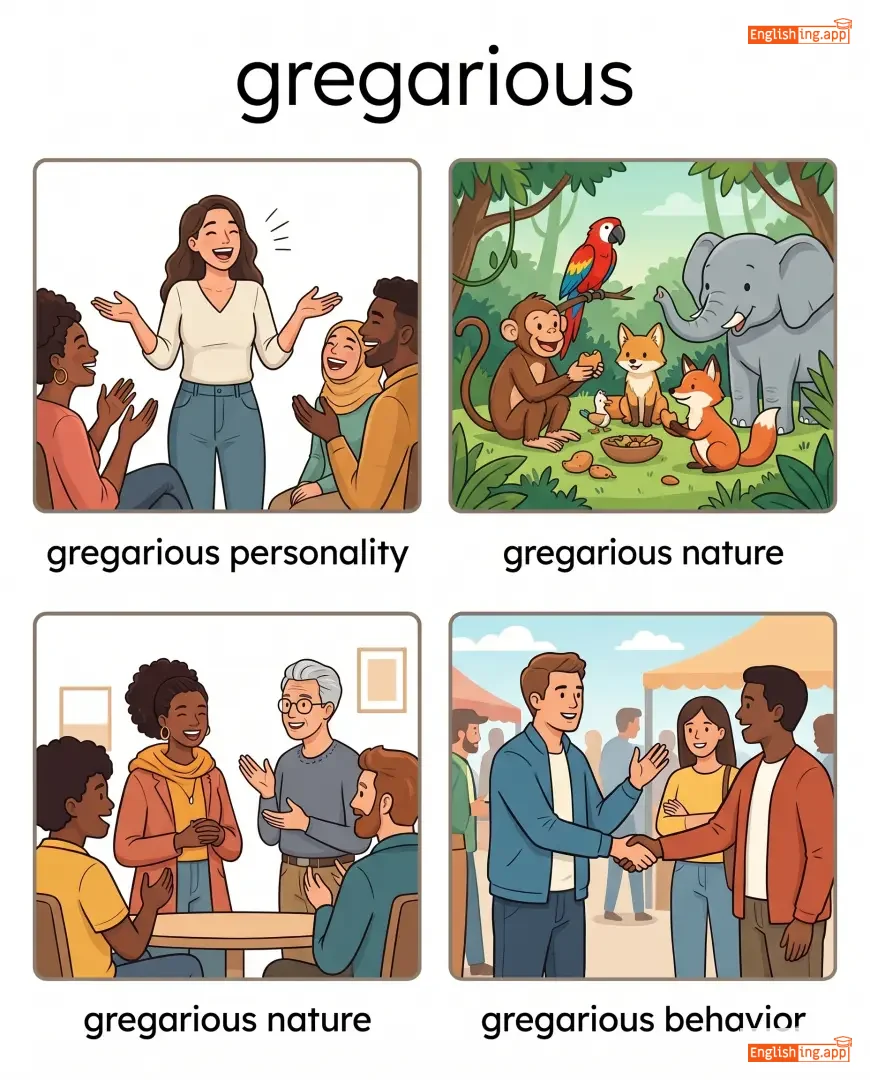
|
社交的
shakouteki
••••••
|
- •••••• | - •••••• | - •••••• | - •••••• |
Fond of company; sociable.
••••••
|
She is a gregarious person who loves meeting new people. |
彼女は新しい人々と会うのが好きな社交的な人です。
Kanojo wa atarashii hitobito to au no ga suki na shakouteki na hito desu.
••••••
|
- •••••• | - •••••• | - •••••• |
sociable, outgoing, friendly, extroverted, convivial
••••••
|
shy, introverted, antisocial
••••••
|
gregarious personality, gregarious nature, gregarious behavior
••••••
|
Greg arious はグループにいることが好きです - 社交的。
••••••
|
|
🪶
••••••
|
/ɡraʊs/
noun/verb
(グラウス)
••••••
|
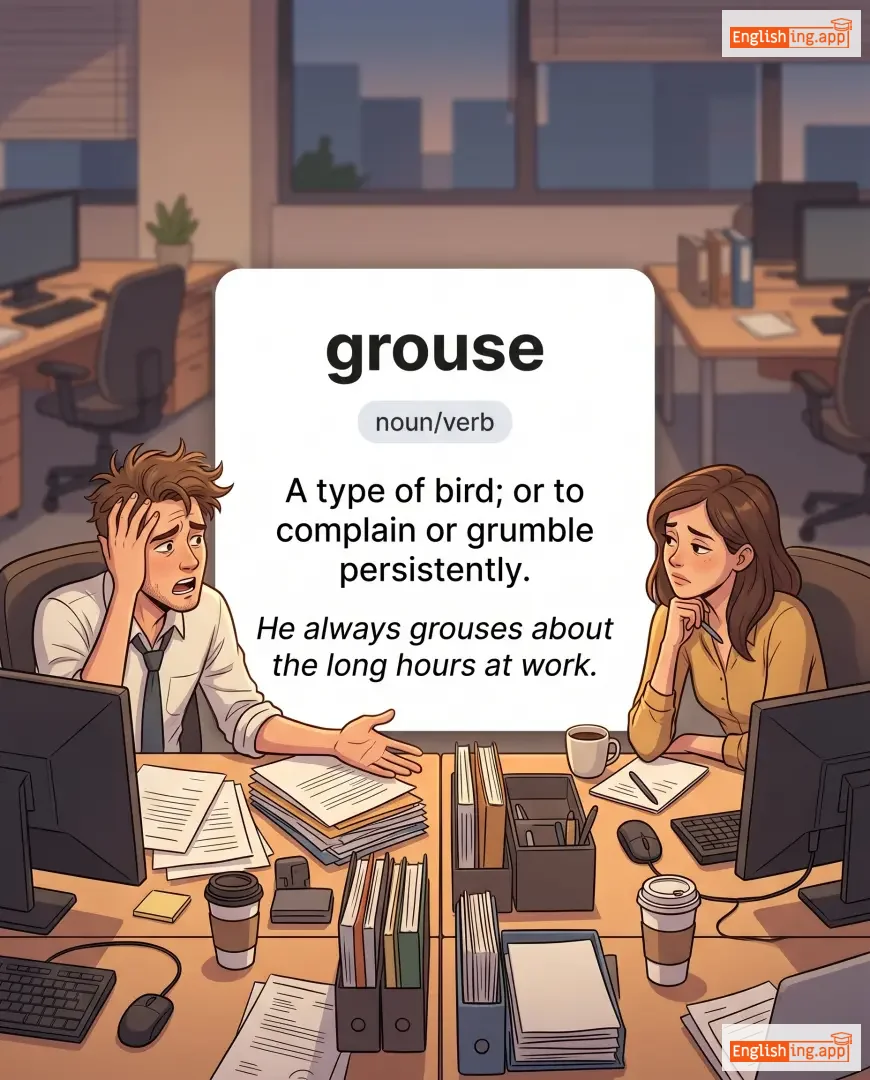
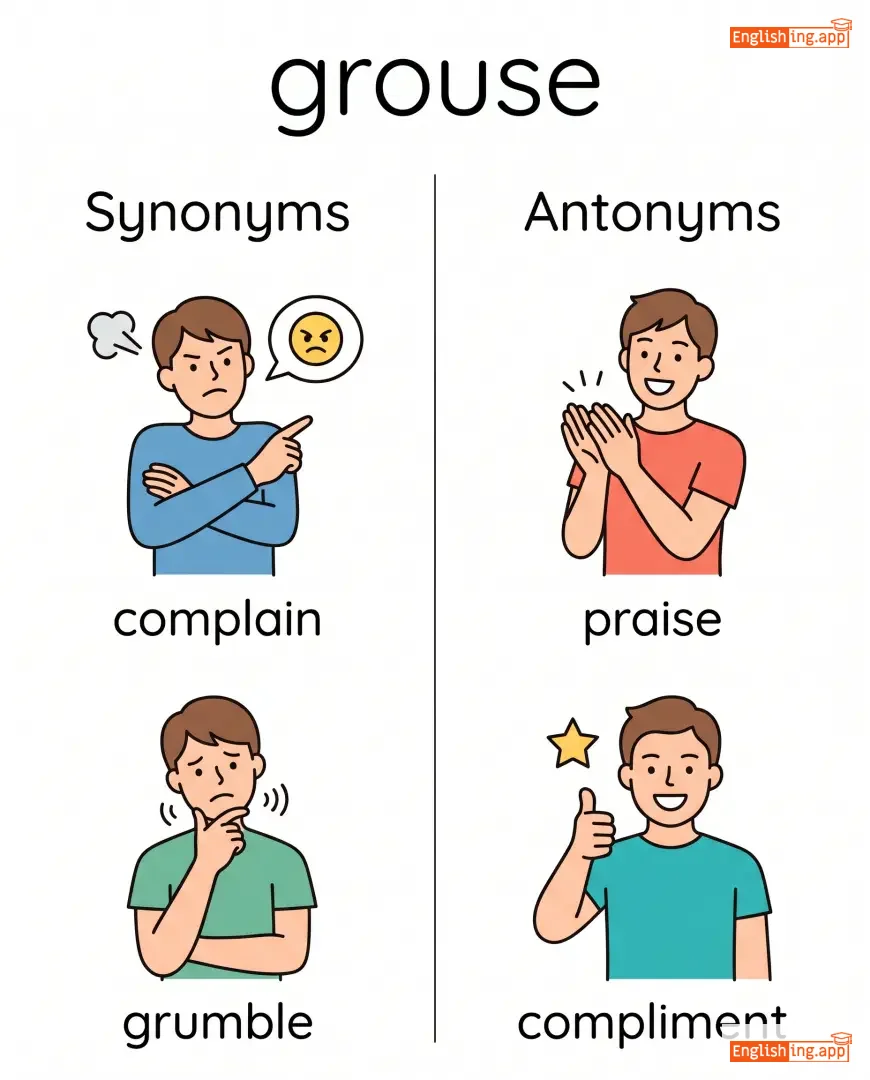
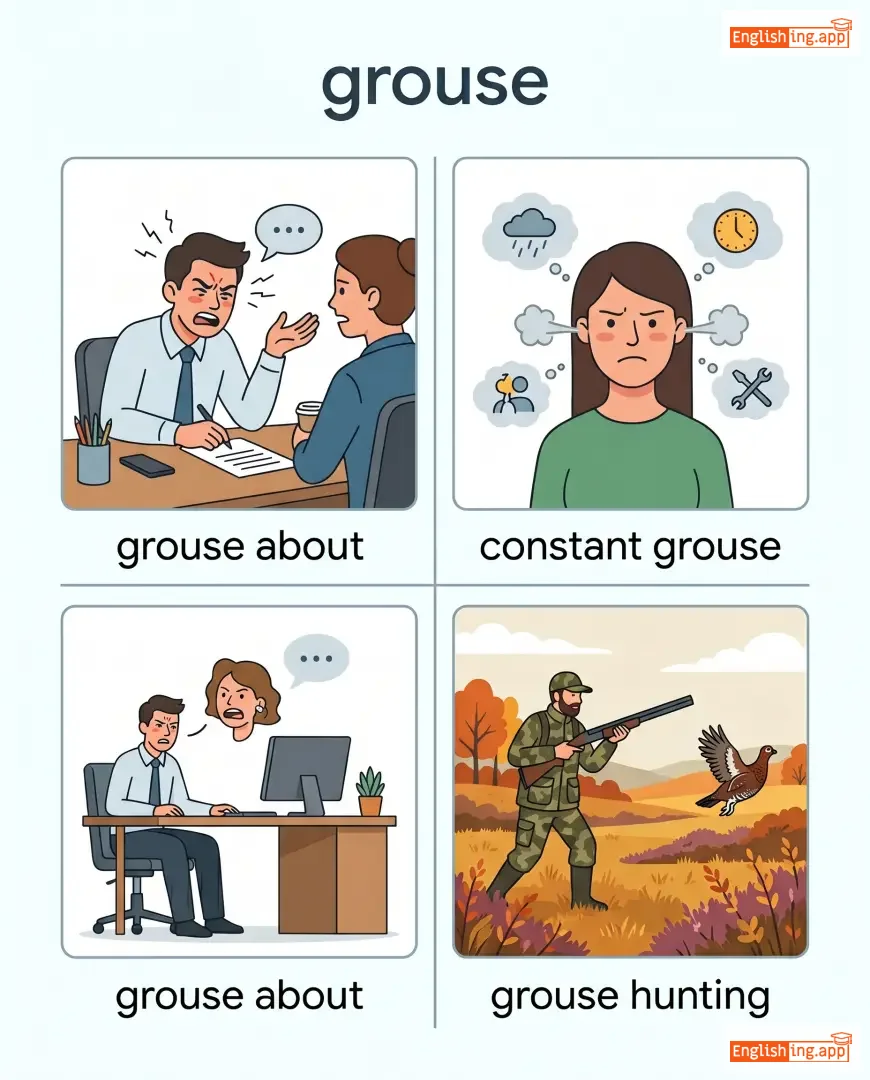
|
不平を言う / 鳥の一種
fuhē o iu / tori no isshu
••••••
|
groused
グラウスド
••••••
|
groused
グラウスド
••••••
|
grouses
グラウセス
••••••
|
grousing
グラウシング
••••••
|
A type of bird; or to complain or grumble persistently.
••••••
|
He always grouses about the long hours at work.
彼はいつも長時間働くことに不平を言います。
••••••
|
彼はいつも長時間働くことに不平を言います。
Kare wa itsumo chōjikan hataraku koto ni fuhē o iimasu.
••••••
|
- •••••• | - •••••• | - •••••• |
complain, grumble, moan, whine, object
••••••
|
praise, compliment
••••••
|
grouse about, constant grouse, grouse hunting, grouse season
••••••
|
グラウスの鳥のように、いつも文句を言う。
••••••
|
|
😊
••••••
|
/ˈɡaɪlləs/
adjective
(ギルレス)
••••••
|
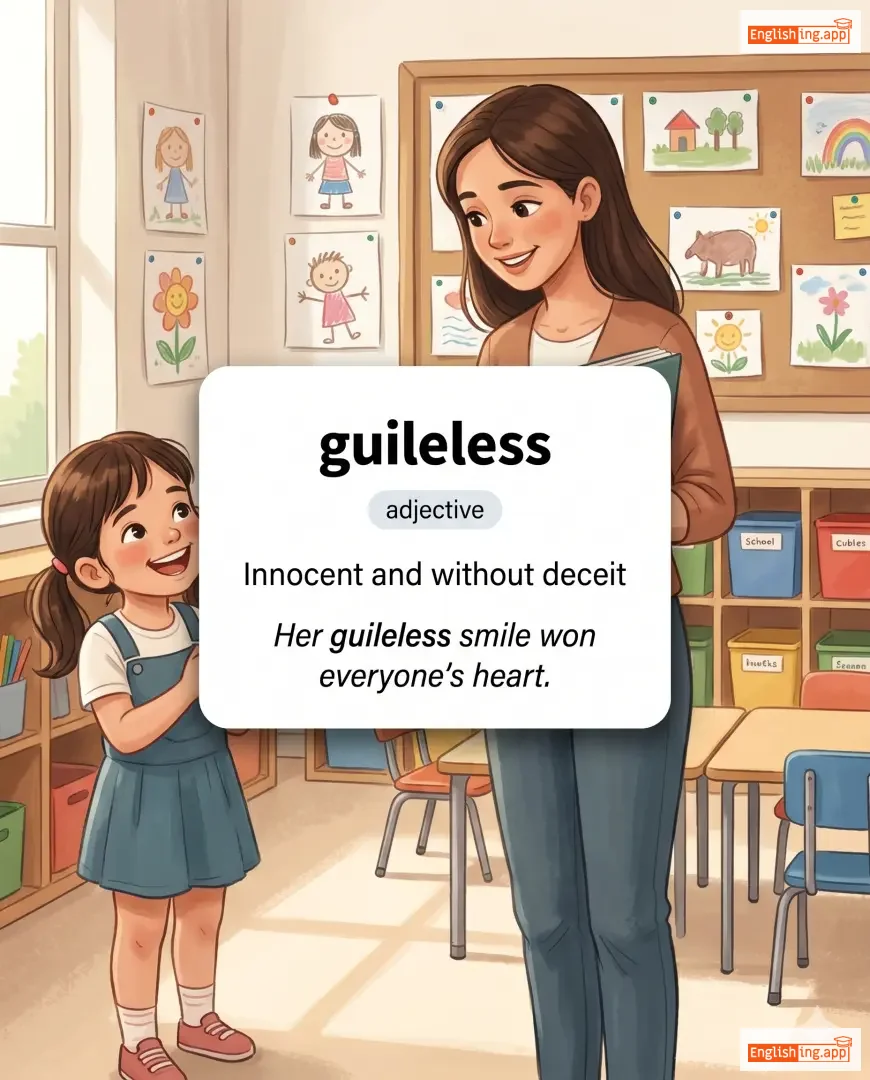
|
無邪気
musyaki
••••••
|
- •••••• | - •••••• | - •••••• | - •••••• |
Innocent and without deceit
••••••
|
Her guileless smile won everyone’s heart. |
彼女の無邪気な笑顔は皆の心をつかみました。
Kanojo no musyaki na egao wa mina no kokoro o tsukamimashita.
••••••
|
- •••••• | - •••••• | - •••••• |
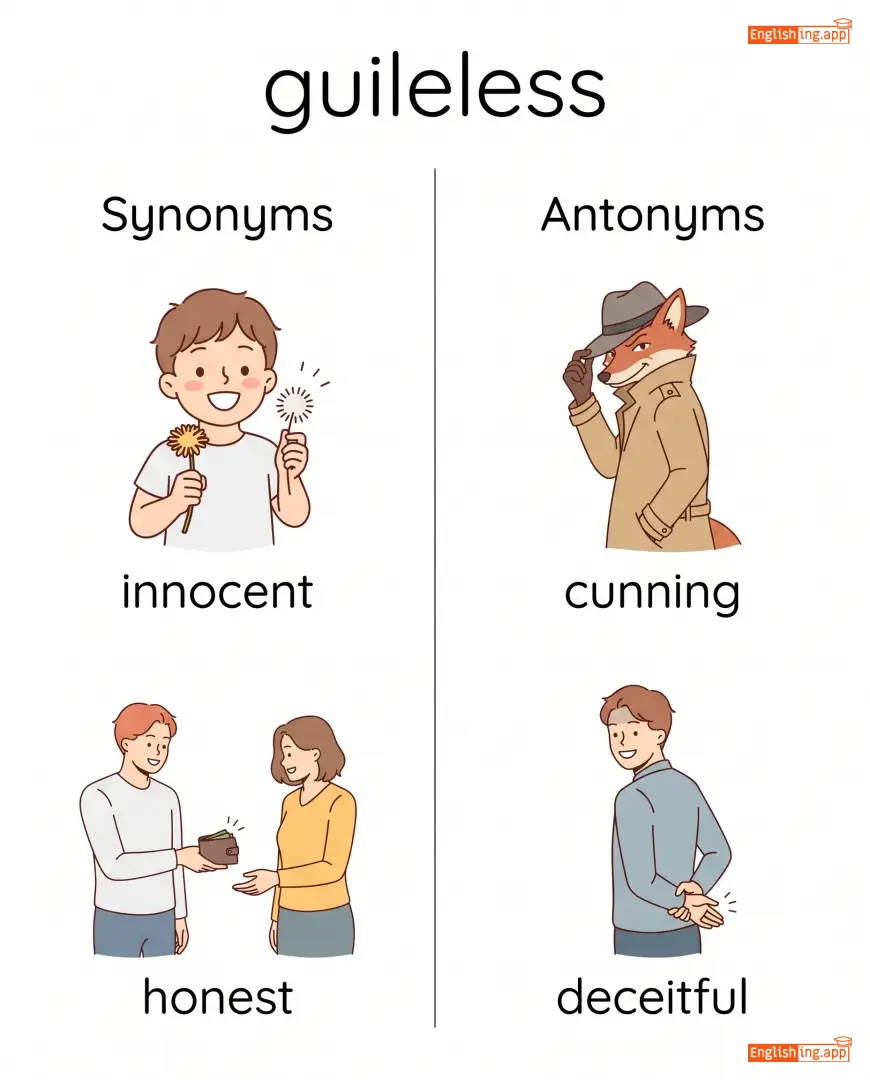
innocent, honest, sincere, naive
••••••
|
cunning, deceitful, crafty
••••••
|
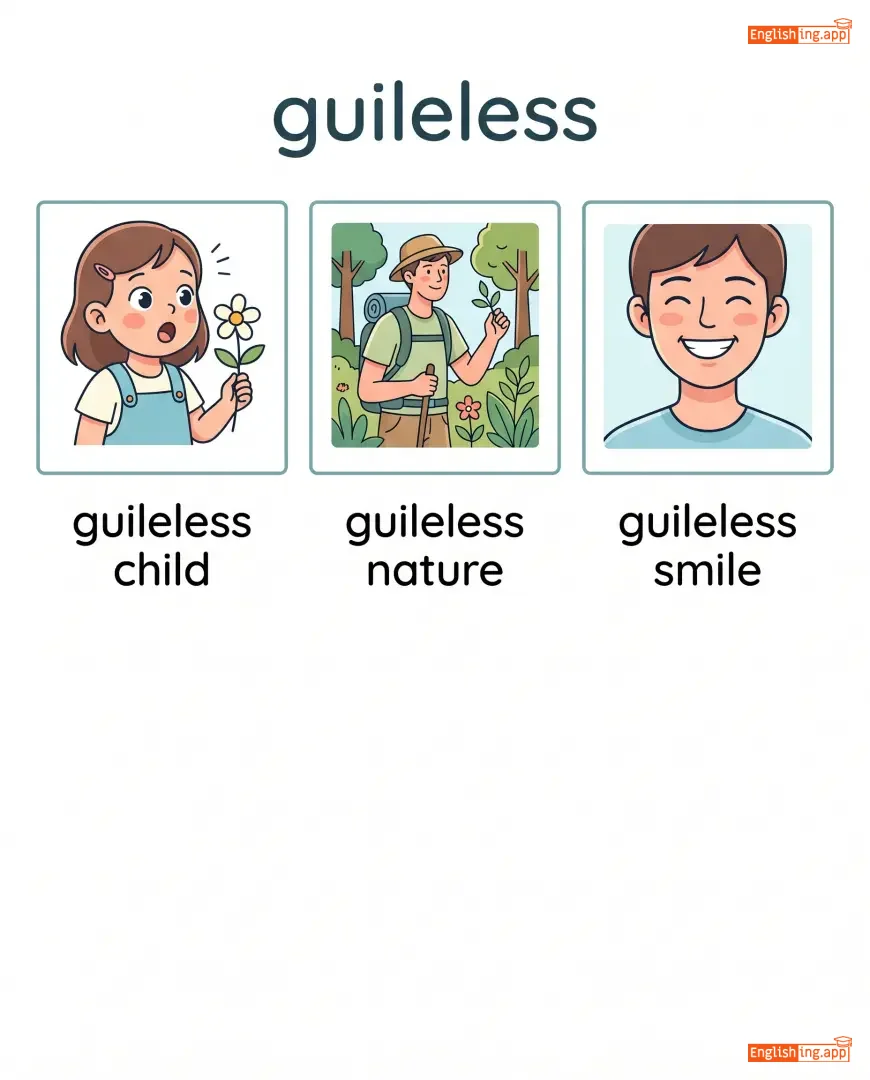
guileless child, guileless nature, guileless smile
••••••
|
Guilelessは無邪気(musyaki)という意味です。
••••••
|
|
🎭
••••••
|
/ɡaɪz/
noun
(ガイズ)
••••••
|
|
仮装
kasou
••••••
|
- •••••• | - •••••• | - •••••• | - •••••• |
An external form, appearance, or manner of presentation, often hiding the true nature
••••••
|
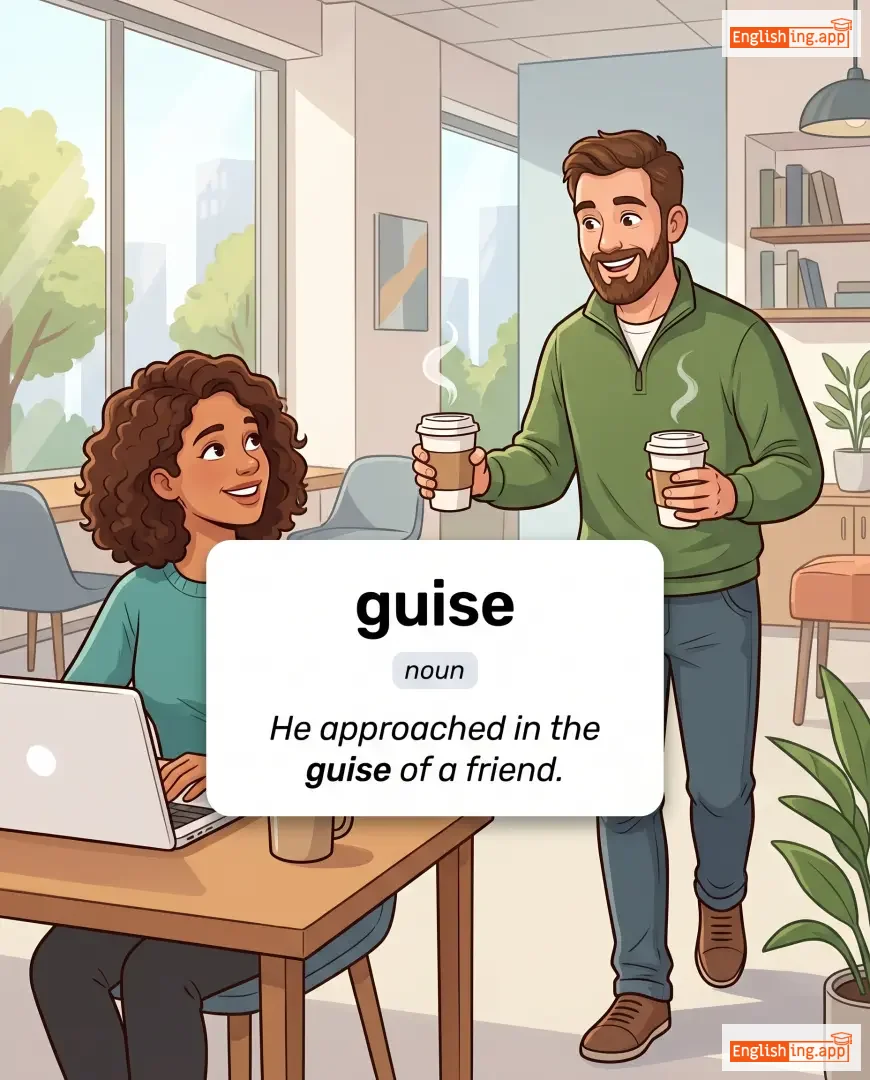
He approached in the guise of a friend. |
彼は友達の仮装で近づいてきた。
Kare wa tomodachi no kasou de chikadzuite kita.
••••••
|
under the guise of |
pretending to be something else; using a false appearance
••••••
|
仮装の下で
Kasou no shita de
••••••
|
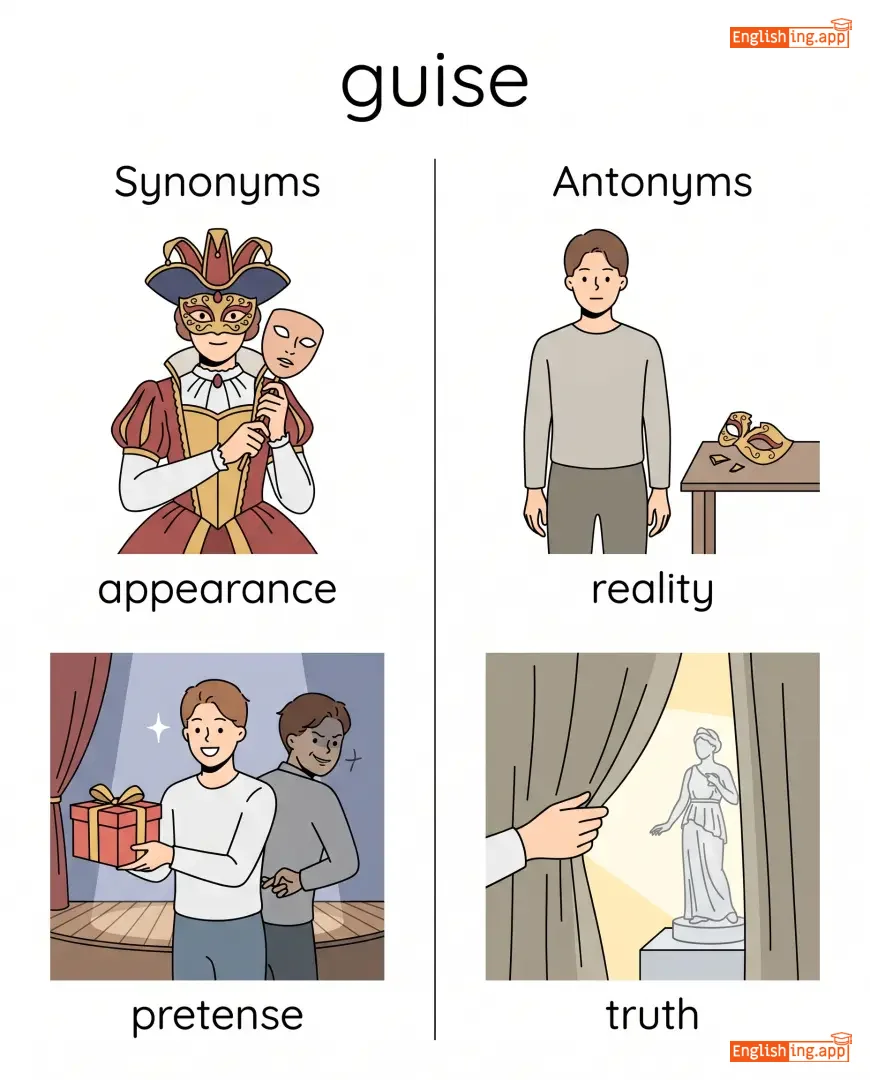
appearance, pretense, disguise, semblance
••••••
|
reality, truth, openness
••••••
|
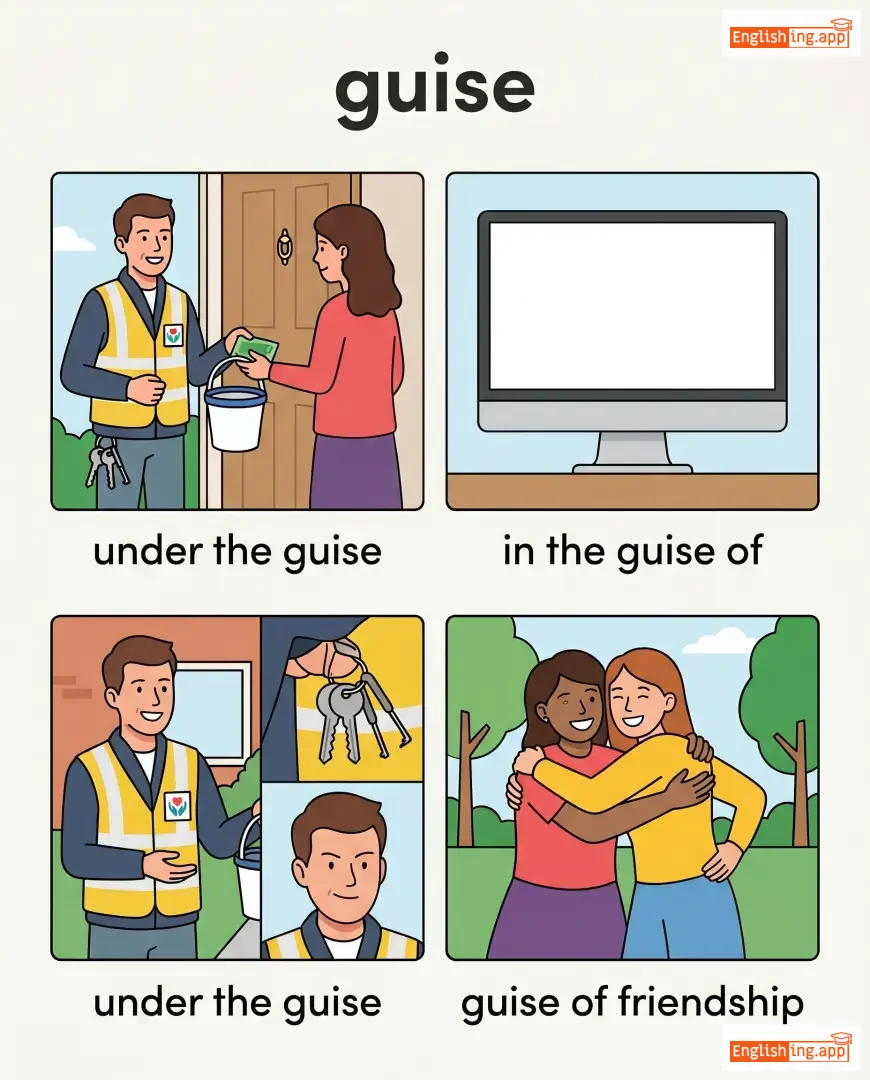
under the guise, in the guise of, guise of friendship
••••••
|
仮装は、'guise'と同じように本当の自分を隠すものです。
••••••
|
|
🙈
••••••
|
/ˈɡʌl.ə.bəl/
adjective
(ガリブル)
••••••
|
|
簡単に騙される
kantan ni damasareru
••••••
|
- •••••• | - •••••• | - •••••• | - •••••• |
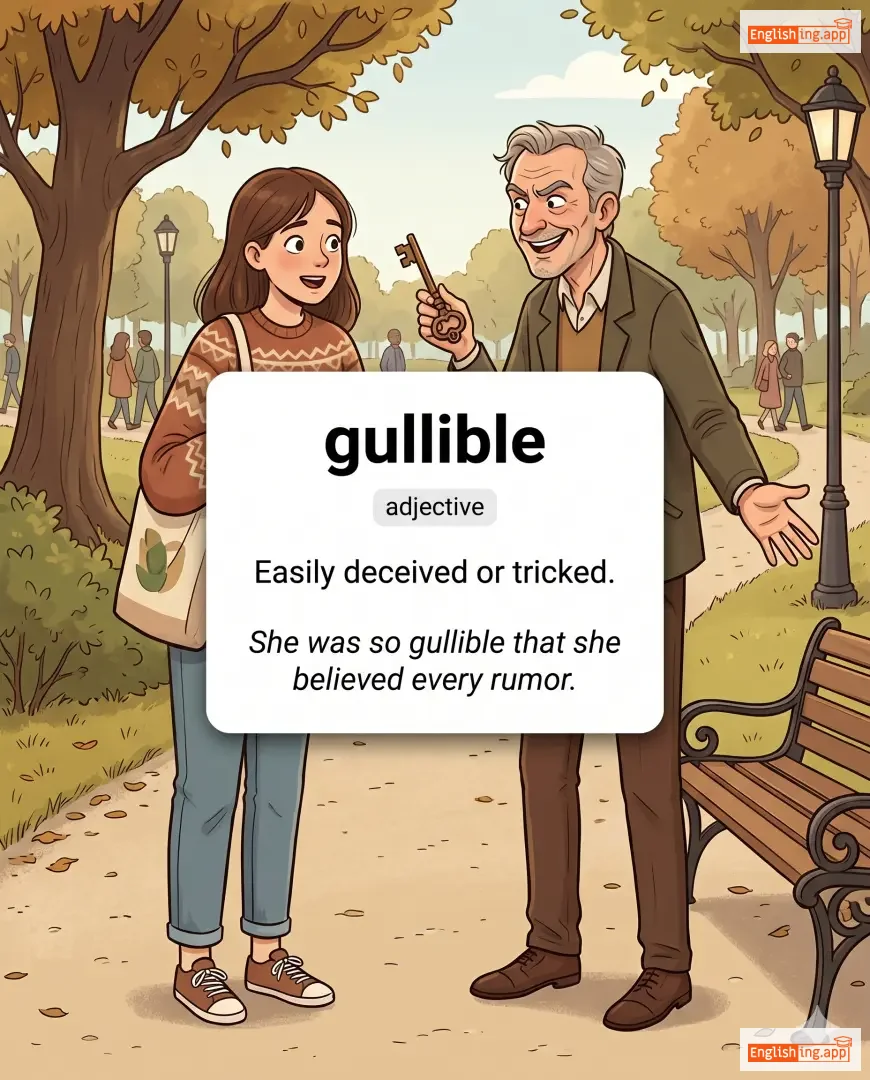
Easily deceived or tricked.
••••••
|
She was so gullible that she believed every rumor. |
彼女は非常に簡単に騙されるので、あらゆる噂を信じてしまった。
Kanojo wa hijou ni kantan ni damasareru node, arayuru uwasa wo shinjite shimatta.
••••••
|
- •••••• | - •••••• | - •••••• |
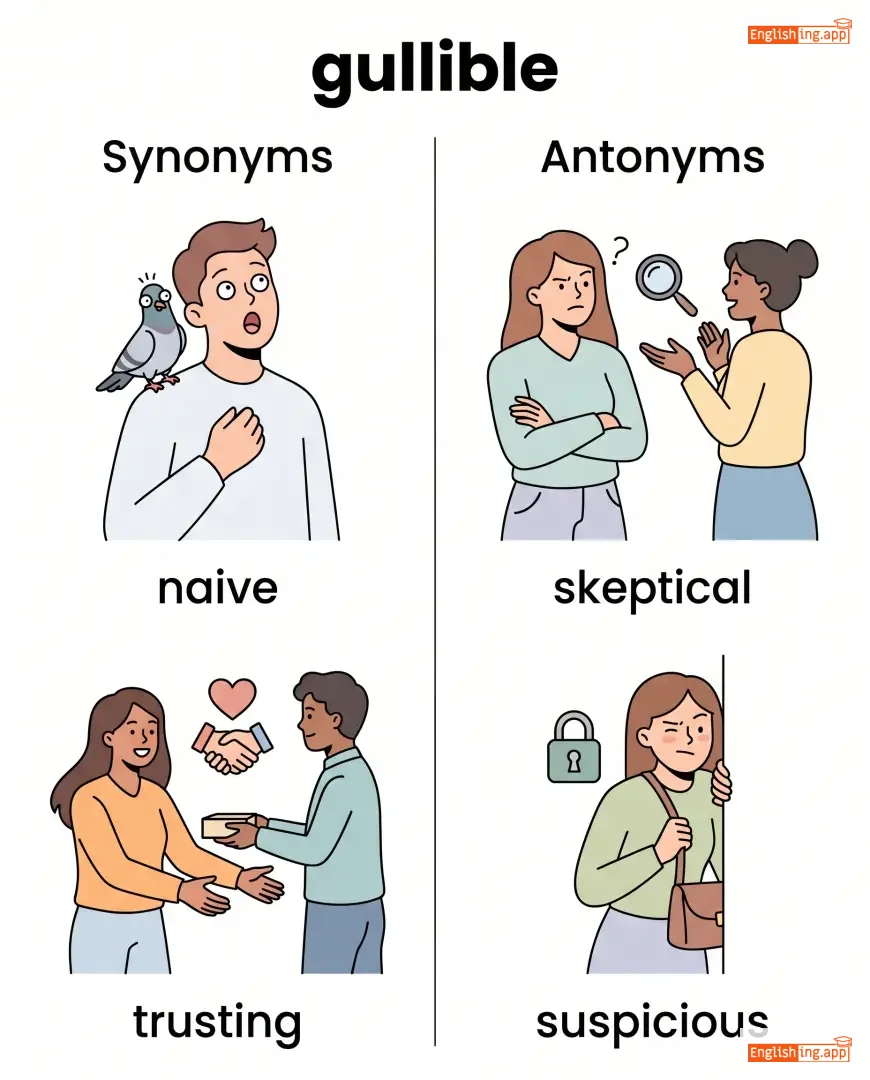
naive, trusting, credulous, unsuspecting, innocent
••••••
|
skeptical, suspicious, cautious
••••••
|
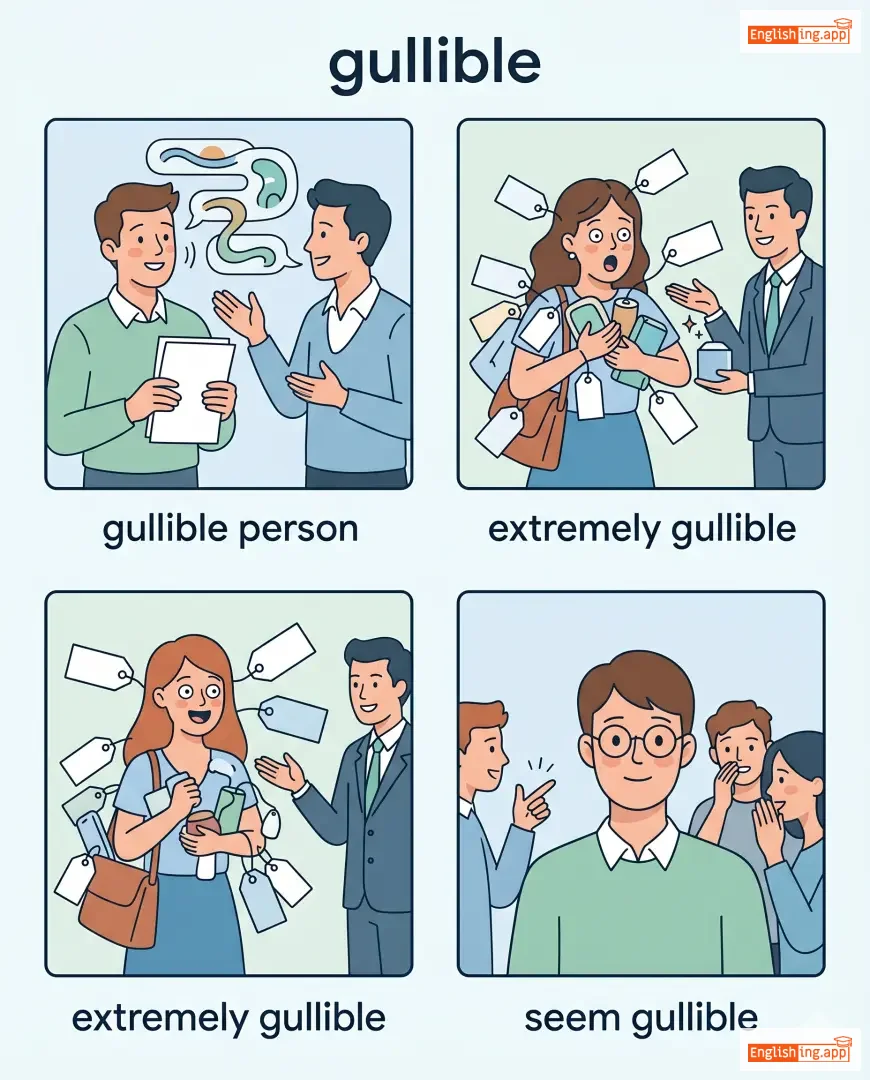
gullible person, extremely gullible, seem gullible
••••••
|
GULLible な人は何でも信じてしまう。
••••••
|
|
👅
••••••
|
/ˈɡʌstəˌtɔːri/
adjective
(グスタトリー)
••••••
|
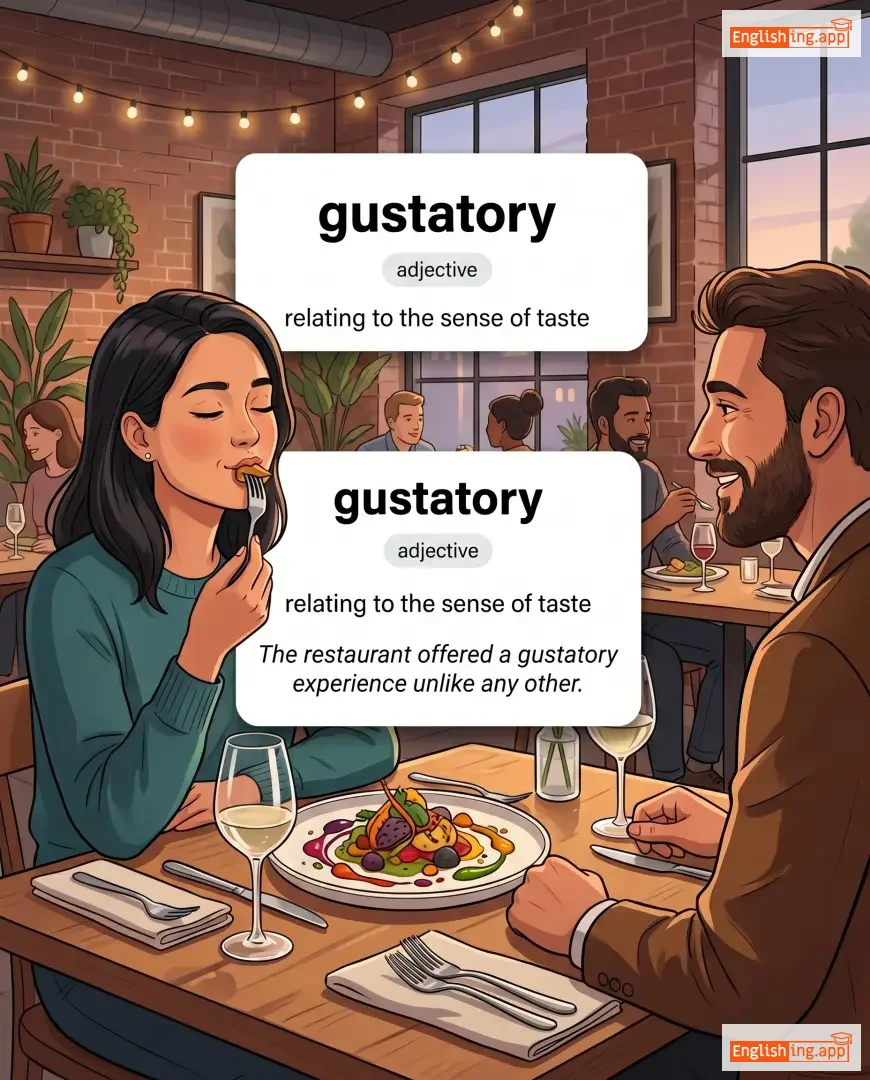
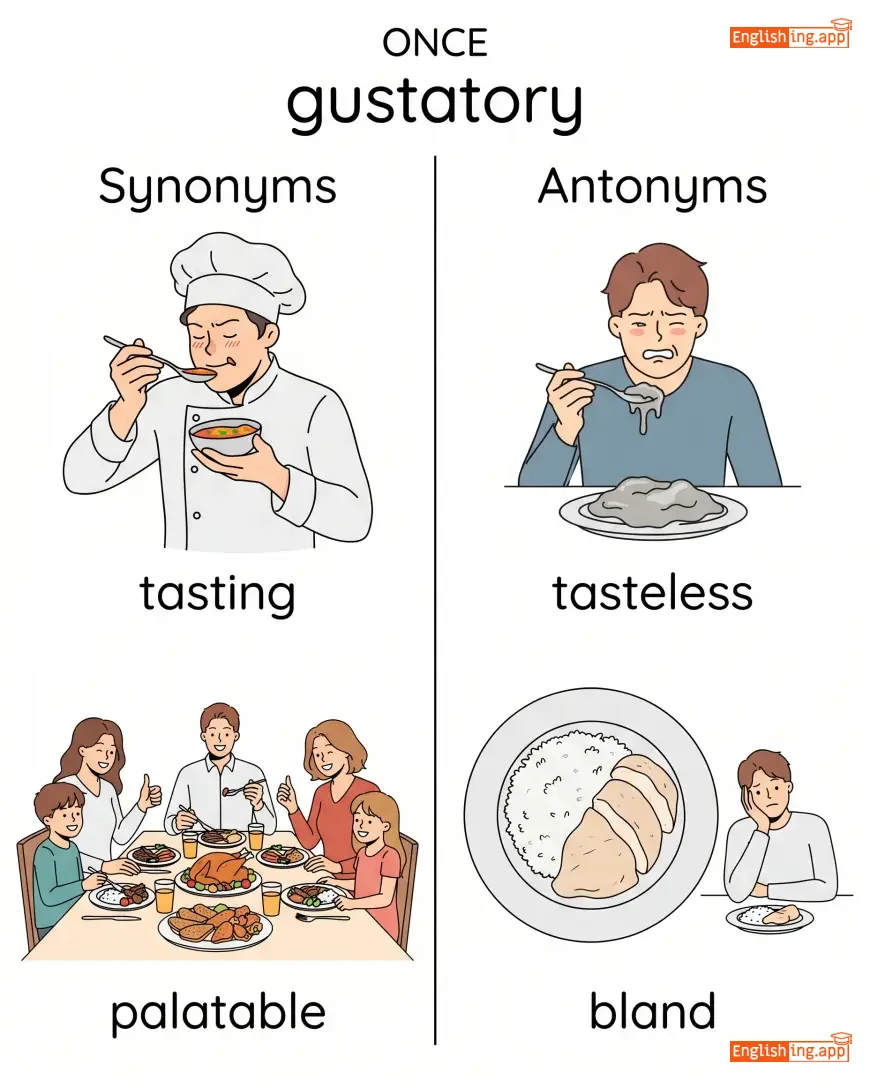
|
味覚の
mikaku no
••••••
|
- •••••• | - •••••• | - •••••• | - •••••• |
relating to the sense of taste
••••••
|
The restaurant offered a gustatory experience unlike any other. |
レストランは他に類を見ない味覚体験を提供しました。
Resutoran wa hoka ni rui o minai mikaku taiken o teikyō shimashita.
••••••
|
- •••••• | - •••••• | - •••••• |
tasting, palatable, flavorful, sensory
••••••
|
tasteless, bland
••••••
|
gustatory senses, gustatory pleasure, gustatory delight
••••••
|
Gustatory = gust + taste 👅 - 日本語で'味覚の'は味に関連しています。
••••••
|
|
🌅
••••••
|
/ˈhæl.si.ən/
adjective
(ハルシオン)
••••••
|
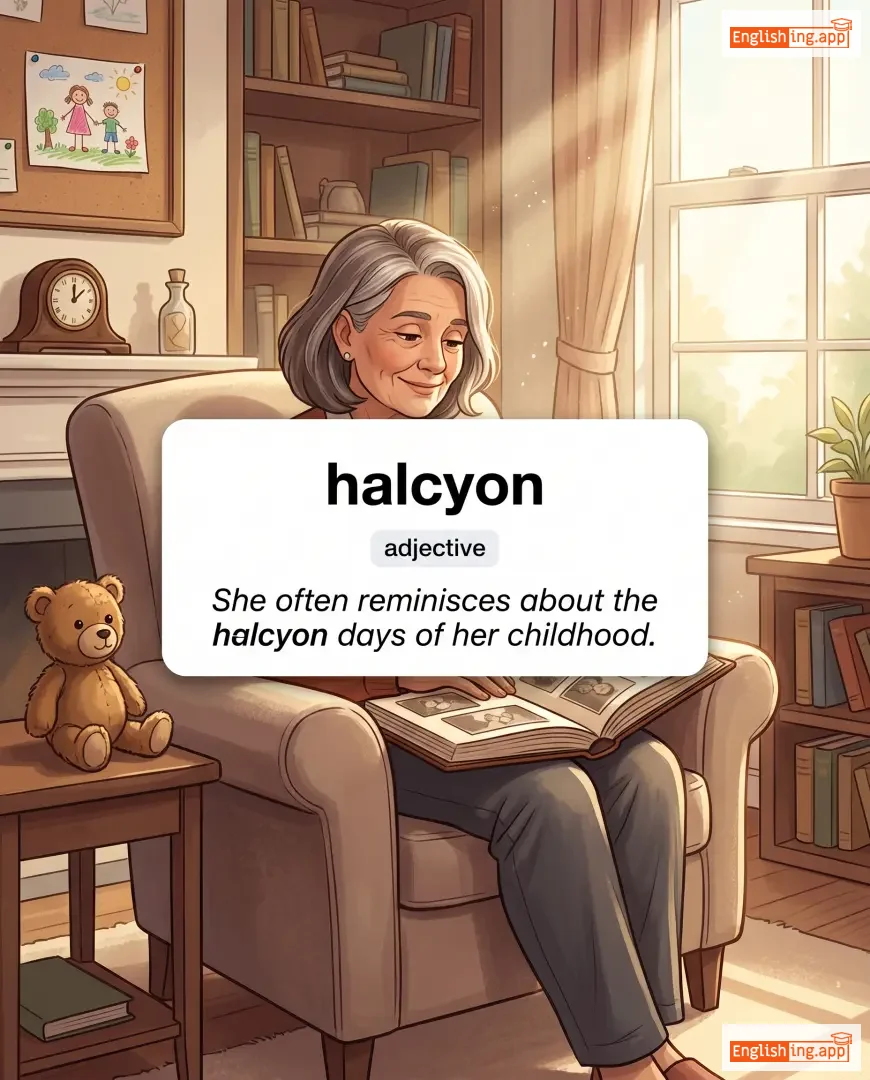
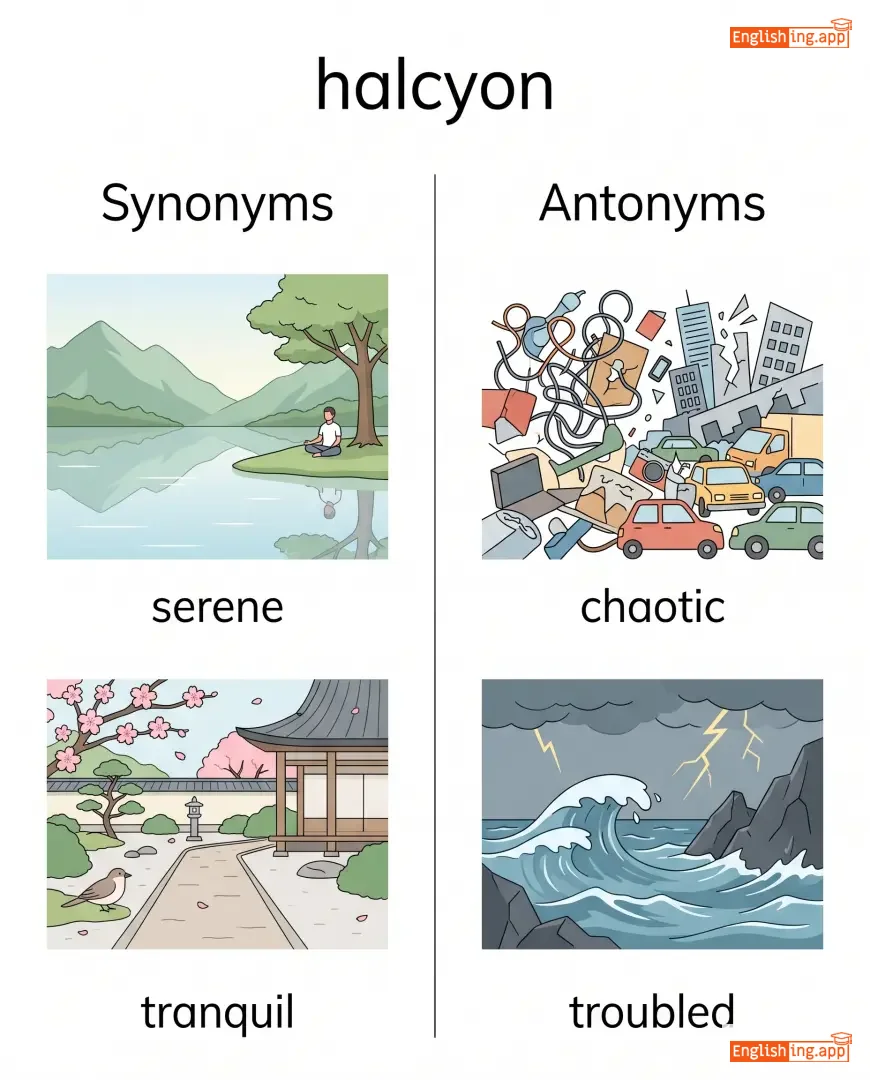
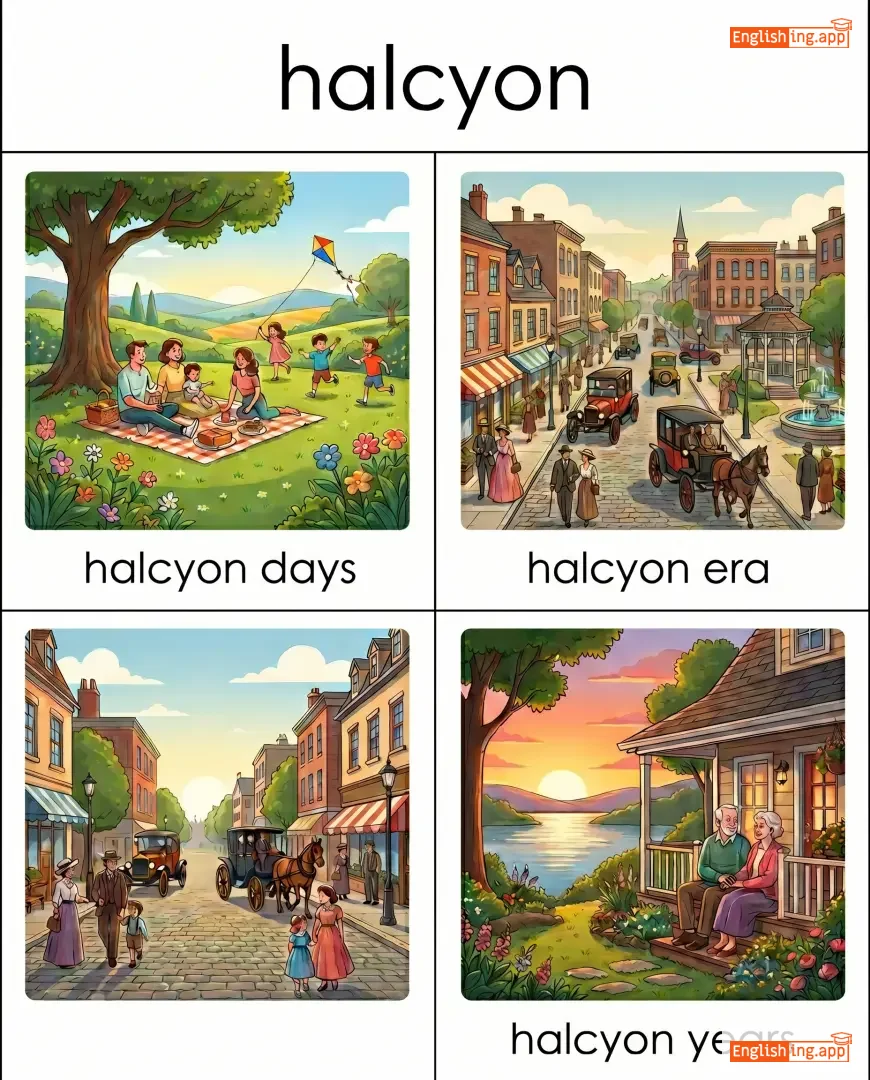
|
静かな
shizukana
••••••
|
- •••••• | - •••••• | - •••••• | - •••••• |
calm, peaceful, and happy; denoting a period of time in the past that was idyllically happy and peaceful
••••••
|
She often reminisces about the halcyon days of her childhood. |
彼女はよく子供時代の静かな日々を思い出します。
Kanojo wa yoku kodomojidai no shizukana hibi o omoidashimasu.
••••••
|
- •••••• | - •••••• | - •••••• |
serene, tranquil, blissful, idyllic, peaceful
••••••
|
chaotic, troubled, stormy
••••••
|
halcyon days, halcyon era, halcyon years
••••••
|
Halcyonは「晴れた zone」のように、静かで幸せな時間を意味します。
••••••
|
|
⛪
••••••
|
/ˈhæloʊd/
adjective
(herod)
••••••
|
|
神聖
shinsei
••••••
|
- •••••• | - •••••• | - •••••• | - •••••• |
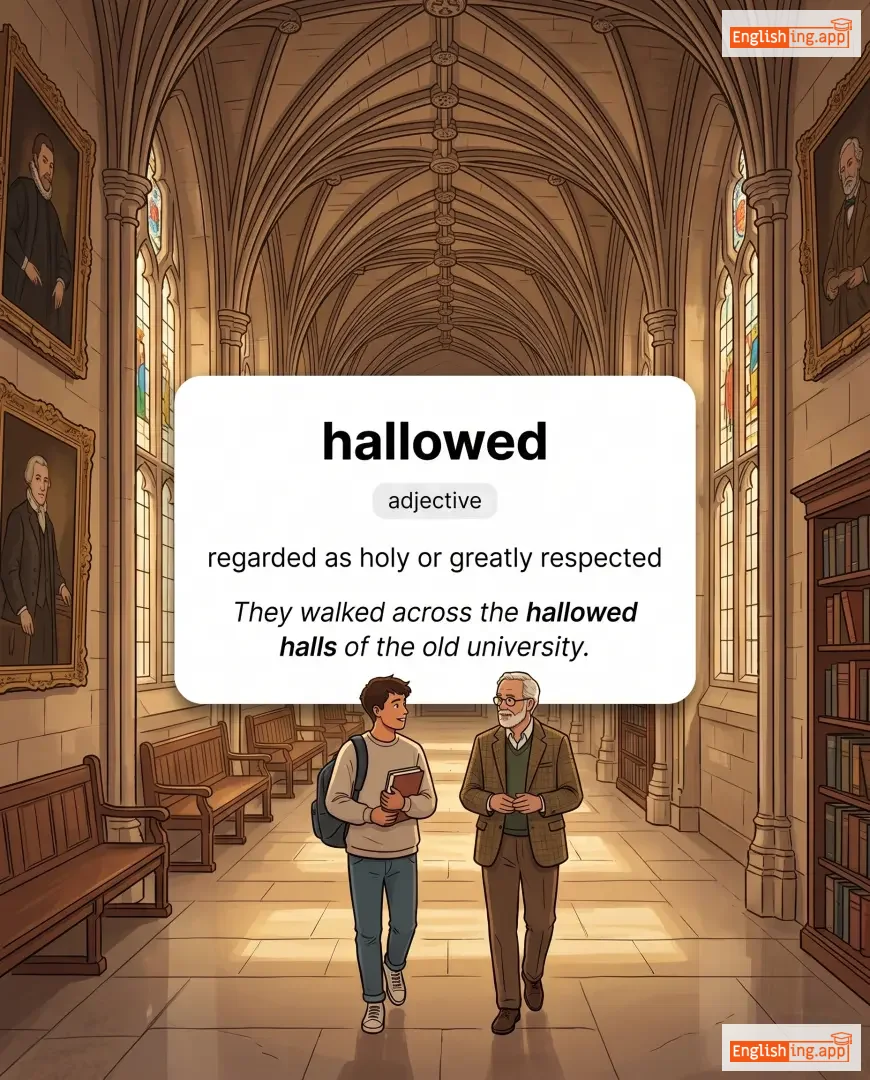
regarded as holy or greatly respected
••••••
|
They walked across the hallowed halls of the old university. |
彼らは古い大学の神聖な廊下を歩いた。
Karera wa furui daigaku no shinsei na rouka o aruita.
••••••
|
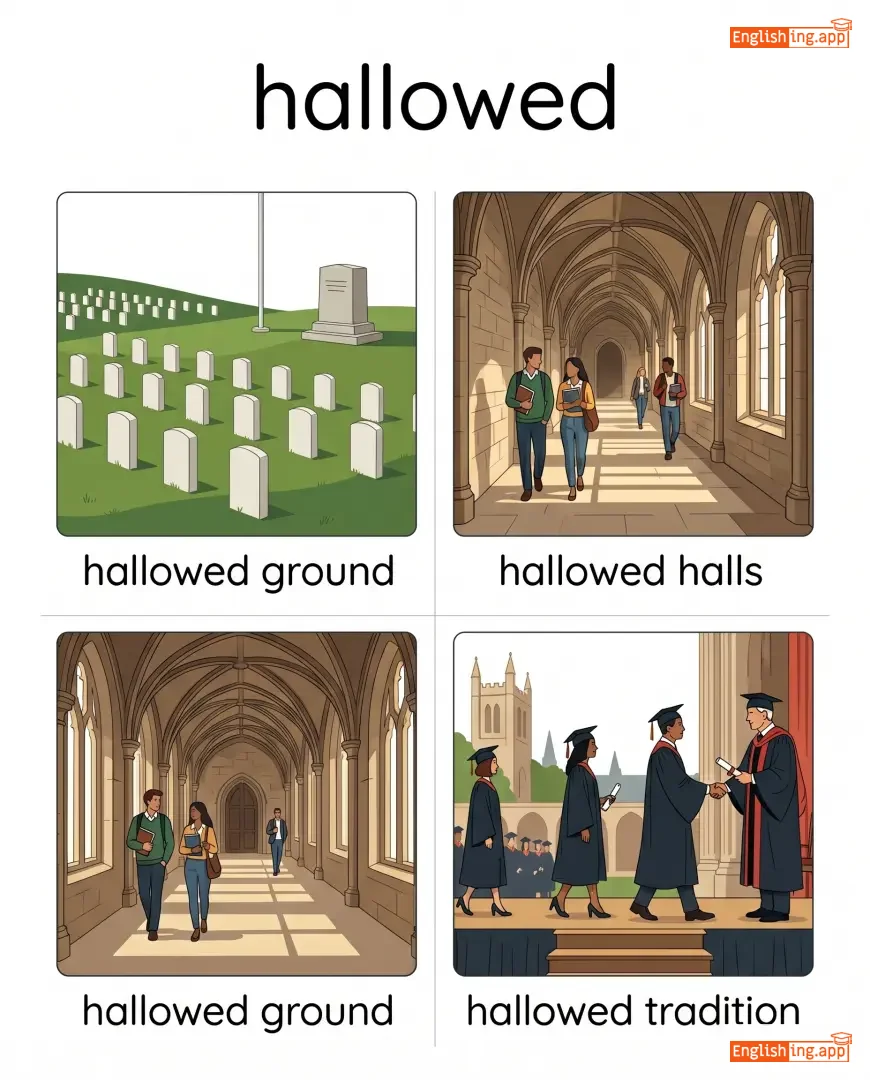
hallowed traditions |
long-standing customs that are deeply respected
••••••
|
神聖な伝統
shinsei na dentou
••••••
|
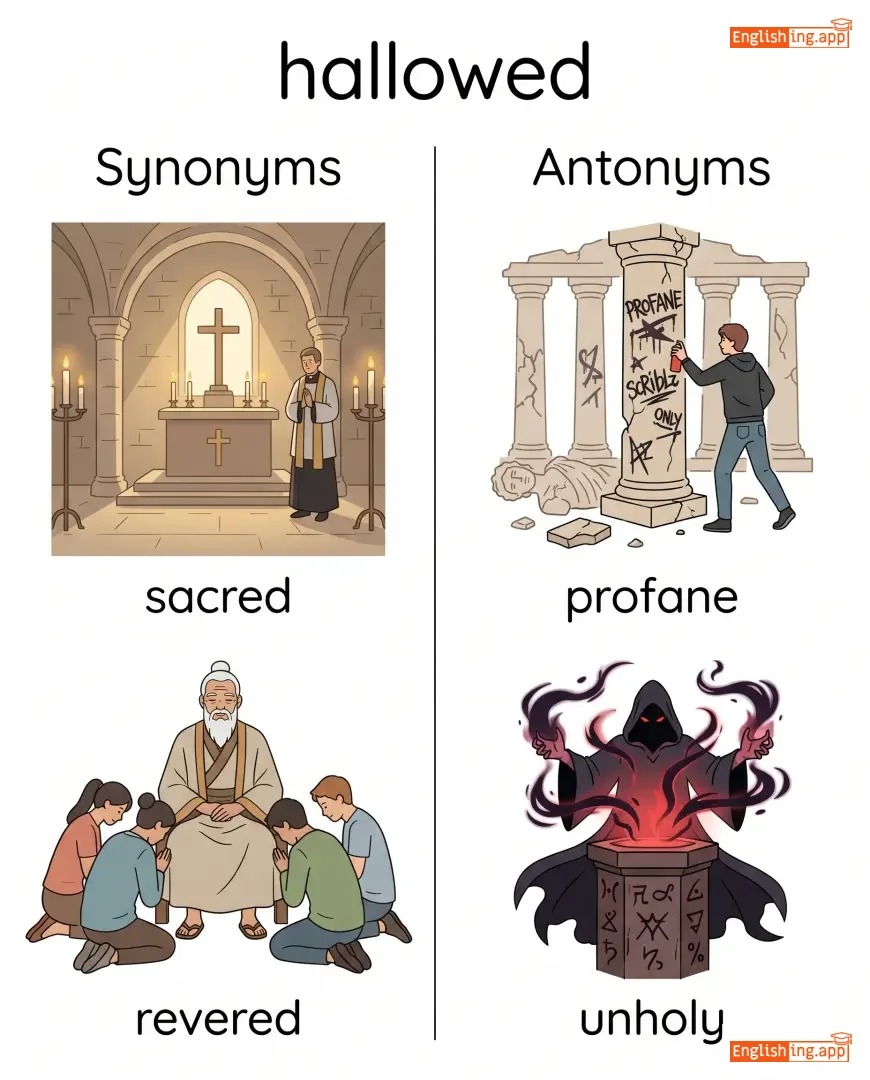
sacred, revered, blessed, sanctified, honored
••••••
|
profane, unholy, disrespectful
••••••
|
hallowed ground, hallowed halls, hallowed tradition, hallowed memory
••••••
|
Hallowed はすでに神聖にされたことを意味します
••••••
|
|
📢
••••••
|
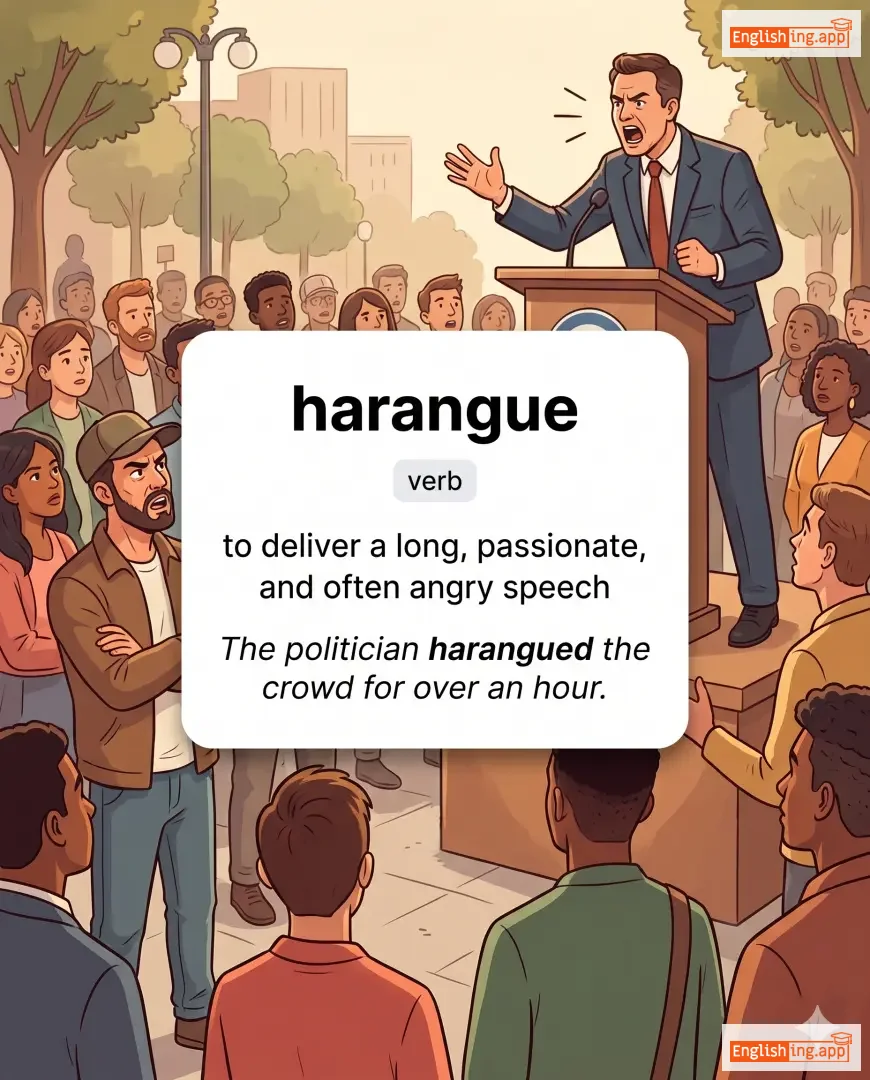
/həˈræŋ/
verb
(ハランゲ)
••••••
|
|
長く情熱的な演説をする
nagaku jōnetsuteki na enzetsu o suru
••••••
|
harangued
ハランゲド
••••••
|
harangued
ハランゲド
••••••
|
harangues
ハランゲス
••••••
|
haranguing
ハランゲイング
••••••
|
to deliver a long, passionate, and often angry speech
••••••
|
The politician harangued the crowd for over an hour.
政治家は群衆に一時間以上も演説しました。
••••••
|
政治家は群衆に一時間以上も演説をしました。
Seijika wa gunshū ni ichijikan ijō mo enzetsu shimashita.
••••••
|
- •••••• | - •••••• | - •••••• |
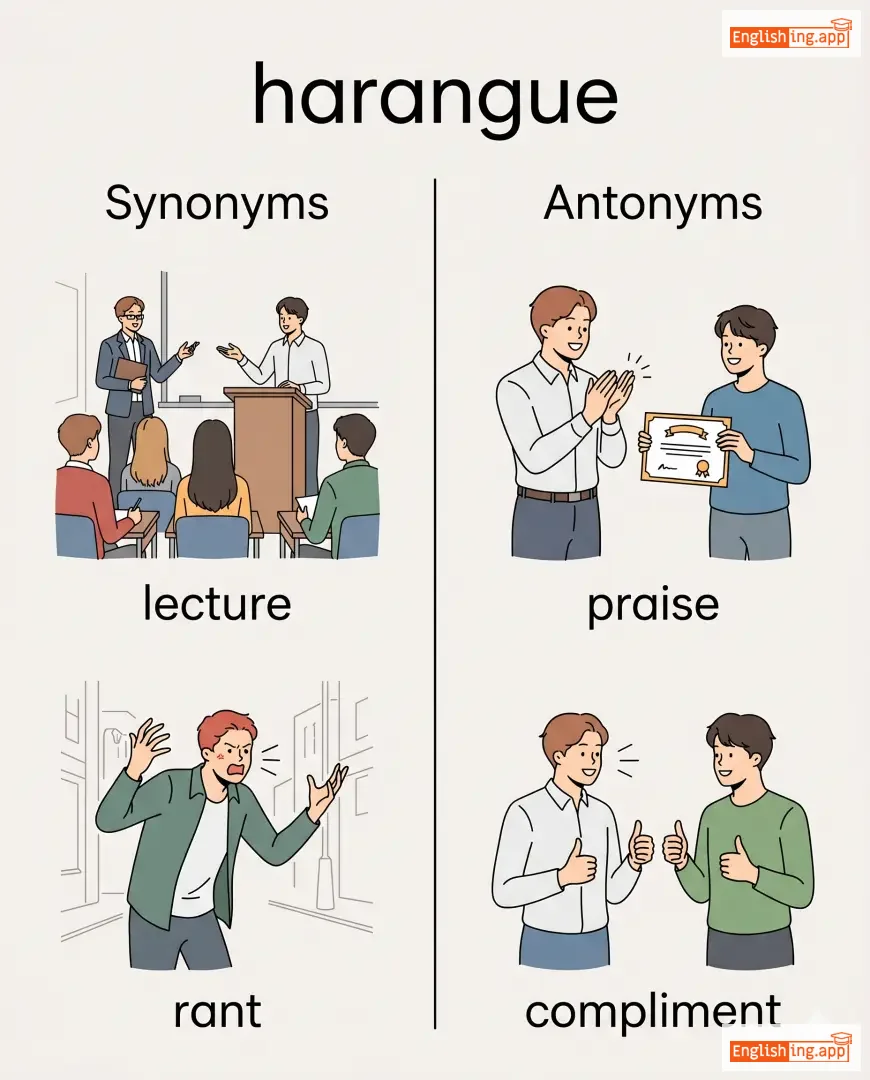
lecture, rant, tirade, scold, sermon
••••••
|
praise, compliment, silence
••••••
|
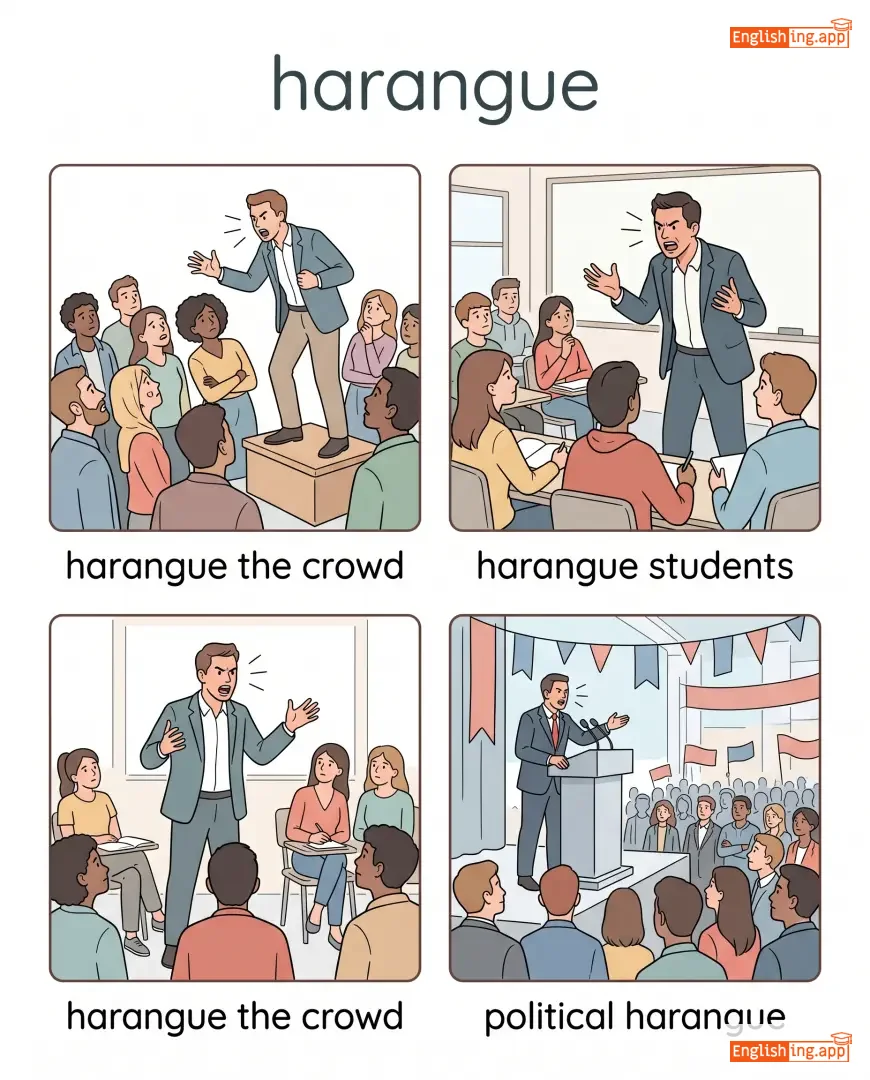
harangue the crowd, harangue students, political harangue
••••••
|
Harangue は長いスピーチを意味します → 騒々しく煩わしいスピーチ。
••••••
|
|
💔
••••••
|
/ˈhær.oʊ.ɪŋ/
adjective
(ハロウィング)
••••••
|
|
恐ろしいと苦しみを伴う
osoroshii to kurushimi o tomonau
••••••
|
- •••••• | - •••••• | - •••••• | - •••••• |
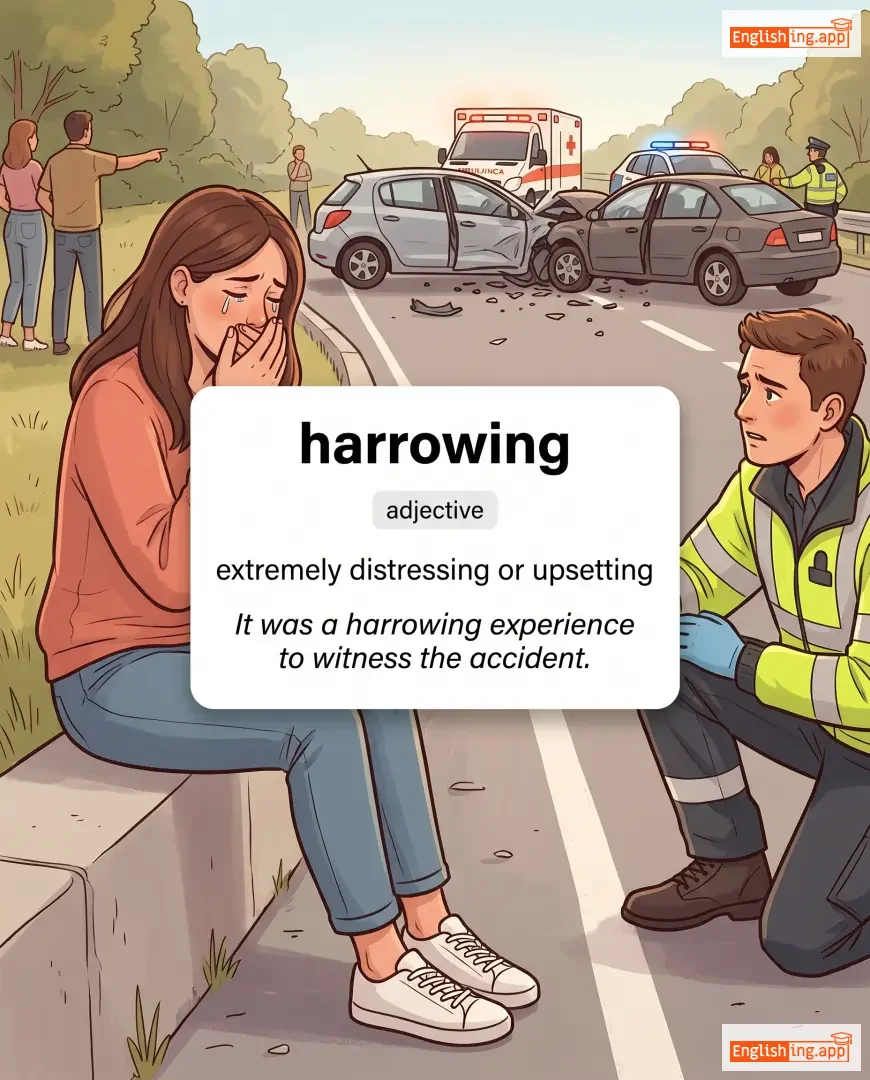
extremely distressing or upsetting
••••••
|
It was a harrowing experience to witness the accident. |
事故を目撃することは恐ろしい経験だった。
Jiko o mokugeki suru koto wa osoroshii keiken datta.
••••••
|
- •••••• | - •••••• | - •••••• |
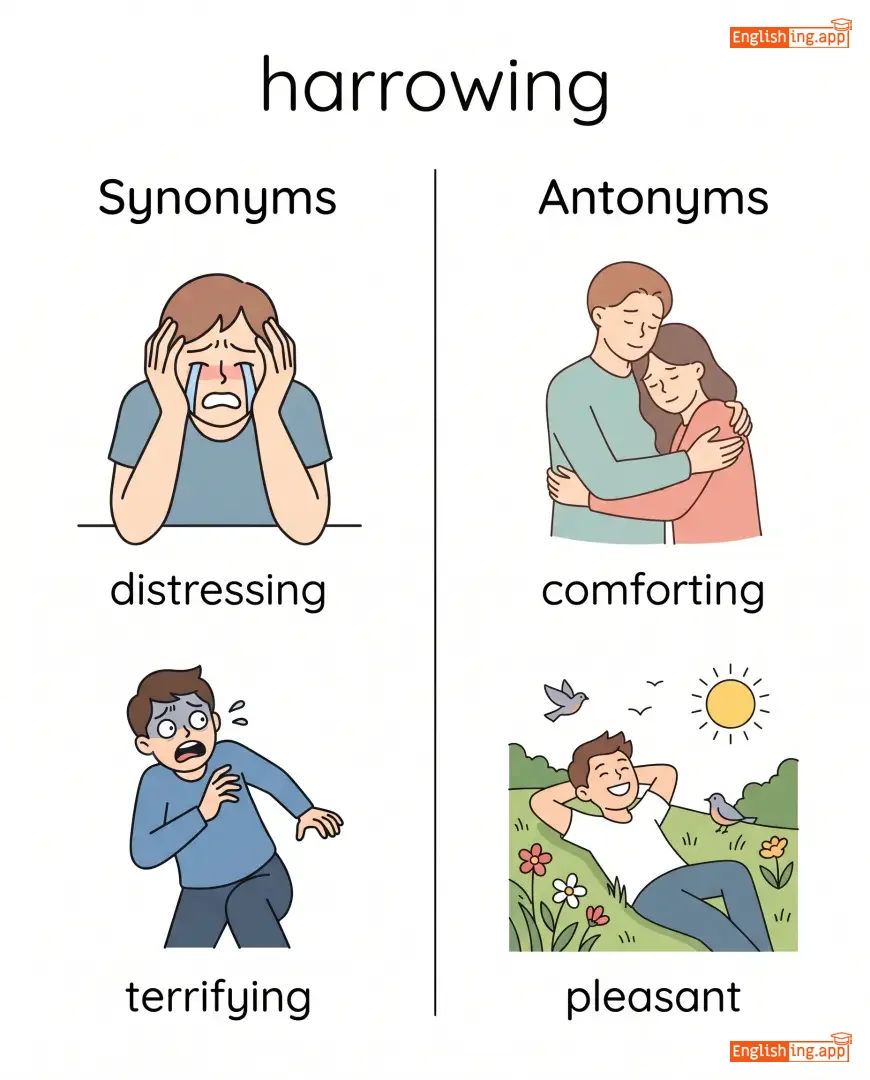
distressing, terrifying, painful, traumatic, upsetting
••••••
|
comforting, pleasant, soothing
••••••
|
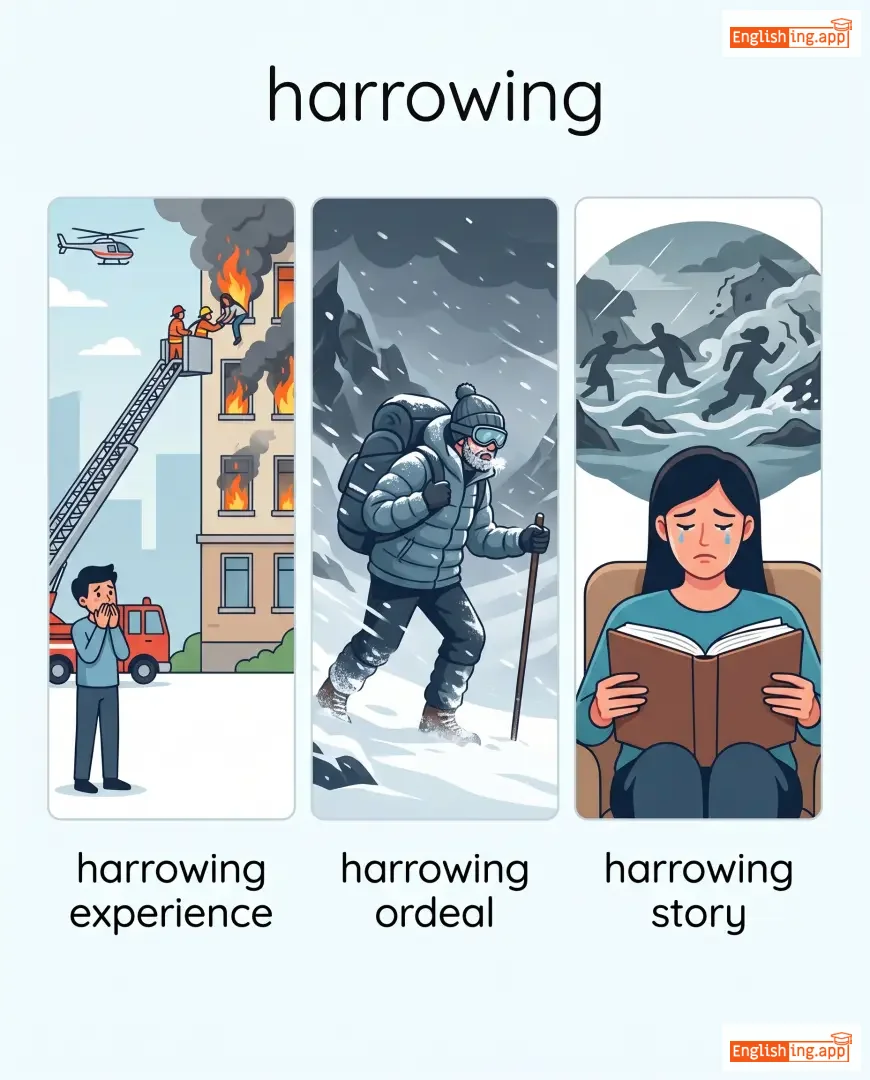
harrowing experience, harrowing ordeal, harrowing story
••••••
|
Harrowingは恐ろしい出来事、深い傷を残す体験。
••••••
|
|
🐄
••••••
|
/hɜːrˈbɪv.ər.əs/
adjective
(ハービヴォラス)
••••••
|
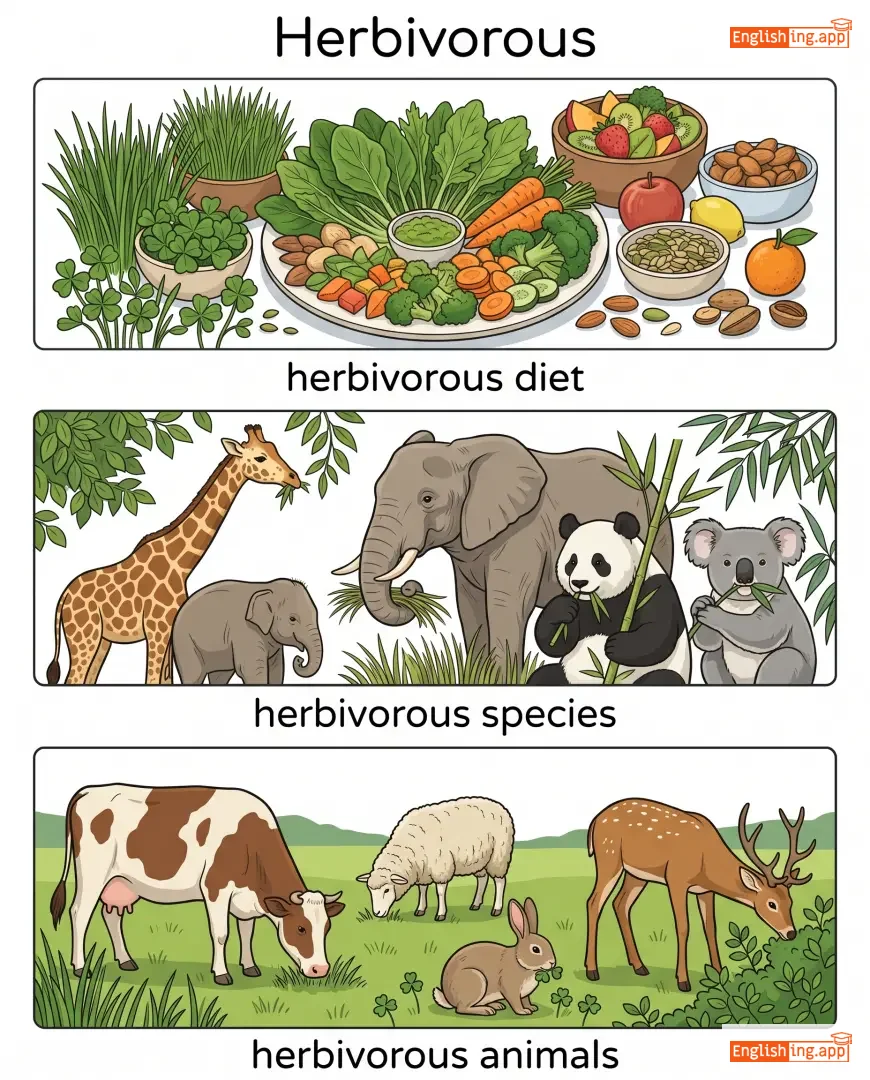
|
草食性
soushokusei
••••••
|
- •••••• | - •••••• | - •••••• | - •••••• |
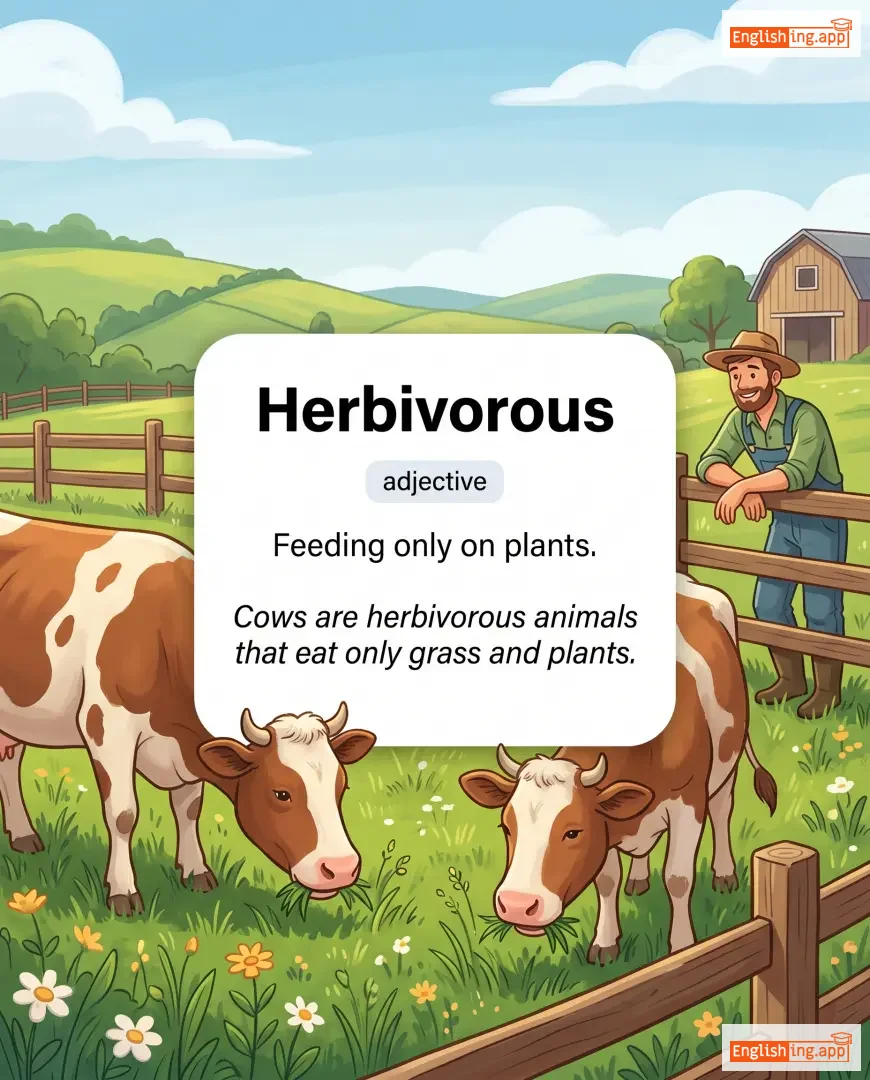
feeding on plants; plant-eating
••••••
|
Cows are herbivorous animals that graze on grass. |
牛は草食性の動物で、草を食べる。
Ushi wa soushokusei no doubutsu de, kusa wo taberu.
••••••
|
- •••••• | - •••••• | - •••••• |
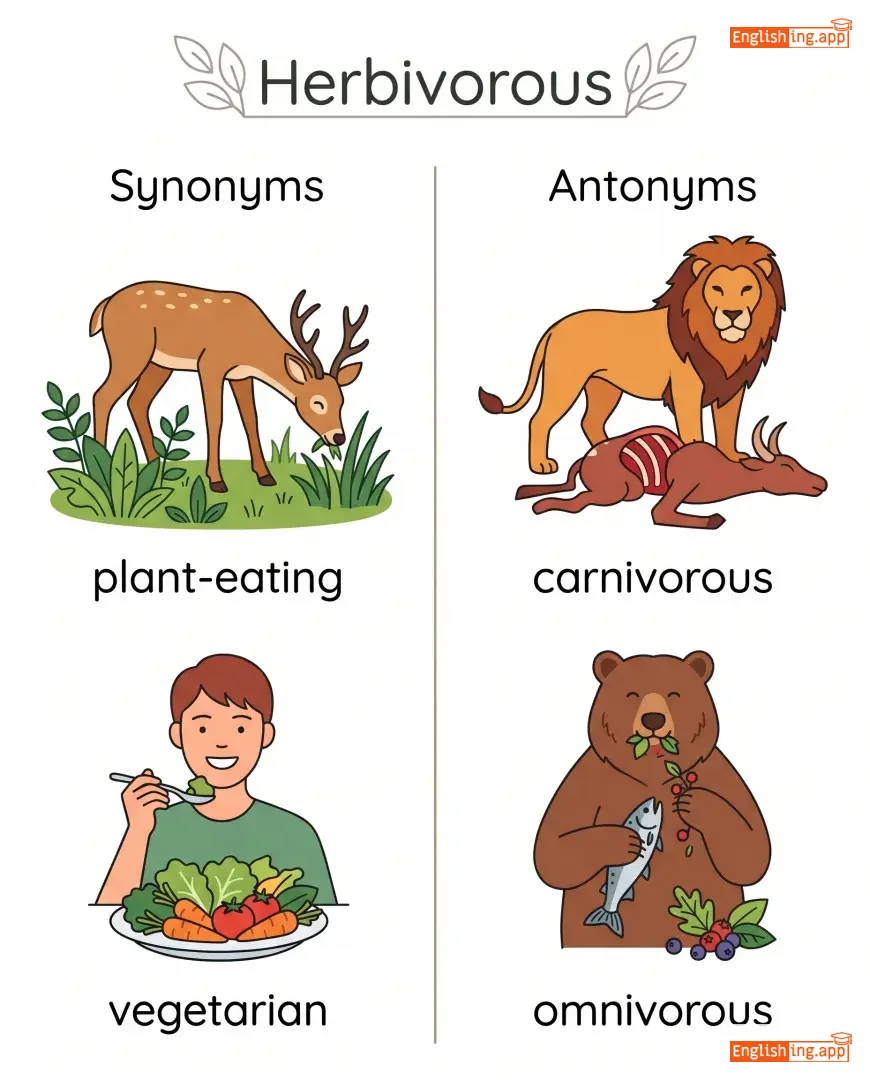
plant-eating, vegetarian, grass-eating
••••••
|
carnivorous, meat-eating, omnivorous
••••••
|
herbivorous animals, herbivorous diet, herbivorous mammals, herbivorous species
••••••
|
草 (kusa) = 草食性 (soushokusei)
••••••
|
|
🔒
••••••
|
/hərˈmɛtɪk/
adjective
(ヘルメティック)
••••••
|
|
密閉
mippei
••••••
|
- •••••• | - •••••• | - •••••• | - •••••• |
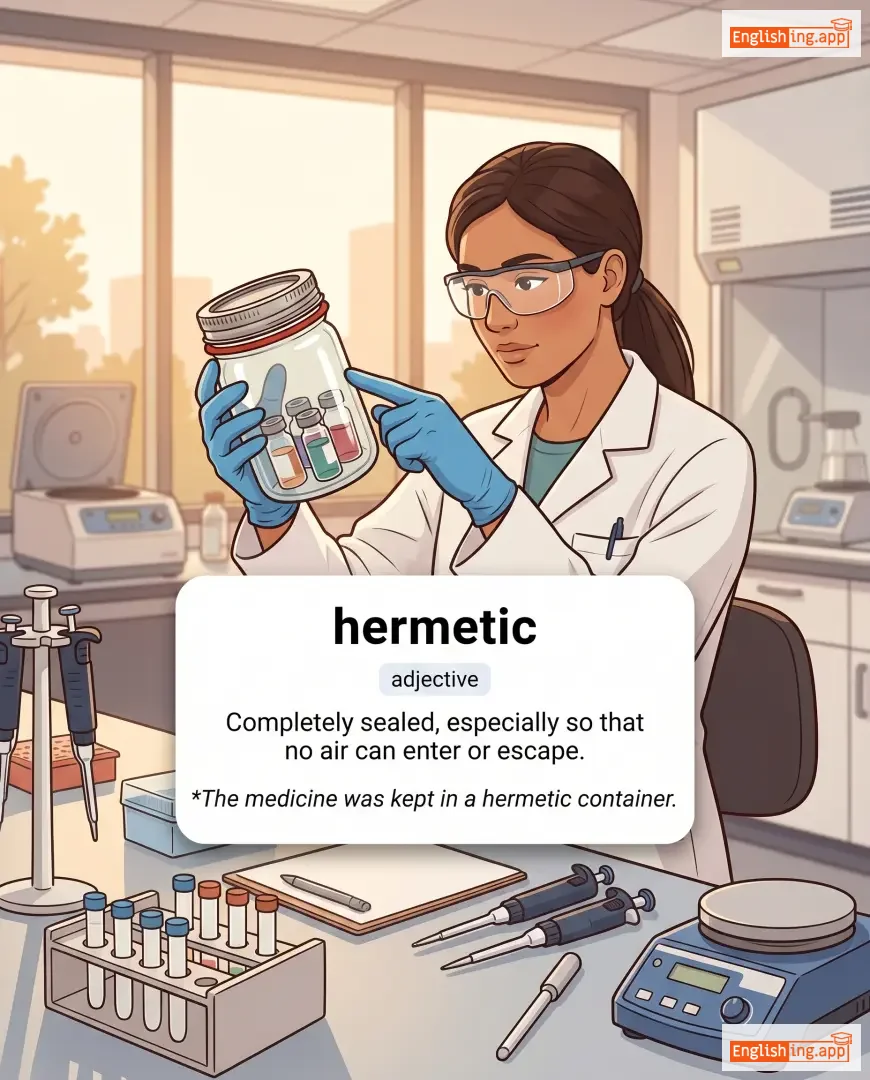
Completely sealed, especially so that no air can enter or escape.
••••••
|
The medicine was kept in a hermetic container. |
薬は密閉された容器に保管されていました。
Kusuri wa mippei sareta yōki ni hokan sarete imashita.
••••••
|
- •••••• | - •••••• | - •••••• |
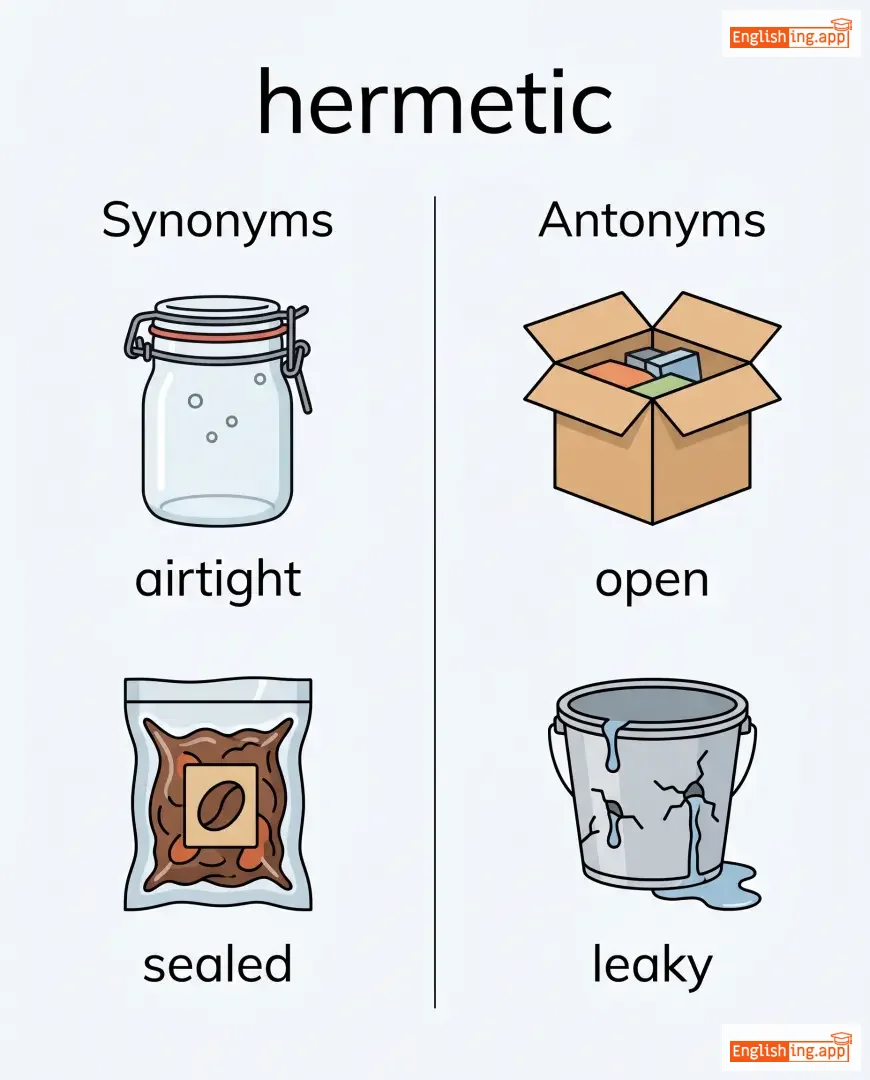
airtight, sealed, closed, watertight, impenetrable
••••••
|
open, leaky, permeable
••••••
|
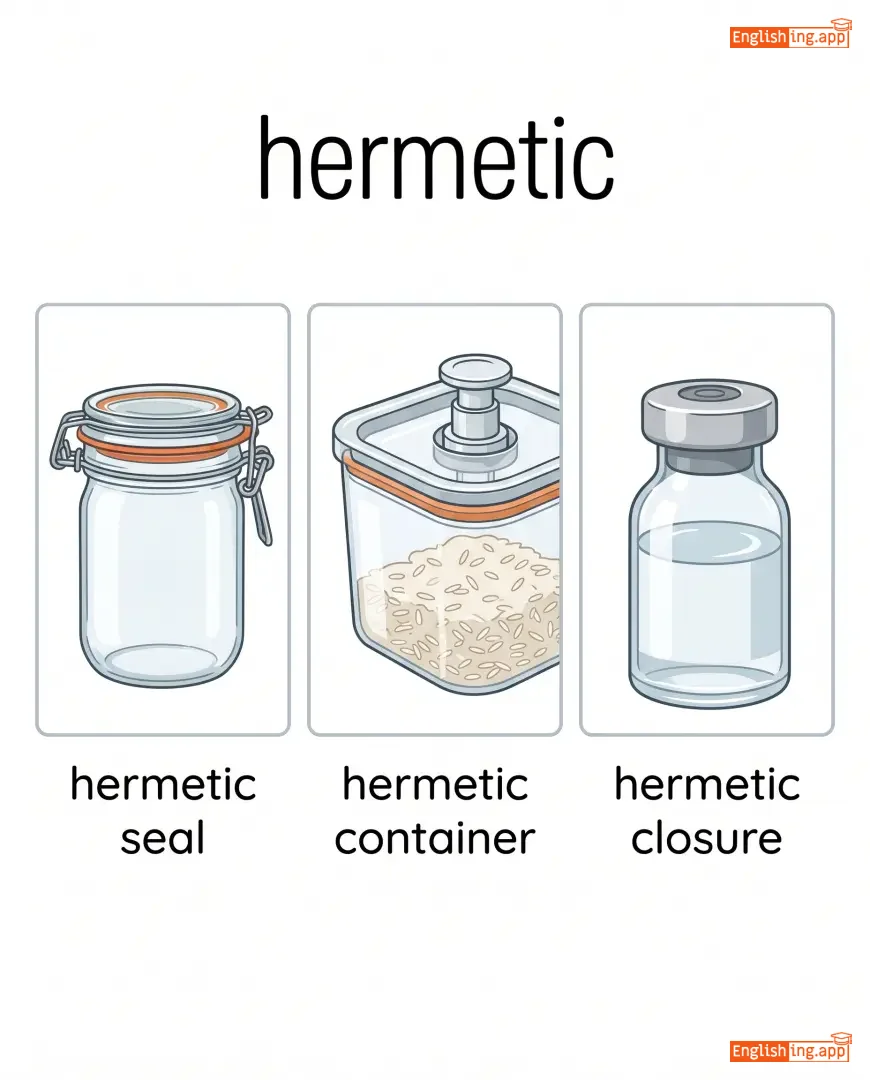
hermetic seal, hermetic container, hermetic closure
••••••
|
密閉は隠者のように、外から空気が入ってこない。
••••••
|
|
🌀
••••••
|
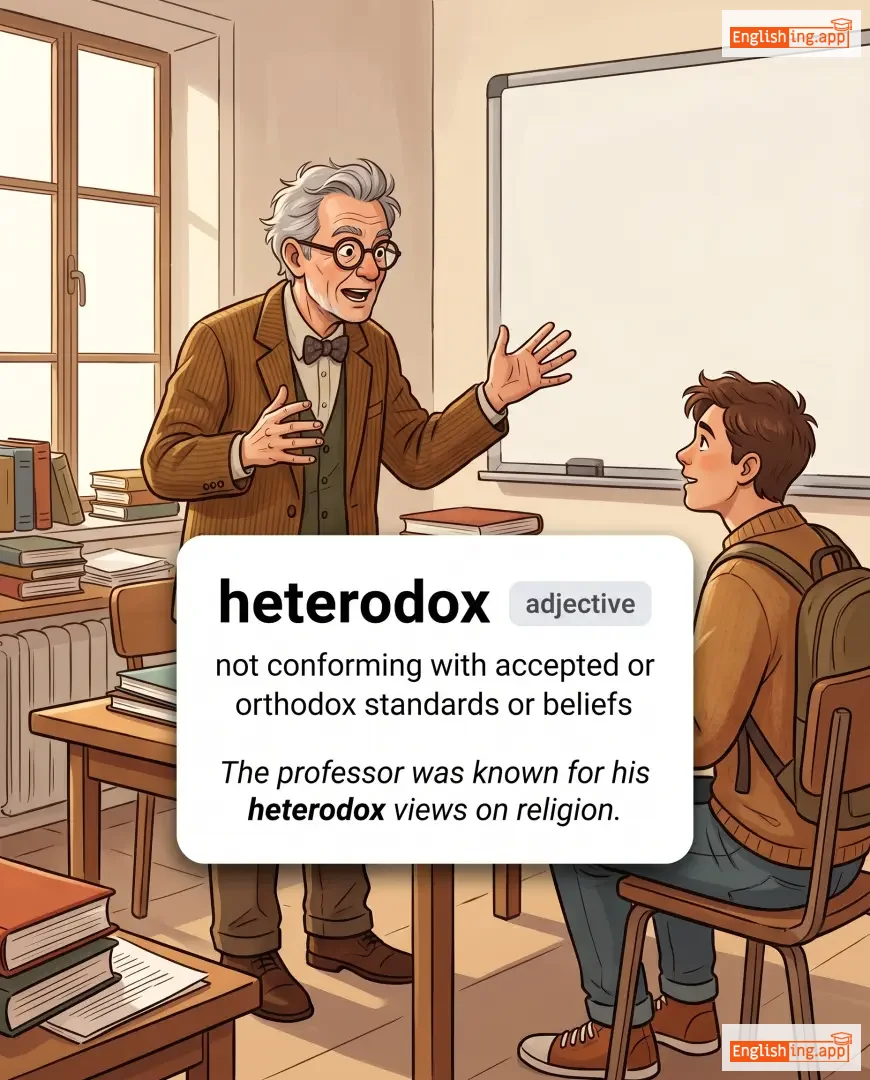
/ˈhɛtərəˌdɒks/
adjective
(ヘテロドックス)
••••••
|
|
異端
idan
••••••
|
- •••••• | - •••••• | - •••••• | - •••••• |
not conforming with accepted or orthodox standards or beliefs
••••••
|
The professor was known for his heterodox views on religion. |
教授は宗教についての異端的な見解で知られていました。
Kyōju wa shūkyō ni tsuite no idanteki na kenkai de shirarete imashita.
••••••
|
- •••••• | - •••••• | - •••••• |
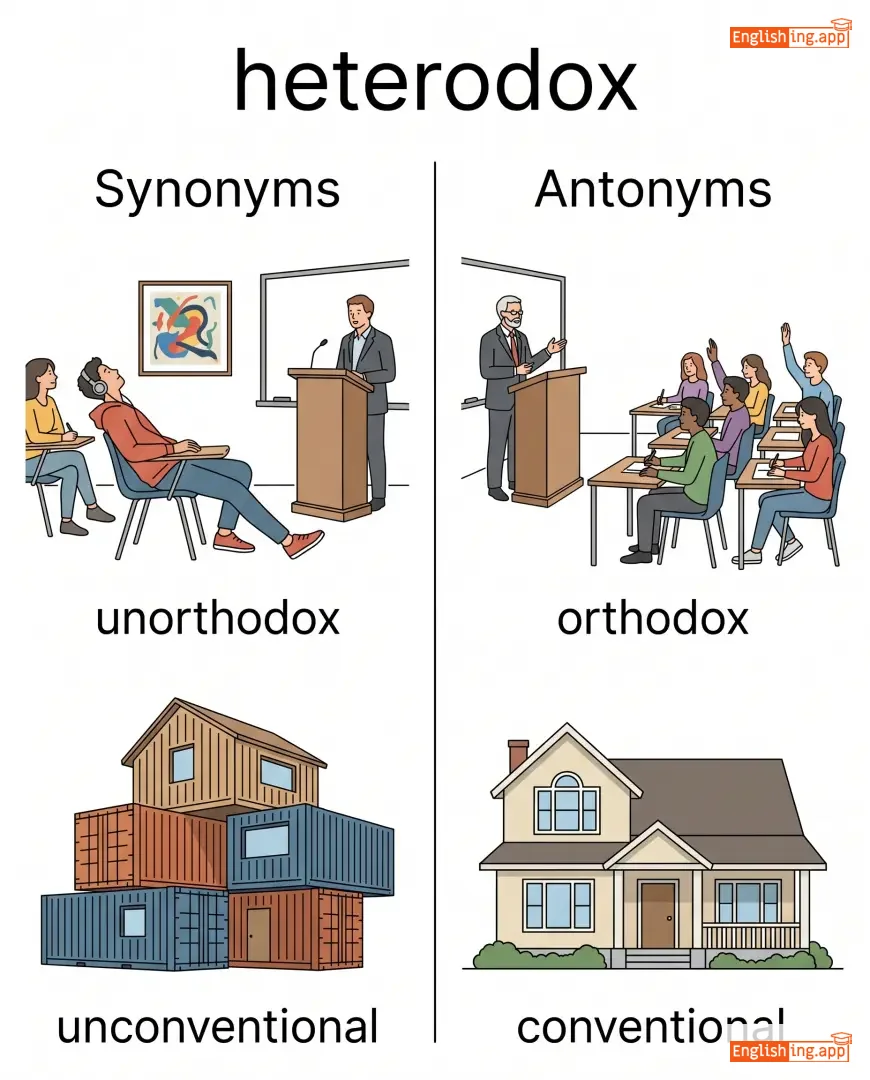
unorthodox, unconventional, radical, nonconformist
••••••
|
orthodox, conventional, traditional
••••••
|
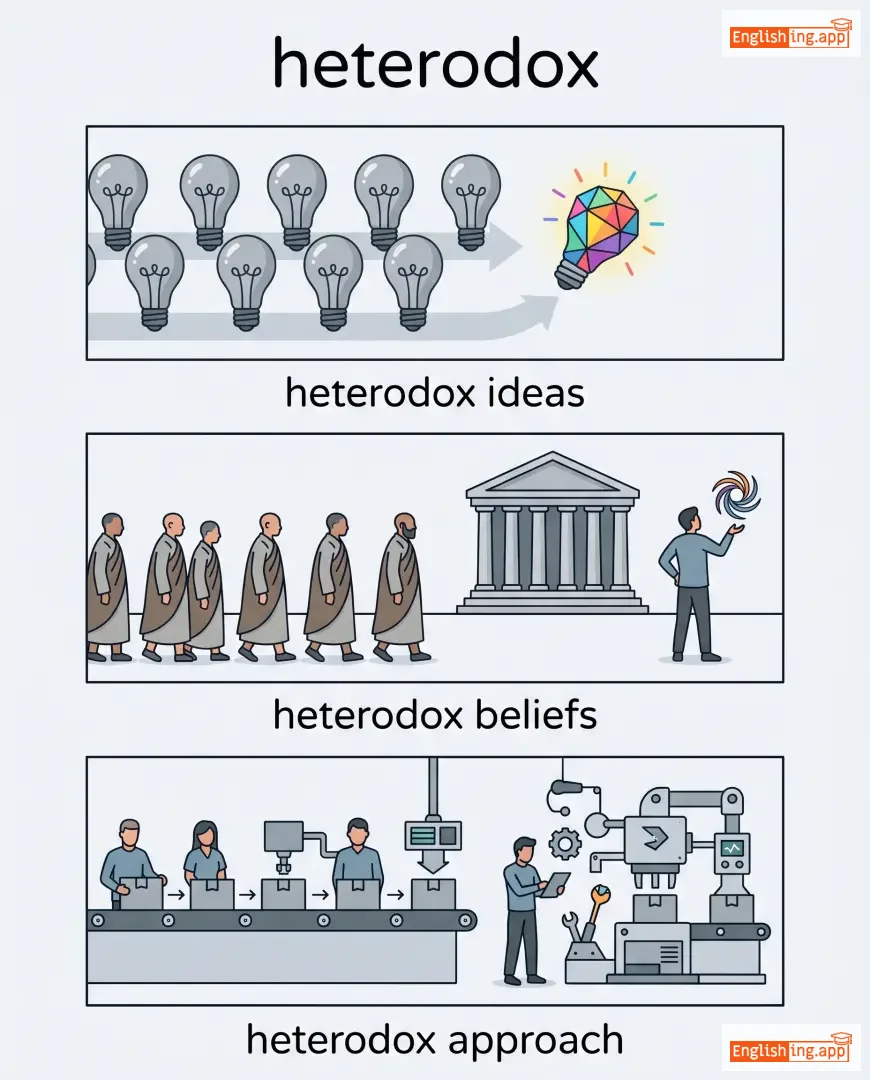
heterodox ideas, heterodox beliefs, heterodox approach, heterodox theory
••••••
|
Heteroは異なる意味 + dox(信念)= 異端の信念
••••••
|
|
🔤
••••••
|
/ˌhaɪ.roʊˈɡlɪf.ɪks/
noun
(ハイ·ロ·グ·リ·フィ·ックス)
••••••
|
|
ヒエログリフ
hierogurifu
••••••
|
- •••••• | - •••••• | - •••••• | - •••••• |
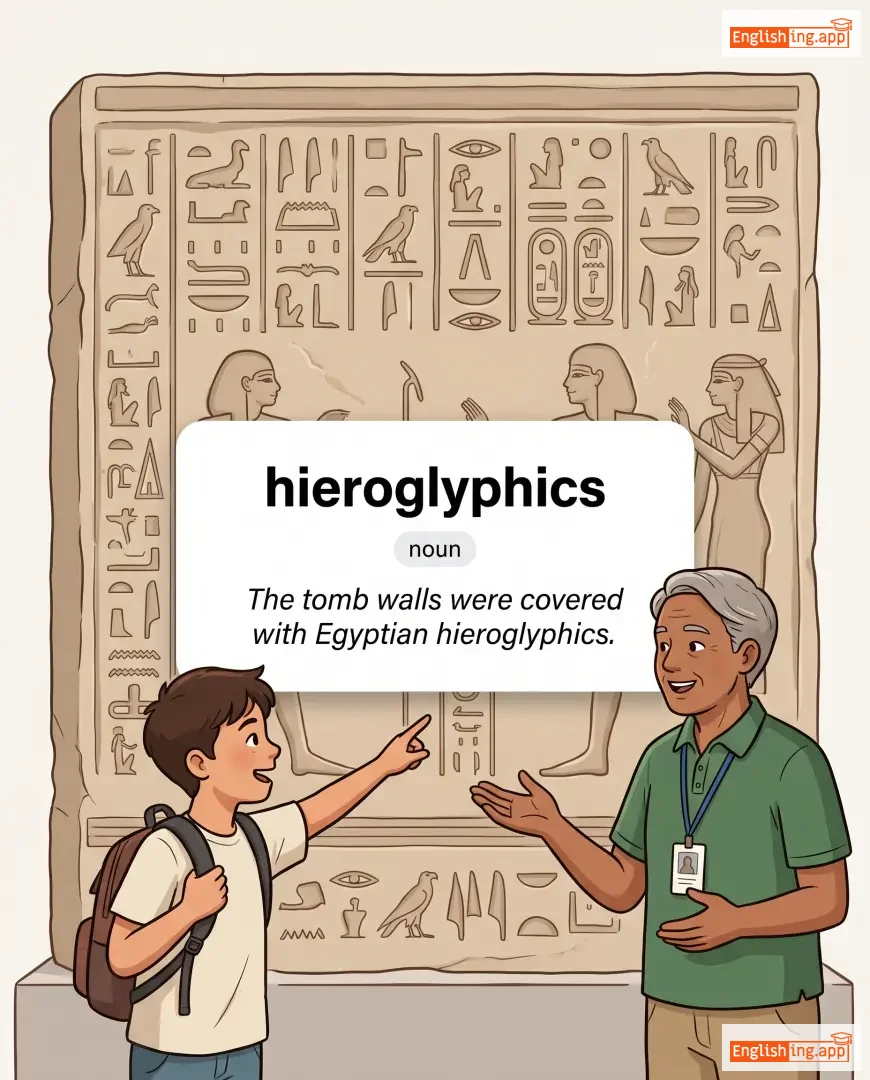
a system of writing using pictures or symbols, used especially by ancient Egyptians
••••••
|
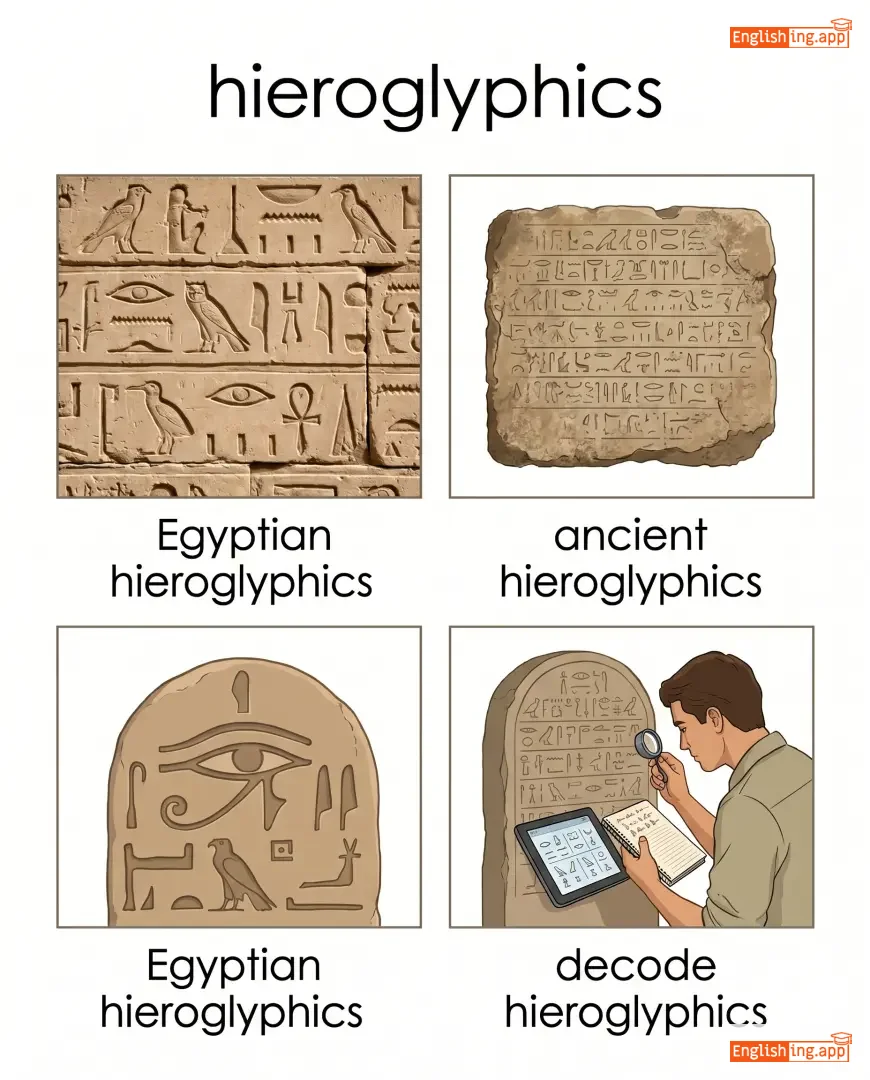
The tomb walls were covered with Egyptian hieroglyphics. |
墓の壁にはエジプトのヒエログリフが刻まれていた。
Haka no kabe ni wa ejiputo no hierogurifu ga kizama rete ita.
••••••
|
- •••••• | - •••••• | - •••••• |
pictograph, symbol, script, glyph
••••••
|
alphabet, plain text
••••••
|
Egyptian hieroglyphics, ancient hieroglyphics, decode hieroglyphics, hieroglyphic writing
••••••
|
Hieroglyphics、つまり'ハイ・グラフィック'な文字 🔤
••••••
|
|
🧔
••••••
|
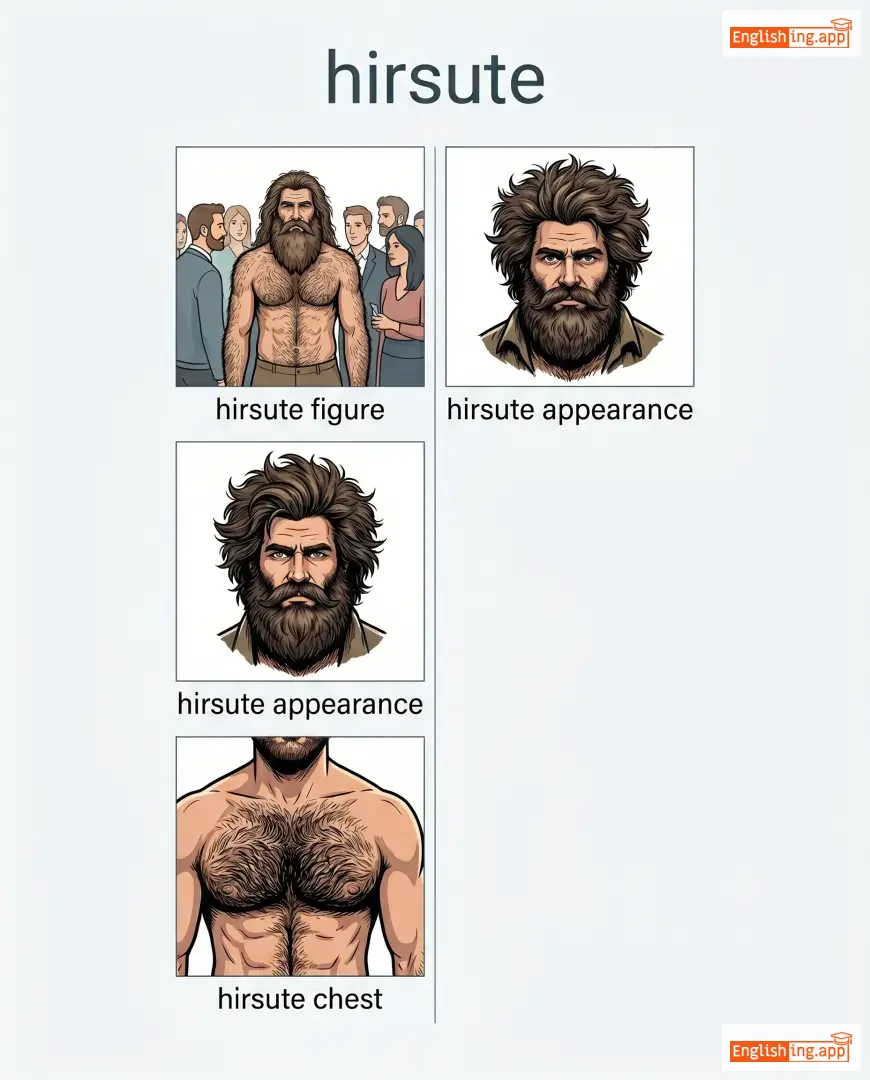
/ˈhɜːrsuːt/
adjective
••••••
|
|
- •••••• | - •••••• | - •••••• | - •••••• | - •••••• |
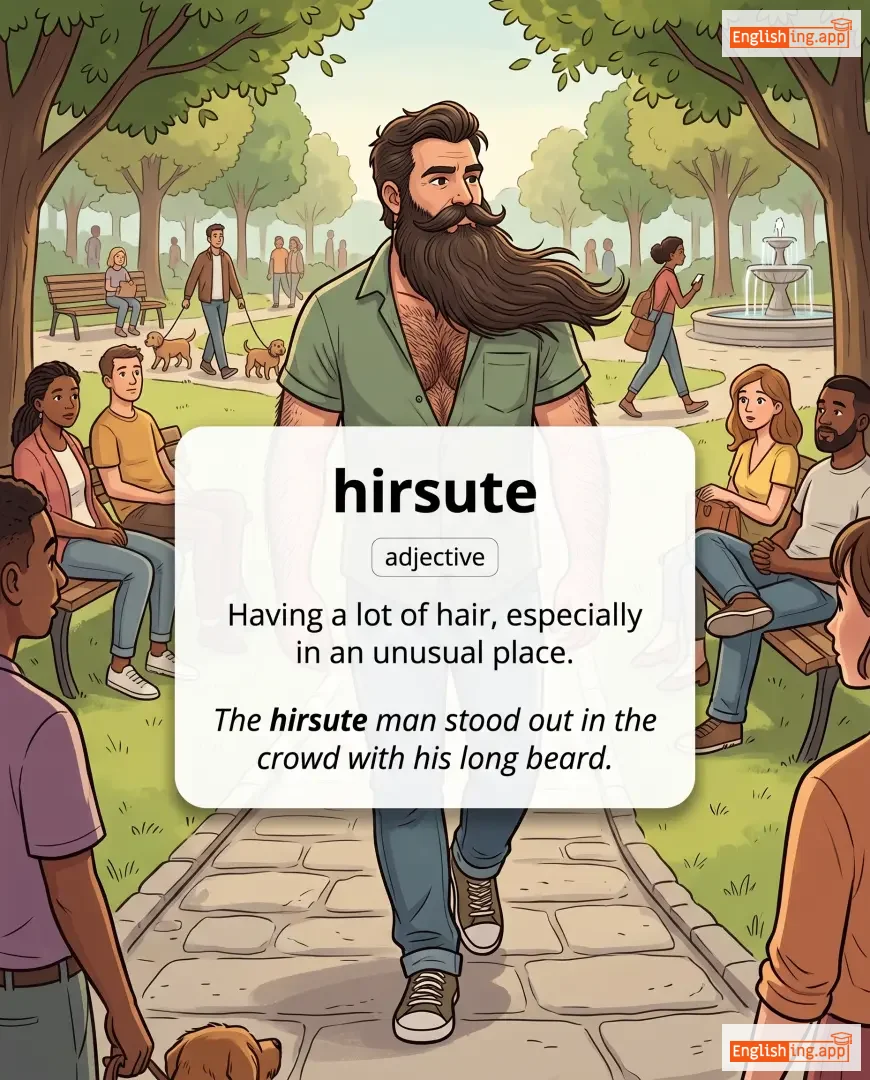
Having a lot of hair, especially in an unusual place.
••••••
|
The hirsute man stood out in the crowd with his long beard. |
- •••••• | - •••••• | - •••••• | - •••••• |
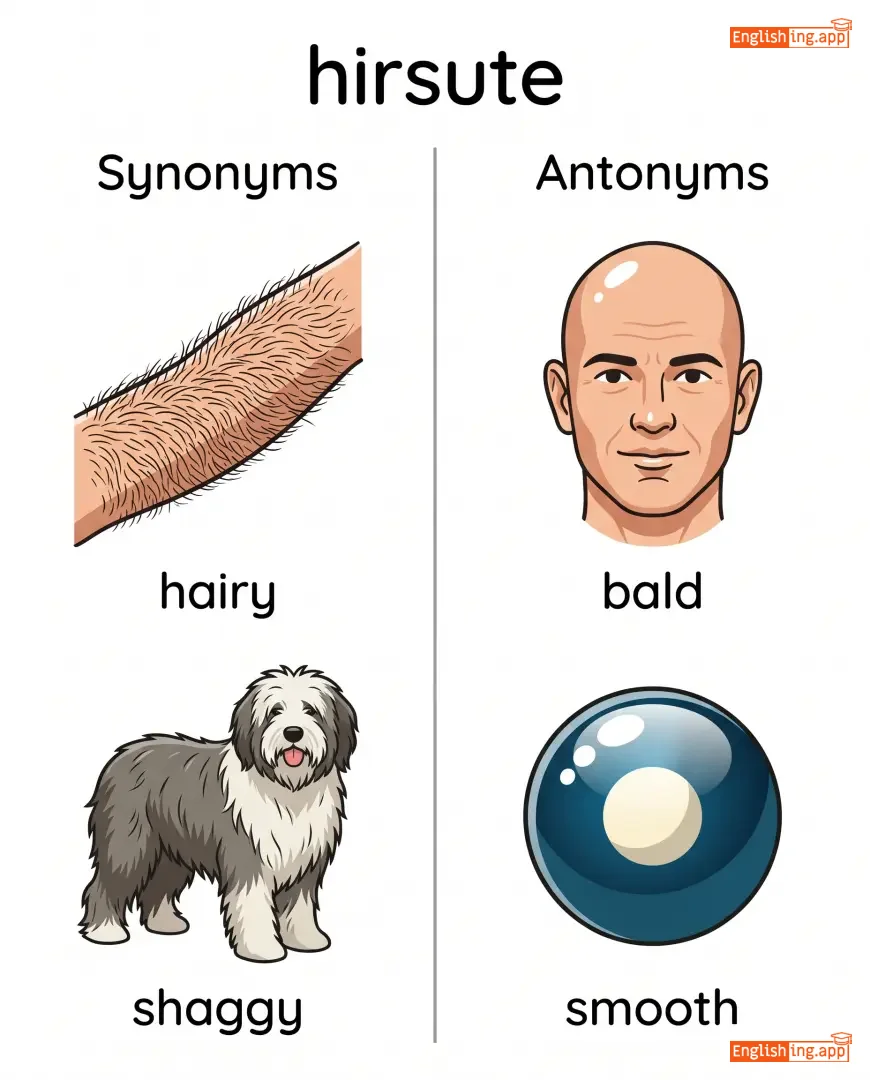
hairy, shaggy, bushy, woolly, bearded
••••••
|
bald, smooth, hairless
••••••
|
hirsute figure, hirsute appearance, hirsute chest, hirsute man
••••••
|
No •••••• |

