|
表情符号
|
单词 | Images | 翻译 | 过去时 | 过去分词 | 第三人称单数 | 动名词 | 含义 | 例句 | 例句翻译 | 示例表达 | 示例表达含义 | 示例表达翻译 | 同义词 | 反义词 | 搭配词 | 助记符 |
|---|---|---|---|---|---|---|---|---|---|---|---|---|---|---|---|---|---|
|
🐑
••••••
|
/ˈɡæmbəl/
verb
(甘博尔)
••••••
|
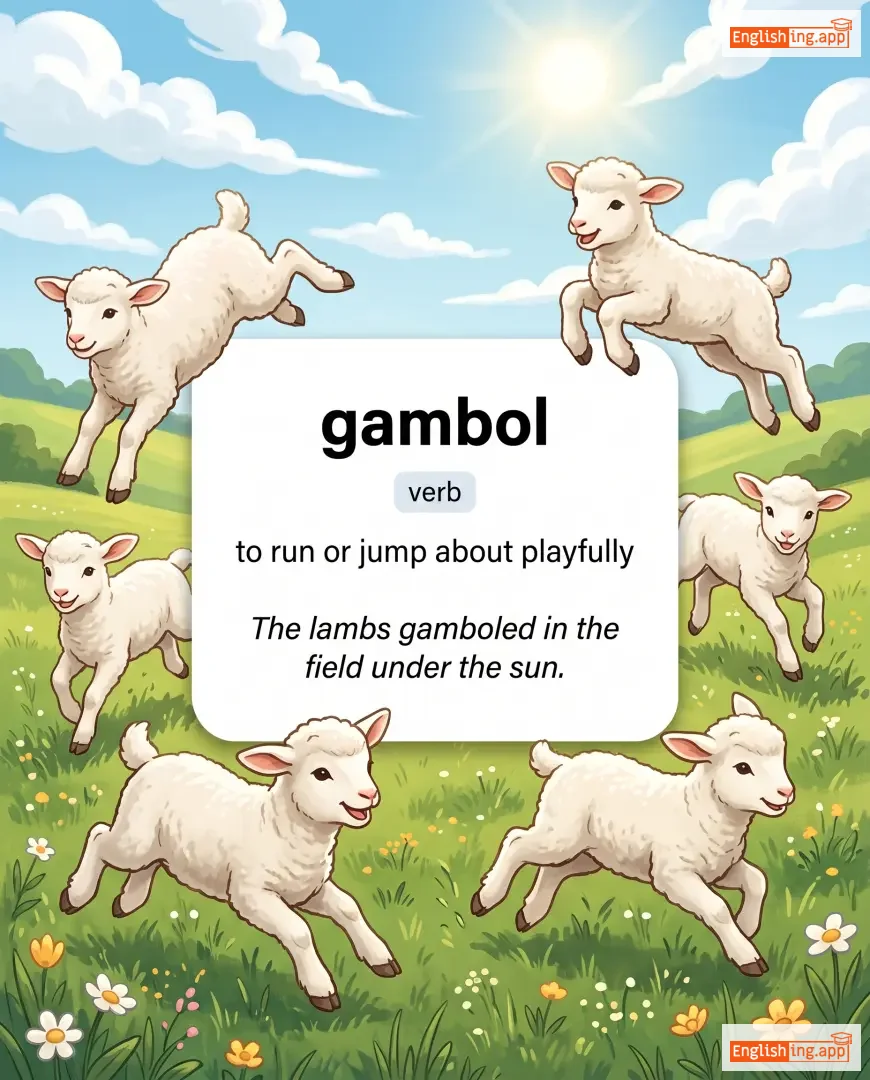
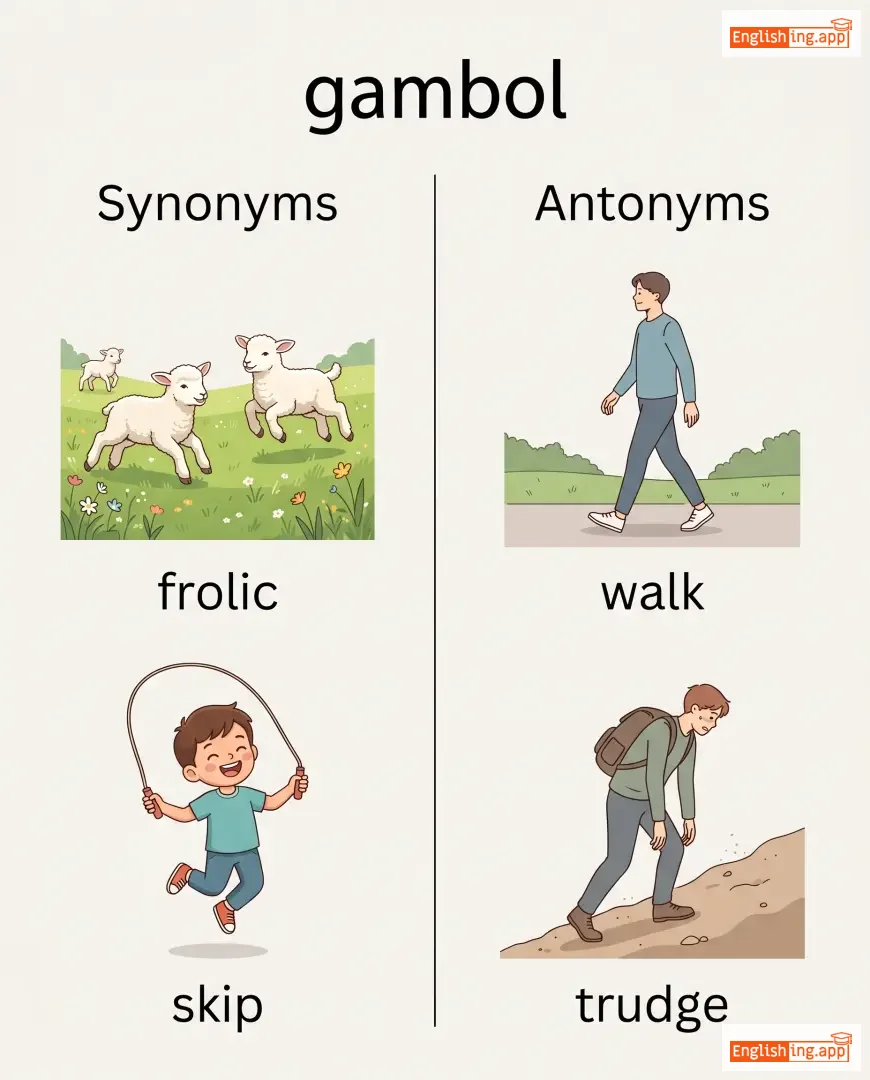
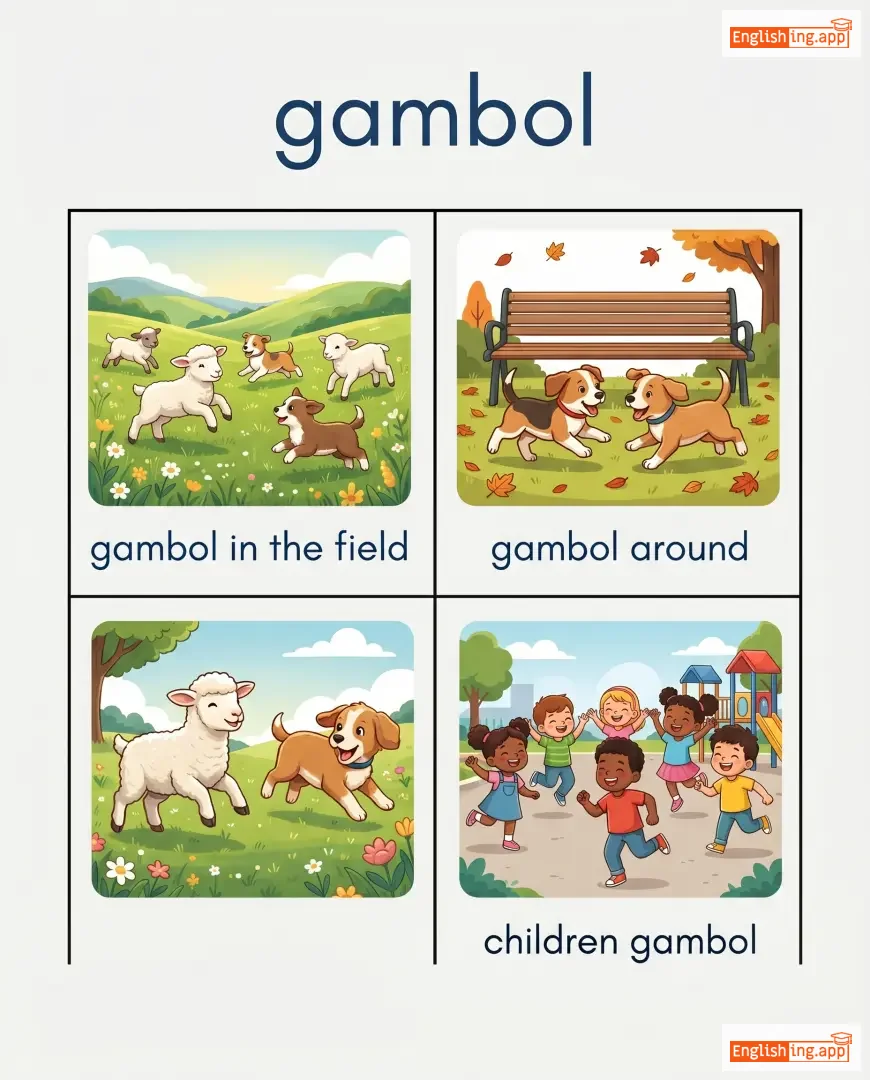
|
开心地跳跃
kaixin de tiaoyue
••••••
|
gamboled
甘博尔德
••••••
|
gamboled
甘博尔德
••••••
|
gambols
甘博尔斯
••••••
|
gamboling
甘博尔英
••••••
|
to run or jump about playfully
••••••
|
The lambs gamboled in the field under the sun.
小羊在阳光下在田野里欢快地跳跃。
••••••
|
小羊在阳光下在田野里欢快地跳跃。
Xiao yang zai yangguang xia zai tianye li huankuai de tiaoyue.
••••••
|
- •••••• | - •••••• | - •••••• |
frolic, skip, leap, romp, prance
••••••
|
walk, trudge, plod
••••••
|
gambol in the field, gambol around, children gambol
••••••
|
Gambol 代表开心地跳跃,就像在阳光下的羊在田里欢跳。
••••••
|
|
🗣️
••••••
|
/ˈɡær.ə.ləs/
adjective
(ɡɑrʊləs)
••••••
|
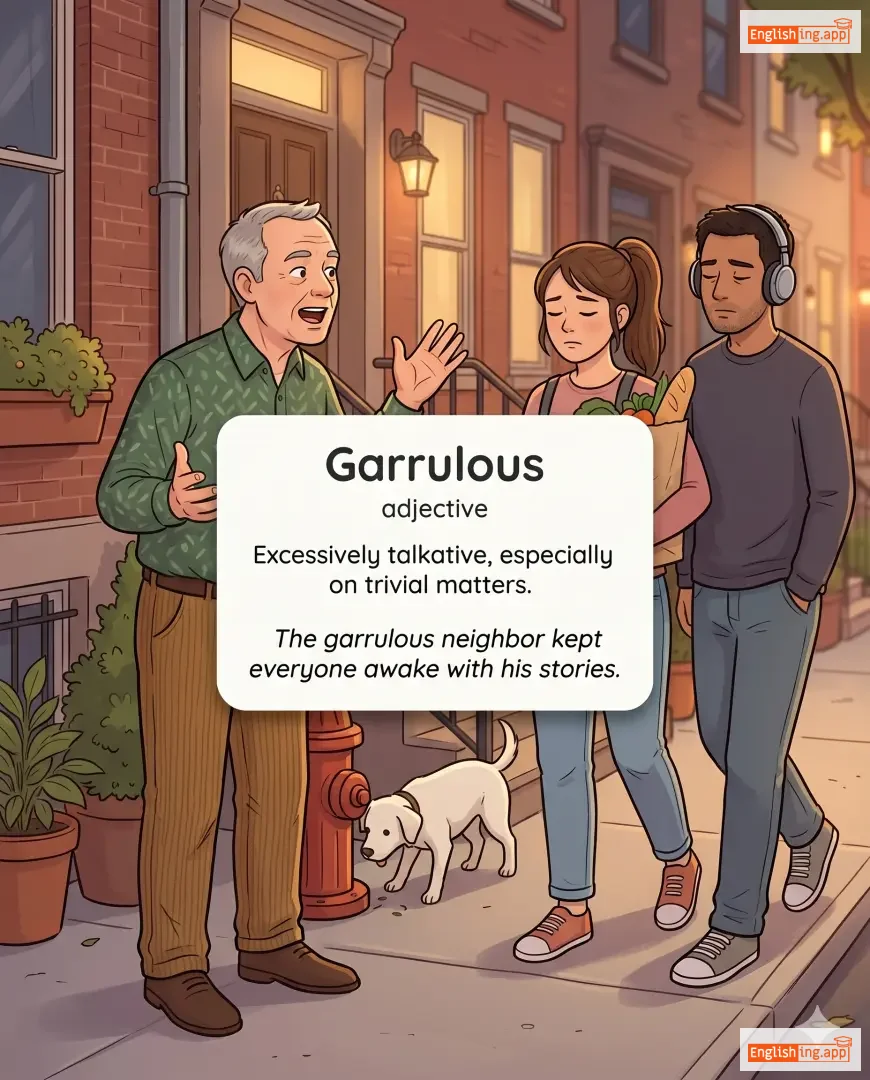
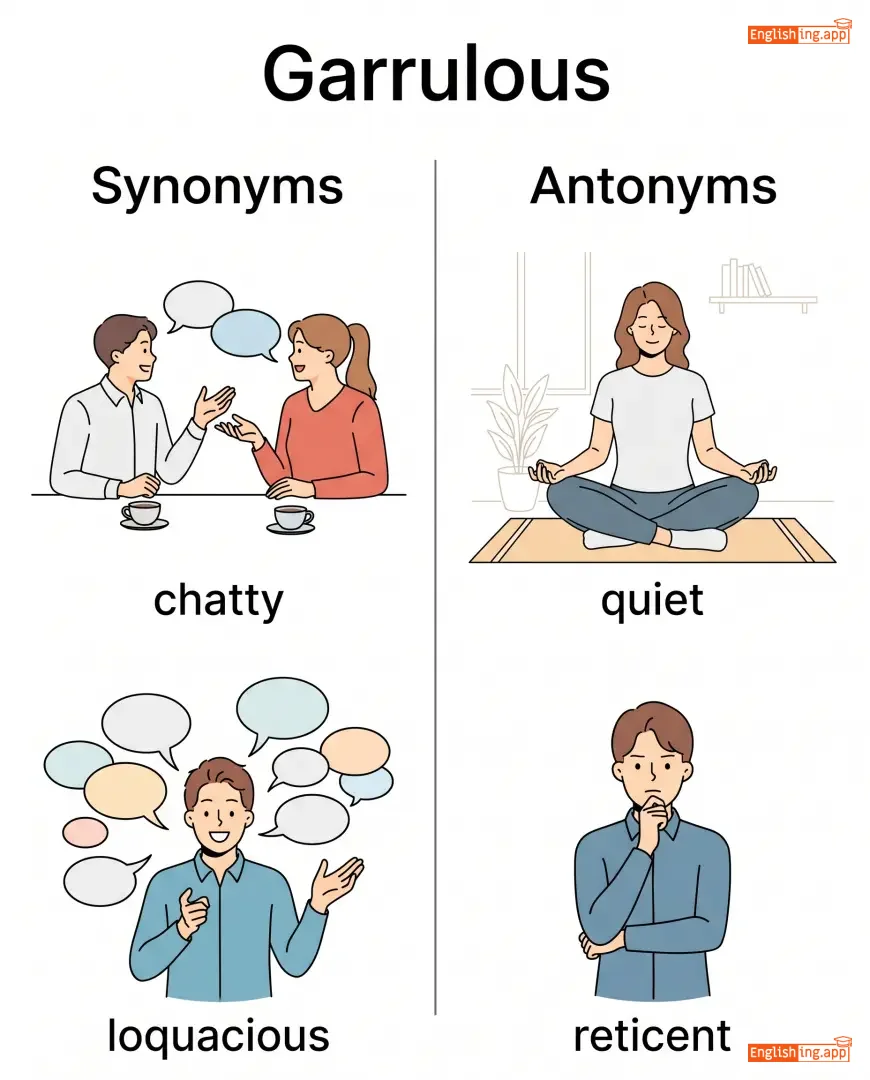
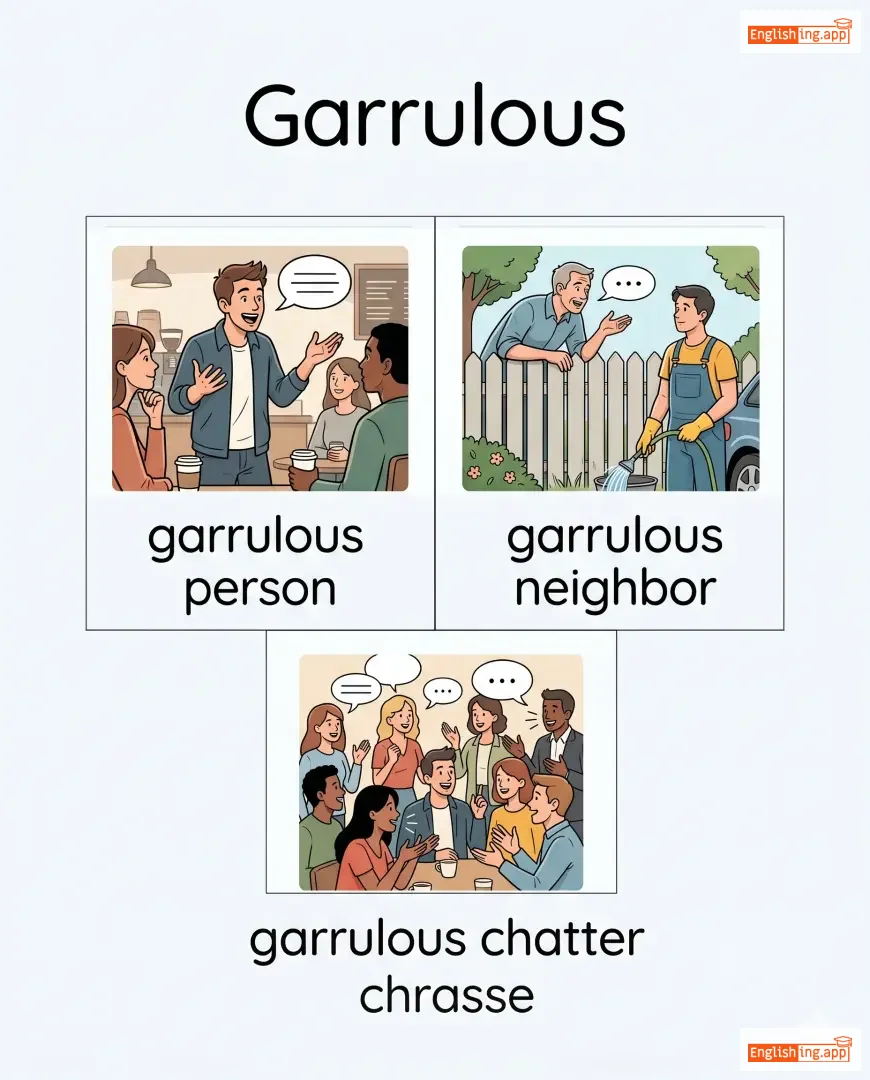
|
话多的; 健谈的; 喋喋不休的
huà duō de, jiàn tán de, dié dié bù xiū de
••••••
|
- •••••• | - •••••• | - •••••• | - •••••• |
excessively talkative, especially on trivial matters; chatty and rambling in speech
••••••
|
The garrulous old man at the coffee shop would talk for hours about his travels. |
咖啡馆里那个话多的老头,谈了几个小时关于他的旅行。
kāfēi guǎn lǐ nàgè huà duō de lǎo tóu, tán le jǐ gè xiǎo shí guānyú tā de lǚxíng.
••••••
|
- •••••• | - •••••• | - •••••• |
talkative, chatty, loquacious, verbose
••••••
|
quiet, taciturn, silent, reserved
••••••
|
garrulous person, garrulous nature, garrulous conversation
••••••
|
Garrulous 描述了那些不停讲述琐事的人,就像那位在咖啡馆里总是谈论旅行的老人。
••••••
|
|
😬
••••••
|
/ɡoʊʃ/
adjective
(高什)
••••••
|
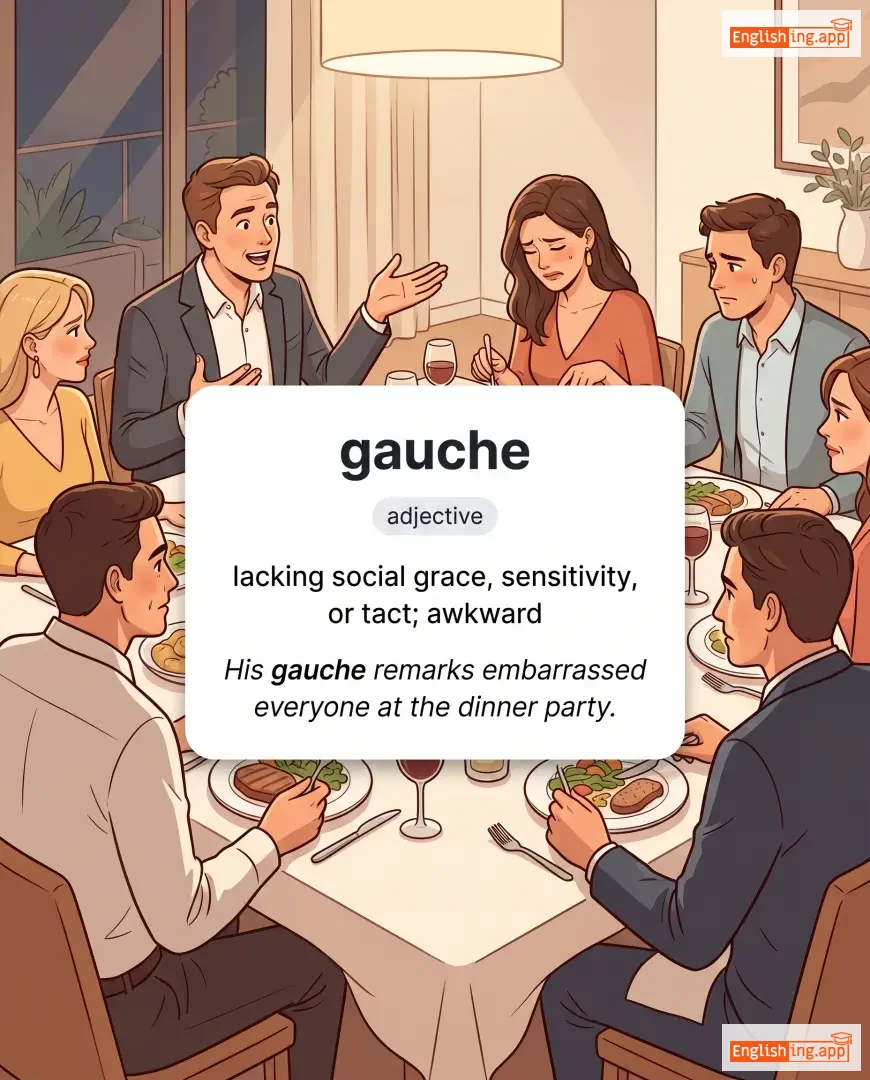
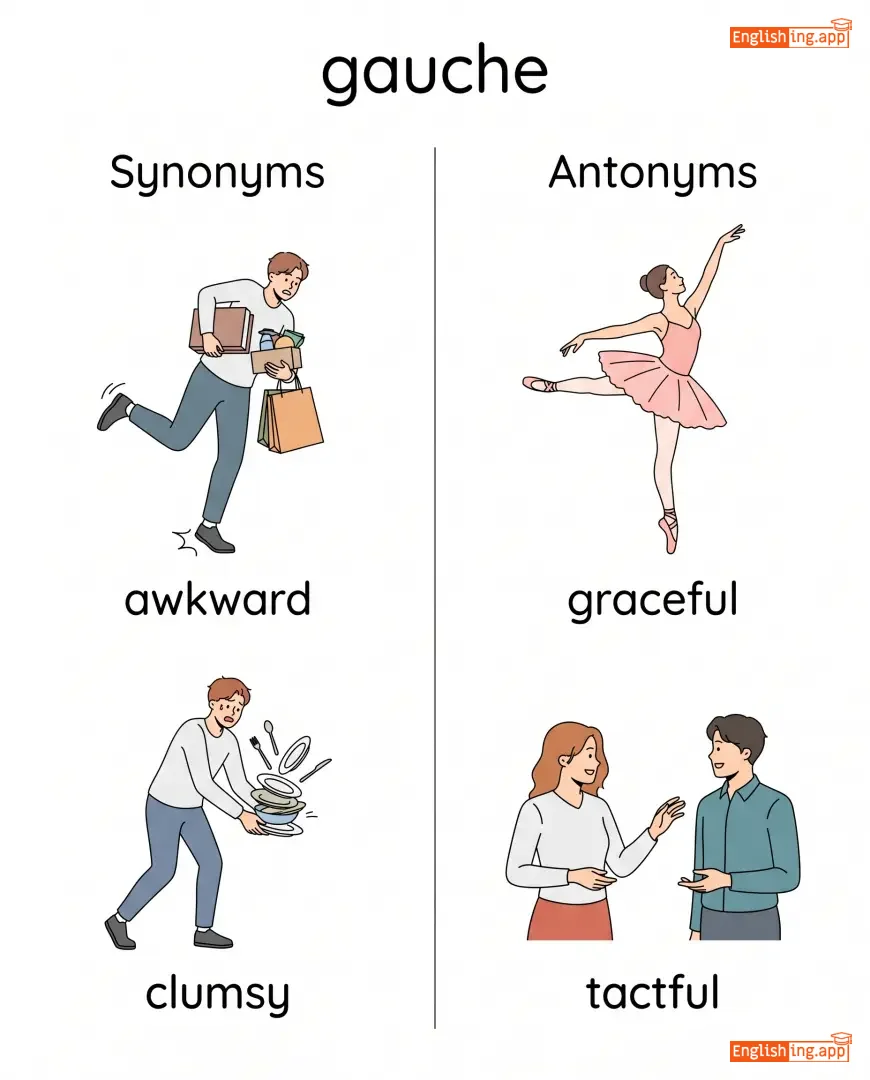
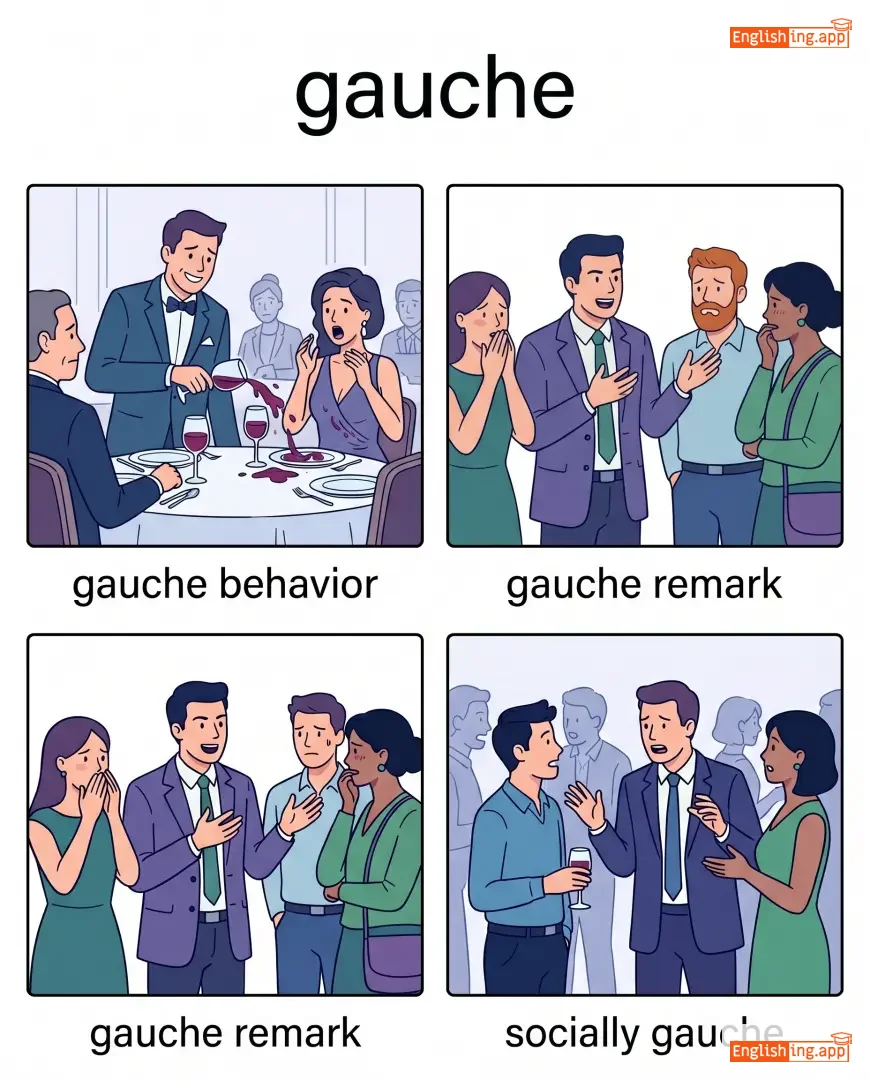
|
笨拙
ben zhuo
••••••
|
- •••••• | - •••••• | - •••••• | - •••••• |
lacking social grace, sensitivity, or tact; awkward
••••••
|
His gauche remarks embarrassed everyone at the dinner party. |
他那笨拙的评论让晚宴上的每个人都感到尴尬。
Ta na ben zhuo de pinglun rang wanye shang de meigeren dou gandao gan'ga.
••••••
|
- •••••• | - •••••• | - •••••• |
awkward, clumsy, inelegant, tactless, unpolished
••••••
|
graceful, tactful, polished
••••••
|
gauche behavior, gauche remark, socially gauche, gauche manner
••••••
|
Gauche在中文里是笨拙,笨拙的人总是让场面尴尬。
••••••
|
|
😄
••••••
|
/ˌdʒiː.niˈæl.ə.ti/
noun
(极妙)
••••••
|
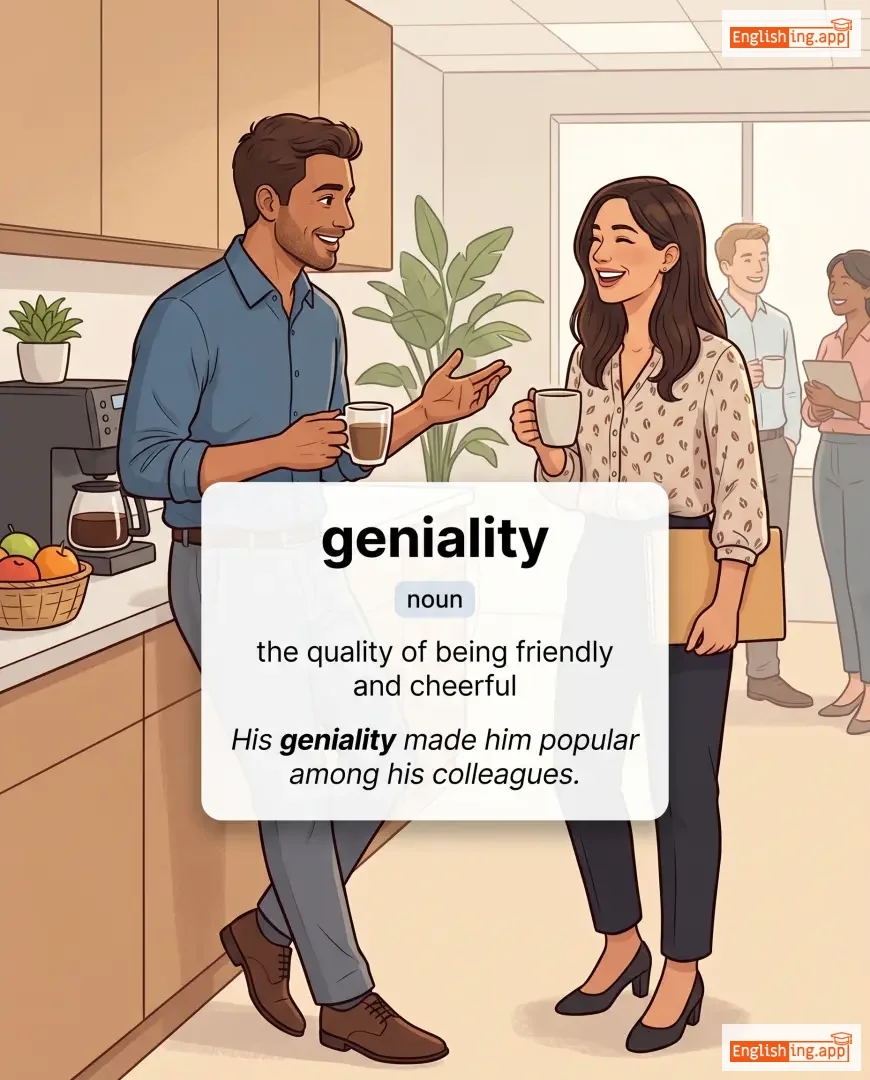
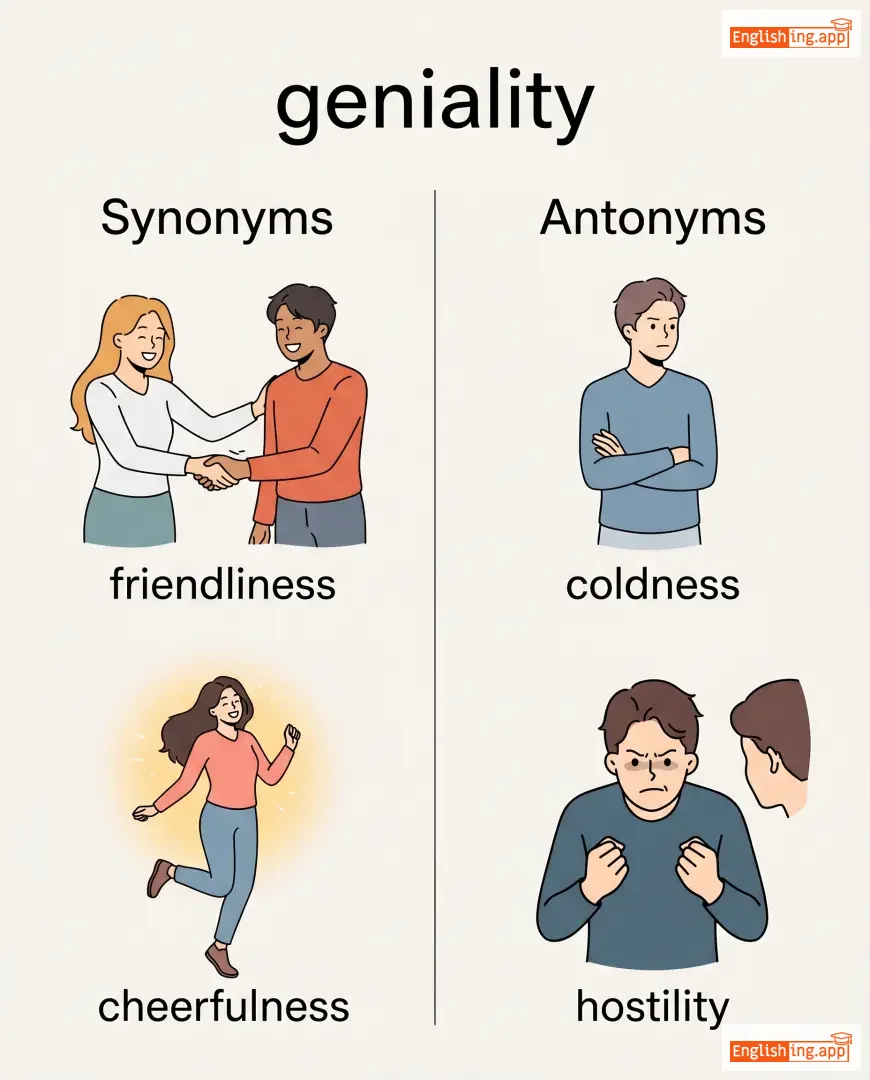
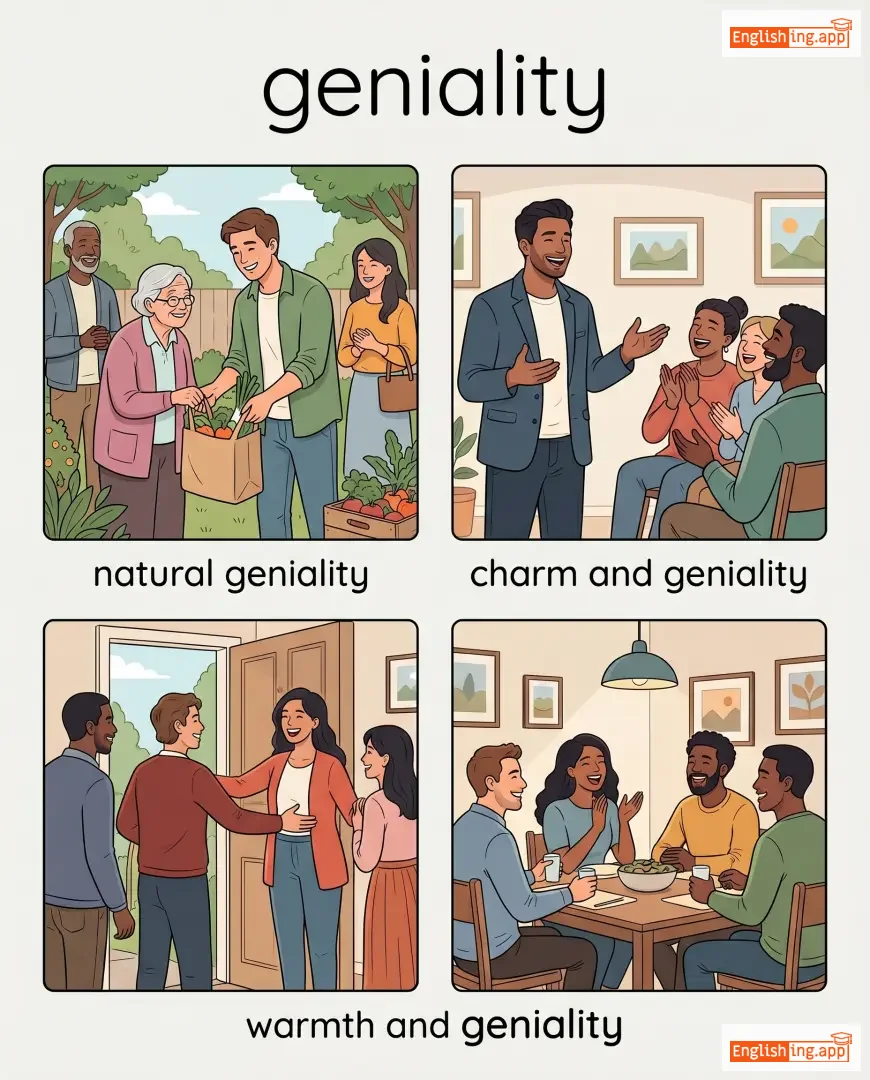
|
友好
youhao
••••••
|
- •••••• | - •••••• | - •••••• | - •••••• |
the quality of being friendly and cheerful
••••••
|
His geniality made him popular among his colleagues. |
他的友好使他在同事中很受欢迎。
Tade youhao shi ta zai tongshi zhong hen shou huanying.
••••••
|
- •••••• | - •••••• | - •••••• |
friendliness, cheerfulness, warmth, amiability
••••••
|
coldness, hostility, rudeness
••••••
|
natural geniality, charm and geniality, warmth and geniality
••••••
|
Geniality就像是一个总是友好、愉快的精灵。
••••••
|
|
🗳️
••••••
|
/ˈdʒɛriˌmændər/
verb
(杰里曼德)
••••••
|
|
操控选区边界
caokong xuanqu bianjie
••••••
|
gerrymandered
杰里曼德德
••••••
|
gerrymandered
杰里曼德德
••••••
|
gerrymanders
杰里曼德斯
••••••
|
gerrymandering
杰里曼德灵
••••••
|
to manipulate the boundaries of an electoral constituency to favor one party or class
••••••
|
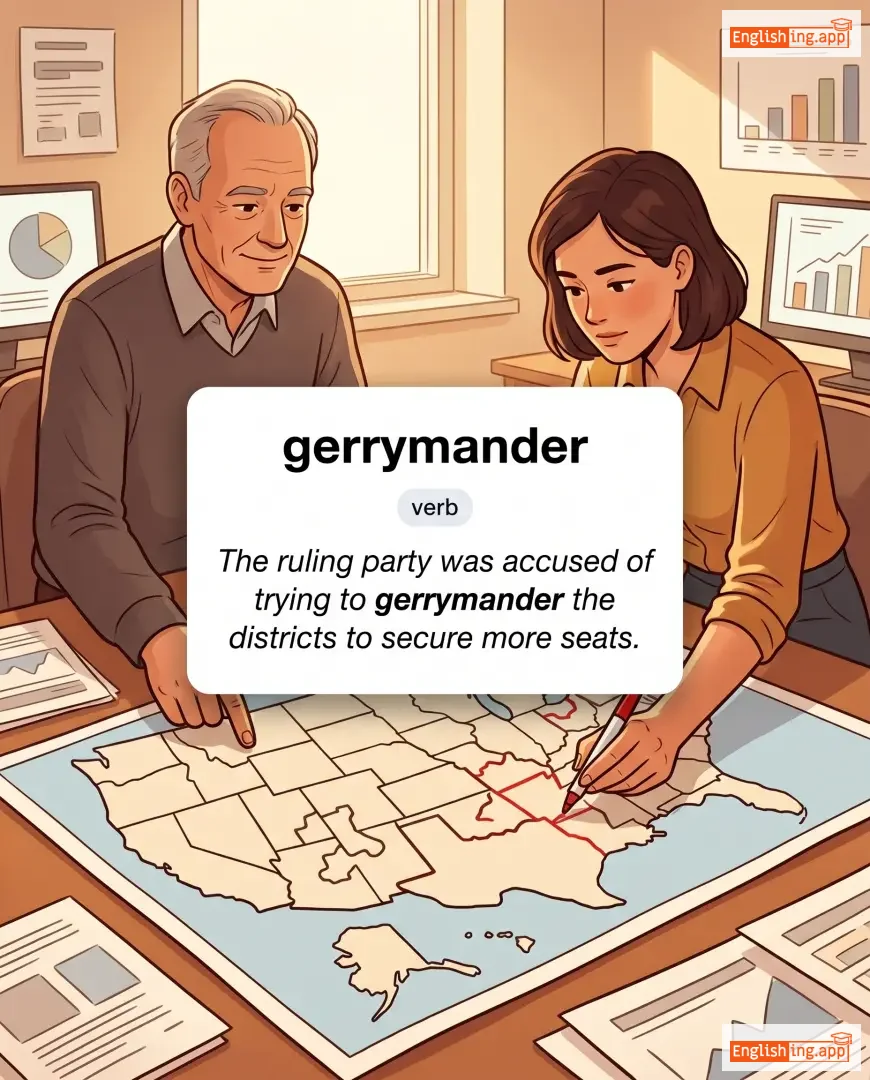
The ruling party was accused of trying to gerrymander the districts to secure more seats.
执政党被指控试图操控选区,以确保更多的席位。
••••••
|
执政党被指控试图操控选区,以确保更多的席位。
Zhi zheng dang bei zhikong shitu caokong xuanqu, yi quebao geng duo de xiwai.
••••••
|
- •••••• | - •••••• | - •••••• |
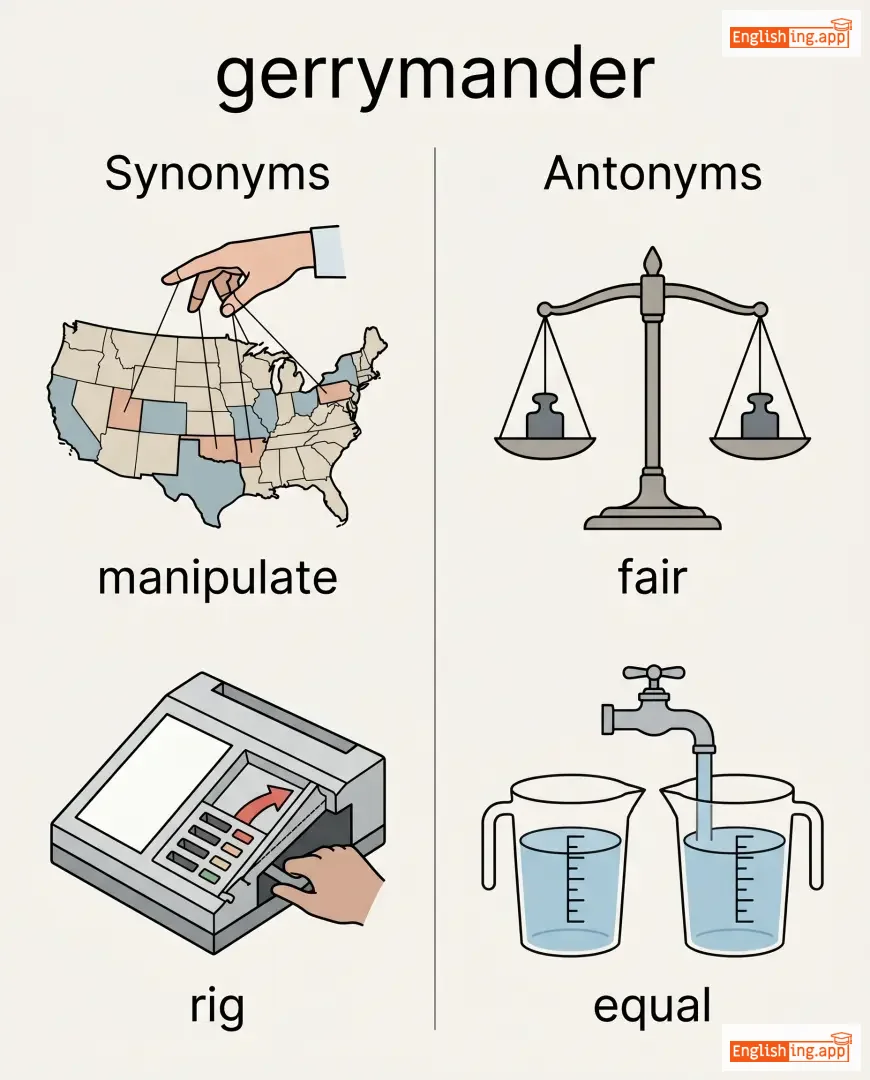
manipulate, rig, falsify, distort, exploit
••••••
|
fair, equal, impartial
••••••
|
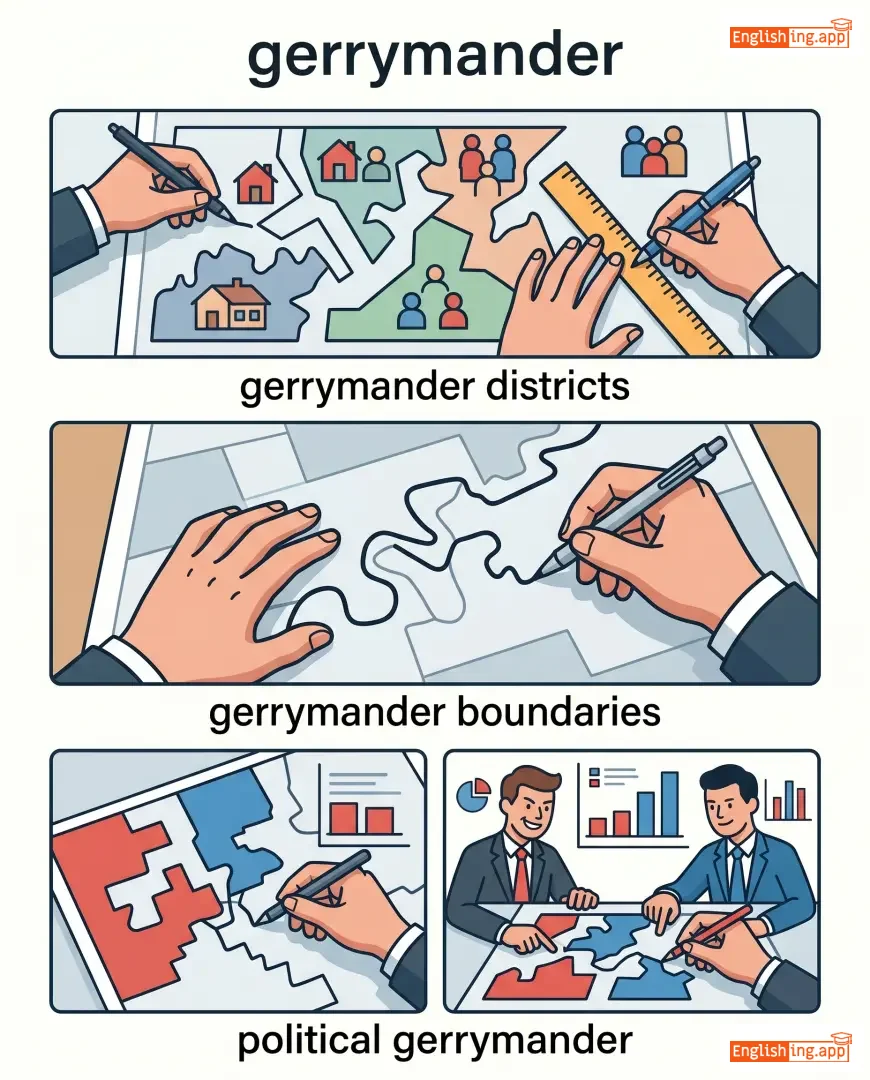
gerrymander districts, gerrymander boundaries, political gerrymander, blatant gerrymander
••••••
|
杰里改变边界,获得更多席位
••••••
|
|
🗣️
••••••
|
/ɡlɪb/
adjective
(glib)
••••••
|

|
表面上的但不真诚的
biaomian shang de dan bu zhencheng de
••••••
|
- •••••• | - •••••• | - •••••• | - •••••• |
speaking easily but without sincerity or depth
••••••
|
The politician gave a glib answer to a serious question. |
政治家对一个严肃的问题给出了表面上的回答。
zhengzhijia dui yige yansu de wenti geichule biaomian shang de huida.
••••••
|
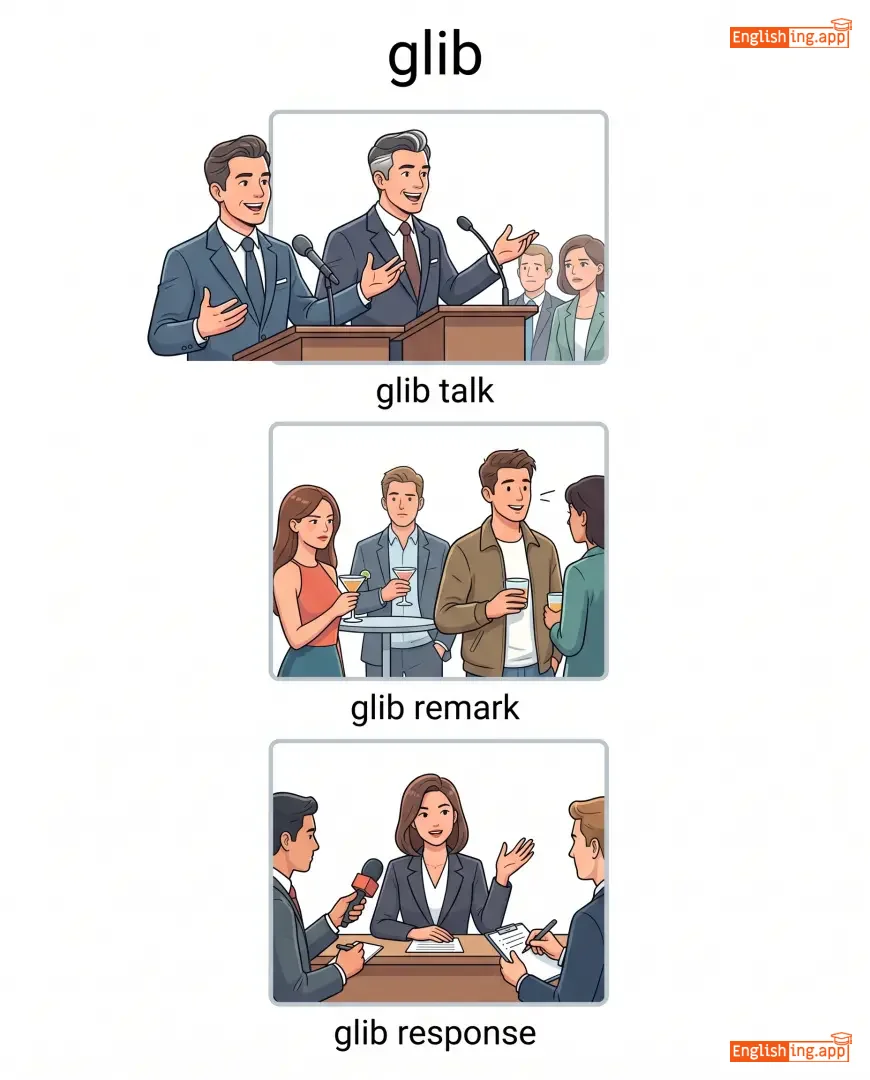
glib talk |
smooth but insincere speech
••••••
|
表面话
biaomian hua
••••••
|
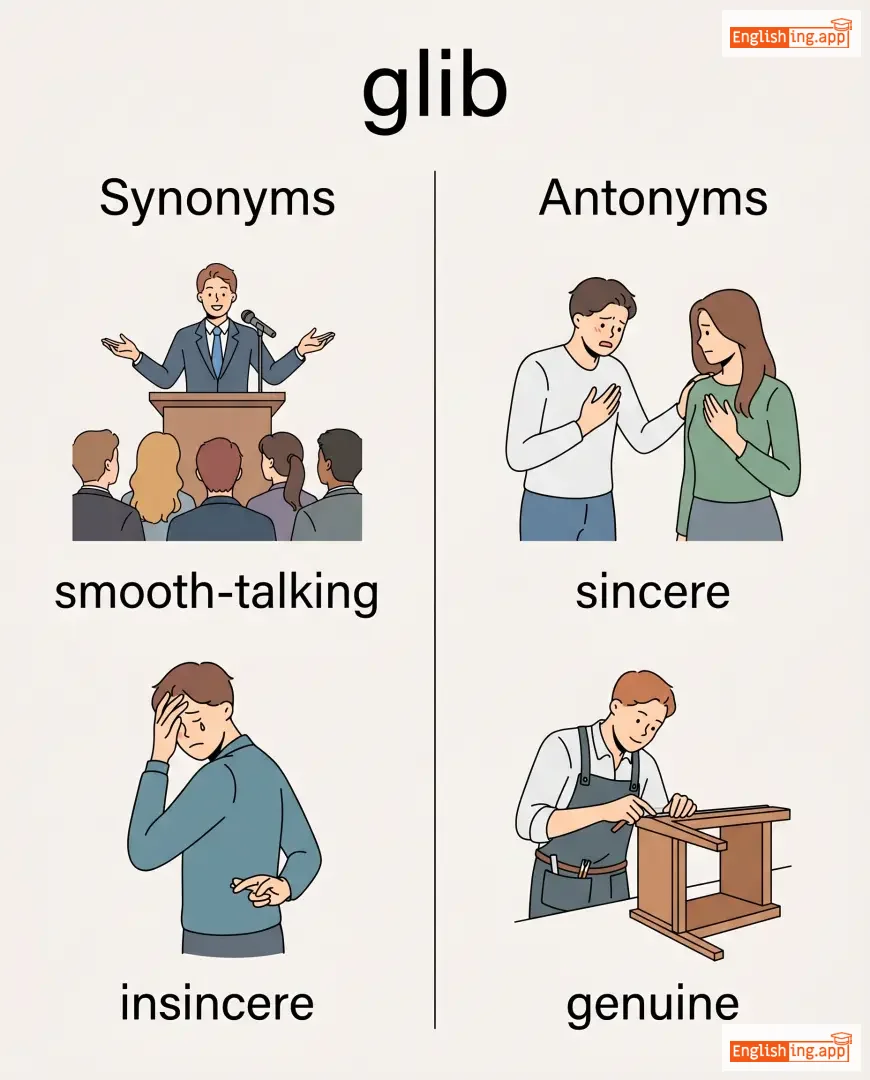
smooth-talking, insincere, superficial, slick, shallow
••••••
|
sincere, genuine, thoughtful
••••••
|
glib talk, glib remark, glib response, glib answer
••••••
|
Glib 就像中文的表面话一样,不真诚。
••••••
|
|
⚡
••••••
|
/ɡoʊd/
verb
(戈德)
••••••
|
|
挑衅
tiaoxin
••••••
|
goaded
戈德德
••••••
|
goaded
戈德德
••••••
|
goads
戈德斯
••••••
|
goading
戈德英
••••••
|
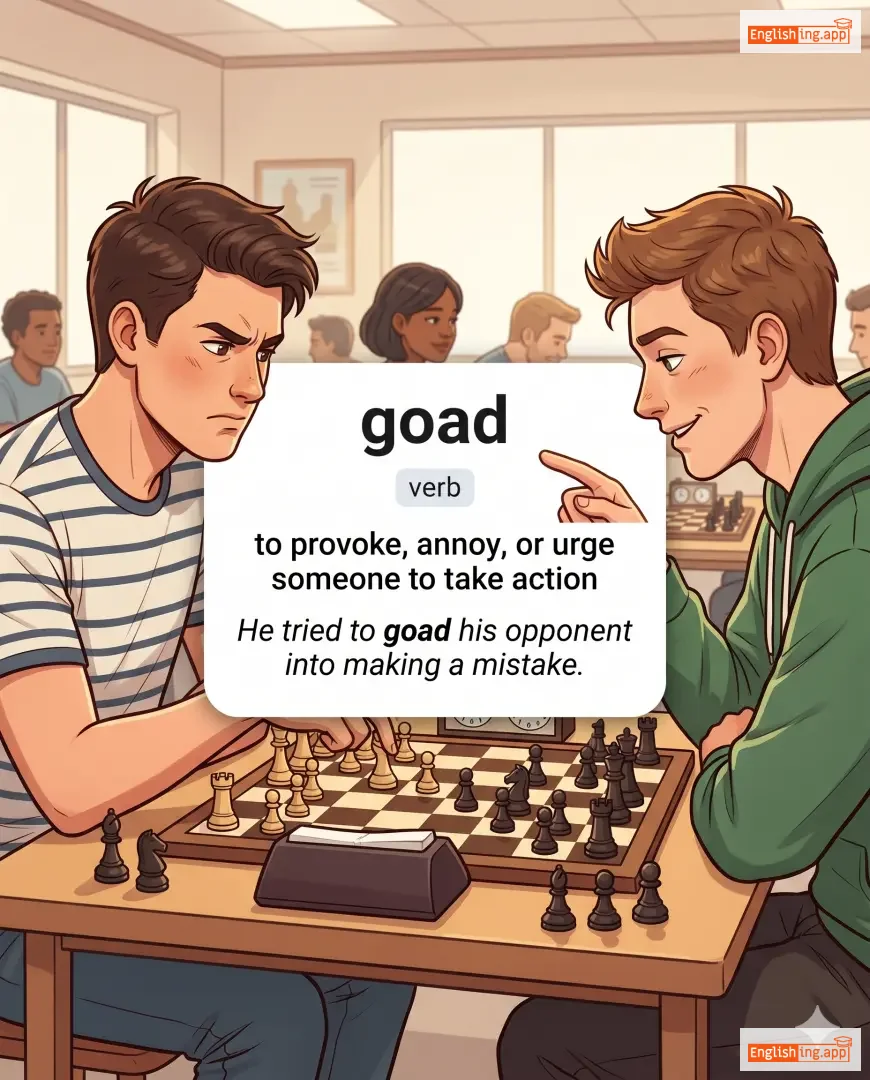
to provoke, annoy, or urge someone to take action
••••••
|
He tried to goad his opponent into making a mistake.
他试图激怒对手让他犯错。
••••••
|
他试图激怒对手让他犯错。
Tā shìtú jīnù duìshǒu ràng tā fàncuò.
••••••
|
goad into action
刺激进入行动
••••••
|
to provoke or push someone to act
••••••
|
激怒进入行动
jīnù jìnrù xíngdòng
••••••
|
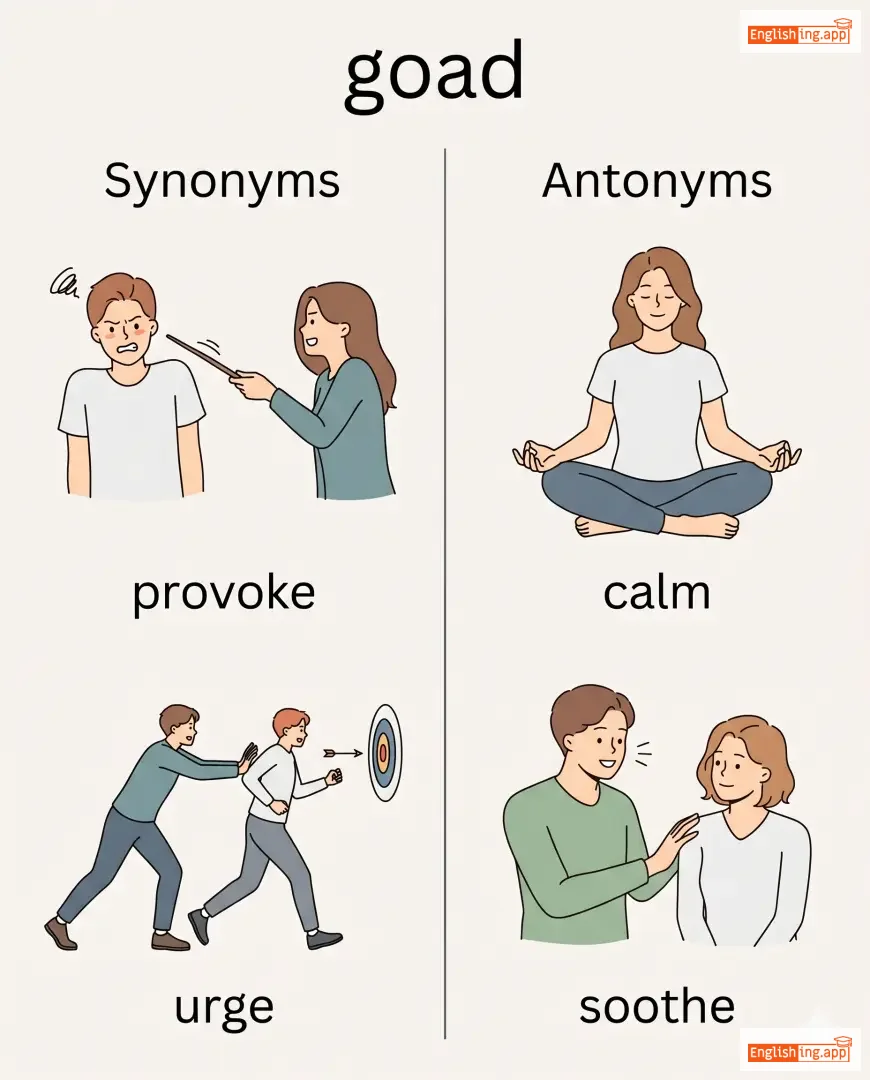
provoke, urge, incite, push, irritate
••••••
|
calm, soothe, dissuade
••••••
|
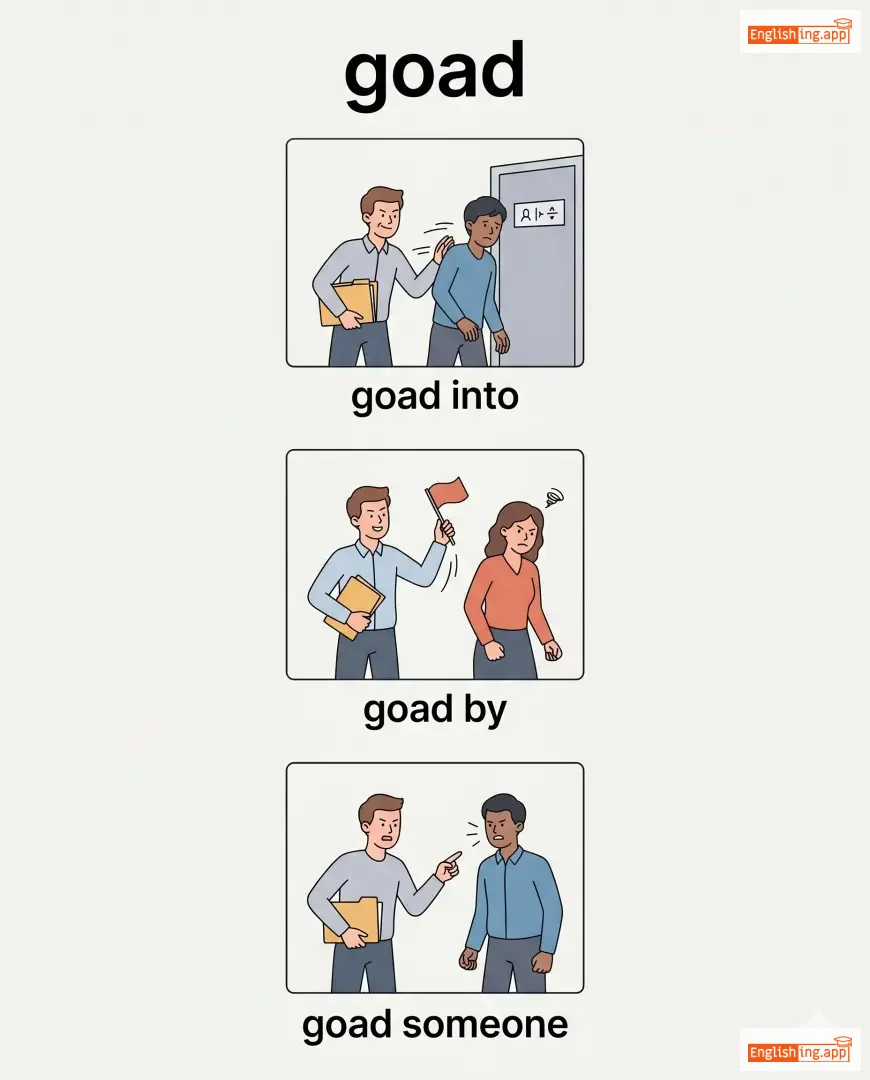
goad into, goad by, goad someone
••••••
|
Goad = Go + Add, 挑衅某人行动
••••••
|
|
🕸️
••••••
|
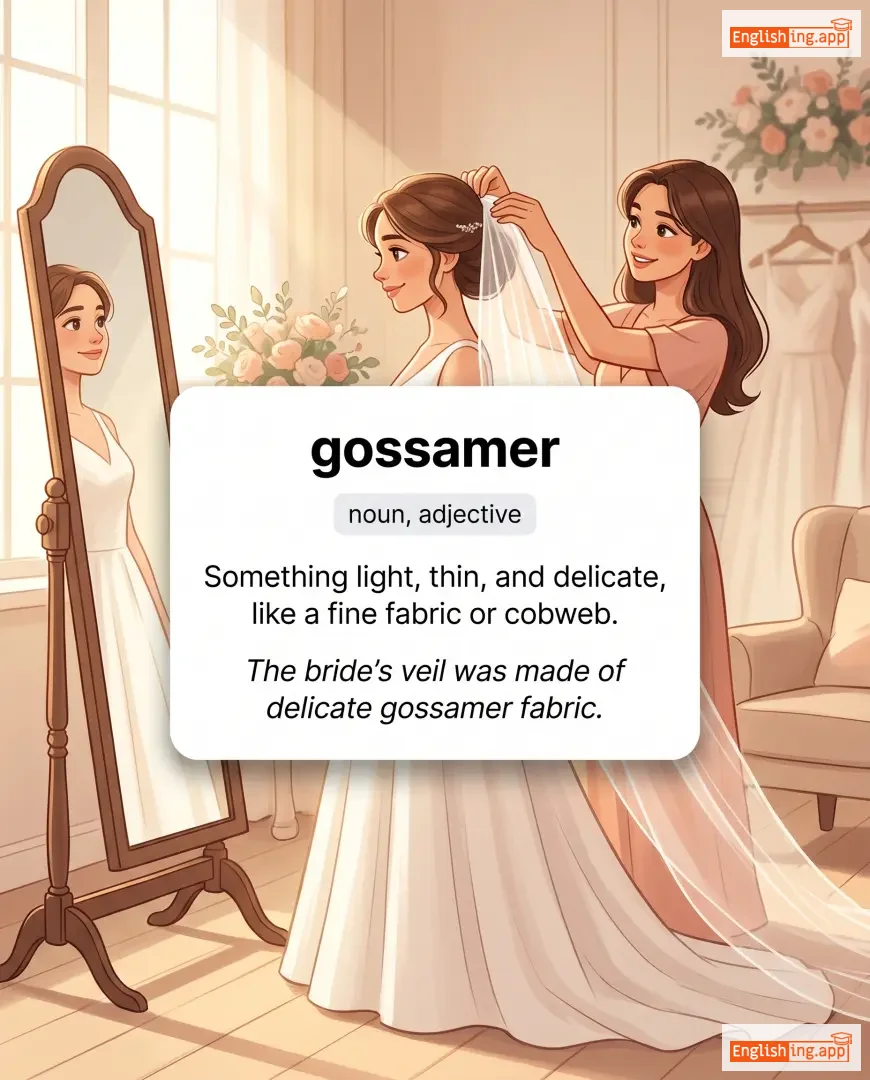
/ˈɡɒsəmər/
noun, adjective
(高萨梅尔)
••••••
|
|
轻薄物
qīngbó wù
••••••
|
- •••••• | - •••••• | - •••••• | - •••••• |
Something light, thin, and delicate, like a fine fabric or cobweb.
••••••
|
The bride's veil was made of delicate gossamer fabric. |
新娘的面纱是由精致的高萨梅尔布料做成的。
Xīnniáng de miànshā shì yóu jīngzhì de gāo sàméi'ěr bùliào zuòchéng de.
••••••
|
- •••••• | - •••••• | - •••••• |
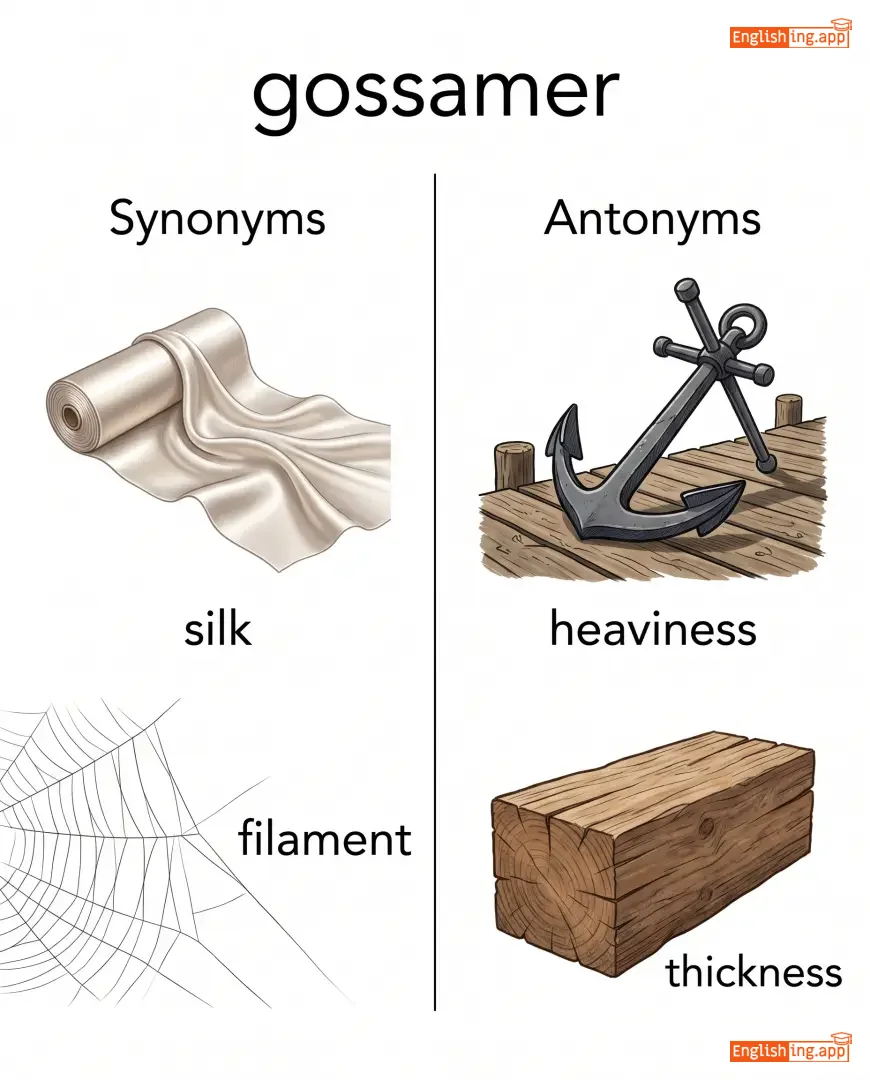
silk, filament, cobweb, fineness, delicacy
••••••
|
heaviness, thickness, solidity
••••••
|
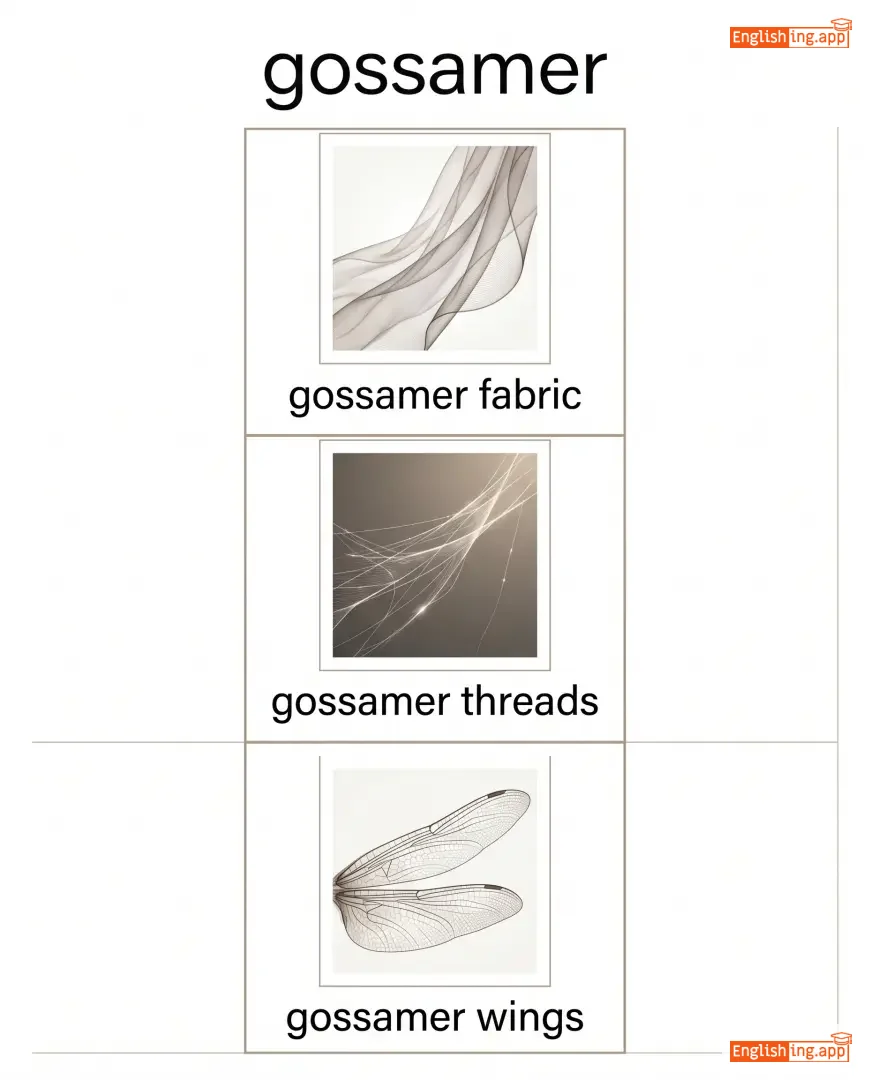
gossamer fabric, gossamer threads, gossamer wings, gossamer veil
••••••
|
高萨梅尔就像是非常轻盈、精致的东西,像蜘蛛网或细布。
••••••
|
|
🪓
••••••
|
/ɡaʊdʒ/
verb, noun
(gāojí)
••••••
|
|
挖掘,漫天要价
wājué, màn tiān yàojià
••••••
|
gouged
gāojíle
••••••
|
gouged
gāojíle
••••••
|
gouges
gāojí
••••••
|
gouging
gāojíng
••••••
|
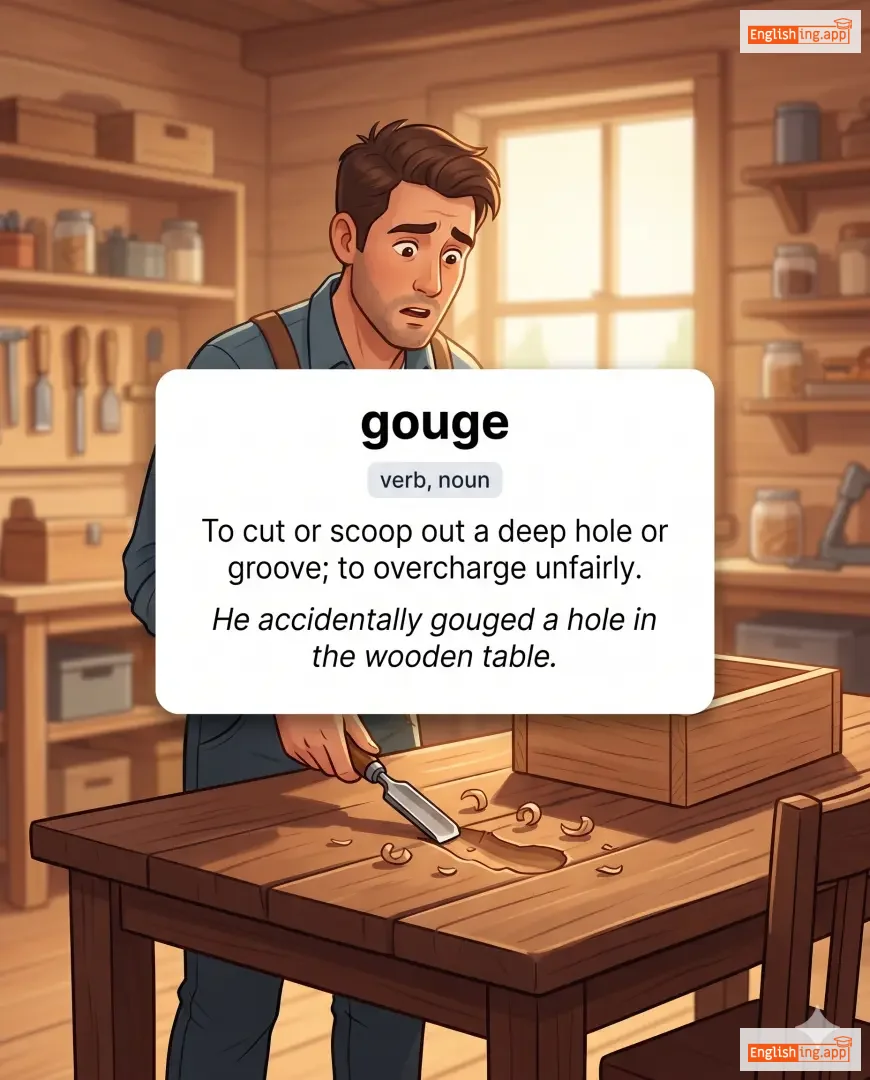
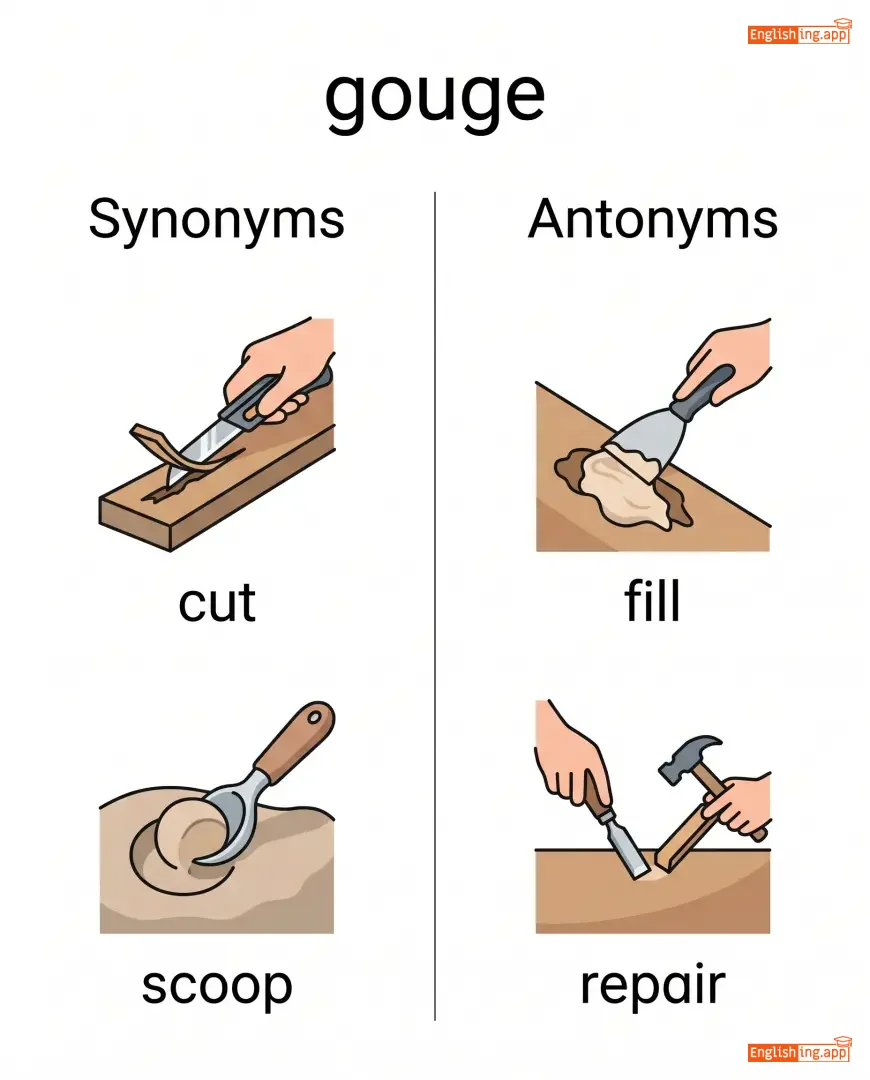
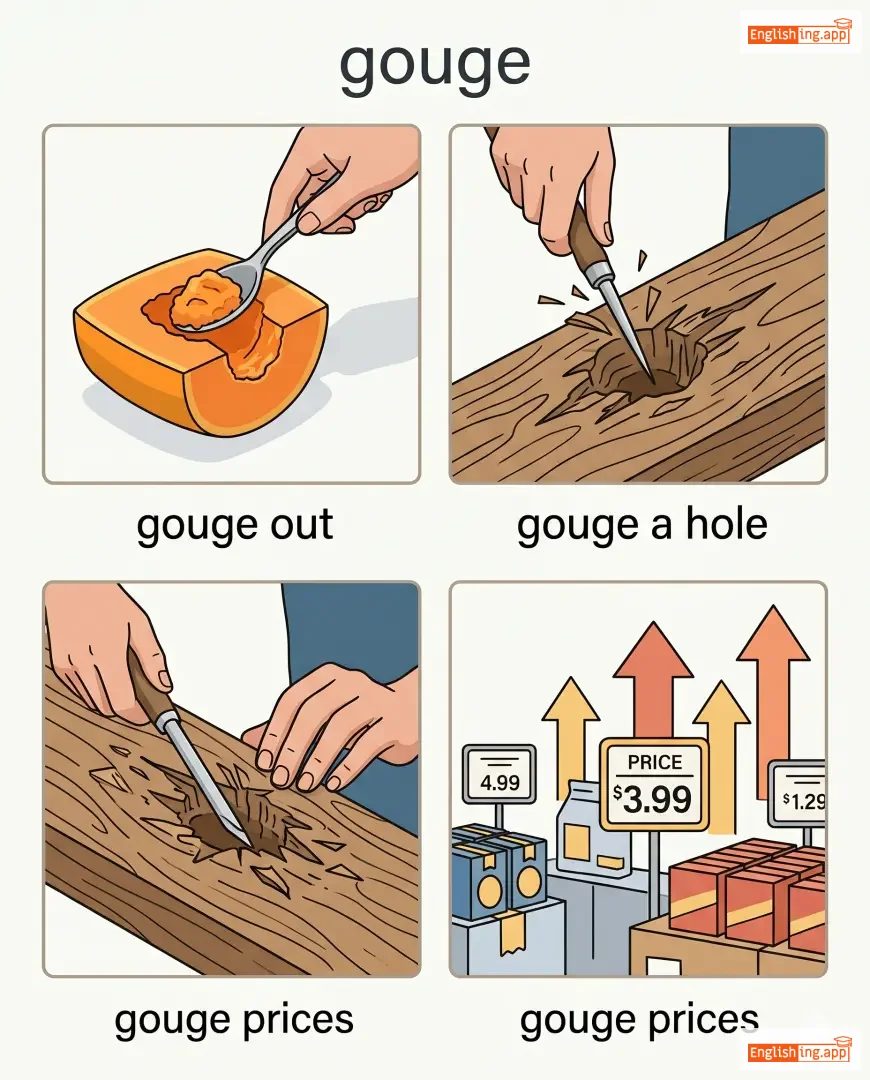
To cut or scoop out a deep hole or groove; to overcharge unfairly.
••••••
|
He accidentally gouged a hole in the wooden table.
他不小心在木桌子上挖了个洞。
••••••
|
他不小心在木桌子上挖了个洞。
Tā bù xiǎoxīn zài mù zhuōzi shàng wāle gè dòng.
••••••
|
price gouging
价格掠夺
••••••
|
Charging excessively high prices, especially during crises.
••••••
|
价格掠夺
jiàgé lüèduó
••••••
|
cut, scoop, dig, chisel, overcharge
••••••
|
fill, repair, fairness
••••••
|
gouge out, gouge a hole, gouge prices, gouge customers
••••••
|
Gouge 就是 gou (洞) 和提高价格
••••••
|
|
🗣️
••••••
|
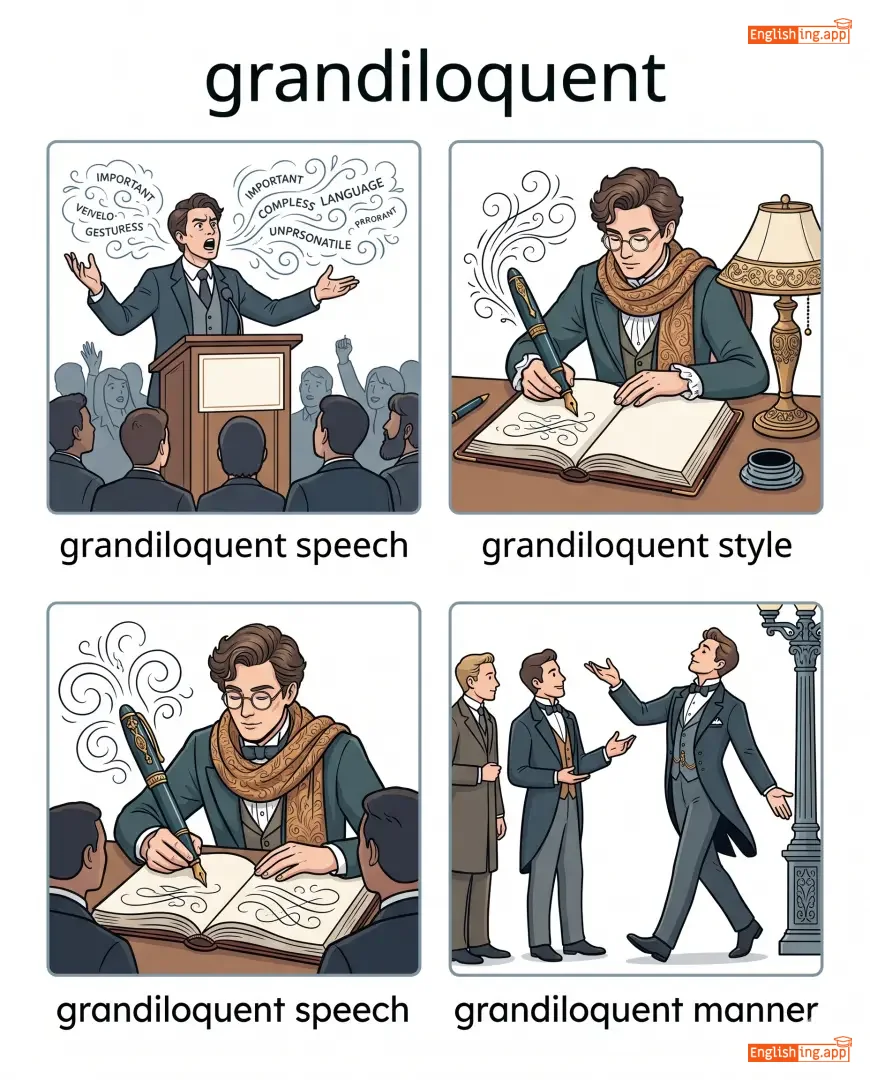
/ɡrænˈdɪləkwənt/
adjective
(grændɪləkwənt)
••••••
|
|
夸张的语言
kuāzhāng de yǔyán
••••••
|
- •••••• | - •••••• | - •••••• | - •••••• |
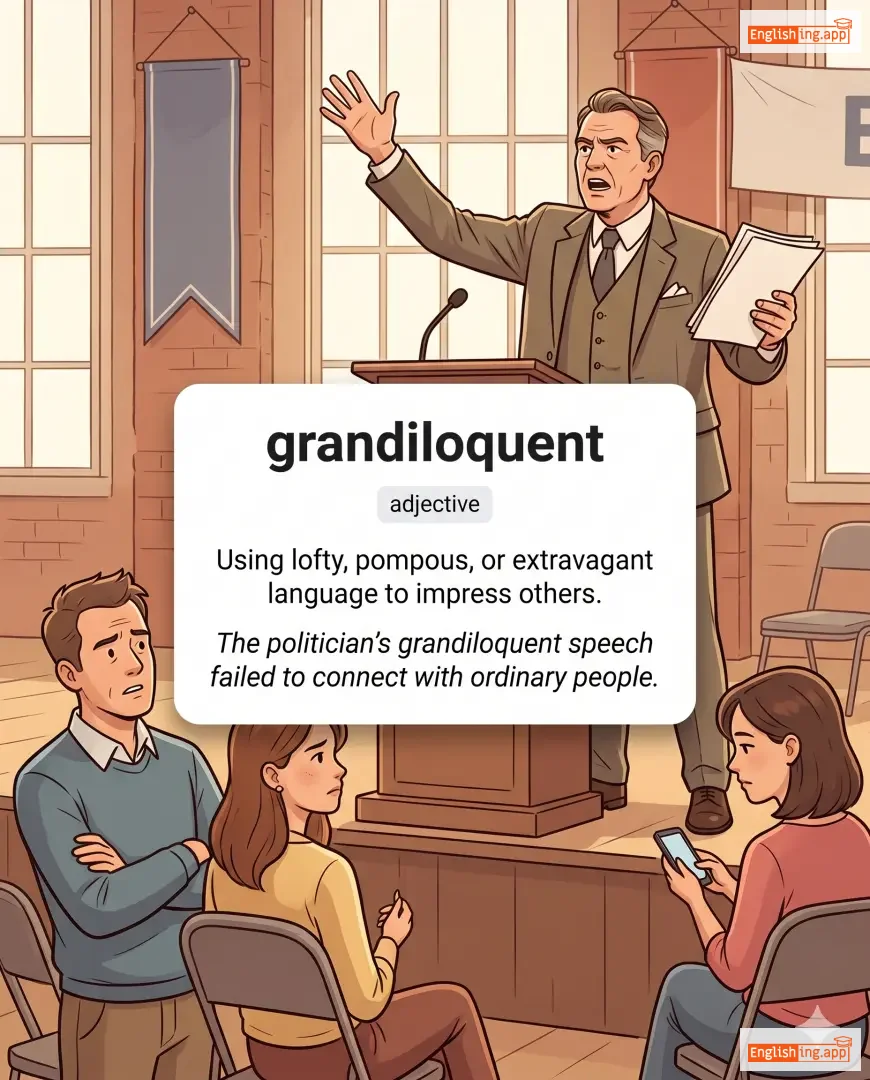
Using lofty, pompous, or extravagant language to impress others.
••••••
|
The politician’s grandiloquent speech failed to connect with ordinary people. |
这位政治家的夸张演讲未能与普通人产生共鸣。
Zhè wèi zhèngzhìjiā de kuāzhāng yǎnjiǎng wèinéng yǔ pǔtōngrén chǎnshēng gòngmíng.
••••••
|
- •••••• | - •••••• | - •••••• |
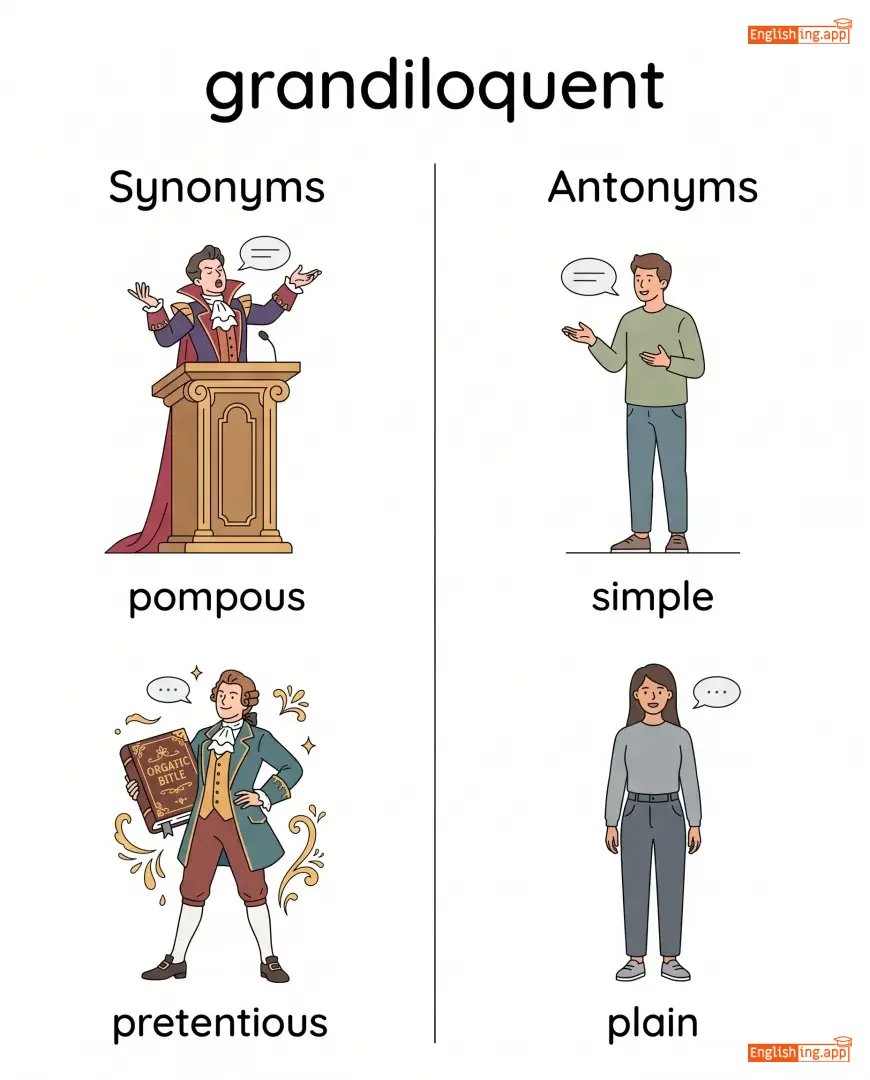
pompous, pretentious, bombastic, inflated, rhetorical
••••••
|
simple, plain, modest
••••••
|
grandiloquent speech, grandiloquent style, grandiloquent manner
••••••
|
Grandiloquent = grand + eloquent, 在中文中:用浮夸的语言给别人留下印象。
••••••
|
|
🗣️
••••••
|
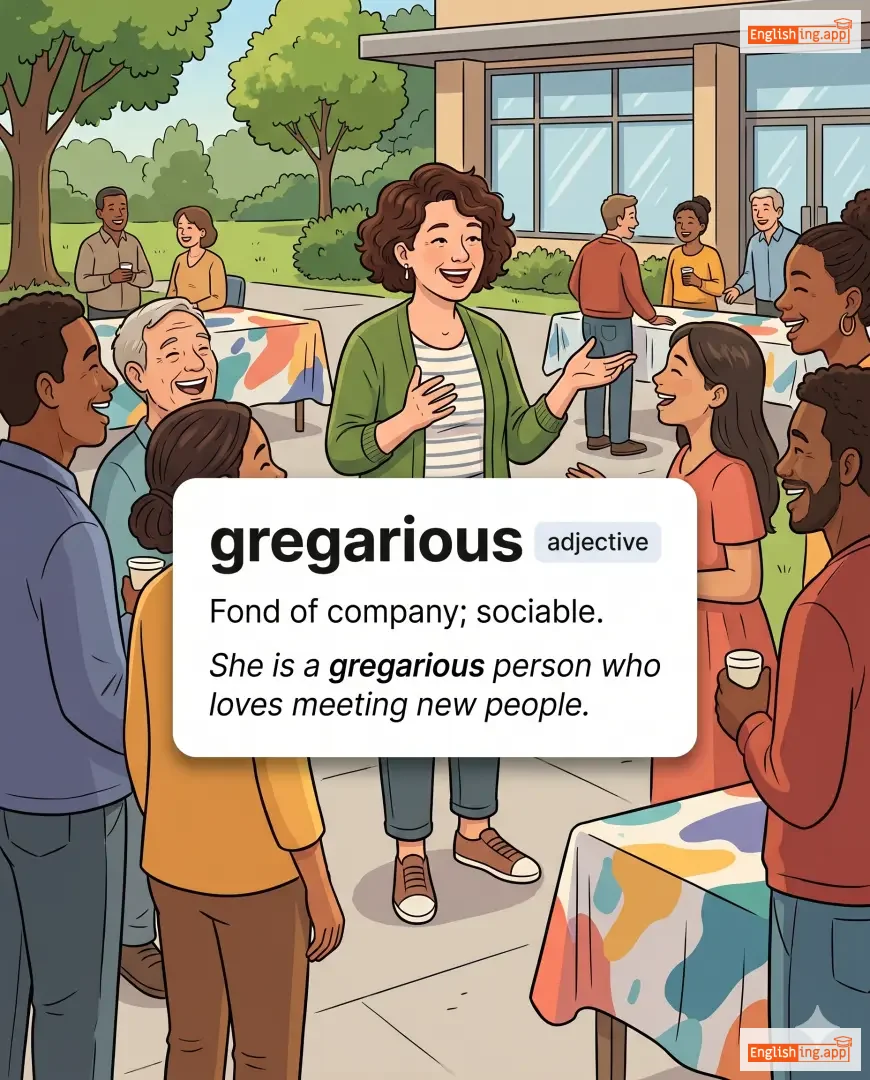
/ɡrɪˈɡɛəriəs/
adjective
(格雷格里厄斯)
••••••
|
|
好社交
hao shejiao
••••••
|
- •••••• | - •••••• | - •••••• | - •••••• |
Fond of company; sociable.
••••••
|
She is a gregarious person who loves meeting new people. |
她是一个好社交的人,喜欢结识新朋友。
Ta shi yige hao shejiao de ren, xihuan jieshi xin pengyou.
••••••
|
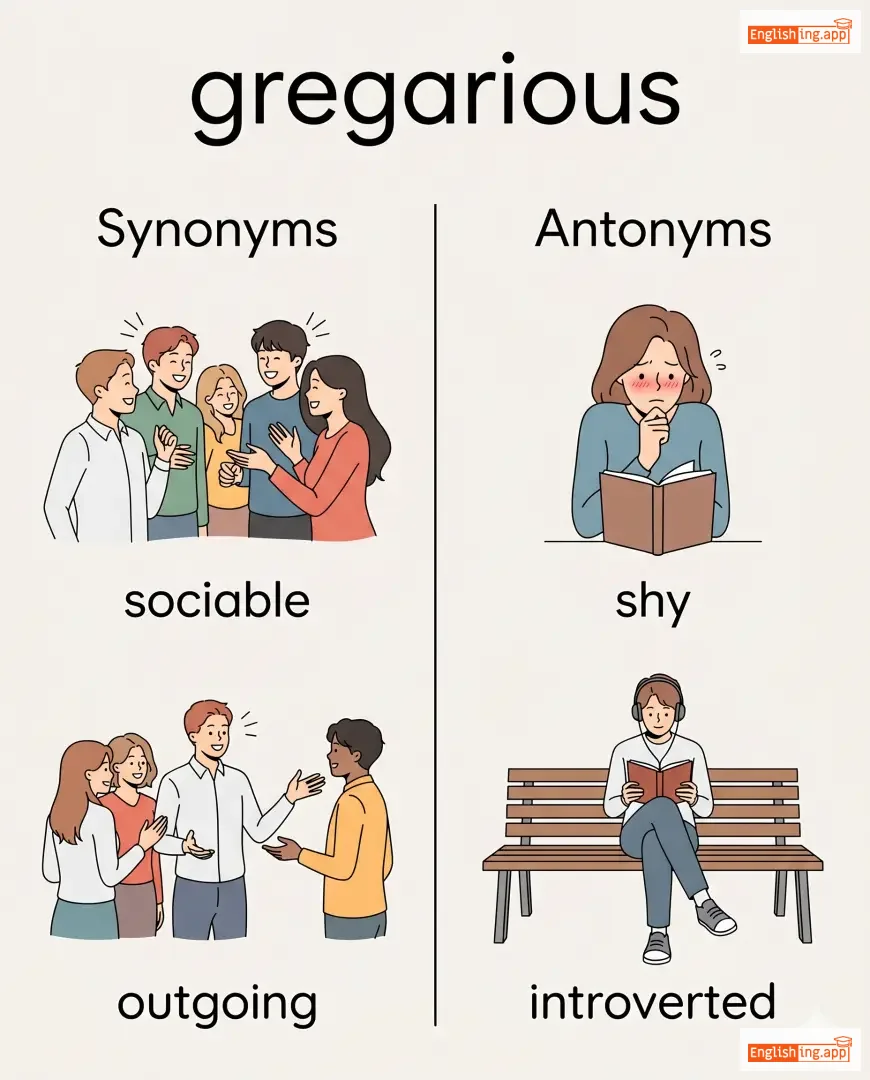
- •••••• | - •••••• | - •••••• |
sociable, outgoing, friendly, extroverted, convivial
••••••
|
shy, introverted, antisocial
••••••
|
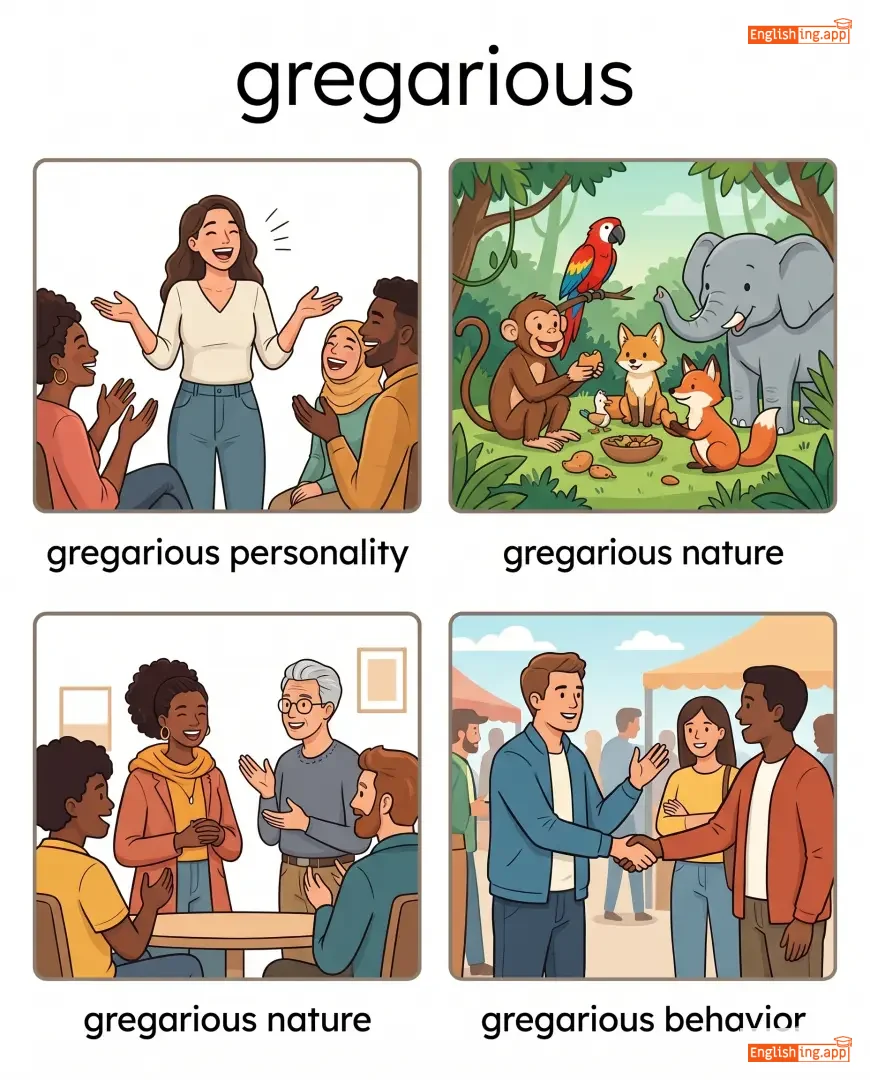
gregarious personality, gregarious nature, gregarious behavior
••••••
|
Greg arious 意味着喜欢在群体中,社交型。
••••••
|
|
🪶
••••••
|
/ɡraʊs/
noun/verb
(格劳斯)
••••••
|
|
抱怨 / 一种鸟
bàoyuàn / yī zhǒng niǎo
••••••
|
groused
格劳斯德
••••••
|
groused
格劳斯德
••••••
|
grouses
格劳塞斯
••••••
|
grousing
格劳辛
••••••
|
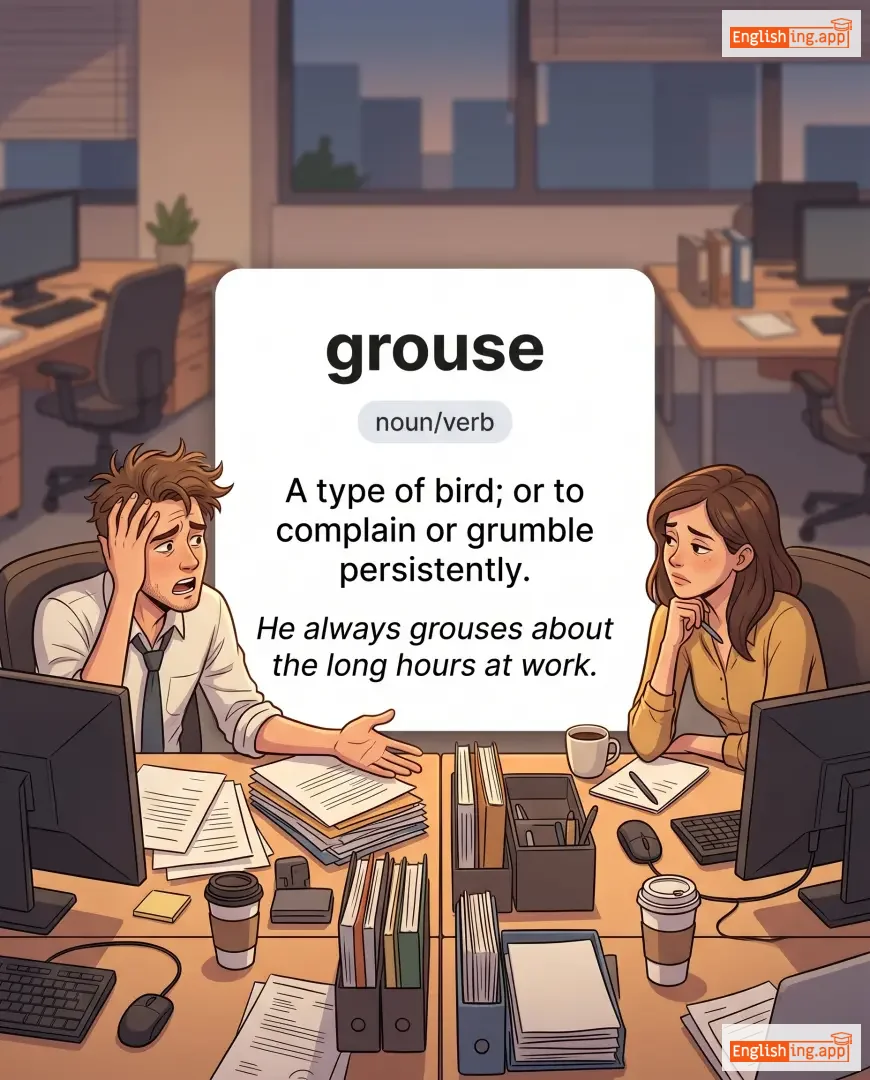
A type of bird; or to complain or grumble persistently.
••••••
|
He always grouses about the long hours at work.
他总是抱怨工作时长。
••••••
|
他总是抱怨工作时长。
Tā zǒng shì bàoyuàn gōngzuò shícháng.
••••••
|
- •••••• | - •••••• | - •••••• |
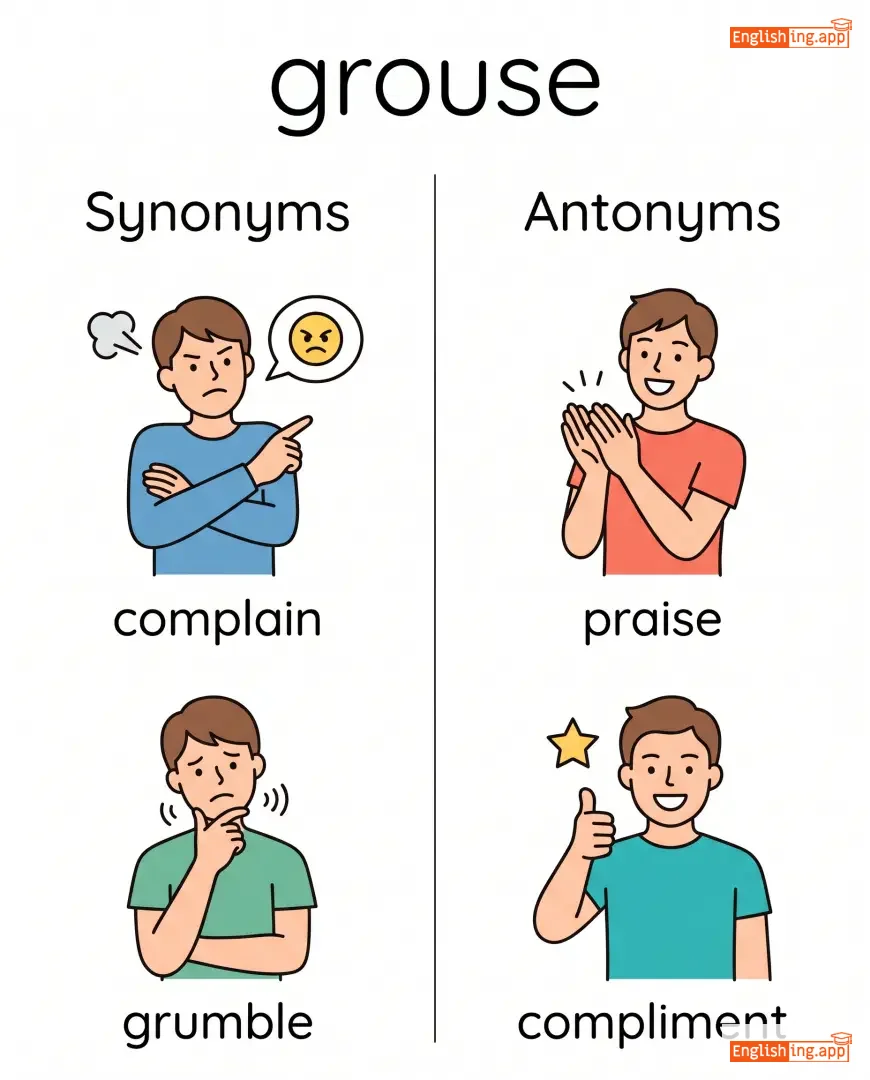
complain, grumble, moan, whine, object
••••••
|
praise, compliment
••••••
|
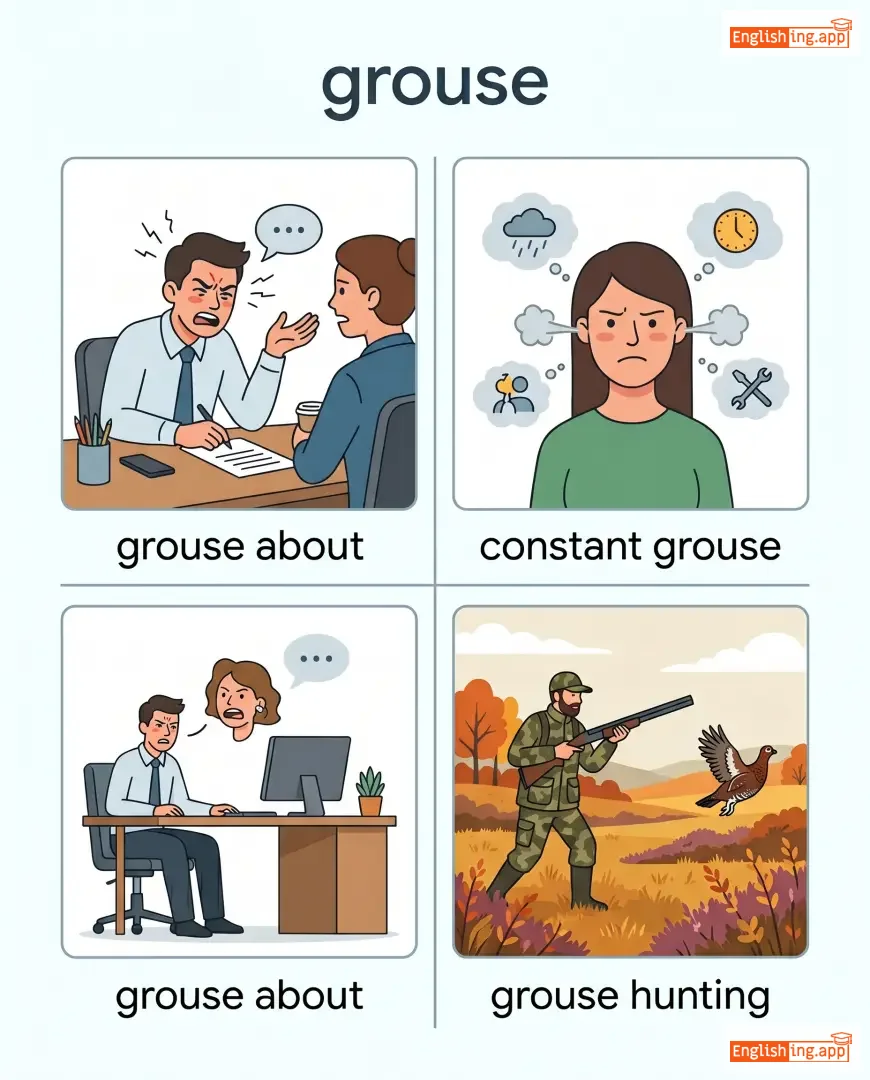
grouse about, constant grouse, grouse hunting, grouse season
••••••
|
像Grouse鸟一样抱怨无休止
••••••
|
|
😊
••••••
|
/ˈɡaɪlləs/
adjective
(盖尔斯)
••••••
|
|
天真
tian zhen
••••••
|
- •••••• | - •••••• | - •••••• | - •••••• |
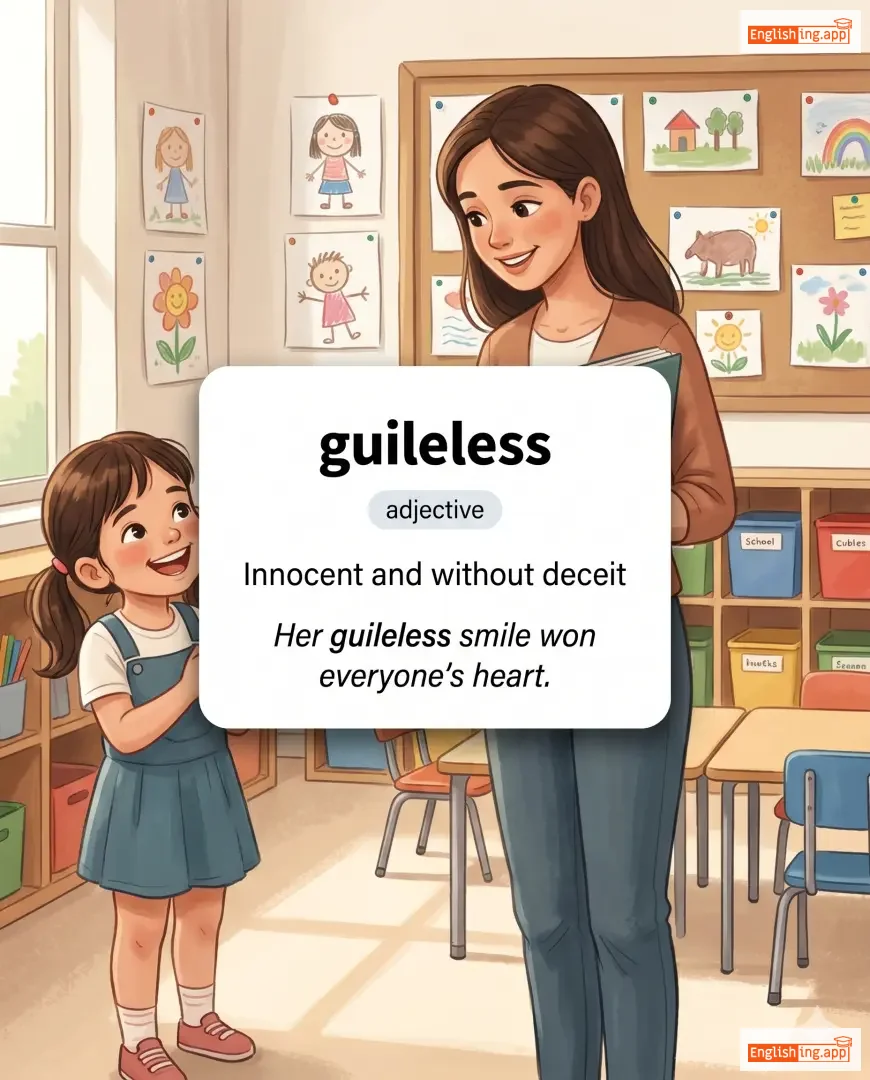
Innocent and without deceit
••••••
|
Her guileless smile won everyone’s heart. |
她天真的笑容赢得了所有人的心。
Ta tian zhen de xiao rong ying de le suo you ren de xin.
••••••
|
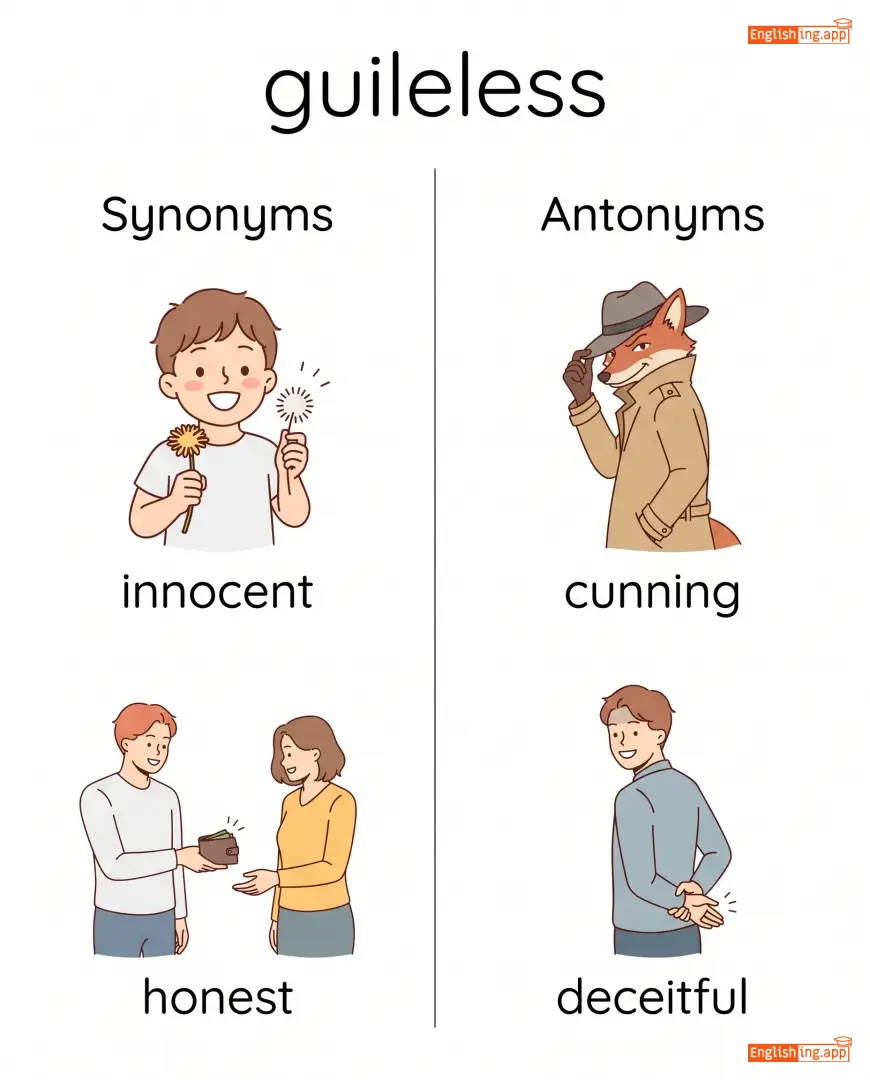
- •••••• | - •••••• | - •••••• |
innocent, honest, sincere, naive
••••••
|
cunning, deceitful, crafty
••••••
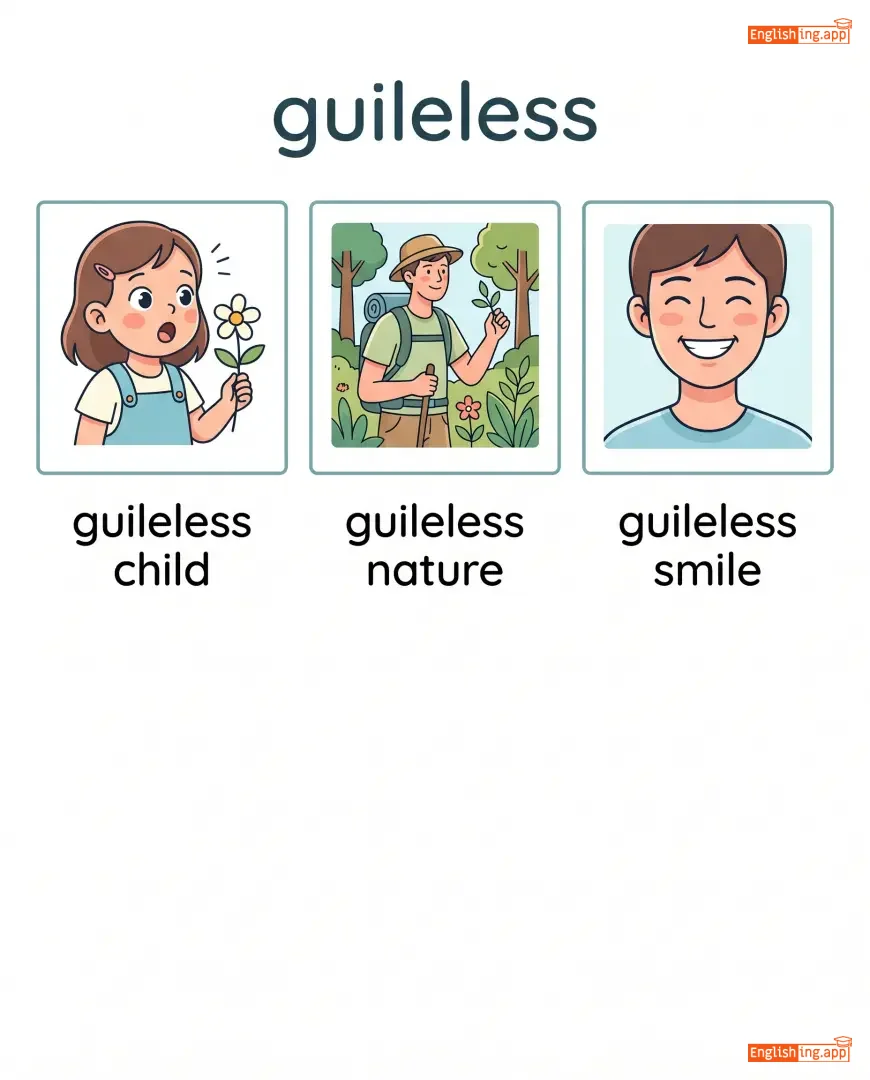
|
guileless child, guileless nature, guileless smile
••••••
|
Guileless 就是天真(tian zhen),没有欺骗。
••••••
|
|
🎭
••••••
|
/ɡaɪz/
noun
(gāi zī)
••••••
|
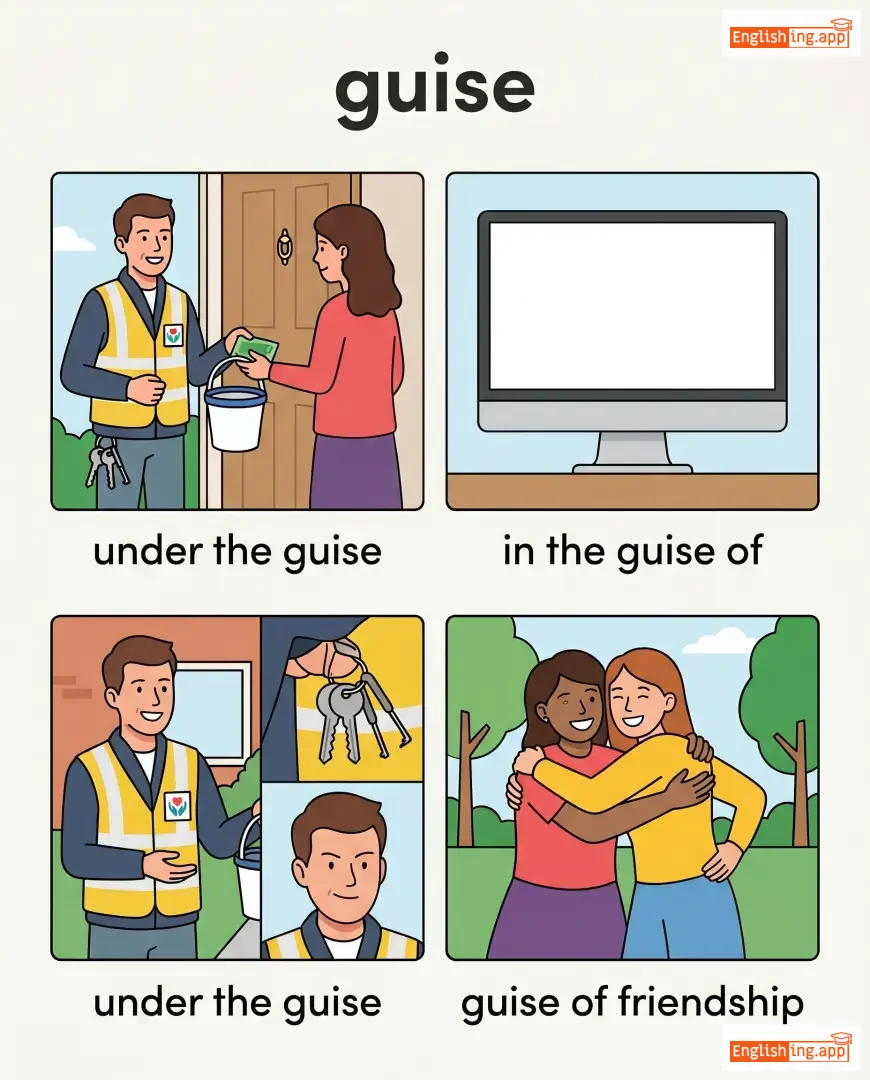
|
伪装
weizhuang
••••••
|
- •••••• | - •••••• | - •••••• | - •••••• |
An external form, appearance, or manner of presentation, often hiding the true nature
••••••
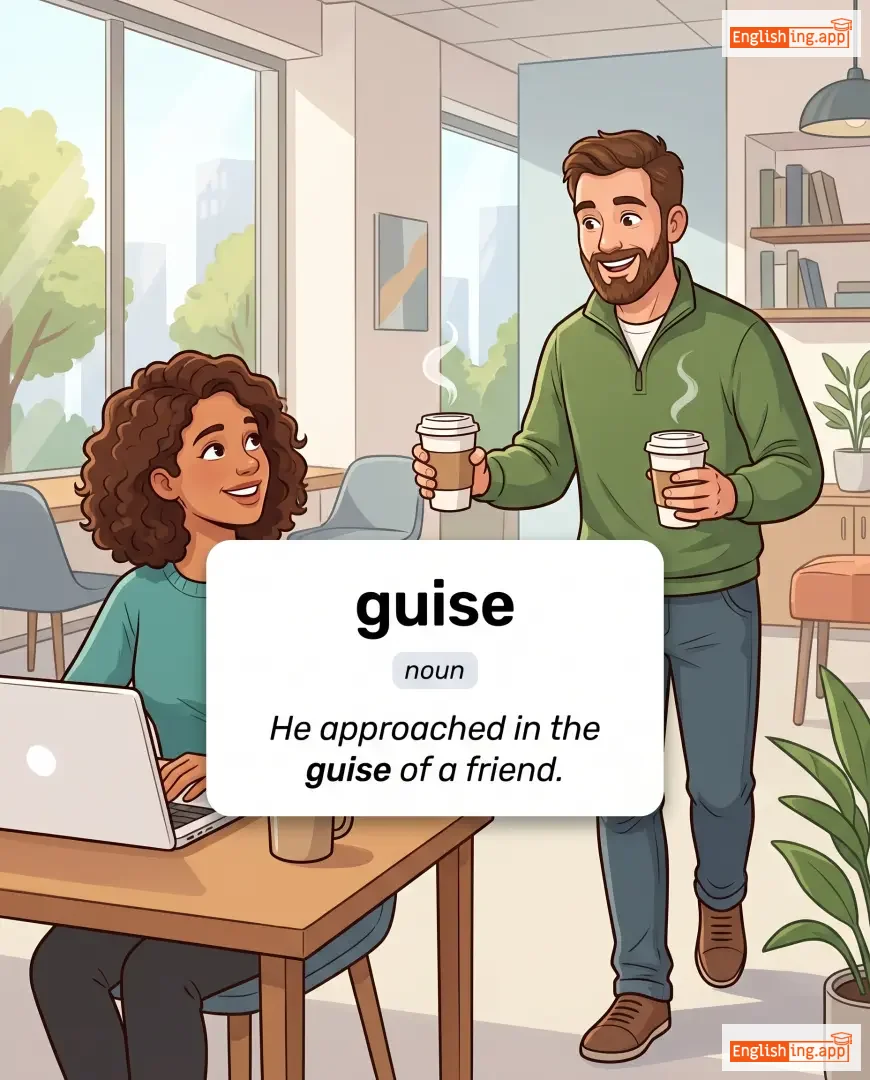
|
He approached in the guise of a friend. |
他以朋友的伪装接近。
Ta yi pengyou de weizhuang jiejin.
••••••
|
under the guise of |
pretending to be something else; using a false appearance
••••••
|
在伪装下
Zai weizhuang xia
••••••
|
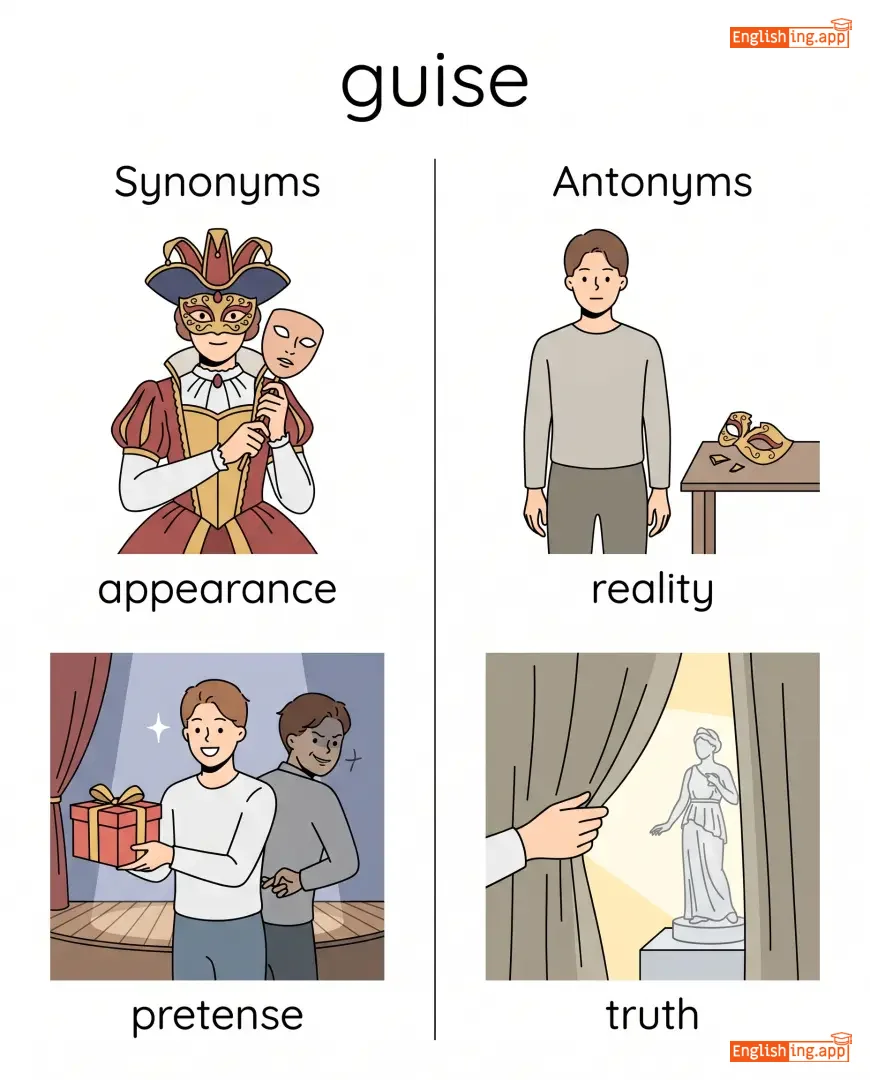
appearance, pretense, disguise, semblance
••••••
|
reality, truth, openness
••••••
|
under the guise, in the guise of, guise of friendship
••••••
|
伪装像'guise'一样隐藏真实身份。
••••••
|
|
🙈
••••••
|
/ˈɡʌl.ə.bəl/
adjective
(嘎利布尔)
••••••
|
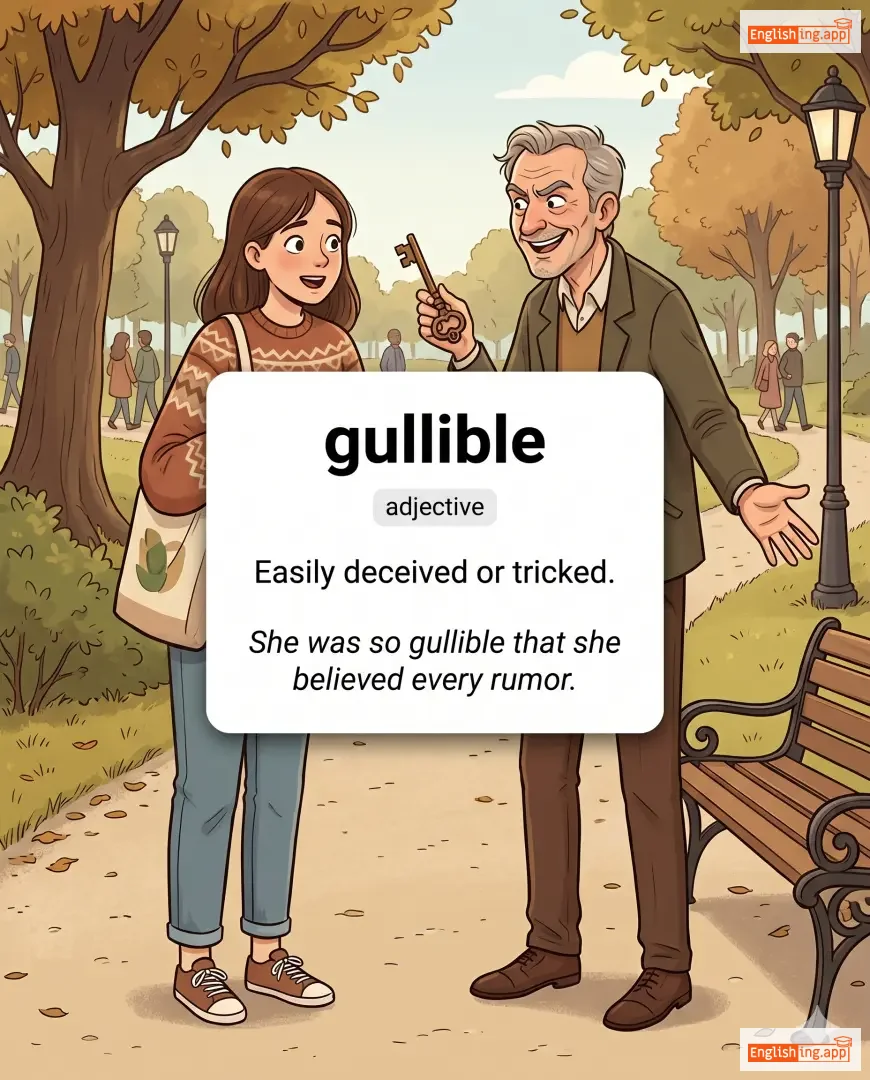
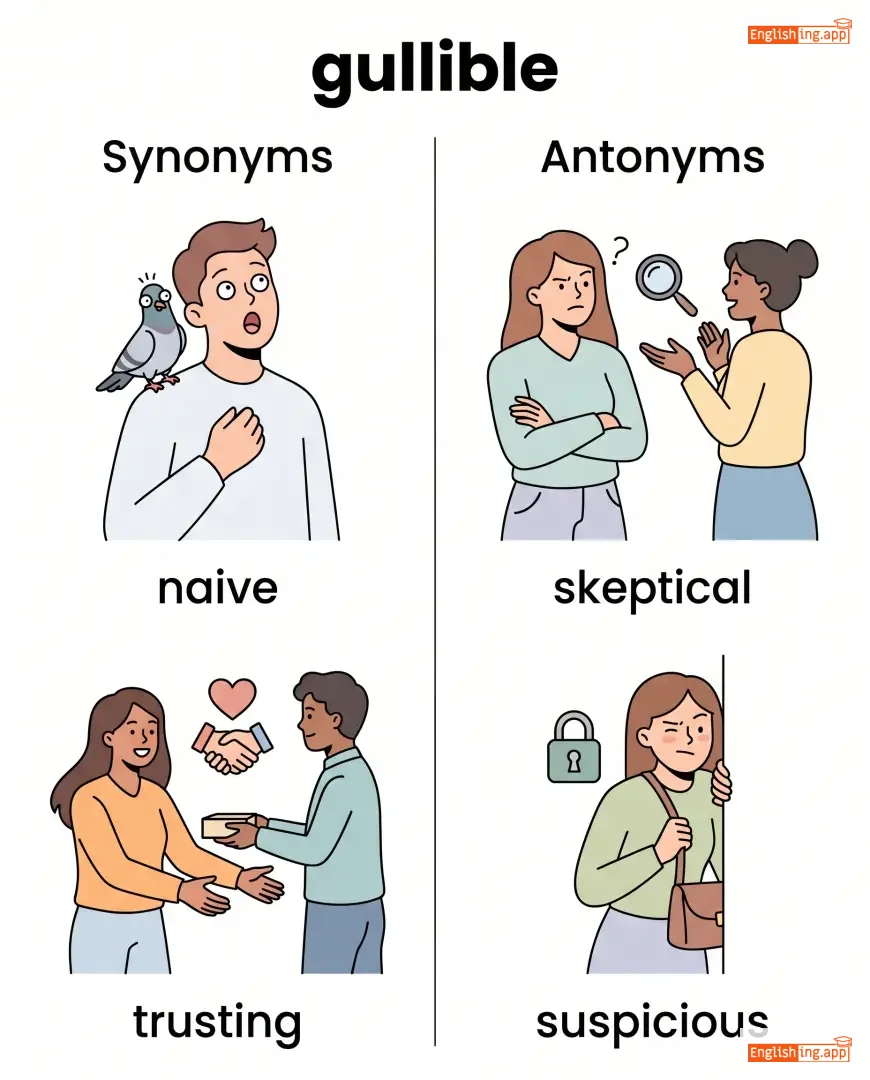
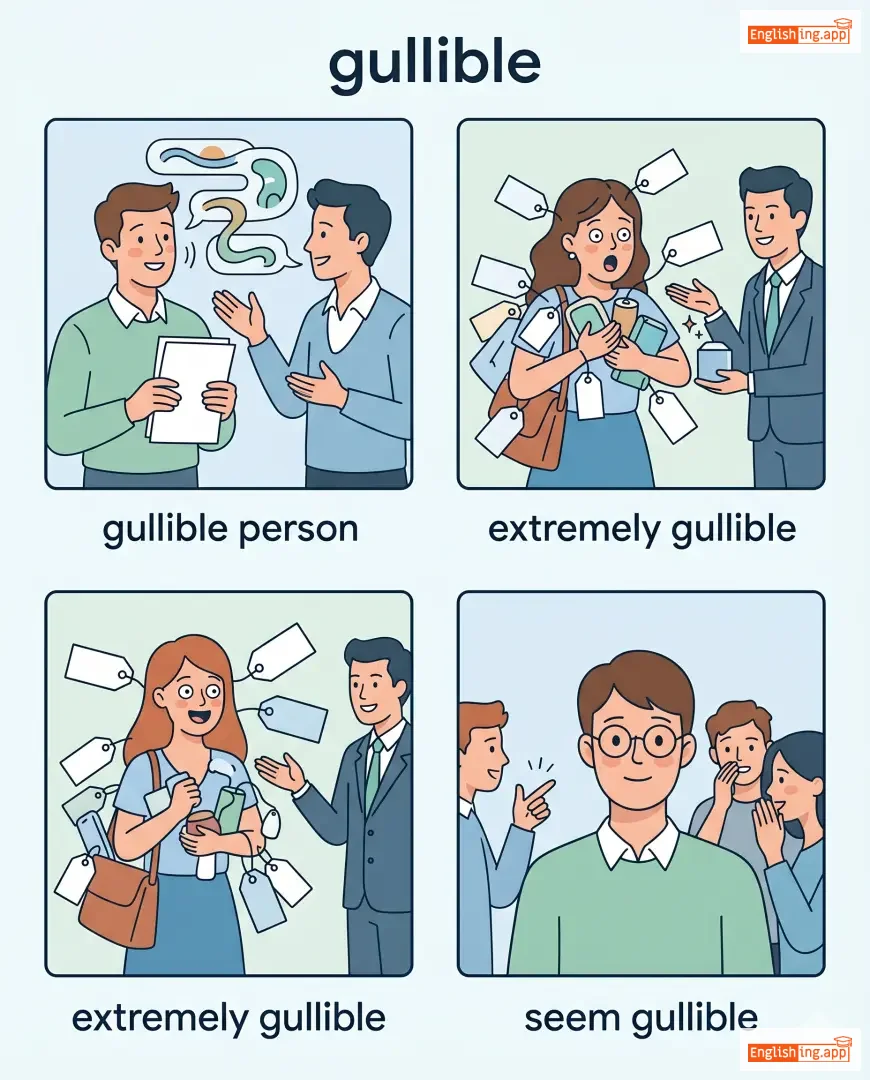
|
容易上当的
róngyì shàngdàng de
••••••
|
- •••••• | - •••••• | - •••••• | - •••••• |
Easily deceived or tricked.
••••••
|
She was so gullible that she believed every rumor. |
她如此容易上当,以至于相信了每个谣言。
Tā rú cǐ róngyì shàngdàng, yǐzhì yú xiāngxìnle měi gè yáoyán.
••••••
|
- •••••• | - •••••• | - •••••• |
naive, trusting, credulous, unsuspecting, innocent
••••••
|
skeptical, suspicious, cautious
••••••
|
gullible person, extremely gullible, seem gullible
••••••
|
GULLible 的人总是容易上当受骗。
••••••
|
|
👅
••••••
|
/ˈɡʌstəˌtɔːri/
adjective
(古斯塔托里)
••••••
|
|
味觉的
weijue de
••••••
|
- •••••• | - •••••• | - •••••• | - •••••• |
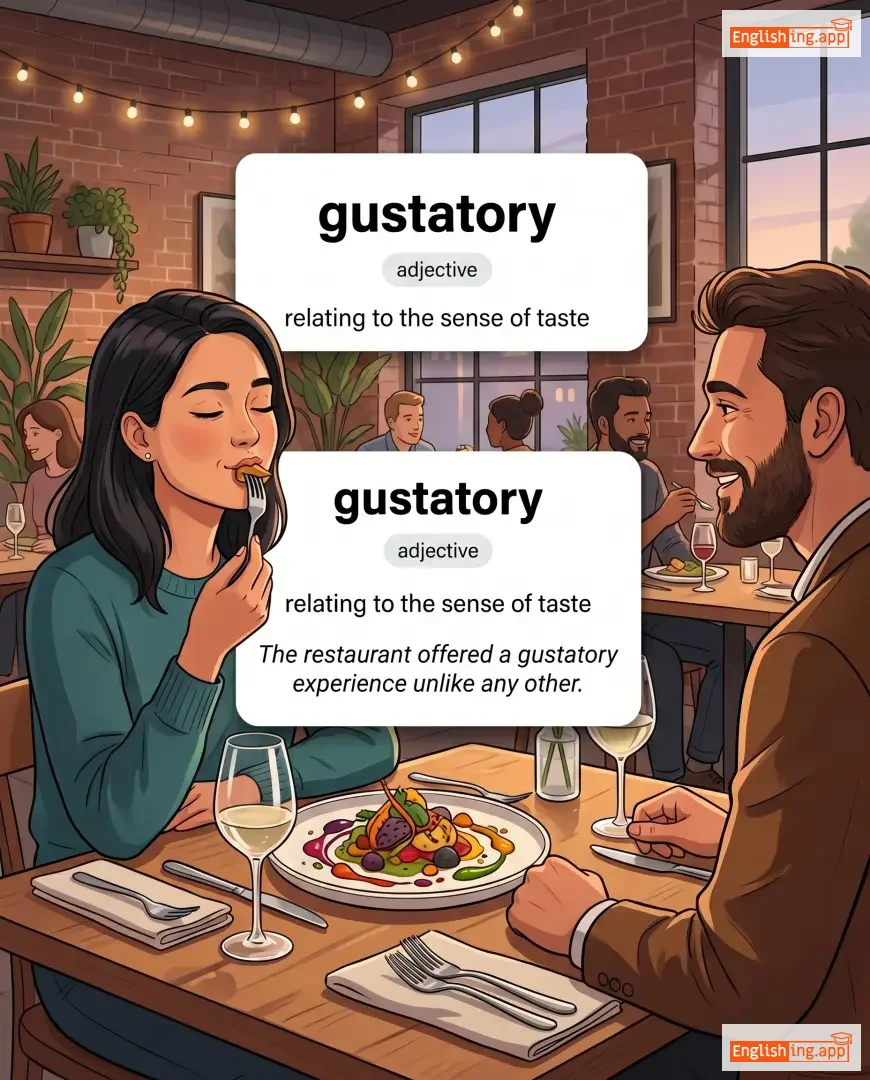
relating to the sense of taste
••••••
|
The restaurant offered a gustatory experience unlike any other. |
餐厅提供了与众不同的味觉体验。
Cāntīng tígōngle yǔ zhòng bùtóng de wèijué tǐyàn.
••••••
|
- •••••• | - •••••• | - •••••• |
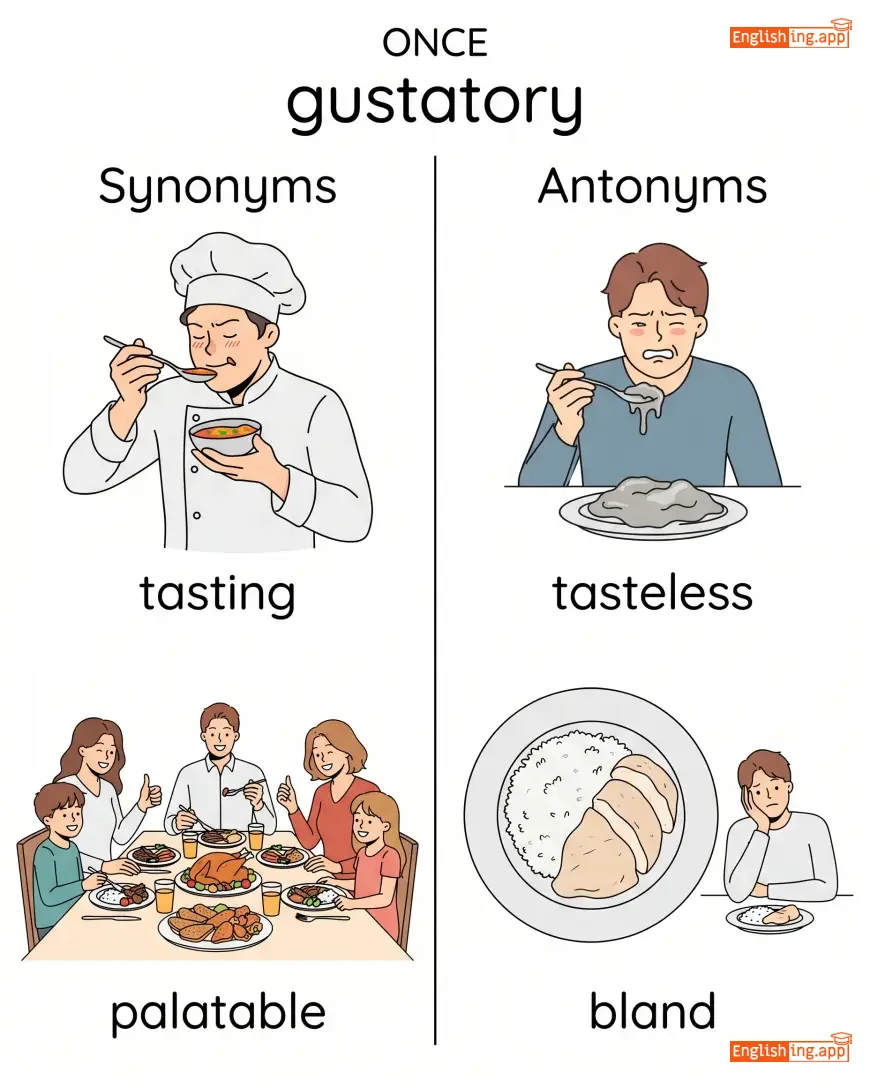
tasting, palatable, flavorful, sensory
••••••
|
tasteless, bland
••••••
|
gustatory senses, gustatory pleasure, gustatory delight
••••••
|
Gustatory = gust + taste 👅 - 在中文中,'味觉的'意味着与味觉有关。
••••••
|
|
🌅
••••••
|
/ˈhæl.si.ən/
adjective
(海尔西安)
••••••
|
|
宁静的
níngjìng de
••••••
|
- •••••• | - •••••• | - •••••• | - •••••• |
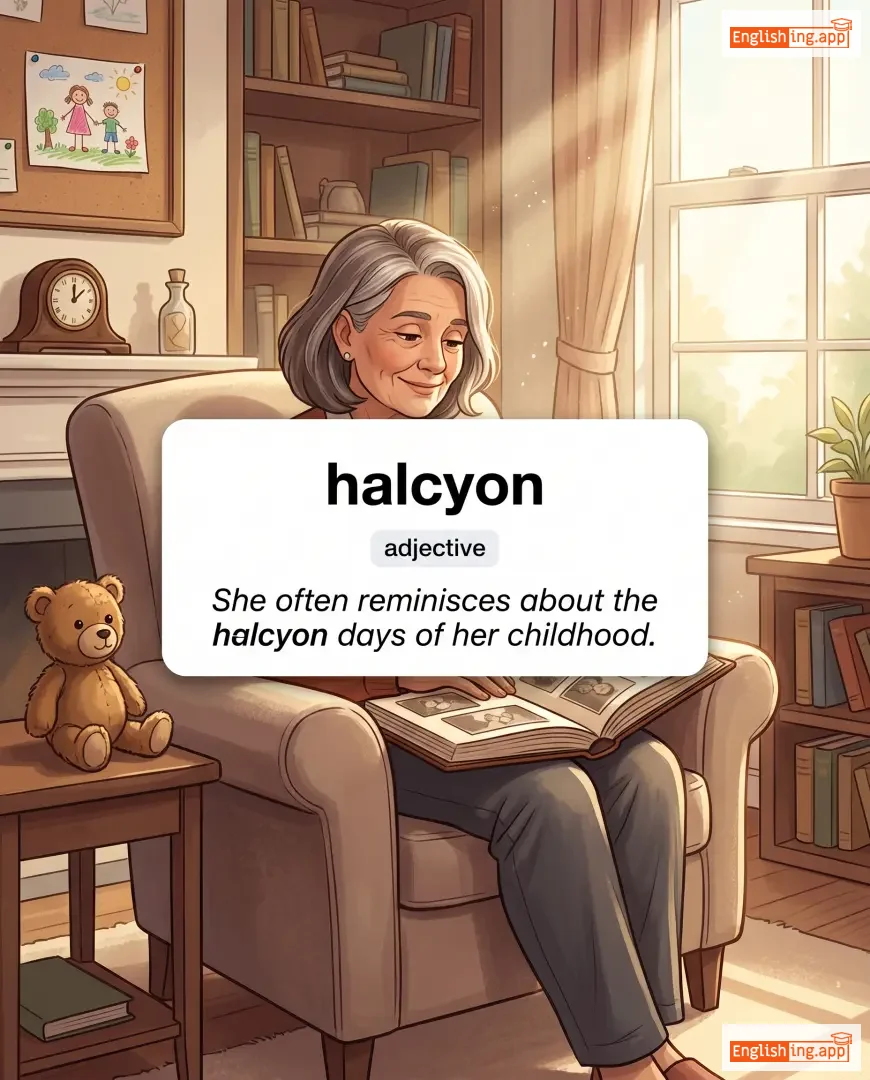
calm, peaceful, and happy; denoting a period of time in the past that was idyllically happy and peaceful
••••••
|
She often reminisces about the halcyon days of her childhood. |
她经常回忆起她童年时宁静的日子。
Tā jīngcháng huíyì qǐ tā tóngnián shí níngjìng de rìzi.
••••••
|
- •••••• | - •••••• | - •••••• |
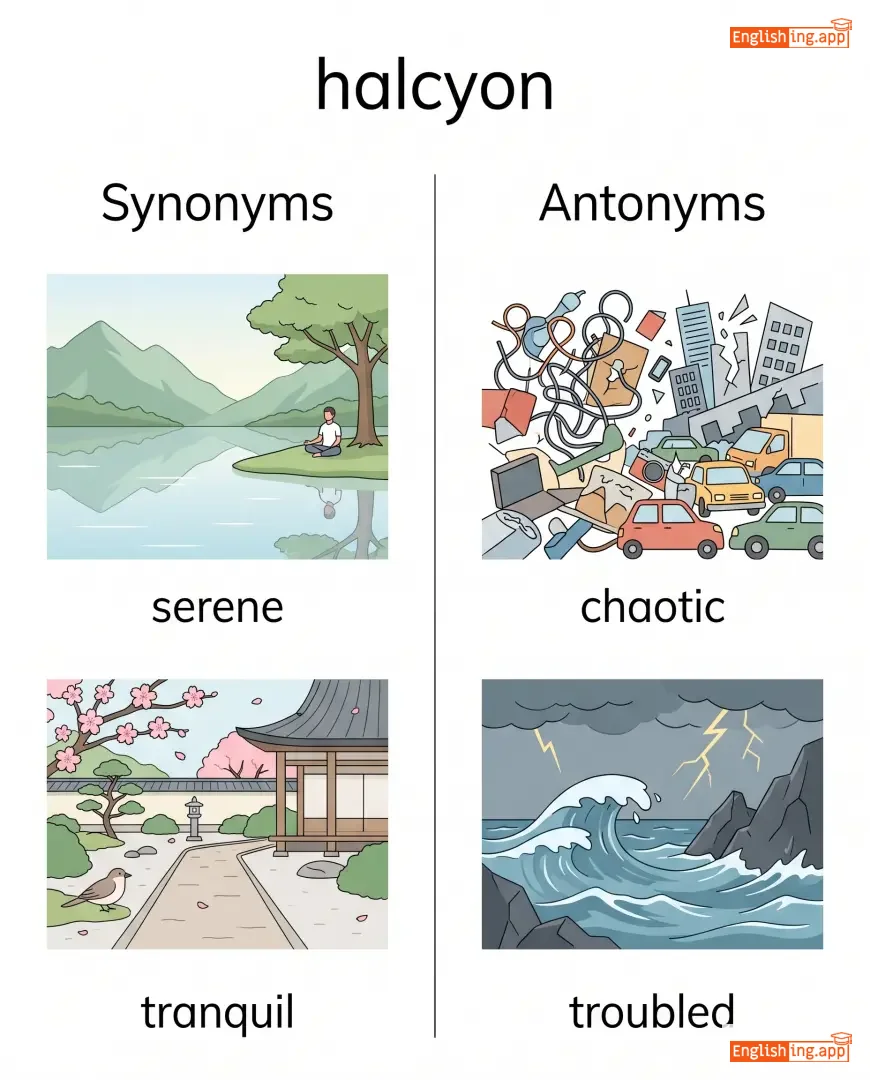
serene, tranquil, blissful, idyllic, peaceful
••••••
|
chaotic, troubled, stormy
••••••
|
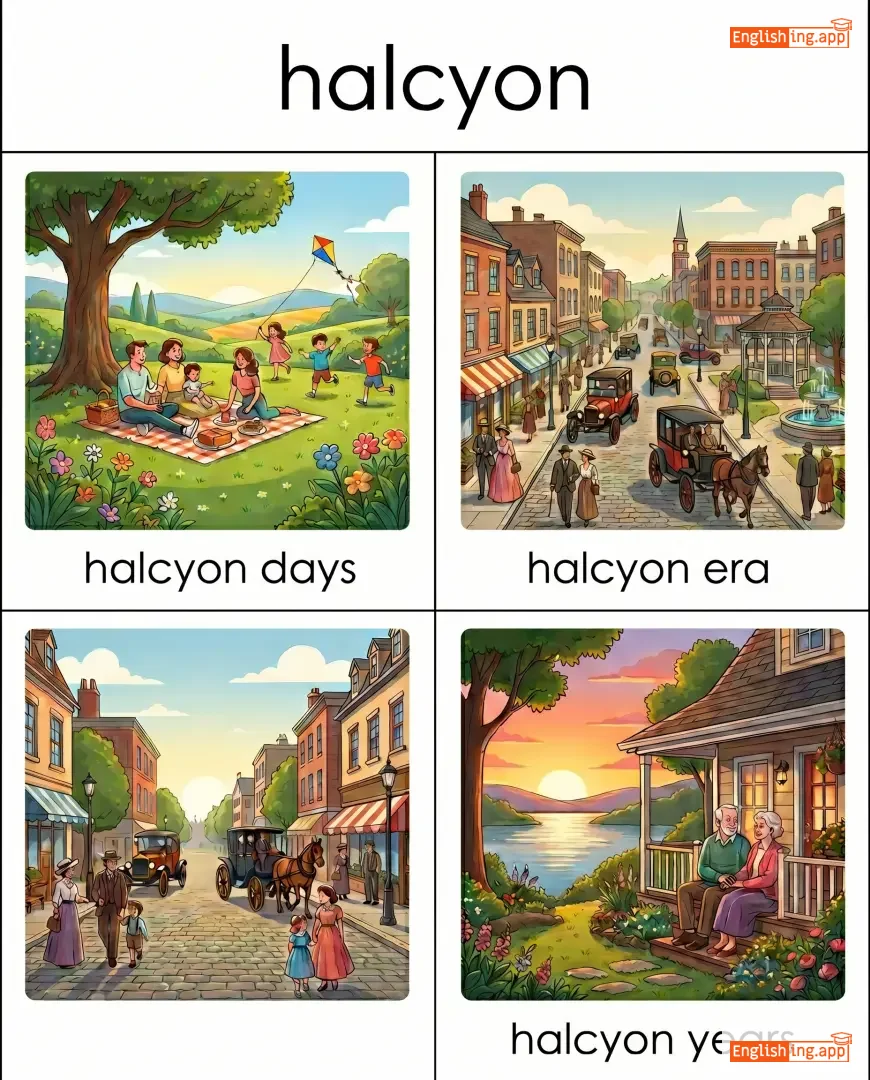
halcyon days, halcyon era, halcyon years
••••••
|
Halcyon像“海的zone” – 寂静的幸福记忆。
••••••
|
|
⛪
••••••
|
/ˈhæloʊd/
adjective
(hailed)
••••••
|
|
神圣
shensheng
••••••
|
- •••••• | - •••••• | - •••••• | - •••••• |
regarded as holy or greatly respected
••••••
|
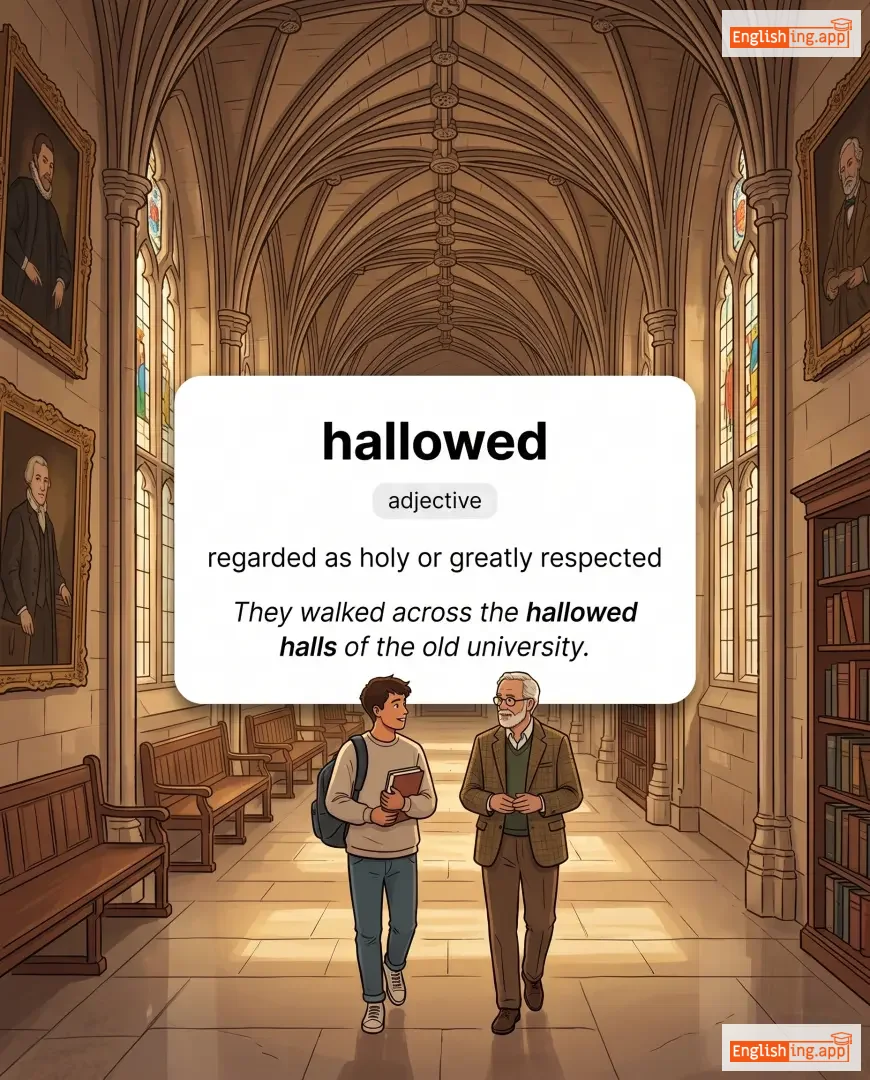
They walked across the hallowed halls of the old university. |
他们走过了老大学的神圣大厅。
Tāmen zǒuguòle lǎo dàxué de shénshèng dàtīng.
••••••
|
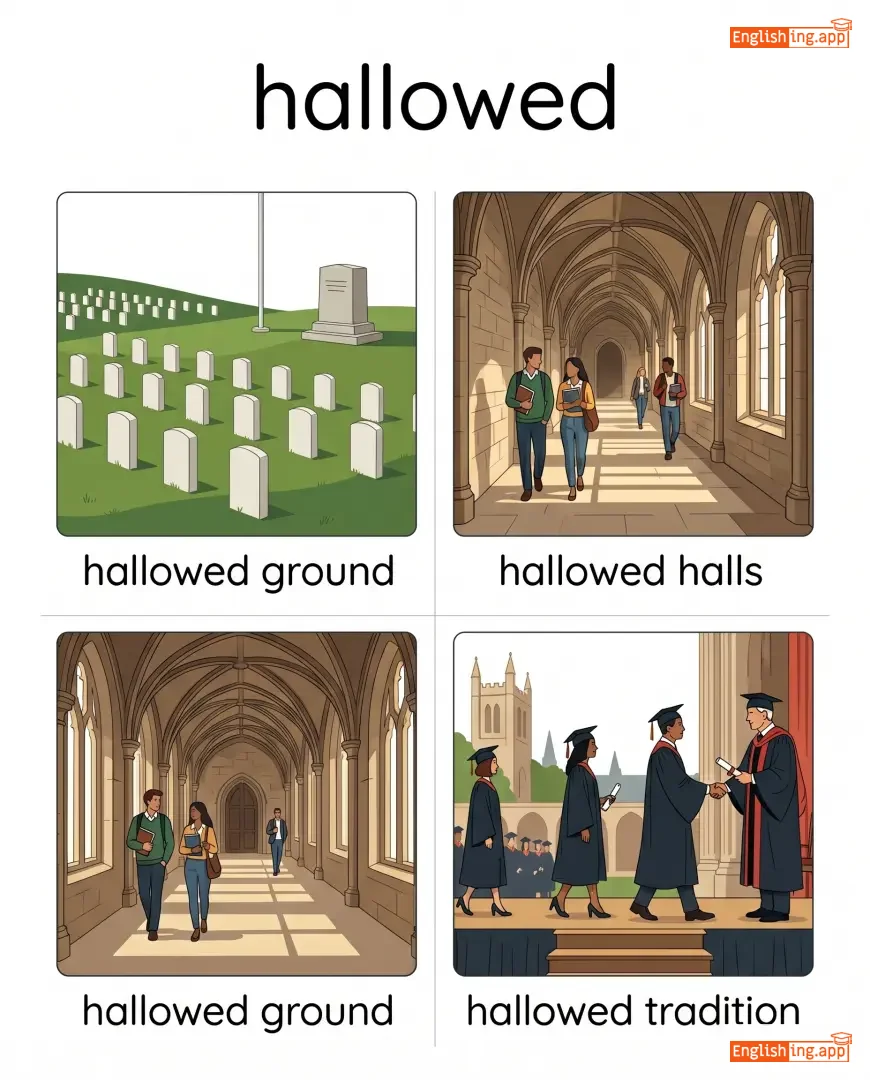
hallowed traditions |
long-standing customs that are deeply respected
••••••
|
神圣传统
shénshèng chuántǒng
••••••
|
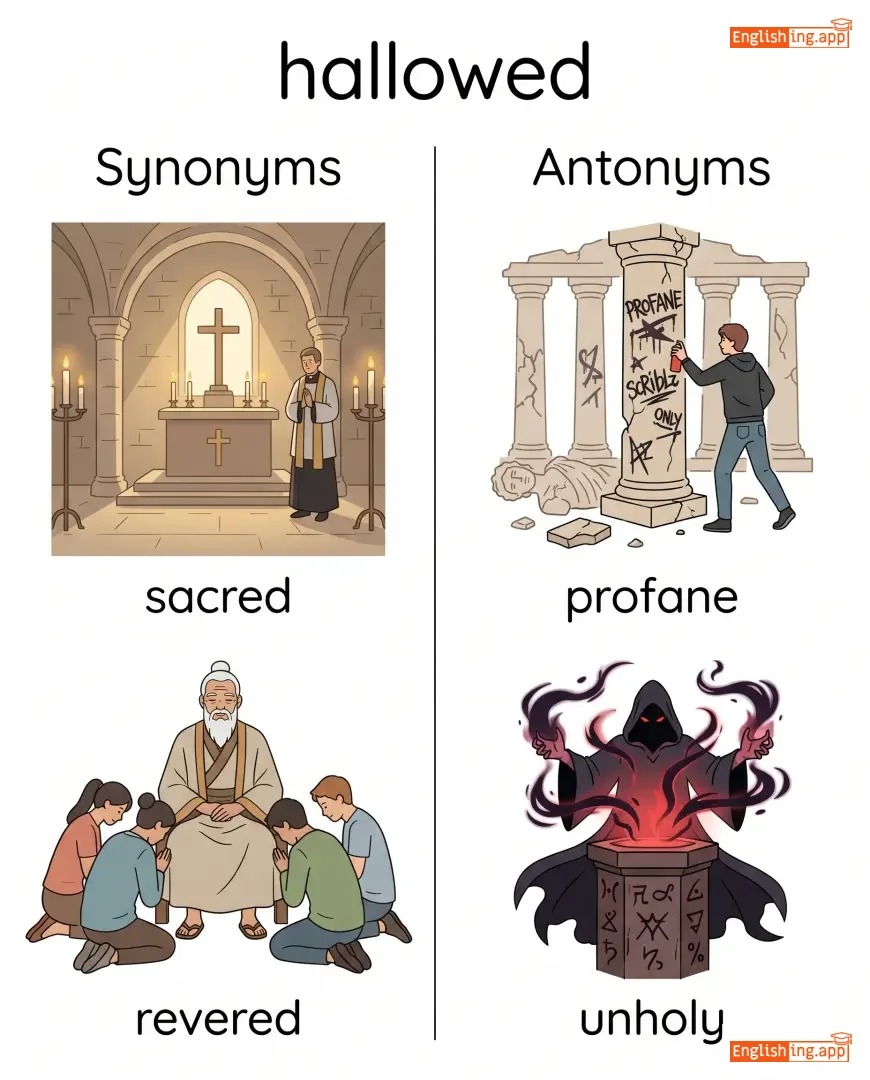
sacred, revered, blessed, sanctified, honored
••••••
|
profane, unholy, disrespectful
••••••
|
hallowed ground, hallowed halls, hallowed tradition, hallowed memory
••••••
|
Hallowed 意味着已经被神圣化
••••••
|
|
📢
••••••
|
/həˈræŋ/
verb
(哈朗格)
••••••
|
|
进行冗长而愤怒的演讲
jìnxíng rǒngcháng ér fènnù de yǎnjiǎng
••••••
|
harangued
哈朗格德
••••••
|
harangued
哈朗格德
••••••
|
harangues
哈朗格斯
••••••
|
haranguing
哈朗格英
••••••
|
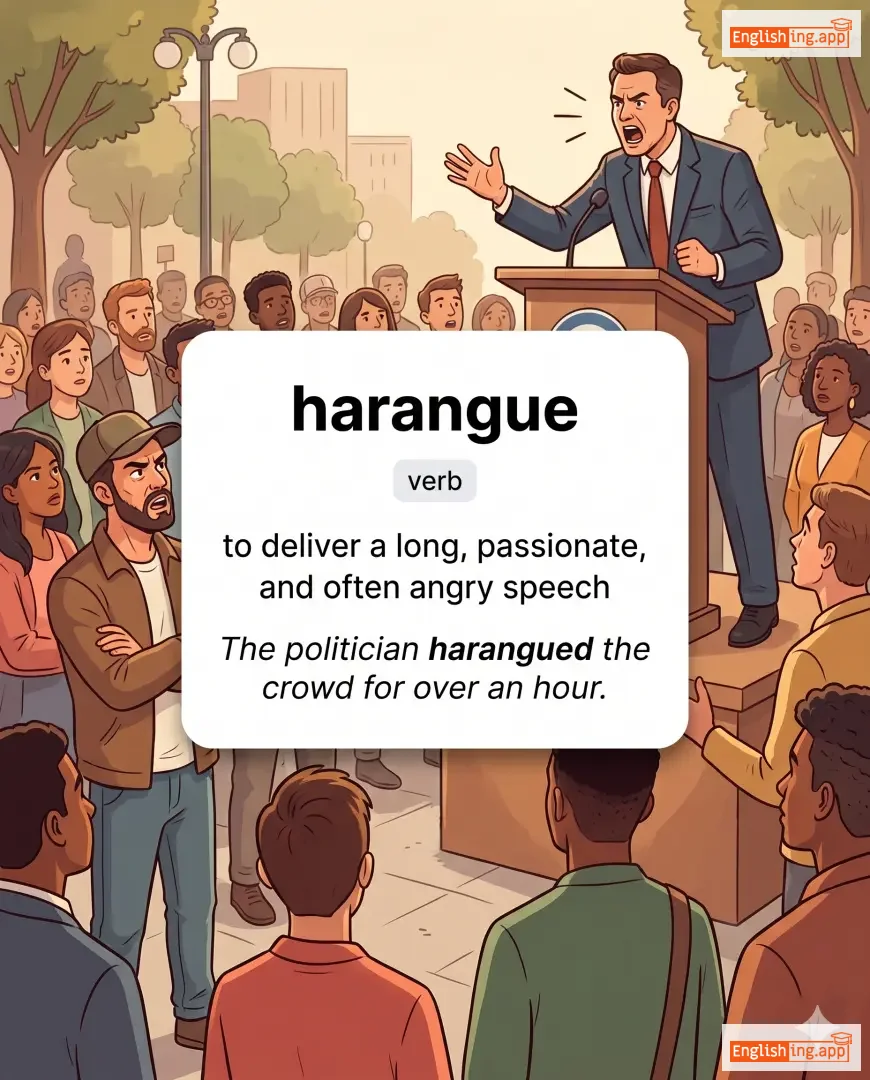
to deliver a long, passionate, and often angry speech
••••••
|
The politician harangued the crowd for over an hour.
政治家哈朗格德了人群超过一个小时。
••••••
|
政治家对人群进行了超过一小时的演讲。
Zhèngzhìjiā duì rénqún jìnxíngle chāoguò yī gè xiǎoshí de yǎnjiǎng.
••••••
|
- •••••• | - •••••• | - •••••• |
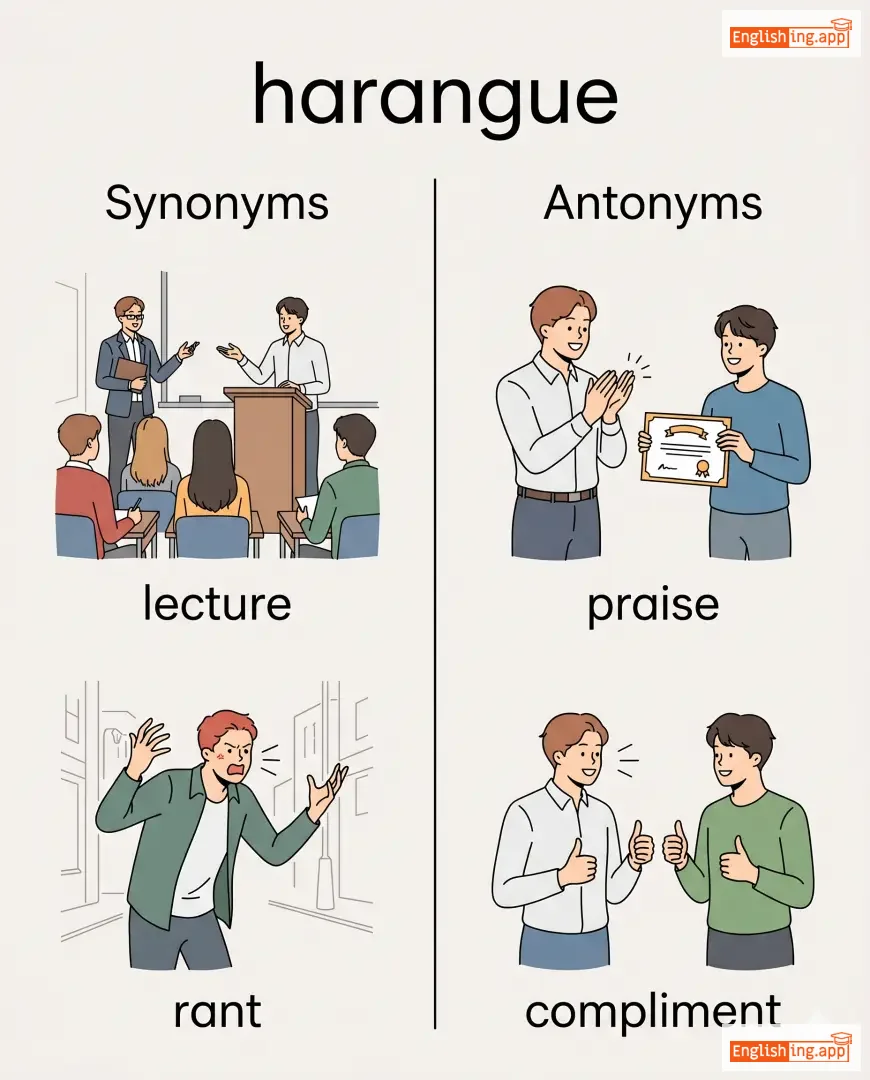
lecture, rant, tirade, scold, sermon
••••••
|
praise, compliment, silence
••••••
|
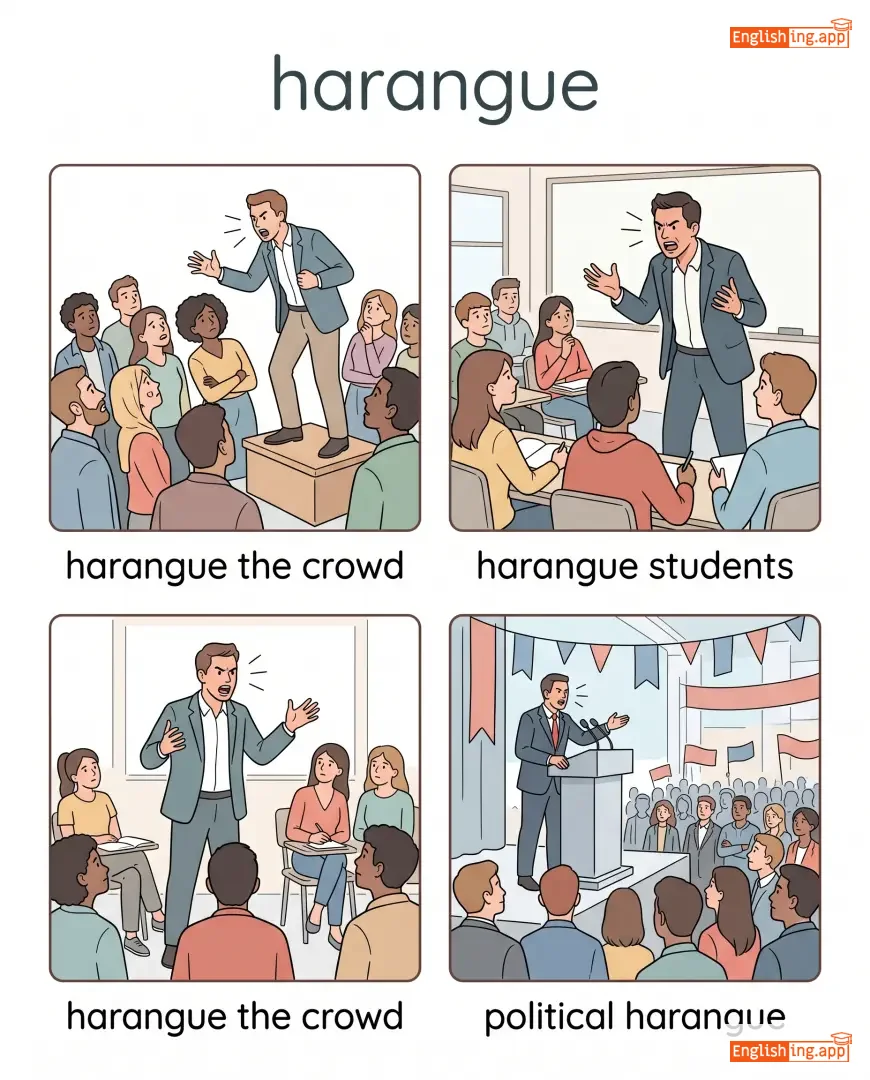
harangue the crowd, harangue students, political harangue
••••••
|
Harangue 代表长时间的发言 → 扰人的长时间讲话。
••••••
|
|
💔
••••••
|
/ˈhær.oʊ.ɪŋ/
adjective
(hǎi pí nì sī)
••••••
|
|
令人痛苦的和可怕的
lìng rén tòngkǔ de hé kěpà de
••••••
|
- •••••• | - •••••• | - •••••• | - •••••• |
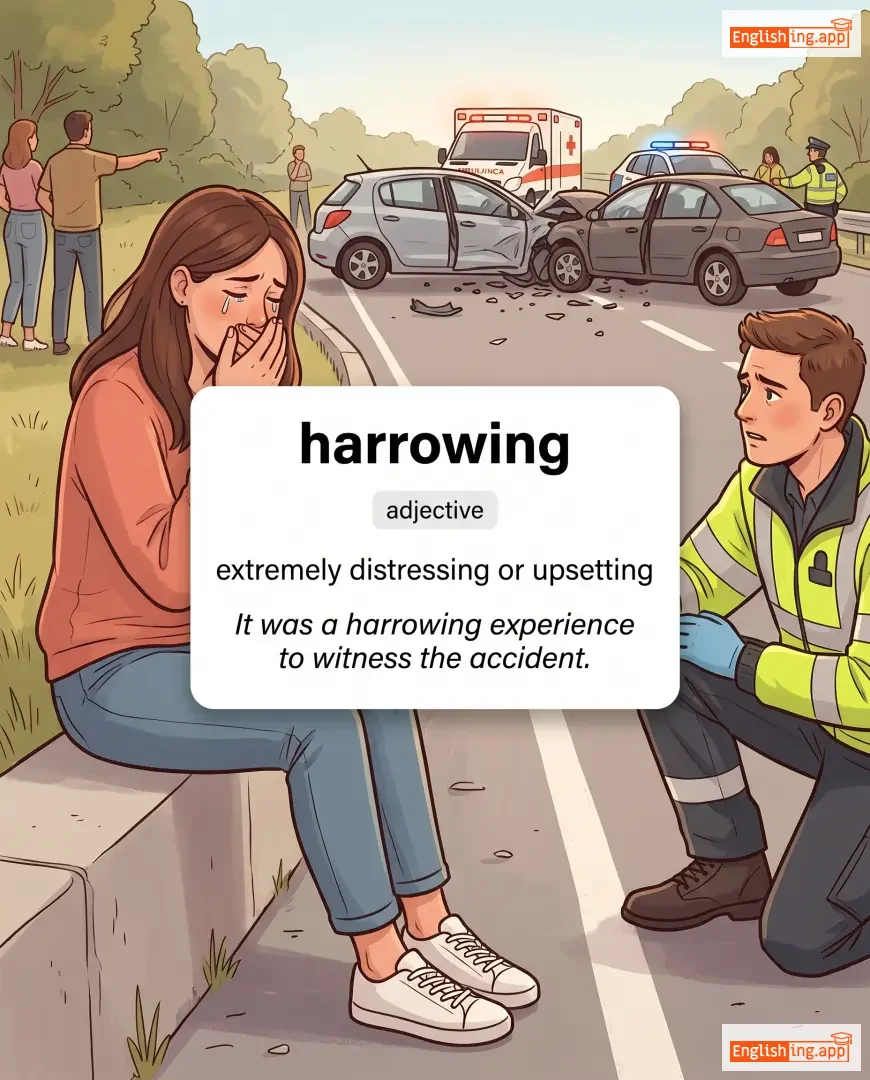
extremely distressing or upsetting
••••••
|
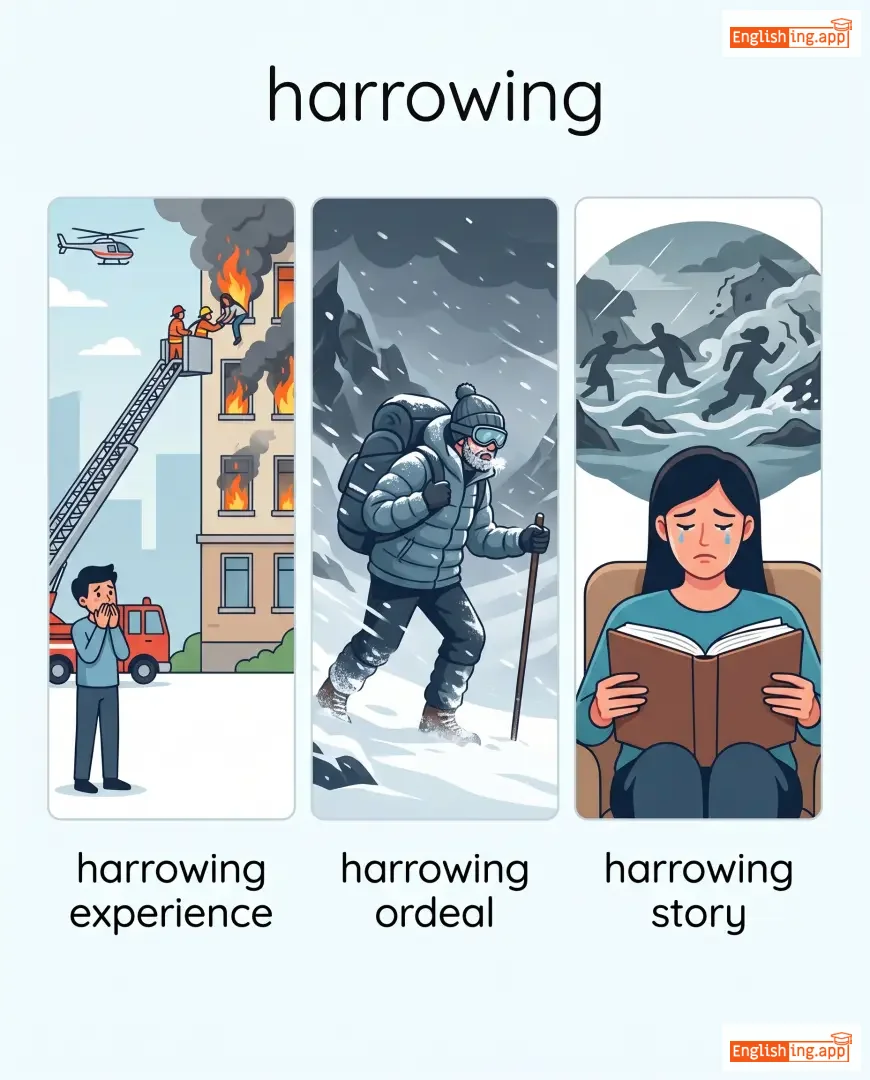
It was a harrowing experience to witness the accident. |
目睹事故是一次令人痛苦的经历。
Mùdǔ shìgù shì yīcì lìng rén tòngkǔ de jīnglì.
••••••
|
- •••••• | - •••••• | - •••••• |
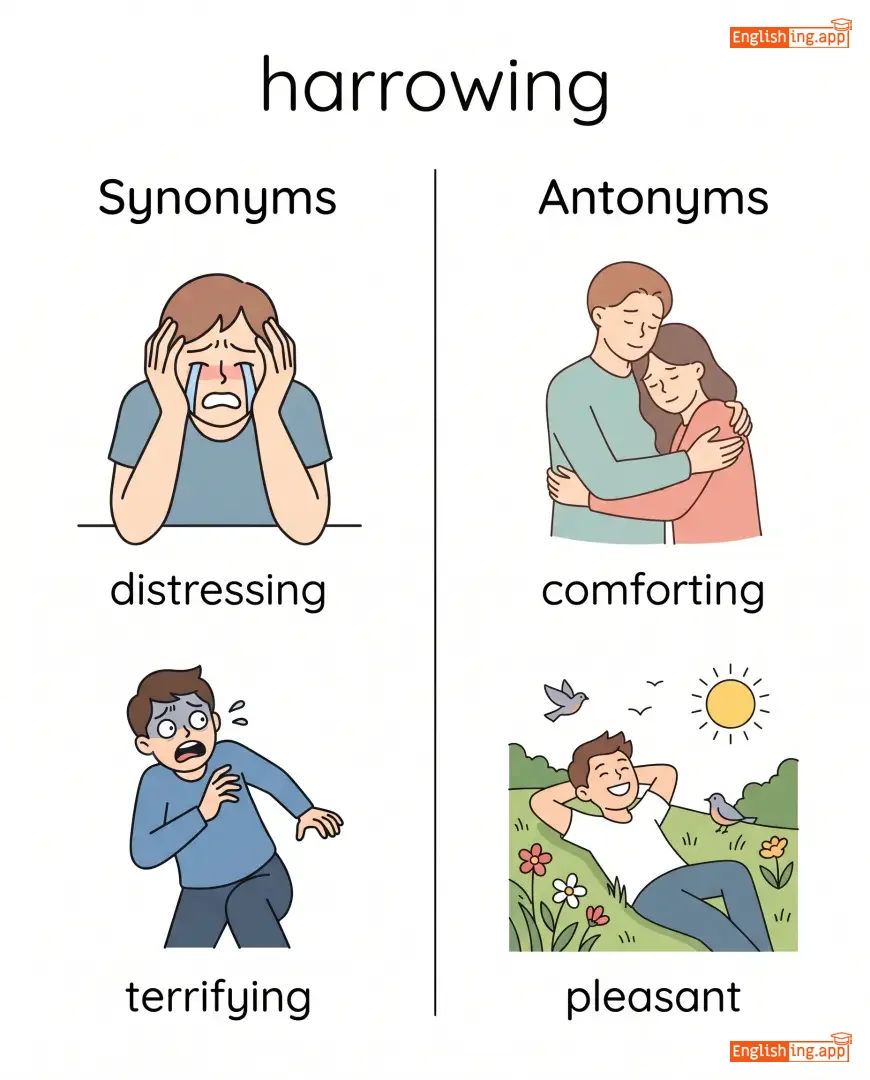
distressing, terrifying, painful, traumatic, upsetting
••••••
|
comforting, pleasant, soothing
••••••
|
harrowing experience, harrowing ordeal, harrowing story
••••••
|
Harrowing是令人感到痛苦的经历,像深刻的伤痕。
••••••
|
|
🐄
••••••
|
/hɜːrˈbɪv.ər.əs/
adjective
(hɜːrˈbɪv.ər.əs)
••••••
|
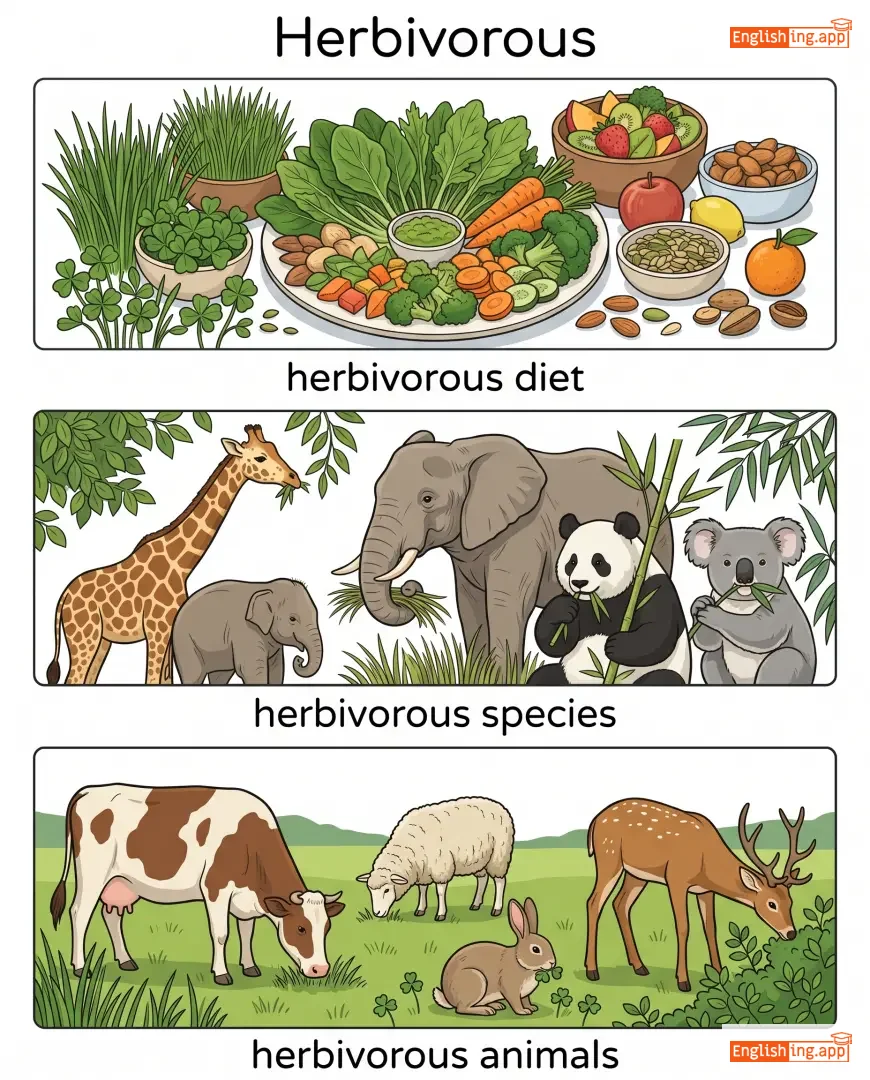
|
草食性
caoshixing
••••••
|
- •••••• | - •••••• | - •••••• | - •••••• |
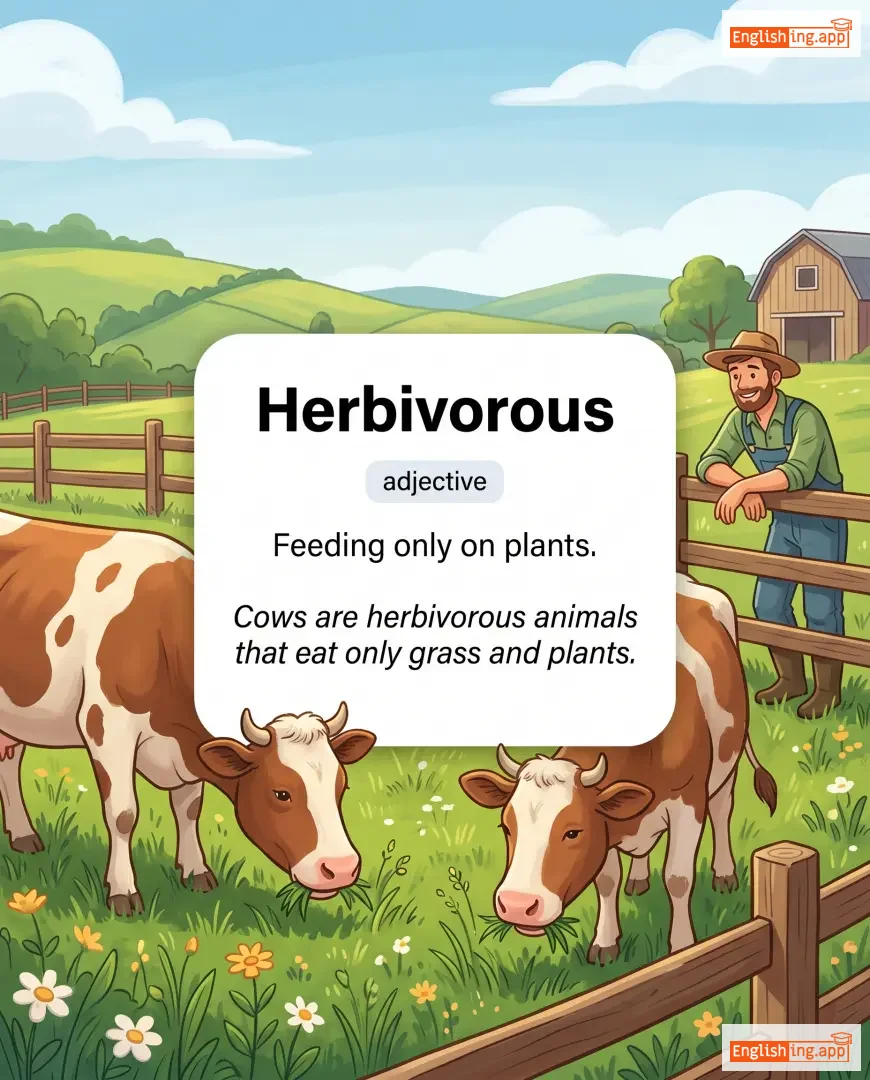
feeding on plants; plant-eating
••••••
|
Cows are herbivorous animals that graze on grass. |
牛是草食性动物,吃草。
Niu shi caoshixing dongwu, chi cao.
••••••
|
- •••••• | - •••••• | - •••••• |
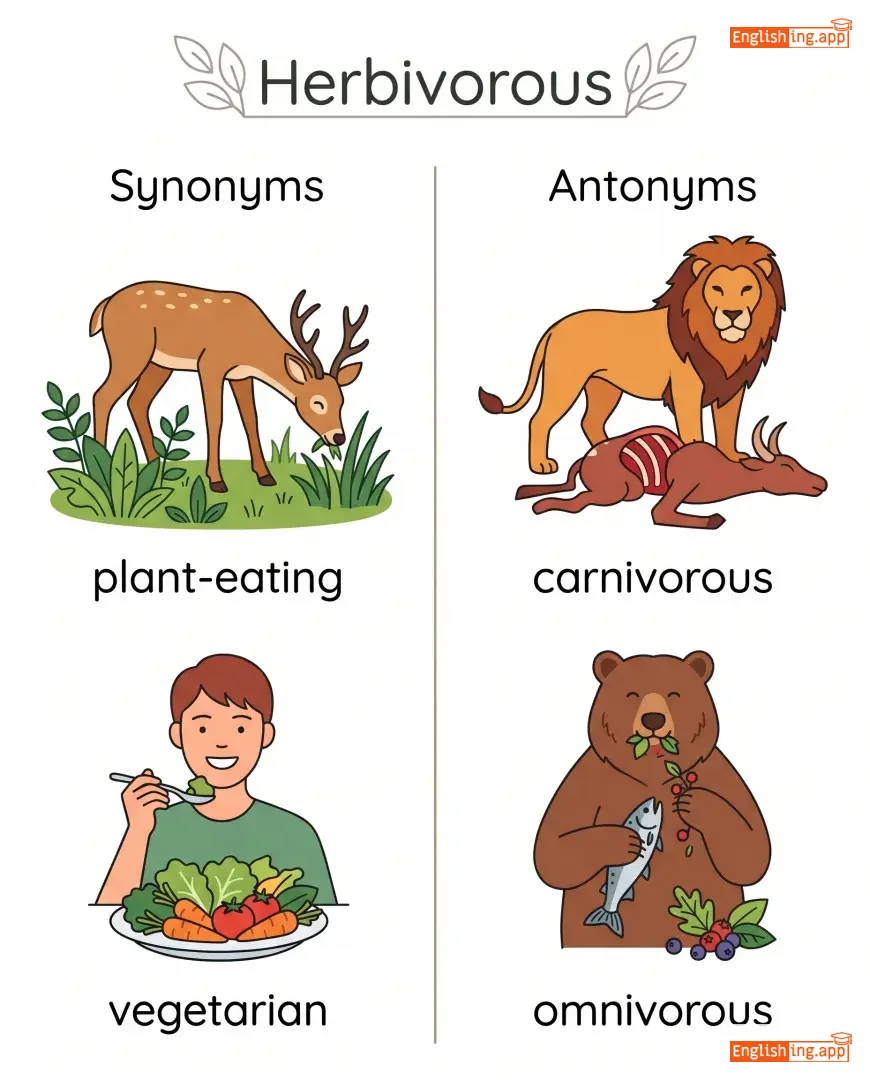
plant-eating, vegetarian, grass-eating
••••••
|
carnivorous, meat-eating, omnivorous
••••••
|
herbivorous animals, herbivorous diet, herbivorous mammals, herbivorous species
••••••
|
草 (cao) = 草食性 (caoshixing)
••••••
|
|
🔒
••••••
|
/hərˈmɛtɪk/
adjective
(赫尔梅蒂克)
••••••
|
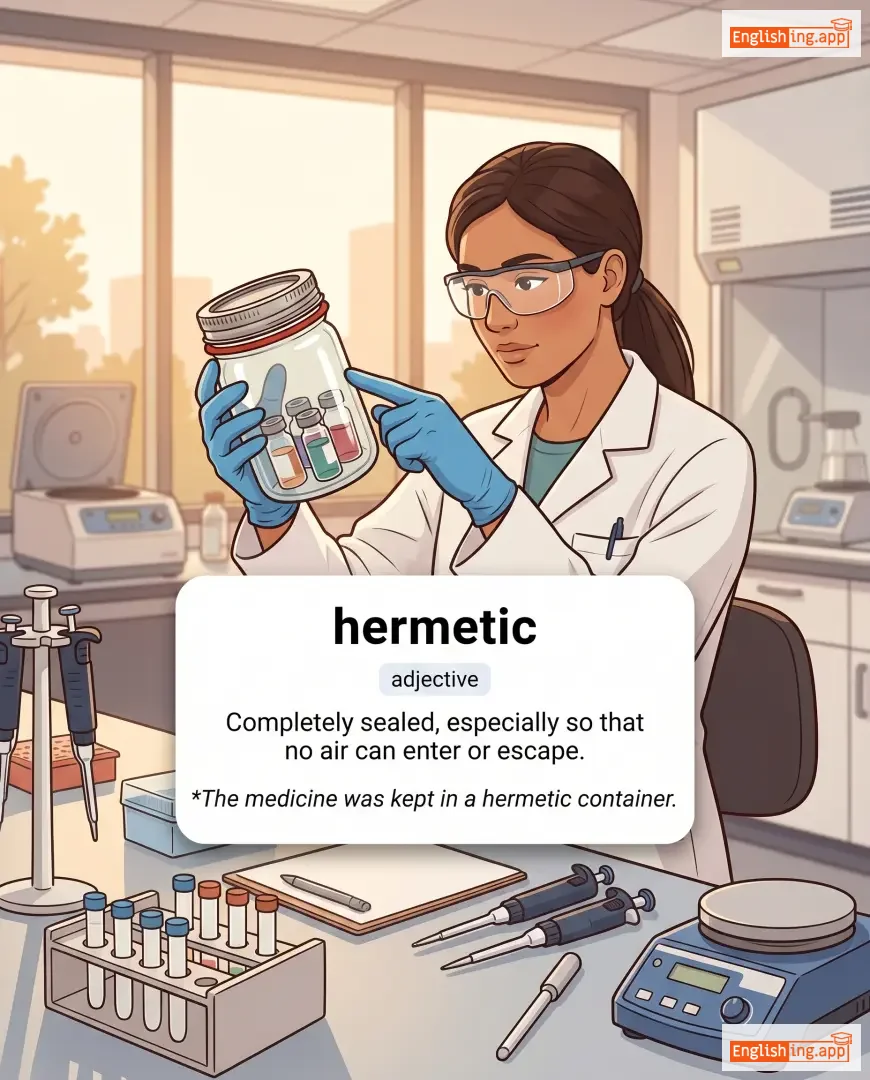
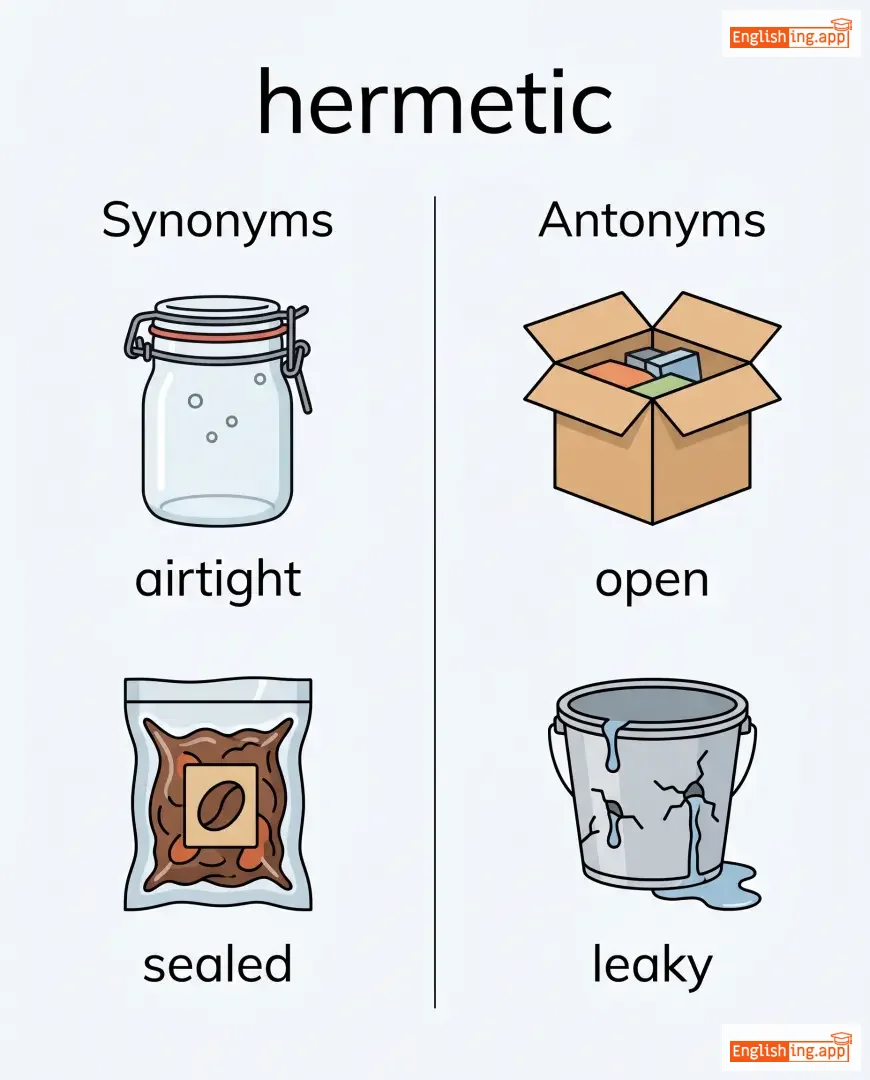
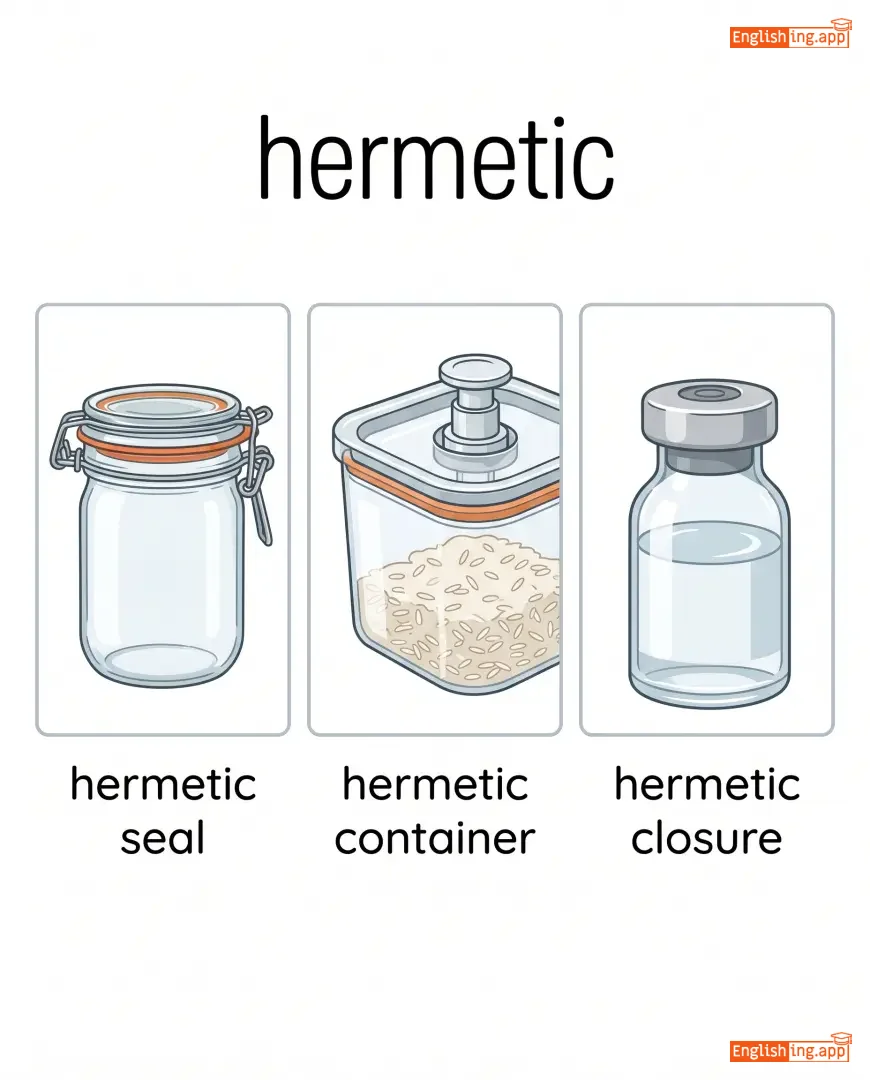
|
密封的
mìfēng de
••••••
|
- •••••• | - •••••• | - •••••• | - •••••• |
Completely sealed, especially so that no air can enter or escape.
••••••
|
The medicine was kept in a hermetic container. |
药物被保存在一个密封的容器中。
Yàowù bèi bǎocún zài yīgè mìfēng de róngqì zhōng.
••••••
|
- •••••• | - •••••• | - •••••• |
airtight, sealed, closed, watertight, impenetrable
••••••
|
open, leaky, permeable
••••••
|
hermetic seal, hermetic container, hermetic closure
••••••
|
密封的就像隐士一样,外面的空气无法进入。
••••••
|
|
🌀
••••••
|
/ˈhɛtərəˌdɒks/
adjective
(hé tè luó duó kè sī)
••••••
|
|
异端
yì duān
••••••
|
- •••••• | - •••••• | - •••••• | - •••••• |
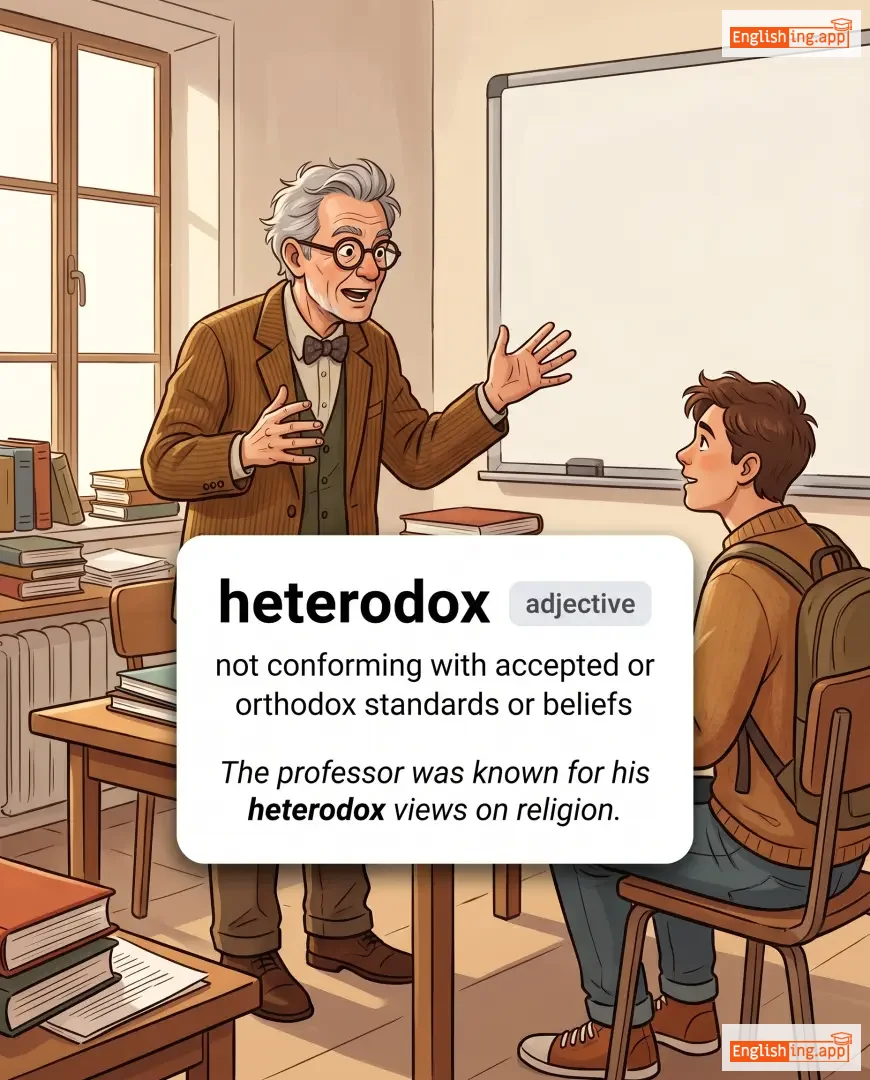
not conforming with accepted or orthodox standards or beliefs
••••••
|
The professor was known for his heterodox views on religion. |
教授以其在宗教问题上的异端观点而闻名。
Jiàoshòu yǐ qí zài zōngjiào wèntí shàng de yìduān guāndiǎn ér wénmíng.
••••••
|
- •••••• | - •••••• | - •••••• |
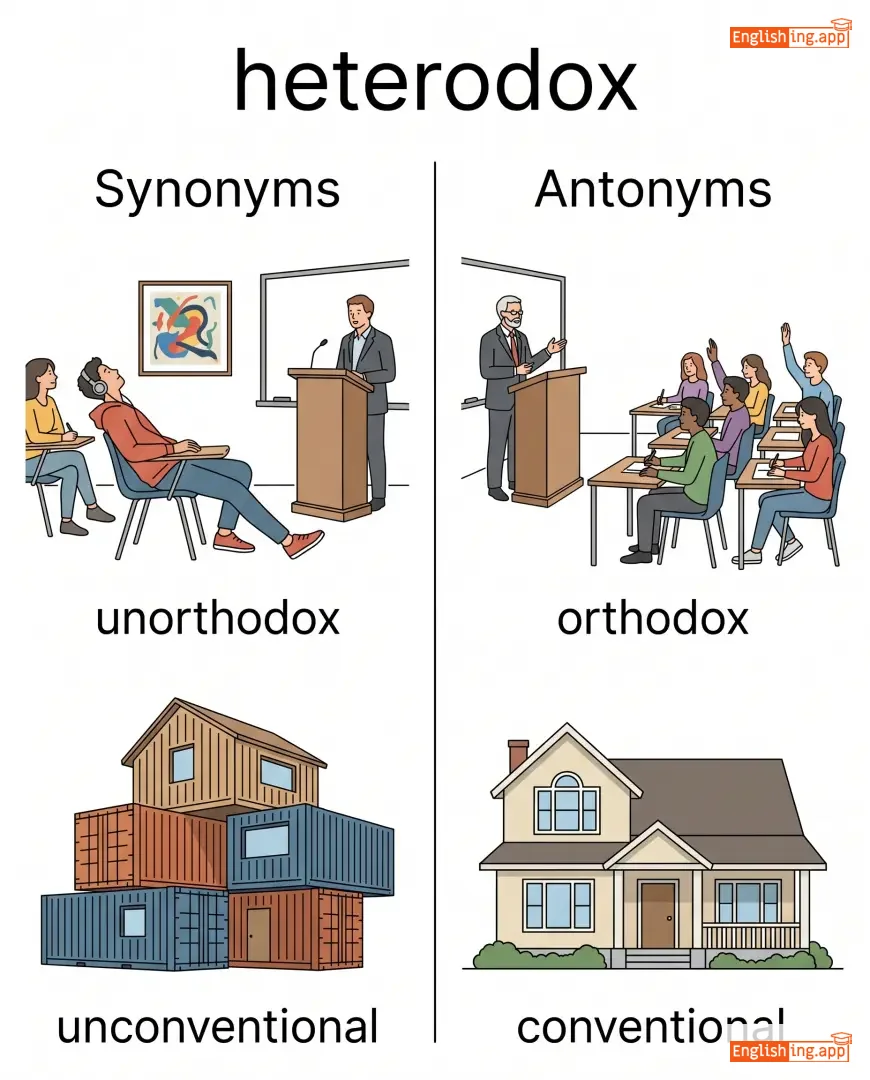
unorthodox, unconventional, radical, nonconformist
••••••
|
orthodox, conventional, traditional
••••••
|
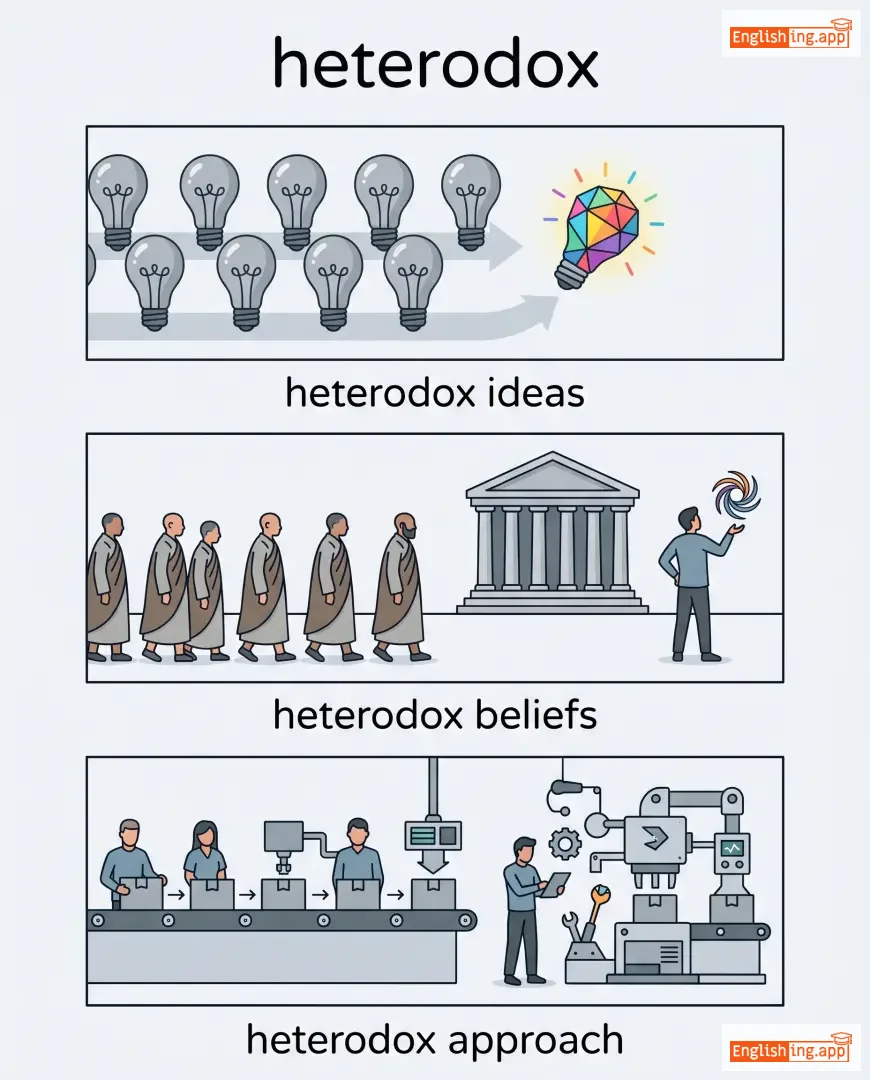
heterodox ideas, heterodox beliefs, heterodox approach, heterodox theory
••••••
|
Hetero意味着不同 + dox (信仰) = 与传统信仰不同的看法
••••••
|
|
🔤
••••••
|
/ˌhaɪ.roʊˈɡlɪf.ɪks/
noun
(海·罗·格·里·菲·克·斯)
••••••
|
|
象形文字
xiangxing wenzi
••••••
|
- •••••• | - •••••• | - •••••• | - •••••• |
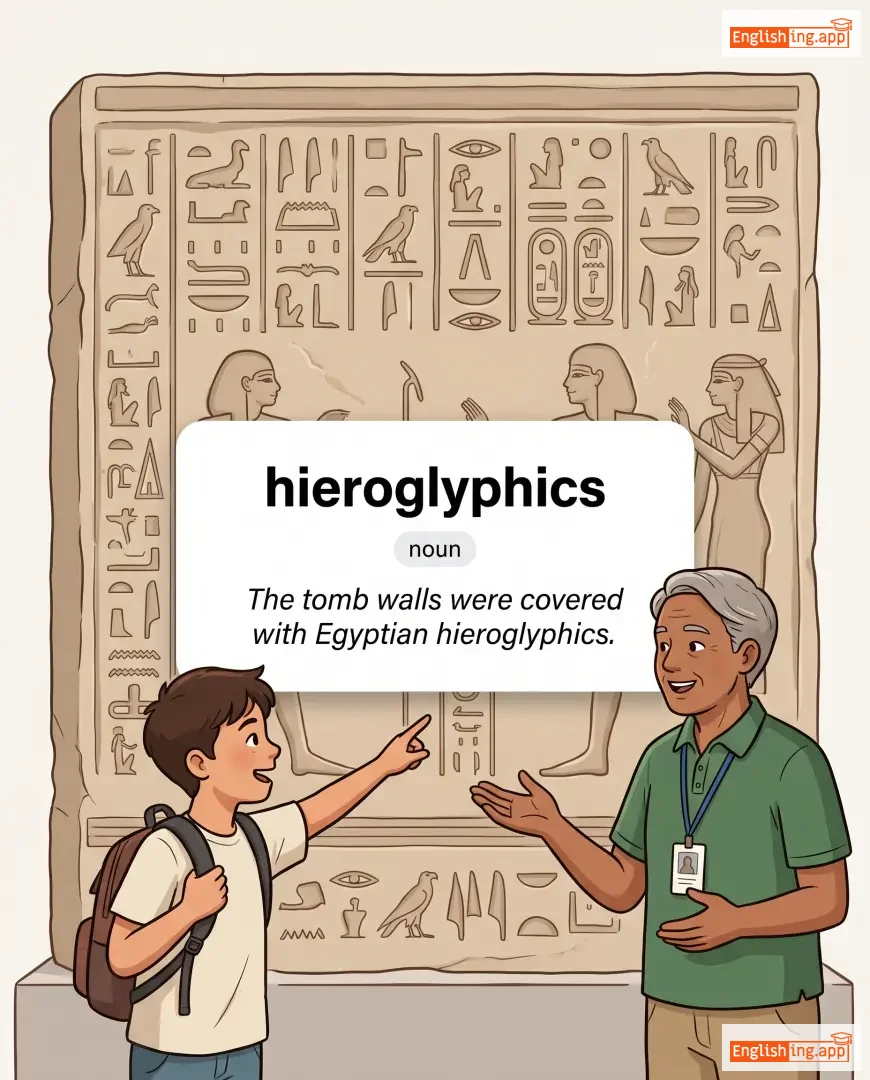
a system of writing using pictures or symbols, used especially by ancient Egyptians
••••••
|
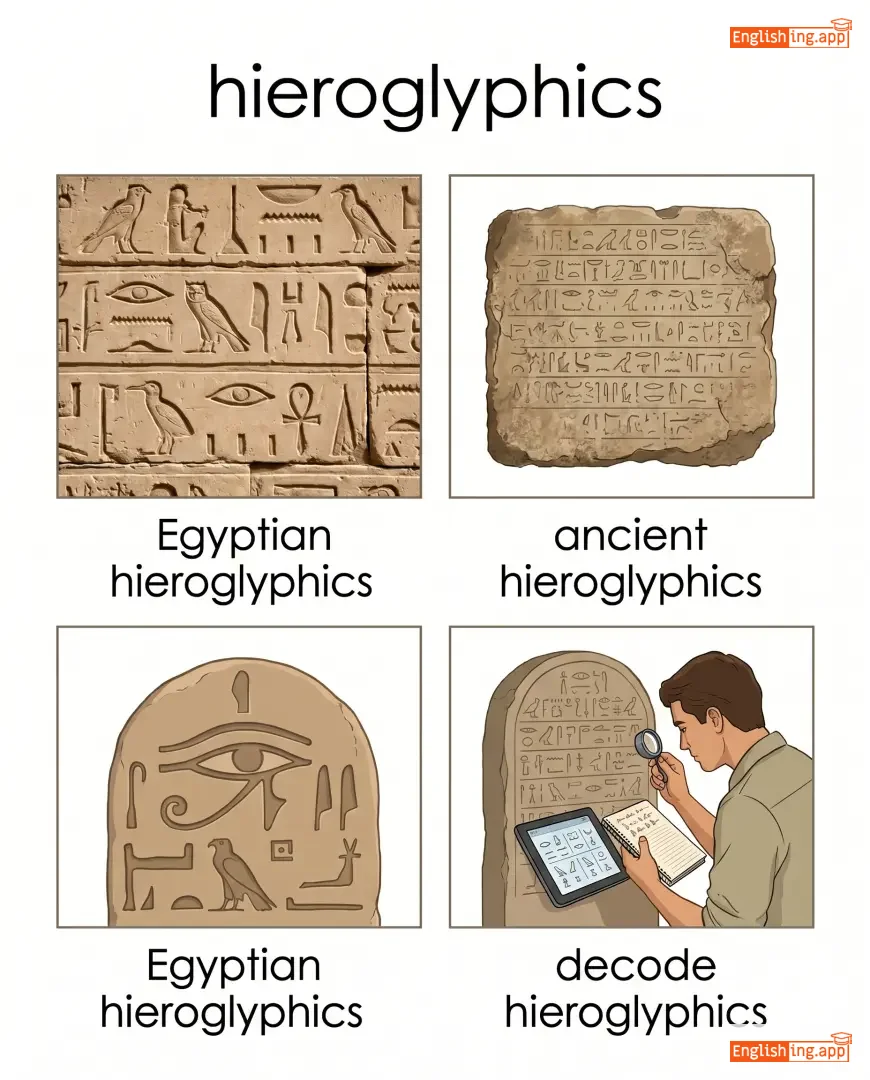
The tomb walls were covered with Egyptian hieroglyphics. |
坟墓的墙壁上刻有埃及的象形文字。
Fenmu de qiangbi shang ke you aigedi de xiangxing wenzi.
••••••
|
- •••••• | - •••••• | - •••••• |
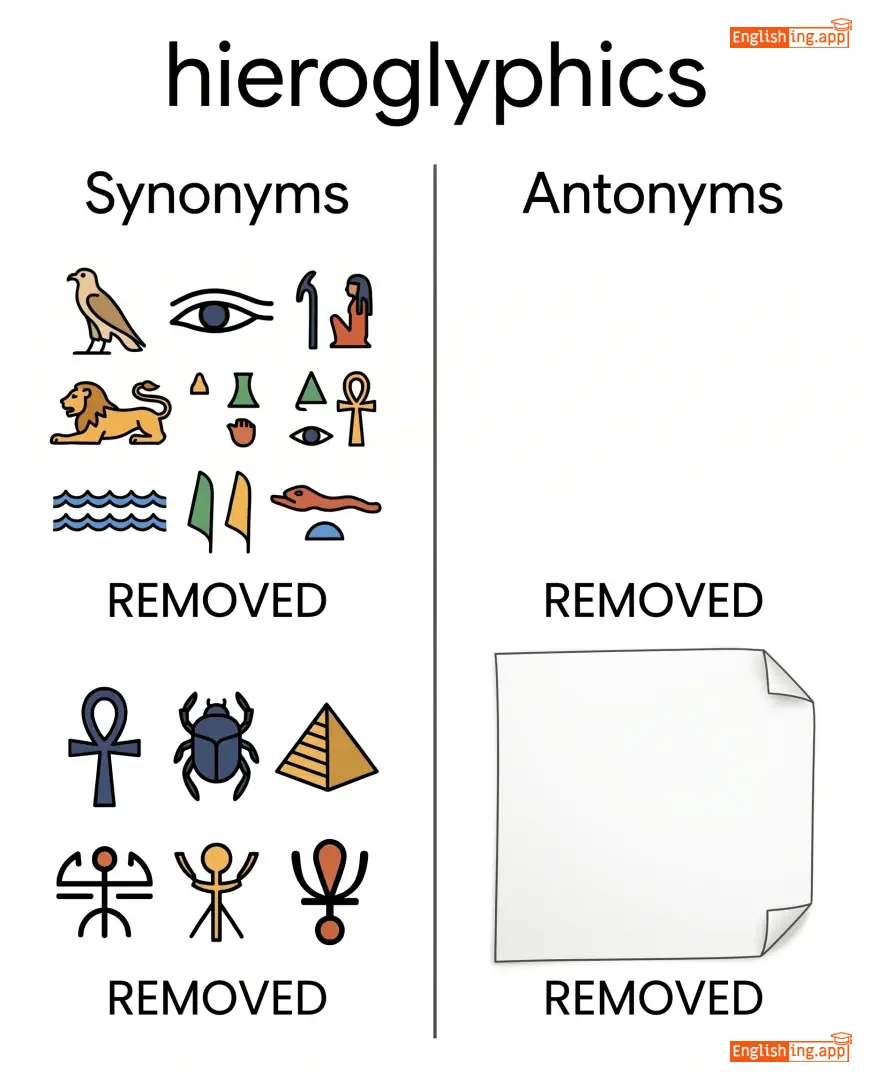
pictograph, symbol, script, glyph
••••••
|
alphabet, plain text
••••••
|
Egyptian hieroglyphics, ancient hieroglyphics, decode hieroglyphics, hieroglyphic writing
••••••
|
Hieroglyphics就像是'高图形'的象形文字 🔤
••••••
|
|
🧔
••••••
|
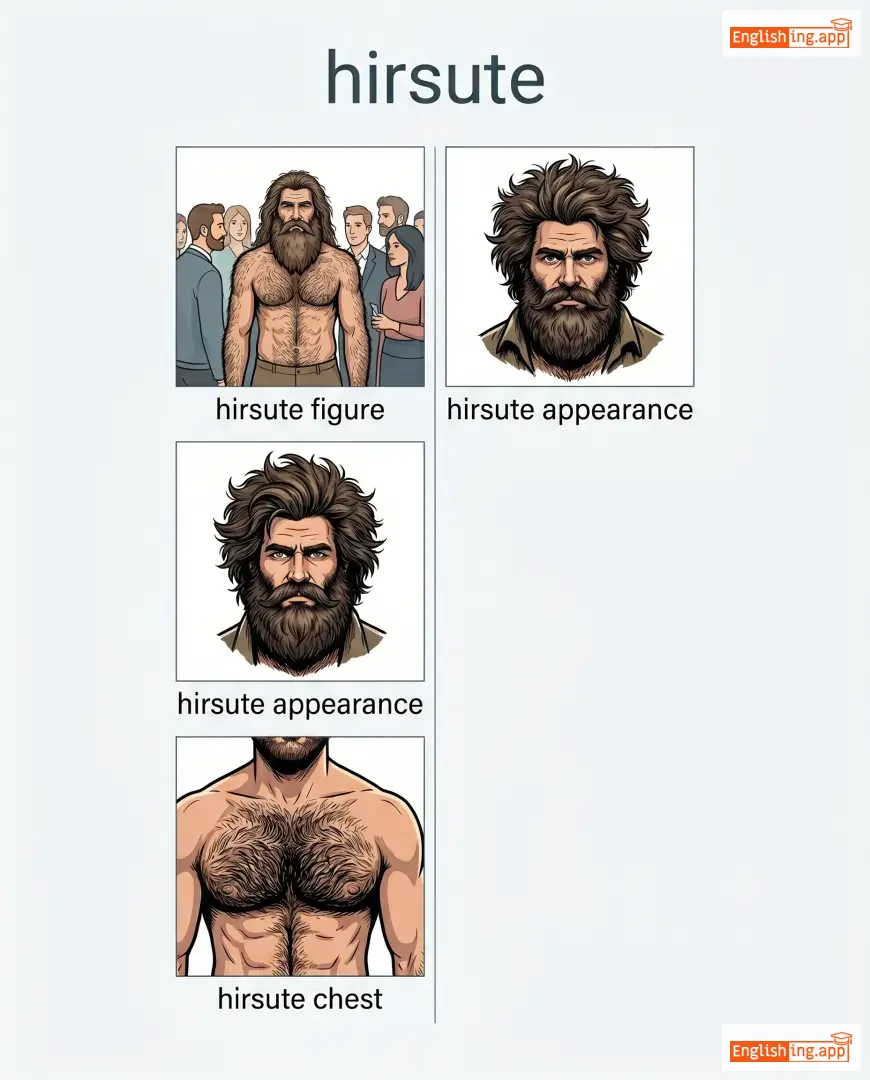
/ˈhɜːrsuːt/
adjective
••••••
|
|
- •••••• | - •••••• | - •••••• | - •••••• | - •••••• |
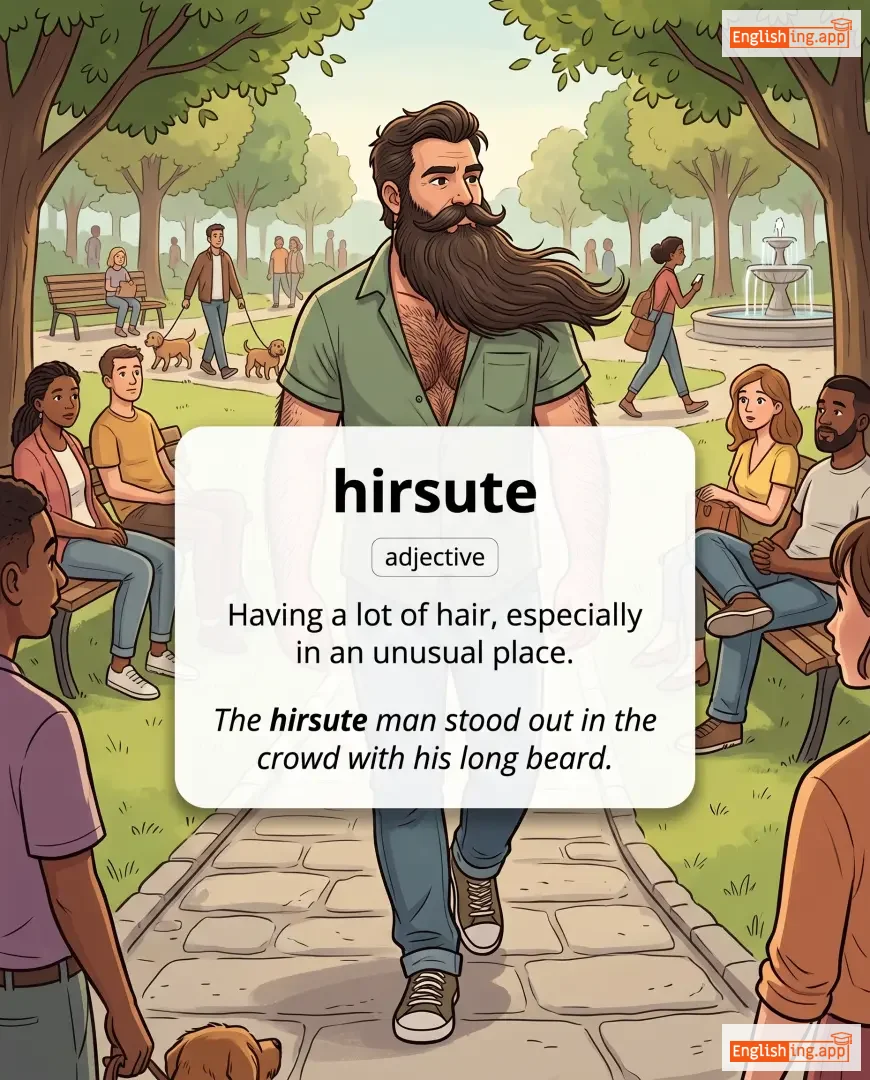
Having a lot of hair, especially in an unusual place.
••••••
|
The hirsute man stood out in the crowd with his long beard. |
- •••••• | - •••••• | - •••••• | - •••••• |
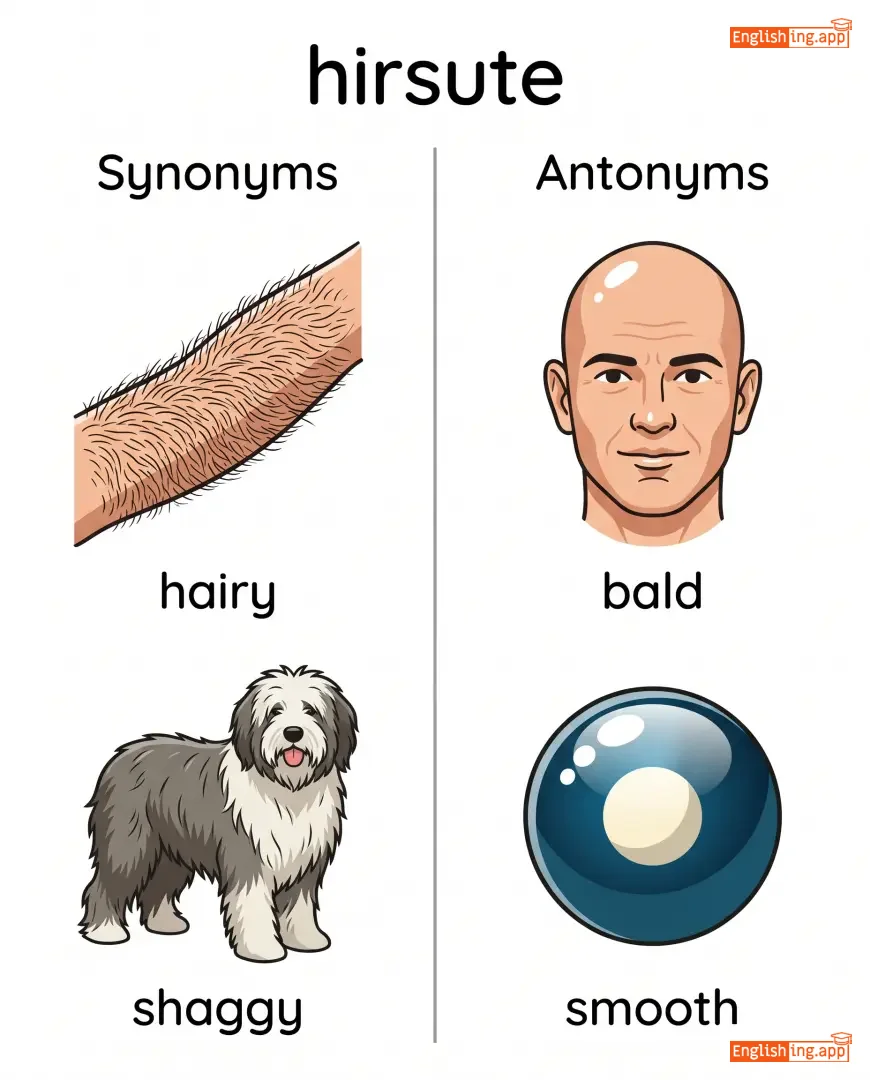
hairy, shaggy, bushy, woolly, bearded
••••••
|
bald, smooth, hairless
••••••
|
hirsute figure, hirsute appearance, hirsute chest, hirsute man
••••••
|
No •••••• |

