|
絵文字
|
単語 | Images | 翻訳 | 過去 | 過去分詞 | 三人称単数 | 動名詞 | 意味 | 例文 | 例文の翻訳 | 表現例 | 表現例の意味 | 表現例の翻訳 | 同義語 | 対義語 | コロケーション | ニーモニック |
|---|---|---|---|---|---|---|---|---|---|---|---|---|---|---|---|---|---|
|
🗣️
••••••
|
/dɪsˈpærɪdʒ/
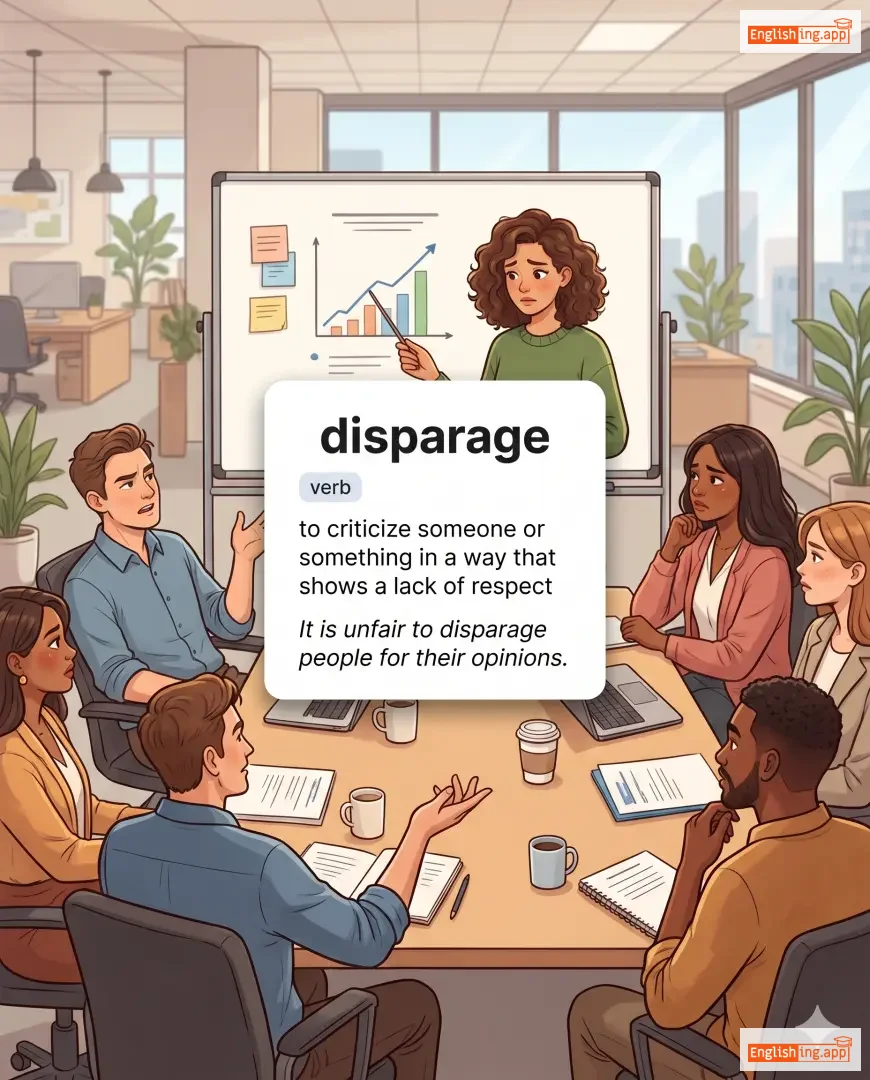
verb
••••••
|
|
- •••••• |
disparaged
••••••
|
disparaged
••••••
|
disparages
••••••
|
disparaging
••••••
|
to criticize someone or something in a way that shows a lack of respect
••••••
|
It is unfair to disparage people for their opinions. |
- •••••• |
disparage someone's efforts |
to belittle or undervalue what someone has done
••••••
|
- •••••• |
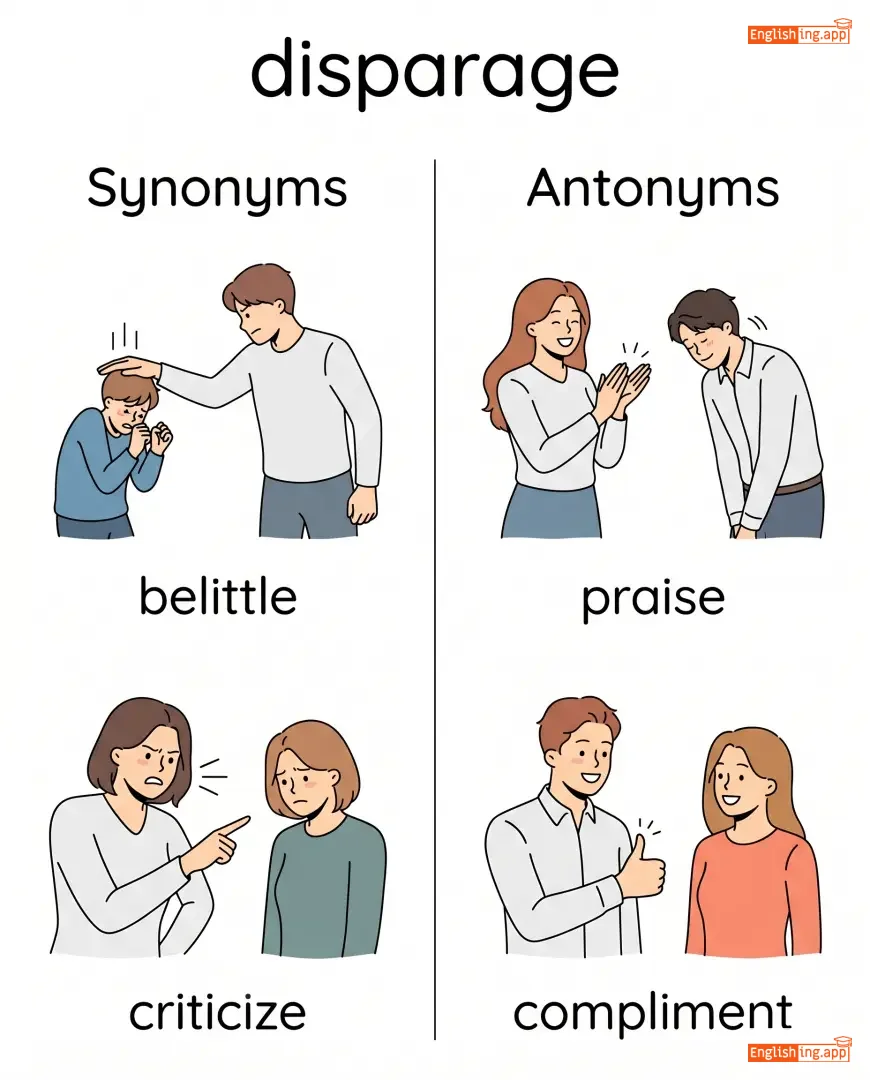
belittle, criticize, denigrate, undervalue, ridicule
••••••
|
praise, compliment
••••••
|
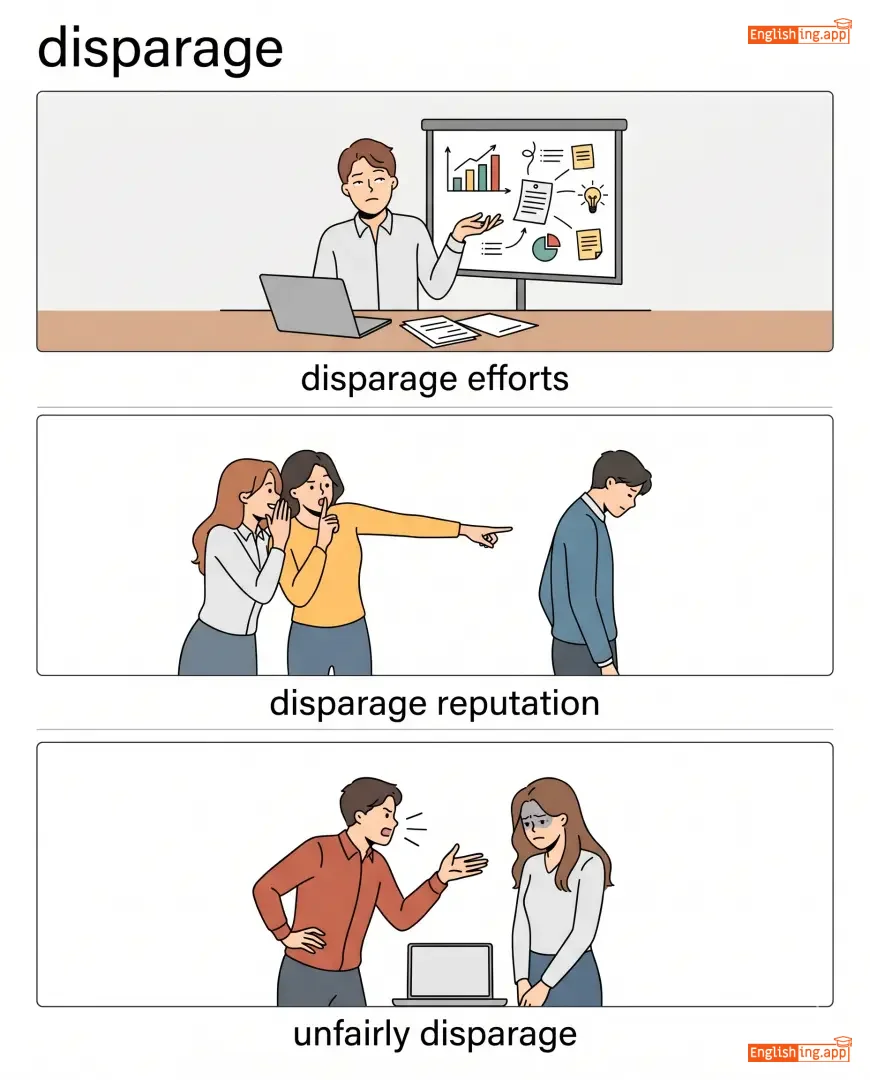
disparage efforts, disparage reputation, unfairly disparage
••••••
|
No •••••• |
|
🔀
••••••
|
/ˈdɪspərət/
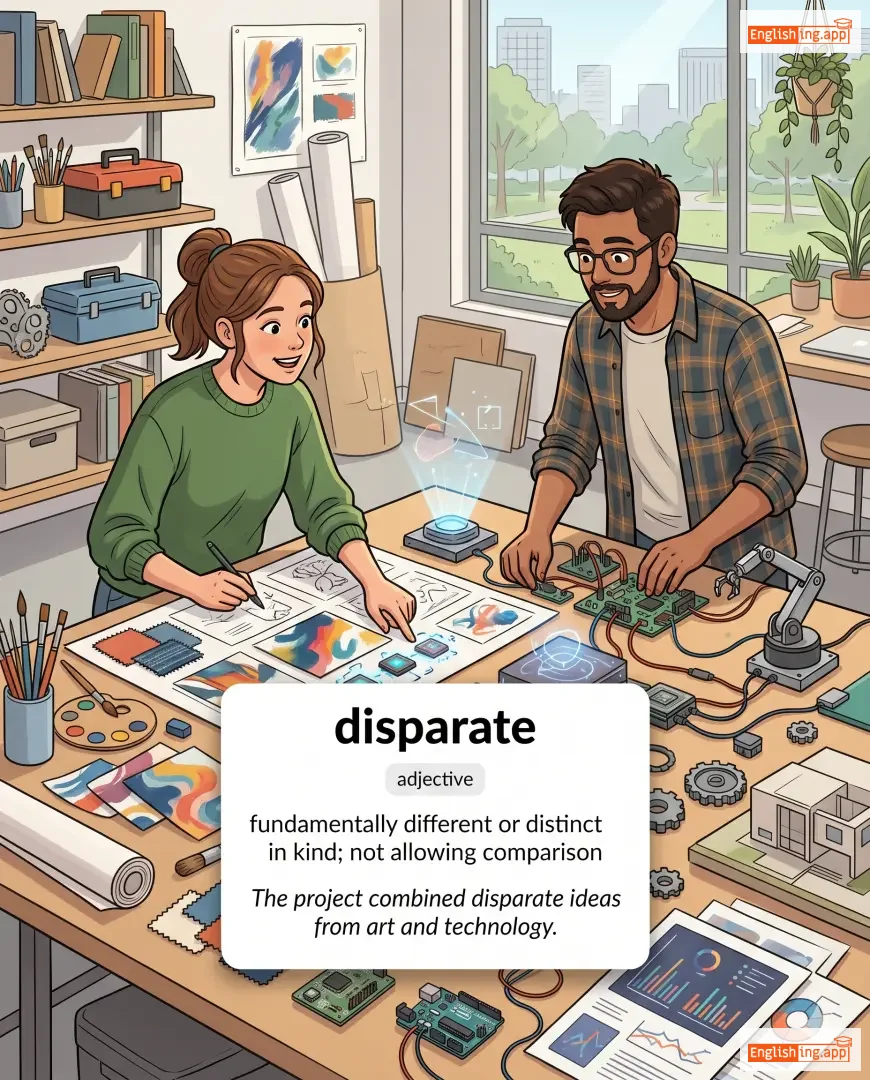
adjective
(ディスパレート)
••••••
|
|
異なる
kotonaru
••••••
|
- •••••• | - •••••• | - •••••• | - •••••• |
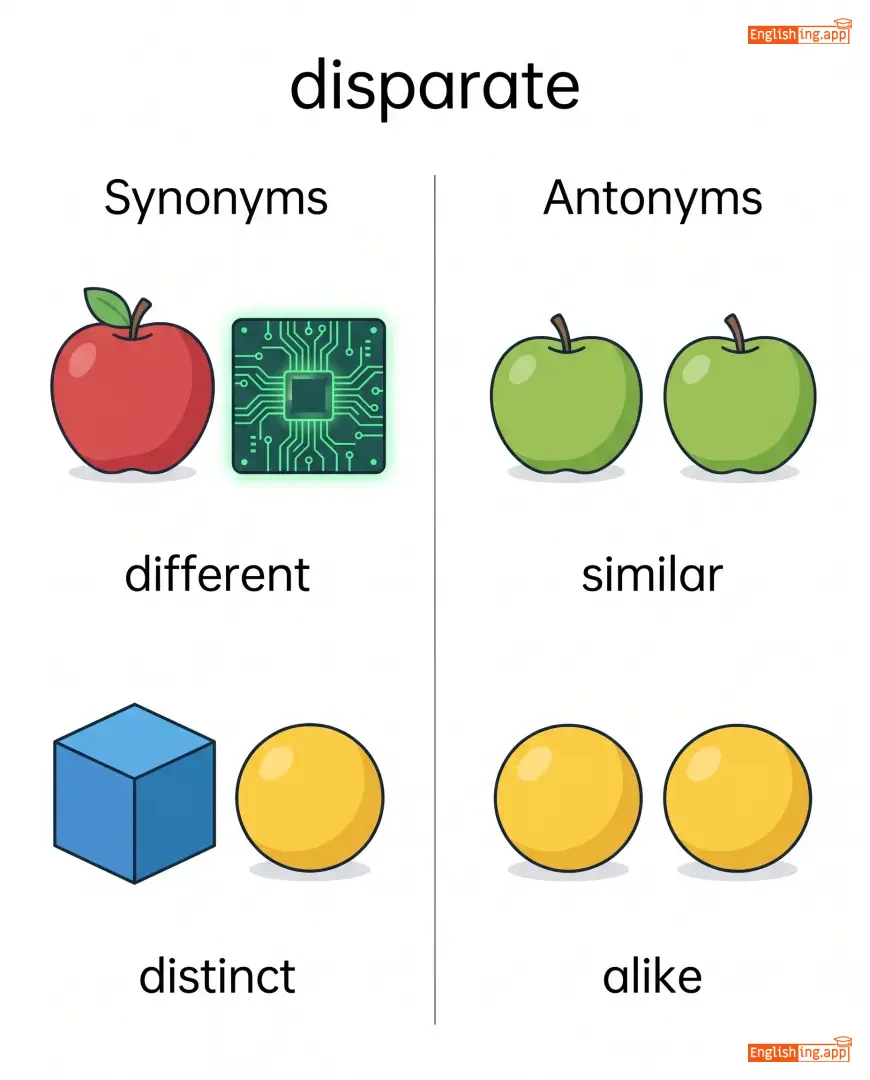
fundamentally different or distinct in kind; not allowing comparison
••••••
|
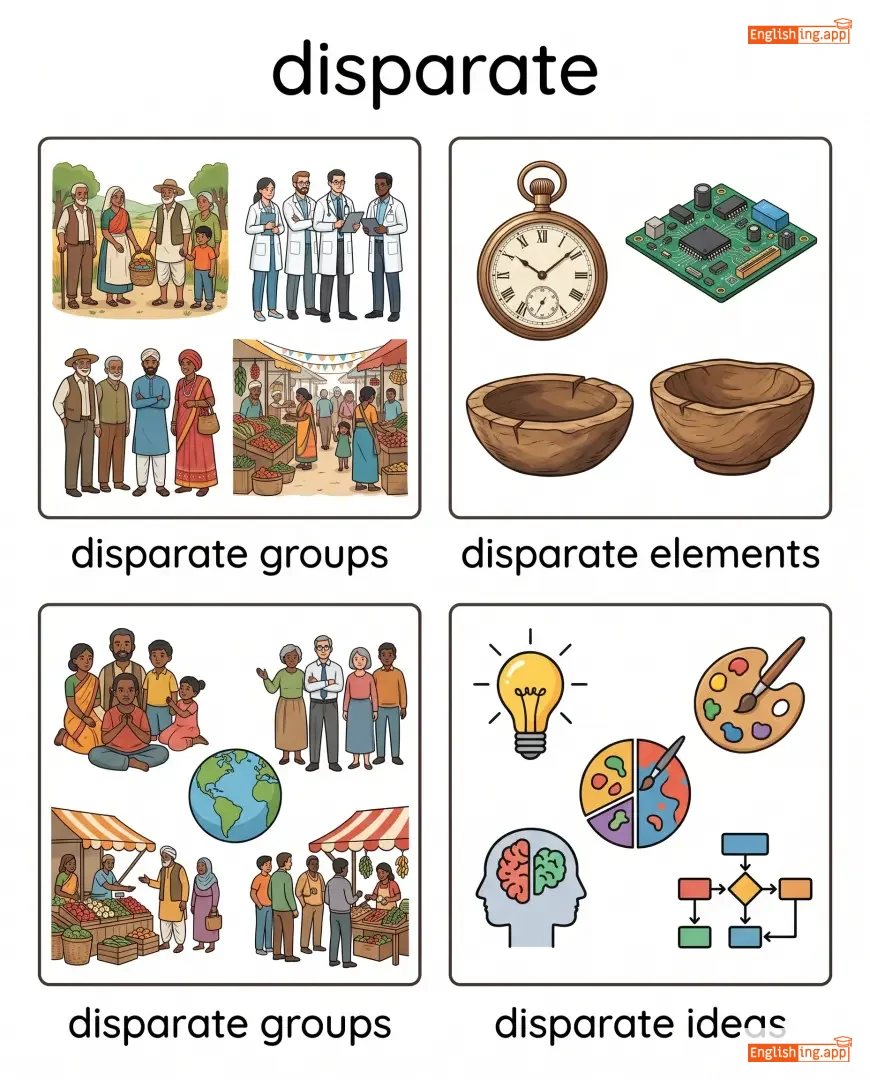
The project combined disparate ideas from art and technology. |
そのプロジェクトは、アートと技術の異なるアイデアを組み合わせました。
Sono purojekuto wa, āto to gijutsu no kotonaru aidea o kumiawase mashita.
••••••
|
- •••••• | - •••••• | - •••••• |
different, distinct, contrasting, diverse, varied
••••••
|
similar, alike, uniform
••••••
|
disparate groups, disparate elements, disparate ideas, disparate backgrounds
••••••
|
Disparate は、異なるアイデアを一緒に持ってくることです。
••••••
|
|
🎭
••••••
|
/dɪˈsɛmbəl/
verb
(ディセンブル)
••••••
|

|
ふりをする
furi o suru
••••••
|
dissembled
ディセンボールド
••••••
|
dissembled
ディセンボールド
••••••
|
dissembles
ディセンブルズ
••••••
|
dissembling
ディセンブリング
••••••
|
to conceal one's true motives, feelings, or beliefs; to pretend
••••••
|
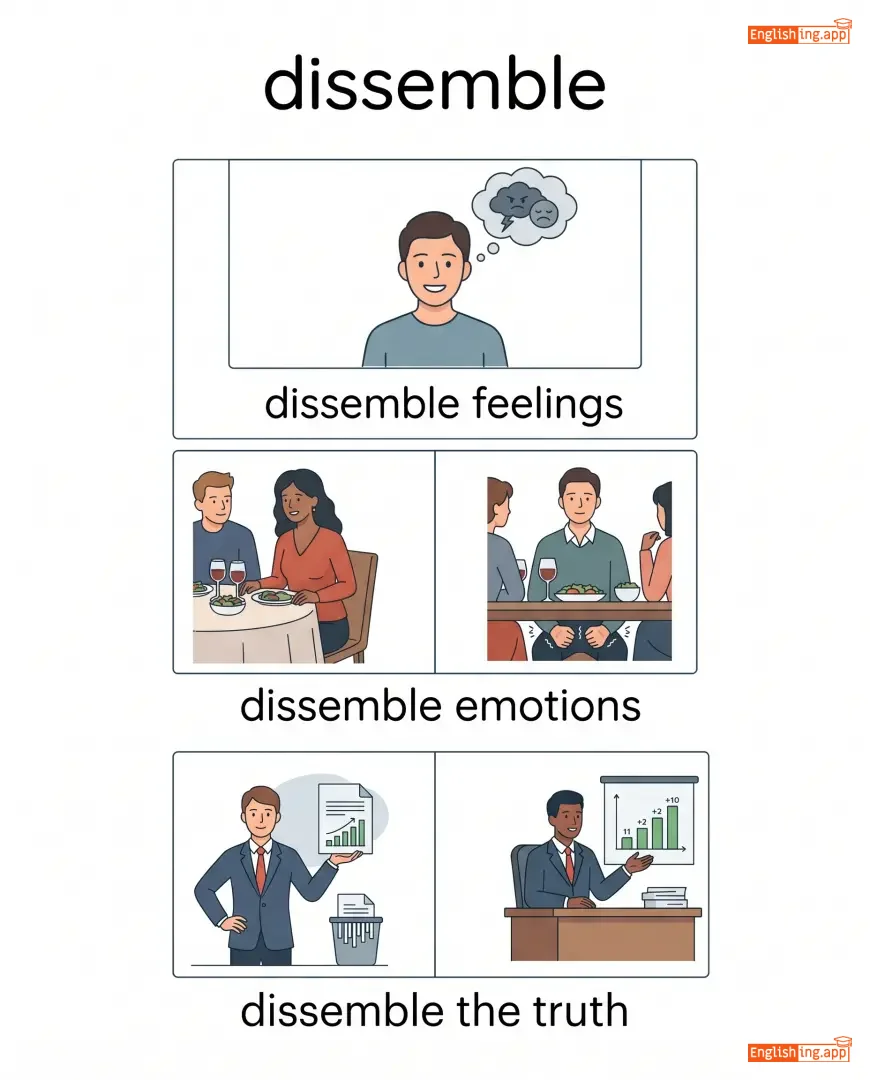
He tried to dissemble his anger with a forced smile.
彼は強制的な笑顔で怒りを隠そうとした。
••••••
|
彼は強制的な笑顔で怒りを隠そうとした。
Kare wa kyouseiteki na egao de ikari o kakuso to shita.
••••••
|
- •••••• | - •••••• | - •••••• |
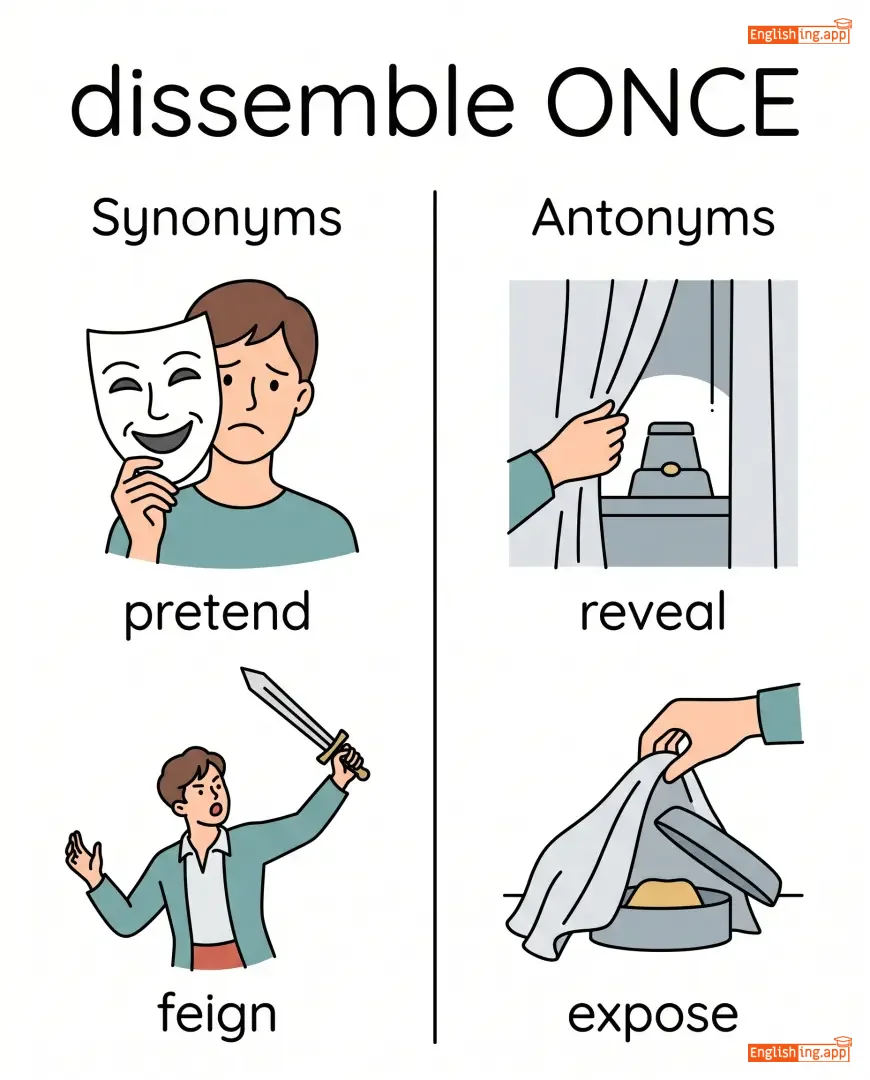
pretend, feign, fake, conceal, disguise
••••••
|
reveal, expose, disclose
••••••
|
dissemble feelings, dissemble emotions, dissemble the truth
••••••
|
Dissemble = dis+assemble; 真実を組み立てず、偽る。
••••••
|
|
📢
••••••
|
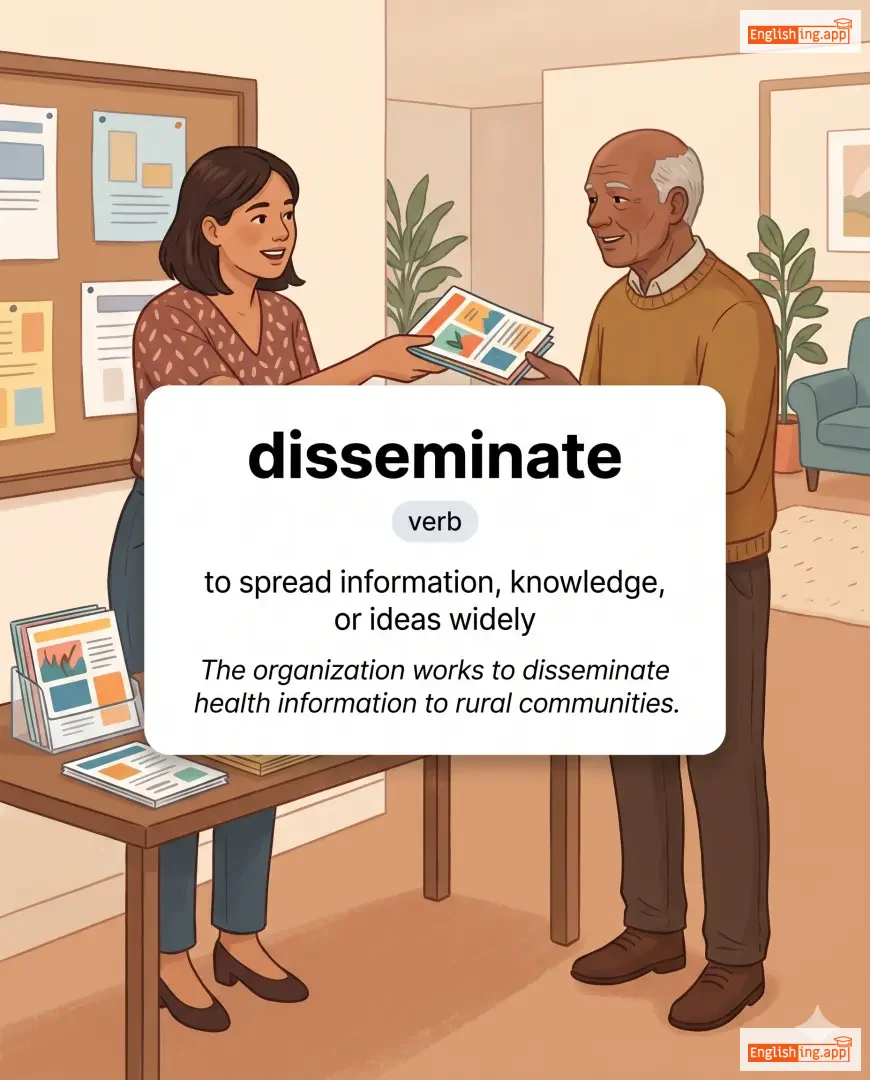
/dɪˈsɛmɪˌneɪt/
verb
(ディセミネート)
••••••
|

|
普及する
fukyu suru
••••••
|
disseminated
ディセミネートされた
••••••
|
disseminated
ディセミネートされた
••••••
|
disseminates
ディセミネートする
••••••
|
disseminating
ディセミネートしている
••••••
|
to spread information, knowledge, or ideas widely
••••••
|
The organization works to disseminate health information to rural communities.
その組織は農村地域に健康情報を普及させるために活動しています。
••••••
|
その組織は農村地域に健康情報を普及させるために活動しています。
Sono soshiki wa nouson chiiki ni kenko joho wo fukyu saseru tame ni katsudou shiteimasu.
••••••
|
disseminate knowledge
知識を広める
••••••
|
to distribute knowledge to many people
••••••
|
知識を広める
chishiki wo hiromeru
••••••
|
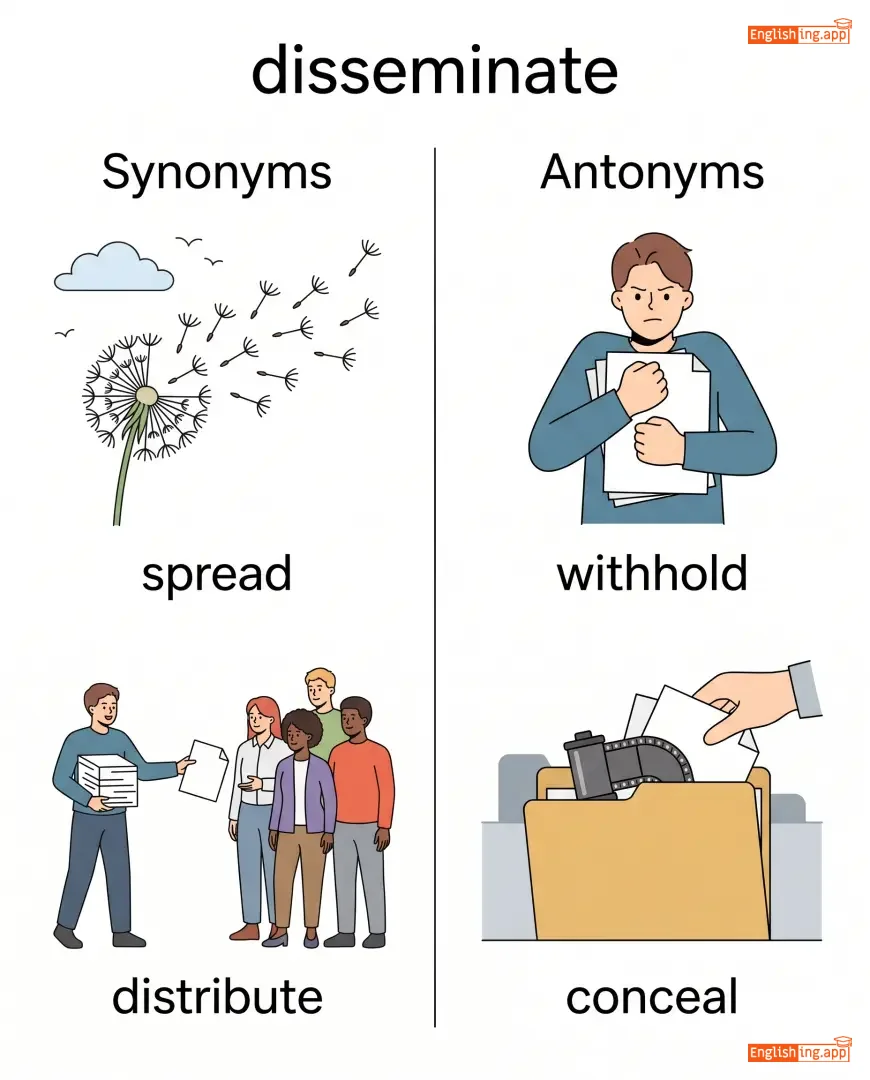
spread, distribute, circulate, broadcast, propagate
••••••
|
withhold, conceal, hide
••••••
|
disseminate knowledge, disseminate information, disseminate ideas, widely disseminate
••••••
|
Disseminate はまるで情報や知識を広めるような感じです。
••••••
|
|
✊
••••••
|
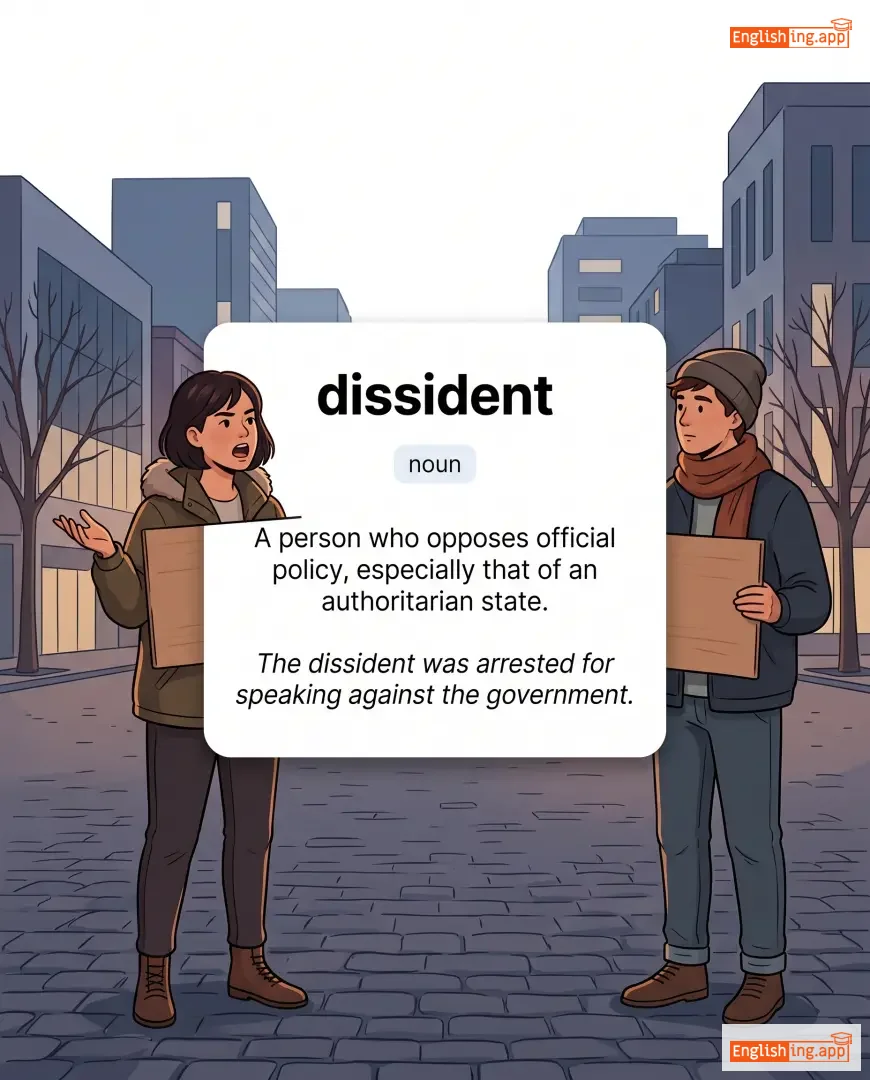
/ˈdɪsɪdənt/
noun
(ディシデント)
••••••
|
|
反体制派
hantai-sei-ha
••••••
|
- •••••• | - •••••• | - •••••• | - •••••• |
A person who opposes official policy, especially that of an authoritarian state.
••••••
|
The dissident was arrested for speaking against the government. |
反体制派は政府に対する発言で逮捕された。
Hantai-sei-ha wa seifu ni taisuru hatsugen de taiho sareta.
••••••
|
- •••••• | - •••••• | - •••••• |
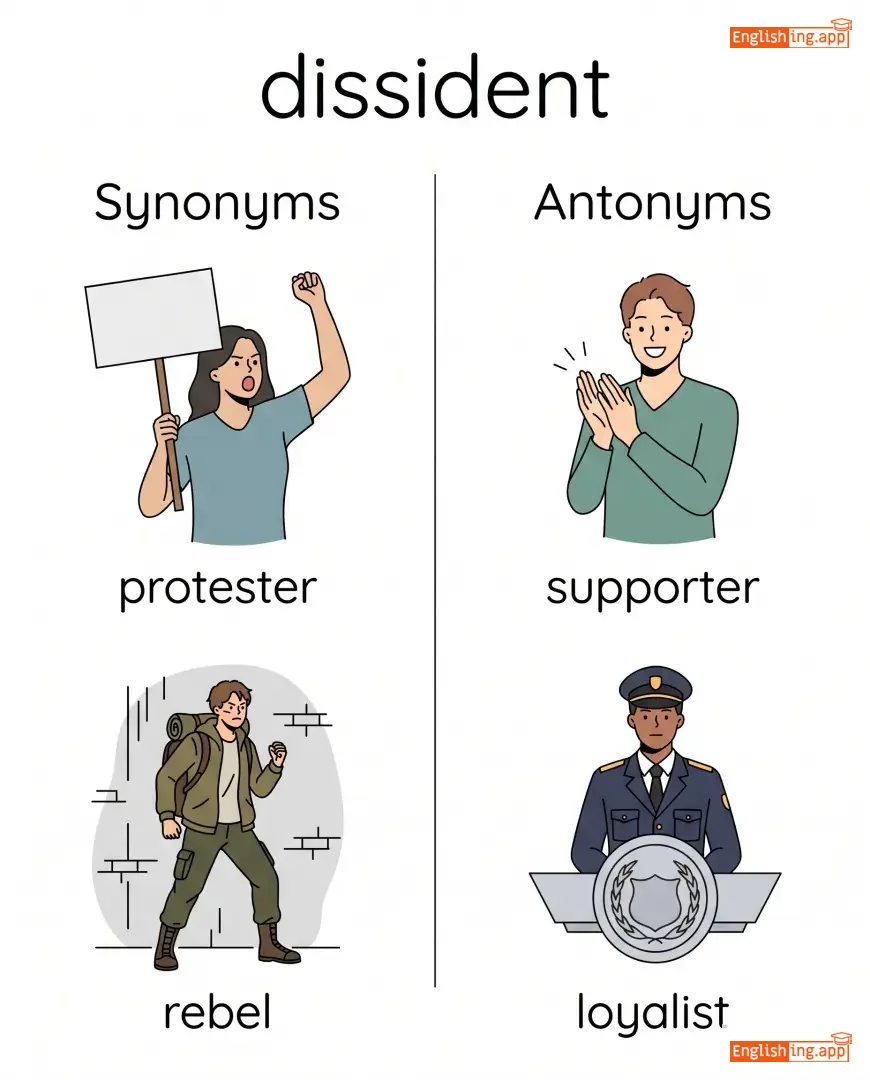
protester, rebel, opponent, nonconformist
••••••
|
supporter, loyalist
••••••
|
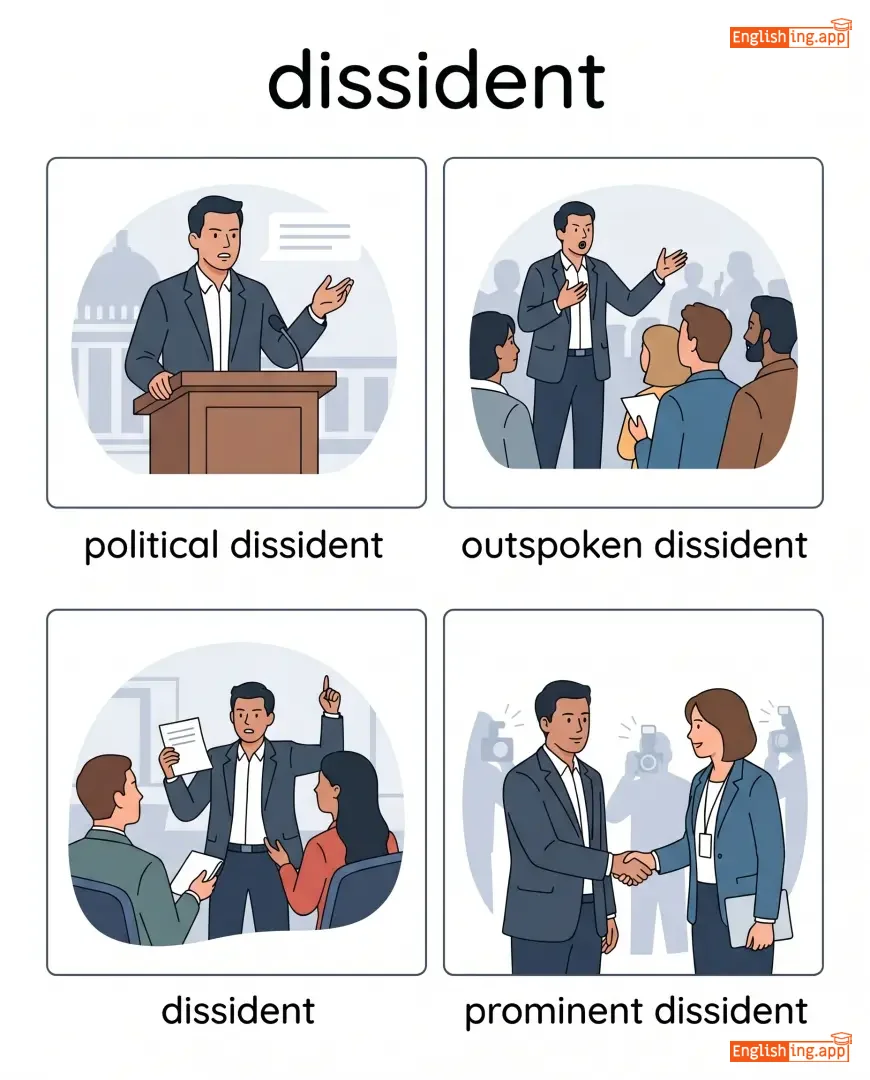
political dissident, outspoken dissident, prominent dissident
••••••
|
反体制派は、権威に立ち向かう人々、ディシデント(ディス)として有名です。
••••••
|
|
⚖️
••••••
|
/ˌdɪsəˈluːʃən/
noun
(ディスソリューション)
••••••
|

|
解散
kaisann
••••••
|
- •••••• | - •••••• | - •••••• | - •••••• |
the act of formally ending or breaking apart something, such as an organization or marriage
••••••
|
The dissolution of the company was announced yesterday. |
会社の解散は昨日発表されました。
Kaisha no kaisan wa kinou happyou saremashita.
••••••
|
- •••••• | - •••••• | - •••••• |
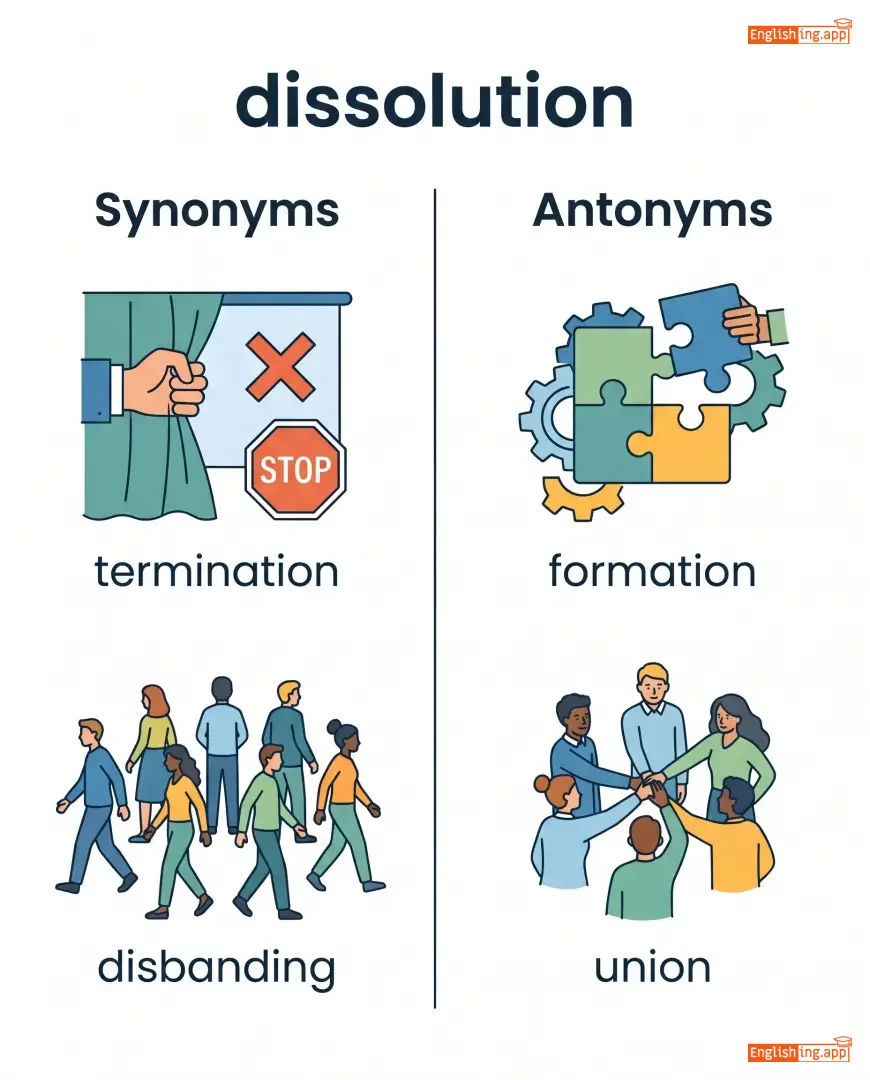
termination, disbanding, breakup, collapse
••••••
|
formation, union, establishment
••••••
|
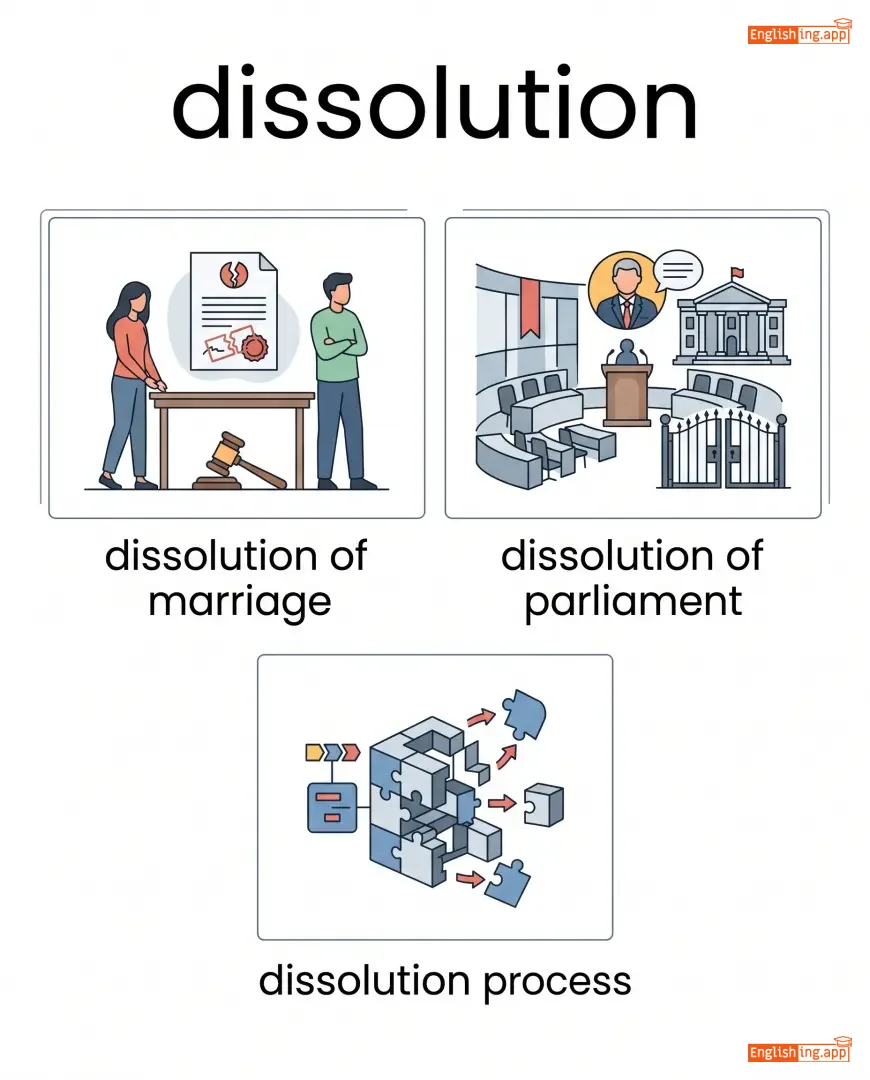
dissolution of marriage, dissolution of parliament, dissolution process
••••••
|
Dissolutionは解散、解決の終わり
••••••
|
|
🎶
••••••
|
/ˈdɪsənəns/
noun
(ディスオナンス)
••••••
|
|
不協和音
fukyouwaon
••••••
|
- •••••• | - •••••• | - •••••• | - •••••• |
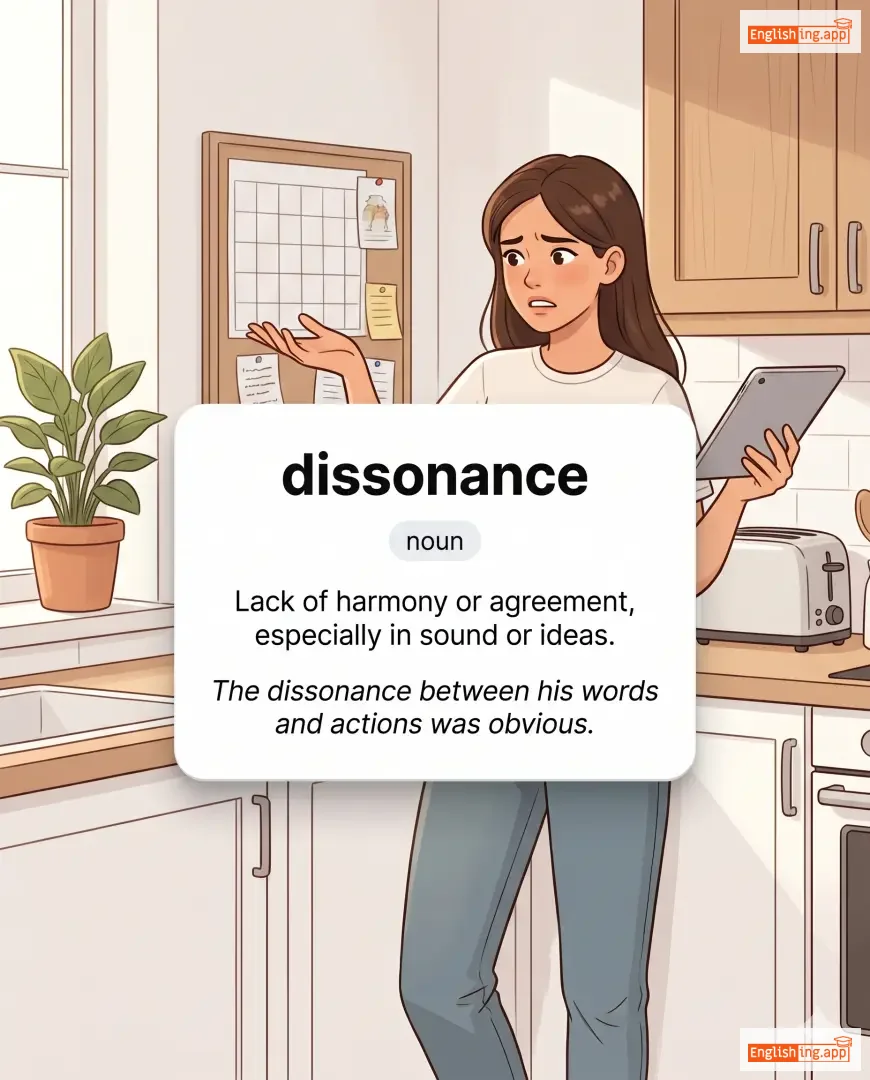
Lack of harmony or agreement, especially in sound or ideas.
••••••
|
The dissonance between his words and actions was obvious. |
彼の言葉と行動の間の不協和音は明らかだった。
Kare no kotoba to koudou no aida no fukyouwaon wa akiraka datta.
••••••
|
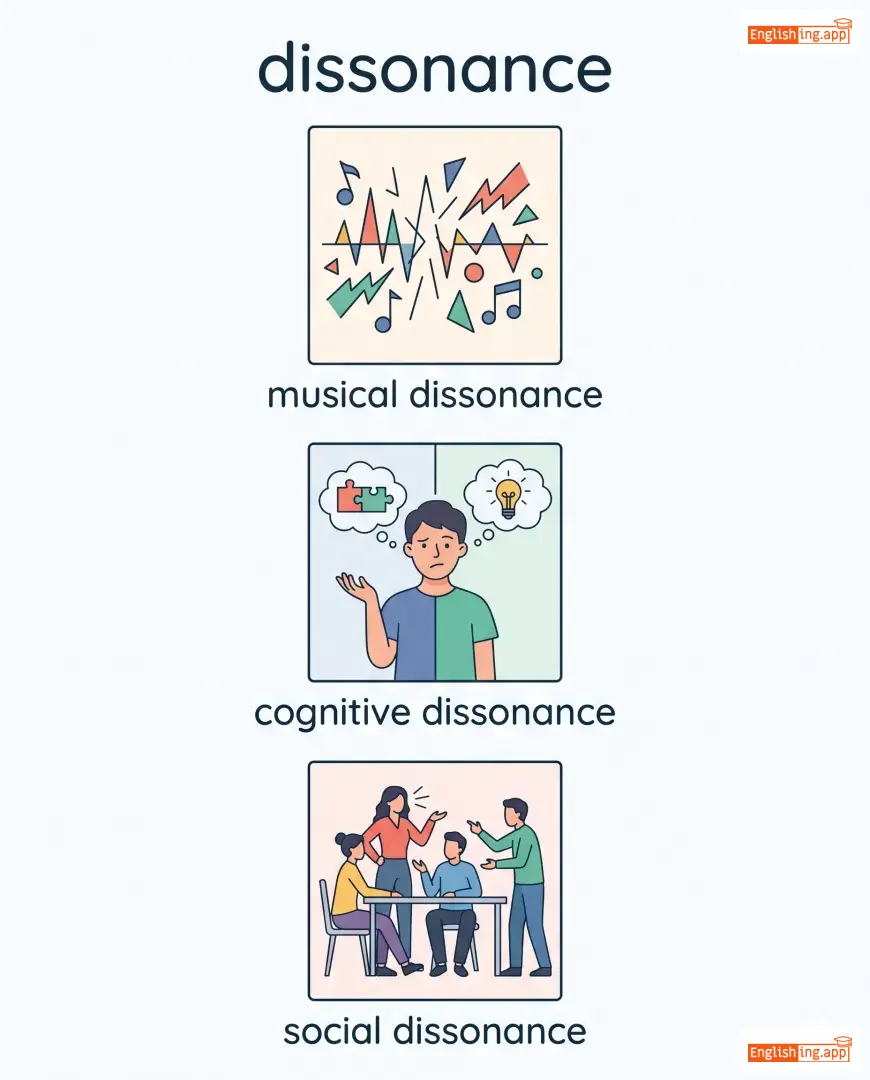
cognitive dissonance |
The mental discomfort experienced when holding contradictory beliefs or values.
••••••
|
認知的不協和音
ninchi-teki fukyouwaon
••••••
|
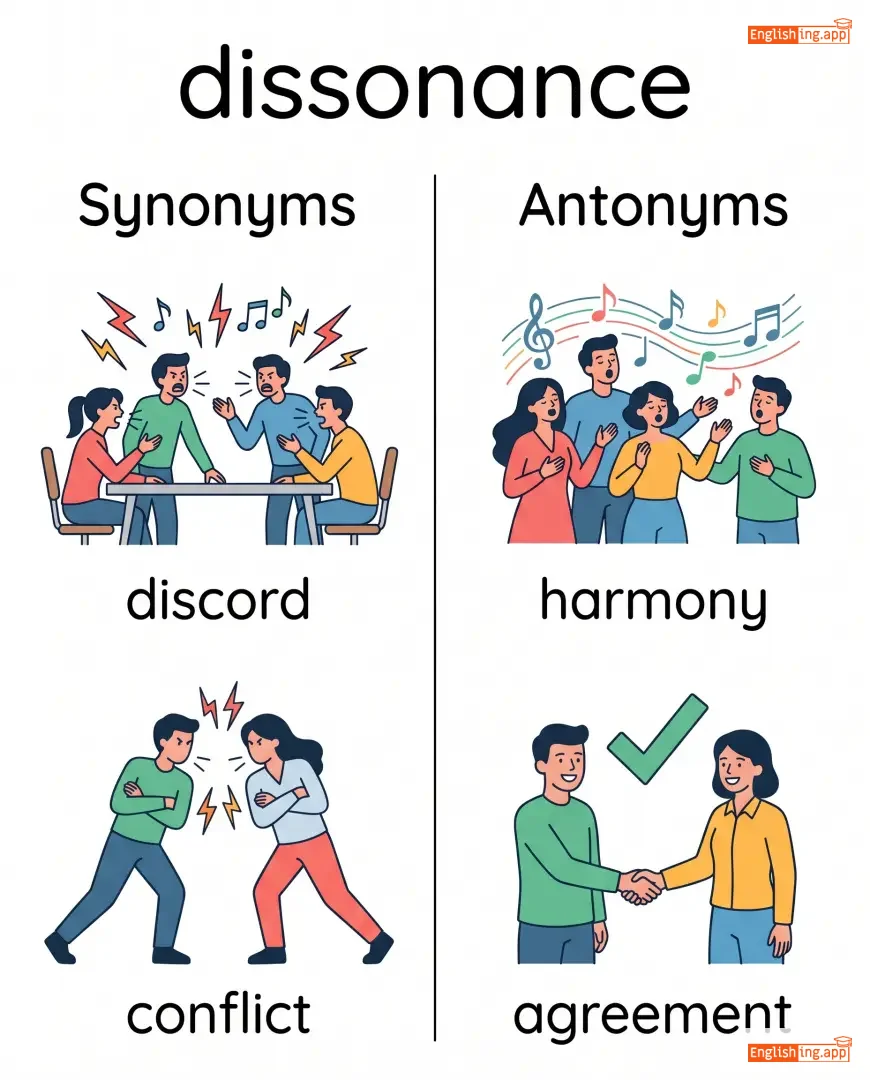
discord, conflict, discrepancy, disagreement, incongruity
••••••
|
harmony, agreement, concord
••••••
|
musical dissonance, cognitive dissonance, social dissonance, emotional dissonance
••••••
|
Dissonanceは不協和音を意味する - 日本語で'不協和音'のようなものです。
••••••
|
|
🎈
••••••
|
/dɪsˈtɛnd/
verb
(ディステンド)
••••••
|
|
膨張する
bōchō suru
••••••
|
distended
ディステンデッド
••••••
|
distended
ディステンデッド
••••••
|
distends
ディステンドス
••••••
|
distending
ディステンディング
••••••
|
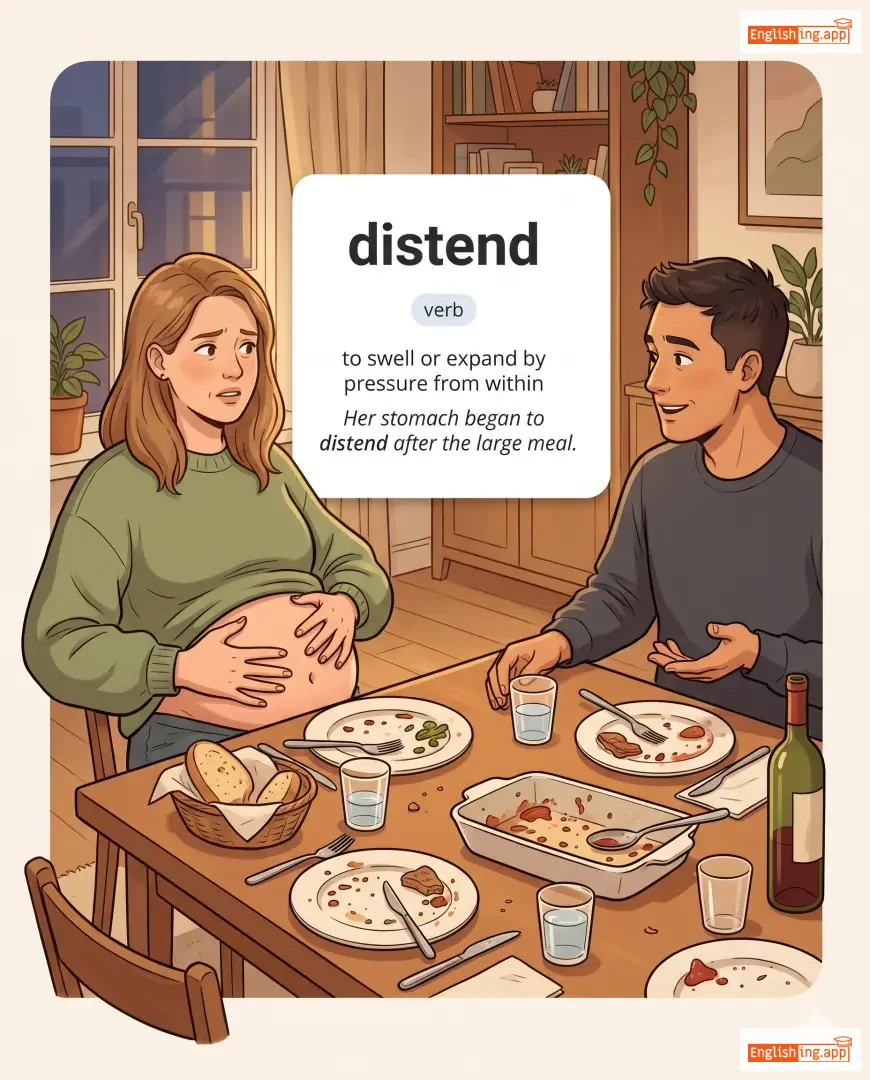
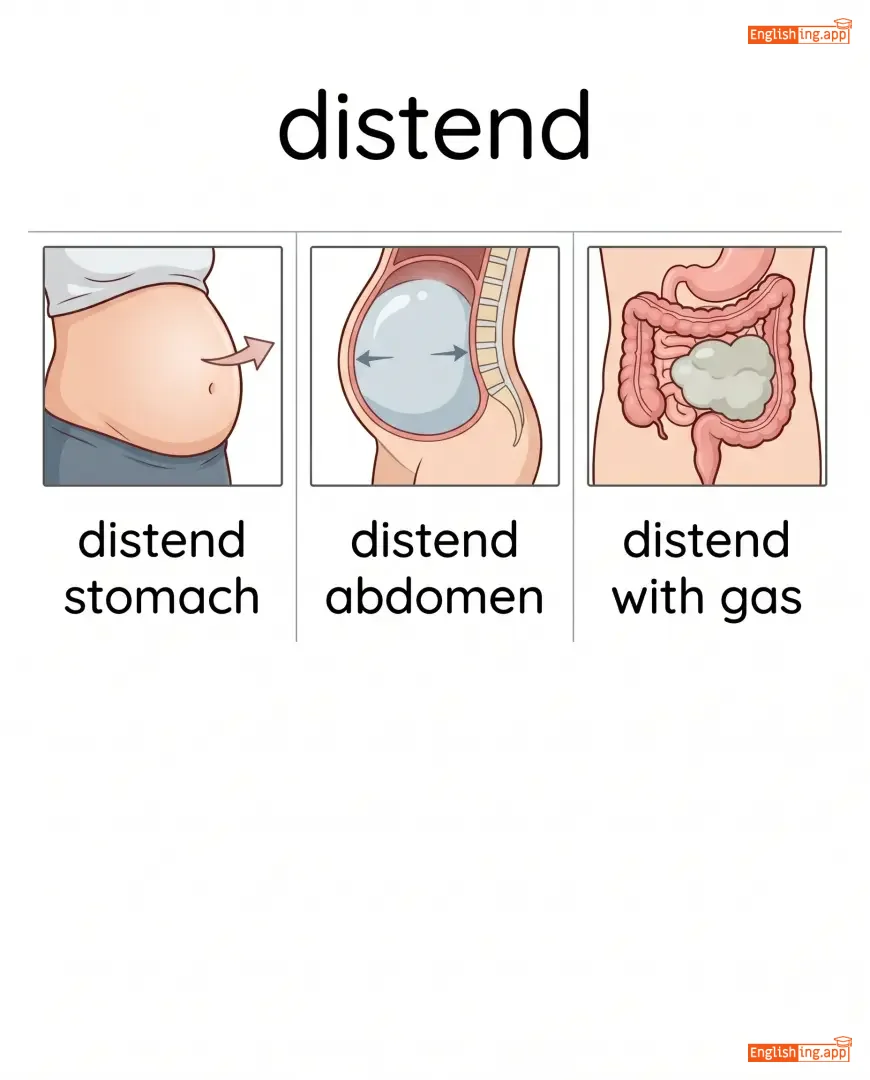
to swell or expand by pressure from within
••••••
|
Her stomach began to distend after the large meal.
大きな食事の後、彼女のお腹は膨らみ始めました。
••••••
|
大きな食事の後、彼女のお腹は膨らみ始めました。
Ōkina shokuji no ato, kanojo no onaka wa fukurami hajimemashita.
••••••
|
- •••••• | - •••••• | - •••••• |
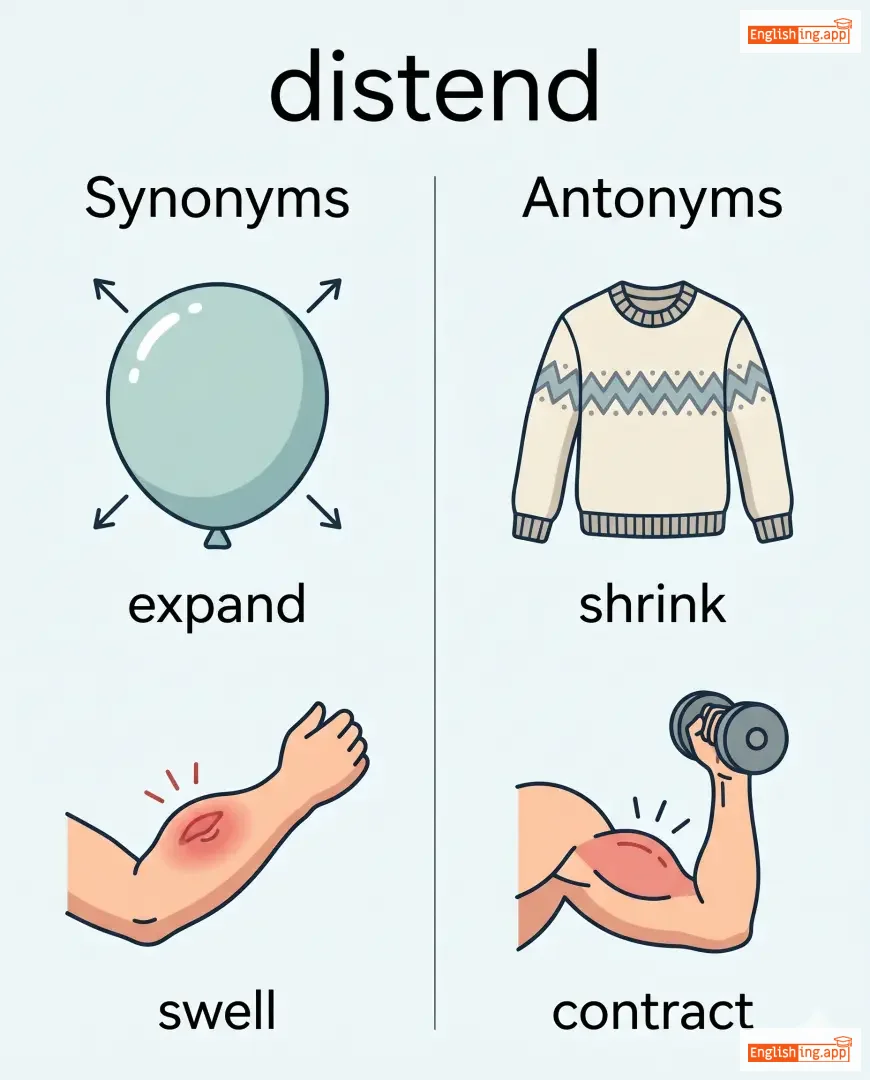
expand, swell, inflate, enlarge, bloat
••••••
|
shrink, contract, deflate
••••••
|
distend stomach, distend abdomen, distend with gas
••••••
|
Distendは膨張すること、内部から膨らむという意味です。
••••••
|
|
💧
••••••
|
/dɪˈstɪl/
verb
••••••
|
|
- •••••• |
distilled
••••••
|
distilled
••••••
|
distills
••••••
|
distilling
••••••
|
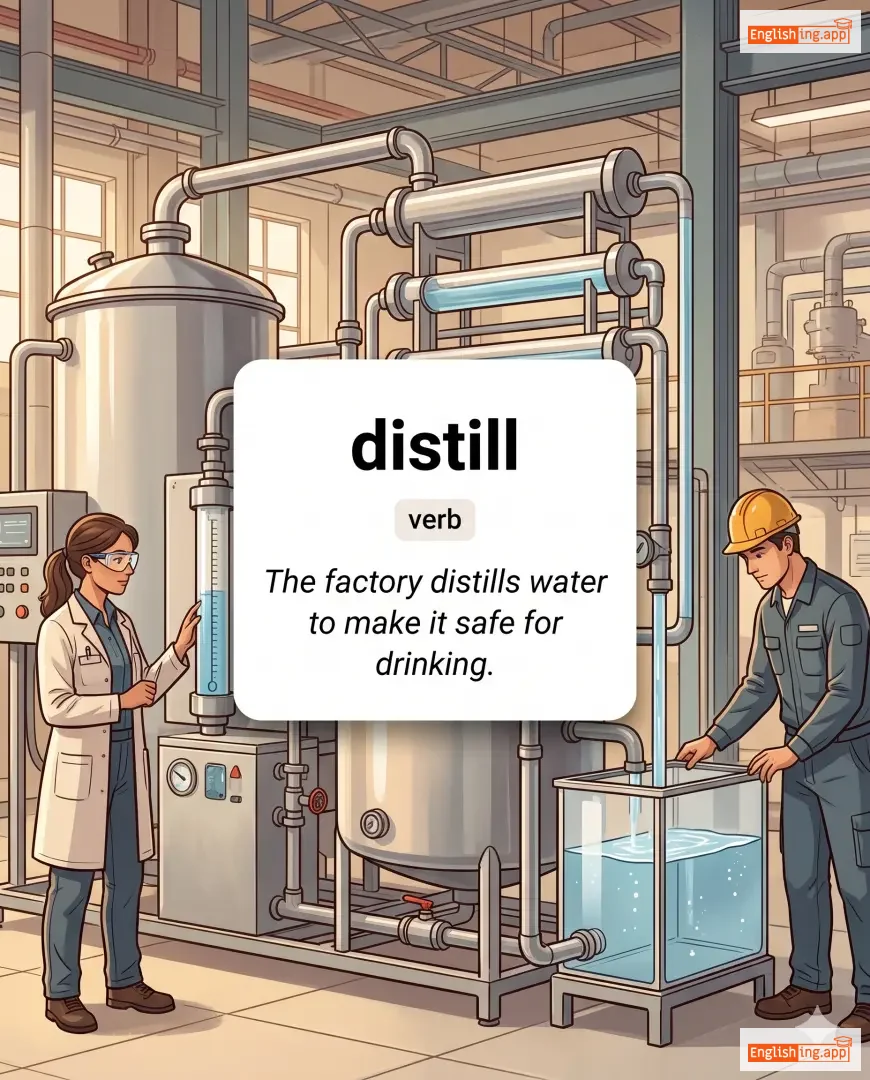
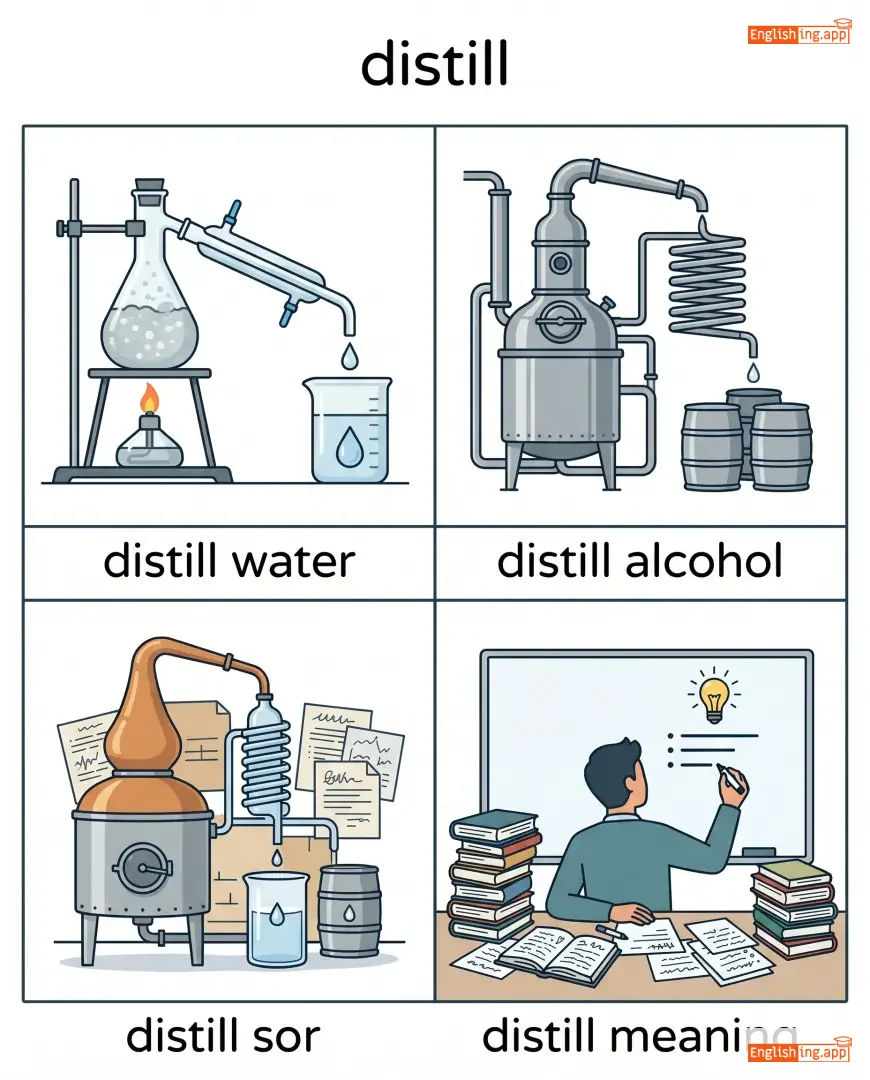
To purify a liquid by heating and cooling; to extract the essential meaning or most important aspects.
••••••
|
The factory distills water to make it safe for drinking. |
- •••••• |
distill the essence |
To extract the most important meaning or quality.
••••••
|
- •••••• |
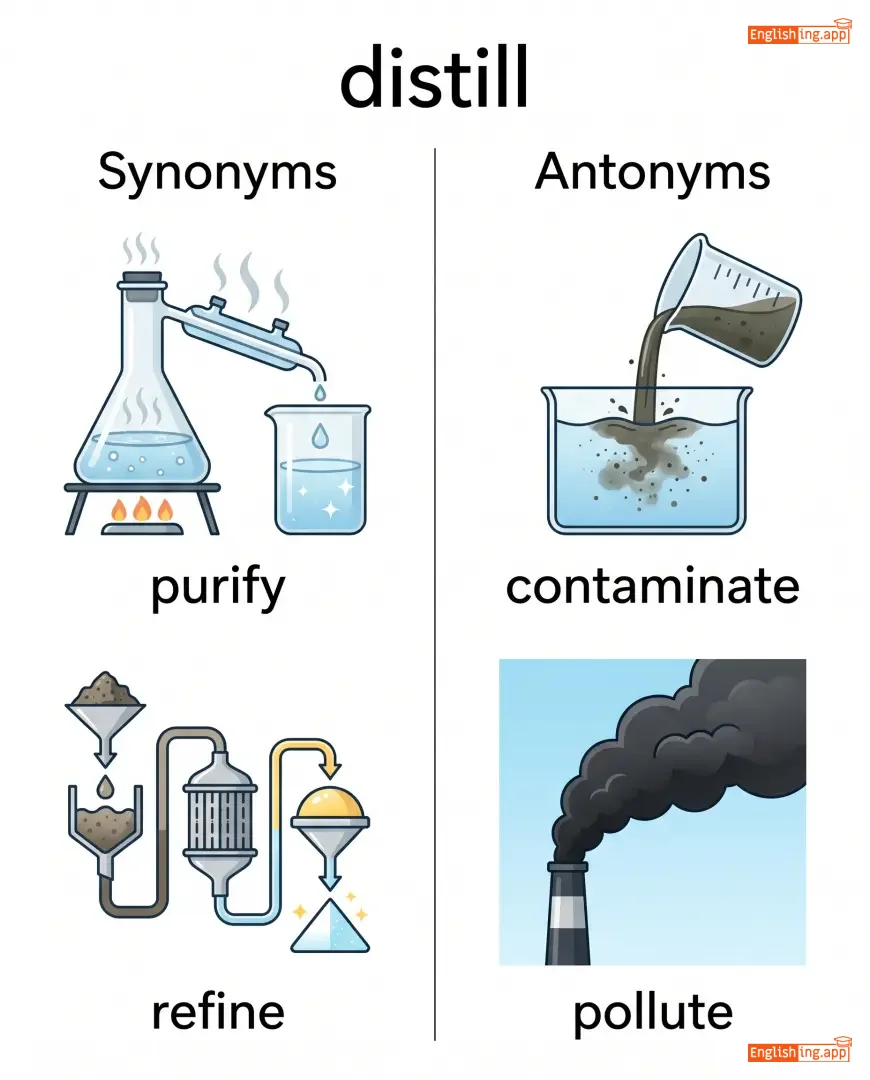
purify, refine, extract, filter, condense
••••••
|
contaminate, pollute
••••••
|
distill water, distill alcohol, distill meaning, distill information
••••••
|
No •••••• |
|
😔
••••••
|
/dɪˈstreɪ/
adjective
(ディストレ)
••••••
|
|
ぼんやりした
bonyari shita
••••••
|
- •••••• | - •••••• | - •••••• | - •••••• |
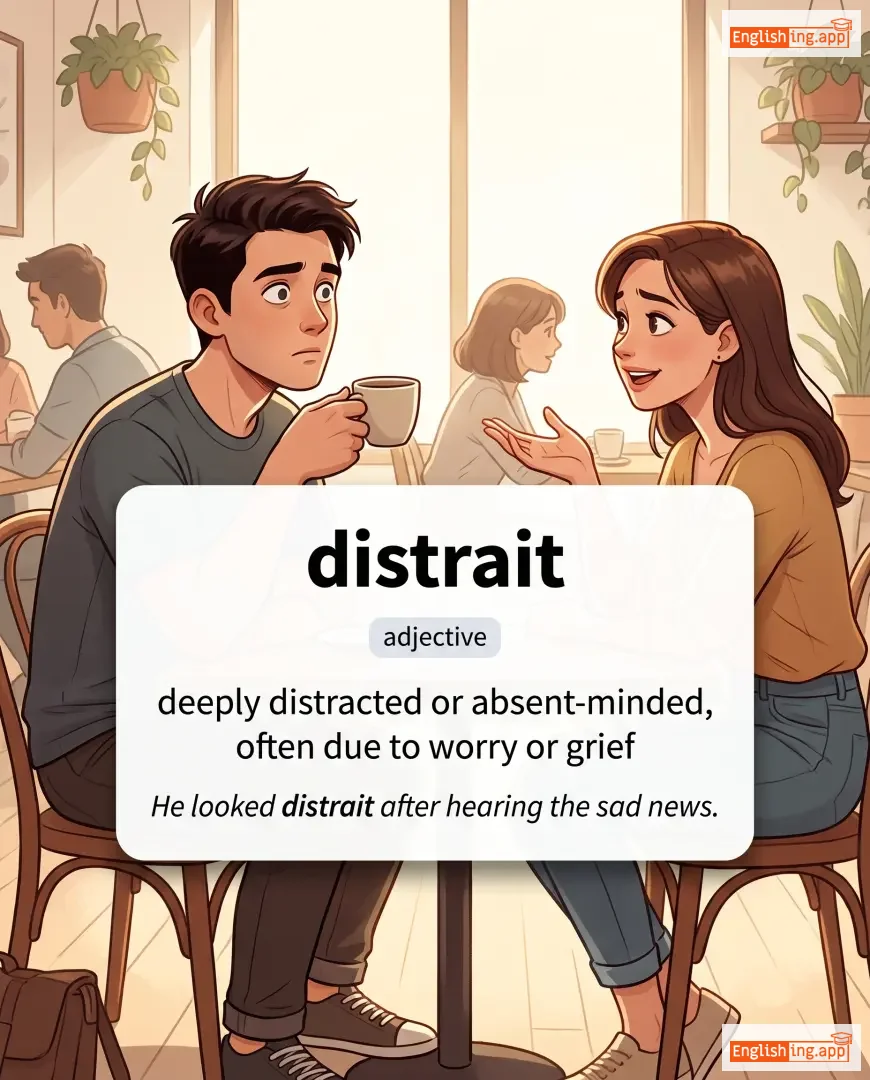
deeply distracted or absent-minded, often due to worry or grief
••••••
|
He looked distrait after hearing the sad news. |
悲しい知らせを聞いた後、彼はぼんやりしているように見えた。
Kanashii shirase wo kiita ato, kare wa bonyari shite iru you ni mieta.
••••••
|
- •••••• | - •••••• | - •••••• |
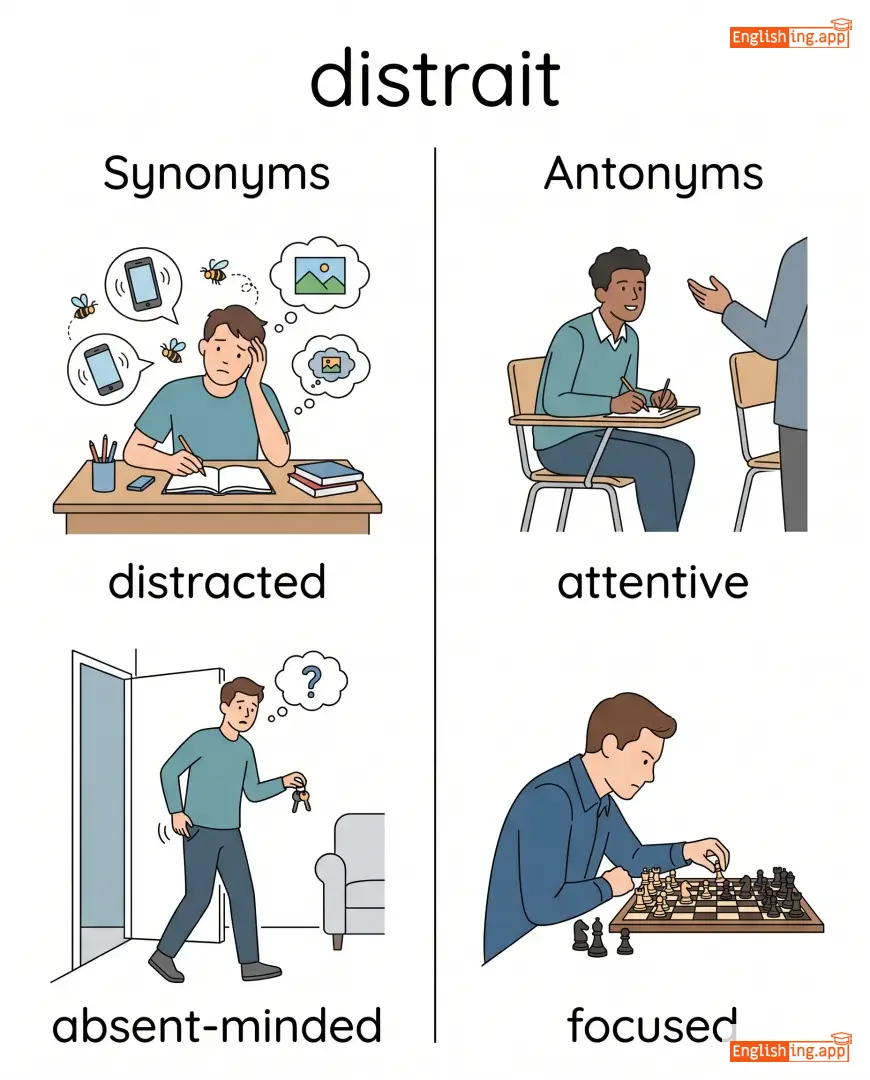
distracted, absent-minded, preoccupied, unfocused
••••••
|
attentive, focused
••••••
|
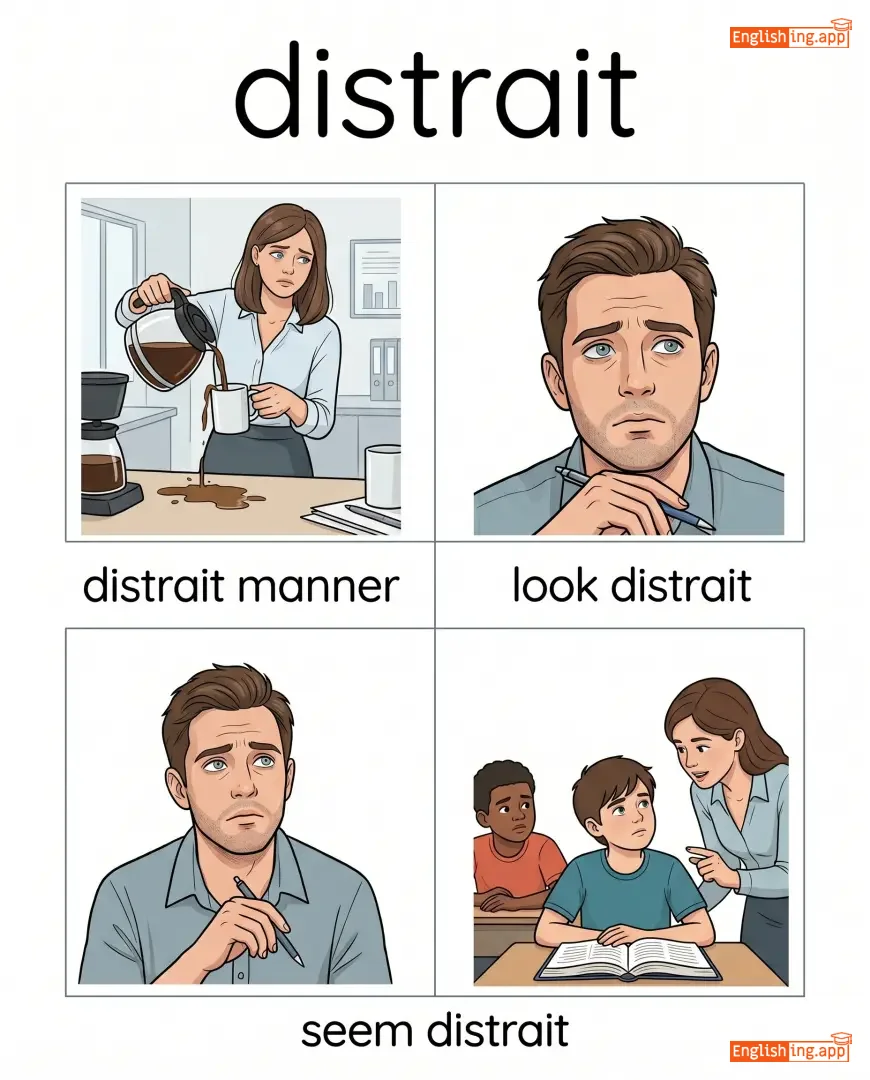
distrait manner, look distrait, seem distrait
••••••
|
Distraitは 'ぼんやりした' という意味 — 心がどこかに行っている感じ。
••••••
|
|
↔️
••••••
|
/daɪˈvɜːrdʒ/
verb
••••••
|

|
- •••••• |
diverged
••••••
|
diverged
••••••
|
diverges
••••••
|
diverging
••••••
|
to separate from a path, opinion, or standard
••••••
|
The two friends began to diverge in their career choices. |
- •••••• |
diverge from the norm |
to act differently than what is usual or expected
••••••
|
- •••••• |
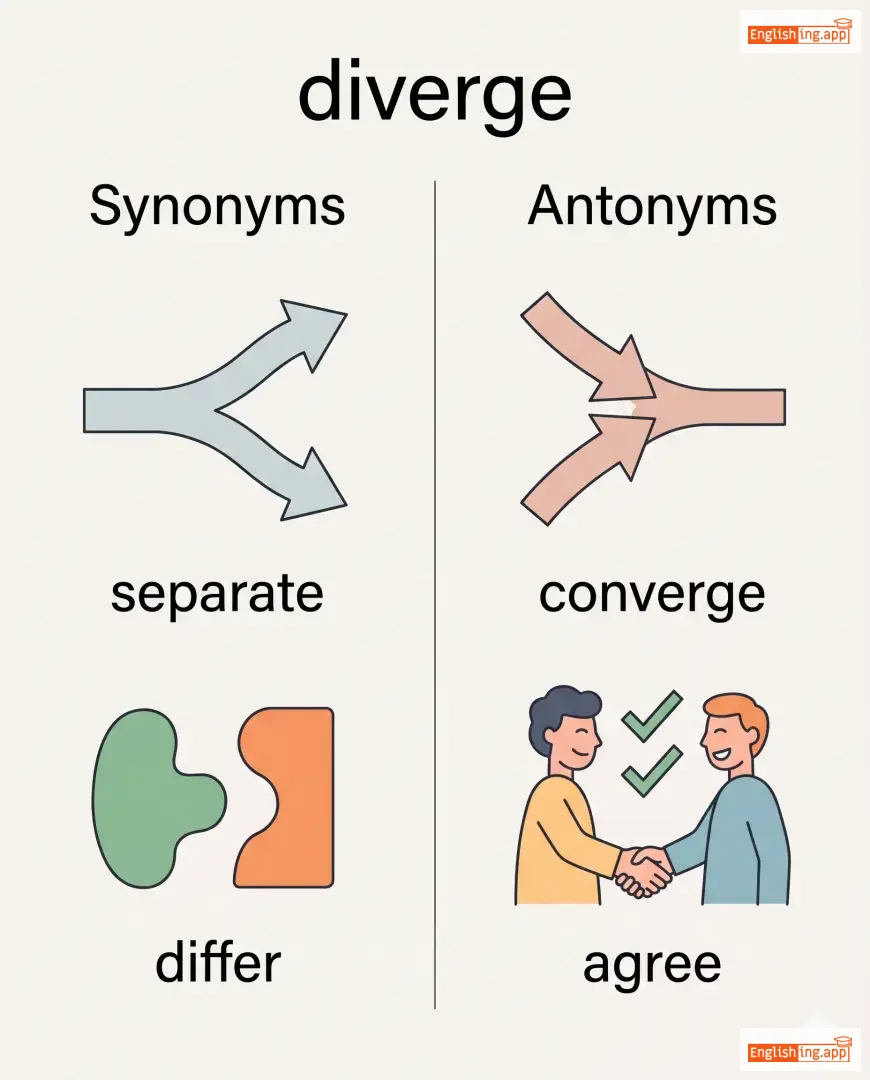
separate, differ, deviate, split, branch
••••••
|
converge, agree, coincide
••••••
|
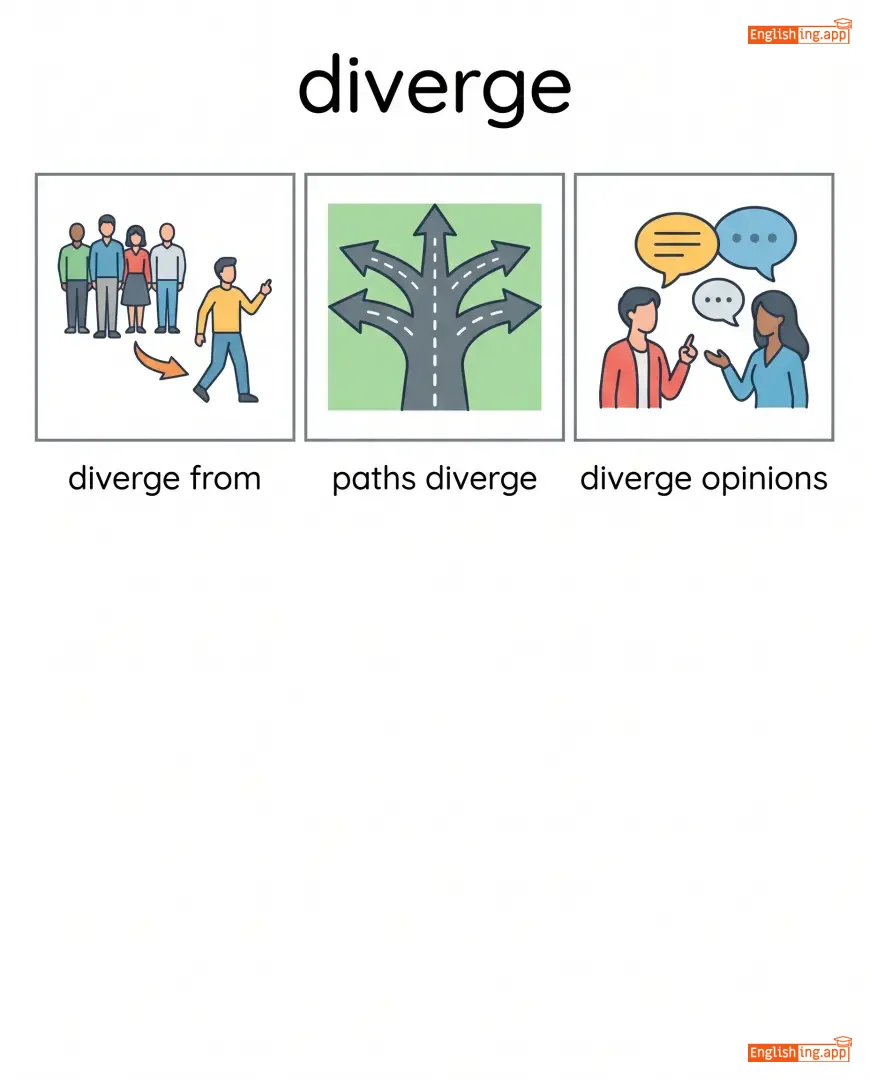
diverge from, paths diverge, diverge opinions, diverge sharply
••••••
|
No •••••• |
|
📉
••••••
|
/daɪˈvɛst/
verb
••••••
|

|
- •••••• |
divested
••••••
|
divested
••••••
|
divests
••••••
|
divesting
••••••
|
to strip away possessions, rights, or assets; to rid oneself of
••••••
|
The company decided to divest its unprofitable division. |
- •••••• |
divest oneself of |
to rid oneself of something unwanted
••••••
|
- •••••• |
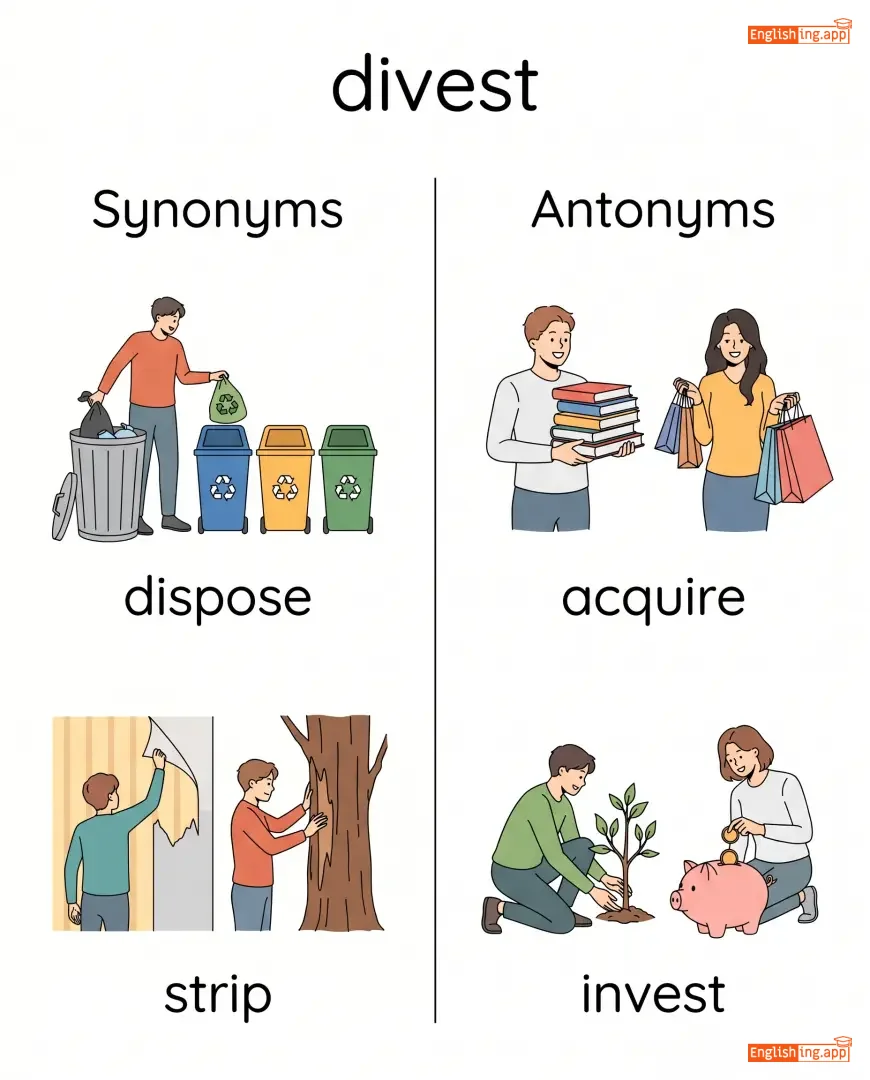
dispose, strip, rid, relinquish, sell off
••••••
|
acquire, invest, keep
••••••
|
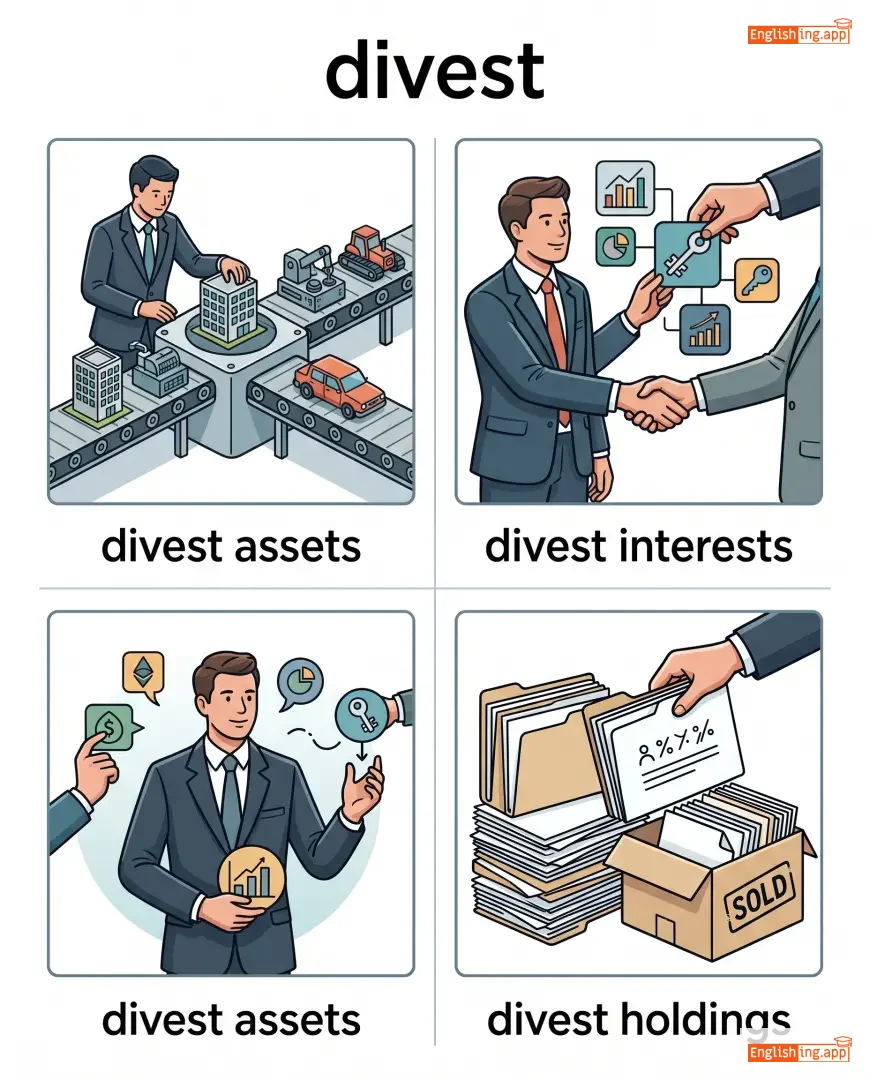
divest assets, divest interests, divest holdings, divest company
••••••
|
No •••••• |
|
🕵️
••••••
|
/daɪˈvʌldʒ/
verb
(ディヴァルジ)
••••••
|
|
明らかにする
akiraka ni suru
••••••
|
divulged
ディヴァルジド
••••••
|
divulged
ディヴァルジド
••••••
|
divulges
ディヴァルジズ
••••••
|
divulging
ディヴァルジング
••••••
|
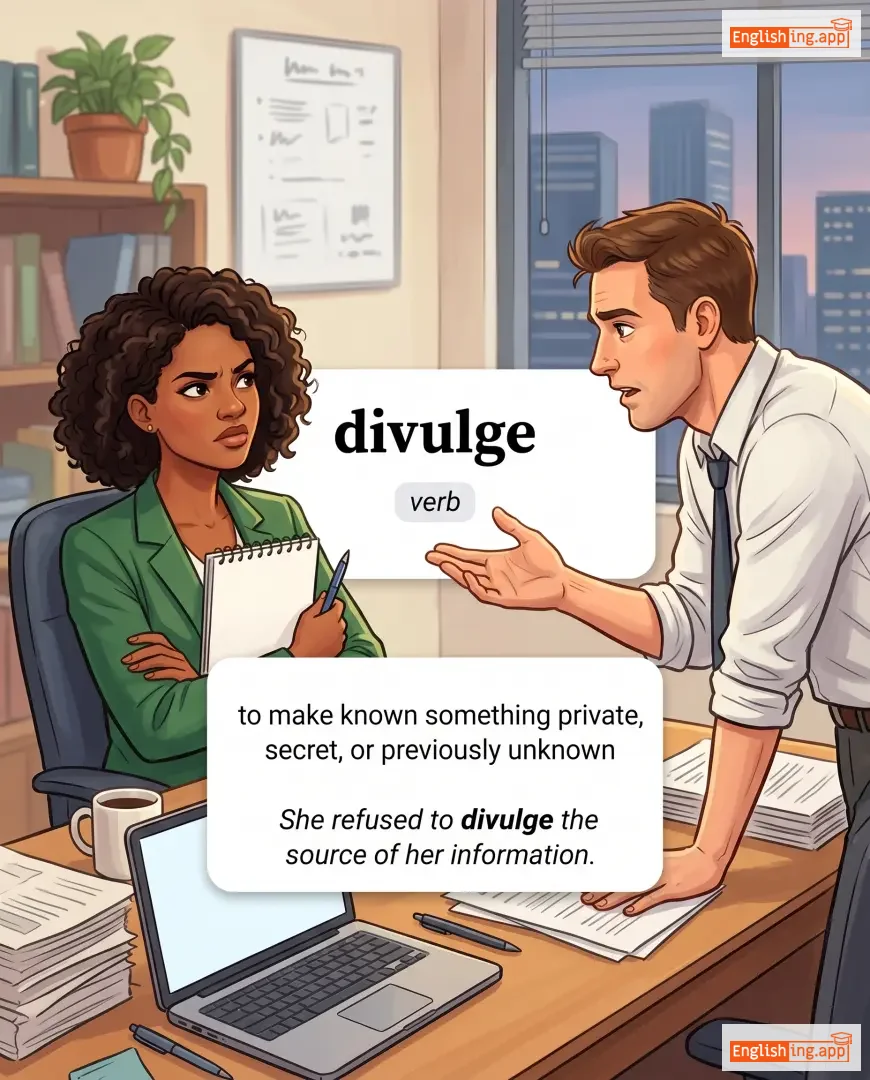
to make known something private, secret, or previously unknown
••••••
|
She refused to divulge the source of her information.
彼女は情報の源を明らかにすることを拒否しました。
••••••
|
彼女は情報の源を明らかにすることを拒否しました。
Kanojo wa jōhō no minamoto o akiraka ni suru koto o kyohi shimashita.
••••••
|
- •••••• | - •••••• | - •••••• |
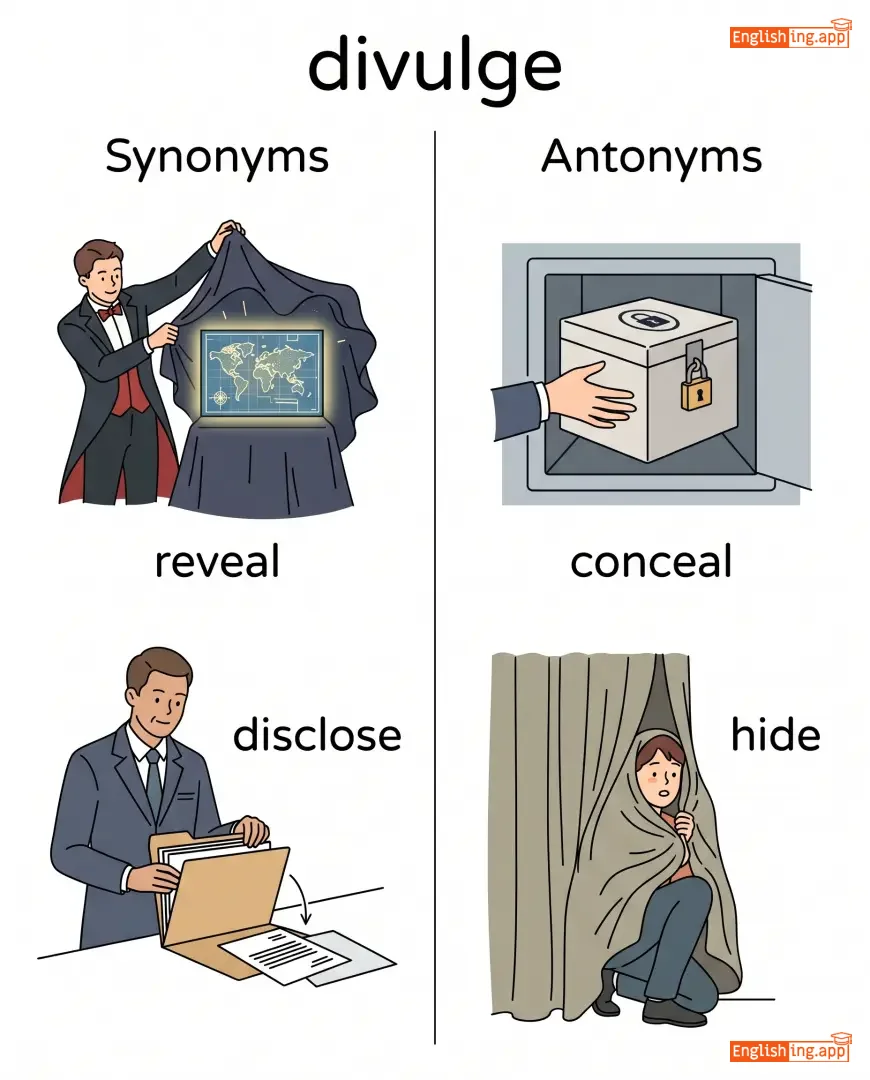
reveal, disclose, uncover, expose, betray
••••••
|
conceal, hide, withhold
••••••
|
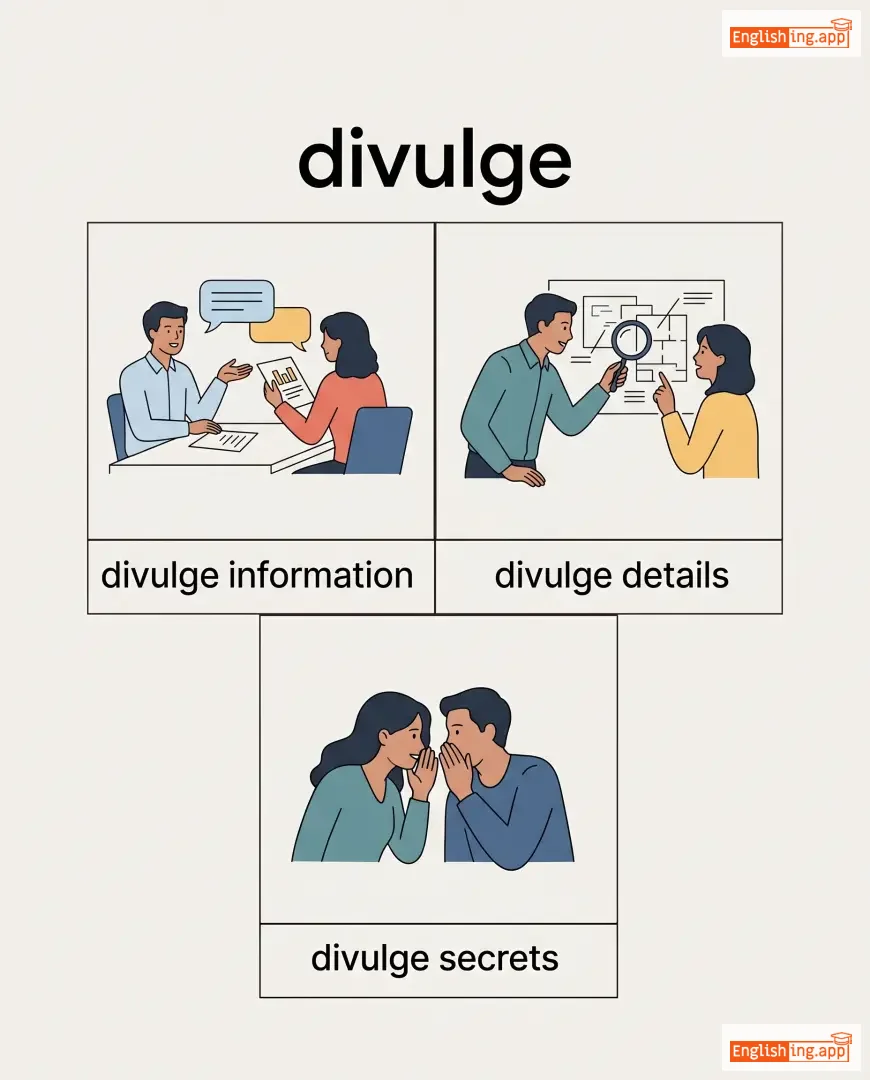
divulge information, divulge details, divulge secrets, refuse to divulge
••••••
|
Divulge は公開するという意味 - '明らかにする' と考えて、秘密を公開することを想像する。
••••••
|
|
📖
••••••
|
/ˌdɒktrɪˈnɛər/
adjective
(ドクトリネア)
••••••
|

|
教条主義者
kyōjō shugi-sha
••••••
|
- •••••• | - •••••• | - •••••• | - •••••• |
stubbornly devoted to a theory or doctrine without regard to practical considerations
••••••
|
His doctrinaire approach to politics alienated many supporters. |
彼の教条主義的な政治アプローチは、多くの支持者を遠ざけた。
Kare no kyōjō shugi-teki na seiji apurōchi wa, ōku no shijisha o tōzaketa.
••••••
|
- •••••• | - •••••• | - •••••• |
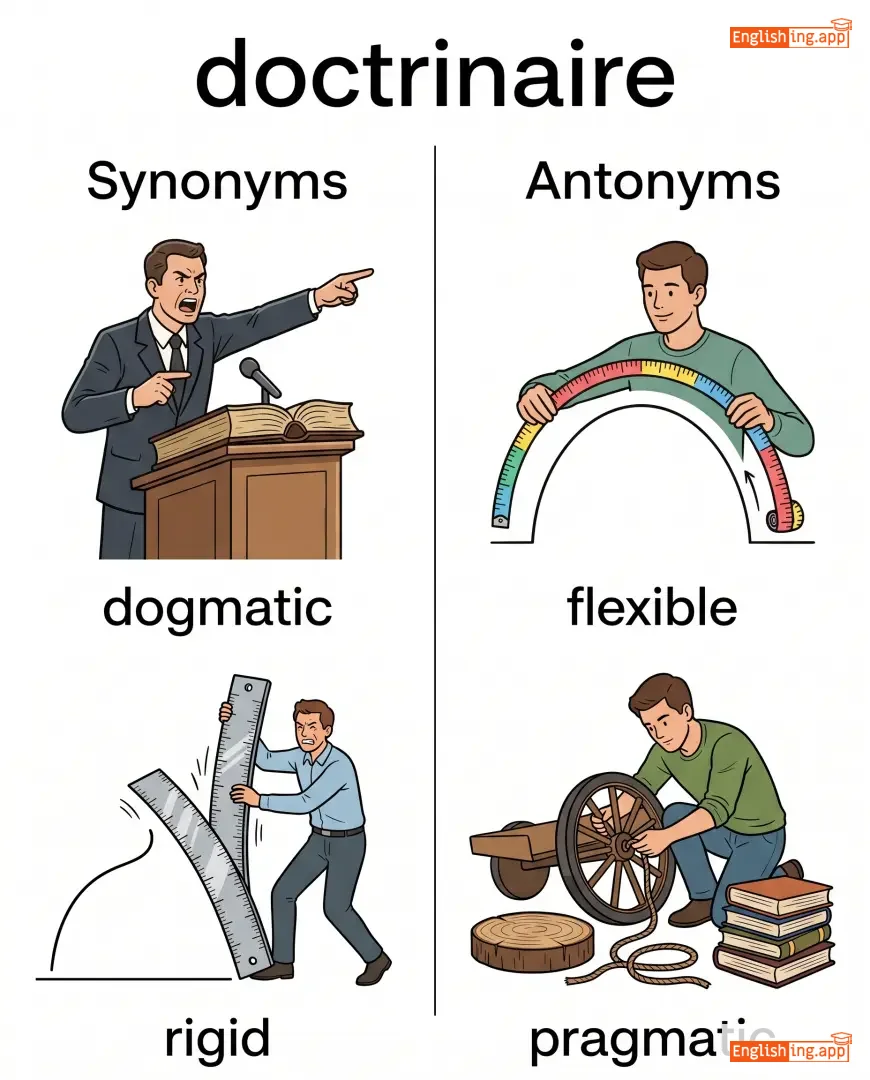
dogmatic, rigid, inflexible, theoretical, uncompromising
••••••
|
flexible, pragmatic, practical
••••••
|
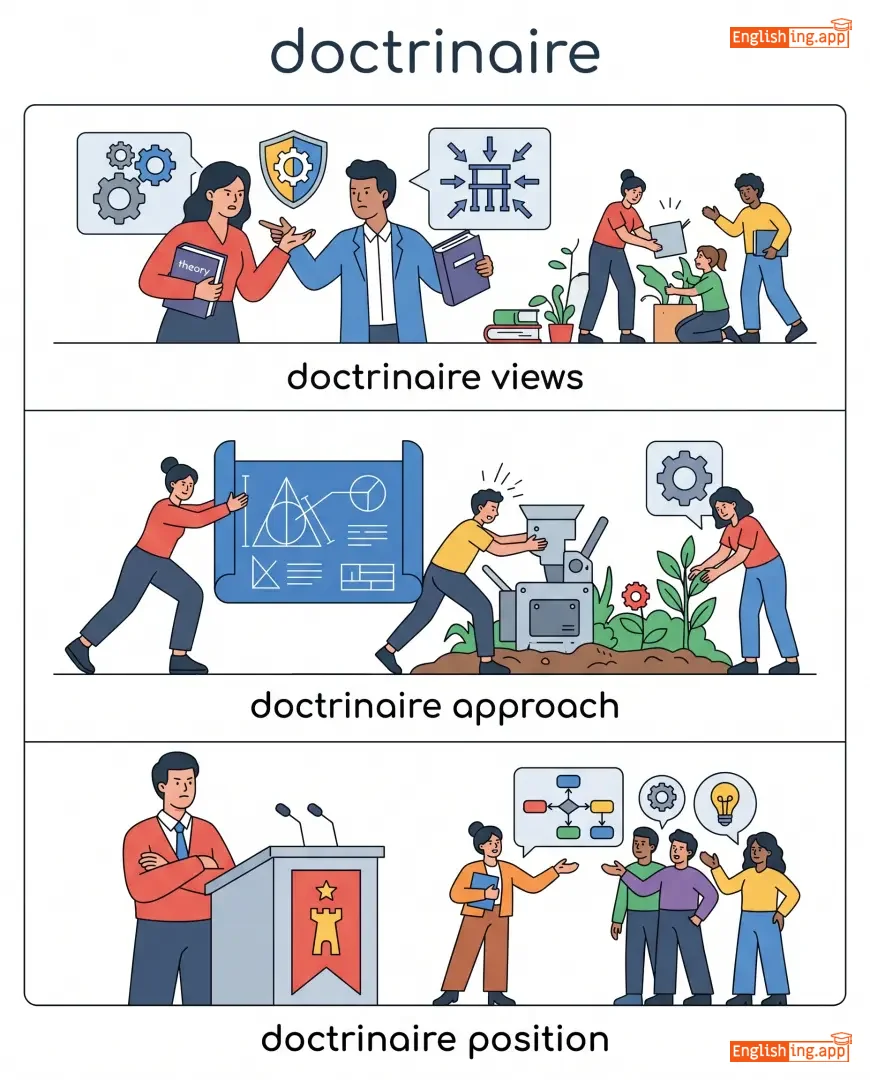
doctrinaire views, doctrinaire approach, doctrinaire position
••••••
|
Doctrinaireは教条主義者 - 理論を実践より重視する
••••••
|
|
📄
••••••
|
/ˈdɒkjʊmənt/
noun/verb
(ドキュメント)
••••••
|


|
文書
bunsho
••••••
|
documented
ドキュメントされた
••••••
|
documented
ドキュメントされた
••••••
|
documents
ドキュメント
••••••
|
documenting
ドキュメントしている
••••••
|
Noun: A written, printed, or electronic record that provides information or evidence. Verb: To record information in written or electronic form.
••••••
|
She carefully documented all the expenses of the trip.
彼女は旅行のすべての費用を慎重にドキュメントした。
••••••
|
彼女は旅行のすべての費用を慎重にドキュメントした。
Kanojo wa ryokō no subete no hiyō o shinchō ni dokyumento shita.
••••••
|
official document
公式ドキュメント
••••••
|
An authoritative or legal record recognized by an institution.
••••••
|
公式ドキュメント
Kōshiki dokyumento
••••••
|
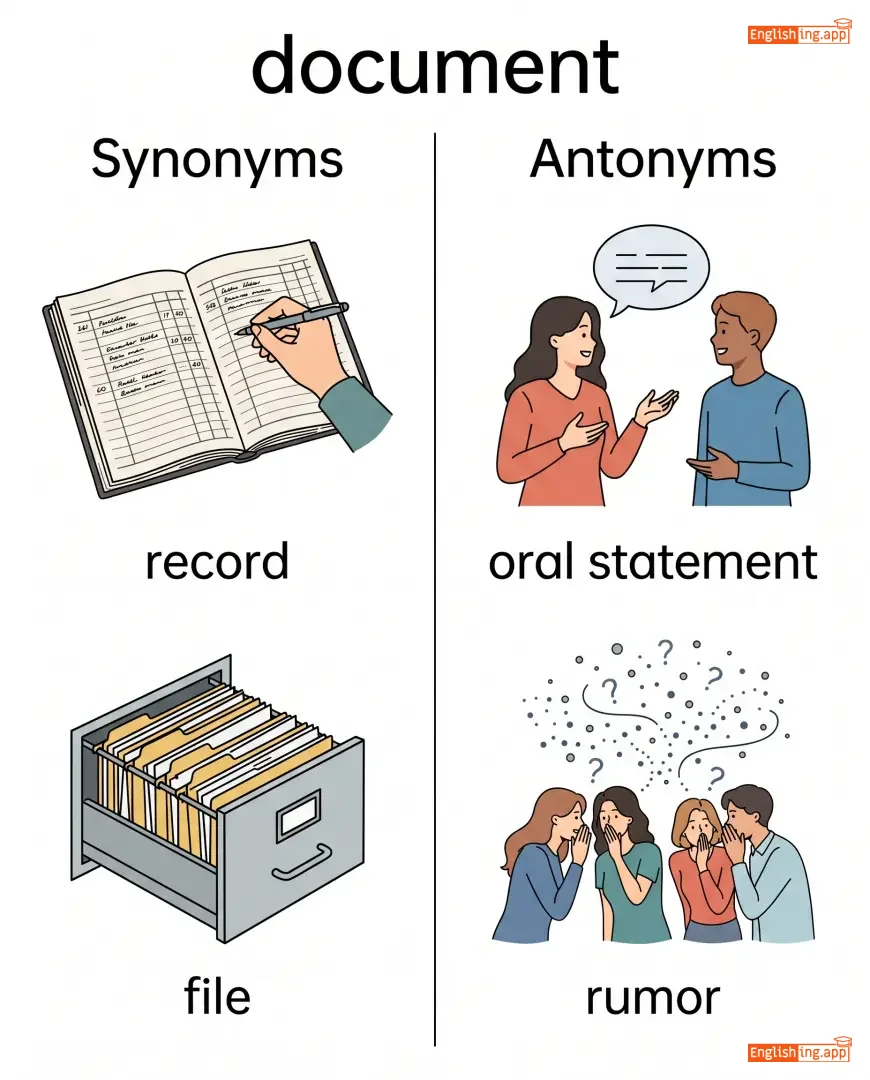
record, file, paper, certificate, report
••••••
|
oral statement, rumor
••••••
|
legal document, official document, document file, document evidence
••••••
|
Documentは文書です—重要なことを記録してください!
••••••
|
|
📜
••••••
|
/ˈdɒɡərəl/
noun
(ドガレル)
••••••
|

|
低俗な詩
teizoku na shi
••••••
|
- •••••• | - •••••• | - •••••• | - •••••• |
Comic or irregular verse, often poorly constructed and lacking in artistic quality.
••••••
|
The poet’s work was dismissed as mere doggerel by the critics. |
詩人の作品は批評家によって単なる低俗な詩として却下された。
Shijin no sakuhin wa hihyōka ni yotte tannaru teizoku na shi toshite kyakka sareta.
••••••
|
- •••••• | - •••••• | - •••••• |
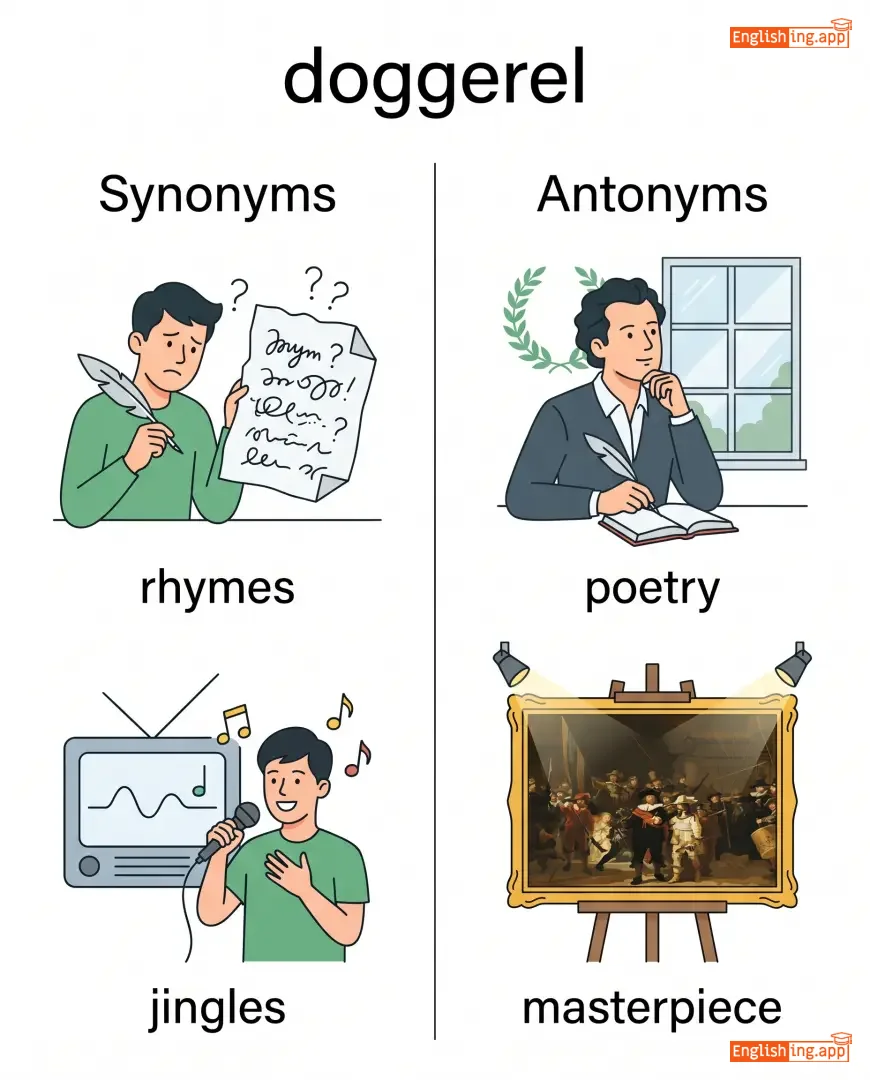
rhymes, jingles, verses, ballad, limerick
••••••
|
poetry, masterpiece, classic
••••••
|
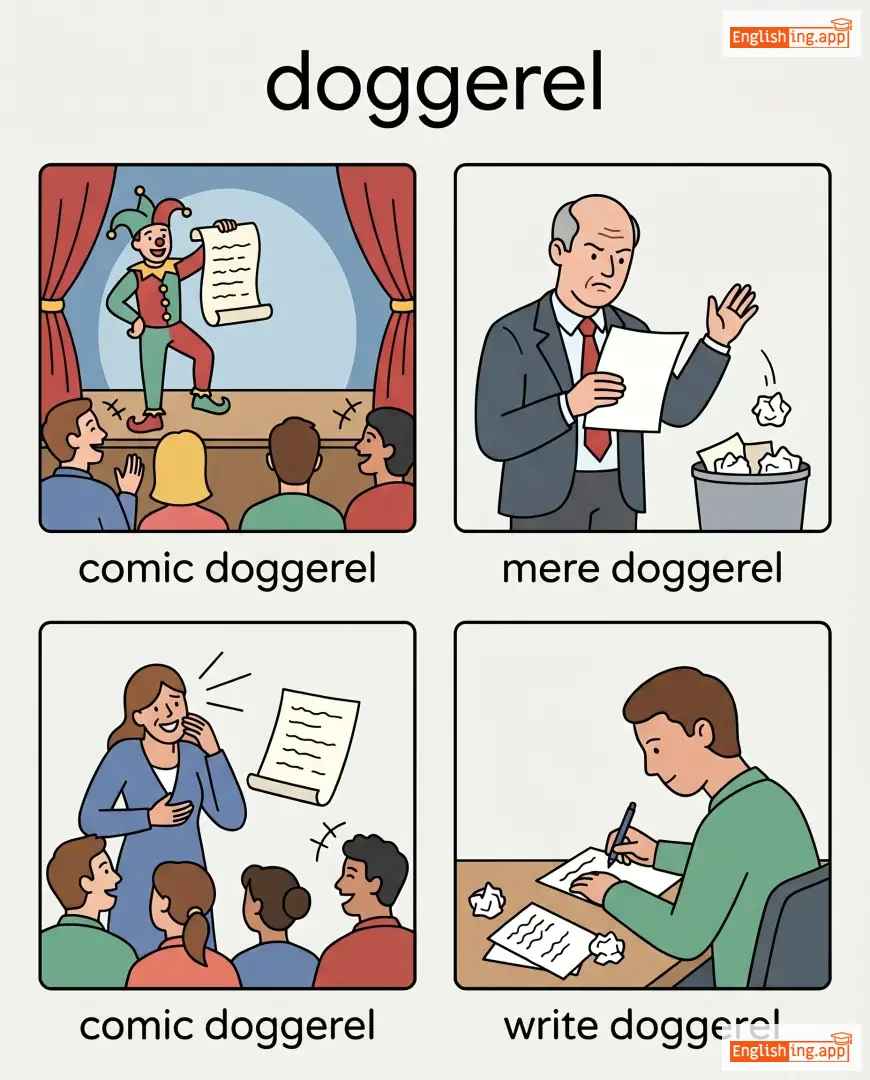
comic doggerel, mere doggerel, write doggerel, silly doggerel
••••••
|
Doggerel は低俗な詩 - 単なる冗談
••••••
|
|
🗣️
••••••
|
/dɒɡˈmætɪk/
adjective
(ドグマティック)
••••••
|
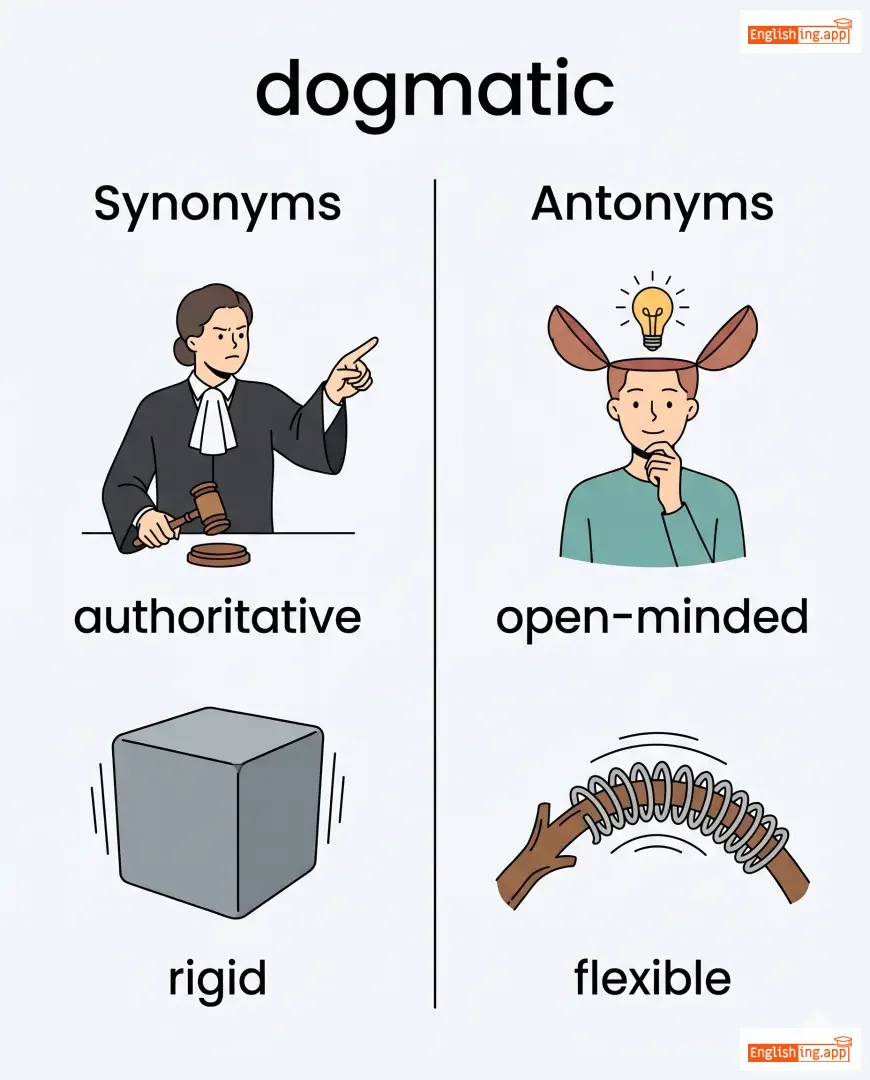
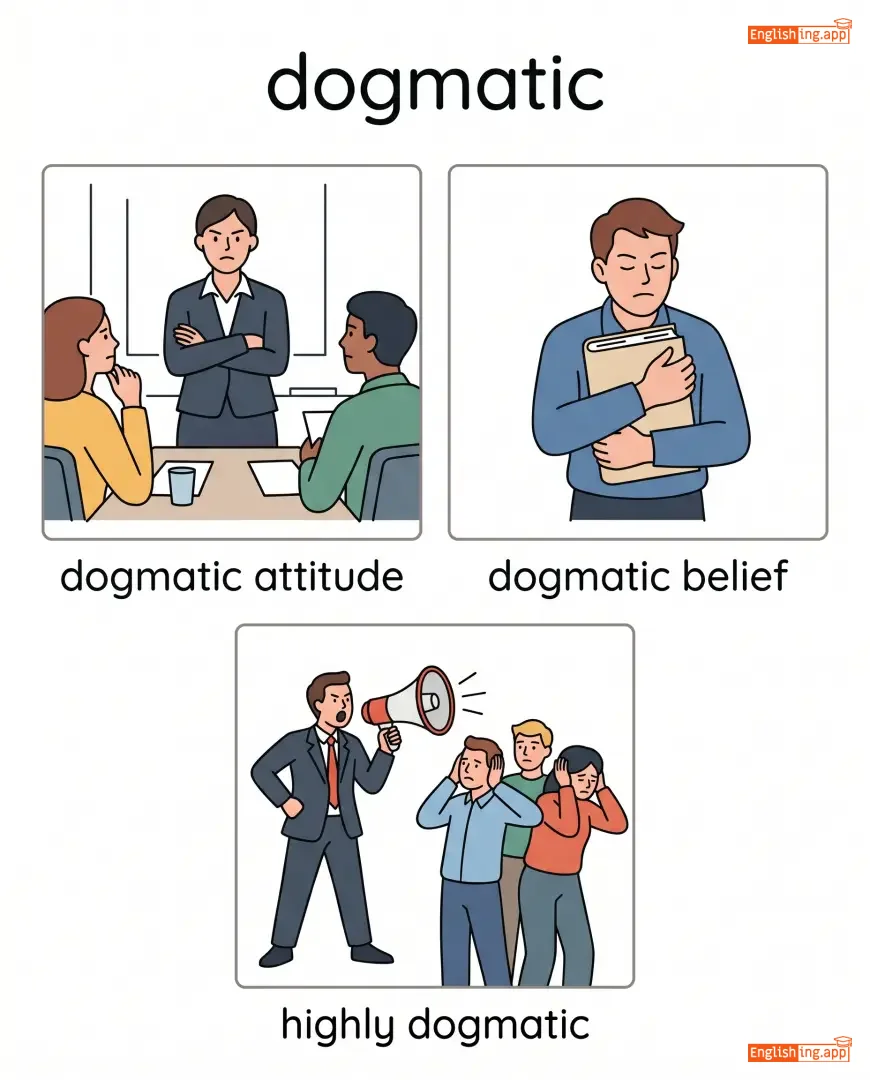
|
ドグマティックな; 自分の信念に固執した; 原則を絶対的な真実として押し付ける傾向がある
dogumatikkuna
••••••
|
- •••••• | - •••••• | - •••••• | - •••••• |
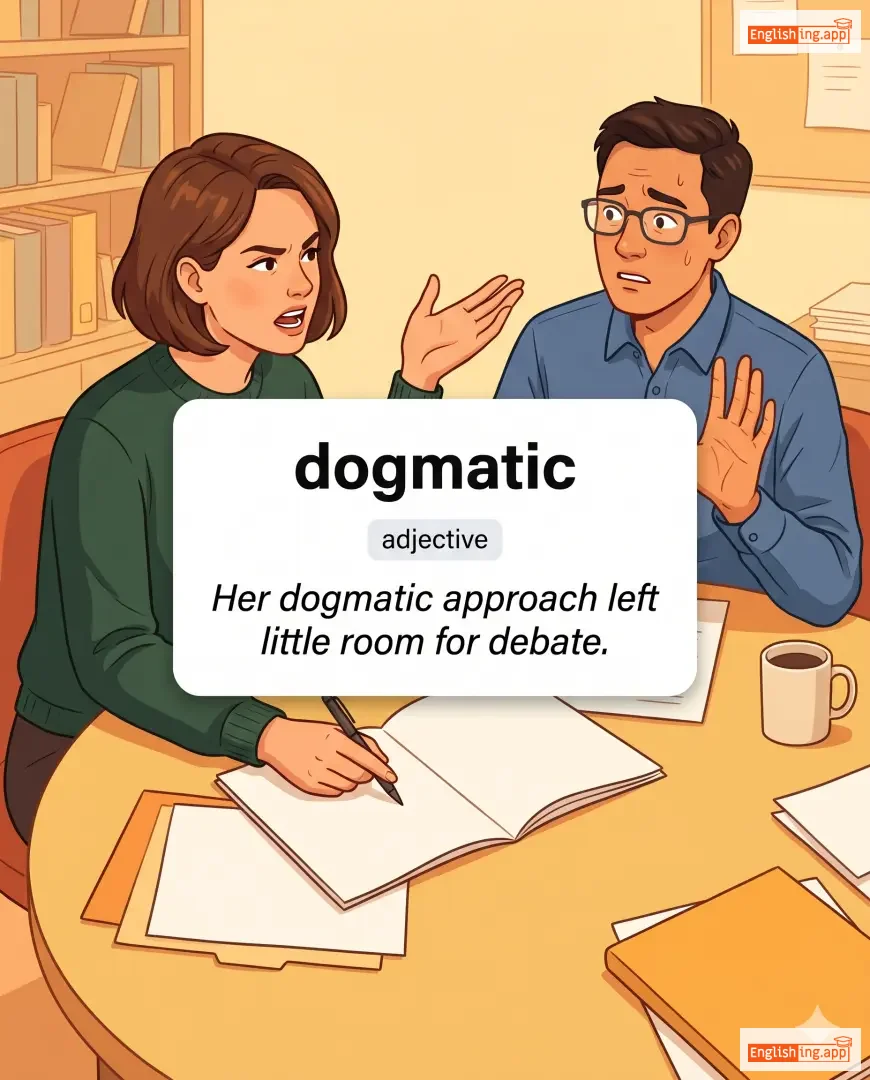
opinionated; rigid in beliefs; inclined to lay down principles as incontrovertibly true
••••••
|
He has very dogmatic views about politics.
彼は政治について非常にドグマティックな見解を持っています。
••••••
|
彼は政治について非常にドグマティックな見解を持っています。
Kare wa seiji ni tsuite hijō ni dogumatikkuna kenka o motteimasu.
••••••
|
- •••••• | - •••••• | - •••••• |
opinionated, doctrinaire, rigid, inflexible, authoritarian
••••••
|
flexible, open-minded, tolerant, receptive
••••••
|
dogmatic approach, dogmatic belief, dogmatic person
••••••
|
Dogmatic sounds like 'dog' + 'mat' – a dog who insists on staying on its mat, just like dogmatic beliefs stay firm.
••••••
|
|
😴
••••••
|
/ˈdɔːrmənt/
adjective
••••••
|
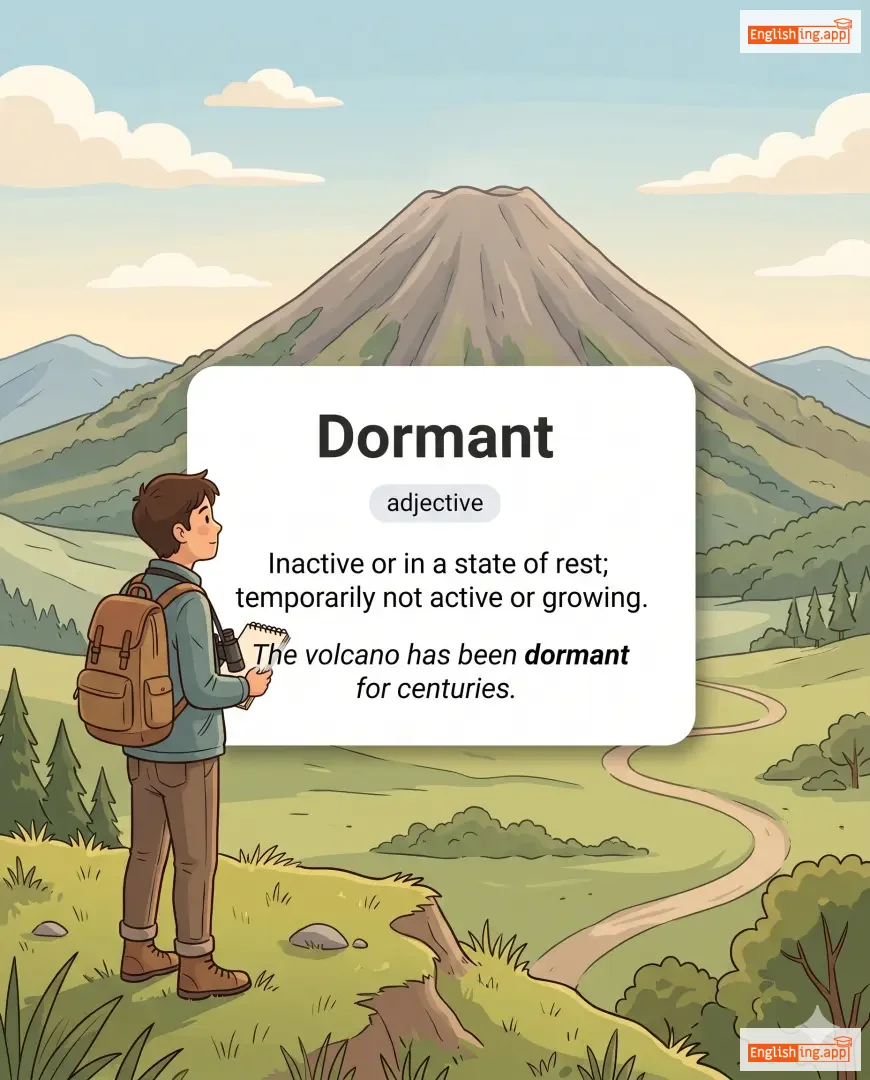
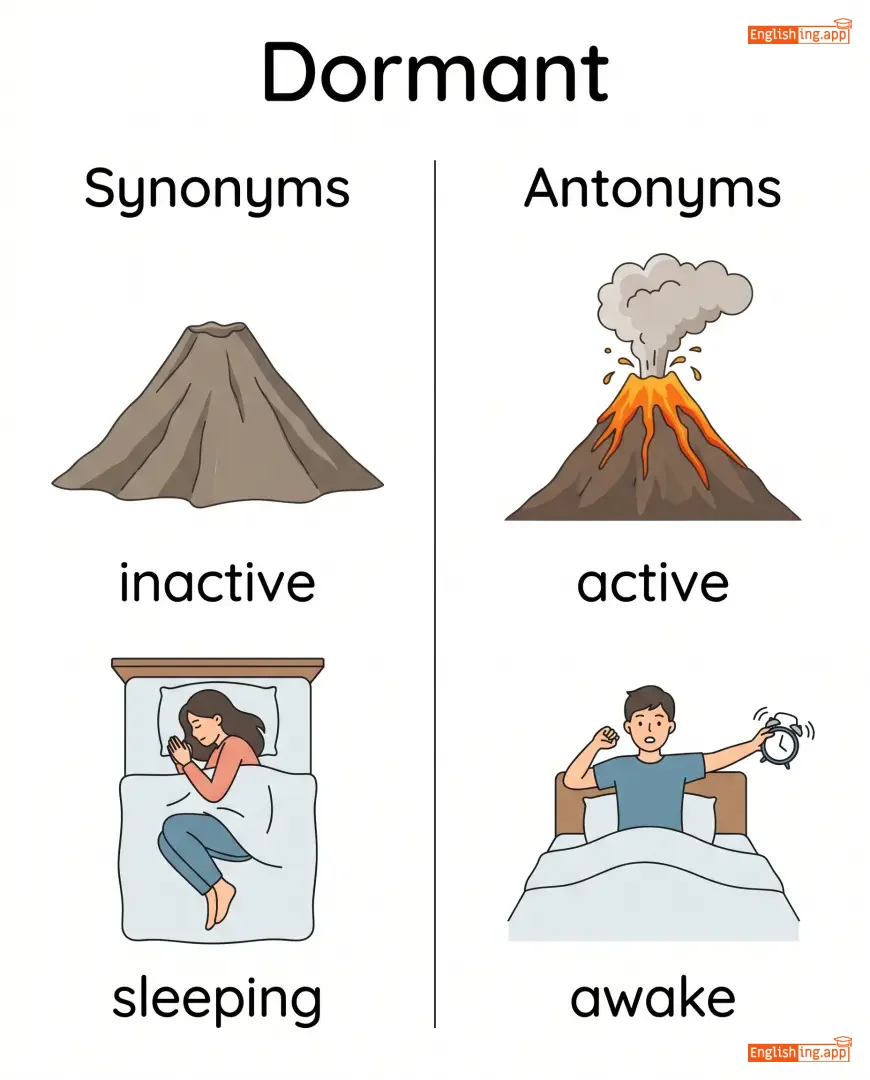
|
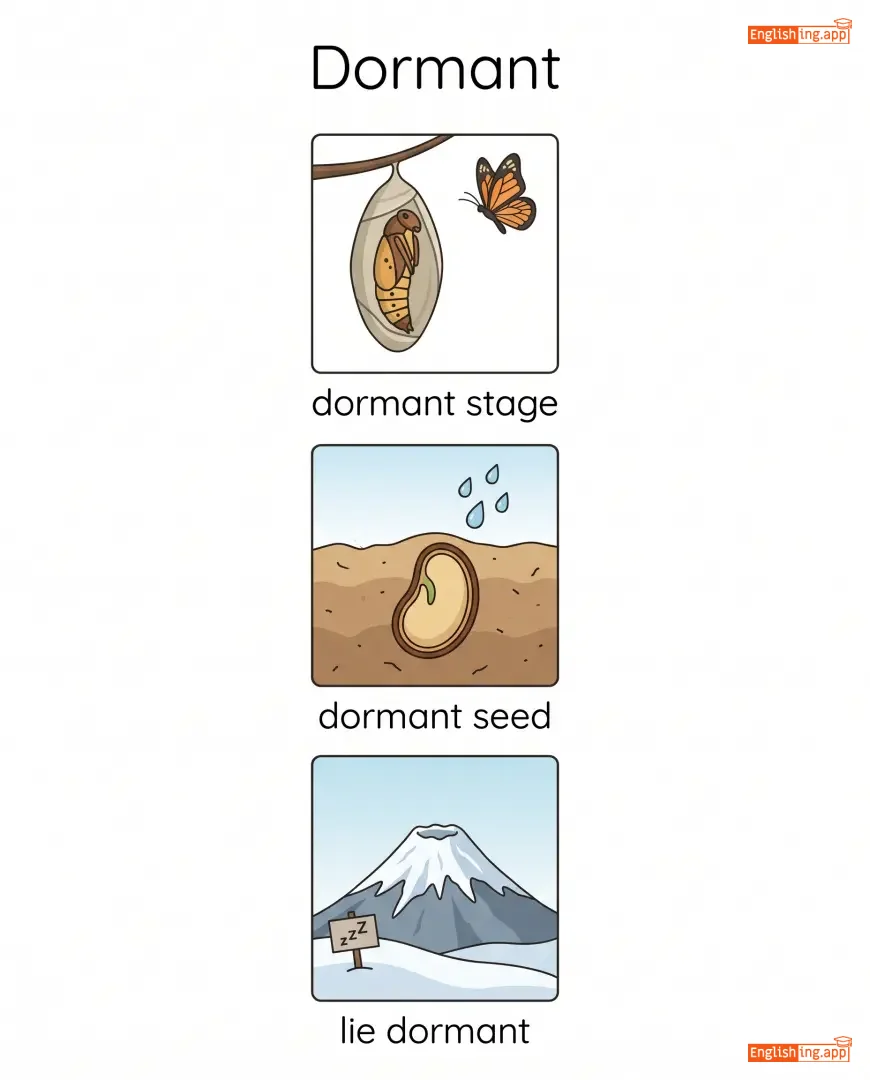
- •••••• | - •••••• | - •••••• | - •••••• | - •••••• |
Inactive or in a state of rest; temporarily not active or growing.
••••••
|
The volcano has been dormant for centuries. |
- •••••• |
lie dormant |
to remain inactive or hidden for a period of time
••••••
|
- •••••• |
inactive, sleeping, latent, resting, inert
••••••
|
active, awake, lively
••••••
|
dormant stage, dormant seed, lie dormant, dormant volcano
••••••
|
No •••••• |
|
🗑️
••••••
|
/drɒs/
noun
(ドロス)
••••••
|

|
無駄なもの
mudanamono
••••••
|
- •••••• | - •••••• | - •••••• | - •••••• |
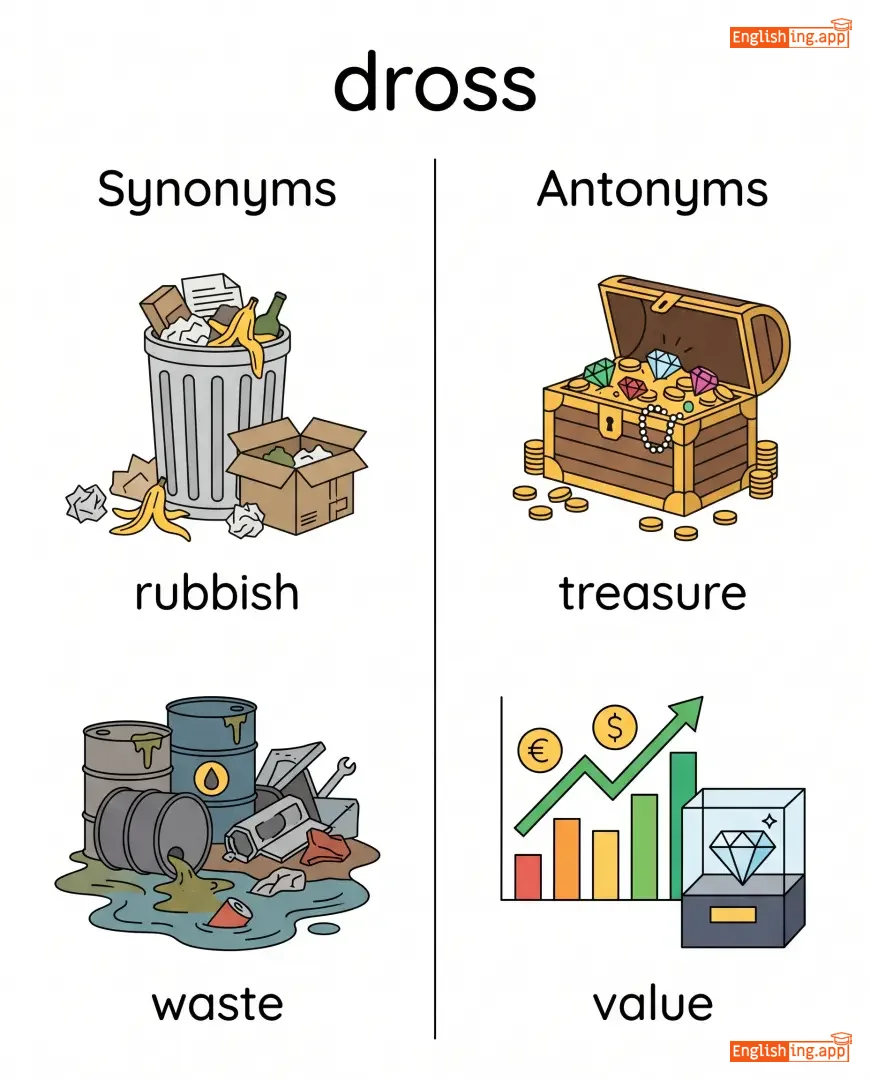
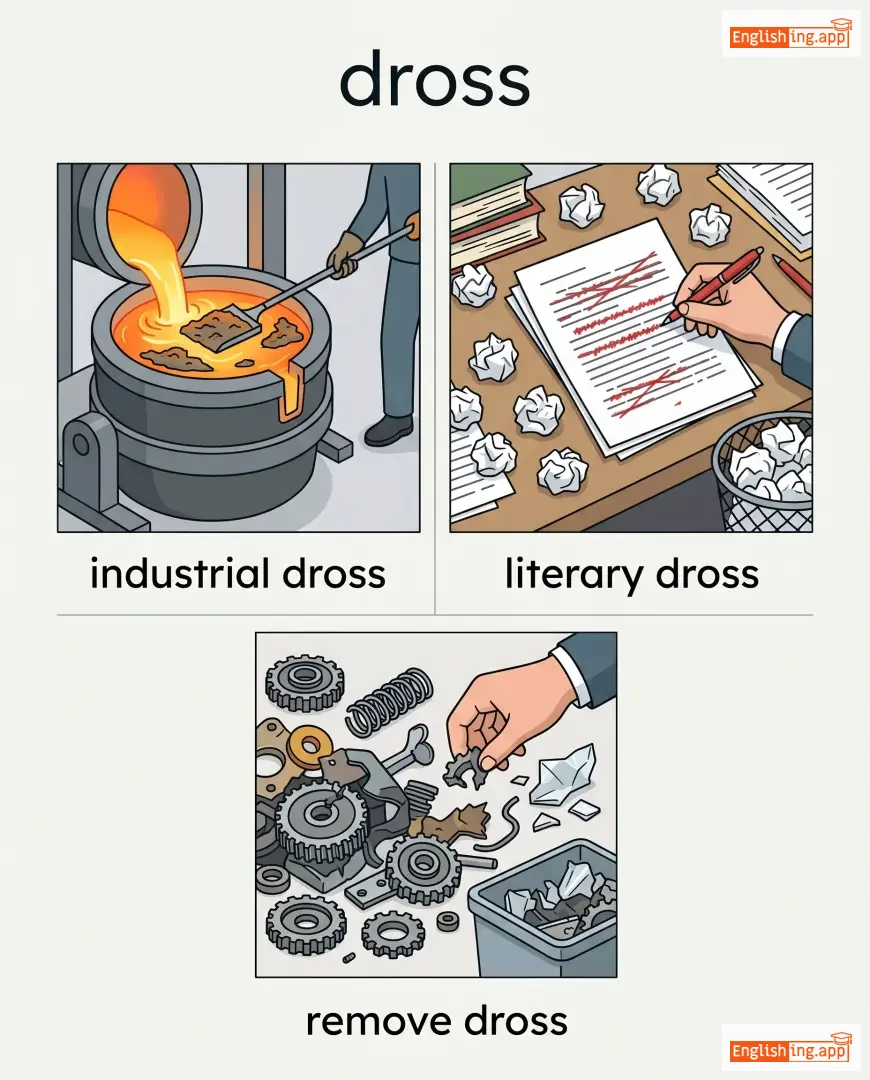
worthless or unwanted material; rubbish or impurities
••••••
|
Most of his early writings were considered dross. |
彼の初期のほとんどの作品は無駄なものと見なされていた。
Kare no shoki no hotondo no sakuhin wa mudanamono to minasa reteita.
••••••
|
- •••••• | - •••••• | - •••••• |
rubbish, waste, junk, trash, debris
••••••
|
treasure, value, worth
••••••
|
industrial dross, literary dross, remove dross
••••••
|
Drossは無駄なものを意味します – Dust + Rubbishで無駄なもの。
••••••
|
|
🎭
••••••
|
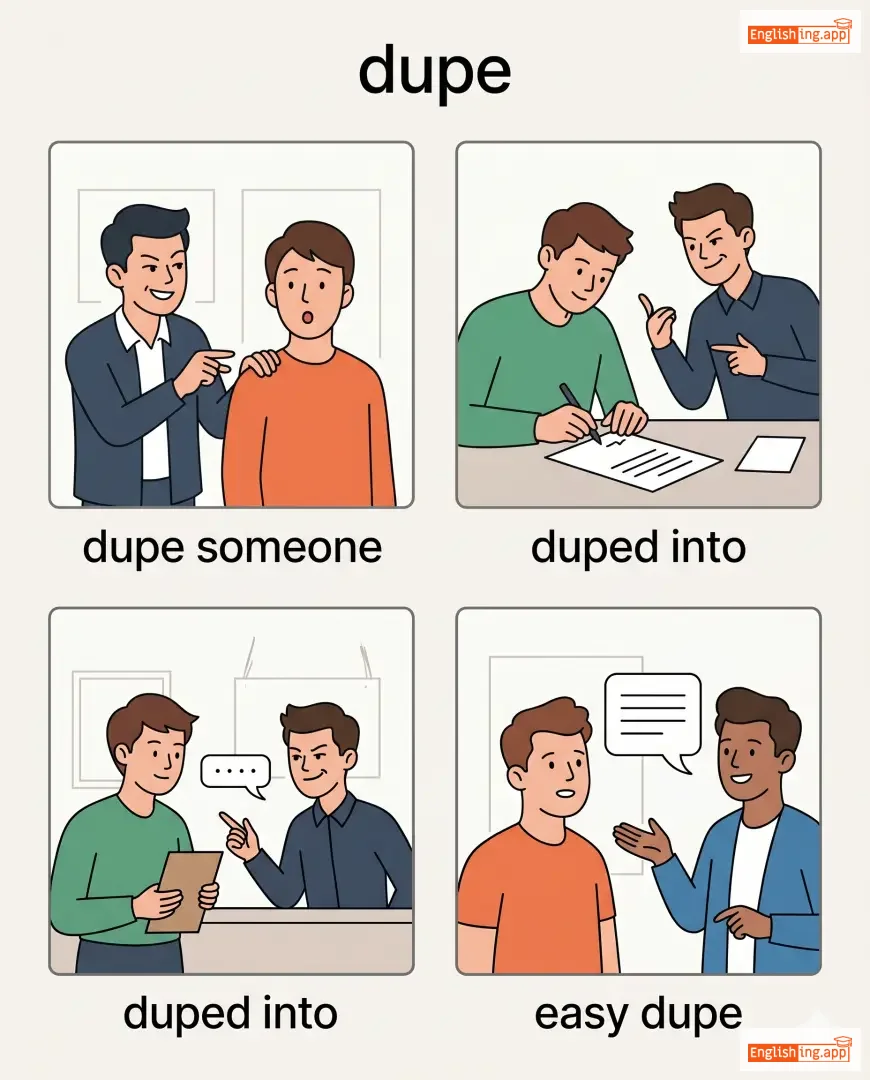
/djuːp/
verb
(デュープ)
••••••
|

|
だます
damasu
••••••
|
duped
デュープド
••••••
|
duped
デュープド
••••••
|
dupes
デュープス
••••••
|
duping
デューピング
••••••
|
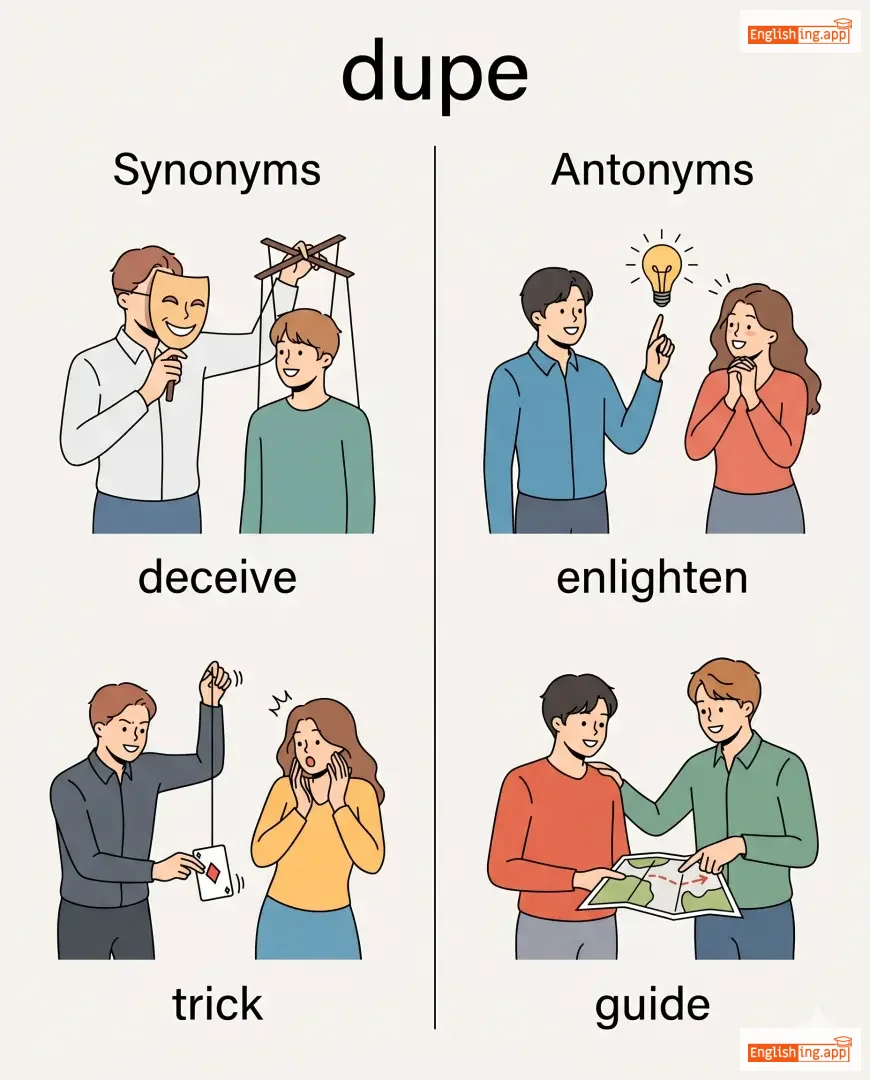
To deceive or trick someone into believing or doing something.
••••••
|
He was duped into buying a fake watch.
彼は偽物の時計を買うようにだまされました。
••••••
|
彼は偽物の時計を買うようにだまされました。
Kare wa nisemono no tokei o kau yō ni damasaremashita.
••••••
|
play for a dupe
ダマされるためにプレイする
••••••
|
to be tricked or deceived easily
••••••
|
簡単にだまされる
kantan ni damasareru
••••••
|
deceive, trick, fool, cheat, mislead
••••••
|
enlighten, guide, inform
••••••
|
dupe someone, duped into, easy dupe, unsuspecting dupe
••••••
|
Dupeはだますという意味 – 'You got duped'は「だまされた」ことを意味します。
••••••
|
|
😄
••••••
|
/ɪˈbʊliənt/
adjective
(エブリエント)
••••••
|
|
陽気な
youkina
••••••
|
- •••••• | - •••••• | - •••••• | - •••••• |
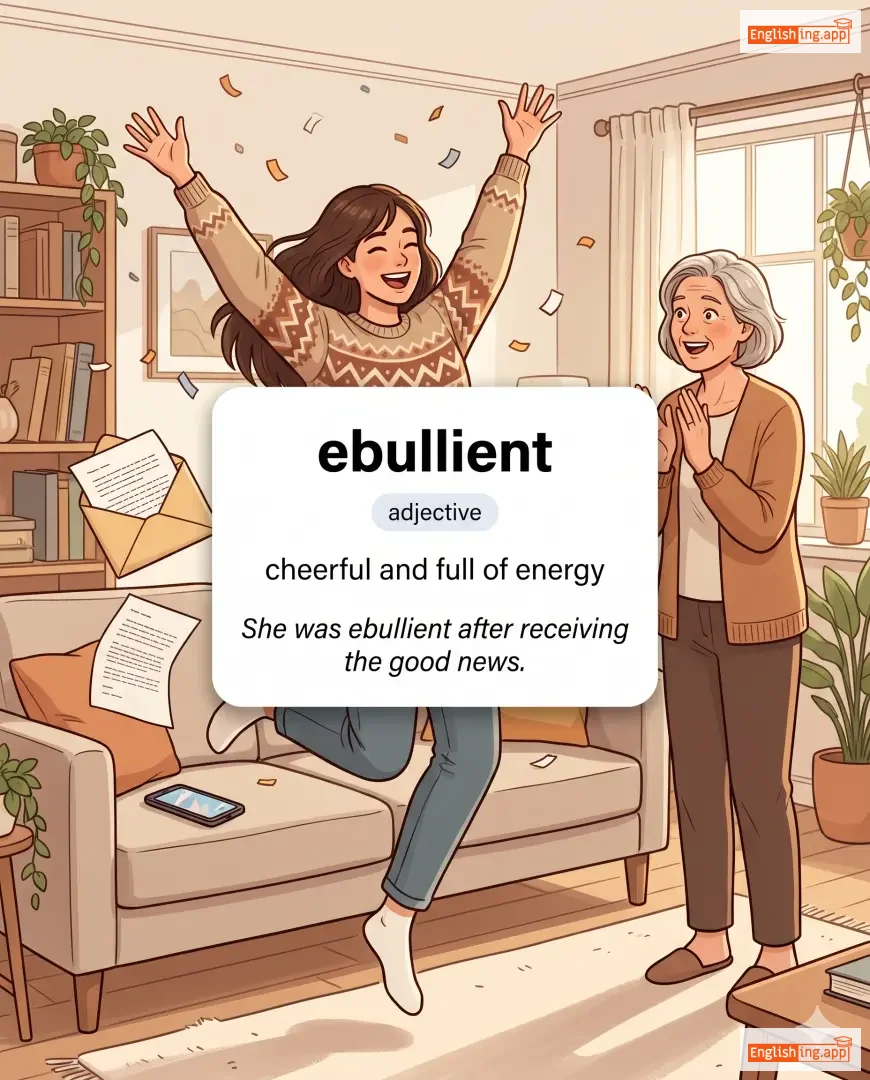
cheerful and full of energy
••••••
|
She was ebullient after receiving the good news. |
良いニュースを受け取った後、彼女は陽気でした。
Yoi nyu-su o uketotta ato, kanojo wa youki deshita.
••••••
|
- •••••• | - •••••• | - •••••• |
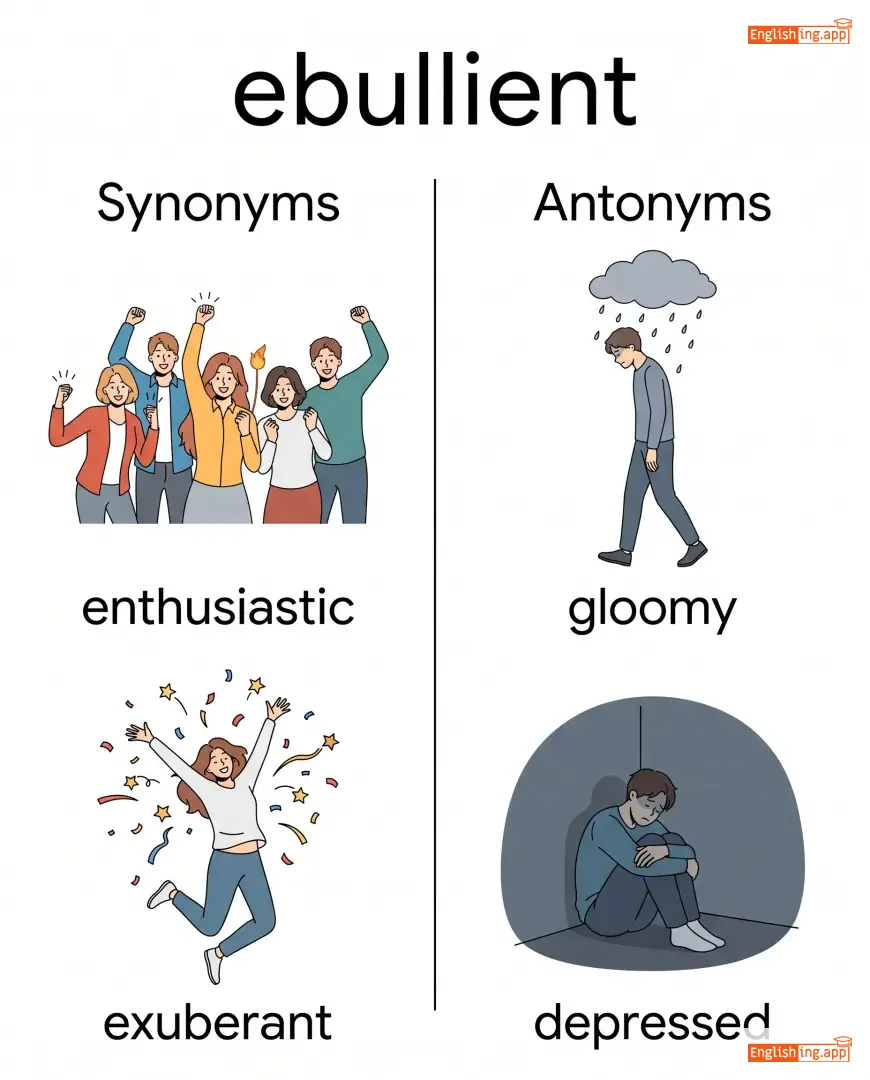
enthusiastic, exuberant, joyful, lively
••••••
|
gloomy, depressed, dull
••••••
|
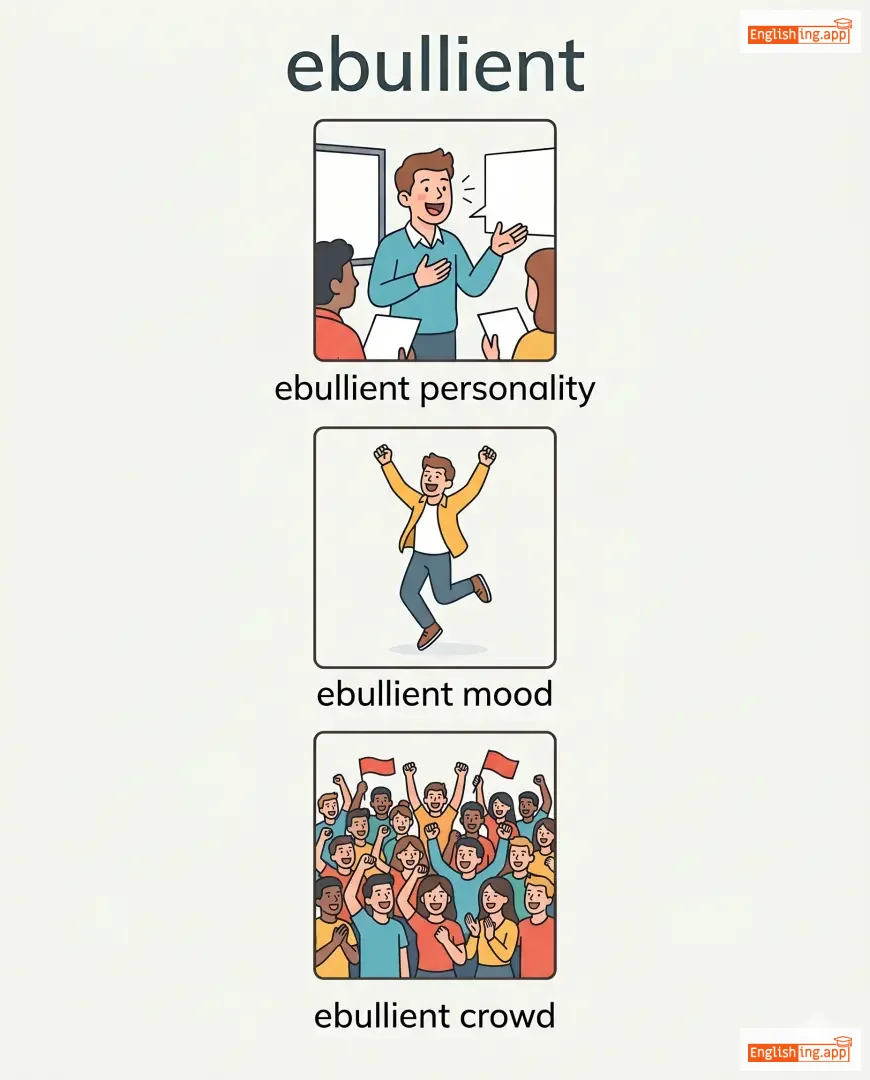
ebullient personality, ebullient mood, ebullient crowd
••••••
|
Ebullient は完全なエネルギー 😄 - 良いニュースを聞いた後、みんな陽気になる
••••••
|
|
🎨
••••••
|
/ɪˈklɛktɪk/
adjective
(エクレクティック)
••••••
|


|
エクレクティック
ekurekutikku
••••••
|
- •••••• | - •••••• | - •••••• | - •••••• |
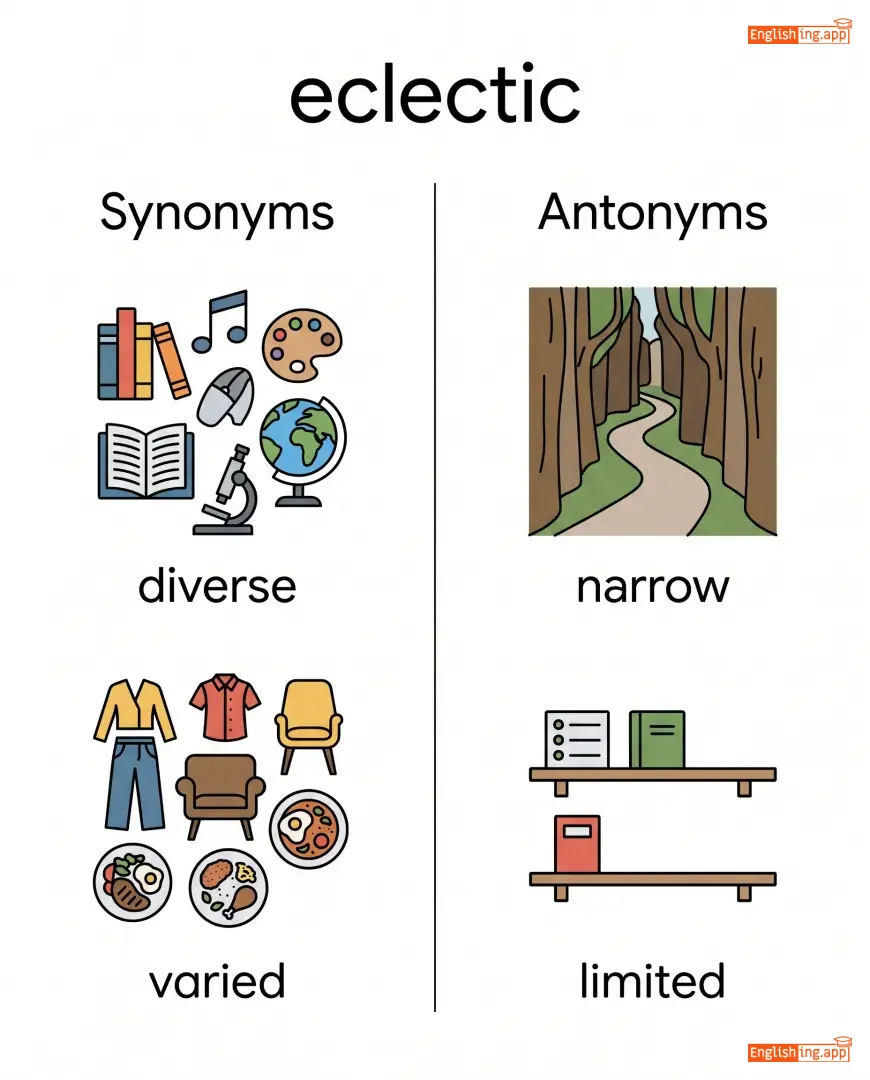
Selecting or deriving ideas, styles, or tastes from a broad and diverse range of sources.
••••••
|
Her taste in music is eclectic, ranging from classical to hip-hop.
彼女の音楽の好みはエクレクティックで、クラシックからヒップホップまで幅広いです。
••••••
|
彼女の音楽の好みはエクレクティックで、クラシックからヒップホップまで幅広いです。
Kanojo no ongaku no konomi wa ekurekutikku de, kurashikku kara hippu hoppu made habahiroi desu.
••••••
|
- •••••• | - •••••• | - •••••• |
diverse, varied, broad, wide-ranging, assorted
••••••
|
narrow, limited, exclusive
••••••
|
eclectic style, eclectic approach, eclectic taste, eclectic mix
••••••
|
エクレクティックな味覚は、さまざまなスタイルが混ざったキャンバスのようなものです。
••••••
|
|
🥂
••••••
|
/ˌɛfəˈvɛsəns/
noun
(エファーヴェセンス)
••••••
|

|
発泡
happou
••••••
|
- •••••• | - •••••• | - •••••• | - •••••• |
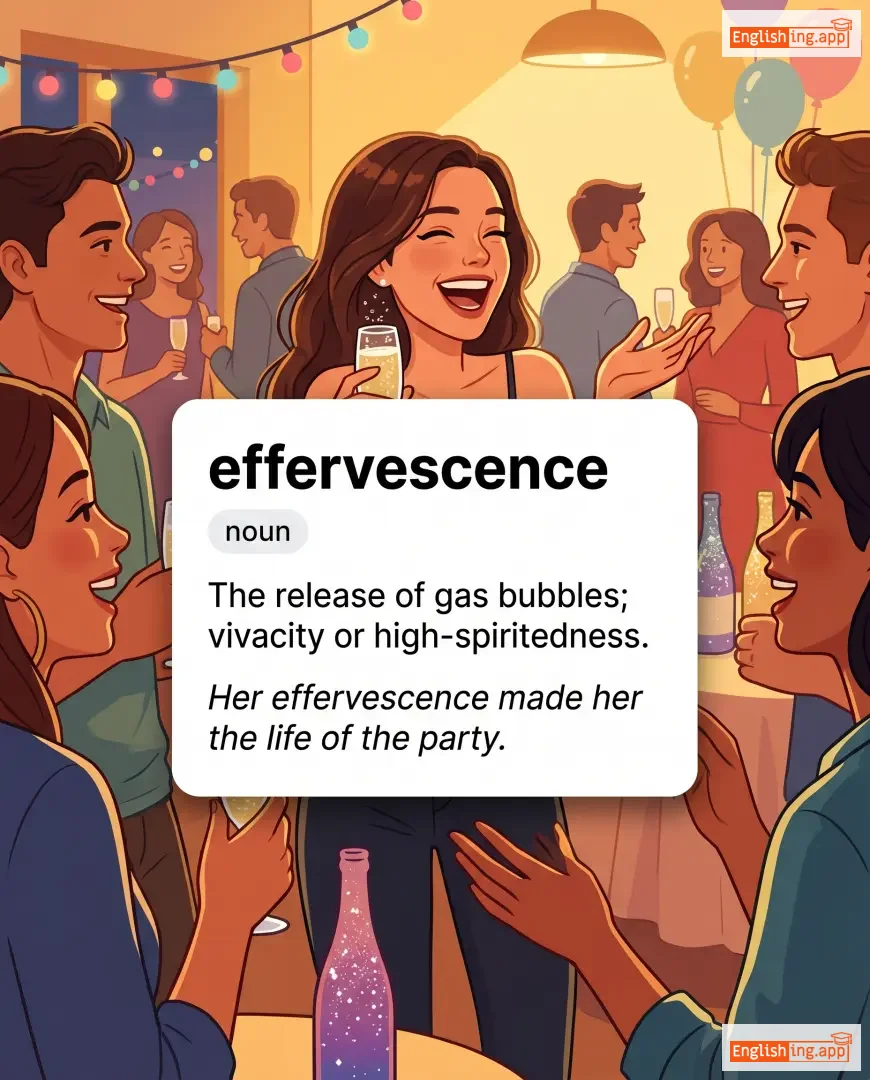
The release of gas bubbles; vivacity or high-spiritedness.
••••••
|
Her effervescence made her the life of the party.
彼女のエファーヴェセンスはパーティーの生命となった。
••••••
|
彼女の発泡はパーティーの生命となった。
Kanojo no happou wa pātii no seimei to natta.
••••••
|
- •••••• | - •••••• | - •••••• |
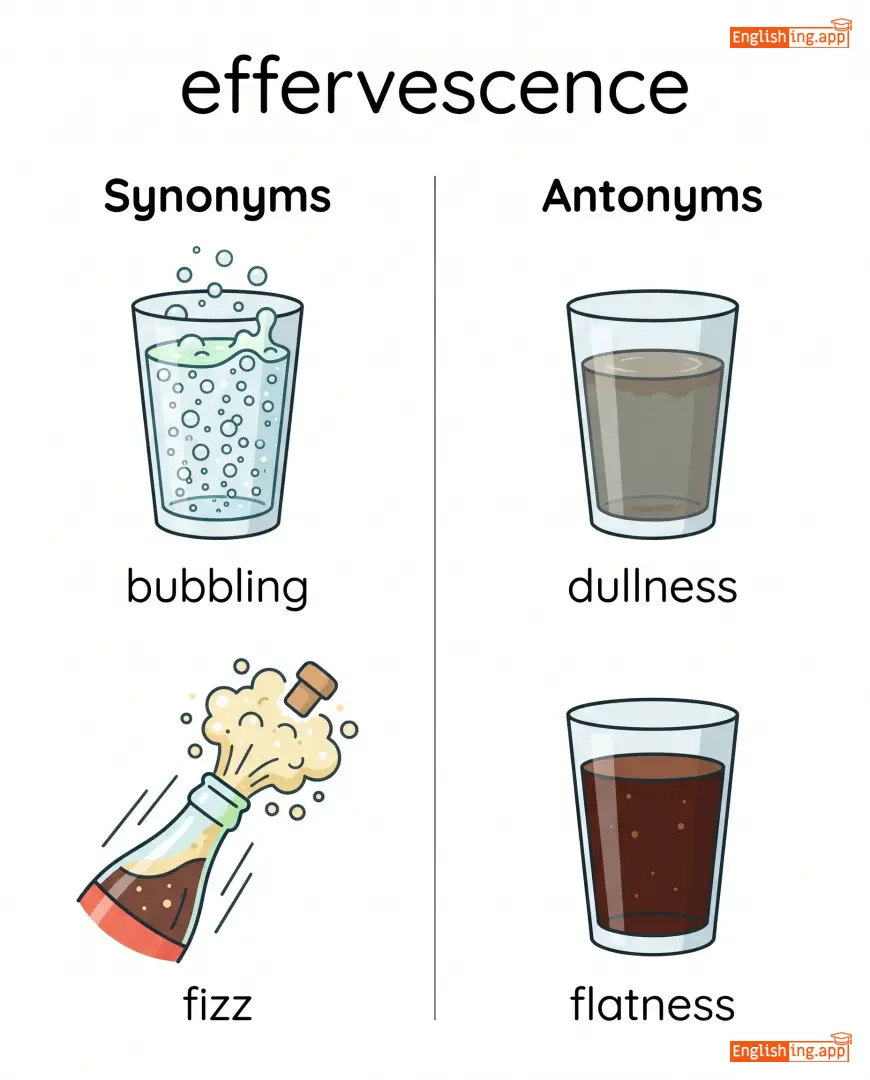
bubbling, fizz, liveliness, sparkle, vibrancy
••••••
|
dullness, flatness, lifelessness
••••••
|
natural effervescence, effervescence of youth, effervescence in personality
••••••
|
Effervescenceは発泡を意味します → 炭酸飲料の泡を想像してください。
••••••
|
|
🌸
••••••
|
/ɪˈfiːt/
adjective
(エフェット)
••••••
|
|
無力
muryoku
••••••
|
- •••••• | - •••••• | - •••••• | - •••••• |
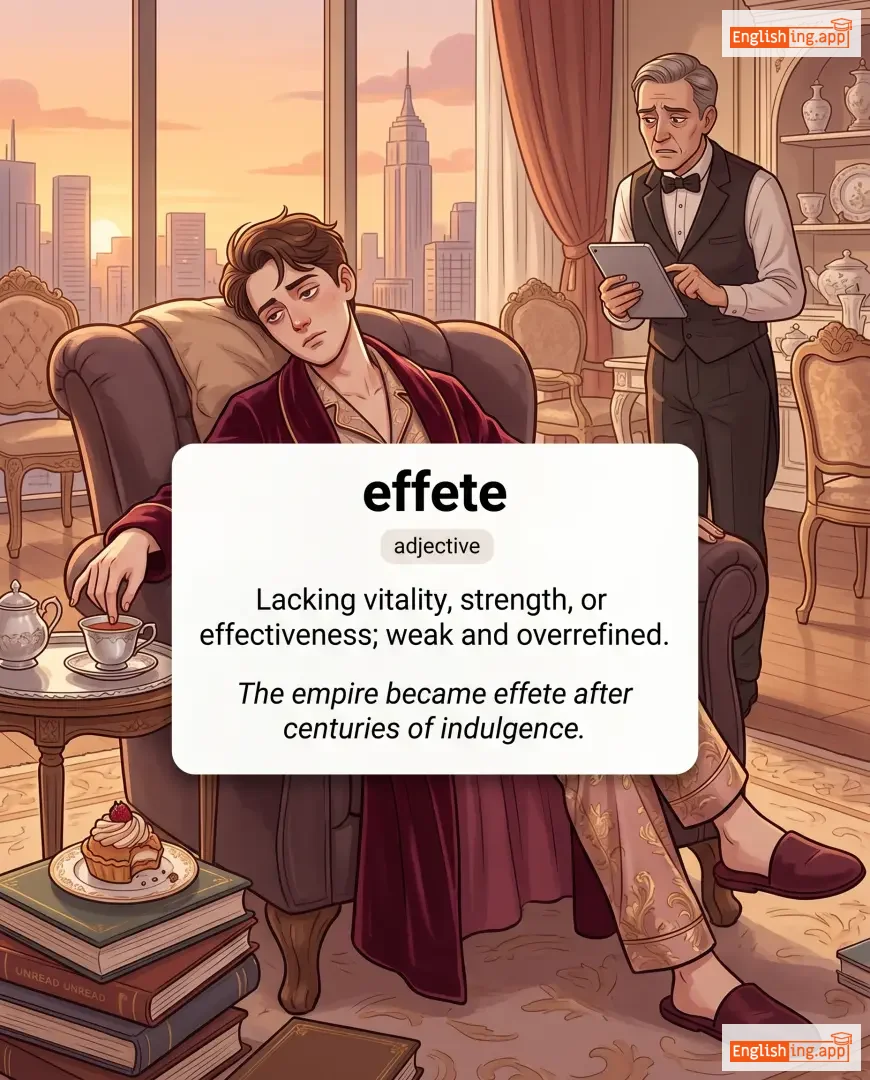
Lacking vitality, strength, or effectiveness; weak and overrefined.
••••••
|
The empire became effete after centuries of indulgence. |
帝国は何世代にもわたる享楽の後、無力になった。
Teikoku wa nan-sedai ni mo wataru kyouraku no ato, muryoku ni natta.
••••••
|
- •••••• | - •••••• | - •••••• |
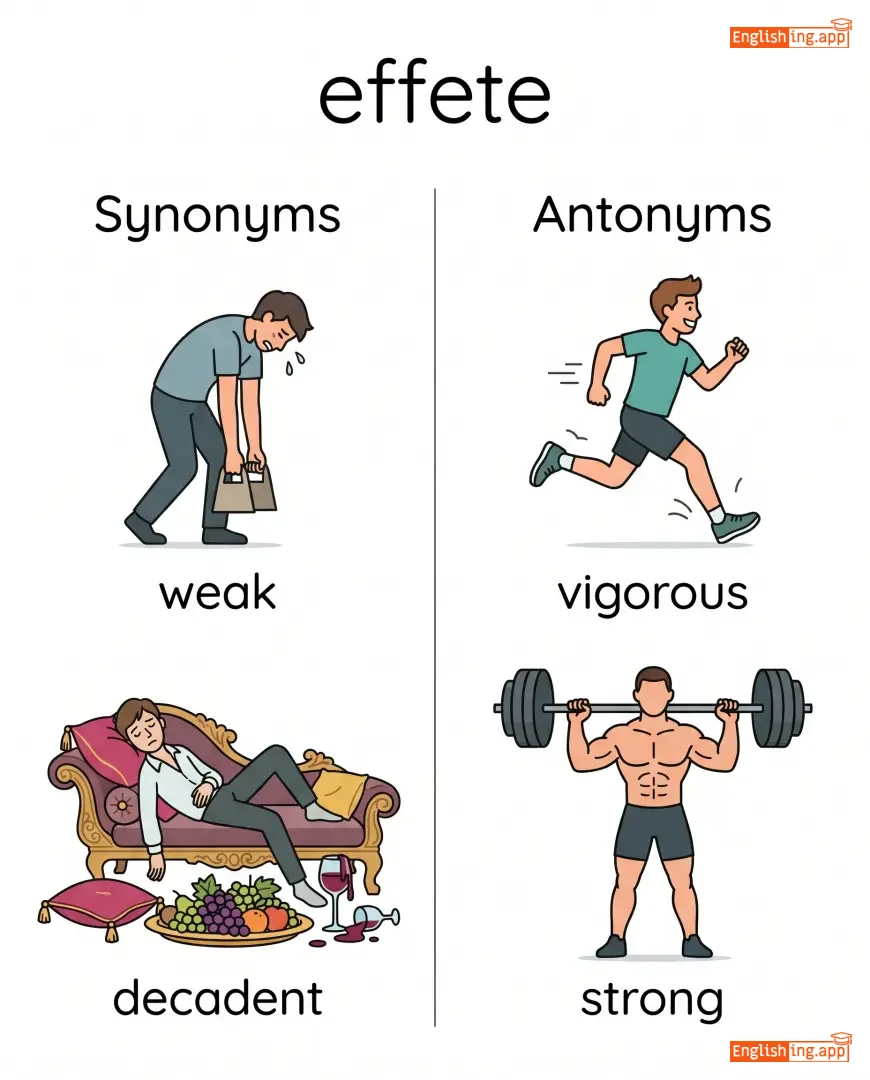
weak, decadent, exhausted, powerless, overrefined
••••••
|
vigorous, strong, powerful
••••••
|
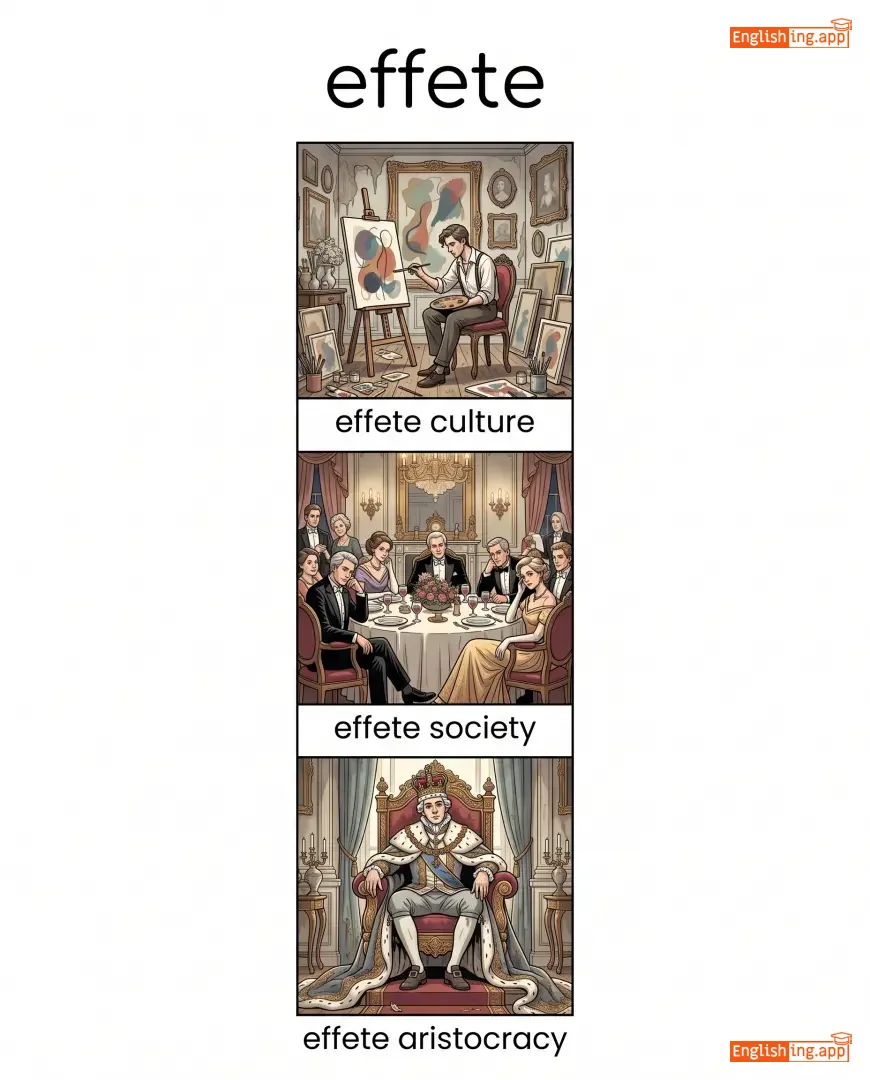
effete culture, effete society, effete aristocracy, effete leadership
••••••
|
Effeteは無力を意味します。思い出してください、足(feet)が無力になったような状態です。
••••••
|
|
⚡
••••••
|
/ˈɛfɪkəsi/
noun
(エフィカシー)
••••••
|
|
効果
kouka
••••••
|
- •••••• | - •••••• | - •••••• | - •••••• |
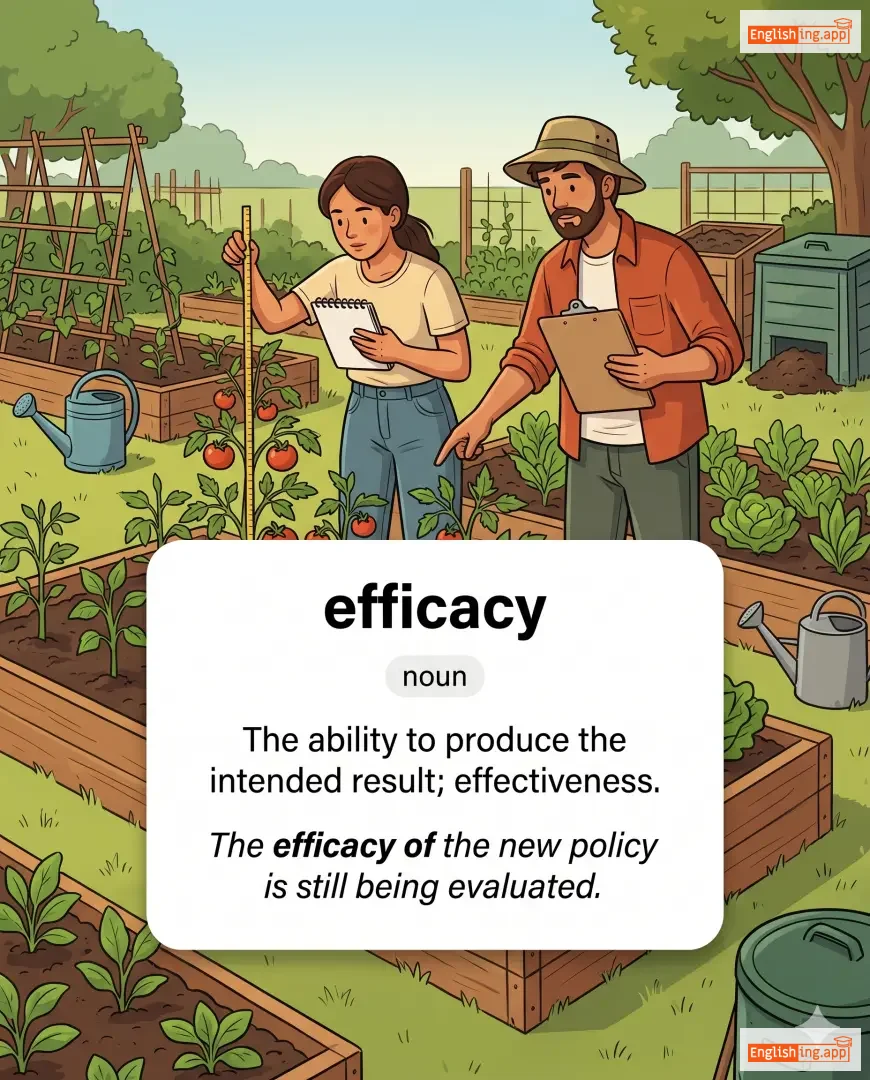
The ability to produce the intended result; effectiveness.
••••••
|
The efficacy of the new policy is still being evaluated.
新しい政策の効果はまだ評価されています。
••••••
|
新しい政策の効果はまだ評価されています。
Atarashii seisaku no kouka wa mada hyouka sareteimasu.
••••••
|
- •••••• | - •••••• | - •••••• |
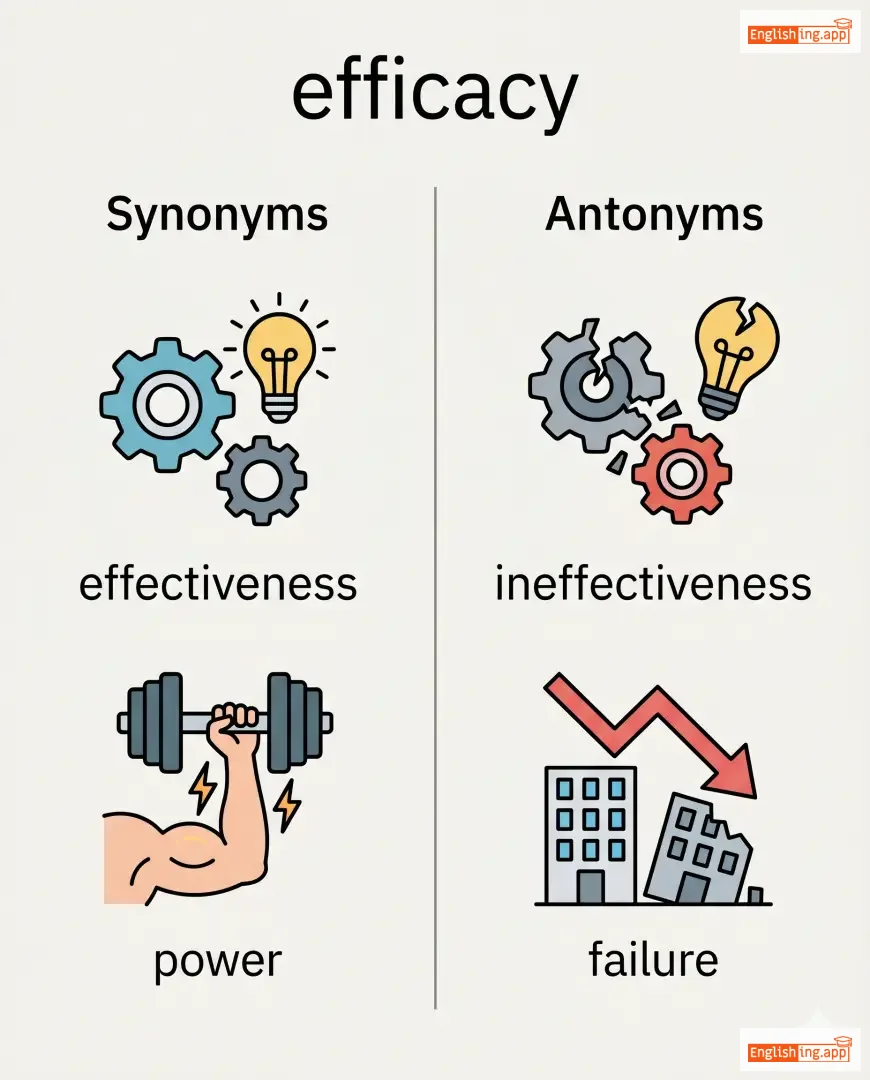
effectiveness, power, efficiency, success
••••••
|
ineffectiveness, failure, weakness
••••••
|
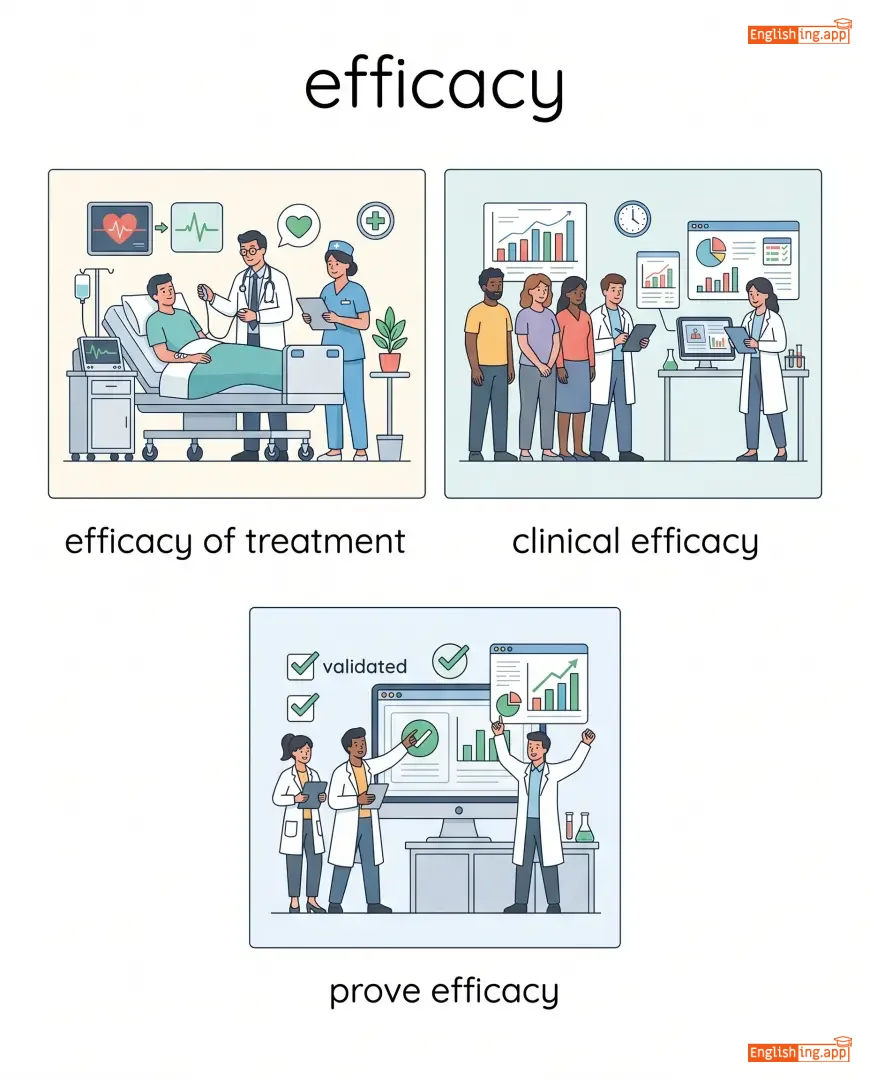
efficacy of treatment, clinical efficacy, prove efficacy, high efficacy
••••••
|
効果とは、望ましい結果を生み出す能力です。エフィ(effi)から来た効果。
••••••
|

