|
表情符号
|
单词 | Images | 翻译 | 过去时 | 过去分词 | 第三人称单数 | 动名词 | 含义 | 例句 | 例句翻译 | 示例表达 | 示例表达含义 | 示例表达翻译 | 同义词 | 反义词 | 搭配词 | 助记符 |
|---|---|---|---|---|---|---|---|---|---|---|---|---|---|---|---|---|---|
|
🗣️
••••••
|
/dɪsˈpærɪdʒ/
verb
••••••
|
|
- •••••• |
disparaged
••••••
|
disparaged
••••••
|
disparages
••••••
|
disparaging
••••••
|
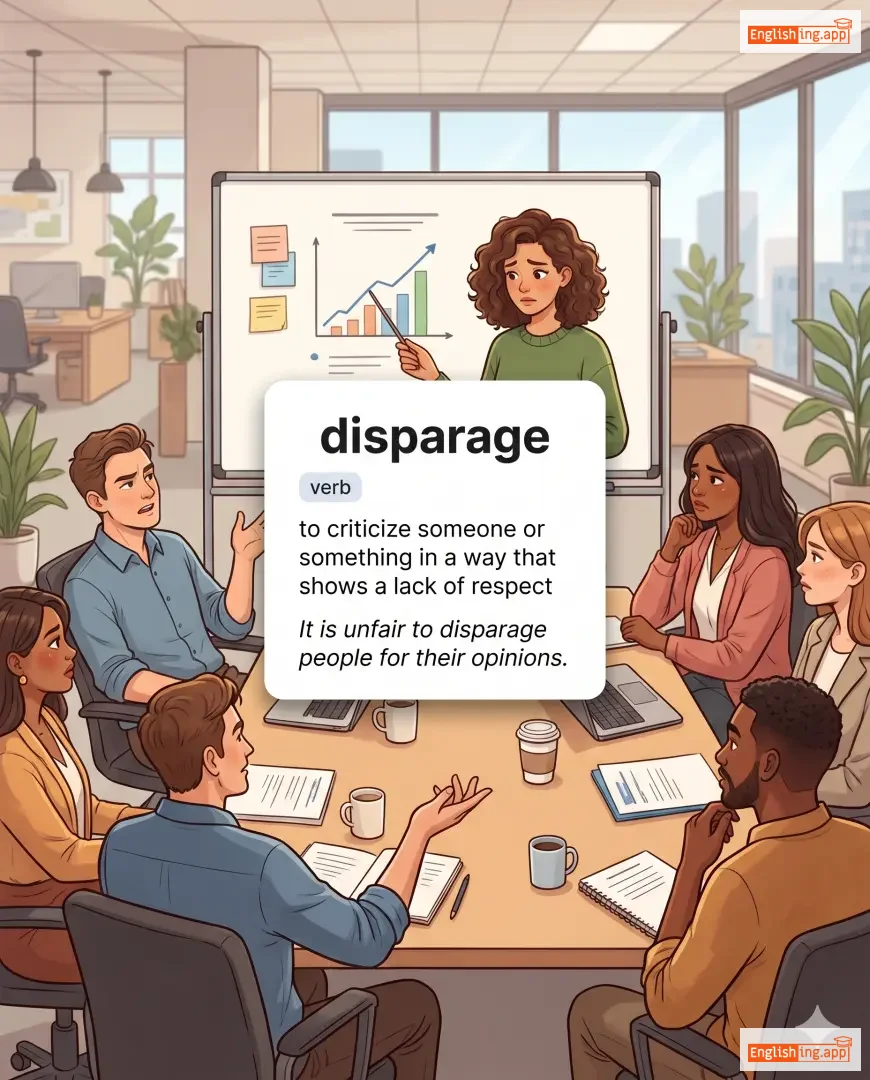
to criticize someone or something in a way that shows a lack of respect
••••••
|
It is unfair to disparage people for their opinions. |
- •••••• |
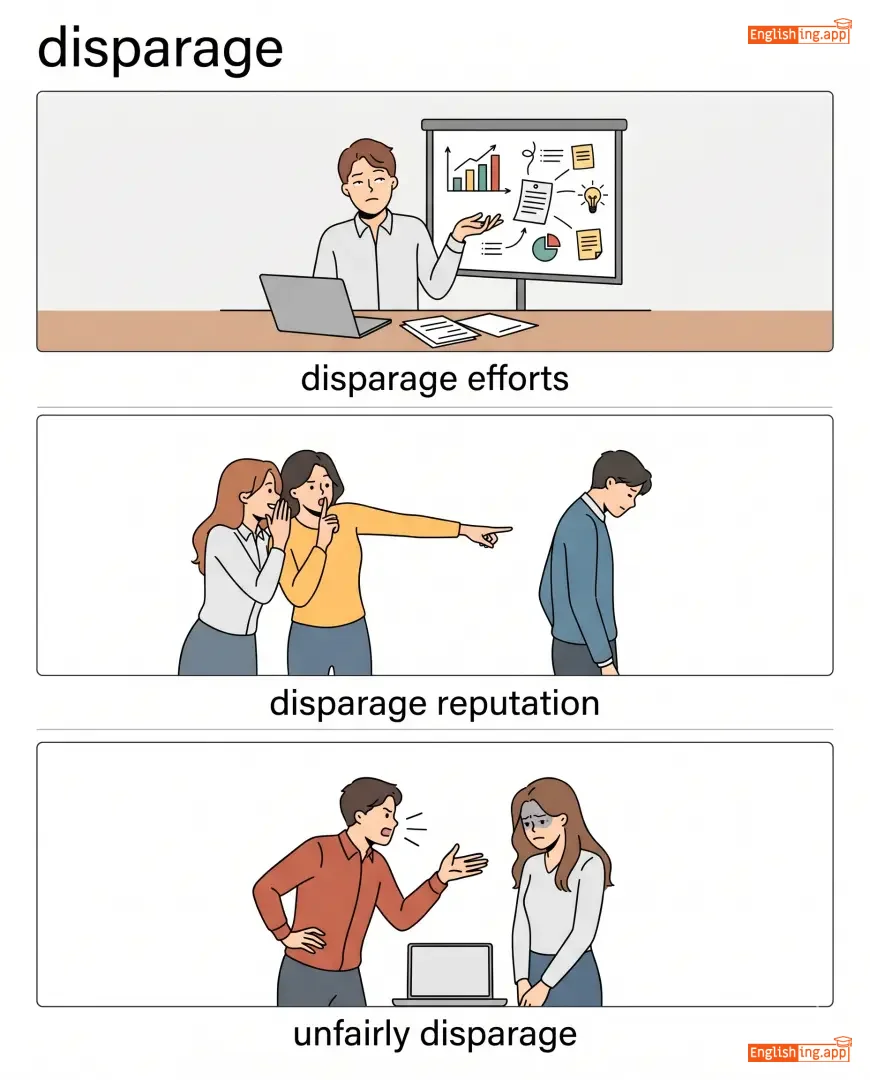
disparage someone's efforts |
to belittle or undervalue what someone has done
••••••
|
- •••••• |
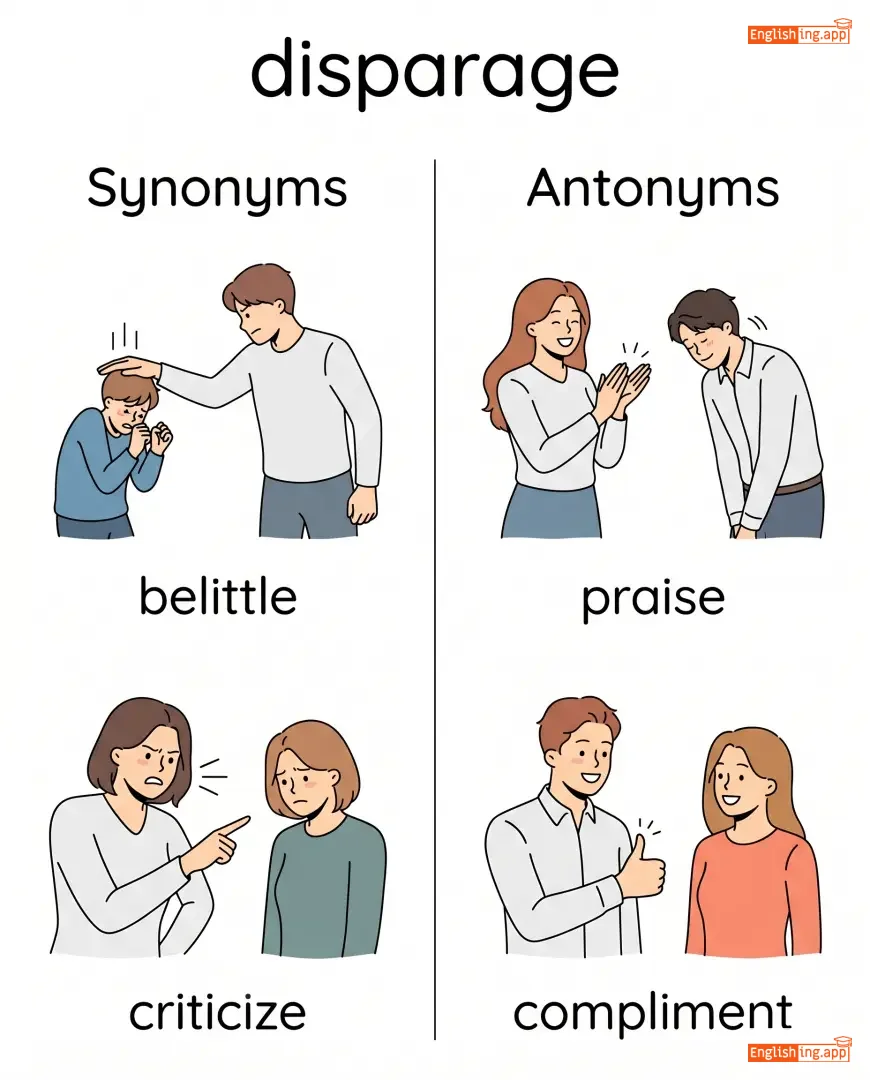
belittle, criticize, denigrate, undervalue, ridicule
••••••
|
praise, compliment
••••••
|
disparage efforts, disparage reputation, unfairly disparage
••••••
|
No •••••• |
|
🔀
••••••
|
/ˈdɪspərət/
adjective
(迪斯派瑞特)
••••••
|
|
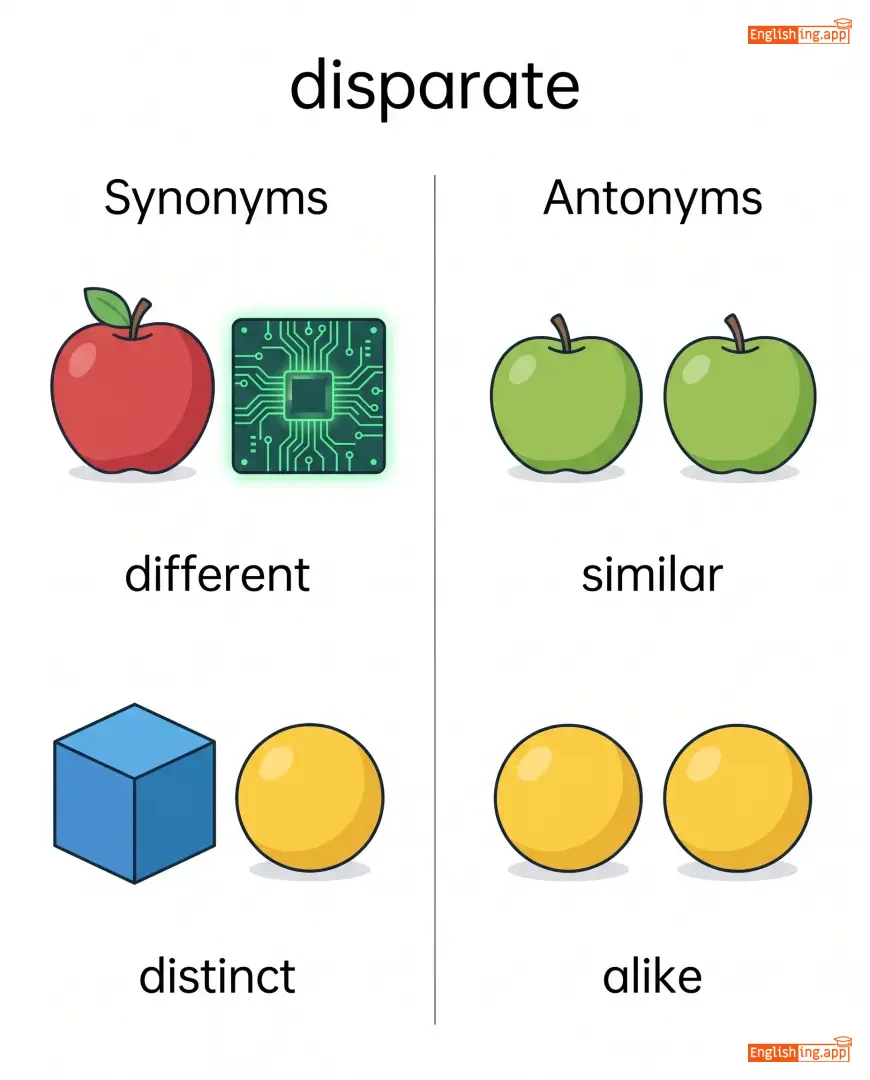
不同
butong
••••••
|
- •••••• | - •••••• | - •••••• | - •••••• |
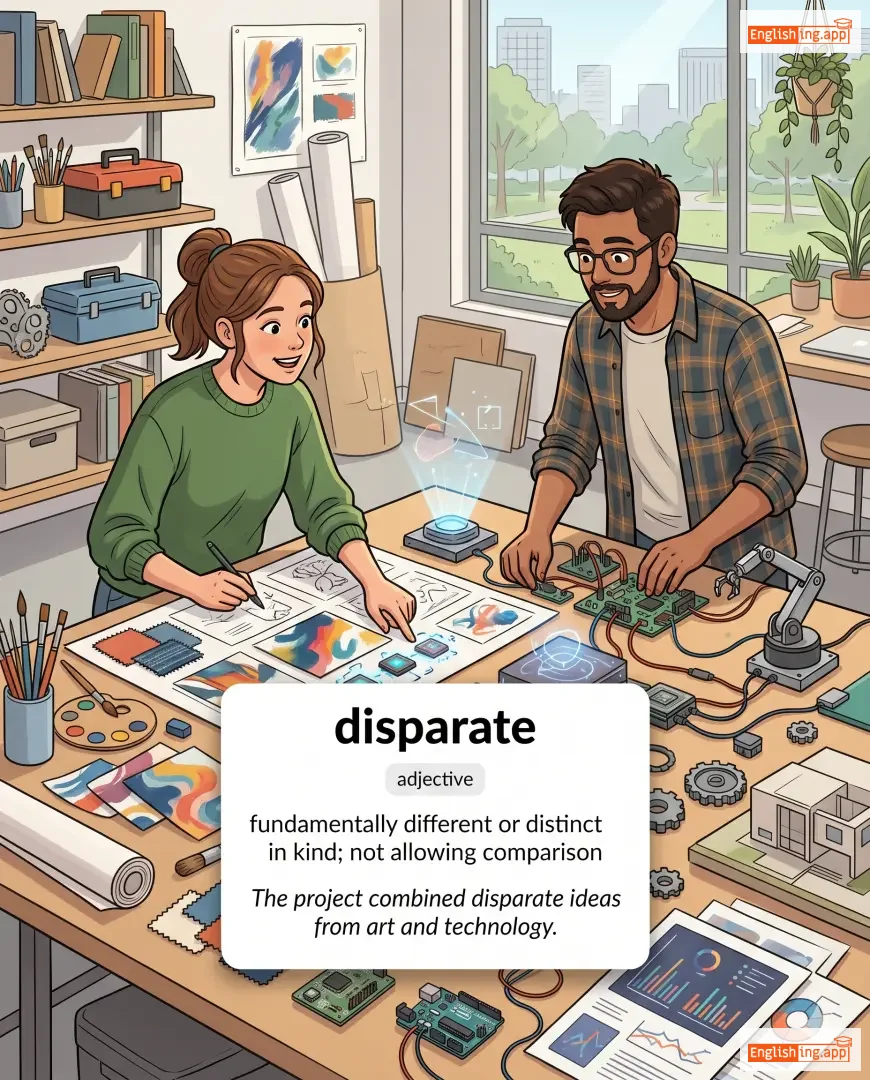
fundamentally different or distinct in kind; not allowing comparison
••••••
|
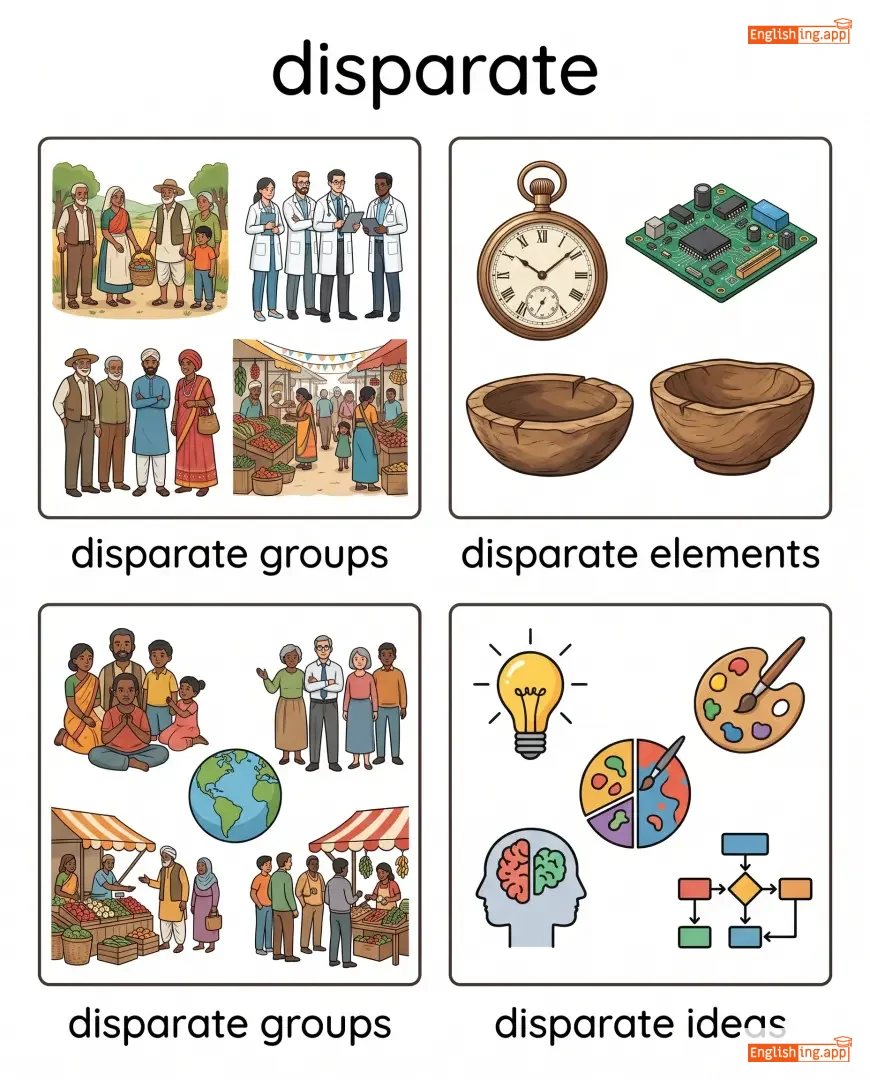
The project combined disparate ideas from art and technology. |
该项目结合了来自艺术和技术的不同观点。
Gai xiangmu jiehe le laizi yishu he jishu de butong guandian.
••••••
|
- •••••• | - •••••• | - •••••• |
different, distinct, contrasting, diverse, varied
••••••
|
similar, alike, uniform
••••••
|
disparate groups, disparate elements, disparate ideas, disparate backgrounds
••••••
|
Disparate 就是把不同的东西放在一起。
••••••
|
|
🎭
••••••
|
/dɪˈsɛmbəl/
verb
(迪森布尔)
••••••
|

|
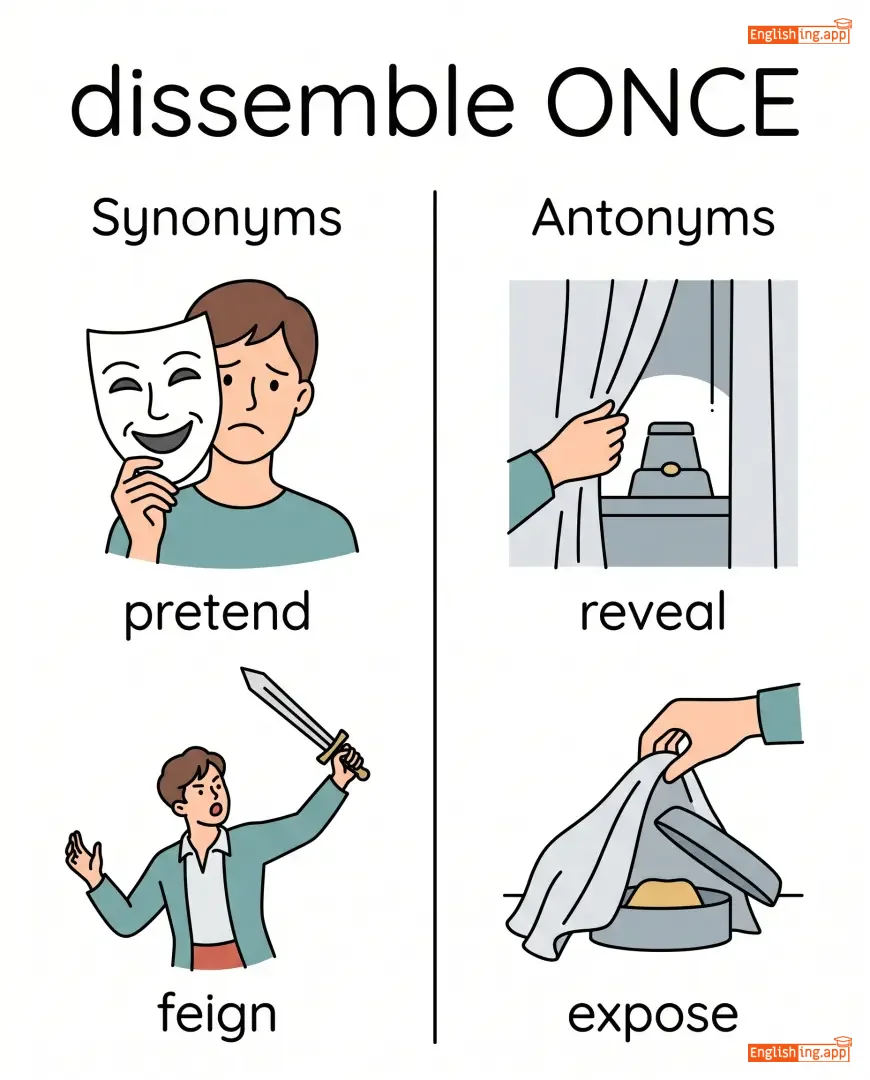
假装
jia zhuang
••••••
|
dissembled
迪森博尔德
••••••
|
dissembled
迪森博尔德
••••••
|
dissembles
迪森布尔斯
••••••
|
dissembling
迪森布林
••••••
|
to conceal one's true motives, feelings, or beliefs; to pretend
••••••
|
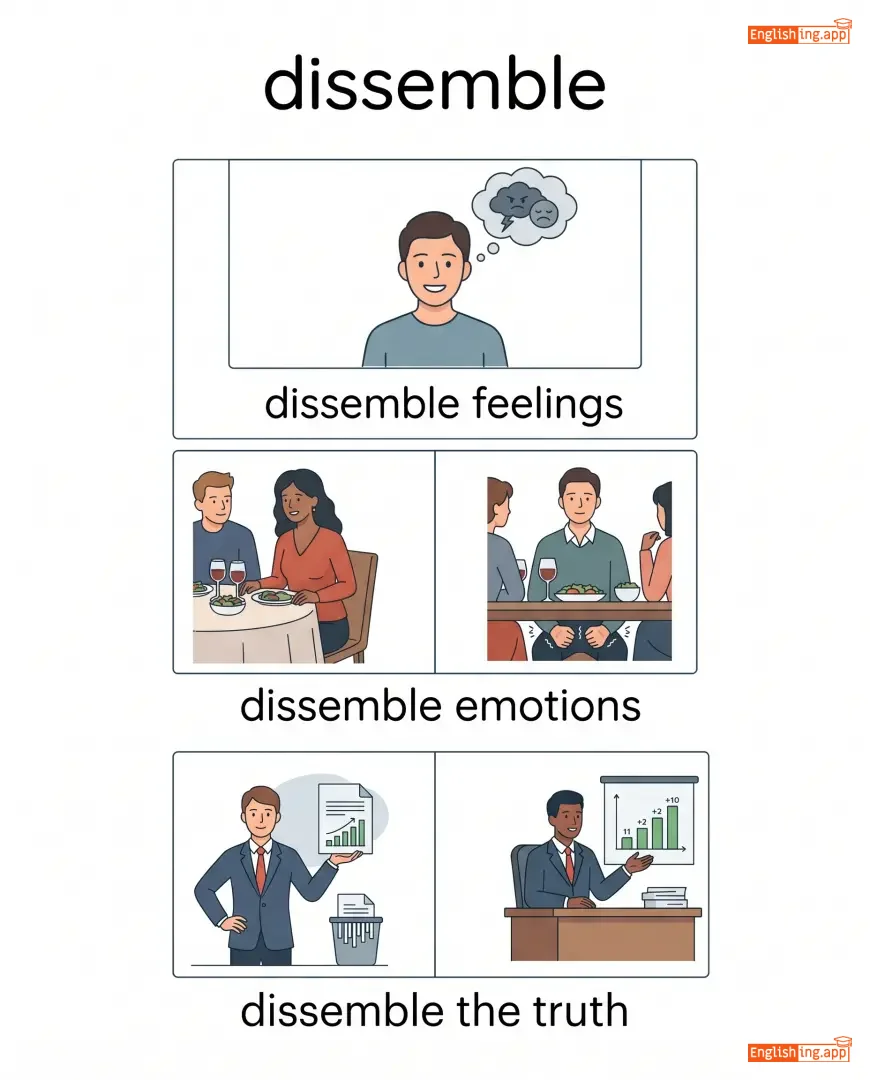
He tried to dissemble his anger with a forced smile.
他试图用强颜欢笑来掩饰自己的愤怒。
••••••
|
他试图用强颜欢笑来掩饰自己的愤怒。
Ta shitu yong qiangyan huanxiao lai yanshi ziji de fennu.
••••••
|
- •••••• | - •••••• | - •••••• |
pretend, feign, fake, conceal, disguise
••••••
|
reveal, expose, disclose
••••••
|
dissemble feelings, dissemble emotions, dissemble the truth
••••••
|
Dissemble = dis+assemble; 不汇聚真相,而是假装。
••••••
|
|
📢
••••••
|
/dɪˈsɛmɪˌneɪt/
verb
(散布)
••••••
|
|
传播
chuanbo
••••••
|
disseminated
散布了
••••••
|
disseminated
散布了
••••••
|
disseminates
散布
••••••
|
disseminating
散布中
••••••
|
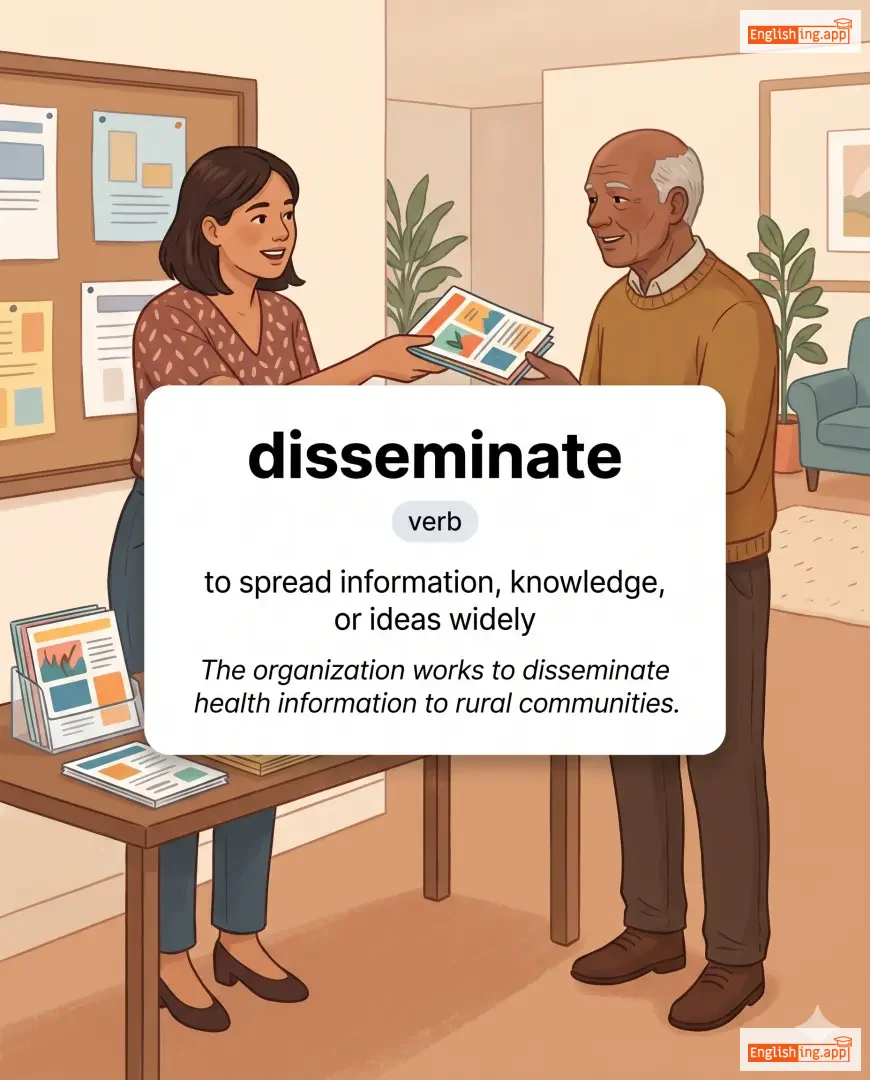
to spread information, knowledge, or ideas widely
••••••
|
The organization works to disseminate health information to rural communities.
该组织致力于向农村社区传播健康信息。
••••••
|
该组织致力于向农村社区传播健康信息。
Gai zuzhi zhiliyu xiang nongcun shequ chuanbo jiankang xinxi.
••••••
|
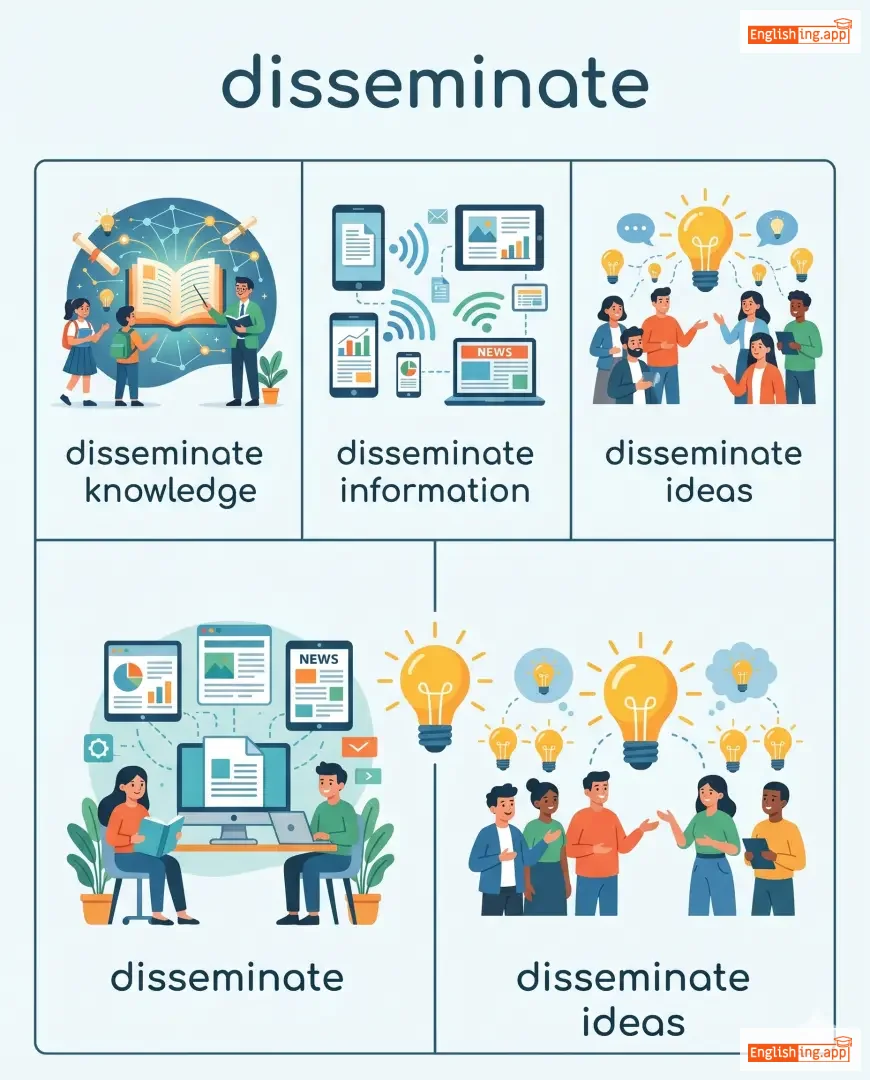
disseminate knowledge
传播知识
••••••
|
to distribute knowledge to many people
••••••
|
传播知识
chuanbo zhishi
••••••
|
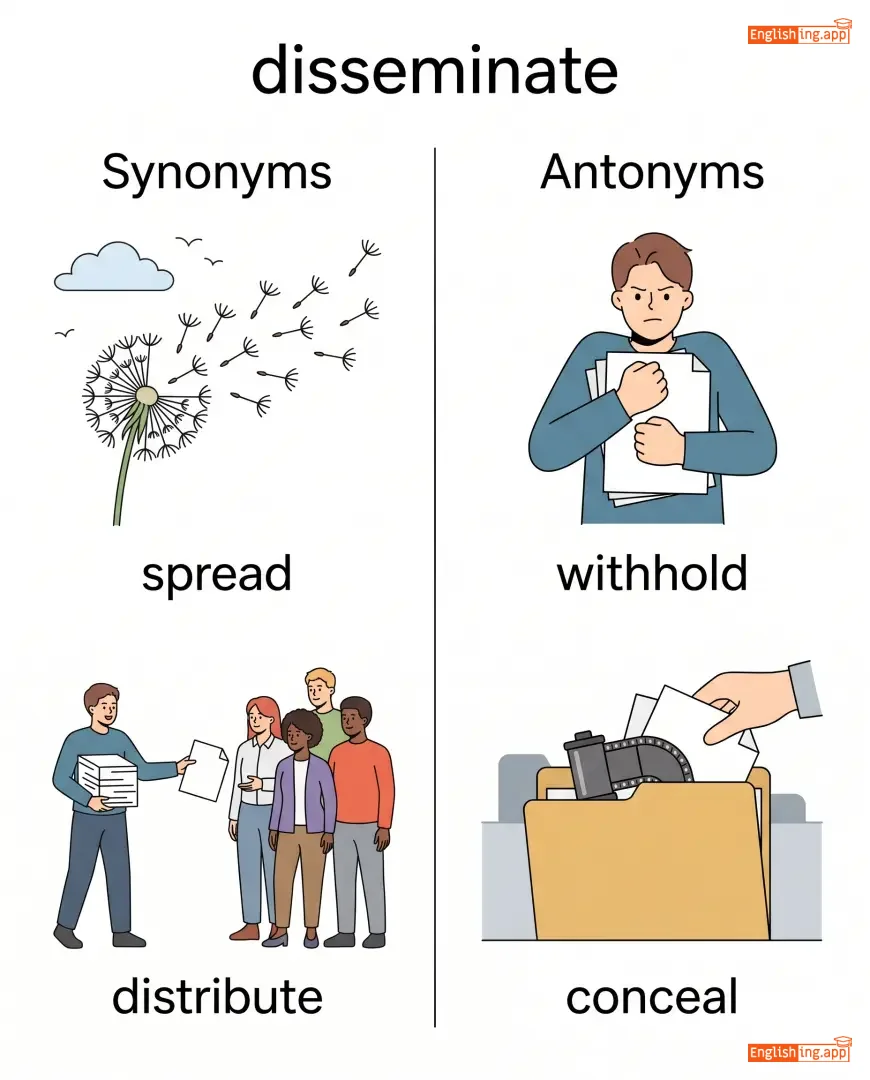
spread, distribute, circulate, broadcast, propagate
••••••
|
withhold, conceal, hide
••••••
|
disseminate knowledge, disseminate information, disseminate ideas, widely disseminate
••••••
|
Disseminate 就像传递信息,但它是大量传播知识或想法。
••••••
|
|
✊
••••••
|
/ˈdɪsɪdənt/
noun
(迪西登特)
••••••
|
|
异见者
yìjiànzhě
••••••
|
- •••••• | - •••••• | - •••••• | - •••••• |
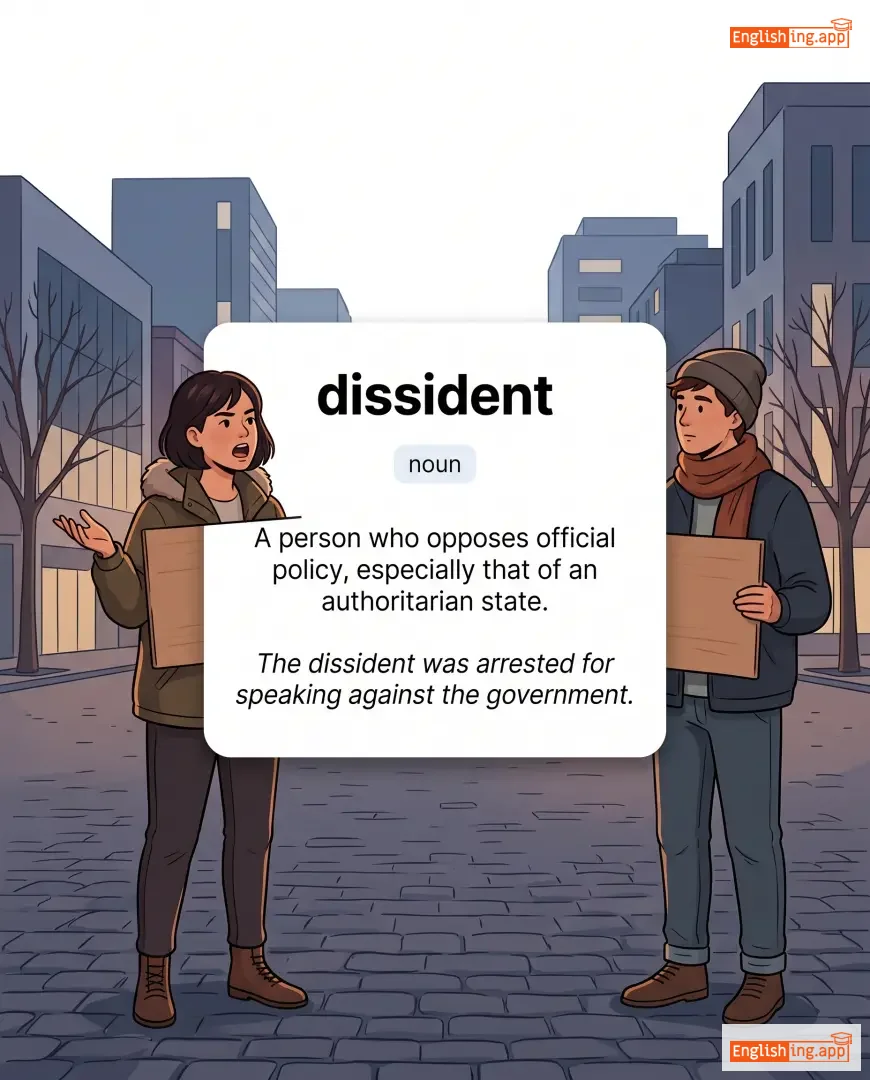
A person who opposes official policy, especially that of an authoritarian state.
••••••
|
The dissident was arrested for speaking against the government. |
异见者因反对政府而被逮捕。
Yìjiànzhě yīn fǎnduì zhèngfǔ ér bèi dàibǔ.
••••••
|
- •••••• | - •••••• | - •••••• |
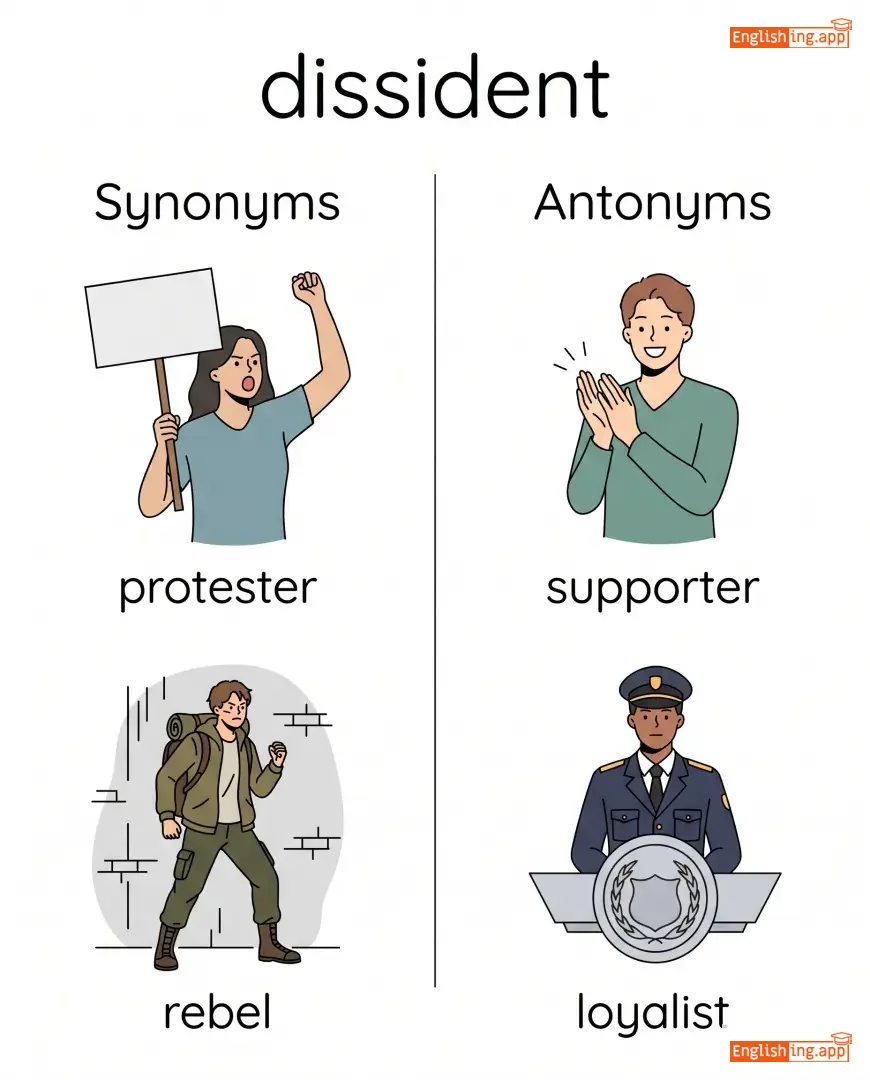
protester, rebel, opponent, nonconformist
••••••
|
supporter, loyalist
••••••
|
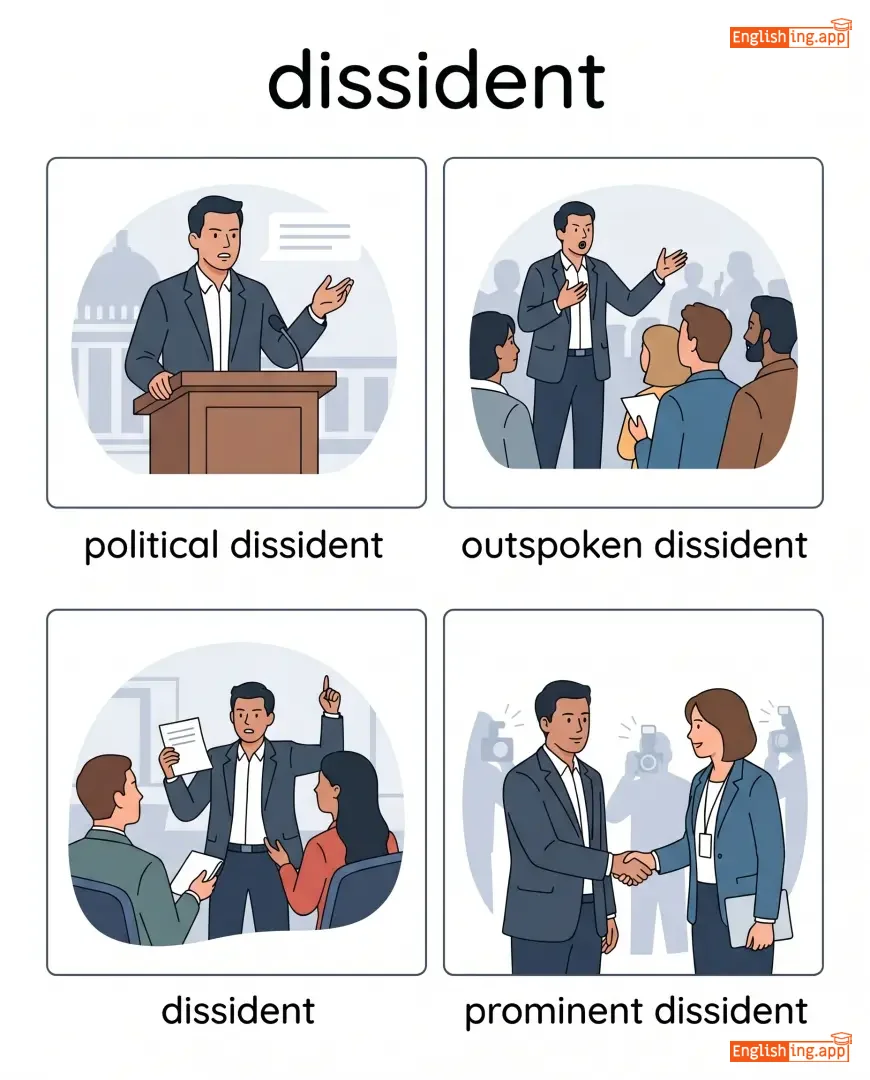
political dissident, outspoken dissident, prominent dissident
••••••
|
异见者是对政府说不的人,是反对专制政权的声音。
••••••
|
|
⚖️
••••••
|
/ˌdɪsəˈluːʃən/
noun
(解散)
••••••
|

|
解散
jiesan
••••••
|
- •••••• | - •••••• | - •••••• | - •••••• |
the act of formally ending or breaking apart something, such as an organization or marriage
••••••
|
The dissolution of the company was announced yesterday. |
公司解散的消息昨天公布。
Gongsi jiesan de xiaoxi zuotian gongbu.
••••••
|
- •••••• | - •••••• | - •••••• |
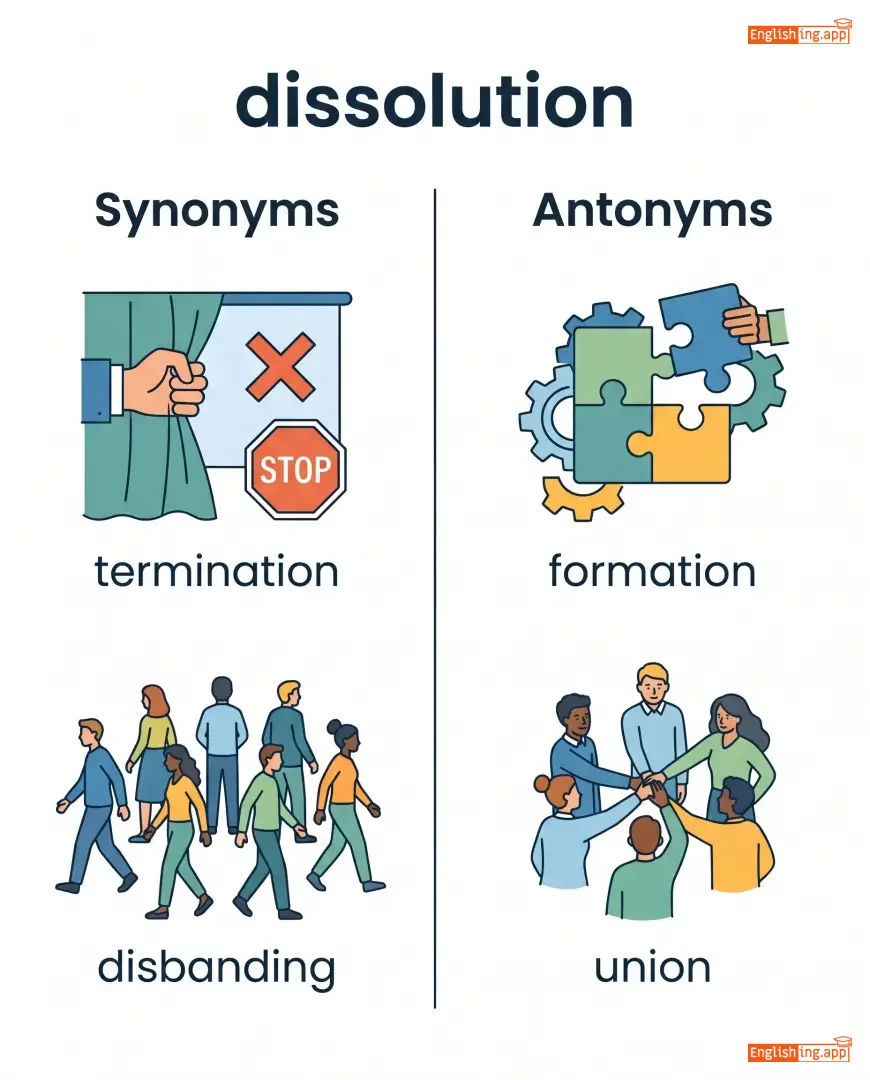
termination, disbanding, breakup, collapse
••••••
|
formation, union, establishment
••••••
|
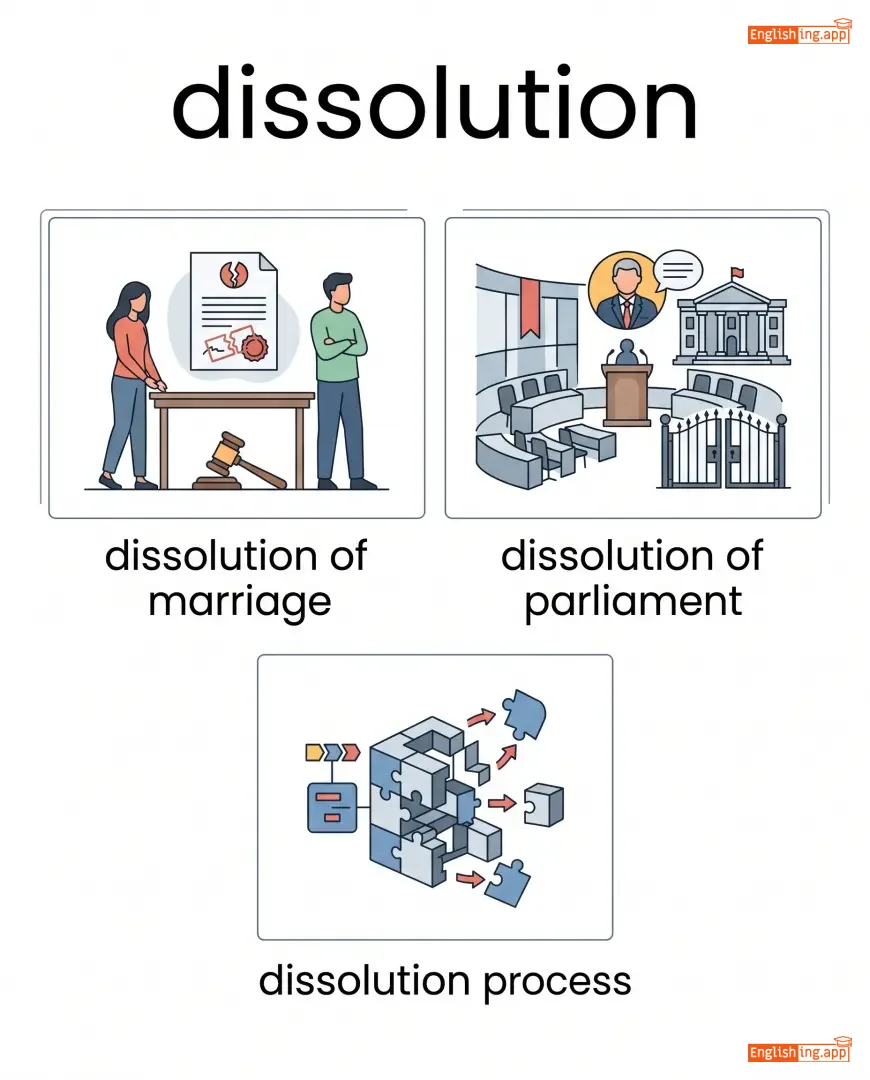
dissolution of marriage, dissolution of parliament, dissolution process
••••••
|
Dissolution 在中文里就是解散
••••••
|
|
🎶
••••••
|
/ˈdɪsənəns/
noun
(ˈdɪsəˈnæns)
••••••
|
|
不和谐
bùhéxié
••••••
|
- •••••• | - •••••• | - •••••• | - •••••• |
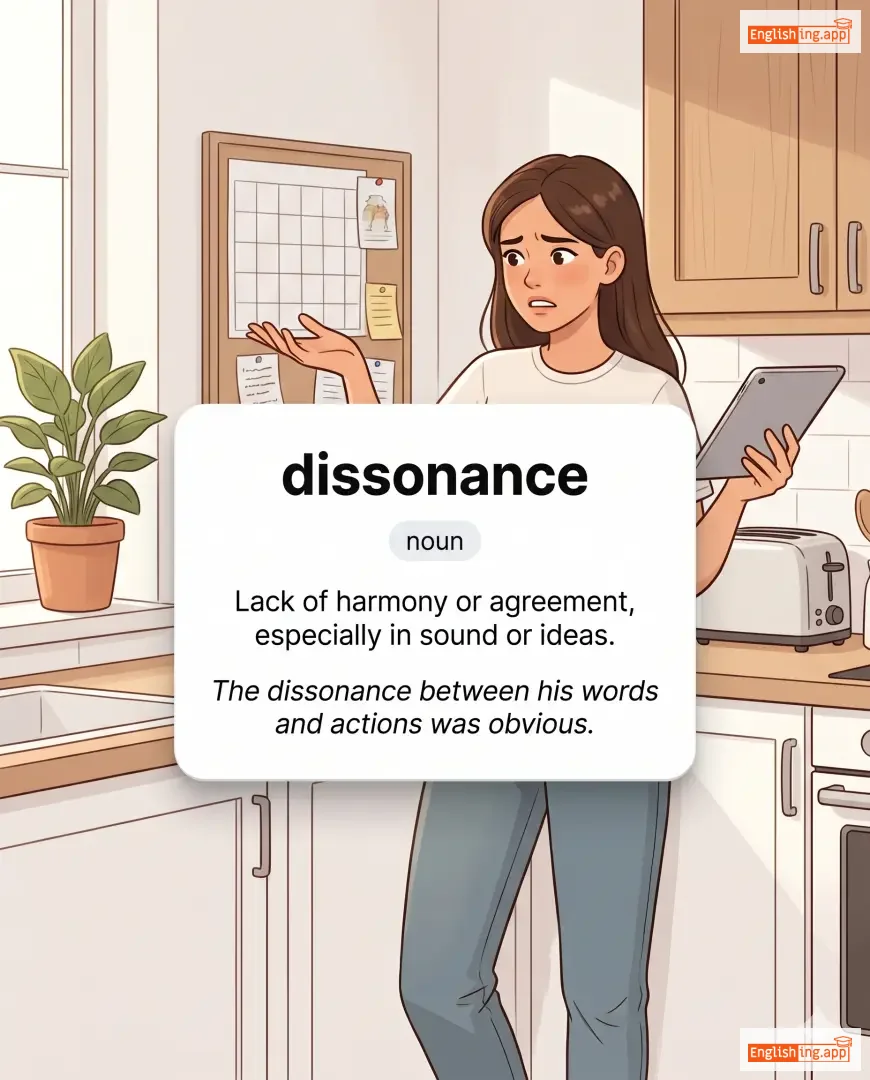
Lack of harmony or agreement, especially in sound or ideas.
••••••
|
The dissonance between his words and actions was obvious. |
他的话与行动之间的矛盾显而易见。
Tā de huà yǔ xíngdòng zhī jiān de máodùn xiǎn'ér yìjiàn.
••••••
|
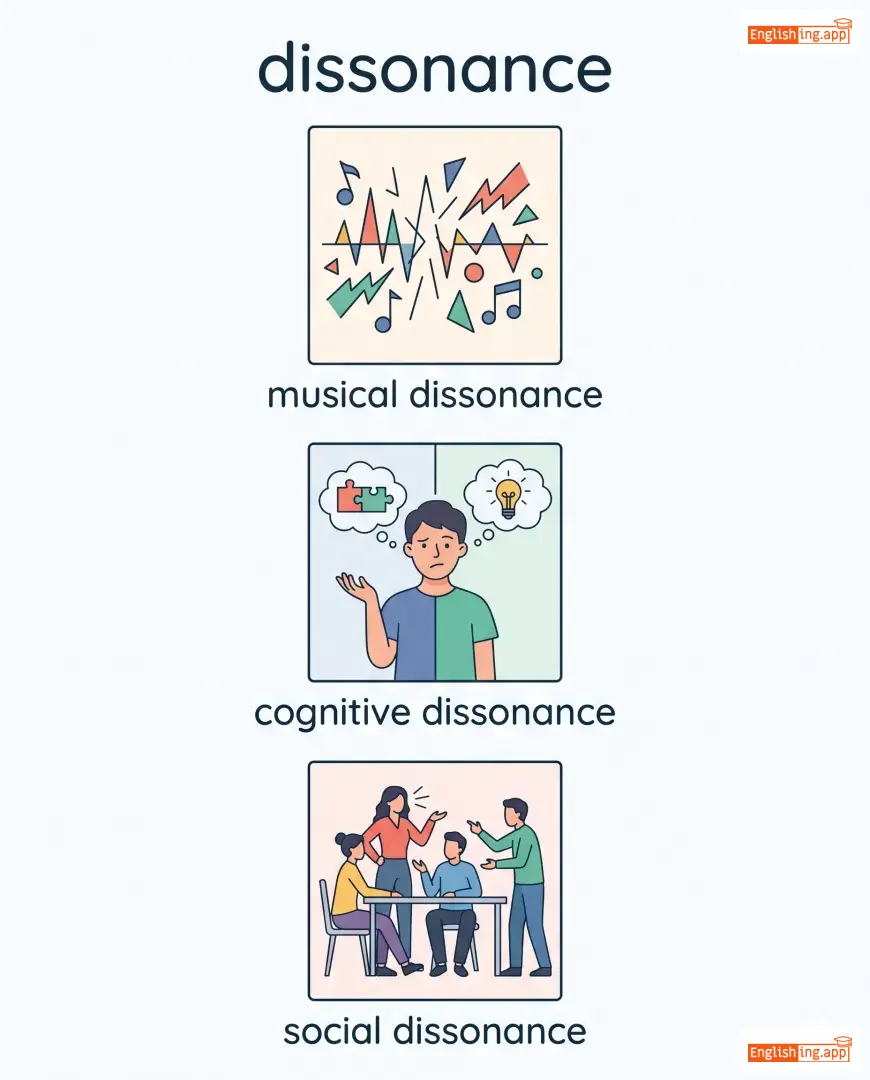
cognitive dissonance |
The mental discomfort experienced when holding contradictory beliefs or values.
••••••
|
认知失调
rènzhī shītiáo
••••••
|
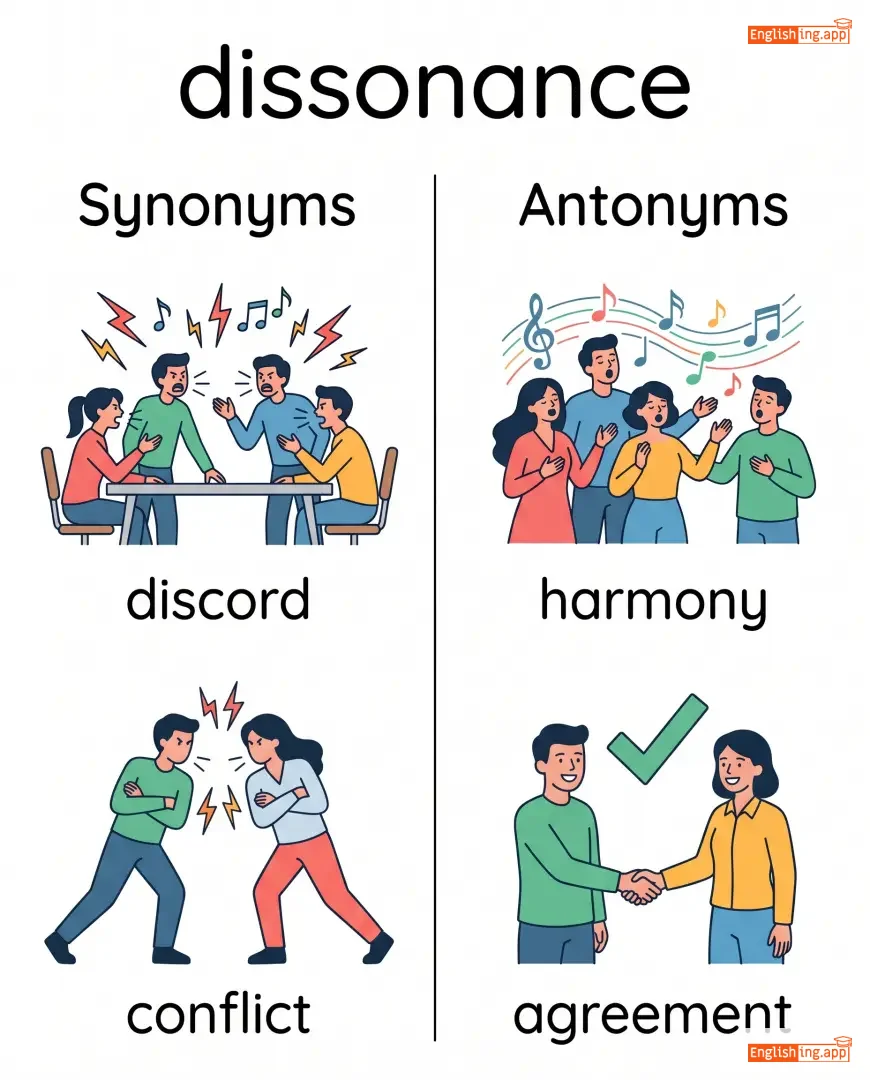
discord, conflict, discrepancy, disagreement, incongruity
••••••
|
harmony, agreement, concord
••••••
|
musical dissonance, cognitive dissonance, social dissonance, emotional dissonance
••••••
|
Dissonance意味着不和谐 - 就像中文的'不和谐'一样。
••••••
|
|
🎈
••••••
|
/dɪsˈtɛnd/
verb
(dɪsˈtɛnd)
••••••
|

|
膨胀
péngzhàng
••••••
|
distended
dɪsˈtɛndɪd
••••••
|
distended
dɪsˈtɛndɪd
••••••
|
distends
dɪsˈtɛndz
••••••
|
distending
dɪsˈtɛndɪŋ
••••••
|
to swell or expand by pressure from within
••••••
|
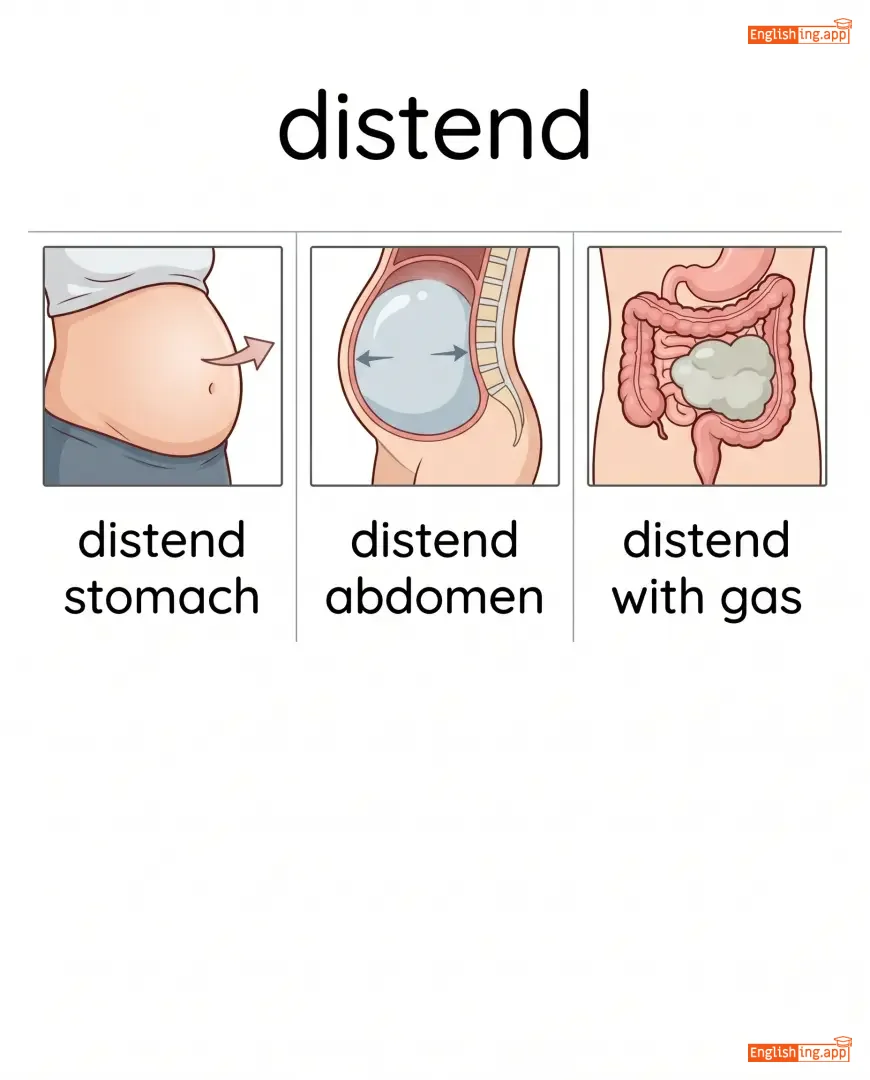
Her stomach began to distend after the large meal.
她的肚子在大餐后开始膨胀。
••••••
|
她的肚子在大餐后开始膨胀。
Tā de dùzi zài dà cān hòu kāishǐ péngzhàng.
••••••
|
- •••••• | - •••••• | - •••••• |
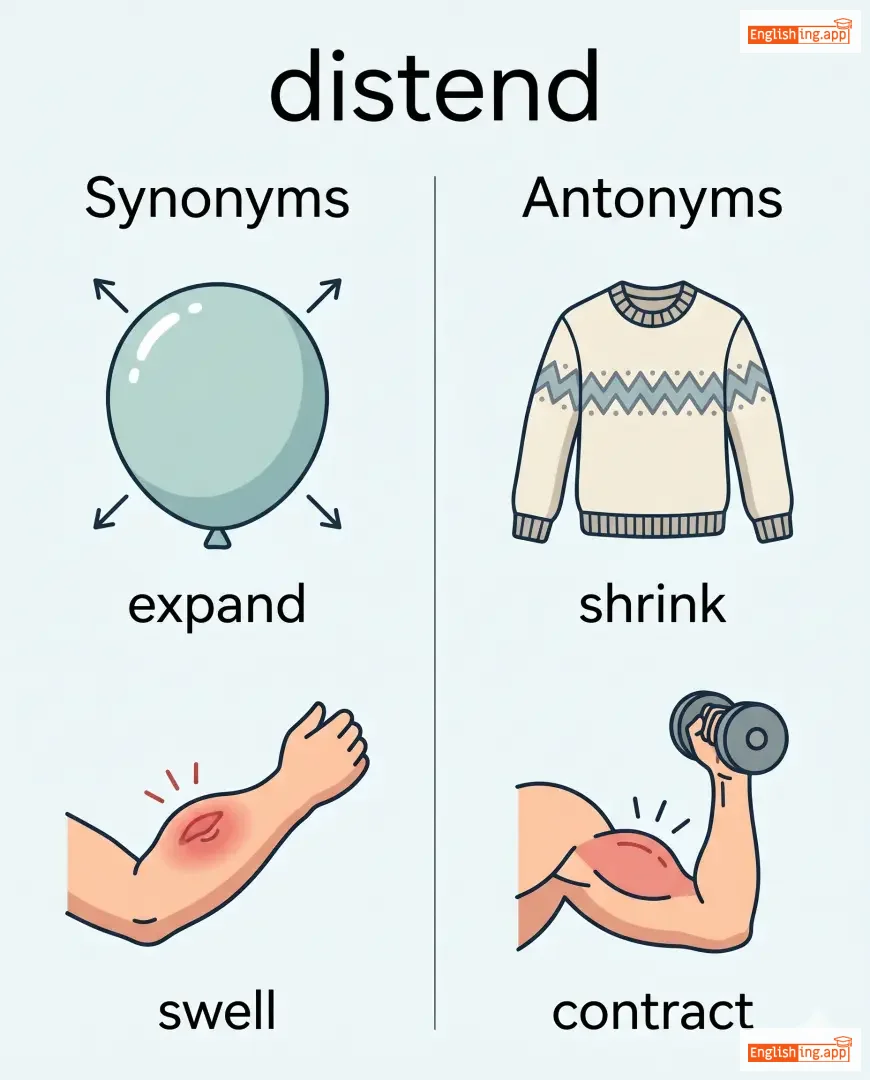
expand, swell, inflate, enlarge, bloat
••••••
|
shrink, contract, deflate
••••••
|
distend stomach, distend abdomen, distend with gas
••••••
|
Distend就像气球一样因内压膨胀。
••••••
|
|
💧
••••••
|
/dɪˈstɪl/
verb
••••••
|
|
- •••••• |
distilled
••••••
|
distilled
••••••
|
distills
••••••
|
distilling
••••••
|
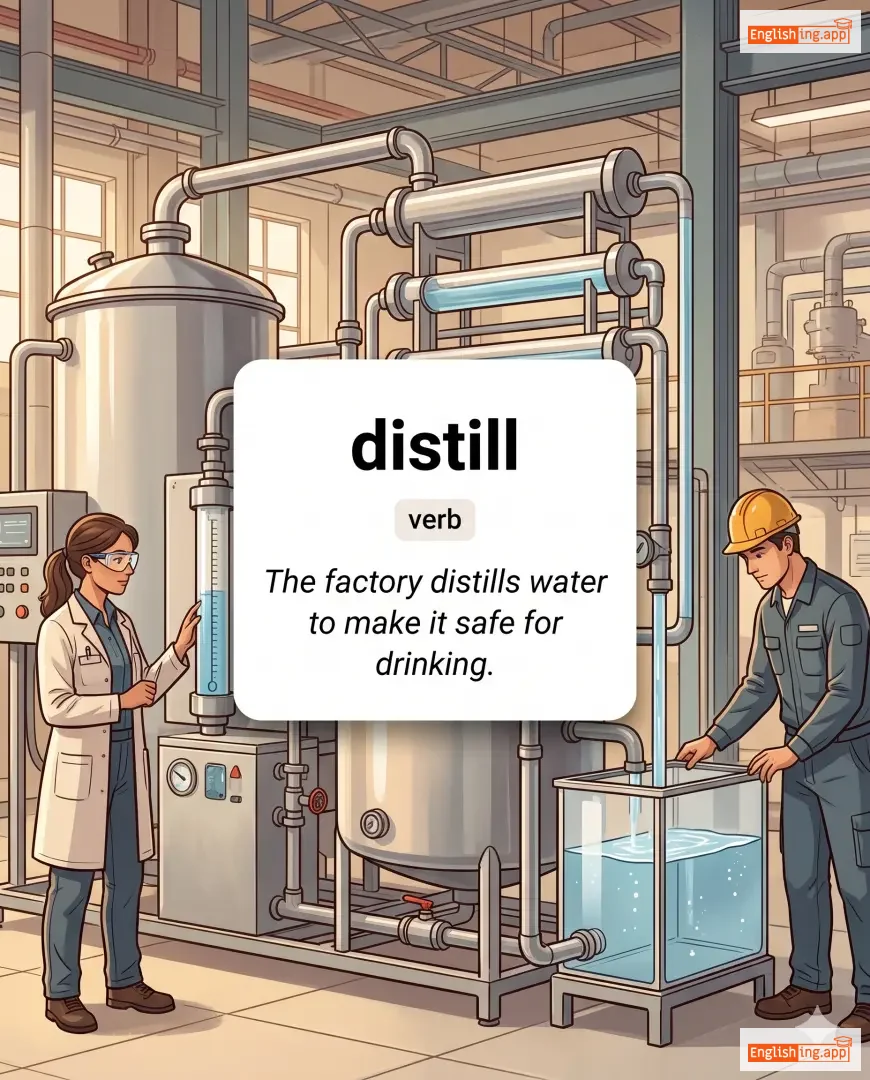
To purify a liquid by heating and cooling; to extract the essential meaning or most important aspects.
••••••
|
The factory distills water to make it safe for drinking. |
- •••••• |
distill the essence |
To extract the most important meaning or quality.
••••••
|
- •••••• |
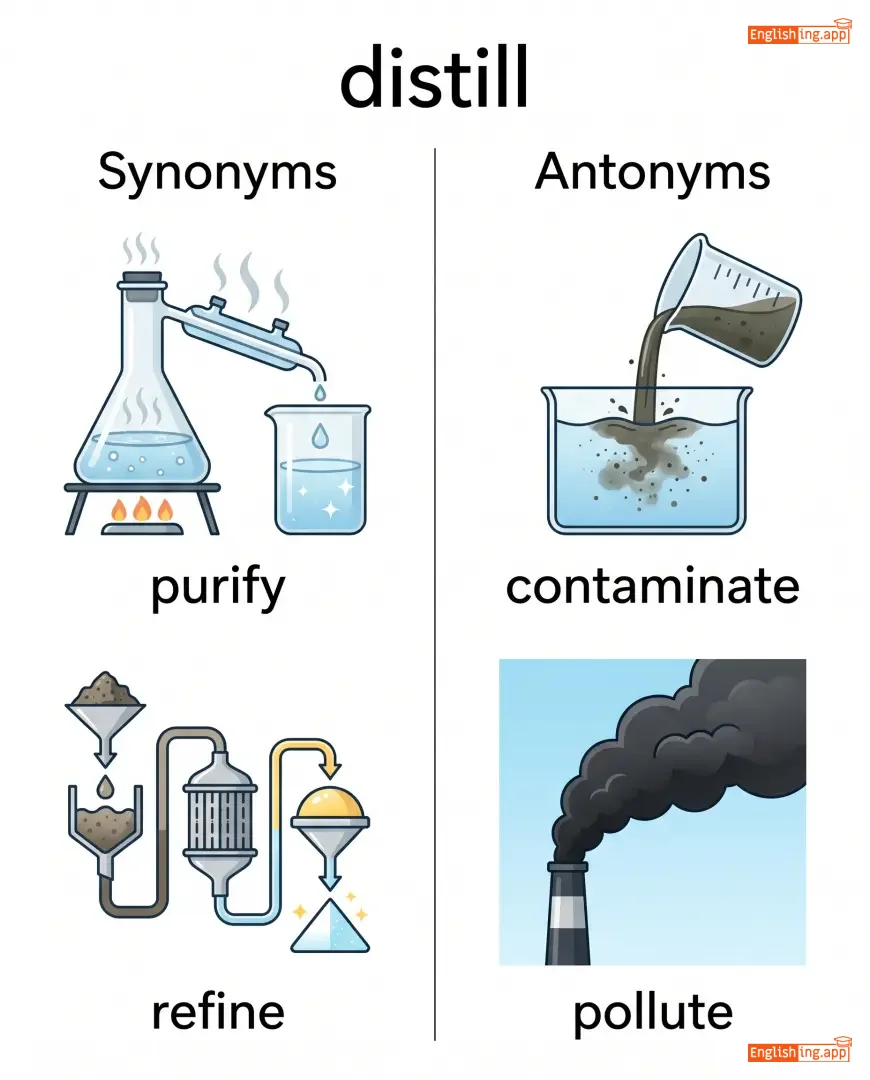
purify, refine, extract, filter, condense
••••••
|
contaminate, pollute
••••••
|
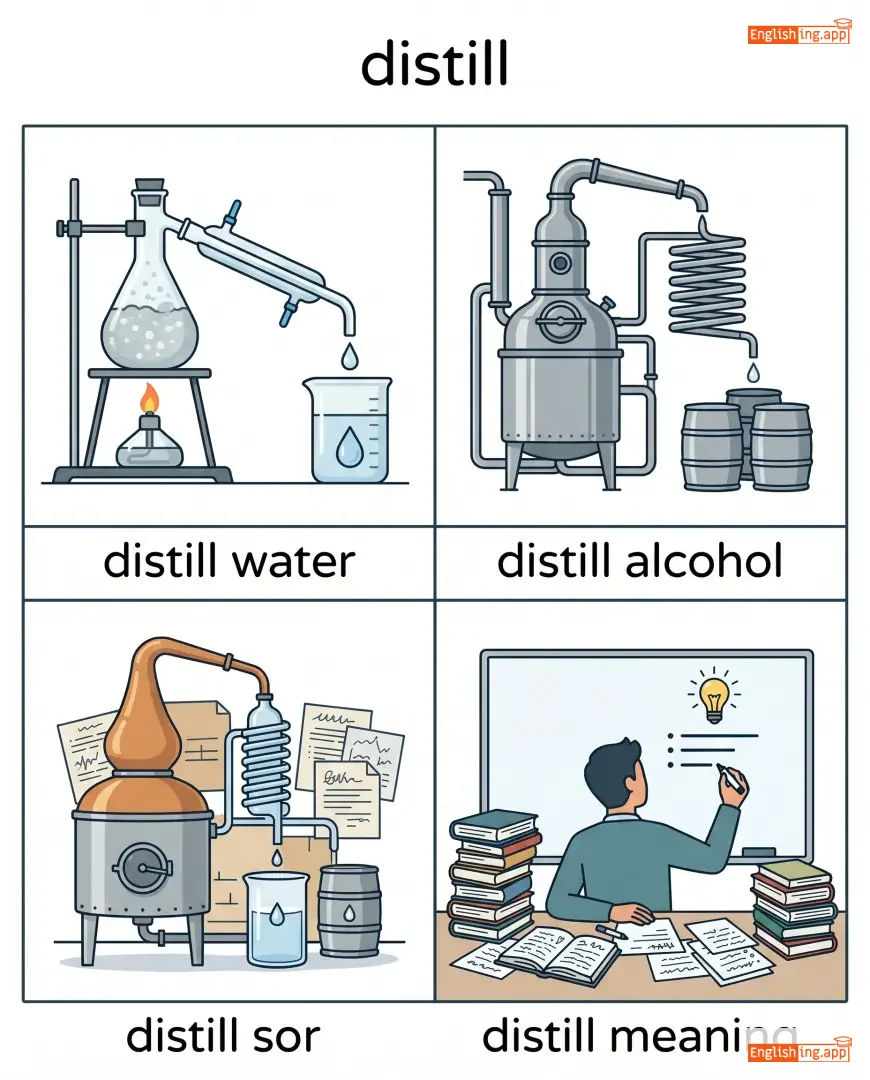
distill water, distill alcohol, distill meaning, distill information
••••••
|
No •••••• |
|
😔
••••••
|
/dɪˈstreɪ/
adjective
(迪斯特雷)
••••••
|
|
心不在焉
xin bu zai yan
••••••
|
- •••••• | - •••••• | - •••••• | - •••••• |
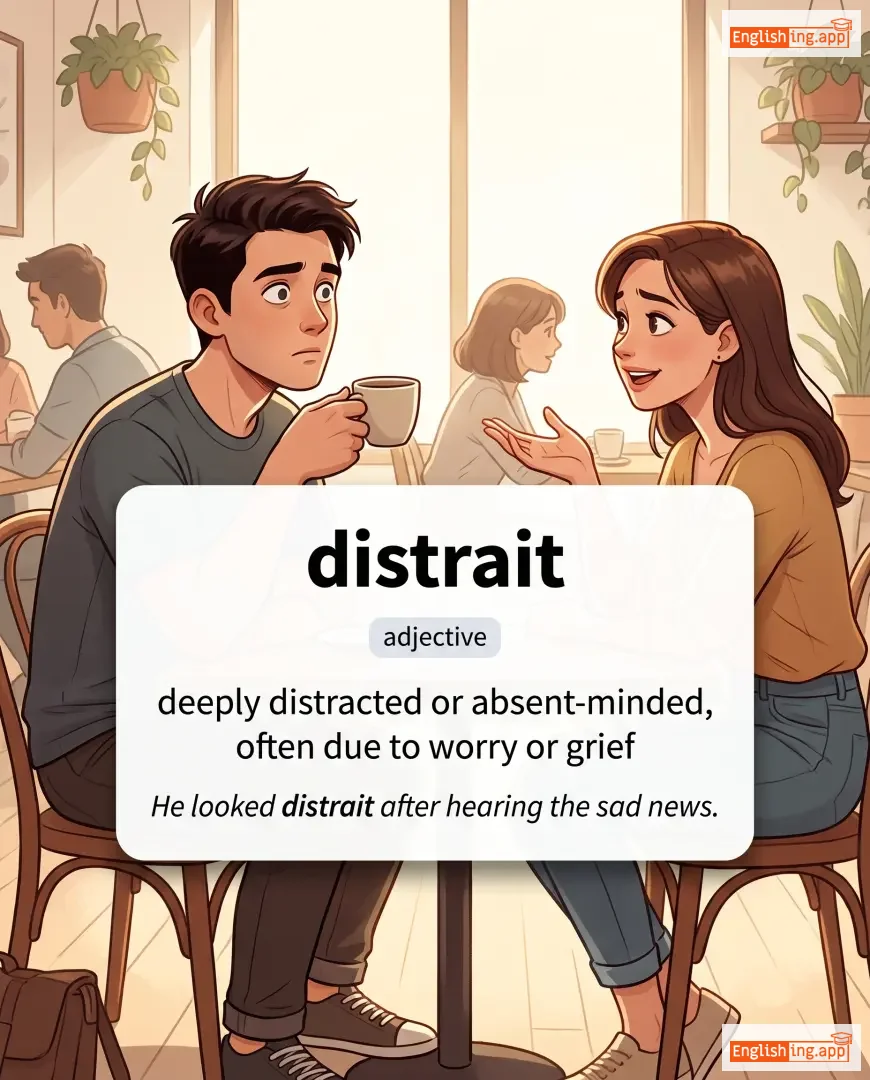
deeply distracted or absent-minded, often due to worry or grief
••••••
|
He looked distrait after hearing the sad news. |
在听到悲伤的消息后,他看起来心不在焉。
Zai tingdao beishang de xiaoxi hou, ta kankan qi lai xin bu zai yan.
••••••
|
- •••••• | - •••••• | - •••••• |
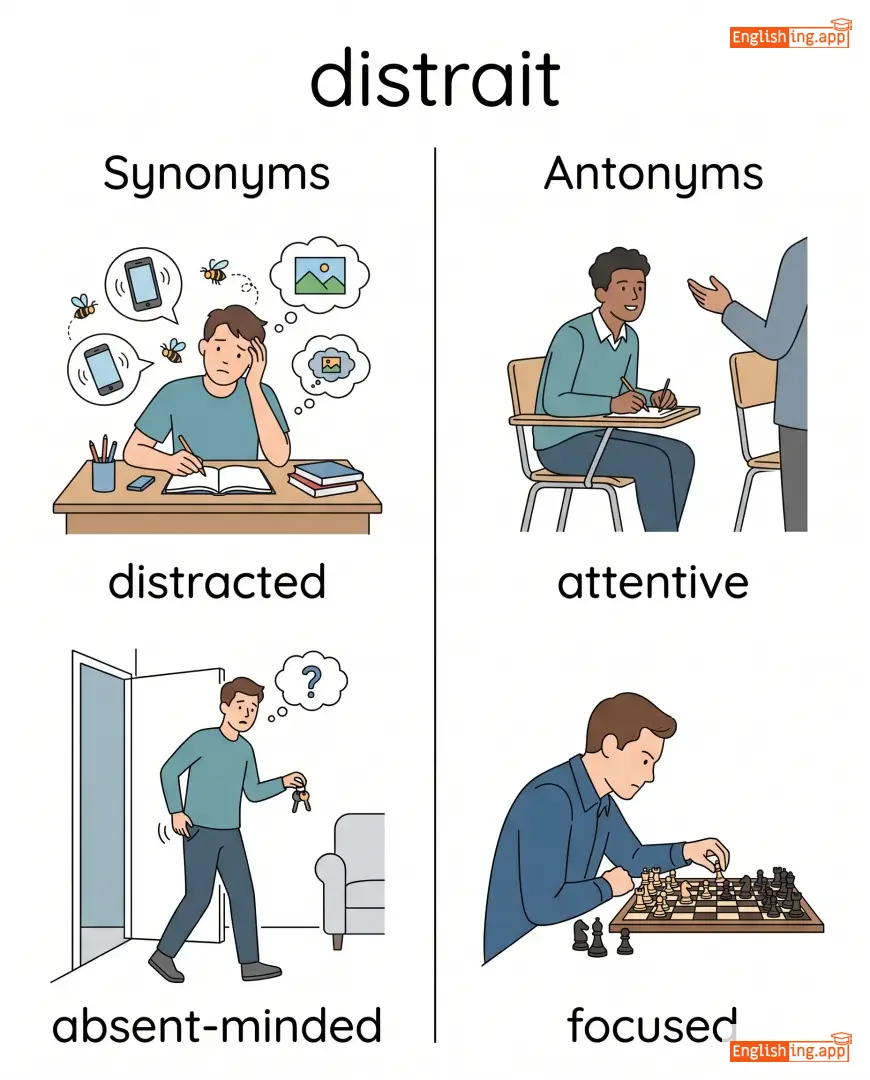
distracted, absent-minded, preoccupied, unfocused
••••••
|
attentive, focused
••••••
|
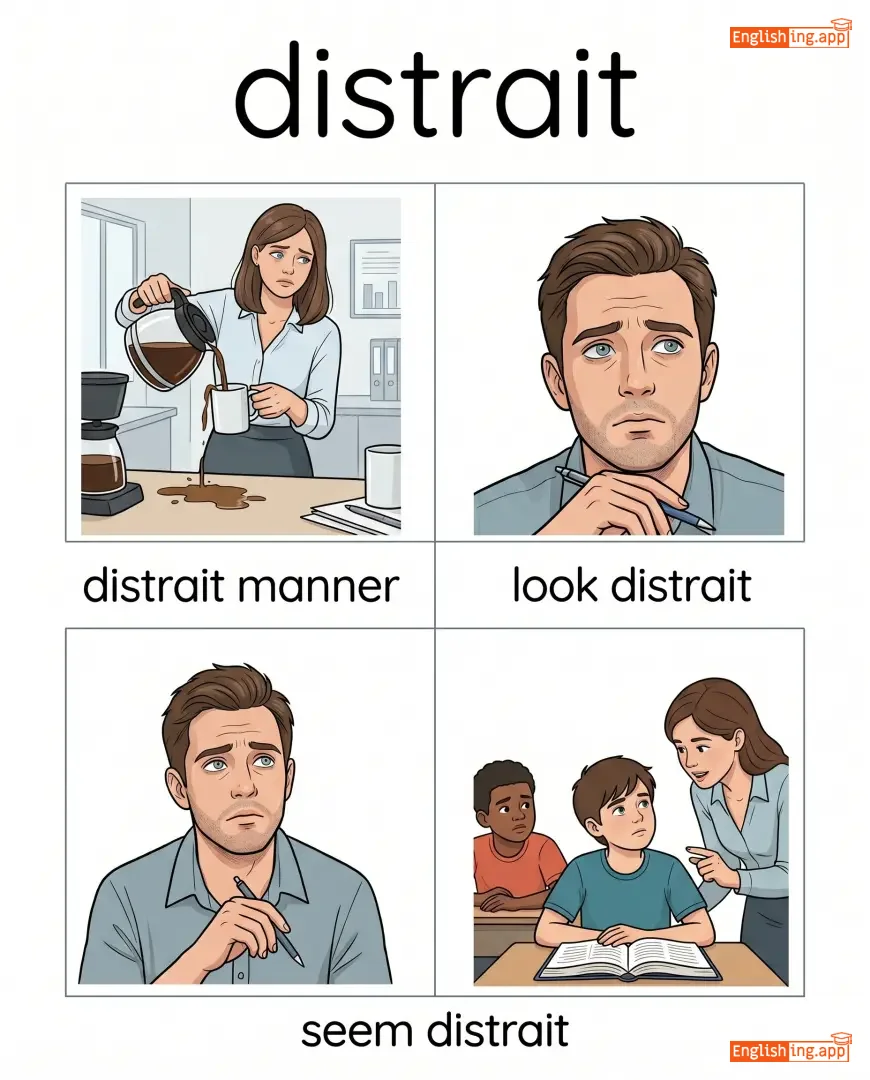
distrait manner, look distrait, seem distrait
••••••
|
Distrait 就是 '心不在焉' — 心思不集中,思想飘远了。
••••••
|
|
↔️
••••••
|
/daɪˈvɜːrdʒ/
verb
••••••
|

|
- •••••• |
diverged
••••••
|
diverged
••••••
|
diverges
••••••
|
diverging
••••••
|
to separate from a path, opinion, or standard
••••••
|
The two friends began to diverge in their career choices. |
- •••••• |
diverge from the norm |
to act differently than what is usual or expected
••••••
|
- •••••• |
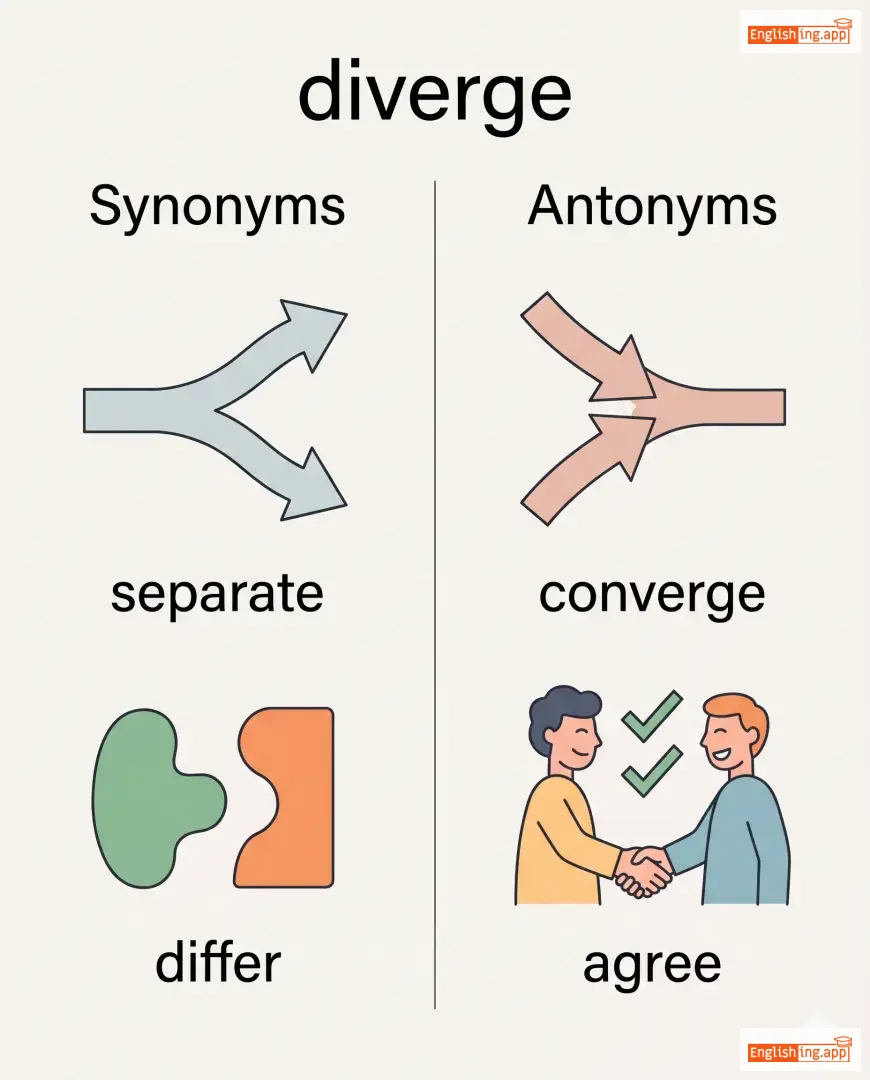
separate, differ, deviate, split, branch
••••••
|
converge, agree, coincide
••••••
|
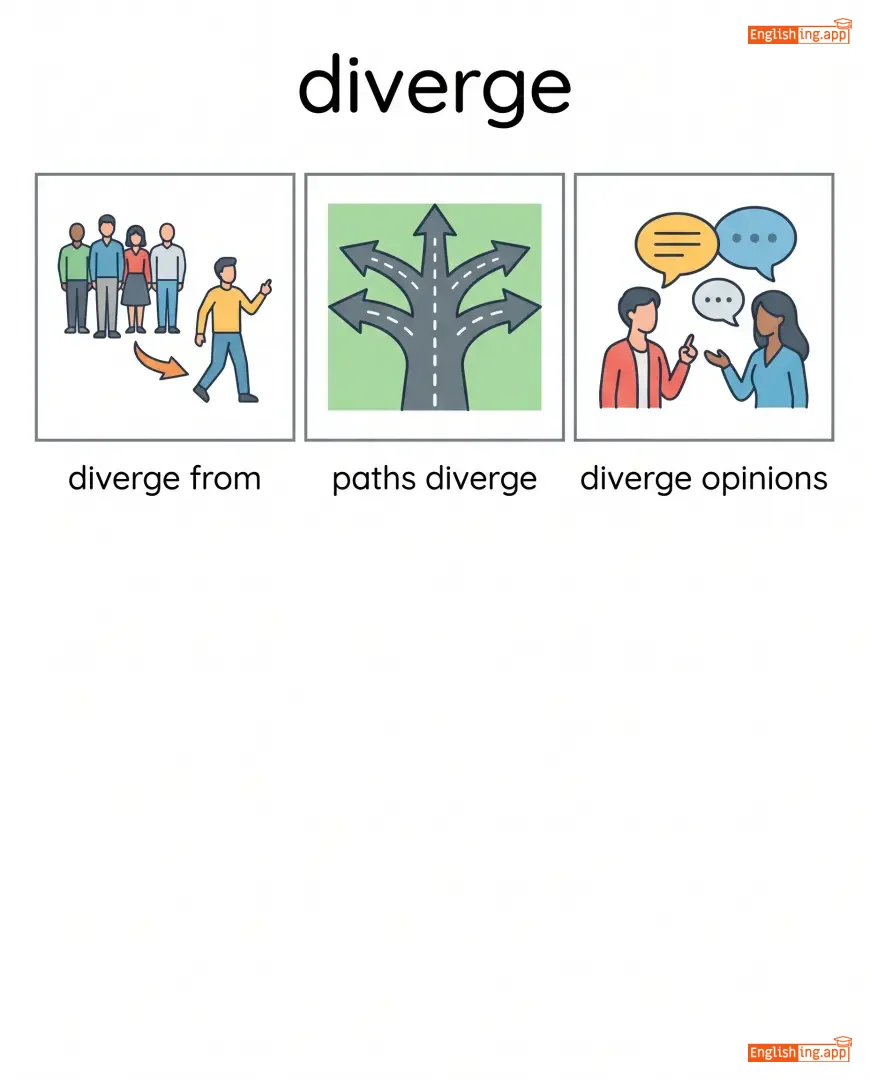
diverge from, paths diverge, diverge opinions, diverge sharply
••••••
|
No •••••• |
|
📉
••••••
|
/daɪˈvɛst/
verb
••••••
|
|
- •••••• |
divested
••••••
|
divested
••••••
|
divests
••••••
|
divesting
••••••
|
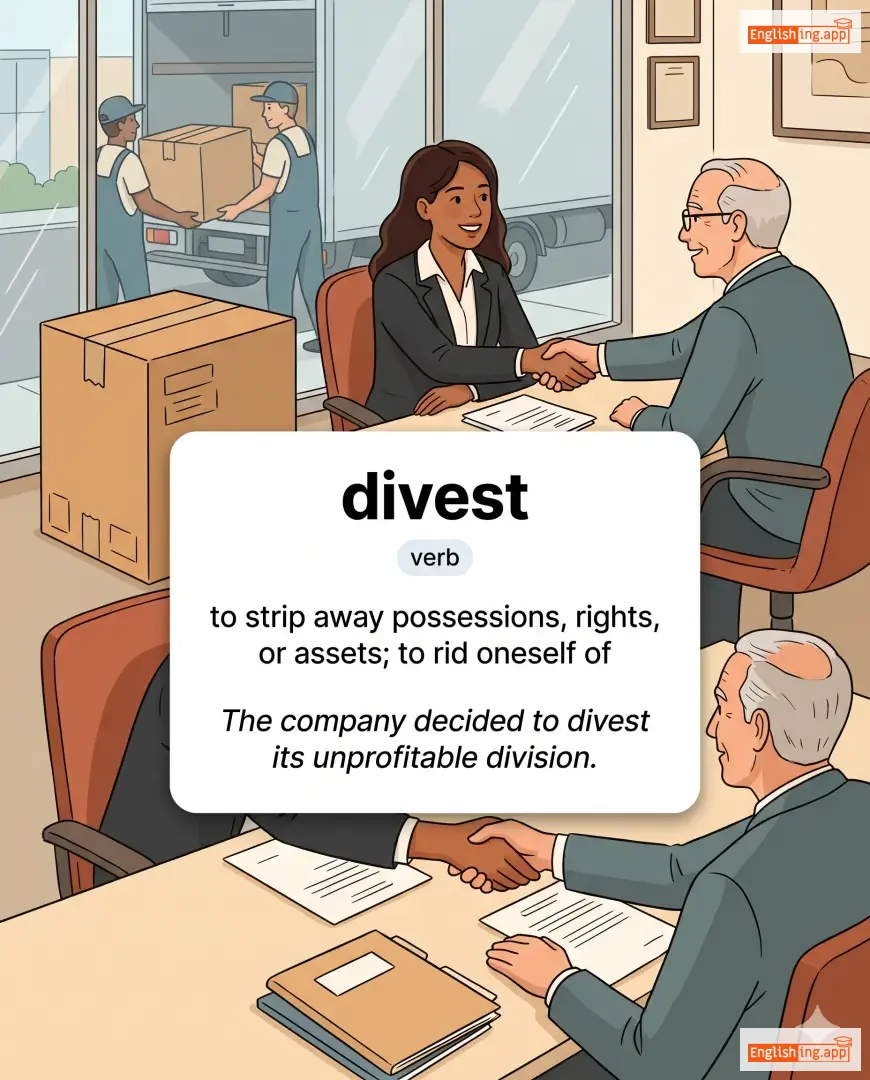
to strip away possessions, rights, or assets; to rid oneself of
••••••
|
The company decided to divest its unprofitable division. |
- •••••• |
divest oneself of |
to rid oneself of something unwanted
••••••
|
- •••••• |
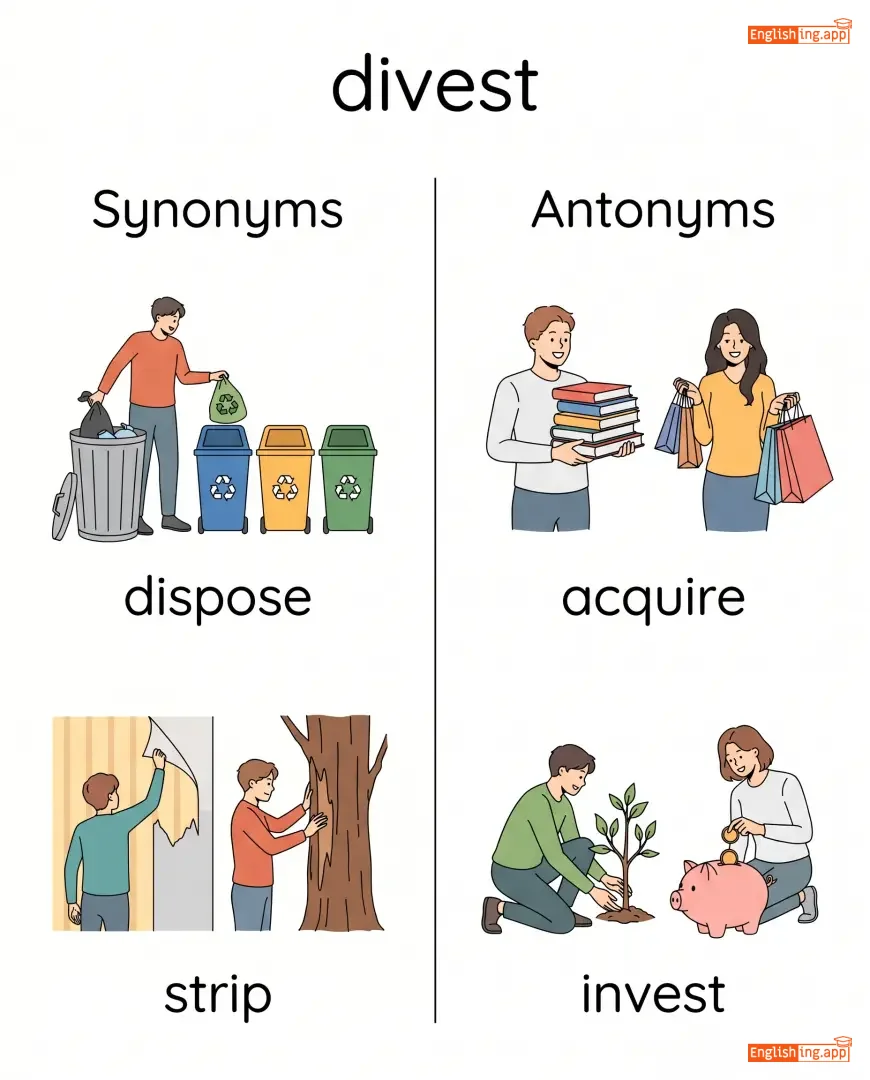
dispose, strip, rid, relinquish, sell off
••••••
|
acquire, invest, keep
••••••
|
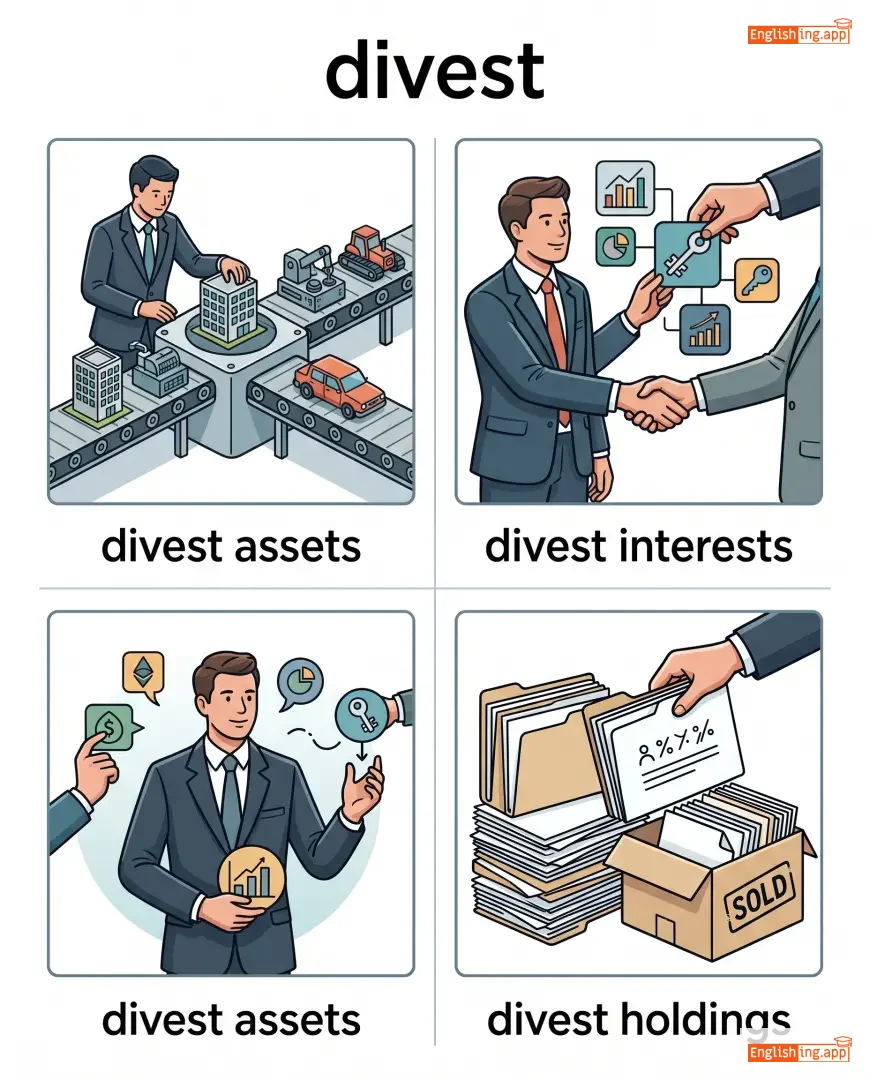
divest assets, divest interests, divest holdings, divest company
••••••
|
No •••••• |
|
🕵️
••••••
|
/daɪˈvʌldʒ/
verb
(迪伏尔吉)
••••••
|

|
透露
tòulù
••••••
|
divulged
迪伏尔吉德
••••••
|
divulged
迪伏尔吉德
••••••
|
divulges
迪伏尔吉斯
••••••
|
divulging
迪伏尔吉ing
••••••
|
to make known something private, secret, or previously unknown
••••••
|
She refused to divulge the source of her information.
她拒绝透露她信息的来源。
••••••
|
她拒绝透露她信息的来源。
Tā jùjué tòulù tā xìnxī de láiyuán.
••••••
|
- •••••• | - •••••• | - •••••• |
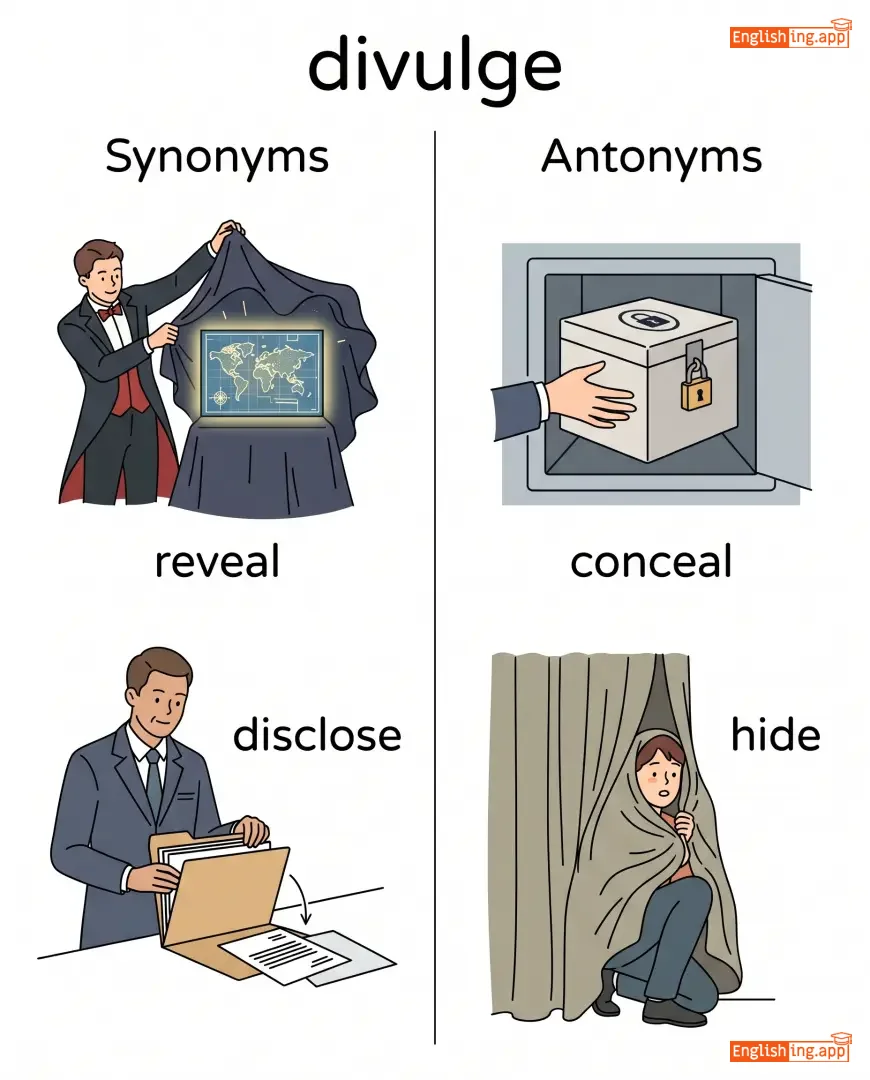
reveal, disclose, uncover, expose, betray
••••••
|
conceal, hide, withhold
••••••
|
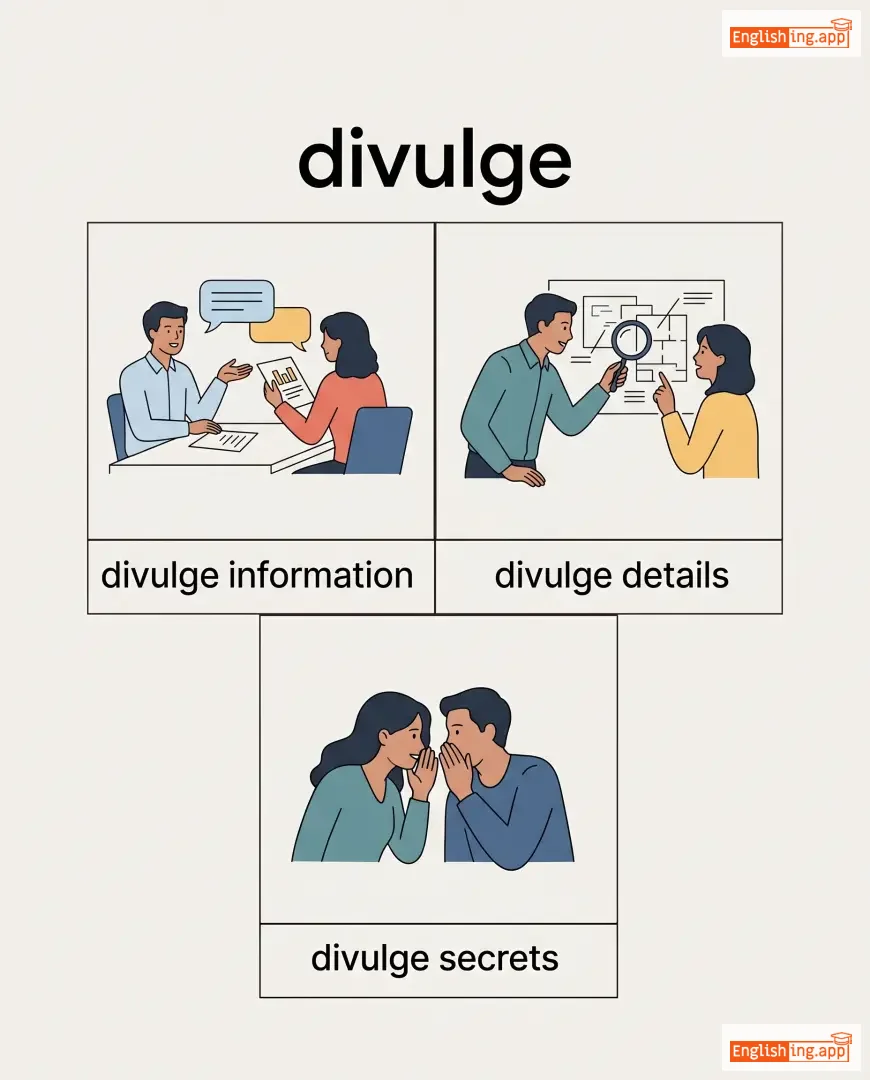
divulge information, divulge details, divulge secrets, refuse to divulge
••••••
|
Divulge 意思是透露 - 想象 '透露' 就是揭露秘密。
••••••
|
|
📖
••••••
|
/ˌdɒktrɪˈnɛər/
adjective
(道克特林埃尔)
••••••
|

|
教条主义者
jiàotiáo zhǔyì zhě
••••••
|
- •••••• | - •••••• | - •••••• | - •••••• |
stubbornly devoted to a theory or doctrine without regard to practical considerations
••••••
|
His doctrinaire approach to politics alienated many supporters. |
他对政治的教条主义方法使许多支持者感到疏远。
Tā duì zhèngzhì de jiàotiáo zhǔyì fāngfǎ shǐ xǔduō zhīchí zhě gǎndào shūyuǎn.
••••••
|
- •••••• | - •••••• | - •••••• |
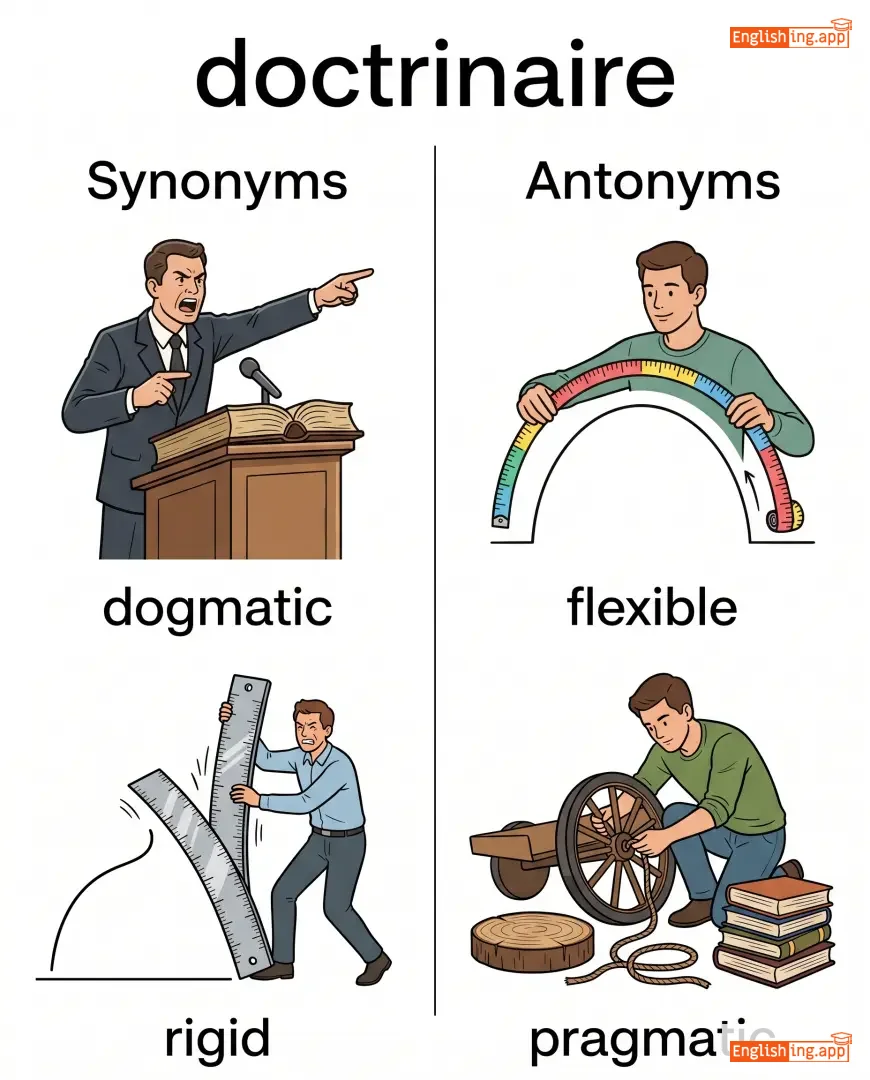
dogmatic, rigid, inflexible, theoretical, uncompromising
••••••
|
flexible, pragmatic, practical
••••••
|
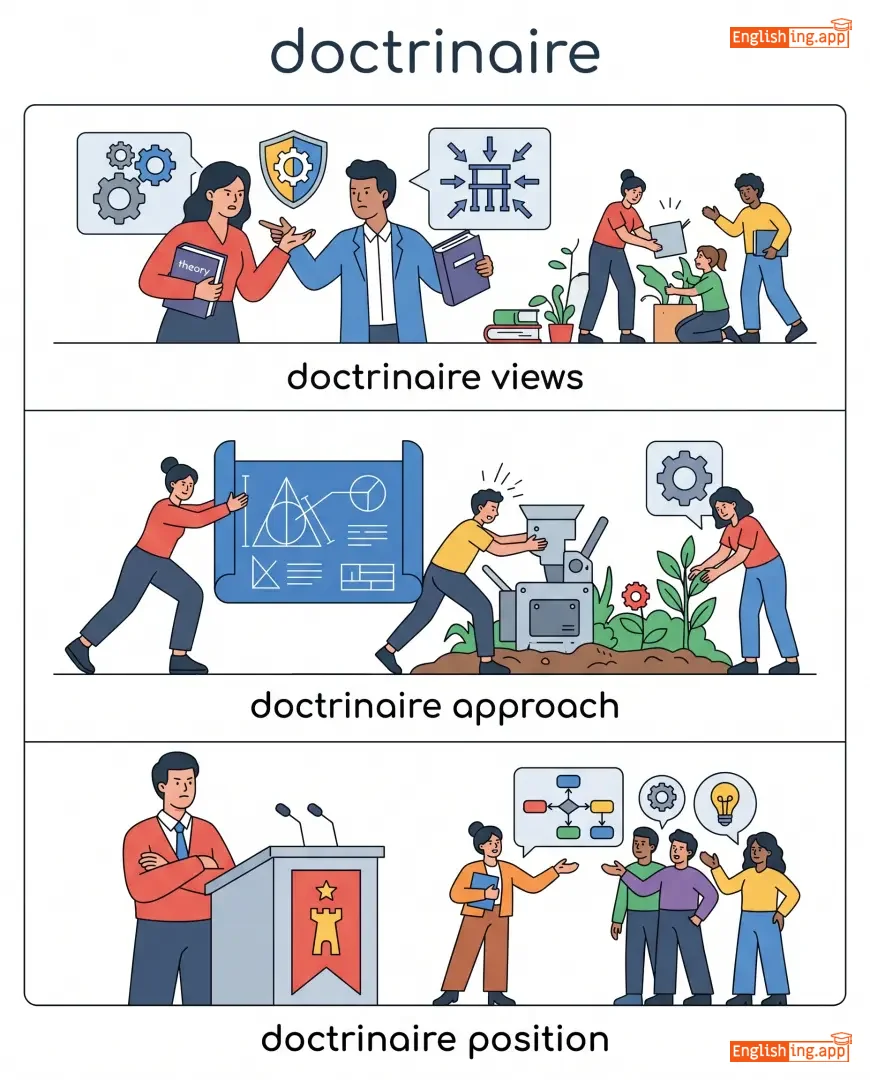
doctrinaire views, doctrinaire approach, doctrinaire position
••••••
|
Doctrinaire意味着坚持理论 - 无视实际问题
••••••
|
|
📄
••••••
|
/ˈdɒkjʊmənt/
noun/verb
(文件)
••••••
|

|
文件
wenjian
••••••
|
documented
已记录
••••••
|
documented
已记录
••••••
|
documents
文件
••••••
|
documenting
记录
••••••
|
Noun: A written, printed, or electronic record that provides information or evidence. Verb: To record information in written or electronic form.
••••••
|
She carefully documented all the expenses of the trip.
她仔细记录了旅行的所有费用。
••••••
|
她仔细记录了旅行的所有费用。
Ta zǐxì jìlùle lǚxíng de suǒyǒu fèiyòng.
••••••
|
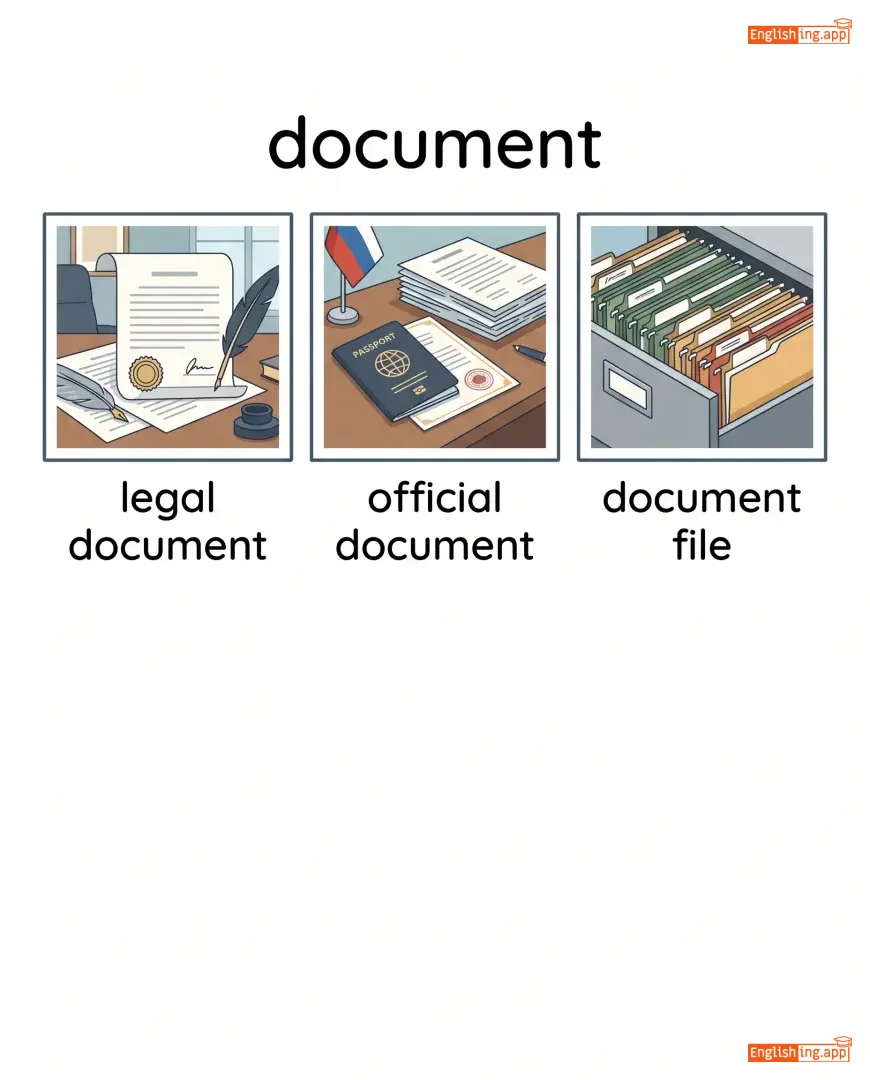
official document
官方文件
••••••
|
An authoritative or legal record recognized by an institution.
••••••
|
官方文件
guānfāng wénjiàn
••••••
|
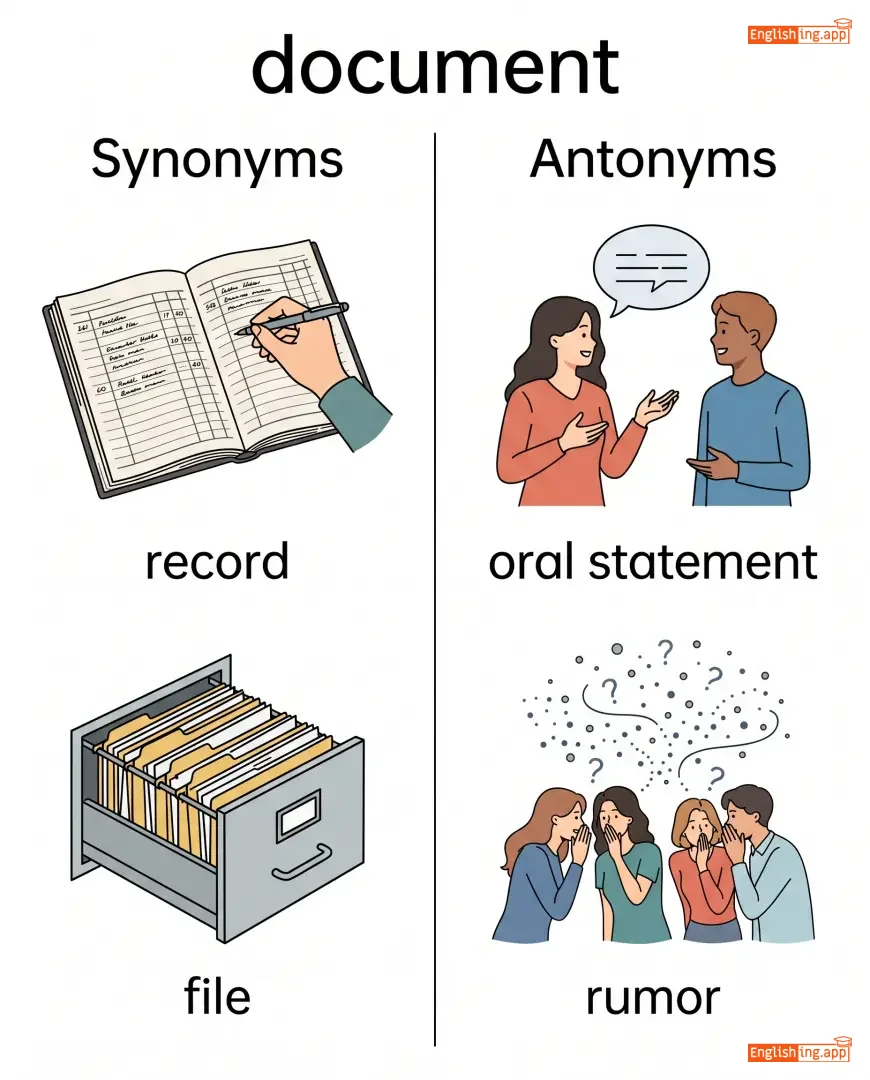
record, file, paper, certificate, report
••••••
|
oral statement, rumor
••••••
|
legal document, official document, document file, document evidence
••••••
|
Document 就是文件—确保你记录下重要的信息!
••••••
|
|
📜
••••••
|
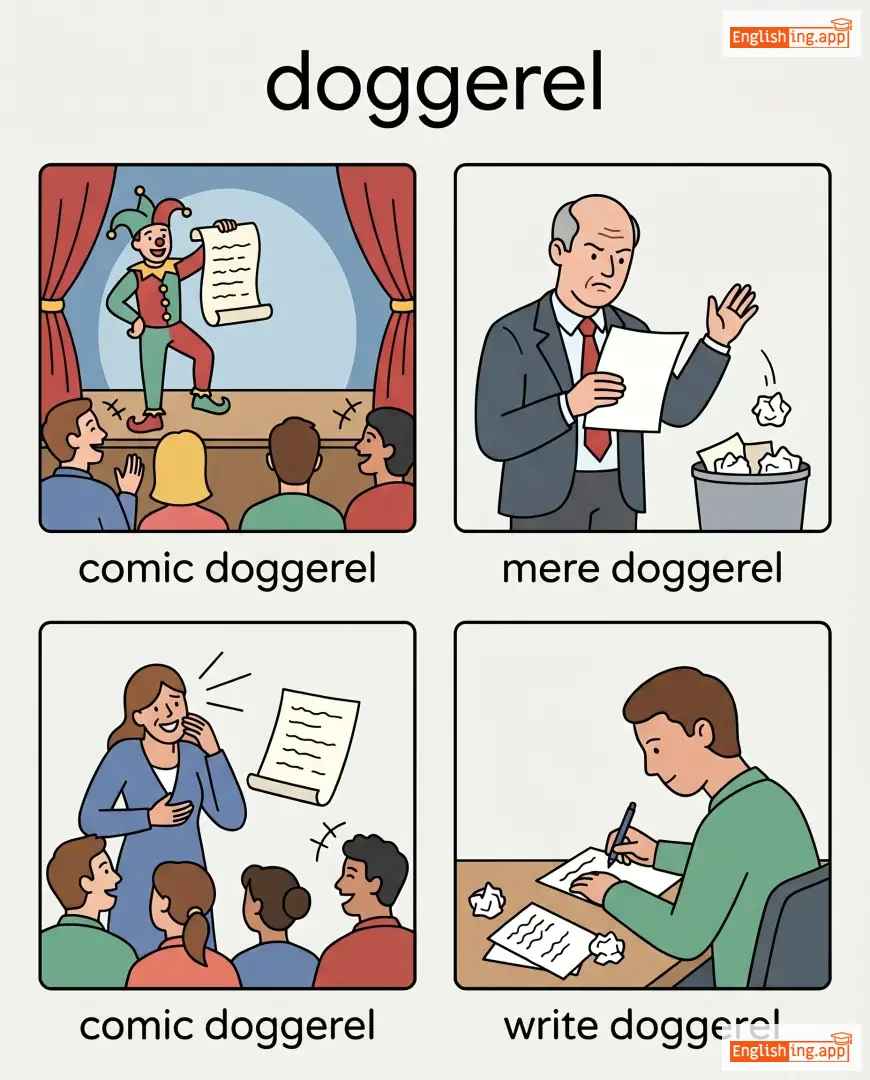
/ˈdɒɡərəl/
noun
(多格雷尔)
••••••
|
|
低俗诗句
dī sú shī jù
••••••
|
- •••••• | - •••••• | - •••••• | - •••••• |
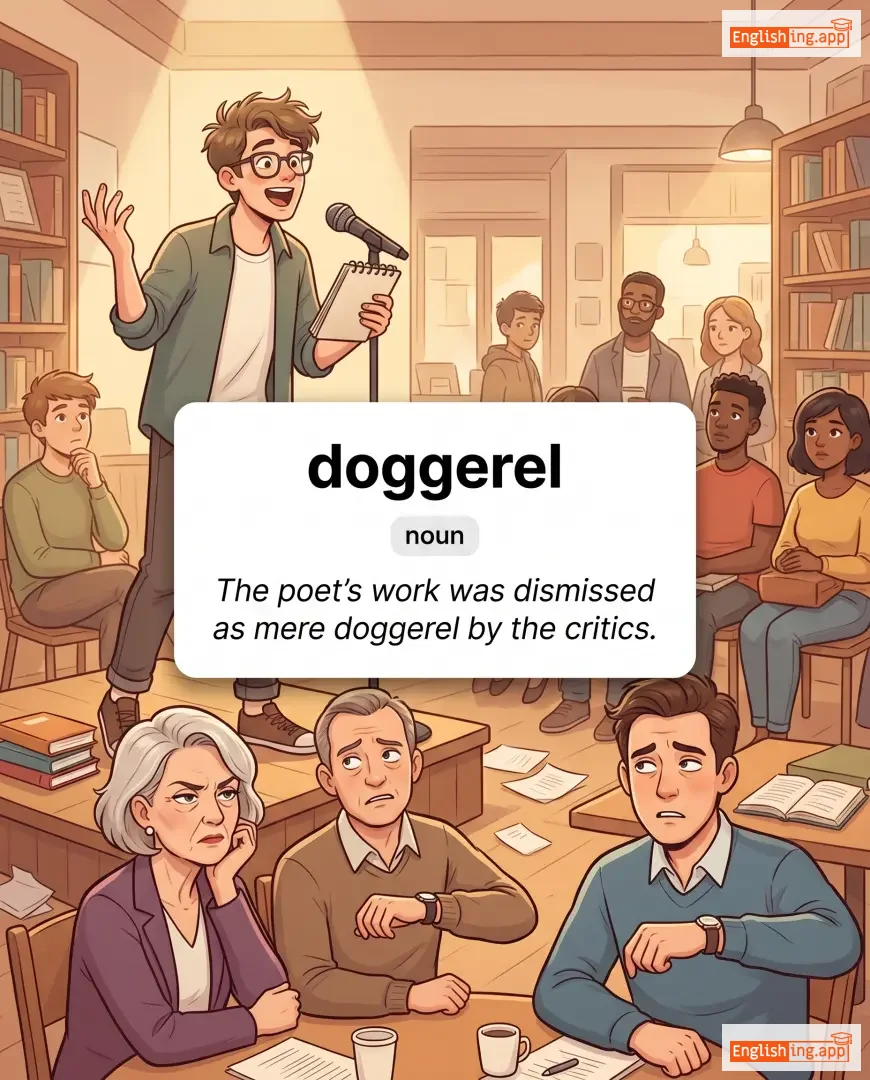
Comic or irregular verse, often poorly constructed and lacking in artistic quality.
••••••
|
The poet’s work was dismissed as mere doggerel by the critics. |
诗人的作品被评论家视为单纯的低俗诗句。
shī rén de zuò pǐn bèi píng lùn jiā shì wéi dān chún de dī sú shī jù.
••••••
|
- •••••• | - •••••• | - •••••• |
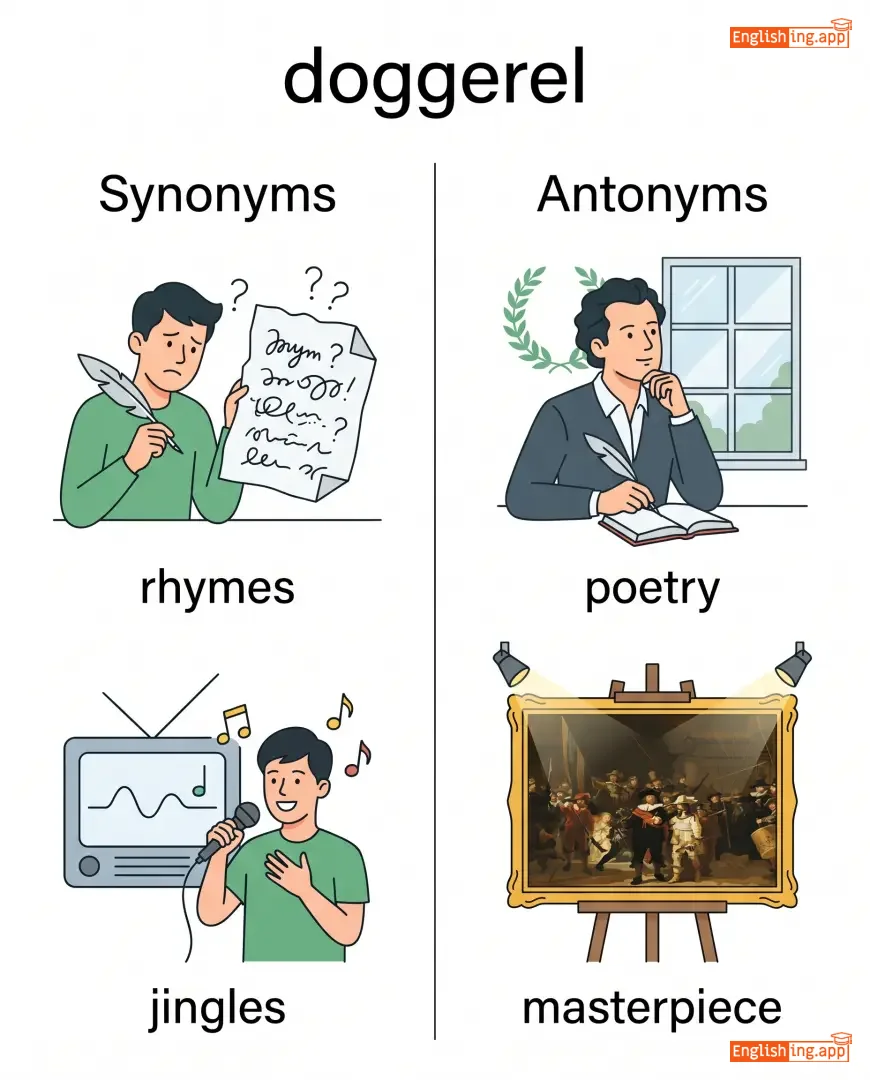
rhymes, jingles, verses, ballad, limerick
••••••
|
poetry, masterpiece, classic
••••••
|
comic doggerel, mere doggerel, write doggerel, silly doggerel
••••••
|
Doggerel 像低俗诗句 - 不值一提的诗
••••••
|
|
🗣️
••••••
|
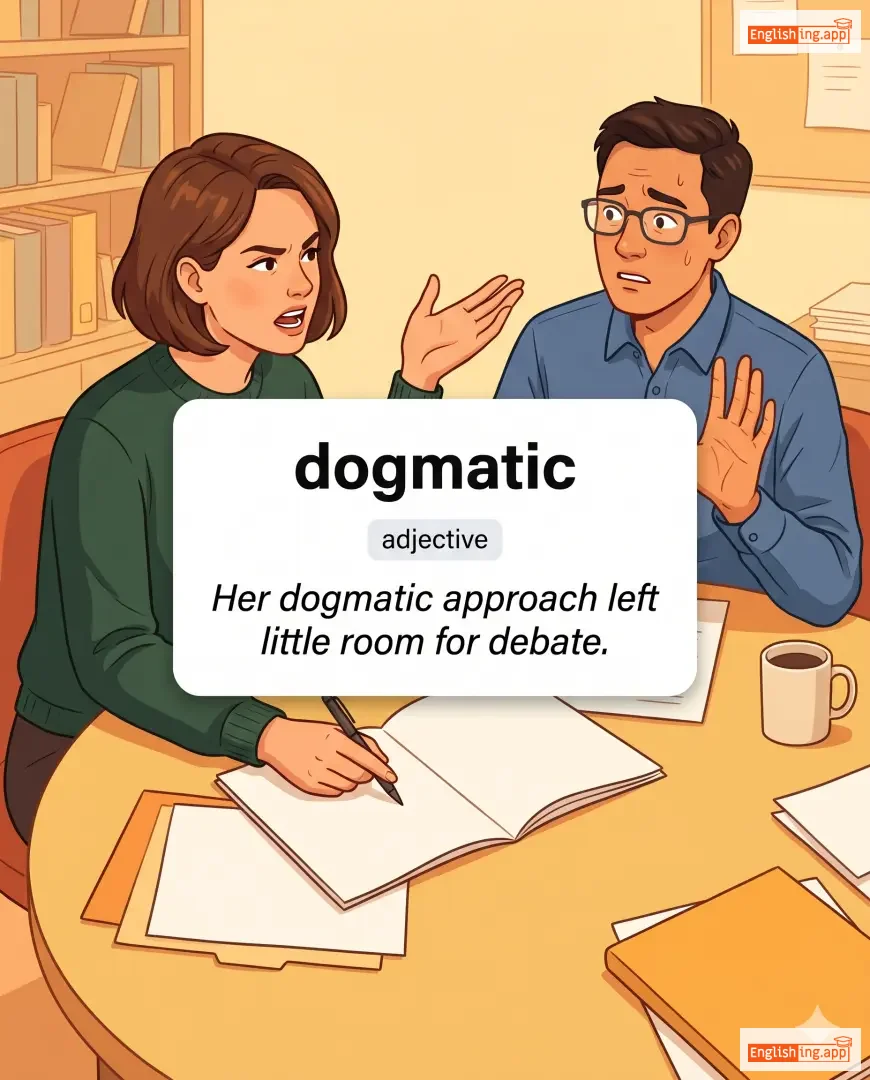
/dɒɡˈmætɪk/
adjective
(教条主义)
••••••
|
|
教条主义的; 坚持己见的; 倾向于将原则视为无可争议的真理
jiaotiaozhuyi de
••••••
|
- •••••• | - •••••• | - •••••• | - •••••• |
opinionated; rigid in beliefs; inclined to lay down principles as incontrovertibly true
••••••
|
He has very dogmatic views about politics.
他对政治有非常教条主义的看法。
••••••
|
他对政治有非常教条主义的看法。
Ta dui zhengzhi you feichang jiaotiaozhuyi de kanfa.
••••••
|
- •••••• | - •••••• | - •••••• |
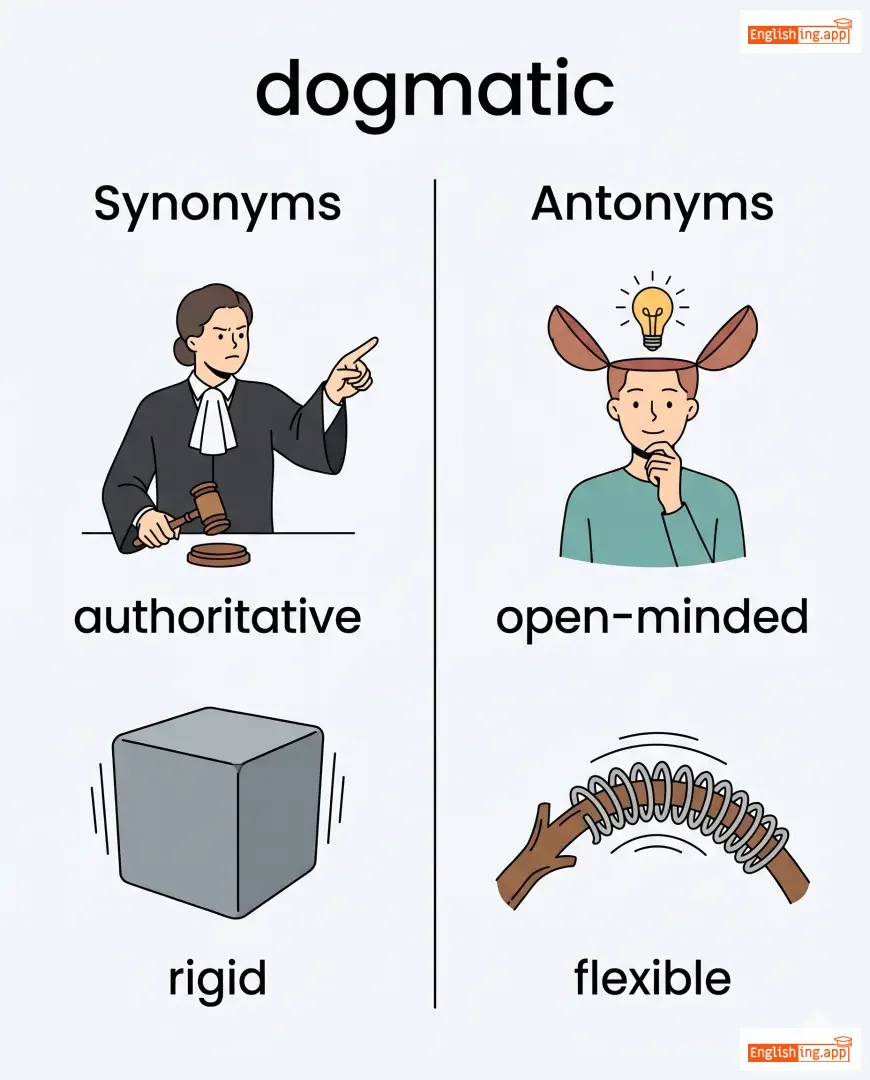
opinionated, doctrinaire, rigid, inflexible, authoritarian
••••••
|
flexible, open-minded, tolerant, receptive
••••••
|
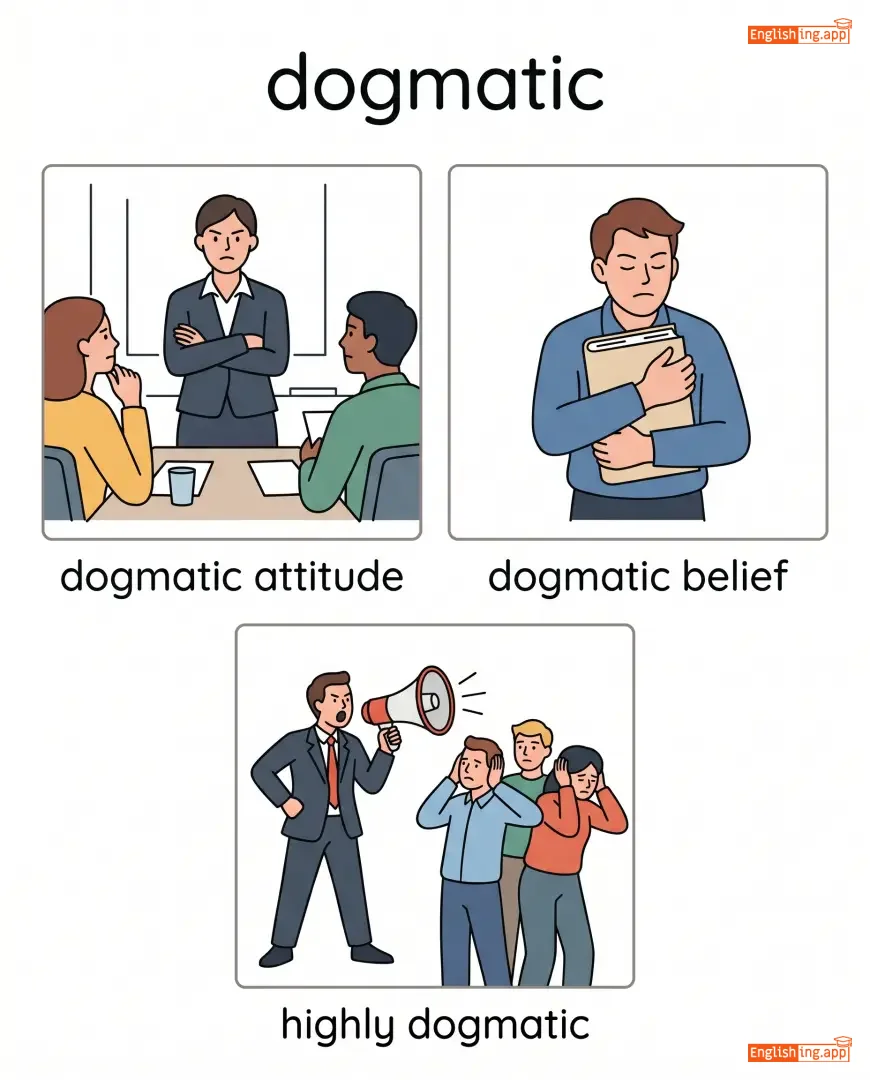
dogmatic approach, dogmatic belief, dogmatic person
••••••
|
Dogmatic sounds like 'dog' + 'mat' – think of a dog that refuses to leave its mat, just like dogmatic people refuse to change their views.
••••••
|
|
😴
••••••
|
/ˈdɔːrmənt/
adjective
••••••
|
|
- •••••• | - •••••• | - •••••• | - •••••• | - •••••• |
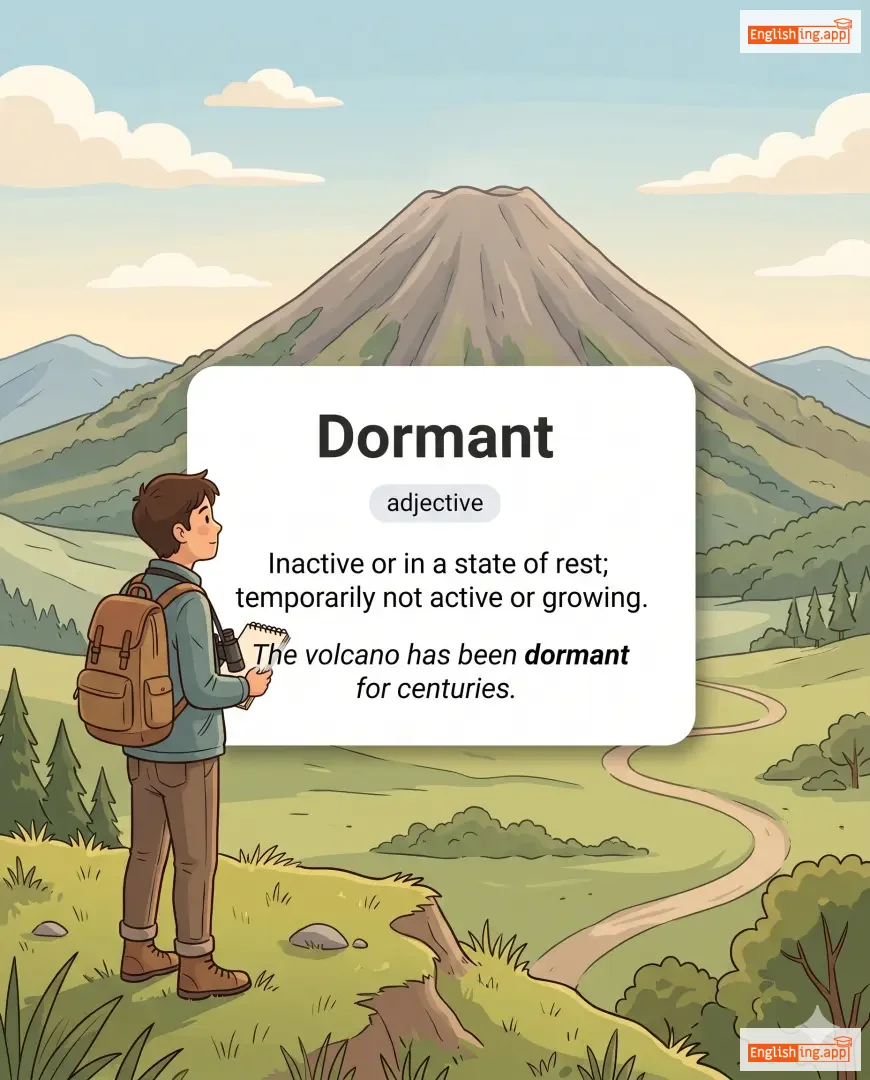
Inactive or in a state of rest; temporarily not active or growing.
••••••
|
The volcano has been dormant for centuries. |
- •••••• |
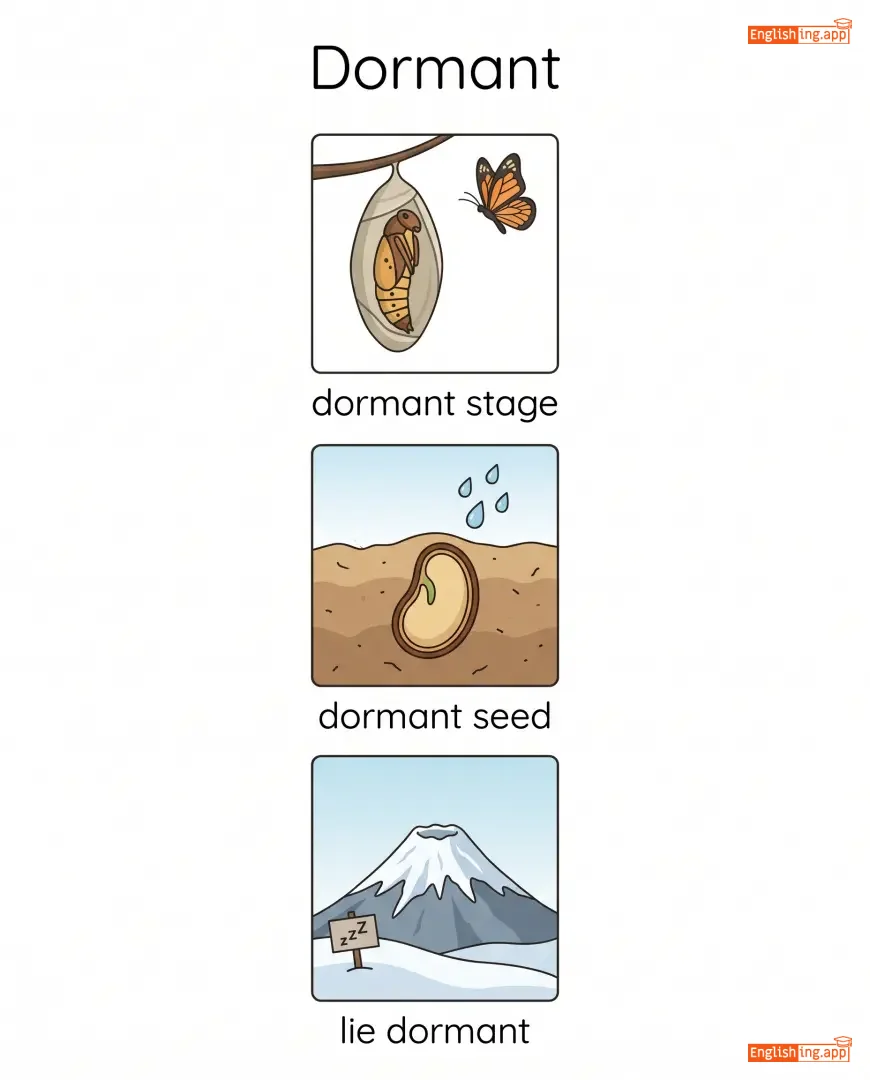
lie dormant |
to remain inactive or hidden for a period of time
••••••
|
- •••••• |
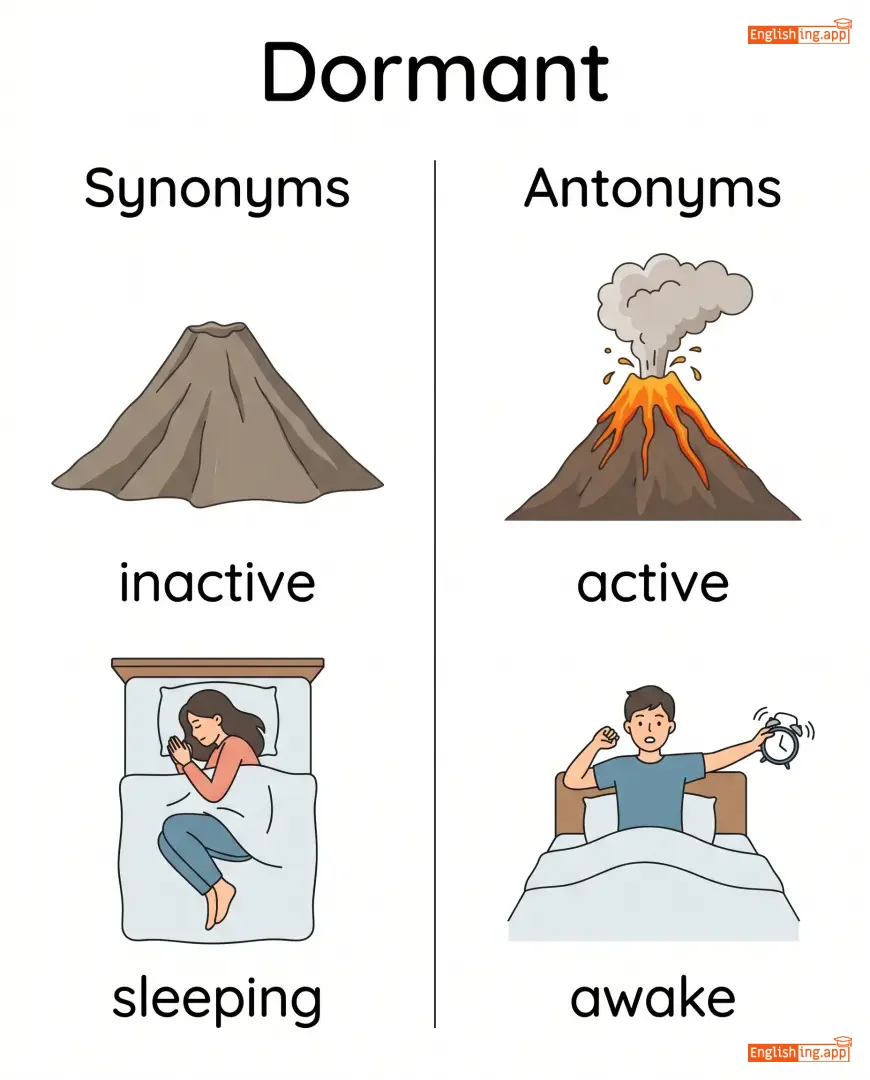
inactive, sleeping, latent, resting, inert
••••••
|
active, awake, lively
••••••
|
dormant stage, dormant seed, lie dormant, dormant volcano
••••••
|
No •••••• |
|
🗑️
••••••
|
/drɒs/
noun
(德罗斯)
••••••
|
|
废料
feiliao
••••••
|
- •••••• | - •••••• | - •••••• | - •••••• |
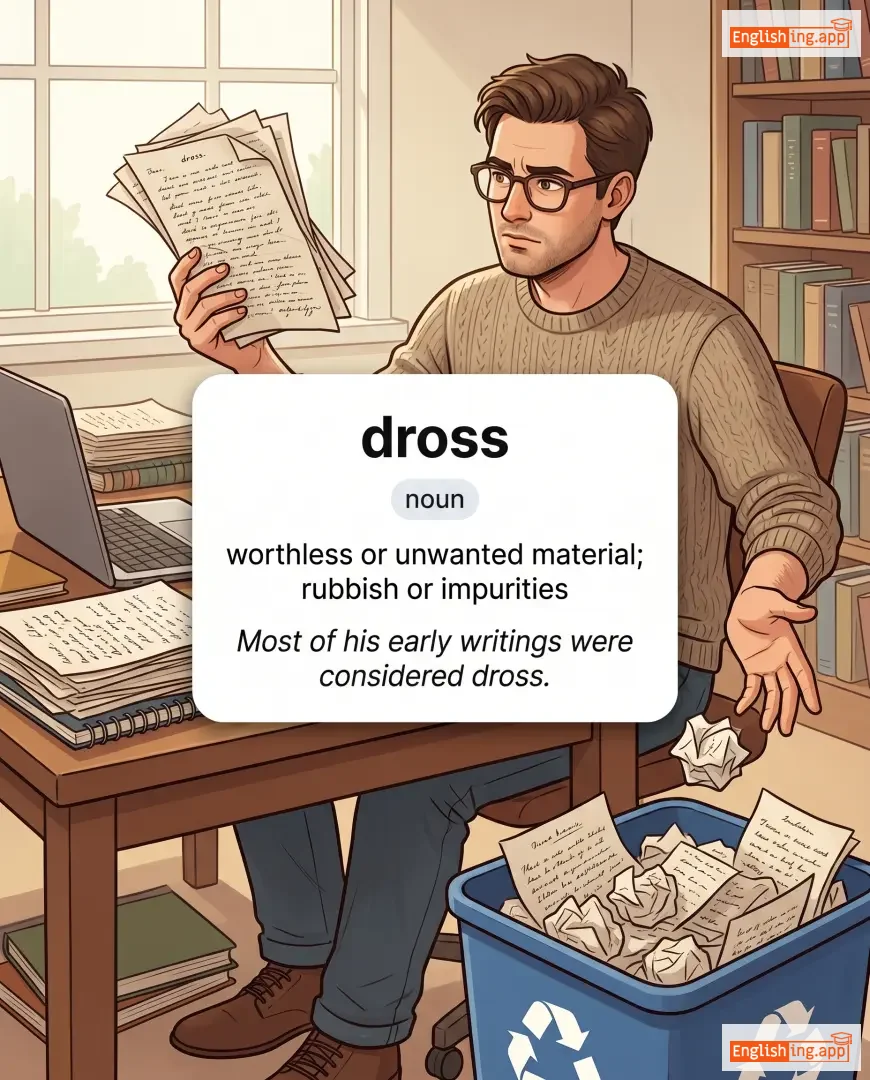
worthless or unwanted material; rubbish or impurities
••••••
|
Most of his early writings were considered dross. |
他的大部分早期作品被视为废料。
Ta de dabu fen zaoqi zuopin bei shi wei feiliao.
••••••
|
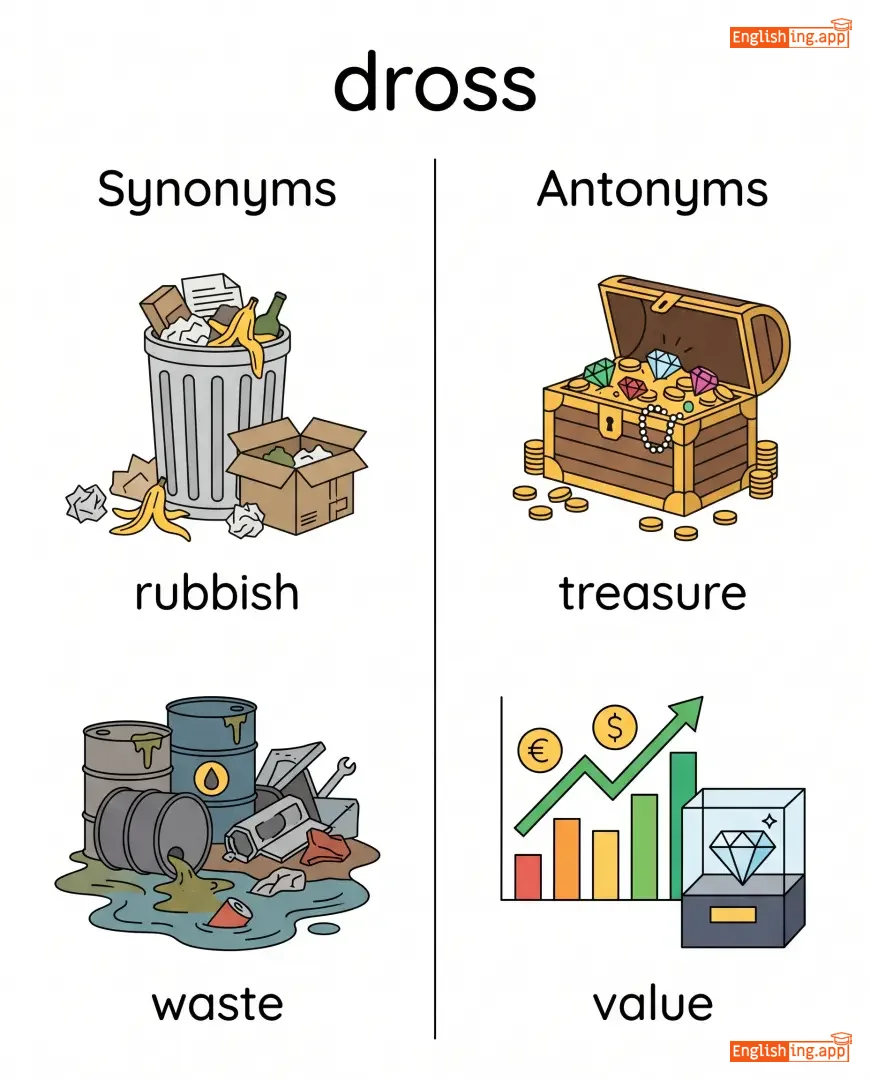
- •••••• | - •••••• | - •••••• |
rubbish, waste, junk, trash, debris
••••••
|
treasure, value, worth
••••••
|
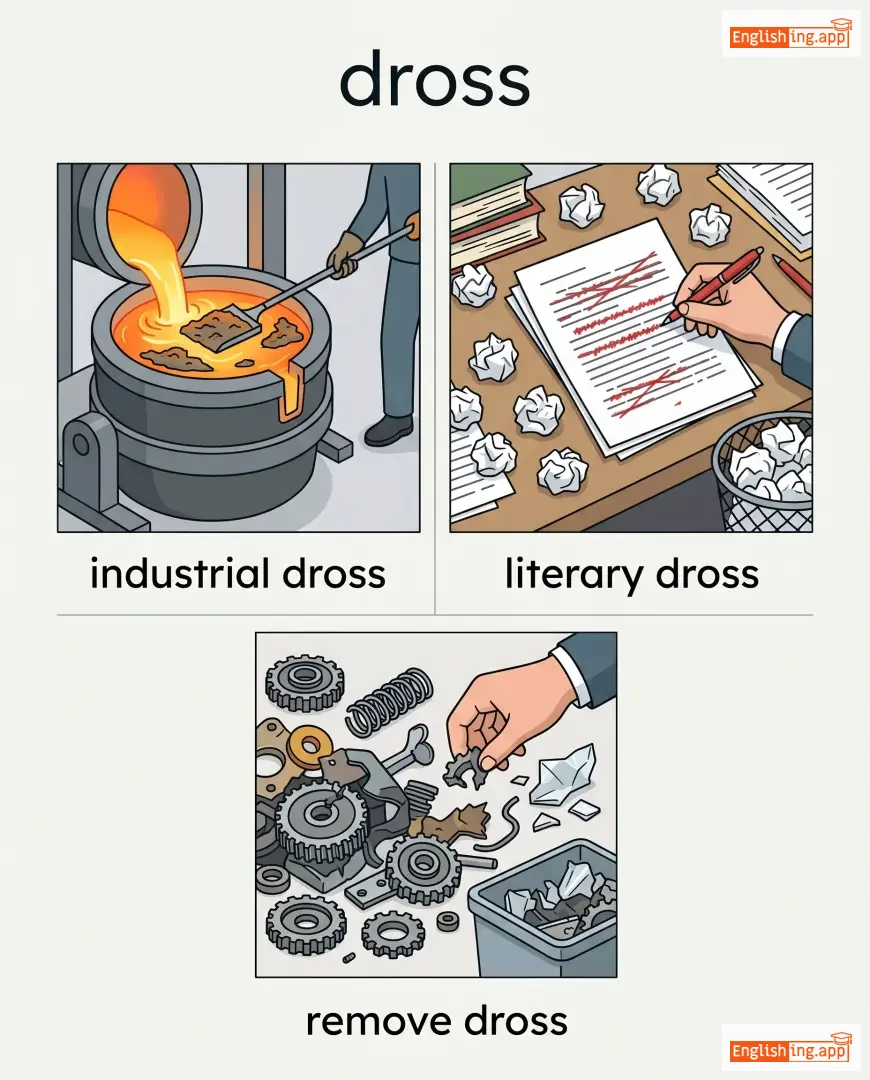
industrial dross, literary dross, remove dross
••••••
|
Dross意味着废料 – Dust + Rubbish合起来是废料。
••••••
|
|
🎭
••••••
|
/djuːp/
verb
(杜普)
••••••
|

|
欺骗
qīpiàn
••••••
|
duped
杜普德
••••••
|
duped
杜普德
••••••
|
dupes
杜普斯
••••••
|
duping
杜普英
••••••
|
To deceive or trick someone into believing or doing something.
••••••
|
He was duped into buying a fake watch.
他被欺骗购买了一个假表。
••••••
|
他被欺骗购买了一个假表。
Tā bèi qīpiàn gòumǎile yīgè jiǎ biǎo.
••••••
|
play for a dupe
为傻瓜游戏
••••••
|
to be tricked or deceived easily
••••••
|
容易被骗
róngyì bèi piàn
••••••
|
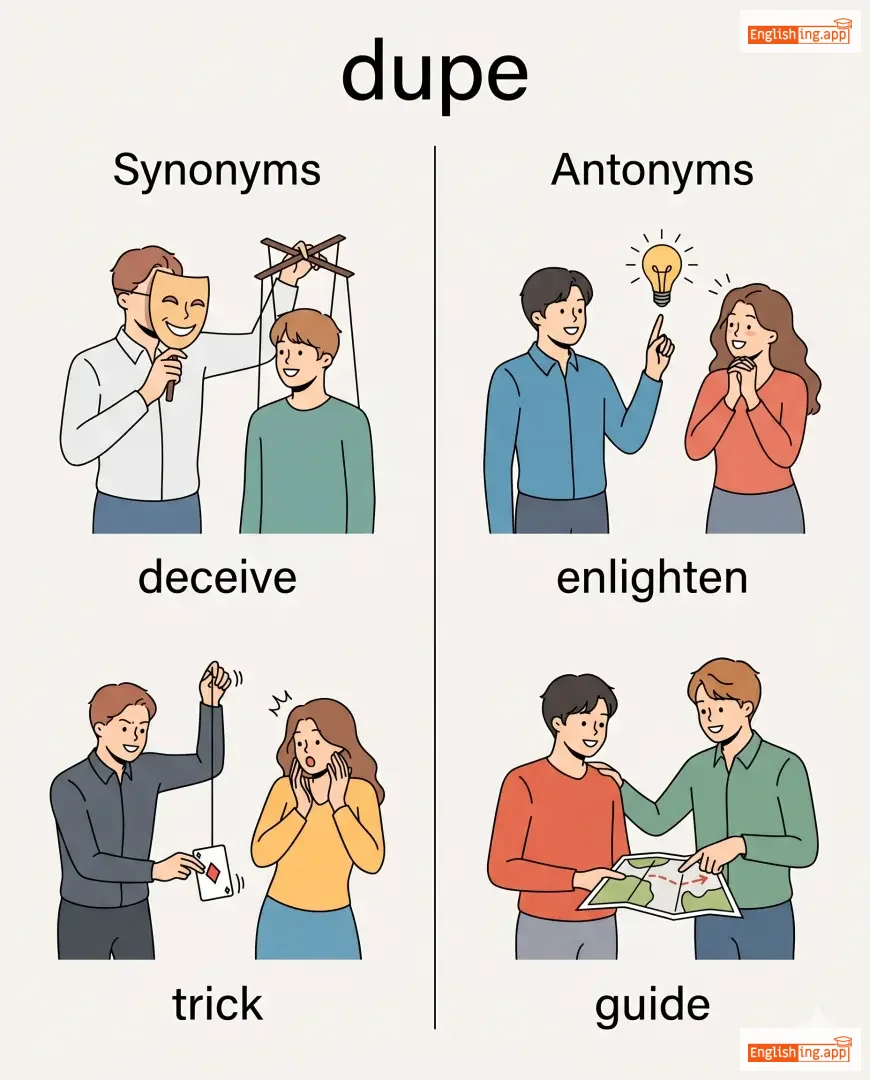
deceive, trick, fool, cheat, mislead
••••••
|
enlighten, guide, inform
••••••
|
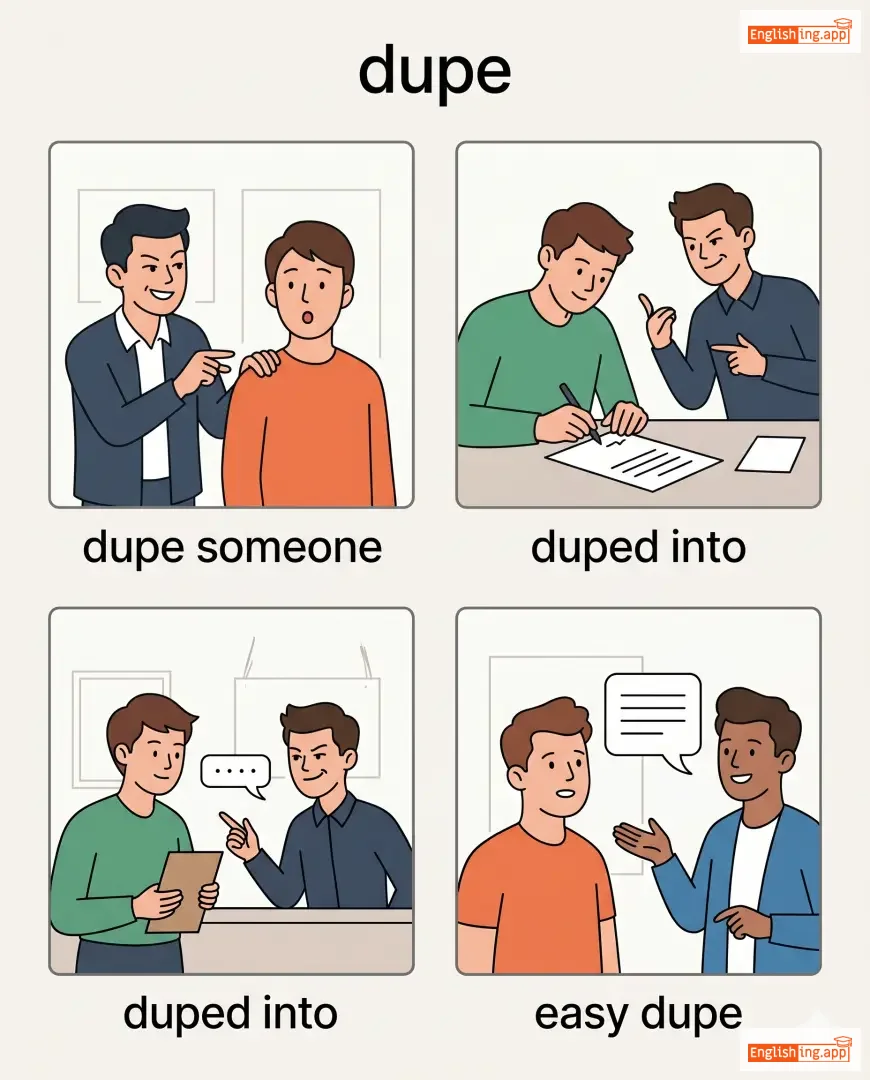
dupe someone, duped into, easy dupe, unsuspecting dupe
••••••
|
Dupe 代表欺骗 – 记住 'You got duped' 代表 '你被骗了'。
••••••
|
|
😄
••••••
|
/ɪˈbʊliənt/
adjective
(艾布连特)
••••••
|

|
兴高采烈
xing gao cai lie
••••••
|
- •••••• | - •••••• | - •••••• | - •••••• |
cheerful and full of energy
••••••
|
She was ebullient after receiving the good news. |
收到好消息后,她兴高采烈。
Shoudao hao xiaoxi hou, ta xing gao cai lie.
••••••
|
- •••••• | - •••••• | - •••••• |
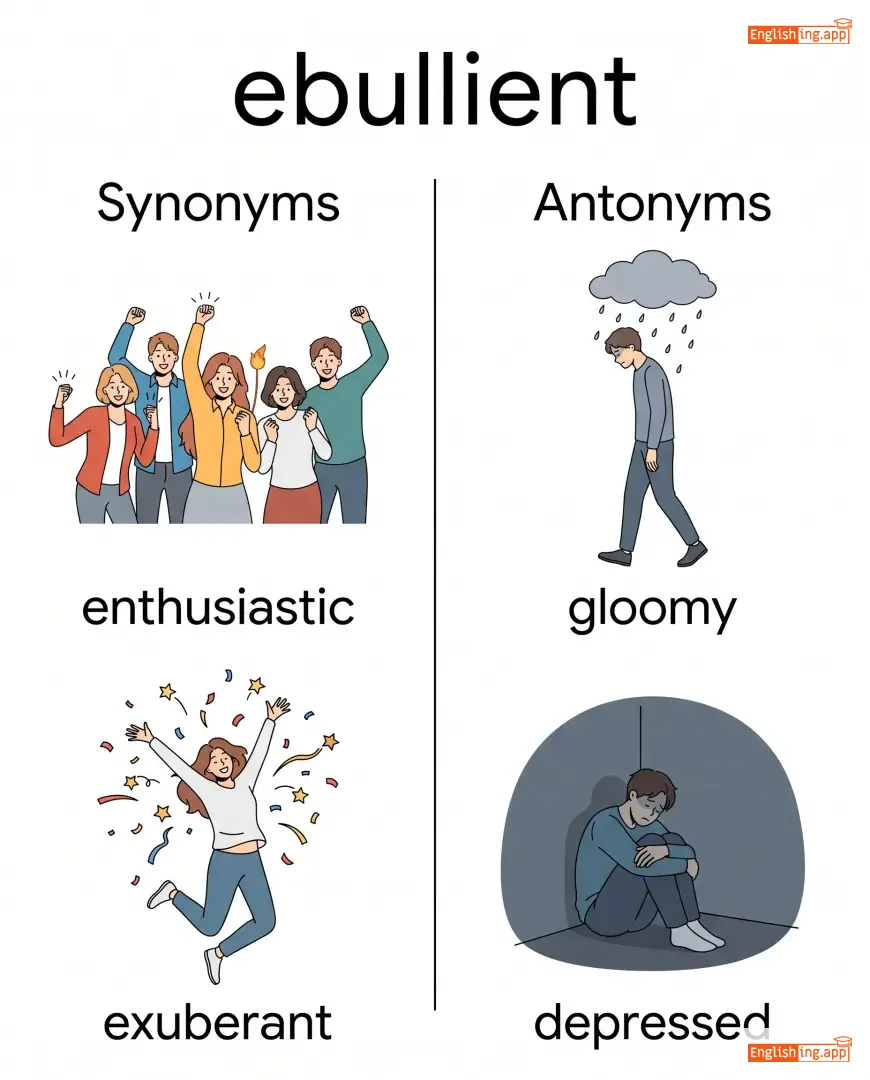
enthusiastic, exuberant, joyful, lively
••••••
|
gloomy, depressed, dull
••••••
|
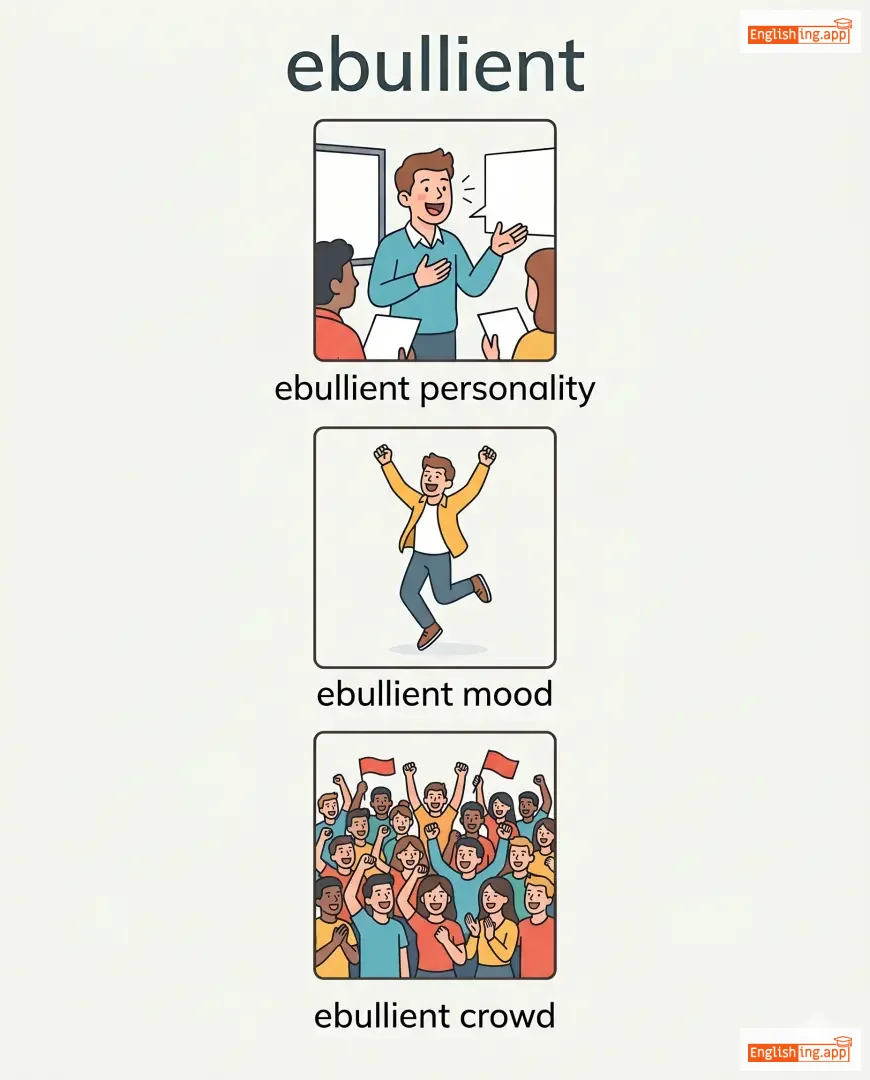
ebullient personality, ebullient mood, ebullient crowd
••••••
|
Ebullient 意味着充满能量 😄 - 得到好消息后,大家都兴高采烈
••••••
|
|
🎨
••••••
|
/ɪˈklɛktɪk/
adjective
(éklèktik)
••••••
|

|
折衷的
zhézhōng de
••••••
|
- •••••• | - •••••• | - •••••• | - •••••• |
Selecting or deriving ideas, styles, or tastes from a broad and diverse range of sources.
••••••
|
Her taste in music is eclectic, ranging from classical to hip-hop.
她的音乐口味是折衷的,从古典到嘻哈。
••••••
|
她的音乐口味是折衷的,从古典到嘻哈。
Tā de yīnyuè kǒuwèi shì zhézhōng de, cóng gǔdiǎn dào xīhā.
••••••
|
- •••••• | - •••••• | - •••••• |
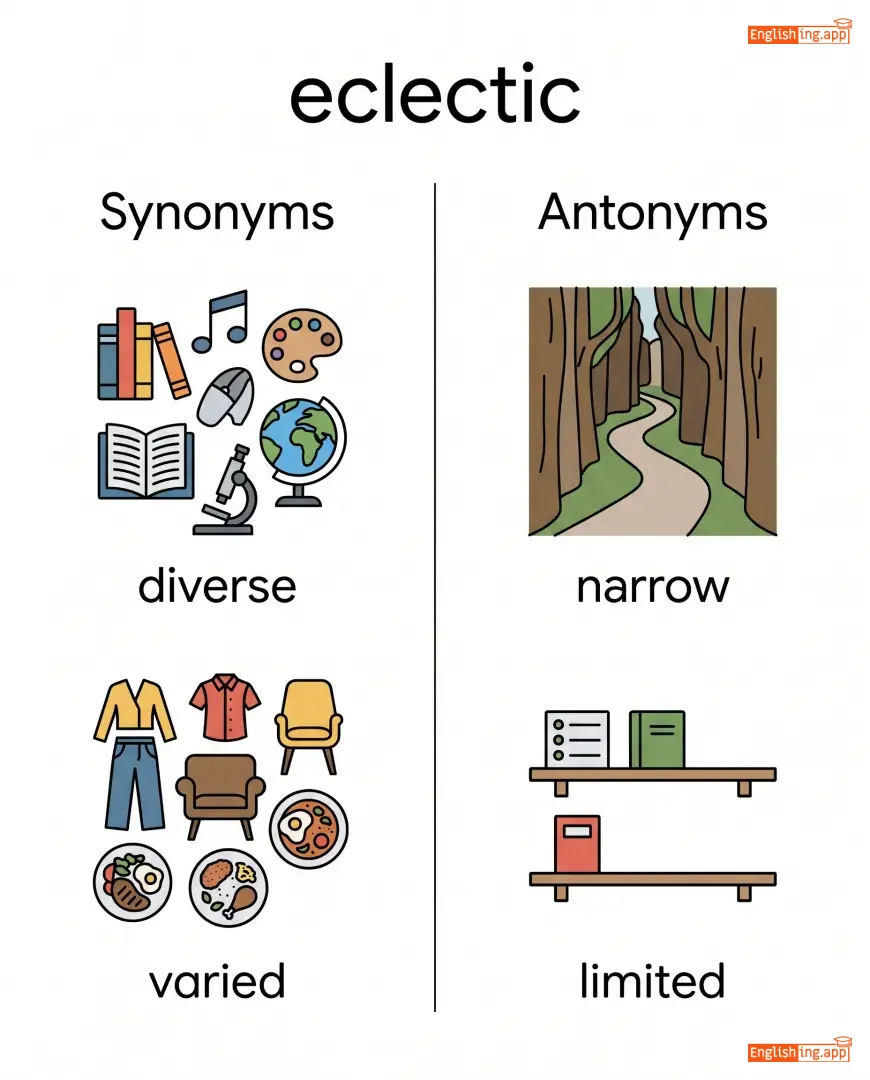
diverse, varied, broad, wide-ranging, assorted
••••••
|
narrow, limited, exclusive
••••••
|
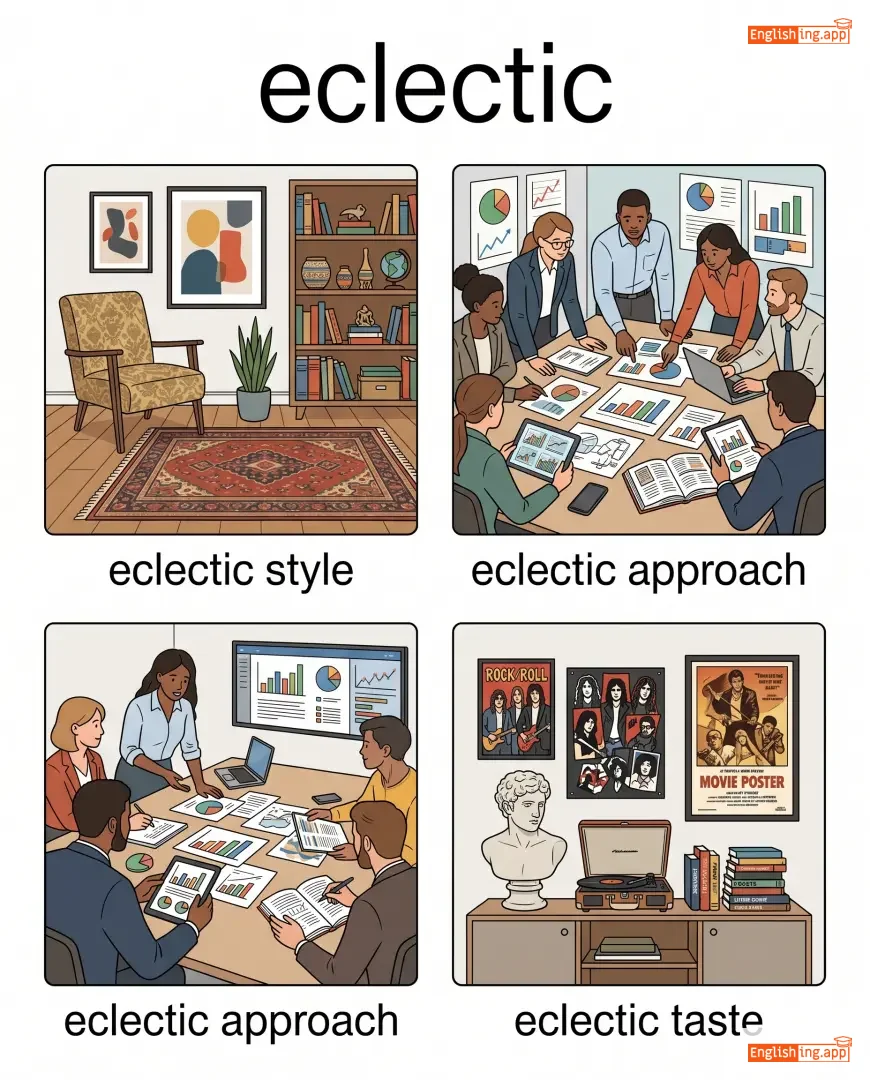
eclectic style, eclectic approach, eclectic taste, eclectic mix
••••••
|
折衷的口味,就像一幅综合各种风格的画。
••••••
|
|
🥂
••••••
|
/ˌɛfəˈvɛsəns/
noun
(艾弗维森斯)
••••••
|

|
泡沫
pàomò
••••••
|
- •••••• | - •••••• | - •••••• | - •••••• |
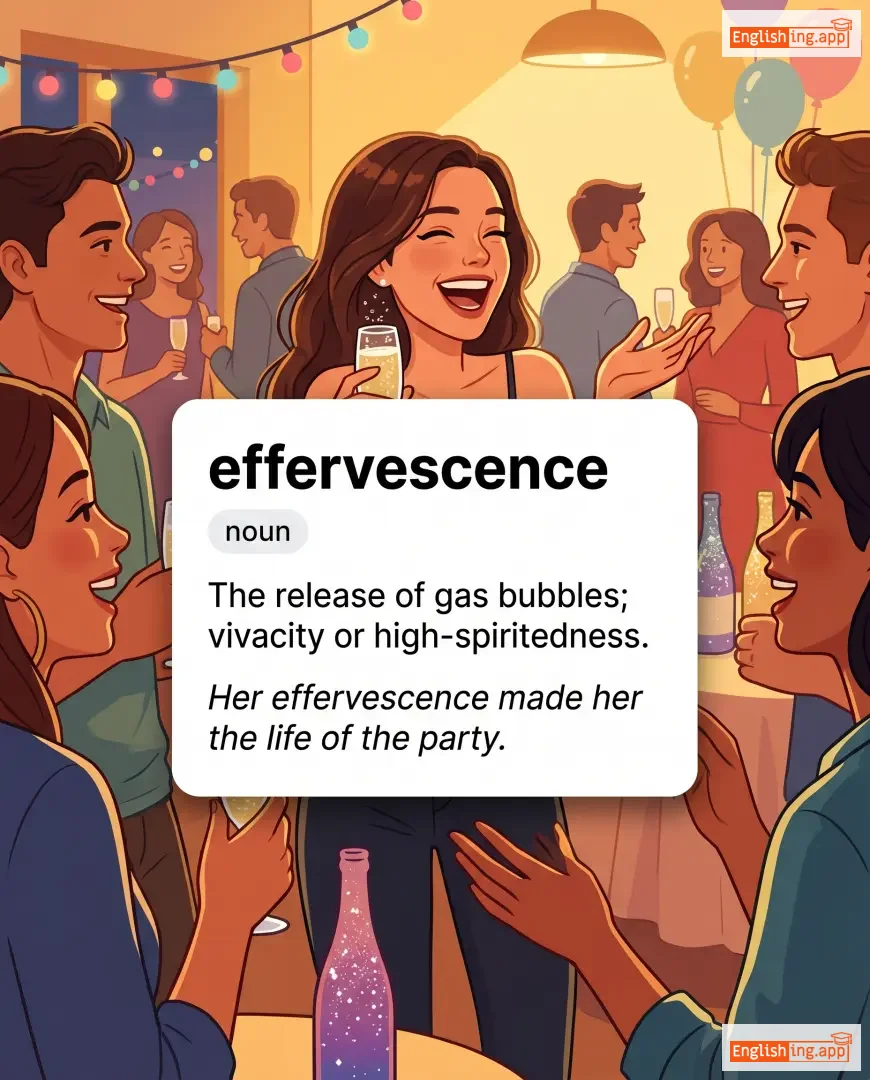
The release of gas bubbles; vivacity or high-spiritedness.
••••••
|
Her effervescence made her the life of the party.
她的艾弗维森斯让她成为派对的灵魂。
••••••
|
她的泡沫让她成为派对的灵魂。
Tā de pàomò ràng tā chéngwéi pàiduì de línghún.
••••••
|
- •••••• | - •••••• | - •••••• |
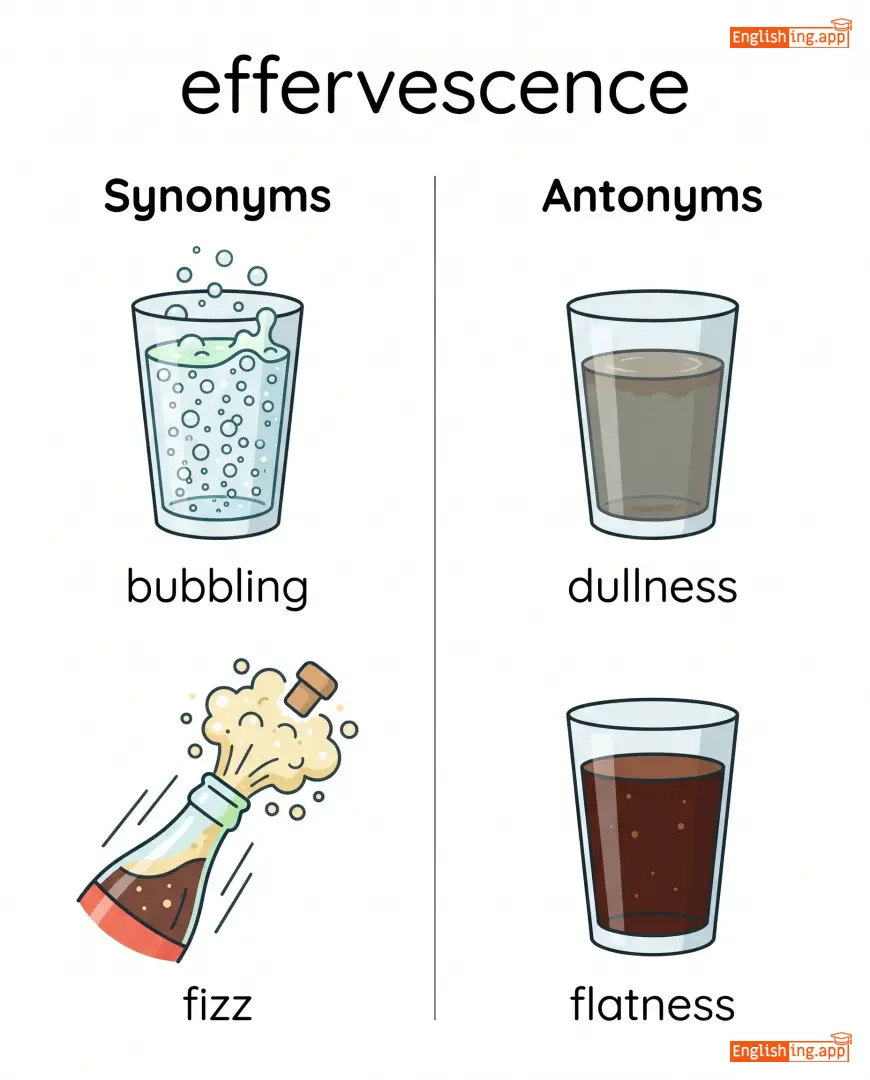
bubbling, fizz, liveliness, sparkle, vibrancy
••••••
|
dullness, flatness, lifelessness
••••••
|
natural effervescence, effervescence of youth, effervescence in personality
••••••
|
Effervescence意味着泡沫 → 想象一下汽水的泡沫。
••••••
|
|
🌸
••••••
|
/ɪˈfiːt/
adjective
(伊费特)
••••••
|
|
虚弱
xuruo
••••••
|
- •••••• | - •••••• | - •••••• | - •••••• |
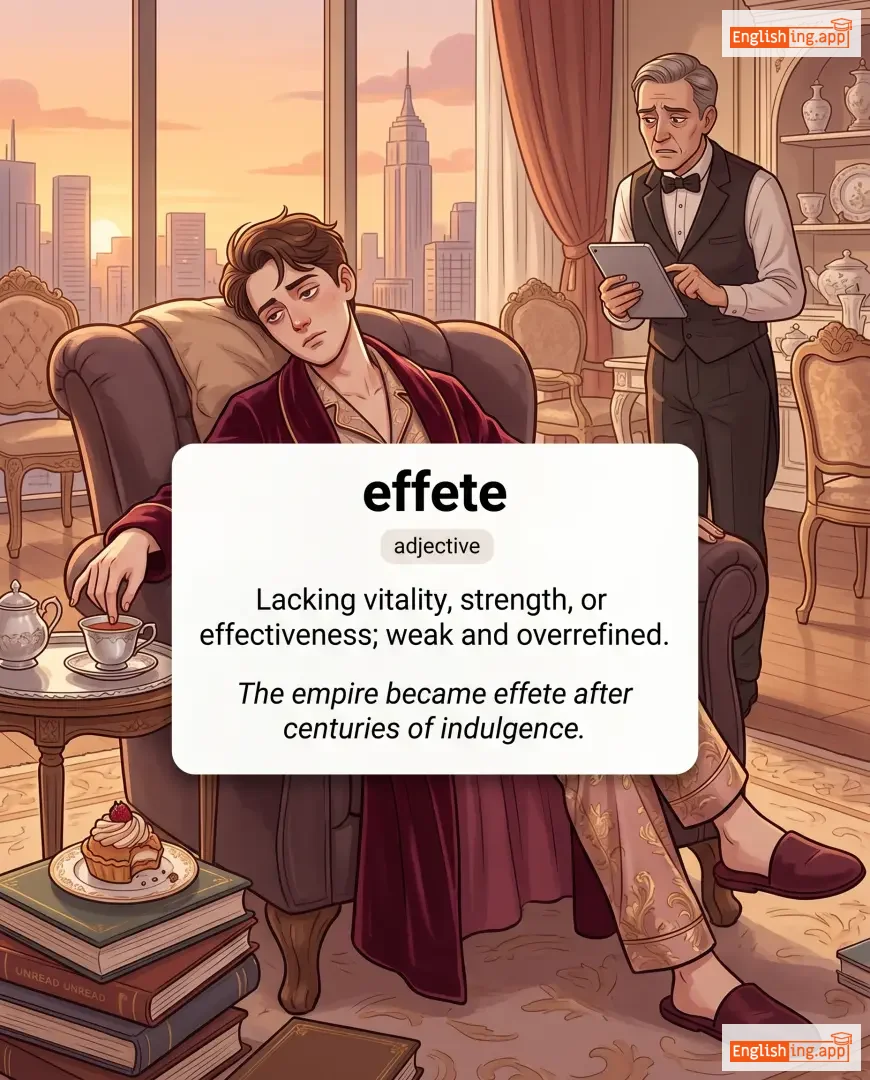
Lacking vitality, strength, or effectiveness; weak and overrefined.
••••••
|
The empire became effete after centuries of indulgence. |
帝国在几个世纪的纵容之后变得虚弱。
Diguo zai ji ge shiji de zhongrong zhihou biande xuruo.
••••••
|
- •••••• | - •••••• | - •••••• |
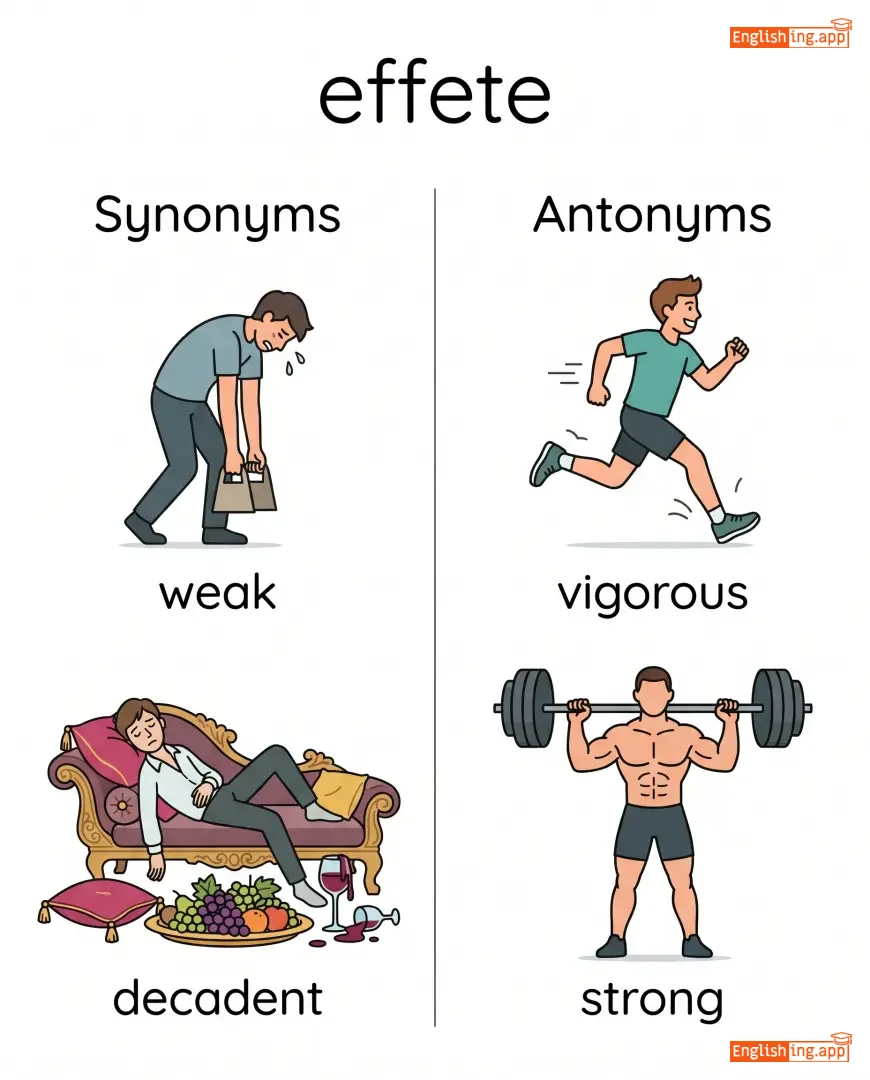
weak, decadent, exhausted, powerless, overrefined
••••••
|
vigorous, strong, powerful
••••••
|
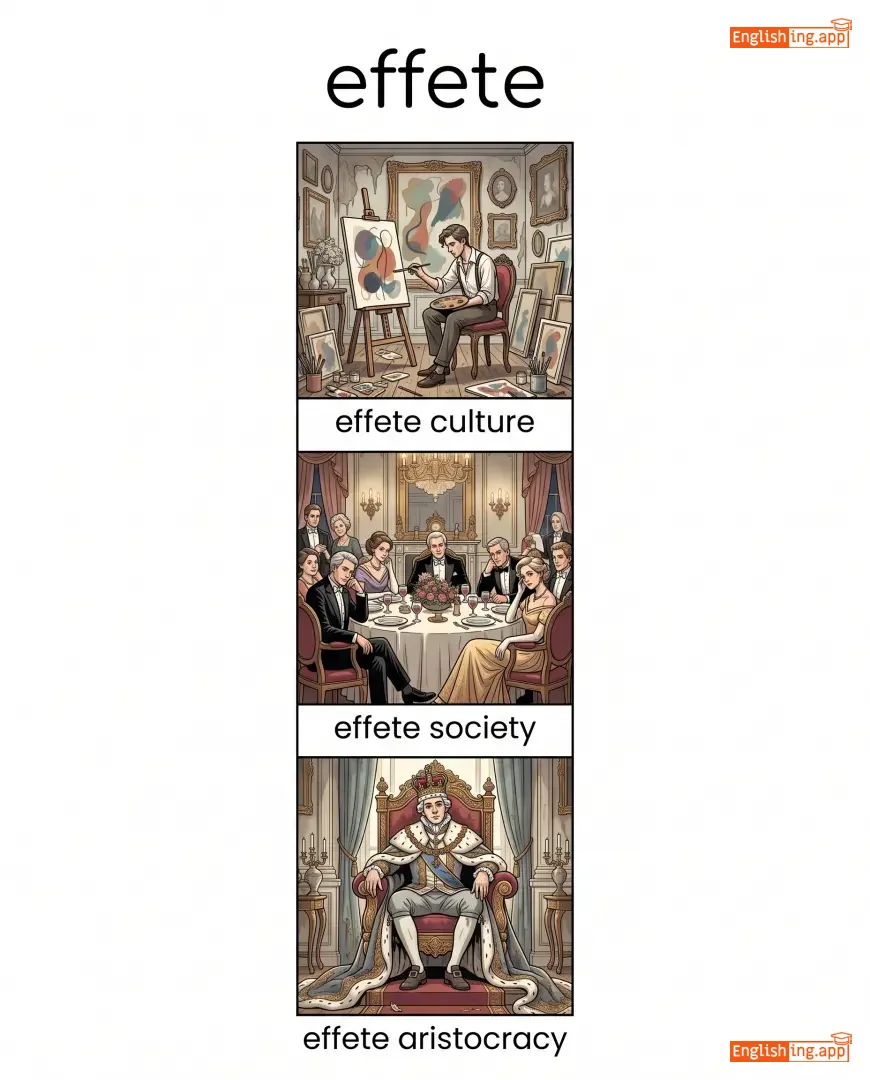
effete culture, effete society, effete aristocracy, effete leadership
••••••
|
Effete意味着虚弱,就像失去生命力的植物一样。
••••••
|
|
⚡
••••••
|
/ˈɛfɪkəsi/
noun
(效能)
••••••
|
|
效能
xiaoneng
••••••
|
- •••••• | - •••••• | - •••••• | - •••••• |
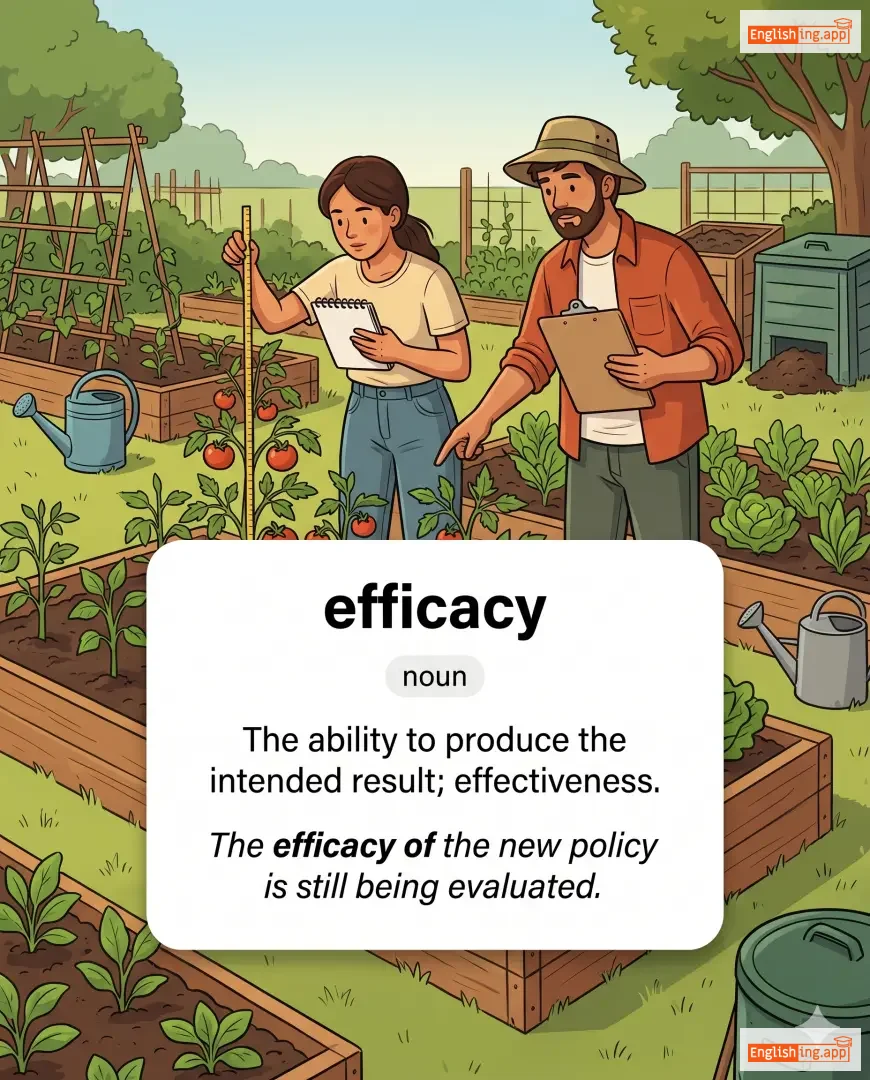
The ability to produce the intended result; effectiveness.
••••••
|
The efficacy of the new policy is still being evaluated.
新政策的效能仍在评估中。
••••••
|
新政策的效能仍在评估中。
Xin zhengce de xiaoneng reng zai pinggu zhong.
••••••
|
- •••••• | - •••••• | - •••••• |
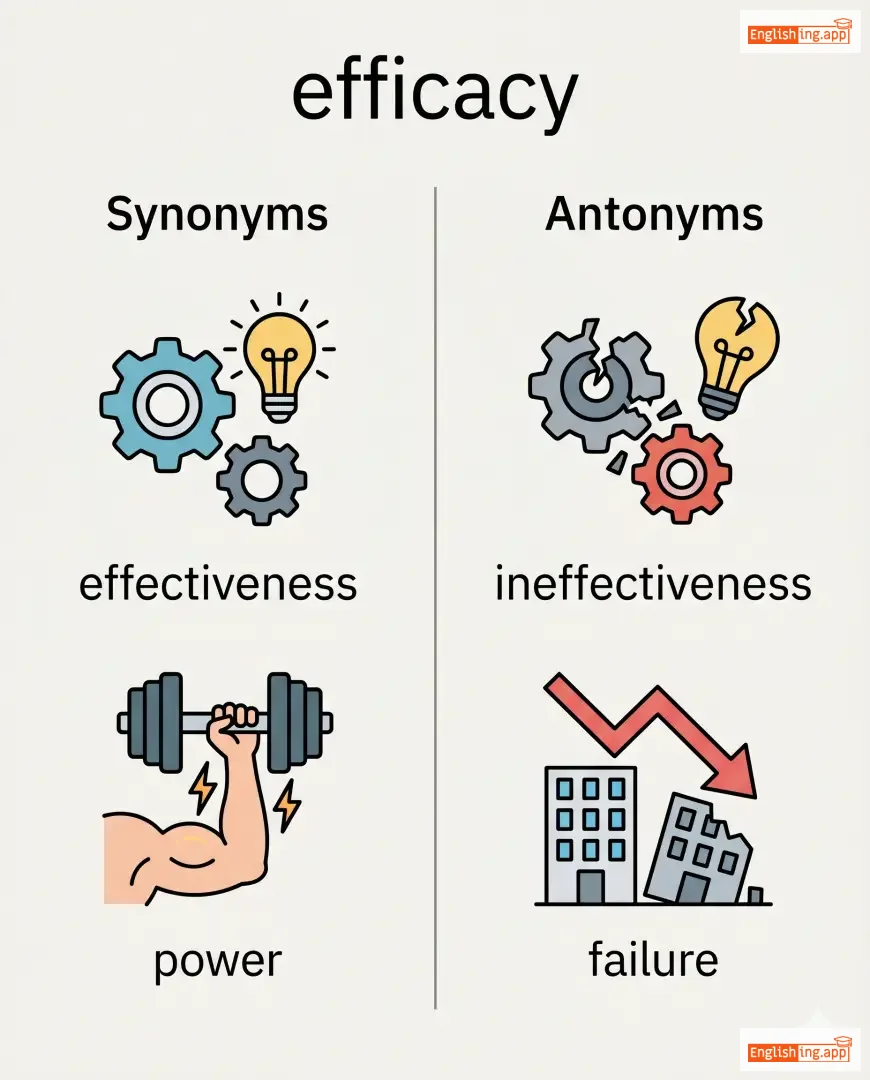
effectiveness, power, efficiency, success
••••••
|
ineffectiveness, failure, weakness
••••••
|
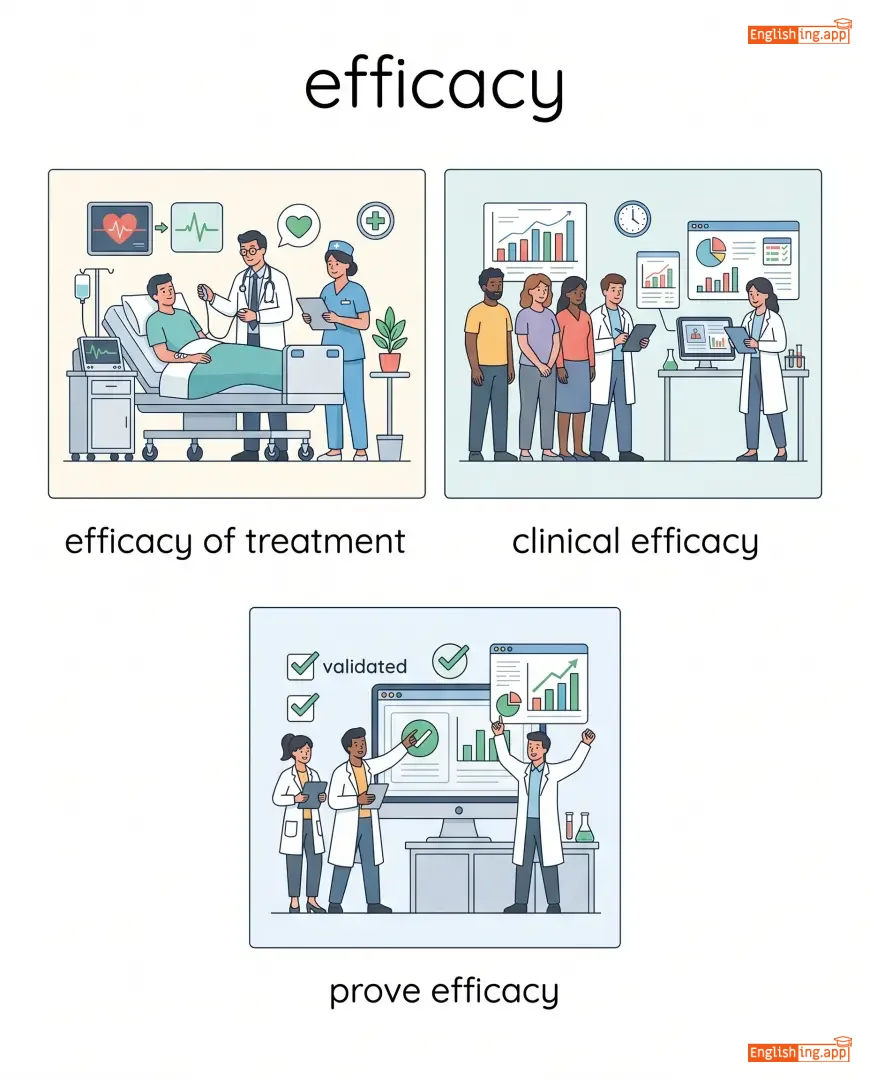
efficacy of treatment, clinical efficacy, prove efficacy, high efficacy
••••••
|
效能意味着实现预期结果的能力。效能(xiaoneng)与'efficacy'同义。
••••••
|

