|
絵文字
|
単語 | Images | 翻訳 | 過去 | 過去分詞 | 三人称単数 | 動名詞 | 意味 | 例文 | 例文の翻訳 | 表現例 | 表現例の意味 | 表現例の翻訳 | 同義語 | 対義語 | コロケーション | ニーモニック |
|---|---|---|---|---|---|---|---|---|---|---|---|---|---|---|---|---|---|
|
😔
••••••
|
/kəmˈpʌŋkʃən/
noun
(コンパンクション)
••••••
|
|
良心の呵責
ryōshin no kaseki
••••••
|
- •••••• | - •••••• | - •••••• | - •••••• |
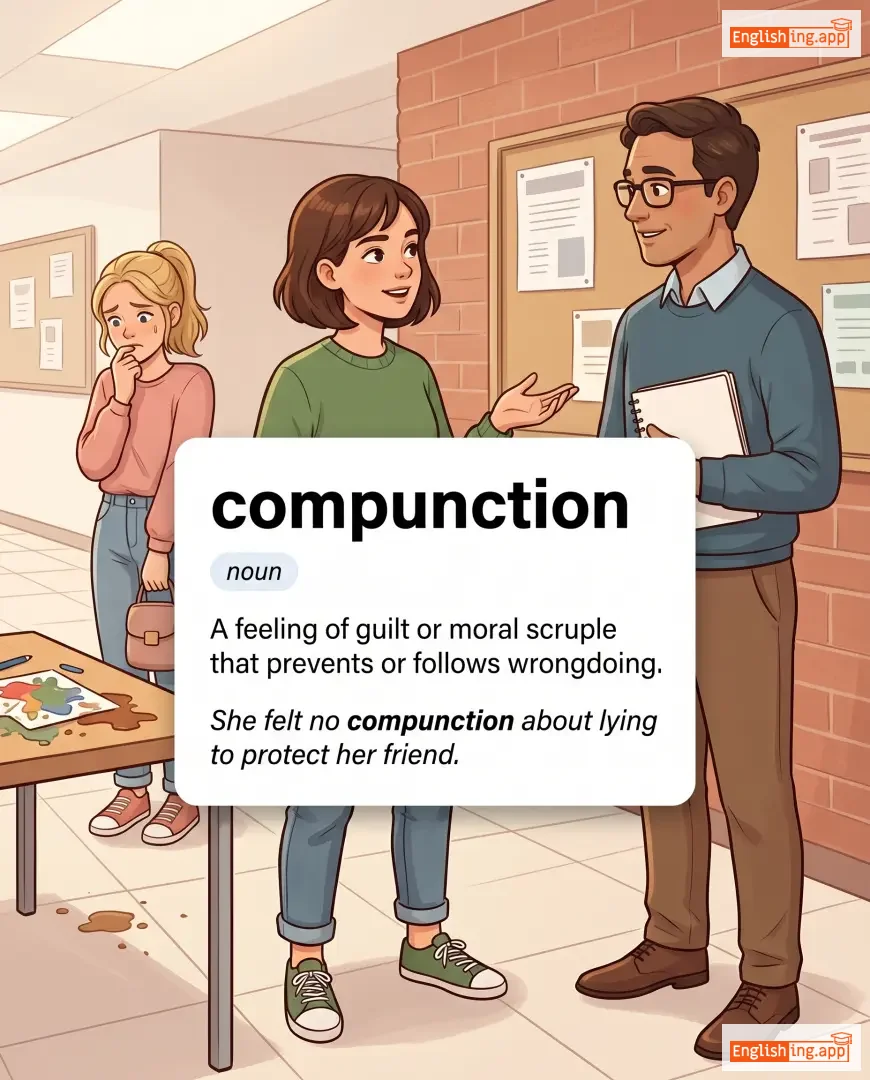
A feeling of guilt or moral scruple that prevents or follows wrongdoing.
••••••
|
She felt no compunction about lying to protect her friend. |
彼女は友達を守るために嘘をついたことを良心の呵責を感じなかった。
Kanojo wa tomodachi o mamoru tame ni uso o tsuita koto o ryōshin no kaseki o kanjinakatta.
••••••
|
without compunction |
without any guilt or hesitation
••••••
|
良心の呵責なしで
ryōshin no kaseki nashi de
••••••
|
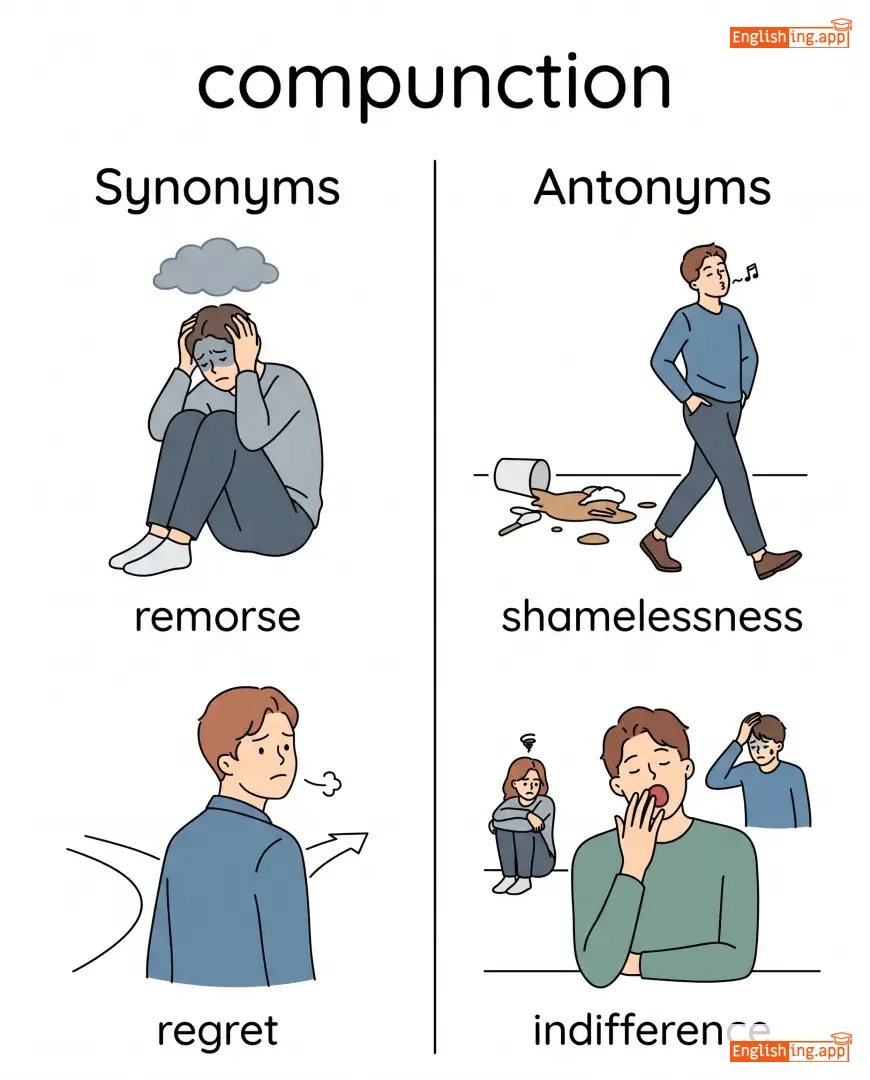
remorse, regret, guilt, scruple, penitence
••••••
|
shamelessness, indifference
••••••
|
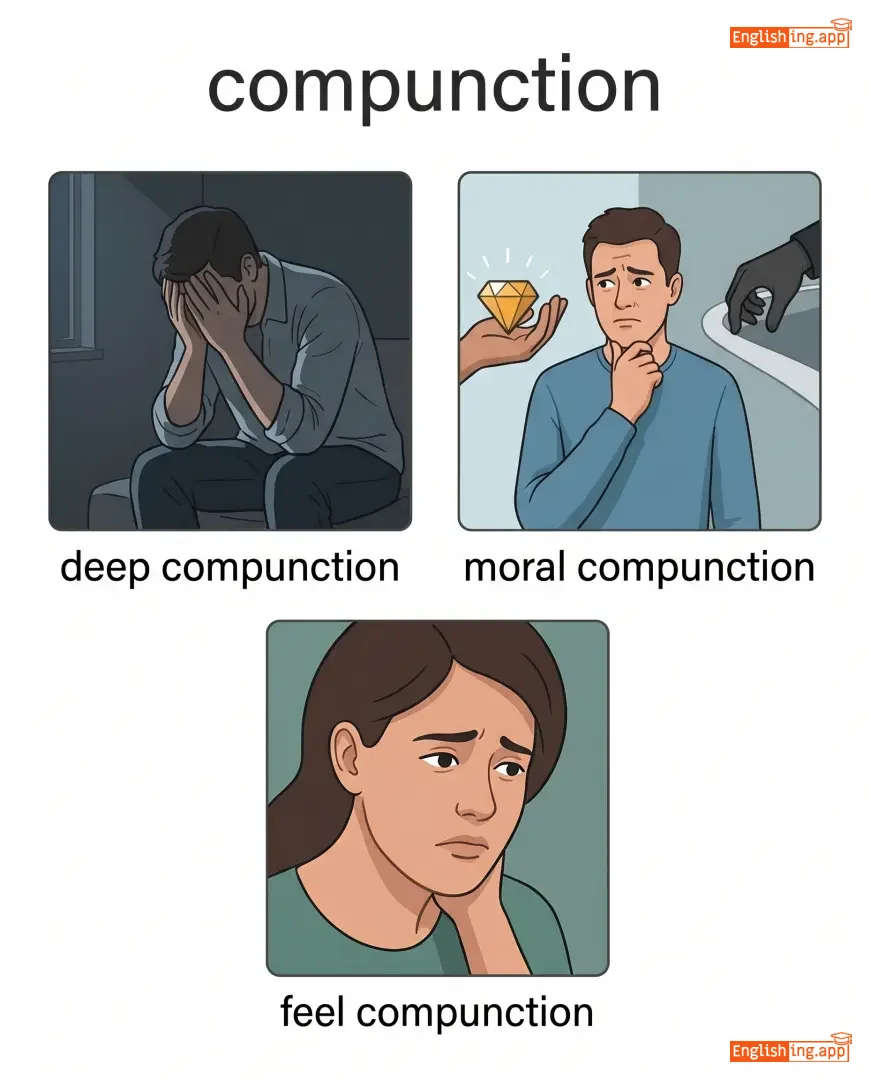
deep compunction, moral compunction, feel compunction
••••••
|
Compunction = 嘘をついた後の良心の呵責
••••••
|
|
🔍
••••••
|
/ˈkɒn.keɪv/
adjective
(コンケイヴ)
••••••
|
|
凹形
oukkei
••••••
|
- •••••• | - •••••• | - •••••• | - •••••• |
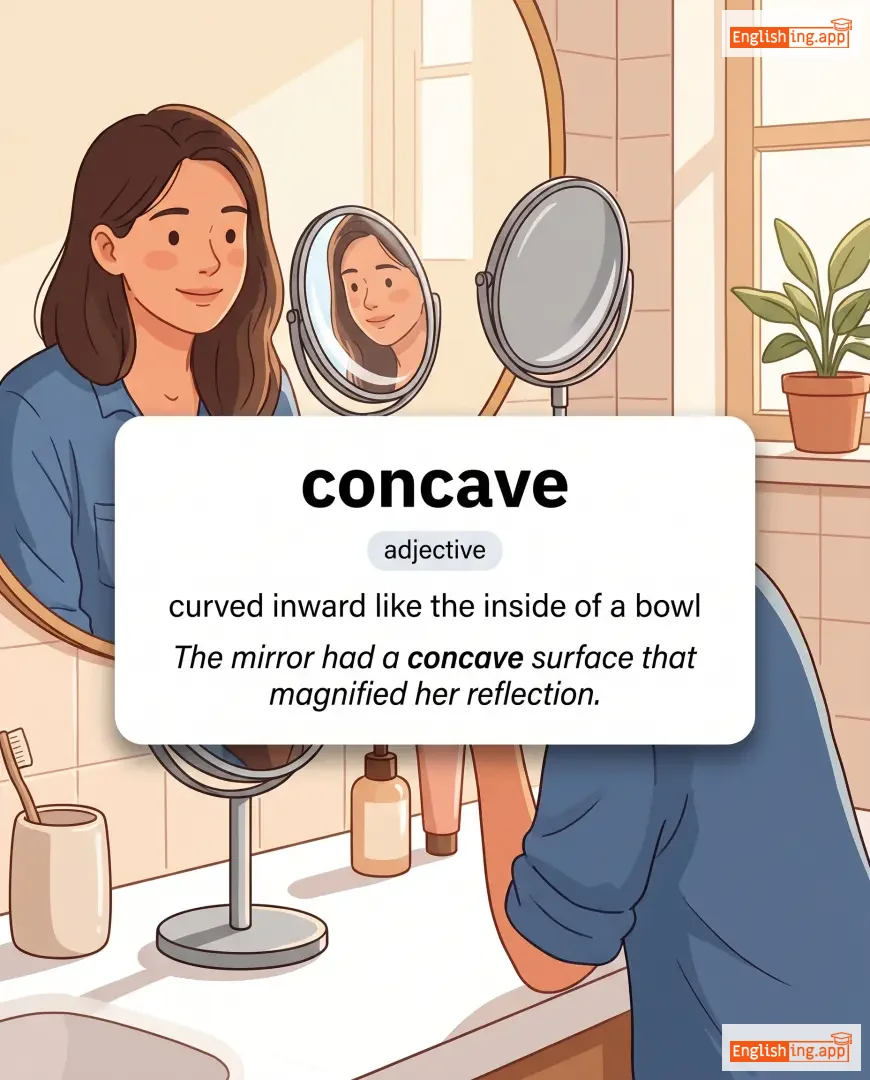
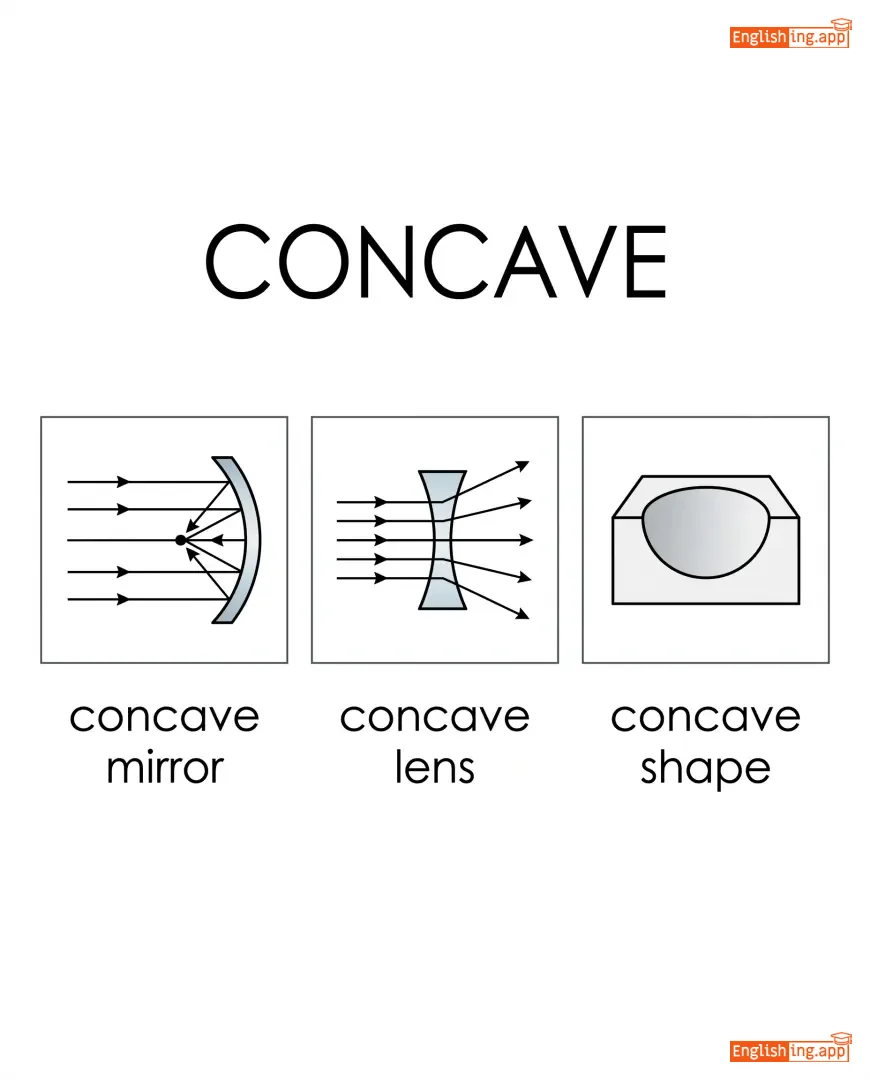
curved inward like the inside of a bowl
••••••
|
The mirror had a concave surface that magnified her reflection. |
鏡は凹形の表面を持ち、彼女の反射を拡大しました。
Kagami wa oukei no hyoumen o mochi, kanojo no hansha o kakudai shimashita.
••••••
|
- •••••• | - •••••• | - •••••• |
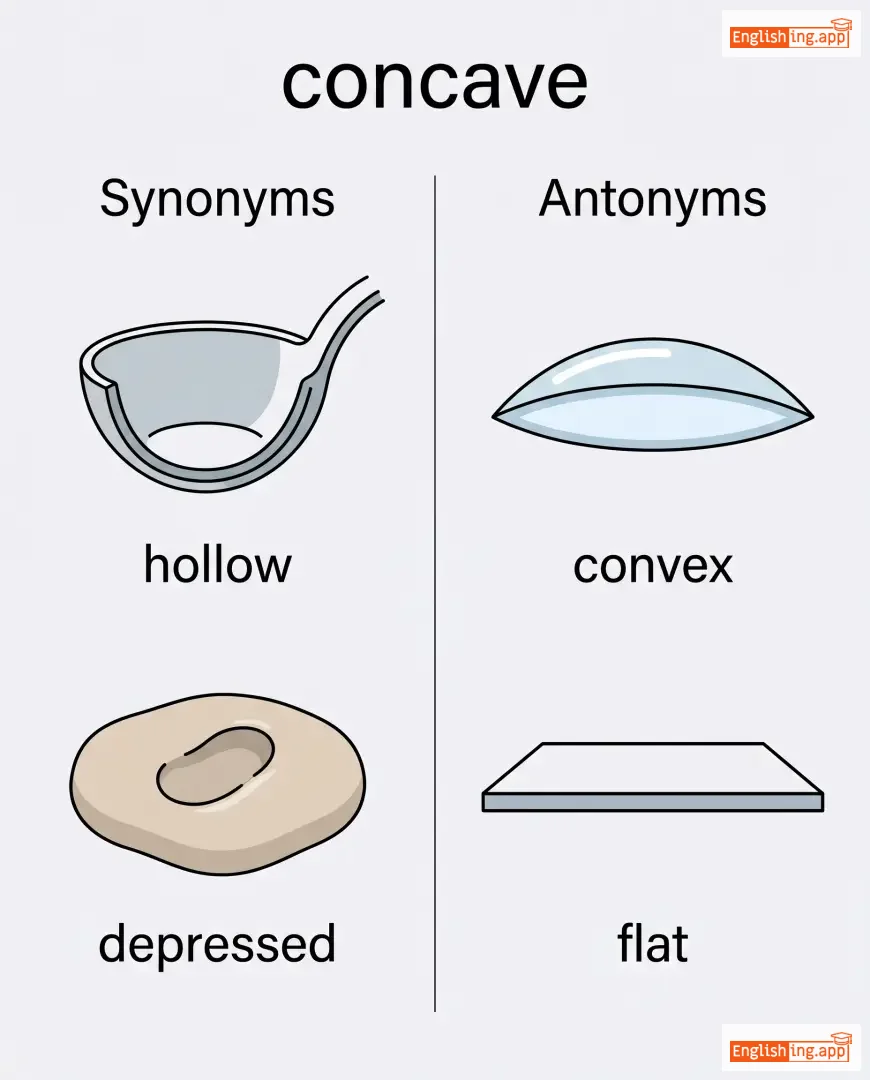
hollow, depressed, sunken, indented, curving-inward
••••••
|
convex, flat, level
••••••
|
concave mirror, concave lens, concave shape, concave surface
••••••
|
凹形はボウルの内側の形のようです。
••••••
|
|
🕊️
••••••
|
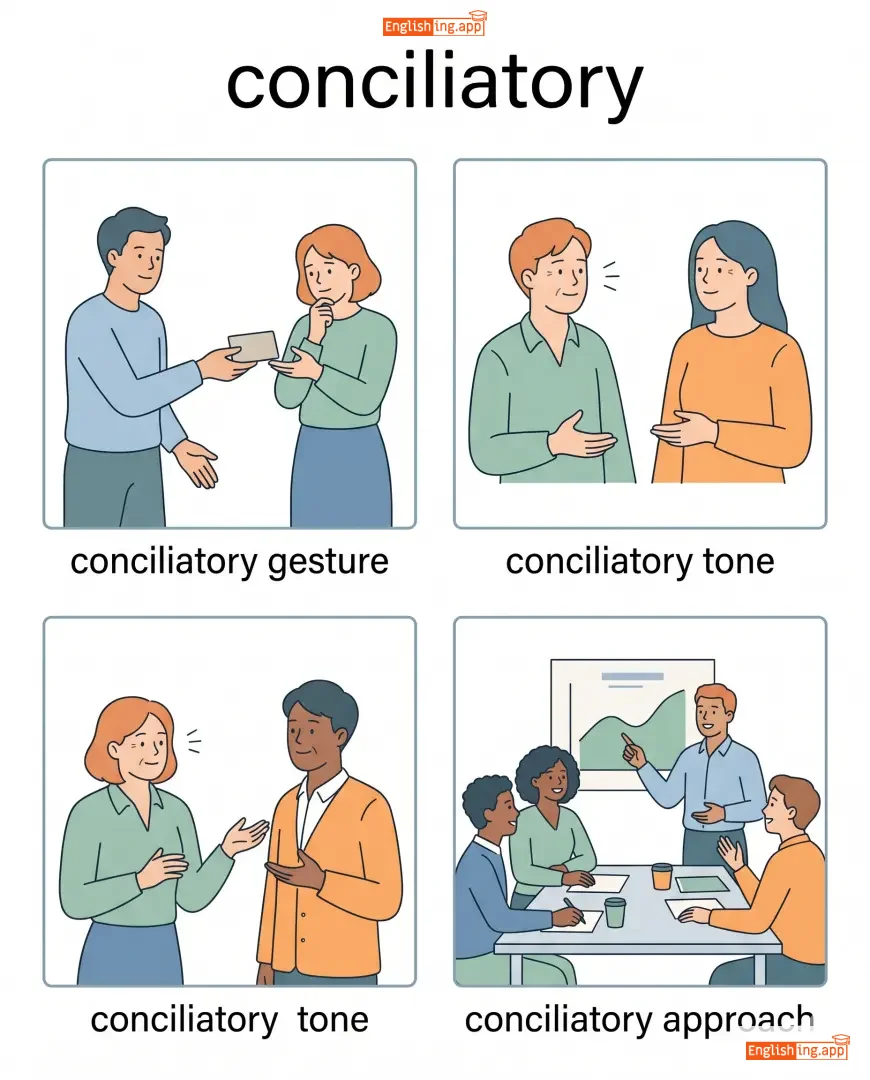
/kənˈsɪliətɔːri/
adjective
(コンシリアトリー)
••••••
|
|
和解的
wakai-teki
••••••
|
- •••••• | - •••••• | - •••••• | - •••••• |
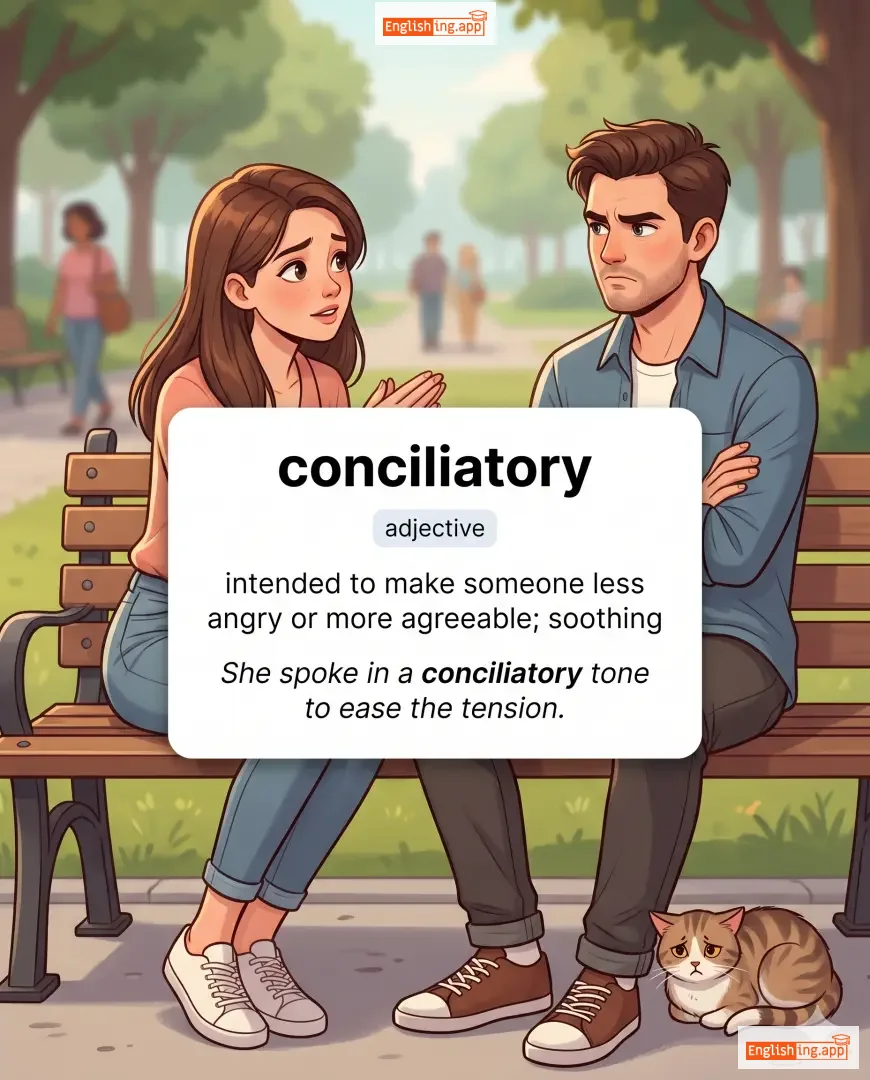
intended to make someone less angry or more agreeable; soothing
••••••
|
She spoke in a conciliatory tone to ease the tension. |
彼女は緊張を和らげるために和解的な口調で話した。
Kanojo wa kinchō o yawarageru tame ni wakai-teki na kuchō de hanashita.
••••••
|
- •••••• | - •••••• | - •••••• |
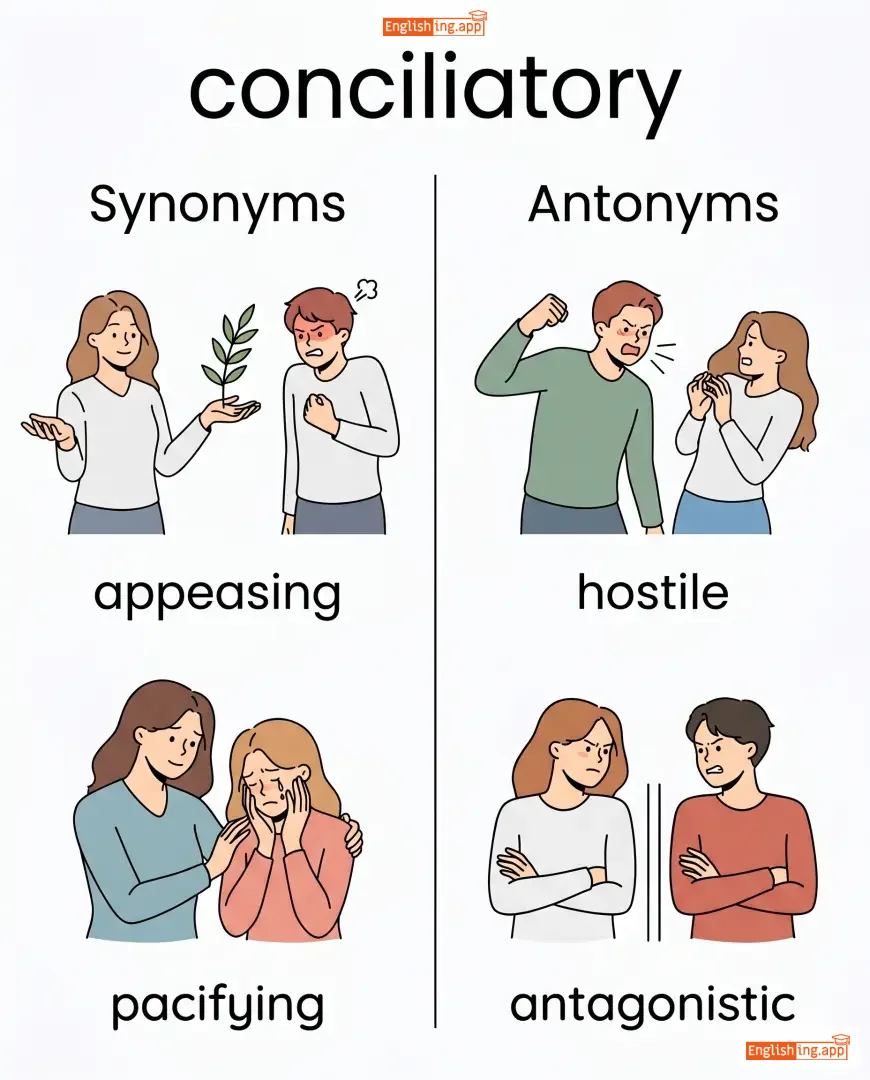
appeasing, pacifying, soothing, placatory, calming
••••••
|
hostile, antagonistic, confrontational
••••••
|
conciliatory gesture, conciliatory tone, conciliatory approach
••••••
|
和解的は和解するための方法
••••••
|
|
🧪
••••••
|
/kənˈkɒkt/
verb
(コンコクト)
••••••
|
|
作る、考案する
tsukuru, kouan suru
••••••
|
concocted
コンコクテッド
••••••
|
concocted
コンコクテッド
••••••
|
concocts
コンコクツ
••••••
|
concocting
コンコクティング
••••••
|
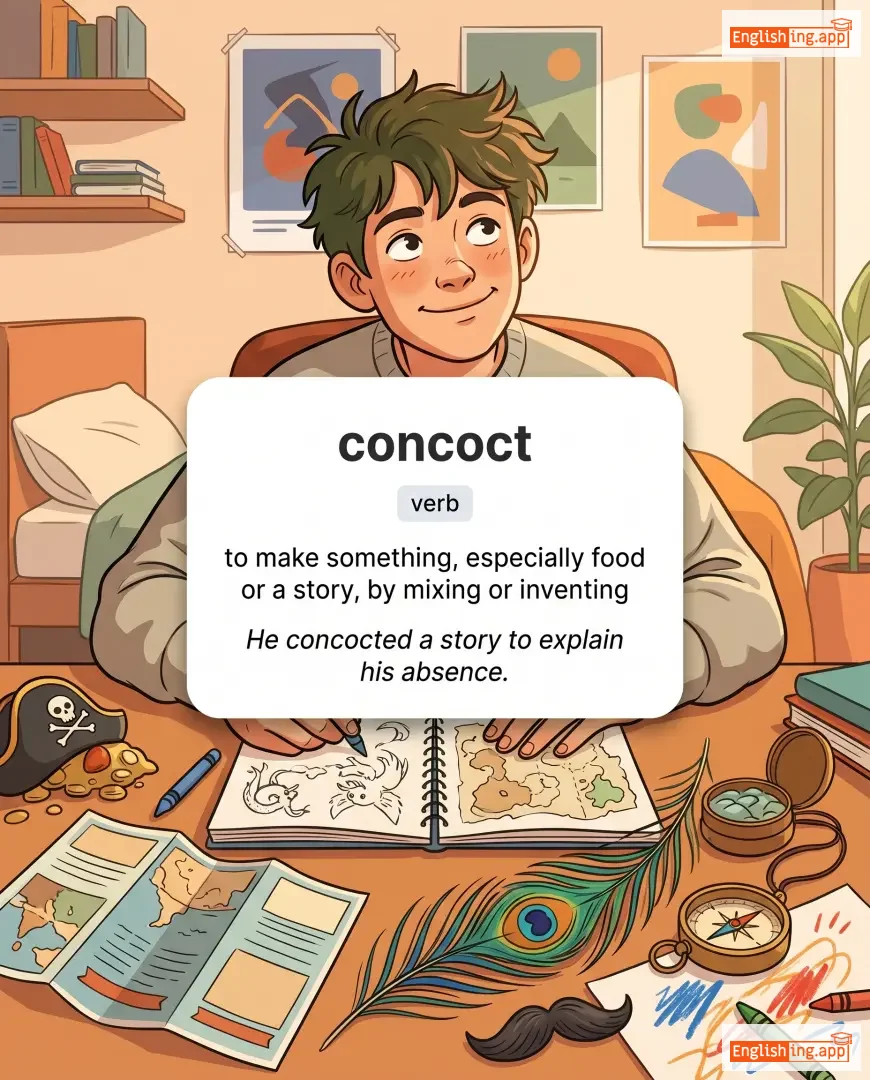
to make something, especially food or a story, by mixing or inventing
••••••
|
He concocted a story to explain his absence.
彼は自分の不在を説明するために話を作り上げました。
••••••
|
彼は自分の不在を説明するために話を作り上げました。
Kare wa jibun no fuzai wo setsumei suru tame ni hanashi wo tsukuriagemashita.
••••••
|
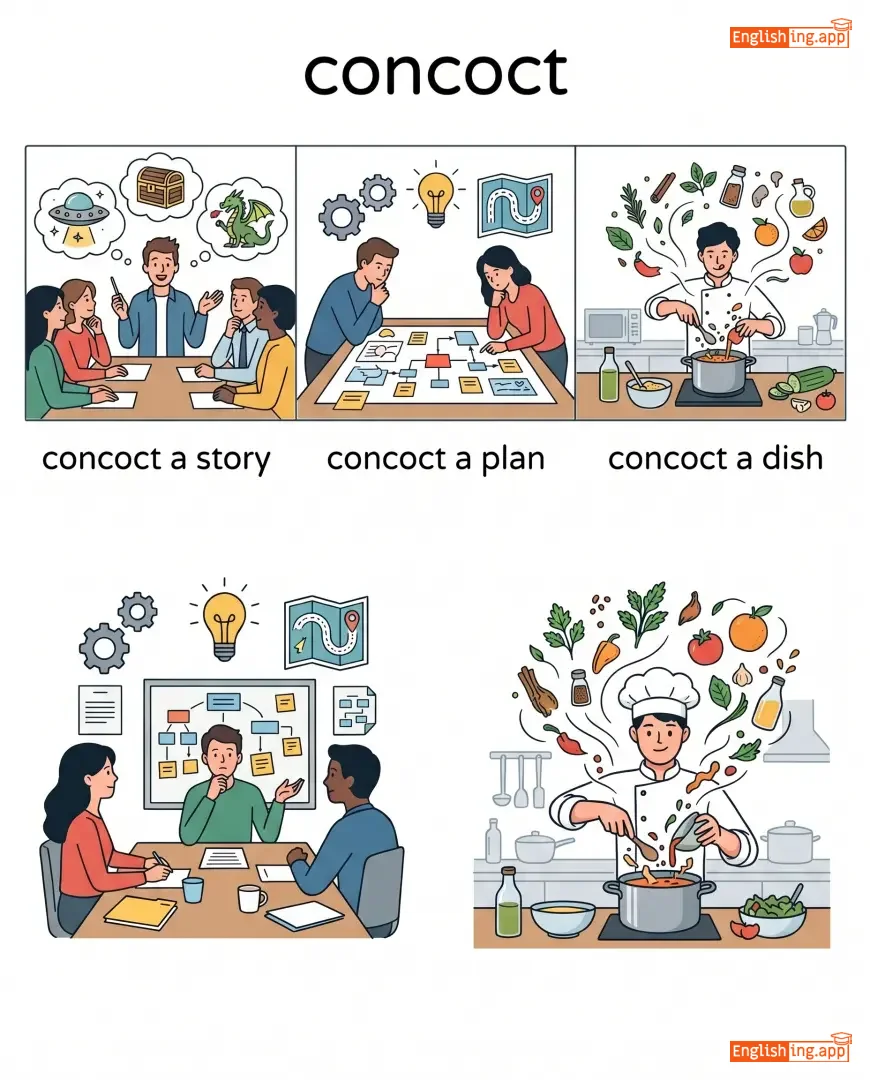
concoct a plan
計画を考案する
••••••
|
to invent or devise a plan
••••••
|
計画を考案する
Keikaku wo kouan suru
••••••
|
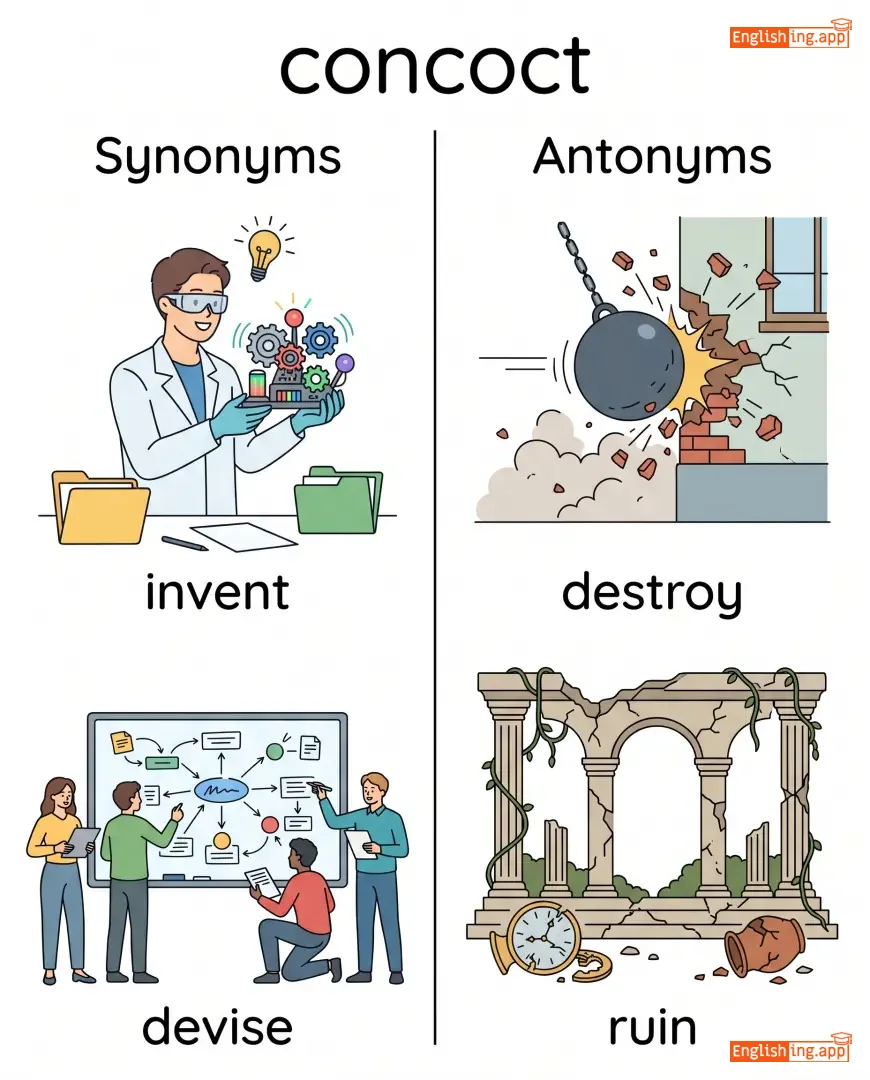
invent, devise, fabricate, prepare, create
••••••
|
destroy, ruin, dismantle
••••••
|
concoct a story, concoct a plan, concoct a dish
••••••
|
Concoct = 混ぜ合わせて作る
••••••
|
|
➕
••••••
|
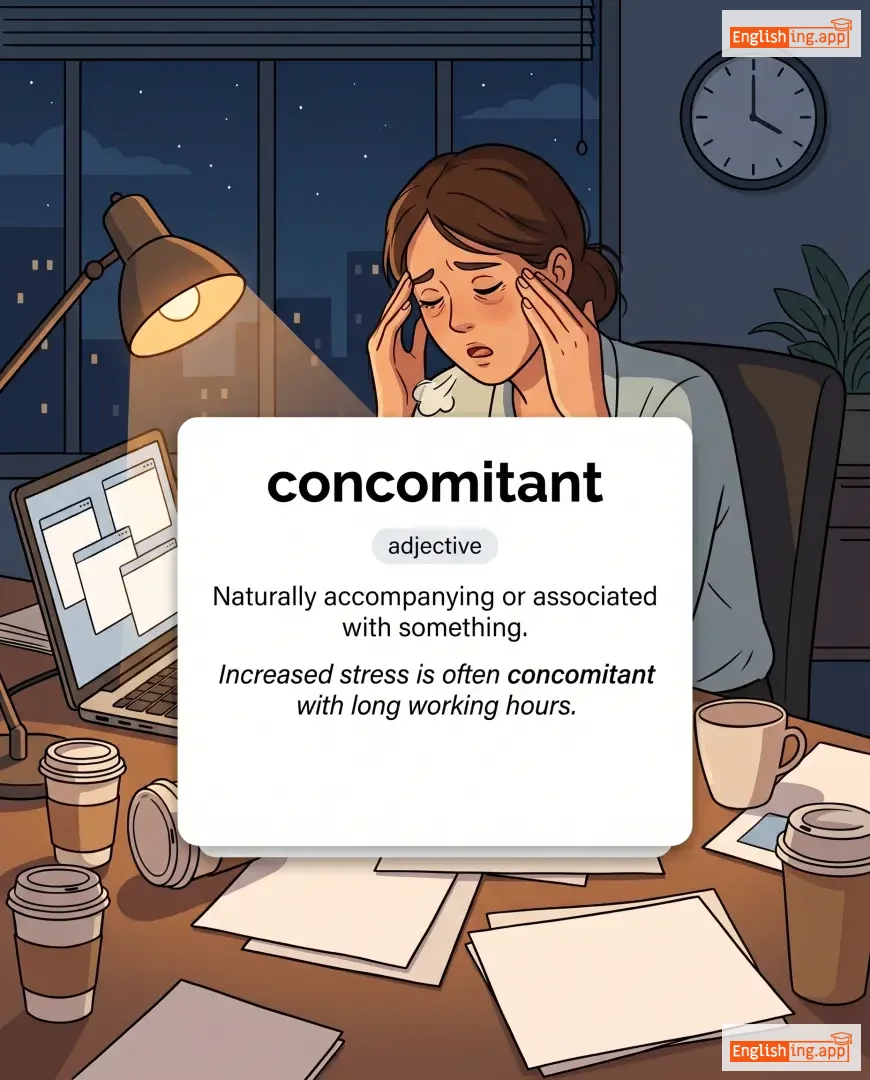
/kənˈkɒmɪtənt/
adjective
(コンコミタント)
••••••
|
|
随伴
zuipan
••••••
|
- •••••• | - •••••• | - •••••• | - •••••• |
Naturally accompanying or associated with something.
••••••
|
Increased stress is often concomitant with long working hours.
増加したストレスは長時間の労働時間としばしば伴います。
••••••
|
増加したストレスは長時間の労働時間としばしば伴います。
Zōka shita sutoresu wa chōjikan no rōdō jikan to shibashiba tomonai masu.
••••••
|
- •••••• | - •••••• | - •••••• |
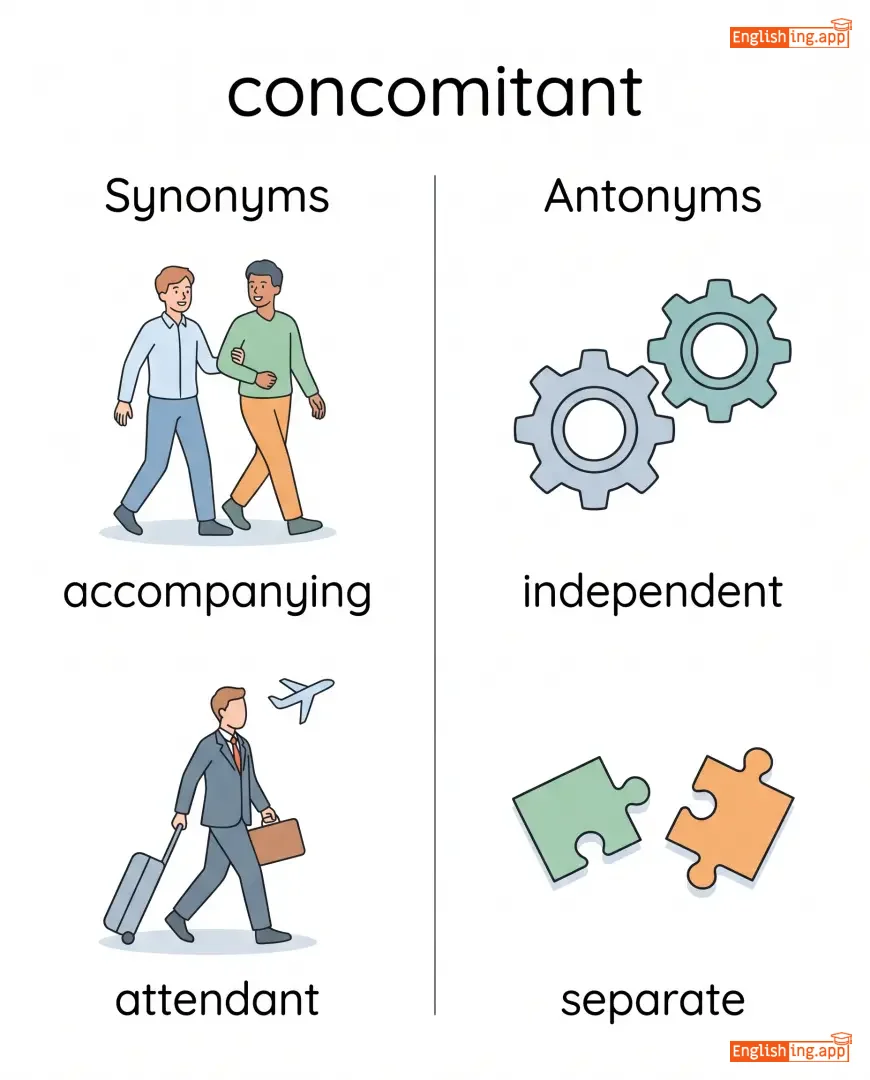
accompanying, attendant, coincident, simultaneous, related
••••••
|
independent, separate, unrelated
••••••
|
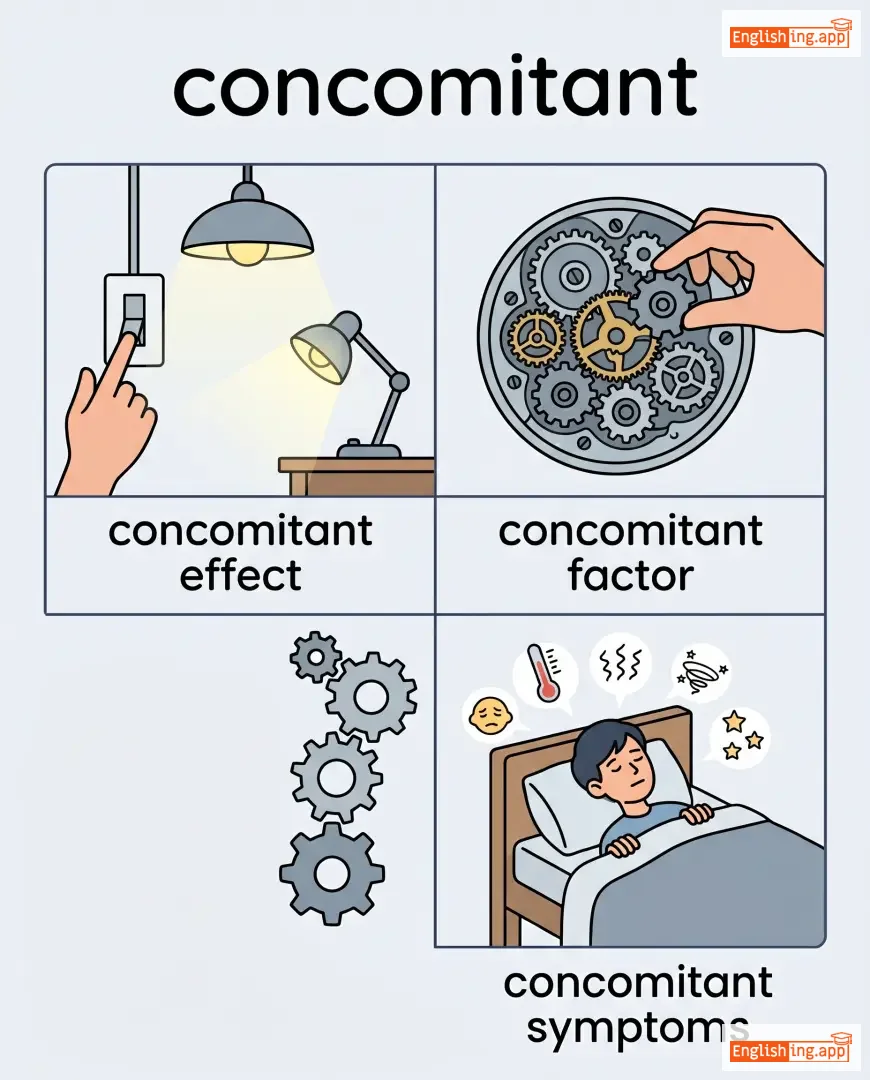
concomitant effect, concomitant factor, concomitant symptoms, concomitant risks
••••••
|
随 (一緒) + 伴 (伴う) - 一緒にある
••••••
|
|
🙈
••••••
|
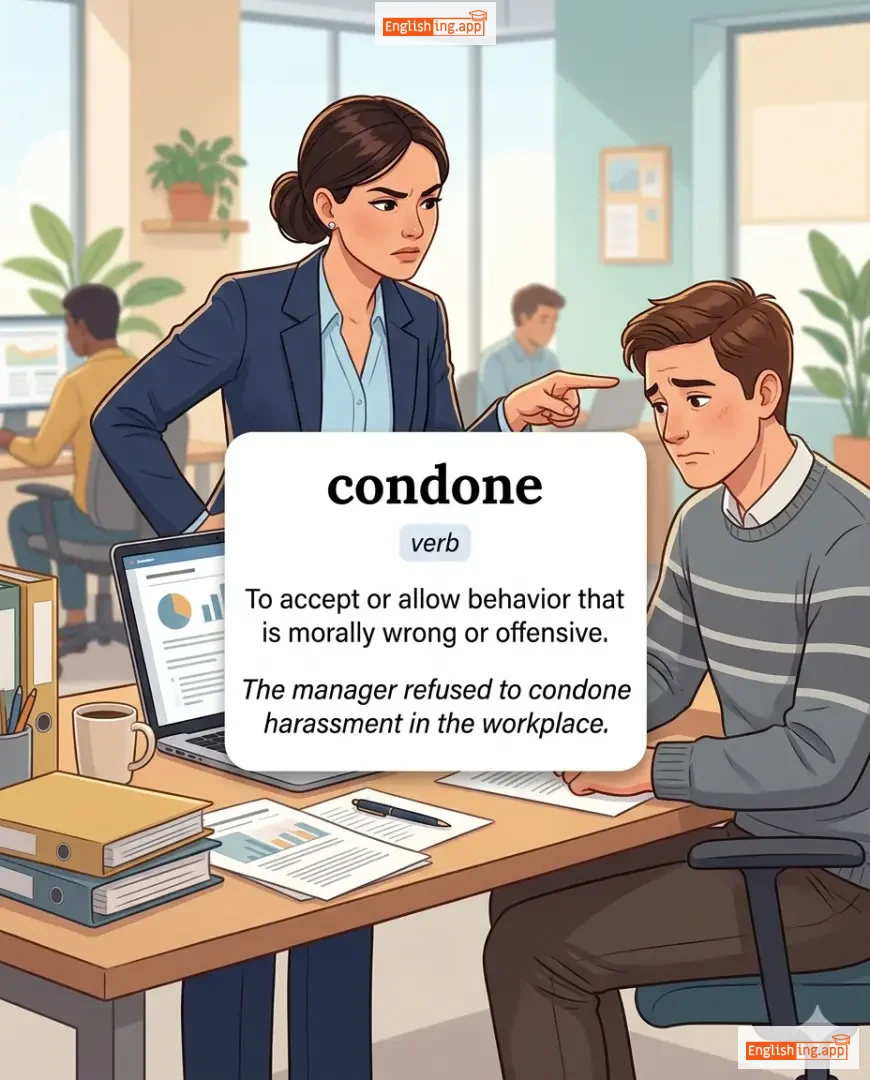
/kənˈdəʊn/
verb
(コンドーン)
••••••
|
|
容認する
yōnin suru
••••••
|
condoned
コンドーンド
••••••
|
condoned
コンドーンド
••••••
|
condones
コンドーンズ
••••••
|
condoning
コンドーニング
••••••
|
To accept or allow behavior that is morally wrong or offensive.
••••••
|
The manager refused to condone harassment in the workplace.
マネージャーは職場での嫌がらせをコンドーンすることを拒否しました。
••••••
|
マネージャーは職場での嫌がらせを容認することを拒否しました。
Manējā wa shokuba de no iyagarase o yōnin suru koto o kyohi shimashita.
••••••
|
- •••••• | - •••••• | - •••••• |
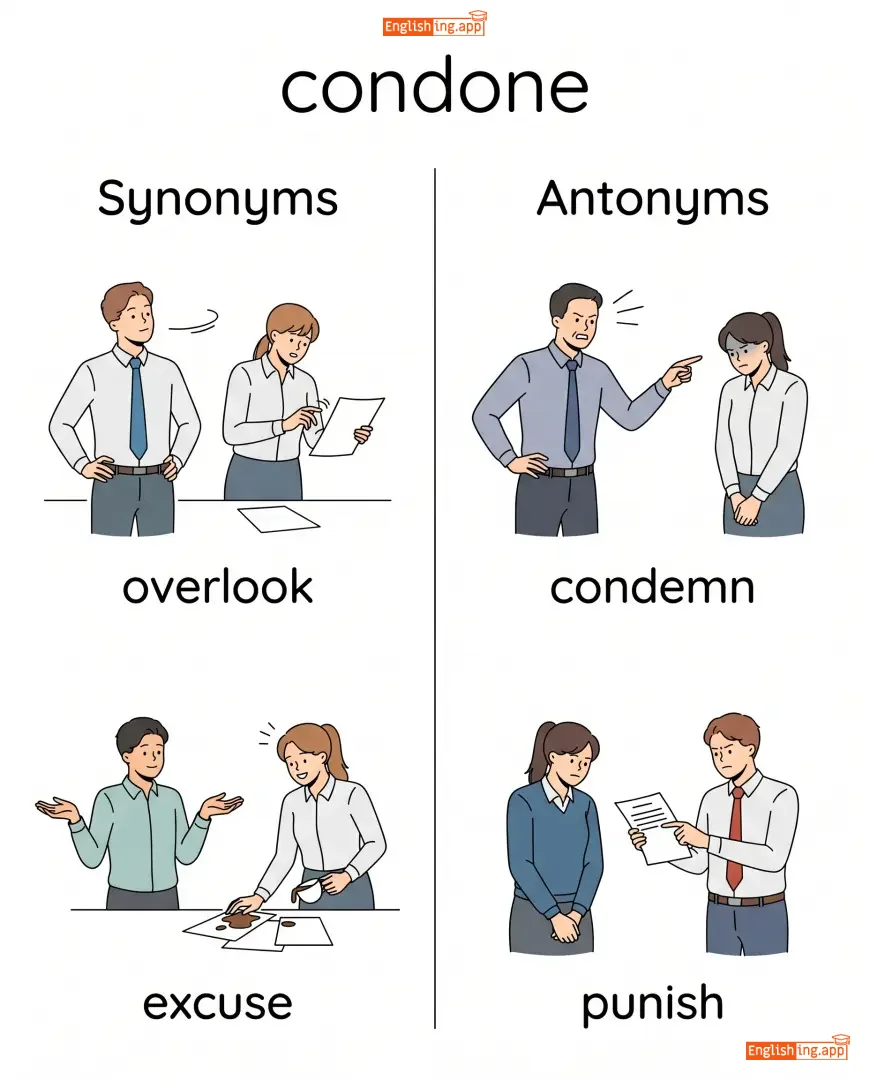
overlook, excuse, forgive, tolerate
••••••
|
condemn, punish, disapprove
••••••
|
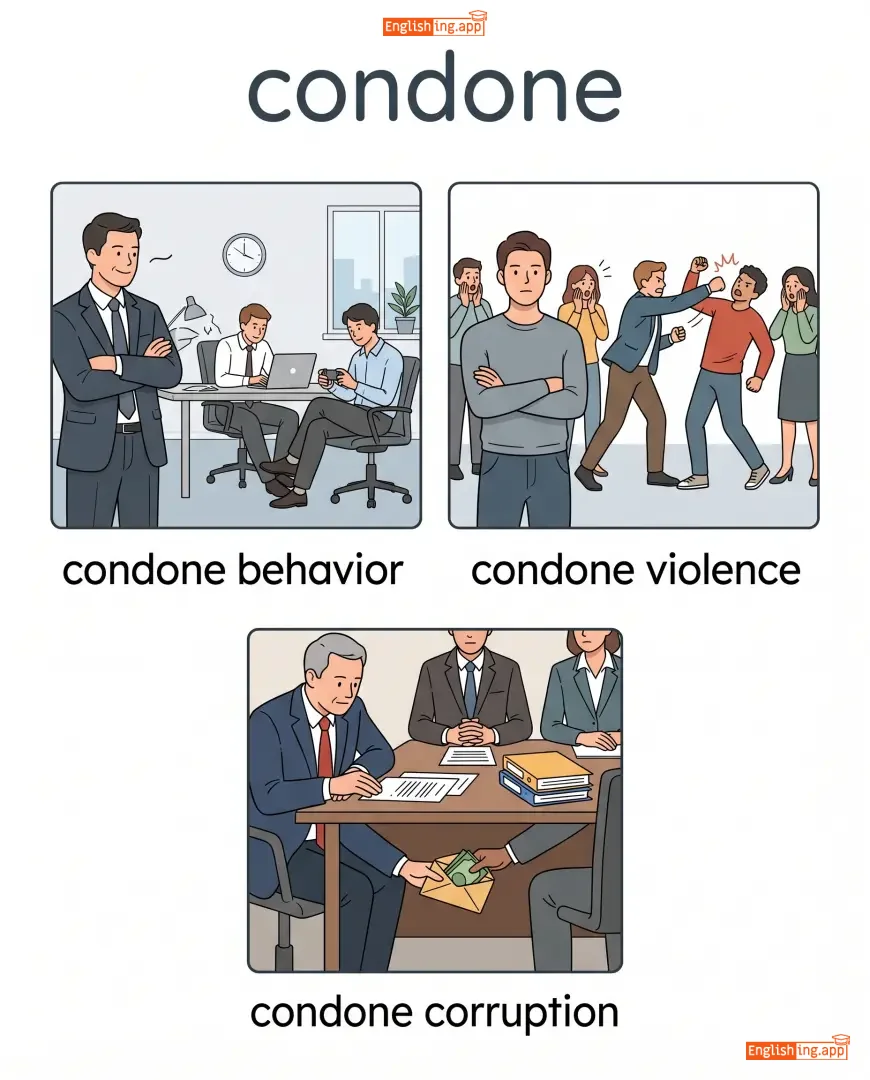
condone behavior, condone violence, condone corruption
••••••
|
Condone は条件なしで容認すること
••••••
|
|
🤯
••••••
|
/kənˈfaʊnd/
verb
••••••
|
|
- •••••• |
confounded
••••••
|
confounded
••••••
|
confounds
••••••
|
confounding
••••••
|
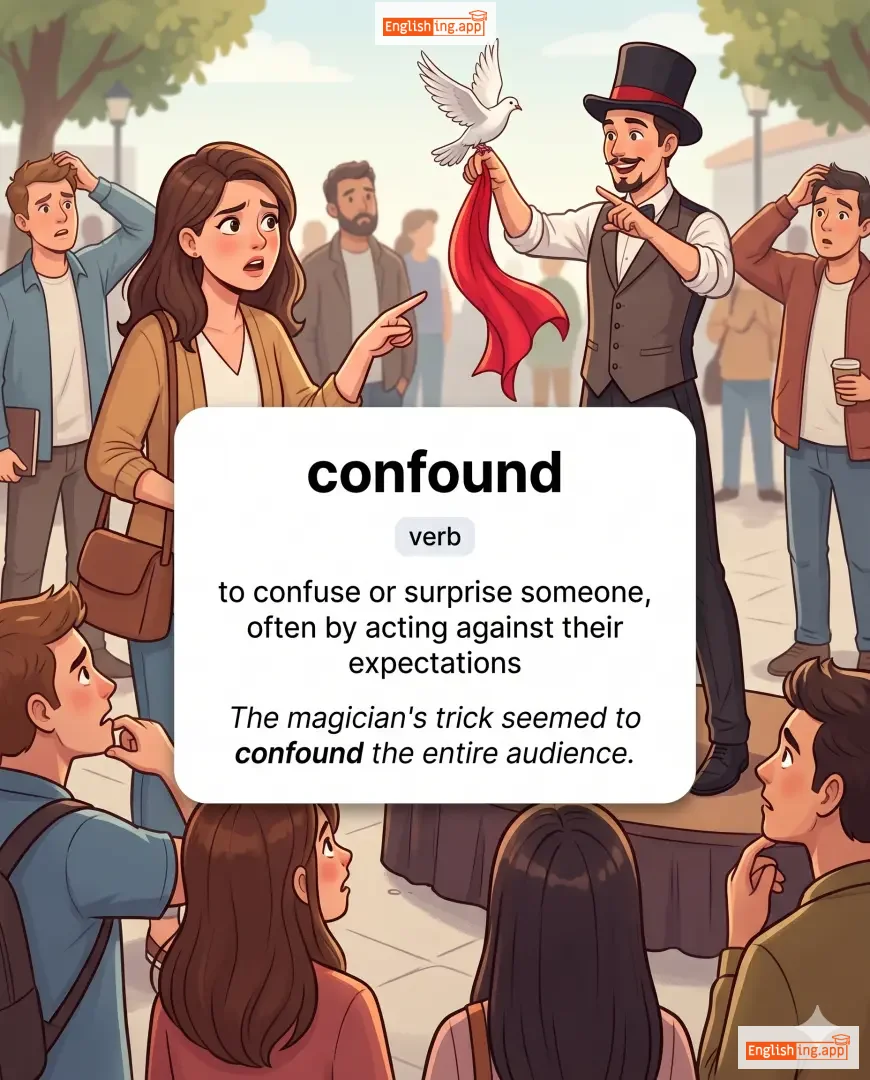
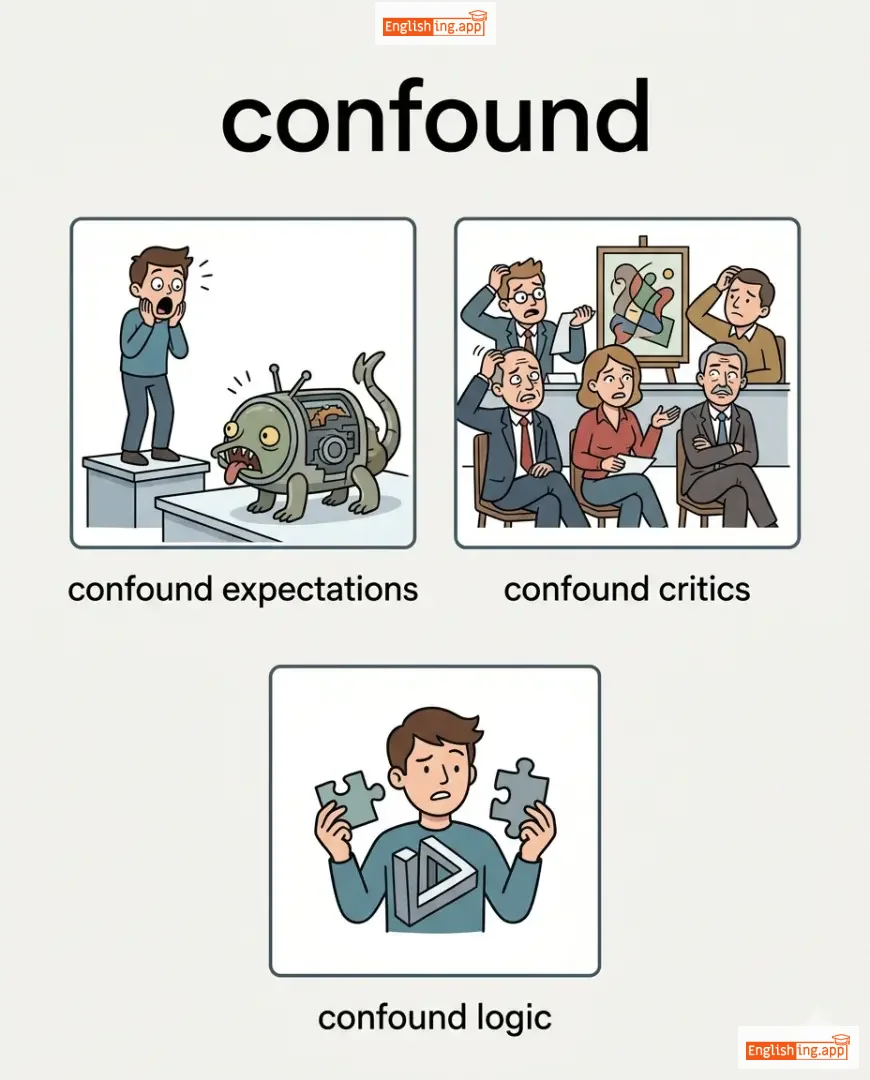
to confuse or surprise someone, often by acting against their expectations
••••••
|
The magician's trick seemed to confound the entire audience. |
- •••••• |
confound it |
an old-fashioned exclamation of annoyance or frustration
••••••
|
- •••••• |
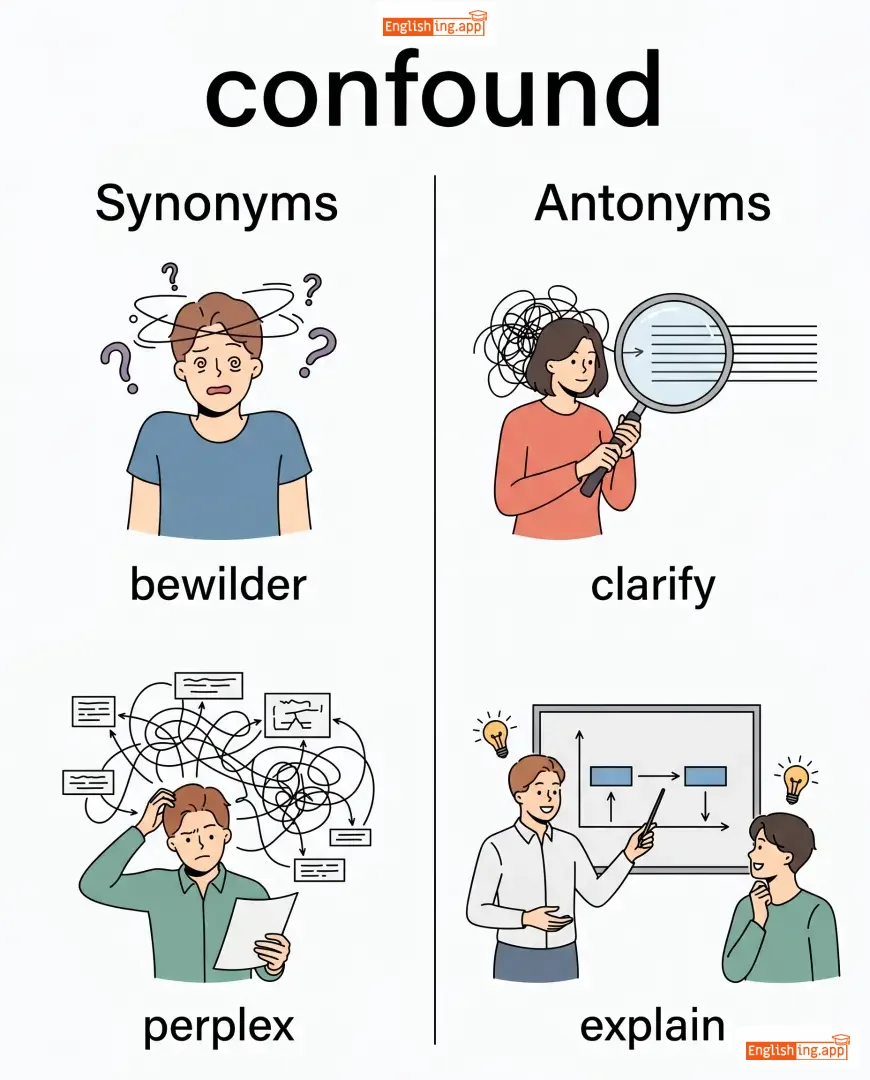
bewilder, perplex, baffle, amaze, astonish
••••••
|
clarify, explain, enlighten
••••••
|
confound expectations, confound critics, confound logic, confound the mind
••••••
|
No •••••• |
|
😊
••••••
|
/kənˈdʒiːniəl/
adjective
(コンジニアル)
••••••
|
|
親しみやすい
shitashimi yasui
••••••
|
- •••••• | - •••••• | - •••••• | - •••••• |
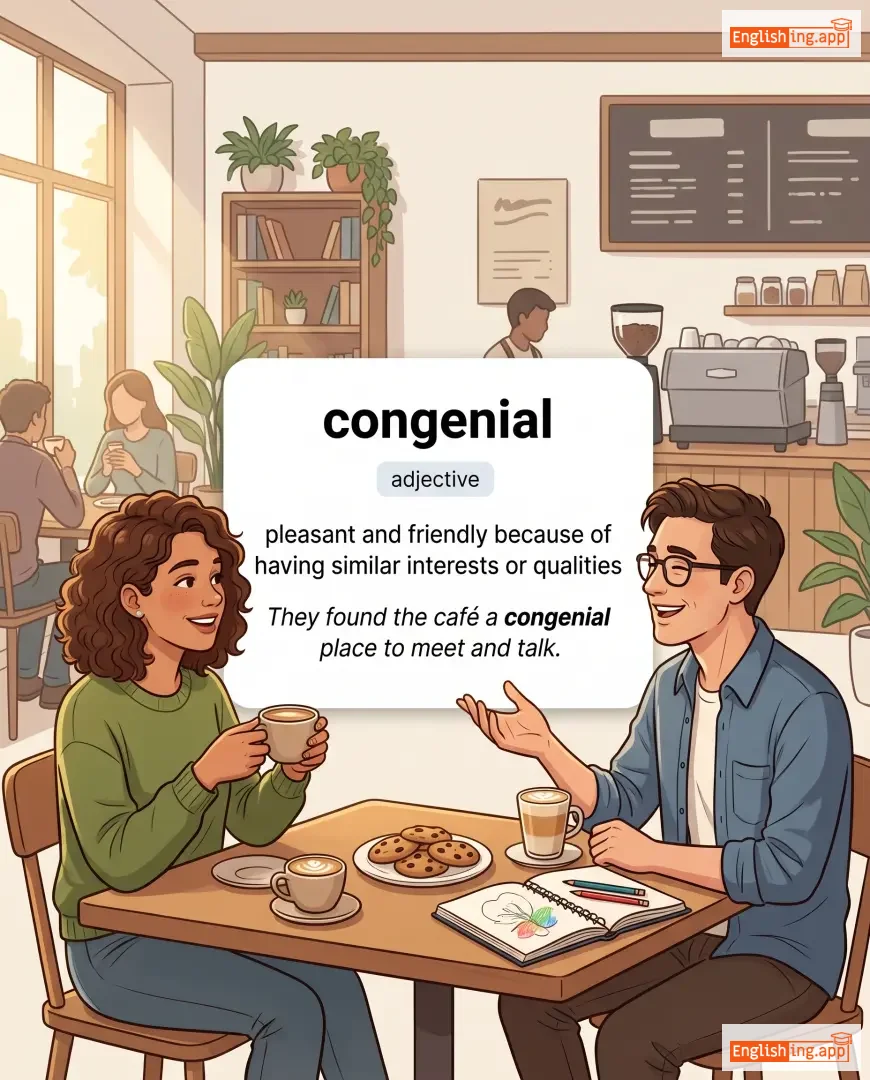
pleasant and friendly because of having similar interests or qualities
••••••
|
They found the café a congenial place to meet and talk. |
彼らはそのカフェを、会って話すのに適した親しみやすい場所だと感じました。
Karera wa sono kafe o, atte hanasu no ni tekishita shitashimi yasui basho da to kanjimashita.
••••••
|
- •••••• | - •••••• | - •••••• |
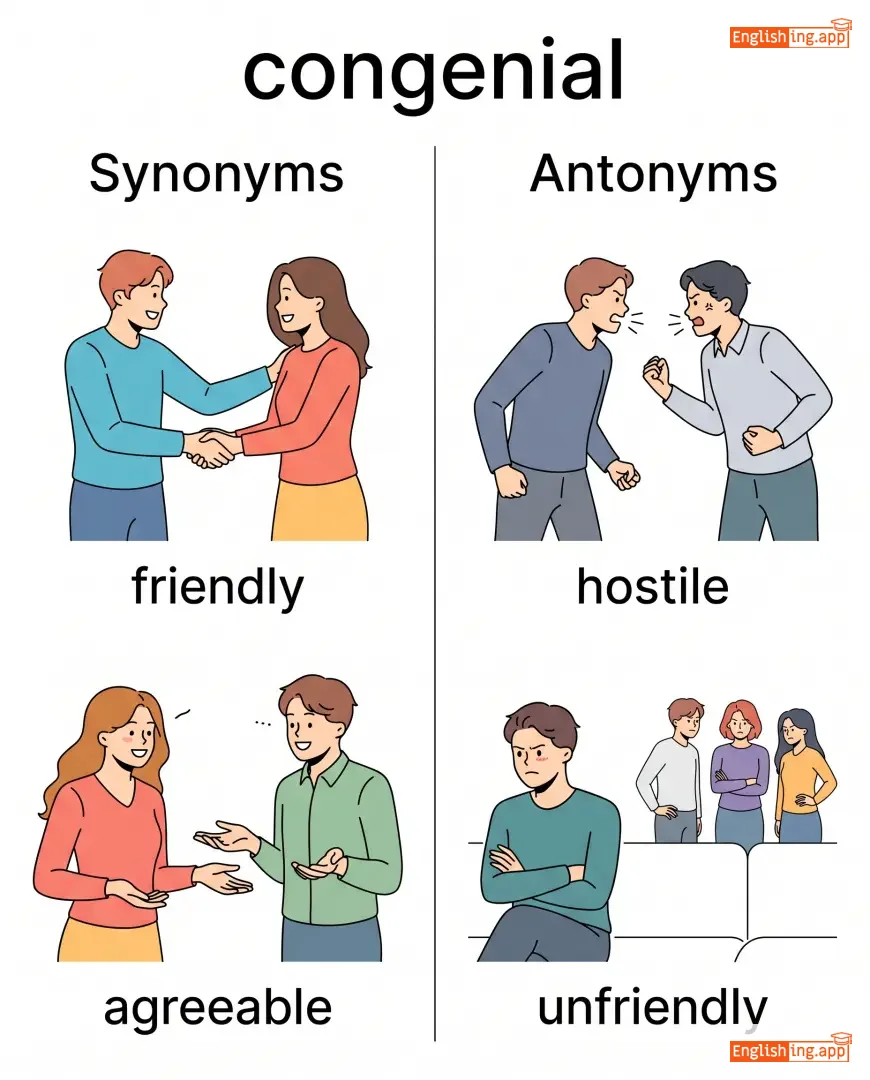
friendly, agreeable, pleasant, compatible
••••••
|
hostile, unfriendly, disagreeable
••••••
|
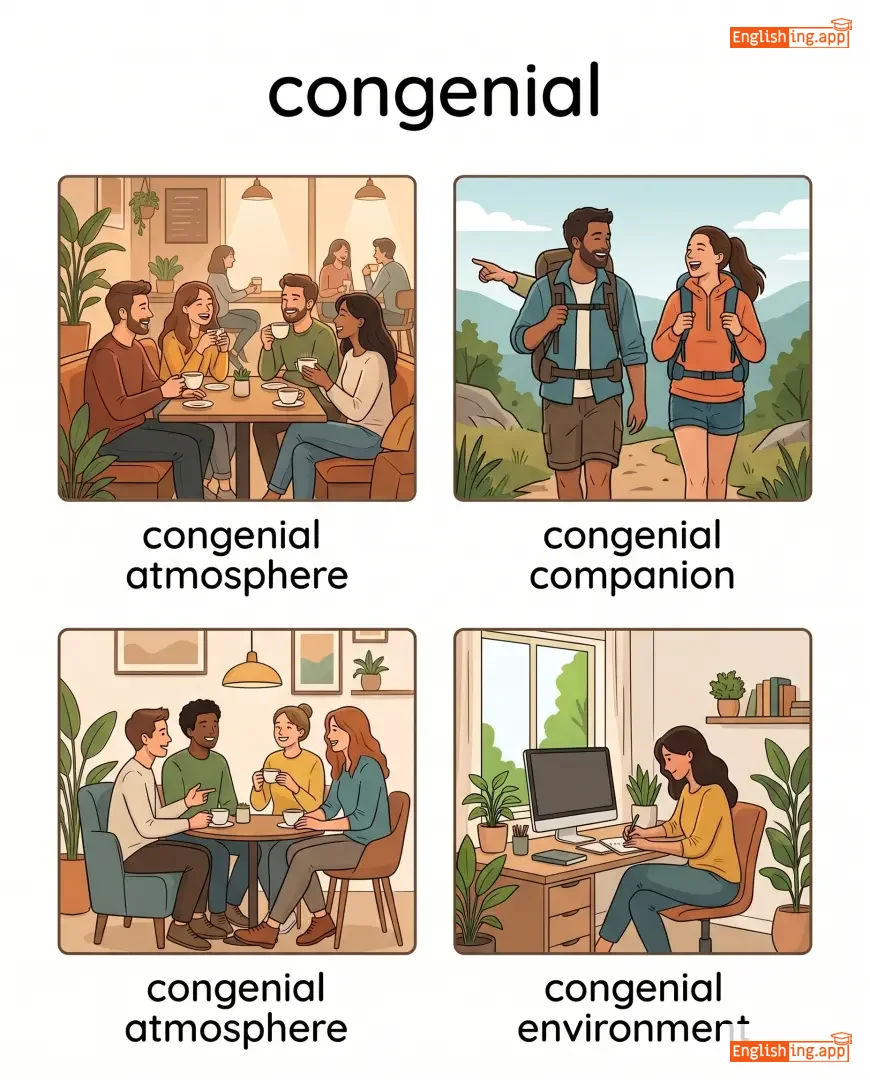
congenial atmosphere, congenial companion, congenial environment
••••••
|
Congenialは親しみやすい意味です — 友達と一緒に過ごすような場所!
••••••
|
|
💍
••••••
|
/ˈkɒndʒʊɡəl/
adjective
(kondʒugal)
••••••
|


|
婚姻の
kon'in no
••••••
|
- •••••• | - •••••• | - •••••• | - •••••• |
relating to marriage or the relationship between husband and wife
••••••
|
They enjoyed a long life of conjugal happiness. |
彼らは長い結婚生活を楽しみました。
Karera wa nagai kekkon seikatsu o tanoshimimashita.
••••••
|
conjugal rights |
the rights enjoyed by married partners, especially sexual relations
••••••
|
婚姻権
kon'in ken
••••••
|
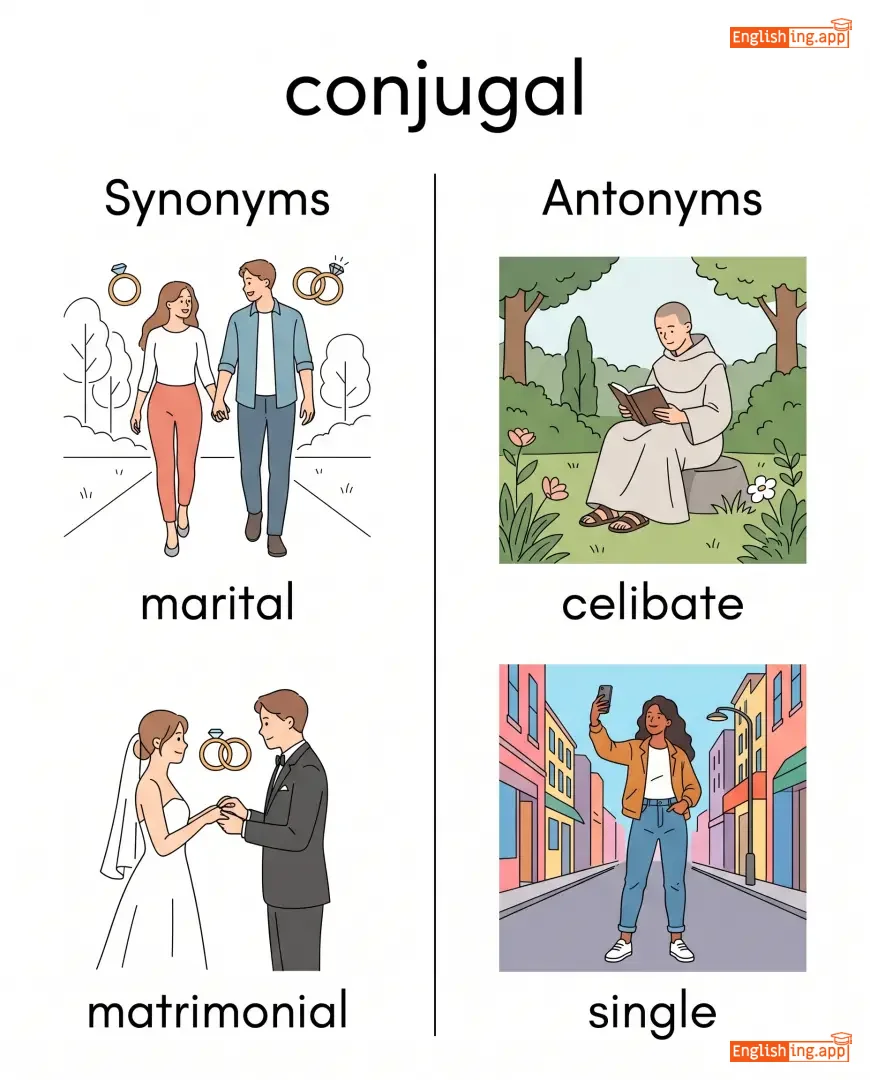
marital, matrimonial, spousal, wedded
••••••
|
celibate, single
••••••
|
conjugal life, conjugal relationship, conjugal duties
••••••
|
婚姻の生活 = 夫婦の生活 - 婚姻 = 結婚生活。
••••••
|
|
🎨
••••••
|
/ˌkɒn.əˈsɜːr/
noun
(コノスール)
••••••
|

|
鑑定家
kanteika
••••••
|
- •••••• | - •••••• | - •••••• | - •••••• |
an expert judge in matters of taste, especially in food, art, or wine
••••••
|
She is a true connoisseur of fine art. |
彼女は本物の芸術の鑑定家です。
Kanojo wa honmono no geijutsu no kanteika desu.
••••••
|
- •••••• | - •••••• | - •••••• |
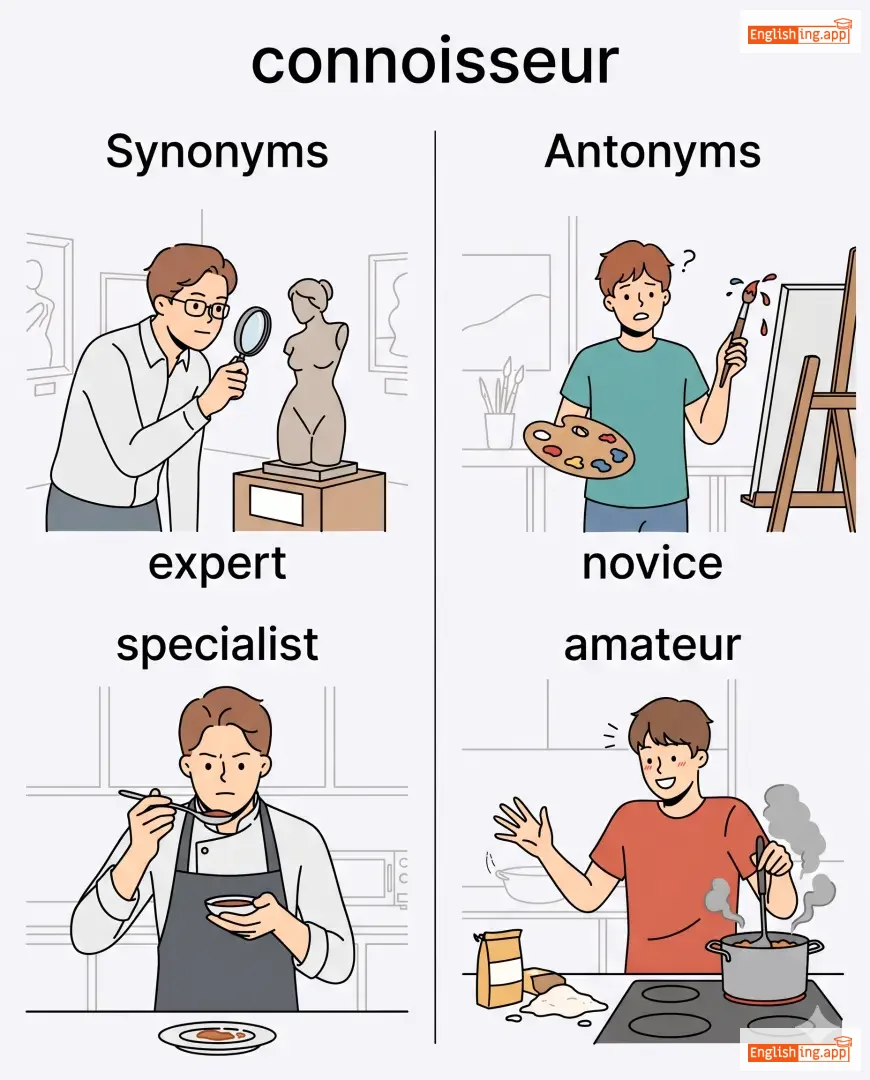
expert, specialist, critic, authority
••••••
|
novice, amateur, layman
••••••
|
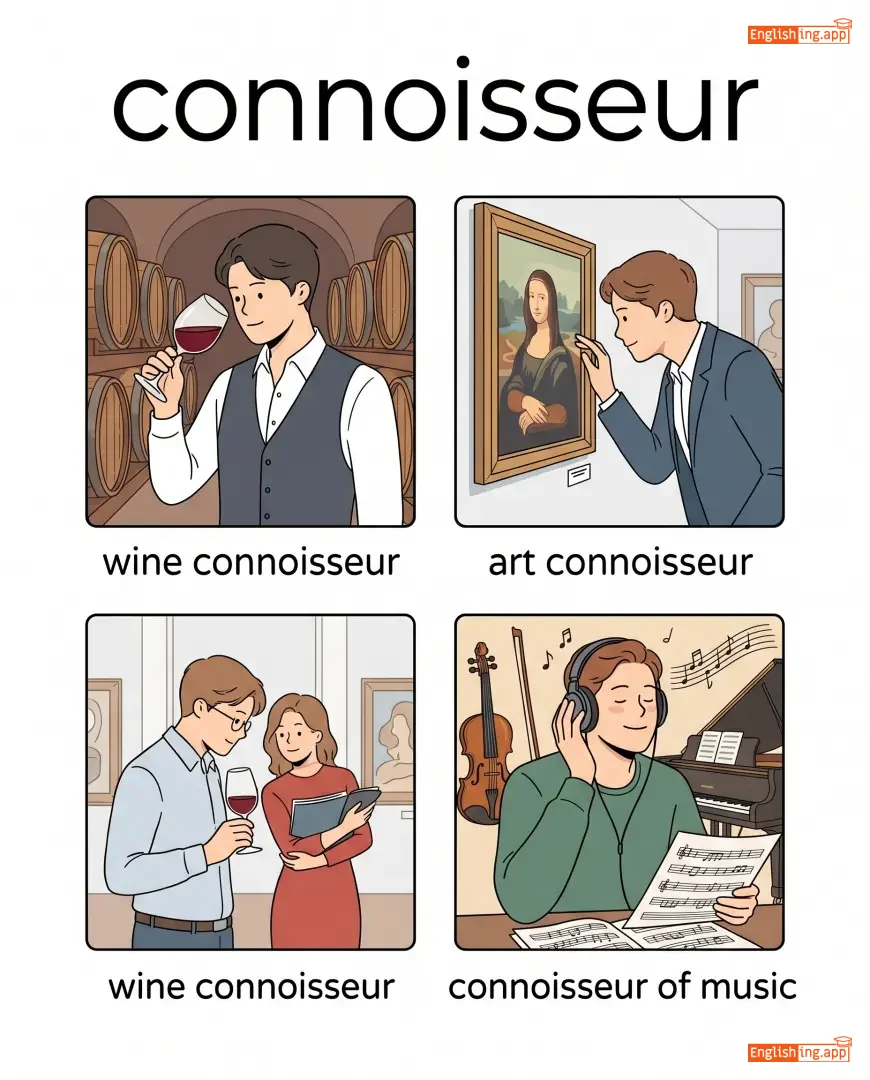
wine connoisseur, art connoisseur, connoisseur of music
••••••
|
鑑定家は、優れた芸術やワインを見分けることができます。
••••••
|
|
🎖️
••••••
|
/ˈkɒnskrɪpt/
verb
(コンスクリプト)
••••••
|

|
徴兵する
chōhei suru
••••••
|
conscripted
コンスクリプテッド
••••••
|
conscripted
コンスクリプテッド
••••••
|
conscripts
コンスクリプトス
••••••
|
conscripting
コンスクリプティング
••••••
|
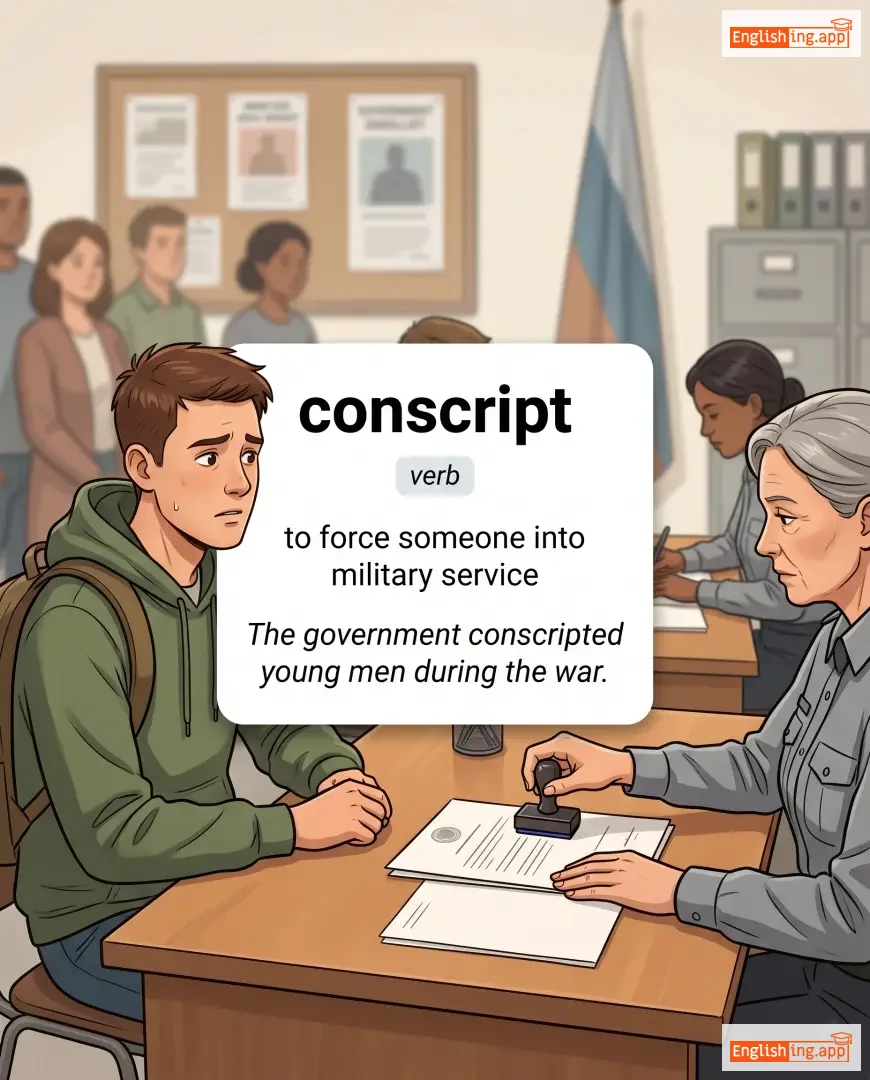
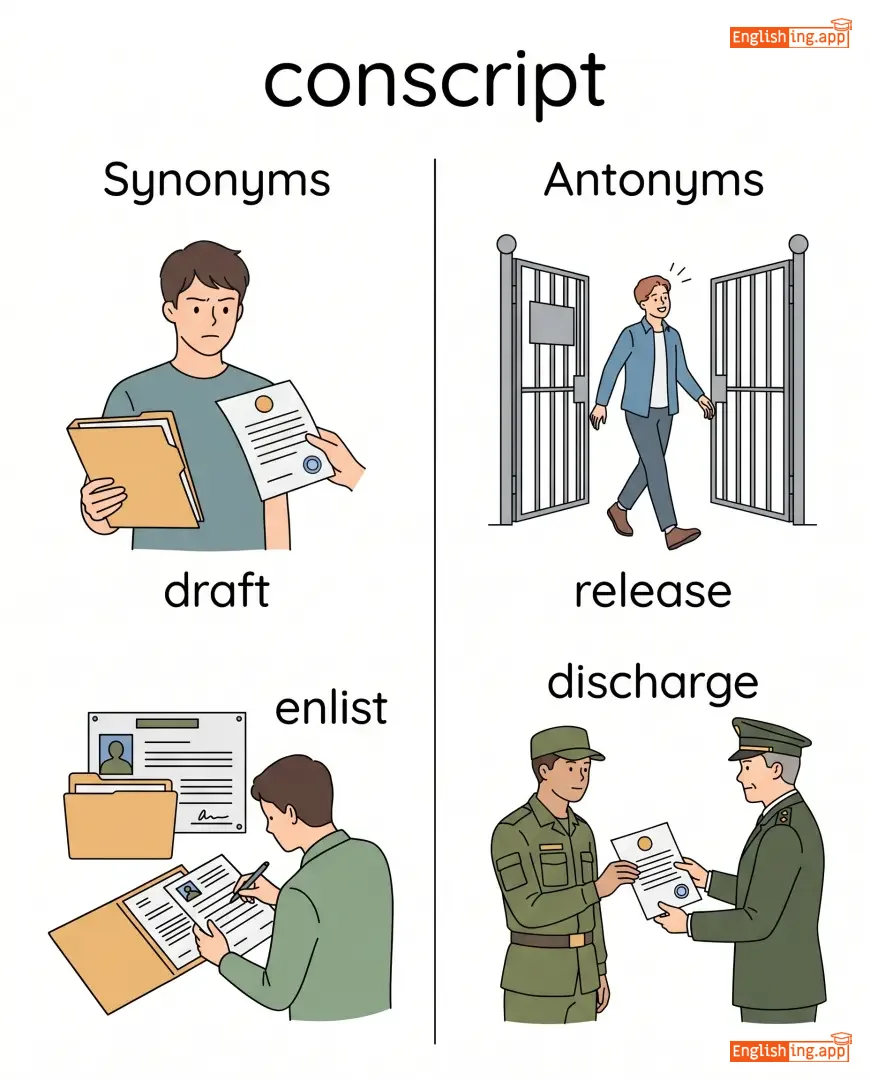
to force someone into military service
••••••
|
The government conscripted young men during the war.
政府は戦争中に若い男性を徴兵しました。
••••••
|
政府は戦争中に若い男性を徴兵しました。
Seifu wa sensō-chū ni wakai dansei o chōhei shimashita.
••••••
|
- •••••• | - •••••• | - •••••• |
draft, enlist, recruit, call up, mobilize
••••••
|
release, discharge, exempt
••••••
|
conscripted soldier, military conscript, conscript army, forcibly conscript
••••••
|
コンスクリプトは、軍隊に入るために強制的に入隊させること、例えば徴兵のことです。
••••••
|
|
⛪
••••••
|
/ˈkɒnsɪkreɪt/
verb
(コンセクレイト)
••••••
|

|
奉献する
hōkensuru
••••••
|
consecrated
コンセクレイテッド
••••••
|
consecrated
コンセクレイテッド
••••••
|
consecrates
コンセクレイツ
••••••
|
consecrating
コンセクレイティング
••••••
|
to make something sacred, usually through a religious ceremony
••••••
|
The church was consecrated by the bishop.
教会は司教によって奉献されました。
••••••
|
教会は司教によって奉献されました。
Kyōkai wa shikyō ni yotte hōkensaremashita.
••••••
|
- •••••• | - •••••• | - •••••• |
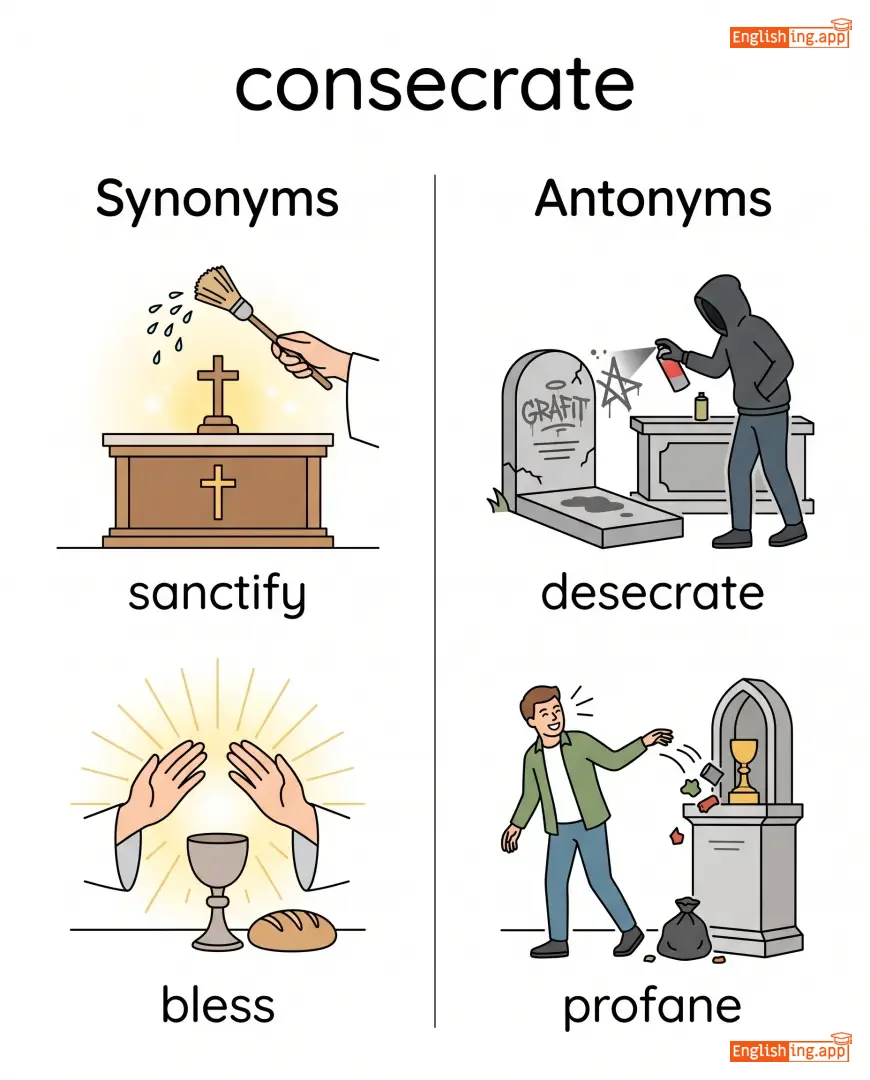
sanctify, bless, dedicate, hallow, ordain
••••••
|
desecrate, profane, defile
••••••
|
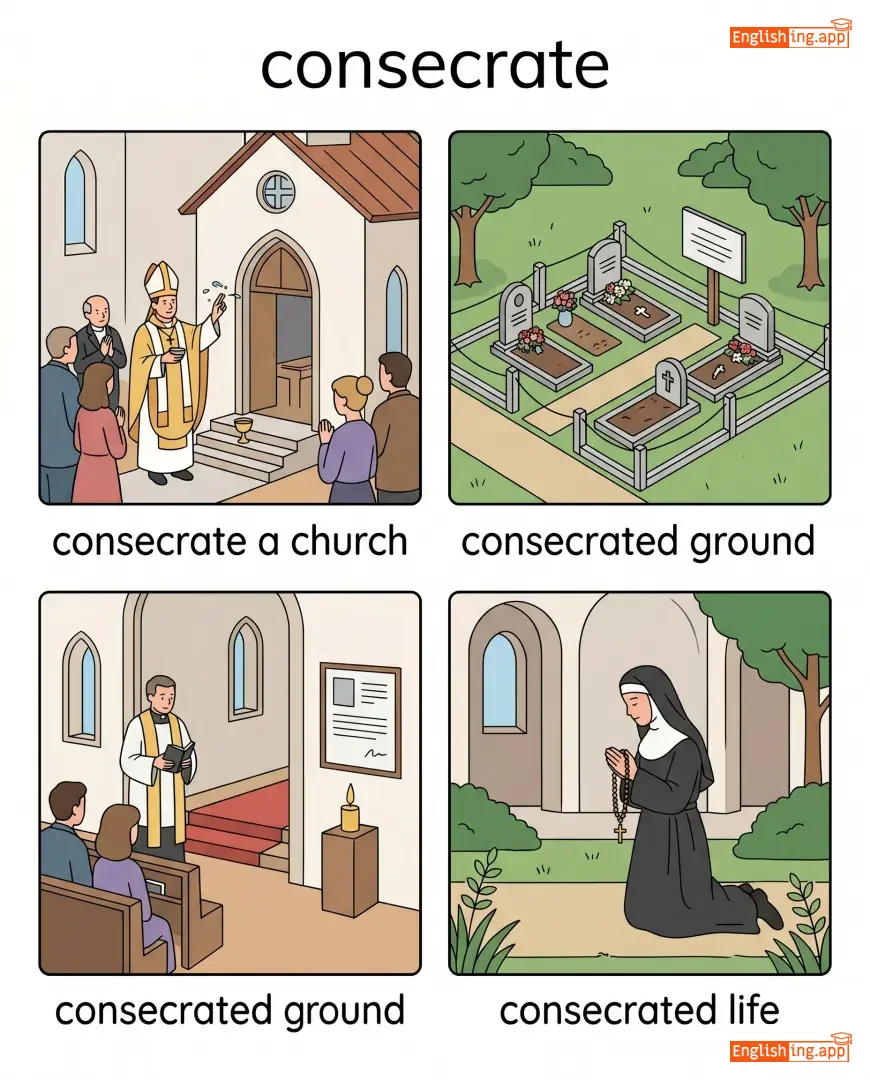
consecrate a church, consecrated ground, consecrated life, consecrated host
••••••
|
Consecrateは奉献するという意味で、神聖にすることを指します。
••••••
|
|
🏆
••••••
|
/kənˈtɛnd/
verb
(コンテンド)
••••••
|
|
争う、主張する
arasou, shuchou suru
••••••
|
contended
コンテンドした
••••••
|
contended
コンテンドした
••••••
|
contends
コンテンドス
••••••
|
contending
コンテンドイング
••••••
|
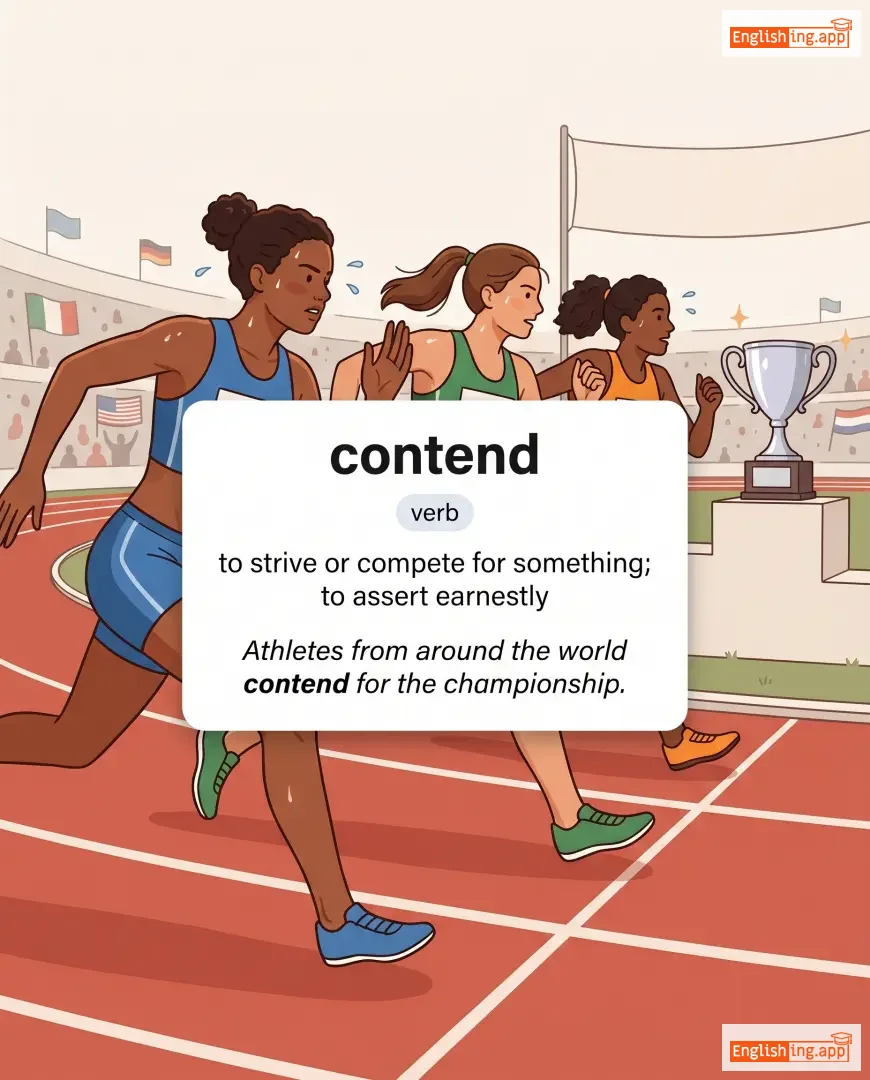
to strive or compete for something; to assert earnestly
••••••
|
Athletes from around the world contend for the championship.
世界中のアスリートがチャンピオンシップを争っています。
••••••
|
世界中のアスリートがチャンピオンシップを争っています。
Sekai juu no asurīto ga chanpionship wo arasotteimasu.
••••••
|
- •••••• | - •••••• | - •••••• |
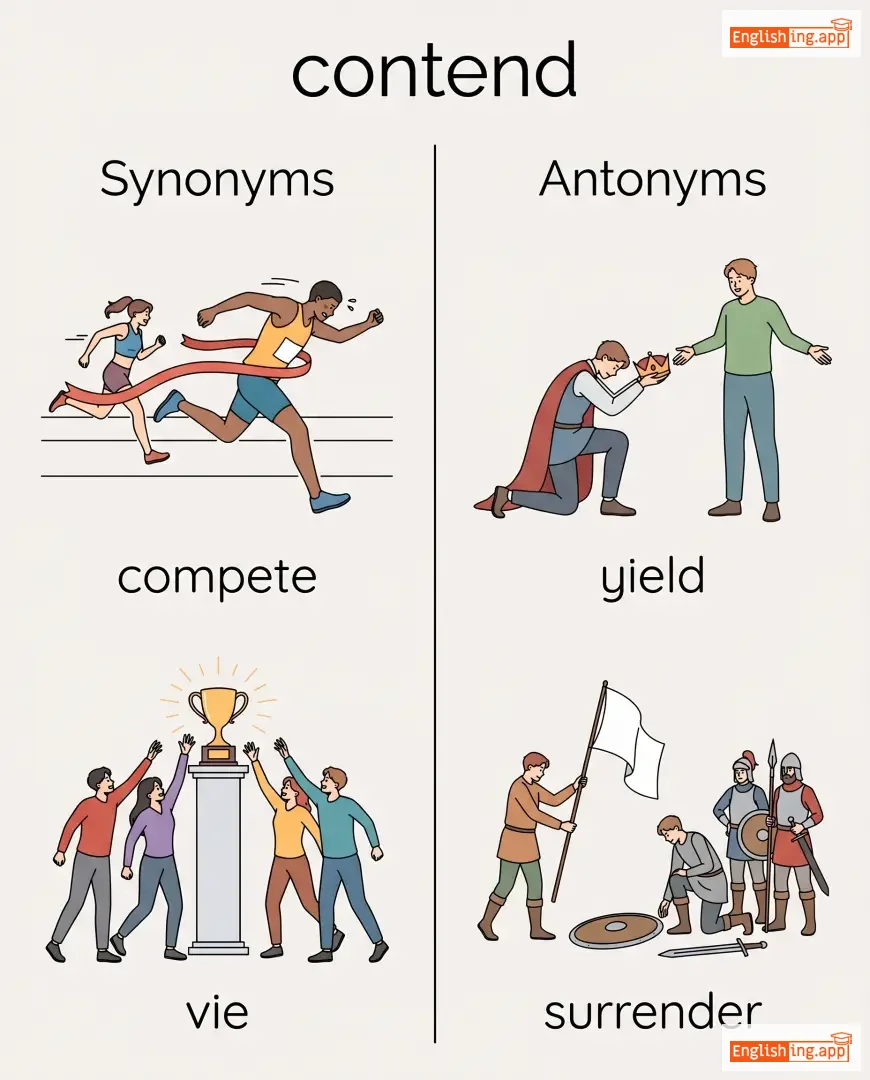
compete, vie, struggle, assert
••••••
|
yield, surrender, concede
••••••
|
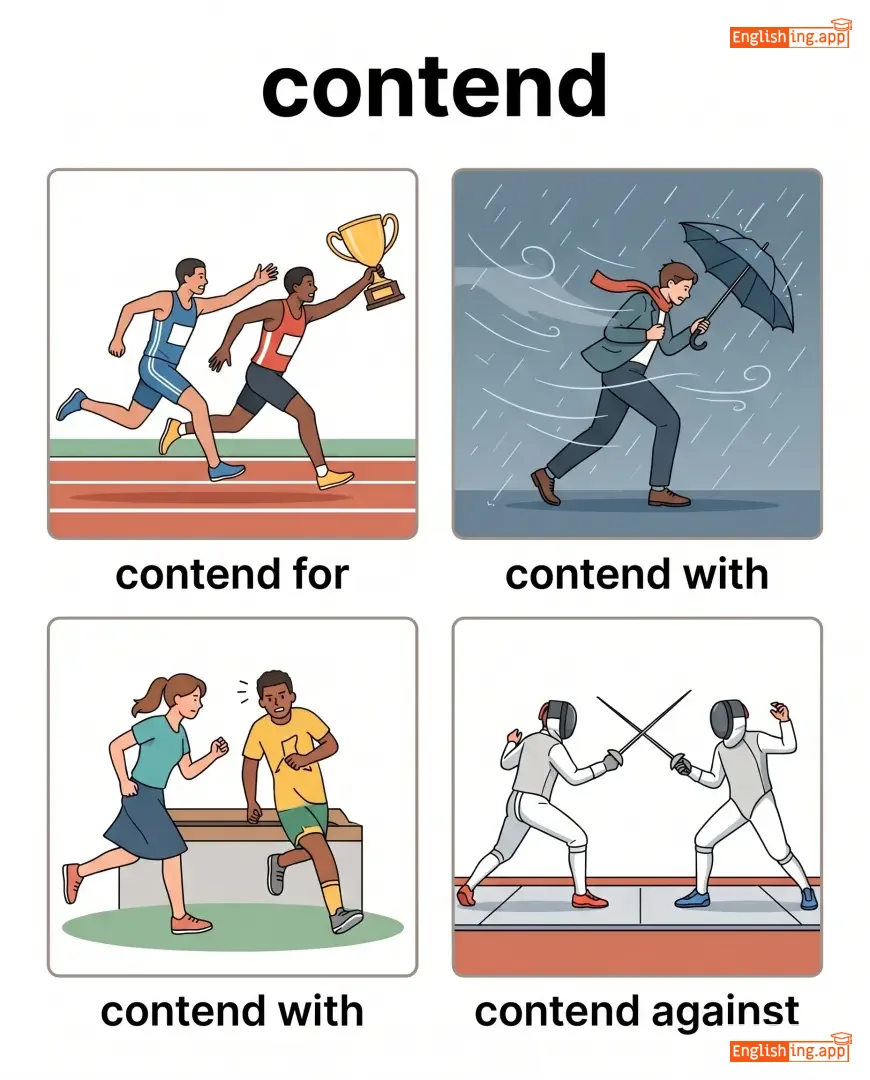
contend for, contend with, contend against, contend successfully
••••••
|
Contendはコンテストで争うこと - 常にコンテストでcontend
••••••
|
|
🔥
••••••
|
/kənˈtɛnʃəs/
adjective
(コンテンシャス)
••••••
|
|
物議を醸す
butsugi o kasu
••••••
|
- •••••• | - •••••• | - •••••• | - •••••• |
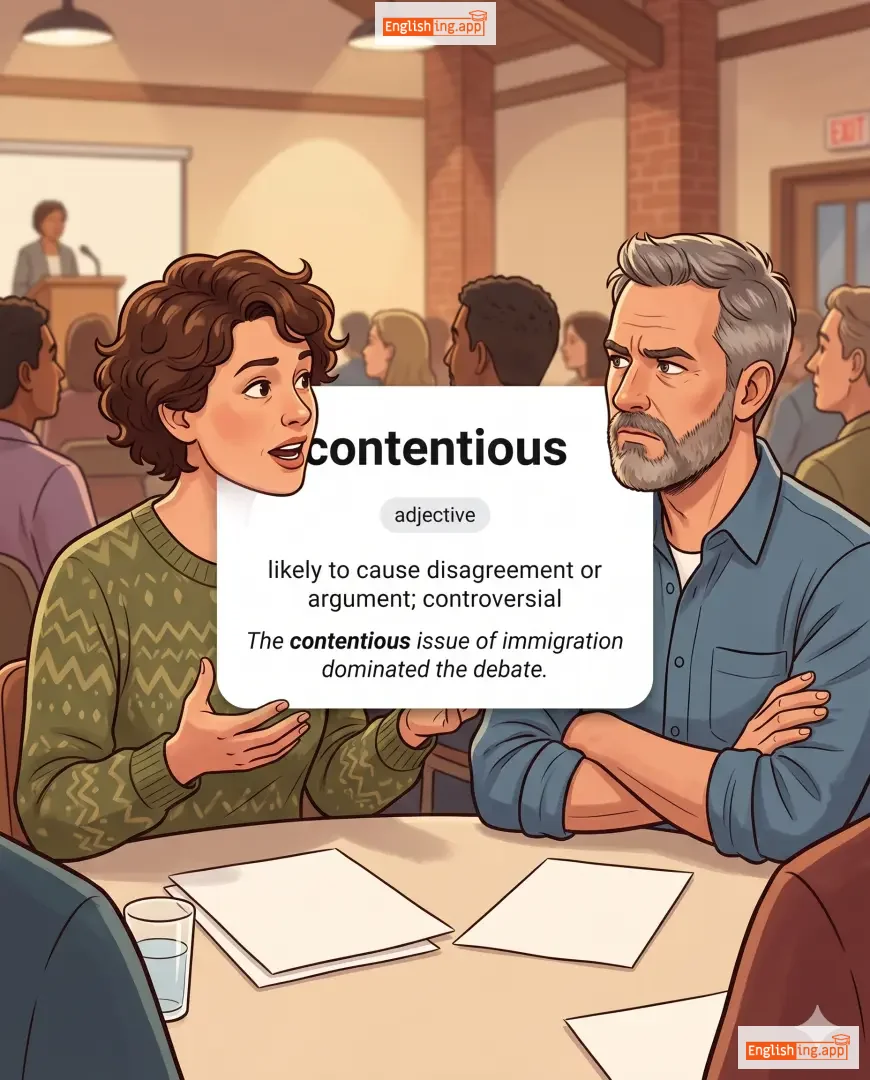
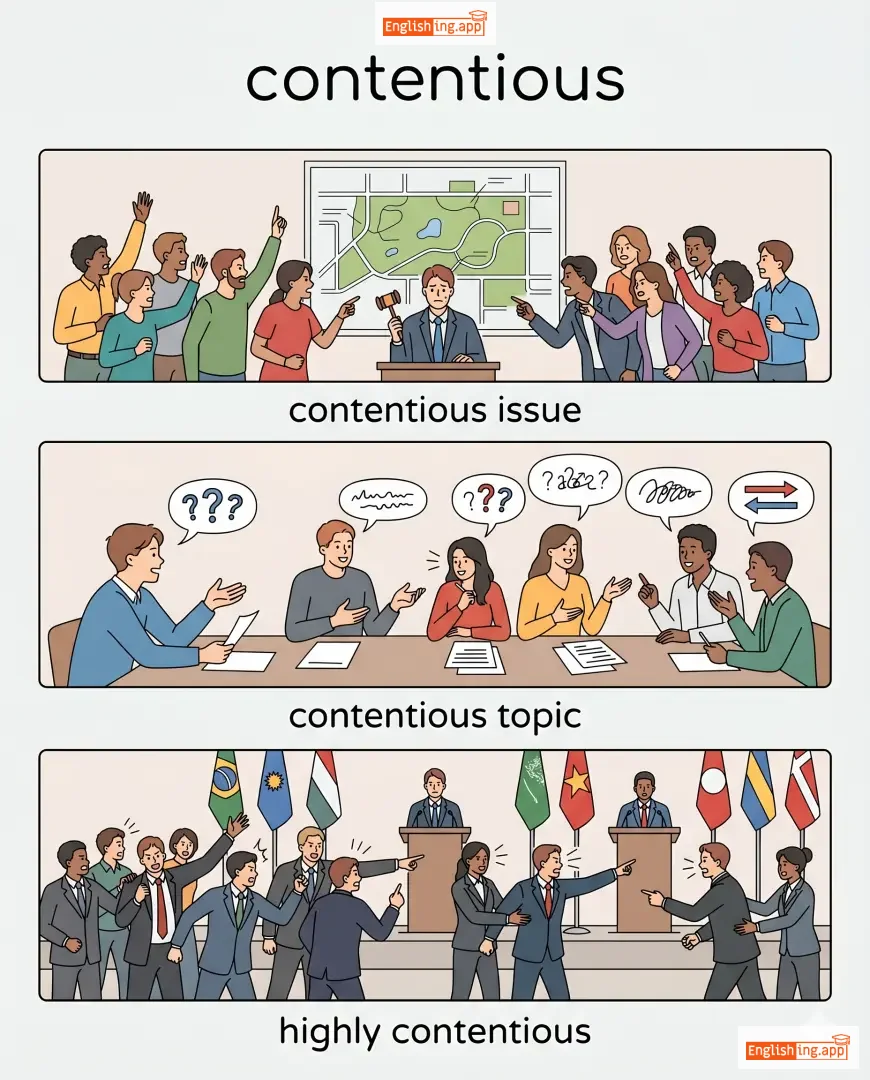
likely to cause disagreement or argument; controversial
••••••
|
The contentious issue of immigration dominated the debate. |
移民問題の物議を醸す議題は討論を支配した。
Imin mondai no butsugi o kasu gidai wa tōron o shihaishita.
••••••
|
- •••••• | - •••••• | - •••••• |
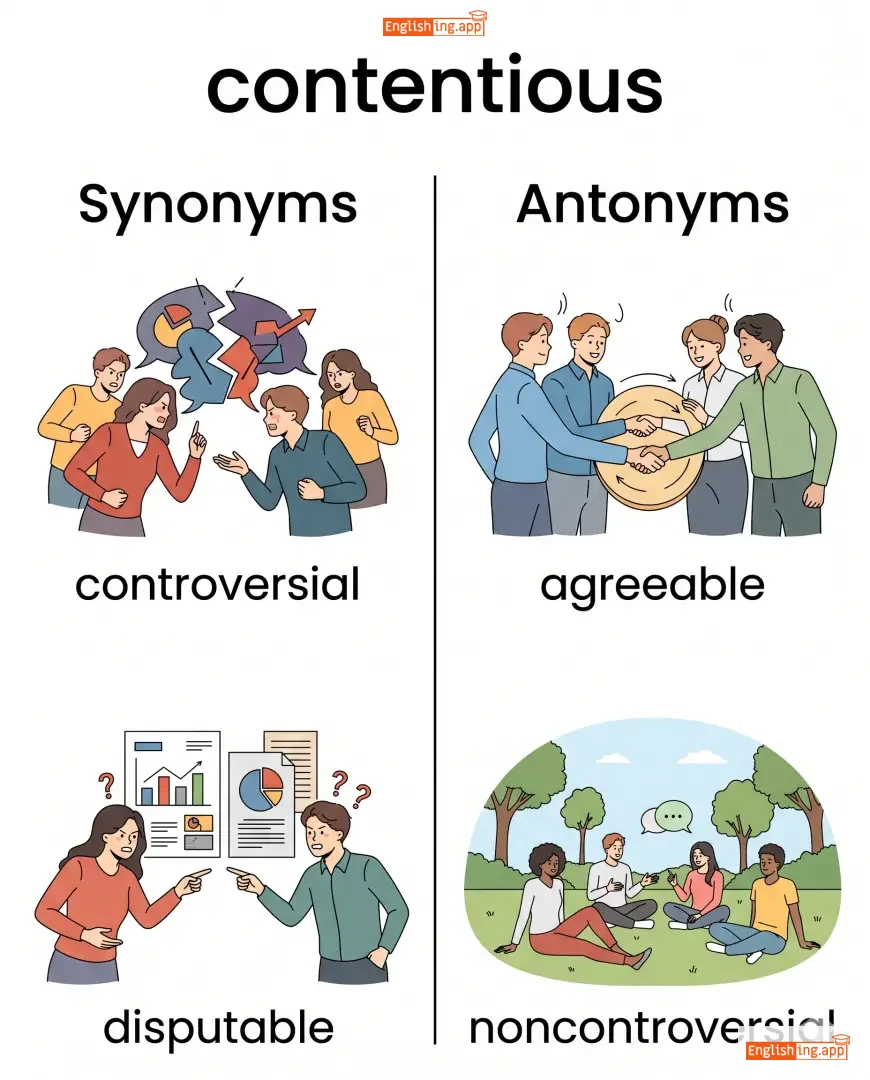
controversial, disputable, debatable, argumentative
••••••
|
agreeable, noncontroversial
••••••
|
contentious issue, contentious topic, highly contentious, contentious debate
••••••
|
Contentious は論争を呼び起こす、'物議を醸す'のように。
••••••
|
|
🏘️
••••••
|
/kənˈtɪɡ.ju.əs/
adjective
(コンティギュアス)
••••••
|
|
隣接
rinsetsu
••••••
|
- •••••• | - •••••• | - •••••• | - •••••• |
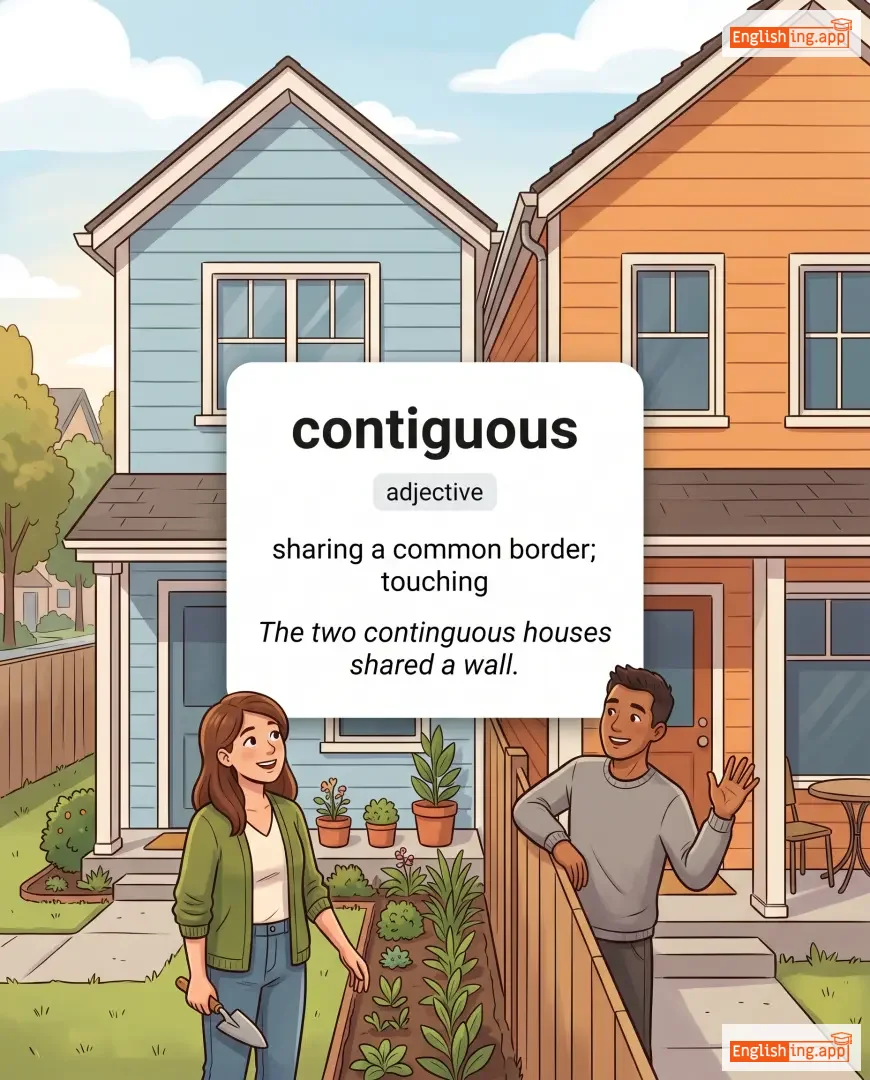
sharing a common border; touching
••••••
|
The two continguous houses shared a wall. |
隣接する2軒の家が壁を共有していました。
Rinsetsu suru 2 ken no ie ga kabe wo kyouyuu shite imashita.
••••••
|
- •••••• | - •••••• | - •••••• |
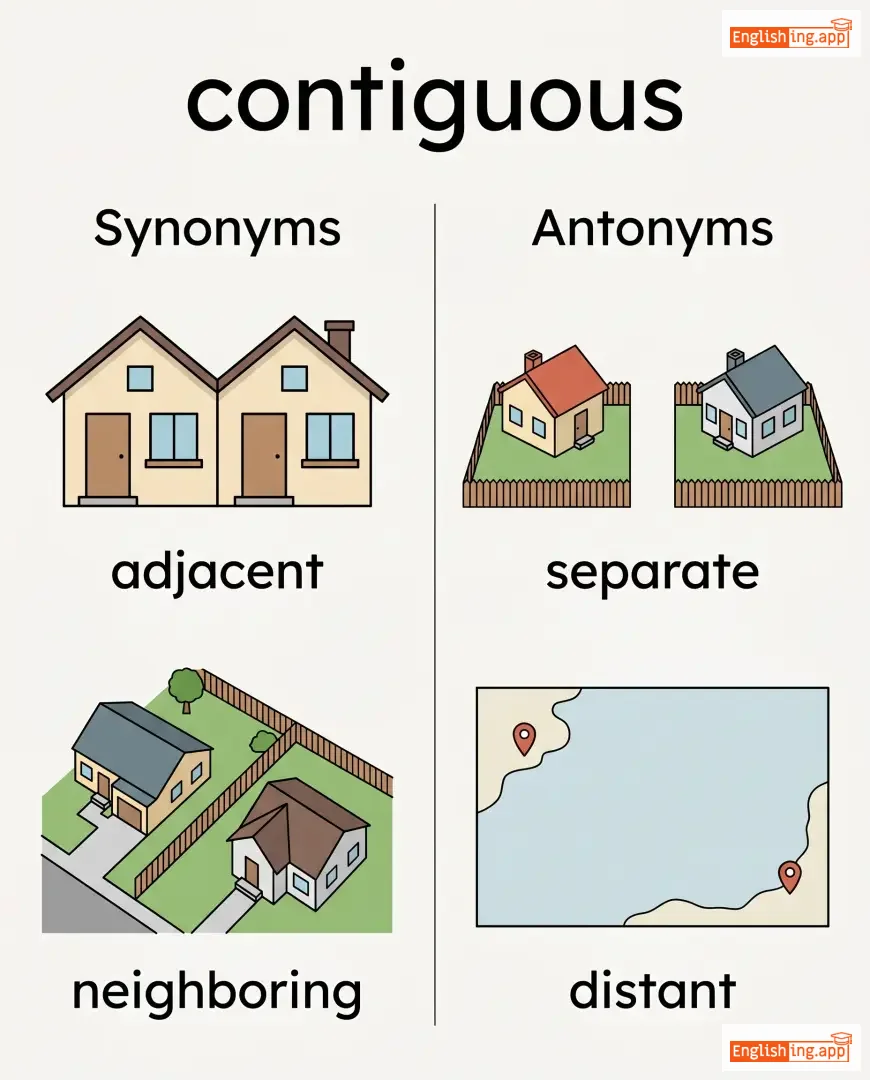
adjacent, neighboring, bordering, touching
••••••
|
separate, distant
••••••
|
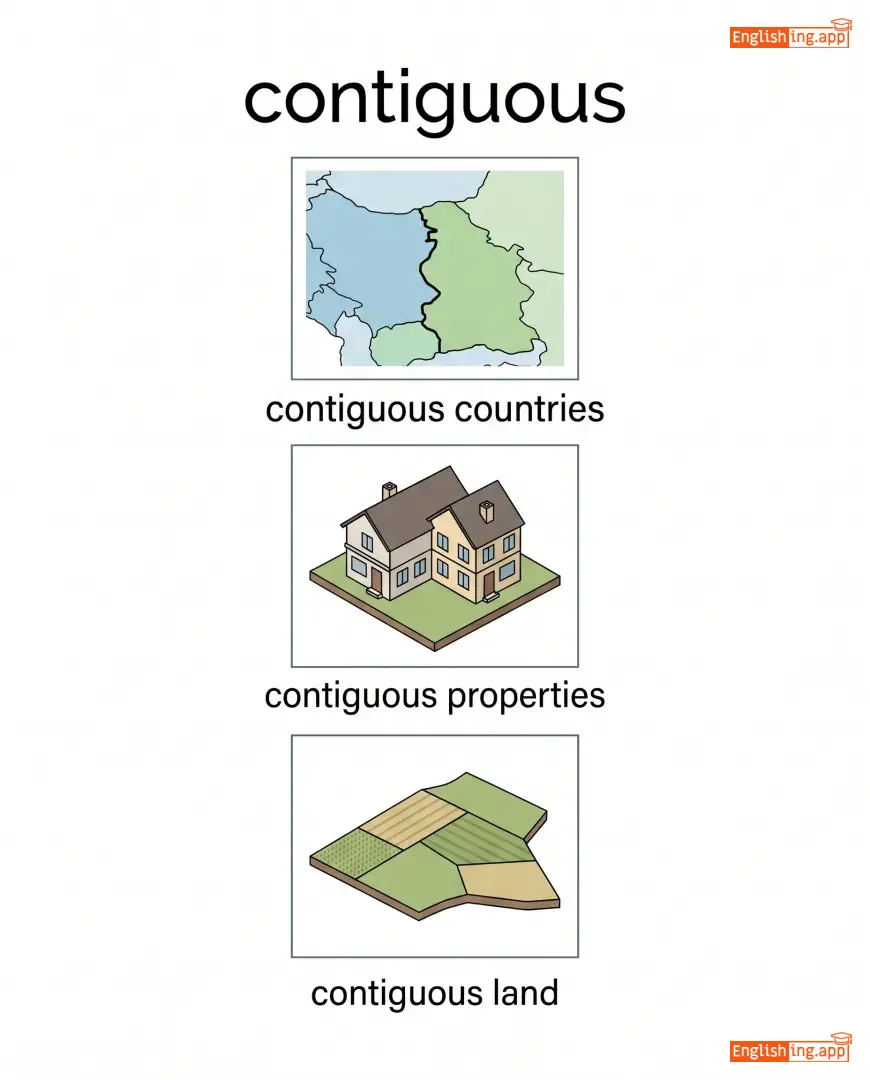
contiguous countries, contiguous properties, contiguous land
••••••
|
Rinsetsu houses touch, 隣接 wall shared
••••••
|
|
🧘
••••••
|
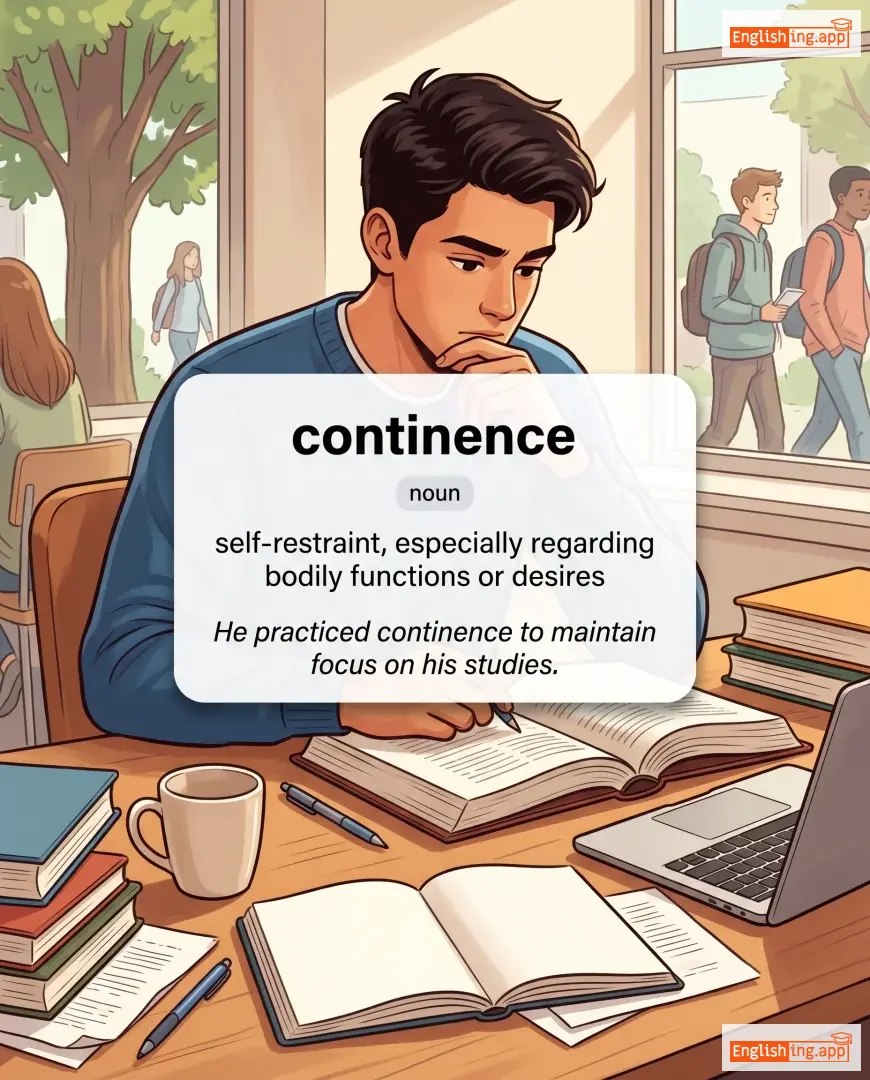
/ˈkɒn.tɪ.nəns/
noun
(コンティネンス)
••••••
|
|
禁欲
kinyoku
••••••
|
- •••••• | - •••••• | - •••••• | - •••••• |
self-restraint, especially regarding bodily functions or desires
••••••
|
He practiced continence to maintain focus on his studies. |
彼は学業に集中するために禁欲を実践した。
Kare wa gakugyou ni shuuchuu suru tame ni kinyoku o jissen shita.
••••••
|
- •••••• | - •••••• | - •••••• |
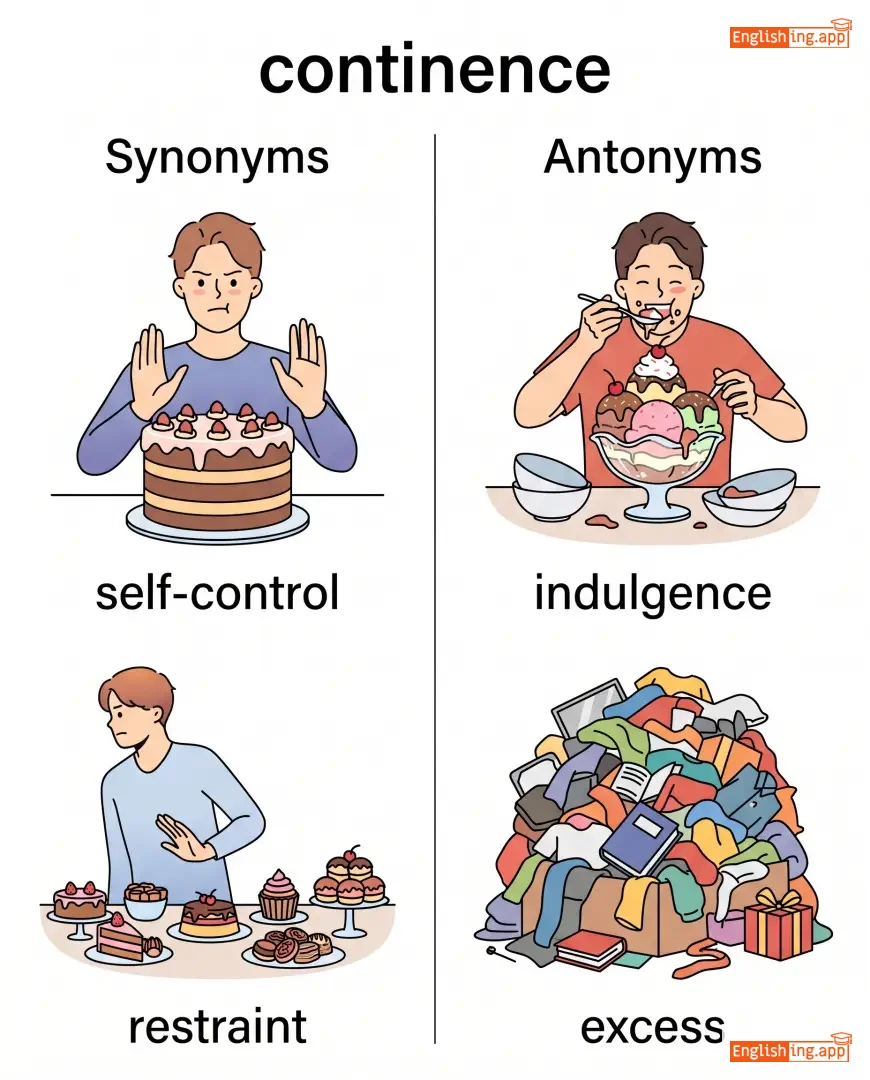
self-control, restraint, moderation, abstinence
••••••
|
indulgence, excess
••••••
|
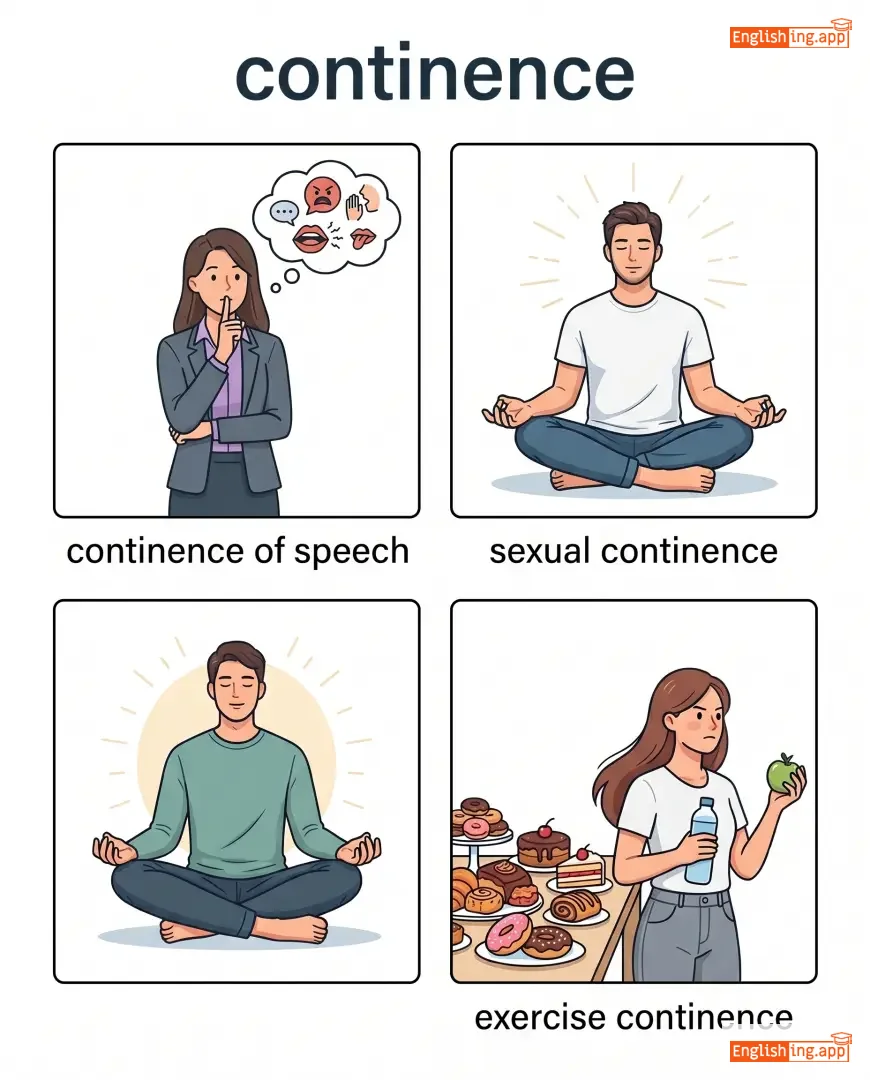
continence of speech, sexual continence, exercise continence
••••••
|
集中するための禁欲 - 自己抑制
••••••
|
|
😔
••••••
|
/kənˈtraɪt/
adjective
(kənˈtraɪt)
••••••
|
|
後悔している
kōkai shite iru
••••••
|
- •••••• | - •••••• | - •••••• | - •••••• |
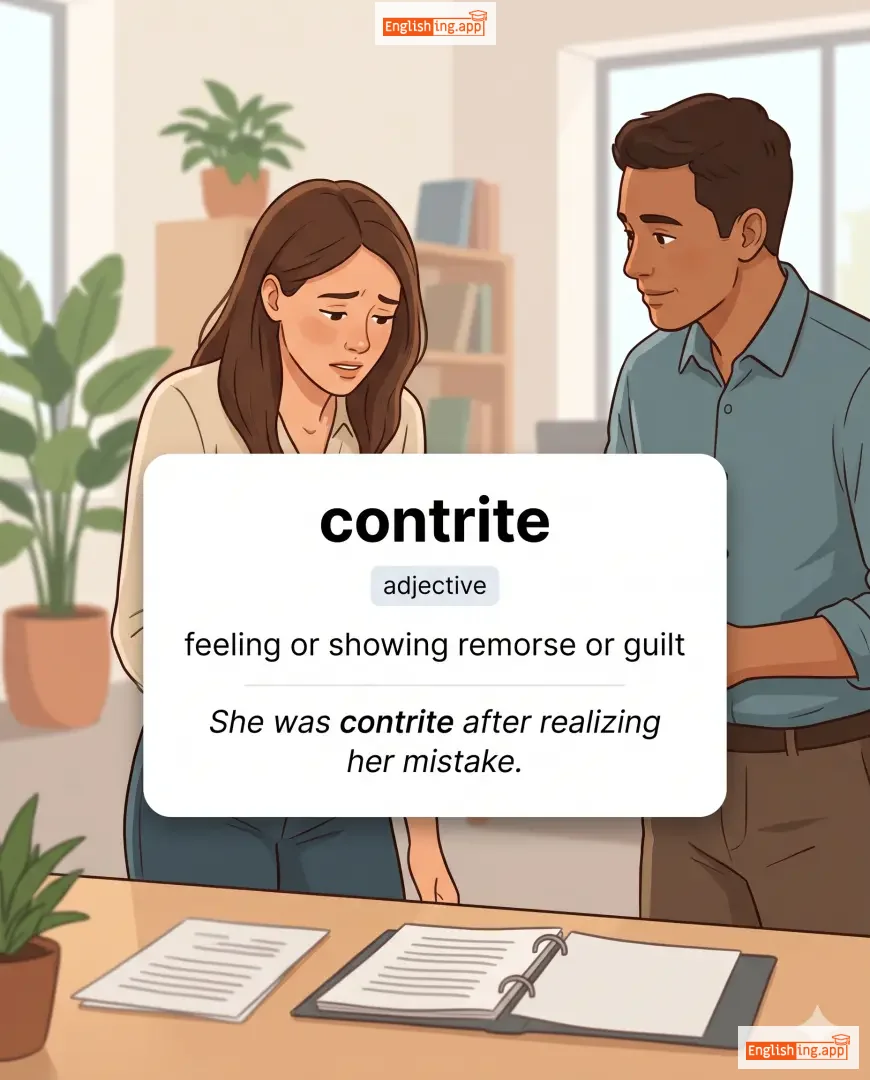
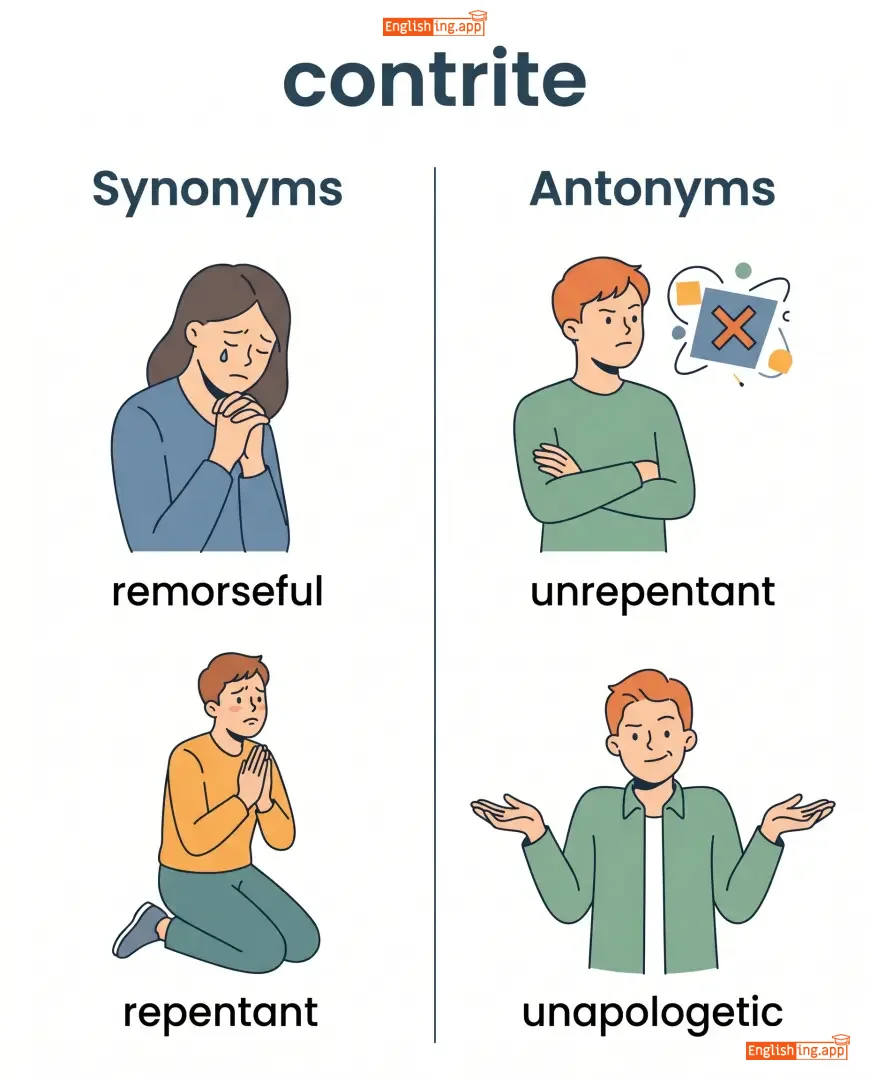
feeling or showing remorse or guilt
••••••
|
She was contrite after realizing her mistake. |
彼女は自分の間違いに気づいた後、後悔していた。
Kanojo wa jibun no machigai ni kizuita ato, kōkai shite ita.
••••••
|
- •••••• | - •••••• | - •••••• |
remorseful, repentant, sorry, penitent, regretful
••••••
|
unrepentant, unapologetic
••••••
|
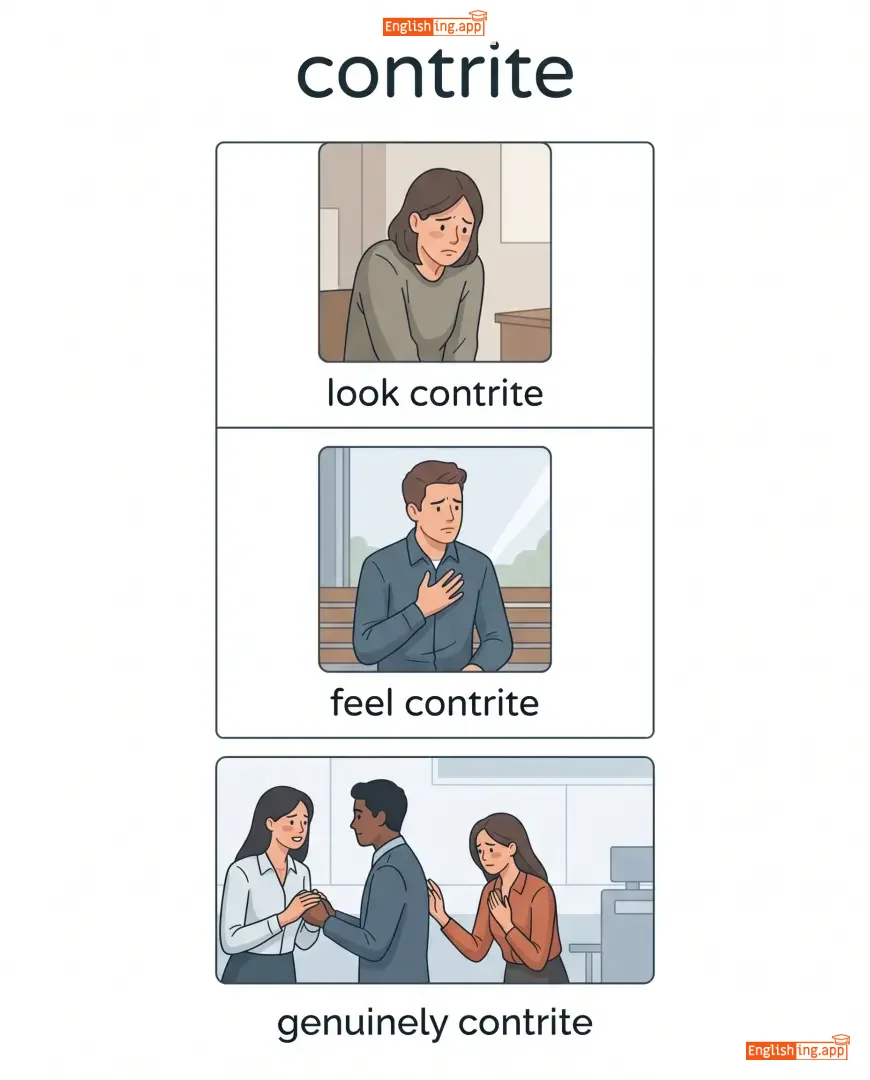
look contrite, feel contrite, genuinely contrite, appear contrite
••••••
|
Con TRITE 間違えた後に後悔している
••••••
|
|
😠
••••••
|
/ˌkɒn.tjʊˈmeɪ.ʃəs/
adjective
(コンチュメイシャス)
••••••
|
|
反抗的な, 不従順な
hankō-teki na, fuzūjun na
••••••
|
- •••••• | - •••••• | - •••••• | - •••••• |
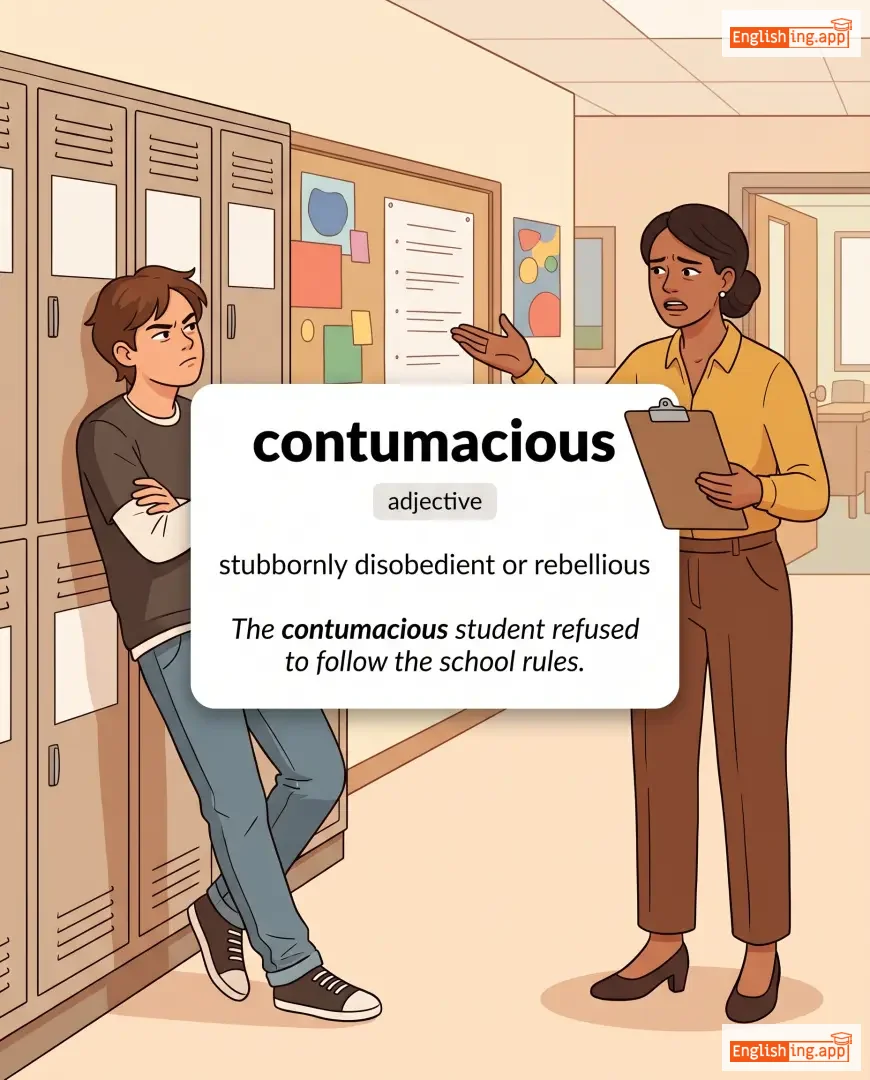
stubbornly disobedient or rebellious
••••••
|
The contumacious student refused to follow the school rules.
その反抗的な学生は学校の規則に従うことを拒否しました。
••••••
|
その反抗的な学生は学校の規則に従うことを拒否しました。
Sono hankō-teki na gakusei wa gakkō no kisoku ni shitagau koto o kyohi shimashita.
••••••
|
- •••••• | - •••••• | - •••••• |
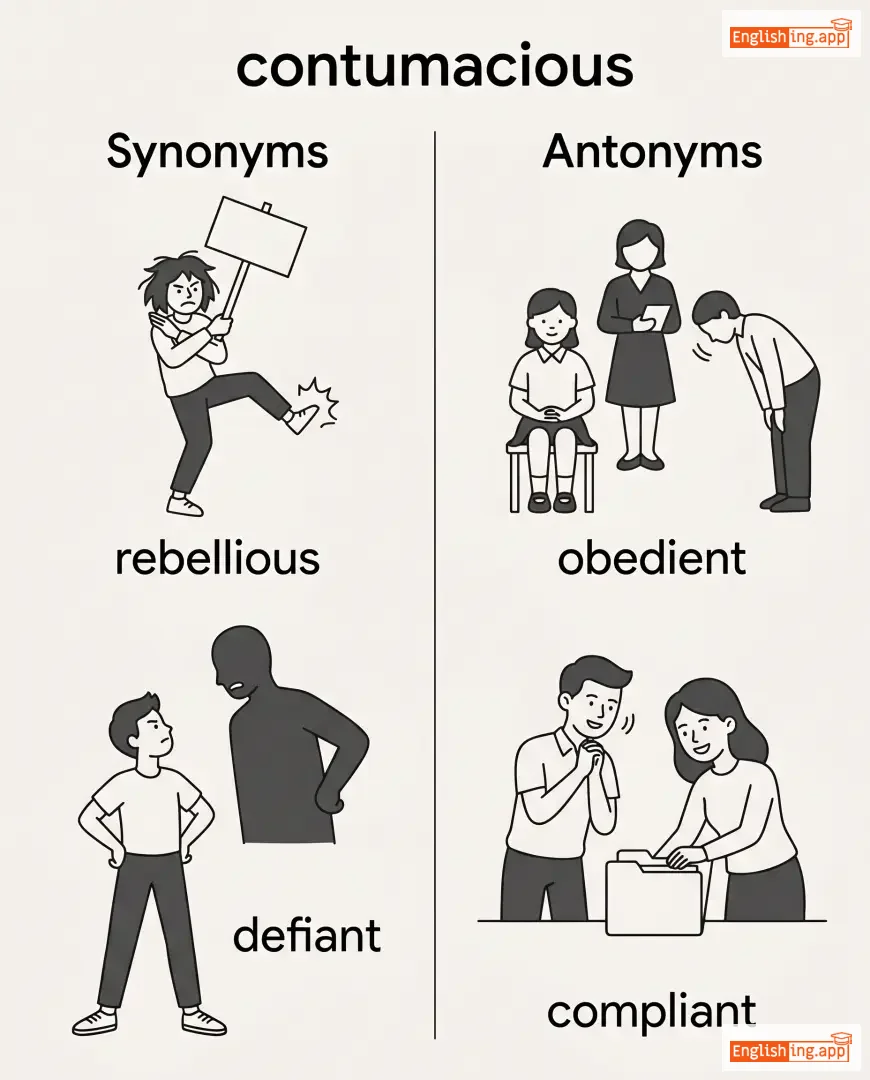
rebellious, defiant, insubordinate, disobedient
••••••
|
obedient, compliant, submissive
••••••
|
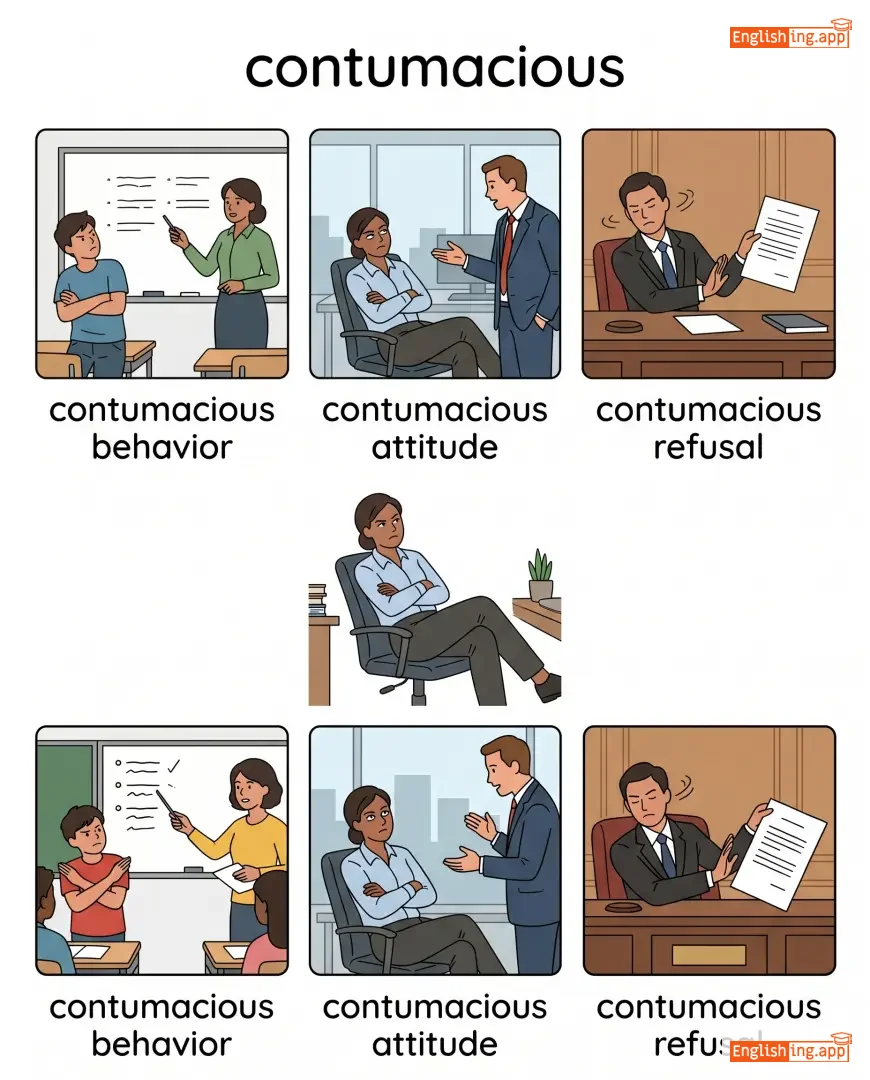
contumacious behavior, contumacious attitude, contumacious refusal
••••••
|
Contumacious = 反抗的 = 反抗的な行動
••••••
|
|
🧩
••••••
|
/kəˈnʌndrəm/
noun
(コナンドラム)
••••••
|
|
難問
nanmon
••••••
|
- •••••• | - •••••• | - •••••• | - •••••• |
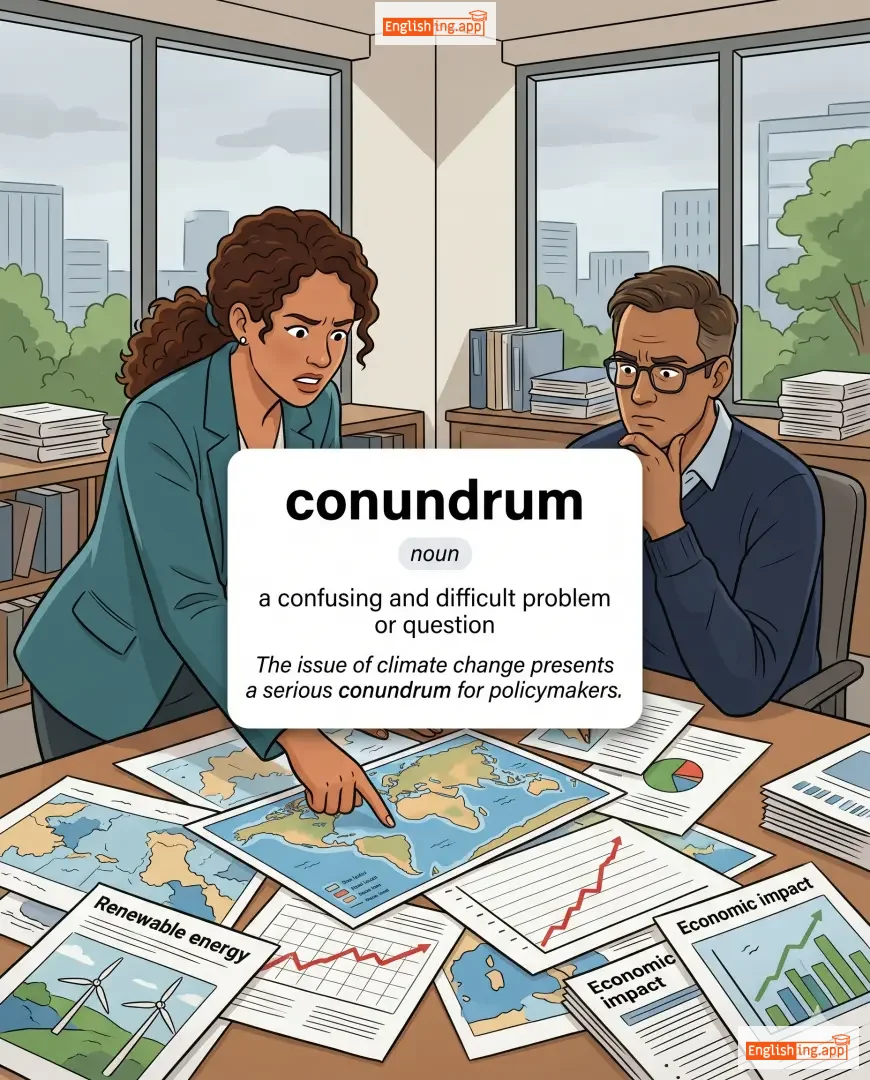
a confusing and difficult problem or question
••••••
|
The issue of climate change presents a serious conundrum for policymakers. |
気候変動の問題は政策決定者にとって深刻な難問を呈しています。
Kikou hendou no mondai wa seisaku kettei sha ni totte shinkoku na nanmon wo teishite imasu.
••••••
|
- •••••• | - •••••• | - •••••• |
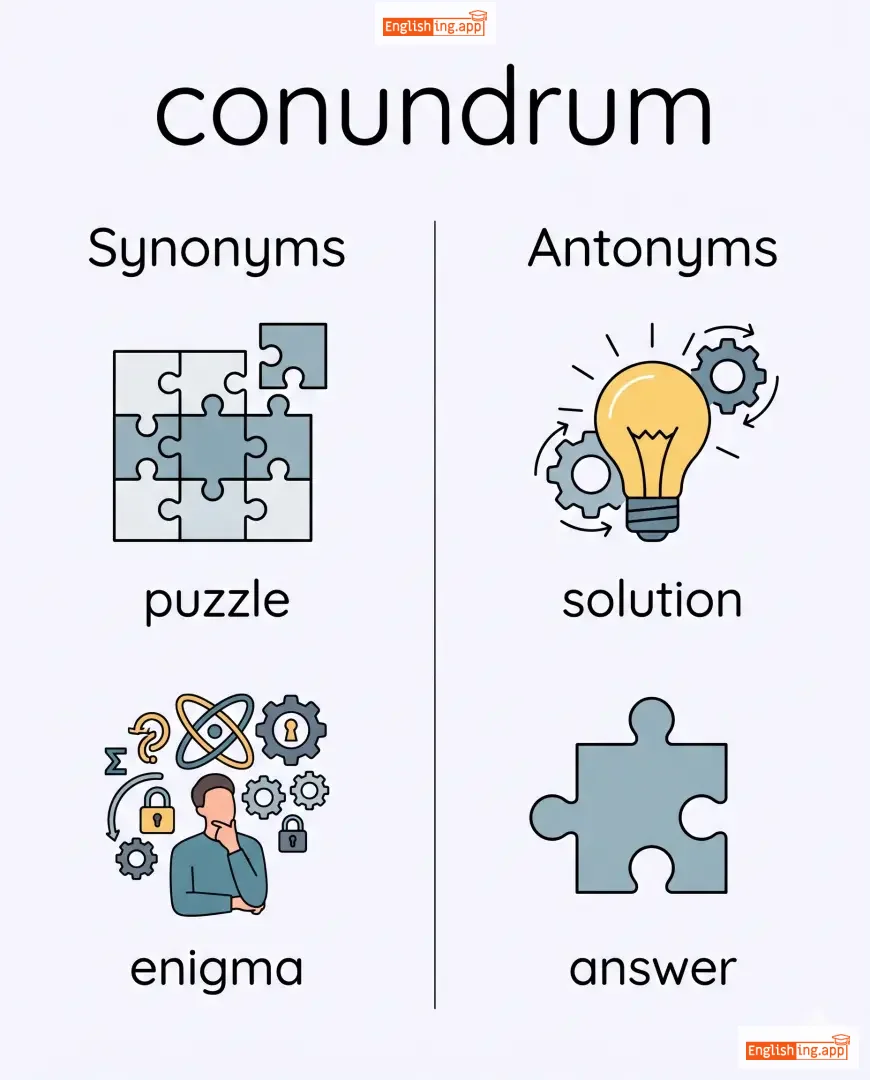
puzzle, enigma, riddle, dilemma, problem
••••••
|
solution, answer, clarity
••••••
|
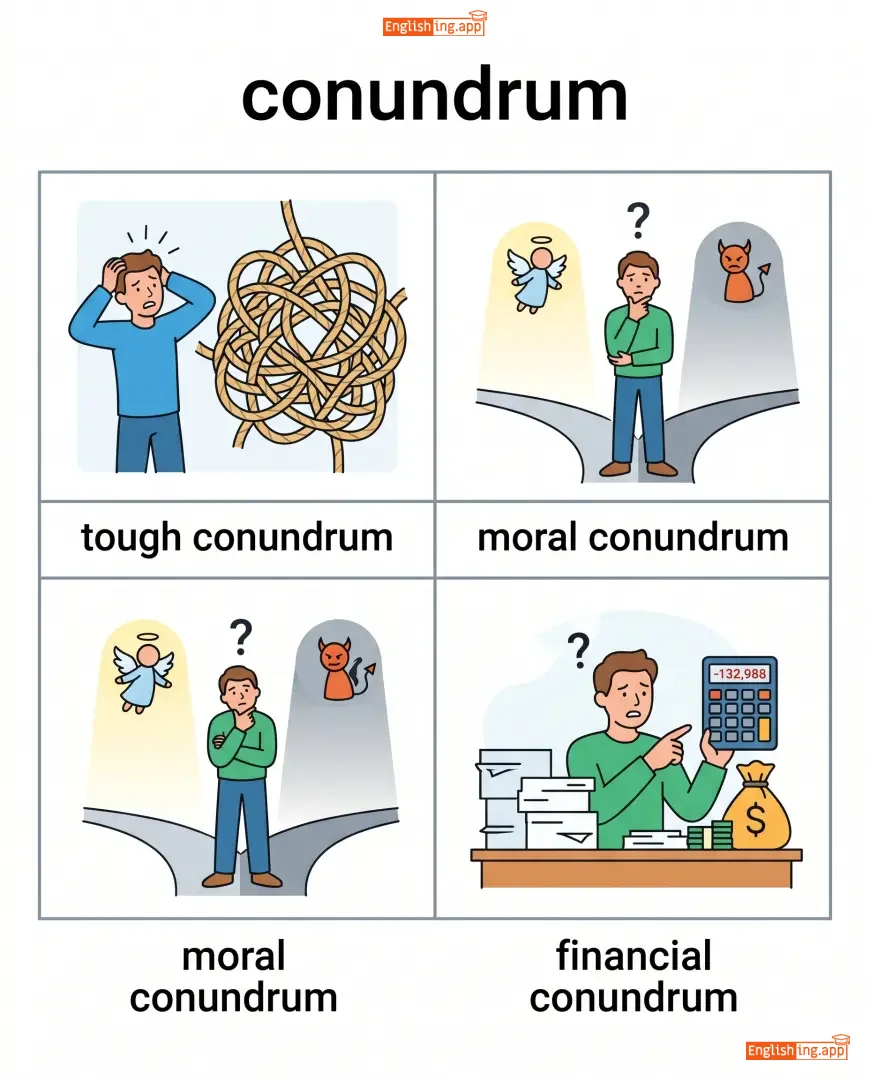
tough conundrum, moral conundrum, financial conundrum
••••••
|
難問を解くために一生懸命考えてみましょう。
••••••
|
|
🎤
••••••
|
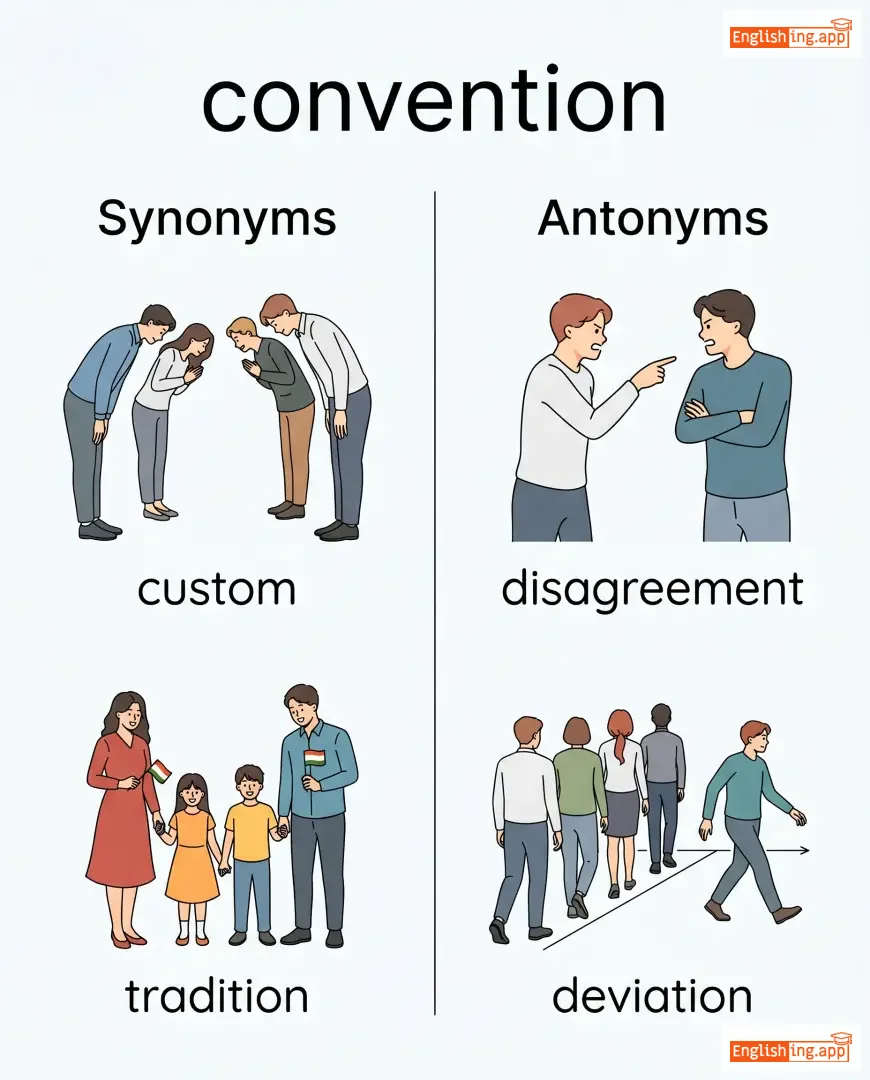
/kənˈvɛnʃən/
noun
(コンベンション)
••••••
|


|
コンベンション
konbenshon
••••••
|
- •••••• | - •••••• | - •••••• | - •••••• |
a widely accepted way of behaving or doing something; a formal meeting
••••••
|
The annual writers' convention was held in Dhaka.
作家の年次コンベンションはダッカで開催されました。
••••••
|
作家の年次コンベンションはダッカで開催されました。
Sakka no nenji konbenshon wa Dakka de kaisai saremashita.
••••••
|
- •••••• | - •••••• | - •••••• |
custom, tradition, meeting, assembly
••••••
|
disagreement, deviation
••••••
|
social convention, international convention, follow convention, break convention
••••••
|
コンベンションで皆が集まる - Convention brings everyone together
••••••
|
|
🔄
••••••
|
/kənˈvɜːrdʒ/
verb
(コンヴァージ)
••••••
|

|
合流する
gōryū suru
••••••
|
converged
コンヴァージド
••••••
|
converged
コンヴァージド
••••••
|
converges
コンヴァージズ
••••••
|
converging
コンヴァージング
••••••
|
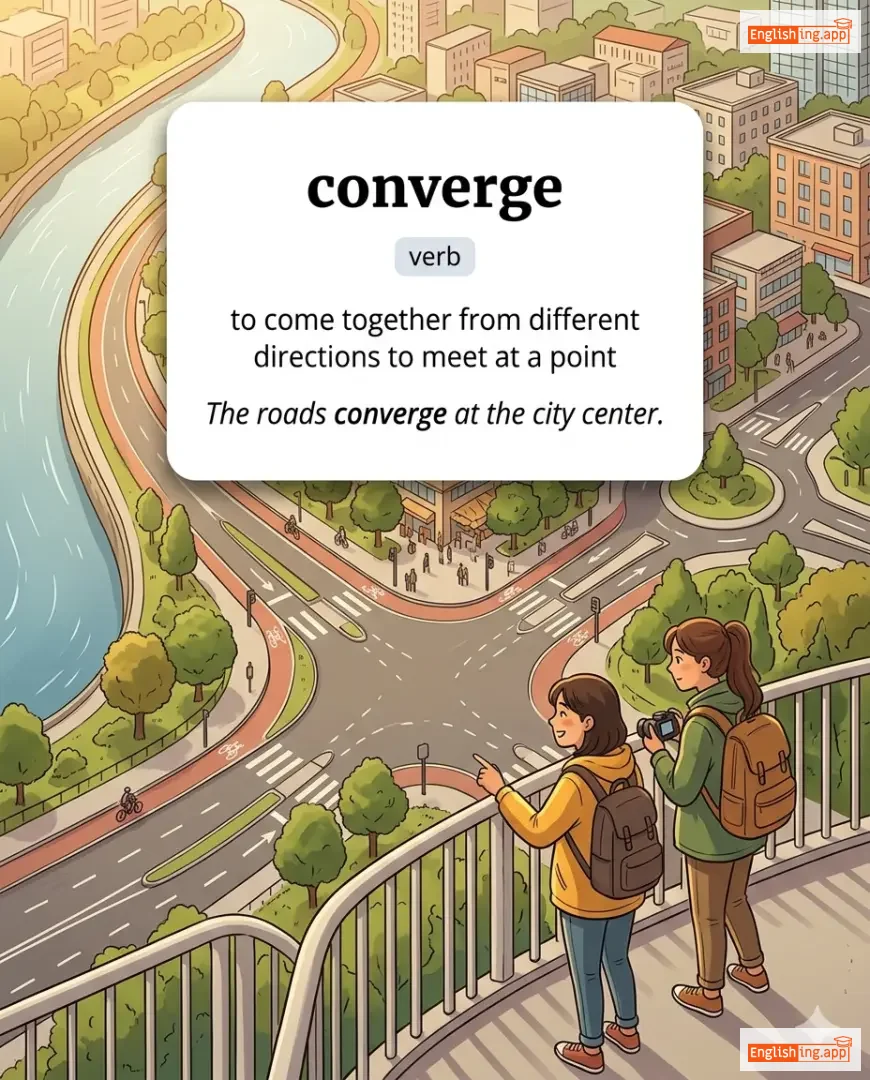
to come together from different directions; to meet at a point
••••••
|
The roads converge at the city center.
道路は市の中心で合流します。
••••••
|
道路は市の中心で合流します。
Dōro wa shi no chūshin de gōryū shimasu.
••••••
|
- •••••• | - •••••• | - •••••• |
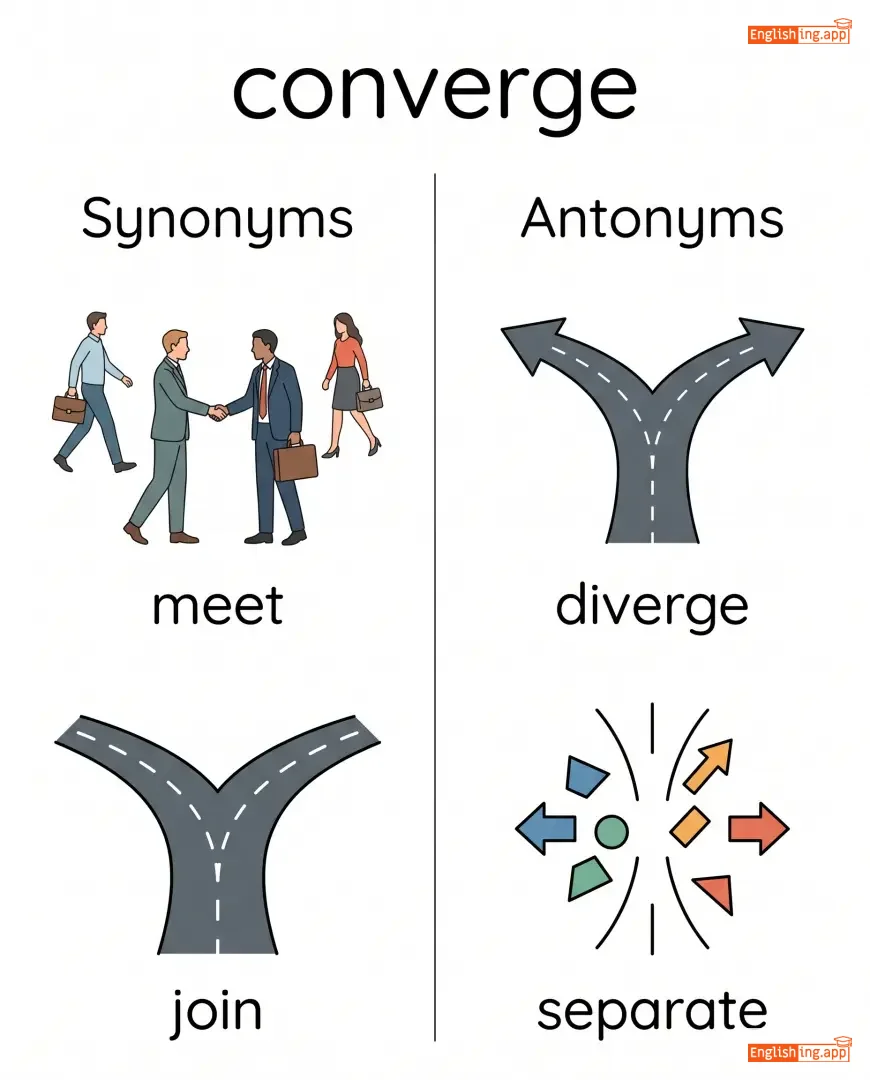
meet, unite, merge, come together, join
••••••
|
diverge, separate, spread, scatter
••••••
|
converge on, converge at, converge together, roads converge, lines converge
••••••
|
道路が合流して中央で交差するイメージ
••••••
|
|
🔵
••••••
|
/ˈkɒnvɛks/
adjective
(コンヴェックス)
••••••
|

|
凸状の、外向きに丸みを帯びた
totsujō no, gaimuki ni marumi o obita
••••••
|
- •••••• | - •••••• | - •••••• | - •••••• |
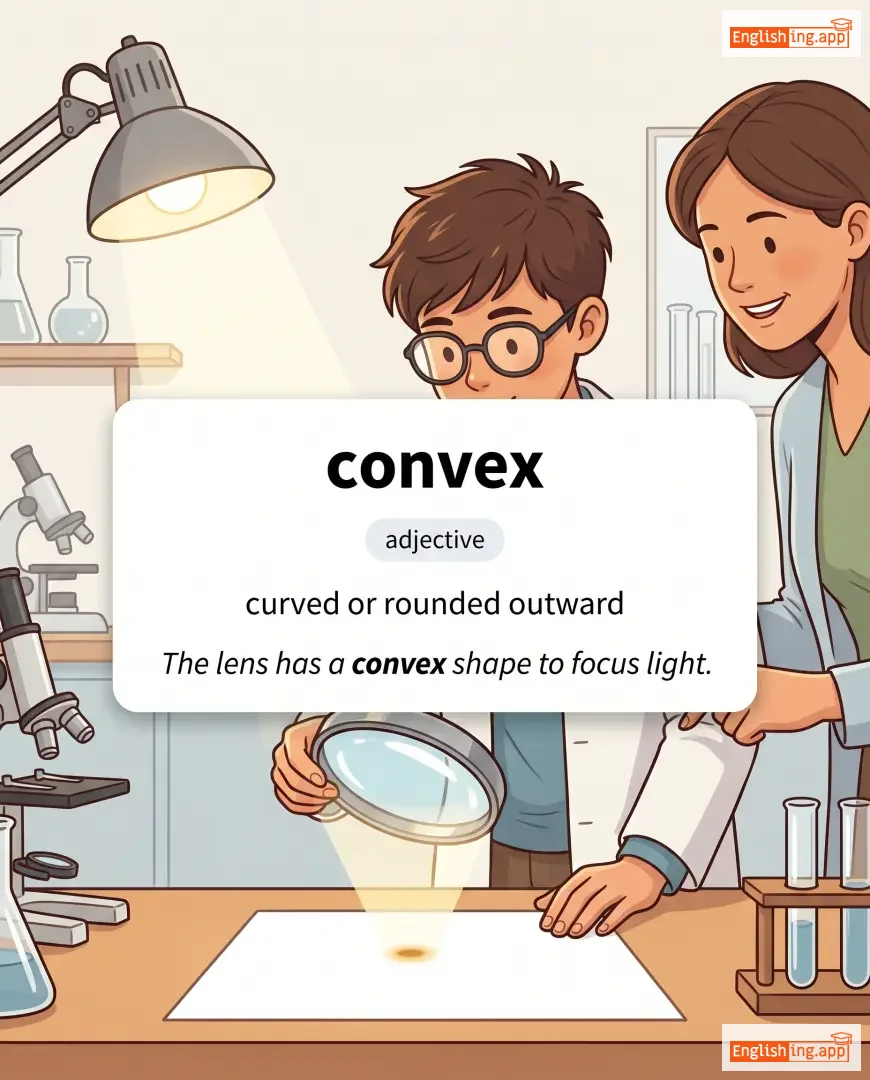
curved or rounded outward
••••••
|
The lens has a convex shape to focus light. |
レンズは光を焦点を合わせるために凸の形状をしています。
Renzu wa hikari o shōten o awaseru tame ni totsu no keijō o shiteimasu.
••••••
|
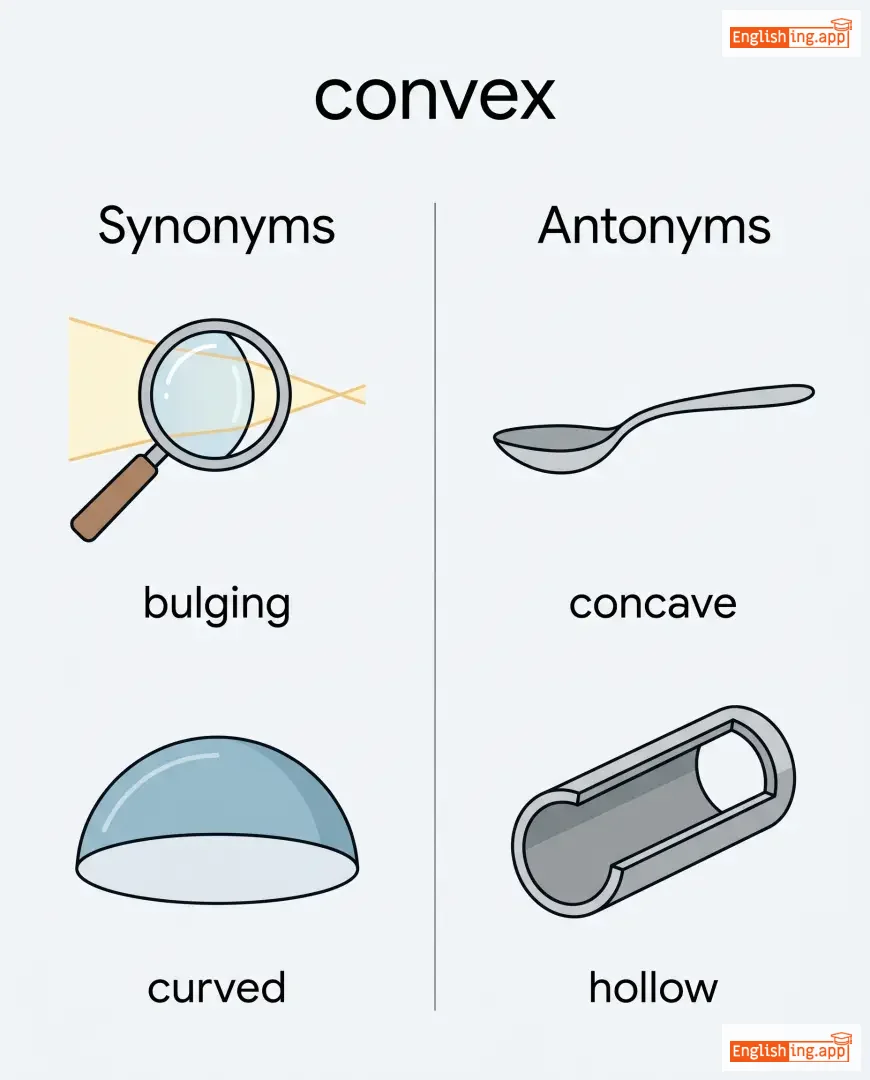
- •••••• | - •••••• | - •••••• |
bulging, curved, arched, rounded
••••••
|
concave, hollow, depressed
••••••
|
convex lens, convex mirror, convex surface
••••••
|
凸レンズは外向きに丸く膨らんでいます。
••••••
|
|
🎉
••••••
|
/kənˈvɪviəl/
adjective
(コンヴィヴィアル)
••••••
|
|
友好的で生き生きとした、楽しい; 社交的
yūkō-teki de ikigiki to shita, tanoshī; shakō-teki
••••••
|
- •••••• | - •••••• | - •••••• | - •••••• |
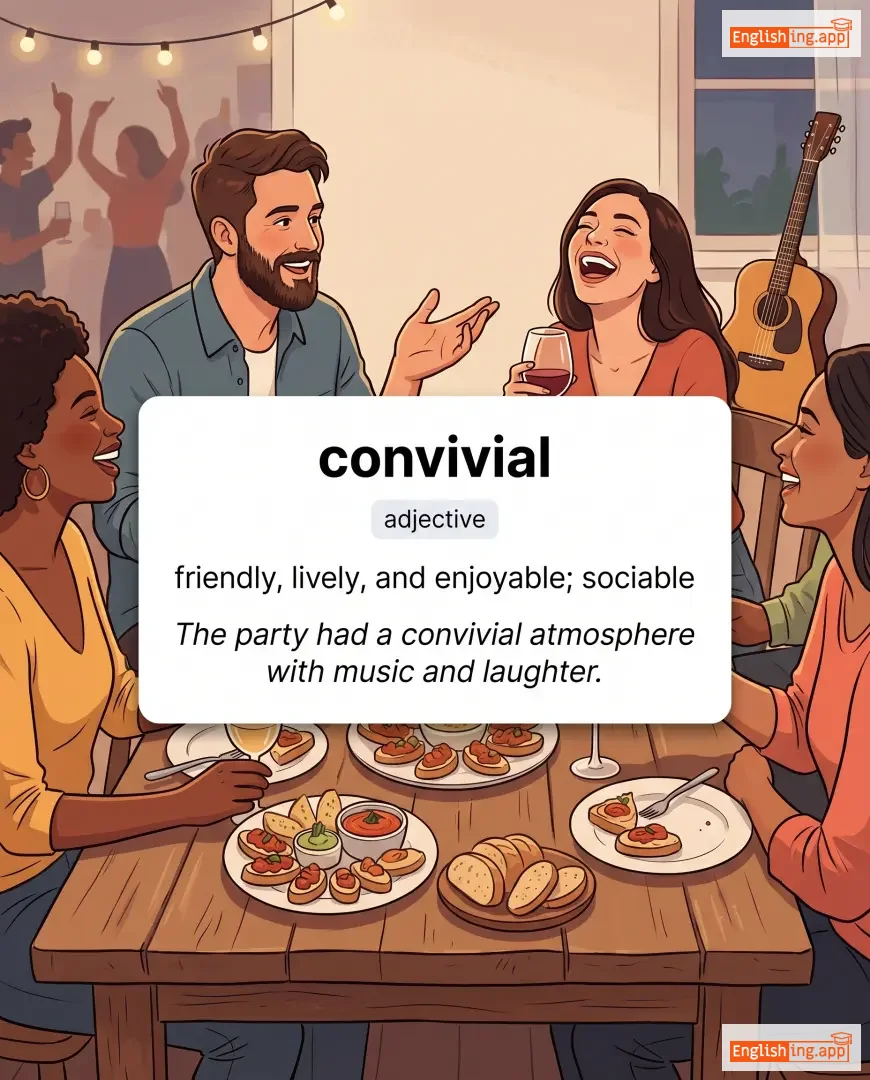
friendly, lively, and enjoyable; sociable
••••••
|
The party had a convivial atmosphere with music and laughter.
パーティーは音楽と笑いに満ちたコンヴィヴィアルな雰囲気でした。
••••••
|
パーティーは音楽と笑いに満ちたコンヴィヴィアルな雰囲気でした。
Pātī wa ongaku to warai ni michita konviviaru na fun'iki deshita.
••••••
|
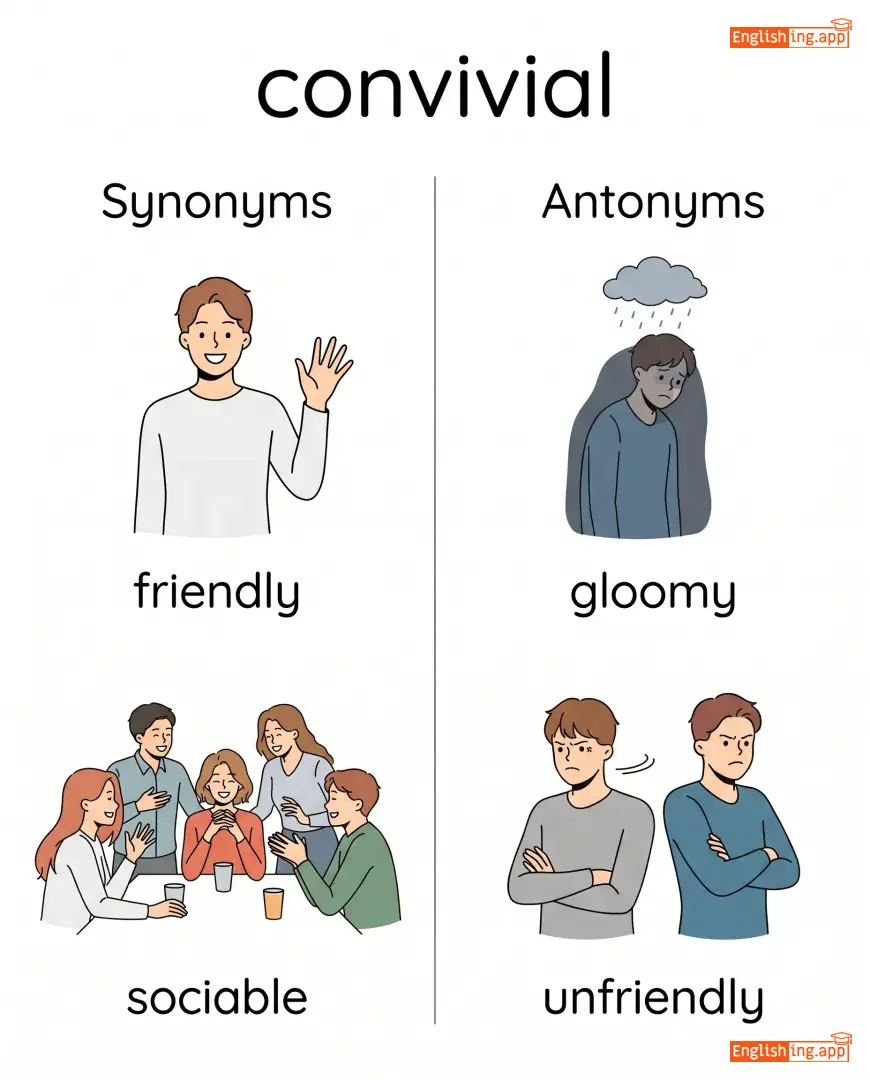
- •••••• | - •••••• | - •••••• |
friendly, sociable, jovial, festive
••••••
|
gloomy, unfriendly
••••••
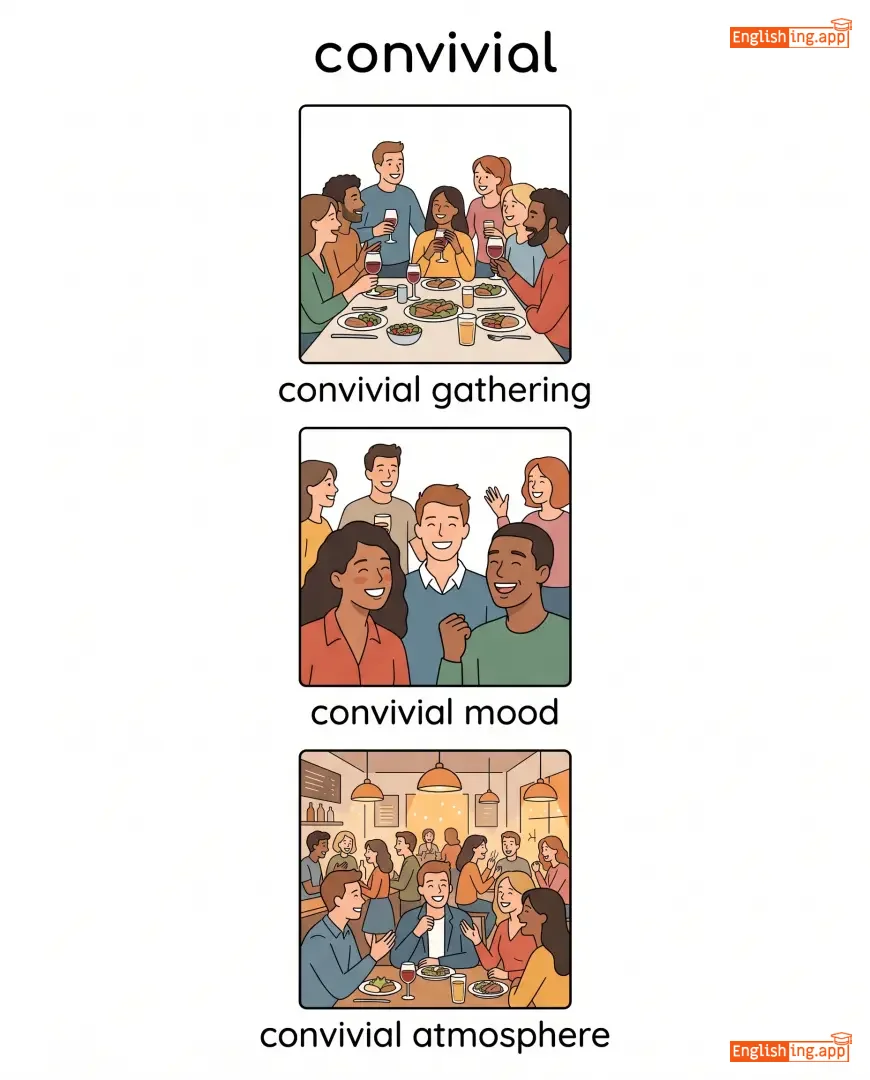
|
convivial gathering, convivial mood, convivial atmosphere
••••••
|
パーティーの CONVIVIAL vibe, 皆で楽しんだ
••••••
|
|
🌀
••••••
|
/ˈkɒnvəluːtɪd/
adjective
(コンヴォリューテッド)
••••••
|
|
複雑で入り組んだ
fukuzatsu de irikunda
••••••
|
- •••••• | - •••••• | - •••••• | - •••••• |
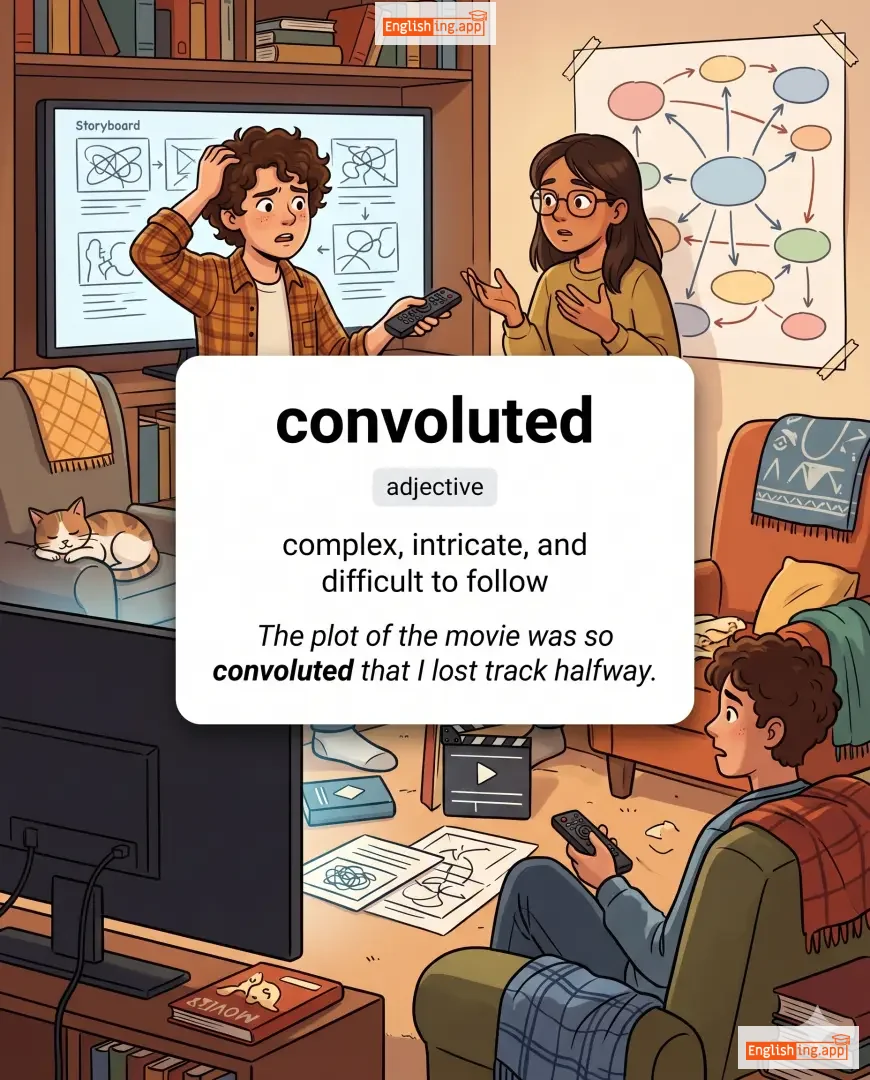
complex, intricate, and difficult to follow
••••••
|
The plot of the movie was so convoluted that I lost track halfway. |
映画のプロットはとても複雑で、途中で方向を見失ってしまった。
Eiga no purotto wa totemo fukuzatsu de, tochu de hokou o miushinatte shimatta.
••••••
|
- •••••• | - •••••• | - •••••• |
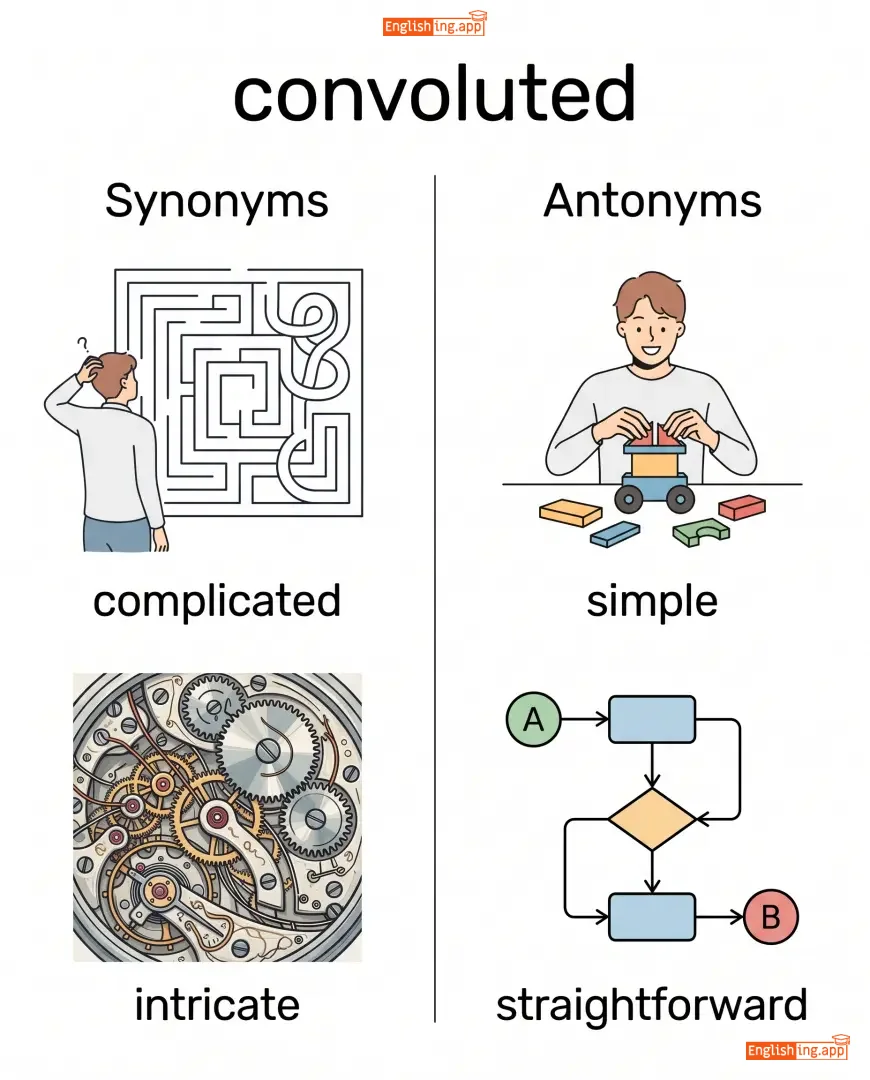
complicated, intricate, twisted, tangled
••••••
|
simple, straightforward
••••••
|
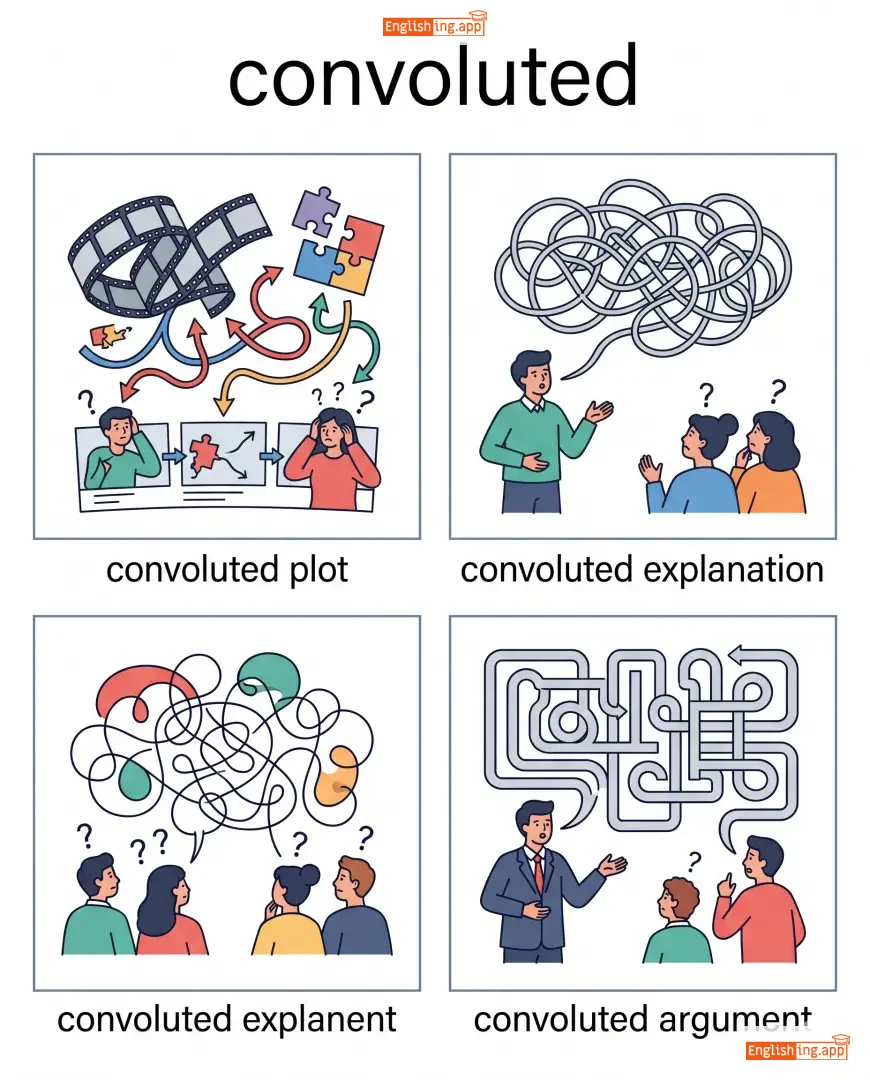
convoluted plot, convoluted explanation, convoluted argument
••••••
|
複雑な道、迷子になる
••••••
|
|
📝
••••••
|
/ˈkoʊpiəs/
adjective
(kōpīasu)
••••••
|
|
豊富
hōfu
••••••
|
- •••••• | - •••••• | - •••••• | - •••••• |
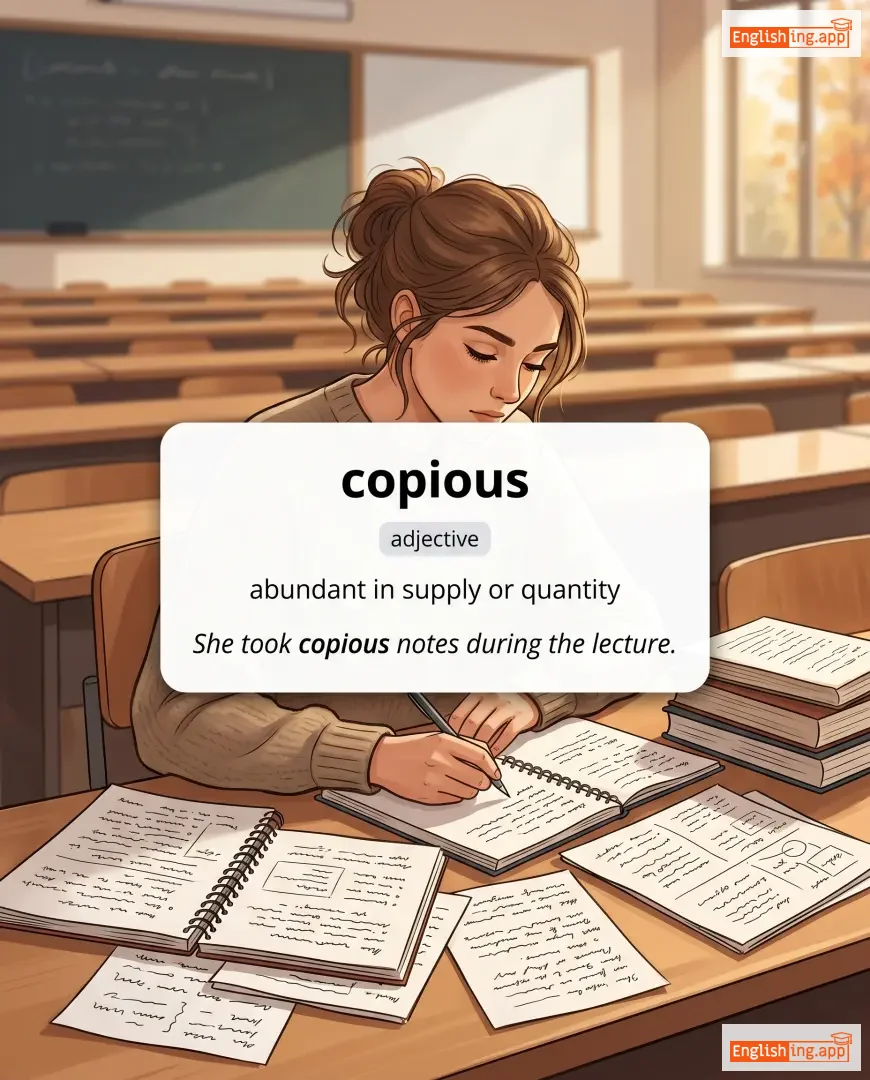
abundant in supply or quantity
••••••
|
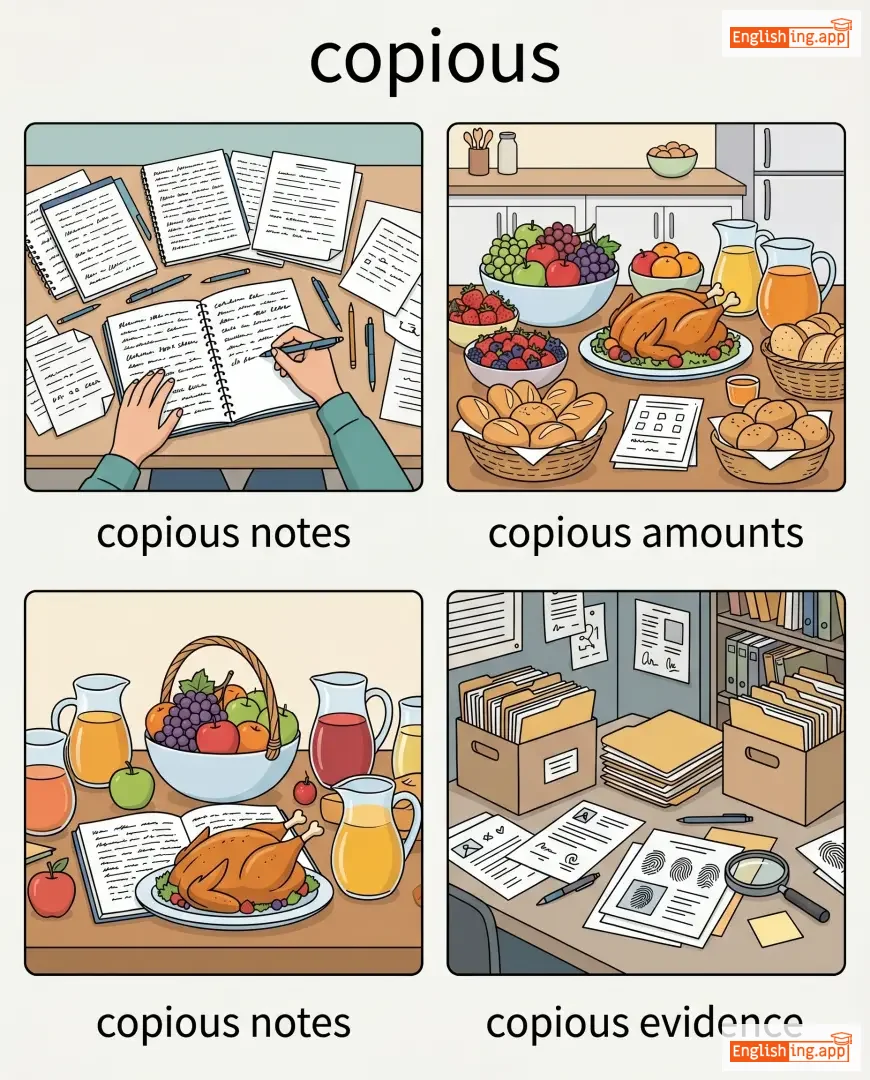
She took copious notes during the lecture.
Shī tōk kōpīasu nōts dūring dhe rēkuchā.
••••••
|
彼女は講義中に豊富なノートを取った。
Kanojo wa kōgi-chū ni hōfu na nōto o totta.
••••••
|
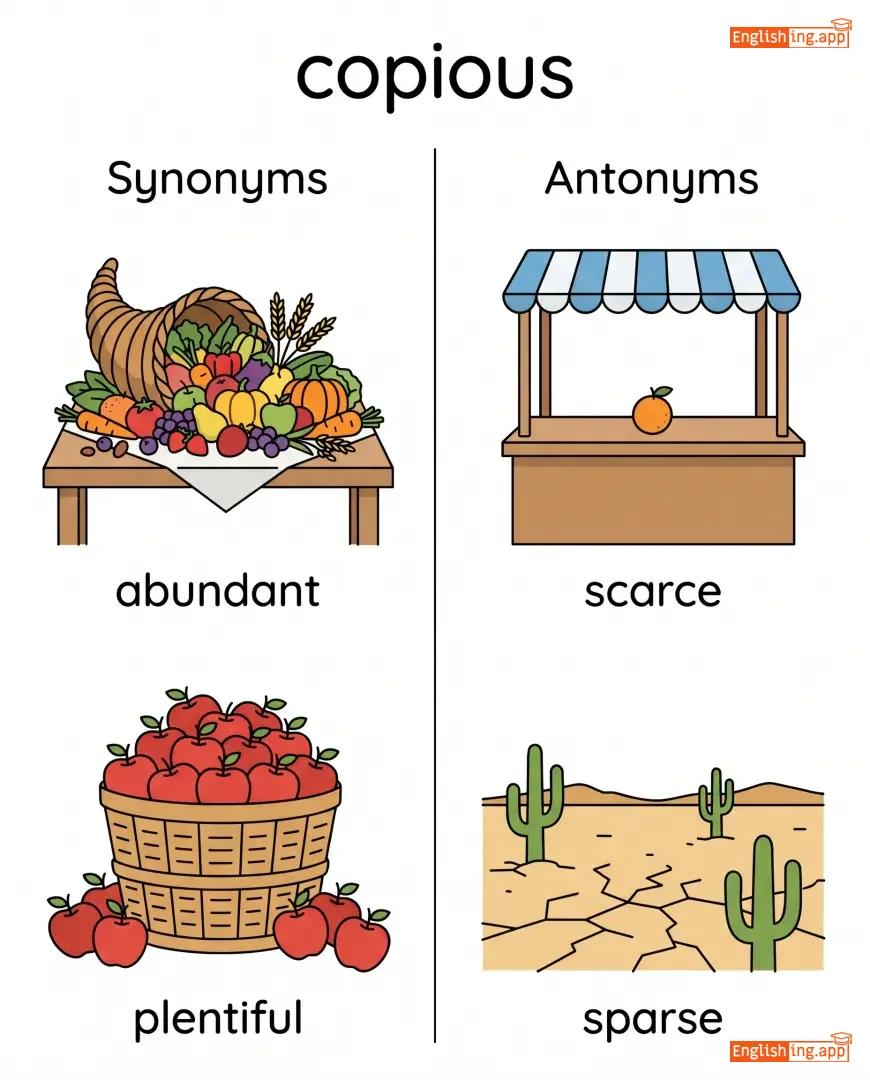
- •••••• | - •••••• | - •••••• |
abundant, plentiful, ample, profuse
••••••
|
scarce, sparse, meager
••••••
|
copious notes, copious amounts, copious evidence, copious writing
••••••
|
Co-PIOUSたくさんのノートを取る - 豊富はたくさんの意味です。
••••••
|

