Получите неограниченный доступ ко всем словам с подпиской Pro
Обновить до ProПолучите неограниченный доступ ко всем предложениям с подпиской Pro
Обновить до Pro|
Эмодзи
|
Слово | Images | Перевод | Прошедшее | Причастие прошедшего времени | Третье лицо единственного числа | Герундий | Значение | Пример предложения | Перевод примера предложения | Пример выражения | Значение примера выражения | Перевод примера выражения | Синонимы | Антонимы | Коллокации | Мнемоника |
|---|---|---|---|---|---|---|---|---|---|---|---|---|---|---|---|---|---|
|
😔
••••••
|
/kəmˈpʌŋkʃən/
noun
(kompankshon)
••••••
|
|
угрызения совести
ugryzeniya sovesti
••••••
|
- •••••• | - •••••• | - •••••• | - •••••• |
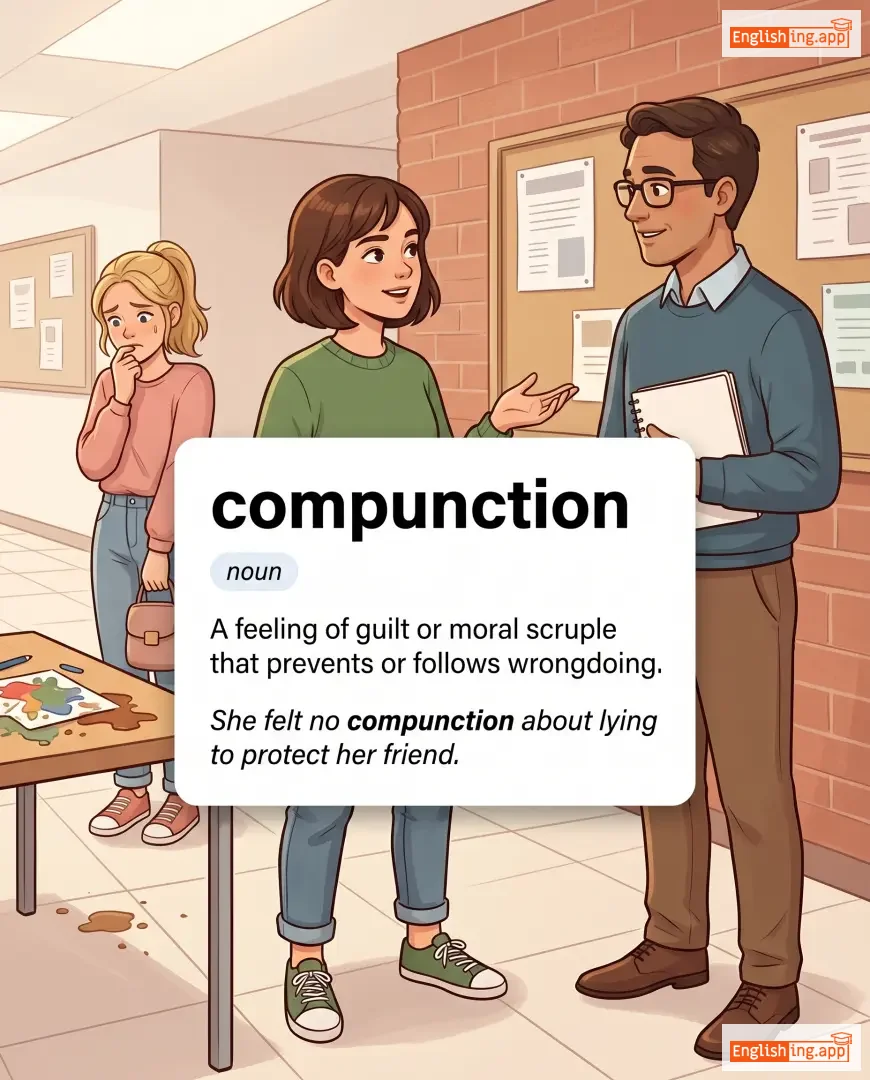
A feeling of guilt or moral scruple that prevents or follows wrongdoing.
••••••
|
She felt no compunction about lying to protect her friend. |
Она не почувствовала угрызений совести, лгав, чтобы защитить свою подругу.
Ona ne pochuvstvovala ugryzheniy sovesti, lgav, chtoby zashchitit' svoyu podrugu.
••••••
|
without compunction |
without any guilt or hesitation
••••••
|
без угрызений совести
bez ugryzheniy sovesti
••••••
|
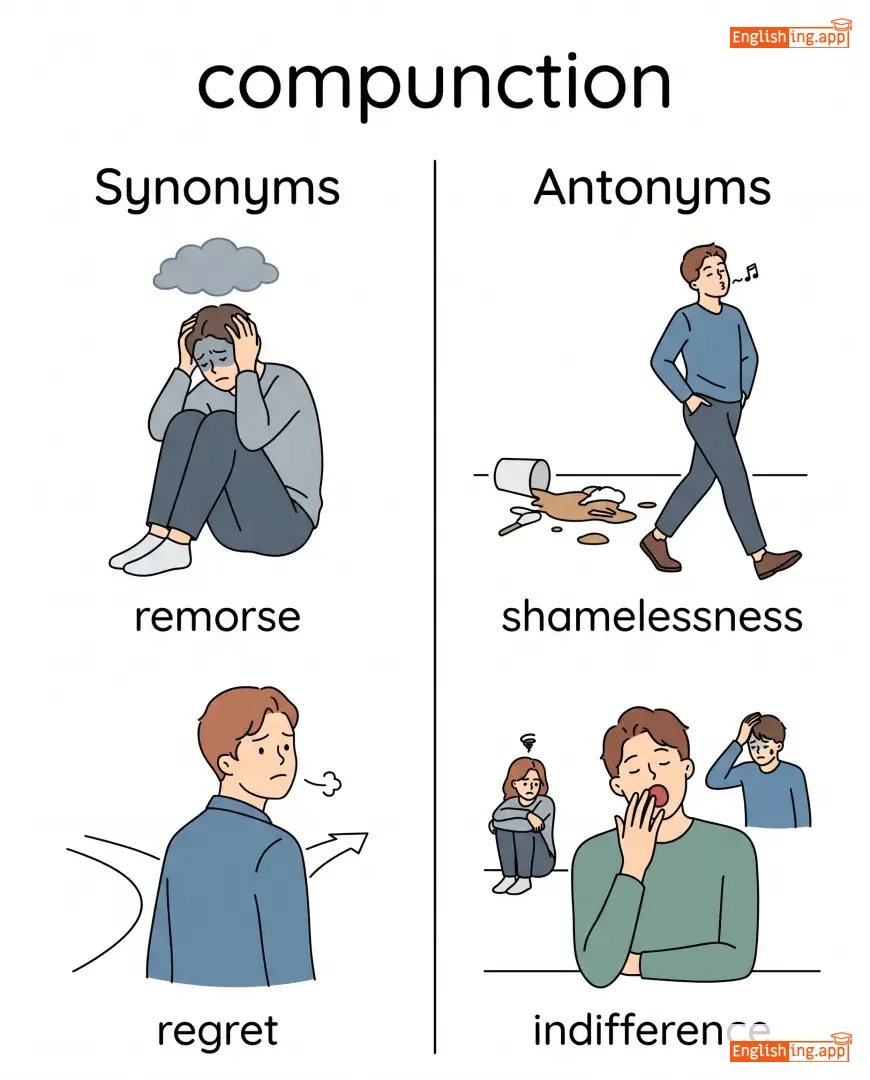
remorse, regret, guilt, scruple, penitence
••••••
|
shamelessness, indifference
••••••
|
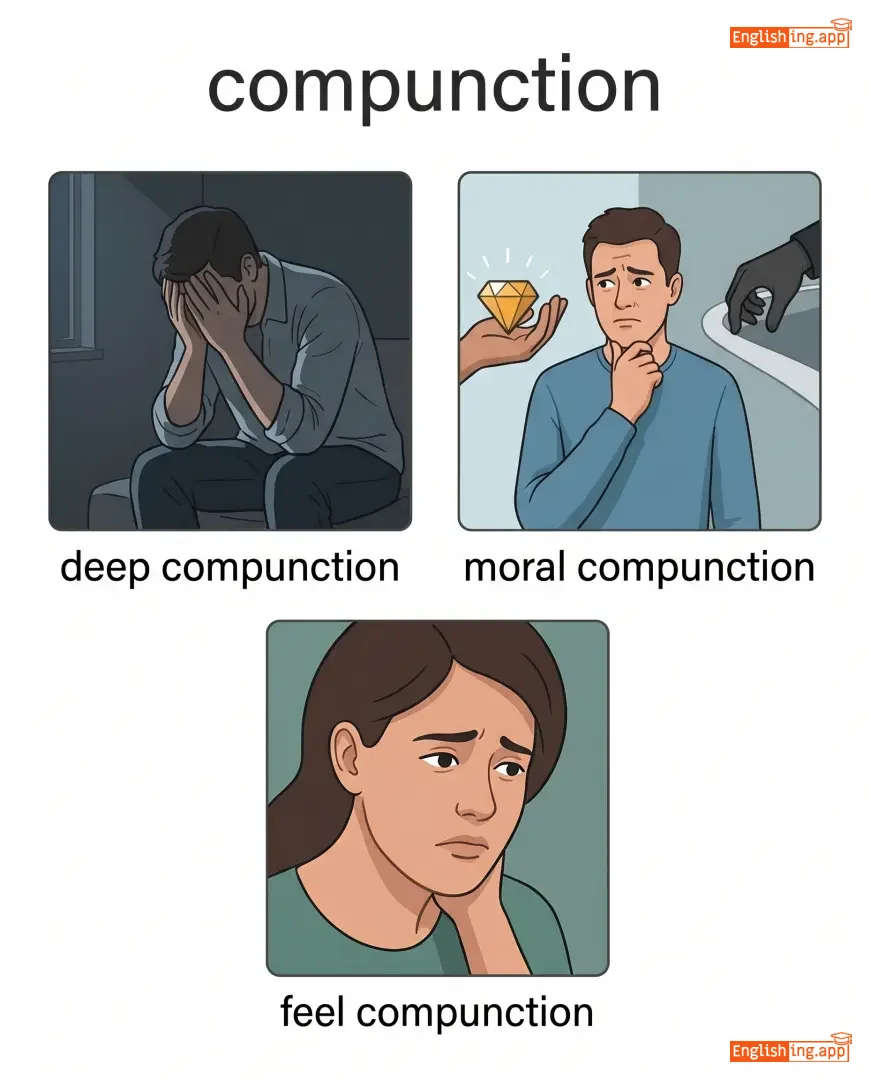
deep compunction, moral compunction, feel compunction
••••••
|
Compunction = Угрызения совести после лжи
••••••
|
|
🔍
••••••
|
/ˈkɒn.keɪv/
adjective
(kon-kev)
••••••
|


|
вогнутый
vognutyy
••••••
|
- •••••• | - •••••• | - •••••• | - •••••• |
curved inward like the inside of a bowl
••••••
|
The mirror had a concave surface that magnified her reflection. |
Зеркало имело вогнутую поверхность, которая увеличивала ее отражение.
Zerkalo imelo vognutuyu poverkhnost', kotoraya uvelichivala yeye otrazhenie.
••••••
|
- •••••• | - •••••• | - •••••• |
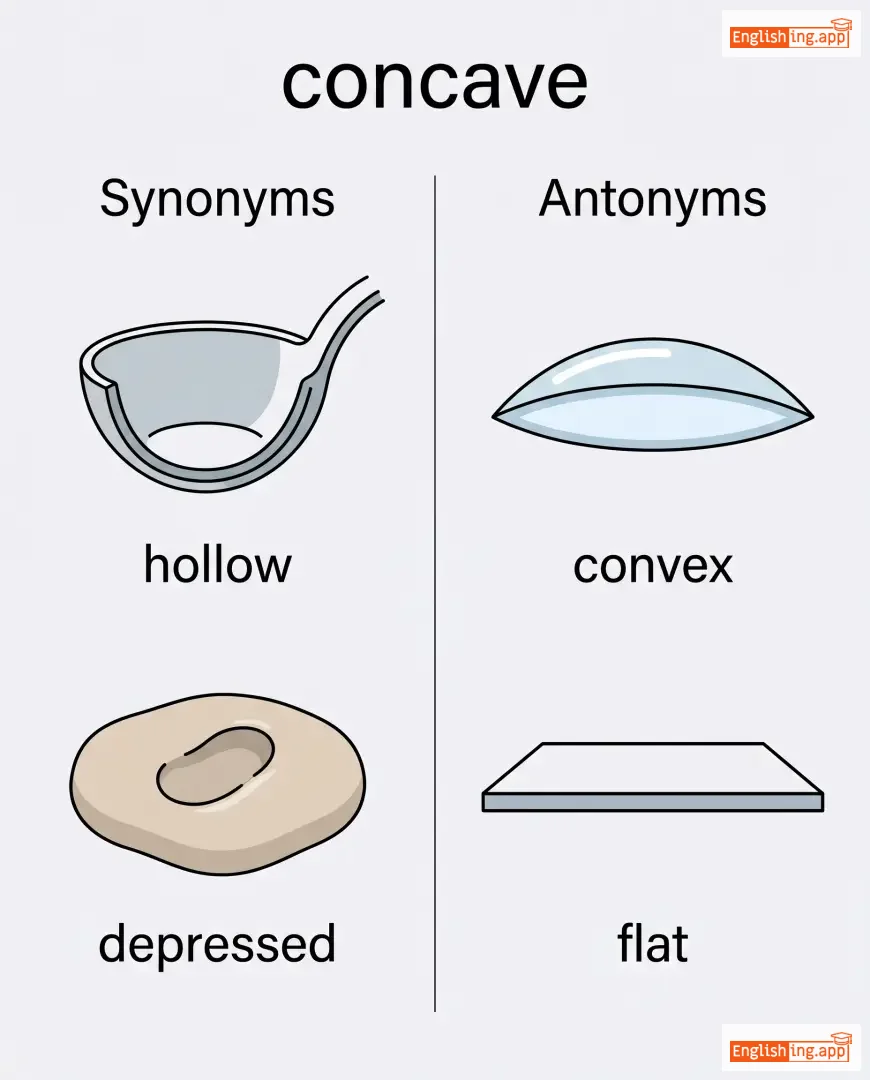
hollow, depressed, sunken, indented, curving-inward
••••••
|
convex, flat, level
••••••
|
concave mirror, concave lens, concave shape, concave surface
••••••
|
Вогнутый, как внутренняя поверхность чаши.
••••••
|
|
🕊️
••••••
|
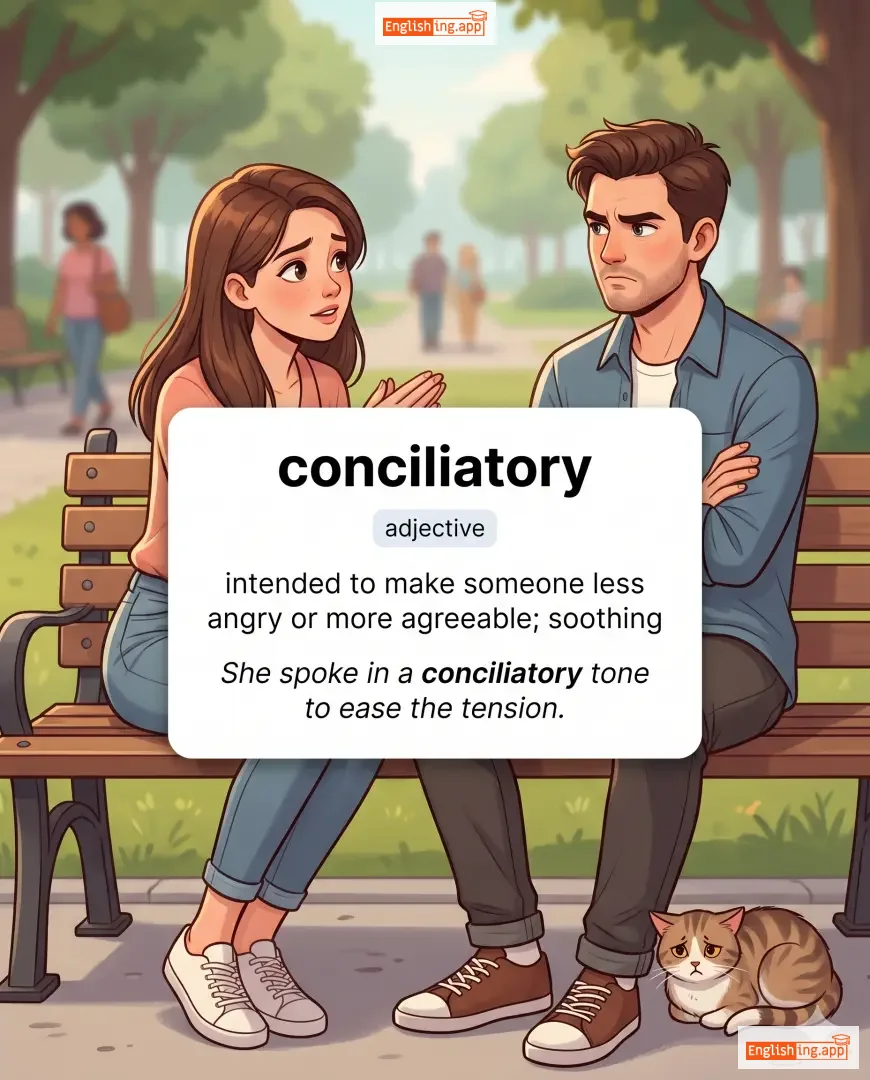
/kənˈsɪliətɔːri/
adjective
(kon-sil-ee-ya-to-ri)
••••••
|
|
примирительный
primiritel'nyy
••••••
|
- •••••• | - •••••• | - •••••• | - •••••• |
intended to make someone less angry or more agreeable; soothing
••••••
|
She spoke in a conciliatory tone to ease the tension. |
Она говорила примирительным тоном, чтобы уменьшить напряжение.
Ona govoryla primiritel'nym tonom, chtoby umen'shit' napryazhenie.
••••••
|
- •••••• | - •••••• | - •••••• |
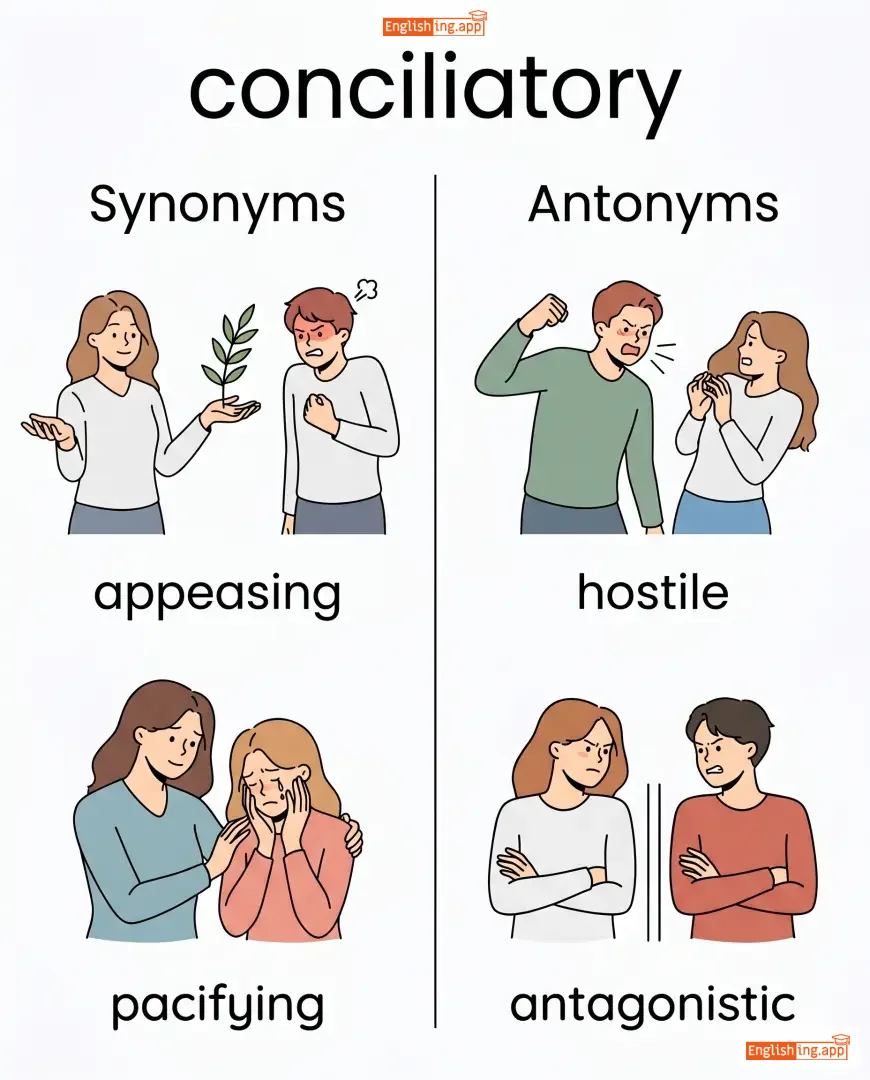
appeasing, pacifying, soothing, placatory, calming
••••••
|
hostile, antagonistic, confrontational
••••••
|
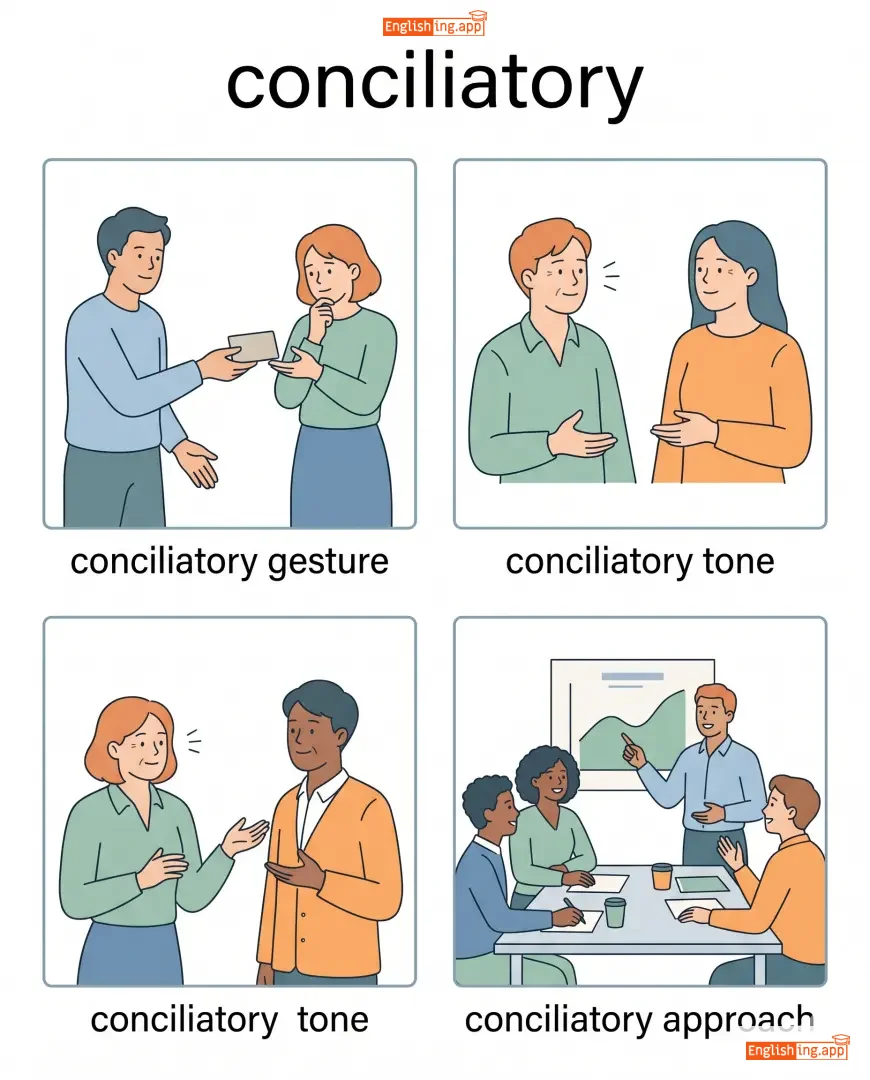
conciliatory gesture, conciliatory tone, conciliatory approach
••••••
|
Примирительный - это слово для примирения, когда пытаемся успокоить
••••••
|
|
🧪
••••••
|
/kənˈkɒkt/
verb
(кэнкокт)
••••••
|


|
составить или придумать
sostavit' ili pridumat'
••••••
|
concocted
кэнкоктэд
••••••
|
concocted
кэнкоктэд
••••••
|
concocts
кэнкоктс
••••••
|
concocting
кэнкоктинг
••••••
|
to make something, especially food or a story, by mixing or inventing
••••••
|
He concocted a story to explain his absence.
Он придумал историю, чтобы объяснить свое отсутствие.
••••••
|
Он придумал историю, чтобы объяснить свое отсутствие.
On pridumal istoriyu, chtoby ob'yasnit' svoe otsutstvie.
••••••
|
concoct a plan
выдумать план
••••••
|
to invent or devise a plan
••••••
|
выдумать план
vydumat' plan
••••••
|
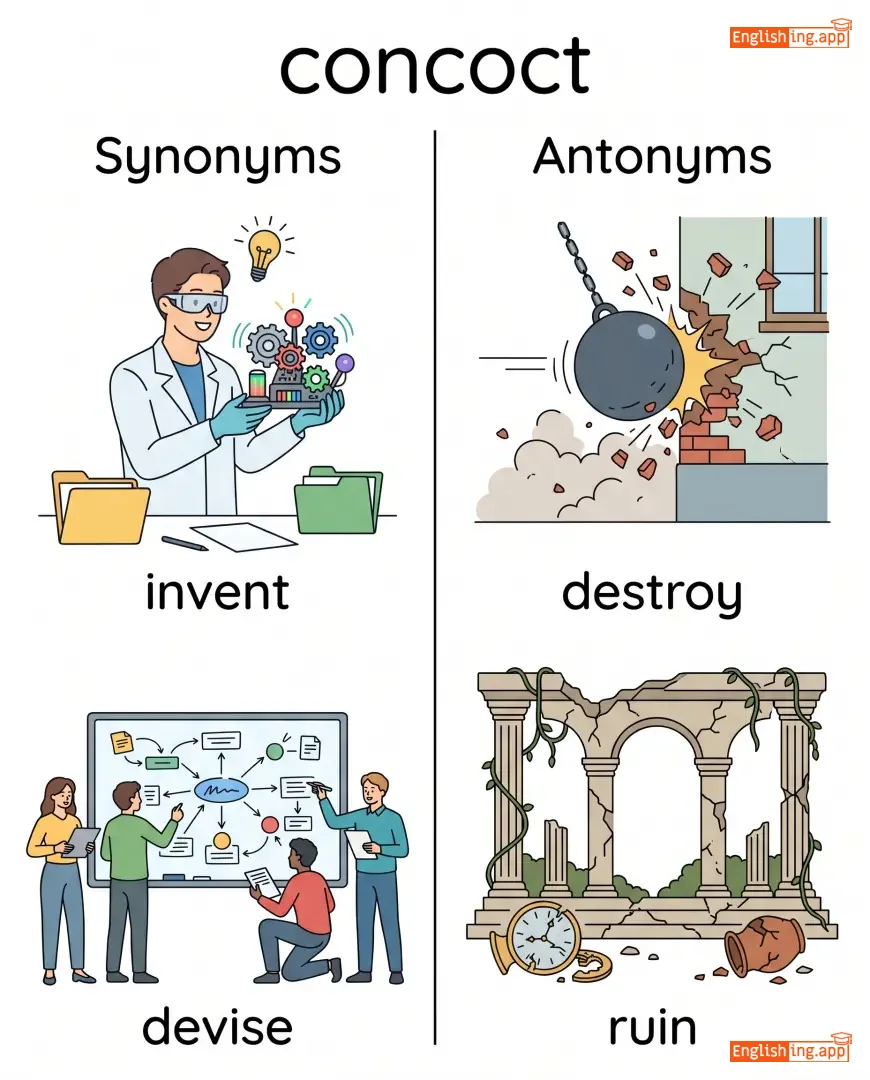
invent, devise, fabricate, prepare, create
••••••
|
destroy, ruin, dismantle
••••••
|
concoct a story, concoct a plan, concoct a dish
••••••
|
Concoct - как создавать что-то путем смешивания
••••••
|
|
➕
••••••
|
/kənˈkɒmɪtənt/
adjective
(kənˈkəmɪtənt)
••••••
|
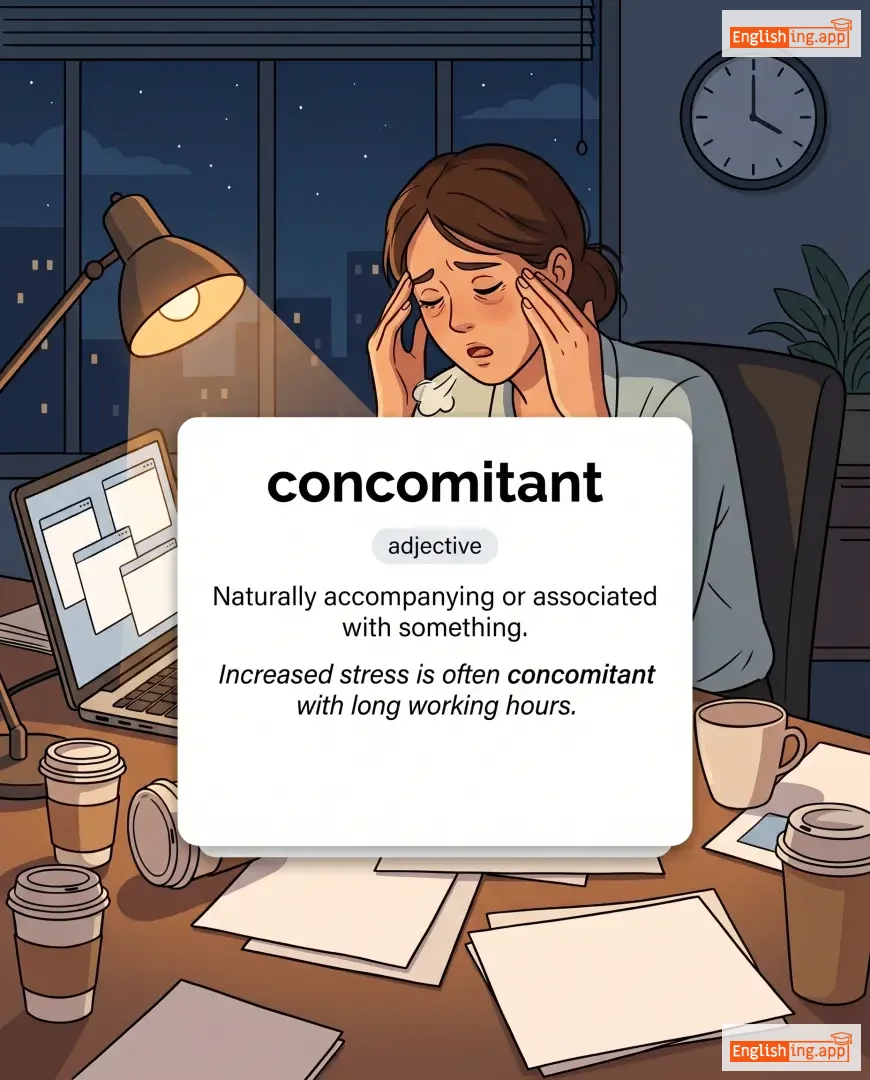
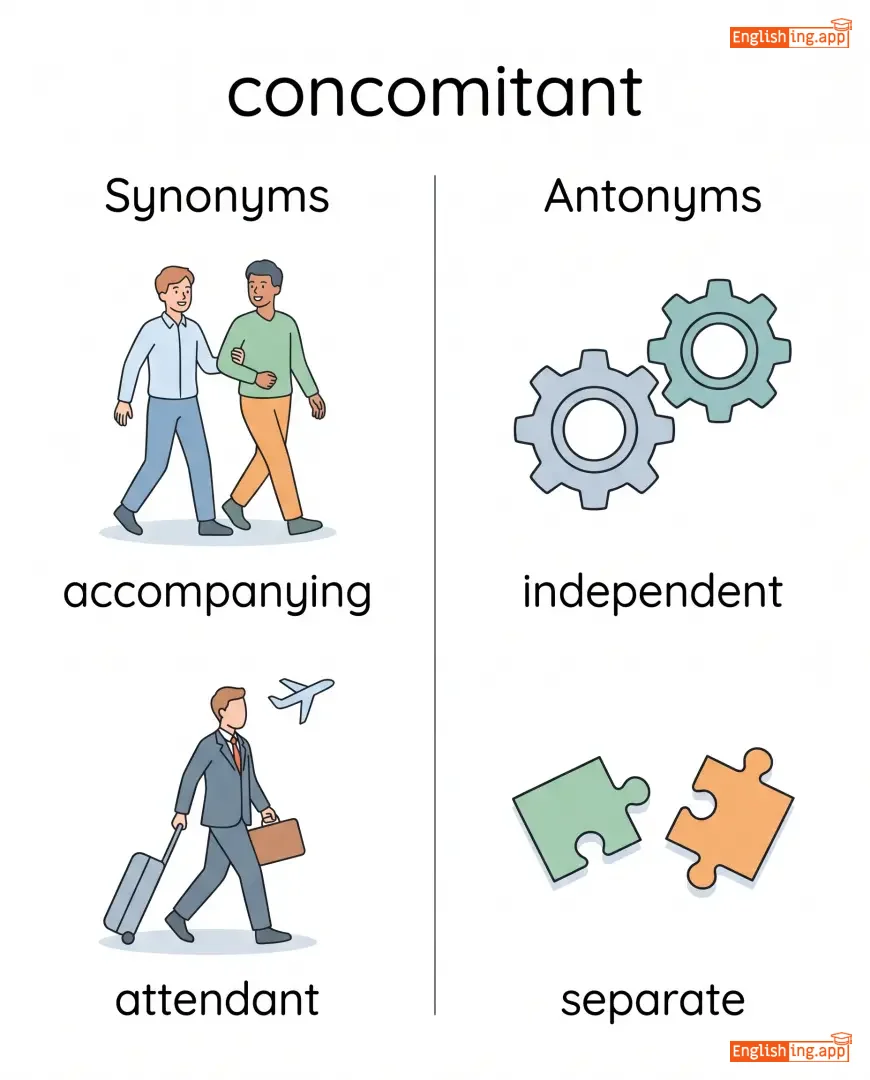
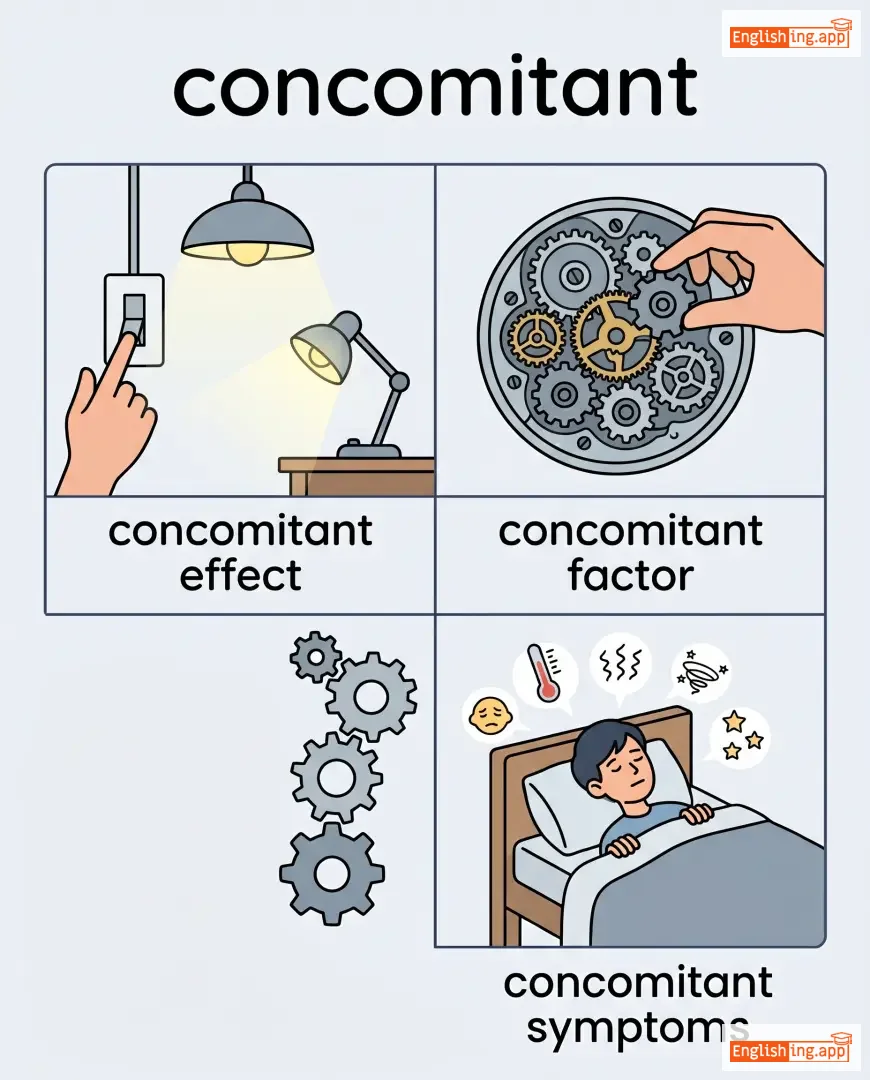
|
сопутствующий
soputstvuyushchiy
••••••
|
- •••••• | - •••••• | - •••••• | - •••••• |
Naturally accompanying or associated with something.
••••••
|
Increased stress is often concomitant with long working hours.
Увеличение стресса часто сопряжено с длительным рабочим временем.
••••••
|
Увеличение стресса часто сопряжено с длительным рабочим временем.
Uvelichenie stressa chasto soputstvuyet s dlitelnym rabochim vremyanym.
••••••
|
- •••••• | - •••••• | - •••••• |
accompanying, attendant, coincident, simultaneous, related
••••••
|
independent, separate, unrelated
••••••
|
concomitant effect, concomitant factor, concomitant symptoms, concomitant risks
••••••
|
Сопутствие – ходить вместе с чем-то
••••••
|
|
🙈
••••••
|
/kənˈdəʊn/
verb
(кондон)
••••••
|

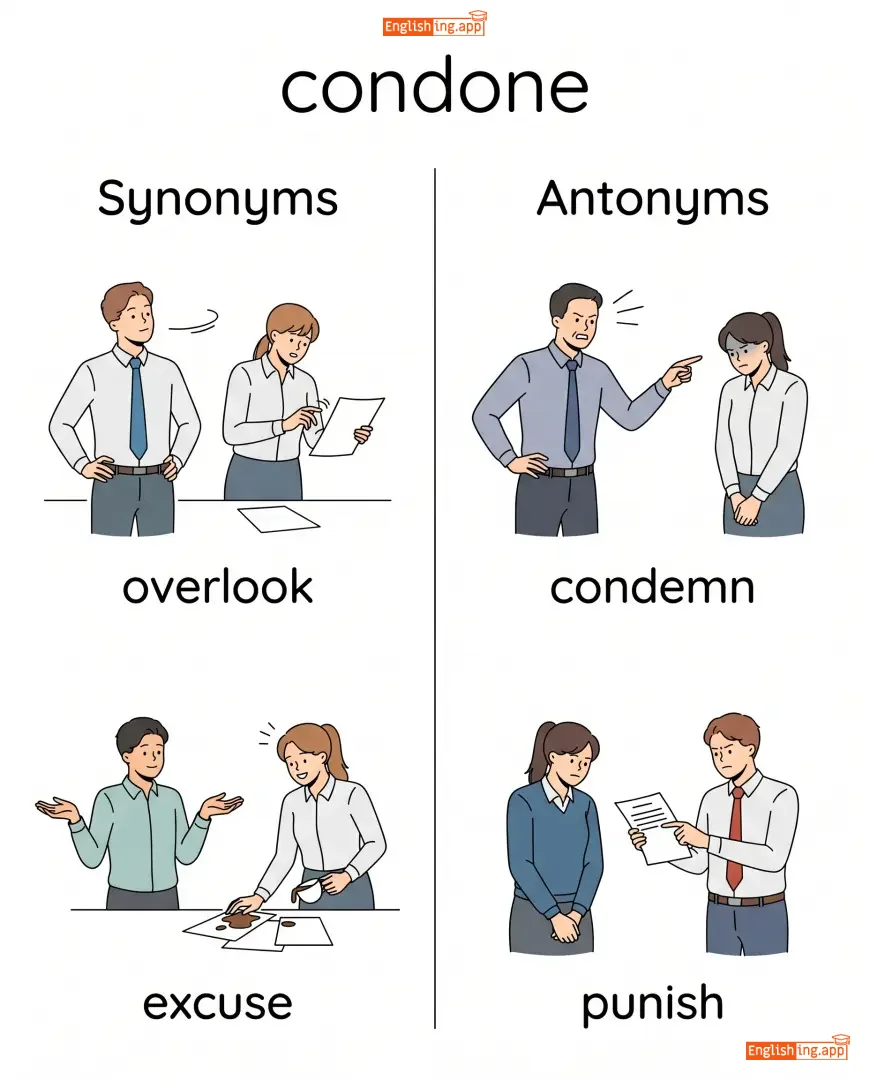
|
прощать
proshchat
••••••
|
condoned
кондонирован
••••••
|
condoned
кондонирован
••••••
|
condones
кондонит
••••••
|
condoning
кондонируя
••••••
|
To accept or allow behavior that is morally wrong or offensive.
••••••
|
The manager refused to condone harassment in the workplace.
Менеджер отказался кондонировать домогательства на рабочем месте.
••••••
|
Менеджер отказался кондонировать домогательства на рабочем месте.
Menedzher otkazalsya kondonirovat' domogatel'stva na rabochem meste.
••••••
|
- •••••• | - •••••• | - •••••• |
overlook, excuse, forgive, tolerate
••••••
|
condemn, punish, disapprove
••••••
|
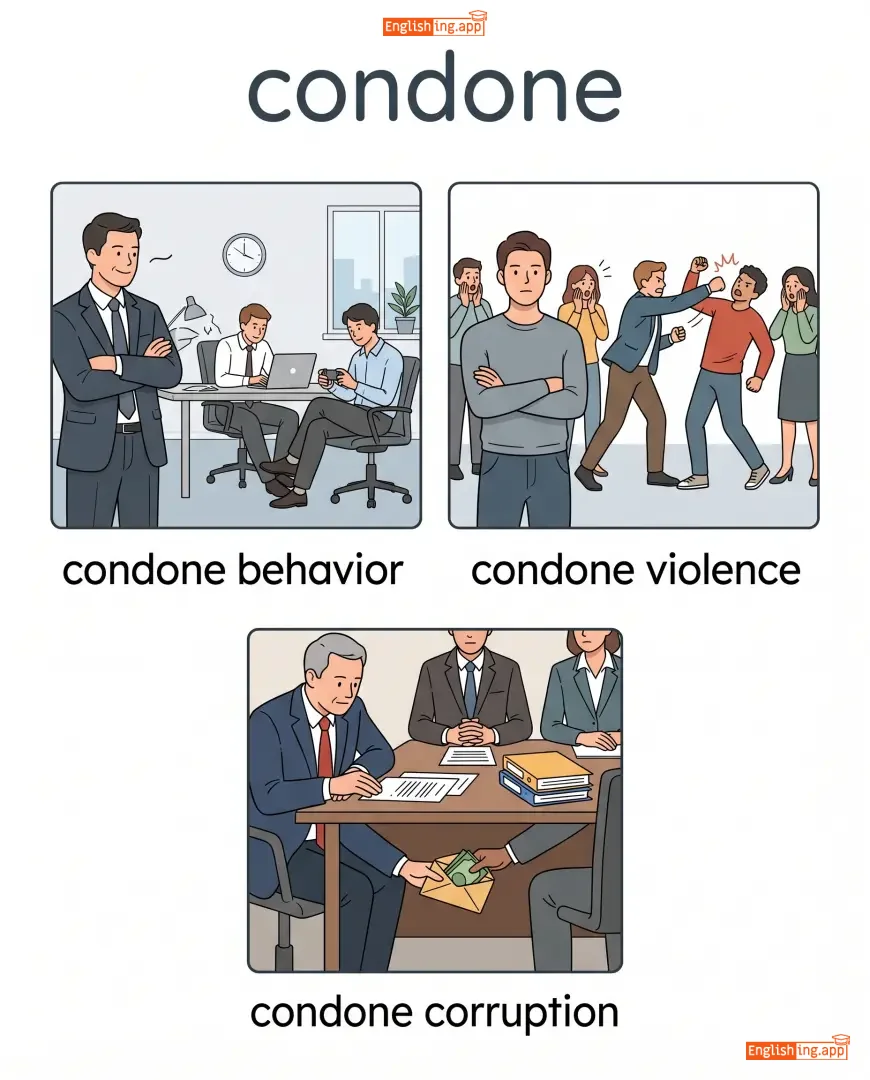
condone behavior, condone violence, condone corruption
••••••
|
Condone означает прощать без условий
••••••
|
|
🤯
••••••
|
/kənˈfaʊnd/
verb
••••••
|
|
- •••••• |
confounded
••••••
|
confounded
••••••
|
confounds
••••••
|
confounding
••••••
|
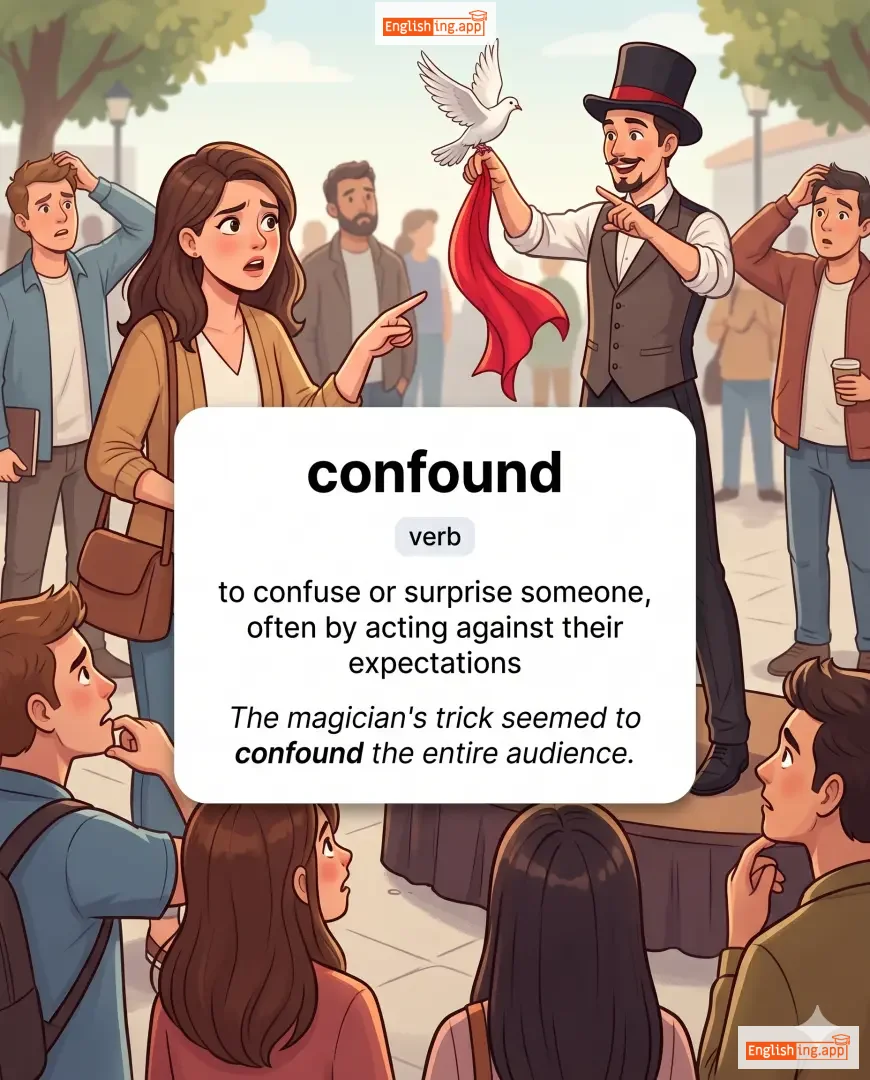
to confuse or surprise someone, often by acting against their expectations
••••••
|
The magician's trick seemed to confound the entire audience. |
- •••••• |
confound it |
an old-fashioned exclamation of annoyance or frustration
••••••
|
- •••••• |
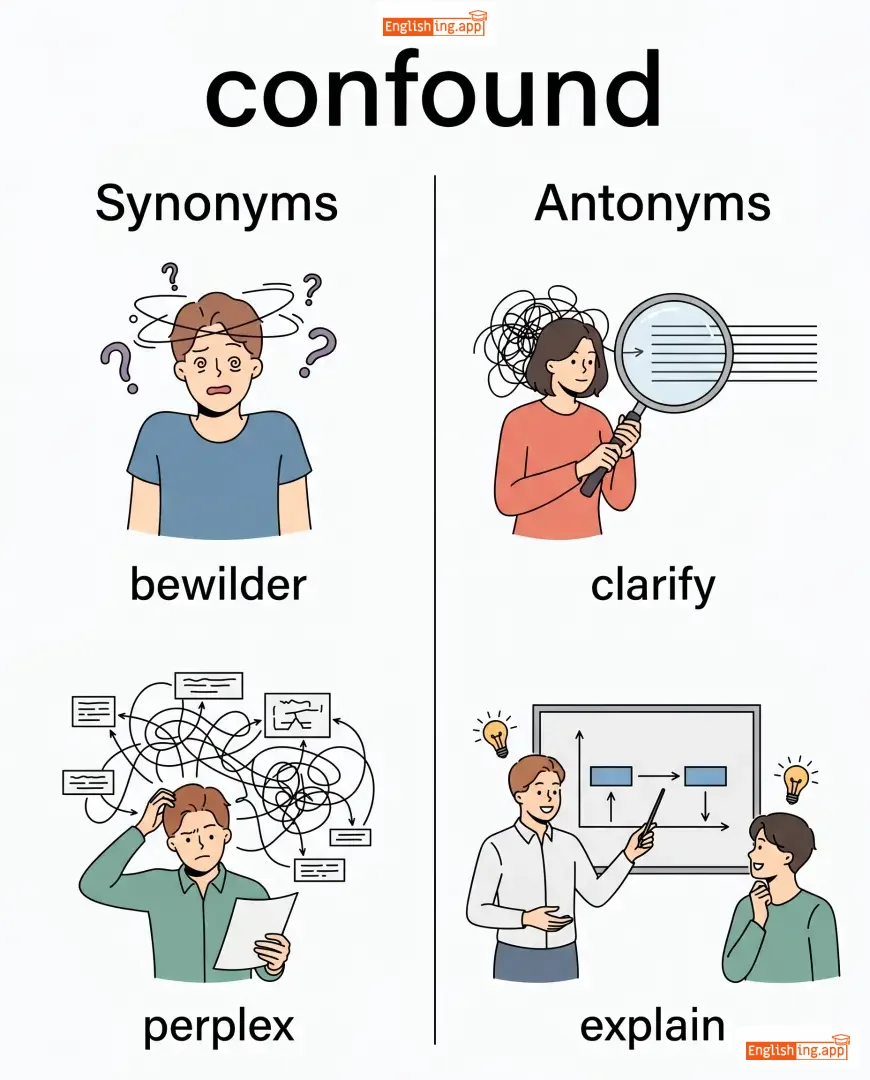
bewilder, perplex, baffle, amaze, astonish
••••••
|
clarify, explain, enlighten
••••••
|
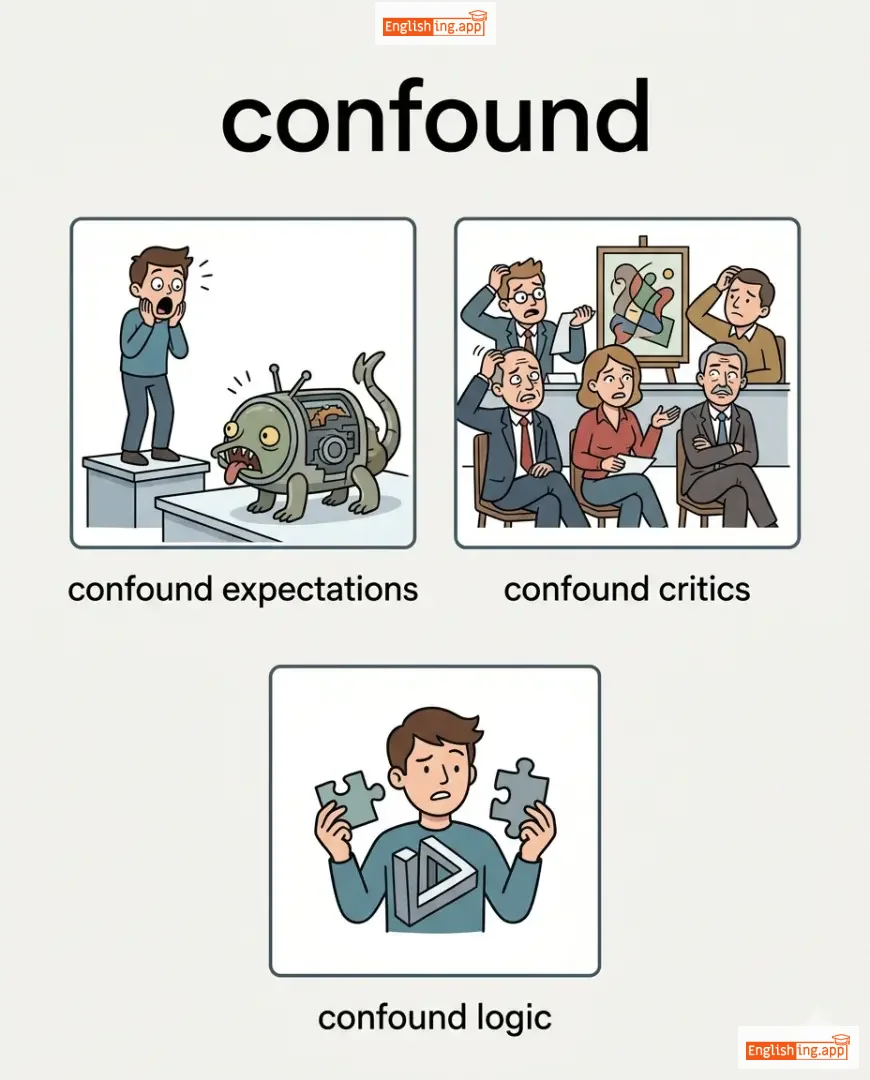
confound expectations, confound critics, confound logic, confound the mind
••••••
|
No •••••• |
|
😊
••••••
|
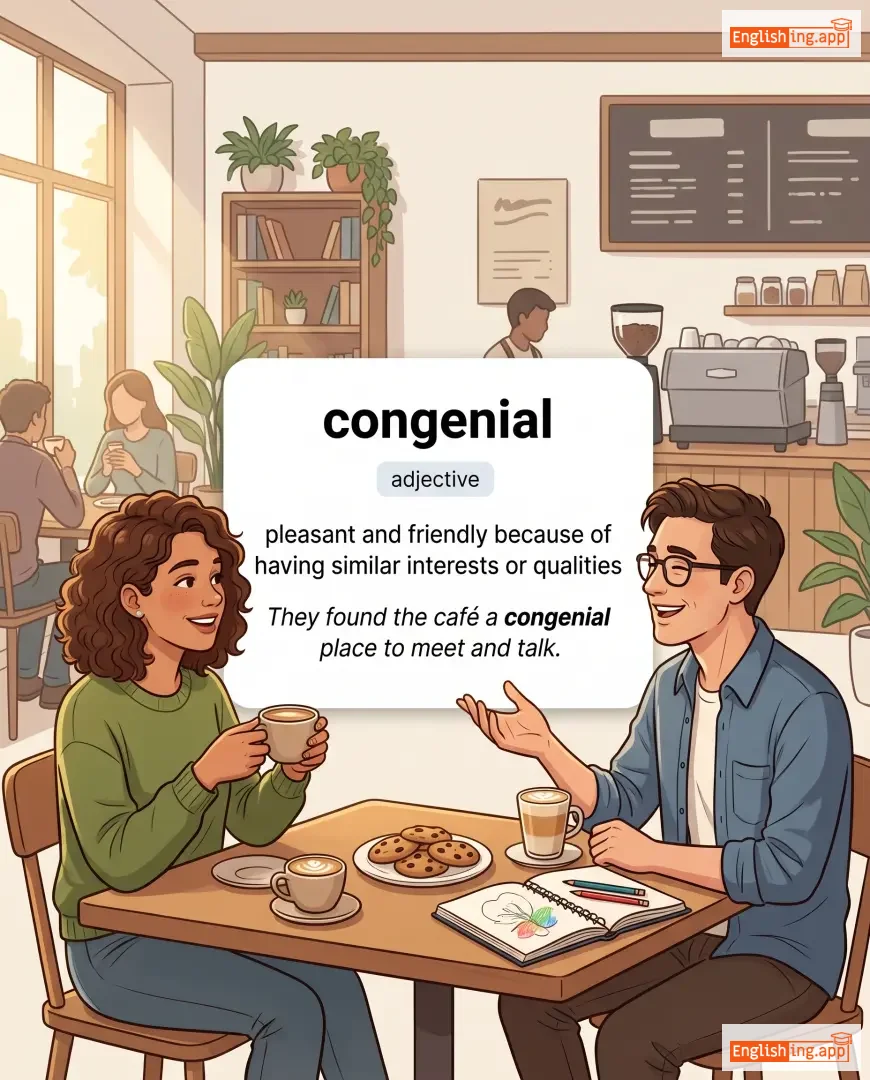
/kənˈdʒiːniəl/
adjective
(kon-dzhee-nee-al)
••••••
|

|
приветливый
privetlivyy
••••••
|
- •••••• | - •••••• | - •••••• | - •••••• |
pleasant and friendly because of having similar interests or qualities
••••••
|
They found the café a congenial place to meet and talk. |
Они нашли кафе приятным местом для встреч и бесед.
Oni nashli kafe priyatnym mestom dlya vstrech i besed.
••••••
|
- •••••• | - •••••• | - •••••• |
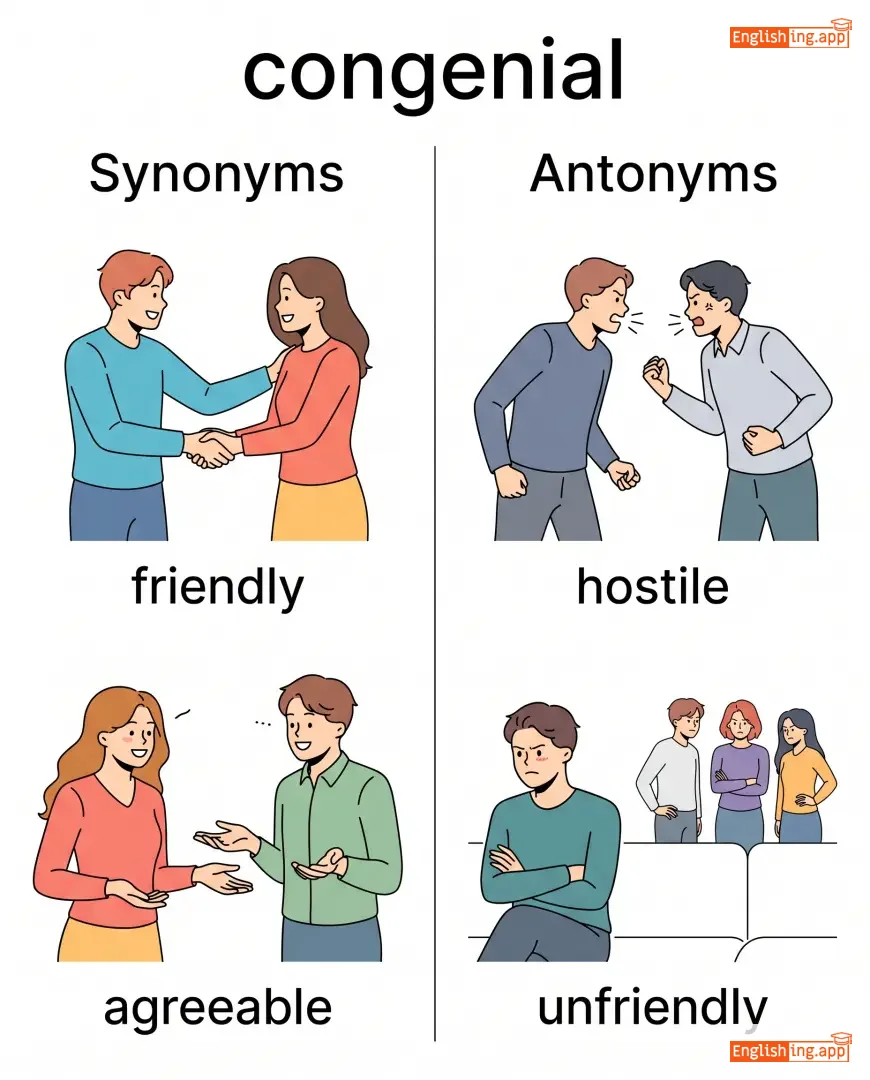
friendly, agreeable, pleasant, compatible
••••••
|
hostile, unfriendly, disagreeable
••••••
|
congenial atmosphere, congenial companion, congenial environment
••••••
|
Congenial — это приветливый человек, дружелюбный и доброжелательный!
••••••
|
|
💍
••••••
|
/ˈkɒndʒʊɡəl/
adjective
(kondʒugal)
••••••
|


|
супружеский
supruzheskiy
••••••
|
- •••••• | - •••••• | - •••••• | - •••••• |
relating to marriage or the relationship between husband and wife
••••••
|
They enjoyed a long life of conjugal happiness. |
Они наслаждались долгой супружеской жизнью счастья.
Oni naslazhdalis' dolgoy supruzheskoy zhiznyu schast'ya.
••••••
|
conjugal rights |
the rights enjoyed by married partners, especially sexual relations
••••••
|
супружеские права
supruzheskiye prava
••••••
|
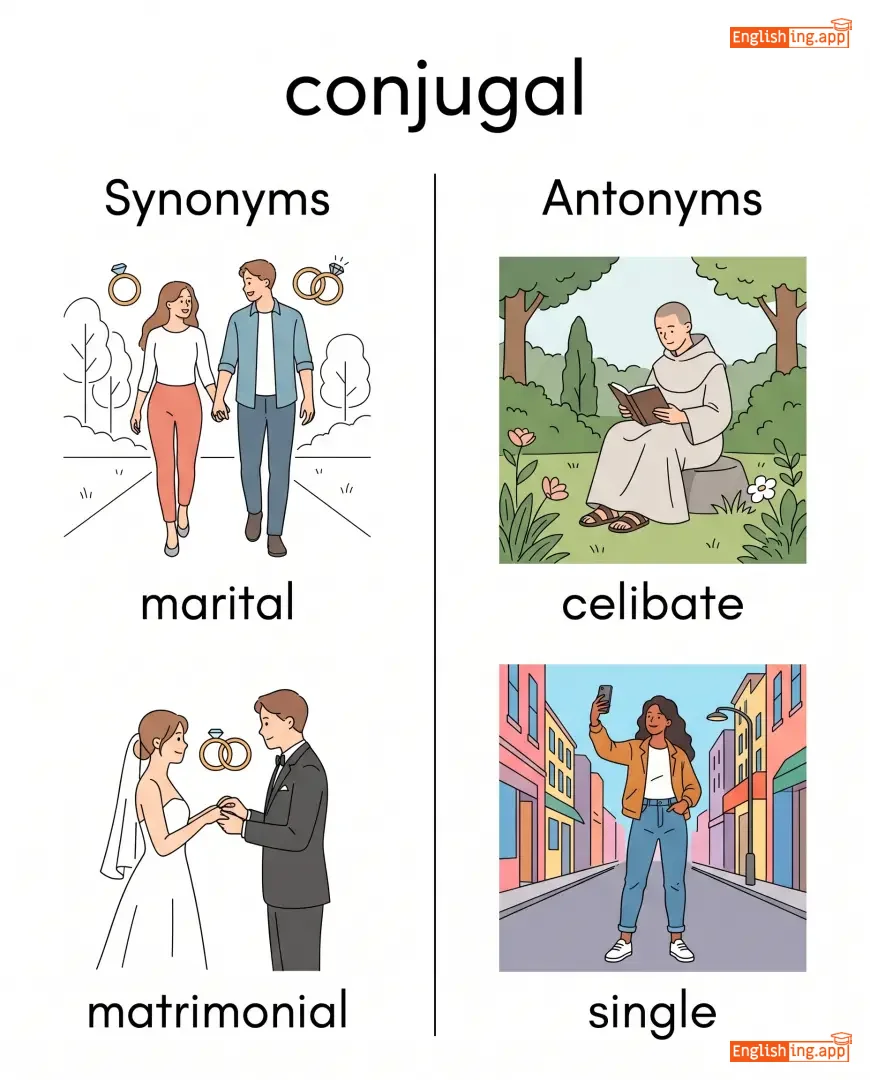
marital, matrimonial, spousal, wedded
••••••
|
celibate, single
••••••
|
conjugal life, conjugal relationship, conjugal duties
••••••
|
Супружеский = жизнь в браке - супружеский = женатый.
••••••
|
|
🎨
••••••
|
/ˌkɒn.əˈsɜːr/
noun
(коне́сёр)
••••••
|

|
знаток
znatok
••••••
|
- •••••• | - •••••• | - •••••• | - •••••• |
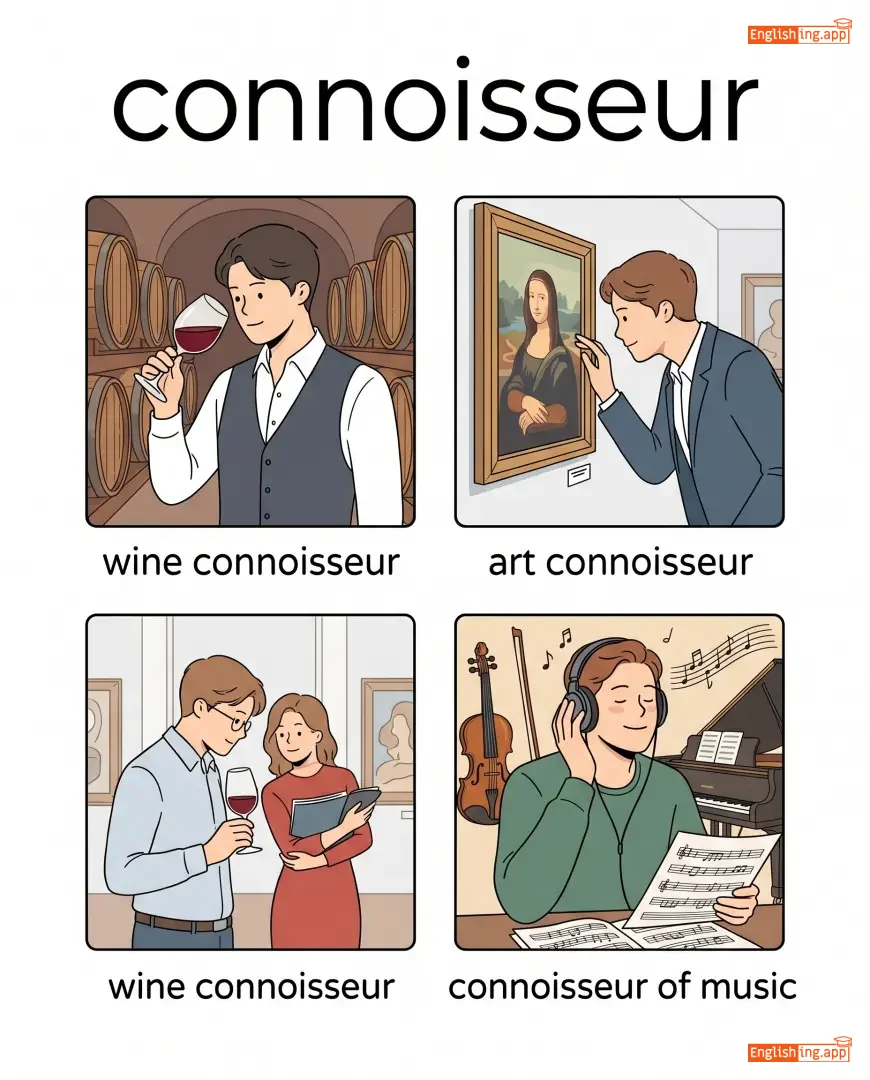
an expert judge in matters of taste, especially in food, art, or wine
••••••
|
She is a true connoisseur of fine art. |
Она настоящий знаток изобразительного искусства.
Ona nastoyashchiy znatok izobrazitel'nogo iskusstva.
••••••
|
- •••••• | - •••••• | - •••••• |
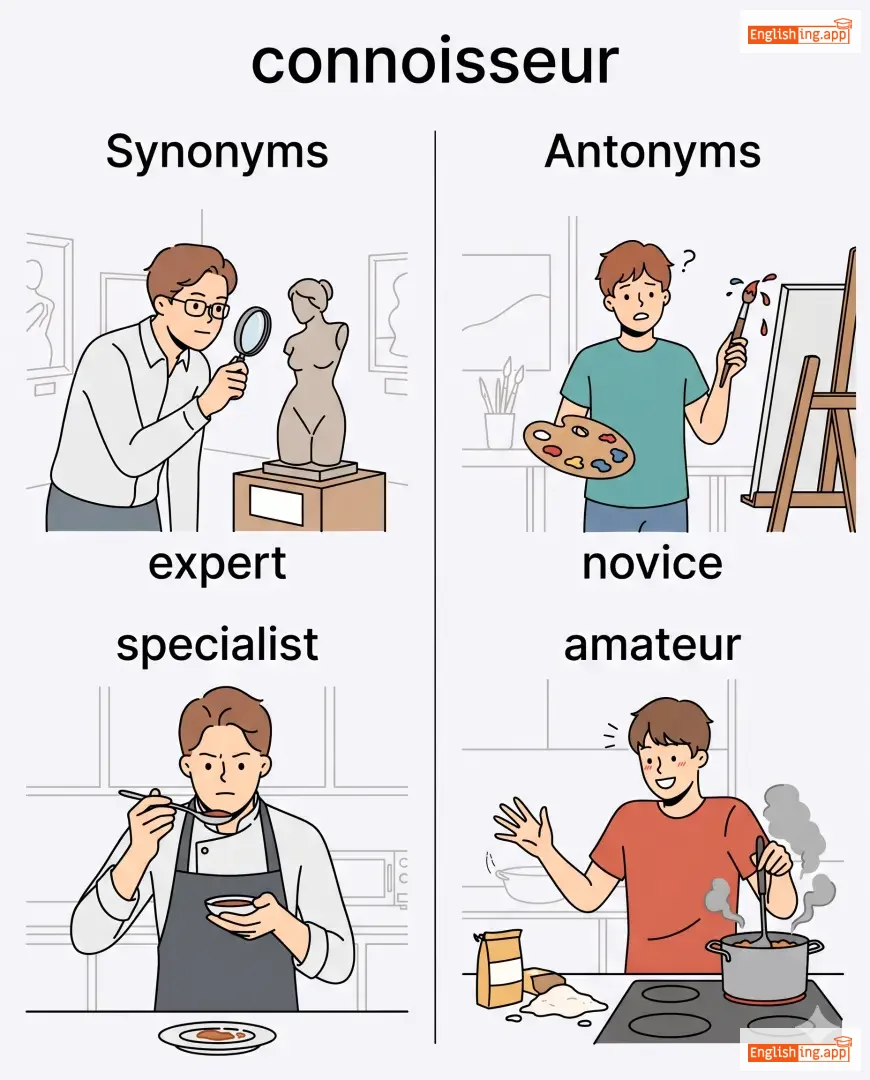
expert, specialist, critic, authority
••••••
|
novice, amateur, layman
••••••
|
wine connoisseur, art connoisseur, connoisseur of music
••••••
|
Знаток всегда отличает лучшее, как в искусстве, так и в еде.
••••••
|
|
🎖️
••••••
|
/ˈkɒnskrɪpt/
verb
(konskrɪpt)
••••••
|

|
заставить кого-то вступить в армию
zastavit' kogo-to vstupit' v armiyu
••••••
|
conscripted
konskrɪptɪd
••••••
|
conscripted
konskrɪptɪd
••••••
|
conscripts
konskrɪpts
••••••
|
conscripting
konskrɪptɪŋ
••••••
|
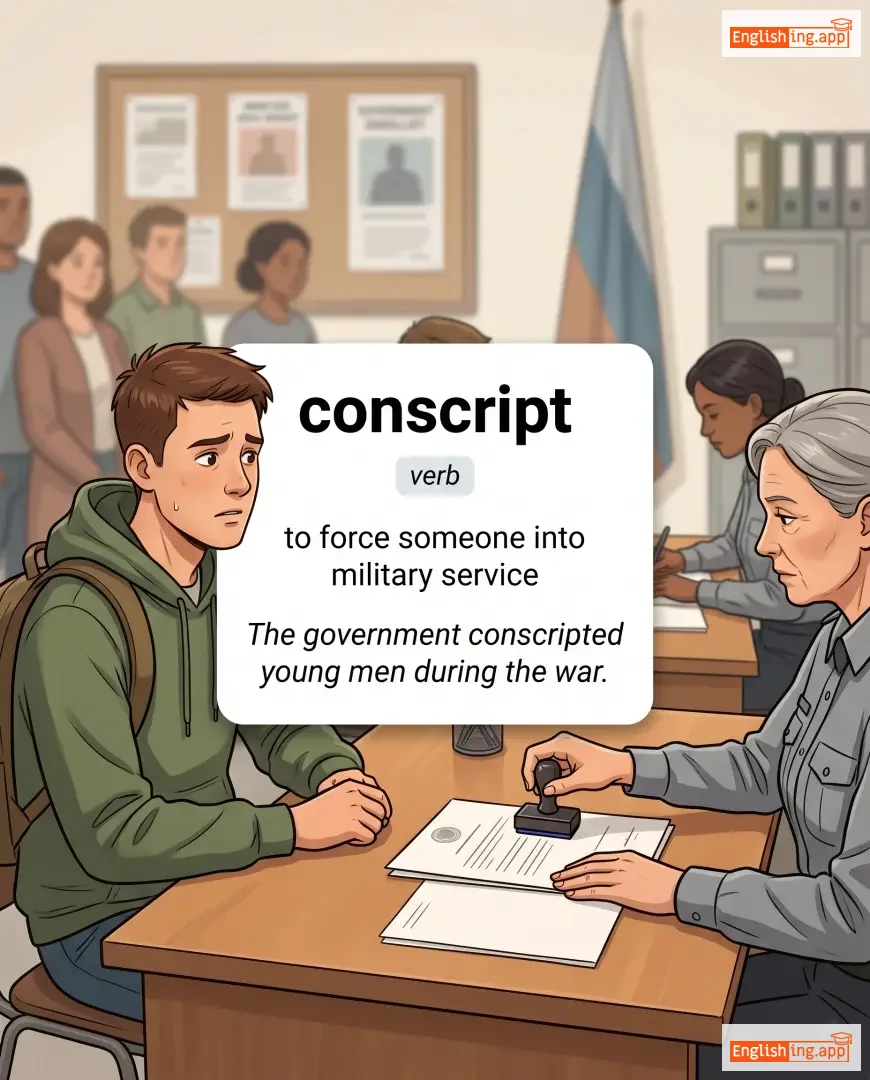
to force someone into military service
••••••
|
The government conscripted young men during the war.
Правительство призвало молодых людей во время войны.
••••••
|
Правительство призвало молодых людей во время войны.
Pravitel'stvo prizvalo molodykh lyudey vo vremya voyny.
••••••
|
- •••••• | - •••••• | - •••••• |
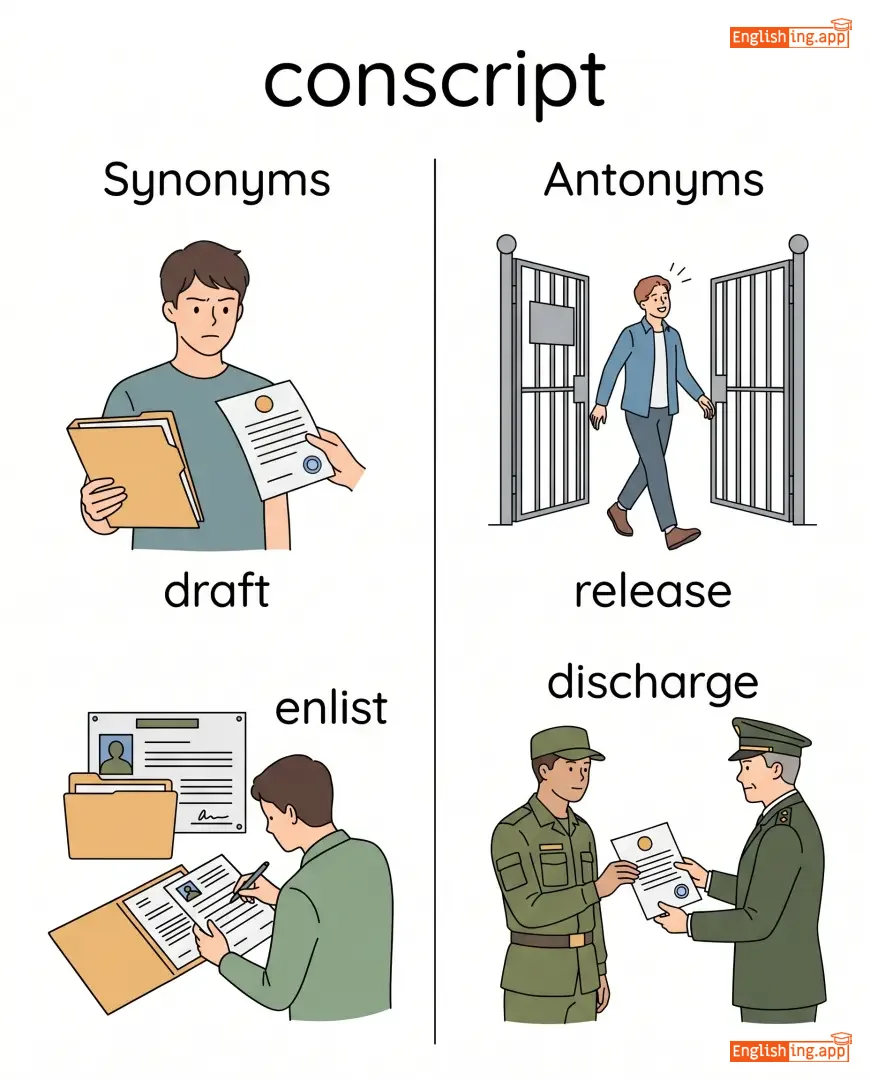
draft, enlist, recruit, call up, mobilize
••••••
|
release, discharge, exempt
••••••
|
conscripted soldier, military conscript, conscript army, forcibly conscript
••••••
|
Conscripter — это когда тебя призывают в армию против воли.
••••••
|
|
⛪
••••••
|
/ˈkɒnsɪkreɪt/
verb
(консекрэйт)
••••••
|


|
освящать
osvyashchat
••••••
|
consecrated
консекрэйтед
••••••
|
consecrated
консекрэйтед
••••••
|
consecrates
консекрэйтс
••••••
|
consecrating
консекрэйтинг
••••••
|
to make something sacred, usually through a religious ceremony
••••••
|
The church was consecrated by the bishop.
Церковь была освящена епископом.
••••••
|
Церковь была освящена епископом.
Tserkov' byla osvyashchena yepis kopom.
••••••
|
- •••••• | - •••••• | - •••••• |
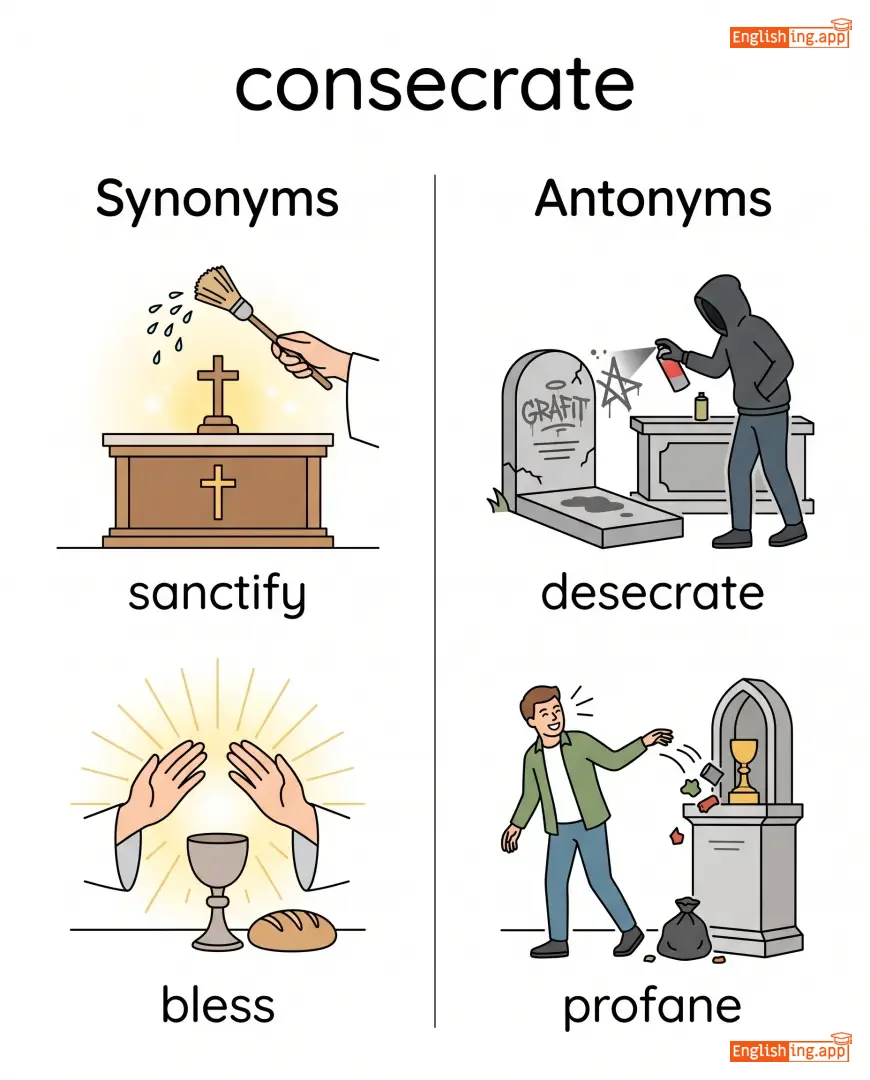
sanctify, bless, dedicate, hallow, ordain
••••••
|
desecrate, profane, defile
••••••
|
consecrate a church, consecrated ground, consecrated life, consecrated host
••••••
|
Consecrate похоже на освящать — сделать что-то священным.
••••••
|
|
🏆
••••••
|
/kənˈtɛnd/
verb
(контенд)
••••••
|

|
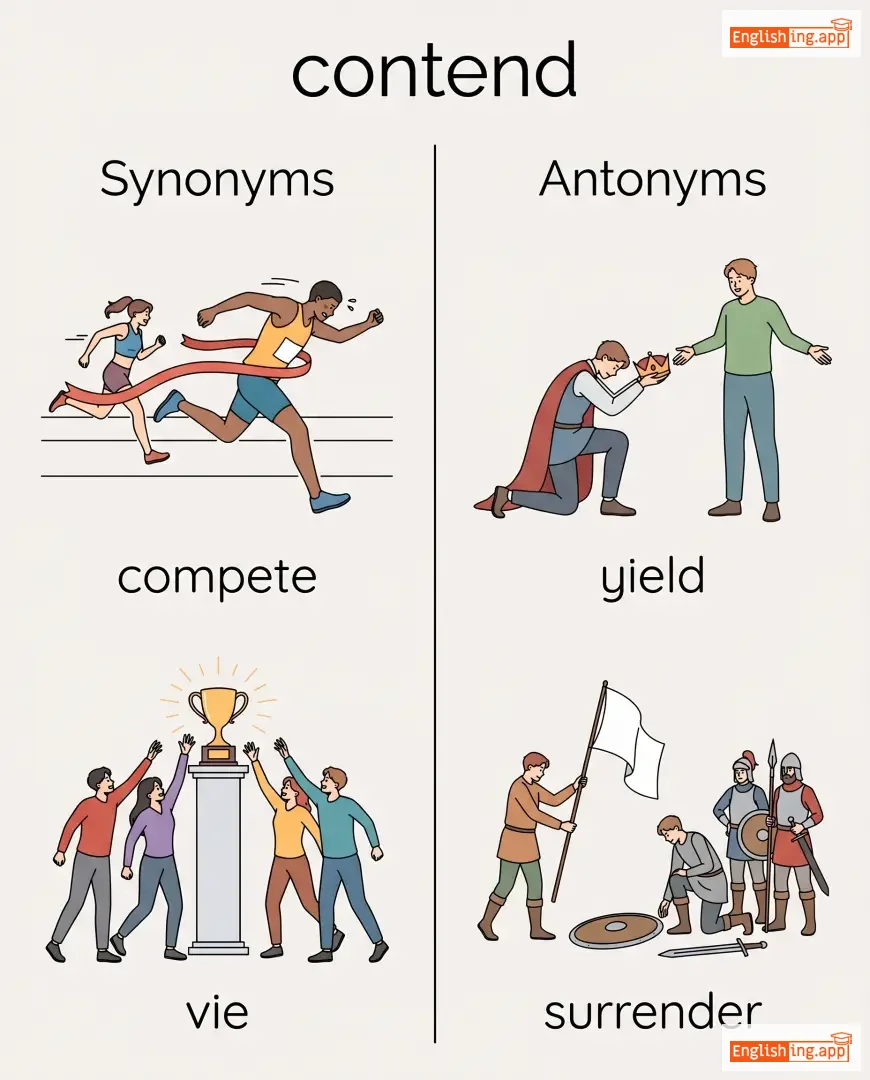
состязаться, утверждать
sostyazatsya, utverzhdat
••••••
|
contended
контендед
••••••
|
contended
контендед
••••••
|
contends
контендс
••••••
|
contending
контендий
••••••
|
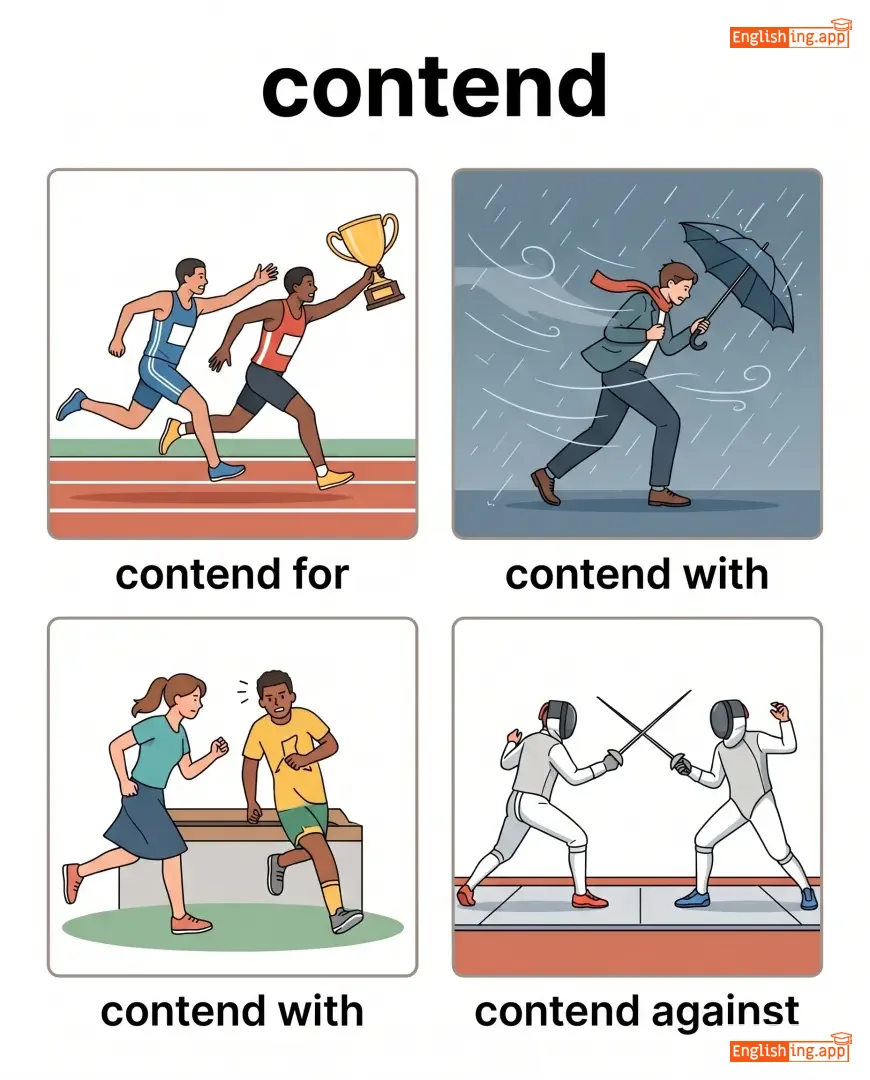
to strive or compete for something; to assert earnestly
••••••
|
Athletes from around the world contend for the championship.
Атлеты со всего мира борются за чемпионство.
••••••
|
Атлеты со всего мира борются за чемпионство.
Atlety so vsego mira boryutsya za chempionstvo.
••••••
|
- •••••• | - •••••• | - •••••• |
compete, vie, struggle, assert
••••••
|
yield, surrender, concede
••••••
|
contend for, contend with, contend against, contend successfully
••••••
|
Contend означает бороться в конкурсах - Всегда contend в конкурсах
••••••
|
|
🔥
••••••
|
/kənˈtɛnʃəs/
adjective
(кəнˈтэншəs)
••••••
|
|
спорный
spornyy
••••••
|
- •••••• | - •••••• | - •••••• | - •••••• |
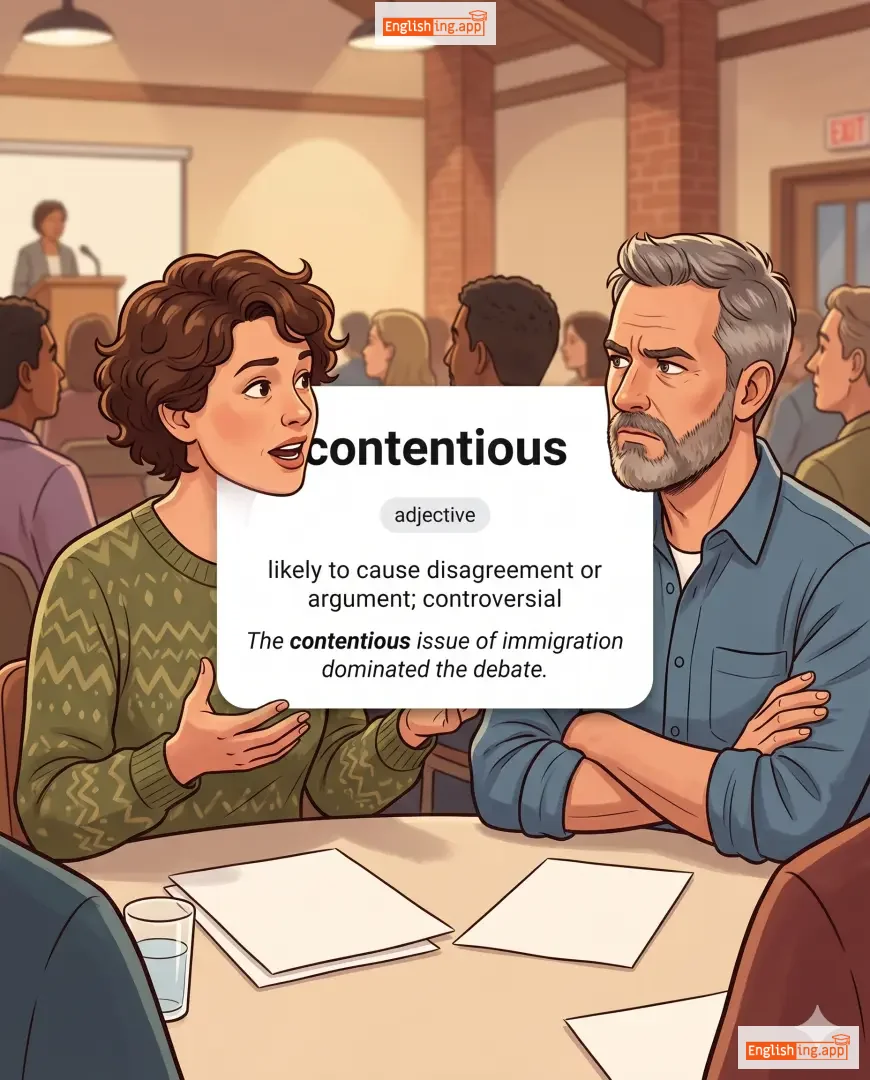
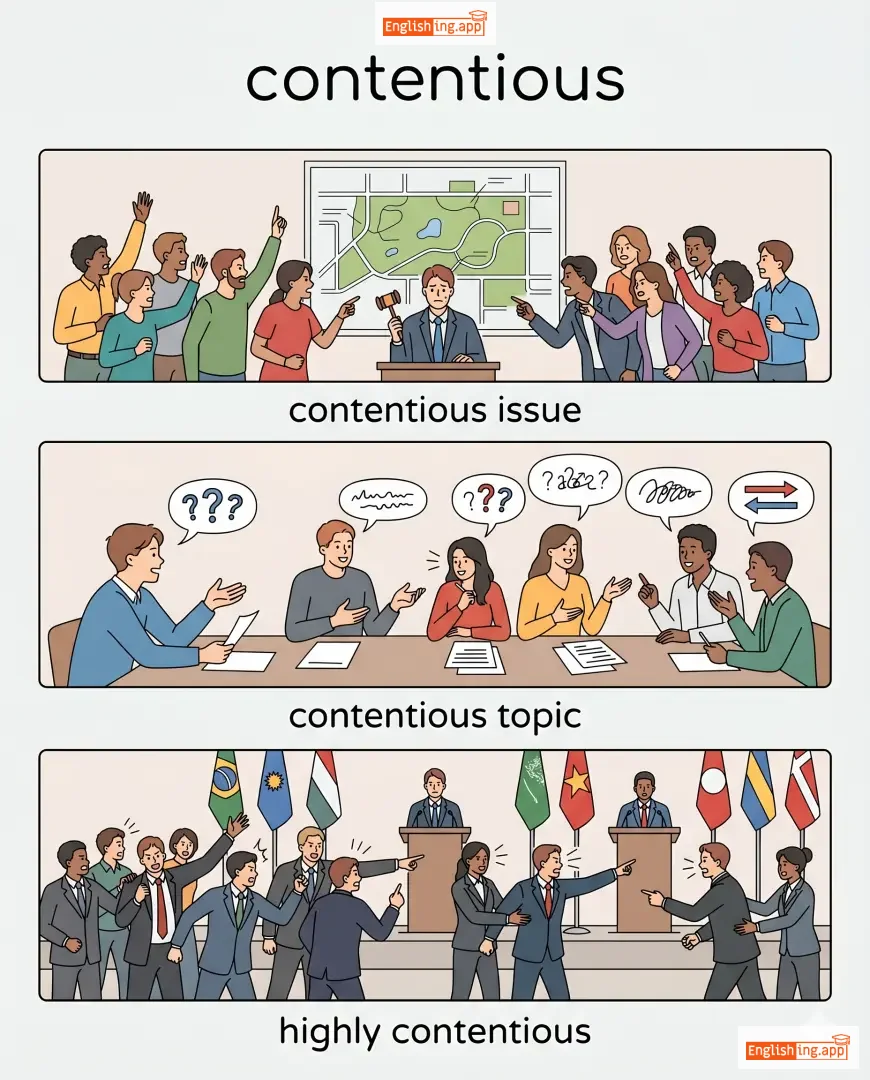
likely to cause disagreement or argument; controversial
••••••
|
The contentious issue of immigration dominated the debate. |
Спорный вопрос иммиграции доминировал в дебатах.
Spornyy vopros immigratsii dominirival v debatakh.
••••••
|
- •••••• | - •••••• | - •••••• |
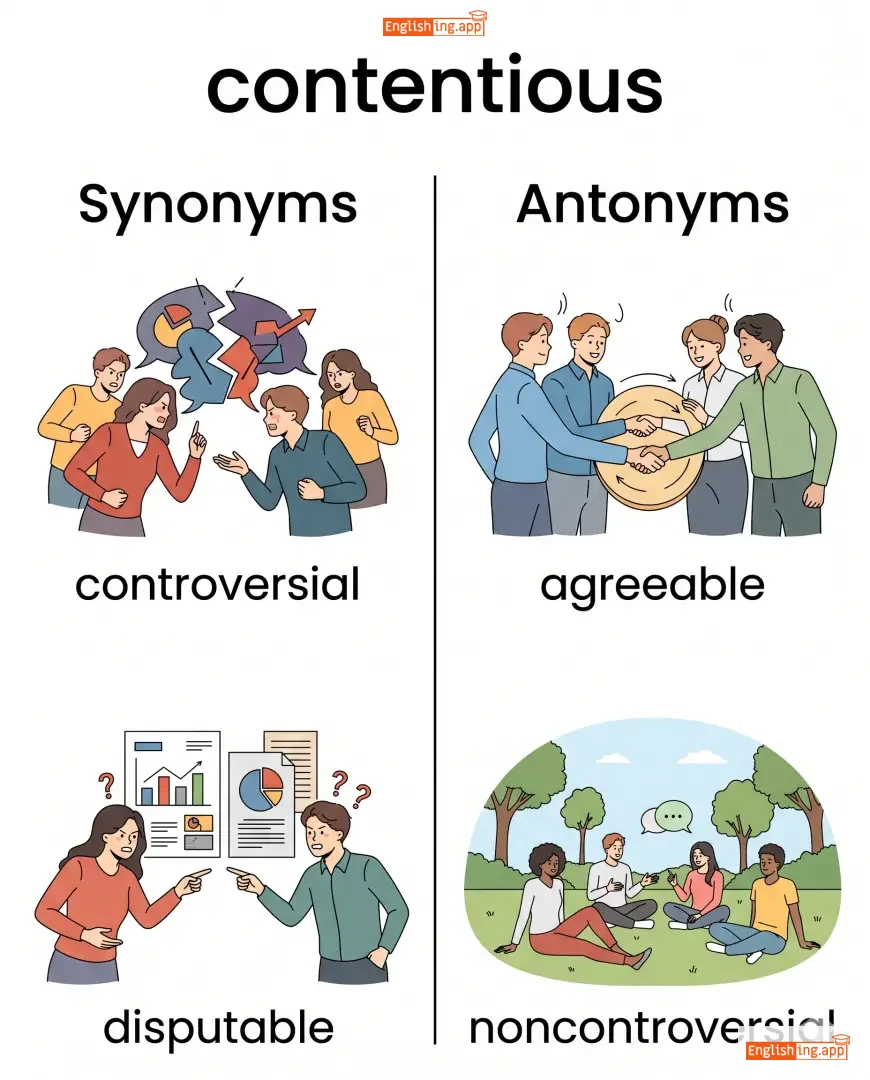
controversial, disputable, debatable, argumentative
••••••
|
agreeable, noncontroversial
••••••
|
contentious issue, contentious topic, highly contentious, contentious debate
••••••
|
Contentious вызывает споры, как слово 'спорный'.
••••••
|
|
🏘️
••••••
|
/kənˈtɪɡ.ju.əs/
adjective
(kontíguos)
••••••
|
|
смежный
smezhnij
••••••
|
- •••••• | - •••••• | - •••••• | - •••••• |
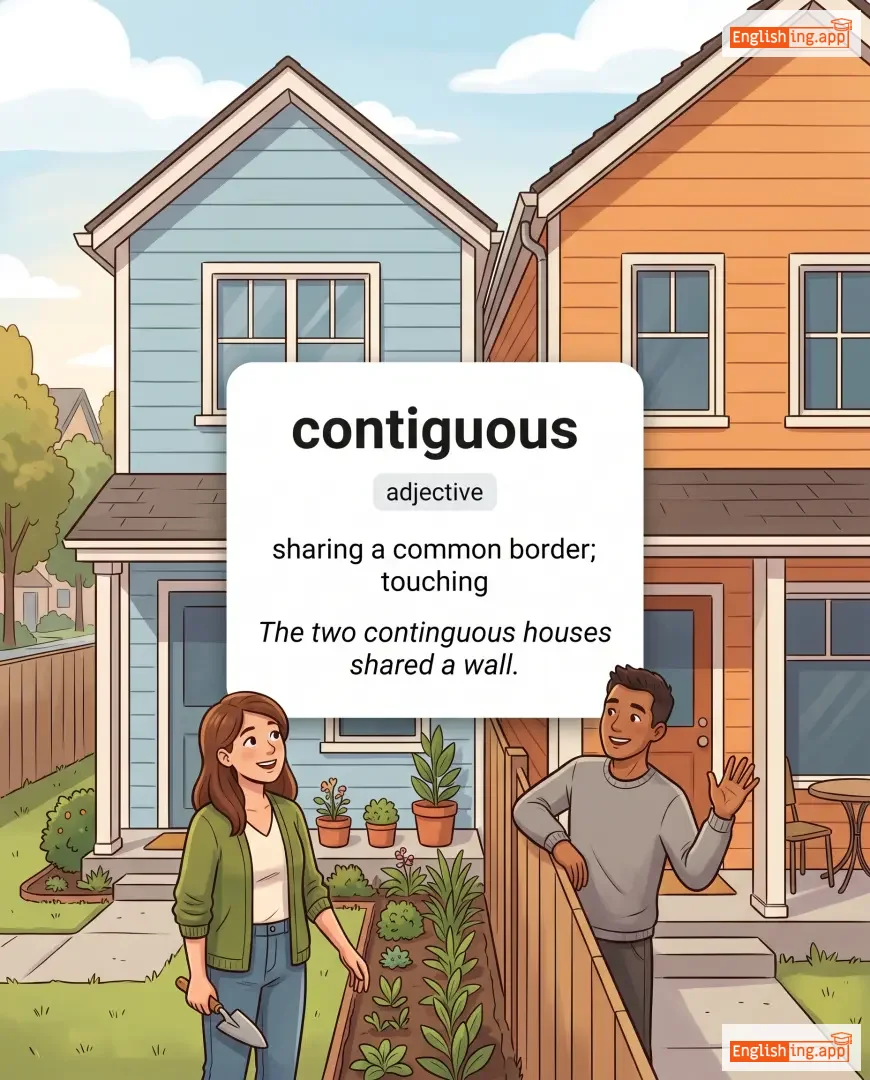
sharing a common border; touching
••••••
|
The two continguous houses shared a wall. |
Два смежных дома поделились стеной.
Dva smezhnykh doma podelilis' stenoy.
••••••
|
- •••••• | - •••••• | - •••••• |
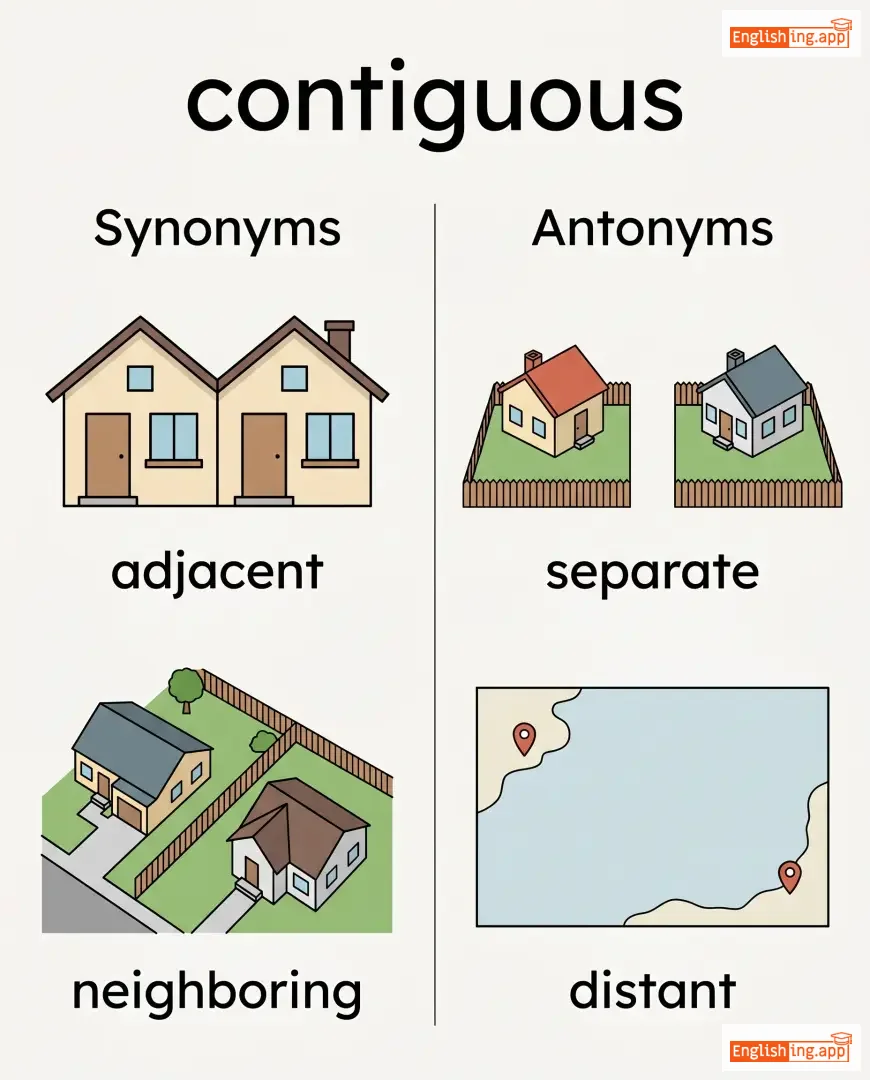
adjacent, neighboring, bordering, touching
••••••
|
separate, distant
••••••
|
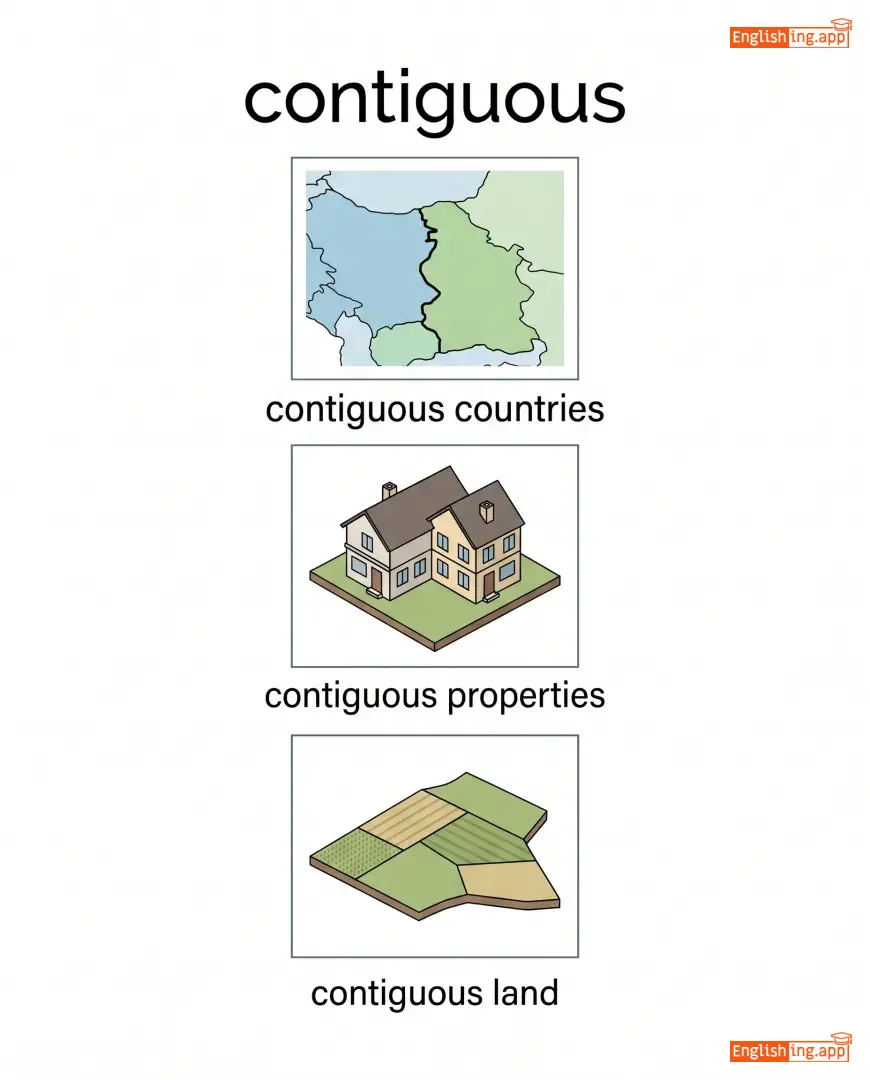
contiguous countries, contiguous properties, contiguous land
••••••
|
Smezhnyh houses share, смежный wall shared
••••••
|
|
🧘
••••••
|
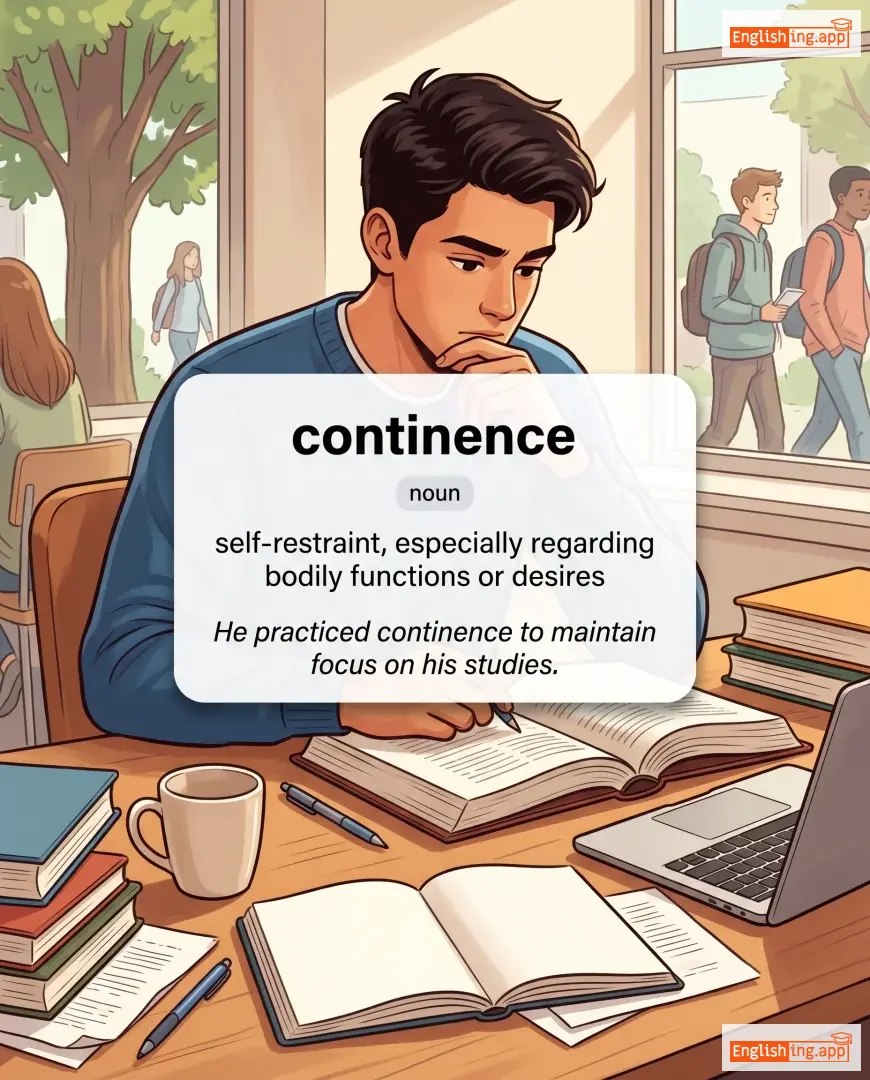
/ˈkɒn.tɪ.nəns/
noun
(kontinents)
••••••
|
|
воздержание
vozderzhanie
••••••
|
- •••••• | - •••••• | - •••••• | - •••••• |
self-restraint, especially regarding bodily functions or desires
••••••
|
He practiced continence to maintain focus on his studies. |
Он практиковал воздержание, чтобы сосредоточиться на учебе.
On praktikovav vozderzhanie, chtoby sosredotochit'sya na uchebe.
••••••
|
- •••••• | - •••••• | - •••••• |
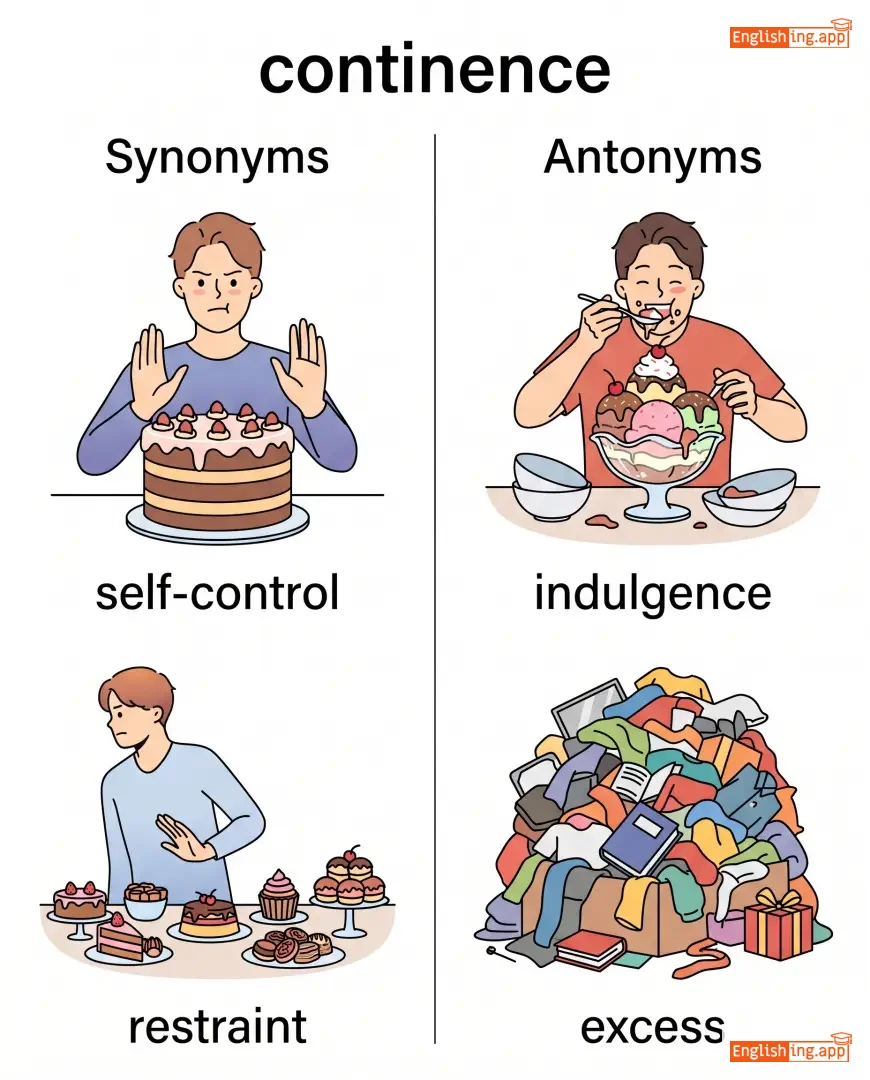
self-control, restraint, moderation, abstinence
••••••
|
indulgence, excess
••••••
|
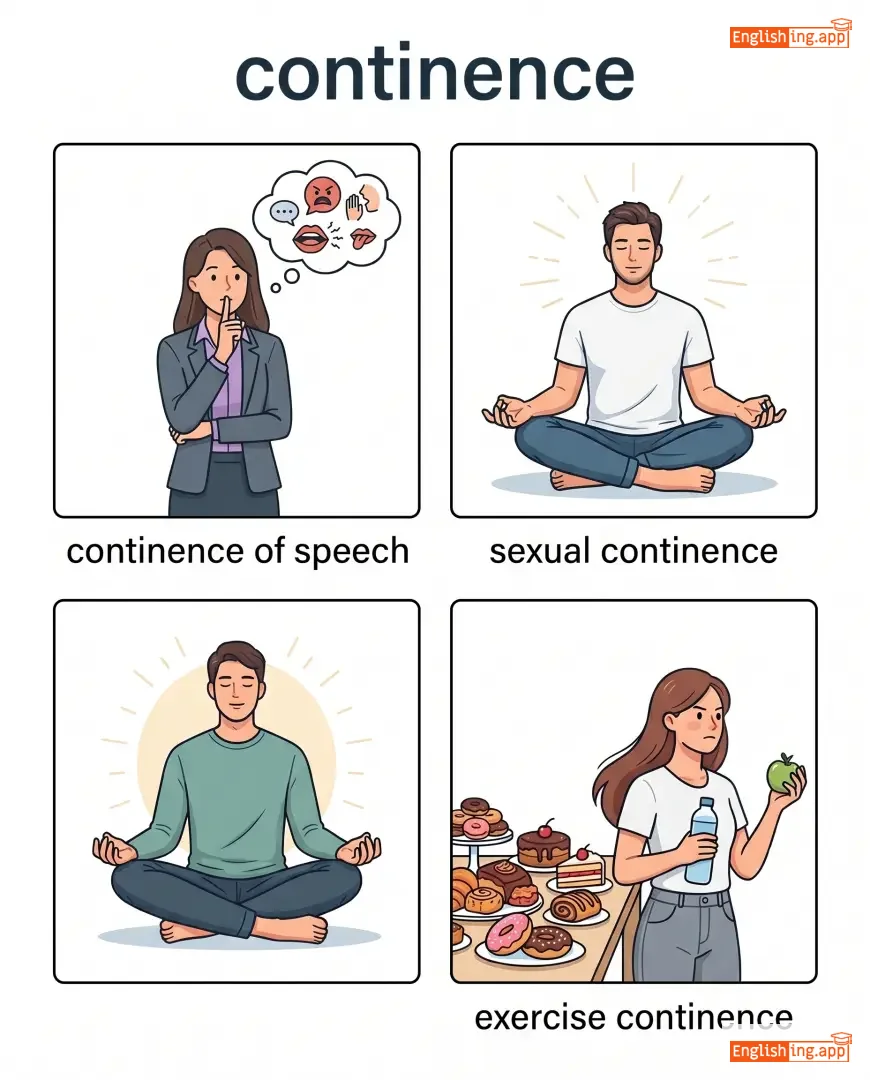
continence of speech, sexual continence, exercise continence
••••••
|
Фокус с воздержанием - самоконтроль в действии
••••••
|
|
😔
••••••
|
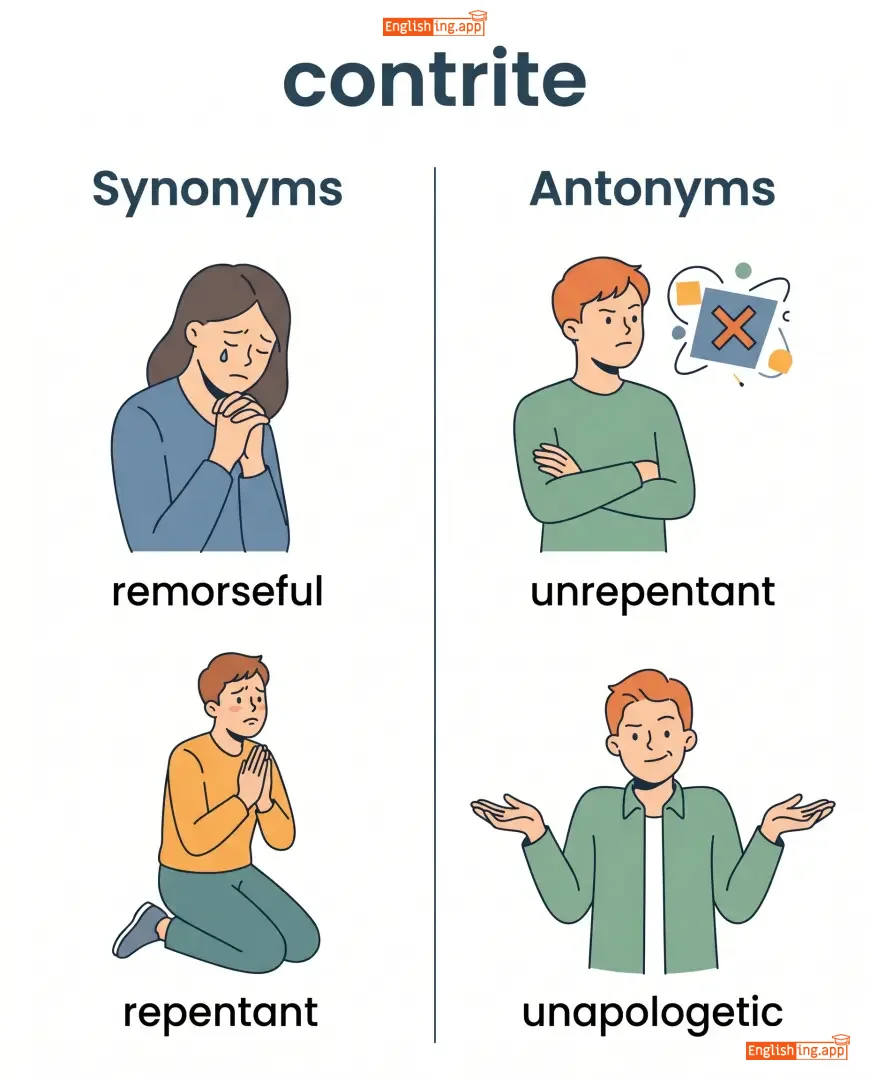
/kənˈtraɪt/
adjective
(кəнˈтрайт)
••••••
|

|
раскаивающийся
raskayivayushchiesya
••••••
|
- •••••• | - •••••• | - •••••• | - •••••• |
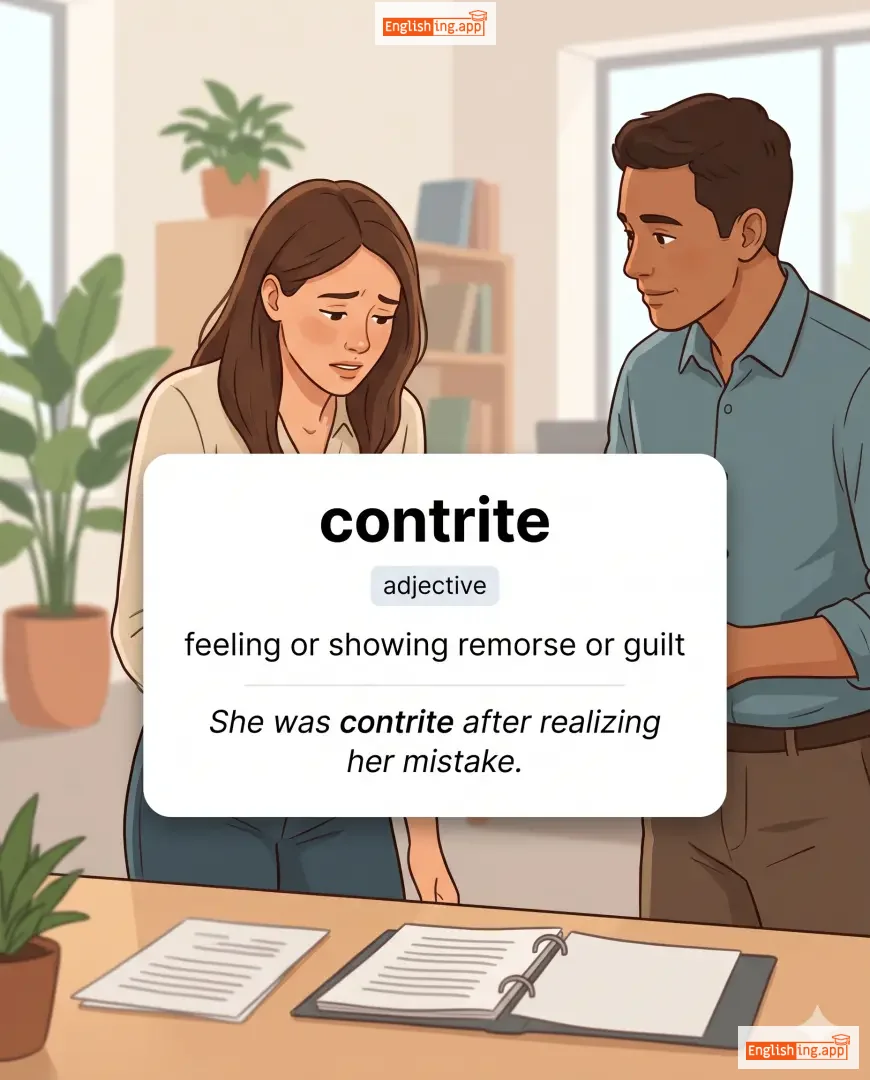
feeling or showing remorse or guilt
••••••
|
She was contrite after realizing her mistake. |
Она была раскаявшейся, когда осознала свою ошибку.
Ona byla raskayavshiesya, kogda osoznala svoyu oshibku.
••••••
|
- •••••• | - •••••• | - •••••• |
remorseful, repentant, sorry, penitent, regretful
••••••
|
unrepentant, unapologetic
••••••
|
look contrite, feel contrite, genuinely contrite, appear contrite
••••••
|
Con TRITE раскаиваешься после ошибки
••••••
|
|
😠
••••••
|
/ˌkɒn.tjʊˈmeɪ.ʃəs/
adjective
(контумэйшес)
••••••
|
|
неповинующийся, мятежный
nepovinuyushchiesya, myatezhnyy
••••••
|
- •••••• | - •••••• | - •••••• | - •••••• |
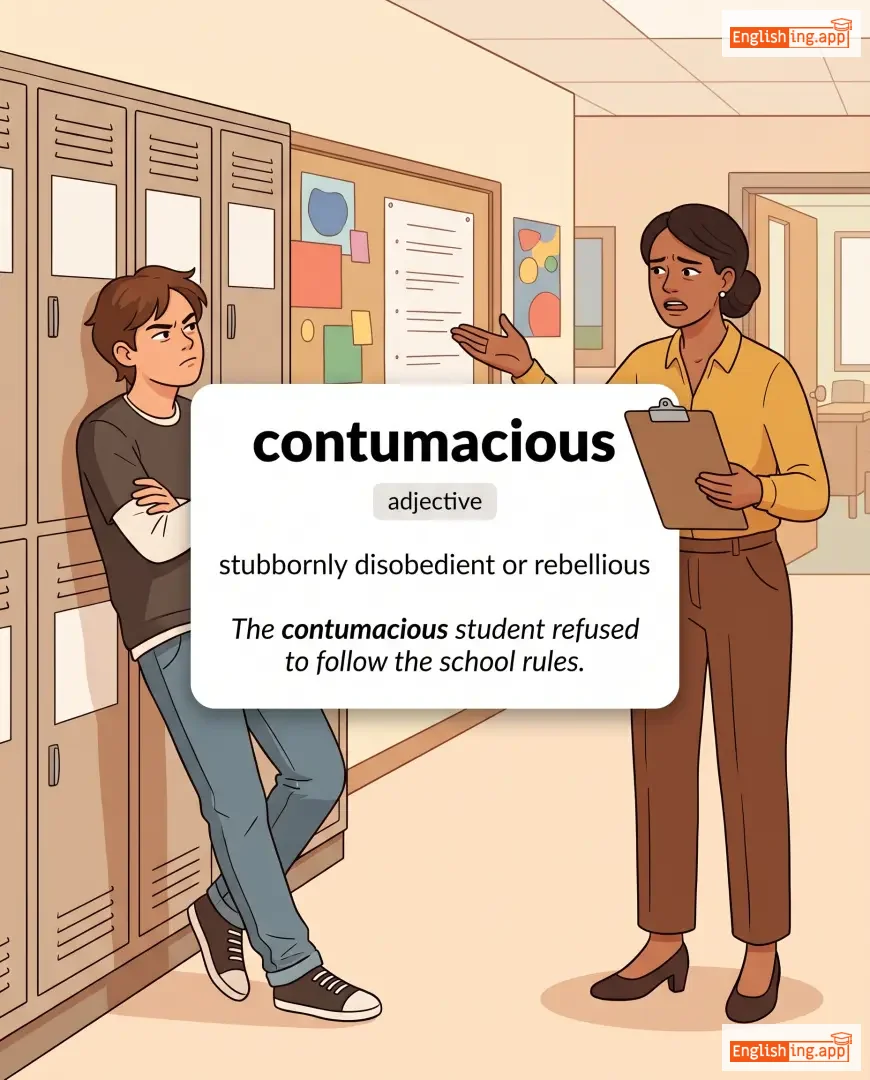
stubbornly disobedient or rebellious
••••••
|
The contumacious student refused to follow the school rules.
Контумасный студент отказался следовать школьным правилам.
••••••
|
Неповинующийся студент отказался следовать школьным правилам.
Nepovinuyushchiesya student otkazalsya sledovat' shkol'nym pravillam.
••••••
|
- •••••• | - •••••• | - •••••• |
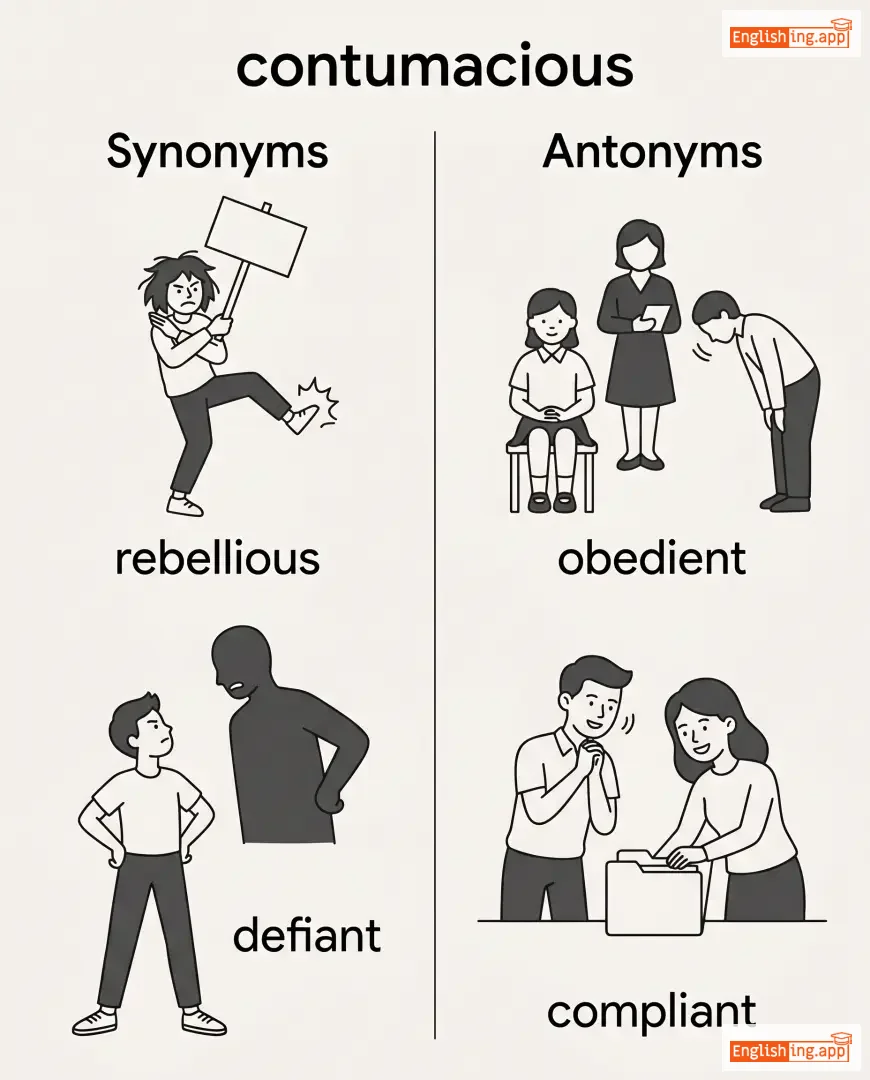
rebellious, defiant, insubordinate, disobedient
••••••
|
obedient, compliant, submissive
••••••
|
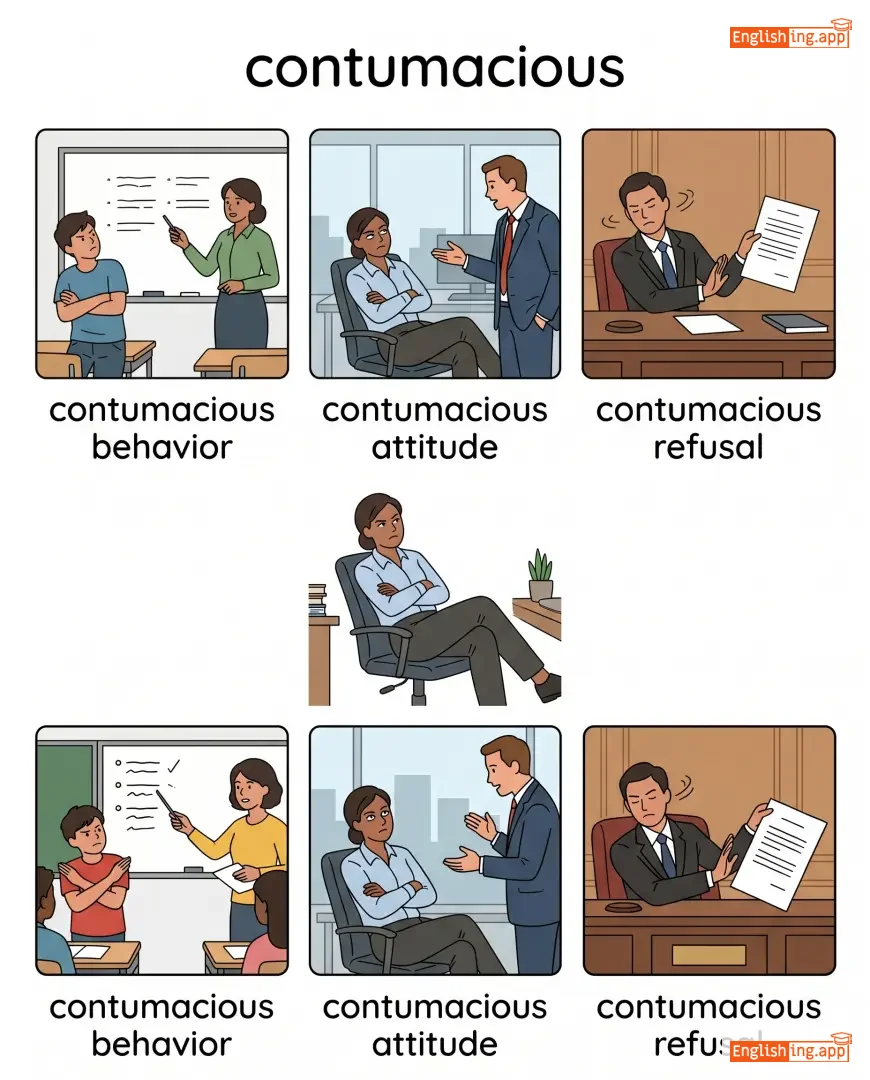
contumacious behavior, contumacious attitude, contumacious refusal
••••••
|
Контумасный как 'контра' - контумейшес = непокорный
••••••
|
|
🧩
••••••
|
/kəˈnʌndrəm/
noun
(конандрум)
••••••
|
|
головоломка
golovolomka
••••••
|
- •••••• | - •••••• | - •••••• | - •••••• |
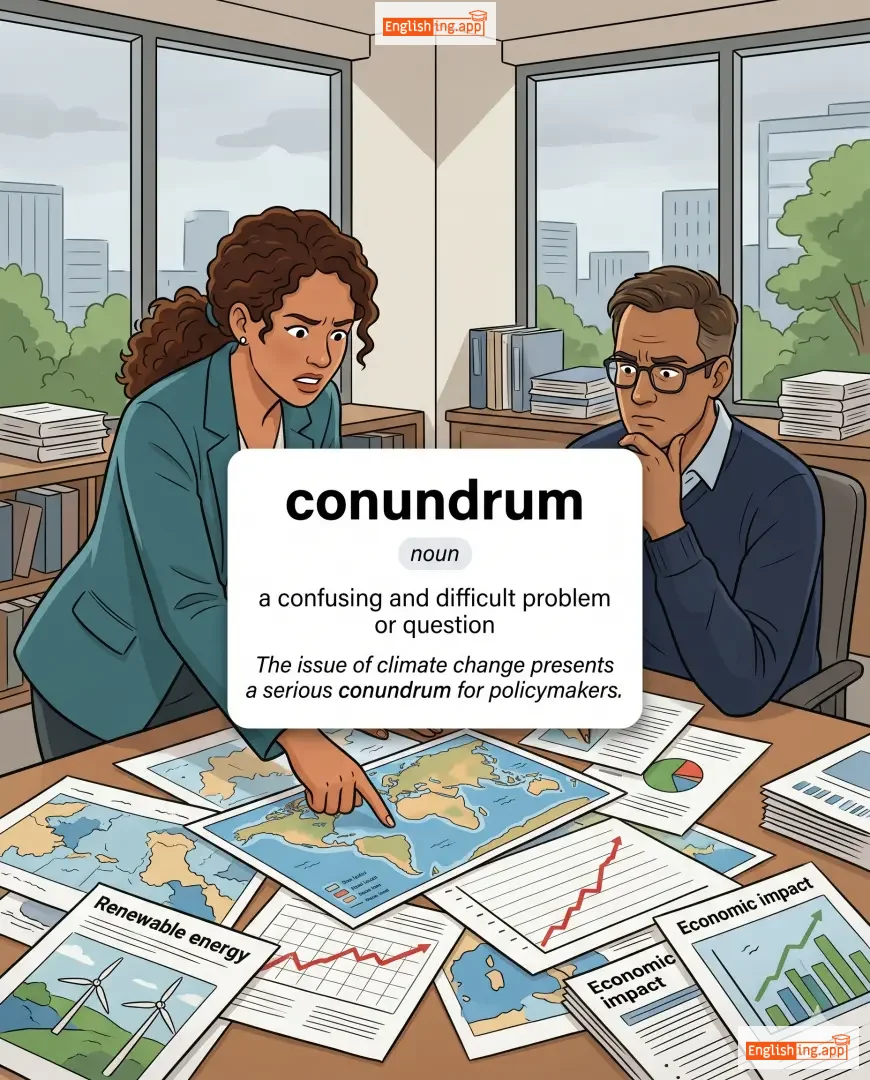
a confusing and difficult problem or question
••••••
|
The issue of climate change presents a serious conundrum for policymakers. |
Проблема изменения климата представляет собой серьезную головоломку для политиков.
Problema izmeneniya klimata predstavlyaet soboy seryoznuyu golovolomku dlya politikov.
••••••
|
- •••••• | - •••••• | - •••••• |
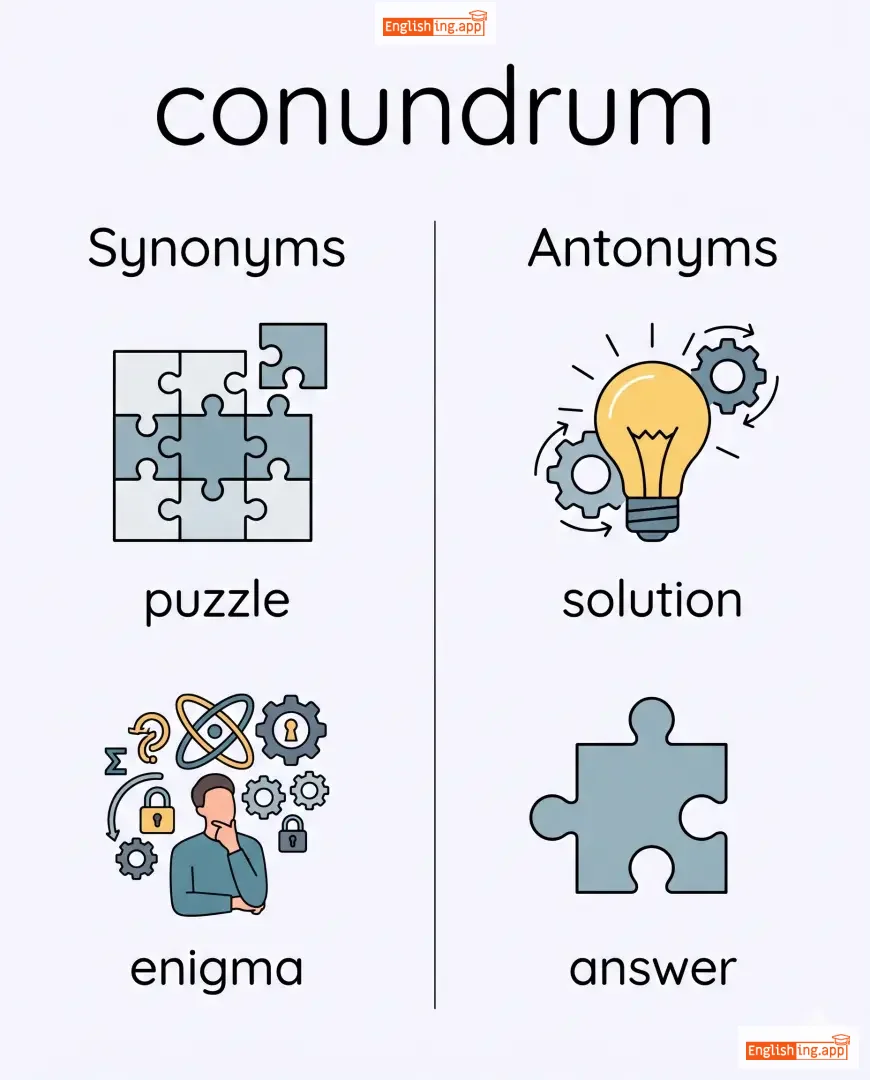
puzzle, enigma, riddle, dilemma, problem
••••••
|
solution, answer, clarity
••••••
|
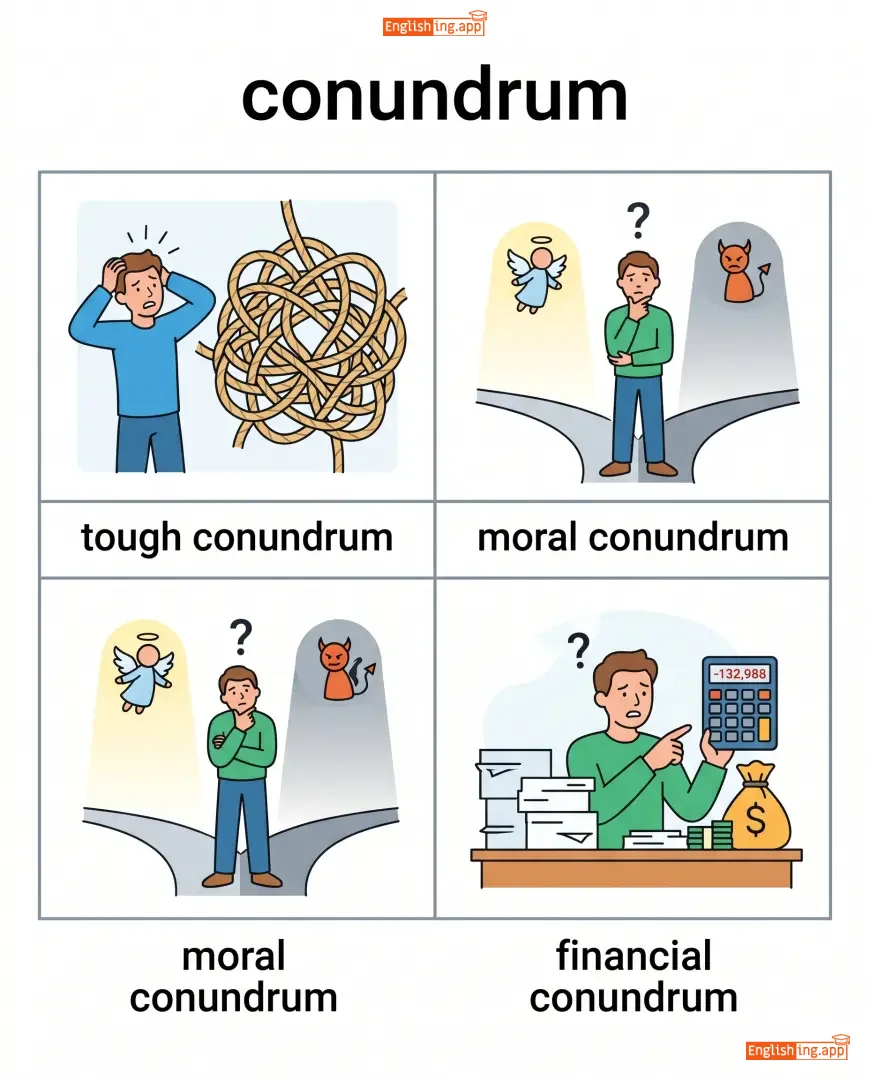
tough conundrum, moral conundrum, financial conundrum
••••••
|
Представь себе головоломку, которую трудно решить, но которая важна.
••••••
|
|
🎤
••••••
|
/kənˈvɛnʃən/
noun
(конвенция)
••••••
|


|
конвенция
konventsiya
••••••
|
- •••••• | - •••••• | - •••••• | - •••••• |
a widely accepted way of behaving or doing something; a formal meeting
••••••
|
The annual writers' convention was held in Dhaka.
Ежегодная конференция писателей прошла в Дакке.
••••••
|
Ежегодная конференция писателей прошла в Дакке.
Ezhegodnaya konferentsiya pisateley proshla v Dakke.
••••••
|
- •••••• | - •••••• | - •••••• |
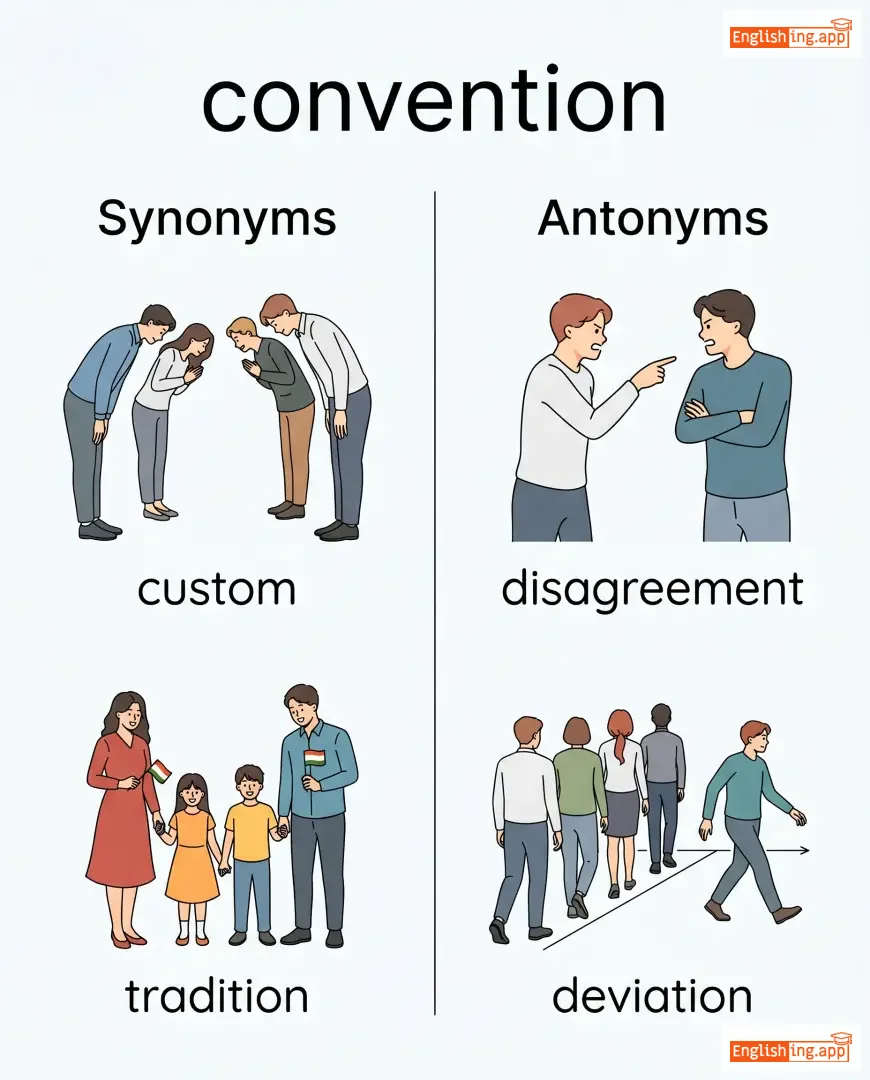
custom, tradition, meeting, assembly
••••••
|
disagreement, deviation
••••••
|
social convention, international convention, follow convention, break convention
••••••
|
Конвенция собирает всех - Convention gathers everyone
••••••
|
|
🔄
••••••
|
/kənˈvɜːrdʒ/
verb
(kənvɜrdʒ)
••••••
|


|
сходиться
skhoditsya
••••••
|
converged
kənvɜrdʒd
••••••
|
converged
kənvɜrdʒd
••••••
|
converges
kənvɜrdʒiz
••••••
|
converging
kənvɜrdʒɪŋ
••••••
|
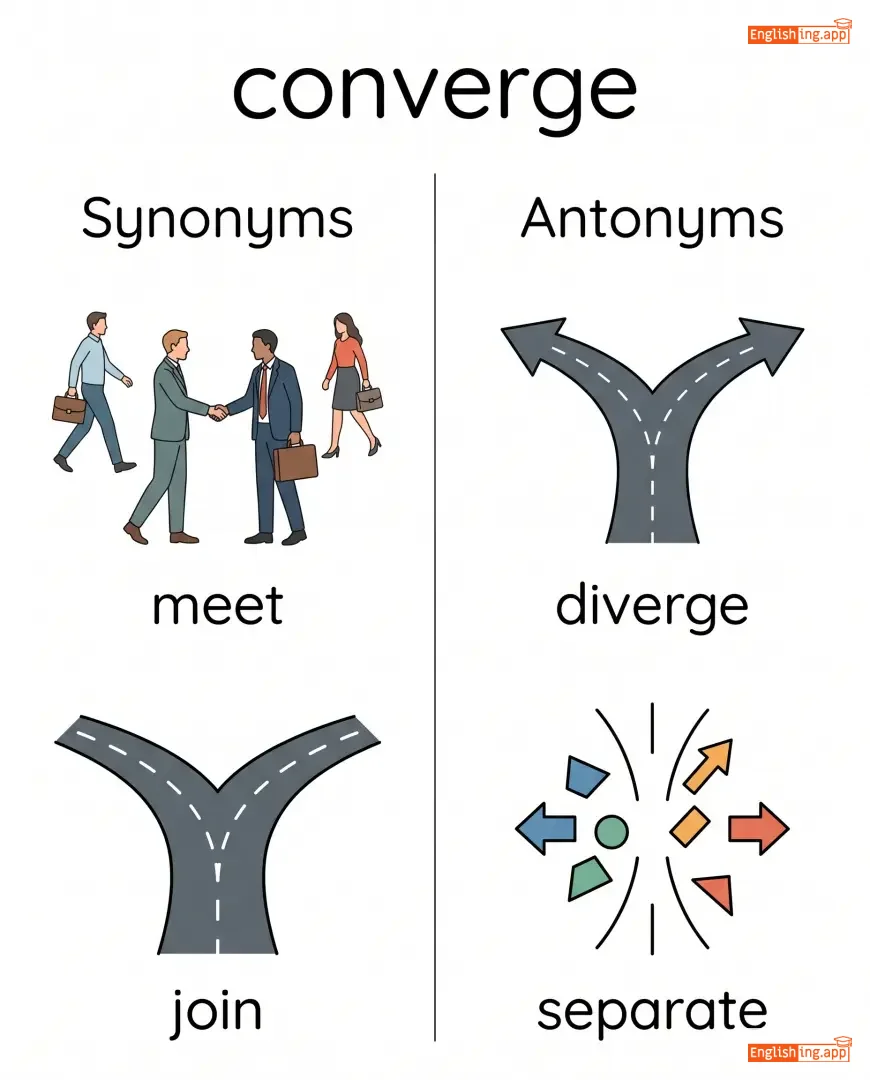
to come together from different directions; to meet at a point
••••••
|
The roads converge at the city center.
дороги сходятся в центре города.
••••••
|
Дороги сходятся в центре города.
Dorogi skhodyatsya v tsentre goroda.
••••••
|
- •••••• | - •••••• | - •••••• |
meet, unite, merge, come together, join
••••••
|
diverge, separate, spread, scatter
••••••
|
converge on, converge at, converge together, roads converge, lines converge
••••••
|
Представь себе дороги, которые сливаются как река
••••••
|
|
🔵
••••••
|
/ˈkɒnvɛks/
adjective
(konveks)
••••••
|


|
выпуклый, округлый наружу
vypukly, okrugly naruzhu
••••••
|
- •••••• | - •••••• | - •••••• | - •••••• |
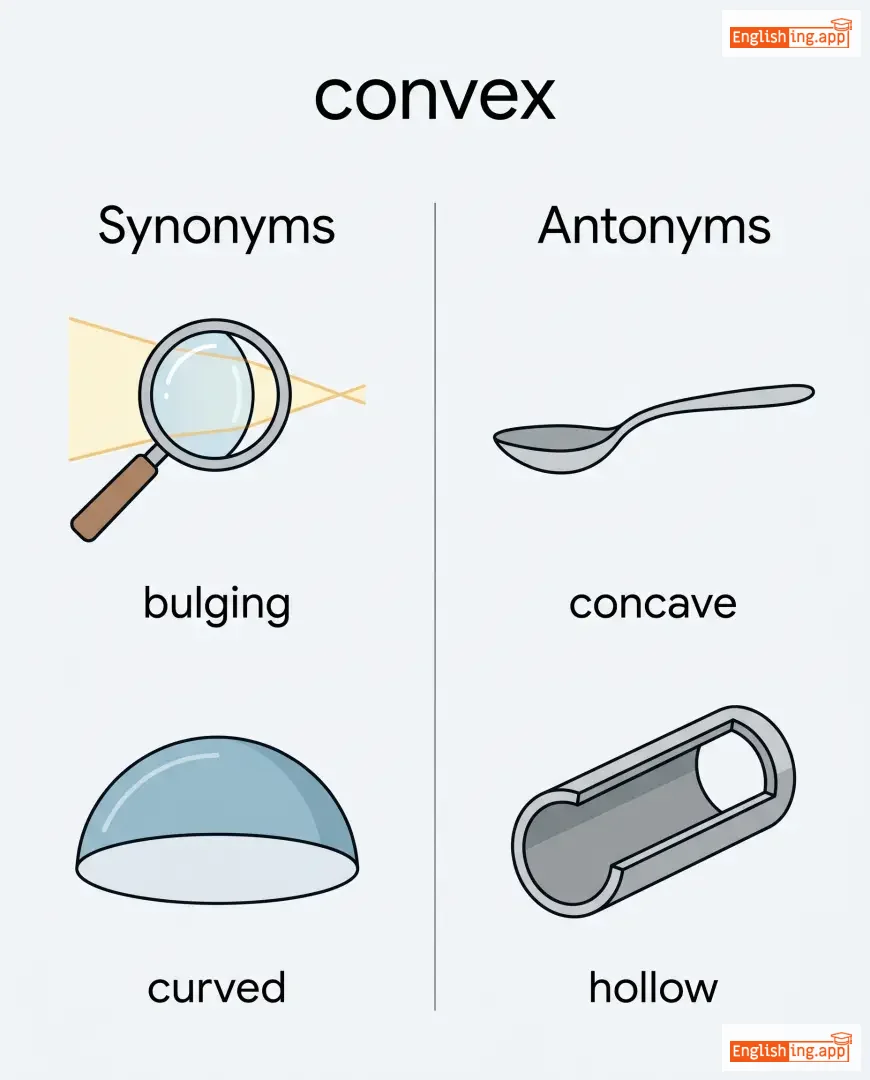
curved or rounded outward
••••••
|
The lens has a convex shape to focus light. |
Объектив имеет выпуклую форму, чтобы фокусировать свет.
Ob'yektiv imeet vypukluyu formu, chtoby fokusirovat' svet.
••••••
|
- •••••• | - •••••• | - •••••• |
bulging, curved, arched, rounded
••••••
|
concave, hollow, depressed
••••••
|
convex lens, convex mirror, convex surface
••••••
|
Выпуклая линза имеет форму, округленную наружу.
••••••
|
|
🎉
••••••
|
/kənˈvɪviəl/
adjective
(konvivial)
••••••
|


|
дружелюбный, оживленный и приятный; общительный
druzhelyubnyy, ozhivlyonnyy i priyatnyy; obshchitel'nyy
••••••
|
- •••••• | - •••••• | - •••••• | - •••••• |
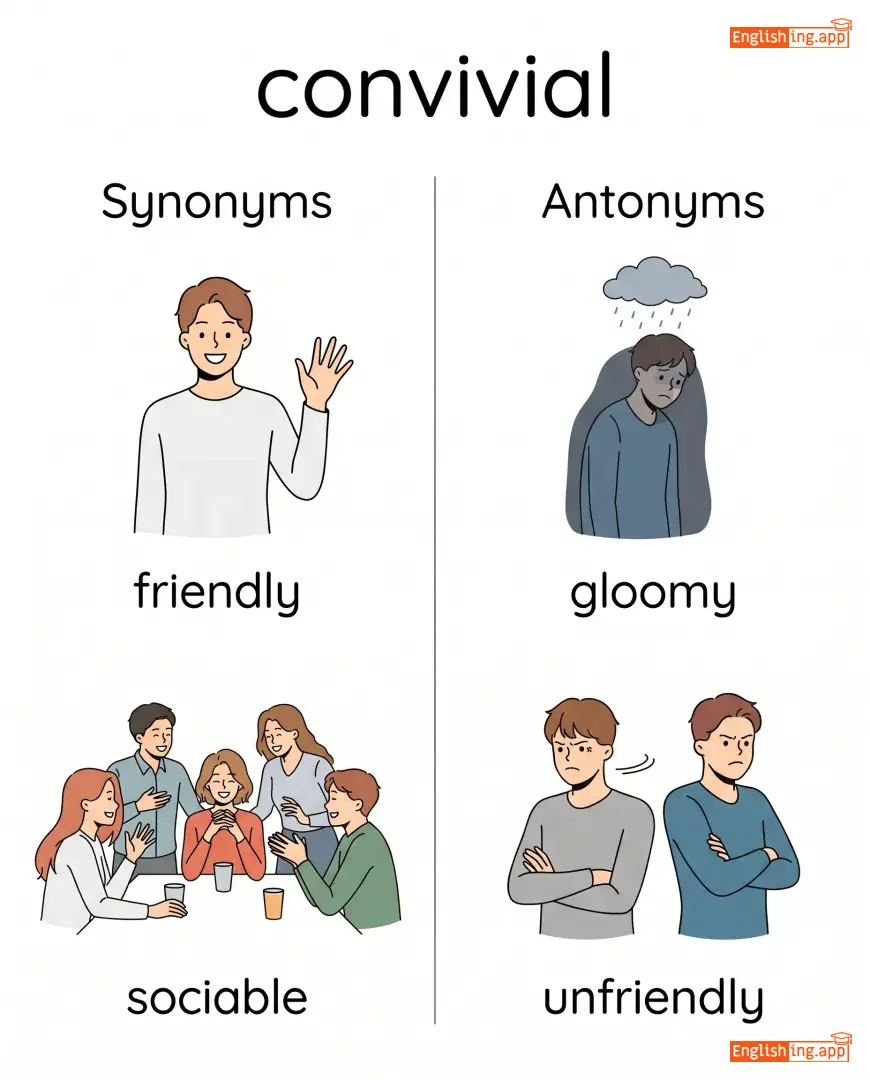
friendly, lively, and enjoyable; sociable
••••••
|
The party had a convivial atmosphere with music and laughter.
На вечеринке была дружелюбная атмосфера с музыкой и смехом.
••••••
|
На вечеринке была дружелюбная атмосфера с музыкой и смехом.
Na vecherinke byla druzhelyubnaya atmosfera s muzykoy i smekhom.
••••••
|
- •••••• | - •••••• | - •••••• |
friendly, sociable, jovial, festive
••••••
|
gloomy, unfriendly
••••••
|
convivial gathering, convivial mood, convivial atmosphere
••••••
|
Вечеринка с CONVIVIAL атмосферой.
••••••
|
|
🌀
••••••
|
/ˈkɒnvəluːtɪd/
adjective
(конвулютед)
••••••
|


|
сложный, запутанный
slozhny, zaputannyy
••••••
|
- •••••• | - •••••• | - •••••• | - •••••• |
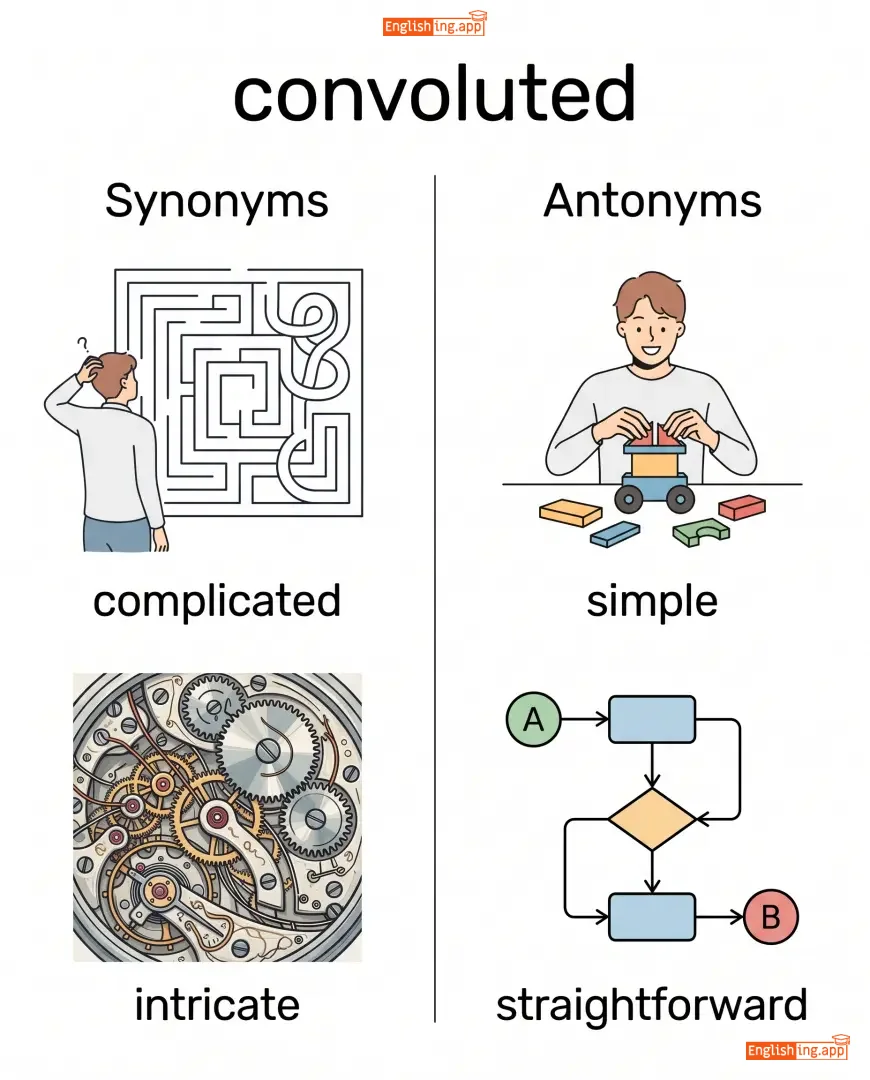
complex, intricate, and difficult to follow
••••••
|
The plot of the movie was so convoluted that I lost track halfway. |
Сюжет фильма был настолько запутанным, что я потерял нить, двигаясь дальше.
Syuzhet fil'ma byl nastol'ko zaputannym, chto ya poteryal nit', dvizhya's' dalshe.
••••••
|
- •••••• | - •••••• | - •••••• |
complicated, intricate, twisted, tangled
••••••
|
simple, straightforward
••••••
|
convoluted plot, convoluted explanation, convoluted argument
••••••
|
запутанный клубок мыслей, который трудно развернуть
••••••
|
|
📝
••••••
|
/ˈkoʊpiəs/
adjective
(kopiyus)
••••••
|
|
обильный
obil'nyy
••••••
|
- •••••• | - •••••• | - •••••• | - •••••• |
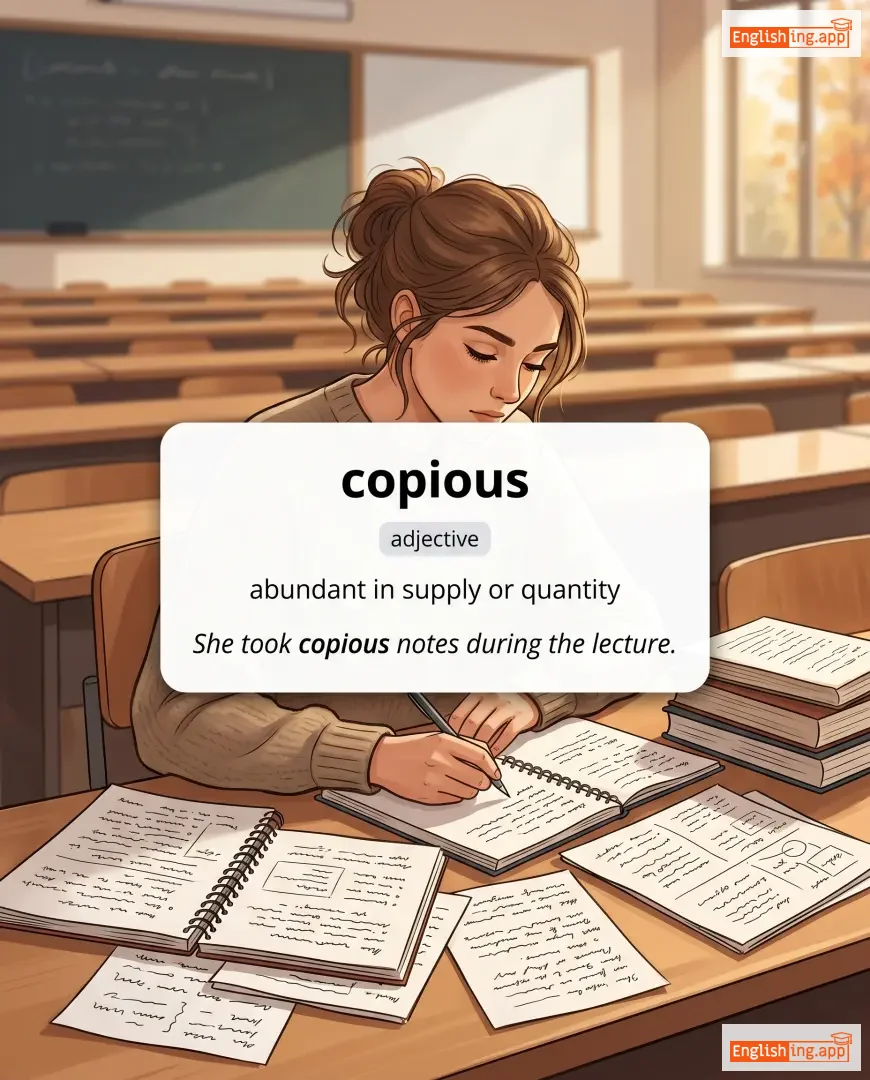
abundant in supply or quantity
••••••
|
She took copious notes during the lecture.
Shī tūk kōpiyus nōts dūring dhe lekchur.
••••••
|
Она сделала обильные записи во время лекции.
Ona sdelala ob'il'nye zapisi vo vremya lektsii.
••••••
|
- •••••• | - •••••• | - •••••• |
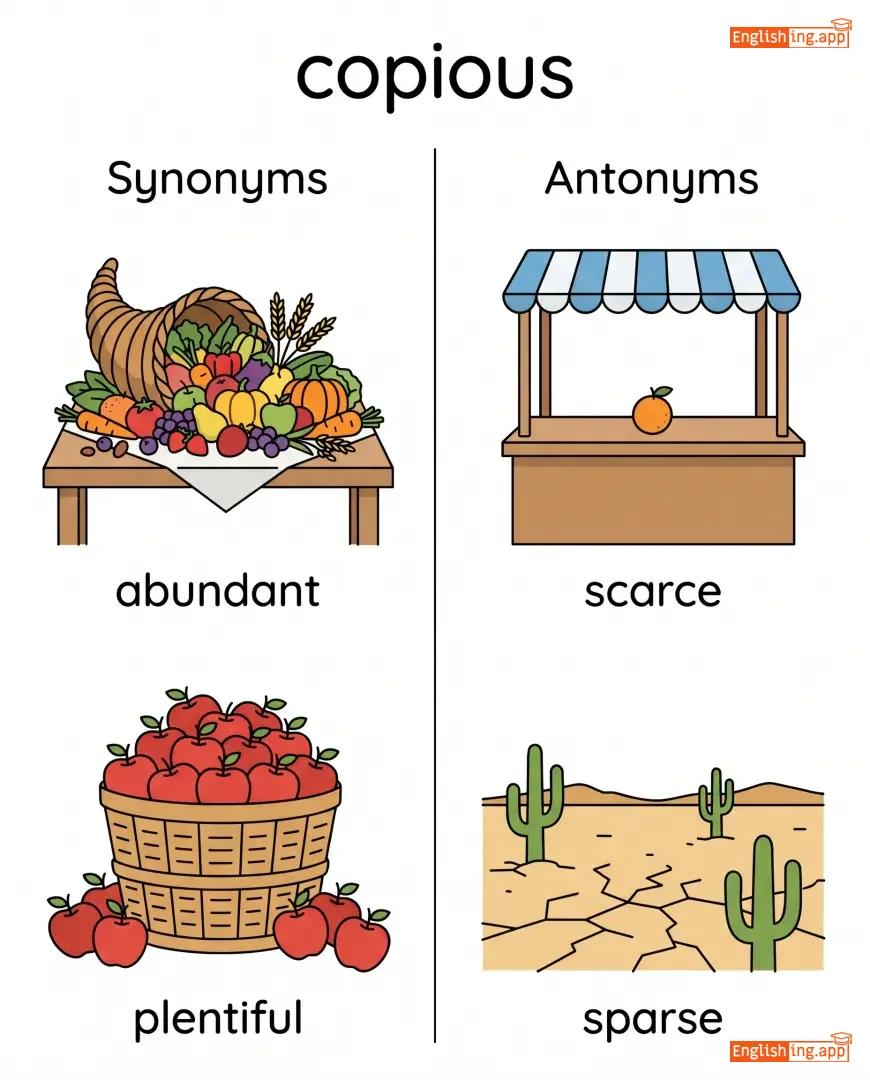
abundant, plentiful, ample, profuse
••••••
|
scarce, sparse, meager
••••••
|
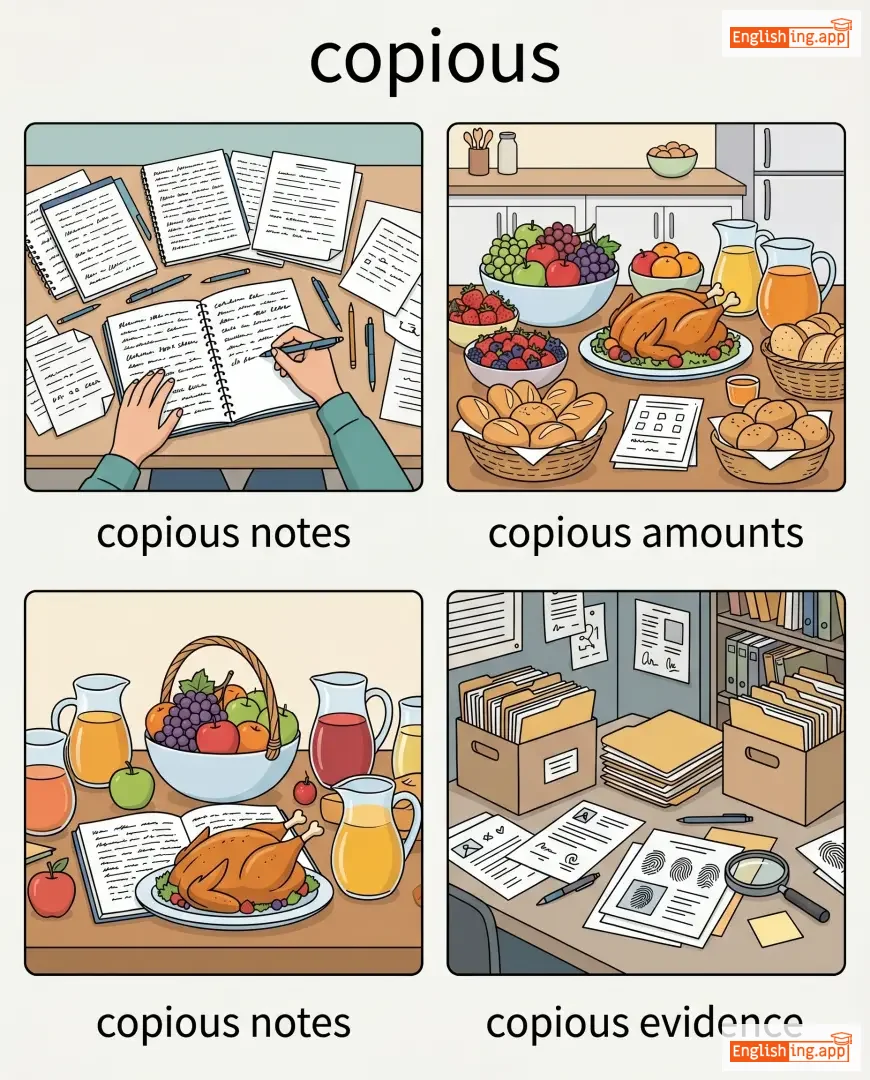
copious notes, copious amounts, copious evidence, copious writing
••••••
|
Co-PIOUS делает много записей - Обильный означает много.
••••••
|

