Market vs. Command Economies Explained
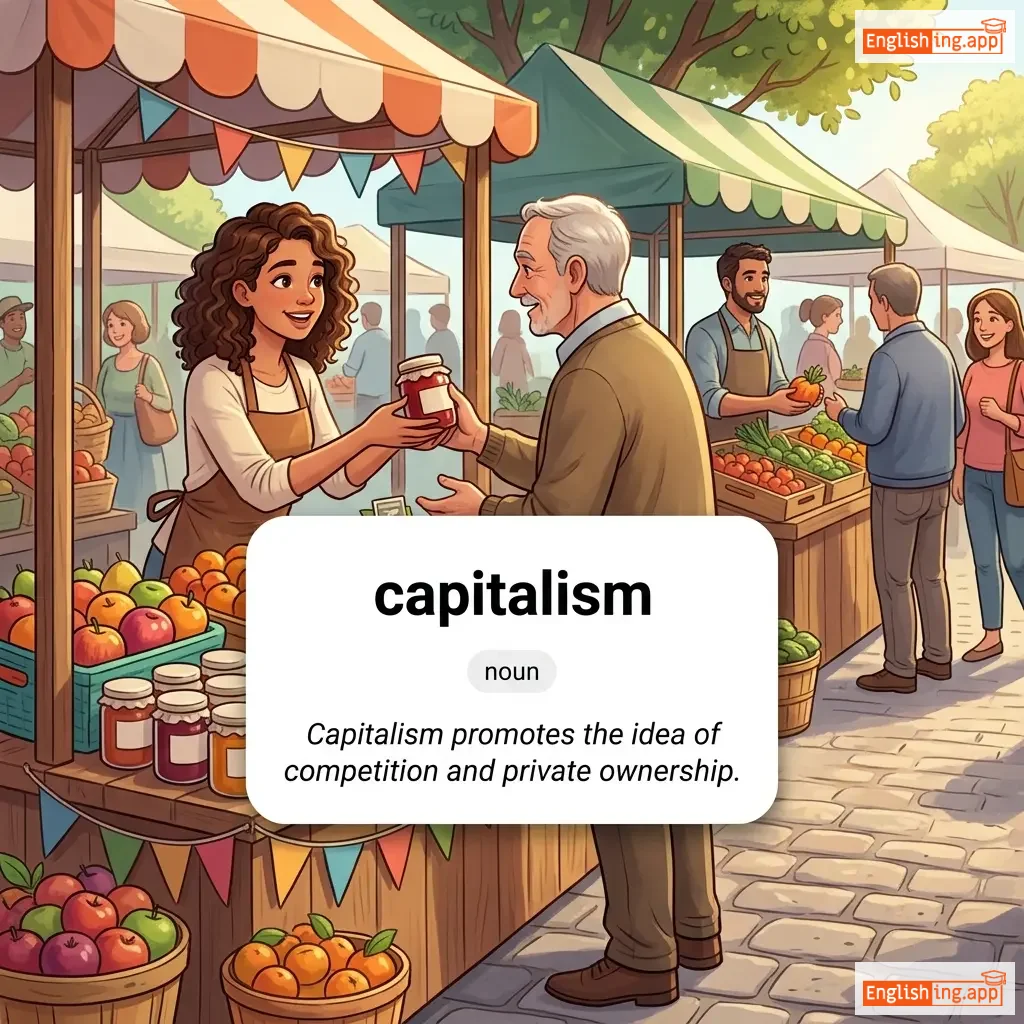
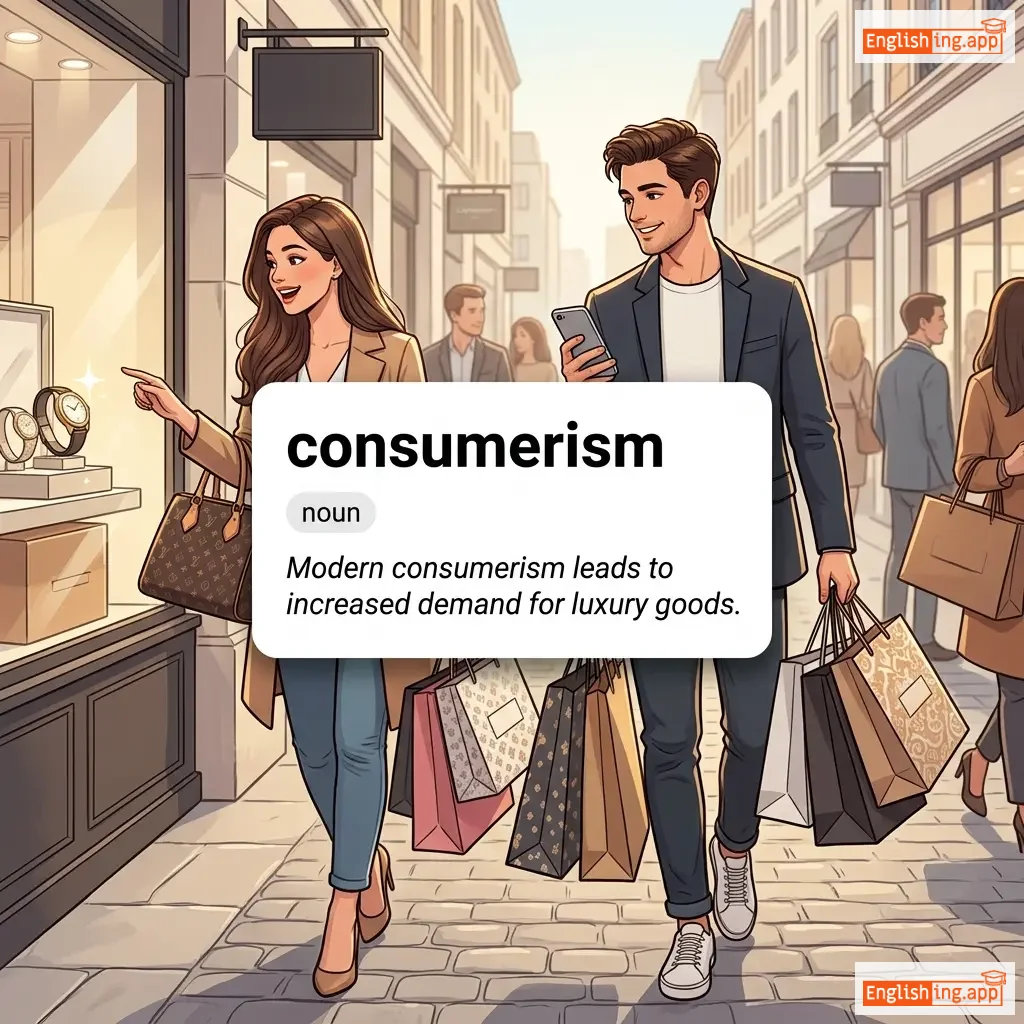
世界の経済システムは主に2種類に分けられます——market economy と command economy。Capitalism に基づく market economy では、個人所有と consumerism が重要な役割を果たし、ビジネスや commodity の価格は需要と elasticity によって決定されます。
一方、command economy では、経済の原則は centralization によって管理され、政府が資源の nationalization を行い、主要産業を支配します。ここでは bureaucracy がより顕著であり、発展が遅れることもあります。
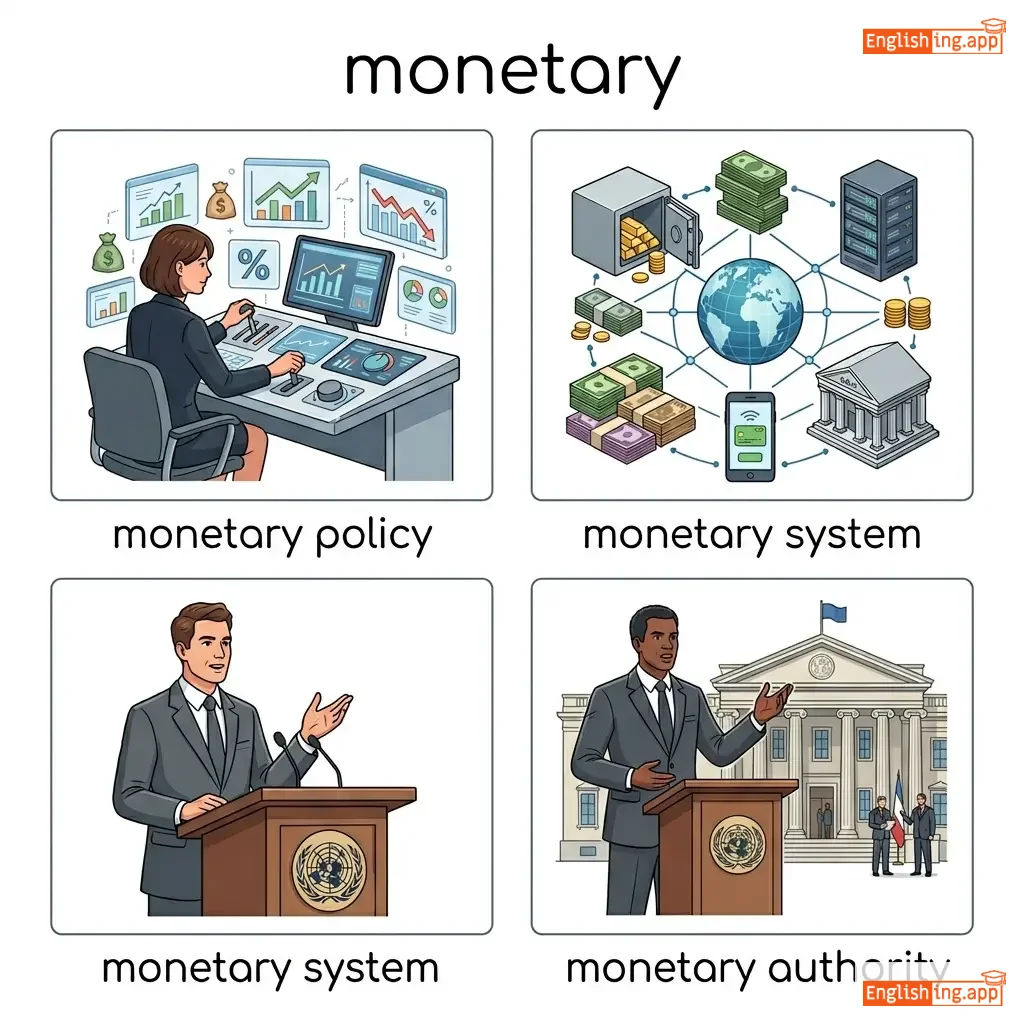
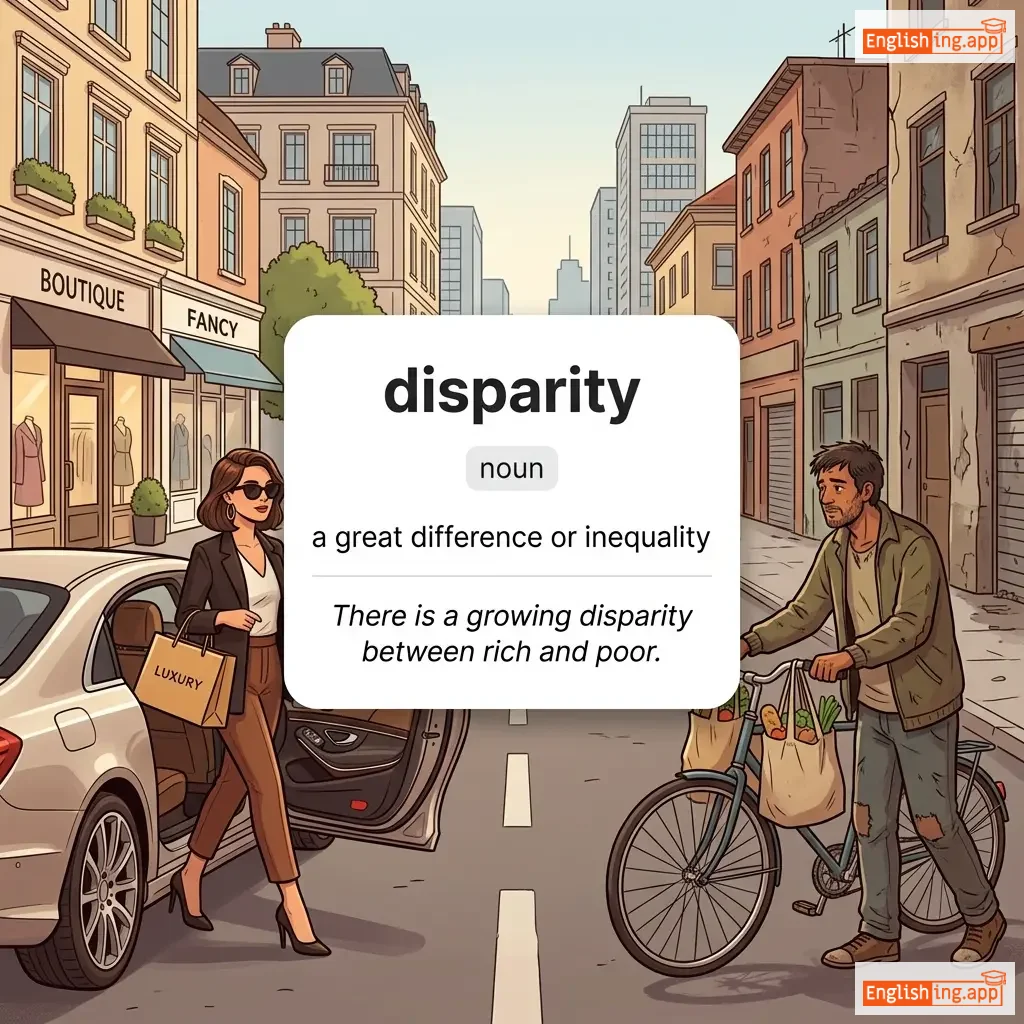
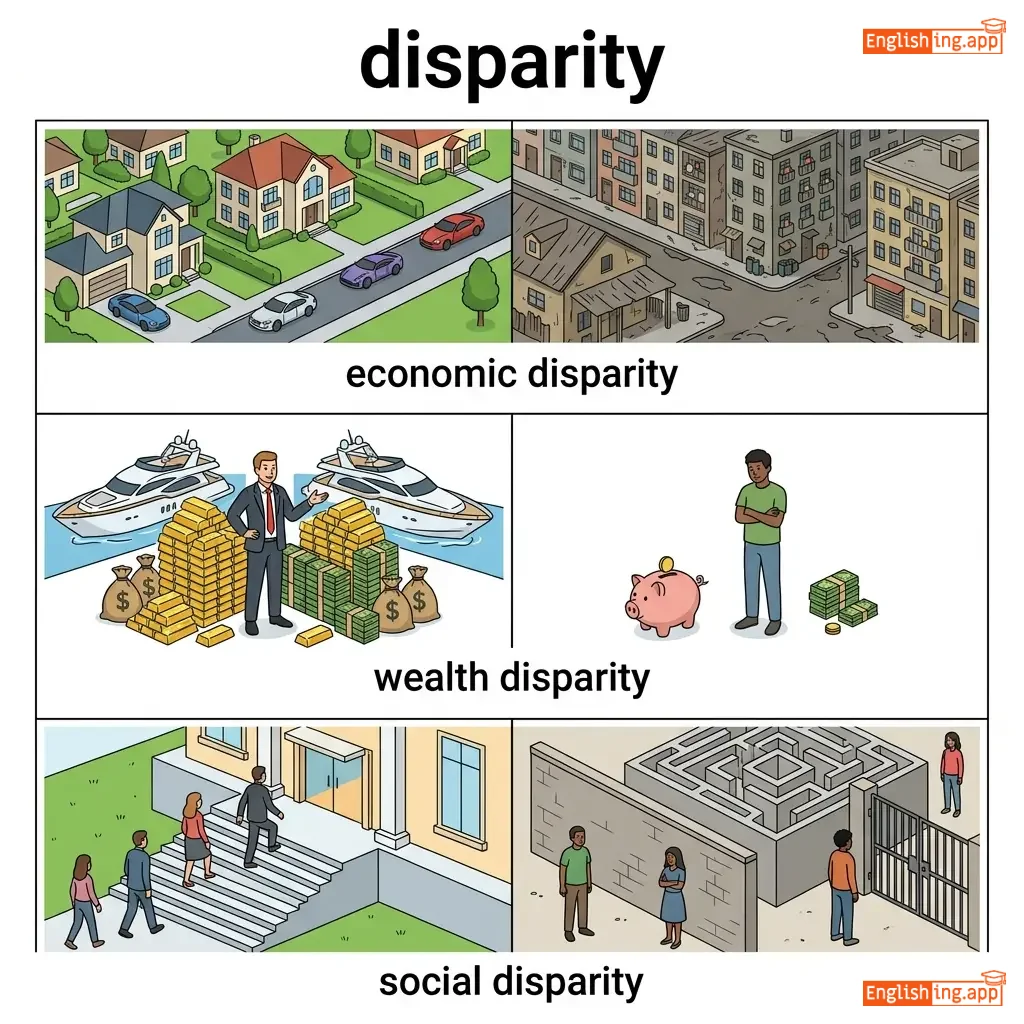
Market economy では、privatization と deregulation によって企業はより多くの自由を得て、fiscal と monetary 政策はビジネスに有利になります。しかし、これにより裕福層と貧困層の disparity が拡大する可能性があります。
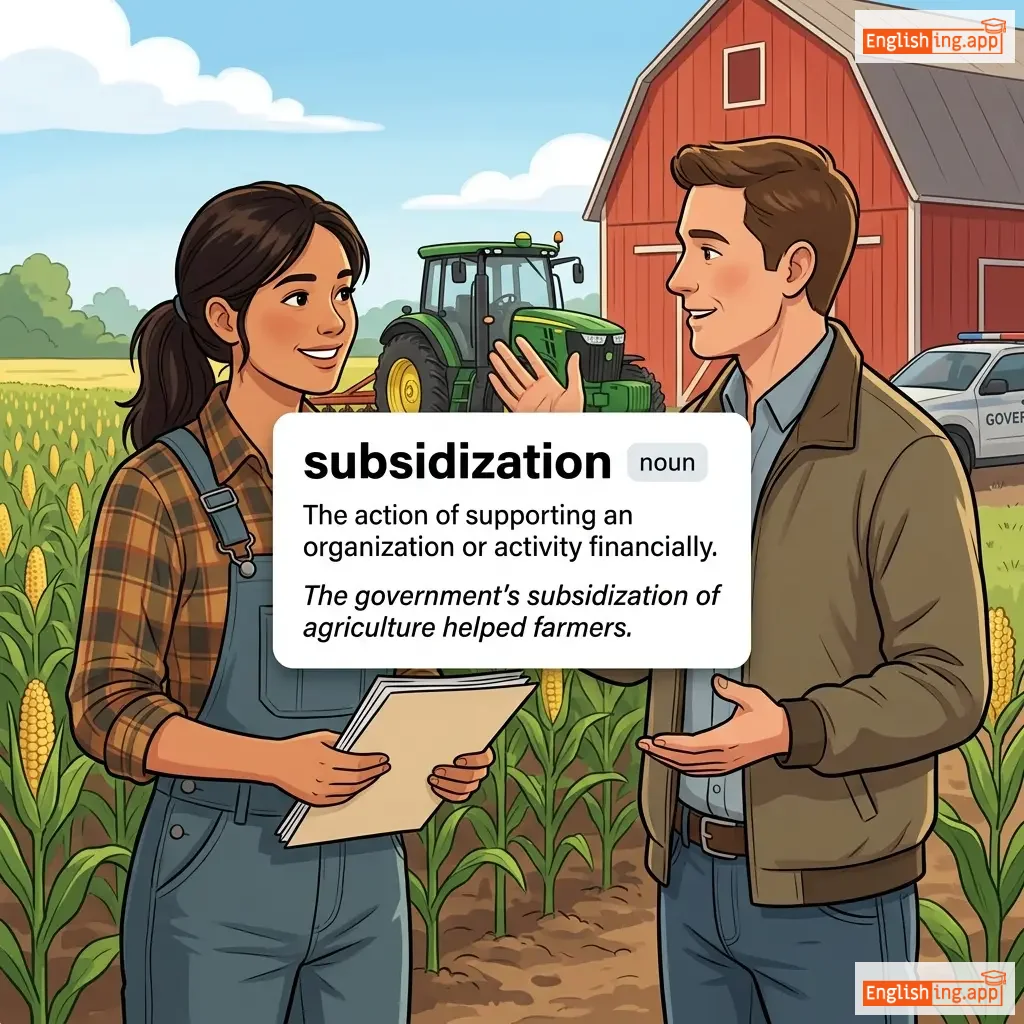
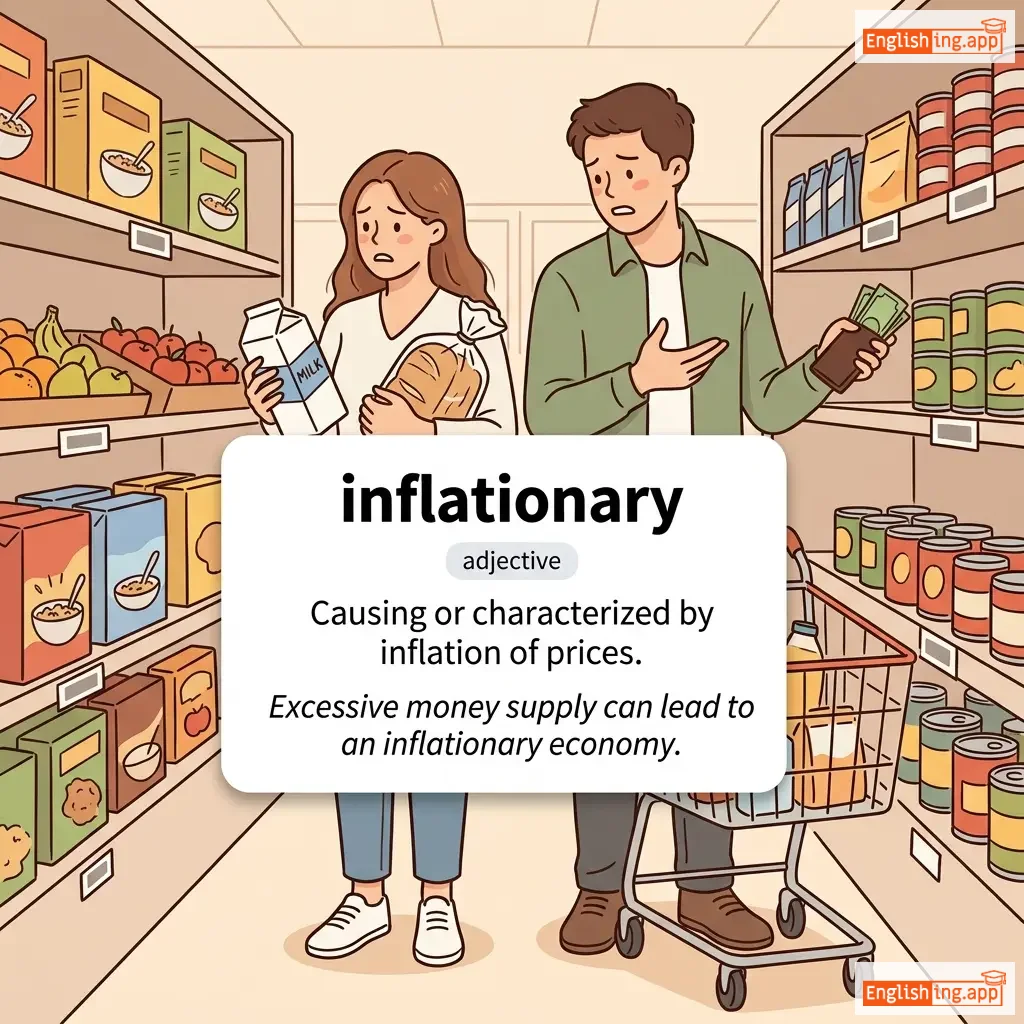
一方、command economy では、政府が subsidization を通じて人々の基本的なニーズを満たそうとしますが、inflationary 圧力を生む可能性があります。
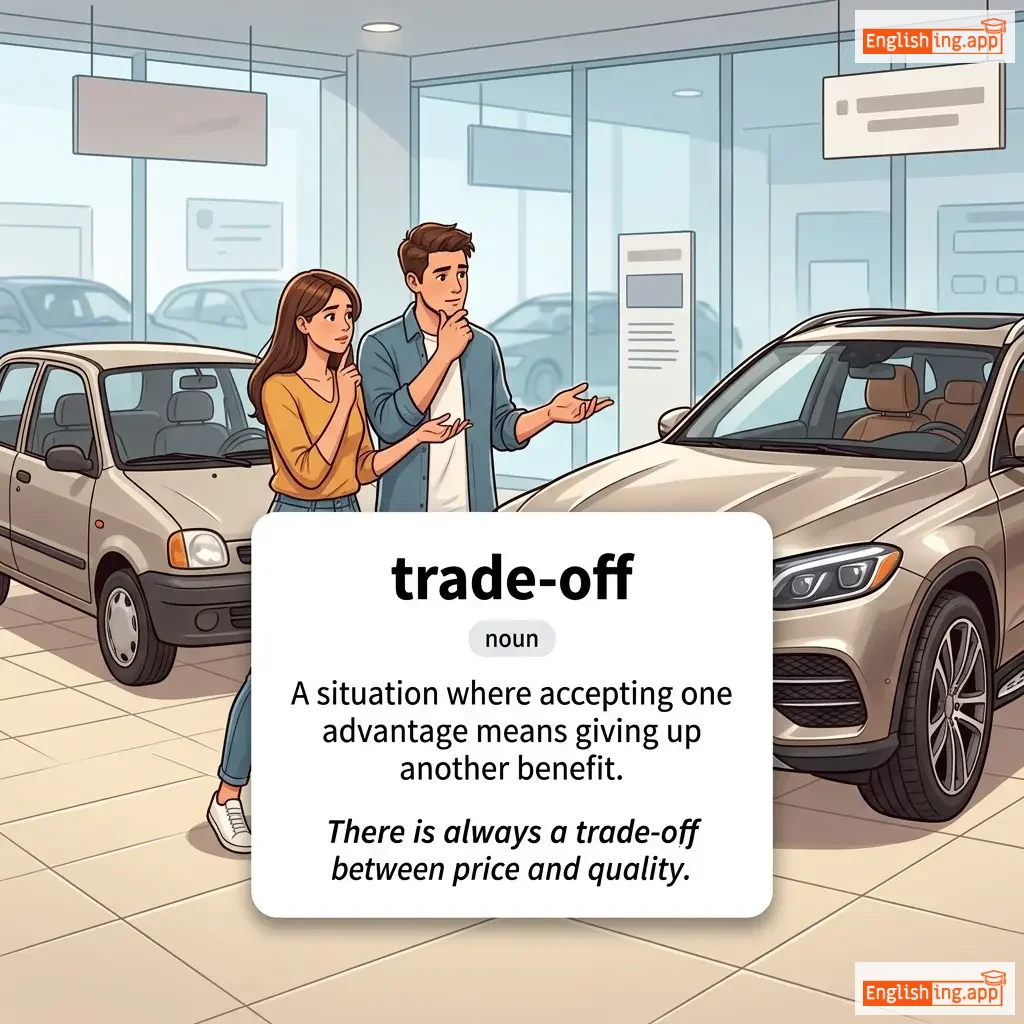
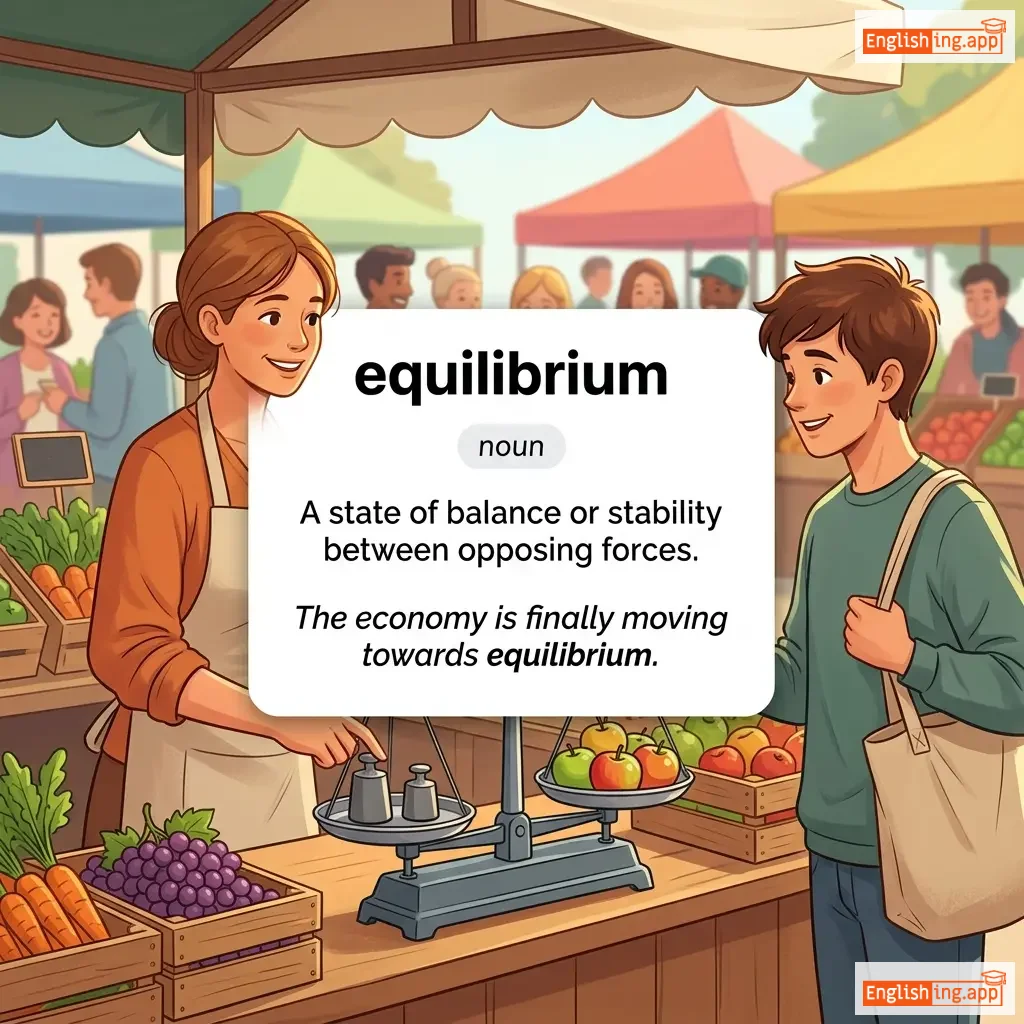
したがって、経済学では正しい trade-off を行うことが重要であり、equilibrium を維持し、scarcity を減らす必要があります。
|
絵文字
|
単語 | Images | 意味 | 例文 | 同義語 | 対義語 |
|---|---|---|---|---|---|---|
|
#2523
📈
|
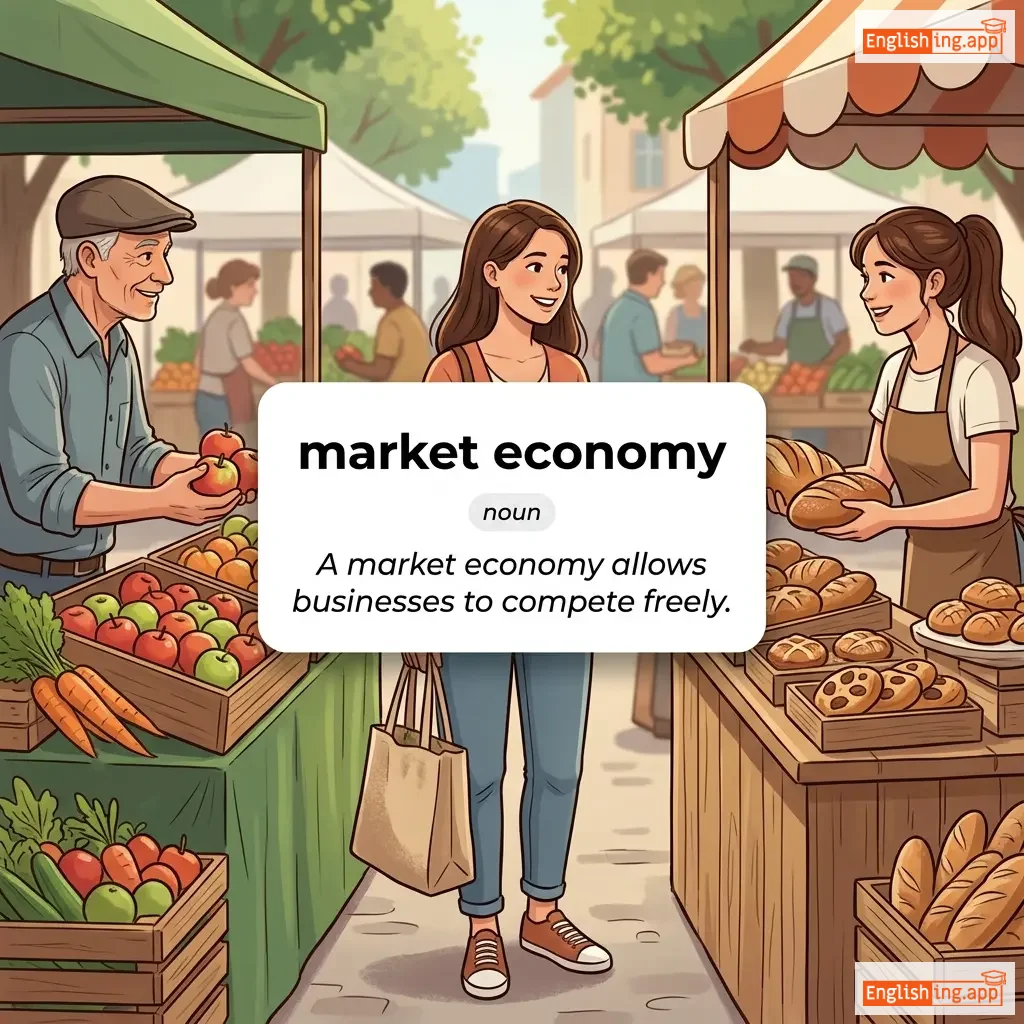
ˈmɑːr.kɪt ɪˈkɒn.ə.mi
noun
••••••
|
|
An economic system where production and pricing decisions are controlled by individuals and based on supply and demand.
••••••
|
A market economy allows businesses to compete freely. |
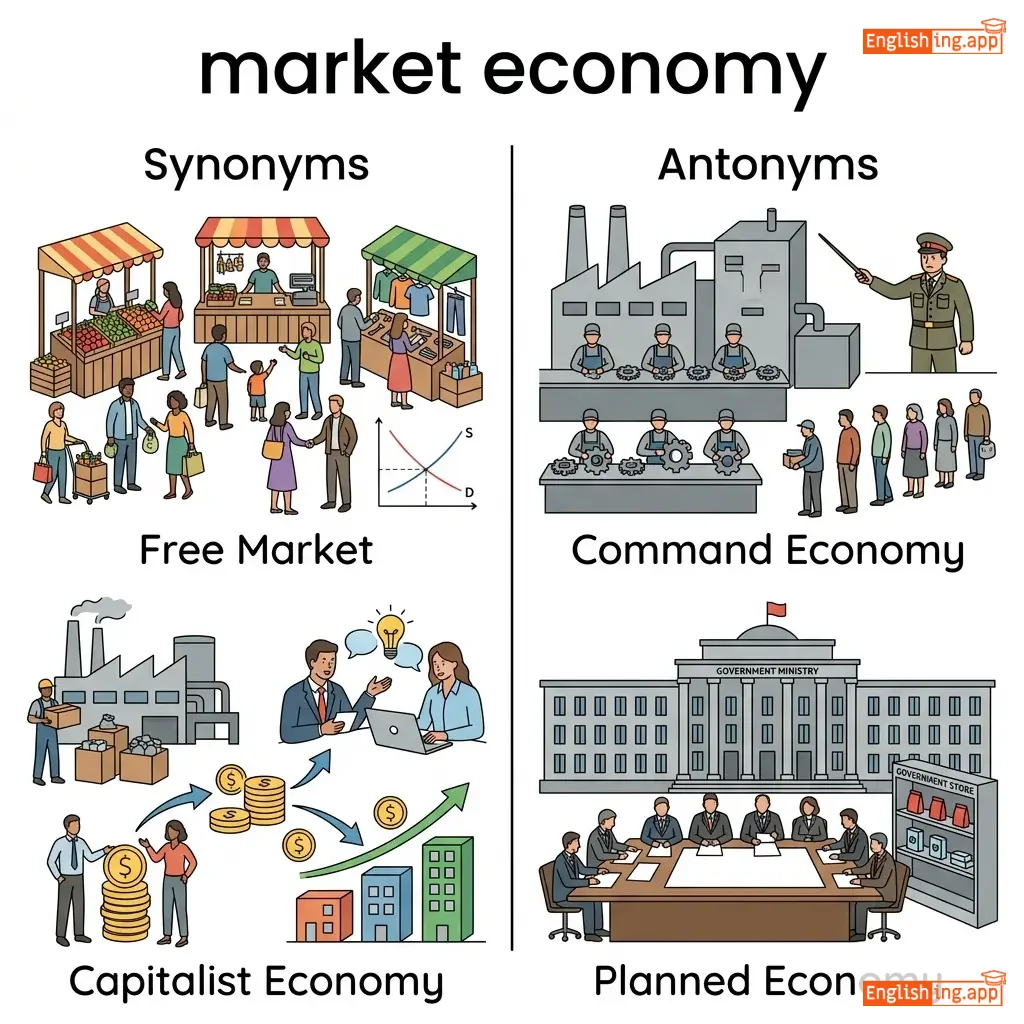
Free Market, Capitalist Economy, Laissez-faire System
••••••
|
Command Economy, Planned Economy, State-controlled Economy
••••••
|
|
#2524
🏛️
|
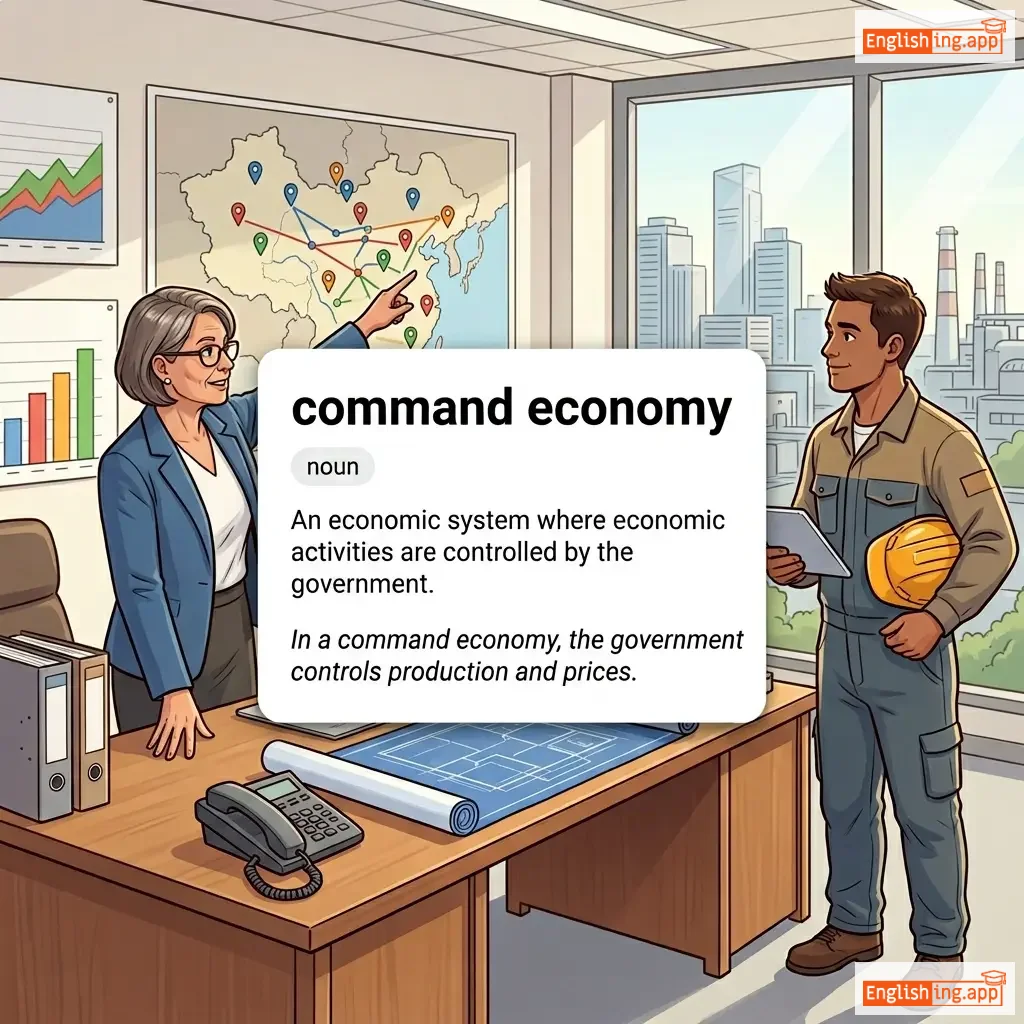
kəˈmɑːnd ɪˈkɒn.ə.mi
noun
••••••
|
|
An economic system where economic activities are controlled by the government.
••••••
|
In a command economy, the government controls production and prices. |
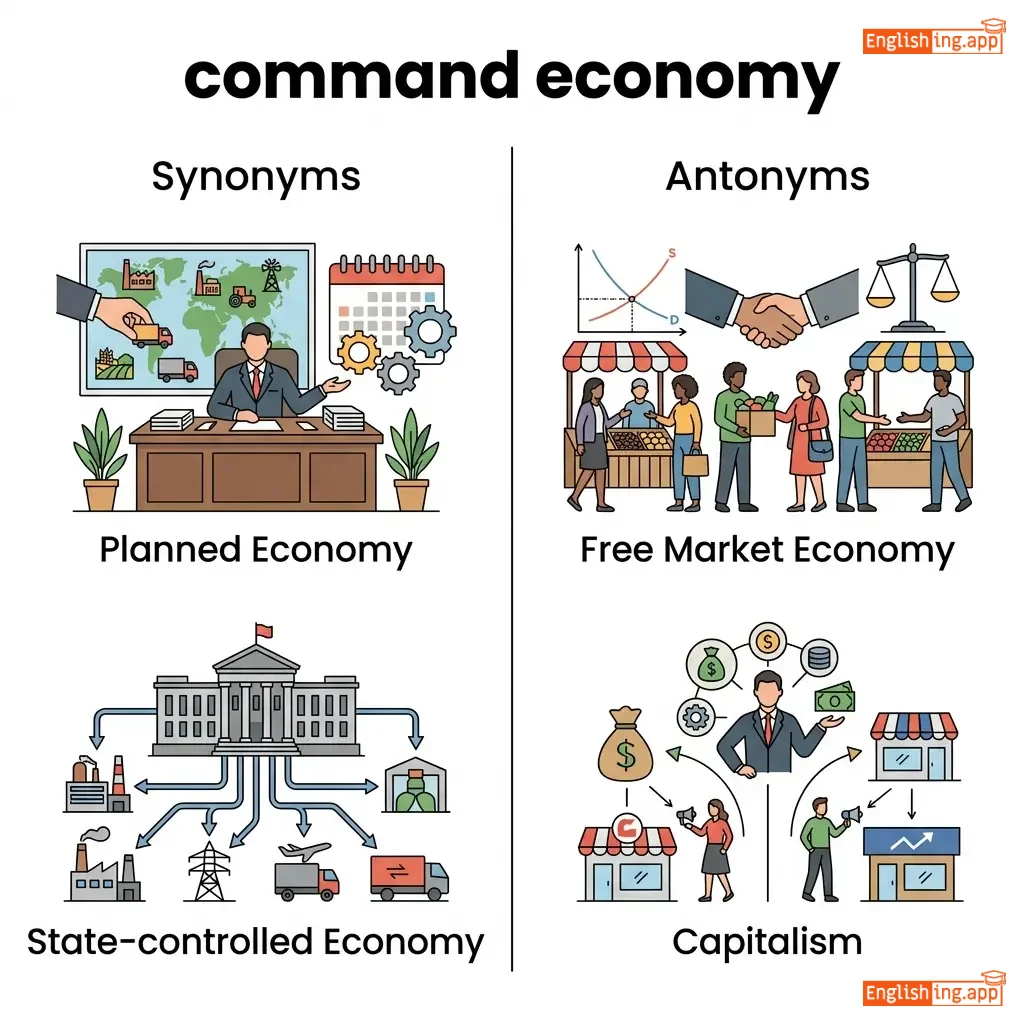
Planned Economy, State-controlled Economy, Centralized Economy
••••••
|
Free Market Economy, Capitalism, Deregulated Economy
••••••
|
|
#2525
💰
|
ˈkæp.ɪ.təl.ɪ.zəm
noun
••••••
|
|
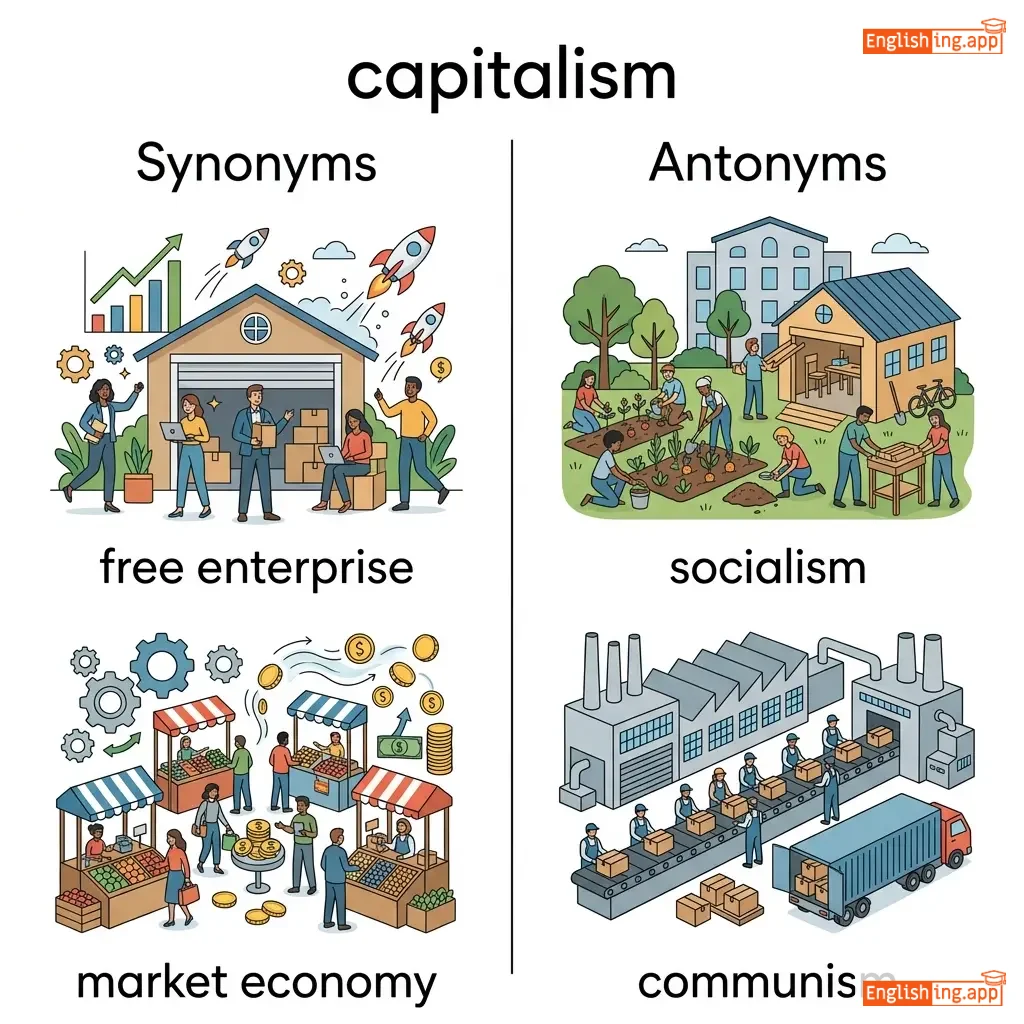
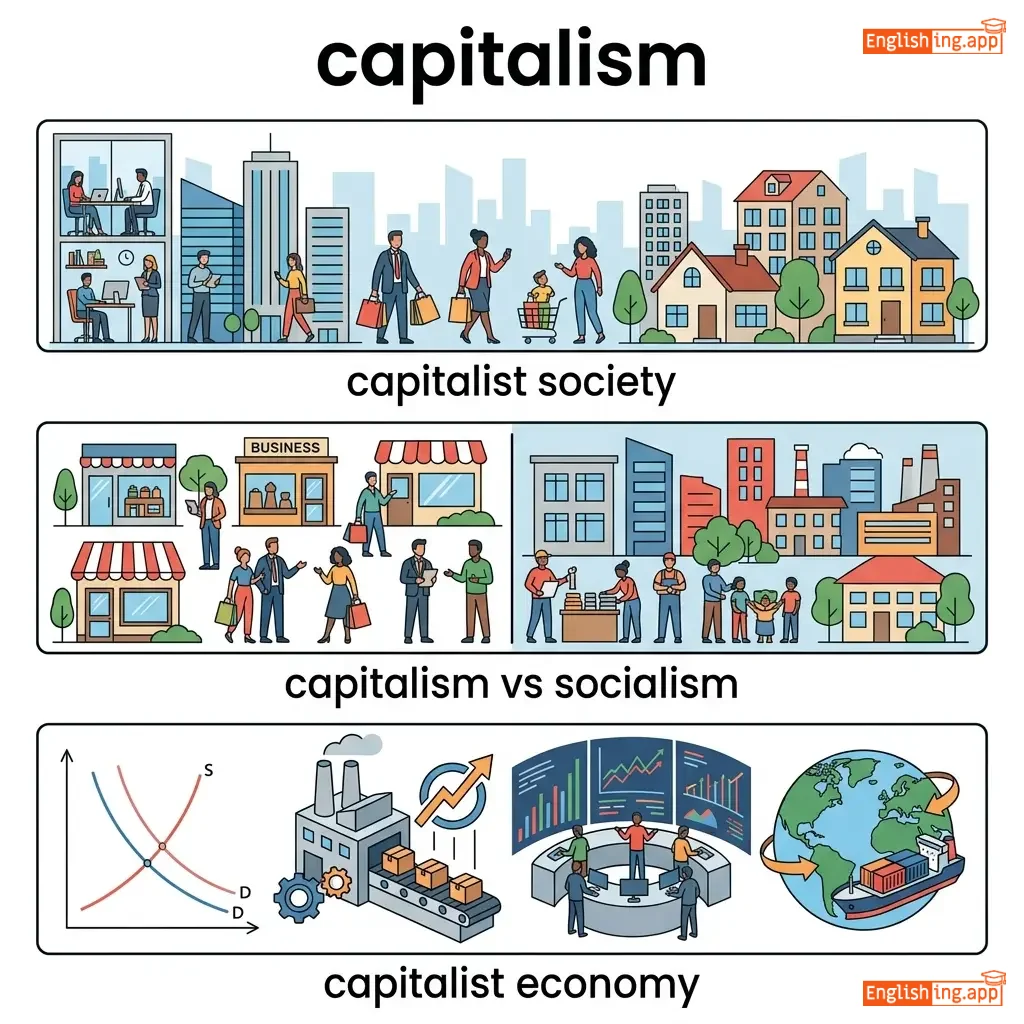
An economic system where trade, industry and production are privately owned and operated for profit.
••••••
|
Capitalism encourages innovation and competition. |
Free Enterprise, Market System, Private Ownership
••••••
|
Socialism, Communism, Collectivism
••••••
|
|
#2526
🛒
|
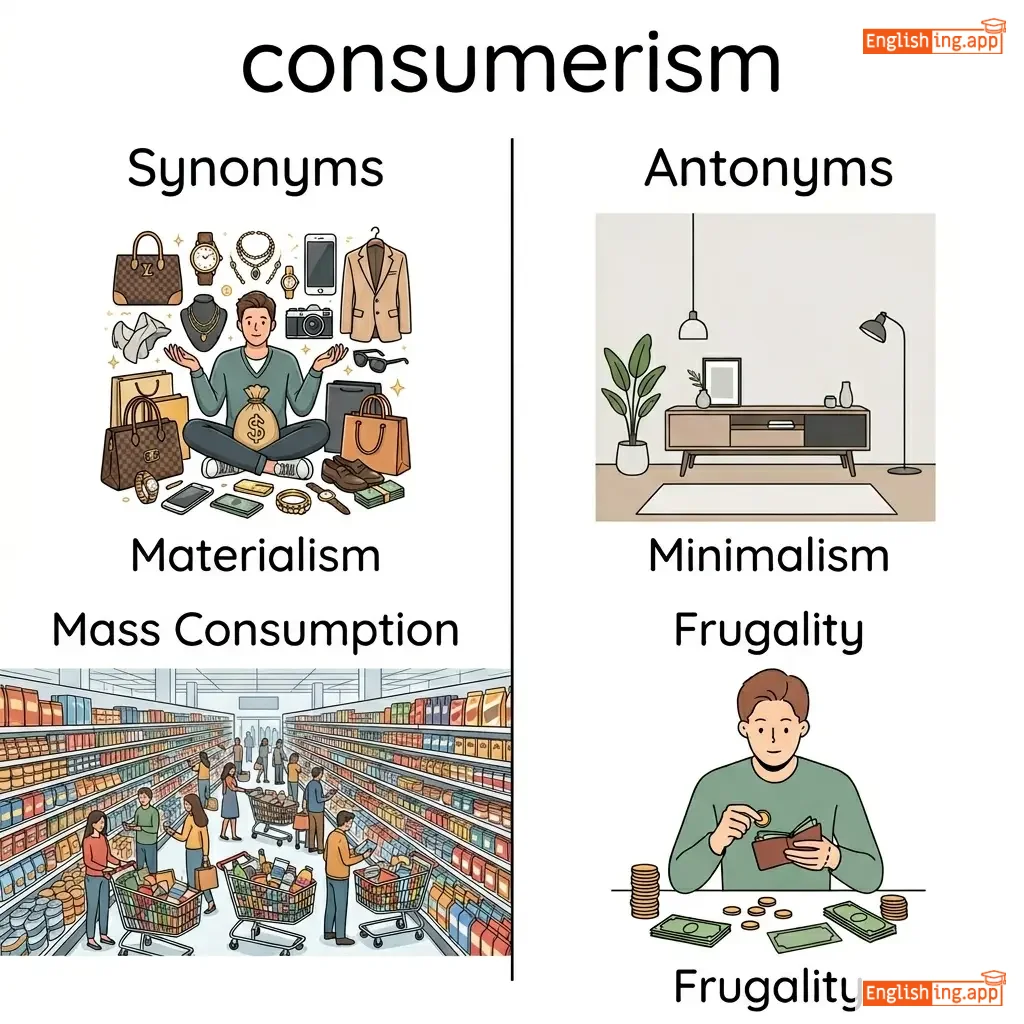
kənˈsjuː.mə.rɪ.zəm
noun
••••••
|
|
The tendency to increase consumption of goods and the importance given to consuming products.
••••••
|
Modern consumerism leads to increased demand for luxury goods. |
Materialism, Mass Consumption, Commercialism
••••••
|
Minimalism, Frugality, Anti-consumption
••••••
|
|
#2527
📦
|
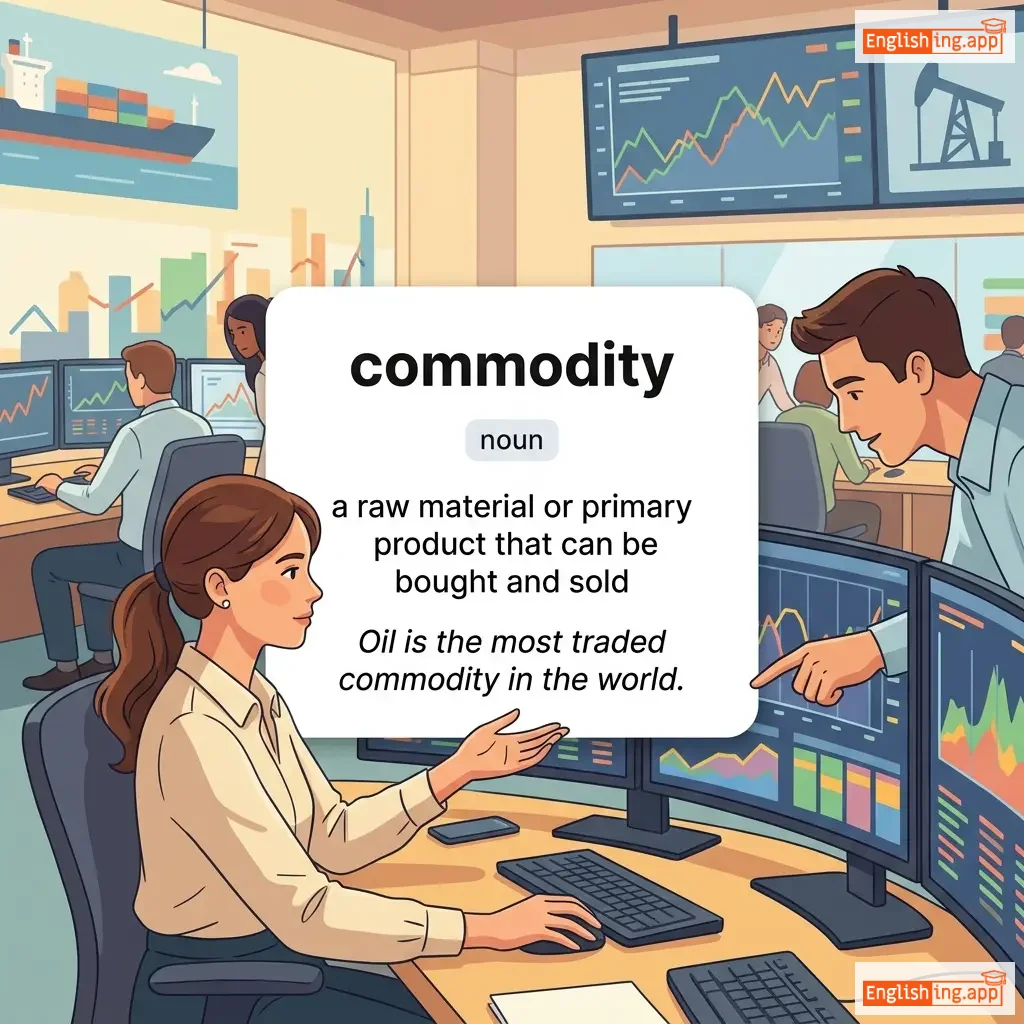
kəˈmɒd.ə.ti
noun
••••••
|
|
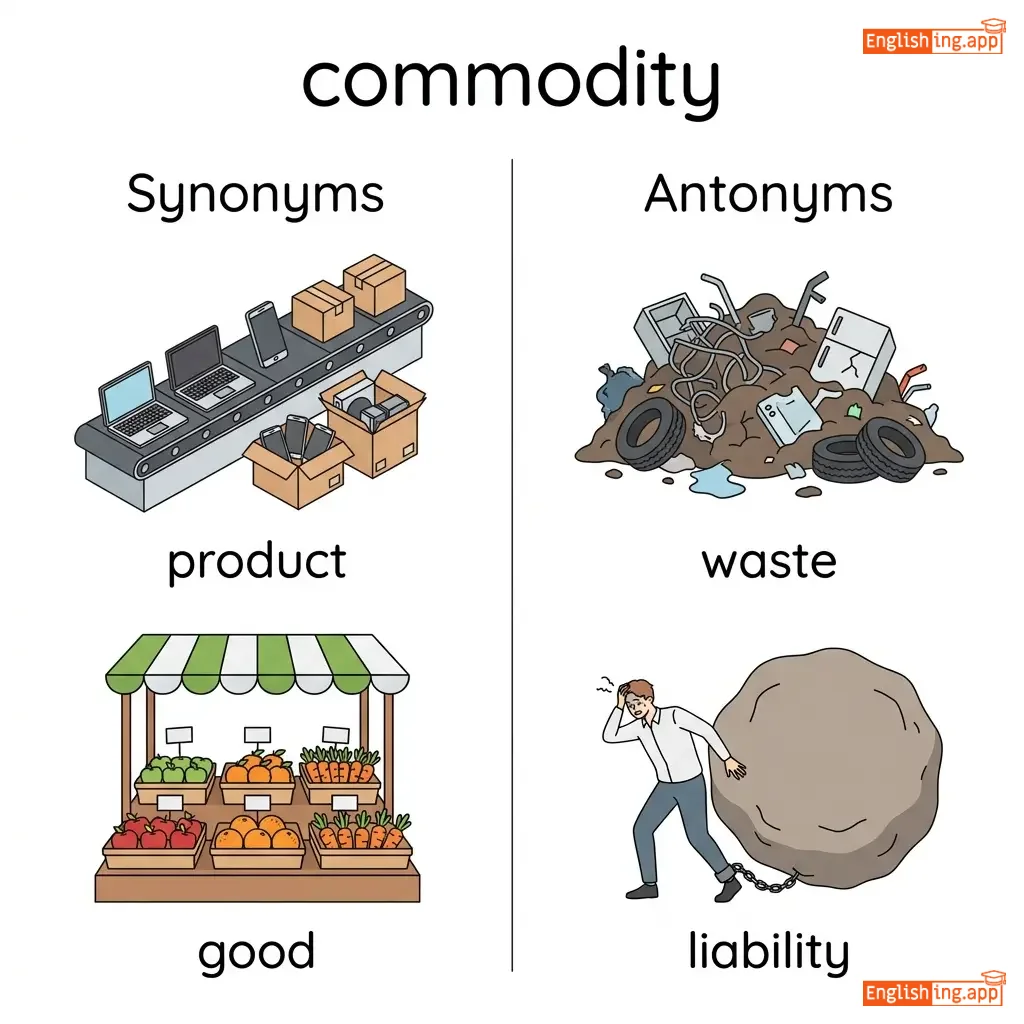
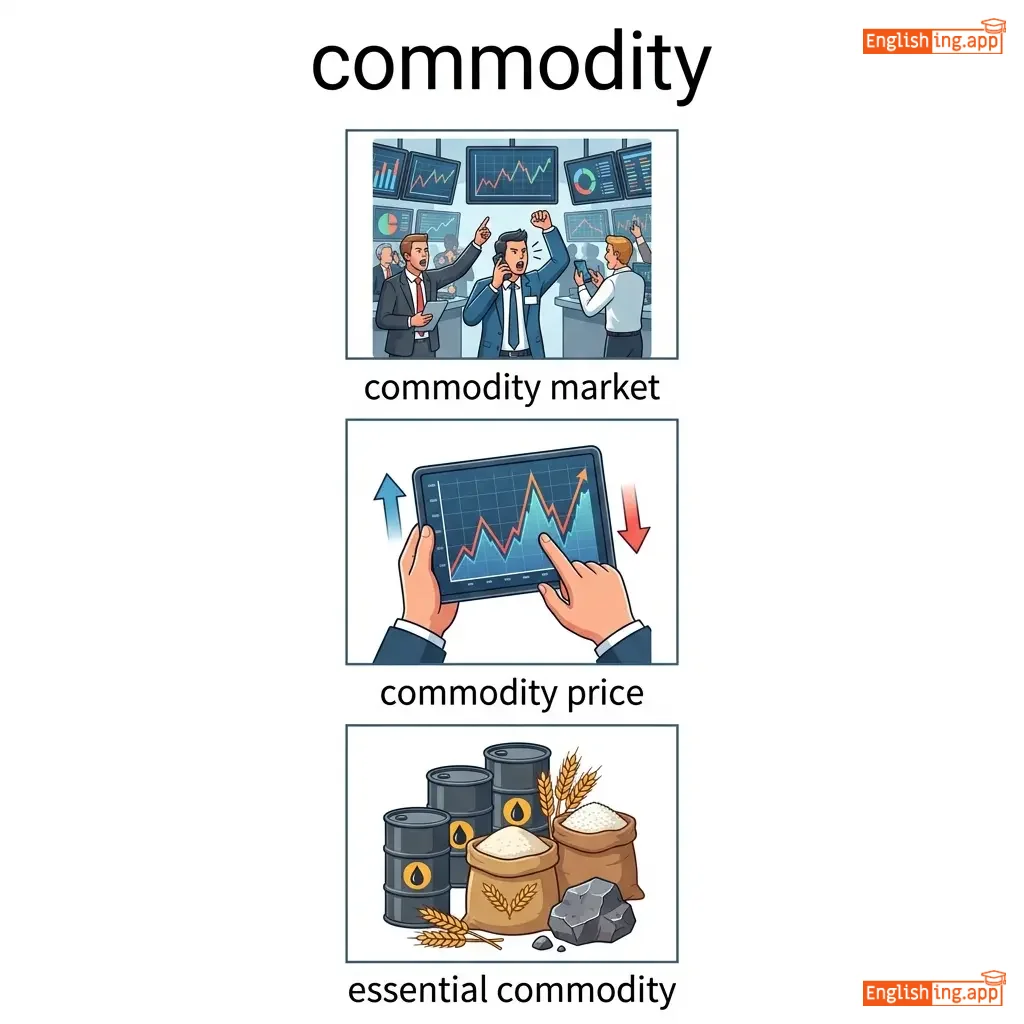
A raw material or primary agricultural product that can be bought and sold.
••••••
|
Oil is a valuable commodity in the global market. |
Goods, Merchandise, Trade Product
••••••
|
Non-tradable Item, Service, Liability
••••••
|
|
#2528
📊
|
ɪˌlæˈstɪs.ə.ti
noun
••••••
|
|
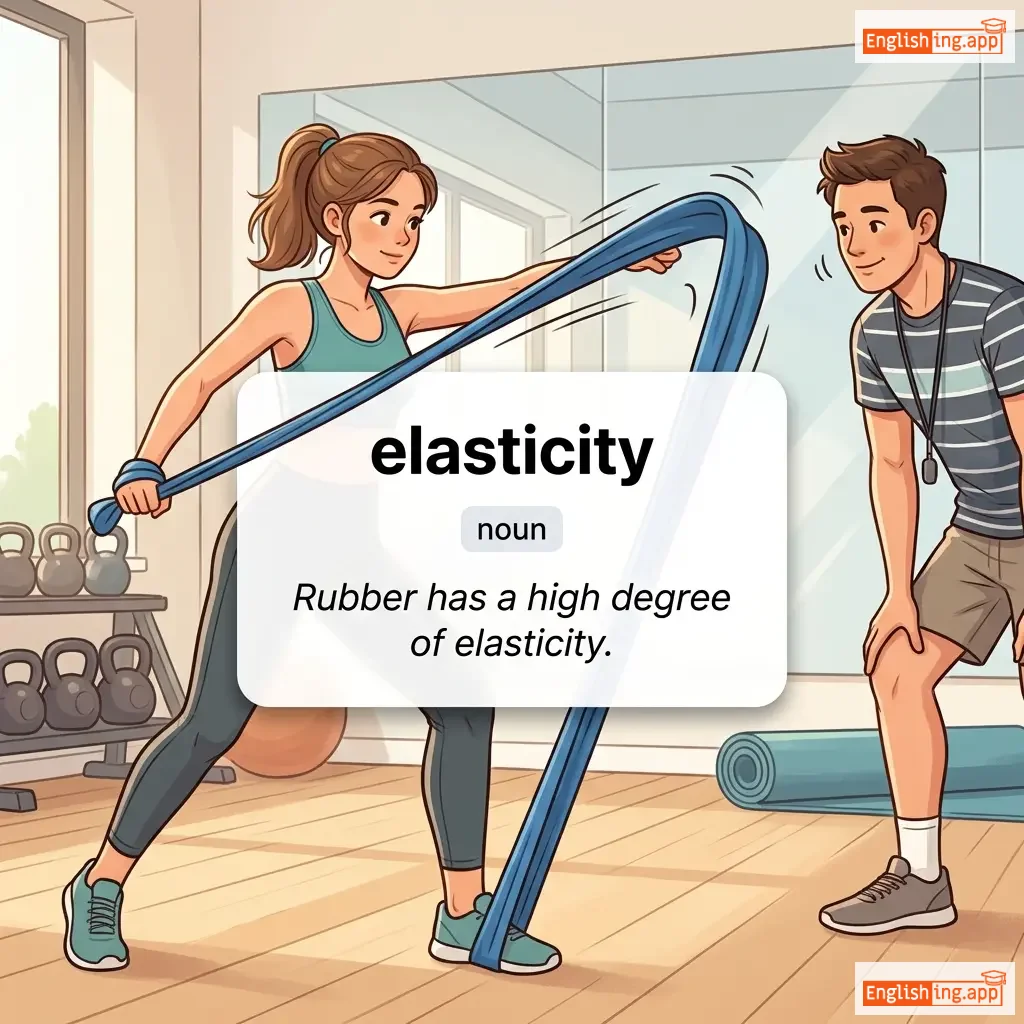
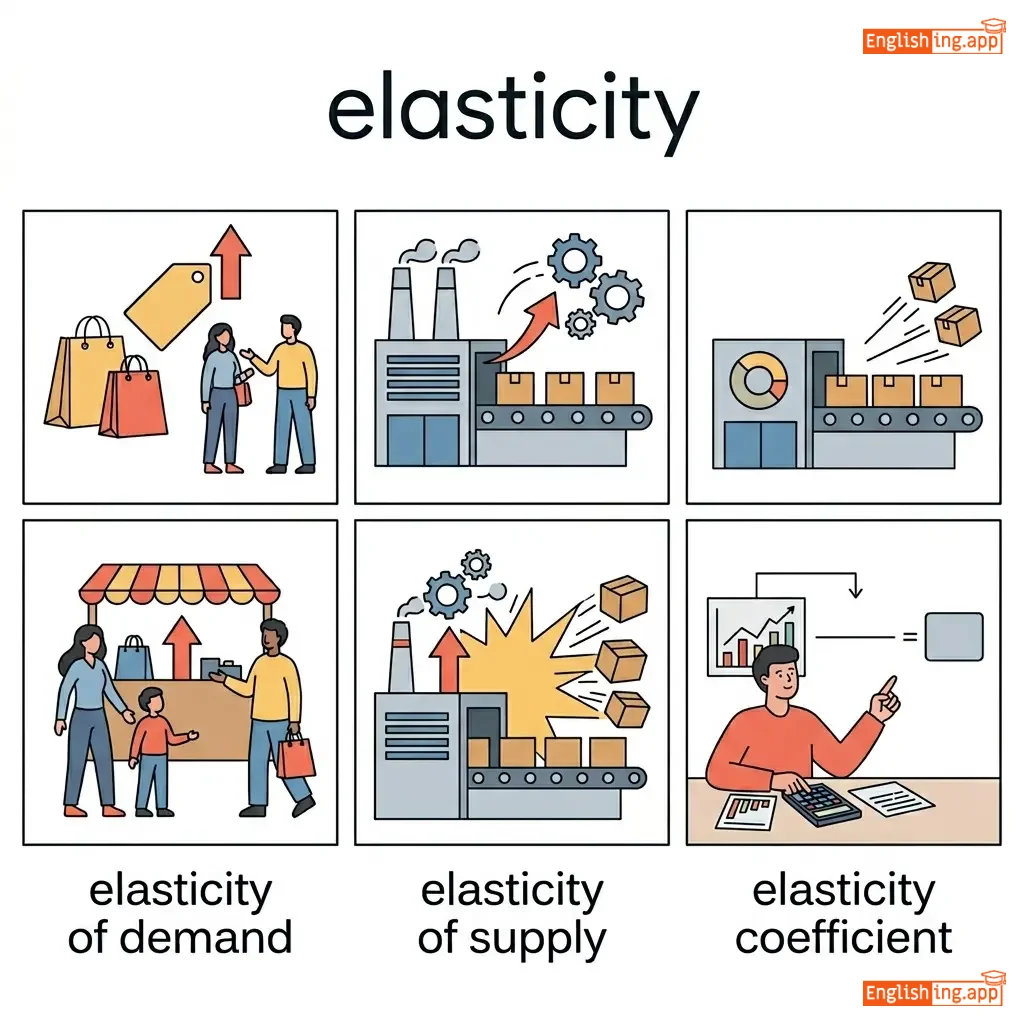
The responsiveness of demand or supply to changes in price.
••••••
|
The elasticity of demand for luxury goods is high. |
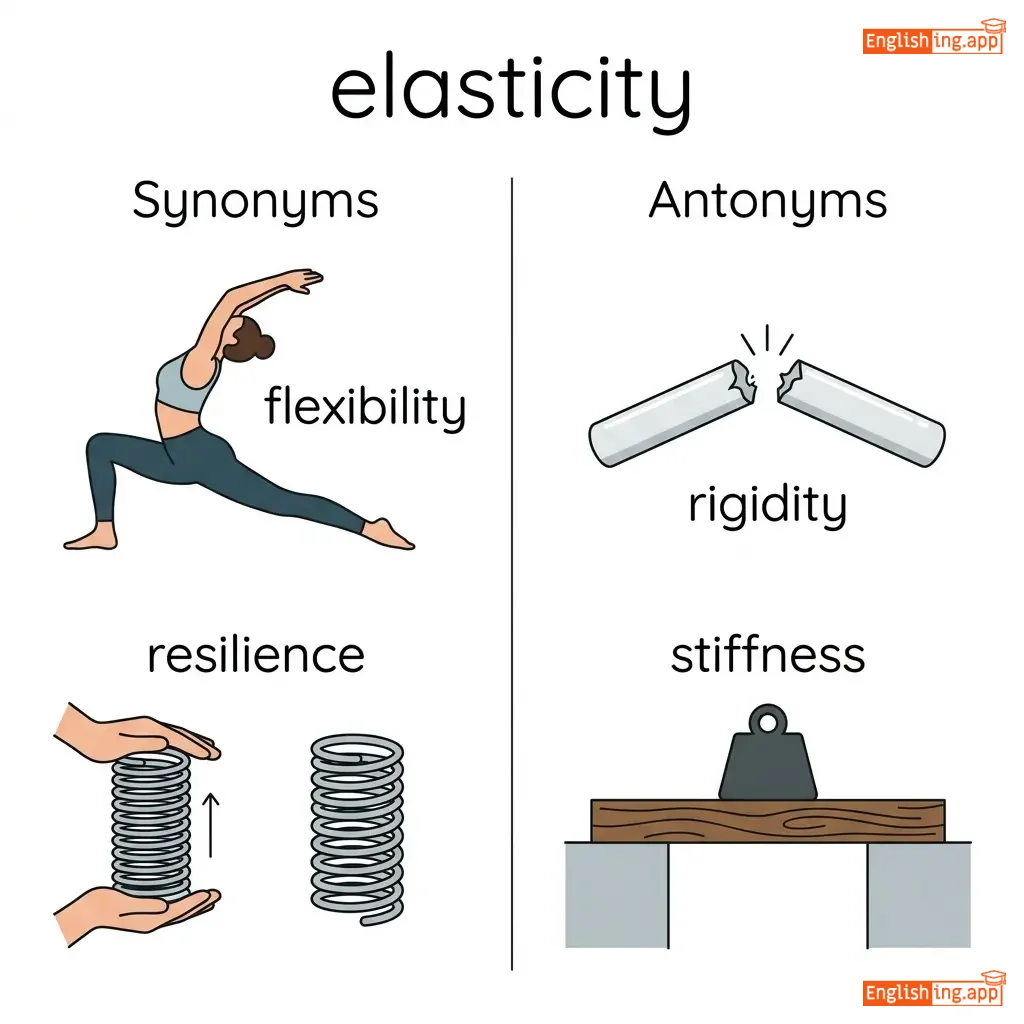
Responsiveness, Flexibility, Adaptability
••••••
|
Rigidity, Inflexibility, Inelasticity
••••••
|
|
#2529
🎯
|
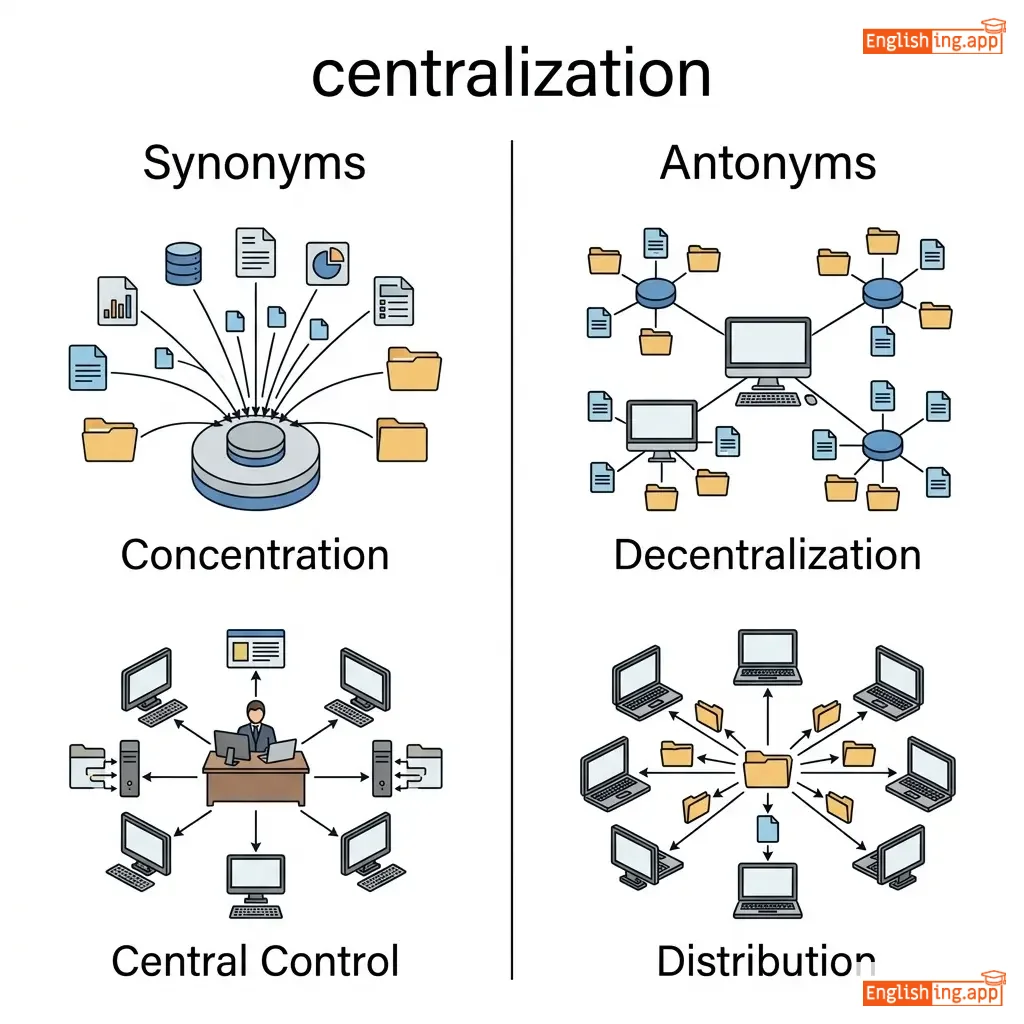
ˌsɛn.trə.laɪˈzeɪ.ʃən
noun
••••••
|
|
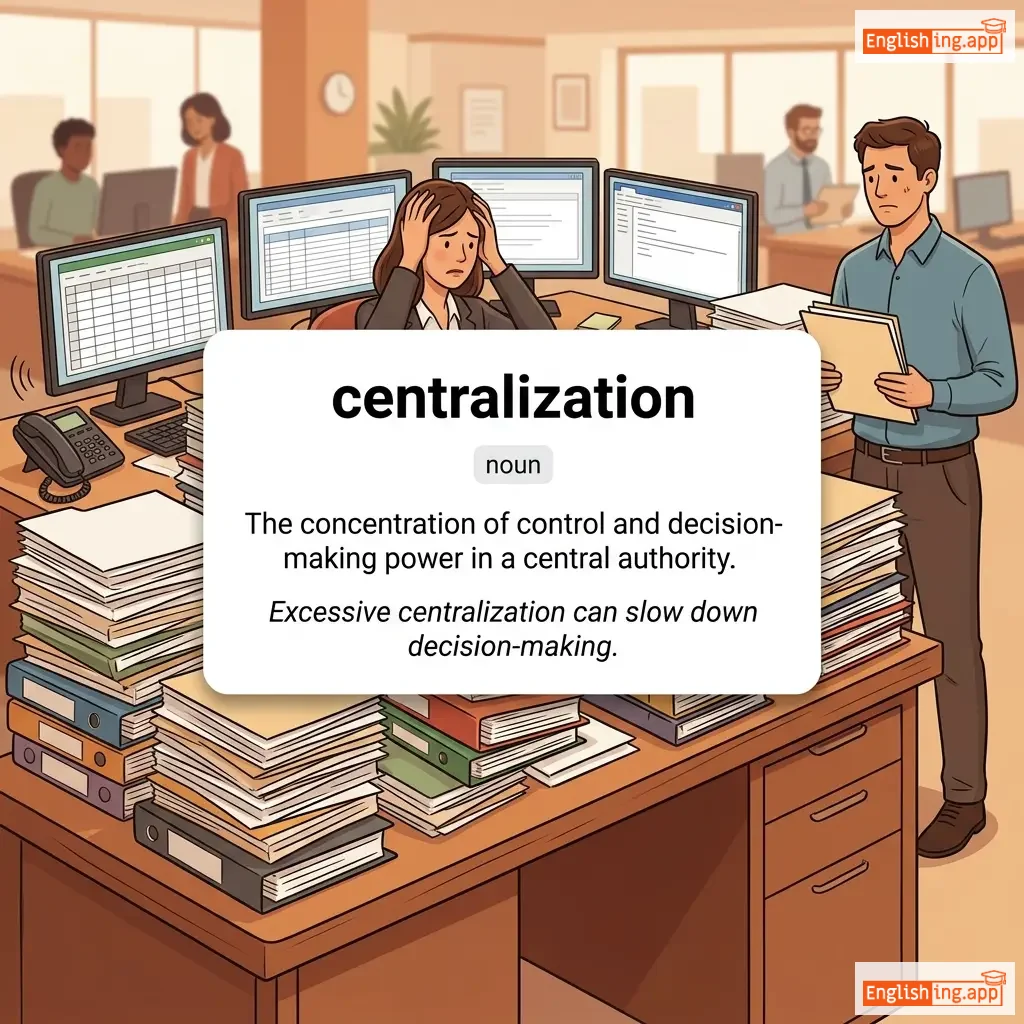
The concentration of control and decision-making power in a central authority.
••••••
|
Excessive centralization can slow down decision-making. |
Concentration, Central Control, Consolidation
••••••
|
Decentralization, Distribution, Delegation
••••••
|
|
#2530
🏛️
|
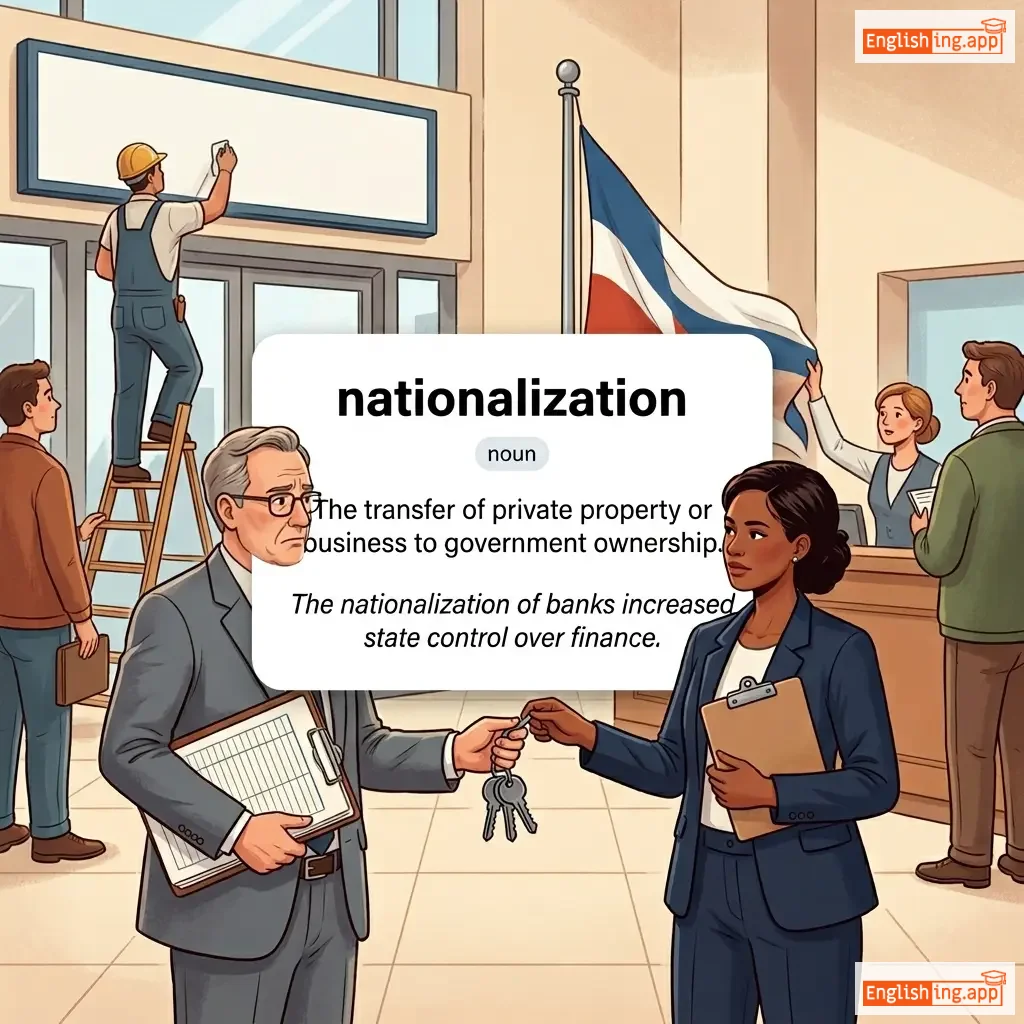
ˌnæʃ.ən.ə.laɪˈzeɪ.ʃən
noun
••••••
|
|
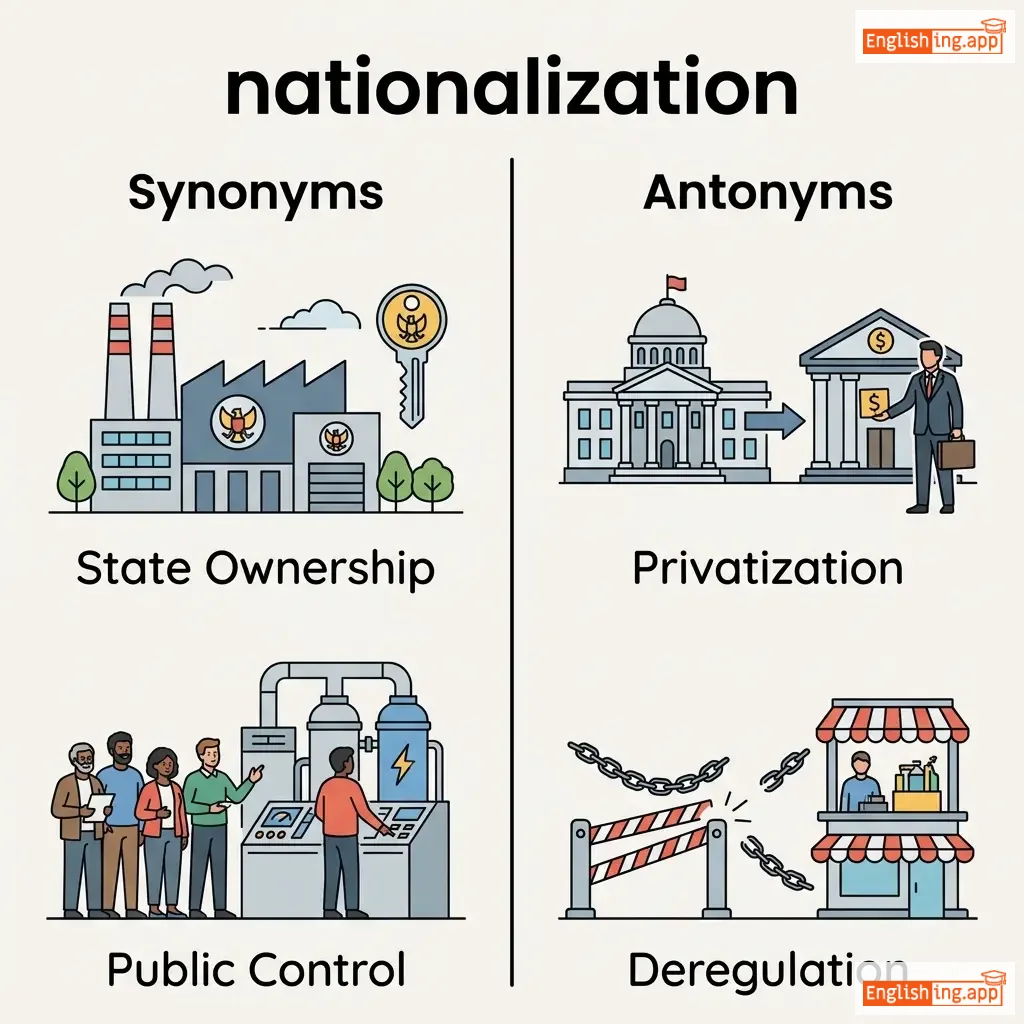
The process of a government taking control of private property or industry.
••••••
|
The nationalization of banks was aimed at stabilizing the economy. |
State Ownership, Public Control, Government Takeover
••••••
|
Privatization, Deregulation, Free Marketization
••••••
|
|
#2531
📋
|
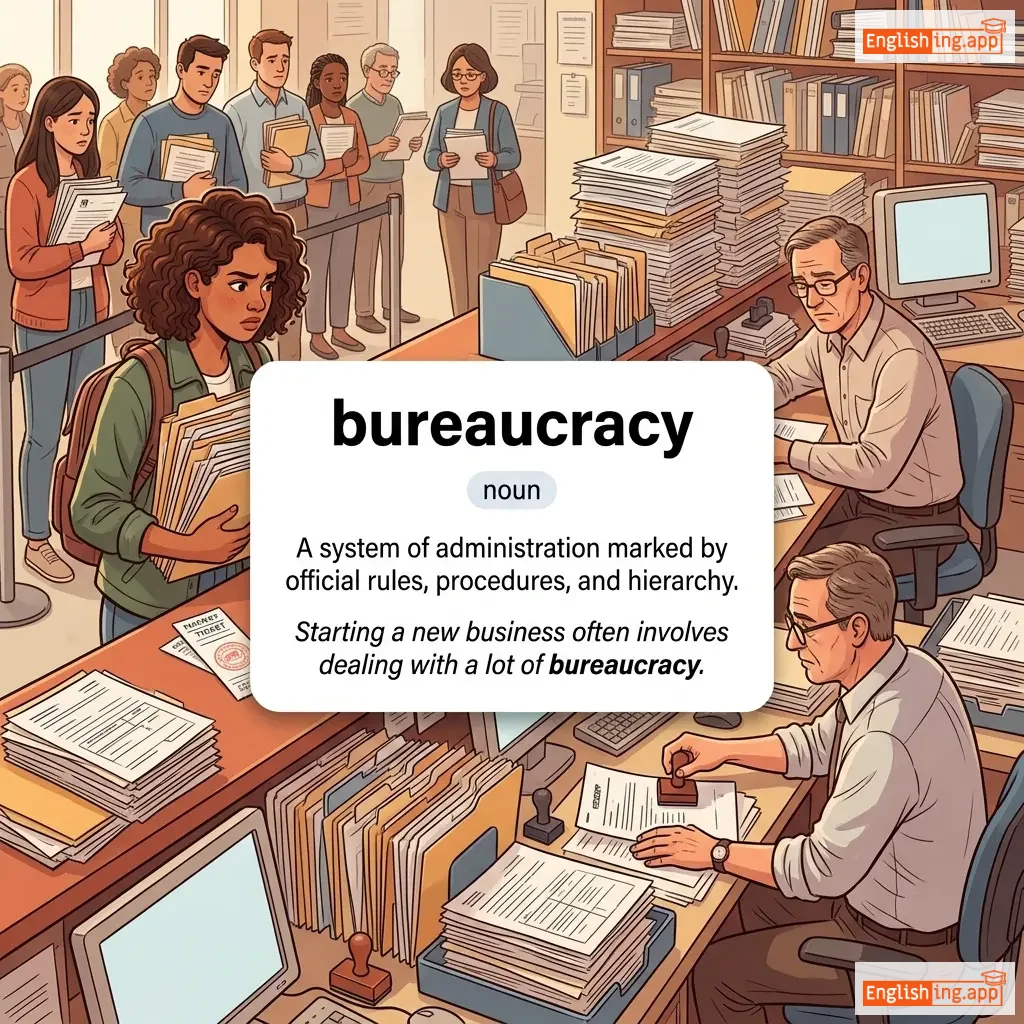
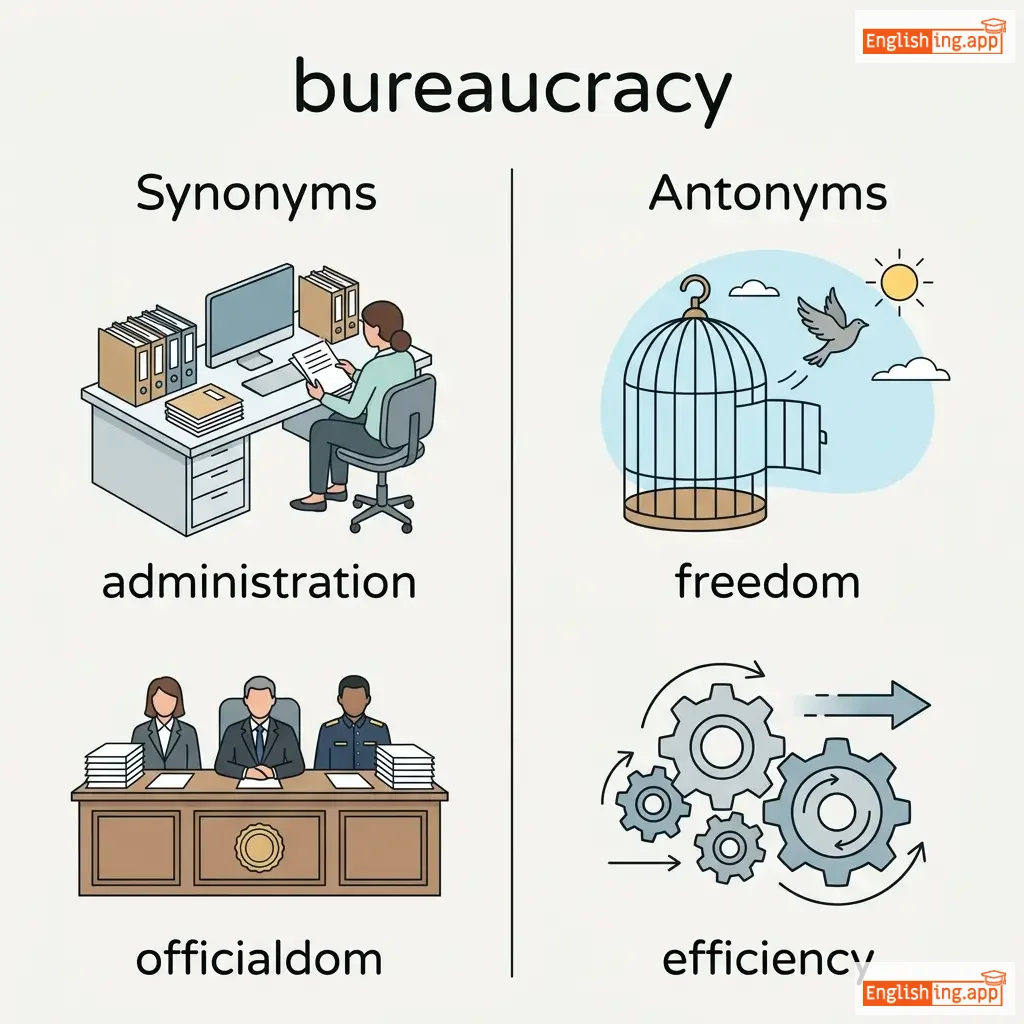
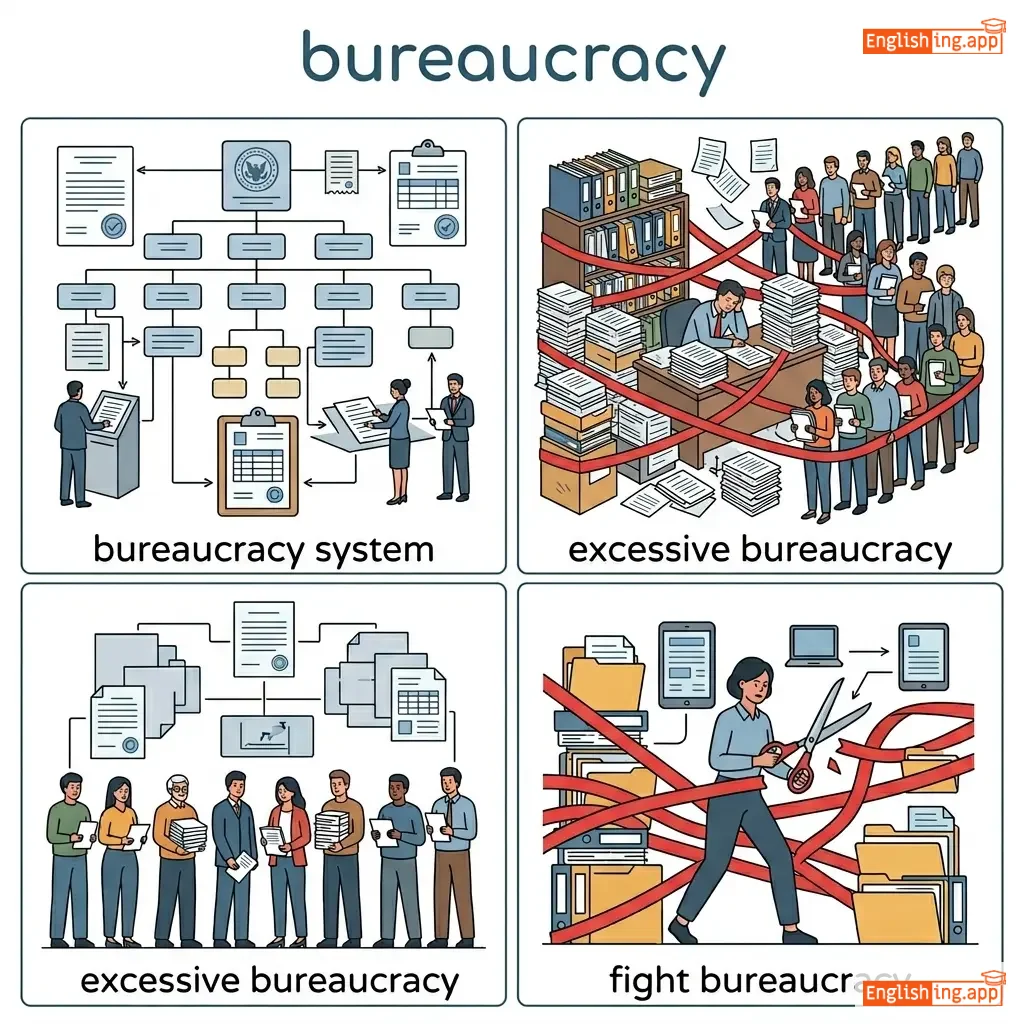
bjʊəˈrɒk.rə.si
noun
••••••
|
|
A complex administrative system where strict rules and procedures are followed.
••••••
|
Excessive bureaucracy can slow down government decision-making. |
Administration, Red Tape, Officialdom
••••••
|
Efficiency, Simplicity, Flexibility
••••••
|
|
#2532
🏢
|
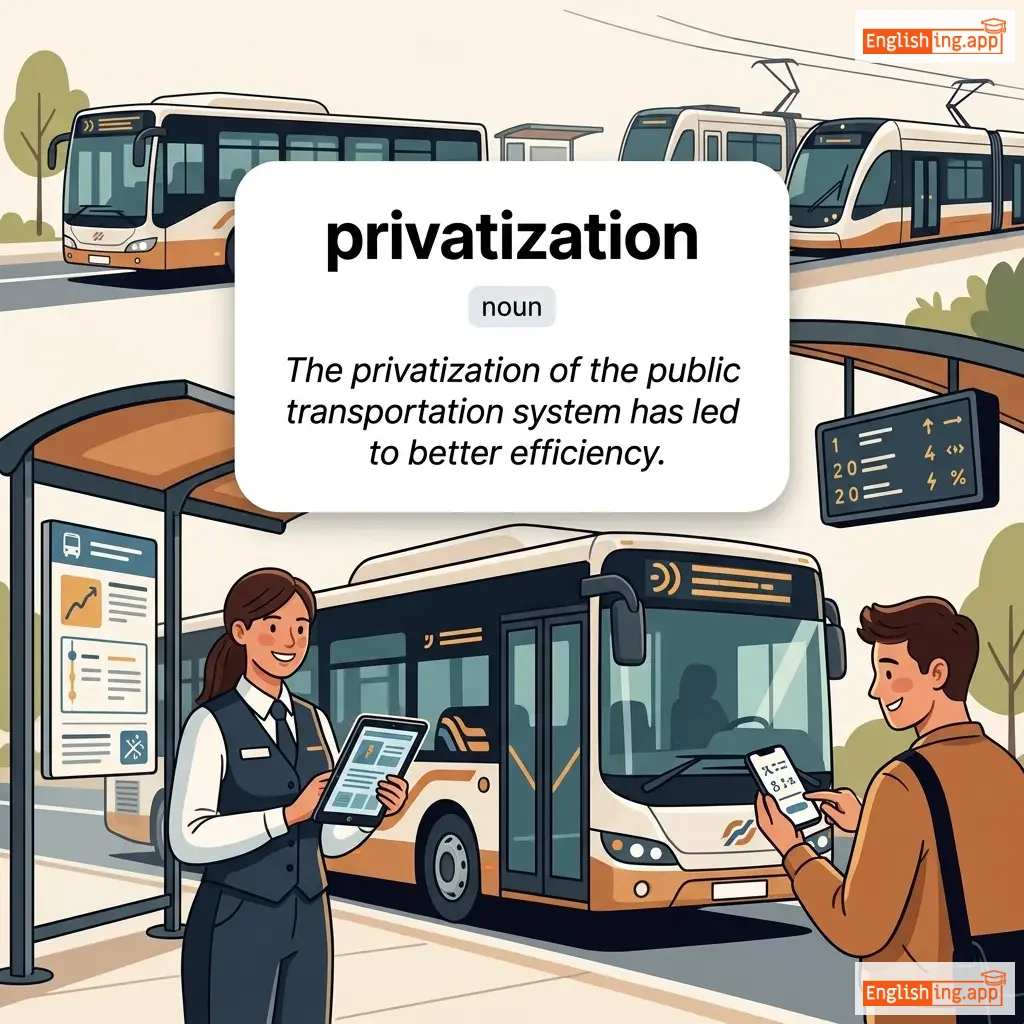
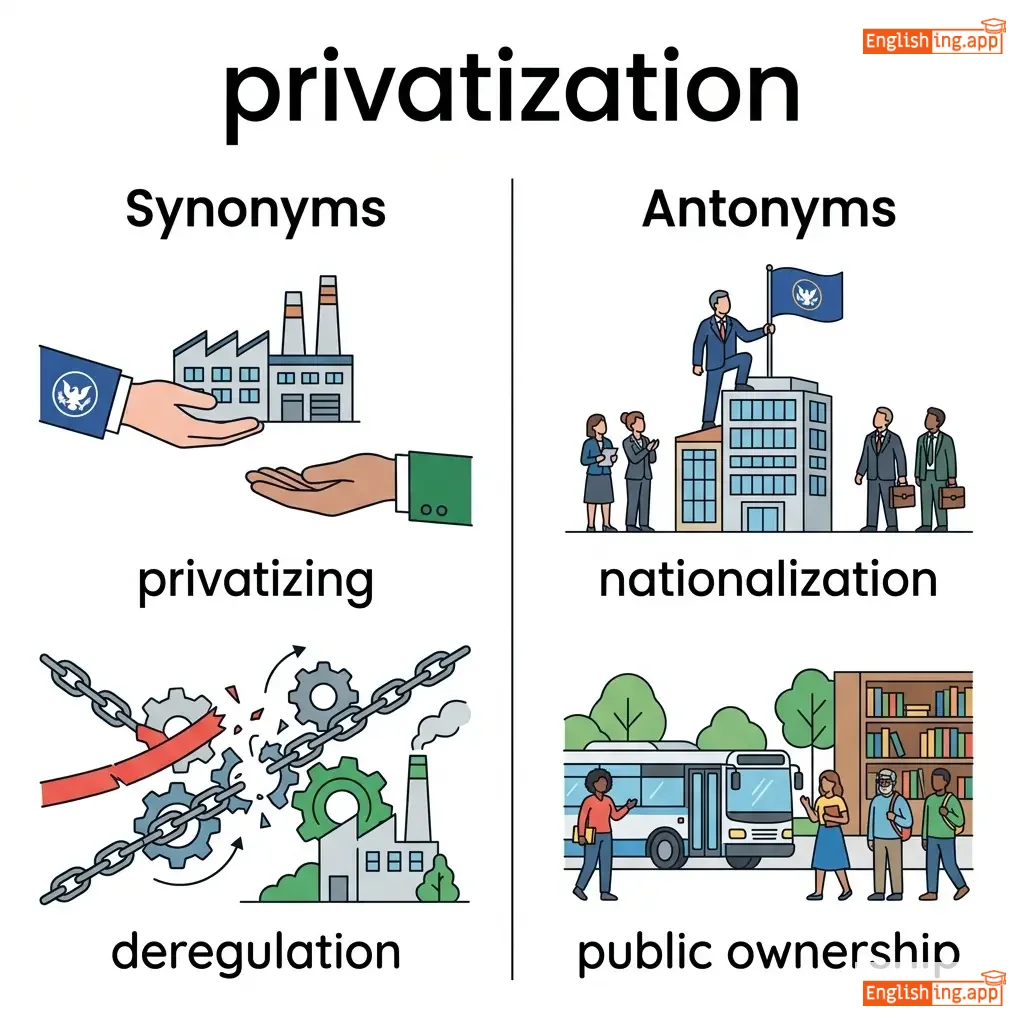
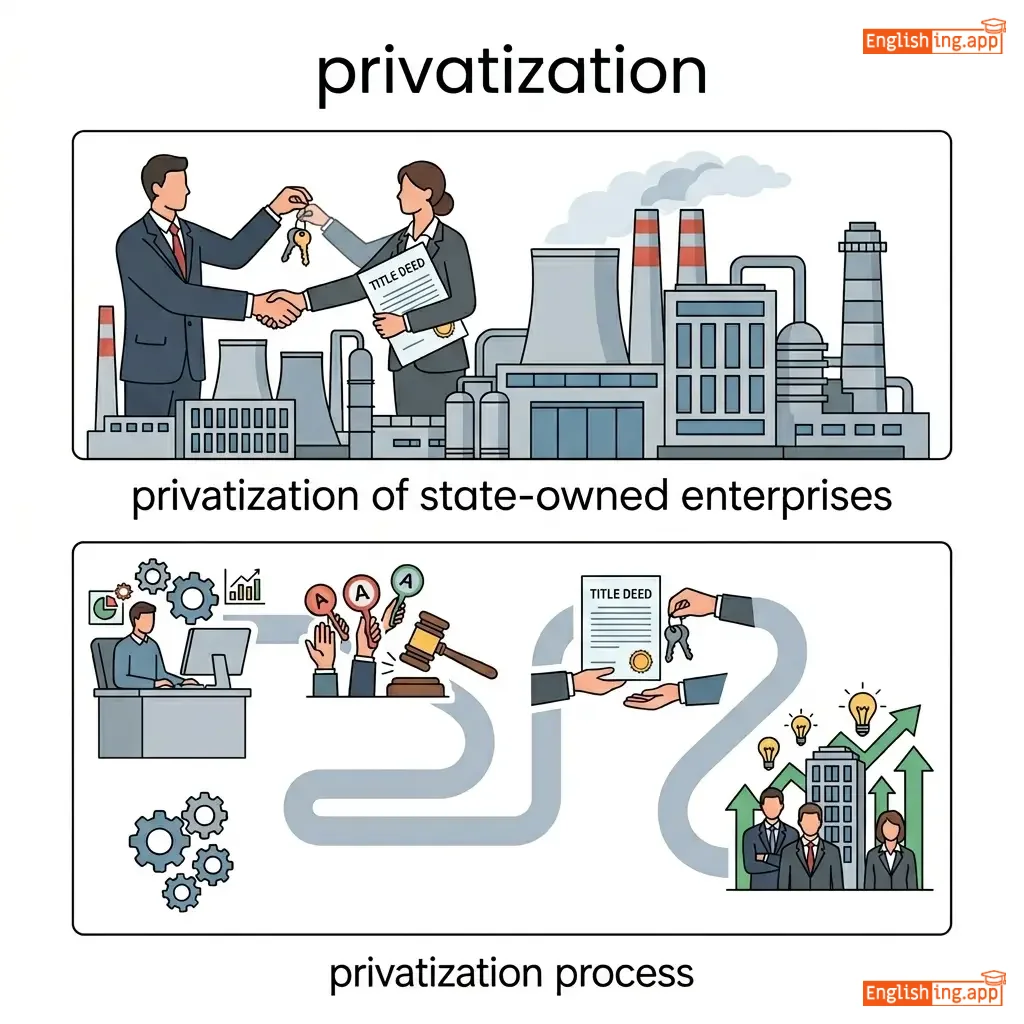
ˌpraɪ.və.taɪˈzeɪ.ʃən
noun
••••••
|
|
The transfer of ownership of an organization or property from government to private sector.
••••••
|
The privatization of industries has led to increased efficiency. |
Private Ownership, Commercialization, Deregulation
••••••
|
Nationalization, Public Ownership, State Control
••••••
|
|
#2533
🔓
|
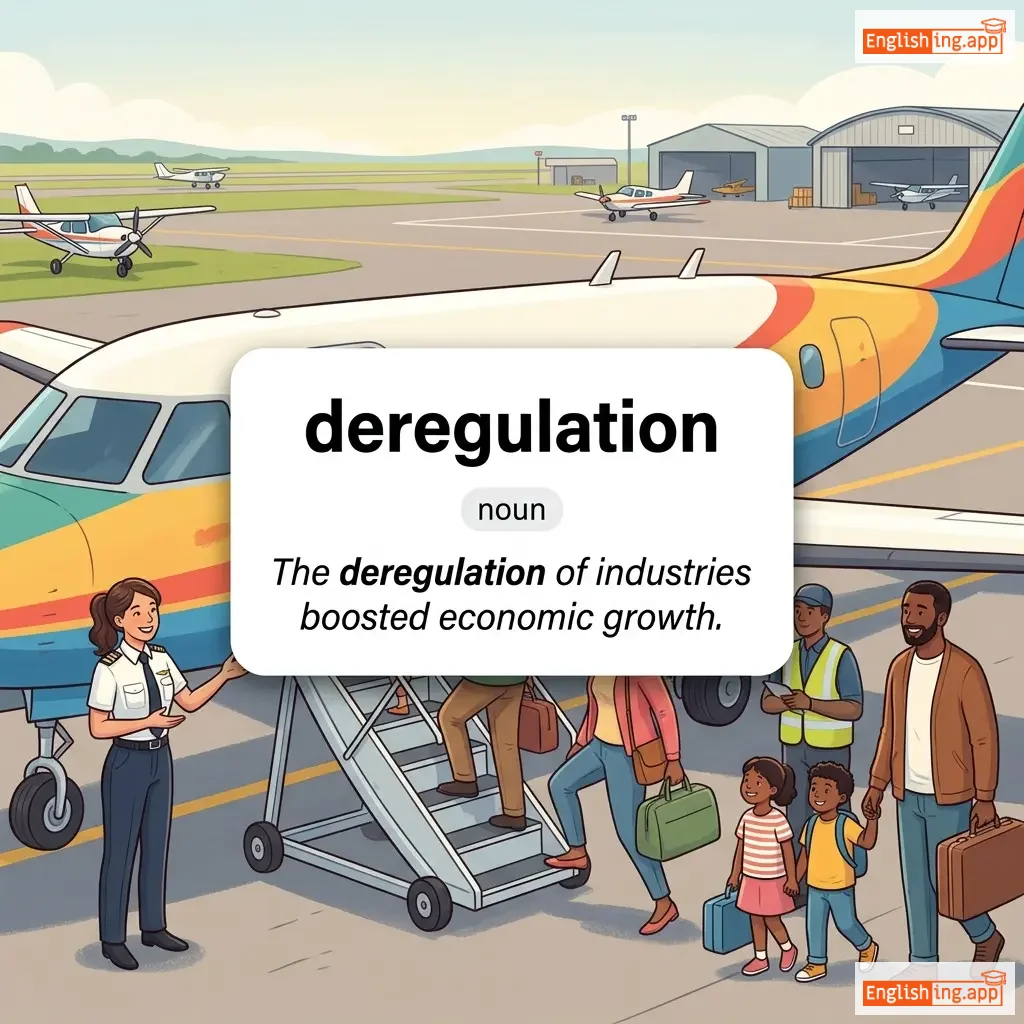
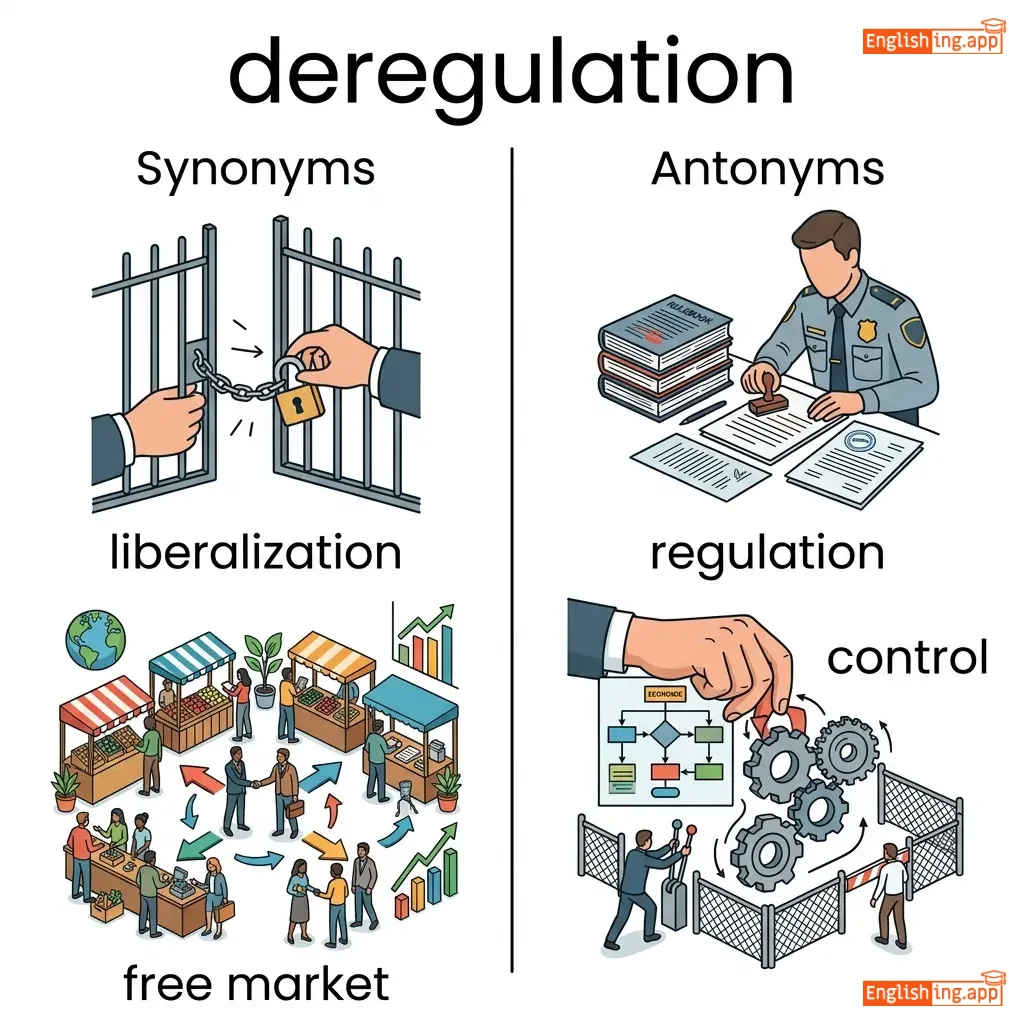
ˌdiːˌrɛɡ.jʊˈleɪ.ʃən
noun
••••••
|
|
The removal or reduction of government regulations in an economic sector.
••••••
|
Deregulation has increased competition in the telecommunications sector. |
Liberalization, Free Market, Removal of Restrictions
••••••
|
Regulation, Control, Government Intervention
••••••
|
|
#2534
💸
|
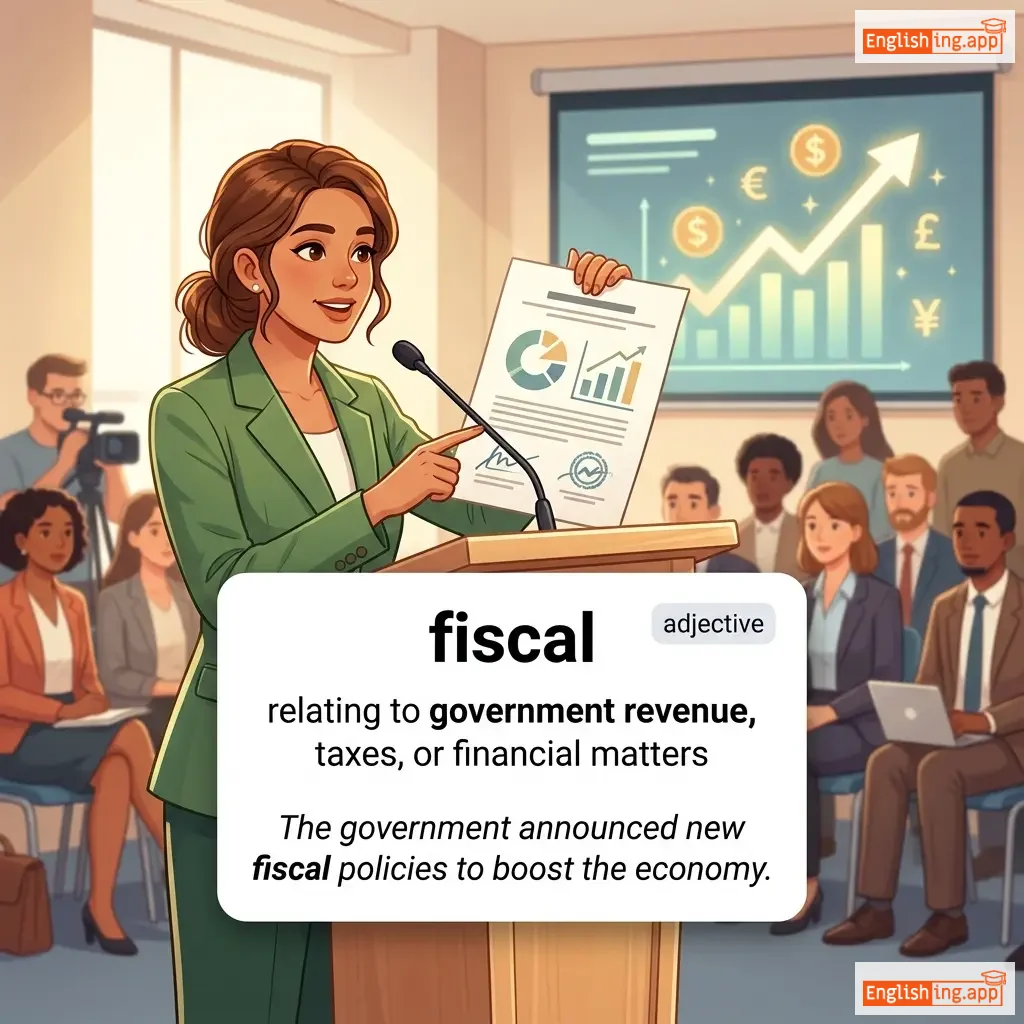
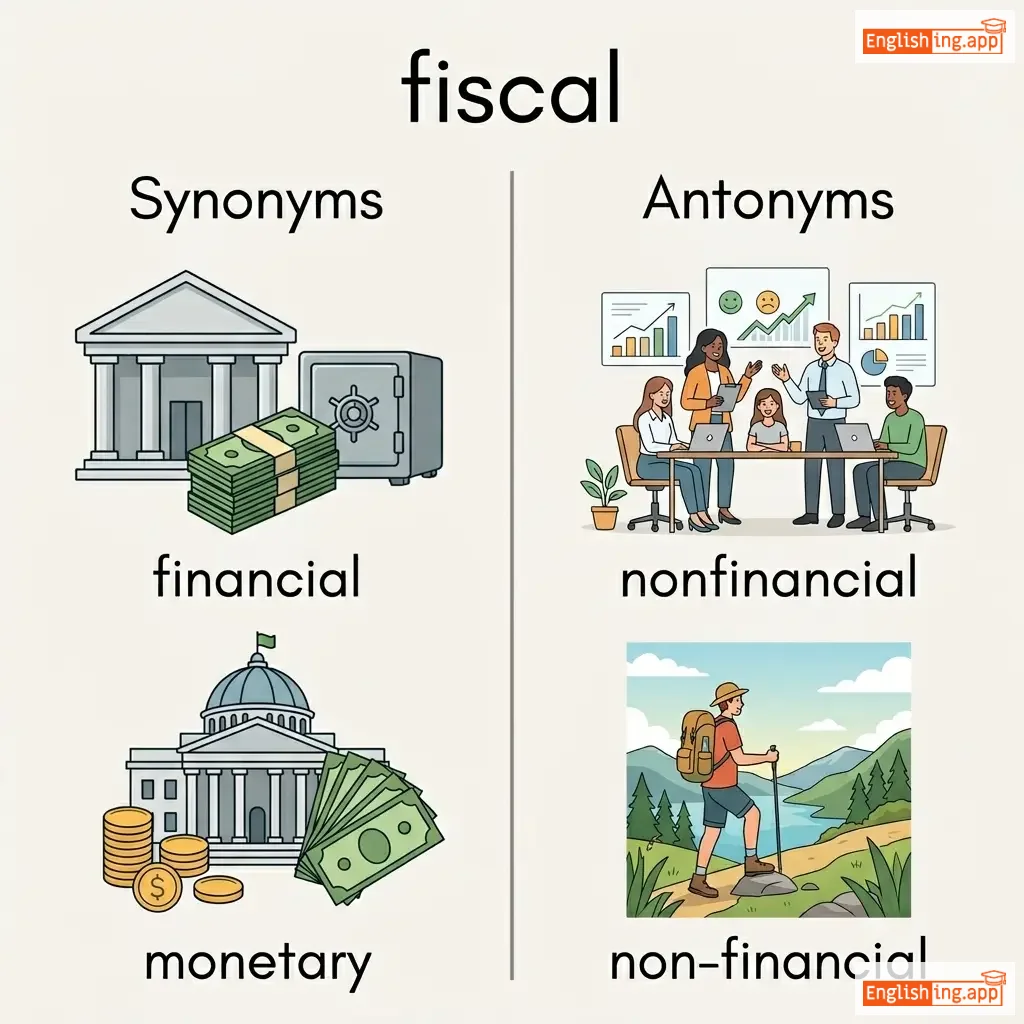
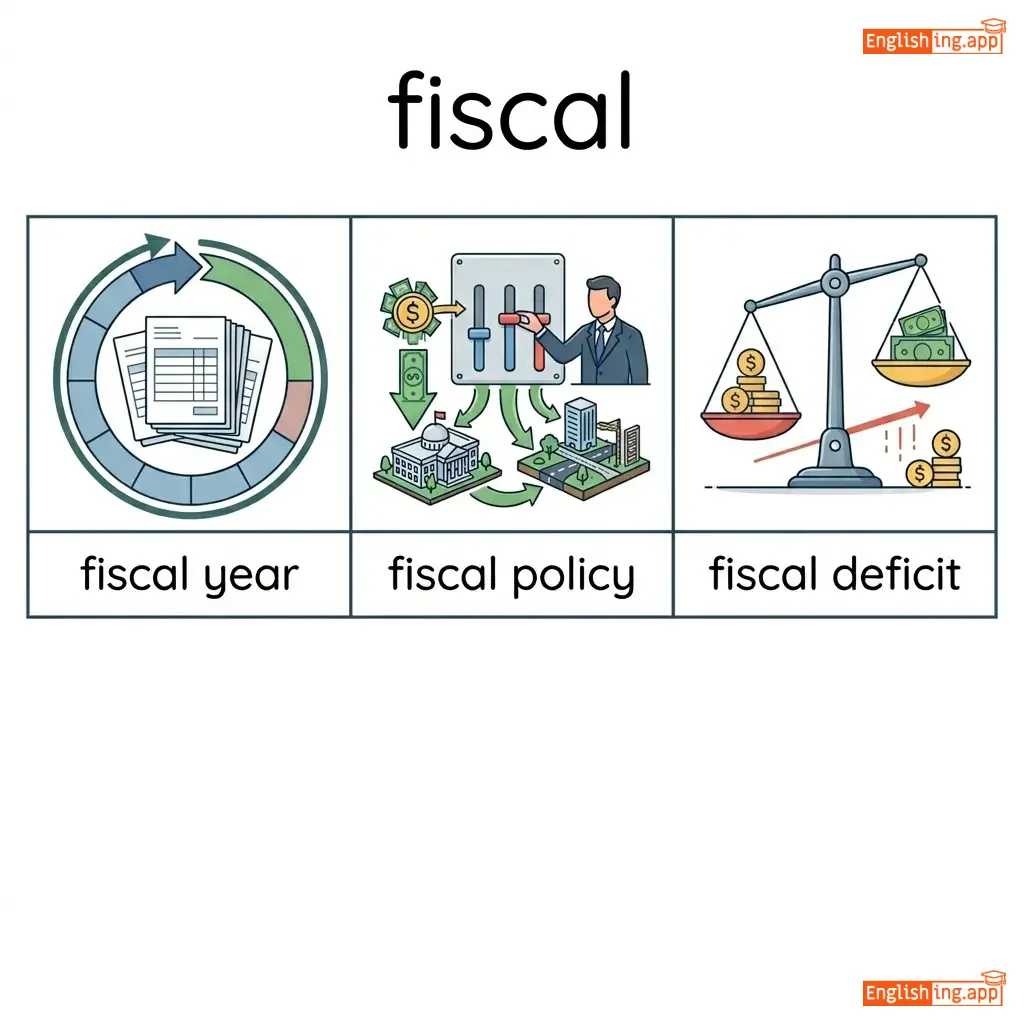
ˈfɪs.kəl
adjective
••••••
|
|
Related to government revenue, taxation and expenditure.
••••••
|
The government introduced fiscal policies to control inflation. |
Financial, Budgetary, Economic
••••••
|
Non-financial, Extraneous, Unrelated
••••••
|
|
#2535
🏦
|
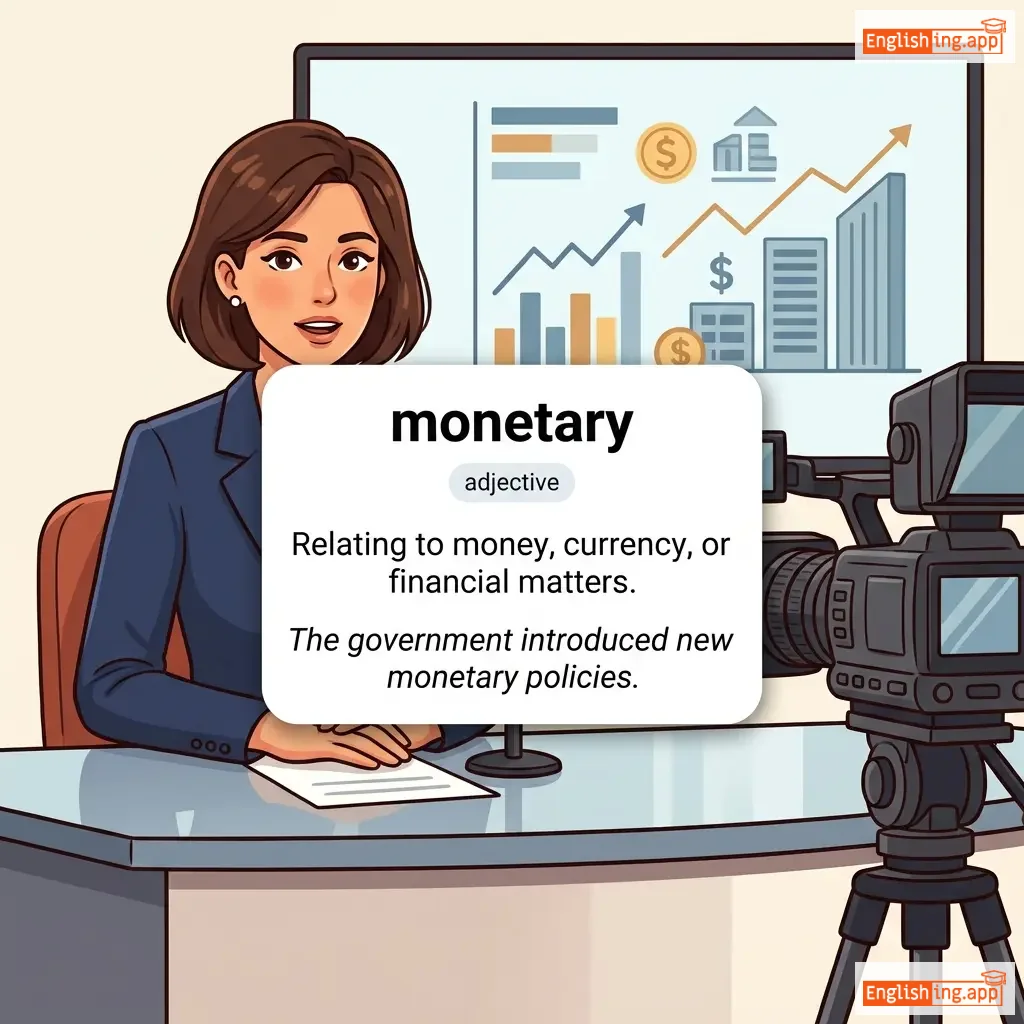
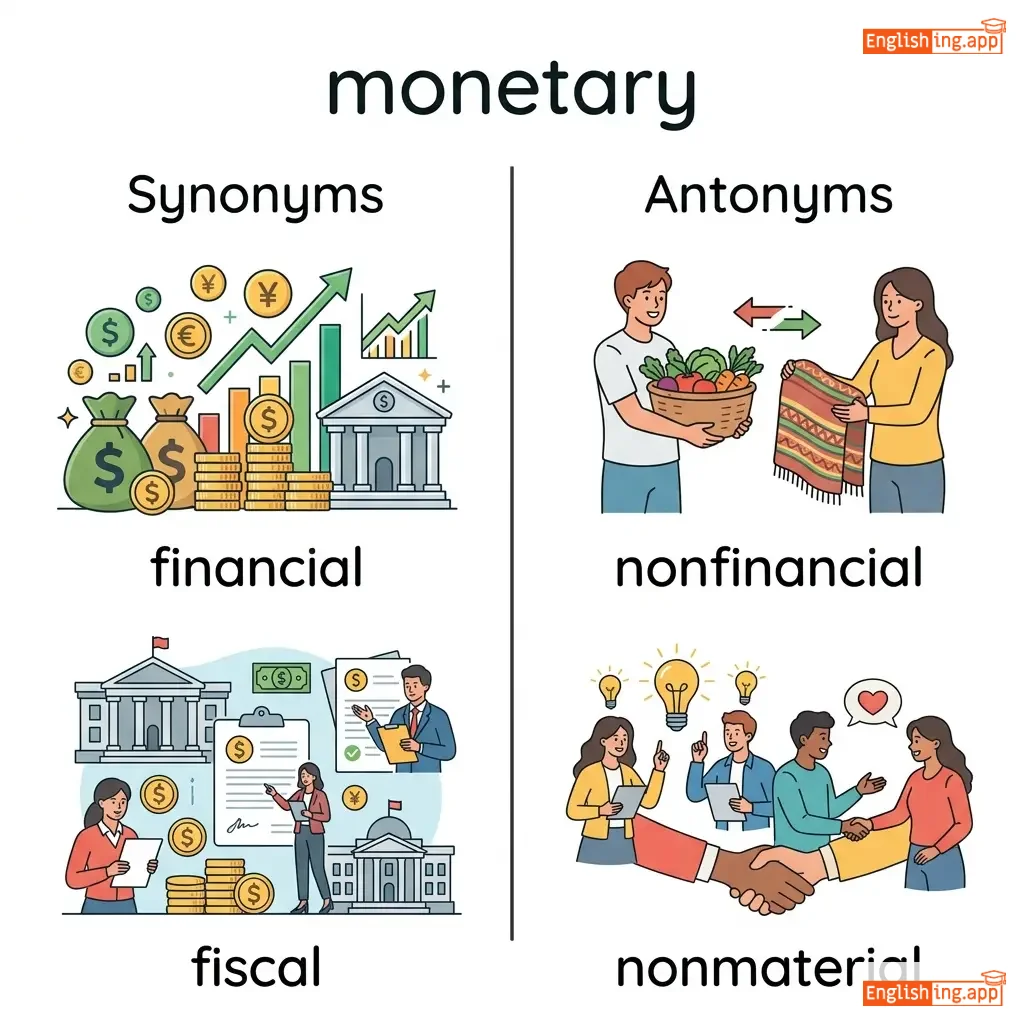
ˈmʌn.ɪ.tri
adjective
••••••
|
|
Related to money system and central bank policies.
••••••
|
The central bank regulates monetary policies to stabilize the economy. |
Financial, Economic, Money-related
••••••
|
Non-monetary, Barter-based, Non-financial
••••••
|
|
#2536
⚖️
|
dɪˈspær.ə.ti
noun
••••••
|
|
A difference in wealth, opportunities or facilities.
••••••
|
The income disparity between rich and poor is increasing. |
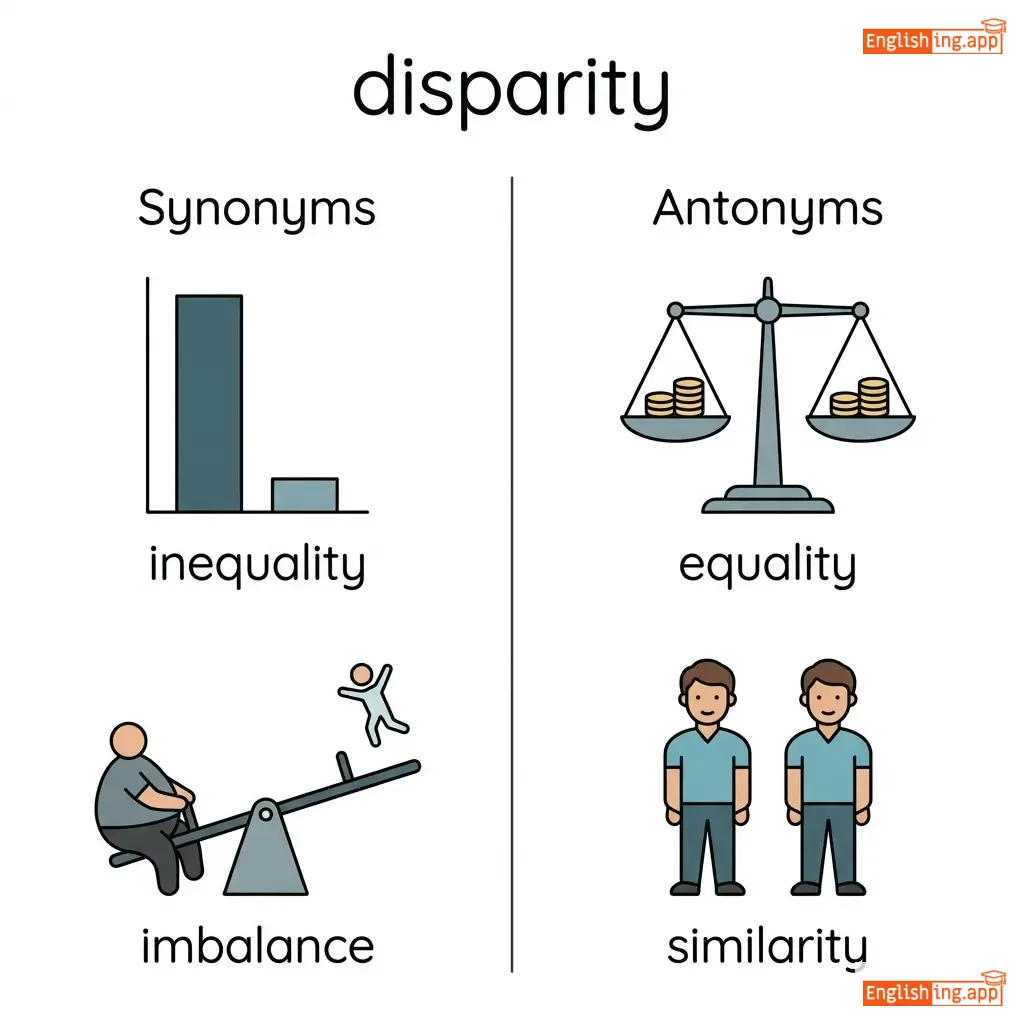
Inequality, Imbalance, Disproportion
••••••
|
Equality, Balance, Uniformity
••••••
|
|
#2537
💰
|
ˌsʌb.sɪ.dɪˈzeɪ.ʃən
noun
••••••
|
|
Financial assistance provided by government to make certain goods or services more affordable.
••••••
|
Subsidization of agriculture helps farmers maintain crop production. |
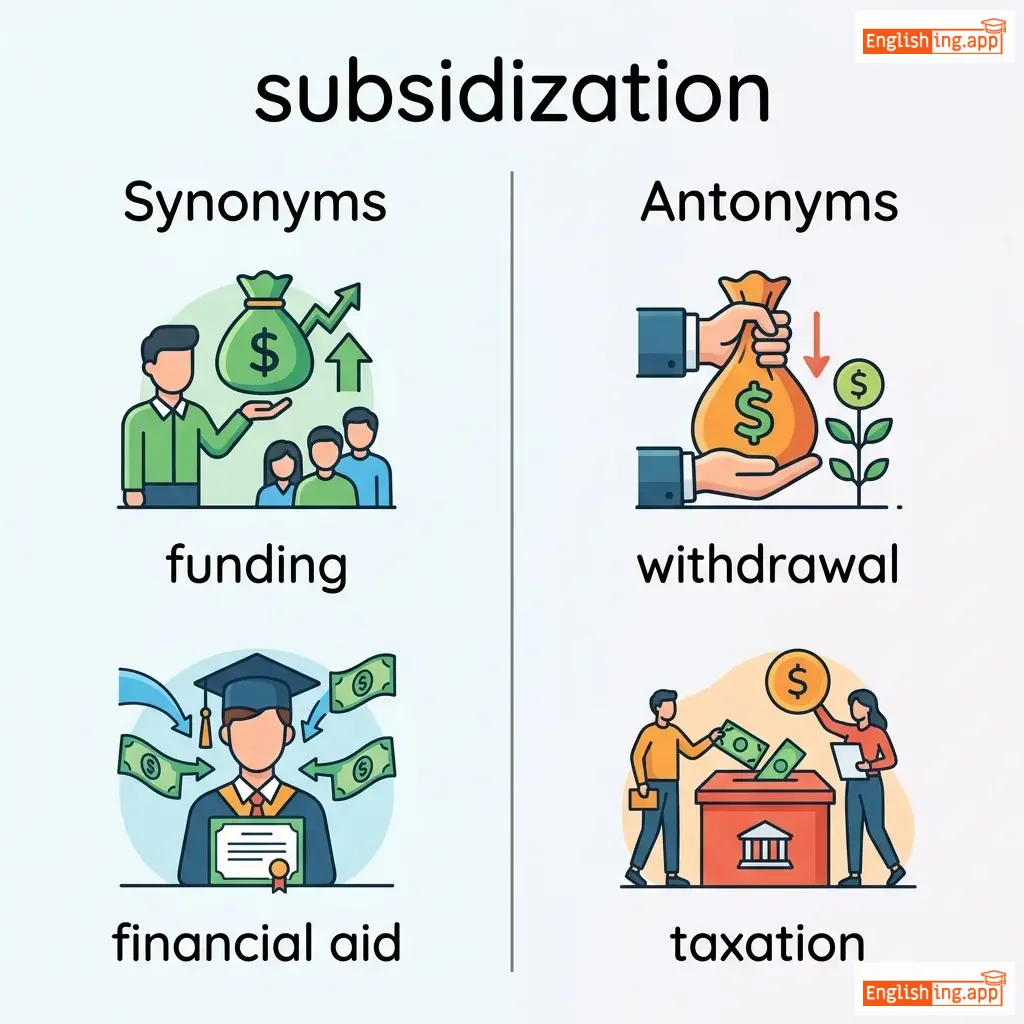
Financial Aid, Grant, Public Funding
••••••
|
Taxation, Cost-cutting, Self-sufficiency
••••••
|
|
#2538
📈
|
ɪnˈfleɪ.ʃə.ner.i
adjective
••••••
|
|
An economic condition where prices of goods increase.
••••••
|
The country is facing inflationary pressure due to increased demand. |
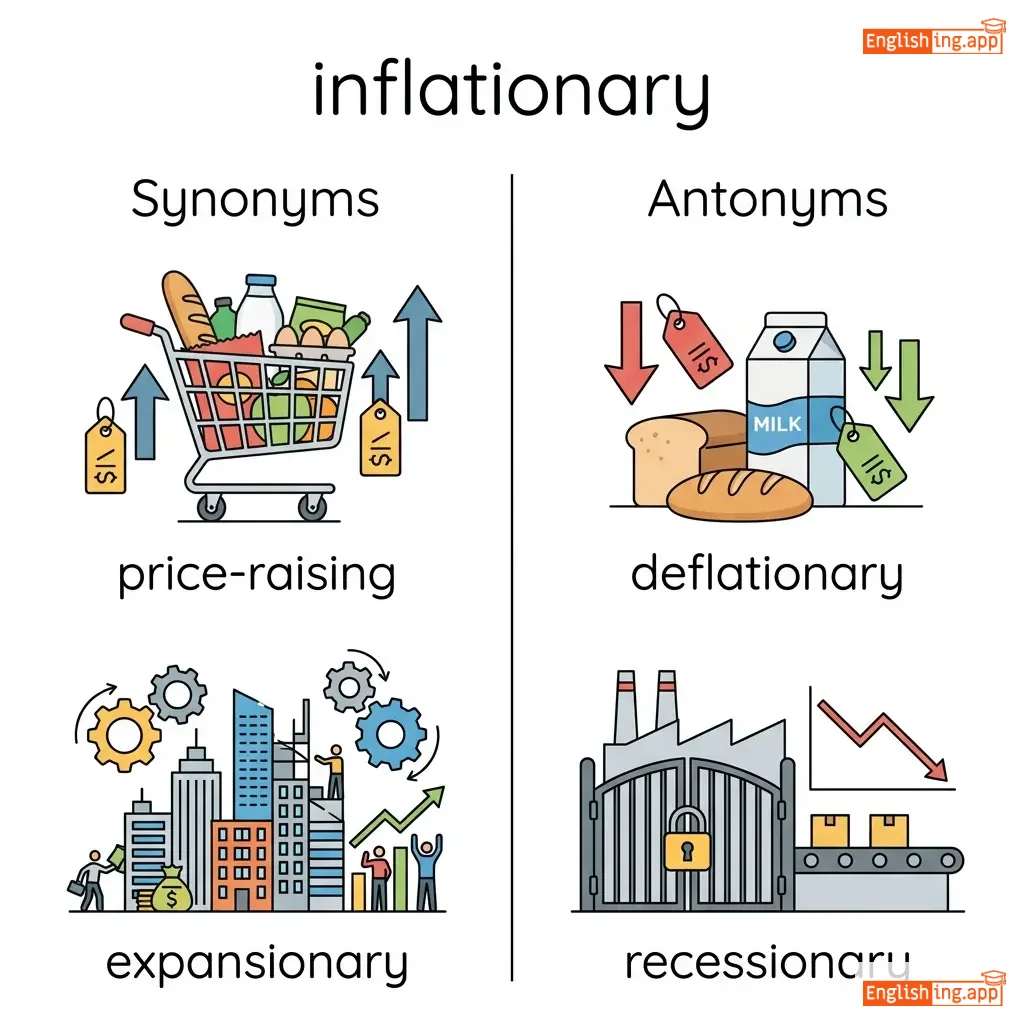
Price-rising, Cost-increasing, Economic Growth-related
••••••
|
Deflationary, Price-stabilized, Non-inflationary
••••••
|
|
#2539
🔄
|
ˈtreɪd.ɒf
noun
••••••
|
|
A situation where accepting one advantage means giving up another benefit.
••••••
|
There is always a trade-off between price and quality. |
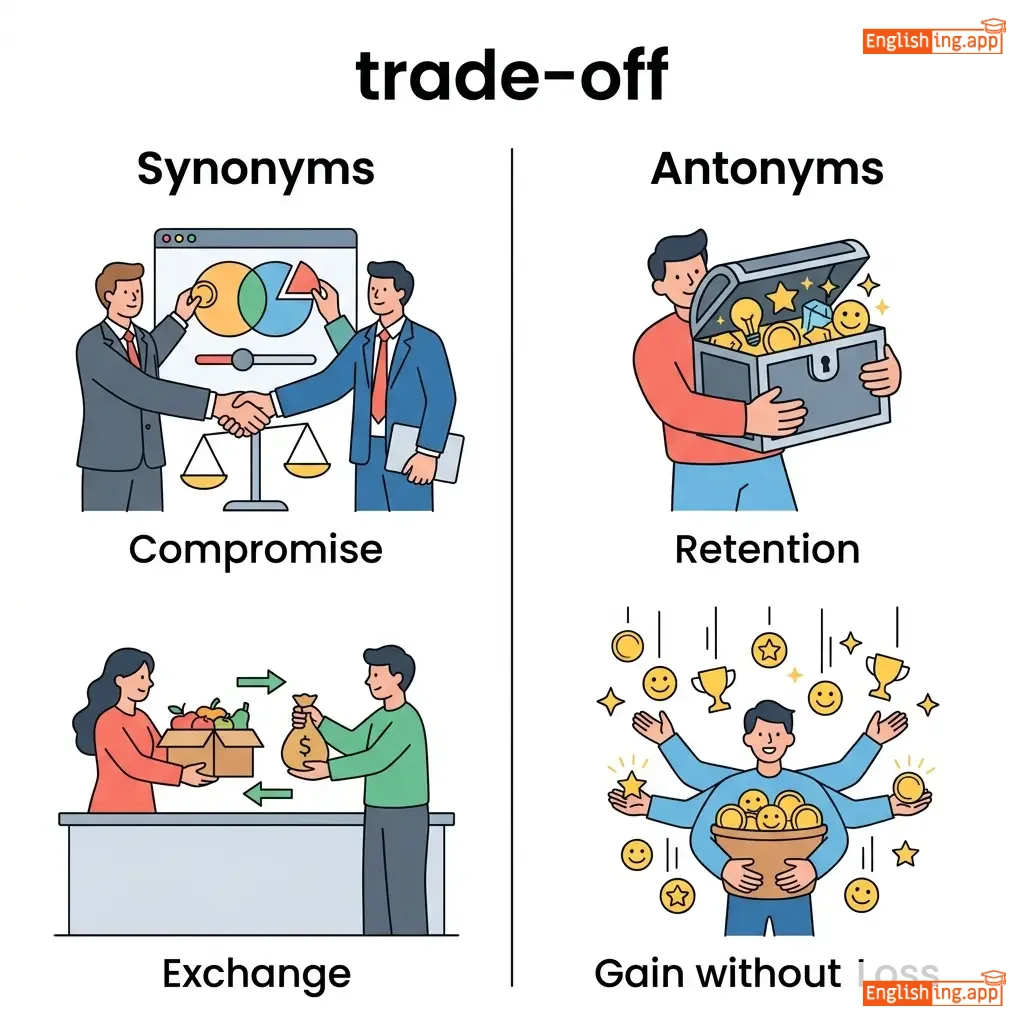
Compromise, Exchange, Sacrifice
••••••
|
Retention, Gain without Loss, Absolute Choice
••••••
|
|
#2540
⚖️
|
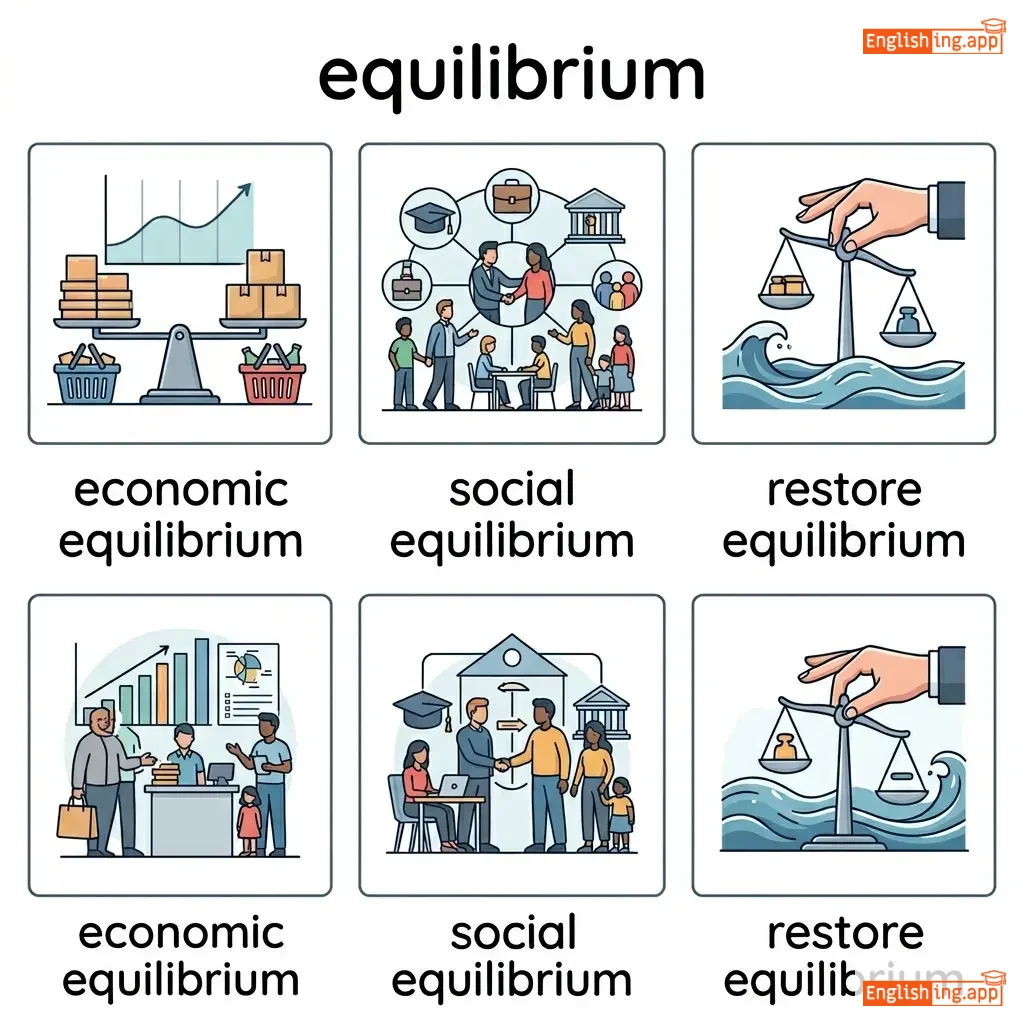
ˌiː.kwɪˈlɪb.ri.əm
noun
••••••
|
|
A balanced state between supply and demand.
••••••
|
The market reached an equilibrium where supply met demand. |
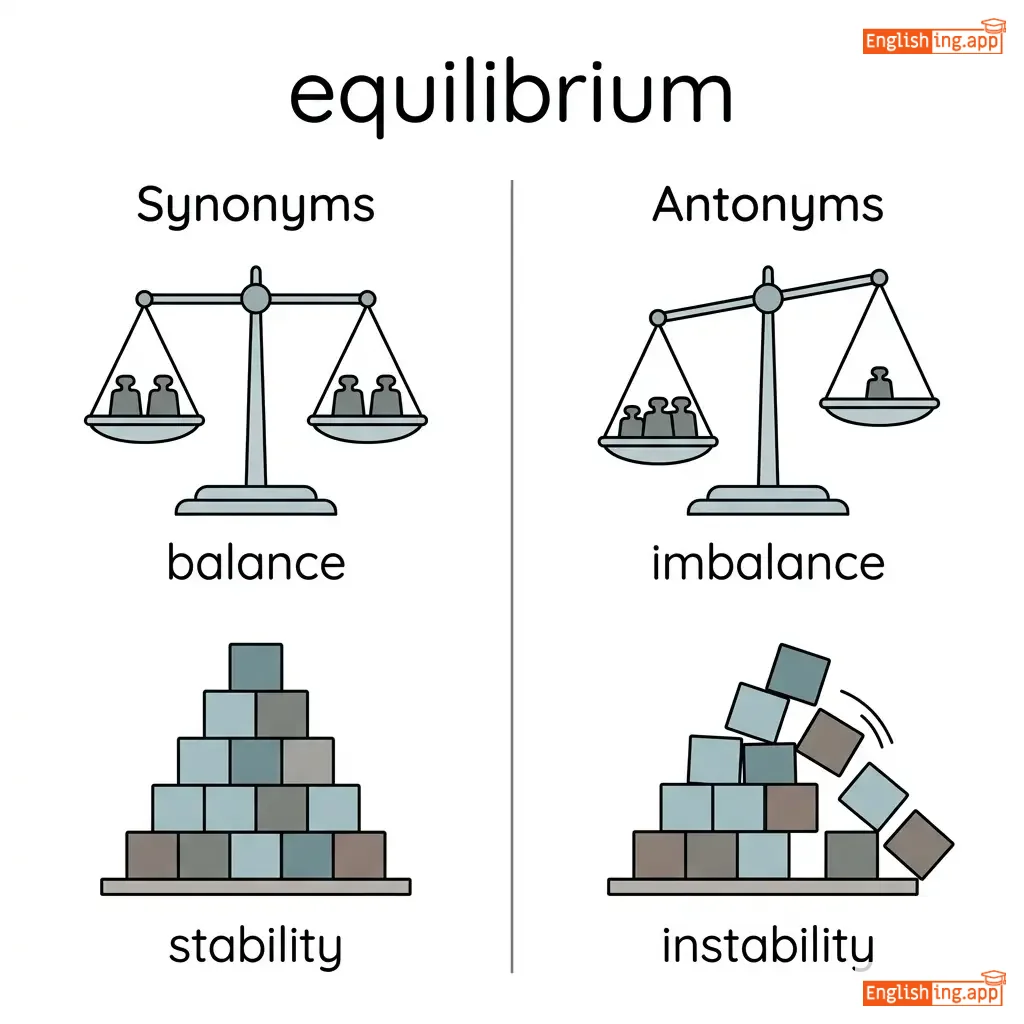
Balance, Stability, Steadiness
••••••
|
Imbalance, Instability, Disproportion
••••••
|
|
#2541
⚠️
|
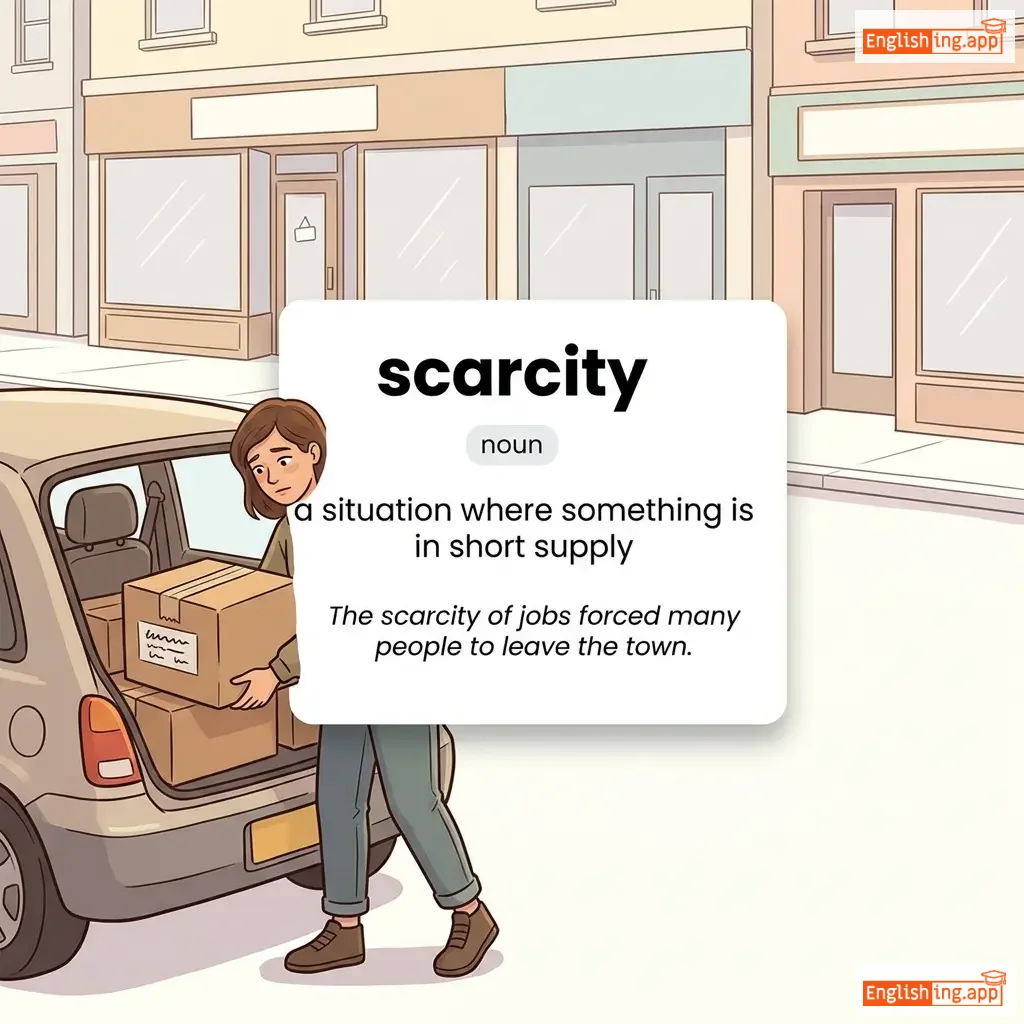
ˈskeə.sɪ.ti
noun
••••••
|
|
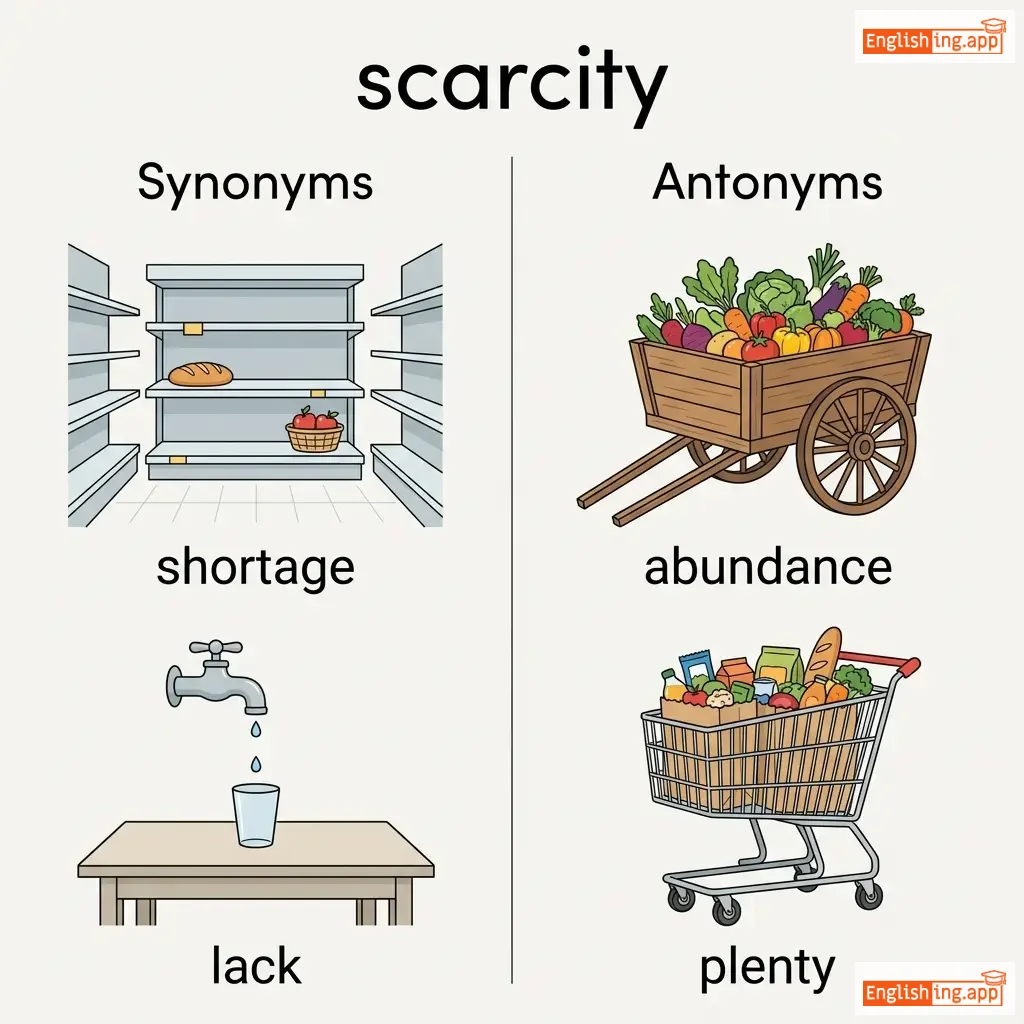
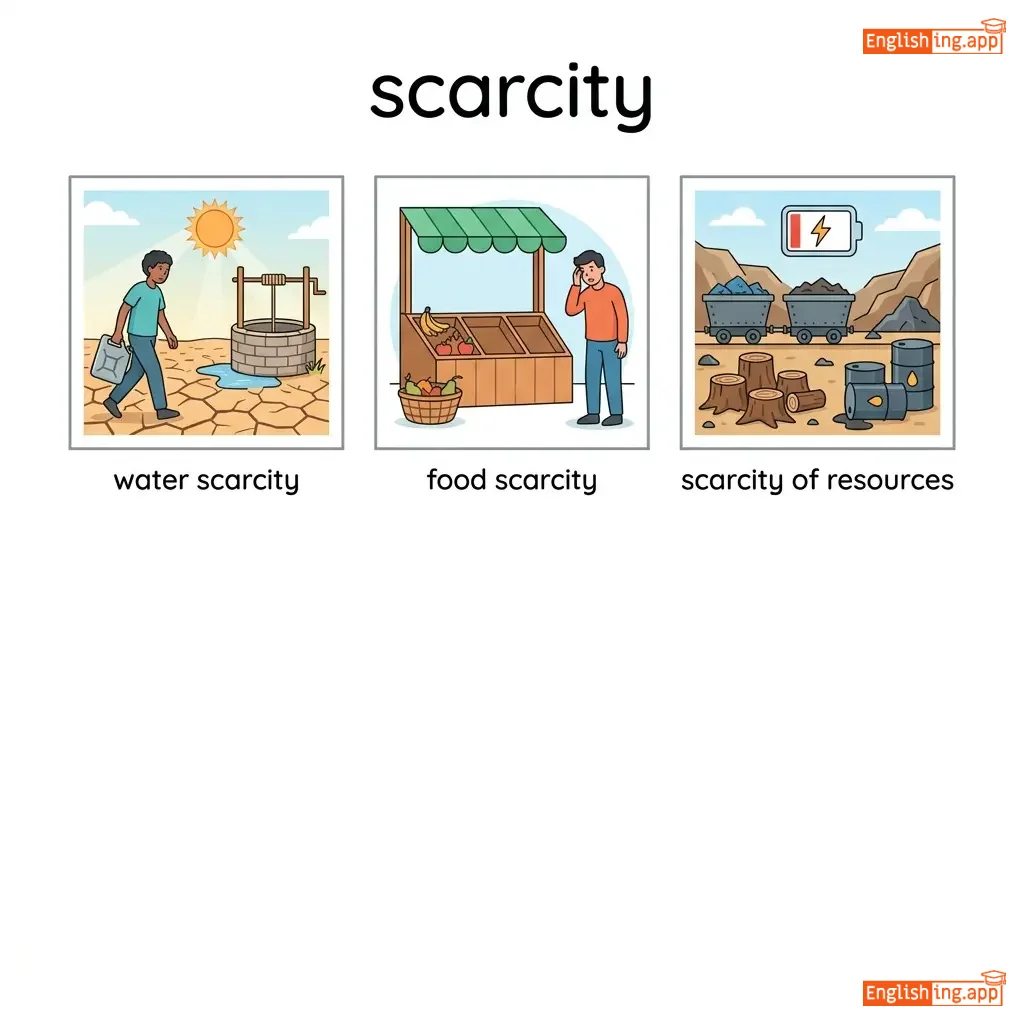
The state of being scarce or in short supply when demand exceeds supply.
••••••
|
Water scarcity is a major global issue. |
Shortage, Deficiency, Lack
••••••
|
Abundance, Surplus, Plenty
••••••
|

