|
絵文字
|
単語 | Images | 翻訳 | 過去 | 過去分詞 | 三人称単数 | 動名詞 | 意味 | 例文 | 例文の翻訳 | 表現例 | 表現例の意味 | 表現例の翻訳 | 同義語 | 対義語 | コロケーション | ニーモニック |
|---|---|---|---|---|---|---|---|---|---|---|---|---|---|---|---|---|---|
|
🤰
••••••
|
/ˈprɛɡnənt/
adjective
(プレグナント)
••••••
|
- •••••• |
妊娠している; 意味深い
ninshin shite iru; imishinai
••••••
|
- •••••• | - •••••• | - •••••• | - •••••• |
having a child developing in the womb; also, full of meaning or significance
••••••
|
She announced that she was three months pregnant. |
彼女は三ヶ月妊娠していることを発表しました。
Kanojo wa sankagetsu ninshin shite iru koto o happyō shimashita.
••••••
|
pregnant pause |
a brief, meaningful silence that suggests significance or tension
••••••
|
意味深い一時停止
imishinai ichijitōshi
••••••
|
expectant, with child, carrying, meaningful, significant
••••••
|
barren, infertile, empty
••••••
|
pregnant woman, heavily pregnant, get pregnant, become pregnant, pregnant pause
••••••
|
妊娠しているということは、赤ちゃんを待っているという意味です、それは重要です!
••••••
|
|
⚖️
••••••
|
/ˈprɛdʒədɪs/
noun
(pūrejidis)
••••••
|
- •••••• |
偏見
henken
••••••
|
- •••••• | - •••••• | - •••••• | - •••••• |
An unfair and unreasonable opinion or feeling, especially when formed without enough thought or knowledge.
••••••
|
Prejudice often prevents people from seeing the truth about others. |
偏見はしばしば人々が他人についての真実を見るのを妨げます。
Henken wa shibashiba hitobito ga tanin ni tsuite no shinjitsu o miru no o samatage masu.
••••••
|
against all prejudice |
in opposition to unfair or biased opinions
••••••
|
すべての偏見に反対して
Subete no henken ni hantai shite
••••••
|
bias, discrimination, partiality, intolerance, preconception
••••••
|
fairness, tolerance, impartiality
••••••
|
racial prejudice, deep-seated prejudice, overcome prejudice, prejudice against
••••••
|
Prejudice = 事前に判断する – 事前に判断すると偏見が生まれる。
••••••
|
|
📝
••••••
|
/prɪˈlɪmɪˌneri/
adjective
(プリリミナリー)
••••••
|
|
予備的
yobiteki
••••••
|
- •••••• | - •••••• | - •••••• | - •••••• |
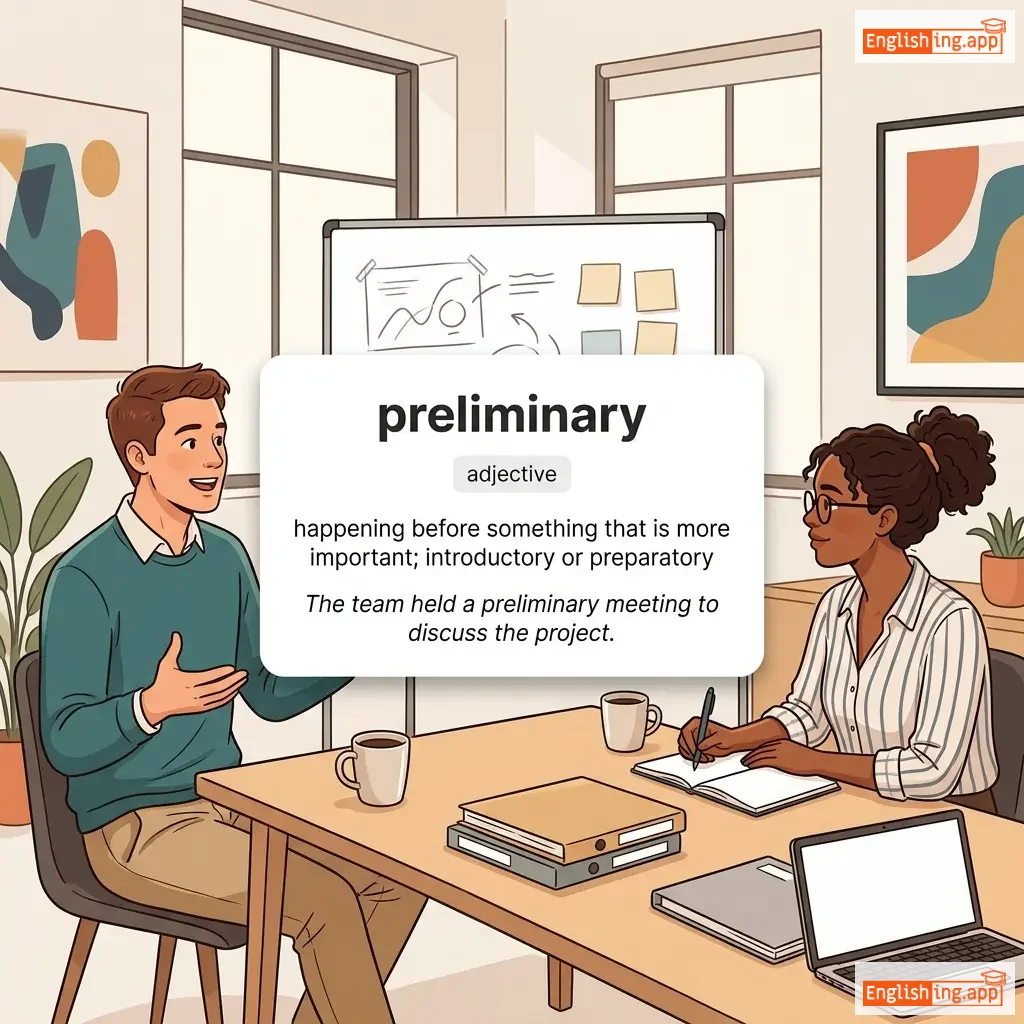
happening before something that is more important; introductory or preparatory
••••••
|
The team held a preliminary meeting to discuss the project.
チームはプロジェクトについて議論するために予備的なミーティングを開きました。
••••••
|
チームはプロジェクトについて議論するために予備的なミーティングを開きました。
Chīmu wa purojekuto ni tsuite giron suru tame ni yobiteki na mītingu o hirakimashita.
••••••
|
- •••••• | - •••••• | - •••••• |
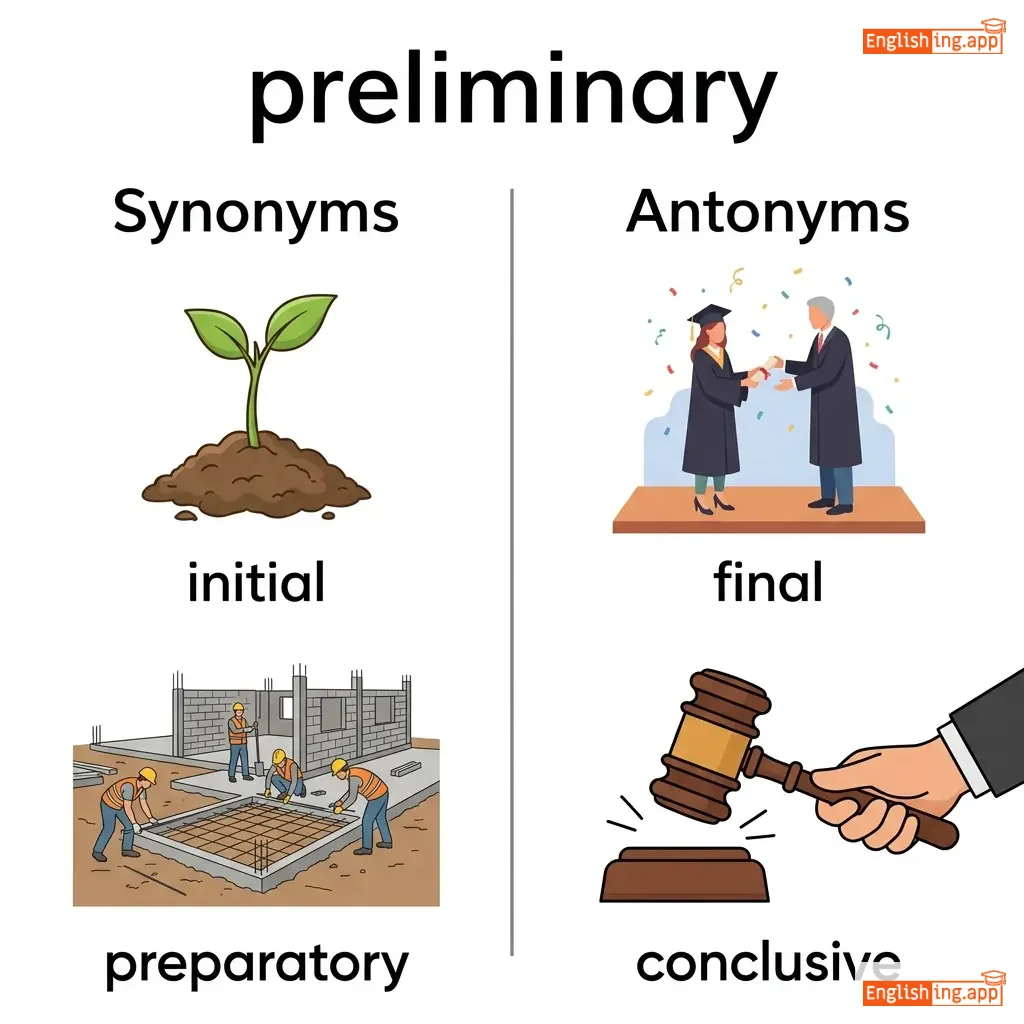
initial, preparatory, introductory, prior, opening
••••••
|
final, conclusive, ultimate
••••••
|
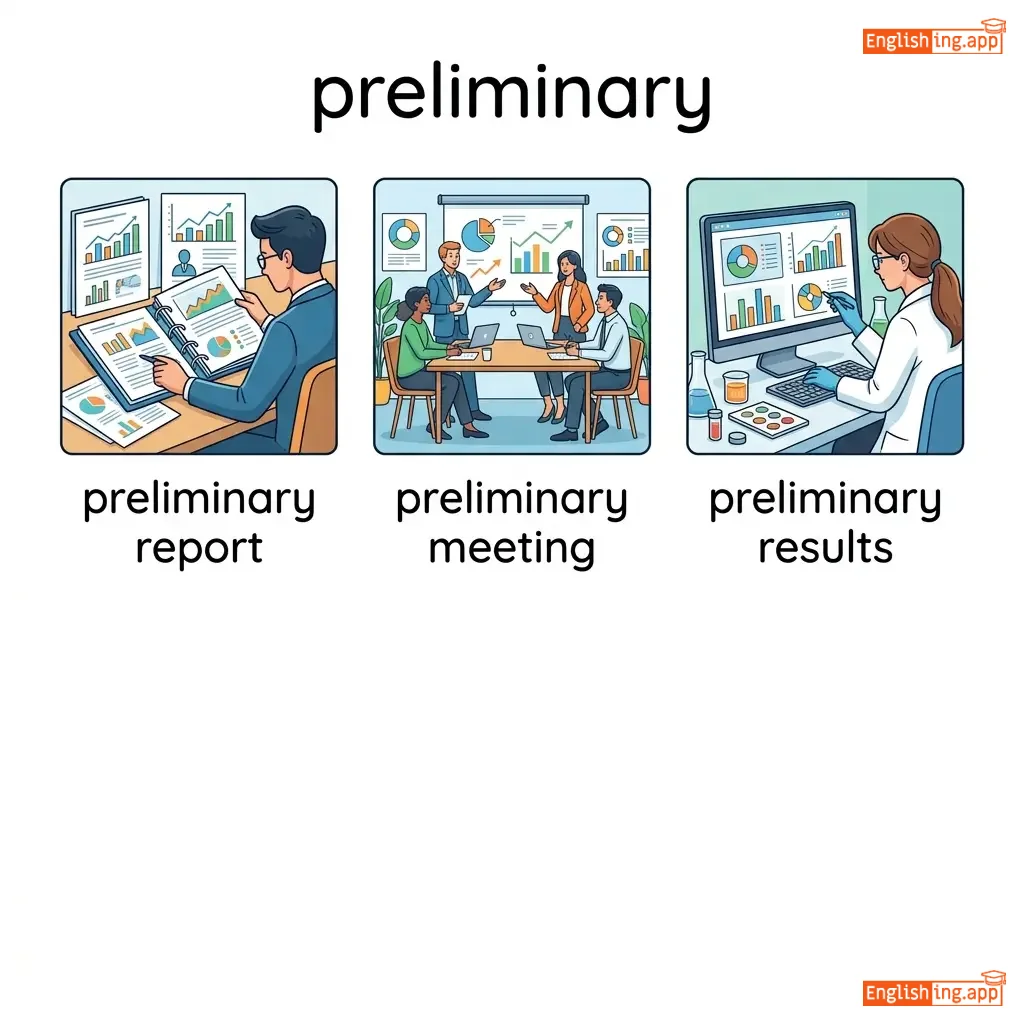
preliminary report, preliminary meeting, preliminary results, preliminary round
••••••
|
Preliminary は ‘Pre’ つまり、重要なことが起こる前のステップです!
••••••
|
|
👑
••••••
|
/prɪˈmɪər/ or /ˈpriːmiər/
noun, adjective
(首相 / 主要)
••••••
|
- •••••• |
首相 / 主要
shushou / shuyou
••••••
|
- •••••• | - •••••• | - •••••• | - •••••• |
the head of government in some countries; first in importance or rank
••••••
|
The French premier addressed the nation. |
フランスの首相が国民に演説を行った。
Furansu no shushou ga kokumin ni enzetsu o okonatta.
••••••
|
Premier League |
the top professional football league in England
••••••
|
プレミアリーグ
Puremiarīgu
••••••
|
prime minister, leader, head, top, chief
••••••
|
subordinate, inferior, secondary
••••••
|
French premier, premier role, premier status
••••••
|
Premier は最初、または一番大切、またはトップ。
••••••
|
|
🏠
••••••
|
/ˈprɛmɪs/
noun
(プリミス)
••••••
|
- •••••• |
前提 / 建物
zentei / tatemono
••••••
|
- •••••• | - •••••• | - •••••• | - •••••• |
a statement or idea on which reasoning or an argument is based; also a building or property
••••••
|
His argument was based on a false premise. |
彼の議論は誤った前提に基づいていました。
Kare no giron wa ayamatta zentei ni motozuite imashita.
••••••
|
on the premise that |
based on the assumption that
••••••
|
〜という前提で
〜to iu zentei de
••••••
|
assumption, proposition, thesis, property, building
••••••
|
fact, reality, truth
••••••
|
false premise, legal premises, premise of argument
••••••
|
Premiseは基本的な考え、'前提'はその基盤を表す。
••••••
|
|
💎
••••••
|
/ˈpriːmiəm/
noun
(purīmiamu)
••••••
|
- •••••• |
プレミアム
puremiamu
••••••
|
- •••••• | - •••••• | - •••••• | - •••••• |
an amount of money paid regularly for an insurance policy; something of superior quality or value
••••••
|
You need to pay your insurance premium every year.
あなたは毎年保険料を支払う必要があります。
••••••
|
あなたは毎年保険料を支払う必要があります。
Anata wa mainen hokenryou o shiharau hitsuyou ga arimasu.
••••••
|
at a premium
プレミアム価格で
••••••
|
difficult to get and therefore more valuable
••••••
|
プレミアム価格で
puremiamu kakaku de
••••••
|
fee, charge, payment, bonus, luxury
••••••
|
discount, deduction, loss
••••••
|
insurance premium, health premium, pay premium, premium quality
••••••
|
保険料 = 高価 💰
••••••
|
|
📋
••••••
|
/ˌprɛpəˈreɪʃən/
noun
(プレパレーション)
••••••
|
- •••••• |
準備
junbi
••••••
|
- •••••• | - •••••• | - •••••• | - •••••• |
The act of getting ready or making arrangements for something.
••••••
|
The team made careful preparation for the presentation. |
チームはプレゼンテーションのために慎重に準備をしました。
Chīmu wa purezentēshon no tame ni shinchō ni junbi o shimashita.
••••••
|
fail to prepare is prepare to fail |
If you don’t get ready in advance, you are setting yourself up for failure.
••••••
|
準備をしないことは失敗の準備をすることです。
Junbi o shinai koto wa shippai no junbi o suru koto desu.
••••••
|
arrangement, planning, readiness, groundwork, setup
••••••
|
neglect, disorganization
••••••
|
make preparation, careful preparation, preparation for, preparation time
••••••
|
準備ができている者が最も成功する。
••••••
|
|
🍳
••••••
|
/prɪˈpɛər/
verb
(プリペア)
••••••
|
|
準備する
junbi suru
••••••
|
prepared
プリペアード
••••••
|
prepared
プリペアード
••••••
|
prepares
プリペアズ
••••••
|
preparing
プリペアリング
••••••
|
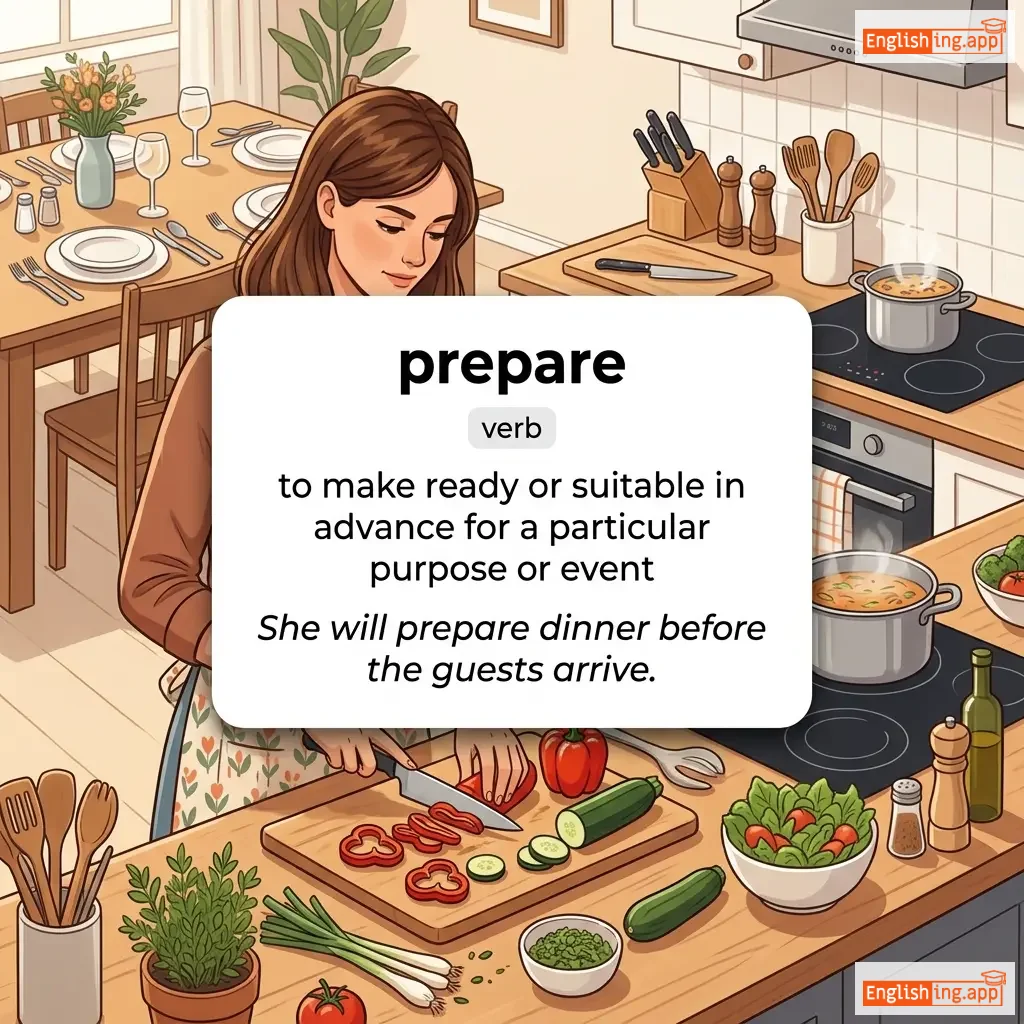
to make ready; to get something ready for use
••••••
|
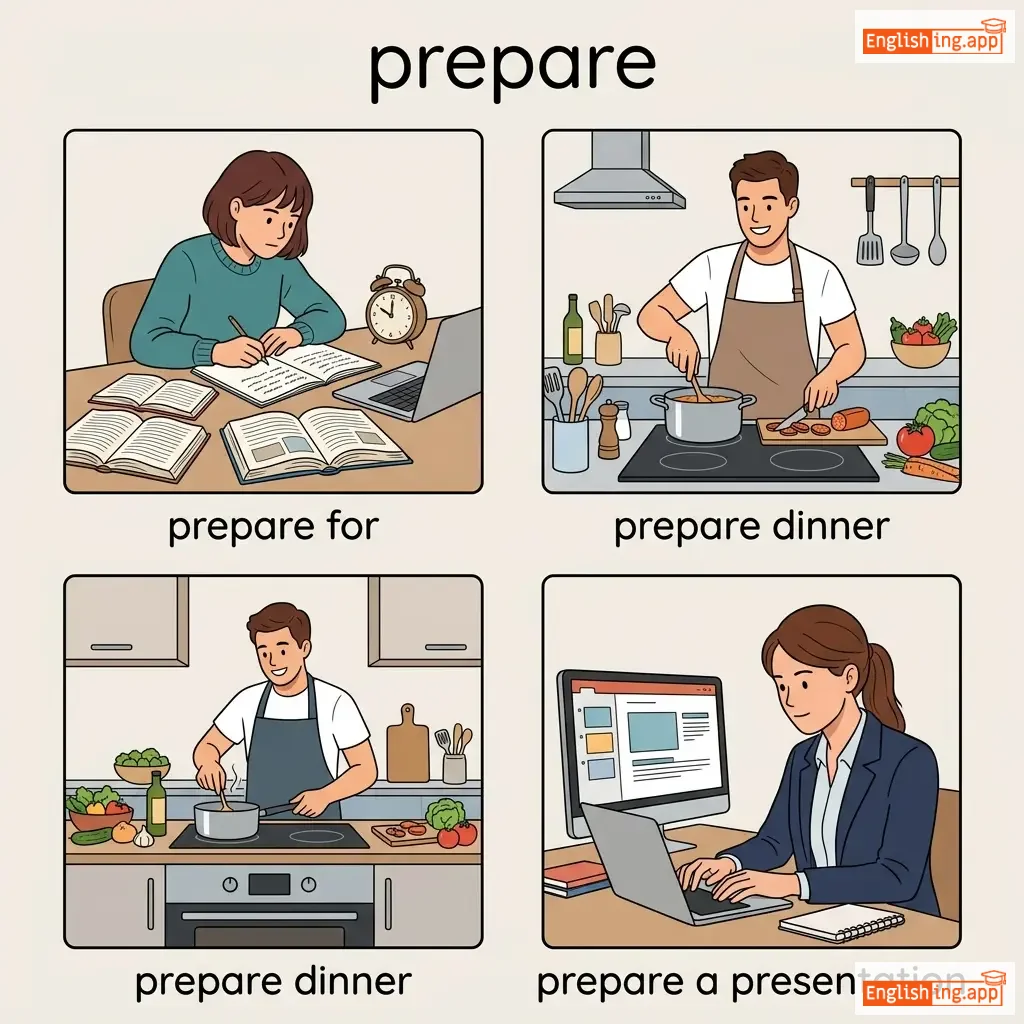
She needs to prepare dinner for her family.
シー ニーズ トゥ プリペア ディナー フォー ハー ファミリー。
••••••
|
彼女は家族のために夕食を準備する必要があります。
kanojo wa kazoku no tame ni yuushoku o junbi suru hitsuyou ga arimasu
••••••
|
- •••••• | - •••••• | - •••••• |
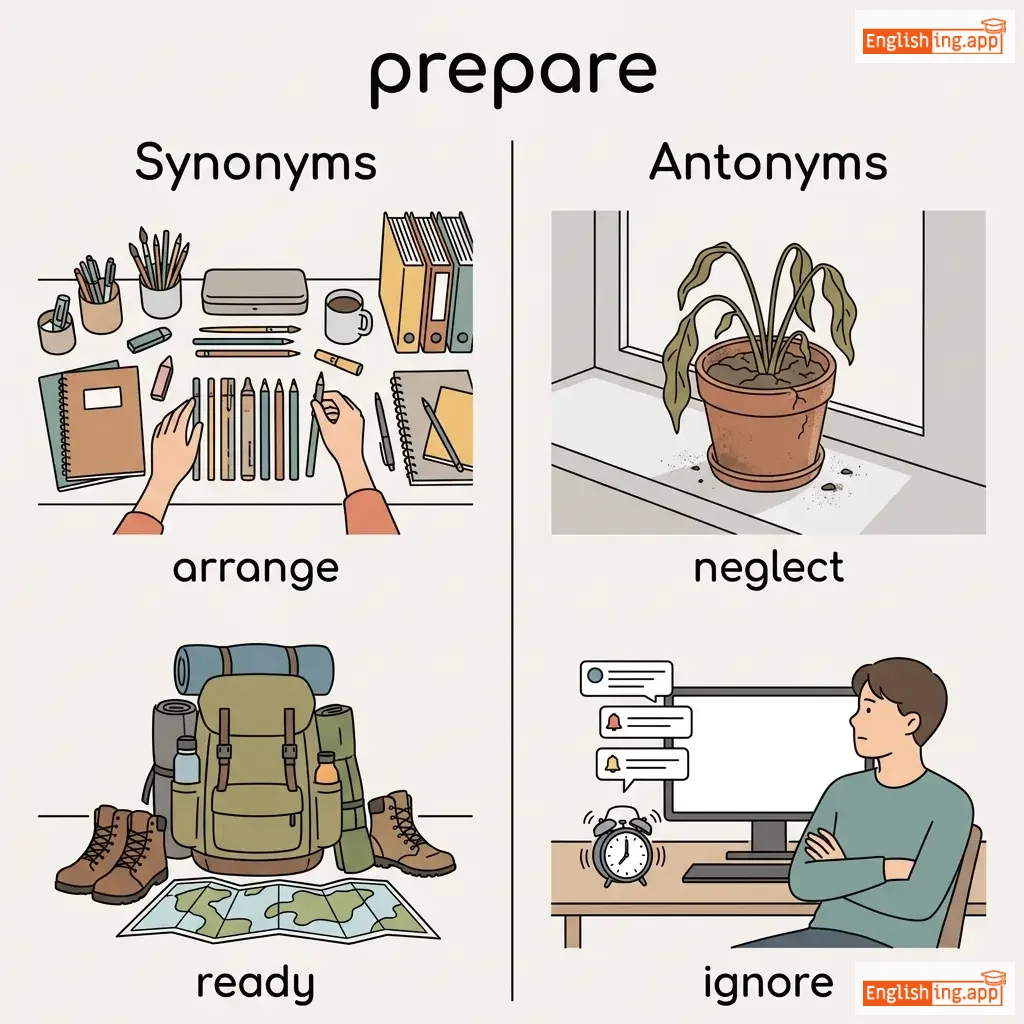
ready, arrange, organize, plan
••••••
|
neglect, ignore, abandon, destroy
••••••
|
prepare for, prepare carefully, prepare dinner, prepare ahead, well prepared, prepare thoroughly
••••••
|
Junbi suru = prepare – sounds like 'June-be' ready!
••••••
|
|
✅
••••••
|
/prɪˈpɛrd/
adjective; verb (past and past participle of prepare)
(プリペアド)
••••••
|
- •••••• |
準備ができた
junbi ga dekita
••••••
|
prepared
プリペアド
••••••
|
prepared
プリペアド
••••••
|
prepares
プリペアズ
••••••
|
preparing
プリペアリング
••••••
|
made ready in advance; having made plans or taken steps beforehand
••••••
|
She was fully prepared for the final exam.
シー ワズ フリー プリペアド フォー ザ ファイナル イグザム。
••••••
|
彼女は期末試験の準備が完全にできていた。
Kanojo wa kimatsu shiken no junbi ga kanzen ni dekite ita
••••••
|
be prepared
ビー プリペアド
••••••
|
to be ready for something that may happen
••••••
|
準備しておく
junbi shite oku
••••••
|
ready, organized, equipped, primed, arranged
••••••
|
unprepared, unready, careless
••••••
|
well prepared, fully prepared, properly prepared, mentally prepared
••••••
|
Prepared = junbi OK、すぐスタート
••••••
|
|
💊
••••••
|
/prɪˈskrʌɪb/
verb
(プレスクライブ)
••••••
|
- •••••• |
処方する
shohō suru
••••••
|
prescribed
プレスクライブド
••••••
|
prescribed
プレスクライブド
••••••
|
prescribes
プレスクライブズ
••••••
|
prescribing
プレスクライビング
••••••
|
to recommend or authorize the use of something, especially medicine
••••••
|
The doctor prescribed medication for my cold.
医者は私の風邪のために薬を処方しました。
••••••
|
医者は私の風邪のために薬を処方しました。
Isha wa watashi no kaze no tame ni kusuri o shohō shimashita.
••••••
|
- •••••• | - •••••• | - •••••• |
recommend, suggest, order, direct
••••••
|
forbid, prohibit
••••••
|
prescribe medication, prescribe treatment, prescribe a remedy
••••••
|
処方して治療開始!
••••••
|
|
💊
••••••
|
/prɪˈskrɪpʃən/
noun
(プレスクリプション)
••••••
|
- •••••• |
処方箋
shohousen
••••••
|
- •••••• | - •••••• | - •••••• | - •••••• |
A written order from a doctor for the preparation and administration of a medicine; also, a recommendation or authoritative rule.
••••••
|
The doctor gave her a prescription for antibiotics.
医者は彼女に抗生物質の処方箋を出しました。
••••••
|
医者は彼女に抗生物質の処方箋を出しました。
Isha wa kanojo ni kōseibusshitsu no shohōsen o dashimashita.
••••••
|
fill a prescription
処方箋を記入する
••••••
|
to provide medicine according to a doctor’s order
••••••
|
処方箋を記入する
shohōsen o kinyū suru
••••••
|
medication, remedy, directive, order
••••••
|
discretion, suggestion
••••••
|
doctor's prescription, prescription drug, prescription medicine
••••••
|
処方箋 = 医者が書いた薬の指示!
••••••
|
|
👥
••••••
|
/ˈprez.əns/
noun
(prezensu)
••••••
|
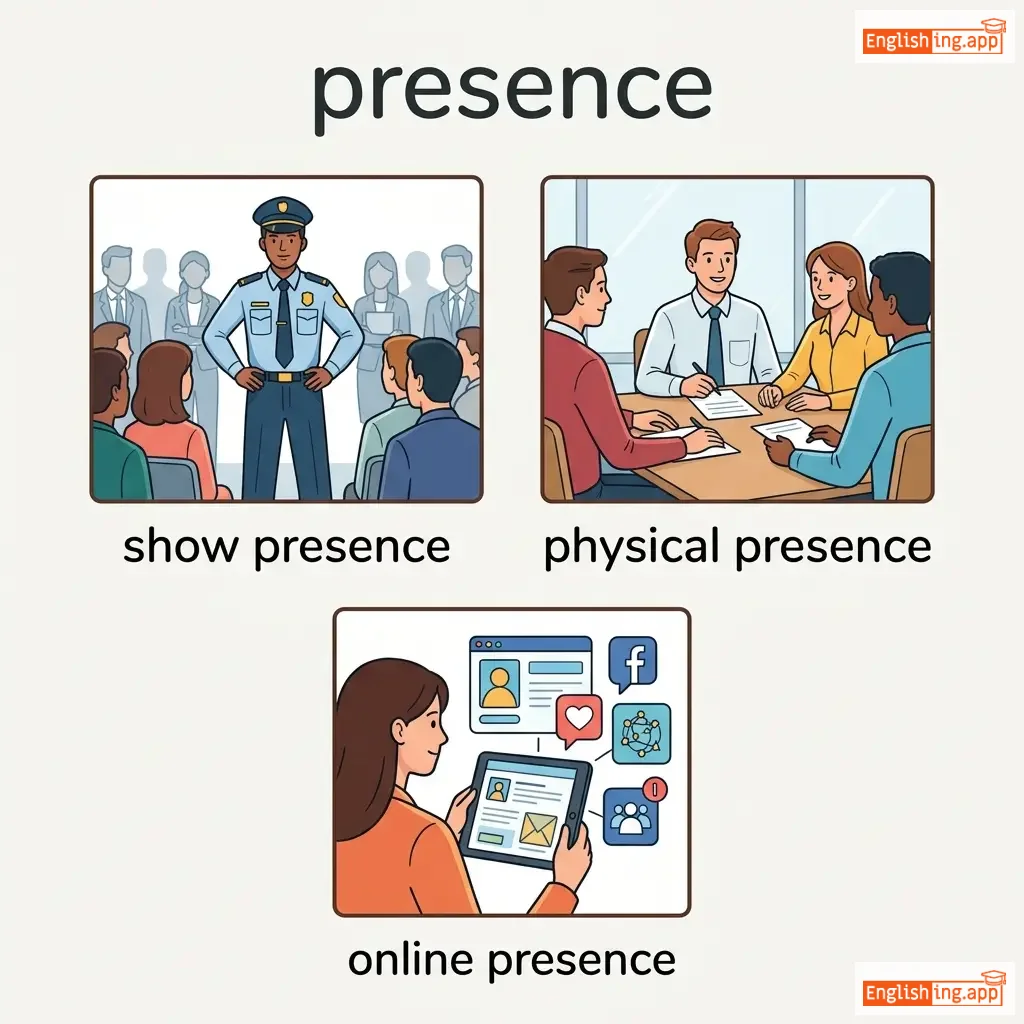
|
出席; 存在
shusseki; sonzai
••••••
|
- •••••• | - •••••• | - •••••• | - •••••• |
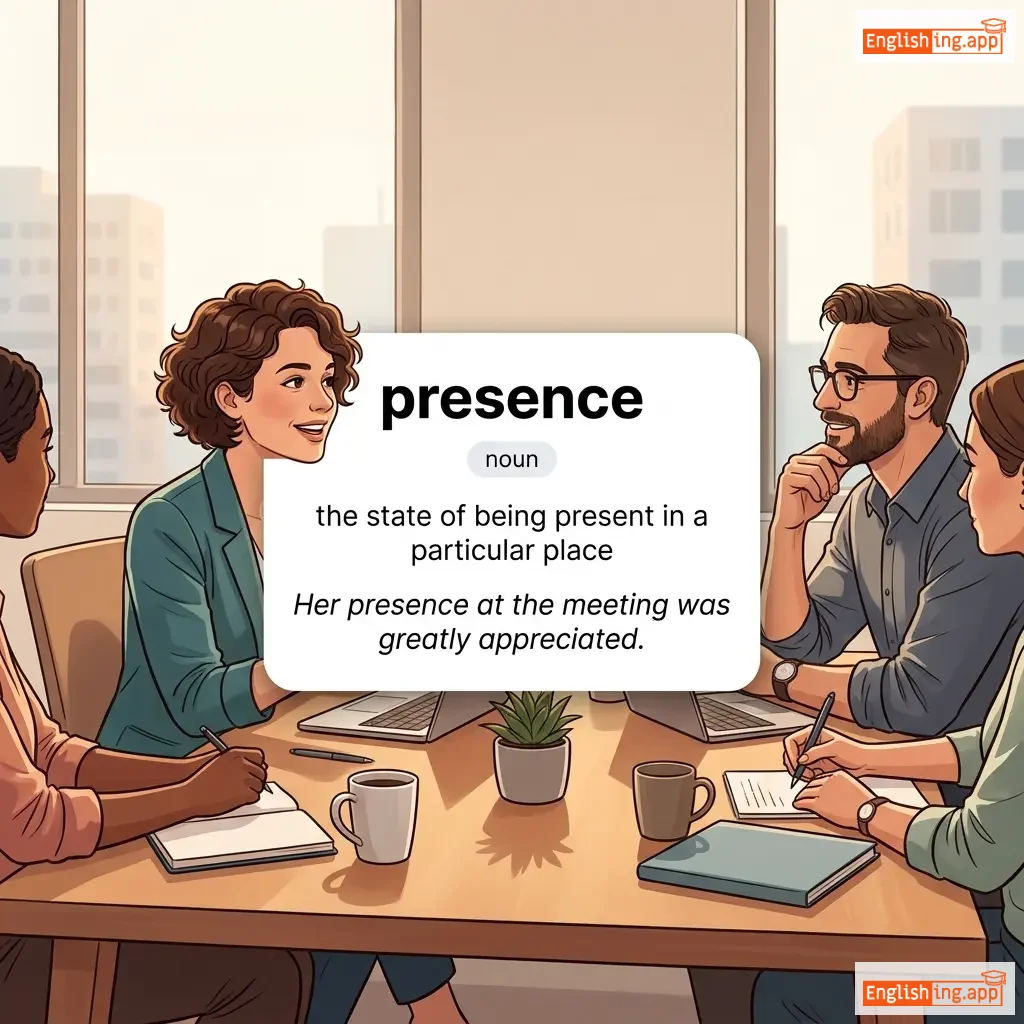
the fact or condition of being present
••••••
|
Your presence at the meeting is required.
会議におけるあなたの出席が求められています。
••••••
|
会議におけるあなたの出席が求められています。
Kaigi ni okeru anata no shusseki ga motomerareteimasu.
••••••
|
- •••••• | - •••••• | - •••••• |
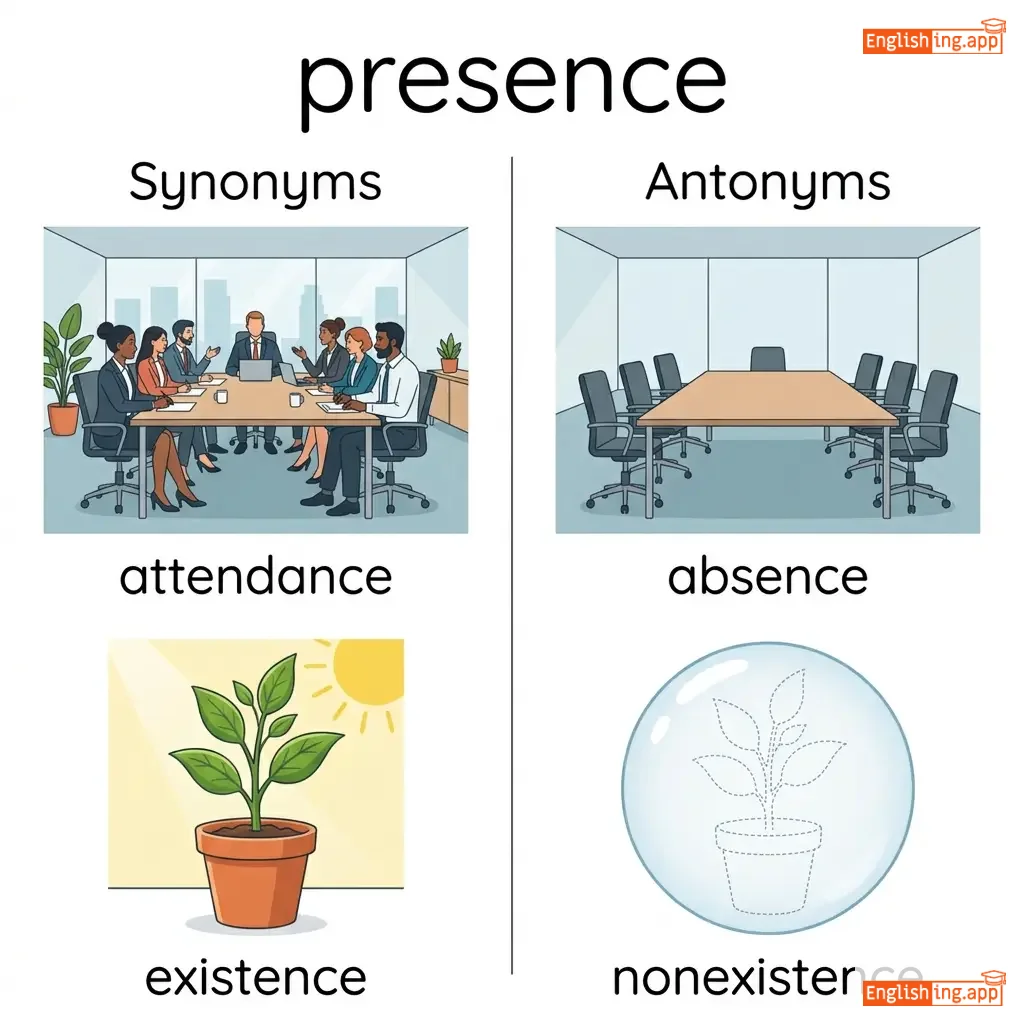
attendance, existence, being, company
••••••
|
absence, nonattendance, departure
••••••
|
physical presence, strong presence, online presence, feel presence
••••••
|
Presence を日本語で言うと出席や存在を意味します。
••••••
|
|
🎁
••••••
|
/ˈprɛzənt/
noun, verb, adjective
(プレゼント)
••••••
|
- •••••• |
プレゼント
purezento
••••••
|
presented
プレゼンテッド
••••••
|
presented
プレゼンテッド
••••••
|
presents
プレゼントス
••••••
|
presenting
プレゼンティング
••••••
|
existing or happening now; to give something to someone in a formal way
••••••
|
She presented her report to the team yesterday.
彼女は昨日チームに報告書を提出しました。
••••••
|
彼女は昨日チームに報告書を提出しました。
Kanojo wa kinou chiimu ni houkokusho o teishutsu shimashita.
••••••
|
- •••••• | - •••••• | - •••••• |
current, introduce, gift, show
••••••
|
absent, absent-minded
••••••
|
present at, present a gift, present the findings
••••••
|
Presentを今の瞬間に公式に示す
••••••
|
|
📊
••••••
|
/ˌprez.ənˈteɪ.ʃən/
noun
(プレゼンテーション)
••••••
|

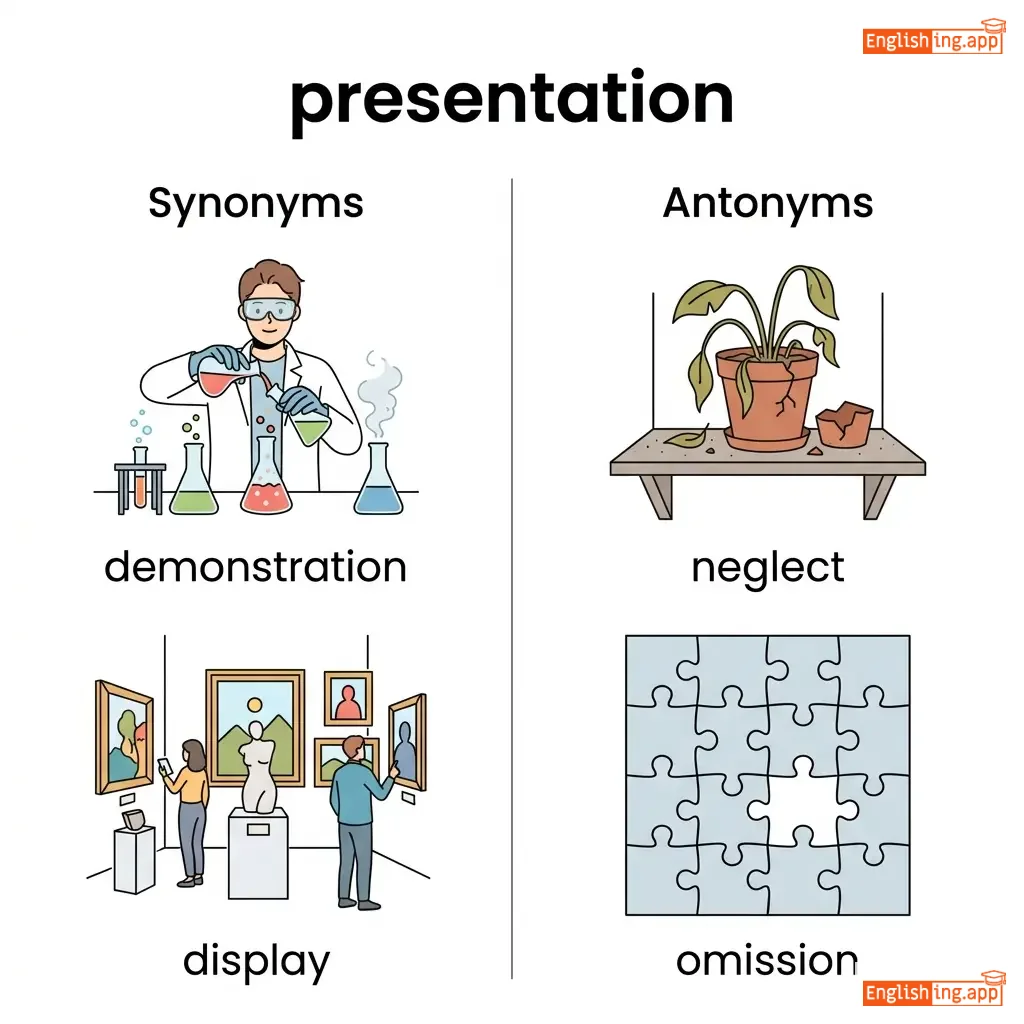
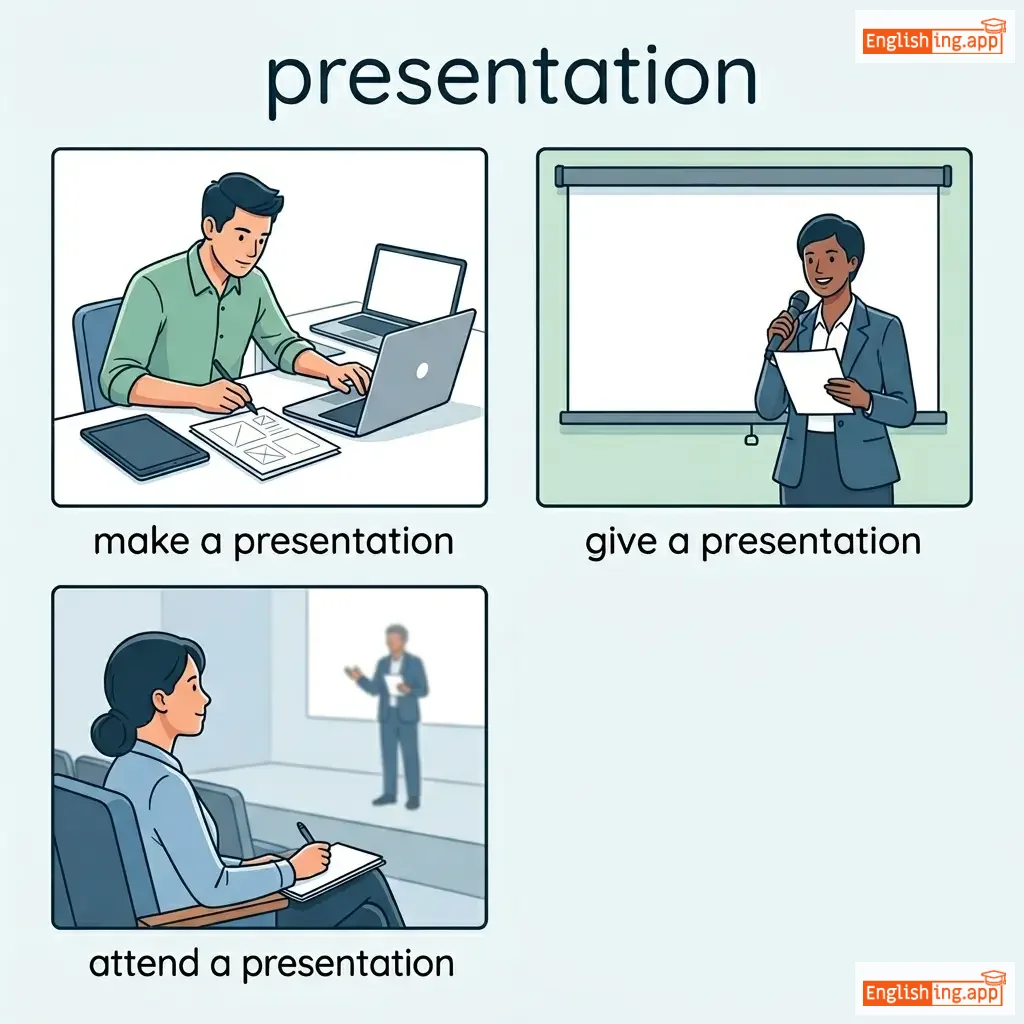
|
プレゼンテーション
purezenteishon
••••••
|
- •••••• | - •••••• | - •••••• | - •••••• |
the action of showing or explaining something to a group of people
••••••
|
She gave an excellent presentation about climate change.
彼女は気候変動についての素晴らしいプレゼンテーションを行いました。
••••••
|
彼女は気候変動についての素晴らしいプレゼンテーションを行いました。
Kanojo wa kikou hendou ni tsuite no subarashii purezenteishon o okonaimashita.
••••••
|
- •••••• | - •••••• | - •••••• |
demonstration, display, speech, lecture, exhibition
••••••
|
concealment, hiding, withdrawal
••••••
|
give presentation, deliver presentation, PowerPoint presentation, oral presentation
••••••
|
プレゼンテーションはアイデアを共有するための方法です
••••••
|
|
⏰
••••••
|
/ˈprez.ənt.li/
adverb
(purizentorī)
••••••
|
- •••••• |
現在; すぐに; しばらくして
genzai; sugu ni; shibaraku shite
••••••
|
- •••••• | - •••••• | - •••••• | - •••••• |
at the present time; soon; in a little while
••••••
|
The doctor will see you presently. |
医者はすぐにあなたを診ます。
Isha wa sugu ni anata o shimasu.
••••••
|
- •••••• | - •••••• | - •••••• |
currently, now, soon, shortly
••••••
|
previously, formerly, later
••••••
|
presently available, presently working, presently located
••••••
|
Presently – すぐに、今、'プレゼント'から学ぶ!
••••••
|
|
🛡️
••••••
|
/ˌprez.əˈveɪ.ʃən/
noun
(プレザベーション)
••••••
|
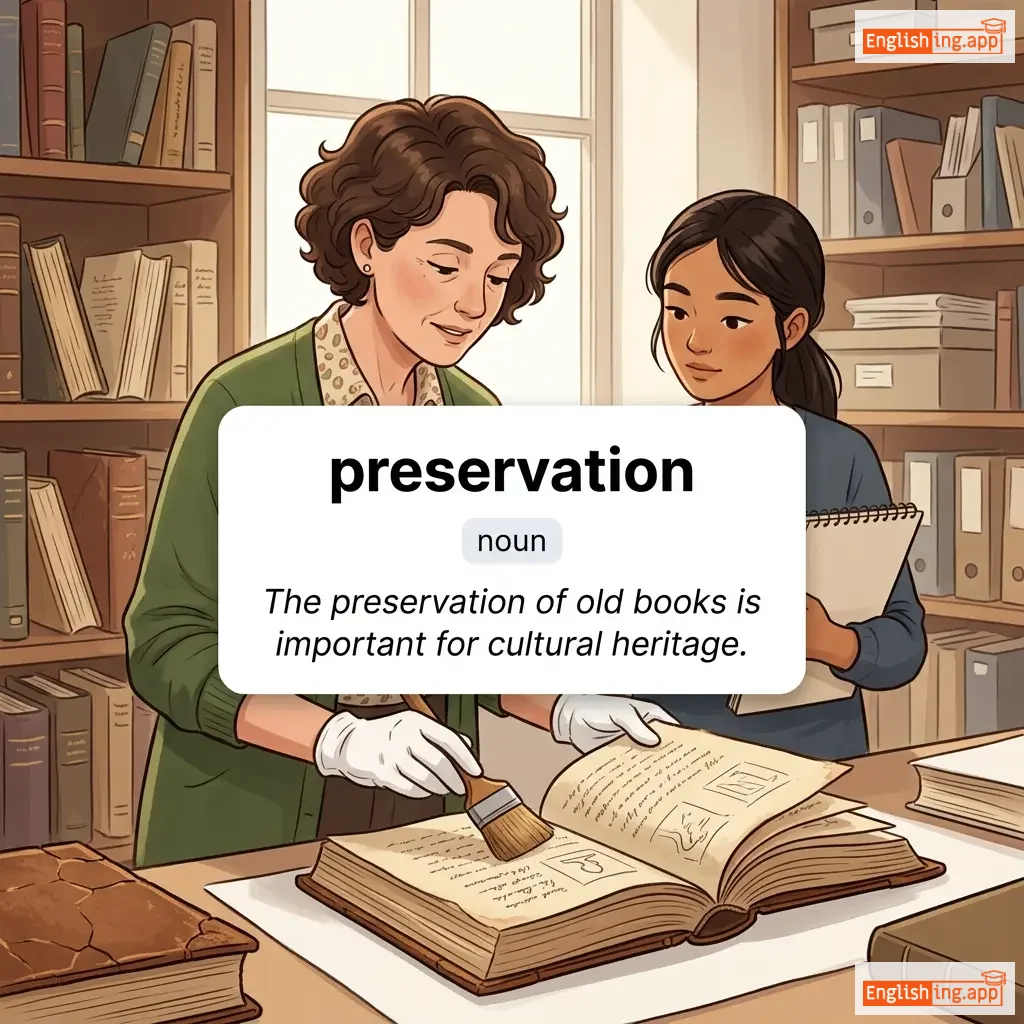
|
保存
hozon
••••••
|
- •••••• | - •••••• | - •••••• | - •••••• |
the action of maintaining something in its original or existing state
••••••
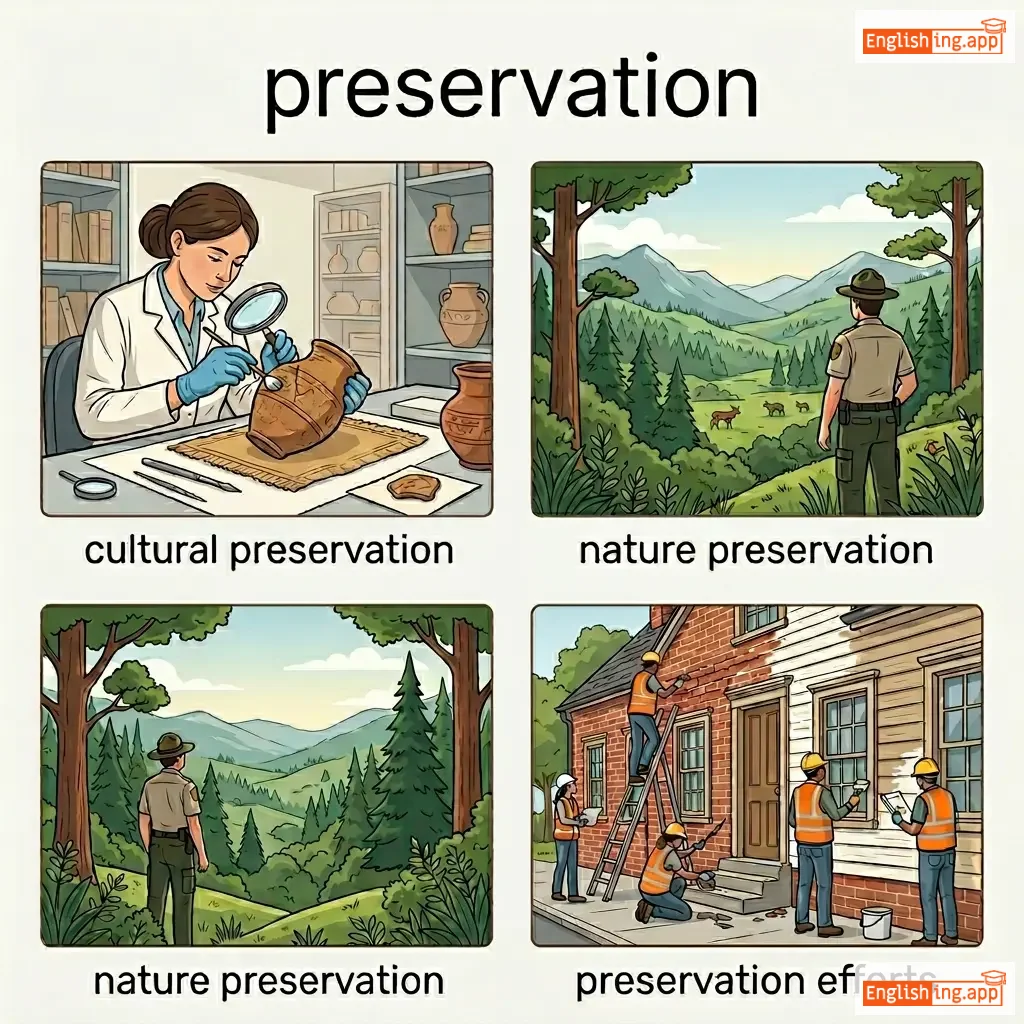
|
The preservation of historical buildings is very important.
歴史的建物の保存は非常に重要です。
••••••
|
歴史的建物の保存は非常に重要です。
Rekishi-teki tatemono no hozon wa hijō ni jūyō desu.
••••••
|
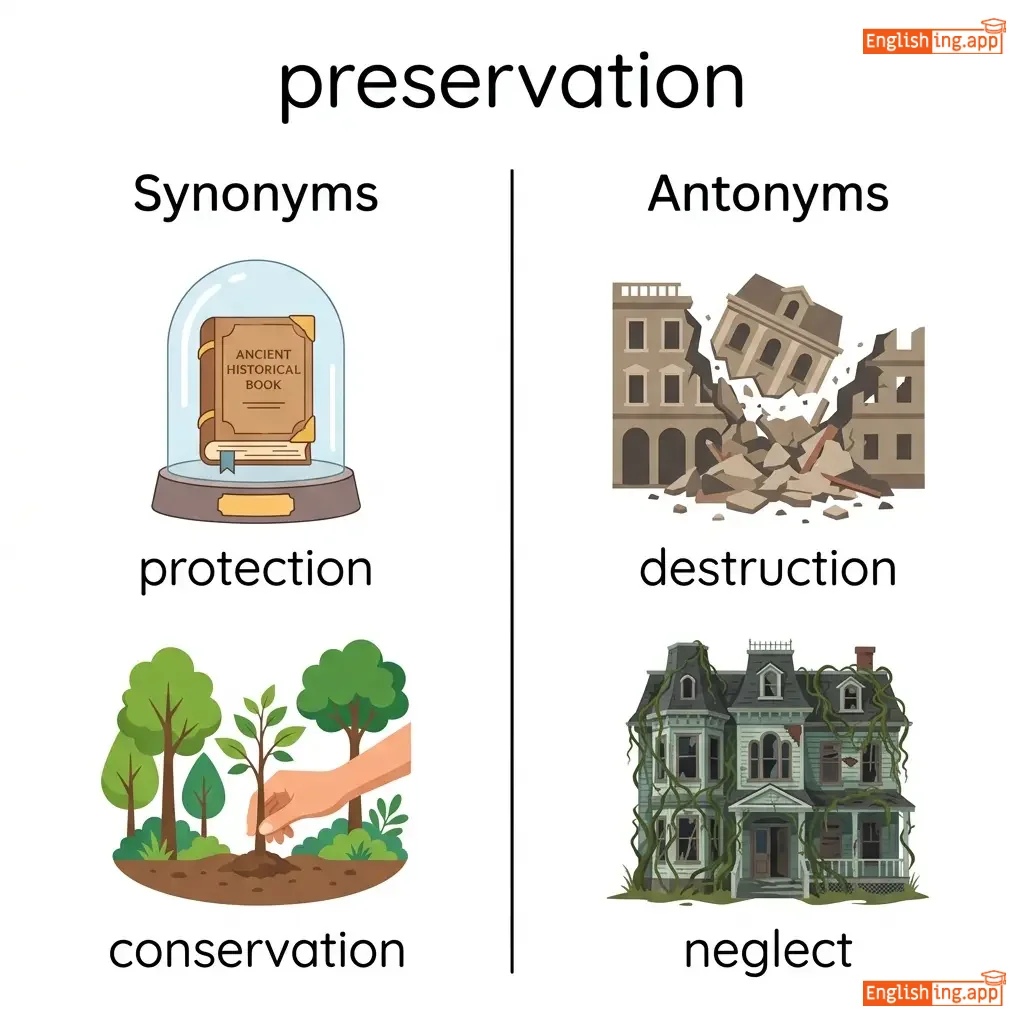
- •••••• | - •••••• | - •••••• |
conservation, protection, maintenance, safeguarding
••••••
|
destruction, demolition, deterioration
••••••
|
food preservation, wildlife preservation, historical preservation, self-preservation
••••••
|
保存は歴史を未来に繋げる。
••••••
|
|
👩⚖️
••••••
|
/prɪˈzaɪd/
verb
(プレサイド)
••••••
|
- •••••• |
主宰する
shusai suru
••••••
|
presided
プレサイデッド
••••••
|
presided
プレサイデッド
••••••
|
presides
プレサイドス
••••••
|
presiding
プレサイディング
••••••
|
to be in charge of a meeting, event, or organization
••••••
|
She will preside over the meeting tomorrow.
彼女は明日会議を主宰します。
••••••
|
彼女は明日会議を主宰します。
Kanojo wa ashita kaigi o shusai shimasu.
••••••
|
- •••••• | - •••••• | - •••••• |
chair, lead, direct, manage
••••••
|
follow, be led
••••••
|
preside over a meeting, preside over a ceremony, preside over a discussion
••••••
|
主宰するのは会議を取り仕切ること!
••••••
|
|
🏛️
••••••
|
/ˈprɛzɪdənsi/
noun
(プレジデンシー)
••••••
|
- •••••• |
大統領職
daitōryō shoku
••••••
|
- •••••• | - •••••• | - •••••• | - •••••• |
the office or position of being a president
••••••
|
He was elected to the presidency in 2020. |
彼は2020年に大統領職に選ばれました。
Kare wa 2020 nen ni daitōryō shoku ni erabaremashita.
••••••
|
- •••••• | - •••••• | - •••••• |
leadership, administration, term, office, authority
••••••
|
subordination, followership
••••••
|
presidency term, presidential office, during his presidency, win the presidency
••••••
|
プレジデンシーは大統領の仕事です。
••••••
|
|
👨💼
••••••
|
/ˈprɛzɪdənt/
noun
(プレジデント)
••••••
|
- •••••• |
大統領
daitōryō
••••••
|
- •••••• | - •••••• | - •••••• | - •••••• |
the elected head of a republican state
••••••
|
The president addressed the nation last night. |
大統領は昨晩、国民に向けて演説を行いました。
Daitōryō wa sakuban, kokumin ni mukete enzetsu o okonaimashita.
••••••
|
- •••••• | - •••••• | - •••••• |
leader, chief, head of state
••••••
|
subordinate, follower
••••••
|
president of the United States, elected president, president's speech
••••••
|
大統領(president)は国の舵を取る者。
••••••
|
|
🏛️
••••••
|
/ˌprɛzɪˈdɛnʃəl/
adjective
(プレジデンシャル)
••••••
|
- •••••• |
大統領に関連する
daitōryō ni kanren suru
••••••
|
- •••••• | - •••••• | - •••••• | - •••••• |
relating to a president or presidency
••••••
|
The presidential election is scheduled for next month. |
大統領選挙は来月に予定されています。
Daitōryō senkyo wa raigetsu ni yotei sareteimasu.
••••••
|
- •••••• | - •••••• | - •••••• |
president's, head of state's
••••••
|
non-presidential
••••••
|
presidential election, presidential duties, presidential candidate
••••••
|
プレジデンシャルは、大統領に関連することです。
••••••
|
|
📰
••••••
|
/prɛs/
noun/verb
(プレス)
••••••
|
|
新聞 / 押す
shinbun / osu
••••••
|
pressed
プレスド
••••••
|
pressed
プレスド
••••••
|
presses
プレスス
••••••
|
pressing
プレスイング
••••••
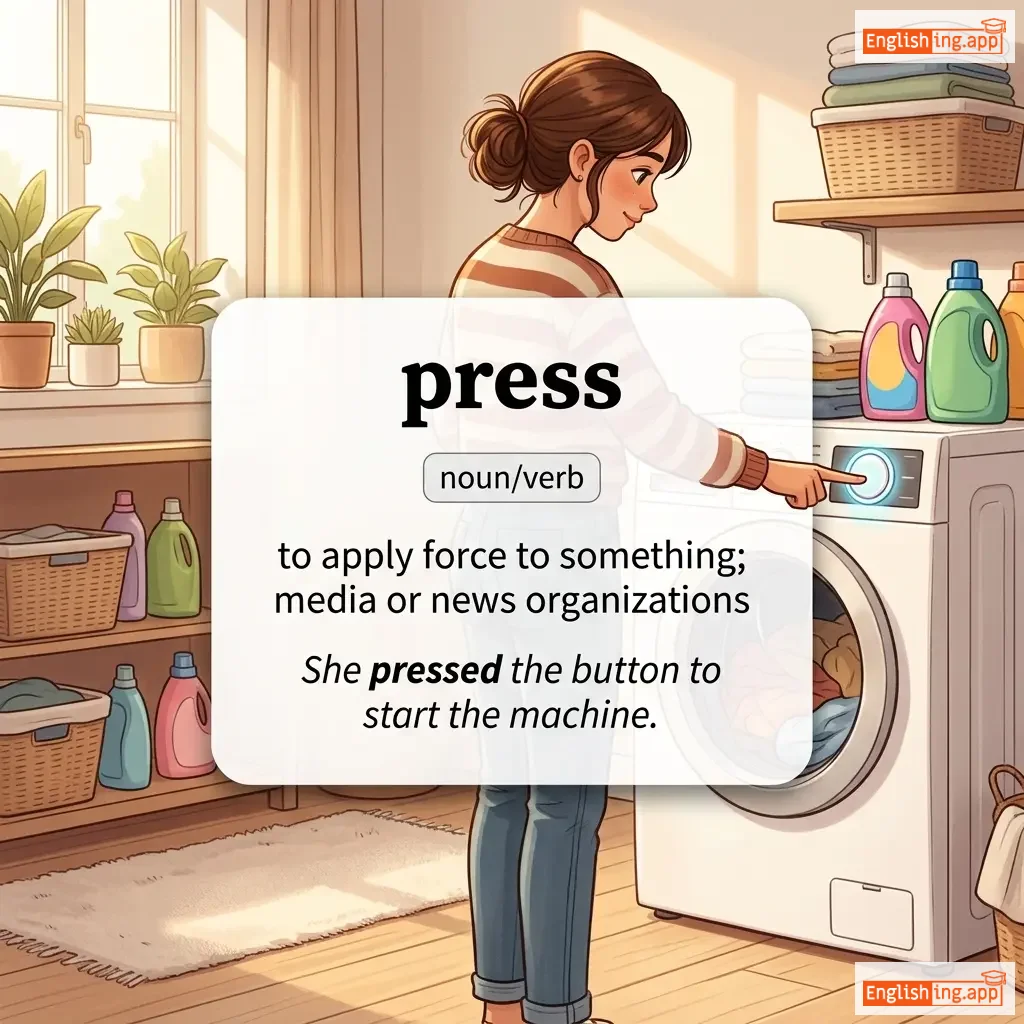
|
to apply force to something; media or news organizations
••••••
|
She pressed the button to start the machine.
彼女は機械を起動するためにボタンを押しました。
••••••
|
彼女は機械を起動するためにボタンを押しました。
Kanojo wa kikai o kidō suru tame ni botan o oshimashita.
••••••
|
press the issue
問題をプレスする
••••••
|
to continue discussing something forcefully or persistently
••••••
|
問題をプレスする
Mondai o puresu suru
••••••
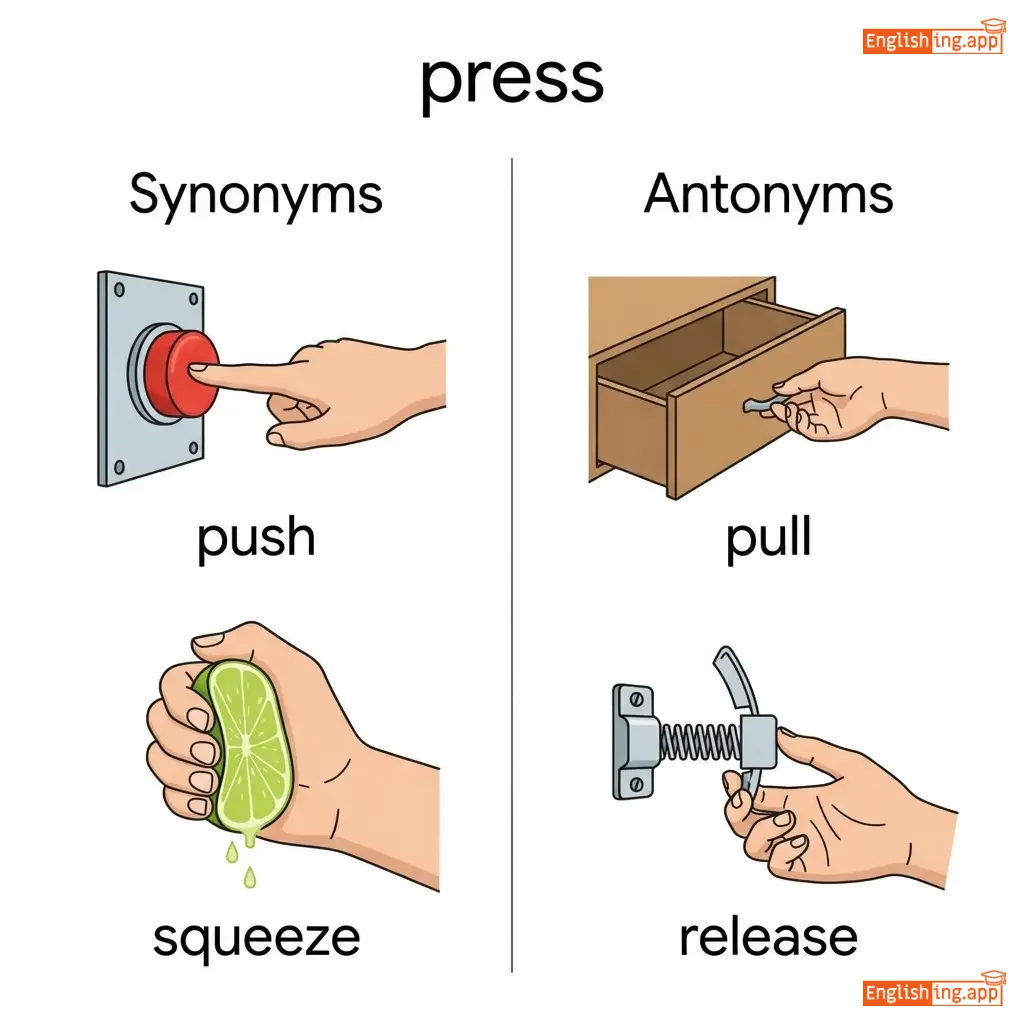
|
push, squeeze, media
••••••
|
pull, release
••••••
|
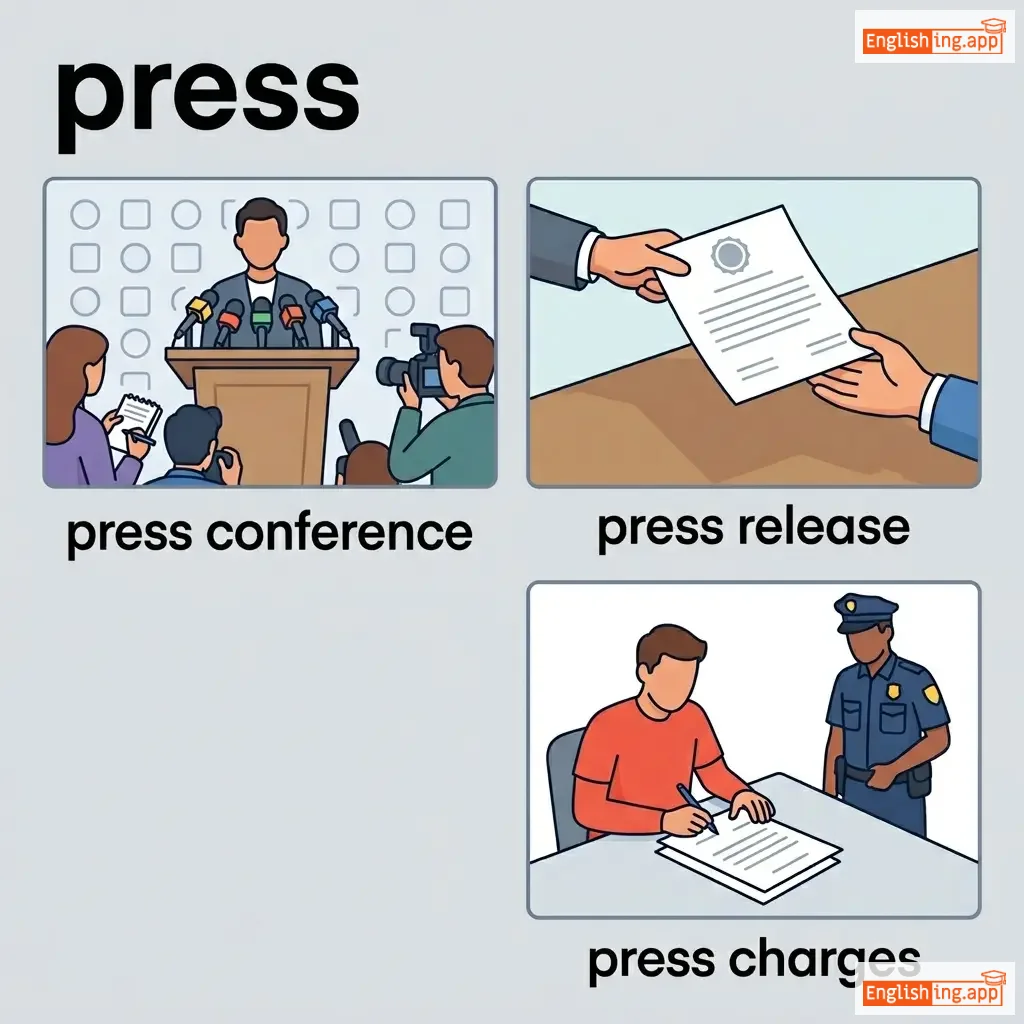
press conference, press release, press charges, press on
••••••
|
プレスでニュースを広める
••••••
|
|
💥
••••••
|
/ˈprɛʃər/
noun/verb
(プレッシャー)
••••••
|
- •••••• |
プレッシャー
puresshā
••••••
|
pressured
プレッシャード
••••••
|
pressured
プレッシャード
••••••
|
pressures
プレッシャーズ
••••••
|
pressuring
プレッシャリング
••••••
|
the force applied to something or the feeling of stress or tension
••••••
|
The pressure of the situation made him nervous.
その状況のプレッシャーは彼を緊張させました。
••••••
|
その状況のプレッシャーは彼を緊張させました。
Sono jōkyō no puresshā wa kare wo kinchou sasemashita.
••••••
|
under pressure
プレッシャーの中で
••••••
|
feeling stressed or forced to perform
••••••
|
プレッシャーの中で
Puresshā no naka de
••••••
|
stress, tension, force
••••••
|
relaxation, ease
••••••
|
high pressure, pressure to succeed, under pressure, pressure point
••••••
|
プレッシャー (Pressure) は常にプレッシャーの中で感じるもの
••••••
|
|
🏆
••••••
|
/prɛsˈtɪdʒəs/
adjective
(プレスティジアス)
••••••
|
- •••••• |
名誉ある
meiyo aru
••••••
|
- •••••• | - •••••• | - •••••• | - •••••• |
having a high reputation; respected
••••••
|
Harvard University is one of the most prestigious universities in the world. |
ハーバード大学は世界で最も名誉ある大学の一つです。
Hābādo daigaku wa sekai de mottomo meiyo aru daigaku no hitotsu desu.
••••••
|
- •••••• | - •••••• | - •••••• |
respected, esteemed, renowned, famous
••••••
|
insignificant, unknown
••••••
|
prestigious institution, prestigious award, prestigious university
••••••
|
名誉ある (prestigious) は名声を持っていることを意味します!
••••••
|
|
🤔
••••••
|
/prɪˈzjuːməbli/
adverb
(プリズームアブリー)
••••••
|
- •••••• |
おそらく
osoraku
••••••
|
- •••••• | - •••••• | - •••••• | - •••••• |
used to convey that something is assumed to be true though not known for certain
••••••
|
Presumably, he forgot to send the email. |
おそらく、彼はメールを送るのを忘れた。
Osoraku, kare wa mēru o okuru no o wasureta.
••••••
|
- •••••• | - •••••• | - •••••• |
probably, likely, supposedly, apparently, seemingly
••••••
|
certainly, definitely, surely
••••••
|
presumably because, presumably due to, presumably related to, presumably intended
••••••
|
Presumeは推測するという意味、おそらくはその可能性が高い — '私は推測しているので、おそらくそれが正しいです。'
••••••
|
|
🤔
••••••
|
/prɪˈzjuːm/
verb
(puriziumu)
••••••
|
- •••••• |
仮定する
katei suru
••••••
|
presumed
purizimumudo
••••••
|
presumed
purizimumudo
••••••
|
presumes
purizimumusu
••••••
|
presuming
purizimumingu
••••••
|
To suppose something is true without proof; to take for granted.
••••••
|
I presume she has already left for the meeting.
私は彼女がすでに会議に出かけたと思います。
••••••
|
私は彼女がすでに会議に出かけたと思います。
Watashi wa kanojo ga sude ni kaigi ni dekaketa to omoimasu.
••••••
|
presume innocence
無罪を仮定する
••••••
|
to assume someone is innocent until proven guilty
••••••
|
無罪を仮定する
muzai o katei suru
••••••
|
assume, suppose, believe, infer, guess
••••••
|
doubt, disbelieve, question
••••••
|
presume innocence, presume to act, presume responsibility, presume knowledge
••••••
|
仮定するは証拠なしに何かを予測すること
••••••
|
|
🎭
••••••
|
/prɪˈtɛnd/
verb
(プリテンド)
••••••
|
- •••••• |
ふりをする
furi o suru
••••••
|
pretended
プリテンドッド
••••••
|
pretended
プリテンドッド
••••••
|
pretends
プリテンズ
••••••
|
pretending
プリテンドイング
••••••
|
To act as if something is true when it is not.
••••••
|
The children pretended to be superheroes.
子供たちはスーパーヒーローになるふりをした。
••••••
|
子供たちはスーパーヒーローになるふりをした。
Kodomotachi wa sūpāhīrō ni naru furi o shita.
••••••
|
pretend play
ふり遊び
••••••
|
A form of play where children act out roles and scenarios.
••••••
|
ふり遊び
furi asobi
••••••
|
feign, fake, simulate, act
••••••
|
reveal, show
••••••
|
pretend to be, pretend play, pretend interest
••••••
|
Pretend は ふりをする、プリで始めて、ふりで遊ぶ。
••••••
|
|
🎭
••••••
|
/prɪˈtɛnʃən/
noun
(プリテンション)
••••••
|
- •••••• |
虚偽、見せかけ
kyogi, misekake
••••••
|
- •••••• | - •••••• | - •••••• | - •••••• |
A claim or assertion to something, often without justification; an attempt to impress by showing greater importance or talent than is actually possessed.
••••••
|
His pretension to be an expert was quickly exposed.
彼の専門家であるというプリテンションはすぐに暴かれた。
••••••
|
彼の専門家であるというプリテンションはすぐに暴かれた。
kare no senmonka de aru to iu puritenshon wa sugu ni abakareta.
••••••
|
- •••••• | - •••••• | - •••••• |
claim, aspiration, affectation, vanity, show
••••••
|
humility, modesty
••••••
|
false pretension, intellectual pretension, pretension to power, artistic pretension
••••••
|
Pretensionは注意を引くために振る舞うことを意味します。
••••••
|
|
🌸
••••••
|
/ˈprɪti/
adjective
(プリティ)
••••••
|
- •••••• |
きれい
kirei
••••••
|
- •••••• | - •••••• | - •••••• | - •••••• |
Attractive in a delicate way without being truly beautiful.
••••••
|
She looked pretty in her new dress. |
彼女は新しいドレスできれいに見えた。
Kanojo wa atarashī doresu de kirei ni mieta.
••••••
|
pretty good |
Fairly good or satisfactory.
••••••
|
かなり良い
kanari yoi
••••••
|
lovely, attractive, cute, charming, fair
••••••
|
ugly, unattractive, plain
••••••
|
pretty face, pretty girl, pretty well, pretty good
••••••
|
Prettyはきれい、でも少し控えめな美しさを意味します。
••••••
|
|
🏆
••••••
|
/prɪˈveɪl/
verb
(プリヴェイル)
••••••
|
- •••••• |
勝つ
katsu
••••••
|
prevailed
プリヴェイルド
••••••
|
prevailed
プリヴェイルド
••••••
|
prevails
プリヴェイルズ
••••••
|
prevailing
プリヴェイリング
••••••
|
To prove more powerful or superior; to be widespread or common.
••••••
|
Justice will always prevail over injustice.
正義は常に不正に勝る。
••••••
|
正義は常に不正に勝る。
Seigi wa jōni fusei ni masaru.
••••••
|
prevail upon someone
誰かを説得する
••••••
|
to persuade someone to do something
••••••
|
誰かを説得する
Dareka o settoku suru
••••••
|
triumph, succeed, win, dominate, overcome
••••••
|
fail, lose, surrender
••••••
|
prevail over, prevail in, prevail upon, prevail against
••••••
|
勝つということは最強であること:勝者は常に勝つ!
••••••
|
|
📊
••••••
|
/ˈprɛvələns/
noun
(プレヴァレンス)
••••••
|
|
普及
fukyū
••••••
|
- •••••• | - •••••• | - •••••• | - •••••• |
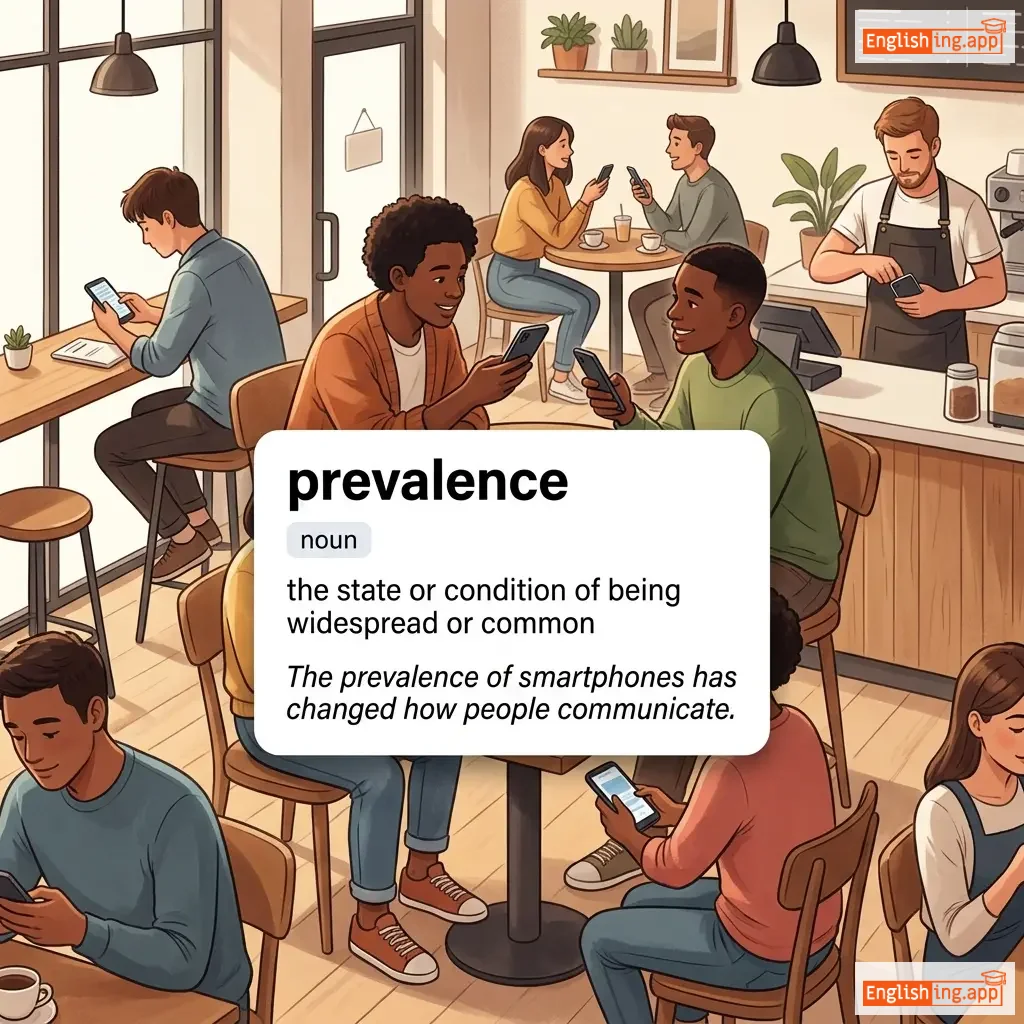
the state or condition of being widespread or common
••••••
|
The prevalence of smartphones has changed how people communicate.
スマートフォンの普及により、人々のコミュニケーション方法が変わった。
••••••
|
スマートフォンの普及により、人々のコミュニケーション方法が変わった。
Sumātofon no fukyū ni yori, hitobito no komyunikēshon hōhō ga kawatta.
••••••
|
- •••••• | - •••••• | - •••••• |
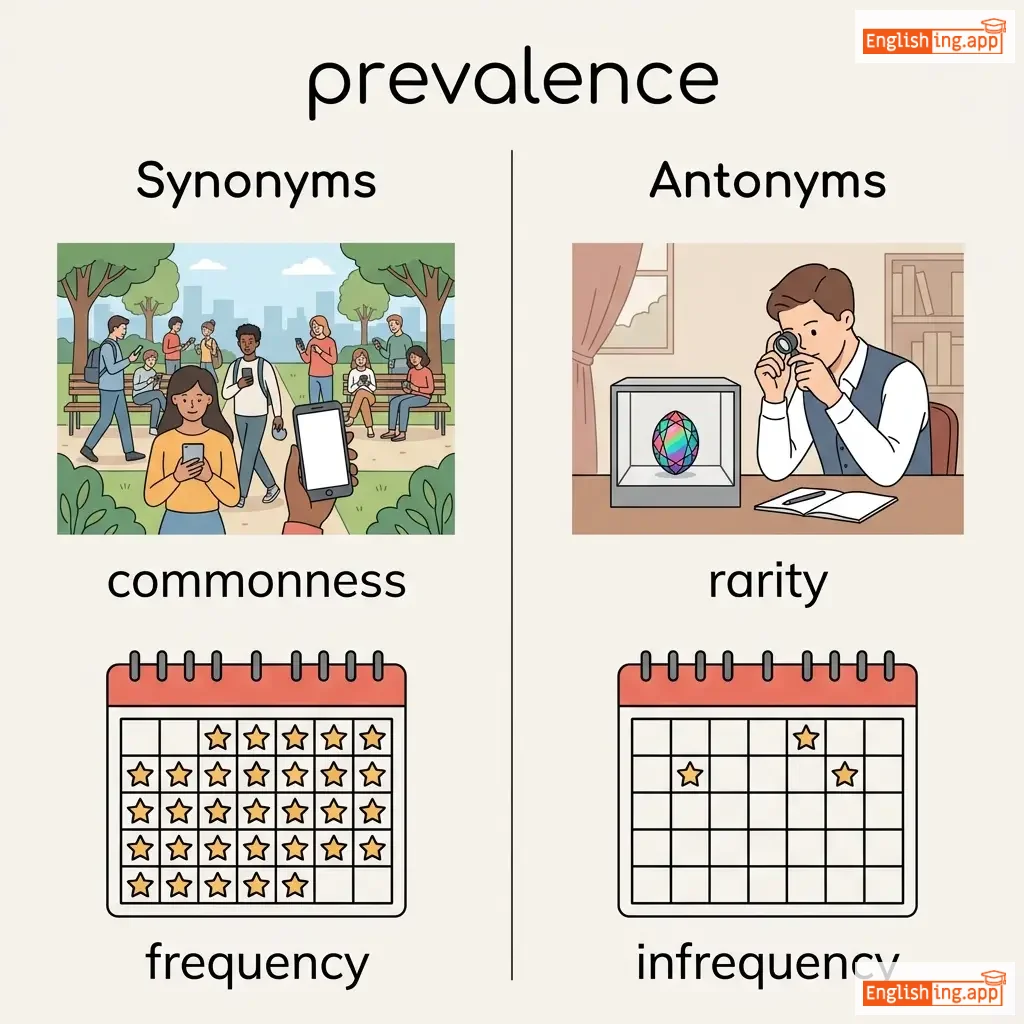
commonness, frequency, dominance, universality, popularity
••••••
|
rarity, infrequency, scarcity
••••••
|
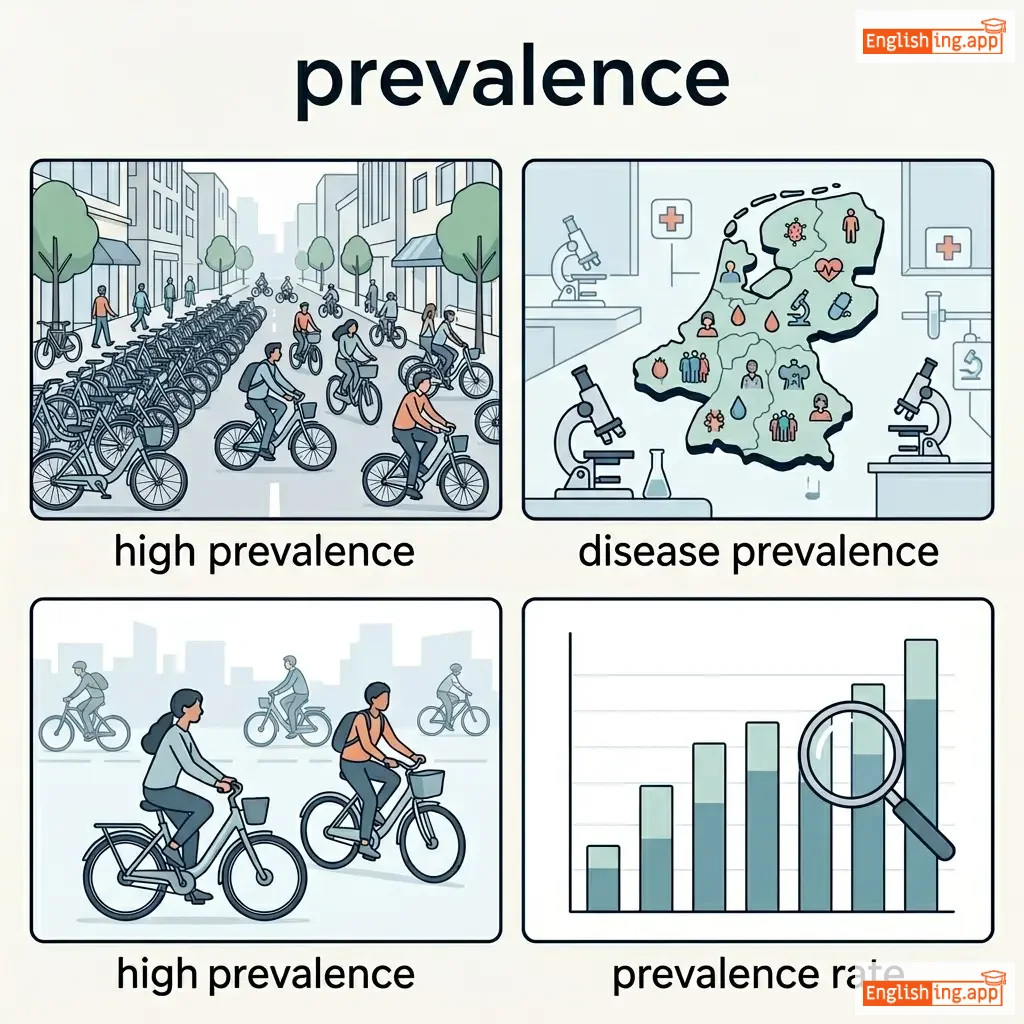
high prevalence, disease prevalence, prevalence rate, prevalence among
••••••
|
普及、'問題の普及'のように、広く一般的であることを意味します。
••••••
|
|
🛑
••••••
|
/prɪˈvɛnt/
verb
(プリベント)
••••••
|
|
防ぐ
fusegu
••••••
|
prevented
プリベンテッド
••••••
|
prevented
プリベンテッド
••••••
|
prevents
プリベンツ
••••••
|
preventing
プリベントイング
••••••
|
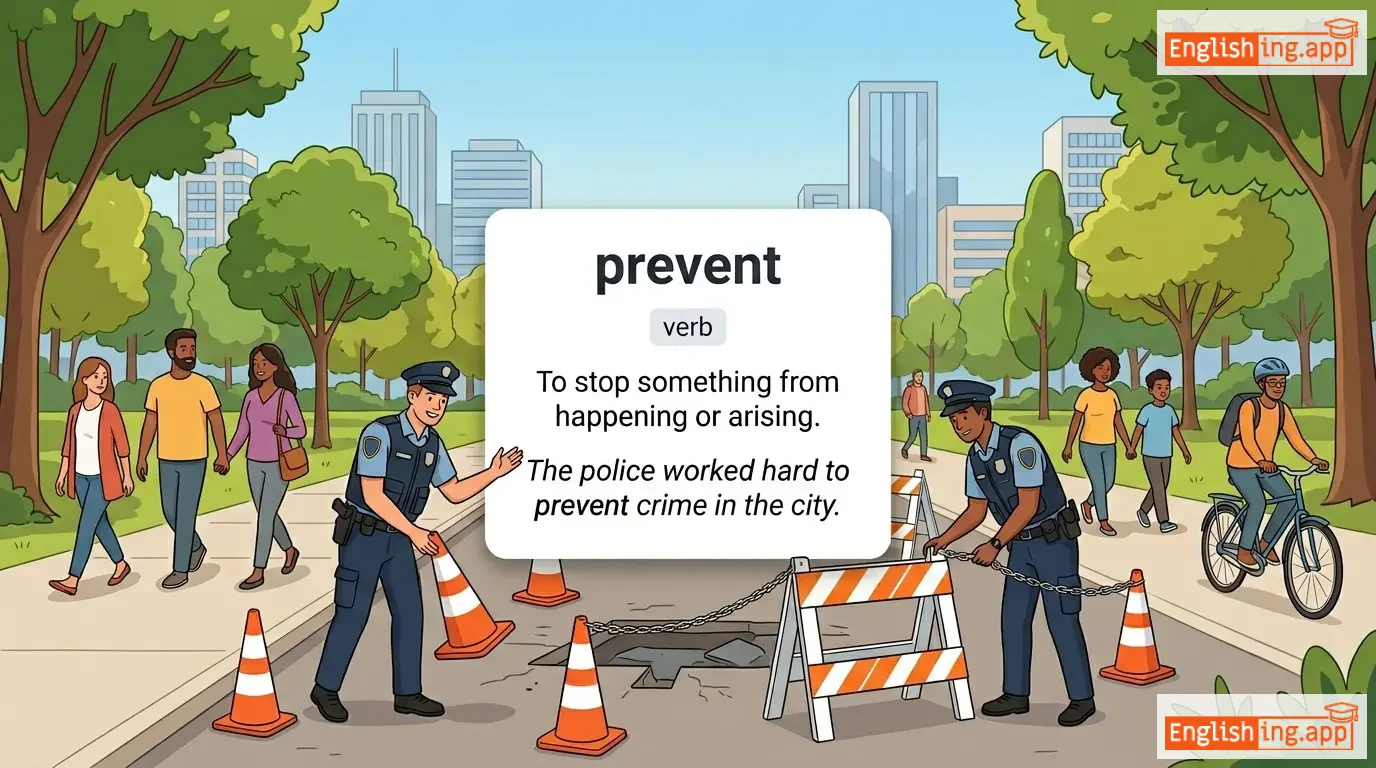
To stop something from happening or arising.
••••••
|
The police worked hard to prevent crime in the city.
警察は都市の犯罪を防ぐために一生懸命働きました。
••••••
|
警察は都市の犯罪を防ぐために一生懸命働きました。
Keisatsu wa toshi no hanzai o fusegu tame ni isshōkenmei hatarakimashita.
••••••
|
prevent from
防ぐために
••••••
|
To stop someone or something from doing something.
••••••
|
防ぐために
Fusegu tame ni
••••••
|
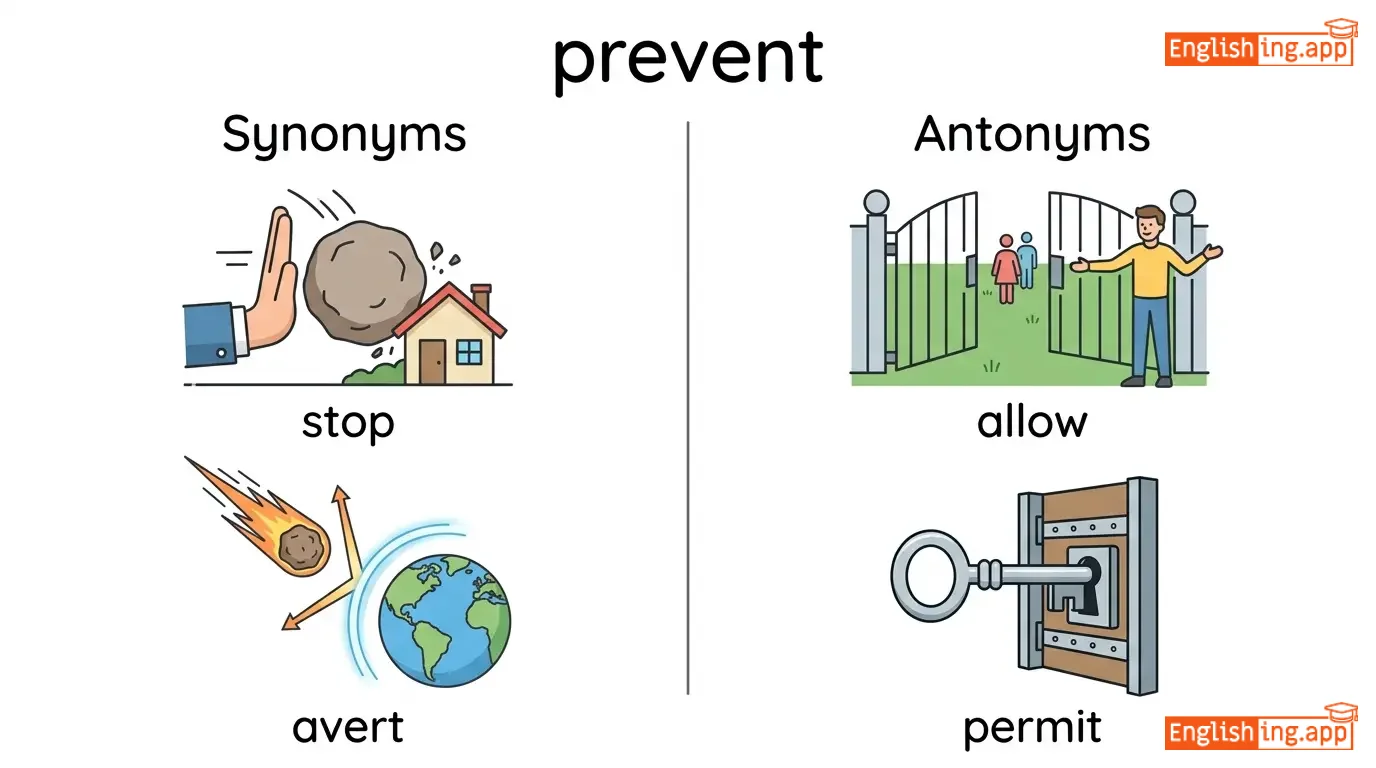
stop, avert, hinder, block, preclude
••••••
|
allow, permit, enable
••••••
|
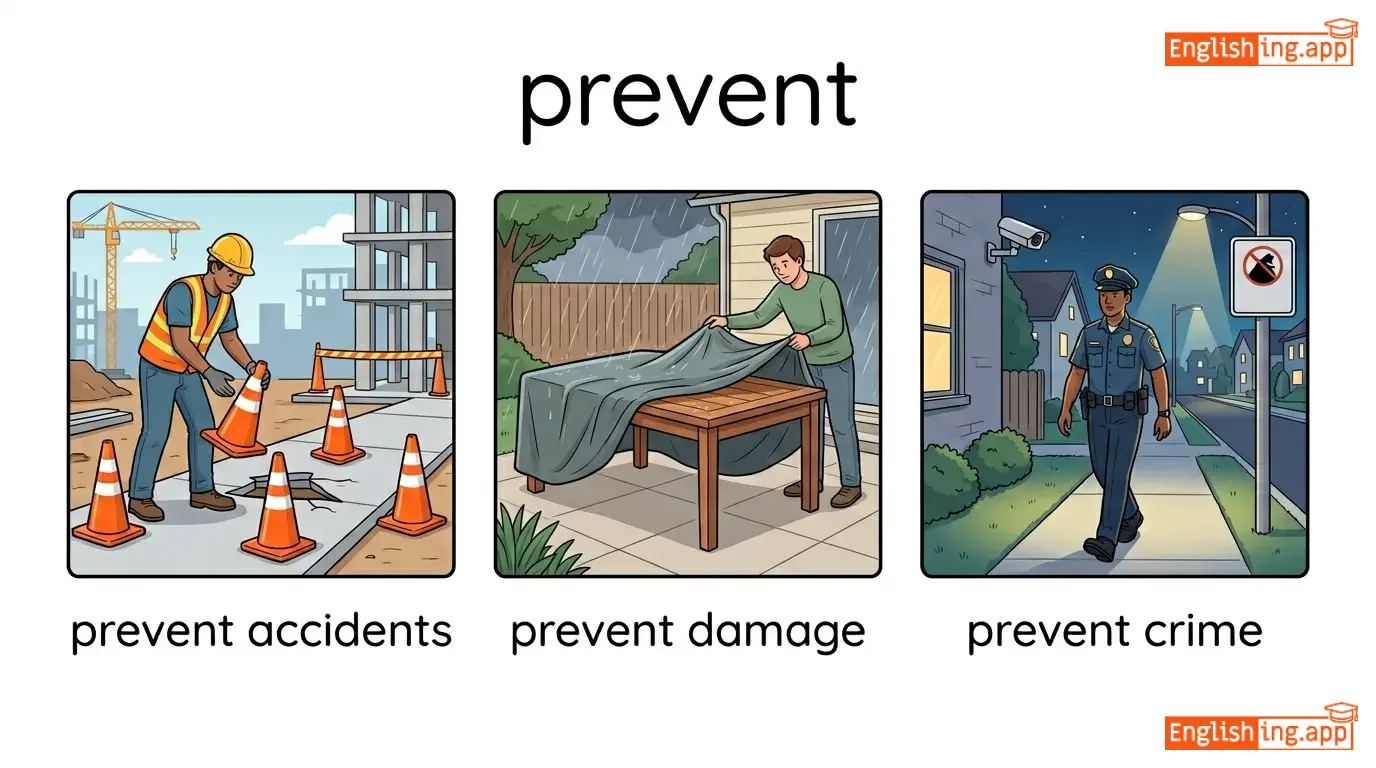
prevent accidents, prevent damage, prevent crime, prevent infection
••••••
|
Prevent は日本語で '防ぐ' と言い、何かを起こらないようにすることです。
••••••
|
|
🛡️
••••••
|
/prɪˈvɛnʃən/
noun
(プリベンション)
••••••
|
|
予防
yobou
••••••
|
- •••••• | - •••••• | - •••••• | - •••••• |
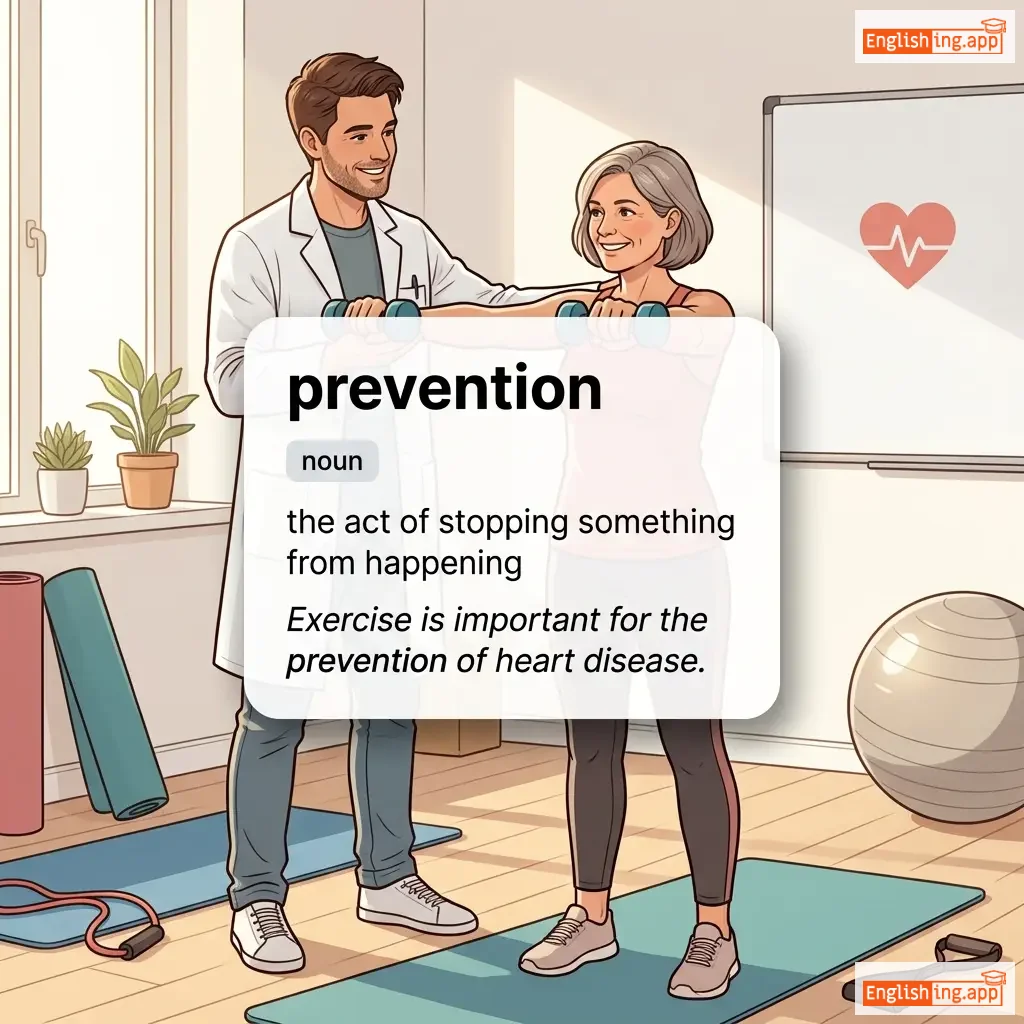
the act of stopping something from happening
••••••
|
Exercise is important for the prevention of heart disease. |
運動は心臓病の予防に重要です。
Undou wa shinzoubyou no yobou ni juuyou desu.
••••••
|
prevention is better than cure |
it is better to stop problems before they happen than to fix them later
••••••
|
予防は治療に勝る
Yobou wa chiryou ni masaru
••••••
|
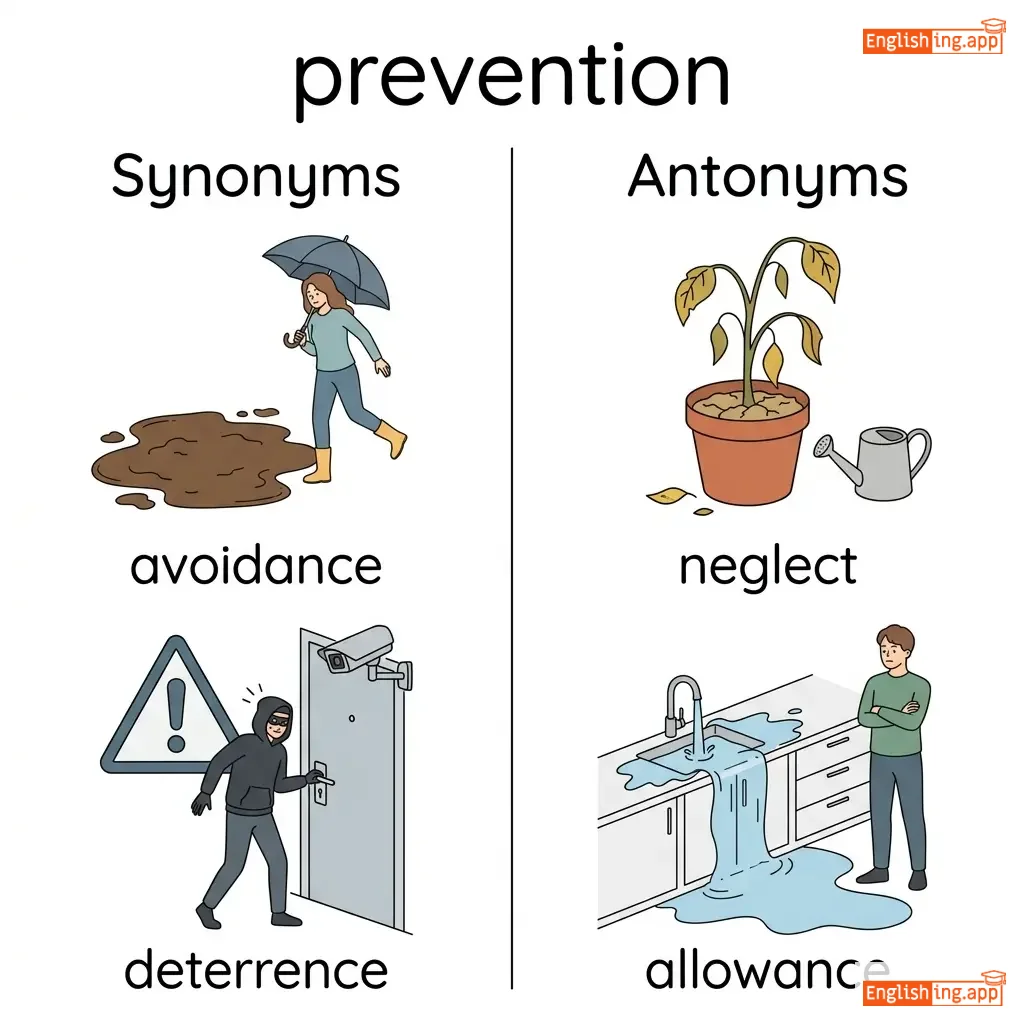
avoidance, deterrence, protection, precaution
••••••
|
neglect, allowance, permission
••••••
|
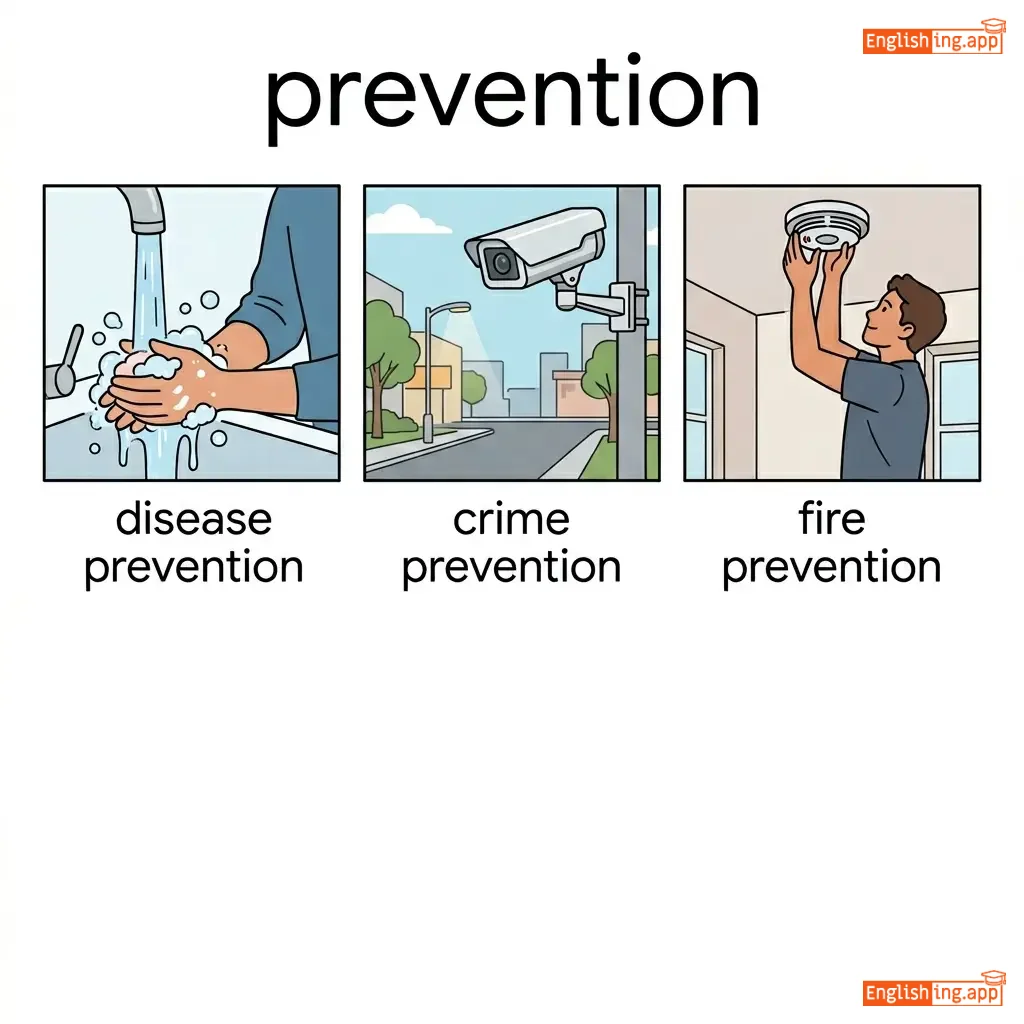
disease prevention, crime prevention, fire prevention, prevention strategy
••••••
|
予防とは事前に止めること — 早めに止めると問題は起こらない。
••••••
|
|
⏮️
••••••
|
/ˈpriːviəs/
adjective
(プリヴィアス)
••••••
|
- •••••• |
前の
mae no
••••••
|
- •••••• | - •••••• | - •••••• | - •••••• |
Existing or happening before the present time.
••••••
|
He referred to the previous meeting to explain his point.
彼は自分の意見を説明するために前回の会議に言及しました。
••••••
|
彼は自分の意見を説明するために前回の会議に言及しました。
Kare wa jibun no iken wo setsumei suru tame ni zenkai no kaigi ni genkyū shimashita.
••••••
|
previous experience
以前の経験
••••••
|
Past knowledge or skills gained from earlier situations.
••••••
|
以前の経験
izen no keiken
••••••
|
earlier, prior, former, preceding
••••••
|
future, later
••••••
|
previous meeting, previous record, previous work, previous year
••••••
|
Previousは前、例えばprevious examは前回の試験。
••••••
|
|
⏳
••••••
|
/ˈpriːviəsli/
adverb
(プリヴィアスリー)
••••••
|
- •••••• |
以前に
izen ni
••••••
|
- •••••• | - •••••• | - •••••• | - •••••• |
at an earlier time or before now
••••••
|
She had previously worked at a bank before starting her own business. |
彼女は銀行で以前働いていたが、自分のビジネスを始める前だった。
Kanojo wa ginkō de izen hataraite ita ga, jibun no bijinesu o hajimeru mae datta.
••••••
|
- •••••• | - •••••• | - •••••• |
formerly, earlier, before
••••••
|
currently, presently
••••••
|
previously stated, previously mentioned, previously worked
••••••
|
プリヴィアスリー (Previously) 以前に行ったこと
••••••
|
|
🦁
••••••
|
/preɪ/
noun/verb
••••••
|
- •••••• | - •••••• |
preyed
••••••
|
preyed
••••••
|
preys
••••••
|
preying
••••••
|
an animal hunted by another for food; to hunt and feed on
••••••
|
Lions prey on zebras in the wild. |
- •••••• |
fall prey to |
to become a victim of
••••••
|
- •••••• |
victim, quarry, target, hunt
••••••
|
predator, attacker
••••••
|
fall prey, prey upon, easy prey, natural prey
••••••
|
No •••••• |
|
💵
••••••
|
/praɪs/
noun
(プライス)
••••••
|
- •••••• |
価格
kakaku
••••••
|
- •••••• | - •••••• | - •••••• | - •••••• |
the amount of money expected, required, or given for something
••••••
|
The price of the car has increased recently. |
車の価格は最近上がりました。
Kuruma no kakaku wa saikin agarimashita.
••••••
|
- •••••• | - •••••• | - •••••• |
cost, charge, fee, value
••••••
|
discount, free
••••••
|
high price, low price, reasonable price, price tag
••••••
|
Price is what you pay for something, like the '価格' you see on things.
••••••
|
|
🦁
••••••
|
/praɪd/
noun
(プライド)
••••••
|

|
誇り
hokori
••••••
|
- •••••• | - •••••• | - •••••• | - •••••• |
a feeling of deep pleasure or satisfaction derived from achievements
••••••
|
She takes great pride in her work.
彼女は自分の仕事に大きな誇りを持っています。
••••••
|
彼女は自分の仕事に大きな誇りを持っています。
Kanojo wa jibun no shigoto ni ookina hokori o motteimasu.
••••••
|
- •••••• | - •••••• | - •••••• |
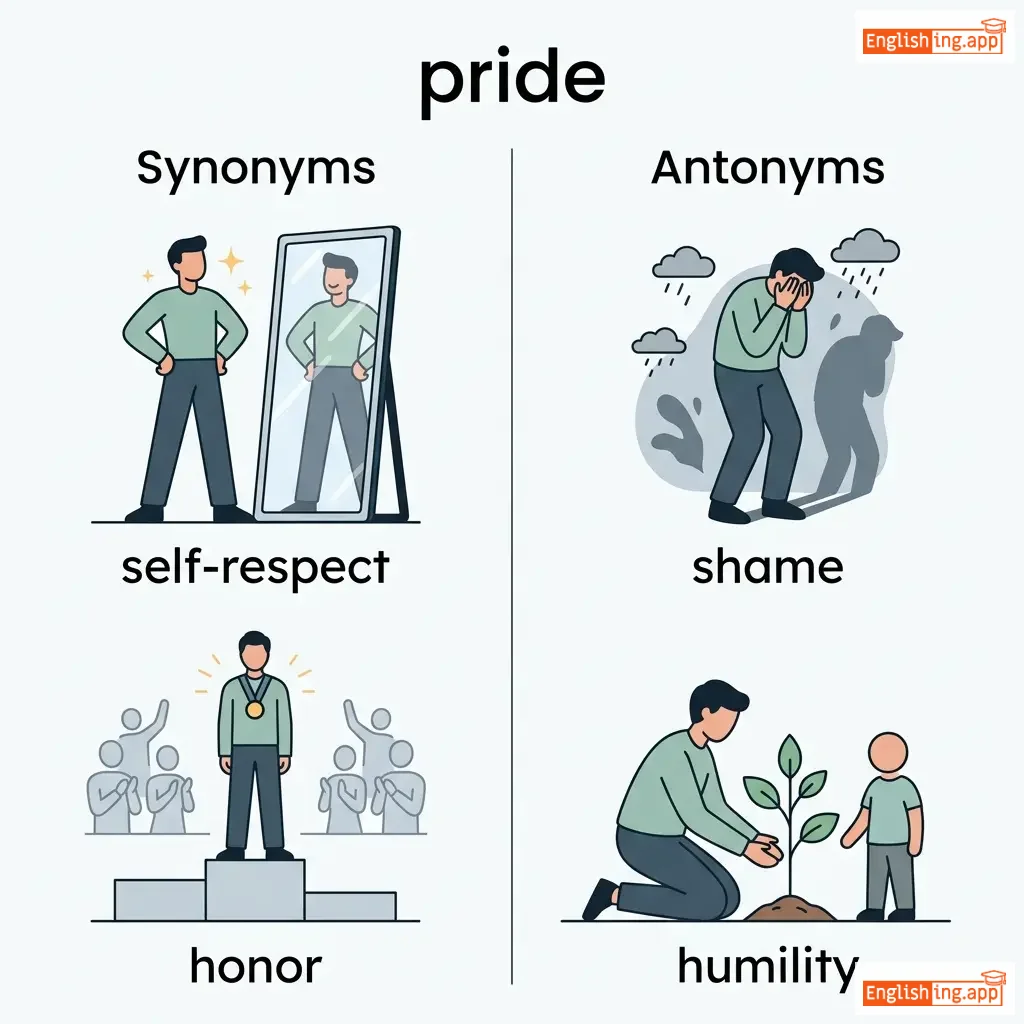
dignity, self-esteem, satisfaction, honor
••••••
|
shame, humility, modesty, disgrace
••••••
|
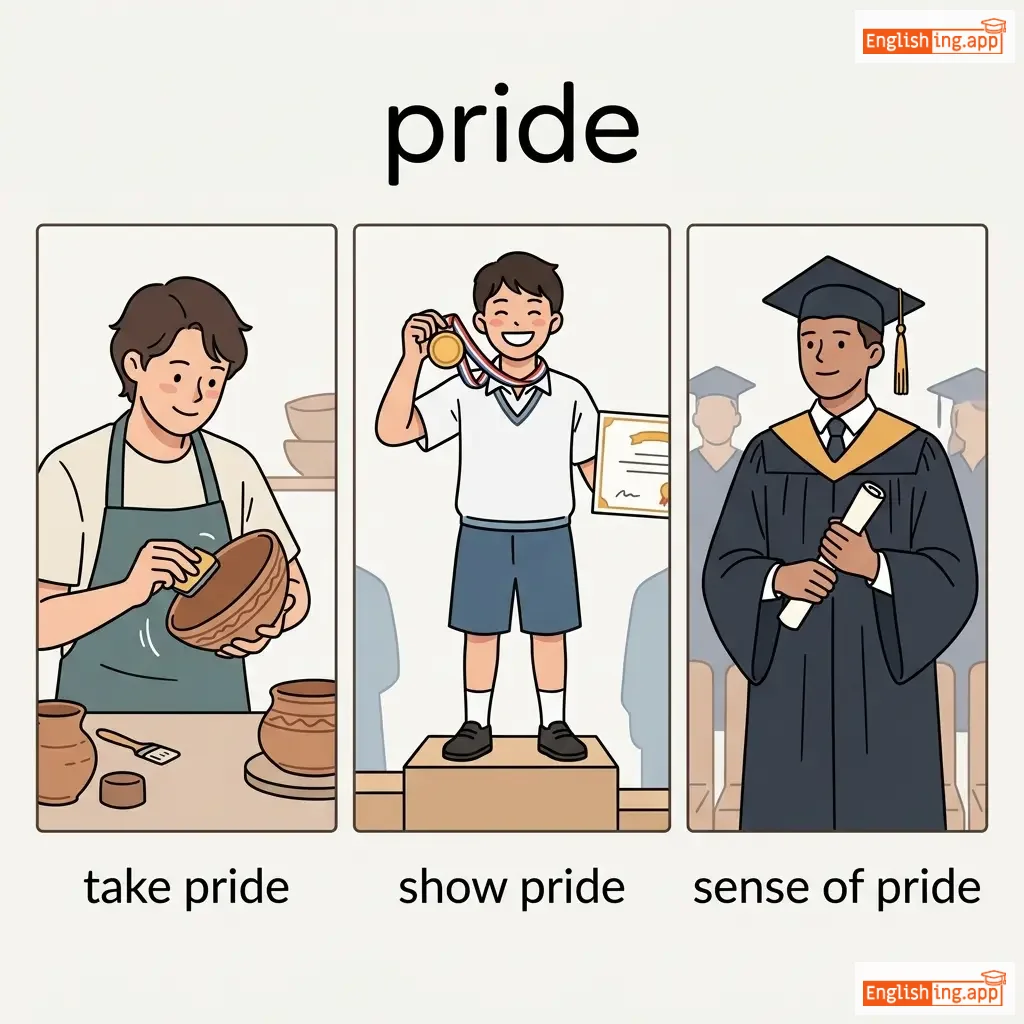
take pride, feel pride, source of pride, national pride
••••••
|
誇りは成功から生まれる満足感です。
••••••
|
|
⛪
••••••
|
/priːst/
noun
(プリースト)
••••••
|
- •••••• |
神父
shinpu
••••••
|
- •••••• | - •••••• | - •••••• | - •••••• |
a person who performs religious duties and ceremonies
••••••
|
The priest blessed the congregation during the Sunday service. |
神父は日曜日の礼拝中に会衆に祝福を与えました。
Shinpu wa nichiyōbi no reihai-chū ni kaishū ni shukufuku o ataemashita.
••••••
|
- •••••• | - •••••• | - •••••• |
clergyman, pastor, minister, reverend
••••••
|
laity
••••••
|
church priest, catholic priest, priesthood
••••••
|
A priest is someone who prays and leads religious ceremonies.
••••••
|
|
⚡
••••••
|
/praɪˈmɛrɪli/
adverb
(プライマリリー)
••••••
|
- •••••• |
主に
omoni
••••••
|
- •••••• | - •••••• | - •••••• | - •••••• |
for the most part; mainly
••••••
|
She is primarily responsible for managing the finances. |
彼女は主に財務の管理を担当しています。
Kanojo wa omoni zaimu no kanri o tantou shiteimasu.
••••••
|
- •••••• | - •••••• | - •••••• |
mainly, chiefly, principally, mostly
••••••
|
secondarily, additionally
••••••
|
primarily concerned, primarily used, primarily focused
••••••
|
Primarily, 'pri' means 'prime' which is main, and that's the core idea!
••••••
|
|
1️⃣
••••••
|
/ˈpraɪ.mɛr.i/
adjective
(プライマリー)
••••••
|
- •••••• |
主要な, 初歩的な
shuyōna, shohoteki na
••••••
|
- •••••• | - •••••• | - •••••• | - •••••• |
Most important; main; happening first.
••••••
|
Education is a primary factor in economic growth.
教育は経済成長の主要な要素です。
••••••
|
教育は経済成長の主要な要素です。
Kyōiku wa keizai seichō no shuyōna yōso desu.
••••••
|
primary concern
主要な懸念
••••••
|
the most important issue or problem
••••••
|
主要な懸念
shuyōna shinken
••••••
|
main, chief, principal, essential, fundamental
••••••
|
secondary, minor, trivial
••••••
|
primary education, primary reason, primary goal, primary source
••••••
|
Primaryは主要な、または初歩的な意味です。例えばPrimary School(小学校)。
••••••
|
|
⭐
••••••
|
/praɪm/
adjective
(プライム)
••••••
|
- •••••• |
最優先, 重要な
saiyūsen, jūyōna
••••••
|
- •••••• | - •••••• | - •••••• | - •••••• |
Of the best quality; most important; peak condition.
••••••
|
She is in the prime of her career.
彼女はキャリアの絶頂にいます。
••••••
|
彼女はキャリアの最良の時期にいます。
Kanojo wa kyaria no sairyō no jiki ni imasu.
••••••
|
prime time
プライムタイム
••••••
|
the most popular time for television or activity
••••••
|
プライムタイム
Puraimu taimu
••••••
|
best, peak, top, leading, foremost
••••••
|
inferior, worst, minor
••••••
|
prime time, prime number, prime example, prime minister
••••••
|
Prime は最優先を意味する — Prime Minister は重要な大臣、Prime Time は最優先の時間。
••••••
|
|
🤴
••••••
|
/prɪns/
noun
(プリンス)
••••••
|
- •••••• |
王子
ouji
••••••
|
- •••••• | - •••••• | - •••••• | - •••••• |
a male member of a royal family, especially the son of a king or queen; a ruler of a principality
••••••
|
The prince addressed the nation on his birthday.
ザ プリンス アドレスト ザ ネイション オン ヒズ バースデー。
••••••
|
王子は誕生日に国民に演説しました。
ouji wa tanjoubi ni kokumin ni enzetsu shimashita
••••••
|
Prince Charming
プリンス・チャーミング
••••••
|
an idealized, perfect romantic partner
••••••
|
プリンス・チャーミング
purinsu chaamingu
••••••
|
heir, royal, duke, sovereign, noble
••••••
|
commoner, peasant
••••••
|
crown prince, young prince, royal prince, prince and princess
••••••
|
プリンス = Prince, 王子で覚える
••••••
|
|
👑
••••••
|
/ˈprɪn.ses/
noun
(プリンセス)
••••••
|
- •••••• |
王女
oujo
••••••
|
- •••••• | - •••••• | - •••••• | - •••••• |
a female royal family member, especially the daughter of a king or queen; a woman regarded as noble, cherished, or elegant
••••••
|
The princess waved to the crowd from the palace balcony.
プリンセス は パレス の バルコニー から クラウド に 手 を 振った。
••••••
|
王女は宮殿のバルコニーから群衆に手を振った。
oujo wa kyuden no barukoni kara gunshu ni te o futta
••••••
|
princess treatment
プリンセスあつかい
••••••
|
special, luxurious, or very kind treatment given to someone
••••••
|
プリンセス扱い
purinsesu atsukai
••••••
|
royal daughter, duchess, noblewoman, heiress, lady
••••••
|
commoner, peasant
••••••
|
crown princess, fairy-tale princess, princess dress, princess castle
••••••
|
プリンセス=王女、映画や童話のイメージ
••••••
|
|
🎓
••••••
|
/ˈprɪnsəpəl/
noun, adjective
(プリンシパル)
••••••
|
- •••••• |
校長
kouchou
••••••
|
- •••••• | - •••••• | - •••••• | - •••••• |
the person with the highest authority or most important position; main or most important
••••••
|
The school principal addressed the students in the auditorium. |
学校の校長が講堂で生徒たちに挨拶しました。
Gakkou no kouchou ga koudou de seitotachi ni aisatsu shimashita.
••••••
|
principal and interest |
the original amount of money invested or loaned and the charge for borrowing it
••••••
|
元金と利息
genkin to risoku
••••••
|
head, leader, chief, primary, main
••••••
|
subordinate, minor, secondary
••••••
|
school principal, principal amount, principal role, principal office
••••••
|
Principalは学校の校長、最も重要な人物。
••••••
|
|
📜
••••••
|
/ˈprɪnsəpəl/
noun
(purinsiparu)
••••••
|
|
原則
gensoku
••••••
|
- •••••• | - •••••• | - •••••• | - •••••• |
a fundamental truth, law, or rule that serves as the foundation for a system of belief or behavior
••••••
|
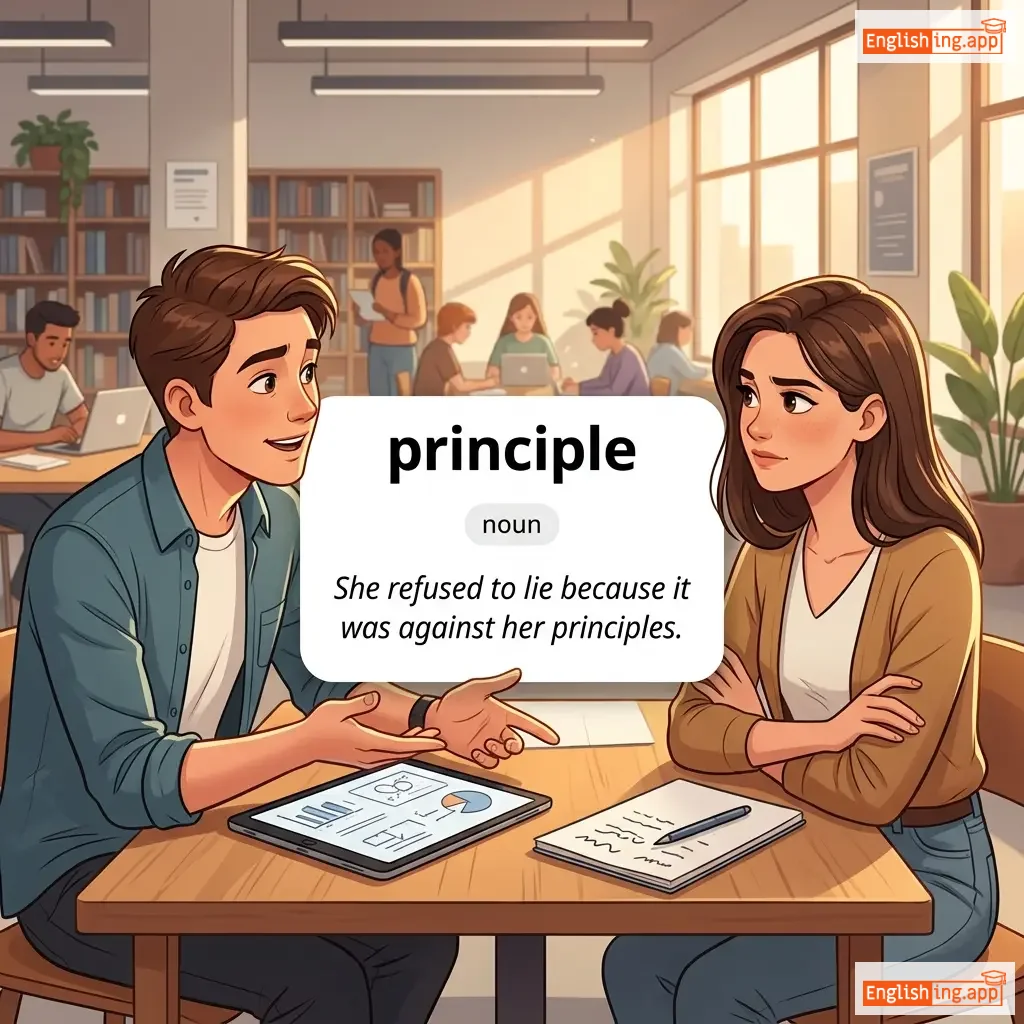
She refused to lie because it was against her principles. |
彼女は嘘をつくことを拒否しました、それは彼女の原則に反していたからです。
Kanojo wa uso o tsuku koto o kyohi shimashita, sore wa kanojo no gensoku ni hanshite ita kara desu.
••••••
|
in principle |
as a general idea or rule, even if not applied in practice
••••••
|
原則的に
gensokuteki ni
••••••
|
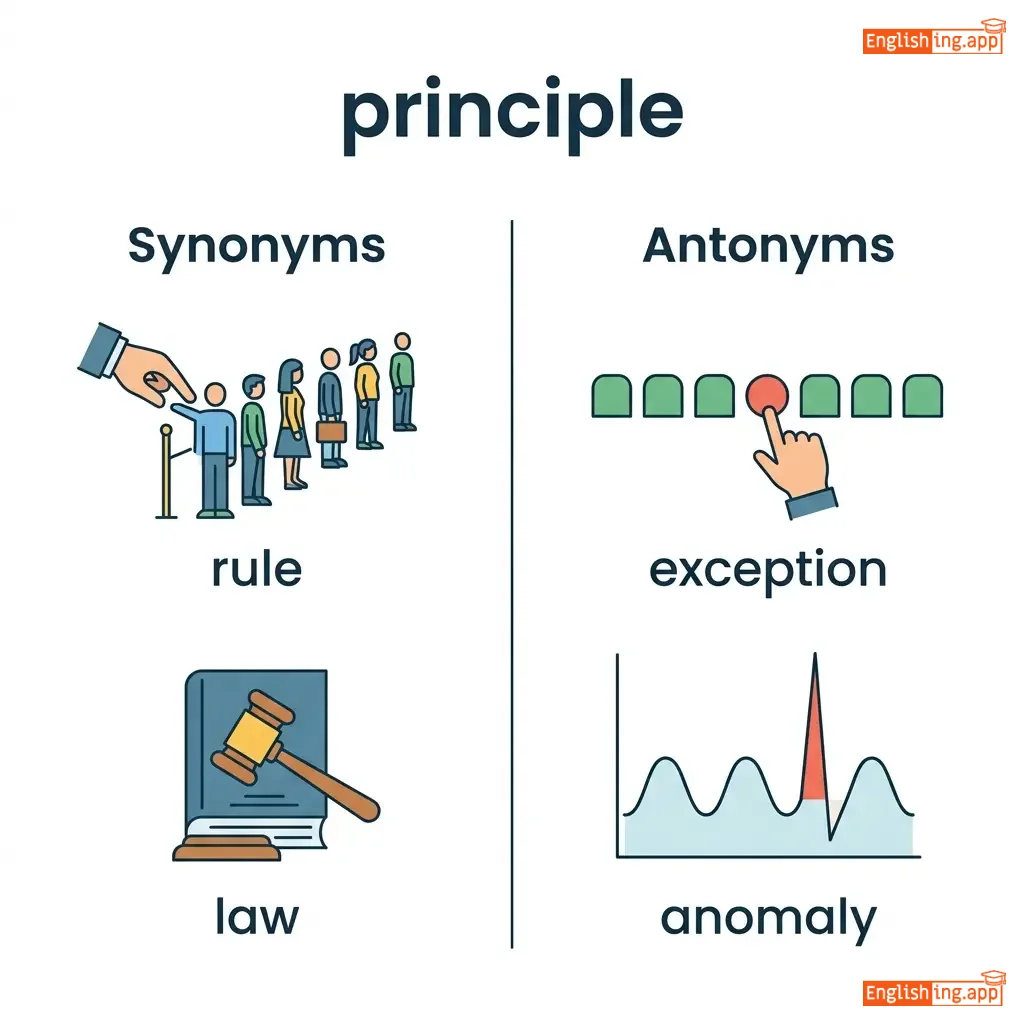
rule, law, tenet, belief, doctrine
••••••
|
exception, anomaly
••••••
|
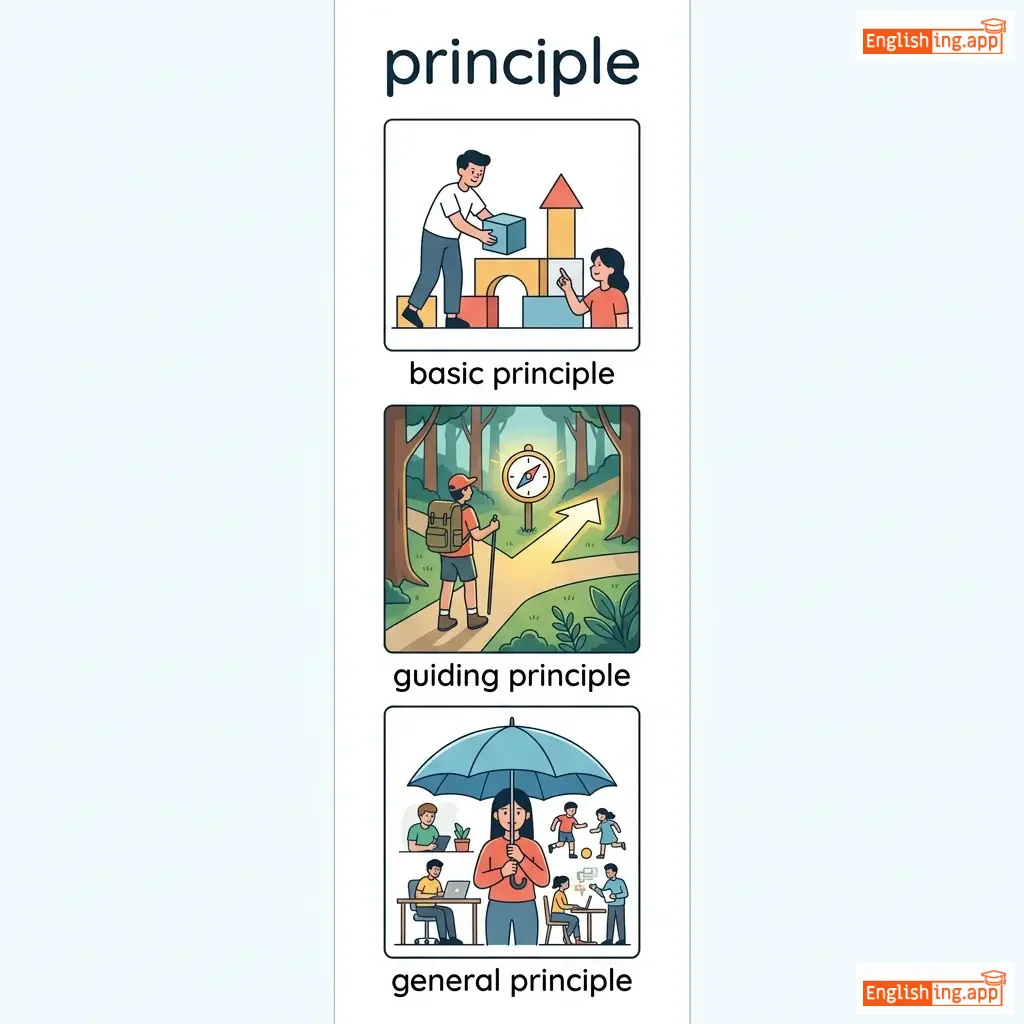
basic principle, guiding principle, general principle, moral principle
••••••
|
原則は基本的なルール—'学校の規律の原則'は学校の秩序を守るルールです
••••••
|
|
🖨️
••••••
|
/prɪnt/
verb
(プリント)
••••••
|
- •••••• |
印刷する
insatsu suru
••••••
|
printed
プリンテッド
••••••
|
printed
プリンテッド
••••••
|
prints
プリンツ
••••••
|
printing
プリンティング
••••••
|
to produce text or images on paper or other materials using a machine
••••••
|
He will print the report tomorrow morning.
彼は明日の朝レポートをプリントします。
••••••
|
彼は明日の朝レポートをプリントします。
Kare wa ashita no asa repōto o purinto shimasu.
••••••
|
- •••••• | - •••••• | - •••••• |
publish, produce, reproduce, copy
••••••
|
erase, delete
••••••
|
print out, print on, digital print, print press
••••••
|
Print starts with the 'P' of Paper.
••••••
|
|
🖨️
••••••
|
/ˈprɪn.tər/
noun
(プリンター)
••••••
|
- •••••• |
プリンター
purintā
••••••
|
- •••••• | - •••••• | - •••••• | - •••••• |
a person whose job is printing books, newspapers, or other materials; a machine that prints documents
••••••
|
The printer delivered the wedding invitations on time.
プリンターは結婚式の招待状を時間通りに届けました。
••••••
|
プリンターは結婚式の招待状を時間通りに届けました。
Purintā wa kekkonshiki no shōtaijō o jikan-dōri ni todokemashita.
••••••
|
- •••••• | - •••••• | - •••••• |
typographer, publisher, printing operator
••••••
|
reader, consumer
••••••
|
commercial printer, local printer, digital printer, offset printer
••••••
|
Purintā is like 'printer' in English, remember that it's the same in Japanese!
••••••
|
|
⏪
••••••
|
/ˈpraɪ.ər/
adjective
(プライアー)
••••••
|
- •••••• |
事前の
puraiya
••••••
|
- •••••• | - •••••• | - •••••• | - •••••• |
existing or coming before in time; previous; earlier
••••••
|
You need prior approval before making any changes to the system.
システムに変更を加える前には、事前の承認が必要です。
••••••
|
システムに変更を加える前には、事前の承認が必要です。
Shisutemu ni henkou o kuwaeru mae ni wa jizen no shonin ga hitsuyou desu
••••••
|
- •••••• | - •••••• | - •••••• |
previous, earlier, former, preceding
••••••
|
subsequent, later, following, after
••••••
|
prior approval, prior experience, prior knowledge, prior notice
••••••
|
PRE zen no shonin: imagine a door tag that says PRE ZEN NO SHONIN to remember that Prior means 事前の and you need prior approval
••••••
|

