|
表情符号
|
单词 | Images | 翻译 | 过去时 | 过去分词 | 第三人称单数 | 动名词 | 含义 | 例句 | 例句翻译 | 示例表达 | 示例表达含义 | 示例表达翻译 | 同义词 | 反义词 | 搭配词 | 助记符 |
|---|---|---|---|---|---|---|---|---|---|---|---|---|---|---|---|---|---|
|
🤰
••••••
|
/ˈprɛɡnənt/
adjective
(prɛɡnənt)
••••••
|
- •••••• |
怀孕的; 有意义的
huáiyùn de; yǒu yìyì de
••••••
|
- •••••• | - •••••• | - •••••• | - •••••• |
having a child developing in the womb; also, full of meaning or significance
••••••
|
She announced that she was three months pregnant. |
她宣布她怀孕三个月了。
Tā xuānbù tā huáiyùn sān gè yuè le.
••••••
|
pregnant pause |
a brief, meaningful silence that suggests significance or tension
••••••
|
有意义的停顿
yǒu yìyì de tíngdùn
••••••
|
expectant, with child, carrying, meaningful, significant
••••••
|
barren, infertile, empty
••••••
|
pregnant woman, heavily pregnant, get pregnant, become pregnant, pregnant pause
••••••
|
怀孕意味着你期待一个宝宝,它很重要!
••••••
|
|
⚖️
••••••
|
/ˈprɛdʒədɪs/
noun
(pǔruìzhì)
••••••
|
- •••••• |
偏见
pianjian
••••••
|
- •••••• | - •••••• | - •••••• | - •••••• |
An unfair and unreasonable opinion or feeling, especially when formed without enough thought or knowledge.
••••••
|
Prejudice often prevents people from seeing the truth about others. |
偏见常常阻止人们看到别人真实的一面。
Pianjian changchang zhuzhi renmen kandao bieren zhenshi de yimian.
••••••
|
against all prejudice |
in opposition to unfair or biased opinions
••••••
|
反对所有偏见
Fandui suoyou pianjian
••••••
|
bias, discrimination, partiality, intolerance, preconception
••••••
|
fairness, tolerance, impartiality
••••••
|
racial prejudice, deep-seated prejudice, overcome prejudice, prejudice against
••••••
|
Prejudice = 预判 - 预先判断就有偏见。
••••••
|
|
📝
••••••
|
/prɪˈlɪmɪˌneri/
adjective
(前期)
••••••
|
|
初步
chubu
••••••
|
- •••••• | - •••••• | - •••••• | - •••••• |
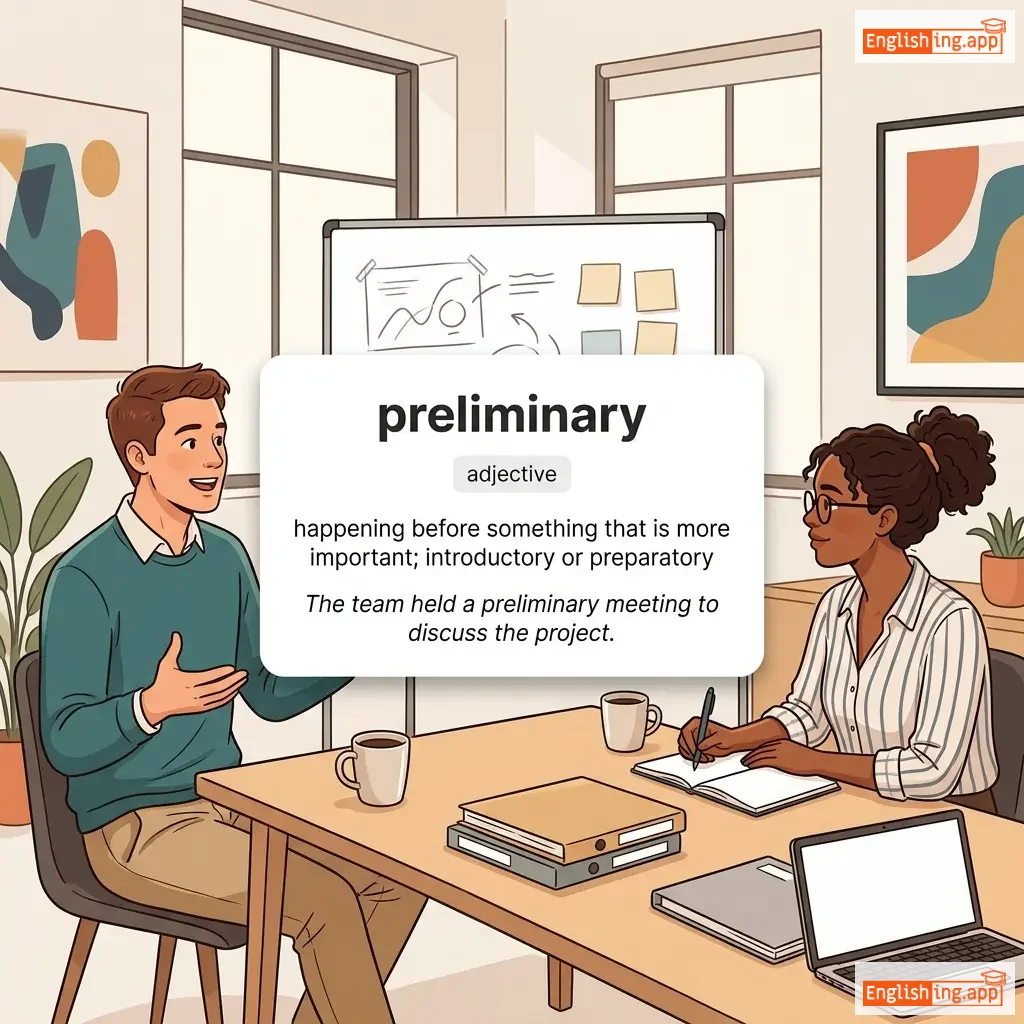
happening before something that is more important; introductory or preparatory
••••••
|
The team held a preliminary meeting to discuss the project.
团队举行了初步会议,讨论项目。
••••••
|
团队举行了初步会议,讨论项目。
Tuandui juxing le chubu huiyi, taolun xiangmu.
••••••
|
- •••••• | - •••••• | - •••••• |
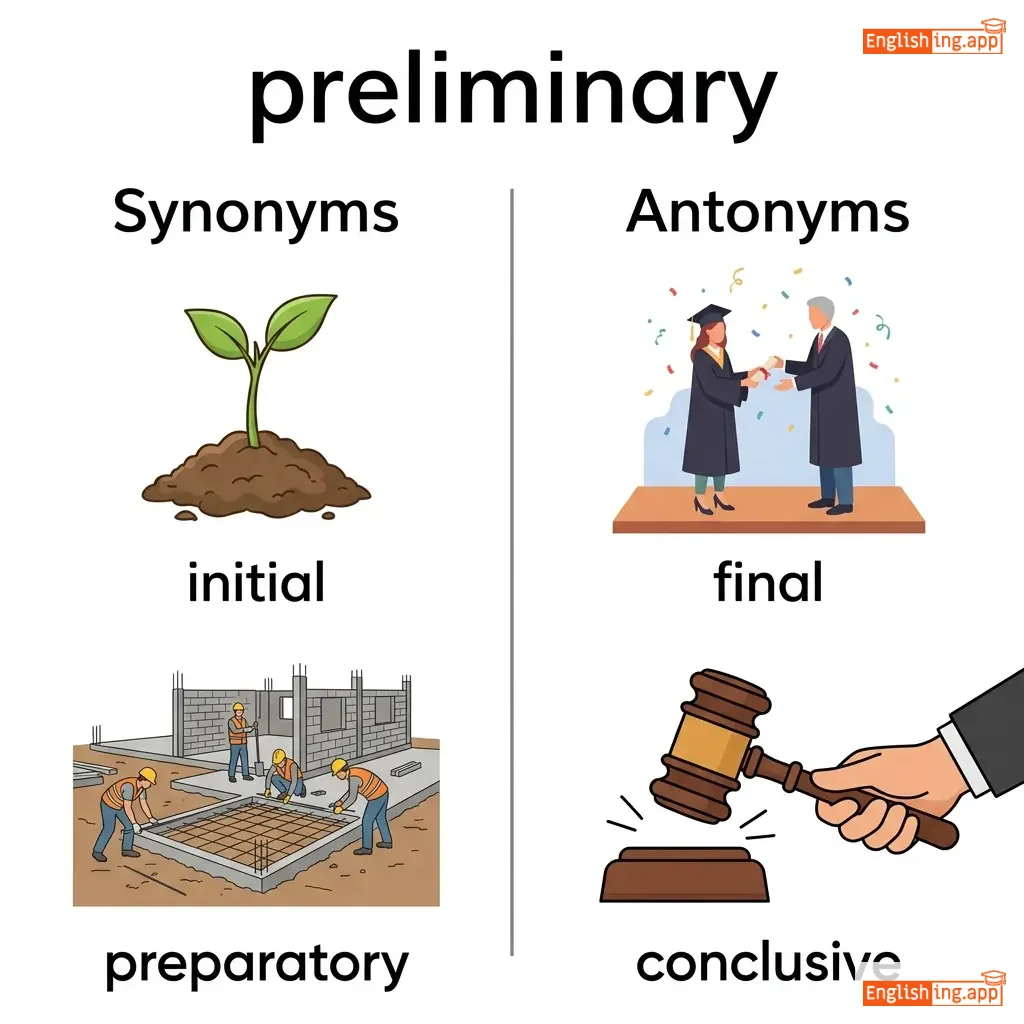
initial, preparatory, introductory, prior, opening
••••••
|
final, conclusive, ultimate
••••••
|
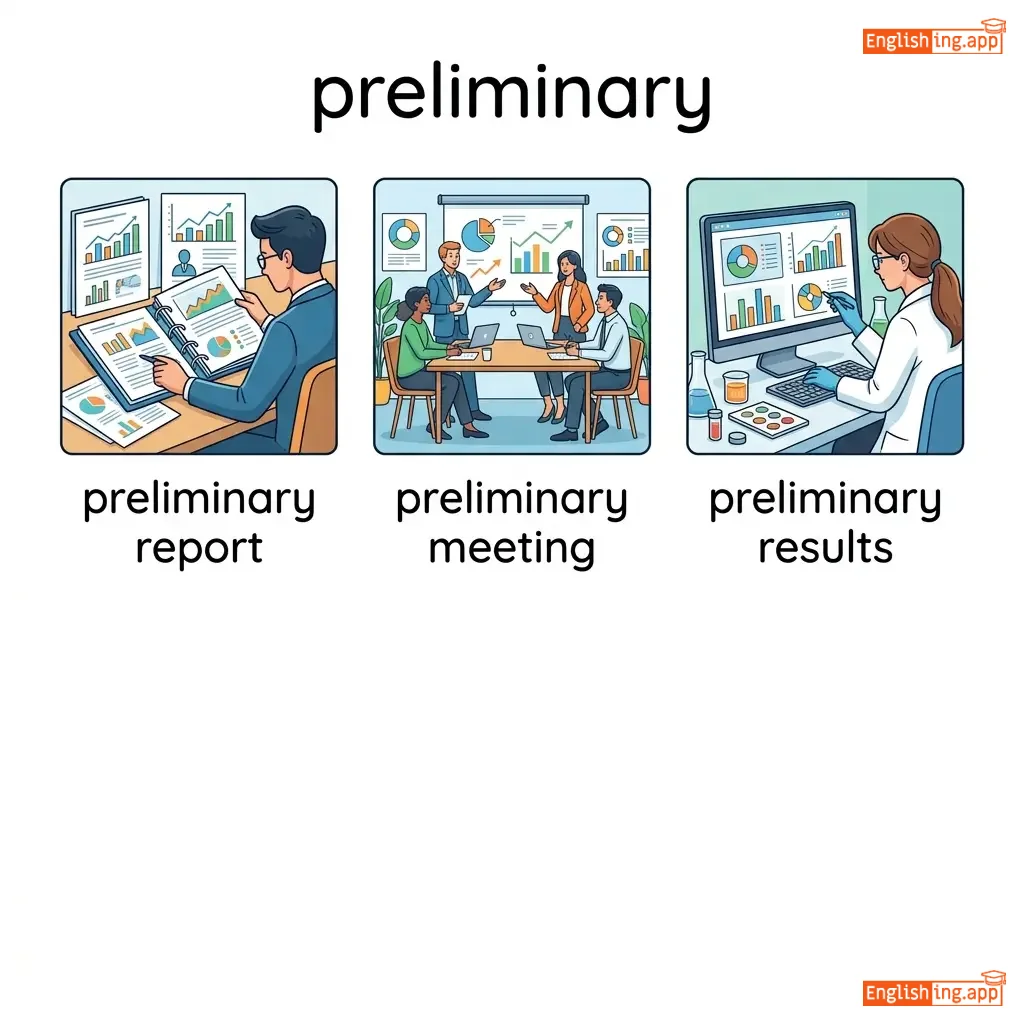
preliminary report, preliminary meeting, preliminary results, preliminary round
••••••
|
Preliminary 意味着‘Pre’,即事物发生之前——在重要事情之前的步骤!
••••••
|
|
👑
••••••
|
/prɪˈmɪər/ or /ˈpriːmiər/
noun, adjective
(总理 / 主要)
••••••
|
- •••••• |
总理 / 主要
zǒnglǐ / zhǔyào
••••••
|
- •••••• | - •••••• | - •••••• | - •••••• |
the head of government in some countries; first in importance or rank
••••••
|
The French premier addressed the nation. |
法国总理向全国发表了讲话。
Fàguó zǒnglǐ xiàng quánguó fābiǎo le jiǎnghuà.
••••••
|
Premier League |
the top professional football league in England
••••••
|
英超联赛
Yīngchāo liánsài
••••••
|
prime minister, leader, head, top, chief
••••••
|
subordinate, inferior, secondary
••••••
|
French premier, premier role, premier status
••••••
|
Premier 就是首位,最重要或者处于顶端。
••••••
|
|
🏠
••••••
|
/ˈprɛmɪs/
noun
(普雷米斯)
••••••
|
- •••••• |
前提 / 建筑物
qiántí / jiànzhúwù
••••••
|
- •••••• | - •••••• | - •••••• | - •••••• |
a statement or idea on which reasoning or an argument is based; also a building or property
••••••
|
His argument was based on a false premise. |
他的论点是建立在一个错误的前提上的。
Tā de lùndiǎn shì jiànlì zài yīgè cuòwù de qiántí shàng de.
••••••
|
on the premise that |
based on the assumption that
••••••
|
在假设...的前提下
zài jiǎshè... de qiántí xià
••••••
|
assumption, proposition, thesis, property, building
••••••
|
fact, reality, truth
••••••
|
false premise, legal premises, premise of argument
••••••
|
Premise是基础思想,在中文中'前提'表示基础。
••••••
|
|
💎
••••••
|
/ˈpriːmiəm/
noun
(pǔlímíng)
••••••
|
- •••••• |
保费
baofei
••••••
|
- •••••• | - •••••• | - •••••• | - •••••• |
an amount of money paid regularly for an insurance policy; something of superior quality or value
••••••
|
You need to pay your insurance premium every year.
你每年需要支付你的保险费。
••••••
|
你每年需要支付你的保险费。
Ni mei nian xuyao zhifu nide baoxianfei.
••••••
|
at a premium
按高价
••••••
|
difficult to get and therefore more valuable
••••••
|
按高价
an gaojia
••••••
|
fee, charge, payment, bonus, luxury
••••••
|
discount, deduction, loss
••••••
|
insurance premium, health premium, pay premium, premium quality
••••••
|
保费 = 高价值 💰
••••••
|
|
📋
••••••
|
/ˌprɛpəˈreɪʃən/
noun
(准备)
••••••
|
- •••••• |
准备
zhǔnbèi
••••••
|
- •••••• | - •••••• | - •••••• | - •••••• |
The act of getting ready or making arrangements for something.
••••••
|
The team made careful preparation for the presentation. |
团队为演示做了充分的准备。
tuánduì wèi yǎnshì zuòle chōngfèn de zhǔnbèi.
••••••
|
fail to prepare is prepare to fail |
If you don’t get ready in advance, you are setting yourself up for failure.
••••••
|
不做准备就是为失败做准备。
bù zuò zhǔnbèi jiùshì wèi shībài zuò zhǔnbèi.
••••••
|
arrangement, planning, readiness, groundwork, setup
••••••
|
neglect, disorganization
••••••
|
make preparation, careful preparation, preparation for, preparation time
••••••
|
准备充足,成功一半。
••••••
|
|
🍳
••••••
|
/prɪˈpɛər/
verb
(海皮尔)
••••••
|

|
准备
zhunbei
••••••
|
prepared
海皮尔德
••••••
|
prepared
海皮尔德
••••••
|
prepares
海皮尔斯
••••••
|
preparing
海皮尔英
••••••
|
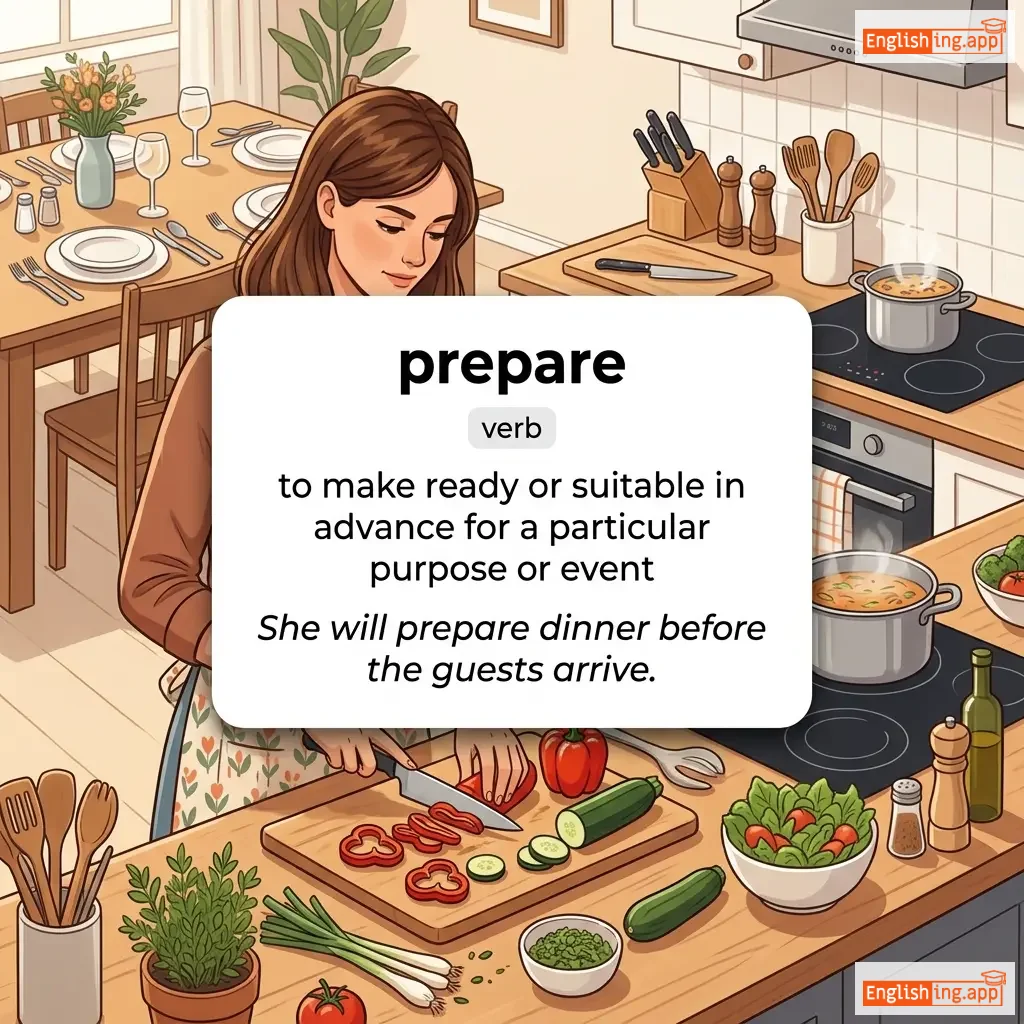
to make ready; to get something ready for use
••••••
|
She needs to prepare dinner for her family.
她 需要 准备 晚餐 给 她 的 家人。
••••••
|
她需要为家人准备晚餐。
ta xuyao wei jiaren zhunbei wancan
••••••
|
- •••••• | - •••••• | - •••••• |
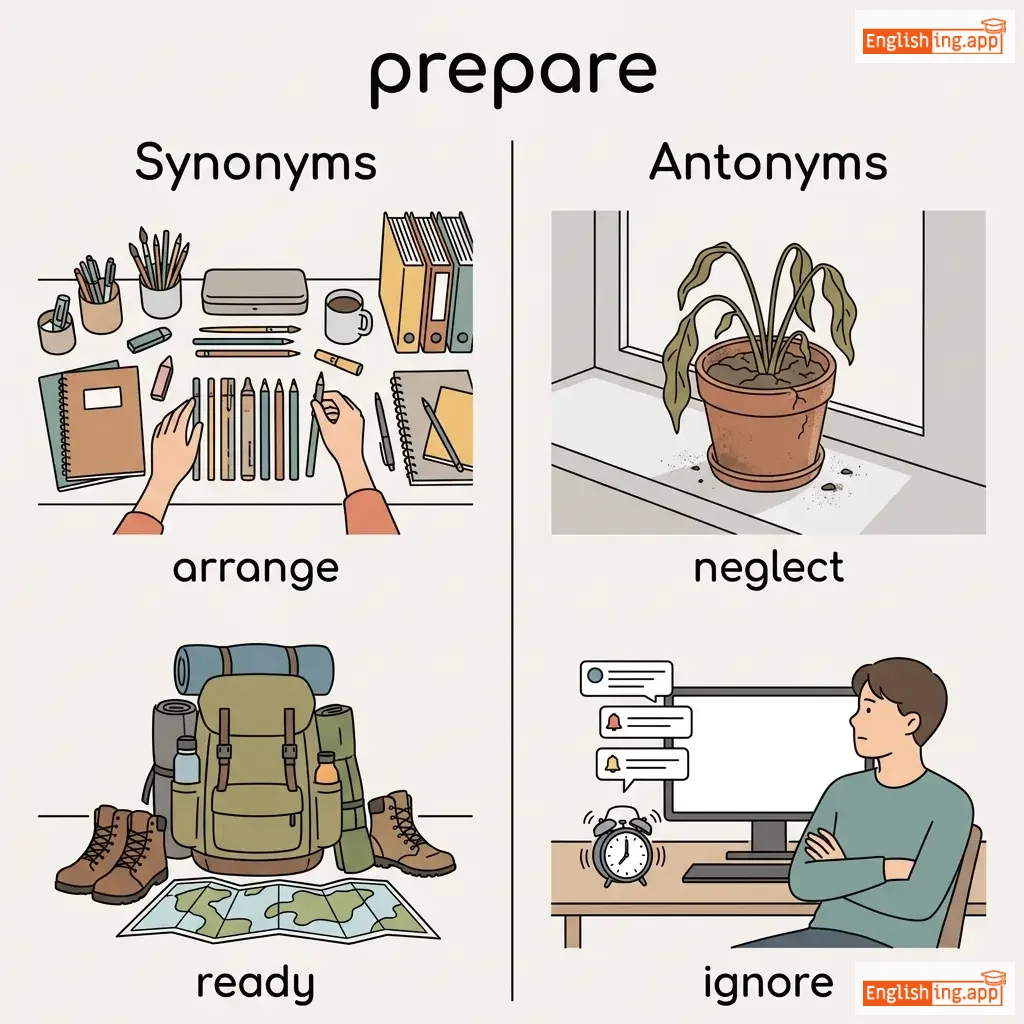
ready, arrange, organize, plan
••••••
|
neglect, ignore, abandon, destroy
••••••
|
prepare for, prepare carefully, prepare dinner, prepare ahead, well prepared, prepare thoroughly
••••••
|
Zhunbei sounds like 'June-bay' – imagine getting ready for a June dinner!
••••••
|
|
✅
••••••
|
/prɪˈpɛrd/
adjective; verb (past and past participle of prepare)
(普瑞佩尔德)
••••••
|
- •••••• |
准备好的
zhunbei hao de
••••••
|
prepared
普瑞佩尔德
••••••
|
prepared
普瑞佩尔德
••••••
|
prepares
普瑞佩尔兹
••••••
|
preparing
普瑞佩尔英
••••••
|
made ready in advance; having made plans or taken steps beforehand
••••••
|
She was fully prepared for the final exam.
希 沃兹 富利 普瑞佩尔德 佛 泽 法伊诺 埃格赞。
••••••
|
她已经为期末考试做好了充分准备。
Ta yijing wei qimo kaoshi zuohao le chongfen zhunbei
••••••
|
be prepared
比 普瑞佩尔德
••••••
|
to be ready for something that may happen
••••••
|
做好准备
zuohao zhunbei
••••••
|
ready, organized, equipped, primed, arranged
••••••
|
unprepared, unready, careless
••••••
|
well prepared, fully prepared, properly prepared, mentally prepared
••••••
|
Prepared = zhunbei hao, 一切ready
••••••
|
|
💊
••••••
|
/prɪˈskrʌɪb/
verb
(preskraɪb)
••••••
|
- •••••• |
开药
kāi yào
••••••
|
prescribed
preskraɪbd
••••••
|
prescribed
preskraɪbd
••••••
|
prescribes
preskraɪbz
••••••
|
prescribing
preskraɪbɪŋ
••••••
|
to recommend or authorize the use of something, especially medicine
••••••
|
The doctor prescribed medication for my cold.
医生给我开了药治我的感冒。
••••••
|
医生给我开了药治我的感冒。
Yīshēng gěi wǒ kāi le yào zhì wǒ de gǎnmào.
••••••
|
- •••••• | - •••••• | - •••••• |
recommend, suggest, order, direct
••••••
|
forbid, prohibit
••••••
|
prescribe medication, prescribe treatment, prescribe a remedy
••••••
|
开药,开始治疗!
••••••
|
|
💊
••••••
|
/prɪˈskrɪpʃən/
noun
(ˈprɛskrɪpʃən)
••••••
|
- •••••• |
处方
chǔfāng
••••••
|
- •••••• | - •••••• | - •••••• | - •••••• |
A written order from a doctor for the preparation and administration of a medicine; also, a recommendation or authoritative rule.
••••••
|
The doctor gave her a prescription for antibiotics.
医生给她开了抗生素的处方。
••••••
|
医生给她开了抗生素的处方。
Yīshēng gěi tā kāi le kàngshēngsù de chǔfāng.
••••••
|
fill a prescription
开处方
••••••
|
to provide medicine according to a doctor’s order
••••••
|
开处方
kāi chǔfāng
••••••
|
medication, remedy, directive, order
••••••
|
discretion, suggestion
••••••
|
doctor's prescription, prescription drug, prescription medicine
••••••
|
处方 = 医生写的药方,治疗开始!
••••••
|
|
👥
••••••
|
/ˈprez.əns/
noun
(prézéns)
••••••
|
|
出席; 在场
chuxi; zai chang
••••••
|
- •••••• | - •••••• | - •••••• | - •••••• |
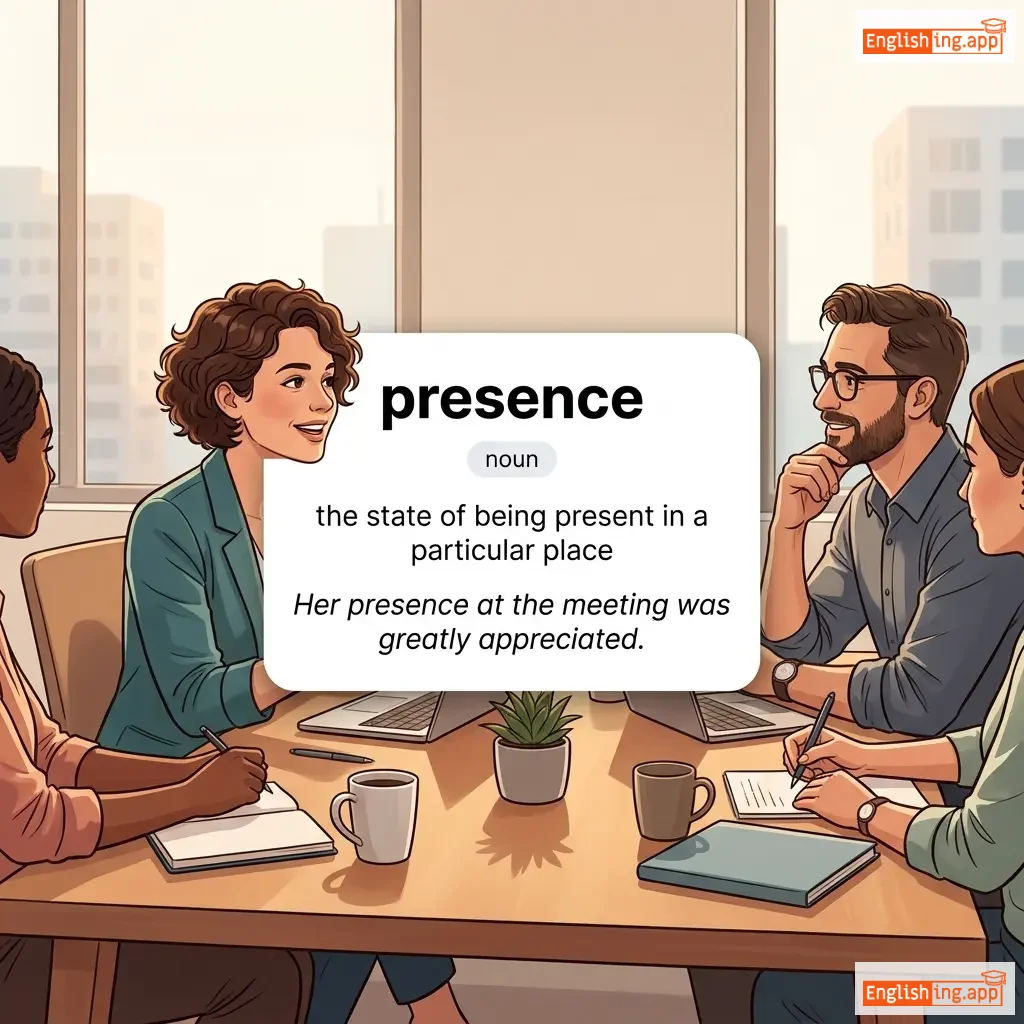
the fact or condition of being present
••••••
|
Your presence at the meeting is required.
您的出席会议是必要的。
••••••
|
您的出席会议是必要的。
Nín de chūxí huìyì shì bìyào de.
••••••
|
- •••••• | - •••••• | - •••••• |
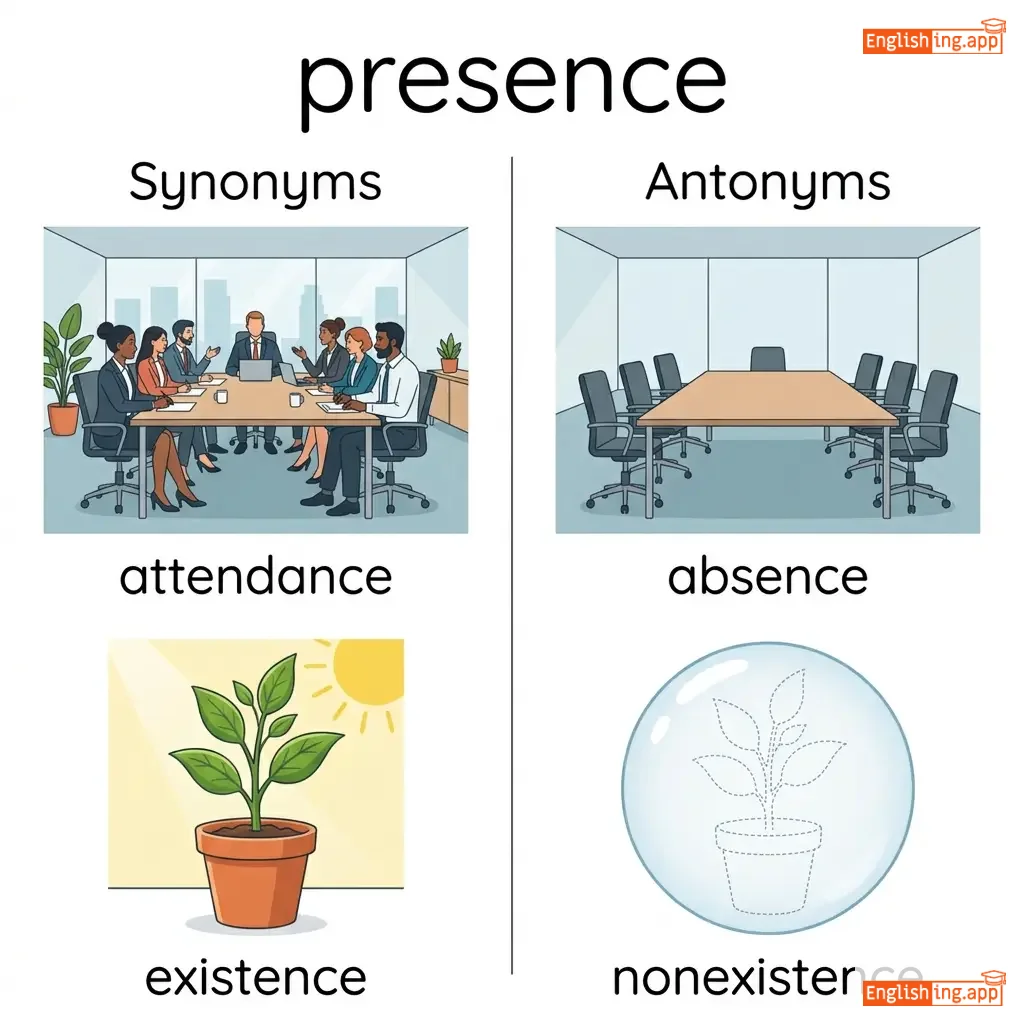
attendance, existence, being, company
••••••
|
absence, nonattendance, departure
••••••
|
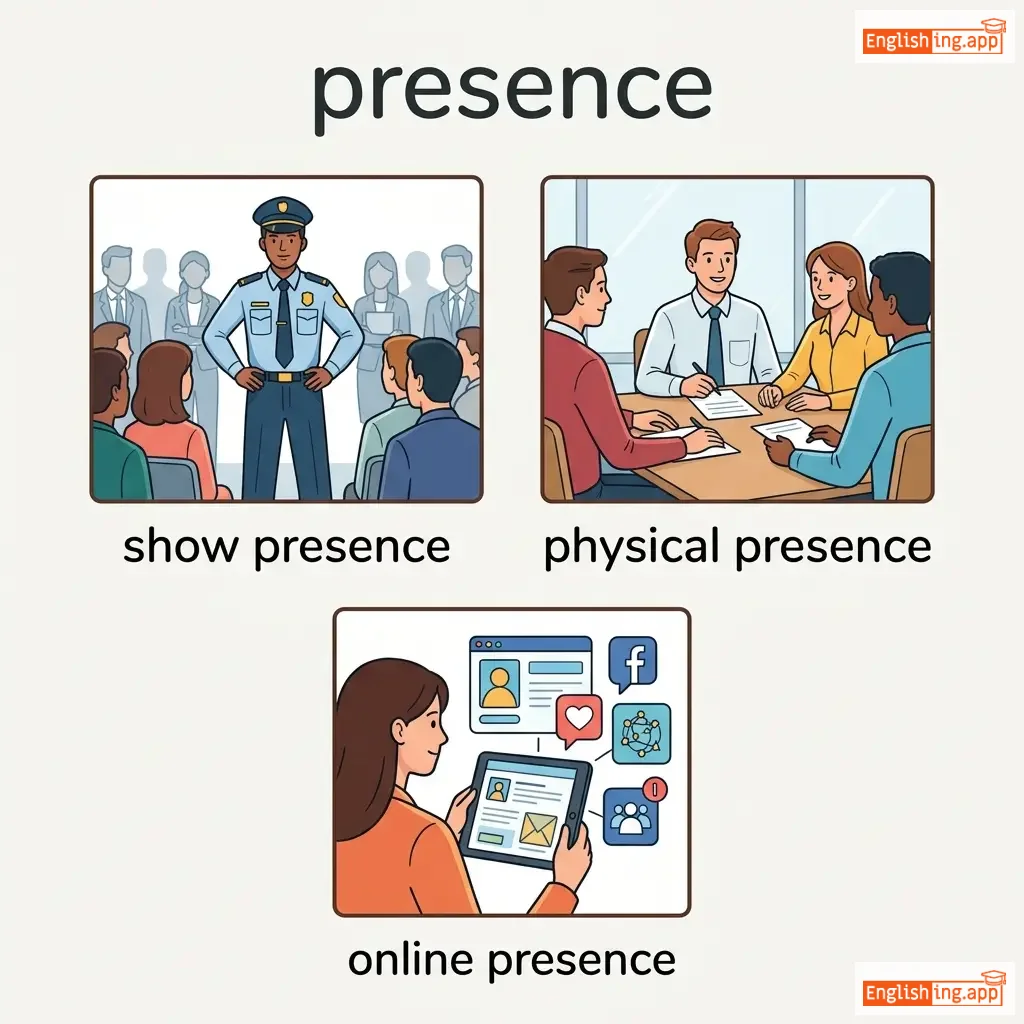
physical presence, strong presence, online presence, feel presence
••••••
|
Presence 在中文是出席,像是在会议中出席。
••••••
|
|
🎁
••••••
|
/ˈprɛzənt/
noun, verb, adjective
(pɹɛzɛnt)
••••••
|
- •••••• |
呈现
chengxian
••••••
|
presented
pɹɛzɛntɪd
••••••
|
presented
pɹɛzɛntɪd
••••••
|
presents
pɹɛzɛnts
••••••
|
presenting
pɹɛzɛntɪŋ
••••••
|
existing or happening now; to give something to someone in a formal way
••••••
|
She presented her report to the team yesterday.
她昨天向团队展示了她的报告。
••••••
|
她昨天向团队展示了她的报告。
Tā zuótiān xiàng tuánduì zhǎnshìle tā de bàogào.
••••••
|
- •••••• | - •••••• | - •••••• |
current, introduce, gift, show
••••••
|
absent, absent-minded
••••••
|
present at, present a gift, present the findings
••••••
|
Present是现在进行的正式展示
••••••
|
|
📊
••••••
|
/ˌprez.ənˈteɪ.ʃən/
noun
(展示)
••••••
|


|
展示
zhanshi
••••••
|
- •••••• | - •••••• | - •••••• | - •••••• |
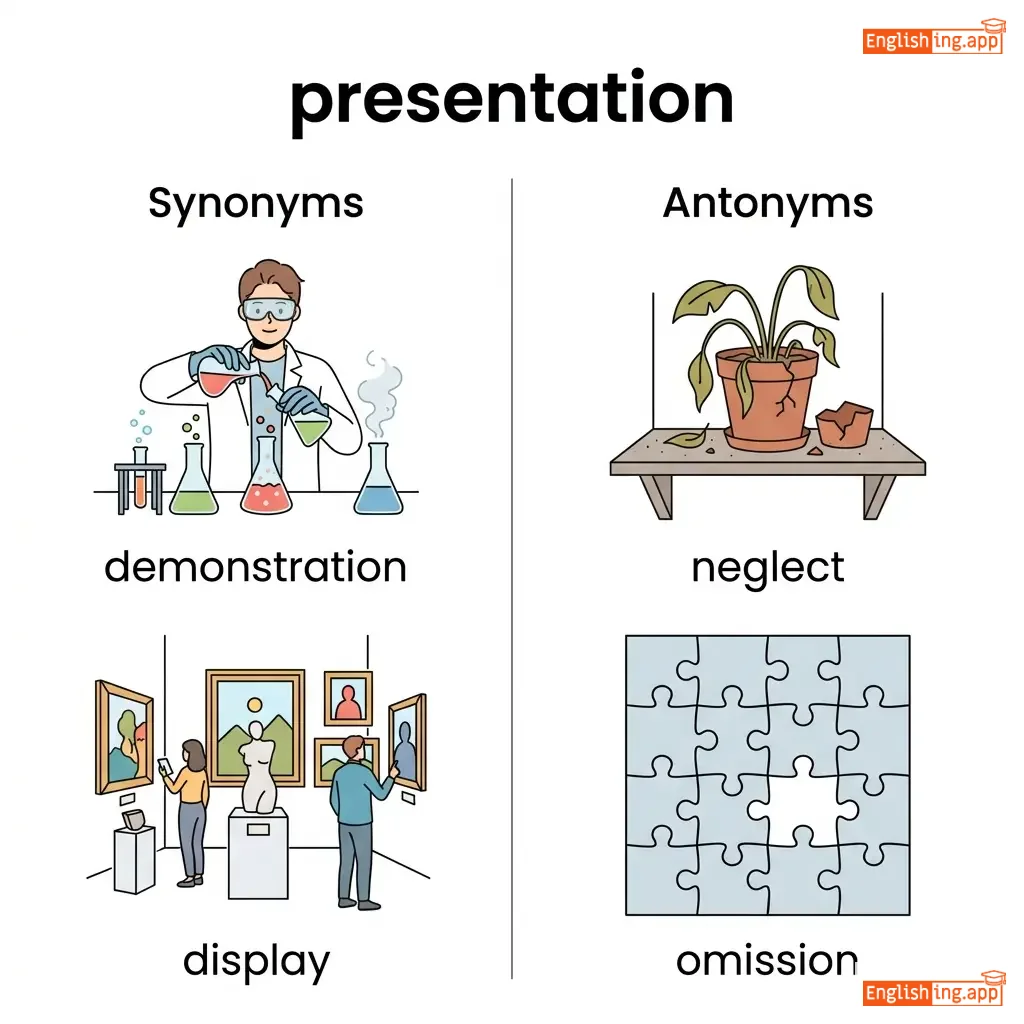
the action of showing or explaining something to a group of people
••••••
|
She gave an excellent presentation about climate change.
她做了一个关于气候变化的精彩展示。
••••••
|
她做了一个关于气候变化的精彩展示。
Ta zuo le yi ge guanyu qihou bianhua de jingcai zhanshi.
••••••
|
- •••••• | - •••••• | - •••••• |
demonstration, display, speech, lecture, exhibition
••••••
|
concealment, hiding, withdrawal
••••••
|
give presentation, deliver presentation, PowerPoint presentation, oral presentation
••••••
|
展示意味着向别人展示新的概念或信息
••••••
|
|
⏰
••••••
|
/ˈprez.ənt.li/
adverb
(pú rén tè lì)
••••••
|
- •••••• |
目前; 很快; 稍后
mù qián; hěn kuài; shāo hòu
••••••
|
- •••••• | - •••••• | - •••••• | - •••••• |
at the present time; soon; in a little while
••••••
|
The doctor will see you presently. |
医生很快就会见到你。
Yī shēng hěn kuài jiù huì jiàn dào nǐ.
••••••
|
- •••••• | - •••••• | - •••••• |
currently, now, soon, shortly
••••••
|
previously, formerly, later
••••••
|
presently available, presently working, presently located
••••••
|
Presently – 就在现在,'稍后'让你想到‘present’.
••••••
|
|
🛡️
••••••
|
/ˌprez.əˈveɪ.ʃən/
noun
(保存)
••••••
|

|
保存
baocun
••••••
|
- •••••• | - •••••• | - •••••• | - •••••• |
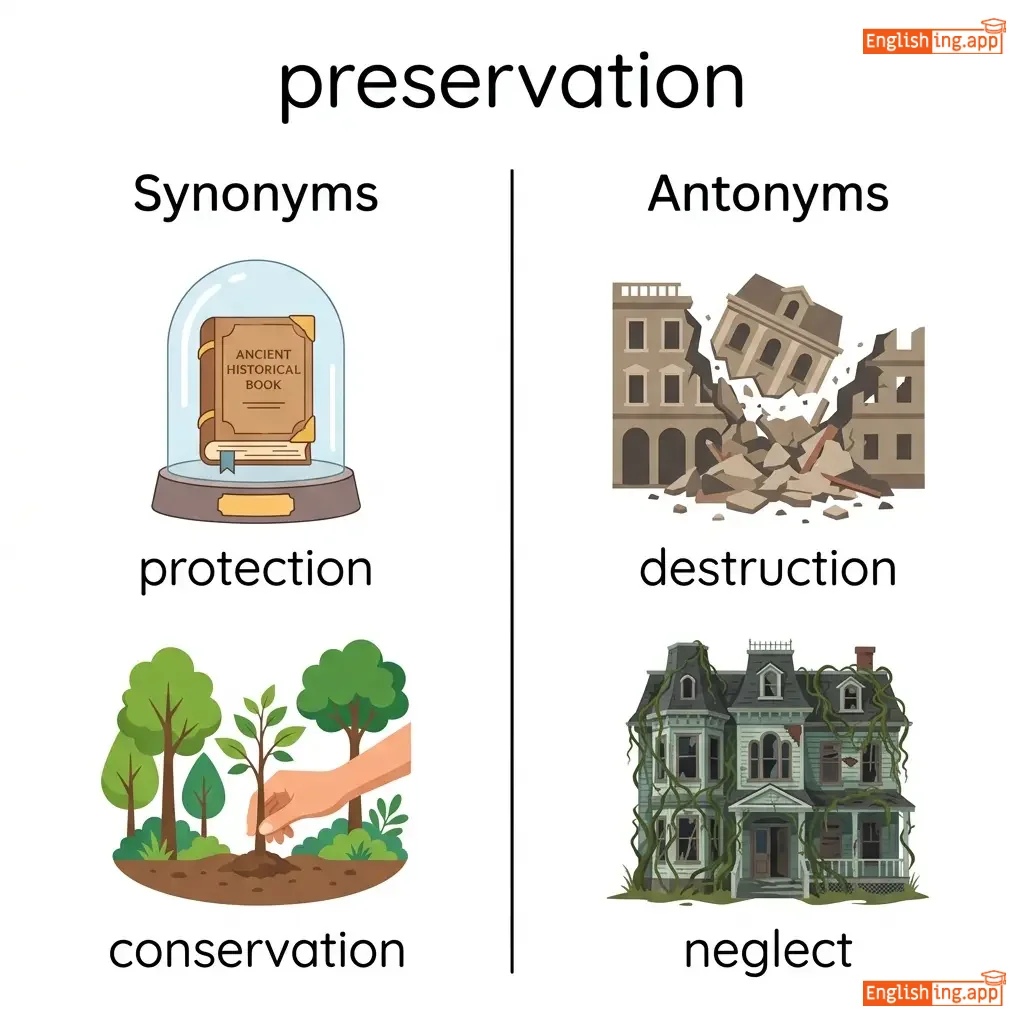
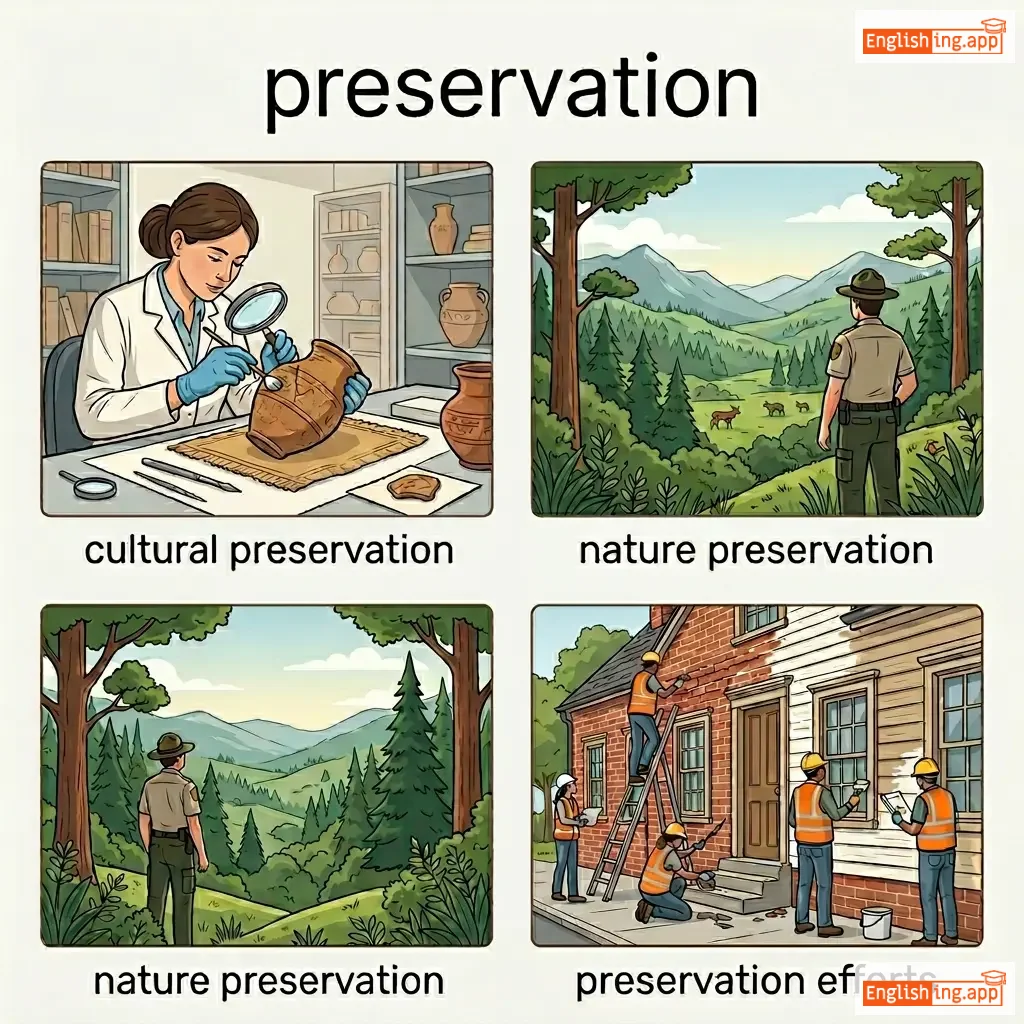
the action of maintaining something in its original or existing state
••••••
|
The preservation of historical buildings is very important.
历史建筑的保存非常重要。
••••••
|
历史建筑的保存非常重要。
Lishi jianzhu de baocun feichang zhongyao.
••••••
|
- •••••• | - •••••• | - •••••• |
conservation, protection, maintenance, safeguarding
••••••
|
destruction, demolition, deterioration
••••••
|
food preservation, wildlife preservation, historical preservation, self-preservation
••••••
|
保存有助于保持历史的延续。
••••••
|
|
👩⚖️
••••••
|
/prɪˈzaɪd/
verb
(普雷赛德)
••••••
|
- •••••• |
主持
zhǔchí
••••••
|
presided
普雷赛德德
••••••
|
presided
普雷赛德德
••••••
|
presides
普雷赛德斯
••••••
|
presiding
普雷赛丁
••••••
|
to be in charge of a meeting, event, or organization
••••••
|
She will preside over the meeting tomorrow.
她明天将主持会议。
••••••
|
她明天将主持会议。
Tā míngtiān jiāng zhǔchí huìyì.
••••••
|
- •••••• | - •••••• | - •••••• |
chair, lead, direct, manage
••••••
|
follow, be led
••••••
|
preside over a meeting, preside over a ceremony, preside over a discussion
••••••
|
主持即为主持会议!
••••••
|
|
🏛️
••••••
|
/ˈprɛzɪdənsi/
noun
(总统职务)
••••••
|
- •••••• |
总统职务
zongtong zhiwu
••••••
|
- •••••• | - •••••• | - •••••• | - •••••• |
the office or position of being a president
••••••
|
He was elected to the presidency in 2020. |
他在2020年当选为总统。
Ta zai 2020 nian dangxuan wei zongtong.
••••••
|
- •••••• | - •••••• | - •••••• |
leadership, administration, term, office, authority
••••••
|
subordination, followership
••••••
|
presidency term, presidential office, during his presidency, win the presidency
••••••
|
总统职务是成为总统的工作。
••••••
|
|
👨💼
••••••
|
/ˈprɛzɪdənt/
noun
(总统)
••••••
|
- •••••• |
总统
zongtong
••••••
|
- •••••• | - •••••• | - •••••• | - •••••• |
the elected head of a republican state
••••••
|
The president addressed the nation last night. |
总统昨晚向全国发表了演讲。
Zǒngtǒng zuówǎn xiàng quánguó fābiǎo le yǎnjiǎng.
••••••
|
- •••••• | - •••••• | - •••••• |
leader, chief, head of state
••••••
|
subordinate, follower
••••••
|
president of the United States, elected president, president's speech
••••••
|
总统就像是国家的船长,指引国家前进。
••••••
|
|
🏛️
••••••
|
/ˌprɛzɪˈdɛnʃəl/
adjective
(总统的)
••••••
|
- •••••• |
总统的
zǒngtǒng de
••••••
|
- •••••• | - •••••• | - •••••• | - •••••• |
relating to a president or presidency
••••••
|
The presidential election is scheduled for next month. |
总统选举定于下个月举行。
Zǒngtǒng xuǎnjǔ dìng yú xià gè yuè jǔxíng.
••••••
|
- •••••• | - •••••• | - •••••• |
president's, head of state's
••••••
|
non-presidential
••••••
|
presidential election, presidential duties, presidential candidate
••••••
|
总统的事情就是与总统有关的事情。
••••••
|
|
📰
••••••
|
/prɛs/
noun/verb
(pɹɛs)
••••••
|
|
新闻/按压
xīnwén / ànyā
••••••
|
pressed
pɹɛst
••••••
|
pressed
pɹɛst
••••••
|
presses
pɹɛs
••••••
|
pressing
pɹɛsɪŋ
••••••
|
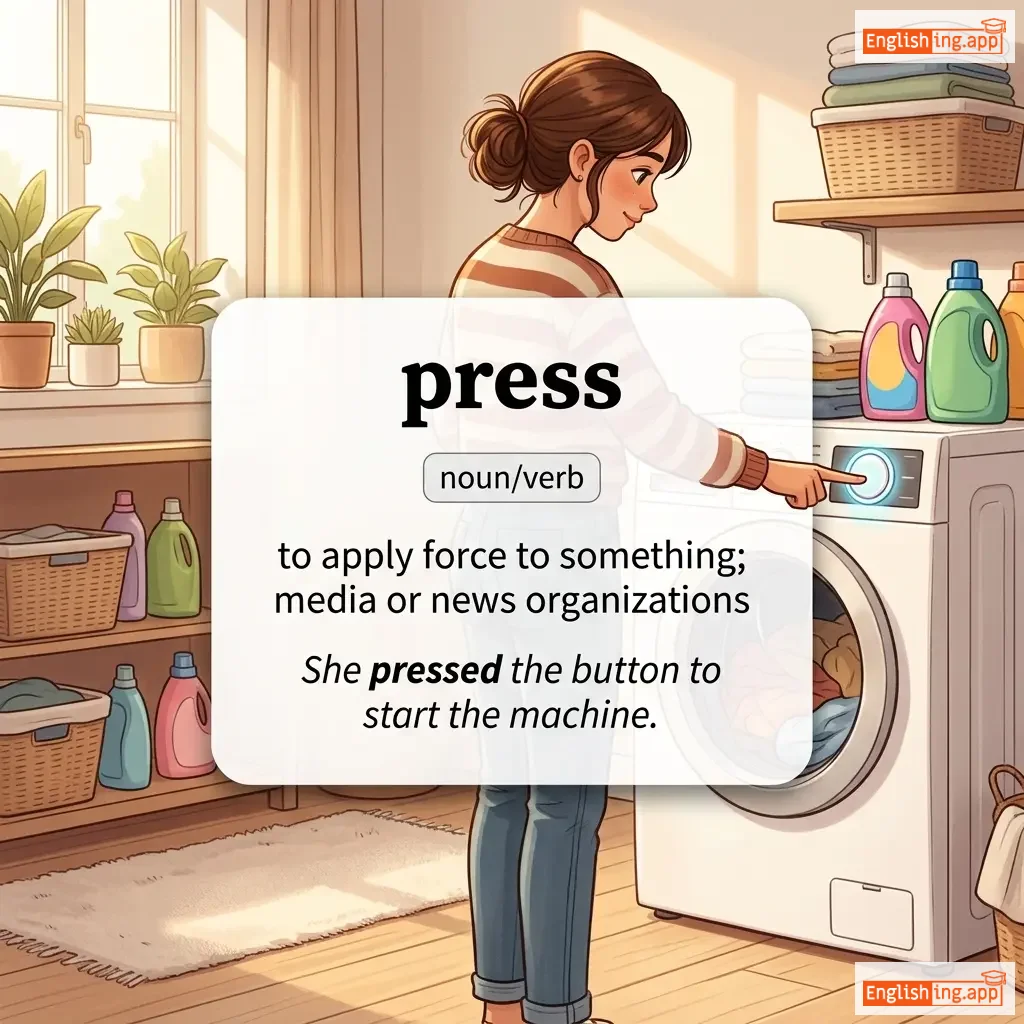
to apply force to something; media or news organizations
••••••
|
She pressed the button to start the machine.
她按下按钮启动机器。
••••••
|
她按下按钮启动机器。
Tā ànxià ànniǔ qǐdòng jīqì.
••••••
|
press the issue
继续追问
••••••
|
to continue discussing something forcefully or persistently
••••••
|
继续追问
Jìxù zhuīwèn
••••••
|
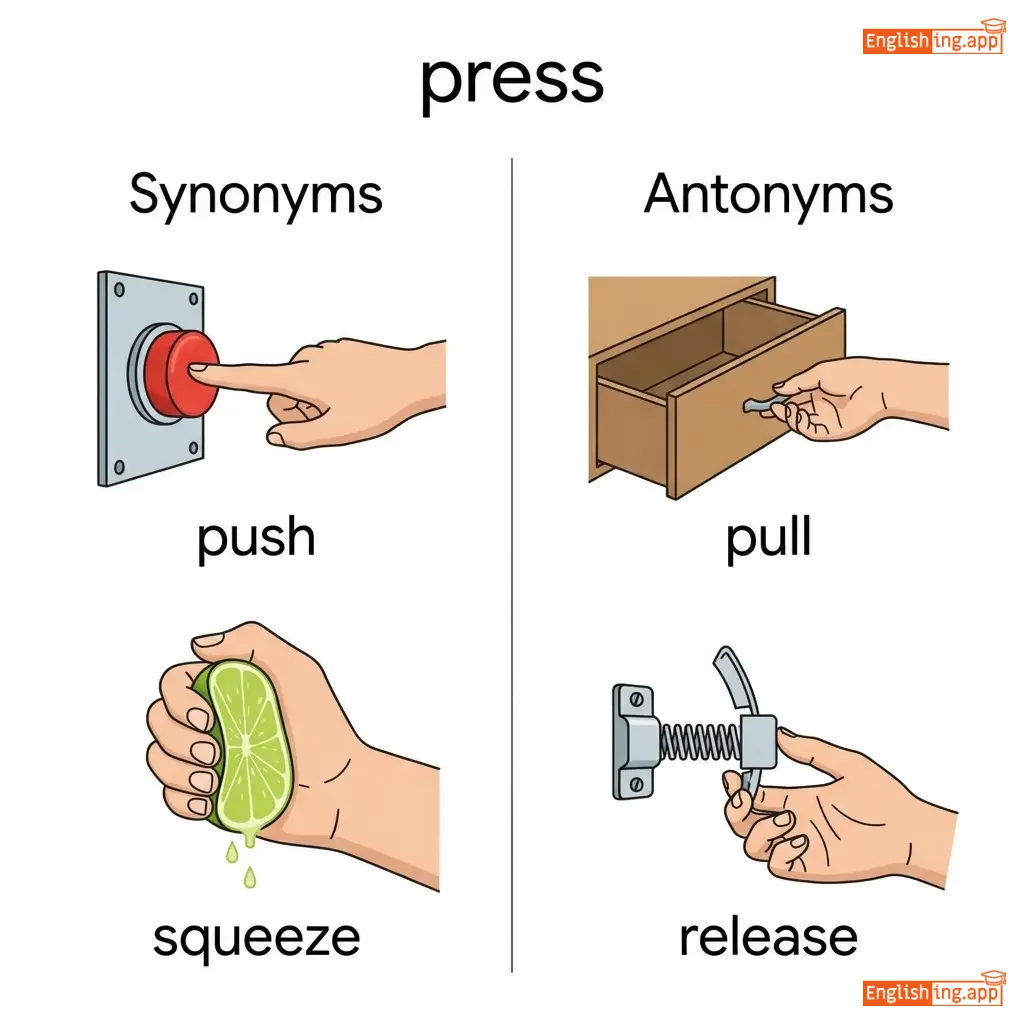
push, squeeze, media
••••••
|
pull, release
••••••
|
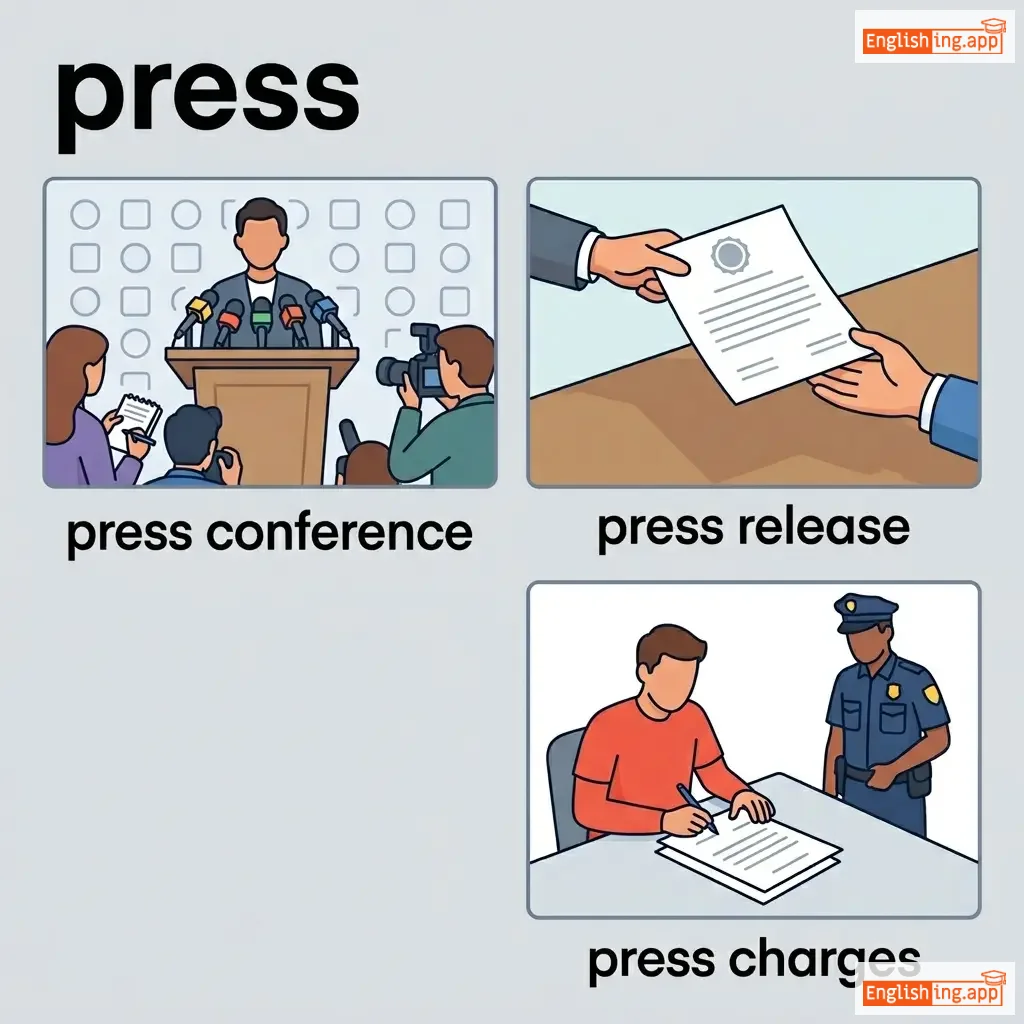
press conference, press release, press charges, press on
••••••
|
新闻传播中的按压行为
••••••
|
|
💥
••••••
|
/ˈprɛʃər/
noun/verb
(pǔlèshì)
••••••
|
- •••••• |
压力
yali
••••••
|
pressured
pǔlèshí
••••••
|
pressured
pǔlèshí
••••••
|
pressures
pǔlèshí
••••••
|
pressuring
pǔlèshì
••••••
|
the force applied to something or the feeling of stress or tension
••••••
|
The pressure of the situation made him nervous.
情境的压力让他感到紧张。
••••••
|
情境的压力让他感到紧张。
Qíngjìng de yālì ràng tā gǎndào jǐnzhāng.
••••••
|
under pressure
承受压力
••••••
|
feeling stressed or forced to perform
••••••
|
承受压力
Chéngshòu yālì
••••••
|
stress, tension, force
••••••
|
relaxation, ease
••••••
|
high pressure, pressure to succeed, under pressure, pressure point
••••••
|
压力 (Pressure) 是一种需要承受的感受
••••••
|
|
🏆
••••••
|
/prɛsˈtɪdʒəs/
adjective
(pŭrĕsŭtĭdʒīəs)
••••••
|
- •••••• |
有声望的
yǒu shēngwàng de
••••••
|
- •••••• | - •••••• | - •••••• | - •••••• |
having a high reputation; respected
••••••
|
Harvard University is one of the most prestigious universities in the world. |
哈佛大学是世界上最有声望的大学之一。
Hāfó dàxué shì shìjiè shàng zuì yǒu shēngwàng de dàxué zhī yī.
••••••
|
- •••••• | - •••••• | - •••••• |
respected, esteemed, renowned, famous
••••••
|
insignificant, unknown
••••••
|
prestigious institution, prestigious award, prestigious university
••••••
|
有声望的 (prestigious) 就是受人尊敬,拥有好名声!
••••••
|
|
🤔
••••••
|
/prɪˈzjuːməbli/
adverb
(prézjumébùlì)
••••••
|
- •••••• |
可以推测
kě yǐ tuī cè
••••••
|
- •••••• | - •••••• | - •••••• | - •••••• |
used to convey that something is assumed to be true though not known for certain
••••••
|
Presumably, he forgot to send the email. |
可以推测,他忘记了发送邮件。
Kě yǐ tuī cè, tā wàng jì le fā sòng yóu jiàn.
••••••
|
- •••••• | - •••••• | - •••••• |
probably, likely, supposedly, apparently, seemingly
••••••
|
certainly, definitely, surely
••••••
|
presumably because, presumably due to, presumably related to, presumably intended
••••••
|
Presume的意思是假设,presumably的意思是可以推测 — '我假设这就意味着它很可能是对的。'
••••••
|
|
🤔
••••••
|
/prɪˈzjuːm/
verb
(prizium)
••••••
|
- •••••• |
假设
jiǎshè
••••••
|
presumed
presumed
••••••
|
presumed
presumed
••••••
|
presumes
presumes
••••••
|
presuming
presuming
••••••
|
To suppose something is true without proof; to take for granted.
••••••
|
I presume she has already left for the meeting.
我假设她已经去参加会议了。
••••••
|
我假设她已经去参加会议了。
Wǒ jiǎshè tā yǐjīng qù cānjiā huìyì le.
••••••
|
presume innocence
假设无罪
••••••
|
to assume someone is innocent until proven guilty
••••••
|
假设无罪
jiǎshè wúzuì
••••••
|
assume, suppose, believe, infer, guess
••••••
|
doubt, disbelieve, question
••••••
|
presume innocence, presume to act, presume responsibility, presume knowledge
••••••
|
假设是没有证据地做出假定。
••••••
|
|
🎭
••••••
|
/prɪˈtɛnd/
verb
(普里滕德)
••••••
|
- •••••• |
假装
jiǎ zhuāng
••••••
|
pretended
普里滕德德
••••••
|
pretended
普里滕德德
••••••
|
pretends
普里滕德斯
••••••
|
pretending
普里滕丁
••••••
|
To act as if something is true when it is not.
••••••
|
The children pretended to be superheroes.
孩子们假装成超级英雄。
••••••
|
孩子们假装成超级英雄。
Háizimen jiǎzhuāng chéng chāojí yīngxióng.
••••••
|
pretend play
假装游戏
••••••
|
A form of play where children act out roles and scenarios.
••••••
|
假装游戏
jiǎ zhuāng yóuxì
••••••
|
feign, fake, simulate, act
••••••
|
reveal, show
••••••
|
pretend to be, pretend play, pretend interest
••••••
|
Pretend 即是假装,拼音和假装同音。
••••••
|
|
🎭
••••••
|
/prɪˈtɛnʃən/
noun
(普里腾申)
••••••
|
- •••••• |
虚伪,假装
xūwěi, jiǎzhuāng
••••••
|
- •••••• | - •••••• | - •••••• | - •••••• |
A claim or assertion to something, often without justification; an attempt to impress by showing greater importance or talent than is actually possessed.
••••••
|
His pretension to be an expert was quickly exposed.
他的假装是专家的伪装很快被揭穿了。
••••••
|
他的假装是专家的伪装很快被揭穿了。
tā de jiǎzhuāng shì zhuānjiā de wěizhuāng hěn kuài bèi jiēchuānle.
••••••
|
- •••••• | - •••••• | - •••••• |
claim, aspiration, affectation, vanity, show
••••••
|
humility, modesty
••••••
|
false pretension, intellectual pretension, pretension to power, artistic pretension
••••••
|
Pretension意味着假装以吸引注意力。
••••••
|
|
🌸
••••••
|
/ˈprɪti/
adjective
(普雷蒂)
••••••
|
- •••••• |
漂亮
piaoliang
••••••
|
- •••••• | - •••••• | - •••••• | - •••••• |
Attractive in a delicate way without being truly beautiful.
••••••
|
She looked pretty in her new dress. |
她穿着新裙子看起来很漂亮。
Tā chuānzhuó xīn qúnzi kàn qǐlái hěn piàoliang.
••••••
|
pretty good |
Fairly good or satisfactory.
••••••
|
相当好
xiāngdāng hǎo
••••••
|
lovely, attractive, cute, charming, fair
••••••
|
ugly, unattractive, plain
••••••
|
pretty face, pretty girl, pretty well, pretty good
••••••
|
Pretty意味着漂亮,但并不炫目。
••••••
|
|
🏆
••••••
|
/prɪˈveɪl/
verb
(普雷维尔)
••••••
|
- •••••• |
占上风
zhàn shàng fēng
••••••
|
prevailed
普雷维尔德
••••••
|
prevailed
普雷维尔德
••••••
|
prevails
普雷维尔斯
••••••
|
prevailing
普雷维林
••••••
|
To prove more powerful or superior; to be widespread or common.
••••••
|
Justice will always prevail over injustice.
正义总会战胜不公正。
••••••
|
正义总会战胜不公正。
Zhèngyì zǒng huì zhànshèng bù gōngzhèng.
••••••
|
prevail upon someone
说服某人
••••••
|
to persuade someone to do something
••••••
|
说服某人
shuōfú mǒu rén
••••••
|
triumph, succeed, win, dominate, overcome
••••••
|
fail, lose, surrender
••••••
|
prevail over, prevail in, prevail upon, prevail against
••••••
|
占上风意味着你是最强的—获胜者总是占上风!
••••••
|
|
📊
••••••
|
/ˈprɛvələns/
noun
(普雷瓦伦斯)
••••••
|
|
普遍性
pǔbiànxìng
••••••
|
- •••••• | - •••••• | - •••••• | - •••••• |
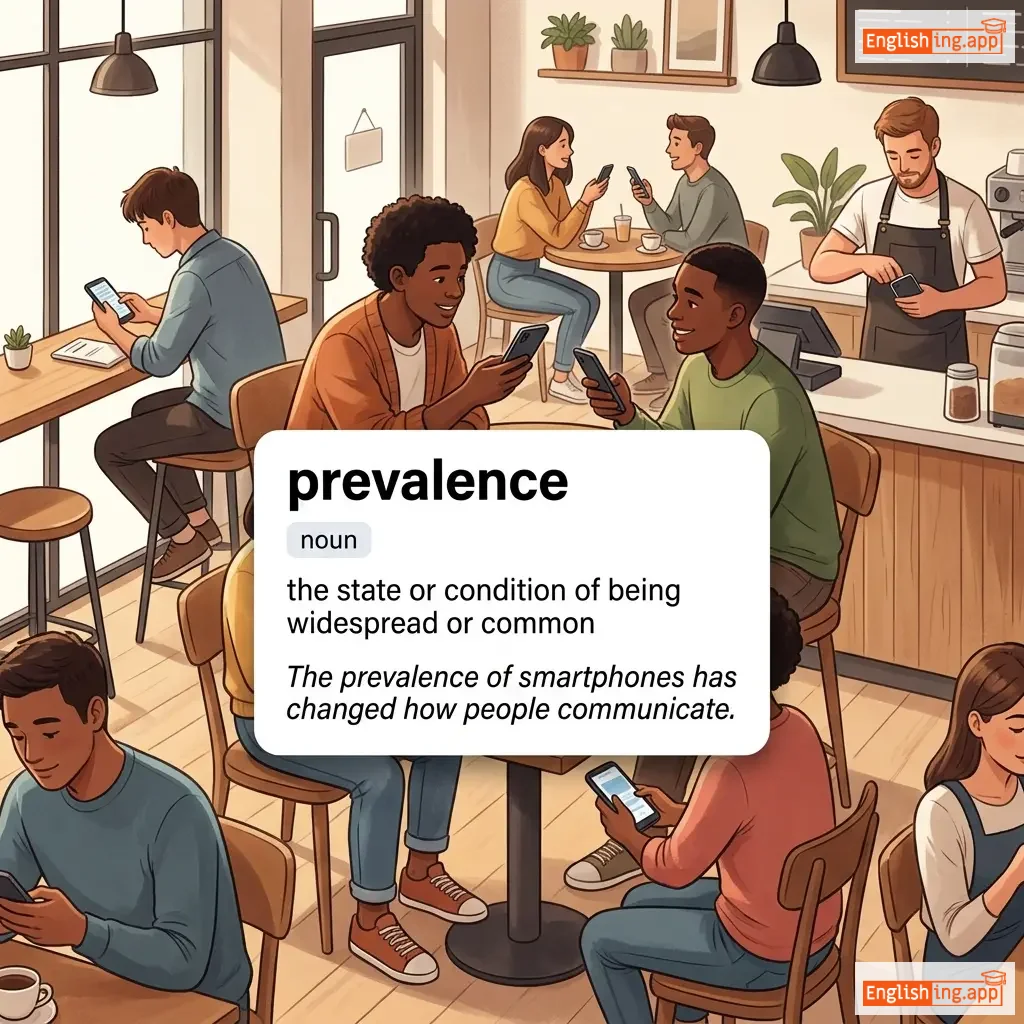
the state or condition of being widespread or common
••••••
|
The prevalence of smartphones has changed how people communicate.
智能手机的普及改变了人们的交流方式。
••••••
|
智能手机的普及改变了人们的交流方式。
Zhìnéng shǒujī de pǔjí gǎibiànle rénmen de jiāoliú fāngshì.
••••••
|
- •••••• | - •••••• | - •••••• |
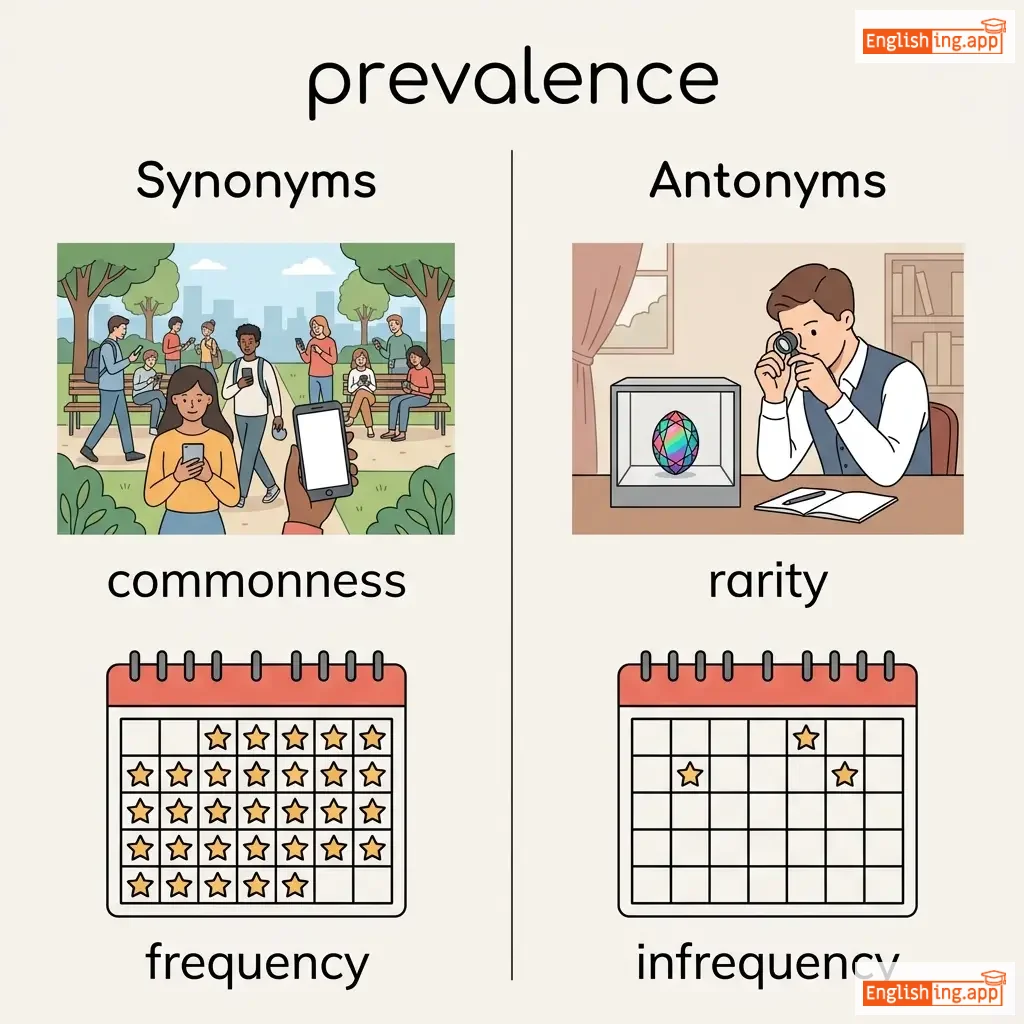
commonness, frequency, dominance, universality, popularity
••••••
|
rarity, infrequency, scarcity
••••••
|
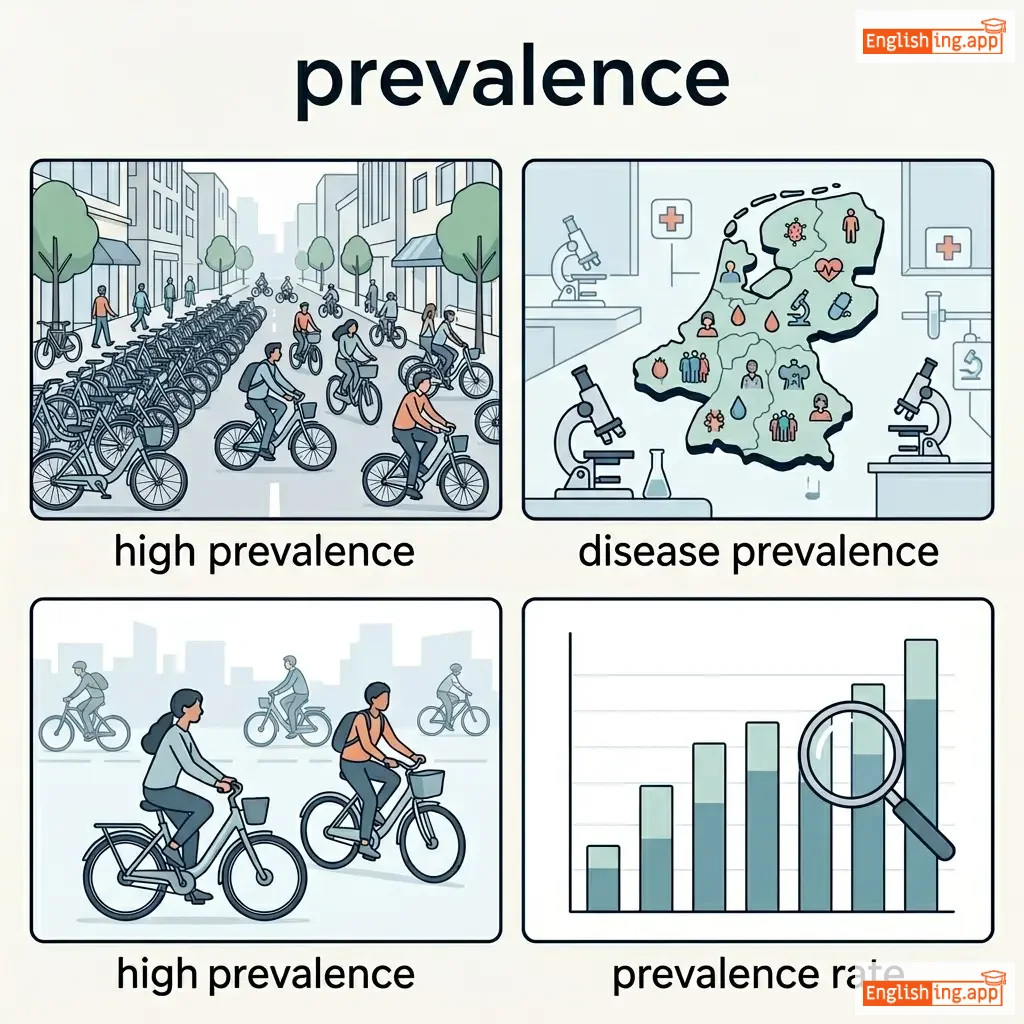
high prevalence, disease prevalence, prevalence rate, prevalence among
••••••
|
普遍性,像是'问题的普遍性',意味着它非常常见。
••••••
|
|
🛑
••••••
|
/prɪˈvɛnt/
verb
(普里文特)
••••••
|
|
预防
yùfáng
••••••
|
prevented
普里文特德
••••••
|
prevented
普里文特德
••••••
|
prevents
普里文特斯
••••••
|
preventing
普里文廷
••••••
|
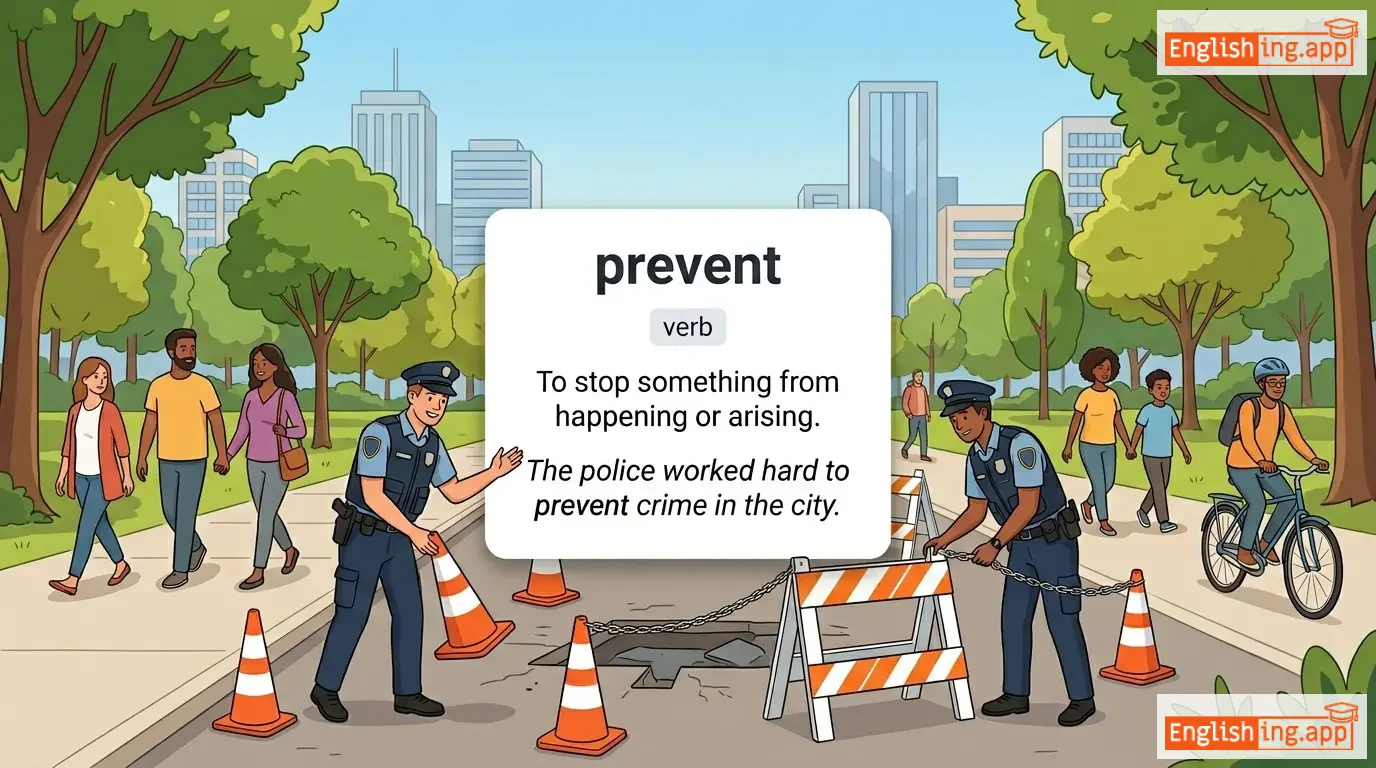
To stop something from happening or arising.
••••••
|
The police worked hard to prevent crime in the city.
警察努力防止城市犯罪。
••••••
|
警察努力防止城市犯罪。
Jǐngchá nǔlì fángzhǐ chéngshì fànzuì.
••••••
|
prevent from
防止从
••••••
|
To stop someone or something from doing something.
••••••
|
防止从
fángzhǐ cóng
••••••
|
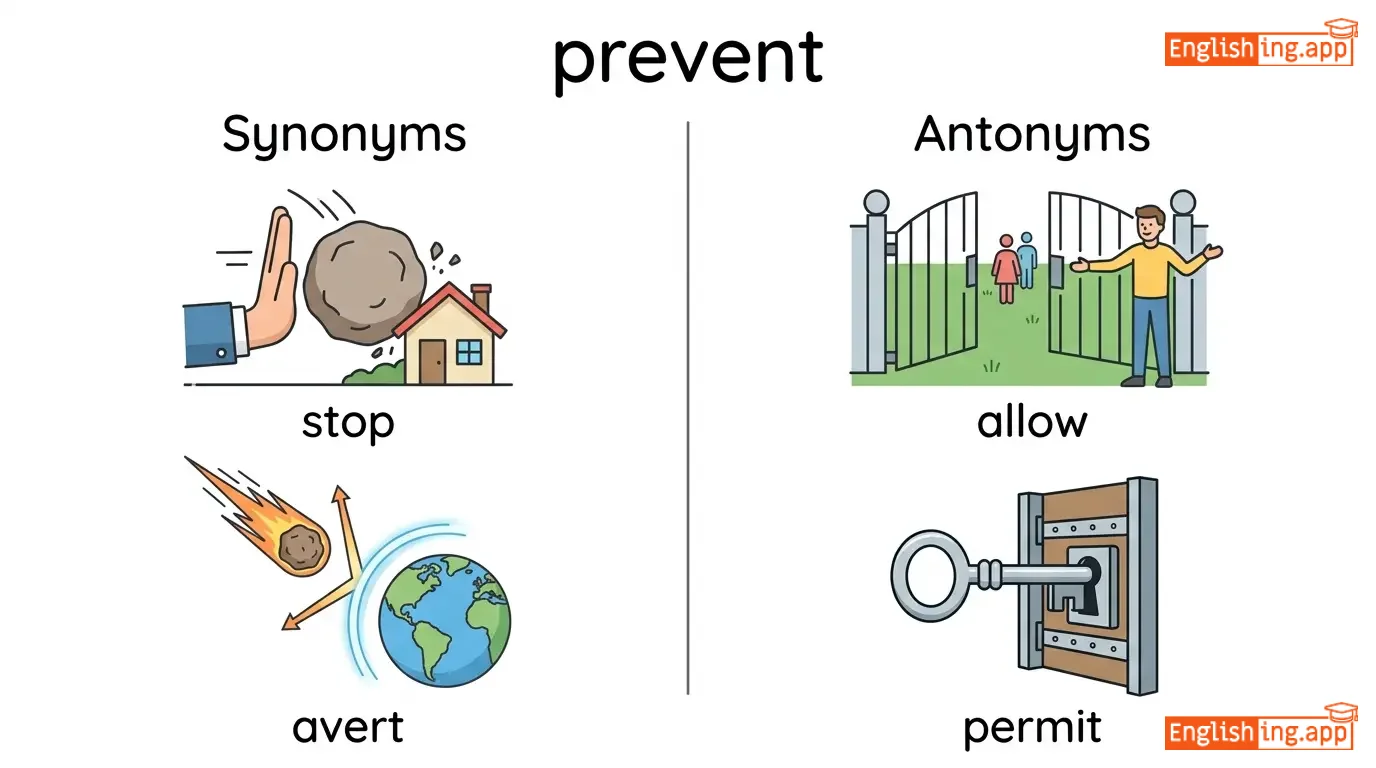
stop, avert, hinder, block, preclude
••••••
|
allow, permit, enable
••••••
|
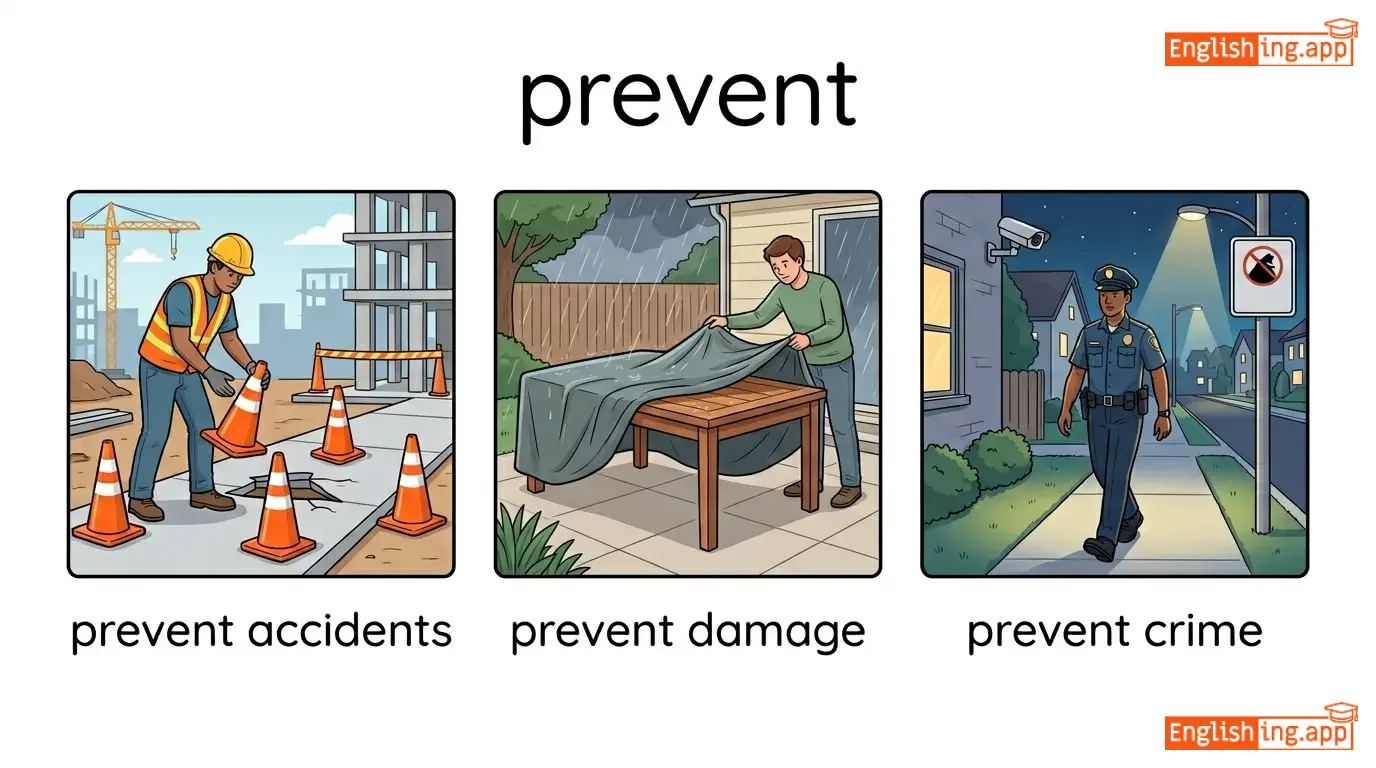
prevent accidents, prevent damage, prevent crime, prevent infection
••••••
|
Prevent 在中文是 '预防',就像预先防止不好的事情发生。
••••••
|
|
🛡️
••••••
|
/prɪˈvɛnʃən/
noun
(预防)
••••••
|
|
预防
yufang
••••••
|
- •••••• | - •••••• | - •••••• | - •••••• |
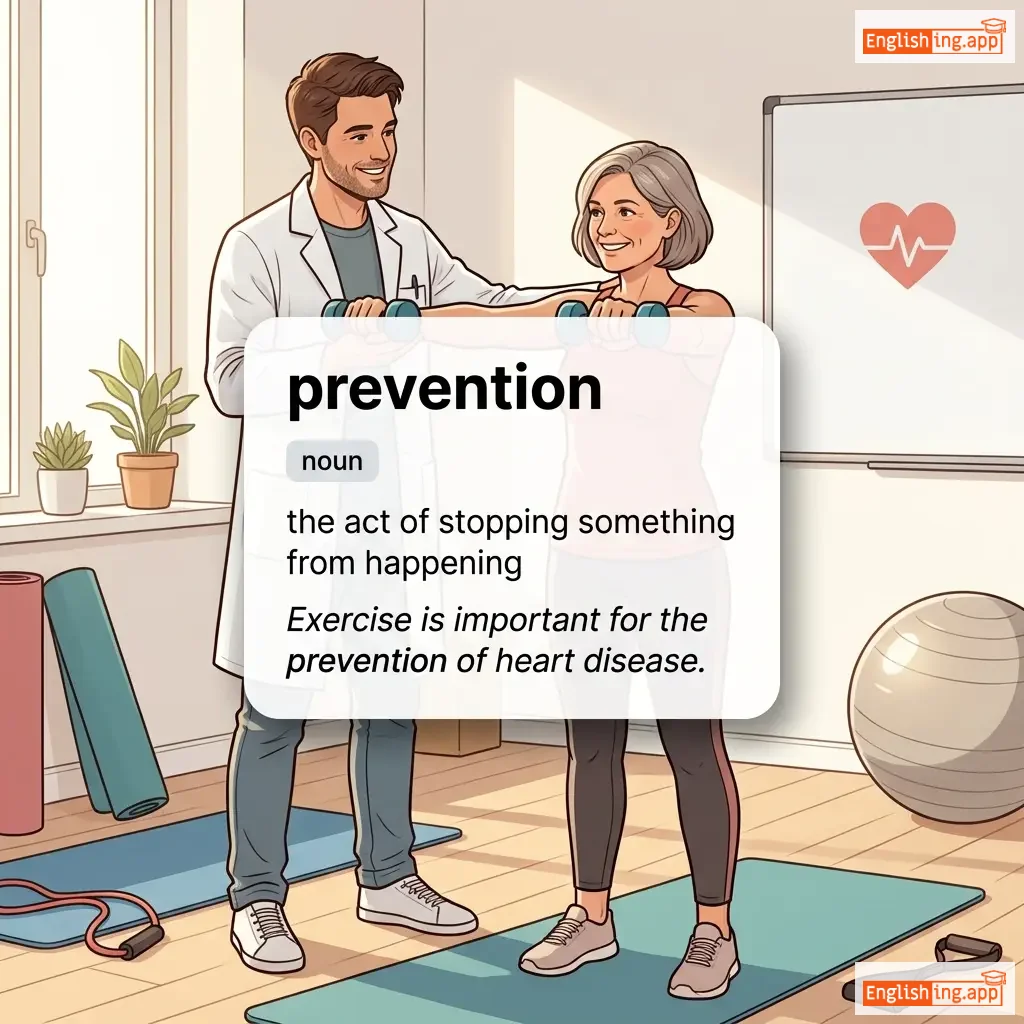
the act of stopping something from happening
••••••
|
Exercise is important for the prevention of heart disease. |
运动对预防心脏病很重要。
Yùndòng duì yùfáng xīnzàngbìng hěn zhòngyào.
••••••
|
prevention is better than cure |
it is better to stop problems before they happen than to fix them later
••••••
|
预防胜于治疗
yùfáng shèng yú zhìliáo
••••••
|
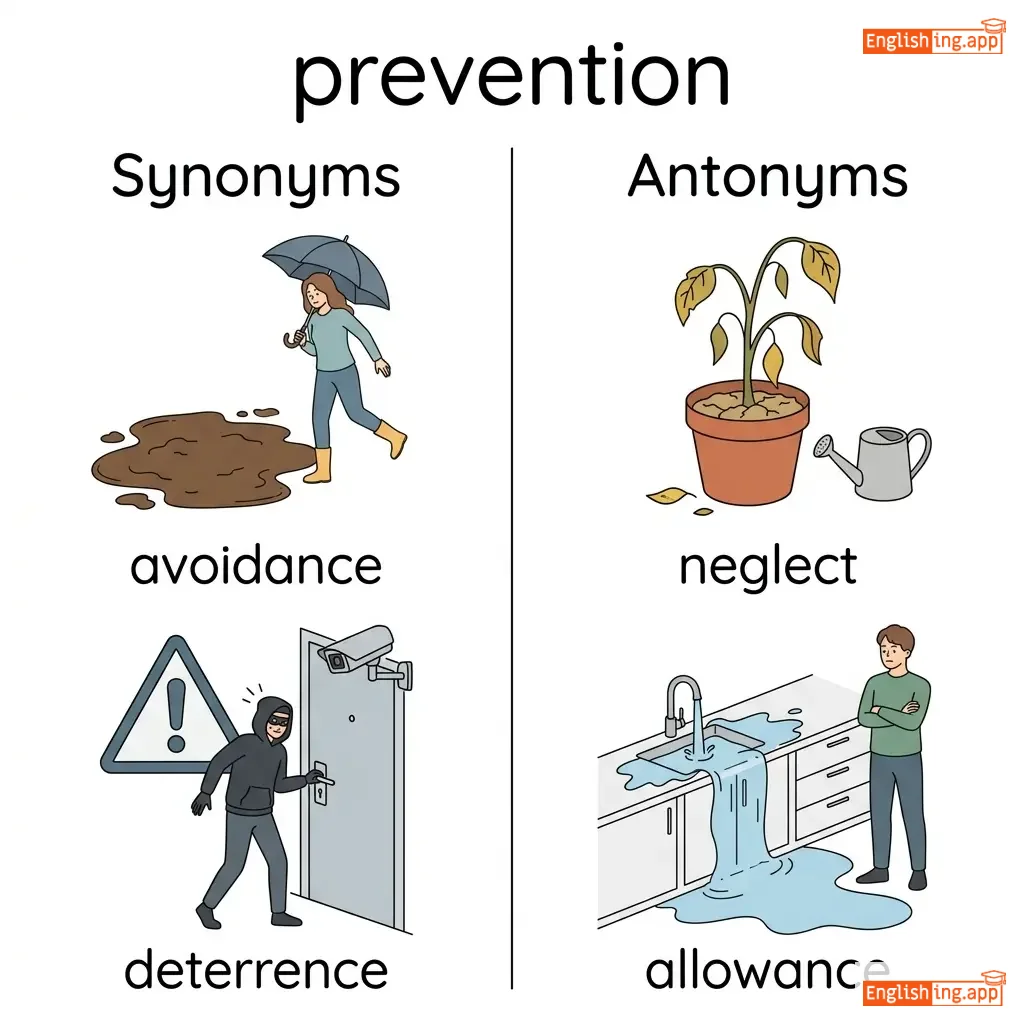
avoidance, deterrence, protection, precaution
••••••
|
neglect, allowance, permission
••••••
|
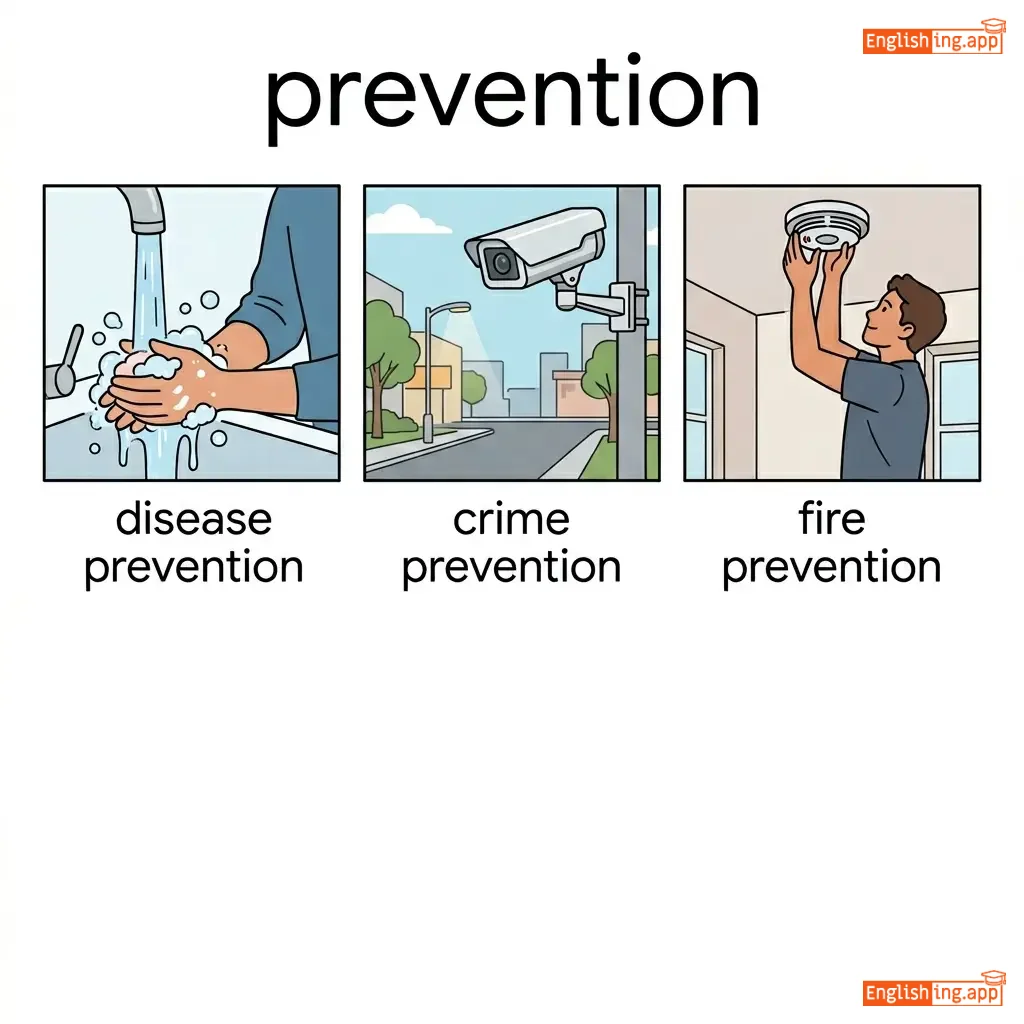
disease prevention, crime prevention, fire prevention, prevention strategy
••••••
|
预防意味着在问题发生前阻止 — 预防到位,问题消失。
••••••
|
|
⏮️
••••••
|
/ˈpriːviəs/
adjective
(pǔrīfīus)
••••••
|
- •••••• |
以前的
yǐqián de
••••••
|
- •••••• | - •••••• | - •••••• | - •••••• |
Existing or happening before the present time.
••••••
|
He referred to the previous meeting to explain his point.
他引用了上一场会议来解释他的观点。
••••••
|
他引用了上一场会议来解释他的观点。
Tā yǐn yòngle shàng yī chǎng huì yì lái jiěshì tā de guāndiǎn.
••••••
|
previous experience
以前的经验
••••••
|
Past knowledge or skills gained from earlier situations.
••••••
|
以前的经验
yǐqián de jīngyàn
••••••
|
earlier, prior, former, preceding
••••••
|
future, later
••••••
|
previous meeting, previous record, previous work, previous year
••••••
|
Previous 意味着以前,比如 previous exam,就是以前的考试。
••••••
|
|
⏳
••••••
|
/ˈpriːviəsli/
adverb
(priviəsli)
••••••
|
- •••••• |
以前
yǐqián
••••••
|
- •••••• | - •••••• | - •••••• | - •••••• |
at an earlier time or before now
••••••
|
She had previously worked at a bank before starting her own business. |
她曾在银行工作过,之后才开始了自己的生意。
Tā céng zài yínháng gōngzuò guò, zhīhòu cái kāishǐle zìjǐ de shēngyì.
••••••
|
- •••••• | - •••••• | - •••••• |
formerly, earlier, before
••••••
|
currently, presently
••••••
|
previously stated, previously mentioned, previously worked
••••••
|
priviəsli (Previously) 以前做过的事情
••••••
|
|
🦁
••••••
|
/preɪ/
noun/verb
••••••
|
- •••••• | - •••••• |
preyed
••••••
|
preyed
••••••
|
preys
••••••
|
preying
••••••
|
an animal hunted by another for food; to hunt and feed on
••••••
|
Lions prey on zebras in the wild. |
- •••••• |
fall prey to |
to become a victim of
••••••
|
- •••••• |
victim, quarry, target, hunt
••••••
|
predator, attacker
••••••
|
fall prey, prey upon, easy prey, natural prey
••••••
|
No •••••• |
|
💵
••••••
|
/praɪs/
noun
(praɪs)
••••••
|
- •••••• |
价格
jiàgé
••••••
|
- •••••• | - •••••• | - •••••• | - •••••• |
the amount of money expected, required, or given for something
••••••
|
The price of the car has increased recently. |
这辆车的价格最近上涨了。
Zhè liàng chē de jiàgé zuìjìn shàngzhǎng le.
••••••
|
- •••••• | - •••••• | - •••••• |
cost, charge, fee, value
••••••
|
discount, free
••••••
|
high price, low price, reasonable price, price tag
••••••
|
Price is what you pay for something, like the '价格' on an item.
••••••
|
|
🦁
••••••
|
/praɪd/
noun
(praɪd)
••••••
|
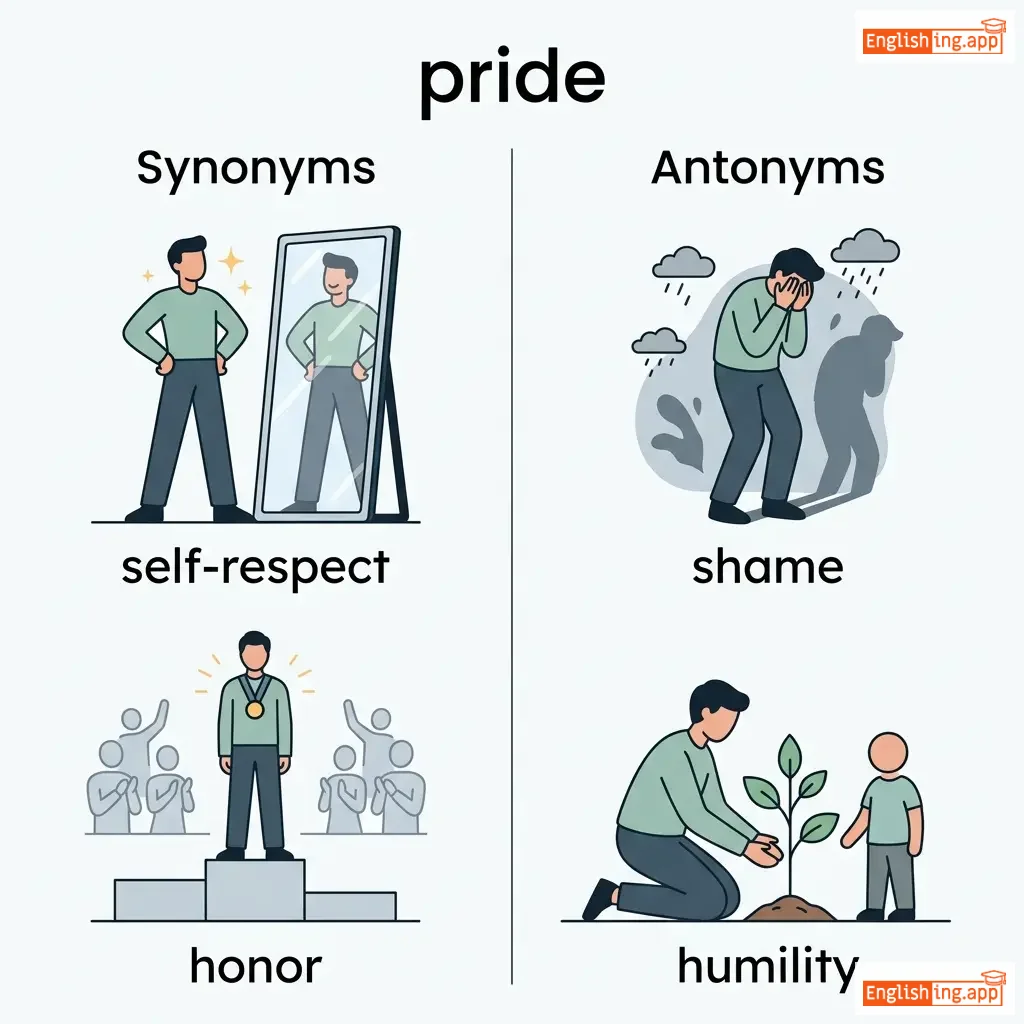

|
自豪
zìháo
••••••
|
- •••••• | - •••••• | - •••••• | - •••••• |
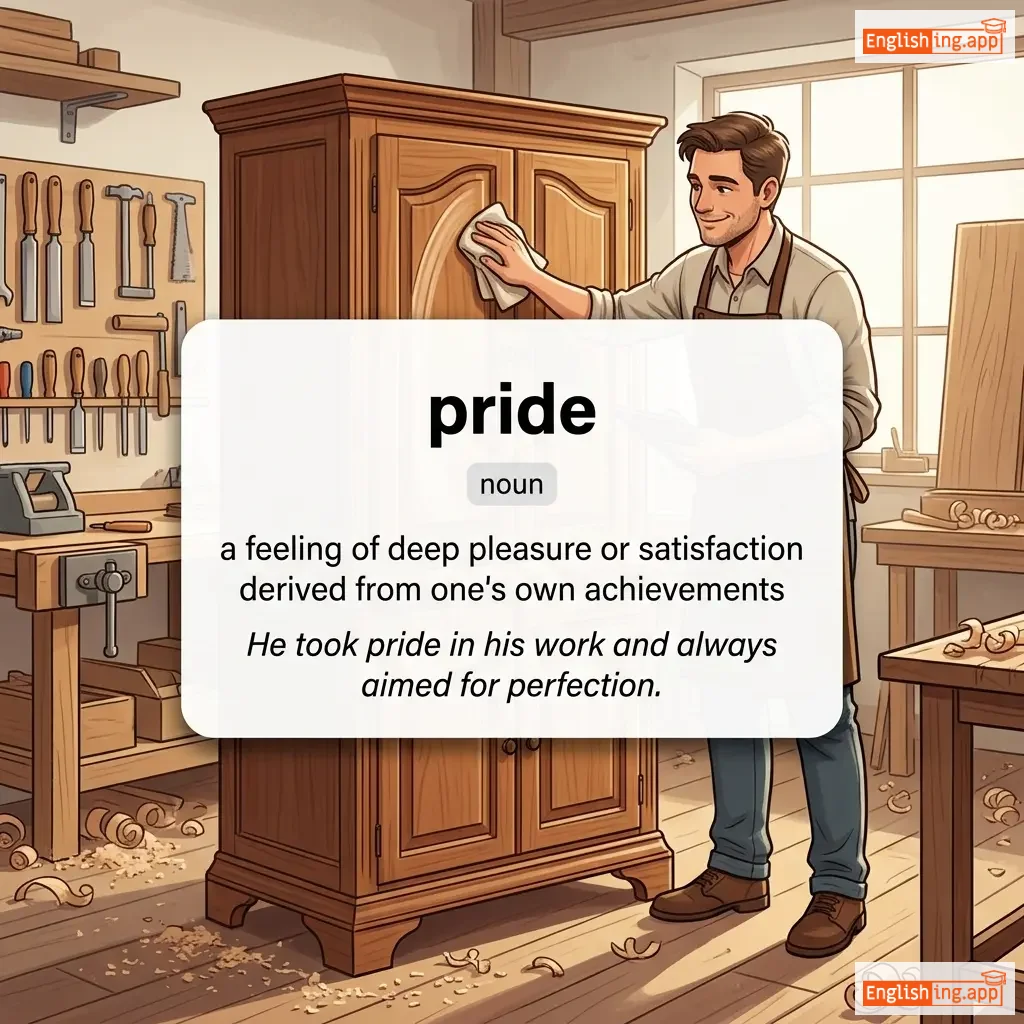
a feeling of deep pleasure or satisfaction derived from achievements
••••••
|
She takes great pride in her work.
她为自己的工作感到非常自豪。
••••••
|
她为自己的工作感到非常自豪。
Tā wèi zìjǐ de gōngzuò gǎndào fēicháng zìháo.
••••••
|
- •••••• | - •••••• | - •••••• |
dignity, self-esteem, satisfaction, honor
••••••
|
shame, humility, modesty, disgrace
••••••
|
take pride, feel pride, source of pride, national pride
••••••
|
自豪是因成功而感到的喜悦。
••••••
|
|
⛪
••••••
|
/priːst/
noun
(priːst)
••••••
|
- •••••• |
牧师
mùshī
••••••
|
- •••••• | - •••••• | - •••••• | - •••••• |
a person who performs religious duties and ceremonies
••••••
|
The priest blessed the congregation during the Sunday service. |
牧师在主日礼拜期间祝福了会众。
Mùshī zài zhǔrì lǐbài qījiān zhùfú le huìzhòng.
••••••
|
- •••••• | - •••••• | - •••••• |
clergyman, pastor, minister, reverend
••••••
|
laity
••••••
|
church priest, catholic priest, priesthood
••••••
|
A priest is someone who prays and leads religious ceremonies.
••••••
|
|
⚡
••••••
|
/praɪˈmɛrɪli/
adverb
(praɪˈmɛrɪli)
••••••
|
- •••••• |
主要
zhu yao
••••••
|
- •••••• | - •••••• | - •••••• | - •••••• |
for the most part; mainly
••••••
|
She is primarily responsible for managing the finances. |
她主要负责管理财务。
Ta zhu yao fu ze guan li cai wu.
••••••
|
- •••••• | - •••••• | - •••••• |
mainly, chiefly, principally, mostly
••••••
|
secondarily, additionally
••••••
|
primarily concerned, primarily used, primarily focused
••••••
|
Primarily, 'pri' means 'prime' which is main, and that's the core idea!
••••••
|
|
1️⃣
••••••
|
/ˈpraɪ.mɛr.i/
adjective
(puraimari)
••••••
|
- •••••• |
主要的, 首要的
zhǔyào de, shǒuyào de
••••••
|
- •••••• | - •••••• | - •••••• | - •••••• |
Most important; main; happening first.
••••••
|
Education is a primary factor in economic growth.
教育是经济增长的一个主要因素。
••••••
|
教育是经济增长的一个主要因素。
Jiàoyù shì jīngjì zēngzhǎng de yīgè zhǔyào yīnsù.
••••••
|
primary concern
主要关切
••••••
|
the most important issue or problem
••••••
|
主要关切
zhǔyào guānqiè
••••••
|
main, chief, principal, essential, fundamental
••••••
|
secondary, minor, trivial
••••••
|
primary education, primary reason, primary goal, primary source
••••••
|
Primary 是指最重要的,像 Primary School(小学)。
••••••
|
|
⭐
••••••
|
/praɪm/
adjective
(praim)
••••••
|
- •••••• |
首要的, 重要的
shouyao de, zhongyao de
••••••
|
- •••••• | - •••••• | - •••••• | - •••••• |
Of the best quality; most important; peak condition.
••••••
|
She is in the prime of her career.
她正处于事业的巅峰。
••••••
|
她处于事业的巅峰时刻。
Ta chǔyú shìyè de diānfēng shíkè.
••••••
|
prime time
黄金时段
••••••
|
the most popular time for television or activity
••••••
|
黄金时段
huángjīn shíduàn
••••••
|
best, peak, top, leading, foremost
••••••
|
inferior, worst, minor
••••••
|
prime time, prime number, prime example, prime minister
••••••
|
Prime 意思是首要的 — Prime Minister 意思是重要的,Prime Time 意思是黄金时段。
••••••
|
|
🤴
••••••
|
/prɪns/
noun
(普林斯)
••••••
|
- •••••• |
王子
wangzi
••••••
|
- •••••• | - •••••• | - •••••• | - •••••• |
a male member of a royal family, especially the son of a king or queen; a ruler of a principality
••••••
|
The prince addressed the nation on his birthday.
德 普林斯 阿德雷斯德 德 内申 昂 赫兹 伯斯迪。
••••••
|
王子在生日那天向全国发表了讲话。
wangzi zai shengri natian xiang quanguo fabiao le jianghua
••••••
|
Prince Charming
普林斯 查明
••••••
|
an idealized, perfect romantic partner
••••••
|
白马王子
baima wangzi
••••••
|
heir, royal, duke, sovereign, noble
••••••
|
commoner, peasant
••••••
|
crown prince, young prince, royal prince, prince and princess
••••••
|
Prince = 王子, sounds powerful and royal
••••••
|
|
👑
••••••
|
/ˈprɪn.ses/
noun
(普琳塞丝)
••••••
|
- •••••• |
公主
gongzhu
••••••
|
- •••••• | - •••••• | - •••••• | - •••••• |
a female royal family member, especially the daughter of a king or queen; a woman regarded as noble, cherished, or elegant
••••••
|
The princess waved to the crowd from the palace balcony.
普琳塞丝 从 皇宫 阳台 向 人群 挥手。
••••••
|
公主从皇宫的阳台向人群挥手。
gongzhu cong huanggong de yangtai xiang renqun huishou
••••••
|
princess treatment
公主式待遇
••••••
|
special, luxurious, or very kind treatment given to someone
••••••
|
公主式待遇
gongzhu shi daiyu
••••••
|
royal daughter, duchess, noblewoman, heiress, lady
••••••
|
commoner, peasant
••••••
|
crown princess, fairy-tale princess, princess dress, princess castle
••••••
|
Princess 就是 公主—童话里的公主
••••••
|
|
🎓
••••••
|
/ˈprɪnsəpəl/
noun, adjective
(prɪnsɪpəl)
••••••
|
- •••••• |
校长
xiaozhang
••••••
|
- •••••• | - •••••• | - •••••• | - •••••• |
the person with the highest authority or most important position; main or most important
••••••
|
The school principal addressed the students in the auditorium. |
学校的校长在礼堂里向学生们致辞。
Xuexiao de xiaozhang zai litang li xiang xueshengmen zhici.
••••••
|
principal and interest |
the original amount of money invested or loaned and the charge for borrowing it
••••••
|
本金和利息
benjin he lixi
••••••
|
head, leader, chief, primary, main
••••••
|
subordinate, minor, secondary
••••••
|
school principal, principal amount, principal role, principal office
••••••
|
Principal 在学校中代表校长,最重要的人。
••••••
|
|
📜
••••••
|
/ˈprɪnsəpəl/
noun
(pīn-sī-pǎo)
••••••
|

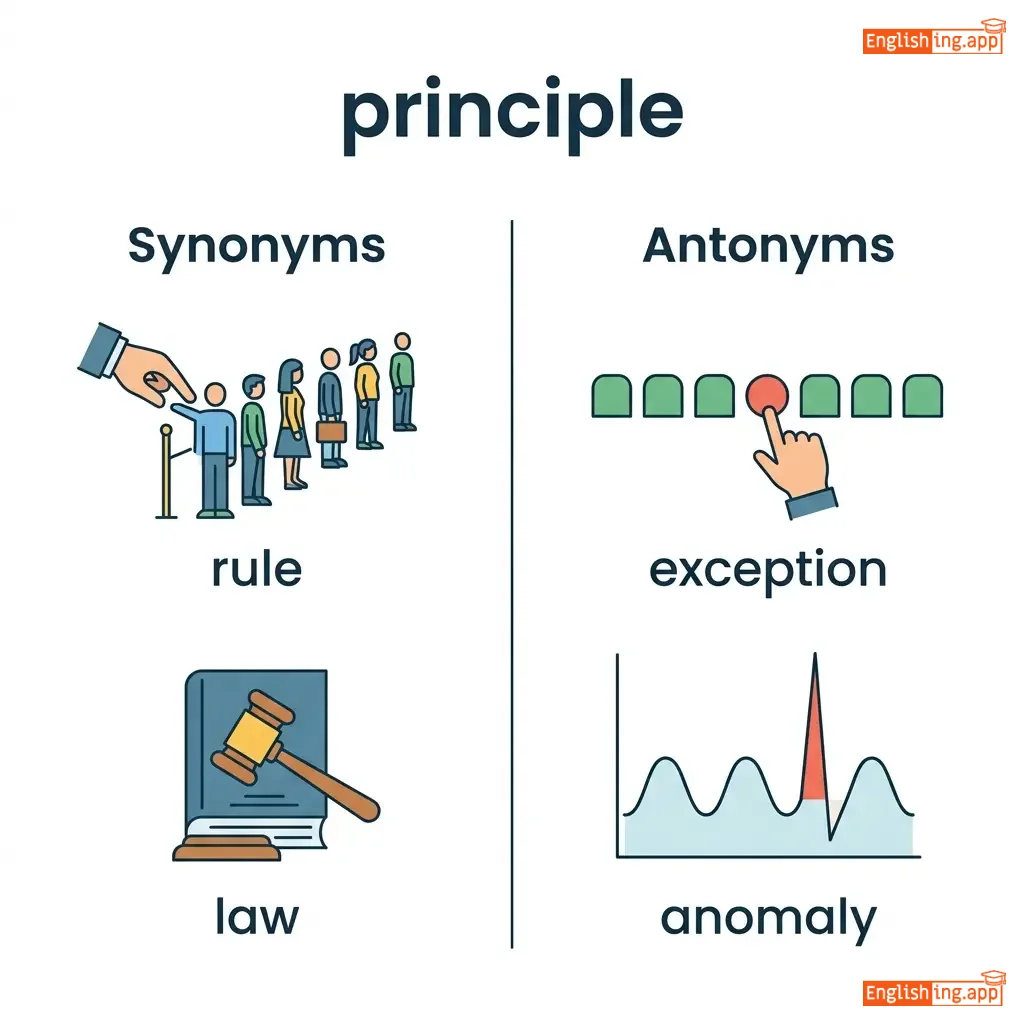
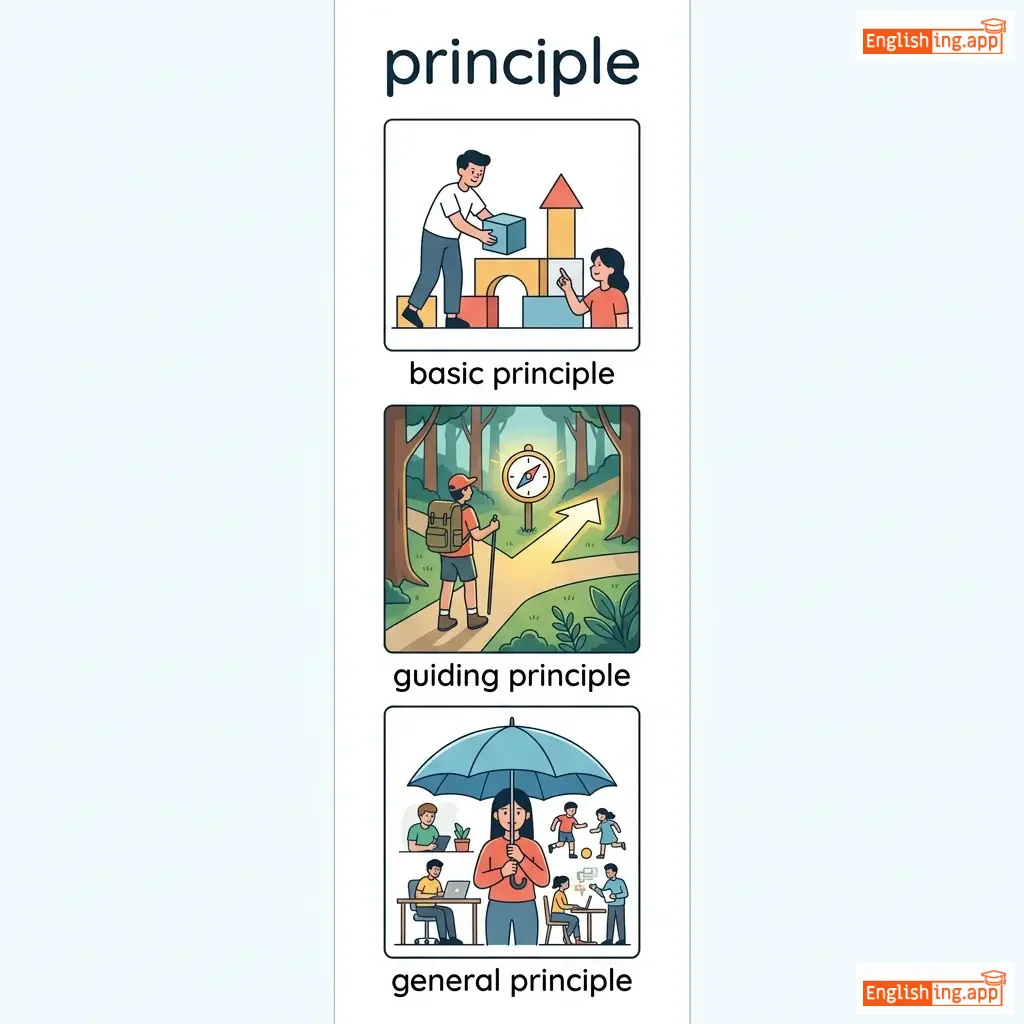
|
原则
yuánzé
••••••
|
- •••••• | - •••••• | - •••••• | - •••••• |
a fundamental truth, law, or rule that serves as the foundation for a system of belief or behavior
••••••
|
She refused to lie because it was against her principles. |
她拒绝撒谎,因为这违背了她的原则。
Tā jùjué sāhuǎng, yīnwèi zhè wéibèi le tā de yuánzé.
••••••
|
in principle |
as a general idea or rule, even if not applied in practice
••••••
|
原则上
yuánzé shàng
••••••
|
rule, law, tenet, belief, doctrine
••••••
|
exception, anomaly
••••••
|
basic principle, guiding principle, general principle, moral principle
••••••
|
原则意味着基础—'纪律原则'意味着学校的纪律规则
••••••
|
|
🖨️
••••••
|
/prɪnt/
verb
(print)
••••••
|
- •••••• |
打印
dayin
••••••
|
printed
printed
••••••
|
printed
printed
••••••
|
prints
prints
••••••
|
printing
printing
••••••
|
to produce text or images on paper or other materials using a machine
••••••
|
He will print the report tomorrow morning.
他明天早上将打印报告。
••••••
|
他明天早上将打印报告。
Ta mingtian zaoshang jiang dayin baogao.
••••••
|
- •••••• | - •••••• | - •••••• |
publish, produce, reproduce, copy
••••••
|
erase, delete
••••••
|
print out, print on, digital print, print press
••••••
|
Print starts with the 'P' of Paper.
••••••
|
|
🖨️
••••••
|
/ˈprɪn.tər/
noun
(打印机)
••••••
|
- •••••• |
打印机
dǎ yìn jī
••••••
|
- •••••• | - •••••• | - •••••• | - •••••• |
a person whose job is printing books, newspapers, or other materials; a machine that prints documents
••••••
|
The printer delivered the wedding invitations on time.
打印机准时交付了婚礼请柬。
••••••
|
打印机准时交付了婚礼请柬。
Dǎ yìn jī zhǔnshí jiāofù le hūnlǐ qǐngjiǎn.
••••••
|
- •••••• | - •••••• | - •••••• |
typographer, publisher, printing operator
••••••
|
reader, consumer
••••••
|
commercial printer, local printer, digital printer, offset printer
••••••
|
Dǎ yìn jī is printer in Chinese, sounds like 'print machine'.
••••••
|
|
⏪
••••••
|
/ˈpraɪ.ər/
adjective
(普赖尔)
••••••
|
- •••••• |
先前的
pulai er
••••••
|
- •••••• | - •••••• | - •••••• | - •••••• |
existing or coming before in time; previous; earlier
••••••
|
You need prior approval before making any changes to the system.
在对系统进行任何修改之前,你需要事先获得批准。
••••••
|
在对系统进行任何修改之前,你需要事先获得批准。
zai dui xi tong jin xing ren he xi gai zhi qian ni xu yao shi xian huo de pi zhi
••••••
|
- •••••• | - •••••• |
事先批准
shi xian pizhun
••••••
|
previous, earlier, former, preceding
••••••
|
subsequent, later, following, after
••••••
|
prior approval, prior experience, prior knowledge, prior notice
••••••
|
Prior = 先前的 in time, 想象 calendar 上写着 PRIOR 的日期, 先前 的 meaning 就是 before
••••••
|

