|
絵文字
|
単語 | Images | 翻訳 | 過去 | 過去分詞 | 三人称単数 | 動名詞 | 意味 | 例文 | 例文の翻訳 | 表現例 | 表現例の意味 | 表現例の翻訳 | 同義語 | 対義語 | コロケーション | ニーモニック |
|---|---|---|---|---|---|---|---|---|---|---|---|---|---|---|---|---|---|
|
👏
••••••
|
/ɪmˈpres.ɪv/
adjective
(インプレッシブ)
••••••
|
- •••••• |
印象的な
inpuresshibu
••••••
|
- •••••• | - •••••• | - •••••• | - •••••• |
striking; remarkable; having the ability to impress
••••••
|
Her impressive performance earned her a standing ovation.
彼女の印象的な演技はスタンディングオベーションを受けた。
••••••
|
彼女の印象的な演技はスタンディングオベーションを受けた。
Kanojo no inshoutekina engi wa sutandingu obeshon o uketa.
••••••
|
- •••••• | - •••••• | - •••••• |
remarkable, striking, outstanding, magnificent
••••••
|
unimpressive, ordinary, mediocre, disappointing
••••••
|
impressive performance, impressive results, impressive achievement
••••••
|
Impressive = insho teki na SHOW, remember that 印象 is inshou (impression) and teki na adds the -ive feel; a SHOW that leaves a strong impression makes everyone say wow
••••••
|
|
🔒
••••••
|
/ɪmˈprɪzən/
verb
(インプリズン)
••••••
|
|
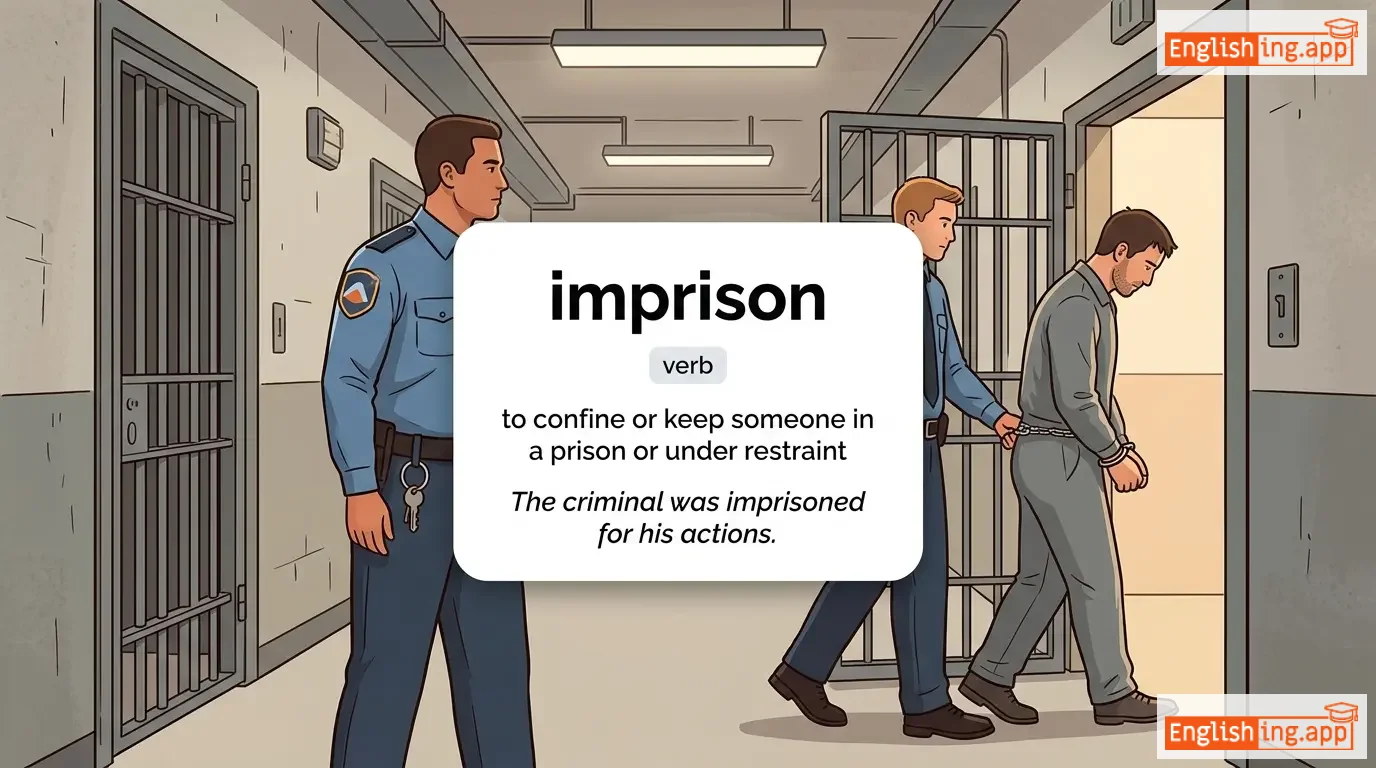
投獄する
tōgoku suru
••••••
|
imprisoned
インプリズンド
••••••
|
imprisoned
インプリズンド
••••••
|
imprisons
インプリズンズ
••••••
|
imprisoning
インプリズニング
••••••
|
to put someone in prison; to confine or restrict someone's freedom
••••••
|
The judge imprisoned the criminal for five years.
裁判官は犯罪者を5年間投獄しました。
••••••
|
裁判官は犯罪者を5年間投獄しました。
Saibankan wa hanzai-sha o go-nenkan tōgoku shimashita.
••••••
|
- •••••• | - •••••• | - •••••• |
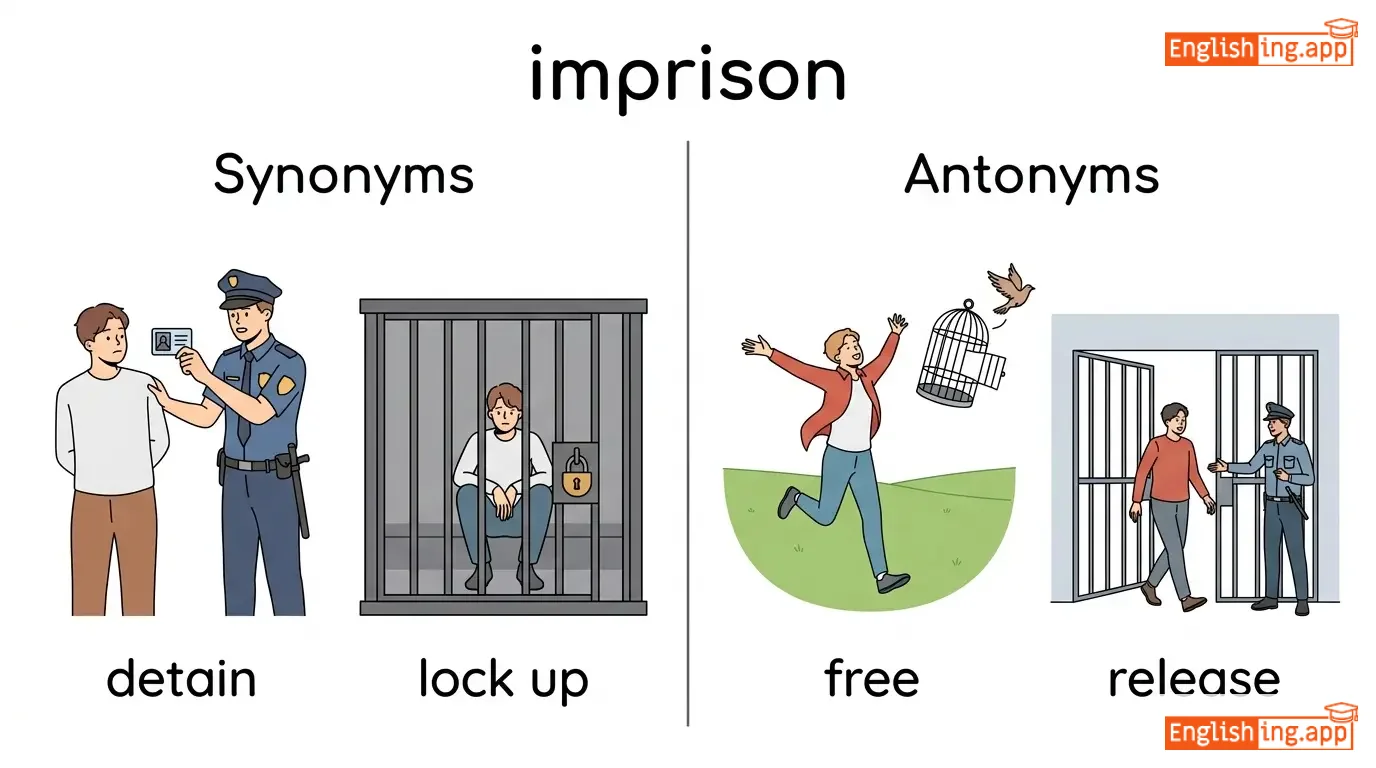
jail, incarcerate, confine, detain
••••••
|
free, release, liberate, discharge
••••••
|
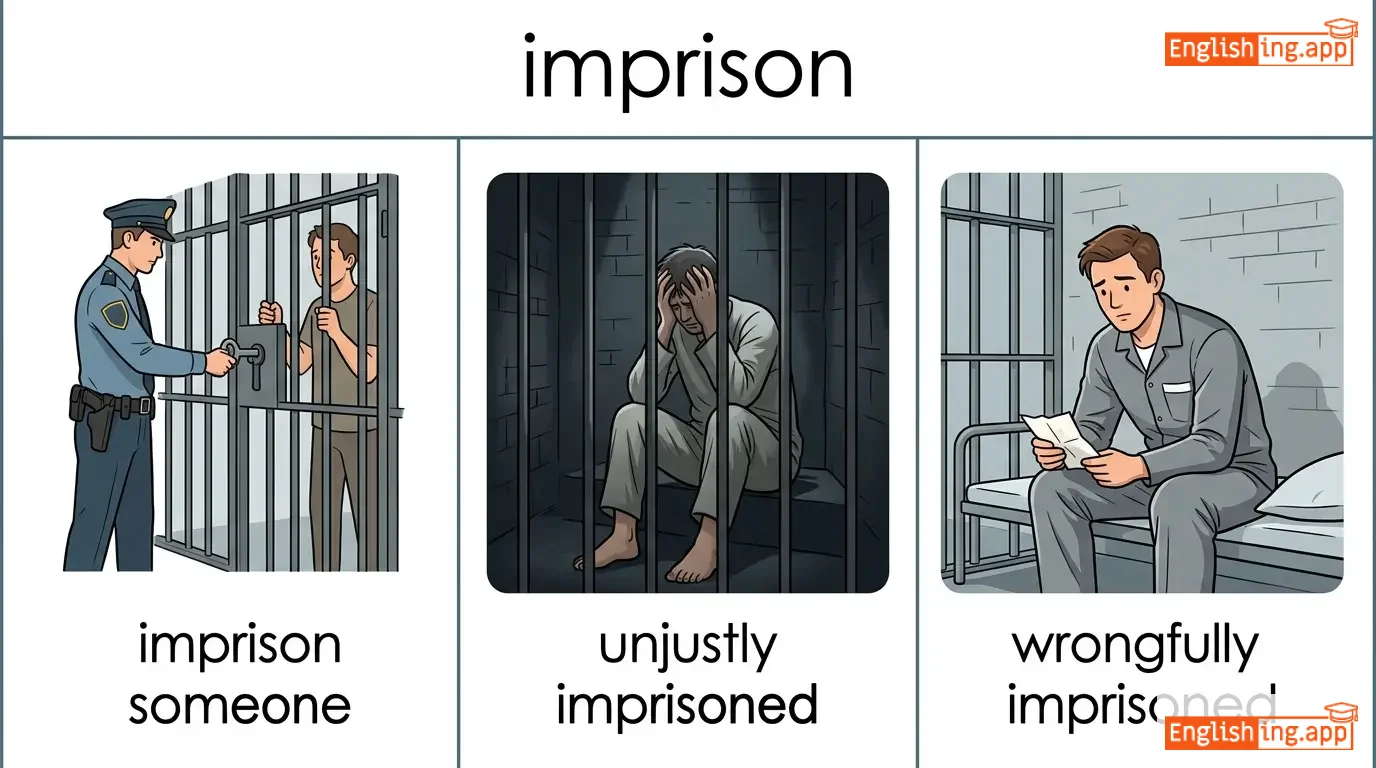
imprison someone, falsely imprison, imprison for life, maximum security prison
••••••
|
No •••••• |
|
🔒
••••••
|
/ɪmˈprɪzənmənt/
noun
(インプリズンメント)
••••••
|
- •••••• |
投獄
tougoku
••••••
|
- •••••• | - •••••• | - •••••• | - •••••• |
the act of putting someone in prison; the state of being confined as punishment
••••••
|
He faced imprisonment for violating the court order.
ヒー フェイスト インプリズンメント フォー バイオレイティング ザ コート オーダー。
••••••
|
彼は裁判所の命令に違反して投獄に直面した。
Kare wa saibansho no meirei ni ihan shite tougoku ni chokumen shita
••••••
|
- •••••• | - •••••• | - •••••• |
incarceration, confinement, detention, custody, captivity
••••••
|
freedom, release, liberty
••••••
|
term of imprisonment, life imprisonment, imprisonment sentence, face imprisonment
••••••
|
牢獄に入る=投獄=imprisonment
••••••
|
|
❌
••••••
|
/ɪmˈprɒp.ər/
adjective
(improper)
••••••
|
- •••••• |
不適切な; 不正確な; 不適当な
futekisetsuna; fuseikakuna; futekitōna
••••••
|
- •••••• | - •••••• | - •••••• | - •••••• |
inappropriate; incorrect; not suitable
••••••
|
It would be improper to discuss personal matters in a business meeting. |
ビジネス会議で個人的な事柄を議論するのは不適切です。
Bijinesu kaigi de kojinteki na koto o giron suru no wa futekisetsu desu.
••••••
|
- •••••• | - •••••• | - •••••• |
inappropriate, incorrect, unsuitable, wrong
••••••
|
proper, appropriate, correct, suitable
••••••
|
improper conduct, improper behavior, improper use
••••••
|
不適切なをimproper、ビジネスの場で避けるべき行動
••••••
|
|
📈
••••••
|
/ɪmˈpruːv/
verb
(インプルーヴ)
••••••
|
- •••••• |
改善する
kaizen suru
••••••
|
improved
インプルーブド
••••••
|
improved
インプルーブド
••••••
|
improves
インプルーヴス
••••••
|
improving
インプルーヴィング
••••••
|
to make something better or become better
••••••
|
Regular practice will improve your skills.
定期的な練習はあなたのスキルを向上させるでしょう。
••••••
|
定期的な練習はあなたのスキルを向上させるでしょう。
teikiteki na renshū wa anata no sukiru o kōjō saseru deshō.
••••••
|
room for improvement
改善の余地
••••••
|
a possibility or need for something to be made better
••••••
|
改善の余地
kaizen no yochi
••••••
|
enhance, develop, refine, upgrade, boost
••••••
|
worsen, decline, degrade
••••••
|
improve performance, improve quality, improve skills, continuously improve
••••••
|
Improveは、良くするために使う
••••••
|
|
🔧
••••••
|
/ɪmˈpruːvmənt/
noun
(imprúvment)
••••••
|
- •••••• |
改善
kaizen
••••••
|
- •••••• | - •••••• | - •••••• | - •••••• |
the act of making something better
••••••
|
There has been a significant improvement in his health.
彼の健康には重要な改善がありました。
••••••
|
彼の健康には重要な改善がありました。
kare no kenko ni wa jūyō na kaizen ga arimashita.
••••••
|
continuous improvement
継続的な改善
••••••
|
the ongoing effort to make things better
••••••
|
継続的な改善
keizokuteki na kaizen
••••••
|
progress, enhancement, advancement, growth, development
••••••
|
decline, deterioration, regression
••••••
|
health improvement, significant improvement, gradual improvement, scope for improvement
••••••
|
Improvement は改善です – 改善は improvement です
••••••
|
|
💧
••••••
|
/ɪmˈpjʊər/
adjective
(インピュア)
••••••
|
- •••••• |
不純
fujun
••••••
|
- •••••• | - •••••• | - •••••• | - •••••• |
contaminated; not clean; mixed with foreign substances
••••••
|
The impure water caused health problems in the village. |
不純な水は村で健康問題を引き起こしました。
Fujunna mizu wa mura de kenkou mondai o hikiokoshimashita.
••••••
|
- •••••• | - •••••• | - •••••• |
contaminated, polluted, dirty, tainted
••••••
|
pure, clean, uncontaminated, pristine
••••••
|
impure water, impure substances, impure thoughts
••••••
|
不純な水のように、汚れたものからは健康も失われる。
••••••
|
|
🧪
••••••
|
/ɪmˈpjʊərəti/
noun
(インピュアリティ)
••••••
|
- •••••• |
不純物
fujunbutsu
••••••
|
- •••••• | - •••••• | - •••••• | - •••••• |
the state of being unclean or contaminated; a substance that makes something impure
••••••
|
The scientist removed every impurity from the water sample.
ザ サイエンティスト リムーブド エブリー インピュアリティ フロム ザ ウォーター サンプル。
••••••
|
科学者は水のサンプルからすべての不純物を取り除いた。
kagakusha wa mizu no sanpuru kara subete no fujunbutsu o torinoita
••••••
|
impurity level
インピュアリティ レベル
••••••
|
the amount of unwanted or harmful substances present
••••••
|
不純物レベル
fujunbutsu reberu
••••••
|
contamination, pollution, taint, adulteration, blemish
••••••
|
purity, cleanliness, refinement
••••••
|
chemical impurity, impurity level, trace impurity, remove impurity, impurity content
••••••
|
インピュア=pureじゃない→不純物
••••••
|
|
📍
••••••
|
/ɪn/
preposition
(イン)
••••••
|
- •••••• |
中
naka
••••••
|
- •••••• | - •••••• | - •••••• | - •••••• |
expressing the situation of being enclosed or surrounded by something
••••••
|
She is in the kitchen preparing dinner. |
彼女は台所で夕食を準備している。
Kanojo wa daidokoro de yuushoku o junbi shiteiru.
••••••
|
in trouble |
to be in a difficult or problematic situation
••••••
|
困っている
komatteiru
••••••
|
inside, within, enclosed, into, surrounded
••••••
|
out, outside
••••••
|
in fact, in time, in charge, in need
••••••
|
中は内部という意味、'中の家'は家の中を意味します。
••••••
|
|
🚫
••••••
|
/ˌɪnəˈbɪləti/
noun
(イナビリティ)
••••••
|
- •••••• |
無能
munou
••••••
|
- •••••• | - •••••• | - •••••• | - •••••• |
the state of being unable to do something
••••••
|
His inability to make decisions affected his career. |
彼の意思決定の無能さは彼のキャリアに影響を与えた。
Kare no ishi kettei no munousa wa kare no kyaria ni eikyou wo ataeta.
••••••
|
- •••••• | - •••••• | - •••••• |
incapacity, weakness, inability, powerlessness
••••••
|
ability, strength
••••••
|
physical inability, inability to act, inability to speak
••••••
|
Inability sounds like 'I’m not able' - Can’t do it.
••••••
|
|
❌
••••••
|
/ɪnˈækjʊrəsi/
noun
(インアキュラシー)
••••••
|
- •••••• |
不正確さ
fuseikakusa
••••••
|
- •••••• | - •••••• | - •••••• | - •••••• |
lack of accuracy or precision; an incorrect or wrong detail
••••••
|
The report contained several factual inaccuracies.
ザ・リポート・コンテインド・セヴェラル・インアキュラシーズ。
••••••
|
その報告書にはいくつかの不正確さがあった。
sono houkokusho niwa ikutsuka no fuseikakusa ga atta
••••••
|
- •••••• | - •••••• | - •••••• |
error, imprecision, mistake, incorrectness, fault
••••••
|
accuracy, precision, correctness
••••••
|
factual inaccuracy, minor inaccuracy, data inaccuracy, measurement inaccuracy
••••••
|
正確じゃない=不正確さ=inaccuracy
••••••
|
|
❌
••••••
|
/ɪnˈækjʊrət/
adjective
(inakyuret)
••••••
|
- •••••• |
不正確
fuseikaku
••••••
|
- •••••• | - •••••• | - •••••• | - •••••• |
Not correct, precise, or exact; containing errors.
••••••
|
The report was full of inaccurate data.
レポートは不正確なデータでいっぱいだった。
••••••
|
レポートは不正確なデータでいっぱいだった。
Repōto wa fuseikaku na dēta de ippai datta.
••••••
|
inaccurate statement
不正確な声明
••••••
|
A statement that contains errors or is not correct.
••••••
|
不正確な声明
Fuseikaku na seimei
••••••
|
incorrect, false, erroneous, imprecise, faulty
••••••
|
accurate, correct, precise
••••••
|
inaccurate report, inaccurate figures, inaccurate description, highly inaccurate
••••••
|
In + Accurate は日本語で不正確
••••••
|
|
🛑
••••••
|
/ɪnˈæktɪv/
adjective
(インアクティブ)
••••••
|
- •••••• |
非アクティブ
hi akuteibu
••••••
|
- •••••• | - •••••• | - •••••• | - •••••• |
Not engaging in activity; not active.
••••••
|
The account has been inactive for six months. |
アカウントは6ヶ月間非アクティブです。
Akaunto wa roku kagetsu kan hi akuteibu desu.
••••••
|
inactive lifestyle |
A way of living with little or no physical activity.
••••••
|
非アクティブなライフスタイル
hi akuteibu na raifusutairu
••••••
|
dormant, idle, passive, sluggish, stagnant
••••••
|
active, energetic, lively
••••••
|
inactive account, inactive period, inactive member, inactive role
••••••
|
In + Active = 非アクティブ → 非アクティブ
••••••
|
|
🛑
••••••
|
/ˌɪnækˈtɪvɪti/
noun
(イナクティビティ)
••••••
|
- •••••• |
不活動
fukatsudo
••••••
|
- •••••• | - •••••• | - •••••• | - •••••• |
the state of not being active physically or mentally; lack of action
••••••
|
Prolonged inactivity can negatively affect both physical and mental health.
プロロングド イナクティビティ は フィジカル と メンタル ヘルス に えいきょう します。
••••••
|
長期間の不活動は身体的および精神的健康に悪影響を与えます。
chokikan no fukatsudo wa shintaiteki oyobi seishinteki kenkou ni akueikyou o ataemasu
••••••
|
- •••••• | - •••••• | - •••••• |
idleness, passivity, dormancy, stagnation, inertia
••••••
|
activity, movement, action
••••••
|
prolonged inactivity, physical inactivity, period of inactivity, economic inactivity
••••••
|
イナクティブ=activeじゃない→不活動と覚える
••••••
|
|
😔
••••••
|
/ɪnˈædɪkwəsi/
noun
(イナデクワシー)
••••••
|
- •••••• |
不十分さ
fujubunsa
••••••
|
- •••••• | - •••••• | - •••••• | - •••••• |
lack of sufficient ability, quality, or strength; a feeling of not being good enough
••••••
|
She struggled with feelings of inadequacy at work despite her strong qualifications.
シー ストラグルド ウィズ フィーリングズ オブ イナデクワシー アット ワーク ディスパイト ハー ストロング クオリフィケーションズ。
••••••
|
十分な資格があるにもかかわらず、彼女は職場で不十分さを感じていた。
Juubun na shikaku ga aru ni mo kakawarazu, kanojo wa shokuba de fujubunsa o kanjite ita
••••••
|
- •••••• | - •••••• | - •••••• |
insufficiency, deficiency, incompetence, weakness, inadequateness
••••••
|
adequacy, sufficiency, competence
••••••
|
feelings of inadequacy, sense of inadequacy, emotional inadequacy, professional inadequacy
••••••
|
Inadequacy=不十分さ、adequate(十分)じゃない状態。
••••••
|
|
⚠️
••••••
|
/ɪnˈædɪkwət/
adjective
(イナデクウェイト)
••••••
|
- •••••• |
不十分
fujūbun
••••••
|
- •••••• | - •••••• | - •••••• | - •••••• |
Not sufficient or good enough.
••••••
|
The funding was inadequate to complete the project. |
プロジェクトを完成させるには資金が不十分でした。
Purojekuto o kansei saseru ni wa shikin ga fujūbun deshita.
••••••
|
inadequate resources |
Not enough resources to meet requirements.
••••••
|
不十分なリソース
fujūbun na risōsu
••••••
|
insufficient, deficient, lacking, meager, incomplete
••••••
|
adequate, sufficient, enough
••••••
|
inadequate funding, inadequate resources, inadequate support, inadequate system
••••••
|
Adequateは十分を意味します。したがってInadequate = 十分ではない → 不十分
••••••
|
|
🚫
••••••
|
/ˌɪnəˈproʊpriət/
adjective
(イナプロプリエイト)
••••••
|
- •••••• |
不適切
futekisetsu
••••••
|
- •••••• | - •••••• | - •••••• | - •••••• |
not suitable or proper in the circumstances
••••••
|
It was inappropriate to talk loudly in the library. |
図書館で大声で話すのは不適切でした。
Toshokan de oogoe de hanasu no wa futekisetsu deshita.
••••••
|
- •••••• | - •••••• | - •••••• |
unsuitable, improper, unfit, offensive
••••••
|
appropriate, suitable
••••••
|
inappropriate behavior, inappropriate dress, inappropriate comment
••••••
|
Inappropriateは「In a place proper isn't」- それをしてはいけません。
••••••
|
|
😕
••••••
|
/ˌɪnəˈtɛntɪv/
adjective
(イナテンティブ)
••••••
|
- •••••• |
不注意な
fuchuui na
••••••
|
- •••••• | - •••••• | - •••••• | - •••••• |
not paying attention; lacking focus or concentration
••••••
|
The inattentive student missed several important instructions.
ジ イナテンティブ スチューデント ミスト セヴェラル インポータント インストラクションズ。
••••••
|
不注意な学生は重要な指示をいくつも逃した。
fuchuui na gakusei wa juuyou na shiji o ikutsumo nogashita
••••••
|
- •••••• | - •••••• | - •••••• |
careless, distracted, heedless, absent-minded, unobservant
••••••
|
attentive, alert, focused
••••••
|
inattentive student, inattentive behavior, inattentive driving, inattentive listening
••••••
|
Inattentive=注意ない→不注意な。
••••••
|
|
🚫
••••••
|
/ˌɪnˌkeɪpəˈbɪləti/
noun
(インケイパビリティ)
••••••
|
- •••••• |
無能力
munouryoku
••••••
|
- •••••• | - •••••• | - •••••• | - •••••• |
lack of ability or power to do something; inability or incompetence
••••••
|
His incapability to manage the team led to serious problems.
ヒズ インケイパビリティ トゥ マネージ ザ チーム レッド トゥ シリアス プロブレムズ。
••••••
|
チームを管理する彼の無能力は深刻な問題を引き起こした。
chiimu o kanri suru kare no munouryoku wa shinkoku na mondai o hikiokoshita
••••••
|
- •••••• | - •••••• | - •••••• |
inability, incompetence, incapacity, weakness, inadequacy
••••••
|
ability, capability, competence
••••••
|
mental incapability, physical incapability, show incapability, incapability to perform
••••••
|
無能力(むのうりょく)は incapability—能力がないと覚えよう。
••••••
|
|
🚫
••••••
|
/ɪnˈkeɪpəbəl/
adjective
(インケイパブル)
••••••
|
- •••••• |
無能力な
munouryoku na
••••••
|
- •••••• | - •••••• | - •••••• | - •••••• |
lacking the ability, skill, or capacity to do something
••••••
|
He is incapable of understanding complex instructions.
ヒー イズ インケイパブル オブ アンダースタンディング コンプレックス インストラクションズ。
••••••
|
彼は複雑な指示を理解できない。
kare wa fukuzatsu na shiji o rikai dekinai
••••••
|
incapable of
incapable of
••••••
|
not having the ability to do something
••••••
|
〜することができない
suru koto ga dekinai
••••••
|
unable, incompetent, powerless, unfit, inept
••••••
|
capable, able, competent
••••••
|
incapable of doing, mentally incapable, physically incapable, proven incapable
••••••
|
インケイパブル = in + ケイパブル ではない
••••••
|
|
🚫
••••••
|
/ˌɪnkəˈpæsəti/
noun
(インカパシティ)
••••••
|
- •••••• |
無能力
munōryoku
••••••
|
- •••••• | - •••••• | - •••••• | - •••••• |
the lack of ability, power, or fitness to do something
••••••
|
His mental incapacity prevented him from making important decisions.
ヒズ メンタル インカパシティ プリベントゥッド ヒム フロム メイキング インポータント ディシジョンズ。
••••••
|
彼の精神的無能力は、重要な決定を下すのを妨げました。
Kare no seishinteki munōryoku wa, jūyōna kettei o kudasu no o samatagemashita.
••••••
|
- •••••• | - •••••• | - •••••• |
inability, incompetence, disability, weakness
••••••
|
ability, competence, capability
••••••
|
legal incapacity, physical incapacity, mental incapacity, incapacity to work
••••••
|
In + 能力なし = 無能力 (無能力)
••••••
|
|
🎁
••••••
|
/ɪnˈsɛntɪv/
noun
(インセンティブ)
••••••
|
- •••••• |
インセンティブ
insentibu
••••••
|
- •••••• | - •••••• | - •••••• | - •••••• |
a thing that motivates or encourages someone to do something
••••••
|
The company offers bonuses as an incentive to increase productivity. |
会社は生産性向上のためのインセンティブとしてボーナスを提供します。
Kaisha wa seisansei kōjō no tame no insentibu toshite bōnasu o teikyō shimasu.
••••••
|
carrot and stick |
a method involving both rewards and punishments to induce behavior
••••••
|
ニンジンと棒
ninjin to bō
••••••
|
motivation, encouragement, inducement, stimulus, reward
••••••
|
discouragement, deterrent
••••••
|
provide incentive, financial incentive, incentive program, strong incentive
••••••
|
Incentive: 良い仕事にはインセンティブ!
••••••
|
|
📊
••••••
|
/ˈɪnsɪdəns/
noun
(インシデンス)
••••••
|
- •••••• |
発生率
hatsuseiritsu
••••••
|
- •••••• | - •••••• | - •••••• | - •••••• |
the occurrence, rate, or frequency of something
••••••
|
The incidence of road accidents has decreased this year. |
今年の道路事故の発生率は減少しました。
Kotoshi no dōro jiko no hasseiritsu wa genshō shimashita.
••••••
|
- •••••• | - •••••• | - •••••• |
occurrence, frequency, rate, prevalence, proportion
••••••
|
absence, scarcity, rarity
••••••
|
incidence of disease, high incidence, incidence rate, incidence angle
••••••
|
インシデンスは事故や出来事の発生率を指します。
••••••
|
|
🚨
••••••
|
/ˈɪnsɪdənt/
noun
(インシデント)
••••••
|
- •••••• |
インシデント
insidento
••••••
|
- •••••• | - •••••• | - •••••• | - •••••• |
an event or occurrence, often unpleasant or unusual
••••••
|
The police quickly responded to the incident in the park. |
警察は公園でのインシデントに迅速に対応しました。
Keisatsu wa kōen de no insidento ni jinsoku ni taiou shimashita.
••••••
|
isolated incident |
a single event, not part of a pattern
••••••
|
孤立したインシデント
koritsu shita insidento
••••••
|
event, occurrence, happening, episode, affair
••••••
|
routine, normality, usual
••••••
|
serious incident, minor incident, security incident, violent incident
••••••
|
インシデントは予期しない出来事を意味します。
••••••
|
|
🙂
••••••
|
/ɪnˈklaɪnd/
adjective
(インクラインド)
••••••
|
- •••••• |
傾向がある
keikou ga aru
••••••
|
- •••••• | - •••••• | - •••••• | - •••••• |
having a tendency or disposition toward something
••••••
|
He is inclined to help those in need. |
彼は困っている人々を助ける傾向がある。
Kare wa komatteiru hitobito wo tasukeru keikou ga aru.
••••••
|
be inclined to |
to have a tendency to do something
••••••
|
~する傾向がある
~suru keikou ga aru
••••••
|
prone, disposed, willing, tending
••••••
|
unwilling, disinclined, resistant
••••••
|
inclined to help, inclined to agree, inclined to believe
••••••
|
傾向があるの意味は傾くこと – もし何かに傾いているなら、傾向がある。
••••••
|
|
➕
••••••
|
/ɪnˈkluːd/
verb
(inkuruudo)
••••••
|

|
含める
kumeru
••••••
|
included
inkurūdo
••••••
|
included
inkurūdo
••••••
|
includes
inkurūdo
••••••
|
including
inkurūdo
••••••
|
to make something part of a whole or group
••••••
|
The package includes free breakfast.
パッケージには無料の朝食が含まれています。
••••••
|
パッケージには無料の朝食が含まれています。
Pakkēji ni wa muryō no chōshoku ga fukuma reteimasu.
••••••
|
include in
インクルード イン
••••••
|
to add as a part of something
••••••
|
インクルード イン
inkurūdo in
••••••
|
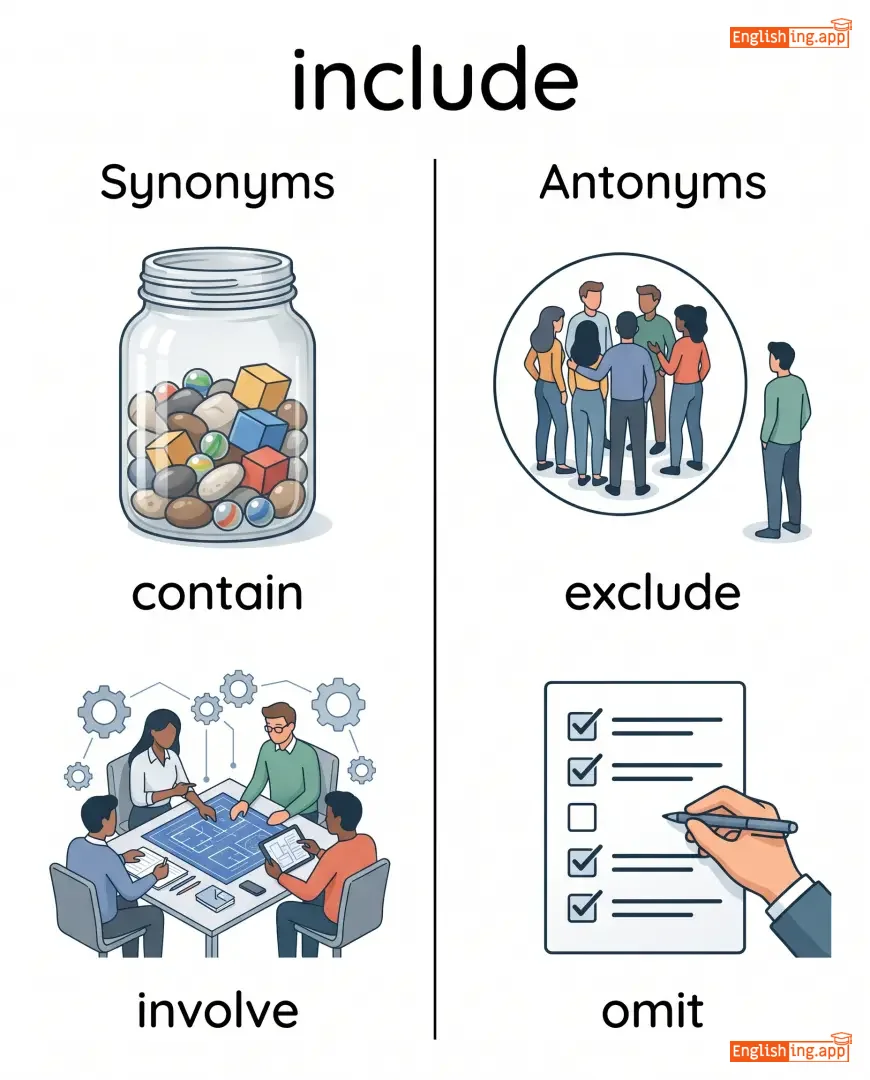
contain, involve, comprise, encompass, cover
••••••
|
exclude, omit
••••••
|
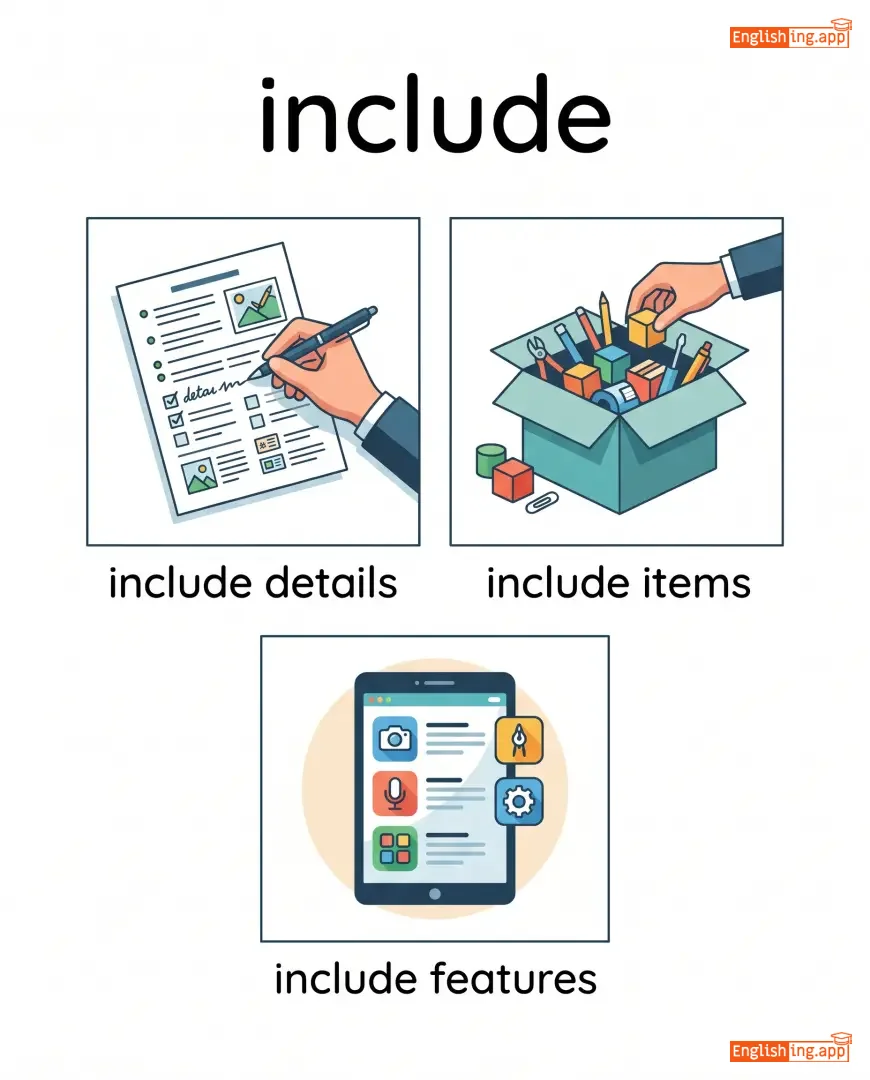
include details, include items, include features
••••••
|
含めるは追加すること、例えばクラスリストに名前を含める
••••••
|
|
📋
••••••
|
/ɪnˈkluːdɪŋ/
preposition
(インクルーディング)
••••••
|
- •••••• |
含む
fukumu
••••••
|
- •••••• | - •••••• | - •••••• | - •••••• |
used to show that someone or something is part of a larger group
••••••
|
Many people attended the event, including students and teachers.
多くの人々がイベントに参加しました、学生や教師を含む。
••••••
|
多くの人々がイベントに参加しました、学生や教師を含む。
Ōku no hitobito ga ibento ni sanka shimashita, gakusei ya kyōshi o fukumu.
••••••
|
- •••••• | - •••••• | - •••••• |
such as, along with, together with, counting
••••••
|
excluding, except
••••••
|
including taxes, including costs, including examples
••••••
|
Including は含むの意味、例えば料理にご飯と野菜を含む。
••••••
|
|
🌍
••••••
|
/ɪnˈkluːʒən/
noun
(インクルージョン)
••••••
|
- •••••• |
インクルージョン
inkurūjon
••••••
|
- •••••• | - •••••• | - •••••• | - •••••• |
the action or state of including or being included within a group or structure
••••••
|
Diversity and inclusion are key values in modern workplaces. |
多様性とインクルージョンは現代の職場における重要な価値観です。
Tayōsei to inkurūjon wa gendai no shokuba ni okeru jūyōna kachikan desu.
••••••
|
- •••••• | - •••••• | - •••••• |
integration, acceptance, involvement, participation
••••••
|
exclusion, isolation
••••••
|
social inclusion, cultural inclusion, inclusive society
••••••
|
Inclusion sounds like 'In close' – みんなが含まれて一緒に近づいていると想像してみて!
••••••
|
|
😵
••••••
|
/ˌɪnkoʊˈhɪrəns/
noun
(インコヒーレンス)
••••••
|
- •••••• |
不整合
fuseigou
••••••
|
- •••••• | - •••••• | - •••••• | - •••••• |
The quality of being unclear, confused, or lacking logical connection.
••••••
|
His speech was full of incoherence and difficult to follow. |
彼のスピーチは不整合で、理解するのが難しかった。
Kare no supīchi wa fuseigō de, rikai suru no ga muzukashikatta.
••••••
|
- •••••• | - •••••• | - •••••• |
confusion, disorder, disarray, unintelligibility
••••••
|
clarity, coherence
••••••
|
incoherence of speech, incoherence in argument, display incoherence
••••••
|
整合性は論理を意味し、不整合は論理の欠如を意味します。
••••••
|
|
🤯
••••••
|
/ˌɪnkəʊˈhɪərənt/
adjective
(インコヒーレント)
••••••
|
- •••••• |
一貫性のない
ikkansē no nai
••••••
|
- •••••• | - •••••• | - •••••• | - •••••• |
Not clear or easy to understand; lacking logical connection.
••••••
|
His explanation was so incoherent that nobody could follow it. |
彼の説明はあまりにも一貫性がなく、誰もそれを追うことができませんでした。
Kare no setsumei wa amarini mo ikkansē ga naku, dare mo sore o ou koto ga dekimasen deshita.
••••••
|
- •••••• | - •••••• | - •••••• |
unclear, confused, unintelligible, garbled, disjointed
••••••
|
clear, coherent, articulate
••••••
|
incoherent speech, incoherent thoughts, incoherent argument
••••••
|
一貫性のない - 一貫性がないから説明が無理だ。
••••••
|
|
💰
••••••
|
/ˈɪnkʌm/
noun
(inkamu)
••••••
|
- •••••• |
収入
shūnyū
••••••
|
- •••••• | - •••••• | - •••••• | - •••••• |
money received for work or through investments
••••••
|
His monthly income is enough to support his family. |
彼の月収は家族を支えるのに十分です。
Kare no gekkyū wa kazoku o sasaeru no ni jūbun desu.
••••••
|
fixed income |
a regular and steady amount of income
••••••
|
固定収入
kotei shūnyū
••••••
|
earnings, revenue, salary, wages, profit
••••••
|
expense, loss
••••••
|
income tax, income level, income growth
••••••
|
In+Come — 収入が安定して入ってくる
••••••
|
|
🌟
••••••
|
/ɪnˈkɒmp(ə)rəbl/
adjective
(インコンパラブル)
••••••
|
- •••••• |
比類のない
hirui no nai
••••••
|
- •••••• | - •••••• | - •••••• | - •••••• |
Without an equal in quality or excellence; matchless.
••••••
|
The view from the mountain was incomparable. |
山からの景色は比類のないものでした。
Yama kara no keshiki wa hirui no nai mono deshita.
••••••
|
- •••••• | - •••••• | - •••••• |
matchless, unrivaled, peerless, unique
••••••
|
ordinary, average, comparable
••••••
|
incomparable beauty, incomparable skill, incomparable talent
••••••
|
Incomparableは日本語で比類のない
••••••
|
|
⚠️
••••••
|
/ˌɪnkəmˌpætəˈbɪlɪti/
noun
(インコンパティビリティ)
••••••
|
- •••••• |
非互換性
hi gokan sei
••••••
|
- •••••• | - •••••• | - •••••• | - •••••• |
the state of being unable to exist or work together harmoniously; lack of compatibility
••••••
|
The project failed because of incompatibility between the two software systems.
ザ プロジェクト フェイルド ビコーズ オブ インコンパティビリティ ビトウィーン ザ トゥ ソフトウェア システムズ。
••••••
|
2つのソフトウェアシステムの非互換性のため、そのプロジェクトは失敗した。
futatsu no sofutouea shisutemu no hi gokan sei no tame sono purojekuto wa shippai shita
••••••
|
- •••••• | - •••••• | - •••••• |
conflict, mismatch, inconsistency, discord, incongruity
••••••
|
compatibility, harmony, congruence
••••••
|
personality incompatibility, software incompatibility, fundamental incompatibility, genetic incompatibility
••••••
|
非互換 = not compatible → incompatibility
••••••
|
|
⚡
••••••
|
/ˌɪnkəmˈpætəbl/
adjective
(インコンパティブル)
••••••
|
- •••••• |
互換性がない
gokan-sei ga nai
••••••
|
- •••••• | - •••••• | - •••••• | - •••••• |
Not able to exist or work together without conflict.
••••••
|
Their personalities were completely incompatible. |
彼らの性格は完全に互換性がなかった。
Karera no seikaku wa kanzen ni gokan-sei ga nakatta.
••••••
|
- •••••• | - •••••• | - •••••• |
conflicting, mismatched, unsuitable, inconsistent
••••••
|
compatible, harmonious, suitable
••••••
|
incompatible personalities, incompatible system, incompatible relationship
••••••
|
インコンパティブル - 互換性がない、つまり一緒に働けない
••••••
|
|
🧩
••••••
|
/ˌɪnkəmˈpliːt/
adjective
(インコンプリート)
••••••
|
- •••••• |
不完全
fukanzen
••••••
|
- •••••• | - •••••• | - •••••• | - •••••• |
Not finished, lacking some parts or not whole.
••••••
|
Her report was incomplete and needed further details.
彼女の報告は不完全で、詳細が必要でした。
••••••
|
彼女の報告は不完全で、詳細が必要でした。
Kanojo no hōkoku wa fukanzen de, shōsai ga hitsuyō deshita.
••••••
|
- •••••• | - •••••• | - •••••• |
unfinished, partial, imperfect, fragmentary
••••••
|
complete, finished, whole
••••••
|
incomplete work, incomplete report, remain incomplete, incomplete records
••••••
|
Incompleteは日本語で '不完全'、途中で終わっていないことです。
••••••
|
|
🧩
••••••
|
/ˌɪnkəmˈpliːtnəs/
noun
(インコンプリートネス)
••••••
|
- •••••• |
不完全さ
fukanzen sa
••••••
|
- •••••• | - •••••• | - •••••• | - •••••• |
the state of not being complete or whole; lack of necessary parts or fullness
••••••
|
The incompleteness of the report caused delays in the project.
レポートのインコンプリートネスがプロジェクトの遅れを引き起こした。
••••••
|
レポートの不完全さがプロジェクトの遅れを引き起こした。
repooto no fukanzen sa ga purojekuto no okure o hikiokoshita
••••••
|
- •••••• | - •••••• | - •••••• |
unfinishedness, partiality, deficiency, imperfection, inadequacy
••••••
|
completeness, wholeness, entirety
••••••
|
sense of incompleteness, feeling of incompleteness, structural incompleteness, data incompleteness
••••••
|
不完全さは incomplete、全部そろっていない
••••••
|
|
🔄
••••••
|
/ˌɪnkənˈsɪstənsi/
noun
(インコンシステンシー)
••••••
|
- •••••• |
不一致
fuitchi
••••••
|
- •••••• | - •••••• | - •••••• | - •••••• |
The quality of being contradictory, irregular, or not staying the same.
••••••
|
There is an inconsistency between his words and actions. |
彼の言葉と行動には不一致があります。
Kare no kotoba to kōdō ni wa fuitchi ga arimasu.
••••••
|
- •••••• | - •••••• | - •••••• |
discrepancy, contradiction, conflict, irregularity
••••••
|
consistency, uniformity, harmony
••••••
|
inconsistency in data, inconsistency between, glaring inconsistency
••••••
|
INcon = 不一致.
••••••
|
|
⚖️
••••••
|
/ˌɪnkənˈsɪstənt/
adjective
(インコンサステント)
••••••
|
- •••••• |
一貫性がない
ikkansē ga nai
••••••
|
- •••••• | - •••••• | - •••••• | - •••••• |
Not staying the same throughout; lacking harmony or regularity.
••••••
|
His answers were inconsistent and confusing.
彼の答えは一貫性がなく、混乱を招いた。
••••••
|
彼の答えは一貫性がなく、混乱を招いた。
Kare no kotae wa ikkansē ga naku, konran o manekita.
••••••
|
- •••••• | - •••••• | - •••••• |
irregular, contradictory, variable, unpredictable
••••••
|
consistent, stable, reliable
••••••
|
inconsistent behavior, inconsistent results, inconsistent with
••••••
|
inCONsistent = 一貫性がない
••••••
|
|
🌪️
••••••
|
/ɪnˈkɒnstənt/
adjective
(インコンスタント)
••••••
|
- •••••• |
不安定な
fuanteina
••••••
|
- •••••• | - •••••• | - •••••• | - •••••• |
frequently changing; not consistent or dependable
••••••
|
His inconstant moods made it difficult to work with him. |
彼の不安定な気分は彼と仕事をするのを難しくした。
Kare no fuantei na kibun wa kare to shigoto o suru no o muzukashiku shita.
••••••
|
- •••••• | - •••••• | - •••••• |
unsteady, fickle, variable, unstable, erratic
••••••
|
steady, consistent, reliable
••••••
|
inconstant behavior, inconstant love, inconstant nature
••••••
|
Inconstantはconstantではない—いつも変わる。
••••••
|
|
😕
••••••
|
/ˌɪnkənˈviːniəns/
noun, verb
(インコンビニエンス)
••••••
|
- •••••• |
不便
fuben
••••••
|
inconvenienced
インコンビニエンスド
••••••
|
inconvenienced
インコンビニエンスド
••••••
|
inconveniences
インコンビニエンスズ
••••••
|
inconveniencing
インコンビニエンシング
••••••
|
trouble or difficulty caused to someone; to cause trouble or difficulty to someone
••••••
|
We apologize for any inconvenience caused by the delay.
ウィ アポロジャイズ フォー エニー インコンビニエンス コーズド バイ ザ ディレイ
••••••
|
遅延によって生じた不便についてお詫びします。
chien ni yotte shoujita fuben ni tsuite owabi shimasu
••••••
|
sorry for the inconvenience
ソーリー フォー ザ インコンビニエンス
••••••
|
used to politely apologize for trouble caused
••••••
|
ご不便をおかけして申し訳ありません
gofuben o okake shite moushiwake arimasen
••••••
|
trouble, difficulty, hassle, nuisance, burden
••••••
|
convenience, ease, comfort
••••••
|
cause inconvenience, minor inconvenience, major inconvenience, inconvenience caused
••••••
|
Inconvenience = コンビニが無いと不便
••••••
|
|
🏢
••••••
|
/ɪnˈkɔːpəreɪt/
verb
(インコーポレート)
••••••
|
|
組み込む
kumikomu
••••••
|
incorporated
インコーポレイテッド
••••••
|
incorporated
インコーポレイテッド
••••••
|
incorporates
インコーポレイツ
••••••
|
incorporating
インコーポレイティング
••••••
|
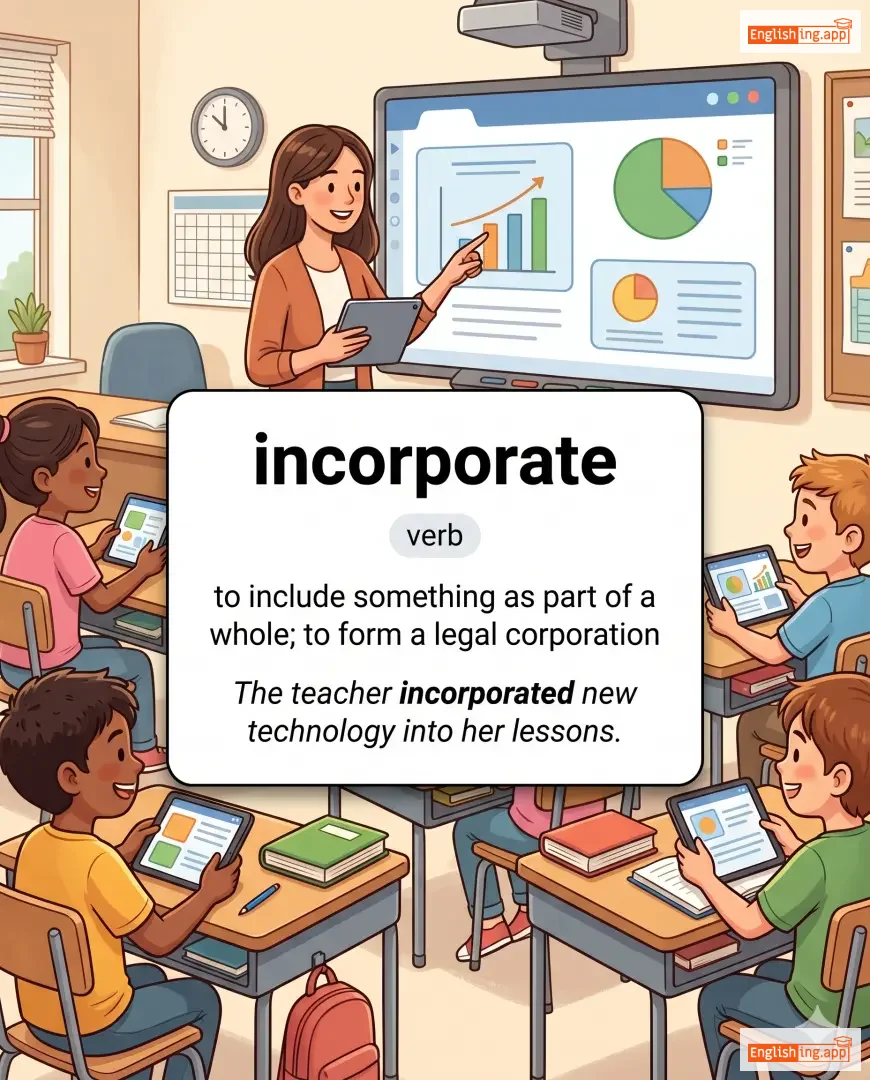
to include something as part of a whole; to form a legal corporation
••••••
|
The teacher incorporated new technology into her lessons.
先生は授業に新しい技術を取り入れました。
••••••
|
先生は授業に新しい技術を取り入れました。
Sensei wa jugyo ni atarashii gijutsu o toriiremashita.
••••••
|
incorporate into
取り入れる
••••••
|
to include something as part of a larger thing
••••••
|
取り入れる
toriireru
••••••
|
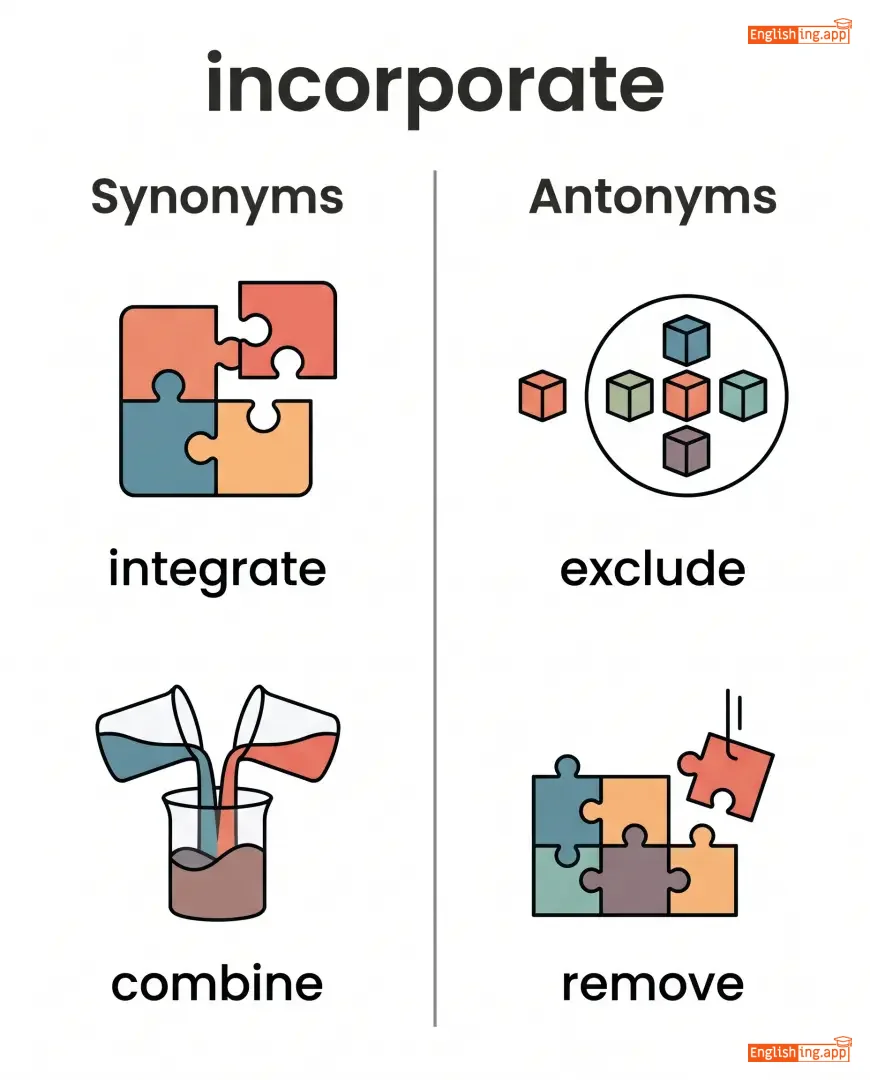
integrate, combine, include, merge, embody
••••••
|
exclude, remove, separate
••••••
|
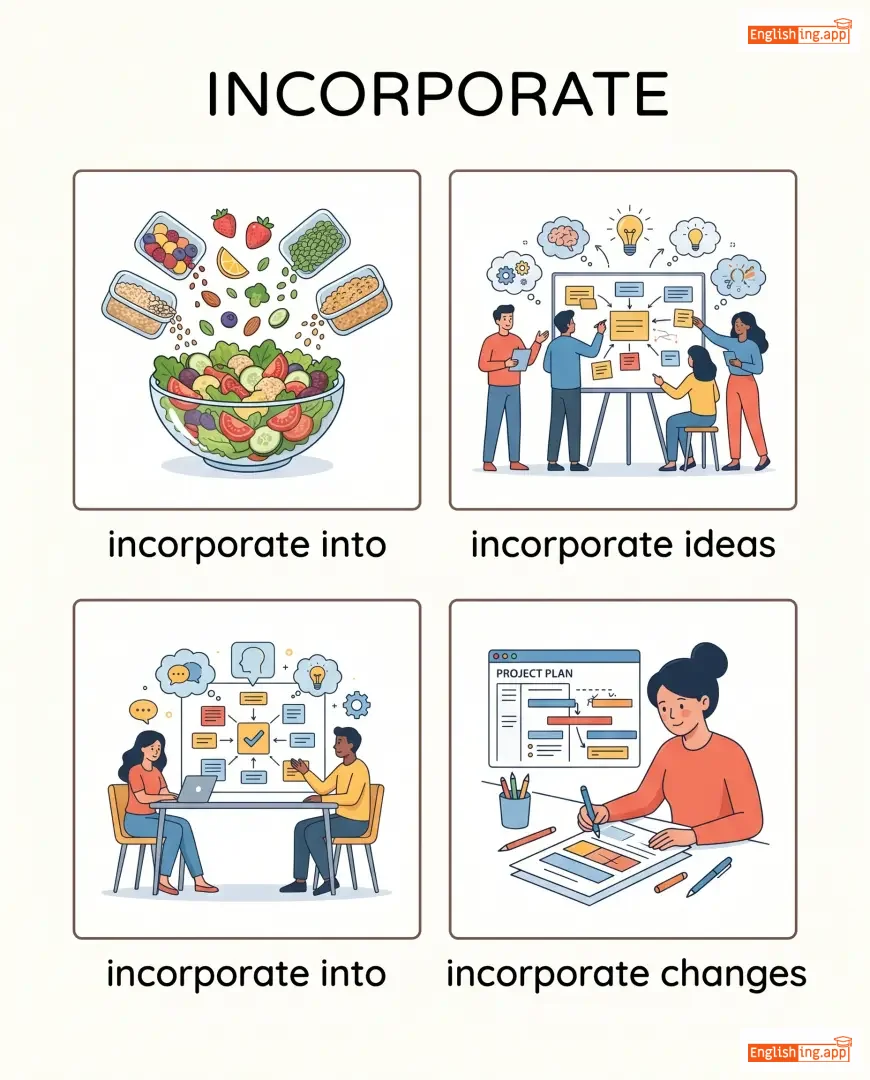
incorporate into, incorporate ideas, incorporate changes
••••••
|
Incorporateは何かを含める、つまり全体に加えること。
••••••
|
|
❌
••••••
|
/ɪnkəˈrɛkt/
adjective
(インコレクト)
••••••
|
- •••••• |
間違い
machigai
••••••
|
- •••••• | - •••••• | - •••••• | - •••••• |
not correct or accurate
••••••
|
The information you provided was incorrect. |
あなたが提供した情報は間違っていました。
Anata ga teikyō shita jōhō wa machigatte imashita.
••••••
|
- •••••• | - •••••• | - •••••• |
wrong, erroneous, inaccurate, false
••••••
|
correct, accurate, right
••••••
|
incorrect answer, incorrect information, incorrect decision
••••••
|
Incorrect sounds like 'in core' – imagine your core knowledge being wrong.
••••••
|
|
📈
••••••
|
/ɪnˈkriːs/
verb
(inkurīzu)
••••••
|
|
増加する
zōka suru
••••••
|
increased
inkurīzuddo
••••••
|
increased
inkurīzuddo
••••••
|
increases
inkurīzesu
••••••
|
increasing
inkurīzingu
••••••
|
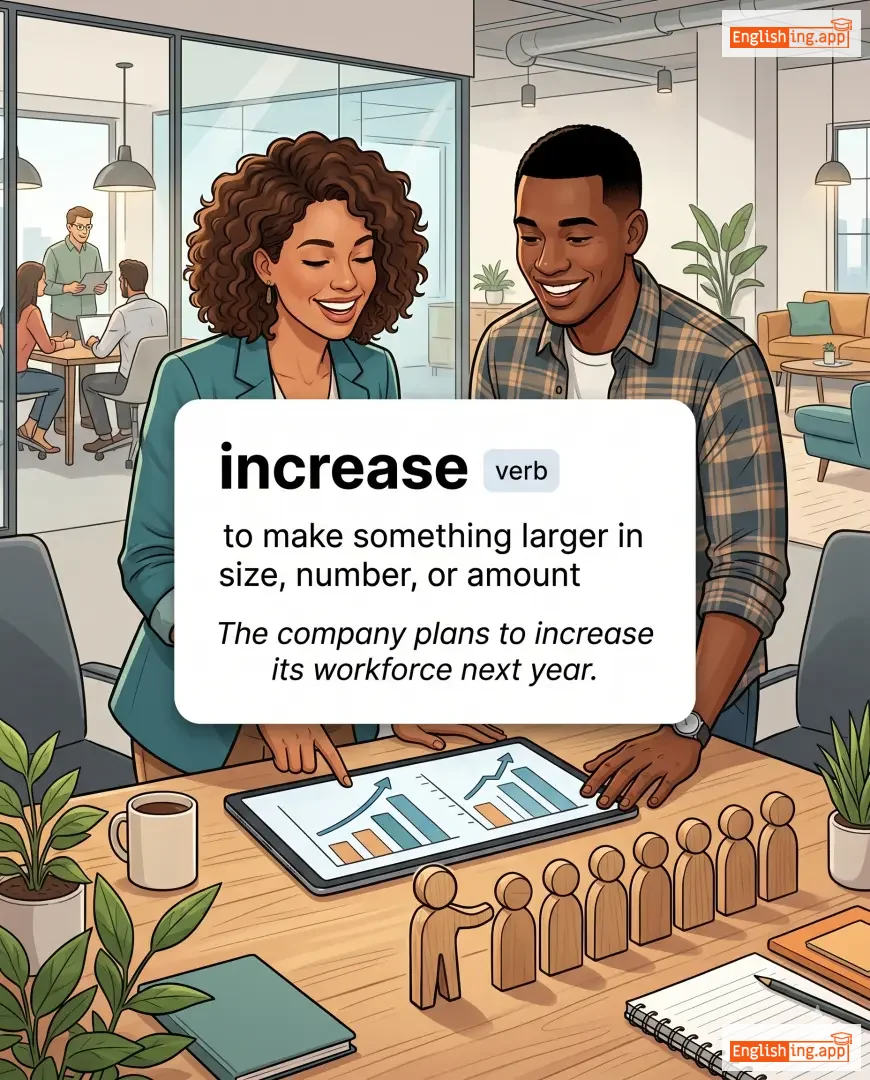
to make something larger in size, number, or amount
••••••
|
The company plans to increase its workforce next year.
その会社は来年、労働力を増加させる予定です。
••••••
|
その会社は来年、労働力を増加させる予定です。
Sono kaisha wa rainen, rōdōryoku o zōka saseru yotei desu.
••••••
|
increase by leaps and bounds
飛躍的に増加する
••••••
|
to grow or improve very quickly
••••••
|
急激に増加する
kyūgeki ni zōka suru
••••••
|
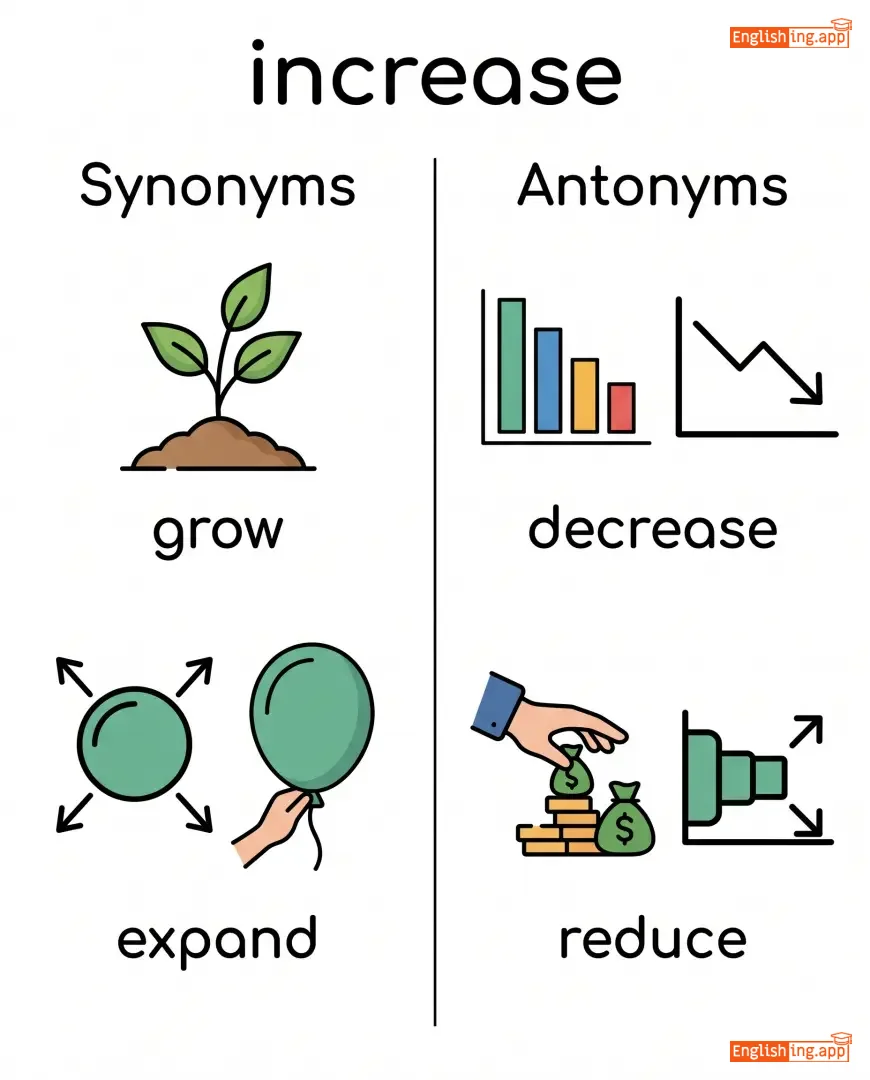
grow, expand, rise, boost, escalate
••••••
|
decrease, reduce, lessen
••••••
|
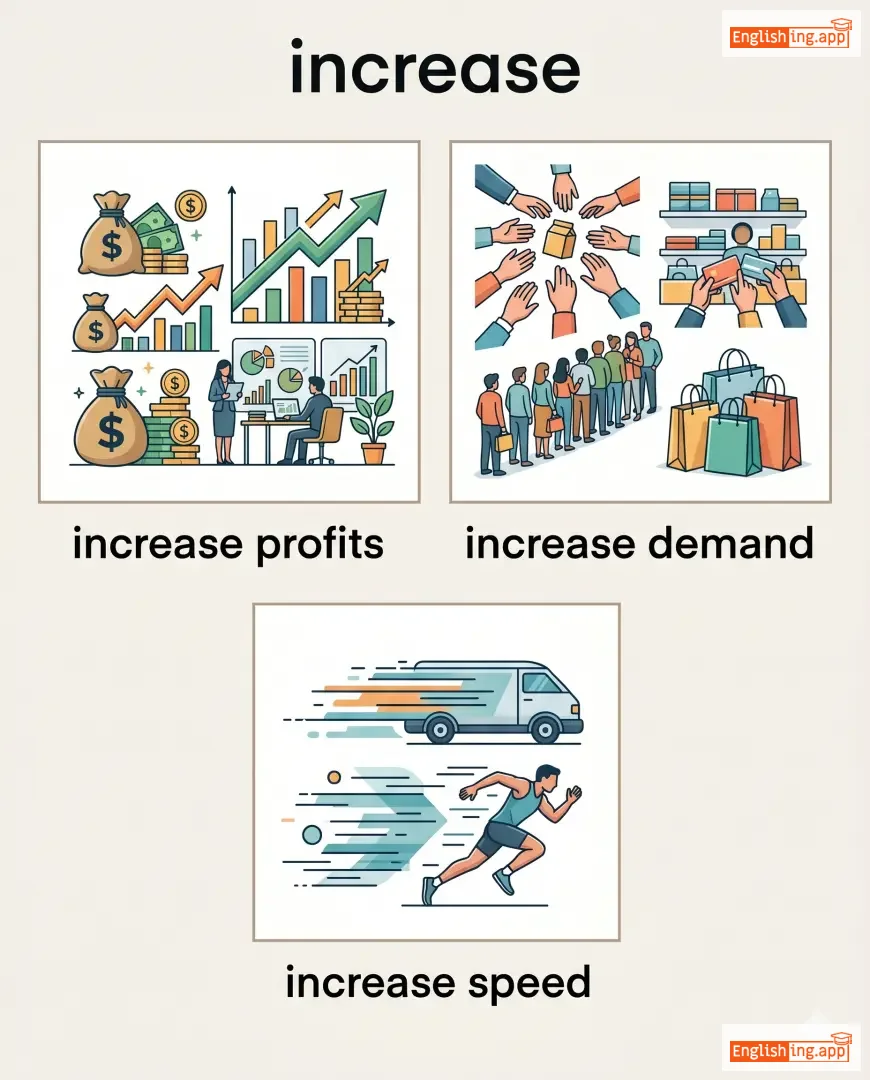
increase profits, increase demand, increase speed
••••••
|
Increase は増加すること。価格が増加するように
••••••
|
|
📈
••••••
|
/ɪnˈkriːst/
verb
(inkurīsu)
••••••
|
- •••••• |
増加した
zōka shita
••••••
|
increased
inkurīsu
••••••
|
increased
inkurīsu
••••••
|
increases
inkurīsu
••••••
|
increasing
inkurīsuingu
••••••
|
became greater in size, amount, or degree
••••••
|
The company's revenue increased last year.
会社の収益は昨年増加しました。
••••••
|
会社の収益は昨年増加しました。
Kaisha no shūeki wa sakunen zōka shimashita.
••••••
|
increased by leaps and bounds
飛躍的に増加した
••••••
|
to grow or improve very quickly
••••••
|
急速に増加した
kyūsoku ni zōka shita
••••••
|
rose, grew, expanded, escalated, surged
••••••
|
decreased, declined, diminished
••••••
|
increased demand, increased pressure, increased risk, increased use
••••••
|
増加は収益が増えるときと同じです!
••••••
|
|
➕
••••••
|
/ɪnˈkriːsɪŋ/
verb
(inkuriisingu)
••••••
|
|
増加
zōka
••••••
|
increased
inkurisuto
••••••
|
increased
inkurisuto
••••••
|
increases
inkurisesu
••••••
|
increasing
inkuriisingu
••••••
|
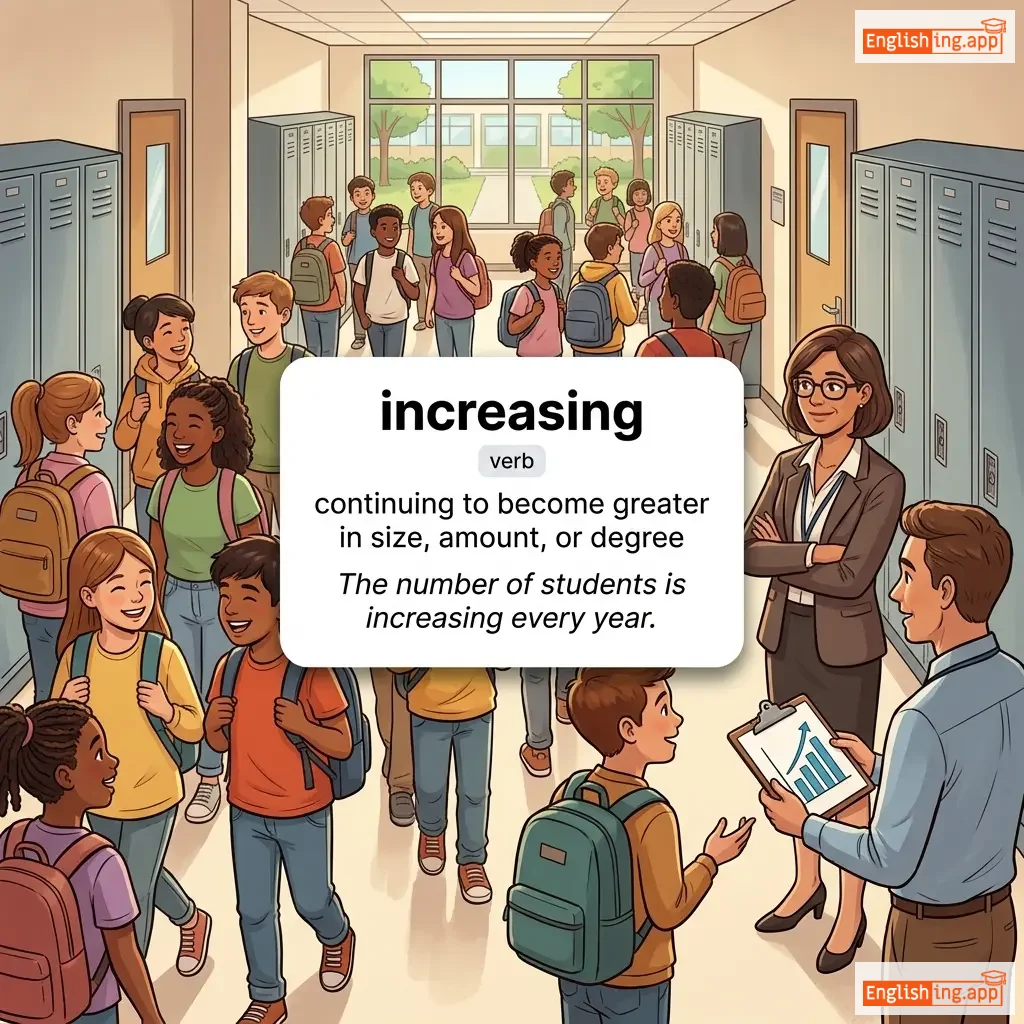
continuing to become greater in size, amount, or degree
••••••
|
The number of students is increasing every year.
学生の数は毎年増加しています。
••••••
|
学生の数は毎年増加しています。
Gakusei no kazu wa mainen zōka shiteimasu.
••••••
|
increasing returns
増加するリターン
••••••
|
when output grows faster than input
••••••
|
増加するリターン
zōka suru ritān
••••••
|
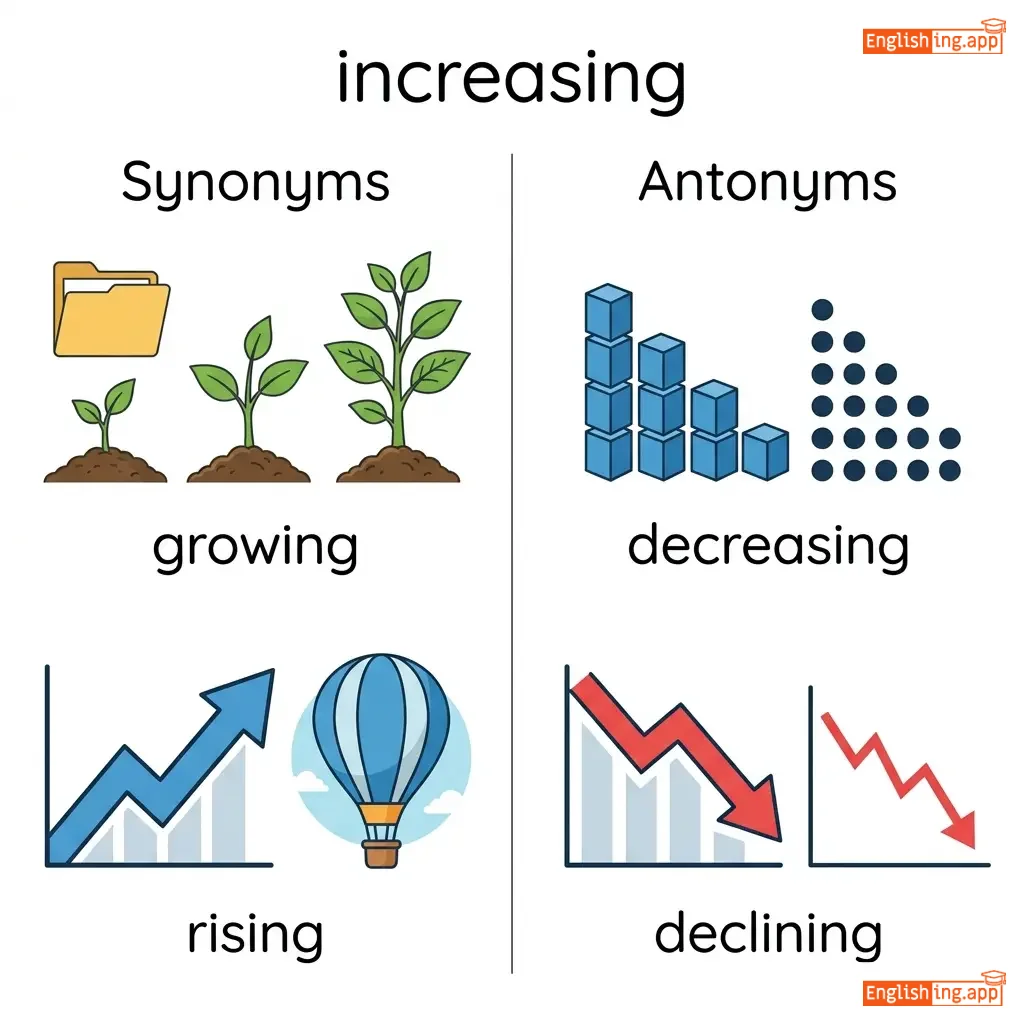
growing, rising, expanding, escalating, mounting
••••••
|
decreasing, declining, reducing
••••••
|
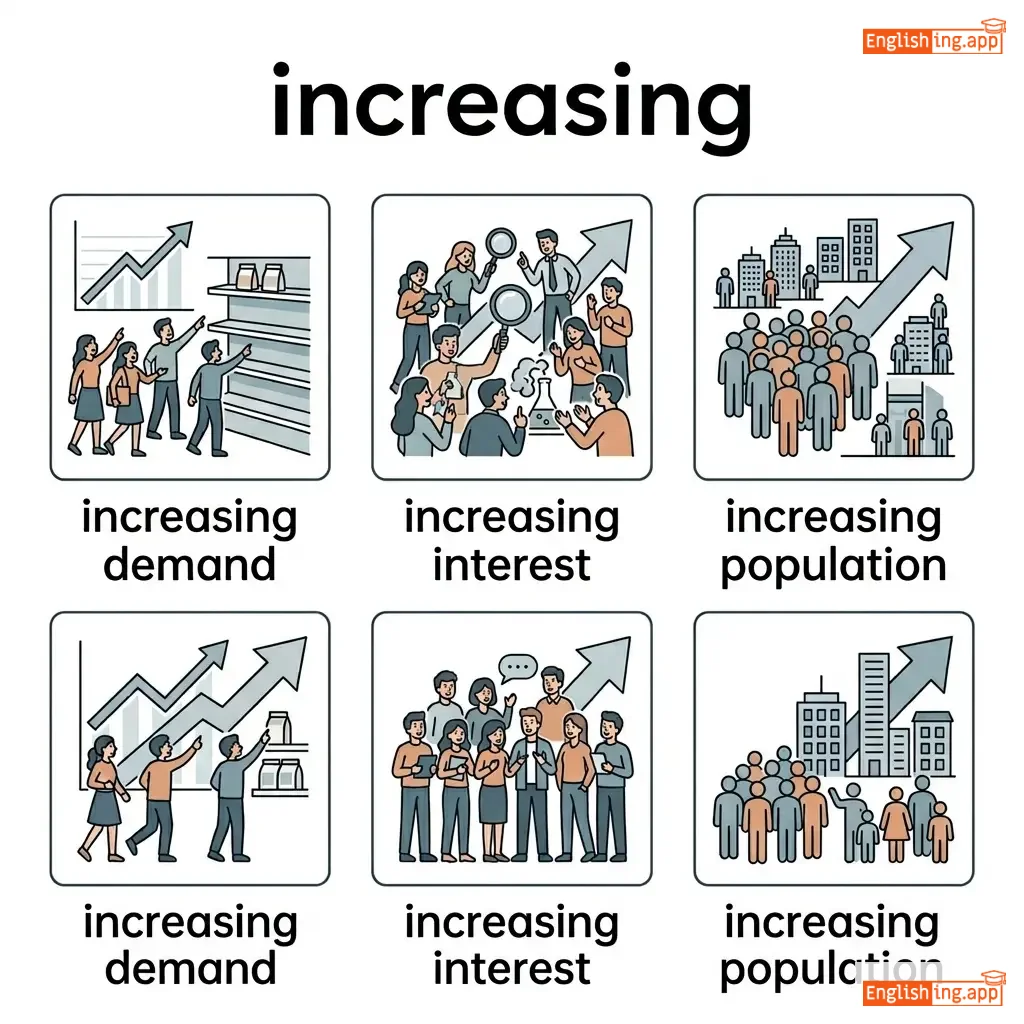
increasing demand, increasing interest, increasing population, increasing rate
••••••
|
Increasingはすべてが増加していること ➕ たとえば給与が増えると幸せも増える
••••••
|
|
📊
••••••
|
/ɪnˈkriːsɪŋli/
adverb
(インクリースィングリー)
••••••
|
- •••••• |
ますます
masumasu
••••••
|
- •••••• | - •••••• | - •••••• | - •••••• |
more and more over time
••••••
|
People are increasingly concerned about climate change. |
人々は気候変動についてますます懸念しています。
Hitobito wa kikō hendō ni tsuite masumasu shinpai shiteimasu.
••••••
|
- •••••• | - •••••• | - •••••• |
progressively, steadily, gradually, more and more
••••••
|
decreasingly, less
••••••
|
increasingly important, increasingly difficult, increasingly popular
••••••
|
Increasinglyは時間とともに増えていく意味です — 📊 気候変動への懸念が増しています
••••••
|
|
🤯
••••••
|
/ɪnˈkrɛdəbl/
adjective
(インクレディブル)
••••••
|
- •••••• |
信じられない
shinjirarenai
••••••
|
- •••••• | - •••••• | - •••••• | - •••••• |
so extraordinary that it is hard to believe; amazing
••••••
|
The view from the mountain was incredible. |
山からの景色は信じられなかった。
Yama kara no keshiki wa shinjirarenakatta.
••••••
|
That's incredible! |
an exclamation used to express amazement
••••••
|
信じられない!
Shinjirarenai!
••••••
|
amazing, unbelievable, astonishing, extraordinary, marvelous
••••••
|
ordinary, believable, normal
••••••
|
incredible story, incredible experience, incredible journey, incredible talent
••••••
|
IncredibleはIN+credibleで — 信じられないほど素晴らしい 🤯
••••••
|
|
💸
••••••
|
/ɪnˈkɜːr/
verb
(inkā)
••••••
|
- •••••• |
負う
ōu
••••••
|
incurred
inkādo
••••••
|
incurred
inkādo
••••••
|
incurs
inkāsu
••••••
|
incurring
inkāring
••••••
|
To bring upon oneself something undesirable, usually as a result of actions.
••••••
|
He incurred a fine for parking in the wrong place.
彼は間違った場所に駐車して罰金を科せられた。
••••••
|
彼は間違った場所に駐車して罰金を科せられた。
Kare wa machigatta basho ni chūsha shite bakkin o kaserareta.
••••••
|
- •••••• | - •••••• | - •••••• |
suffer, sustain, attract, experience, bring on
••••••
|
avoid, escape, evade
••••••
|
incur debt, incur expense, incur loss, incur penalty
••••••
|
Incur = 行動の結果、負担を負う
••••••
|
|
🚫
••••••
|
/ɪnˈdiːsənt/
adjective
(インディーセント)
••••••
|
- •••••• |
不品な
fuhin na
••••••
|
- •••••• | - •••••• | - •••••• | - •••••• |
not conforming to accepted standards of behavior or morality; improper or offensive
••••••
|
He was warned for making an indecent remark during the meeting.
ヒー ワズ ワーンド フォー メイキング アン インディーセント リマーク。
••••••
|
彼は不品な発言で注意された。
kare wa fuhin na hatsugen de chuui sareta
••••••
|
indecent exposure
インディーセント エクスポージャー
••••••
|
the act of intentionally showing private parts in public, considered offensive
••••••
|
不品な露出
fuhin na roshutsu
••••••
|
improper, offensive, obscene, vulgar, unseemly
••••••
|
decent, proper, respectable
••••••
|
indecent behavior, indecent remark, indecent language, indecent act
••••••
|
インディーセント = 不品な行為をイン!と出す
••••••
|
|
✅
••••••
|
/ɪnˈdiːd/
adverb
(インディード)
••••••
|
- •••••• |
実際に
jissai ni
••••••
|
- •••••• | - •••••• | - •••••• | - •••••• |
used to emphasize or confirm a statement
••••••
|
It was a long journey indeed.
それは長い旅でした、実際。
••••••
|
それは長い旅でした、実際。
Sore wa nagai tabi deshita, jissai.
••••••
|
yes indeed
はい、実際
••••••
|
used to strongly agree with someone
••••••
|
はい、実際
Hai, jissai
••••••
|
certainly, truly, really, actually, definitely
••••••
|
doubtfully, uncertainly
••••••
|
indeed true, yes indeed, thank you indeed
••••••
|
Indeed は '実際に' を意味します ✅ 'In deed' は '行動で' という意味です。
••••••
|

