|
表情符号
|
单词 | Images | 翻译 | 过去时 | 过去分词 | 第三人称单数 | 动名词 | 含义 | 例句 | 例句翻译 | 示例表达 | 示例表达含义 | 示例表达翻译 | 同义词 | 反义词 | 搭配词 | 助记符 |
|---|---|---|---|---|---|---|---|---|---|---|---|---|---|---|---|---|---|
|
👏
••••••
|
/ɪmˈpres.ɪv/
adjective
(伊姆普雷西夫)
••••••
|
- •••••• |
令人印象深刻的
impresiv
••••••
|
- •••••• | - •••••• | - •••••• | - •••••• |
striking; remarkable; having the ability to impress
••••••
|
Her impressive performance earned her a standing ovation.
她出色的表演赢得了全场起立鼓掌。
••••••
|
她出色的表演赢得了全场起立鼓掌。
ta chu se de biao yan ying de le quan chang qi li gu zhang
••••••
|
- •••••• | - •••••• | - •••••• |
remarkable, striking, outstanding, magnificent
••••••
|
unimpressive, ordinary, mediocre, disappointing
••••••
|
impressive performance, impressive results, impressive achievement
••••••
|
Impressive = Im press ive 记法: 想象一个印章 Im 把印象压在纸上, 纸上就留下 深刻 的印象
••••••
|
|
🔒
••••••
|
/ɪmˈprɪzən/
verb
(囚禁)
••••••
|
|
囚禁
qiújìn
••••••
|
imprisoned
囚禁了
••••••
|
imprisoned
囚禁了
••••••
|
imprisons
囚禁
••••••
|
imprisoning
囚禁中
••••••
|
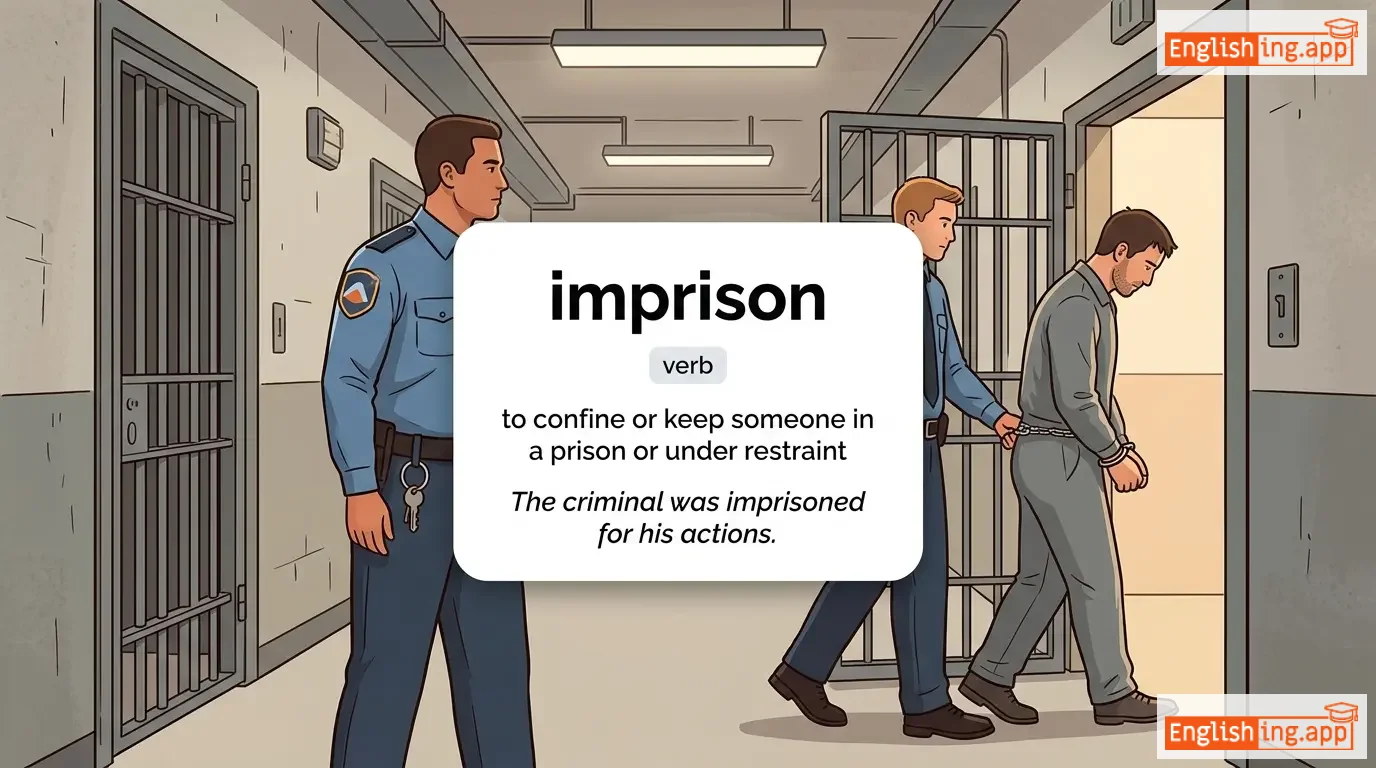
to put someone in prison; to confine or restrict someone's freedom
••••••
|
The judge imprisoned the criminal for five years.
法官把罪犯囚禁了五年。
••••••
|
法官把罪犯囚禁了五年。
Fǎguān bǎ zuìfàn qiújìnle wǔ nián.
••••••
|
- •••••• | - •••••• | - •••••• |
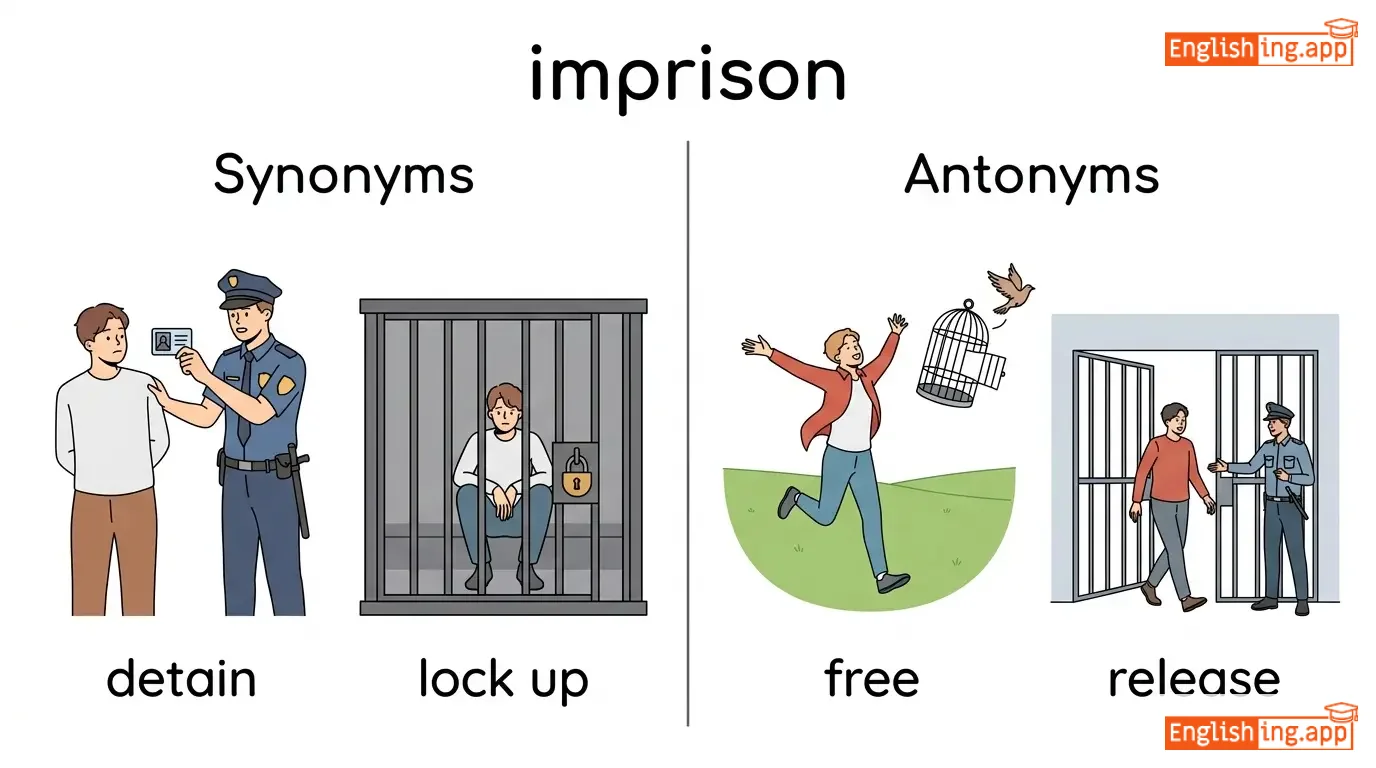
jail, incarcerate, confine, detain
••••••
|
free, release, liberate, discharge
••••••
|
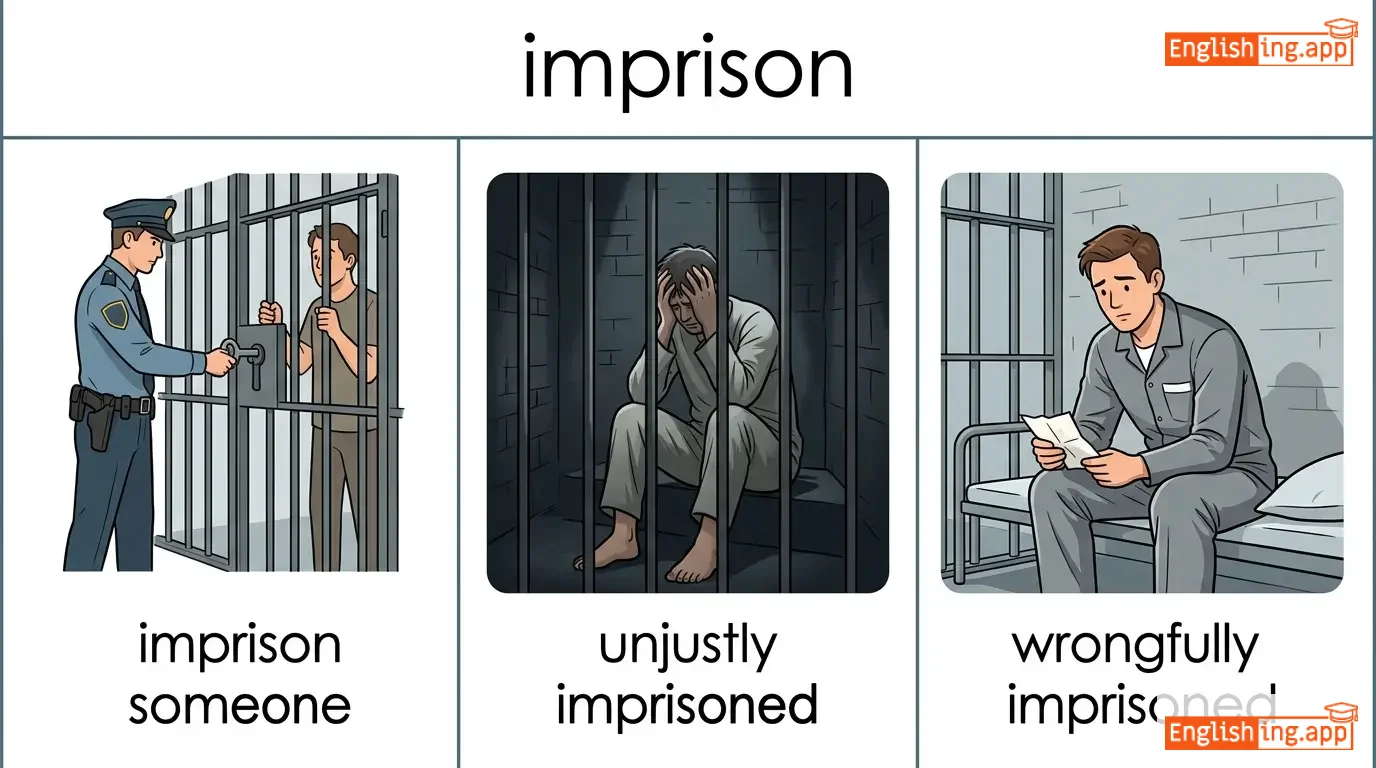
imprison someone, falsely imprison, imprison for life, maximum security prison
••••••
|
No •••••• |
|
🔒
••••••
|
/ɪmˈprɪzənmənt/
noun
(因普瑞森门特)
••••••
|
- •••••• |
监禁
jianjin
••••••
|
- •••••• | - •••••• | - •••••• | - •••••• |
the act of putting someone in prison; the state of being confined as punishment
••••••
|
He faced imprisonment for violating the court order.
他 费斯 因普瑞森门特 因为 违反 法庭 命令。
••••••
|
他因违反法院命令而面临监禁。
Ta yin weifan fayuan mingling er mianlin jianjin
••••••
|
- •••••• | - •••••• | - •••••• |
incarceration, confinement, detention, custody, captivity
••••••
|
freedom, release, liberty
••••••
|
term of imprisonment, life imprisonment, imprisonment sentence, face imprisonment
••••••
|
进监狱就是监禁 = imprisonment
••••••
|
|
❌
••••••
|
/ɪmˈprɒp.ər/
adjective
(improper)
••••••
|
- •••••• |
不合适的; 错误的; 不适当的
bù héshì de; cuòwù de; bù shìdàng de
••••••
|
- •••••• | - •••••• | - •••••• | - •••••• |
inappropriate; incorrect; not suitable
••••••
|
It would be improper to discuss personal matters in a business meeting. |
在商务会议上讨论个人事务是不合适的。
Zài shāngwù huìyì shàng tǎolùn gèrén shìwù shì bù héshì de.
••••••
|
- •••••• | - •••••• | - •••••• |
inappropriate, incorrect, unsuitable, wrong
••••••
|
proper, appropriate, correct, suitable
••••••
|
improper conduct, improper behavior, improper use
••••••
|
不合适的作为 improper,指不适当或不合适的行为
••••••
|
|
📈
••••••
|
/ɪmˈpruːv/
verb
(yīnpúlv)
••••••
|
- •••••• |
改善
gǎishàn
••••••
|
improved
yīnpúlv
••••••
|
improved
yīnpúlv
••••••
|
improves
yīnpúv
••••••
|
improving
yīnpúvīng
••••••
|
to make something better or become better
••••••
|
Regular practice will improve your skills.
定期的练习将改善你的技能。
••••••
|
定期的练习将改善你的技能。
dìngqī de liànxí jiāng gǎishàn nǐ de jìnéng.
••••••
|
room for improvement
改进的空间
••••••
|
a possibility or need for something to be made better
••••••
|
改进的空间
gǎijìn de kōngjiān
••••••
|
enhance, develop, refine, upgrade, boost
••••••
|
worsen, decline, degrade
••••••
|
improve performance, improve quality, improve skills, continuously improve
••••••
|
Improve 是用来改进的,做得更好
••••••
|
|
🔧
••••••
|
/ɪmˈpruːvmənt/
noun
(yímínpīrūvēmèn)
••••••
|
- •••••• |
改善
gǎishàn
••••••
|
- •••••• | - •••••• | - •••••• | - •••••• |
the act of making something better
••••••
|
There has been a significant improvement in his health.
zài tā de jiànkāng zhōng yǒu yī gè zhòngdà de gǎishàn.
••••••
|
他的健康有了显著改善。
tā de jiànkāng yǒu le xiǎnzhù gǎishàn.
••••••
|
continuous improvement
bùduàn gǎishàn
••••••
|
the ongoing effort to make things better
••••••
|
持续改善
chíxù gǎishàn
••••••
|
progress, enhancement, advancement, growth, development
••••••
|
decline, deterioration, regression
••••••
|
health improvement, significant improvement, gradual improvement, scope for improvement
••••••
|
Improvement 就是改善 – 改善就是 improvement
••••••
|
|
💧
••••••
|
/ɪmˈpjʊər/
adjective
(impure)
••••••
|
- •••••• |
不纯
bùchún
••••••
|
- •••••• | - •••••• | - •••••• | - •••••• |
contaminated; not clean; mixed with foreign substances
••••••
|
The impure water caused health problems in the village. |
不纯的水在村庄里引起了健康问题。
Bùchún de shuǐ zài cūnzhuāng lǐ yǐnqǐle jiànkāng wèntí.
••••••
|
- •••••• | - •••••• | - •••••• |
contaminated, polluted, dirty, tainted
••••••
|
pure, clean, uncontaminated, pristine
••••••
|
impure water, impure substances, impure thoughts
••••••
|
不纯的水就像污染的快乐,影响我们的健康。
••••••
|
|
🧪
••••••
|
/ɪmˈpjʊərəti/
noun
(因皮尤瑞提)
••••••
|
- •••••• |
杂质
zazhi
••••••
|
- •••••• | - •••••• | - •••••• | - •••••• |
the state of being unclean or contaminated; a substance that makes something impure
••••••
|
The scientist removed every impurity from the water sample.
泽 赛恩提斯特 瑞姆夫德 艾弗里 因皮尤瑞提 弗容 泽 沃特尔 桑普。
••••••
|
科学家去除了水样中的所有杂质。
kexuejia quchu le shuiyang zhong de suoyou zazhi
••••••
|
impurity level
因皮尤瑞提 莱弗
••••••
|
the amount of unwanted or harmful substances present
••••••
|
杂质含量
zazhi hanliang
••••••
|
contamination, pollution, taint, adulteration, blemish
••••••
|
purity, cleanliness, refinement
••••••
|
chemical impurity, impurity level, trace impurity, remove impurity, impurity content
••••••
|
impurity 就是 杂质,杂乱不纯
••••••
|
|
📍
••••••
|
/ɪn/
preposition
(in)
••••••
|
- •••••• |
在
zai
••••••
|
- •••••• | - •••••• | - •••••• | - •••••• |
expressing the situation of being enclosed or surrounded by something
••••••
|
She is in the kitchen preparing dinner. |
她在厨房准备晚餐。
Ta zai chufang zhunbei wancan.
••••••
|
in trouble |
to be in a difficult or problematic situation
••••••
|
陷入困境
xianru kunjing
••••••
|
inside, within, enclosed, into, surrounded
••••••
|
out, outside
••••••
|
in fact, in time, in charge, in need
••••••
|
在意味着在里面,就像‘在房子里’意味着在房子内部。
••••••
|
|
🚫
••••••
|
/ˌɪnəˈbɪləti/
noun
(因阿比利提)
••••••
|
- •••••• |
无能
wune
••••••
|
- •••••• | - •••••• | - •••••• | - •••••• |
the state of being unable to do something
••••••
|
His inability to make decisions affected his career. |
他无法做决定,这影响了他的职业生涯。
Ta wu fa zuo jueding, zhe yingxiang le ta de zhiye shengya.
••••••
|
- •••••• | - •••••• | - •••••• |
incapacity, weakness, inability, powerlessness
••••••
|
ability, strength
••••••
|
physical inability, inability to act, inability to speak
••••••
|
Inability sounds like 'I’m not able' - Can’t do it.
••••••
|
|
❌
••••••
|
/ɪnˈækjʊrəsi/
noun
(因艾克优瑞西)
••••••
|
- •••••• |
不准确
bu zhun que
••••••
|
- •••••• | - •••••• | - •••••• | - •••••• |
lack of accuracy or precision; an incorrect or wrong detail
••••••
|
The report contained several factual inaccuracies.
泽 瑞波特 康探恩德 色弗若 因艾克优瑞西斯。
••••••
|
这份报告包含了一些不准确之处。
zhe fen baogao baohan le yixie bu zhunque zhichu
••••••
|
- •••••• | - •••••• | - •••••• |
error, imprecision, mistake, incorrectness, fault
••••••
|
accuracy, precision, correctness
••••••
|
factual inaccuracy, minor inaccuracy, data inaccuracy, measurement inaccuracy
••••••
|
不准确 = not accurate, 就是 inaccuracy
••••••
|
|
❌
••••••
|
/ɪnˈækjʊrət/
adjective
(inakyuret)
••••••
|
- •••••• |
不准确的
bu zhunque de
••••••
|
- •••••• | - •••••• | - •••••• | - •••••• |
Not correct, precise, or exact; containing errors.
••••••
|
The report was full of inaccurate data.
报告充满了不准确的数据。
••••••
|
报告充满了不准确的数据。
Baogao chongman le bu zhunque de shuju.
••••••
|
inaccurate statement
不准确的陈述
••••••
|
A statement that contains errors or is not correct.
••••••
|
不准确的陈述
bu zhunque de chenshu
••••••
|
incorrect, false, erroneous, imprecise, faulty
••••••
|
accurate, correct, precise
••••••
|
inaccurate report, inaccurate figures, inaccurate description, highly inaccurate
••••••
|
In + Accurate 在中文意味着不准确
••••••
|
|
🛑
••••••
|
/ɪnˈæktɪv/
adjective
(因阿克提夫)
••••••
|
- •••••• |
不活跃
bù huó yuè
••••••
|
- •••••• | - •••••• | - •••••• | - •••••• |
Not engaging in activity; not active.
••••••
|
The account has been inactive for six months. |
账户已经有六个月没有活跃。
Zhànghù yǐjīng yǒu liù gè yuè méiyǒu huóyuè.
••••••
|
inactive lifestyle |
A way of living with little or no physical activity.
••••••
|
不活跃的生活方式
bù huó yuè de shēng huó fāngshì
••••••
|
dormant, idle, passive, sluggish, stagnant
••••••
|
active, energetic, lively
••••••
|
inactive account, inactive period, inactive member, inactive role
••••••
|
In + Active = 不活跃 → 不活跃
••••••
|
|
🛑
••••••
|
/ˌɪnækˈtɪvɪti/
noun
(因艾克提维提)
••••••
|
- •••••• |
不活动
bu huodong
••••••
|
- •••••• | - •••••• | - •••••• | - •••••• |
the state of not being active physically or mentally; lack of action
••••••
|
Prolonged inactivity can negatively affect both physical and mental health.
普罗龙德 因艾克提维提 坎 内格特夫利 影响 身体 和 心理 健康。
••••••
|
长期不活动会对身体和心理健康产生负面影响。
changqi bu huodong hui dui shenti he xinli jiankang chan sheng fumian yingxiang
••••••
|
- •••••• | - •••••• | - •••••• |
idleness, passivity, dormancy, stagnation, inertia
••••••
|
activity, movement, action
••••••
|
prolonged inactivity, physical inactivity, period of inactivity, economic inactivity
••••••
|
不活动 就是 inactivity—不动、不做事
••••••
|
|
😔
••••••
|
/ɪnˈædɪkwəsi/
noun
(因阿德奎西)
••••••
|
- •••••• |
不足
buzu
••••••
|
- •••••• | - •••••• | - •••••• | - •••••• |
lack of sufficient ability, quality, or strength; a feeling of not being good enough
••••••
|
She struggled with feelings of inadequacy at work despite her strong qualifications.
希 斯特拉格尔德 威兹 菲灵兹 奥夫 因阿德奎西 阿特 沃克 德斯派特 赫尔 斯特朗 夸利菲开申。
••••••
|
尽管资历很强,她在工作中仍感到不足。
Jinguan zili hen qiang, ta zai gongzuo zhong reng gandao buzu
••••••
|
- •••••• | - •••••• | - •••••• |
insufficiency, deficiency, incompetence, weakness, inadequateness
••••••
|
adequacy, sufficiency, competence
••••••
|
feelings of inadequacy, sense of inadequacy, emotional inadequacy, professional inadequacy
••••••
|
Inadequacy 就是“不足”,记住 in + adequate = 不够。
••••••
|
|
⚠️
••••••
|
/ɪnˈædɪkwət/
adjective
(inadekweit)
••••••
|
- •••••• |
不充分
bù chōngfèn
••••••
|
- •••••• | - •••••• | - •••••• | - •••••• |
Not sufficient or good enough.
••••••
|
The funding was inadequate to complete the project. |
资金不足以完成项目。
Zījīn bù zúgòu yǐ wánchéng xiàngmù.
••••••
|
inadequate resources |
Not enough resources to meet requirements.
••••••
|
不足的资源
bù zú de zīyuán
••••••
|
insufficient, deficient, lacking, meager, incomplete
••••••
|
adequate, sufficient, enough
••••••
|
inadequate funding, inadequate resources, inadequate support, inadequate system
••••••
|
Adequate意味着足够,所以Inadequate = 不足 → 不充分
••••••
|
|
🚫
••••••
|
/ˌɪnəˈproʊpriət/
adjective
(inapropriét)
••••••
|
- •••••• |
不适当
bushidang
••••••
|
- •••••• | - •••••• | - •••••• | - •••••• |
not suitable or proper in the circumstances
••••••
|
It was inappropriate to talk loudly in the library. |
在图书馆大声说话是不适当的。
Zai tushuguan dasheng shuohua shi bushidang de.
••••••
|
- •••••• | - •••••• | - •••••• |
unsuitable, improper, unfit, offensive
••••••
|
appropriate, suitable
••••••
|
inappropriate behavior, inappropriate dress, inappropriate comment
••••••
|
Inappropriate 就像 'In a place proper isn't' - 不要这样做。
••••••
|
|
😕
••••••
|
/ˌɪnəˈtɛntɪv/
adjective
(因阿滕提夫)
••••••
|
- •••••• |
不专心的
bu zhuanxin de
••••••
|
- •••••• | - •••••• | - •••••• | - •••••• |
not paying attention; lacking focus or concentration
••••••
|
The inattentive student missed several important instructions.
泽 因阿滕提夫 斯图登特 米斯德 塞夫若尔 因波坦特 因斯特拉克申斯。
••••••
|
那个不专心的学生错过了几条重要指示。
nage bu zhuanxin de xuesheng cuoguo le ji tiao zhongyao zhishi
••••••
|
- •••••• | - •••••• | - •••••• |
careless, distracted, heedless, absent-minded, unobservant
••••••
|
attentive, alert, focused
••••••
|
inattentive student, inattentive behavior, inattentive driving, inattentive listening
••••••
|
Inattentive 就是不专心的。
••••••
|
|
🚫
••••••
|
/ˌɪnˌkeɪpəˈbɪləti/
noun
(因克佩比利蒂)
••••••
|
- •••••• |
无能力
wu nengli
••••••
|
- •••••• | - •••••• | - •••••• | - •••••• |
lack of ability or power to do something; inability or incompetence
••••••
|
His incapability to manage the team led to serious problems.
His incapability to manage the team led to serious problems.
••••••
|
他管理团队的无能力导致了严重的问题。
ta guanli tuandui de wu nengli daozhile yanzhong de wenti
••••••
|
- •••••• | - •••••• | - •••••• |
inability, incompetence, incapacity, weakness, inadequacy
••••••
|
ability, capability, competence
••••••
|
mental incapability, physical incapability, show incapability, incapability to perform
••••••
|
无能力 = incapability,两个都表示没有能力。
••••••
|
|
🚫
••••••
|
/ɪnˈkeɪpəbəl/
adjective
(因凯普博)
••••••
|
- •••••• |
无能的
wu neng de
••••••
|
- •••••• | - •••••• | - •••••• | - •••••• |
lacking the ability, skill, or capacity to do something
••••••
|
He is incapable of understanding complex instructions.
他 是 因凯普博 的 理解 复杂 指令。
••••••
|
他无法理解复杂的指令。
ta wu fa li jie fu za de zhi ling
••••••
|
incapable of
incapable of
••••••
|
not having the ability to do something
••••••
|
无法
wu fa
••••••
|
unable, incompetent, powerless, unfit, inept
••••••
|
capable, able, competent
••••••
|
incapable of doing, mentally incapable, physically incapable, proven incapable
••••••
|
incapable = 无能力
••••••
|
|
🚫
••••••
|
/ˌɪnkəˈpæsəti/
noun
(yīnkāpàsìtī)
••••••
|
- •••••• |
无能
wú néng
••••••
|
- •••••• | - •••••• | - •••••• | - •••••• |
the lack of ability, power, or fitness to do something
••••••
|
His mental incapacity prevented him from making important decisions.
Hí zhī mentaō yīnkāpàsìtī bìfánged hím fùr mèkīng yímpòrtnt dìsīzhèns.
••••••
|
他的心理无能使他无法做出重要决策。
Tā de xīnlǐ wú néng shǐ tā wú fǎ zuò chū zhòng yào jué cè.
••••••
|
- •••••• | - •••••• | - •••••• |
inability, incompetence, disability, weakness
••••••
|
ability, competence, capability
••••••
|
legal incapacity, physical incapacity, mental incapacity, incapacity to work
••••••
|
In + 能力没有 = 无能 (无能)
••••••
|
|
🎁
••••••
|
/ɪnˈsɛntɪv/
noun
(ɪnˈsɛntɪv)
••••••
|
- •••••• |
激励
jili
••••••
|
- •••••• | - •••••• | - •••••• | - •••••• |
a thing that motivates or encourages someone to do something
••••••
|
The company offers bonuses as an incentive to increase productivity. |
公司提供奖金作为激励,促进生产力提高。
Gōngsī tígōng jiǎngjīn zuòwéi jīlì, cùjìn shēngchǎnlì tígāo.
••••••
|
carrot and stick |
a method involving both rewards and punishments to induce behavior
••••••
|
胡萝卜和大棒
húluóbo hé dà bàng
••••••
|
motivation, encouragement, inducement, stimulus, reward
••••••
|
discouragement, deterrent
••••••
|
provide incentive, financial incentive, incentive program, strong incentive
••••••
|
Incentive 就是激励你更努力工作!
••••••
|
|
📊
••••••
|
/ˈɪnsɪdəns/
noun
(因斯登斯)
••••••
|
- •••••• |
事件发生率
shìjiàn fāshēng lǜ
••••••
|
- •••••• | - •••••• | - •••••• | - •••••• |
the occurrence, rate, or frequency of something
••••••
|
The incidence of road accidents has decreased this year. |
今年道路事故的发生率有所下降。
Jīnnián dàolù shìgù de fāshēng lǜ yǒu suǒ xiàjiàng.
••••••
|
- •••••• | - •••••• | - •••••• |
occurrence, frequency, rate, prevalence, proportion
••••••
|
absence, scarcity, rarity
••••••
|
incidence of disease, high incidence, incidence rate, incidence angle
••••••
|
事件发生率就是指发生某个事件的频率,比如交通事故的频率。
••••••
|
|
🚨
••••••
|
/ˈɪnsɪdənt/
noun
(事件)
••••••
|
- •••••• |
事件
shìjiàn
••••••
|
- •••••• | - •••••• | - •••••• | - •••••• |
an event or occurrence, often unpleasant or unusual
••••••
|
The police quickly responded to the incident in the park. |
警方迅速回应了公园内的事件。
jǐngfāng xùnsù huíyīngle gōngyuán nèi de shìjiàn.
••••••
|
isolated incident |
a single event, not part of a pattern
••••••
|
孤立事件
gūlì shìjiàn
••••••
|
event, occurrence, happening, episode, affair
••••••
|
routine, normality, usual
••••••
|
serious incident, minor incident, security incident, violent incident
••••••
|
事件指的是不寻常的事件或事故。
••••••
|
|
🙂
••••••
|
/ɪnˈklaɪnd/
adjective
(ɪnˈklaɪnd)
••••••
|
- •••••• |
倾向的
qingxiang de
••••••
|
- •••••• | - •••••• | - •••••• | - •••••• |
having a tendency or disposition toward something
••••••
|
He is inclined to help those in need. |
他倾向于帮助有需要的人。
Tā qīngxiàng yú bāngzhù yǒu xūyào de rén.
••••••
|
be inclined to |
to have a tendency to do something
••••••
|
倾向于
qīngxiàng yú
••••••
|
prone, disposed, willing, tending
••••••
|
unwilling, disinclined, resistant
••••••
|
inclined to help, inclined to agree, inclined to believe
••••••
|
倾向意味着倾斜 – 记住,如果你倾向某件事,你就有倾向。
••••••
|
|
➕
••••••
|
/ɪnˈkluːd/
verb
(yīngkuīlú)
••••••
|

|
包括
bāo kuò
••••••
|
included
yǐnglì
••••••
|
included
yǐnglì
••••••
|
includes
yǐngkuì
••••••
|
including
yǐngkuì
••••••
|
to make something part of a whole or group
••••••
|
The package includes free breakfast.
bāo kuò bìnggòu huíguī.
••••••
|
该套餐包括免费早餐。
gāi tàocān bāokuò miǎnfèi zǎocān.
••••••
|
include in
bāo kuò
••••••
|
to add as a part of something
••••••
|
包括
bāokuò
••••••
|
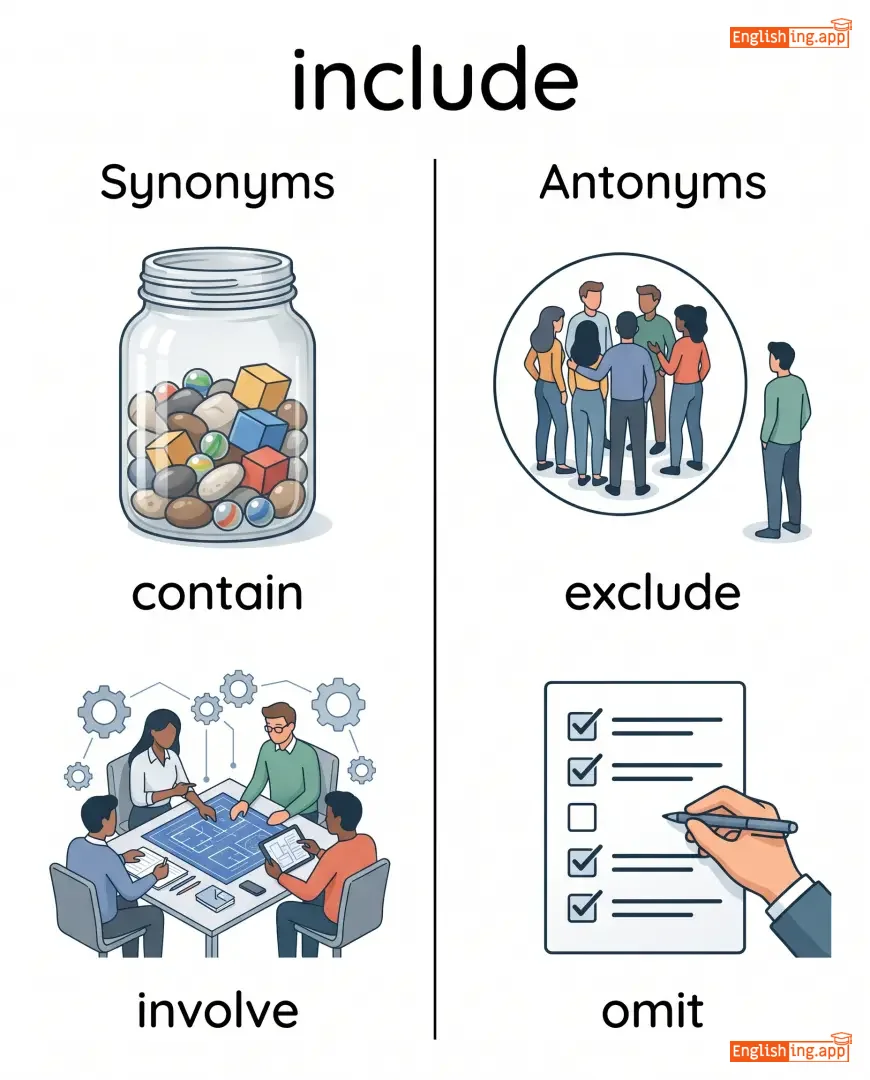
contain, involve, comprise, encompass, cover
••••••
|
exclude, omit
••••••
|
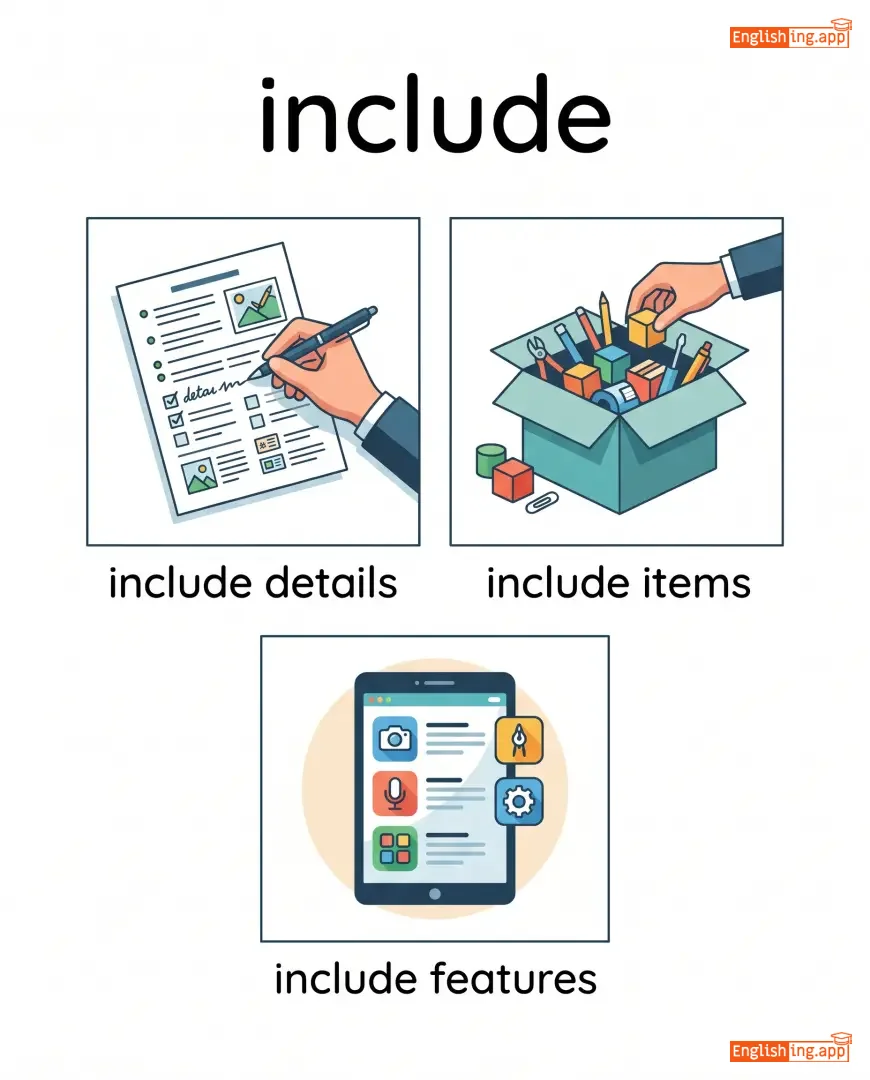
include details, include items, include features
••••••
|
包括意味着将其加入到清单中
••••••
|
|
📋
••••••
|
/ɪnˈkluːdɪŋ/
preposition
(包括)
••••••
|
- •••••• |
包括
bao kuo
••••••
|
- •••••• | - •••••• | - •••••• | - •••••• |
used to show that someone or something is part of a larger group
••••••
|
Many people attended the event, including students and teachers.
许多人参加了这个活动,包括学生和教师。
••••••
|
许多人参加了这个活动,包括学生和教师。
Xǔduō rén cānjiāle zhège huódòng, bāokuò xuéshēng hé jiàoshī.
••••••
|
- •••••• | - •••••• | - •••••• |
such as, along with, together with, counting
••••••
|
excluding, except
••••••
|
including taxes, including costs, including examples
••••••
|
Including 意味着包括,就像一道菜中有米饭和蔬菜,包括。
••••••
|
|
🌍
••••••
|
/ɪnˈkluːʒən/
noun
(包含)
••••••
|
- •••••• |
包容
baorong
••••••
|
- •••••• | - •••••• | - •••••• | - •••••• |
the action or state of including or being included within a group or structure
••••••
|
Diversity and inclusion are key values in modern workplaces. |
多样性和包容性是现代工作场所的关键价值观。
Duōyàngxì hé bāoróng xì shì xiàndài gōngzuò chǎngsuǒ de guānjiàn jiàzhíguān.
••••••
|
- •••••• | - •••••• | - •••••• |
integration, acceptance, involvement, participation
••••••
|
exclusion, isolation
••••••
|
social inclusion, cultural inclusion, inclusive society
••••••
|
Inclusion sounds like 'In close' – 想象所有人都被包容在一起!
••••••
|
|
😵
••••••
|
/ˌɪnkoʊˈhɪrəns/
noun
(inkohērènsī)
••••••
|
- •••••• |
不一致
bù yī zhì
••••••
|
- •••••• | - •••••• | - •••••• | - •••••• |
The quality of being unclear, confused, or lacking logical connection.
••••••
|
His speech was full of incoherence and difficult to follow. |
他的演讲充满了不一致,难以跟随。
Tā de yǎnjiǎng chōngmǎnle bù yīzhì, nán yǐ gēnsuí.
••••••
|
- •••••• | - •••••• | - •••••• |
confusion, disorder, disarray, unintelligibility
••••••
|
clarity, coherence
••••••
|
incoherence of speech, incoherence in argument, display incoherence
••••••
|
一致性表示逻辑,不一致性表示缺乏逻辑。
••••••
|
|
🤯
••••••
|
/ˌɪnkəʊˈhɪərənt/
adjective
(因科赫伦特)
••••••
|
- •••••• |
不连贯
bu lianguan
••••••
|
- •••••• | - •••••• | - •••••• | - •••••• |
Not clear or easy to understand; lacking logical connection.
••••••
|
His explanation was so incoherent that nobody could follow it. |
他的解释如此不连贯,以至于没有人能理解。
Ta de jieshi ruci bu lianguan, yi zhi yu meiyou ren neng lijie.
••••••
|
- •••••• | - •••••• | - •••••• |
unclear, confused, unintelligible, garbled, disjointed
••••••
|
clear, coherent, articulate
••••••
|
incoherent speech, incoherent thoughts, incoherent argument
••••••
|
不连贯没有逻辑,像一团乱麻的解释。
••••••
|
|
💰
••••••
|
/ˈɪnkʌm/
noun
(yīnkām)
••••••
|
- •••••• |
收入
shōurù
••••••
|
- •••••• | - •••••• | - •••••• | - •••••• |
money received for work or through investments
••••••
|
His monthly income is enough to support his family. |
他的月收入足以养家糊口。
Tā de yuè shōurù zúyǐ yǎngjiā húkǒu.
••••••
|
fixed income |
a regular and steady amount of income
••••••
|
固定收入
gùdìng shōurù
••••••
|
earnings, revenue, salary, wages, profit
••••••
|
expense, loss
••••••
|
income tax, income level, income growth
••••••
|
In+Come — 你的收入就像金钱流入
••••••
|
|
🌟
••••••
|
/ɪnˈkɒmp(ə)rəbl/
adjective
(因可比尔)
••••••
|
- •••••• |
无可比拟
wú kě bǐ nǐ
••••••
|
- •••••• | - •••••• | - •••••• | - •••••• |
Without an equal in quality or excellence; matchless.
••••••
|
The view from the mountain was incomparable. |
山顶的景色无可比拟。
Shāndǐng de jǐngsè wú kě bǐ nǐ.
••••••
|
- •••••• | - •••••• | - •••••• |
matchless, unrivaled, peerless, unique
••••••
|
ordinary, average, comparable
••••••
|
incomparable beauty, incomparable skill, incomparable talent
••••••
|
Incomparable 是无可比拟的中文翻译
••••••
|
|
⚠️
••••••
|
/ˌɪnkəmˌpætəˈbɪlɪti/
noun
(因康帕替比利蒂)
••••••
|
- •••••• |
不兼容性
bu jian rong xing
••••••
|
- •••••• | - •••••• | - •••••• | - •••••• |
the state of being unable to exist or work together harmoniously; lack of compatibility
••••••
|
The project failed because of incompatibility between the two software systems.
该 项目 失败 是 因为 两个 软件 系统 之间 的 因康帕替比利蒂。
••••••
|
由于两个软件系统之间的不兼容性,项目失败了。
Youyu liang ge ruanjian xitong zhijian de bu jian rong xing xiangmu shibai le
••••••
|
- •••••• | - •••••• | - •••••• |
conflict, mismatch, inconsistency, discord, incongruity
••••••
|
compatibility, harmony, congruence
••••••
|
personality incompatibility, software incompatibility, fundamental incompatibility, genetic incompatibility
••••••
|
不兼容性 = not compatible, direct meaning of incompatibility
••••••
|
|
⚡
••••••
|
/ˌɪnkəmˈpætəbl/
adjective
(yīn kòng pà tí bù)
••••••
|
- •••••• |
不兼容
bù jiānróng
••••••
|
- •••••• | - •••••• | - •••••• | - •••••• |
Not able to exist or work together without conflict.
••••••
|
Their personalities were completely incompatible. |
他们的个性完全不兼容。
Tāmen de gèxìng wánquán bù jiānróng.
••••••
|
- •••••• | - •••••• | - •••••• |
conflicting, mismatched, unsuitable, inconsistent
••••••
|
compatible, harmonious, suitable
••••••
|
incompatible personalities, incompatible system, incompatible relationship
••••••
|
不兼容意味着不能一起工作或存在
••••••
|
|
🧩
••••••
|
/ˌɪnkəmˈpliːt/
adjective
(ɪnˈkəmˈpliːt)
••••••
|
- •••••• |
不完整
bù wánzhěng
••••••
|
- •••••• | - •••••• | - •••••• | - •••••• |
Not finished, lacking some parts or not whole.
••••••
|
Her report was incomplete and needed further details.
她的报告不完整,需要更多细节。
••••••
|
她的报告不完整,需要更多细节。
Tā de bàogào bù wánzhěng, xūyào gèng duō xìjié.
••••••
|
- •••••• | - •••••• | - •••••• |
unfinished, partial, imperfect, fragmentary
••••••
|
complete, finished, whole
••••••
|
incomplete work, incomplete report, remain incomplete, incomplete records
••••••
|
Incomplete 意味着不完整,如中文的 '不完整'。
••••••
|
|
🧩
••••••
|
/ˌɪnkəmˈpliːtnəs/
noun
(英康普利特尼斯)
••••••
|
- •••••• |
不完整性
bu wanzheng xing
••••••
|
- •••••• | - •••••• | - •••••• | - •••••• |
the state of not being complete or whole; lack of necessary parts or fullness
••••••
|
The incompleteness of the report caused delays in the project.
英康普利特尼斯 的 报告 导致 了 项目 延误。
••••••
|
报告的不完整性导致了项目延误。
baogao de bu wanzheng xing daozhi le xiangmu yanwu
••••••
|
- •••••• | - •••••• | - •••••• |
unfinishedness, partiality, deficiency, imperfection, inadequacy
••••••
|
completeness, wholeness, entirety
••••••
|
sense of incompleteness, feeling of incompleteness, structural incompleteness, data incompleteness
••••••
|
不完整性 = incomplete,完整没完成
••••••
|
|
🔄
••••••
|
/ˌɪnkənˈsɪstənsi/
noun
(不一致)
••••••
|
- •••••• |
不一致
bù yīzhì
••••••
|
- •••••• | - •••••• | - •••••• | - •••••• |
The quality of being contradictory, irregular, or not staying the same.
••••••
|
There is an inconsistency between his words and actions. |
他的话语和行为之间存在不一致。
Tā de huàyǔ hé xíngwéi zhījiān cúnzài bù yīzhì.
••••••
|
- •••••• | - •••••• | - •••••• |
discrepancy, contradiction, conflict, irregularity
••••••
|
consistency, uniformity, harmony
••••••
|
inconsistency in data, inconsistency between, glaring inconsistency
••••••
|
INconsistency = 不一致.
••••••
|
|
⚖️
••••••
|
/ˌɪnkənˈsɪstənt/
adjective
(ˌɪŋkənˈsɪstənt)
••••••
|
- •••••• |
不一致
bù yīzhì
••••••
|
- •••••• | - •••••• | - •••••• | - •••••• |
Not staying the same throughout; lacking harmony or regularity.
••••••
|
His answers were inconsistent and confusing.
他的回答不一致且令人困惑。
••••••
|
他的回答不一致且令人困惑。
Tā de huídá bù yīzhì qiě lìng rén kùnhuò.
••••••
|
- •••••• | - •••••• | - •••••• |
irregular, contradictory, variable, unpredictable
••••••
|
consistent, stable, reliable
••••••
|
inconsistent behavior, inconsistent results, inconsistent with
••••••
|
inCONsistent = 不一致
••••••
|
|
🌪️
••••••
|
/ɪnˈkɒnstənt/
adjective
(因康斯坦特)
••••••
|
- •••••• |
不稳定的
bù wěndìng de
••••••
|
- •••••• | - •••••• | - •••••• | - •••••• |
frequently changing; not consistent or dependable
••••••
|
His inconstant moods made it difficult to work with him. |
他的情绪不稳定使得与他合作变得困难。
Tā de qíngxù bù wěndìng shǐdé yǔ tā hézuò biàndé kùnnán.
••••••
|
- •••••• | - •••••• | - •••••• |
unsteady, fickle, variable, unstable, erratic
••••••
|
steady, consistent, reliable
••••••
|
inconstant behavior, inconstant love, inconstant nature
••••••
|
Inconstant就是不稳定—总是变化。
••••••
|
|
😕
••••••
|
/ˌɪnkənˈviːniəns/
noun, verb
(因肯维尼恩斯)
••••••
|
- •••••• |
不便
bubian
••••••
|
inconvenienced
因肯维尼恩斯德
••••••
|
inconvenienced
因肯维尼恩斯德
••••••
|
inconveniences
因肯维尼恩斯伊斯
••••••
|
inconveniencing
因肯维尼恩斯英
••••••
|
trouble or difficulty caused to someone; to cause trouble or difficulty to someone
••••••
|
We apologize for any inconvenience caused by the delay.
维 阿波罗佳兹 佛 安尼 因肯维尼恩斯 科兹德 拜 德 迪雷
••••••
|
对于延误造成的任何不便,我们深表歉意。
Duiyu yanwu zaocheng de renhe bubian women shenbiao qianyi
••••••
|
sorry for the inconvenience
索瑞 佛 德 因肯维尼恩斯
••••••
|
used to politely apologize for trouble caused
••••••
|
给您带来不便,敬请谅解
gei nin dai lai bubian jingqing liangjie
••••••
|
trouble, difficulty, hassle, nuisance, burden
••••••
|
convenience, ease, comfort
••••••
|
cause inconvenience, minor inconvenience, major inconvenience, inconvenience caused
••••••
|
Inconvenience = 不方便
••••••
|
|
🏢
••••••
|
/ɪnˈkɔːpəreɪt/
verb
(in-kor-PO-rei-te)
••••••
|
|
融入
rongru
••••••
|
incorporated
in-kor-PO-rei-te-de
••••••
|
incorporated
in-kor-PO-rei-te-de
••••••
|
incorporates
in-kor-PO-rei-te-s
••••••
|
incorporating
in-kor-PO-rei-te-ing
••••••
|
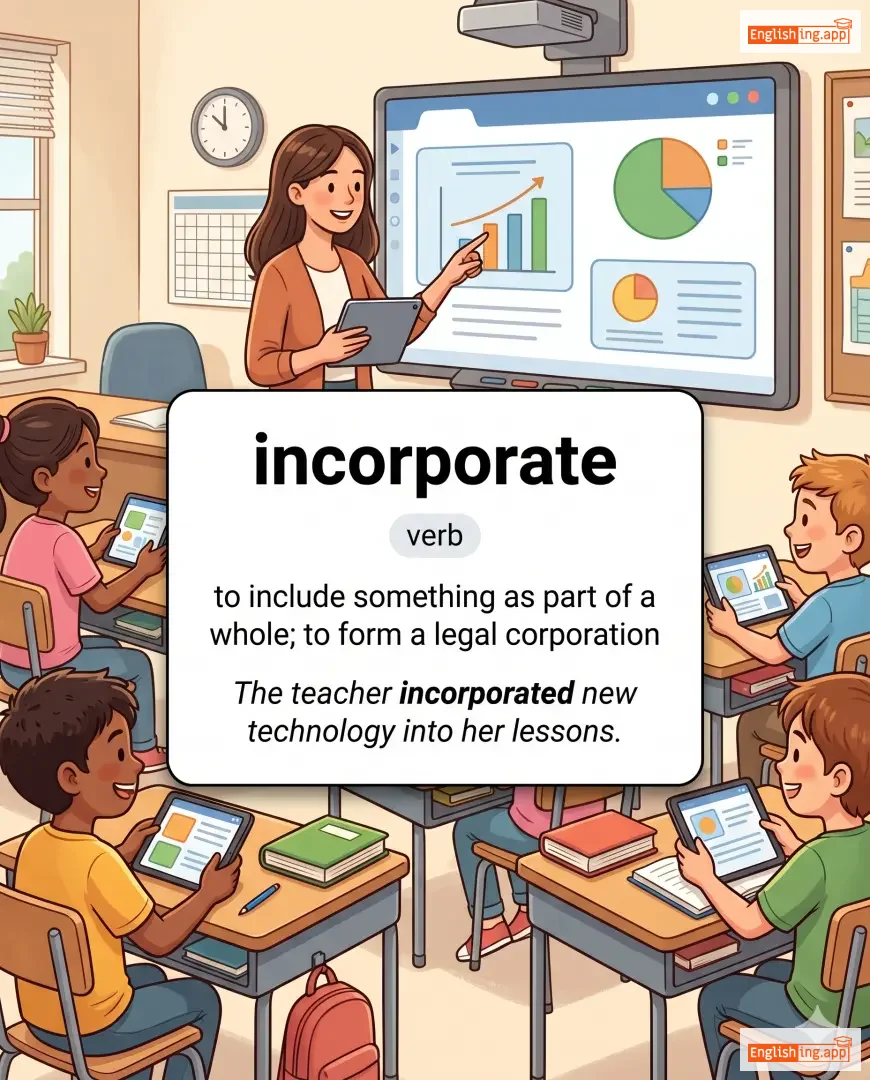
to include something as part of a whole; to form a legal corporation
••••••
|
The teacher incorporated new technology into her lessons.
老师将新技术融入到她的课程中。
••••••
|
老师将新技术融入到她的课程中。
Laoshi jiang xin jishu rongru dao ta de kecheng zhong.
••••••
|
incorporate into
融入到
••••••
|
to include something as part of a larger thing
••••••
|
融入到
rongru dao
••••••
|
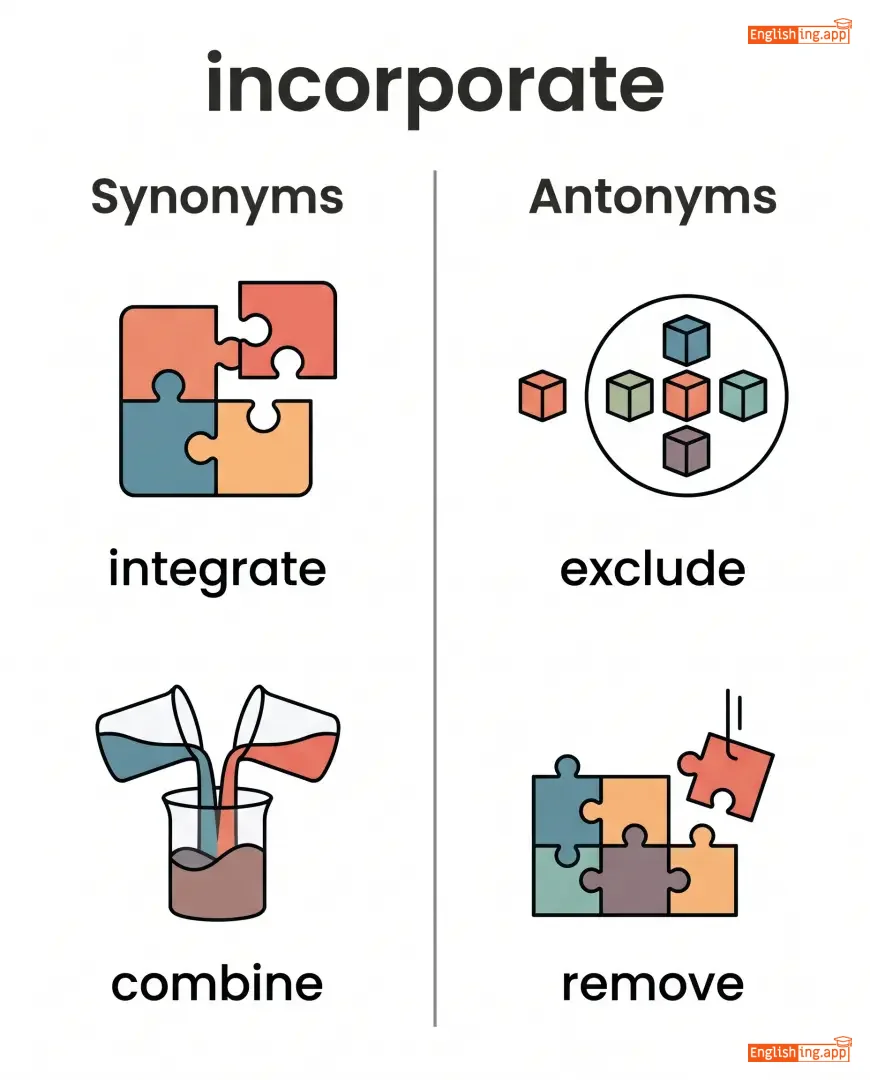
integrate, combine, include, merge, embody
••••••
|
exclude, remove, separate
••••••
|
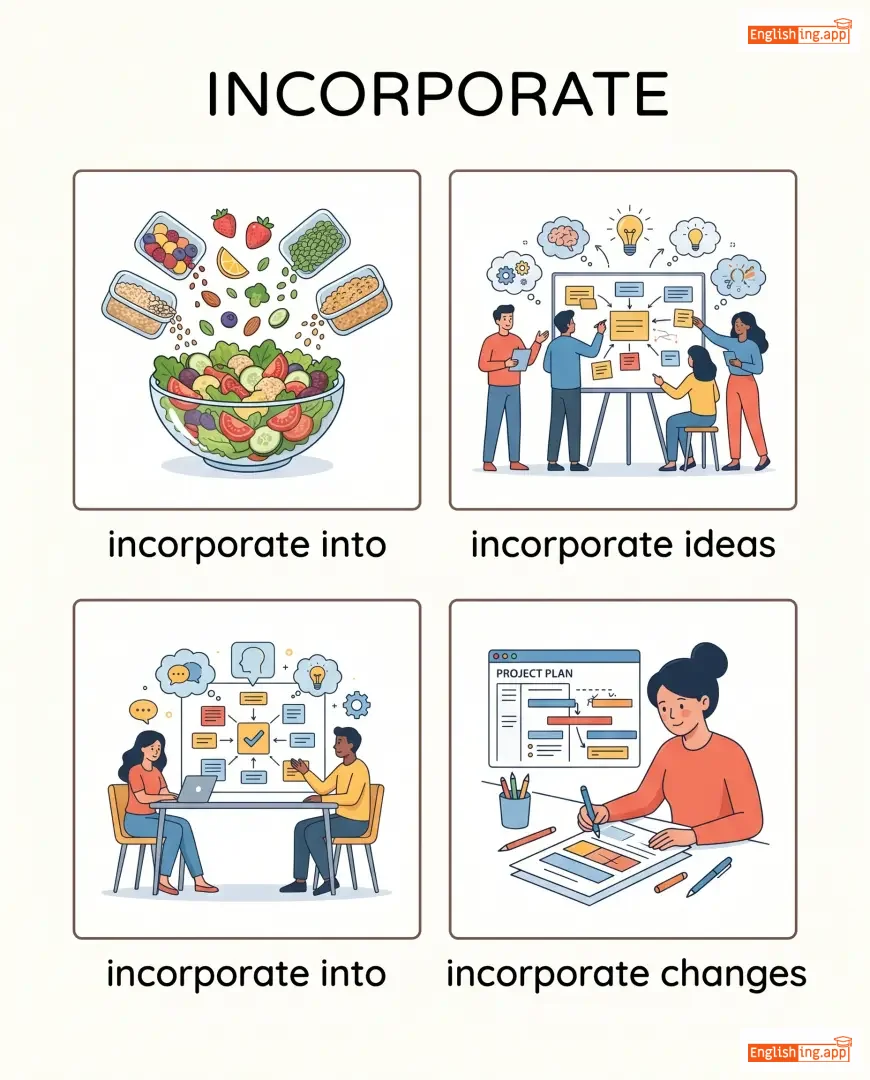
incorporate into, incorporate ideas, incorporate changes
••••••
|
融入意味着把某个部分合并进一个更大的整体——就像拼图游戏。
••••••
|
|
❌
••••••
|
/ɪnkəˈrɛkt/
adjective
(不正确)
••••••
|
- •••••• |
不正确
bù zhèngquè
••••••
|
- •••••• | - •••••• | - •••••• | - •••••• |
not correct or accurate
••••••
|
The information you provided was incorrect. |
您提供的信息是错误的。
Nín tígōng de xìnxī shì cuòwù de.
••••••
|
- •••••• | - •••••• | - •••••• |
wrong, erroneous, inaccurate, false
••••••
|
correct, accurate, right
••••••
|
incorrect answer, incorrect information, incorrect decision
••••••
|
Incorrect sounds like 'in core' – imagine your core knowledge being wrong.
••••••
|
|
📈
••••••
|
/ɪnˈkriːs/
verb
(yīnkùlìsī)
••••••
|

|
增加
zēngjiā
••••••
|
increased
yīnkùlìsīd
••••••
|
increased
yīnkùlìsīd
••••••
|
increases
yīnkùlìsī
••••••
|
increasing
yīnkùlìsīng
••••••
|
to make something larger in size, number, or amount
••••••
|
The company plans to increase its workforce next year.
公司计划明年增加劳动力。
••••••
|
公司计划明年增加劳动力。
Gōngsī jìhuà míngnián zēngjiā láodònglì.
••••••
|
increase by leaps and bounds
激增
••••••
|
to grow or improve very quickly
••••••
|
急剧增加
jíjù zēngjiā
••••••
|
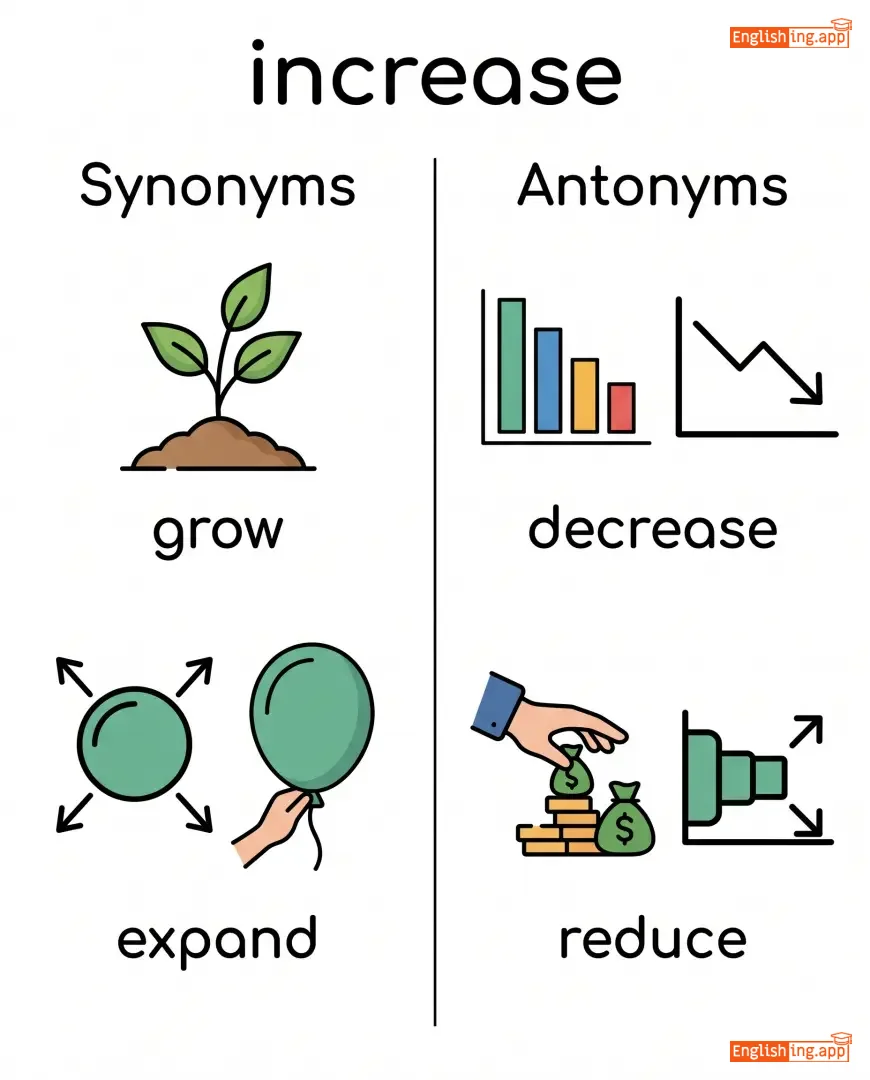
grow, expand, rise, boost, escalate
••••••
|
decrease, reduce, lessen
••••••
|
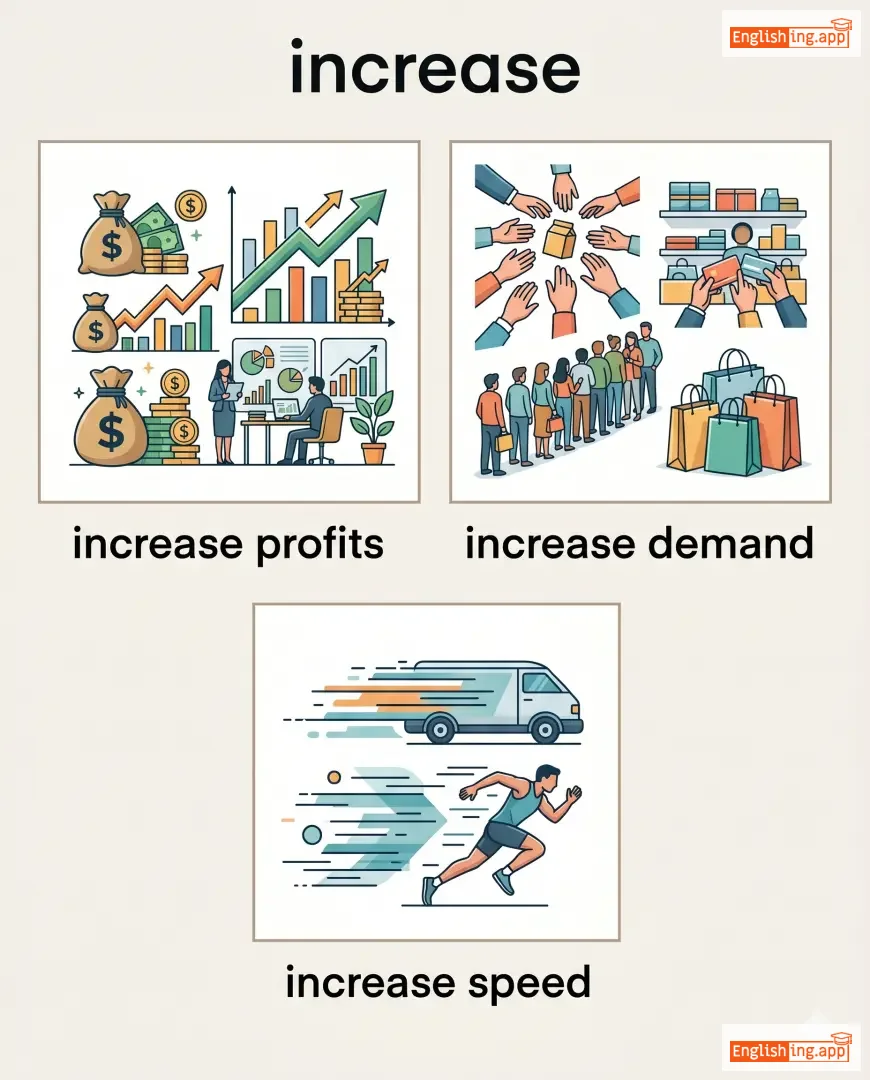
increase profits, increase demand, increase speed
••••••
|
Increase意味着增加,比如价格增加时
••••••
|
|
📈
••••••
|
/ɪnˈkriːst/
verb
(yīngkèrlè)
••••••
|
- •••••• |
增加的
zēngjiā de
••••••
|
increased
yīngkèrlè
••••••
|
increased
yīngkèrlè
••••••
|
increases
yīngkèrsī
••••••
|
increasing
yīngkèrsīng
••••••
|
became greater in size, amount, or degree
••••••
|
The company's revenue increased last year.
公司去年收入增加了。
••••••
|
公司去年收入增加了。
Gōngsī qùnián shōurù zēngjiā le.
••••••
|
increased by leaps and bounds
迅速增长
••••••
|
to grow or improve very quickly
••••••
|
迅速增长
xùn sù zēng zhǎng
••••••
|
rose, grew, expanded, escalated, surged
••••••
|
decreased, declined, diminished
••••••
|
increased demand, increased pressure, increased risk, increased use
••••••
|
增加就像公司每年增加的收入一样!
••••••
|
|
➕
••••••
|
/ɪnˈkriːsɪŋ/
verb
(yincrisiing)
••••••
|
|
增加
zengjia
••••••
|
increased
yincristed
••••••
|
increased
yincristed
••••••
|
increases
yincreces
••••••
|
increasing
yincrisiing
••••••
|
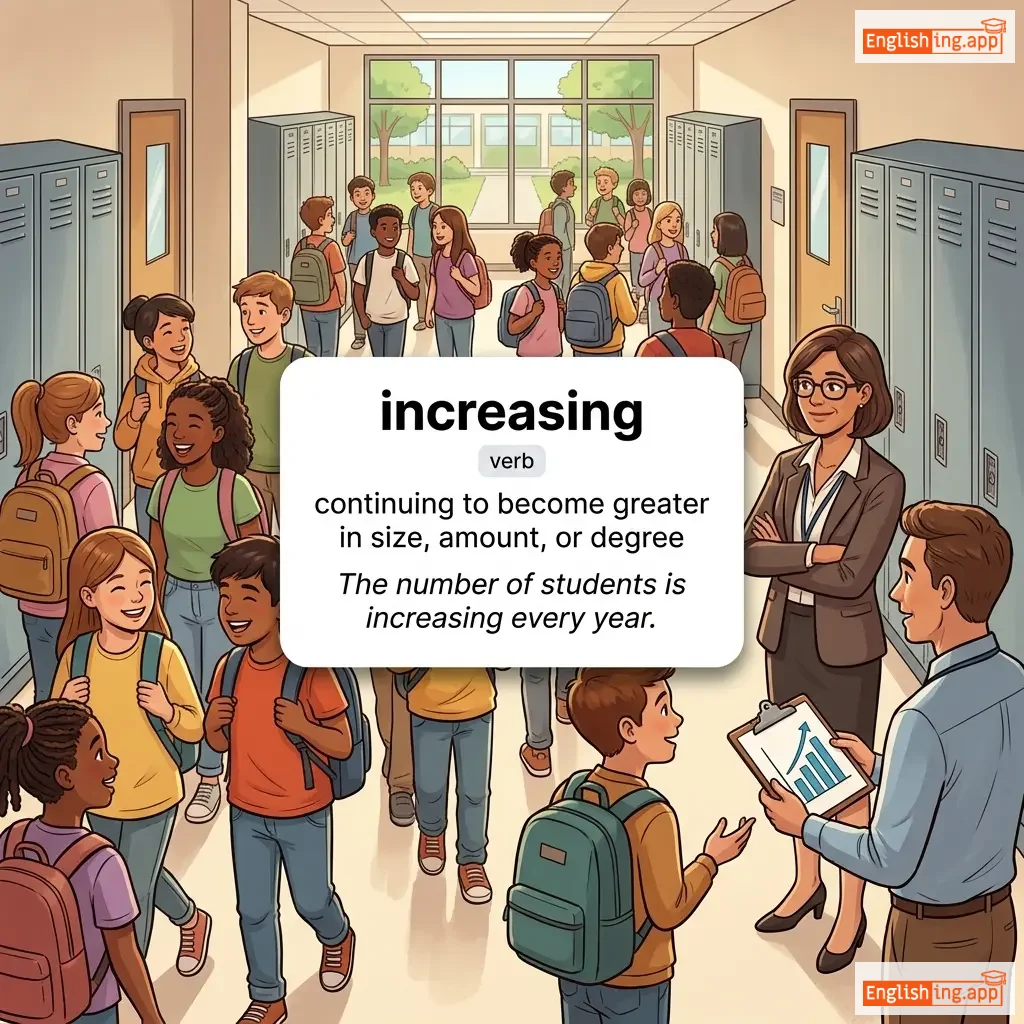
continuing to become greater in size, amount, or degree
••••••
|
The number of students is increasing every year.
学生人数每年都在增加。
••••••
|
学生人数每年都在增加。
Xuesheng renshu meinian dou zai zengjia.
••••••
|
increasing returns
递增回报
••••••
|
when output grows faster than input
••••••
|
递增回报
dizeng huibao
••••••
|
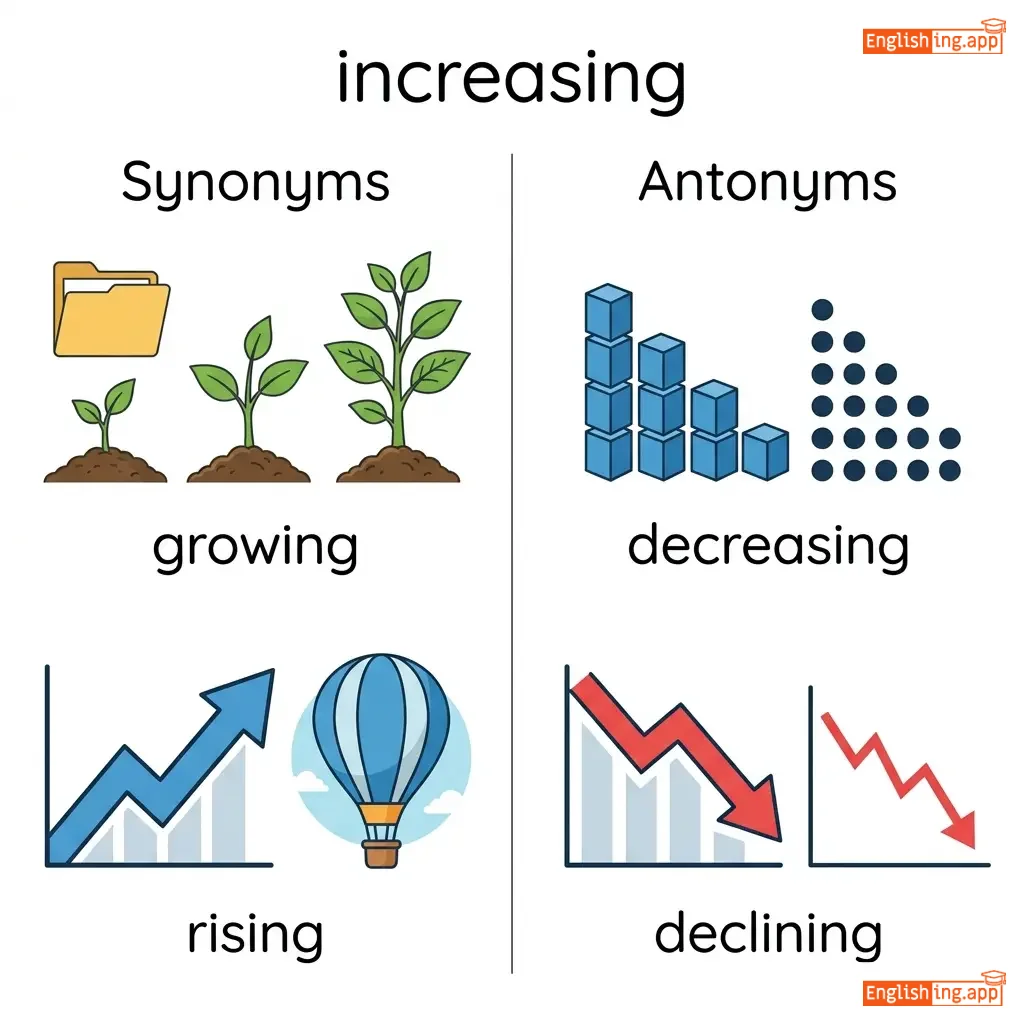
growing, rising, expanding, escalating, mounting
••••••
|
decreasing, declining, reducing
••••••
|
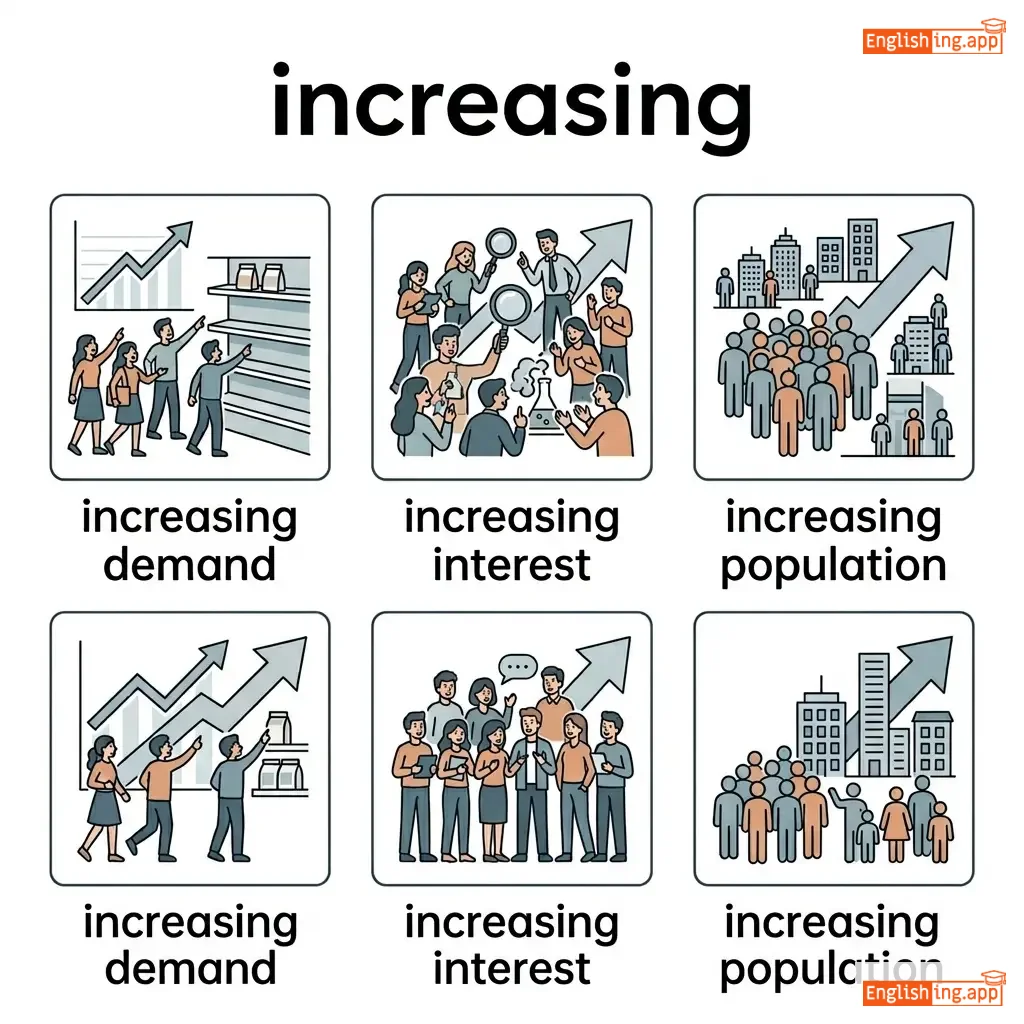
increasing demand, increasing interest, increasing population, increasing rate
••••••
|
Increasing意味着一切都在增加 ➕ 比如工资增加
••••••
|
|
📊
••••••
|
/ɪnˈkriːsɪŋli/
adverb
(ɪnˈkriːsɪŋli)
••••••
|
- •••••• |
越来越多
yuè lái yuè duō
••••••
|
- •••••• | - •••••• | - •••••• | - •••••• |
more and more over time
••••••
|
People are increasingly concerned about climate change. |
人们对气候变化的关注越来越多。
Rénmen duì qìhòu biànhuà de guānzhù yuè lái yuè duō.
••••••
|
- •••••• | - •••••• | - •••••• |
progressively, steadily, gradually, more and more
••••••
|
decreasingly, less
••••••
|
increasingly important, increasingly difficult, increasingly popular
••••••
|
Increasingly意味着随着时间越来越多 — 📊 气候变化的关注越来越大
••••••
|
|
🤯
••••••
|
/ɪnˈkrɛdəbl/
adjective
(ɪnˈkrɛdɪbl)
••••••
|
- •••••• |
难以置信的
nán yǐ zhì xìn de
••••••
|
- •••••• | - •••••• | - •••••• | - •••••• |
so extraordinary that it is hard to believe; amazing
••••••
|
The view from the mountain was incredible. |
从山顶看到的景色难以置信。
Cóng shāndǐng kàn dào de jǐngsè nán yǐ zhì xìn.
••••••
|
That's incredible! |
an exclamation used to express amazement
••••••
|
太不可思议了!
Tài bù kě sī yì le!
••••••
|
amazing, unbelievable, astonishing, extraordinary, marvelous
••••••
|
ordinary, believable, normal
••••••
|
incredible story, incredible experience, incredible journey, incredible talent
••••••
|
Incredible 意味着 IN+credible — 如此非凡以至于难以置信 🤯
••••••
|
|
💸
••••••
|
/ɪnˈkɜːr/
verb
(yīnkè)
••••••
|
- •••••• |
遭受
zāoshòu
••••••
|
incurred
yīnkèd
••••••
|
incurred
yīnkèd
••••••
|
incurs
yīnkèrs
••••••
|
incurring
yīnkèring
••••••
|
To bring upon oneself something undesirable, usually as a result of actions.
••••••
|
He incurred a fine for parking in the wrong place.
他因在错误的地方停车而被罚款。
••••••
|
他因在错误的地方停车而被罚款。
Tā yīn zài cuòwù de dìfāng tíngchē ér bèi fákuǎn.
••••••
|
- •••••• | - •••••• | - •••••• |
suffer, sustain, attract, experience, bring on
••••••
|
avoid, escape, evade
••••••
|
incur debt, incur expense, incur loss, incur penalty
••••••
|
Incur = 自己做错事,遭受惩罚
••••••
|
|
🚫
••••••
|
/ɪnˈdiːsənt/
adjective
(因迪森特)
••••••
|
- •••••• |
不雅的
buya de
••••••
|
- •••••• | - •••••• | - •••••• | - •••••• |
not conforming to accepted standards of behavior or morality; improper or offensive
••••••
|
He was warned for making an indecent remark during the meeting.
他 因 说 因迪森特 的 评论 而 被 警告。
••••••
|
他因为说了不雅的话而受到警告。
ta yinwei shuo le buya de hua er shoudao jinggao
••••••
|
indecent exposure
因迪森特 暴露
••••••
|
the act of intentionally showing private parts in public, considered offensive
••••••
|
不雅暴露
buya baolu
••••••
|
improper, offensive, obscene, vulgar, unseemly
••••••
|
decent, proper, respectable
••••••
|
indecent behavior, indecent remark, indecent language, indecent act
••••••
|
不雅 = 不 decent → indecent
••••••
|
|
✅
••••••
|
/ɪnˈdiːd/
adverb
(因迪德)
••••••
|
- •••••• |
确实
quèshí
••••••
|
- •••••• | - •••••• | - •••••• | - •••••• |
used to emphasize or confirm a statement
••••••
|
It was a long journey indeed.
这是一次漫长的旅行,确实。
••••••
|
这是一次漫长的旅行,确实。
Zhè shì yīcì màncháng de lǚxíng, quèshí.
••••••
|
yes indeed
是的,确实
••••••
|
used to strongly agree with someone
••••••
|
是的,确实
Shì de, quèshí
••••••
|
certainly, truly, really, actually, definitely
••••••
|
doubtfully, uncertainly
••••••
|
indeed true, yes indeed, thank you indeed
••••••
|
Indeed 的意思是 '确实' ✅ 就像 'In deed' 意味着 '在行动中'。
••••••
|

