|
絵文字
|
単語 | Images | 翻訳 | 過去 | 過去分詞 | 三人称単数 | 動名詞 | 意味 | 例文 | 例文の翻訳 | 表現例 | 表現例の意味 | 表現例の翻訳 | 同義語 | 対義語 | コロケーション | ニーモニック |
|---|---|---|---|---|---|---|---|---|---|---|---|---|---|---|---|---|---|
|
⚔️
••••••
|
/əˈseɪl/
verb
(アセイル)
••••••
|
- •••••• |
攻撃する
kōgeki suru
••••••
|
assailed
アセイルド
••••••
|
assailed
アセイルド
••••••
|
assails
アセイルス
••••••
|
assailing
アセイリング
••••••
|
to attack violently, either physically or with words
••••••
|
The politician was assailed with difficult questions.
政治家は難しい質問で攻撃された。
••••••
|
政治家は難しい質問で攻撃された。
Seijika wa muzukashī shitsumon de kōgeki sareta.
••••••
|
- •••••• | - •••••• | - •••••• |
attack, assault, criticize, storm, beset
••••••
|
defend, support, protect
••••••
|
assail someone, assail with questions, assail the enemy, assail verbally
••••••
|
Assailは '攻撃する' に似ていて、意味は攻撃するです。
••••••
|
|
👊
••••••
|
/əˈseɪlənt/
noun
(アセイラント)
••••••
|
- •••••• |
攻撃者
kougeki-sha
••••••
|
- •••••• | - •••••• | - •••••• | - •••••• |
a person who attacks another
••••••
|
The police arrested the assailant at the scene. |
警察は現場で攻撃者を逮捕しました。
Keisatsu wa genba de kougeki-sha wo taiho shimashita.
••••••
|
- •••••• | - •••••• | - •••••• |
attacker, aggressor, assaulter, invader
••••••
|
victim, defender, protector
••••••
|
armed assailant, unknown assailant, capture the assailant, assailant with weapon
••••••
|
Assailantは攻撃者、つまり他人を攻撃する人です。
••••••
|
|
🔪
••••••
|
/əˈsæsɪneɪt/
verb
(アサシネイト)
••••••
|
- •••••• |
暗殺
ansatsu
••••••
|
assassinated
アサシネイテッド
••••••
|
assassinated
アサシネイテッド
••••••
|
assassinates
アサシネイツ
••••••
|
assassinating
アサシネイティング
••••••
|
To murder someone important, often a political or religious leader, usually by surprise attack.
••••••
|
The rebels planned to assassinate the king.
反乱者たちは王をアサシネイトする計画を立てた。
••••••
|
反乱者たちは王を暗殺する計画を立てた。
Hanran-sha-tachi wa ō o ansatsu suru keikaku o tateta.
••••••
|
- •••••• | - •••••• | - •••••• |
murder, kill, slay, eliminate, dispatch
••••••
|
protect, save, guard
••••••
|
assassinate a leader, assassinate a president, attempt to assassinate
••••••
|
暗殺は、夜の影のように秘密で行う殺害。
••••••
|
|
☠️
••••••
|
/əˌsæsɪˈneɪʃən/
noun
(アサシネーション)
••••••
|
- •••••• |
暗殺
ansatsu
••••••
|
- •••••• | - •••••• | - •••••• | - •••••• |
The act of killing someone important, often for political or ideological reasons.
••••••
|
The assassination of the president shocked the nation. |
大統領の暗殺は国全体を驚かせた。
Daitōryō no ansatsu wa kuni zentai o odorokaseta.
••••••
|
- •••••• | - •••••• | - •••••• |
murder, killing, execution, slaying
••••••
|
protection, rescue, preservation
••••••
|
political assassination, assassination attempt, assassination plot
••••••
|
暗殺は政治的理由で重要な人物を殺すことを思い出させます。
••••••
|
|
⚔️
••••••
|
/əˈsɔːlt/
noun, verb
(アソルト)
••••••
|
- •••••• |
暴行
bōkō
••••••
|
assaulted
アソルテッド
••••••
|
assaulted
アソルテッド
••••••
|
assaults
アソルツ
••••••
|
assaulting
アソルティング
••••••
|
a physical attack or to attack someone violently
••••••
|
He was charged with assault after the fight.
彼は喧嘩の後で暴行の罪で起訴されました。
••••••
|
喧嘩の後で暴行の罪で起訴されました。
Kenka no ato de bōkō no tsumi de kisosaremashita.
••••••
|
sexual assault
性的暴行
••••••
|
unwanted sexual contact or attack
••••••
|
性的暴行
seiteki bōkō
••••••
|
attack, strike, aggression, offensive
••••••
|
defense, protection
••••••
|
commit assault, charged with assault, physical assault
••••••
|
Assaultは暴行を意味します — 'A Salt attack'を塩の攻撃として覚えておいてください。
••••••
|
|
🧩
••••••
|
/əˈsɛmbəl/
verb
(アセンブル)
••••••
|
- •••••• |
集める
atsumeru
••••••
|
assembled
アセンブルド
••••••
|
assembled
アセンブルド
••••••
|
assembles
アセンブルス
••••••
|
assembling
アセンブリング
••••••
|
to gather or bring together in one place
••••••
|
The students assembled in the hall for the meeting.
学生たちは会議のためにホールに集まりました。
••••••
|
学生たちは会議のためにホールに集まりました。
Gakusei-tachi wa kaigi no tame ni hōru ni atsumarimashita.
••••••
|
assemble the pieces
ピースを組み立てる
••••••
|
to put parts together to make a whole
••••••
|
ピースを組み立てる
Pīsu o kumitateru
••••••
|
gather, collect, convene, accumulate, compile
••••••
|
disperse, scatter, divide
••••••
|
assemble a team, assemble a group, assemble furniture, assemble data
••••••
|
Assemble は集めるという意味 — 覚えておこう ‘すべてのメンバーが集まった’
••••••
|
|
🏫
••••••
|
/əˈsɛmbli/
noun
(アセンブリー)
••••••
|
- •••••• |
集会
shūkai
••••••
|
- •••••• | - •••••• | - •••••• | - •••••• |
a group of people gathered together for a common purpose or the act of putting parts together to form something
••••••
|
The school held an assembly to discuss the new rules. |
学校は新しい規則について話し合うために集会を開きました。
Gakkou wa atarashī kisoku ni tsuite hanashiau tame ni shūkai o hirakimashita.
••••••
|
freedom of assembly |
the right to gather together peacefully
••••••
|
集会の自由
shūkai no jiyū
••••••
|
gathering, meeting, congregation, conference, convention
••••••
|
disbandment, separation
••••••
|
school assembly, general assembly, legislative assembly, assembly line
••••••
|
Assemblyはみんなが集まること — 学校でみんなで集会を開くように。
••••••
|
|
✅
••••••
|
/əˈsɛnt/
noun, verb
(アセント)
••••••
|
- •••••• |
同意
doui
••••••
|
assented
アセントゥード
••••••
|
assented
アセントゥード
••••••
|
assents
アセントス
••••••
|
assenting
アセントイン
••••••
|
To agree to something, especially after careful consideration; an expression of approval.
••••••
|
She nodded her head in silent assent.
彼女は静かにうなずいた。
••••••
|
彼女は静かにうなずいた。
Kanojo wa shizuka ni unazuita.
••••••
|
give assent
同意を与える
••••••
|
To formally agree or approve something.
••••••
|
同意を与える
Doui o ataeru
••••••
|
agreement, approval, consent, endorsement, acceptance
••••••
|
refusal, dissent, denial
••••••
|
royal assent, silent assent, assent to a proposal
••••••
|
Assent = 同意 (doui), うなずきで同意する。
••••••
|
|
📢
••••••
|
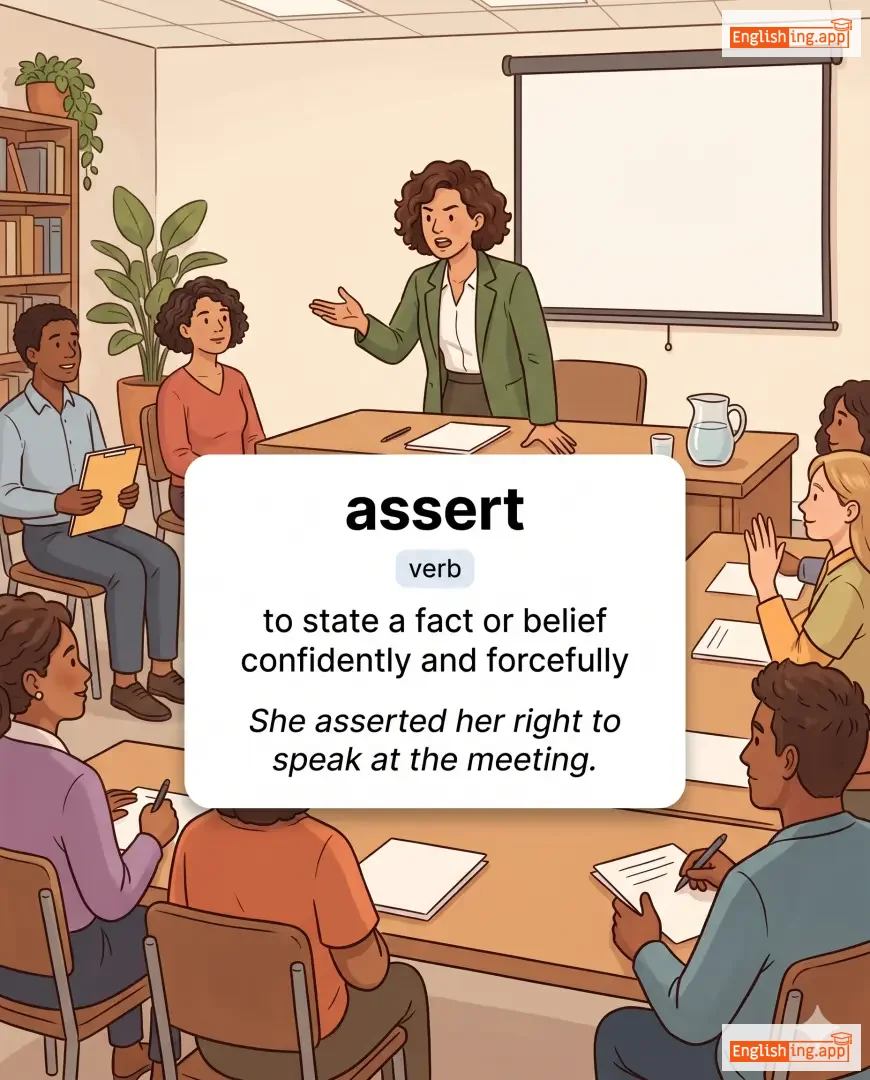
/əˈsɜːrt/
verb
(アサート)
••••••
|
|
主張する
shuchou suru
••••••
|
asserted
アサーテッド
••••••
|
asserted
アサーテッド
••••••
|
asserts
アサーツ
••••••
|
asserting
アサーティング
••••••
|
to state a fact or belief confidently and forcefully
••••••
|
She asserted her right to speak at the meeting.
彼女は会議で発言する権利を主張した。
••••••
|
彼女は会議で発言する権利を主張した。
Kanojo wa kaigi de hatsugen suru kenri wo shuchou shita.
••••••
|
assert oneself
自分を主張する
••••••
|
to behave confidently and firmly to make others respect your rights or opinions
••••••
|
自分を主張する
jibun wo shuchou suru
••••••
|
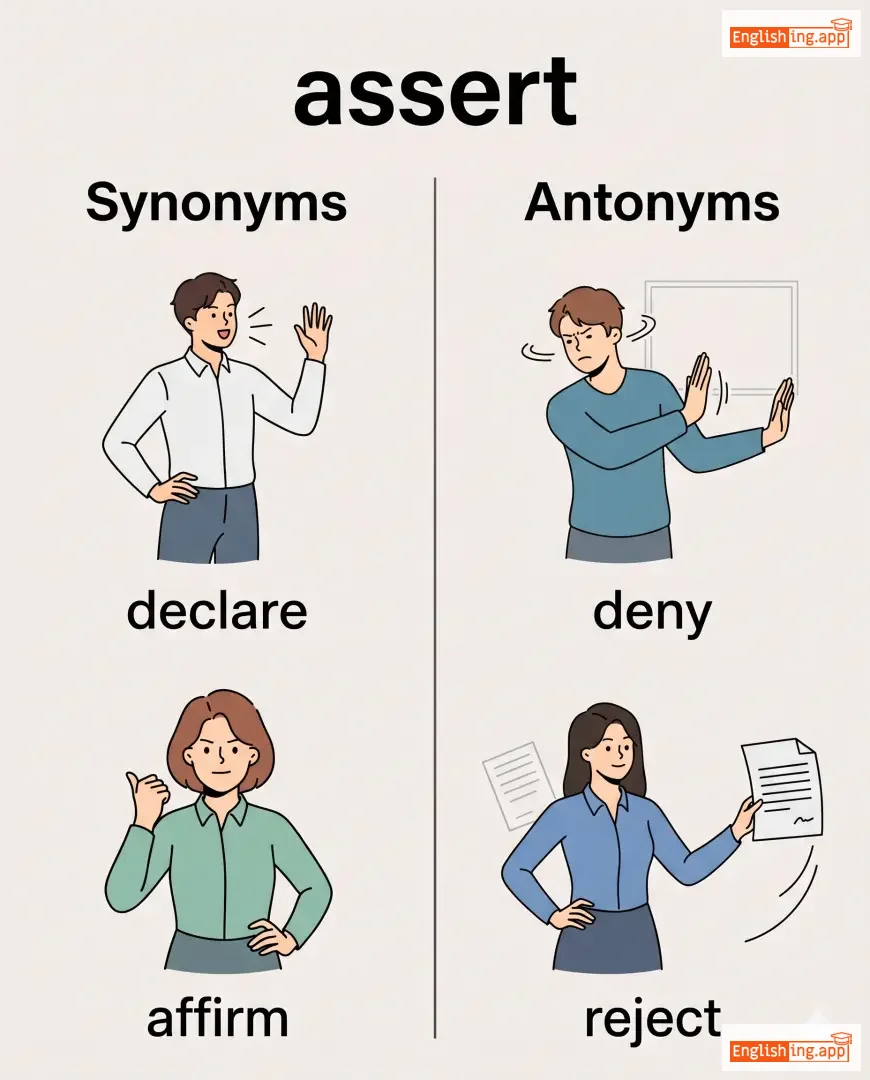
declare, affirm, maintain, insist, claim
••••••
|
deny, reject, abandon
••••••
|
assert rights, assert control, assert authority, assert independence
••••••
|
Assertは「主張する」とは、自信を持って言うこと。
••••••
|
|
🗣️
••••••
|
/əˈsɜːʃən/
noun
(アサーション)
••••••
|
- •••••• |
主張
shuchou
••••••
|
- •••••• | - •••••• | - •••••• | - •••••• |
a confident and forceful statement of fact or belief
••••••
|
Her assertion that she was right was met with silence.
彼女の自分が正しいというアサーションは、沈黙とともに受け入れられました。
••••••
|
彼女の自分が正しいという主張は、沈黙とともに受け入れられました。
Kanojo no jibun ga tadashii to iu shuchou wa, chinmoku to tomo ni ukeireraremashita.
••••••
|
- •••••• | - •••••• | - •••••• |
declaration, statement, claim, affirmation
••••••
|
denial, rejection, doubt
••••••
|
strong assertion, make an assertion, assertion of rights
••••••
|
Assertion - 主張、assertすることから、力強い主張 (claim)が生まれる。
••••••
|
|
📊
••••••
|
/əˈsɛs/
verb
(アセス)
••••••
|
- •••••• |
評価する
hyousa suru
••••••
|
assessed
アセスド
••••••
|
assessed
アセスド
••••••
|
assesses
アセスス
••••••
|
assessing
アセスイング
••••••
|
to evaluate or estimate the nature, ability, or quality of something
••••••
|
The teacher assessed the students' progress.
教師は学生の進捗を評価しました。
••••••
|
教師は学生の進捗を評価しました。
Kyoushi wa gakusei no shinchoku o hyouka shimashita.
••••••
|
assess the situation
状況を評価する
••••••
|
to carefully evaluate the circumstances before acting
••••••
|
状況を評価する
joukyou o hyouka suru
••••••
|
evaluate, judge, appraise, estimate, measure
••••••
|
ignore, overlook, neglect
••••••
|
assess progress, assess damage, assess risk, assess value
••••••
|
Assessの意味は評価する — '試験前に自分を評価して準備する。'
••••••
|
|
📊
••••••
|
/əˈsɛsmənt/
noun
(アセスメント)
••••••
|
|
評価
hyouka
••••••
|
- •••••• | - •••••• | - •••••• | - •••••• |
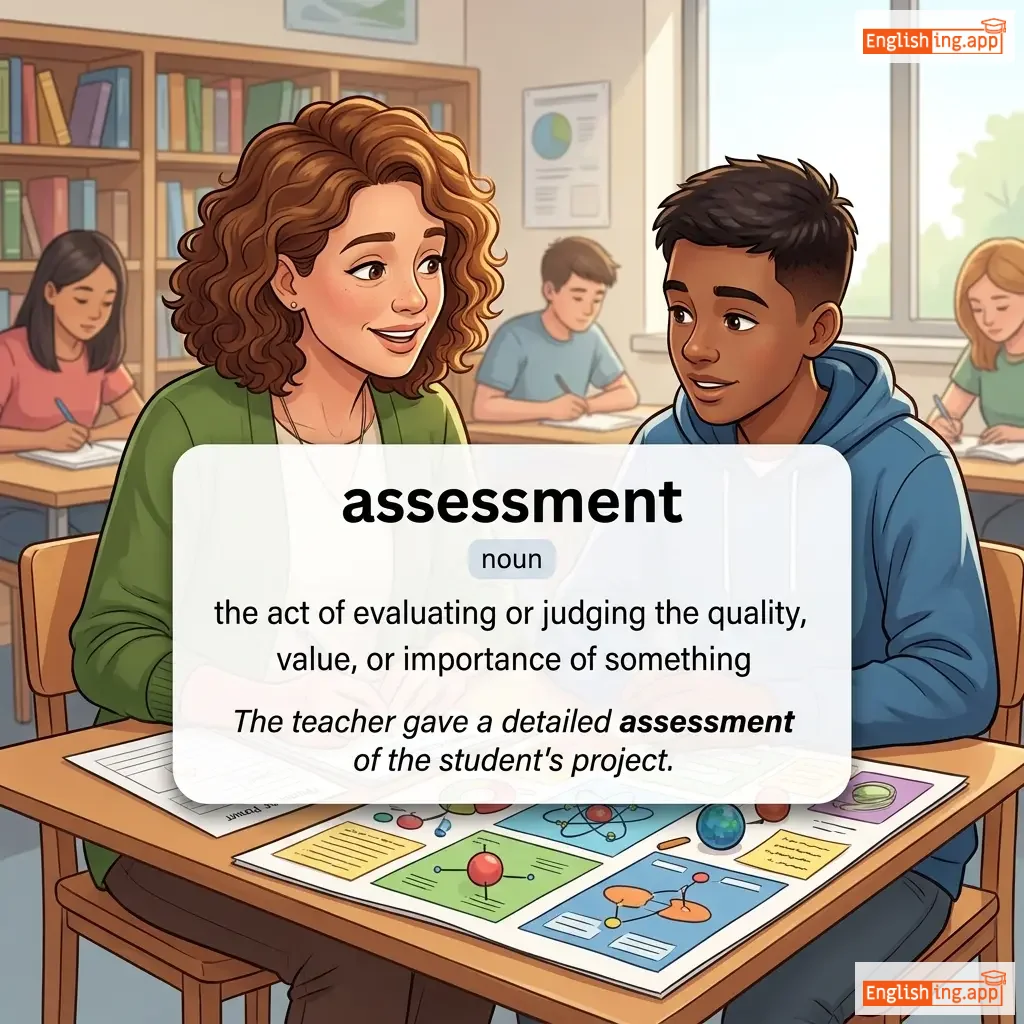
the act of evaluating or judging the quality, value, or importance of something
••••••
|
The teacher gave a detailed assessment of the student's project. |
先生は学生のプロジェクトの詳細な評価を行いました。
Sensei wa gakusei no purojekuto no shousai na hyouka o okonaimashita.
••••••
|
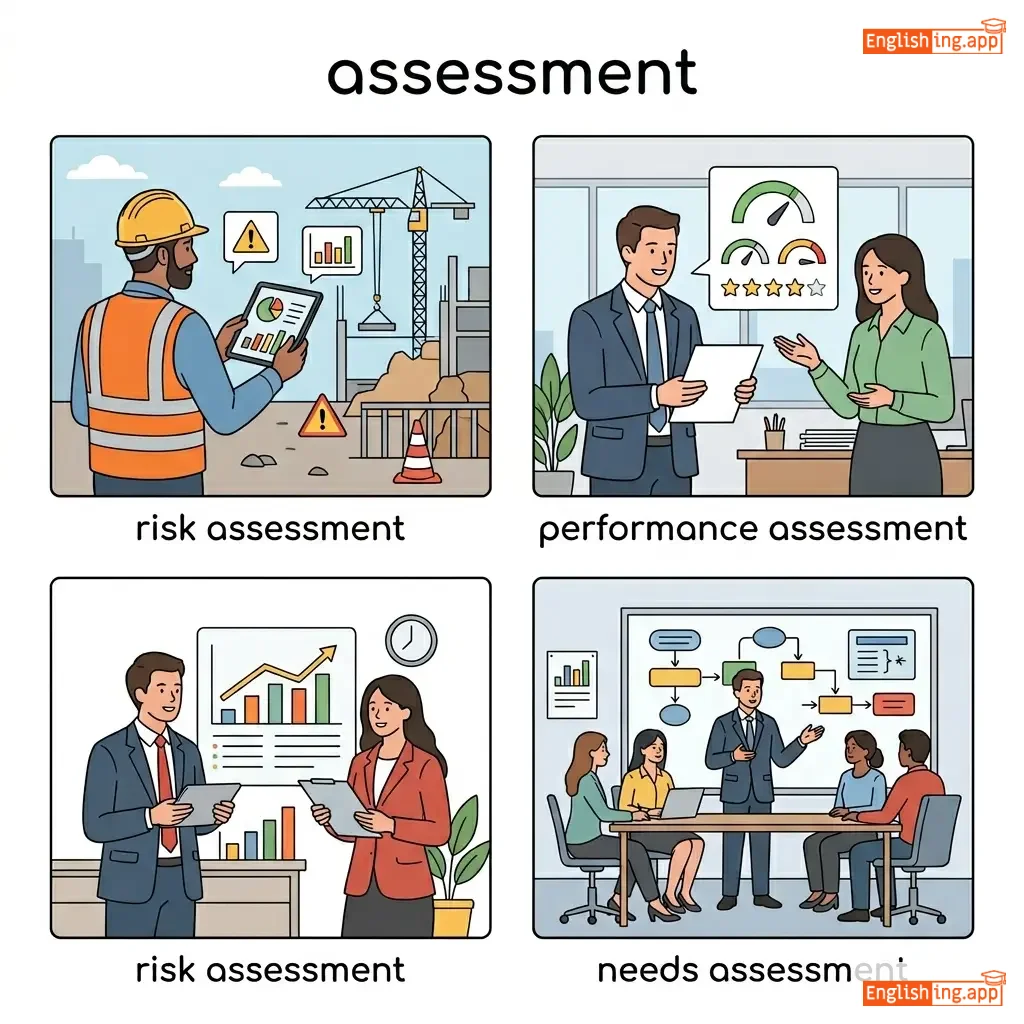
needs assessment |
a systematic process to determine and address needs or gaps
••••••
|
ニーズ評価
niizu hyouka
••••••
|
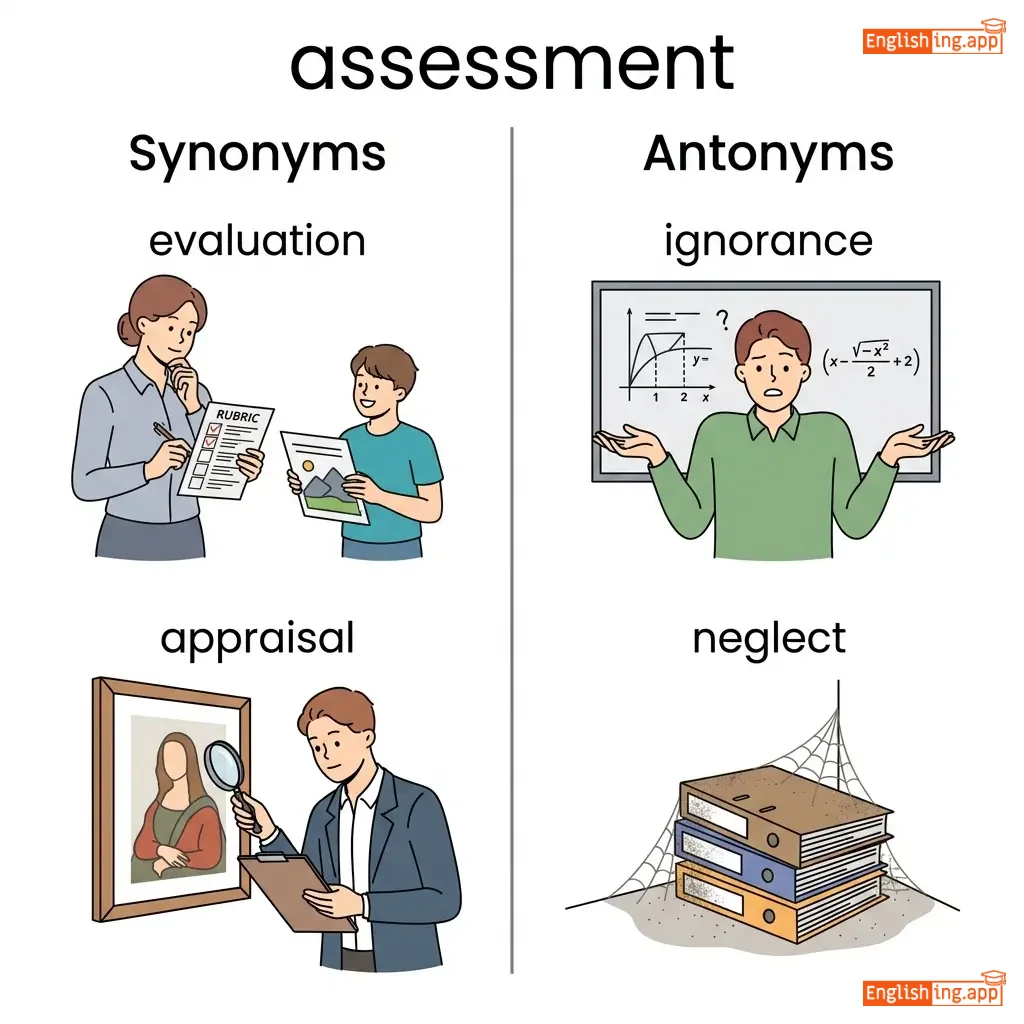
evaluation, appraisal, review, analysis, examination
••••••
|
ignorance, neglect
••••••
|
risk assessment, performance assessment, needs assessment, environmental assessment
••••••
|
Assessment とは評価 (評価) です
••••••
|
|
💎
••••••
|
/ˈæsɛt/
noun
(アセット)
••••••
|

|
資産
shisan
••••••
|
- •••••• | - •••••• | - •••••• | - •••••• |
a valuable person, skill, or resource; something owned that has value
••••••
|
Her communication skills are a great asset to the company.
彼女のコミュニケーション能力は会社にとって大きな資産です。
••••••
|
彼女のコミュニケーション能力は会社にとって大きな資産です。
Kanojo no komyunikēshon nōryoku wa kaisha ni totte ōkina shisan desu.
••••••
|
liquid asset
流動資産
••••••
|
an asset that can easily be converted into cash
••••••
|
流動資産
ryūdō shisan
••••••
|
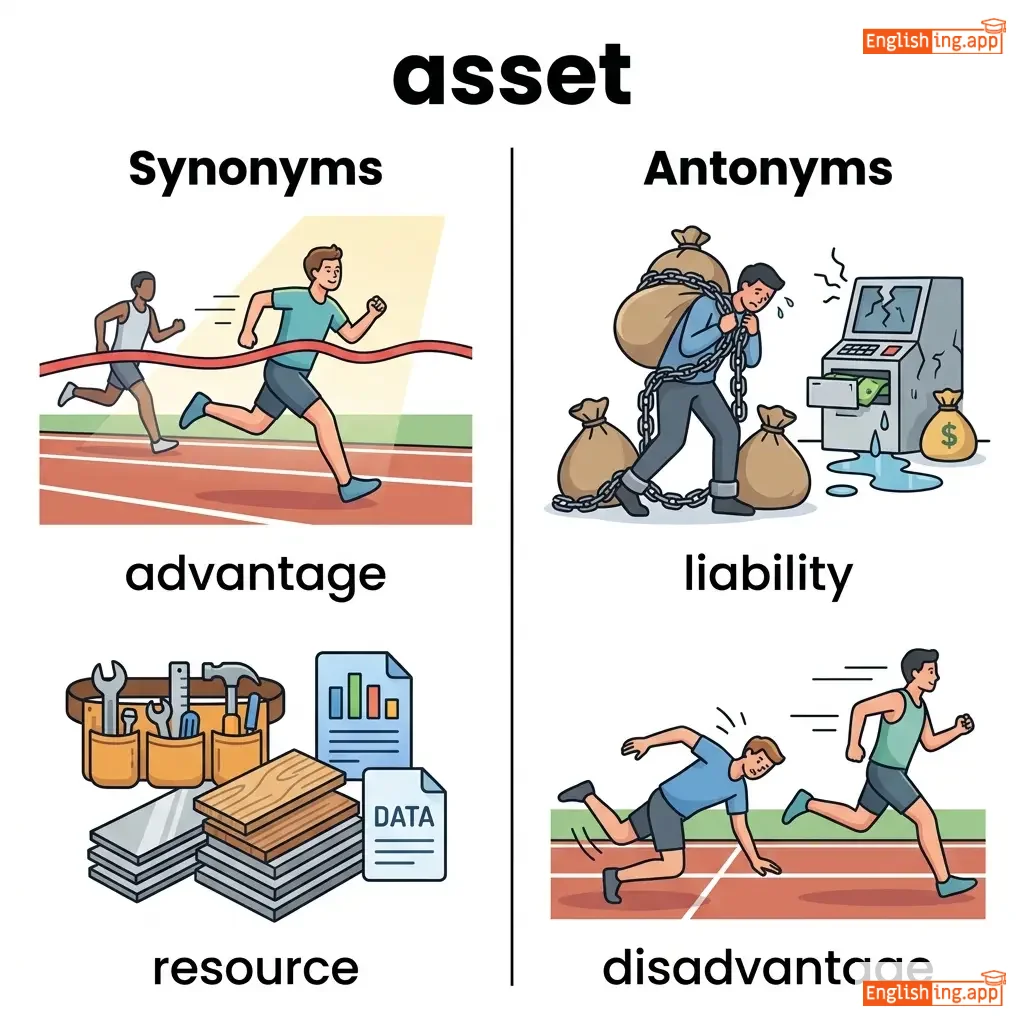
advantage, resource, property, benefit, strength
••••••
|
liability, disadvantage
••••••
|
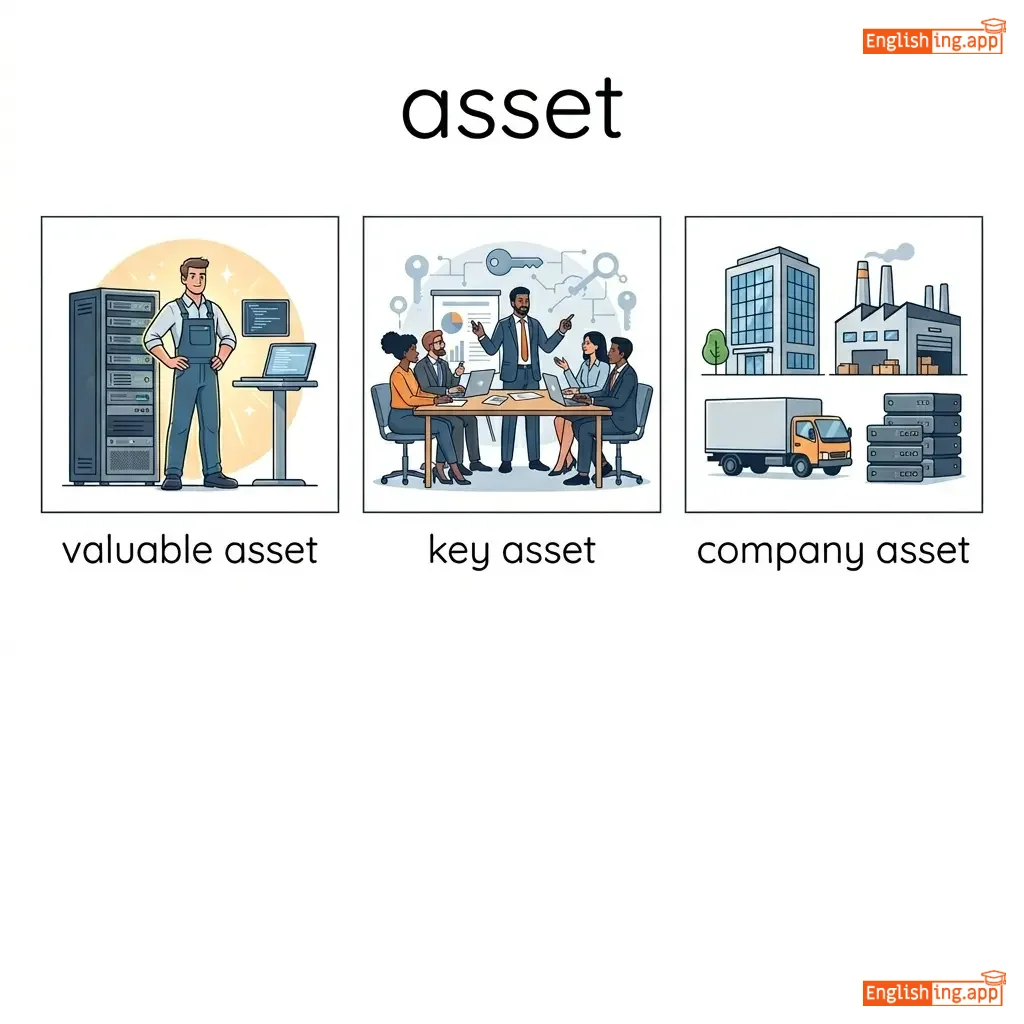
valuable asset, key asset, company asset, financial asset
••••••
|
Assetとは、価値があるものやリソース
••••••
|
|
📝
••••••
|
/əˈsaɪn/
verb
(アサイン)
••••••
|
- •••••• |
割り当てる
wariateru
••••••
|
assigned
アサインド
••••••
|
assigned
アサインド
••••••
|
assigns
アサインズ
••••••
|
assigning
アサイニング
••••••
|
to give someone a task, duty, or responsibility
••••••
|
The manager will assign tasks to the new employees.
マネージャーは新しい従業員に仕事を割り当てる予定です。
••••••
|
マネージャーは新しい従業員に仕事を割り当てる予定です。
Manējā wa atarashī jūgyōin ni shigoto o wariateru yotei desu.
••••••
|
assign blame
責任を押し付ける
••••••
|
to place responsibility for something on someone
••••••
|
責任を押し付ける
sekinin o oshitsukeru
••••••
|
allocate, appoint, designate, delegate, allot
••••••
|
withhold, refuse
••••••
|
assign tasks, assign roles, assign duties, assign responsibility
••••••
|
Assignは、誰かに仕事を割り当てることを意味します。
••••••
|
|
📄
••••••
|
/əˈsaɪnmənt/
noun
(アサインメント)
••••••
|
- •••••• |
課題
kadai
••••••
|
- •••••• | - •••••• | - •••••• | - •••••• |
a task or piece of work given to someone as part of their duties
••••••
|
The students completed their homework assignment on time. |
学生たちは時間通りに宿題を終わらせました。
gakusei-tachi wa jikan doori ni shukudai o owarasemashita.
••••••
|
writing assignment |
a task requiring written work
••••••
|
作文課題
sakubun kadai
••••••
|
task, duty, job, responsibility, project
••••••
|
neglect, avoidance
••••••
|
school assignment, work assignment, group assignment, writing assignment
••••••
|
Assignmentは'アサイン'された課題です – 先生から与えられた仕事
••••••
|
|
🤲
••••••
|
/əˈsɪst/
verb
(アシスト)
••••••
|
- •••••• |
助ける
tasukeru
••••••
|
assisted
アシステッド
••••••
|
assisted
アシステッド
••••••
|
assists
アシスタス
••••••
|
assisting
アシスティング
••••••
|
to help or support someone in doing something
••••••
|
The nurse will assist the doctor during the surgery.
看護師は手術中に医者をアシストします。
••••••
|
看護師は手術中に医者をアシストします。
Kangoshi wa shujutsuchu ni isha wo ashisuto shimasu.
••••••
|
assist in
アシストイン
••••••
|
to help someone with something
••••••
|
助ける
tasukeru
••••••
|
help, support, aid, facilitate, encourage
••••••
|
hinder, obstruct
••••••
|
assist someone, assist with, assist in, assist greatly
••••••
|
アシストは、友達を手伝うことです。
••••••
|
|
🆘
••••••
|
/əˈsɪstəns/
noun
(アシスタンス)
••••••
|
- •••••• |
支援
shien
••••••
|
- •••••• | - •••••• | - •••••• | - •••••• |
help or support given to someone in need
••••••
|
The organization provides financial assistance to students. |
その団体は学生に財政的支援を提供しています。
Sono dantai wa gakusei ni zaiseiteki shien o teikyō shiteimasu.
••••••
|
render assistance |
to provide help or support
••••••
|
支援を行う
shien o okonau
••••••
|
help, support, aid, backing, relief
••••••
|
hindrance, obstruction, neglect
••••••
|
seek assistance, provide assistance, medical assistance, technical assistance
••••••
|
Assistanceは支援を意味し、例えば駅で 'Assistance please' と頼むような場面で使います。
••••••
|
|
👩💼
••••••
|
/əˈsɪstənt/
noun
(アシスタント)
••••••
|
- •••••• |
アシスタント
ashisutanto
••••••
|
- •••••• | - •••••• | - •••••• | - •••••• |
a person who helps or supports another, often in a job
••••••
|
She works as an assistant in a law firm.
彼女は法律事務所でアシスタントとして働いています。
••••••
|
彼女は法律事務所でアシスタントとして働いています。
Kanojo wa hōritsu jimushō de ashisutanto toshite hataraiteimasu.
••••••
|
personal assistant
パーソナルアシスタント
••••••
|
a person employed to help manage someone’s daily work or tasks
••••••
|
パーソナルアシスタント
pāsonaru ashisutanto
••••••
|
helper, aide, deputy, associate, supporter
••••••
|
supervisor, boss, leader
••••••
|
teaching assistant, assistant manager, office assistant, research assistant
••••••
|
アシスタントは、Google Assistantのような、あなたの個人的なサポーターです。
••••••
|
|
🔗
••••••
|
/əˈsoʊsieɪt/
verb
(アソシエイト)
••••••
|
|
関連付ける
kanrendenzukeru
••••••
|
associated
アソシエイテッド
••••••
|
associated
アソシエイテッド
••••••
|
associates
アソシエイツ
••••••
|
associating
アソシエイティング
••••••
|
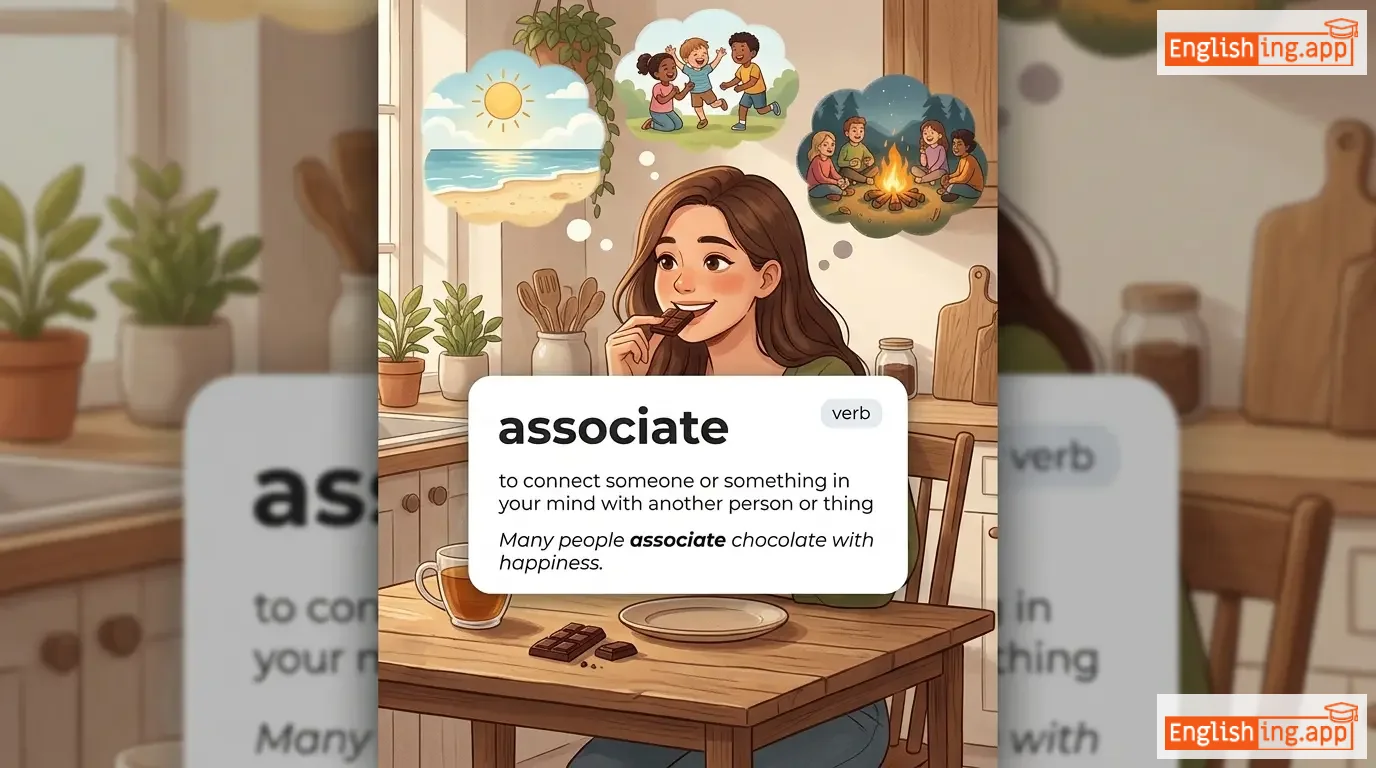
to connect someone or something in your mind with another person or thing
••••••
|
Many people associate chocolate with happiness.
多くの人々がチョコレートと幸せを関連付けます。
••••••
|
多くの人々がチョコレートと幸せを関連付けます。
Ooku no hitobito ga chokoreeto to shiawase o kanrendenzukemasu.
••••••
|
associate with
と関連付ける
••••••
|
to be connected or involved with someone or something
••••••
|
と関連付ける
to kanrendenzukeru
••••••
|
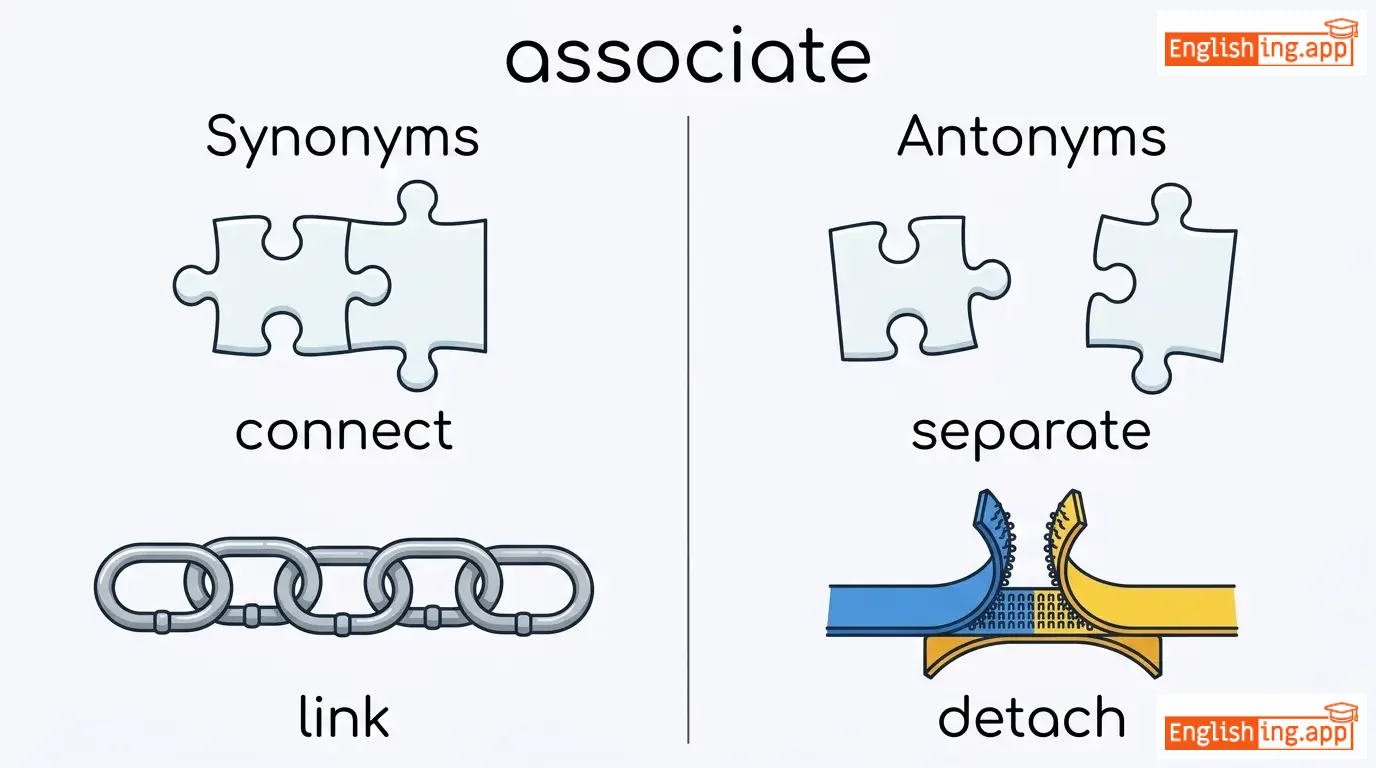
connect, link, relate, join, unite
••••••
|
separate, detach, disconnect
••••••
|
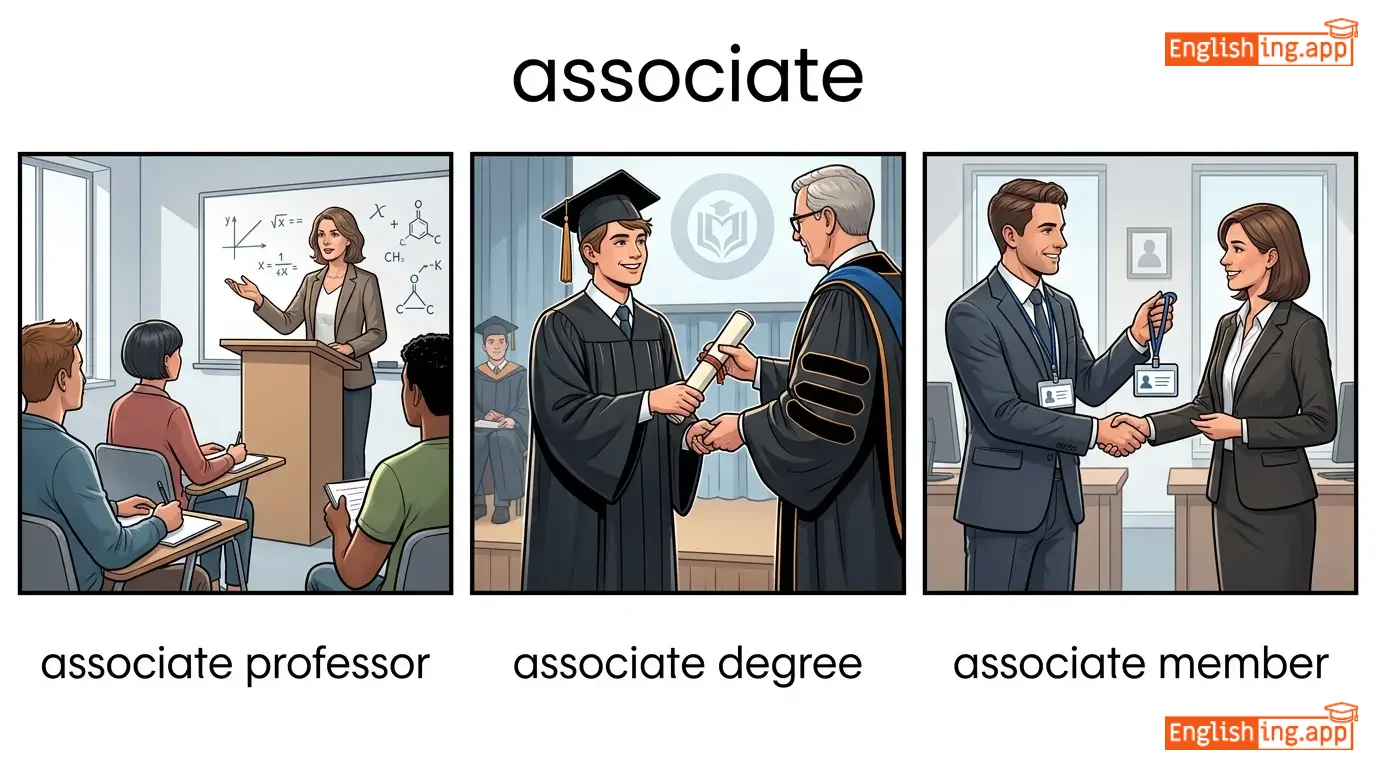
associate professor, associate degree, associate member, strongly associate
••••••
|
関連付けるは結びつける意味です — 例えば、'associate professor'は准教授です。
••••••
|
|
🔗
••••••
|
/əˈsoʊsieɪtɪd/
adjective
(アソシエイテッド)
••••••
|
- •••••• |
関連した
kanren shita
••••••
|
- •••••• | - •••••• | - •••••• | - •••••• |
connected or related to something or someone
••••••
|
She is closely associated with environmental movements. |
彼女は環境運動に密接に関連しています。
Kanojo wa kankyō undō ni missetsu ni kanren shiteimasu.
••••••
|
associated with |
connected or linked to
••••••
|
関連する
kanren suru
••••••
|
connected, linked, related, joined, allied
••••••
|
unrelated, separate, independent
••••••
|
closely associated, directly associated, commonly associated
••••••
|
Associateは接続する意味です — アソシエイテッドは関連したまたは接続されたことを意味します。
••••••
|
|
👥
••••••
|
/əˌsoʊsiˈeɪʃən/
noun
(アソシエーション)
••••••
|
- •••••• |
協会
kyoukai
••••••
|
- •••••• | - •••••• | - •••••• | - •••••• |
an organized group of people who have joined together for a common purpose
••••••
|
She is a member of the local teachers' association. |
彼女は地元の教師協会のメンバーです。
Kanojo wa jimoto no kyoushi kyoukai no menbā desu.
••••••
|
guilt by association |
being blamed for the actions of others you are connected with
••••••
|
連帯責任
rentai sekinin
••••••
|
organization, society, alliance, group, union
••••••
|
individual, disconnection
••••••
|
professional association, trade association, close association
••••••
|
協会はグループや団体を意味します。例えば、サッカー協会はプレーヤーのグループです。
••••••
|
|
😌
••••••
|
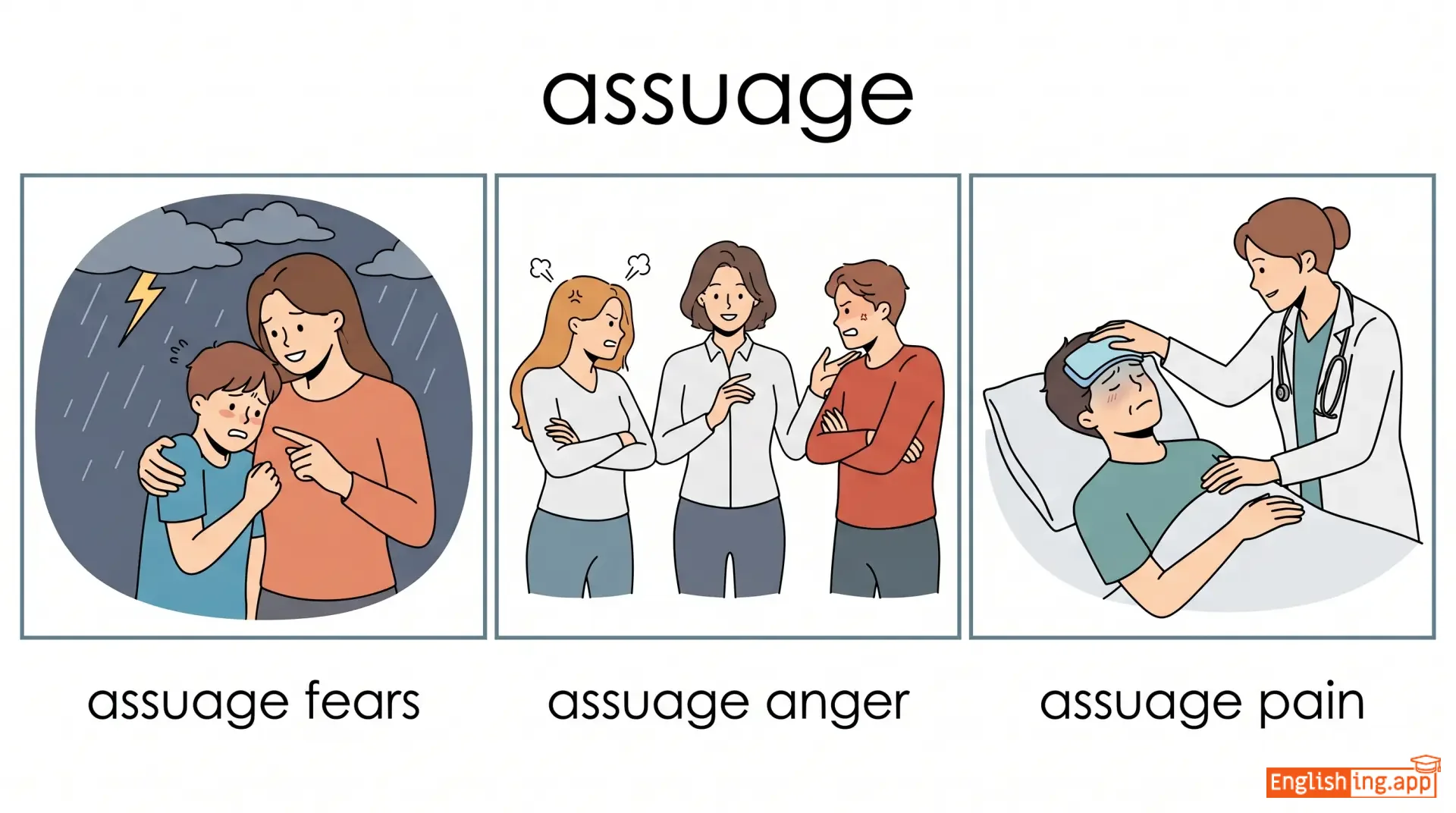
/əˈsweɪdʒ/
verb
(アスウェイジ)
••••••
|
|
和らげる
yawarageru
••••••
|
assuaged
アスウェイジド
••••••
|
assuaged
アスウェイジド
••••••
|
assuages
アスウェイジズ
••••••
|
assuaging
アスウェイジング
••••••
|
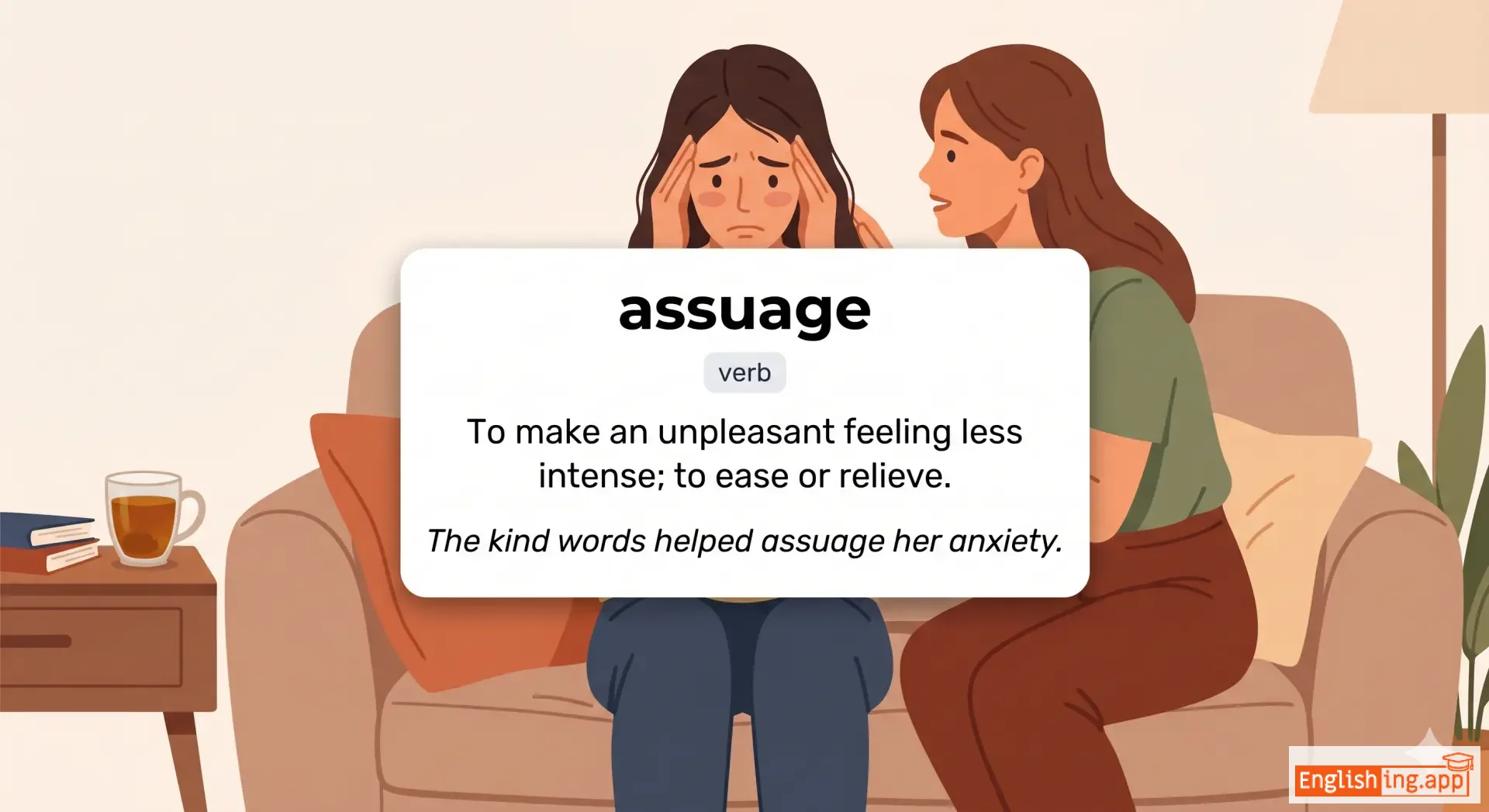
To make an unpleasant feeling less intense; to ease or relieve.
••••••
|
The kind words helped assuage her anxiety.
優しい言葉が彼女の不安を和らげるのに役立ちました。
••••••
|
優しい言葉が彼女の不安を和らげるのに役立ちました。
Yasashī kotoba ga kanojo no fuan o yawarageru no ni yakudachimashita.
••••••
|
assuage one's fears
誰かの恐怖を和らげる
••••••
|
to calm or reduce someone's fears
••••••
|
誰かの恐怖を和らげる
Dareka no kyōfu o yawarageru
••••••
|
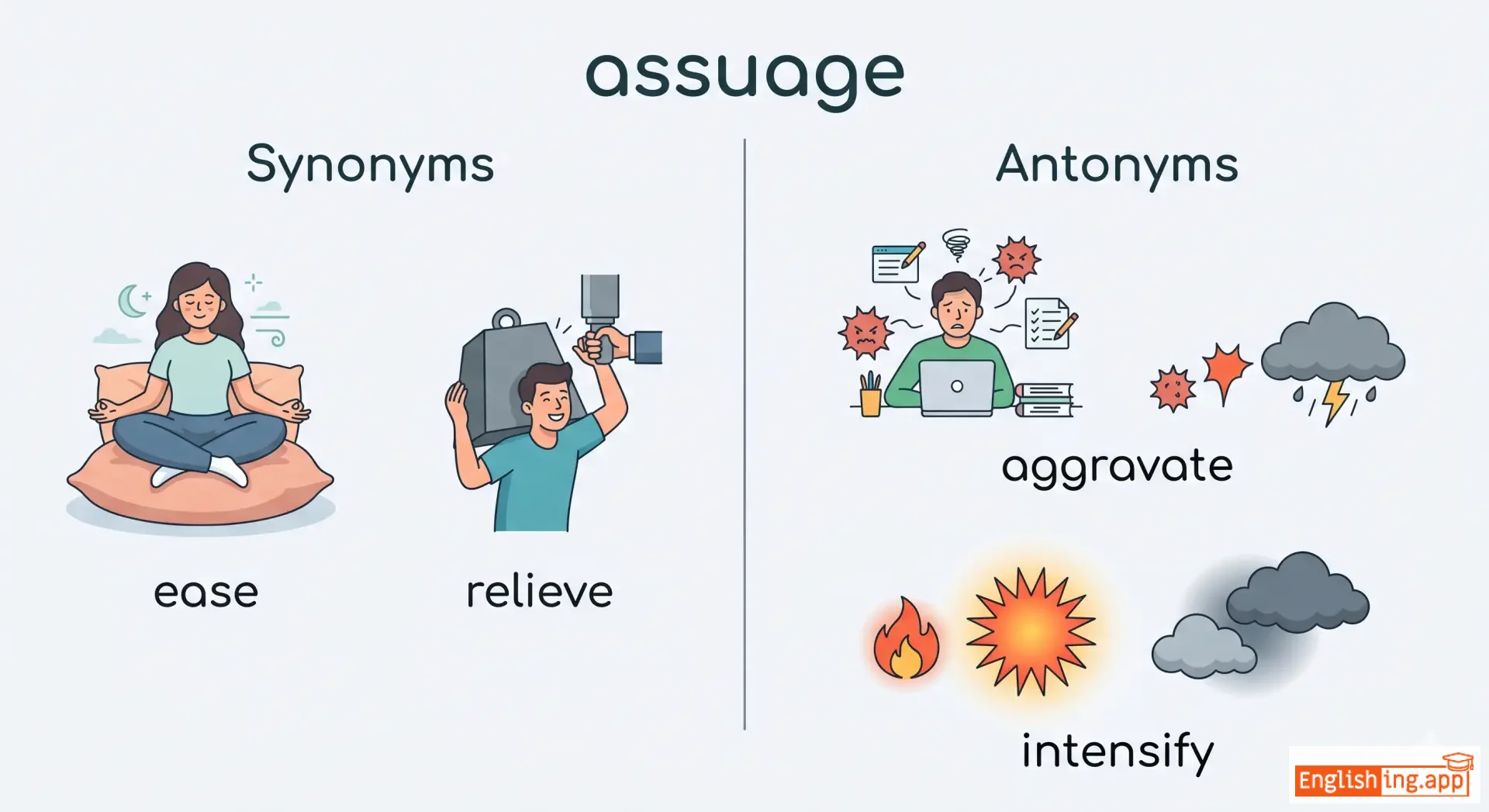
ease, relieve, alleviate, soothe, pacify
••••••
|
aggravate, intensify, worsen
••••••
|
assuage fears, assuage anger, assuage pain
••••••
|
Assuageは「慰めのメッセージ」を意味します - 慰めのメッセージ。
••••••
|
|
🤔
••••••
|
/əˈsuːm/
verb
(アシューム)
••••••
|
- •••••• |
仮定する
katei suru
••••••
|
assumed
アシュームド
••••••
|
assumed
アシュームド
••••••
|
assumes
アシュームス
••••••
|
assuming
アシューミング
••••••
|
to think that something is true without proof
••••••
|
I assume he will be late to the meeting.
私は彼が会議に遅れると仮定しています。
••••••
|
私は彼が会議に遅れると仮定しています。
Watashi wa kare ga kaigi ni okureru to katei shiteimasu.
••••••
|
make an assumption
仮定をする
••••••
|
to form an idea without evidence
••••••
|
仮定をする
katei o suru
••••••
|
suppose, presume, imagine, believe, expect
••••••
|
doubt, question, deny
••••••
|
assume responsibility, assume control, assume the worst, assume a role
••••••
|
仮定 = 'カテイ' に確かめよう。
••••••
|
|
🤔
••••••
|
/əˈsʌmpʃən/
noun
(アサンプション)
••••••
|
- •••••• |
仮定
katei
••••••
|
- •••••• | - •••••• | - •••••• | - •••••• |
A belief or statement taken for granted without proof.
••••••
|
His assumption about the results turned out to be wrong.
ヒズアサンプションアバウトザリザルツターンドアウトトゥビーウォング。
••••••
|
彼の結果に関する仮定は間違っていることが証明された。
Kare no kekka ni kansuru katei wa machigatte iru koto ga shōmei sareta.
••••••
|
work on the assumption
ワークオンザアサンプション
••••••
|
to proceed based on something being true
••••••
|
仮定に基づいて作業する
katei ni motozuite sagyō suru
••••••
|
belief, presumption, supposition, expectation
••••••
|
fact, certainty, reality
••••••
|
make an assumption, false assumption, assumption of power
••••••
|
仮定は、証拠なしで真実だと思い込むこと。
••••••
|
|
✅
••••••
|
/əˈʃʊərəns/
noun
(アシュアランス)
••••••
|

|
保証
hoshō
••••••
|
- •••••• | - •••••• | - •••••• | - •••••• |
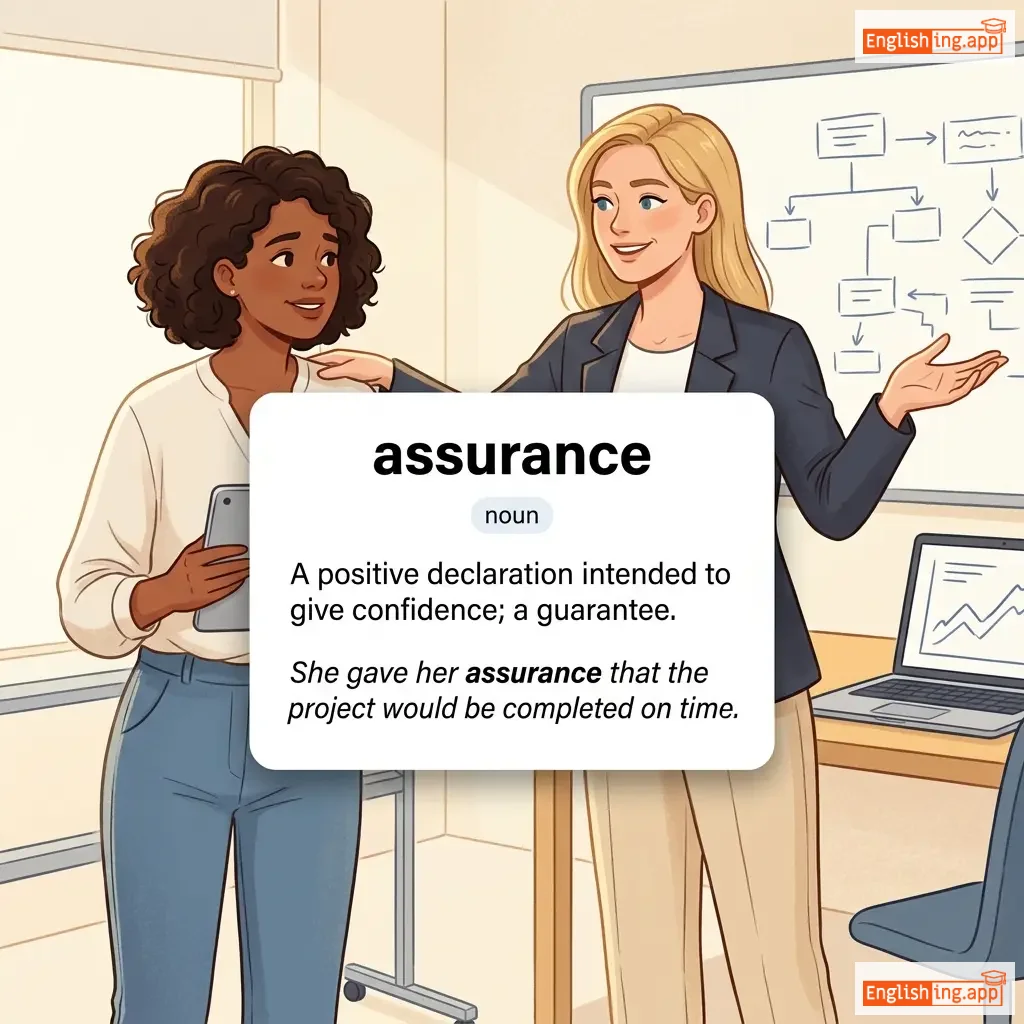
A positive declaration intended to give confidence; a guarantee.
••••••
|
She gave her assurance that the project would be completed on time.
彼女はプロジェクトが時間通りに完了することを保証しました。
••••••
|
彼女はプロジェクトが時間通りに完了することを保証しました。
Kanojo wa purojekuto ga jikan dōri ni kanryō suru koto o hoshō shimashita.
••••••
|
rest assured
安心してください
••••••
|
be certain and without worry
••••••
|
安心してください
Anshin shite kudasai
••••••
|
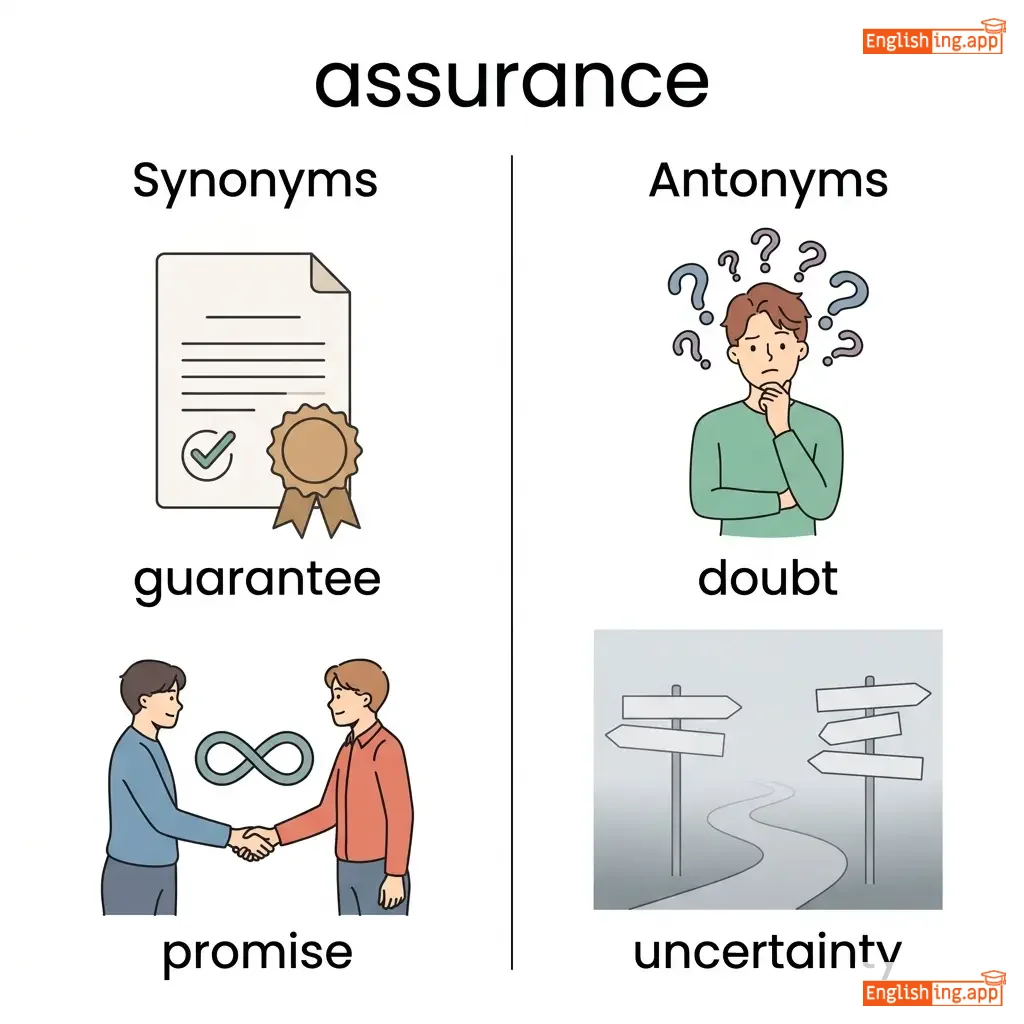
guarantee, promise, pledge, confidence
••••••
|
doubt, uncertainty
••••••
|
give assurance, seek assurance, assurance of safety
••••••
|
保証は'安心' - 確信と安心を与えます。
••••••
|
|
🤞
••••••
|
/əˈʃʊr/
verb
(アシュア)
••••••
|
- •••••• |
保証する
hoshō suru
••••••
|
assured
アシュアード
••••••
|
assured
アシュアード
••••••
|
assures
アシュアーズ
••••••
|
assuring
アシュアリング
••••••
|
to make someone feel certain or confident about something
••••••
|
He assured her that everything would be fine.
彼はすべてがうまくいくと彼女に確信を与えた。
••••••
|
彼はすべてがうまくいくと彼女に確信を与えた。
Kare wa subete ga umaku iku to kanojo ni kakushin o ataeta.
••••••
|
rest assured
安心してください
••••••
|
to be confident or certain about something
••••••
|
ご安心ください
go anshin kudasai
••••••
|
guarantee, promise, affirm, convince, ensure
••••••
|
doubt, question
••••••
|
assure someone, assure success, assure quality
••••••
|
保証するは自信を与えること - 先生が言うREST ASSURED試験は簡単だ。
••••••
|
|
😌
••••••
|
/əˈʃʊrd/
adjective; verb (past/participle)
(アシュアード)
••••••
|
- •••••• |
確信している;自信のある
kakushin shite iru; jishin no aru
••••••
|
assured
アシュアード
••••••
|
assured
アシュアード
••••••
|
- •••••• | - •••••• |
confident and certain; guaranteed or made certain
••••••
|
She felt assured that everything would work out.
シー フェルト アシュアード ザット エブリシング ウッド ワーク アウト
••••••
|
彼女はすべてうまくいくと確信していた。
kanojo wa subete umaku iku to kakushin shite ita
••••••
|
rest assured
レスト アシュアード
••••••
|
to be completely confident or certain
••••••
|
ご安心ください
goanshin kudasai
••••••
|
confident, certain, guaranteed, secure, positive
••••••
|
uncertain, doubtful, insecure
••••••
|
feel assured, fully assured, assured success, assured manner
••••••
|
アシュアード = 安心 assured—sound helps memory
••••••
|
|
😲
••••••
|
/əˈstɒnɪʃ/
verb
(アストニッシュ)
••••••
|
- •••••• |
驚かせる
odorokaseru
••••••
|
astonished
アストニッシュド
••••••
|
astonished
アストニッシュド
••••••
|
astonishes
アストニッシズ
••••••
|
astonishing
アストニッシング
••••••
|
to surprise someone greatly; to fill with sudden wonder or amazement
••••••
|
The magician’s final trick astonished the entire audience.
ザ マジシャンズ ファイナル トリック アストニッシュド ジ エンタイア オーディエンス。
••••••
|
そのマジシャンの最後のトリックは観客全員を驚かせた。
sono majishan no saigo no torikku wa kankyaku zenin o odorokaseta
••••••
|
- •••••• | - •••••• | - •••••• |
amaze, astound, surprise, startle, stun
••••••
|
bore, calm, reassure
••••••
|
astonish everyone, astonish the audience, truly astonish, astonish people
••••••
|
Astonish = 驚かせる → 音がドーンとして驚くイメージ。
••••••
|
|
😲
••••••
|
/əˈstɒnɪʃt/
adjective
(アストニッシュト)
••••••
|
- •••••• |
驚いた
odoita
••••••
|
- •••••• | - •••••• | - •••••• | - •••••• |
feeling very surprised or amazed
••••••
|
She was astonished by the magician's incredible trick.
シー ワズ アストニッシュト バイ ザ マジシャンズ インクレディブル トリック。
••••••
|
彼女はその魔術師の信じられない手品に驚いた。
kanojo wa sono majutsushi no shinjirarenai tejina ni odoita
••••••
|
be astonished at
ビー アストニッシュト アット
••••••
|
to feel great surprise about something
••••••
|
〜に驚く
ni odoroku
••••••
|
amazed, surprised, stunned, shocked, astounded
••••••
|
unimpressed, unsurprised, indifferent
••••••
|
utterly astonished, visibly astonished, astonished look, astonished reaction
••••••
|
アストニッシュト=驚いた!と心で叫ぶ
••••••
|
|
😲
••••••
|
/əsˈtɒnɪʃɪŋ/
adjective
(アストニッシング)
••••••
|
|
驚くべき
odorokubeki
••••••
|
- •••••• | - •••••• | - •••••• | - •••••• |
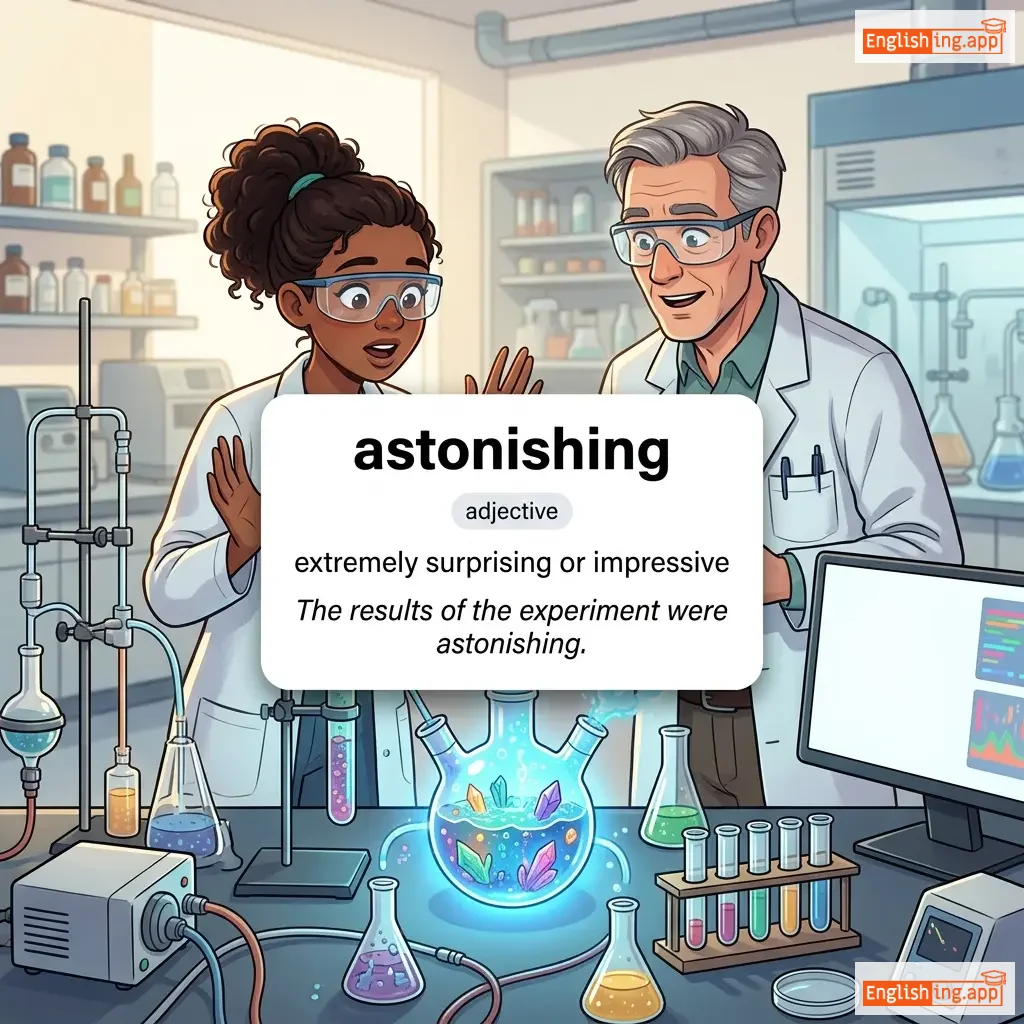
extremely surprising or impressive
••••••
|
The results of the experiment were astonishing. |
実験の結果は驚くべきものでした。
Jikken no kekka wa odorokubeki mono deshita.
••••••
|
- •••••• | - •••••• | - •••••• |
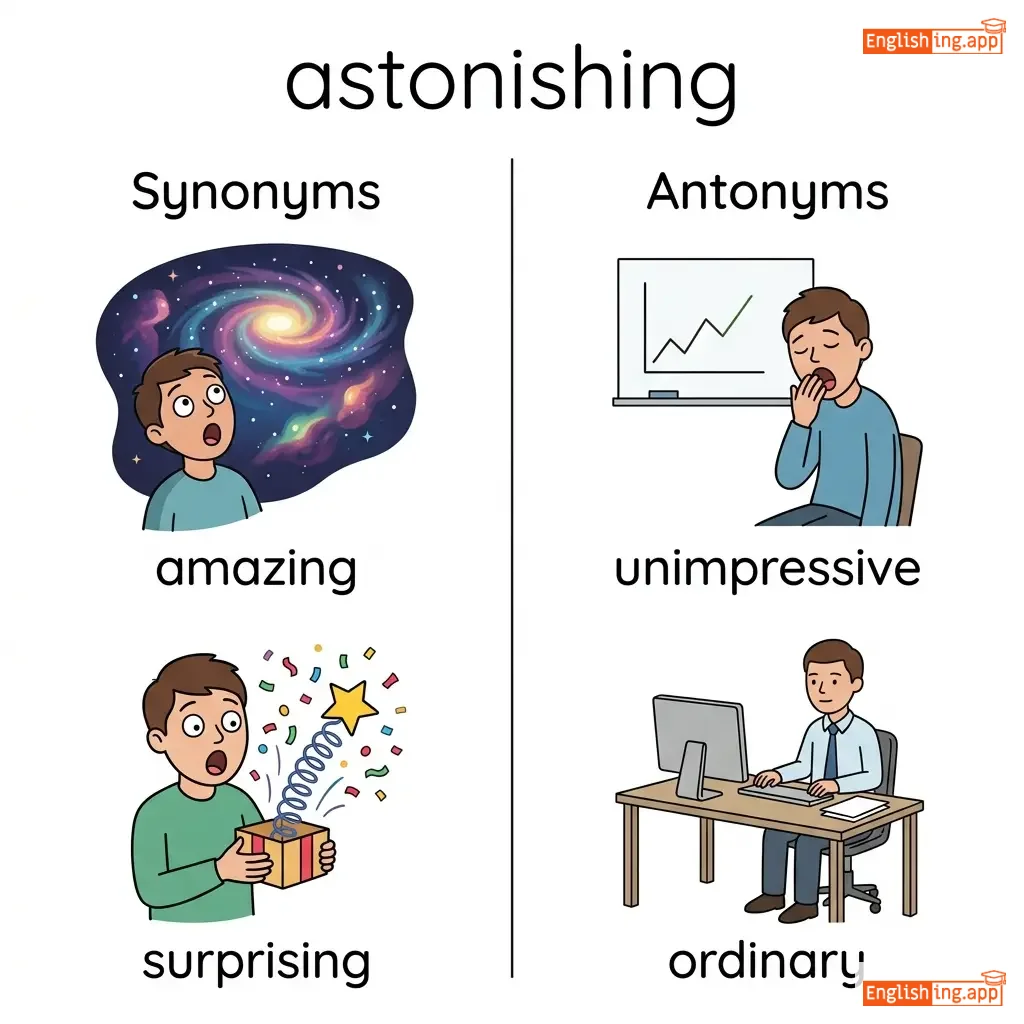
amazing, surprising, breathtaking, remarkable
••••••
|
unimpressive, ordinary, expected
••••••
|
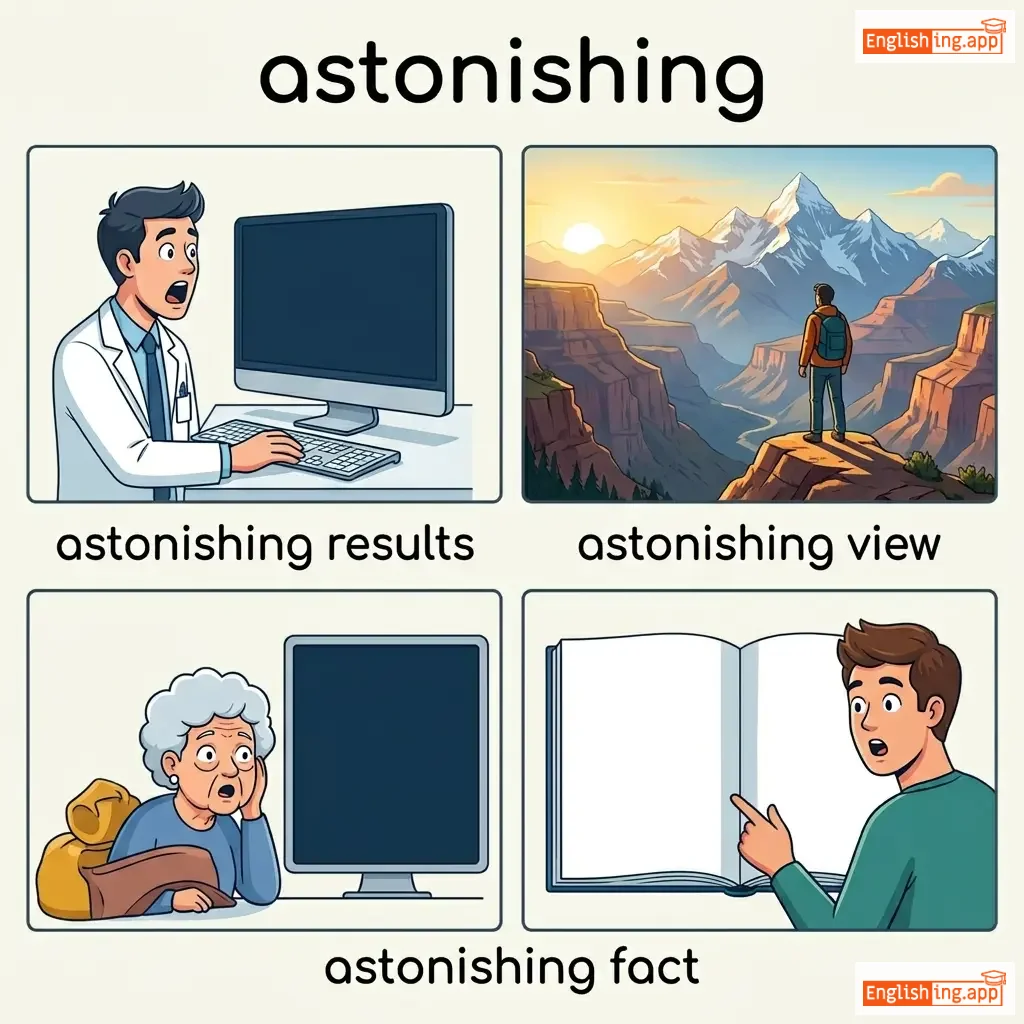
astonishing results, astonishing view, astonishing fact
••••••
|
Astonishing - 何かを見て驚く時、まさにそれは驚くべき!
••••••
|
|
😲
••••••
|
/əˈstaʊnd/
verb
(アスタウンド)
••••••
|
- •••••• |
仰天させる
gyouten saseru
••••••
|
astounded
アスタウンデッド
••••••
|
astounded
アスタウンデッド
••••••
|
astounds
アスタウンズ
••••••
|
astounding
アスタウンディング
••••••
|
to greatly surprise or amaze someone
••••••
|
The magician's final trick astounded the audience.
ザ マジシャンズ ファイナル トリック アスタウンデッド ジ オーディエンス。
••••••
|
そのマジシャンの最後の手品は観客を仰天させた。
Sono majishan no saigo no tejina wa kankyaku o gyouten saseta
••••••
|
- •••••• | - •••••• | - •••••• |
amaze, astonish, stun, shock, bewilder
••••••
|
bore, calm, reassure
••••••
|
astound the audience, astound everyone, absolutely astound, astound critics
••••••
|
Astound=仰天、音も意味もインパクト大。
••••••
|
|
🏥
••••••
|
/əˈsaɪləm/
noun
(アサイラム)
••••••
|
|
亡命
bōmei
••••••
|
- •••••• | - •••••• | - •••••• | - •••••• |
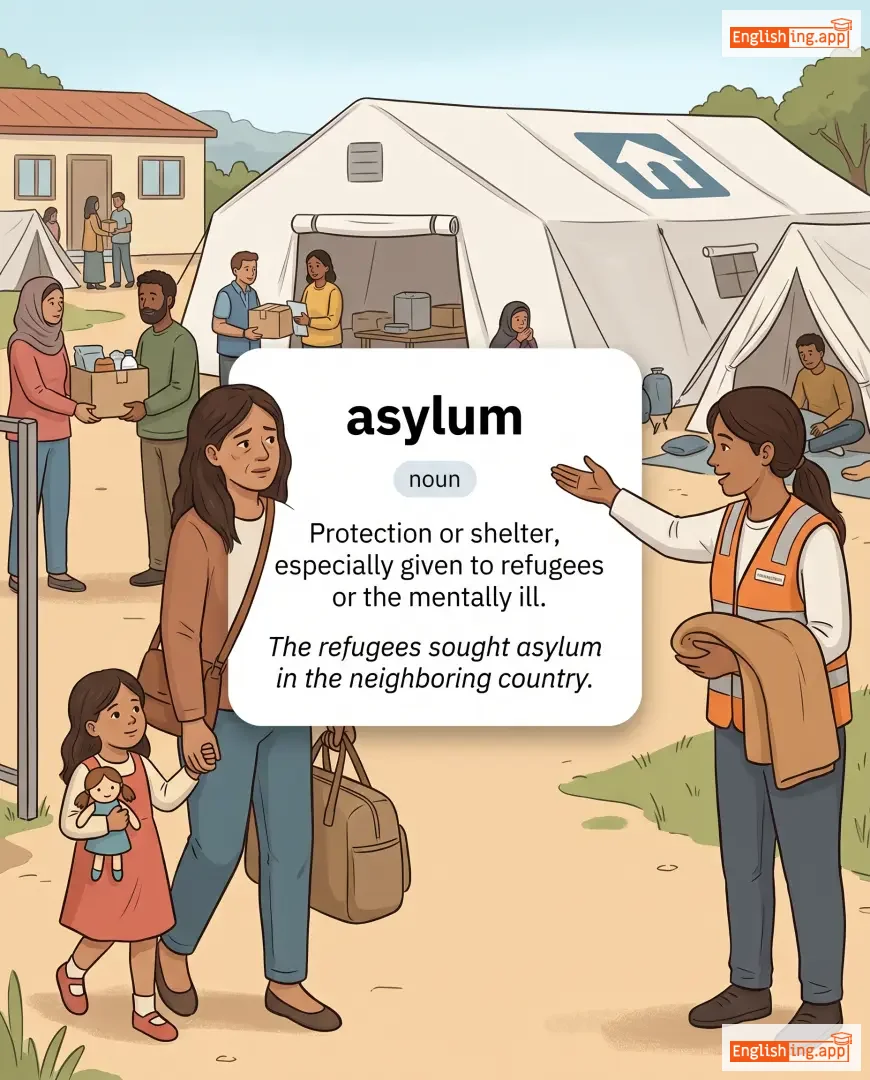
Protection or shelter, especially given to refugees or the mentally ill.
••••••
|
The refugees sought asylum in the neighboring country.
難民は隣国で亡命を求めた。
••••••
|
難民は隣国で亡命を求めた。
Nanmin wa ringoku de bōmei o motometa.
••••••
|
seek asylum
亡命を求める
••••••
|
To formally request protection in another country.
••••••
|
亡命を求める
Bōmei o motomeru
••••••
|
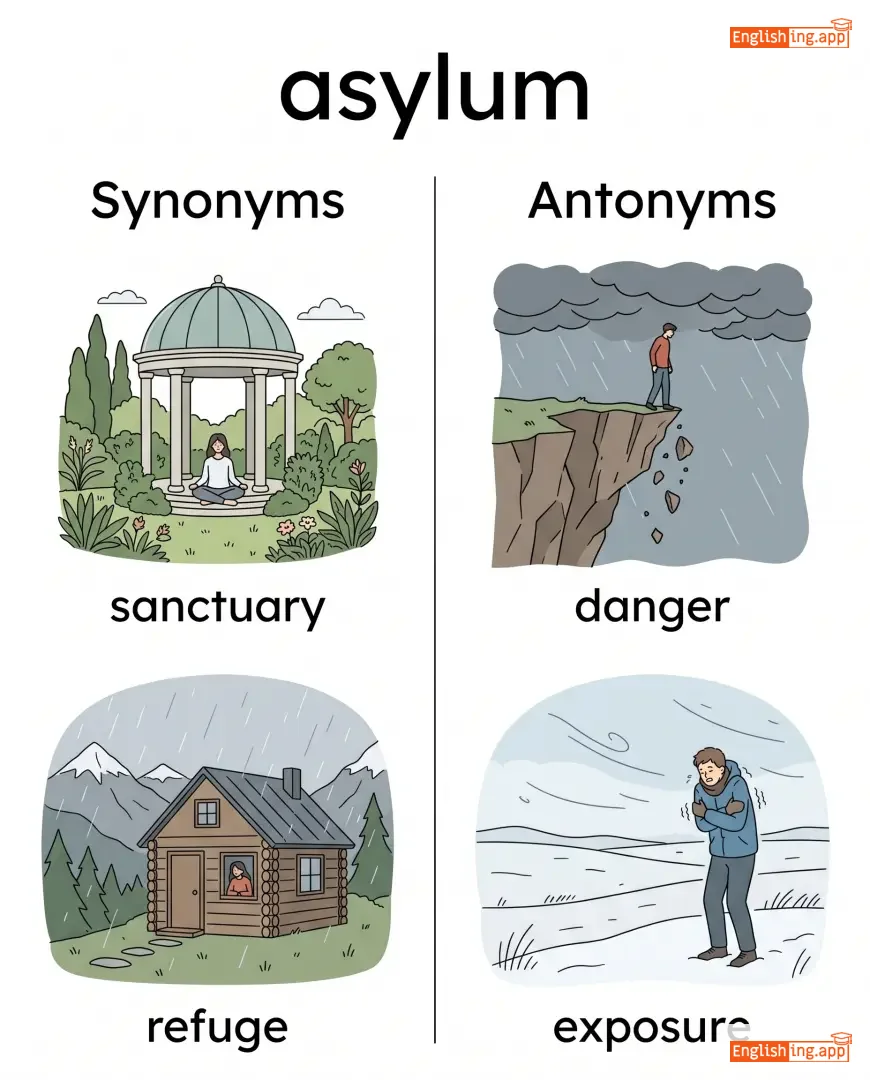
sanctuary, refuge, shelter, haven, protection
••••••
|
danger, exposure, threat
••••••
|
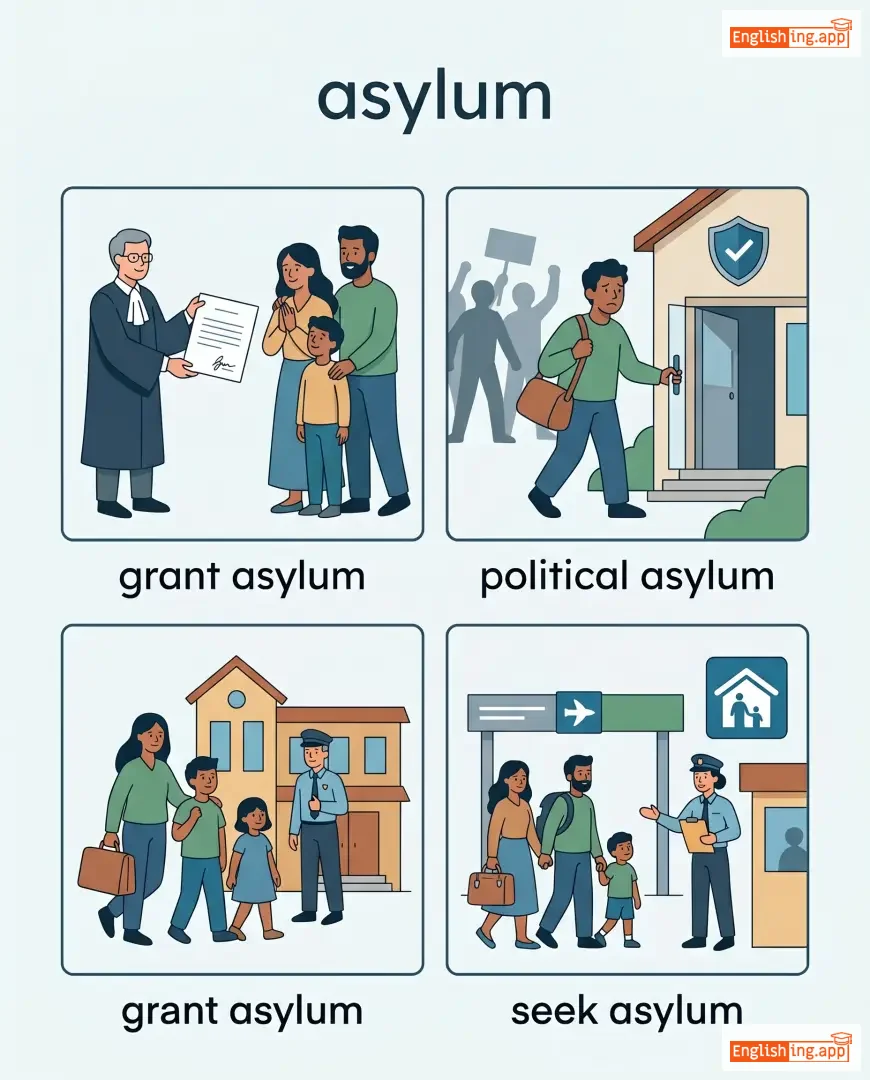
grant asylum, political asylum, seek asylum, asylum seeker
••••••
|
亡命は危険から逃れるために必要な保護を意味します。
••••••
|
|
📍
••••••
|
/æt/
preposition
(アット)
••••••
|
- •••••• |
で
de
••••••
|
- •••••• | - •••••• | - •••••• | - •••••• |
used to indicate a specific time, place, or direction
••••••
|
She arrived at the airport on time. |
彼女は時間通りに空港に到着しました。
Kanojo wa jikan dōri ni kūkō ni tōchaku shimashita.
••••••
|
at all costs |
do something regardless of the difficulty or expense
••••••
|
何があっても
nani ga attemo
••••••
|
in, on, near, by, upon
••••••
|
away from, outside
••••••
|
at night, at home, at work, at the same time
••••••
|
At は 'で' という意味です — 例えば 'at home' は '家で' です。
••••••
|
|
🏅
••••••
|
/ˈæθliːt/
noun
(アスリート)
••••••
|
- •••••• |
アスリート
asurīto
••••••
|
- •••••• | - •••••• | - •••••• | - •••••• |
a person who is trained or skilled in physical exercises, sports, or games requiring strength, agility, or stamina
••••••
|
The athlete trained hard for the upcoming Olympic Games. |
アスリートは、来たるオリンピック大会のために厳しい訓練を積んだ。
Asurīto wa, kitaru Orinpikku taikai no tame ni kibishī kunren o tsunda.
••••••
|
professional athlete |
someone who competes in sports as a paid career
••••••
|
プロフェッショナルアスリート
purofesshonaru asurīto
••••••
|
sportsman, competitor, player, runner, gymnast
••••••
|
spectator, amateur
••••••
|
professional athlete, Olympic athlete, star athlete, great athlete
••••••
|
アスリート = スポーツの英雄 🏅 - アスリート = ゲームの達人!
••••••
|
|
🏋️
••••••
|
/æθˈlɛtɪk/
adjective
(アスレチック)
••••••
|
- •••••• |
アスレチックな、力強い
asuretikkuna, chikara-zuyoi
••••••
|
- •••••• | - •••••• | - •••••• | - •••••• |
physically strong, fit, and active; related to athletes or sports
••••••
|
She has an athletic body because she exercises regularly.
彼女は定期的に運動しているので、アスレチックな体を持っています。
••••••
|
彼女は定期的に運動しているので、アスレチックな体を持っています。
Kanojo wa teikiteki ni undō shiteiru node, asurettikku na karada o motteimasu.
••••••
|
athletic build
アスレチック体型
••••••
|
a body type that is muscular and fit
••••••
|
アスレチック体型
asurettikku taikei
••••••
|
fit, strong, active, sporty, muscular
••••••
|
weak, unfit, frail
••••••
|
athletic body, athletic skills, athletic ability, athletic performance
••••••
|
アスレチックはジムの体 💪 - フィットしていて活発!
••••••
|
|
🌍
••••••
|
/ˈætməsfɪər/
noun
(アトモスフィア)
••••••
|
- •••••• |
大気
taiki
••••••
|
- •••••• | - •••••• | - •••••• | - •••••• |
the layer of gases surrounding the Earth; the mood or feeling of a place
••••••
|
The restaurant had a warm and welcoming atmosphere. |
レストランには温かくて歓迎的な雰囲気がありました。
Resutoran ni wa atatakakute kangei-teki na fun'iki ga arimashita.
••••••
|
tense atmosphere |
a stressful or uneasy environment
••••••
|
緊張した雰囲気
kinchou shita fun'iki
••••••
|
environment, mood, climate, aura, ambience
••••••
|
emptiness, vacuum
••••••
|
earth's atmosphere, friendly atmosphere, tense atmosphere, atmosphere of peace
••••••
|
Atmosphere = 空気 + 場所のムード
••••••
|
|
🙏
••••••
|
/əˈtoʊn/
verb
(アトーン)
••••••
|
|
償う
tsugunau
••••••
|
atoned
アトーンド
••••••
|
atoned
アトーンド
••••••
|
atones
アトーンズ
••••••
|
atoning
アトーニング
••••••
|
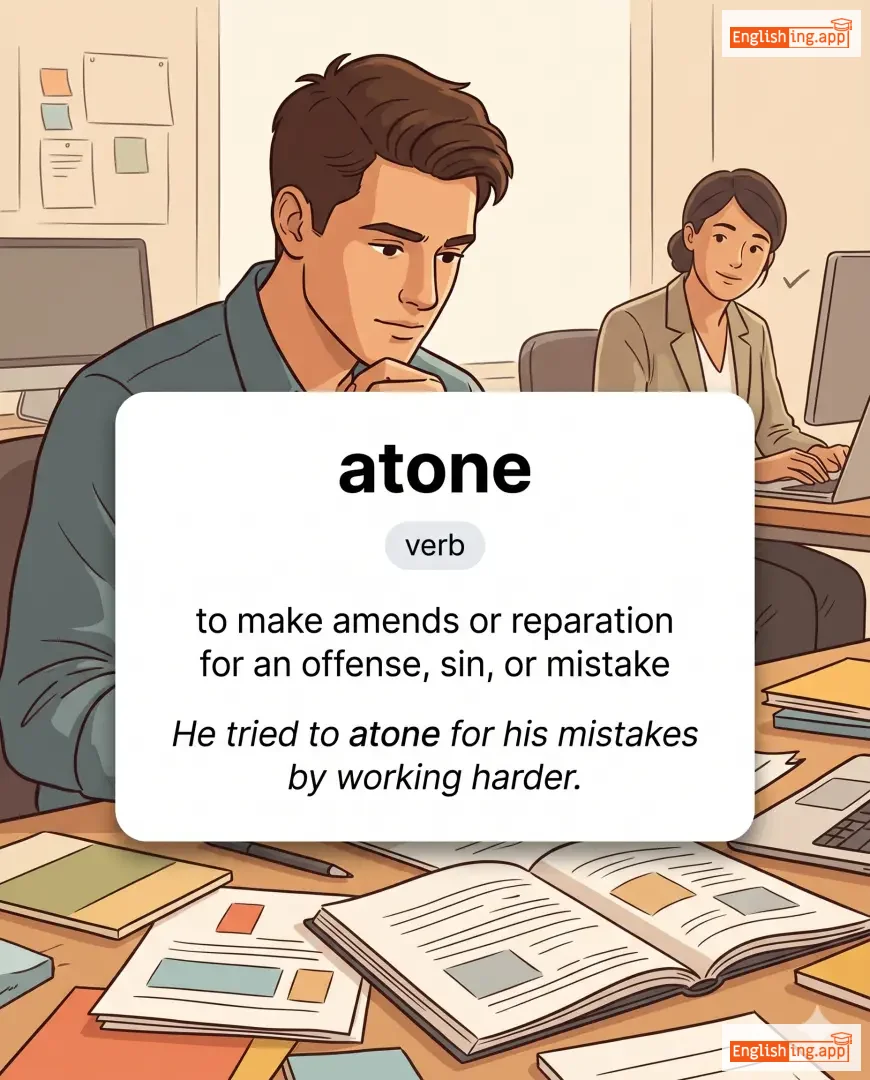
to make amends or reparation for an offense, sin, or mistake
••••••
|
He tried to atone for his mistakes by working harder.
彼は自分のミスを補うためにもっと一生懸命働こうとしました。
••••••
|
彼は自分のミスを補うためにもっと一生懸命働こうとしました。
Kare wa jibun no misu wo oginau tame ni motto isshoukenmei hatarakou to shimashita.
••••••
|
atone for one's sins
罪を償う
••••••
|
to make up for wrongdoings or misdeeds
••••••
|
罪を償う
tsumi wo tsugunau
••••••
|
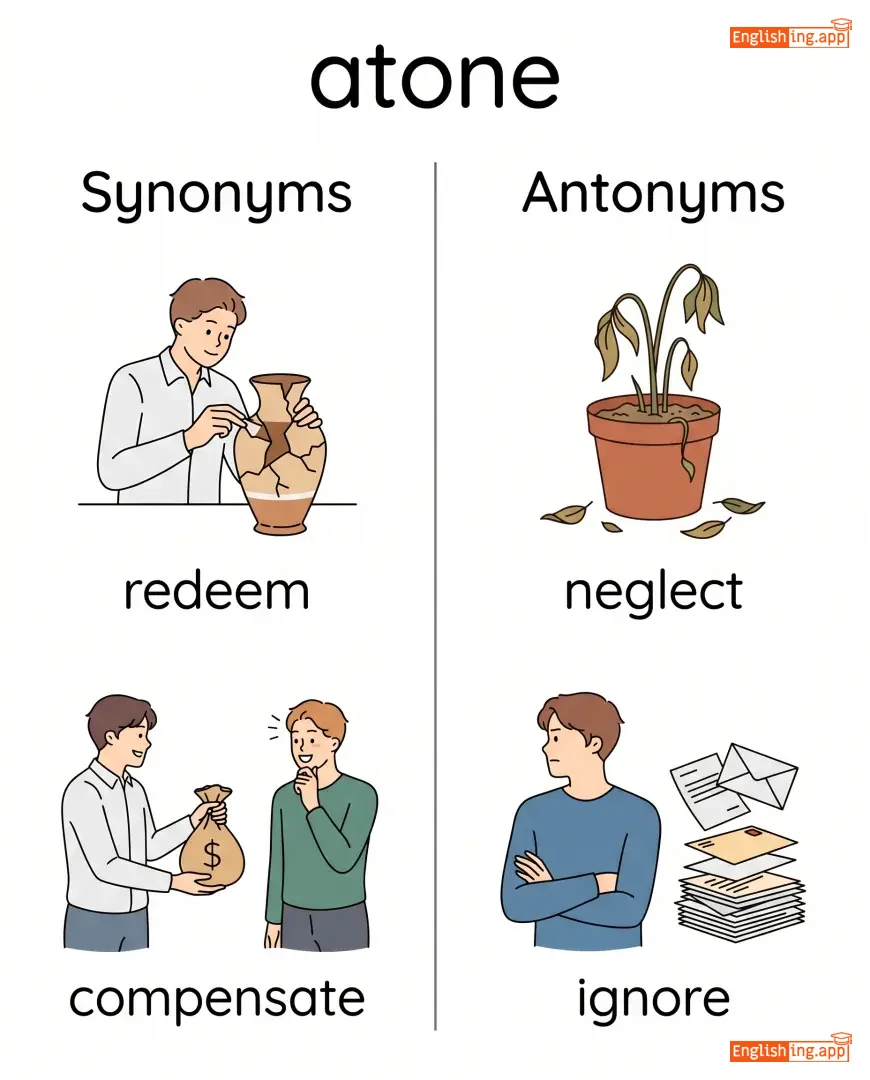
redeem, compensate, make amends, repent, apologize
••••••
|
neglect, ignore, worsen
••••••
|
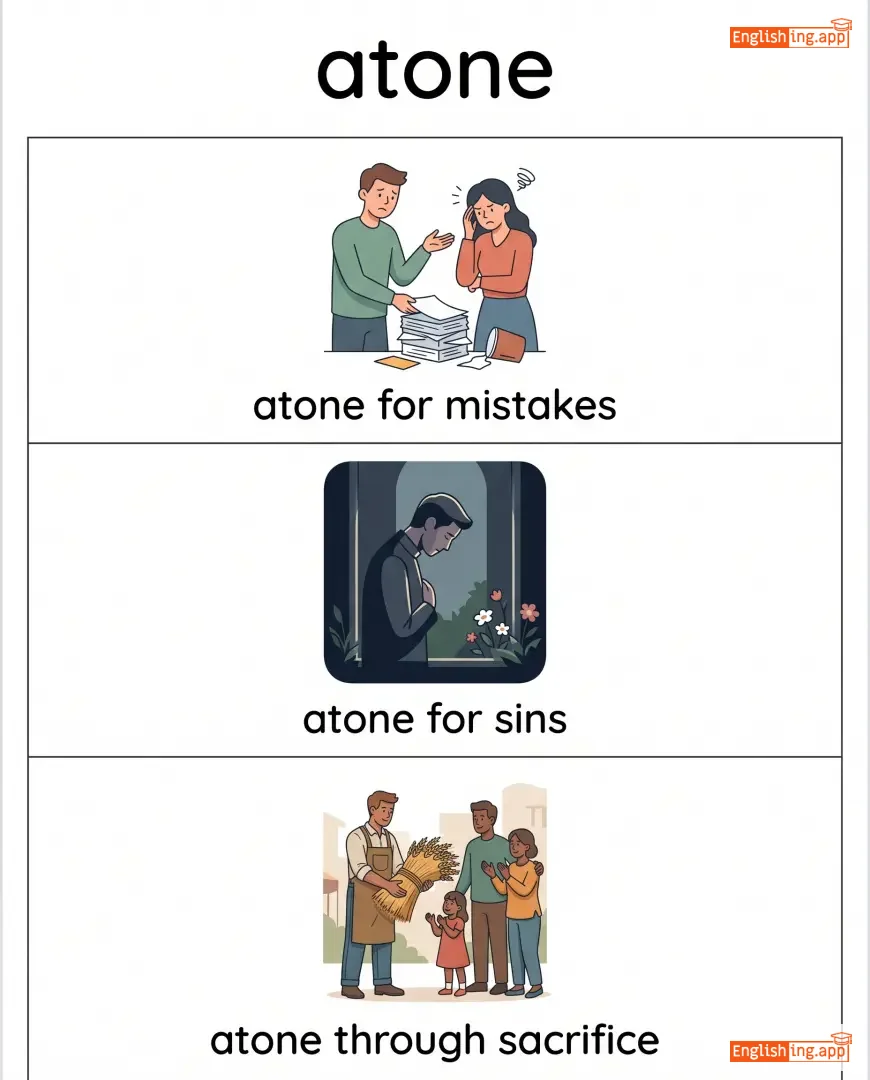
atone for mistakes, atone for sins, atone through sacrifice
••••••
|
At ONE 罪を償う - Atone は償う
••••••
|
|
😱
••••••
|
/əˈtrəʊ.ʃəs/
adjective
(アトロシャス)
••••••
|
- •••••• |
ひどい; 極端に悪いまたは不快な
hidoi; kyokutan ni warui matawa fukai na
••••••
|
- •••••• | - •••••• | - •••••• | - •••••• |
horrifyingly wicked; extremely bad or unpleasant
••••••
|
The conditions in the prison were atrocious. |
刑務所の状態はひどかった。
Keimusho no joutai wa hidokatta.
••••••
|
- •••••• | - •••••• | - •••••• |
horrible, terrible, dreadful, appalling
••••••
|
excellent, wonderful, admirable, praiseworthy
••••••
|
atrocious crime, atrocious behavior, atrocious conditions
••••••
|
Atrocious sounds like 'hidoi' - both relate to something horrifying.
••••••
|
|
😱
••••••
|
/əˈtroʊʃəsli/
adverb
(アトロシャスリー)
••••••
|
- •••••• |
ひどく
hidoku
••••••
|
- •••••• | - •••••• | - •••••• | - •••••• |
in a very cruel, shocking, or extremely bad manner
••••••
|
The service at the restaurant was atrociously slow.
ザ サービス アット ザ レストラン ワズ アトロシャスリー スロー
••••••
|
そのレストランのサービスはひどく遅かった。
Sono resutoran no saabisu wa hidoku osokatta
••••••
|
- •••••• | - •••••• | - •••••• |
terribly, horribly, dreadfully, shockingly, appallingly
••••••
|
excellently, wonderfully, admirably
••••••
|
atrociously bad, atrociously slow, atrociously treated, atrociously wrong
••••••
|
アトロシティ(atrosity)を連想→ひどく
••••••
|
|
⚔️
••••••
|
/əˈtrɑːsəti/
noun
(アトロシティ)
••••••
|
- •••••• |
残虐行為
zangyaku koui
••••••
|
- •••••• | - •••••• | - •••••• | - •••••• |
an extremely cruel or violent act, often involving physical violence
••••••
|
The world condemned the atrocity committed against civilians. |
世界は市民に対して行われた残虐行為を非難しました。
Sekai wa shimin ni taishite okonawareta zangyaku koui wo hinan shimashita.
••••••
|
- •••••• | - •••••• | - •••••• |
crime, brutality, massacre, cruelty
••••••
|
kindness, compassion, benevolence
••••••
|
war atrocity, commit atrocity, atrocity against civilians
••••••
|
Atrocity (アトロシティ) leads to cruelty and violence (残虐行為).
••••••
|
|
📎
••••••
|
/əˈtætʃ/
verb
(アタッチ)
••••••
|
- •••••• |
添付する
tenpu suru
••••••
|
attached
アタッチド
••••••
|
attached
アタッチド
••••••
|
attaches
アタッチズ
••••••
|
attaching
アタッチング
••••••
|
to join or fasten something to another thing
••••••
|
Please attach the document to the email before sending.
送信する前に、ドキュメントをメールに添付してください。
••••••
|
送信する前に、ドキュメントをメールに添付してください。
Sōshin suru mae ni, dokyumento o mēru ni tenpu shite kudasai.
••••••
|
emotionally attached
感情的に結びついている
••••••
|
having strong emotional feelings towards someone or something
••••••
|
感情的に結びついている
kanjōteki ni musubitsuite iru
••••••
|
connect, join, fasten, fix, link
••••••
|
detach, remove, separate
••••••
|
attach a file, attach importance, attach a label, attach responsibility
••••••
|
Attachは物をクリップで付けるようなもの📎。
••••••
|
|
📎
••••••
|
/əˈtætʃt/
adjective
(アタッチド)
••••••
|
- •••••• |
添付された
tenpu sareta
••••••
|
- •••••• | - •••••• | - •••••• | - •••••• |
joined or fastened to something; emotionally connected or fond of someone or something
••••••
|
The file is attached to the email.
ザ ファイル イズ アタッチド トゥ ザ イーメール
••••••
|
ファイルはメールに添付されています。
Fairu wa meeru ni tenpu sarete imasu
••••••
|
attached to
アタッチド トゥ
••••••
|
having a strong emotional connection or being closely linked
••••••
|
~に執着する
ni shuuchaku suru
••••••
|
connected, joined, fastened, linked, affixed
••••••
|
detached, separated, disconnected
••••••
|
attached file, attached document, emotionally attached, closely attached
••••••
|
メールに添付 = attached
••••••
|
|
💌
••••••
|
/əˈtæʧmənt/
noun
(アタッチメント)
••••••
|
- •••••• |
愛着
aichaku
••••••
|
- •••••• | - •••••• | - •••••• | - •••••• |
a strong feeling of affection or connection
••••••
|
The attachment he felt to his hometown was undeniable. |
故郷に対する愛着は否定できないものでした。
Kokyou ni taisuru aichaku wa hitei dekinai mono deshita.
••••••
|
- •••••• | - •••••• | - •••••• |
affection, bond, connection, love
••••••
|
detachment, indifference
••••••
|
emotional attachment, strong attachment, attachment to something
••••••
|
Attachment - 愛着とは、目に見えない絆で、心が繋がるものです!
••••••
|
|
⚔️
••••••
|
/əˈtæk/
verb
(アタック)
••••••
|
|
攻撃する
kōgeki suru
••••••
|
attacked
アタックド
••••••
|
attacked
アタックド
••••••
|
attacks
アタックス
••••••
|
attacking
アタッキング
••••••
|
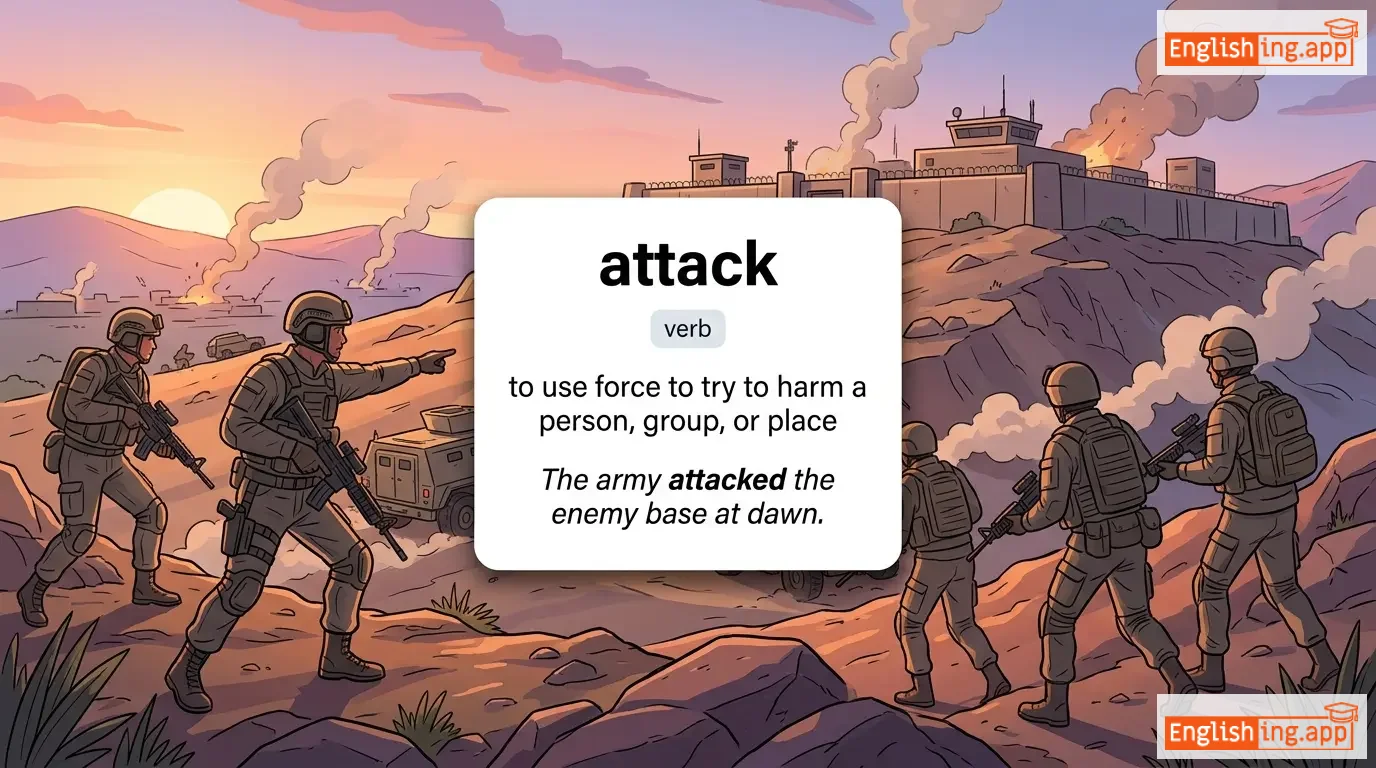
to use force to try to harm a person, group, or place
••••••
|
The army attacked the enemy base at dawn.
軍隊は夜明けに敵基地を攻撃した。
••••••
|
軍隊は夜明けに敵基地を攻撃した。
Guntai wa yoake ni teki kichi o kōgeki shita.
••••••
|
heart attack
心臓発作
••••••
|
a sudden serious medical condition when the heart stops working properly
••••••
|
心臓発作
shinzō hossa
••••••
|
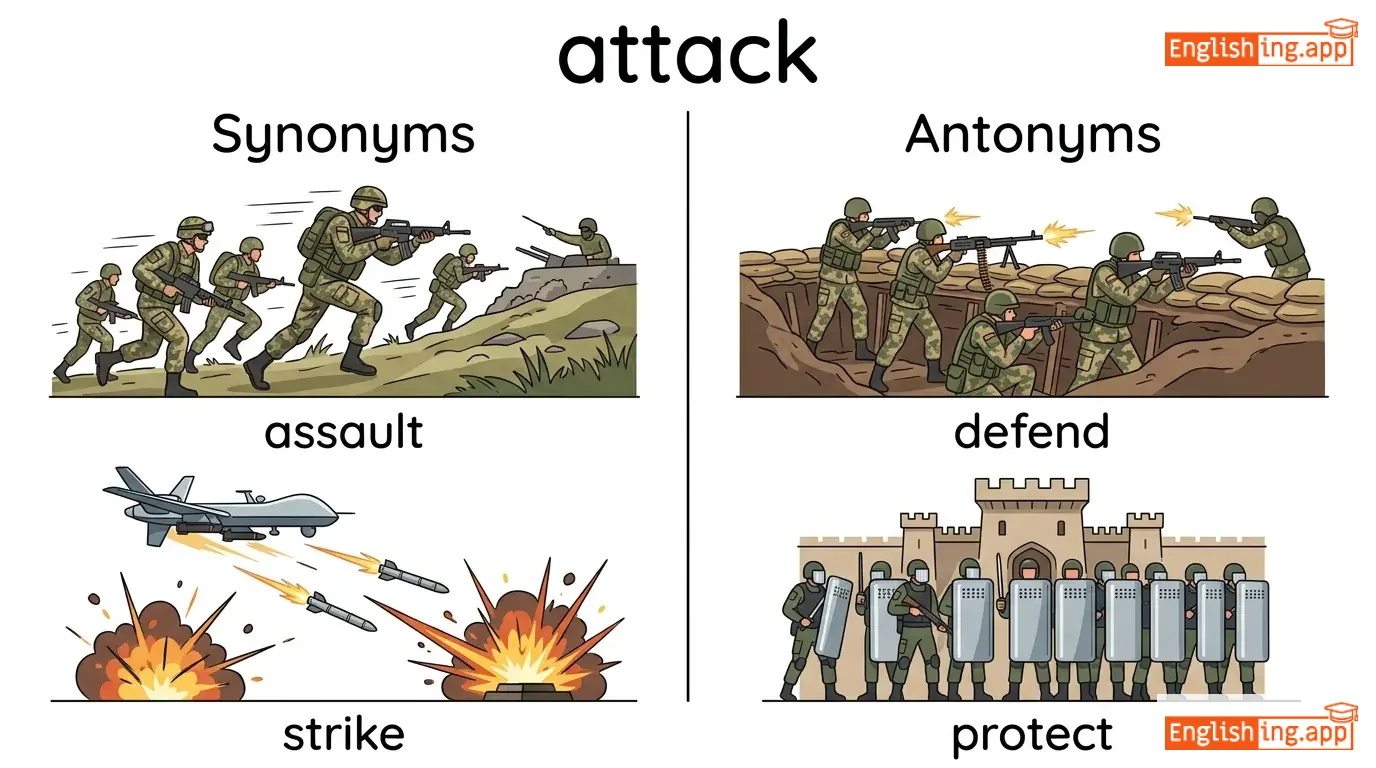
assault, strike, charge, raid, ambush
••••••
|
defend, protect, guard
••••••
|
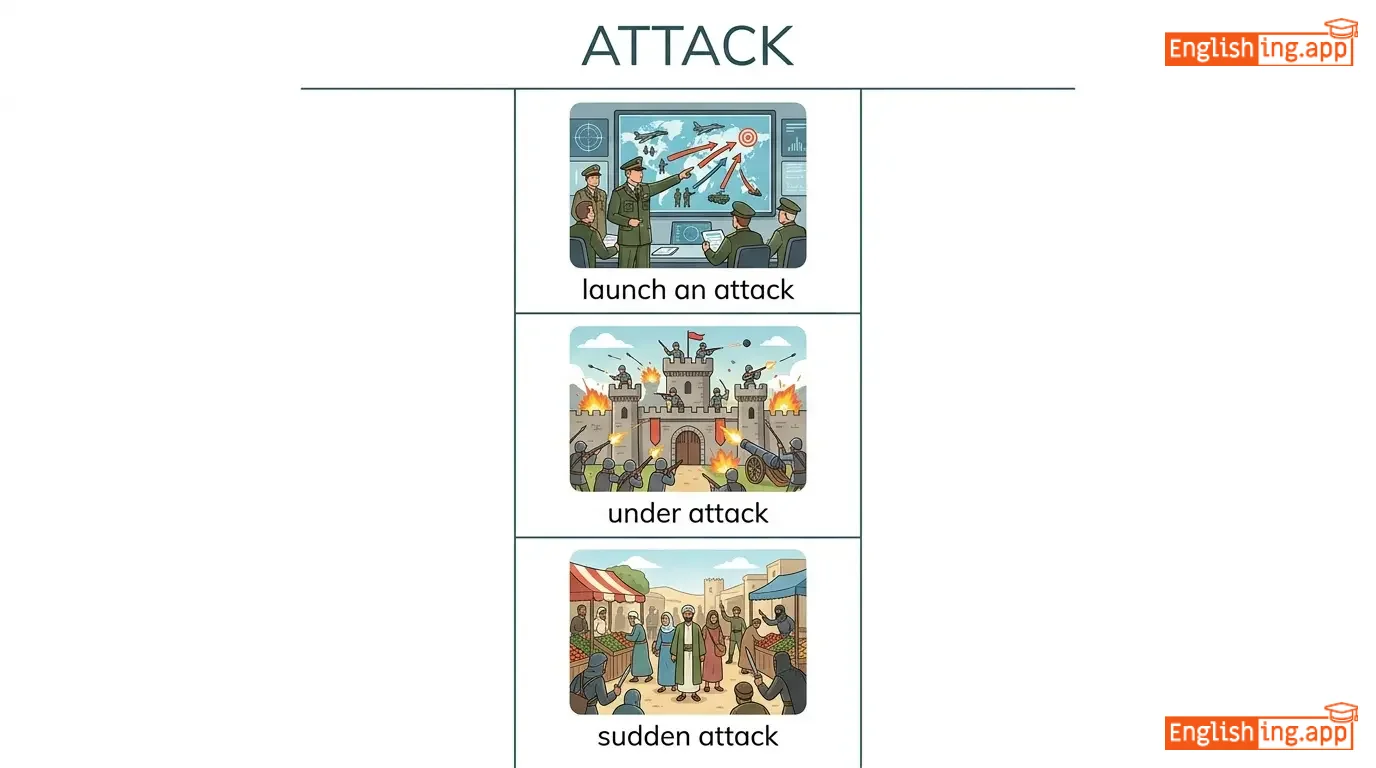
launch an attack, under attack, sudden attack, heart attack
••••••
|
攻撃する = 最初の一歩を踏み出すこと!⚔️
••••••
|
|
⚔️
••••••
|
/əˈtækt/
verb
(アタクト)
••••••
|
- •••••• |
攻撃した
kougeki shita
••••••
|
attacked
アタクト
••••••
|
attacked
アタクト
••••••
|
attacks
アタクツ
••••••
|
attacking
アタキング
••••••
|
physically or verbally assaulted someone or something; launched an aggressive action against a target
••••••
|
The soldiers attacked the enemy at dawn.
ザ ソルジャーズ アタクト ザ エネミー アット ドーン
••••••
|
兵士たちは夜明けに敵を攻撃した。
heishitachi wa yoake ni teki o kougeki shita
••••••
|
attacked on all fronts
アタクト オン オール フロント
••••••
|
to be criticized or opposed in many ways at the same time
••••••
|
四方八方から攻撃される
shihou happou kara kougeki sareru
••••••
|
assaulted, struck, ambushed, targeted, besieged
••••••
|
defended, protected, guarded
••••••
|
attacked violently, attacked suddenly, attacked the enemy, attacked online
••••••
|
Attackは攻撃、だからattackedは攻撃した。
••••••
|
|
🎯
••••••
|
/əˈteɪn/
verb
(アテイン)
••••••
|
- •••••• |
達成する
tassei suru
••••••
|
attained
アテインド
••••••
|
attained
アテインド
••••••
|
attains
アテインズ
••••••
|
attaining
アテイニング
••••••
|
to achieve or reach something
••••••
|
She worked hard to attain her goals.
彼女は目標を達成するために一生懸命働きました。
••••••
|
彼女は目標を達成するために一生懸命働きました。
Kanojo wa mokuhyō o tassei suru tame ni isshōkenmei hatarakimashita.
••••••
|
- •••••• | - •••••• | - •••••• |
achieve, reach, accomplish, obtain
••••••
|
fail, lose, abandon
••••••
|
attain success, attain goals, attain a level
••••••
|
Attain - 目標を達成すること!
••••••
|
|
🎯
••••••
|
/əˈtɛmpt/
verb
••••••
|
- •••••• | - •••••• |
attempted
••••••
|
attempted
••••••
|
attempts
••••••
|
attempting
••••••
|
to make an effort to achieve or complete something difficult
••••••
|
He attempted to climb the mountain despite the bad weather. |
- •••••• |
make an attempt |
to try to do something
••••••
|
- •••••• |
try, endeavor, undertake, pursue, strive
••••••
|
ignore, neglect, avoid
••••••
|
attempt to do, failed attempt, first attempt, serious attempt
••••••
|
No •••••• |
|
🎓
••••••
|
/əˈtɛnd/
verb
(アテンド)
••••••
|
|
参加する
sanka suru
••••••
|
attended
アテンドしました
••••••
|
attended
アテンドしました
••••••
|
attends
アテンドします
••••••
|
attending
アテンドしている
••••••
|
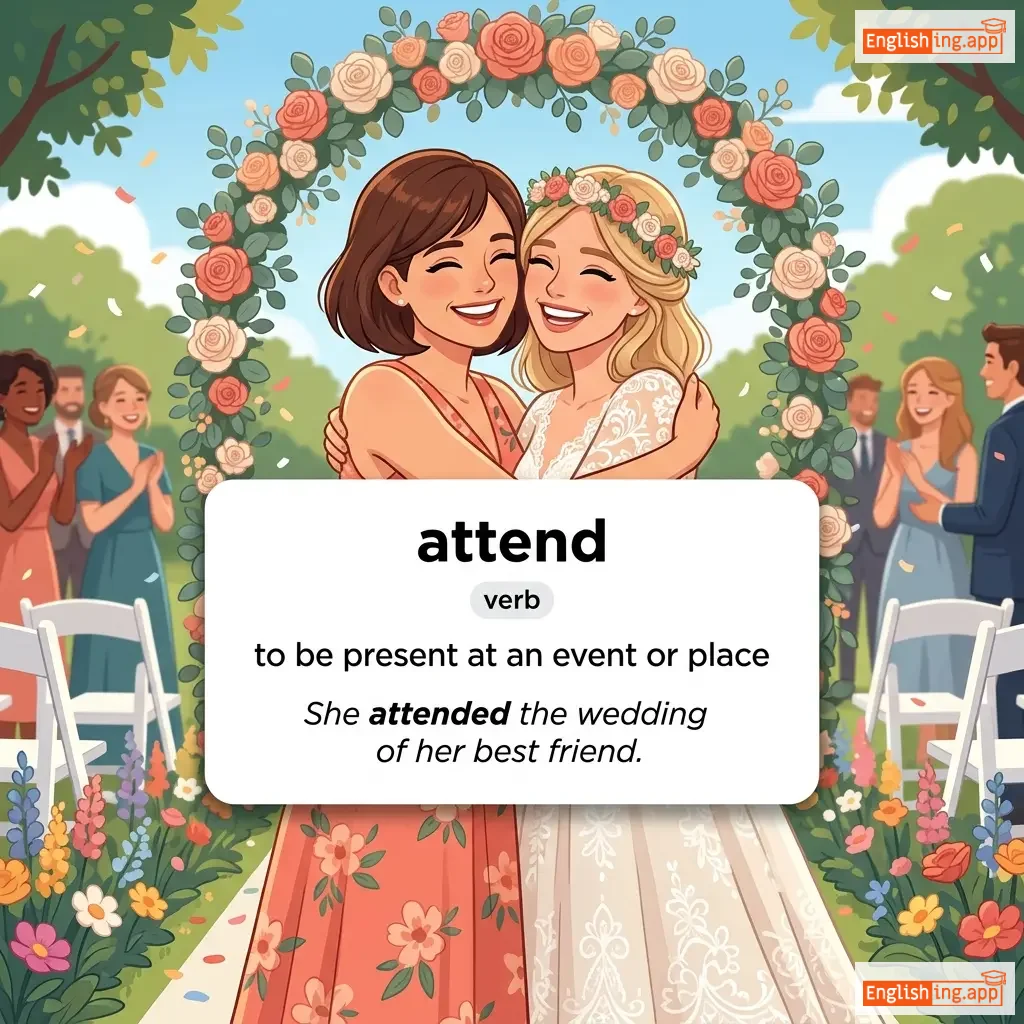
to be present at an event or place
••••••
|
She attended the wedding of her best friend.
彼女は親友の結婚式に出席しました。
••••••
|
彼女は親友の結婚式に出席しました。
Kanojo wa shinyuu no kekkonshiki ni shusseki shimashita.
••••••
|
attend to
アテンドする
••••••
|
to deal with or take care of something
••••••
|
注意を払う
chuui o harau
••••••
|
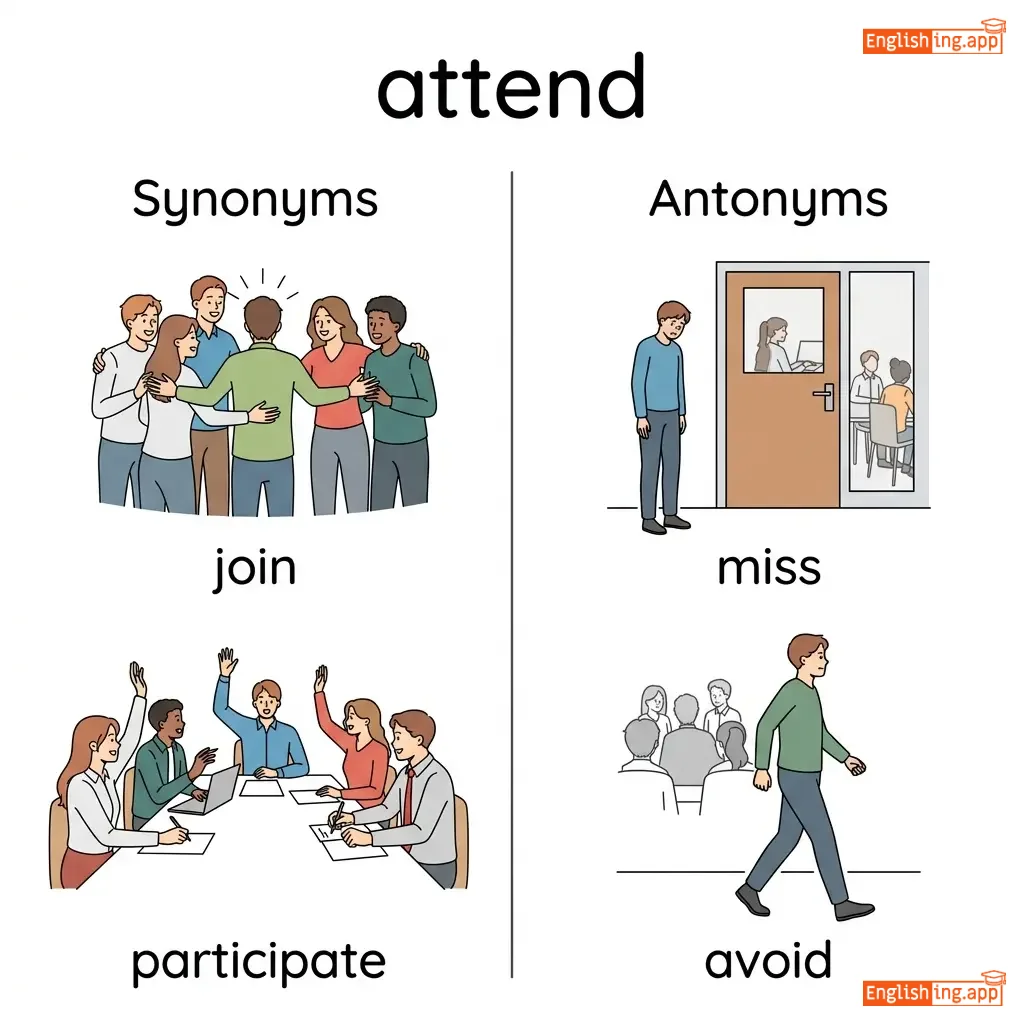
join, participate, visit, appear
••••••
|
miss, avoid, neglect
••••••
|
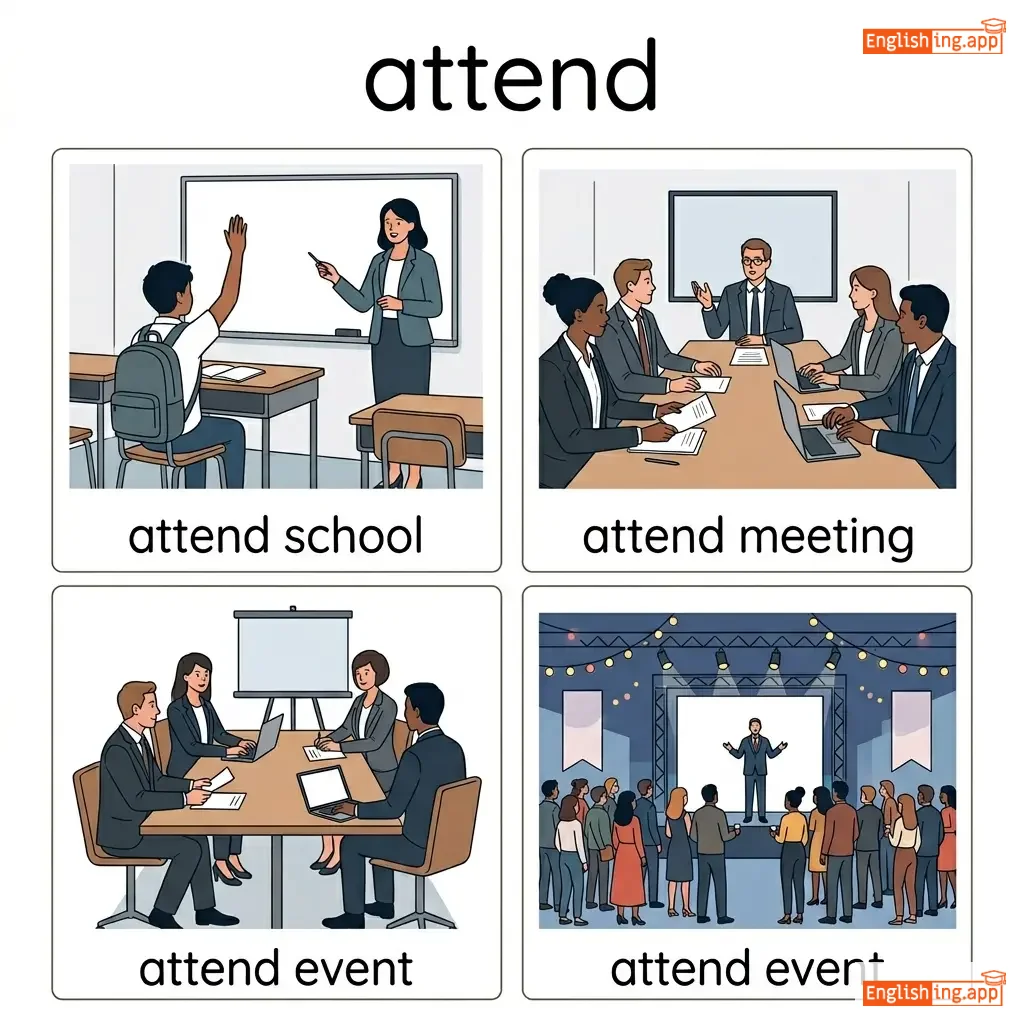
attend school, attend meeting, attend event, attend function
••••••
|
参加するのは、イベントに出席することです。
••••••
|
|
📝
••••••
|
/əˈtɛndəns/
noun
(アテンダンス)
••••••
|
- •••••• |
出席
shusseki
••••••
|
- •••••• | - •••••• | - •••••• | - •••••• |
the act of being present at a place or event
••••••
|
The teacher checked the students’ attendance every morning. |
教師は毎朝生徒の出席を確認していました。
Kyōshi wa maiasa seito no shusseki o kakunin shite imashita.
••••••
|
perfect attendance |
when someone has been present every time without absence
••••••
|
完璧な出席
kanpeki na shusseki
••••••
|
presence, participation, turnout, appearance
••••••
|
absence, nonattendance
••••••
|
take attendance, mark attendance, good attendance, poor attendance
••••••
|
Attend は出席するという意味 → Attendance は出席を意味する 📋
••••••
|

