|
表情符号
|
单词 | Images | 翻译 | 过去时 | 过去分词 | 第三人称单数 | 动名词 | 含义 | 例句 | 例句翻译 | 示例表达 | 示例表达含义 | 示例表达翻译 | 同义词 | 反义词 | 搭配词 | 助记符 |
|---|---|---|---|---|---|---|---|---|---|---|---|---|---|---|---|---|---|
|
⚔️
••••••
|
/əˈseɪl/
verb
(阿赛尔)
••••••
|
- •••••• |
攻击
gōngjī
••••••
|
assailed
阿赛尔德
••••••
|
assailed
阿赛尔德
••••••
|
assails
阿赛尔斯
••••••
|
assailing
阿赛林
••••••
|
to attack violently, either physically or with words
••••••
|
The politician was assailed with difficult questions.
政治家遭遇了困难的问题。
••••••
|
政治家遭遇了困难的问题。
Zhèngzhìjiā zāoyùle kùnnán de wèntí.
••••••
|
- •••••• | - •••••• | - •••••• |
attack, assault, criticize, storm, beset
••••••
|
defend, support, protect
••••••
|
assail someone, assail with questions, assail the enemy, assail verbally
••••••
|
Assail sounds like '攻击', means to attack.
••••••
|
|
👊
••••••
|
/əˈseɪlənt/
noun
(a sai lan te)
••••••
|
- •••••• |
攻击者
gongjizhe
••••••
|
- •••••• | - •••••• | - •••••• | - •••••• |
a person who attacks another
••••••
|
The police arrested the assailant at the scene. |
警方在现场逮捕了攻击者。
Jingfang zai xianchang daibu le gongjizhe.
••••••
|
- •••••• | - •••••• | - •••••• |
attacker, aggressor, assaulter, invader
••••••
|
victim, defender, protector
••••••
|
armed assailant, unknown assailant, capture the assailant, assailant with weapon
••••••
|
Assailant是攻击者,意思是攻击他人的人。
••••••
|
|
🔪
••••••
|
/əˈsæsɪneɪt/
verb
(刺杀)
••••••
|
- •••••• |
刺杀
cìshā
••••••
|
assassinated
刺杀了
••••••
|
assassinated
刺杀了
••••••
|
assassinates
刺杀
••••••
|
assassinating
刺杀
••••••
|
To murder someone important, often a political or religious leader, usually by surprise attack.
••••••
|
The rebels planned to assassinate the king.
反叛者计划刺杀国王。
••••••
|
反叛者计划刺杀国王。
Fǎnbàn zhě jìhuà cìshā guówáng.
••••••
|
- •••••• | - •••••• | - •••••• |
murder, kill, slay, eliminate, dispatch
••••••
|
protect, save, guard
••••••
|
assassinate a leader, assassinate a president, attempt to assassinate
••••••
|
刺杀就像电影中的刺客一样,悄悄地暗杀。
••••••
|
|
☠️
••••••
|
/əˌsæsɪˈneɪʃən/
noun
(刺杀)
••••••
|
- •••••• |
刺杀
cì shā
••••••
|
- •••••• | - •••••• | - •••••• | - •••••• |
The act of killing someone important, often for political or ideological reasons.
••••••
|
The assassination of the president shocked the nation. |
总统的刺杀震惊了整个国家。
Zǒngtǒng de cìshā zhènjīngle zhěnggè guójiā.
••••••
|
- •••••• | - •••••• | - •••••• |
murder, killing, execution, slaying
••••••
|
protection, rescue, preservation
••••••
|
political assassination, assassination attempt, assassination plot
••••••
|
刺杀就像是政治层面的杀害,震撼国家。
••••••
|
|
⚔️
••••••
|
/əˈsɔːlt/
noun, verb
(阿索尔特)
••••••
|
- •••••• |
攻击
gōngjī
••••••
|
assaulted
阿索尔特德
••••••
|
assaulted
阿索尔特德
••••••
|
assaults
阿索尔特斯
••••••
|
assaulting
阿索尔廷
••••••
|
a physical attack or to attack someone violently
••••••
|
He was charged with assault after the fight.
他在打斗后被指控袭击。
••••••
|
他在打斗后因袭击被指控。
Tā zài dǎdòu hòu yīn xíjī bèi zhǐkòng.
••••••
|
sexual assault
性侵害
••••••
|
unwanted sexual contact or attack
••••••
|
性侵害
xìng qīnhài
••••••
|
attack, strike, aggression, offensive
••••••
|
defense, protection
••••••
|
commit assault, charged with assault, physical assault
••••••
|
Assault意味着攻击 — 想想' A Salt attack'就像盐的攻击。
••••••
|
|
🧩
••••••
|
/əˈsɛmbəl/
verb
(阿森布尔)
••••••
|
- •••••• |
集合
jíhé
••••••
|
assembled
阿森布尔德
••••••
|
assembled
阿森布尔德
••••••
|
assembles
阿森布尔斯
••••••
|
assembling
阿森布林
••••••
|
to gather or bring together in one place
••••••
|
The students assembled in the hall for the meeting.
学生们为会议而聚集在大厅里。
••••••
|
学生们为了会议在大厅里集合。
Xuéshēng men wèile huìyì zài dàtīng lǐ jíhé.
••••••
|
assemble the pieces
组装这些部件
••••••
|
to put parts together to make a whole
••••••
|
组装这些部件
Zǔzhuāng zhèxiē bùjiàn
••••••
|
gather, collect, convene, accumulate, compile
••••••
|
disperse, scatter, divide
••••••
|
assemble a team, assemble a group, assemble furniture, assemble data
••••••
|
Assemble 意味着集合 — 想记得 ‘所有成员都已经集合’
••••••
|
|
🏫
••••••
|
/əˈsɛmbli/
noun
(āxīn bǐ lí)
••••••
|
- •••••• |
集会
jihui
••••••
|
- •••••• | - •••••• | - •••••• | - •••••• |
a group of people gathered together for a common purpose or the act of putting parts together to form something
••••••
|
The school held an assembly to discuss the new rules. |
学校举行了一个集会来讨论新的规则。
Xuexiao juxingle yige jihui lai taolun xinde guize.
••••••
|
freedom of assembly |
the right to gather together peacefully
••••••
|
集会自由
jihui ziyou
••••••
|
gathering, meeting, congregation, conference, convention
••••••
|
disbandment, separation
••••••
|
school assembly, general assembly, legislative assembly, assembly line
••••••
|
Assembly 是指大家一起聚集,比如在学校里大家开集会。
••••••
|
|
✅
••••••
|
/əˈsɛnt/
noun, verb
(阿森特)
••••••
|
- •••••• |
同意
tongyi
••••••
|
assented
阿森特德
••••••
|
assented
阿森特德
••••••
|
assents
阿森特斯
••••••
|
assenting
阿森廷
••••••
|
To agree to something, especially after careful consideration; an expression of approval.
••••••
|
She nodded her head in silent assent.
她默默地点了点头。
••••••
|
她默默地点了点头。
Tā mòmò de diǎnle diǎntóu.
••••••
|
give assent
给予同意
••••••
|
To formally agree or approve something.
••••••
|
给予同意
Jǐyǔ tóngyì
••••••
|
agreement, approval, consent, endorsement, acceptance
••••••
|
refusal, dissent, denial
••••••
|
royal assent, silent assent, assent to a proposal
••••••
|
Assent = 同意 (tongyi), 点头即为同意。
••••••
|
|
📢
••••••
|
/əˈsɜːrt/
verb
(阿瑟特)
••••••
|
|
断言
duàn yán
••••••
|
asserted
阿瑟特德
••••••
|
asserted
阿瑟特德
••••••
|
asserts
阿瑟特斯
••••••
|
asserting
阿瑟特英
••••••
|
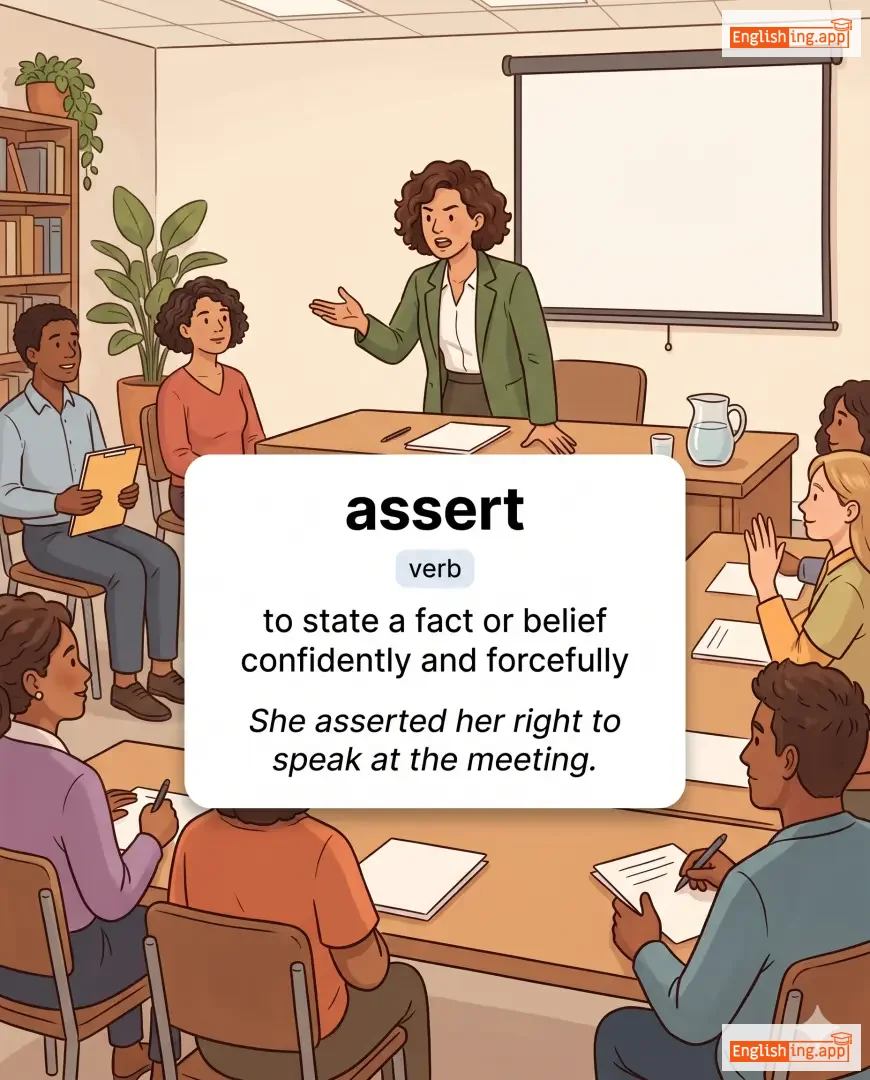
to state a fact or belief confidently and forcefully
••••••
|
She asserted her right to speak at the meeting.
她在会议中坚决声明了自己发言的权利。
••••••
|
她在会议中坚决声明了自己发言的权利。
Tā zài huì yì zhōng jiān jué shēng míng le zì jǐ fā yán de quán lì.
••••••
|
assert oneself
自信地表现自己
••••••
|
to behave confidently and firmly to make others respect your rights or opinions
••••••
|
自信地表现自己
zì xìn dì biǎo xiàn zì jǐ
••••••
|
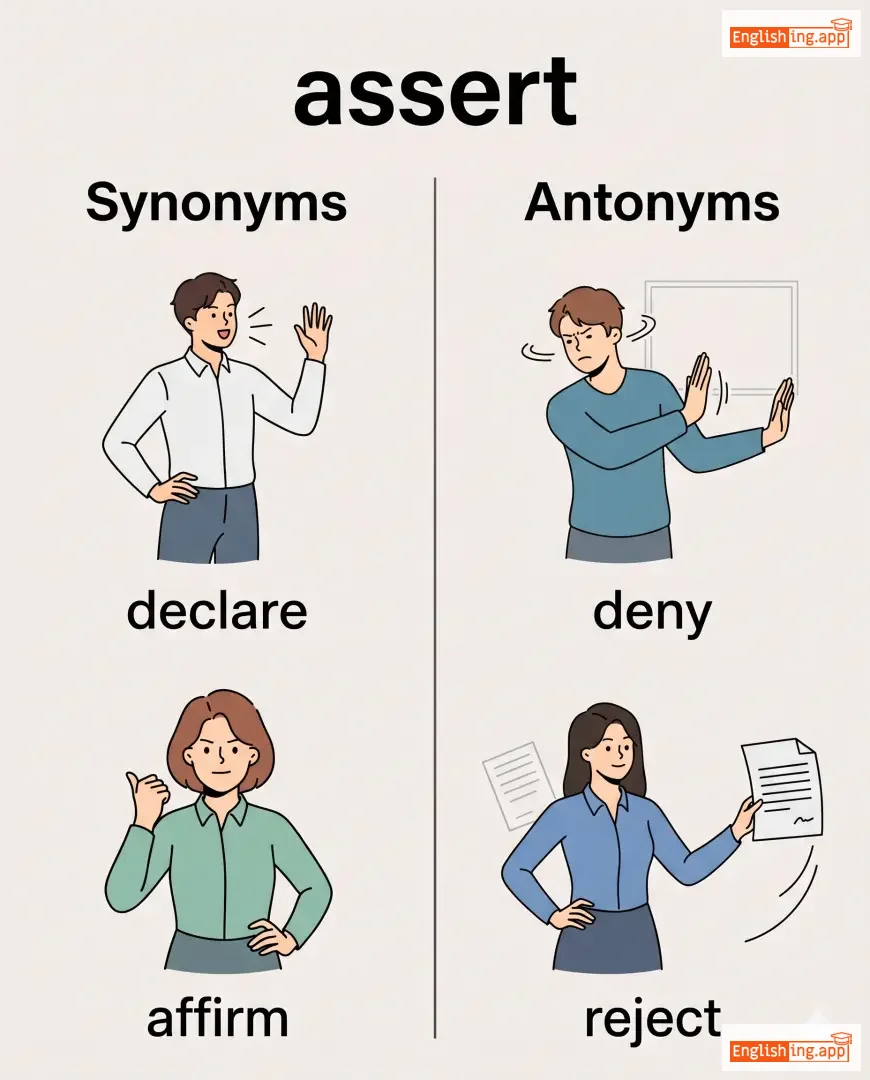
declare, affirm, maintain, insist, claim
••••••
|
deny, reject, abandon
••••••
|
assert rights, assert control, assert authority, assert independence
••••••
|
Assert的意思是断言,像'我们断言我们是对的'。
••••••
|
|
🗣️
••••••
|
/əˈsɜːʃən/
noun
(assertion)
••••••
|
- •••••• |
断言
duanyan
••••••
|
- •••••• | - •••••• | - •••••• | - •••••• |
a confident and forceful statement of fact or belief
••••••
|
Her assertion that she was right was met with silence.
她的断言她是对的遭遇了沉默。
••••••
|
她的断言她是对的遭遇了沉默。
Ta de duanyan ta shi dui de zao yule chenmo.
••••••
|
- •••••• | - •••••• | - •••••• |
declaration, statement, claim, affirmation
••••••
|
denial, rejection, doubt
••••••
|
strong assertion, make an assertion, assertion of rights
••••••
|
Assertion - 断言就像是assert,断言就是有力的声明 (claim)。
••••••
|
|
📊
••••••
|
/əˈsɛs/
verb
(阿塞斯)
••••••
|
- •••••• |
评估
pinggu
••••••
|
assessed
阿塞斯德
••••••
|
assessed
阿塞斯德
••••••
|
assesses
阿塞塞斯
••••••
|
assessing
阿塞辛
••••••
|
to evaluate or estimate the nature, ability, or quality of something
••••••
|
The teacher assessed the students' progress.
老师评估了学生的进展。
••••••
|
老师评估了学生的进展。
Laoshi pinggu le xuesheng de jinzhang.
••••••
|
assess the situation
评估情况
••••••
|
to carefully evaluate the circumstances before acting
••••••
|
评估情况
pinggu qingkuang
••••••
|
evaluate, judge, appraise, estimate, measure
••••••
|
ignore, overlook, neglect
••••••
|
assess progress, assess damage, assess risk, assess value
••••••
|
Assess的意思是评估 — '在考试前评估你的准备情况。'
••••••
|
|
📊
••••••
|
/əˈsɛsmənt/
noun
(评估)
••••••
|
|
评估
pinggu
••••••
|
- •••••• | - •••••• | - •••••• | - •••••• |
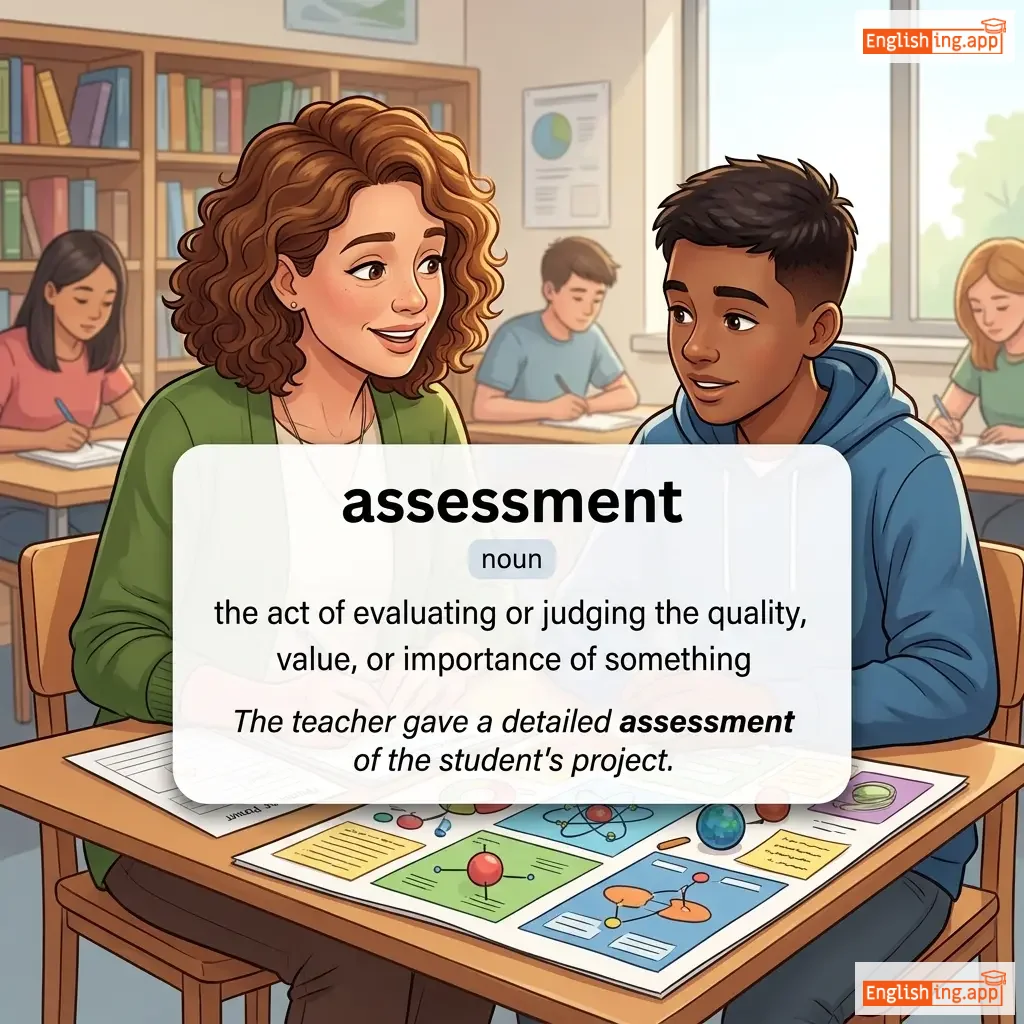
the act of evaluating or judging the quality, value, or importance of something
••••••
|
The teacher gave a detailed assessment of the student's project. |
老师对学生的项目进行了详细评估。
Laoshi dui xuesheng de xiangmu jinxing le xiangxi pinggu.
••••••
|
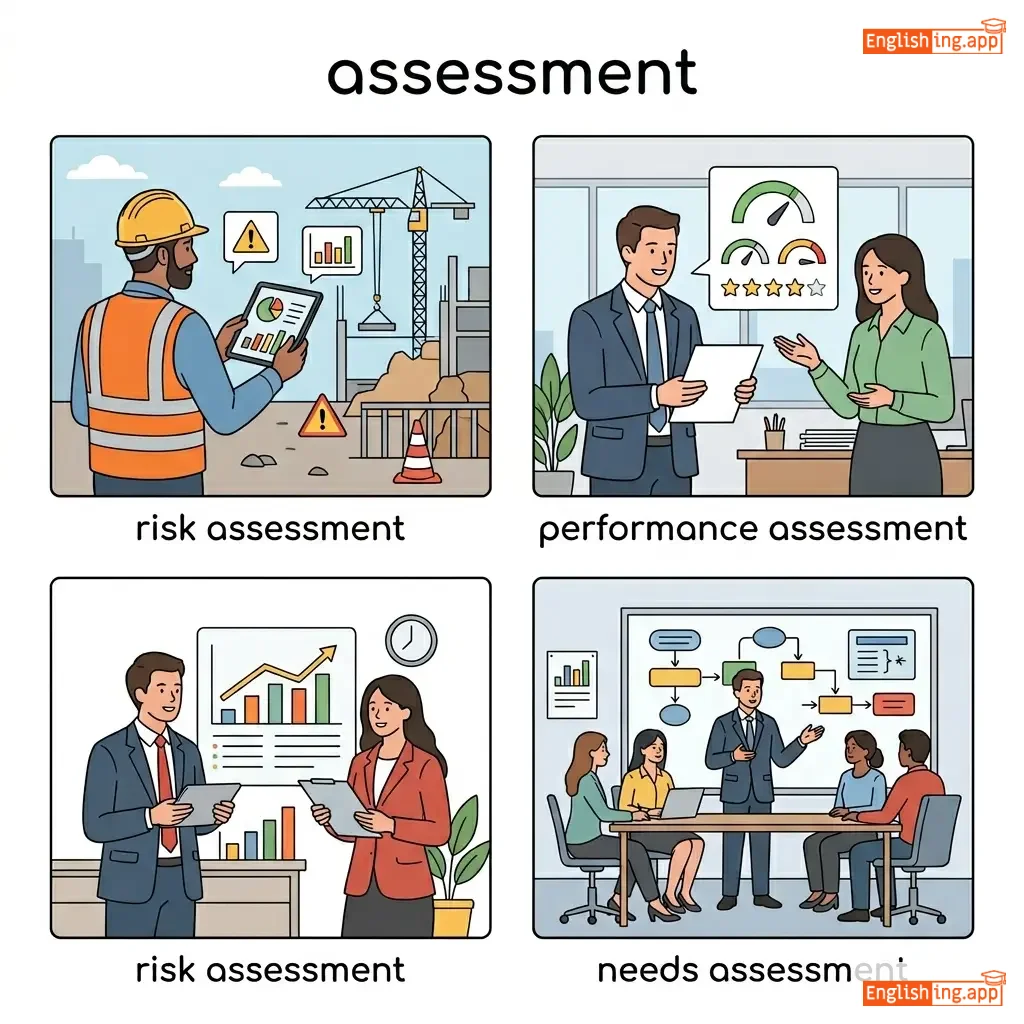
needs assessment |
a systematic process to determine and address needs or gaps
••••••
|
需求评估
xuqiu pinggu
••••••
|
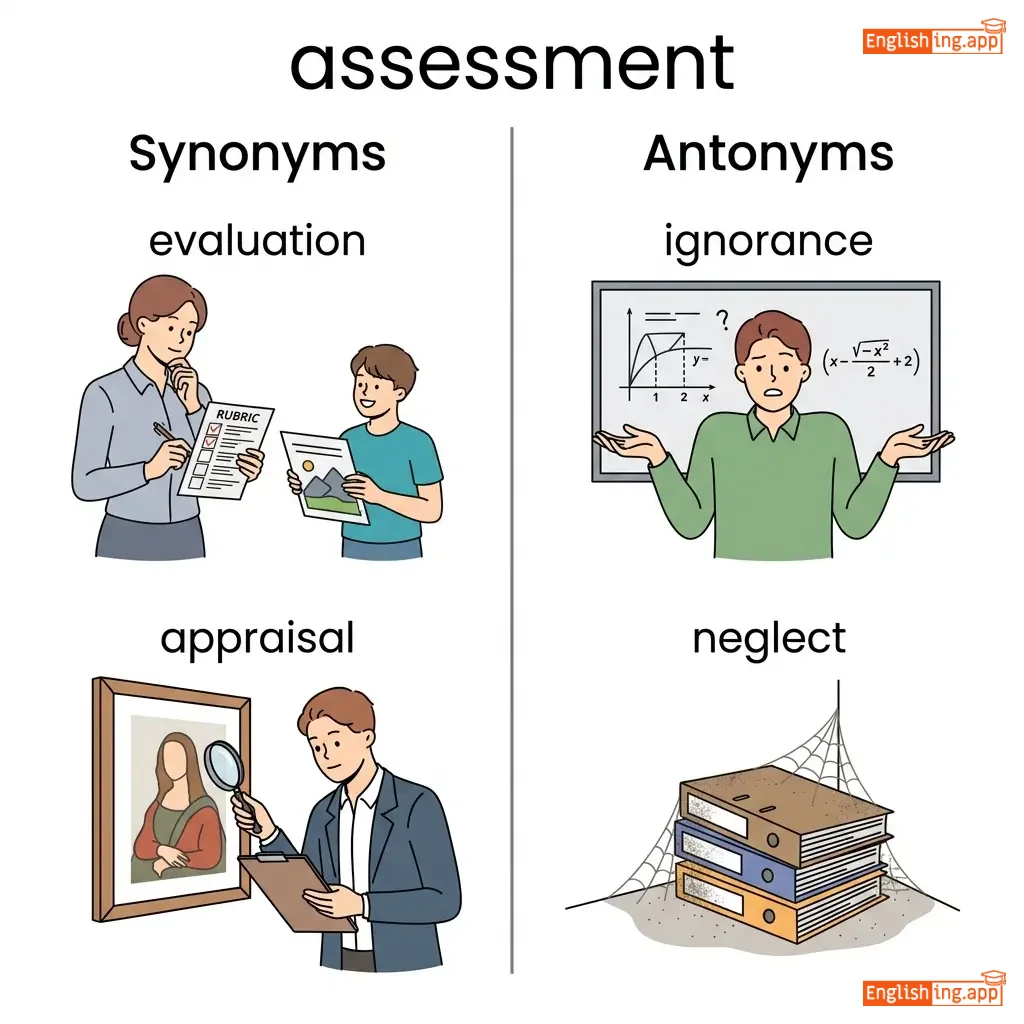
evaluation, appraisal, review, analysis, examination
••••••
|
ignorance, neglect
••••••
|
risk assessment, performance assessment, needs assessment, environmental assessment
••••••
|
Assessment 表示评估 (评估)
••••••
|
|
💎
••••••
|
/ˈæsɛt/
noun
(æset)
••••••
|

|
资产
zīchǎn
••••••
|
- •••••• | - •••••• | - •••••• | - •••••• |
a valuable person, skill, or resource; something owned that has value
••••••
|
Her communication skills are a great asset to the company.
她的沟通技巧是公司的一大资产。
••••••
|
她的沟通技巧是公司的一大资产。
Tā de gōutōng jìqiǎo shì gōngsī de yī dà zīchǎn.
••••••
|
liquid asset
流动资产
••••••
|
an asset that can easily be converted into cash
••••••
|
流动资产
liúdòng zīchǎn
••••••
|
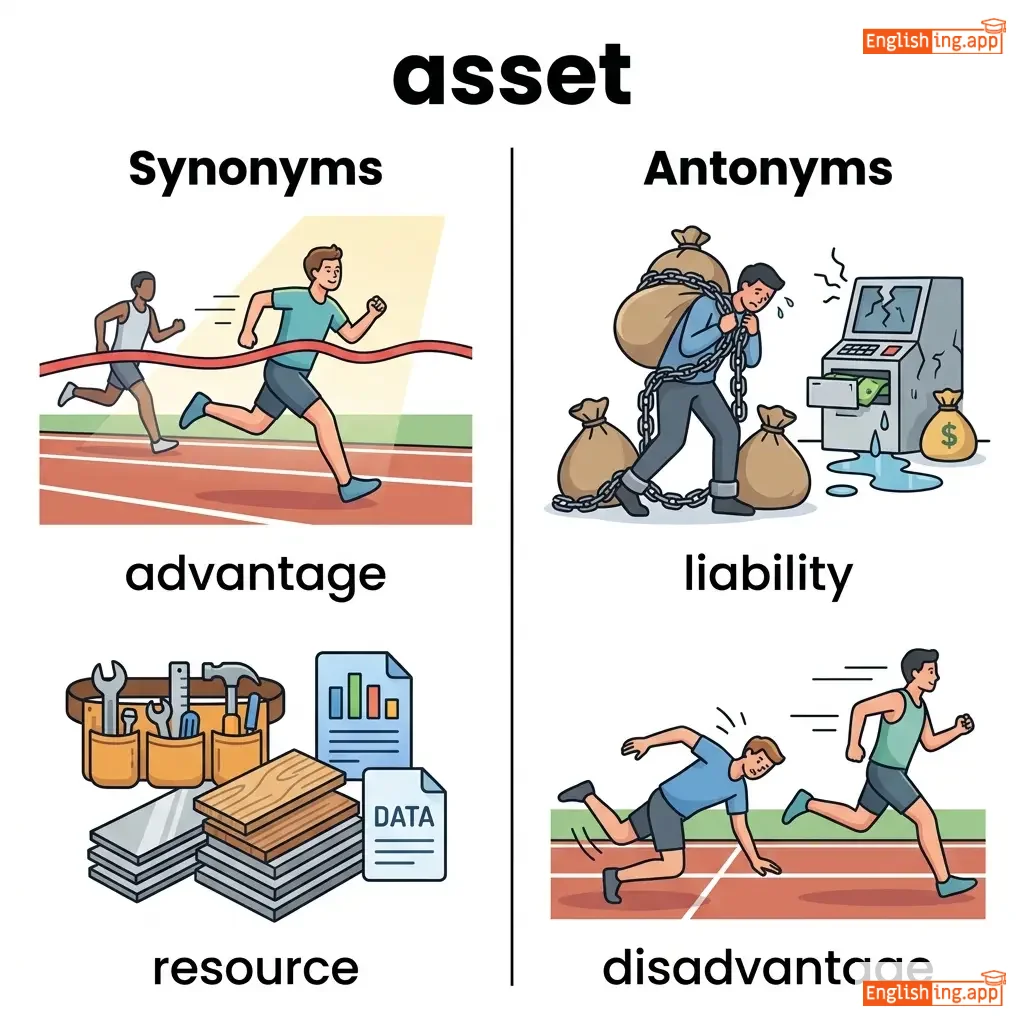
advantage, resource, property, benefit, strength
••••••
|
liability, disadvantage
••••••
|
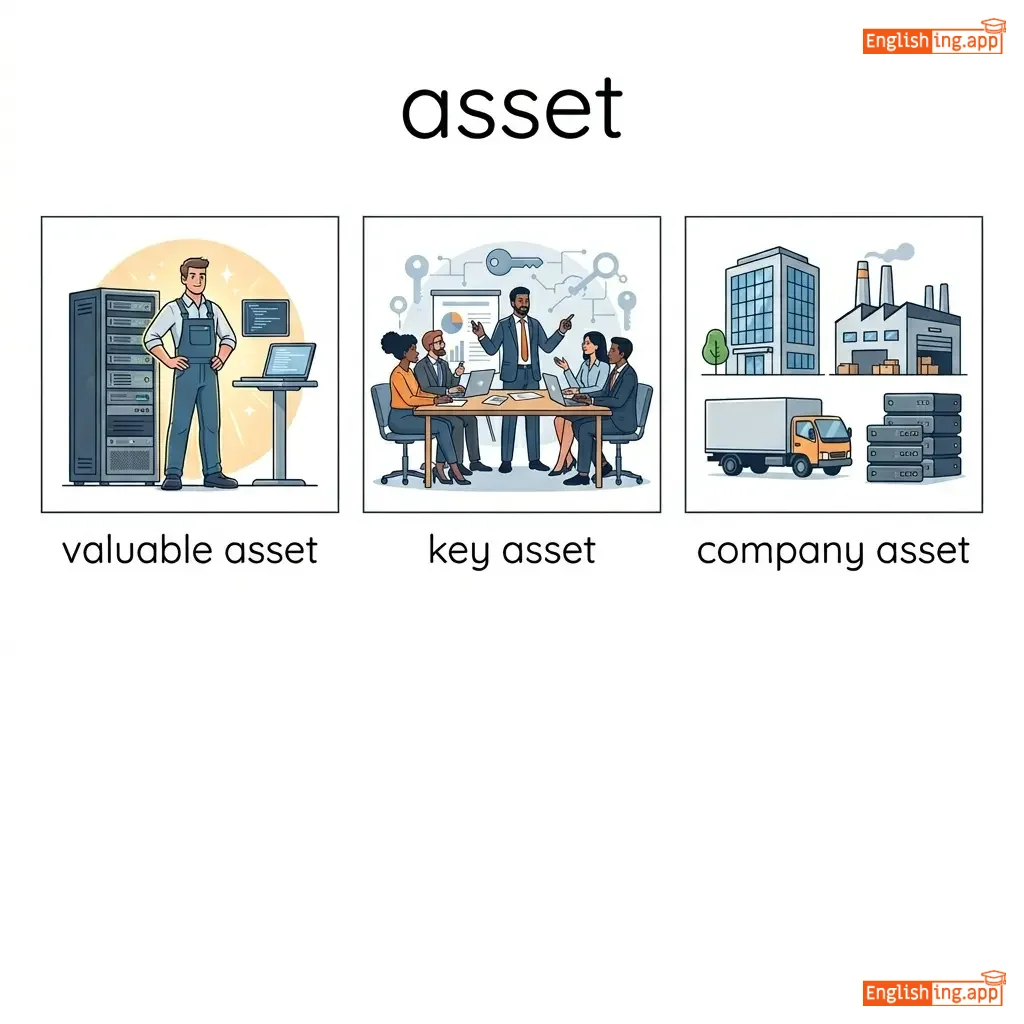
valuable asset, key asset, company asset, financial asset
••••••
|
Asset就像是能够流动的财富
••••••
|
|
📝
••••••
|
/əˈsaɪn/
verb
(āxīng)
••••••
|
- •••••• |
分配
fēnpèi
••••••
|
assigned
āxīnd
••••••
|
assigned
āxīnd
••••••
|
assigns
āxīns
••••••
|
assigning
āxīning
••••••
|
to give someone a task, duty, or responsibility
••••••
|
The manager will assign tasks to the new employees.
经理将给新员工分配任务。
••••••
|
经理将给新员工分配任务。
Jīnglǐ jiāng gěi xīn yuángōng fēnpèi rènwù.
••••••
|
assign blame
分配责任
••••••
|
to place responsibility for something on someone
••••••
|
分配责任
fēnpèi zérèn
••••••
|
allocate, appoint, designate, delegate, allot
••••••
|
withhold, refuse
••••••
|
assign tasks, assign roles, assign duties, assign responsibility
••••••
|
Assign 就是把任务分配给别人。
••••••
|
|
📄
••••••
|
/əˈsaɪnmənt/
noun
(ā sài n mén tè)
••••••
|
- •••••• |
任务
renwu
••••••
|
- •••••• | - •••••• | - •••••• | - •••••• |
a task or piece of work given to someone as part of their duties
••••••
|
The students completed their homework assignment on time. |
学生们按时完成了他们的家庭作业任务。
xueshengmen an shi wancheng le tamen de jiating zuoye renwu.
••••••
|
writing assignment |
a task requiring written work
••••••
|
写作任务
xiezuo renwu
••••••
|
task, duty, job, responsibility, project
••••••
|
neglect, avoidance
••••••
|
school assignment, work assignment, group assignment, writing assignment
••••••
|
Assignment是分配给你做的任务 – 教师分配的工作
••••••
|
|
🤲
••••••
|
/əˈsɪst/
verb
(阿西斯特)
••••••
|
- •••••• |
帮助
bangzhu
••••••
|
assisted
阿西斯特德
••••••
|
assisted
阿西斯特德
••••••
|
assists
阿西斯特斯
••••••
|
assisting
阿西斯廷
••••••
|
to help or support someone in doing something
••••••
|
The nurse will assist the doctor during the surgery.
护士将协助医生进行手术。
••••••
|
护士将协助医生进行手术。
Hushi jiang xiezhu yisheng jinxing shoushu.
••••••
|
assist in
协助于
••••••
|
to help someone with something
••••••
|
协助于
xiezhu yu
••••••
|
help, support, aid, facilitate, encourage
••••••
|
hinder, obstruct
••••••
|
assist someone, assist with, assist in, assist greatly
••••••
|
Assisting 就像帮朋友做事。
••••••
|
|
🆘
••••••
|
/əˈsɪstəns/
noun
(āxīnsī)
••••••
|
- •••••• |
帮助
bāngzhù
••••••
|
- •••••• | - •••••• | - •••••• | - •••••• |
help or support given to someone in need
••••••
|
The organization provides financial assistance to students. |
该组织为学生提供财务援助。
Gāi zǔzhī wèi xuéshēng tígōng cáiwù yuánzhù.
••••••
|
render assistance |
to provide help or support
••••••
|
提供帮助
tígōng bāngzhù
••••••
|
help, support, aid, backing, relief
••••••
|
hindrance, obstruction, neglect
••••••
|
seek assistance, provide assistance, medical assistance, technical assistance
••••••
|
Assistance 意味着帮助,就像在地铁里当你请求 'Assistance please' 的时候。
••••••
|
|
👩💼
••••••
|
/əˈsɪstənt/
noun
(助手)
••••••
|
- •••••• |
助手
zhùshǒu
••••••
|
- •••••• | - •••••• | - •••••• | - •••••• |
a person who helps or supports another, often in a job
••••••
|
She works as an assistant in a law firm.
她在一家律师事务所做助理。
••••••
|
她在一家律师事务所做助理。
Tā zài yījiā lǜshī shìwùsuǒ zuò zhùlǐ.
••••••
|
personal assistant
个人助理
••••••
|
a person employed to help manage someone’s daily work or tasks
••••••
|
个人助理
gèrén zhùlǐ
••••••
|
helper, aide, deputy, associate, supporter
••••••
|
supervisor, boss, leader
••••••
|
teaching assistant, assistant manager, office assistant, research assistant
••••••
|
助理像Google Assistant一样,是你的个人助手。
••••••
|
|
🔗
••••••
|
/əˈsoʊsieɪt/
verb
(联想)
••••••
|

|
联想
lianxiang
••••••
|
associated
联想过
••••••
|
associated
联想过
••••••
|
associates
联想
••••••
|
associating
联想中
••••••
|
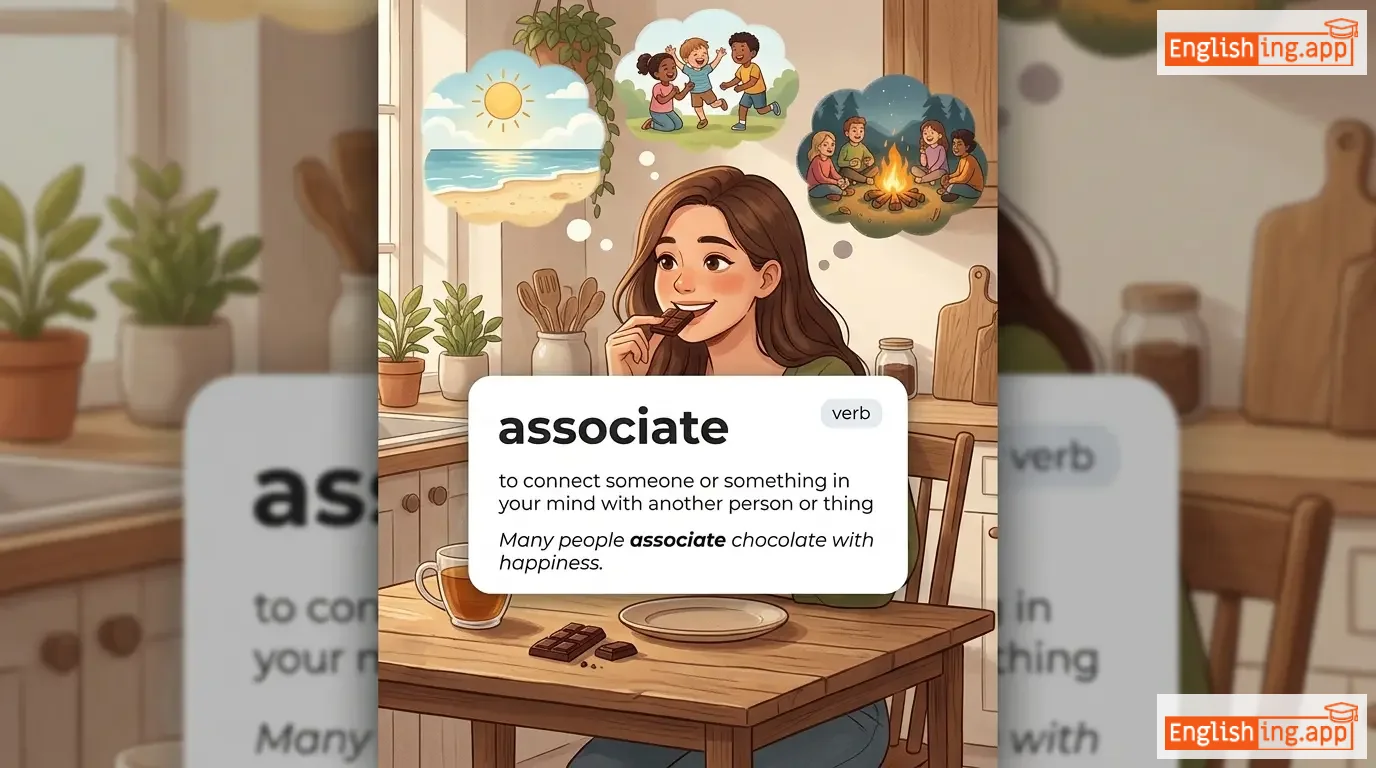
to connect someone or something in your mind with another person or thing
••••••
|
Many people associate chocolate with happiness.
许多人把巧克力和幸福联系在一起。
••••••
|
许多人把巧克力和幸福联系在一起。
Xu duoren ba qiaokeli he xingfu lianxi zai yiqi.
••••••
|
associate with
与…关联
••••••
|
to be connected or involved with someone or something
••••••
|
与…关联
yu...guanlian
••••••
|
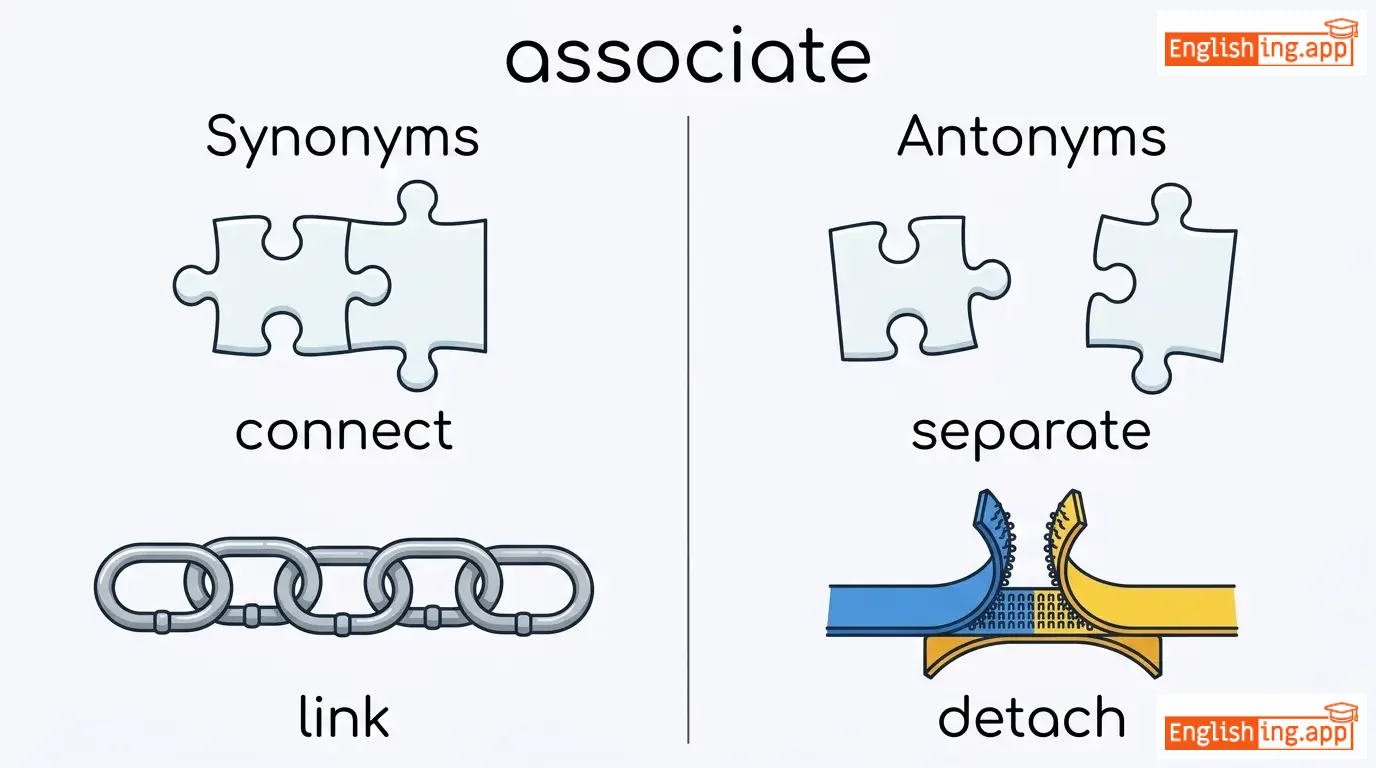
connect, link, relate, join, unite
••••••
|
separate, detach, disconnect
••••••
|
associate professor, associate degree, associate member, strongly associate
••••••
|
联想意味着连接 — 就像'associate professor'是副教授。
••••••
|
|
🔗
••••••
|
/əˈsoʊsieɪtɪd/
adjective
(亚索西埃提德)
••••••
|
- •••••• |
关联的
guānlián de
••••••
|
- •••••• | - •••••• | - •••••• | - •••••• |
connected or related to something or someone
••••••
|
She is closely associated with environmental movements. |
她与环保运动密切相关。
Tā yǔ huánbǎo yùndòng mìqiè xiāngguān.
••••••
|
associated with |
connected or linked to
••••••
|
与...相关
yǔ... xiāngguān
••••••
|
connected, linked, related, joined, allied
••••••
|
unrelated, separate, independent
••••••
|
closely associated, directly associated, commonly associated
••••••
|
Associate意味着连接——关联的意味着相关或连接。
••••••
|
|
👥
••••••
|
/əˌsoʊsiˈeɪʃən/
noun
(Āsuòxīèshēn)
••••••
|
- •••••• |
协会
xiehui
••••••
|
- •••••• | - •••••• | - •••••• | - •••••• |
an organized group of people who have joined together for a common purpose
••••••
|
She is a member of the local teachers' association. |
她是当地教师协会的成员。
Ta shi dangdi jiaoshi xiehui de chengyuan.
••••••
|
guilt by association |
being blamed for the actions of others you are connected with
••••••
|
因关联而被定罪
Yin guanlian er bei dingzui
••••••
|
organization, society, alliance, group, union
••••••
|
individual, disconnection
••••••
|
professional association, trade association, close association
••••••
|
协会意味着一个组织或团体,比如足球协会,球员的团体。
••••••
|
|
😌
••••••
|
/əˈsweɪdʒ/
verb
(àsuìjié)
••••••
|
|
缓解
huǎn jiě
••••••
|
assuaged
àsuìjiéd
••••••
|
assuaged
àsuìjiéd
••••••
|
assuages
àsuìjiés
••••••
|
assuaging
àsuìjiéng
••••••
|
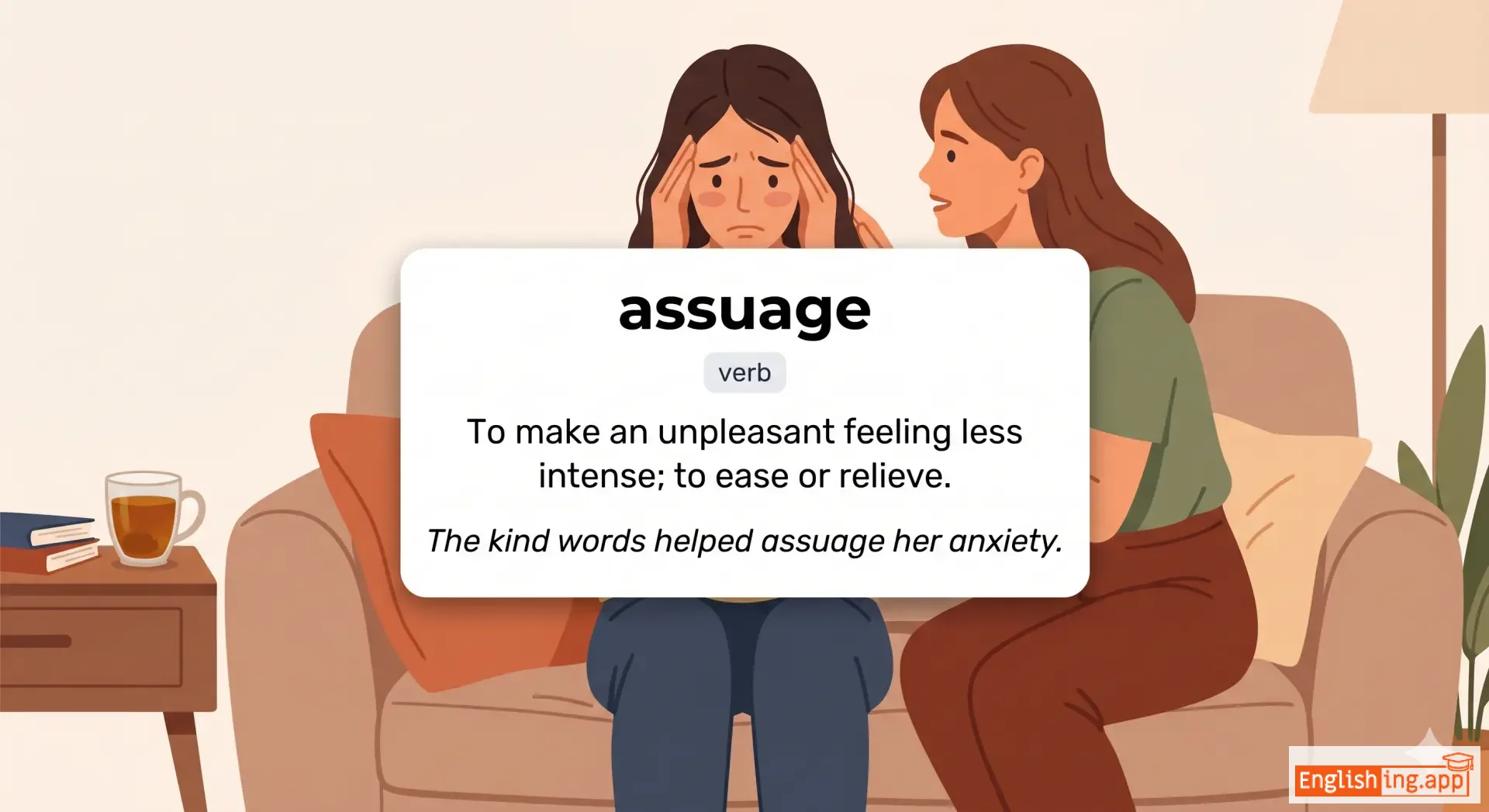
To make an unpleasant feeling less intense; to ease or relieve.
••••••
|
The kind words helped assuage her anxiety.
善意的话帮助缓解了她的焦虑。
••••••
|
善意的话帮助缓解了她的焦虑。
Shànyì de huà bāngzhù huǎn jiě le tā de jiāolǜ.
••••••
|
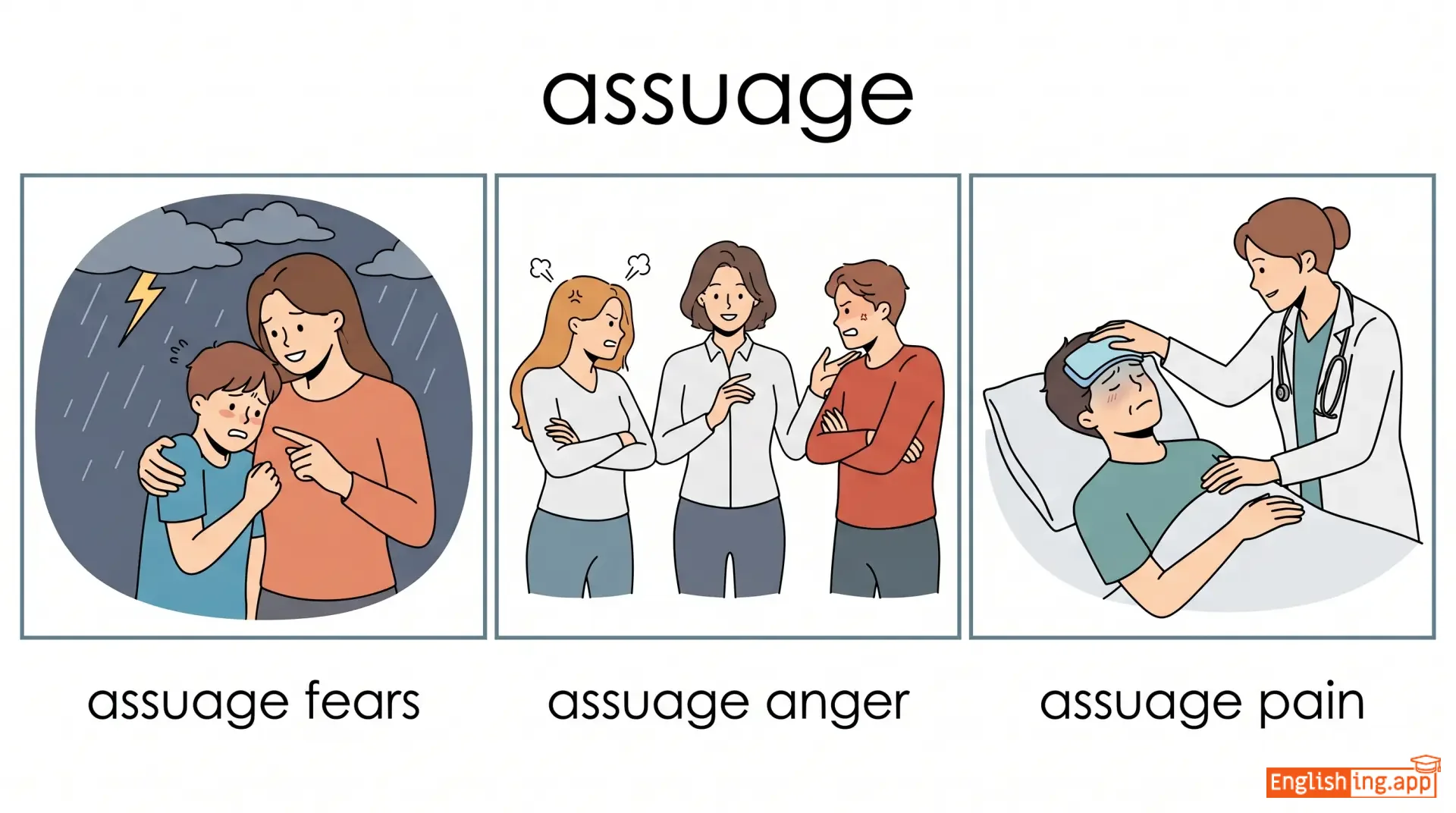
assuage one's fears
缓解某人的恐惧
••••••
|
to calm or reduce someone's fears
••••••
|
缓解某人的恐惧
huǎn jiě mǒu rén de kǒng jù
••••••
|
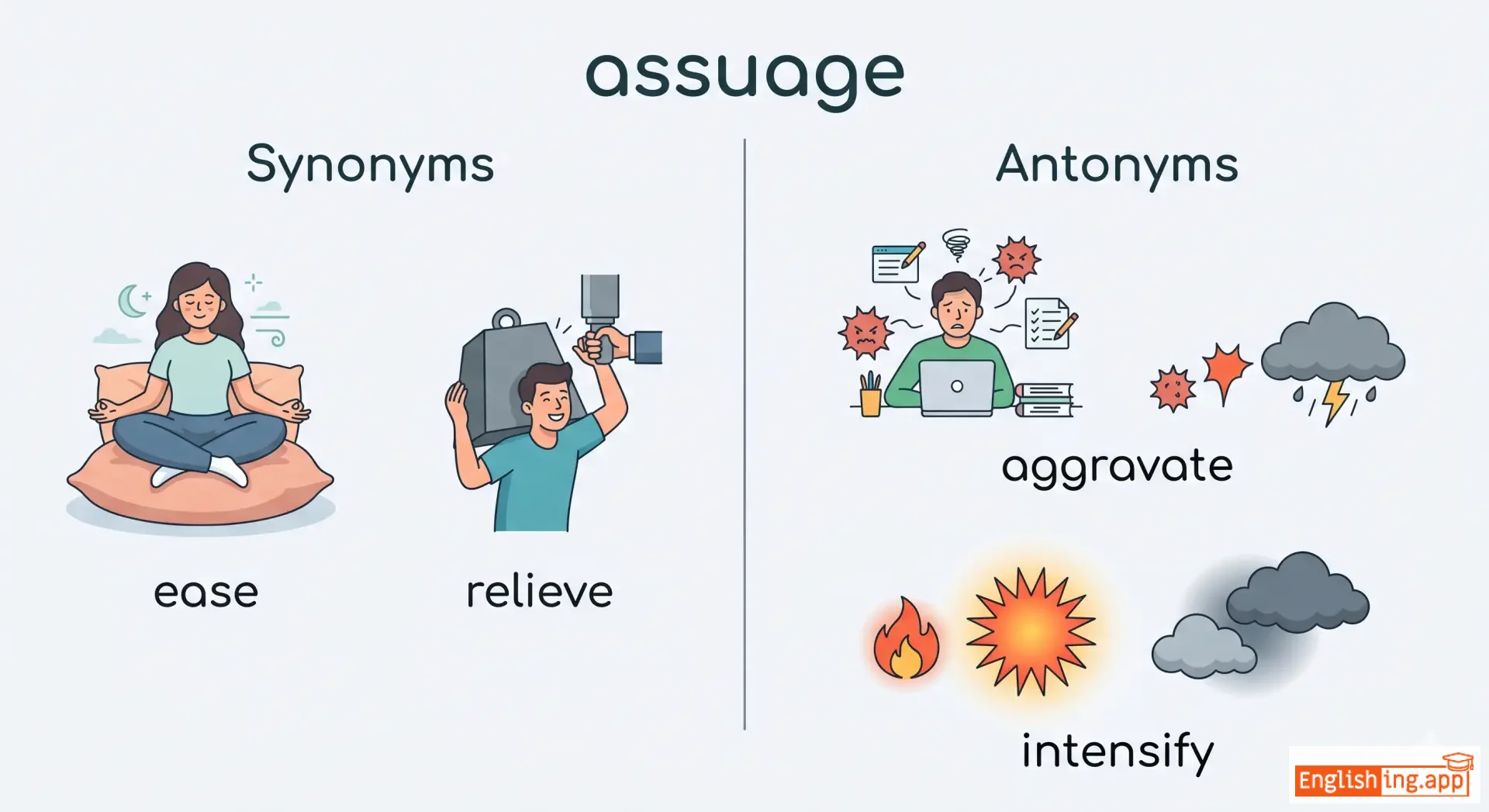
ease, relieve, alleviate, soothe, pacify
••••••
|
aggravate, intensify, worsen
••••••
|
assuage fears, assuage anger, assuage pain
••••••
|
Assuage 意味着 '一种安慰信息' - 安慰信息
••••••
|
|
🤔
••••••
|
/əˈsuːm/
verb
(阿修姆)
••••••
|
- •••••• |
假设
jiǎshè
••••••
|
assumed
阿修姆德
••••••
|
assumed
阿修姆德
••••••
|
assumes
阿修姆斯
••••••
|
assuming
阿修明
••••••
|
to think that something is true without proof
••••••
|
I assume he will be late to the meeting.
我假设他会迟到会议。
••••••
|
我假设他会迟到会议。
Wǒ jiǎshè tā huì chídào huìyì.
••••••
|
make an assumption
做出假设
••••••
|
to form an idea without evidence
••••••
|
做出假设
zuòchū jiǎshè
••••••
|
suppose, presume, imagine, believe, expect
••••••
|
doubt, question, deny
••••••
|
assume responsibility, assume control, assume the worst, assume a role
••••••
|
假设:'假'一假,'设'一设成。
••••••
|
|
🤔
••••••
|
/əˈsʌmpʃən/
noun
(asumpshion)
••••••
|
- •••••• |
假设
jiǎshè
••••••
|
- •••••• | - •••••• | - •••••• | - •••••• |
A belief or statement taken for granted without proof.
••••••
|
His assumption about the results turned out to be wrong.
Hiz asumpshion abaut de results ternd aut tu bi wrong.
••••••
|
他对结果的假设证明是错误的。
Tā duì jiéguǒ de jiàshè zhèngmíng shì cuòwù de.
••••••
|
work on the assumption
work on de asumpshion
••••••
|
to proceed based on something being true
••••••
|
基于假设工作
jīyú jiàshè gōngzuò
••••••
|
belief, presumption, supposition, expectation
••••••
|
fact, certainty, reality
••••••
|
make an assumption, false assumption, assumption of power
••••••
|
假设就像在没有证据的情况下直接推测。
••••••
|
|
✅
••••••
|
/əˈʃʊərəns/
noun
(ā xīu rǎn sī)
••••••
|

|
保证
baozheng
••••••
|
- •••••• | - •••••• | - •••••• | - •••••• |
A positive declaration intended to give confidence; a guarantee.
••••••
|
She gave her assurance that the project would be completed on time.
她给了她的保证,项目将按时完成。
••••••
|
她给了她的保证,项目将按时完成。
Ta gei le ta de baozheng, xiangmu jiang anshi wancheng.
••••••
|
rest assured
放心
••••••
|
be certain and without worry
••••••
|
放心
fangxin
••••••
|
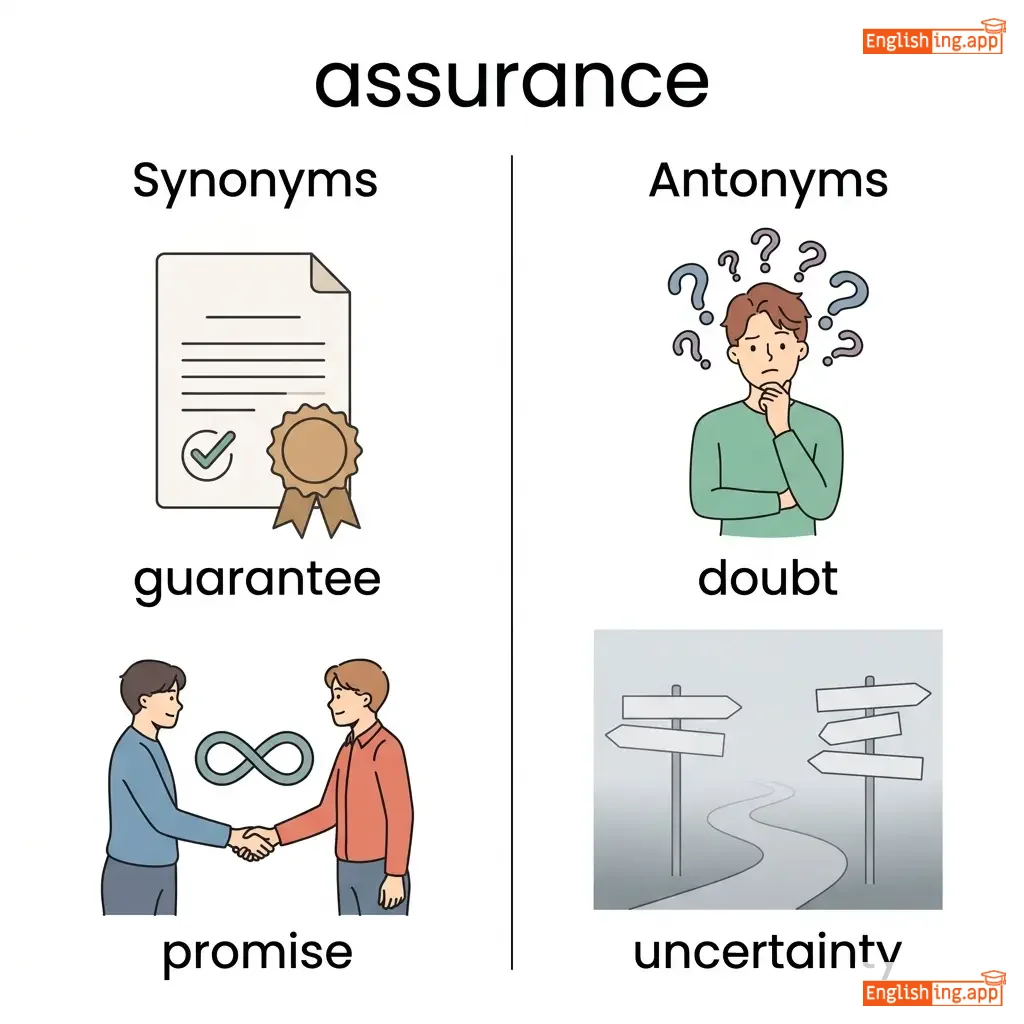
guarantee, promise, pledge, confidence
••••••
|
doubt, uncertainty
••••••
|
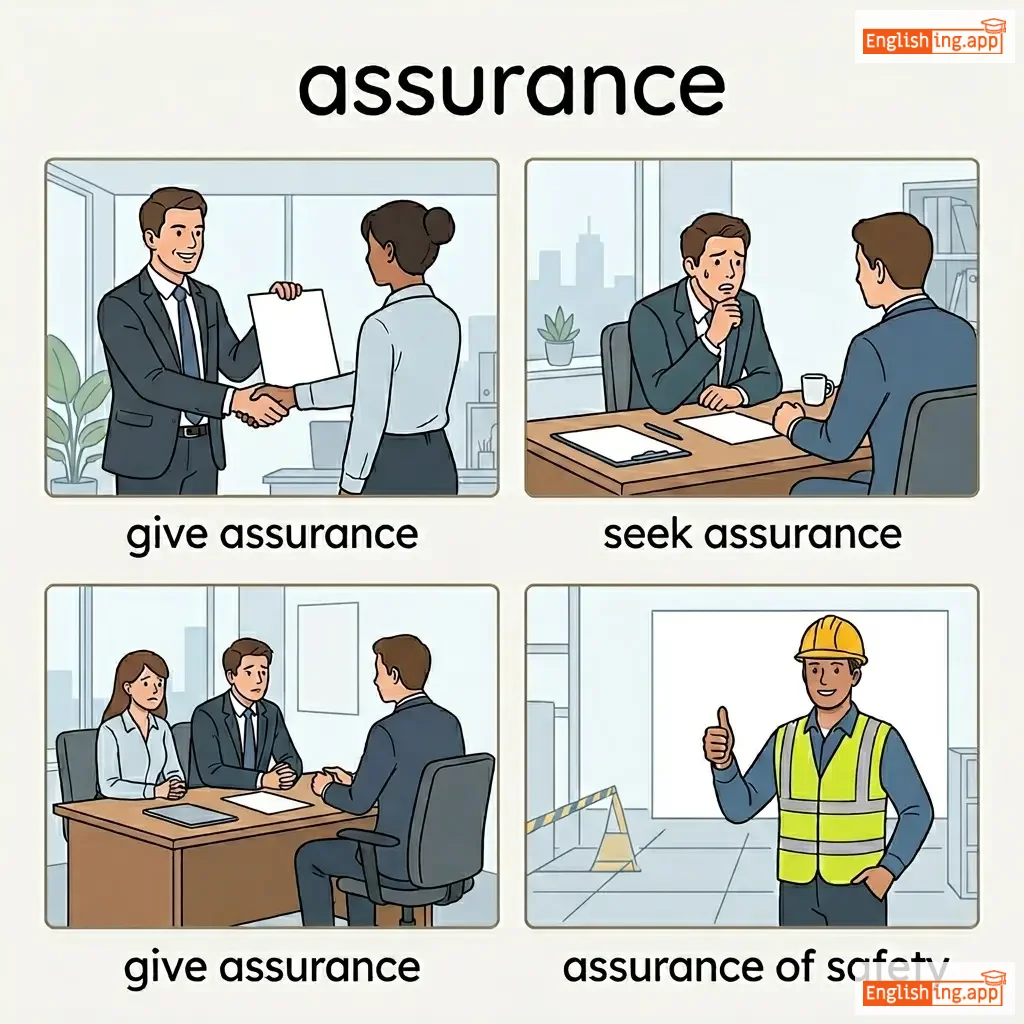
give assurance, seek assurance, assurance of safety
••••••
|
保证意味着'保证'-自信并无忧虑。
••••••
|
|
🤞
••••••
|
/əˈʃʊr/
verb
(asshúr)
••••••
|
- •••••• |
保证
baozheng
••••••
|
assured
asshúrd
••••••
|
assured
asshúrd
••••••
|
assures
asshúrs
••••••
|
assuring
asshúring
••••••
|
to make someone feel certain or confident about something
••••••
|
He assured her that everything would be fine.
他向她保证一切都会好。
••••••
|
他向她保证一切都会好。
Ta xiang ta baozheng yiqie dou hui hao.
••••••
|
rest assured
请放心
••••••
|
to be confident or certain about something
••••••
|
放心
fangxin
••••••
|
guarantee, promise, affirm, convince, ensure
••••••
|
doubt, question
••••••
|
assure someone, assure success, assure quality
••••••
|
保证就是给人确信 - 老师说REST ASSURED考试很容易。
••••••
|
|
😌
••••••
|
/əˈʃʊrd/
adjective; verb (past/participle)
(阿舍德)
••••••
|
- •••••• |
确信的;有把握的
quexin de; you bawode
••••••
|
assured
阿舍德
••••••
|
assured
阿舍德
••••••
|
- •••••• | - •••••• |
confident and certain; guaranteed or made certain
••••••
|
She felt assured that everything would work out.
she felt 阿舍德 that everything would work out
••••••
|
她确信一切都会顺利。
ta quexin yiqie dou hui shunli
••••••
|
rest assured
rest 阿舍德
••••••
|
to be completely confident or certain
••••••
|
尽管放心
jingguan fangxin
••••••
|
confident, certain, guaranteed, secure, positive
••••••
|
uncertain, doubtful, insecure
••••••
|
feel assured, fully assured, assured success, assured manner
••••••
|
Assured sounds sure—sure = 确信的
••••••
|
|
😲
••••••
|
/əˈstɒnɪʃ/
verb
(阿斯顿尼什)
••••••
|
- •••••• |
使震惊
shi zhenjing
••••••
|
astonished
阿斯顿尼什德
••••••
|
astonished
阿斯顿尼什德
••••••
|
astonishes
阿斯顿尼什兹
••••••
|
astonishing
阿斯顿尼什英
••••••
|
to surprise someone greatly; to fill with sudden wonder or amazement
••••••
|
The magician’s final trick astonished the entire audience.
德 魔术师 的 最后 表演 阿斯顿尼什 德 全部 观众。
••••••
|
魔术师的最后一个表演使所有观众感到震惊。
moshushi de zuihou yige biaoyan shi suoyou guanzhong gandao zhenjing
••••••
|
- •••••• | - •••••• | - •••••• |
amaze, astound, surprise, startle, stun
••••••
|
bore, calm, reassure
••••••
|
astonish everyone, astonish the audience, truly astonish, astonish people
••••••
|
Astonish = 震惊 → 想象一次表演让大家都‘震’住了。
••••••
|
|
😲
••••••
|
/əˈstɒnɪʃt/
adjective
(阿斯托尼什特)
••••••
|
- •••••• |
震惊的
zhenjing de
••••••
|
- •••••• | - •••••• | - •••••• | - •••••• |
feeling very surprised or amazed
••••••
|
She was astonished by the magician's incredible trick.
她 被 魔术师 的 不可思议 的 把戏 阿斯托尼什特 了。
••••••
|
她被魔术师不可思议的把戏震惊了。
ta bei moshushi bukesiyi de baxi zhenjing le
••••••
|
be astonished at
比 阿斯托尼什特 艾特
••••••
|
to feel great surprise about something
••••••
|
对某事感到震惊
dui mou shi gandao zhenjing
••••••
|
amazed, surprised, stunned, shocked, astounded
••••••
|
unimpressed, unsurprised, indifferent
••••••
|
utterly astonished, visibly astonished, astonished look, astonished reaction
••••••
|
Astonished = 震惊的 — 心里‘震’了一下
••••••
|
|
😲
••••••
|
/əsˈtɒnɪʃɪŋ/
adjective
(æstɒnɪʃɪŋ)
••••••
|
|
令人吃惊
lìng rén chī jīng
••••••
|
- •••••• | - •••••• | - •••••• | - •••••• |
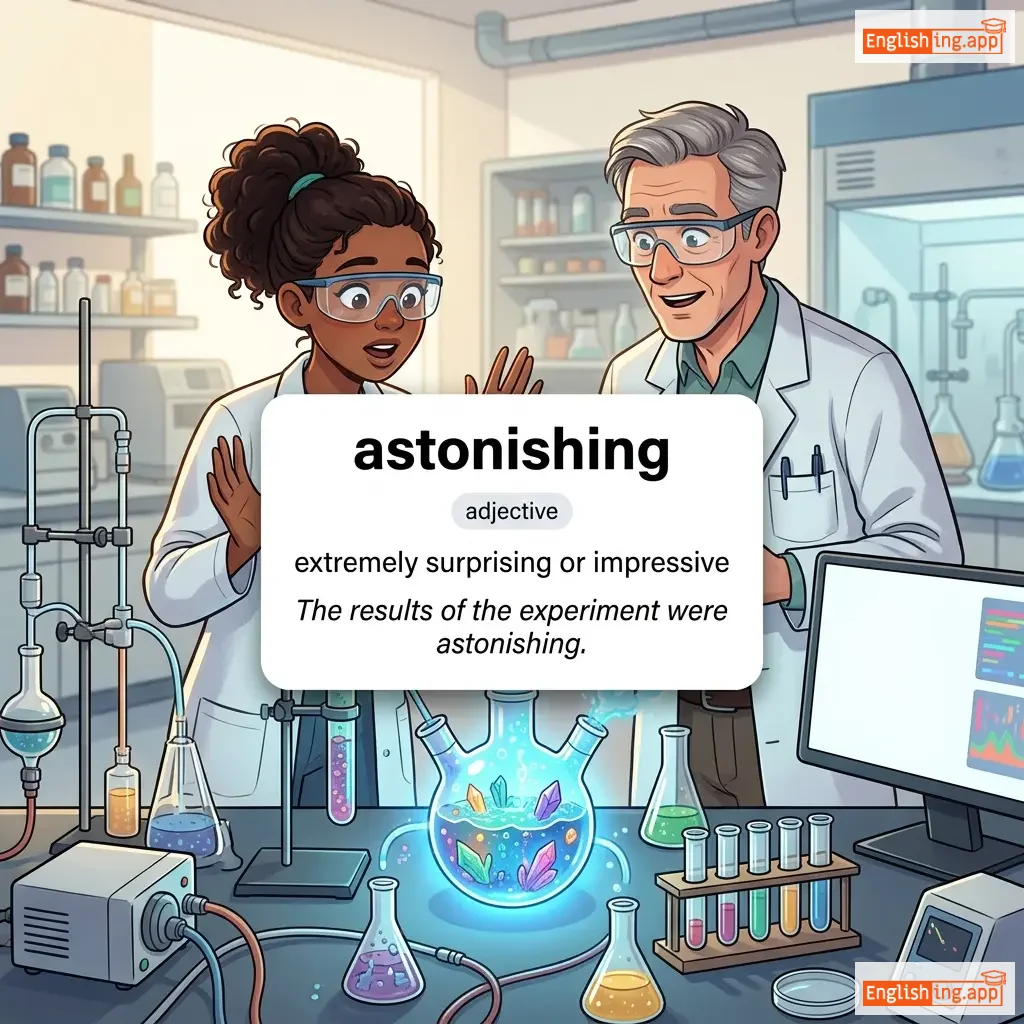
extremely surprising or impressive
••••••
|
The results of the experiment were astonishing. |
实验的结果令人吃惊。
Shí yàn de jié guǒ lìng rén chī jīng.
••••••
|
- •••••• | - •••••• | - •••••• |
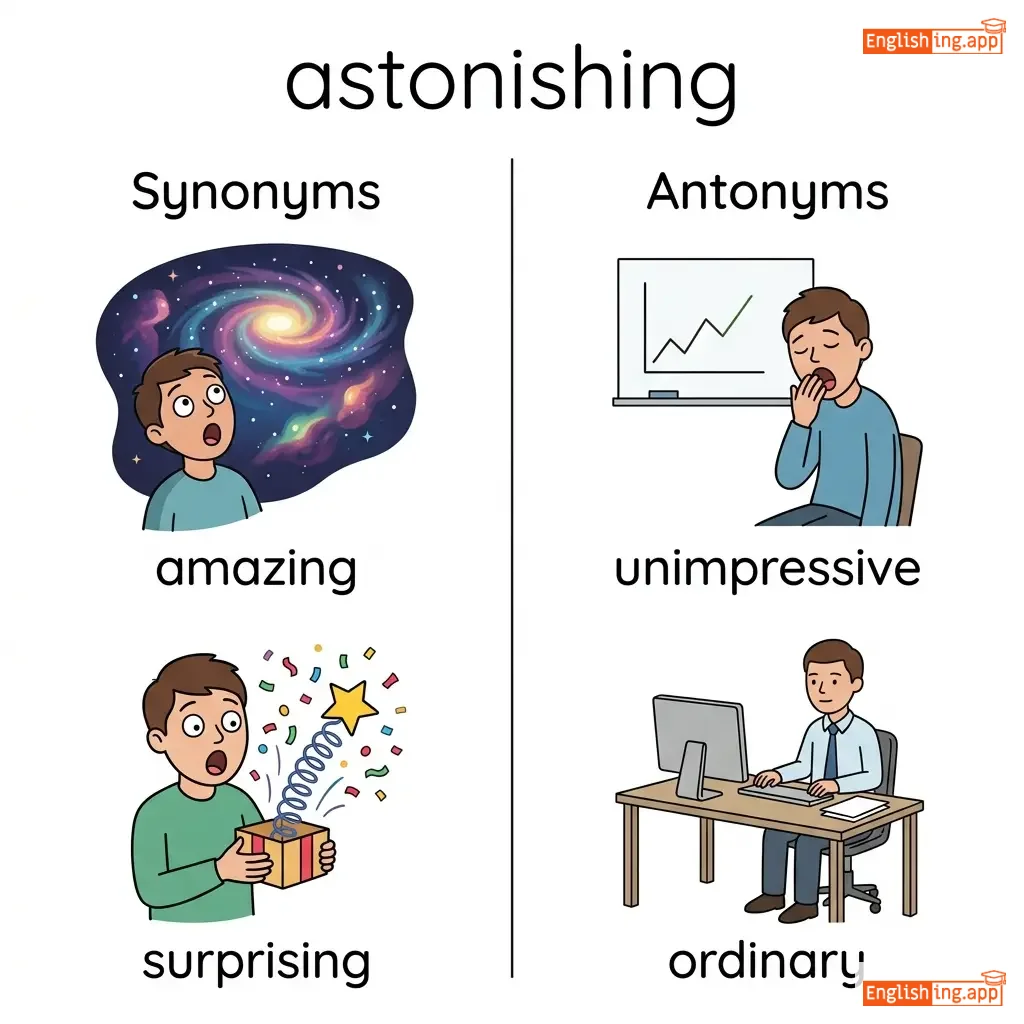
amazing, surprising, breathtaking, remarkable
••••••
|
unimpressive, ordinary, expected
••••••
|
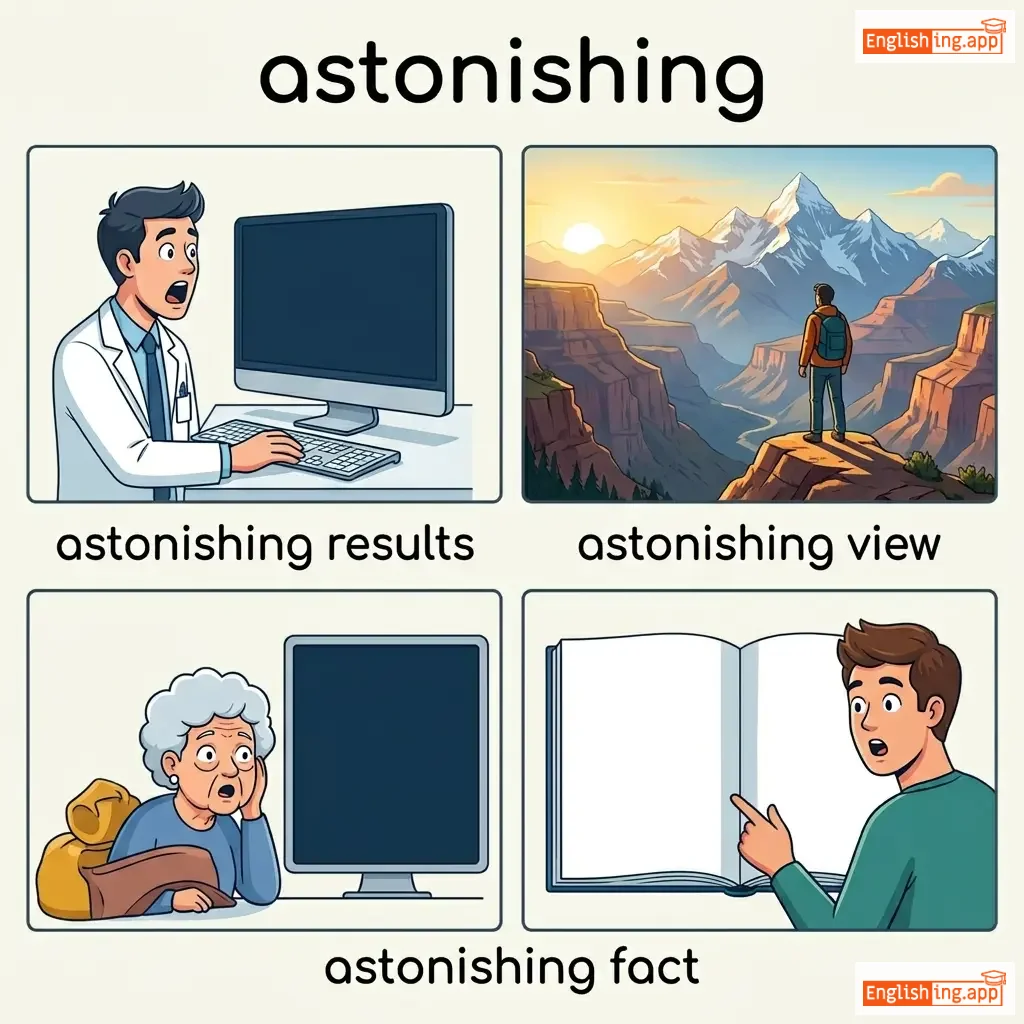
astonishing results, astonishing view, astonishing fact
••••••
|
Astonishing - 就像看到意想不到的事情时一样令人吃惊!
••••••
|
|
😲
••••••
|
/əˈstaʊnd/
verb
(阿斯汤德)
••••••
|
- •••••• |
使震惊
shi zhenjing
••••••
|
astounded
阿斯汤德德
••••••
|
astounded
阿斯汤德德
••••••
|
astounds
阿斯汤德兹
••••••
|
astounding
阿斯汤丁
••••••
|
to greatly surprise or amaze someone
••••••
|
The magician's final trick astounded the audience.
魔术师的最后一个把戏阿斯汤德德观众。
••••••
|
魔术师的最后一个把戏使观众震惊。
Moshushi de zuihou yige baxi shi guanzhong zhenjing
••••••
|
- •••••• | - •••••• | - •••••• |
amaze, astonish, stun, shock, bewilder
••••••
|
bore, calm, reassure
••••••
|
astound the audience, astound everyone, absolutely astound, astound critics
••••••
|
Astound 听起来很‘震动’,意思就是使震惊。
••••••
|
|
🏥
••••••
|
/əˈsaɪləm/
noun
(庇护所)
••••••
|
|
庇护所
bìhùsuǒ
••••••
|
- •••••• | - •••••• | - •••••• | - •••••• |
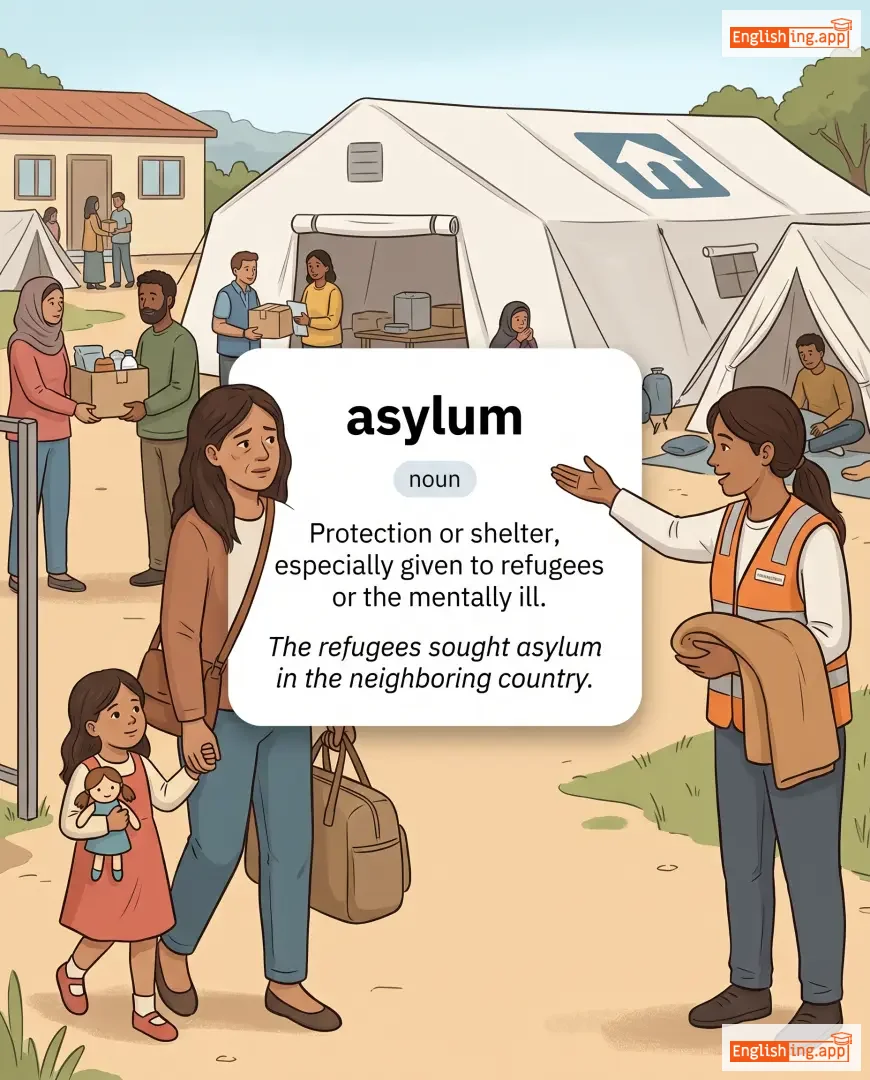
Protection or shelter, especially given to refugees or the mentally ill.
••••••
|
The refugees sought asylum in the neighboring country.
难民在邻国寻求庇护。
••••••
|
难民在邻国寻求庇护。
Nànmín zài lín guó xúnqiú bìhù.
••••••
|
seek asylum
寻求庇护
••••••
|
To formally request protection in another country.
••••••
|
寻求庇护
xúnqiú bìhù
••••••
|
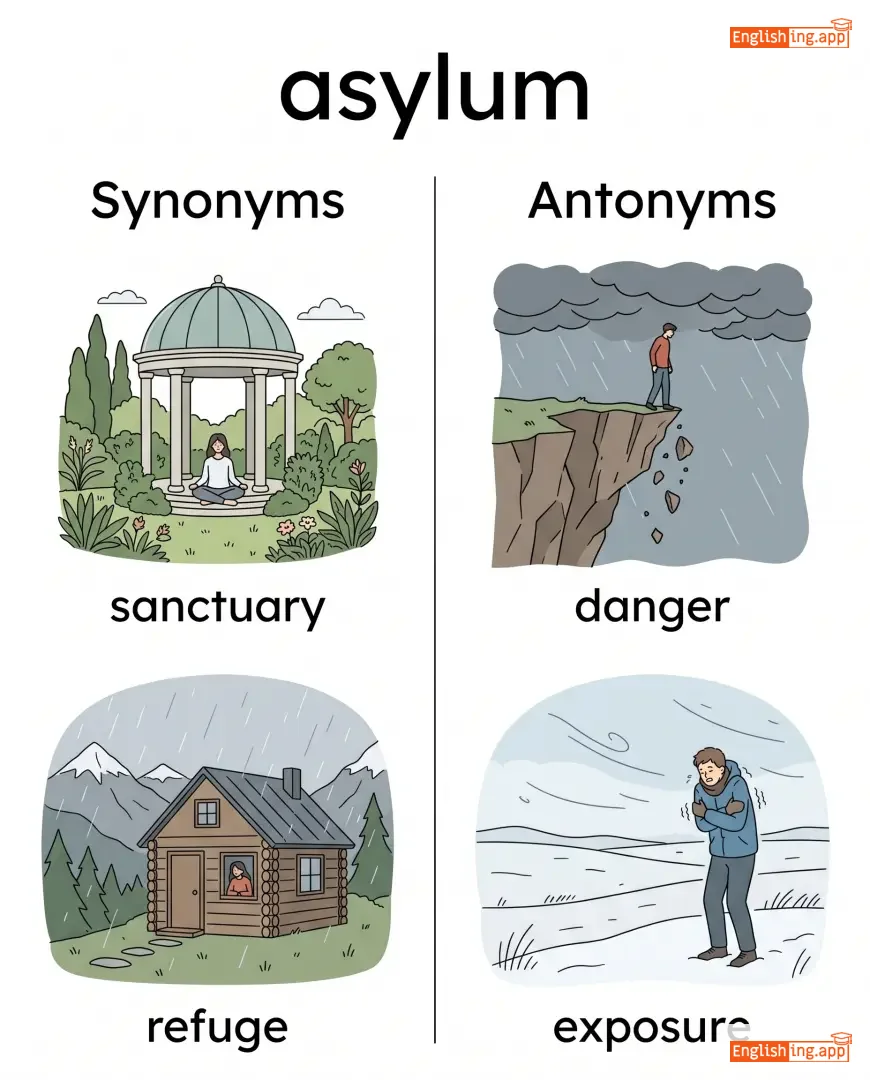
sanctuary, refuge, shelter, haven, protection
••••••
|
danger, exposure, threat
••••••
|
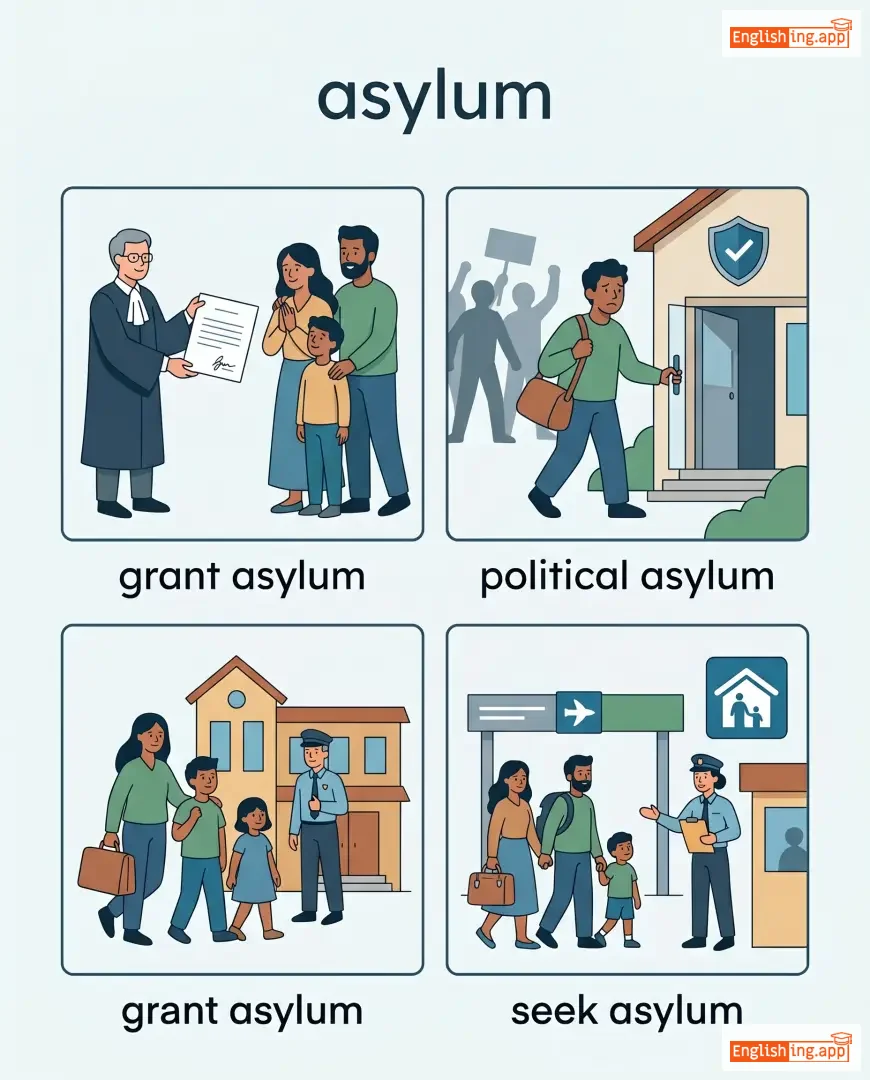
grant asylum, political asylum, seek asylum, asylum seeker
••••••
|
庇护所意味着一个为需要保护的人提供安全的地方。
••••••
|
|
📍
••••••
|
/æt/
preposition
(at)
••••••
|
- •••••• |
在
zai
••••••
|
- •••••• | - •••••• | - •••••• | - •••••• |
used to indicate a specific time, place, or direction
••••••
|
She arrived at the airport on time. |
她准时到达机场。
Tā zhǔnshí dào dá jīchǎng.
••••••
|
at all costs |
do something regardless of the difficulty or expense
••••••
|
不惜一切代价
bù xī yīqiè dàijià
••••••
|
in, on, near, by, upon
••••••
|
away from, outside
••••••
|
at night, at home, at work, at the same time
••••••
|
At 的意思是 '在' — 就像 'at home' 的意思是 '在家'。
••••••
|
|
🏅
••••••
|
/ˈæθliːt/
noun
(æθliːt)
••••••
|
- •••••• |
运动员
yùndòngyuán
••••••
|
- •••••• | - •••••• | - •••••• | - •••••• |
a person who is trained or skilled in physical exercises, sports, or games requiring strength, agility, or stamina
••••••
|
The athlete trained hard for the upcoming Olympic Games. |
运动员为即将到来的奥林匹克运动会进行了艰苦训练。
Yùndòngyuán wèi jíjiāng dào lái de àolínpǐkè yùndònghuì jìnxíngle jiānkǔ xùnliàn.
••••••
|
professional athlete |
someone who competes in sports as a paid career
••••••
|
职业运动员
zhíyè yùndòngyuán
••••••
|
sportsman, competitor, player, runner, gymnast
••••••
|
spectator, amateur
••••••
|
professional athlete, Olympic athlete, star athlete, great athlete
••••••
|
运动员 = 竞技场的英雄 🏅 - 运动员 = 游戏的高手!
••••••
|
|
🏋️
••••••
|
/æθˈlɛtɪk/
adjective
(运动员的)
••••••
|
- •••••• |
运动员的,强壮的
yundongyuan de, qiangzhuang de
••••••
|
- •••••• | - •••••• | - •••••• | - •••••• |
physically strong, fit, and active; related to athletes or sports
••••••
|
She has an athletic body because she exercises regularly.
她有一个运动员的身体,因为她定期锻炼。
••••••
|
她有一个运动员的身体,因为她定期锻炼。
Ta you yige yundongyuan de shenti, yinwei ta dingqi duanlian.
••••••
|
athletic build
运动员体型
••••••
|
a body type that is muscular and fit
••••••
|
运动员体型
yundongyuan tixing
••••••
|
fit, strong, active, sporty, muscular
••••••
|
weak, unfit, frail
••••••
|
athletic body, athletic skills, athletic ability, athletic performance
••••••
|
运动员的意思是健身房的身体 💪 - 健康且活跃!
••••••
|
|
🌍
••••••
|
/ˈætməsfɪər/
noun
(大气层)
••••••
|
- •••••• |
大气层
daqicheng
••••••
|
- •••••• | - •••••• | - •••••• | - •••••• |
the layer of gases surrounding the Earth; the mood or feeling of a place
••••••
|
The restaurant had a warm and welcoming atmosphere. |
餐厅有一种温暖和热情的氛围。
Cāntīng yǒu yī zhǒng wēnnuǎn hé rèqíng de fēnwéi.
••••••
|
tense atmosphere |
a stressful or uneasy environment
••••••
|
紧张的氛围
jǐnzhāng de fēnwéi
••••••
|
environment, mood, climate, aura, ambience
••••••
|
emptiness, vacuum
••••••
|
earth's atmosphere, friendly atmosphere, tense atmosphere, atmosphere of peace
••••••
|
Atmosphere = 空气 + 位置氛围
••••••
|
|
🙏
••••••
|
/əˈtoʊn/
verb
(艾通)
••••••
|
|
赎回
shuhuí
••••••
|
atoned
艾通德
••••••
|
atoned
艾通德
••••••
|
atones
艾通斯
••••••
|
atoning
艾通英
••••••
|
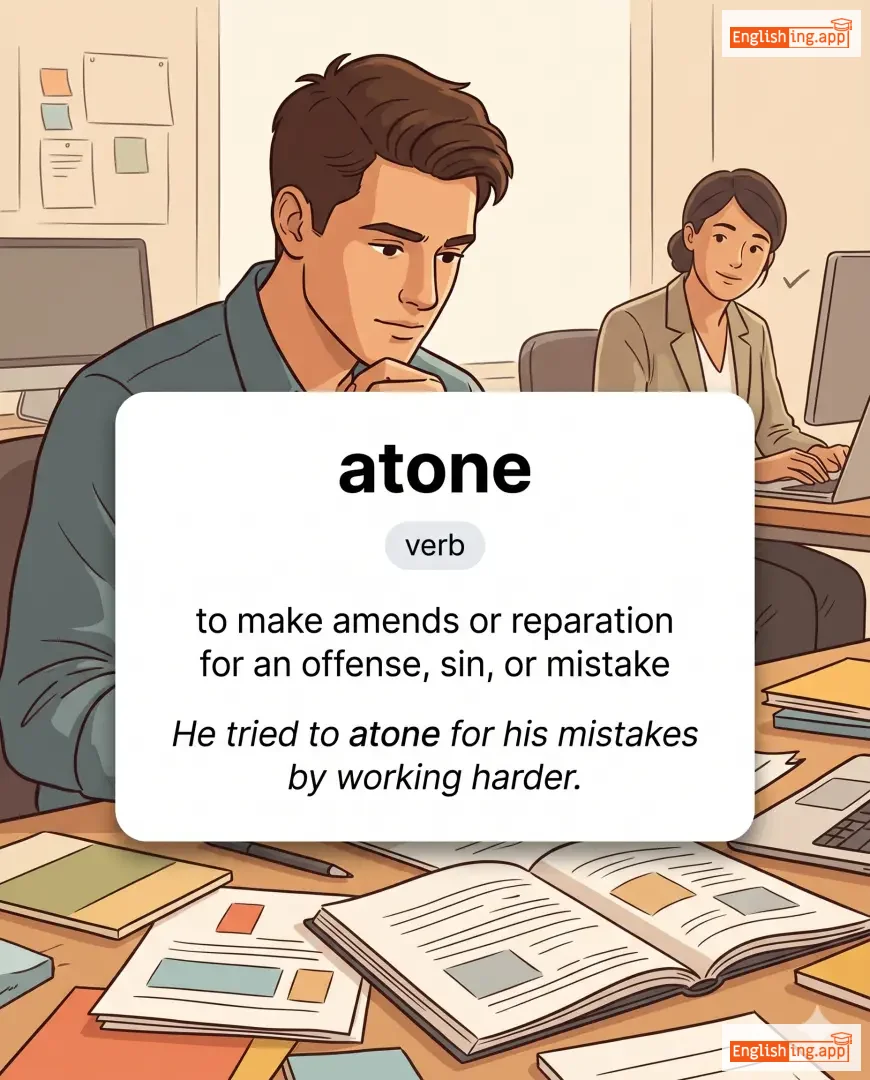
to make amends or reparation for an offense, sin, or mistake
••••••
|
He tried to atone for his mistakes by working harder.
他试图通过更加努力地工作来赎回自己的错误。
••••••
|
他试图通过更加努力地工作来赎回自己的错误。
Ta shitu tongguo gengjia nuli de gongzuo lai shuhuí ziji de cuowu.
••••••
|
atone for one's sins
赎回罪孽
••••••
|
to make up for wrongdoings or misdeeds
••••••
|
赎回罪孽
shuhuí zuìniè
••••••
|
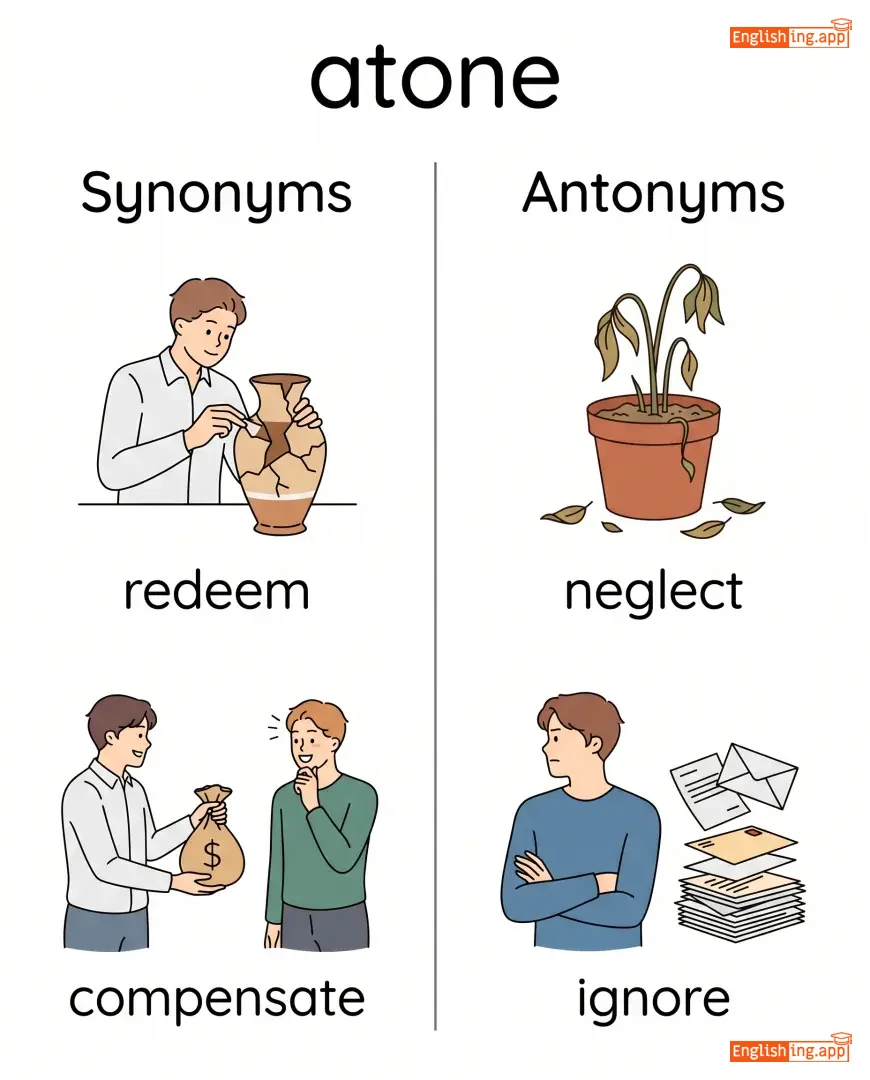
redeem, compensate, make amends, repent, apologize
••••••
|
neglect, ignore, worsen
••••••
|
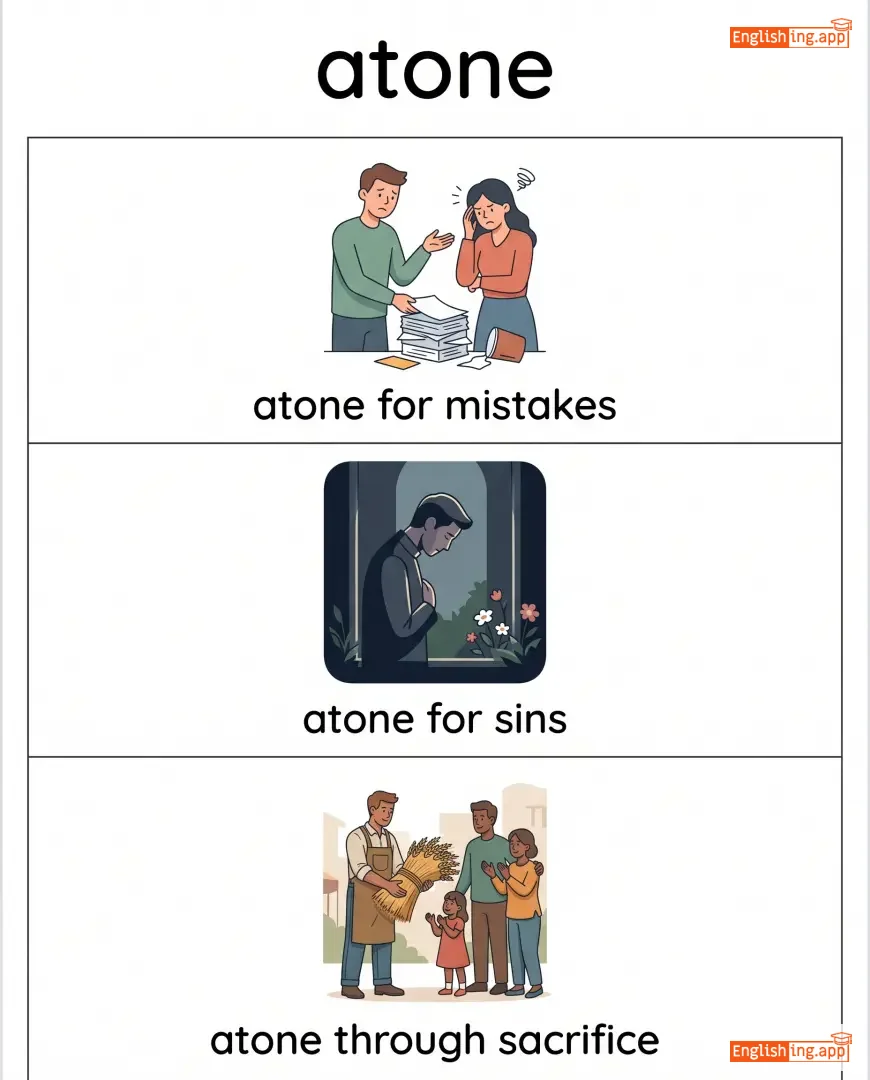
atone for mistakes, atone for sins, atone through sacrifice
••••••
|
At ONE 赎回错误 - Atone 就是赎回
••••••
|
|
😱
••••••
|
/əˈtrəʊ.ʃəs/
adjective
(艾特罗修斯)
••••••
|
- •••••• |
可怕的; 极其糟糕或令人不悦的
kěpà de; jíqí zāogāo huò lìng rén bùyuè de
••••••
|
- •••••• | - •••••• | - •••••• | - •••••• |
horrifyingly wicked; extremely bad or unpleasant
••••••
|
The conditions in the prison were atrocious. |
监狱的条件非常糟糕。
Jiānyù de tiáojiàn fēicháng zāogāo.
••••••
|
- •••••• | - •••••• | - •••••• |
horrible, terrible, dreadful, appalling
••••••
|
excellent, wonderful, admirable, praiseworthy
••••••
|
atrocious crime, atrocious behavior, atrocious conditions
••••••
|
Atrocious sounds like 'kěpà de' - both evoke a sense of fear.
••••••
|
|
😱
••••••
|
/əˈtroʊʃəsli/
adverb
(阿特罗谢斯利)
••••••
|
- •••••• |
极其糟糕地
jiqi zaogao de
••••••
|
- •••••• | - •••••• | - •••••• | - •••••• |
in a very cruel, shocking, or extremely bad manner
••••••
|
The service at the restaurant was atrociously slow.
the service at the restaurant was atrociously slow
••••••
|
这家餐馆的服务慢得极其糟糕。
Zhe jia canguan de fuwu man de jiqi zaogao
••••••
|
- •••••• | - •••••• | - •••••• |
terribly, horribly, dreadfully, shockingly, appallingly
••••••
|
excellently, wonderfully, admirably
••••••
|
atrociously bad, atrociously slow, atrociously treated, atrociously wrong
••••••
|
atrociously 像 atrocity,意思是 极其糟糕
••••••
|
|
⚔️
••••••
|
/əˈtrɑːsəti/
noun
(暴行)
••••••
|
- •••••• |
暴行
baoxing
••••••
|
- •••••• | - •••••• | - •••••• | - •••••• |
an extremely cruel or violent act, often involving physical violence
••••••
|
The world condemned the atrocity committed against civilians. |
世界谴责对平民犯下的暴行。
Shijie qianze dui pingmin fansha de baoxing.
••••••
|
- •••••• | - •••••• | - •••••• |
crime, brutality, massacre, cruelty
••••••
|
kindness, compassion, benevolence
••••••
|
war atrocity, commit atrocity, atrocity against civilians
••••••
|
Atrocity (暴行) is a horrific violent act (暴行) with physical harm.
••••••
|
|
📎
••••••
|
/əˈtætʃ/
verb
(ā tài qí)
••••••
|
- •••••• |
附加
fujia
••••••
|
attached
ā tài qí d
••••••
|
attached
ā tài qí d
••••••
|
attaches
ā tài qí s
••••••
|
attaching
ā tài qí ng
••••••
|
to join or fasten something to another thing
••••••
|
Please attach the document to the email before sending.
请在发送之前将文件附加到电子邮件中。
••••••
|
请在发送之前将文件附加到电子邮件中。
Qǐng zài fāsòng zhīqián jiāng wénjiàn fùjiā dào diànzǐ yóujiàn zhōng.
••••••
|
emotionally attached
情感附着
••••••
|
having strong emotional feelings towards someone or something
••••••
|
情感附着
qínggǎn fùzhuó
••••••
|
connect, join, fasten, fix, link
••••••
|
detach, remove, separate
••••••
|
attach a file, attach importance, attach a label, attach responsibility
••••••
|
Attach 就像用回形针把东西固定住 📎.
••••••
|
|
📎
••••••
|
/əˈtætʃt/
adjective
(阿塔奇德)
••••••
|
- •••••• |
附加的
fujia de
••••••
|
- •••••• | - •••••• | - •••••• | - •••••• |
joined or fastened to something; emotionally connected or fond of someone or something
••••••
|
The file is attached to the email.
The file is attached to the email
••••••
|
文件已附加在电子邮件中。
Wenjian yi fujia zai dianzi youjian zhong
••••••
|
attached to
attached to
••••••
|
having a strong emotional connection or being closely linked
••••••
|
依恋于
yilian yu
••••••
|
connected, joined, fastened, linked, affixed
••••••
|
detached, separated, disconnected
••••••
|
attached file, attached document, emotionally attached, closely attached
••••••
|
附加 = attached
••••••
|
|
💌
••••••
|
/əˈtæʧmənt/
noun
(èttāchmént)
••••••
|
- •••••• |
依附
yīfù
••••••
|
- •••••• | - •••••• | - •••••• | - •••••• |
a strong feeling of affection or connection
••••••
|
The attachment he felt to his hometown was undeniable. |
他对家乡的依附感是不可否认的。
Tā duì jiāxiāng de yīfù gǎn shì bù kě fǒu rèn de.
••••••
|
- •••••• | - •••••• | - •••••• |
affection, bond, connection, love
••••••
|
detachment, indifference
••••••
|
emotional attachment, strong attachment, attachment to something
••••••
|
Attachment - 依附感就像一种看不见的纽带,将我们与亲人和家乡相连。
••••••
|
|
⚔️
••••••
|
/əˈtæk/
verb
(āták)
••••••
|
|
攻击
gōngjī
••••••
|
attacked
ātàkèd
••••••
|
attacked
ātàkèd
••••••
|
attacks
ātākè
••••••
|
attacking
ātàkīng
••••••
|
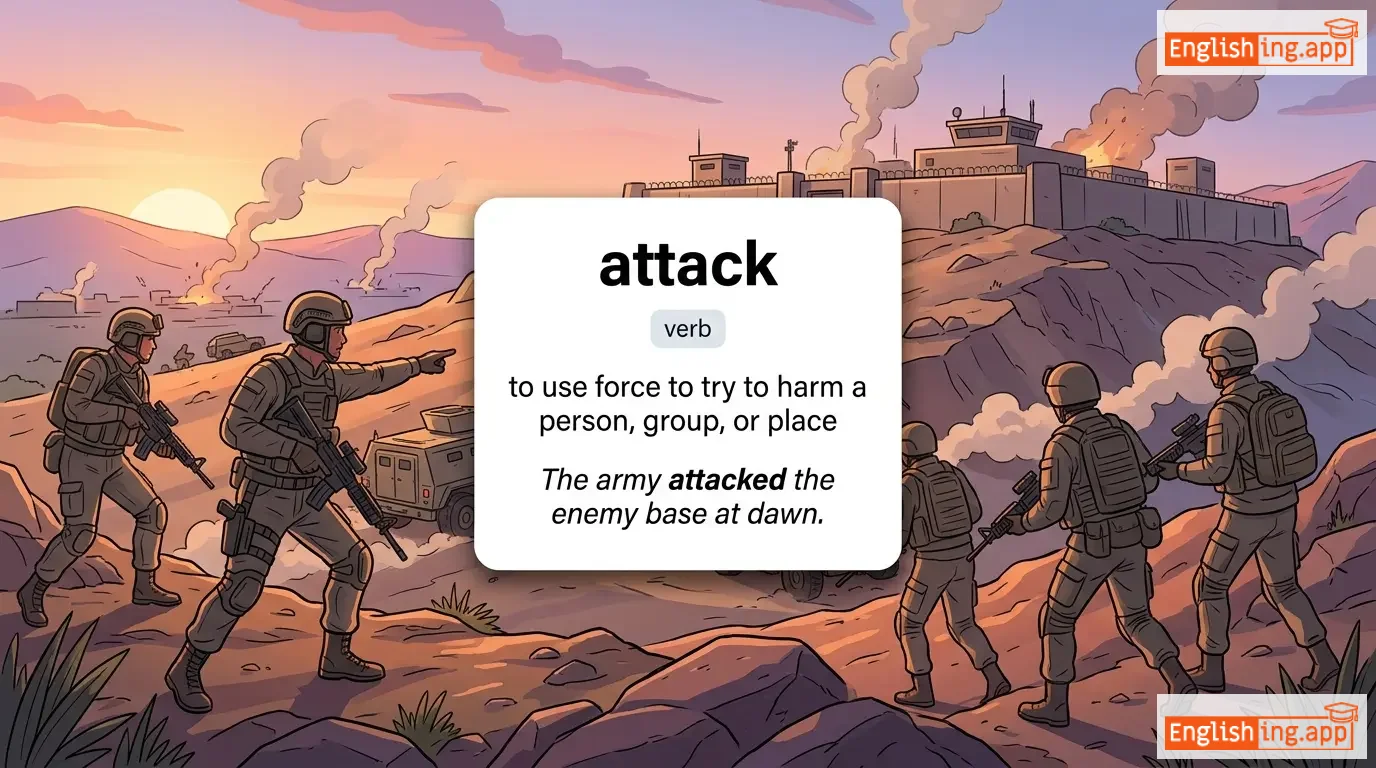
to use force to try to harm a person, group, or place
••••••
|
The army attacked the enemy base at dawn.
jūn duì zǎo fāng duì dìrén jūn jī huǐhù
••••••
|
军队在黎明时攻击了敌方基地。
Jūn duì zài límíng shí gōngjīle dí fāng jī dì.
••••••
|
heart attack
xīnzhì qìngjī
••••••
|
a sudden serious medical condition when the heart stops working properly
••••••
|
心脏病发作
xīnzhàng bìng fāzuò
••••••
|
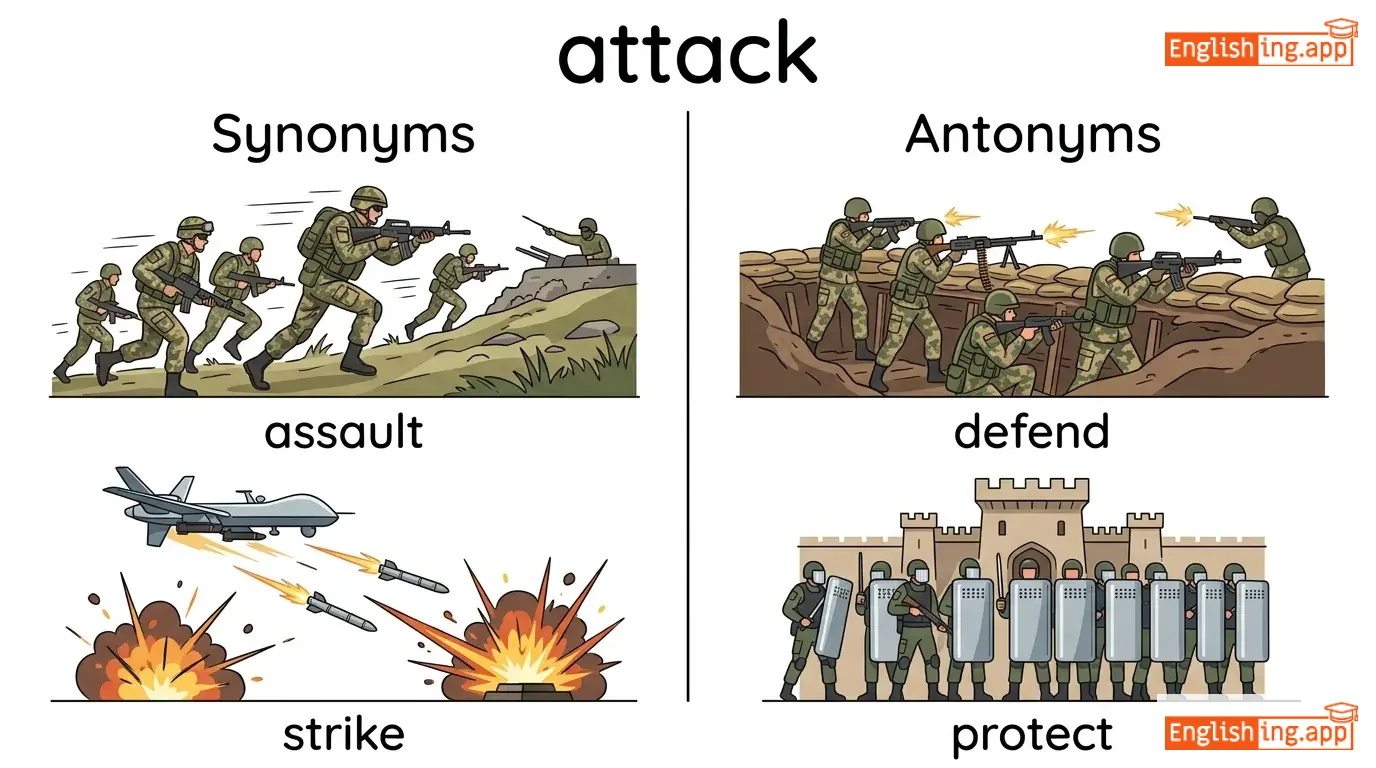
assault, strike, charge, raid, ambush
••••••
|
defend, protect, guard
••••••
|
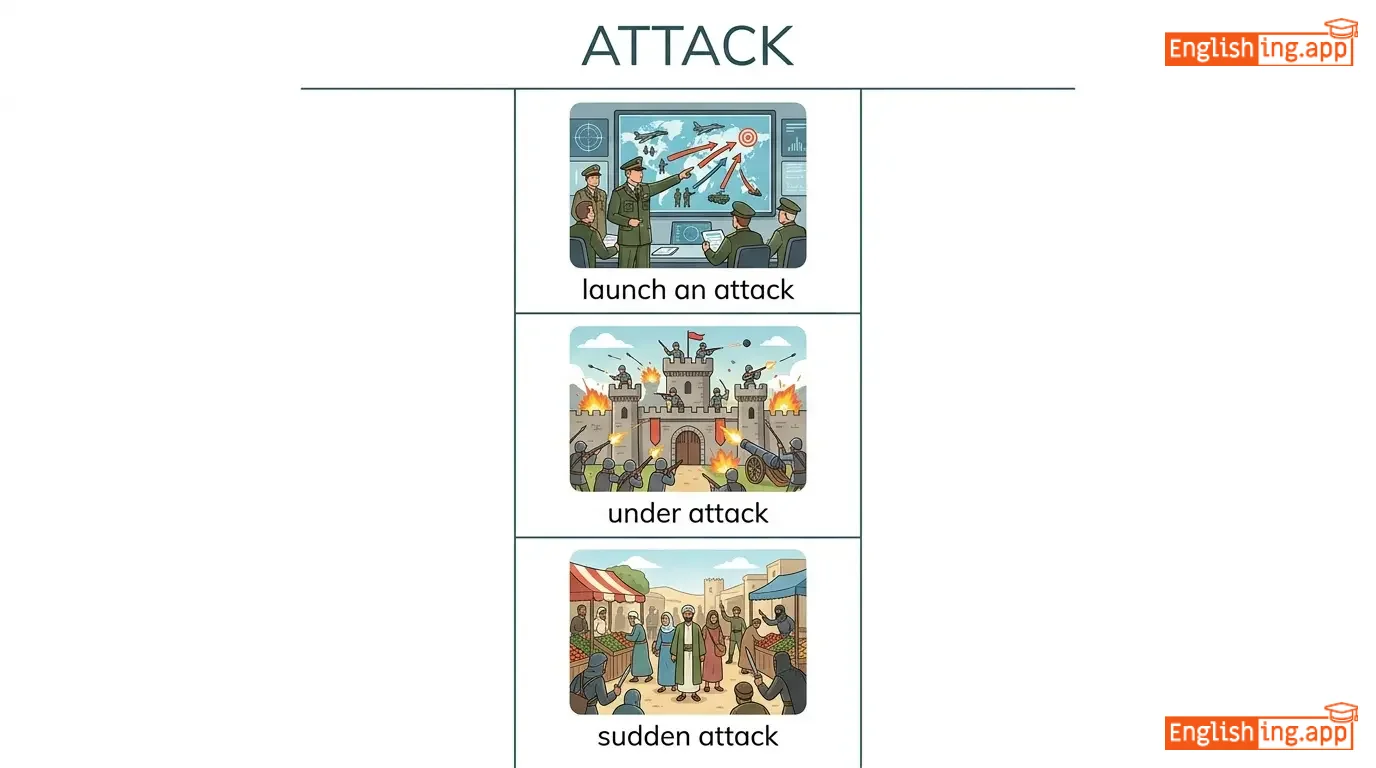
launch an attack, under attack, sudden attack, heart attack
••••••
|
攻击 = 进攻就是最好的防守! ⚔️
••••••
|
|
⚔️
••••••
|
/əˈtækt/
verb
(阿塔克特)
••••••
|
- •••••• |
攻击了
gongji le
••••••
|
attacked
阿塔克特
••••••
|
attacked
阿塔克特
••••••
|
attacks
阿塔克次
••••••
|
attacking
阿塔克应
••••••
|
physically or verbally assaulted someone or something; launched an aggressive action against a target
••••••
|
The soldiers attacked the enemy at dawn.
泽 索尔杰斯 阿塔克特 泽 艾内米 阿特 道恩
••••••
|
士兵在黎明时攻击了敌人。
shibing zai liming shi gongji le diren
••••••
|
attacked on all fronts
阿塔克特 昂 奥尔 弗朗茨
••••••
|
to be criticized or opposed in many ways at the same time
••••••
|
四面受敌
simian shoudi
••••••
|
assaulted, struck, ambushed, targeted, besieged
••••••
|
defended, protected, guarded
••••••
|
attacked violently, attacked suddenly, attacked the enemy, attacked online
••••••
|
Attack = 攻击, 所以 attacked = 攻击了。
••••••
|
|
🎯
••••••
|
/əˈteɪn/
verb
(əˈteɪn)
••••••
|
- •••••• |
达到
dádào
••••••
|
attained
əˈteɪnd
••••••
|
attained
əˈteɪnd
••••••
|
attains
əˈteɪns
••••••
|
attaining
əˈteɪnɪŋ
••••••
|
to achieve or reach something
••••••
|
She worked hard to attain her goals.
她努力工作以达到她的目标。
••••••
|
她努力工作以达到她的目标。
Tā nǔlì gōngzuò yǐ dádào tā de mùbiāo.
••••••
|
- •••••• | - •••••• | - •••••• |
achieve, reach, accomplish, obtain
••••••
|
fail, lose, abandon
••••••
|
attain success, attain goals, attain a level
••••••
|
Attain - 达到目标!
••••••
|
|
🎯
••••••
|
/əˈtɛmpt/
verb
••••••
|
- •••••• | - •••••• |
attempted
••••••
|
attempted
••••••
|
attempts
••••••
|
attempting
••••••
|
to make an effort to achieve or complete something difficult
••••••
|
He attempted to climb the mountain despite the bad weather. |
- •••••• |
make an attempt |
to try to do something
••••••
|
- •••••• |
try, endeavor, undertake, pursue, strive
••••••
|
ignore, neglect, avoid
••••••
|
attempt to do, failed attempt, first attempt, serious attempt
••••••
|
No •••••• |
|
🎓
••••••
|
/əˈtɛnd/
verb
(艾滕德)
••••••
|

|
参加
canjia
••••••
|
attended
艾滕德
••••••
|
attended
艾滕德
••••••
|
attends
艾滕斯
••••••
|
attending
艾滕丁
••••••
|
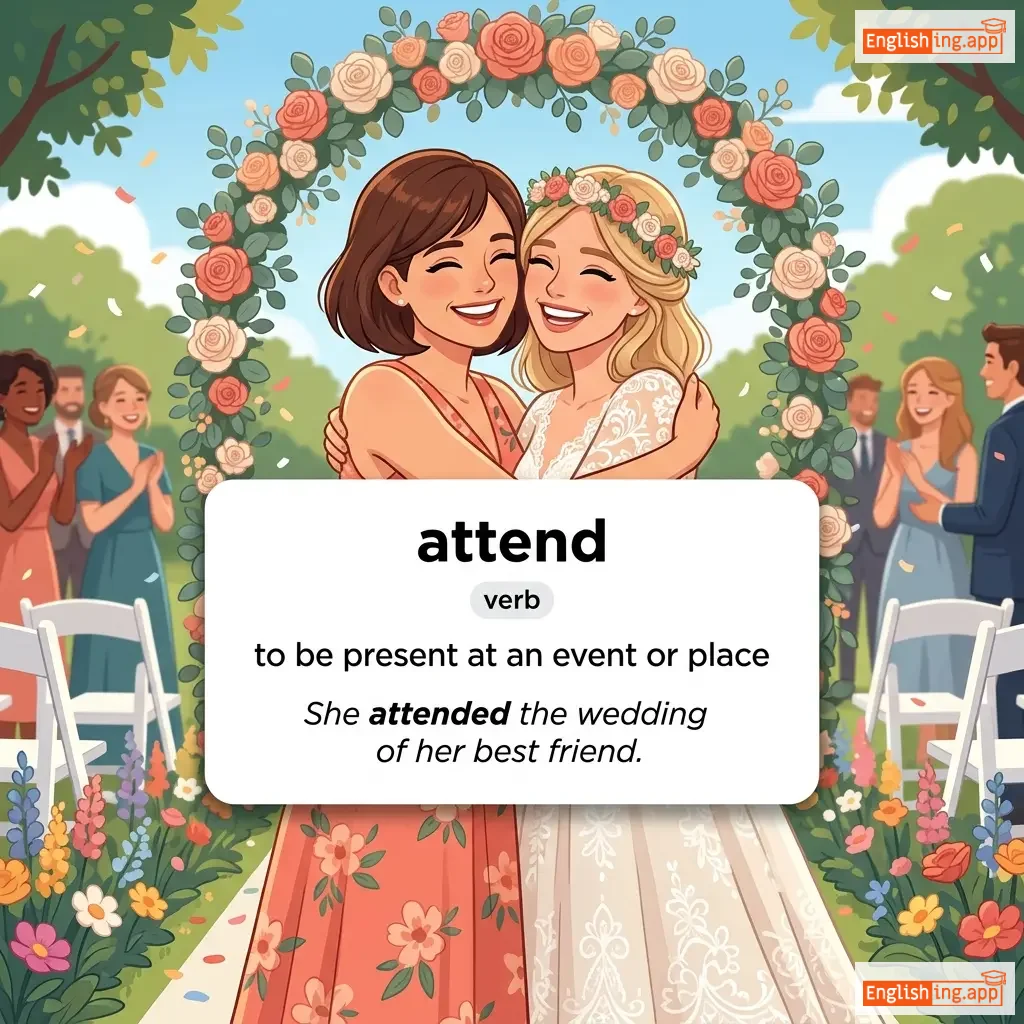
to be present at an event or place
••••••
|
She attended the wedding of her best friend.
她参加了她最好的朋友的婚礼。
••••••
|
她参加了她最好的朋友的婚礼。
Ta canjia le ta zuihao de pengyou de hunli.
••••••
|
attend to
关注
••••••
|
to deal with or take care of something
••••••
|
关注
guanzhu
••••••
|
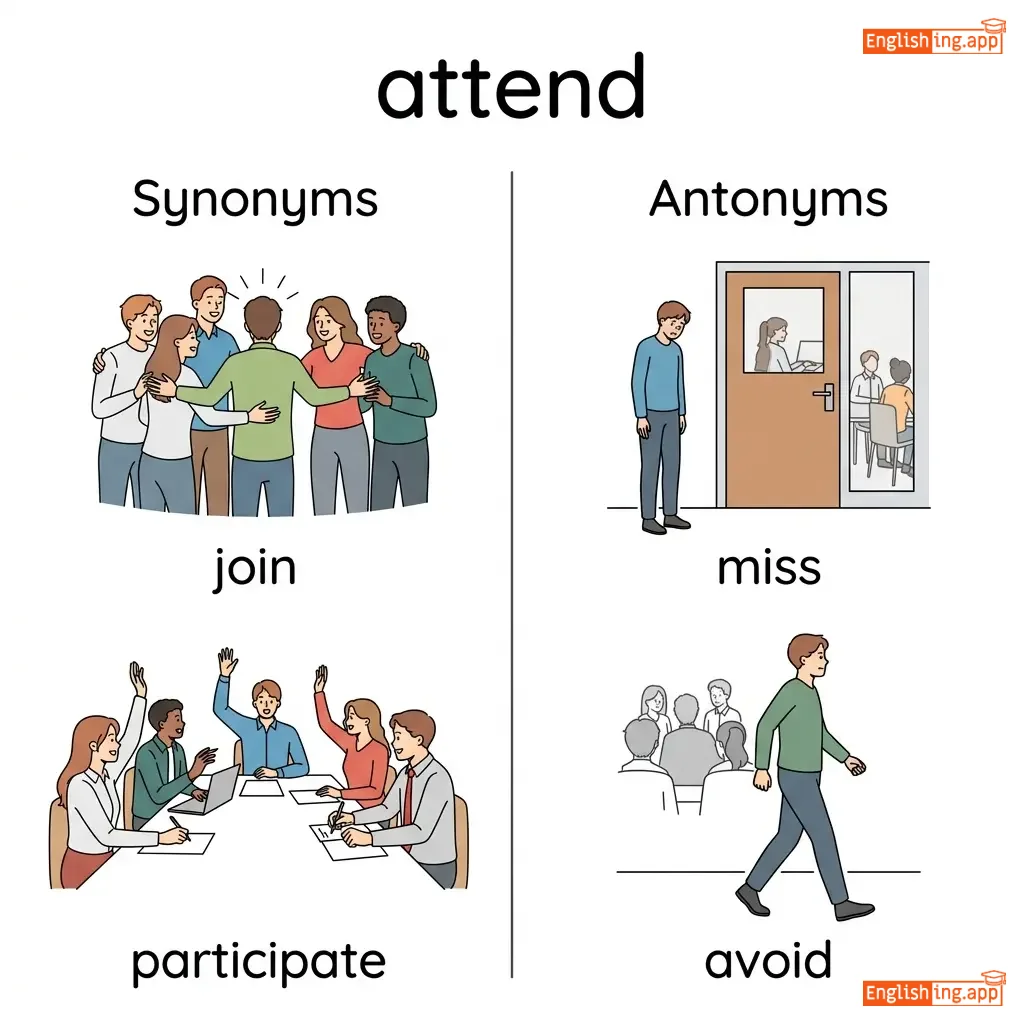
join, participate, visit, appear
••••••
|
miss, avoid, neglect
••••••
|
attend school, attend meeting, attend event, attend function
••••••
|
参加是出席活动的意思,就像是参与婚礼一样。
••••••
|
|
📝
••••••
|
/əˈtɛndəns/
noun
(āntiánɡēnsī)
••••••
|
- •••••• |
出席
chūxí
••••••
|
- •••••• | - •••••• | - •••••• | - •••••• |
the act of being present at a place or event
••••••
|
The teacher checked the students’ attendance every morning. |
老师每天早上检查学生的出席情况。
Lǎoshī měitiān zǎoshang jiǎnchá xuéshēng de chūxí qíngkuàng.
••••••
|
perfect attendance |
when someone has been present every time without absence
••••••
|
完美出席
wánměi chūxí
••••••
|
presence, participation, turnout, appearance
••••••
|
absence, nonattendance
••••••
|
take attendance, mark attendance, good attendance, poor attendance
••••••
|
Attend 意味着出席 → Attendance 意味着出席 📋
••••••
|

