Village Innovation Festival
ロボット展示会で皆が'wow'と叫びました。 プロジェクトはまだ完成していませんが、yet多くの人がサインアップしました。 ホストは言いました、'you are part of the solution.' 医学生たちは村でaidsに関する意識向上キャンプを行いました。 新しいスタートアップは技術だけでなく社会正義にも取り組んでいますalso。 村の中心でKalpanaはお茶のサークルの中でニュースをamid共有しました。 フェアのareaはカラフルな旗で飾られました。 音響塔はコミュニティセンターの屋根にatop設置されました。 スカウトたちはback追跡ツールを使って道を再追跡しました。 彼らは船に集まった水をすぐにbailしました。 大きなballゲームが学校のフィールドを占拠しました。 織工はbare手でどのように作業するかを示しました。 子供たちは音楽ワークショップでbassとギターを練習しました。 農家は環境に優しいbeanの種を交換しました。 竹橋を渡るとき、皆は少しbendしなければなりませんでした。 トップの賞には'best innovator'バッジが付いていました。 彼らはbiasなしでメッセージを広めることを約束しました。 自転車クラブは新しいbikeレーンをテストしました。 助成金委員会は承認されたbillを読み上げました。 最後に、皆はリボンで手をbindし、誓いを立てました。
|
絵文字
|
単語 | Images | 翻訳 | 過去 | 過去分詞 | 三人称単数 | 動名詞 | 意味 | 例文 | 例文の翻訳 | 表現例 | 表現例の意味 | 表現例の翻訳 | 同義語 | 対義語 | コロケーション | ニーモニック |
|---|---|---|---|---|---|---|---|---|---|---|---|---|---|---|---|---|---|
|
🧬
••••••
|
/eɪdz/
noun
(エイズ)
••••••
|
- •••••• |
エイズ病
eizu byō
••••••
|
- •••••• | - •••••• | - •••••• | - •••••• |
Acquired Immune Deficiency Syndrome, a disease of the immune system caused by HIV
••••••
|
AIDS is a major global health concern. |
エイズは世界的な健康問題です。
Eizu wa sekaiteki na kenko mondai desu.
••••••
|
fight against AIDS |
efforts to combat the disease caused by HIV
••••••
|
エイズとの戦い
Eizu to no tatakai
••••••
|
HIV disease, immune deficiency, syndrome
••••••
|
health, wellness
••••••
|
AIDS patient, HIV/AIDS, AIDS treatment, fight against AIDS
••••••
|
エイズを覚えておいて 🧬 これは深刻な病気で、同じ名前が日本語でも使われています。
••••••
|
|
➕
••••••
|
/ˈɔːlsoʊ/
adverb
(オールソー)
••••••
|
- •••••• |
また
mata
••••••
|
- •••••• | - •••••• | - •••••• | - •••••• |
in addition; too
••••••
|
She sings beautifully and also plays the guitar.
Shī sings byūtifurī and ōruso pūreizu za gitā.
••••••
|
彼女は美しく歌い、またギターを弾きます。
Kanojo wa utsukushiku utai, mata gitā o hikimasu.
••••••
|
- •••••• | - •••••• | - •••••• |
too, as well, in addition, likewise
••••••
|
only, solely
••••••
|
also known, also available, also important
••••••
|
Also はまたの意味—ALl SOmething もう一つのもの。
••••••
|
|
🌪️
••••••
|
/əˈmɪd/
preposition
(アミッド)
••••••
|
- •••••• |
中で
naka de
••••••
|
- •••••• | - •••••• | - •••••• | - •••••• |
in the middle of or surrounded by something
••••••
|
The team stayed calm amid the chaos.
チームはアミッドケオスの中で冷静を保った。
••••••
|
チームは混乱の中で冷静を保った。
Chīmu wa konran no naka de reisei o tamotta.
••••••
|
- •••••• | - •••••• | - •••••• |
among, amidst, surrounded by, within, amidst
••••••
|
outside, beyond, apart
••••••
|
amid the noise, amid confusion, amid controversy, amid tensions
••••••
|
Amidは中で意味 — 混乱の中でも冷静を保って!
••••••
|
|
📍
••••••
|
/ˈeə.ri.ə/
noun
••••••
|
- •••••• | - •••••• | - •••••• | - •••••• | - •••••• | - •••••• |
a particular region or space; the extent of a surface
••••••
|
This area is known for its beautiful parks. |
- •••••• |
gray area |
an unclear or undefined situation
••••••
|
- •••••• |
region, zone, district, field, space
••••••
|
point, line, boundary
••••••
|
rural area, urban area, gray area, restricted area
••••••
|
No •••••• |
|
🏔️
••••••
|
/əˈtɒp/
preposition
(アトップ)
••••••
|
- •••••• |
上に
ue ni
••••••
|
- •••••• | - •••••• | - •••••• | - •••••• |
on the top of something
••••••
|
A flag was placed atop the tower. |
旗は塔の上に置かれました。
Hata wa tō no ue ni okaremashita.
••••••
|
- •••••• | - •••••• | - •••••• |
on, above, upon, over
••••••
|
beneath, below, under
••••••
|
stand atop, sit atop, rest atop
••••••
|
At + top = atop、上にある意味!塔の上に旗があるように。
••••••
|
|
🔙
••••••
|
/bæk/
noun/verb/adverb/adjective
(バック)
••••••
|
- •••••• |
背中 / 戻る
senaka / modoru
••••••
|
backed
バックド
••••••
|
backed
バックド
••••••
|
backs
バックス
••••••
|
backing
バックイング
••••••
|
the rear surface of the human body; to support; to return to a place
••••••
|
He turned back to help his friend.
彼は友達を助けるために戻った。
••••••
|
彼は友達を助けるために戻った。
Kare wa tomodachi o tasukeru tame ni modotta.
••••••
|
back and forth
行ったり来たり
••••••
|
moving repeatedly in one direction and then the opposite
••••••
|
行ったり来たり
ittari kitari
••••••
|
rear, behind, support, return
••••••
|
front, oppose
••••••
|
back pain, back home, back up, back support
••••••
|
Backは後ろを意味する - 戻るときは後ろに戻る。
••••••
|
|
⚖️
••••••
|
/beɪl/
noun
(ベイル)
••••••
|
- •••••• |
保釈
hoshaku
••••••
|
- •••••• | - •••••• | - •••••• | - •••••• |
the temporary release of an accused person awaiting trial, often with a financial guarantee
••••••
|
He was granted bail after his arrest. |
逮捕後、彼は保釈されました。
Taiho go, kare wa hoshaku saremashita.
••••••
|
jump bail |
to escape from jail after being granted bail
••••••
|
保釈金を飛び越える
Hoshaku kin o tobikoeru
••••••
|
surety, bond, release
••••••
|
imprisonment, detention
••••••
|
grant bail, post bail, bail bond
••••••
|
Hoshaku - 'Ho' means 'Hold', 'shaku' sounds like 'Release', hoshaku to release with hold!
••••••
|
|
⚽
••••••
|
/bɔːl/
noun
(ボール)
••••••
|
- •••••• |
ボール
booru
••••••
|
- •••••• | - •••••• | - •••••• | - •••••• |
a round object used in games or sports
••••••
|
The children played with a ball in the park. |
子供たちは公園でボールで遊びました。
Kodomotachi wa kouen de booru de asobimashita.
••••••
|
have a ball |
to have a very enjoyable time
••••••
|
楽しむ
tanoshimu
••••••
|
sphere, globe, orb, pellet, boule
••••••
|
cube, block
••••••
|
football, throw the ball, tennis ball, ball game
••••••
|
Ballはボールを意味し、'ボールで遊んで楽しむ'という意味です。
••••••
|
|
🌿
••••••
|
/beər/
adjective
(ベア)
••••••
|
- •••••• |
裸
hadaka
••••••
|
- •••••• | - •••••• | - •••••• | - •••••• |
not covered by any clothing or decoration; simple and without addition
••••••
|
He walked on the beach with bare feet. |
彼は裸足でビーチを歩いた。
Kare wa hadashi de bīchi o aruita.
••••••
|
bare essentials |
only the most necessary items or facts
••••••
|
裸の必需品
hadaka no hitsujuhin
••••••
|
naked, uncovered, exposed, plain, simple
••••••
|
covered, clothed, decorated
••••••
|
bare hands, bare feet, bare minimum, bare skin
••••••
|
Bare は裸を意味します — 例えば bare body は裸の体を意味します。覚えておいてください:Bear は裸足で歩けません!
••••••
|
|
🎸
••••••
|
/beɪs/
noun
(ベース)
••••••
|
- •••••• |
低い男性の声 / ベースギター
hikui dansei no koe / bēsu gitā
••••••
|
- •••••• | - •••••• | - •••••• | - •••••• |
the lowest adult male singing voice; also, low-frequency sounds in music or a type of fish
••••••
|
He played the bass guitar at the concert.
彼はコンサートでベースギターを弾いた。
••••••
|
彼はコンサートでベースギターを弾いた。
Kare wa konsāto de bēsu gitā o hīta.
••••••
|
- •••••• | - •••••• | - •••••• |
low voice, deep tone, baritone, subwoofer
••••••
|
treble, soprano
••••••
|
bass guitar, bass line, bass sound, bass singer
••••••
|
‘Bass’ は ‘base’ に似ていて、下という意味です — それで低い音が出ます。
••••••
|
|
🫘
••••••
|
/biːn/
noun
(ビーン)
••••••
|
- •••••• |
豆
mame
••••••
|
- •••••• | - •••••• | - •••••• | - •••••• |
A seed that is eaten as a vegetable or used to make food products.
••••••
|
She cooked a pot of bean soup. |
彼女は豆のスープを一鍋作った。
Kanojo wa mame no suupu o hitonabe tsukutta.
••••••
|
spill the beans |
to reveal a secret
••••••
|
秘密を漏らす
Himitsu o morasu
••••••
|
legume, pulse, seed, vegetable
••••••
|
meat, grain
••••••
|
coffee bean, bean soup, green bean, baked beans
••••••
|
豆は 'bean' を意味します - 'Spill the beans' は秘密を漏らすこと、まるで豆が鍋からこぼれ落ちるように。
••••••
|
|
↩️
••••••
|
/bɛnd/
verb
(ベンド)
••••••
|
- •••••• |
曲げる / かがむ
mageru / kagamu
••••••
|
bent
ベント
••••••
|
bent
ベント
••••••
|
bends
ベンズ
••••••
|
bending
ベンディング
••••••
|
to curve something or cause it to change shape; to move the body or part of it downward or forward
••••••
|
She had to bend down to pick up the coin.
彼女はコインを拾うためにかがむ必要がありました。
••••••
|
彼女はコインを拾うためにかがむ必要がありました。
Kanojo wa koin o hirou tame ni kagamu hitsuyou ga arimashita.
••••••
|
bend over backwards
必死で努力する
••••••
|
to try very hard to please someone or make something happen
••••••
|
全力を尽くす
zenryoku o tsukusu
••••••
|
curve, flex, bow, arch, stoop
••••••
|
straighten, unbend, stiffen
••••••
|
bend down, bend forward, bend the rules, bend over
••••••
|
曲げる(bend)ことは体が'曲がる'こと!
••••••
|
|
🏆
••••••
|
/bɛst/
adjective
(ベスト)
••••••
|
- •••••• |
最高
saikou
••••••
|
- •••••• | - •••••• | - •••••• | - •••••• |
Of the highest quality, excellence, or standing.
••••••
|
She is the best student in the class. |
彼女はクラスで最高の生徒です。
Kanojo wa kurasu de saikou no seito desu.
••••••
|
make the best of |
To do as well as possible in a difficult situation.
••••••
|
最善を尽くす
saizen o tsukusu
••••••
|
finest, greatest, top, leading, supreme
••••••
|
worst, poorest, inferior
••••••
|
best friend, best time, best practice
••••••
|
Bestは最高!最高の成果を出すために、最善を尽くそう!
••••••
|
|
⚖️
••••••
|
/ˈbaɪəs/
noun
(バイアス)
••••••
|
|
偏見
henken
••••••
|
- •••••• | - •••••• |
biases
バイアセス
••••••
|
biasing
バイアシング
••••••
|
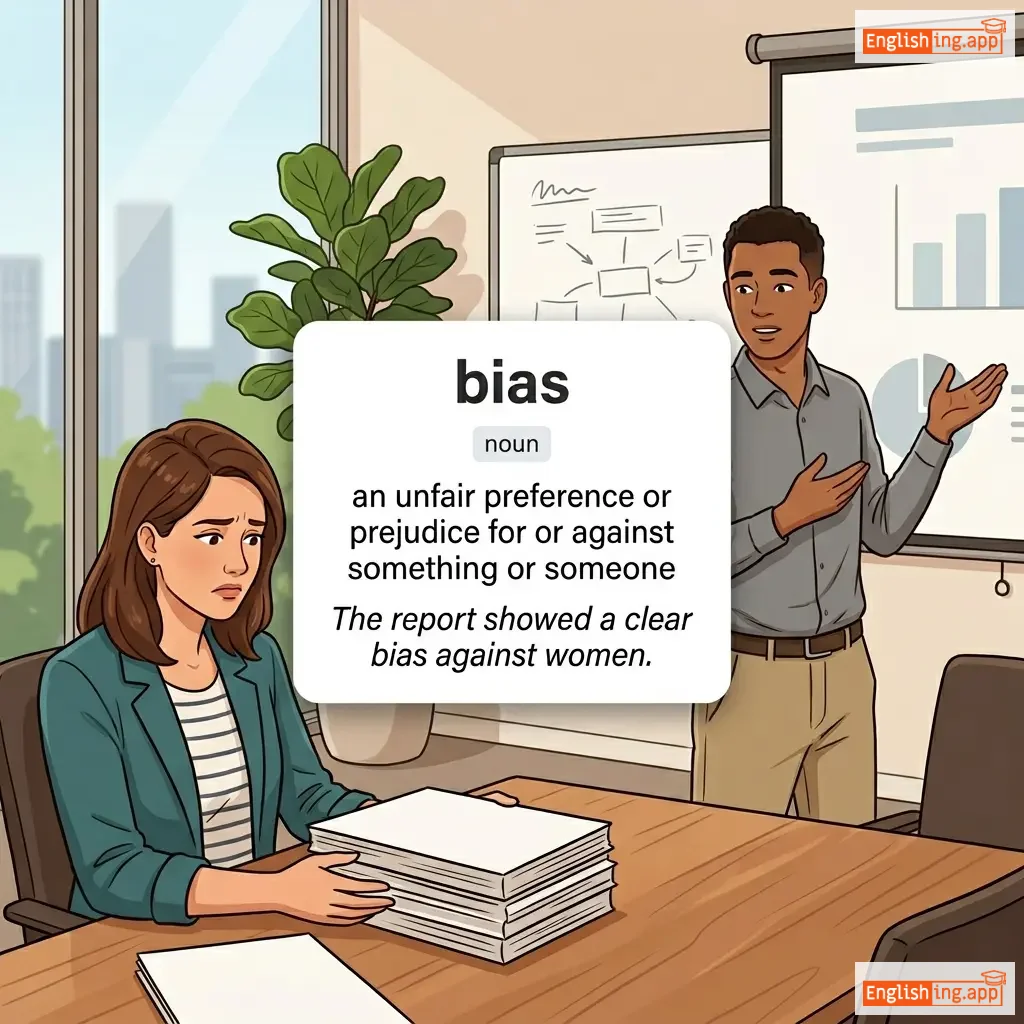
an unfair preference or prejudice for or against something or someone
••••••
|
The report showed a clear bias against women.
報告書は女性に対する明確な偏見を示しました。
••••••
|
報告書は女性に対する明確な偏見を示しました。
Hōkokusho wa josei ni taisuru meikaku na henken o shimeshimashita.
••••••
|
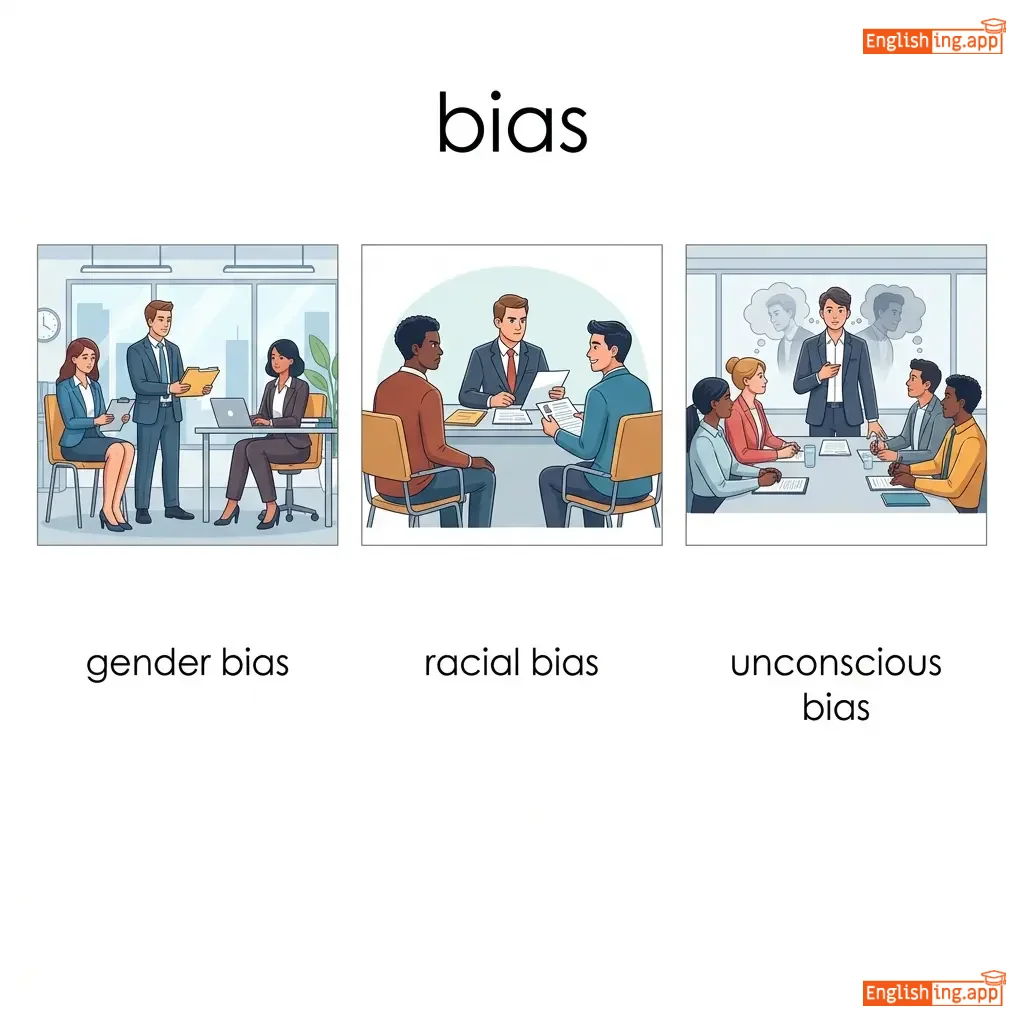
unconscious bias
無意識の偏見
••••••
|
prejudice that a person is unaware of having
••••••
|
無意識の偏見
Muishiki no henken
••••••
|
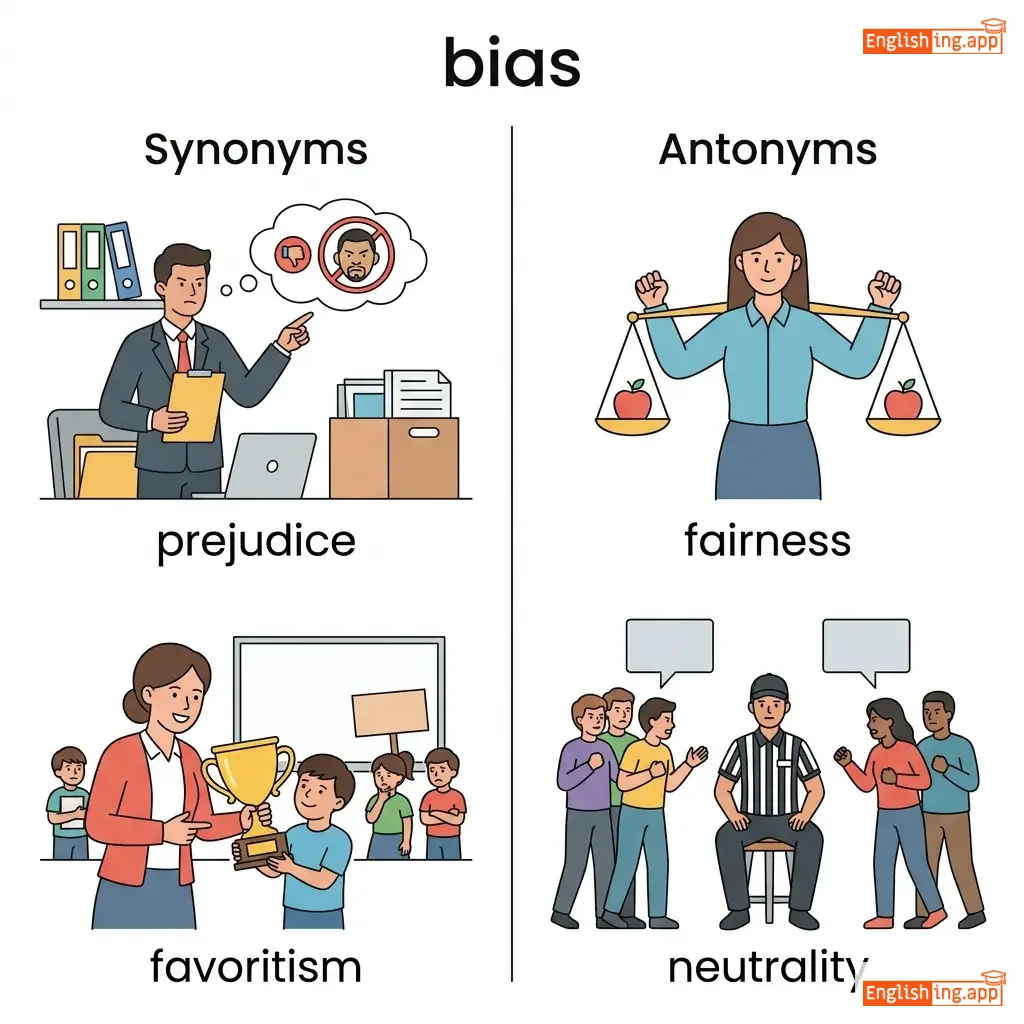
prejudice, favoritism, partiality, inclination, tendency
••••••
|
fairness, neutrality, objectivity
••••••
|
gender bias, racial bias, unconscious bias, bias towards
••••••
|
偏見は不公平なことを意味します — 覚えておいて、‘バイアス’は‘自分に有利な方向に’です!
••••••
|
|
🚲
••••••
|
/baɪk/
noun, verb
(バイク)
••••••
|
- •••••• |
自転車
jitensha
••••••
|
biked
バイクド
••••••
|
biked
バイクド
••••••
|
bikes
バイクス
••••••
|
biking
バイキング
••••••
|
a bicycle or motorcycle; to ride a bicycle
••••••
|
He biked to school every day.
彼は毎日自転車で学校に行きました。
••••••
|
彼は毎日自転車で学校に行きました。
Kare wa mainichi jitensha de gakkou ni ikimashita.
••••••
|
bike ride
自転車の旅
••••••
|
An outing or trip on a bicycle.
••••••
|
自転車の旅
jitensha no tabi
••••••
|
bicycle, cycle, motorcycle, two-wheeler
••••••
|
car, bus
••••••
|
ride a bike, mountain bike, bike helmet, bike path
••••••
|
Bikeは英語で自転車、'自転車で'を想像しよう!
••••••
|
|
🧾
••••••
|
/bɪl/
noun
••••••
|
- •••••• | - •••••• | - •••••• | - •••••• | - •••••• | - •••••• |
a written statement of money owed for goods or services; also a proposed law presented to a legislature
••••••
|
He received the electricity bill yesterday. |
- •••••• |
foot the bill |
to pay for something, especially something expensive
••••••
|
- •••••• |
invoice, statement, charge, account, draft
••••••
|
credit, receipt
••••••
|
pay a bill, receive a bill, pass a bill, utility bill
••••••
|
No •••••• |
|
🪢
••••••
|
/baɪnd/
verb
(baind)
••••••
|

|
結びつける
musubitsukeru
••••••
|
bound
baund
••••••
|
bound
baund
••••••
|
binds
bainds
••••••
|
binding
bainding
••••••
|
to tie or fasten tightly; to unite or restrict
••••••
|
The contract will bind both parties to the agreement.
契約は両方の当事者を契約に縛ります。
••••••
|
契約は両方の当事者を契約に縛ります。
Keiyaku wa ryōhō no tōjisha o keiyaku ni shibarimasu.
••••••
|
in a bind
困った状況
••••••
|
in a difficult situation
••••••
|
困った状況
komatta joukyou
••••••
|
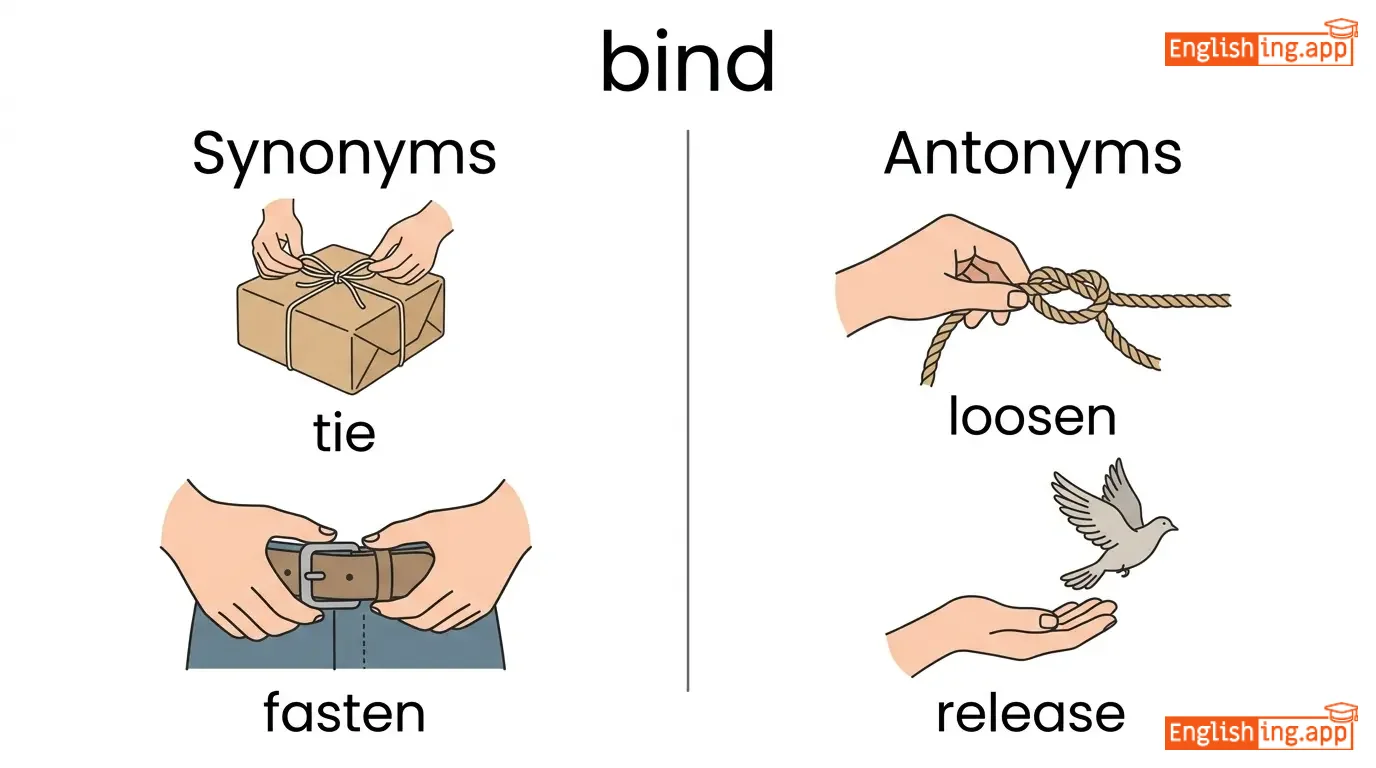
tie, fasten, connect, unite, secure
••••••
|
loosen, release, free
••••••
|
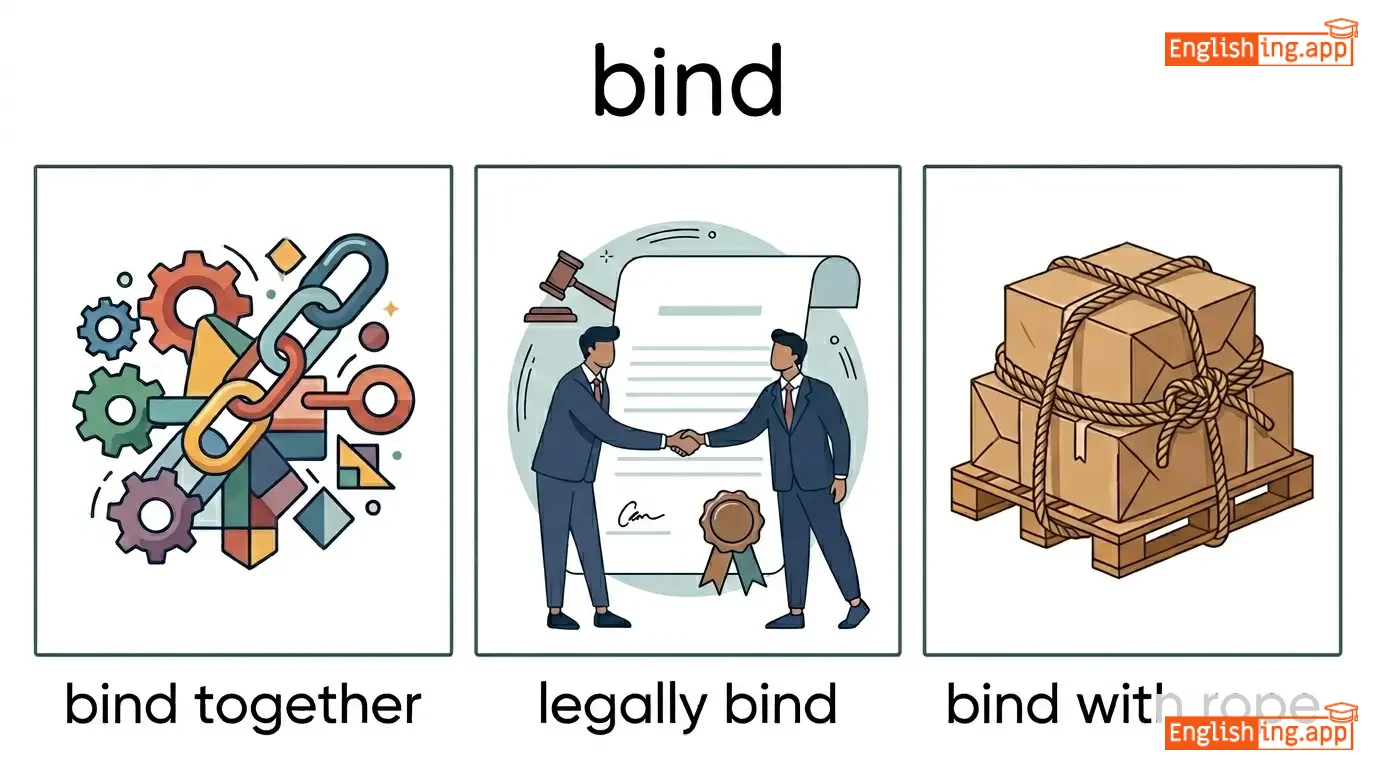
bind together, legally bind, bind with rope, bind tightly
••••••
|
結びつけるは物を結び合わせること、物を結ぶように覚えましょう。
••••••
|
|
🤩
••••••
|
/waʊ/
interjection
(ワウ)
••••••
|
- •••••• |
驚きの表現
odoroki no hyougen
••••••
|
- •••••• | - •••••• | - •••••• | - •••••• |
used to express great surprise, admiration, or pleasure
••••••
|
Wow, that performance was amazing! |
ワウ、そのパフォーマンスは素晴らしかった!
Wau, sono pafomansu wa subarashikatta!
••••••
|
- •••••• | - •••••• | - •••••• |
amazing, impressive, astonishing, wonderful, unbelievable
••••••
|
boring, dull, unimpressive
••••••
|
say wow, wow moment, wow factor, wow effect
••••••
|
何かに驚くと、「ワウ!」と自然に言いたくなる
••••••
|
|
⏰
••••••
|
/jet/
adverb
(yet)
••••••
|
- •••••• |
まだ; 今まで;
mada; imade
••••••
|
- •••••• | - •••••• | - •••••• | - •••••• |
up to now or a specified time; still; however; nevertheless
••••••
|
He hasn't finished his homework yet. |
彼はまだ宿題を終わらせていない。
Kare wa mada shukudai o owarasete inai
••••••
|
- •••••• | - •••••• | - •••••• |
still, so far, thus far, up to now, until now
••••••
|
already, previously, before, earlier
••••••
|
not yet, yet again, yet another, yet to come
••••••
|
まだ終わらず、今まで進んでいる。
••••••
|
|
🙂
••••••
|
/juː/
pronoun
(あなた)
••••••
|
- •••••• |
あなた
anata
••••••
|
- •••••• | - •••••• | - •••••• | - •••••• |
used to refer to the person or people being spoken to
••••••
|
You are doing a great job!
あなたは素晴らしい仕事をしています!
••••••
|
あなたは素晴らしい仕事をしています!
Anata wa subarashii shigoto o shiteimasu!
••••••
|
- •••••• | - •••••• | - •••••• |
yourself, yourself
••••••
|
I, he, she
••••••
|
you are, you can, you will, you need
••••••
|
You, あなた, are the person you’re talking about.
••••••
|

