Revival Fair by the Riverside
10年前、組合のフェアは閉鎖されていました。 今日、all の村人たちが再びフェアに集まりました。 Naushin は言いました、'and これから毎年開催します。' 司会者は、any 問題が発生した場合は、知らせてほしいと発表しました。 ライブアートインスタレーションで ash 絵画が作られました。 Abdul は花のガーランドで飾られた ass を持ってきました。 出店者たちはプラスチック ban について皆に注意を促しました。 子供たちは bat とボールを持ってフィールドを駆け回っていました。 川辺の bay に浮遊するステージが設置されました。 夕方、彼らは群衆に支援を begged しました。 Rashed は言いました、'私は bet これが最高のショーになると確信しています。' Lily はチャリティオークションで絵画に bid をしました。 Tusti はスクリプトに少し bit ユーモアを加えました。 彼らは古い box からライトを取り出しました。 ステージ上の奇妙な bug 人形が子供たちを驚かせました。 彼らの計画はシンプルで but 効果的でした。 すべてのボランティアはカラフルな cap を着用して働いていました。 フェアが終わった後、通りの cat は残りの食べ物を求めてミャウと鳴いていました。 舞台裏で音響チームは各入場 cue を完璧に管理していました。 翌朝、彼らは川の dam に向かって風を感じながら歩きました。
|
絵文字
|
単語 | Images | 翻訳 | 過去 | 過去分詞 | 三人称単数 | 動名詞 | 意味 | 例文 | 例文の翻訳 | 表現例 | 表現例の意味 | 表現例の翻訳 | 同義語 | 対義語 | コロケーション | ニーモニック |
|---|---|---|---|---|---|---|---|---|---|---|---|---|---|---|---|---|---|
|
⏳
••••••
|
/əˈɡoʊ/
adverb
(アゴ)
••••••
|
- •••••• |
以前
izen
••••••
|
- •••••• | - •••••• | - •••••• | - •••••• |
Used to indicate how long before the present something happened.
••••••
|
I met her two years ago. |
私は2年前に彼女に会いました。
Watashi wa 2-nen mae ni kanojo ni aimashita.
••••••
|
- •••••• | - •••••• | - •••••• |
earlier, previously, before, back
••••••
|
later, after, upcoming
••••••
|
long ago, years ago, days ago, a while ago
••••••
|
'Ago' は '以前' を意味します — 過去を振り返る時に使います。
••••••
|
|
🌍
••••••
|
/ɔːl/
determiner, pronoun, adverb
(オール)
••••••
|
- •••••• |
すべて
subete
••••••
|
- •••••• | - •••••• | - •••••• | - •••••• |
the whole quantity or extent of something; every one of something
••••••
|
She spent all her money on books.
彼女はすべてのお金を本に使いました。
••••••
|
彼女はすべてのお金を本に使いました。
Kanojo wa subete no okane o hon ni tsukaimashita.
••••••
|
all in all
すべてを考慮して
••••••
|
considering everything
••••••
|
すべてを考慮して
subete o kōryo shite
••••••
|
every, entire, whole, total, complete
••••••
|
none, nothing, partial
••••••
|
all the time, all over, all right, all together
••••••
|
ALL はすべて — すべての人はオールを使う!
••••••
|
|
➕
••••••
|
/ænd/
conjunction
(アンド)
••••••
|
- •••••• |
と
to
••••••
|
- •••••• | - •••••• | - •••••• | - •••••• |
Used to connect words or sentences that are to be taken jointly.
••••••
|
She bought apples and oranges. |
彼女はリンゴとオレンジを買いました。
Kanojo wa ringo to orenji o kaimashita.
••••••
|
- •••••• | - •••••• | - •••••• |
plus, along with, together with, as well as
••••••
|
or, but
••••••
|
and so, and then, and finally, and also
••••••
|
And はと意味です - リンゴ と オレンジ 一緒に。
••••••
|
|
🔄
••••••
|
/ˈɛni/
determiner/pronoun
(エニ)
••••••
|
- •••••• |
いずれかの
izureka no
••••••
|
- •••••• | - •••••• | - •••••• | - •••••• |
one, some, or all, without specifying which
••••••
|
Do you have any questions? |
何か質問はありますか?
Nanika shitsumon wa arimasu ka?
••••••
|
any day now |
something expected to happen very soon
••••••
|
今すぐにどの日でも
Ima sugu ni dono hi demo
••••••
|
some, whatever, each, all, every
••••••
|
none, nothing
••••••
|
any chance, any time, any questions, any problem
••••••
|
ANYは「いずれかの」という意味、例えば'いずれかの日に起こるかもしれません'。
••••••
|
|
🌋
••••••
|
/æʃ/
noun
(エッシュ)
••••••
|
- •••••• |
灰
hai
••••••
|
- •••••• | - •••••• | - •••••• | - •••••• |
the powdery residue left after the burning of a substance
••••••
|
After the fire, only ash remained of the house. |
火事の後、家の灰だけが残った。
Kaji no ato, ie no hai dake ga nokotta.
••••••
|
rise from the ashes |
to recover or rebuild after destruction or failure
••••••
|
灰から立ち上がる
Hai kara tachiagaru
••••••
|
cinder, dust, residue, remains, soot
••••••
|
substance, matter
••••••
|
ash cloud, ash tray, volcanic ash, turn to ash
••••••
|
Ash は灰 — ‘火事の後には灰しか残らない’ 🔥
••••••
|
|
🐴
••••••
|
/æs/
noun
(エス)
••••••
|
- •••••• |
ロバ
roba
••••••
|
- •••••• | - •••••• | - •••••• | - •••••• |
a donkey; also an informal term for a foolish person or one's buttocks
••••••
|
He acted like an ass during the meeting. |
彼は会議中にロバのように振る舞った。
Kare wa kaigi-chuu ni roba no you ni furumatta.
••••••
|
kick someone's ass |
to defeat or punish someone severely
••••••
|
誰かの尻を蹴る
Dareka no shiri o keru
••••••
|
donkey, fool, idiot, backside, butt
••••••
|
genius, intellect
••••••
|
make an ass of oneself, dumb ass, lazy ass, pain in the ass
••••••
|
Ass はロバ: '愚かな人はロバ (ass)' ということを覚えておいてください
••••••
|
|
🚫
••••••
|
/bæn/
verb
(バン)
••••••
|
|
禁止する
kinshi suru
••••••
|
banned
バンド
••••••
|
banned
バンド
••••••
|
bans
バンス
••••••
|
banning
バンニング
••••••
|
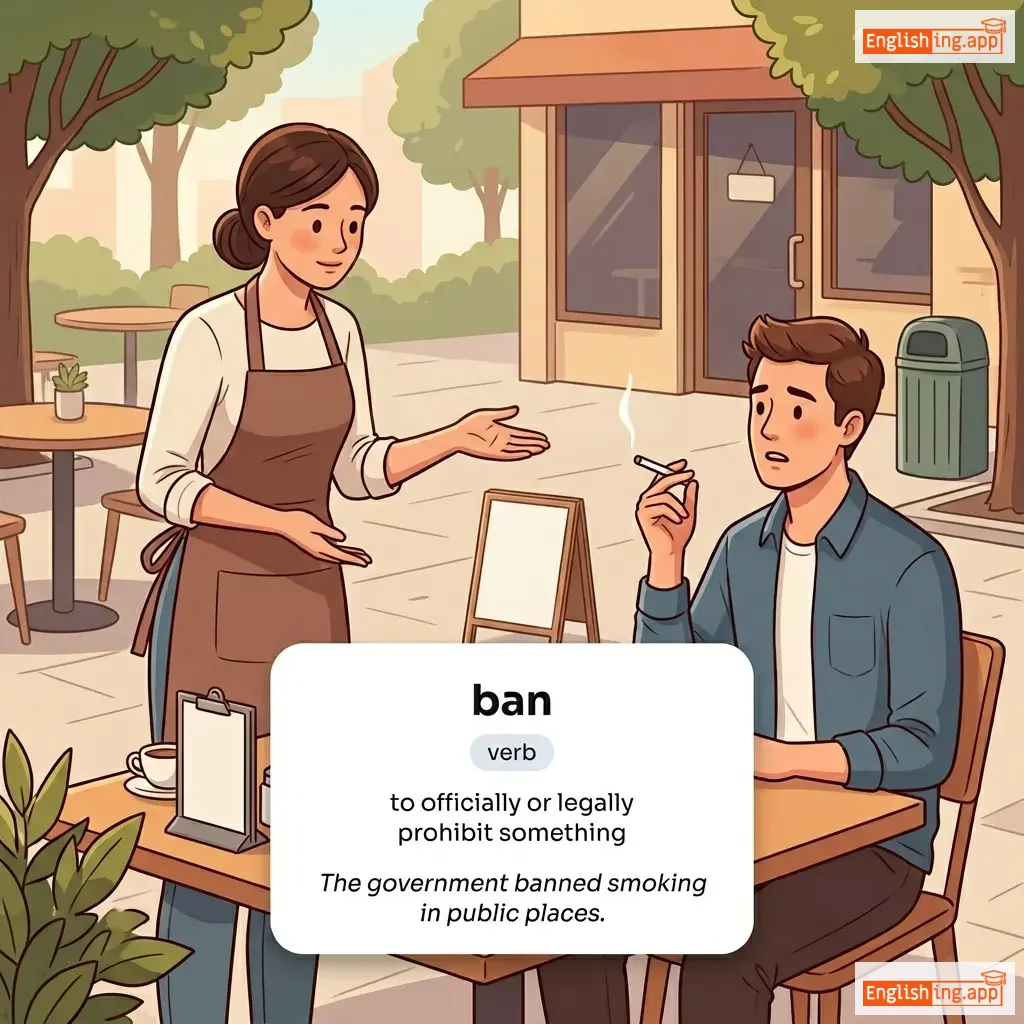
to officially or legally prohibit something
••••••
|
The government banned smoking in public places.
政府は公共の場での喫煙を禁止しました。
••••••
|
政府は公共の場での喫煙を禁止しました。
Seifu wa kōkyō no ba de no kitsuen o kinshi shimashita.
••••••
|
ban from
バン フロム
••••••
|
to prohibit someone from doing something
••••••
|
から禁止する
kara kinshi suru
••••••
|
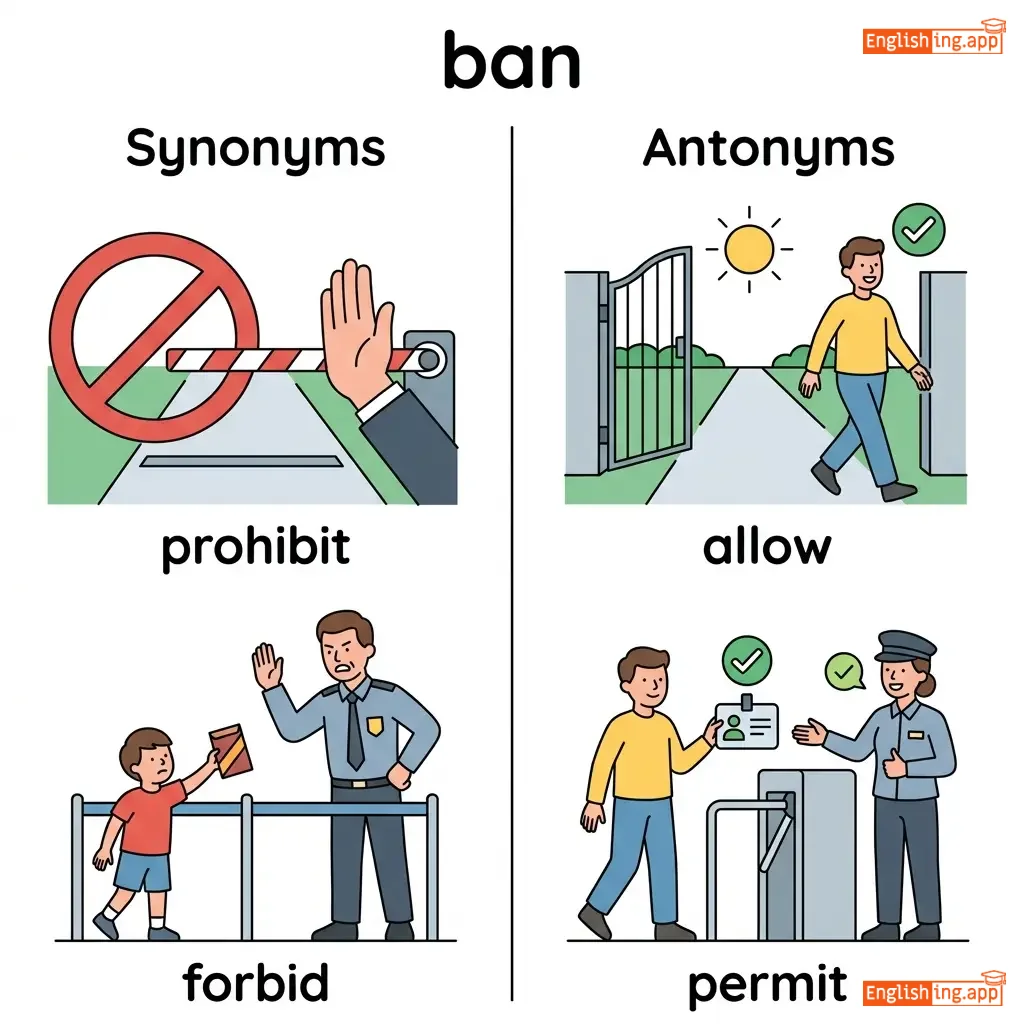
prohibit, forbid, outlaw, restrict, bar
••••••
|
allow, permit
••••••
|
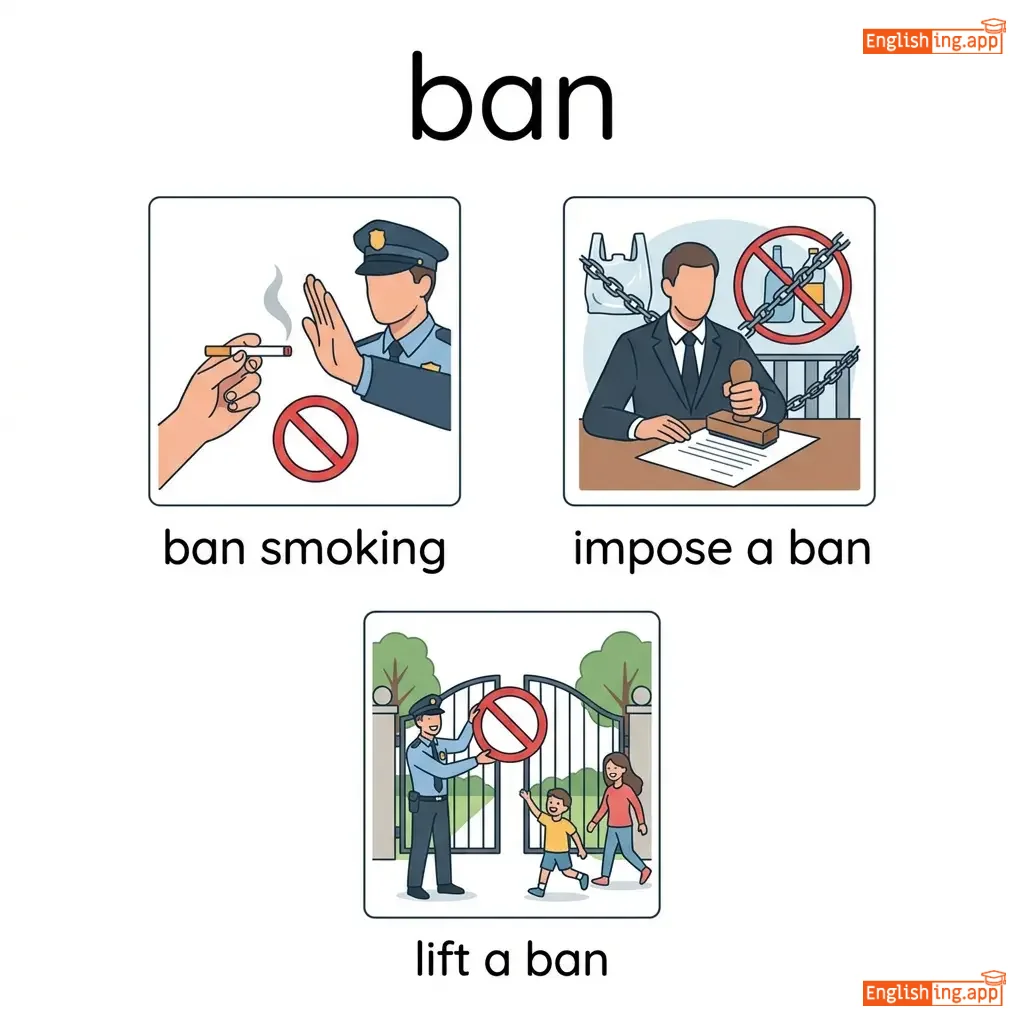
ban smoking, impose a ban, lift a ban, ban completely
••••••
|
Banは禁止するという意味です。FacebookでBanされたことがありますか?
••••••
|
|
🏏
••••••
|
/bæt/
verb
(ベット)
••••••
|
|
バットで打つ
batto de utsu
••••••
|
batted
ベットッド
••••••
|
batted
ベットッド
••••••
|
bats
ベッツ
••••••
|
batting
ベッティング
••••••
|
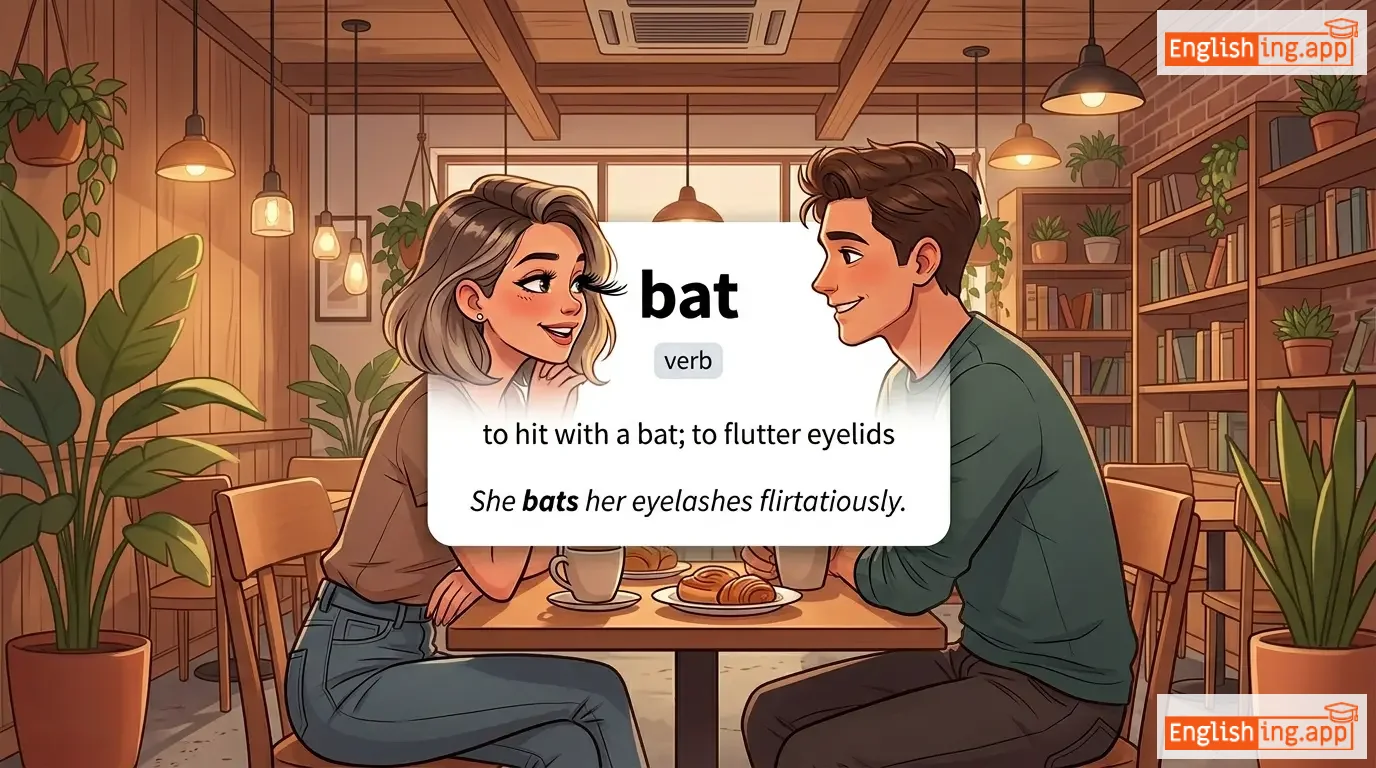
to hit with a bat; to flutter eyelids
••••••
|
She bats her eyelashes flirtatiously.
彼女は魅力的にまばたきしている。
••••••
|
彼女は魅力的にまばたきしている。
Kanojo wa miryokuteki ni mabataki shite iru.
••••••
|
- •••••• | - •••••• | - •••••• |
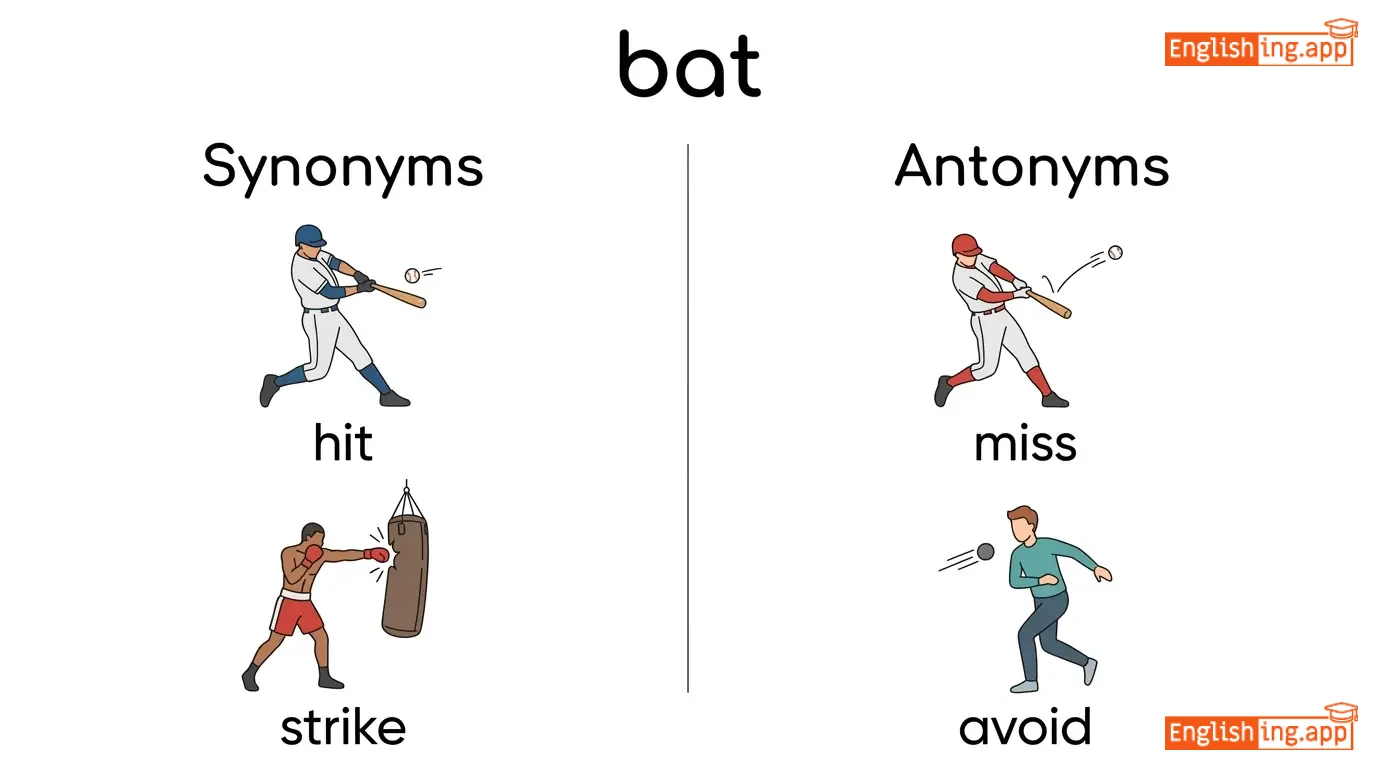
hit, strike, flutter, wink
••••••
|
miss, avoid
••••••
|
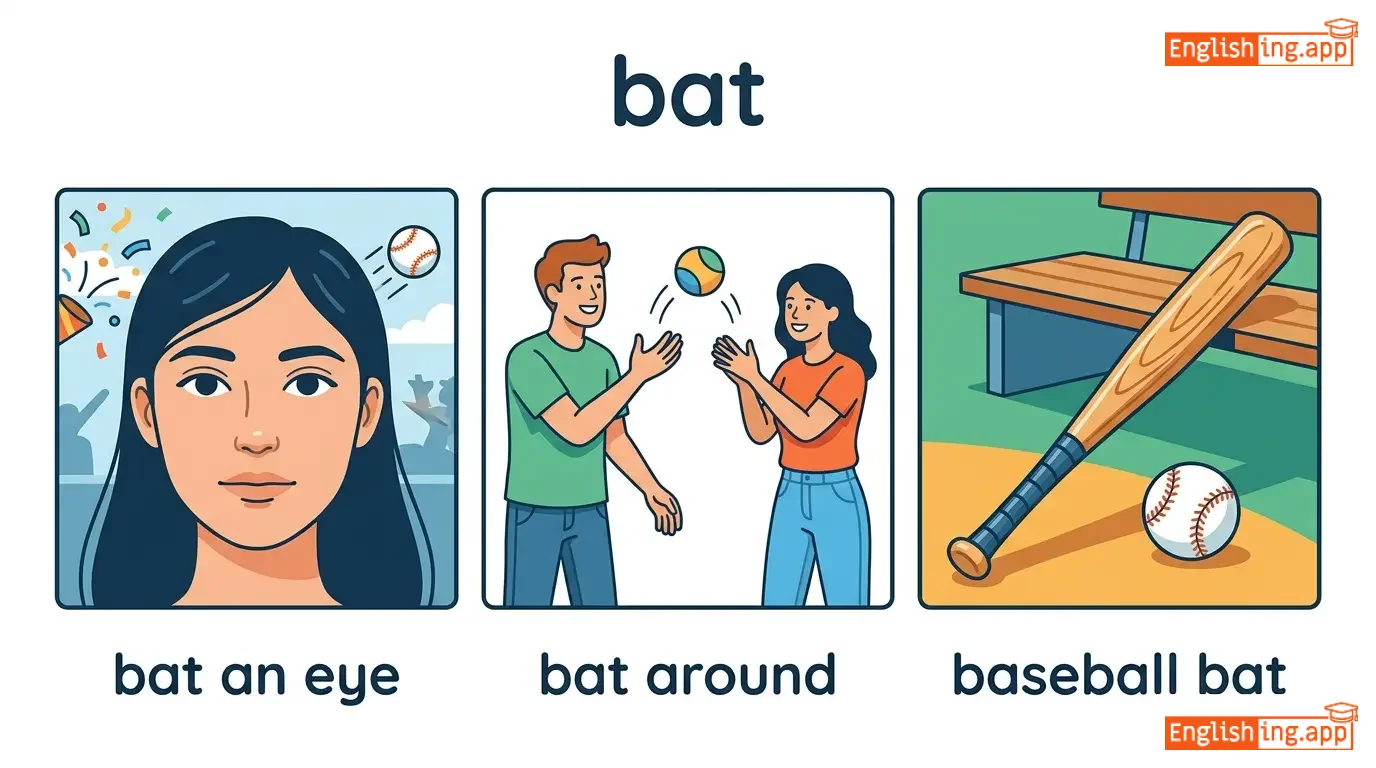
bat an eye, bat around, baseball bat, cricket bat, bat the ball
••••••
|
野球でバットで打つように、映画のスターのようにまばたきする。
••••••
|
|
🌊
••••••
|
/beɪ/
noun
(ベ)
••••••
|
- •••••• |
湾
wan
••••••
|
- •••••• | - •••••• | - •••••• | - •••••• |
a broad inlet of the sea where the land curves inward
••••••
|
The ship anchored safely in the bay. |
船は湾内で安全にアンカーを下ろしました。
Fune wa wan-nai de anzen ni ankā o oroshimashita.
••••••
|
keep at bay |
to prevent something or someone from approaching or having an effect
••••••
|
遠ざける
tōzakeru
••••••
|
inlet, gulf, cove, harbor, lagoon
••••••
|
mountain, hill
••••••
|
sandy bay, beautiful bay, fishing bay, bay area
••••••
|
Bay of Bengalを覚えておいて — ‘ベ’は湾を意味します 🌊
••••••
|
|
🙏
••••••
|
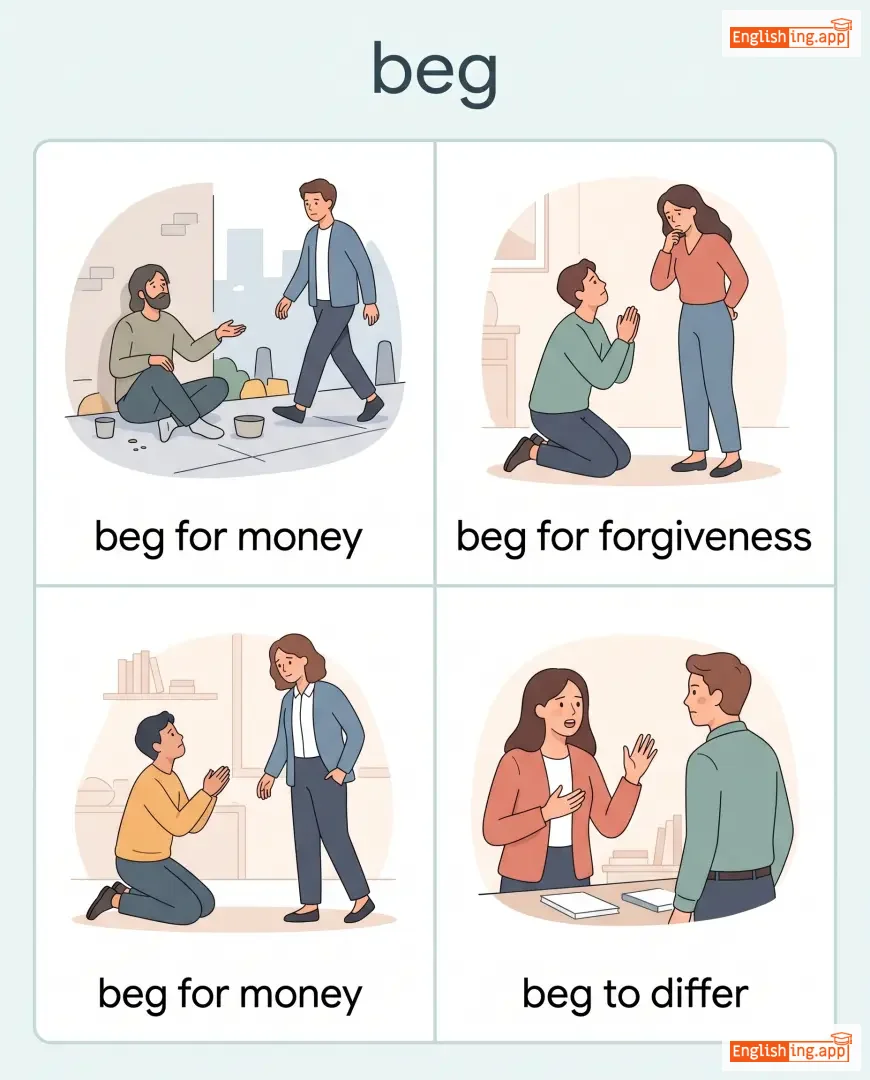
/bɛɡ/
verb
(ベグ)
••••••
|
|
乞う / 頼む
kou / tanomu
••••••
|
begged
ベグド
••••••
|
begged
ベグド
••••••
|
begs
ベグス
••••••
|
begging
ベギング
••••••
|
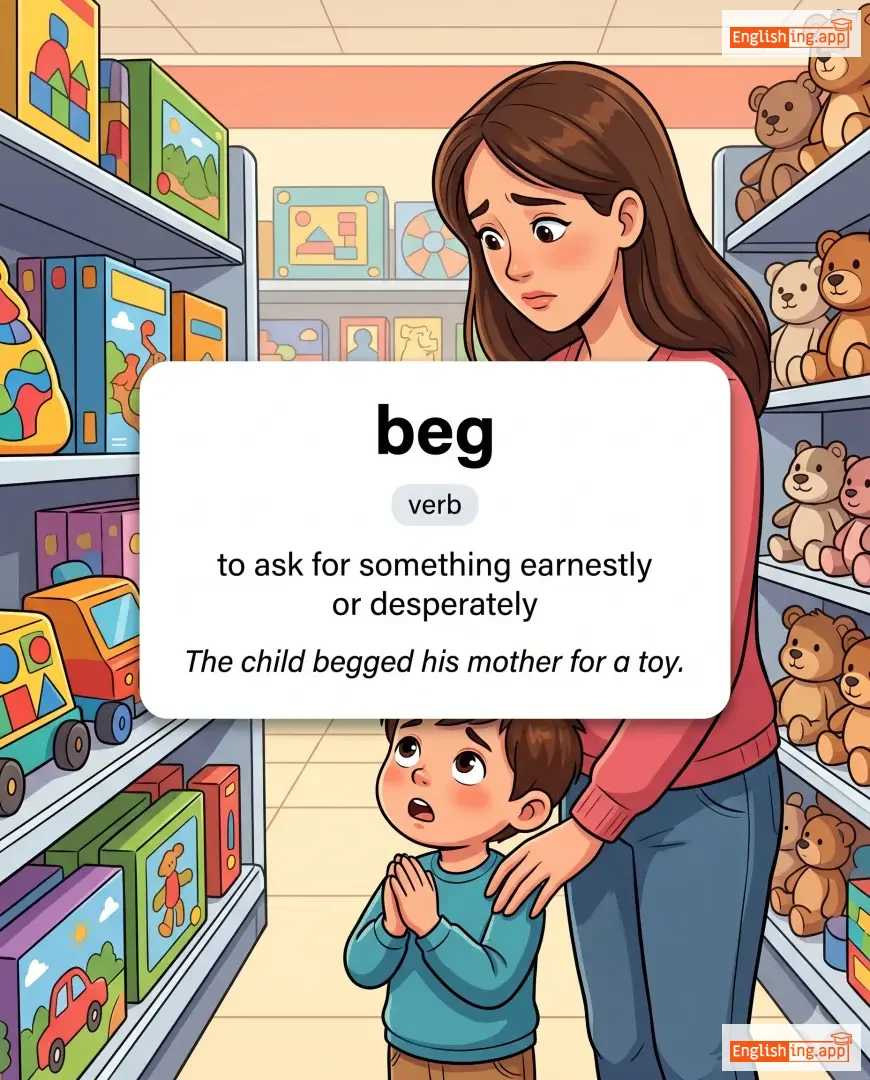
to ask for something earnestly or desperately
••••••
|
The child begged his mother for a toy.
その子供はおもちゃを求めて母親に頼んだ。
••••••
|
その子供はおもちゃを頼んだ。
Sono kodomo wa omocha o tanonda.
••••••
|
beg to differ
beg to differ
••••••
|
to politely disagree
••••••
|
丁寧に異議を唱える
teinei ni igi o tonaeru
••••••
|
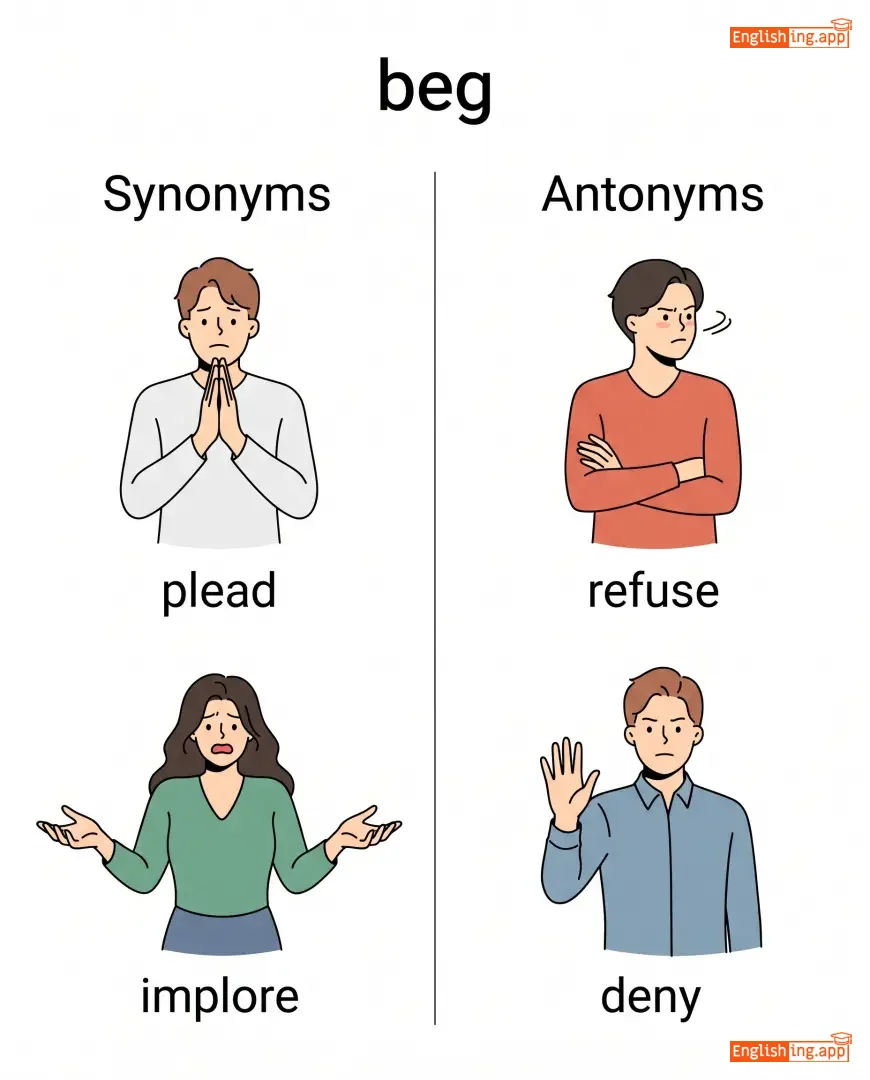
plead, implore, request, entreat, supplicate
••••••
|
refuse, deny, reject
••••••
|
beg for money, beg for forgiveness, beg to differ, beg for mercy
••••••
|
Beg は頼むという意味です – 何かを頼むときに使います。
••••••
|
|
🎲
••••••
|
/bɛt/
verb, noun
(ベット)
••••••
|
|
賭ける
kakeru
••••••
|
bet
ベット
••••••
|
bet
ベット
••••••
|
bets
ベッツ
••••••
|
betting
ベッティング
••••••
|
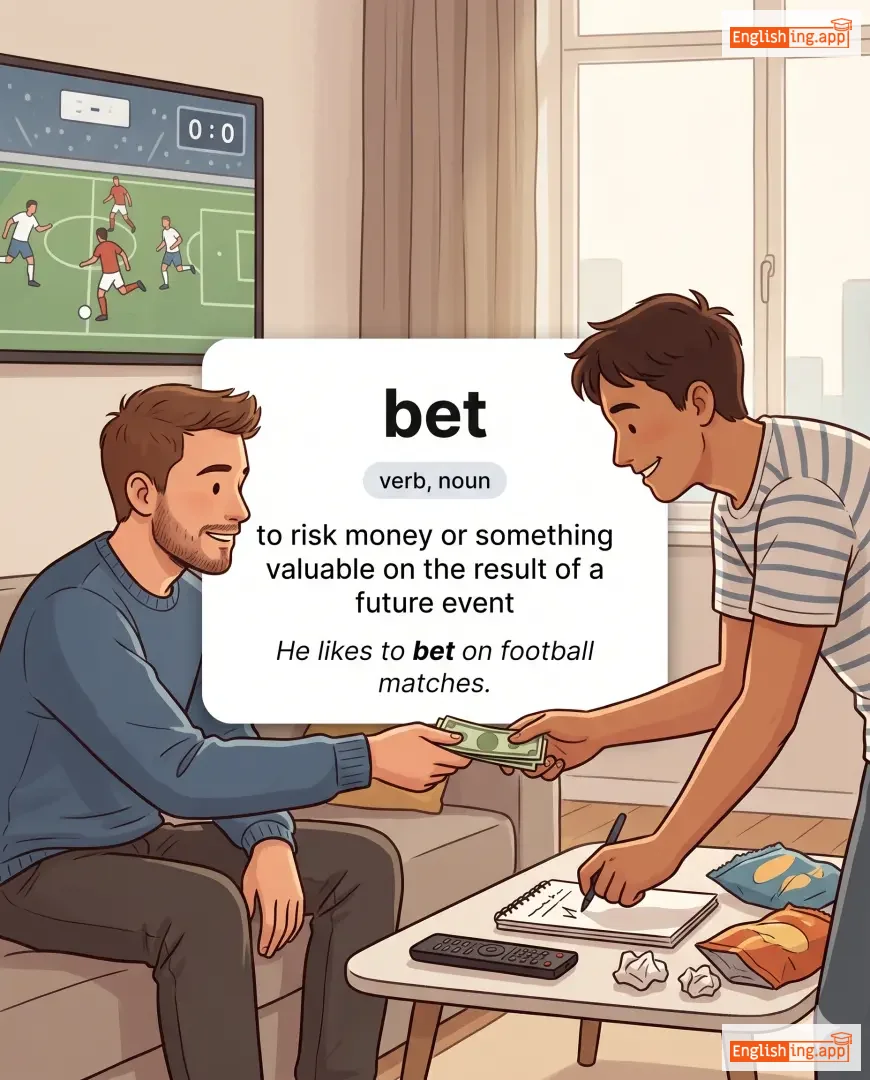
to risk money or something valuable on the result of a future event
••••••
|
He likes to bet on football matches.
彼はサッカーの試合にベットするのが好きです。
••••••
|
彼はサッカーの試合にベットするのが好きです。
Kare wa sakkā no shiai ni betto suru no ga suki desu.
••••••
|
you can bet on it
それにベットできます
••••••
|
something is certain to happen
••••••
|
それに賭けてもいい
Sore ni kakete mo ii
••••••
|
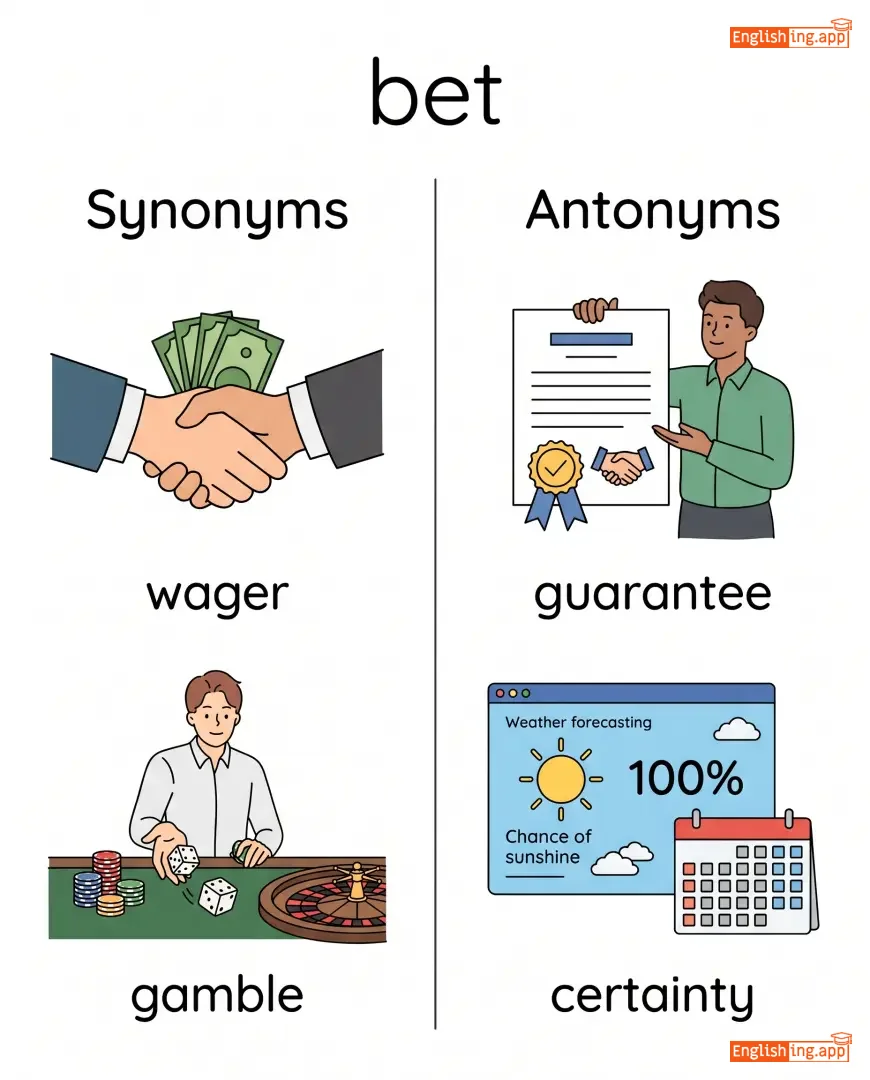
wager, gamble, stake, risk
••••••
|
guarantee, certainty
••••••
|
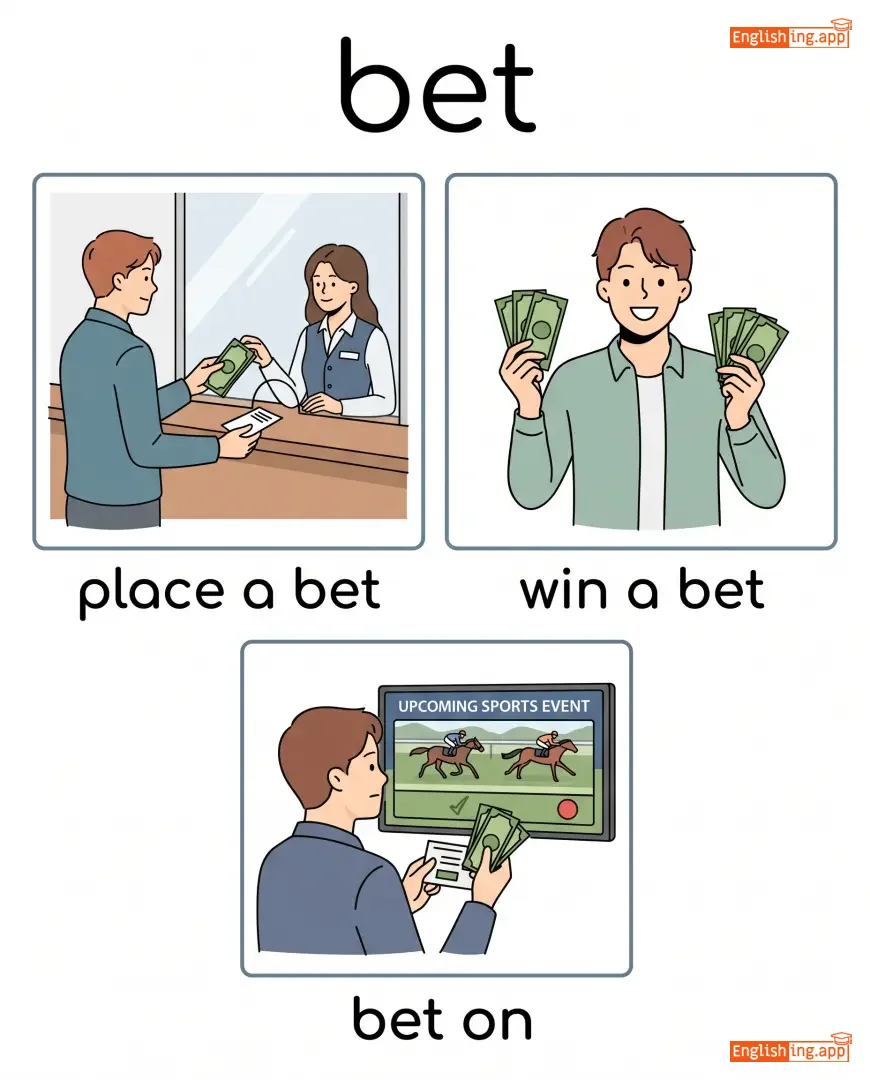
place a bet, win a bet, bet on, bet against
••••••
|
Bet は賭けるという意味 - 試合でベットする
••••••
|
|
💸
••••••
|
/bɪd/
verb
••••••
|
- •••••• | - •••••• |
bid
••••••
|
bid
••••••
|
bids
••••••
|
bidding
••••••
|
to offer a certain amount of money for something, especially at an auction
••••••
|
She bid $200 for the antique vase. |
- •••••• |
bid farewell |
to say goodbye formally
••••••
|
- •••••• |
offer, propose, tender, submit, quote
••••••
|
withdraw, retract
••••••
|
bid price, bid farewell, bid high, bid low
••••••
|
No •••••• |
|
🧩
••••••
|
/bɪt/
noun
(ビット)
••••••
|
- •••••• |
一片
ippen
••••••
|
- •••••• | - •••••• | - •••••• | - •••••• |
a small piece, amount, or portion of something
••••••
|
She ate a bit of the cake before leaving. |
彼女は出かける前にケーキの一片を食べました。
Kanojo wa dekakeru mae ni keeki no ippen wo tabemashita.
••••••
|
every bit |
completely or fully
••••••
|
すべての部分
subete no bubun
••••••
|
piece, fragment, portion, part, scrap
••••••
|
whole, entirety
••••••
|
a bit of, every bit, quite a bit, bit by bit
••••••
|
Bit は小さな一片、ケーキの一片のように。
••••••
|
|
📦
••••••
|
/bɑːks/
noun
(ボックス)
••••••
|
- •••••• |
箱
hako
••••••
|
- •••••• | - •••••• | - •••••• | - •••••• |
a container with flat sides, typically square or rectangular, used for storing things
••••••
|
He packed his clothes in a cardboard box.
彼は服を段ボール箱に詰めました。
••••••
|
彼は服を段ボール箱に詰めました。
Kare wa fuku o danbōru hako ni tsumemashita.
••••••
|
think outside the box
箱の外で考える
••••••
|
to think creatively and differently
••••••
|
箱の外で考える
Hako no soto de kangaeru
••••••
|
container, case, carton, package, chest
••••••
|
openness, unboxed
••••••
|
gift box, wooden box, cardboard box, jewelry box
••••••
|
箱は箱を意味します。 '本' を箱に入れることを想像してください。
••••••
|
|
🐞
••••••
|
/bʌɡ/
noun
(バグ)
••••••
|
- •••••• |
バグ
bagu
••••••
|
- •••••• | - •••••• | - •••••• | - •••••• |
a small insect; informally, a flaw or error in a system or program
••••••
|
There’s a bug in the code that causes the app to crash. |
コードにバグがあり、アプリがクラッシュします。
kōdo ni bagu ga ari, apuri ga kurasshu shimasu.
••••••
|
catch the bug |
to suddenly become very interested in something
••••••
|
突然何かに夢中になる
totsuzen nanika ni muchū ni naru
••••••
|
insect, glitch, defect, flaw, error
••••••
|
fix, correction, perfection
••••••
|
software bug, nasty bug, fix a bug, bug report, bug tracker
••••••
|
Bugはバグ🐞— ソフトウェアのバグはコードにバグが入り込むようなものです。
••••••
|
|
🐐
••••••
|
/bʌt/
verb
(バット)
••••••
|
|
頭突きする
zutsuki suru
••••••
|
butted
バッテッド
••••••
|
butted
バッテッド
••••••
|
butts
バッツ
••••••
|
butting
バッティング
••••••
|
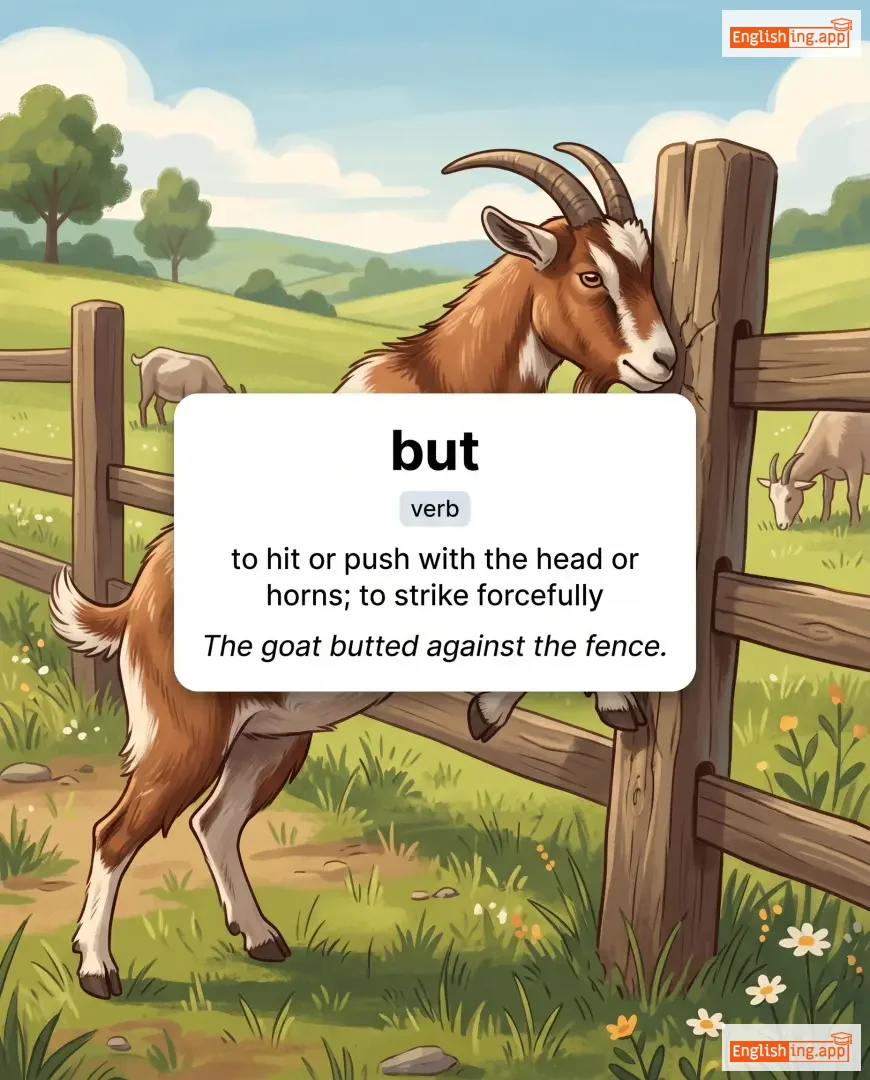
to hit or push with the head or horns; to strike forcefully
••••••
|
The goat butted against the fence.
ヤギはフェンスにぶつかった。
••••••
|
ヤギはフェンスにぶつかった。
Yagi wa fensu ni butsukatta.
••••••
|
- •••••• | - •••••• | - •••••• |
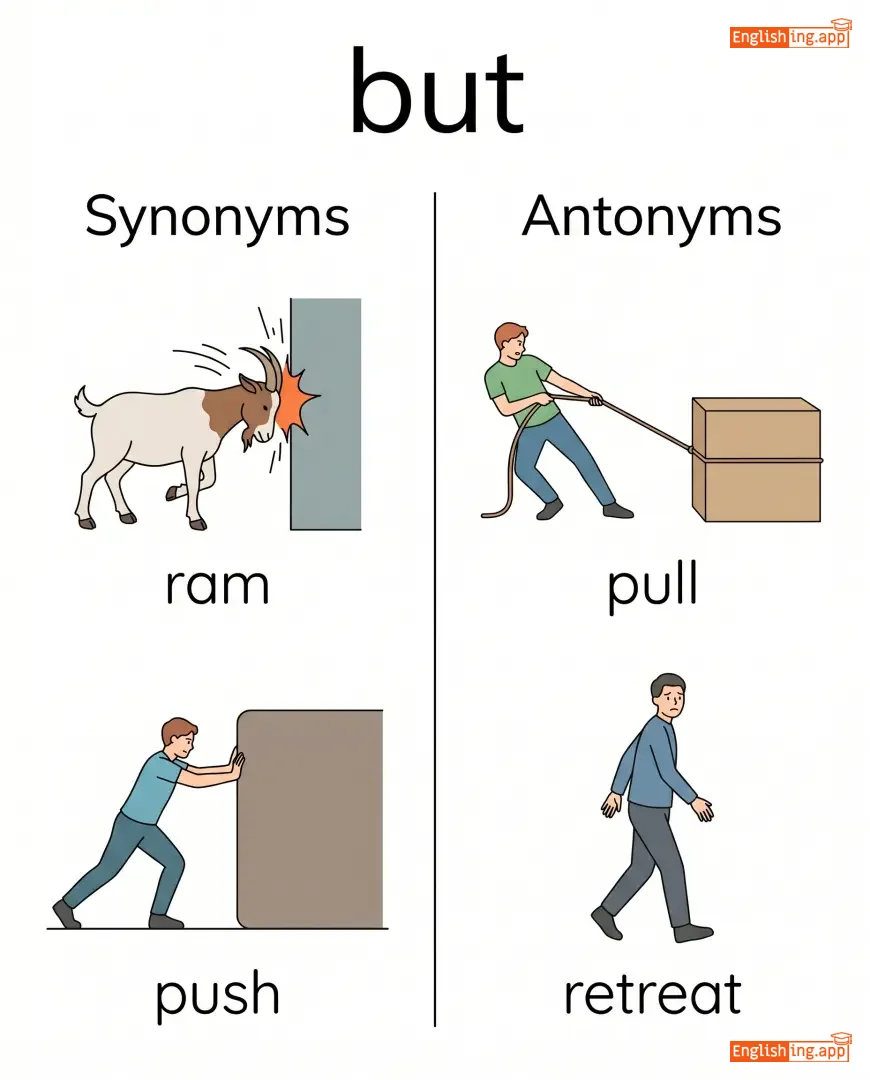
ram, push, strike, hit
••••••
|
pull, retreat, withdraw
••••••
|
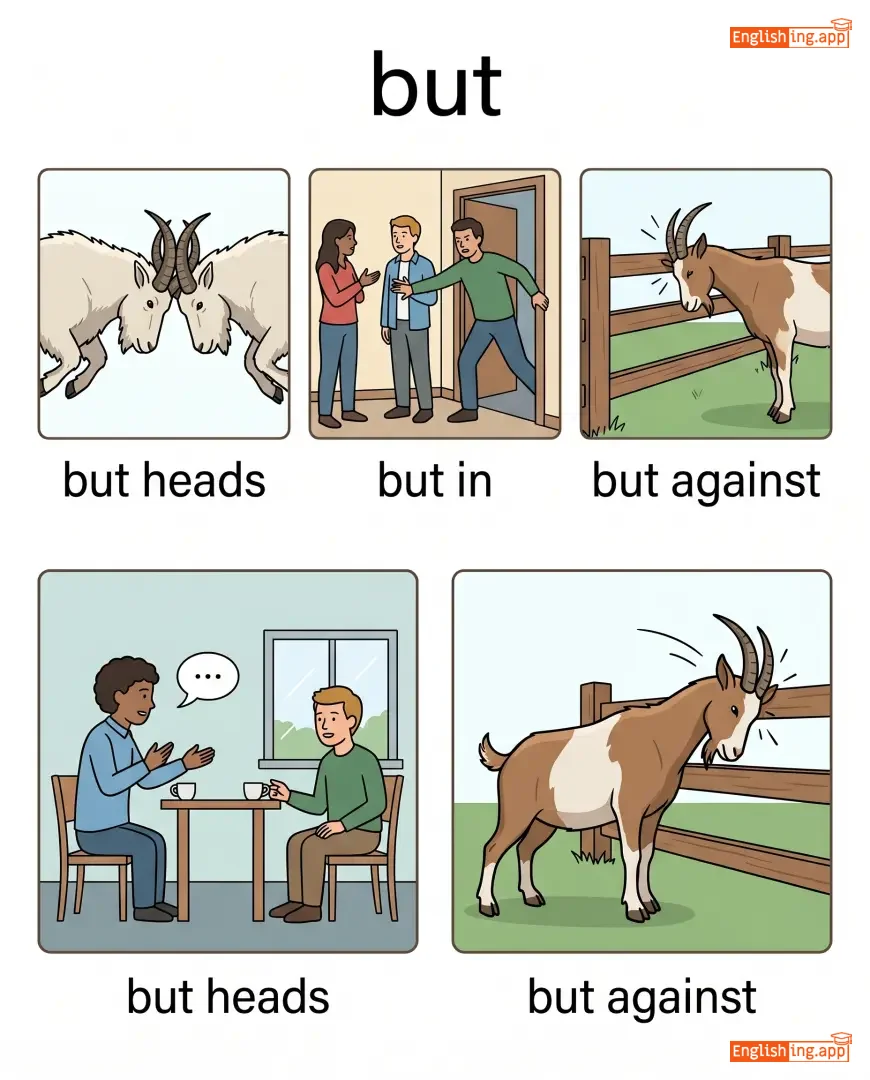
but heads, but in, but against, violently but, forcefully but
••••••
|
Headbutt the fence, it’s what goats do!
••••••
|
|
🧢
••••••
|
/kæp/
noun
••••••
|
- •••••• | - •••••• | - •••••• | - •••••• | - •••••• | - •••••• |
A covering for the head, often with a visor.
••••••
|
He wore a red cap to the baseball game. |
- •••••• |
put a cap on |
To set a limit on something.
••••••
|
- •••••• |
hat, helmet, headgear, bonnet, lid
••••••
|
barehead, uncover
••••••
|
baseball cap, graduation cap, cap limit, cap off
••••••
|
No •••••• |
|
🐱
••••••
|
/kæt/
noun
(kat)
••••••
|
- •••••• |
猫
neko
••••••
|
- •••••• | - •••••• | - •••••• | - •••••• |
a small domesticated carnivorous mammal often kept as a pet
••••••
|
The cat is sleeping on the sofa. |
猫はソファで寝ています。
Neko wa sofa de neteimasu.
••••••
|
curiosity killed the cat |
being too inquisitive can lead to trouble
••••••
|
好奇心は猫を殺す
Koukishin wa neko o korosu
••••••
|
feline, kitten, pussy, tomcat
••••••
|
dog, hound
••••••
|
stray cat, pet cat, wild cat, black cat
••••••
|
Cat 🐱 とは猫、やっぱり気になる!
••••••
|
|
🎭
••••••
|
/kjuː/
noun/verb
(キュー)
••••••
|
- •••••• |
合図
aizu
••••••
|
cued
キュード
••••••
|
cued
キュード
••••••
|
cues
キューズ
••••••
|
cueing
キューイング
••••••
|
A signal or prompt for action; to give a signal.
••••••
|
The actor waited for his cue before entering the stage.
俳優はステージに上がる前にキューを待っていました。
••••••
|
俳優はステージに上がる前にキューを待っていました。
Haiyū wa sutēji ni agaru mae ni kyū o matte imashita.
••••••
|
on cue
適切なタイミングで
••••••
|
At exactly the right moment, as expected.
••••••
|
適切なタイミングで
Tekisetsu na taimingu de
••••••
|
signal, prompt, hint, indication, trigger
••••••
|
silence, ignore, neglect
••••••
|
take a cue, give a cue, wait for a cue, cue card
••••••
|
Cueを言うと、キュー(queue)が始まります - 始める合図です。
••••••
|
|
🏞️
••••••
|
/dæm/
noun
(ダム)
••••••
|
- •••••• |
ダム
damu
••••••
|
- •••••• | - •••••• | - •••••• | - •••••• |
a barrier built to hold back water and raise its level
••••••
|
The dam provides electricity to nearby towns. |
ダムは近隣の町に電力を供給しています。
Damu wa kinrin no machi ni denryoku o kyōkyū shiteimasu.
••••••
|
burst the dam |
to release strong emotions suddenly
••••••
|
ダムを壊す
Damu o kowasu
••••••
|
barrier, embankment, levee, wall, reservoir
••••••
|
flow, breach, release
••••••
|
hydroelectric dam, large dam, build a dam, dam water
••••••
|
ダムは障壁を意味します — ダムが壊れると水が流れ出します。
••••••
|

