The Architect's Turning Point
ラフールはintelligentな建築家だったが、ここ数ヶ月は彼にとってtroubledな時期だった。彼はデザイン会社から次々とrejectionを受けており、非常にfrustratedを感じていた。毎朝彼は自分のキャリアがなぜこんなにdifficultになったのかthinkingしていた。両親は彼をdiscourageすることはなかったが、ラフール自身は自分の未来についてuncertainに感じていた。ある晩、彼は昔の教授の言葉を思い出した。教授はこう言っていた:"Persistentな人々こそが最終的に勝者である。" その言葉を心に留め、ラフールは自分のobservation能力をさらに高めることを決心した。彼は、創造力だけでは不十分で、realisticであり、クライアントのニーズを理解しなければならないことに気づいた。彼は自分のreasoning力を使って新しいアプローチを取った。次のプロジェクトで彼のimprovementは明らかだった。クライアントは彼の献身とcommitmentにimpressedし、彼に大きなopportunityを与えた。ラフールは、responsibilityを真剣に受け止めることが成功をもたらすことを理解した。3ヶ月後、彼のプロジェクトはremarkableな成功を収め、建築雑誌に紹介された。以前彼をdisappointedした人たちは、今では彼と一緒に仕事をすることにinterestedだと言っている。このachievementはラフールに、決して諦めず、困難な時期にも戦い続けることの重要さを教えた。
|
絵文字
|
単語 | Images | 翻訳 | 過去 | 過去分詞 | 三人称単数 | 動名詞 | 意味 | 例文 | 例文の翻訳 | 表現例 | 表現例の意味 | 表現例の翻訳 | 同義語 | 対義語 | コロケーション | ニーモニック |
|---|---|---|---|---|---|---|---|---|---|---|---|---|---|---|---|---|---|
|
🏆
••••••
|
/əˈtʃiːvmənt/
noun
(アチーブメント)
••••••
|
- •••••• |
達成
tassei
••••••
|
- •••••• | - •••••• | - •••••• | - •••••• |
Something that has been successfully completed or accomplished through effort or skill.
••••••
|
Graduating from university was her greatest achievement. |
大学を卒業することは彼女の最大の達成でした。
Daigaku o sotsugyō suru koto wa kanojo no saidai no tassei deshita.
••••••
|
a sense of achievement |
a feeling of pride in accomplishing something
••••••
|
達成感
tasseikan
••••••
|
accomplishment, success, triumph, attainment, feat
••••••
|
failure, defeat
••••••
|
great achievement, outstanding achievement, sense of achievement, academic achievement
••••••
|
Achievementは達成; 試験に合格すると達成感が得られる。
••••••
|
|
🤝
••••••
|
/kəˈmɪtmənt/
noun
••••••
|

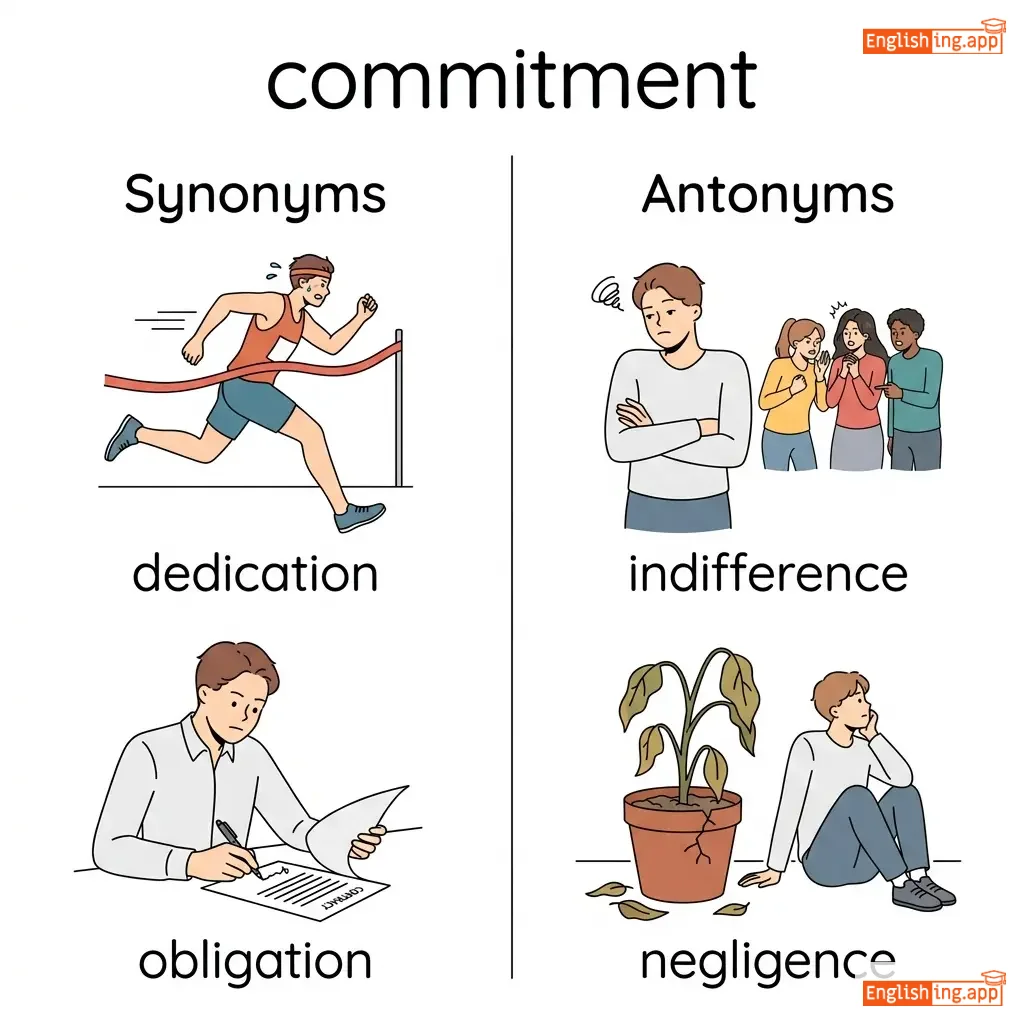

|
- •••••• | - •••••• | - •••••• | - •••••• | - •••••• |
A promise or firm decision to do something; dedication or obligation to a cause or activity.
••••••
|
She showed great commitment to her studies. |
- •••••• |
a lifelong commitment |
A promise or responsibility that lasts for one's whole life.
••••••
|
- •••••• |
dedication, obligation, devotion, promise, responsibility
••••••
|
indifference, negligence, irresponsibility
••••••
|
strong commitment, show commitment, commitment to, long-term commitment
••••••
|
No •••••• |
|
😓
••••••
|
/ˈdɪf.ɪ.kəlt/
adjective
(ディフィカルト)
••••••
|
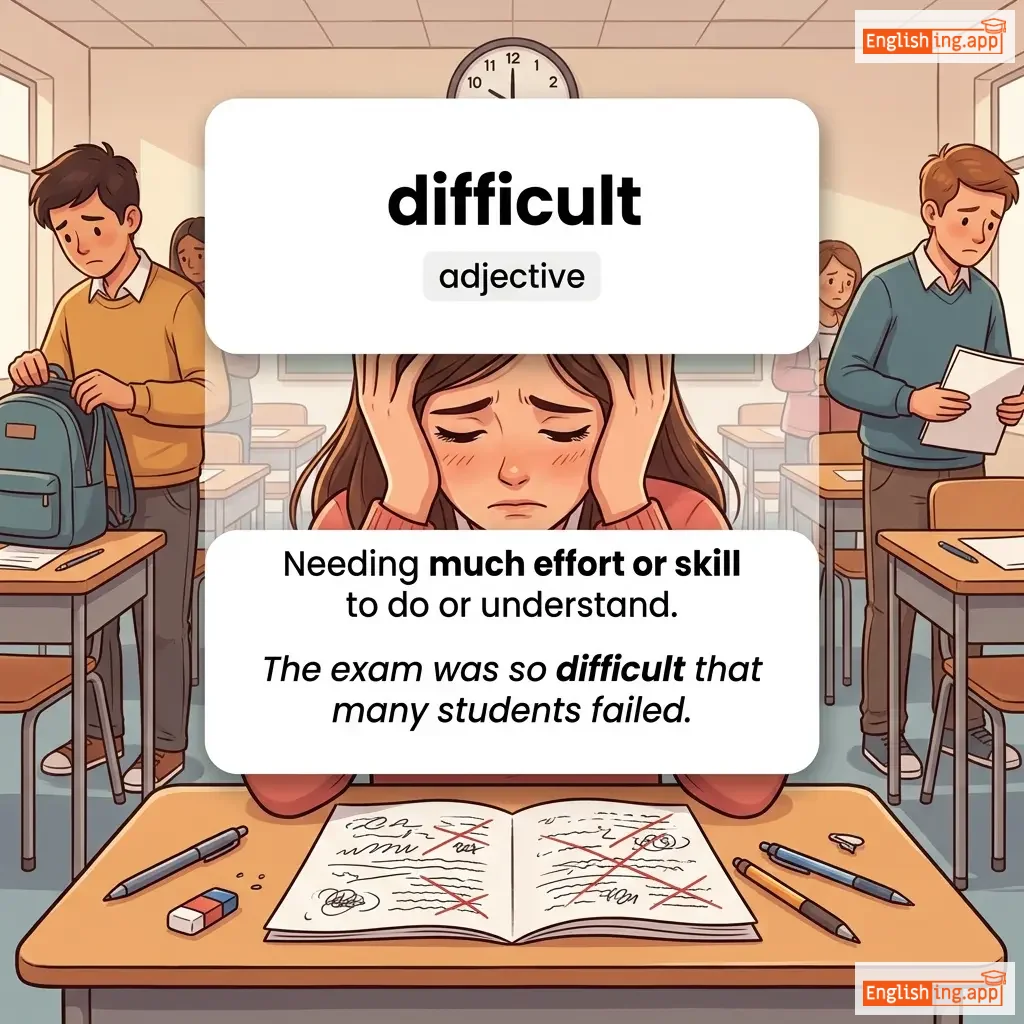
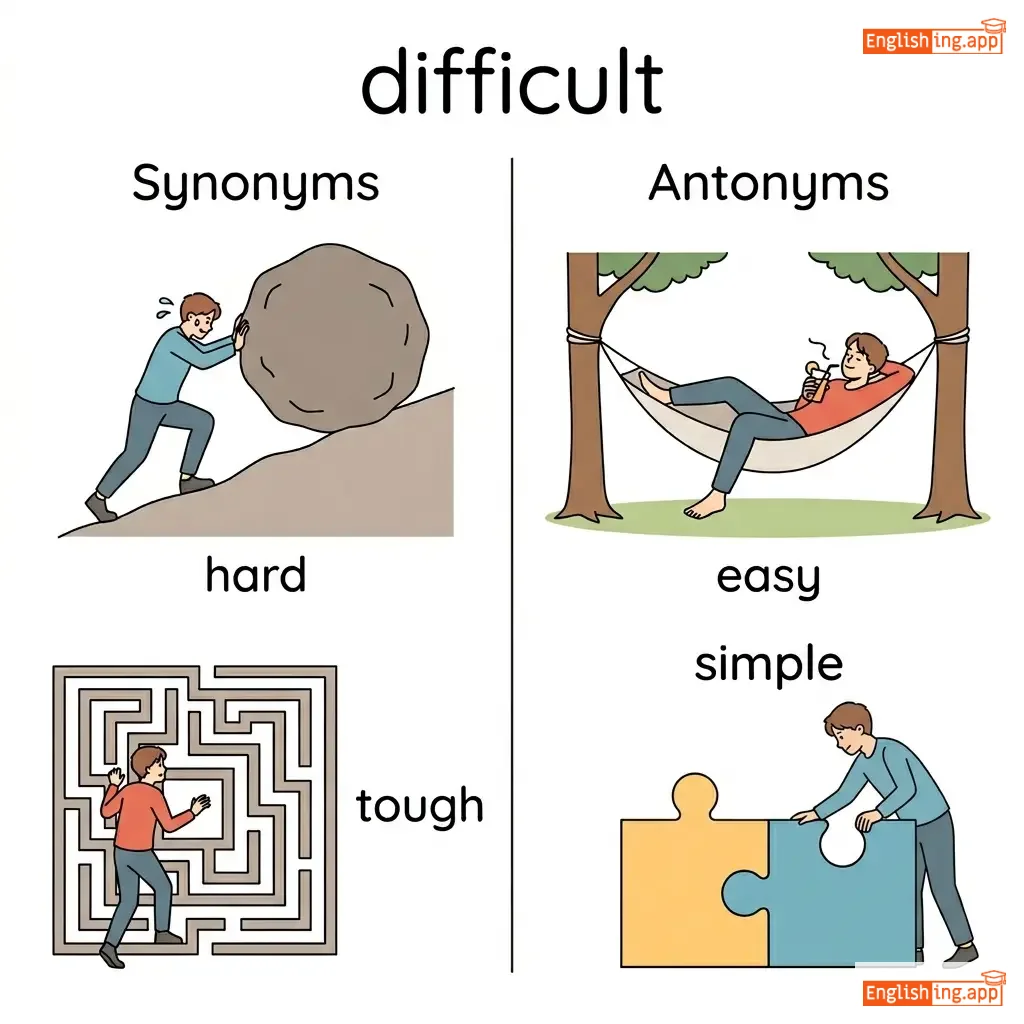
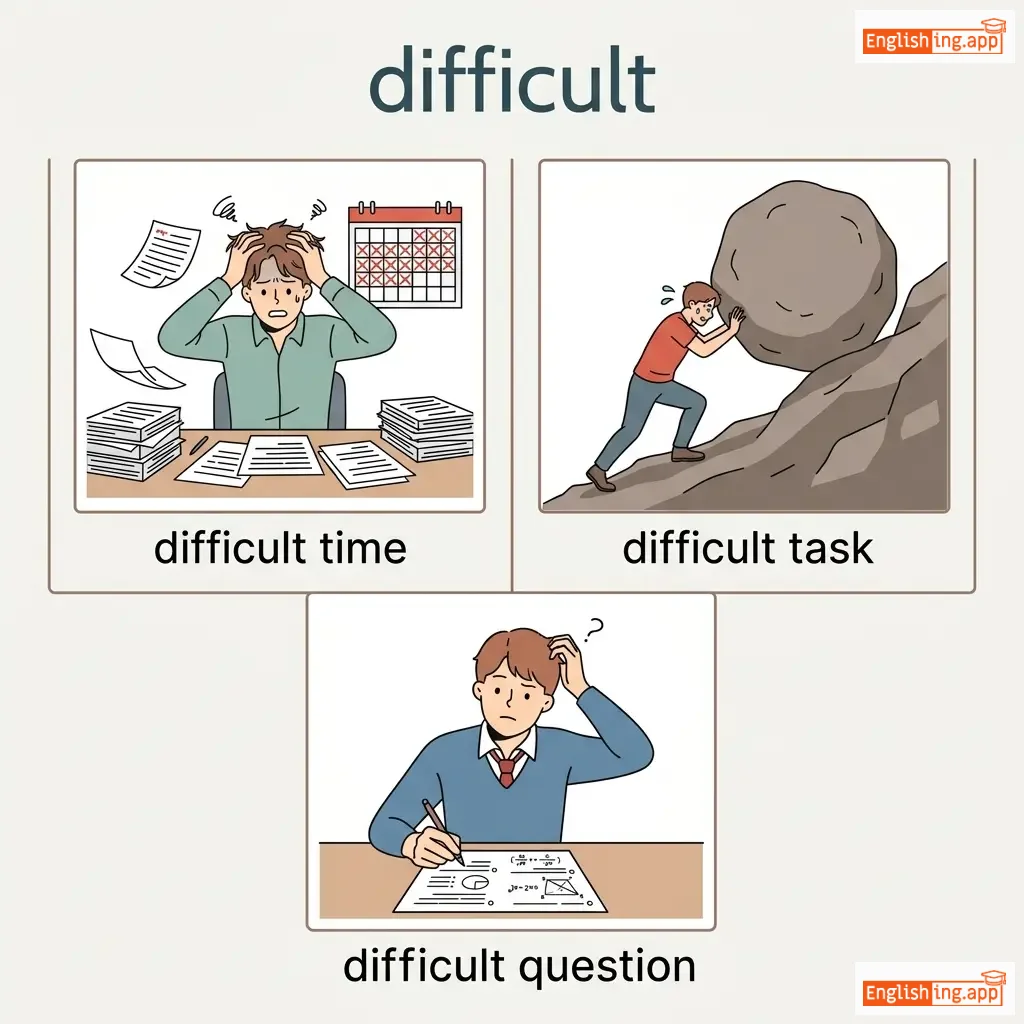
|
難しい
muzukashii
••••••
|
- •••••• | - •••••• | - •••••• | - •••••• |
Needing much effort or skill to do or understand.
••••••
|
The exam was so difficult that many students failed. |
試験は非常に難しく、多くの学生が失敗しました。
Shiken wa hijō ni muzukashiku, ōku no gakusei ga shippai shimashita.
••••••
|
difficult situation |
A situation that is hard to handle.
••••••
|
難しい状況
muzukashii jōkyō
••••••
|
hard, tough, challenging, complicated, demanding
••••••
|
easy, simple, effortless
••••••
|
difficult time, difficult task, difficult question, difficult choice
••••••
|
Difficult は難しいという意味です。'Di' は難しさ、'full' は満ちていることを表し、仕事に努力が必要です。
••••••
|
|
😞
••••••
|
/ˌdɪsəˈpɔɪnt/
verb
(ディサポイント)
••••••
|
|
失望する
shitsubou suru
••••••
|
disappointed
ディサポイントッド
••••••
|
disappointed
ディサポイントッド
••••••
|
disappoints
ディサポイントス
••••••
|
disappointing
ディサポイントイング
••••••
|
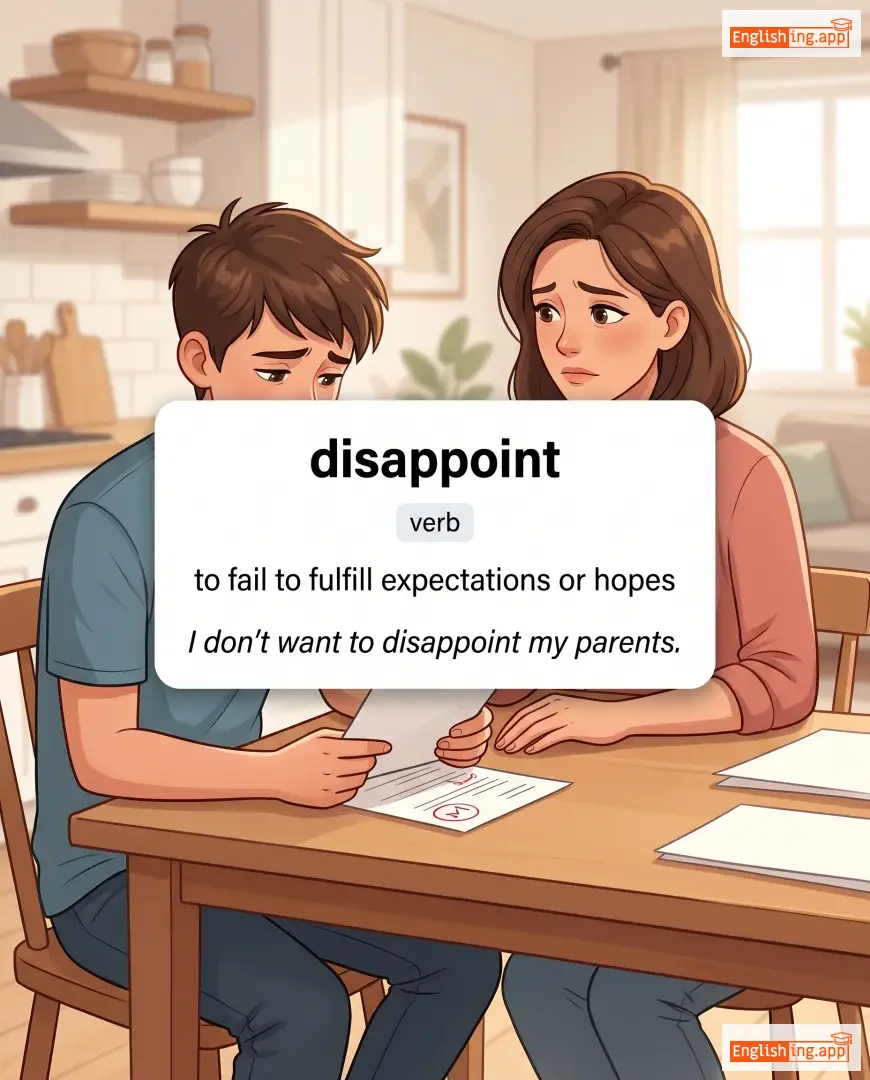
to fail to fulfill expectations or hopes
••••••
|
I don’t want to disappoint my parents.
私は両親を失望させたくない。
••••••
|
私は両親を失望させたくない。
Watashi wa ryoushin wo shitsubou sasetakunai.
••••••
|
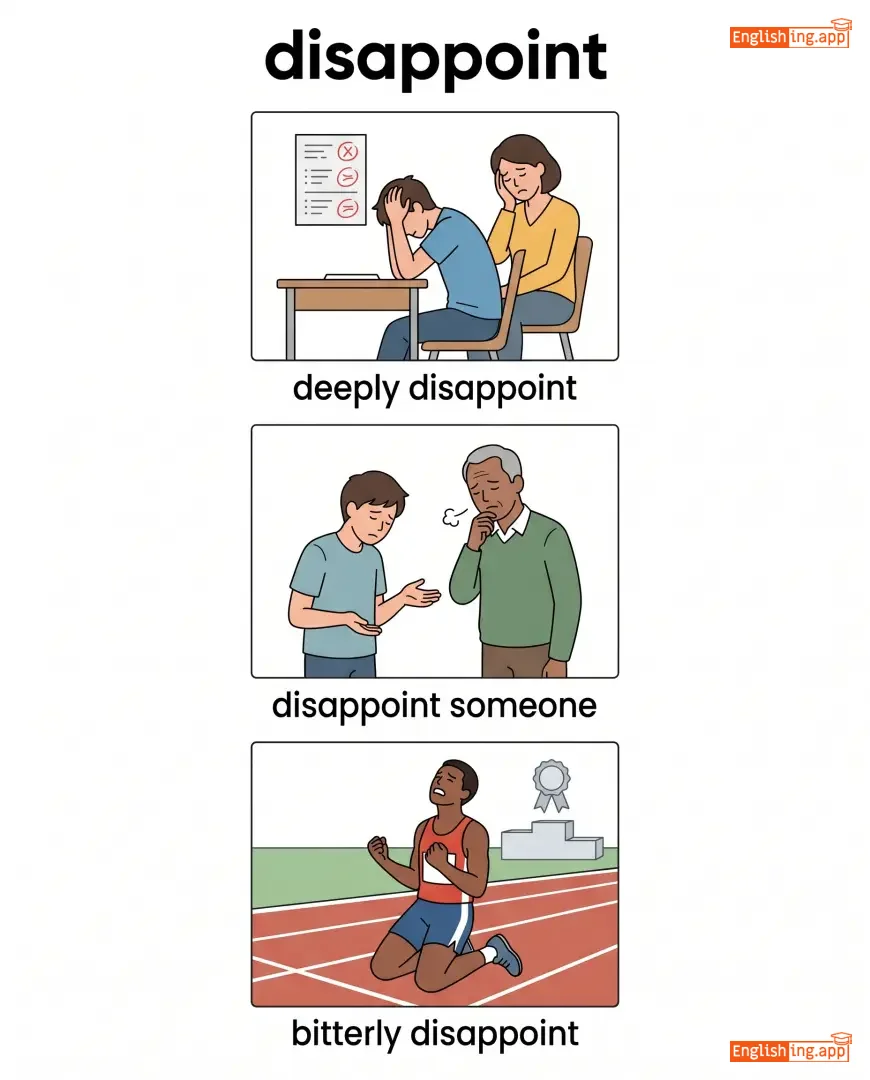
bitterly disappointed
ひどく失望した
••••••
|
very unhappy due to unmet expectations
••••••
|
ひどく失望した
hidoku shitsubou shita
••••••
|
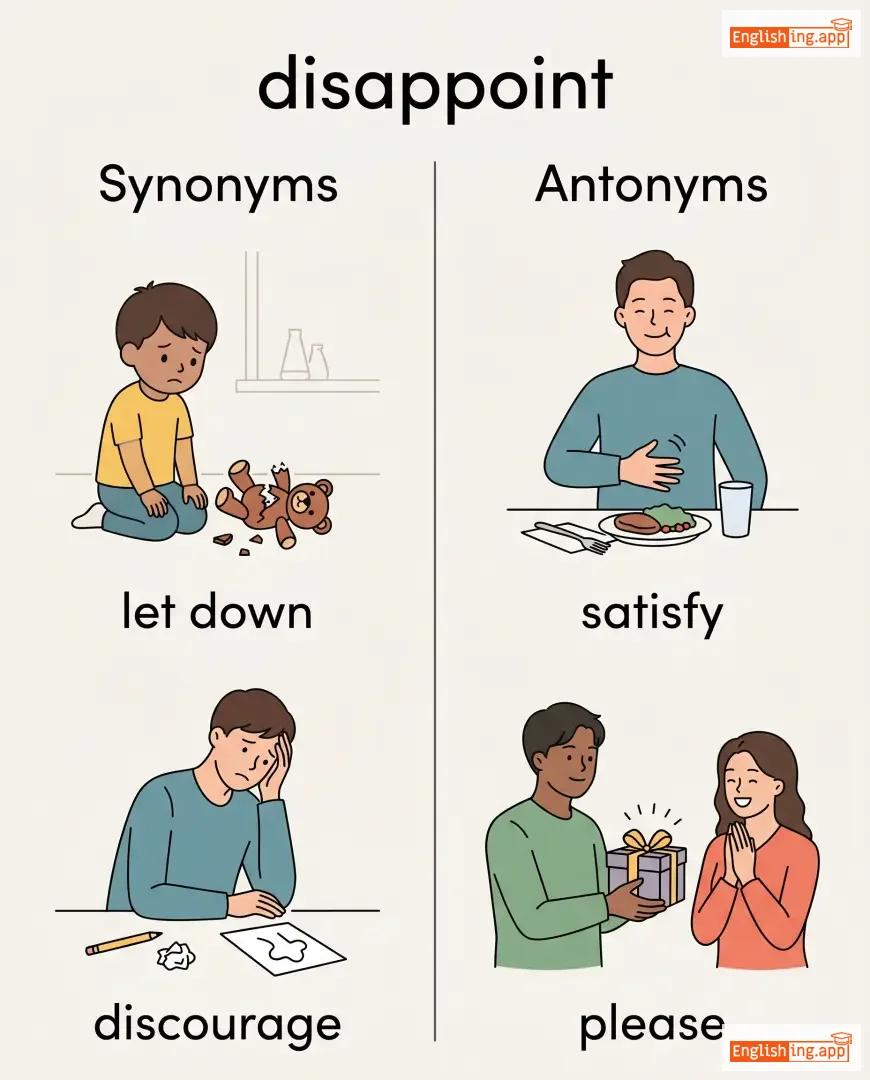
let down, discourage, upset, fail, frustrate
••••••
|
satisfy, please, fulfill
••••••
|
deeply disappoint, disappoint someone, bitterly disappoint
••••••
|
失望するは期待を裏切ること—期待が裏切られると失望する。
••••••
|
|
🙁
••••••
|
/dɪsˈkʌrɪdʒ/
verb
••••••
|
- •••••• | - •••••• |
discouraged
••••••
|
discouraged
••••••
|
discourages
••••••
|
discouraging
••••••
|
to make someone less confident or enthusiastic about doing something
••••••
|
Failure should not discourage you from trying again. |
- •••••• |
discourage someone from doing something |
to make someone not want to do something
••••••
|
- •••••• |
deter, dishearten, demotivate, depress, prevent
••••••
|
encourage, inspire, motivate
••••••
|
strongly discourage, discourage behavior, discourage effort, discourage action
••••••
|
No •••••• |
|
😤
••••••
|
/ˈfrʌstreɪtɪd/
adjective
(フラストレイテッド)
••••••
|
- •••••• |
フラストレーション
furasutore-shon
••••••
|
- •••••• | - •••••• | - •••••• | - •••••• |
feeling annoyed or upset because of inability to achieve something
••••••
|
She felt frustrated after failing the exam. |
彼女は試験に失敗した後、フラストレーションを感じました。
Kanojo wa shiken ni shippai shita ato, furasutore-shon o kanjimashita.
••••••
|
- •••••• | - •••••• | - •••••• |
annoyed, upset, discouraged, disappointed
••••••
|
calm, content, pleased
••••••
|
feel frustrated, get frustrated, frustrated with
••••••
|
フラストレーションは、進む道が凍っているように感じる。
••••••
|
|
🔧
••••••
|
/ɪmˈpruːvmənt/
noun
(imprúvment)
••••••
|
- •••••• |
改善
kaizen
••••••
|
- •••••• | - •••••• | - •••••• | - •••••• |
the act of making something better
••••••
|
There has been a significant improvement in his health.
彼の健康には重要な改善がありました。
••••••
|
彼の健康には重要な改善がありました。
kare no kenko ni wa jūyō na kaizen ga arimashita.
••••••
|
continuous improvement
継続的な改善
••••••
|
the ongoing effort to make things better
••••••
|
継続的な改善
keizokuteki na kaizen
••••••
|
progress, enhancement, advancement, growth, development
••••••
|
decline, deterioration, regression
••••••
|
health improvement, significant improvement, gradual improvement, scope for improvement
••••••
|
Improvement は改善です – 改善は improvement です
••••••
|
|
🧠
••••••
|
/ɪnˈtɛlɪdʒənt/
adjective
(インテリジェント)
••••••
|
- •••••• |
賢い
kashikoi
••••••
|
- •••••• | - •••••• | - •••••• | - •••••• |
Having or showing high mental capacity, quick to learn and understand.
••••••
|
She is one of the most intelligent students in the class.
彼女はクラスで最もインテリジェントな学生の一人です。
••••••
|
彼女はクラスで最もインテリジェントな学生の一人です。
Kanojo wa kurasu de mottomo interijento na gakusei no hitori desu.
••••••
|
intelligent guess
インテリジェントな推測
••••••
|
A well-informed or reasonable guess based on available knowledge.
••••••
|
インテリジェントな推測
interijento na suisoku
••••••
|
clever, smart, bright, brainy, knowledgeable
••••••
|
stupid, dull, ignorant
••••••
|
intelligent design, intelligent choice, highly intelligent, intelligent system
••••••
|
Intelは賢いコンピュータ、だからこの言葉も賢い意味を持っています。
••••••
|
|
🤔
••••••
|
/ˈɪntrəstɪd/
adjective
(インタレストエッド)
••••••
|
- •••••• |
興味がある
kyōmi ga aru
••••••
|
- •••••• | - •••••• | - •••••• | - •••••• |
Showing curiosity or concern about something.
••••••
|
She is very interested in learning new languages. |
彼女は新しい言語を学ぶことにとても興味がある。
Kanojo wa atarashī gengo o manabu koto ni totemo kyōmi ga aru.
••••••
|
interested party |
a person or group concerned with a matter
••••••
|
興味のある者
kyōmi no aru mono
••••••
|
curious, eager, keen, attentive, engaged
••••••
|
uninterested, indifferent
••••••
|
interested in, very interested, interested party, interested buyer
••••••
|
Interested = 興味 (好奇心) を持つ = 興味がある
••••••
|
|
👀
••••••
|
/ˌɑb.zɚˈveɪ.ʃən/
noun
(オブザーベーション)
••••••
|
- •••••• |
観察
kansatsu
••••••
|
- •••••• | - •••••• | - •••••• | - •••••• |
the action of watching something carefully; a comment or remark
••••••
|
The scientist made careful observations of the experiment.
科学者は実験を慎重に観察しました。
••••••
|
科学者は実験を慎重に観察しました。
Kagakusha wa jikken o shinchou ni kansatsu shimashita.
••••••
|
- •••••• | - •••••• | - •••••• |
watching, monitoring, examination, remark
••••••
|
ignorance, neglect, inattention, oversight
••••••
|
careful observation, direct observation, under observation
••••••
|
科学者は実験の観察を慎重に行います。
••••••
|
|
🌟
••••••
|
/ˌɒp.əˈtjuː.nə.ti/
noun
(オポチュニティ)
••••••
|
- •••••• |
チャンス
chansu
••••••
|
- •••••• | - •••••• | - •••••• | - •••••• |
A favorable chance or set of circumstances that makes it possible to do something.
••••••
|
She seized the opportunity to study abroad. |
彼女は海外で勉強するチャンスをつかんだ。
Kanojo wa kaigai de benkyō suru chansu o tsukanda.
••••••
|
once in a lifetime opportunity |
A very rare and unique chance that may never happen again.
••••••
|
人生で一度のチャンス
Jinsei de ichido no chansu
••••••
|
chance, prospect, possibility, option, occasion
••••••
|
misfortune, disadvantage, obstacle
••••••
|
golden opportunity, missed opportunity, career opportunity, business opportunity
••••••
|
チャンスは逃さずに、しっかり掴もう!
••••••
|
|
💪
••••••
|
/pəˈsɪs.tənt/
adjective
(パーシステント)
••••••
|
- •••••• |
持続的
jizokuteki
••••••
|
- •••••• | - •••••• | - •••••• | - •••••• |
continuing to exist or endure over a prolonged period
••••••
|
Despite many setbacks, her persistent efforts led to success. |
多くの障害にもかかわらず、彼女の持続的な努力は成功をもたらした。
Ōku no shōgai ni mo kakawarazu, kanojo no jizokuteki na doryoku wa seikō o motarashita.
••••••
|
- •••••• | - •••••• | - •••••• |
determined, tenacious, relentless, constant
••••••
|
sporadic, intermittent
••••••
|
persistent efforts, persistent problem, persistent illness
••••••
|
持続的な努力は必ず実を結ぶ
••••••
|
|
🎯
••••••
|
/ˌriːəˈlɪstɪk/
adjective
(リアリスティック)
••••••
|
- •••••• |
現実的
genjitsuteki
••••••
|
- •••••• | - •••••• | - •••••• | - •••••• |
having or showing a sensible and practical idea of what can be achieved or expected
••••••
|
She gave a realistic estimate of the project's cost. |
彼女はプロジェクトのコストの現実的な見積もりを出した。
Kanojo wa purojekuto no kosuto no genjitsuteki na mitsumori o dashita.
••••••
|
keep it realistic |
to remain practical and grounded about what is possible
••••••
|
現実的に保つ
genjitsuteki ni tamotsu
••••••
|
practical, sensible, rational, pragmatic, down-to-earth
••••••
|
unrealistic, idealistic, impractical
••••••
|
realistic goals, realistic approach, realistic expectations, realistic plan
••••••
|
現実的=本当に実用的で現実的に考えること
••••••
|
|
🤔
••••••
|
/ˈriːzənɪŋ/
noun
(rīzoniingu)
••••••
|
- •••••• |
推論
tsuiron
••••••
|
- •••••• | - •••••• | - •••••• | - •••••• |
the process of thinking about something in a logical way in order to form a conclusion or judgment
••••••
|
Her reasoning for leaving was clear and logical. |
彼女の出発の推論は明確で論理的でした。
Kanojo no shuppatsu no tsuiron wa meikaku de ronriteki deshita.
••••••
|
- •••••• | - •••••• | - •••••• |
thinking, logic, judgment, deduction
••••••
|
ignorance, irrationality
••••••
|
logical reasoning, sound reasoning, reasoning ability
••••••
|
推論を使って、論理的に決定を下すことができ、判断によって結論を出すように
••••••
|
|
❌
••••••
|
/rɪˈdʒɛkʃən/
noun
(rijekkushon)
••••••
|
- •••••• |
拒絶
kyozetsu
••••••
|
- •••••• | - •••••• | - •••••• | - •••••• |
the action of refusing or dismissing something or someone
••••••
|
Her rejection of the offer surprised everyone. |
彼女の提案の拒絶は皆を驚かせた。
Kanojo no teian no kyozetsu wa mina o odorokaseta.
••••••
|
- •••••• | - •••••• | - •••••• |
refusal, denial, dismissal, veto
••••••
|
acceptance, approval, approval
••••••
|
rejection of offer, rejection letter, rejection of idea
••••••
|
Rejection is like saying 'No' when it's clear you want something else.
••••••
|
|
⭐
••••••
|
/rɪˈmɑːrkəbl/
adjective
(rimarkaburu)
••••••
|
- •••••• |
注目すべき; 非凡な; 顕著な;
chūmoku subeki; hibōna; kencho na
••••••
|
- •••••• | - •••••• | - •••••• | - •••••• |
worthy of attention; extraordinary; notable;
••••••
|
His recovery from the illness was remarkable. |
病気から回復することは注目すべきことでした。
Byōki kara kaifuku suru koto wa chūmoku subeki koto deshita.
••••••
|
- •••••• | - •••••• | - •••••• |
extraordinary, outstanding, exceptional, amazing
••••••
|
ordinary, unremarkable, common, typical
••••••
|
remarkable achievement, remarkable progress, remarkable talent
••••••
|
Remarkable = 注目すべき (worthy of attention) + 非凡な (extraordinary)
••••••
|
|
🛡️
••••••
|
/rɪˌspɒn.sɪˈbɪl.ɪ.ti/
noun
(レスポンシビリティ)
••••••
|
|
責任
sekinin
••••••
|
- •••••• | - •••••• | - •••••• | - •••••• |
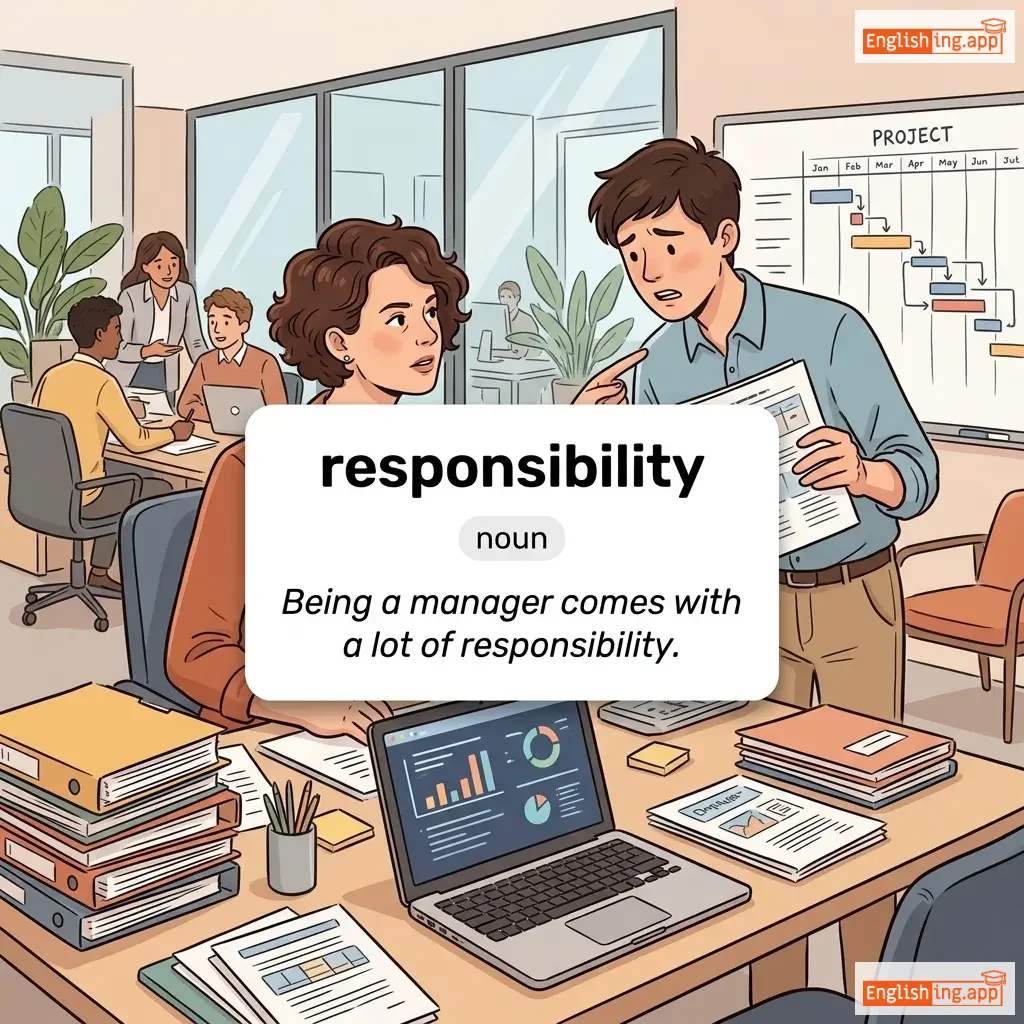
the state or fact of having a duty to deal with something or of having control over someone
••••••
|
Taking responsibility for your actions shows maturity.
自分の行動に責任を持つことは成熟を示す。
••••••
|
自分の行動に責任を持つことは成熟を示す。
Jibun no koudou ni sekinin o motsu koto wa seijuku o shimesu
••••••
|
- •••••• | - •••••• | - •••••• |
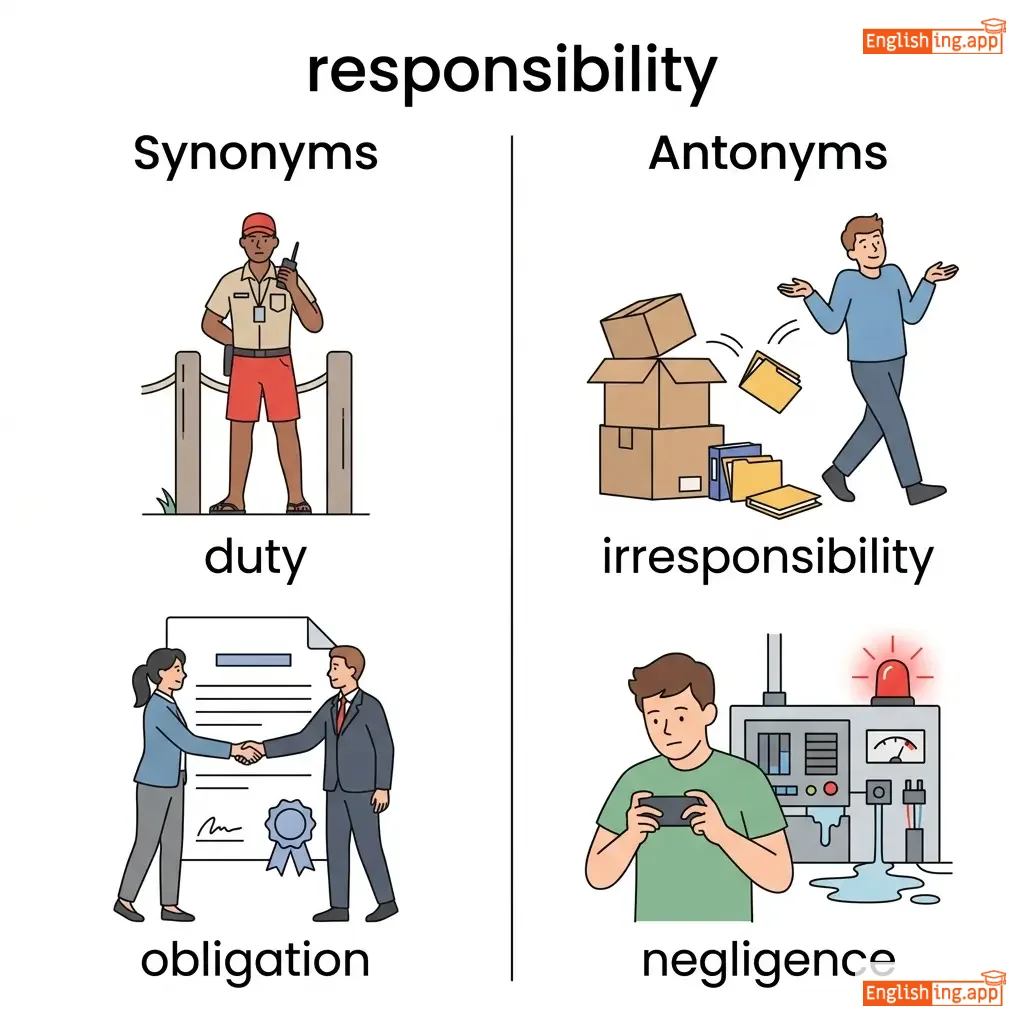
duty, obligation, accountability, liability
••••••
|
irresponsibility, carelessness, negligence
••••••
|
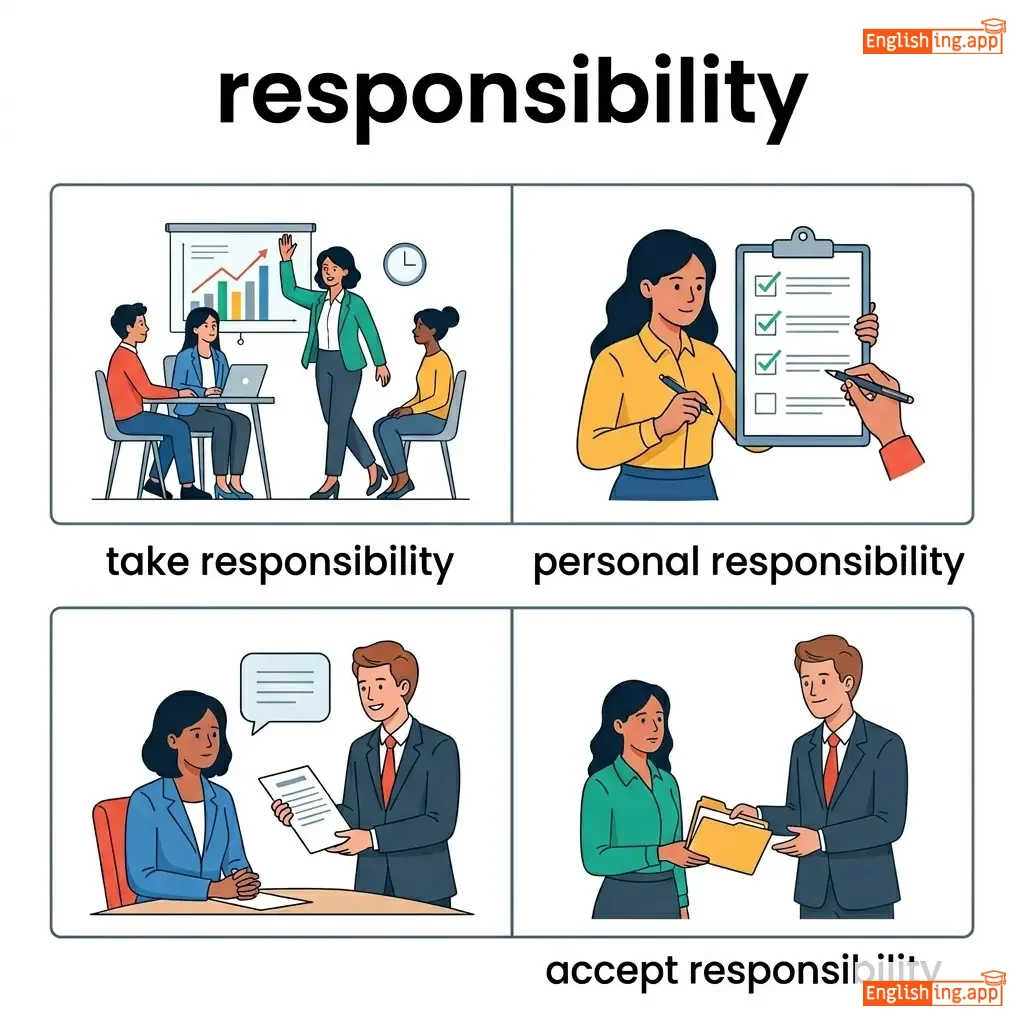
take responsibility, personal responsibility, full responsibility, social responsibility
••••••
|
セキニン = set key in your life, open the door of duty
••••••
|
|
💭
••••••
|
/ˈθɪŋkɪŋ/
noun
(ˈθɪŋkɪŋ)
••••••
|
- •••••• |
考え
kangae
••••••
|
- •••••• | - •••••• | - •••••• | - •••••• |
the process of considering or reasoning about something
••••••
|
Her thinking was clear and precise. |
彼女の考えは明確で正確でした。
Kanojo no kangae wa meikaku de seikaku deshita.
••••••
|
- •••••• | - •••••• | - •••••• |
thought, contemplation, reflection, reasoning
••••••
|
ignorance, confusion
••••••
|
critical thinking, logical thinking, abstract thinking
••••••
|
In Japanese, '考え' means thinking, like putting ideas together in your mind.
••••••
|
|
😟
••••••
|
/ˈtrʌbəld/
adjective
(トラブルド)
••••••
|
- •••••• |
困っている
komatteiru
••••••
|
- •••••• | - •••••• | - •••••• | - •••••• |
experiencing or showing distress, anxiety, or worry
••••••
|
He looked deeply troubled after hearing the bad news. |
悪い知らせを聞いた後、彼は非常に困っているように見えた。
Warui shirase wo kiita ato, kare wa hijou ni komatteiru you ni mieta.
••••••
|
troubled mind |
a mind filled with worry or anxiety
••••••
|
困った心
komatta kokoro
••••••
|
worried, upset, anxious, distressed, uneasy
••••••
|
calm, relaxed, peaceful
••••••
|
troubled times, troubled relationship, deeply troubled, emotionally troubled
••••••
|
Troubled = 困った心 – 悩みや不安の心
••••••
|
|
🤔
••••••
|
/ʌnˈsɜːtən/
adjective
(アンセートン)
••••••
|
- •••••• |
不確実
fukakujitsu
••••••
|
- •••••• | - •••••• | - •••••• | - •••••• |
not sure or confident about something; not clearly known or decided
••••••
|
She felt uncertain about her future after graduation. |
卒業後、彼女は自分の未来について不確実に感じていた。
sotsugyōgo, kanojo wa jibun no mirai ni tsuite fukakujitsu ni kanjite ita.
••••••
|
in uncertain terms |
without being clear or definite
••••••
|
不確実な言葉で
fukakujitsu na kotoba de
••••••
|
unsure, doubtful, hesitant, indecisive, ambiguous
••••••
|
certain, confident, sure
••••••
|
uncertain future, uncertain times, uncertain outcome, feel uncertain
••••••
|
UN + certain (確実でない) = 不確実; 'uncertain は不確実な未来を意味する'を覚えておいて
••••••
|

