The Architect's Turning Point
拉胡尔是一个intelligent的建筑师,但过去几个月对他来说一直是troubled的。他从设计公司收到了一次又一次的rejection,感到非常frustrated。每天早上,他都在thinking为什么他的职业变得如此difficult。尽管他的父母没有discourage他,拉胡尔自己却对未来感到uncertain。有一天晚上,他记得他的老教授曾经说过:“Persistent的人最终会赢。”带着这些话,拉胡尔决定进一步磨砺自己的observation技能。他意识到,仅仅有创意是不够的;一个人需要realistic,并且要理解客户的需求。利用他的reasoning能力,他采取了一种新的方法。在他的下一个项目中,他的improvement是显而易见的。客户被他的奉献精神和commitment所打动,给了他一个重要的opportunity。拉胡尔明白,认真对待responsibility才会带来成功。三个月后,他的项目取得了remarkable的成功,并被一家建筑杂志报道。那些曾经disappointed过他的人,现在对与他合作interested。这一achievement让拉胡尔明白了永不放弃,即使在困难时刻也要坚持不懈。
|
表情符号
|
单词 | Images | 翻译 | 过去时 | 过去分词 | 第三人称单数 | 动名词 | 含义 | 例句 | 例句翻译 | 示例表达 | 示例表达含义 | 示例表达翻译 | 同义词 | 反义词 | 搭配词 | 助记符 |
|---|---|---|---|---|---|---|---|---|---|---|---|---|---|---|---|---|---|
|
🏆
••••••
|
/əˈtʃiːvmənt/
noun
(achīvmènt)
••••••
|
- •••••• |
成就
chéngjiù
••••••
|
- •••••• | - •••••• | - •••••• | - •••••• |
Something that has been successfully completed or accomplished through effort or skill.
••••••
|
Graduating from university was her greatest achievement. |
大学毕业是她最大的成就。
Dàxué bìyè shì tā zuìdà de chéngjiù.
••••••
|
a sense of achievement |
a feeling of pride in accomplishing something
••••••
|
成就感
chéngjiù gǎn
••••••
|
accomplishment, success, triumph, attainment, feat
••••••
|
failure, defeat
••••••
|
great achievement, outstanding achievement, sense of achievement, academic achievement
••••••
|
Achievement就是成就;考试通过就是成就。
••••••
|
|
🤝
••••••
|
/kəˈmɪtmənt/
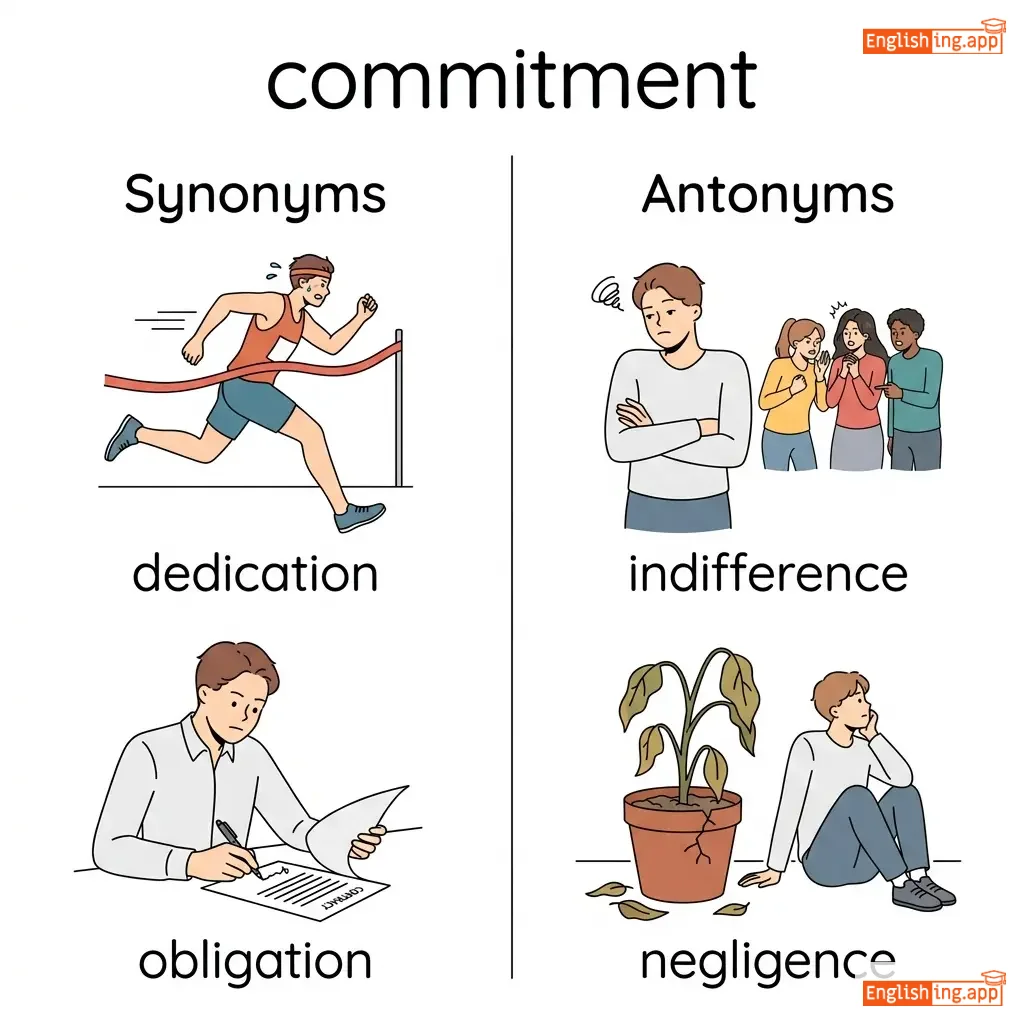
noun
••••••
|


|
- •••••• | - •••••• | - •••••• | - •••••• | - •••••• |
A promise or firm decision to do something; dedication or obligation to a cause or activity.
••••••
|
She showed great commitment to her studies. |
- •••••• |
a lifelong commitment |
A promise or responsibility that lasts for one's whole life.
••••••
|
- •••••• |
dedication, obligation, devotion, promise, responsibility
••••••
|
indifference, negligence, irresponsibility
••••••
|
strong commitment, show commitment, commitment to, long-term commitment
••••••
|
No •••••• |
|
😓
••••••
|
/ˈdɪf.ɪ.kəlt/
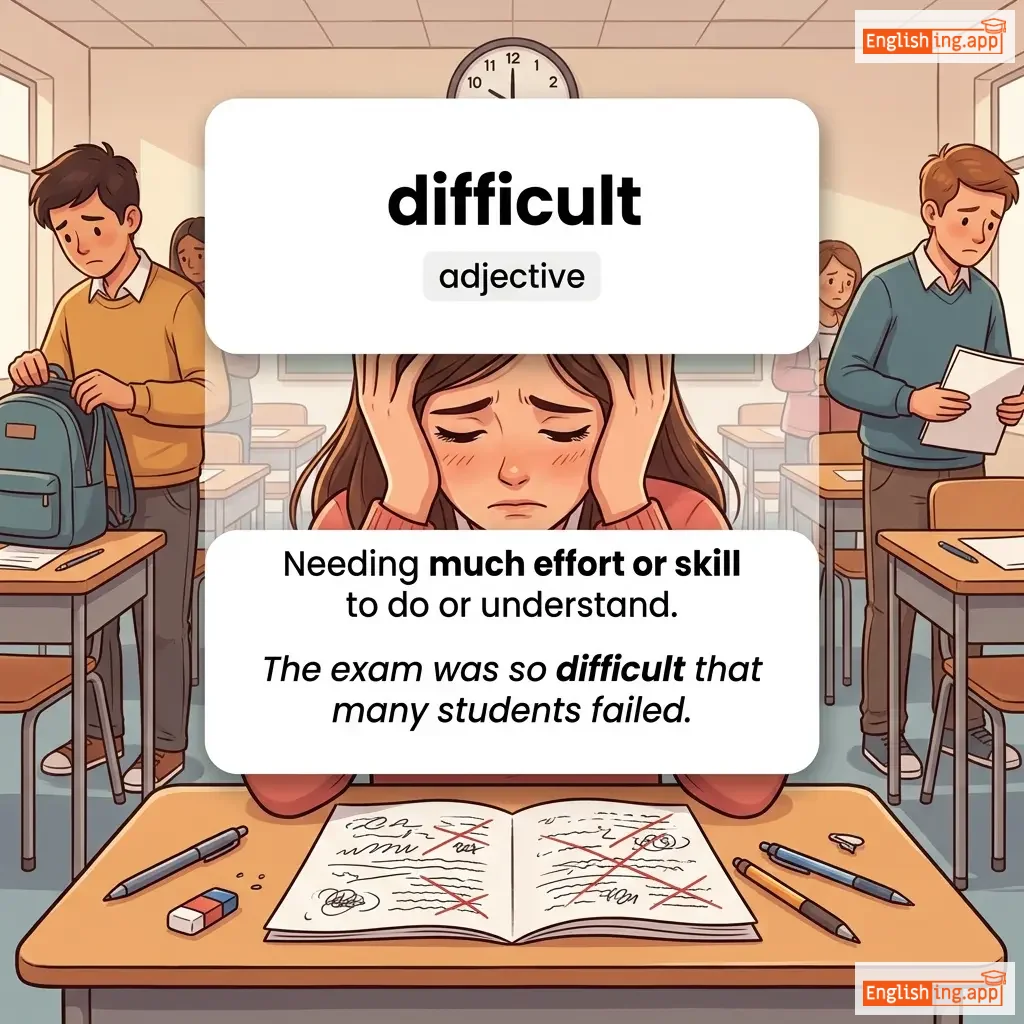
adjective
(difikalt)
••••••
|
|
困难
kunnan
••••••
|
- •••••• | - •••••• | - •••••• | - •••••• |
Needing much effort or skill to do or understand.
••••••
|
The exam was so difficult that many students failed. |
考试如此困难,以至于许多学生都没通过。
Kǎoshì rúcǐ kùnnán, yǐ zhì yú xǔduō xuéshēng dōu méi tōngguò.
••••••
|
difficult situation |
A situation that is hard to handle.
••••••
|
困难的局面
Kùnnán de júmiàn
••••••
|
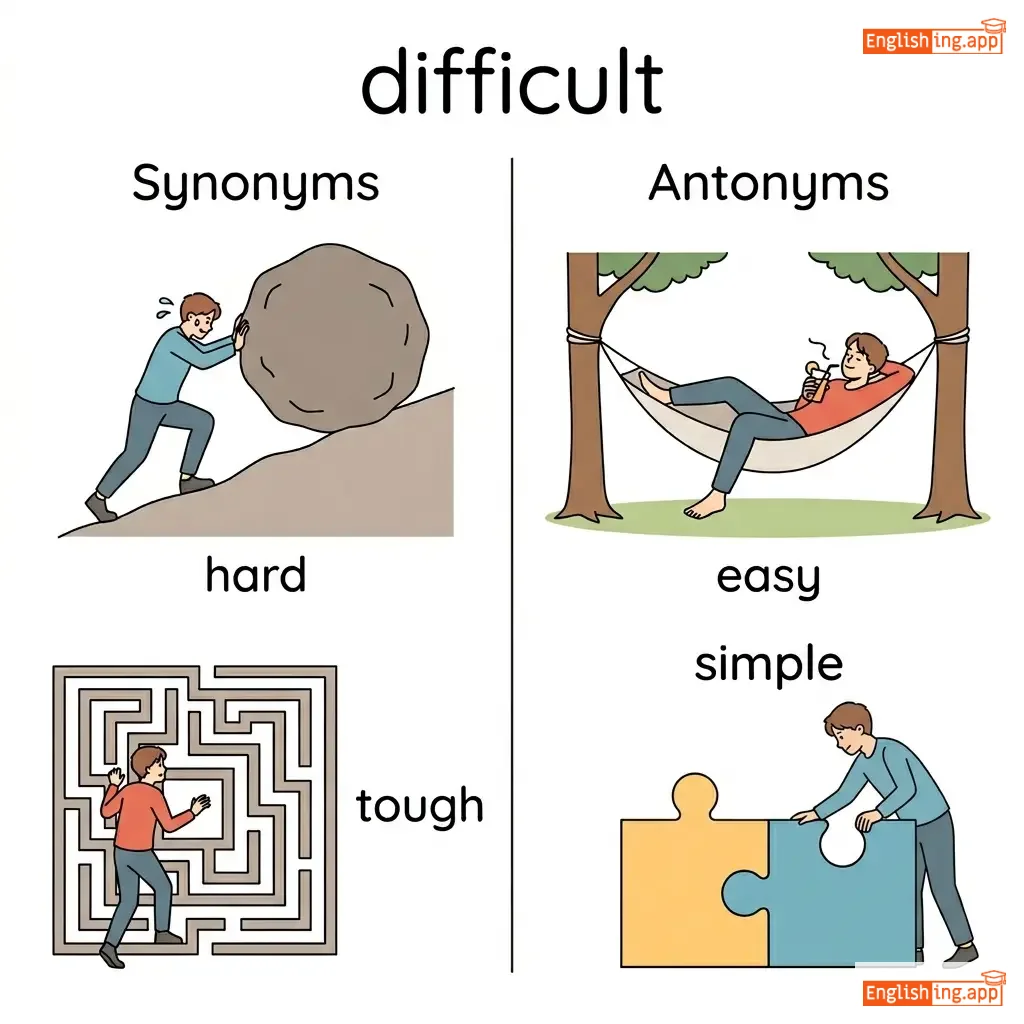
hard, tough, challenging, complicated, demanding
••••••
|
easy, simple, effortless
••••••
|
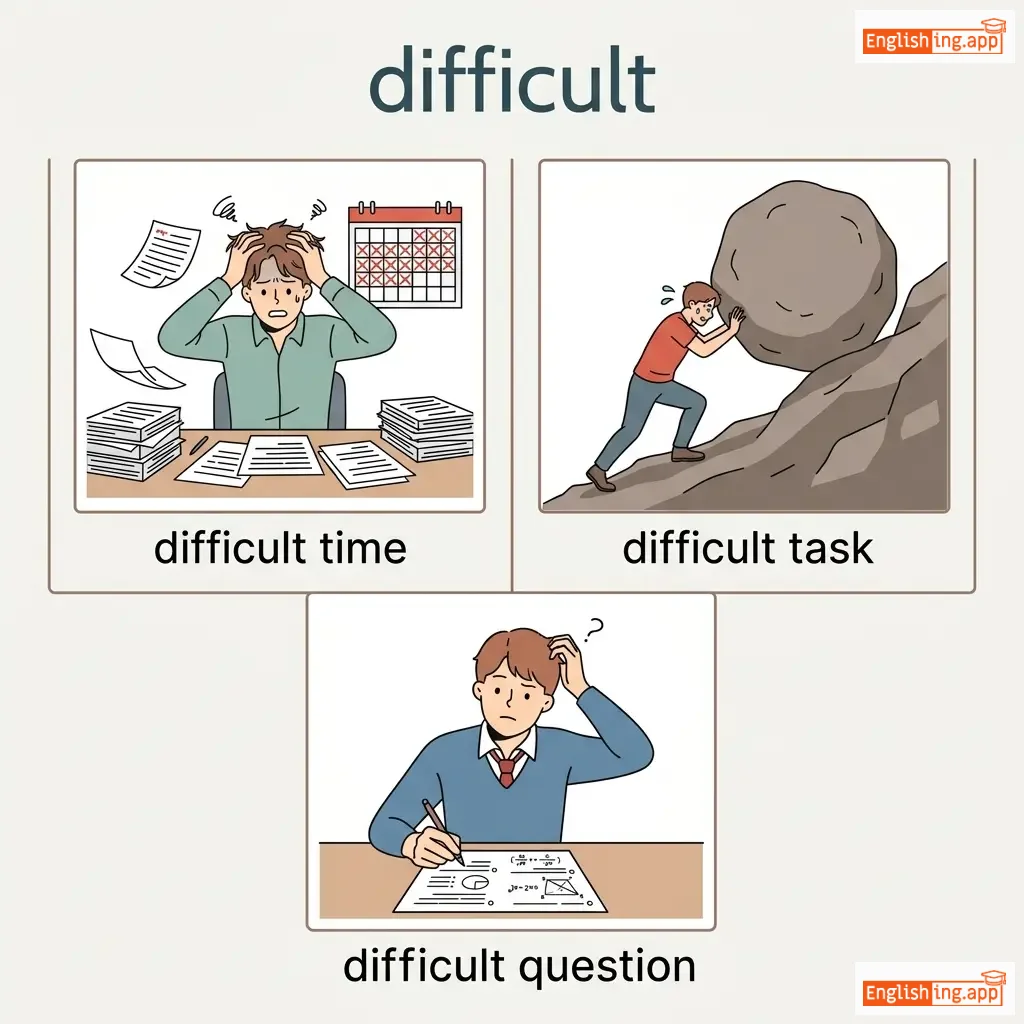
difficult time, difficult task, difficult question, difficult choice
••••••
|
Difficult 的意思是困难——想象一下,'Di' 就是困难,'full' 就是满的;做事情需要努力。
••••••
|
|
😞
••••••
|
/ˌdɪsəˈpɔɪnt/
verb
(迪萨波因特)
••••••
|
|
失望
shīwàng
••••••
|
disappointed
迪萨波因特德
••••••
|
disappointed
迪萨波因特德
••••••
|
disappoints
迪萨波因特斯
••••••
|
disappointing
迪萨波因廷
••••••
|
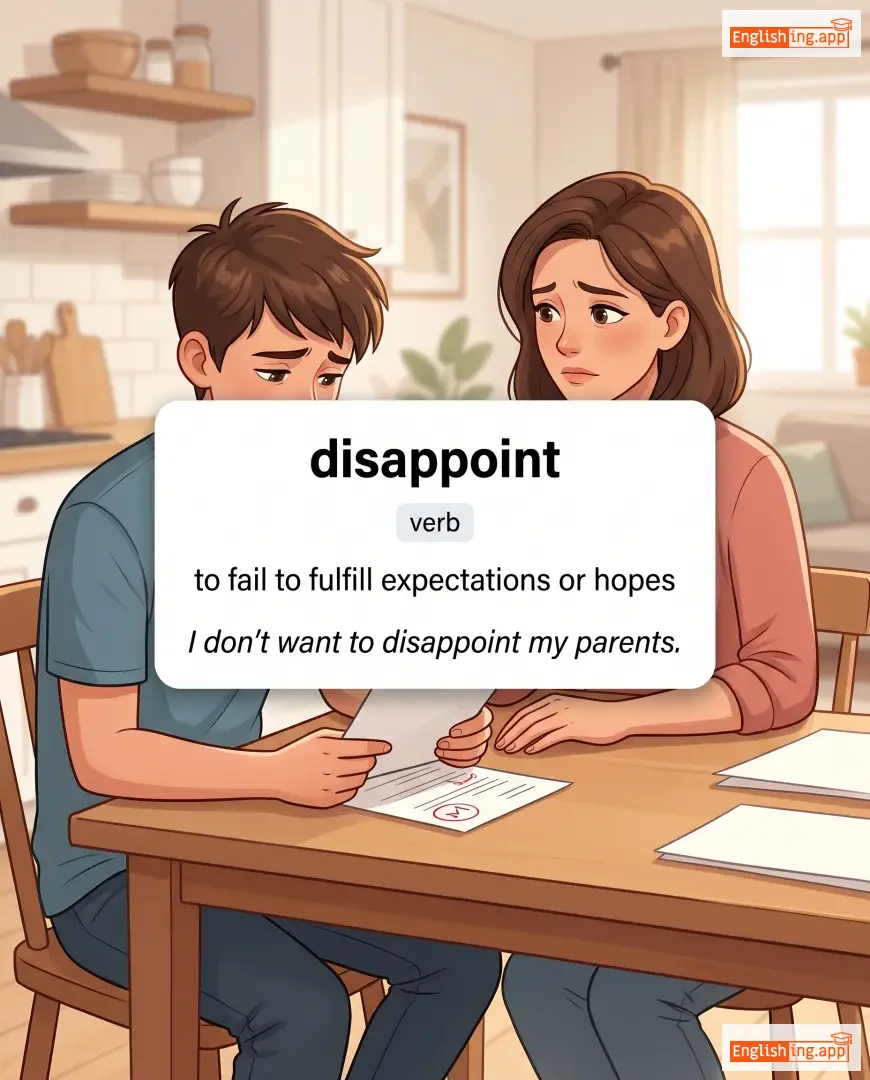
to fail to fulfill expectations or hopes
••••••
|
I don’t want to disappoint my parents.
我不想让我的父母失望。
••••••
|
我不想让我的父母失望。
Wǒ bù xiǎng ràng wǒ de fùmǔ shīwàng.
••••••
|
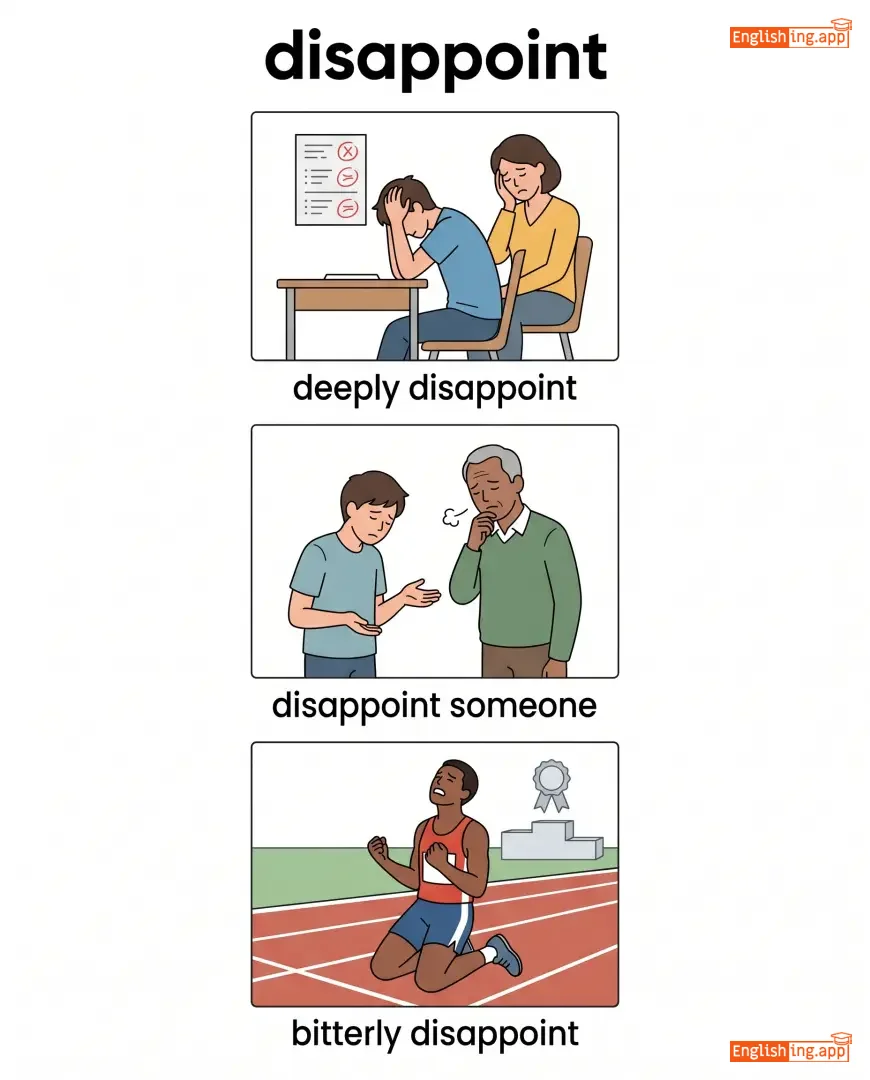
bitterly disappointed
非常失望
••••••
|
very unhappy due to unmet expectations
••••••
|
非常失望
fēicháng shīwàng
••••••
|
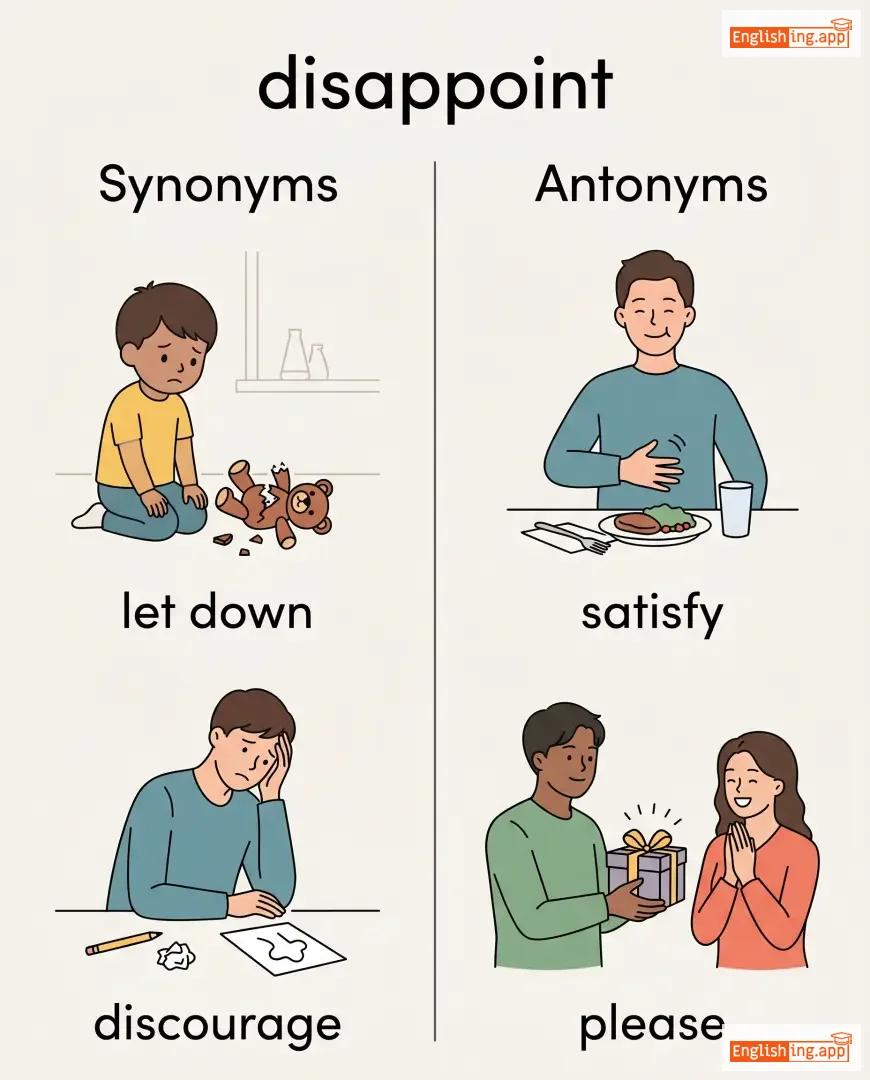
let down, discourage, upset, fail, frustrate
••••••
|
satisfy, please, fulfill
••••••
|
deeply disappoint, disappoint someone, bitterly disappoint
••••••
|
失望是未能满足期待—失去期待后心情沮丧。
••••••
|
|
🙁
••••••
|
/dɪsˈkʌrɪdʒ/
verb
••••••
|
- •••••• | - •••••• |
discouraged
••••••
|
discouraged
••••••
|
discourages
••••••
|
discouraging
••••••
|
to make someone less confident or enthusiastic about doing something
••••••
|
Failure should not discourage you from trying again. |
- •••••• |
discourage someone from doing something |
to make someone not want to do something
••••••
|
- •••••• |
deter, dishearten, demotivate, depress, prevent
••••••
|
encourage, inspire, motivate
••••••
|
strongly discourage, discourage behavior, discourage effort, discourage action
••••••
|
No •••••• |
|
😤
••••••
|
/ˈfrʌstreɪtɪd/
adjective
(弗鲁斯特雷特德)
••••••
|
- •••••• |
沮丧
jǔsàng
••••••
|
- •••••• | - •••••• | - •••••• | - •••••• |
feeling annoyed or upset because of inability to achieve something
••••••
|
She felt frustrated after failing the exam. |
她在考试失败后感到沮丧。
Tā zài kǎoshì shībài hòu gǎndào jǔsàng.
••••••
|
- •••••• | - •••••• | - •••••• |
annoyed, upset, discouraged, disappointed
••••••
|
calm, content, pleased
••••••
|
feel frustrated, get frustrated, frustrated with
••••••
|
沮丧就像是冻结在冰冷的状态中,无法前进。
••••••
|
|
🔧
••••••
|
/ɪmˈpruːvmənt/
noun
(yímínpīrūvēmèn)
••••••
|
- •••••• |
改善
gǎishàn
••••••
|
- •••••• | - •••••• | - •••••• | - •••••• |
the act of making something better
••••••
|
There has been a significant improvement in his health.
zài tā de jiànkāng zhōng yǒu yī gè zhòngdà de gǎishàn.
••••••
|
他的健康有了显著改善。
tā de jiànkāng yǒu le xiǎnzhù gǎishàn.
••••••
|
continuous improvement
bùduàn gǎishàn
••••••
|
the ongoing effort to make things better
••••••
|
持续改善
chíxù gǎishàn
••••••
|
progress, enhancement, advancement, growth, development
••••••
|
decline, deterioration, regression
••••••
|
health improvement, significant improvement, gradual improvement, scope for improvement
••••••
|
Improvement 就是改善 – 改善就是 improvement
••••••
|
|
🧠
••••••
|
/ɪnˈtɛlɪdʒənt/
adjective
(英特尔)
••••••
|
- •••••• |
聪明的
cōngmíng de
••••••
|
- •••••• | - •••••• | - •••••• | - •••••• |
Having or showing high mental capacity, quick to learn and understand.
••••••
|
She is one of the most intelligent students in the class.
她是班上最聪明的学生之一。
••••••
|
她是班上最聪明的学生之一。
Tā shì bān shàng zuì cōngmíng de xuéshēng zhī yī.
••••••
|
intelligent guess
聪明的猜测
••••••
|
A well-informed or reasonable guess based on available knowledge.
••••••
|
聪明的猜测
cōngmíng de cāicè
••••••
|
clever, smart, bright, brainy, knowledgeable
••••••
|
stupid, dull, ignorant
••••••
|
intelligent design, intelligent choice, highly intelligent, intelligent system
••••••
|
Intel也是智能的,就像这个词的意思。
••••••
|
|
🤔
••••••
|
/ˈɪntrəstɪd/
adjective
(因特雷斯特德)
••••••
|
- •••••• |
感兴趣
gǎn xìngqù
••••••
|
- •••••• | - •••••• | - •••••• | - •••••• |
Showing curiosity or concern about something.
••••••
|
She is very interested in learning new languages. |
她对学习新语言非常感兴趣。
Tā duì xuéxí xīn yǔyán fēicháng gǎn xìngqù.
••••••
|
interested party |
a person or group concerned with a matter
••••••
|
感兴趣的一方
gǎn xìngqù de yī fāng
••••••
|
curious, eager, keen, attentive, engaged
••••••
|
uninterested, indifferent
••••••
|
interested in, very interested, interested party, interested buyer
••••••
|
Interested = 感兴趣 = gǎn xìngqù
••••••
|
|
👀
••••••
|
/ˌɑb.zɚˈveɪ.ʃən/
noun
(观察)
••••••
|
- •••••• |
观察
guancha
••••••
|
- •••••• | - •••••• | - •••••• | - •••••• |
the action of watching something carefully; a comment or remark
••••••
|
The scientist made careful observations of the experiment.
科学家仔细观察了实验。
••••••
|
科学家仔细观察了实验。
Kexuejia zixi guancha le shiyan.
••••••
|
- •••••• | - •••••• | - •••••• |
watching, monitoring, examination, remark
••••••
|
ignorance, neglect, inattention, oversight
••••••
|
careful observation, direct observation, under observation
••••••
|
科学家认真观察实验中的每个细节。
••••••
|
|
🌟
••••••
|
/ˌɒp.əˈtjuː.nə.ti/
noun
(机会)
••••••
|
- •••••• |
机会
jī huì
••••••
|
- •••••• | - •••••• | - •••••• | - •••••• |
A favorable chance or set of circumstances that makes it possible to do something.
••••••
|
She seized the opportunity to study abroad. |
她抓住了去国外学习的机会。
Tā zhuāzhùle qù guówài xuéxí de jīhuì.
••••••
|
once in a lifetime opportunity |
A very rare and unique chance that may never happen again.
••••••
|
一生一次的机会
Yīshēng yīcì de jīhuì
••••••
|
chance, prospect, possibility, option, occasion
••••••
|
misfortune, disadvantage, obstacle
••••••
|
golden opportunity, missed opportunity, career opportunity, business opportunity
••••••
|
机会来临时,紧抓不放!
••••••
|
|
💪
••••••
|
/pəˈsɪs.tənt/
adjective
(pərˈsɪstənt)
••••••
|
- •••••• |
坚持不懈
jiānchí bùxiè
••••••
|
- •••••• | - •••••• | - •••••• | - •••••• |
continuing to exist or endure over a prolonged period
••••••
|
Despite many setbacks, her persistent efforts led to success. |
尽管遇到许多挫折,她的坚持不懈最终带来了成功。
Jǐnguǎn yùdào xǔduō cuòzhé, tā de jiānchí bùxiè zuìzhōng dàilái le chénggōng.
••••••
|
- •••••• | - •••••• | - •••••• |
determined, tenacious, relentless, constant
••••••
|
sporadic, intermittent
••••••
|
persistent efforts, persistent problem, persistent illness
••••••
|
坚持不懈如大海,永不退缩
••••••
|
|
🎯
••••••
|
/ˌriːəˈlɪstɪk/
adjective
(rèalìstíkè)
••••••
|
- •••••• |
现实的
xiànshí de
••••••
|
- •••••• | - •••••• | - •••••• | - •••••• |
having or showing a sensible and practical idea of what can be achieved or expected
••••••
|
She gave a realistic estimate of the project's cost. |
她给出了项目成本的现实估计。
Tā gěichūle xiàngmù chéngběn de xiànshí gūjì.
••••••
|
keep it realistic |
to remain practical and grounded about what is possible
••••••
|
保持现实
bǎochí xiànshí
••••••
|
practical, sensible, rational, pragmatic, down-to-earth
••••••
|
unrealistic, idealistic, impractical
••••••
|
realistic goals, realistic approach, realistic expectations, realistic plan
••••••
|
Realistic 就是做实事,保持实际的意思。
••••••
|
|
🤔
••••••
|
/ˈriːzənɪŋ/
noun
(rízoning)
••••••
|
- •••••• |
推理
tuili
••••••
|
- •••••• | - •••••• | - •••••• | - •••••• |
the process of thinking about something in a logical way in order to form a conclusion or judgment
••••••
|
Her reasoning for leaving was clear and logical. |
她离开的推理是清晰和合逻辑的。
Tā líkāi de tuīlǐ shì qīngxī hé hé luójí de.
••••••
|
- •••••• | - •••••• | - •••••• |
thinking, logic, judgment, deduction
••••••
|
ignorance, irrationality
••••••
|
logical reasoning, sound reasoning, reasoning ability
••••••
|
通过推理,你可以做出有逻辑的决定,就像通过判断做出结论
••••••
|
|
❌
••••••
|
/rɪˈdʒɛkʃən/
noun
(rì jiékè shēn)
••••••
|
- •••••• |
拒绝
jùjué
••••••
|
- •••••• | - •••••• | - •••••• | - •••••• |
the action of refusing or dismissing something or someone
••••••
|
Her rejection of the offer surprised everyone. |
她拒绝了这个提议,令所有人吃惊。
Tā jùjué le zhège tíyì, lìng suǒyǒu rén chījīng.
••••••
|
- •••••• | - •••••• | - •••••• |
refusal, denial, dismissal, veto
••••••
|
acceptance, approval, approval
••••••
|
rejection of offer, rejection letter, rejection of idea
••••••
|
Rejection is saying 'no' when it’s the best option to move forward.
••••••
|
|
⭐
••••••
|
/rɪˈmɑːrkəbl/
adjective
(rimarkabl)
••••••
|
- •••••• |
值得注意的; 非凡的; 显著的;
zhí dé zhù yì de; fēi fán de; xiǎn zhù de
••••••
|
- •••••• | - •••••• | - •••••• | - •••••• |
worthy of attention; extraordinary; notable;
••••••
|
His recovery from the illness was remarkable. |
他从疾病中恢复过来是值得注意的。
Tā cóng jíbìng zhōng huīfù guòlái shì zhídé zhùyì de.
••••••
|
- •••••• | - •••••• | - •••••• |
extraordinary, outstanding, exceptional, amazing
••••••
|
ordinary, unremarkable, common, typical
••••••
|
remarkable achievement, remarkable progress, remarkable talent
••••••
|
Remarkable = 值得注意的 (worthy of attention) + 非凡的 (extraordinary)
••••••
|
|
🛡️
••••••
|
/rɪˌspɒn.sɪˈbɪl.ɪ.ti/
noun
(里斯邦西比尔伊蒂)
••••••
|

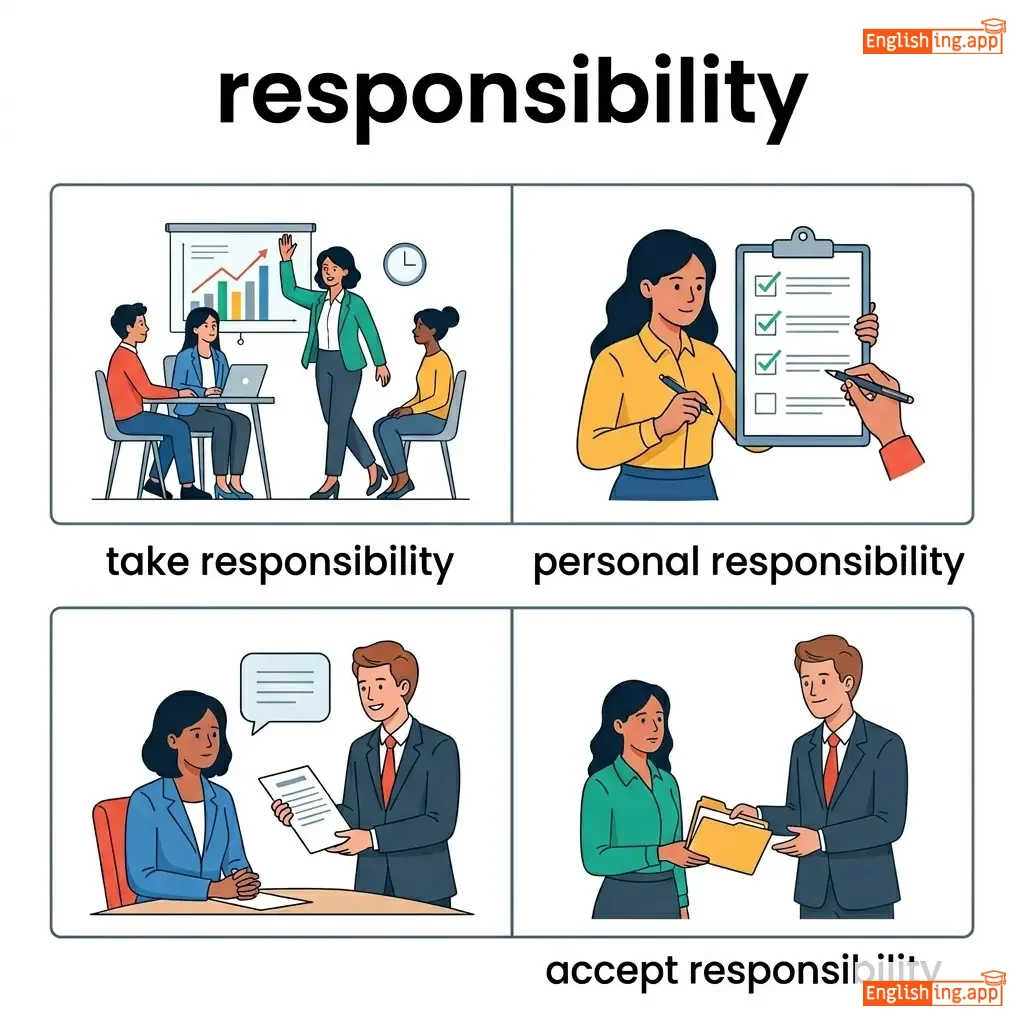
|
责任
ze ren
••••••
|
- •••••• | - •••••• | - •••••• | - •••••• |
the state or fact of having a duty to deal with something or of having control over someone
••••••
|
Taking responsibility for your actions shows maturity.
为自己的行为负责,展现出成熟。
••••••
|
为自己的行为负责,展现出成熟。
wei zi ji de xing wei fu ze ren zhan xian chu cheng shu
••••••
|
- •••••• | - •••••• | - •••••• |
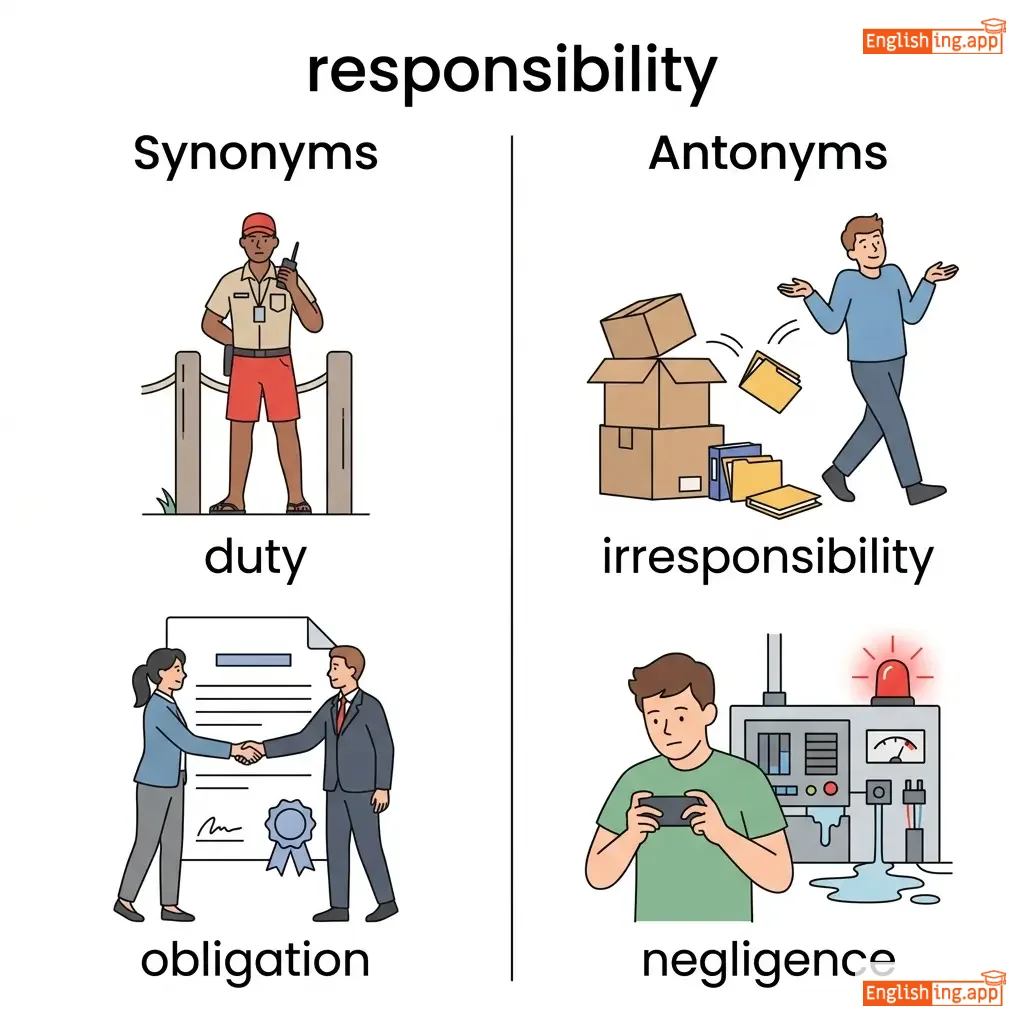
duty, obligation, accountability, liability
••••••
|
irresponsibility, carelessness, negligence
••••••
|
take responsibility, personal responsibility, full responsibility, social responsibility
••••••
|
Be Responsible = 成为 责任人; 想象你手里拿着一个 锁 键, 锁着 '责任' 的 门, 门后是 成熟 (mature) 的你。
••••••
|
|
💭
••••••
|
/ˈθɪŋkɪŋ/
noun
(ˈθɪŋkɪŋ)
••••••
|
- •••••• |
思考
sī kǎo
••••••
|
- •••••• | - •••••• | - •••••• | - •••••• |
the process of considering or reasoning about something
••••••
|
Her thinking was clear and precise. |
她的思考清晰而准确。
Tā de sīkǎo qīngxī ér zhǔnquè.
••••••
|
- •••••• | - •••••• | - •••••• |
thought, contemplation, reflection, reasoning
••••••
|
ignorance, confusion
••••••
|
critical thinking, logical thinking, abstract thinking
••••••
|
'思考' in Chinese is like 'thinking deeply', like contemplating ideas.
••••••
|
|
😟
••••••
|
/ˈtrʌbəld/
adjective
(trɑbləd)
••••••
|
- •••••• |
困扰
kùnrǎo
••••••
|
- •••••• | - •••••• | - •••••• | - •••••• |
experiencing or showing distress, anxiety, or worry
••••••
|
He looked deeply troubled after hearing the bad news. |
听到坏消息后,他看起来非常困扰。
Tīngdào huài xiāoxī hòu, tā kàn qǐlái fēicháng kùnrǎo.
••••••
|
troubled mind |
a mind filled with worry or anxiety
••••••
|
困扰的心情
kùnrǎo de xīnqíng
••••••
|
worried, upset, anxious, distressed, uneasy
••••••
|
calm, relaxed, peaceful
••••••
|
troubled times, troubled relationship, deeply troubled, emotionally troubled
••••••
|
Troubled就是困扰 – 满是忧虑
••••••
|
|
🤔
••••••
|
/ʌnˈsɜːtən/
adjective
(アンセートン)
••••••
|
- •••••• |
不确定
bù què dìng
••••••
|
- •••••• | - •••••• | - •••••• | - •••••• |
not sure or confident about something; not clearly known or decided
••••••
|
She felt uncertain about her future after graduation. |
毕业后,她对自己的未来感到不确定。
bì yè hòu, tā duì zì jǐ de wèi lái gǎn dào bù què dìng.
••••••
|
in uncertain terms |
without being clear or definite
••••••
|
以不确定的方式
yǐ bù què dìng de fāng shì
••••••
|
unsure, doubtful, hesitant, indecisive, ambiguous
••••••
|
certain, confident, sure
••••••
|
uncertain future, uncertain times, uncertain outcome, feel uncertain
••••••
|
UN + certain (不一定) = 不确定; 记住'uncertain 意味着不确定的未来'
••••••
|

