Layers of a Waking River
デコパビリオンからのdried花の香りが川の風と混ざり合っていました。 dutchの研究者が川の泥を研究するために到着しました。 年長者が言いました、'私たちの川はdyingしていません、目を覚まし始めています。' 今日のワークショップでは、eightの異なるセッションが開催されました。 集会は一緒に新しい委員会をelectすることを選びました。 技術チームは川底にセンサーをembedしました。 夕方、ボランティアたちは次の会議の計画をenactしました。 気候の課題についての世代間対話がensueしました。 ゲストたちは透明なボートに乗って浮遊するギャラリーにenterしました。 若者たちは誓いました、'私たちは川のためにequalな責任を負います。' 新しいサインが入口にerectされました。 木製の桟橋に小さな噴水がeruptして喜びをもたらしました。 ボランティアたちはフィールドデータをリアルタイムでinputしました。 デザイナーたちはリサイクルしたjeansから装飾品を作りました。 地域のグループのjointな取り組みが川を救う道を示しました。 経験豊富なjurorが川に関連する訴訟について洞察を提供しました。 優しい風がセッションの扉をknockしているようでした。 村人たちは歴史が広くknownされることを望んでいました。 昨年の誤りに警告labelが付けられました。 アーティストたちは巨大なlayerキャンバスに広がるドラマを捉えました。
|
絵文字
|
単語 | Images | 翻訳 | 過去 | 過去分詞 | 三人称単数 | 動名詞 | 意味 | 例文 | 例文の翻訳 | 表現例 | 表現例の意味 | 表現例の翻訳 | 同義語 | 対義語 | コロケーション | ニーモニック |
|---|---|---|---|---|---|---|---|---|---|---|---|---|---|---|---|---|---|
|
🌸
••••••
|
/draɪd/
adjective
(doraido)
••••••
|
- •••••• |
乾燥
kansou
••••••
|
- •••••• | - •••••• | - •••••• | - •••••• |
without moisture; preserved by removing water
••••••
|
She added some dried flowers to the vase for decoration. |
彼女は装飾のために花瓶に乾燥した花を加えた。
Kanojo wa soushoku no tame ni kabin ni kansou shita hana o kuwaeta.
••••••
|
dried up |
to become dry or to end completely
••••••
|
乾燥する
kansou suru
••••••
|
dehydrated, parched, withered, desiccated
••••••
|
wet, moist, fresh
••••••
|
dried fruits, dried flowers, dried leaves, dried meat
••••••
|
乾燥 = 水分なし、乾いた花のように!
••••••
|
|
🇳🇱
••••••
|
/dʌtʃ/
adjective
(ダッチ)
••••••
|
- •••••• |
オランダの
oranda no
••••••
|
- •••••• | - •••••• | - •••••• | - •••••• |
relating to the Netherlands, its people, or their language
••••••
|
She enjoys Dutch paintings from the 17th century. |
彼女は17世紀のオランダの絵画を楽しんでいます。
Kanojo wa 17 seiki no oranda no kaiga o tanoshindeimasu.
••••••
|
go Dutch |
to share the cost of something equally, especially a meal
••••••
|
ダッチ式
dacchi-shiki
••••••
|
Netherlandish, Hollandic, European, Low Countries
••••••
|
foreign, non-Dutch
••••••
|
Dutch language, Dutch culture, Dutch people, Dutch oven
••••••
|
Dutchはオランダの意味、覚えておいて: 'オランダ料理はオランダの食べ物!'
••••••
|
|
💀
••••••
|
/ˈdaɪɪŋ/
verb
(ダイイング)
••••••
|
- •••••• |
死にかけている
shinikaketeiru
••••••
|
died
ダイド
••••••
|
died
ダイド
••••••
|
dies
ダイズ
••••••
|
dying
ダイイング
••••••
|
to stop living; approaching death
••••••
|
The old man was dying peacefully in his sleep.
その老人は寝ている間に平穏に死んでいた。
••••••
|
その老人は寝ている間に平穏に死んでいた。
Sono rōjin wa nete iru aida ni hei-on ni shinde ita.
••••••
|
a dying wish
死に際の願い
••••••
|
a final request made before death
••••••
|
死に際の願い
shinikiga no negai
••••••
|
passing, perishing, expiring, fading
••••••
|
living, surviving
••••••
|
dying man, dying words, dying wish, dying moment
••••••
|
Dyingは死を意味します– 'Die-ing' それはあなたが死んでいるときの感じです!
••••••
|
|
8️⃣
••••••
|
/eɪt/
number
(エイト)
••••••
|
- •••••• |
八
hachi
••••••
|
- •••••• | - •••••• | - •••••• | - •••••• |
The number equivalent to the product of two and four; one more than seven.
••••••
|
There are eight apples in the basket. |
バスケットには八つのリンゴがあります。
Basuketto ni wa yattsu no ringo ga arimasu.
••••••
|
behind the eight ball |
In a difficult or unfavorable situation.
••••••
|
八番のボールの後ろにいる
Hachiban no bōru no ushiro ni iru
••••••
|
octet, VIII, set of eight, group of eight
••••••
|
seven, nine
••••••
|
eight years, eight times, group of eight, eight people
••••••
|
八(hachi)という数字は、七(shichi)の後に来る数字です。
••••••
|
|
🗳️
••••••
|
/ɪˈlɛkt/
verb
(エレクト)
••••••
|
- •••••• |
選ぶ
erabu
••••••
|
elected
選ばれた
••••••
|
elected
選ばれた
••••••
|
elects
エレクトス
••••••
|
electing
エレクティング
••••••
|
To choose someone for a position or office by voting.
••••••
|
The citizens elected a new president.
市民は新しい大統領を選びました。
••••••
|
市民は新しい大統領を選びました。
Shimin wa atarashī daitōryō o erabimashita.
••••••
|
elect to
選ぶこと
••••••
|
To choose or decide to do something.
••••••
|
〜することを選ぶ
〜suru koto o erabu
••••••
|
choose, vote, select, appoint, pick
••••••
|
reject, dismiss, refuse
••••••
|
elect president, elect leader, elect representative, elect officials
••••••
|
選ぶ = E + elect = 選ぶ
••••••
|
|
📎
••••••
|
/ɪmˈbɛd/
verb
(エンベッド)
••••••
|
- •••••• |
埋め込む
umekomu
••••••
|
embedded
エンベッデッド
••••••
|
embedded
エンベッデッド
••••••
|
embeds
エンベッツ
••••••
|
embedding
エンベッディング
••••••
|
to fix something firmly into a surrounding mass or context
••••••
|
The journalist was embedded with the military unit.
ジャーナリストは軍事ユニットに埋め込まれていた。
••••••
|
ジャーナリストは軍事ユニットに埋め込まれていた。
Jānarisuto wa gunji yunitto ni umekomarete ita.
••••••
|
embed in memory
メモリに埋め込む
••••••
|
to remain strongly remembered
••••••
|
メモリに埋め込む
Memori ni umekomu
••••••
|
implant, insert, fix, ingrain, lodge
••••••
|
remove, extract, detach
••••••
|
embed code, embed in, embedded system, deeply embedded
••••••
|
Embedは何かを記憶に埋め込むようなものです。
••••••
|
|
📜
••••••
|
/ɪˈnækt/
verb
(イネクト)
••••••
|
- •••••• |
制定する
seitei suru
••••••
|
enacted
イネクテッド
••••••
|
enacted
イネクテッド
••••••
|
enacts
イネクツ
••••••
|
enacting
イネクティング
••••••
|
to make into law; to perform or act out
••••••
|
The government decided to enact a new policy on education.
政府は教育に関する新しい政策を制定することを決定しました。
••••••
|
政府は教育に関する新しい政策を制定することを決定しました。
Seifu wa kyōiku ni kansuru atarashī seisaku o seitei suru koto o kettei shimashita.
••••••
|
enact a law
法律を制定する
••••••
|
to officially make a law
••••••
|
法律を制定する
hōritsu o seitei suru
••••••
|
legislate, establish, decree, ordain
••••••
|
abolish, repeal, revoke
••••••
|
enact legislation, enact reforms, enact measures, enact policy
••••••
|
Enactは制定することを意味します - 'Enact'は'Act'(行動)のように聞こえ、法律を作ることを意味します。
••••••
|
|
➡️
••••••
|
/ɪnˈsjuː/
verb
(エンスー)
••••••
|
- •••••• |
結果として起こる
kekka to shite okoru
••••••
|
ensued
エンスード
••••••
|
ensued
エンスード
••••••
|
ensues
エンスーズ
••••••
|
ensuing
エンスイング
••••••
|
to happen as a result or consequence
••••••
|
After the argument, silence ensued.
議論の後、沈黙が続いた。
••••••
|
議論の後、沈黙が続いた。
Giron no ato, chinmoku ga tsuduita.
••••••
|
- •••••• | - •••••• | - •••••• |
follow, result, occur, arise, develop
••••••
|
precede, cause, prevent
••••••
|
ensue from, chaos ensued, silence ensued, conflict ensued
••••••
|
En-sue は、何かの結果として続くことを意味します。
••••••
|
|
🚪
••••••
|
/ˈɛntər/
verb
(エンター)
••••••
|
|
入る
hairu
••••••
|
entered
エンターード
••••••
|
entered
エンターード
••••••
|
enters
エンターズ
••••••
|
entering
エンターリング
••••••
|
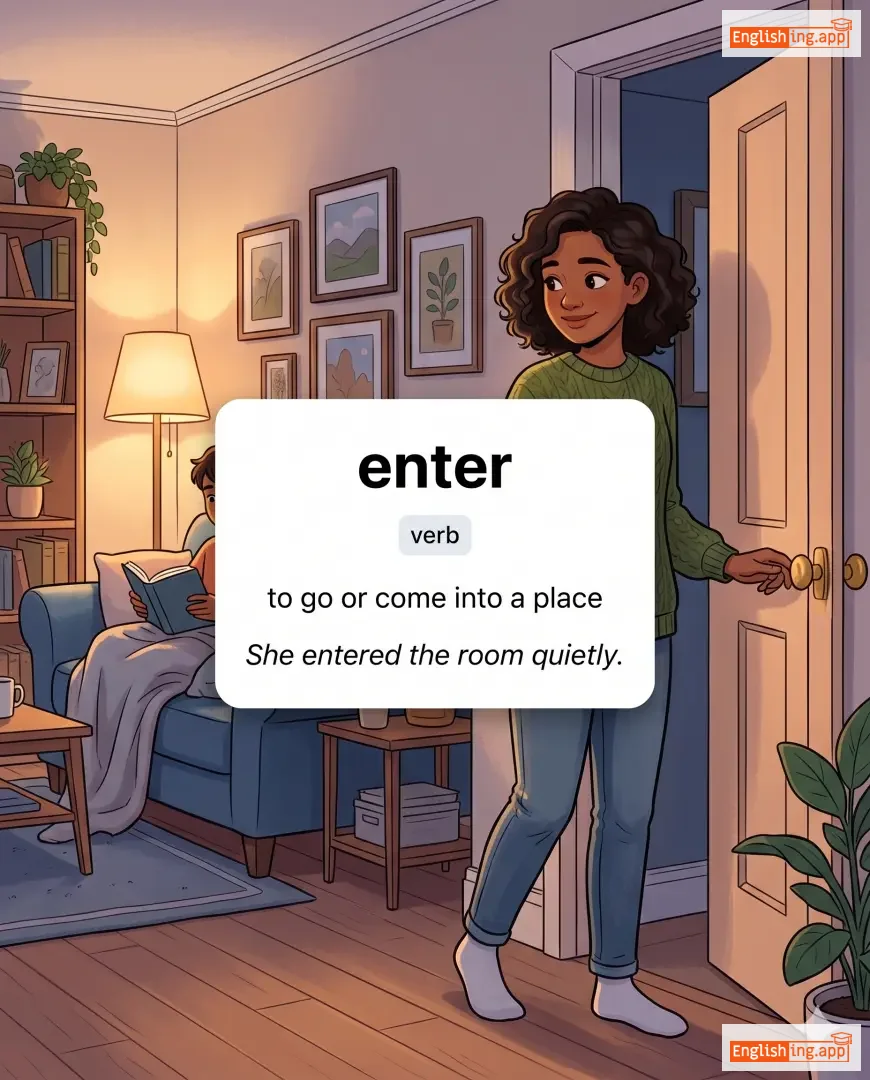
to go or come into a place
••••••
|
She entered the room quietly.
彼女は静かに部屋に入った。
••••••
|
彼女は静かに部屋に入った。
Kanojo wa shizuka ni heya ni haitta.
••••••
|
enter into an agreement
契約に入る
••••••
|
to formally agree to a contract or arrangement
••••••
|
契約に入る
keiyaku ni hairu
••••••
|
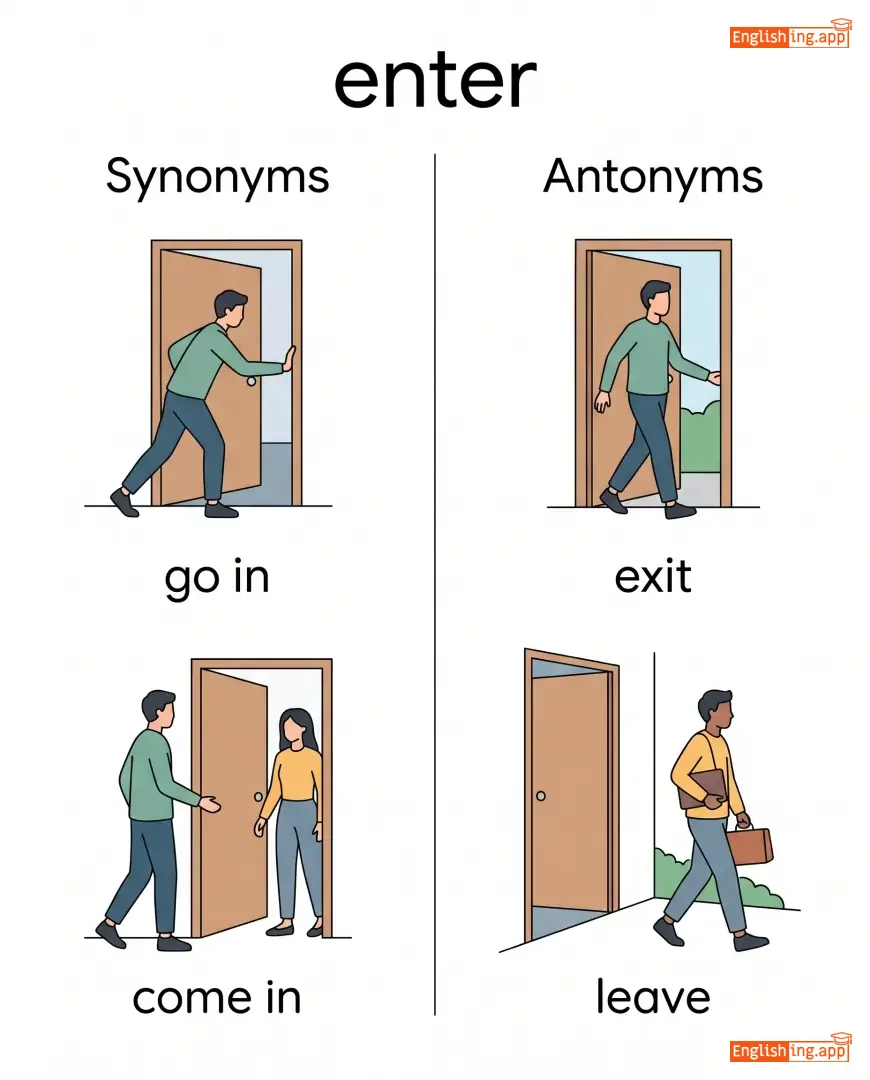
go in, come in, access, penetrate, join
••••••
|
exit, leave, depart
••••••
|
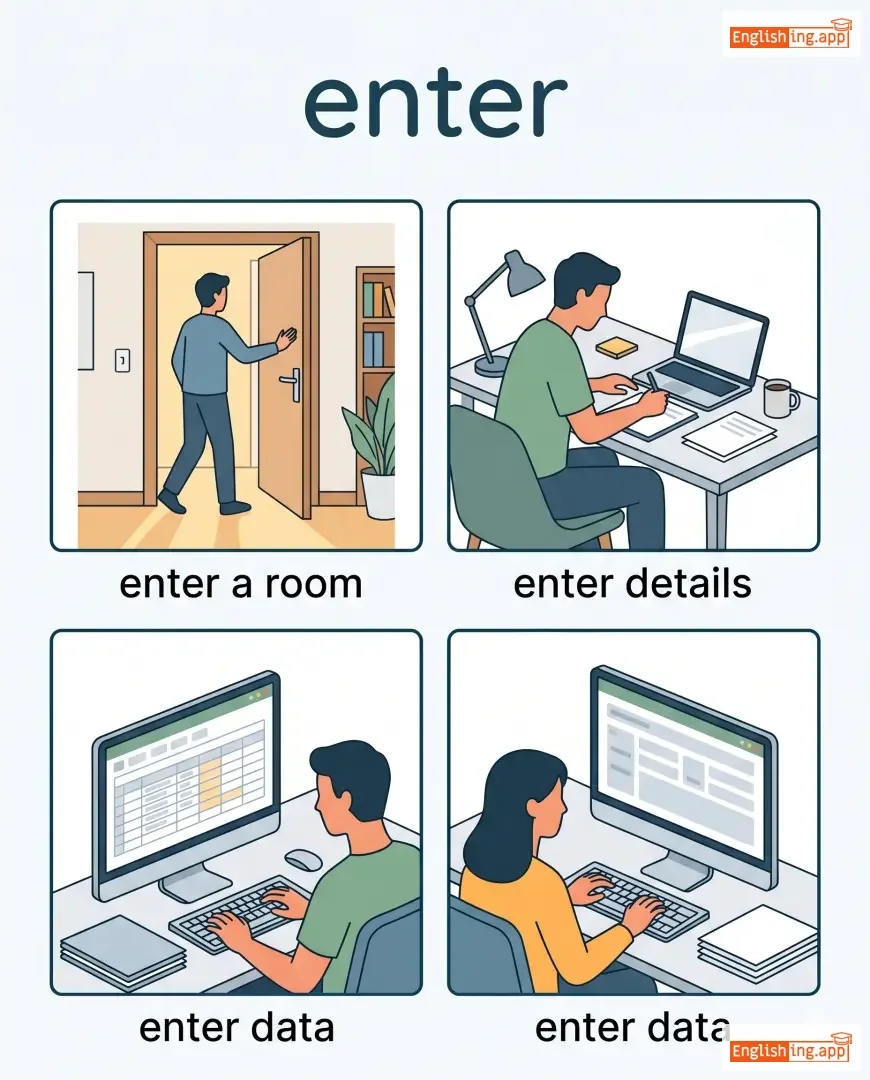
enter a room, enter details, enter data, enter into
••••••
|
ENTERキーを押すと、コンピューターに入る、'入る'も同じ意味です。
••••••
|
|
⚖️
••••••
|
/ˈiːkwəl/
adjective
(イクォール)
••••••
|
|
平等
byoudou
••••••
|
- •••••• | - •••••• | - •••••• | - •••••• |
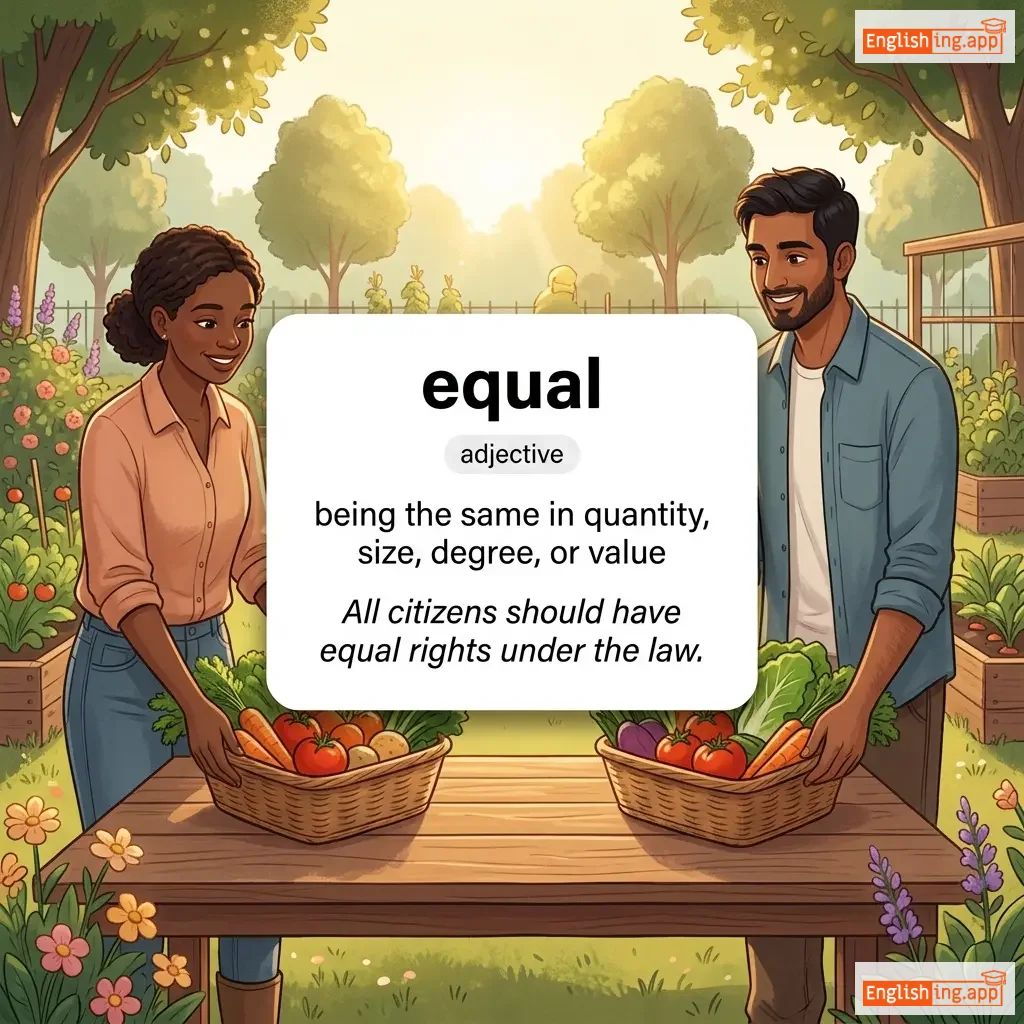
being the same in quantity, size, degree, or value
••••••
|
All citizens should have equal rights under the law.
すべての市民は法の下で平等な権利を持つべきです。
••••••
|
すべての市民は法の下で平等な権利を持つべきです。
Subete no shimin wa hō no moto de byōdō na kenri o motsu beki desu.
••••••
|
equal opportunity
平等な機会
••••••
|
the principle that everyone should have the same chances in life
••••••
|
平等な機会
byoudou na kikai
••••••
|
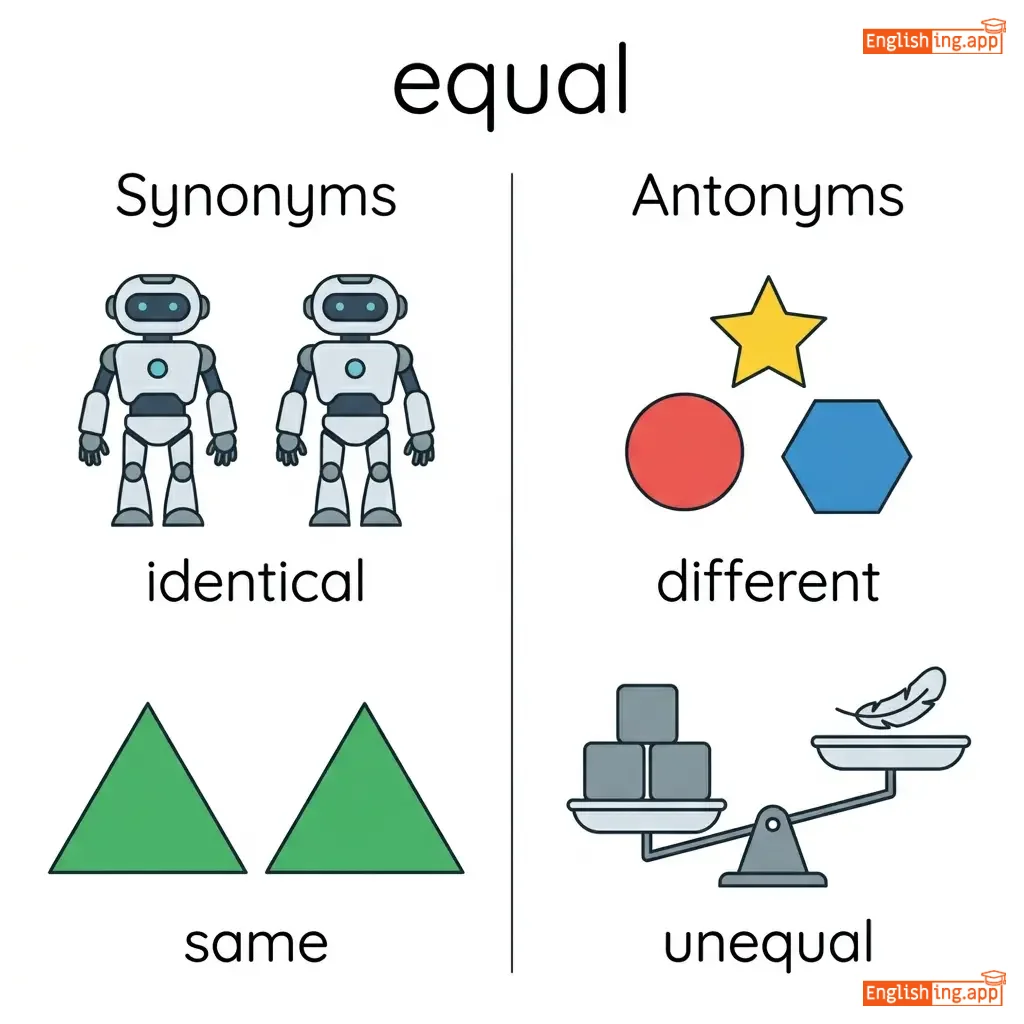
identical, same, equivalent, matching, uniform
••••••
|
different, unequal, unfair
••••••
|
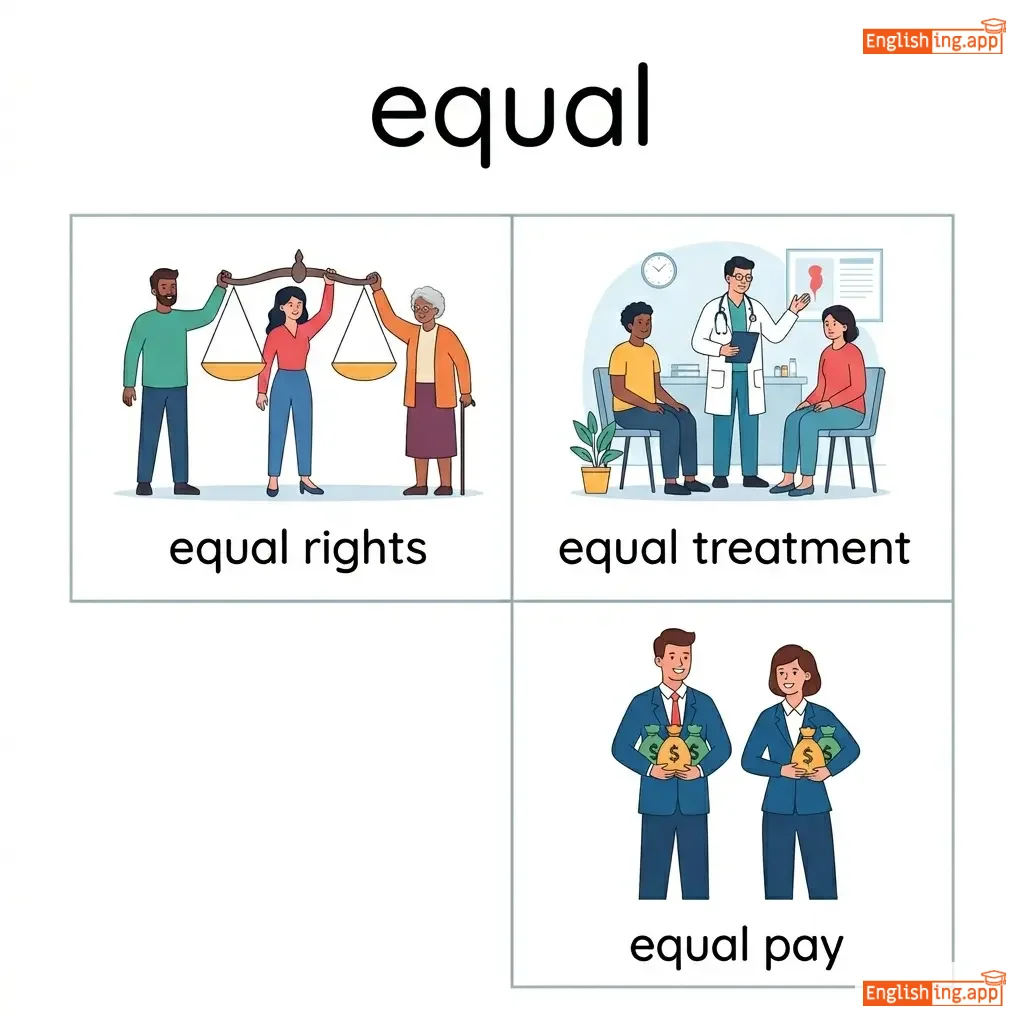
equal rights, equal treatment, equal pay, equal opportunity
••••••
|
Equalとはすべての人を平等に見ることです
••••••
|
|
🏗️
••••••
|
/ɪˈrɛkt/
verb
(イレクト)
••••••
|
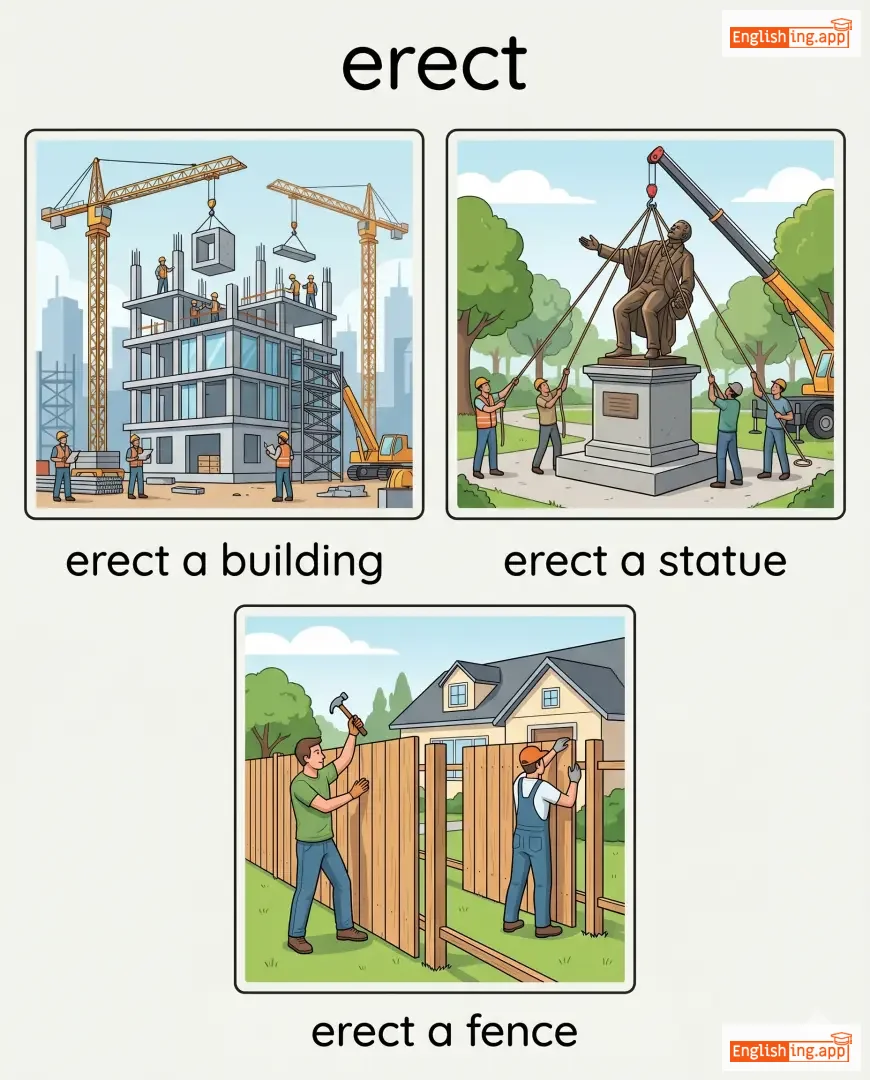
|
建てる
tateru
••••••
|
erected
イレクテッド
••••••
|
erected
イレクテッド
••••••
|
erects
イレクツ
••••••
|
erecting
イレクティング
••••••
|
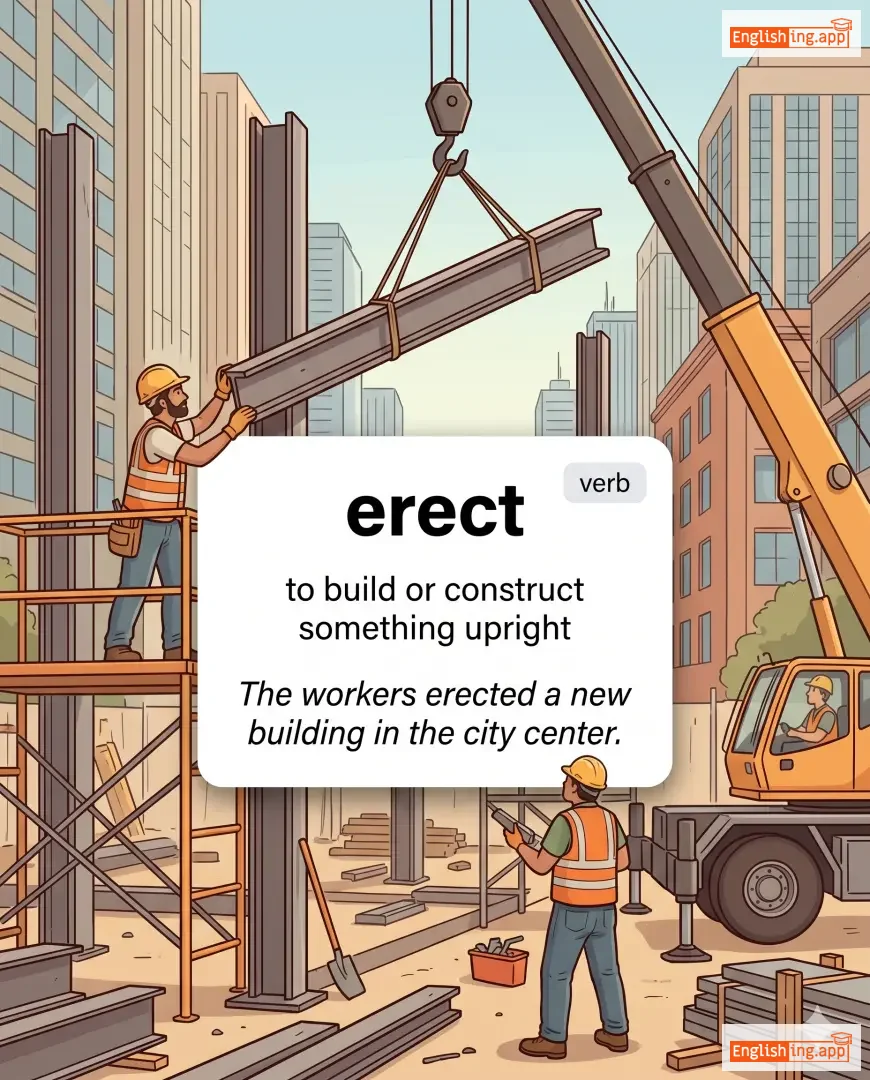
to build or construct something; to set upright
••••••
|
They erected a statue in the town square.
彼らは町の広場に像を建てました。
••••••
|
彼らは町の広場に像を建てました。
Karera wa machi no hiroba ni zou o tatemashita.
••••••
|
- •••••• | - •••••• | - •••••• |
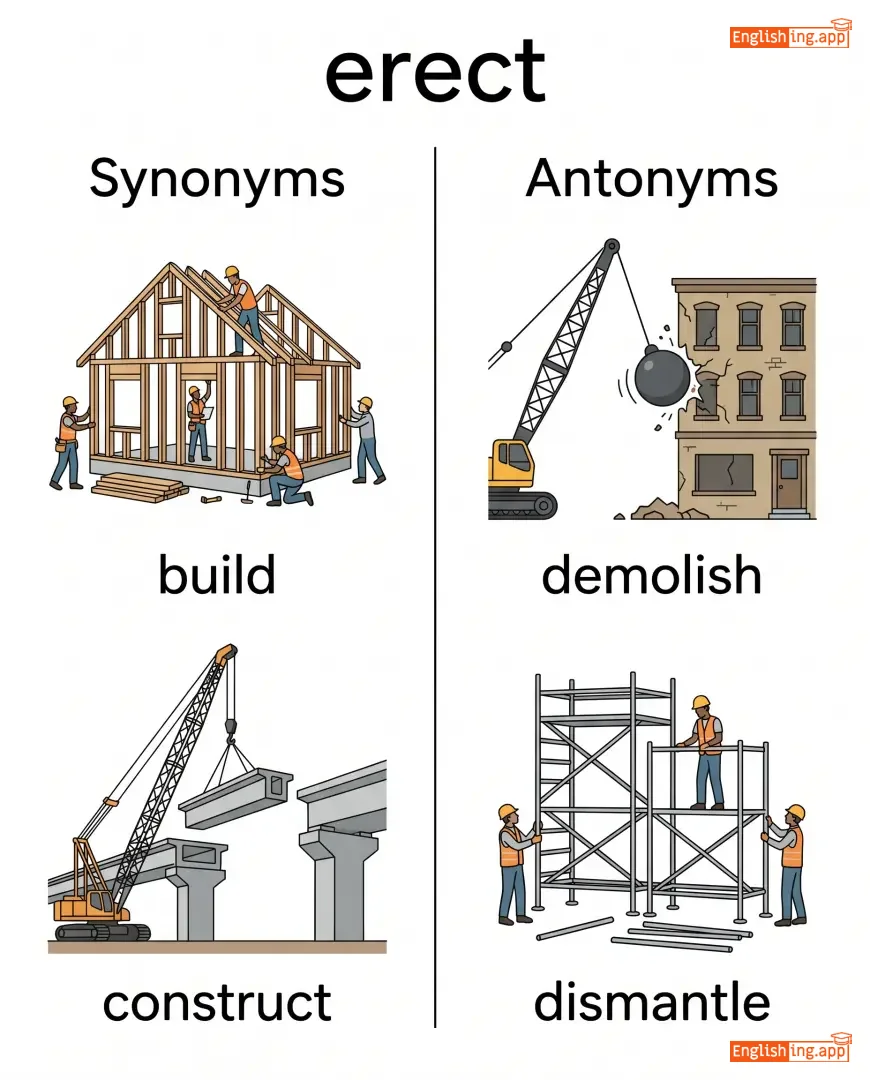
build, construct, raise, establish
••••••
|
demolish, destroy, tear down
••••••
|
erect building, erect monument, erect statue, erect structure
••••••
|
建てる像を立てる、建設のように。
••••••
|
|
🌋
••••••
|
/ɪˈrʌpt/
verb
(エラプト)
••••••
|
- •••••• |
噴火する
funka suru
••••••
|
erupted
エラプテッド
••••••
|
erupted
エラプテッド
••••••
|
erupts
エラプツ
••••••
|
erupting
エラプティング
••••••
|
to burst forth suddenly and violently
••••••
|
The volcano erupted after centuries of dormancy.
火山は何世紀もの間沈黙していた後、エラプトしました。
••••••
|
火山は何世紀もの間沈黙していた後、エラプトしました。
Kazan wa nanseiki mono aida chinmoku shite ita ato, eraputo shimashita.
••••••
|
- •••••• | - •••••• | - •••••• |
explode, burst, blast, discharge
••••••
|
calm, subside, settle
••••••
|
erupt in anger, erupt in flames, erupt suddenly
••••••
|
ERUPT the volcano with an explosive power!
••••••
|
|
⌨️
••••••
|
/ˈɪnpʊt/
noun
(インプット)
••••••
|
- •••••• |
入力、提供された情報
input, teikyō sareta jōhō
••••••
|
- •••••• | - •••••• | - •••••• | - •••••• |
information, advice, or data that is put into a system, device, or process
••••••
|
The manager asked for everyone's input on the new project.
マネージャーは新しいプロジェクトに対する全員のインプットを求めました。
••••••
|
マネージャーは新しいプロジェクトに対する全員のインプットを求めました。
Manējā wa atarashī purojekuto ni taisuru zen'in no inputto o motomemashita.
••••••
|
data input
データ入力
••••••
|
the act of entering data into a computer system
••••••
|
データ入力
dēta nyūryoku
••••••
|
contribution, feedback, suggestion, data, information
••••••
|
output, result
••••••
|
user input, data input, input device, input field
••••••
|
インプットはシステムにデータを入れることです!
••••••
|
|
👖
••••••
|
/dʒiːnz/
noun
(ハピネス)
••••••
|
- •••••• |
幸せ
shiawase
••••••
|
- •••••• | - •••••• | - •••••• | - •••••• |
pants made of denim fabric, often blue, worn as casual clothing
••••••
|
He bought a new pair of blue jeans yesterday. |
彼女は賞を受け取ったとき、自分の幸せを隠せなかった。
Kanojo wa shō o uketotta toki, jibun no shiawase o kakesenakatta.
••••••
|
in one's jeans |
to be a natural trait or inherited characteristic
••••••
|
幸せの追求
shiawase no tsuikyū
••••••
|
denim pants, trousers, slacks, dungarees, denim
••••••
|
shorts, skirt
••••••
|
blue jeans, pair of jeans, tight jeans, ripped jeans, skinny jeans
••••••
|
幸せ、シアワセ(幸せ)を感じる!
••••••
|
|
🦵
••••••
|
/dʒɔɪnt/
noun
(ジョイント)
••••••
|
- •••••• |
関節
kansetsu
••••••
|
- •••••• | - •••••• | - •••••• | - •••••• |
a place where two parts of something are joined; also a term for a business establishment or a cannabis cigarette
••••••
|
The knee is a joint that connects the thigh and the leg. |
膝は太ももと脚をつなぐ関節です。
Hiza wa futomomo to ashi o tsunagu kansetsu desu.
••••••
|
out of joint |
dislocated or not properly aligned
••••••
|
不調和
fuchōwa
••••••
|
connection, junction, link, establishment, partnership
••••••
|
separation, disconnection
••••••
|
joint venture, joint pain, joint effort, joint account
••••••
|
関節は体の部分をつなげる役割があり、ジョイントベンチャーもつながりを意味します
••••••
|
|
⚖️
••••••
|
/ˈdʒʊərər/
noun
(陪審員)
••••••
|
- •••••• |
陪審員
baishin'in
••••••
|
- •••••• | - •••••• | - •••••• | - •••••• |
a member of a jury who is chosen to hear evidence in a legal case and help make a decision
••••••
|
The juror listened carefully to the witness’s testimony. |
陪審員は証人の証言を慎重に聞きました。
Baishin'in wa shōnin no shōgen o shinchō ni kikimashita.
••••••
|
- •••••• | - •••••• | - •••••• |
jury member, panelist, assessor, adjudicator
••••••
|
judge, lawyer
••••••
|
juror selection, prospective juror, juror duty, juror bias
••••••
|
Jurorは陪審員を意味し、陪審員の役割は判決を下すことです。
••••••
|
|
🚪
••••••
|
/nɒk/
verb
(ノック)
••••••
|
|
ドアをノックする
doa o nokku suru
••••••
|
knocked
ノックド
••••••
|
knocked
ノックド
••••••
|
knocks
ノックス
••••••
|
knocking
ノッキング
••••••
|
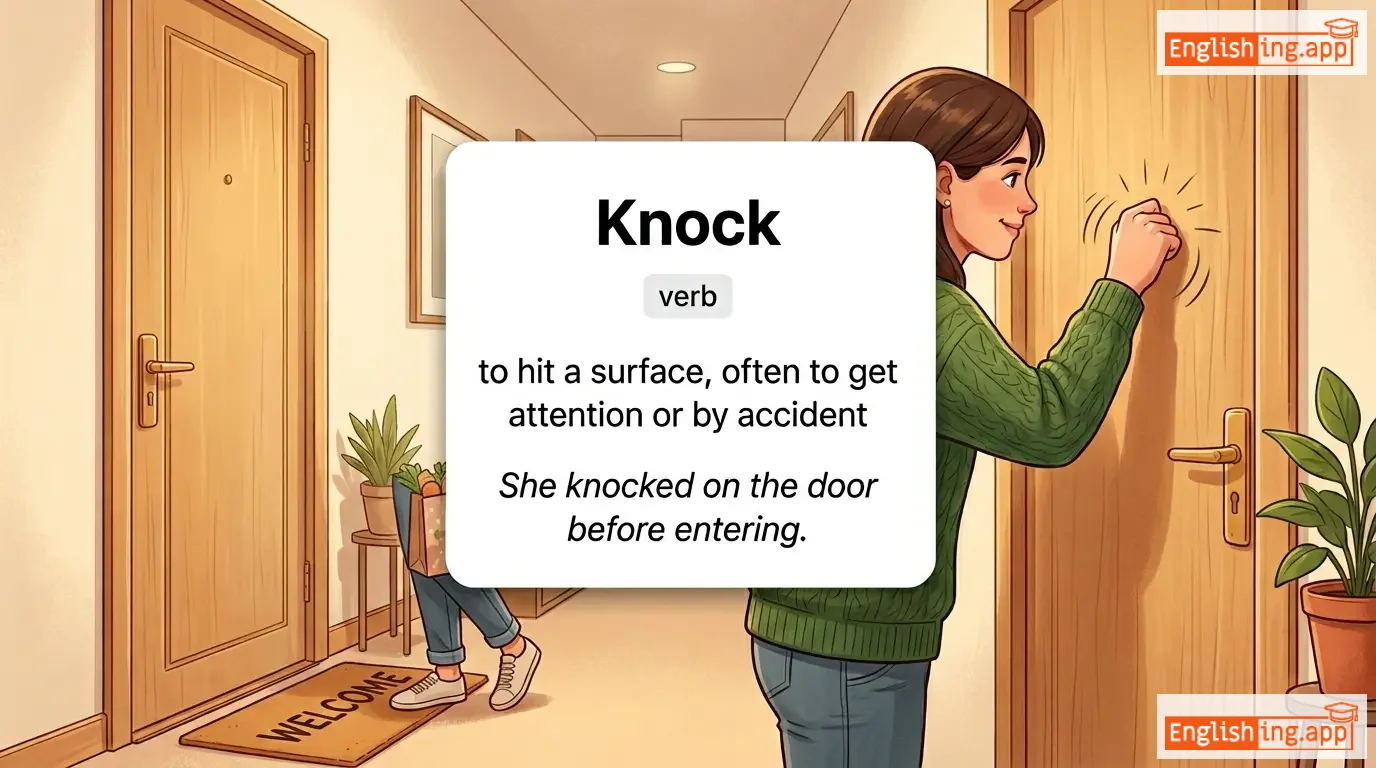
to hit a surface, often to get attention or by accident
••••••
|
She knocked on the door before entering.
彼女は入る前にドアをノックしました。
••••••
|
彼女は入る前にドアをノックしました。
Kanojo wa hairu mae ni doa o nokkushimashita.
••••••
|
knock on wood
ノックオンウッド
••••••
|
said to avoid bad luck after mentioning something good
••••••
|
良いことを言った後、不運を避けるために言う言葉
Yoi koto o itta ato, fuun o sakeru tame ni iu kotoba
••••••
|
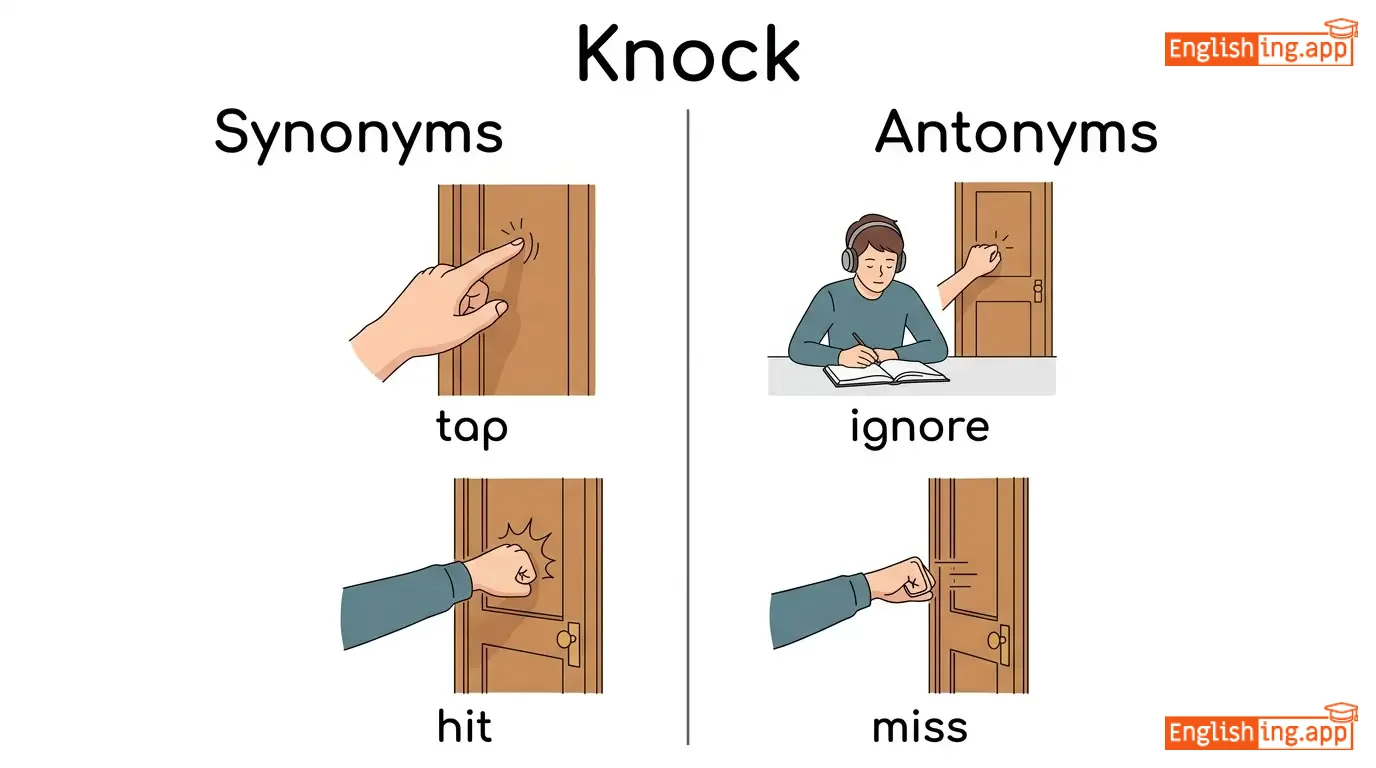
tap, hit, bang, strike, bump
••••••
|
ignore, miss
••••••
|
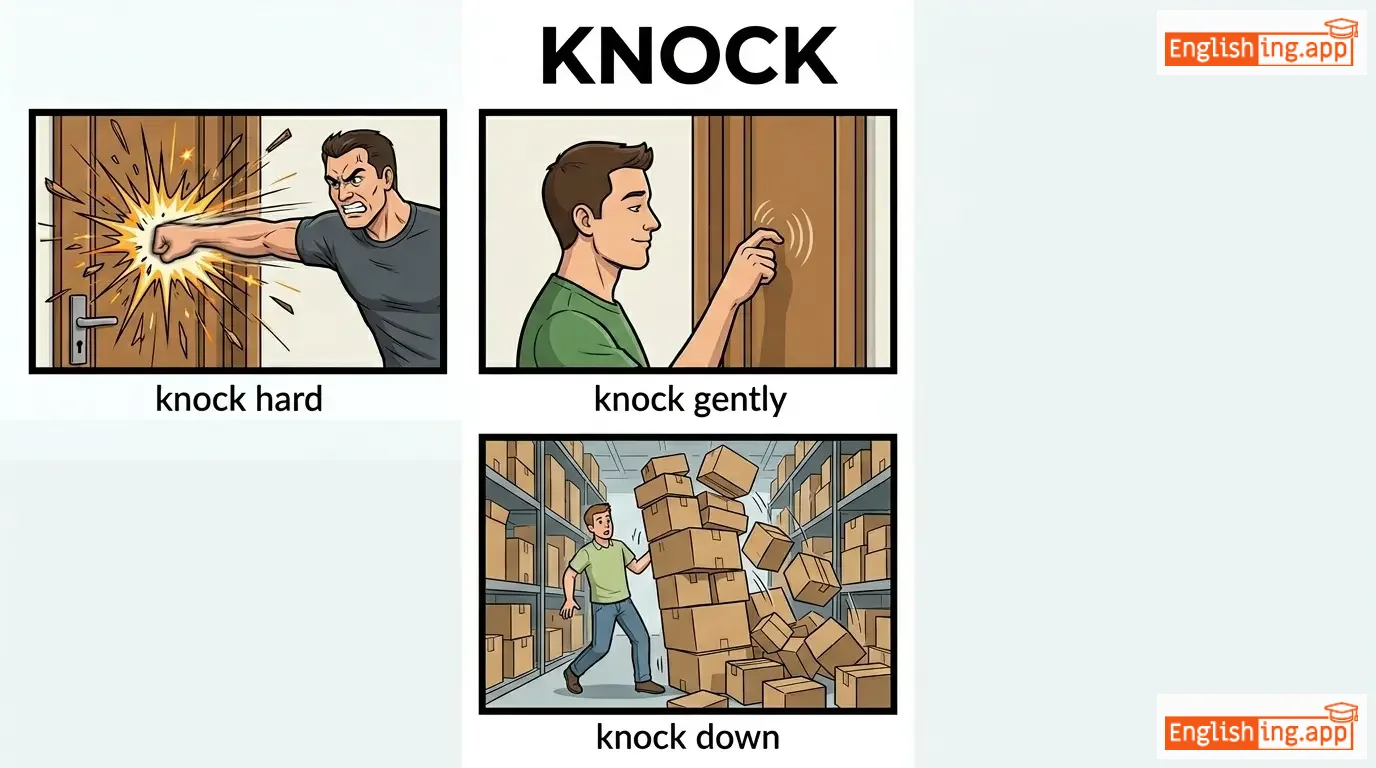
knock hard, knock gently, knock down, knock over
••••••
|
ドアをノック、幸せが待っている!
••••••
|
|
📖
••••••
|
/noʊn/
adjective
(ノン)
••••••
|
- •••••• |
知られている
shira rete iru
••••••
|
- •••••• | - •••••• | - •••••• | - •••••• |
recognized or familiar; something that is identified or acknowledged
••••••
|
He is a well-known actor in the country. |
彼は国でよく知られた俳優です。
Kare wa kuni de yoku shirareta haiyū desu.
••••••
|
known quantity |
something or someone familiar or predictable
••••••
|
知られた量
shira reta ryō
••••••
|
famous, familiar, recognized, established, acknowledged
••••••
|
unknown, obscure, unfamiliar
••••••
|
well known, little known, widely known, known fact
••••••
|
Known は '知られている' という意味 — '知られている = known' 📖
••••••
|
|
🏷️
••••••
|
/ˈleɪ.bəl/
noun/verb
(happiness)
••••••
|
- •••••• |
幸福
kōfuku
••••••
|
labeled
••••••
|
labeled
••••••
|
labels
••••••
|
labeling
••••••
|
a small piece of paper, fabric, or material attached to an object giving information about it; to attach such a tag or to describe someone or something in a particular way
••••••
|
She labeled the boxes to make moving easier.
彼女は賞を受け取ったとき、幸せを隠せなかった。
••••••
|
彼女は賞を受け取ったとき、幸せを隠せなかった。
Kanojo wa shō o uketotta toki, kōfuku o kakusenakatta.
••••••
|
label someone as
幸福を追求する
••••••
|
to describe or classify someone in a particular way, often unfairly
••••••
|
幸福を追求する
kōfuku o tsuikyū suru
••••••
|
tag, marker, sticker, brand, classify
••••••
|
unmark, erase
••••••
|
brand label, warning label, food label, label products, label someone
••••••
|
幸福は日々の努力で達成される。
••••••
|
|
📚
••••••
|
/ˈleɪər/
noun
(レイヤー)
••••••
|
- •••••• |
層
sō
••••••
|
- •••••• | - •••••• | - •••••• | - •••••• |
A sheet, thickness, or coating of something that lies over or under a surface.
••••••
|
The cake had a layer of cream between the sponges. |
ケーキにはスポンジの間にクリームの層がありました。
Kēki ni wa suponji no aida ni kurīmu no sō ga arimashita.
••••••
|
a layer of meaning |
a deeper or additional significance
••••••
|
意味の層
imi no sō
••••••
|
sheet, coating, stratum, film, covering
••••••
|
core, center
••••••
|
thin layer, thick layer, protective layer, additional layer
••••••
|
Layerは層を意味します。ケーキにクリーム層があるように。
••••••
|

