Layers of a Waking River
从装饰馆传来的dried花香与河风交织在一起。 一位dutch研究员来到这里研究河床淤泥。 一位长者说:'我们的河流并不dying,它正在觉醒。' 今天的研讨会举行了eight个不同的会议。 大会选择了一起elect一个新的委员会。 技术团队在河床中embed了传感器。 傍晚时分,志愿者们enact了下一次会议的计划。 关于气候问题,跨代对话ensue了。 嘉宾们乘坐清澈的船只进入浮动画廊,enter。 年轻人发誓:'我们将对河流承担equal责任。' 入口处竖立了新的标志,erect。 在木栈桥上,一个小喷泉erupt了,带来了欢乐。 志愿者们将实地数据作为实时input记录。 设计师们从回收的jeans中制作了装饰品。 当地团体的joint倡议展示了拯救河流的路径。 一位经验丰富的juror为与河流相关的诉讼提供了见解。 轻柔的微风似乎在会议室门口knock。 村民们希望历史能广泛known。 去年犯下的错误上贴了警告label。 艺术家们在巨大的layer画布上捕捉到展现的戏剧性场面。
|
表情符号
|
单词 | Images | 翻译 | 过去时 | 过去分词 | 第三人称单数 | 动名词 | 含义 | 例句 | 例句翻译 | 示例表达 | 示例表达含义 | 示例表达翻译 | 同义词 | 反义词 | 搭配词 | 助记符 |
|---|---|---|---|---|---|---|---|---|---|---|---|---|---|---|---|---|---|
|
🌸
••••••
|
/draɪd/
adjective
(draid)
••••••
|
- •••••• |
干
gan
••••••
|
- •••••• | - •••••• | - •••••• | - •••••• |
without moisture; preserved by removing water
••••••
|
She added some dried flowers to the vase for decoration. |
她在花瓶里加了一些干花来装饰。
Ta zai huaping li jia le yixie ganhua lai zhuangshi.
••••••
|
dried up |
to become dry or to end completely
••••••
|
干掉
gandiao
••••••
|
dehydrated, parched, withered, desiccated
••••••
|
wet, moist, fresh
••••••
|
dried fruits, dried flowers, dried leaves, dried meat
••••••
|
干 = 没有水分,就像干花一样!
••••••
|
|
🇳🇱
••••••
|
/dʌtʃ/
adjective
(dach)
••••••
|
- •••••• |
荷兰的
helan de
••••••
|
- •••••• | - •••••• | - •••••• | - •••••• |
relating to the Netherlands, its people, or their language
••••••
|
She enjoys Dutch paintings from the 17th century. |
她喜欢17世纪的荷兰画作。
Ta xihuan 17 shiji de helan huazuo.
••••••
|
go Dutch |
to share the cost of something equally, especially a meal
••••••
|
去荷兰式
qu helan shi
••••••
|
Netherlandish, Hollandic, European, Low Countries
••••••
|
foreign, non-Dutch
••••••
|
Dutch language, Dutch culture, Dutch people, Dutch oven
••••••
|
Dutch意味着荷兰,记住:'荷兰菜是荷兰的食物!'
••••••
|
|
💀
••••••
|
/ˈdaɪɪŋ/
verb
(dài yīng)
••••••
|
- •••••• |
临终
lín zhōng
••••••
|
died
dài
••••••
|
died
dài
••••••
|
dies
dài zī
••••••
|
dying
dài yīng
••••••
|
to stop living; approaching death
••••••
|
The old man was dying peacefully in his sleep.
老人安详地在睡梦中去世。
••••••
|
老人安详地在睡梦中去世。
Lǎorén ānxiáng de zài shuìmèng zhōng qùshì.
••••••
|
a dying wish
临终愿望
••••••
|
a final request made before death
••••••
|
临终愿望
lín zhōng yuànwàng
••••••
|
passing, perishing, expiring, fading
••••••
|
living, surviving
••••••
|
dying man, dying words, dying wish, dying moment
••••••
|
Dying意味着死亡 – 'Die-ing' 是你死时的感觉!
••••••
|
|
8️⃣
••••••
|
/eɪt/
number
(eɪt)
••••••
|
- •••••• |
八
ba
••••••
|
- •••••• | - •••••• | - •••••• | - •••••• |
The number equivalent to the product of two and four; one more than seven.
••••••
|
There are eight apples in the basket. |
篮子里有八个苹果。
Lanzi li you ba ge pingguo.
••••••
|
behind the eight ball |
In a difficult or unfavorable situation.
••••••
|
处于困难境地
Chuyu kunnan jingdi
••••••
|
octet, VIII, set of eight, group of eight
••••••
|
seven, nine
••••••
|
eight years, eight times, group of eight, eight people
••••••
|
八和数字八相同。
••••••
|
|
🗳️
••••••
|
/ɪˈlɛkt/
verb
(选举)
••••••
|
- •••••• |
选举
xuǎnjǔ
••••••
|
elected
当选
••••••
|
elected
当选
••••••
|
elects
选举
••••••
|
electing
选举
••••••
|
To choose someone for a position or office by voting.
••••••
|
The citizens elected a new president.
公民选举了新总统。
••••••
|
公民选举了新总统。
Gōngmín xuǎnjǔle xīn zǒngtǒng.
••••••
|
elect to
选择做
••••••
|
To choose or decide to do something.
••••••
|
选择做
xuǎnzé zuò
••••••
|
choose, vote, select, appoint, pick
••••••
|
reject, dismiss, refuse
••••••
|
elect president, elect leader, elect representative, elect officials
••••••
|
选举 = 选择选。
••••••
|
|
📎
••••••
|
/ɪmˈbɛd/
verb
(embed)
••••••
|
- •••••• |
嵌入
qian ru
••••••
|
embedded
嵌入
••••••
|
embedded
嵌入
••••••
|
embeds
嵌入
••••••
|
embedding
嵌入中
••••••
|
to fix something firmly into a surrounding mass or context
••••••
|
The journalist was embedded with the military unit.
记者与军事单位嵌入。
••••••
|
记者与军事单位嵌入。
Jizhe yu junshi danwei qianru.
••••••
|
embed in memory
嵌入记忆
••••••
|
to remain strongly remembered
••••••
|
嵌入记忆
Qian ru ji yi
••••••
|
implant, insert, fix, ingrain, lodge
••••••
|
remove, extract, detach
••••••
|
embed code, embed in, embedded system, deeply embedded
••••••
|
Embed 就是把东西嵌入到周围的环境中。
••••••
|
|
📜
••••••
|
/ɪˈnækt/
verb
(因艾克特)
••••••
|
- •••••• |
制定
zhìdìng
••••••
|
enacted
因艾克特德
••••••
|
enacted
因艾克特德
••••••
|
enacts
因艾克特斯
••••••
|
enacting
因艾克廷
••••••
|
to make into law; to perform or act out
••••••
|
The government decided to enact a new policy on education.
政府决定制定一项关于教育的新政策。
••••••
|
政府决定制定一项关于教育的新政策。
Zhèngfǔ juédìng zhìdìng yī xiàng guānyú jiàoyù de xīn zhèngcè.
••••••
|
enact a law
制定法律
••••••
|
to officially make a law
••••••
|
制定法律
zhìdìng fǎlǜ
••••••
|
legislate, establish, decree, ordain
••••••
|
abolish, repeal, revoke
••••••
|
enact legislation, enact reforms, enact measures, enact policy
••••••
|
Enact 意味着制定 - 'Enact' 听起来像 'Act' (行动),意味着使法律生效。
••••••
|
|
➡️
••••••
|
/ɪnˈsjuː/
verb
(恩苏)
••••••
|
- •••••• |
发生
fāshēng
••••••
|
ensued
恩苏德
••••••
|
ensued
恩苏德
••••••
|
ensues
恩苏斯
••••••
|
ensuing
恩苏英
••••••
|
to happen as a result or consequence
••••••
|
After the argument, silence ensued.
争论后,沉默随之而来。
••••••
|
争论后,沉默随之而来。
Zhēnglùn hòu, chénmò suízhī ér lái.
••••••
|
- •••••• | - •••••• | - •••••• |
follow, result, occur, arise, develop
••••••
|
precede, cause, prevent
••••••
|
ensue from, chaos ensued, silence ensued, conflict ensued
••••••
|
En-sue 意味着发生,作为某种后果出现。
••••••
|
|
🚪
••••••
|
/ˈɛntər/
verb
(entā)
••••••
|
|
进入
jinru
••••••
|
entered
entārd
••••••
|
entered
entārd
••••••
|
enters
entārs
••••••
|
entering
entāring
••••••
|
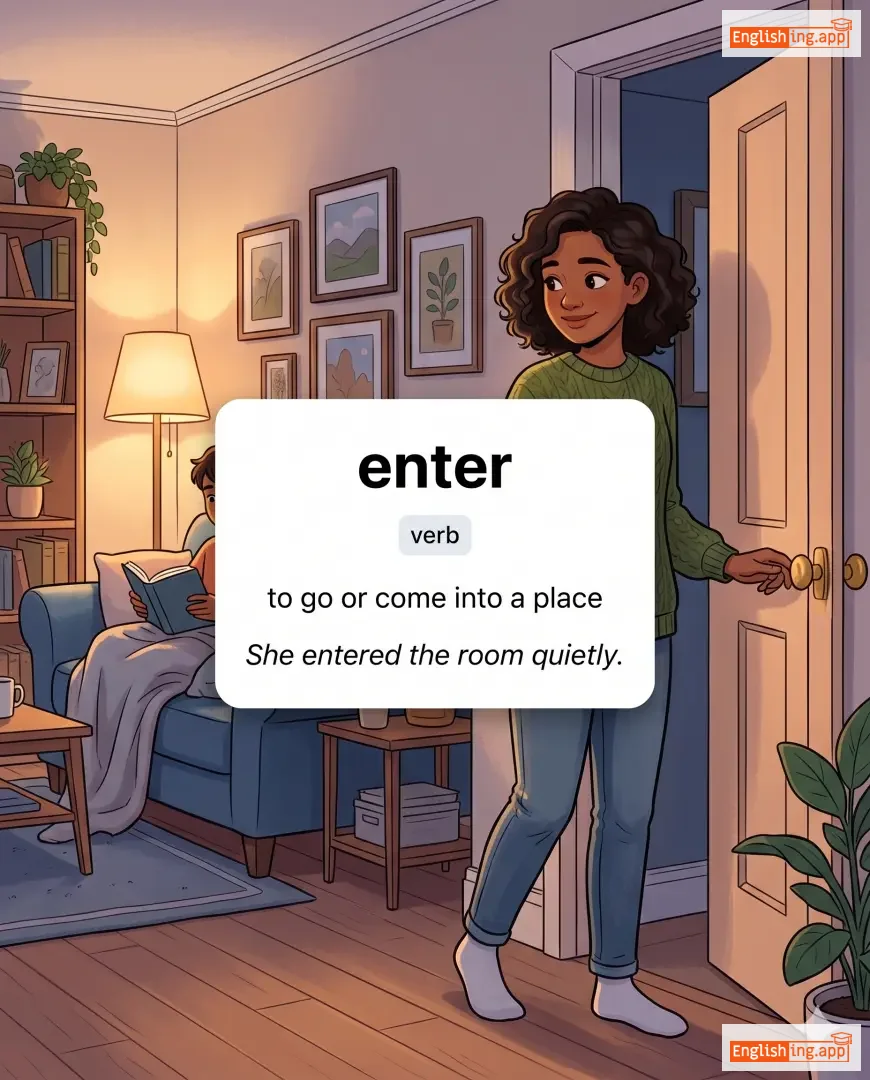
to go or come into a place
••••••
|
She entered the room quietly.
她安静地进入了房间。
••••••
|
她安静地进入了房间。
Tā ānjìng de jìnrù le fángjiān.
••••••
|
enter into an agreement
进入协议
••••••
|
to formally agree to a contract or arrangement
••••••
|
进入协议
jìnrù xiéyì
••••••
|
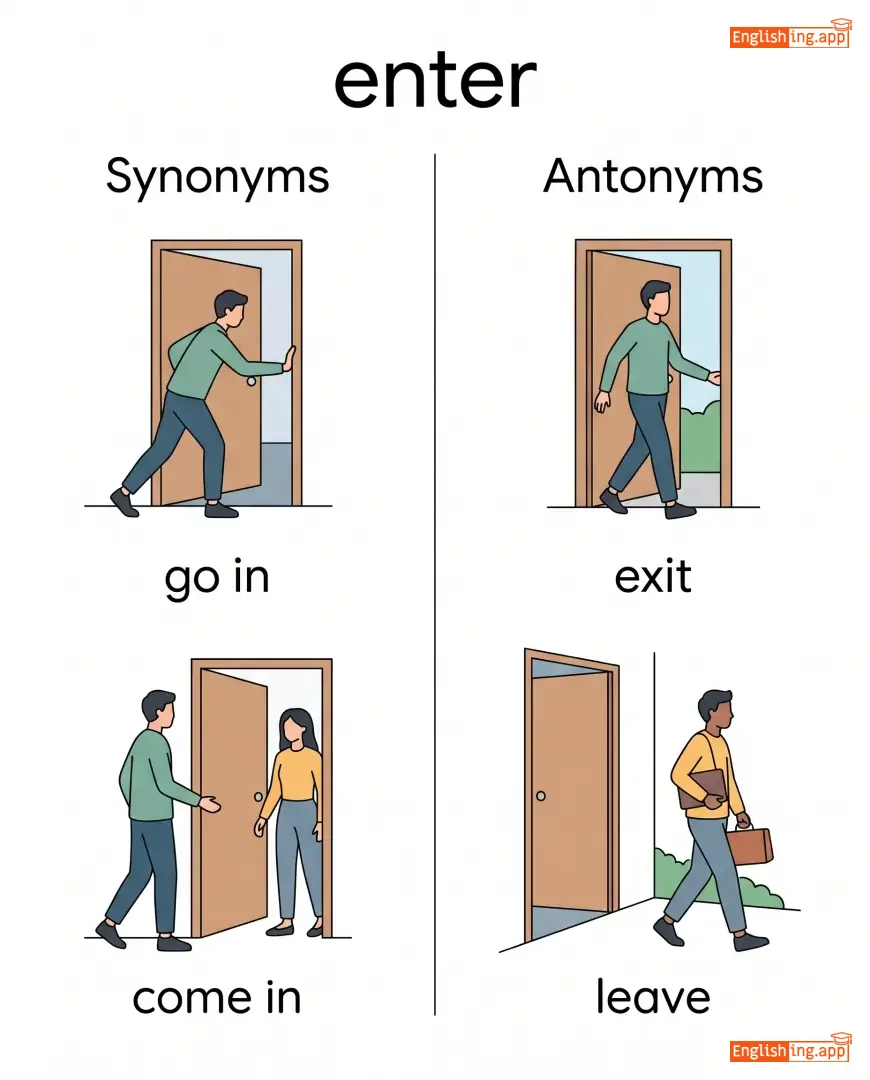
go in, come in, access, penetrate, join
••••••
|
exit, leave, depart
••••••
|
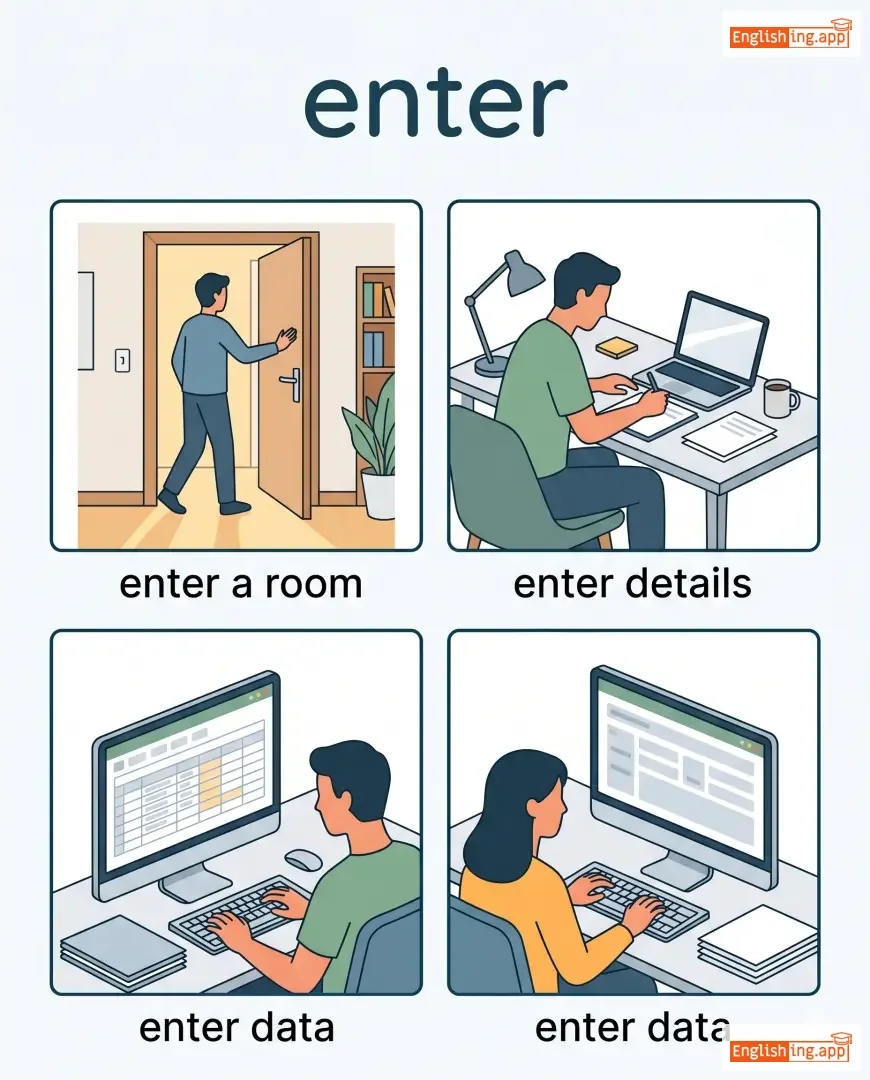
enter a room, enter details, enter data, enter into
••••••
|
按下ENTER键,你进入计算机,就像'进入'的意思。
••••••
|
|
⚖️
••••••
|
/ˈiːkwəl/
adjective
(yìguì)
••••••
|
|
平等
pingdeng
••••••
|
- •••••• | - •••••• | - •••••• | - •••••• |
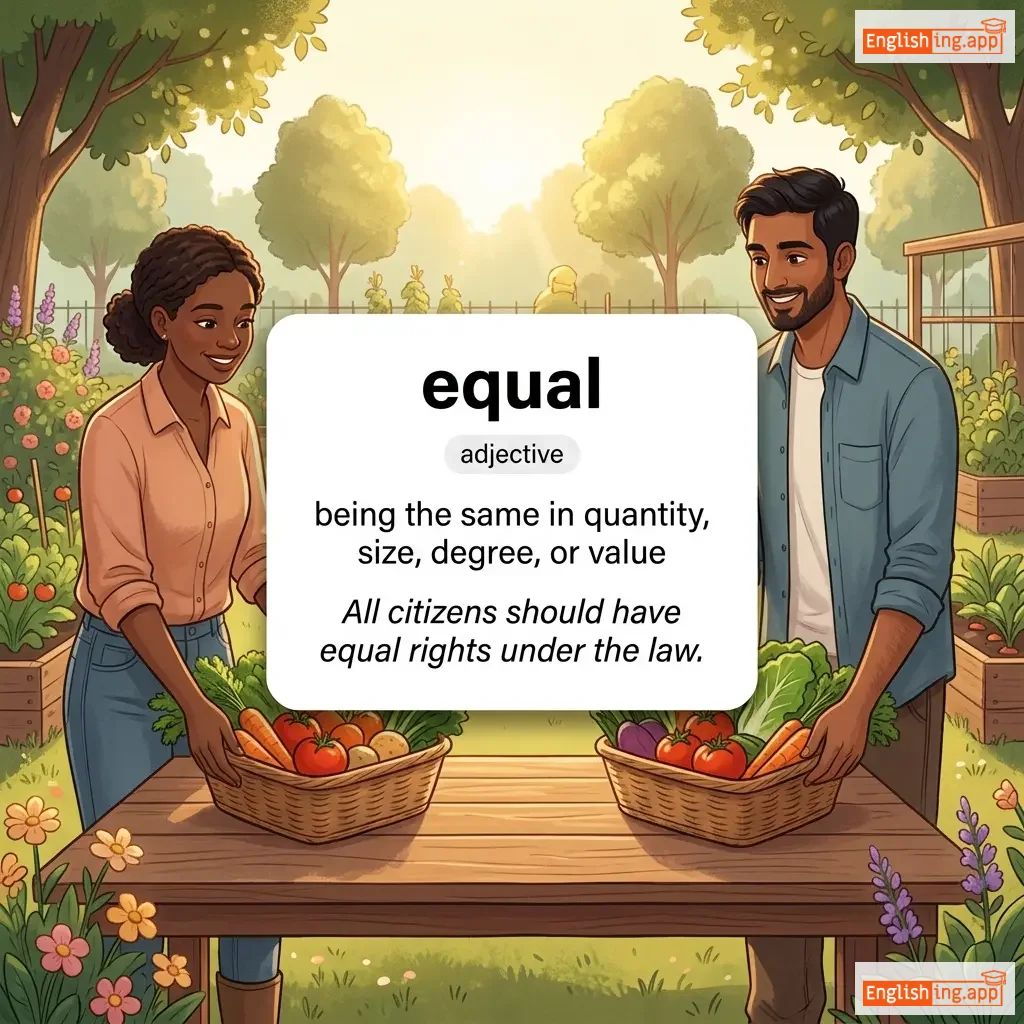
being the same in quantity, size, degree, or value
••••••
|
All citizens should have equal rights under the law.
所有公民都应该在法律面前享有平等权利。
••••••
|
所有公民都应该在法律面前享有平等权利。
Suoyou gongmin dou yinggai zai falü mianqian xiangyou pingdeng quanli.
••••••
|
equal opportunity
平等机会
••••••
|
the principle that everyone should have the same chances in life
••••••
|
平等机会
pingdeng jihui
••••••
|
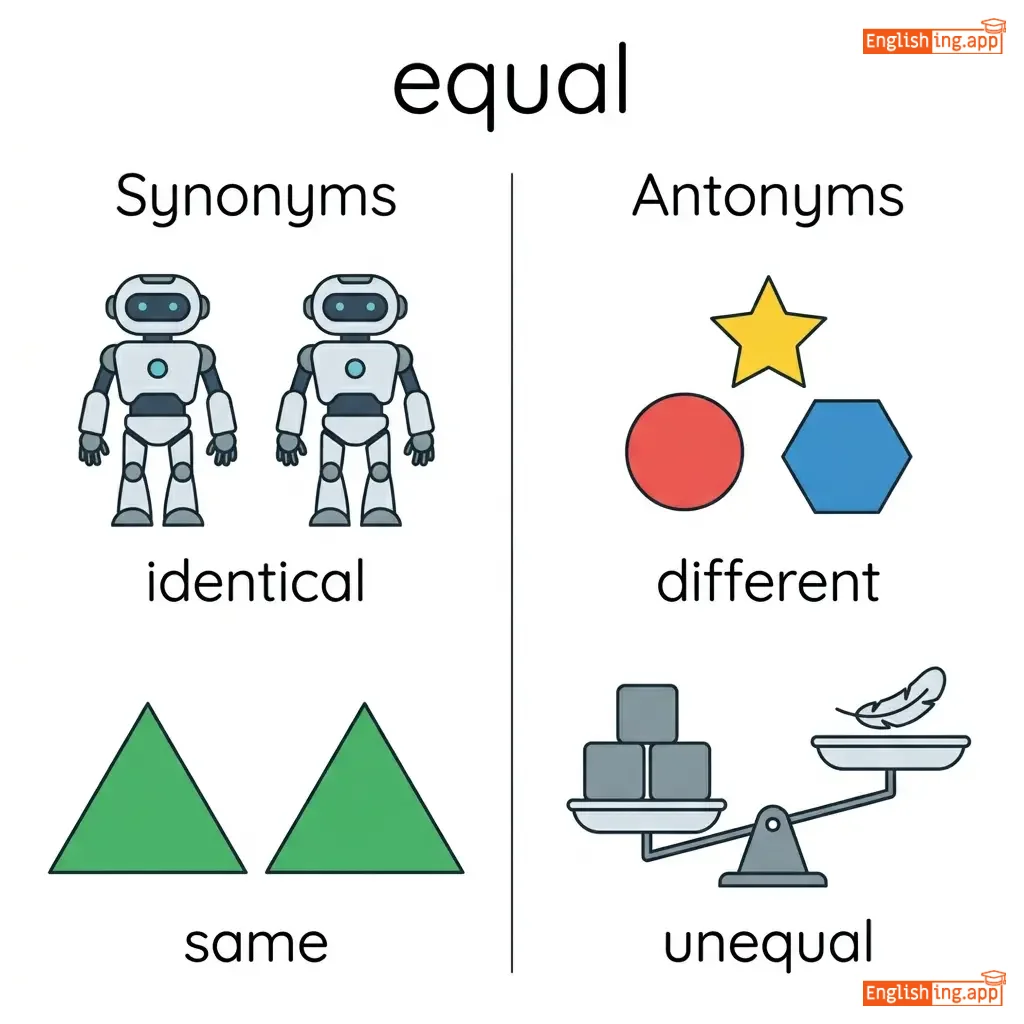
identical, same, equivalent, matching, uniform
••••••
|
different, unequal, unfair
••••••
|
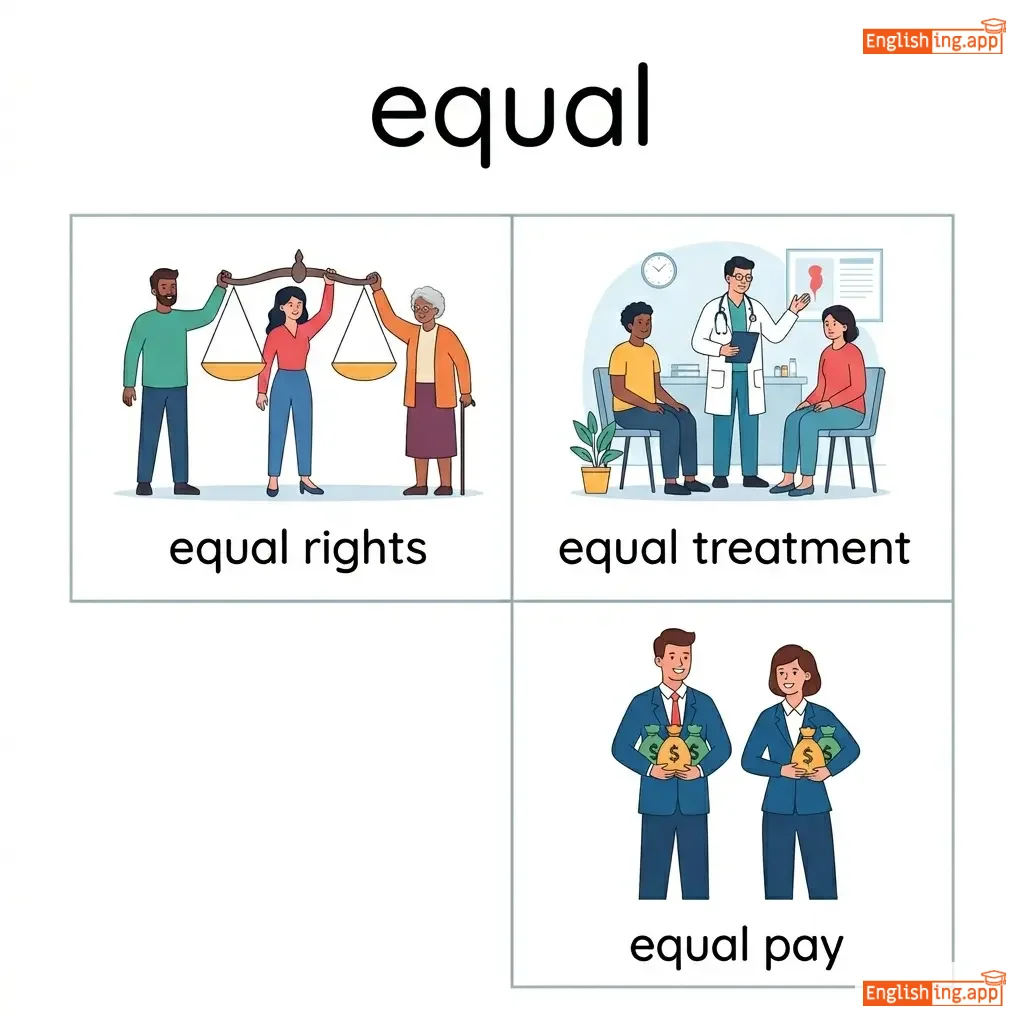
equal rights, equal treatment, equal pay, equal opportunity
••••••
|
Equal意味着看到每个人平等
••••••
|
|
🏗️
••••••
|
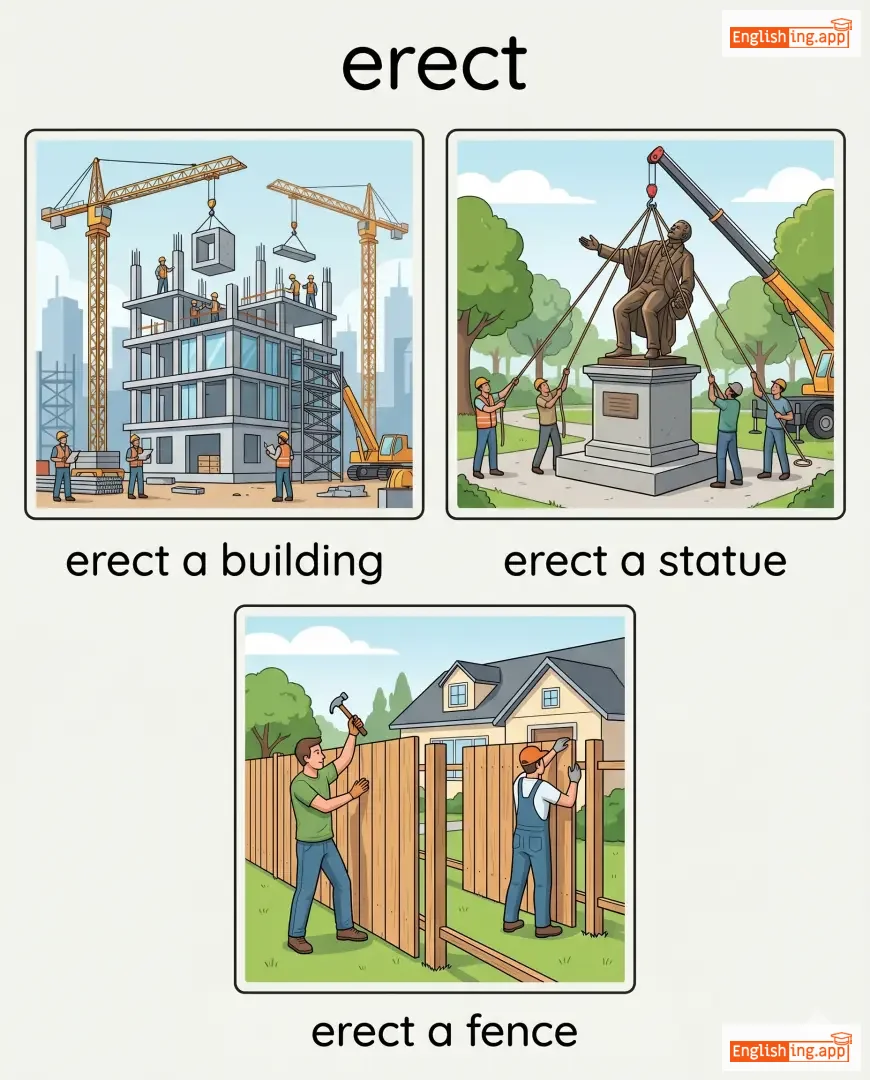
/ɪˈrɛkt/
verb
(耶瑞克特)
••••••
|
|
竖立
shuli
••••••
|
erected
竖立
••••••
|
erected
竖立
••••••
|
erects
竖立
••••••
|
erecting
竖立
••••••
|
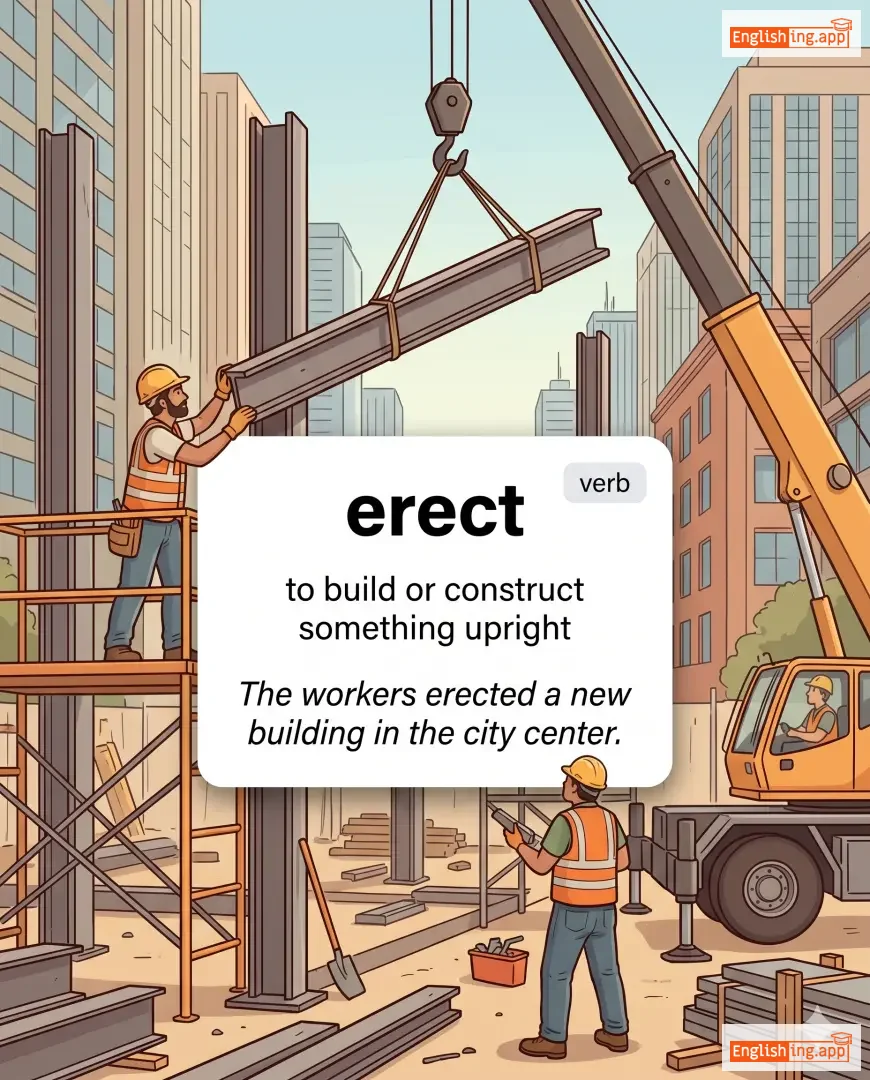
to build or construct something; to set upright
••••••
|
They erected a statue in the town square.
他们在市中心广场竖立了一个雕像。
••••••
|
他们在市中心广场竖立了一个雕像。
Tāmen zài shì zhōngxīn guǎngchǎng shùlì le yīgè diāoxiàng.
••••••
|
- •••••• | - •••••• | - •••••• |
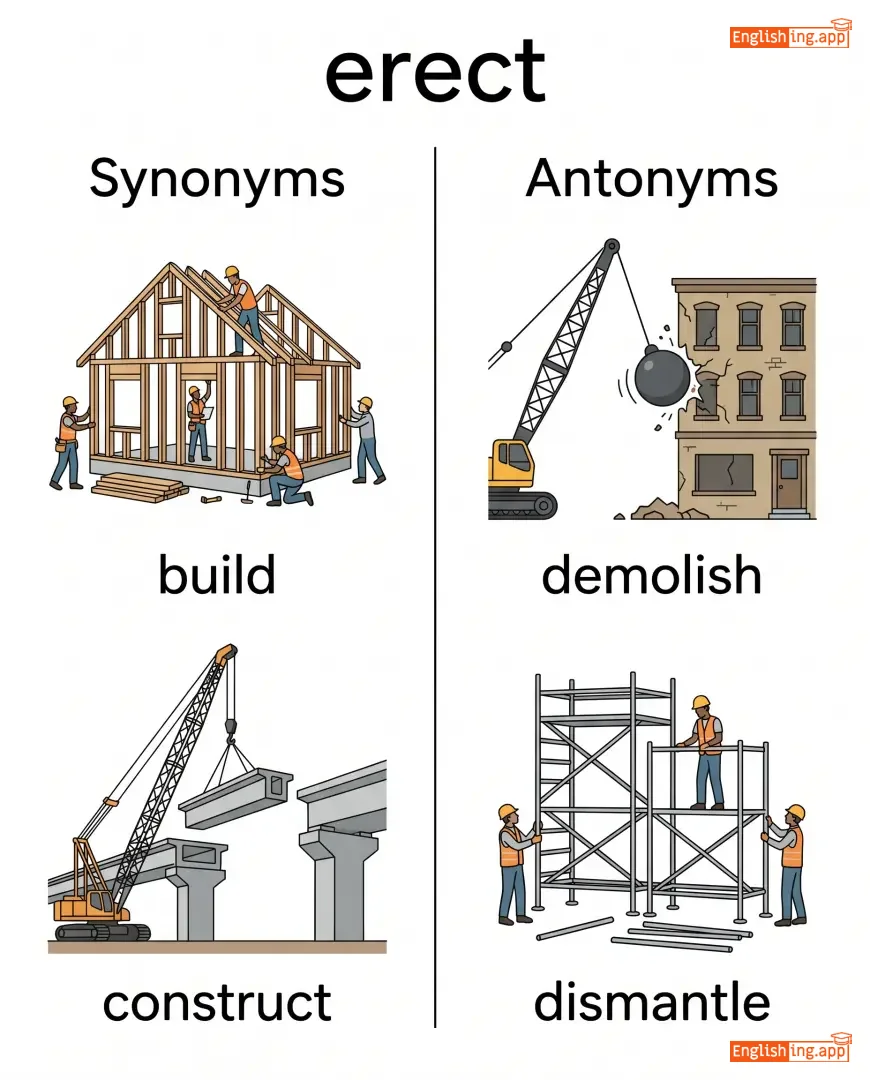
build, construct, raise, establish
••••••
|
demolish, destroy, tear down
••••••
|
erect building, erect monument, erect statue, erect structure
••••••
|
竖立雕像,像我们竖直地建造事物。
••••••
|
|
🌋
••••••
|
/ɪˈrʌpt/
verb
(érupt)
••••••
|
- •••••• |
爆发
baofa
••••••
|
erupted
érupted
••••••
|
erupted
érupted
••••••
|
erupts
érupts
••••••
|
erupting
érupting
••••••
|
to burst forth suddenly and violently
••••••
|
The volcano erupted after centuries of dormancy.
火山在沉寂了几个世纪后爆发。
••••••
|
火山在沉寂了几个世纪后爆发。
Huoshan zai chenji le jige shiji hou baofa.
••••••
|
- •••••• | - •••••• | - •••••• |
explode, burst, blast, discharge
••••••
|
calm, subside, settle
••••••
|
erupt in anger, erupt in flames, erupt suddenly
••••••
|
ERUPT the volcano with an explosive power!
••••••
|
|
⌨️
••••••
|
/ˈɪnpʊt/
noun
(输入)
••••••
|
- •••••• |
输入,提供的信息
shuru, tigong de xinxi
••••••
|
- •••••• | - •••••• | - •••••• | - •••••• |
information, advice, or data that is put into a system, device, or process
••••••
|
The manager asked for everyone's input on the new project.
经理要求大家对新项目提供意见。
••••••
|
经理要求大家对新项目提供意见。
Jingli yaoqiu dajia dui xin xiangmu tigong yijian.
••••••
|
data input
数据输入
••••••
|
the act of entering data into a computer system
••••••
|
数据输入
shuju shuru
••••••
|
contribution, feedback, suggestion, data, information
••••••
|
output, result
••••••
|
user input, data input, input device, input field
••••••
|
输入就是把数据放进去!
••••••
|
|
👖
••••••
|
/dʒiːnz/
noun
(happiness)
••••••
|
- •••••• |
幸福
xingfu
••••••
|
- •••••• | - •••••• | - •••••• | - •••••• |
pants made of denim fabric, often blue, worn as casual clothing
••••••
|
He bought a new pair of blue jeans yesterday. |
她收到奖项时,无法掩饰自己的幸福。
Tā shōu dào jiǎngxiàng shí, wúfǎ yǎnshì zìjǐ de xìngfú.
••••••
|
in one's jeans |
to be a natural trait or inherited characteristic
••••••
|
追求幸福
zhuīqiú xìngfú
••••••
|
denim pants, trousers, slacks, dungarees, denim
••••••
|
shorts, skirt
••••••
|
blue jeans, pair of jeans, tight jeans, ripped jeans, skinny jeans
••••••
|
幸福像 '星' 星一样发光!
••••••
|
|
🦵
••••••
|
/dʒɔɪnt/
noun
(关节)
••••••
|
- •••••• |
关节
guānjié
••••••
|
- •••••• | - •••••• | - •••••• | - •••••• |
a place where two parts of something are joined; also a term for a business establishment or a cannabis cigarette
••••••
|
The knee is a joint that connects the thigh and the leg. |
膝盖是一个连接大腿和小腿的关节。
xīgài shì yīgè liánjiē dàtuǐ hé xiǎotuǐ de guānjié.
••••••
|
out of joint |
dislocated or not properly aligned
••••••
|
错位
cuòwèi
••••••
|
connection, junction, link, establishment, partnership
••••••
|
separation, disconnection
••••••
|
joint venture, joint pain, joint effort, joint account
••••••
|
关节是连接的意思,就像连接大腿和小腿
••••••
|
|
⚖️
••••••
|
/ˈdʒʊərər/
noun
(陪审员)
••••••
|
- •••••• |
陪审员
peishenyuan
••••••
|
- •••••• | - •••••• | - •••••• | - •••••• |
a member of a jury who is chosen to hear evidence in a legal case and help make a decision
••••••
|
The juror listened carefully to the witness’s testimony. |
陪审员仔细听取了证人的证词。
Peishenyuan zixi tingqu le zhengren de zhengci.
••••••
|
- •••••• | - •••••• | - •••••• |
jury member, panelist, assessor, adjudicator
••••••
|
judge, lawyer
••••••
|
juror selection, prospective juror, juror duty, juror bias
••••••
|
Juror意味着陪审员,陪审员的工作是决定案件的裁决。
••••••
|
|
🚪
••••••
|
/nɒk/
verb
(诺克)
••••••
|
|
敲门
qiao men
••••••
|
knocked
诺克德
••••••
|
knocked
诺克德
••••••
|
knocks
诺克斯
••••••
|
knocking
诺金
••••••
|
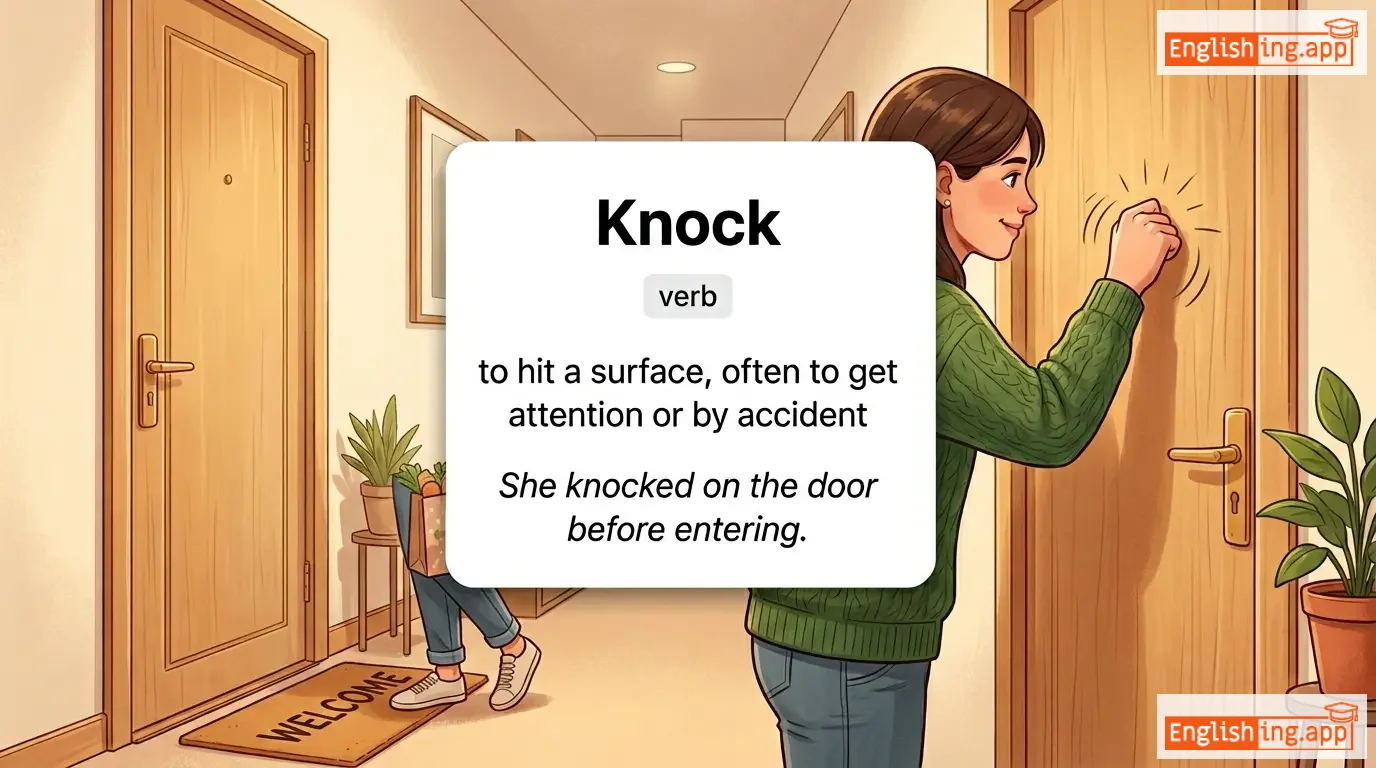
to hit a surface, often to get attention or by accident
••••••
|
She knocked on the door before entering.
她在进入之前敲了敲门。
••••••
|
她在进入之前敲了敲门。
Ta zai jinru zhiqian qiao le qiao men.
••••••
|
knock on wood
敲木头
••••••
|
said to avoid bad luck after mentioning something good
••••••
|
提到好事之后,为了避免厄运而说的
Tidao hao shi zhihou, weile bimiu e yun er shuo de
••••••
|
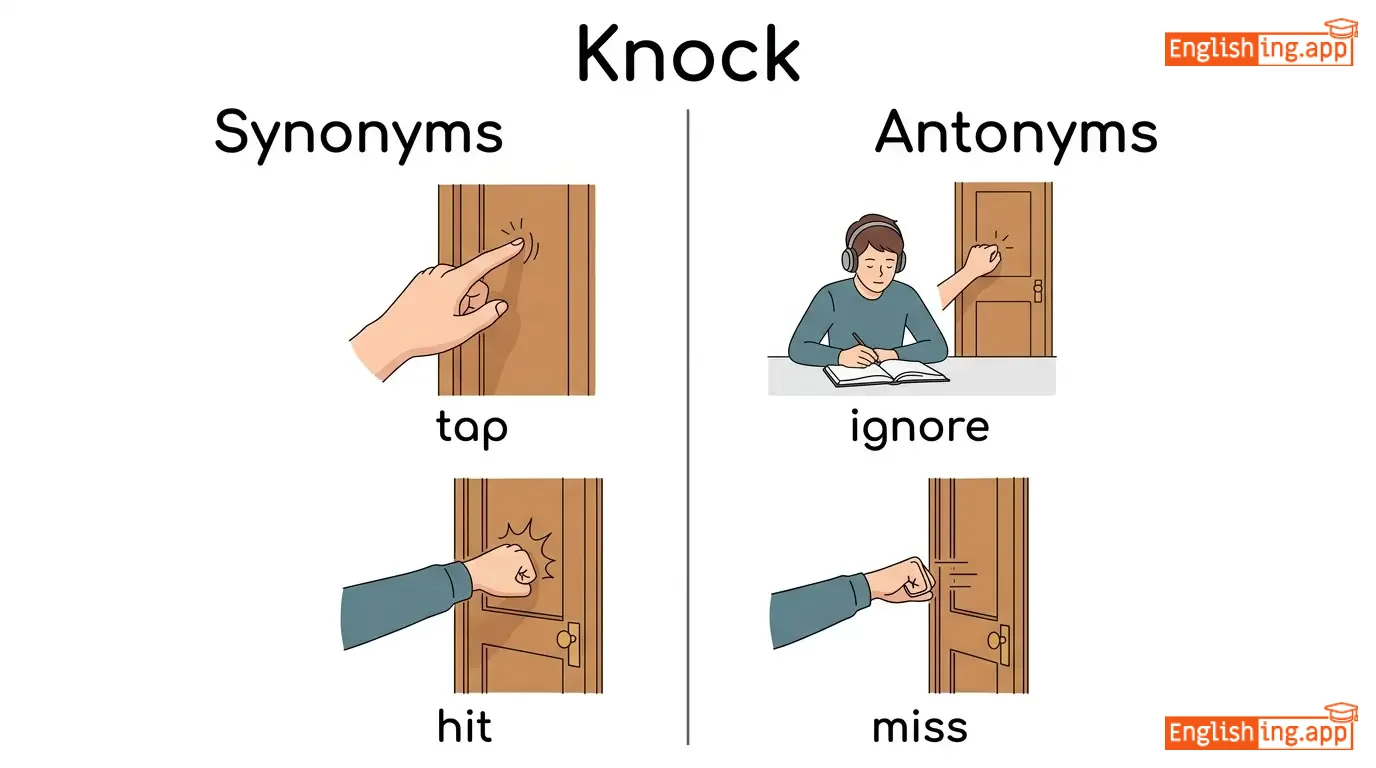
tap, hit, bang, strike, bump
••••••
|
ignore, miss
••••••
|
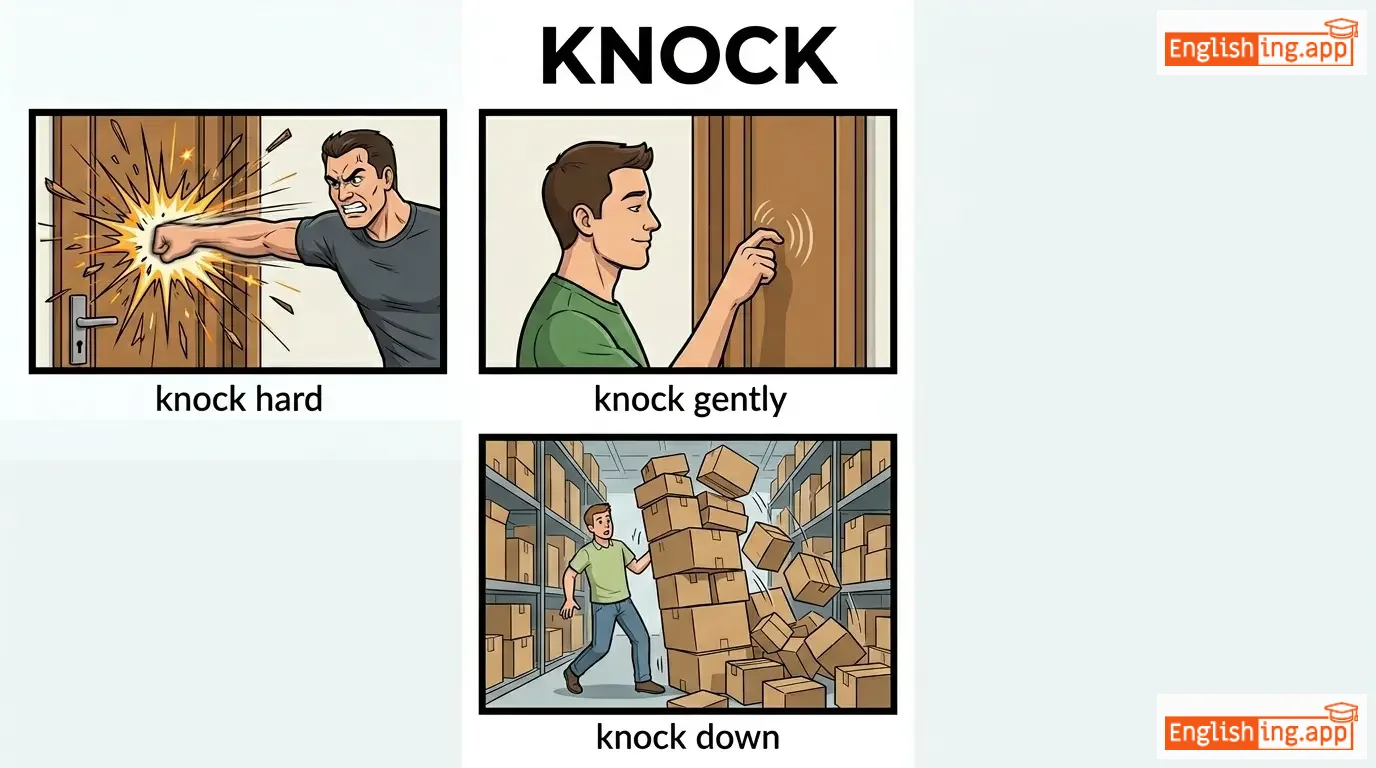
knock hard, knock gently, knock down, knock over
••••••
|
敲门,幸福在等待着你。
••••••
|
|
📖
••••••
|
/noʊn/
adjective
(诺恩)
••••••
|
- •••••• |
已知的
yǐ zhī de
••••••
|
- •••••• | - •••••• | - •••••• | - •••••• |
recognized or familiar; something that is identified or acknowledged
••••••
|
He is a well-known actor in the country. |
他是国内著名的演员。
Tā shì guónèi zhùmíng de yǎnyuán.
••••••
|
known quantity |
something or someone familiar or predictable
••••••
|
已知量
yǐ zhī liàng
••••••
|
famous, familiar, recognized, established, acknowledged
••••••
|
unknown, obscure, unfamiliar
••••••
|
well known, little known, widely known, known fact
••••••
|
Known 的意思是 '已知的' — '已知的 = known' 📖
••••••
|
|
🏷️
••••••
|
/ˈleɪ.bəl/
noun/verb
(happiness)
••••••
|
- •••••• |
幸福
xìngfú
••••••
|
labeled
••••••
|
labeled
••••••
|
labels
••••••
|
labeling
••••••
|
a small piece of paper, fabric, or material attached to an object giving information about it; to attach such a tag or to describe someone or something in a particular way
••••••
|
She labeled the boxes to make moving easier.
她无法掩饰获得奖项时的幸福感。
••••••
|
她无法掩饰获得奖项时的幸福感。
Tā wúfǎ yǎnshì huòdé jiǎngxiàng shí de xìngfú gǎn.
••••••
|
label someone as
追求幸福
••••••
|
to describe or classify someone in a particular way, often unfairly
••••••
|
追求幸福
zhuīqiú xìngfú
••••••
|
tag, marker, sticker, brand, classify
••••••
|
unmark, erase
••••••
|
brand label, warning label, food label, label products, label someone
••••••
|
幸福是人生努力的目标,感到满足就是快乐。
••••••
|
|
📚
••••••
|
/ˈleɪər/
noun
(léi ér)
••••••
|
- •••••• |
层
ceng
••••••
|
- •••••• | - •••••• | - •••••• | - •••••• |
A sheet, thickness, or coating of something that lies over or under a surface.
••••••
|
The cake had a layer of cream between the sponges. |
蛋糕中间有一层奶油。
Dàngāo zhōngjiān yǒu yī céng nǎiyóu.
••••••
|
a layer of meaning |
a deeper or additional significance
••••••
|
意义的层次
yìyì de céngcì
••••••
|
sheet, coating, stratum, film, covering
••••••
|
core, center
••••••
|
thin layer, thick layer, protective layer, additional layer
••••••
|
Layer意味着层,就像蛋糕中间的奶油层。
••••••
|

