The Teacher Who Changed Students' Lives
ラヒマ先生は高校で歴史と社会科を教えていた教師でした。彼女の approach は独特で、生徒の autonomy を育てることを信じていました。授業は退屈な講義ではなく、双方向のディスカッションでした。ある日、第二次世界大戦の atrocities をめぐって二人の生徒の間で激しい argument が起こりました。ラヒマ先生は冷静に仲裁し、異なる視点を尊重することを教えました。彼女の教育への attitude は情熱的でした。常に批判的思考を育てようとしていました。学校の chairman は当初その方法に懐疑的でしたが、結果がすべてを物語っていました。あるプロジェクトでは、生徒たちは戦時中の casualty 数字と civilian への影響を調べました。情報を classify し、データを分析する方法を学びました。面白い出来事として、学校の athletic コーチが間違えて baseball の道具を持って教室に入ってきたことがありました。みんな大笑いしました。ラヒマ先生の birthday パーティーはシンプルで、生徒たちはケーキの代わりに手作りの料理を持ってきました。Catholic の背景を持つ生徒とムスリムの生徒が一緒に料理をしました。これは単なる coincidence ではなく、彼女が意図的に計画した異文化交流でした。戦争に関する授業には、地元の cemetery を訪れることも含まれていました。ある日、生徒の父親である attorney が授業に来て、戦争犯罪裁判について話しました。ラヒマ先生は、法制度が将来の残虐行為を防ぐ方法を説明しました。生徒の一人が歴史的な疫病における bacteria の役割を尋ね、ラヒマ先生はそれを社会史と結びつけました。彼女の教育スタイルは管理部門の approval が必要でしたが、保護者は支援していました。ユニークな伝統として、成功したプロジェクトはノンアルコールの cocktail パーティーで祝われました。生徒たちは教室の外まで広がる学びへの appetite を育みました。ラヒマ先生は、革新的な教育が学びを変え、生涯学習を促すことを証明しました。彼女の遺産は単なる知識だけでなく、批判的思考と共感でもありました。
|
絵文字
|
単語 | Images | 翻訳 | 過去 | 過去分詞 | 三人称単数 | 動名詞 | 意味 | 例文 | 例文の翻訳 | 表現例 | 表現例の意味 | 表現例の翻訳 | 同義語 | 対義語 | コロケーション | ニーモニック |
|---|---|---|---|---|---|---|---|---|---|---|---|---|---|---|---|---|---|
|
🍽️
••••••
|
/ˈæpɪtaɪt/
noun
(アペタイット)
••••••
|
|
食欲
shokuyoku
••••••
|
- •••••• | - •••••• | - •••••• | - •••••• |
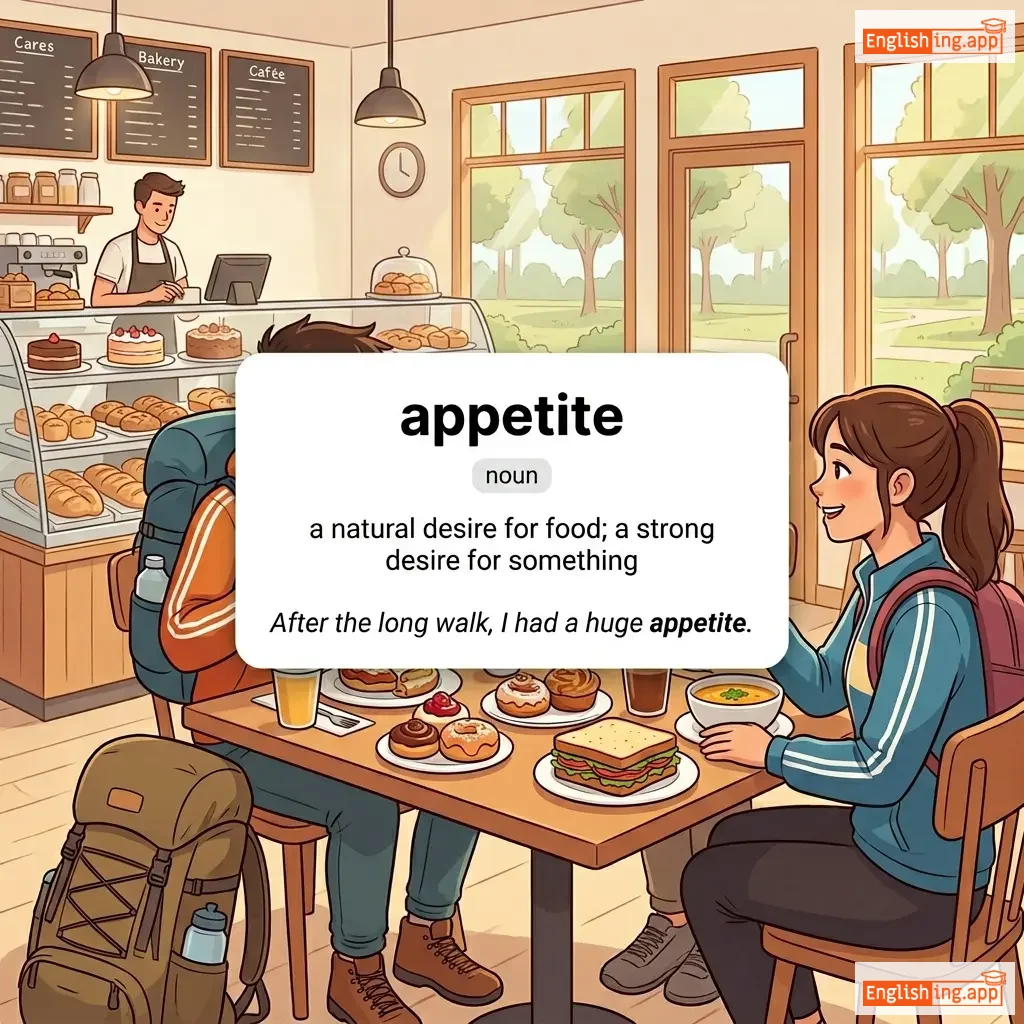
a natural desire for food; a strong desire for something
••••••
|
After the long walk, I had a huge appetite. |
長い散歩の後、私は大きな食欲を感じました。
Nagai sanpo no ato, watashi wa ōkina shokuyoku o kanjimashita.
••••••
|
whet the appetite |
to stimulate interest or desire
••••••
|
食欲をそそる
shokuyoku o sosoru
••••••
|
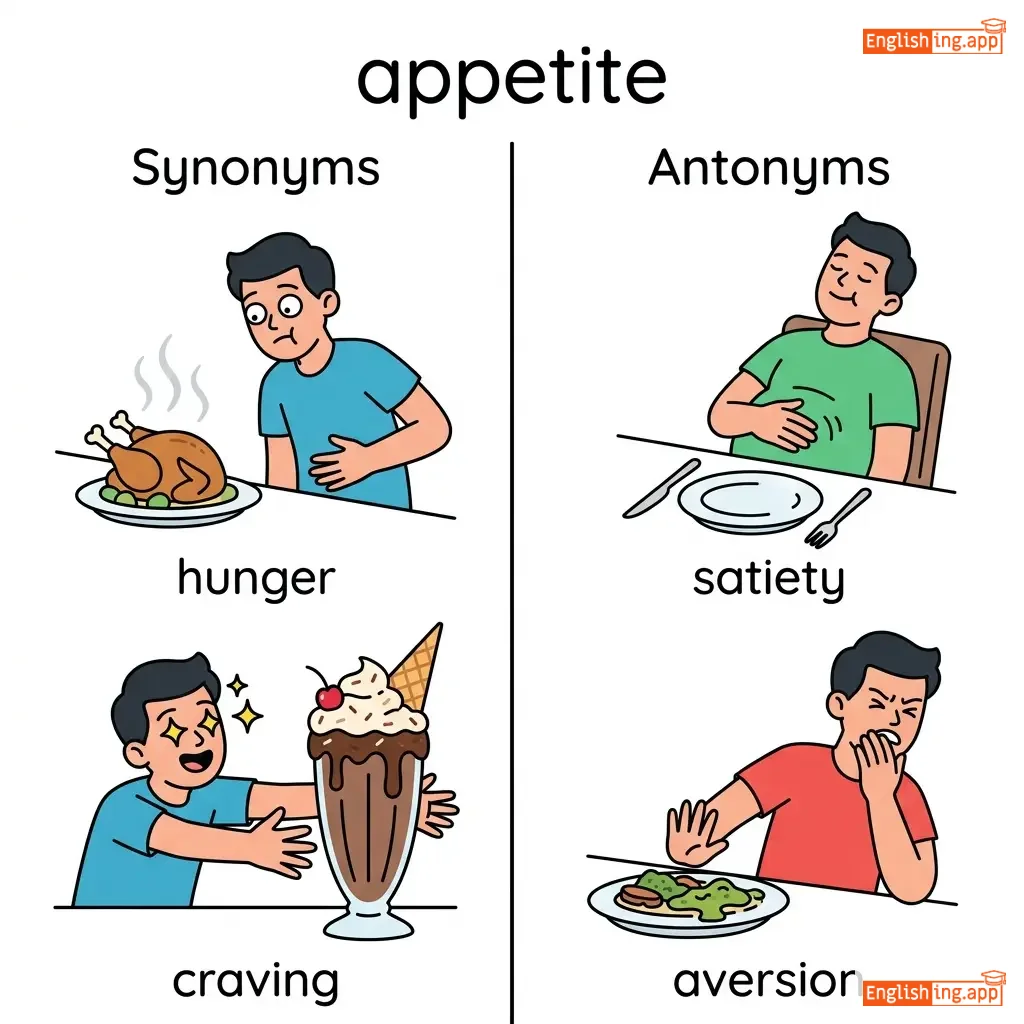
hunger, craving, desire, urge, longing
••••••
|
satiety, aversion
••••••
|
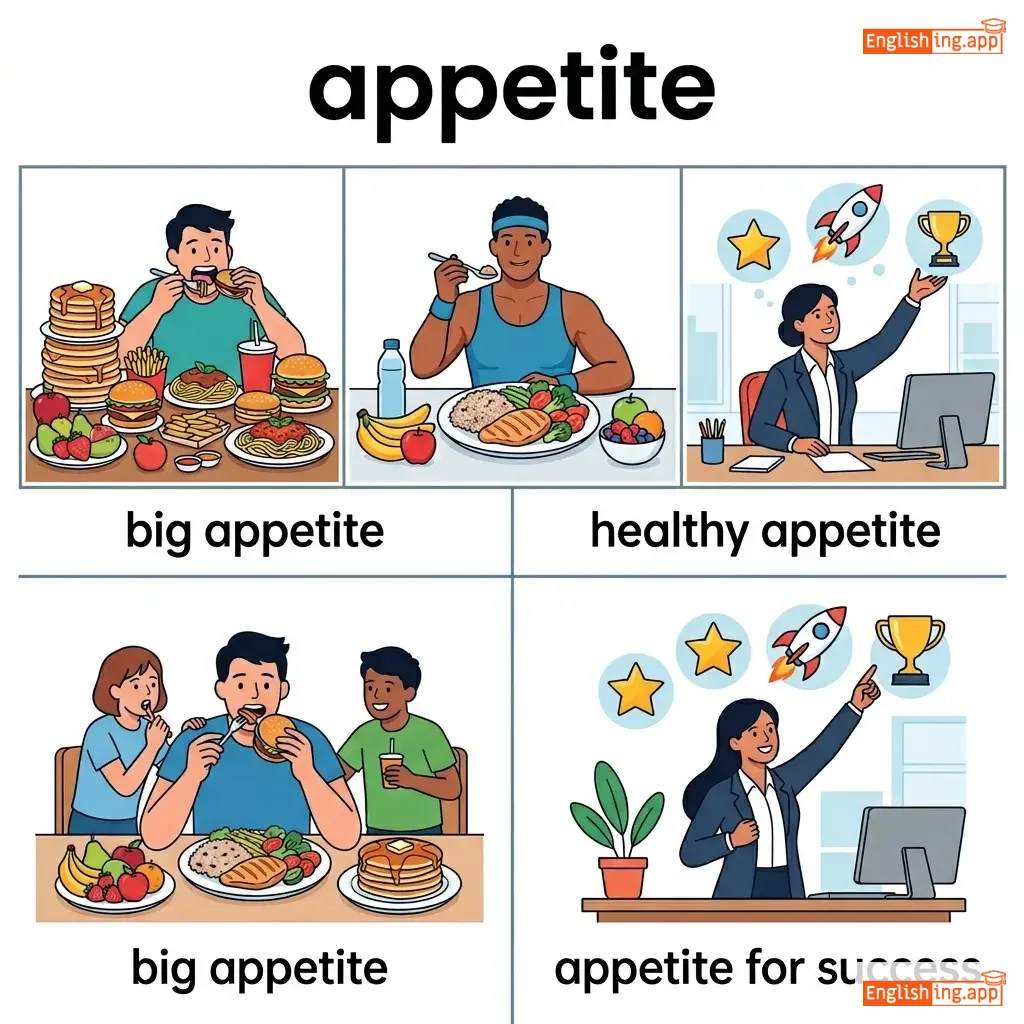
big appetite, healthy appetite, appetite for success
••••••
|
Appetite は食欲を意味する – 食欲 は食べたい欲望を意味します。
••••••
|
|
➡️
••••••
|
/əˈproʊtʃ/
verb
(アプローチ)
••••••
|
- •••••• |
近づく / 解決する
chikaduku / kaiketsu suru
••••••
|
approached
アプローチド
••••••
|
approached
アプローチド
••••••
|
approaches
アプローチズ
••••••
|
approaching
アプローチング
••••••
|
to move closer to someone or something; to deal with a situation or problem
••••••
|
The teacher approached the student to offer help.
教師は学生に近づいて助けを申し出た。
••••••
|
教師は学生に近づいて助けを申し出た。
Kyoushi wa gakusei ni chikaduite tasuke o moushita.
••••••
|
approach with caution
慎重に近づく
••••••
|
to be careful when dealing with something or someone
••••••
|
慎重に近づく
shinchou ni chikaduku
••••••
|
come near, advance, move toward, reach, tackle
••••••
|
retreat, withdraw, avoid
••••••
|
new approach, practical approach, approach a problem, approach someone
••••••
|
近づくは問題を解決するようなものです:まず近づき、そして向き合うのです。
••••••
|
|
✔️
••••••
|
/əˈpruː.vəl/
noun
(apruval)
••••••
|
- •••••• |
承認
shounin
••••••
|
- •••••• | - •••••• | - •••••• | - •••••• |
official permission or agreement for something
••••••
|
The project received government approval. |
そのプロジェクトは政府の承認を得た。
Sono purojekuto wa seifu no shōnin o eta.
••••••
|
seal of approval |
official acceptance or endorsement
••••••
|
承認印
shōnin in
••••••
|
acceptance, consent, permission, endorsement, authorization
••••••
|
disapproval, rejection, denial
••••••
|
gain approval, seek approval, official approval, parental approval
••••••
|
Approval は承認 ✔️ — 承認を得たら、すべてが許可されます。
••••••
|
|
⚡
••••••
|
/ˈɑːrɡjumənt/
noun
(アーギュメント)
••••••
|


|
議論, 論争
giron, ronsou
••••••
|
- •••••• | - •••••• | - •••••• | - •••••• |
a disagreement, or a reason given to support or oppose an idea
••••••
|
They had a heated argument about money. |
彼らはお金について激しい議論をしました。
Karera wa okane ni tsuite hageshii giron o shimashita.
••••••
|
winning an argument |
successfully convincing someone in a dispute
••••••
|
議論に勝つ
giron ni katsu
••••••
|
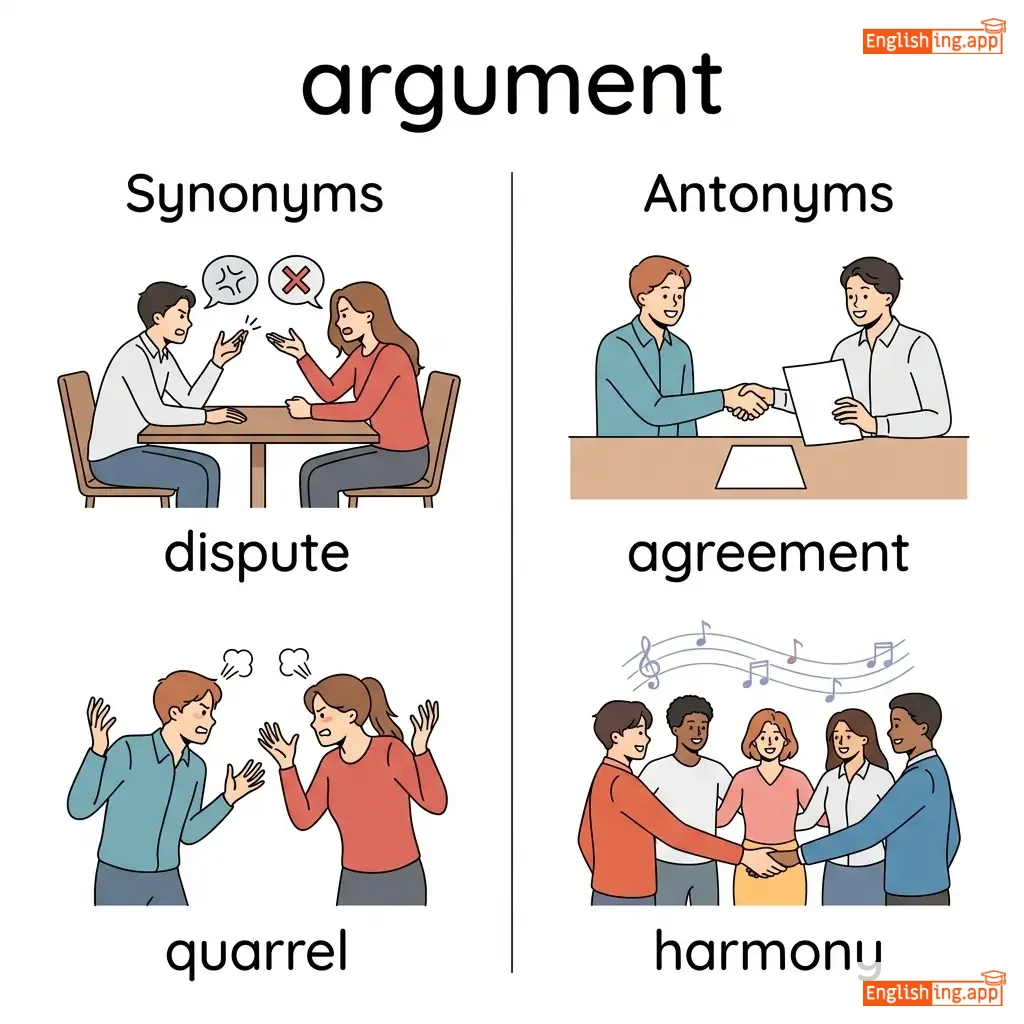
dispute, quarrel, debate, reasoning, contention
••••••
|
agreement, harmony, consensus
••••••
|
heated argument, strong argument, compelling argument, logical argument
••••••
|
Argumentは熱い議論を意味する!
••••••
|
|
🏋️
••••••
|
/æθˈlɛtɪk/
adjective
(アスレチック)
••••••
|
- •••••• |
アスレチックな、力強い
asuretikkuna, chikara-zuyoi
••••••
|
- •••••• | - •••••• | - •••••• | - •••••• |
physically strong, fit, and active; related to athletes or sports
••••••
|
She has an athletic body because she exercises regularly.
彼女は定期的に運動しているので、アスレチックな体を持っています。
••••••
|
彼女は定期的に運動しているので、アスレチックな体を持っています。
Kanojo wa teikiteki ni undō shiteiru node, asurettikku na karada o motteimasu.
••••••
|
athletic build
アスレチック体型
••••••
|
a body type that is muscular and fit
••••••
|
アスレチック体型
asurettikku taikei
••••••
|
fit, strong, active, sporty, muscular
••••••
|
weak, unfit, frail
••••••
|
athletic body, athletic skills, athletic ability, athletic performance
••••••
|
アスレチックはジムの体 💪 - フィットしていて活発!
••••••
|
|
⚔️
••••••
|
/əˈtrɑːsəti/
noun
(アトロシティ)
••••••
|
- •••••• |
残虐行為
zangyaku koui
••••••
|
- •••••• | - •••••• | - •••••• | - •••••• |
an extremely cruel or violent act, often involving physical violence
••••••
|
The world condemned the atrocity committed against civilians. |
世界は市民に対して行われた残虐行為を非難しました。
Sekai wa shimin ni taishite okonawareta zangyaku koui wo hinan shimashita.
••••••
|
- •••••• | - •••••• | - •••••• |
crime, brutality, massacre, cruelty
••••••
|
kindness, compassion, benevolence
••••••
|
war atrocity, commit atrocity, atrocity against civilians
••••••
|
Atrocity (アトロシティ) leads to cruelty and violence (残虐行為).
••••••
|
|
🙂
••••••
|
/ˈætɪˌtjuːd/
noun
••••••
|
- •••••• | - •••••• | - •••••• | - •••••• | - •••••• | - •••••• |
A settled way of thinking or feeling about someone or something, often reflected in behavior.
••••••
|
Her positive attitude helped her overcome many challenges. |
- •••••• |
attitude adjustment |
A change in one’s approach, outlook, or behavior.
••••••
|
- •••••• |
mindset, outlook, perspective, stance, viewpoint
••••••
|
indifference, apathy, neutrality
••••••
|
positive attitude, negative attitude, change in attitude, attitude problem
••••••
|
No •••••• |
|
⚖️
••••••
|
/əˈtɜːrni/
noun
(アトーニー)
••••••
|
- •••••• |
弁護士
bengoshi
••••••
|
- •••••• | - •••••• | - •••••• | - •••••• |
a person who practices law; a lawyer
••••••
|
She hired an attorney to represent her in court. |
彼女は裁判所で彼女を代表するために弁護士を雇いました。
Kanojo wa saibansho de kanojo o daihyō suru tame ni bengoshi o yatomimashita.
••••••
|
power of attorney |
the legal authority to act for another person
••••••
|
委任状
ininjō
••••••
|
lawyer, advocate, counsel, solicitor
••••••
|
client, defendant
••••••
|
defense attorney, criminal attorney, power of attorney, hire attorney
••••••
|
Attorneyは日本語で弁護士, 弁護士は法廷であなたを代表します。
••••••
|
|
🗽
••••••
|
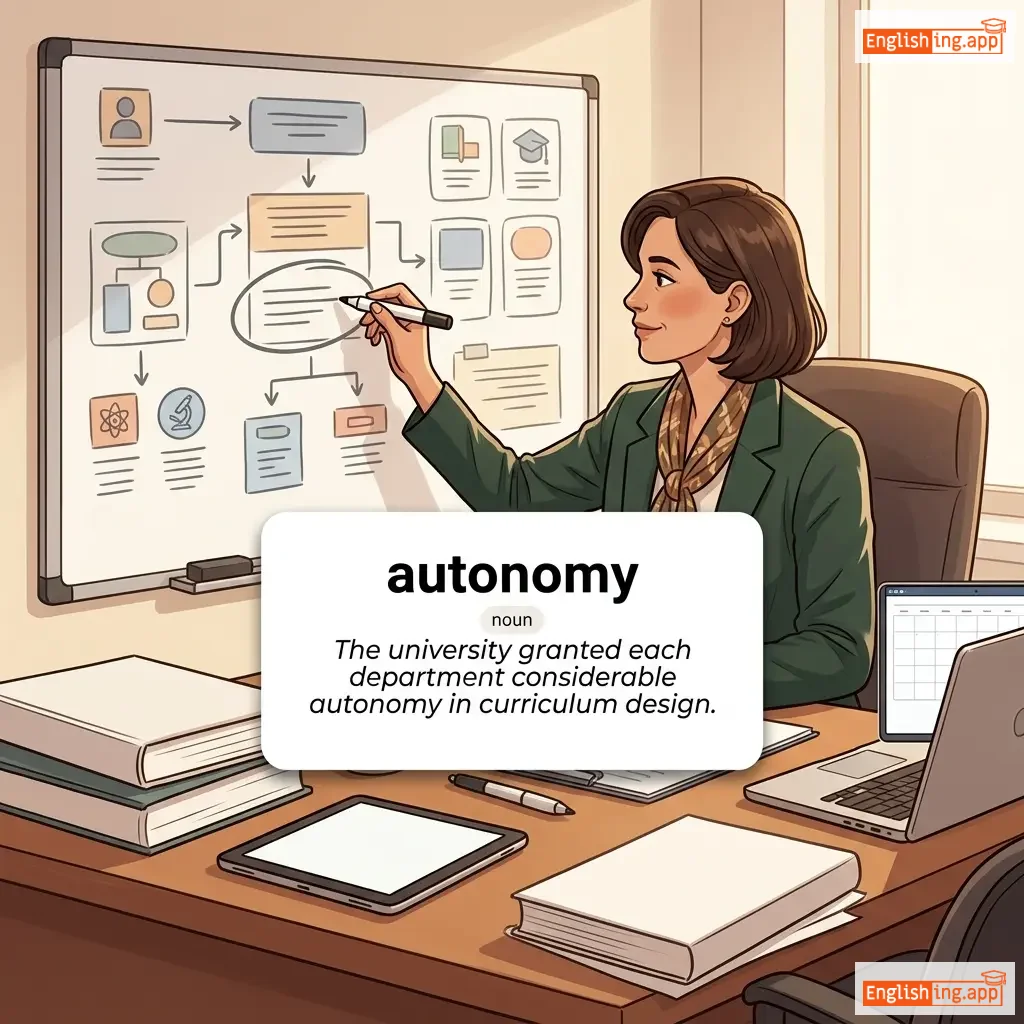
/ɔːˈtɒnəmi/
noun
(オートノミー)
••••••
|
|
自律
jiritsu
••••••
|
- •••••• | - •••••• | - •••••• | - •••••• |
the right or condition of self-government; independence or freedom to act or make decisions
••••••
|
The university granted each department considerable autonomy in curriculum design. |
大学は各部門にカリキュラム設計において相当の自律を認めました。
Daigaku wa kaku bumon ni karikyuramu sekkei ni oite sōtō no jiritsu o mitomemashita.
••••••
|
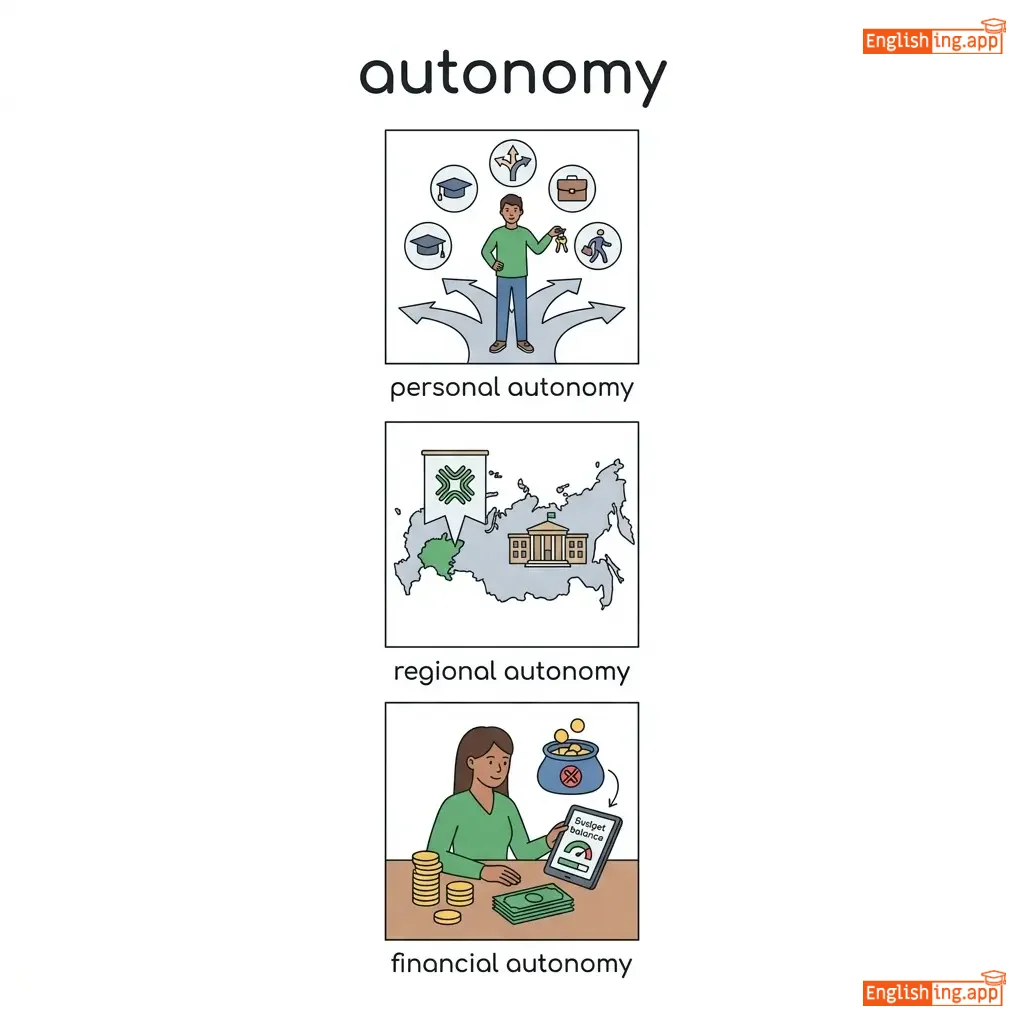
personal autonomy |
the ability to make one's own decisions and control one's own life
••••••
|
個人的な自律
kojinteki na jiritsu
••••••
|
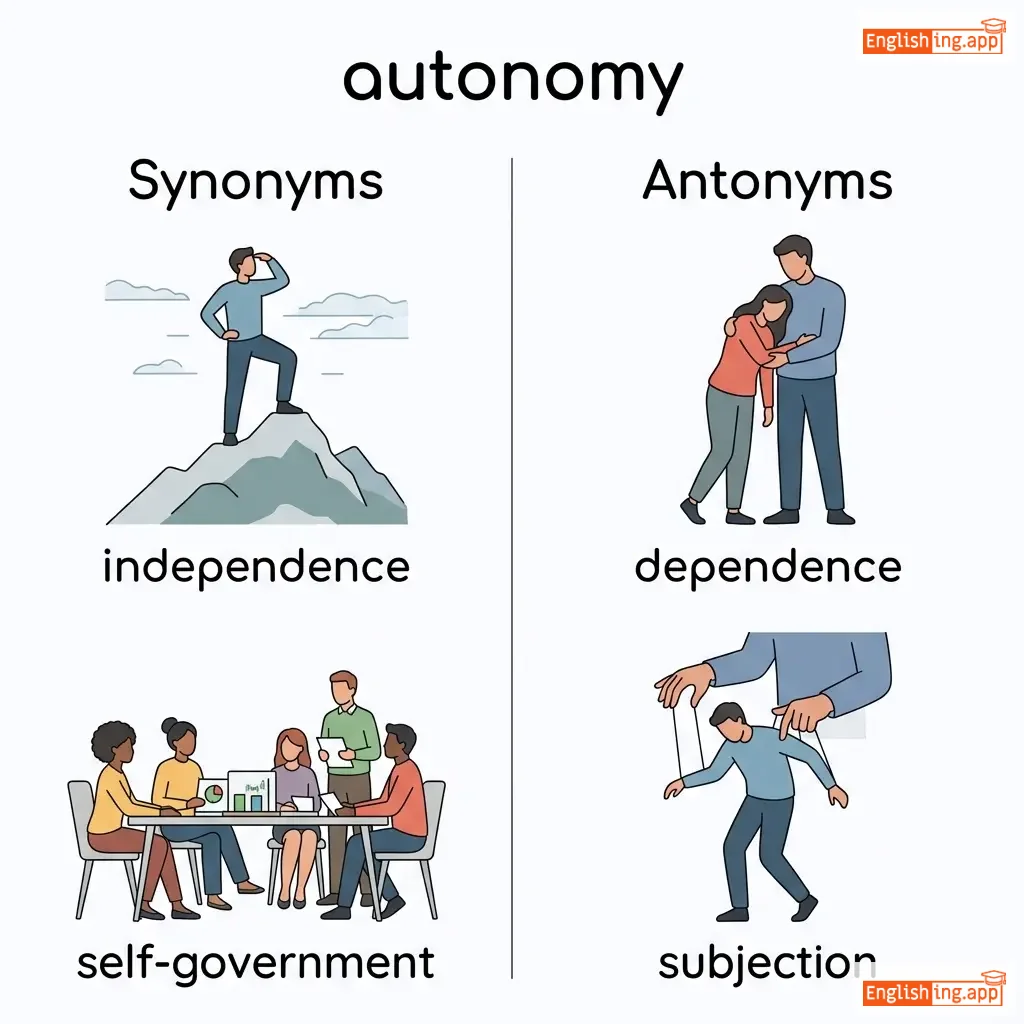
independence, self-government, sovereignty, freedom, self-rule
••••••
|
dependence, subjection, control
••••••
|
personal autonomy, regional autonomy, financial autonomy, autonomy and independence, grant autonomy
••••••
|
AUTO-NOMYとはAUTOの自己管理 - 自律 (jiritsu) によって私たちの決定!
••••••
|
|
🦠
••••••
|
/bækˈtɪəriə/
noun
(バクテリア)
••••••
|
|
バクテリア
bakteria
••••••
|
- •••••• | - •••••• | - •••••• | - •••••• |
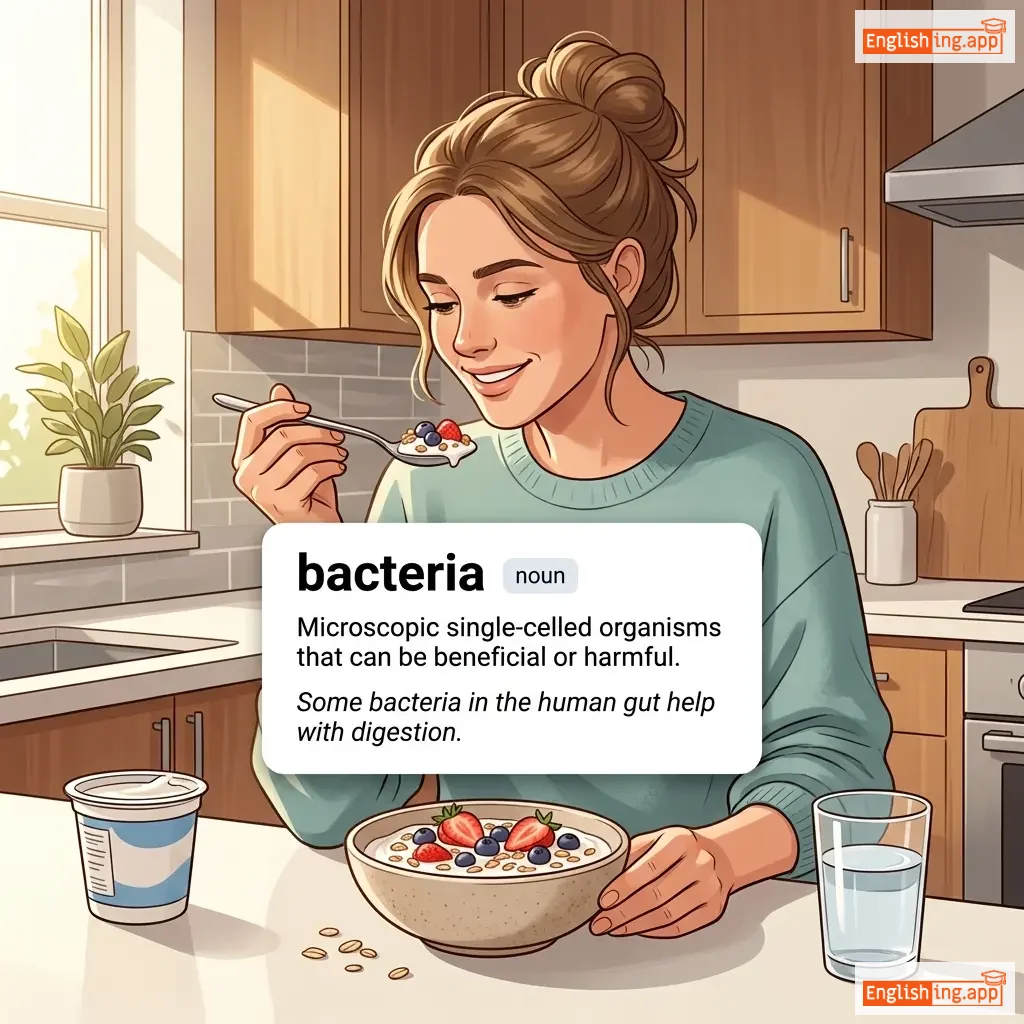
Microscopic single-celled organisms that can be beneficial or harmful.
••••••
|
Some bacteria in the human gut help with digestion.
いくつかのバクテリアは、人間の腸内で消化を助けます。
••••••
|
いくつかのバクテリアは、人間の腸内で消化を助けます。
Ikutsuka no bakteria wa, ningen no chōnai de shōka o tasukemasu.
••••••
|
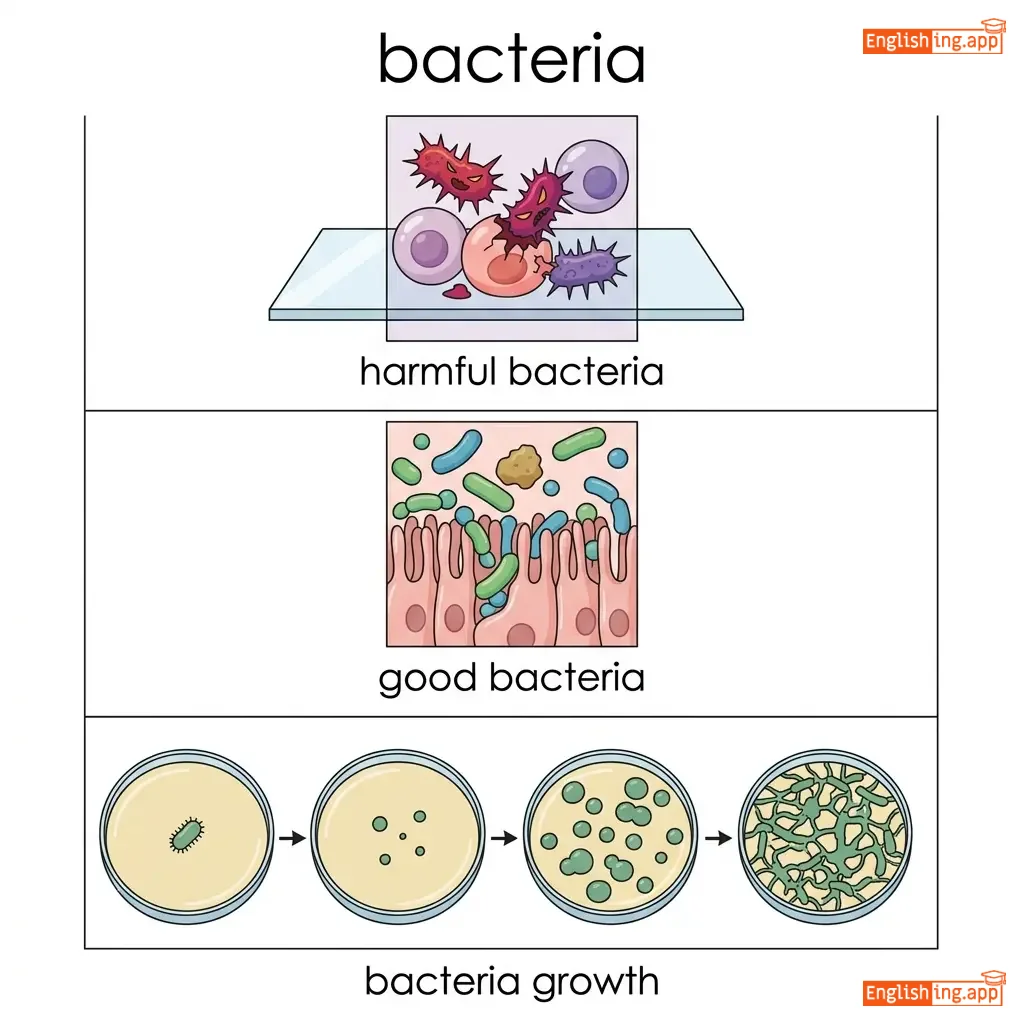
good bacteria
良いバクテリア
••••••
|
Bacteria that are beneficial for health, such as aiding digestion.
••••••
|
良いバクテリア
Yoi bakteria
••••••
|
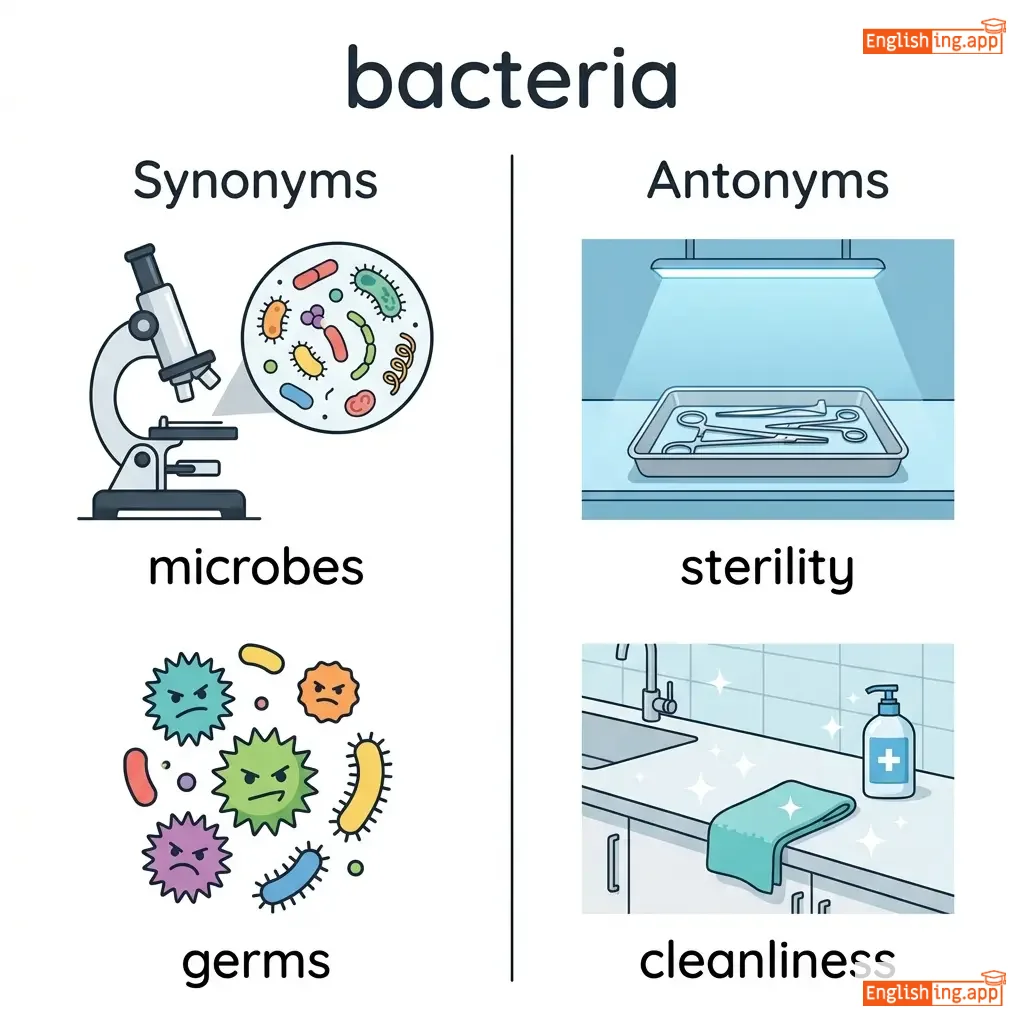
microbes, germs, microorganisms, pathogens
••••••
|
sterility, cleanliness
••••••
|
harmful bacteria, good bacteria, bacteria growth, bacteria infection
••••••
|
バクテリア—見えない生命、良いものと悪いものがある。
••••••
|
|
⚾
••••••
|
/ˈbeɪsˌbɔːl/
noun
(ベースボール)
••••••
|
- •••••• |
ベースボール
bēsubōru
••••••
|
- •••••• | - •••••• | - •••••• | - •••••• |
a sport in which two teams try to score runs by hitting a ball and running around bases
••••••
|
He loves watching baseball games on TV. |
彼はテレビで野球の試合を見るのが好きです。
Kare wa terebi de yakyū no shiai o miru no ga suki desu.
••••••
|
- •••••• | - •••••• | - •••••• |
sport, game, pastime
••••••
|
work, chore
••••••
|
baseball game, baseball bat, baseball team, baseball player
••••••
|
ベースボールはスポーツを意味します; 'ベースを打って走って得点'を想像して
••••••
|
|
🎂
••••••
|
/ˈbɜːrθ.deɪ/
noun
••••••
|
- •••••• | - •••••• | - •••••• | - •••••• | - •••••• | - •••••• |
the anniversary of the day on which a person was born, typically celebrated annually
••••••
|
We are planning a surprise birthday party for her. |
- •••••• |
happy birthday |
a greeting used to wish someone well on the anniversary of their birth
••••••
|
- •••••• |
anniversary, natal day, birth anniversary
••••••
|
deathday
••••••
|
birthday cake, birthday party, birthday gift, birthday wish
••••••
|
No •••••• |
|
🚑
••••••
|
/ˈkæʒ.u.əl.ti/
noun
(カジュアルティ)
••••••
|
- •••••• |
犠牲者; 負傷者; 損失
giseisha; fushousha; sonshitsu
••••••
|
- •••••• | - •••••• | - •••••• | - •••••• |
a person killed or injured in a war or accident; a victim of circumstances
••••••
|
The hospital treated many casualties from the car accident.
病院は車の事故からの多くの負傷者を治療しました。
••••••
|
病院は車の事故からの多くの負傷者を治療しました。
Byouin wa kuruma no jiko kara no ooku no fushousha wo chiryou shimashita.
••••••
|
- •••••• | - •••••• | - •••••• |
victim, fatality, injured person, loss
••••••
|
survivor, unharmed person
••••••
|
war casualty, traffic casualty, casualty count
••••••
|
事故の犠牲者は運命の犠牲者です
••••••
|
|
⛪
••••••
|
/ˈkæθəlɪk/
adjective
(カトリック)
••••••
|
- •••••• |
カトリック
katorikku
••••••
|
- •••••• | - •••••• | - •••••• | - •••••• |
Including a wide variety; all-embracing; relating to the Roman Catholic Church.
••••••
|
She has catholic tastes in music, enjoying everything from jazz to opera.
彼女は音楽にカトリックな趣味を持っており、ジャズからオペラまで何でも楽しんでいます。
••••••
|
彼女は音楽にカトリックな趣味を持っており、ジャズからオペラまで何でも楽しんでいます。
Kanojo wa ongaku ni katorikku na shumi o motte ori, jazu kara opera made nandemo tanoshinde imasu.
••••••
|
Catholic taste
カトリックな趣味
••••••
|
Having broad or universal tastes or interests.
••••••
|
カトリックな趣味
katorikku na shumi
••••••
|
universal, comprehensive, broad, wide-ranging, all-inclusive
••••••
|
narrow, limited, exclusive
••••••
|
catholic faith, catholic church, catholic taste, catholic tradition
••••••
|
カトリックは教会だけでなく、すべてを含む—例えばジャズからオペラまで。
••••••
|
|
⚰️
••••••
|
/ˈsɛmɪˌtɛri/
noun
(セメタリー)
••••••
|
- •••••• |
墓地
bochi
••••••
|
- •••••• | - •••••• | - •••••• | - •••••• |
a place where dead people are buried
••••••
|
The old cemetery is located at the edge of the village. |
古い墓地は村の端にあります。
Furui bochi wa mura no hashi ni arimasu.
••••••
|
- •••••• | - •••••• | - •••••• |
graveyard, burial ground, necropolis, churchyard
••••••
|
living area, city center
••••••
|
old cemetery, village cemetery, family cemetery, war cemetery
••••••
|
セメタリー = Se-me-ta-ri, 死者の場所
••••••
|
|
👔
••••••
|
/ˈtʃɛərmən/
noun
(ハピネス)
••••••
|
- •••••• |
幸福
kōfuku
••••••
|
- •••••• | - •••••• | - •••••• | - •••••• |
the leader or head of a meeting, committee, or organization
••••••
|
The chairman opened the meeting with a short speech. |
彼女は賞を受け取ったとき、喜びを隠せなかった。
Kanojo wa shō o uketotta toki, yorokobi o kakusenakatta.
••••••
|
chairman of the board |
the head of a company's board of directors
••••••
|
幸福を追求する
kōfuku o tsuikyū suru
••••••
|
leader, head, chief, president
••••••
|
member, follower
••••••
|
chairman position, acting chairman, board chairman, elected chairman
••••••
|
幸福 = 幸 + 福 => 幸せな気分になれる。
••••••
|
|
🧑
••••••
|
/səˈvɪliən/
noun/adjective
(シビリアン)
••••••
|
- •••••• |
市民
shimin
••••••
|
- •••••• | - •••••• | - •••••• | - •••••• |
a person not in the armed forces or police
••••••
|
The area was evacuated to protect the civilians. |
その地域は市民を守るために避難されました。
Sono chiiki wa shimin o mamoru tame ni hinan saremashita.
••••••
|
- •••••• | - •••••• | - •••••• |
noncombatant, ordinary person, nonmilitary, commoner
••••••
|
soldier, officer
••••••
|
civilian life, civilian population, civilian clothes
••••••
|
シビリアン (shibian) から市民 (shimin) へ – 市民は軍に属さない人々。
••••••
|
|
🗂️
••••••
|
/ˈklæsɪfaɪ/
verb
••••••
|
- •••••• | - •••••• |
classified
••••••
|
classified
••••••
|
classifies
••••••
|
classifying
••••••
|
to arrange or organize into categories or groups
••••••
|
The librarian classified the books by subject. |
- •••••• |
classify information |
to categorize data, often in terms of security or confidentiality
••••••
|
- •••••• |
categorize, sort, organize, group, arrange
••••••
|
confuse, mix, disorder
••••••
|
classify data, classify books, classify animals, classify documents
••••••
|
No •••••• |
|
🍸
••••••
|
/ˈkɒkˌteɪl/
noun
(カクテル)
••••••
|
- •••••• |
カクテル
kakuteru
••••••
|
- •••••• | - •••••• | - •••••• | - •••••• |
a mixed drink typically containing alcohol and other ingredients.
••••••
|
She ordered a cocktail at the bar. |
彼女はバーでカクテルを注文した。
Kanojo wa bā de kakuteru o chuumon shita.
••••••
|
- •••••• | - •••••• | - •••••• |
drink, mix, beverage, concoction
••••••
|
water, soft drink
••••••
|
cocktail party, cocktail hour, cocktail recipe
••••••
|
カクテル—楽しさを一杯に!
••••••
|
|
⏰
••••••
|
/ˌkoʊ.ɪnˈsaɪd/
verb
(コインサイド)
••••••
|
- •••••• |
一致する
icchi suru
••••••
|
coincided
コインサイデッド
••••••
|
coincided
コインサイデッド
••••••
|
coincides
コインサイドズ
••••••
|
coinciding
コインサイディング
••••••
|
To occur at the same time or to be in agreement.
••••••
|
The meeting coincided with her birthday.
会議は彼女の誕生日と一致しました。
••••••
|
会議は彼女の誕生日と一致しました。
Kaigi wa kanojo no tanjōbi to itchi shimashita.
••••••
|
- •••••• | - •••••• | - •••••• |
concur, agree, match, correspond
••••••
|
differ, clash, disagree
••••••
|
coincide with, events coincide, dates coincide
••••••
|
一致するは、二つの出来事が同じ時に起こることを意味します。
••••••
|

