The Coach Who Built a Championship Team
コーチのサリムは、struggling チームで働いている football coach でした。選手たちは士気が下がっており、多くの人が thought プレイオフは不可能だと思っていました。しかし、サリムは決意していました。彼の supreme 自信はチームを鼓舞しました。最初の練習で、選手たちは頻繁に stumbled しましたが、サリムは忍耐強く見守りました。彼は、ミスは改善の testing ground であると言いました。彼のトレーニング方法は厳しかったですが、効果的でした。選手たちはスタミナをつけるために困難な terrain を through 走らなければなりませんでした。ある日、選手の一人が競争に terrified 感じていると言いました。サリムは彼を安心させ、恐怖は自然なものだと言いました。チームミーティングでは、彼は彼らの潜在能力を testify しました。面白い瞬間は、寒い天気の中、選手たちが t-shirts の上に sweaters を着て、体が大きく見えたことです。サリムは笑って言いました、「私たちは surplus 軍隊のようだ!」試合中、相手チームはサリムのチームを terrify させようとしましたが、選手たちは tightly トレーニングを守りました。重要な選手が赤紙で suspended され、チームは少人数でプレーする必要がありました。サリムは、これはプレッシャーの symptom であり、弱さではないとアドバイスしました。選手たちはプライドを swallow し、チームとして働くことを学びました。Thereby、彼らは真のチームワークを育みました。スタジアムの texture—粗い芝生、不均一な箇所—は挑戦的でしたが、サリムは適応することを教えました。一部の人々はチームの成長は一時的だと suspected しました。ある批評家は thought それは単なる運だと言いました。しかし、サリムの体系的なアプローチはそれが間違いであることを証明しました。悲劇的な瞬間は、元選手がうつ病のために suicide を試みたときで、サリムはメンタルヘルスセッションを組織しました。彼は誰も tobacco を吸ったり、有害な習慣を持たないようにしました。チームはチャンピオンシップで優勝し、適切なコーチングとメンタル準備があれば、何でも可能であることを証明しました。
|
絵文字
|
単語 | Images | 翻訳 | 過去 | 過去分詞 | 三人称単数 | 動名詞 | 意味 | 例文 | 例文の翻訳 | 表現例 | 表現例の意味 | 表現例の翻訳 | 同義語 | 対義語 | コロケーション | ニーモニック |
|---|---|---|---|---|---|---|---|---|---|---|---|---|---|---|---|---|---|
|
🤦
••••••
|
/ˈstʌmbəl/
verb
(スタンブル)
••••••
|
- •••••• |
つまずく
tsumazuku
••••••
|
stumbled
スタンブルド
••••••
|
stumbled
スタンブルド
••••••
|
stumbles
スタンブルス
••••••
|
stumbling
スタンブリング
••••••
|
to trip or lose balance while walking or running; to make a mistake or falter
••••••
|
He stumbled on the uneven pavement.
彼はでこぼこな歩道でつまずいた。
••••••
|
彼はでこぼこな歩道でつまずいた。
Kare wa dekoboka na hodō de tsumazuita.
••••••
|
stumble upon
偶然に出くわす
••••••
|
to find something by chance
••••••
|
偶然見つける
gūzen mitsukeru
••••••
|
trip, falter, slip, blunder, hesitate
••••••
|
balance, steady, recover
••••••
|
stumble upon, stumble over, stumble badly, stumble into
••••••
|
Stumbleはつまずく意味 — 石につまずくと、つまずくよ
••••••
|
|
⚠️
••••••
|
/ˈsuː.ɪ.saɪd/
noun
(自殺)
••••••
|
- •••••• |
自殺
jisatsu
••••••
|
- •••••• | - •••••• | - •••••• | - •••••• |
the act of intentionally killing oneself
••••••
|
Mental health professionals work to prevent suicide. |
メンタルヘルスの専門家は自殺を防ぐために働いています。
mentaru herusu no senmonka wa jisatsu o fusegu tame ni hataraiteimasu.
••••••
|
- •••••• | - •••••• | - •••••• |
self-destruction, self-harm
••••••
|
survival, life preservation
••••••
|
commit suicide, suicide prevention, suicide rate
••••••
|
精神科医が自殺を防ぐ
••••••
|
|
👑
••••••
|
/suːˈpriːm/
adjective
(スプリーム)
••••••
|
- •••••• |
最高の
saikō no
••••••
|
- •••••• | - •••••• | - •••••• | - •••••• |
highest in rank, authority, or quality; greatest; most important
••••••
|
The Supreme Court made the final decision. |
最高裁判所は最終的な決定を下しました。
Saikō saiban-sho wa saishū-teki na kettei o kudashimashita
••••••
|
- •••••• | - •••••• | - •••••• |
highest, ultimate, paramount, top
••••••
|
lowest, inferior, subordinate, minor
••••••
|
supreme court, supreme authority, supreme power
••••••
|
No •••••• |
|
📈
••••••
|
/ˈsɜːr.plʌs/
noun
(サープラス)
••••••
|
- •••••• |
余剰
yojo
••••••
|
- •••••• | - •••••• | - •••••• | - •••••• |
An amount that is more than what is needed.
••••••
|
The country has a surplus of food this year. |
今年、その国には食料の余剰があります。
Kotoshi, sono kuni ni wa shokuryou no yojou ga arimasu.
••••••
|
trade surplus |
The amount by which a country's exports exceed its imports.
••••••
|
貿易余剰
boueki yojo
••••••
|
excess, extra, oversupply, remainder, overflow
••••••
|
shortage, deficit, lack
••••••
|
budget surplus, surplus goods, surplus food, surplus production
••••••
|
余剰 = 必要以上に多い
••••••
|
|
🕵️
••••••
|
/səˈspɛkt/ (noun, adj) | /səˈspɛkt/ (verb)
verb, noun, adjective
••••••
|

|
- •••••• |
suspected
••••••
|
suspected
••••••
|
suspects
••••••
|
suspecting
••••••
|
To believe something to be true, likely, or guilty without certain proof.
••••••
|
The police suspect him of stealing the car. |
- •••••• |
usual suspect |
a person frequently suspected of wrongdoing
••••••
|
- •••••• |
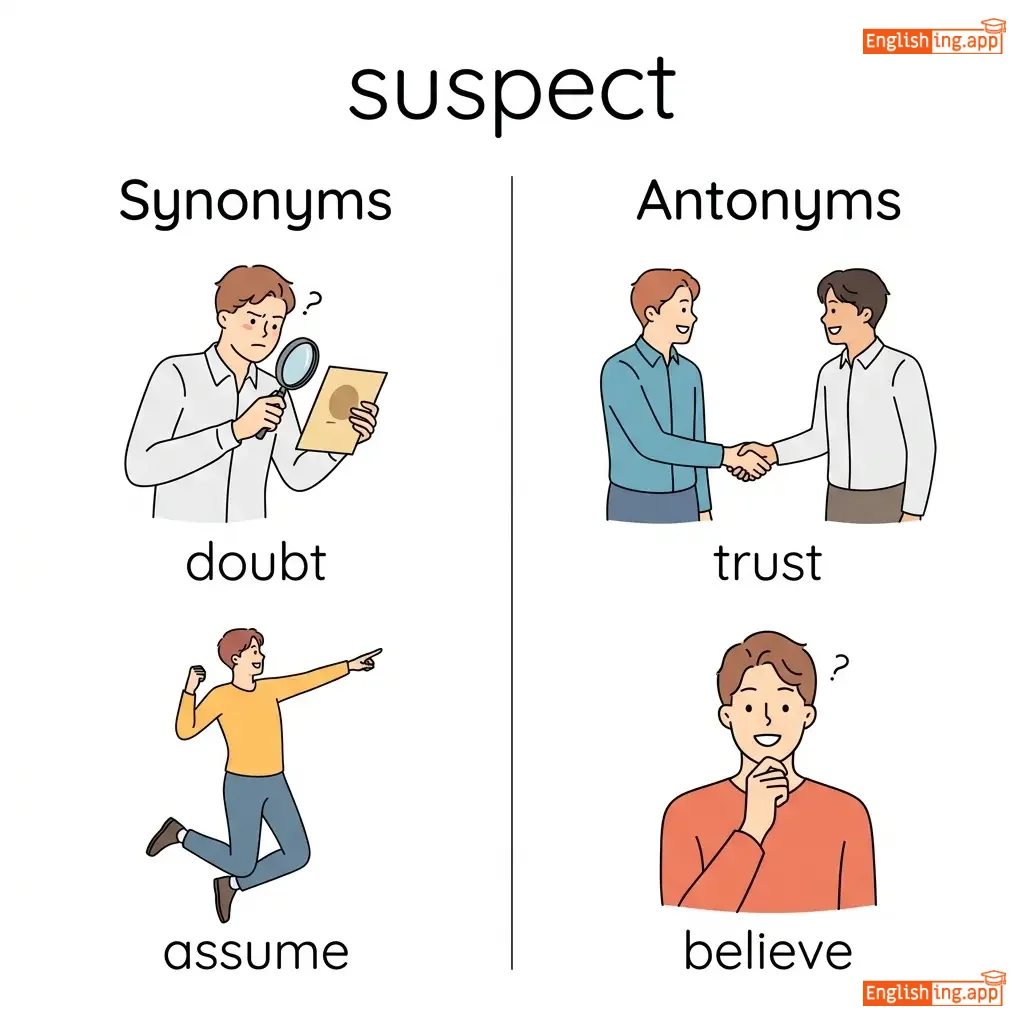
doubt, assume, suppose, accuse
••••••
|
trust, believe, absolve
••••••
|
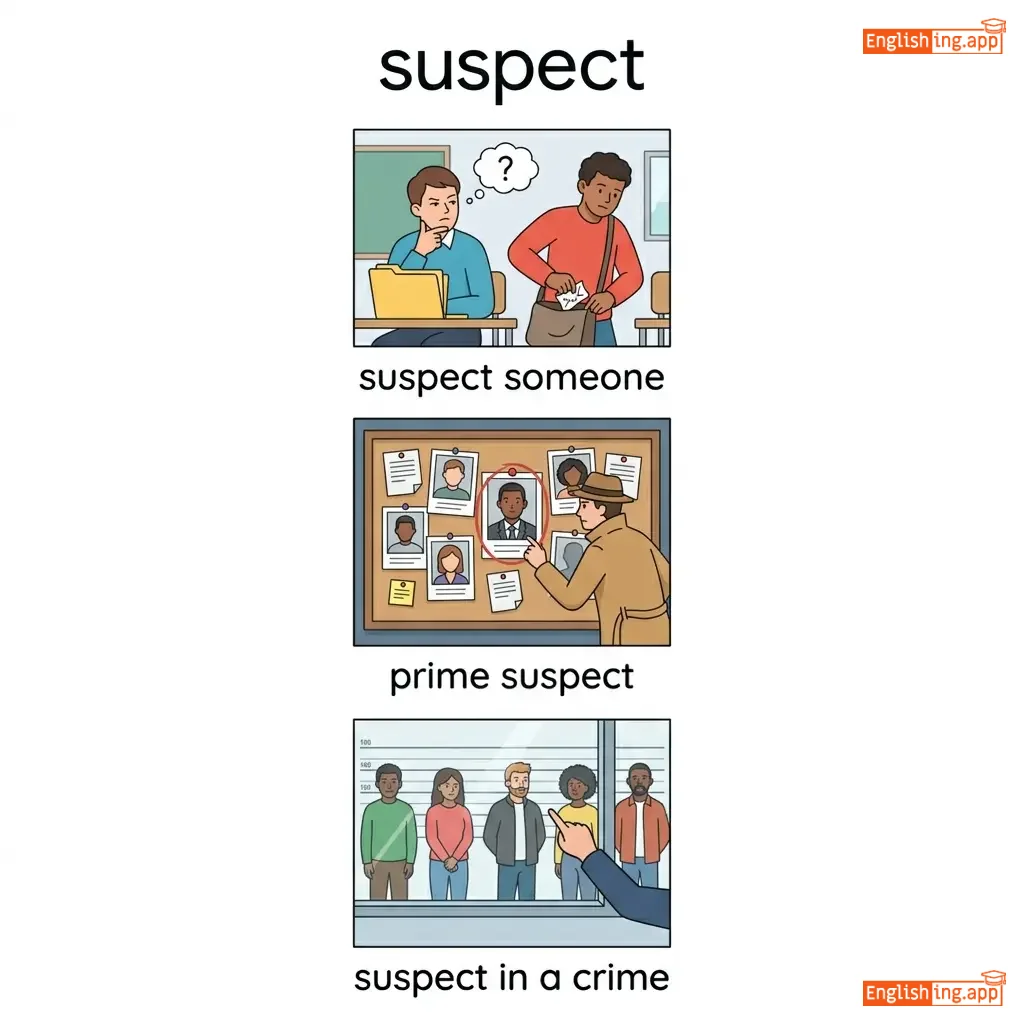
suspect someone, prime suspect, suspect in a crime
••••••
|
No •••••• |
|
⏸️
••••••
|
/səˈspɛnd/
verb
(サスペンド)
••••••
|
- •••••• |
一時停止する
ichijiteishi suru
••••••
|
suspended
サスペンデッド
••••••
|
suspended
サスペンデッド
••••••
|
suspends
サスペンズ
••••••
|
suspending
サスペンディング
••••••
|
To temporarily stop something from being active or valid.
••••••
|
The company decided to suspend his membership.
その会社は彼の会員資格をサスペンドすることに決めました。
••••••
|
その会社は彼の会員資格をサスペンドすることに決めました。
Sono kaisha wa kare no kaiin shikaku wo sasupendo suru koto ni kimemashita.
••••••
|
suspend disbelief
サスペンド・ディスビリーフ
••••••
|
to willingly accept something unrealistic for the sake of enjoyment
••••••
|
不信を一時停止する
fushin wo ichijiteishi suru
••••••
|
halt, delay, interrupt, pause
••••••
|
continue, resume, proceed
••••••
|
suspend activities, suspend operations, suspend from work
••••••
|
サスペンドは休止ボタンのようなもの—すべてが止まります!
••••••
|
|
🫗
••••••
|
/ˈswɒloʊ/
verb
(スワロー)
••••••
|
- •••••• |
飲み込む
nomikomu
••••••
|
swallowed
スワロウド
••••••
|
swallowed
スワロウド
••••••
|
swallows
スワロウズ
••••••
|
swallowing
スワローイング
••••••
|
to make food or drink go down your throat into your stomach
••••••
|
He swallowed the pill with a glass of water.
彼は薬を水で飲み込みました。
••••••
|
彼は薬を水で飲み込みました。
Kare wa kusuri o mizu de nomikomimashita.
••••••
|
swallow one's pride
プライドを飲み込む
••••••
|
to do something that is humiliating or embarrassing but necessary
••••••
|
プライドを飲み込む
Puraido o nomikomu
••••••
|
gulp, ingest, consume, devour, absorb
••••••
|
spit, vomit, reject
••••••
|
swallow food, swallow hard, swallow a pill, swallow the truth
••••••
|
Swallow は飲み込むという意味 — 鳥が昆虫を飲み込むのと同じ!
••••••
|
|
🧶
••••••
|
/ˈswɛtər/
noun
••••••
|
- •••••• | - •••••• | - •••••• | - •••••• | - •••••• | - •••••• |
a warm knitted piece of clothing worn on the upper body
••••••
|
She wore a red sweater to keep warm in the cold weather. |
- •••••• | - •••••• | - •••••• | - •••••• |
jumper, pullover, cardigan, hoodie, sweatshirt
••••••
|
shirt, blouse, jacket
••••••
|
wool sweater, knitted sweater, wear a sweater, red sweater
••••••
|
No •••••• |
|
🤒
••••••
|
/ˈsɪmptəm/
noun
(シンプトム)
••••••
|
- •••••• |
症状
shōjō
••••••
|
- •••••• | - •••••• | - •••••• | - •••••• |
a sign or indication of something, especially of an illness
••••••
|
Fever is a common symptom of the flu. |
熱はインフルエンザの一般的な症状です。
Netsu wa infuruenza no ippanteki na shōjō desu.
••••••
|
- •••••• | - •••••• | - •••••• |
sign, indication, manifestation, mark
••••••
|
health, wellness
••••••
|
symptom of illness, common symptom, early symptom
••••••
|
Symptom like fever: You feel sick (病気) when you're ill!
••••••
|
|
👕
••••••
|
/ˈtiː ʃɜːt/
noun
(ティーシャツ)
••••••
|
- •••••• |
Tシャツ
T-shatsu
••••••
|
- •••••• | - •••••• | - •••••• | - •••••• |
a casual short-sleeved cotton shirt with no collar
••••••
|
He wore a white t-shirt and jeans to the party.
彼はパーティーに白いTシャツとジーンズを着て行った。
••••••
|
彼はパーティーに白いTシャツとジーンズを着て行った。
Kare wa pātii ni shiroi T-shatsu to jīnzu o kite itta.
••••••
|
- •••••• | - •••••• | - •••••• |
tee, top, shirt, jersey, garment
••••••
|
jacket, sweater
••••••
|
white t-shirt, printed t-shirt, cotton t-shirt, wear a t-shirt
••••••
|
Tシャツはカジュアルで快適な服装の代表!
••••••
|
|
🌄
••••••
|
/təˈreɪn/
noun
(テレイン)
••••••
|
- •••••• |
地形
chikei
••••••
|
- •••••• | - •••••• | - •••••• | - •••••• |
a stretch of land, especially with regard to its physical features
••••••
|
The soldiers had to cross rough terrain during the mission. |
兵士たちは任務中に険しい地形を越えなければならなかった。
Heishi-tachi wa ninmu-chuu ni kewashii chikei o koenakereba naranakatta.
••••••
|
mountainous terrain |
landscape full of mountains or steep slopes
••••••
|
山岳地形
sangaku chikei
••••••
|
land, ground, landscape, topography, area
••••••
|
sea, sky
••••••
|
rocky terrain, flat terrain, desert terrain, rugged terrain
••••••
|
Terrain とは地形のこと — まるで電車が地面を走るように、terrain は地面の形を指す。
••••••
|
|
😱
••••••
|
/ˈtɛrəˌfaɪ/
verb
(terifai)
••••••
|
- •••••• |
怖がらせる
kogaraseru
••••••
|
terrified
terifaido
••••••
|
terrified
terifaido
••••••
|
terrifies
terifaisu
••••••
|
terrifying
terifaiingu
••••••
|
To cause someone to feel extreme fear.
••••••
|
The loud thunder terrified the children.
大きな雷が子供たちを怖がらせた。
••••••
|
大きな雷が子供たちを怖がらせた。
Ōkina kaminari ga kodomotachi o kowagaraseta.
••••••
|
- •••••• | - •••••• | - •••••• |
frighten, scare, alarm, startle, petrify
••••••
|
comfort, reassure, calm
••••••
|
terrify someone, absolutely terrify, terrify the crowd
••••••
|
Terrify は怖がらせる、雷の音のように人を怖がらせる。
••••••
|
|
📝
••••••
|
/ˈtɛstəfaɪ/
verb
(テスティファイ)
••••••
|
- •••••• |
証言する
shougen suru
••••••
|
testified
テスティファイド
••••••
|
testified
テスティファイド
••••••
|
testifies
テスティファイズ
••••••
|
testifying
テスティファイング
••••••
|
to make a statement or declaration under oath or to give evidence
••••••
|
She was called to testify in court about the accident.
彼女は事故について証言するために裁判所に呼ばれました。
••••••
|
彼女は事故について証言するために裁判所に呼ばれました。
Kanojo wa jiko ni tsuite shougen suru tame ni saibansho ni yoba remashita.
••••••
|
- •••••• | - •••••• | - •••••• |
witness, declare, confirm, affirm
••••••
|
deny, oppose
••••••
|
testify in court, testify under oath, testify as a witness
••••••
|
証言するために裁判所に行く、そこで証拠を提供する
••••••
|
|
🔬
••••••
|
/ˈtɛstɪŋ/
noun
(テスティング)
••••••
|
- •••••• |
テスト
tesuto
••••••
|
- •••••• | - •••••• | - •••••• | - •••••• |
the process of assessing or evaluating something, often by trying it out
••••••
|
The testing of the new software is still ongoing. |
新しいソフトウェアのテストはまだ進行中です。
Atarashī sofutōwēa no tesuto wa mada shinkōchū desu.
••••••
|
- •••••• | - •••••• | - •••••• |
examination, assessment, trial, evaluation
••••••
|
failure, rejection
••••••
|
testing phase, software testing, testing process, performance testing
••••••
|
Testing software is like testing your skills for success
••••••
|
|
🧵
••••••
|
/ˈtɛkstʃər/
noun
(テクスチャー)
••••••
|
- •••••• |
質感
shitsukan
••••••
|
- •••••• | - •••••• | - •••••• | - •••••• |
the way something feels when you touch it; the quality of a surface or substance
••••••
|
The fabric has a soft and smooth texture. |
その布は柔らかく滑らかな質感です。
Sono nuno wa yawarakaku namerakana shitsukan desu.
••••••
|
rough texture |
a coarse or uneven surface feel
••••••
|
- •••••• |
surface, feel, grain, structure, consistency
••••••
|
smoothness, flatness
••••••
|
soft texture, rough texture, fabric texture, skin texture
••••••
|
質感は触れることで感じるものです。
••••••
|
|
➡️
••••••
|
/ˌðɛərˈbaɪ/
adverb
(デアバイ)
••••••
|
- •••••• |
それによって;
sore ni yotte
••••••
|
- •••••• | - •••••• | - •••••• | - •••••• |
as a result of that; by that means
••••••
|
He worked hard and thereby achieved success. |
彼は一生懸命働き、それによって成功を収めました。
kare wa isshoukenmei hataraki, sore ni yotte seikou o osamemashita.
••••••
|
- •••••• | - •••••• | - •••••• |
thus, consequently, therefore, hence
••••••
|
nevertheless, however, nonetheless
••••••
|
thereby achieving, thereby creating, thereby ensuring
••••••
|
努力して成功を収める、それによって達成される。
••••••
|
|
💭
••••••
|
/θɔːt/
noun
(ソート)
••••••
|
- •••••• |
考え
kangae
••••••
|
- •••••• | - •••••• | - •••••• | - •••••• |
an idea or opinion produced by thinking or considering something
••••••
|
She had a sudden thought about the future. |
彼女は未来についての突然の考えを持っていた。
Kanojo wa mirai ni tsuite no totsuzen no kangae o motte ita.
••••••
|
- •••••• | - •••••• | - •••••• |
idea, notion, belief, concept
••••••
|
ignorance, uncertainty
••••••
|
deep thought, quick thought, passing thought
••••••
|
'考え' (kangae) は突然浮かぶ
••••••
|
|
➡️
••••••
|
/θruː/
preposition
(スルー)
••••••
|
- •••••• |
通過
tsuuka
••••••
|
- •••••• | - •••••• | - •••••• | - •••••• |
moving in one side and out the other side of something
••••••
|
The train passed through the tunnel.
列車はトンネルを通過しました。
••••••
|
列車はトンネルを通過しました。
Ressha wa tonneru o tsuuka shimashita.
••••••
|
- •••••• | - •••••• | - •••••• |
across, past, beyond, into
••••••
|
none
••••••
|
go through, pass through, walk through
••••••
|
Through sounds like crossing a bridge, moving from one side to the other.
••••••
|
|
🤏
••••••
|
/ˈtaɪtli/
adverb
(taitori)
••••••
|
- •••••• |
しっかり; 強く
shikkari; tsuyoku
••••••
|
- •••••• | - •••••• | - •••••• | - •••••• |
in a tight manner; firmly; securely
••••••
|
Hold the rope tightly so you don't fall.
ロープをしっかり持って、落ちないようにします。
••••••
|
ロープをしっかり持って、落ちないようにします。
Ropu wo shikkari motte, ochinai you ni shimasu.
••••••
|
- •••••• | - •••••• | - •••••• |
firmly, securely, closely, strongly
••••••
|
loosely, weakly, gently, lightly
••••••
|
hold tightly, grip tightly, packed tightly
••••••
|
ロープをしっかり持つことで、落ちるのを防ぎます。
••••••
|
|
🚬
••••••
|
/təˈbækoʊ/
noun
(タバコ)
••••••
|
- •••••• |
タバコ
tabako
••••••
|
- •••••• | - •••••• | - •••••• | - •••••• |
a plant grown for its leaves, which are used in making cigarettes and cigars
••••••
|
He stopped smoking tobacco after his health scare. |
健康問題後にタバコをやめた。
Kenkō mondai go ni tabako o yameta.
••••••
|
- •••••• | - •••••• | - •••••• |
cigarettes, cigars, nicotine
••••••
|
none
••••••
|
tobacco leaves, tobacco smoke, chewing tobacco
••••••
|
タバコ = タバコで作ったタバコ
••••••
|

