The Coach Who Built a Championship Team
Тренер Салим был футбольным тренером, работающим с struggling командой. Игроки были деморализованы, и многие thought, что плей-офф невозможен. Но Салим был решителен. Его supreme уверенность вдохновляла команду. На первой тренировке игроки часто stumbled, но Салим оставался терпеливым. Он сказал, что ошибки – это testing ground для улучшения. Его методы тренировки были жесткими, но эффективными. Игроки должны были бегать through сложный terrain, чтобы развить выносливость. Однажды игрок сказал, что он чувствует себя terrified от соревнований. Салим его успокоил, сказав, что страх естественен. На командных встречах он testify их потенциал. Забавный момент произошел, когда была холодная погода, и игроки надели sweaters поверх своих t-shirts, что делало их массивными. Салим рассмеялся и сказал: "Мы выглядим как surplus армия!" Во время игр соперники пытались terrify команду Салима, но они держались tightly за свою подготовку. Ключевой игрок был suspended за красную карточку, и команде пришлось играть в меньшинстве. Салим объяснил, что это symptom давления, а не слабости. Игроки научились swallow свою гордость и работать как единое целое. Thereby они развили настоящую командную работу. Texture стадиона – грубая трава, неровные участки – была сложной, но Салим учил их адаптироваться. Некоторые suspected, что улучшение команды временное. Один критик thought, что это просто удача. Но методичный подход Салима опроверг их. Трагический момент был, когда бывший игрок совершил попытку suicide из-за депрессии, и Салим организовал сессии по психическому здоровью. Он следил, чтобы никто не курил tobacco и не имел вредных привычек. Команда выиграла чемпионат, доказав, что при правильном тренинге и ментальной подготовке возможно всё.
Получите неограниченный доступ ко всем словам с подпиской Pro
Обновить до ProПолучите неограниченный доступ ко всем предложениям с подпиской Pro
Обновить до Pro|
Эмодзи
|
Слово | Images | Перевод | Прошедшее | Причастие прошедшего времени | Третье лицо единственного числа | Герундий | Значение | Пример предложения | Перевод примера предложения | Пример выражения | Значение примера выражения | Перевод примера выражения | Синонимы | Антонимы | Коллокации | Мнемоника |
|---|---|---|---|---|---|---|---|---|---|---|---|---|---|---|---|---|---|
|
🤦
••••••
|
/ˈstʌmbəl/
verb
(стамбл)
••••••
|
- •••••• |
споткнуться
spotknutsya
••••••
|
stumbled
стамблд
••••••
|
stumbled
стамблд
••••••
|
stumbles
стамблс
••••••
|
stumbling
стамблинг
••••••
|
to trip or lose balance while walking or running; to make a mistake or falter
••••••
|
He stumbled on the uneven pavement.
Он споткнулся на неровном тротуаре.
••••••
|
Он споткнулся на неровном тротуаре.
On spotknulsya na neryvnom trotuare.
••••••
|
stumble upon
споткнуться на
••••••
|
to find something by chance
••••••
|
наткнуться на
natknutsya na
••••••
|
trip, falter, slip, blunder, hesitate
••••••
|
balance, steady, recover
••••••
|
stumble upon, stumble over, stumble badly, stumble into
••••••
|
Stumble значит споткнуться — Если ты споткнешься, упадешь.
••••••
|
|
⚠️
••••••
|
/ˈsuː.ɪ.saɪd/
noun
(суицид)
••••••
|
- •••••• |
суицид
suicid
••••••
|
- •••••• | - •••••• | - •••••• | - •••••• |
the act of intentionally killing oneself
••••••
|
Mental health professionals work to prevent suicide. |
Профессионалы в области психического здоровья работают над предотвращением суицида.
Professionaly v oblasti psikhicheskogo zdorov'ya rabotayut nad predotvrashcheniyem suicida.
••••••
|
- •••••• | - •••••• | - •••••• |
self-destruction, self-harm
••••••
|
survival, life preservation
••••••
|
commit suicide, suicide prevention, suicide rate
••••••
|
Психологи работают, чтобы предотвратить суицид.
••••••
|
|
👑
••••••
|
/suːˈpriːm/
adjective
(суприм)
••••••
|
- •••••• |
высший
vysshiy
••••••
|
- •••••• | - •••••• | - •••••• | - •••••• |
highest in rank, authority, or quality; greatest; most important
••••••
|
The Supreme Court made the final decision. |
Верховный суд принял окончательное решение.
Verkhovnyy sud prinyal okonchatel'noye resheniye
••••••
|
- •••••• | - •••••• | - •••••• |
highest, ultimate, paramount, top
••••••
|
lowest, inferior, subordinate, minor
••••••
|
supreme court, supreme authority, supreme power
••••••
|
No •••••• |
|
📈
••••••
|
/ˈsɜːr.plʌs/
noun
(сёрплэс)
••••••
|
- •••••• |
излишек
izlishek
••••••
|
- •••••• | - •••••• | - •••••• | - •••••• |
An amount that is more than what is needed.
••••••
|
The country has a surplus of food this year. |
В этом году в стране излишек продуктов питания.
V etom godu v strane izlishek produktov pitaniya.
••••••
|
trade surplus |
The amount by which a country's exports exceed its imports.
••••••
|
торговый излишек
torgovy izlishek
••••••
|
excess, extra, oversupply, remainder, overflow
••••••
|
shortage, deficit, lack
••••••
|
budget surplus, surplus goods, surplus food, surplus production
••••••
|
Излишек = больше, чем нужно
••••••
|
|
🕵️
••••••
|
/səˈspɛkt/ (noun, adj) | /səˈspɛkt/ (verb)
verb, noun, adjective
(саспект)
••••••
|
|
подозревать
podozrevat
••••••
|
suspected
саспектед
••••••
|
suspected
саспектед
••••••
|
suspects
саспектс
••••••
|
suspecting
саспектинг
••••••
|
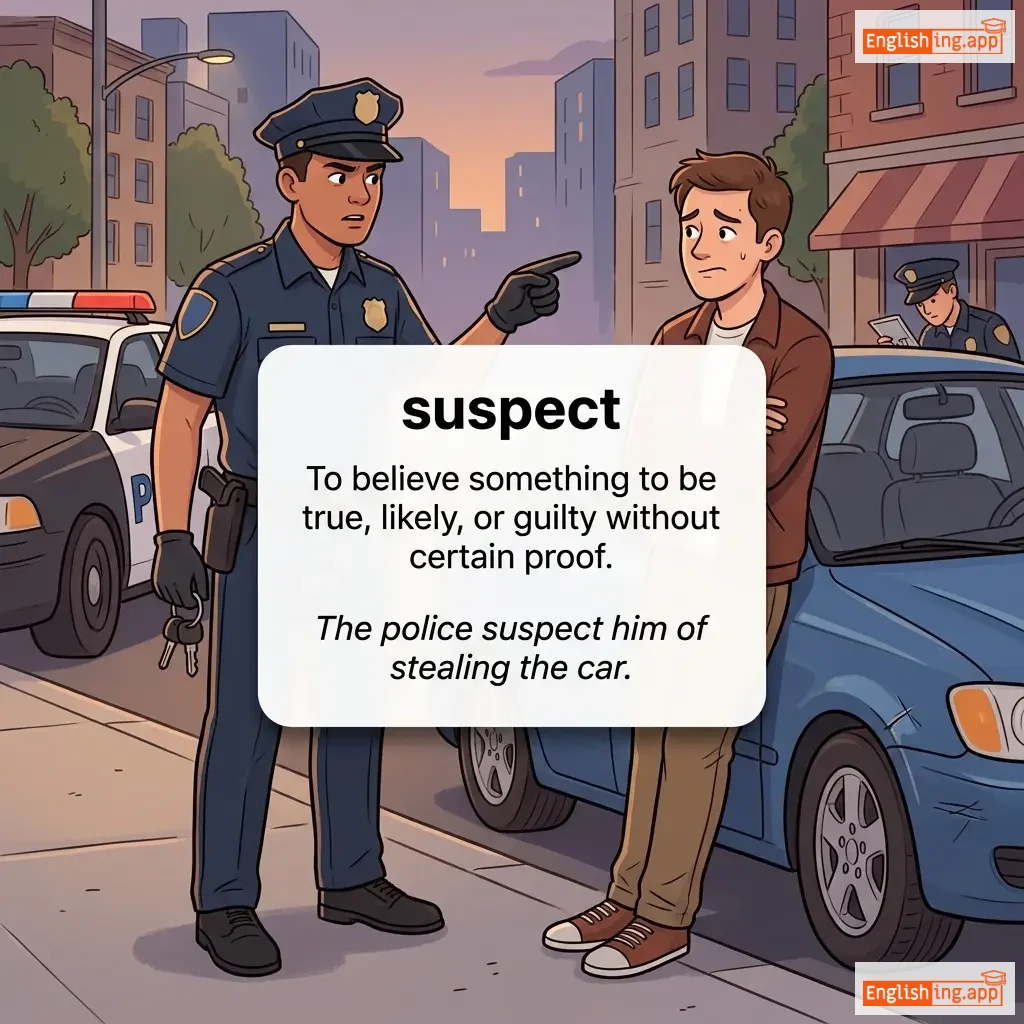
To believe something to be true, likely, or guilty without certain proof.
••••••
|
The police suspect him of stealing the car.
полиция подозревает его в краже машины.
••••••
|
Полиция подозревает его в краже машины.
Politsiya podozrevaet ego v krazhe mashiny.
••••••
|
usual suspect
обычный подозреваемый
••••••
|
a person frequently suspected of wrongdoing
••••••
|
обычный подозреваемый
obychny podozrevaemyy
••••••
|
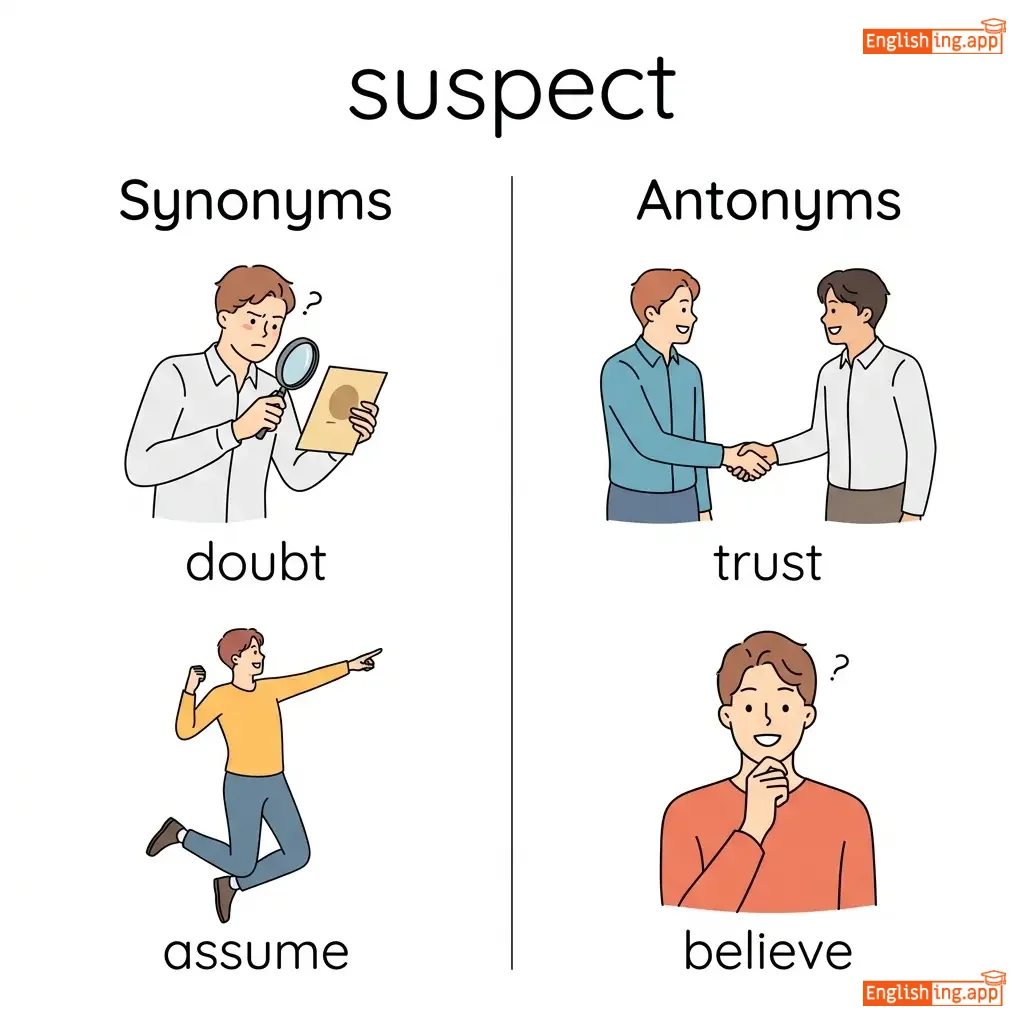
doubt, assume, suppose, accuse
••••••
|
trust, believe, absolve
••••••
|
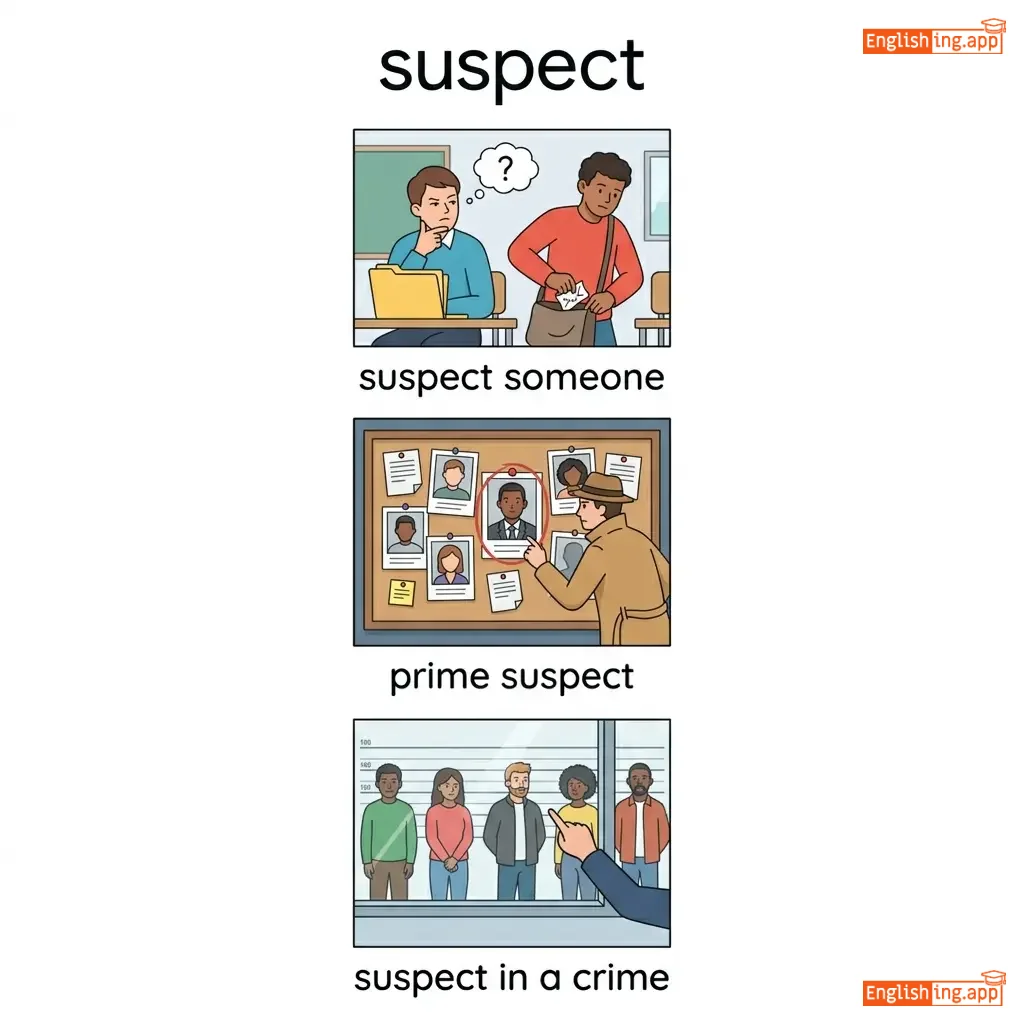
suspect someone, prime suspect, suspect in a crime
••••••
|
No •••••• |
|
⏸️
••••••
|
/səˈspɛnd/
verb
(саспенд)
••••••
|
- •••••• |
приостановить
priestanovit
••••••
|
suspended
саспендед
••••••
|
suspended
саспендед
••••••
|
suspends
саспендс
••••••
|
suspending
саспендинг
••••••
|
To temporarily stop something from being active or valid.
••••••
|
The company decided to suspend his membership.
Компания решила приостановить его членство.
••••••
|
Компания решила приостановить его членство.
Kompaniya reshila priostanovit' ego chlenstvo.
••••••
|
suspend disbelief
приостановить недоверие
••••••
|
to willingly accept something unrealistic for the sake of enjoyment
••••••
|
приостановить недоверие
priostanovit' nedeverie
••••••
|
halt, delay, interrupt, pause
••••••
|
continue, resume, proceed
••••••
|
suspend activities, suspend operations, suspend from work
••••••
|
Приостановить — это как пауза — остановить на время.
••••••
|
|
🫗
••••••
|
/ˈswɒloʊ/
verb
(свалло)
••••••
|
- •••••• |
глотать
glotat
••••••
|
swallowed
свалод
••••••
|
swallowed
свалод
••••••
|
swallows
свалоз
••••••
|
swallowing
свалоиг
••••••
|
to make food or drink go down your throat into your stomach
••••••
|
He swallowed the pill with a glass of water.
Он проглотил таблетку с бокалом воды.
••••••
|
Он проглотил таблетку с бокалом воды.
On proglotil tabletku s bokalom vody.
••••••
|
swallow one's pride
проглотить гордость
••••••
|
to do something that is humiliating or embarrassing but necessary
••••••
|
проглотить гордость
proglotit' gordost'
••••••
|
gulp, ingest, consume, devour, absorb
••••••
|
spit, vomit, reject
••••••
|
swallow food, swallow hard, swallow a pill, swallow the truth
••••••
|
Swallow означает глотать — как птица глотает насекомых!
••••••
|
|
🧶
••••••
|
/ˈswɛtər/
noun
••••••
|
- •••••• | - •••••• | - •••••• | - •••••• | - •••••• | - •••••• |
a warm knitted piece of clothing worn on the upper body
••••••
|
She wore a red sweater to keep warm in the cold weather. |
- •••••• | - •••••• | - •••••• | - •••••• |
jumper, pullover, cardigan, hoodie, sweatshirt
••••••
|
shirt, blouse, jacket
••••••
|
wool sweater, knitted sweater, wear a sweater, red sweater
••••••
|
No •••••• |
|
🤒
••••••
|
/ˈsɪmptəm/
noun
(симптом)
••••••
|
- •••••• |
симптом
simptom
••••••
|
- •••••• | - •••••• | - •••••• | - •••••• |
a sign or indication of something, especially of an illness
••••••
|
Fever is a common symptom of the flu. |
Лихорадка — это обычный симптом гриппа.
Likhoreadka – eto obychnyy simptom grippa.
••••••
|
- •••••• | - •••••• | - •••••• |
sign, indication, manifestation, mark
••••••
|
health, wellness
••••••
|
symptom of illness, common symptom, early symptom
••••••
|
Symptom like fever: You feel sick (болен) when you're ill!
••••••
|
|
👕
••••••
|
/ˈtiː ʃɜːt/
noun
(ти-шерты)
••••••
|
- •••••• |
футболка
futbolka
••••••
|
- •••••• | - •••••• | - •••••• | - •••••• |
a casual short-sleeved cotton shirt with no collar
••••••
|
He wore a white t-shirt and jeans to the party.
Он носил белую футболку и джинсы на вечеринку.
••••••
|
Он носил белую футболку и джинсы на вечеринку.
On nosil belyu futbolku i dzhinsy na vecherinku.
••••••
|
- •••••• | - •••••• | - •••••• |
tee, top, shirt, jersey, garment
••••••
|
jacket, sweater
••••••
|
white t-shirt, printed t-shirt, cotton t-shirt, wear a t-shirt
••••••
|
Футболка — это самый удобный выбор для непринужденной встречи!
••••••
|
|
🌄
••••••
|
/təˈreɪn/
noun
(тэррейн)
••••••
|
- •••••• |
местность
mestnost
••••••
|
- •••••• | - •••••• | - •••••• | - •••••• |
a stretch of land, especially with regard to its physical features
••••••
|
The soldiers had to cross rough terrain during the mission. |
Солдаты должны были преодолеть трудную местность во время миссии.
Soldaty dolzhny byli preodolet' trudnuyu mestnost' vo vremya missii.
••••••
|
mountainous terrain |
landscape full of mountains or steep slopes
••••••
|
гористая местность
goristaya mestnost
••••••
|
land, ground, landscape, topography, area
••••••
|
sea, sky
••••••
|
rocky terrain, flat terrain, desert terrain, rugged terrain
••••••
|
Terrain — это местность, как поезд едет по земле, так и terrain — это земля.
••••••
|
|
😱
••••••
|
/ˈtɛrəˌfaɪ/
verb
(terifai)
••••••
|
- •••••• |
пугать
pugat
••••••
|
terrified
terifaid
••••••
|
terrified
terifaid
••••••
|
terrifies
terifais
••••••
|
terrifying
terifain
••••••
|
To cause someone to feel extreme fear.
••••••
|
The loud thunder terrified the children.
громкий гром напугал детей.
••••••
|
Громкий гром напугал детей.
Gromkiy grom napugal detey.
••••••
|
- •••••• | - •••••• | - •••••• |
frighten, scare, alarm, startle, petrify
••••••
|
comfort, reassure, calm
••••••
|
terrify someone, absolutely terrify, terrify the crowd
••••••
|
Terrify означает пугать, как гром, который пугает людей.
••••••
|
|
📝
••••••
|
/ˈtɛstəfaɪ/
verb
(тестифай)
••••••
|
- •••••• |
давать показания
davat' pokazaniya
••••••
|
testified
тестифайд
••••••
|
testified
тестифайд
••••••
|
testifies
тестифайз
••••••
|
testifying
тестифайинг
••••••
|
to make a statement or declaration under oath or to give evidence
••••••
|
She was called to testify in court about the accident.
Её вызвали дать показания в суде по делу об аварии.
••••••
|
Её вызвали дать показания в суде по делу об аварии.
Eyo vyzvali dat' pokazaniya v sude po delu ob avarii.
••••••
|
- •••••• | - •••••• | - •••••• |
witness, declare, confirm, affirm
••••••
|
deny, oppose
••••••
|
testify in court, testify under oath, testify as a witness
••••••
|
Davat' pokazaniya v sude, gde vy predostavlyayete dokazatel'stva pod prisyagoy
••••••
|
|
🔬
••••••
|
/ˈtɛstɪŋ/
noun
(тестинг)
••••••
|
- •••••• |
тест
test
••••••
|
- •••••• | - •••••• | - •••••• | - •••••• |
the process of assessing or evaluating something, often by trying it out
••••••
|
The testing of the new software is still ongoing. |
Тестирование нового программного обеспечения все еще продолжается.
Testirovanie novogo programmnogo obespecheniya vse eshche prodolzhaetsya.
••••••
|
- •••••• | - •••••• | - •••••• |
examination, assessment, trial, evaluation
••••••
|
failure, rejection
••••••
|
testing phase, software testing, testing process, performance testing
••••••
|
Testing software is like testing your skills for success
••••••
|
|
🧵
••••••
|
/ˈtɛkstʃər/
noun
(тэкстур)
••••••
|
- •••••• |
текстура
tekstura
••••••
|
- •••••• | - •••••• | - •••••• | - •••••• |
the way something feels when you touch it; the quality of a surface or substance
••••••
|
The fabric has a soft and smooth texture. |
Ткань имеет мягкую и гладкую текстуру.
Tkan' imeet myagkuyu i gladkuyu teksturu.
••••••
|
rough texture |
a coarse or uneven surface feel
••••••
|
- •••••• |
surface, feel, grain, structure, consistency
••••••
|
smoothness, flatness
••••••
|
soft texture, rough texture, fabric texture, skin texture
••••••
|
Текстура — то, что ты чувствуешь, когда трогаешь.
••••••
|
|
➡️
••••••
|
/ˌðɛərˈbaɪ/
adverb
(дербай)
••••••
|
- •••••• |
следовательно;
sledovatel'no
••••••
|
- •••••• | - •••••• | - •••••• | - •••••• |
as a result of that; by that means
••••••
|
He worked hard and thereby achieved success. |
Он много работал и следовательно добился успеха.
On mnogo rabotal i sledovatel'no dobilsya uspekha.
••••••
|
- •••••• | - •••••• | - •••••• |
thus, consequently, therefore, hence
••••••
|
nevertheless, however, nonetheless
••••••
|
thereby achieving, thereby creating, thereby ensuring
••••••
|
Трудись и добьешься успеха следовательно.
••••••
|
|
💭
••••••
|
/θɔːt/
noun
(тхот)
••••••
|
- •••••• |
мысль
mysl
••••••
|
- •••••• | - •••••• | - •••••• | - •••••• |
an idea or opinion produced by thinking or considering something
••••••
|
She had a sudden thought about the future. |
У неё возникла внезапная мысль о будущем.
U neyo voznikla vnezapnaya mysl' o budushchem.
••••••
|
- •••••• | - •••••• | - •••••• |
idea, notion, belief, concept
••••••
|
ignorance, uncertainty
••••••
|
deep thought, quick thought, passing thought
••••••
|
'Мысль' (mysl) приходит внезапно
••••••
|
|
➡️
••••••
|
/θruː/
preposition
(thru)
••••••
|
- •••••• |
через
cherez
••••••
|
- •••••• | - •••••• | - •••••• | - •••••• |
moving in one side and out the other side of something
••••••
|
The train passed through the tunnel.
Поезд прошел через туннель.
••••••
|
Поезд прошел через туннель.
Poezd proshel cherez tunnel.
••••••
|
- •••••• | - •••••• | - •••••• |
across, past, beyond, into
••••••
|
none
••••••
|
go through, pass through, walk through
••••••
|
Through sounds like crossing a bridge, moving from one side to the other.
••••••
|
|
🤏
••••••
|
/ˈtaɪtli/
adverb
(taitli)
••••••
|
- •••••• |
плотно; крепко
plotno; krepkо
••••••
|
- •••••• | - •••••• | - •••••• | - •••••• |
in a tight manner; firmly; securely
••••••
|
Hold the rope tightly so you don't fall.
держи веревку туго, чтобы не упасть.
••••••
|
Держи веревку крепко, чтобы не упасть.
Derzhi verievku krepko, chtoby ne upast'.
••••••
|
- •••••• | - •••••• | - •••••• |
firmly, securely, closely, strongly
••••••
|
loosely, weakly, gently, lightly
••••••
|
hold tightly, grip tightly, packed tightly
••••••
|
Держи веревку крепко, чтобы не упасть.
••••••
|
|
🚬
••••••
|
/təˈbækoʊ/
noun
(табак)
••••••
|
- •••••• |
табак
tabak
••••••
|
- •••••• | - •••••• | - •••••• | - •••••• |
a plant grown for its leaves, which are used in making cigarettes and cigars
••••••
|
He stopped smoking tobacco after his health scare. |
Он бросил курить табак после проблемы со здоровьем.
On brosil kurit' tabak posle problemy so zdorov'yem.
••••••
|
- •••••• | - •••••• | - •••••• |
cigarettes, cigars, nicotine
••••••
|
none
••••••
|
tobacco leaves, tobacco smoke, chewing tobacco
••••••
|
Табак = Табачный дым в воздухе
••••••
|

