The Rival Who Became a Friend
Rafi と Sami は rivals だった。彼らは同じ sport、つまり水泳をしていた。すべての大会で、彼らは prize を争った。
「お前を負かす」と Rafi は言った。
「In spite of what you think、俺が勝つ」と Sami は答えた。
彼らの rivalry は fierce だった。毎レース、彼らは score ボードを見た。一秒一秒が stake にかかっていた。彼らは smart な泳者で、sharp で速かった。
ある日、大きな選手権が開かれた。Prize は大きく――奨学金とトロフィーだった。Rafi と Sami はともに決勝に進んだ。
「今度こそ勝つ」と Rafi は自信満々に言った。
「結果を見てみよう」と Sami は言った。その声は緊張で stiff だった。
大会当日、shore に群衆が集まった。プールの水は穏やかだった。しかし雰囲気は scary――大きなプレッシャーがあった。
ホイッスルが鳴った。二人は飛び込んだ。水しぶき。彼らはまるで spine がないかのように泳いだ――柔軟で滑らかだった。
突然、Rafi は体の異変を感じた。脚が痙攣した。痛みが spine を走った。彼はペースを落とした。Sami が前に出た。
「今なら勝ちを steal できる」と Sami は思った。「彼を置いていける」。
だが Sami は振り返った。Rafi が苦しんでいるのを見た。痛みに。沈んでいく。
Sami は一瞬 paused した。すべてが stake にかかっていた――prize、奨学金、すべて。しかしその小さな space の中で、彼の中に何かが変わった。
彼は戻った。Rafi のもとへ泳ぎ戻った。
「何をしているんだ?」と Rafi は息を切らして shocked と言った。
「助けているんだ」と Sami は言った。「しっかりして」
彼は Rafi を shore まで助けた。人々は shocked だった。審判たちは困惑した。Sami は prize を放棄したのだ。
「なぜそんなことをした?」と Rafi はまだ激しく息をして尋ねた。「俺たちは rivals だ。In spite of everything、助けてくれたのか?」
「だって sport は勝つことだけじゃない」と Sami は説明した。「人間であることだ。君が危険にあるのを見たとき、rivalry の spell は解けた。その瞬間、prize を勝ち取ることは important に思えなかった。君の安全の方がより stake にあったんだ」
Rafi の目に涙が浮かんだ。「僕は勝つことにばかり集中していた、in spite of everything else。君はただ defeat すべき rival だと思っていた。でも君は sport だけでなく人格も含めて smart で sharp な人間だった」
「僕たちは二人とも smart な泳者だ」と Sami は微笑んだ。「でも人生で smart であるということは、いつ競い、いつ助けるかを知ることだ」
審判は Sami がレースを離れたため失格と発表した。しかし同時に特別な prize ――フェアプレー賞も発表された。
「この **prize」 と主任審判は言った、 「Sami に与える。彼は真の sport が速さや score だけでなく、character であることを示した」
観衆は拍手した。音は shore にこだました。それは smoke and mirrors ではなく、本当の尊敬だった。
Rafi は立ち上がり、まだ脚が stiff だった。彼は Sami のもとへ行き、手を差し伸べた――rivals として shake するためではなく、友として。
「ありがとう」と Rafi は言った。「君は勝利を stolen できたはずだ。君はそれに値した。でもその代わりに、君は僕にもっと貴重なものをくれた――lesson」
「そして君も僕に何かをくれた」と Sami は応えた。「rivalry は僕らをより良くするように押し上げることがある。でも今日僕は学んだ――勝ちと負けの間の space にもっと重要なものがある:それは人間性だ」
何年も後、Rafi と Sami はトレーニングパートナーになった。彼らはまだ競争したが、違ったやり方で。互いを spite するのではなく、互いのために――互いをより良くするために励まし合った。
若い泳者たちが「rivals をどう扱う?」と尋ねると、彼らは言った:
「A rival は敵ではない。A sharp, smart な rival は君をより良くする。すべての score、すべてのレース、すべての prize は一時的だ。でも君が築く尊敬、君が示す character は残る」
「The scary な瞬間」と Sami は付け加えた、 「それは prize を失うかもしれない時ではない。The scary な瞬間は、勝つためなら何でもすることで自分を見失うことに気づく時だ。誰かの safety のような、もっと大きなものが stake にある時は、競争の spell は break すべきだ」
「Sami は僕の victory を steal したいのだと思っていた」と Rafi は笑った。「でも代わりに彼は僕に steal も勝ち取ることもできない贈り物――友情をくれた」
そして若い泳者たちは学んだ――sports では、試合の前後に握手をする。stiff な形式ではなく、真摯な敬意をもって。競技の shore、rivals が出会う space には、prizes や scores だけでなく、君の spine を強くする何か――character のための余地がある。そしてそれは誰も no one can steal できない prize、決して breaks しない spell、そして残り続ける勝利だ――even in spite of any shock, any loss, any scary moment――それは単に sport における smart さだけでなく、人間性における sharp さ、私たちが生きるそれぞれの瞬間に本当に何が stake になっているかを知ることに基づいているからだ。
|
絵文字
|
単語 | Images | 翻訳 | 過去 | 過去分詞 | 三人称単数 | 動名詞 | 意味 | 例文 | 例文の翻訳 | 表現例 | 表現例の意味 | 表現例の翻訳 | 同義語 | 対義語 | コロケーション | ニーモニック |
|---|---|---|---|---|---|---|---|---|---|---|---|---|---|---|---|---|---|
|
🏆
••••••
|
/praɪz/
noun, verb
(praizu)
••••••
|
- •••••• |
賞
shou
••••••
|
prized
praizudo
••••••
|
prized
praizudo
••••••
|
prizes
praizesu
••••••
|
prizing
praijingu
••••••
|
something given as a reward for achievement; to value highly
••••••
|
He won the first prize in the competition.
彼はコンペティションで一等賞を受賞した。
••••••
|
彼はコンペティションで一等賞を受賞した。
Kare wa konpetishon de ittou shou wo jushou shita.
••••••
|
prize possession
貴重な財産
••••••
|
something cherished greatly
••••••
|
非常に価値のある所有物
hijou ni kachi no aru shoyuu mono
••••••
|
award, reward, trophy, treasure, honor
••••••
|
loss, forfeit, neglect
••••••
|
first prize, grand prize, prize money, prize possession
••••••
|
賞(Prize) — 賞をもらうと、賞の所有権を持つ。
••••••
|
|
⚔️
••••••
|
/ˈraɪvəl/
noun, verb
(raivaru)
••••••
|
- •••••• |
ライバル
raibaru
••••••
|
rivaled
raibaru
••••••
|
rivaled
raibaru
••••••
|
rivals
raibaru
••••••
|
rivaling
raibaringu
••••••
|
a person or thing competing with another for the same goal or superiority in the same field
••••••
|
The two companies are fierce rivals in the smartphone market.
二つの企業はスマートフォン市場で激しいライバルです。
••••••
|
二つの企業はスマートフォン市場で激しいライバルです。
Futatsu no kigyo wa sumātofon shijō de hageshī raibaru desu.
••••••
|
arch rival
アーチライバル
••••••
|
a main and long-standing opponent
••••••
|
主要ライバル
shuyō raibaru
••••••
|
competitor, opponent, challenger, adversary, foe
••••••
|
ally, partner, supporter
••••••
|
main rival, business rival, political rival, sports rival
••••••
|
Rivalという単語は日本語のライバルと似ていて、競争相手を意味します。
••••••
|
|
👻
••••••
|
/ˈskeəri/
adjective
(スケアリー)
••••••
|
- •••••• |
怖い
kowai
••••••
|
- •••••• | - •••••• | - •••••• | - •••••• |
causing fear or making you feel frightened
••••••
|
That horror movie was really scary.
そのホラー映画は本当に怖かった。
••••••
|
そのホラー映画は本当に怖かった。
sono horā eiga wa hontōni kowakatta.
••••••
|
scary as hell
地獄のように怖い
••••••
|
extremely frightening
••••••
|
地獄のように怖い
jigoku no yō ni kowai
••••••
|
frightening, terrifying, spooky, creepy, alarming
••••••
|
pleasant, comforting, calm
••••••
|
scary movie, scary story, scary sound, scary face
••••••
|
Scary は怖いという意味です — 想像して、あなたが怖がって叫ぶ ‘スケアリー!’
••••••
|
|
🎯
••••••
|
/skɔːr/
noun/verb
(スコア)
••••••
|
- •••••• |
スコア
sutoa
••••••
|
scored
スコアード
••••••
|
scored
スコアード
••••••
|
scores
スコアーズ
••••••
|
scoring
スコアリング
••••••
|
a number of points achieved in a game or test; to gain points or achieve a goal
••••••
|
He scored the winning goal in the final match.
彼は最後の試合で決勝ゴールを決めました。
••••••
|
彼は最後の試合で決勝ゴールを決めました。
Kare wa saigo no shiai de kesshō gōru o kimemashita.
••••••
|
settle the score
スコアをつける
••••••
|
to take revenge or get even with someone
••••••
|
スコアをつける
sutoa o tsukeru
••••••
|
points, tally, result, grade, mark
••••••
|
loss, defeat, miss
••••••
|
high score, score a goal, final score, score points
••••••
|
テストのスコアが高ければ、成功が待っている
••••••
|
|
🤝
••••••
|
/ʃeɪk/
verb
(sheiku)
••••••
|
|
揺れる
yureru
••••••
|
shook
shuku
••••••
|
shaken
sheiken
••••••
|
shakes
sheikus
••••••
|
shaking
sheiking
••••••
|
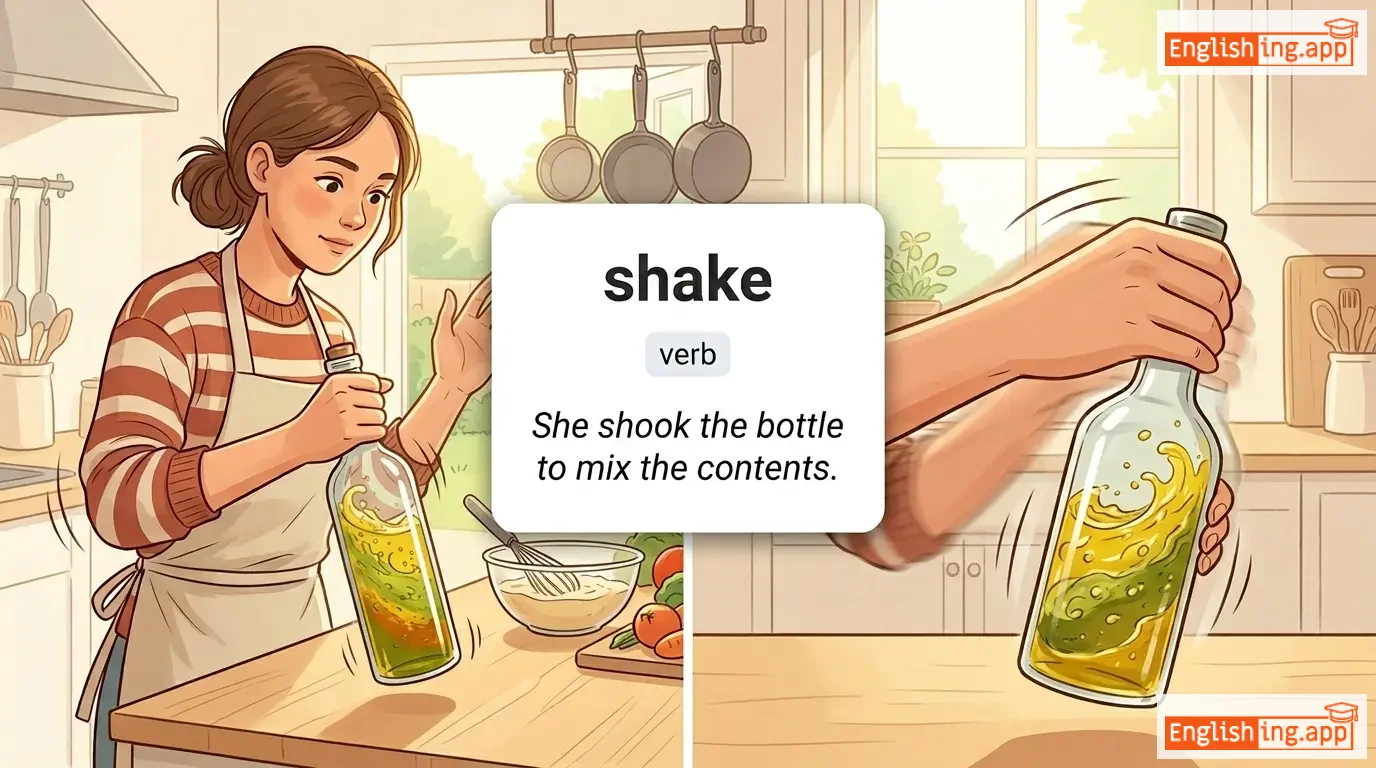
to move quickly back and forth; to tremble
••••••
|
The earthquake made the building shake.
地震で建物が揺れた。
••••••
|
地震で建物が揺れた。
Jishin de tatemono ga yureta.
••••••
|
- •••••• | - •••••• | - •••••• |
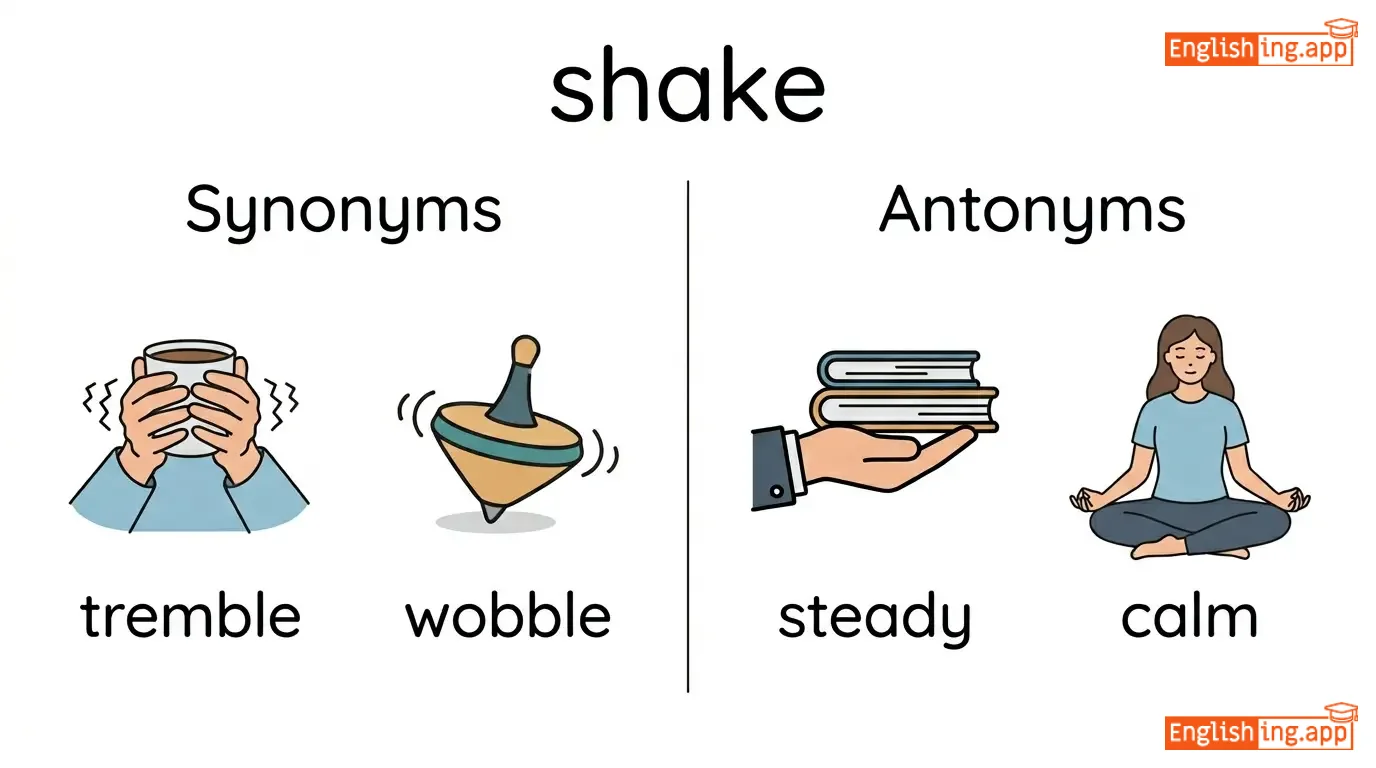
tremble, vibrate, quiver, rock
••••••
|
steady, stabilize, still, calm
••••••
|
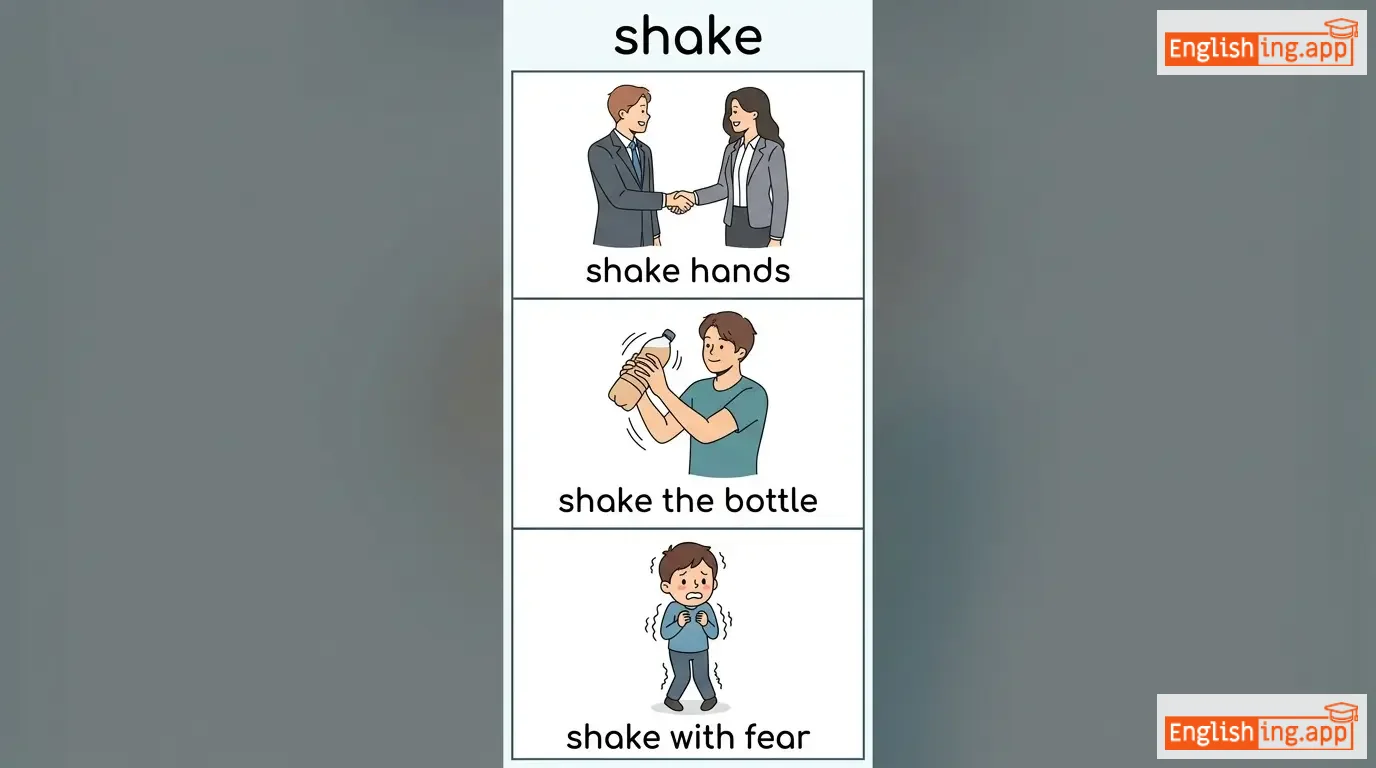
shake hands, shake head, shake violently, shake off, shake up
••••••
|
No •••••• |
|
🔪
••••••
|
/ʃɑːrp/
adjective
(シャープ)
••••••
|
- •••••• |
鋭い; 強烈な; 突然で強い; 理解が速い
surudoi; kyōretsu na; totsuzen de tsuyoi; rikai ga hayai
••••••
|
- •••••• | - •••••• | - •••••• | - •••••• |
having a cutting edge or point; sudden and intense; quick to understand
••••••
|
The knife has a very sharp blade.
ナイフは非常に鋭い刃を持っています。
••••••
|
ナイフは非常に鋭い刃を持っています。
Naifu wa hijō ni surudoi ha o motteimasu.
••••••
|
- •••••• | - •••••• | - •••••• |
keen, pointed, acute, piercing
••••••
|
blunt, dull, rounded, obtuse
••••••
|
sharp knife, sharp pain, sharp mind, sharp turn
••••••
|
鋭いナイフはsharpのように感じます。
••••••
|
|
🐑
••••••
|
/ʃiːp/
noun
(シープ)
••••••
|
- •••••• |
羊
hitsuji
••••••
|
- •••••• | - •••••• | - •••••• | - •••••• |
a farm animal with thick wool that is raised for its wool, meat, and milk
••••••
|
The farmer keeps a large flock of sheep. |
農夫は大きな羊の群れを飼っています。
Noufu wa ookina hitsuji no mure o katte imasu.
••••••
|
black sheep |
a person who is considered a disgrace to a group or family
••••••
|
黒羊
kurohitsuji
••••••
|
lamb, ewe, ram, livestock, animal
••••••
|
wolf, predator
••••••
|
flock of sheep, sheep farming, shear sheep, lost sheep
••••••
|
Sheep は羊を意味します — 羊のようにおとなしい人!
••••••
|
|
🐚
••••••
|
/ʃel/
noun
(シェル)
••••••
|
- •••••• |
殻
kawa
••••••
|
- •••••• | - •••••• | - •••••• | - •••••• |
hard outer covering of an animal; explosive projectile for a gun
••••••
|
The artillery fired a shell at the enemy position. |
砲兵は敵の陣地に弾丸を発射しました。
Hōhei wa teki no jinchi ni dangan o hassha shimashita.
••••••
|
- •••••• | - •••••• | - •••••• |
casing, husk, projectile, missile
••••••
|
core, interior, center
••••••
|
artillery shell, shell shock, shell out
••••••
|
殻 (kawa) is the outer shell, like the hard outer covering of animals!
••••••
|
|
😲
••••••
|
/ʃɒk/
noun
(ショック)
••••••
|
- •••••• |
衝撃
shōgeki
••••••
|
- •••••• | - •••••• | - •••••• | - •••••• |
a sudden upsetting or surprising event or experience
••••••
|
The news of his sudden departure was a shock to everyone.
彼の突然の出発のニュースは皆にショックを与えた。
••••••
|
彼の突然の出発のニュースは皆にショックを与えた。
Kare no totsuzen no shuppatsu no nyūsu wa mina ni shokku o ataeta.
••••••
|
- •••••• | - •••••• | - •••••• |
surprise, jolt, stun, amazement
••••••
|
calm, peace
••••••
|
shock waves, culture shock, in shock, total shock
••••••
|
衝撃は予期しない出来事で、あなたの世界を変えてしまう。
••••••
|
|
🏖️
••••••
|
/ʃɔːr/
noun
(ショア)
••••••
|
- •••••• |
岸; 海岸; ビーチ
shoa
••••••
|
- •••••• | - •••••• | - •••••• | - •••••• |
the land along the edge of a sea, lake, or other body of water
••••••
|
We walked along the shore collecting seashells.
私たちはショアを歩きながら貝殻を集めていました。
••••••
|
私たちはショアを歩きながら貝殻を集めていました。
Watashitachi wa shoa o aruki nagara kaigara o atsumete imashita.
••••••
|
- •••••• | - •••••• | - •••••• |
coast, beach, waterfront, seashore
••••••
|
inland, interior
••••••
|
sandy shore, rocky shore, opposite shore, lake shore
••••••
|
In Japanese, 'ショア' (shoa) sounds like shore in English, both refer to land by the sea.
••••••
|
|
🧠
••••••
|
/smɑːrt/
adjective, noun, verb
(スマート)
••••••
|
- •••••• |
賢い / スタイリッシュ
kashikoi / sutairisshu
••••••
|
smarted
スマーテッド
••••••
|
smarted
スマーテッド
••••••
|
smarts
スマーツ
••••••
|
smarting
スマーティング
••••••
|
Clever and intelligent; also stylish in appearance; or to feel pain.
••••••
|
She is a smart student who always excels in class.
彼女はクラスでいつも優れた成績を収めるスマートな学生です。
••••••
|
彼女はクラスでいつも優れた成績を収めるスマートな学生です。
Kanojo wa kurasu de itsumo sugureta seiseki o osameru sumāto na gakusei desu.
••••••
|
smart money
スマートマネー
••••••
|
Money invested by those with expert knowledge.
••••••
|
専門家によって投資されたお金
Senmonka ni yotte tōshi sareta okane
••••••
|
clever, bright, intelligent, stylish, sharp
••••••
|
dull, foolish, stupid
••••••
|
smart student, smart decision, smart clothes, smart city
••••••
|
スマートはスマートフォンのように賢くて現代的。
••••••
|
|
💨
••••••
|
/smoʊk/
noun
(スモーク)
••••••
|
|
煙
sumooku
••••••
|
- •••••• | - •••••• | - •••••• | - •••••• |
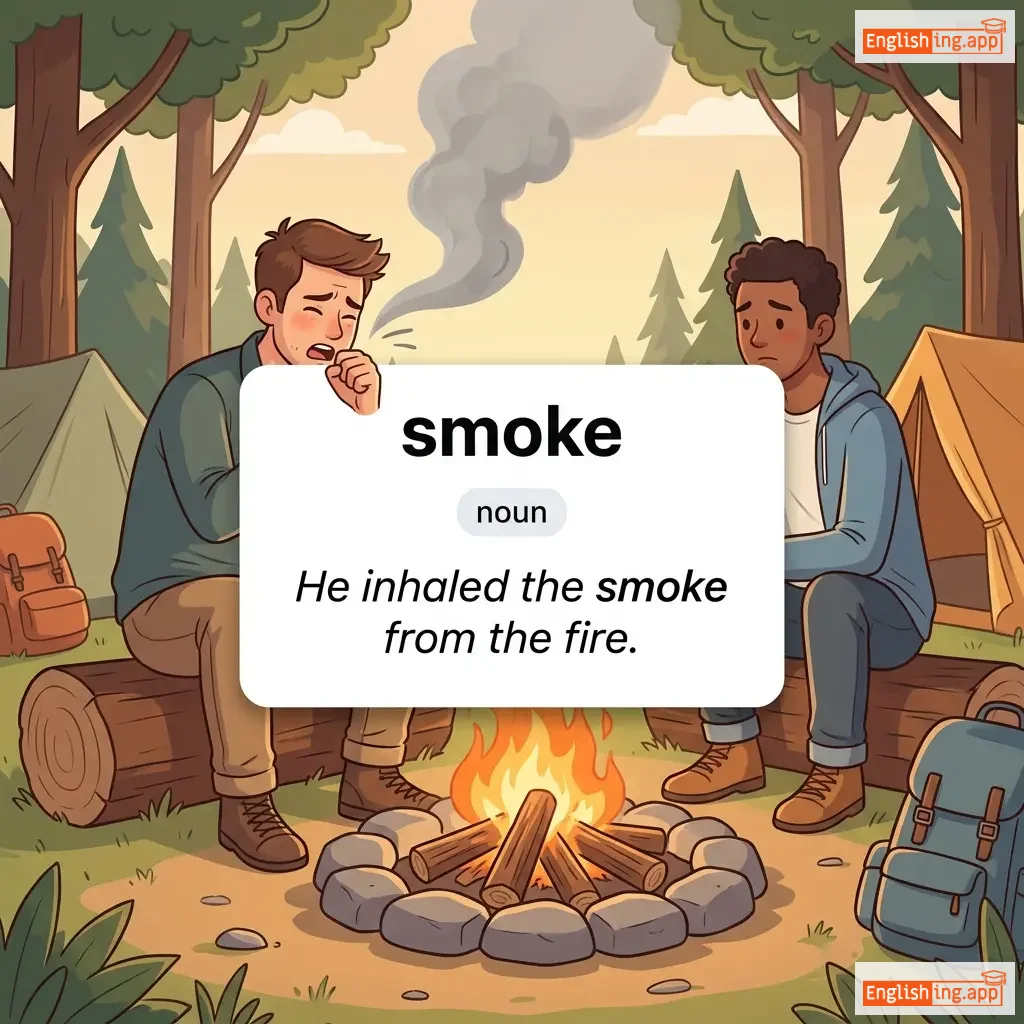
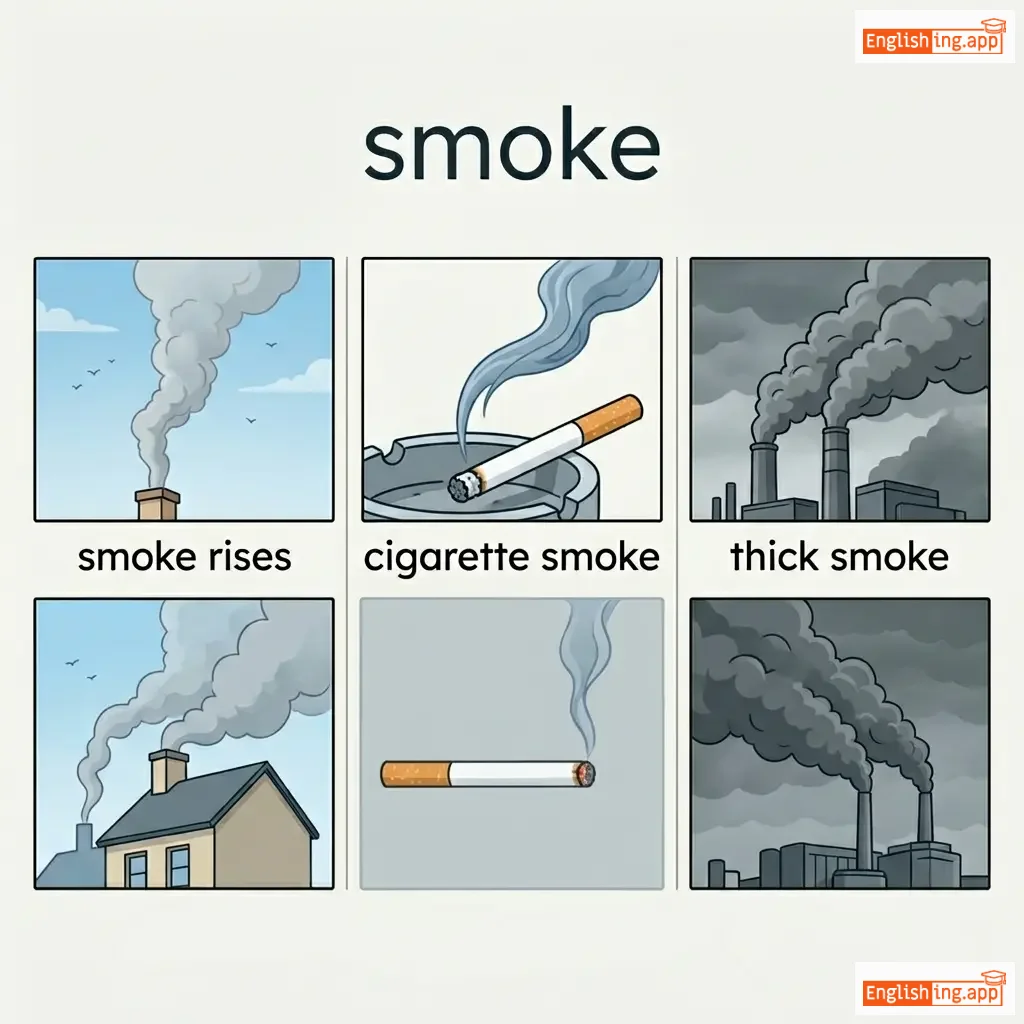
visible vapor and gases emitted when something burns
••••••
|
Thick smoke rose from the burning building.
燃える建物から濃い煙が立ち上がった。
••••••
|
燃える建物から濃い煙が立ち上がった。
moeru tatemono kara koi kemuri ga tachiagatta.
••••••
|
- •••••• | - •••••• | - •••••• |
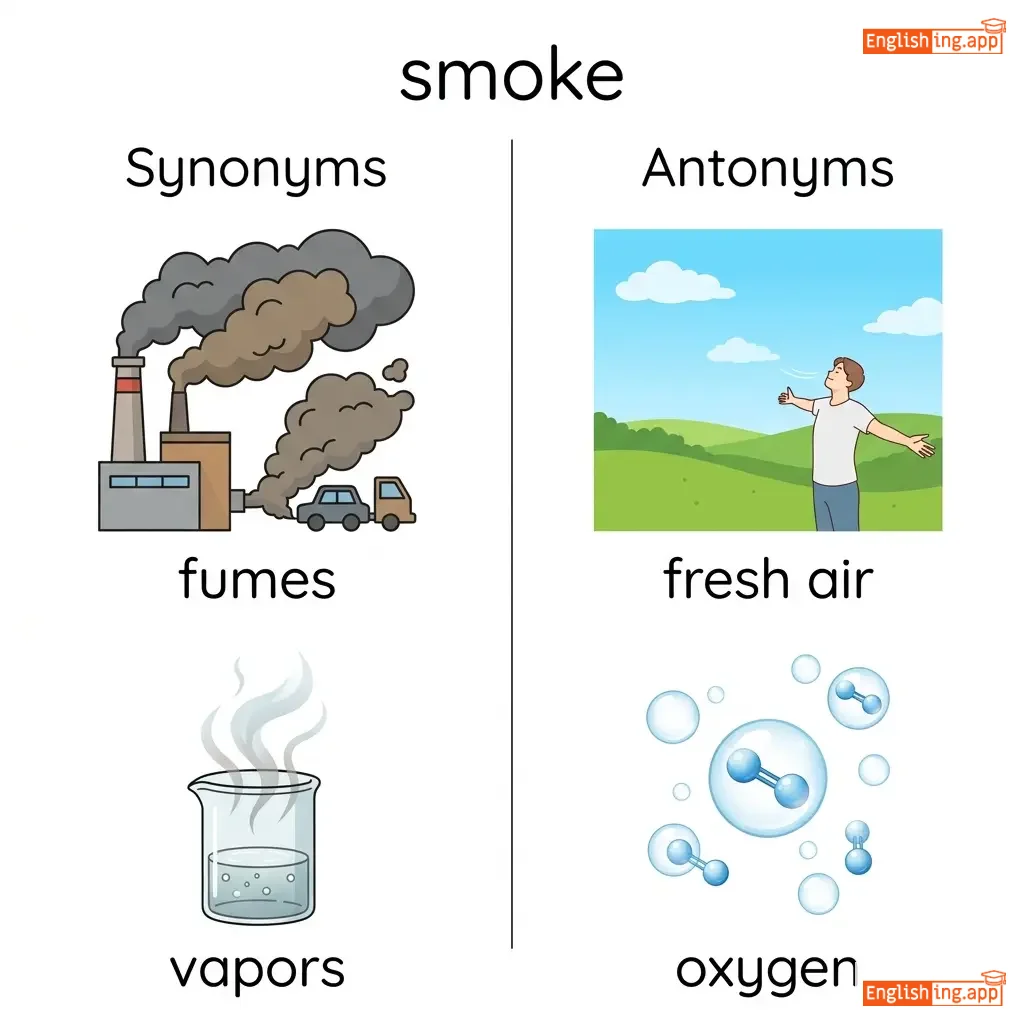
vapor, fumes, haze
••••••
|
clear air, fresh air
••••••
|
thick smoke, black smoke, smoke detector, smoke alarm
••••••
|
Key melts into mist KE MU RI describe kemuri smoke
••••••
|
|
🚀
••••••
|
/speɪs/
noun
(sūpeisu)
••••••
|
|
スペース
supeesu
••••••
|
- •••••• | - •••••• | - •••••• | - •••••• |
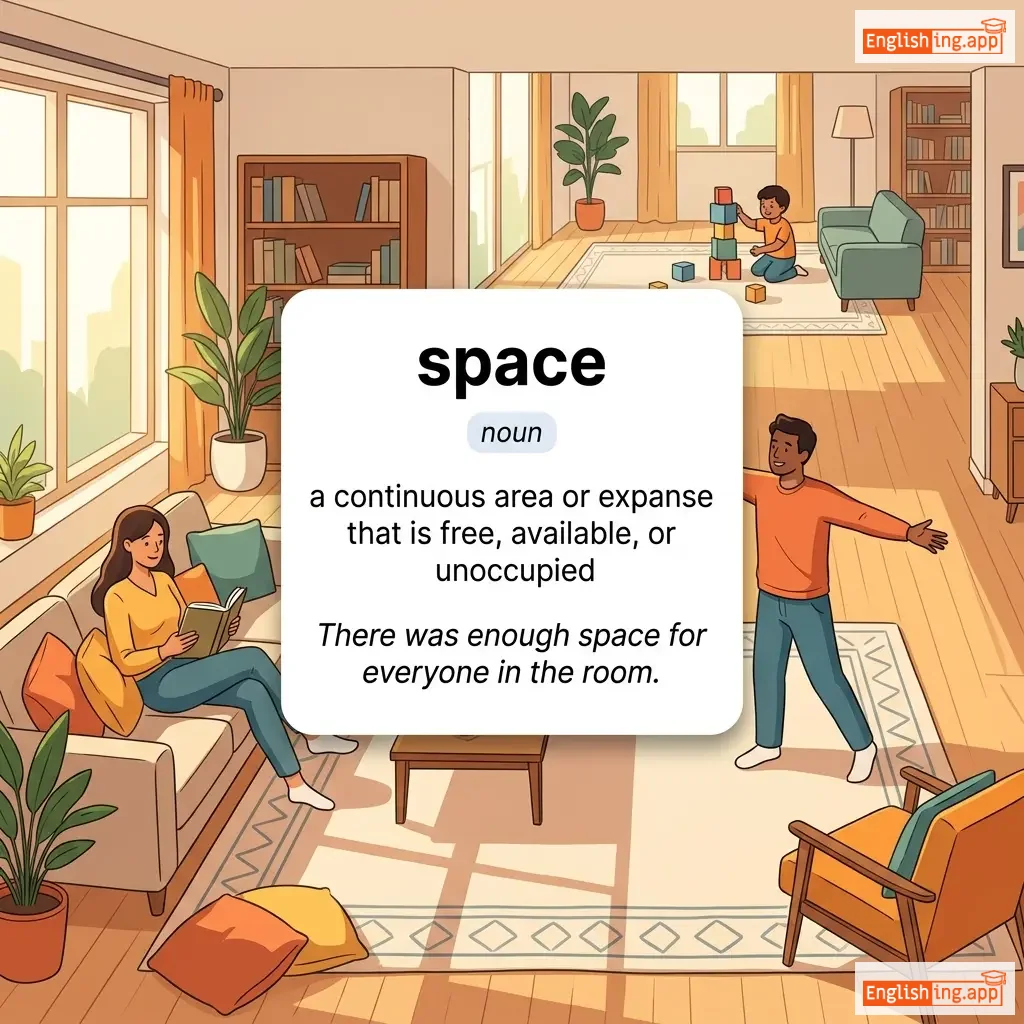
a continuous area or expanse that is free, available, or unoccupied
••••••
|
There was enough space for everyone in the room. |
部屋には皆が十分なスペースがありました。
Heya ni wa mina ga juubun na supeesu ga arimashita.
••••••
|
outer space |
the region beyond Earth's atmosphere
••••••
|
宇宙空間
uchuukukan
••••••
|
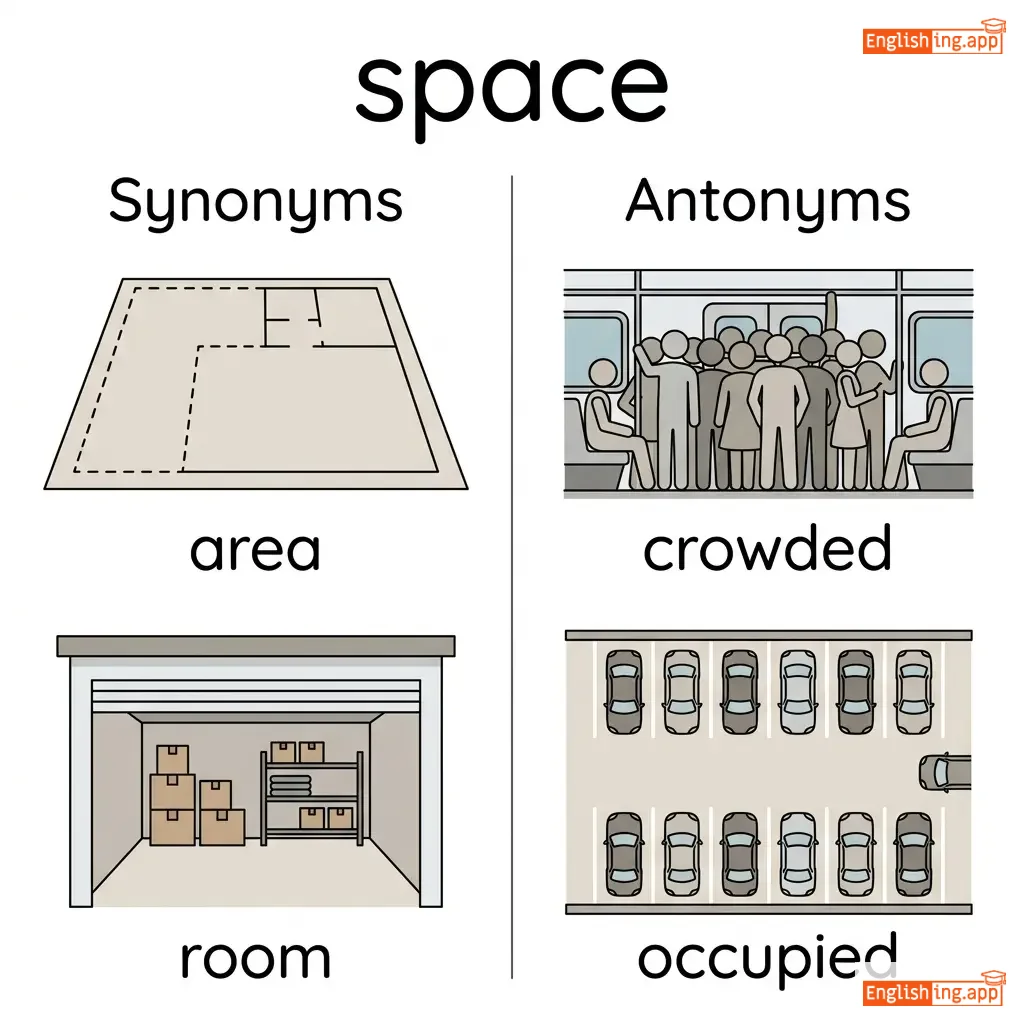
area, room, extent, volume
••••••
|
crowded, occupied, tight
••••••
|
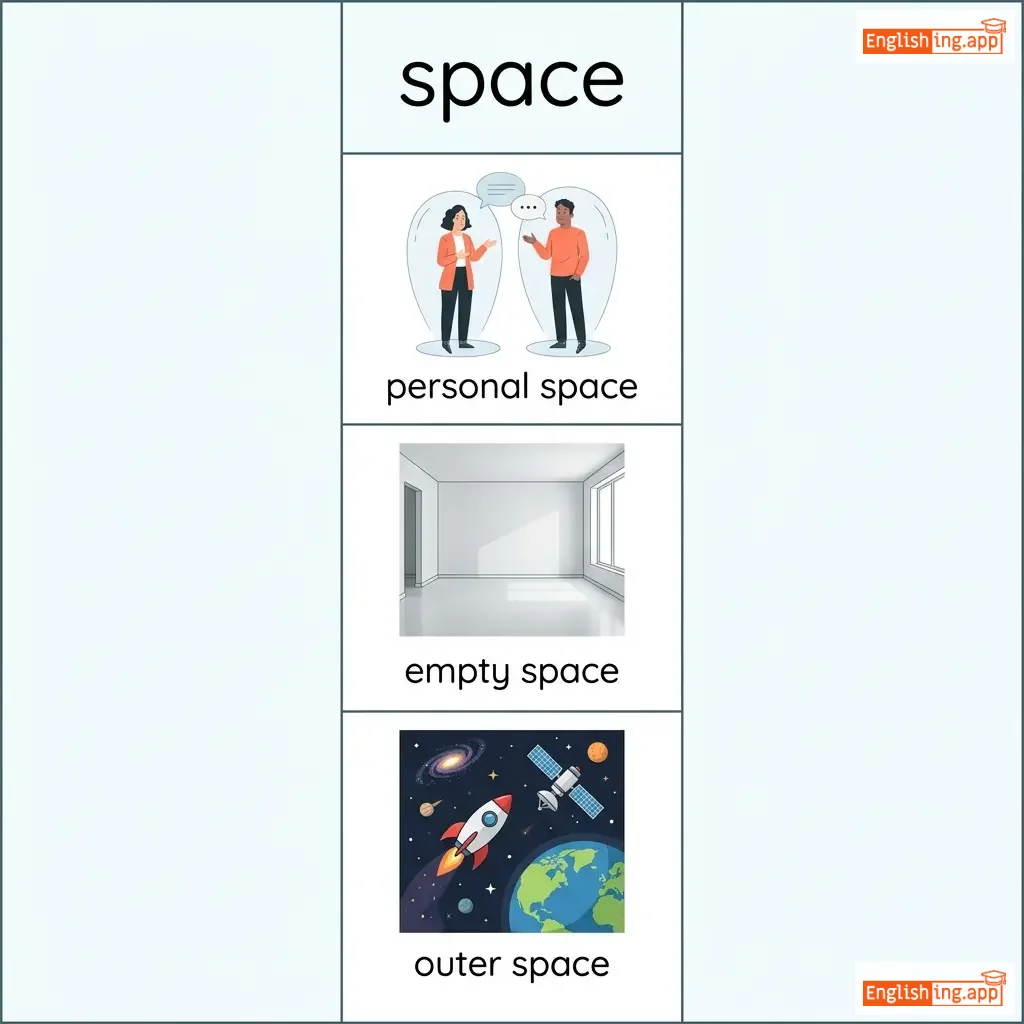
personal space, empty space, outer space, living space
••••••
|
In 'space' we have 'S' for 'Safe', 'P' for 'Place'.
••••••
|
|
✨
••••••
|
/spɛl/
verb
(スペル)
••••••
|
- •••••• |
綴る / 呪文
tsuzuru / jumon
••••••
|
spelled
スペルド
••••••
|
spelled
スペルド
••••••
|
spells
スペルズ
••••••
|
spelling
スペリング
••••••
|
to write or name the letters of a word in the correct order; also a short period of time or a state of enchantment
••••••
|
She asked me to spell her name correctly on the form.
彼女はフォームに正しく名前をスペルしてほしいと言いました。
••••••
|
彼女はフォームに正しく名前を綴ってほしいと言いました。
Kanojo wa fōmu ni tadashiku namae wo tsuzutte hoshī to iimashita.
••••••
|
cast a spell
呪文を唱える
••••••
|
to use magic words to make something happen
••••••
|
呪文を唱える
jumon wo tonaeru
••••••
|
write, recite, articulate, enchant, charm
••••••
|
miswrite, confuse, neglect
••••••
|
spell a word, spell correctly, cast a spell, spelling mistake
••••••
|
綴りは呪文のようなもの、魔法の始まりです!
••••••
|
|
🦴
••••••
|
/spaɪn/
noun
(supein)
••••••
|
- •••••• |
背骨
sebone
••••••
|
- •••••• | - •••••• | - •••••• | - •••••• |
the backbone; a series of bones extending from the skull to the lower back
••••••
|
The doctor examined her spine after the accident. |
事故後、医者は彼女の背骨を調べました。
Jiko go, isha wa kanojo no sebone wo shirabemashita.
••••••
|
backbone of something |
the most important part or support of something
••••••
|
何かの背骨
nanika no sebone
••••••
|
backbone, vertebrae, ridge, support
••••••
|
weakness, fragility
••••••
|
spine injury, spine surgery, curved spine, spine health
••••••
|
Spineは背骨、spine-lessは弱いということです。
••••••
|
|
😠
••••••
|
/spaɪt/
noun
(スパイト)
••••••
|
- •••••• |
意地悪
ijiwaru
••••••
|
- •••••• | - •••••• | - •••••• | - •••••• |
a desire to hurt, annoy, or offend someone
••••••
|
She refused the gift out of spite. |
彼女は意地悪で贈り物を拒否した。
Kanojo wa ijiwaru de okurimono o kyohi shita.
••••••
|
in spite of |
despite something; regardless of
••••••
|
にもかかわらず
nimo kakawarazu
••••••
|
malice, resentment, bitterness, hostility
••••••
|
kindness, goodwill, compassion
••••••
|
out of spite, in spite of, spiteful remark, spite attack
••••••
|
Spite は '意地悪' と同じ — 何かに対して意地を張る時 😡
••••••
|
|
⚽
••••••
|
/spɔːt/
noun
(スポーツ)
••••••
|
- •••••• |
スポーツ
supōtsu
••••••
|
- •••••• | - •••••• | - •••••• | - •••••• |
an activity involving physical exertion and skill in which an individual or team competes against another or others for entertainment
••••••
|
Football is a popular sport around the world.
サッカーは世界中で人気のスポーツです。
••••••
|
サッカーは世界中で人気のスポーツです。
Sakkā wa sekaijū de ninki no supōtsu desu.
••••••
|
- •••••• | - •••••• | - •••••• |
game, activity, competition, exercise
••••••
|
inactivity, laziness
••••••
|
team sport, competitive sport, individual sport
••••••
|
スポーツは友達と競い、楽しむものです。
••••••
|
|
📈
••••••
|
/steɪk/
noun, verb
(sutēki)
••••••
|
- •••••• |
株式, リスク
kabushiki, risuku
••••••
|
staked
sutēkudo
••••••
|
staked
sutēkudo
••••••
|
stakes
sutēkusu
••••••
|
staking
sutēkingu
••••••
|
A share or interest in a business or venture; to risk or support something of value.
••••••
|
He has a major stake in the new company.
彼は新しい会社に大きな利害関係を持っています。
••••••
|
彼は新しい会社に大きな利害関係を持っています。
Kare wa atarashī kaisha ni ōkina rigai kankei o motteimasu.
••••••
|
at stake
危機に瀕して
••••••
|
at risk; in danger of being lost
••••••
|
危機に瀕して
kiki ni hin shite
••••••
|
share, investment, risk, interest, bet
••••••
|
security, certainty, safety
••••••
|
stake in, at stake, high stakes, stake money
••••••
|
Stake をかけると、すべてがリスクにさらされます。
••••••
|
|
🕵️♂️
••••••
|
/stiːl/
verb
(スティール)
••••••
|
|
盗む
nusumu
••••••
|
stole
ストール
••••••
|
stolen
ストーレン
••••••
|
steals
スティールズ
••••••
|
stealing
スティーリング
••••••
|
to take something without permission or right
••••••
|
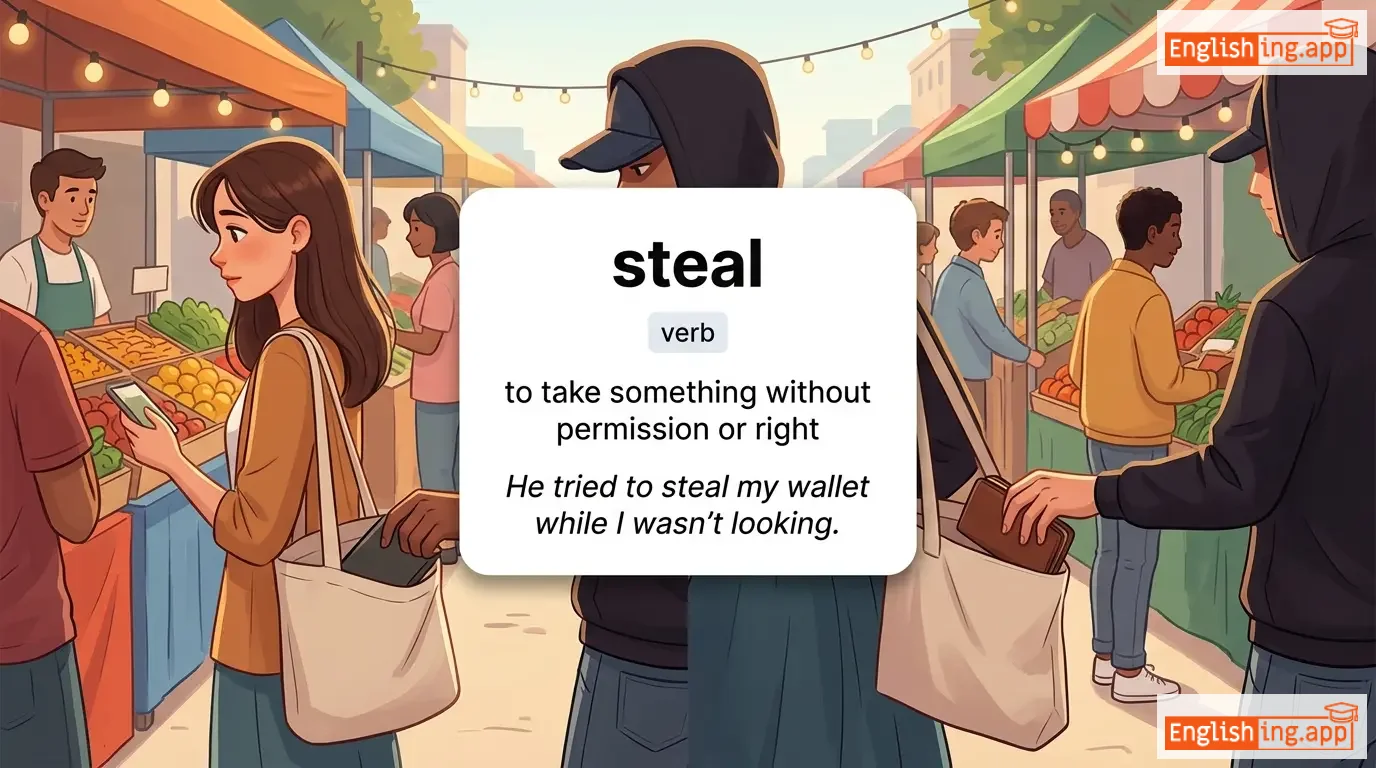
He tried to steal my wallet while I wasn't looking.
彼は私が見ていない間に財布を盗もうとしました。
••••••
|
彼は私が見ていない間に財布を盗もうとしました。
Kare wa watashi ga mite inai aida ni saifu o nusumou to shimashita.
••••••
|
steal someone's heart
誰かの心を盗む
••••••
|
to charm or captivate someone
••••••
|
誰かの心を盗む
Dareka no kokoro o nusumu
••••••
|
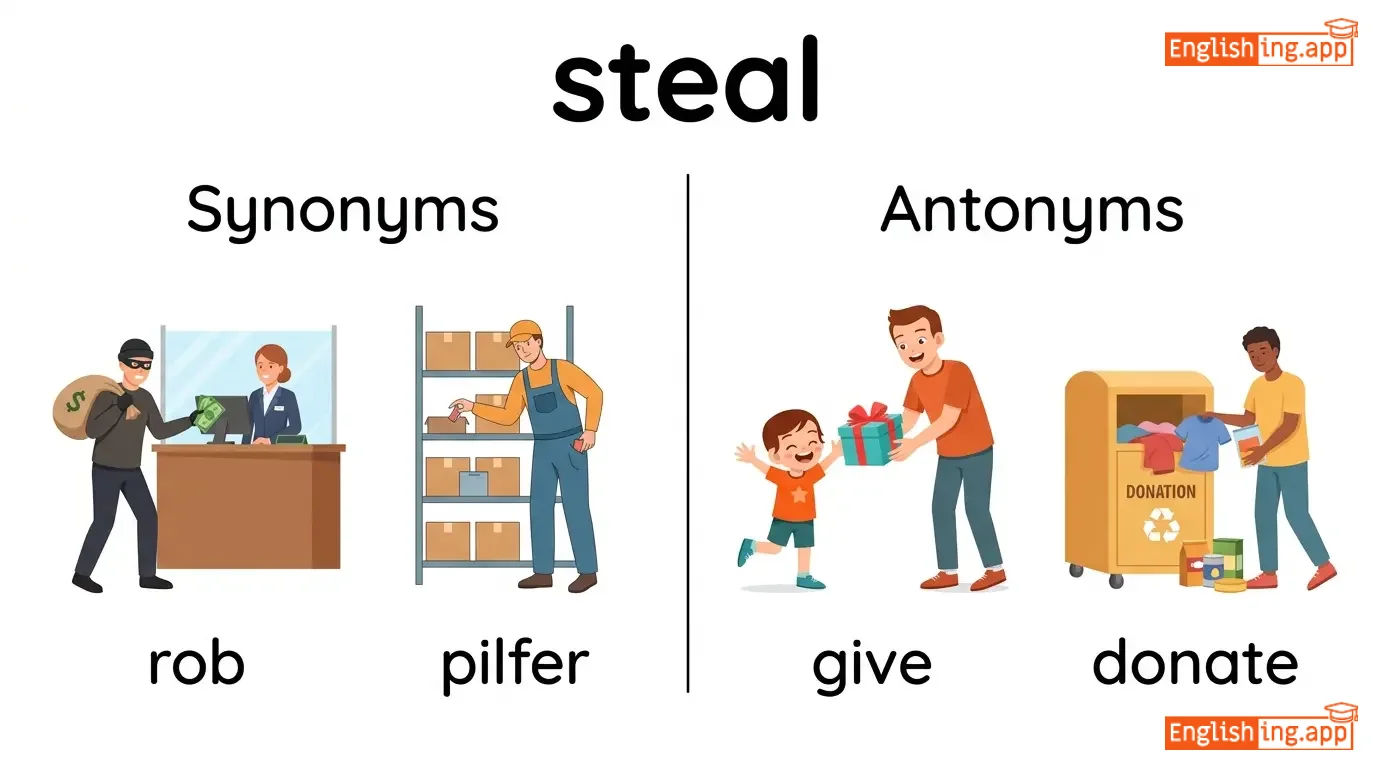
rob, pilfer, loot, snatch
••••••
|
give, donate, return
••••••
|
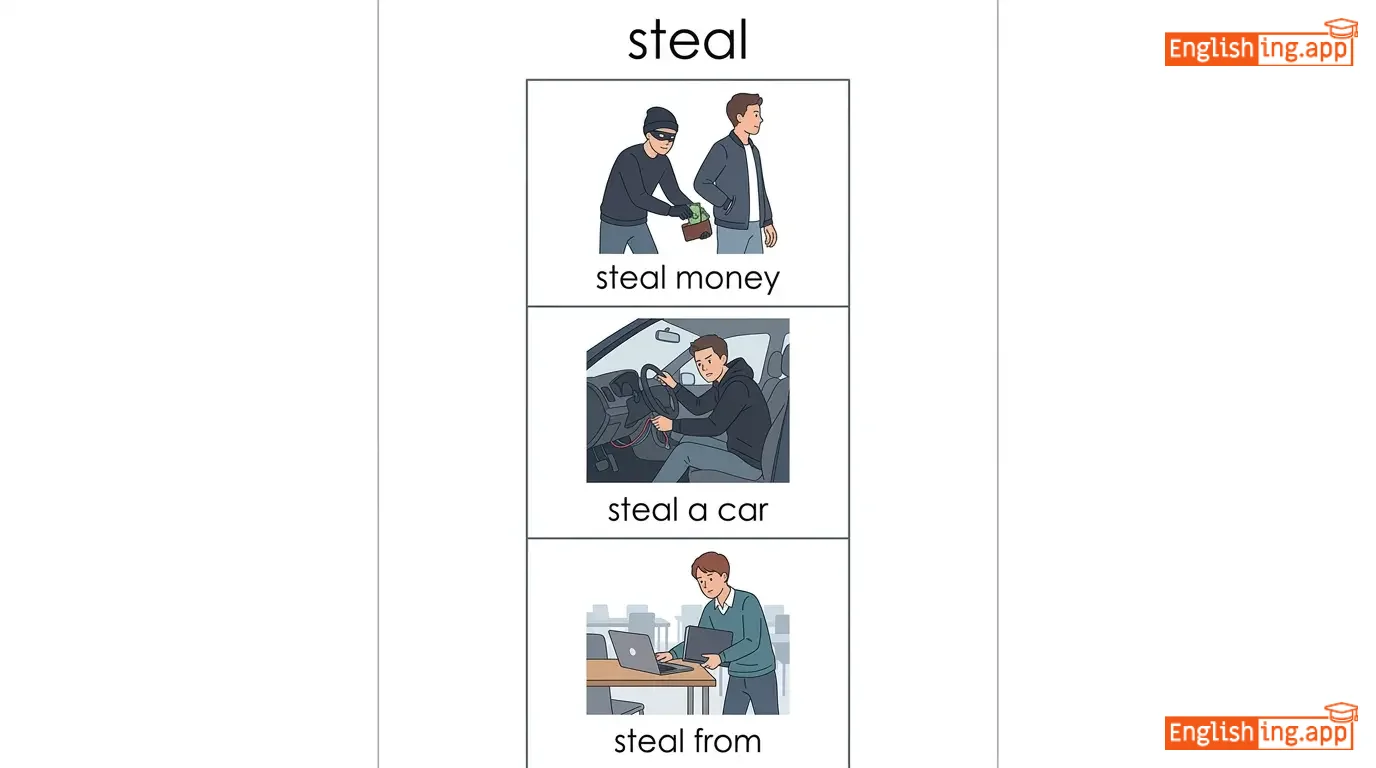
steal money, steal a car, steal from, steal away
••••••
|
盗む = 心を盗む
••••••
|
|
🪵
••••••
|
/stɪf/
adjective
(スティフ)
••••••
|
- •••••• |
硬い
katai
••••••
|
- •••••• | - •••••• | - •••••• | - •••••• |
rigid, difficult to bend or move
••••••
|
After the long run, his legs felt very stiff. |
長いランニングの後、彼の足はとても硬く感じられた。
Nagai ranningu no ato, kare no ashi wa totemo kataku kanjirareta.
••••••
|
stiff competition |
strong or difficult competition
••••••
|
厳しい競争
Kibishii kyousou
••••••
|
rigid, firm, inflexible, hard, tense
••••••
|
flexible, loose, relaxed
••••••
|
stiff neck, stiff muscles, stiff resistance, stiff competition
••••••
|
スティフは硬い意味 – 曲がらない棒のように
••••••
|

