Miracle Consent Night
チャットグラム医科大学のfacultyは特別な夜のイベントを開催しました。臨時のpharmacyブースで、医学生たちは準備を整え、寄付に関するストーリーが書かれた薄いcolumnを配っていました。教授は言いました。「医学はcompetitiveな成績だけではない、organ提供の人道性をemphasizeしなければならない。」あるofficerは、認定されたボランティアが即座に支援をofferすると発表しました。各participantがホールに入る前に情報シートを受け取っていました。学生たちは、新しいexaminationシステムがこの意識を臨床実習と共に教えていることを説明しました。transparentなディスプレイには約束された提供者のリストが表示されていました。司会者は言いました。「私たちは体をfragileな贈り物として扱います。」タンビルは、兄弟の記憶をintactに保つと誓ったとき、涙を流しました。解剖学のインストラクターは、外科医がどのようにして繊細な組織をtightenするかを示しました。参加者たちは、さまざまな患者に対してどの臓器がsuitableであるかを学びました。今週、全国的な参加者数はconsiderably増加しました。すべての同意書はtransparentな言語でリスクを説明していました。主催者はpotentialな提供者に感謝しました。ステージでナスリンは言いました。「誰かが希望を失ったとき、別の命はmiracleのように感じることがあります。」観客はminimalな祈りをささやきました。彼らは最近、都市の認識に対する需要が増えていることを認識しました。夜が終わると、学生は約束しました。「私たちはできる限り、この教育をofferし続けます。」
|
絵文字
|
単語 | Images | 翻訳 | 過去 | 過去分詞 | 三人称単数 | 動名詞 | 意味 | 例文 | 例文の翻訳 | 表現例 | 表現例の意味 | 表現例の翻訳 | 同義語 | 対義語 | コロケーション | ニーモニック |
|---|---|---|---|---|---|---|---|---|---|---|---|---|---|---|---|---|---|
|
📊
••••••
|
/ˈkɒləm/
noun
••••••
|
- •••••• | - •••••• | - •••••• | - •••••• | - •••••• | - •••••• |
A vertical structure that supports a building; also a section of text arranged vertically in a newspaper or table.
••••••
|
The ancient temple had tall marble columns. |
- •••••• |
advice column |
a section in a newspaper where advice is given to readers
••••••
|
- •••••• |
pillar, post, support, section
••••••
|
row, line
••••••
|
newspaper column, support column, table column, advice column
••••••
|
No •••••• |
|
🏆
••••••
|
/kəmˈpetətɪv/
adjective
(kəmˈpɛtɪtɪv)
••••••
|
- •••••• |
競争的
kyousouteki
••••••
|
- •••••• | - •••••• | - •••••• | - •••••• |
relating to or characterized by competition; having a strong desire to win or be more successful
••••••
|
She has a competitive spirit that drives her to excel. |
彼女は競争心にあふれ、それが彼女を卓越に向かわせる。
Kanojo wa kyousoushin ni afure, sore ga kanojo wo taketsu ni mukawaseru.
••••••
|
competitive edge |
an advantage that makes someone more successful
••••••
|
競争優位
kyousou yuu-i
••••••
|
ambitious, rivalrous, aggressive, contesting
••••••
|
uncompetitive, passive
••••••
|
competitive market, competitive advantage, highly competitive
••••••
|
Competitiveは競争のモードにいることを意味します – 常に勝ちたいと思う、トロフィーのように。
••••••
|
|
📈
••••••
|
/kənˈsɪdərəbli/
adverb
(コンシダラブリー)
••••••
|
- •••••• |
かなり; 相当
kanari; soutou
••••••
|
- •••••• | - •••••• | - •••••• | - •••••• |
to a notably large degree; significantly; substantially
••••••
|
The price has increased considerably over the past year. |
昨年、価格はかなり上昇しました。
sakunen, kakaku wa kanari joushou shimashita.
••••••
|
- •••••• | - •••••• | - •••••• |
significantly, substantially, markedly
••••••
|
slightly, minimally, insignificantly
••••••
|
increase considerably, improve considerably, differ considerably
••••••
|
No •••••• |
|
📢
••••••
|
/ˈɛmfəsaɪz/
verb
(エンファサイズ)
••••••
|
|
強調する
kyōchō suru
••••••
|
emphasized
エンファサイズド
••••••
|
emphasized
エンファサイズド
••••••
|
emphasizes
エンファサイズズ
••••••
|
emphasizing
エンファサイズイング
••••••
|
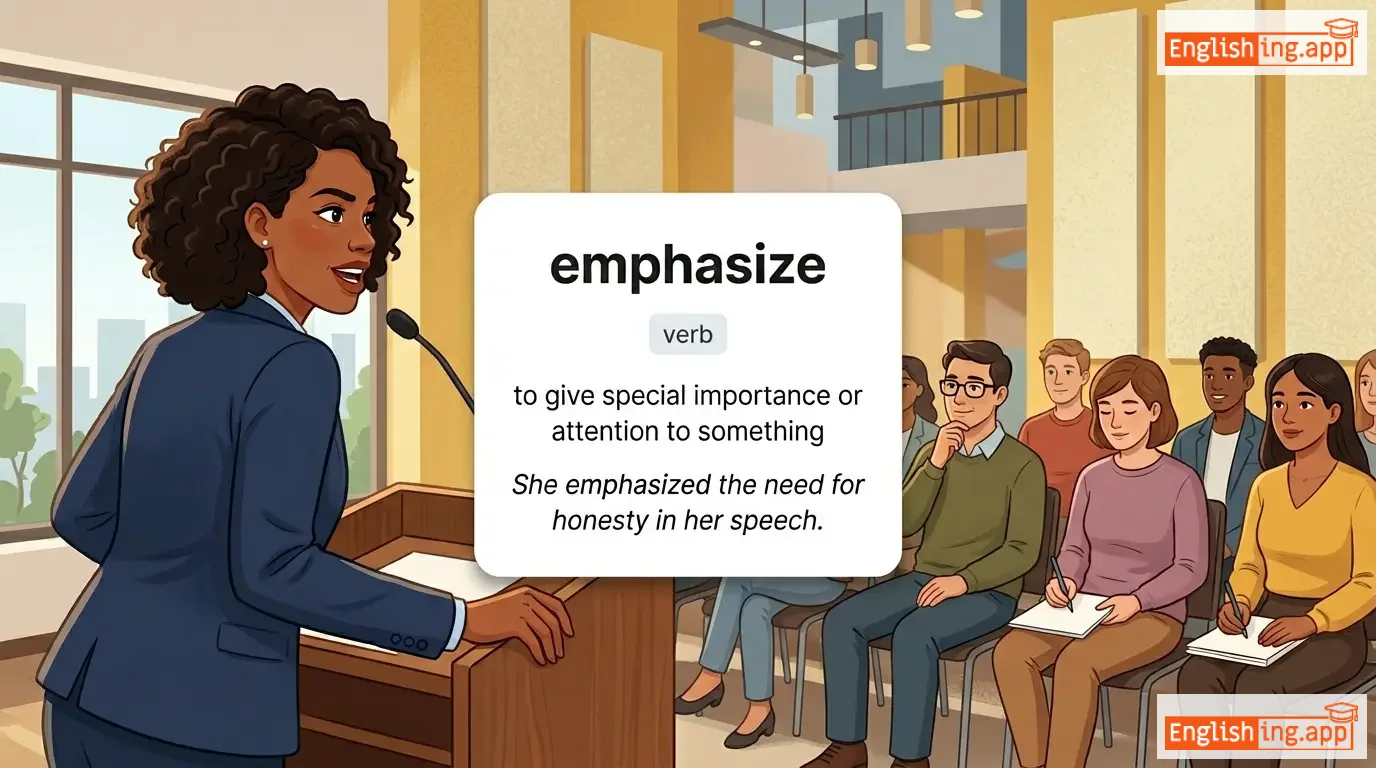
to give special importance or attention to something
••••••
|
She emphasized the need for honesty in her speech.
彼女はスピーチの中で正直さの重要性を強調しました。
••••••
|
彼女はスピーチの中で正直さの重要性を強調しました。
Kanojo wa supīchi no naka de shōjiki-sa no jūyō-sei o kyōchō shimashita.
••••••
|
cannot emphasize enough
十分に強調することはできません
••••••
|
used to strongly stress the importance of something
••••••
|
十分に強調することはできません
Jūbun ni kyōchō suru koto wa dekimasen
••••••
|
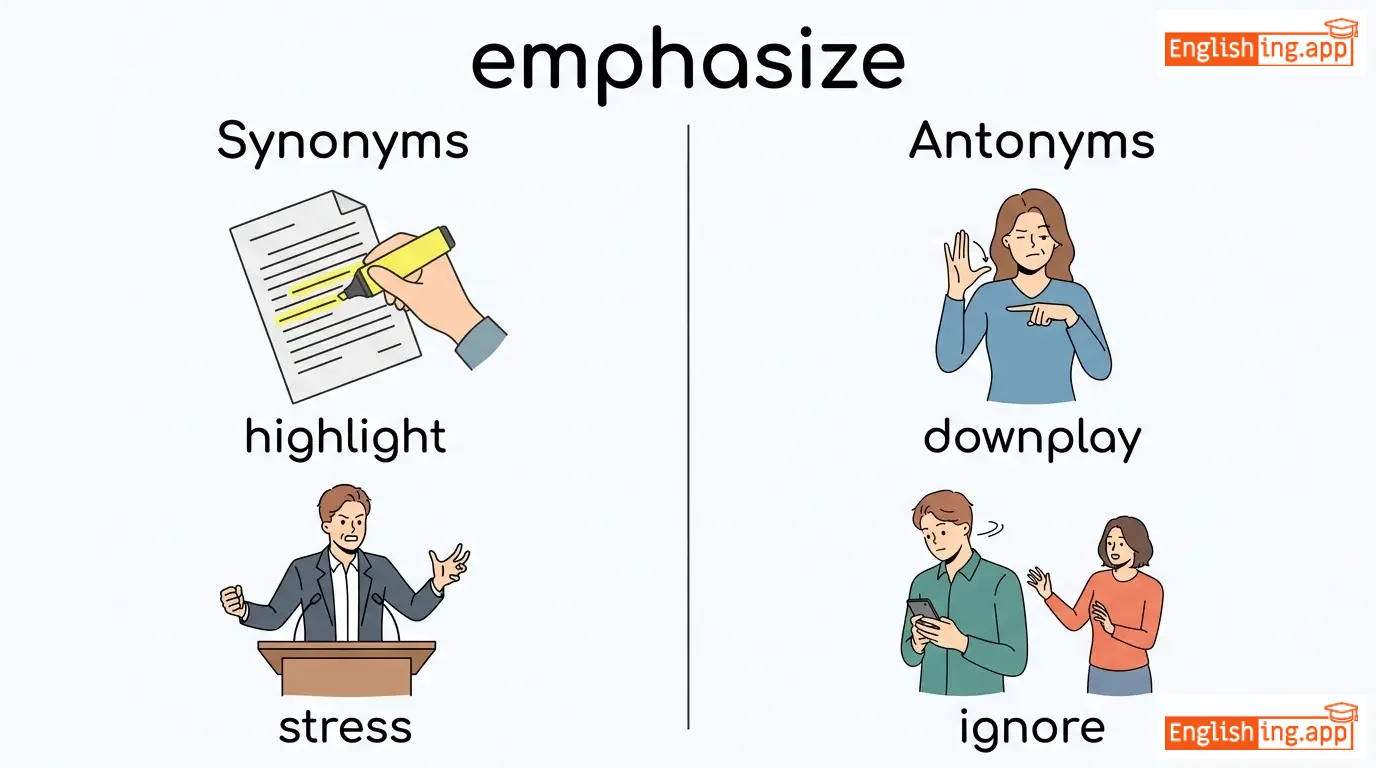
highlight, stress, underline, accentuate, point out
••••••
|
downplay, ignore, overlook
••••••
|
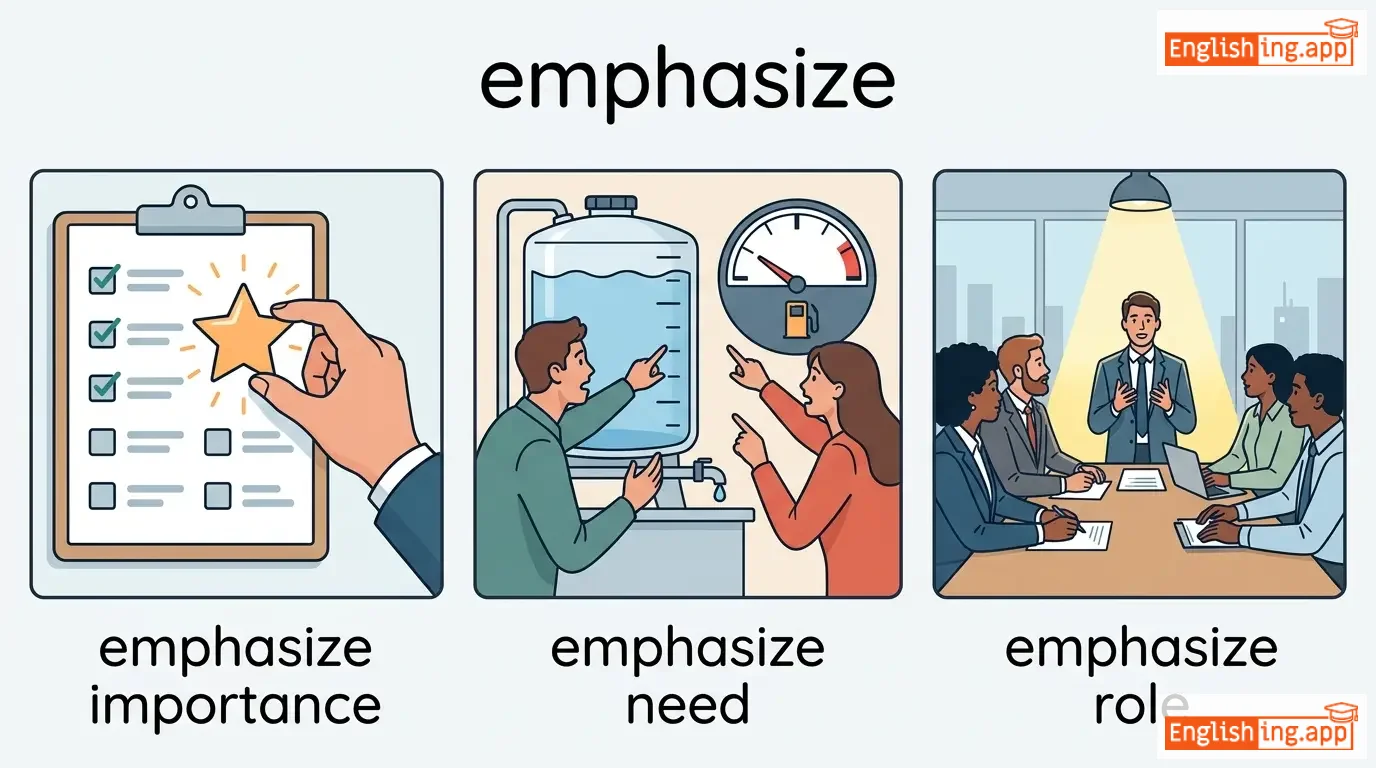
emphasize importance, emphasize need, emphasize role, emphasize strongly
••••••
|
強調することで、重要なことを目立たせる、まるで大文字のように!
••••••
|
|
✍️
••••••
|
/ɪɡˌzæm.ɪˈneɪ.ʃən/
noun
(試験)
••••••
|
- •••••• |
試験
shiken
••••••
|
- •••••• | - •••••• | - •••••• | - •••••• |
a formal test of knowledge or ability
••••••
|
She is preparing for her final examination. |
彼女は最終試験の準備をしています。
Kanojo wa saishū shiken no junbi o shiteimasu.
••••••
|
under examination |
being carefully inspected or studied
••••••
|
試験中
shiken-chū
••••••
|
test, assessment, evaluation, inspection, quiz
••••••
|
ignorance, neglect
••••••
|
take examination, pass examination, final examination, medical examination
••••••
|
Examinationは試験を意味します✍️ - 試験を受けて、国が震えます!
••••••
|
|
🧠
••••••
|
/ˈfækəlti/
noun
(ファカルティ)
••••••
|
- •••••• |
能力、学部
nōryoku, gakubu
••••••
|
- •••••• | - •••••• | - •••••• | - •••••• |
an inherent mental or physical ability; a division of a university
••••••
|
She has a remarkable faculty for languages. |
彼女は言語に対して驚異的な能力を持っています。
Kanojo wa gengo ni taishite kyōiteki na nōryoku o motteimasu.
••••••
|
- •••••• | - •••••• | - •••••• |
ability, skill, talent, department
••••••
|
incapacity, weakness
••••••
|
faculty of law, faculty meeting, mental faculty, teaching faculty
••••••
|
Faculty は能力を意味し、脳にfacultyがあれば才能がある
••••••
|
|
🧪
••••••
|
/ˈfræʤaɪl/
adjective
(フレジャイル)
••••••
|
- •••••• |
壊れやすい
kowareyasui
••••••
|
- •••••• | - •••••• | - •••••• | - •••••• |
Easily broken or damaged; delicate.
••••••
|
Be careful with that vase, it's very fragile. |
その花瓶には気をつけて、すごく壊れやすいから。
Sono kabin ni wa ki o tsukete, sugoku kowareyasui kara.
••••••
|
fragile peace |
A peace that is weak and easily disrupted
••••••
|
壊れやすい平和
kowareyasui heiwa
••••••
|
delicate, breakable, frail, weak, brittle
••••••
|
strong, durable, sturdy
••••••
|
fragile glass, fragile economy, fragile peace, fragile body
••••••
|
Fragile = 壊れやすい in Japanese — 壊れやすい, careful!
••••••
|
|
🧱
••••••
|
/ɪnˈtækt/
adjective
(インタクト)
••••••
|
- •••••• |
完全
kanzen
••••••
|
- •••••• | - •••••• | - •••••• | - •••••• |
Remaining whole, complete, and undamaged.
••••••
|
Despite the storm, the old house remained intact. |
嵐にもかかわらず、古い家は完全な状態を保っていました。
Arashi ni mo kakawarazu, furui ie wa kanzen na jōtai o tamotte imashita.
••••••
|
- •••••• | - •••••• | - •••••• |
undamaged, whole, unbroken, unharmed, complete
••••••
|
damaged, broken, ruined
••••••
|
remain intact, kept intact, survive intact, preserve intact
••••••
|
IN壊れない、intactは完全を意味します。
••••••
|
|
⏰
••••••
|
/ˈleɪt.li/
adverb
(レイトリー)
••••••
|
- •••••• |
最近; この頃;
saikin
••••••
|
- •••••• | - •••••• | - •••••• | - •••••• |
recently; in the recent past; not long ago
••••••
|
I haven't seen him lately, but I heard he got a new job.
アイ ハブント シーン ヒム レイトリー, バット アイ ハード ヒー ガット ア ニュー ジョブ。
••••••
|
最近彼を見ていませんが、新しい仕事を得たと聞きました。
saikin kare o miteimasen ga, atarashii shigoto o eta to kikimashita.
••••••
|
- •••••• | - •••••• | - •••••• |
recently, currently, nowadays, presently
••••••
|
formerly, previously, earlier, long ago
••••••
|
lately been, seen lately, lately noticed
••••••
|
Lately = レイトリー sounds like 'late' and means 最近 (saikin) — recently.
••••••
|
|
⚖️
••••••
|
/ˈmɪnɪməl/
adjective
(ミニマル)
••••••
|
- •••••• |
最小限
saishōgen
••••••
|
- •••••• | - •••••• | - •••••• | - •••••• |
the smallest or least amount possible
••••••
|
The damage to the car was minimal after the accident. |
事故後、車の損傷は最小限でした。
Jiko-go, kuruma no sonshō wa saishōgen deshita.
••••••
|
minimal effort |
doing something with the least possible effort
••••••
|
最小限の努力
saishōgen no doryoku
••••••
|
least, smallest, slight, negligible, tiny
••••••
|
maximum, major, large
••••••
|
minimal effort, minimal cost, minimal damage, minimal risk
••••••
|
Minimalは最小の努力を意味します。
••••••
|
|
✨
••••••
|
/ˈmɪrəkəl/
noun
(ミラクル)
••••••
|
- •••••• |
奇跡
kiseki
••••••
|
- •••••• | - •••••• | - •••••• | - •••••• |
an extraordinary event that cannot be explained by natural laws
••••••
|
Surviving the accident was nothing short of a miracle.
事故から生き残るのはまさに奇跡でした。
••••••
|
事故から生き残るのはまさに奇跡でした。
Jiko kara ikinokoru no wa masani kiseki deshita.
••••••
|
miracle cure
奇跡の治療法
••••••
|
a treatment that seems to work magically
••••••
|
奇跡の治療法
kiseki no chiryōhō
••••••
|
wonder, marvel, phenomenon, blessing
••••••
|
disaster, misfortune
••••••
|
miracle cure, miracle worker, minor miracle, perform a miracle
••••••
|
奇跡は『ミラクル』から来て、奇跡のような出来事が起きることを示しています。
••••••
|
|
🤲
••••••
|
/ˈɔːfər/
verb
(オファー)
••••••
|

|
申し出る
moshideru
••••••
|
offered
オファード
••••••
|
offered
オファード
••••••
|
offers
オファーズ
••••••
|
offering
オファーリング
••••••
|
to present something for acceptance or rejection; to propose
••••••
|
She offered to help with the project.
シー オファード トゥ ヘルプ ウィズ ザ プロジェクト。
••••••
|
彼女はプロジェクトを手伝うと申し出た。
kanojo wa purojekuto o tetsudau to moshideta
••••••
|
- •••••• | - •••••• | - •••••• |
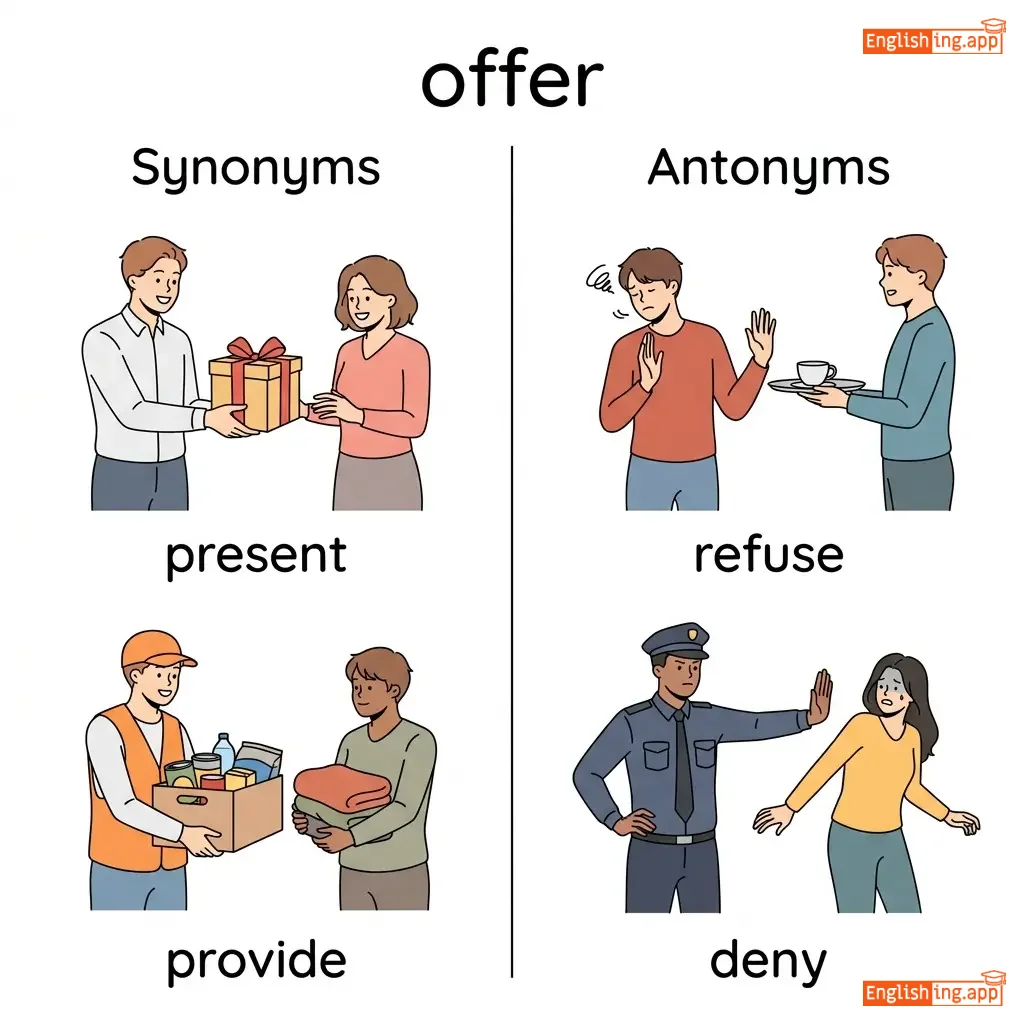
propose, present, provide, suggest
••••••
|
withdraw, refuse, deny, withhold
••••••
|
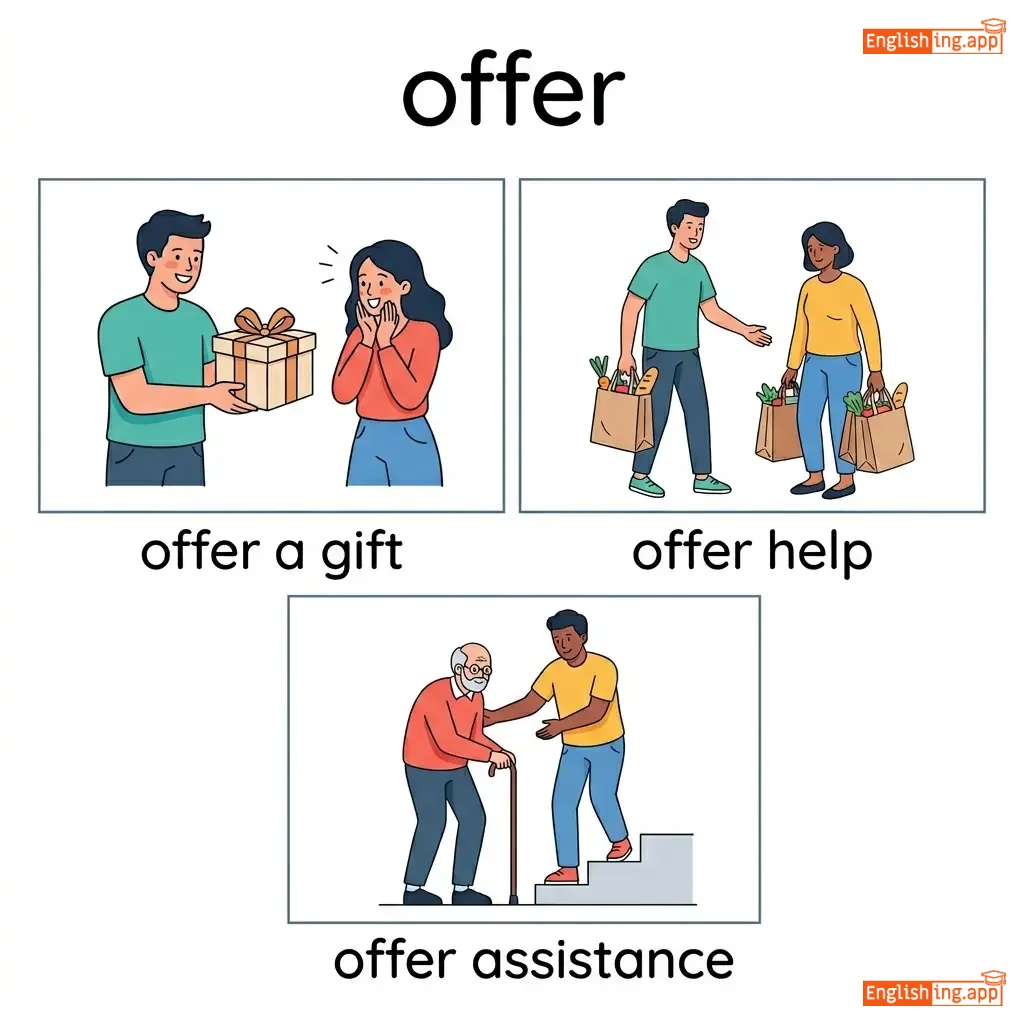
offer help, offer advice, offer support, make an offer, generous offer
••••••
|
Offer = オファー (ofaa) — same sound, means to make a proposal or offer help.
••••••
|
|
👮
••••••
|
/ˈɔːfɪsər/
noun
(オフィサー)
••••••
|
- •••••• |
警官
keikan
••••••
|
- •••••• | - •••••• | - •••••• | - •••••• |
a person in a position of authority, especially in law enforcement
••••••
|
The officer gave him a ticket for speeding. |
警官はスピード違反で彼にチケットを渡した。
Keikan wa supīdo ihan de kare ni chiketto o watashita.
••••••
|
- •••••• | - •••••• | - •••••• |
agent, constable, policeman, lawman
••••••
|
civilian, criminal
••••••
|
police officer, military officer, security officer
••••••
|
警官, まるで警察官 - 権力を持つ人
••••••
|
|
🫀
••••••
|
/ˈɔːɡən/
noun
(オルガン)
••••••
|
- •••••• |
臓器
zōki
••••••
|
- •••••• | - •••••• | - •••••• | - •••••• |
a part of the body that performs a specific function
••••••
|
The heart is an important organ in the human body. |
心臓は人間の体の重要な臓器です。
Shinzō wa ningen no karada no jūyōna zōki desu.
••••••
|
- •••••• | - •••••• | - •••••• |
body part, structure, tissue, system
••••••
|
nonliving, inanimate
••••••
|
vital organ, internal organ, organ transplant, organ failure
••••••
|
Organ は臓器 — 心臓、肝臓、全てが臓器、体の一部。
••••••
|
|
🧑🤝🧑
••••••
|
/pɑːrˈtɪsɪpənt/
noun
(パーティシパント)
••••••
|
- •••••• |
参加者
sankasha
••••••
|
- •••••• | - •••••• | - •••••• | - •••••• |
a person who takes part in an event or activity
••••••
|
Each participant received a certificate after the workshop.
各参加者はワークショップ後に証明書を受け取りました。
••••••
|
各参加者はワークショップ後に証明書を受け取りました。
Kaku sankasha wa wākushoppu go ni shōmeisho o uketorimashita.
••••••
|
active participant
積極的な参加者
••••••
|
someone who takes an active role in an activity
••••••
|
積極的な参加者
sekkyokuteki na sankasha
••••••
|
attendee, entrant, contestant, member, player
••••••
|
observer, spectator
••••••
|
active participant, workshop participant, study participant
••••••
|
Participant → 参加する → 活動に参加する人が参加者です。
••••••
|
|
💊
••••••
|
/ˈfɑːrməsi/
noun
(ファーマシー)
••••••
|
- •••••• |
薬局
yakkyoku
••••••
|
- •••••• | - •••••• | - •••••• | - •••••• |
A place where medicinal drugs are prepared and sold.
••••••
|
I went to the pharmacy to buy antibiotics.
私は抗生物質を買うために薬局に行きました。
••••••
|
私は抗生物質を買うために薬局に行きました。
Watashi wa kouseibushitsu o kau tame ni yakkyoku ni ikimashita.
••••••
|
- •••••• | - •••••• | - •••••• |
drugstore, chemist, apothecary
••••••
|
hospital ward, operating theater
••••••
|
local pharmacy, online pharmacy, hospital pharmacy
••••••
|
薬局 = 薬を売る場所。
••••••
|
|
🌱
••••••
|
/pəˈtɛnʃəl/
noun, adjective
(ポテンシャル)
••••••
|
|
可能性
kanousei
••••••
|
- •••••• | - •••••• | - •••••• | - •••••• |
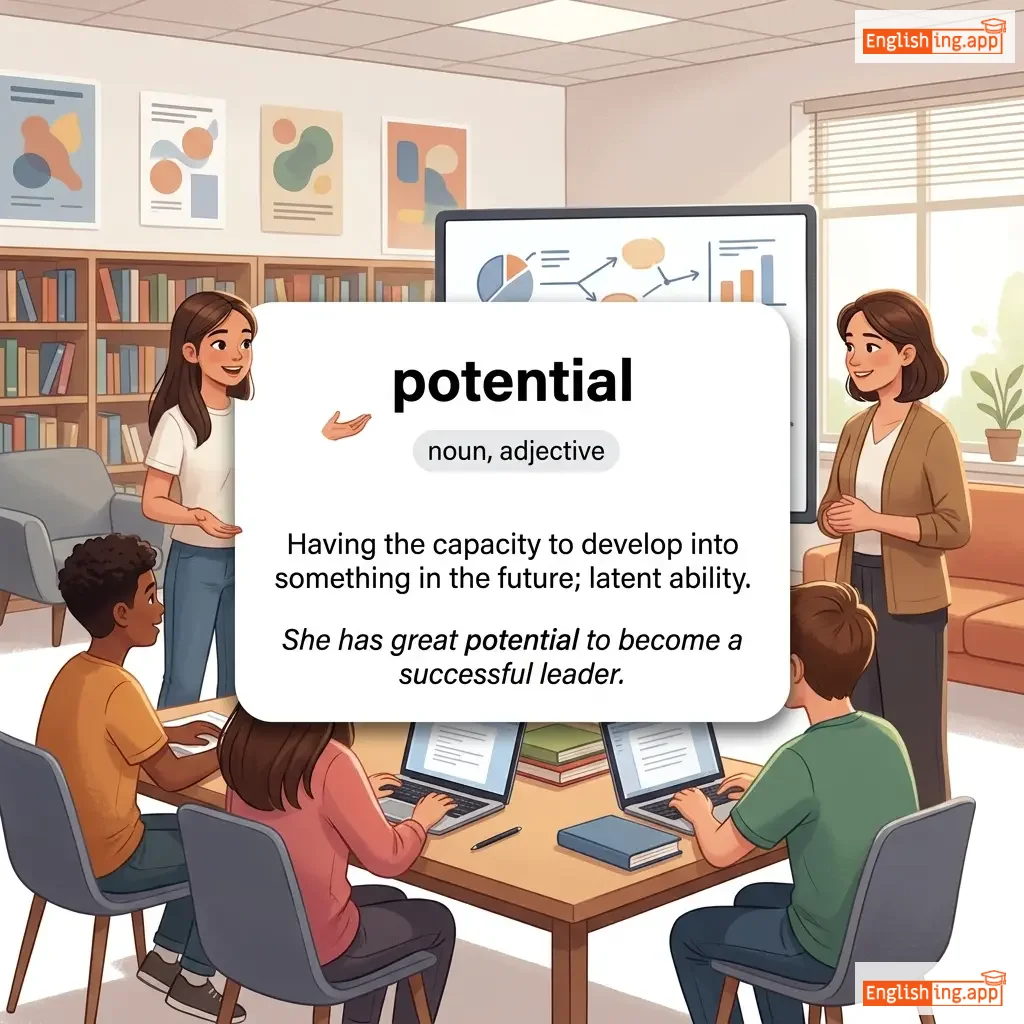
Having the capacity to develop into something in the future; latent ability.
••••••
|
She has great potential to become a successful leader. |
彼女には成功したリーダーになる大きな可能性がある。
Kanojo ni wa seikō shita rīdā ni naru ōkina kanōsei ga aru.
••••••
|
untapped potential |
Unused or unrecognized ability or capacity.
••••••
|
未開拓の可能性
Mikai-taku no kanōsei
••••••
|
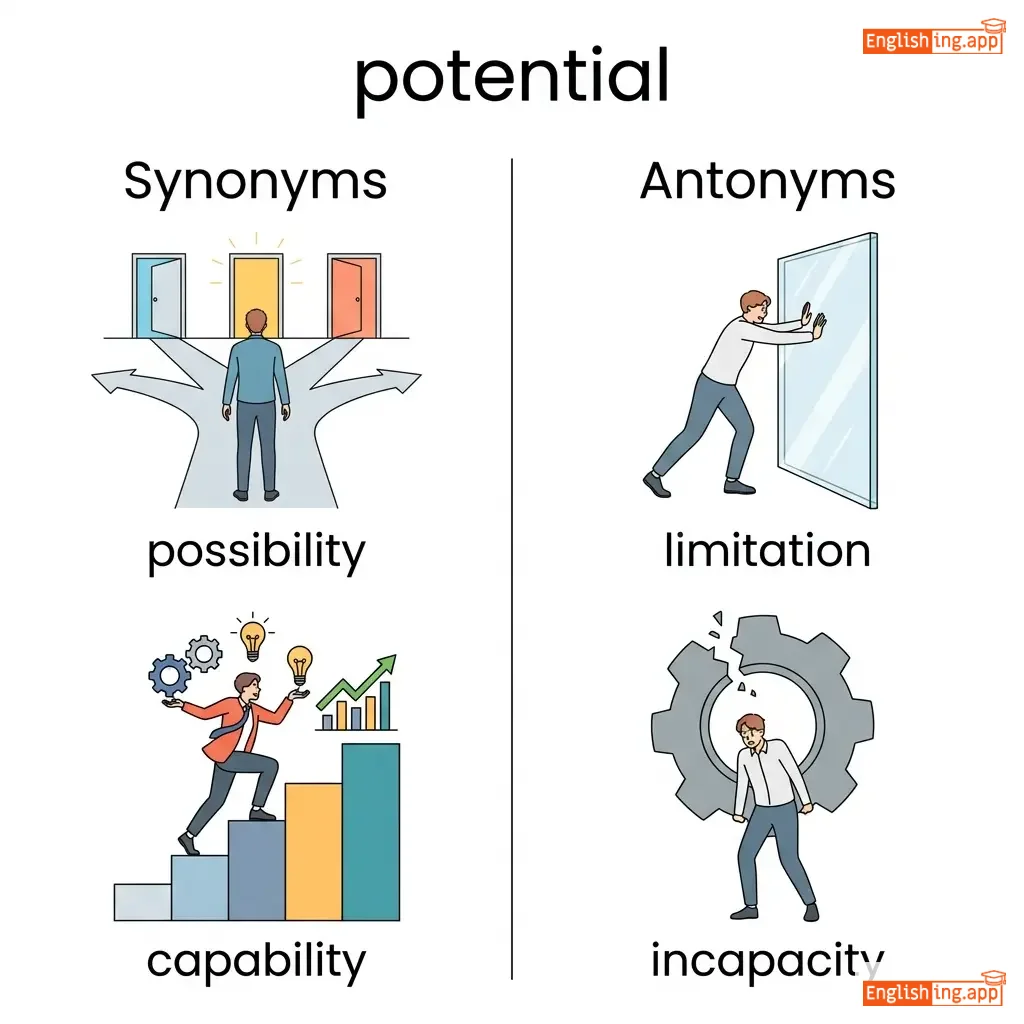
possibility, capability, capacity, promise, ability
••••••
|
limitation, incapacity, inability
••••••
|
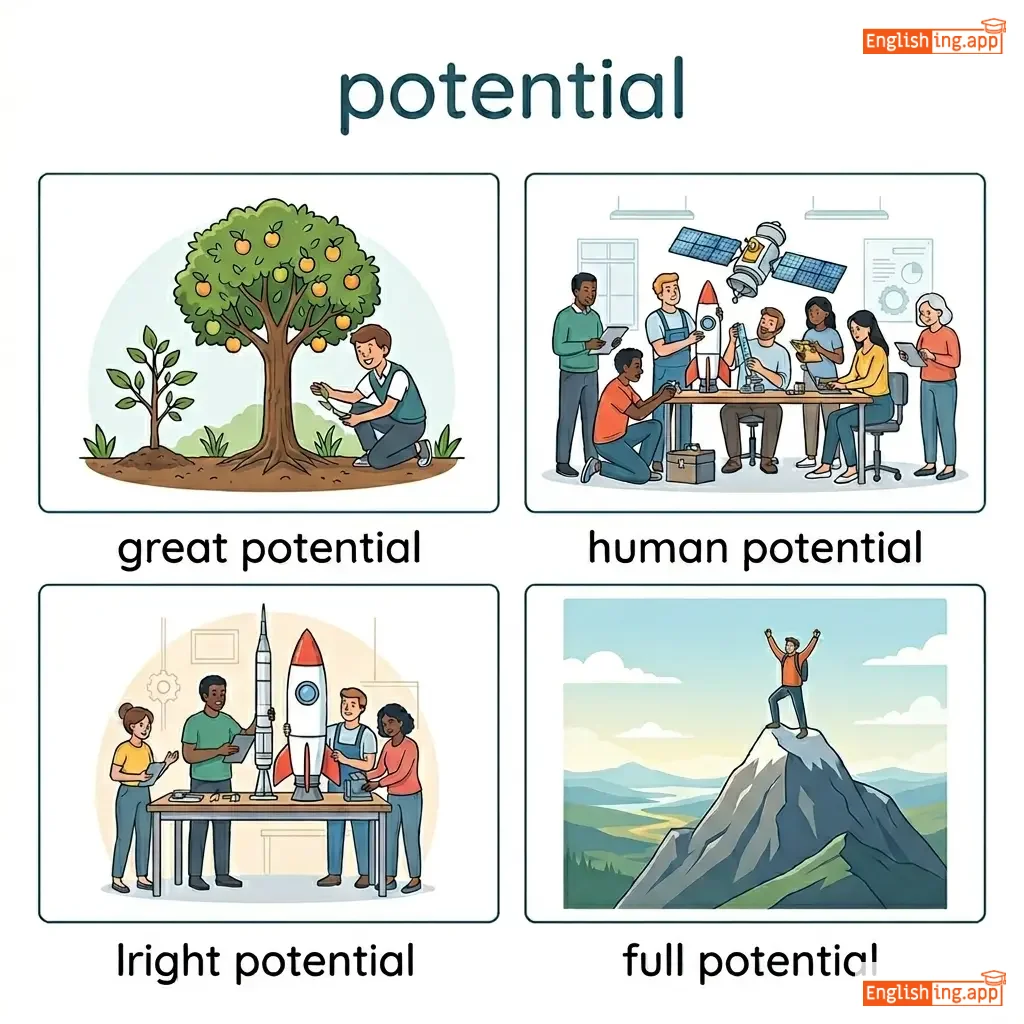
great potential, human potential, full potential, untapped potential
••••••
|
Potentialは未来に発展する力🌱 種が木になるように。
••••••
|
|
👌
••••••
|
/ˈsuːtəbl/
adjective
(スイタブル)
••••••
|
- •••••• |
適切
tekisetsu
••••••
|
- •••••• | - •••••• | - •••••• | - •••••• |
appropriate or right for a particular person, purpose, or situation
••••••
|
This dress is suitable for the wedding. |
このドレスは結婚式に適しています。
Kono doresu wa kekkonshiki ni tekishiteimasu.
••••••
|
- •••••• | - •••••• | - •••••• |
appropriate, proper, fitting, apt, acceptable
••••••
|
unsuitable, inappropriate, unfit
••••••
|
suitable for, suitable candidate, suitable time, suitable environment
••••••
|
Suitable は適切な意味、結婚式に適したドレスのように。
••••••
|
|
🔩
••••••
|
/ˈtaɪtən/
verb
(タイテン)
••••••
|

|
締める
shimeru
••••••
|
tightened
タイテンド
••••••
|
tightened
タイテンド
••••••
|
tightens
タイテンズ
••••••
|
tightening
タイテニング
••••••
|
to make something become tighter or more firmly fixed
••••••
|
He tightened the screw with a wrench.
彼はレンチでネジを締めました。
••••••
|
彼はレンチでネジを締めました。
Kare wa renchi de neji o shimemashita.
••••••
|
tighten one's belt
ベルトを締める
••••••
|
to spend less money; to be more economical
••••••
|
ベルトを締める
beruto o shimeru
••••••
|
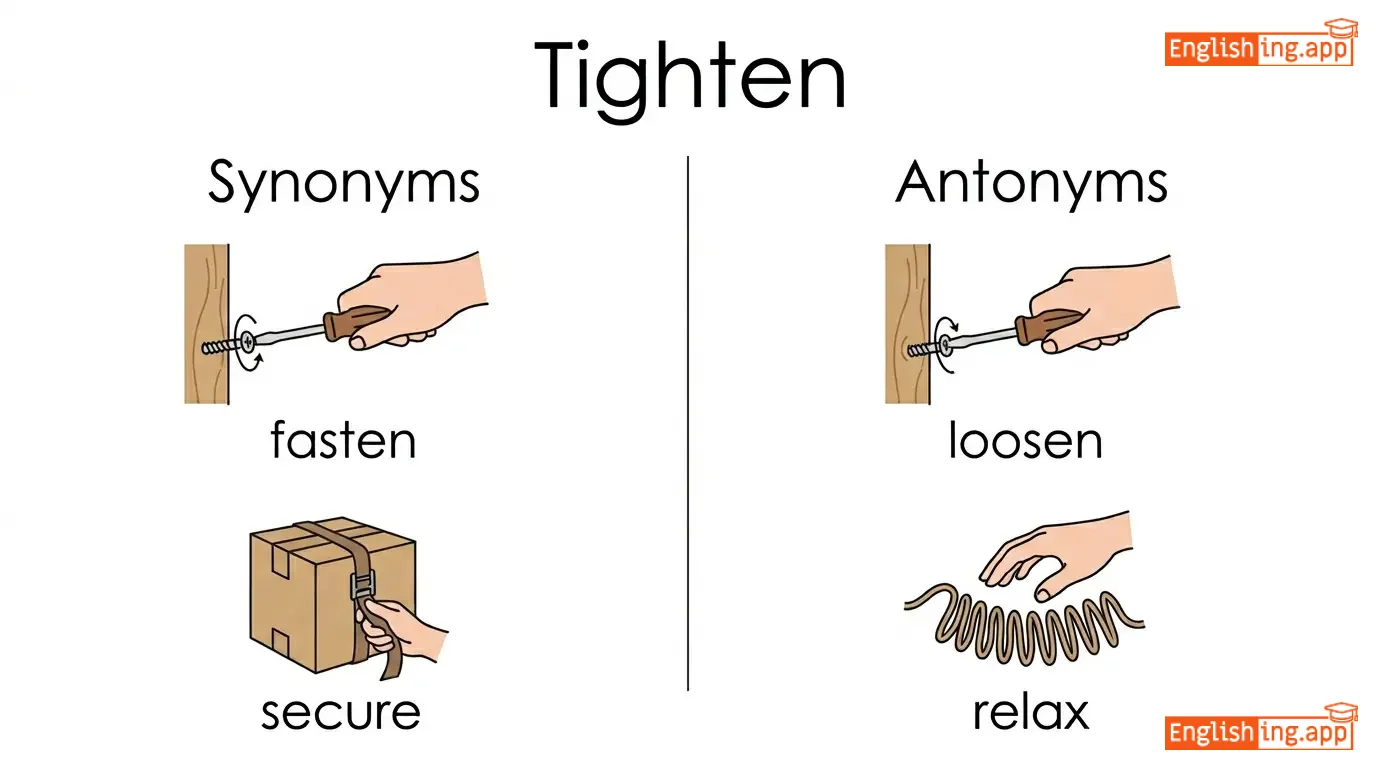
fasten, secure, stiffen, contract, strengthen
••••••
|
loosen, relax, slacken
••••••
|
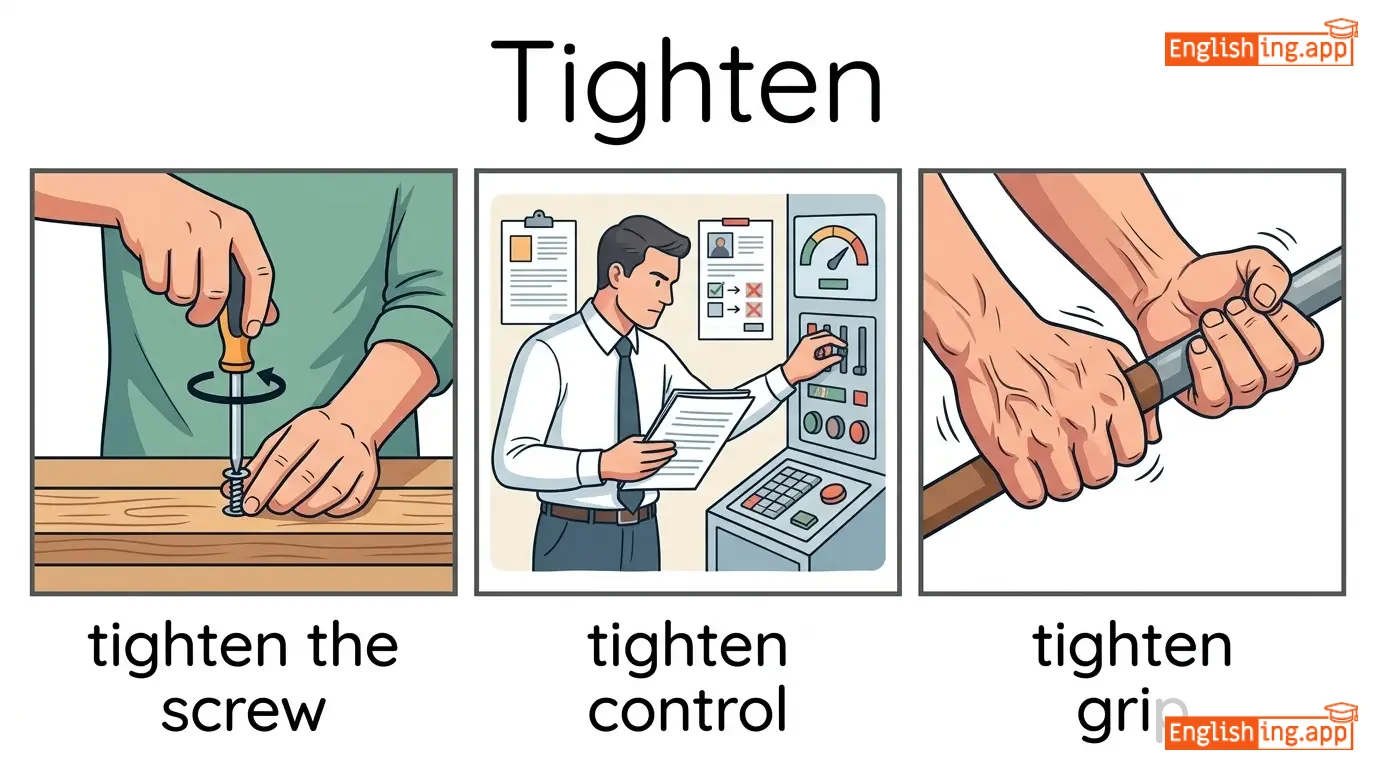
tighten the screw, tighten control, tighten grip, tighten security
••••••
|
締める (tight) とは、さらにきつくすることを意味します 🔩
••••••
|
|
🔍
••••••
|
/trænsˈpɛrənt/
adjective
(トランスペアレント)
••••••
|
- •••••• |
透明
tōmei
••••••
|
- •••••• | - •••••• | - •••••• | - •••••• |
allowing light to pass through so that objects behind can be clearly seen
••••••
|
The glass is transparent enough to see through. |
ガラスは十分透明で、それを通して見ることができます。
Garasu wa jūbun tōmei de, sore o tōshite miru koto ga dekimasu.
••••••
|
transparent process |
a process that is open, clear, and easy to understand
••••••
|
透明なプロセス
tōmei na purosesu
••••••
|
clear, see-through, obvious, lucid, apparent
••••••
|
opaque, cloudy, hidden
••••••
|
transparent glass, transparent process, transparent material, transparent policy
••••••
|
Transparent は日本語で透明、ガラスのように見える
••••••
|

