Miracle Consent Night
恰图格朗医学院的faculty举办了一场特别的晚会。在一个临时的pharmacy摊位上,医学生们准备好了,分发着一薄 column,上面写着捐赠的故事。一位教授说:“医学不仅仅是关于competitive成绩,我们必须emphasize器官捐赠的人性。”一位officer宣布,认证志愿者将提供即时帮助。每个到达的participant在进入大厅前都会收到一张信息单。学生们解释了新examination系统如何在临床实践的同时教授这种意识。一块transparent显示屏列出了承诺捐赠的捐献者。主持人说:“我们将身体视为一个fragile礼物。”当他发誓要保留兄弟的记忆intact时,Tanvir的眼中充满了泪水。一位解剖学讲师演示了外科医生如何tighten脆弱的组织。参与者了解了哪些器官对于不同的病人是suitable的。本周,全国范围内的参与者数量considerably增加了。每份同意书都以transparent语言描述了风险。组织者感谢potential捐赠者。Nasrin在舞台上说:“当一个人失去希望时,另一个生命可能会像miracle一样。”观众低声祈祷minimal,注意到安静。他们意识到,lately城市对意识的需求已经增加。活动结束时,一名学生承诺:“只要我们能够,我们将继续offer这种教育。”
|
表情符号
|
单词 | Images | 翻译 | 过去时 | 过去分词 | 第三人称单数 | 动名词 | 含义 | 例句 | 例句翻译 | 示例表达 | 示例表达含义 | 示例表达翻译 | 同义词 | 反义词 | 搭配词 | 助记符 |
|---|---|---|---|---|---|---|---|---|---|---|---|---|---|---|---|---|---|
|
📊
••••••
|
/ˈkɒləm/
noun
••••••
|
- •••••• | - •••••• | - •••••• | - •••••• | - •••••• | - •••••• |
A vertical structure that supports a building; also a section of text arranged vertically in a newspaper or table.
••••••
|
The ancient temple had tall marble columns. |
- •••••• |
advice column |
a section in a newspaper where advice is given to readers
••••••
|
- •••••• |
pillar, post, support, section
••••••
|
row, line
••••••
|
newspaper column, support column, table column, advice column
••••••
|
No •••••• |
|
🏆
••••••
|
/kəmˈpetətɪv/
adjective
(kəmˈpɛtɪtɪv)
••••••
|
- •••••• |
竞争的
jingzheng de
••••••
|
- •••••• | - •••••• | - •••••• | - •••••• |
relating to or characterized by competition; having a strong desire to win or be more successful
••••••
|
She has a competitive spirit that drives her to excel. |
她有一种竞争精神,推动她追求卓越。
Ta you yizhong jingzheng jingshen, tuidong ta zhuiqiu zhuoyue.
••••••
|
competitive edge |
an advantage that makes someone more successful
••••••
|
竞争优势
jingzheng youshi
••••••
|
ambitious, rivalrous, aggressive, contesting
••••••
|
uncompetitive, passive
••••••
|
competitive market, competitive advantage, highly competitive
••••••
|
Competitive 意味着总是处于竞争模式 – 总是想赢,像奖杯一样。
••••••
|
|
📈
••••••
|
/kənˈsɪdərəbli/
adverb
(kənˈsɪdərəbli)
••••••
|
- •••••• |
显著地;相当大地
xian zhu de; xiang dang da di
••••••
|
- •••••• | - •••••• | - •••••• | - •••••• |
to a notably large degree; significantly; substantially
••••••
|
The price has increased considerably over the past year. |
过去一年价格显著上涨。
guo qu yi nian jia ge xian zhu shang zhang.
••••••
|
- •••••• | - •••••• | - •••••• |
significantly, substantially, markedly
••••••
|
slightly, minimally, insignificantly
••••••
|
increase considerably, improve considerably, differ considerably
••••••
|
No •••••• |
|
📢
••••••
|
/ˈɛmfəsaɪz/
verb
(èmfásáiz)
••••••
|
|
强调
qiángdiào
••••••
|
emphasized
èmfásáizd
••••••
|
emphasized
èmfásáizd
••••••
|
emphasizes
èmfásáizes
••••••
|
emphasizing
èmfásáizing
••••••
|
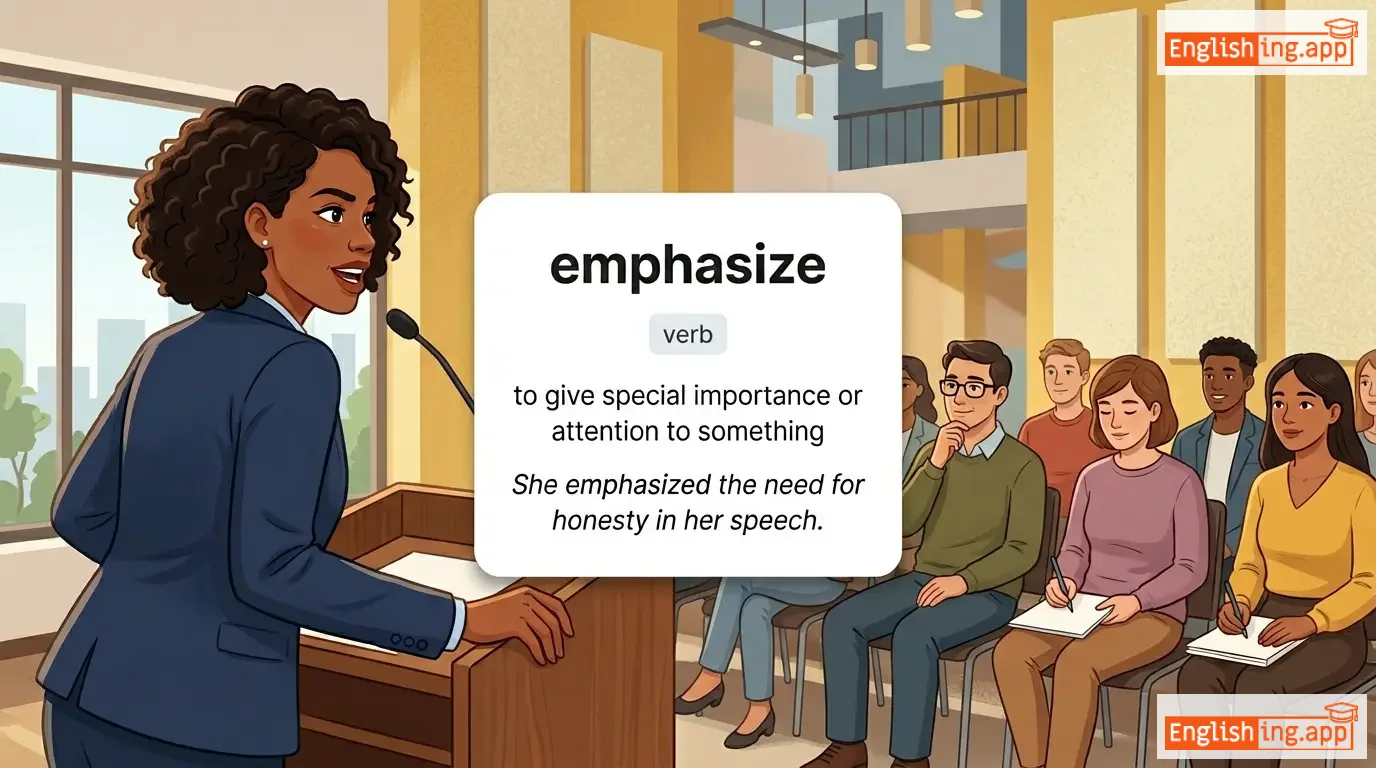
to give special importance or attention to something
••••••
|
She emphasized the need for honesty in her speech.
她强调了她演讲中诚实的重要性。
••••••
|
她强调了她演讲中诚实的重要性。
Tā qiángdiào le tā yǎnjiǎng zhōng chéngshí de zhòngyào xìng.
••••••
|
cannot emphasize enough
我们无法强调得足够多
••••••
|
used to strongly stress the importance of something
••••••
|
我们无法强调得足够多
Wǒmen wúfǎ qiángdiào dé zúgòu duō
••••••
|
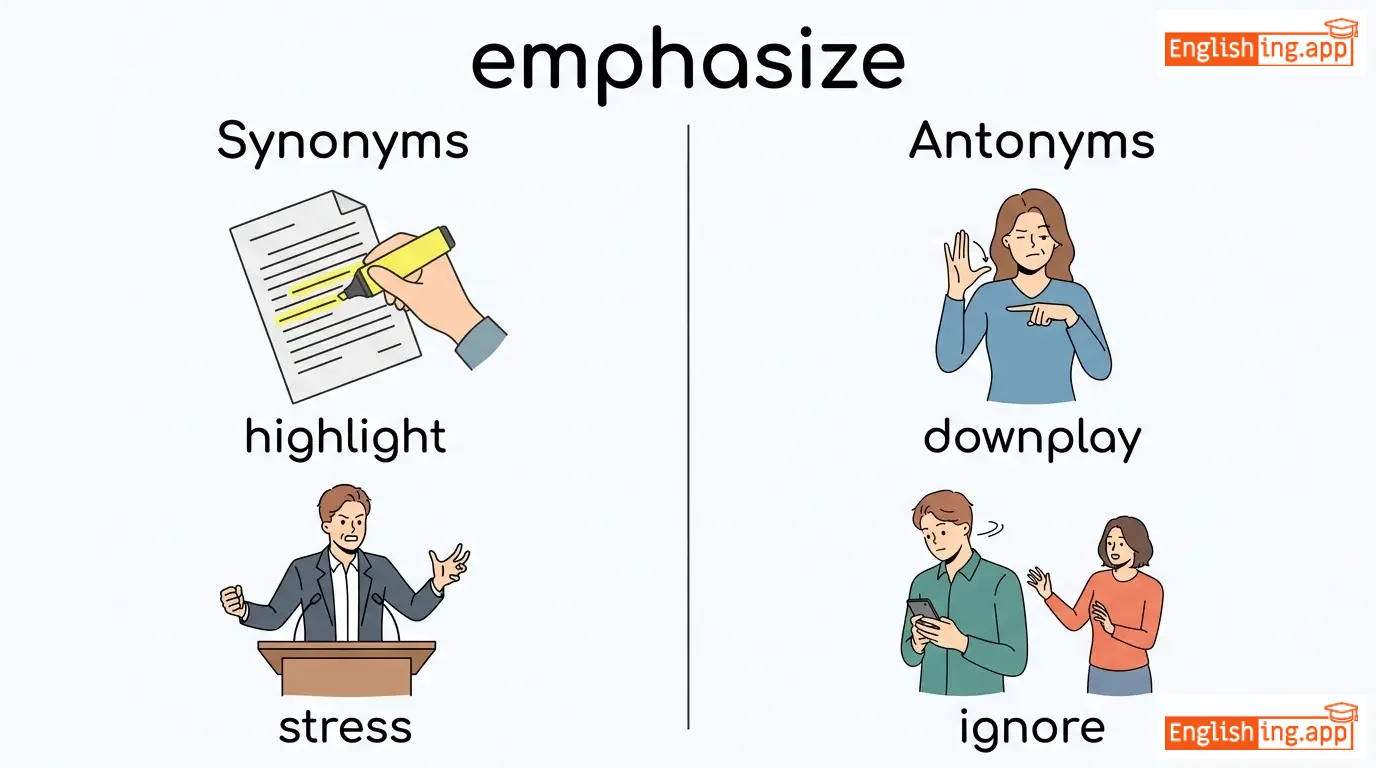
highlight, stress, underline, accentuate, point out
••••••
|
downplay, ignore, overlook
••••••
|
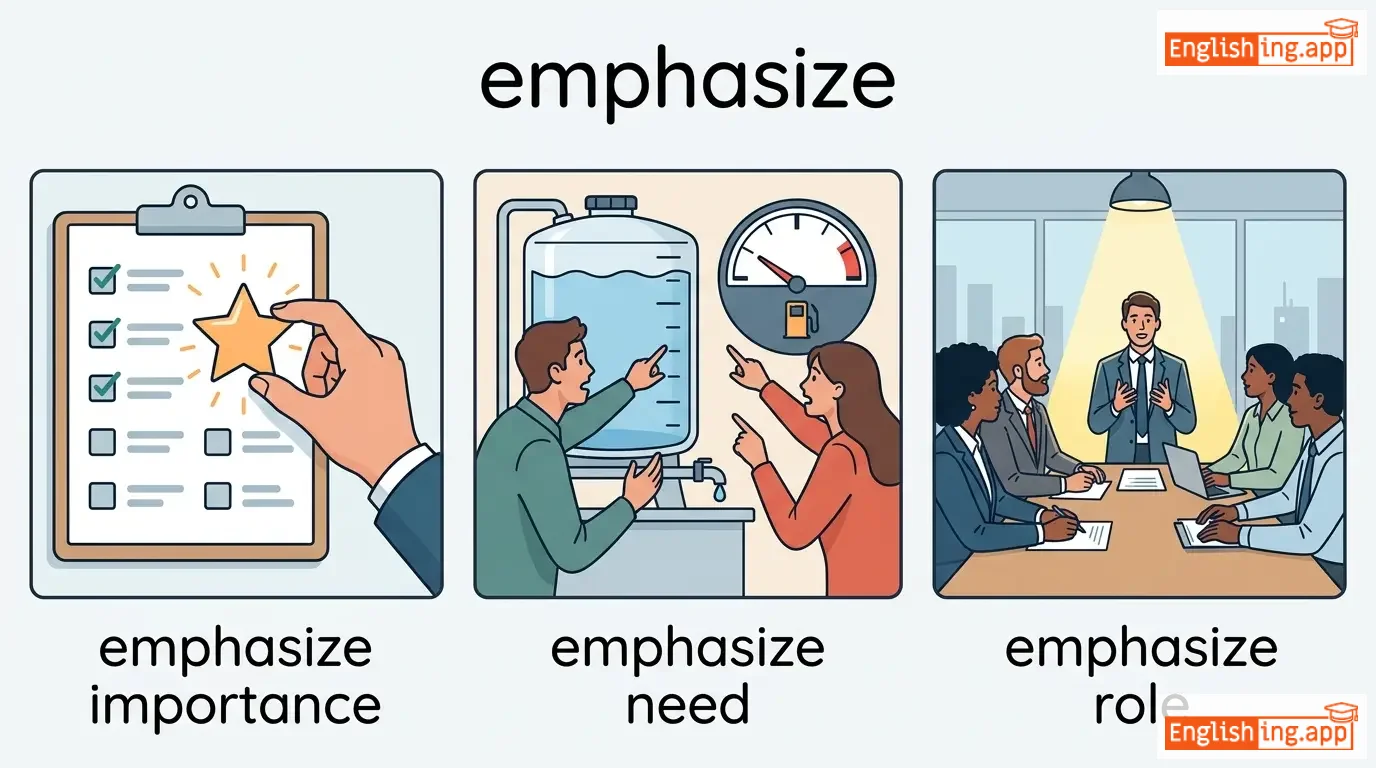
emphasize importance, emphasize need, emphasize role, emphasize strongly
••••••
|
强调让事情变得更重要,就像写加粗字一样!
••••••
|
|
✍️
••••••
|
/ɪɡˌzæm.ɪˈneɪ.ʃən/
noun
(考试)
••••••
|
- •••••• |
考试
kaoshi
••••••
|
- •••••• | - •••••• | - •••••• | - •••••• |
a formal test of knowledge or ability
••••••
|
She is preparing for her final examination. |
她正在为她的期末考试做准备。
Tā zhèngzài wèi tā de qīmò kǎoshì zuò zhǔnbèi.
••••••
|
under examination |
being carefully inspected or studied
••••••
|
接受考试
jiēshòu kǎoshì
••••••
|
test, assessment, evaluation, inspection, quiz
••••••
|
ignorance, neglect
••••••
|
take examination, pass examination, final examination, medical examination
••••••
|
Examination的意思是考试✍️ - 做好考试,国家将震动!
••••••
|
|
🧠
••••••
|
/ˈfækəlti/
noun
(法学院)
••••••
|
- •••••• |
能力, 系
nengli, xi
••••••
|
- •••••• | - •••••• | - •••••• | - •••••• |
an inherent mental or physical ability; a division of a university
••••••
|
She has a remarkable faculty for languages. |
她有惊人的语言能力。
Ta you jingren de yuyan nengli.
••••••
|
- •••••• | - •••••• | - •••••• |
ability, skill, talent, department
••••••
|
incapacity, weakness
••••••
|
faculty of law, faculty meeting, mental faculty, teaching faculty
••••••
|
Faculty 意味着能力,脑中有faculty就是拥有才华
••••••
|
|
🧪
••••••
|
/ˈfræʤaɪl/
adjective
(fúruì)
••••••
|
- •••••• |
脆弱
cuìruò
••••••
|
- •••••• | - •••••• | - •••••• | - •••••• |
Easily broken or damaged; delicate.
••••••
|
Be careful with that vase, it's very fragile. |
小心那个花瓶,它很脆弱。
Xiǎoxīn nàgè huāpíng, tā hěn cuìruò.
••••••
|
fragile peace |
A peace that is weak and easily disrupted
••••••
|
脆弱的和平
cuìruò de hépíng
••••••
|
delicate, breakable, frail, weak, brittle
••••••
|
strong, durable, sturdy
••••••
|
fragile glass, fragile economy, fragile peace, fragile body
••••••
|
Fragile = 脆弱 in Chinese — delicate, handle with care.
••••••
|
|
🧱
••••••
|
/ɪnˈtækt/
adjective
(完整)
••••••
|
- •••••• |
完整
wánzhěng
••••••
|
- •••••• | - •••••• | - •••••• | - •••••• |
Remaining whole, complete, and undamaged.
••••••
|
Despite the storm, the old house remained intact. |
尽管风暴,老房子依然保持完整。
Jǐnguǎn fēngbào, lǎo fángzi yīrán bǎochí wánzhěng.
••••••
|
- •••••• | - •••••• | - •••••• |
undamaged, whole, unbroken, unharmed, complete
••••••
|
damaged, broken, ruined
••••••
|
remain intact, kept intact, survive intact, preserve intact
••••••
|
IN 不破损,intact意味着完整无损。
••••••
|
|
⏰
••••••
|
/ˈleɪt.li/
adverb
(莱特利)
••••••
|
- •••••• |
最近; 近来;
zuijin
••••••
|
- •••••• | - •••••• | - •••••• | - •••••• |
recently; in the recent past; not long ago
••••••
|
I haven't seen him lately, but I heard he got a new job.
艾 还文特 辛 希姆 莱特利, 巴特 艾 赫德 希 高特 啊 纽 佐布。
••••••
|
我最近没见过他,但听说他找到了新工作。
wo zuijin mei jianguo ta, dan tingshuo ta zhaodao le xin gongzuo.
••••••
|
- •••••• | - •••••• | - •••••• |
recently, currently, nowadays, presently
••••••
|
formerly, previously, earlier, long ago
••••••
|
lately been, seen lately, lately noticed
••••••
|
Lately = 最近 (zuijin) — both mean something happened not long ago.
••••••
|
|
⚖️
••••••
|
/ˈmɪnɪməl/
adjective
(最小的)
••••••
|
- •••••• |
最小的
zuìxiǎo de
••••••
|
- •••••• | - •••••• | - •••••• | - •••••• |
the smallest or least amount possible
••••••
|
The damage to the car was minimal after the accident. |
事故后,汽车的损坏是最小的。
shìgù hòu, qìchē de sǔnhuài shì zuìxiǎo de.
••••••
|
minimal effort |
doing something with the least possible effort
••••••
|
最小努力
zuìxiǎo nǔlì
••••••
|
least, smallest, slight, negligible, tiny
••••••
|
maximum, major, large
••••••
|
minimal effort, minimal cost, minimal damage, minimal risk
••••••
|
Minimal 意味着最小努力。
••••••
|
|
✨
••••••
|
/ˈmɪrəkəl/
noun
(米瑞克尔)
••••••
|
- •••••• |
奇迹
qiji
••••••
|
- •••••• | - •••••• | - •••••• | - •••••• |
an extraordinary event that cannot be explained by natural laws
••••••
|
Surviving the accident was nothing short of a miracle.
事故生还简直是个奇迹。
••••••
|
事故生还简直是个奇迹。
shigu shenghuan jianzhi shi ge qiji.
••••••
|
miracle cure
奇迹疗法
••••••
|
a treatment that seems to work magically
••••••
|
奇迹疗法
qiji liaofa
••••••
|
wonder, marvel, phenomenon, blessing
••••••
|
disaster, misfortune
••••••
|
miracle cure, miracle worker, minor miracle, perform a miracle
••••••
|
奇迹就像是不可思议的存在,意外的事情发生了。
••••••
|
|
🤲
••••••
|
/ˈɔːfər/
verb
(奥弗)
••••••
|

|
提供
tigong
••••••
|
offered
奥弗德
••••••
|
offered
奥弗德
••••••
|
offers
奥弗斯
••••••
|
offering
奥弗林
••••••
|
to present something for acceptance or rejection; to propose
••••••
|
She offered to help with the project.
她奥弗德去帮助这个项目。
••••••
|
她提出帮助这个项目。
ta tichu bangzhu zhege xiangmu
••••••
|
- •••••• | - •••••• | - •••••• |
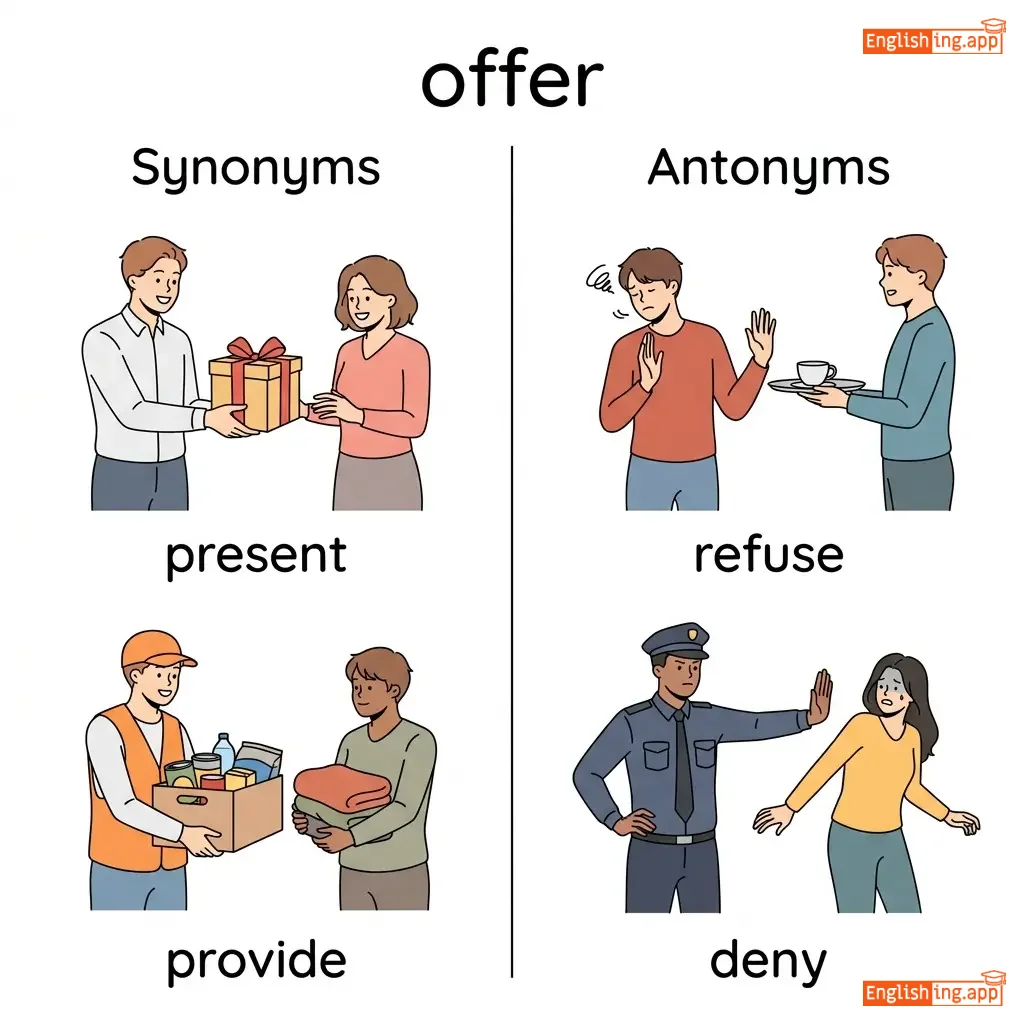
propose, present, provide, suggest
••••••
|
withdraw, refuse, deny, withhold
••••••
|
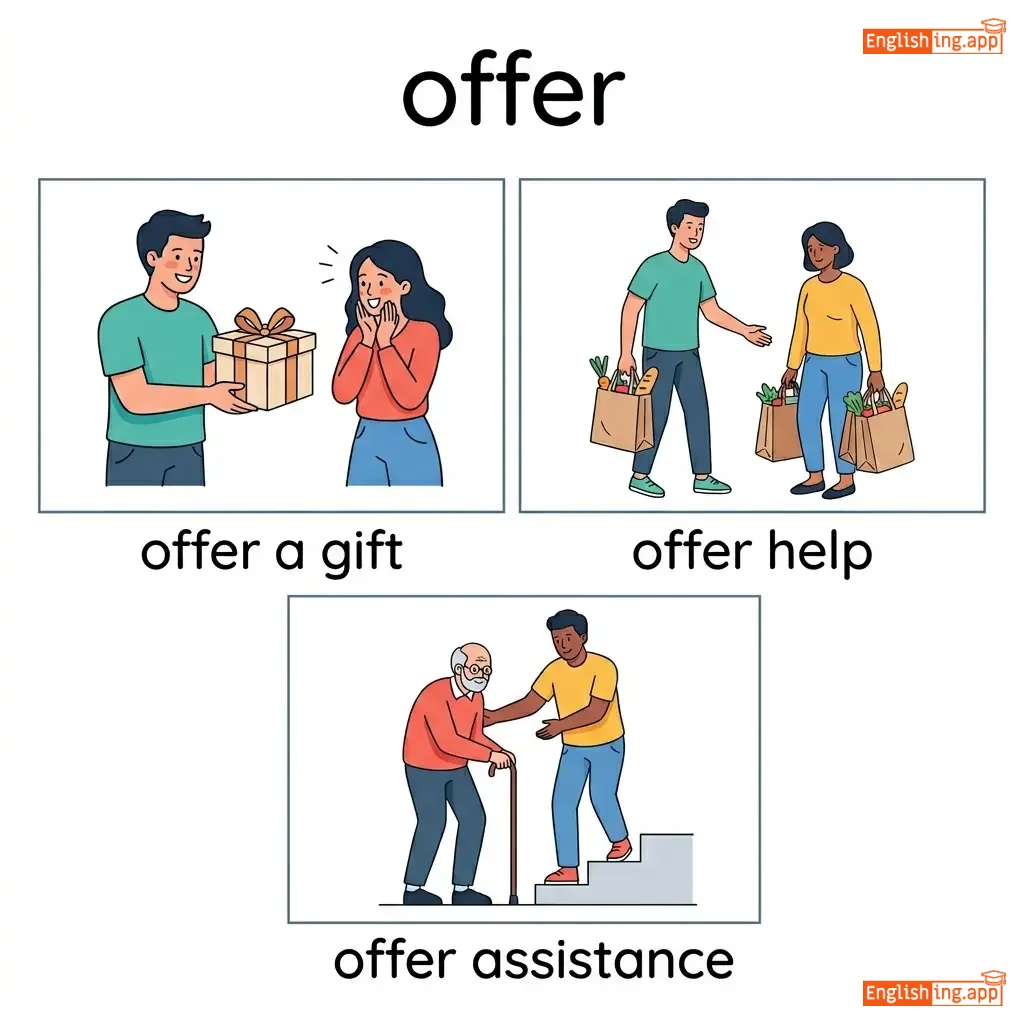
offer help, offer advice, offer support, make an offer, generous offer
••••••
|
Offer = 提供 (tigong) — both mean to present or give something.
••••••
|
|
👮
••••••
|
/ˈɔːfɪsər/
noun
(警官)
••••••
|
- •••••• |
警官
jingguan
••••••
|
- •••••• | - •••••• | - •••••• | - •••••• |
a person in a position of authority, especially in law enforcement
••••••
|
The officer gave him a ticket for speeding. |
警官因超速给了他一张罚单。
Jingguan yin chaosu geile ta yi zhang fadan.
••••••
|
- •••••• | - •••••• | - •••••• |
agent, constable, policeman, lawman
••••••
|
civilian, criminal
••••••
|
police officer, military officer, security officer
••••••
|
警官, 就像是警察 - 具有权威的人
••••••
|
|
🫀
••••••
|
/ˈɔːɡən/
noun
(器官)
••••••
|
- •••••• |
器官
qìguān
••••••
|
- •••••• | - •••••• | - •••••• | - •••••• |
a part of the body that performs a specific function
••••••
|
The heart is an important organ in the human body. |
心脏是人体重要的器官。
Xīnzàng shì réntǐ zhòngyào de qìguān.
••••••
|
- •••••• | - •••••• | - •••••• |
body part, structure, tissue, system
••••••
|
nonliving, inanimate
••••••
|
vital organ, internal organ, organ transplant, organ failure
••••••
|
Organ 就是器官 — 心脏、肝脏,都是器官,身体的一部分。
••••••
|
|
🧑🤝🧑
••••••
|
/pɑːrˈtɪsɪpənt/
noun
(pātíxípiāntè)
••••••
|
- •••••• |
参与者
canyu zhe
••••••
|
- •••••• | - •••••• | - •••••• | - •••••• |
a person who takes part in an event or activity
••••••
|
Each participant received a certificate after the workshop.
每位参与者在工作坊结束后收到了证书。
••••••
|
每位参与者在工作坊结束后收到了证书。
Měi wèi cān yù zhě zài gōng zuò fāng jié shù hòu shōu dào le zhèng shū.
••••••
|
active participant
积极参与者
••••••
|
someone who takes an active role in an activity
••••••
|
积极参与者
jī jí cān yù zhě
••••••
|
attendee, entrant, contestant, member, player
••••••
|
observer, spectator
••••••
|
active participant, workshop participant, study participant
••••••
|
Participant就像参与 → 参与活动的人是参与者。
••••••
|
|
💊
••••••
|
/ˈfɑːrməsi/
noun
(fārmàxī)
••••••
|
- •••••• |
药店
yaodian
••••••
|
- •••••• | - •••••• | - •••••• | - •••••• |
A place where medicinal drugs are prepared and sold.
••••••
|
I went to the pharmacy to buy antibiotics.
我去药店买抗生素。
••••••
|
我去药店买抗生素。
Wo qu yaodian mai kangshengsu.
••••••
|
- •••••• | - •••••• | - •••••• |
drugstore, chemist, apothecary
••••••
|
hospital ward, operating theater
••••••
|
local pharmacy, online pharmacy, hospital pharmacy
••••••
|
药店 = 卖药的地方。
••••••
|
|
🌱
••••••
|
/pəˈtɛnʃəl/
noun, adjective
(潜力)
••••••
|

|
潜力
qianli
••••••
|
- •••••• | - •••••• | - •••••• | - •••••• |
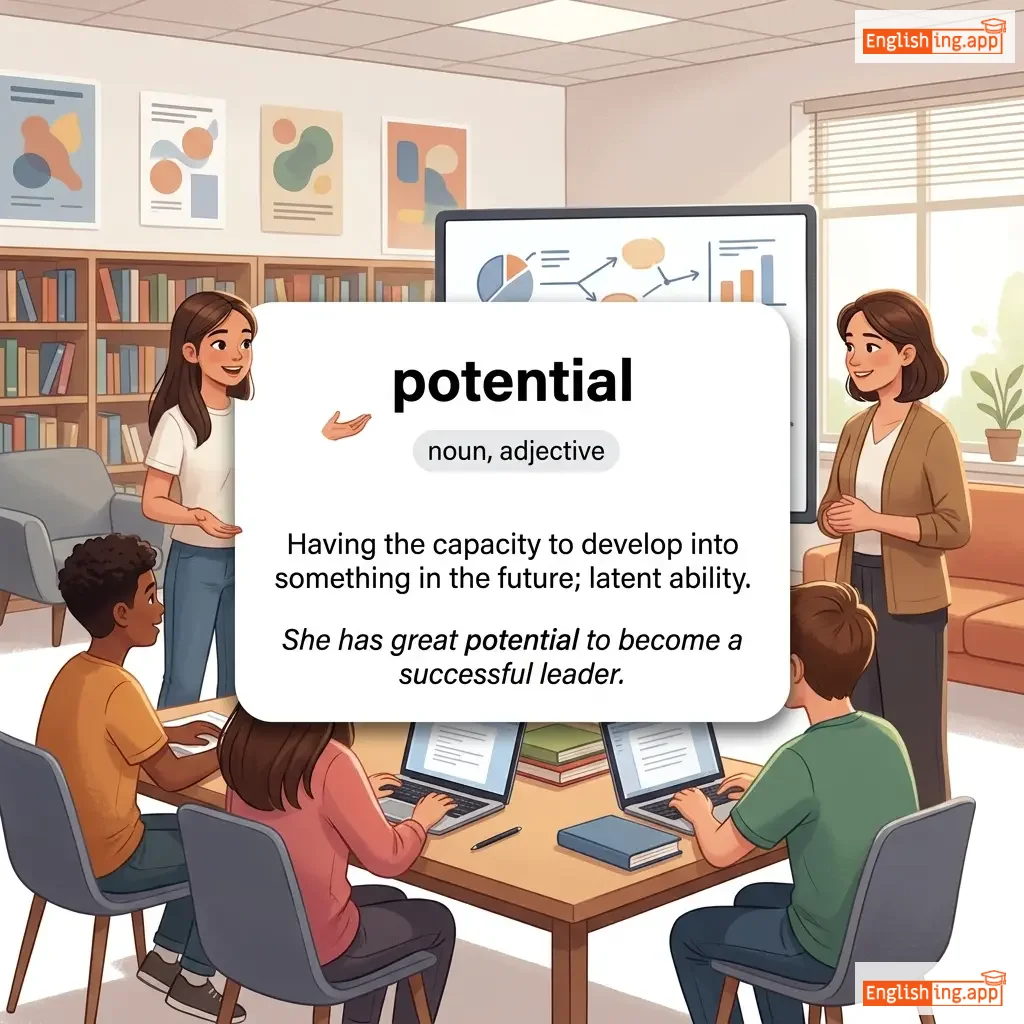
Having the capacity to develop into something in the future; latent ability.
••••••
|
She has great potential to become a successful leader. |
她有成为成功领导者的巨大潜力。
Tā yǒu chéngwéi chénggōng lǐngdǎo zhě de jùdà qiánlì.
••••••
|
untapped potential |
Unused or unrecognized ability or capacity.
••••••
|
未开发的潜力
Wèi kāifā de qiánlì
••••••
|
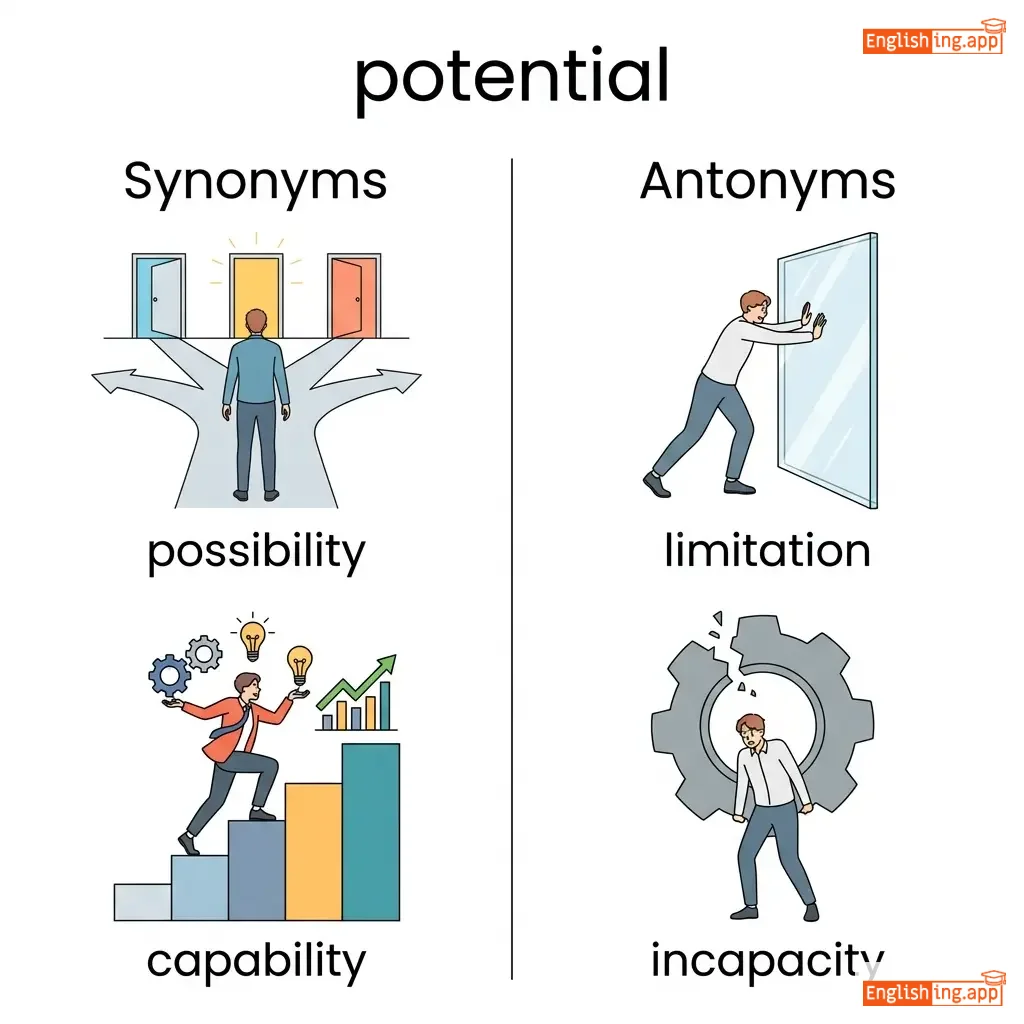
possibility, capability, capacity, promise, ability
••••••
|
limitation, incapacity, inability
••••••
|
great potential, human potential, full potential, untapped potential
••••••
|
Potential意味着有发展成大事物的能力 🌱 就像种子长成树。
••••••
|
|
👌
••••••
|
/ˈsuːtəbl/
adjective
(suːtəbl)
••••••
|
- •••••• |
合适
heshi
••••••
|
- •••••• | - •••••• | - •••••• | - •••••• |
appropriate or right for a particular person, purpose, or situation
••••••
|
This dress is suitable for the wedding. |
这件裙子适合婚礼。
Zhè jiàn qúnzi shìhé hūnlǐ.
••••••
|
- •••••• | - •••••• | - •••••• |
appropriate, proper, fitting, apt, acceptable
••••••
|
unsuitable, inappropriate, unfit
••••••
|
suitable for, suitable candidate, suitable time, suitable environment
••••••
|
Suitable 是合适的意思,比如婚礼上适合穿的裙子。
••••••
|
|
🔩
••••••
|
/ˈtaɪtən/
verb
(taiten)
••••••
|

|
紧固
jin gu
••••••
|
tightened
taitend
••••••
|
tightened
taitend
••••••
|
tightens
taitens
••••••
|
tightening
taitening
••••••
|
to make something become tighter or more firmly fixed
••••••
|
He tightened the screw with a wrench.
他用扳手拧紧了螺丝。
••••••
|
他用扳手拧紧了螺丝。
Ta yong banshou ningjin le luosi.
••••••
|
tighten one's belt
勒紧腰带
••••••
|
to spend less money; to be more economical
••••••
|
勒紧腰带
le jin yaodai
••••••
|
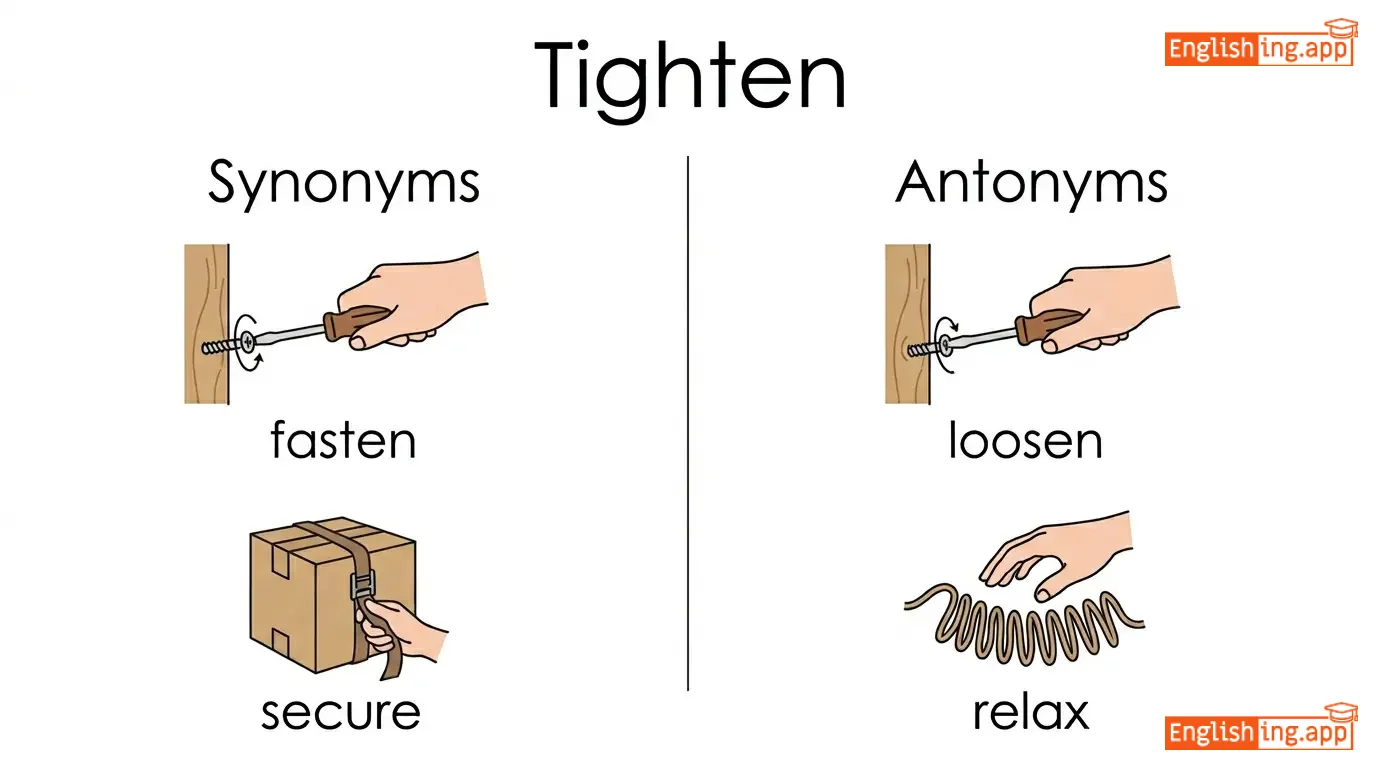
fasten, secure, stiffen, contract, strengthen
••••••
|
loosen, relax, slacken
••••••
|
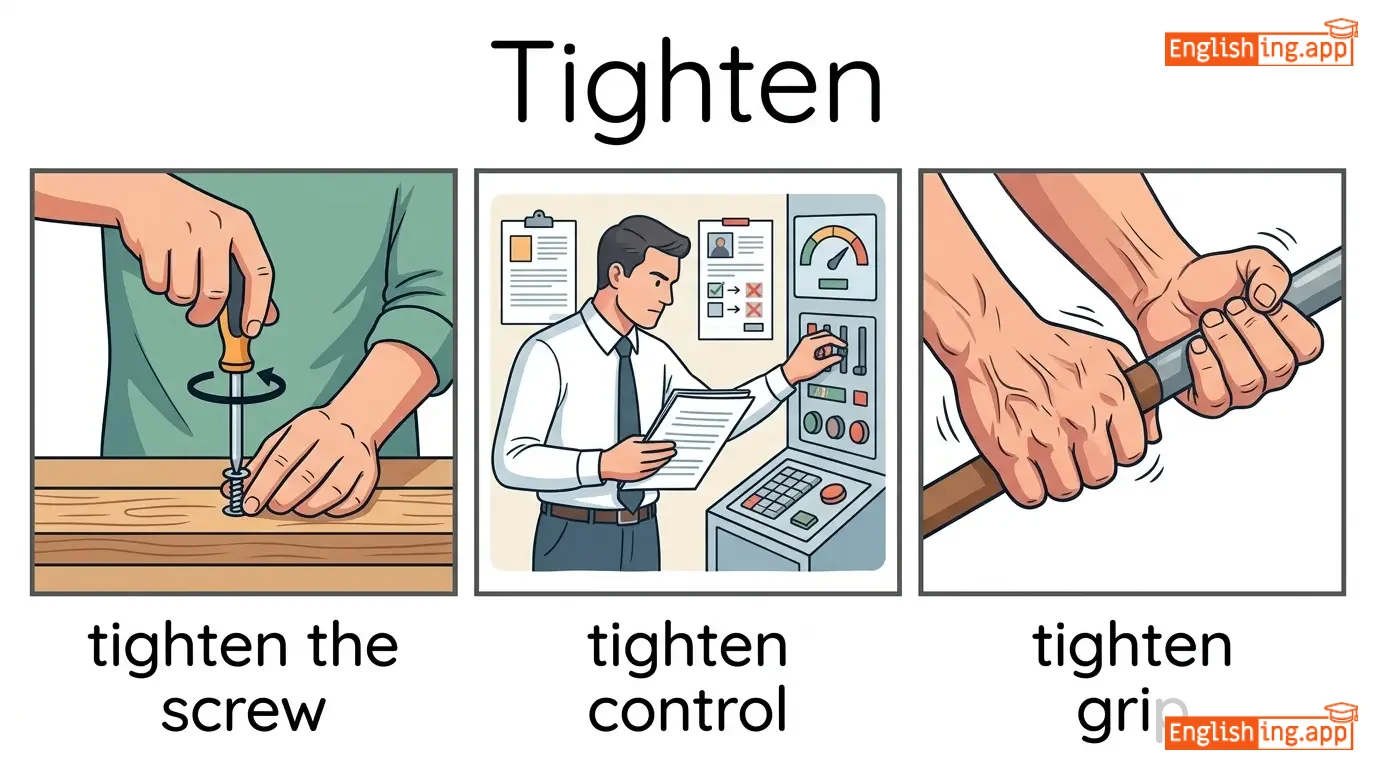
tighten the screw, tighten control, tighten grip, tighten security
••••••
|
紧固 (tight) 是让它变得更紧 🔩
••••••
|
|
🔍
••••••
|
/trænsˈpɛrənt/
adjective
(trænsˈpɛrənt)
••••••
|
- •••••• |
透明
tòumíng
••••••
|
- •••••• | - •••••• | - •••••• | - •••••• |
allowing light to pass through so that objects behind can be clearly seen
••••••
|
The glass is transparent enough to see through. |
玻璃足够透明,可以透过它看。
Bōlí zúgòu tòumíng, kěyǐ tòuguò tā kàn.
••••••
|
transparent process |
a process that is open, clear, and easy to understand
••••••
|
透明过程
tòumíng guòchéng
••••••
|
clear, see-through, obvious, lucid, apparent
••••••
|
opaque, cloudy, hidden
••••••
|
transparent glass, transparent process, transparent material, transparent policy
••••••
|
Transparent 就是透明,像玻璃一样清晰
••••••
|

