Pathway for the Elephants
camp で特別なワークショップが森の端で開催されていました。私たちの使命は野生の elephant の道を restore することでした。wise な長老たちは言いました:“この cause は私たちを守ると同時に、彼らも守っています。” 私たちは安全な lane に沿って竹のフェンスを作り、ボランティアは絶えず encouragement を提供しました。小さな貯水池ができ、群れは anywhere でも歩き回りながら水を obtain できるようになりました。“私たちは毎 moment を見守り、彼らを安全に保ちます,” Roisa は言いました。以前は問題を小さいものと perceived していた人々もいましたが、今日はその深さが明らかになりました。学生たちは持続可能な土地 usage を説明するポスターを作成しました。大学の研究者たちはデータを derive するためにセンサーを設置し、各 probe を配置して移動をマッピングしました。ベテランレンジャーの Sohel は言いました:“私はこの計画に対して強い conviction を持っています。” 彼は人々の行動が constantly 変わる必要があることを示しました。人々は modest に過ごし、完全に silent でいるように促され、動物たちは落ち着いていました。エビのトラックが lane で止まると、運転手に大きなホーンが野生動物を驚かせることを思い出させました。ほぼ a thousand 人のサポーターが観察し、森が再び alive になるのを感じました。
|
絵文字
|
単語 | Images | 翻訳 | 過去 | 過去分詞 | 三人称単数 | 動名詞 | 意味 | 例文 | 例文の翻訳 | 表現例 | 表現例の意味 | 表現例の翻訳 | 同義語 | 対義語 | コロケーション | ニーモニック |
|---|---|---|---|---|---|---|---|---|---|---|---|---|---|---|---|---|---|
|
💓
••••••
|
/əˈlaɪv/
adjective
(アライブ)
••••••
|
- •••••• |
生きている
ikiteiru
••••••
|
- •••••• | - •••••• | - •••••• | - •••••• |
Living, not dead.
••••••
|
The rescue team found the missing child alive. |
レスキュー隊は行方不明の子供を生きて発見しました。
Resukyū-tai wa yukuefumei no kodomo o ikite hakken shimashita.
••••••
|
come alive |
to become lively or energetic
••••••
|
生き生きとする
ikiiki to suru
••••••
|
living, breathing, existing, animated, conscious
••••••
|
dead, lifeless, deceased
••••••
|
stay alive, remain alive, alive and well, keep alive
••••••
|
Aliveは生きているという意味で、'生きている'です!
••••••
|
|
🌍
••••••
|
/ˈɛnɪwɛər/
adverb
••••••
|
- •••••• | - •••••• | - •••••• | - •••••• | - •••••• | - •••••• |
in, at, or to any place
••••••
|
You can find good food anywhere in this city. |
- •••••• |
go anywhere |
to have freedom to travel or move to any place
••••••
|
- •••••• |
everywhere, someplace, anyplace, location, place
••••••
|
nowhere, somewhere specific
••••••
|
anywhere else, almost anywhere, find anywhere, go anywhere
••••••
|
No •••••• |
|
🏕️
••••••
|
/kæmp/
noun, verb
(キャンプ)
••••••
|
- •••••• |
キャンプ地
kyampuchi
••••••
|
camped
キャンプド
••••••
|
camped
キャンプド
••••••
|
camps
キャンプス
••••••
|
camping
キャンピング
••••••
|
a place where people stay temporarily in tents or cabins, often outdoors; to stay in such a place
••••••
|
We decided to camp by the lake during the summer holiday.
私たちは夏休みに湖の近くでキャンプすることに決めました。
••••••
|
私たちは夏休みに湖の近くでキャンプすることに決めました。
Watashitachi wa natsu yasumi ni mizuumi no chikaku de kyanpu suru koto ni kimemashita.
••••••
|
camp out
キャンプアウト
••••••
|
to sleep outdoors or in a simple temporary shelter
••••••
|
野外で寝る
yagai de neru
••••••
|
tent site, encampment, bivouac, lodge, shelter
••••••
|
house, residence, hotel
••••••
|
summer camp, military camp, refugee camp, camp site, go camping
••••••
|
Camp = キャンプ地, そこでキャンプしよう
••••••
|
|
⚡
••••••
|
/kɔːz/
noun/verb
(コーズ)
••••••
|
- •••••• |
原因 / 引き起こす
gen'in / hikiokosu
••••••
|
caused
コーズド
••••••
|
caused
コーズド
••••••
|
causes
コーズェス
••••••
|
causing
コージング
••••••
|
a person or thing that gives rise to an action, phenomenon, or condition; to make something happen
••••••
|
The heavy rain caused flooding in the city.
大雨が都市で洪水を引き起こしました。
••••••
|
大雨が都市で洪水を引き起こしました。
Oomizu ga toshi de kouzui wo hikiokoshimashita.
••••••
|
lost cause
失われた原因
••••••
|
a hopeless case; something doomed to fail
••••••
|
失われた原因
ushinawareta gen'in
••••••
|
reason, motive, source, trigger, origin
••••••
|
effect, result
••••••
|
cause of death, good cause, lost cause, social cause
••••••
|
Cause は原因 ⚡ – 大雨で洪水が発生、Cause = 原因
••••••
|
|
🔄
••••••
|
/ˈkɒnstəntli/
adverb
(コンスタントリー)
••••••
|
- •••••• |
絶え間なく; 常に; 止まることなく
taemamaku; itsumo; tomaru koto naku
••••••
|
- •••••• | - •••••• | - •••••• | - •••••• |
continuously over a period of time; always; without stopping
••••••
|
The baby was constantly crying throughout the night. |
赤ちゃんは夜通し絶え間なく泣いていた。
Akachan wa yodōshi taemamaku naite ita.
••••••
|
- •••••• | - •••••• | - •••••• |
continuously, always, perpetually
••••••
|
occasionally, rarely, never
••••••
|
constantly changing, constantly moving, constantly working
••••••
|
絶え間なく = 永遠に続く、'constant'という意味の日本語.
••••••
|
|
⚖️
••••••
|
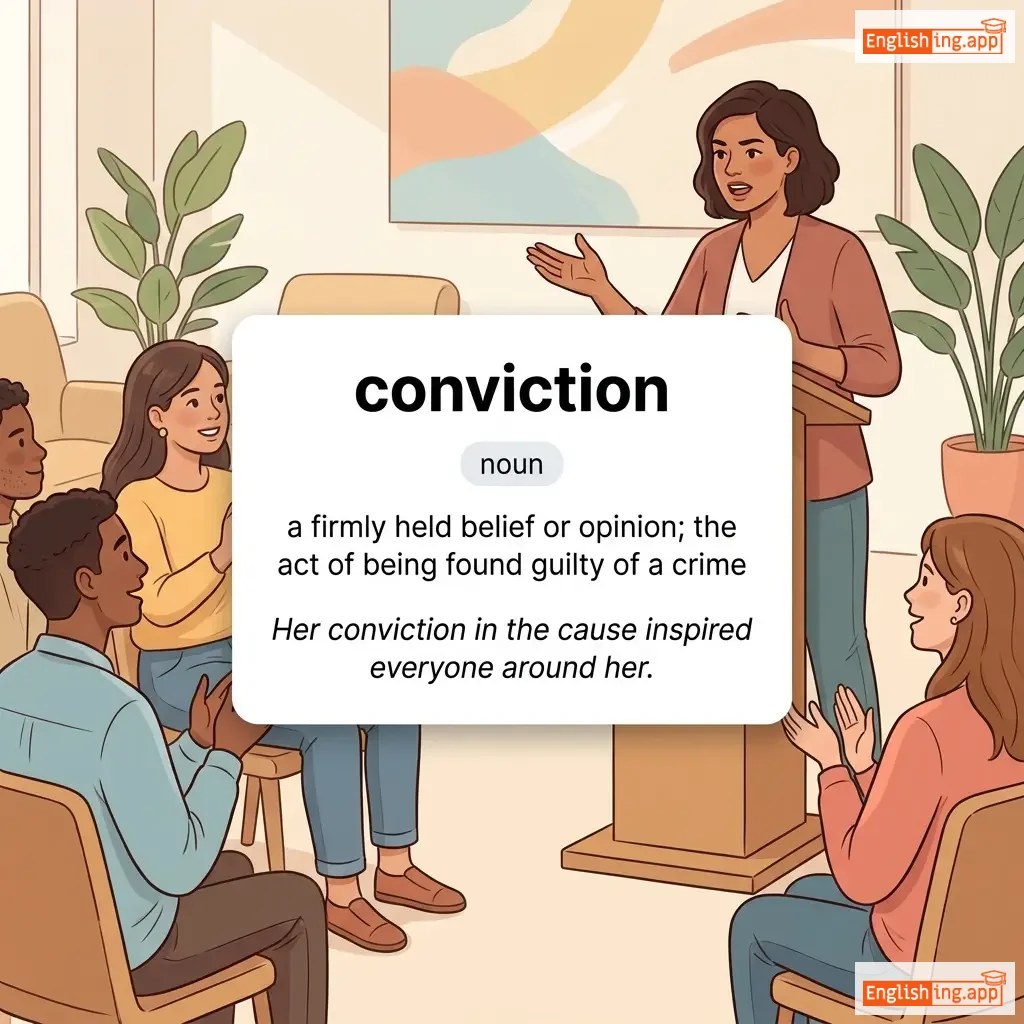
/kənˈvɪkʃən/
noun
(kənˈvɪkʃən)
••••••
|
|
確固たる信念, 有罪判決
kakkotaru shinnen, yūzai hanketsu
••••••
|
- •••••• | - •••••• | - •••••• | - •••••• |
a firmly held belief or opinion; the act of being found guilty of a crime
••••••
|
Her conviction in the cause inspired everyone around her. |
彼女のその理由への確固たる信念は、周りの全ての人々に刺激を与えました。
Kanojo no sono riyū e no kakkotaru shinnen wa, mawari no subete no hitobito ni shigeki o ataemashita.
••••••
|
- •••••• | - •••••• | - •••••• |
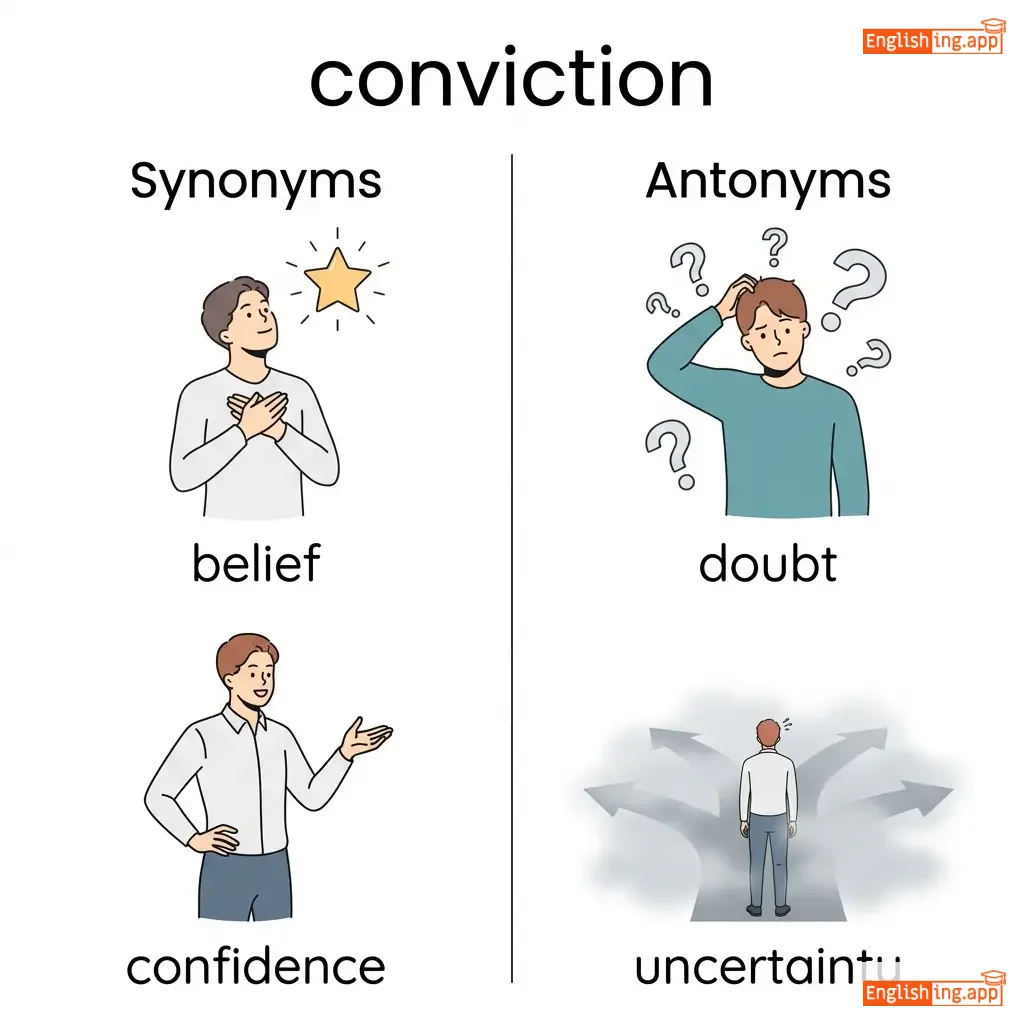
belief, confidence, certainty, faith
••••••
|
doubt, uncertainty, skepticism
••••••
|
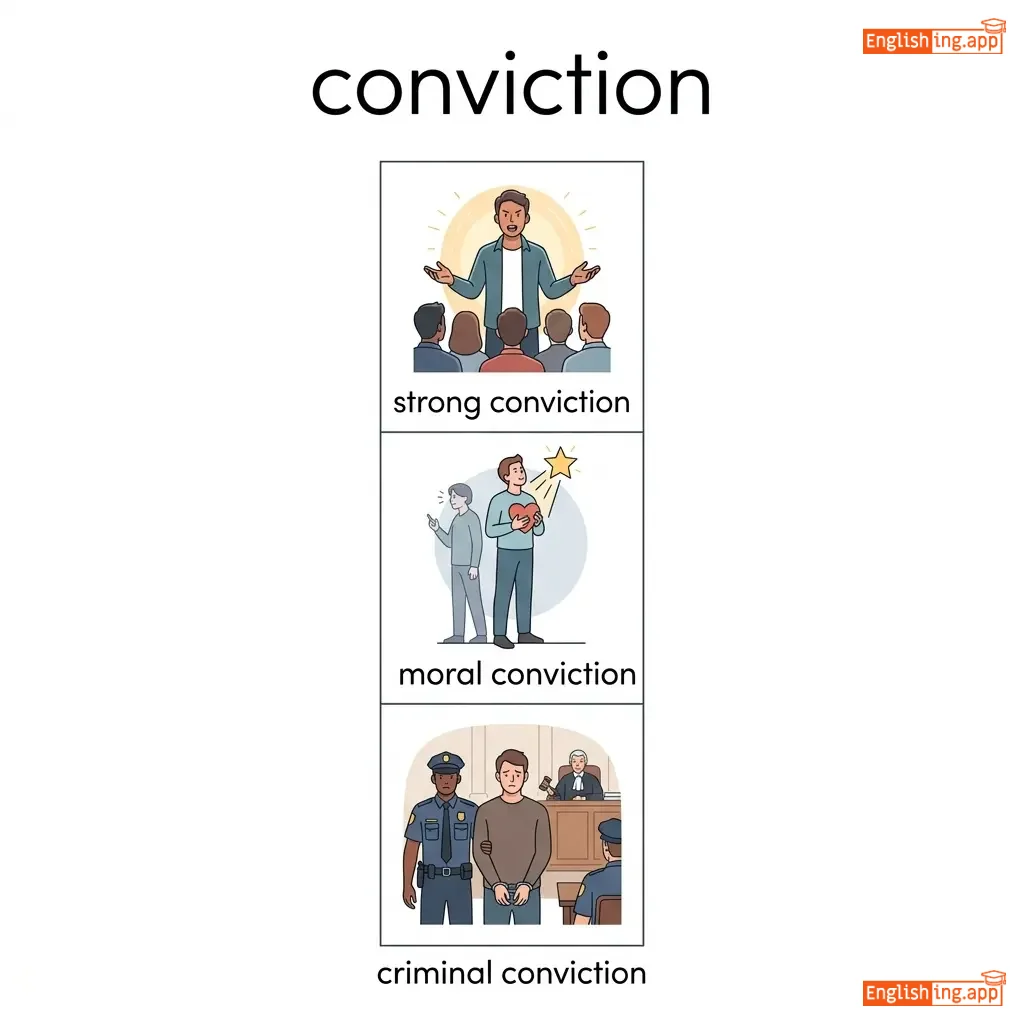
strong conviction, moral conviction, criminal conviction
••••••
|
Convictionは確固たる信念、あなたのconvictionを持ち続けましょう
••••••
|
|
📜
••••••
|
/dɪˈraɪv/
verb
(デリヴ)
••••••
|
- •••••• |
導き出す
michibikidasu
••••••
|
derived
デリヴド
••••••
|
derived
デリヴド
••••••
|
derives
デリヴス
••••••
|
deriving
デリヴィング
••••••
|
To obtain something from a source.
••••••
|
Many English words derive from Latin.
メニー・イングリッシュ・ワーズ・デリヴ・フロム・ラテン。
••••••
|
多くの英語の単語はラテン語から導き出される。
ooku no eigo no tango wa raten-go kara michibikidasareru.
••••••
|
derive benefit
デリヴ・ベネフィット
••••••
|
to gain an advantage from something
••••••
|
利益を得る
rieki o eru
••••••
|
obtain, acquire, originate, extract, gain
••••••
|
lose, give, surrender
••••••
|
derive from, derive meaning, derive benefit
••••••
|
Deriveは何かを源から得ること — '導き出す'として覚えよう。
••••••
|
|
🐘
••••••
|
/ˈɛlɪfənt/
noun
(ハピネス)
••••••
|
- •••••• |
幸せ
shiawase
••••••
|
- •••••• | - •••••• | - •••••• | - •••••• |
a very large animal with a trunk, long curved tusks, and thick gray skin, found in Africa and Asia
••••••
|
The elephant sprayed water over itself with its trunk. |
彼女は賞を受け取ったとき、自分の幸せを隠すことができませんでした。
Kanojo wa shō o uketotta toki, jibun no shiawase o kakusu koto ga dekimasen deshita.
••••••
|
the elephant in the room |
an obvious problem or issue that people avoid discussing
••••••
|
幸せを追い求める
shiawase o oi motomeru
••••••
|
mammal, giant, pachyderm, tusker
••••••
|
mouse, insect
••••••
|
herd of elephants, African elephant, elephant tusks, baby elephant
••••••
|
幸せは人生の中で最も価値のあるものを追い求めること!
••••••
|
|
👍
••••••
|
/ɪnˈkʌrɪdʒmənt/
noun
(インカレッジメント)
••••••
|
- •••••• |
励まし
hagemashi
••••••
|
- •••••• | - •••••• | - •••••• | - •••••• |
the action of giving someone support, confidence, or hope
••••••
|
Her encouragement helped me finish the project. |
彼女の励ましが私をプロジェクト完了に導きました。
Kanojo no hagemashi ga watashi wo purojekuto kanryou ni michibikimashita.
••••••
|
- •••••• | - •••••• | - •••••• |
support, motivation, inspiration, confidence
••••••
|
discouragement, disinterest
••••••
|
offer encouragement, seek encouragement, give encouragement
••••••
|
励ましはあなたを前進させる力です!
••••••
|
|
🚗
••••••
|
/leɪn/
noun
(レイン)
••••••
|
- •••••• |
小道
komichi
••••••
|
- •••••• | - •••••• | - •••••• | - •••••• |
a narrow road or path, often in the countryside or for specific traffic
••••••
|
They walked down a quiet country lane. |
彼らは静かな田舎道を歩いていました。
Karera wa shizukana inakamichi o aruite imashita.
••••••
|
memory lane |
a metaphor for reminiscing about the past
••••••
|
思い出の小道
omoide no komichi
••••••
|
path, road, alley, track, passage
••••••
|
highway, main road
••••••
|
bus lane, fast lane, traffic lane, country lane
••••••
|
Laneは狭い道、小道もlane!
••••••
|
|
🙂
••••••
|
/ˈmɒdɪst/
adjective
••••••
|
- •••••• | - •••••• | - •••••• | - •••••• | - •••••• | - •••••• |
Having or showing a humble estimate of one’s importance; simple and not extravagant.
••••••
|
She lives in a modest house in the countryside. |
- •••••• |
modest beginnings |
a simple or humble start in life or career
••••••
|
- •••••• |
humble, unassuming, simple, moderate, decent
••••••
|
arrogant, boastful, extravagant
••••••
|
modest house, modest income, modest attitude, remain modest
••••••
|
No •••••• |
|
⏳
••••••
|
/ˈmoʊmənt/
noun
(モーメント)
••••••
|
- •••••• |
瞬間
shunkan
••••••
|
- •••••• | - •••••• | - •••••• | - •••••• |
A very short period of time; a particular point in time.
••••••
|
She paused for a moment before answering.
彼女は答える前に一瞬止まった。
••••••
|
彼女は答える前に一瞬止まった。
Kanojo wa kotaeru mae ni isshun tomatta.
••••••
|
in the moment
その瞬間に
••••••
|
Focusing entirely on the present situation.
••••••
|
その瞬間に
Sono shunkan ni
••••••
|
instant, second, minute, occasion, time
••••••
|
eternity, forever
••••••
|
at the moment, right moment, special moment, memorable moment
••••••
|
Momentは瞬間 – すべての瞬間が大切だ。
••••••
|
|
📜
••••••
|
/əbˈteɪn/
verb
(オブテイン)
••••••
|

|
得る
eru
••••••
|
obtained
オブテインド
••••••
|
obtained
オブテインド
••••••
|
obtains
オブテインズ
••••••
|
obtaining
オブテイニング
••••••
|
to get, acquire, or secure something
••••••
|
She managed to obtain a scholarship for her studies.
彼女は学業のために奨学金を得ることができました。
••••••
|
彼女は学業のために奨学金を得ることができました。
Kanojo wa gakugyō no tame ni shōgakukin o eru koto ga dekimashita.
••••••
|
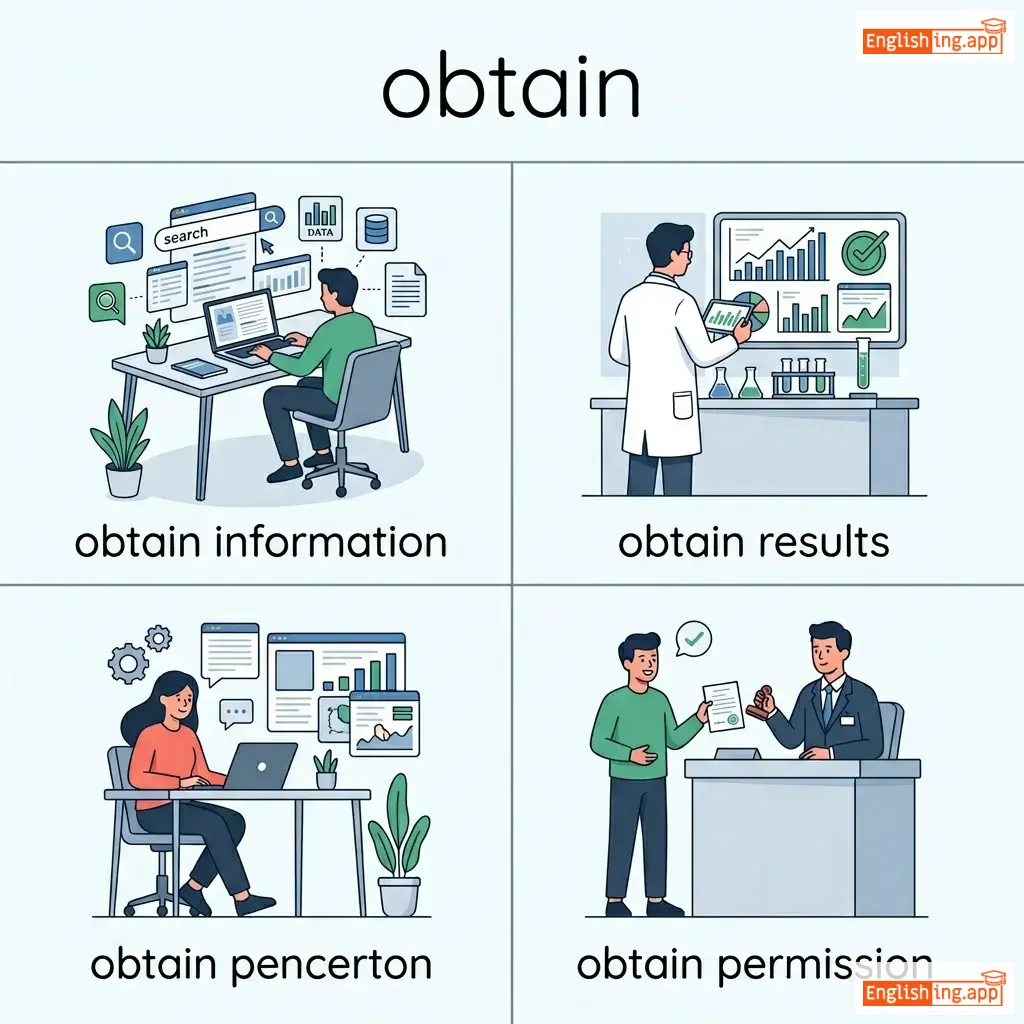
obtain permission
許可を得る
••••••
|
to get approval or consent to do something
••••••
|
許可を得る
kyoka o eru
••••••
|
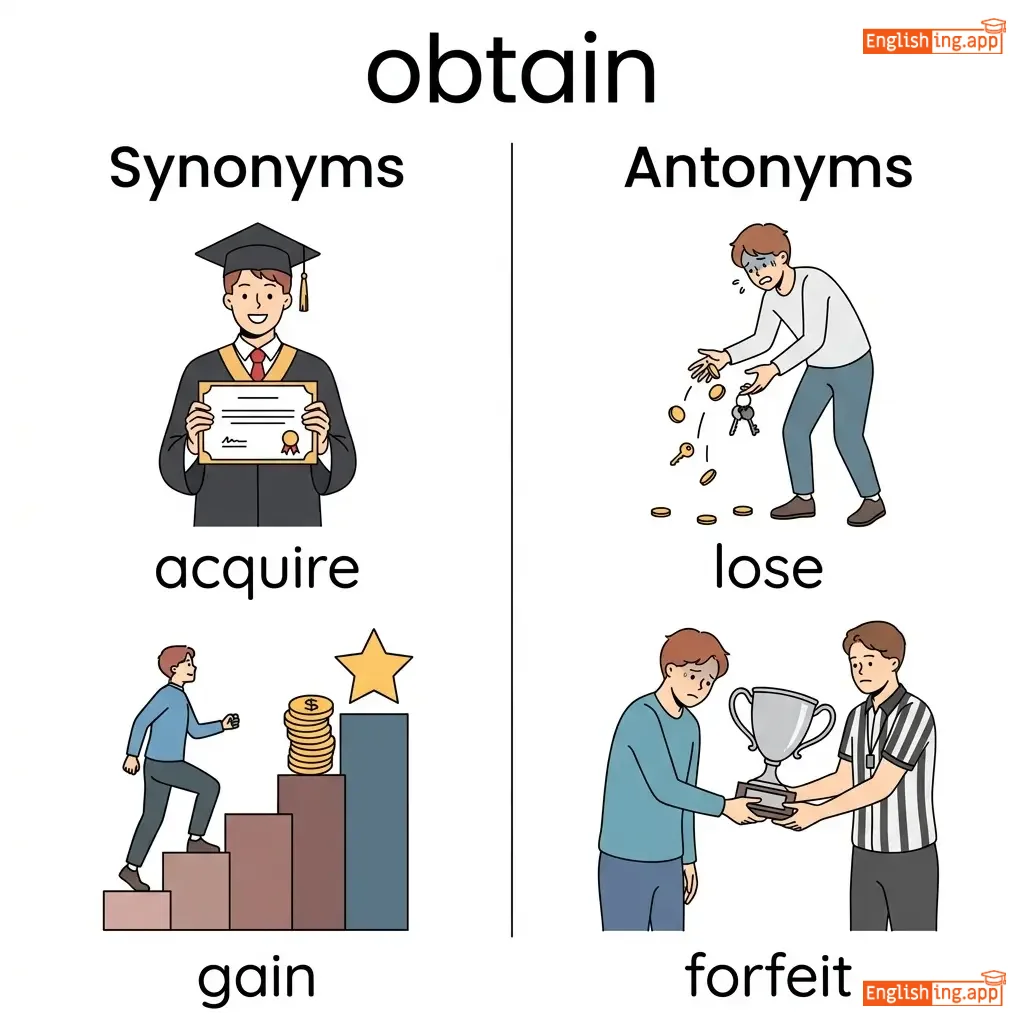
acquire, gain, secure, procure, receive
••••••
|
lose, forfeit, give up
••••••
|
obtain information, obtain results, obtain permission
••••••
|
Obtain = OBTain = Obtaining (得る) something with effort
••••••
|
|
👁️
••••••
|
/pərˈsiːvd/
verb
••••••
|
- •••••• |
幸福
kōfuku
••••••
|
perceived
••••••
|
perceived
••••••
|
perceives
••••••
|
perceiving
••••••
|
to become aware of something through the senses or the mind; to understand or interpret
••••••
|
She perceived a hint of sadness in his voice. |
彼女は賞を受け取ったとき、幸せを隠せませんでした。
Kanojo wa shō o uketotta toki, kōfuku o kakusemasen deshita.
••••••
|
perceived value |
the worth that a product or service has in the mind of a consumer
••••••
|
幸せの追求
shiawase no tsuikyū
••••••
|
notice, sense, detect, recognize, observe
••••••
|
ignore, overlook, miss
••••••
|
perceived threat, perceived risk, perceived difference, perceived value
••••••
|
幸せは心から湧き上がるもの。
••••••
|
|
🔍
••••••
|
/proʊb/
verb, noun
(プローブ)
••••••
|

|
調査する
chōsa suru
••••••
|
probed
プローブド
••••••
|
probed
プローブド
••••••
|
probes
プローブス
••••••
|
probing
プロービング
••••••
|
to investigate thoroughly; a device used for exploration or examination
••••••
|
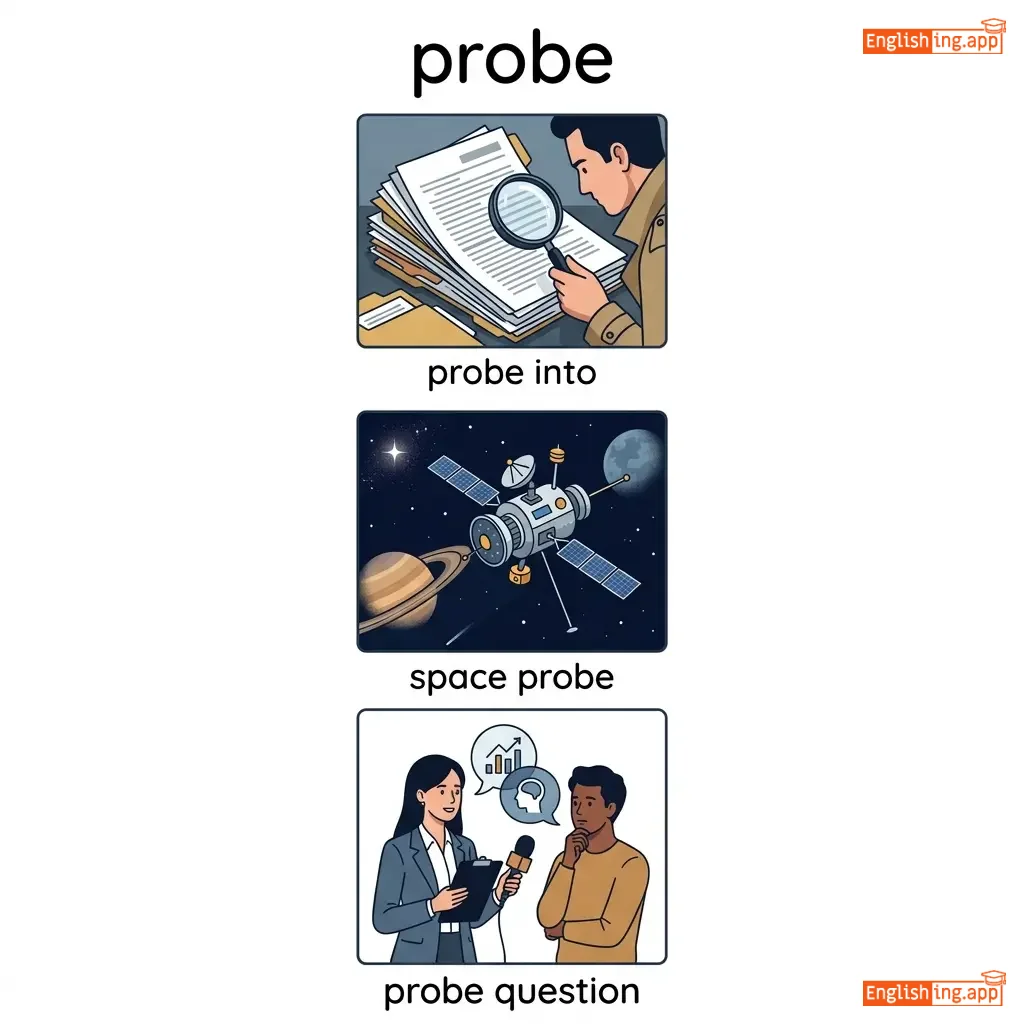
The journalist probed into the politician’s past.
ジャーナリストは政治家の過去を調査しました。
••••••
|
ジャーナリストは政治家の過去を調査しました。
Jānarisuto wa seijika no kako o chōsa shimashita.
••••••
|
probe deeper
さらに深く調べる
••••••
|
to investigate more thoroughly
••••••
|
さらに深く調べる
Sara ni fukaku shiraberu
••••••
|
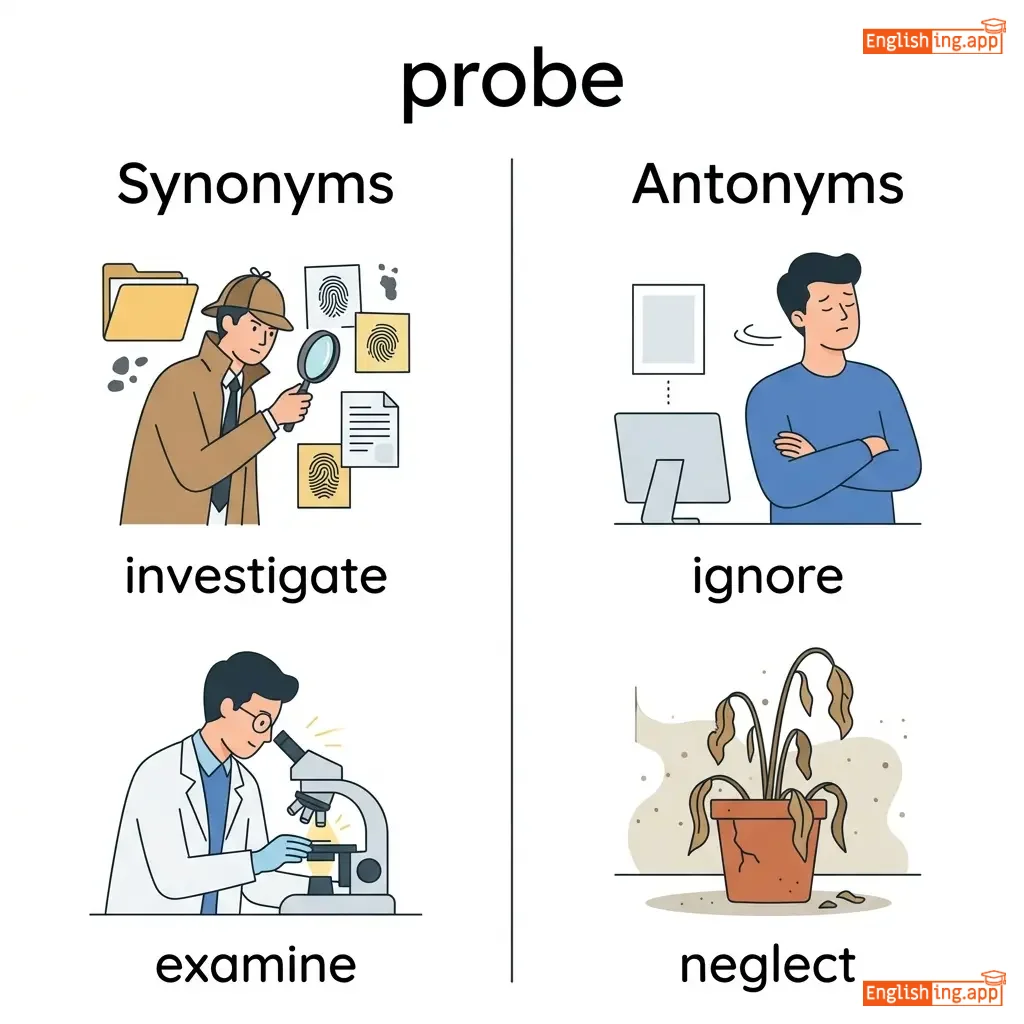
investigate, examine, explore, scrutinize, research
••••••
|
ignore, neglect, overlook
••••••
|
probe into, space probe, probe question, probe deeper
••••••
|
Probe は問題を深く調査すること — まるで深い調査を行うようなものです。
••••••
|
|
🔧
••••••
|
/rɪˈstɔː/
verb
(rɪˈstɔːr)
••••••
|
|
修復する
shūfuku suru
••••••
|
restored
rɪˈstɔːrd
••••••
|
restored
rɪˈstɔːrd
••••••
|
restores
rɪˈstɔːrz
••••••
|
restoring
rɪˈstɔːrɪŋ
••••••
|
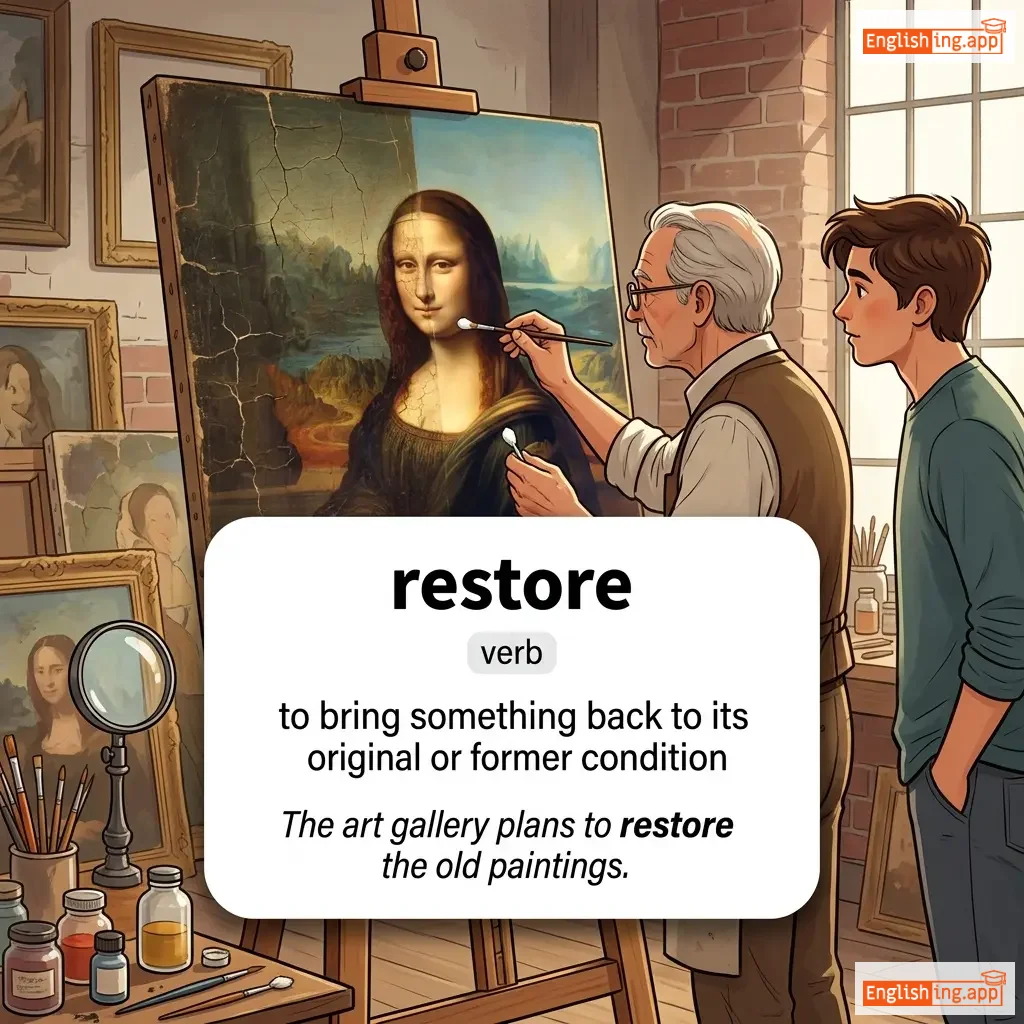
to bring something back to its original or former condition
••••••
|
The art gallery plans to restore the old paintings.
アートギャラリーは古い絵画を修復する予定です。
••••••
|
アートギャラリーは古い絵画を修復する予定です。
Āto gyararī wa furui kaiga o shūfuku suru yotei desu.
••••••
|
- •••••• | - •••••• | - •••••• |
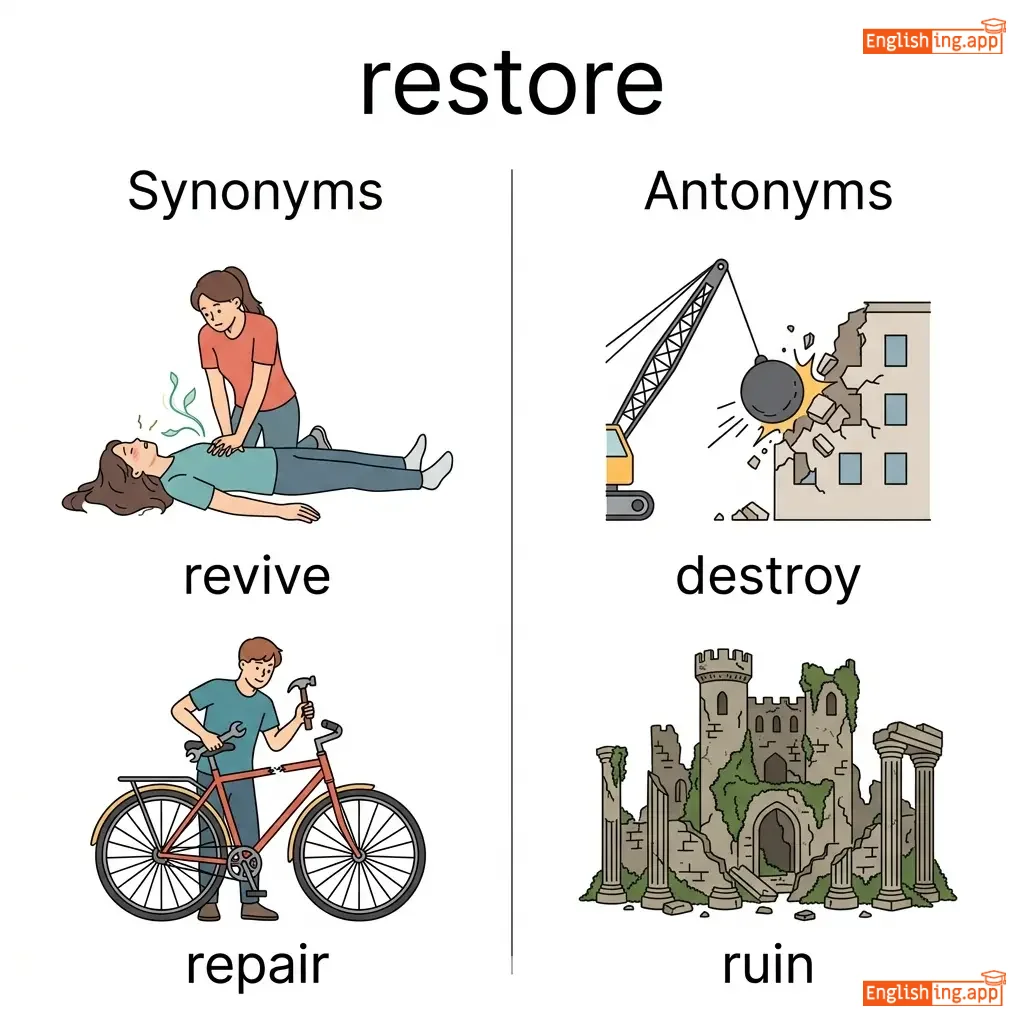
revive, repair, renovate, regenerate
••••••
|
destroy, ruin, damage
••••••
|
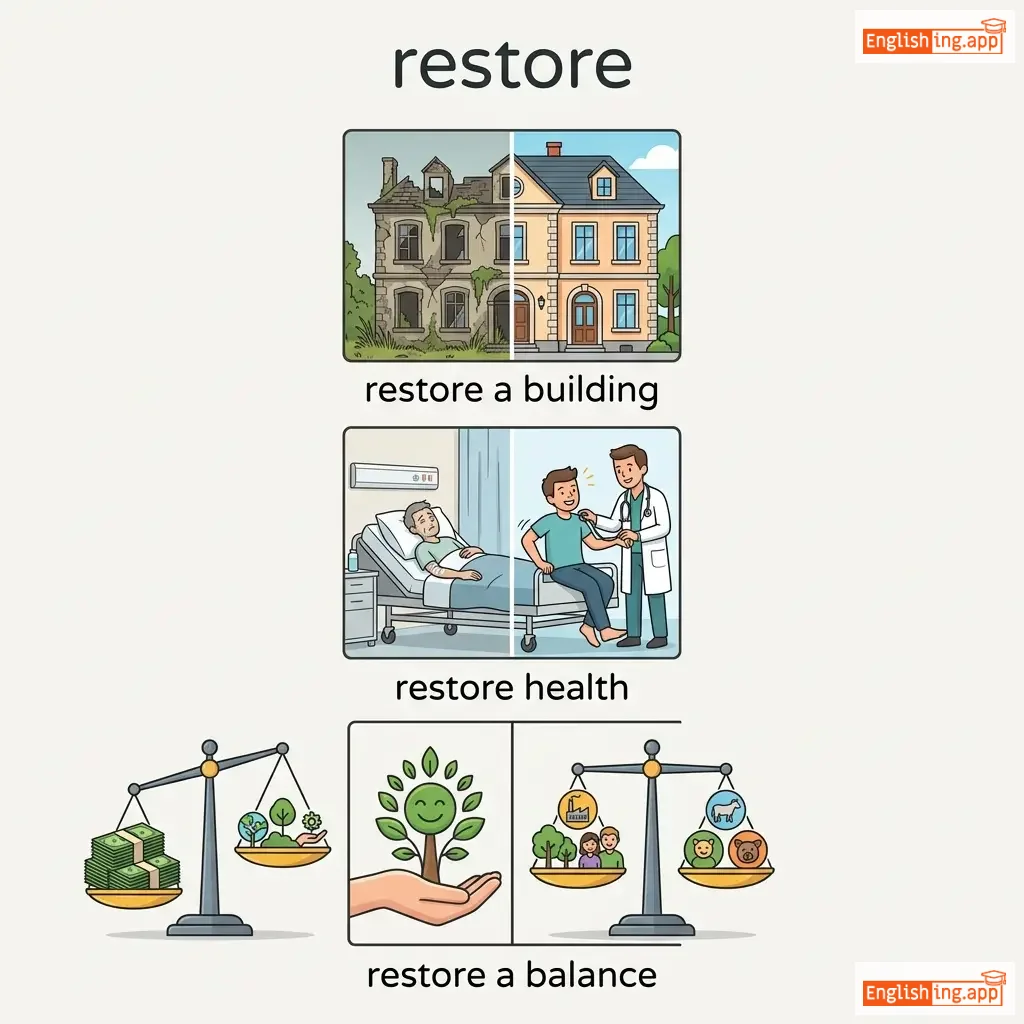
restore a building, restore health, restore a balance, restore the system
••••••
|
修復する (restore) ことで、古いものが新しく蘇る!
••••••
|
|
🤫
••••••
|
/ˈsaɪ.lənt/
adjective
(サイレント)
••••••
|
- •••••• |
静かな; 無音の; 騒がない
shizukana; muon no; sawagaranai
••••••
|
- •••••• | - •••••• | - •••••• | - •••••• |
making no sound; quiet; not speaking
••••••
|
The library was completely silent during study hours. |
図書館は学習時間中は完全に静かでした。
Toshokan wa gakushū jikan-chū wa kanzen ni shizuka deshita
••••••
|
- •••••• | - •••••• | - •••••• |
quiet, noiseless, mute, speechless
••••••
|
noisy, loud, vocal, talkative
••••••
|
silent treatment, silent film, remain silent
••••••
|
静かさが心を落ち着かせる。
••••••
|
|
💯
••••••
|
/ˈθaʊzənd/
noun
(ˈθaʊzənd)
••••••
|
- •••••• |
千
sen
••••••
|
- •••••• | - •••••• | - •••••• | - •••••• |
the number equal to 10 hundred or 1,000
••••••
|
There were a thousand people at the concert. |
コンサートには千人がいました。
Konsāto ni wa sen-nin ga imashita.
••••••
|
- •••••• | - •••••• | - •••••• |
kilo, grand
••••••
|
one, few
••••••
|
thousand dollars, thousand people, thousand years
••••••
|
千人が歌うコンサート (Sennin ga utau konsāto)
••••••
|
|
📘
••••••
|
/ˈjuːsɪdʒ/
noun
(ユージ)
••••••
|
- •••••• |
使用
shiyou
••••••
|
- •••••• | - •••••• | - •••••• | - •••••• |
The action of using something; the way in which a word or phrase is normally used.
••••••
|
The book explains the proper usage of technical terms. |
その本は技術的な用語の正しい使用法を説明しています。
Sono hon wa gijutsuteki na yougo no tadashii shiyouhou o setsumei shiteimasu.
••••••
|
common usage |
the way something is usually used or understood
••••••
|
一般的な使用
ippanteki na shiyou
••••••
|
practice, use, custom, convention
••••••
|
misuse, error, disuse
••••••
|
word usage, proper usage, language usage, common usage
••••••
|
Usageは使用を意味します - '使うことは楽しい。'
••••••
|
|
🦉
••••••
|
/waɪz/
adjective
(ワイズ)
••••••
|
- •••••• |
賢い
kashikoi
••••••
|
- •••••• | - •••••• | - •••••• | - •••••• |
having or showing experience, knowledge, and good judgment
••••••
|
It was wise of him to save money for the future. |
未来のためにお金を節約するのは賢明だった。
Mirai no tame ni okane o setsuyaku suru no wa kenmei datta.
••••••
|
wise up |
to become more knowledgeable or aware
••••••
|
賢くなる
kashikoku naru
••••••
|
prudent, sensible, intelligent, judicious
••••••
|
foolish, ignorant, unwise
••••••
|
wise decision, wise man, wise choice, appear wise
••••••
|
Wise は賢いという意味で、賢いフクロウのように、常に良い判断を下す
••••••
|

