Midnight Robot Sprint
真夜中前に学校の古い garage が光で輝いていました。私たちの crew はロボットレースのために集まりました。Jayanta は新しい engine を開けて、すべての wire を締めていました。Sayeda は言いました、「次の lap から低電力モードに切り替えます。」Rubel は最後の code 更新を circuit ボードにプッシュしました。光り輝く robot のそばに立っているTamanna はささやきました、「もしこの gear が持ちこたえれば、勝利は私たちのものです。」Arafat は小さな motor を触れて、「少し熱いです。」と呟きました。Mehedi は monitor でバッテリーグラフを見ていました。皆が safety ルールに従い、ヘルメットをかぶりました。三番目の lap の前に、私たちは pit に急いで入り、fuel セルの温度をチェックしました。「次の lap ではあまり speed を出さないでください。」とNila は警告しました。別のグループは前の tire を交換するために急いでいました。「リラックスして、drive をきれいに保ちます。」とShammi は言いました。スタートの笛が鳴ると、competition が再開しました。最後のターンで、私たちのロボットは完璧に finish ラインを越えました。Jayanta は皆を見てにっこりと笑い、「この古い garage は今夜を覚えているだろう。」と言いました。
|
絵文字
|
単語 | Images | 翻訳 | 過去 | 過去分詞 | 三人称単数 | 動名詞 | 意味 | 例文 | 例文の翻訳 | 表現例 | 表現例の意味 | 表現例の翻訳 | 同義語 | 対義語 | コロケーション | ニーモニック |
|---|---|---|---|---|---|---|---|---|---|---|---|---|---|---|---|---|---|
|
🔄
••••••
|
/ˈsɜːrkɪt/
noun
(回路)
••••••
|
- •••••• |
回路 / 電気回路
kairo / denki kairo
••••••
|
- •••••• | - •••••• | - •••••• | - •••••• |
A roughly circular line, route, or movement that starts and ends at the same place; also an electrical pathway.
••••••
|
The runners completed the circuit around the park. |
ランナーは公園の周りの回路を完了しました。
Rannā wa kōen no mawari no kairo o kanryō shimashita.
••••••
|
short-circuit |
an electrical failure caused by unintended contact or connection
••••••
|
ショート回路
shōto kairo
••••••
|
route, loop, pathway, track, course
••••••
|
line, shortcut
••••••
|
electrical circuit, racing circuit, complete circuit
••••••
|
回路は円を意味する → 回路は始まりに戻ることを意味します
••••••
|
|
💻
••••••
|
/koʊd/
noun/verb
(コード)
••••••
|
- •••••• |
コード
kōdo
••••••
|
coded
コーディッド
••••••
|
coded
コーディッド
••••••
|
codes
コードス
••••••
|
coding
コーディング
••••••
|
a system of words, letters, or symbols used to represent information or instructions
••••••
|
He wrote a code to solve the problem on the computer.
彼はコンピュータで問題を解決するためのコードを書きました。
••••••
|
彼はコンピュータで問題を解決するためのコードを書きました。
Kare wa konpyūta de mondai o kaiketsu suru tame no kōdo o kakimashita.
••••••
|
secret code
秘密のコード
••••••
|
a hidden or encrypted system of communication
••••••
|
秘密のコード
himitsu no kōdo
••••••
|
cipher, program, script, rules, law
••••••
|
plain text, chaos
••••••
|
write code, code of conduct, code breaker, secret code
••••••
|
コード (kōdo) = コンピュータの指示
••••••
|
|
🤼
••••••
|
/ˌkɒmpəˈtɪʃən/
noun
(コンペティション)
••••••
|

|
競争
kyousou
••••••
|
- •••••• | - •••••• | - •••••• | - •••••• |
a situation in which people or organizations try to be more successful than others
••••••
|
The competition in the tech industry is very intense. |
テクノロジー業界の競争は非常に激しいです。
tekunorojii gyoukai no kyousou wa hijou ni hageshii desu.
••••••
|
cut-throat competition |
extremely fierce and ruthless competition
••••••
|
容赦ない競争
yousha nai kyousou
••••••
|
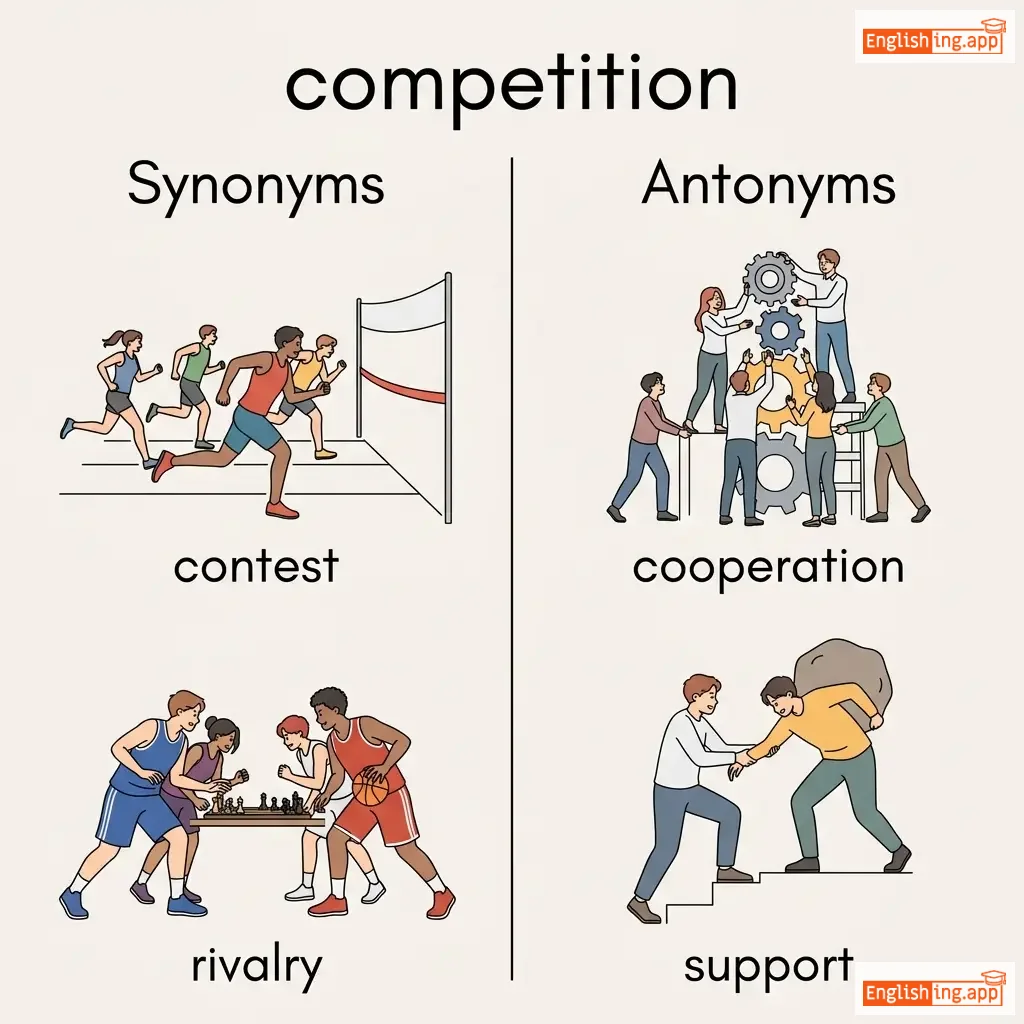
contest, rivalry, challenge, race, opposition
••••••
|
cooperation, support, alliance
••••••
|
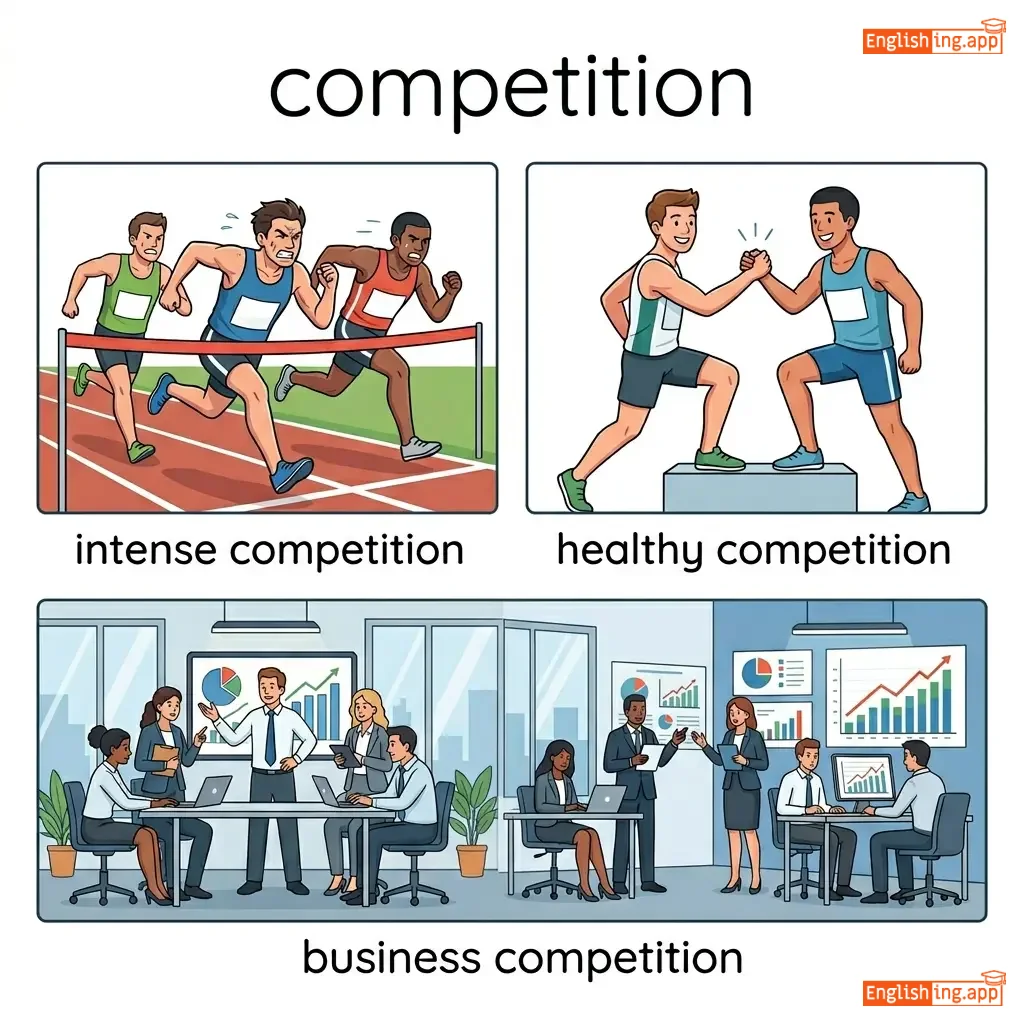
intense competition, healthy competition, business competition, market competition
••••••
|
COMPETITION = 競争 - 大学ではいつも競争があります
••••••
|
|
👨✈️
••••••
|
/kruː/
noun
(クルー)
••••••
|
- •••••• |
乗組員
norumuiin
••••••
|
- •••••• | - •••••• | - •••••• | - •••••• |
A group of people working together, especially on a ship, aircraft, or project.
••••••
|
The ship's crew worked tirelessly during the storm.
船のクルーは嵐の間、休むことなく働いた。
••••••
|
船のクルーは嵐の間、休むことなく働いた。
Fune no kurū wa arashi no aida, yasumu koto naku hataraita.
••••••
|
crew cut
非常に短い髪型
••••••
|
A very short haircut, originally popular among military men.
••••••
|
非常に短い髪型
Hijō ni mijikai kamigata
••••••
|
team, staff, group, squad, gang
••••••
|
individual, loner
••••••
|
film crew, cabin crew, ship's crew, rescue crew
••••••
|
Crew はチームを意味し、乗組員 (norumuiin) は常に一緒に働きます。
••••••
|
|
🚗
••••••
|
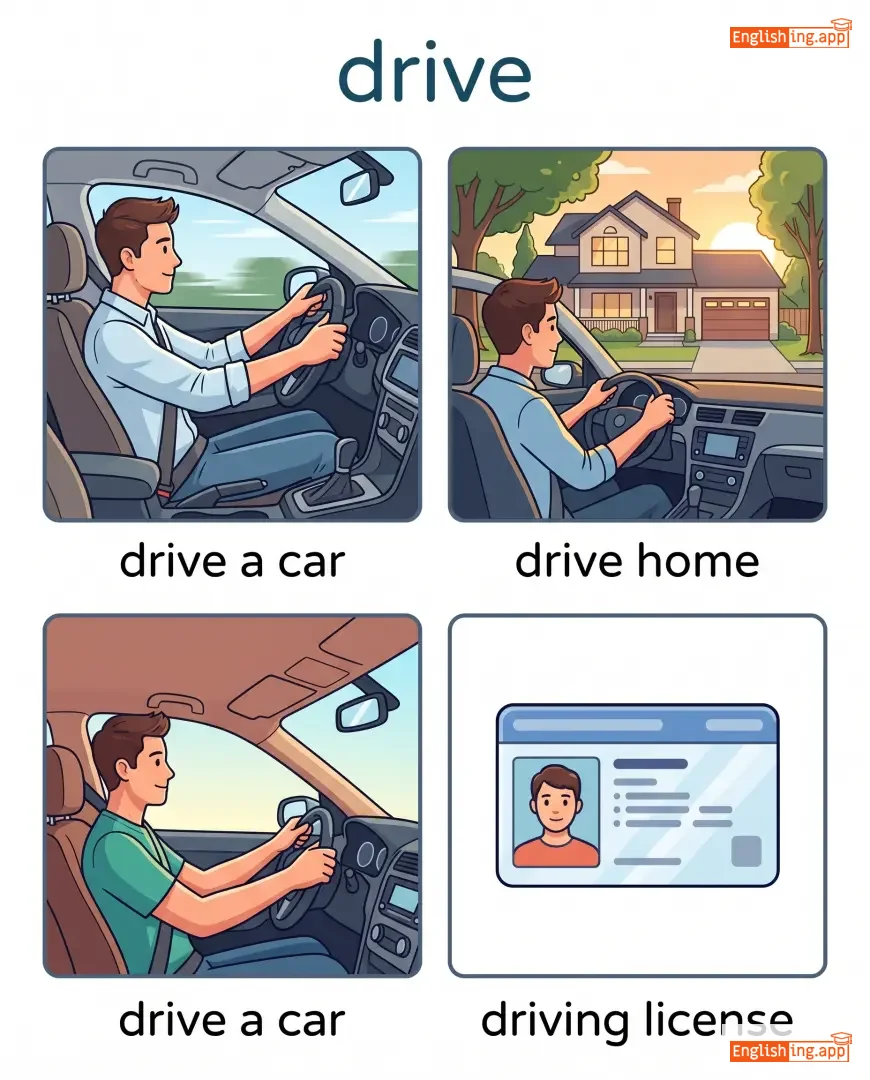
/draɪv/
verb, noun
(ドライブ)
••••••
|
|
運転する
unten suru
••••••
|
drove
ドローブ
••••••
|
driven
ドリヴン
••••••
|
drives
ドライブス
••••••
|
driving
ドライビング
••••••
|
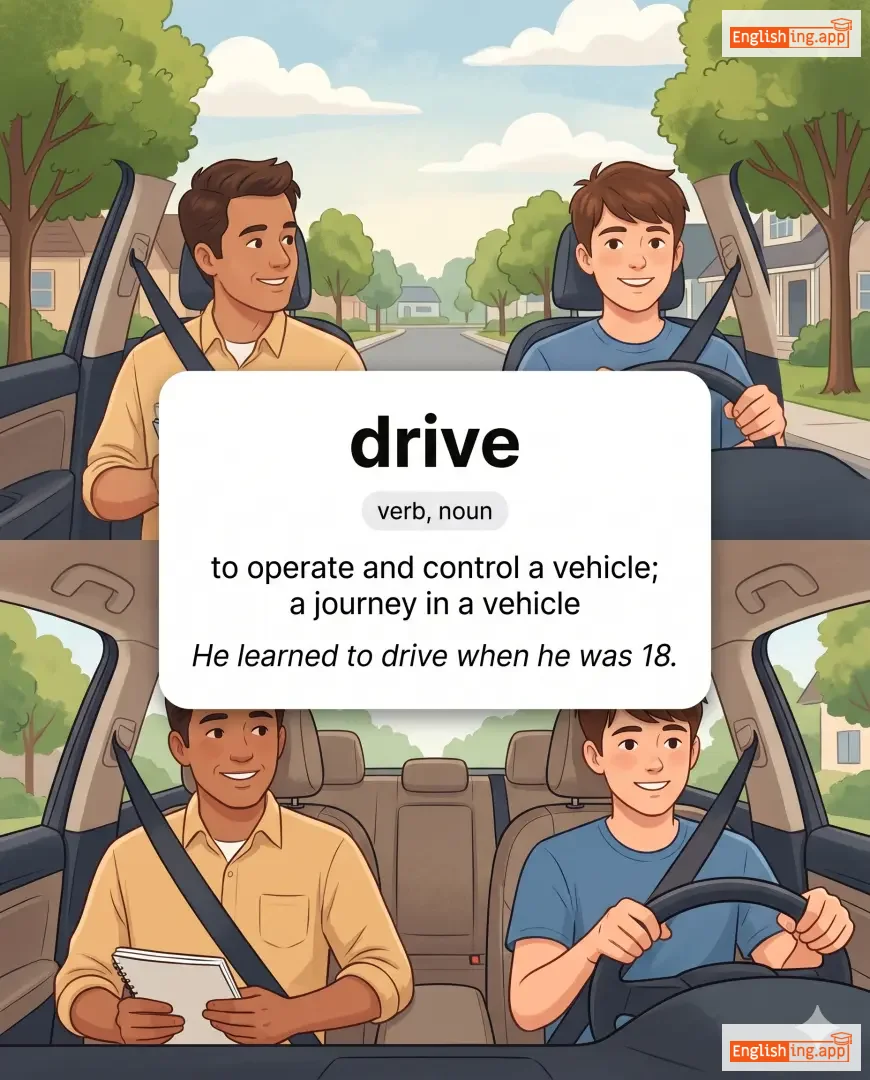
to operate and control a vehicle; a journey in a vehicle
••••••
|
He learned to drive when he was 18.
彼は18歳で車の運転を覚えました。
••••••
|
彼は18歳で車の運転を覚えました。
Kare wa 18 sai de kuruma no unten o oboemashita.
••••••
|
drive someone crazy
誰かをイライラさせる
••••••
|
to annoy or irritate someone a lot
••••••
|
誰かをイライラさせる
Dareka o iraira saseru
••••••
|
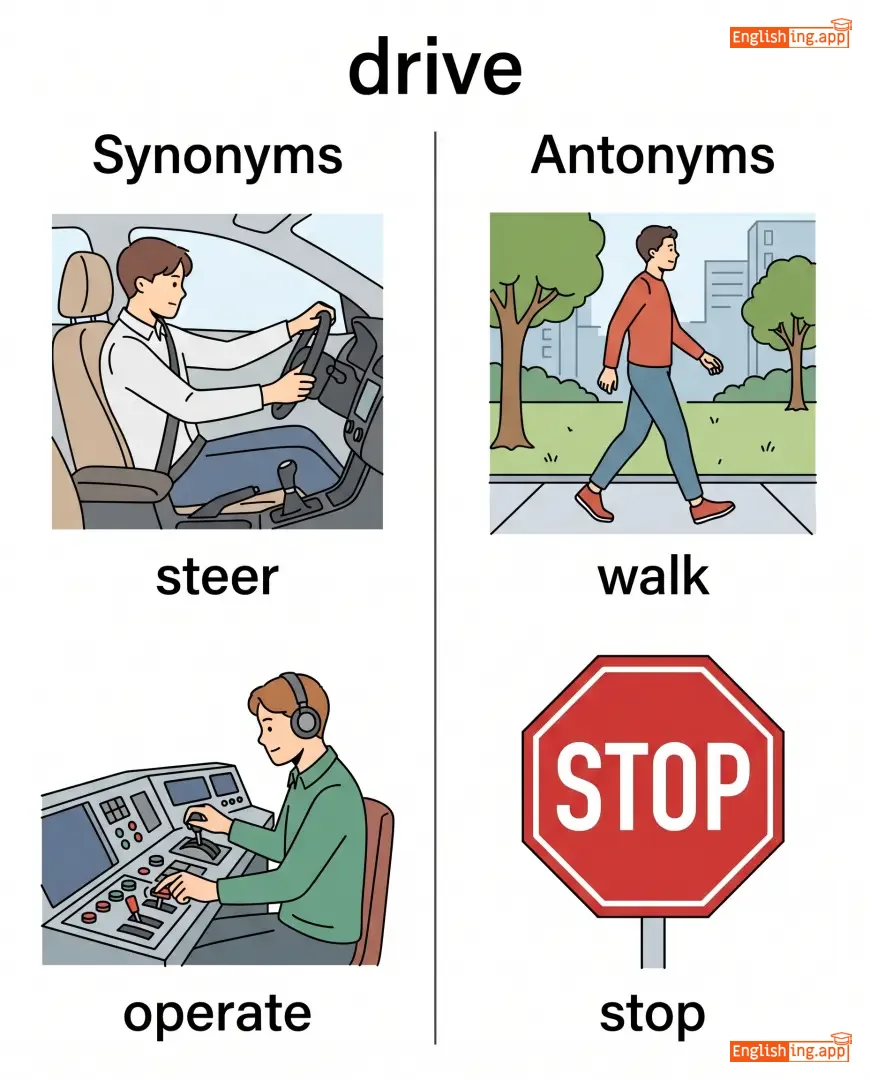
steer, operate, ride, control, propel
••••••
|
walk, stop
••••••
|
drive a car, drive home, driving license, drive safely
••••••
|
Driveは運転するという意味です。車を運転するのと同じです。
••••••
|
|
🚗
••••••
|
/ˈɛndʒɪn/
noun
(エンジン)
••••••
|
- •••••• |
エンジン
enjin
••••••
|
- •••••• | - •••••• | - •••••• | - •••••• |
A machine designed to convert energy into mechanical power.
••••••
|
The car's engine failed on the highway. |
車のエンジンは高速道路で故障した。
Kuruma no enjin wa kōsoku dōro de koshō shita.
••••••
|
engine of growth |
something that drives progress or development
••••••
|
成長のエンジン
Seichō no enjin
••••••
|
motor, machine, mechanism, generator, turbine
••••••
|
brake, stopper
••••••
|
car engine, powerful engine, engine failure, engine design
••••••
|
エンジン – 車を動かすために必要なものです。
••••••
|
|
✅
••••••
|
/ˈfɪnɪʃ/
verb
(フィニッシュ)
••••••
|
|
終わらせる
owaraseru
••••••
|
finished
フィニッシュド
••••••
|
finished
フィニッシュド
••••••
|
finishes
フィニッシュズ
••••••
|
finishing
フィニッシング
••••••
|
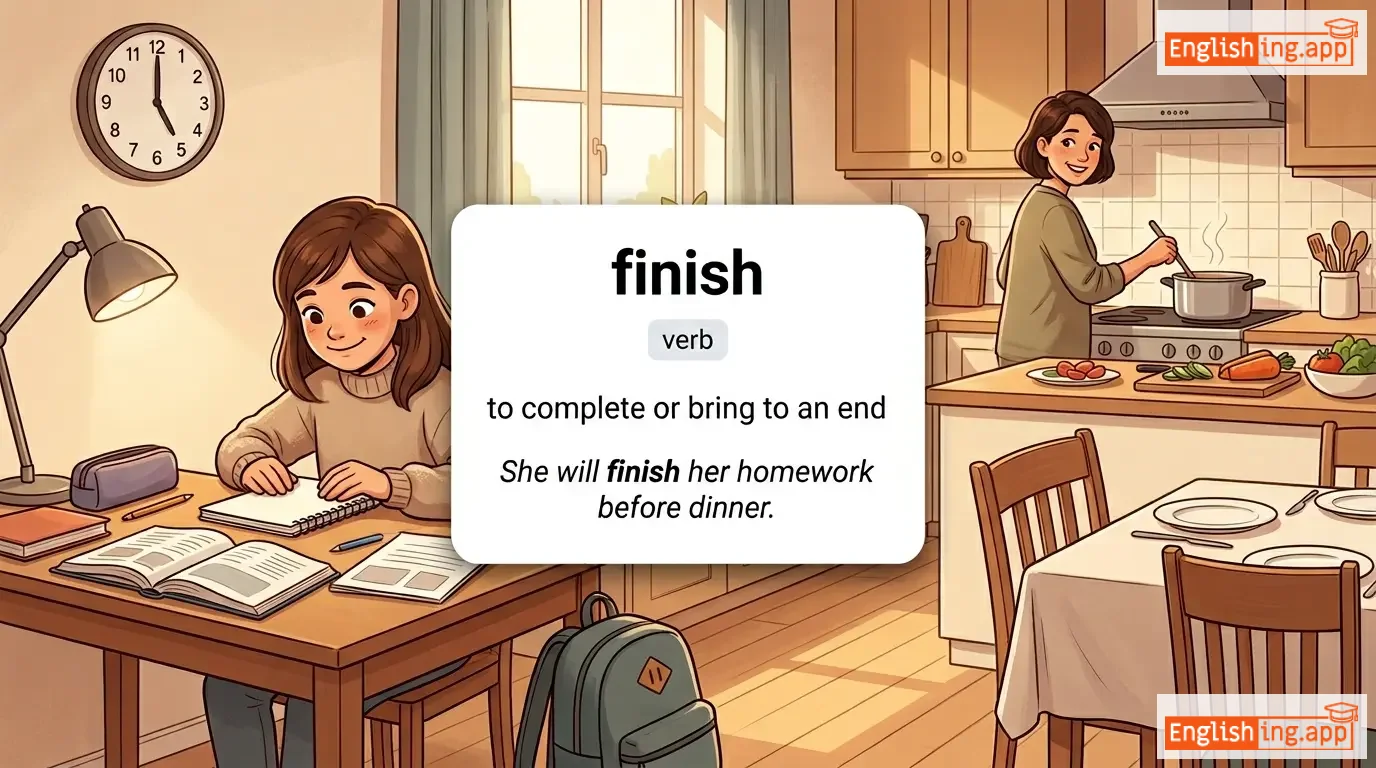
to complete or bring to an end; to reach the final point
••••••
|
She finished her homework before dinner.
彼女は夕食前に宿題を終わらせた。
••••••
|
彼女は夕食前に宿題を終わらせた。
Kanojo wa yūshoku mae ni shukudai o owaraseta.
••••••
|
- •••••• | - •••••• | - •••••• |
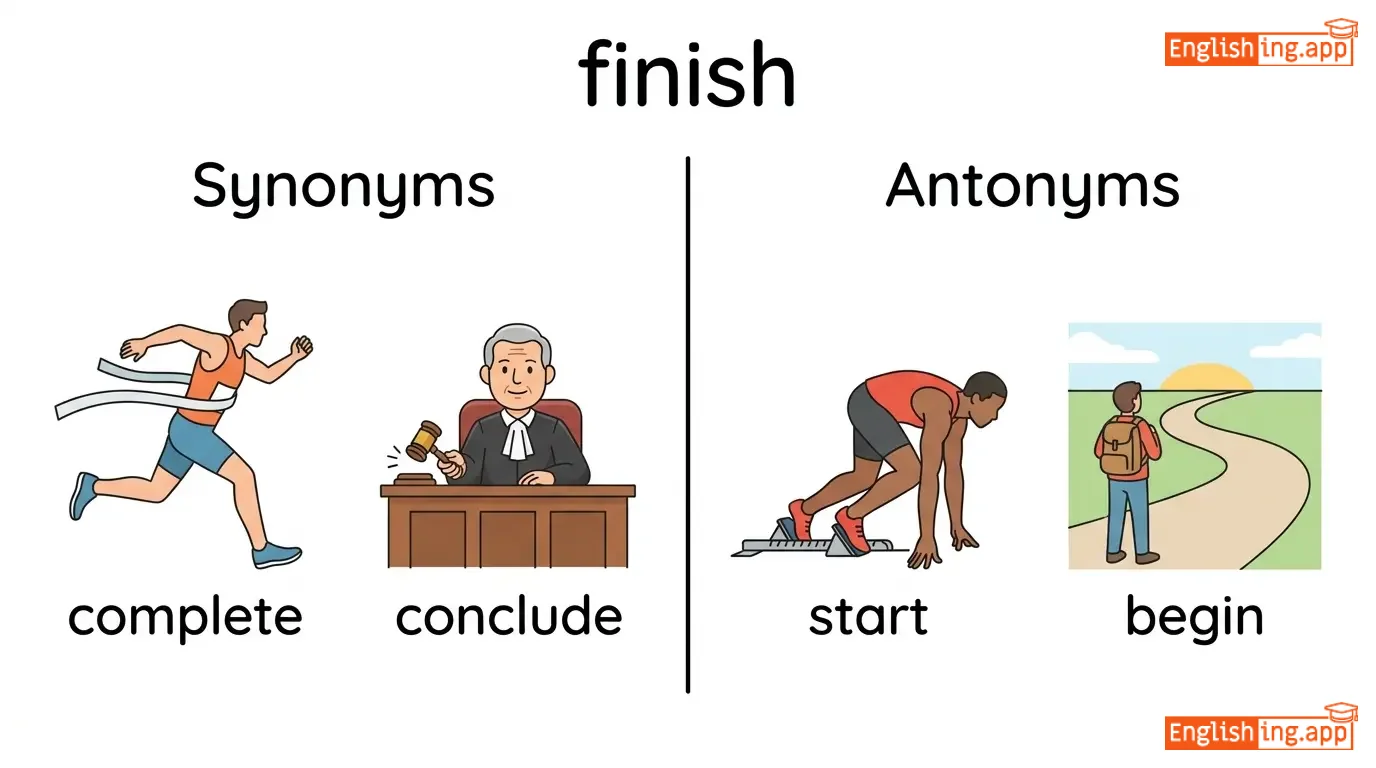
complete, conclude, end, finalize
••••••
|
start, begin, commence, initiate
••••••
|
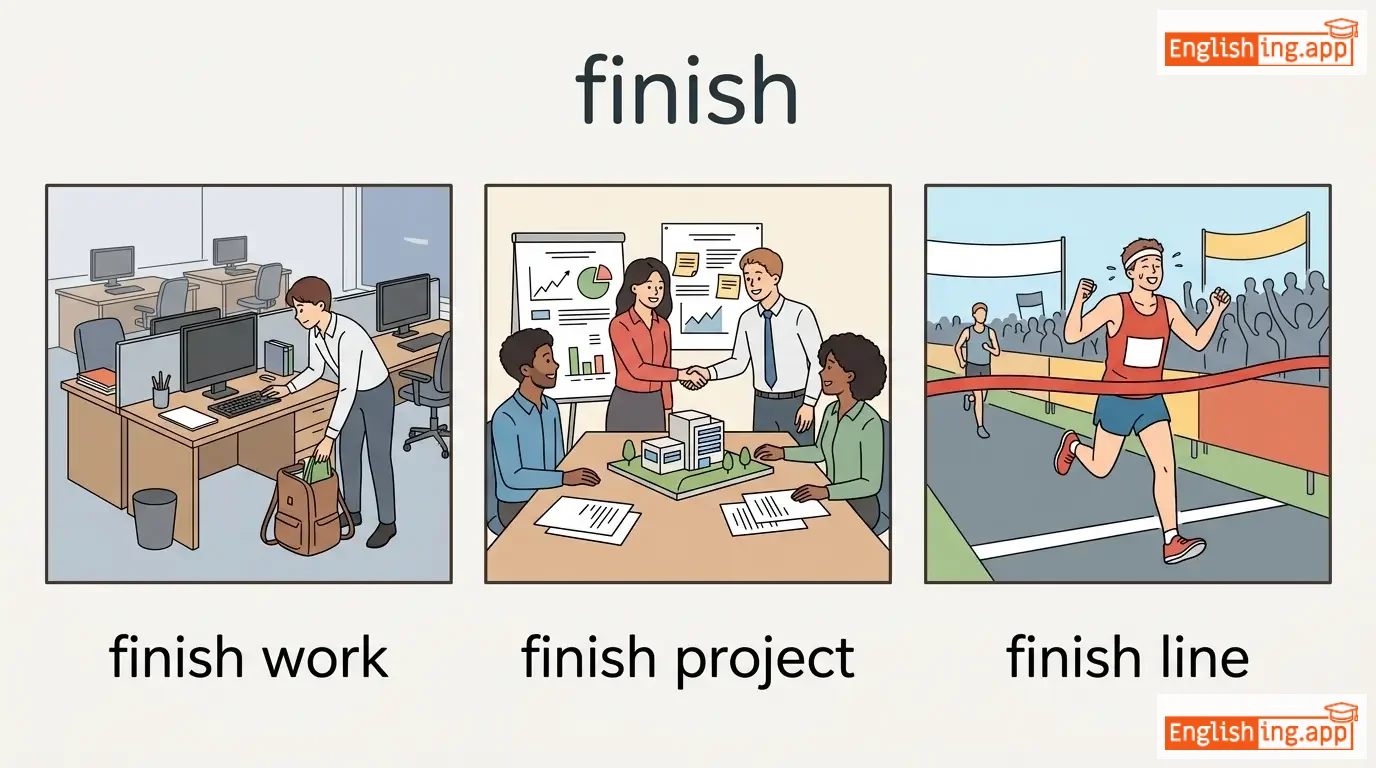
finish work, finish homework, finish eating, finish reading, finish quickly
••••••
|
No •••••• |
|
⛽
••••••
|
/ˈfjuːəl/
noun/verb
••••••
|
- •••••• | - •••••• |
fueled
••••••
|
fueled
••••••
|
fuels
••••••
|
fueling
••••••
|
A material such as coal, gas, or oil that is burned to produce energy; also to supply with energy or power.
••••••
|
The car needs fuel to run efficiently. |
- •••••• |
fuel the fire |
To make a situation worse or more intense.
••••••
|
- •••••• |
power, energy, propellant, feed, sustain
••••••
|
drain, exhaust
••••••
|
burn fuel, fossil fuel, run on fuel, fuel supply
••••••
|
No •••••• |
|
🏠
••••••
|
/ɡəˈrɑːʒ/
noun
(ガレージ)
••••••
|
- •••••• |
ガレージ
gareeji
••••••
|
- •••••• | - •••••• | - •••••• | - •••••• |
a building or space for housing a motor vehicle; a commercial establishment for repairing motor vehicles
••••••
|
He parked his car in the garage to protect it from the hailstorm.
彼は車をガレージに停めて、雹から守りました。
••••••
|
彼は車をガレージに停めて、雹から守りました。
Kare wa kuruma o gareeji ni tomete, hyou kara mamorimashita.
••••••
|
- •••••• | - •••••• | - •••••• |
carport, shed, workshop, parking space
••••••
|
street, outdoors, open air, driveway
••••••
|
car garage, garage door, parking garage
••••••
|
日本語の 'ガレージ' は英語の 'garage' と同じ意味で、自動車を保管する場所です。
••••••
|
|
⚙️
••••••
|
/ɡɪə(r)/
noun
(ギア)
••••••
|
- •••••• |
装備 / ギア
sōbi / gia
••••••
|
- •••••• | - •••••• | - •••••• | - •••••• |
Equipment or apparatus for a particular purpose; also a toothed wheel in machinery.
••••••
|
The climber packed all his gear before starting the journey. |
登山者は旅を始める前にすべてのギアをパックしました。
Tozan-sha wa tabi o hajimeru mae ni subete no gia o pakkushimashita.
••••••
|
shift gears |
To change one's approach or method of doing something.
••••••
|
ギアを変える
Gia o kaeru
••••••
|
equipment, apparatus, tools, kit, machinery
••••••
|
emptiness, lack, nothing
••••••
|
sports gear, camping gear, gear shift, protective gear
••••••
|
ギアは車のギアと同じく、物事を進めるために使う道具です。
••••••
|
|
⛑️
••••••
|
/ˈhel.mət/
noun
(ハピネス)
••••••
|
- •••••• |
ヘルメット
herumetto
••••••
|
- •••••• | - •••••• | - •••••• | - •••••• |
a hard or padded protective hat worn by motorcyclists, construction workers, or soldiers
••••••
|
The cyclist always wore a bright yellow helmet for safety and visibility while riding.
サイクリストは常に安全性と視認性のために明るい黄色いヘルメットを着用していました。
••••••
|
サイクリストは常に安全性と視認性のために明るい黄色いヘルメットを着用していました。
Saikurisuto wa jōni anzen-sei to shin-in-sei no tame ni akarui kiiroi herumetto o chakuyō shite imashita.
••••••
|
- •••••• | - •••••• | - •••••• |
hard hat, protective headgear, safety helmet, crash helmet
••••••
|
bare head, unprotected head, soft hat, cap
••••••
|
safety helmet, bicycle helmet, motorcycle helmet
••••••
|
ヘルメット = サイクリングの際、頭を守るためのヘルメット
••••••
|
|
🪑
••••••
|
/læp/
noun/verb
(ハピネス)
••••••
|
- •••••• |
幸せ
shiawase
••••••
|
lapped
••••••
|
lapped
••••••
|
laps
••••••
|
lapping
••••••
|
As noun: the flat area between the waist and knees of a seated person; As verb: to drink liquid with the tongue.
••••••
|
The child sat on her mother's lap. |
彼女は賞を受け取ったとき、幸せを隠すことができなかった。
Kanojo wa shō o uketotta toki, shiawase o kakusu koto ga dekinakatta.
••••••
|
in the lap of luxury |
Living in great comfort and wealth
••••••
|
幸せを追い求める
shiawase o oimotomeru
••••••
|
thighs, knee, embrace, lick, sip
••••••
|
stand, rise
••••••
|
sit on lap, lap of luxury, lap time
••••••
|
幸せ = happiness, 追い求める = search, 'searching for happiness'
••••••
|
|
🖥️
••••••
|
/ˈmɒnɪtər/
noun, verb
(モニター)
••••••
|
- •••••• |
モニター、監視する
monitā, kanshi suru
••••••
|
monitored
モニタード
••••••
|
monitored
モニタード
••••••
|
monitors
モニターズ
••••••
|
monitoring
モニタリング
••••••
|
to observe and check the progress or quality of something; also a device that displays information
••••••
|
The teacher monitors the students during the exam.
先生は試験中に生徒を監視します。
••••••
|
先生は試験中に生徒を監視します。
Sensei wa shiken-chū ni seito o kanshi shimasu.
••••••
|
keep a close monitor
密接な監視を維持する
••••••
|
to watch carefully
••••••
|
注意深く監視する
chūi-bukaku kanshi suru
••••••
|
observe, watch, track, oversee, supervise
••••••
|
ignore, neglect
••••••
|
monitor progress, monitor performance, monitor screen, monitor activity
••••••
|
モニターは監視することなので、注意深く見守る
••••••
|
|
🚗
••••••
|
/ˈmoʊtər/
noun
(モーター)
••••••
|
- •••••• |
モーター
mōtā
••••••
|
- •••••• | - •••••• | - •••••• | - •••••• |
a machine that produces motion or power to make something work
••••••
|
The car’s motor stopped suddenly. |
車のモーターは突然止まりました。
kuruma no mōtā wa totsuzen tomarimashita.
••••••
|
motor skills |
the ability to use muscles for movement and coordination
••••••
|
運動能力
undō nōryoku
••••••
|
engine, machine, generator, mechanism
••••••
|
stillness, immobility
••••••
|
electric motor, motor vehicle, motor skills, motorbike
••••••
|
モーターは車を動かすエネルギーを生み出すもの — バイクもモーターがあるよ。
••••••
|
|
🕳️
••••••
|
/pɪt/
noun
(ピット)
••••••
|
- •••••• |
穴
ana
••••••
|
- •••••• | - •••••• | - •••••• | - •••••• |
a large hole in the ground or a hollow area
••••••
|
The workers dug a deep pit to build the foundation.
労働者たちは基礎を作るために深い穴を掘った。
••••••
|
労働者たちは基礎を作るために深い穴を掘った。
Rōdōsha-tachi wa kiso o tsukuru tame ni fukai ana o hotta.
••••••
|
the pits
ザ・ピット
••••••
|
something very bad or unpleasant
••••••
|
とても悪いこと
totemo warui koto
••••••
|
hole, cavity, hollow, crater
••••••
|
mound, hill
••••••
|
deep pit, gravel pit, mine pit, pit hole
••••••
|
Pitは穴を意味します — 落ちたら「オー!穴に落ちた!」と言ってください。
••••••
|
|
🤖
••••••
|
/ˈroʊbɒt/
noun
(ロボット)
••••••
|
- •••••• |
ロボット
robotto
••••••
|
- •••••• | - •••••• | - •••••• | - •••••• |
a machine capable of carrying out a complex series of actions automatically
••••••
|
The factory uses robots to assemble cars efficiently. |
工場はロボットを使って効率的に車を組み立てています。
Kōjō wa robotto o tsukatte kōritsutekini kuruma o kumitateteimasu.
••••••
|
like a robot |
acting mechanically or without emotion
••••••
|
ロボットのように
robotto no yō ni
••••••
|
android, automaton, machine, cyborg, bot
••••••
|
human, person
••••••
|
industrial robot, robot arm, robot technology, service robot
••••••
|
ロボットは感情を持たず、ただ命令に従って動く機械です。
••••••
|
|
⚠️
••••••
|
/ˈseɪf.ti/
noun
(セーフティ)
••••••
|
- •••••• |
安全
anzen
••••••
|
- •••••• | - •••••• | - •••••• | - •••••• |
condition of being protected from danger, risk, or injury
••••••
|
The company prioritizes workplace safety above all else. |
その会社は職場の安全を最優先しています。
Sono kaisha wa shokuba no anzen o sai yūsen shiteimasu
••••••
|
- •••••• | - •••••• | - •••••• |
security, protection, welfare, well-being
••••••
|
danger, hazard, risk, peril
••••••
|
safety measures, public safety, safety regulations, road safety
••••••
|
安全 = Safety, 安全な場所にいることが一番安全
••••••
|
|
🏎️
••••••
|
/spiːd/
noun/verb
(スピード)
••••••
|
- •••••• |
速度
sokudo
••••••
|
sped
スペッド
••••••
|
sped
スペッド
••••••
|
speeds
スピードス
••••••
|
speeding
スピーディング
••••••
|
the rate at which something moves or happens
••••••
|
The car was moving at high speed.
車は高速で走っていた。
••••••
|
車は高速で走っていた。
Kuruma wa kōsoku de hashitte ita.
••••••
|
In the fast lane
ファーストレーン
••••••
|
Living or working in a fast-paced environment
••••••
|
速いペースの環境で生きたり働いたりすること
Hayai pēsu no kankyō de ikitari hataraitari suru koto
••••••
|
velocity, pace, rate, momentum
••••••
|
slowness, delay
••••••
|
high speed, top speed, speed limit, speed up
••••••
|
Speed is like running, run to be fast!
••••••
|
|
🚗
••••••
|
/taɪər/
noun
(タイヤ)
••••••
|
- •••••• |
タイヤ
taiya
••••••
|
- •••••• | - •••••• | - •••••• | - •••••• |
a rubber covering around a wheel
••••••
|
The car’s tire burst on the highway.
車のタイヤが高速道路でパンクした。
••••••
|
車のタイヤが高速道路でパンクした。
Kuruma no taiya ga kōsokudōro de panku shita.
••••••
|
- •••••• | - •••••• | - •••••• |
wheel, rubber, rim
••••••
|
- •••••• |
flat tire, spare tire, tire pressure
••••••
|
タイヤは車をスムーズに走らせます!
••••••
|
|
⚡
••••••
|
/ˈwaɪər/
noun
(ワイヤー)
••••••
|
- •••••• |
ワイヤー
waiyā
••••••
|
- •••••• | - •••••• | - •••••• | - •••••• |
a thin, flexible thread of metal used to conduct electricity or connect things
••••••
|
The electrician fixed the wire to restore the power. |
電気技師は電力を回復させるためにワイヤーを修理しました。
Denki gishi wa denryoku o kaifuku saseru tame ni waiyā o shūri shimashita.
••••••
|
- •••••• | - •••••• | - •••••• |
cable, cord, filament, strand
••••••
|
none
••••••
|
electric wire, copper wire, wire fence, wire mesh
••••••
|
ワイヤーで電気が流れる - Electricity flows through the wire.
••••••
|

